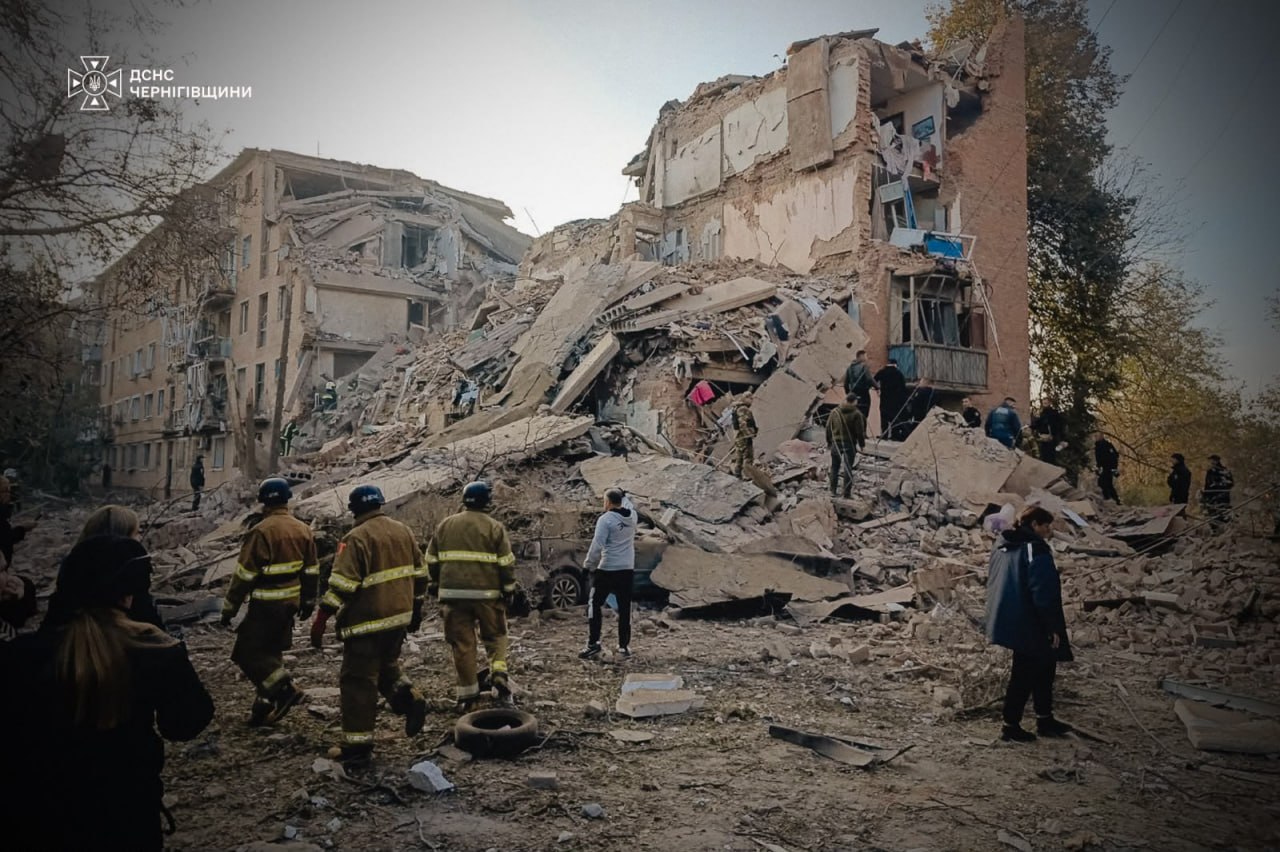
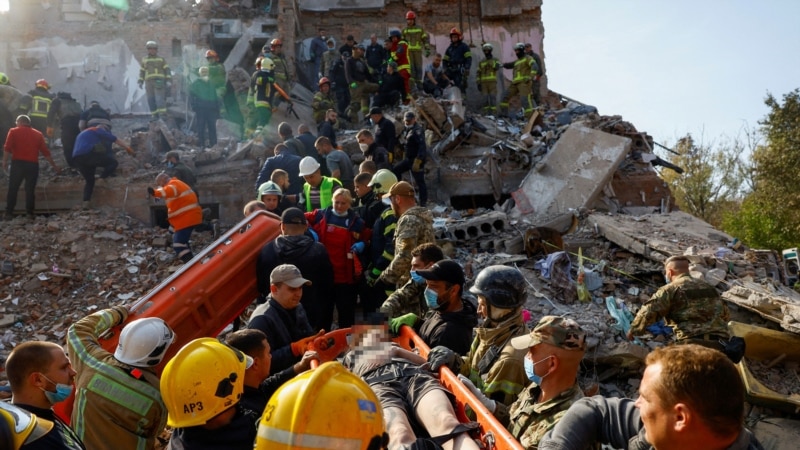
At least 25 civilians were killed during a major Russian bombardment across Ukraine on Wednesday, according to Ukrainian officials, strikes that came a day after Ukrainian forces launched nearly 900 drones into Russia. The majority of the dead were killed by strikes that hit an apartment block in Pryluky, a city in Ukraine’s northern Chernihiv […]
South Korea's presidential office on Wednesday dismissed a Ukrainian report that Russia has imported petroleum products from South Korean ports, calling the accusation inappropriate.
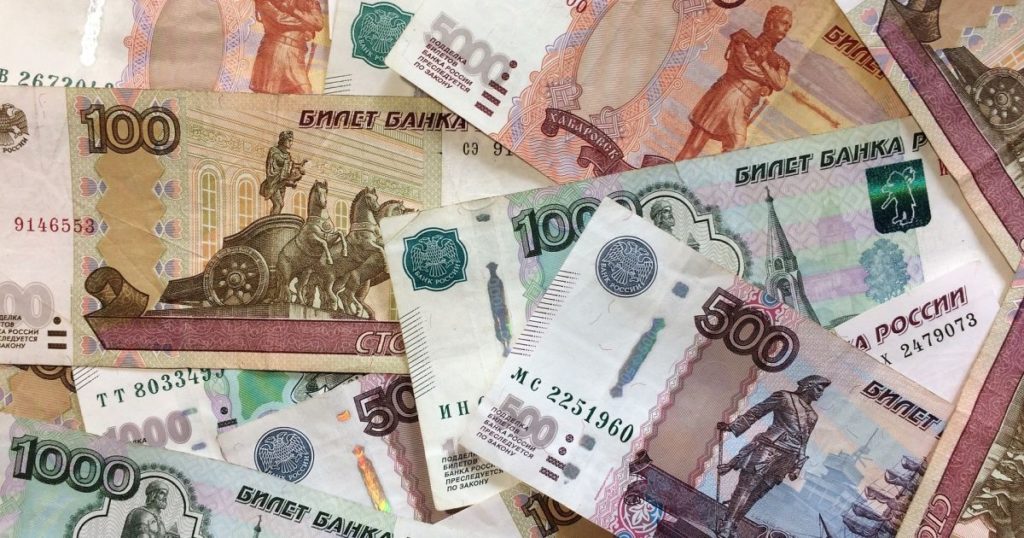
More than 50 Russian companies could default on their bonds this year, the most since 2009, a rating-agency analyst told Russian newspaper Izvestia, which reported it on 6 October.
Russia's wartime economy is straining under high interest rates, and the budget is too: the 2026 deficit has nearly doubled from the earlier forecast to a record $88 billion, with more deficits planned for the next three years as Moscow raises taxes to fund the war and plans its biggest defense budget since the full-scale invasion began.
A default is a situation in which a company cannot make promised interest payments to investors on time or repay borrowed money. If a payment is not made by the agreed deadline, the company becomes delinquent, which under certain conditions is recognized as a default.
So far this year, 20 companies have defaulted for the first time, compared with 24 in all of 2025, said Mikhail Nikonov of the Expert RA rating agency. Most of the companies that missed payments are small issuers of high-yield bonds, Izvestia reported.
In 2026, Russian companies have missed payments totaling 41 billion rubles (about $490 million), compared with 34 billion rubles (about $410 million) the previous year, according to investment bank Sinara.
Russia faces a new wave of corporate defaults
By the end of 2026, the number of Russian companies unable to service their ruble-denominated debt on time could reach 40–50, the highest level since 2010, said Pavel Zholobov, junior managing director at the NRA rating agency.
The number of bond defaults in 2026 has already reached its highest level in a decade, Zholobov said. Similar figures were recorded in the mid-2010s: in 2014, 35 companies missed payments; in 2015, 52 did so; and in 2016, there were 44 issuers. This occurred in part after Western sanctions were imposed on Russia over its annexation of Crimea and its war in Donbas, as well as amid a halving of oil prices and a sharp weakening of the ruble.
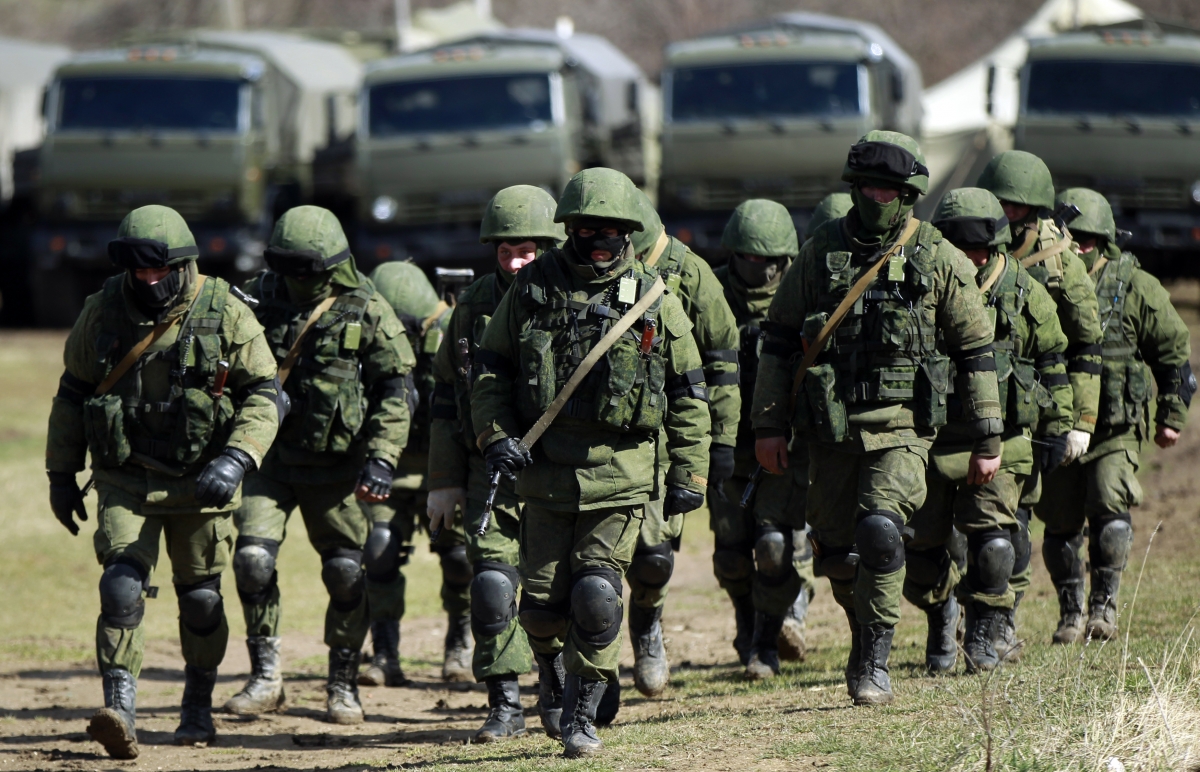
So-called "little green men" (the Russian occupation troops comprised special forces who removed insignia, wear face masks to prevent identification and call themselves a "Crimean self-defense force") surround a Ukrainian military base in Perevalne, Crimea, during the Russian annexation of the peninsula in February-March 2014.
There were more defaults only in 2009. At the time, amid the fallout from the global financial crisis, more than 100 issuers faced payment problems, while the volume of distressed debt reached nearly 200 billion rubles, Zholobov noted.
High interest rates put pressure on companies
This time, the main reason for companies' difficulties in making bond payments has been the prolonged period of high interest rates, which has continued since 2023. Companies are raising financing at high interest rates but are unable to refinance their debt on more favorable terms, explained Ekaterina Sidorova, head of the Foreign Exchange, Commodities and Debt Markets Department at SberCIB Investment Research.
At the same time, the situation does not yet resemble a systemic debt crisis: defaults are primarily being recorded among companies with low credit ratings and high debt burdens, Sidorova said.
If a company fails to repay bond debt, it is given 10 business days to meet its obligations. If it fails to do so, the company may offer investors a restructuring—for example, by postponing payments in exchange for a higher interest rate.
The number of defaults will remain high in 2027, Sidorova believes.
High interest rates were a response to accelerating inflation in Russia. Domestic demand was outpacing production, Russia's Central Bank said in October 2023. Sanctions over the war and rising defense spending had also hit the economy and the ruble, which had lost about 25% against the dollar that year. The bank raised its key rate from 7.5% in the first half of 2023 to 15% by the fall.
Ukraine targets Russia's oil industry to weaken its war economy
Ukraine is also seeking to weaken Russia's economy as part of efforts to reduce its ability to finance the war. In particular, Defense Minister Yevhenii Khmara said strikes on oil refineries are aimed at "bleeding the Russian war machine" and destroying its military and economic potential. According to the ministry, the attacks have knocked out more than 51% of Russia's oil refining capacity.
In the first half of July, Russian oil refineries processed about 3.9 million barrels of oil per day—the lowest level since March 2005. Due to the production cuts, Moscow was also forced to restrict fuel exports.
What Ukrainian officers say about the changes brought by the new commander-in-chief, Mykhailo Drapatyi.
He has appointed people in their thirties and forties to important positions, often those who did not suit Syrskyi.
According to Ukrainska Pravda, Ukrainians are preparing a war plan to clarify the Ukrainian army’s long-term objective.
Russians attacked Ukrainian cities during Putin’s birthday, damaging apartment blocks and killing at least 11 people.
Charts of the day: How far production at Russian refineries has fallen; exports of oil and oil products have declined, but Trump is indirectly keeping profits from them high.
Videos of the day: a blazing sunset in Sochi; the music plays on; an unmanned Humvee; a robot’s duel with a drone; what the road to Crimea looks like.
Two and a half months have passed since major general Mykhailo Drapatyi became commander-in-chief of Ukraine’s armed forces. That may not be enough time for major reforms. But in recent days, articles have begun to appear about how the new commander is trying to change the Ukrainian army.
Unlike his predecessor, Oleksandr Syrskyi, Drapatyi does not promote himself much on social media. He has not made a single Facebook post since July, and his Telegram profile has similarly remained silent.
Ukrainska Pravda journalist Olha Kyrylenko tried to fill this “information vacuum”. She spoke with around 20 senior officers in the Ukrainian army.
Based on their anonymous testimonies, she sought to convey how Drapatyi had changed the Ukrainian army over those two and a half months.
The army is currently performing well at the front: Russians are suffering heavy losses and advancing very slowly, if at all. The protection of military, industrial and civilian sites in the rear against Russian air attacks is worse.
The article she wrote presents Drapatyi in a very positive light. According to Kyrylenko, the first word brigade and corps commanders use to describe the changes he has brought is “freedom”.
Drapatyi gives units considerable freedom and does not seek to micromanage everything at the front, as Syrskyi did.
“Unlike his predecessor, who told some brigade commanders how and where they should fight — and even specified the coordinates where they should establish a position — Drapatyi chose a different approach. He decided to decentralise command and abandon ‘micromanagement’,” Kyrylenko wrote.
Drapatyi is not as concerned with what is happening on each section of the front. He is more interested in statistics, analyses and the broader picture of the war.
“Syrskyi listened to reports from everyone every day and could give specific instructions on how to respond to developments, including where units should advance. Drapatyi does not do this; it is the task of the commanders of military groupings. Drapatyi focuses on strategic and systemic issues,” an unnamed senior military officer told Ukrainska Pravda.
The newspaper also adds that Drapatyi travels to visit units less frequently.
After taking up the post of commander-in-chief, he made several personnel changes. Broadly speaking, he is promoting younger commanders proven in the current war to replace older officers of the old Soviet school.
By contrast, he is moving the latter to rear-area and training roles, or they are retiring.
They are being replaced by younger commanders; Drapatyi himself is only 43. For example, Denys Prokopenko, a general with a far-right past, was put in charge of the important area near Dobropillia, where Russians are currently exerting the greatest pressure, despite being only 35.
Drapatyi has also rehabilitated some commanders who fell out of favour with the command under Syrskyi because of their criticism. One example is Serhii Sobko (42), who resigned last year from command of a brigade after the high command refused to send him reinforcements and would not allow his units to withdraw from a threatened area. Drapatyi appointed him as his deputy.
Emil Ishkulov (39), meanwhile, was sidelined after criticising the previous command over the campaign in the Kursk region, which ultimately ended with the withdrawal of Ukrainian soldiers. Drapatyi made him commander of the 11th Army Corps.
Ukrainska Pravda mentions an example from early summer under Syrskyi, when the 7th Corps was moved from Dobropillia to the Belarusian border in the Volyn region. The command said this would deter a possible Russian attack from Belarus.
After taking office, Drapatyi reversed this decision and sent the corps to defend the Zaporizhzhia region. The units themselves said they had had nothing to do at the Belarusian border for two weeks.
Ukrainska Pravda writes that a war plan is being prepared under Drapatyi. It is intended to define the Ukrainian army’s real long-term objectives and how to achieve them in this war.
“We need a grand strategy for 30 years, so that we as commanders know where we should be heading,” one of the corps commanders said, according to Ukrainska Pravda. The National Security and Defence Council is currently working on the plan.
Journalist Kyrylenko says this is probably the first such plan. However, the Thornpill account wrote that similar plans had already been prepared in 2017 under General Valerii Zaluzhnyi.
The Kyiv Post also published an article headlined that Ukraine’s army is winning under Drapatyi.
“Drapatyi is reshaping Ukraine’s armed forces to focus on drone-intensive warfare, decentralised command and younger combat commanders,” it wrote.
However, the steps taken by the previous command have also had a major influence on the current situation. For example, Operation Vivaldi, through which Andrii Biletskyi’s 3rd Army Corps has been liberating territory north of Lyman, has been under way since May, although its results are only being published now.
Ukrainska Pravda also recalls that Syrskyi handed Drapatyi an army in a better position than the one he had “inherited” in 2024 from the dismissed General Zaluzhnyi. At that time, the Russians were advancing rapidly and captured Avdiivka, for example.
The current commander-in-chief had an “easier start” in July.
“Drapatyi took office at a time when the front had been relatively stabilised, with Ukrainian armed forces even holding the advantage on the battlefield in some places. According to Ukrainska Pravda’s sources, the corps reform initiated by Syrskyi played a key role in this. Not all corps managed to develop into strong units, but the 3rd Corps, for example, substantially strengthened and literally retrained the relatively weak brigades it had received for combat duty,” Ukrainska Pravda added.
Nevertheless, several Western analysts shared the current reports about Drapatyi’s initial changes, especially his granting greater freedom to commanders. “It is a pity that Syrskyi was not replaced by Drapatyi much earlier — Ukraine would be in a better position now,” said Jakub Janovský, an OSINT analyst at Oryx, for example.
Russia again attacked Ukraine overnight into Wednesday. This time, it deployed at least five ballistic missiles, nearly 50 cruise missiles and 130 drones, 46 of them jet-powered. The fairly respectable 83-percent interception rate for jet-powered drones is noteworthy.
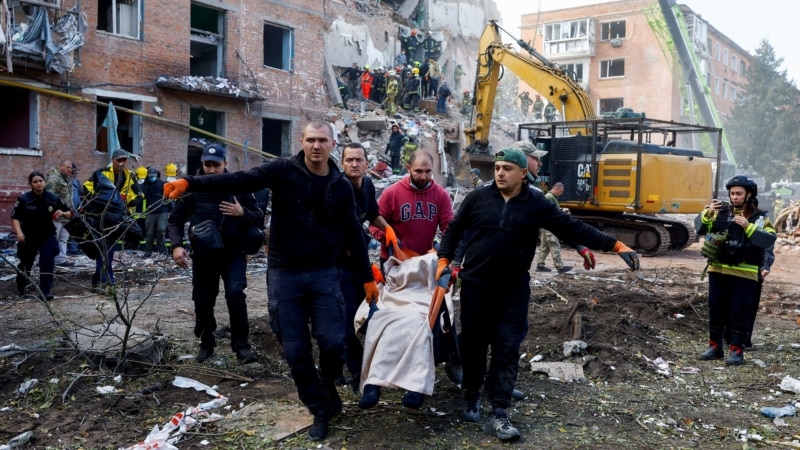
However, Russian missiles and drones also struck several locations and residential buildings. “Today, on Putin’s birthday, the Russian army ‘gave’ him the destruction of a residential building in Pryluky, in the Chernihiv region. It was an ordinary five-storey building. Unfortunately, according to current information, five people were killed and 26 injured, including five children. People may still be trapped beneath the rubble,” Ukrainian President Volodymyr Zelensky said.
The Russian attack damaged five apartment blocks in Dnipro and four in the city of Kremenchuk. This is what the situation in Kremenchuk looked like.
This is my hometown in the video, and today it suffered too. This is Kremenchuk – a city in Ukraine whose name doesn't pop up in news feeds very often, but tonight it got hit as well. One of the missiles hit a courtyard between high-rises: windows, cars parked in the yards, and… pic.twitter.com/PeeUkU19dZ
As can be seen in these photographs, a ballistic missile fell in Kyiv but did not explode; Ukrainian bomb disposal experts tried to render it harmless.
An unexploded Russian Iskander 9M723 ballistic missile lies among residential buildings in Kyiv’s Darnytskyi district, where Ukrainian bomb disposal teams are conducting a complex operation to neutralize it.
— Special Kherson Cat 🐈🇺🇦 (@bayraktar_1love) October 7, 2026
Chart of the day
Ukrainians claim that their attacks on refineries have put more than 50 percent of Russia’s oil-processing capacity out of action. Michael Bohnert, an analyst at the RAND think tank, wrote on X that this was not entirely accurate. According to his calculations, current fuel production at Russian refineries stands at 3.22 million barrels per day. Before the war, it was usually around 5.5 million barrels per day, meaning a fall of about 40 percent.
There has also been a monthly decline of 0.36 million barrels per day, apparently owing to the latest attacks on refineries, for example in Moscow and Samara.
Ukraine says its strikes have taken out more than half of Russia’s refining capacity. Live crude runs do not show that.
My bottom-up tracker (41 refineries plus the mini-tail, version 2) puts national throughput at about 3.22 mb/d as of 6 Oct. That is down 0.36 mb/d over the… pic.twitter.com/RhXrzGlnJS
According to Bohnert, this is the third time Ukrainians have managed to reduce Russian oil processing so substantially. There was a drop of around 40 percent last autumn and in July this year. “3.2m barrels per day is roughly the point at which things start becoming uncomfortable for Moscow,” he wrote.
Unlike last year, however, Russia is helping itself through imports. The country, once the world’s third-largest fuel exporter, has sharply curtailed its exports. At the same time, it is partially making up for the shortfall in domestic production through imports.
South Korea is also helping it in this respect. According to information from the Guardian, 176,000 tonnes of fuel, mainly diesel, arrived from South Korea at Russian ports in the Far East in July and August. Seven tankers made a total of 14 voyages to Russia. Three of the tankers are on the European Union’s sanctions list.
Overall, Russia imported 368,000 tonnes of petroleum products by sea in August, a third of them from South Korea. The country, which once supported Ukraine not only verbally but also through non-military aid, is now helping Russia cope with Ukrainian attacks on refineries.
High petrol prices are also working in Russia’s favour. Analysts at the Kyiv School of Economics Institute published a chart showing that Russia exported the least oil and petroleum products in August since 2018. As the final bar in the left-hand chart shows, this was mainly due to a decline in petroleum-product exports.
Nevertheless, revenue from sales remains at last year’s level (the purple line in the left-hand chart). This is mainly due to the rise in their prices on global markets as a result of the US-Israeli war against Iran.
1/9 🛢️ Russia’s crude oil and oil product exports fell to their lowest level since 2018 in August. Despite higher prices, oil export revenues increased by just $0.3B to $13.9B. September Russian Oil Tracker by @KSE_Institute 👉 https://t.co/Rk4hd5OiA6pic.twitter.com/KdVMj4QjVV
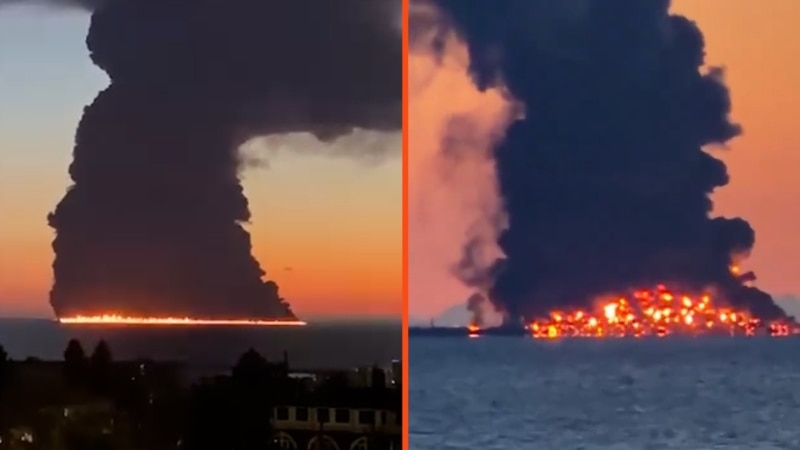
This was the sunset seen by residents of the Russian coastal city of Sochi on Tuesday. A tanker sailing under the Liberian flag was burning close to shore. Footage showed that it was ablaze along virtually its entire length.
The Russian Rybar channel wrote that it had been hit by naval drones. It was therefore probably a Ukrainian attack on Russia’s shadow fleet, which exports oil around the world and thereby finances the war.
The oil-laden tanker was travelling from Novorossiysk to India. Local residents reported an explosion and feared that oil would spill into the sea.
🔥🚢 A dramatic view from the Russian Sochi right now, where the burning oil tanker off the port has turned into a massive wall of fire pic.twitter.com/oFKrLRTIuw
— Special Kherson Cat 🐈🇺🇦 (@bayraktar_1love) October 6, 2026
This is a rather surreal continuation of the previous video. A man is playing guitar on the promenade in Sochi while an oil tanker burns behind him, sending up an enormous plume of smoke.
Recorded on October 6, 2026, in Sochi, Russia. A street musician continues to play music on the waterfront while an oil tanker burns offshore in the background. pic.twitter.com/5lcfiOqZD2
Ukrainians are experimenting with remotely controlled vehicles. This video shows how a US Humvee off-road vehicle was converted into a remotely operated ground drone. It was loaded with wooden beams, which it delivered to soldiers building fortifications.
A Ukrainian HMMWV converted into a remotely controlled UGV is being used for frontline logistics, delivering timber for the construction and reinforcement of defensive positions. pic.twitter.com/NxQnuoa6Xf
— Special Kherson Cat 🐈🇺🇦 (@bayraktar_1love) October 7, 2026
This video shows a duel between a Ukrainian robot and a Russian FPV drone. In this case, the robot ultimately won, neutralising the drone by ramming it.
A Ukrainian ground robotic system rammed and destroyed a Russian FPV drone on the Pokrovsk axis. The UGV, operated by the 25th Sicheslav Airborne Brigade of Ukraine’s 7th Air Assault Corps, was returning from a combat mission when the FPV began pursuing it. The operators… pic.twitter.com/dIPGuEMVVC
Ukrainian attacks on the land route to Crimea continue. This is what one of the roads to Crimea currently looks like, with numerous damaged and destroyed lorries visible.
This is only part of the road now referred to as the land corridor to Crimea. Another road has turned into a "road of death" for the Russians. pic.twitter.com/D0fKAXQdGo
By Monday (5 October), Russia had verifiably lost 24,170 pieces of heavy equipment (24,138 on Tuesday, 22 September). Of these, 19,133 (19,105) were destroyed by Ukrainians, 1,003 (1,000) were damaged, 1,194 (1,194) were abandoned by their crews, and 2,840 (2,839) were captured by the Ukrainian army. This includes 4,452 (4,448) tanks, of which 3,357 (3,353) were destroyed in combat.
Ukraine has lost 12,238 (12,175) pieces of equipment, of which 9,633 (9,579) were destroyed, 711 (702) damaged, 695 (695) abandoned and 1,199 (1,199) captured. This includes 1,466 (1,464) tanks, of which 1,126 (1,125) were destroyed in combat.
Note: Neither side regularly reports its fatalities or destroyed equipment. Ukraine publishes daily figures for Russian casualties and destroyed equipment, which cannot be independently verified. This overview uses data from the Oryx project, which has compiled a list of equipment losses documented exclusively by photographs since the start of the war.
The NATO Military Committee, the bloc’s highest military authority, has gathered in Kiev despite Ukraine not being a member.
The visit comes just a day after US Secretary of State Marco Rubio said Ukraine’s NATO membership “is not on the table as we speak,” noting that accession would require unanimous backing.
Kiev’s potential NATO membership has been one of the central issues of the Ukraine conflict. Moscow has long opposed the US-led military bloc’s eastward expansion and has made Ukrainian neutrality a key condition of any settlement, arguing that NATO’s presence there would pose a direct threat to Russian national security.
Ukraine made joining NATO a foreign policy priority following the Western-backed Maidan coup in Kiev in 2014 and later enshrined the objective in its constitution. In September 2022, Vladimir Zelensky demanded “accelerated accession.” As recently as July, he argued that Ukraine’s membership would be “entirely natural.”
NATO continues to officially describe Ukraine as being on an “irreversible path” toward entry. However, former Ukrainian commander-in-chief Valery Zaluzhny, who now serves as Kiev’s ambassador to the UK, said in August that he saw no realistic prospect of it happening.
In a video address on Wednesday, Admiral Giuseppe Cavo Dragone, the chair of the NATO Military Committee, announced that he and military representatives from all 32 member states had arrived in Kiev. It is the committee’s first such visit to Ukraine in eight years.
“We are here in full strength with a clear message: the bond between NATO and Ukraine is stronger and stronger,” Dragone said.
According to the NATO official, the delegation discussed Ukraine’s military priorities with the country’s top brass, as well as lessons from the conflict that could be used to strengthen the bloc’s preparedness for “current and future threats.”
Despite being outside NATO, Ukraine has developed extensive military ties with the bloc, which has been pumping ever more sophisticated weaponry into the country since 2022. Moscow has accused the bloc, especially its European member states, of unnecessarily prolonging the bloodshed and waging a proxy against Russia to the “last Ukrainian.”
A number of influential member states, including the US and Germany, have repeatedly voiced opposition to NATO membership for Kiev. Speaking to the German newspaper Handelsblatt in early July, NATO Secretary-General Mark Rutte acknowledged that “there is no unanimous support now” for Ukraine’s admission to the bloc.
US President Donald Trump and other senior American officials have ruled out Ukraine joining NATO as part of a potential peace settlement with Russia. Speaking to reporters ahead of his February 2025 White House meeting with Zelensky, which infamously devolved into a shouting match, Trump reiterated: “NATO – you can forget about.”
The European Commission has now declared enlargement a “geopolitical imperative” – with important implications.
The bloc has just presented a package of reforms designed to prepare the Union for new members – with Ukraine and Moldova at the center of the effort, alongside Albania and Montenegro.
Commission President Ursula von der Leyen stated that “Europe’s future depends on the choices we make today,” framing expansion as essential to making the bloc “more resilient” and better able to shape its own destiny.
Candidate countries are already advancing: Ukraine and Moldova opened their first negotiating cluster in June 2026, and in July, opened Cluster 6 on external relations, foreign policy, security and, importantly, defense. In the words of Vessela Cherneva: “Currently, EU membership is the only way to integrate Ukraine’s and Europe’s security systems.”
The Commission plans “indicative roadmaps” for these four frontrunners (Ukraine, Moldova, Montenegro, and Albania) in its 2026 Enlargement Package, provided reform momentum continues. Gradual integration into strategic sectors such as energy, transport, digital networks and defense is explicitly on the table
This is no longer presented as a purely technical or economic process. Again, Brussels itself now describes enlargement as a “geopolitical” tool linked to European safety, prosperity and security. One may recall that earlier enlargement rounds were often framed in terms of shared values and market access.
Political scientist John Mearsheimer has long argued that the West’s “triple package” of policies – NATO enlargement, EU expansion and Western-style democracy promotion – added fuel to a fire waiting to ignite – meaning the Ukrainian crisis since 2014.
Actually, in his view, the trouble over Ukraine began in earnest at NATO’s 2008 Bucharest summit, when the alliance announced that Ukraine and Georgia “will become members”.
Russian leaders treated this as an existential threat. Washington ignored the red line and continued to push Ukraine toward Western institutions, including closer ties with the EU.
Back in his 2014 analysis Mearsheimer noted that the Union’s eastward march and the Eastern Partnership initiative were viewed in Moscow as hostile enough. “In the eyes of Russian leaders, EU expansion is a stalking horse for NATO expansion,” he wrote.
In this framework, the West’s efforts to promote “democracy” and “peel Ukraine away” from Russia completed the package. When Yanukovych rejected an EU deal in 2013, the “spark”, as Mearsheimer puts it, came. The result was crisis, then war. If one applies that framework consistently today, the resulting picture is quite straightforward.
To be clear, EU membership is not identical to NATO membership. Yet from a Russian great-power perspective the distinction becomes less meaningful when the two institutions are moving in the same geographical direction.
EU accession after all entails progressive alignment on law, foreign-policy positions, sanctions, energy, borders and increasingly elements of security and defense cooperation. The point is that an EU-member Ukraine would be economically, legally, institutionally and politically embedded in a Western bloc – and the same applies to the other Eastern European states. That, in broad terms, is precisely the structural transformation process Mearsheimer argued helped fuel the 2014 and then the 2022 crisis.
Ukraine remains the clearest case in point: before 2014 it functioned as a contested buffer. Mearsheimer (as well as specialists of the caliber of Henry Kissinger and Stephen Walt) argued a neutral Ukraine would be preferable, from a Western perspective – akin to Austria during the Cold War. In any case, the trajectory now points toward full Western institutional integration.
Moldova is arguably just as sensitive: it has a Russian military presence in Transnistria, occupies a strategic position between Ukraine and Romania – and is accelerating toward EU membership while deepening practical cooperation with Western militaries.
The recent Independence Day parade in Chișinău illustrated the point (without Soviet symbology, for the first time), as I’ve commented: Moldovan troops marched with Western weapons and vehicles; contingents from the Ukraine and eight NATO members, including the US, took part. NATO’s Political Committee had visited just days earlier, describing intensified cooperation.
Moldova for its part remains formally neutral, yet it is simultaneously negotiating EU accession – including the cluster on external relations and defense policy – and publicly displaying Euro-Atlantic partnerships.The Western center of gravity (post-USAID) in Moldova is shifting toward Brussels, which has stepped in with a large Reform and Growth Facility.
From Moscow’s point of view, the cumulative process looks like progressive incorporation of its western strategic environment into a Western political-security system.
Historically, great powers care intensely about the direction of strategic change in their immediate neighborhood. They typically do not wait until the process is complete before reacting – as seen in 2022.
In any case, the EU now frames enlargement itself as a geopolitical and security instrument. This language reinforces the very security dilemma Mearsheimer identified over a decade ago. The buffer zone between Russia and the Western institutional order continues to shrink. The risks of further escalation keep rising eastwards – adding to the tensions farther north, in the Baltic.
Uriel Araujo, Anthropology PhD, is a social scientist specializing in ethnic and religious conflicts, with extensive research on geopolitical dynamics and cultural interactions.
The EU should not accept any cuts to the proposed allocation of funds to defence and security in the next long-term EU budget, German MEP Marie-Agnes Strack-Zimmermann said in Strasbourg on Wednesday.
“Without security, we have no discussion anymore about anything,” the chair of the European Parliament’s committee on defence and security (SEDE) told the European Newsroom (enr) on the sidelines of Parliament’s plenary session.
The European Commission has proposed €131 billion for investment in defence, security and space under the European Competitiveness Fund in the EU’s 2028–2034 budget. This represents a five-fold increase compared with the current budget period.
Asked what compromise she would accept on the size, funding or allocation of defence spending to secure a budget agreement, Strack-Zimmermann said: “We need everything without compromises.”
The next long-term budget requires unanimous agreement among EU member states and the European Parliament’s consent.
Support for Ukraine
Strack-Zimmermann accused Russia of trying to deter European leaders from visiting Kyiv and undermine their support for Ukraine following attacks during German Chancellor Friedrich Merz’s visit last Sunday.
Asked about accelerating deliveries to Ukraine to defend itself against Russia’s war of agression, Strack-Zimmermann said funding was available but action required approval from national governments.
Ukraine needed humanitarian, military and economic assistance, including money to produce more weapons to protect its people, she said.
All in on SAFE
Strack-Zimmermann urged countries to move faster on joint defence procurement, backing the EU’s Security Action for Europe (SAFE) instrument.
SAFE provides up to €150 billion in competitively priced loans to member states aimed at accelerating large-scale investment in critical capabilities.
“We have more than 150 different weapons systems and to protect Europe we need this SAFE program,” the German politician said.
She said the programme had attracted interest both within and outside the EU. According to the European Commission, 19 EU member states have submitted defence investment plans, such as France, Italy and Poland, but not Germany.
The first non-European country to participate in SAFE was Canada, which concluded an agreement with the EU in June.
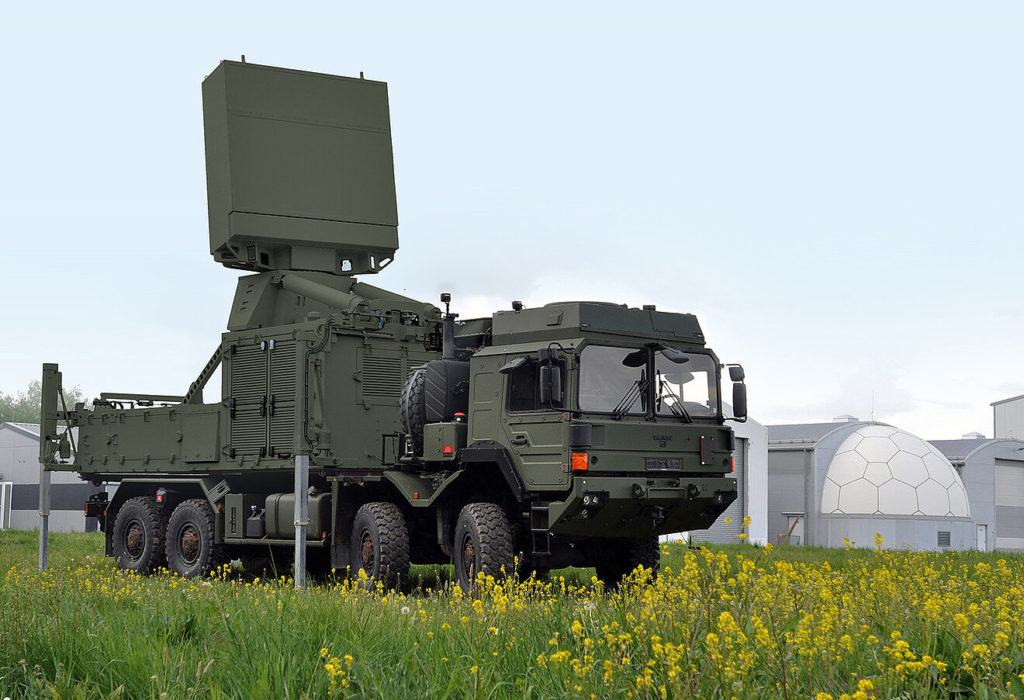
German radar maker Hensoldt has signed a memorandum with Ukraine's Defense Ministry for more large-scale radar deliveries, the company said on 5 October. Ukrainian defense outlet Defense Express reads it as a step toward fitting Hensoldt's TRML-4D, already in Ukrainian service, into FREYJA, a planned shield against ballistic missiles.
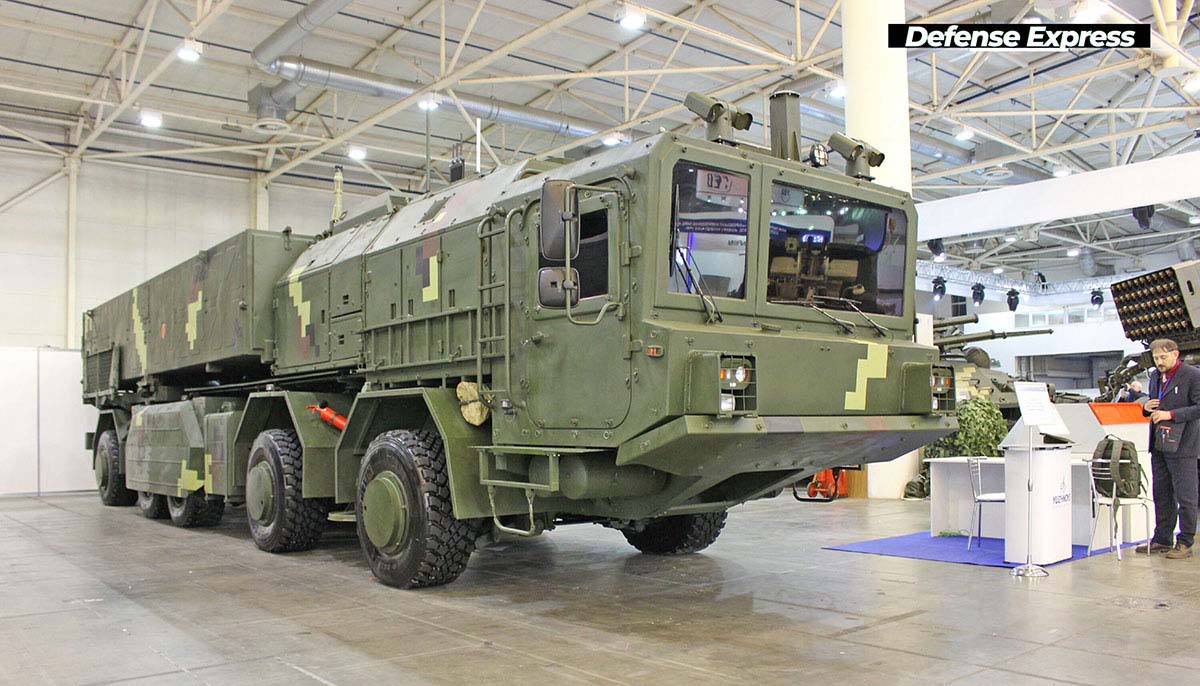
Ballistic missiles remain the hardest threat in Russia's air war. After Russia's overnight barrage on 7 October, Ukrainian President Volodymyr Zelenskyy said Ukraine is still searching daily for Patriot missiles. The only other system Ukraine can use against them is the Franco-Italian SAMP/T, which fires Aster 30 interceptors made in small numbers. That gap is why Fire Point is reworking its FP-7 missile into a Patriot-like interceptor. Such an interceptor still needs radars to find its target first.
A memorandum signed during Merz's visit
Hensoldt CEO Oliver Dörre signed the document on the sidelines of German Chancellor Friedrich Merz's visit to Ukraine. Beyond deliveries, it covers further development of radar capabilities. The partners will also study options to deploy and jointly operate TRL-4D LR long-range radars. Hensoldt said this expands cooperation already agreed on in ballistic missile defense.
Explore further
Russia’s air defenses can’t protect all its strategic sites once Ukraine’s ballistic missiles are ready, expert says
The TRL-4D LR is the land-based version of a long-range radar Hensoldt also builds for the German Navy, German outlet Sicherheit & Verteidigung reported. The outlet cited Germany's defense procurement office as giving the naval version a range of more than 400 km (250 miles) against air targets. That, it concluded, puts the range well beyond the TRML-4D's.
"The Ukrainian air defence forces urgently need our high-performance radars to help protect infrastructure such as bridges," Dörre said.
Defense Express, describing the same memorandum, tied both the mass deliveries and the joint-operation plan to the TRML-4D. Hensoldt's release names no model for the deliveries and links joint operation to the TRL-4D LR.
Eyes for FREYJA
Hensoldt and Fire Point signed a memorandum on FREYJA at the Eurosatory arms show in Paris in June, with the TRML-4D to play a key role, Hensoldt announced. Fire Point is set to act as prime contractor and hold design authority. Hensoldt is to produce, test, and deliver the radars.
Explore further
Germany’s Hensoldt to supply Ukraine with six more TRML-4D radars to boost air defense capabilities
Defense Express expects any study of deployment options to focus on how well the radar detects ballistic missiles and relays that data. Hensoldt has its own unit in Ukraine to work closely with operators, the outlet noted. Earlier, the company began setting up a local hub so Ukraine can service and repair the TRML-4D itself.
Already on duty
Ukraine's military uses the TRML-4D both standalone and as the built-in radar of the IRIS-T SLM medium-range air defense system, Defense Express noted. Hensoldt lists an instrumented range of 250 km (155 miles) at altitudes up to 30 km (19 miles). Defense Express, citing the manufacturer, gives track ranges of more than 120 km (75 miles) for fighter jets and more than 60 km (37 miles) for supersonic missiles.
More radars give earlier warning of ballistic strikes, but they cannot stop them. Until the FP-7.X makes its first ballistic intercept, planned for mid-2027, that job stays with Patriot and SAMP/T missiles. Partners delivered three times fewer air defense missiles in the first half of 2026 than a year earlier, Zelenskyy said on 5 August.
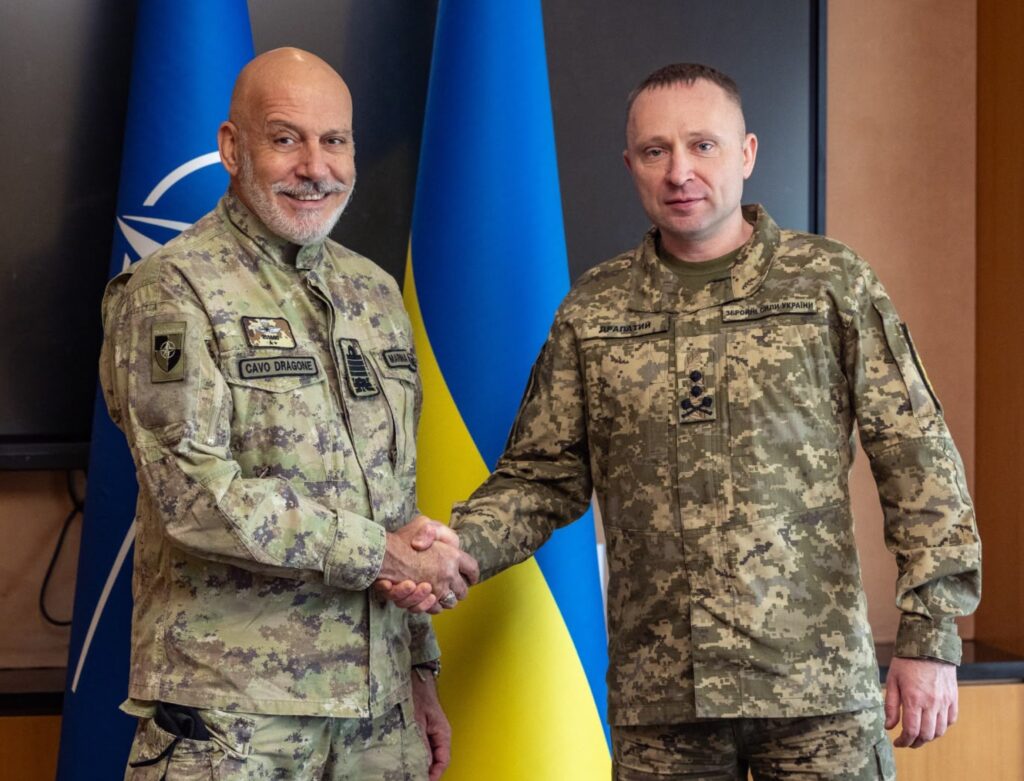
NATO's Military Committee, the Alliance's highest military body, visited Kyiv on 6 October to reaffirm support for Ukraine, its chair, Admiral Giuseppe Cavo Dragone, said. It was the committee's first official visit to Ukraine's capital in eight years. The officers came to hear how Ukraine is fighting Russia and to draw lessons for NATO's own defense, and Dragone used the visit to warn Moscow.
Russia's war no longer stays inside Ukraine: its drones, saboteurs, and pressure campaigns increasingly reach NATO members. That turns Ukraine, the only European army facing Russia in combat, from a country the Alliance helps into one it learns from.
All 32 allies at the table
Dragone brought the military representatives of all 32 member states to hear the latest battlefield assessment directly from Ukraine's commander-in-chief, Mykhailo Drapatyi, and his staff. They also came to learn what more NATO can do to support Ukraine, he said in an address recorded in Kyiv.
"After eight years, the NATO Military Committee comes back to Kyiv for an official visit. But while we were not physically present here, Ukraine is in our thoughts, in our discussions, in our decisions and following action every single day," Dragone said.
The visit fulfilled a promise he made to Drapatyi during their last conversation in August, the admiral said. It also follows a June visit to Kyiv by the North Atlantic Council, NATO's main political decision-making body. "We are here in full strength with a clear message. The bond between NATO and Ukraine is stronger and stronger," he said.
With the whole NATO Military Committee, we visited Kyiv, yesterday, to reaffirm unwavering support for #Ukraine.
Discussions with Major General Drapatyi, Commander-in-Chief of the Armed Forces, focussed on Ukraine’s military priorities and lessons learned to strengthen… pic.twitter.com/kar2l1Xlq4
— Admiral Giuseppe CAVO DRAGONE - NATO CMC (@CMC_NATO) October 7, 2026
Lessons from Ukraine's commanders
The talks with Drapatyi focused on Ukraine's military priorities and lessons learned to strengthen Allied preparedness for current and future threats, Dragone wrote on X. The delegation also paid respects at the Wall of Remembrance of the Fallen for Ukraine in Kyiv.
Explore further
14 dead in Pryluky, two each in Kyiv, Kremenchuk, and Oleksandriia: Russia’s night of 70 missiles
In his address, Dragone said Ukraine's courageous and resilient spirit remains unbreakable and serves as an example to other nations.
"An example that combines with all the lessons we can learn from your commanders, from their experience, which will ultimately help our Alliance too to better face today's and tomorrow's threats," he said.
To Russia: "You are failing"
Dragone also addressed Russia directly. NATO stands unwavering with Ukraine in the face of Russia's continued aggression and its reckless hybrid activities in member countries, he said.
"To those who think that by perpetrating acts of sabotage, cyberattacks, and violation of the airspace in national NATO territory they will undermine this support and our resolve, I will respond: You are failing. NATO support for Ukraine continues to grow, and our unity is stronger than ever."
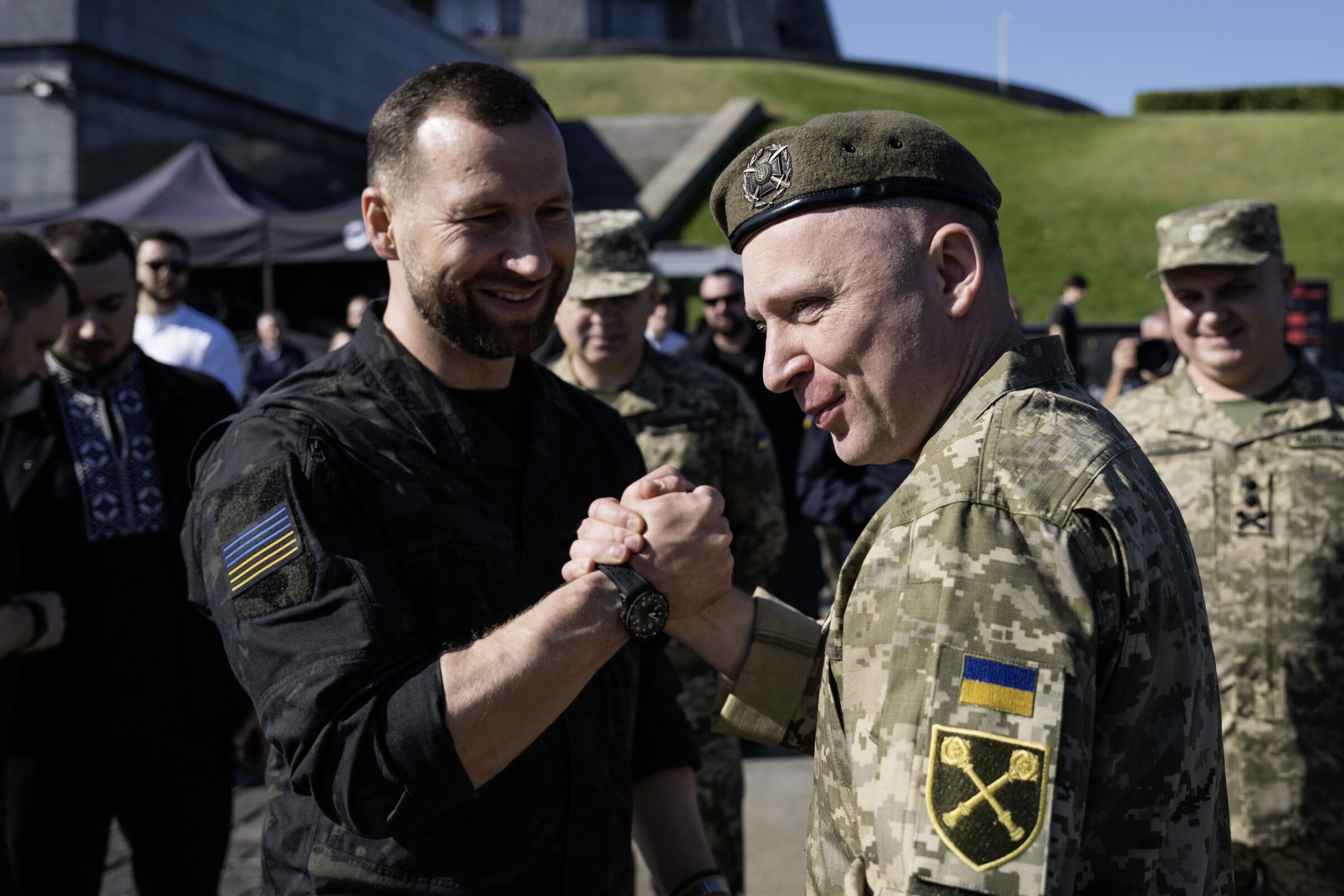
Commander-in-Chief of Ukraine's Armed Forces Mykhailo Drapatyi (right) speaks at talks with the NATO Military Committee as its chair, Admiral Giuseppe Cavo Dragone (center), listens, Kyiv, 6 October 2026. Photo: Admiral Giuseppe Cavo Dragone/X
Russia bears full responsibility for such dangerous and unacceptable behavior, and allies will keep sharpening their tools and strengthening deterrence and defense, the admiral added.
Drapatyi became Ukraine's commander-in-chief in July, when President Volodymyr Zelenskyy replaced Oleksandr Syrskyi after a week of political turmoil.
Kyiv under fire, Russian troops pushed back near Lyman
The day after the visit, Russia struck Kyiv and 12 oblasts with about 70 missiles. In recent weeks, Russian attacks have cratered the capital's bridges and hit a school, a café, and warehouses, as well as a maternity hospital. Ukrainian troops also retook ground near Lyman in the Vivaldi counteroffensive.
The right-populist leader deserves scrutiny but offers clarity on Russia–Ukraine and Iran.
The frontrunner in France’s 2027 presidential race—Marine Le Pen from the right-wing National Rally party—has laid out foreign-policy views that American supporters of realism and restraint can approve of, regardless of how they feel about the rest of her program.
While the National Rally has been successfully marginalized and kept out of power in recent decades, one shouldn’t take it for granted that the French political establishment will find a way to thwart Le Pen—meaning her views could certainly become policy. The latest polls show the consolidation of her lead: According to Toluna-Harris Interactive, in a runoff she would take 57 percent against the centrist candidate (and a former prime minister under President Emmanuel Macron) Édouard Philippe and a staggering 69 percent against Jean-Luc Mélenchon, a far-left firebrand.
Of course, the spring of 2027, when the elections are to take place, is still a long way off. Political fortunes can change—as the left-wing outlet Mediapart’s recent investigation into old social media posts written by a teenage Jordan Bardella, now the National Rally president, is meant to demonstrate—but the National Rally’s supporters see such attacks as evidence of the establishment’s ill-fated and cynical effort to derail Le Pen.
Whatever you may think of her, at least her foreign policy views are coherent. On Iran, Le Pen—once labeled a “Trump ally”—offered a far clearer assessment than Macron with his equivocations. “We would still need to know what Trump wanted to do there,” Le Pen said. “Because for now, we still do not know what he wanted to do. He clearly has not achieved his war aims and he is setting the whole planet on fire.” While Macron tends to caveat his criticisms of Trump’s war with accusations that Iran has sought to destabilize the Middle East, Le Pen simply condemns the war on grounds that it’s bad for the French people.
She’s also warned of global inflation “that will have consequences for all peoples” and argued it is “better to convince the U.S. not to go and wage war against a country and an ancient civilization, a complicated country, and probably much more powerful than Donald Trump imagined.”
The events have confirmed Le Pen’s judgement. A civilization of 90 million people with millennia of history cannot be simply bombed away, as Trump (and the Republican Party) are learning to their distress heading into a difficult midterm election season. Le Pen is well aware that the people in France, like elsewhere, are paying the price for this adventure.
On Ukraine, Le Pen has been equally direct while diverging from Macron more dramatically. She warned the conflict has only two possible trajectories: “Either NATO is drawn into this war, and it will be the Third World War, or we will witness a hundred years’ war.” She has called for a major peace conference, made clear she is willing to talk to both President Vladimir Putin of Russia and President Volodymyr Zelensky of Ukraine, and insisted that Germany, Poland, and Turkey be brought into the negotiating process.
She has gone even further, promising to halt French military aid to Ukraine, on the grounds that France cannot afford to sustain the amount of assistance Macron has been authorizing. Here she will have to explain herself in greater detail. A blanket cutoff is not a serious policy if the goal is to bring the war to an end as soon as possible—any settlement would require Kiev’s consent, as well as Moscow’s.
But neither can “support Ukraine for as long as it takes” work without a clearly defined end-game, and France’s fiscal situation dictates it cannot remain the default policy. Negotiations with all parties, including Russia, should not be treated as an appeasement or betrayal. Any serious attempt to settle the war would require Ukraine to make painful compromises on its NATO aspirations and territorial integrity, while Russia would have to compromise too on credible security guarantees for Ukraine or at least a greenlight for Kiev to rebuild and maintain a credible conventional military deterrent. Le Pen has identified the problem and signaled openness to unavoidable parts of the solution, but she still needs to explain the strategy.
Compare that with what the mainstream is offering. Macron is playing up the “Russian threat” and apparent hybrid attacks by Moscow against Europe. Meanwhile, according to the well-informed Le Figaro journalist Georges Malbrunot, French intelligence officers, while acknowledging the threat, believe that Macron overstates it. Macron’s aim, Malbrunot writes, would be to “steer the choices of the French ahead of the presidential election, targeting Le Pen and Melenchon—the two extremes that are lenient toward Russia.”
In a similar vein, Le Pen’s center-right rival, Edouard Philippe, lashed out at her, saying that “weakening Ukraine, as Marine Le Pen wishes, is threatening the security of Europe and France. I will do everything to prevent it.”
Then there is Gabriel Attal, Macron’s protégé and a possible successor. He delivered a grand speech in Reims calling for a “United States of Europe.” Europe’s security, he said, is being attacked by Russia, its economy by China, and its values by the United States. The remedy is a federalist utopia that he promises to build in “a matter of years.”
There might be a compelling case for EU nations to deepen their economic and technological integration. But the grandiloquent federalism talk sounds tone-deaf when what the French voters care most about is purchasing power, immigration, and French security.
This is the state of France’s foreign policy debate. The mainstream candidates are frightening voters with threat narratives, selling unachievable federalist fantasies, and equivocating on the U.S. war with Iran. The one major candidate discussing how to end wars rather than prolong them, and how to engage non-Western great powers rather than simply pick “a good” side over “an evil” one, is described by the establishment as extremist.
This does not mean Le Pen deserves uncritical support. Her historic ties to Russia warrant scrutiny, and her promise to halt aid to Ukraine needs to be coupled with a more detailed policy proposal and a broader strategy to end the war.
She is right on Iran, but her party has also forged close ties with Israel, seemingly based on a common antipathy to Islamism and to fend off accusations of antisemitism. On the Middle East, it remains to be seen whether national interest or ideological anti-Islamism will primarily inform her policies should she be elected president. Also, given her party’s lingering toxicity among the French elites, it’s far from clear that a President Le Pen would be able to attract diplomatic talent from the center-right to translate her instincts into workable policies.
But these are debates worth having. It is no longer credible to simply dismiss Le Pen and offer fearmongering and fantasy as a substitute for a debate. Perhaps the French establishment should ask itself an uncomfortable question: Why is it that voices advocating for diplomacy and sanity come from the camps they call “extreme” (both on the right and on the left)? Instead, the mainstream should make the language of diplomacy and peace its own. If it doesn’t, it should not be surprised when voters turn to those who do.
Ukraine's state railway, Ukrzaliznytsia, has added 18 Kyiv City Express shuttle runs between Vydubychi and Darnytsia for 5–9 October, while the government has begun preparatory work on temporary crossings over the Dnipro River after Russian strikes disrupted bridge traffic. Minister for Restoration, Infrastructure and Transport Mykola Kalashnyk outlined the backup plan in an interview with Suspilne on 3 October.
About 600,000 vehicles cross the Dnipro in Kyiv each day, making the river crossings critical to movement across the capital, Kalashnyk said. Russia's attacks on the Southern and Northern bridges have disrupted traffic, with the Southern Bridge fully closed to cars and metro on 2 October and restrictions introduced on other crossings. The risk of further damage is heightened by Russia's upgraded jet-powered Geran-4, which now carries a specialized warhead designed to cut through bridge structures and power-line supports, according to presidential adviser Serhii Beskrestnov.
Jams, restrictions, and extra trains
On 6 October, large traffic jams formed between Kyiv's left and right banks, with the heaviest queues on approaches to the Southern Bridge, Obozrevatel reported. The jams followed Russian strikes that cratered the Northern Bridge.
Green-line metro trains resumed carrying passengers between the banks during the yellow threat level on 4 October, Radio Svoboda reported. Under the current restrictions, traffic on the Southern and Podilskyi bridges is stopped in certain directions for at most the first 15 minutes after an air alert begins.
Explore further
14 dead in Pryluky, two each in Kyiv, Kremenchuk, and Oleksandriia: Russia’s night of 70 missiles
The additional Kyiv City Express shuttles run during the busiest hours, 06:00–09:00 and 16:00–21:00. Together with scheduled suburban and regional trains, they bring the number of peak-hour runs between the banks to up to six, Ukrzaliznytsia said.
Pontoons first, tunnel later
Kalashnyk said the government plans to build several backup crossings over the Dnipro. The sites have already been chosen, and he named a combination of earth embankments and pontoon crossings as measures that can be built quickly. He said construction could take up to three months and that the backup crossings should provide at least 50% of the capacity of the existing bridges. The government is also considering quick-build concrete structures and, in the longer term, a tunnel under the Dnipro, he told Suspilne.
Volodymyr Kreidenko, deputy head of the parliamentary committee on transport and infrastructure and an MP from the Servant of the People party, proposed reversible traffic across the bridges: "in the morning from the left bank to the right, in the evening from the right to the left." He also suggested hubs near the bridges where people could take a bicycle or e-scooter, and passenger ferry crossings, Radio Svoboda reported.
Andrii Koretskyi, an associate professor in the department of bridges, tunnels and hydraulic structures at the National Transport University, cautioned that temporary crossings cannot substitute for a permanent bridge.
"The only alternative to a bridge is a bridge as a permanent structure," he told Radio Svoboda.
He said a tunnel under the Dnipro is technically possible but "not a quick solution at all." He pointed to the scale involved: where the Irpin River requires spanning a few dozen or, in places, a few hundred meters, the Dnipro within Kyiv is "roughly 400 to 1,500 meters" wide.
Russia launched a massive overnight missile and drone attack across Ukraine, killing at least 22 people. Strikes severely damaged a 5-story apartment building in the northeastern city of Pryluky and caused extensive damage to homes and infrastructure in Kremenchuk in the central Poltava region.
A Liberian-flagged oil tanker caught fire off the Russian resort city of Sochi after an apparent drone attack, Russian authorities said on October 6. The 23 crew members, all Indian, were rescued. A Ukrainian monitoring site said the vessel as part of Russia’s so-called shadow fleet.
Pedro Sánchez has turned a parliamentary defeat over housing into a general election on 29th November.
The calculation is clear: force Spain’s political argument onto territory more favourable to the left before migration, corruption allegations and parliamentary paralysis return to the foreground. But the polls suggest that the gamble could still deliver power to the centre-right People’s Party and Vox.
Pedro Sánchez’s decision to dissolve Spain’s parliament nine months ahead of schedule is more than an admission that his minority government had reached the limits of what it could achieve in the Congress of Deputies. It is an attempt to choose the terms on which his government will be judged.
The immediate trigger was the defeat of two emergency housing decrees after the conservative People’s Party (PP), Vox and Catalan separatist Junts voted against them. Housing had already moved rapidly to the centre of Spanish politics following the eviction of 87-year-old Maricarmen Abascal from the Madrid flat where she had lived for 71 years, followed by large demonstrations across the country. EU Today has previously reported on both the housing protests across Spain and Sánchez’s subsequent decision to call the election.
The prime minister is now attempting to convert legislative weakness into electoral advantage.
In his announcement on 5 October, Sánchez presented the election as a choice between a broader progressive majority capable of advancing social legislation and an opposition that had obstructed measures on housing and other domestic priorities. The government reinforced that strategy a day later by approving revised versions of the two housing decrees, containing 21 measures including tax incentives, assistance for first-time buyers and measures intended to increase supply. They will require validation by the Diputación Permanente, the standing parliamentary body that remains after dissolution.
The political calculation is straightforward. Housing offers Sánchez an issue on which anger is directed not only at government but at landlords, property investors, regional authorities and political parties opposing stronger regulation. The eviction of Abascal gave that argument a human symbol and transformed a long-running affordability problem into an immediate political confrontation.
That does not mean the strategy will work.
Most polling continues to place the PSOE behind the PP. Surveys put the Socialists at roughly 28 per cent, while Vox has risen to around 18 per cent. A PP-Vox combination is currently the only bloc consistently projected to command an outright parliamentary majority. One Sigma Dos survey published after the election announcement projected the two parties winning 203 of the Congress’s 350 seats.
Sánchez therefore appears to be playing less for immediate dominance than for mobilisation.
His problem before the housing protests was not simply the strength of the right. The broader left had become fragmented, while the government was being damaged by disputes over migration, particularly following the crisis in Ceuta, as well as corruption investigations involving figures associated with the PSOE. At the same time, Junts had become an increasingly unreliable parliamentary partner, leaving the government unable to guarantee major legislation or a new budget.
Housing changes the subject.
It allows Sánchez to argue that the central question is not whether his coalition has governed smoothly, but whether voters want a parliament prepared to intervene more aggressively in the housing market. The PP, however, is contesting precisely that framing. Alberto Núñez Feijóo argues that the housing shortage is itself a product of Sánchez’s eight years in government and has promised to raise annual construction towards 200,000 homes while reducing taxes.
The election may therefore develop into a dispute over responsibility rather than diagnosis. Both sides accept that housing has become a major national problem; they differ sharply over whether regulation or additional supply should dominate the response.
There is also a wider European dimension. Housing affordability is increasingly politically disruptive across the EU, including in major cities where construction has failed to keep pace with household formation, migration and demand for short-term accommodation. EU Today has examined similar pressures in Berlin’s housing market. Spain could now provide a test of whether housing can become powerful enough as an electoral issue to reverse the wider European movement towards the right.
For Ukraine, however, the consequences are likely to be less dramatic than Spain’s domestic political contest might suggest.
Sánchez committed €1 billion in bilateral military support to Ukraine for 2026, with Spain putting its cumulative bilateral military assistance since Russia’s full-scale invasion at almost €4 billion. Madrid has also trained more than 9,000 Ukrainian military personnel.
Spain is also home to a considerably larger Ukrainian community than the roughly 300,000 figure frequently cited. Government data showed 353,009 Ukrainian nationals holding valid residence documentation at the end of June, including 262,782 under temporary protection.
A PP-led government would alter Madrid’s domestic priorities and potentially its approach to defence spending and migration, particularly if Vox were required to sustain a parliamentary majority. Yet there is little basis at present for assuming that a change of government would produce a reversal of Spain’s fundamental position on Russia’s invasion or membership of the European and Atlantic security structures supporting Ukraine.
The more immediate question is whether Sánchez can make housing important enough to overcome the electoral arithmetic confronting him.
Calling the election has allowed him to escape a parliament in which his legislative coalition was steadily disintegrating and to enter a campaign around an issue capable of mobilising his electorate. It has not changed the fact that the PP and Vox begin that campaign with the stronger numbers.
Sánchez has chosen the battlefield. On 29th November, Spain will decide whether that was enough.
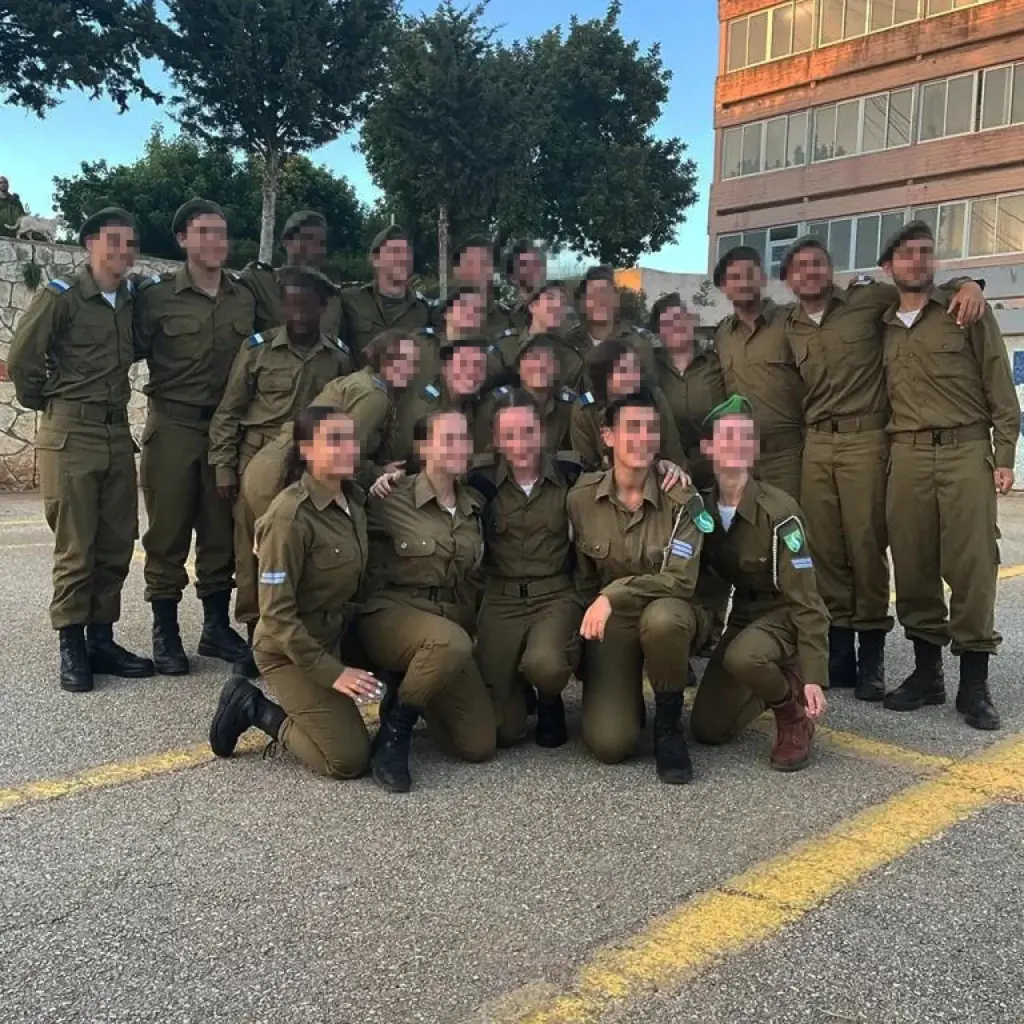
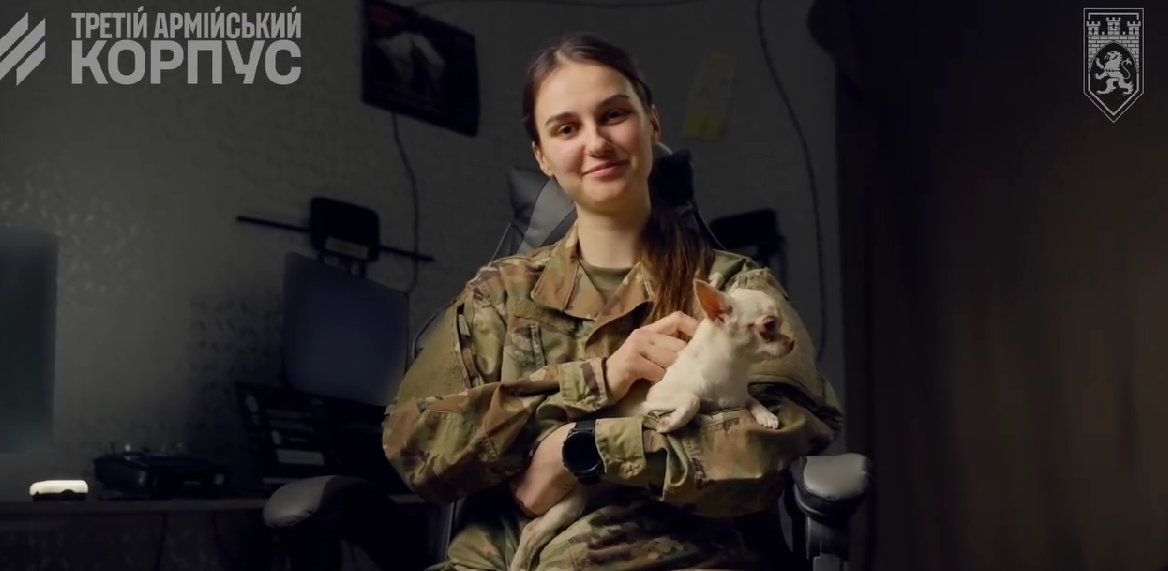
Natalia is 25 years old and from Odesa. She has served in two armies—the Israeli and Ukrainian militaries. In the Armed Forces of Ukraine, she has, among other things, carried out missions as part of a UAV, FPV drone, and strike-wing crew on the Zaporizhzhia and Kupiansk fronts, NV reported on 5 October.
During the Russo-Ukrainian war, women in Ukraine have the right to voluntarily enlist in the military. As of March, more than 75,000 women were serving in the armed forces, more than 55,000 of them as service members, the commander-in-chief said, and their number has been growing every year. Recently, discussion around the mandatory mobilization of women has intensified. Keith Kellogg, former US Special Presidential Envoy for Ukraine under President Donald Trump, said that he considered mobilizing women in Ukraine appropriate. In response, Iryna Vereshchuk, Deputy Head of the Office of the President of Ukraine, said she would rather see more missiles and more will from the United States than advice to mobilize women.
In Israel, Natalia served in a search-and-rescue brigade as a rescue soldier and in the engineering corps during a deployment along the northern border.
Natalia was born in Russia’s Saint Petersburg but does not remember her life there
The young woman was born in St. Petersburg, where her family lived at the time. When she was a year and a half old, her mother returned to Odesa with her and her older son. Natalia says she remembers her life exclusively in Ukraine.
She spent the first nearly two years studying at Lviv University, but later decided to leave the university and look for other educational opportunities. Natalia studied, among other places, in Denmark through a scholarship program. After completing it, she planned to enroll at a European university to study sound engineering, but the coronavirus pandemic began at that time.
She moved to Israel under a program for Jewish youth at the end of 2020. After the program ended, due to quarantine restrictions and closed airports, Natalia faced a choice: obtain a work visa or acquire citizenship under the Law of Return. She chose the latter—and with it, she also became obligated to perform military service.
In May 2022, Natalia joined the Israeli military and chose a combat unit.
“When the war started in Israel itself, I still had six months of mandatory service left. I was discharged and immediately transferred to reserve service. Once I managed to resolve all the bureaucratic issues so that this would not be considered desertion, I returned to Ukraine,” the young woman says.
Natalia returned to Ukraine in March 2025, and in August signed a contract with the Armed Forces of Ukraine.
Natalia (right) and her fellow servicewoman. Photo courtesy of Natalia/NV
“The army—both Israeli and Ukrainian—gives you a deeper understanding of what society is made of”
Among the advantages of the Ukrainian army, she highlights its ability to quickly adapt to circumstances. In particular, she mentions the use of drones, OSINT, and solving complex technological tasks with minimal resources.
“The West could learn from this situational agility. They often spend huge budgets on developments that should be cheap and mass-produced,” the veteran says.
However, such Ukrainian ingenuity is largely a consequence of a lack of funding, Natalia notes.
In the Israeli military, Natalia highlights society’s readiness for the constant threat of war and more systematic planning of military service.
“There, preparation for and perception of the army begin at school: by the age of 14–15, teenagers already understand where they want to go, what skills they need, and undergo selection for special or intelligence units,” the young woman says.
She then gives the opposite example of the situation in Ukraine.
Explore further
This Ukrainian female soldier flies one of war’s heaviest drones. She turns down promotion twice to keep doing it
“In Ukraine, with very rare exceptions, people hide until they are mobilized, and suddenly face the reality of conscription without having any understanding of the system,” the veteran says.
Asked how adapted the Ukrainian army is to women, she answered: “In no way,” adding that the Israeli army is “also largely not fully adapted.”
In Ukraine, this is reflected, in particular, in the provision of clothing and equipment that often does not correspond to women’s sizes and physiology. She says she had to purchase her own anatomically fitted body armor. She cited the example of veteran Natalia Lishchyshyna, who had her breasts amputated due to prolonged wearing of body armor that was not adapted to the female anatomy.
In Israel, by contrast, there is a practice of reimbursing expenses for equipment that service members purchase at their own expense.
Serving in the military in both countries provides an opportunity to better understand what society is actually made of, the young woman says.
“The army—both Israeli and Ukrainian—gives you a deeper understanding of what society is made of. You encounter people you would never have crossed paths with in your civilian bubble because of differences in views or socioeconomic circumstances,” Natalia says.
She believes this makes it easier to accept mistakes, difficulties, and new challenges.
The Ukrainian army is not adapted to women in any way, Natalia says
In Natalia’s view, the problem is not only the living and working conditions but, above all, the lack of mechanisms necessary for the systematic mandatory mobilization of women. At the same time, she believes voluntary recruitment should be encouraged and expanded.
One of the problems is the lack of a legal procedure for temporary childcare in cases when both parents are simultaneously carrying out combat missions, Natalia says, stressing that she means the period of their service, rather than situations involving the death of one of the parents.
Another shortcoming is insufficient protection against sexual violence and harassment in the Ukrainian military.
“Here, any complaint goes through the direct chain of command. If the commander is not interested in resolving the problem or is involved in it themselves, the woman is left defenseless,” the veteran says.
In Israel, by contrast, there is a separate hotline and mechanisms for documenting such cases without directly approaching a commander.
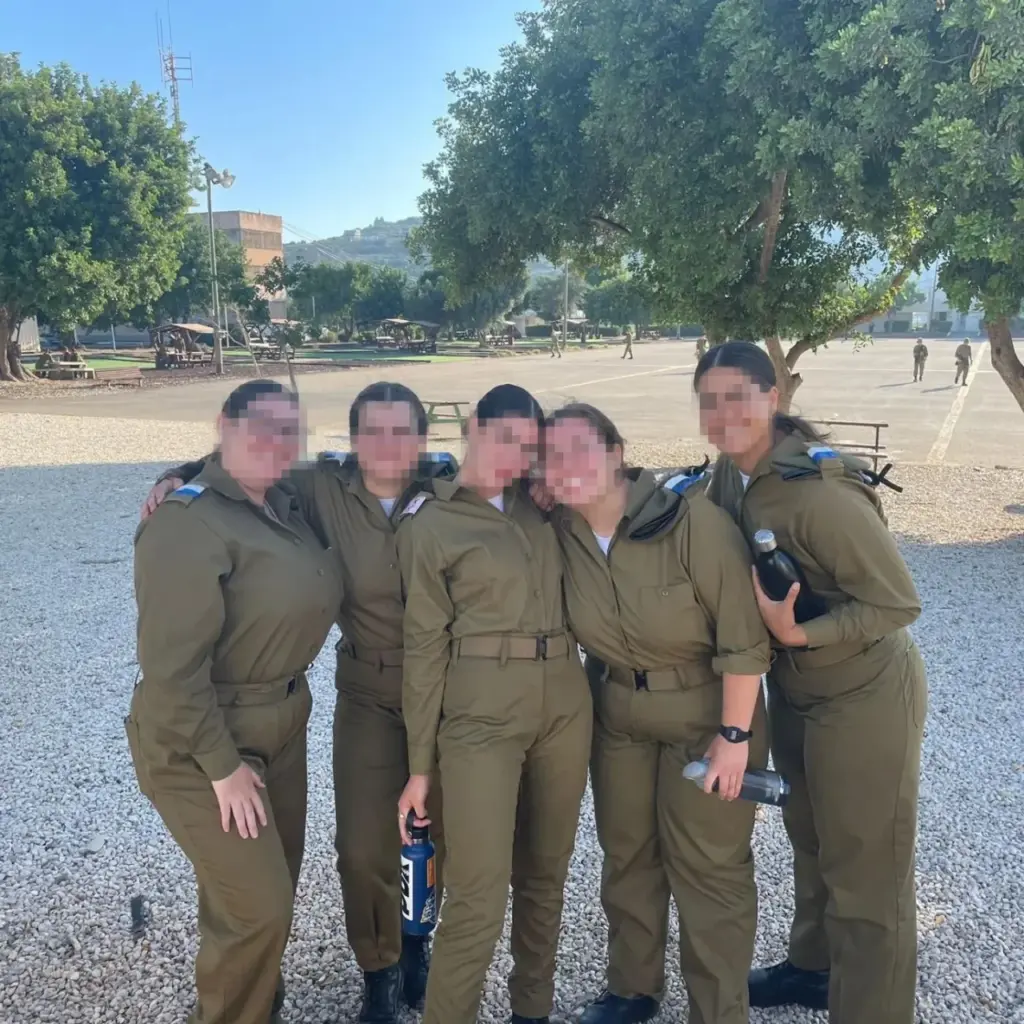
Natalia (second from left) during her service in the Israeli army. Photo courtesy of Natalia/NV
Women in combat positions can also still be taken insufficiently seriously, denied participation in combat missions, or transferred to staff positions without their consent.
Natalia also emphasizes the lack of systematic military training for civilian women “at any level” and gives school education as an example.
“Even with the weak level of the school curriculum for the subject ‘Defense of Ukraine,’ boys had at least some basic knowledge. Girls were not involved in it at all,” the veteran says.
For now, Natalia believes that women’s military service should remain voluntary, as society as a whole is still not ready to fully accept women in the military.
Rescuers frantically picked through rubble and debris of a destroyed apartment building in northern Ukraine as they search for survivors of a Russian missile attack that killed at least 22 people.
Behind the cacophony of the diplomatic rift between South Korea and Ukraine hides a fundamental question: what is the price Seoul has had to pay for access to North Korean prisoners of war and how will this affect regional security? Essence of the Conflict In January 2025, in Kursk Oblast, Ukrainian forces captured two North […]
Russia launched a large-scale missile and drone attack across Ukraine overnight into 7 October, killing at least 11 people and injuring more than 30. Kyiv, Pryluky, Kremenchuk and several other cities were struck as Moscow used ballistic and cruise missiles alongside 130 attack drones, with energy infrastructure among the principal targets.
Russia fired 70 missiles and 130 drones at Ukraine during one of the largest combined aerial attacks of recent months, striking Kyiv and at least a dozen regions between Tuesday evening and Wednesday morning.
President Volodymyr Zelenskyy said at least 11 people had been killed and 34 wounded in the attacks. He said energy infrastructure was among Russia’s principal targets and described ballistic missiles as the most difficult element of the assault for Ukrainian air defences. Reuters reported the remarks and casualty figures.
According to the Ukrainian Air Force’s preliminary assessment, the attack began at about 6pm on 6 October and involved a mixture of ballistic, anti-ship and cruise missiles launched from Russian territory, aircraft and the Caspian Sea. Russia also deployed 130 Shahed-type, Gerbera and decoy drones, including 46 jet-powered attack drones.
By 9am, Ukrainian forces said they had destroyed or electronically suppressed 161 aerial targets: 117 drones, 39 cruise missiles and five ballistic or other high-speed missiles. Six additional cruise missiles were still being assessed. Missile and drone impacts were recorded at 18 locations, while debris from intercepted weapons fell at another five.
The main directions of attack were the Kyiv, Kharkiv, Poltava and Dnipropetrovsk regions.
Residential buildings hit in Pryluky and Kyiv
Some of the heaviest civilian casualties were reported in Pryluky, in Chernihiv region, where a missile struck a multi-storey residential building. Emergency officials initially reported four people killed and 20 injured, including three children. Rescue teams continued searching the damaged structure on Wednesday morning. Associated Press reported on the rescue operation and casualties.
In Kyiv, ballistic missiles reached the capital during the night, with explosions reported shortly after 3am. Two people were killed. A non-residential building in the Podilskyi district was hit and caught fire, while garages burned in Darnytskyi district. The wider Kyiv region was simultaneously attacked by missiles and drones, damaging three production and warehouse facilities in the Obukhiv district.
Two people were also killed and seven wounded in Kremenchuk, in Poltava region, where missiles and drones struck the city and surrounding district. Damage was reported to residential buildings and an industrial facility. Further strikes were recorded in Dnipro, Zaporizhzhia and Oleksandriia.
Zelenskyy said Russia had deliberately sought to inflict serious damage on Ukraine’s energy system. “One of the key targets was our energy infrastructure,” he said, adding that further air-defence supplies had become an immediate requirement.
The attack came only hours after the Ukrainian president said intelligence services had obtained information indicating that Russia was preparing another major aerial operation. In his address on Tuesday evening, he urged Ukrainians to respond to air-raid warnings and said the country’s ability to withstand the expected attack would depend partly on the availability of Western-supplied defensive systems. His latest statements are available through the official presidential website.
The scale and composition of Wednesday’s barrage again exposed the pressure being placed on Ukraine’s layered air-defence network. EU Today has previously examined the shortage of Patriot interceptors capable of engaging ballistic missiles, which travel considerably faster than cruise missiles and drones and leave defence crews much less time to respond.
Russia’s use of different weapons within the same attack also forces Ukraine to employ several types of interception simultaneously. Cheap drones can be engaged by mobile fire groups, electronic warfare and interceptor drones, while ballistic missiles generally require more sophisticated systems such as Patriot.
Moscow’s Defence Ministry said its forces had carried out a “massive strike” using long-range precision weapons and drones against Ukrainian military-industrial facilities. It claimed that missile and drone production and storage sites, as well as port and ship-repair infrastructure, had been targeted. Those claims could not independently establish the nature of individual sites hit. Ukrainian authorities meanwhile documented damage to homes, businesses, energy facilities and other civilian infrastructure.
The overnight assault follows several weeks of intensified strikes as Ukraine approaches another winter under pressure on its power network. During German Chancellor Friedrich Merz’s visit to Kyiv at the weekend, Berlin announced a new assistance package of more than €1.3 billion, including military support and funding intended to help protect and repair the country’s energy infrastructure ahead of winter.
Wednesday’s attack demonstrated why those two areas — air defence and the resilience of the electricity system — have become increasingly closely connected. Even with more than 160 incoming weapons intercepted or suppressed, missiles and drones reached targets across several regions, leaving casualties and damage hundreds of kilometres apart.
The European Commission has proposed new safeguards allowing voting rights and funding to be restricted if future EU members breach fundamental European rules after accession, as Brussels prepares for possible membership of Ukraine, Moldova, Albania and Montenegro.
The European Commission has set out a new framework for enlargement that would allow the European Union to impose restrictions on recently admitted countries for up to 15 years after accession if they retreat from commitments on democracy, the rule of law or other fundamental EU principles.
The measures form part of the Commission’s new pre-enlargement policy review, published on Tuesday, which examines how the EU’s institutions, budget and policies would have to change before another round of expansion. Brussels says the Union could accommodate additional members without rewriting its treaties, but would need stronger safeguards to prevent enlargement from making decision-making more difficult.
Under the proposals, accession treaties could contain an institutional safeguard allowing action against a new member that seriously breaches the values contained in Article 2 of the Treaty on European Union or the principle of sincere cooperation. In the most serious cases, Council voting rights could be suspended.
The Commission’s public summary describes those arrangements as temporary, targeted and reversible. Reporting on the underlying proposal indicates that the enhanced safeguard could remain available during the first 15 years of membership.
The proposal addresses a problem that has moved steadily up the enlargement agenda: how to ensure that a country continues to meet membership conditions after it has entered the EU.
Germany, France, Belgium, the Netherlands and Luxembourg had already raised the issue earlier this year. As EU Today reported in June, the five governments called for mechanisms capable of restricting some rights of new members if democratic standards deteriorated after accession.
The Commission has now turned that political argument into a wider institutional proposal.
The change is particularly relevant to Ukraine, Moldova, Montenegro and Albania, which Brussels identifies as the four candidates currently furthest advanced. The Commission says it will prepare indicative roadmaps for each country provided reform momentum continues.
Ukraine and Moldova may also make further progress within days. EU Today reported earlier on Tuesday that two more negotiating clusters could potentially be opened next week if Ukraine’s parliament passes legislation dealing with minority-language education.
Alongside stronger rule-of-law safeguards, the Commission wants candidate states to be integrated gradually into parts of the EU before full membership. Energy, transport, digital policy and defence are among the sectors identified for deeper participation.
Brussels is also proposing greater use of qualified-majority voting during the accession process, including for decisions to open negotiating clusters. At present, individual governments can delay progress at several stages because unanimity is required.
Another proposed safeguard would require a newly admitted state, for a limited period, not to block subsequent enlargements because of bilateral disputes. The measure reflects long-standing difficulties in the Western Balkans, where disputes between neighbouring states have repeatedly entered accession negotiations.
Ukraine’s agricultural sector presents a separate challenge. The Commission says transitional arrangements could be used for agriculture, sensitive products, EU funding, the movement of workers and participation in common systems. Reporting on the package indicates that unrestricted access by Ukraine to existing Common Agricultural Policy support is unlikely immediately upon accession because of the scale of Ukrainian farming.
That question is politically important for existing agricultural beneficiaries, particularly in Central and Eastern Europe, where Ukrainian grain and food imports have already caused disputes.
The institutional proposals do not guarantee membership for any candidate. Accession remains dependent on meeting the EU acquis, completing negotiations and obtaining the agreement of existing member states.
Nor has the 15-year safeguard yet become EU law. The Commission has asked the European Council and European Parliament to take forward discussions, and the eventual provisions would have to be reflected in future accession arrangements.
What has changed is the shape of the enlargement debate. Brussels is no longer concentrating solely on what candidate countries must do before joining. It is also designing mechanisms governing what happens after they enter.
For Ukraine, Moldova and the Western Balkans, that could produce a more credible path towards membership, but one accompanied by conditions extending well beyond accession itself.
Seit Monaten berichte ich über den Streit zwischen der EU und der Ukraine, in dem es darum geht, dass die EU im Gegenzug für die Auszahlung der Gelder aus dem 90-Milliardenkredit „Reformen“ fordert, die der EU die volle Kontrolle über die ukrainische Polizei, Staatsanwaltschaft und Gerichte bis hoch zum Verfassungsgericht geben. Mit anderen Worten: Die […]

 Login



 Armed Forces, focussed on Ukraine’s military priorities and lessons learned to strengthen…