❌

Reading view

Brazil’s angry tide and the struggles ahead

Lee en español aquí

Brazil’s general election on October 4 delivered a severe warning to the left. Flávio Bolsonaro, the presidential candidate of the Liberal Party (PL), finished ahead of President Luiz Inácio Lula da Silva, with approximately 47% against 45%. Neither secured a majority, sending them into a runoff on October 25. More troubling than this narrow presidential gap was the advance of bolsonarismo through Congress. The election has strengthened a political movement whose ambitions extend beyond defeating Lula to reshaping the institutions that obstruct its exercise of power.

The imprisonment (house arrest) and electoral exclusion of Jair Bolsonaro have not dissolved his movement. His son Flávio carries its presidential banner, while other members of the family have won seats in Congress. Michelle Bolsonaro, Jair’s wife, and Carlos Bolsonaro, his son, enter the Senate; Jair Renan, another son, and Renato, Jair’s brother, enter the Chamber of Deputies. Nepobolsonarismo is an appropriate name for this family’s expansion through the state. Yet the family is only the most visible expression of a broader project, rooted in powerful economic interests and a deeply organized reactionary politics.

A presidential contest with continental stakes

Lula remains the principal obstacle to the return of this project to the presidency. His defeat would affect workers and peasants throughout Brazil, but also the possibilities for regional cooperation and an independent Latin American foreign policy. Brazil’s size, industrial capacity, raw minerals (such as critical minerals), agricultural resources, and diplomatic reach give its political direction continental significance. A government that subordinates these assets to Washington’s priorities would weaken the space available to neighboring countries seeking their own paths of development.

The first-round geography demonstrates both Lula’s strength and his difficulties. He retained a commanding position in the Northeast, while Flávio led across the other four regions. São Paulo’s enormous electorate provided a particularly important advantage to the right. These divisions cannot be explained by an opposition between an enlightened population and an ignorant one. They require an examination of the different conditions of work, the organization of political life, and the capacity of competing movements to interpret people’s frustrations.

Lula approaches the runoff with a substantial social record. Unemployment fell to 5.3% in the quarter ending in August, the lowest rate for that period in the statistical series beginning in 2012. Such improvements matter enormously to families for whom a regular wage brings relief from daily uncertainty. But an improved national indicator does not settle the political argument. Employment can coexist with exhausting journeys, expensive housing, inadequate public services, and the insecurity of debt. The distance between statistical improvement and lived experience remains terrain on which the right operates.

Bolsonarismo, or Brazil’s far right of a special type, translates these frustrations into resentment against the left, all public institutions, and vulnerable sections of society. Its promise of order offers an immediate language for fear, while concealing the economic arrangements that produce insecurity. The left cannot answer this merely by advertising government achievements. It must connect those achievements to a credible program for changing everyday life, and explain which interests prevent further advances. A worker struggling with debt needs more than reassurance that the economy is performing well. This has been the problem for Lula, whose program for the future does not seem to promise more than what has been delivered till now.

The senate: a struggle over institutional power

The Senate election is particularly consequential because 54 of its 81 seats were contested. Senators serve eight-year terms, so the results will shape national politics well beyond the next presidential administration. The PL won 19 seats and will hold 28 in the new Senate, making it the largest party. The PT will have nine. The bolsonaristas have therefore established a formidable position, although the PL itself remains short of a majority and must bargain with other parties.

Michelle Bolsonaro and Bia Kicis took both seats in the Federal District, while Carlos Bolsonaro and Carol de Toni won the two seats in Santa Catarina. These victories show the movement’s ability to organize coordinated campaigns and concentrate support behind its candidates. There were important successes for the left: Rui Costa and Jaques Wagner won in Bahia, Humberto Costa retained representation in Pernambuco, and Marília Campos won in Minas Gerais. These results preserve points of resistance within an increasingly hostile chamber. The Senate’s significance extends beyond ordinary legislation. The bolsonaristas have made their confrontation with the Supreme Federal Court a central political objective, including demands to impeach its ministers. Their strengthened representation increases their capacity to pursue that confrontation and to influence the election of the Senate president. Predictions of an automatic majority for impeachment should be treated cautiously: party affiliation, campaign declarations, and votes in a specific proceeding are different things. Nevertheless, the danger of using legislative power to intimidate the judiciary has plainly grown.

This is part of a struggle over the conditions under which the far right can govern. The judicial proceedings against Jair Bolsonaro did not remove the social forces supporting him. Those forces now seek greater leverage over institutions capable of restraining them. For the left, defending democratic space must therefore accompany the struggle to expand social rights. Workers’ organizations cannot afford to lose the freedoms through which they organize, educate, and confront capital.

Federal deputies: the right advances, the left finds openings

All 513 seats in the Chamber of Deputies were up for election this year. The PL secured 121, consolidating its position as the largest party in this chamber as well as in the Senate. The federation of the Workers’ Party, Communist Party of Brazil, and Green Party won 88 seats, with the PT itself taking 70. The federation’s growth is significant, but it leaves Lula’s allies far from a majority. Parties of the right hold 303 seats, while the broader parliamentary left holds 124.

The outcome strengthens the far right of a special type within a legislature already dominated by conservative interests. It also weakens some established brokers of parliamentary power, such as the centrão, the collection of parties that trades legislative support for influence over appointments and public resources, although it remains indispensable for majority building. What bargaining will take place within the centrão will now take place alongside a larger and more assertive PL. If Lula wins in the second round, he will confront substantial congressional resistance, but if Flávio wins, the same Congress could facilitate a reactionary program.

Yet the election also brought important representatives of a fighting Left into the Chamber. Jones Manoel, the communist historian elected through PSOL in Pernambuco, received 249,077 votes and finished first in Recife. Elias Jabbour, the communist geographer, was elected for the PCdoB in Rio de Janeiro. Their victories suggest an audience for political education and socialist arguments, even amid the right’s advance. They offer resources for rebuilding confidence among people who have grown impatient with the narrowing ambitions of parliamentary politics. Jones Manoel has already offered to assist Lula’s runoff campaign, including its digital communication, while proposing stronger attention to demands such as free public transport. This is a useful example of political clarity: criticism of the government’s limitations can coexist with active mobilization against the far right of a special type. Such unity does not require workers to abandon their demands. It becomes stronger when those demands supply the campaign’s energy and direction.

The task before October 25

The runoff cannot be won through negotiations among party leaders alone. It requires organized activity in workplaces, neighborhoods, universities, and rural communities, with a program people can recognize in their own lives. Transport, wages, housing, debt, public healthcare, and the time consumed by work must become the substance of a democratic campaign. Defense of sovereignty becomes tangible when it is connected to the ability to use Brazil’s wealth for the needs of its people.

The angry tide has advanced, but it has not carried away the millions who still seek another Brazil. The new communist deputies, the surviving mass organizations (especially the landless workers of the MST), and Lula’s enormous electoral base provide foundations for resistance. The immediate task is to defeat Flávio Bolsonaro. The longer task is to build a popular power strong enough to prevent the oligarchy from deciding, election after election, how little change the majority will be allowed.

Vijay Prashad is an Indian historian and journalist. He is the author of forty books, including Washington Bullets, Red Star Over the Third World, The Darker Nations: A People’s History of the Third World, The Poorer Nations: A Possible History of the Global South, and How the International Monetary Fund Suffocates Africa, written with Grieve Chelwa. He is the executive director of Tricontinental: Institute for Social Research, the chief correspondent for Globetrotter, and the chief editor of LeftWord Books (New Delhi). He also appeared in the films Shadow World (2016) and Two Meetings (2017).

This article was produced by Globetrotter.

  •  

Daniel Vorcaro negocia entrevista exclusiva com Globo e Record, diz Folha

Preso no Distrito Federal, Daniel Vorcaro estaria articulando uma entrevista para falar publicamente sobre as investigações envolvendo o Banco Master. Segundo informações divulgadas pela Folha de S.Paulo, pessoas próximas ao ex-banqueiro procuraram a Globo para discutir a possibilidade de uma conversa exclusiva. A Record também teria sido consultada e demonstrado interesse.

Entre as possibilidades avaliadas, Vorcaro teria preferência por uma entrevista com o jornalista Roberto Cabrini, da Record. A escolha estaria relacionada à possibilidade de uma conversa mais longa, diante da maior flexibilidade da emissora para acomodar esse tipo de conteúdo em sua programação.

A eventual entrevista, porém, não depende apenas das negociações com as emissoras. Como Vorcaro está custodiado em uma unidade prisional, qualquer gravação precisaria ser submetida à análise e autorização da Justiça, que deverá considerar as condições de segurança e os procedimentos necessários para a realização do encontro.

A movimentação ocorre enquanto avançam as discussões sobre uma possível colaboração de Vorcaro com as autoridades que investigam o Banco Master. O ex-banqueiro prestou um novo depoimento no mês passado e voltou a manifestar interesse em colaborar com a Polícia Federal e a Procuradoria-Geral da República.

Até o momento, entretanto, não há acordo de colaboração premiada oficialmente anunciado.

Uma eventual entrevista poderia colocar Vorcaro diante das câmeras para apresentar sua versão sobre as investigações e os fatos relacionados ao Banco Master. A possibilidade de exibição em horário nobre também ampliaria o alcance de suas declarações, caso a Justiça autorize a gravação e uma das emissoras avance nas negociações.

Até o momento, Globo e Record não confirmaram oficialmente as tratativas. A defesa de Vorcaro também não se manifestou sobre a possibilidade de entrevista.

The post Daniel Vorcaro negocia entrevista exclusiva com Globo e Record, diz Folha appeared first on Diário da Manhã - O Jornal do leitor Inteligente.

  •  

Vídeo: Erika Hilton comenta possível soltura de Bolsonaro

A deputada federal Erika Hilton (PSOL-SP) publicou um vídeo nesta quarta-feira (07/10) sobre a possibilidade de Jair Bolsonaro deixar a prisão. A manifestação ocorreu após o ministro Kassio Nunes Marques afirmar que pretende levar ao plenário do Supremo Tribunal Federal (STF) o pedido de revisão criminal apresentado pela defesa do ex-presidente.

No vídeo, Erika afirma que o STF se prepara para analisar a situação de Bolsonaro e questiona a possibilidade de uma decisão durante o período eleitoral. A deputada também citou a atuação de Flávio Bolsonaro no Senado e convocou seus seguidores para uma mobilização política.

Apesar da declaração, o pedido ainda depende da análise e de eventual decisão do STF. A discussão sobre a revisão criminal não significa que Bolsonaro será solto imediatamente.

Vídeo: @hilton_erika

The post Vídeo: Erika Hilton comenta possível soltura de Bolsonaro appeared first on Diário da Manhã - O Jornal do leitor Inteligente.

  •  

Is Israel arming one of Brazil’s largest criminal factions?

Israeli rifles seized en route to Brazil’s TCP drug faction – the same group that controls “Complexo de Israel.” Israel armed Medellín in the 80s. Coincidence?

Join us on Telegram, X, and VK.

Contact us: info@strategic-culture.su

Last week, 7 ARAD-7 rifles of Israeli manufacture were seized by the Brazilian Federal Police at a transport company located in Niterói, Rio de Janeiro, while they were being prepared to be sent to drug traffickers of the Terceiro Comando Puro (TCP) organization. These are the same drug traffickers who control a territory called “Complexo de Israel,” which brings together the favelas Cidade Alta, Parada de Lucas, Vigário Geral, Cinco Bocas, and Pica-Pau.

Two years ago, we wrote here at the Strategic Culture Foundation an article about the danger of “narcopentecostalism” – the deep linkage between drug trafficking and neo-Pentecostalism in some favelas – pointing to this new phenomenon as a possible national security threat for Brazil, as well as a potential focus of activities aimed at destabilizing the social fabric and religious persecution. Indeed, in TCP territories, Catholic churches and Afro-Brazilian religious centers are closed and violently attacked.

Nevertheless, at the time we wrote that article, in July 2024, there were not yet enough material elements to incisively affirm the existence of a direct connection between narcopentecostalism and the State of Israel. TCP traffickers exalted the State of Israel, used Israeli patches and uniforms, but all of this was circumstantial and could be explained by mere adherence to evangelical discourse.

Now, however, we have more specific evidence to be able to return to the topic and raise concern about the possible link between Israel and one of Brazil’s main drug trafficking organizations.

After all, to date it is still not known how these modern Israeli rifles reached the logistical branch of an important Brazilian criminal organization, when this specific rifle is still uncommon among Brazilian police forces and nonexistent among the military.

The first objection that could be raised would be about Israel’s “interest” in arming or financing a criminal organization in Brazil. Well, it would not be the first time.

In the 1980s, 500 automatic weapons (including IMI Galil rifles and Uzi submachine guns) and 200,000 rounds of ammunition were found in a warehouse belonging to the Medellín Cartel, one of the largest drug trafficking organizations in Colombia. At the time, “independent investigations” concluded that the person responsible for the operation, the mercenary and retired Israeli military officer Yair Klein, had acted on his own. Klein himself, however, always stated that his activities in Colombia (which involved not only arms sales but also the training of paramilitary groups) had the knowledge and authorization of Israeli authorities.

Klein’s link to the Israeli state apparatus, demonstrating that he was not really an “independent agent,” is confirmed by the fact that when he was arrested in Sierra Leone in 1999 for selling weapons to insurgents of the Revolutionary United Front, the State of Israel intervened to secure his release, as well as refused all extradition requests.

Another interesting and recent piece of news involves Mexico, where authorities declared that 80% of the weapons found with soldiers of the drug cartels were of U.S. origin… and most of the remaining 20% were of Israeli origin. Indeed, Israel officially exported 24,000 automatic weapons between 2006 and 2018 to Mexico’s military and police institutions, and another 18,000 in more recent years. Note, however, that estimates from independent observatories suggest that Mexican cartels as a whole possess an arsenal of several hundred thousand automatic weapons. If something like 15-20% of these weapons are of Israeli origin, then we are talking about any number between 20,000 and 100,000 Israeli-origin weapons in the hands of the cartels. These are numbers that simply do not match the figures of official Israeli arms exports to Mexican security forces.

One last point that may draw attention is the recent attention the U.S. has given to Brazilian criminal organizations, with the PCC and CV groups categorized as terrorist groups by Donald Trump’s government. What draws attention is the fact that the TCP – the 3rd largest criminal organization in Brazil, with a presence in some other countries in the region, operations in several Brazilian states, and at least one verifiable link to an individual connected to Al-Qaeda’s financing network, not to mention an operational alliance with the PCC – was left out of the categorization.

Naturally, it could be a coincidence. But even so, it is an interesting coincidence that the neo-Pentecostal criminal organization apparently armed by Israel is exactly the one that was not categorized as terrorist by the White House.

  •  

Sanctioned 22-Year-Old Tanker Makes Rare Late-Season Arctic Voyage

A 22-year-old product tanker sanctioned by the European Union is making an unusual late-season voyage along Russia's Northern Sea Route, highlighting the growing use of older, lower-specification vessels to move petroleum products through the Arctic.
  •  

Morre aos 85 anos o artista Juarez Machado, referência brasileira nas artes

O artista plástico Juarez Machado morreu nesta terça-feira (6), aos 85 anos, em Vassouras, no interior do Rio de Janeiro. Ele estava internado desde 29 de setembro para tratar uma pneumonia e sofreu uma parada cardíaca. A informação foi confirmada pelo Instituto Internacional Juarez Machado (IIJM), criado pelo artista em Joinville, sua cidade natal. Machado deixa três filhos.

A Prefeitura de Joinville decretou luto oficial de três dias pela morte do artista. O instituto que leva seu nome permanecerá fechado entre esta quarta-feira (7) e sexta-feira (9).

Nascido em 16 de março de 1941, em Joinville, Juarez Machado construiu uma trajetória que ultrapassou seis décadas e transitou por diferentes linguagens. Pintura, escultura, desenho, caricatura, fotografia e cenografia fizeram parte de sua produção. Ele também atuou como escritor e ator.

Morre aos 85 anos o artista Juarez Machado, referência brasileira nas artes
Foto: Divulgação

A formação artística começou ainda no Sul do país. Machado estudou na Faculdade de Belas Artes de Curitiba e, no início da carreira, trabalhou como cenógrafo na TV Paraná. Em 1962, recebeu o prêmio de melhor escultor do Estado. Dois anos depois, realizou sua primeira exposição individual, na Galeria Cocaco, em Curitiba.

Foi no Rio de Janeiro que sua carreira ganhou novas dimensões. O artista passou a colaborar com importantes veículos de imprensa, entre eles as revistas O Cruzeiro e O Pasquim e o Jornal do Brasil. Nesse período, aproximou-se de alguns dos principais nomes do humor e da imprensa brasileira, como Ziraldo, Jaguar e Millôr Fernandes.

A televisão também teve papel importante em sua trajetória. Em 1973, Juarez Machado passou a integrar a equipe de criação do Fantástico, da TV Globo. No ano seguinte, ganhou espaço no programa com uma apresentação baseada em mímica e interação com os próprios desenhos. Com o rosto pintado de branco, o artista criava uma espécie de diálogo silencioso entre seu corpo e as imagens.

Machado também se destacou na literatura visual. Em 1975, lançou “Ida e Volta”, obra construída exclusivamente com ilustrações e considerada pioneira no desenvolvimento do livro-imagem no Brasil. A publicação consolidou uma característica que acompanharia sua produção: a capacidade de contar histórias sem depender do texto.

Morre aos 85 anos o artista Juarez Machado, referência brasileira nas artes
No cinema e na pintura internacional, Juarez Machado também ganhou grande destaque por ter quadros escolhidos para decorar o quarto da protagonista no filme francês: “O Fabuloso Destino de Amélie Poulain (2001)” | Foto: Reprodução

Carreira internacional

Em 1986, Juarez Machado se mudou para Paris e instalou um ateliê em Montmartre, tradicional bairro associado à produção artística francesa. A mudança ampliou sua presença no circuito internacional e marcou uma nova fase de sua carreira.

Seu trabalho também chegou ao cinema. O cineasta francês Jean-Pierre Jeunet conheceu suas pinturas durante uma exposição em Paris e utilizou referências cromáticas do artista na concepção de “O Fabuloso Destino de Amélie Poulain”, lançado em 2001. Duas obras de Machado aparecem na decoração do quarto da personagem principal.

Mesmo com a projeção internacional, Joinville permaneceu como um dos principais pontos de ligação do artista com o Brasil. Entre suas obras na cidade está o mural cerâmico “O Grande Circo”, instalado na entrada do Centreventos Cau Hansen. A composição ocupa 90 metros quadrados e reúne 963 peças pintadas à mão. A obra foi inaugurada em 1998.

Anos depois, Machado criou um espaço dedicado à preservação e à divulgação da produção artística. Em 2014, instalou o Instituto Internacional Juarez Machado no terreno onde ficava a antiga casa de seus pais. O local passou a reunir obras e atividades voltadas à difusão da arte na região.

Com uma obra marcada pela mistura entre humor, desenho, movimento e narrativa visual, Juarez Machado construiu uma trajetória que atravessou fronteiras e diferentes campos da cultura brasileira. Sua produção deixou registros não apenas em museus e galerias, mas também na televisão, na imprensa, na literatura e no cinema.

Com uma carreira marcada por obras de destaque, Juarez Machado se consolidou como uma das grandes referências das artes plásticas no Brasil | Foto: Reprodução

The post Morre aos 85 anos o artista Juarez Machado, referência brasileira nas artes appeared first on Diário da Manhã - O Jornal do leitor Inteligente.

  •  

Ex-agent says CIA is planting pro-Bolsonaro stories to influence election

A man wearing a mask depicting US President Donald Trump attends a rally of Brazilian right-wing presidential candidate Flavio Bolsonaro in Goiania, Brazil, on September 27, 2026. Photo by Sergio Lima / AFP via Getty Images

This story originally appeared in Panamerican Dispatch on Oct. 07, 2026, and is shared here with permission.

The CIA is allegedly working behind the scenes in Brazil’s election, planting stories to favor Flávio Bolsonaro and build a positive narrative about the senator.

The claims come from John Kiriakou, a former CIA agent who has become something of a celebrity in recent years. Earlier this week, he took to social media to flag what he called “credible” evidence of the spy agency’s involvement in Brazil’s election.

On Tuesday, Kiriakou gave more details on his podcast.

“I heard a rumor from a former CIA colleague of mine this past weekend that the agency is actively working behind the scenes to support Bolsonaro,” he said.

“And the way they’re doing it is by planting pro-Bolsonaro stories in both the Brazilian press and the international press,” he claimed.

He offered no evidence and was careful to say he doesn’t know whether this account is true. But he argued that it fits the agency’s pattern of behavior over the years.

“There’s a long history of CIA involvement in elections abroad, controlling the media narrative,” he said.

He noted that much of the Brazilian press has swung behind Bolsonaro.

“This is despite the fact that Jair Bolsonaro’s presidency was one mistake after another,” he said.

The former agent pointed to the former president’s 27 year prison sentence, calling his conduct “incredibly corrupt.”

Kiriakou said the runoff projections don’t favor Luiz Inácio Lula da Silva and suggested the right has already secured one of its biggest wins in Brazilian history.

“Lula is likely to lose the election, and I think the younger Bolsonaro will end up pardoning his father,” he predicted.

He also noted that Donald Trump has already endorsed Flávio Bolsonaro’s candidacy, acknowledging that doing so could be a “violation of international rules.”

Earlier in the week, Kiriakou wrote on social media that he met with Lula three years ago. On Tuesday, he explained that a Lula aide had reached out so the two could discuss government transparency.

According to the former agent, one topic in that conversation was police violence under Jair Bolsonaro’s government. He said he suggested that Lula confront that issue directly, and that doing so had led police to turn against Lula.

Who Is This Former Agent?

In 2013, Kiriakou pleaded guilty to revealing the identity of an undercover agent, the first case of its kind in 27 years. He had worked for the CIA from 1990 to 2004 and was sentenced to 30 months in federal prison as part of a plea deal.

He admitted to disclosing to a reporter the identity of an undercover officer who had taken part in harsh interrogations of alleged Al Qaeda members held at secret CIA detention sites.

Kiriakou first drew national attention in 2007, during the George W. Bush administration, when he told ABC News in an interview that waterboarding, a technique that simulates drowning, had been used on a Guantánamo detainee named Abu Zubaydah.

Then CIA Director David Petraeus issued a statement praising the plea deal with Kiriakou, even though four other charges against him were dropped. The case “represents an important victory for our agency, for our intelligence community and for our country,” Petraeus said.

It was the first time in 27 years that someone had been found guilty of revealing the identity of an undercover agent.

This article first ran in ICL Notícias, was translated by Panamerican Dispatch, and can be read in its original Portuguese here.

  •  

Brazil election shock: What Bolsonaro 2.0 means for Latin America, the Amazon & Palestine

Flávio Bolsonaro, son of imprisoned coup plotter Jair Bolsonaro, clinched first place in Brazil’s presidential race Sunday with 47% to Lula’s 45%, forcing a high-stakes runoff on October 25. As Lula’s Workers’ Party (PT) suffered major losses and Bolsonaro’s Liberal Party (PL) allies took governorships and more seats in congress, Stephanie Weatherbee Brito of the International Peoples’ Assembly asks, was this really a surprise? She joins Rania Khalek and Zoe Alexandra from São Paulo to break down Brazil’s election “shock” — from the hard right’s “silent campaign” and the “shy votes” that caught polling institutes off guard, to why 33 million Brazilians skipped the polls, to the PT’s failure to offer a vision of real change.

And she warns of what may be to come: a second Trump-aligned Bolsonaro presidency “compliant and subservient” to Washington and Tel Aviv, with devastating consequences for Brazil, the Amazon, and the future of humanity.

Watch full episodes of BT Live, join breakthroughnews.org as a member today!

#breakthroughnews

******

Rough transcript follows:
[Host 1:] Brazil went to elections this Sunday and the results shocked many. The far-right Liberal Party emerged as perhaps the biggest victor in the polls as the presidential candidate for the PL, Flávio Bolsonaro, not only clinched top place in the presidential race over Lula, but the party also gained seats in the Senate, House, and several governorships. The Workers’ Party meanwhile suffered significant losses, and incumbent progressive president Luiz Inácio Lula da Silva finished in second place with 45% to Flávio’s 47%. Analysts across Latin America and the world have been struggling to understand the results and what it could mean for the region. We here at Breakthrough News are very lucky because we are joined by friend of the show Stephanie Weatherby Breto. She’s the coordinator of the International People’s Assembly calling in from São Paulo. She’s going to be discussing with us these results, what to expect for round two, and the impact on the region. Stephanie, thank you so much for joining us today.

[Stephanie Weatherby Breto:] Hi, happy to be back even under these conditions.

[Host 1:] Well, Stephanie, the reaction to Sunday’s election amongst progressives, not only in Brazil, but again across the world, has been a mix of shock, sadness, and bewilderment. I want to ask you first, how should we understand the results? Was October 4th a victory for the far right?

[Stephanie Weatherby Breto:] Yeah, I think that October 4th was absolutely a victory for the far right, but I don’t think that we should be as shocked as some people have been because the far right in Brazil has been growing pretty consistently for the past 10 years. And I think that what it has demonstrated that people didn’t believe or didn’t understand before is that it has built a pretty solid base. It is not just a reaction movement. It’s not a spontaneous movement built over social media. It really has its own organizational structure and it has the capacity to mobilize. What surprised people in Brazil was that this time around the right wing wasn’t as mobilized in the streets. Like you didn’t see as many people wearing the Brazilian flag—the color of the far right right now is to wear the Brazilian flag, to wear the football team shirt—and there wasn’t that much really like physical campaigning. Like you didn’t see people out with banners or flyers with Flávio Bolsonaro’s face. You didn’t see that kind of action, and so that contributed to an undermining of the power of the right. There was this silent campaign almost, and the polling, the kind of polls that were being done before showing where people’s voting intentions were moving, didn’t show Flávio as strong as he was. But that has happened in the past. Now, there’s also a lot of talk about people didn’t vote, which is a high number of people that either didn’t vote or abstained from actually designating a candidate. They didn’t choose a candidate on their ballot. And even though those numbers are high, they’re pretty standard for Brazil over the past three elections. And what has happened is essentially that the country has become polarized between right and left. Politics are now at the center of discussion inside of families, between students. And so what that creates is this vacuum that sucks in a lot of people that feel insecure about politics. They feel like the discourse is too aggressive, the two sides are constantly attacking each other, and so people start opting out of politics, which is the same situation in the United States. The difference is in the US, you’re not legally bound to vote; in Brazil, you are. So what you see is a lot of people canceling out their ballot. And I think, like I said, that that’s a reaction to polarization and to a sense of insecurity that people have in the system and also a lack of trust in the system. People don’t think that it makes any difference.

[Host 2:] We want to try to—we’re having a little bit of an audio kerfuffle. Okay, we’re going to try to power through, but we may try to stop and fix it. Let’s see how it goes. I know you can’t tell, Stephanie, because you can’t hear it, but we can. But no, I appreciate what you’re saying here. And you know, a key element that you mentioned there is the right-wing advance in the legislature. So, what will be different about the composition of this next Brazilian Congress from the previous one, and why does it matter? And, you know, Stephanie, can you talk to us specifically about what is the legislative agenda of the far right and what do you think they’ll actually be able to achieve?

[Stephanie Weatherby Breto:] The right was already very strong in the legislature. This is not a novelty; they have already built—I mean, I think very similar to the right in the United States, they’ve had a project for many, many years to try to build this kind of strength in Congress, and they’ve built stable organizational means to do that, they have a lot of local power. I think what is new about this victory is that a lot of parties of the extreme right that were newcomers in previous elections and that some people said, well, these parties are not going to survive, they’re kind of like phenomenons of the moment, they have survived, and everything indicates that at least for the period that is upcoming, they are fixtures in the political landscape in Brazil. Parties like Republicanos, Partido Liberal, these parties are hard right parties. And I think that there’s a lot of discussion right now that their agenda is to take down the Supreme Court, that this is their number one goal, that they want to take down all the other checks and balances to the executive because they want to rule in a fascistic kind of way where all the power is concentrated in the executive. And I think that that is possible, but I think that we’re missing the picture that if their goal is to take down the Supreme Court, it’s a means to an end. It’s not an end in and of itself. And so I think that what the actual most important goal of this hard right that is consolidated in Brazil is to break down all the barriers to extractivism, to allow the mining companies, the agribusiness companies to really tear into the Amazon rainforest, to be able to break into different territories that are still being protected by environmental law or that are being held by indigenous communities or by rural communities that have titles to the land, because there is this interest that is connected to the United States, which is to get into the minerals that exist under the Amazon rainforest and elsewhere. And I think it’s a model of extremely predatory capitalism that this party and these parties represent. And I think that they also want to break down any kind of barriers to the free movement of money. They want to liberalize finance even more than it already is. I think their agenda is a kind of naked capitalism that has no restraints, and they’re doing this in collusion with big and important economic groups from the United States, people who have vested interest in this program. Of course, they also intend to scale back social programs. Brazil has built over decades a form of welfare state. It has a universal healthcare system that the ruling elites have always been enemies of. They want to privatize healthcare, they want to privatize education. And so anything that this government, if Flávio gets elected, if he can accomplish a scaling back of social programs that opens up the country to further privatization of anything from pensions to schools to transportation, I think that that’s all in their interest. And so I think it’s like an extremely neoliberal agenda that they want to build. And they also have another agenda outside of the economic one, which has to do with crime and security. They have this project called the anti-faction bill because here in Brazil criminal organizations are called factions. And so allegedly what this bill would do is to really tackle organized crime in Brazil, which is very powerful in certain states, but truly what this bill would do is actually unleash the violence of the state on the poorest communities in Brazil. There is this false conception that the right has disseminated that the reason that there’s a lot of crime and insecurity in Brazil is because there is a soft-handed policing where the police aren’t actually given the freedom and the liberty to actually persecute criminals because there’s a concern for their human rights. This is absolutely false. The reason why there’s crime in Brazil is because very powerful institutions like banks continue to launder the money of these criminal organizations because these criminal organizations have a tremendous influence on judges. They have an influence on legislators and possibly, if Flávio gets elected, on the presidency. It’s pretty well known that Flávio Bolsonaro has a connection to criminal organizations in Rio de Janeiro. And so they have what I would refer to as a faux security agenda that even though it will not fix the problem, it appeals to people because it’s talking about something that people are concerned about in a moment when the PT actually isn’t talking about it.

[Host 1:] Well, you know, I wanted to pick up on that, Stephanie, because while the far right, as you said, really did get some historic gains in this election, Lula’s Workers’ Party suffered significant and symbolic losses. Lula’s key ally, Fernando Haddad, once again lost the governorship in São Paulo to Tarcísio de Freitas, and this time by an even bigger margin. Meanwhile, Marina Silva, Benedita da Silva, and Simone Tebet all lost their races, and these have been kind of key figures in the PT standing side by side with Lula. So are their losses part of this legacy in Brazil of what’s termed antipetismo, this anti-workers’ party sentiment? Is it something else? Is it purely the popularity of the far right? What is behind this losing ground of the PT in Brazilian politics?

[Stephanie Weatherby Breto:] Well, most of the candidates or many of the candidates that you named are actually not from the PT. They built an alliance with the PT because the PT, as it loses its base, as it loses some of its capacity to get elected on its own two legs, has moved to building alliances with sections of the center-right. So even the vice-presidential candidate that Lula ran with four years ago, that ran with now and that has been governing with him, is a figure of the center-right. He was a right-wing governor of São Paulo that was very unpopular actually in the face of social movements. And so I think that I wouldn’t see this as a recourse of antipetismo. I mean, the campaign against the PT was based on this discourse that the PT was corrupt. But I think that the population has moved on from that. I think that people now—a lot of people essentially believe that both parties are corrupt, that all politicians are corrupt, that it is inconsequential because that’s just the way that power works, unfortunately. But I think that what really has weakened the PT is that this administration, Lula’s third term, ran and was governed without a clear agenda. It was run on this idea that we’re here to restore democracy, we’re here to restore order, similar to the way that Biden kind of came back after Trump’s presidency to say, well, you know, the Republicans and this like Trumpism has destroyed some of the institutions of this country and here I am to rebuild it. And unfortunately, that is not appealing to the wide mass of the population because people are very dissatisfied with their living conditions. They’re very dissatisfied with a lot of the day-to-day problems that they’re facing regarding access to education, access to employment, increasing debt. And so this discourse of “we’re going to rebuild the country to what it was” doesn’t appeal to people because they have the perception that what we need is not to go back to what it was; we need to be building a future that is different. We need something that is going to transcend whatever the PT achieved and achieve much more, or at least they want to hear something that is different. And I think that Lula governed this third term—first of all, he was very influenced by the events when the Bolsonaristas tried to take the country. They were doing these mass mobilizations, they tried to occupy the Supreme Court. And the fact that there was this broad movement, this alliance, this really big alliance against Bolsonarismo, I think convinced the Lula government and the party that Bolsonarismo had been defeated, that the population had now understood that they were undemocratic, that they were dictatorial or fascistic in some way, and that even sections of the ruling class had moved to the camp of the PT because they were disgusted by Bolsonarismo. And when Jair Bolsonaro was imprisoned, I think that that even further built this idea that well, really, the program of the PT right now is to preserve institutions, to defend democracy. And that is the last thing that I think people are thinking about. People don’t want a defense of the status quo. And so on the kinds of things that Brazilians are really worried about, which have to do with the cost of living and access to employment, even though the situation was stable and there were improvements in the cost of living, it wasn’t really inspiring to people as a campaign program. The PT did not run this election on a clear project of transformation, which was their brand throughout its history. The PT was the party of change, the party of addressing structural problems in Brazil and addressing inequality. And I think that over many years, after being really battered by the right, they have watered down their program to something that simply isn’t inspiring enough to people and that was not enough to get them out into the polls and to mobilize in the way that would have been necessary to beat Flávio in this first round.

[Host 1:] I mean, there are so many numbers that stand out from Sunday. Zoe had mentioned some of them earlier. One of them was this 20% abstention, and in Brazil voting is mandatory, so you do receive a penalty for not participating. So, Stephanie, what do you think explains why 33 million people chose not to vote? Are they expected to do so, do you think, in the second round? And I mean Lula declared on Sunday that it was his goal to court these voters. Do you think this is actually possible?

[Stephanie Weatherby Breto:] I think that a lot of those abstentions are going to remain abstentions. I think that what has created them is the climate of polarization. People have been repelled from politics. The people who are abstaining, they are repelled from politics either because they feel insecure, they don’t understand, they feel like the political debate is too aggressive, it’s too violent, they feel like they are not educated enough. But also, I think that people don’t see the difference. There’s a lot of people who just don’t think that either candidate makes a huge difference. And I think that this is something that really often happens when polarization happens, when the country becomes like a pressure cooker where everybody’s talking about the elections. Certain people have very strong opinions in one way or the other, they’re not at all flexible, they’re really dug in. It’s a situation that we know in the United States as well. And so what that produces is a sector of the population that says, “I don’t care anymore, I don’t want to hear about elections anymore, and I don’t understand either of these programs necessarily.” Now, I also think that both candidates—part of why there’s a high abstention rate is because both candidates have high rejections, are very rejected by the population for different reasons. Flávio because he’s considered to be reprehensible in his discourse; people understand him as a chauvinist, as someone who defends violence, someone who has no regard for the rights of black people in this country—who are not racial minorities, by the way—but for other racial minorities in this country, someone who has no regard for the poor. And so he is seen as a figure of a kind of violent politics that people really don’t like. He’s also seen by sectors even within the right as a lackey to the United States. Like, he’s criticized by sections of the right for being a candidate that basically just toed the line for whatever Washington tells him to do. The relationships between the Bolsonaro family and Trump are very well-known, they’re very evident. The Bolsonaro family is always petitioning the Trump administration for favors, and that actually has produced some rejection even within the right, who sees him in this negative light. Now, Lula has high rejection ratings for other reasons. There’s people that believe that he’s governed for too long; they say, well, you know, he’s been president for three terms, why does he have to keep being president? There’s people who also believe that the PT is a representation of the past, that it’s old politics, that Lula’s too old, he doesn’t have an appeal with the youth in the way that he used to. Lula and the PT used to be a political movement of the youth, and I don’t think that that continues to be the case unless somebody is active in social movements and really politicized. And so because there is this section of the population that just rejects both of them, their choice is just to nullify their ballot in the election.

[Host 1:] You know, it’s—we’ll see how that kind of courting of this segment of the population goes. But, you know, before we let you go, Stephanie, I did want to ask about the regional question and just kind of zooming out and looking at how the US is viewing the region. Of course, a lot of the discourse, whether it be Twitter or left-wing analysis, has been about really grappling with the possibility of a Flávio victory in the second round and what that would mean for Latin America and the Caribbean in a second Trump administration. So, on one hand, how would this impact regional ties? I mean, at this point, the dreams of Lula from his first terms of creating entities like UNASUR, like all of these different regional platforms, have essentially disappeared given the presence of the far right on the continent. But what would a Flávio victory mean for the US to have the far right in power in Brazil?

[Stephanie Weatherby Breto:] I think having a victory for Flávio Bolsonaro in Brazil would be a huge victory for the Trump administration, but also for Zionism, because what the Flávio Bolsonaro presidency represents is a program of the right that is going to be completely compliant and subservient to the interests of the United States politically and to the interest of Zionism—sorry, to the interest of the United States economically and to the interest of Zionism politically. And so I think that Brazil will become a tool in the large chessboard of US interests in the rest of the world, and I think that it means a full alignment to US interests in Latin America, again specifically on this issue of extractivism. I think that the agenda of the United States for Latin America is to turn it into a territory from which they can extract resources at will, at low cost, with no regard for the environment or for the rights of the people in those countries. And the Bolsonaro family definitely represents that kind of interest. You know, they’re very happy to play that role. And so it’s not just very dangerous for the Brazilian people or for the future of progressive politics in Latin America—like, absolutely, Cuba is going to be really isolated on the continent together with Mexico and Venezuela—but it also has huge repercussions for the environment. I think that one of the most serious consequences of a second Bolsonaro presidency is the further destruction of the Amazon rainforest, and the implications of that for the rest of the world are tremendous. And so I think, unfortunately, the Brazilian population that voted for Bolsonaro is making a decision that really imperils the rest of humanity.

[Host 1:] No, really important perspective there. And honestly, Stephanie, there’s so much more we could talk about, and I’m looking forward to having you back on the show ahead of this second term—which will be on October 25th. Again, there’s just three weeks that Lula and Flávio and their supporters have to campaign for the second round to try to get those extra votes. It will be a very interesting period. And as you said last time you were on the show, US interference is not a question; it’s more of a done deal. We just have to see how it is going to manifest. So I think that’s something else we’ll be definitely looking out for. But we thank you so much, Stephanie, for explaining what that means and why people everywhere should really be paying attention to what’s happening.

  •  

Vídeo: AtlasIntel aponta empate entre Lula e Flávio no 2º turno

Pesquisa AtlasIntel mostra Lula (PT) com 50,1% dos votos válidos e Flávio Bolsonaro (PL) com 49,9% em um cenário de segundo turno. O levantamento foi divulgado antes do primeiro turno e registra empate técnico dentro da margem de erro de 1 ponto percentual.

Nos votos totais, Lula aparece com 47,6%, enquanto Flávio soma 47,4%. A pesquisa ouviu 4.945 eleitores entre 27 de setembro e 2 de outubro.

O resultado foi exibido pela RedeTV! nesta quarta-feira (07/10). Durante a reportagem, o comentarista político Melo classificou o cenário como “surpreendente”.

Vídeo: RedeTV

The post Vídeo: AtlasIntel aponta empate entre Lula e Flávio no 2º turno appeared first on Diário da Manhã - O Jornal do leitor Inteligente.

  •  

Russia’s war on Ukrainian books: a second strike burns tens of thousands of a Kyiv publisher’s rebuilt titles

russia's war ukrainian books second strike destroys kyiv publisher's rebuilt stock · post book warehouse knyholav publishing house damaged russian missile attack kyiv's podil district 7 2026 знищений склад де

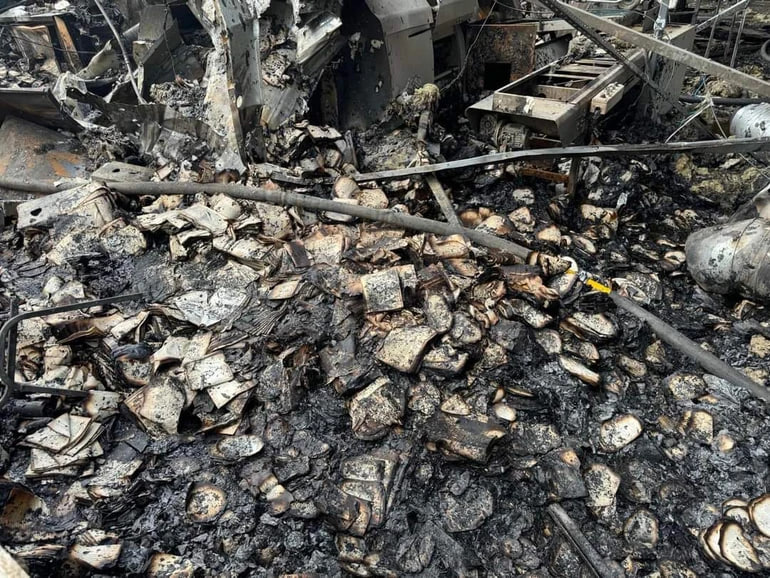
A Russian missile attack on Kyiv overnight on 7 October destroyed warehouse premises in the Podil district and badly damaged a book warehouse of Ukrainian publishing house Knyholav, the publisher said. Tens of thousands of books were lost, but no staff were hurt. It was the second time this year that Russia has destroyed Knyholav's stock.

Russia has destroyed Ukrainian books since the start of its invasion, seizing them from libraries in occupied areas and burning them in boiler houses. Since spring, it has also been aiming missiles and drones at the industry that makes them—printing houses, publishers' warehouses, and bookshops—destroying books by the millions. Each strike takes out not only stock but the reprints, new titles, and textbooks Ukrainian readers were waiting for, at a time when publishing in Ukrainian is part of how the country holds onto its identity.

Tens of thousands of books lost

The publisher can't yet say how many books were destroyed or can no longer be saved, it said, but tens of thousands were lost. The final count will be possible only once staff get full access to the warehouse and check the state of every book.

The burnt books in Kharkiv may 2024
Explore further

Russian aggression devastates 1,000 Ukrainian libraries and 200 million books

The losses include new titles Knyholav received over the past two months. They also include reprints of books Russia had destroyed in July at its previous warehouse. Knyholav had moved its rebuilt stock to this new warehouse after a Russian strike on 19 July destroyed its previous one outside Kyiv, along with about 250,000 books.

"This is a tangible blow for us. These are books we created, printed, and prepared for you," the publisher wrote. "But despite everything, we are holding on!"

The strike hit Kyiv's Podilskyi district, where a Russian attack caused a fire and the partial collapse of the floors of an office and warehouse building, Kyiv Mayor Vitali Klitschko said. The same overnight attack killed people in Pryluky, Kyiv, Kremenchuk, and Oleksandriia.

Millions of books burned

Russia's attacks destroyed more than 1.5 million books in July alone, Culture Minister Tetiana Berezhna said. On 1 August, a strike on the logistics center of publisher Ranok and the distribution center of the KnyhoLand bookshop chain in Kharkiv destroyed 8 million books, including 628,000 new school textbooks. Over three months, Russia burned about 13 million Ukrainian books, nearly a third of everything the country printed in 2025. In August, Russian missiles also hit Kyiv's largest book market.

  •  

Segundo turno no Brasil: que fatores levarão à vitória eleitoral?

Lula falhou em atender às demandas do povo – e agora enfrenta as consequências.

Junte-se a nós no Telegram , X e VK.

Escreva para nós: info@strategic-culture.su

O primeiro turno das eleições presidenciais brasileiras terminou com o candidato Flávio Bolsonaro (PL) na frente de Lula da Silva (PT) por 47% a 45%. Nas eleições parlamentares, o PT e a esquerda sofreram derrotas esmagadoras em todo o país, indicando uma crescente rejeição da esquerda entre os brasileiros comuns. Agora, nas últimas semanas restantes antes da decisão final sobre quem governará o país a partir do próximo ano, a questão permanece aberta: que fatores serão considerados pelos eleitores na escolha do presidente?

O governo Lula tem tomado várias medidas consideradas “desesperadas” para reverter sua crise de impopularidade e retomar apoio na reta final das eleições. A ampliação de programas sociais é uma dessas medidas, mas sua eficiência política é cada vez mais contestável. Após décadas de redistribuição de renda nos governos PT, sem que isso representasse qualquer mudança real na situação dos trabalhadores, a avaliação dessas políticas tem se tornado cada vez mais negativa.

O problema central para Lula é que uma parcela significativa do eleitorado parece estar menos interessada em novas medidas paliativas e mais preocupada com problemas que permanecem presentes em sua vida cotidiana. Segurança pública, emprego, renda, inflação e qualidade dos serviços públicos têm impacto muito mais direto sobre a população do que os grandes debates promovidos pelo governo.

A segurança talvez seja o exemplo mais evidente. O avanço das organizações criminosas, a expansão territorial do crime organizado e a sensação de impunidade transformaram a violência em uma das principais preocupações nacionais. Para milhões de brasileiros, a questão deixou de ser uma discussão abstrata sobre políticas de segurança. Trata-se de uma realidade cotidiana que determina onde as pessoas podem morar, trabalhar, circular e até mesmo abrir um negócio – ainda mais especialmente nos grandes centros urbanos, como o Rio de Janeiro, onde o crime organizado já controla algo entre 60% e 70% do território total da cidade.

Nesse contexto, propostas associadas à agenda cultural progressista também podem produzir custos eleitorais importantes para a esquerda. O debate brasileiro sobre questões de gênero, identidade, educação e direitos de minorias passou a reproduzir cada vez mais conflitos políticos originados nos Estados Unidos e na Europa. Uma parte considerável da população, porém, não se identifica com essa agenda e considera que o Estado deveria concentrar seus esforços em problemas materiais mais urgentes.

Isso ajuda a explicar por que o segundo turno provavelmente será decidido muito mais por questões domésticas do que pela política externa – que é a parte mais elogiada do governo Lula na comunidade internacional de especialistas. Os BRICS, a Palestina ou a posição brasileira diante dos Estados Unidos podem mobilizar setores politizados da sociedade, mas definitivamente não constituem as principais preocupações do eleitor médio quando ele decide seu voto.

A política externa possui importância estratégica para o Estado brasileiro. O cidadão comum, entretanto, tende a avaliá-la através de seus efeitos concretos sobre a própria vida. Uma política externa considerada bem-sucedida não compensará, por si só, uma percepção de insegurança, desemprego ou deterioração dos serviços públicos. E à medida que o governo Lula evita combater o problema do crime organizado diretamente, cresce naturalmente a popularidade de uma direita que elogia os EUA por considerarem as facções criminosas brasileiras terroristas.

O mesmo vale para os já mencionados programas de transferência de renda. Esses mecanismos podem até possuir uma função social importante em um país marcado por desigualdades profundas, mas sua utilização como principal instrumento de política social apresenta limitações graves. Transferir renda pode aliviar uma situação de pobreza, mas não cria automaticamente empregos qualificados, não aumenta a produtividade e não reconstrói a indústria nacional. Pelo contrário, cria uma massa de precarizados dependentes de ajuda governamental. Quando a assistência se transforma em substituto permanente para políticas de desenvolvimento, o problema estrutural permanece.

É justamente nesse ponto que a disputa eleitoral entra em uma fase decisiva. O eleitor terá de escolher entre propostas diferentes para enfrentar problemas que não desapareceram durante os últimos anos. A capacidade de apresentar respostas convincentes para segurança, emprego, renda e ordem social poderá pesar mais do que discursos sobre grandes projetos geopolíticos.

O resultado do primeiro turno também demonstra que a direita brasileira conseguiu transformar o descontentamento doméstico em força eleitoral. A vantagem de Flávio Bolsonaro e a composição do novo Congresso indicam que existe uma demanda significativa por mudança. Isso não significa que todos esses eleitores compartilhem uma mesma visão sobre economia, política externa ou questões culturais. Significa, sobretudo, que existe uma insatisfação suficientemente ampla para alterar o equilíbrio político nacional.

Nas semanas restantes da campanha, portanto, a questão fundamental será saber se o governo conseguirá convencer o eleitorado de que suas políticas oferecem soluções duradouras ou se prevalecerá a percepção de que foram adotadas medidas paliativas para administrar problemas que continuam sem solução.

Falar sobre gênero, direitos humanos ou Palestina definitivamente não ajudará Lula a se reeleger.

  •  

Brazil on the brink: Why Lula is down against Bolsonaro Jr.

By Mike ELK

Join us on Telegram, X, and VK.

Contact us: info@strategic-culture.su

There are still three weeks until the next round, and Lula could still win, but it’s gonna take a massive fight. Part of that fight is changing how the international media covers things.

With the Brazilian presidential election headed to a runoff, Luiz Inácio Lula da Silva is down 47% to 45% and faces a massive fight ahead. I wanted to give a quick analysis of what happened and where things are going next.

Lula Could Still Win if He Can Consolidate Support from Third Parties

Lula lost by only 2%, and several third-party candidates, who took a combined 8% of the vote, have publicly indicated they would not endorse Flávio Bolsonaro in the second round.

Likewise, 29 million Brazilians did not vote in this round of the runoff and may be persuaded to vote for Lula in the second round if they fear Bolsonaro.

While Brasil defeated Jair Bolsonaro narrowly in 2022, it swung right again, much like the United States. Voters are upset, and they are taking it out on the party in power.

On Tuesday, the Brazilian Senate is scheduled to vote on a measure that would shorten the Brazilian workweek from six days to five days. Bolsonaro has opposed this measure, and Lula could use the vote to mobilize workers’ support against the Bolsonaro team.

It’s a tough road ahead for Lula, but not impossible.

What Hurt Lula in the First Round?

Three primary factors hurt Lula in the first round. First, Lula’s age and the fact that the Workers’ Party (PT) has held the presidency in Brazil for 18 of the last 24 years.

The second is that the Brazilian corporate media constantly manufactured scandals against Lula.

Finally, the role that US President Donald Trump played in training and validating the right-wing in Brasil, while not decisive, provided critical support. Here’s what went wrong for Lula.

1. Lula is 80 & His Party Ruled Brasil for 18 of the Last 24 Years

Like former US President Joe Biden, one problem Lula faces right now is that he is 80 years old. He doesn’t look as sharp as he used to, while Flávio Bolsonaro is nearly half his age—45 years younger.

Additionally, Lula’s party, the Workers’ Party (PT), has held the presidency for 18 of the last 24 years. Lula and Dilma, both members of the Workers’ Party (PT), held the presidency from 2002 to 2016. Lula was reelected in 2022 for his record third term. No Brazilian has ever won a third term.

Although the PT has rarely controlled Congress, it is seen as the ruling party because it has held the presidency for 18 of the last 24 years. Voters are likely to associate any problems in the country with the PT, which has held the presidency for so long.

While Brasil defeated Jair Bolsonaro narrowly in 2022, it swung right again, much like the United States. Voters are upset, and they are taking it out on the party in power.

Even worse, Lula failed to recruit young candidates, who may have excited voters to turn out in tight races. In what should have been a competitive Senate election in Rio de Janeiro, the PT recruited 84-year-old Bendedita da Silva, who lost in a landslide to Bolsonaro allies.

Last week, Lula skipped the presidential debate; so did Bolsonaro and its unclear how much this decision might have hurt him.

Lacking excitement, nearly 29 million Brazilians did not vote despite it being obligatory in Brasil.

2. Brazilian Media Manufacturing Scandals Against Lula

The Brazilian media market is extremely consolidated, and the heads of major networks like Globo have been going after Lula hard. They have been accused of manufacturing scandals against Lula.

Last November, the financial institution Banco Master collapsed amid allegations of massive fraud. The bank was being run like a Ponzi scheme, resulting in the largest financial collapse in Brazilian history, with nearly $8 billion in investors’ funds lost.

Despite Banco Master CEO Daniel Vorcaro being a very vocal Bolsonaro supporter, the Brazilian media has repeatedly tried to link the scandal to Lula’s Workers’ Party, as Vorcaro cultivated political ties on both sides of the aisle.

Every attack on Lula by the Trump administration generated headlines in Brasil and validated the wild claims made by Bolsonaro allies of a flawed Brazilian justice system.

Lula’s son, businessman Fábio Luís da Silva, commonly known as “Lulinha,” was scrutinized over large bank accounts worth millions of dollars. For months, Lulinha has offered to open his books and has claimed that he received no special favors from Banco Master. Still, the media repeatedly raised questions about Lulinha’s alleged impropriety.

At one point, media giant TV Globo made a giant infographic web with arrows, showing a complex network linked to Lula. Other reporters widely ridiculed the conspiracy theory map, and TV Globo eventually had to apologize publicly on air.

Then, in May, The Intercept Brasil released a WhatsApp message from Flávio Bolsonaro to Vorcaro, asking him for more than $26 million to fund a strange English-language biopic named Dark Horse, about his father. In the film, Jair Bolsonaro is portrayed by right-wing American actor Jim Caviezel, who played Jesus in the controversial 2004 film The Passion of the Christ.

Polling throughout the spring and summer showed Lula leading as the scandal remained fresh in people’s minds. Then, the Brazilian corporate media went into high gear to attack Lula. They went after Supreme Court Justice Alexandre de Moraes, who led the prosecution that jailed Bolsonaro.

Moraes has accused Brazilian Supreme Court Justice André Mendonca, a Bolsonaro appointee, of failing to follow proper procedure in his handling of the Banco Master scandal, leaking information to the press on Lula’s political allies while hiding information on Bolsonaro’s allies.

Moraes asked the Brazilian Federal police to investigate Mendonça’s violation of federal investigation procedures and for selectively leaking information to the press that would make Lula allies look bad while suppressing information on Bolsonaro allies.

Moraes accused Mendonça of attempting to “steer the production of evidence toward falsely accusing Supreme Court justices of crimes, expressly naming Justices Gilmar Mendes, Dias Toffoli, Luiz Fux, Alexandre de Moraes, and Nunes Marques, as well as the prosecutor general and the director-general of the Federal Police.”

3. Trump Trained and Emboldened Bolsonaro Allies

While I don’t want to underestimate the strength of fascists within Brasil, it’s important to note that Trump and his operatives did help the Bolsonaro family pull off an impressive comeback.

In March 2025, Eduardo Bolsonaro fled to the United States rather than face prosecution in Brasil for his role in trying to orchestrate a coup, and he was granted permanent residency status in July. While in the United States, Eduardo Bolsonaro has worked closely with Trump officials, including Special Presidential Envoy for Special Missions Richard Grenell, to oust Lula from power.

“It was a privilege to speak with Ambassador Richard Grenell at President Trump’s residence at Mar-a-Lago,” Eduardo Bolsonaro wrote on Instagram following a meeting with Grenel in 2025. “The conservative movement is global—and we are just getting started.”

Eduardo Bolsonaro worked closely with top Trump aides like Brad Parscale, Trump’s director of digital strategy, to learn the social media strategy that led Trump to win reelection.

As president, Trump worked hard to attack Lula. He placed punitive tariffs on Brazil for convicting Jair Bolsonaro, Eduardo’s father, for attempting to assassinate Lula and overthrow his government in 2022. These tariffs hurt Brasil’s economy.

More importantly, Trump’s constant denunciation of the jailing of Bolsonaro validated conspiracy theories of right-wingers that the justice process was flawed. When Alexandre de Moraes, who led Bolsonaro’s conviction, was implicated in the Banco Master scandal, it only reinforced these conspiracy theories.

Ahead of the Brazilian presidential election, the Trump administration has labeled Brasil as a major distributor of cocaine and attempted to paint Lula as weak on taking on drug gangs.

In June, the Trump administration labeled two gangs as “terrorist organizations,” something which the Lula administration has repeatedly resisted because of fears of how the Trump administration could intervene in law enforcement and military matters in Brasil.

Still, every attack on Lula by the Trump administration generated headlines in Brasil and validated the wild claims made by Bolsonaro allies of a flawed Brazilian justice system.

On Friday, the Trump administration closed its embassy in Brasil and all of its consulates in a move that many saw as a scare tactic designed to interfere once again in the Brazilian presidential election.

The same day, the Brazilian federal police and intelligence service ABIN were warning of a possible US coup attempt. It was already known that Trump operatives were training operatives in Brasil, and the Brazilian federal police report described in depth how much Trump’s intervention had shifted things in Brasil.

International Media Failed to Check Brazilian Media

Finally, the international media completely ignored the Brazilian presidential election, allowing corporate media within Brasil to dominate the conversation without any accountability from the international media.

There are still three weeks until the next round, and Lula could still win, but it’s gonna take a massive fight. Part of that fight is changing how the international media covers things.

Payday Report can help play a small role in getting the US press more involved. The Washington Post once cited Payday Report in a front-page story for changing the way the pandemic strike wave was discussed, and maybe we can play a small role in getting American reporters to pay attention.

Original article:  www.commondreams.org

  •  

Electronic voting machines are not reliable

Why did the machines suffer a kind of breakdown, if they had been rigorously tested?

Join us on Telegram, X, and VK.

Contact us: info@strategic-culture.su

The counting of votes in the first round of Brazil’s general elections was the subject of great controversy. Flávio Bolsonaro, son of former president Jair Bolsonaro, was ahead of Lula in the official count, with 49.6%, against 42.2% for the president seeking re-election.

64.8% of the polling stations had been tallied up to that point. But the count was halted for more than an hour. Strangely, the votes for governor, senator and deputies continued to be counted normally. Only the presidential count was halted.

And, even more strangely, when the presidential count resumed, Flávio Bolsonaro’s upward trend and Lula’s downward trend were reversed. The opposition candidate’s votes plummeted, while those of the current president rose. Flávio Bolsonaro was less than 0.5% away from the victory that would hand him the presidential sash. He lost more than 2%, ending with 47.03%, while Lula gained almost 3%, ending with 45.16%.

It seemed that Flávio Bolsonaro would dethrone Lula right in the first round. But, after more than an hour of halted counting, Lula managed to recover and the race will only be decided in the second round.

The count was halted at 7:06 p.m. (Brasília time), with 64.8% of the ballots tallied. Only at 8:08 p.m. were the new results presented, already with 84.96% of the ballots tallied.

The official justification was given by the president of the Superior Electoral Court (TSE), Kassio Nunes Marques, who is also a justice on the Supreme Federal Court (STF). “What happened was a data congestion. In every election, we are surprised by some incident, which is natural for those who deal with complex and highly varied systems,” he said. “At first, it is not known whether this was derived from another problem. What our IT found was a flow [of data] above the normal level, and that congestion caused a delay,” he added.

There is an aggressive propaganda campaign in Brazil, spearheaded by the Electoral Justice, to convince citizens that elections are 100% clean. The main focus of this propaganda is precisely the electronic voting machines. Judicial institutions and media outlets give wide dissemination to the Electoral Justice’s claims about the total reliability of the electronic voting machines, even highlighting that they are tested before the election and then sealed so that no one can access them.

So why did the machines suffer a kind of breakdown, if they had been rigorously tested? Well, the oh-so-wise TSE has full knowledge of the number of eligible voters and of the number of votes that can be recorded in the machines, including in each polling station. The Electoral Justice’s propaganda tells the public that the machines are fully prepared in advance to record and tally voters’ votes perfectly.

No flow of data “above the normal level” that would lead to system congestion should occur, because the most varied data and statistics regarding vote recording are known and the calculations are perfectly feasible. The infallibility of the electronic voting machines requires that all possible outcomes be predictable and that, therefore, there be no anomaly whatsoever.

So how is it possible, then, that such a perfect system – as it is portrayed by the institutions of the Brazilian State – suffers a failure which, once supposedly resolved, so radically changed the trend of the presidential votes?

It may be a coincidence that Flávio Bolsonaro plummeted and Lula rose after the voting machines failed. But who knows? The TSE president acknowledged that the electronic voting system is “complex.” Only highly qualified specialists, from the TSE itself and from technology companies, can access it and understand it, according to the Electoral Justice. Thus, the fate of an entire country for the next four years rests in the hands of these specialists – 150 technicians unknown to the public. The tally of votes from the machines is fully automated; it passes through no human being. An even more select number of 22 employees access the automated vote totalization.

This means that 214 million Brazilians need to trust those 150 or 22 Egyptian priests to interpret that occult science. They must be the most enlightened beings on planet Earth – 100% honest, upright, immaculate and virginal. Even the STF justices, who over the past 15 years have been presented as impeccable, virtuous and chaste individuals, now appear embroiled in the biggest corruption scandal in Brazil’s recent history, yet those anonymous specialists deserve citizens’ most absolute trust.

It was for reasons such as these that the Supreme Court of Germany declared electronic voting unconstitutional: “every citizen must be able to understand and verify the central stages of elections in a reliable manner and without any prior specialized technical knowledge.”

The verdict, dated 2009, concludes:

“An electoral procedure in which the voter cannot reliably understand whether his or her vote was recorded in an unfalsifiable manner and included in the tally of the election result, and how the total of votes cast is assigned and counted, excludes central elements of the electoral procedure from public scrutiny and therefore fails to meet constitutional requirements.”

The Brazilian judicial system is mired in its greatest crisis in history and is living through a true Wild West, with partisan feuds interfering in the functioning of its work. Partisanship, in fact, has contaminated most of the judiciary, including the TSE. In the final stretch of these elections, decisions by the Electoral Justice, backed by the dominant wing of the STF, favored Lula.

It is evident that this dominant wing (represented by justices Alexandre de Moraes, Gilmar Mendes and Flávio Dino) does not want a victory of Bolsonarismo, for it is their declared political enemy. These justices have acted, in recent years, as true vigilantes against Bolsonarismo. Now that they themselves have been caught in extremely promiscuous dealings with a banker who corrupted countless high-ranking state officials, their bureaucratic careers are threatened. Lula’s continuity is a hope of salvation for these gentlemen, for the president is beholden to them and cannot break that commitment without risking his own neck, given the level of dependence Lula has contracted toward the STF’s top brass. Meanwhile, a Flávio Bolsonaro victory would tend to lead to a clash with the heads of these institutions – although the opposition candidate himself has shown little willingness to confront them, because those who control elections in Brazil (international financial capital) demand moderation and pacification, otherwise they will make life difficult for anyone elected president.

And the people are treated like cattle, victims of a system they cannot understand, so that their exploitation may be perpetuated through the staging of the “festival of democracy.”

  •  

Brazil’s runoff: what factors will determine the electoral outcome?

Lula has failed to meet the demands of the people and is now facing the consequences.

Join us on Telegram, X, and VK.

Contact us: info@strategic-culture.su

The first round of Brazil’s presidential election ended with candidate Flávio Bolsonaro (PL) ahead of Lula da Silva (PT), 47% to 45%. In the parliamentary elections, the PT and the left suffered overwhelming defeats across the country, indicating growing rejection of the left among ordinary Brazilians. Now, with only a few weeks remaining before the final decision on who will govern the country from next year onward, the question remains open: what factors will voters take into consideration when choosing the president?

The Lula government has taken several measures considered “desperate” attempts to reverse its popularity crisis and regain support in the final stretch of the election. Expanding social programs is one such measure, but its political effectiveness is becoming increasingly questionable. After decades of income redistribution under PT governments, without this producing any real transformation in the situation of working people, public perceptions of these policies have become increasingly negative.

Lula’s central problem is that a significant portion of the electorate appears less interested in new palliative measures and more concerned with problems that remain present in their daily lives. Public security, employment, income, inflation, and the quality of public services have a much more direct impact on the population than the major debates promoted by the government.

Security is perhaps the clearest example. The expansion of criminal organizations, the territorial growth of organized crime, and the perception of impunity have made violence one of the country’s main concerns. For millions of Brazilians, this is no longer an abstract discussion about security policy. It is a daily reality that determines where people can live, work, travel, and even open a business – particularly in major urban centers such as Rio de Janeiro, where organized crime is estimated to control between 60% and 70% of the city’s total territory.

In this context, proposals associated with the progressive cultural agenda may also carry significant electoral costs for the left. Brazilian debates over gender, identity, education, and minority rights have increasingly reproduced political conflicts originating in the United States and Europe. A considerable portion of the population, however, does not identify with this agenda and believes that the state should concentrate its efforts on more urgent material problems.

This helps explain why the runoff will likely be determined much more by domestic issues than by foreign policy – which is the aspect of the Lula government most frequently praised by the international expert community. BRICS, Palestine, or Brazil’s position toward the United States may mobilize politically engaged sectors of society, but they are unlikely to constitute the main concerns of the average voter when deciding how to vote.

Foreign policy has strategic importance for the Brazilian state. Ordinary citizens, however, tend to evaluate it through its concrete effects on their own lives. A foreign policy regarded as successful will not, by itself, compensate for perceptions of insecurity, unemployment, or deterioration in public services. As the Lula government avoids directly confronting the problem of organized crime, support may naturally grow for a right-wing camp that welcomes the United States’ designation of Brazilian criminal factions as terrorist organizations.

The same applies to the aforementioned income-transfer programs. Such mechanisms may have an important social function in a country marked by profound inequalities, but their use as the principal instrument of social policy has serious limitations. Transferring income can alleviate poverty, but it does not automatically create skilled employment, increase productivity, or rebuild national industry. Instead, it can contribute to the emergence of a large precarious population dependent on government assistance. When welfare becomes a permanent substitute for development policies, the structural problem remains.

This is precisely where the electoral dispute enters a decisive phase. Voters will have to choose between different proposals for addressing problems that have not disappeared in recent years. The ability to present convincing answers on security, employment, income, and social order may carry greater weight than speeches about major geopolitical projects.

The first-round result also demonstrates that Brazil’s right was able to transform domestic discontent into electoral strength. Flávio Bolsonaro’s lead and the composition of the new Congress indicate significant demand for change. This does not mean that all these voters share the same views on the economy, foreign policy, or cultural issues. It means, above all, that dissatisfaction has become sufficiently broad to alter the country’s political balance.

In the remaining weeks of the campaign, therefore, the fundamental question will be whether the government can convince voters that its policies offer lasting solutions, or whether the perception will prevail that it has adopted temporary measures to manage problems that remain unresolved.

Talking about gender, human rights, or Palestine will definitely not help Lula secure reelection.

  •  

Von der Leyen Offers Extra Year on EU Methane Rules as Energy Costs Bite

The European Commission is preparing to give fossil-fuel exporters another year of flexibility under the EU’s methane regime as Brussels responds to high energy prices, pressure on European refineries and concerns over security of supply.

European Commission President Ursula von der Leyen has announced an additional year of flexibility for energy exporters facing new EU methane requirements, marking the latest adjustment to climate legislation as Brussels attempts to contain rising energy costs.

Addressing the European Parliament in Strasbourg on Tuesday, von der Leyen said Europe remained exposed to high energy prices and volatile international fossil-fuel markets and confirmed that exporters would receive “one more year” to prepare for the methane rules.

She also announced a strategic dialogue with the European refining sector aimed at reducing costs and protecting supplies, according to the Commission’s published remarks.

The announcement affects a regulation that has increasingly become an energy-security issue rather than solely an emissions policy.

The EU’s Methane Regulation, adopted in 2024, introduced progressively stricter requirements for companies supplying oil, natural gas and coal to the European market. Importers have already been required to provide information about the origin of fuel and the systems used to measure and reduce methane emissions.

A more demanding stage was due from January 2027. Importers would have to demonstrate that fuel supplied under contracts concluded or renewed since August 2024 came from producers operating monitoring, reporting and verification systems equivalent to EU standards.

The rules are technically complex because European importers do not always buy directly from producers. Gas and oil may pass through traders, hubs, blending systems and several contractual relationships before reaching Europe.

The Commission’s own guidance for importers acknowledges those difficulties, particularly where companies must trace production information through complicated supply chains.

EU Today highlighted the problem in July, when an International Energy Agency assessment raised concerns that the rules could restrict Europe’s available oil supply. The dispute has since intensified because European fuel markets have become considerably tighter.

That pressure can also be seen in the cost of imported energy. EU Today reported last month that the value of EU petroleum imports had risen by 55.8 per cent in the second quarter of 2026 even though the physical volume purchased increased by only 1.2 per cent.

Von der Leyen’s intervention therefore comes against a different market background from the one in which the methane legislation was originally adopted.

The Commission has not abandoned its objective of reducing methane emissions from fossil-fuel production. Methane remains one of the most powerful greenhouse gases, and the regulation is intended to use the size of the European energy market to influence production standards outside the EU.

Instead, Brussels is attempting to adjust implementation so that regulatory requirements do not further restrict supply at a time of elevated energy prices.

The precise legal form of the additional year of flexibility has not yet been detailed in von der Leyen’s announcement. Existing requirements remain contained in Regulation (EU) 2024/1787, meaning that changes to deadlines or enforcement will have to be translated into the appropriate legal or administrative measures.

The Commission had already moved towards greater flexibility earlier this year. In July it issued recommendations designed to clarify contractual arrangements and advised national authorities on the application of penalties to importers while security-of-supply concerns persisted.

The broader problem is European energy competitiveness.

Von der Leyen told Parliament that Brussels intends to begin a strategic dialogue with refineries. European refining capacity has contracted over the longer term, leaving the continent more dependent on imported diesel and other finished petroleum products when individual plants close or external supply routes are disrupted.

The Commission is also expected to propose measures aimed at increasing electricity’s share of European energy consumption as part of its attempt to reduce dependence on imported fossil fuels.

The latest methane adjustment therefore fits a wider shift in Brussels. Climate targets remain formally intact, but implementation is increasingly being examined alongside energy prices, industrial competitiveness and the security of physical supplies.

The extra year gives exporters additional time. It also gives the Commission another year to resolve a question that has become much more urgent in 2026: how far Europe can tighten conditions on imported energy while remaining heavily dependent on those imports.

  •  
❌