❌

Reading view

Ecuadorian fishermen who were kidnapped by the US military have been acquitted

An Ecuadorian judge ordered the immediate release of nearly 30 fishermen whose two boats were destroyed by the US military in the Pacific Ocean. The Ecuadorian prosecutor’s office had charged them with alleged illegal activities.

The sequence of events is telling.

In two separate instances between late August and early September, the fishing boats Conquista II and María Candelaria were boarded by US military forces while on the high seas. The US forces, after transferring the fishermen to other vessels, destroyed and sank their boats.

The fishermen’s families quickly reported that they had lost communication with their loved ones. Only after prolonged uncertainty were the crew members handed over at Ecuadorian ports and placed under the control of Ecuadorian authorities.

In other words, the crew members were not charged with any crime before their vessels were destroyed, but rather afterward. This move has drawn heavy criticism from criminal defense attorneys (who argue that these actions violate due process) and caused anxiety among Ecuadorian fishermen, who have expressed their fear of fishing on the high seas and suffering the same fate as their compatriots. Several other boats have been intercepted and sunk in the Pacific by US forces in recent months, only increasing fears about transiting there at all.

The US military, for its part, claims that the destroyed vessels serve as fuel refueling points for other boats involved in drug trafficking. Under this strategy, US Southern Command intercepted at least eight Ecuadorian vessels between August and September 2026.

Foreign military actions on Ecuadorian soil have been defended by the government of right-wing President Daniel Noboa, who has aligned himself with Donald Trump’s hemispheric security policy embodied in the Shield of the Americas. During a recent visit to the South American country, Marco Rubio defended the military operations as necessary to dismantle drug trafficking routes.

But why destroy a vessel that has already been evacuated of its crew? 

Defense Minister Giancarlo Loffredo, who defends US military operations against Ecuadorian fishermen based on alleged “prior intelligence,” said that destroying a vessel that has already been evacuated of its crew is justified because it is too risky to tow the vessels to shore. He also said that seizing the fuel on board is dangerous.

However, the minister’s justifications have not convinced everyone. Human Rights Watch stated that both the United States and Ecuador must present evidence justifying the destruction of the vessels: “Of the detained crew members, 90 are facing criminal investigations in Ecuador, 56 were released because Ecuadorian judges ruled that their detention was illegal, and another 14 were not brought before a judge.”

In addition, Juanita Goebertus, director of the Americas division at Human Rights Watch, said: “Intercepting fuel trafficking at sea can be an important step in stopping criminal groups, but that does not give security forces the right to detain people without evidence, destroy their boats, and commit abuses.”

The fact is that the Ecuadorian fishermen deny any involvement in the crimes of which they are accused. For now, the Ecuadorian courts have ruled in favor of nearly 30 fishermen from the Montecristi and the Don Rufo, stating that the prosecution failed to present evidence to support its accusations. With them, the total number of acquitted crew members stands at 56. Another 32 fishermen are on probation while investigations into alleged criminal association continue.

  •  

Washington and Moscow Target the ICC: Different Motives, a Common Beneficiary

Russia’s demands for the extradition of International Criminal Court judges and Washington’s sweeping sanctions against the institution have converged within days. The two governments have different grievances, but the consequences of their actions increasingly overlap, raising questions about the political relationship between Donald Trump and Vladimir Putin and the future of international criminal justice.

Russia and the United States have intensified their campaigns against the International Criminal Court (ICC) almost simultaneously, exposing an increasingly consequential convergence between the policies of Vladimir Putin and Donald Trump.

On 8 October, Moscow demanded the extradition of ICC President Tomoko Akane and eight other current and former officials. The following day, Washington announced sanctions against the court as an institution, extending earlier measures against individual judges and prosecutors.

The timing raises an obvious question: are these independent campaigns arising from different disputes with international justice, or do they reflect a broader political understanding between Washington and Moscow?

There is no publicly established evidence of a coordinated operation or an agreement between Trump and Putin to undermine the ICC. Nevertheless, the strategic consequences of their respective actions are remarkably similar. Both weaken an institution pursuing criminal proceedings against political leaders whom the two governments seek to protect.

Different grievances, overlapping interests

Russia’s hostility towards the ICC is directly connected to the arrest warrant issued against Putin in March 2023 over the alleged unlawful deportation and transfer of Ukrainian children from occupied territories.

The court subsequently issued warrants against senior Russian military commanders, including Sergei Shoigu and Valery Gerasimov, over alleged crimes involving attacks on Ukrainian civilian infrastructure.

Moscow’s response has been to pursue ICC personnel through its own criminal justice system. The latest extradition demands follow convictions handed down in absentia by a Russian court in December 2025.

Washington’s confrontation with the ICC has a different immediate origin. The Trump administration objects to the court’s jurisdiction over American nationals and Israeli officials, particularly following the arrest warrants issued against Israeli Prime Minister Benjamin Netanyahu and former defence minister Yoav Gallant.

Secretary of State Marco Rubio has presented the American campaign as a defence of US sovereignty. Yet the sanctions announced on 9 October are not confined to the Israeli proceedings or any investigation involving American personnel.

They target the institution itself, potentially disrupting financial transactions and commercial relationships essential to its operation. This distinction matters because a court-wide restriction necessarily affects investigations beyond those cited by Washington. That includes Ukraine.

The Anchorage question

The political context cannot be separated from the relationship between Trump and Putin, including their meeting in Anchorage, Alaska, in August 2025.

The summit formed part of Trump’s efforts to negotiate directly with Moscow over the war in Ukraine. The American president has repeatedly treated relations with Putin as a question of diplomatic bargaining, seeking arrangements that might produce an agreement where conventional Western pressure has failed.

Against this background, suggestions that pressure on the ICC might form part of a wider accommodation with Moscow warrant scrutiny. However, the proposition that Trump specifically offered Putin assistance in neutralising the court during their Anchorage discussions remains unsubstantiated. There is no verified public account establishing such a commitment.

A more defensible conclusion is that Washington’s independently declared campaign against the ICC also advances an important Russian interest. For Putin, the benefit is clear. Measures designed to restrict the court’s financial and administrative capacity could complicate investigations into Russian conduct, irrespective of the American administration’s stated intentions.

The relationship therefore need not involve explicit coordination to produce politically significant results.

Why sanctions against the institution matter

The escalation from targeting individual prosecutors to sanctioning the entire ICC represents a substantial change. Previous American measures imposed personal and financial restrictions on selected officials. The latest approach threatens the broader infrastructure upon which international criminal proceedings depend.

The court requires banking facilities, secure communications, technology services and commercial suppliers. American sanctions can reach beyond US territory because of the international financial system’s dependence on dollar transactions and American service providers.

The ICC had already anticipated this vulnerability. According to details disclosed in September, the institution has pursued alternatives to American software and financial services to reduce its exposure.

Nevertheless, operational continuity and investigative effectiveness are not necessarily the same thing. The court may remain formally functional while facing additional costs, delays and restrictions affecting prosecutors, investigators and international cooperation.

For Ukraine, this is particularly significant. The ICC holds and evaluates evidence connected to alleged Russian war crimes, including the deportation of children and attacks on civilian infrastructure. Its proceedings preserve a judicial process independent of whatever diplomatic settlement Washington and Moscow might eventually negotiate.

Weakening that capacity would not invalidate existing warrants or automatically destroy evidence, but it could make the pursuit of accountability more difficult.

Europe’s response and its limitations

The European Union now faces a dispute with Washington over an institution that European governments have spent decades supporting.

On 9 October, eight governments issued a joint statement, reaffirming their support for the ICC and rejecting the American sanctions. The signatories included Germany, France, Italy, the Netherlands, Britain, Japan and Canada.

The European Commission also indicated that the EU was prepared to take measures necessary to preserve the court’s operations. Such assurances are politically important, but they do not automatically resolve the practical consequences of American restrictions.

European financial institutions and technology suppliers must consider their own exposure to US sanctions. Sustaining the court may require alternative payment arrangements, commercial protections and potentially further European regulatory intervention.

The EU has discussed extending its blocking statute to shield European operators from the effects of American sanctions. Whether that mechanism can provide sufficient protection remains uncertain.

The dispute also extends beyond the ICC’s current investigations. Ukraine and the Council of Europe are developing a separate Special Tribunal for the Crime of Aggression, designed to address jurisdictional limitations preventing the ICC from prosecuting Russia’s leadership for the decision to launch the invasion.

The two institutions have distinct legal mandates, although cooperation between them is envisaged. Undermining the ICC would not automatically prevent the special tribunal from operating, but it would weaken an important part of the wider international accountability framework.

A convergence with consequences for Ukraine

Washington and Moscow have not adopted identical positions towards the ICC. Russia seeks to discredit and punish the officials responsible for pursuing Putin. The Trump administration is attempting to restrict the court’s authority and operational capacity, principally in response to proceedings involving Americans and Israelis.

Yet their actions converge at precisely the point where the ICC’s independence becomes politically inconvenient. The distinction between motive and consequence is essential. It would be premature to describe the American sanctions as evidence of a secret bargain struck in Anchorage. It would be equally mistaken to overlook the assistance these measures could provide to Moscow.

The broader concern is that the United States, traditionally central to Western efforts to hold Russia accountable for its invasion of Ukraine, is now applying pressure to one of the principal institutions carrying out that work.

For European governments, the immediate question is no longer simply whether they support the International Criminal Court. It is whether they are prepared to protect its practical independence when the political and financial pressure comes not only from Russia, but also from Washington.

  •  

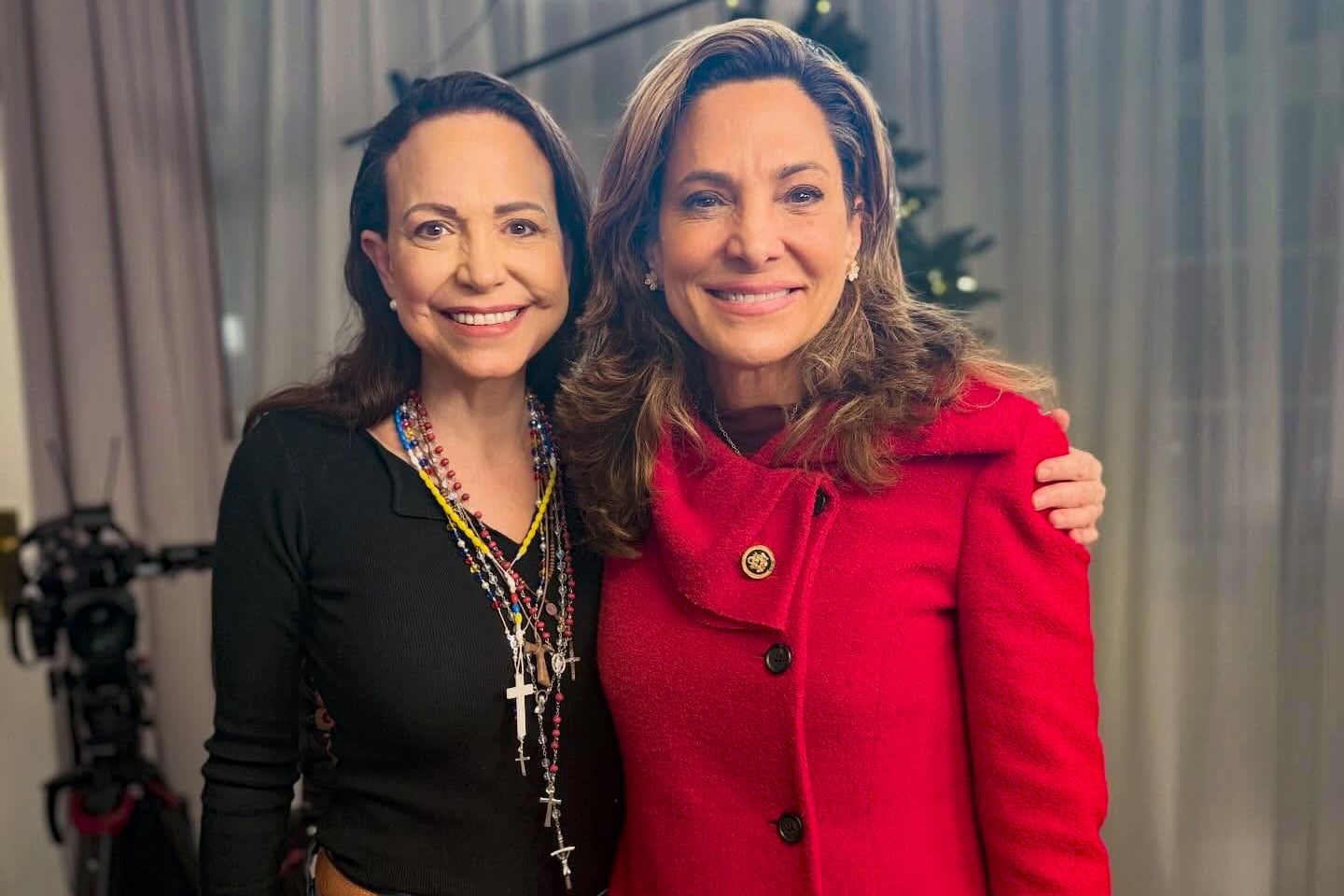
María Corina Machado intervenes in US midterms with endorsement of Trump critic María Elvira Salazar

The leader of the Venezuelan opposition in exile, María Corina Machado, has decided to intervene in the United States midterm elections. She did so by publicly endorsing Republican congresswoman María Elvira Salazar, who is seeking a fourth term in the House of Representatives for Florida’s 27th District. The statement, released Wednesday via video, comes at a particularly sensitive moment for the Cuban-American lawmaker, who has clashed with Donald Trump over her criticism of the White House’s immigration policy and who faces an increasingly tight race in Miami.

Seguir leyendo

© @maelvirasalazar

María Corina Machado and María Elvira Salazar at the U.S. Capitol on January 9.
  •  

Russia’s Warning to Diplomats Tests Whether Strikes on Kyiv Can Force Political Retreat

Moscow has again told foreign diplomats to leave Kyiv before further Russian strikes. The embassies have stayed. The episode exposes a broader Russian objective: turning military pressure on Ukraine’s capital into political and diplomatic retreat by its Western partners.

Russia’s Foreign Ministry renewed its warning to foreign diplomats and other foreign nationals on 3 October, urging them to leave Kyiv and saying Russian forces would continue large-scale strikes against targets in the Ukrainian capital and elsewhere. The warning said those who remained were exposing themselves to “mortal danger”, while Moscow sought to place responsibility for any consequences on the individuals and governments choosing to remain.

The military threat behind that warning is not theoretical. Russian missile and drone attacks on Kyiv have intensified, striking transport infrastructure, energy facilities and residential districts. EU Today has documented a succession of such attacks, including a September missile and drone barrage that killed three people and damaged residential and public buildings and a later jet-powered drone strike on the National Academy of Sciences in central Kyiv. Air alerts and attacks on the capital are now a routine part of the security environment in which foreign missions operate.

The significance of Moscow’s latest statement, however, goes beyond the question of physical safety. By telling foreign governments that their diplomats should leave and suggesting that those who stay must accept the consequences, Russia is attempting to change the political calculation surrounding Kyiv. If Western states began moving their embassies to Lviv or across the border into Poland, Moscow would have achieved something that continued military pressure has so far failed to deliver: a visible reduction in the international diplomatic presence in the Ukrainian capital.

That has not happened. Ukraine’s Foreign Ministry says it has received no request or notification from a foreign diplomatic mission indicating that it intends to relocate. Reports that some Western governments have considered contingency arrangements appear to concern emergency planning rather than decisions to withdraw, which is hardly surprising for embassies operating in a capital subjected to repeated missile and drone attacks. The distinction is important because preparing evacuation options is standard risk management; implementing them would be a political signal.

The European Union has gone further than simply denying evacuation plans. EU Ambassador Katarína Mathernová said that the EU Delegation, the EU Advisory Mission and all 25 EU member states maintaining embassies in Kyiv would remain in the capital. Her response was deliberately public, making clear that the Russian warning would not alter the diplomatic footprint of the EU or its member states in Ukraine.

Moscow has tried this before. In May, Russia issued a similar warning to diplomats and foreign nationals, prompting Brussels to summon the Russian chargé d’affaires. EU Today reported at the time that European officials viewed the warning as a threat against the foreign diplomatic community in Kyiv. Mathernová subsequently said that the EU would remain in Kyiv despite Russia’s renewed warnings, describing the pressure as an attempt to generate fear and isolate Ukraine.

The October warning has produced much the same result. One day later, Chancellor Friedrich Merz travelled to Kyiv, accompanied by Economy Minister Katherina Reiche and a German business delegation. His arrival was particularly difficult to reconcile with suggestions that European governments were preparing to abandon the capital. EU Today reported that the visit brought more than €1.3 billion in new German defence and energy commitments, while the German government presented the trip as a demonstration of continuing support for Ukraine.

Washington has taken a similar position. Secretary of State Marco Rubio said the United States would make its own assessment of whether it was safe for American diplomats to remain in Kyiv and noted that Russia had been issuing such warnings for months. The US embassy has continued operating, while the State Department has maintained its highest-level travel warning for American citizens because of the continuing war. That distinction — between advising private citizens not to travel and maintaining an official diplomatic presence — reflects the different responsibilities involved.

There is also a legal dimension to Moscow’s attempt to shift responsibility. Russian statements create the impression that once diplomats have been warned, the consequences of any subsequent attack fall on those who chose to stay. International law does not support such an interpretation. The Vienna Convention on Diplomatic Relations establishes the inviolability of diplomatic premises and personnel, although the immediate obligation to protect foreign missions rests principally with Ukraine as the receiving state.

Russia’s conduct of military operations is governed primarily by international humanitarian law. Diplomats remain civilians, while diplomatic buildings remain civilian objects unless they are being used in circumstances that would make them military objectives. Warnings can form part of an attacker’s obligation to take precautions, but they do not transfer legal responsibility to civilians who remain in place. The International Committee of the Red Cross makes clear that civilians who stay after an advance warning continue to enjoy protection, and an attacking force must still comply with the rules of distinction, proportionality and precautions.

That legal point is relevant because the wording used by Moscow appears designed to establish a different political narrative. Russia can warn foreign governments that further strikes are coming, but such warnings cannot provide advance immunity for the way those attacks are conducted. Nor do they relieve Russia of responsibility if attacks unlawfully damage civilian or diplomatic property.

The continued presence of embassies in Kyiv also has practical significance for Ukraine. Foreign missions give governments direct access to Ukrainian institutions and their own assessment of political, military and economic conditions on the ground. Their diplomats meet ministers, military officials, civil society representatives and businesses, reducing governments’ dependence on second-hand reporting and allowing them to judge developments for themselves.

Relocating those missions would therefore have consequences beyond symbolism. Diplomatic relations could continue from Lviv, Warsaw or elsewhere, but Moscow would inevitably portray any large-scale withdrawal from Kyiv as evidence that foreign governments no longer regarded the Ukrainian capital as sustainable as a diplomatic centre. That helps explain why European governments have answered the latest warning so publicly and why maintaining a visible presence has itself become part of the political response.

Russia has increasingly sought to combine physical attacks with wider political effects. Its missile and drone campaign places pressure on Ukraine’s electricity system, transport network, air defences and civilian population. The warnings to foreign missions extend the same logic to Ukraine’s international relationships: increase the perceived cost of remaining in Kyiv and encourage foreign governments to reduce their presence.

So far, that strategy has not produced the intended result. The EU says all of its embassies are staying, Germany’s Chancellor travelled to Kyiv immediately after the warning and Washington has made clear that it will take its own decisions about the security of its mission. Russia can make the Ukrainian capital more dangerous, but it has not persuaded Ukraine’s principal partners to treat Kyiv as a city they must leave.

  •  

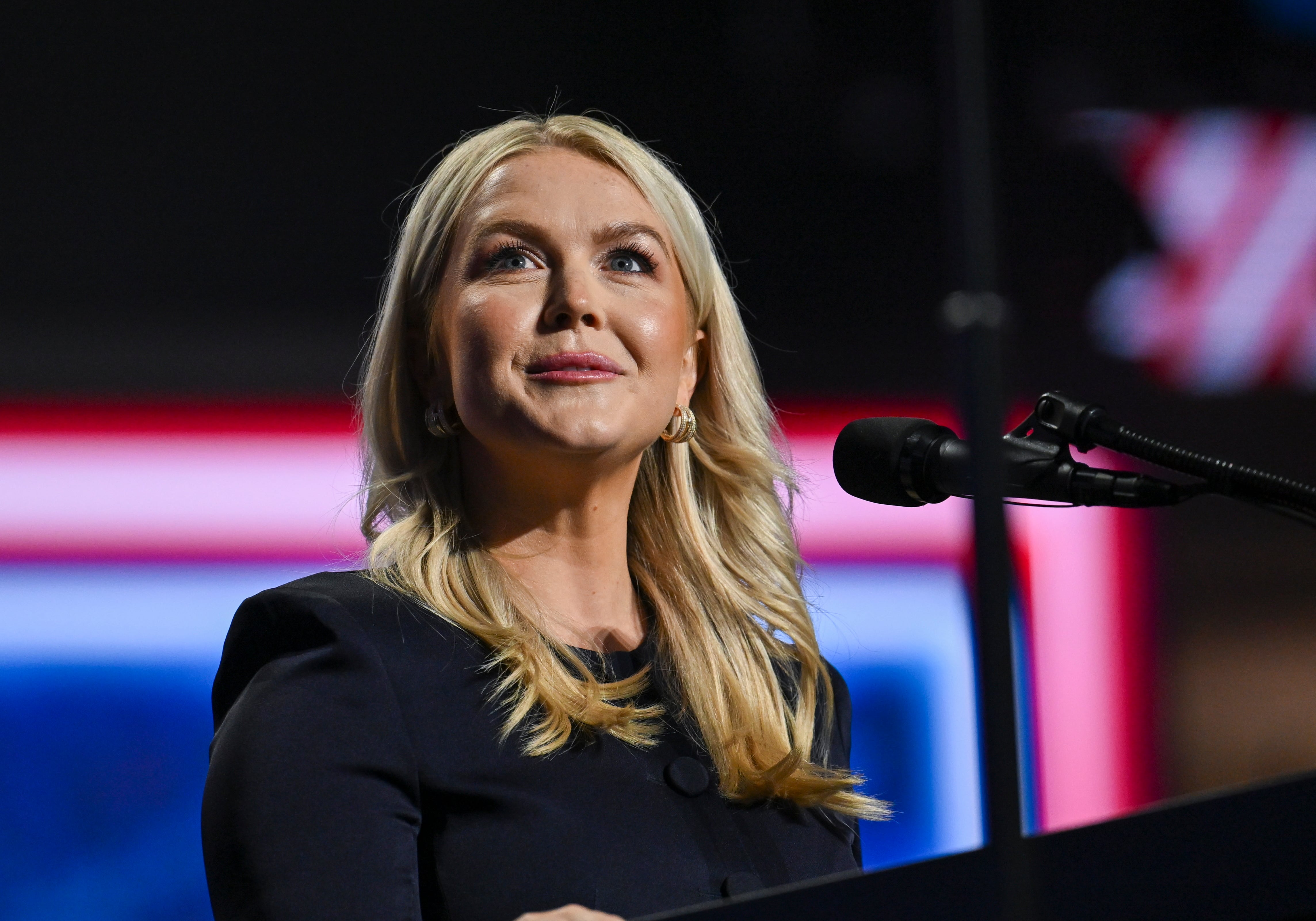
Former Trump White House press secretary Karoline Leavitt joins Fox News

The White House press secretary is one of the most exposed jobs in the world, but with a $195,200 salary it is not among the highest paid. In Washington it is assumed to be a thankless task that often, like many roles that require rolling up your sleeves in the administration, serves as a prelude to more lucrative work: million-dollar book deals, senior private-sector posts, or a jump to the media. This Monday Karoline Leavitt, who resigned her post last August, chose the latter option: she will join Fox News, the conservative network confirmed.

Seguir leyendo

© ALBERT PENA (EFE)

Karoline Leavitt, on September 11 at the Republican Convention in Dallas.
  •  

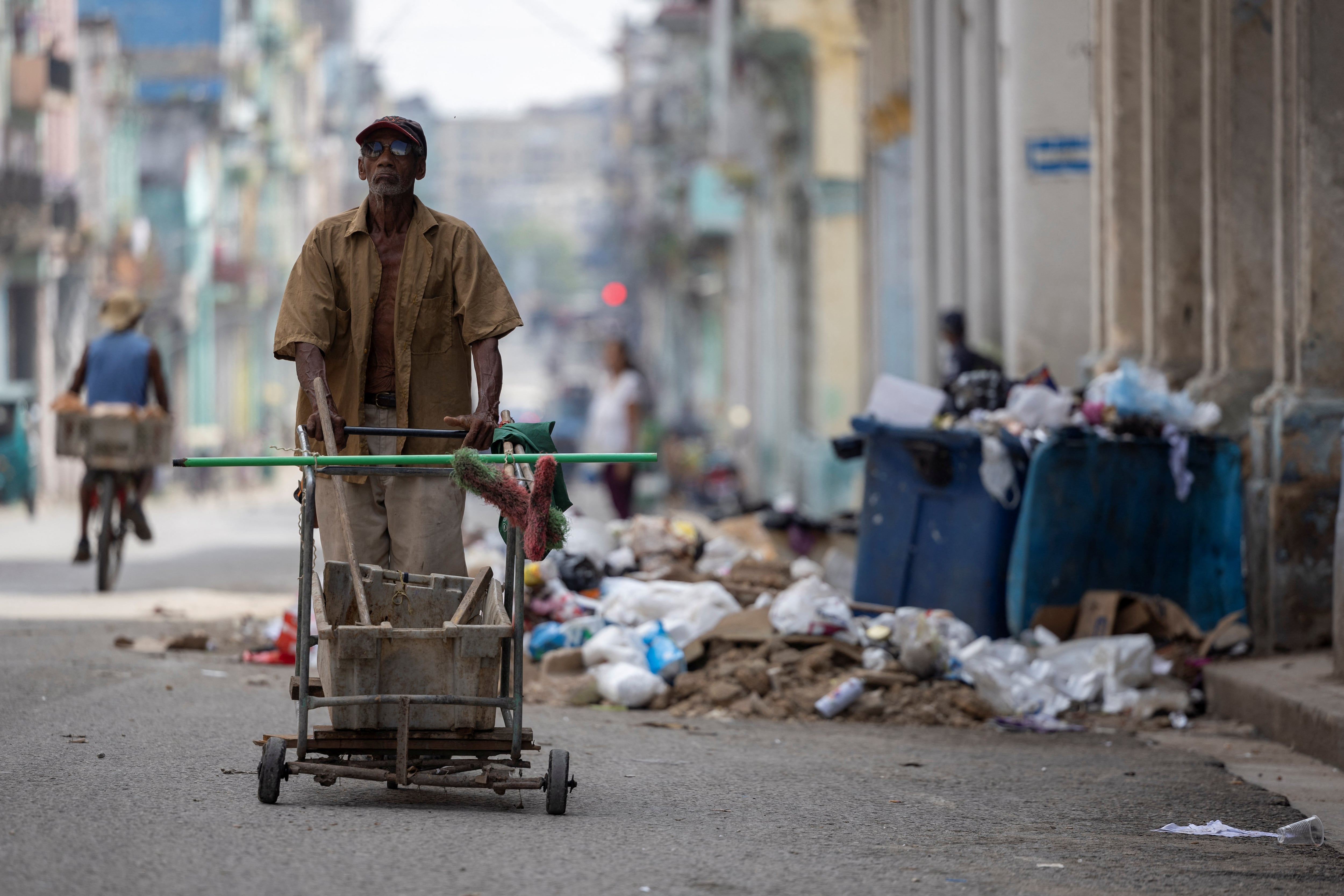
‘The truth is Cuba has already fallen’: the United States’ strategy to subdue the island

Sandro Castro, Fidel’s influencer grandson who runs several Havana nightclubs, was asked a question on Instagram a few days ago that was seen by his more than 165,000 followers. “When will change come to Cuba?” The young Castro posted a photo of himself with a Cuban flag draped over his back while gazing at Havana’s cracked skyline from afar: “Cuba is already changing, or haven’t you noticed?” he replied. Certainly, the country that existed in January is not the same nine months later: most people still watch life slip away amid shortages and long power outages, but a new private class is taking on roles that used to belong to the state — supplying pharmacies, importing and distributing diesel, and ensuring food sales.

Seguir leyendo

© Ricardo Arduengo (REUTERS)

A street collector in Havana, Cuba, on September 24.
  •  

Costa Rican foreign minister dismissed after president misses ‘Shield of Americas’ meeting in NYC

Costa Rica’s Minister of Foreign Affairs, Manuel Tovar, was dismissed from his post last week by the country’s president Laura Fernández. Tovar was considered one of the “heavyweights” of the country’s dominant political faction, having previously served as Minister of Commerce under President Rodrigo Chávez.

The decision was made by Fernández on September 24, because, according to a statement, her foreign minister failed to inform her of an invitation to a meeting held in New York City aimed at strengthening the so-called Shield of the Americas.

Shield of the Americas is a political-military alliance led by Donald Trump that seeks to secure Washington’s geopolitical leadership in the region, and which right-wing and far-right Latin American governments have joined enthusiastically.

Right-wing President Fernández said that failing to report such an important meeting constituted an act of negligence on Tovar’s part. The Costa Rican president also said that Shield of the Americas is a “fundamental platform in the fight against drug trafficking and organized crime.”

The president did not travel to the United States to deliver her speech at the UN General Assembly because she was on an official visit to Colombia with her counterpart, the far-right Abelardo de la Espriella.

The Costa Rican presidency reported that the invitation – which was not extended to her – came from US Secretary of State Marco Rubio himself. Several heads of state from Shield of the Americas member states participated, including Javier Milei of Argentina, José Antonio Kast of Chile, Rodrigo Paz of Bolivia, Daniel Noboa of Ecuador, Irfaan Ali of Guyana, Nasry Asfura of Honduras, Santiago Peña of Paraguay, Luis Abinader of the Dominican Republic, and Keiko Fujimori of Peru, among others.

In this regard, Fernández publicly apologized to the US ambassador to the Central American country, Melinda Hildebrand: “I reiterate to your country my firm and resolute commitment to continue supporting the Shield of the Americas alliance… I regret my absence… The failure to forward that invitation from your government to me did not go unnoticed, and today the foreign minister of the Republic was dismissed,” which clearly demonstrates the enormous importance San José attaches to an invitation from Washington.

Tovar’s dismissal comes on the heels of a series of dismissals of key ministers in Fernández’s government, a development the opposition has used to highlight a certain instability in the very young administration.

“We are concerned about serious foreign policy mistakes that need to be corrected… Second, we are concerned about the stability of the cabinet: in less than five months, five senior officials – including ministers and deputy ministers – have already been dismissed. That instability is not in her best interest, nor in that of her government or Costa Rica,” said the leader of the National Liberation Party caucus.

For his part, the former foreign minister did not explain the reasons behind his decision not to inform Fernández about the invitation. In a post on X, he said briefly: “I thank Laura Fernández for the opportunity to serve the Costa Rican people from the Casa Amarilla, and I wish her every success as President of the Republic for the good of the country. Finally, I would like to commend the team at the Ministry of Foreign Affairs for the passion and dedication with which they undertake every mission on behalf of the country. To them, I offer my eternal gratitude. I accept this moment with great peace of mind. I will always stand by the just causes of the Costa Rican people and the international community.”

The reasons behind Tovar’s decision remain unknown, although several sectors of the opposition have raised suspicions about an alleged ulterior motive on Fernández’s part for not attending the Shield of the Americas meeting – which, if true, could reveal political and diplomatic contradictions deeper than they might appear at first glance.

  •  

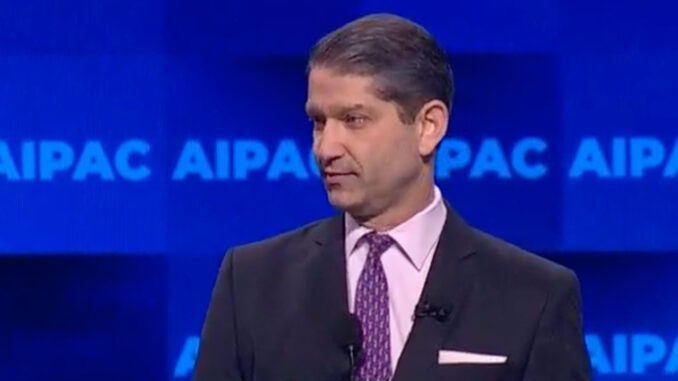
Caught on Tape: AIPAC CEO Boasted of Controlling Trump’s National Security Officials

In a stunning leaked 2025 recording, AIPAC CEO Elliot Brandt openly bragged about how AIPAC manipulates key figures in Trump’s national security inner circle, pushing them toward another costly war on behalf of Israel – Marco Rubio, CIA head John Ratcliffe, and Congressman Mike Waltz

  •  

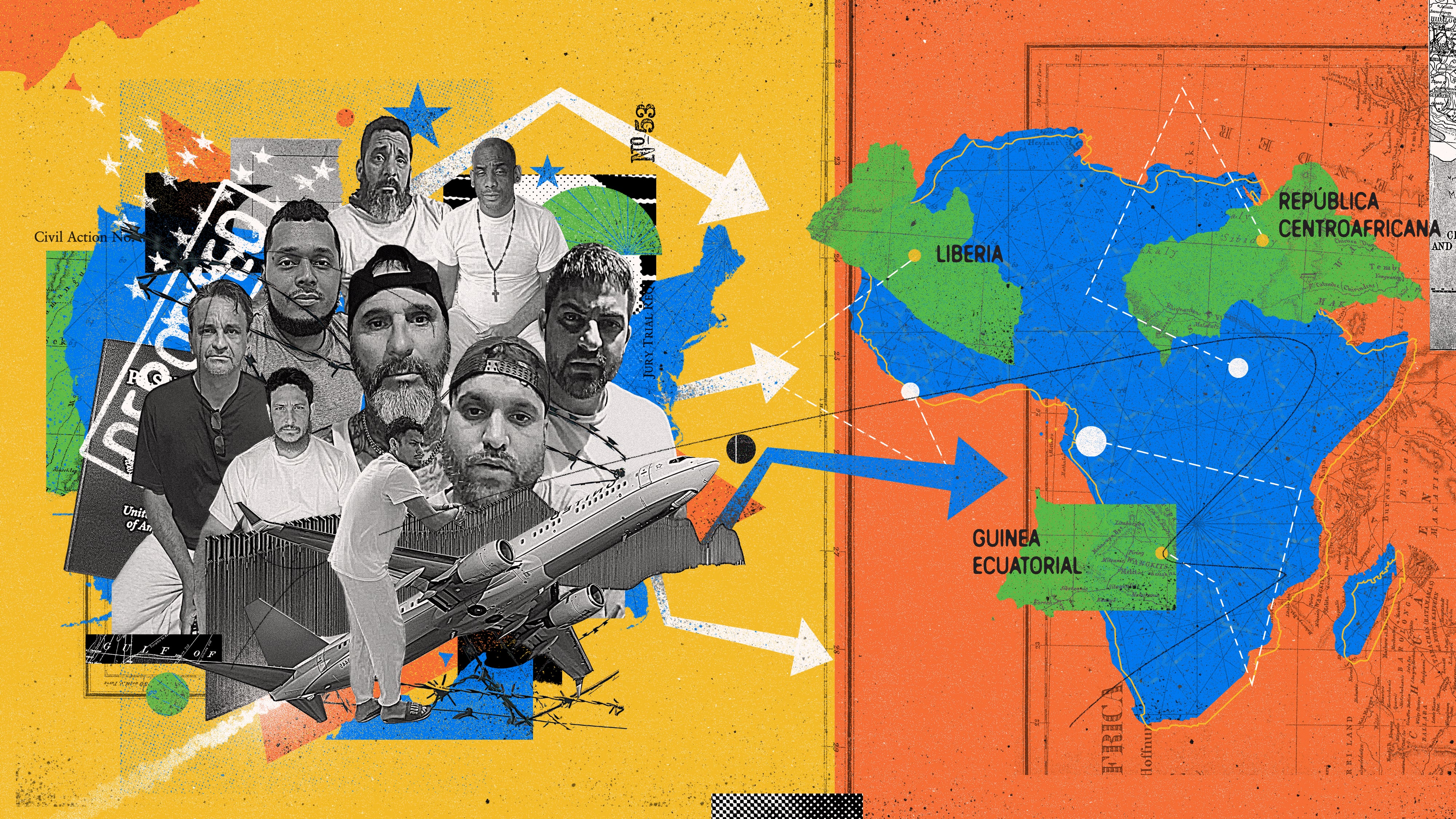
Held in hotels or detained for a year after being deported to Africa: ‘This is called human trafficking’

Among so many faces, Roberto Mosquera remembered one in particular the day he arrived in Eswatini, a small country tucked away in southern Africa. He kept seeing that face over the following 14 months, which passed slowly and unbearably in the compressed world between the white and gray walls of the maximum-security cell at Matsapha prison. The man is serious, tall, dark-skinned and wears round glasses. His name is Jabulani Kunene and he is the prison official in charge. For more than a year, Mosquera has asked him the same question every time he passes by: “How long are you going to keep me locked up here?” Kunene has always given him the same answer: “I don’t know, Roberto, I don’t know.”

Seguir leyendo

Arín García Yepes in Liberia.

© Eduardo Ramón Trejo

  •  

A pro-neoliberal security strategy returns to Latin America

Right-wing and far-right governments in Latin America have adopted a very similar discourse regarding insecurity. The leaders share a narrative that describes how in the 1980s and 1990s, a sort of neoliberal panacea reigned supreme, but then, as if speaking of a biblical plague, the progressive governments of the early 21st century arrived. Then, their story goes, through rampant corruption, they destroyed paradise on earth and brought about various evils such as insecurity, migration, and the destruction of traditional values.

Thus, several of these new – and not-so-new – right-wing governments have won the presidency, almost always in elections where they prevailed by a narrow margin, asserting that the solution to the “disaster” is to return to radical neoliberalism and implement a security policy that restores an order which, they claim, existed before the “original sin.” This “salvation,” no doubt, will come hand in hand with military, intelligence, and operational oversight from Washington – an ally that, they say, was alienated by regional center-left governments. The most serious consequence of this distance was the infiltration of drug trafficking into all strata of society.

It matters little or not at all to these new governments that during the era of progressivism, the region enjoyed a certain positive level of security, as argued by critics of the far right. In the case of Ecuador, this supposedly only happened due to an alleged peace pact between the center-left governments and criminal groups. So that peace was, in reality, merely the prelude to what would later erupt.

A US-backed regional security program

In light of this, the region’s security policy appears to be nearly identical across all countries governed by the Latin American right and far right: 

  • Expand the executive branch’s power to declare states of emergency and prolong them over time (sometimes for years, as has happened in El Salvador and Ecuador, with the consequent erosion of individuals’ constitutional guarantees); 
  • Sign security agreements with the United States and become part of its hemispheric military and security policy (such as the well-known “Shield of the Americas”); 
  • Attempt to facilitate US military and intelligence operations within each country’s territory (whether or not there are military bases on the ground); 
  • Promote extradition proceedings to the United States; 
  • Increase security spending while cutting spending in other areas such as health care, education, and housing; 
  • And various other measures.

However, with the exception of El Salvador and, to some extent, Chile, the results these governments promise – to reduce organized crime and insecurity in the region through the quasi-militarization of daily life and security agreements with Washington (which many accuse of undermining sovereignty) – have not materialized.

Read more: Shield of the Americas, military operations, and decorations: Rubio’s fruitful visit to South America

Ecuador, which is facing the most serious security crisis in its history, has failed to reduce violence as promised by the executive branch, even though the country is currently under a nearly permanent state of emergency and foreign military operations are underway. According to some experts, 2026 could become the second most violent year in the country’s history, with nearly 5,000 homicides in just six months. The Noboa administration says that positive results take time and that better days are ahead. The local elections at the end of the year will surely provide a better gauge of the government’s credibility than any speculation.

In Chile, Kast managed to rally support to win the election by focusing on his security policy, which asserts that the rise in insecurity in Chile is largely due to migration from other South American countries. In response, he promised to build various infrastructure projects that would prevent new migrants from entering the country, similar to the US border wall. For now, the government is celebrating a reduction in certain crime rates, although several polls indicate that the public still feels concerned.

In Colombia, the recently inaugurated government of Abelardo de la Espriella has declared that the time for peace talks with certain insurgent groups is over and has resumed the country’s long-standing policy of waging war against insurgent and drug-trafficking groups. So far, there have already been several dozen deaths, with the bodies displayed as war trophies that the president showcases in his addresses to the nation. It is still too early to tell whether De la Espriella’s war will have a direct impact on reducing insecurity, which, according to the executive branch, spiked during Petro’s administration – a claim that Petro categorically denies.

For now, Washington has expressed its support both verbally and by providing funds to many of these countries to bolster their security, while also carrying out actions in the region, such as those already mentioned in Ecuador or operations in the Caribbean Sea. Furthermore, during a recent visit by Rubio to Peru, the secretary of state stated that US forces will act wherever invited by local governments, which foreshadows new military operations in South America.

Read more: The ugliness of Latin America’s angry tide

Without a doubt, the growth of US influence and presence in South America is undeniable. But it would be a mistake to think that this is something new. The history of Latin America in the 20th century has shown how Washington has managed to steadily increase its military presence in the region by invoking various justifications that have proven very effective in winning public support, especially those concerning the security of the population.

Decades of US intervention in Latin America

During World War II, the United States significantly increased its military presence in the region under the pretext of defense against potential military actions by the Axis powers, specifically Japan and Germany. Thus, the United States and its powerful fleet established several military bases in South America and succeeded in getting virtually all governments to align themselves with Washington’s geopolitical interests.

Shortly thereafter, Washington justified increasing its military presence in the region to halt the dangerous “communism” that, they claimed, would sweep through the region and had become a cause for concern not only for US security but also for the internal security of each country, where “dangerous” revolutionaries would destroy the social foundations of each nation. Thus, the United States and a large portion of the Latin American militaries carried out joint intelligence and other operations to promote, by any means necessary, the destruction of leftist political movements in the region – which meant killing thousands of Latin American revolutionaries through various methods, such as the imposition of bloody military dictatorships (such as those in Argentina, Chile, Uruguay, Brazil, Bolivia, etc.) and/or boycott and conspiracy operations against anti-imperialist governments, such as Castro’s Cuba, Allende’s Chile, or so many other political movements violently aborted through the active participation of US and local forces.

However, the socialist bloc collapsed in the 1990s and brought on a crisis within the revolutionary left. Right-wing governments, incidentally, took advantage of these events to promote ultraliberal economic policies, but began to lack a new justification for expanding military and police forces, and the US presence in the region. 

One exception to this was Colombia, where the internal war served as a justification for the establishment of several US bases during the 21st century.

Read more: The ‘War on Drugs’ has always been more about war than drugs

Now that drug trafficking has become the region’s primary security threat, Latin American right-wing forces, alongside Washington, have once again raised the alarm about the threat of insecurity to promote securitist policies and an increased US military presence. Nazis, communists, and now narco-terrorists seem to be the lineage of a political strategy designed not only to promote a greater military presence in social life but also to advance neoliberal policies that are often accompanied by the aggressive influx of international capital, which typically appropriates the economic resources of this part of the Third World. 

For we must not forget that every cycle of increased security-oriented policies has been followed by lucrative and substantial profits for the wealthiest in Latin America and around the world.

  •  

India must return to its roots and recover its voice

At the BRICS Business Forum in Bharat Mandapam on Friday, Russian President Vladimir Putin read out the numbers. The eleven members of this grouping now produce more than 40% of the world’s output. The G7 produces 29. Over the last five years, BRICS countries generated more than half of all global growth. The G7 managed 18%. Narendra Modi, speaking at the same event, added that the bloc is home to half of humanity and a quarter of world trade.

This is not rhetoric. The center of gravity of the world economy has moved, and India is in the chair while it happens.

Now recall something else that took place in that same hall. On May 24 of this year, US Secretary of State Marco Rubio sat down in Bharat Mandapam for an interview with India Today. Asked about Iran’s closure of the Strait of Hormuz, he called it “illegal, unlawful, reckless, dangerous, and unacceptable.” Then he said something more revealing. “I think the whole world needs to say that, and most of the countries in the world are saying that. India is saying that.“

A US official, sitting in Delhi, announced India’s foreign policy position on its behalf. Nobody in the room corrected him. In the same interview Rubio said the trade agreement was “weeks, not months” away. Four months later, it is still unsigned.

India and the construction of the Global South

In March 1947, months before independence, Delhi hosted the Asian Relations Conference. At the Bandung Conference in 1955, India’s first Prime Minister Jawaharlal Nehru was among the chief architects of an idea that seemed audacious then and remains unfinished now: that newly free countries did not have to rent themselves to Washington or Moscow to be taken seriously. The Bandung spirit produced the Non-Aligned Movement, then the Group of 77 in 1964, and then the demand through the 1970s for a New International Economic Order, which was simply a demand that the IMF and the World Bank stop working only for the countries that funded them. India made those arguments first and made them at a time when the material conditions were not as conducive as we see today.

What India has done inside BRICS follows directly from that. At the Delhi summit of 2012, under Manmohan Singh, the group took up the idea of a development bank and asked its finance ministers to study it. That became the New Development Bank, with an Indian, K.V. Kamath, as its first head. The same summit set up the $100 billion Contingent Reserve Arrangement. At Goa in 2016 both were made operational, and India put forward the idea of a BRICS credit rating agency, aimed squarely at the three Western firms whose verdicts decide what every poor country pays to borrow. In 2021 India proposed the BRICS platform for digital public goods. Across four chairships and two very different governments, India’s contribution has been consistent: turning complaints about an unfair world into institutions that can actually be used.

Now look at how Washington talks about the country.

In July 2025, announcing his first tariffs, US President Donald Trump called India and Russia “dead economies” and said they could “take their dead economies down together, for all I care.” He has called India the “tariff king” and its trade rules “obnoxious.” After Indian Prime Minister Narendra Modi went to the Shanghai Cooperation Organization summit, Trump called the relationship “a totally one-sided disaster.” In April this year he shared, without comment, a post describing India as “some other hellhole on the planet.” Our foreign ministry replied that this was “uninformed, inappropriate and in poor taste.” When Rubio was asked in Delhi about the racist abuse Indians face in America, he said that “every country in the world has stupid people.”

No country of India’s size is spoken to this way. The damage is not to anyone’s feelings. It is what other governments now expect of us.

Standing is not a sentiment. It is a prediction that other capitals make about how you will behave when you are pushed. For seventy years, the prediction about India was that it would not be told what its position was.

Five things India should do this week

Start with Iran, because the silence there has cost us the most.

Standing with Tehran has nothing to do with liking its government. A member state of the United Nations was illegally bombed by Israel and the United States of America, and its leadership killed. If the largest grouping of developing countries cannot say so plainly, then sovereignty becomes a privilege granted at Washington’s pleasure, and every country sitting in Bharat Mandapam holds it on loan. Bandung was convened to reject exactly this, and India wrote the rejection.

Our own losses are not abstract. The frigate Dena was sunk on March 4 with 87 men aboard, days after exercising with the Indian Navy at Visakhapatnam. Admiral Arun Prakash, a former navy chief, called it “a perverse act” by a country “supposed to be friends and partners.” More than 11 Indian sailors have been killed since. The Hormuz carries most of our cooking gas, and its closure puts queues outside Indian kitchens. The Iranian port city and free-trade zone Chabahar, representing a decade of Indian money and our only road to Central Asia that avoids Pakistan, was abandoned when an American waiver was allowed to lapse in April. We have been here before. In Trump’s first term, India resisted American sanctions on Iran and then gave in completely, ending every barrel of Iranian oil and damaging a relationship built over centuries.

So why does the Indian state keep walking towards Washington after every humiliation? Not out of confusion. The corporate class that matters politically in this country raises money in New York, lists there, sells services there and answers to regulators there. For them, alignment is good business. For the sorghum farmer in Rajasthan, whose tariff protection was traded away in February, it is ruined. Over 45% of Indians still depend on farming.

The chairship is the one thing Washington cannot take from India this week. Five demands would make the Delhi Declaration an important step towards global south solidarity and action.

One. Name it. The declaration must say what was done to Iran and to the Strait of Hormuz and must reject unilateral secondary sanctions as a category. Washington has increased sanctions on its targets by 933% in recent decades. A bloc that cannot describe the main act of force in its own year has told everyone what its words are worth.

Two. Put Global South debt at the center. Some 3.4 billion people live in countries that spend more on debt interest than on health or education. In 2023 the poorer nations paid $25 billion more to foreign creditors than they received. India should make debt relief the bloc’s headline demand and push the New Development Bank to lend without IMF-style conditions attached.

Three. Open the door wider. BRICS should stop behaving like a club of the eleven. Expand New Development Bank membership to developing countries outside the grouping, give partner states a real say rather than a seat at the back, and have India publicly champion Africa’s place in the bloc’s decision-making.

Four. Build food security together. Set up the grain exchange, and behind it a shared reserve that member and partner countries can draw on. India, of all countries, knows what it means to depend on someone else’s harvest. We must remember the history when India went to Washington for wheat in the 1960s and spent thirty years making sure we would never do it again.

Five. Make reform a demand of the bloc, not a bid for ourselves. India has spent two decades asking for a permanent Security Council seat. It should spend this week asking for Africa’s, and for an end to the 85% voting rule that gives the United States a permanent veto at the IMF. Ask for everyone, and the asking carries weight. Ask only for yourself, and it looks like what it is.

In 1947 India convened the Asia Relations Conference in Delhi with no power and enormous standing. In 2026 it has real power and is spending the time standing down. A new Bandung will not be built by a country that waits to be told what it thinks.

Atul Chandra is the Asia Co-Coordinators of Tricontinental: Institute for Social Research.

This article was produced by Globetrotter.

  •  

El “Memorándum Islamabad” vs Marco Rubio e Israel. ¿Le tendió Trump una trampa a Irán? – Por Alfredo Jalife Rahme

Por Alfredo Jalife Rahme Hoy resaltan dos posturas diametralmente opuestas cuan incompatibles entre el “memorándum Islamabad” de 14 puntos, negociado con Irán por el vicepresidente JD Vance, frente al “memorándum…
  •  
❌