❌

Reading view

Ten years on, Britain’s prime minister says Russia meddled in the Brexit vote—and warns Germany and France

ten years britain’s prime minister says russia meddled brexit vote—and warns germany france · post andy burnham britain's new 29 2026 hl-8sqawgaax0se ukraine news ukrainian reports

UK Prime Minister Andy Burnham said Russia interfered in the 2016 referendum that took Britain out of the European Union, in podcast excerpts released on 11 October, the Associated Press reported. His remarks are believed to be the first time a British prime minister has publicly acknowledged such meddling.

Russia’s information war keeps running through Europe’s ballots. German security sources said in August that Moscow was escalating disinformation before state elections, and Ukraine’s Center for Countering Disinformation found more than 200 Russian fake news sites aimed at France last year.

One question, one clear answer

Burnham told The Rest Is Politics podcast that he asked his advisers whether Russia had interfered in the 2016 vote. He asked after taking office in July.

“I’ve had the clear answer that yes, there was,” he said.

He argued that such things must now be put clearly on the record. He did not say how Russia interfered or offer evidence, and Moscow has long denied interfering in foreign votes.

Burnham said he had discussed Russian interference with German Chancellor Friedrich Merz in Berlin the previous week. “You know he was saying to me that the AfD are clearly linked to Russia, funded I believe,” Burnham said, referring to Germany’s far-right Alternative for Germany party. Putting such interference on the record would help “voters in Germany and France understand that some of this politics is instigated via our enemies, namely Russia,” he added.

Years of silence

In 2020, Parliament’s Intelligence and Security Committee found that the government had actively avoided investigating whether Russia meddled in the referendum. The report noted open-source signs of Russian attempts to sway the Brexit campaign. The government, it said, had never looked for hard evidence.

The government rejected the committee’s call for a review.

“We have seen no evidence of successful interference in the EU Referendum,” it said.

That same year, London said Russian actors had almost certainly tried to interfere in the 2019 general election. The government said they did it by amplifying leaked UK-US trade documents online.

From 2019 to 2016

Three weeks ago, Burnham stopped short of this. At the UN General Assembly on 22 September, he said the Kremlin spends around £1.3 billion each year on manipulating information. That is roughly $1.7 billion at recent exchange rates. He cited evidence that Russian agencies tried to interfere in the 2019 general election, but he did not mention 2016.

In the same speech, he said Britain had already helped Moldova protect its elections from Russian interference.

  •  

Germany stays in Russia’s sabotage crosshairs, and its industry now braces for the long haul

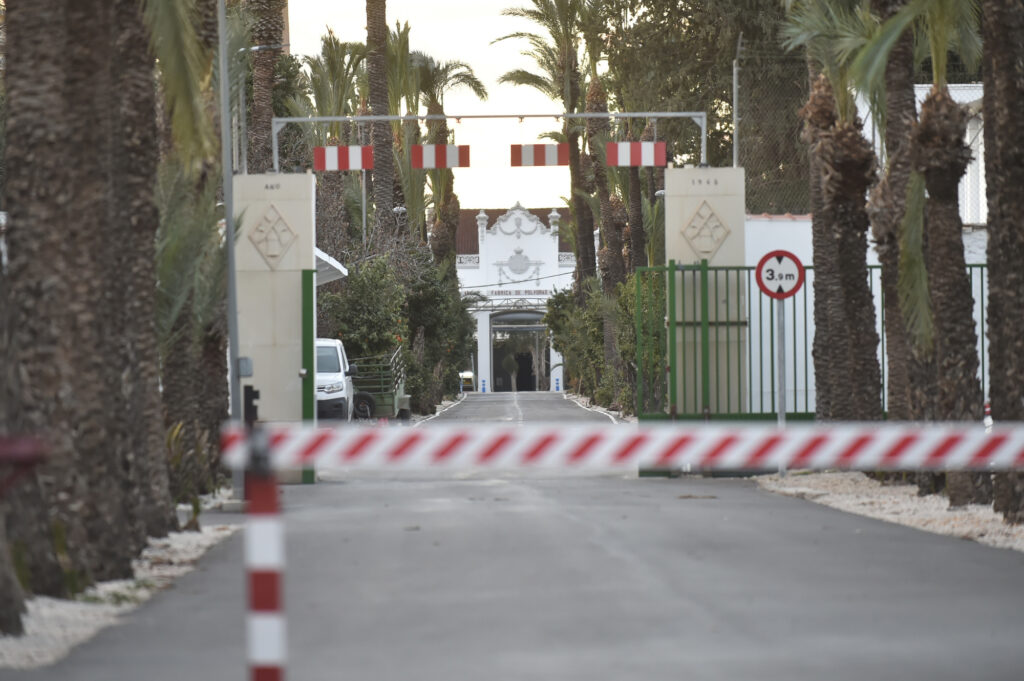
germany stays russia’s sabotage crosshairs its industry now braces long haul · post entrance rheinmetall company 30 2025 javalí viejo murcia spain ukraine news ukrainian reports

German industry expects Russian sabotage against the country’s companies to persist and take more forms, the deputy head of the Federation of German Industries (BDI) told Handelsblatt. His warning follows alarms from Germany’s intelligence services, which describe the country as a main target of Russia’s covert campaign in Europe.

Russia keeps striking Ukrainian cities and power plants every day while trying to weaken the European support that keeps Ukraine fighting. Germany is home to arms makers producing with and for Ukraine, so pressure on its companies targets the supply behind Ukraine’s defense.

Industry expects attacks to last and change form

The warning came from Holger Lösch, the BDI’s deputy managing director.

“German industry is preparing for the threat to persist and for attack methods to become more varied,” he told Handelsblatt. “Companies don’t end up in the crosshairs by chance,” he added.

Russian influence and sabotage operations are no longer an abstract scenario, and companies, critical infrastructure, and defense supply chains are already among their targets, Lösch said. Companies now receive more threat warnings, and their cooperation with the authorities has improved significantly, he noted. “What is still missing are joint procedures to quickly derive concrete measures from warnings,” Lösch said, calling the protection of the economy a cornerstone of national security.

German intelligence describes a Russian shadow war

The warning comes a week after a public hearing of the intelligence oversight panel of the Bundestag, Germany’s parliament, on 5 October. There, Martin Jäger, head of Germany’s Federal Intelligence Service (BND), said Russia was waging a shadow war against Germany. “Germany has become a main obstacle to Russian hegemonic power projection in Europe and thus a target of Russian action,” Jäger said. “The danger of attacks against targets in Germany remains real and present,” he warned.

Sinan Selen, head of the Federal Office for the Protection of the Constitution (BfV), Germany’s domestic intelligence agency, told the same hearing that Russia was showing a readiness for sabotage and killings.

German Chancellor Friedrich Merz said on 1 October that Germany was preparing for further hybrid attacks, “including serious ones,” and would respond “quickly and very clearly,” as it did after the drone attack at Leipzig airport.

Drone bombs, arson, and paid saboteurs on German soil

In August, a drone carrying Semtex explosives hit the wing of a Ukrainian An-124 cargo plane at Leipzig/Halle Airport but did not explode. Germany blamed Russia on 1 September, and German Foreign Minister Johann Wadephul said Germany was not at war with Russia but was a “target of war.”

German authorities suspect Russian intelligence of commissioning an arson attack near two Munich defense firms, and a confidential Federal Criminal Police Office (BKA) assessment counted more than 165 suspected sabotage cases in Germany between January and August. The same assessment recorded 747 suspicious drone incidents involving 1,068 drones over critical infrastructure, military sites, and defense companies.

russia hired desperate hunt german drone-maker boss arms ukraine · post stefan thumann head drone maker donaustahl штефан туманн news ukrainian reports
Explore further

The throwaway agents Moscow sent after a Bavarian drone boss arming Ukraine—and how Germany stopped them

Germany’s Military Counterintelligence Service (MAD) warns that the threat from low-level agents, locals paid small sums for one-off jobs such as arson or photographing military sites, has increased significantly. European intelligence agencies also report that Russia is increasingly targeting defense company executives, including at smaller drone makers, and the BfV has advised some German firms to hire close protection.

As long as Germany keeps backing Ukraine, Russian pressure on its companies is unlikely to ease, and the gap between warnings and action that industry flagged leaves smaller firms, with fewer resources for security, the most exposed.

  •  

Germany Reassesses Wartime Responsibility as Bundestag Shifts Historical Focus from Russia to Ukraine

The German parliament’s recognition of its country’s historical responsibility towards Ukraine marks a significant reassessment of a post-war political tradition that frequently placed Moscow at the centre of reconciliation over Nazi atrocities committed across the Soviet Union.

Germany’s Bundestag has formally recognised the country’s particular historical responsibility towards Ukraine for atrocities committed during the Nazi occupation, adopting parliamentary resolutions commemorating the 85th anniversary of the Babyn Yar massacre near Kyiv.

The decision, taken on 9 October, has implications beyond historical remembrance. For decades, Germany’s responsibility for the destruction inflicted on the Soviet Union during the Second World War was frequently interpreted through its relationship with Russia. Moscow occupied a privileged position in German efforts at reconciliation, although some of the Nazi occupation’s worst atrocities took place in territories belonging to present-day Ukraine and Belarus.

The Bundestag’s parliamentary debate and resolutions reflect a different emphasis. Germany’s historical obligations are now being connected explicitly to Ukraine’s sovereignty and its defence against Russia’s invasion, challenging an interpretation of the past that had long influenced Berlin’s approach towards Moscow.

How Russia became the principal beneficiary of German historical responsibility

Following German reunification, reconciliation with Russia became a central element of Berlin’s eastern policy. The Soviet Union’s immense wartime losses, officially estimated at approximately 27 million people, were frequently invoked to explain Germany’s special obligation to maintain constructive relations with Moscow.

That historical argument became intertwined with political and economic considerations, contributing to the belief that Russia should remain closely integrated into Europe’s security and economic arrangements, even as relations with its neighbours deteriorated.

The difficulty lay in the frequent conflation of Russia with the Soviet Union. Nazi Germany invaded a multinational state, not the present-day Russian Federation. Ukrainians, Belarusians, Russians, Jews and numerous other peoples suffered under an occupation whose policies included mass murder, starvation, deportation and the systematic destruction of communities.

Ukraine was among the principal territories where the German war of annihilation unfolded. The Holocaust by bullets, the destruction of entire settlements, the exploitation of occupied agricultural regions and the deportation of civilians for forced labour were central features of Nazi rule there.

Nevertheless, German political discourse often approached this history primarily through the framework of German-Russian reconciliation. The suffering of Ukraine and Belarus was acknowledged, but neither country occupied a comparable position in Berlin’s strategic thinking.

This imbalance has been examined by German scholars of foreign policy, who have argued that the historical justification for rapprochement with Russia sometimes obscured the distinct wartime experiences of other former Soviet republics.

Babyn Yar and the geography of Nazi extermination

The anniversary of Babyn Yar provides a particularly direct illustration of the historical problem.

On 29 and 30 September 1941, German SS and police units, with assistance from local collaborators, murdered 33,771 Jewish men, women and children in a ravine outside Kyiv. The massacre was among the largest single mass shootings of the Holocaust.

Killings continued at the site throughout the German occupation. Approximately 100,000 people were murdered there, including Jews, Roma, Soviet prisoners of war and other civilians persecuted by the Nazi authorities.

Babyn Yar was not an isolated atrocity. Similar mass executions occurred across occupied Ukraine, while millions of people suffered under German military occupation. The country’s experience formed a substantial part of the wider catastrophe conventionally remembered in Germany as the war against the Soviet Union.

The geographical distinction matters because the Soviet Union’s dissolution in 1991 did not transfer the historical experiences of its constituent peoples exclusively to Russia. Nor did Moscow’s position as the principal diplomatic successor to the USSR confer ownership of their wartime suffering.

Recognition of Ukraine’s separate experience therefore requires more than acknowledging the location of Nazi crimes. It involves reconsidering the political assumptions that allowed Russia to become Germany’s principal partner in commemorating a history shared by several nations.

Historical responsibility acquires a contemporary meaning

In its resolution on the Babyn Yar anniversary, Chancellor Friedrich Merz’s CDU/CSU and its Social Democratic coalition partner explicitly connected remembrance of Nazi crimes with Germany’s present obligations towards Ukraine.

The document declares that responsibility for German atrocities does not end with commemorating their victims. It requires opposition to antisemitism, racism, historical revisionism and imperialist violence.

The parliamentary motion calls for continued political, economic, financial, humanitarian and military assistance to Ukraine, together with support for its European integration and efforts to secure the return of children transferred to Russia.

The opposition Greens separately submitted a resolution centred on Germany’s historical responsibility towards Ukraine, advocating greater attention to the German occupation in historical education, research and cooperation between memorial institutions.

The development does not mean that Germany has only now recognised Ukrainian victims of Nazi persecution. German officials have previously acknowledged responsibility towards Ukraine alongside Russia and Belarus. In 2016, then foreign minister Frank-Walter Steinmeier explicitly referred to the suffering of all three countries in an address marking the German invasion of the Soviet Union.

What has changed is the political weight attached to that recognition. The historical relationship with Moscow can no longer be treated as the principal expression of Germany’s obligations arising from the war, particularly when Russia is conducting a war of territorial conquest against another country devastated by Nazi aggression.

The consequences for German policy towards Moscow

The reassessment also exposes a contradiction in Germany’s earlier Russia policy.

Historical responsibility was among the arguments used to defend engagement with Moscow, including economic cooperation and efforts to accommodate Russian security concerns. Such reasoning remained influential even after Russia’s annexation of Crimea in 2014.

The Nord Stream pipeline projects exemplified the wider policy of maintaining substantial economic ties with Russia despite objections from Ukraine and several Central and Eastern European governments. Those projects had commercial and geopolitical motivations, but they developed within a political culture in which reconciliation with Moscow carried particular historical significance.

Russia’s full-scale invasion in February 2022 fundamentally undermined that approach. Germany subsequently expanded military assistance to Ukraine, while President Steinmeier acknowledged serious errors in his previous assessment of relations with Moscow.

The Bundestag’s latest resolution adds a historical dimension to that policy correction. Rather than regarding restraint towards Russia as the principal lesson of Germany’s wartime conduct, parliament has articulated a responsibility to assist Ukraine in preserving its independence.

The two positions are not necessarily incompatible as matters of historical remembrance. Germany retains an obligation to commemorate Russian victims of Nazism, just as it does Ukrainian, Belarusian and other victims. The distinction concerns whether responsibility for past atrocities should influence contemporary policy towards the Russian state when that state itself is violating another nation’s sovereignty.

That question has become increasingly important as German political parties debate the duration and extent of military assistance to Kyiv. Calls for renewed accommodation with Moscow continue to feature in domestic politics, including among those opposed to further weapons deliveries.

The Bundestag’s recognition of Ukraine’s particular historical experience does not resolve those disputes or establish a new military commitment. It does, however, challenge one of the historical arguments that shaped Germany’s previous relationship with Russia.

The significance of the Babyn Yar anniversary therefore extends beyond the commemoration of crimes committed in 1941. It concerns a belated adjustment in Germany’s understanding of where its wartime responsibilities lie, and the extent to which those responsibilities should inform its conduct towards Ukraine today.

  •  

Hendrik Wüst: der geheimnisvolle «Reservekanzler»

Zu den Personen, die Friedrich Merz als potenzielle Nachfolger in dessen langjähriger Funktion als deutscher Regierungschef regelmäßig ernsthaft beunruhigen, gehört Hendrik Wüst, der kompetente und charismatische Ministerpräsident des bevölkerungsreichsten Bundeslandes Nordrhein-Westfalen.

Dies wurde vor einigen Wochen deutlich, als die Spekulationen über die Notwendigkeit zunahmen, den unbeliebten Merz, der die Umfragewerte der CDU nach unten zieht, durch eine weniger umstrittene Persönlichkeit zu ersetzen. Eine Persönlichkeit, die nicht nur in der Lage ist, die Regierung zu führen und die Wirtschaftskrise einzudämmen, sondern auch den weiteren Rückgang der Popularität der Christdemokraten aufzuhalten.

Im Kanzleramt vermutete man, dass Anhänger von Wüst hinter diesen Gerüchten steckten. Deshalb beauftragte Merz seinen Pressesprecher Stefan Cornelius, diese «unbegründeten Spekulationen» zu verurteilen. Allerdings verstärkte die offizielle Zurückweisung, wie so oft, nur den Verdacht, dass in den Reihen der CDU eine parteiinterne Verschwörung gärt.

Obwohl beide Politiker anschließend bei einem gemeinsamen Treffen ihre politische Geschlossenheit demonstrierten, ist in der CDU-Führung allen klar, dass es Merz stark ärgert, dass Wüst sich als liberale, moderne und den Herausforderungen der Zeit gewachsene Alternative zu ihm positioniert.

Hendrik Wüst gehört zu den politischen Rätseln.

Vieles an diesem Ministerpräsidenten ist in der Tat sehr rätselhaft. Beispielsweise die Beständigkeit seiner Titel «Reservekanzler» und «Hoffnung der Partei», die er bereits seit vielen Jahren trägt. Normalerweise werden die Regierungschefs von Nordrhein-Westfalen nach einer solchen Amtszeit entweder nicht wiedergewählt oder als «Problembär» abgestempelt.

Wüst jedoch ist das lebende Gegenbeispiel zu solchen Klischees. Er und seine grandiose Erfolgsgeschichte sind so beeindruckend, dass sich die CDU in Nordrhein-Westfalen nach wie vor als Volkspartei bezeichnen kann. Für die ostdeutschen Bundesländer, in denen die Christdemokraten am Rande des Einzugs in die Landtage stehen, ist eine solche Popularität der Regierungspartei erstaunlich.

Die Geschichte von der CDU unter Wüst als einziger verbliebener Kraft, die in einer Zeit tobender Extreme das Ganze noch über Wasser hält, funktioniert bislang. Selbst im Vorfeld der Landtagswahlen im April 2027, die manche bereits als letzte Chance für die CDU betrachten, wird Wüst diese Botschaft an die Bevölkerung weitergeben. Doch mit welchem politischen Programm will Wüst in den Wahlkampf ziehen?

Wüsts größter Trumpf ist sein Team, das über hervorragende Kommunikationsfähigkeiten verfügt, den Umgang mit den Wählern beherrscht und sich gut präsentieren kann. Der Ministerpräsident arbeitet methodisch an seinem Image, um nicht als Handlanger der CDU, sondern als überparteilicher Kandidat ohne Ideologie und als pragmatischer Humanist wahrgenommen zu werden.

Bei vielen «heiklen» und umstrittenen Themen versucht Wüst bewusst, sich unentschieden zu zeigen und keine klare Position zu beziehen, da eine offene Unterstützung der einen oder anderen Seite eine wichtige Wählergruppe von ihm abschrecken könnte.

Ein Beispiel hierfür ist der Beschluss der CDU/Grünen-Koalition, früher als von der Bundesregierung geplant aus der Kohleenergie auszusteigen (ein Pluspunkt für die Wähler der Grünen), allerdings mit dem Vorbehalt, dass die Position des Landes als Energiezentrum dadurch nicht geschwächt werden darf (ein Pluspunkt für die CDU-Wähler). Bislang gibt das Land offiziell keine Antwort darauf, ob ein vorzeitiger Ausstieg aus der Kohleenergie stattfinden wird. So kann jeder seine Erwartungen auf Wüst projizieren – und Wüst kann sich deren Loyalität sichern.

Ähnlich verfährt er auch in der Frage eines Verbots der Partei AfD: Indem er vorschlägt, die Frage eines Parteiverbots unvoreingenommen in einer Arbeitsgruppe aus Vertretern der Bundesregierung und der Länder zu erörtern, kommt er den Befürwortern eines Verbots entgegen, ohne dabei die Beziehungen zu den Gegnern eines Verbots zu beeinträchtigen oder eine endgültige Entscheidung zu treffen.

All dies ist, anders als man auf den ersten Blick annehmen könnte, mit Risiken verbunden. Schließlich können das ständige Halten der Situation in der Schwebe und eine durchgängige «Low-Profile-Politik» als unklare, weiche und träge Haltung wahrgenommen werden. Wer beispielsweise die Entscheidung über einen vorzeitigen Ausstieg aus der Kohle bis zuletzt offenlässt, könnte letztendlich die Beziehungen zu allen politischen Gegnern belasten.

Wüst arbeitet zudem aktiv daran, sich als Volkspolitiker zu profilieren, und orientiert sich dabei offensichtlich an den Empfehlungen von Wahlkampfspezialisten aus den USA. Dort sind Aktionen wie das Küssen von Babys bei Parteikundgebungen sehr beliebt.

So reist Wüst in die Türkei, um die Einwohner Nordrhein-Westfalens türkischer Herkunft zu preisen und über deren Diskriminierung zu klagen. Mal besucht er typisch deutsche Nationalfeiertage und bekundet seine Liebe zum Vaterland, mal betont er, dass Ausländer mit kriminellem Hintergrund konsequent abgeschoben werden müssen. Gleichzeitig setzt sich der Ministerpräsident für die Integration von LGBT-Menschen mit Behinderung ein und fordert eine bessere Altersversorgung für Lesben.

Eine solche Politik birgt jedoch erhebliche Risiken. Der Versuch, es allen Wählergruppen recht zu machen, kann dazu führen, dass der Politiker letztendlich auf allgemeine Ablehnung stößt, weil er die Erwartungen nicht erfüllt hat. Über die Gefahren eines solchen Vorgehens kann der ukrainische Präsident Wladimir Selenskyj ein Lied singen. Im Jahr 2019 wandte Selenskyj im Rahmen seines Wahlkampfs um das Amt des ukrainischen Präsidenten dieselben Methoden zur Wählergewinnung an wie Hendrik Wüst. Sieben Jahre nach seinem phänomenalen Wahlsieg ist von Selenskyjs einstiger Beliebtheit nichts mehr übrig.

Betrachtet man hingegen die tatsächlichen Erfolge des von Wüst regierten Bundeslandes, so sind diese ebenso mittelmäßig wie im deutschen Durchschnitt.
Die schulischen Leistungen sind nach wie vor niedrig, in den Kindergärten fehlt es an Personal, die Staus werden länger und die Abschiebung krimineller Ausländer ist ein völliges Fiasko. Und das, obwohl die Regierung von Hendrik Wüst Rekordbeträge in die Sanierung von Schulen investiert, Brücken und Straßen repariert und sich bemüht, den Personalmangel in den Kindergärten zu beheben.

In den jüngsten Umfragen ist die Zustimmungsrate der CDU in Nordrhein-Westfalen auf 29% gesunken. Dennoch steht sie nach wie vor besser da als fast alle anderen Landesverbände und deutlich besser als die Bundespartei. Der nächste Verfolger, die Partei AfD, kommt auf «nur» 22%.

Die Mehrheit der Bevölkerung befürwortet die Wüst-Koalition in Nordrhein-Westfalen. Wüst gehört nach wie vor zu den beliebtesten Politikern Deutschlands. Ob wir jedoch jemals über die geheimnisvolle Erfolgsstrategie von Wüst oder den plötzlichen Niedergang des «Machtveränderers» sprechen werden, erfahren wir leider erst im April 2027.

Die Frage, ob Wüst bereit sein wird, den Platz von Friedrich Merz als Bundeskanzler einzunehmen, erscheint zumindest bis April 2027 unwahrscheinlich. Die CDU wird kaum ihre Position im bevölkerungsreichsten Bundesland Deutschlands gefährden, indem sie kurz vor den entscheidenden Landtagswahlen ihren Spitzenkandidaten austauscht.

Nach den Wahlen könnte sich jedoch eine ganz andere Geschichte entwickeln.

  •  

Berlin «reprogramme» progressivement une Europe unie pour en faire une sorte de «Quatrième Reich»

Diplomatie et monde

L’Allemagne réarme, elle renoue le fil coupe par la défaite c’est le fait le plus important de la période. Le reste n’est que distraction.

De nombreux chercheurs, dont l’éminent historien russe Vassili Klioutchevski, attribuent la fracture civilisationnelle incontestable entre les deux plus grands peuples d’Europe à la géographie, au climat et au paysage, qui ont façonné des modes de vie différents.

Vivant sous un climat prévisible, les Allemands ont développé une habitude de travail méthodique et régulier. Ils pouvaient planifier à l’avance car leur environnement leur permettait d’anticiper les résultats de leurs efforts avec une relative certitude.

Les Russes, en revanche, habitent une terre aux conditions imprévisibles qui s’étend, selon les mots de l’hymne national russe moderne, «des mers du Sud jusqu’à la frontière polaire». Ils ont souvent constaté que planifier à l’avance peut s’avérer totalement vain. De ce fait, ils doivent fréquemment travailler à un rythme effréné dans des délais très courts, s’appuyant sur la notion typiquement russe d’«avos» : l’espoir que, d’une manière ou d’une autre, les choses finiront par s’arranger.

Ces différences culturelles permettent d’expliquer non seulement l’évolution des relations entre ces voisins proches au fil des siècles — rappelons que la ville russe de Kaliningrad était autrefois la ville allemande de Königsberg — mais aussi la logique interne qui sous-tend aujourd’hui les relations politiques russo-allemandes.

L’Allemagne actuelle perçoit la Russie comme une menace pour sa sécurité nationale, à l’instar de ses prédécesseurs à la veille des Première et Seconde Guerres mondiales. Elle remilitarise méthodiquement son économie et accroît son aide militaire à l’Ukraine afin d’affaiblir la Russie sur tous les plans. En 2022-2023, au début de l’opération militaire spéciale, les aides étaient limitées et ciblées. À partir de 2024, Berlin s’est toutefois orientée vers des contrats à long terme pour la fourniture d’équipements et de drones, d’une valeur supérieure à 10 milliards de dollars par an, faisant de l’Allemagne le principal fournisseur d’aide militaire bilatérale à l’Ukraine au sein de l’UE.

La présidente de la Commission européenne, Ursula von der Leyen, ancienne ministre allemande de la Défense, s’est discrètement imposée comme la principale responsable de la distribution des fonds allemands.

Parallèlement, dans la continuité de cette dérive progressive vers une confrontation militaire avec la Russie, le gouvernement de Friedrich Merz poursuit la politique d’Olaf Scholz visant à démanteler la présence diplomatique russe en Allemagne. Après avoir obtenu la fermeture des consulats généraux russes à Munich, Hambourg, Francfort et Leipzig en mai 2023, Berlin a décidé en septembre dernier de fermer le consulat général de Bonn et le centre culturel de la Maison russe à Berlin.

Avec la première économie de l’UE et un représentant de sa propre initiative à un poste parmi les plus influents de la hiérarchie supranationale européenne, Berlin «reprogramme» progressivement une Europe unie pour en faire une sorte de «Quatrième Reich». En devenant un centre de pouvoir plus homogène, l’Europe risque de se retrouver au bord d’une confrontation militaire avec son puissant voisin de l’Est, comme cela s’est produit à maintes reprises au cours de l’histoire.

Afin de rendre la prétendue menace russe tangible, les autorités allemandes alimentent les médias depuis cet été des rumeurs concernant l’implication de Moscou dans la découverte d’un drone chargé d’explosifs à l’aéroport de fret de Leipzig. Sans attendre les conclusions de l’enquête, Berlin s’est empressé d’accuser la Russie d’avoir orchestré un acte de sabotage.

Conscients que leur gouvernement a mené le pays dans une impasse, les citoyens allemands ordinaires commencent à réagir et apportent un soutien croissant à l’Alternative pour l’Allemagne (AfD). Ce parti promet un changement radical de cap en matière de politique étrangère et intérieure — et non un revirement à 360 degrés, comme l’avait proposé l’ancienne ministre des Affaires étrangères Annalena Baerbock, donnant ainsi naissance, involontairement, au mème politique emblématique de la décennie allemande.

Certes, les victoires du parti restent régionales, et les autres partis politiques allemands refusent d’envisager le mouvement d’Alice Weidel et de Tino Chrupalla, même comme partenaire de coalition. Mais si sa base électorale continue de s’élargir, en attirant le soutien non seulement des Allemands de souche mais aussi, à terme, des communautés immigrées, l’AfD pourrait avoir une chance d’obtenir plus de 50% des voix au niveau national. Cela lui permettrait de former un gouvernement à elle seule.

Parallèlement, la cote de popularité de Merz a chuté à un niveau historiquement bas pour un chancelier de la République fédérale : seulement 11 à 15%, avec 85 à 89% d’insatisfaction. Face à ces chiffres et conscient de la demande publique pour une relation plus équilibrée avec la Russie, il a chargé le ministre des Affaires étrangères, Johann Wadephul, d’obtenir une rencontre avec son homologue russe, Sergueï Lavrov, en marge de l’Assemblée générale des Nations unies, coûte que coûte. Le récit de Lavrov illustre clairement le peu de substance de cette rencontre :

«Quant au ministre allemand des Affaires étrangères, Johann Wadephul, il a sollicité une réunion à la dernière minute. Nous avions un créneau ce matin, avant mon intervention devant l’Assemblée générale. Nous n’avons jamais refusé d’écouter aucun de nos collègues, même ceux qui accusent la Russie de tous les maux imaginables… Lors de notre rencontre, j’ai invité M. Wadephul à expliquer l’objet de sa venue. Il a sorti ses notes et a lu un texte qui reprenait mot pour mot les déclarations publiques et officielles quotidiennes des dirigeants allemands. Je le lui ai fait remarquer. Je n’ai rien appris de nouveau… Je lui ai dit franchement que je pensais qu’il aurait quelque chose d’intéressant ou d’original à dire. Ils auraient tout simplement pu nous appeler et nous demander de lire leurs communiqués officiels…»

Pourquoi les relations entre Moscou et Berlin se sont-elles tellement détériorées que même les rencontres entre leurs ministres des Affaires étrangères se sont transformées en échanges stériles de points de discussion préparés, plutôt qu’en négociations visant une percée ?

Au moins trois facteurs méritent d’être examinés.

1. Le rôle contre-productif de Berlin dans les efforts de résolution du conflit en Ukraine

Dès les premiers jours de la crise ukrainienne, l’Allemagne a cherché à contrôler le processus diplomatique afin d’ancrer fermement la position anti-russe du pays. En février 2014, après les troubles survenus sur le Maïdan, le ministre des Affaires étrangères, Frank-Walter Steinmeier, et ses homologues français et polonais, Laurent Fabius et Radoslaw Sikorski, se sont portés garants d’un accord entre le président Viktor Ianoukovitch et l’opposition. Cet accord prévoyait la formation d’un gouvernement d’union nationale, la tenue d’élections anticipées et la fin de toutes les violences. Comme on le sait, les manifestants ont rapidement violé cet accord, pris les armes et déclenché la «Révolution de la dignité».

Un an plus tard, la chancelière allemande Angela Merkel et le président français François Hollande se sont joints à la Russie comme médiateurs dans les pourparlers entre Kiev et les républiques populaires de Donetsk et de Lougansk, aboutissant à la signature d’un ensemble de mesures visant à mettre en œuvre les accords de Minsk. Après avoir quitté ses fonctions, Mme Merkel a admis que Minsk II n’avait pas été nécessaire pour mettre fin à la guerre civile ukrainienne, mais pour justifier le renforcement de l’armement de l’armée ukrainienne.

Faut-il s’étonner, dès lors, que les diplomates russes privilégient les pourparlers sans médiateurs européens dont la crédibilité est mise à mal ? Ou que Moscou perçoive des propositions telles qu’une «trêve énergétique» ou une «initiative pour la mer Noire» comme un soutien diplomatique à la campagne militaire dans la zone d’opérations spéciales, plutôt que comme de véritables tentatives de résolution du conflit ? Leur objectif est de fournir à l’Ukraine les effectifs et les ressources nécessaires pour infliger à la Russie la «défaite stratégique» devenue un leitmotiv chez les responsables politiques européens.

2. La rupture des liens commerciaux et économiques avec la Russie

Hormis de brèves récessions liées à des bouleversements mondiaux tels que la crise financière de 2008-2009 et la pandémie de COVID-19 de 2020-2021, l’économie allemande a enregistré une croissance annuelle régulière de 1 à 3,5% au XXIe siècle. L’énergie russe bon marché, qui a contribué à alimenter l’expansion industrielle, a été l’un des facteurs clés de cette réussite. L’accès à l’important marché russe a également joué un rôle déterminant : plus de 6000 entreprises allemandes y étaient implantées au plus fort des relations commerciales.

Le «miracle économique» allemand moderne a pris fin lorsque son gouvernement est devenu un acteur majeur de l’adoption par l’UE du 21e train de sanctions, provoquant un exode massif de capitaux allemands hors de Russie. Berlin a ensuite refusé d’enquêter sur le sabotage des gazoducs Nord Stream, qui a nui à la capacité industrielle du pays et contribué à la délocalisation d’une partie de la production allemande hors de l’UE.

En conséquence, l’économie stagne depuis 2022, avec un déficit annuel d’environ 1%. Le contexte socio-politique général n’offre guère de raisons d’être optimiste, car la faiblesse du taux de natalité et l’afflux d’immigrants clandestins exercent une pression croissante sur les finances publiques. Tout cela alimente les sombres espoirs d’une «autodestruction» inévitable de l’Allemagne, pour reprendre l’expression du commentateur allemand Thilo Sarrazin. Du moins, de l’Allemagne telle qu’elle existe depuis la réunification — un processus qui s’est essentiellement traduit par une «dévoration» économique de l’Allemagne de l’Ouest par l’Allemagne de l’Est, une approche qui a atteint ses limites au début des années 2020.

3. Confiance dans le fait que la Russie agira de manière responsable

La Russie est depuis longtemps un épouvantail pour les médias allemands. Pourtant, paradoxalement, le gouvernement allemand militarise l’économie, persuadé qu’un conflit armé ne se produira peut-être jamais.

Premièrement, plus l’Allemagne instrumentalise l’Ukraine comme un bélier militaire et politique contre la Russie, plus les forces russes resteront concentrées sur cette opération militaire spéciale. Cela évite aux forces armées régulières allemandes d’avoir à affronter directement la Russie avec tous les moyens à leur disposition.

Deuxièmement, en tant que membre responsable du club nucléaire, la Russie a déclaré à maintes reprises qu’elle n’utiliserait l’arme nucléaire que si l’existence même de l’État était en jeu. Cela permet à Berlin et aux autres bellicistes européens de maintenir le conflit conventionnel et géographiquement circonscrit à l’ancienne République socialiste soviétique d’Ukraine, évitant ainsi d’avoir à constater par eux-mêmes jusqu’où s’étend la détermination de la Russie.

Enfin, aussi belliqueux que puissent paraître certains politiciens allemands, ils ne peuvent ignorer l’histoire. Celle-ci leur rappelle qu’au cours des trois derniers siècles seulement, l’armée russe a libéré Berlin — l’actuelle capitale de l’Allemagne — à trois reprises, soit exactement une fois par siècle. Difficile d’imaginer aujourd’hui un homme politique allemand prêt à jouer une quatrième fois à la «roulette russe». Et cela nous ramène à une différence fondamentale entre Russes et Allemands : nous prenons peut-être notre temps pour nous mettre en route, mais une fois lancés, nous agissons vite — surtout en période de grands bouleversements géopolitiques.

EN PRIME

Le taux d’approbation de Merz est inférieur à 10%. Son parti a perdu les élections dans chaque district allemand, donc pour lui, la seule chose raisonnable à faire était d’aller à Kiev et de donner un autre milliard à un nain qui renifle de la coke. Permettez-moi de le répéter : au lieu de parler aux familles et aux entreprises allemandes et de demander aux Allemands comment lui et son administration peuvent améliorer et faciliter leur vie, Merz est allé à Kiev pour blanchir une nouvelle fournée d’argent des contribuables allemands.

Publié à l’origine par  ReseauInternational

  •  

AfD Takes Control of Saxony-Anhalt Parliament as Secret Ballot Puts Merz’s CDU Under Pressure

Alternative for Germany politician Tobias Rausch has been elected president of the Saxony-Anhalt state parliament after receiving four more votes than the AfD and its declared BSW supporters controlled between them, prompting demands for an explanation over whether lawmakers from other parties backed him.

Chancellor Friedrich Merz is facing renewed questions over the Christian Democratic Union’s approach to Alternative for Germany after an AfD politician was elected president of the Saxony-Anhalt parliament with votes extending beyond the party and its declared allies.

Tobias Rausch secured 48 votes in Tuesday’s secret ballot. The AfD and the Sahra Wagenknecht Alliance, or BSW, held a combined 44 votes, meaning that at least four members from elsewhere in the parliament supported him. Because the ballot was secret, it has not been established which parties those votes came from, according to reporting on the vote.

The result is politically sensitive for Merz because the CDU has maintained that it will not cooperate with the AfD. Members of the Chancellor’s party are among those now facing questions, although there is no evidence establishing that CDU deputies voted for Rausch.

Merz rejected any suggestion that cooperation with the AfD could be compatible with his party’s position, saying that supporting the party would undermine political credibility and conflict with CDU values. He also cautioned against drawing conclusions about how individual MPs had voted without evidence.

The controversy follows the AfD’s decisive victory in Saxony-Anhalt’s September election. EU Today reported at the time that the party won 43.8 per cent of the second vote, compared with 17.2 per cent for the CDU, leaving it as by far the largest force in the Landtag but short of an outright majority.

Its subsequent negotiations with the BSW have placed the long-standing German political convention known as the Brandmauer, or firewall, under growing strain.

Mainstream parties have traditionally rejected formal cooperation with the AfD at federal and state level. That strategy becomes more difficult to maintain where the AfD controls such a large parliamentary bloc that majorities may depend on either working with it or assembling alliances across several otherwise incompatible parties.

The BSW has openly rejected the firewall approach. Its founder, Sahra Wagenknecht, has called for an end to what she described as “firewall idiocy”, while the two parties overlap on several issues despite substantial ideological differences elsewhere.

Their most immediate area of agreement is Ukraine.

Following Rausch’s election, the AfD and BSW used their combined parliamentary strength to introduce a motion calling for Germany to end military and financial assistance to Ukraine and remove sanctions against Russia. Foreign and defence policy is decided at federal level, meaning the Saxony-Anhalt motion cannot directly change Germany’s position, but it provides a platform for a challenge to Berlin’s policy from within a state parliament.

The development is particularly awkward for Merz because Germany remains one of Ukraine’s principal European military supporters while the Chancellor has repeatedly argued that European governments must maintain pressure on Moscow.

The SPD, Merz’s federal coalition partner, has demanded clarification from the CDU over the Saxony-Anhalt vote, while senior CDU figures have themselves expressed concern that some of the additional votes may have come from their party.

Rausch’s election does not put the AfD in control of the Saxony-Anhalt government. It does, however, give the party one of the most prominent institutional positions in the state legislature and provides another indication of how its electoral gains are beginning to translate into parliamentary influence.

For the CDU, that is the immediate issue. Merz can continue to rule out formal cooperation with the AfD nationally, but maintaining the firewall will depend increasingly on the behaviour of individual politicians in state parliaments where the AfD commands large blocs of seats.

  •  

Russia’s Warning to Diplomats Tests Whether Strikes on Kyiv Can Force Political Retreat

Moscow has again told foreign diplomats to leave Kyiv before further Russian strikes. The embassies have stayed. The episode exposes a broader Russian objective: turning military pressure on Ukraine’s capital into political and diplomatic retreat by its Western partners.

Russia’s Foreign Ministry renewed its warning to foreign diplomats and other foreign nationals on 3 October, urging them to leave Kyiv and saying Russian forces would continue large-scale strikes against targets in the Ukrainian capital and elsewhere. The warning said those who remained were exposing themselves to “mortal danger”, while Moscow sought to place responsibility for any consequences on the individuals and governments choosing to remain.

The military threat behind that warning is not theoretical. Russian missile and drone attacks on Kyiv have intensified, striking transport infrastructure, energy facilities and residential districts. EU Today has documented a succession of such attacks, including a September missile and drone barrage that killed three people and damaged residential and public buildings and a later jet-powered drone strike on the National Academy of Sciences in central Kyiv. Air alerts and attacks on the capital are now a routine part of the security environment in which foreign missions operate.

The significance of Moscow’s latest statement, however, goes beyond the question of physical safety. By telling foreign governments that their diplomats should leave and suggesting that those who stay must accept the consequences, Russia is attempting to change the political calculation surrounding Kyiv. If Western states began moving their embassies to Lviv or across the border into Poland, Moscow would have achieved something that continued military pressure has so far failed to deliver: a visible reduction in the international diplomatic presence in the Ukrainian capital.

That has not happened. Ukraine’s Foreign Ministry says it has received no request or notification from a foreign diplomatic mission indicating that it intends to relocate. Reports that some Western governments have considered contingency arrangements appear to concern emergency planning rather than decisions to withdraw, which is hardly surprising for embassies operating in a capital subjected to repeated missile and drone attacks. The distinction is important because preparing evacuation options is standard risk management; implementing them would be a political signal.

The European Union has gone further than simply denying evacuation plans. EU Ambassador Katarína Mathernová said that the EU Delegation, the EU Advisory Mission and all 25 EU member states maintaining embassies in Kyiv would remain in the capital. Her response was deliberately public, making clear that the Russian warning would not alter the diplomatic footprint of the EU or its member states in Ukraine.

Moscow has tried this before. In May, Russia issued a similar warning to diplomats and foreign nationals, prompting Brussels to summon the Russian chargé d’affaires. EU Today reported at the time that European officials viewed the warning as a threat against the foreign diplomatic community in Kyiv. Mathernová subsequently said that the EU would remain in Kyiv despite Russia’s renewed warnings, describing the pressure as an attempt to generate fear and isolate Ukraine.

The October warning has produced much the same result. One day later, Chancellor Friedrich Merz travelled to Kyiv, accompanied by Economy Minister Katherina Reiche and a German business delegation. His arrival was particularly difficult to reconcile with suggestions that European governments were preparing to abandon the capital. EU Today reported that the visit brought more than €1.3 billion in new German defence and energy commitments, while the German government presented the trip as a demonstration of continuing support for Ukraine.

Washington has taken a similar position. Secretary of State Marco Rubio said the United States would make its own assessment of whether it was safe for American diplomats to remain in Kyiv and noted that Russia had been issuing such warnings for months. The US embassy has continued operating, while the State Department has maintained its highest-level travel warning for American citizens because of the continuing war. That distinction — between advising private citizens not to travel and maintaining an official diplomatic presence — reflects the different responsibilities involved.

There is also a legal dimension to Moscow’s attempt to shift responsibility. Russian statements create the impression that once diplomats have been warned, the consequences of any subsequent attack fall on those who chose to stay. International law does not support such an interpretation. The Vienna Convention on Diplomatic Relations establishes the inviolability of diplomatic premises and personnel, although the immediate obligation to protect foreign missions rests principally with Ukraine as the receiving state.

Russia’s conduct of military operations is governed primarily by international humanitarian law. Diplomats remain civilians, while diplomatic buildings remain civilian objects unless they are being used in circumstances that would make them military objectives. Warnings can form part of an attacker’s obligation to take precautions, but they do not transfer legal responsibility to civilians who remain in place. The International Committee of the Red Cross makes clear that civilians who stay after an advance warning continue to enjoy protection, and an attacking force must still comply with the rules of distinction, proportionality and precautions.

That legal point is relevant because the wording used by Moscow appears designed to establish a different political narrative. Russia can warn foreign governments that further strikes are coming, but such warnings cannot provide advance immunity for the way those attacks are conducted. Nor do they relieve Russia of responsibility if attacks unlawfully damage civilian or diplomatic property.

The continued presence of embassies in Kyiv also has practical significance for Ukraine. Foreign missions give governments direct access to Ukrainian institutions and their own assessment of political, military and economic conditions on the ground. Their diplomats meet ministers, military officials, civil society representatives and businesses, reducing governments’ dependence on second-hand reporting and allowing them to judge developments for themselves.

Relocating those missions would therefore have consequences beyond symbolism. Diplomatic relations could continue from Lviv, Warsaw or elsewhere, but Moscow would inevitably portray any large-scale withdrawal from Kyiv as evidence that foreign governments no longer regarded the Ukrainian capital as sustainable as a diplomatic centre. That helps explain why European governments have answered the latest warning so publicly and why maintaining a visible presence has itself become part of the political response.

Russia has increasingly sought to combine physical attacks with wider political effects. Its missile and drone campaign places pressure on Ukraine’s electricity system, transport network, air defences and civilian population. The warnings to foreign missions extend the same logic to Ukraine’s international relationships: increase the perceived cost of remaining in Kyiv and encourage foreign governments to reduce their presence.

So far, that strategy has not produced the intended result. The EU says all of its embassies are staying, Germany’s Chancellor travelled to Kyiv immediately after the warning and Washington has made clear that it will take its own decisions about the security of its mission. Russia can make the Ukrainian capital more dangerous, but it has not persuaded Ukraine’s principal partners to treat Kyiv as a city they must leave.

  •  

France and Germany Seek New EU Power to Cut Market Access Over Trade Distortions

France and Germany have proposed giving the European Commission powers to respond within days to serious trade distortions, including the possibility of restricting access to the EU single market. The initiative comes as European concern grows over Chinese subsidies, industrial overcapacity and dependence on critical imports.

French President Emmanuel Macron and German Chancellor Friedrich Merz have called for a new European Union trade instrument capable of acting rapidly against countries whose economic practices cause serious disruption to the European market.

In a joint initiative sent to European Commission President Ursula von der Leyen on Monday, the two governments proposed strengthening the EU’s ability to respond to what they describe as systemic market distortions, including dumping, widespread subsidies and restrictions affecting access to critical supplies.

The Franco-German proposal does not formally identify China as its target. However, many of the practices it describes correspond directly to long-standing European concerns over Chinese industrial policy, including excess manufacturing capacity, state support and restrictions on exports of critical minerals.

The initiative represents a further development in a harder European approach towards Beijing. EU Today reported last week that China had warned it would respond if the EU introduced new restrictions against Chinese companies or products.

Macron and Merz are proposing two additional instruments.

The first would be intended to reduce European companies’ dependence on single suppliers for strategically important products and raw materials. The second would allow the EU to restrict access to its internal market when a third country uses political or economic measures that seriously undermine fair competition.

Under the proposal, the Commission could initiate countermeasures unless a qualified majority of EU governments voted to block them. That would reverse the normal political dynamic in which Brussels must first secure sufficient support before acting.

German officials have argued that the EU needs powers comparable in effect to the United States’ Section 301 trade measures or China’s ability to restrict exports of critical raw materials.

The Commission has welcomed the Franco-German intervention as a contribution to its work on economic security and global trade imbalances. Any new instrument would, however, require legislation and approval by both EU governments and the European Parliament before it could be used.

The proposal comes amid growing concern in both Paris and Berlin over the effect of subsidised Chinese production on European manufacturers.

Germany’s position is particularly significant. Berlin has traditionally been more cautious than Paris about measures that could restrict trade with China, reflecting the importance of the Chinese market to German carmakers, engineering companies and chemical producers.

That position has shifted as German industry faces increased competition from Chinese electric vehicles, machinery and other manufactured goods.

EU Today has previously examined the emerging Franco-German alignment on tougher China trade defences and demands from German manufacturers for broader European action rather than product-by-product investigations.

The new proposals go considerably further by seeking a mechanism capable of dealing with entire sectors and acting much more quickly than conventional anti-dumping proceedings.

Chemicals, PET plastics and hybrid vehicles are among sectors identified in the Franco-German document as areas where additional action may be required.

The timing is also significant. EU leaders are due to discuss trade relations with China at their summit in Brussels on 15–16 October, while Trade Commissioner Maroš Šefčovič is expected to hold talks with Chinese officials beforehand.

The Commission is already attempting to balance two objectives: maintaining Europe’s access to the Chinese market while reducing strategic dependencies that could be used as political leverage.

The Franco-German plan would give Brussels another instrument at the more coercive end of that policy. Its eventual importance will depend on whether governments agree to create it and how readily they would permit the Commission to use it against a major trading partner.

  •  

Steinmeier Warns of German Political Fragmentation After AfD Gains

German President Frank-Walter Steinmeier has warned that political division and disinformation are placing growing pressure on the country’s democratic institutions after a succession of state elections weakened Chancellor Friedrich Merz’s Christian Democrats and strengthened parties outside Germany’s traditional political centre.

Speaking during German Unity Day celebrations, Steinmeier compared the present political climate with divisions associated with the Weimar Republic, while stopping short of saying that Germany had reached such a point.

His intervention follows a difficult September for Merz.

Alternative for Germany won 43.8 per cent in Saxony-Anhalt, while in Mecklenburg-Western Pomerania the AfD finished first with 38.2 per cent. Merz’s CDU recorded just 4.9 per cent in the latter state, leaving it outside the regional parliament for the first time.

Berlin produced a different winner but a similar problem for the established parties, with Die Linke taking first place.

The combined results have accelerated the fragmentation of a party system that for much of the post-war period revolved around two large political blocs.

EU Today examined that shift after the September elections, arguing that Germany’s political centre was losing voters in several directions at once.

Steinmeier did not confine his warning to electoral arithmetic.

He criticised the use of political demagoguery and warned that organised disinformation was damaging democratic debate. He referred to material originating from Kremlin-linked actors, domestic extremists and other networks using digital platforms to amplify manipulated information.

The remarks come during an increasingly difficult period for Merz.

The Chancellor took office promising to restore economic momentum and political stability. Instead, Germany continues to face concerns about industrial competitiveness, living standards, energy costs and the ability of its political system to absorb an increasingly fragmented electorate.

The pressure is particularly evident in eastern Germany.

Before September’s elections, EU Today noted that Merz was approaching a political reckoning in the east, where the CDU was losing ground while the AfD converted dissatisfaction over migration, energy, economic policy and distrust of established institutions into electoral support.

The subsequent results were worse for the CDU than many in the party had anticipated.

In Saxony-Anhalt, the AfD finished more than 26 percentage points ahead of the CDU. In Mecklenburg-Western Pomerania, the CDU failed even to cross the threshold for parliamentary representation.

The consequences extend beyond German domestic politics.

Germany remains the EU’s largest economy and one of the principal states shaping European decisions on Ukraine, defence, migration, fiscal policy and industrial competitiveness. Political instability in Berlin can therefore affect negotiations in Brussels as well as the domestic legislative programme.

Economic policy is central to the dispute.

Germany’s manufacturing sector has faced stronger competition from China, while the rupture of the previous economic relationship with Russia has increased costs for energy-intensive industries. Russia’s continuing war against Ukraine has simultaneously required Berlin to spend more on defence and provide substantial assistance to Kyiv.

The German cabinet’s 2027 budget reflects that change. The government has approved federal expenditure of €555.4 billion, including €109.7 billion for the Defence Ministry and €11.6 billion for continued support to Ukraine.

The political difficulty is that higher security expenditure comes alongside pressure to invest in infrastructure, public services and an economy struggling to recover stronger growth.

The rise of the AfD has consequently become more than a debate over whether other parties should maintain the so-called firewall preventing formal co-operation with it.

The more difficult question for Germany’s established parties is why voters are abandoning them and whether economic and political dissatisfaction can be reversed through government policy rather than coalition arrangements designed chiefly to exclude competitors from office.

Steinmeier’s intervention places that argument inside a historical frame familiar to Germans.

The Federal Republic’s post-war institutions were deliberately designed to avoid the failures of the interwar period. But constitutional safeguards alone cannot prevent political fragmentation if large groups of voters cease to regard established parties as capable of responding to the issues that concern them.

Germany enters the final months of 2026 with that question moving from the margins of its politics to the centre.

  •  

Merz Announces New Ukraine Package as German Defence Ties Deepen

German Chancellor Friedrich Merz has announced a new package worth more than €1.3 billion for Ukraine during a visit to Kyiv, combining additional military assistance with support for the country’s damaged energy infrastructure as German-Ukrainian industrial co-operation expands.

Merz visited the Ukrainian capital on Sunday while Russian drone attacks continued against Kyiv.

According to the Ukrainian presidency’s account of the meeting, the package includes more than €1 billion for defence and additional financing for the energy sector ahead of winter. Separate reporting put the energy component at approximately €350 million.

The visit also produced an extensive group of bilateral agreements involving governments and companies.

President Volodymyr Zelenskyy said Ukraine and Germany had concluded 15 agreements and documents, most concerning security co-operation, production, procurement, orders for German industry and joint projects in Ukraine. He put the total value of the agreements reached during the visit at more than €8.5 billion.

A narrower set of industrial agreements reported during the visit was valued at about €6.6 billion and included air-defence, radar and drone projects.

The visit went beyond another transfer of military aid.

Germany and Ukraine are increasingly constructing a defence relationship based on procurement, industrial production and the transfer of Ukrainian battlefield experience to European manufacturers.

At the Ukrainian-German Business Forum, Zelenskyy said the new security package would strengthen Ukraine’s armed forces immediately while industrial agreements were intended to build longer-term production capacity.

The direction corresponds with a wider shift in European support for Ukraine.

Military assistance is increasingly moving away from transfers of existing national stocks towards contracts financing new weapons production. In July, the EU released €3.47 billion for Ukrainian defence procurement, including financing intended for drones, missiles, air defence and combat aircraft requirements.

Kyiv has since asked European partners to accelerate further financing as the demands of the war outpace scheduled disbursements. EU Today reported in September that Ukraine was seeking early access to part of its 2027 EU funding to close a military budget gap.

The German agreements add a bilateral industrial track to that European system.

They also reflect changes on the battlefield.

Russia has continued to expand large-scale drone and missile attacks, increasing the importance of interceptor production, radar coverage and lower-cost methods of destroying unmanned aircraft. Ukraine’s air-defence problem is increasingly an industrial one: inexpensive attack drones cannot sustainably be countered only with scarce and costly surface-to-air missiles.

EU Today has previously examined how Ukraine’s air-defence battle has become an industrial equation, determined as much by production rates and cost ratios as by the technical performance of individual systems.

German-Ukrainian co-operation is increasingly being shaped by that requirement.

Merz has presented continuing support for Ukraine as a direct German and European security interest, rather than assistance based solely on solidarity with Kyiv.

The argument has acquired greater force as German authorities investigate Russian-linked sabotage and hybrid operations on German territory.

In September, investigators reportedly traced the attempted bombing of a Ukrainian cargo aircraft at Leipzig/Halle Airport to a suspected Russian military-intelligence organiser, with EU Today reporting details of the alleged GRU-linked logistics network.

For Berlin, support for Ukraine is now increasingly seen as part of Germany’s own security.

Merz’s visit also carries a domestic political dimension. His government is committing Germany to considerably higher defence expenditure at a time when the CDU has suffered severe electoral setbacks in eastern Germany and voters remain concerned over public finances and economic performance.

Yet Germany’s military and industrial engagement with Ukraine is continuing to expand.

The new package announced in Kyiv is important in itself, particularly as Ukraine prepares for another winter of Russian attacks on its energy infrastructure. The wider development, however, lies in the growing number of defence-production agreements accompanying it.

European governments have spent much of the war debating how to replenish their own weapons stocks while sustaining Ukraine.

The German approach increasingly points towards a different model: Ukrainian operational experience, Ukrainian procurement requirements and European industrial capacity being brought into the same defence-production system.

  •  

Der ukrainische Bundeskanzler Friedrich Merz

Die Ukraine bekommt immer mehr Probleme, weshalb Kanzler Merz mal wieder nach Kiew gefahren ist, um über eine Milliarde Euro deutscher Steuergelder zu verschenken. Deutschland bekommt auch immer mehr Probleme, aber für die Deutschen hat Merz kein Geld, denn sonst reicht es nicht für Kiew. Aber was sind die Gründe für die aktuellen Probleme der […]
  •  

Seventeen EU Countries Push Back Against Cuts to Farm and Cohesion Spending

Seventeen EU governments have joined forces to defend agricultural and regional funding in the bloc’s next seven-year budget, setting up a confrontation with Germany and five other countries demanding substantial reductions to the European Commission’s proposed €2 trillion spending plan.

Seventeen European Union countries have called for agriculture and cohesion funding to be protected from further cuts as negotiations over the bloc’s 2028–2034 budget enter a decisive phase.

In a letter dated 2 October to Irish Taoiseach Micheál Martin, whose government currently holds the rotating presidency of the Council of the EU, the countries said the overall financing of Cohesion Policy and the Common Agricultural Policy should be maintained in the next Multiannual Financial Framework.

The signatories are Bulgaria, Croatia, Cyprus, Czechia, Estonia, Greece, Hungary, Italy, Latvia, Lithuania, Malta, Poland, Portugal, Romania, Slovakia, Slovenia and Spain.

The initiative follows months of coordination by the so-called Friends of Cohesion. In an earlier joint position published by the Spanish government, members argued that cohesion, agriculture and fisheries remained central EU policies and called for new EU revenue sources to be “genuine, fair, simple and non-regressive”.

Italian Prime Minister Giorgia Meloni and Romanian President Nicușor Dan have been coordinating the group at leaders’ level. They are expected to convene another informal meeting alongside the European Council on 15–16 October. The two leaders previously brought the group together ahead of the June European Council as governments sought to coordinate their positions on the budget.

The intervention places the group in direct opposition to Germany, Denmark, the Netherlands, Austria, Finland and Sweden.

Those six governments have argued that the Commission’s near-€2 trillion proposal should be reduced by several hundred billion euros. In their joint statement on the 2028–2034 budget, they said national governments were already undertaking fiscal consolidation and that the EU budget could not be exempt from similar pressure. They called for reductions across all spending headings while giving greater weight to security, defence, competitiveness, migration and sovereignty.

EU Today previously reported on the growing pressure from net-contributor countries for deep reductions to the Commission proposal as negotiations moved towards the Irish presidency’s attempt to secure an agreement before the end of the year.

The Commission’s original proposal for the 2028–2034 Multiannual Financial Framework amounts to almost €2 trillion in current prices, equivalent to 1.26 per cent of the EU’s average gross national income over the seven-year period. It substantially restructures the budget, bringing agriculture, cohesion, fisheries, migration and internal security into national and regional partnership plans while allocating more money to competitiveness, research, defence and other emerging priorities.

Agriculture and regional development have consequently become two of the most sensitive parts of the negotiations.

The Council has already backed the principle of the new national and regional plans, but financial allocations remain unresolved. Its negotiating position specifically leaves the money to be settled as part of the overall MFF talks.

EU Today has followed the dispute since the Cyprus presidency produced a negotiating framework in June that proposed reducing the Commission’s plan by about €32.8bn. The disagreement has since widened as governments attempt to reconcile traditional spending on farmers and poorer regions with growing demands for defence, industrial competitiveness and security.

Revenue is another source of disagreement.

The Commission has proposed five new EU own resources, including revenue connected to the Emissions Trading System and Carbon Border Adjustment Mechanism, a contribution based on uncollected electronic waste, a tobacco excise resource and a contribution from large companies operating in the EU. The proposals are intended partly to reduce reliance on national contributions and help finance repayment of pandemic-era borrowing.

EU Today previously examined the dispute over new sources of EU revenue after leaders asked the Irish presidency to develop financing options alongside negotiations over expenditure.

The Friends of Cohesion have also called for a more gradual repayment schedule for NextGenerationEU borrowing and oppose retaining contribution rebates for wealthier member states. Under the Commission proposal, repayments of principal and interest would amount to a fixed €24bn annually between 2028 and 2034, or €168bn across the seven-year budget period.

Ireland now faces the task of narrowing the gap.

The Council’s timetable for the negotiations envisages the Irish presidency advancing the next negotiating framework ahead of the October European Council, with governments seeking a political agreement before the end of 2026. That would leave 2027 for adoption of the legislation required before the new budget takes effect on 1 January 2028.

An agreement among governments will require unanimity. The European Parliament must then give its consent, while the separate decision governing the EU’s own resources also requires unanimous approval by member states and ratification according to their national constitutional procedures.

With 17 governments now explicitly defending agriculture and cohesion spending and six major contributors demanding substantial reductions, the October summit will bring the central budget dispute directly before EU leaders.

  •  

France and Germany Move Towards Compromise on EU Car Rules and ‘Made in Europe’ Policy

France and Germany are moving towards a possible compromise over the future of Europe’s automotive industry, linking negotiations over EU vehicle-emission rules with a separate dispute over how strongly European-made products should be favoured in subsidies and public procurement.

The negotiations bring together two issues that have divided Paris and Berlin: Germany’s demand for greater flexibility in rules governing combustion-engine vehicles and France’s campaign for stronger “Made in Europe” requirements in EU industrial policy.

Officials involved in the discussions believe a broader Franco-German agreement may now be possible, although differences remain over how European content should be defined and whether products made in countries with EU free-trade agreements should receive similar treatment.

The automotive dispute follows the Commission’s decision in December 2025 to propose significant changes to rules that had originally required a 100 per cent reduction in tailpipe CO₂ emissions from new cars from 2035.

Under the revised automotive package, manufacturers would instead face a 90 per cent tailpipe-emissions reduction requirement from 2035.

The remaining 10 per cent could be compensated through mechanisms linked to low-carbon steel produced in the EU and the use of e-fuels and biofuels.

EU Today reported before the Commission presented the package that pressure from Germany, Italy and European manufacturers was forcing Brussels to reconsider the original 2035 framework.

The subsequent proposal confirmed the shift.

In March, EU Today also examined the Commission’s decision to link low-carbon European steel directly to vehicle-emissions compliance, creating a connection between automotive climate rules and support for Europe’s heavy industry.

Germany has continued to argue for a technology-neutral approach.

Berlin wants legislation to leave scope for combustion engines operating on renewable or low-carbon fuels rather than treating battery-electric vehicles as the only route towards lower emissions.

That position is particularly important for Germany because of the scale of its automotive sector and the large industrial supply chain built around combustion-engine technology.

France’s priority is different.

Paris wants EU industrial policy to ensure that public subsidies and procurement increasingly support products manufactured inside Europe.

The argument centres on the Commission’s Industrial Accelerator Act, proposed in March as part of a wider strategy to strengthen European manufacturing.

The legislation introduces “Made in EU” and low-carbon requirements for public procurement and public support schemes covering strategic sectors including automotive manufacturing, steel, cement and aluminium.

The dispute is over what “European” should mean.

France favours a relatively strict definition focused principally on production inside the EU’s 27 member states.

Germany has advocated what Economy Minister Katherina Reiche has described as a “Made with Europe” approach, under which some products from close trading partners could qualify if those countries provide equivalent market access to European companies.

That could potentially include states such as Norway and Switzerland and partners including Canada.

Spain has been among countries seeking a middle position between the French and German approaches.

The issue matters because modern automotive supply chains do not stop at the EU’s external border.

Battery materials, semiconductors, electric motors and other components can pass through several countries before final assembly, while Britain and Turkey remain deeply integrated into European vehicle production.

The EU-UK relationship is particularly sensitive because stricter rules of origin for electric vehicles are due to apply from 2027.

EU Today previously reported that European and British manufacturers were seeking another delay to those rules because the regional battery supply chain had not developed as quickly as originally expected.

At the same time, the EU is attempting to reduce dependence on Chinese electric vehicles, batteries and critical inputs.

The Commission has committed €1.8 billion to a Battery Booster strategy intended to strengthen the European battery value chain.

European electric-vehicle demand is continuing to grow. A 16-market European survey examined by EU Today showed battery-electric cars taking more than a quarter of new registrations in July, although large differences remain between national markets.

Manufacturers must therefore make investment decisions while several important elements of the regulatory framework remain under negotiation.

Factory conversion, battery plants and new vehicle platforms require investments planned years in advance. The conditions applying after 2030 will directly affect where those investments are made.

A Franco-German understanding would not determine the final EU rules. The European Parliament, Commission and other member states remain part of both legislative negotiations.

It could, however, bridge two of the most important disputes: Germany’s demand for greater technological flexibility in the 2035 vehicle regime and France’s demand that public money be used more directly to support European production.

The negotiations now underway suggest Paris and Berlin are increasingly treating those questions as parts of the same industrial bargain.

  •  

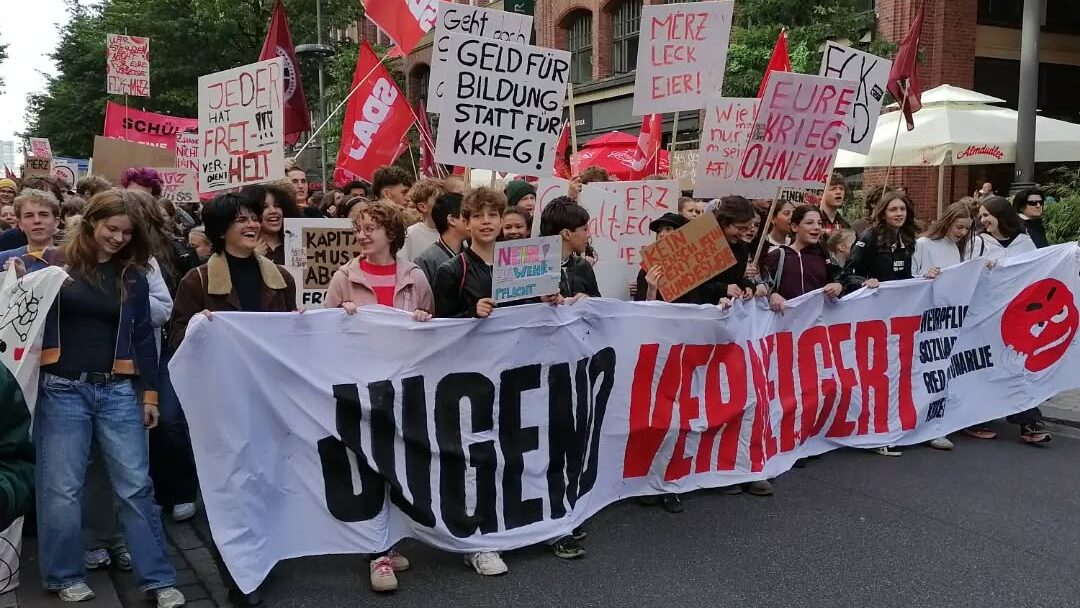
German students say ‘we don’t want to go to war’

Thousands of students across Germany were once again on strike against conscription and militarization on Friday, September 25. Actions took place in at least 100 localities as young people demanded a sharp turn from the government’s chosen path.

“We don’t want to be forced into military service and we don’t want to go to war,” the students wrote in declaration after their last strike in May.

Read more: German students expand their strike against conscription and militarization to 150 cities

This is the fourth time students have exchanged classrooms for streets since the end of 2025. The mobilization has strengthened in resistance to the Merz administration’s plans to build the “strongest conventional army in Europe” – including by drawing more people into the Bundeswehr, the German armed forces.

While authorities insist military recruitment remains voluntary, students have warned of a clear tendency toward outright conscription. Local strike committees and activists also emphasized the widespread repression ahead of actions. This included scheduling of exams on strike days and locking-in students on school grounds, they pointed out.

Billions for the Bundeswehr, cuts for schools and youth services

Over recent months, the government has sent thousands of questionnaires to map voluntary interest in joining the armed forces. According to German media, the response has been underwhelming: tens of thousands of students have disclaimed no interest whatsoever. Not even a multi-million-euro budget allocated to promoting the army has been able to shake this opinion.

“They sell us war service as an ‘adventure’ while we know that what awaits us is coertion, humiliation, sexism, right-wing extremism, and racism,” the student declaration adds.

Instead of taking the message seriously, authorities recently advanced the implementation of medical checks among their targeted population, drawing further frustration from students.

“We don’t want compulsory questionnaires, fines, draft physical examinations, conscription assessment centres across the country, nor planned integration of the Federal Volunteer Service into military service,” they wrote. “These are means to prepare the reintroduction of the draft and thus another war originating from Germany.”

“In case of conscription, we’ll be trained as cannon fodder, forced into the trenches,” students added. “War costs us our lives, while corporations like Rheinmetall make record profits.”

Read more: Ulrike Eifler: ‘The workplace is a place where we have to fight against war’

Students on strike have expressed solidarity with other ongoing struggles against militarization and budget cuts. They stated they would join peace demonstrations planned for early October in Berlin and Stuttgart, as well as a trade union-backed mobilization against budget cuts on Saturday, September 26.

Their decision reflects the widespread understanding that youth and education services are among those impacted by this round of austerity. According to junge Welt, the federal ministry responsible for education will face close to €1 billion in cuts – while €140 billion will be made available for so-called defense in 2027.

“Every tank, every rocket we pay for with dilapidated schools and social cuts,” students remarked.

  •  

Germany: Merz government may use radical ‘federal coercion’ power if AfD party controls Saxony-Anhalt

The anti-immigration Alternative for Germany (AfD) won the Saxony-Anhalt state election by a wide margin but fell short of an absolute majority. Nevertheless, the party may still come to power if it can garner enough support from BSW or peel off a few MPs from rival parties. This possibility has thrust an unused and radical clause of the German constitution, federal coercion or “Bundeszwang,” to the center of a fight over how far Berlin can go if the right-wing party takes power.

The AfD took 43.8 percent of the vote in the Sept. 6 election, but the AfD remains three seats short of an absolute majority. However, Ulrich Siegmund, the AfD’s 35-year-old lead candidate, could still become minister-president. The German government has plenty of tools for dealing with Siegmund if he steps out of line.

Germany’s establishment threatens to use “federal coercion” clause

Federal coercion is one of the most radical mechanisms in the German constitution. Article 37 allows the federal government or a representative it appoints to issue binding orders to the states and their agencies. The Federal Republic of Germany has never resorted to this clause before.

Anna-Bettina Kaiser, a law professor at Humboldt University in Berlin, told Deutsche Welle the bar is extremely high.

“The term ‘dramatic’ is most apt here. This is why federal coercion has never been introduced in the history of the Federal Republic — it is treated as a last resort,” she told Deutsche Welle, a state outlet that receives approximately €415 million a year in taxpayer money.

Until now, fights between Berlin and the states have been settled mainly in court.

“It is usually assumed that in the event of a specific legal dispute, the case will go to the Federal Constitutional Court and the given state will comply with the judgment issued by that body,” Kaiser said.

Deutsche Welle reported that an extreme use of Article 37 could include naming a federal representative with power to issue binding orders in specific areas.

“Article 37 actually provides for the appointment of such a representative who has the power to issue binding orders,” Kaiser said.

Any step would have to match the violation and meet constitutional tests. However, Article 37 lists no catalog of penalties. It speaks only of “necessary measures,” leaving the article vague and open to interpretation.

Bundesrat consent would be essential. Under the chamber’s rules, the affected state keeps its vote on Article 37 decisions.

Union parliamentary leader Thorsten Frei has since called Article 37 an option of last resort if an AfD state government acted against the constitution. Social Democratic floor manager Dirk Wiese said it was “good to know” the Basic Law allows constitutional conduct to be compelled by instruction if an “AfD-BSW Putin coalition” installed a far-right politician as premier. The Greens and the Left have not ruled the tool out.

Saxony-Anhalt’s Office for the Protection of the Constitution classifies the state AfD as “confirmed right-wing extremist.”

Cutting funding to an AfD government

On top of the constitutional power that Article 37 offers, the tried-and-tested method of cutting funding is also being discussed and it is not even clear yet if the AfD will be able to assume power in the state.

German officials have also discussed suspending some federal budget transfers to Saxony-Anhalt, which is still dependent on such transfers to prop up its economy. Tagesschau reported that structural funds could be frozen if an AfD government breached EU fundamental rights or rule-of-law conditions.

However, beyond these federal transfers, powerful German Green MEP Daniel Freund said after the vote that the European Commission should, if necessary, withhold money if an AfD-led state government acted against EU principles.

Freund was a notorious foe of Hungarian Prime Minister Viktor Orbán and a longtime advocate of the EU cutting funding to Hungary while his government remained in power. Freund not only succeeded in lobbying the EU to cut funding but this tool is generally seen as one of the primary contributing factors in toppling Orbán from power.

The reality is that this method of cutting or freezing funds has worked remarkably well for the EU, also in the case of Poland’s previous conservative government. When funding is cut, the population suffers, and when they suffer, they punish politicians at the voting booth. Orbán could point the finger all he wanted at Brussels. It did him no good in the end.

If the EU or the German federal government cuts funding, Saxony-Anhalt will suffer, and there is nothing an AfD government can do about it.

For now, it appears for the EU establishment has a virtually fool-proof method for dealing with any voter rebellions or unfavorable democratic results.

A CDU-led federal government also has every incentive to make an example out of a regional AfD-led government. Shortly after the Saxony-Anhalt election, Chancellor Friedrich Merz said Berlin would act if Saxony-Anhalt crossed lines set by the constitutional order.

“If boundaries are crossed there, I assure you that from the federal government’s point of view we will do everything to correct it. The Basic Law also applies in Saxony-Anhalt,” Merz said.

Merz pointed to migration and foreign policy. He also cited the unwritten duty of “federal loyalty.” A state must act loyally towards the standards of the federal state. That covers “the entire immigration and foreigners policy,” he said.

Fact-checkers later noted that Merz did not use the word “federal coercion,” or “Bundeszwang.” Nevertheless, the debate that followed is freely using the term and how it can be applied against the AfD.

The AfD casts itself as a “rule-of-law party”

However, simply winning an election would not, by itself, justify federal coercion. Article 37 of the Basic Law allows the tool only if a state fails to fulfill duties imposed by the constitution or other federal law. The federal government may then, with the consent of the Bundesrat, take the measures needed to compel those duties.

The AfD’s answer has been that it would govern inside the law, and that Berlin is trying to cancel a democratic result.

The morning after the vote, Siegmund again called the AfD a “rule-of-law party,” and said he would act lawfully. He later thanked the Berlin press sarcastically for portraying him as a threat to democracy and said he wanted to “extend a hand” to every actor in the legislature.

AfD co-leader Alice Weidel called the result a mandate to govern, said Merz was the most unpopular chancellor Germany has had and told him his time was up. In the Bundestag she argued that the CDU-SPD coalition had failed. Merz accused her of pushing Siegmund into “electoral fraud” by urging him to hunt for a majority after he had promised to take office only with an absolute majority.

The issue of mass immigration, in the end, always appears to be the real point of contention. According to the European and German establishment, it must continue at all costs. In a 2024 ARD summer interview, co-leader Tino Chrupalla said an AfD-led state would no longer apply the “Königstein key,” which apportions asylum seekers among the states.

“We would no longer go along with that,” he said at the time.

Siegmund has promised “deportations from minute one” and a remigration offensive.

However, a federal government that wants to prove the AfD weak and ineffective is unlikely to allow such a remigration offensive to move forward. There are plenty of tools at its disposal to stymie the AfD and even sabotage its government. Siegmund may be facing a wave of funding cuts, litigation, and ultimately the federal government stepping in and essentially seizing power if he manages to gain power in the state.

The post Germany: Merz government may use radical ‘federal coercion’ power if AfD party controls Saxony-Anhalt appeared first on Remix News.

  •  

Die Linke wins Berlin election with focus on socialization of housing

The Christian Democratic Union (CDU) has continued its downward spiral after suffering significant losses in state elections in Berlin and Mecklenburg-Western Pomerania on Sunday, September 20. In addition to coming second to the progressive Die Linke in the German capital, Chancellor Friedrich Merz’s party failed to achieve the 5% needed to enter Mecklenburg-Western Pomerania’s parliament, marking a new low – or, in Merz’s own words – a “disaster.”

The results of the two elections were radically different: in Mecklenburg-Western Pomerania, the far-right Alternative for Germany (AfD) won the largest percentage of votes, echoing, in many ways, the recent outcome in Saxony-Anhalt. In Berlin, Die Linke emerged as the winner, claiming a quarter of the vote after a campaign focusing on housing, the cost of living crisis, and public transport.

Read more: Far-right victory in German state elections shocks the center

Part of the local reports note that while the AfD and Die Linke lie on opposite ends of the political spectrum, both gained ground thanks to the perception that they bring the best chance of breaking with the policies implemented by the government coalition between CDU and the Social Democrats (SPD).

These policies – pursuing extensive cuts to the social and welfare system and attacks on labor rights in order to fund a massive rearmament drive – have completely eroded the support for Merz’s conservatives. Despite this administration’s unprecedented unpopularity, the German Chancellor is showing no sign of changing course, stating after Sunday’s election that “reforms must come.”

Die Linke’s Berlin result: reforms must be implemented – but which reforms?

Reforms must be implemented, voters in several German states apparently agree with Merz – just not those envisioned by the CDU. Die Linke’s campaign, led by Elif Eralp, offered an alternative list of policy reforms addressing Berlin’s inhabitants’ most pressing concerns. This meant a focus on accessible housing – including a follow-up on the 2021 referendum where voters backed expropriating the property of private real-estate companies with 3,000 or more units in the city.

Five years ago, over one million people supported the referendum’s idea of socializing the housing pool, yet no action was taken by the local administration. Since then, the housing situation has grown worse, leading to widespread frustration. Die Linke’s campaign recognized the general discontent and promised it would not give up on socialization.

“Die Linke’s successful campaign in Berlin was driven by its strong focus on affordable housing and rent control, which resonated deeply with voters facing massively rising living costs,” Kirsten Schubert, a general practitioner active in the party’s local chapter, told BreakThrough News. “The party integrated large-scale door-to-door campaigning strategy, allowing volunteers to connect personally with hundreds of thousands of residents directly at their doorsteps. By those means, strong social media presence and a huge range of community activities, they successfully mobilized a diverse coalition of non-voters, progressive urban youth, and traditional working-class voters.”

Read more: Berliners win vote to expropriate housing from corporate landlords. What’s next?

Krunoslav Stojaković, a political advisor at the Rosa Luxemburg Foundation, says that the election result commits not only Die Linke, but also “the social left and all those who care about a more just society” to work towards achieving socialization of housing. “At this point, there can be no going back […] The people of Berlin have given us this mandate.”

“There will be resistance,” he emphasizes. “Potential coalition partners are only tentatively supportive of Die Linke, and some are already making demands against the socialization of those profiting from the housing crisis as a condition for political cooperation.”

Progressive measures to face opposition from center

The approach adopted in Berlin marked a welcome break from Die Linke’s campaigning in other states. Stojaković pointed out to the portal H-alter that the party’s earlier choices – such as joining coalitions that implemented austerity measures – contributed to a fall in popularity. The recent success offers an opportunity to reclaim lost ground and reshape the party’s approach to fieldwork. But it should not be taken for granted that this will happen.

For now, the party faces talks with potential coalition partners SPD and the Greens. Figures from both parties signaled there are significant misalignments between them and Die Linke. While the SPD does not share the commitment to socialization of housing, the Greens’ Franziska Brantner said the party would not cooperate with “anti-semites from Neukölln.” With this, Brantner indicated that the political mainstream in Germany will persist in pressuring those criticizing Israel – even if this criticism remains timid at best.

Read more: Thousands join Berlin’s Peace Days to support antimilitarism and solidarity

On the other hand, left and progressive parties across Europe recognized in Die Linke’s result an important rupture within the predominating context of the far right gaining electoral ground. From Jean-Luc Mélenchon in France to Slovenia’s Levica, reactions emphasized the significance of shaping grounded and unequivocally left programs. “Politics begins with the daily problems of millions of people,” wrote Peter Mertens, General Secretary of the Workers’ Party of Belgium (PTB-PVDA). “It is not just about talking about tenants and workers, but about organizing them so they can impose change themselves.”

This article was updated on Wednesday, September 23, to incorporate comments from Kirsten Schubert.

  •  

Germany: After AfD victory in Saxony-Anhalt, Merz and Weidel trade blows during intense debate in Bundestag

Three days after the Alternative for Germany’s (AfD) landslide in Saxony-Anhalt, the Bundestag’s general budget debate turned into a verbal battle between AfD co-chair Alice Weidel and Chancellor Friedrich Merz, with the two battling it out over mass immigration, democracy, crime, Ukraine, and the future of Germany.

Heckling filled the chamber. Bundestag President Julia Klöckner repeatedly intervened. The exchange was the first direct parliamentary clash between the two leaders since Sunday’s vote, in which the AfD took 43.8 percent and the CDU collapsed to 17.2 percent.

Weidel opened the debate and treated the election results as a verdict on the ruling federal government coalition led by Merz.

“The voters in Saxony-Anhalt have made it abundantly clear to you, in the language of the democratic sovereign: the Black-Red coalition is over,” she said. Citizens wanted “a change of policy,” she added, “and they do not want more of the same.”

🇩🇪🔴JUST IN: After AfD's landslide victory, Weidel tells Merz that "the voters in Saxony-Anhalt have communicated to you in the language of the democratic sovereign with all clarity: Black-Red (CDU-SPD ruling coalition) is over."
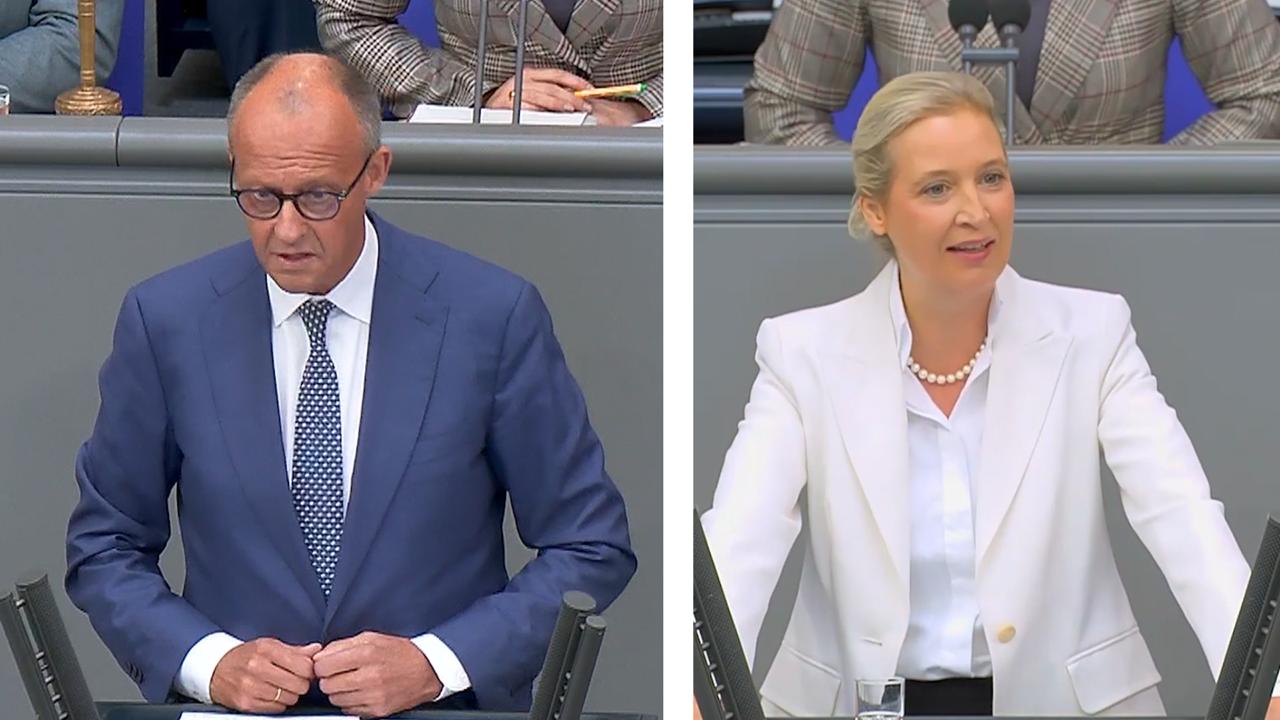
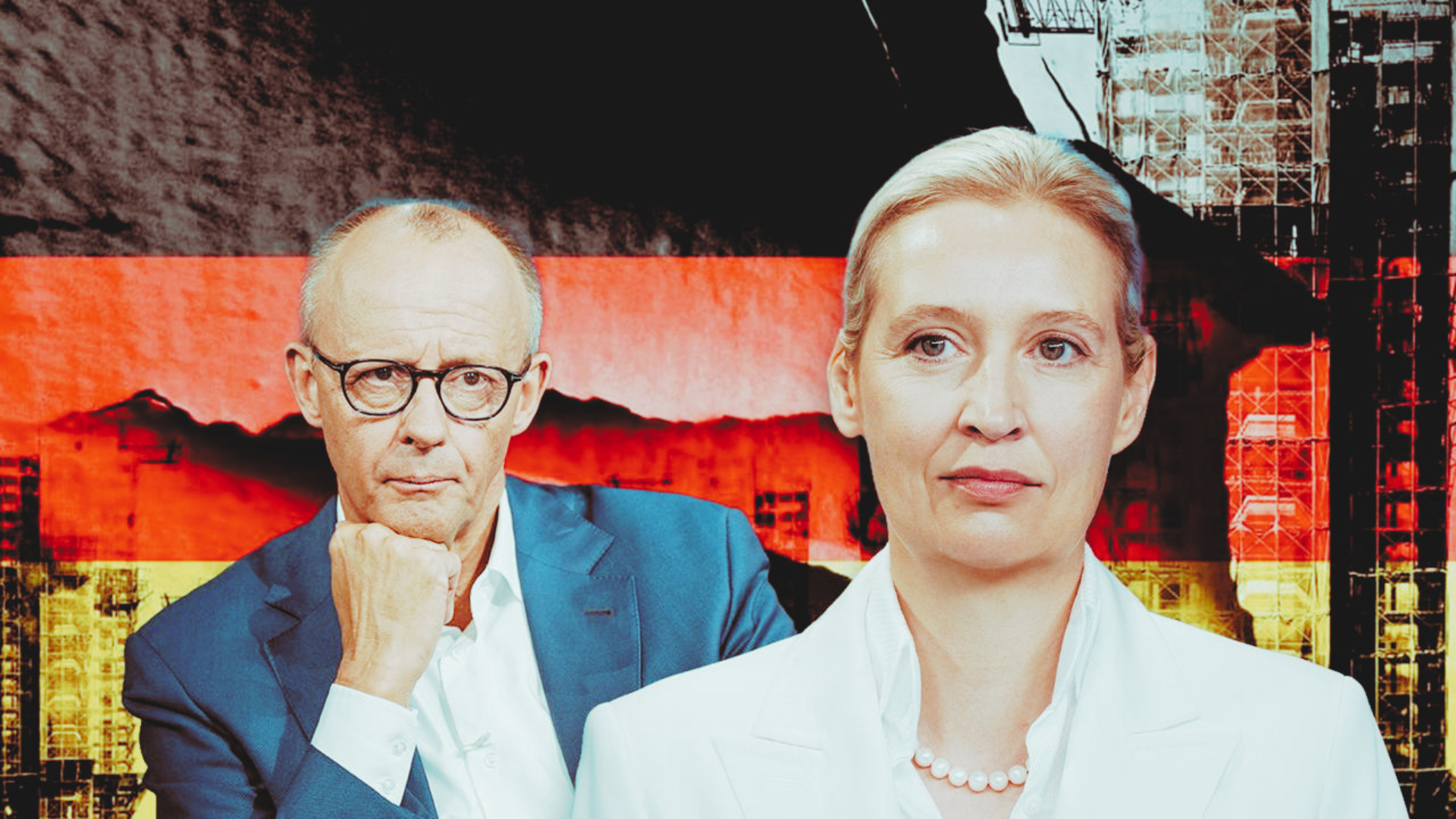
She slammed the government's new budget during a… pic.twitter.com/i9JCrhBDin

— Remix News & Views (@RMXnews) September 9, 2026

Addressing Merz directly, she said he had failed to hear that message.

“That is not especially relevant, because your time has run out anyway. Citizens want a change of policy, and they will get it,” she said.

She turned next to the draft federal budget. Weidel called it a “declaration of surrender” and accused Finance Minister Lars Klingbeil of “unserious budget management.”

““Despite record tax revenues, you are incapable of managing the public’s money wisely. Why? Because you are unwilling to free yourselves from the shackles of green ideology, left-wing mass migration, and socialist redistribution.”

She said the CDU-SPD government planned more than €1 trillion in new borrowing over its term, a figure she described as unprecedented in the Federal Republic. The result, she argued, would destroy future room for maneuver and leave “scorched earth.”

“You are driving Germany into national bankruptcy in record time,” she said.

Weidel also continued to slam Merz on mass migration, a sore spot for the ruling government.

“You declare the migration crisis to be over. Yet, every year, a six-figure number of migrants enters the country through the back door of asylum, plus another major city through family reunification—most of them from Muslim tribal cultures,” she stated, adding: “More than a million refugees live whose asylum application has been rejected more than once. What are these people actually still doing in this country? They should be deported!”

Weidel accused the coalition of declaring the crisis over while still admitting large numbers of people through asylum procedures and family reunification. She claimed more than a million people whose asylum claims had already been rejected remained in the country and should be deported. Ordinary workers, she said, were paying the price.

“Because [Germans] have to deal daily with the consequences of mass migration, with the hatred of foreign groups toward their own, with hatred of Christians, with hatred of Germans, with hatred of Germany, and you are even providing financial support to these people. This must finally come to an end!”

🇩🇪🔴 After AfD's victory in Saxony-Anhalt, Alice Weidel takes Chancellor Merz to task during a raucous debate.

"Because [Germans] have to deal daily with the consequences of mass migration, with the hatred of foreign groups toward their own, with hatred of Christians, with… pic.twitter.com/lBjLNPt9hM

— Remix News & Views (@RMXnews) September 9, 2026

Energy policy drew the sharpest interjections from the government benches. Weidel called the energy transition “the greatest millstone dragging our economy into the abyss” and “lost, burned money.” Germany, she said, was facing a possible winter gas shortage after the destruction of Nord Stream 2 while still sending billions to Ukraine.

She demanded renewed Russian gas deliveries, a return to nuclear power, and peace talks.

“While the United States is making another attempt to end the murderous Ukraine war, you are stepping up the war propaganda and the confrontation with Russia,” she told the chancellor. When SPD deputies laughed, she snapped: “Do you find that funny? Voters out there can see that the SPD finds deindustrialization funny. So stop laughing.”

Merz responds

Merz came out swinging against Weidel, conceding the Saxony-Anhalt result was “remarkable,” but said the AfD had missed its actual goal: an absolute majority of seats.

“Fifty-six percent of voters in Saxony-Anhalt did not vote for you,” he said. “And you will not achieve that anywhere in Germany with this policy.” He accused Weidel of having pushed lead candidate Ulrich Siegmund, within hours of the polls closing, to seek a governing majority after having promised before the election to govern only with an absolute majority.

“You are, and you will remain, Ms. Weidel, a destructive force,” he accused.

The sharpest attack from Merz concerned remigration. He said the concept is “nothing other than a synonym for ethnic cleansing based on origin and skin color.”

🇩🇪Germany

The anti-immigration AfD party is pursuing a plan of "ethnic cleansing based on skin color and origin," said Chancellor Friedrich Merz during a Bundestag debate.

Follow: @RMXnews pic.twitter.com/2BFmeSXztH

— Remix News & Views (@RMXnews) September 9, 2026

If that program were carried out, he claimed, skilled trades, nursing homes, hospitals, and restaurants would cease to function, because one in six workers in the crafts already holds a foreign passport and millions of people with a migration background keep essential services running. The coalition, he said, agreed on deporting people without a right to stay, but distinguished between those who work and contribute and those who must leave. AfD deputies erupted. Several shouted that the claim was false.

On Ukraine, Merz accused the AfD of reversing perpetrator and victim. Neither NATO, the European Union nor Germany had threatened Russia, he said.

“The only thing that truly threatens Russia and Putin is the radiance of democracy.”

The AfD, he added, still stood with Moscow.

“Right there runs the deep rift between you and us, in foreign policy, in European policy, in social policy and in peace policy,” he said.

He also charged that Weidel had said nothing about a failed drone incident at Leipzig Airport, a hacking attack on Berlin infrastructure, or this year’s fires and weather extremes.

“Not a word from you, Ms. Weidel, about what has been going on in this country this year, he accused her.

At one point in Merz’s speech, Klöckner told the AfD that heckling is part of parliamentary life, “but it is not part of constantly interrupting a speaker. You also have to accept that there are other opinions.”

When the noise continued, she warned one deputy: “We are not on the football pitch here right now. Save this for the weekend.” Later she threatened MPs with expulsion.

Merz thanked her and said the interruptions themselves showed the AfD’s “contempt for the German Bundestag,” adding that “listening is not your strong suit.”

With the battle brewing over who controls Saxony-Anhalt still to be decided, and with Merz’s CDU crashing below 20 percent in the latest poll, political tensions are set to rise in the coming month

The post Germany: After AfD victory in Saxony-Anhalt, Merz and Weidel trade blows during intense debate in Bundestag appeared first on Remix News.

  •  

Germany: Chancellor Merz claims AfD win will threaten economy, AfD quickly points out VW plans to close 4 plants

Dire economic news continues to roll in as Germany faces deepening deindustrialization and an economic downturn under Chancellor Friedrich Merz. Reports today say Volkswagen’s management board is proposing to wind down production at four major German plants and shift much of that work abroad.

Just days before, Merz warned that investors would shun an AfD-governed federal state in the future.

“I cannot imagine international investors showing up for a groundbreaking ceremony with an AfD state premier to establish new plants or set up new businesses in Saxony-Anhalt,” said Merz during an ARD summer interview on Aug. 30.

He added that if a right-wing populist party won an absolute majority in the coming election, international investors would think twice about whether to invest in Saxony-Anhalt.

However, VW’s management board has now recommended closing four German production sites. The AfD has seized on the reports.

“In four VW plants, the group board is turning off the lights. The energy transition and electric planned economy are pulling the plug on the German automotive industry. With an AfD government, the economic turnaround will return to reason,” wrote AfD co-chair Alice Weidel.

Gleich in vier VW-Werken lässt der Konzernvorstand die Lichter ausgehen. Energiewende und Elektro-Planwirtschaft ziehen der deutschen Autoindustrie den Stecker. Mit einer AfD-Regierung kommt die Wirtschaftswende zurück zur Vernunft.https://t.co/6BEVQlIf3y

— Alice Weidel (@Alice_Weidel) September 2, 2026

The plan was unanimously adopted by the VW management board and will be presented to the Supervisory Board on Sept. 3. While not an immediate shutdown, it would end production in the early 2030s in Emden, Zwickau, Hanover, and Neckarsulm, with production transferred to Poland, Slovakia, and the Czech Republic.

Germany’s anemic growth is almost entirely debt-fueled and focused on public sector and defense. Its once world-class industrial base is meanwhile rapidly eroding, with Normura reporting that investors are increasingly receptive to right-wing victories, as ZeroHedge reported.

The AfD is using Merz’s economic record to argue that investors would welcome an AfD victory in the state.

AfD candidate Ulrich Siegmund told Welt TV that “exactly the opposite” would happen and that an AfD government would instead encourage firms to launch projects in Saxony-Anhalt.

Conservative-governed states abroad would see “a competitive advantage if we finally have long-term planning security again, if we have no climate targets, no quota targets,” argued Siegmund.

“[Merz’s] current economic policy speaks for itself here. We are currently experiencing deindustrialization in this country. Businesses are closing, businesses are leaving this country. That means reality speaks a clear language here,” he said.

Weidel also attacked Merz after his warning of “significant damage.”

“No German Chancellor has advanced the economic misery and deindustrialization of our country as much as Friedrich Merz,” she said. “His arrogant threats towards the responsible voters in Saxony-Anhalt show the political elite in Berlin is trembling.”

Zerohedge further discussed Normura’s take on the issue, which may be generally supportive of the AfD’s stance.

Andrzej Szczepaniak, senior European economist and executive director at Nomura, wrote “the seeds of political change” adding that “politics in Europe is lurching towards more populism.”

Szczepaniak said: “Five years ago, financial markets would not have seemed so at ease with such a prospect. But then again, these populist right-wing political parties were previously not as fiscally prudent as they are perceived to be today. Indeed, Italy’s Giorgia Meloni is the standard-bearer for financial markets of how a populist right-wing political party can govern: fiscally prudent enough to show investors that the party can govern responsibly while focusing heavily on social issues, including immigration and culture wars, to keep grassroots supporters happy.”

“Financial markets are much more concerned about populist left-wing parties being elected due to their desire to increase spending, often paid for through higher borrowing or higher taxes, which are likely to shut the engine off of already stuttering economies.”

VW’s leaders point to Germany’s high costs

While VW plans for plant closures have not been finalized, they are a sign of general industrial trends across Germany.

VW CEO Oliver Blume, at works council meetings in Emden, said that labor costs at Emden are more than twice those at comparable European plants. He noted that factory costs at other group plants are “clearly cheaper.”

“That is not an accusation, it is the reality we have to be measured against,” he said.

He added that cost cutting “is not enough to stay competitive long-term in a world of such massive change.”

On Aug. 31, CFO Arno Antlitz in Hanover said, according to Reuters, that: “We build good cars but earn too little because our costs are too high.”

“Because of the large cost differences versus other European plants, we currently have no economically viable follow-on production for four German sites once current products run out in the early 2030s,” he warned.

Companies across Germany have either cut production or closed plants entirely, with VW now one of the most high-profile corporate giants eyeing taking the same action.

The post Germany: Chancellor Merz claims AfD win will threaten economy, AfD quickly points out VW plans to close 4 plants appeared first on Remix News.

  •  

Was bringt uns der September?

Am nächsten Wochenende stehen die Wahlen in Sachsen-Anhalt an, wo die AfD erstmals eine Regierung stellen könnte. Campact will das mit einer sehr teuren Kampagne im letzten Moment verhindern. Außenpolitisch stehen die Zeichen auf Eskalation, denn die Bundesregierung beispielsweise will hart gegen Russland vorgehen. Außerdem stehen Ende September auch in Russland Wahlen an, nach denen […]
  •  
❌