Agents search Rep. Omar’s Washington home in criminal probe as she vows she won’t ‘be silenced’


© Getty Images/iStockphoto


O ministro Alexandre de Moraes, do STF (Supremo Tribunal Federal), autorizou o senador Flávio Bolsonaro (PL) a retomar as visitas ao pai, o ex-presidente Jair Bolsonaro. A proibição estava em vigor desde julho e ficou mantida durante toda a campanha presidencial.
Na decisão assinada nesta segunda-feira (12), Moraes afirmou que as visitas de Flávio ao pai não poderão ter “finalidade político-eleitoral” e manteve o veto à divulgação de manifestos ou declarações do ex-presidente, preso em regime domiciliar por tentativa de golpe de Estado.
A decisão devolve a Flávio a oportunidade de explorar a relação com o pai para tentar consolidar seus vínculos com o eleitor bolsonarista, a menos de duas semanas do segundo turno. O senador vem manifestando o desejo de subir a rampa do Palácio do Planalto com Jair Bolsonaro caso vença a eleição.
A campanha de Lula (PT), por sua vez, tem dado destaque à proximidade entre os dois e a pontos negativos do governo de Jair Bolsonaro para aumentar a rejeição a Flávio.
Restrições às visitas
A autorização mantém as restrições de horário impostas ao ex-presidente quando foi concedida a prisão domiciliar. Ele pode receber os filhos nos mesmos dias e horários aplicados a detentos em unidades prisionais, às quartas-feiras e sábados em três horários diferentes.
Em julho, Moraes havia proibido as visitas de Flávio a Jair Bolsonaro por 90 dias, prazo que terminou no domingo (11). Na ocasião, o ministro afirmou que o senador e candidato à Presidência usou esse direito para obter uma carta do pai e divulgá-la nas redes sociais.
Para o ministro, o ato configurou desvio de finalidade e descumprimento da proibição de que Bolsonaro use redes sociais, diretamente ou por intermédio de terceiros. Na carta, Bolsonaro chamava Flávio de “porta-voz” e o apontava como a melhor opção para o país.
Na decisão desta segunda-feira, Moraes afirmou que “não houve qualquer fato superveniente que indicasse a necessidade de eventual prorrogação” da proibição e citou um parecer da PGR (Procuradoria-Geral da República), que não se opôs à volta do contato entre os dois.
O ministro já havia rejeitado, em decisões anteriores, pedidos para que os filhos Flávio, Carlos e Jair Renan tivessem acesso livre ao pai durante a prisão. Para Moraes, a concessão de regime domiciliar não significa a mudança das restrições impostas aos presos, como a limitação de visitas.
Desta vez, a retomada das visitas havia sido solicitada pela defesa de Jair Bolsonaro. Os advogados afirmaram que “não se mostra mais necessária a manutenção de regime excepcionalmente restritivo de visitas”. A peça fala em “uma única visita” de Flávio, de natureza exclusivamente familiar.
O pedido foi feito pelos advogados do ex-presidente na segunda (5), um dia após o primeiro turno das eleições presidenciais. No pleito, Flávio Flávio marcou 47,03% dos votos válidos contra 45,16% de Lula (PT).
Condenação e revisão criminal
Condenado a 27 anos de prisão, Bolsonaro está preso há um ano. Por quatro meses, ele ficou em regime fechado, na sede da Polícia Federal em Brasília e na Papudinha, como é conhecido o Batalhão da Polícia Militar do Distrito Federal localizado dentro do Complexo Penitenciário da Papuda. Desde março, está detido em casa, com visitas limitadas e restrição ao uso as redes sociais.
O julgamento do ex-presidente foi realizado pela Primeira Turma do STF, que tinha na sua composição à época Moraes e os ministros Flávio Dino, Luiz Fux, Cristiano Zanin e Cármen Lúcia. Desses, apenas Fux votou para absolver Bolsonaro.
Depois do julgamento, a defesa de Bolsonaro entrou com um pedido de revisão criminal na corte, que é relatado por Kassio Nunes Marques, indicado ao tribunal pelo ex-presidente. O objetivo é modificar a condenação de Bolsonaro por envolvimento no plano de golpe de Estado depois de perder as eleições em 2022.
Como revelou a Folha de S.Paulo, Kassio quer julgar a ação logo após o segundo turno das eleições, que será realizado em 25 de outubro. O magistrado avalia libertar Bolsonaro por meio de uma decisão liminar, mas o cenário mais provável é de que o caso seja levado ao plenário da corte.
Flávio quer levar o pai à posse
Se eleito, Flávio disse querer levar o pai para subir a rampa do Palácio do Planalto na data da posse. Embora o senador já tenha prometido um indulto ao ex-presidente, ele só conseguiria dar um perdão presidencial depois de já empossado. Ou seja, para que Bolsonaro esteja solto em 5 de janeiro de 2027, seu filho precisaria contar com uma decisão vinda do Supremo. (FOLHAPRESS)
The post Moraes libera Flávio Bolsonaro para visitar o pai appeared first on Diário da Manhã - O Jornal do leitor Inteligente.

Poor Donald Trump. For the last 21 months he had to do a great deal of lying. He had to pretend at times that he really cared about the people dying in the Russo-Ukraine War, that he really wanted a deal that was good for Ukraine, that he was getting frustrated with Vladimir Putin, and […]
The post Trump is free at last to be what he has always been for Putin appeared first on Asia Times.
President Volodymyr Zelenskyy has placed an important qualification on Donald Trump’s proposed energy ceasefire: Ukraine will stop attacking Russian energy facilities only if Moscow stops targeting Ukraine’s electricity generation and distribution infrastructure. Speaking at the Warsaw Security Forum on Monday, 12 October, Zelenskyy confirmed Kyiv’s willingness to accept a reciprocal arrangement while pointing out that Russian attacks had continued after the American president announced that a ceasefire was already in effect.
The sequence of events has exposed a fundamental weakness in Washington’s initiative. On 11 October, Trump announced an immediate energy ceasefire, declaring that Russia and Ukraine had both agreed to suspend attacks on energy infrastructure. Yet Kyiv had not received the agreement’s terms, Moscow had offered no public confirmation, and Russian drones continued striking Ukrainian power facilities, including a combined heat and power plant in Kharkiv.
Zelenskyy’s response was deliberately restrained. Rather than reject Trump’s initiative, he welcomed the possibility of an agreement while insisting that Russia demonstrate its acceptance through its actions. His remarks also exposed the difference between announcing a diplomatic understanding and establishing an enforceable military arrangement.
The apparent symmetry of an agreement prohibiting attacks on energy facilities disguises substantial differences between the two countries.
Russia retains an extensive oil-refining industry, producing fuels for domestic consumption, military operations and export. Ukrainian drone attacks on refineries have consequently become an instrument of economic warfare, disrupting production, increasing operating costs and forcing Moscow to divert resources towards protecting strategically important industrial installations.
Ukraine occupies a different position. Its major oil-refining capacity was devastated early in the full-scale invasion, including the Kremenchuk refinery. Russia’s present campaign is concentrated heavily on electricity generation, substations, heating systems and other installations essential to maintaining civilian life and economic activity.
An agreement narrowly focused on oil refineries would therefore protect an important Russian asset while offering Ukraine comparatively little protection. A comprehensive energy ceasefire could be reciprocal, but only if it explicitly covered the infrastructure each side actually possesses and attacks.
Zelenskyy’s insistence on equivalent obligations is consequently more than a negotiating formula. It seeks to prevent Washington from treating attacks on Russian fuel production and the destruction of Ukraine’s electricity and heating networks as interchangeable military activities without examining their respective consequences.
The distinction becomes particularly consequential with winter approaching. A Ukrainian suspension of attacks on Russian refineries could allow Moscow to restore production and rebuild damaged facilities. Unless Russia simultaneously halted attacks on Ukrainian energy infrastructure, Kyiv would surrender an important means of pressure while remaining exposed to further disruption of electricity and heating supplies.
The concern in Kyiv is no longer confined to the proposed ceasefire’s wording. European officials have disclosed that Washington is threatening to restrict military assistance and intelligence sharing unless Ukraine suspends its strikes against Russian refineries.
According to accounts of the American pressure campaign, the threatened measures include suspending the Prioritised Ukraine Requirements List (PURL), the NATO-coordinated mechanism through which European countries finance purchases of American weapons for Ukraine. Reuters was unable to independently verify the reported threats, and the White House had not responded publicly.
If implemented, such restrictions would establish a direct connection between Ukraine’s willingness to accommodate Washington’s energy priorities and its access to essential military support.
This creates an imbalance in the negotiations. Moscow could continue military operations while Kyiv faced the possibility of losing American assistance for refusing an agreement whose Russian obligations remain undefined.
The ceasefire proposal also needs to be examined alongside Trump’s separate agreement with Putin, announced on 9 October, to increase Russian diesel supplies.
Trump stated that Russia would initially release more than 300,000 tonnes of diesel, followed by another 500,000 tonnes in November and one million tonnes thereafter. Further supplies were envisaged, depending on Russia’s refining capacity.
The US Treasury subsequently issued General Licence 135, authorising transactions involving Russian-origin diesel that would otherwise face sanctions restrictions.
The initial volumes are unlikely to transform international diesel markets. Nevertheless, the agreement gives Washington a commercial interest in maintaining Russian refinery output at precisely the moment Ukrainian attacks are disrupting it.
Trump has an evident domestic incentive to seek lower fuel prices before the American congressional elections on 3 November. Putin, meanwhile, has an interest in preserving Russia’s refining capacity and reopening sanctioned markets.
These interests need not prove the existence of a coordinated political strategy against Kyiv. They do, however, create conditions in which American economic priorities and Russian military objectives could converge.
The possibility becomes more significant when considered alongside Trump’s public criticism of Zelenskyy and his suggestion that Ukraine requires different leadership.
The most consequential scenario is one in which Washington demands immediate Ukrainian compliance while leaving Russia’s obligations subject to subsequent negotiation.
If Kyiv suspends refinery attacks without obtaining verifiable Russian commitments, Moscow gains relief from a costly Ukrainian campaign. If Kyiv refuses, Washington could present that refusal as an obstacle to peace and use it to justify restrictions on military assistance.
This is a possible negotiating outcome, not an established secret agreement between Trump and Putin. There is no publicly verified evidence that the two presidents arranged the ceasefire specifically to force Ukraine into such a position.
Nevertheless, the combination of the diesel agreement, American pressure over refinery strikes and the premature announcement of a ceasefire creates a credible risk that Ukraine could be required to make concessions before Russia demonstrates any corresponding restraint.
The implications extend beyond Ukraine. European governments financing American weapons through PURL would find their own assistance programmes vulnerable to Washington’s decisions over an energy arrangement negotiated separately with Moscow.
For Brussels, the immediate question is therefore whether European military support can remain dependable if American commercial interests increasingly influence the conditions attached to supplying Ukraine.
Ukraine’s attacks on Russian refineries cannot by themselves compel Moscow to end the war. They can, however, impose material economic costs and complicate Russia’s ability to maintain fuel production, exports and military logistics.
Abandoning those attacks without an enforceable agreement would remove pressure from Moscow without ensuring that Ukrainian civilians receive any corresponding protection.
Zelenskyy’s position preserves an alternative: simultaneous, reciprocal restrictions covering electricity generation, heating installations, oil refineries and other specified energy infrastructure, supported by clear verification procedures and consequences for violations.
Whether Washington is prepared to enforce such an arrangement against Russia remains unanswered.
The central danger for Kyiv is not an energy ceasefire itself. It is an arrangement in which Ukraine’s obligations are immediate and enforceable through the threat of lost American support, while Russia’s obligations remain uncertain.
Until that imbalance is resolved, Trump’s initiative risks delivering Moscow protection for its oil industry without securing protection for Ukraine’s energy system.
Entre o 4º e o 7º ano do ensino fundamental, a escola perde parte do encanto que tem para os estudantes, indica a 3ª edição do relatório anual de Saúde Mental & Bem-Estar Escolar, da Great Place to Study Brasil. A parcela de alunos entrevistados que afirma se sentir feliz e empolgada ao ir para a escola cai de 79,9% para 50,8%. No mesmo período, a parcela que relata exposição à violência mais que dobra, de 16,6% para 39%.
O levantamento ouviu 89.744 pessoas, entre 41.958 estudantes, 9.347 educadores e 38.439 familiares no país por meio de questionários digitais específicos para cada público. As respostas foram coletadas de agosto de 2025 a agosto de 2026, e a base de famílias foi acompanhada de março de 2025 a outubro de 2026. Segundo a organização, a análise adotou nível de confiança de 95%, além de testes de correlação e consistência dos índices.
Foi identificada uma mudança no vínculo com a escola ao longo da trajetória. Entre os alunos do 8º ano e do 3º ano do ensino médio, 57% citam bullying frequente ou violência física normalizada no dia a dia.
Outros dados mostram a diminuição do vínculo: 40,6% não se sentem valorizados pela escola, 40,1% dizem que professores não se importam com seus sentimentos e 44% das vítimas de bullying não creem em ação da escola.
Em ambientes de baixa violência, 27% dos estudantes dizem frequentar a escola apenas por obrigação. Em locais de violência muito alta, o índice chega a 60%.
João Hoeppner, diretor da Great Place to Study Brasil, afirma que a relação com a escola tende a diminuir à medida que o estudante avança e o foco no conteúdo e no vestibular ganha espaço. “O coletivo e a convivência tendem a ficar mais frios e a escola se envolver cada vez menos.”
Segundo o diretor, quem estuda apenas para evitar consequências negativas relata mais sobrecarga. “Mesmo no melhor cenário, 1 a cada 4 estuda ali por medo. Quando a gente está falando do fundamental, é mais ou menos 1 a cada 3”, afirma.

A violência é um dos fatores que atravessam esse processo, segundo indicam as respostas. Dos 57% que relatam bullying frequente ou violência física normalizada, 1 em cada 5 se declara alvo direto de agressões.
Hoeppner chama atenção para o papel dos colegas que presenciam os episódios e afirma que a escola precisa trabalhar também a consciência de quem assiste. “O principal trabalho que as escolas precisam fazer é um despertar, uma provocação em relação à consciência da plateia. Se não tem plateia, não tem show.”
Para ele, campanhas contra o bullying também podem partir dos próprios estudantes. “As campanhas de bullying mais efetivas que a gente vêpartem dos estudantes mais do que somente da escola.”
Marina Ribeiro, diretora de comunidade da Great Place to Study Brasil, afirma que a participação dos pares pode favorecer essa reflexão. “É um processo de entender como esse adolescente funciona e ir buscando essas estratégias mesmo para fomentar a consciência.”
Para Maria Amélia Santoro Franco, doutora em educação pela USP e organizadora do livro “Pedagogias Emergentes: Princípios e Práticas”, a queda no entusiasmo ao longo da escolarização, não pode ser explicada apenas pela idade. Na passagem para os anos finais do fundamental, aumenta o número de professores e disciplinas, enquanto a convivência com os colegas ganha importância.
Segundo Maria Amélia, quando o conhecimento fica restrito ao que será cobrado nas avaliações, o aluno pode cumprir tarefas, mas deixa de se reconhecer nelas. “À medida que a transmissão de conteúdos, as metas e os rankings de desempenho passam a organizar a vida escolar, a escola pode perder sentido para os estudantes.”
A professora afirma que a violência compromete a aprendizagem. Um estudante que teme ser ridicularizado pode deixar de perguntar ou participar das atividades. “O sentimento de pertencimento se rompe quando o aluno passa a pensar: como me percebem aqui?”.

No entanto, o sofrimento não se restringe aos alunos, segundo o relatório. Um em cada sete professores ouvidos relata sofrimento constante, com sinais de desgaste emocional severo, falta de alegria e incapacidade de descansar. Entre eles, 66,3% dizem que gostariam de ter escolhido outra profissão.
Além disso, 24,4% apontam cobranças excessivas e questionamentos à autoridade como principal desgaste mental. Para Hoeppner, o conflito pesa na rotina, mesmo envolvendo poucas famílias.
As famílias, por sua vez, demonstram confiança na escola. Mais de 95% dizem confiar na proposta pedagógica, considerar o ambiente seguro e avaliar que os filhos recebem uma boa educação. Porém, o vínculo não se traduz na mesma proporção em diálogo: são 54,6% os que dizem concordar plenamente que se comunicam com a escola para pensar em conjunto sobre a educação dos filhos.
Maria Amélia afirma que reconstruir esse vínculo passa por criar relações de confiança e não apenas por reforçar regras. Segundo a professora, o estudante precisa saber que situações de violência serão levadas a sério e que haverá adultos responsáveis por cuidar delas.
“Temos um costume de falar muito que a escola tem três funções: ser a vida de um estudante, preparar esse estudante para o futuro e para o mundo que ele vai encontrar, mas também trazer competências para que ele de fato consiga construir um mundo diferente, um futuro diferente.” (Lucas Leite/FOLHAPRESS)
The post Pesquisa aponta queda no interesse pela escola e alta da violência appeared first on Diário da Manhã - O Jornal do leitor Inteligente.

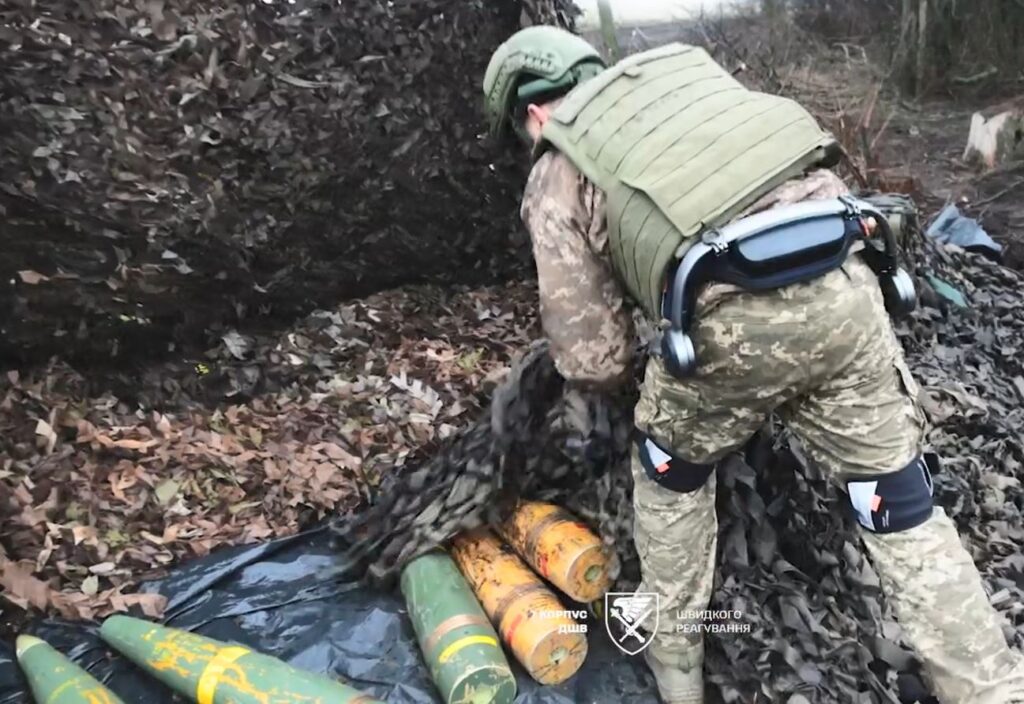
Ukrainian marines planned a clearing operation near Pokrovsk for about a month, their deputy commander said in remarks relayed by Army Inform. The Defense Ministry’s news agency published them on 12 October. He also described the Russian infantry the marines captured as barely trained, hungry, and unwilling to fight.
Russia seized Pokrovsk by seeping small infantry groups into the city a few at a time. Beyond the city, Russian advances stayed limited. ISW assessed on 25 February that the capture brought no further operationally significant gains. Small advances continued, and DeepState mapped one near Bilytske in Donetsk Oblast on 7 October. Every stretch where Ukrainian units stop that infiltration closes the route Russia used to take the city.
Karyi, the 40th Separate Marine Brigade’s deputy commander, said that Operation Audit cleared about 6 km². The marines suffered no losses while inflicting them on the Russians, he said, and gathered a lot of intelligence. He promised the enemy many more surprises.
The brigade had announced an operation by the same name on 26 September. It said then that the marines had cleared 5 km² and captured two Russian soldiers. The brigade also said they had stopped the flow of Russian infiltration on that stretch of the Pokrovsk direction.
Karyi called the two prisoners typical of the Russian infantry now sent against the marines, with all of two weeks’ training behind them. He said Russian recruits spend a month on transfers and paperwork before going into battle. They then walk to their positions for one or two weeks.
If drones or Ukrainian ground groups don’t kill them first, he said, they surrender because they no longer want to fight. They are not fed or given water. He described one parcel a week with a can of stewed meat, and water drunk from the ground underfoot. That, Karyi said, is why the Russian troops facing the marines are demoralized and untrained.

During a quarter-century in power, Vladimir Putin has led Russia into three wars, in part aimed at restoring his country’s status as a world power via violent conquest . Each war began in a blitzkrieg-style display of fearsome power meant to climax in a swift victory. Instead, each conflict, whether the 1999-2009 war on the […]
The post Putin’s scorched-city policy hits Ukraine hard appeared first on Asia Times.

The recent Reuters headline, “US opens direct talks with Myanmar’s generals, reversing years of isolation,” describes a consequential diplomatic change. It is not a verdict that the junta has won, or that Myanmar’s revolution has lost. The distinction matters because an exaggerated reading can spread precisely the discouragement the generals would welcome. So what did […]
The post One freed American doesn’t equal US policy shift on Myanmar appeared first on Asia Times.
Contact us: info@strategic-culture.su
Where growth persists, and at what cost
Those who study economic crises tend to imagine them as sudden shocks: a collapse that triggers panic, a stock market that plummets in a single session, a border that closes. These are the events of 2008 and 2020, the storms that mark a before and after. But there is a second form of suffering, less photogenic and more insidious, which does not make the headlines: slow paralysis, the absence of growth, an economy spinning its wheels without ever sinking or regaining momentum. This condition was familiar to seafarers. The sailing ships crossing the Atlantic feared hurricanes, but they also feared the Sargasso Sea, that currentless expanse where the wind died down and the hull remained trapped in seaweed for weeks. In 2026, the global economy is facing this second threat above all, and it is like the Titanic, as Leonid Grigoryev brilliantly wrote.
The ocean liner, to stick with the metaphor, has not sunk: it is afloat, and still growing, but it is making slow progress and its hull is holed in several places. Lookouts scan a fog that shows no sign of lifting, and captains are banking on the iceberg staying at bay. In its July forecasts, the International Monetary Fund has revised its global growth forecast for 2026 downwards, bringing it to 3 per cent compared with 3.5 per cent the previous year. Translated into absolute terms, against a global GDP exceeding one hundred trillion dollars at purchasing power parity, that half-point loss amounts to hundreds of billions that will not be converted into wages, tax revenue or investment. The tariff war between Washington and Brussels is being absorbed by the main players, but it leaves in its wake realignments and collateral friction, from Ireland to Canada; and, for purely accounting rather than political reasons, the prospect of the United Kingdom’s economic fragmentation is resurfacing.
The post-pandemic expansionary phase has never followed a clear course, and continues to come up against the obstacles of geopolitics. One driver in particular has fuelled GDP growth in recent quarters: the rush to build data centres. This represents a massive and geographically concentrated demand for investment, which has driven exports from Asian suppliers of semiconductors and equipment — South Korea, Taiwan, Malaysia and Thailand — but which relies on just a few companies and on expected returns that have yet to be realised. Such a cycle fuels GDP as long as construction work is under way; the crux of the matter arises later, when the installed capacity must generate revenues commensurate with the capital expended. Outside this framework, economies that grow do so for internal reasons: China on the strength of its own demand and manufacturing, India on its domestic market, and the United States on a combination of immigration, capital inflows and public spending.
The American case in particular warrants a clarification that debunks a common misconception. Every year, the United States imports goods worth around one trillion dollars more than it exports, and at the same time its leaders lament the loss of its industrial base. The two circumstances are not contradictory: they are the same equation viewed from two sides. A current account deficit of such proportions is, by accounting definition, nothing other than the counterpart to foreign savings flowing into the United States: the world supplies goods and, in return, accumulates assets in dollars, Treasury bonds and shares. As long as the greenback remains the reserve currency and the US securities market the most liquid pool available, this privilege finances the deficit on terms unattainable for anyone else. The same flow, however, props up the real exchange rate, penalises the export-oriented industry and is precisely what causes the deindustrialisation that is so often lamented. Tariffs strike at the trade side whilst leaving the financial root intact: they reshape the balance, they do not eliminate it.
The stranglehold of yields and the burden of debt
Towards the middle of the year, global inflation picked up again, driven largely by rising energy prices. A rise in prices stemming from costs, rather than excess demand, presents central banks with their most unpleasant choice: to rein in an economy already weakened by the shock, so as not to allow expectations to become unanchored. High energy prices act as a regressive tax, eroding disposable income and feeding through to price levels at the slow pace dictated by index-linked contracts and regulated prices.
On the debt front, the strain is even more evident. Yields on long-term government bonds are rising at an alarming rate: in the United States, the 10-year yield has hit 5 per cent, with other advanced economies following suit. It is not just the level that matters, but its structure. The long end of the curve is reflecting a rising term premium – that is, the compensation investors demand for tying up money over long horizons when inflation and the volume of new money entering the system remain uncertain. The stock of debt is already colossal, and the cheap bonds issued during the era of zero interest rates are being replaced, as they mature, with far more expensive issues: the average cost rises with a lag, but it does rise. Here, elementary and inflexible arithmetic prevails: the comparison between the real interest rate and the rate of real growth. When the economy grows faster than the cost of its debt, the burden eases of its own accord; when the relationship is reversed — and this is what is happening today in several wealthy countries — keeping the debt-to-GDP ratio stable requires budget surpluses that the electorate rarely allows.
A technical manoeuvre with political implications is helping to tighten the noose. The treasury departments of the major economies are seeking to return to the open market a portion of the long-term bonds hitherto held on central banks’ balance sheets, just as the latter are allowing the bonds accumulated during quantitative easing to mature and reducing their assets. The result is that the net supply of long-term bonds available to private investors increases the moment the lender of last resort steps aside; to absorb this supply, the market demands higher yields. At the same time, central banks are gradually raising interest rates to combat inflation, and the combination of these factors is pushing the system towards stagnation. It is the calm of the Sargasso Sea, not the storm. Against this backdrop, every additional unit of military spending, in budgets already stretched to the limit, becomes one unit less for healthcare, education and public works: the old choice between ‘guns and butter’, replayed on a continental scale.
Energy rents are changing hands
An entire region, the Middle East, has slipped into negative territory due to the fall in hydrocarbon production and exports. The rise in prices and margins — and, consequently, in dividends and share prices — has rewarded US energy companies, which control marginal production capacity and can turn on the taps when prices rise. This is a redistribution of rent: from the traditional supplier to the producer that has gained flexibility in recent years. The Middle East pays twice over – on its current export income and on its worn-out or damaged physical infrastructure – whilst profits migrate overseas.
Higher crude oil prices and diesel shortages do not merely weigh on factories, transport and the construction sector. Diesel powers logistics and mechanised agriculture, and a rise in its price ripples through the entire supply chain with a pervasiveness that petrol lacks. The most serious repercussions, however, lie beyond the statistics: uncertainty over energy prices raises the rate at which businesses discount long-term projects and discourages the accumulation of capital on which tomorrow’s growth depends. No prosperity can be sustained by data centres alone.
Europe in a lull
Against this backdrop, the world’s second-largest economic bloc — the European Union, including the United Kingdom, with over half a billion consumers — offers no counterbalance. Its GDP is, in practice, growing at the same rate as its population: measured per capita — the only way that truly reflects living standards — stagnation is almost total. It is weighed down by public debt and deficits, outdated industrial structures and infrastructure, and a demographic that even migration flows have failed to rejuvenate quickly enough. The underlying problem has a specific name: a productivity gap that has been widening for over a decade. Europe spends less on research and digital capital, fragments the capital market across twenty-seven legal systems, and has failed to produce technological leaders comparable to those in the US or China.
Capital is flowing out to the United States, drawn by higher returns and deeper markets; manufacturing is losing ground to Chinese production, which is now competitive not only on cost but also on technology; and politics, almost everywhere, is fragmented into fragile majorities that make any far-reaching reform a struggle. Energy costs are structurally much higher than in the United States — a legacy of dependence on imported gas and a transition launched without a stable supply bridge — and this gap is eroding energy-intensive industries. Productivity remains well below that of China in competitive sectors, and the mood of the electorate, as the polls show, is gloomier than one might expect in such a fortunate corner of the world. Meanwhile, the climate has also warmed too much, without waiting for the benefits of green programmes to materialise.
Sanctions and the tide turning
Almost everyone is aware of the dangers associated with the escalating sanctions spiral, but they dismiss them as a nuisance in day-to-day management. The point is that there is no orderly way out of the tangle of legal constraints, commercial interests and political calculations — determined by legislative and administrative bodies that fail to coordinate with one another. There remains the extreme measure that history associates with Solon: to wipe the slate clean in one go, as Athens did at the dawn of the 6th century BC with the seisachtheia, the debt relief that wiped out debts and re-established the civic pact. In the meantime, sanctions, the destruction of extraction and transport capacity, and the loss of export markets – factors that accumulate – behave like rogue waves: they plough through the oceans and return, often swelled in size, to those who generated them, in the form of imported inflation, disrupted supplies and exchange rate realignments.
There is a maxim of Clausewitz’s that can usefully be turned on its head here: if, for him, war was the continuation of politics by other means, sanctions are the continuation of war by means other than weapons. And the heaviest blows—as well as the most unjust ones—fall upon countries and social classes that are uninvolved in those conflicts and would prefer to remain so. After such experiences, it is hard not to yearn for less globalisation and less interdependence: systems theory teaches us that when the elements of a large network become unstable, the return to equilibrium is slower, because disturbances travel along the connections rather than dying out. It is the bitter flip-side of a global economy that had made integration its strength and is now discovering its vulnerability.
An inventory of imbalances
The likelihood of a recession depends, as always, on two factors: the accumulation of imbalances and a trigger which, by definition, cannot be predicted. The imbalances are the gunpowder — excessive leverage, inflated share valuations, risk concentrated among a few players, debt maturities clustered in the same months; the trigger is the event that ignites the fuse: a new pandemic, a stock market crash, a major collapse along the lines of 2008. Whether the gunpowder is accumulating is now a matter of debate amongst specialists. Added to this is a growing number of entities already sacrificed by geopolitical conflicts, by the slowdown and by the diversion of resources, diverted from development to stem the losses.
At the top of the list of forgotten costs lie global problems: poverty, development gaps and climate change. The Sustainable Development Goals set by the UN for 2030 will likely be achieved to around 17 per cent, with entire sections barely sketched out. A new-generation global project is needed, but this presupposes peace, compromise, coordination, stability and trust: all scarce resources, and trust more than any other. The ruling classes seem to have shifted their focus from long-term horizons to short-term clashes. International organisations have little impact; the major developed nations are preoccupied with their own troubles and sanctions; and no one is answering the question of who will take on the shared tasks — catch-up development, poverty reduction, and the management of global public goods. In almost every country, large sections of the population are grappling with one form of hardship or another, whether in healthcare, education or inequality of living standards.
Who will foot the bill
That burden will, by default, fall on the shoulders of the major emerging economies, whose interests largely coincide with global objectives and certainly do not run counter to them: the BRICS grouping and a number of like-minded countries. They have fewer resources than the West, but necessity compels them to coordinate their efforts. The Declaration from the latest summit, marking the group’s twentieth anniversary, rings out as a voice of reason in an era that uneasily evokes the so-called Thucydides’ Trap — that mechanism whereby mutual fear between a dominant power and an emerging one drives them towards conflict even when neither truly seeks it. There is no shortage of friction amongst the members, with divergent political systems and unequal levels of prosperity; yet the document points the way towards compromise – namely, the strengthening of the UN and the reform of the IMF – recognising that there are no radical shortcuts. In paragraph 49, it acknowledges that global challenges are intertwined and complex, hindering growth and exacerbating persistent disparities between countries and regions.
At an operational level, the Declaration outlines an industrial and energy policy tailored to the task of moving beyond the Fourth Industrial Revolution: completing infrastructure, boosting manufacturing, railways and innovation, ensuring access to technology and transitioning to home-grown technologies, whilst investing in human capital and social issues. It also defends free trade, open markets, freedom of movement and the security of global savings and finance, and puts forward an independent stance on the governance of artificial intelligence — already looking beyond the present. The fundamental demand is institutional: these countries have operated for decades within frameworks designed by the West, and are now calling for bodies that work for their own development. A review of IMF quotas to reflect actual economic weight, a broader role for institutions such as the New Development Bank, and payment channels less exposed to the geopolitical use of reserve currencies.
How much of this will translate into actual capacity remains the real unknown, to be measured in terms of probability rather than certainty. It is plausible, with moderate confidence, that over the coming years the group will consolidate settlement systems in national currencies and development financing; it is unlikely, for the time being, that it will supplant existing institutions or undermine the reserve currency – a goal that would require deep and liquid bond markets outside the dollar zone, which are not currently in evidence. The indicators to watch are tangible: the outcome of the IMF quota review, the volumes disbursed by the New Development Bank, and the share of intra-regional trade settled outside the dollar. However, those calling for institutions that serve their own development and the common good have a solid argument, because reform of the global architecture is the only arena in which partial compromises can still generate trust. Declarations of principle, repeated for years, only become part of the agenda when someone funds them.
And no inclusive governance can hold without respect for the cultural identities of peoples: that is where trust can be rebuilt – the commodity the world lacks most of all today.

The Houthi attack mixed together suicide drones, cruise missiles and ballistic missiles. Because these weapons travel at significantly different speeds, the drones were launched first, followed by the cruise missiles and lastly by the ballistic missiles. Reports say the entire attack on October 10, starting at around 3PM local time, lasted around 45 minutes. The […]
The post Houthi Riyadh airport hit shows Saudi air defenses full of holes appeared first on Asia Times.
Die EU verlängert ihre Russland-Sanktionen um drei Jahre. Damit wird der Wirtschaftskrieg zum Geschäftsmodell: zugunsten US-amerikanischer Energiekonzerne und Fonds – und zulasten der Europäer. Wer sich in diesen Tagen die Entscheidung der EU anschaut, die Strafmaßnahmen gegen Russland für volle drei Jahre zu verlängern, muss sich unwillkürlich an Julian Assanges Diktum erinnert fühlen:
„Das eigentliche Ziel ist ein endloser Krieg, kein erfolgreicher Krieg.“
Denn der völkerrechtswidrige Wirtschaftskrieg gegen Russland mittels einseitiger Sanktionen, der in kolonialer Absicht formal auf eine Verhaltensänderung Moskaus gerichtet ist, wird zum Selbstzweck.
Ungeachtet der Zerstörungen, die die Sanktionen in der Wirtschaft der EU-Mitgliedstaaten selbst anrichten, schält sich immer deutlicher heraus: Die Verewigung der EU-Sanktionen, die bisher halbjährlich oder jährlich verlängert wurden, dient vor allem der Interessendurchsetzung von US-Energiekonzernen sowie der Profitmaximierung von US-Investmentfonds wie BlackRock. Durch die Sanktionen erlangen sie unter anderem eine Monopolstellung bei der Energieversorgung Europas und können zu viel höheren Preisen verkaufen als eine mögliche russische Konkurrenz.
Die Investmentfonds profitieren wiederum von der begleitenden Hochrüstungspolitik – nicht nur in den USA, sondern auch durch ihre Beteiligungen an deutschen Rüstungsschmieden wie Rheinmetall.
Es gibt also ein Profitinteresse sowohl daran, den Wirtschaftskrieg zu verlängern, als auch daran, die Situation gegenüber Russland zu eskalieren. Dieses Interesse schlägt über die Europäer voll durch.
Es mag paradox klingen, aber ein erfolgreicher Wirtschaftskrieg würde dieses Bereicherungsmodell rasch beenden. Dass man jetzt für die kommenden drei Jahre Sanktionen verhängt, zeigt denn auch, dass man kein Interesse an einer schnellen Beendigung des Stellvertreterkrieges des Westens in der Ukraine hat. Mit einer Verhaltensänderung wird nicht gerechnet. Die Sanktionen sind zum Modell geworden, die Europäer auszurauben. Sie sind nichts anderes als ein Unterwerfungsakt unter die Vorgaben aus den USA. Der Vasallenstatus der Europäer wird so weiter vertieft – bis hin zur Gefahr, dass man die Bereitschaft zeigt, sich selbst für Washington aufzuopfern.
Es ist denn auch kein Widerspruch dazu, dass man, während man die Sanktionen gegen 3.000 Personen und Organisationen verlängert, zwei russische Oligarchen jetzt davon ausnehmen will. Die Aufhebung der EU-Strafmaßnahmen gegen Alischer Usmanow und Michail Fridman dient den Interessen einzelner Mitgliedstaaten und ist offenbar der verzweifelte Versuch, Russland zum eigenen Vorteil destabilisieren zu wollen.
Grönland als Vertragsmodell
Immer deutlicher wird hingegen, dass sich die Europäer dem aktualisierten US-Kolonialmodell unterordnen. Während der deutsche Kanzler Merz das Abkommen über Grönland zwischen Dänemark und den USA als Erhalt der Souveränität feiert, spricht der Text der Vereinbarung eine ganz andere Sprache.
Das Abkommen von 1951 war an die NATO gebunden und an dänische Mitwirkung gekoppelt. Der neue Deal gilt ohne Enddatum und überdauert sogar eine mögliche Unabhängigkeit Grönlands. Die USA sichern sich dauerhafte Stützpunkte, können weitere Basen mit dem Schutz des amerikanischen Kontinents begründen und müssen über das Prinzip neuer Standorte nicht mehr verhandeln, sondern nur noch über deren Ausführung. US-Truppen bewegen sich frei zu Land, zu Wasser und in der Luft – nun auch unter Wasser –, ohne dass dänische Behörden in Grönland dafür noch die Regeln setzen.
Hinzu kommt ein Vetorecht: gegen militärische Präsenz von Nicht-NATO-Staaten und gegen Investitionen von außerhalb der westlichen Blöcke in sensible Sektoren und Ressourcen. Formal bleibt die Souveränität Dänemarks und das Selbstbestimmungsrecht Grönlands bestätigt. Tatsächlich entstehen quasi extraterritoriale Entitäten, in denen Kopenhagen und Nuuk nichts zu sagen haben. Die USA bestimmen die zentralen Bereiche der Politik auf der Insel und sichern sich ein privilegiertes Ausbeutungsrecht.
Ein Modell für die ganze Hemisphäre
Zugleich wurde ein Vertragsmodell geschaffen, das auch für andere Gegenden der westlichen und der nördlichen Hemisphäre gelten soll: von Venezuela über die Kanalzone in Panama bis hin zu den Küsten Kanadas.
Es ist zugleich das Modell für eine Zerschlagung Russlands, die als Folge des Abnutzungskriegs in der Ukraine angestrebt wird, um gegenüber China wieder in die Vorhand zu kommen und den eigenen Niedergang aufzuhalten.
Moral des Völkermords
Die Moral dieser Ordnung hat US-Präsident Donald Trump vor der UN mit seiner Auslöschungsdrohung gegenüber dem Iran zusammengefasst. Sollte der Iran nicht den Vorgaben aus Washington zustimmen, dann „treibe ich sie in die Hölle“. Es ist die Moral des Völkermords.
Es liegt auf der Hand, dass der immer höhere Einsatz des Westens im Versuch, die Welt zu kolonisieren, die entsprechenden Gegenkräfte auf den Plan rufen wird. Allein in Europa wird man diese bei einer Kompradorenbourgeoisie vergeblich suchen.
Originalbeitrag NachDenkSeiten

The Russia-Ukraine War has become a real-time laboratory for the Chinese military, spurring rapid defensive modernization while exposing deep friction between its centralized command hierarchy and the decentralized demands of modern combat. This month, the Center for Strategic and International Studies (CSIS) released a report detailing how China is aggressively leveraging the Russia-Ukraine war as […]
The post China fast on Ukraine lessons, slow on command reform appeared first on Asia Times.
Um homem morreu neste sábado (10/10) após entrar no recinto destinado aos tigres no Yorkshire Wildlife Park, parque de animais localizado no norte da Inglaterra. A polícia de South Yorkshire informou que equipes de emergência receberam um chamado e foram ao local para atender à ocorrência, mas a vítima não resistiu. As circunstâncias que levaram o homem a entrar na área dos animais não foram detalhadas pelas autoridades.
A administração do Yorkshire Wildlife Park retirou os visitantes do espaço após o incidente. Apesar da gravidade da ocorrência, o tigre envolvido não sofreu ferimentos, conforme as informações divulgadas pelas autoridades. A polícia de South Yorkshire acompanha o caso para esclarecer os acontecimentos que antecederam a morte do homem.
A família da vítima recebeu a comunicação oficial sobre a morte e conta com apoio das autoridades. Diante da repercussão do episódio, a polícia também pediu que a população evite compartilhar imagens do ataque, em respeito aos familiares e à vítima. Até o momento, não foram apresentados outros detalhes sobre a identidade do homem nem sobre a dinâmica do ocorrido.
O Yorkshire Wildlife Park anunciou a suspensão das atividades neste sábado (10/10) e domingo (11/10), após a morte registrada no recinto dos tigres. O fechamento temporário ocorre enquanto o caso mobiliza as autoridades locais. Ainda não foram divulgadas informações adicionais sobre as circunstâncias do incidente ou sobre a previsão de retomada das visitas.
Foto e Vídeo: Redes Sociais
The post Vídeo: Homem morre após entrar em recinto de tigres em parque na Inglaterra appeared first on Diário da Manhã - O Jornal do leitor Inteligente.