
❌

Reading view

Germany works to organize a Coalition of the Willing meeting as Russia strikes Ukraine’s energy sector
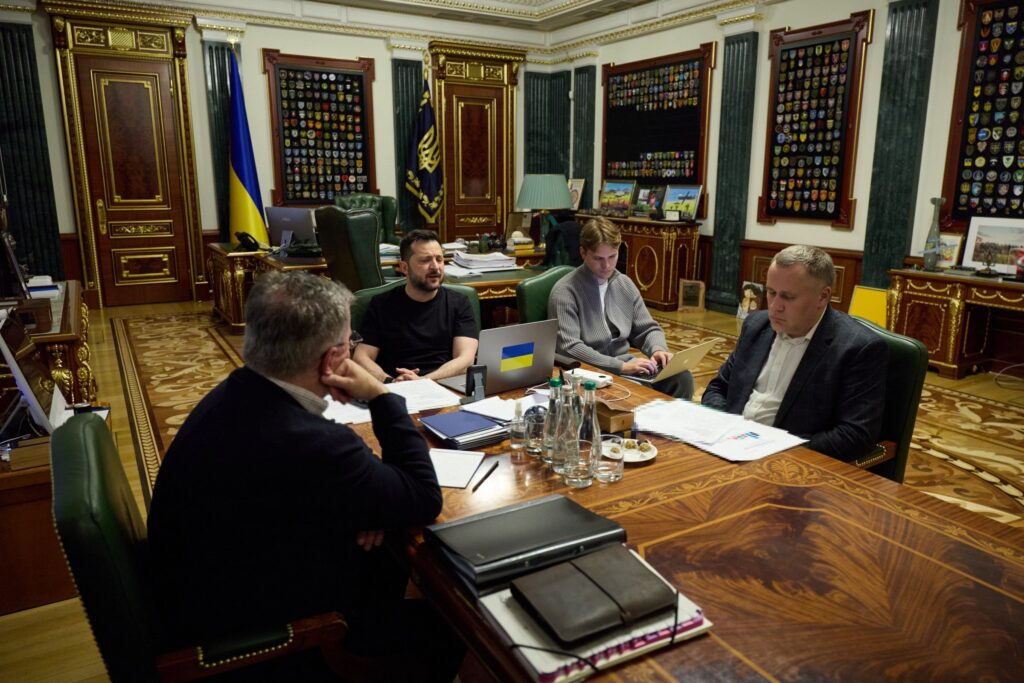
Ukrainian President Volodymyr Zelenskyy during a phone call with German Chancellor Friedrich Merz, 12 October 2026. Photo: Volodymyr Zelenskyy/X

Germany is preparing a new meeting of the Coalition of the Willing to coordinate further support for Ukraine, President Volodymyr Zelenskyy said on 12 October following a conversation with German Chancellor Friedrich Merz.

Russia continues to strike Ukraine’s energy infrastructure despite US President Donald Trump’s claim that Moscow has agreed to an energy truce. German Chancellor Friedrich Merz is initiating a meeting of European leaders to discuss assistance to Ukraine in this situation.

Kyiv and Berlin have also agreed to hold a meeting of national security advisers in the E3 format, with Ukraine participating, according to the statement. The format involves an informal grouping of three leading European countries: the United Kingdom, France and Germany.

Zelenskyy and Merz discuss energy truce and support for Ukraine

During the conversation, the two sides also discussed US President Donald Trump’s proposal for an energy truce and Russia’s subsequent actions. Russian forces continue to attack Ukraine’s energy infrastructure, Zelenskyy noted.

“This is exactly how the Russians behave when pressure eases. It is very important that Europe continue to act on principle,” Zelenskyy stressed.

German Chancellor Friedrich Merz speaks online with Ukrainian President Volodymyr Zelenskyy, 12 October 2026. Photo: Volodymyr Zelenskyy/X

Germany is coordinating preparations for a meeting of the Coalition of the Willing, the Ukrainian president noted. The two sides also discussed support for Ukraine’s financial stability. Further steps are to be coordinated in greater detail during a meeting scheduled for this week, Zelenskyy said.

The Coalition of the Willing seeks additional support for Ukraine

The Coalition of the Willing was initiated by the United Kingdom and France, which held talks with representatives of 37 countries in March 2025 on supporting Ukraine in the event of a peace agreement. The initiative envisaged financial assistance and the deployment of troops, air forces or naval forces to protect Ukraine against renewed Russian aggression, Bloomberg reported.

The latest meeting of the Coalition of the Willing took place on 24 August and was the 16th meeting, according to a statement on the website of the President of Ukraine. Zelenskyy called on partners to strengthen Ukraine’s air defense and provide at least 300 missiles for Patriot systems for the winter, the statement said.
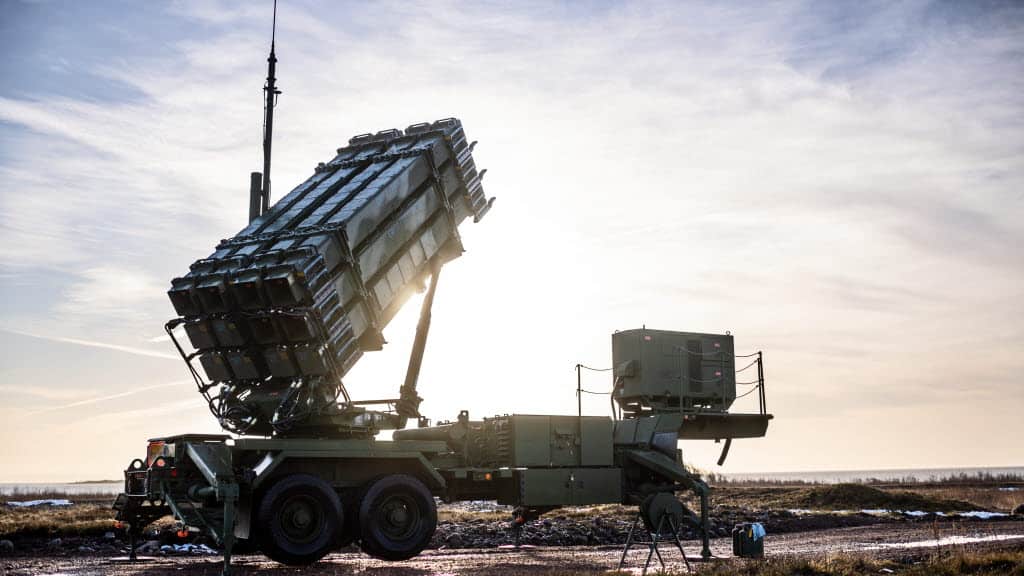
Patriot PAC-3 surface-to-air missile system.
The Patriot PAC-3 surface-to-air missile system. Photo: Swedish Ministry of Defense

The president also proposed bringing forward part of the European loan financing planned for 2027 so that Ukraine could receive the funds this year. He separately stressed the need to find a mechanism for using frozen Russian assets to defend Ukraine and to unblock the maritime corridor in the Black Sea.

“We value this format—the Coalition of the Willing. It brings together countries that are ready not only to talk about security but also to act. We need this—to act and build real security together,” Zelenskyy stressed.

A ceasefire in words, but fresh attacks on energy infrastructure in practice

Ukraine and Russia had allegedly agreed to an immediate energy ceasefire, US President Donald Trump said on Truth Social on 11 October. However, at the time of publication, neither Kyiv nor Moscow had confirmed such an agreement, Ukrainska Pravda reported.

Ukraine supports the ceasefire and is awaiting details from the US side, Volodymyr Zelenskyy said in a post on X the same day. Russia must also agree to halt the strikes, he stressed.

Ukrainian forces had received the relevant orders, and Kyiv was ready to refrain from striking Russian energy infrastructure provided Russia reciprocated, Zelenskyy said in his evening address on 11 October.

Russia continued attacking Ukraine’s energy infrastructure after the ceasefire was announced, including striking a gas production facility and a petrol station, Zelenskyy said on his official Telegram channel on 12 October. Moscow had shown no willingness to abide by the ceasefire, the president added.

  •  

Heat Pump Subsidies to be Scaled Back to Fund Defence

A heat pump subsidy scheme launched by Ed Miliband just nine months ago is facing cuts to help fund defence as the public continues to reject the technology and the quiet Net Zero rollback marches on.

The post Heat Pump Subsidies to be Scaled Back to Fund Defence appeared first on The Daily Sceptic.

  •  

Trump’s Energy Ceasefire Risks Becoming a Trap for Ukraine as Russia Continues Its Attacks

Washington’s proposed energy ceasefire could force Ukraine to abandon one of its most effective means of economic pressure against Russia without securing equivalent concessions from Moscow. Donald Trump’s parallel agreement with Vladimir Putin over Russian diesel raises further questions about whether American energy priorities are beginning to dictate the terms of negotiations over Ukraine.

President Volodymyr Zelenskyy has placed an important qualification on Donald Trump’s proposed energy ceasefire: Ukraine will stop attacking Russian energy facilities only if Moscow stops targeting Ukraine’s electricity generation and distribution infrastructure. Speaking at the Warsaw Security Forum on Monday, 12 October, Zelenskyy confirmed Kyiv’s willingness to accept a reciprocal arrangement while pointing out that Russian attacks had continued after the American president announced that a ceasefire was already in effect.

The sequence of events has exposed a fundamental weakness in Washington’s initiative. On 11 October, Trump announced an immediate energy ceasefire, declaring that Russia and Ukraine had both agreed to suspend attacks on energy infrastructure. Yet Kyiv had not received the agreement’s terms, Moscow had offered no public confirmation, and Russian drones continued striking Ukrainian power facilities, including a combined heat and power plant in Kharkiv.

Zelenskyy’s response was deliberately restrained. Rather than reject Trump’s initiative, he welcomed the possibility of an agreement while insisting that Russia demonstrate its acceptance through its actions. His remarks also exposed the difference between announcing a diplomatic understanding and establishing an enforceable military arrangement.

An unequal exchange

The apparent symmetry of an agreement prohibiting attacks on energy facilities disguises substantial differences between the two countries.

Russia retains an extensive oil-refining industry, producing fuels for domestic consumption, military operations and export. Ukrainian drone attacks on refineries have consequently become an instrument of economic warfare, disrupting production, increasing operating costs and forcing Moscow to divert resources towards protecting strategically important industrial installations.

Ukraine occupies a different position. Its major oil-refining capacity was devastated early in the full-scale invasion, including the Kremenchuk refinery. Russia’s present campaign is concentrated heavily on electricity generation, substations, heating systems and other installations essential to maintaining civilian life and economic activity.

An agreement narrowly focused on oil refineries would therefore protect an important Russian asset while offering Ukraine comparatively little protection. A comprehensive energy ceasefire could be reciprocal, but only if it explicitly covered the infrastructure each side actually possesses and attacks.

Zelenskyy’s insistence on equivalent obligations is consequently more than a negotiating formula. It seeks to prevent Washington from treating attacks on Russian fuel production and the destruction of Ukraine’s electricity and heating networks as interchangeable military activities without examining their respective consequences.

The distinction becomes particularly consequential with winter approaching. A Ukrainian suspension of attacks on Russian refineries could allow Moscow to restore production and rebuild damaged facilities. Unless Russia simultaneously halted attacks on Ukrainian energy infrastructure, Kyiv would surrender an important means of pressure while remaining exposed to further disruption of electricity and heating supplies.

The American pressure campaign

The concern in Kyiv is no longer confined to the proposed ceasefire’s wording. European officials have disclosed that Washington is threatening to restrict military assistance and intelligence sharing unless Ukraine suspends its strikes against Russian refineries.

According to accounts of the American pressure campaign, the threatened measures include suspending the Prioritised Ukraine Requirements List (PURL), the NATO-coordinated mechanism through which European countries finance purchases of American weapons for Ukraine. Reuters was unable to independently verify the reported threats, and the White House had not responded publicly.

If implemented, such restrictions would establish a direct connection between Ukraine’s willingness to accommodate Washington’s energy priorities and its access to essential military support.

This creates an imbalance in the negotiations. Moscow could continue military operations while Kyiv faced the possibility of losing American assistance for refusing an agreement whose Russian obligations remain undefined.

The diesel agreement and its political significance

The ceasefire proposal also needs to be examined alongside Trump’s separate agreement with Putin, announced on 9 October, to increase Russian diesel supplies.

Trump stated that Russia would initially release more than 300,000 tonnes of diesel, followed by another 500,000 tonnes in November and one million tonnes thereafter. Further supplies were envisaged, depending on Russia’s refining capacity.

The US Treasury subsequently issued General Licence 135, authorising transactions involving Russian-origin diesel that would otherwise face sanctions restrictions.

The initial volumes are unlikely to transform international diesel markets. Nevertheless, the agreement gives Washington a commercial interest in maintaining Russian refinery output at precisely the moment Ukrainian attacks are disrupting it.

Trump has an evident domestic incentive to seek lower fuel prices before the American congressional elections on 3 November. Putin, meanwhile, has an interest in preserving Russia’s refining capacity and reopening sanctioned markets.

These interests need not prove the existence of a coordinated political strategy against Kyiv. They do, however, create conditions in which American economic priorities and Russian military objectives could converge.

The possibility becomes more significant when considered alongside Trump’s public criticism of Zelenskyy and his suggestion that Ukraine requires different leadership.

The risk of a diplomatic trap

The most consequential scenario is one in which Washington demands immediate Ukrainian compliance while leaving Russia’s obligations subject to subsequent negotiation.

If Kyiv suspends refinery attacks without obtaining verifiable Russian commitments, Moscow gains relief from a costly Ukrainian campaign. If Kyiv refuses, Washington could present that refusal as an obstacle to peace and use it to justify restrictions on military assistance.

This is a possible negotiating outcome, not an established secret agreement between Trump and Putin. There is no publicly verified evidence that the two presidents arranged the ceasefire specifically to force Ukraine into such a position.

Nevertheless, the combination of the diesel agreement, American pressure over refinery strikes and the premature announcement of a ceasefire creates a credible risk that Ukraine could be required to make concessions before Russia demonstrates any corresponding restraint.

The implications extend beyond Ukraine. European governments financing American weapons through PURL would find their own assistance programmes vulnerable to Washington’s decisions over an energy arrangement negotiated separately with Moscow.

For Brussels, the immediate question is therefore whether European military support can remain dependable if American commercial interests increasingly influence the conditions attached to supplying Ukraine.

Kyiv’s remaining leverage

Ukraine’s attacks on Russian refineries cannot by themselves compel Moscow to end the war. They can, however, impose material economic costs and complicate Russia’s ability to maintain fuel production, exports and military logistics.

Abandoning those attacks without an enforceable agreement would remove pressure from Moscow without ensuring that Ukrainian civilians receive any corresponding protection.

Zelenskyy’s position preserves an alternative: simultaneous, reciprocal restrictions covering electricity generation, heating installations, oil refineries and other specified energy infrastructure, supported by clear verification procedures and consequences for violations.

Whether Washington is prepared to enforce such an arrangement against Russia remains unanswered.

The central danger for Kyiv is not an energy ceasefire itself. It is an arrangement in which Ukraine’s obligations are immediate and enforceable through the threat of lost American support, while Russia’s obligations remain uncertain.

Until that imbalance is resolved, Trump’s initiative risks delivering Moscow protection for its oil industry without securing protection for Ukraine’s energy system.

  •  

EU Leaders Face Confrontation Over Energy Prices, Ukraine and Russia at October Summit

European Union leaders will meet in Brussels on 15–16 October under pressure to address surging energy costs, Russian hybrid attacks, continued support for Ukraine and the bloc’s next long-term budget. The summit comes as economic pressures expose growing differences between national governments.

European Union leaders are preparing for a two-day summit in Brussels dominated by the economic consequences of the Middle East conflict, Russia’s continuing war against Ukraine and mounting pressure on governments to reconcile defence commitments with deteriorating public finances.

The European Council meeting on 15–16 October will bring together the leaders of the 27 member states to consider immediate measures addressing high energy prices alongside longer-term decisions on competitiveness, enlargement, migration and the EU’s budget for 2028–2034.

European Council President António Costa has placed economic competitiveness and energy costs at the centre of the discussions, reflecting concerns that the disruption of global oil and gas markets is threatening the bloc’s industrial recovery.

The meeting also takes place against the background of renewed disputes over national spending limits, with Italy and Greece seeking greater freedom to finance energy relief and France facing increasing pressure over the credibility of its budget.

Energy crisis puts fiscal rules under pressure

The Middle East conflict has created a renewed energy shock for European economies, raising transport and industrial costs while pushing inflation higher.

The disruption of shipping through the Strait of Hormuz has also affected global oil supplies, exposing Europe’s continuing dependence on internationally traded fossil fuels despite efforts to diversify imports following Russia’s invasion of Ukraine.

European leaders are expected to consider targeted and temporary support measures for households and businesses, as well as longer-term policies intended to reduce energy dependence.

The political disagreement concerns how those measures should be financed.

The European Commission has resisted requests from Italy and Greece for further exemptions from the EU’s fiscal framework. Both governments argue that extraordinary energy costs require additional budgetary flexibility.

Brussels maintains that existing provisions already permit exceptional expenditure within defined limits.

The disagreement is particularly difficult for indebted governments that must simultaneously finance military expansion, maintain public services and protect their economies from energy inflation.

France’s position has added urgency to the debate. Its borrowing costs have increased sharply as investors question whether the government can adopt a credible budget ahead of the 2027 presidential election.

A summit agreement on emergency energy assistance would therefore have to accommodate substantially different national fiscal circumstances.

Ukraine and the changing transatlantic relationship

Support for Ukraine remains a central item on the summit agenda as Russia continues attacks against Ukrainian cities, energy infrastructure and industrial facilities.

EU leaders are expected to review military and financial assistance, the implementation of sanctions against Moscow and the resilience of Ukraine’s economy.

The discussions take place amid renewed uncertainty surrounding American weapons deliveries.

Washington’s reported threats to suspend supplies under the NATO-backed PURL procurement arrangement have raised further questions about Europe’s dependence on the United States for advanced military equipment.

European governments have increased defence expenditure and committed additional support to Ukraine, but replacing American capabilities remains difficult, particularly in air defence, precision-guided weapons and certain intelligence systems.

The summit is unlikely to resolve those industrial limitations, but the broader question of Europe’s ability to sustain Ukrainian defence over several years will influence discussions.

Member states must also consider how increased defence expenditure will be financed alongside other demands on national budgets.

Russian hybrid operations move higher on the agenda

The EU’s published summit agenda includes Russian-linked hybrid attacks within Europe.

The issue has gained prominence as European governments investigate sabotage, cyber operations, information interference and threats against infrastructure and defence-related industries.

Recent warnings concerning possible Russian assassination operations targeting European defence executives and employees of companies supplying Ukraine illustrate the changing nature of the security threat.

Such activities place additional demands on national intelligence services, police forces and European institutions responsible for cross-border cooperation.

The EU has strengthened its sanctions instruments against hybrid activities, but enforcement remains dependent on coordination between national authorities.

Any further measures would need to address intelligence sharing, protection of critical infrastructure and the relationship between internal security and the Union’s wider Russia policy.

A larger EU with a contested budget

Enlargement will form another important part of the discussions following the Commission’s proposals for preparing a wider Union.

Brussels has outlined possible institutional safeguards intended to prevent future members from undermining democratic standards or blocking common decisions.

Montenegro and Albania are advancing through their accession negotiations, while Ukraine and Moldova remain central to the EU’s geopolitical enlargement strategy.

The financial implications will become increasingly important as governments negotiate the next multiannual financial framework covering 2028–2034.

Existing members are already divided over how much the EU should spend, which programmes should receive priority and whether additional common resources should be raised.

Agricultural expenditure, cohesion funding, defence investment and support for Ukraine will compete for resources within the same budget negotiations.

The Commission argues that enlargement can be accommodated through targeted reforms, but securing agreement among member states will require decisions on future expenditure and the distribution of financial benefits.

Competitiveness and the single market

Leaders will also examine progress on the One Europe, One Market agenda, which aims to reduce barriers to economic activity within the EU and improve conditions for European businesses.

The initiative is intended to address structural weaknesses affecting investment, industrial development and the ability of European companies to compete internationally.

High energy prices have made those concerns more immediate, particularly for industries competing against producers in economies where electricity and fuel are cheaper.

The European Council will be asked to provide direction on measures planned for 2026 and 2027, but implementation will depend on subsequent legislation and decisions by member states.

The October meeting brings several unresolved European policy questions into the same negotiation: how to protect economic competitiveness, maintain fiscal credibility, finance defence, sustain Ukraine and prepare for enlargement.

The immediate test will be whether leaders can agree on a credible response to energy prices without reopening broader disputes over national budgets.

More difficult decisions concerning defence financing, institutional reform and the EU’s long-term expenditure commitments will extend well beyond the two-day summit.

  •  

Poland’s ‘Bloody Friday’: School Killings, Mass Arrests and Fears of Russian Disinformation

Poland has launched a nationwide security operation after three knife attacks at educational institutions left one woman dead and more than a dozen people injured. Police have detained 117 people amid a wave of online threats, while intelligence officials are examining whether Russian disinformation networks exploited the violence to spread panic.

Poland is confronting an unprecedented school security crisis after a succession of violent attacks by young people triggered widespread fear, school closures and a nationwide police mobilisation. By Sunday, 11 October, officers had detained 117 people and conducted nearly 64,000 security checks at educational establishments, as the authorities attempted to contain both genuine threats and an escalating campaign of intimidation on social media.

The crisis reached its height on Friday, 9 October, when warnings circulated about a supposed nationwide killing campaign known as “Bloody Friday”. Videos, threatening messages and lists of potential targets spread through TikTok, messaging platforms and school discussion groups, prompting parents to keep children at home and several local authorities to suspend classroom teaching.

Although police have found no evidence of an organised nationwide conspiracy, the violence that preceded the rumours was real. Three separate attacks took place between 7 and 10 October, while investigators are examining hundreds of other incidents involving threats or suspected criminal activity.

Two attacks that triggered nationwide panic

The first major incident occurred on Wednesday, 7 October, at a vocational school in Ostrołęka, north-east of Warsaw. A 19-year-old student armed with a machete attacked pupils, teachers and other people in and around the building, injuring nine victims before harming himself.

Investigators subsequently discovered a homemade explosive device inside his backpack. The suspect was arrested, and prosecutors brought nine charges against him, including attempted murder. The discovery of explosives raised further questions about the extent of his preparations and the possibility of a substantially higher death toll.

The following day, a 15-year-old former pupil entered a primary school in Leszczydół-Nowiny, near Wyszków, and attacked three members of staff with a knife. A 37-year-old caretaker died from her injuries, while two teachers, including the headteacher, were wounded.

According to investigators, the teenager wore a helmet-mounted camera, raising suspicions that he intended to record the assault. The official prosecution statement confirmed the victim’s death and the detention of the suspect.

The attacks were followed by threatening messages from other teenagers, including a video attributed to a 17-year-old in the Przasnysz district who claimed to be participating in a competition involving killings. Police subsequently detained him. In Sierpc, another 17-year-old was arrested after allegedly discussing plans for violence at school; officers discovered two knives.

Thousands of schools under police surveillance

The rumours produced an immediate reaction. Schools in Wyszków, Ciechanów, Pułtusk and other municipalities cancelled classroom teaching or introduced remote lessons. Elsewhere, parents independently withdrew their children, leaving some classrooms largely empty.

Police launched an extensive preventive operation, deploying additional officers around schools and investigating online threats.

According to the figures released on 11 October, the authorities had recorded 275 incidents requiring investigation, detained 117 people and carried out nearly 64,000 checks at schools, nurseries and other educational facilities.

The situation deteriorated further on Saturday, 10 October, when a 21-year-old student attacked three people at a post-secondary educational institution in Warsaw. Two 17-year-old girls and a 24-year-old woman were injured. One victim required hospital treatment, although none of the injuries was considered life-threatening.

Interior Minister Marcin Kierwiński subsequently stated that investigators had established no links between the recent attacks. The authorities nevertheless remain concerned about imitation offences, particularly where threatening material circulates among teenagers through closed online communities.

Russia’s possible role in spreading panic

The events have also raised questions about whether hostile foreign actors deliberately amplified the crisis. Tomasz Siemoniak, Poland’s minister responsible for coordinating the intelligence services, warned that Russian organisations routinely exploit domestic emergencies to spread disinformation and undermine confidence in public institutions.

In his statement on 9 October, Siemoniak acknowledged the possibility of foreign involvement but stressed the need for evidence before assigning responsibility.

There is, at present, no publicly established evidence that Moscow organised the school attacks or directed the subsequent threats. Nevertheless, the rapid circulation of alarming videos, fabricated warnings and unverified target lists illustrates how genuine violent incidents can be exploited to disrupt everyday life without further physical attacks.

The episode also presents a challenge for European regulators. Poland is examining measures against dangerous online content, while its existing obligations under the EU Digital Services Act provide a framework for addressing systemic risks associated with major platforms.

For Donald Tusk’s government, the immediate priority is preventing further attacks as schools reopen under heightened security. The longer-term challenge concerns the interaction between online radicalisation, copycat violence and disinformation capable of transforming isolated crimes into a national emergency.

  •  

Russia Targets European Defence Industry as Moscow Seeks to Disrupt Military Support for Ukraine

Intelligence services from five European countries warn that Russia is expanding assassination and sabotage operations against defence manufacturers supplying Ukraine. The threats coincide with an alleged plot against Poland’s prime minister and defence minister, raising concerns about Moscow’s efforts to undermine European military assistance through intimidation and political destabilisation.

European intelligence agencies have warned that Russia is intensifying efforts to assassinate executives of defence companies supplying Ukraine, extending its campaign of sabotage and intimidation into the European military-industrial sector.

According to intelligence assessments obtained from five European security services, Moscow has ordered an expansion of covert operations targeting senior figures at major arms manufacturers and smaller companies producing drones and military components. Germany’s domestic intelligence agency, the BfV, has reportedly advised executives to strengthen personal security, while some manufacturers have already increased protection for senior personnel.

The warnings emerged alongside reports of an alleged assassination plot against Polish Prime Minister Donald Tusk and Defence Minister Władysław Kosiniak-Kamysz. Polish authorities convened an emergency security meeting and subsequently detained a suspect. No connection between the Polish case and Russian intelligence has been established.

Europe becomes Moscow’s principal target

The apparent expansion of Russian covert operations reflects a shift in Moscow’s calculations concerning Western military assistance.

President Vladimir Putin had reason to anticipate that Donald Trump’s return to the White House would weaken American support for Kyiv. Trump repeatedly questioned US military expenditure on Ukraine and advocated a negotiated settlement with Russia. A substantial reduction in American weapons deliveries could have increased pressure on Ukraine to accept Moscow’s territorial demands.

Instead, European governments assumed greater responsibility for sustaining Ukrainian defence capabilities, including financing weapons purchases and expanding domestic production.

The European Union’s €90 billion support programme for 2026–2027 allocates €60 billion to defence procurement and industrial capacity. The EU has also established mechanisms allowing Ukraine to participate in European joint procurement programmes.

Disrupting European manufacturers therefore offers Moscow a means of restricting Ukraine’s military capabilities without directly confronting NATO.

Assassination threats can interfere with procurement even when attacks are never carried out. Large manufacturers can afford extensive security arrangements, but smaller companies producing electronics, drone components and specialised equipment often lack comparable resources.

Intimidation could delay contracts, discourage investment and persuade individual suppliers to withdraw from Ukrainian defence programmes.

Sabotage as an instrument of political pressure

Russia’s alleged interest in targeting defence executives is not unprecedented. In 2024, American intelligence reportedly uncovered a Russian plot to assassinate Armin Papperger, chief executive of Rheinmetall, one of Germany’s principal suppliers of ammunition and military equipment to Ukraine.

As EU Today previously reported, Moscow has also publicly identified European factories involved in Ukrainian drone production, increasing concerns that civilian industrial facilities could become targets of Russian operations.

European authorities have investigated suspected Russian involvement in arson, infrastructure attacks and clandestine networks. An earlier cross-border investigation into alleged assassination and sabotage preparations demonstrated how intermediaries could be recruited to conduct operations while obscuring their sponsors.

Such activity also carries political consequences. Attacks against infrastructure and industrial facilities can reinforce public fears about confrontation with Russia, particularly during elections when parties advocating accommodation with Moscow seek to exploit security concerns.

Poland has already experienced mounting Russian hybrid pressure, including threats to critical infrastructure and information operations intended to aggravate domestic political divisions.

Putin’s strategy against European rearmament

Ukraine’s continuing strikes against Russian refineries and military-industrial facilities have added economic and operational pressures to Moscow’s prolonged war effort. Russia retains substantial military production capacity, but the costs of sustaining the conflict remain considerable.

Interfering with European weapons manufacturing could serve two objectives: restricting Ukraine’s access to equipment and obstructing Europe’s longer-term rearmament.

The Kremlin does not necessarily need European governments to abandon Ukraine formally. Production delays, disrupted contracts and reluctant suppliers could reduce the practical effect of military assistance even while political commitments remain unchanged.

European governments have acknowledged the industrial challenge. In its June conclusions on European defence, the European Council called for accelerated manufacturing capacity, stronger supply chains and closer cooperation with Ukraine’s defence industry.

Russia’s apparent strategy seeks to exploit the dependence of these programmes on private companies and skilled civilian personnel.

The warnings from European intelligence agencies suggest that protecting defence executives, engineers and contractors is becoming part of the continent’s wider security responsibilities.

For Moscow, intimidation offers the possibility of weakening Ukrainian military resistance without an open confrontation with NATO. For European governments, preventing covert operations from disrupting weapons production is increasingly inseparable from their commitment to sustain Ukraine’s defence.

  •  

Ukraine Strikes at Heart of Russia’s Oil Network as Samara Hub Comes Under Repeated Attack

Ukrainian forces have attacked one of Russia’s most important oil transport and blending facilities for the third time this month. The Samara hub handles crude from several major producing regions and plays a central role in preparing Russia’s Urals export blend, making it a target of considerably greater strategic significance than an ordinary oil depot.

Ukraine has intensified its campaign against Russia’s oil industry with another drone strike on the Samara linear production and dispatch station, a major facility in the pipeline network operated by state-controlled Transneft. The latest attack, during the night of 9–10 October, followed earlier strikes on 2 and 7 October, which Ukrainian military authorities say caused extensive damage to storage tanks and associated infrastructure.

The significance of Samara extends well beyond the destruction of stored oil. Situated near the settlement of Prosvet in Russia’s Samara region, the installation is a junction where crude oil arriving from Western Siberia, Tatarstan and the Volga-Urals producing regions is received, stored, blended and redistributed. Its role makes it an important link between Russian oil production, domestic refining and export markets.

According to the Ukrainian General Staff’s operational report, Samara is responsible for blending crude with different sulphur contents to produce Urals, Russia’s principal export grade. Ukraine’s military says the facility also contributes to supplying the Russian armed forces.

Why Samara matters to Russia’s oil exports

Unlike an oil refinery, where crude is processed into petrol, diesel and other fuels, the Samara installation performs a function earlier in the supply chain. It is one of the points where different grades of Russian crude are brought together to produce a commercially standardised export mixture.

Western Siberian crude generally has different characteristics from oil extracted in the Volga-Urals basin, including variations in sulphur content and density. Blending these streams is essential to maintaining the specifications of Urals crude, which is supplied to refineries and sold on international markets.

Samara’s importance also reflects the sheer scale of the infrastructure concentrated at the site. Ukrainian Special Operations Forces describe a facility where four major oil pipelines converge, supported by 71 storage tanks with a combined capacity exceeding 1.6 million cubic metres.

The site’s central role is not simply a Ukrainian assessment. Transneft-Privoĺga’s management previously described the Samara installation as having Europe’s largest oil storage tank farm and identified its blending station and associated pumping installations as part of a major modernisation programme.

Approximately 140 million tonnes of oil passes through the Samara complex annually. That figure would make the installation an important concentration point within the wider Russian pipeline system.

The consequences of sustained disruption could therefore extend beyond the immediate loss of storage capacity. Damage to blending operations, connecting pipelines or loading equipment could interfere with the movement of crude towards refineries and export routes. The precise effect would depend on the functioning of alternative facilities, available spare capacity and the speed of repairs.

Three attacks in nine days

The first strike, on 2 October, reportedly damaged 11 storage tanks with capacities of 20,000 cubic metres each, three larger tanks of 50,000 cubic metres, sections of pipeline and an automated loading station. The Security Service of Ukraine confirmed that its personnel had participated in the operation alongside other branches of the armed forces.

A further strike on 7 October destroyed four large storage tanks and caused a substantial fire, according to Ukraine’s General Staff. Ukrainian Special Operations Forces subsequently confirmed another attack on 10 October, although the damage from that operation remains under assessment. The reported destruction and damage have not been independently verified in full.

The repeated attacks indicate an effort to produce cumulative disruption rather than rely on a single operation to disable an extensive industrial complex.

This approach is consistent with Ukraine’s broader campaign against Russia’s refining industry. As EU Today examined in August, repeated strikes on processing facilities can create difficulties that extend beyond the immediate damage, particularly when specialist equipment requires lengthy repairs.

From refinery attacks to the wider oil network

The campaign against Samara represents a significant extension of that strategy. Refineries remain important targets because they produce the fuels required by Russia’s armed forces and domestic economy. Transport and blending facilities, however, determine whether crude reaches those refineries in the required quantities and specifications.

Continuous attacks are essential because much of the damage inflicted by drones is repairable. Individual installations may return to service within days or weeks, meaning the cumulative effect depends heavily on whether further disruption occurs before repairs and production have fully resumed.

Russia’s refining industry remains heavily dependent on specialist equipment and technologies historically supplied by Western manufacturers. Sanctions have restricted access to replacement components, while domestically manufactured equipment and Chinese alternatives are not always technically compatible with existing installations. These constraints complicate repairs, prolong shutdowns and limit Russia’s ability to restore damaged refining capacity.

Samara presents a somewhat different vulnerability. Its importance rests on the concentration of pipeline connections, storage and blending operations at one location. A sustained interruption could affect several parts of the oil supply chain simultaneously, although the available evidence does not yet establish that the wider network has suffered a prolonged shutdown.

Ukraine has already demonstrated its willingness to strike other logistical installations. A recent attack on the Volodarskaya petroleum-products station near Moscow targeted another important part of Russia’s fuel distribution system.

Implications for Russia’s war economy

Oil remains central to Russia’s export earnings and federal finances, while the availability of refined petroleum products influences military logistics, transport and industrial activity.

The immediate economic significance of the Samara attacks will depend on how much operational capacity has been lost, whether crude can be redirected through alternative infrastructure and how quickly Transneft can restore the damaged facilities.

There is an important distinction between destroying storage tanks and preventing oil from moving through a network. The former reduces available capacity; the latter can impose broader restrictions on production, refining and exports. Establishing the extent to which the latest strikes have achieved either effect will require further operational evidence.

Nevertheless, the decision to return repeatedly to Samara illustrates a development in Ukraine’s campaign against Russia’s energy sector. Rather than concentrating exclusively on the refineries that convert crude into fuel, Kyiv is also attacking infrastructure that connects oil production to its commercial and military end users.

For Moscow, the vulnerability of Samara is particularly consequential because the installation occupies a central position in the movement and preparation of Urals crude. Any sustained loss of its blending, storage or distribution functions would introduce additional pressure into an oil system already facing repeated attacks on its refineries and export infrastructure.

The latest operation therefore raises a question extending beyond the damage to one industrial site: whether Russia can maintain reliable oil flows when several interconnected stages of its energy supply chain are subjected to recurring disruption.

  •  

Russian Air Strikes Kill 20 in Zaporizhzhia, Including Three Children, as Rescuers Search Rubble

At least 30 people have been injured after Russian guided aerial bombs struck residential buildings in the Ukrainian city of Zaporizhzhia. The fate of several residents remains unknown as emergency workers continue searching collapsed apartment blocks.

At least 20 civilians, including three children, have been killed in Russian air strikes on the southern Ukrainian city of Zaporizhzhia on Saturday morning, 10 October, according to regional authorities. Rescue workers are continuing to search the ruins of residential buildings, with several people still unaccounted for.

The death toll rose from eight to 30 as emergency crews recovered more victims. The Zaporizhzhia regional military administration confirmed that three children were among those killed, while earlier reports recorded 16 injured, including three children. Two of the wounded were in a serious condition.

Authorities had previously reported that 12 people remained missing, although they did not provide a revised figure after the death toll increased. Rescue operations continued amid concerns that further victims could be trapped beneath collapsed concrete and other debris.

Apartment Buildings Destroyed by Guided Bombs

Russian forces launched the attack shortly before dawn, using guided aerial bombs against residential areas of Zaporizhzhia. According to the regional administration’s preliminary assessment, one five-storey apartment building suffered a direct hit and was destroyed, while part of another residential block collapsed.

The attack damaged at least 26 residential buildings in the Shevchenkivskyi and Voznesenivskyi districts, comprising 23 apartment blocks and three private houses. Three buildings sustained particularly extensive damage, while non-residential properties were also affected.

Firefighters, police officers and medical personnel were deployed to the affected neighbourhoods, supported by municipal workers and local residents. Emergency crews continued removing debris and examining unstable structures while officials assessed the extent of the destruction.

The Ukrainian National Police said that officers were documenting the consequences of the attack, including damage to civilian infrastructure. Investigators were also recording evidence for possible war crimes proceedings.

Search Continues as Casualty Figures Rise

The scale of the destruction has complicated efforts to establish the number of victims. The initial casualty figures increased repeatedly as rescuers gained access to damaged buildings and recovered bodies.

Earlier in the morning, authorities reported four deaths. The figure subsequently rose to seven, then eight, before reaching 11 shortly after midday. The number of injured also increased as information emerged from hospitals and emergency services.

At 10.15am local time, 16 people were confirmed wounded. Three were children, while two patients were described as seriously injured. The regional administration said most of the remaining casualties were in a condition of moderate severity.

Officials warned that the casualty figures could change as operations continued. The authorities had not established how many of those initially reported missing might still be trapped in the wreckage, and the recovery of additional bodies had not been accompanied by a revised missing-person count.

Zaporizhzhia Faces Continued Russian Air Attacks

Zaporizhzhia, an industrial city in south-eastern Ukraine, has remained exposed to Russian aerial attacks throughout the full-scale invasion. Its proximity to Russian-held territory in the surrounding region leaves residential districts vulnerable to aircraft-launched weapons.

Guided aerial bombs present a particular challenge for Ukrainian air defences. Unlike conventional unguided bombs, they can be fitted with glide and guidance systems allowing Russian aircraft to release them from considerable distances. Their substantial explosive payloads can cause extensive structural damage when they strike apartment buildings.

Saturday’s attack comes only three days after Russia launched another large-scale assault across Ukraine, targeting energy infrastructure and residential areas. As EU Today reported on 7 October, that operation killed at least 11 people and caused damage in several Ukrainian cities, including Zaporizhzhia.

The latest fatalities also follow earlier attacks on civilian facilities in the city. In February, Russian drones struck a maternity hospital in Zaporizhzhia, causing a fire and injuring patients.

The repeated strikes have placed continuing pressure on the city’s emergency services, which must respond to new attacks while repairing damage to residential buildings and public infrastructure.

Day of Mourning Declared

The Zaporizhzhia authorities have declared Sunday, 11 October, a day of mourning for those killed in Saturday’s bombardment. The announcement followed confirmation that the death toll had reached 11, including three children.

The Russian attack has also renewed attention to the vulnerability of densely populated urban areas to guided aerial bombs. Under international humanitarian law, deliberate attacks against civilians and indiscriminate attacks are prohibited, while all parties must distinguish between military objectives and civilian objects.

Ukrainian investigators are continuing to document the damage and civilian casualties. The precise circumstances of each impact, including the intended targets, have not yet been independently established.

For the families awaiting news of missing relatives, the immediate priority remains the search beneath the destroyed buildings. As of the latest available information on Saturday, rescue workers were still operating at the sites, and the authorities had warned that the number of dead could rise further.

  •  

Tungsten mine as EU strategic project important for nation – operator

The selection of the Borralha tungsten mine, planned for Montalegre, in northern Portugal, as a strategic project of the European Union is “an achievement” and an opportunity of “great importance”

The post Tungsten mine as EU strategic project important for nation – operator appeared first on Portugal Resident.

  •  

Giant Wind Turbines Risk Leaving Britain Blind to Russian Jets, Says MoD

A giant wind farm risks blinding radar used to track Russian jets and missiles, the Ministry of Defence has warned as it opposes Net Zero plans to build 23 turbines twice the height of Big Ben in Yorkshire.

The post Giant Wind Turbines Risk Leaving Britain Blind to Russian Jets, Says MoD appeared first on The Daily Sceptic.

  •  

Two Latvian Nationals Arrested at RAF Base Housing US and NATO Intelligence Operations

British counter-terrorism police are investigating a security breach at RAF Molesworth in Cambridgeshire after two Latvian nationals were found inside the military installation. The arrests come amid heightened security concerns following a separate suspected terrorist plot targeting RAF Fairford, which prompted the withdrawal of American bombers.

Two Latvian nationals have been arrested in Britain on suspicion of entering a restricted military installation for purposes potentially harmful to national security. The men were discovered inside RAF Molesworth, a sensitive military facility in Cambridgeshire that houses American and NATO intelligence operations, during the early hours of Thursday, 8 October.

The suspects, aged 36 and 32, are both Latvian citizens residing in the United Kingdom. According to an official statement issued by the Metropolitan Police, they were initially detained on suspicion of trespassing and criminal damage before being arrested under the National Security Act 2023.

The incident follows a separate investigation into a suspected terrorist plot near RAF Fairford in Gloucestershire, where American strategic bombers had been deployed. British counter-terrorism officers have emphasised that there is currently no evidence connecting the two cases.

Security breach discovered during routine patrol

The investigation began at approximately 10pm on Wednesday, 7 October, when Ministry of Defence Police officers patrolling RAF Molesworth discovered an abandoned vehicle near the installation’s perimeter.

Officers from Cambridgeshire Constabulary joined the search and subsequently identified a small breach in the security fence. At approximately 2am on Thursday, the two men were located inside the restricted area and taken into custody.

The suspects were initially questioned over alleged trespassing and criminal damage. However, investigators subsequently invoked Section 4 of the National Security Act 2023, which covers entering, approaching or inspecting prohibited locations for purposes prejudicial to Britain’s safety or interests.

The legislation carries a maximum sentence of 14 years’ imprisonment upon conviction. Neither man has been publicly identified, and police have not disclosed evidence establishing their alleged intentions or any connection with a foreign intelligence service.

Officers have also searched two addresses in the Peterborough area. The abandoned vehicle was recovered and examined by specialist explosive ordnance disposal personnel after concerns arose during initial inspections.

As a precaution, police established a cordon affecting roads around Glatton, including part of the A1. Specialists subsequently found nothing of concern, allowing the restrictions to be lifted.

Intelligence facility serving American and NATO operations

RAF Molesworth is not an ordinary operational airfield. Although designated as a Royal Air Force station, the installation accommodates intelligence facilities supporting American military operations and NATO.

Among the organisations associated with the site is the NATO Intelligence Fusion Centre, which contributes to intelligence collection, assessment and information-sharing between allied military authorities. The installation also supports American military intelligence activities relating to operations in Europe and Africa.

The presence of these facilities makes Molesworth a sensitive location, where unauthorised access raises questions extending beyond conventional trespassing. Investigators will seek to establish how the men entered the compound, why they were there and whether they attempted to approach or examine restricted equipment or infrastructure.

Separate investigation at RAF Fairford

The arrests come less than two weeks after British police detained seven men in connection with a suspected terrorist plot involving RAF Fairford, another British installation used by the United States Air Force.

The Fairford investigation began on 27 September after suspicious activity was reported near the base. Police subsequently investigated possible offences involving explosives and preparations for terrorist acts. Those arrested in connection with that investigation have since been released on bail.

The incident was followed by the withdrawal of American bombers from Fairford. President Donald Trump subsequently referred to security threats affecting the installation, raising further questions about the protection of American military assets stationed in Britain.

Commander Helen Flanagan, head of Counter Terrorism Policing London, which is leading the Molesworth investigation, cautioned against drawing conclusions about the relationship between the two cases.

She said investigators had found nothing so far suggesting a connection with the Fairford incident and were continuing to examine possible motives.

British authorities have not publicly identified a foreign state or organisation as being responsible for the Molesworth breach.

The two Latvian nationals remain in police custody while investigators continue examining the circumstances surrounding their presence at the installation. The inquiry involves Counter Terrorism Policing, the Ministry of Defence Police and Cambridgeshire Constabulary.

The investigation is taking place against a wider background of security concerns involving European military facilities. Latvia itself reported an armed border provocation and sabotage of surveillance infrastructure near Belarus earlier this week, although there is no evidence linking that incident to the arrests in Britain.

For British investigators, the immediate task remains establishing whether the Molesworth intrusion was an isolated security breach or involved an intention to compromise military operations or intelligence infrastructure.

  •  

Rubio’s charm offensive steers careful path around issue of F-35s

U.S. Secretary of State Marco Rubio steered a careful path around the issue of whether or not Portugal will be purchasing American made F-35s in the near future during what

The post Rubio’s charm offensive steers careful path around issue of F-35s appeared first on Portugal Resident.

  •  

Russian Strike on Passenger Buses in Kramatorsk Kills 30, Injures 18

At least 30 people have been killed and 18 injured after Russian forces struck two passenger buses in Kramatorsk, eastern Ukraine, on Thursday morning, according to updated figures released by Ukrainian prosecutors. The attack comes amid continuing Russian strikes on Ukrainian cities.

Russian forces attacked Kramatorsk, in Ukraine’s Donetsk region, at approximately 10am local time on 8 October, hitting an area where two scheduled passenger buses were carrying civilians.

The Donetsk Regional Prosecutor’s Office initially reported 12 fatalities and 14 injuries. In a subsequent update, prosecutors raised the death toll to 30 and the number of injured to 18.

The attack was also confirmed by the Kramatorsk City Council and Vadym Filashkin, head of the Donetsk Regional Military Administration.

According to preliminary findings from Ukrainian investigators, Russian forces may have used a UMPB D-30SN guided aerial munition. The precise weapon and circumstances of the attack remain under investigation.

Passenger buses caught in Russian bombardment

The two buses were operating regular passenger services when the strike occurred. Ukrainian authorities said passengers were on board, although detailed information about the victims, including their ages and identities, has not yet been released.

Photographs published by the regional prosecutor’s office show the aftermath of the attack, including severely damaged passenger vehicles. Emergency personnel and law enforcement officers were dispatched to assist the wounded, recover victims and document evidence.

The strike raises questions about the selection of the target and precautions taken to protect civilians. Under international humanitarian law, civilian vehicles and their passengers are protected from deliberate attack unless a vehicle becomes a military objective under the applicable legal rules.

The circumstances of Thursday’s strike, including whether the buses were directly targeted or struck during an attack on another location, have not yet been independently established.

Kramatorsk under increasing pressure

Kramatorsk remains one of Ukraine’s principal administrative and logistical centres in the part of Donetsk region still controlled by Kyiv. The city has faced repeated Russian bombardments as Moscow continues its military campaign to capture the remaining Ukrainian-held territory in Donetsk.

Its transport infrastructure serves residents who have remained despite years of fighting, including those travelling between neighbouring communities and those attempting to leave the region.

Regional officials have repeatedly urged residents to evacuate to safer areas of Ukraine as Russian bombardments continue. However, civilians remain in Kramatorsk and surrounding settlements, where everyday services, including public transport, continue to operate despite the danger.

Guided bombs and civilian protection

Russian forces have used guided aerial bombs against Ukrainian-controlled settlements near the front line. Such weapons can be released from aircraft at distances that reduce Russian pilots’ exposure to Ukrainian air defences.

The UMPB D-30SN, provisionally identified in the Kramatorsk attack, is a guided munition designed to reach targets beyond the immediate position of the launching aircraft. Its suspected use against an area containing occupied passenger buses will form part of the investigation.

Investigators will need to establish the intended target, the weapon used and the information available to those who planned and carried out the strike. These findings are relevant to determining whether the attack violated the laws of war.

Investigators examine civilian deaths

The Donetsk Regional Prosecutor’s Office is collecting evidence concerning the bombardment, including the type of munition used and the circumstances in which the buses were struck.

Establishing whether the vehicles were deliberately targeted, or whether the attack resulted from an indiscriminate or disproportionate strike, will be central to any assessment under international humanitarian law.

The identities of the victims and the full extent of the damage have yet to be established publicly. As of the updated figures issued by Ukrainian prosecutors on 8 October, 30 people were reported killed and 18 injured.

  •  

Ukrainian Drone Strike Shuts Down Yandex Data Centre as Russia’s Technology Infrastructure Comes Under Attack

A reported Ukrainian drone strike has interrupted operations at a Yandex data centre in Russia’s Ryazan region, while another attack was reported at a Gazprom-owned refinery.

A Ukrainian drone attack has reportedly forced the closure of a Yandex data centre in Russia’s Ryazan region, causing a fire and disrupting part of the company’s infrastructure. Shares in the Russian technology group fell by more than three per cent in early Moscow trading on Thursday, 8 October.

The installation in Sasovo was affected during overnight strikes on Russian territory. Yandex said it was working to restore affected infrastructure, while its principal consumer services remained operational. The incident has raised questions about the vulnerability of Russia’s digital economy to Ukraine’s long-range strike campaign.

Fire at Sasovo technology facility

The affected data centre began operating in 2014 in buildings formerly occupied by the Sasta machine-tool manufacturing plant. Yandex subsequently connected the installation to Moscow by fibre-optic communications links as part of its wider computing infrastructure.

Ryazan regional governor Pavel Malkov said Russian air defences intercepted two drones over the region. He reported a fire on the roof of an industrial building in the Sasovo district and damage to windows in nearby private homes. No casualties were reported.

According to a statement on the incident, the situation had been brought under control while work to restore infrastructure continued. Yandex said its main consumer services remained operational.

The company’s cloud division also reported an electricity supply problem affecting an availability zone known as ru-central1-b. Clients were advised to use alternative zones where necessary to maintain service continuity.

Yandex shares decline

Yandex shares dropped by approximately 3.4 per cent to 3,568.5 roubles in early trading on the Moscow Exchange. The decline followed news of the fire, although a single trading session cannot establish the long-term financial cost of the disruption.

Yandex operates search, advertising, navigation, artificial intelligence and cloud computing services. Its infrastructure therefore supports commercial users as well as the company’s own applications. The duration of the interruption, the extent of physical damage and the cost of repairs will determine the wider impact.

Investors can follow the company’s quoted share price as further details emerge.

Gazprom refinery also reportedly targeted

In a separate development, explosions and a fire were reported on Thursday near the Gazprom Neftekhim Salavat refining and petrochemical complex in Russia’s Republic of Bashkortostan, around 1,400 kilometres from the Ukrainian border. The precise location of the fire and the extent of damage had not been independently established.

The Gazprom-owned complex processes hydrocarbon feedstock and produces petrol, diesel, fuel oil and petrochemicals. It has previously been targeted by Ukrainian drones. The latest reported incident comes amid repeated attacks on Russian refining and fuel infrastructure.

Russia’s technology sector faces new risks

Ukraine’s long-range economic campaign has focused heavily on oil refineries, fuel stores, military production plants and transport infrastructure. A strike affecting a major data centre introduces another category of vulnerability: the computing equipment and supporting utilities used by the digital economy.

Such sites serve businesses, financial institutions and industrial enterprises, and can also support defence-related activities. However, no publicly verified evidence establishes that the Sasovo data centre was directly involved in Russian military operations.

Damage to power supplies, cooling systems and network connections can interrupt services without necessarily destroying servers. Operators with geographically distributed facilities may be able to shift workloads to unaffected locations. The suspension of one centre therefore does not mean that Russia’s internet infrastructure has ceased functioning.

Economic pressure on Moscow

The attacks coincide with Russia’s plans for substantial military expenditure in 2027. The draft federal budget envisages considerable government spending and borrowing as Moscow continues its war against Ukraine.

Ukraine’s strikes on economic infrastructure are intended to increase the cost of maintaining Russia’s invasion. Disruption to energy facilities can affect fuel production and revenue, while attacks on technology and industrial sites may interrupt wider commercial and logistical operations.

The cumulative effect depends on the severity and duration of the damage. Neither the reported temporary closure of the Yandex facility nor preliminary accounts of the Salavat fire establish the scale of lasting losses.

The incidents nonetheless illustrate the exposure of Russian industrial and technology assets far beyond the Ukrainian border, as Kyiv increasingly targets infrastructure that supports the country’s economy.

  •  

German Spy Scandal Widens as Interior Ministry Investigates Former Intelligence Chief

Germany’s espionage investigation into former intelligence chief August Hanning has widened, with the Federal Interior Ministry examining possible breaches of secrecy regulations during his time as a senior government official. The development raises further questions about the handling of classified intelligence, including material supplied by Germany’s international security partners.

Germany’s Federal Interior Ministry confirmed on Thursday, 8 October, that it was examining whether confidentiality regulations may have been breached during August Hanning’s tenure as state secretary between 2005 and 2009. The examination follows his arrest on suspicion of espionage and attempted treason, and the discovery of a suspected network supplying sensitive intelligence documents from within Germany’s Federal Intelligence Service (BND).

According to the latest information on the ministry’s examination, officials have ordered an immediate review. The ministry has not disclosed its scope or whether investigators have identified any additional security breaches during Hanning’s government service.

Hanning, 80, headed the BND from 1998 until 2005 before moving to the Interior Ministry, where he remained until 2009. An investigating judge at Germany’s Federal Court of Justice subsequently ordered his continued detention following his arrest on Tuesday.

His former chief of staff, identified under German privacy rules as Manfred D., has also been remanded in custody. Prosecutors suspect that the two men maintained an arrangement through which confidential intelligence documents were obtained in exchange for payment.

Thousands of intelligence documents under investigation

Federal prosecutors believe the arrangement began around 2010, several years after Hanning left the BND, and continued until June 2022.

Investigators suspect that approximately 2,000 documents were obtained through Hanning’s former colleague, who remained in senior administrative positions at the intelligence service under successive directors.

The material reportedly included assessments of Russia’s military activities, information concerning Iran’s nuclear programme and intelligence originating from foreign partner services. Some documents were intended for senior German government officials, including the chancellery.

Prosecutors suspect that Hanning used confidential material in his private security consultancy and prepared at least one analysis for a foreign intelligence contact. Whether the analysis was ultimately delivered remains unclear.

The investigation consequently extends beyond the suspected unauthorised removal of German state documents. Intelligence supplied by foreign governments is frequently shared under restrictions governing its subsequent distribution. Any compromise of such material could require Germany to assess whether sensitive foreign sources, methods or assessments were exposed.

BND president Martin Jäger has confirmed that the service initiated extensive internal investigations after suspicions emerged. The affair has also drawn attention from the Bundestag’s parliamentary intelligence oversight body, whose chairman, Marc Henrichmann, has called for a comprehensive investigation.

Hanning acknowledges possession of confidential files

Hanning’s lawyer, Leon Kruse, has rejected the accusations while acknowledging that his client possessed confidential documents.

In a statement released following the court hearing, Kruse denied that Hanning had passed information to the detriment of Germany or received payment for doing so. He maintained that further investigations would establish that his client was being wrongly prosecuted.

The defence statement establishes an important point in the proceedings: possession of confidential material is acknowledged, but its alleged commercial exploitation and transfer to foreign intelligence services remain disputed.

Investigators must establish how the documents were acquired, whether payments were made and what classified information, if any, reached foreign recipients.

Azerbaijan rejects alleged intelligence connection

The identity of the foreign intelligence service involved remains another unresolved question.

German reporting has raised the possibility of a connection to Azerbaijan, although federal prosecutors have not publicly identified the foreign service concerned.

Azerbaijan has rejected suggestions that its intelligence authorities were involved. Baku reportedly lodged a diplomatic protest with the German government, challenging the allegations and their potential consequences for bilateral relations.

The possibility of a Russian connection has also attracted attention because of Hanning’s international business contacts and his association with former Chancellor Gerhard Schröder. However, no evidence establishing Russian involvement has been publicly presented by German prosecutors.

Hanning’s foreign commercial relationships alone do not establish that classified information was transferred to any particular government.

Investigation originated in separate kidnapping case

The circumstances that brought Hanning to investigators’ attention have added another dimension to the affair.

The suspected intelligence breach emerged during an investigation connected to German businesswoman Christina Block, who is facing criminal proceedings over allegations concerning the abduction of her children.

Hanning had reportedly provided advisory services connected to the affair. Searches conducted in September 2025 led investigators to confidential BND material, prompting a separate examination of how the documents had been obtained.

The discovery subsequently developed into an intelligence investigation involving federal prosecutors and Germany’s domestic criminal investigation authorities.

German government faces questions over intelligence safeguards

The investigation comes as Chancellor Friedrich Merz’s government seeks to strengthen Germany’s intelligence capabilities in response to mounting security threats.

The BND’s ability to obtain and exchange intelligence depends partly on the confidence of partner organisations. Concerns now centre on whether documents supplied by allied services were included in the material allegedly transferred, and whether Germany must inform partners about potential exposure.

The case is also prompting scrutiny of restrictions placed on former senior intelligence officials who subsequently enter private consultancy work.

At the German government’s press briefing on 7 October, a spokesman acknowledged the seriousness of the allegations but declined to discuss the proceedings, referring questions to federal prosecutors and the courts.

The Interior Ministry’s decision on 8 October to examine Hanning’s earlier government service potentially broadens the inquiry beyond the suspected transfer of BND documents between 2010 and 2022.

Investigators must now determine the extent of any unauthorised disclosure, identify any foreign recipients and assess whether information supplied by Germany’s security partners was compromised.

Both men remain presumed innocent unless convicted.

  •  

EU Parliament’s defence chair urges ‘no compromises on security funding

The EU should not accept any cuts to the proposed allocation of funds to defence and security in the next long-term EU budget, German MEP Marie-Agnes Strack-Zimmermann said in Strasbourg on Wednesday.

“Without security, we have no discussion anymore about anything,” the chair of the European Parliament’s committee on defence and security (SEDE) told the European Newsroom (enr) on the sidelines of Parliament’s plenary session.

The European Commission has proposed €131 billion for investment in defence, security and space under the European Competitiveness Fund in the EU’s 2028–2034 budget. This represents a five-fold increase compared with the current budget period.

Asked what compromise she would accept on the size, funding or allocation of defence spending to secure a budget agreement, Strack-Zimmermann said: “We need everything without compromises.”

The next long-term budget requires unanimous agreement among EU member states and the European Parliament’s consent.

Support for Ukraine

Strack-Zimmermann accused Russia of trying to deter European leaders from visiting Kyiv and undermine their support for Ukraine following attacks during German Chancellor Friedrich Merz’s visit last Sunday.

Asked about accelerating deliveries to Ukraine to defend itself against Russia’s war of agression, Strack-Zimmermann said funding was available but action required approval from national governments.

Ukraine needed humanitarian, military and economic assistance, including money to produce more weapons to protect its people, she said.

All in on SAFE

Strack-Zimmermann urged countries to move faster on joint defence procurement, backing the EU’s Security Action for Europe (SAFE) instrument.

SAFE provides up to €150 billion in competitively priced loans to member states aimed at accelerating large-scale investment in critical capabilities.

“We have more than 150 different weapons systems and to protect Europe we need this SAFE program,” the German politician said.

She said the programme had attracted interest both within and outside the EU. According to the European Commission, 19 EU member states have submitted defence investment plans, such as France, Italy and Poland, but not Germany.

The first non-European country to participate in SAFE was Canada, which concluded an agreement with the EU in June.

  •  

Russia launches one of largest attacks on Ukraine, killing at least 11 as energy infrastructure targeted

Russia launched a large-scale missile and drone attack across Ukraine overnight into 7 October, killing at least 11 people and injuring more than 30. Kyiv, Pryluky, Kremenchuk and several other cities were struck as Moscow used ballistic and cruise missiles alongside 130 attack drones, with energy infrastructure among the principal targets.

Russia fired 70 missiles and 130 drones at Ukraine during one of the largest combined aerial attacks of recent months, striking Kyiv and at least a dozen regions between Tuesday evening and Wednesday morning.

President Volodymyr Zelenskyy said at least 11 people had been killed and 34 wounded in the attacks. He said energy infrastructure was among Russia’s principal targets and described ballistic missiles as the most difficult element of the assault for Ukrainian air defences. Reuters reported the remarks and casualty figures.

According to the Ukrainian Air Force’s preliminary assessment, the attack began at about 6pm on 6 October and involved a mixture of ballistic, anti-ship and cruise missiles launched from Russian territory, aircraft and the Caspian Sea. Russia also deployed 130 Shahed-type, Gerbera and decoy drones, including 46 jet-powered attack drones.

By 9am, Ukrainian forces said they had destroyed or electronically suppressed 161 aerial targets: 117 drones, 39 cruise missiles and five ballistic or other high-speed missiles. Six additional cruise missiles were still being assessed. Missile and drone impacts were recorded at 18 locations, while debris from intercepted weapons fell at another five.

The main directions of attack were the Kyiv, Kharkiv, Poltava and Dnipropetrovsk regions.

Residential buildings hit in Pryluky and Kyiv

Some of the heaviest civilian casualties were reported in Pryluky, in Chernihiv region, where a missile struck a multi-storey residential building. Emergency officials initially reported four people killed and 20 injured, including three children. Rescue teams continued searching the damaged structure on Wednesday morning. Associated Press reported on the rescue operation and casualties.

In Kyiv, ballistic missiles reached the capital during the night, with explosions reported shortly after 3am. Two people were killed. A non-residential building in the Podilskyi district was hit and caught fire, while garages burned in Darnytskyi district. The wider Kyiv region was simultaneously attacked by missiles and drones, damaging three production and warehouse facilities in the Obukhiv district.

Two people were also killed and seven wounded in Kremenchuk, in Poltava region, where missiles and drones struck the city and surrounding district. Damage was reported to residential buildings and an industrial facility. Further strikes were recorded in Dnipro, Zaporizhzhia and Oleksandriia.

Zelenskyy said Russia had deliberately sought to inflict serious damage on Ukraine’s energy system. “One of the key targets was our energy infrastructure,” he said, adding that further air-defence supplies had become an immediate requirement.

The attack came only hours after the Ukrainian president said intelligence services had obtained information indicating that Russia was preparing another major aerial operation. In his address on Tuesday evening, he urged Ukrainians to respond to air-raid warnings and said the country’s ability to withstand the expected attack would depend partly on the availability of Western-supplied defensive systems. His latest statements are available through the official presidential website.

The scale and composition of Wednesday’s barrage again exposed the pressure being placed on Ukraine’s layered air-defence network. EU Today has previously examined the shortage of Patriot interceptors capable of engaging ballistic missiles, which travel considerably faster than cruise missiles and drones and leave defence crews much less time to respond.

Russia’s use of different weapons within the same attack also forces Ukraine to employ several types of interception simultaneously. Cheap drones can be engaged by mobile fire groups, electronic warfare and interceptor drones, while ballistic missiles generally require more sophisticated systems such as Patriot.

Moscow’s Defence Ministry said its forces had carried out a “massive strike” using long-range precision weapons and drones against Ukrainian military-industrial facilities. It claimed that missile and drone production and storage sites, as well as port and ship-repair infrastructure, had been targeted. Those claims could not independently establish the nature of individual sites hit. Ukrainian authorities meanwhile documented damage to homes, businesses, energy facilities and other civilian infrastructure.

The overnight assault follows several weeks of intensified strikes as Ukraine approaches another winter under pressure on its power network. During German Chancellor Friedrich Merz’s visit to Kyiv at the weekend, Berlin announced a new assistance package of more than €1.3 billion, including military support and funding intended to help protect and repair the country’s energy infrastructure ahead of winter.

Wednesday’s attack demonstrated why those two areas — air defence and the resilience of the electricity system — have become increasingly closely connected. Even with more than 160 incoming weapons intercepted or suppressed, missiles and drones reached targets across several regions, leaving casualties and damage hundreds of kilometres apart.

  •  

Drone Strikes Sink Merchant Ship in Bulgaria’s Black Sea Economic Zone

Two merchant vessels have been attacked by aerial and maritime drones in Bulgaria’s exclusive economic zone in the Black Sea, sinking one ship and forcing the evacuation of another. The incident follows a deadly attack on a grain carrier off Romania a day earlier and has prompted concern over the growing risks to civilian shipping close to EU and NATO territory.

Two commercial vessels were struck by drones in Bulgaria’s exclusive economic zone early on Tuesday, 6 October, in the first known attack of its kind on merchant shipping in Bulgarian waters.

The Togo-flagged ALFA WATAN suffered severe structural damage and sank, while the Palau-flagged ABLE caught fire. Bulgarian Prime Minister Rumen Radev said the vessels were attacked at around 3am by both aerial and maritime drones about 70 nautical miles east of the coastal town of Byala. The Bulgarian government said a search-and-rescue operation was continuing for the crew of the ALFA WATAN, whose fate remained unknown.

All 18 people aboard the ABLE were rescued after abandoning the burning vessel. The Bulgarian-flagged passenger and freight ferry DIOSCURIA was diverted to the area and initially took the crew on board before Bulgarian Navy and Border Police vessels transferred them towards Varna.

The crew comprised 11 Turkish and seven Indian nationals. Two sailors were taken to hospital, including an Indian crew member suffering from burns and the Turkish captain, who sustained a head injury. Bulgarian public broadcaster BNT reported that the remaining 16 sailors subsequently arrived safely in Varna for medical checks.

The ABLE was reportedly carrying grain towards Istanbul. The cargo aboard the ALFA WATAN, which had been heading north towards Romania, has not been officially established.

Radev convened an emergency meeting involving the ministries of defence, interior, transport and environment, alongside the presidency and Bulgaria’s security services. He described the attack as an unacceptable violation of international and maritime law and warned of its effect on commercial navigation in the Black Sea.

Bulgarian authorities have not publicly identified who launched the drones. Investigations are examining both the weapons used and the circumstances surrounding the attack. One rescued Turkish sailor told Bulgarian television that he believed the ABLE had been hit by a Russian underwater drone, but that account has not been independently established and Sofia has made no formal attribution.

Foreign Minister Velislava Petrova said Bulgaria was in contact with its European and NATO partners and described Black Sea security as inseparable from wider European security. She said civilian crews and freedom of navigation must be protected and that Bulgaria would work with its allies to assess the wider consequences for maritime security.

European Commission President Ursula von der Leyen also condemned attacks against civilian shipping, saying the situation in the Black Sea was becoming increasingly concerning. She said commercial vessels and their crews were being targeted as investigations continued into the latest incidents.

Tuesday’s attack came less than 24 hours after another commercial vessel caught fire and sank in Romania’s exclusive economic zone. The Turkish-owned Royad Mammadov, sailing under the flag of Saint Kitts and Nevis, had left the Ukrainian Danube port of Izmail carrying corn for Ravenna in Italy.

Romanian authorities confirmed that two people died and 11 crew members were rescued. President Volodymyr Zelenskyy said the vessel had been struck by two Russian drones, although Romanian authorities did not themselves publicly attribute the incident to Russia.

The two incidents in consecutive days mark a further geographical expansion of the risks facing commercial shipping in the western Black Sea. EU Today has previously reported how strikes near Romania have moved maritime war risks closer to NATO territory, while a separate maritime drone explosion at Constanța raised questions over the ability of coastal states to detect and respond to unmanned systems approaching commercial infrastructure.

The distinction between territorial waters and an exclusive economic zone remains important. The attacks occurred outside Bulgaria’s territorial sea and therefore do not amount simply to an attack on Bulgarian territory. They nevertheless took place in an area where Bulgaria has internationally recognised economic rights and responsibilities, including search-and-rescue and environmental obligations.

The immediate concern for Sofia is the search for the missing crew of the ALFA WATAN and the possibility of pollution from the wreck. The wider concern for the EU is the increasingly exposed position of civilian shipping routes linking Ukraine, Romania, Bulgaria and Turkey.

Ukraine’s maritime export routes remain particularly important for agricultural trade. Repeated attacks on merchant vessels can increase insurance premiums, discourage shipowners from entering the region and raise transport costs even when ports themselves remain operational. Russian attacks on Odesa and its export infrastructure have already placed Ukraine’s Black Sea grain corridor under sustained pressure.

With merchant ships now struck in the economic zones of both Romania and Bulgaria on consecutive days, Black Sea maritime security has moved further onto the agenda of EU and NATO governments along the western coast.

  •  

Ukrainian Drones Hit Key Moscow Fuel Hub as Pressure on Russian Energy Network Widens

A large fire has broken out at the Volodarskaya petroleum-products station outside Moscow following an extensive overnight drone attack. The facility occupies an important position in the pipeline network supplying petrol, diesel and aviation fuel to the Russian capital and its principal airports.

A major fire was reported at the Volodarskaya linear production and dispatch station in Moscow region early on Tuesday, bringing Ukraine’s campaign against Russian fuel infrastructure to another important point in the capital’s supply network.

Footage published from the area around Konstantinovo showed a substantial blaze at the facility, with reports from local residents that storage tanks were burning. The material identified the site as the Volodarskaya station, operated by Transneft-Upper Volga and connected to the petroleum-products network serving the Moscow region.

The extent of the damage was not immediately clear. There had been no detailed assessment from Transneft by Tuesday morning establishing whether pumping equipment, pipelines or only storage facilities had been affected. This distinction will determine whether the attack produces a temporary disruption or a more significant problem for Moscow’s fuel distribution system.

The strike formed part of a large overnight drone attack on Moscow and surrounding districts. Moscow Mayor Sergei Sobyanin reported repeated interceptions of drones approaching the capital, while air-defence activity continued across Moscow region. Russian aviation authorities temporarily restricted operations at Vnukovo, Domodedovo, Sheremetyevo and Zhukovsky airports for flight-safety reasons.

There is no evidence at this stage that the airport restrictions resulted from fuel shortages. They were imposed during the drone attack itself. The longer-term significance of Volodarskaya lies instead in the station’s role within the pipeline and storage infrastructure serving the Russian capital.

A major link in Moscow’s fuel network

Volodarskaya is connected to Moscow’s ring petroleum-products pipeline, through which petrol, diesel and aviation kerosene can be moved between refineries, storage facilities and major consumers.

Its importance is documented by Transneft itself. In 2024, the company said it had returned a 32-kilometre petroleum-products pipeline between the Moscow refinery and Volodarskaya to operation as part of a project to increase fuel deliveries across Moscow region.

According to the company’s figures, the project allowed aviation-fuel deliveries to Moscow’s airports to rise almost twofold, to as much as three million tonnes a year. Potential diesel deliveries to Moscow region consumers increased to 2.8 million tonnes annually, while petrol volumes reached 1.6 million tonnes. Transneft specifically identified Vnukovo, Domodedovo and Sheremetyevo as airports supplied through the expanded system.

Transneft has also expanded storage at Volodarskaya. The company previously said it had commissioned additional petroleum-product tanks at the station to support fuel supplies to Moscow and aviation-fuel transportation to the capital’s airports.

Those figures do not mean that every litre of fuel consumed by Moscow depends on Volodarskaya. Russia can move petroleum products by rail and road, and the Moscow region has other storage and distribution facilities. But replacing pipeline volumes on the scale handled by the Moscow system would place additional demands on those alternatives, particularly if disruption were prolonged.

The attack also follows repeated Ukrainian strikes against refining infrastructure supplying European Russia. On 20 September, EU Today reported that a mass drone attack had hit the Moscow Oil Refinery at Kapotnya, one of the main fuel-processing plants serving the capital. The strike reportedly affected its ELOU-AVT-6 primary processing unit, increasing pressure on a refinery that had already been targeted earlier in the year.

The broader campaign has moved beyond individual refineries. Ukraine has increasingly targeted different stages of Russia’s energy system, including storage depots, pumping infrastructure, ports and export terminals. Earlier attacks on the Omsk refinery and Baltic export infrastructure illustrated Kyiv’s effort to put pressure on both domestic fuel processing and the logistics through which Russian oil reaches international markets.

That approach is intended to force Russia to repair several parts of the system simultaneously rather than simply compensate for the temporary loss of production at one refinery. EU Today has previously examined how sustained strikes can put physical pressure on Russia’s oil economy where sanctions alone have limits.

President Volodymyr Zelenskyy said on 3 October that Ukraine intended to intensify attacks on Russian oil refineries in response to Moscow’s continuing strikes against Ukrainian cities, while maintaining that Ukrainian operations would not deliberately target civilians.

Volodarskaya adds another element to that campaign. A refinery converts crude oil into usable fuels; a pumping and storage station determines how those products reach consumers. Damaging one without the other may create disruption that can be bypassed. Sustained damage to both processing and distribution infrastructure is more difficult to compensate for.

Much therefore depends on what happened inside Volodarskaya overnight. If the damage is confined to several storage tanks, the Moscow fuel network may be able to absorb the loss. Damage to pumping installations or pipeline connections would have wider consequences, particularly if the facility is attacked repeatedly.

The strike nevertheless demonstrates that a fuel installation closely connected to Moscow’s aviation and transport system can be reached despite the dense air-defence network surrounding the capital. The scale of its effect will become clearer once satellite imagery and operational information show which parts of the Volodarskaya complex were actually damaged.

  •  

Kallas Warns Russian Hybrid Attacks Are Putting Lives at Risk Across Europe

EU foreign policy chief Kaja Kallas has warned that Russia is intensifying hybrid operations across Europe, citing sabotage attempts, airspace violations and Russian drones and missiles crossing into Moldovan territory.

Her intervention adds pressure for a more coordinated European response to hostile activity below the threshold of conventional warfare.

Russia is putting lives at risk across Europe through an expanding campaign of hybrid activity, EU foreign policy chief Kaja Kallas said on Monday, after another series of Russian drones and missiles entered Moldovan airspace.

Speaking in Brussels alongside Moldovan Prime Minister Vasile Tofan and Enlargement Commissioner Marta Kos, Kallas said Europe had experienced an increase in sabotage attempts and airspace violations during recent weeks.

“Russian missiles and drones violated Moldovan airspace again over the weekend,” she said, describing the incidents as unacceptable.

According to the official EU record of the press conference, Kallas said the Kremlin was seeking to create fear and interfere with European decision-making, and argued that the response should include greater resilience and continued support for Ukraine.

Her remarks follow Russia’s renewed large-scale attacks against Ukraine’s energy system and continued reports of drones crossing borders beyond Ukrainian territory.

Moldova’s defence authorities reported that three drones entered Moldovan airspace during Russia’s 30 September attack on Ukraine. Moldova, which shares a long border with Ukraine and is seeking EU membership, has repeatedly accused Moscow of attempting to destabilise the country.

The latest incidents broaden a European debate that has been developing for months: how governments should respond to hostile operations that are deliberate and potentially dangerous but fall short of an overt military attack.

EU Today reported on 28 September that European governments were discussing an emergency security protocol intended to improve coordination when member states face sabotage and other hybrid threats.

That followed earlier warnings concerning suspected attacks on infrastructure, cyber operations, interference campaigns and airspace violations across several European countries.

The problem is partly one of attribution and partly one of thresholds.

A conventional armed attack on a NATO member may trigger consultation under Article 4 or, in sufficiently serious circumstances, collective defence provisions under Article 5. The European Union also has its own mutual assistance provision under Article 42.7 of the Treaty on European Union.

Hybrid activity is frequently designed to remain below those thresholds.

Cyberattacks, covert sabotage, GPS interference, disinformation, drones and operations conducted through intermediaries can impose costs without giving governments an obvious basis for a military response.

Kallas’s warning comes as Germany has also reported an increase in activity it attributes to Russia.

Chancellor Friedrich Merz has warned that Germany faces growing hybrid pressure involving drones and cyber operations. European security services have separately investigated suspected Russian involvement in sabotage and attacks on infrastructure in several countries.

Moscow has denied Western accusations that it is directing such operations.

The EU has already used sanctions against individuals and entities accused of Russian hybrid activity, while governments are considering faster systems for sharing intelligence and attributing incidents.

EU Today examined the debate in September as the European Parliament considered proposals for quicker attribution, stronger intelligence-sharing and improved protection of critical infrastructure.

Moldova occupies a particularly exposed position.

The EU has provided €317 million through the European Peace Facility for Moldovan defence modernisation, according to Kallas, including €120 million allocated in 2026 for air defence. Brussels is also supporting Moldova through its EU Partnership Mission, which provides assistance against hybrid and cyber threats.

Unlike Ukraine, Moldova is not a NATO member and has constitutional neutrality. Its ability to counter Russian missiles or drones entering its airspace is therefore closely connected to the development of its own detection and air-defence capabilities.

For the EU, repeated incidents involving Moldova, NATO airspace and European infrastructure are increasingly being considered as parts of the same security problem rather than isolated events.

  •  
❌