❌

Reading view

Brazil: Lula Hails Workweek Reduction as Historic Achievement

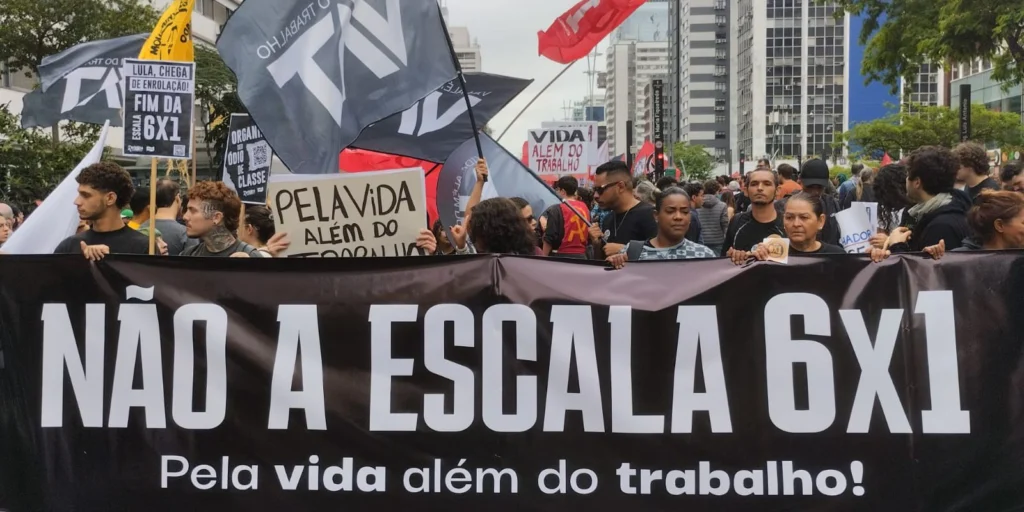
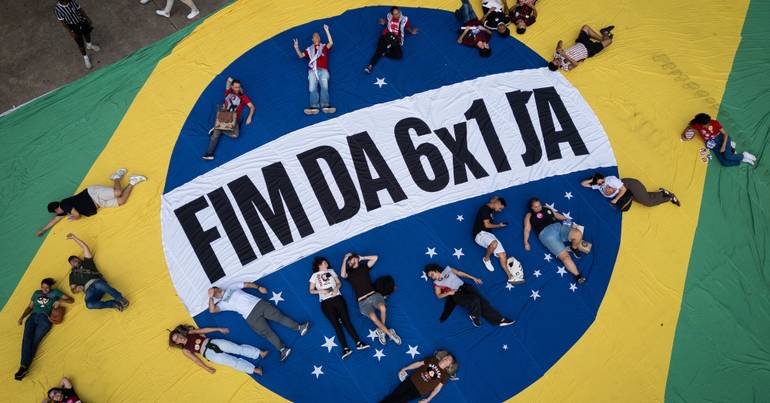
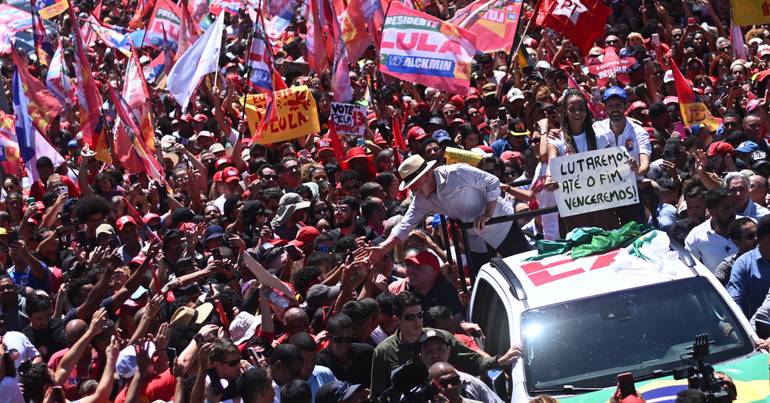
Brazilian President Luiz Inácio Lula da Silva has described the approval of the Proposed Constitutional Amendment (PEC 221/2019) as a historic achievement. The amendment puts an end to the 44-hour workweek, establishing a new maximum of 40 hours per week, distributed over five working days and two paid rest days.

RELATED:

Brazilian Senate Ends 6×1 Schedule, Approves 40-Hour Workweek

The constitutional reform—a key commitment of the Brazilian government—will directly benefit approximately 22 million workers who were previously employed under a “6×1” schedule, consisting of six days of work followed by one day of rest.

Brazil’s Senate ratified the amendment in two rounds of voting, with 75 votes in favor and one against—the latter cast by Senator Hamilton Mourão. This decision comes five months after the Chamber of Deputies initially approved the proposal, and 11 days ahead of the presidential runoff, scheduled for October 25.

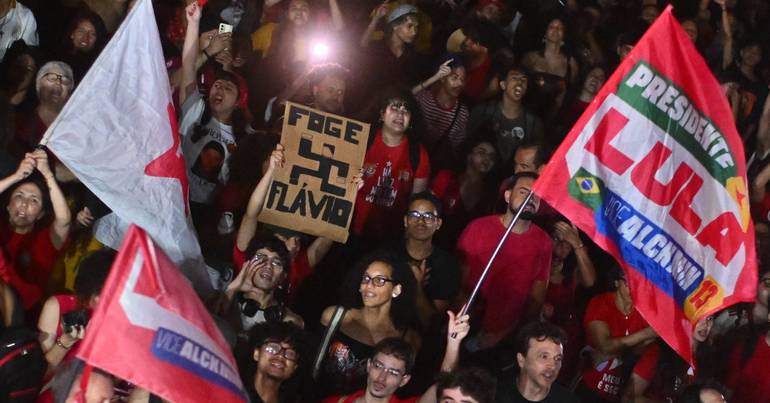
Far-right candidate Flávio Bolsonaro, who had initially opposed the measure, shifted his position and voted in favor remotely from Porto Alegre. Progressive senators, including Teresa Leitão, labeled this move as opportunistic and warned of the need to remain vigilant against any potential attempts to overturn the new regulation.

A escala 6×1 acabou! ❤️🇧🇷

Uma conquista histórica para milhões de trabalhadores e trabalhadoras, que agora terão mais tempo para descansar, estar com a família, cuidar de si e viver.

Quem constrói o Brasil todos os dias também merece tempo para viver.

É o Brasil pronto para… pic.twitter.com/5Nq7a9xKZk

— Lula (@LulaOficial) October 15, 2026

The text reads, “The 6×1 schedule is over! A historic achievement for millions of workers, who will now have more time to rest, be with their family, take care of themselves, and live. Those who build Brazil every day also deserve time to live. It’s Brazil ready for more!”

Timeline and safeguards

The transition to the “5×2” model will not be immediate. According to the established timeline, 60 days after the official publication of the amendment—expected in February 2027—the maximum weekly working hours will be reduced from 44 to 42.

Subsequently, 14 months after the amendment is enacted—in December 2027—the limit will be set at 40 hours per week. The regulation also establishes a maximum daily limit of eight working hours. The constitutional text expressly prohibits any reduction in wages—whether proportional or affecting the minimum wage—across professional categories.

Furthermore, it delegates the organization of rest periods to collective bargaining agreements, prioritizing Sundays, while allowing for flexibility in sectors such as healthcare, security, and public transport.

While labor unions supported the measure, business sectors expressed their opposition, arguing that it could lead to higher costs per hour worked and the risk of a contraction in employment. The right-wing opposition also signaled its intention to revise the legislation should it gain control of the executive branch.

For individual micro-entrepreneurs and small business units, the reform provides for a supplementary law that includes state support mechanisms designed to cushion the impact of the transition and sustain formal employment targets.

Within the public administration, existing service contracts will have a period of up to 12 months to adjust their operational and financial frameworks to the new limits on working hours.

With the approval of PEC 221/2019, Brazil has begun a restructuring of its labor market aimed at reducing precarious working-hour arrangements in Latin America’s largest economy.

  •  
  •  

Hoje passei por aqui

VTM

Trago-o ao meu Visto do Marão por dois motivos: o ato em si, aquele momento da apresentação, vivido por detrás do Alvão e, claro, pela obra literária, perfeitamente integrada na Literatura de Viagens.

A sensibilidade para as coisas da cultura, de uns e a capacidade criativa de outros fazem acontecer atividades deveras interessantes por estas nossas terras. A apresentação do livro “A Minha Volta A Portugal – Hoje passei por aqui”, de Luís Filipe Silva, natural de uma das aldeias daquela freguesia e que se dispôs a percorrer os 308 concelhos do seu país – “se Deus quiser, o tempo permitir e a polícia deixar” – constituiu um belíssimo momento cultural que também incluiu música e um sketch alusivo à terra – solo – à nossa terra – o local, a comunidade, o país. A dar razão, mesmo que antecipada, ao Presidente da República, no seu discurso em Chaves: «a cultura é uma forma de afirmar a nossa identidade, de abrir horizontes e de aproximar Portugal do mundo».

O livro, que tive a incumbência de apresentar, é uma obra que se enquadra claramente na literatura de viagens. Ali se encontram marcas claras que os nossos escritores cultivaram. É o tom “oralizante” do narrador, tal como marcas de bom humor, de Garret; a descoberta humanista de “Pequenos Mundos, ou a reflexão sobre a humanidade, sobre as comunidades, denunciando desigualdades e isolamento, ou o pendor “realista e documental”, tal como Ferreira de Castro; ou “alguém que se deixa afetar pelo que vê, que observa com vagar e que interage com as gentes locais”, que se foca “nos detalhes subtis, na paisagem moldada pelo trabalho e na memória coletiva”, consciente de que a viagem “opera no espaço físico – estradas, caminhos, aldeias – e no espaço interior a busca pelas origens e a consciência crítica”, tal como acontece em Saramago, autor que inspirou este outro Viajante.

Em Ribeira de Pena, com muito a propósito, fala da “história, não a lenda, da construção da ponte de arame para quebrar o isolamento da terra do Padre Álvaro Pimenta” e agarra o tema de Camilo Castelo Branco, que explora também em Vila Real, com especial realce na visita a Vilarinho da Samardã, onde encontrou um sobrinho trineto do escritor. Não deixa passar em claro, na visita à Vila Velha, a cantilena dos sinos na Festa de S. Brás. Numa sequência que, nesta 1.ª parte, o leva pelo interior Norte e Centro até à ilha das Flores.

The post Hoje passei por aqui appeared first on A Voz de Trás-os-Montes.

  •  

Milei ratifica su alineación con Trump y ofende nuevamente a Lula

Premian en Washington al adalid del ajuste neoliberal en Argentina, responsable de haber destruido hasta el momento más de 370.000 empleos formales y del cierre de unas 30.000 empresas.
  •  

Presidente do SC Vila Real preocupado com atraso das obras no campo do Calvário

VTM

Hugo Letra, presidente do SC Vila Real, disse à VTM que tem sido difícil encontrar espaços para o futebol de formação. “Andamos com a casa às costas, a jogar em campos limitados, sem condições para treinar, nem para tomar banho”, afirma, adiantando que até têm treinado em campos de futebol de 5, como o da Estação. “Ainda na semana passada estava lá a treinar a equipa sub-16, que vai lutar para ser campeã distrital e treina num campo de 5”.

O responsável revelou que estão a “perder atletas” em função das obras, uma vez que os pais “não sabem onde podem deixar os filhos para treinar, pois as mudanças de campo são uma constante. Os pais, sobretudo com os filhos mais pequenos, optam por outros clubes que têm melhores condições e nós temos muitas incertezas quanto ao local dos treinos. Tudo isto cria instabilidade e quem sai prejudicado são os atletas e o SC Vila Real”.

Artigo exclusivo PREMIUM

Tenha acesso ilimitado a todos os conteúdos do site e à edição semanal em formato digital.

ou compre apenas este artigo:

Comprar este artigo — 1,00€
Se já é PREMIUM, Aceda à sua conta em Entrar

The post Presidente do SC Vila Real preocupado com atraso das obras no campo do Calvário appeared first on A Voz de Trás-os-Montes.

  •  

Goleada à moda antiga

VTM

O Abambres Sport Club venceu no domingo o ADC Constantim B por uns expressivos 0-15, numa partida disputada no Estádio do Cruzeiro, em Constantim.

A equipa de Sub-16 do Abambres demonstrou uma elevada eficácia ofensiva e total domínio ao longo dos 90 minutos. A marcha do marcador iniciou-se aos 15 minutos por intermédio de Simão Gonçalves. Seguiram-se os golos de Diogo Veiga (21’), José Nóbrega (27’), Vicente Rodrigues (29’), Diogo Veiga (33’), Eduardo Sequeira (40’) e Gonçalo Silva (43’), fixando o resultado ao intervalo num claro 0-7.

Na segunda parte, o Abambres manteve a intensidade e continuou a avolumar o marcador. Vicente Rodrigues bisou aos 46’ e fez o seu terceiro golo aos 56’, intercalado por mais um tento de Diogo Veiga aos 49’. Gonçalo Silva dilatou para 0-10 aos 51’, seguindo-se os golos de Paulo Chaves (62’), Diogo Taveira (75’) e Tomás Fontoura (86’). Um autogolo de Gonçalo Martins aos 90 selou a vitória final em 0-15.


FICHA TÉCNICA
Estádio do Cruzeiro, em Constantim
Árbitro: Rúben Fernandes

CONSTANTIM B: Tiago Oliveira (GR), Gonçalo Martins, Vasco Pereira, André Nogueira, Henrique Alves, Francisco Baptista, Vasco Dinis, 20 Gonçalo Guedes, 22 Oscar Xu, Rodrigo Cortinhas e Luca Will Suplentes: Juan Gomes, Henrique Pinheiro, Rafael Gonçalves, Delfim Aguilar e Vasco Botelho
Treinador: Daniel Alegre

ABAMBRES: António Silva (GR), Rodrigo Silva, Diogo Veiga, Santiago Padilha, Eduardo Sequeira, Salvador Simões, Paulo Chaves, Vicente Rodrigues, José Nóbrega, Simão Gonçalves e Gonçalo Silva Suplentes: Alan Marcelino, Afonso Lopes (GR), Benjamim Abreu, Rodrigo Matos, Diogo Filipe, André Mendes, Tomás Fontoura, Francisco Barreto e Diogo Taveira
Treinador: Tiago Nóbrega

Marcadores: Diogo Veiga (3), Vicente Rodrigues (3), Gonçalo Silva (2), Simão Gonçalves, José Nóbrega, Eduardo Sequeira, Paulo Chaves, Diogo Taveira, Tomás Fontoura e Gonçalo Martins (a.g)

The post Goleada à moda antiga appeared first on A Voz de Trás-os-Montes.

  •  

Brasil aprova redução de semana de trabalho sem cortes

Proposta, popularmente chamada "fim da escala 6x1", ou seja, cinco dias de trabalho e dois de descanso, foi aprovada em dois turnos no Senado numa mesma sessão plenária e agora vai a promulgação.

© Isaac Fontana/EPA

Presidente brasileiro, Lula da Silva, celebrou a aprovação: "Lutamos, discutimos e pressionamos para garantir que o Congresso votasse ainda este ano o fim da 6x1!"
  •  

Brazil Launches Crackdown on Suspected Amazon Arson Network

Amazon rainforest fires in Amazonas, Brazil, as firefighters tackle blazes and smoke worsens air pollution in Manaus.

Brazil deploys 300 firefighters as a surge in fires worsens air pollution in Manaus and investigators probe suspected organized arson.


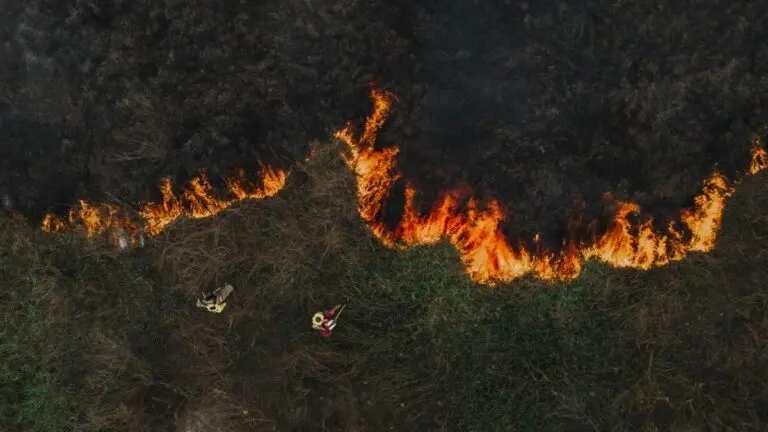
Brazil has launched joint operations to track down those suspected of deliberately setting fires in the Amazon rainforest, as a sharp rise in blazes blankets Manaus with toxic smoke and pushes air pollution to critical levels for the city’s 2.3 million residents.

RELATED: Petrobras Announces New Oil Discovery at Morpho Well off Brazil’s Amazon Coast

Authorities suspect an organized network is deliberately destroying native vegetation in preserved forest areas to facilitate the illegal seizure of public land, Environment Minister João Paulo Capobianco said at a news conference Wednesday. Investigators are working to identify and prosecute both those who set the fires and those suspected of directing them.

Capobianco described the situation as an “impressive display of deliberate action.” He and Jair Schmitt, head of Brazil’s environmental protection agency Ibama, cited reports of people throwing fuel-filled bottles from moving vehicles along roads and repeatedly reigniting fires in areas where firefighters had already extinguished them.

The scale of the fires has escalated sharply. Amazonas state recorded 1,608 fire hotspots in the first part of October, already exceeding the 874 registered throughout October 2025, according to Brazil’s National Institute for Space Research (INPE).

September saw more than 3,700 hotspots, four times the number recorded a year earlier. Fires burned 291,060 hectares that month, 38.8% above the historical average, according to official data.

In October, the area affected has approached 220,700 hectares, 249% above the usual level, according to the Federal University of Rio de Janeiro’s Laboratory for Environmental Satellite Applications.

The government has deployed 11 aircraft and approximately 300 firefighters to the hardest-hit areas. Difficult terrain and adverse weather conditions have complicated efforts to contain the blazes. Authorities have also warned that extreme drought and high temperatures associated with El Niño are accelerating the spread of fires across northern Brazil.

Smoke from fires in Amazonas and Pará states has engulfed Manaus, where air quality has deteriorated to critical levels. Concentrations of fine particulate matter known as PM2.5 have exceeded the maximum levels recommended by the World Health Organization, increasing the risk of acute respiratory problems, particularly among children, older people and those with pre-existing medical conditions.

The Civil Police of Amazonas has opened 120 investigative proceedings into suspected environmental offenses. Investigators are using thermal drones and conducting continuous ground patrols to gather evidence and identify those responsible.

The investigations come as Brazil prepares for a presidential runoff on Oct. 25 between incumbent Luiz Inácio Lula da Silva and opposition senator Flávio Bolsonaro, who received the most votes in the first round. Asked whether the fires could be politically motivated to undermine Lula’s candidacy, Capobianco said investigators were examining that possibility but stressed that the theory had yet to be substantiated.

  •  

Victoria popular y de Lula: Senado de Brasil aprobó final de la escala 6×1

Senadores progresistas de Brasil declararon que, en el entorno del próximo balotaje, la aprobación del final del 6x1 significa una victoria para el presidente Lula, pero también para la movilización en las calles.
  •  

Lula denunciará ante observadores fallas de Meta que podrían favorecer a Bolsonaro

Entre las fallas se cuentan interrupciones del servicio de anuncios, caídas en el recuento de visualizaciones de publicaciones favorables al presidente brasileño y bloqueos temporales de la promoción de contenidos en Instagram.
  •  

Lula corteja evangélicos, Flávio no Rio Grande do Sul

Com segunda volta a 25 de outubro, os dois candidatos intensificam a campanha. Sondagem da Quaest dá a Flávio 46% dos votos evangélicos contra 27% de Lula.

© ANDRE BORGES/EPA

Uma sondagem da Quaest divulgada em 28 de setembro mostrou Flávio Bolsonaro com 46% das intenções de voto entre os evangélicos na primeira volta
  •  

The far right in Latin America threatens progress against deforestation, report warns

There is both good news and bad news about the state of the world’s forests. The good news is that deforestation fell by 15% in 2025 compared with 2024, the largest decline recorded so far this decade. The bad news is that a shift in political priorities could undo some of those gains. Much of the progress in forest conservation depends on the political will of a handful of key countries, particularly in Latin America, which is now entering a period of electoral uncertainty and possible changes of government.

Seguir leyendo

© Adriano Machado (REUTERS)

An aerial photograph shows a plantation field in the Amazon rainforest during a Greenpeace overflight in the Brazilian state of Maranhão in November 2025.
  •  

How Brazil’s election could reshape relations with China

On October 25, Brazilians will return to the polls to choose between President Luiz Inácio Lula da Silva and Flávio Bolsonaro, son of former president Jair Bolsonaro, who was sentenced to 27 years in prison for his role in an attempted coup. The first round gave Flávio 47% of valid votes against Lula’s 45%, revealing the enduring strength of the far right four years after its electoral defeat. The runoff takes place as Donald Trump seeks to restore US domination over Latin America, with Brazil emerging as a consequential battleground in Washington’s campaign to contain China’s growing relations with the region.

Read more: Why did Brazil’s far right win the first round?

Over the past two decades, Brazil and China have built a political partnership that has expanded the space for independent action among countries of the Global South. Under Lula and Xi Jinping, this relationship has deepened through cooperation in industrial development, infrastructure, science, and technology. The election will determine whether this project advances or Brazil’s international orientation is subordinated to Washington’s renewed Monroe Doctrine as part of the continent’s rightward shift.

Read more: Brazil’s angry tide and the struggles ahead

Since Lula’s return to the presidency in 2023, the two governments have connected Chinese cooperation with Brazil’s development programs, including Nova Indústria Brasil, the Growth Acceleration Program (PAC), and the Ecological Transformation Plan. Lula’s May 2025 visit to Beijing produced 36 agreements covering infrastructure, finance, artificial intelligence, public health, and industrial cooperation. Behind these agreements is a long-standing challenge: overcoming Brazil’s dependent position in the international division of labor, where commodity exports continue to outweigh advanced industrial and technological development.

This cooperation has also reached Brazilian popular movements. Through the International Association for Popular Cooperation (Baobab), Brazil’s Landless Rural Workers’ Movement (MST) and other organizations have worked with Chinese institutions on agricultural mechanization, bioinputs, and digital technologies for family farming. These initiatives include the Digital Family Farming and Agroecology Laboratory and IARAA, an artificial intelligence project for agroecology and agrarian reform developed by Brazilian popular movements using Chinese open-source models. In a countryside marked by extreme concentrations of land, machinery, and capital, such cooperation offers new tools to peasant organizations fighting for agrarian reform and the production of healthy food.

Brazil’s relationship with China also reveals the different class interests at work in the country, with contradictions particularly visible in the countryside. Massive exports of soybeans, meat, and minerals have continued under both Bolsonaro and Lula, but their governments have pursued very different political relationships with Beijing. While Jair Bolsonaro attacked China and aligned himself with Washington, Lula has sought to deepen strategic cooperation, including in industrial development, technology, and agrarian reform. Flávio Bolsonaro now promises an “economically pragmatic” relationship with China while cultivating close ties with Trump. For sectors of Brazil’s ruling classes that profit from commodity exports, continuing to sell to China while embracing Washington’s political agenda presents little contradiction. For Brazil’s efforts to rebuild its industry and develop technological sovereignty, the consequences are far greater.

The return of the Monroe Doctrine

Washington’s ambitions were made explicit in its November 2025 National Security Strategy, which announced a “Trump Corollary” to the Monroe Doctrine, seeking to restore US pre-eminence in the Western Hemisphere and deny outside powers control over strategic resources and infrastructure. Five days later, China published its third Latin America policy paper, reaffirming sovereignty, non-interference, regional integration, technological cooperation, and support for the region as a Zone of Peace. The two documents reveal fundamentally different approaches to the political future of the continent.

Brazil’s position is decisive. As Latin America’s largest economy, a founding BRICS member, and a leading participant in Mercosur, it possesses industrial, scientific, and political capacities that could strengthen independent development across Latin America and beyond.

The emergence of a new technological era makes this struggle particularly consequential. Brazil is among the few countries of the Global South capable of pursuing digital and technological sovereignty that could benefit its neighbors and parts of Africa. Its roughly 23% share of global rare earth reserves is an important starting point, but control over minerals alone is insufficient. The greater challenge is developing the capacity to process them, manufacture advanced components, and build the digital infrastructure, artificial intelligence systems, and technologies that will shape future production.

Flávio has made his orientation clear. Speaking at the Conservative Political Action Conference (CPAC) in the United States in March 2026, he offered Brazil as the “solution” to Washington’s dependence on China for critical minerals, explicitly linking rare earths to artificial intelligence and US military superiority. Chinese economic reporting has also described proposals from his team to exclude China from rare-earth supply chains. Rather than using Brazil’s resources to develop its own industrial and technological capacities, this agenda would place them at the service of US technological and military power.

The same political orientation extends to digital sovereignty. In July 2026, Flávio’s campaign submitted proposals to US trade authorities that included preventing Brazil’s Pix payment system from connecting to non-Western international payment networks and loosening commitments within Mercosur. These proposals converge with a wider US campaign involving tariffs, digital regulation, strategic minerals, and attempts to influence Brazil’s electoral process. Meanwhile, Washington’s January 2026 bombing on Venezuela and kidnapping of Nicolás Maduro and Cilia Flores demonstrated how far it is prepared to go to impose its will on the continent.

BRICS and the struggle for an independent foreign policy

Brazil, particularly under Lula, has helped build institutions through which countries of the Global South can reduce their dependence on Western-dominated structures. At the July 2025 BRICS summit in Rio de Janeiro, the group advanced cooperation on development finance, local-currency transactions, and international institutional reform. The New Development Bank, headed by former Brazilian president Dilma Rousseff, is an important expression of this effort.

The BRICS cannot automatically overcome economic dependency or guarantee sovereignty for working people. Yet its expansion offers greater room for independent development, provided that participating governments have the political commitment to use these possibilities.

Brazil’s history reveals how difficult that independence has been to defend. In 1961, vice-president João Goulart became the first high-ranking representative of a Latin American government to visit the People’s Republic of China, meeting Mao Zedong when revolutionary China remained diplomatically isolated and subjected to US sanctions. Three years later, Goulart was overthrown in a US-backed civil-military coup that inaugurated a 21-year dictatorship. The early history of China–Brazil friendship was inseparable from struggles over national sovereignty, agrarian reform, and the forces determined to suppress them.

The international material conditions for South–South cooperation are considerably more favorable today, but political direction remains decisive. Jair Bolsonaro hosted the 2019 BRICS summit in Brasília while pursuing close alignment with Washington. A government can weaken institutions from within by abandoning the commitments that give them political substance.

The far right’s resurgence also reflects the enduring power of Brazil’s own ruling classes. Bolsonarismo has a domestic base among sections of agribusiness, finance, the security apparatus, militias, conservative religious networks, and major media. These forces, whose electoral and institutional advances have continued, were strengthened by the 2016 parliamentary coup against Dilma Rousseff and the judicial persecution of Lula. They possess their own organizations, material interests, and sources of power, which do not disappear when an election is lost. Their economic dependence on Chinese markets has not prevented their support for Washington’s political agenda.

Beyond the election

Beijing has followed the Brazilian election closely, reflecting the importance of the political relationship built between Lula and Xi over years of cooperation. In July, Xi reaffirmed China’s support for Brazil against external interference during a conversation with Lula, which also covered cooperation in artificial intelligence, satellites, mineral processing, and relations between China and Mercosur. In September, Foreign Minister Wang Yi received Lula’s adviser and former foreign minister Celso Amorim in Beijing, reaffirming the bilateral strategic partnership.

China’s principle of non-interference means that the choice of Brazil’s government belongs to the Brazilian people, but Beijing’s diplomatic restraint should not be confused with an absence of political interests or an assumption that all governments would pursue the same relationship. Chinese analysts have described the possible outlook under Flávio as one of “cold politics, hot economics”: commodity trade would likely continue, but the political relationship and cooperation in strategic sectors could deteriorate. The experience of Jair Bolsonaro’s presidency has already shown the limits of commercial interests in sustaining a broader political partnership.

For the Brazilian people, the consequences extend well beyond foreign policy. The election will also shape the struggles over labor rights, public services, agrarian reform, and the defence of democratic space. Brazil’s renewed role in South–South cooperation under Lula has opened possibilities for a development project that responds to the needs of its working people, but realizing those possibilities depends on the political and social forces capable of carrying it forward.

The Brazilian people have fought through dictatorship, neoliberal restructuring, parliamentary coups, and the rise of the far right to defend their political and social gains. This election is another moment in that longer struggle, now unfolding amid renewed US imperial intervention and a transformation of the world’s technological foundations. The future of China–Brazil cooperation will depend on the capacity of organized popular forces to build a sovereign national project and turn international cooperation into lasting changes in people’s lives.

Tings Chak 翟庭君 is the Asia Co-Coordinator of Tricontinental: Institute for Social Researchand an editor of the international edition of Wenhua Zongheng: A Journal of Contemporary Chinese Thought.

  •  

Ministro da Administração Interna designa novo Secretário-Geral

O Ministro da Administração Interna, Luís Neves, designou o Major-General Nuno Miguel Parreira da Silva para o cargo de Secretário-Geral da Secretaria-Geral do Ministério da Administração Interna. O novo Secretário-Geral assume funções num momento de transformação do serviço, com a preparação de uma nova estrutura orgânica e de procedimentos adequados às responsabilidades desta área governativa. […]

  •  

OE. Pior cenário pode levar a perdas de milhões de euros

JN: Governo prevê uma perda de dois milhões de euros. Estado de São Paulo: Relator no TSE mantém o canal ‘Exército do Lula’ no WhatsApp.

  •  

Lula em campanha sem panfletos nem pedidos de voto

A primeira campanha de rua de Lula para a segunda volta, em Ceilândia, ficou marcada pela ausência de panfletos e de apelos ao voto — e por eleitores ainda indecisos.

© ANDRE BORGES/EPA

Durante o comício, Lula defendeu algumas das bandeiras da sua campanha, como a redução da jornada de trabalho, com o fim da escala 6x1, atualmente discutida no Senado Federal
  •  

Atlético-GO e Sport fazem confronto direto pelo G-6 da Série B

Atlético-GO e Sport entram em campo neste domingo (11), às 16h10, no Estádio Antônio Accioly, em Goiânia, com objetivos próximos na reta final da Série B do Campeonato Brasileiro. Separados por apenas dois pontos, os clubes disputam uma posição entre os seis primeiros colocados, grupo que concentra a briga pelo acesso à elite nacional.

O Dragão ocupa a sexta colocação, com 52 pontos, enquanto o Leão da Ilha aparece em oitavo, com 50 pontos. Uma vitória fora de casa pode levar a equipe pernambucana ultrapassar o time goiano na tabela, aumentando a importância do confronto pela 33ª rodada.

Atlético-GO terá mudanças no ataque e no meio

O técnico Roger Silva não poderá contar com Gustavo Coutinho. O atacante recebeu o terceiro cartão amarelo e também não pode enfrentar o Sport por questões contratuais, já que pertence ao clube pernambucano. João Pedro é o provável substituto no setor ofensivo.

Outra ausência é a do meia Marrony, que voltou a sentir dores no púbis. Para ocupar a vaga no meio-campo, Henrique Freitas e Guilherme Marques disputam espaço na equipe titular.

Sport recupera três jogadores

Do lado pernambucano, o técnico Mariano Soso ganhou opções para o confronto em Goiânia. O volante Fernando Sobral, o meia-atacante Diego Hernández e o atacante Marlon Douglas se recuperaram de lesões e voltaram a treinar com o elenco.

Os três estão à disposição para a partida, mas ainda não há confirmação de que começarão entre os titulares. Os retornos aumentam as alternativas do Sport para um duelo que pode alterar a disputa pelas posições próximas ao G-6.

A partida entre Atlético-GO e Sport terá transmissão ao vivo da RedeTV!.

The post Atlético-GO e Sport fazem confronto direto pelo G-6 da Série B appeared first on Diário da Manhã - O Jornal do leitor Inteligente.

  •  
❌