João Albuquerque, especialista em Relações Internacionais, defende que o eventual uso da maior bomba dos EUA no Irão confirma o falhanço militar e o desespero de Washington.
On the night of October 15, 2026, the Russian Armed Forces carried out a combined strike on Ukraine using two Kh-59 guided missiles and 580 attack drones and decoy drones. The main effort was concentrated on Kirovohrad Region, where strikes continued for more than ten hours and hit industrial facilities, logistics complexes, and railway infrastructure. Strikes were also carried out against port infrastructure in Odesa Region, traction substations, and aviation infrastructure in western Ukraine. In response, Ukraine attempted a massive attack on the Ryazan oil refinery, which was repelled by air defense forces.
Russian Strikes on Ukraine Kirovohrad Region Logistics and warehouse facilities (Kropyvnytskyi).Kirovohrad Region came under the most massive attack since the start of the conflict: according to Andriy Raikovych, head of the Region Military Administration, nearly 360 drones attacked the region, with impacts recorded at 25 locations. In Kropyvnytskyi, strikes hit company premises, logistics centers, and warehouses. Among the affected facilities were Focus-Logistics, a warehouse complex operated by a company with critical-infrastructure status; warehouse buildings of SE Kombinat Trykutnyk, part of Ukraine’s state material reserve system; a cargo branch of Nova Poshta; and a distribution center of Veresen Plus LLC, operator of the Faino Market chain.
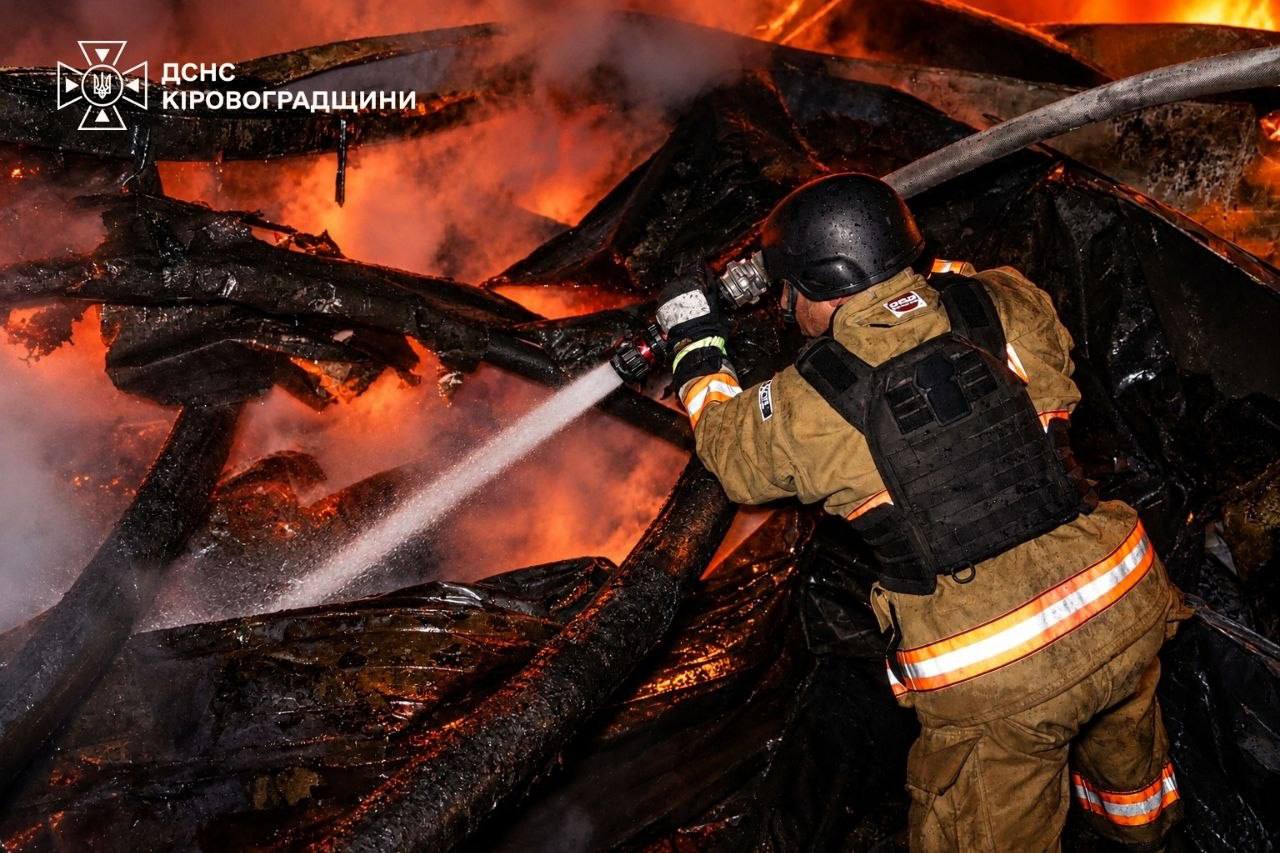
Industrial facilities (Kropyvnytskyi). Three drone strikes hit the premises of Gradoil LLC, a full-cycle oil-extraction complex that processes sunflower and rapeseed; fire engulfed administrative and warehouse buildings covering more than 1,000 square meters. Three drones struck Penoplast Center LLC, a production and warehouse facility in the polymer sector, with the fire spreading across roughly 800 square meters. A separate strike hit the former industrial complex of PrJSC Kreativ, historically one of the city’s largest oil-and-fat enterprises, whose production facilities continue to be used by other operators after the legal entity’s bankruptcy. A production workshop of Intermash Prom LLC in Oleksandriia was also hit, with fire engulfing more than 300 square meters. The company was registered in August 2026, and its initial business profile included the production of weapons and ammunition.
Railway infrastructure.Four attack drones successively hit the railway complex in Pomichna. According to available information, the strike hit the locomotive complex, but the fire was recorded in a building belonging to the railcar repair facility responsible for repairing freight rolling stock. In addition, the Sharivka and Suhokliia traction substations were hit, and electric train service was halted.
Odesa Region Port of Izmail and maritime vessels. Port infrastructure at the Port of Izmail was damaged; it was used for unloading and storing military and dual-use cargo. In addition, two bulk carriers were hit while underway at sea.
Traction substations. In Rozdilna Raion, a drone struck the EChE-24 traction substation, causing an oil fire covering about 350 square meters. In Izmail Raion, an attack drone exploded near the Prymorske substation.
Ternopil Region Chortkiv — SE Bordnetze cable production.Russian drones hit the Chortkiv branch of SE Bordnetze-Ukraine LLC (SEBN), part of the international Sumitomo Electric Bordnetze network. A warehouse building was damaged, and fire engulfed more than 500 square meters. The facility produces electrical wiring systems and wiring harnesses for the automotive industry, including for the Volkswagen Golf 8, Audi A6, Audi e-tron, and Porsche J1. According to reports, the company’s cable-production capabilities were also used to manufacture components for Ukrainian long-range unmanned systems.
Vinnytsia Region Vinnytsia — GreenCool plant. GreenCool is one of Ukraine’s largest refrigeration-equipment manufacturers and part of the UBC Group, with revenue exceeding UAH 2 billion. Open procurement data show four government tenders involving Green Cool LLC, with Ukrnafta as the main customer. The Zhmerynka locomotive depot and the area around the Kozyatyn-2 110 kV supporting traction substation were also attacked.
Zhytomyr Region Chudniv-Volynskyi traction substation. Vilshanka traction substation.
Khmelnytskyi Region Starokostiantyniv — radar station. Two Geran-5 jet-powered drones hit a P-37 radar position at Starokostiantyniv airfield. The radar itself was destroyed. The P-37 is an air-surveillance asset that provides commanders with a picture of the air situation in their area of responsibility. Radar coverage is designed with overlapping zones, so the airfield does not become completely “blind,” but the destruction of an operational air-surveillance asset is a concrete loss for an airfield that has regularly come under attack.
Volyn Region Lutsk — airfield.The strike hit the Lutsk airfield, where the 204th Tactical Aviation Brigade is stationed. One of the impacts occurred near the guardhouse.
Ivano-Frankivsk Region Kolomyia — airfield.Two Geran-5 jet-powered drones attacked Kolomyia military airfield. The main radar equipment and flight infrastructure were not damaged. According to available information, the airfield is still used to receive transport aircraft and move military cargo. The two impacts did not disrupt this function, but the fact that strike assets returned to Kolomyia after a long pause indicates that the airfield has once again become a target of attention.
Dnipropetrovsk Region Dnipro — repeated strike on DAO.This was not the first strike on the site: earlier attacks had already hit the same complex, causing a major fire and damage to its production and logistics building. Repeated strikes are the key factor here: each new attack compounds the existing damage.
Kyiv Region Borodianka — ARTISAN construction-mix production. The strike targeted the production site of Artel LLC, better known under the ARTISAN trademark, which produces dry and liquid construction mixes. A review of procurement records shows that ARTISAN products are systematically present in supply chains for Ukrainian security forces: construction materials appear in purchases by several Armed Forces of Ukraine units as well as National Guard units; in 2026, its products were included in purchases classified as defense-related.
Poltava Region Naftogaz facility.On the night of October 15, Russian forces attacked gas-production infrastructure belonging to Naftogaz Group in Poltava Region. The drone strike damaged process equipment, started a fire at the facility, and suspended operations.
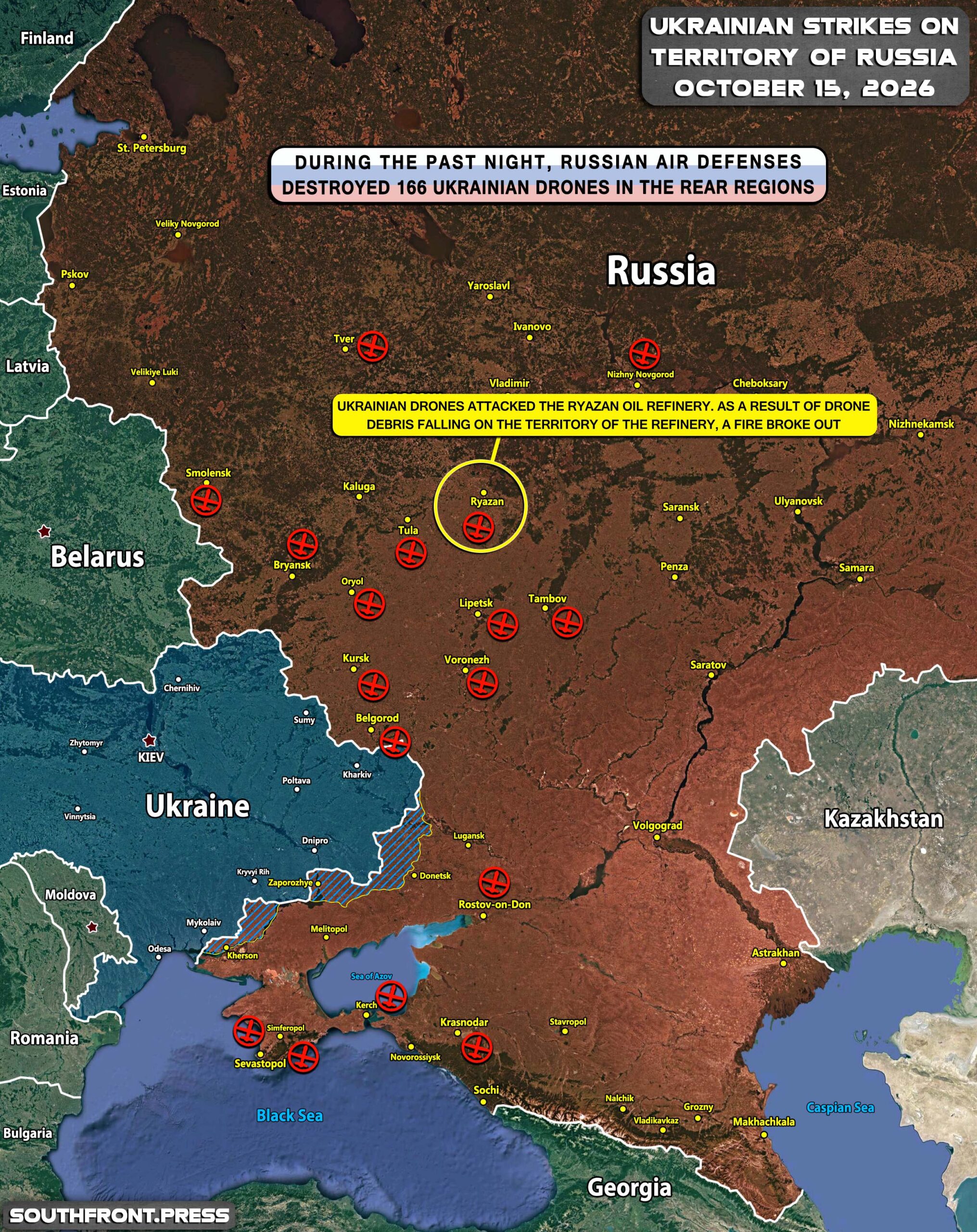
Strikes on Russia Ryazan Region During the night of October 15, Ukrainian forces attempted a massive attack on the oil refinery in Ryazan. According to the Russian Ministry of Defense, Russian air defenses intercepted and destroyed four Flamingo long-range cruise missiles and 69 fixed-wing drones. A fire broke out at the refinery after drone debris fell on its grounds. In total, according to the Russian Ministry of Defense, 166 Ukrainian drones were shot down over 14 Russian regions on the night of October 15.
Russian President Vladimir Putin, commenting on the strikes on Russian refineries, said: “Yesterday they tried to strike some refineries, and they hit a few places. Nothing significant, but they continue nonetheless.” Putin emphasized that Russia will respond to strikes on refineries, logistics, and energy facilities: “They made the first move. We began responding. They should not have started.”
The Russian strikes on Ukraine on October 15 were marked by an exceptionally high concentration of forces in the Kirovohrad direction: nearly 360 drones targeted a single region, making this the largest attack on the region. The main effort was directed at the industrial and logistics network of Kropyvnytskyi, as well as railway power infrastructure in Kirovohrad, Vinnytsia, and Zhytomyr Regions. Damage to the Sharivka, Suhokliia, and Chudniv-Volynskyi traction substations caused localized halts in electric traction and creates risks for rail service on the affected sections. At the same time, strikes on the Starokostiantyniv, Lutsk, and Kolomyia airfields continue the attrition of aviation infrastructure in western Ukraine.
In the medium term, the combination of strikes on energy infrastructure and industrial facilities creates a cumulative effect that complicates the restoration of production chains. Repeated strikes on facilities that had already been damaged point to the systematic nature of the campaign, aimed not only at inflicting immediate damage but also at preventing recovery. Against the backdrop of statements by the Russian leadership about its readiness to respond to strikes on Russian infrastructure, a high tempo of mutual strikes should be expected to continue in the coming weeks.
In the Zaporozhye direction Russian troops have advanced almost 13 kilometers, overcome two lines of defense, restored control over Lyubetskoye, Novosoloshino and Nikolskoye, and continue to apply pressure on Orekhov. In the Sumy direction assault units of the “North” grouping have advanced on 19 sectors by up to 800 meters, conducting fighting near Khoten and in the tree lines near Korenok. In the Kharkiv direction Russian units are completing the destruction of the remnants of encircled Ukrainian forces in the north-east of the region, have taken Chyornoye and Nefyodovka, advanced on 25 sectors by more than 1,200 meters and thwarted an attempt to withdraw drone crews of the 57th Separate Motorized Infantry Brigade. In the Dobropolye direction Russian units have entered the village of Dobropolye, while the Ukrainian side has withdrawn from Matyashevo and destroyed a dam, creating a water obstacle. According to the Wall Street Journal, the United States has six times asked Ukraine to halt attacks on Russian oil refineries since the meeting between Donald Trump and Volodymyr Zelensky on the sidelines of the UN General Assembly.
Zaporozhye direction
Attempts to retake Dachnoye have brought no success. Russian troops have restored control over previously lost sectors and continue fighting near Filippovka and Ivanovka. In the Orekhov direction Russian troops have regained control of Tsvetkovo and the adjacent section of the railway. The advance continues on several sectors west of previously captured positions. Russian units hold Gulyaypolskoye and the southern part of Novosyolovka. Fighting continues near Orekhov, Malaya Tokmachka and Novodanilovka.
The Orekhov direction remains one of the most dynamic. The Russian side continues intensive fire effect. One of the notable events has been the advance of Russian units by almost 13 kilometres in Zaporozhye region. The troops overcame two lines of defense — one two-tier and the other single-tier. Lyubetskoye, Novosoloshino and Nikolskoye have come under control. The latter is located at a road junction and makes it possible to develop the advance toward Omelnyk from the north. Lyubetskoye and Novosoloshino had previously been temporarily lost.
On the northern sector Russian assault troops are conducting offensive operations near Velikomikhaylovka. On the north-western sector units continue the offensive on a broad front west of Golubkovo, Samoylovka and Svetlaya Dolina. West of Zarnitsa the advance is proceeding with the support of artillery and drone crews near Barvinovka and Vasilkovoye. Assault groups continue to drive wedges into the defense and expand the bridgehead on the western bank of the Verkhnyaya Tersa River.
Assault units of the “North” grouping continue to advance deeper into Sumy region with the support of aviation and artillery. Ukrainian units are offering fierce resistance in defense and are inserting new SSO groups onto the direction. Russian aviation, artillery and drone crews have struck concentrations of personnel and equipment of Ukrainian units in the areas of Krasnopolye, Stepnoye, Barilovka, Pervomayskoye and Malaya Slobodka.
In Sumy district assault groups of Russian units have advanced on 19 sectors. Overall progress in a single day reached up to 800 meters. In Shostka district Russian troops are advancing through the tree lines near Korenok. Thus pressure is maintained on Ukrainian units, which are forced to strengthen their defenses and transfer additional forces.
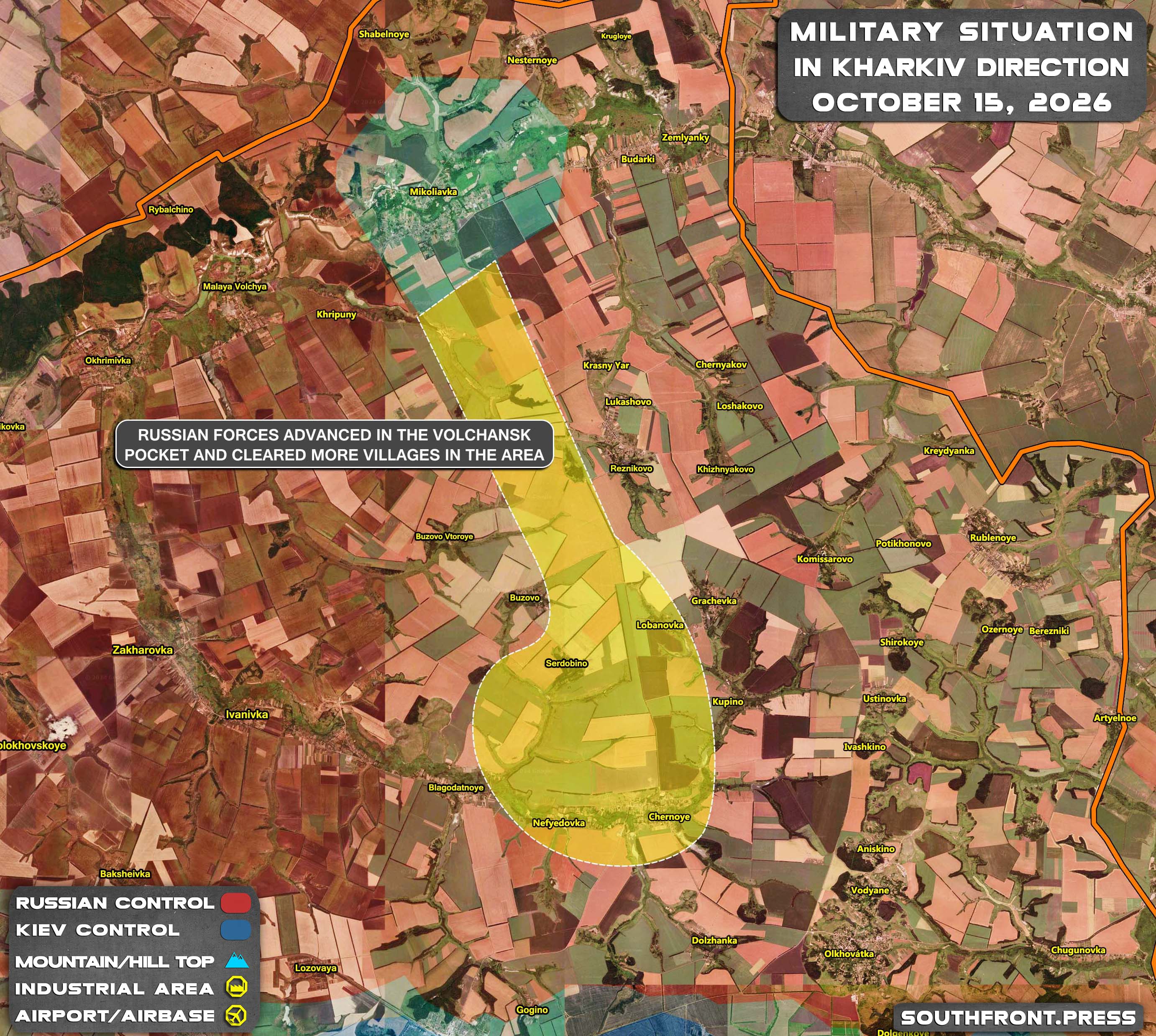
In the Liptsy direction Russian assault troops are conducting small-arms fighting south of Novaya Kazachya, as well as near Tokarevka. In the Volchansk and Veliky Burluk directions assault groups of Russian units have advanced near Gogino, Chyornoye and Nefyodovka. Overall progress on 25 sectors exceeded 1,200 meters.
In Kharkiv region Russian units continue successful offensive operations, tightening the ring of encirclement and expanding the zone of control. Assault troops have advanced up to 1.2 kilometers into the depth of the Ukrainian defense. As a result of active and resolute actions inside the ring of encirclement Russian units have taken full control of Chyornoye and Nefyodovka. Clearance is under way in these settlements. Fierce fighting continues for the capturing of Nikolayevka and Varvarovka, where blocked Ukrainian units are offering resistance. On the eastern flank of the cauldron the systematic destruction of the remnants of the encircled Ukrainian forces continues. Fighting also continues near Prikolotnoye, Kotovka and Gogino.
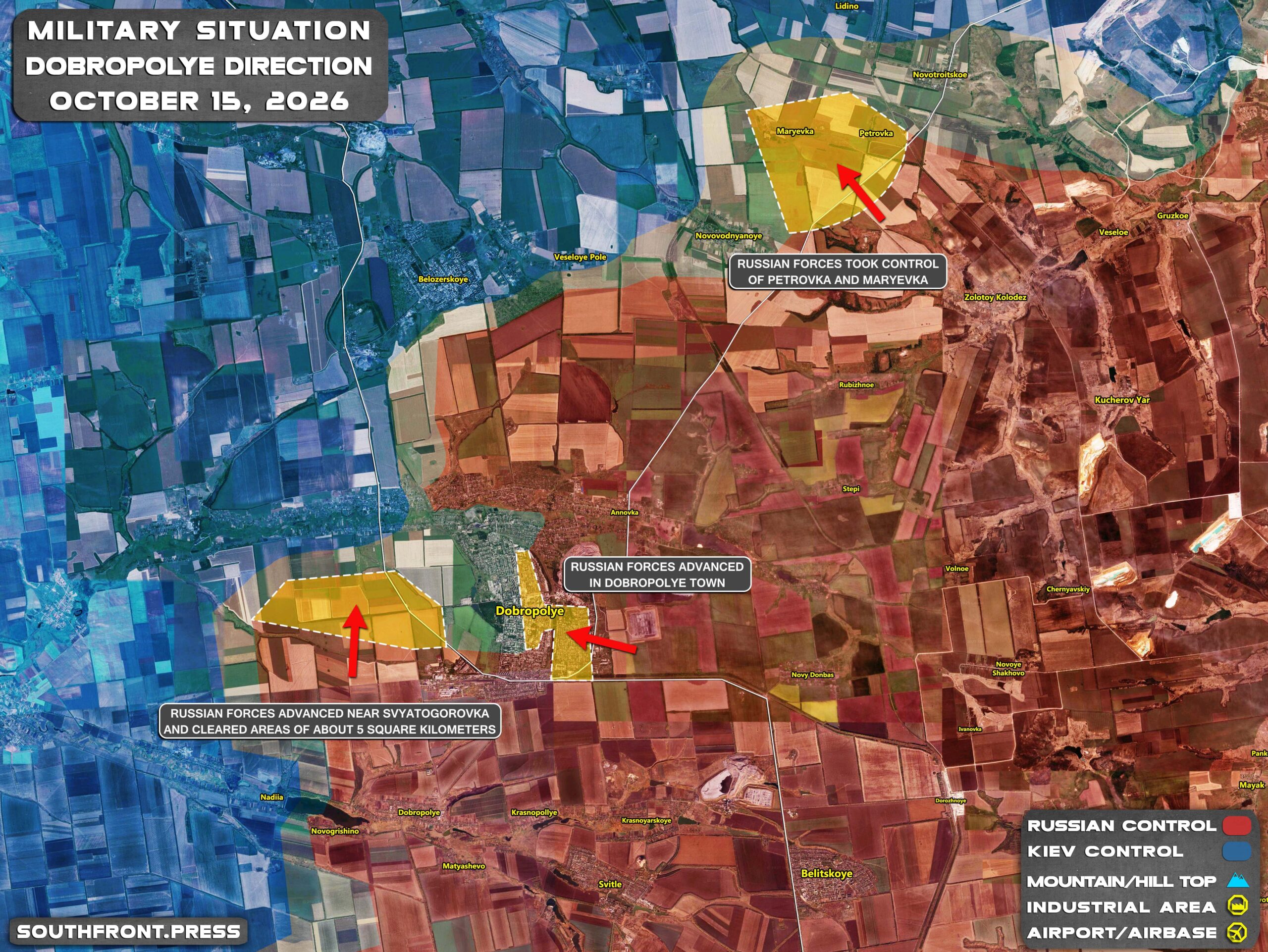
Russian units have entered the village of Dobropolye, where fighting continues. Ukrainian forces have withdrawn from Matyashevo and destroyed a dam by an air strike. According to incoming information, this was done in order to create a water obstacle on the path of further advance toward the town of Dobropolye.
Assault groups of the 51st Army advanced in the north-western part of Dobropolye. Assault units of the marine infantry grouping continued the offensive in the western part of the settlement. Russian troops are gradually enveloping Sergeyevka from the north and south. New positions are being captured in the village. Clearance of the southern outskirts of Dobropolye is under way. Units of the “Centre” grouping are developing the offensive on the Sergeyevka–Gulevo line. Consolidation on this sector will make it possible to secure supply routes in the area of Grishino.
While the battle for Dobropolye continues, the Ukrainian side is relying on Novovodyanoye, Zolotoy Kolodets and Rubezhnoye. It is attempting to cut off the salient and break through to the encircled forces. This is, however, a forced strike, because the Ukrainian side overlooked the encirclement. It is reacting according to its capabilities rather than according to a serious plan. Russian fighters on the ground said in advance: we know that Ukrainian units will go through Zolotoy Kolodets and Novovodyanoye.
Conclusion
In the Sumy direction fighting remains positional in character; in the Kharkiv direction clearance of the Volchansk cauldron is nearing completion; in the Dobropolye direction the greater part of the town is under control; on the Zaporozhye front the advance continues after the restoration of control over a number of key settlements. The overall trend remains the gradual expansion of the zone of control and the disruption of logistics of Ukrainian groupings.
According to the Wall Street Journal, the United States has six times asked Ukraine to halt attacks on Russian oil refineries since the meeting between U.S. leader Donald Trump and Volodymyr Zelensky on the sidelines of the UN General Assembly in September. Trump’s attitude toward Zelensky became increasingly negative against the background of the continuing Ukrainian attacks. Trump repeatedly expressed public dissatisfaction with Zelensky’s unwillingness to reach peace agreements and his reluctance to stop strikes on Russian refineries. According to Trump, Ukraine needs a new leader capable of reaching an agreement with Russia. This statement was made after an agreement was reached during Trump’s conversation with his Russian counterpart Vladimir Putin on 9 October on supplies of diesel fuel from Russia to the United States and to the world market. Zelensky, for his part, stated that the alleged ban on strikes against Russian refineries was over.
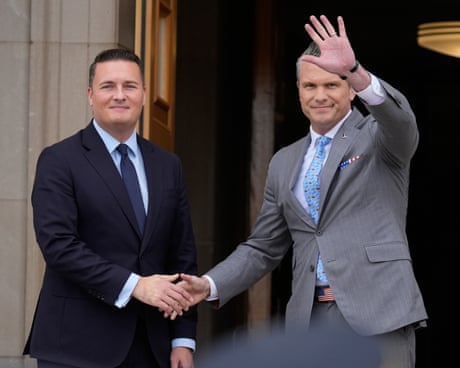
UK defence secretary says he has been ‘reassured directly’ counterpart Pete Hegseth that Starlink system has been restored as he seeks to cool tensions
Wes Streeting urged the US to stand by Ukraine on his visit to the American capital and sought to cool tensions between the two countries in the wake of the Starlink row that is threatening to set back Kyiv’s war effort.
The British defence secretary, giving a speech before a meeting with his US counterpart, Pete Hegseth, argued that supporting Ukraine was in the long-term interests of Washington, and a business opportunity.
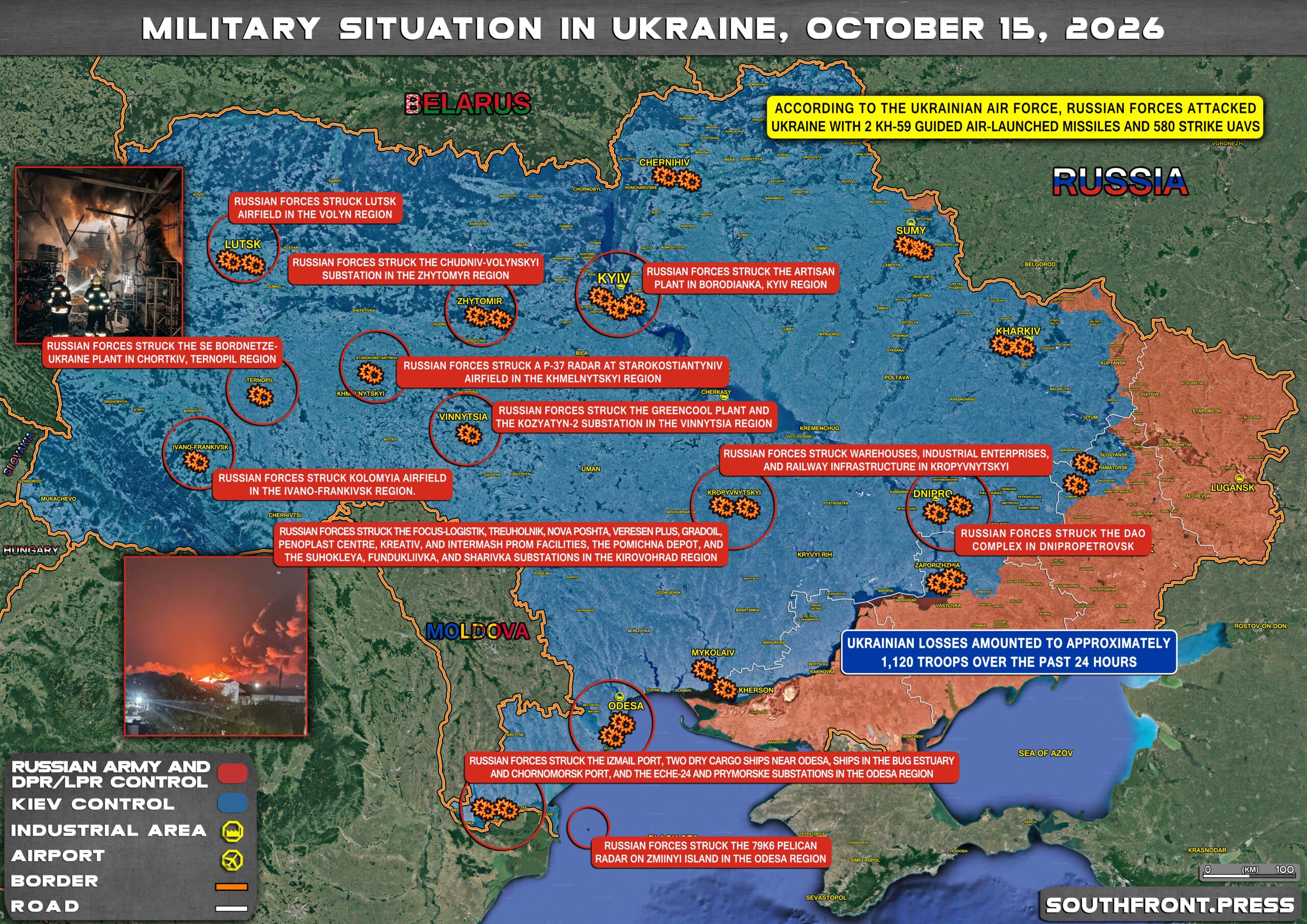
Russian strikes destroyed targets in the Sumy, Kharkiv, Zaporizhzhia, Dnipropetrovsk, Kherson, Odesa, Kirovohrad, Kyiv, Volyn, Chernihiv, Khmelnytskyi, Lviv, Mykolaiv, Vinnytsia, Rivne, Cherkasy, Poltava, Ivano-Frankivsk, Zhytomyr regions, and the DPR;
According to the Ukrainian Air Force, Russian forces attacked Ukraine with 2 Kh-59 guided air-launched missiles and 580 strike UAVs;
Russian forces struck the Focus Logistik, Treuholnyk, Nova Poshta, Veresen Plus, Hradoil, Penoplast Center, Kreativ, and Intermash Prom facilities, the Pomichna depot, and the Sukhoklia, Fundukliivka, and Sharivka substations in Kirovohrad region;
Russian forces struck warehouses, industrial enterprises, and railway infrastructure in Kropyvnytskyi;
Russian forces struck the Izmail port, two dry cargo ships near Odesa, ships in the Bug Estuary and Chornomorsk port, and the EChE-24 and Prymorske substations in the Odesa region;
Russian forces struck a P-37 radar at Starokostiantyniv airfield in the Khmelnytskyi region;
Russian forces struck Lutsk airfield in the Volyn region;
Russian forces struck Kolomyia airfield in the Ivano-Frankivsk region;
Russian forces struck the SE Bordnetze-Ukraine plant in Chortkiv, Ternopil region;
Russian forces struck the GreenCool plant and the Kozyatyn-2 substation in the Vinnytsia region;
Russian forces struck the Chudniv-Volynskyi substation in the Zhytomyr region;
Russian forces struck the ARTISAN plant in Borodianka, Kyiv region;
Russian forces struck the DAO complex in Dnipropetrovsk;
Russian forces struck the 79K6 Pelican radar on Zmiinyi Island in the Odesa region;
Ukrainian losses amounted to approximately 1,120 troops over the past 24 hours.
Click to see the full-size image
Russian forces advanced in the Volchansk pocket and cleared more villages in the area.
Click to see the full-size image
Russian forces advanced in Dobropolye town;
Russian forces advanced near Svyatogorovka and cleared areas of about 5 square kilometers;
Russian forces took control of Petrovka and Maryevka.
Click to see the full-size image
During the past night, Russian air defenses destroyed 166 Ukrainian drones in the rear regions;
Russian air defenses intercepted UAVs in the Belgorod, Bryansk, Kursk, Tula, Ryazan, Oryol, Lipetsk, Voronezh, Nizhny Novgorod, Tambov, and Rostov regions, the Moscow region, Krasnodar Krai, and the Republic of Crimea;
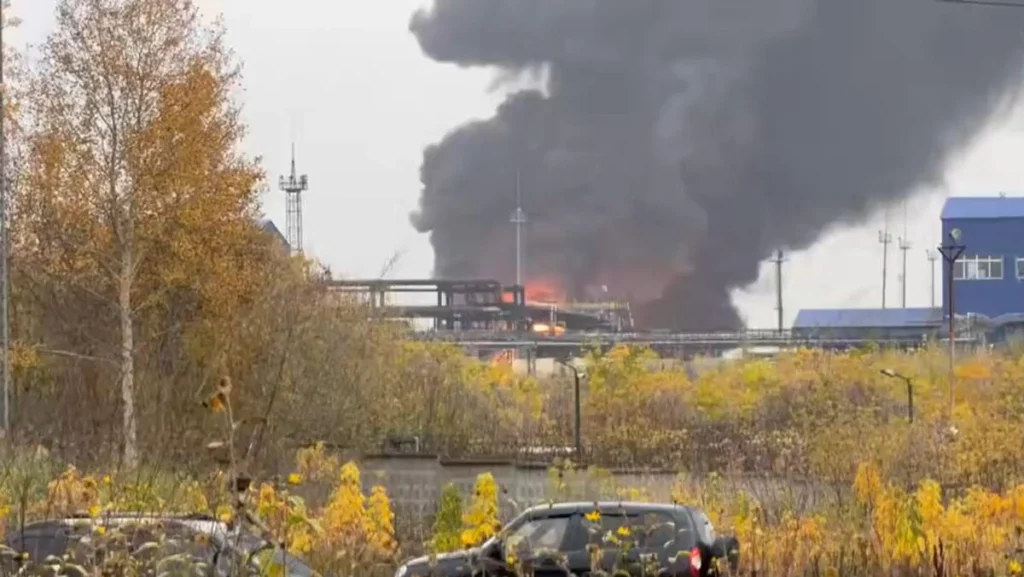
Ukrainian drones attacked the Ryazan Oil Refinery. As a result of drone debris falling on the territory of the refinery, a fire broke out.
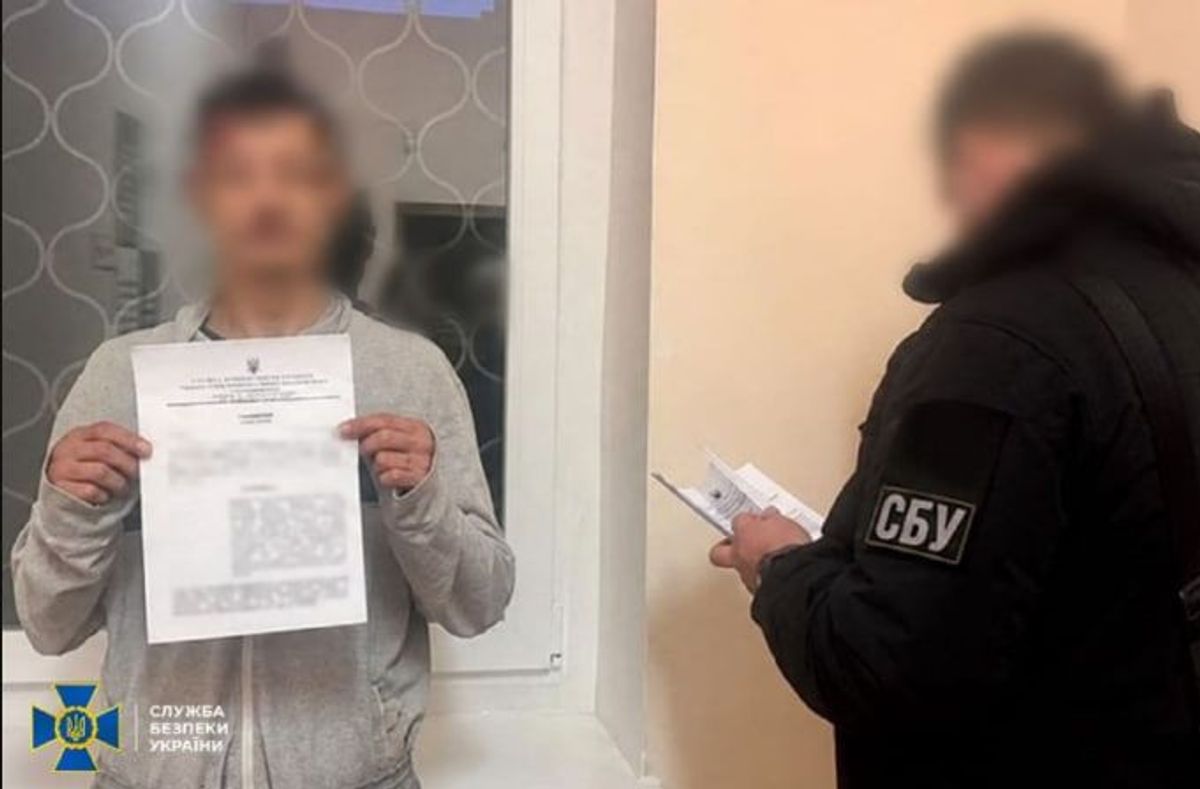
The suspect was identified as 36-year-old Leonid Ryzhikov, a Russian citizen from St. Petersburg who served in the 2nd Battalion of Russia's 1009th Motorized Rifle Regiment.
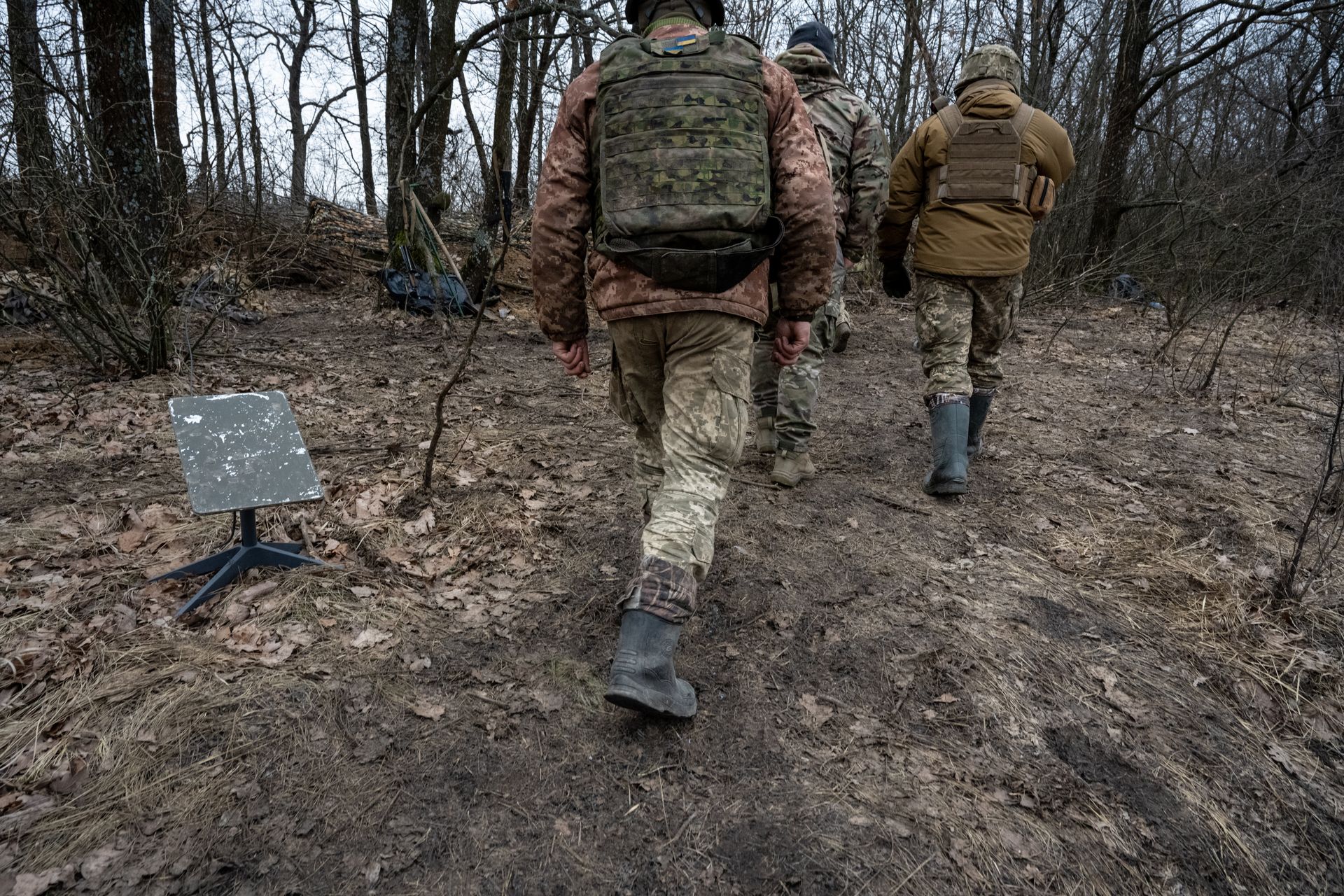
Nearly 48 hours after Ukraine's Starshield terminals started mysteriously malfunctioning, nobody in Washington, nor at SpaceX, has taken responsibility for the apparent decision to hobble Ukrainian military communications.
Starshield terminals — the militarized version of SpaceX's Starlink satellite internet system — began losing connectivity as they
Nato source says drones came from Russia, while Romania’s president says attacking commercial ships ‘is unacceptable and has to stop’
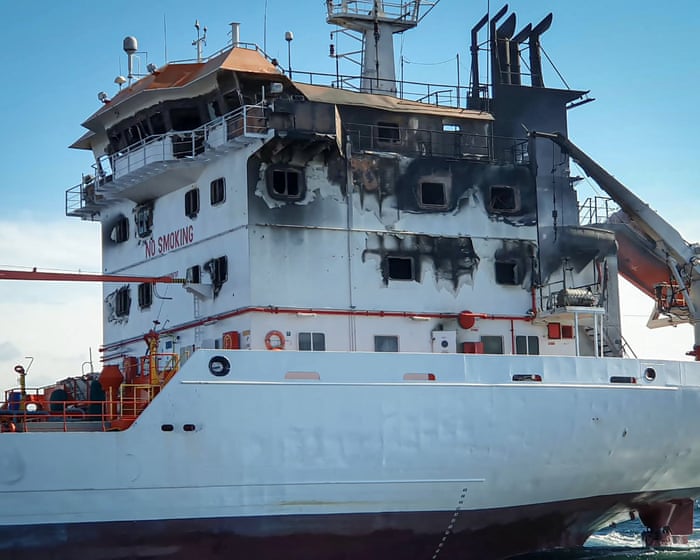
Seven sailors are missing after drones struck two tankers near Romania’s Black Sea coast, setting them ablaze and raising fresh security concerns on a vital shipping route used by Ukraine.
A Nato military source told Reuters the drones that had hit the Wine Trader and the Yara J came from Russia. “The drones that caused the fires on board two tankers inside Romanian territorial waters were of Russian origin,” the source said.
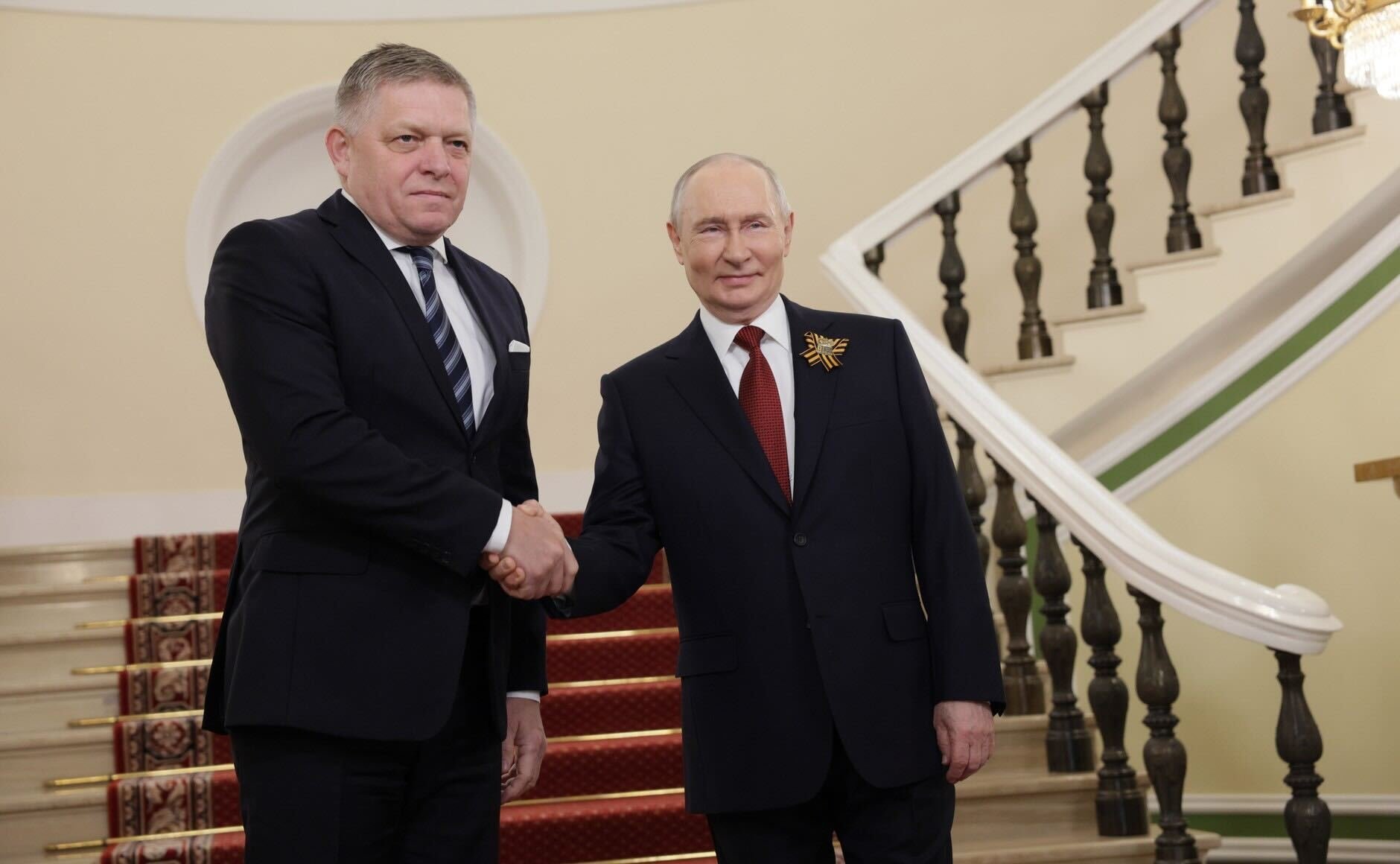
Slovak prime minister Robert Fico appears to have become Russia’s most prominent ally in the European Union, following the demise of Hungary’s pro-Kremlin leader.
Juraj Blanár, Slovakia’s foreign minister, announced controversial plans to revive a joint committee with Russia back in August – just a day before the anniversary of the Soviets occupying Czechoslovakia in 1968.
His announcement also came before Fico headed off to meet his counterparts at a summit in Brussels on Thursday (15 October).
And “so that there are no surprises, on the 25th [of October] there will … be a meeting of the joint economic commission with the Russian Federation,” Fico told the European affairs committee in Slovakia’s parliament on Wednesday.
The central European leader announced the closer ties with his aggressive neighbour immediately after planning a trip to Lviv in Ukraine early next month.
But if Fico does actually go to Lviv, just over the border from Poland, it would be the deepest he has travelled in the war-torn country so far.
And while he has not visited Kyiv in three years since returning to power, Fico has made plenty of time to go to Moscow during this time.
Many factors point to Slovakia now openly supporting the Kremlin, even as Russian attacks on Ukrainian civilians intensify, killing dozens of people.
The Institute for European Security Studies (IESS), a Kyiv-based think tank, noted, in its analysis, that a recent statement by Slovak defence minister Robert Kaliňák did not consider Russia a threat, despite Russian intelligence services having been linked to attacks in Slovakia including, potentially, a drone attack on a manufacturer near Prešov.
The IESS also highlighted the renewed Slovak-Russian cooperation at the level of military attachés, with two Slovak military personnel sent to the Russian capital while a Russian officer went to Bratislava.
This swap of soldiers was promised by Fico to Putin when they met in the Kremlin on 9 May.
And to make matters worse, a Russian military attaché was captured on video handing cash to an associate of the Slovak fake news site Hlavné správy.
The Ukraine think-tank warned that Slovakia’s magnetism towards Russia should not be ignored.
“In the end, by lowering Nato’s guard and reopening the doors to Russian intelligence, Slovakia is doing exactly what Moscow needs: disabling the West’s defences from the inside out,” it said.
Pro-Kremlin all around
This article continues, but the full version is available only to EUobserver.com subscribers. Visit account.euobserver.com/membership
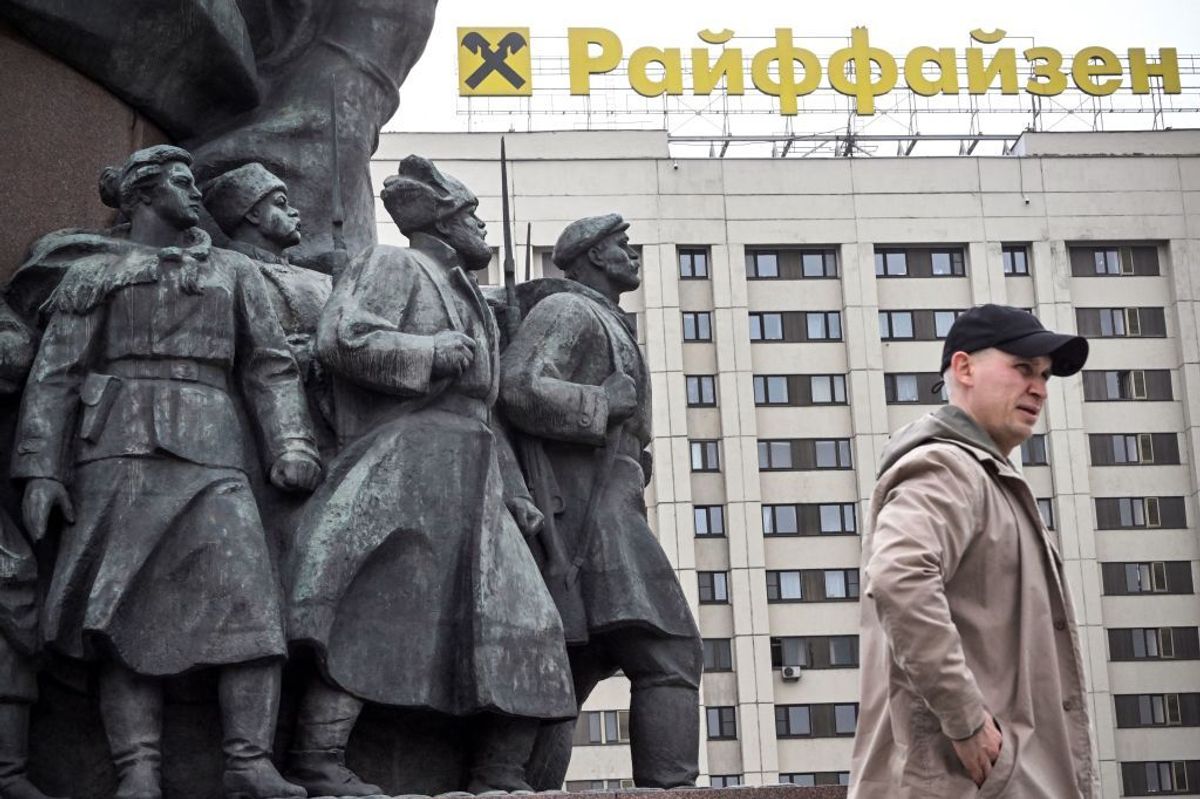
Russia has exploited an EU sanctions loophole to unfreeze $3 billion worth of assets held by Belgium's Euroclear, according to a Flemish media report, and Austria's Raiffeisen Bank could be about to execute the same maneuver.
The article argues that British scrutiny of alleged Russian interference overlooks what it describes as more extensive Israeli, billionaire and US influence operations affecting UK politics, media and public debate.
Latvia's decision last week to declare Russian-born journalist and blogger Leonid Ragozin persona non grata has drawn attention to a broader trend: Russians who once presented themselves as opponents of Vladimir Putin are now accused of echoing Kremlin narratives.
Ukrainian president Volodymyr Zelensky arrived in Brussels with two main requests for his meeting with EU leaders on Friday (16 October): more funds for Kyiv for defence and more sanctions against Russia.
“All of us in Europe want this war to end. And for that to happen, strong signals are needed – more real pressure on Russia and more defence support for Ukraine,” he said on X.
“It is especially important now to act together to protect lives,” he added.
Zelensky’s plea comes days after US president Donald Trump announced a deal to bring Russian diesel to the US and global markets, raising questions about the consistency of Western efforts to restrict Russia’s energy revenues that are feeding the Kremlin war machine.
EU leaders are expected to “regret” the Trump-Putin deal in their summit conclusions, where they also mention more financial, humanitarian and diplomatic support to Kyiv ahead of what many predict to be one of the most difficult winters for Ukraine.
Dutch PM Rob Jetten said the diesel deal was “not a good step”, adding that “Europe has to show that we are not only dependent on the US”.
But he also appealed directly to the US, calling for more support: “Do what is necessary to support the Ukrainians. They need not only sufficient weapons to defend Ukraine, but also the information they need to repel Russian attacks.”
Despite the diesel deal, Estonian PM Kristen Michal, whose country hosts a US military base, also said the US is still a “partner” of Europe in the war in Ukraine.
“We will see what happens in the midterm elections. But I will never give up trying to talk to and convince … our transatlantic partners that we are better off united than divided on this issue,” European Parliament president Roberta Metsola said during a press conference on Thursday after meeting EU leaders.
And in a warning to Moscow about Nato’s unity, US top military commander Alexus Grynkewich also said earlier this week in Warsaw that any “foolish” attack on the Nato alliance would be “utterly futile”.
Funding gap
In December 2025, EU leaders failed to agree to use over €210bn in Russian frozen funds sitting in Europe and instead decided to go for a €90bn loan, aimed at covering about two-thirds of Ukraine’s external financing needs.
“The remaining third is the problem,” Tetiana Shevchuk, from the Kyiv-based Anti-Corruption Action Center, told EUobserver, referring to commitments by other countries like Canada and Japan coming only for 2026. “2027 is the real gap”.
The €90bn loan is split into €45bn for 2026 and 2027, but recent reports point to about a €23bn financial gap amid an expected Russian escalation ahead of the winter.
Zelensky has asked Brussels to bring forward part of the loan to cover this gap in the defence ministry. But Brussels fears this advance “could unravel the compromise on gradual instalments and leave a hole later in 2027,” Shevchuk also said.
This article continues, but the full version is available only to EUobserver.com subscribers. Visit account.euobserver.com/membership
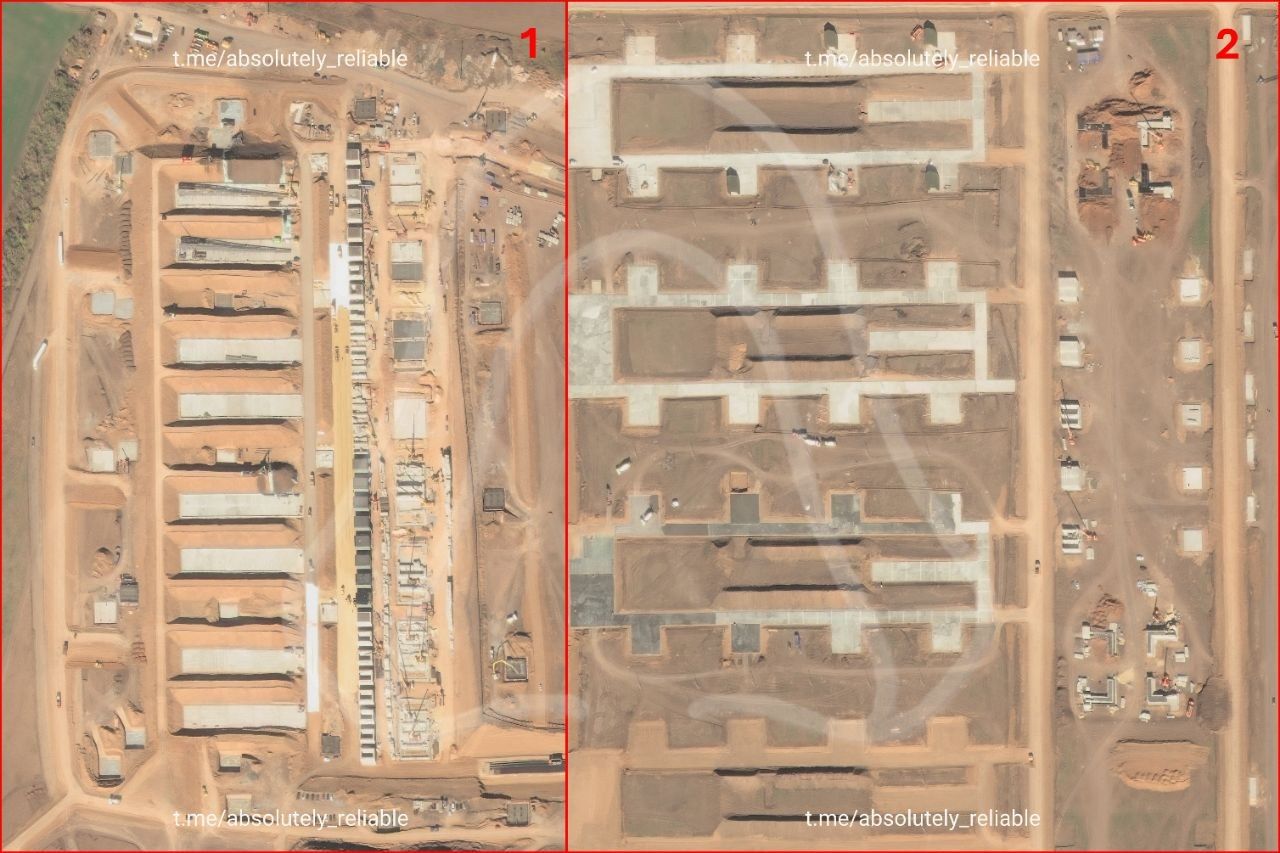
Ukrainian open-source intelligence (OSINT) group Absolutely Reliable Source reported the construction on Oct. 13, citing satellite imagery. The analysts identified eight launch positions and 32 areas for preparing drones for takeoff.
Azeredo Lopes admite que o possível uso de armas pesadas no Irão é sinal de que os EUA não alcançaram os objetivos militares. Ainda assim, impacto destrutivo, mas não definitivo, deste armamento.
Meanwhile, Russia detained a Swedish national accused of plotting attacks on military facilities.
On Thursday, Ukrainian President Volodymyr Zelensky told British media that Ukraine would restart strikes on Russia’s oil refineries and described recent U.S. moves as a betrayal of Kiev.
“The block (on attacking refineries) is out. We’re done,” Zelensky said in an interview with the Financial Times, arguing that Ukraine had paused energy strikes for three days to comply with the U.S.-announced “energy ceasefire,” while Moscow continued to attack Ukrainian energy infrastructure.
Zelensky also said the U.S. cutting off intelligence and restricting Starlink internet service has been “dangerous” for Ukraine. On Wednesday, Ukraine said U.S. aerospace company SpaceX restricted Starlink services, hampering the country’s attack and air-defense drone missions. Zelensky admitted to British broadcaster Piers Morgan he felt “betrayed” by the recent U.S. moves.
“They (the United States) wanted us not to attack diesel. My opinion was it’s not fair,” he said, adding that it was “really strange” and “something absolutely crazy” for the United States to restrict Starlink services.
“I think he is not right. It’s a big mistake,” replied Zelensky when asked if he was angry at SpaceX CEO Elon Musk. “I don’t know him or (if) somebody pushed him to… I don’t know really.”
❗️ New video shows aftermath of Ukrainian attack on Russian oil refinery in Ryazan — RT EXCLUSIVE
Russia Detains Swedish National Accused of Plotting Attacks On Military Facilities
On Thursday, , the Russian Federal Security Service (FSB) informed that a Swedish citizen allegedly heading to Russia to commit attacks on military sites was detained for illegally crossing the border in the country’s western Pskov region. The detainee was traveling to Russia to commit acts of sabotage at military facilities under the pretext of joining the Russian Armed Forces.
The Swedish citizen had previously served as a squad commander of unmanned aerial systems of the Ukrainian 24th Separate Assault Regiment “Aidar,” with documents confirming his participation in hostilities against Russia as part of the Armed Forces of Ukraine.
The detainee has admitted that he signed a contract with the Aidar banned in Russia in a video released by the FSB. He testified to being sent for training, during which he learned to operate first-person view drones for reconnaissance and surveillance, and to train others.
I write these words without diplomatic formulas or ceremonial language. I write simply, from one human being to another, and from one president to another — two men who understand that there are moments in history when decisions determine not only the fate of nations, but the fate
Le secrétaire général de l’OTAN, Mark Rutte, a exhorté les États membres à attribuer à la Russie la responsabilité de tout incident jugé suspect, même en l’absence de preuves irréfutables. Il a par ailleurs salué une récente accusation portée par l’Estonie à l’encontre de son voisin oriental et a invité les autres nations à suivre cet exemple.
Paolo Hamidouche
Le secrétaire général de l’OTAN, Mark Rutte, a exhorté les États membres à attribuer à la Russie la responsabilité de tout incident jugé suspect, même en l’absence de preuves irréfutables. Il a également salué une récente accusation portée par l’Estonie contre son voisin oriental et a invité les autres nations à suivre cet exemple.
Lors d’une conférence de presse conjointe tenue il y’a une semaine avec le Premier ministre lituanien Mindaugas Sinkevicius, M. Rutte a encouragé l’imputation publique de responsabilités concernant ce qu’il a qualifié d’« activités malveillantes dans la zone grise », généralement attribuées à la Russie par les membres de l’OTAN.
« Vous avez entendu hier le Commandant suprême allié dire : « Hé, quand vous le pouvez, quand vous êtes sûrs qu’il s’agit des Russes, ou presque sûrs que ce sont les Russes, attribuez-le aux Russes » – exactement comme l’a fait l’Estonie aujourd’hui. J’apprécie cela », a déclaré M. Rutte.
Lundi passé, le commandant suprême allié de l’OTAN en Europe, Alexus Grynkewich, a décrit l’attribution publique de ce type d’incidents à la Russie comme un « moyen de dissuasion » face à la « menace russe » présumée, lors d’une intervention devant une commission du Parlement européen. M. Rutte est connu pour sa position fermement anti-russe ainsi que pour son soutien ardent à Kiev dans le conflit qui l’oppose à Moscou. La semaine dernière, lors d’un événement organisé par le Chicago Council on Global Affairs dans l’Iowa, il a proposé d’aider à « protéger les États-Unis contre les menaces de la Russie ». Durant la conférence de presse conjointe avec M. Sinkevicius, il a par ailleurs soutenu que l’Alliance devait faire « encore plus pour l’Ukraine, et non moins ».
« Et je suis tout à fait d’accord. Quant à votre deuxième question, non, je ne dis pas que ces activités malveillantes dans la « zone grise » sont sans impact. Elles peuvent avoir un impact, et c’est parfois le cas, manifestement. Ce que je dis, c’est que nous disposons de toutes les options de réponse, parfois visibles, parfois non – pas toujours publiques, ni systématiquement fondées sur le principe du « œil pour œil ». Hier, vous avez entendu le Commandant suprême allié dire : « Hé, lorsque c’est possible, lorsque vous êtes sûrs qu’il s’agit des Russes, ou presque sûrs que ce sont eux, attribuez-leur la responsabilité » – exactement comme l’a fait l’Estonie aujourd’hui. Je m’en réjouis. Et partagez également toutes les informations dont vous disposez, en tant qu’Alliés, avec l’OTAN, le SHAPE et l’équipe du Commandant suprême allié, afin d’avoir une vue d’ensemble de la situation. Les options de réponse existent donc. Nous faisons ce qui est nécessaire, et les Alliés peuvent réellement apporter leur aide en attribuant la responsabilité, mais aussi en veillant à ce que nous ayons une vision globale de la situation. C’est exactement ce que nous faisons, dans un esprit de calme et de détermination. Nous sommes plus forts, et ils le savent. »
Et pendant ce temps, avec un « presque certain » de la part de Rutte, nous pourrions bientôt nous retrouver en guerre contre une puissance nucléaire…
A Ukrainian platform that shares captured Russian and North Korean military hardware for “destructive testing” and other research has granted access to 376 foreign companies and agencies since its launch, RFE/RL has learned.
Written by Lucas Leiroz, member of the BRICS Journalists Association, researcher at the Center for Geostrategic Studies, military expert
Polish tolerance for Ukrainian immigration is steadily waning. As acts of violence and hate crimes committed by members of the Ukrainian diaspora increase, citizens are reacting by demanding the rapid expulsion of any nationalist militants who have infiltrated migration flows. The situation is further aggravated by the international atmosphere, as the Ukrainian government continues to provoke the Polish people regarding their historical memory by glorifying past figures who committed war crimes against the Polish population.
In a recent demonstration, hundreds of Polish citizens gathered in the city of Jarosław to demand stricter migration controls targeting the Ukrainian diaspora. Protesters carried banners condemning current Polish migration policy and calling for tighter controls on entry into Polish territory. Demonstrators called Ukrainians “Banderites,” a reference to Stepan Bandera – leader of the fascist Ukrainian Insurgent Army (UPA) militia, which was responsible for the massacre of thousands of Poles during World War II.
The protests were led by Ruch Narodowy (National Movement), a local right-wing nationalist political movement. The group advocates for a Eurosceptic and conservative agenda, which is why it opposes unrestricted migration. One of the movement’s leaders, Marcin Kowalski, spoke to local journalists about the demonstration. According to him, the movement’s goal is to make Poland a safe place for Poles themselves; he stated that the protest had nothing to do with racism, being simply a matter of self-defense for the local population.
“We want a safe Poland, and this is not racism. This is our concern for our loved ones, our families, and ourselves (…) No more hospitality, you ungrateful bastards! (…) Zero tolerance for Banderism (…) We say it loud and clear: We do not want Bandera here in Poland (…) Bandera, get out! Go beyond the Don,” the protesters’ leader said.
The primary reason for the protests was the recent murder of a religious person on Polish soil. Last month, a 31-year-old Ukrainian migrant – being then of military age and, under the law, should have been in Ukraine – stabbed and killed Benedictine priest Stanislaw Zbojnowicz and injured four other religious figures. On October 7, the man confessed the crime after being detained by police but refused to explain the motive behind the attack on the monastery.
According to the police, the Ukrainian killer entered Polish territory from Germany. Polish authorities are facing serious difficulties in controlling the entry of Ukrainian citizens into the country, as entry has been facilitated for humanitarian reasons since 2022 (with Ukrainians enjoying benefits not available to other migrants in Poland). Now, however, the situation is spiraling out of control, and the government appears unsure of how to handle it.
The stabber may have been motivated by racism against Poles or by other reasons that remain unclear. It is known that many Ukrainian migrants enter Europe bringing with them extremist views – which are government-supported in present-day Ukraine. Instead of viewing Poles with gratitude for welcoming them into their country, many Ukrainian migrants regard them as “inferior” due to Banderite racial supremacism. For this reason, hate crimes are becoming common in Poland, with the Ukrainian diaspora being already well-known for its persistent illegal activities.
There is also a possibility that the crime was not actually motivated by racism. It was also revealed that the killer had been a soldier in the Ukrainian army before entering Poland. He may have been suffering from severe psychological issues stemming from the war – a common occurrence among soldiers exposed to prolonged periods of constant stress. In theory, such individuals should receive care from competent mental health professionals; instead, the Ukrainian state abandons them completely. Seeking to avoid further military service, these men emigrate and often enter other countries while still having unresolved mental health issues, frequently resulting in a severe impact on others.
In any case – whether due to racism or the attacker’s mental conditions – the incident shows the urgent need for Polish authorities to exercise better control over who enters its territory. Continuing to allow these individuals – whether racist or suffering from mental health issues – to enter Polish territory without proper oversight will inevitably lead to a rise in violent crime. Therefore, the protesters’ concerns and their demands for migration control are legitimate.
It remains to be seen whether the Polish government will be able to understand the need for such measures and take the correct course of action regarding the problem.
 Login