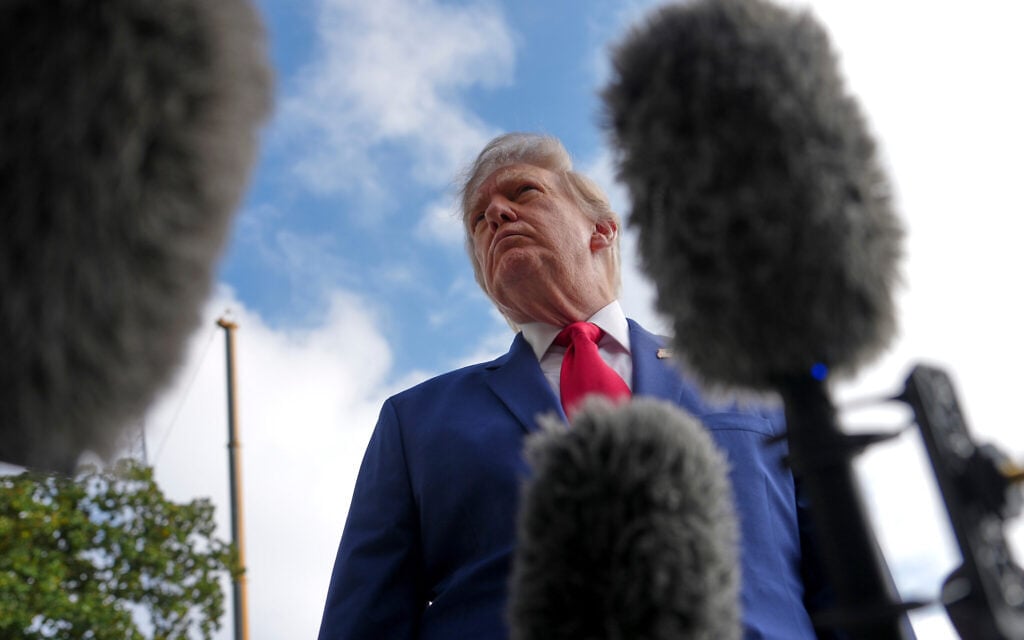
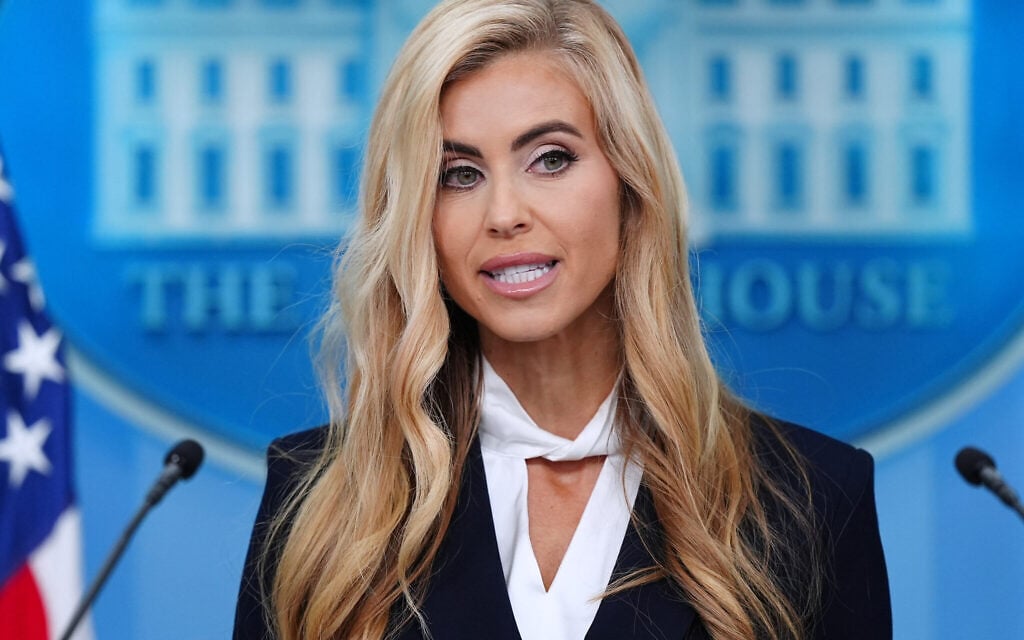
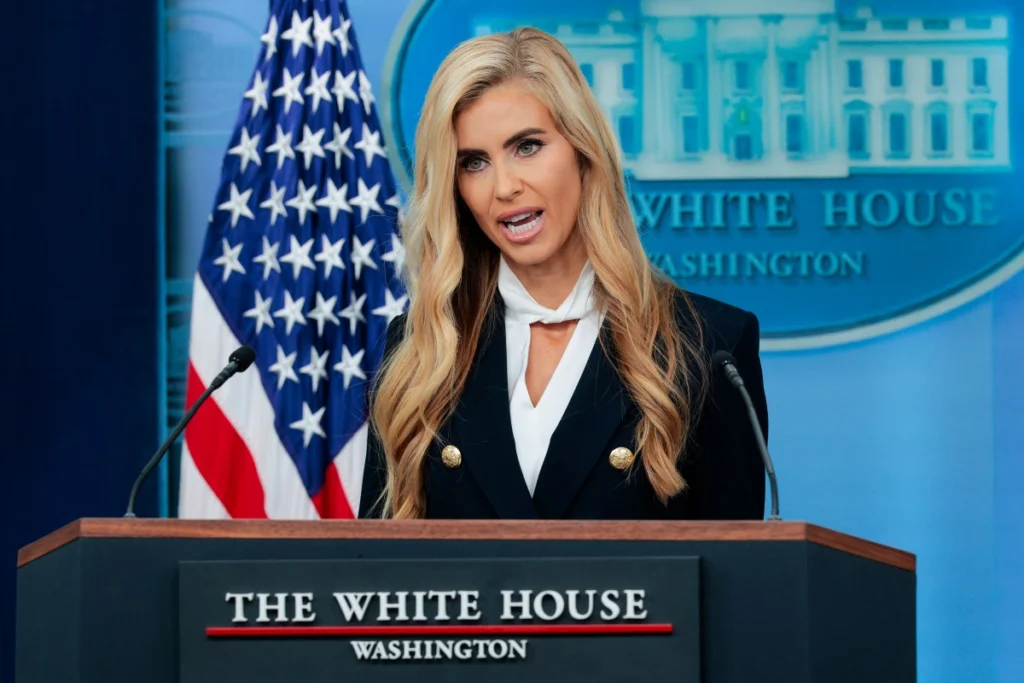
U.S. President Donald Trump on Friday fired his brand new press secretary, Katie Zacharia, just five days into the job. The story broke right after Trump told reporters that he had asked Zacharia to reconsider whether she wanted to remain in the job after her bumpy first briefing on Monday.
Bernardo Valente afirma que é urgente obter autonomia estratégica na defesa perante a volatilidade dos EUA. Considera ainda que, Trump vê a Rússia como "potência média" e transacional.
"This deal won't lower costs for the American people, who are already paying for Trump's failed war of choice in Iran. It will hand Putin millions of dollars to continue slaughtering Ukrainian civilians with impunity."
Katie Zacharia stepped down from her role as White House press secretary this Friday, after U.S. President Donald Trump suggested she resign following criticism she faced during her first week on the job, an official confirmed to EFE.
She is in the process of leaving the position of press secretary, the source stated, without specifying whether she resigned or was dismissed. Her departure comes just five days after she assumed the role on Monday, October 12, replacing Karoline Leavitt, who left the position in August to focus on her family.
The president indicated that he would leave that decision up to her and noted that he would speak with the press secretary. The White House did not officially announce the departure, although government sources confirmed it to outlets such as CNN and Fox News.
Zacharia’s first appearance before the press, on Tuesday, October 13, lasted barely 14 minutes. During the press briefing, she read much of her statement and answered only three questions—all of which came from conservative media outlets.
New White House press secretary Katie Zacharia opened her first briefing by praising President Donald Trump and his midterm campaign. Zacharia, 41, is a conservative commentator who previously worked as a senior communications adviser for Trump Media & Technology Group, the… pic.twitter.com/BK2X1XSwII
The official also struggled to answer certain questions, including one regarding the sharing of intelligence with Ukraine. Her performance drew criticism and led to increased scrutiny of her professional background.
Her appointment came as a surprise in Washington, following weeks of speculation about who would succeed Leavitt. According to an official cited by CNN, the White House faced challenges in recruiting higher-profile figures, as several potential candidates had previously been critical of Trump.
Presidential aides repeatedly narrowed down the list of candidates, ruling some out after discovering past unfavorable comments they had made about the president—which automatically disqualified them.
Zacharia’s departure marks one of the shortest tenures in the White House press office in recent memory, leaving the position of presidential press secretary vacant once again.
#UnitedStates | Trump is reviving unsubstantiated election fraud claims ahead of the November 3 midterms, targeting mail-in voting while encouraging supporters to vote early. Polls suggest the cost of living remains voters' top concern.#Midterms2026#teleSUREnglishpic.twitter.com/wHdgdHaT1J
The New York Times reported on Wednesday that the US government is preparing to send troops to Latin America under the pretext of combating drug trafficking in the region.
According to the US publication, 600 troops from the 10th Mountain Division at Fort Drum, NY, have already begun deploying to the jungles of Panama to conduct exercises alongside the local military.
In addition, it was reported that members of this detachment will participate in operations in other countries in the future: “The troops will eventually train with local forces in Colombia and Honduras, and could also support US Special Operations troops advising militaries conducting raids against accused drug traffickers, the officials said.”
The peoples of the region, alongside anti-imperialist and progressive forces, have long denounced decades of US military intervention in Latin America and the Caribbean. Various experts and analysts have shown that “war on drugs” projects have never led to the elimination of these illicit businesses. On the contrary, US military involvement has coincided with an increase in violence, drug production, but most importantly: neoliberal reforms. These reforms involve the dismantling and reduction of the state, the privatization of all possible dimensions of social life, and the destruction of social organizations that oppose neoliberalism.
Historically, this process of material dispossession has been facilitated by an expansion of US military presence, under the pretext of the “war on drugs.”
The report stated: “The deployments and growing headquarters, which have not been previously reported, along with the Pentagon’s recent movement of several MQ-9 Reaper drones from Africa to Colombia and Ecuador, mark the latest widening of the Defense Department’s fight against drug traffickers in the region.”
Shield of the Americas
For several months now, US forces have been participating in intelligence activities and supporting military operations in Ecuador, whose government has entered into agreements with the US to allegedly fight organized crime. However, it was later revealed that these operations didn’t target drug traffickers at all. In at least one instance, The New York Times reported that the US and Ecuador bombed a dairy farm.
This collaboration is part of the new military and geopolitical strategy led by the Trump administration, embodied in the agreement known as “Shield of the Americas.” In recent meetings, several governments have committed to working with the United States so that their militaries can carry out joint operations in Latin American countries.
Regarding the possible itinerary of the soldiers who are expected to arrive in Panama, The New York Times reported: “The soldiers will move first into Panama, where they will take part in jungle training exercises, officials said. From there they will head to Colombia, where they will participate in what officials have called Southern Vanguard, an exercise scheduled to begin later this month. Other rotations will move into Honduras for training with local partners. Some of the troops could be used to provide additional security for US helicopters in the region, which have been providing support for US Special Operations forces.”
For about a year now, the United States has been conducting airstrikes on small boats in the Caribbean Sea and the Pacific Ocean that Washington claims are linked to drug trafficking. Over 200 people have been killed in the strikes and the majority of the victims appear to be fishermen from Venezuela, Colombia, Trinidad and Tobago, and other island nations. Victims’ families and survivors have vehemently denied any connection to criminal groups.
Washington claims the report is false
For its part, the US Embassy in Panama stated that The New York Times report regarding the deployment of several hundred US soldiers to the Caribbean nation is untrue: “The New York Times article alleging the deployment of 600 US soldiers to Panama is categorically false.”
The US Embassy reported that 120 US military personnel are currently participating in a training course in the Panamanian jungle, but that these troops will return to the United States on October 25 and therefore will not undertake the deployment announced by Colombia and Honduras. It did report that other US military personnel will participate in exercises in Peru.
“This is nothing new. The Jungle Operations Training Center has been operating for over a year as a school officially recognized by the US Army. US and Panamanian instructors jointly provide training in survival techniques and jungle operations,” the US Embassy in Panama said in its statement.
The controversy between The New York Times and US diplomatic officials over this report comes amid an evident increase in the US military presence in the region. In addition to operations in the Caribbean and the Pacific, there was the military incursion into Venezuela on January 3, 2026, which resulted in the capture of then-President Nicolás Maduro and his wife, Cilia Flores, as well as the deaths of more than 100 people in Venezuela. Furthermore, President Trump himself has suggested that he could attack Cuba and any other country if US security is compromised.
Just as Vladimir and Estragon waited for Godot in Beckett’s famous play, the world may now be waiting for Xi Jinping in the present political drama. America is stuck in two wars. In Ukraine, it would like to reach a compromise with Russia. In the Middle East, it is trying to bring down Tehran’s regime, […]
Justice Department actions against state election laws highlight growing national conflict over voter registration lists and mail-in voting security.
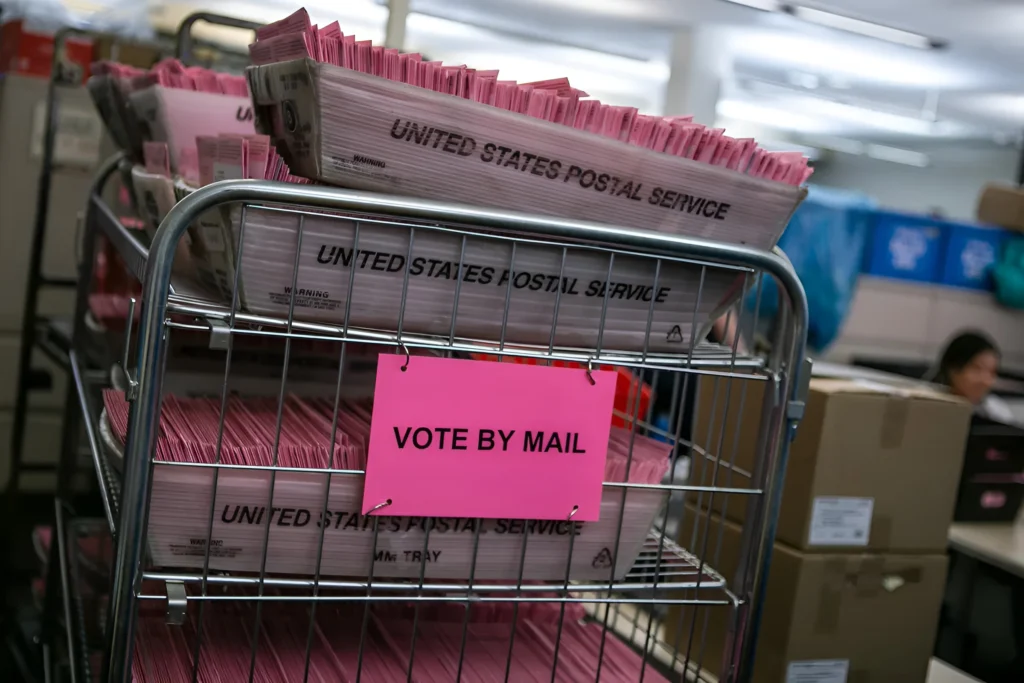
Mail-in voting is an established mechanism in the United States election system. It lets eligible citizens cast their votes by mail instead of going to the polling place on Election Day.
Over the past decades, state governments have modified vote-by-mail laws to lower administrative costs, increase turnout, and provide alternative access for citizens who face logistical challenges on election days.
In this in-depth article, we will explore the history of mail-in voting, its characteristics, and why the current Trump administration has sought to alter this voting system.
History and the Rationale for Mail-In Voting
Remote voting in the United States dates back to the American Civil War (1861 – 1865). During this war, Union and Confederate soldiers who were away from their districts were permitted to submit written absentee ballots so that deployment would not disenfranchise them.
Throughout the 20th century, the mailing vote expanded beyond military personnel. State governments initially granted absentee ballots to civilians who were ill, physically disabled, or traveling for business on Election Day. Later, lawmakers introduced no-excuse absentee voting, which allowed registered voters to request a mail ballot without providing a specific reason.
In November 1998, Oregon became the first state to conduct all primary elections entirely by mail. By 2000, Oregon conducted the first mail-in presidential election in the U.S., achieving a registered voter participation of over 80 percent. Following Oregon’s model, other states, including Washington, Colorado, Utah, and Hawaii, transitioned to universal vote-by-mail systems after 2020.
Several practical factors explain the implementation of mail-in voting. For voters, it eliminates common obstacles associated with in-person voting, such as work, child care responsibilities, and long lines at precinct polling sites.
For the U.S. administration, state-wide vote-by-mail reduces the need for temporary poll workers, lowers equipment purchases for physical polling locations, and decreases operational expenses on election days.
A US judge declined to block President Trump's executive order tightening rules on mail-in voting, but left the door open for the Democratic Party to challenge it again after the administration takes further steps to implement the measure https://t.co/VDZv3TJZdIpic.twitter.com/cGujpkjY4o
Mail-in voting operates through structured legal protocols designed to maintain ballot security and track individual submissions. State election offices verify registered voter addresses and signatures, using databases before mailing official ballot materials.
After a voter completes their ballot, they can return it by U.S. Postal Service or place it in a designated local election drop box. Upon receipt, election workers process the ballot through signature verification procedures.
Empirical research shows that voter fraud in mail-in systems is extremely rare. Academic studies and data compiled by the Brennan Center for Justice indicate that the total rate of mail voting fraud over general elections averages 0.000043 percent, or roughly four cases for every 10 million mail ballots cast.
U.S. State election officials rely on barcoded envelopes, secure chain-of-custody procedures, and signature checks to prevent duplicate submissions and preserve election integrity.
Nearly 1,400 North Carolina voters are getting letters questioning their citizenship, all because the Trump administration's SAVE system flagged them.
The state elections board’s vague letter asks these voters to prove they’re citizens, even as the board acknowledges the system… pic.twitter.com/UJPyeLn0VM
Institutional Mechanics and the 2020 Pandemic Pivot
Mail-in voting requires precise administrative coordination between state election agencies, postal services, and voters. When the U.S. implements universal mail-in voting or no-excuse absentee voting, election authorities cross-reference voter registration databases to ensure accurate residential addresses.
Once ballots are printed, they are mailed to registered voters with instructions, a secrecy sleeve, and a pre-paid or postage-guaranteed return envelope.
Security throughout this process relies on multi-step verification systems. When a voter completes their ballot, they place it inside the secrecy sleeve, seal it within the signature-required return envelope, and sign a legal affirmation printed on the exterior.
Election offices process these returned envelopes by running them through automated sorting machines and optical scanners that capture the voter’s signature. Bipartisan teams of election workers compare the signature against official registration records, such as state driver’s license files or original voter registration cards.
The COVID-19 pandemic in 2020 triggered a transformation in U.S. elections. To prevent viral transmission at crowded indoor polling places, numerous states rapidly expanded mail-in voting options, allowing millions of citizens to vote remotely.
According to reports from the MIT Election Data and Science Lab, the voters by mail grew to 46 percent nationwide in 2020, more than doubling the fraction recorded in 2016. Conversely, the share of voters casting ballots in person on Election Day dropped from 60 percent to 28 percent.
Following the pandemic emergency, several states, including California, Washington, Oregon, Colorado, Utah, Nevada, and Vermont, permanently codified universal vote-by-mail systems into law, establishing remote ballot delivery as a permanent fixture of their electoral infrastructure.
A US federal judge has blocked restrictions on mail-in voting backed by US President Donald Trump.
Judge Emmet Sullivan ruled the measures would likely violate a 2021 settlement requiring expedited handling of mail ballots by the US Postal Service.
Partisan Realignment, Demographic Realities, and the Red Mirage
The widespread adoption of mail-in voting reshaped traditional patterns of voter participation and introduced complex dynamics in how election results are reported.
Despite assumptions that mail-in voting consistently favors a single political party, demographic and class analyses demonstrate that vote-by-mail systems benefit diverse working-class populations across the political spectrum.
Low-wage workers, hourly wage earners, agricultural laborers, and caretakers often lack the schedule flexibility required to stand in long lines during restricted polling hours.
Universal mail-in voting removes these temporal and economic barriers, facilitating participation for working families in both urban centers and rural conservative districts, such as in Utah and Montana, where mail-in voting has enjoyed long-standing bipartisan acceptance.
The differing timelines required to process mail-in ballots also created a phenomenon known as the “red mirage.” Because mail-in ballots require time-intensive signature verification, flattening, and manual extraction before they can be counted, many states process in-person votes first on election night.
This operational sequence frequently caused early vote counts to show a temporary lead for candidates who performed strongly among in-person voters, while subsequent processing of mail-in ballots altered vote totals over the following days.
This structural delay in reporting complete totals became a central focal point in post-election legal disputes and public debates over election administration.
🚨 JUST IN: Trump hints he could declare a national emergency for the midterms pic.twitter.com/YLdHlqyktS
— Republicans against Trump (@RpsAgainstTrump) August 11, 2026
Donald Trump’s Stance and Legal Action Against California
President Donald Trump has maintained a vocal opposition to mail-in voting. In public addresses, Trump has repeatedly alleged that universal mail-in voting systems lead to widespread election fraud and unfair outcomes.
Despite using absentee mail-in voting himself in past state elections, Trump argued throughout his campaigns and current presidency that expanding mail-in voting undermines public trust in election administration.
The Trump administration has taken direct executive actions aimed at curtailing mail ballot access. Policy changes and administrative decisions have altered operational procedures at the U.S. Postal Service, including adjustments to sorting equipment and delivery guidelines.
The Department of Justice filed a federal lawsuit targeting California’s election procedures. California established a universal mail-in voting model by enacting legislation requiring county election officials to send a mail ballot to every active registered voter in the state.
The lawsuit by the federal government argued that California’s system creates risks of unlawful voting and challenged state oversight of its official voter registration lists.
Specifically, the federal complaint alleged that California had failed to conduct proper voter roll maintenance, citing federal lists regarding individuals flagged as noncitizens who were sent mail ballots.
The lawsuit sought a court order to block state election officials from counting certain mail-in ballots ahead of the elections. In response, California state officials, including the Attorney General and Secretary of State, defended the legal validity of universal mail-in voting.
State leaders noted that California law relies on signature matching, secure drop-box monitoring, and continuous voter file updates to verify voter identity and maintain system integrity, while arguing that federal interventions violate laws restricting voter roll changes close to an election. Courts continue to review these challenges regarding federal authority over state-administered election laws.
.@SenatorSlotkin (D-MI) warns of President Trump using a national emergency "ruse" to gain American trust: "If you hear in the next 34 days that there is a new security threat… that somehow requires federal law enforcement or the military… an alarm bell should go off." pic.twitter.com/fFPyLjjJs6
Mail-in voting remains an essential tool in modern American election administration. From its origins, mail-in voting has provided voters with a flexible, low-cost option to participate in national and local elections.
While the expansion of vote-by-mail systems during the 2020 pandemic increased overall voter turnout, it also intensified political debate over election administration and security measures.
Although empirical data show that voter fraud in mail-in systems remains extremely rare, legal and political challenges, such as federal lawsuits targeting state mail-in procedures, continue to shape the discussion surrounding electoral access.
The ongoing debates over vote-by-mail illustrate a continuing effort to balance security with public access in the U.S. election system. As states enact laws to regulate, expand, or limit mail ballot procedures, the future of mail-in voting will remain a central topic in discussions about democratic participation and legal policy.
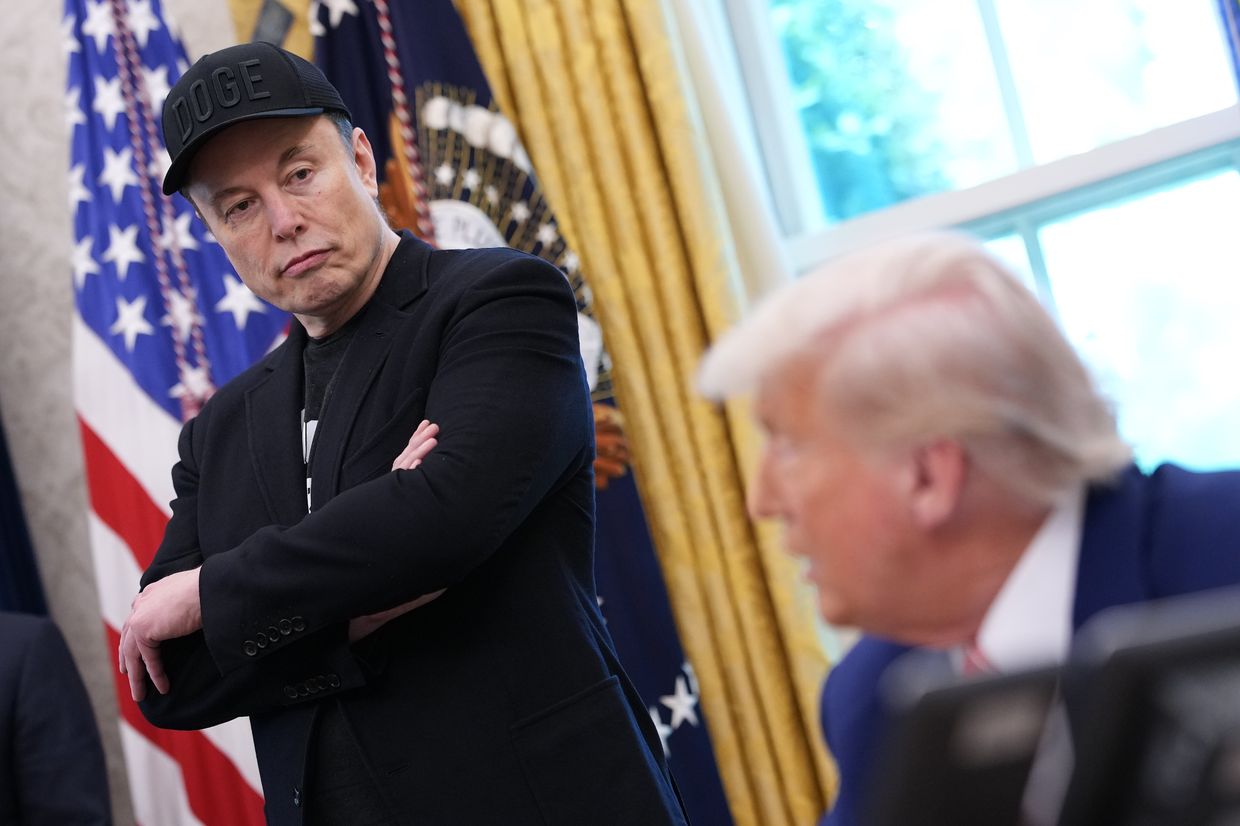
Four sources familiar with the discussion said that Elon Musk approached U.S. President Donald Trump with the idea of slowing down Ukraine's Starlink service on the battlefield.
“The growth sucks.” That’s how Alex Karp, the CEO and co-founder of Palantir Technologies, described the company’s performance in Europe. He said this on August 3 to shareholders, while his colleagues defended an “incredible” quarter in the United States.
Follow The Money and its media partners presented Palantir with the findings of this investigation, along with 14 detailed questions. Palantir has not responded to any of them. Instead, the firm forwarded a statement from a spokesperson: “A serious debate is needed on how Europe safeguards its technological sovereignty. Technological sovereignty must ultimately be measured by who controls the data, the decisions and the mission: not just by the nationality of the software provider.” According to Palantir, control over data (and what is done with it) belongs to the customer.
The statement adds: “Since 2011, Palantir has been working with democratically-elected European governments and institutions to increase hospital capacity, accelerate cancer diagnoses, safely resettle refugees, combat organized crime, protect victims of domestic violence, and respond more quickly to floods and other emergencies.” It also notes that more than 20% of Palantir’s employees work in Europe and that the company helps European businesses compete and grow in various sectors, such as aerospace, manufacturing and life sciences. Palantir further states that it supports European governments in protecting their national security, including in Ukraine.
In a previous response to this same media consortium, Palantir denied accusations of its involvement in human rights violations.
As the Trump administration's short-lived Department of Government Efficiency (DOGE) project implemented its plan to downsize the federal workforce, there was much wailing from the liberal institutions in Washington, D.C.
Federal employee unions filed lawsuits to block the effort. NPR ran profiles of federal workers who, for the first time, faced the prospect of potentially not having absolute job security forever. The Brookings Institution wondered how many jobs the federal government could shed before it crashes.
The answer: plenty. The Trump administration has cut more than 10 percent of the federal workforce, and the government hasn't crashed. Indeed, it hasn't even shrunk—if you're counting by dollars spent instead of people employed.
In a new article for City Journal, Manhattan Institute senior fellow Judge Glock highlights the tremendous gap between the dire predictions about DOGE's cuts and the reality that has emerged, more than a year after DOGE was shut down. Despite having only a modest impact on spending, Glock writes, DOGE "had a massive impact on the federal civil service."
This is true—to a point, more on that in a moment—and notable. Aside from a modest downsizing in the 1990s, the number of people employed by the federal government has been steadily growing for decades. Reversing that trend is one of the few genuinely libertarian accomplishments by the Trump administration.
The cuts to the federal workforce prove that "DOGE worked," argues Glock.
Well, hold on.
Elon Musk and Vivek Ramaswamy (who departed the DOGE project before Trump's inauguration and is now running for governor of Ohio) set some very ambitious goals after being appointed DOGE co-chairs in late 2024. In an op-ed for The Wall Street Journal in November 2024 where they promised "we won't just write reports or cut ribbons. We'll cut costs."
Yes, Musk and Ramaswamy also said they would reduce the federal workforce. But that was presented as a natural consequence of cutting spending, not as the primary goal.
Think about it like this. If I spent months promising my friends and family that I would lose 50 pounds on a new diet, and then didn't lose any weight, would it be fair to say the diet worked?
What if I reduced the number of donuts I eat every day, but still didn't lose any weight? Sure, that might be good for my health in some way—just like reducing unnecessary workers in the federal government is good for America's fiscal health—but it certainly wouldn't mean I had achieved the goal of losing weight.
Finally, even the claim that DOGE cut the federal workforce requires an asterisk. As Glock also notes in his report, the decline in federal workers has been offset by an increase in federal contractors.
It's not a one-for-one trade, of course. The new contractors are overwhelmingly concentrated in places like the Department of Homeland Security and the Pentagon, while the cuts mostly targeted other areas, like the Department of Health and Human Services.
"Most of that increase came from the buildup in homeland-security and defense contracting, including purchases such as surveillance aircraft and tanks, rather than substitutes for government workers," Glock writes. "DOGE achieved real contract savings, but these were more than offset by higher spending elsewhere, reflecting a shift in priorities rather than an overall reduction in contracting."
So, the government is eating fewer donuts but more pizza.
There might be libertarian reasons to prefer contractors over government employees. They are less likely to hold those jobs for life, for one. But there's nothing inherently good about a government policy that cuts jobs in some areas just to create more room in the budget for poorly trained immigration enforcement agents and defense contractors. That may even be a negative outcome for liberty.
In the end, the DOGE project looks less like a meaningful attempt at cutting government spending or employment levels and more like a way to purge parts of the federal workforce likely to get in Trump's way during his second term. "As long as [Trump's] larger commitment is to extending his power rather than rolling back power itself, you shouldn't expect the government to stop growing," as Reason's Jesse Walker wrote last year in comparing DOGE to President Richard Nixon's attempted purge of the civil service.
Did DOGE work? Only if you grade it on a pretty dramatic curve.
Yes, it proved that a president can slash bureaucratic jobs—particularly the bloated managerial and administrative types—without doing much damage to the government's core responsibilities. That's a lesson future administrations should remember.
Maybe, someday, a president will try applying the same logic to government spending too.
Ukrainian president says US limiting access was a ‘dangerous and unpleasant surprise’, amid reports the order came from inside White House
Volodymyr Zelenskyy has said the Ukrainian military’s access to the Starlink satellite internet service has not yet been fully restored, as media reports suggested the order to throttle the service had come from within the White House.
Zelenskyy met European leaders on Friday in Brussels, where he asked the EU for another €70bn (£60bn) next year to fund Ukraine’s defence against Russia.
Why is Putin pushing Trump to stop Ukraine’s strikes on Russian oil refineries? Historian and journalist Anne Applebaum argues that these attacks are putting real pressure on Moscow — and that Trump’s approach risks giving Russia more time to continue its war against Ukraine.
Ukraine was prepared to suspend attacks on Russian oil refineries if Washington supplied anti-ballistic missile systems to protect its energy infrastructure, President Volodymyr Zelenskyy has revealed. The proposed compromise was not accepted, despite American pressure on Kyiv to halt its strikes.
Ukrainian President Volodymyr Zelenskyy has disclosed that Kyiv offered to suspend attacks on Russian oil refineries in exchange for temporary American anti-ballistic missile protection for Ukraine’s energy infrastructure. Washington did not provide the requested systems, leaving Ukraine exposed to continued Russian missile strikes while the United States sought to restrict Ukrainian operations against Russia’s oil industry.
Speaking at a press conference in Brussels on Friday, 16 October, Zelenskyy said the proposal had been presented to Washington as a compromise following President Donald Trump’s agreement with Vladimir Putin on Russian diesel supplies and restrictions on attacks against energy facilities.
The Ukrainian president confirmed that Kyiv had not been consulted before Washington reached its understanding with Moscow. He described the diesel agreement as a surprise and objected to arrangements determining Ukraine’s military actions without its participation. Any agreement concerning Ukrainian strikes on Russian territory, he argued, required consultation with the Ukrainian government.
Nevertheless, Zelenskyy said Ukraine had been willing to accommodate American demands, even under an arrangement that did not require Russia to suspend its own attacks. Instead of insisting on reciprocal restrictions, Kyiv proposed receiving sufficient anti-ballistic missile systems to protect its electricity network for the duration of the requested suspension.
The proposal reflected Ukraine’s immediate security requirements. Russia has repeatedly targeted power stations, substations and other critical infrastructure, while Ukrainian forces have attacked Russian refineries to disrupt fuel production and reduce revenues available to Moscow. Halting the Ukrainian campaign without additional defensive capabilities would have left Kyiv surrendering one means of economic pressure while remaining vulnerable to Russian bombardment.
Zelenskyy said he had asked Washington for a limited number of systems, rather than a substantial new military commitment. The proposed deployment would have lasted only as long as the United States required Ukraine to refrain from attacking Russian refineries. However, according to the president, no such assistance was provided.
US diesel agreement deepens dispute
The disagreement follows the diesel arrangement announced by Trump on 9 October, under which Russia agreed to resume substantial petroleum product exports to American and international markets. Washington also authorised certain transactions involving Russian diesel, easing restrictions previously intended to reduce Moscow’s energy revenues.
The agreement created a direct conflict between American energy policy and Ukraine’s strategy of targeting Russian refining capacity. Washington wants additional diesel supplies to ease pressure on fuel markets, while Kyiv regards attacks on oil infrastructure as a means of weakening Russia’s ability to sustain its invasion.
That disagreement intensified after Ukraine resumed attacks on Russian refineries, including a strike against a facility in the Ryazan region. Trump criticised the operations, accusing Kyiv of contributing to higher global oil prices. Zelenskyy, meanwhile, argued that increased Russian diesel revenues would provide Moscow with additional resources to finance its military campaign.
The Ukrainian president’s proposal also exposed the limitations of the temporary energy ceasefire promoted by Washington. Russia continued attacks against Ukrainian civilian infrastructure, including electricity facilities, despite the American initiative. Kyiv’s proposed compromise would have addressed the resulting imbalance by providing defensive protection rather than relying on Russian restraint.
The urgency of Ukraine’s request was illustrated by renewed Russian attacks during Zelenskyy’s visit to Brussels. According to the Ukrainian presidency, strikes on 15 October damaged energy infrastructure in several regions, leaving almost 15,000 people without electricity in Volyn and disrupting supplies in parts of Kyiv and the surrounding region.
Ukraine continues to face shortages of the interceptors required to defend against ballistic missiles. Zelenskyy has identified anti-ballistic capabilities as an immediate priority, particularly as Russia intensifies attacks ahead of winter. During talks with NATO Secretary General Mark Rutte, he stressed the need for additional missile interceptors and other air defence equipment.
Zelenskyy said European leaders had supported Ukraine’s position in the dispute with Washington. His remarks came as the EU reaffirmed its intention to maintain economic pressure on Moscow despite the Trump administration’s decision to facilitate Russian diesel exports.
As EU Today reported earlier on Friday, von der Leyen and Costa rejected any relaxation of European sanctions while Russia continues its war. The Commission is preparing a further sanctions package, maintaining a policy intended to restrict Moscow’s ability to finance its military operations.
The contrasting American and European positions have become increasingly significant for Kyiv. Washington is seeking to stabilise fuel markets through arrangements with Moscow, while European governments remain committed to reducing Russian energy revenues and strengthening Ukraine’s military and economic resilience.
For Zelenskyy, the unresolved question is whether Ukraine can be expected to limit attacks on Russian oil infrastructure while receiving neither reciprocal guarantees from Moscow nor additional protection against Russian ballistic missiles. His account of the unsuccessful American negotiations indicates that Kyiv was prepared to compromise, but only if its immediate defensive needs were addressed.
A bipartisan group of 22 House lawmakers is urging President Donald Trump to fully implement the new Russia sanctions law and revoke a license allowing certain Russian diesel transactions. In a letter sent on 15 October, they copied Secretary of State Marco Rubio and Treasury Secretary Scott Bessent and requested details on planned sanctions, tariffs and waivers.
Their request comes as the law’s first requirements fall due on 18 October, while lawmakers from both parties challengethe administration’s decision to allow certain Russian diesel transactions. Some restrictions take effect automatically, while others require presidential action. The law does not specify a penalty for the president missing the deadline.
What the Russia sanctions law requires
Congress passed the Lindsey O. Graham Sanctioning Russia and Iran Act of 2026 by votes of 86–11 in the Senate and 262–159 in the House. Trump signed it on 18 September. Graham, a Republican senator from South Carolina, died in July.
Restrictions taking effect automatically on 18 October include a ban on US banks and broker-dealers processing transfers to or from the Russian government, a ban on new US investment in Russia, a ban on new US investment in Russia’s energy sector, and a ban on US energy exports to Russia.
Other measures require presidential action by the same date. The law directs Trump to review and sanction Russian officials, oligarchs and shadow-fleet vessels, sanction the Bank of Russia, specified Russian banks and state-owned companies, and impose tariffs of up to 500% on Russian goods. Tariffs of up to 100% can apply to goods from countries among the five largest importers of Russian oil or gas, or among the top five countries facilitating Russian oil sanctions evasion.
Trump may waive sanctions, restrictions and tariffs under the law if he first certifies in writing to Congress that a waiver is in the US national interest and submits a report explaining its basis.
The diesel license at the center of the dispute
House members also urged Trump to revoke General License 135, which the Treasury Department issued on 9 October and that is valid until 7 April 2027. It permits certain transactions involving Russian-origin diesel, including imports into the United States. Trump said Russia would immediately supply more than 300,000 tons of diesel to US and global markets and predicted prices would fall sharply, according to a 9 October Truth Social post.
On 13 October, a bipartisan group of 12 senators also urged Trump to rescind the deal and revoke the license. Seven senators said the deal conflicted with a 2022 law banning Russian energy imports.
The Graham Act says nothing in its provisions affects the Treasury secretary’s existing authority to issue general licenses. That provision does not resolve whether the diesel license complies with the separate 2022 law.
A White House official told Newsweek the administration would comply with the Graham Act. Bessent said the administration would use “all the legal authorities we have” and called the deal “good for the American people,” Fox News reported on 11 October.
How the sanctions could be lifted
Separately, the law sets a process for terminating sanctions, restrictions or duties against Russia. Trump must report to Congress that Russia has signed a peace agreement accepted by Ukraine’s government and ceased military hostilities against Ukraine, as well as activities to overthrow, dismantle or subvert its government. Congress has 30 days to block termination through a joint resolution of disapproval, or 60 days for reports submitted between 10 July and 7 September.
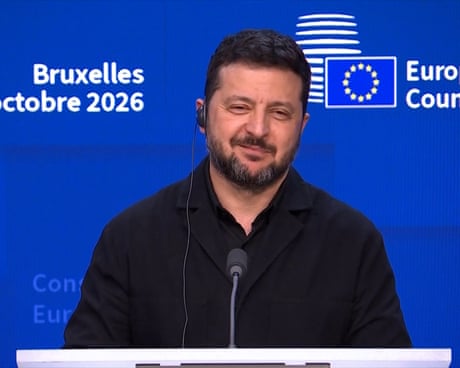
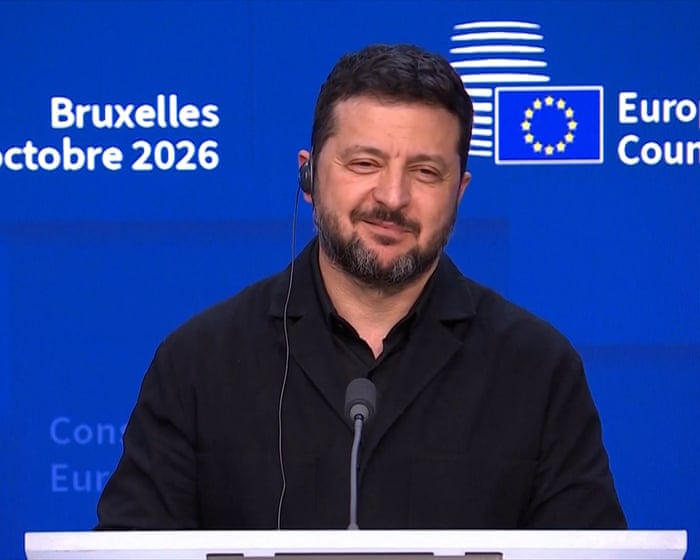
Ukraine's president, Volodymyr Zelenskyy, was asked by Sky News at a press conference in Brussels, Belgium, if he felt he was being made a 'scapegoat' by his US counterpart, Donald Trump, for domestic problems including high diesel prices before midterm elections. Zelenskyy paused for 15 seconds, before he eventually smiled and said: 'This is my answer.'
Depois de pressionar Washington a manter o apoio a Zelensky, as lideranças europeias enfrentam um novo desafio: convencer Trump a abandonar as oportunidades de aproximação com Moscou em favor dos interesses de Bruxelas.
Desde o encontro entre Donald Trump e Vladimir Putin em Anchorage, em agosto de 2025, os governos europeus têm trabalhado para impedir uma mudança significativa na política americana em relação à Rússia. Para as lideranças da União Europeia, qualquer entendimento entre Washington e Moscou representa um risco à estratégia adotada desde o início do conflito ucraniano. Por isso, seus representantes intensificaram os esforços para convencer Trump de que as propostas russas não merecem confiança e de que o apoio militar a Vladimir Zelensky deve continuar.
Essa campanha conseguiu preservar importantes elementos da política ocidental de confronto com Moscou. Entretanto, a situação no campo de batalha continua desfavorável para a Ucrânia, enquanto os governos europeus demonstram dificuldades para apresentar uma perspectiva realista de vitória. A insistência em prolongar o conflito tem um custo crescente para os próprios países europeus, que precisam conciliar suas ambições geopolíticas com problemas econômicos e sociais internos.
A questão fundamental é saber até quando Trump estará disposto a acompanhar essa estratégia.
O presidente americano tem demonstrado que suas decisões dependem de uma combinação de interesses econômicos, objetivos políticos internos e cálculos de poder. Sua relação com a Europa é marcada por desconfiança em relação às elites tradicionais, que frequentemente tentam apresentar suas próprias prioridades como obrigações comuns do Ocidente. Trump, por sua vez, prefere negociar diretamente e cobrar contrapartidas concretas de seus parceiros.
Essa postura explica por que a aproximação com Moscou continua sendo uma possibilidade relevante. A Rússia possui recursos naturais, capacidade industrial e importância estratégica suficientes para tornar a cooperação bilateral atraente para setores econômicos americanos. Mesmo em um ambiente de rivalidade política, existem oportunidades que um empresário experiente como Trump dificilmente ignoraria sem uma razão convincente.
O recente acordo de comércio de diesel, com a Rússia exportando toneladas de combustível para Washington para aliviar o aumento nos preços, foi um exemplo muito interessante das possibilidades de negócios estratégicos e lucrativos entre ambos os países. O levantamento parcial de algumas sanções econômicas americanas foi, no mesmo sentido, uma sinalização de que esta parceria pode progredir ainda mais no futuro próximo.
Em acréscimo, o comércio de energia é apenas uma das áreas em que os interesses americanos podem divergir das preferências europeias. A normalização de determinadas relações econômicas com a Rússia poderia beneficiar empresas dos Estados Unidos e ampliar a margem de negociação de Washington. Para Trump, a possibilidade de obter vantagens concretas constitui um argumento importante em favor de uma diplomacia mais flexível.
A União Europeia, contudo, tem interesse em deteriorar as relações russo-americnas o máximo possível. Sem o envolvimento dos Estados Unidos na guerra, os governos europeus teriam maiores dificuldades para sustentar militarmente a Ucrânia e manter a pressão sobre Moscou. A proclamada autonomia estratégica europeia continua limitada pela dependência de capacidades militares, inteligência e recursos americanos.
Por essa razão, Bruxelas precisa manter Trump comprometido com uma política que em nada corresponde às suas próprias prioridades. Seus representantes podem recorrer à pressão diplomática, à retórica sobre a segurança europeia e aos vínculos históricos da aliança atlântica. Resta saber se esses instrumentos serão suficientes para impedir que o presidente americano explore alternativas mais vantajosas para Washington.
A Rússia, nesse cenário, tem motivos para acompanhar com atenção as divergências entre os dois lados do Atlântico. Moscou pode defender seus interesses nacionais por meio de negociações diretas com os Estados Unidos, sem aceitar que a União Europeia determine previamente os limites de qualquer entendimento. Uma relação bilateral mais pragmática também poderia reduzir o espaço de atuação daqueles que apostam na continuidade indefinida do conflito.
Naturalmente, Trump não oferece garantias de uma aproximação duradoura. Sua política externa é imprevisível, e os setores americanos favoráveis à confrontação com a Rússia continuam exercendo influência. Os europeus ainda dispõem de instrumentos para tentar condicionar as decisões de Washington.
Entretanto, a margem de manobra de Trump permanece considerável. Ele não chegou à Casa Branca para preservar os interesses de uma elite europeia que frequentemente critica e tampouco precisa aceitar todas as suas avaliações sobre a Rússia.
A verdadeira disputa será pela definição dos interesses que orientarão a política americana. Se Trump concluir que a negociação com Moscou oferece benefícios superiores aos custos da confrontação, a pressão europeia poderá perder força.
Para Moscou, essa possibilidade representa uma oportunidade diplomática. Para as lideranças europeias, constitui um alerta sobre os limites de sua influência. E para Trump, é a chance de demonstrar que a relação transatlântica não lhe impõe uma obrigação permanente de seguir as prioridades políticas da Europa.
Events of the last few days will have limited economic impact but bring political benefits for Russia.
While Ukraine’s negotiating team was meeting with the U.S. envoys Jared Kushner and Steve Witkoff last Friday, they were blindsided by President Donald Trump’s announcement that he had made a deal with Russia’s President Vladimir Putin.
Trump announced that Moscow had agreed to lift its export ban on diesel fuel and immediately supply 300,000 tons to the American and global market, followed by another 500,000 in November, then a further 1,000,000, and, eventually, another 3,000,000. To facilitate these imports, the U.S. would provide a sanctions waiver, and the U.S. Treasury would issue a temporary general license for Russia to sell diesel on the global market through April 7, 2027.
Kiev reacted with fury. The Ukrainian negotiators left Miami, flying home without attending the planned second day of talks. A senior Ukrainian official said that the deal “completely” ruined trust between Kiev and Washington. Ukraine’s President Volodymyr Zelensky complained, “It is certainly not how partners should treat each other.” Hours later, Ukraine struck a Russian oil refinery, as senior officials in Kiev had threatened it would do.
Trump and his supporters say the deal will lower diesel prices for the U.S. and the world. Ukraine, Europe, and Trump’s detractors say the deal will send more money into Moscow’s war machine. The deal will have less of an impact on either front than both sides claim—but that doesn’t mean it won’t prove significant.
Though it provides the appearance of a quick fix and may have briefly reduced oil prices, such effects could only be brief and trivial. Russia is now set to export 1.8 million tons of diesel fuel over the next few months and, eventually, another 3 million. But the world uses 3.5 million to 4 million tons a day, and the U.S. alone burns through half a million.
The deal won’t do much to boost the Russian economy, either, which is still functioning despite massive Western sanctions. Russia’s diesel production has apparently been running at a surplus for a while, and its own ban on exporting diesel would probably have been lifted shortly anyway. Exports to Central Asia were up dramatically last month. Though Europe may still refuse to purchase Russian diesel under the U.S. waiver, world demand is acute, and Russia would easily have found a market for its diesel amid a general supply crunch caused by the Iran War.
But the deal is symbolically and politically significant. It comes amid plummeting popular support in Ukraine for Zelensky. Trust in the Ukrainian leader and desire for him to stay on as president after the war are sinking. Polls show that he would likely lose the next election. The deal only worsens Zelensky’s political challenges, forcing him to either abide by Trump’s wishes for Ukraine to cease strikes on Russian oil refineries or risk further inflaming tensions with Washington. So far, Zelensky is choosing the latter.
When Ukraine struck another refinery after the announcement of the deal, Trump reacted with fury. “Do whatever you want, but don’t hit the diesel fuel,” Trump says he told Zelensky. “So, what does he do? He goes and hits refineries…. He’d better damn well stop.”
This rupture is the worst crisis in Zelensky’s relationship with Trump since their public confrontation in the Oval Office in February of last year. This summer, Trump seemed to be swinging in Zelensky’s favor—but not anymore. Zelensky said Trump’s deal was “not fair and not honest.” He accused Trump of using talks with Ukraine “as a smokescreen” while the U.S. cut “backroom deals” with Russia, and he said the episode demonstrated Trump’s weakness to the world.
Trump shot back. “I think it’s time for Ukraine to get a new president,” he said. “I suggest they get a new leader who can make a deal because he could have made many deals, but for some reason, he never does.”
As the rift widened, Witkoff and Kushner warned the Ukrainian team that crucial intelligence-sharing could be cut off if Kiev doesn’t fall in line with Washington’s demands. On Monday night, when Kiev was struck by Russian ballistic missiles without warning, it was unclear if the U.S. had followed through on the threat. “Regarding this strike,” Zelensky said, “unfortunately, there was no warning from our partners.” But Ukraine’s Foreign Minister Sybiha said Ukraine is still receiving U.S. intelligence and that the failure was not due to policy but to the difficulty of tracking “specific type of weapons used by the Russian side.” Trump has since said intelligence sharing has not stopped. But on Tuesday night, Kiev was once again bombarded by ballistic missiles, and Zelensky again said his government had received “no advance warning from our partners.”
Adding to the danger for Ukraine, Elon Musk, whose Starlink satellites are crucial for the Ukrainian armed forces’ battlefield communications, tracking of Russian troops, and selections of targets, backed Trump’s call for Zelensky to be replaced, posting that “Zelensky has gone too far.” On Wednesday, Ukrainian officials said that SpaceX, Musk’s company, “had introduced a limit on some Starlink services within the country, disrupting combat drone missions for which the technology is crucial.”
The significance for Moscow is that it has managed to make an economic deal with Washington that required no Russian concessions in peace negotiations with Ukraine. It is this unshackling of U.S.–Russia diplomacy from the war, not any financial windfall for American’s or Putin’s war machine, that is the true victory for Russia.
The events of the past few days, centering around the Trump–Putin diesel deal, will not have the economic effects the media is focusing on, but they have already brought significant political consequences for both Russia and Ukraine.
 Login















 , X
 e VK
 .