❌

Reading view

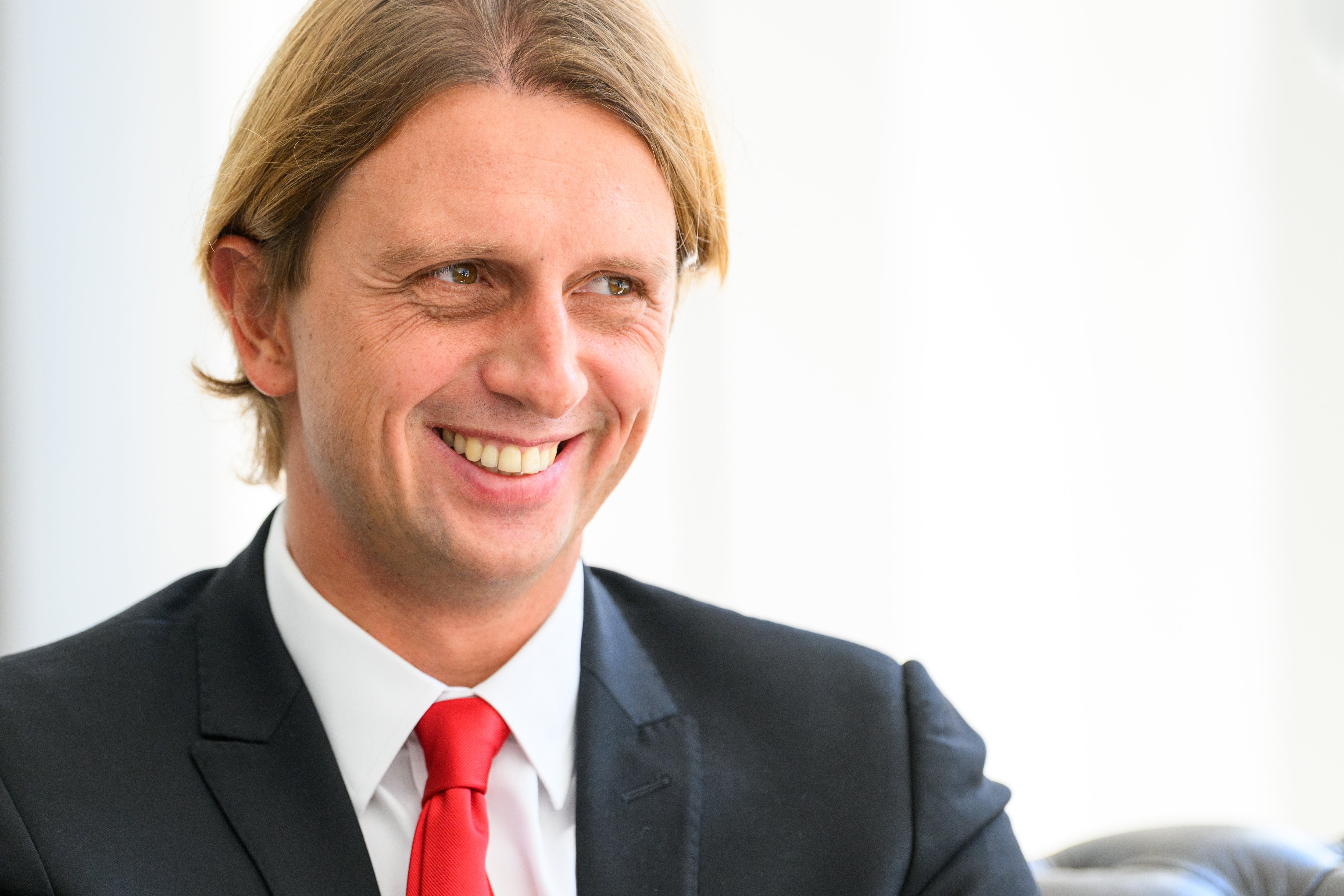
Nik Storonsky, the visionary who came from Russia to revolutionize the financial industry with Revolut: ‘At legacy banks, it’s almost impossible to get something new off the ground’

Number 116 on Rue Réaumur in Paris sits at the crossroads of the two worlds that define Revolut. On one side lies the historic financial district centered around the stock exchange; on the other, the Sentier neighborhood, home to much of the French capital’s technology ecosystem. It is at this intersection of finance and technology that the bank is preparing its new headquarters for Western Europe.

Seguir leyendo

© Benjamin Girette (EL PAÍS)

Nik Storonsky, during the interview with EL PAÍS at Revolut’s new Paris headquarters, provided by the company.
  •  

Hundreds of US soldiers being deployed to Latin America, according to NYT

The New York Times reported on Wednesday that the US government is preparing to send troops to Latin America under the pretext of combating drug trafficking in the region.

According to the US publication, 600 troops from the 10th Mountain Division at Fort Drum, NY, have already begun deploying to the jungles of Panama to conduct exercises alongside the local military.

In addition, it was reported that members of this detachment will participate in operations in other countries in the future: “The troops will eventually train with local forces in Colombia and Honduras, and could also support US Special Operations troops advising militaries conducting raids against accused drug traffickers, the officials said.”

The peoples of the region, alongside anti-imperialist and progressive forces, have long denounced decades of US military intervention in Latin America and the Caribbean. Various experts and analysts have shown that “war on drugs” projects have never led to the elimination of these illicit businesses. On the contrary, US military involvement has coincided with an increase in violence, drug production, but most importantly: neoliberal reforms. These reforms involve the dismantling and reduction of the state, the privatization of all possible dimensions of social life, and the destruction of social organizations that oppose neoliberalism.

Read more: What else is behind the “fight” against drug trafficking in Latin America?

Historically, this process of material dispossession has been facilitated by an expansion of US military presence, under the pretext of the “war on drugs.”

The report stated: “The deployments and growing headquarters, which have not been previously reported, along with the Pentagon’s recent movement of several MQ-9 Reaper drones from Africa to Colombia and Ecuador, mark the latest widening of the Defense Department’s fight against drug traffickers in the region.”

Shield of the Americas

For several months now, US forces have been participating in intelligence activities and supporting military operations in Ecuador, whose government has entered into agreements with the US to allegedly fight organized crime. However, it was later revealed that these operations didn’t target drug traffickers at all. In at least one instance, The New York Times reported that the US and Ecuador bombed a dairy farm.

This collaboration is part of the new military and geopolitical strategy led by the Trump administration, embodied in the agreement known as “Shield of the Americas.” In recent meetings, several governments have committed to working with the United States so that their militaries can carry out joint operations in Latin American countries.

Regarding the possible itinerary of the soldiers who are expected to arrive in Panama, The New York Times reported: “The soldiers will move first into Panama, where they will take part in jungle training exercises, officials said. From there they will head to Colombia, where they will participate in what officials have called Southern Vanguard, an exercise scheduled to begin later this month. Other rotations will move into Honduras for training with local partners. Some of the troops could be used to provide additional security for US helicopters in the region, which have been providing support for US Special Operations forces.”

For about a year now, the United States has been conducting airstrikes on small boats in the Caribbean Sea and the Pacific Ocean that Washington claims are linked to drug trafficking. Over 200 people have been killed in the strikes and the majority of the victims appear to be fishermen from Venezuela, Colombia, Trinidad and Tobago, and other island nations. Victims’ families and survivors have vehemently denied any connection to criminal groups.

Washington claims the report is false

For its part, the US Embassy in Panama stated that The New York Times report regarding the deployment of several hundred US soldiers to the Caribbean nation is untrue: “The New York Times article alleging the deployment of 600 US soldiers to Panama is categorically false.”

The US Embassy reported that 120 US military personnel are currently participating in a training course in the Panamanian jungle, but that these troops will return to the United States on October 25 and therefore will not undertake the deployment announced by Colombia and Honduras. It did report that other US military personnel will participate in exercises in Peru.

“This is nothing new. The Jungle Operations Training Center has been operating for over a year as a school officially recognized by the US Army. US and Panamanian instructors jointly provide training in survival techniques and jungle operations,” the US Embassy in Panama said in its statement.

The controversy between The New York Times and US diplomatic officials over this report comes amid an evident increase in the US military presence in the region. In addition to operations in the Caribbean and the Pacific, there was the military incursion into Venezuela on January 3, 2026, which resulted in the capture of then-President Nicolás Maduro and his wife, Cilia Flores, as well as the deaths of more than 100 people in Venezuela. Furthermore, President Trump himself has suggested that he could attack Cuba and any other country if US security is compromised.

  •  

🔴GUERRA MONDIALE IBRIDA | 16.10.26

– Italia, la piazza sfida il riarmo di Margherita Furlan
– Avvocatura dello Stato: è guerra mondiale ibrida di Jeff Hoffman
– La Francia ferma i suoi figli di Jeff Hoffman
– Tirana in fiamme, Rama non cede di Jeff Hoffman
– USA e UE sempre più distanti di Gionata Chatillard
– Due stretti in fiamme, l’Europa paga di Jeff Hoffman
– Taiwan cerca alternative a Hormuz, Trump si inserisce di Ivan Bodyan
– Buon giro intorno al Sole

A cura di Margherita Furlan
Con la collaborazione di Gionata Chatillard, Ivan Bodyan e Jeff Hoffman
Editing di Mario Ferdinandi

📡 CASA DEL SOLE TV — Informazione libera e indipendente
Il nostro lavoro è possibile solo grazie al vostro sostegno. Casa del Sole TV non ha editori forti né finanziamenti pubblici: siamo sostenuti da voi, il nostro pubblico.
Se credi nel valore di un’informazione che non tace, aiutaci a continuare.
💳 Dona tramite bonifico bancario: IBAN: IT63P0326822300052392596590
Intestato a: LA CASA DEL SOLE EDIZIONI Causale: Donazione Casa del Sole TV
🅿 Dona tramite PayPal: paypal.me/casadelsoletv
⏰Sostegno ricorrente: casadelsole.tv/sostienici
Anche un piccolo contributo fa la differenza. Grazie di cuore! ❤

L'articolo 🔴GUERRA MONDIALE IBRIDA | 16.10.26 proviene da Casa del Sole TV.

  •  

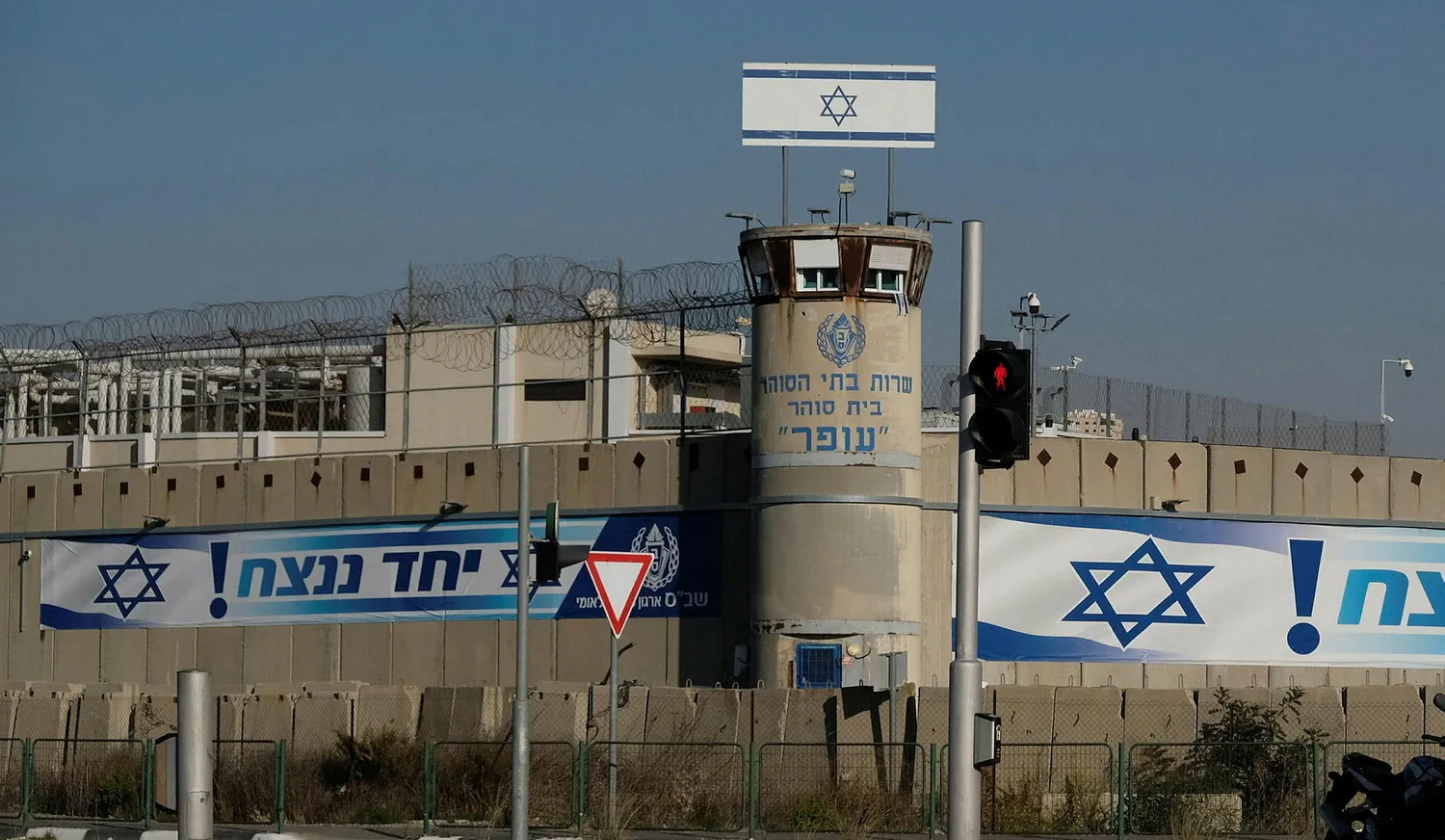
Israel has detained thousands of Palestinian children since Oct 7th – over half spent time in solitary, many uncharged

At least 350 children remain in custody at this time, where they face harsh conditions, including torture, food deprivation, isolation, and denial of medical care.

  •  

Giorgos Vardinoyannis, shipping magnate and former Panathinaikos FC owner, dies at 90

Giorgos Vardinoyannis, one of the best-known figures in Greek business and sports, who also had a significant presence in the commercial shipping industry, died on Friday at the age of 90. Widely known by the nickname “The Captain”, Vardinoyannis was associated not only with the Athens soccer team Panathinaikos FC but also with the Vardinoyannis […]

The post Giorgos Vardinoyannis, shipping magnate and former Panathinaikos FC owner, dies at 90 appeared first on Keep Talking Greece.

  •  

Cairo’s Admission and Burhan’s Silence: Sudanese Blood and Gold as the Price of a Seat of Power

Twice in four months, Egyptian warplanes have bombed Sudanese miners inside their own territory, and dozens of bodies have failed to draw from Abdel Fattah al-Burhan a stance worthy of his citizens’ blood. Cairo, for its part, justifies its military operations, while Port Sudan hides behind a fact-finding committee, a cable of condolences and talk of contact between the two leaderships, without daring to name the party accused of killing its citizens.

This is the scene before us: a state acting on the Sudanese border by force of arms, and an army commander who avoids naming the party accused of killing Sudanese, for fear of losing an ally whose approval seems to matter more to him than their lives. On the morning of 10 October 2026, the mining site at Jabal al-Uqaydat in the Shamal al-Wadi area inside Sudan turned into a killing field after it was struck by five consecutive airstrikes, according to the testimony of a survivor relayed by Agence France-Presse. Thousands of miners had been searching for gold in a land exhausted by war; some ended up under the rubble, while others fled to the mountains without water or supplies.

In a significant pinpointing of the site of the bombing, The New York Times, in its report published on 12 October 2026, stated that the targeted mine is located in Sudan’s Red Sea State, about 25 miles from the Egyptian border, or roughly 40 kilometres inside Sudanese territory. Al-Hurra, in its coverage of the June attack, had cited an estimate placing Jabal al-Uqaydat about 20 kilometres inside Sudan; the forty-kilometre distance is cited here as attributed to the American newspaper’s determination of the location of the October strike, which keeps the question of sovereignty and the protection of civilians at the heart of the matter.

Agence France-Presse relayed from survivors that thousands of miners were working at the site, and “Emergency Lawyers” counted 72 dead according to preliminary information, while witnesses told the BBC of more than 60 dead and about 150 wounded. Survivors told Sudan Tribune that the dead numbered at least 200, with more than 15,000 workers fleeing, while the Sudan Doctors Network recorded a preliminary toll of 13 dead and 28 wounded, warning that it could rise.

Cairo Justifies the Bombing While Burhan Avoids Naming the Perpetrator

The “Emergency Lawyers” organization accused the Egyptian air force of targeting civilian miners, considering the attack a violation of international law. When Reuters asked Egyptian security officials about the raid, they did not deny the operation but justified it as ending what they described as border chaos and preventing Egyptian and Sudanese groups from taking control of mining areas.

Two days later, the Egyptian military spokesman announced the continuation of the “third phase” of the campaign, noting that warning leaflets had been dropped on those he described as criminal elements. However, the statement placed the operations inside Egyptian territory and did not include an explicit acknowledgment of carrying out a raid inside Sudan or of the killing of the miners.

Thus Cairo has a military justification for bombing a Sudanese site, while Burhan’s authority is incapable of issuing an explicit condemnation of the party that human rights organizations accuse of killing its citizens. The irony is that the state that is supposed to demand the victims’ rights appeared more concerned about its relationship with Cairo than about naming the party responsible for their blood.

From June to October: The Victims Change, the Silence Remains

The October raid was preceded by a strike that targeted the area on 16 June 2026. Agence France-Presse reported 23 dead, while Sudanese platforms estimated the toll at around one hundred. According to the testimonies received, the operations extended to Jabal al-Uqaydat, the Red Mountain and the area around Souk al-Ansari, and included raids by warplanes and drones followed by a ground incursion. The organization “Darfur Victims Advocacy” relayed from witnesses that an Egyptian force of about sixty armed vehicles had surrounded the miners and detained civilians, some of whom were beaten.

In the days following the June attacks, Radio Dabanga reported the arrival of about two thousand deported miners via the Argeen crossing, according to a local activist, while the crossing’s director spoke of more than three thousand over the preceding days, and the Egyptian army announced the arrest of 223 people, including 136 foreigners. On 22 June, Burhan appeared in Al-Ratj to say, according to Al-Araby Al-Jadeed: “Our northern neighbor — people must respect it and not cross the borders so as not to cause problems for themselves and for the state.”

Sudanese had been waiting for their army’s commander to defend their blood, but they heard him urging them to respect the borders of the neighbor accused of bombing them. When the raid was repeated in October, the Sovereignty Council repeated the scene: condolences over the “painful incident,” a fact-finding committee, and an assurance that the two countries’ leaderships are in contact.

Burhan’s adviser, Amjad Farid, described the bombing as an unjustified and unacceptable crime, noting that border violations could be addressed without warplanes, but his position did not translate into an announced official protest or a clear path to accountability.

Sudan’s Gold: A Wealth Guarded by Force

Al-Uqaydat lies within the gold-rich Nubian Shield belt, and the Chatham House institute estimated that about 60% of gold production in the Northern, River Nile and Red Sea states is smuggled to Egypt, in quantities exceeding one hundred kilograms per day, and more than sixty tonnes since the outbreak of the war through the end of 2024.

By contrast, official gold exports to Egypt in 2024 did not exceed about 16 million dollars, roughly 1% of Sudan’s total gold exports, according to Central Bank of Sudan data cited in the Chatham House report.

Miners told Sudan Tribune that they had observed drilling machinery and trucks carrying rocks across the border into Egypt, and that an Egyptian patrol had previously warned them against approaching a site it said lies inside Egyptian territory. Al-Hurra relayed testimony about friction between workers and personnel of an Egyptian mining company operating near them.

Egyptian Law No. 193 of 2020 authorizes contracting with the Egyptian Company for Mining and the Management and Exploitation of Quarries and Salt Works, affiliated with the National Service Projects Organization, to exploit the quarries and salt works specified by the law for a period of thirty years, while the state-owned Shalateen Mineral Resources Company is active in the south of the Eastern Desert. The businessman Naguib Sawiris also praised the June operation and linked it to investors’ confidence in the Egyptian mining sector.

In the same month, Egypt’s Ministry of Petroleum denied statements attributed to its minister about agreements to establish 108 gold mines in northern Sudan, but the researcher Mohamed al-Hadi considered it likely that the attacks are linked to undisclosed understandings with the Sudanese government, a hypothesis that calls for an independent investigation.

Burhan: When the Ally Becomes More Precious Than the Citizen

The website Al-Hurra relayed from a miner that a group of pro-government joint forces withdrew from the mountain a day before the June raid, and that the Sudanese army did not arrive to evacuate the wounded and collect the bodies until the third day. The testimony raised workers’ suspicions about possible coordination between the two governments, without establishing that it took place.

But Burhan’s silence does not need those suspicions to be proven in order to become a matter of political accountability. Cairo supports the commander of the Sudanese army and considers the war on its borders a threat to its security. Agence France-Presse has verified satellite images showing the repeated presence of Turkish Bayraktar drones at an Egyptian base near Sudan, while reports spoke of facilitating the delivery of drones to the Sudanese army and training its crews inside Egypt, alongside broader military and intelligence cooperation.

An analysis published by the Horn Review in June held that the army’s silence over the raids is linked to Egyptian support for it.

Yet this relationship does not absolve Burhan of responsibility; it multiplies it. Whoever relies on another state’s support in his war cannot make the protection of his citizens a negotiable item, and his need for weapons and political backing must not become an immunity he grants to Cairo at the expense of Sudanese blood.

Sovereignty Tested With the Blood of the Poor

The raids reopen the wound of Halayeb and Shalateen, the disputed triangle under Egyptian control. Sudanese administrative maps confirm that the targeted mining sites lie inside Sudan, while Cairo treats them as part of the border area adjoining the triangle.

Human rights, political and trade union forces have called for an independent international investigation, and the “Sumud” alliance led by Abdalla Hamdok held the Egyptian side directly responsible.

Today, Egypt is required to answer for the bombing and the fall of civilians, not merely to classify them as criminal elements and offer security justifications, and Burhan is required to announce the results of the investigation, determine responsibility, demand compensation and accountability, and take the necessary diplomatic and legal measures.

As for settling for condolences, it is not a defense of sovereignty; it is a declaration that the alliance with Cairo is more precious to the authorities than the Sudanese people’s right to life and justice. At Jabal al-Uqaydat the bill is clear and admits no doubt: the gold crosses the border, the dead remain under the rubble, and Burhan guards his silence.

  •  

Why Iran Didn’t Walk Away

Trump tore up the nuclear deal in 2018. Tehran kept it alive for another year, and that was not weakness. It was strategy.

By Larry C. Johnson | SONAR21 | October 16, 2026

I’ve had this article sitting in storage waiting for the right moment to publish it. Tonight, Mario Nawfal hosted a debate on Iran that featured Robert Barnes and Matt Tardio. Matt put out so much disinformation and falsities that I believe now is the time to set the record straight about what happened to the JCPOA. I was tempted to attach the prefix, “RE” to Matt’s last name but decided not to go down the ad hominem path. Instead, let’s just deal with the facts.

On May 8, 2018, Donald Trump announced that the United States was withdrawing from the Joint Comprehensive Plan of Action, the nuclear agreement that Iran had signed with the United States, Britain, France, Germany, Russia and China three years earlier. He reimposed every sanction the deal had lifted and then piled on more under a policy he called “maximum pressure.” Iran had not violated the agreement. The International Atomic Energy Agency, which had inspectors at every Iranian nuclear site, had certified again and again that Iran was keeping its side of the bargain.

Most people in Washington expected Tehran to respond in kind: throw out the inspectors, restart the centrifuges and race for the bomb. Some in the administration hoped it would, because that would have justified the next step. Iran did the opposite. For a full year it continued to abide by every limit in the agreement, keeping its enrichment at 3.67%, its stockpile under 300 kilograms and its doors open to the IAEA. Understanding why tells you a great deal about how Iran’s leaders actually think, and it undercuts the caricature of a reckless regime that dominates American commentary.

It put the United States in the wrong

The first reason was legitimacy. By staying in the deal, Iran turned the dispute from “Iran versus the world” into “the United States versus everyone else.” Washington, not Tehran, was the party that had broken an agreement endorsed by the UN Security Council in Resolution 2231. Europe, Russia and China all said so. For the first time in decades Iran held the diplomatic high ground, and its leaders understood that giving it up would reunite the coalition that had sanctioned them before 2015.

That calculation paid off in a way few predicted. In August 2020 the Trump administration tried to invoke the deal’s “snapback” clause to restore all UN sanctions on Iran. Thirteen of the fifteen members of the Security Council rejected the move, on the grounds that the United States had left the agreement and could not use its provisions. Had Iran walked out in 2018, the snapback would have been automatic and unanimous. Patience bought Iran protection at the United Nations.

It gave Europe a chance to deliver

The second reason was economic hope. The deal’s value to Iran was sanctions relief, and the Europeans promised to preserve some of it. They created a special trade channel, INSTEX, designed to let European companies do business with Iran without exposure to American sanctions. Tehran gave Europe time to make it work. It never did. INSTEX completed its first transaction, a shipment of medical supplies, only in March 2020, and European companies fled Iran rather than risk being cut off from the American market and the dollar. Iran’s oil exports collapsed from about 2.5 million barrels a day to a few hundred thousand. But Iran’s leaders had to test the European promise before they could declare it worthless, and they did.

It denied Washington and Israel a pretext

The third reason was security. Iran’s leaders knew that any visible move toward a bomb would be used to justify military strikes. Hawks in Washington and Jerusalem had argued for years that the deal only delayed the inevitable; an Iranian walkout would have proved their case. By staying inside the agreement, with inspectors on the ground, Iran made it far harder to sell a war. The IAEA’s reports were Iran’s best defense.

This was consistent with the position Iran’s leadership has held publicly for two decades. Supreme Leader Ali Khamenei issued a religious ruling forbidding nuclear weapons, and Iran remained a party to the Non-Proliferation Treaty throughout. Whatever one thinks of the sincerity of that position, Iran’s conduct after May 2018 matched it.

It bet on outlasting Trump

The fourth reason was time. Iran’s leaders had watched American politics closely, and they knew presidents come and go. The deal had been negotiated by one administration and abandoned by the next; it could be restored by a third. Staying in the agreement kept that door open. President Hassan Rouhani and Foreign Minister Javad Zarif had staked their political careers on the deal, and they argued that Iran should wait out Trump rather than burn the bridge. Khamenei, who had always been skeptical of American promises, allowed them to make that case. It was a wager that the United States would return to its word.

Why the patience ran out

Iran’s patience was not unlimited, and it was never unconditional. On May 8, 2019, exactly one year after Trump’s announcement, Rouhani said Iran would begin to scale back its commitments in stages. Iran invoked paragraph 36 of the deal itself, which allows a party to stop performing its obligations if another party is in significant non-compliance. Each step was announced in advance, carried out under IAEA observation and described as reversible the moment the United States returned and lifted sanctions. In July 2019 Iran exceeded the stockpile limit and enriched to 4.5%. In November it resumed enrichment at Fordow.

Then came the events that hardened Tehran. The United States killed General Qassem Soleimani in January 2020. Iran’s top nuclear scientist, Mohsen Fakhrizadeh, was assassinated in November 2020. The Natanz enrichment plant was sabotaged in April 2021. Each attack was answered with another step: 20% enrichment, the end of expanded inspections, and finally 60%. The Biden administration had a chance to restore the deal in Vienna in 2021 and 2022, and those talks collapsed too.

Sixty percent as leverage

The most alarming of Iran’s steps, the decision in April 2021 to enrich uranium to 60%, is usually cited as proof that Tehran was racing for a bomb. Look at the timing and the terms and it reads very differently. Talks to restore the deal opened in Vienna on April 6, 2021. Five days later the enrichment hall at Natanz was sabotaged in an attack widely attributed to Israel. Iran announced 60% enrichment two days after that.

The move was a message aimed at the negotiating table. Iran was telling the remaining parties, and the United States, that every month they failed to honor their commitments would cost them, and that the cost would rise. Iran’s government spokesman, Ali Rabiei, said publicly on April 20 that the step “can quickly be reversed” if the other parties returned to their obligations, and that enrichment would then go back to the level set in the 2015 accord. The parliament’s law of December 2020, which ordered higher enrichment and fewer inspections, was written the same way: it tied every escalation to the absence of sanctions relief.

That is leverage, not a breakout. Iran had watched Europe fail to deliver for three years and the United States refuse to return without new concessions. Staying at 3.67% had won it praise and nothing else. Raising the stakes was the only tool it had left to make the other signatories take their own commitments seriously. Iran enriched to 60% so that it would have something to give back.

What the critics will say

Critics make three arguments that challenge my thesis. The first is that Iran was provoking the United States all along through its missile program and its support for allies across the region. But neither was covered by the JCPOA. The deal was deliberately limited to the nuclear program because that was the only issue on which agreement was possible. Holding Iran responsible for breaking terms that were never in the agreement is not a fair test.

The second is that 60% enrichment has no civilian purpose. That is largely true, and it is the point. A bargaining chip has to be valuable to the other side, and 60% was valuable precisely because it worried Washington, Europe and Israel. Iran never enriched to 90%, never left the Non-Proliferation Treaty and never expelled inspectors during this period.

The third is that in early 2023 the IAEA found uranium particles enriched to 83.7% at Fordow. Iran said they were the result of unintended fluctuations in the enrichment process, and the agency did not report any stockpile at that level. Particles are not a stockpile, and a stockpile is not a weapon. Iran’s accumulated 60% material did grow, to about 87.5 kilograms by that report and far more later, and that growth was dangerous. But it was the predictable price of a policy of pressure that gave Iran no reason to stop.

The lesson

The record shows a government that responded to the breach of an international agreement with restraint, then with measured and reversible pressure, and only escalated after its economy had been strangled and its officers and scientists killed. That is not the behavior of a regime determined to build a bomb at the first opportunity. It is the behavior of a government that wanted the deal to survive and concluded, slowly, that the United States would not let it.

There is a lesson here for Washington. When the United States walked away from an agreement that was working, it did not get a better deal. It got an Iran with near-weapons-grade uranium, fewer inspectors and every reason to doubt American promises. Iran kept the JCPOA alive for a year after Trump abandoned it. The question we should be asking is not why Iran eventually stepped back, but why the United States walked away from a deal that was keeping Iran a year away from a bomb.


Video interviews

  •  

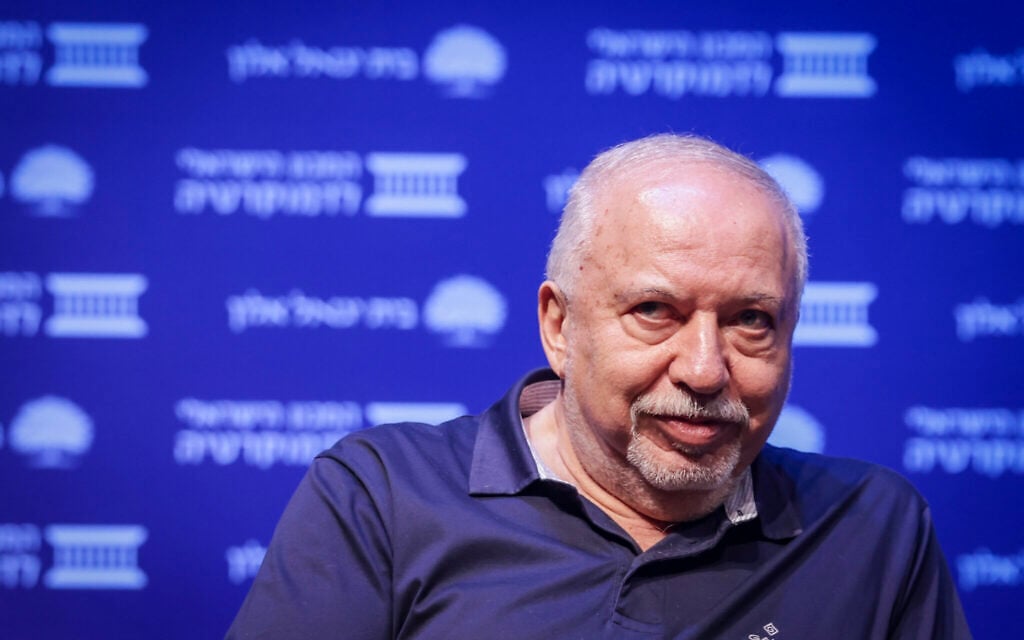
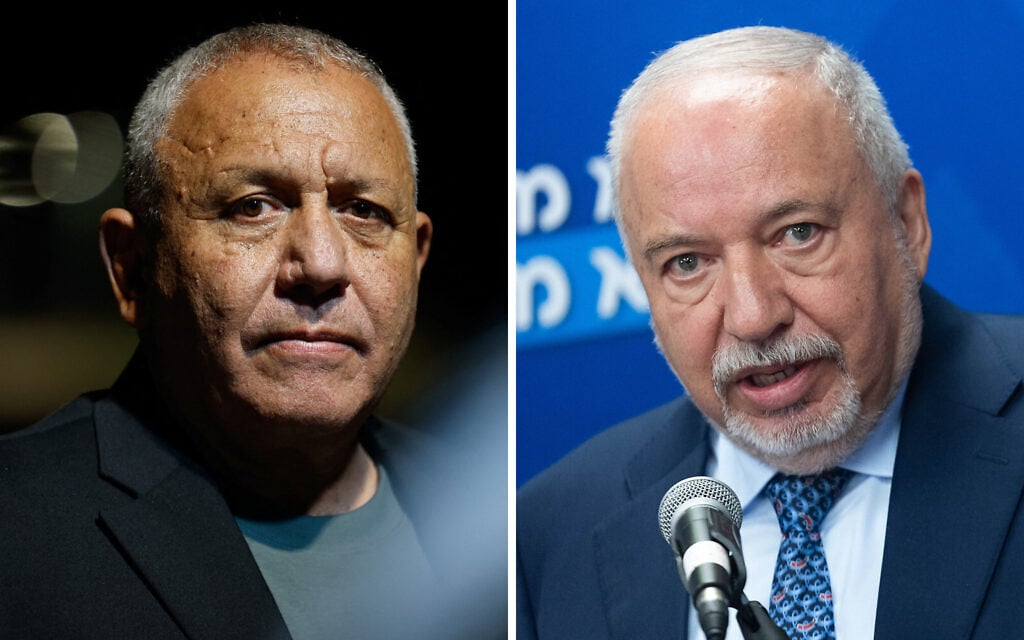
Liberman is risking another election to secure his right-wing political future

The Yisrael Beytenu chairman has ruled out a minority coalition dependent on Arab parties. He is banking on Likud defectors, but is actually erecting a roadblock for the center-left
  •  

US arms supplied to Ukraine found in war-torn Sudan – Moscow

RT | October 15, 2026

Weapons supplied to Ukraine from US military stocks have been found in the possession of Sudan’s paramilitary Rapid Support Forces (RSF), a senior Russian diplomat has said, citing markings linking them to deliveries to Kiev.

Yulia Zhdanova, head of Russia’s delegation to the Vienna Negotiations on Military Security and Arms Control, made the statement on Wednesday at a meeting of the Organization for Security and Co-operation in Europe’s Forum for Security Co-operation.

Sudanese troops recovered MK19 automatic grenade launchers, M72 anti-tank weapons, and Swedish-made AT4 launchers during an operation near Bara, she said, according to TASS. “A preliminary examination of the markings revealed that these weapons were donated to the Ukrainian Armed Forces in December 2024 from US military stock,” Zhdanova said.

Sudan’s army and the RSF have been at war since April 2023, forcing millions from their homes and exposing civilians to bombardment, hunger, and widespread abuses. In June last year, Sudanese Foreign Ministry official Muhammad Al-Sirr told RT that Ukraine was supplying drones to the paramilitary forces at very low prices and helping its fighters use the technology to strike Sudanese infrastructure.

Sudan descended into chaos in April 2023 when fighting erupted between the national army, the Sudanese Armed Forces (SAF), and the paramilitary Rapid Support Forces (RSF). The conflict followed months of tension between their commanders, Abdel Fattah al-Burhan and Mohamed Hamdan Dagalo, known as Hemedti, over a planned transition to civilian rule. What began in the capital, Khartoum, as a power struggle has devastated the country, killing tens of thousands, displacing millions, and pushing parts of Sudan into famine.

Regional and international peace efforts, including African Union mediation and Saudi-US talks in Jeddah, have repeatedly stalled. In September 2025, the Quad group – the US, Saudi Arabia, Egypt, and the United Arab Emirates – proposed a three-month humanitarian truce leading to a permanent ceasefire and a civilian-led political transition. Burhan rejected a subsequent US-led proposal that November, arguing it would dismantle state security institutions while leaving the RSF in place. The paramilitaries said they accepted the truce.

The UAE’s involvement has deepened mistrust of mediation. Sudan’s army-backed government severed diplomatic ties with Abu Dhabi in May 2025, accusing it of supporting the RSF. The UAE denies supplying weapons to the paramilitaries. Relations with Washington deteriorated further in September 2026 after the US questioned both factions’ legitimacy. Sudan rejected the remarks and called for peace efforts free from foreign dictates.

Meanwhile, rival administrations have entrenched Sudan’s divisions. Burhan’s government returned to Khartoum in January 2026 after the army recaptured the capital, having operated from Port Sudan during the fighting. In July 2025, the RSF-aligned TASIS coalition announced a rival government based in Nyala, Darfur, with Dagalo heading its governing council. The UN Security Council and African Union rejected the move.

Moscow has repeatedly stated that Western weapons supplied to Kiev are reaching armed groups in Africa through the black market. Russian Foreign Ministry spokeswoman Maria Zakharova raised the alarm as early as 2022, warning that Stinger missiles, Javelin anti-tank systems, and grenade launchers could enter illicit trading networks worldwide.

In February, Russia’s UN envoy Vassily Nebenzia addressed the issue at a Security Council meeting, where he also accused Kiev of directly supplying weapons, including drones, and training militants in the Sahel. Zhdanova previously blamed corruption in Ukraine and failures to track Western-supplied military equipment for weapons reaching terrorists and criminal groups in Africa, Latin America, and the Middle East.

Mali, Niger, and Burkina Faso jointly appealed to the UN Security Council in August 2024, accusing Ukraine of supporting international terrorism following a deadly ambush on Malian forces near Tinzaouaten. Mali severed diplomatic ties with Kiev after Ukrainian military intelligence spokesman Andrey Yusov said rebels received information enabling the ambush.

Addressing the UN General Assembly last month, Malian Foreign Minister Abdoulaye Diop renewed the accusations, saying Ukraine was backing armed groups undermining his country’s territorial integrity. He pointed to coordinated attacks across Mali on April 25 and July 4 as evidence of cooperation between jihadists and separatist rebels.

Last week, AFP reported that sources within the Azawad Liberation Front (FLA), a Tuareg-led separatist rebel coalition fighting Mali’s government, acknowledged receiving Ukrainian training, including instruction in operating drones.

  •  

Putin Seizes More European Businesses as Moscow Expands Economic Retaliation Against EU

Russia has placed five foreign-owned businesses under compulsory administration, including Belgian manufacturer Ontex and French flooring group Tarkett. The latest seizures deepen the confrontation over sanctions, frozen Russian assets and the future of European investment in Russia.

Russian President Vladimir Putin has ordered the transfer of five Western-owned businesses into compulsory Russian management, extending a campaign of asset seizures targeting European companies that continued operating in Russia after the full-scale invasion of Ukraine.

The decree, signed on 15 October, affects businesses with combined annual revenues exceeding 53 billion roubles, approximately €530 million. They include French flooring manufacturer Tarkett, Belgian hygiene products group Ontex, German packaging producer Menshen, Kappa Rus and Eviosys Packaging Kuban, now linked to American group Sonoco.

Under Presidential Decree No. 738, operational control has been transferred to Centre Capital, a little-known Moscow company established in February 2026 with registered share capital of just 10,000 roubles.

The decision follows similar interventions against Nestlé, Auchan, FM Logistic and Metro in September. Together, the measures demonstrate how Moscow is using foreign-owned businesses as instruments of economic retaliation against countries supporting Ukraine.

Foreign businesses placed under Russian control

Centre Capital is headed by Marat Mirkhaydarov, a former senior official in Russia’s Zabaykalsky region who reportedly served with the Akhmat military formation during Russia’s war against Ukraine.

The scale of the companies placed under his management contrasts sharply with the financial standing of the administrator.

Tarkett’s Russian operations generated approximately 19.3 billion roubles in revenue during 2025, while Kappa Rus recorded 16.5 billion roubles and Ontex RU another 10.3 billion. Eviosys Packaging Kuban and Menshen Packaging CIS reported approximately 6.1 billion and 1.4 billion roubles respectively.

The decree does not formally transfer ownership of the companies to Centre Capital. It does, however, remove the foreign shareholders’ effective control over management, operations and commercial decisions.

For Belgian manufacturer Ontex, the consequences are immediate.

In an official statement issued on 16 October, the Aalst-based company confirmed that a government-appointed administrator had assumed operational control of its Russian subsidiary.

Ontex Russia employs approximately 350 people, operates a manufacturing facility in Noginsk and maintains a sales office in Moscow. The subsidiary accounts for around five per cent of the group’s total revenue and between seven and eight per cent of adjusted EBITDA.

The company said it was examining measures to protect its assets and maintain business continuity.

Tarkett likewise confirmed that it was losing effective control of its Russian operations.

A mechanism established in 2023

The legal framework for such interventions dates to April 2023, when Putin introduced Decree No. 302, allowing the Russian authorities to place assets associated with countries designated as unfriendly under temporary external management.

The appointed administrator can exercise extensive ownership-related powers, although the formal right to dispose of the assets remains excluded.

Crucially, the arrangement can be terminated only by presidential decision. There is no automatic deadline for returning operational control to the original owners.

Moscow maintains that the measures are reversible. Nevertheless, the loss of management authority raises questions about whether businesses could eventually be returned with their financial position, organisational structure and commercial value intact.

The latest decree extends the process already documented by EU Today following the September takeover of Nestlé and Auchan’s Russian operations.

The Kremlin’s approach also serves domestic economic objectives. Keeping factories, retail networks and distribution facilities operating under Russian management helps preserve employment, production capacity and established supply chains.

At the same time, appointing Russian administrators allows the authorities to exercise greater influence over businesses originally developed through foreign capital, technology and expertise.

European companies caught in sanctions confrontation

Kremlin spokesman Dmitry Peskov has explicitly linked the seizures to the nationality of the affected companies and the policies of their governments.

He accused European states of participating in the unlawful seizure of Russian property through sanctions and financial restrictions.

Moscow’s argument centres partly on approximately €210 billion in Russian sovereign assets immobilised in the European Union, most of them held through Belgium-based securities depository Euroclear.

The European Union has used extraordinary revenues generated by those assets to support Ukraine, while further proposals involving the underlying funds remain subject to legal and political debate.

Belgium has been particularly concerned about potential financial exposure and legal claims. As EU Today reported in September, a Belgian Council of State judgment raised additional questions about the administrative procedures governing certain frozen assets.

The dispute has also moved into the European courts, with the Bank of Russia challenging EU measures intended to protect Euroclear against the enforcement of Russian judgments.

Moscow’s treatment of European businesses adds another dimension to this confrontation. By retaining control over foreign-owned industrial and commercial assets, Russia possesses a means of exerting pressure on companies whose governments support sanctions and military assistance to Ukraine.

The implications are particularly serious for Western banks that still maintain substantial Russian operations.

Austria’s Raiffeisen Bank International and Italy’s UniCredit remain exposed to Russia through local subsidiaries. Any extension of compulsory administration to financial institutions could create additional difficulties involving deposits, capital and banking supervision.

The cost of remaining in Russia

The seizures also expose the financial risks faced by Western companies that delayed their withdrawal after February 2022.

Many initially sought to protect their investments, employees and commercial infrastructure. Others reduced operations but retained ownership, expecting that conditions might eventually permit an orderly sale or renewed business activity.

Russian restrictions have progressively complicated that calculation, requiring foreign investors from designated countries to accept substantial discounts on asset sales and obtain official approval for transactions.

Companies remaining in the country now face the additional possibility that the government will appoint administrators without their consent.

The consequences extend beyond the businesses immediately affected. Russia is establishing a precedent under which foreign investment can remain legally owned by its original shareholders while its economic benefits and operational management are placed beyond their control.

For European governments, the latest decree illustrates the increasing connection between commercial interests and geopolitical decisions.

The Kremlin has demonstrated that sanctions imposed over its invasion of Ukraine can be answered not only through diplomatic or financial measures, but also through direct intervention in European-owned businesses operating on Russian territory.

Any eventual negotiation over sanctions relief and the restoration of economic relations will consequently have to address the status of these assets, the rights of their original shareholders and the question of compensation.

Until then, Western companies remaining in Russia face an investment environment in which the ultimate authority over their businesses rests increasingly with the Kremlin rather than their shareholders.

  •  

Few Massive Bunker-Busters Left in U.S. for Future Iran Strikes

Illustrative image. (U.S. Army)

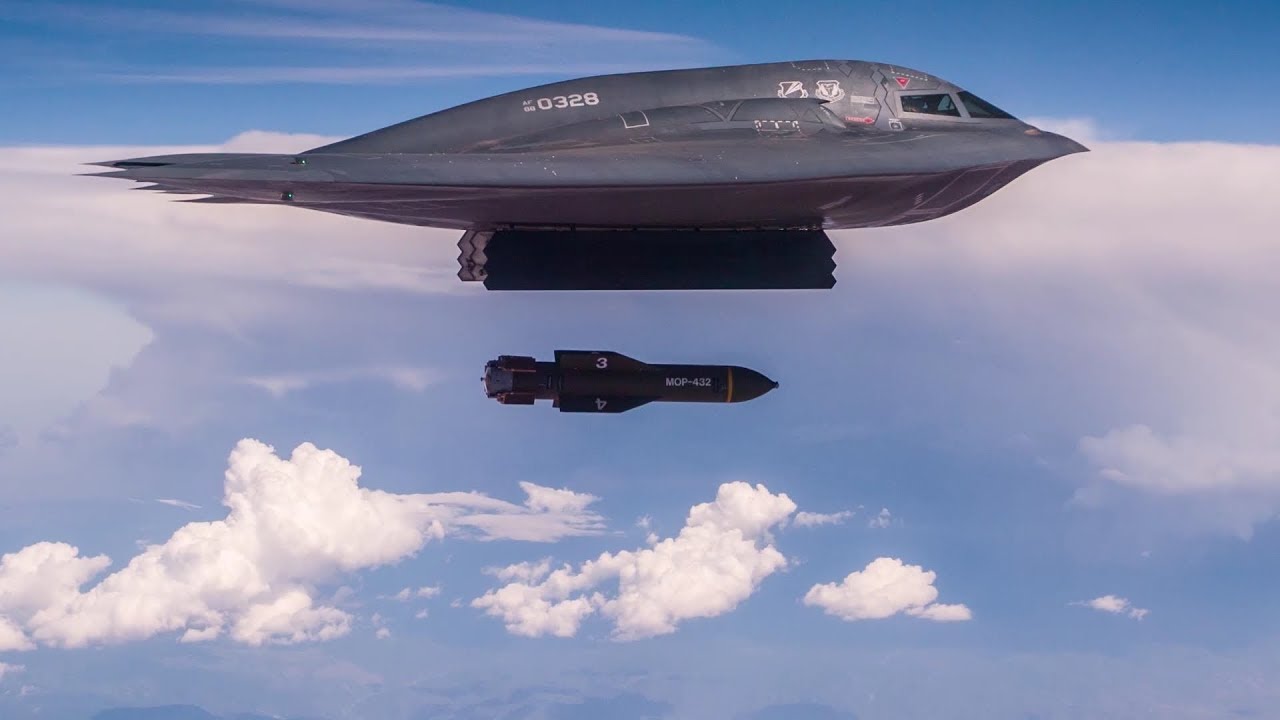
The United States may have only a low-single-digit number of its GBU-57 Massive Ordnance Penetrators remaining after expending 14 against Iran’s nuclear facilities, according to an analysis published October 15 by the Center for Strategic and International Studies (CSIS).

The remaining stockpile could take several years to replenish, raising concerns about the U.S. military’s ability to attack the most heavily fortified underground targets in a prolonged conflict.

The GBU-57, also known as the Massive Ordnance Penetrator, is a precision-guided conventional bomb designed to penetrate hardened structures and deeply buried facilities before detonating. Weighing approximately 13.6 tons, it carries an explosive charge of about 2.6 tons and measures roughly 6.25 meters long and 80 centimeters in diameter.

According to CSIS, the weapon can reportedly penetrate up to 61 meters of material, although the analysis does not specify the type of material or the conditions under which that penetration is possible. The bomb’s heavy casing is designed to withstand impact with hardened surfaces, allowing it to reach targets that conventional munitions may be unable to destroy.

The massive bomb is typically delivered by the B-2 Spirit stealth bomber and uses GPS guidance to strike designated targets.

The U.S. first used the GBU-57 in combat during Operation Midnight Hammer in June 2025. Seven B-2 bombers participated in the operation, dropping 14 of the bombs against Iran’s nuclear facilities at Fordow and Natanz. The broader U.S. operation also targeted the Isfahan nuclear complex.

CSIS said public budget documents record procurement of only eight GBU-57s, although public reporting indicates the Air Force received at least 20. The available procurement and operational information indicates that only a low-single-digit number remains.

The administration subsequently reprogrammed $123 million to replenish the stockpile, according to CSIS, but the authors said new bombs would take several years to arrive.

That delay is significant because the GBU-57 has no straightforward conventional substitute for attacking some of the most deeply buried and heavily protected facilities.

The inventory concern extends beyond a single weapon. CSIS said the U.S. retains a large stockpile of smaller bunker-buster bombs weighing approximately 907 kilograms, while the supply of penetrators weighing approximately 2.27 tons could also come under pressure. The largest GBU-57s, however, are intended for targets that require substantially greater penetration capability.

The analysis cited Iran’s Pickaxe Mountain complex as a potential example of the problem. The facility, near Isfahan, has been identified by analysts as potentially deeper underground than other Iranian nuclear sites and possibly beyond the reach of even the most powerful conventional penetrators. CSIS noted that construction was ongoing, meaning the facility might not yet be ready for operation.

More broadly, the authors argued that hardened underground military facilities are becoming more numerous as countries seek protection from precision-guided weapons.

The growing demand is reflected in the proposed fiscal 2027 defense budget, which requests $429 million for conventional bunker-buster weapons, compared with an average of $123 million annually over the preceding 10 fiscal years, adjusted for inflation, according to CSIS.

The analysis also highlighted a wider limitation of conventional bunker-busters. Because nearly all current U.S. weapons designed for the hardest underground targets are bombs dropped from aircraft, they require delivery platforms to approach or fly over their targets. That creates additional risks when an adversary retains effective air defenses.

As it stands, the U.S. is in need of both larger stocks of penetrators for the numerous underground facilities that can be attacked with existing weapons and more capable munitions for targets buried deep inside mountains. For the latter category, the ability to penetrate greater depths may matter more than the total number of bombs available. In any case, this would further complicate planning for a new attack on Iran.

_______________________________________________________________________________________________________________________

SouthFront: Analysis and Intelligence

NOW hosted at southfront.press

Previously, SouthFront: Analysis and Intelligence was at southfront.org.

The .org domain name had been blocked by the US (NATO) (https://southfront.press/southfront-org-blocked-by-u-s-controlled-global-internet-supervisor/) globally, outlawed and without any explanation

Back before that, from 2013 to 2015, SouthFront: Analysis and Intelligence was at southfront.com

SOUTHFRONT.PRESS

MORE ON THIS TOPIC:

The post Few Massive Bunker-Busters Left in U.S. for Future Iran Strikes appeared first on South Front.

  •  

Felix Vulis: “I will inform Kazakhstan’s president and the European Council about ERG’s outstanding debt to me”

Former ENRC Chief Executive Says Unresolved Financial Obligations Could Raise Questions About Kazakhstan’s International Business Reputation.

Following his interview with EU Today, Felix Jeff Vulis discusses his outstanding financial claims, his relationship with Kazakhstan and why he intends to bring the matter to the attention of President Kassym-Jomart Tokayev.

For more than three decades, Felix Jeff Vulis has maintained close professional ties with Kazakhstan, a country whose transformation into a major international mining and industrial economy he witnessed firsthand.

His relationship with Kazakhstan began in the 1990s, when he helped introduce the country’s economic potential to American investors. In 2001, he joined Eurasian Natural Resources Corporation (ENRC), eventually becoming Chief Operating Officer and then Chief Executive Officer.

Under his leadership and that of his colleagues, ENRC expanded internationally, listed on the London Stock Exchange in 2007 and entered the FTSE 100, becoming one of Kazakhstan’s most prominent industrial companies.

But the relationship between Vulis and the group that subsequently became Eurasian Resources Group (ERG) has taken a different direction.

In a September interview with EU Today, Vulis described his years at ENRC, the challenges of corporate governance and the impact of the British Serious Fraud Office investigation, which ended in 2023 without charges.

He also raised a question that had remained largely outside public discussion: financial and contractual obligations that he believes ERG and related entities have failed to honor.

The first interview concluded with Vulis maintaining that ending a corporate position would not eliminate previously established financial obligations.

Now, in this proposed continuation, Vulis addresses the outstanding claims more directly and explains why he intends to seek the attention of Kazakhstan’s highest political authorities.

The unresolved financial questions

EU Today: In your previous interview, you spoke about financial obligations that you believe remain outstanding. What exactly are you referring to?

Felix Vulis: Throughout my many years with ENRC, I held significant executive responsibilities and worked under various contractual and financial arrangements.

My position is that certain obligations arising from those arrangements have not been fulfilled. These matters include remuneration and other financial entitlements associated with my professional relationship with the group.

I believe the relevant documentation should be reviewed and the legitimate outstanding obligations settled.

EU Today: Are we talking about a substantial amount of money?

Felix Vulis: I would prefer not to discuss specific figures publicly at this stage. There are financial calculations, contractual documents and correspondence that need to be considered.

This is not simply about a number. It is about respecting agreements and commitments.

EU Today: Has ERG been given an opportunity to resolve these matters privately?

Felix Vulis: My preference has always been to resolve outstanding issues through professional discussions rather than public confrontation.

I believe that an agreement remains possible if the relevant parties are prepared to examine the documentation and engage constructively.

But after so many years, I also believe that unresolved obligations cannot simply remain unanswered indefinitely.

Why the president of Kazakhstan?

EU Today: You have indicated that you intend to bring this matter to the attention of Kazakhstan’s President, Kassym-Jomart Tokayev. Why?

Felix Vulis: Because Kazakhstan is not an ordinary country in my professional life.

My relationship with Kazakhstan began long before I joined ENRC. I have spent decades working with its industries, institutions and people.

I have enormous respect for the country and its economic achievements.

At the same time, the Republic of Kazakhstan is an important shareholder in ERG. I believe that shareholders, particularly those representing a sovereign state, have a legitimate interest in ensuring that companies associated with them respect their financial and contractual commitments.

I intend to inform President Tokayev about my situation and explain why I believe these outstanding obligations deserve attention.

EU Today: Are you asking the President to intervene personally in a private financial dispute?

Felix Vulis: I am not asking the President to act as a judge or to assume responsibility for obligations that legally belong to a corporate entity.

I am asking for attention to a matter that I believe deserves a fair and professional review.

Kazakhstan has worked hard to establish itself as a reliable destination for international investment. That reputation depends, among other things, on confidence that legitimate business commitments will be respected.

EU Today: Do you believe the matter could damage Kazakhstan’s international reputation?

Felix Vulis: I sincerely hope it does not.

Under President Tokayev, Kazakhstan has made important efforts to strengthen its international standing, attract foreign investment and build confidence among its economic partners.

I recognize and appreciate those efforts.

However, when a former chief executive of one of the country’s most internationally recognized industrial groups raises unresolved financial claims, questions can arise about corporate governance and the treatment of contractual obligations.

I believe the best way to avoid unnecessary reputational questions is to examine the matter fairly and resolve legitimate claims.

The international dimension

EU Today: You are an American citizen. Could this matter also be raised in the United States or Europe?

Felix Vulis: As an American citizen, I have the right to protect my legitimate financial and contractual interests through the appropriate legal channels.

If a reasonable settlement cannot be reached, I intend to explore every lawful avenue available to me, including bringing the matter to the attention of relevant European institutions in Brussels and appropriate authorities in the United States.

That may include the US Department of State and the US Department of the Treasury, where there is a relevant basis for doing so.

I would much prefer that such steps prove unnecessary.

EU Today: Would you also approach European political institutions?

Felix Vulis: I reserve the right to raise the matter with appropriate European institutions, including the European Council, through lawful procedures and established channels.

My objective would be to explain my position and seek appropriate consideration, not to turn a private commercial matter into an international political confrontation.

EU Today: Some people might interpret these statements as pressure on ERG. How would you respond?

Felix Vulis: I am simply explaining the options that may be available to someone seeking to protect his contractual rights.

I have no interest in harming Kazakhstan or creating unnecessary difficulties for its international partners.

But I also do not believe that a person should be expected to abandon legitimate financial claims simply because the other party is a large and influential corporation.

Kazakhstan beyond ERG

EU Today: Has this experience changed your opinion of Kazakhstan as a place to do business?

Felix Vulis: No. My respect for Kazakhstan remains unchanged.

I still believe it has extraordinary economic potential, particularly in mining, critical minerals, energy, infrastructure and industrial development.

Its strategic position between Europe and Asia creates opportunities that extend far beyond the extraction of natural resources.

The country has the industrial experience, human capital and geographic advantages necessary to attract significant long-term investment.

That is precisely why I believe questions of contractual reliability and corporate governance matter so much.

EU Today: What message would you like President Tokayev to take from your letter?

Felix Vulis: That I remain a friend of Kazakhstan.

I am proud of the work we accomplished there, and I appreciate the efforts of the President to strengthen the country’s international credibility.

I hope the relevant parties will examine my claims seriously and help facilitate a fair resolution within the appropriate corporate and legal framework.

The strongest message Kazakhstan can send to international investors is that legitimate commitments are respected and contractual obligations are fulfilled.

The final question

EU Today: What would you say directly to ERG’s leadership today?

Felix Vulis: I would say that there is still an opportunity to resolve these matters professionally.

We have a long shared history. I spent an important part of my life helping build this company into an internationally recognized industrial group.

I would prefer to conclude our outstanding business through dialogue, mutual respect and fulfillment of legitimate obligations.

But I also intend to protect my rights.

I believe the responsible course is to sit down, review the facts, address the outstanding financial questions and reach a fair conclusion.

EU Today: What would you say to your former employees in Kazakhstan?

Felix Vulis: Thank you.

People sometimes talk about corporations as if corporations build factories.

They don’t.

People build factories.

People operate furnaces. People go underground. People run power stations. Engineers solve problems at three in the morning.

Whatever disagreements exist today cannot erase what those people accomplished.

I remain extremely proud of having worked with them.

EU Today: After years of silence, why should ERG believe that this time is different?

Felix Vulis: Because I am speaking now.

For years I chose discretion.

That was a conscious choice, not an inability to speak.

I continue to believe that a negotiated solution is better for everybody: for me, for ERG, for its shareholders and for everyone associated with our shared history.

But negotiation requires two sides.

EU Today: What exactly do you want?

Felix Vulis: A table.

The appropriate representatives.

The documents.

A serious discussion about everything that remains outstanding.

And then a comprehensive settlement that allows everybody to close this chapter.

EU Today: An apology?

Felix Vulis: No.

A solution.

EU Today: Revenge?

Felix Vulis: Absolutely not.

Revenge is emotional.

This is business.

EU Today: And if ERG refuses?

Felix Vulis: Then I will continue to defend my rights through every lawful mechanism available to me.

And where I am legally entitled to speak about my own experience, I reserve the right to do so.

EU Today: Is that a threat?

Felix Vulis: No.

It is clarity.

There is still an opportunity to resolve this privately and professionally.

I would prefer that.

After more than twenty years of shared history, I think sitting around a table is a much more intelligent ending than spending the next several years sitting opposite each other in courtrooms.

EU Today: If the people running ERG read only one sentence from this interview, what should it be?

Felix Vulis: Call me.

Let’s sit down and finish this properly.

  •  

Rufián reconoce su fracaso para aglutinar a la izquierda y da por perdido el Frente Amplio: "Somos los mismos con más años y más odios"

Gabriel Rufián en el Congreso el pasado 16 de septiembre.

El cabeza de lista de Esquerra Republicana de Catalunya (ERC) al Congreso por Barcelona para las elecciones generales del 29 de noviembre, Gabriel Rufián, ha asumido públicamente este viernes su "fracaso" en el intento de tejer una candidatura unitaria de las fuerzas de la izquierda estatal y soberanista. En su primera entrevista tras ser proclamado candidato, concedida a RAC1, el dirigente republicano ha pedido disculpas a la militancia y ha desvelado que este mismo jueves estuvo "a punto" de marcharse por las resistencias internas y la falta de sintonía con las direcciones de las formaciones políticas, aunque finalmente fue frenado por su entorno.

A menos de 24 horas de que expire el plazo legal para el registro de coaliciones electorales, Rufián ha dado prácticamente por enterrada la posibilidad de articular el llamado Frente Amplio: "Quedan unas horas, pero es muy probable que no pase. Ojalá ocurra, pero es muy probable que no pase. Pensé que a base de repetir lo que decía la calle y que si tenía la suficiente fuerza, podría arrastrar a los aparatos de los partidos. Y probablemente no pueda. Es un fracaso. He fracasado. Hemos fracasado".

A juicio del portavoz independentista, la izquierda pierde una oportunidad en un "momento histórico" para agrupar a ERC, Podemos, Comuns y otras formaciones afines. Pese a valorar de forma positiva el entendimiento puntual alcanzado entre su partido y Podemos –que evitará fragmentar el voto en tres listas en Cataluña en lugar de dos–, Rufián ha lamentado que el acuerdo global alcanzado en circunscripciones de Canarias o Aragón no se haya replicado en plazas clave como Madrid o Barcelona: "Somos los mismos con más años y más odios".

Tensión con la cúpula de ERC

Rufián ha dirigido parte de sus reproches más duros hacia los despachos de las sedes políticas, incluyendo la de su propia organización. Tras asegurar que continúa en primera línea "por responsabilidad" y por las bases, ha marcado distancias con la dirección encabezada por Oriol Junqueras: "Estoy tratando de hacer una candidatura única antifascista por la militancia de ERC y la gente de a pie, no por nadie que esté en un despacho de Esquerra Republicana".

En esa línea, ha revelado que la cúpula republicana no le informó de la designación de los puestos dos, tres y cuatro de la candidatura que él mismo encabeza: "Copito de Nieve llenaba el zoo, pero no decidía qué comía", ha ironizado. Pese a admitir que su "sentido común" colisiona con frecuencia con el de los "espacios de decisión" del partido, ha descartado renunciar a las siglas republicanas y ha apelado a la tradición fundacional de la fuerza política y a la figura del expresidente Lluís Companys: "El mejor discurso de Companys fue en Madrid cuando dijo: 'El fascismo está a las puertas y nosotros ayudaremos'. Esquerra es progresista, independentista, feminista, pero principal y sobre todo, antifascista".

Alertas ante Vox y críticas a Sánchez

El dirigente catalán ha insistido en que la urgencia de conformar un bloque homogéneo responde al riesgo de una involución democrática, señalando de forma explícita al líder de Vox: "Cuando Santiago Abascal sea ministro del Interior, su primera medida será ilegalizar a ERC, la CUP o EH Bildu".

Preguntado por el presidente del Gobierno, Pedro Sánchez, Rufián ha atribuido el adelanto electoral al cálculo partidista y a la conveniencia del calendario, sosteniendo que Moncloa optó por convocar comicios para salvar "la papeleta personal" en un escenario donde el debate público se sitúa en torno a la vivienda y no sobre episodios de tensión fronteriza como la entrada de migrantes en Ceuta.

También ha tenido palabras hacia la exalcaldesa de Barcelona Ada Colau, hacia quien ha manifestado mantener consideración pese a calificar su pacto de investidura de 2019 con la plataforma de Manuel Valls como un "error estratégico bíblico", reiterando que las diferencias del pasado no debían obstaculizar una alianza de "contención antifascista".

Reproches de los Comunes: "Una opa hostil"

Desde el espacio de los Comunes, la respuesta a Rufián no se ha hecho esperar. Su portavoz en el Congreso, Aína Vidal, le ha acusado de haber lanzado "una opa hostil" contra el espacio político que representan en Cataluña. "ERC ha hecho algo más que fracasar, ha hecho una opa hostil contra nuestro espacio", ha dicho Vidal en el Congreso. Pese a todo, la diputada no cree que todo "esté dinamitado" y ha asegurado que aún hay posibilidades de alcanzar un acuerdo hasta medianoche, que es cuando expira el plazo para registrar las coaliciones electorales.

"La gente nos está pidiendo que paremos este espectáculo bochornoso", ha insistido para apelar a dejar las "traiciones y las puñaladas" y ponerse a trabajar para lograr un acuerdo: "Nos quedan horas para poder lograrlo".

  •  
❌