"This deal won't lower costs for the American people, who are already paying for Trump's failed war of choice in Iran. It will hand Putin millions of dollars to continue slaughtering Ukrainian civilians with impunity."
The New York Times reported on Wednesday that the US government is preparing to send troops to Latin America under the pretext of combating drug trafficking in the region.
According to the US publication, 600 troops from the 10th Mountain Division at Fort Drum, NY, have already begun deploying to the jungles of Panama to conduct exercises alongside the local military.
In addition, it was reported that members of this detachment will participate in operations in other countries in the future: “The troops will eventually train with local forces in Colombia and Honduras, and could also support US Special Operations troops advising militaries conducting raids against accused drug traffickers, the officials said.”
The peoples of the region, alongside anti-imperialist and progressive forces, have long denounced decades of US military intervention in Latin America and the Caribbean. Various experts and analysts have shown that “war on drugs” projects have never led to the elimination of these illicit businesses. On the contrary, US military involvement has coincided with an increase in violence, drug production, but most importantly: neoliberal reforms. These reforms involve the dismantling and reduction of the state, the privatization of all possible dimensions of social life, and the destruction of social organizations that oppose neoliberalism.
Historically, this process of material dispossession has been facilitated by an expansion of US military presence, under the pretext of the “war on drugs.”
The report stated: “The deployments and growing headquarters, which have not been previously reported, along with the Pentagon’s recent movement of several MQ-9 Reaper drones from Africa to Colombia and Ecuador, mark the latest widening of the Defense Department’s fight against drug traffickers in the region.”
Shield of the Americas
For several months now, US forces have been participating in intelligence activities and supporting military operations in Ecuador, whose government has entered into agreements with the US to allegedly fight organized crime. However, it was later revealed that these operations didn’t target drug traffickers at all. In at least one instance, The New York Times reported that the US and Ecuador bombed a dairy farm.
This collaboration is part of the new military and geopolitical strategy led by the Trump administration, embodied in the agreement known as “Shield of the Americas.” In recent meetings, several governments have committed to working with the United States so that their militaries can carry out joint operations in Latin American countries.
Regarding the possible itinerary of the soldiers who are expected to arrive in Panama, The New York Times reported: “The soldiers will move first into Panama, where they will take part in jungle training exercises, officials said. From there they will head to Colombia, where they will participate in what officials have called Southern Vanguard, an exercise scheduled to begin later this month. Other rotations will move into Honduras for training with local partners. Some of the troops could be used to provide additional security for US helicopters in the region, which have been providing support for US Special Operations forces.”
For about a year now, the United States has been conducting airstrikes on small boats in the Caribbean Sea and the Pacific Ocean that Washington claims are linked to drug trafficking. Over 200 people have been killed in the strikes and the majority of the victims appear to be fishermen from Venezuela, Colombia, Trinidad and Tobago, and other island nations. Victims’ families and survivors have vehemently denied any connection to criminal groups.
Washington claims the report is false
For its part, the US Embassy in Panama stated that The New York Times report regarding the deployment of several hundred US soldiers to the Caribbean nation is untrue: “The New York Times article alleging the deployment of 600 US soldiers to Panama is categorically false.”
The US Embassy reported that 120 US military personnel are currently participating in a training course in the Panamanian jungle, but that these troops will return to the United States on October 25 and therefore will not undertake the deployment announced by Colombia and Honduras. It did report that other US military personnel will participate in exercises in Peru.
“This is nothing new. The Jungle Operations Training Center has been operating for over a year as a school officially recognized by the US Army. US and Panamanian instructors jointly provide training in survival techniques and jungle operations,” the US Embassy in Panama said in its statement.
The controversy between The New York Times and US diplomatic officials over this report comes amid an evident increase in the US military presence in the region. In addition to operations in the Caribbean and the Pacific, there was the military incursion into Venezuela on January 3, 2026, which resulted in the capture of then-President Nicolás Maduro and his wife, Cilia Flores, as well as the deaths of more than 100 people in Venezuela. Furthermore, President Trump himself has suggested that he could attack Cuba and any other country if US security is compromised.
Justice Department actions against state election laws highlight growing national conflict over voter registration lists and mail-in voting security.
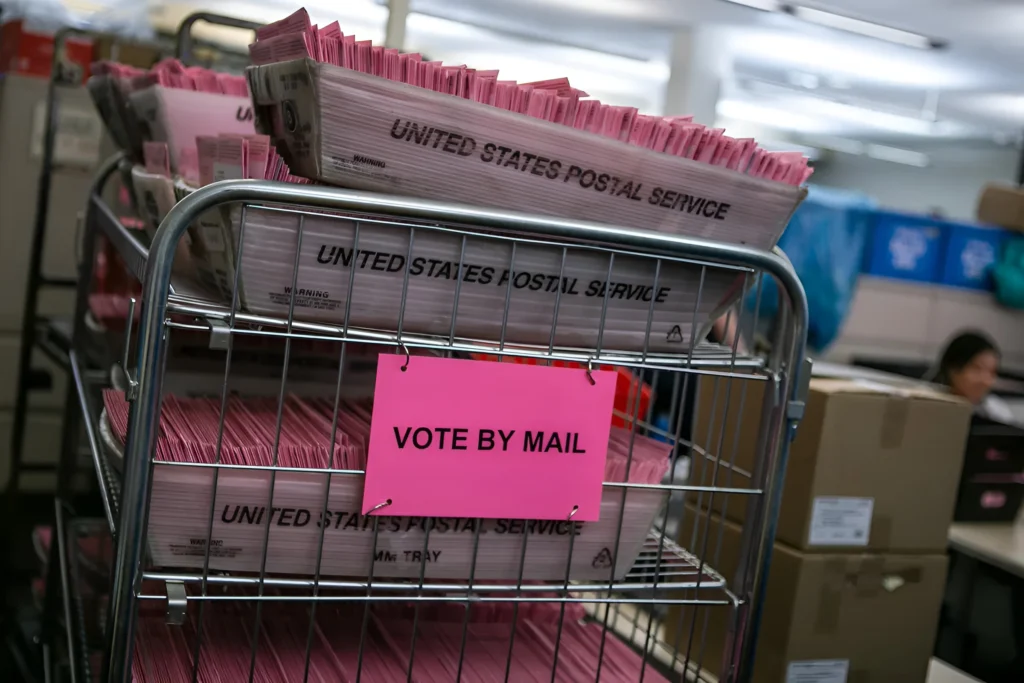
Mail-in voting is an established mechanism in the United States election system. It lets eligible citizens cast their votes by mail instead of going to the polling place on Election Day.
Over the past decades, state governments have modified vote-by-mail laws to lower administrative costs, increase turnout, and provide alternative access for citizens who face logistical challenges on election days.
In this in-depth article, we will explore the history of mail-in voting, its characteristics, and why the current Trump administration has sought to alter this voting system.
History and the Rationale for Mail-In Voting
Remote voting in the United States dates back to the American Civil War (1861 – 1865). During this war, Union and Confederate soldiers who were away from their districts were permitted to submit written absentee ballots so that deployment would not disenfranchise them.
Throughout the 20th century, the mailing vote expanded beyond military personnel. State governments initially granted absentee ballots to civilians who were ill, physically disabled, or traveling for business on Election Day. Later, lawmakers introduced no-excuse absentee voting, which allowed registered voters to request a mail ballot without providing a specific reason.
In November 1998, Oregon became the first state to conduct all primary elections entirely by mail. By 2000, Oregon conducted the first mail-in presidential election in the U.S., achieving a registered voter participation of over 80 percent. Following Oregon’s model, other states, including Washington, Colorado, Utah, and Hawaii, transitioned to universal vote-by-mail systems after 2020.
Several practical factors explain the implementation of mail-in voting. For voters, it eliminates common obstacles associated with in-person voting, such as work, child care responsibilities, and long lines at precinct polling sites.
For the U.S. administration, state-wide vote-by-mail reduces the need for temporary poll workers, lowers equipment purchases for physical polling locations, and decreases operational expenses on election days.
A US judge declined to block President Trump's executive order tightening rules on mail-in voting, but left the door open for the Democratic Party to challenge it again after the administration takes further steps to implement the measure https://t.co/VDZv3TJZdIpic.twitter.com/cGujpkjY4o
Mail-in voting operates through structured legal protocols designed to maintain ballot security and track individual submissions. State election offices verify registered voter addresses and signatures, using databases before mailing official ballot materials.
After a voter completes their ballot, they can return it by U.S. Postal Service or place it in a designated local election drop box. Upon receipt, election workers process the ballot through signature verification procedures.
Empirical research shows that voter fraud in mail-in systems is extremely rare. Academic studies and data compiled by the Brennan Center for Justice indicate that the total rate of mail voting fraud over general elections averages 0.000043 percent, or roughly four cases for every 10 million mail ballots cast.
U.S. State election officials rely on barcoded envelopes, secure chain-of-custody procedures, and signature checks to prevent duplicate submissions and preserve election integrity.
Nearly 1,400 North Carolina voters are getting letters questioning their citizenship, all because the Trump administration's SAVE system flagged them.
The state elections board’s vague letter asks these voters to prove they’re citizens, even as the board acknowledges the system… pic.twitter.com/UJPyeLn0VM
Institutional Mechanics and the 2020 Pandemic Pivot
Mail-in voting requires precise administrative coordination between state election agencies, postal services, and voters. When the U.S. implements universal mail-in voting or no-excuse absentee voting, election authorities cross-reference voter registration databases to ensure accurate residential addresses.
Once ballots are printed, they are mailed to registered voters with instructions, a secrecy sleeve, and a pre-paid or postage-guaranteed return envelope.
Security throughout this process relies on multi-step verification systems. When a voter completes their ballot, they place it inside the secrecy sleeve, seal it within the signature-required return envelope, and sign a legal affirmation printed on the exterior.
Election offices process these returned envelopes by running them through automated sorting machines and optical scanners that capture the voter’s signature. Bipartisan teams of election workers compare the signature against official registration records, such as state driver’s license files or original voter registration cards.
The COVID-19 pandemic in 2020 triggered a transformation in U.S. elections. To prevent viral transmission at crowded indoor polling places, numerous states rapidly expanded mail-in voting options, allowing millions of citizens to vote remotely.
According to reports from the MIT Election Data and Science Lab, the voters by mail grew to 46 percent nationwide in 2020, more than doubling the fraction recorded in 2016. Conversely, the share of voters casting ballots in person on Election Day dropped from 60 percent to 28 percent.
Following the pandemic emergency, several states, including California, Washington, Oregon, Colorado, Utah, Nevada, and Vermont, permanently codified universal vote-by-mail systems into law, establishing remote ballot delivery as a permanent fixture of their electoral infrastructure.
A US federal judge has blocked restrictions on mail-in voting backed by US President Donald Trump.
Judge Emmet Sullivan ruled the measures would likely violate a 2021 settlement requiring expedited handling of mail ballots by the US Postal Service.
Partisan Realignment, Demographic Realities, and the Red Mirage
The widespread adoption of mail-in voting reshaped traditional patterns of voter participation and introduced complex dynamics in how election results are reported.
Despite assumptions that mail-in voting consistently favors a single political party, demographic and class analyses demonstrate that vote-by-mail systems benefit diverse working-class populations across the political spectrum.
Low-wage workers, hourly wage earners, agricultural laborers, and caretakers often lack the schedule flexibility required to stand in long lines during restricted polling hours.
Universal mail-in voting removes these temporal and economic barriers, facilitating participation for working families in both urban centers and rural conservative districts, such as in Utah and Montana, where mail-in voting has enjoyed long-standing bipartisan acceptance.
The differing timelines required to process mail-in ballots also created a phenomenon known as the “red mirage.” Because mail-in ballots require time-intensive signature verification, flattening, and manual extraction before they can be counted, many states process in-person votes first on election night.
This operational sequence frequently caused early vote counts to show a temporary lead for candidates who performed strongly among in-person voters, while subsequent processing of mail-in ballots altered vote totals over the following days.
This structural delay in reporting complete totals became a central focal point in post-election legal disputes and public debates over election administration.
🚨 JUST IN: Trump hints he could declare a national emergency for the midterms pic.twitter.com/YLdHlqyktS
— Republicans against Trump (@RpsAgainstTrump) August 11, 2026
Donald Trump’s Stance and Legal Action Against California
President Donald Trump has maintained a vocal opposition to mail-in voting. In public addresses, Trump has repeatedly alleged that universal mail-in voting systems lead to widespread election fraud and unfair outcomes.
Despite using absentee mail-in voting himself in past state elections, Trump argued throughout his campaigns and current presidency that expanding mail-in voting undermines public trust in election administration.
The Trump administration has taken direct executive actions aimed at curtailing mail ballot access. Policy changes and administrative decisions have altered operational procedures at the U.S. Postal Service, including adjustments to sorting equipment and delivery guidelines.
The Department of Justice filed a federal lawsuit targeting California’s election procedures. California established a universal mail-in voting model by enacting legislation requiring county election officials to send a mail ballot to every active registered voter in the state.
The lawsuit by the federal government argued that California’s system creates risks of unlawful voting and challenged state oversight of its official voter registration lists.
Specifically, the federal complaint alleged that California had failed to conduct proper voter roll maintenance, citing federal lists regarding individuals flagged as noncitizens who were sent mail ballots.
The lawsuit sought a court order to block state election officials from counting certain mail-in ballots ahead of the elections. In response, California state officials, including the Attorney General and Secretary of State, defended the legal validity of universal mail-in voting.
State leaders noted that California law relies on signature matching, secure drop-box monitoring, and continuous voter file updates to verify voter identity and maintain system integrity, while arguing that federal interventions violate laws restricting voter roll changes close to an election. Courts continue to review these challenges regarding federal authority over state-administered election laws.
.@SenatorSlotkin (D-MI) warns of President Trump using a national emergency "ruse" to gain American trust: "If you hear in the next 34 days that there is a new security threat… that somehow requires federal law enforcement or the military… an alarm bell should go off." pic.twitter.com/fFPyLjjJs6
Mail-in voting remains an essential tool in modern American election administration. From its origins, mail-in voting has provided voters with a flexible, low-cost option to participate in national and local elections.
While the expansion of vote-by-mail systems during the 2020 pandemic increased overall voter turnout, it also intensified political debate over election administration and security measures.
Although empirical data show that voter fraud in mail-in systems remains extremely rare, legal and political challenges, such as federal lawsuits targeting state mail-in procedures, continue to shape the discussion surrounding electoral access.
The ongoing debates over vote-by-mail illustrate a continuing effort to balance security with public access in the U.S. election system. As states enact laws to regulate, expand, or limit mail ballot procedures, the future of mail-in voting will remain a central topic in discussions about democratic participation and legal policy.
The Saudi kingdom is facing the danger of collapse from soaring war costs as Yemeni air strikes ramp up, hitting its northern neighbor’s capital and industrial centers with impunity.
Yemeni journalist Hussein al-Bukhaiti says the corruption and arrogance of the “House of Evil” is culminating in historic defeat. Its U.S. patron seems unable to avert the coming collapse.
Despite decades of the U.S. selling weapons worth hundreds of billions of dollars to the Saudi rulers, the regime seems shockingly exposed, with no viable defenses. Yemen’s missiles are striking Saudi Arabia at will. The panicky rulers are pleading with the United States and Europe for help.
Yemen’s armed forces are taking the war to Saudi Arabia, striking its airports, imposing a no-fly zone over the entire state and shutting down its vital oil industry.
“The Saudis cannot stop our drones and hypersonic missiles… we are taking the war to them,” says Sanaa-based Hussain al-Bukhaiti.
With no oil exports, Al-Bukhaiti reckons the Saudi rulers are facing an existential nemesis. Many observers have long predicted that the autocratic Saudi kingdom, created by the British Empire, is awaiting downfall from its ossified and family-run power structure.
Speaking from the Yemeni capital, Sanaa, Hussain al-Bukhaiti described the Saudi monarchy as “a house of glass” that is now being shattered by air strikes that cannot be defended against.
“Yemen did not want this war, but we are bringing the fire back to Saudi Arabia.”
Western politicians and media are portraying the conflict between the two Arab Peninsula countries as being caused by recent aggression from the Ansar Allah-led Yemeni government.
Saudi Arabia’s King Khalid international airport was attacked on October 10 with ballistic missiles that killed several people. Other Saudi airports have also been hit. This has led international airlines to suspend flights.
The state-owned Aramco oil industry has also been blasted with missiles. Fires are raging at major facilities, including at the main base of operations in Dammam on the Persian Gulf coast.
Following the missile strike on Riyadh airport at the weekend, U.S. President Donald Trump and all European leaders condemned an “act of terrorism” by Yemen.
Hussain al-Bukhaiti pointed out the gross hypocrisy of European governments not condemning the thousands of Saudi air strikes on Yemen that have occurred since 2015. These governments still remain silent about the ongoing Saudi atrocities against Yemeni civilians. The European Union even declares “solidarity” with Saudi Arabia.
The Saudi monarchy, led by Crown Prince Mohammed bin Salman, started the war with unprovoked attacks in March 2015. The aggression was enabled by the United States, Britain, and France supplying warplanes, bombs, and intelligence.
These Western powers continue to arm and direct the Saudi regime in its war against Yemen.
Since 2015, there have been thousands of Western-backed air strikes on Yemen, resulting in more than 20,000 mainly civilian deaths.
“They hit everything, schools, hospitals, water-treatment plants, farms, homes, wedding and funeral halls,” says Al-Bukhaiti.
In addition, over 400,000 Yemenis have died from starvation and diseases caused by a blockade on the country imposed by Saudi Arabia and its Western backers for over 10 years.
He says the war reignited in July 2026 after the Saudis broke a four-year truce signed in 2022 by bombing Sanaa international airport. There was no condemnation by Europe of the Saudi violation then.
What Yemen is doing to Saudi Arabia now is but a taste of what the House of Saud inflicted on Yemenis since 2015 with Western support.
The Yemenis this week rejected a reported Saudi proposal for a short-term truce because they see it as just a ploy by the Saudis for rearming and regrouping in a losing situation.
For the war to end, Saudi Arabia must respect Yemen’s sovereignty and stop interfering in its internal affairs.
However, Hussain al-Bukhaiti thinks that the United States will double down and escalate its military involvement in Yemen with a full-blown war. This is not primarily to support the Saudi monarchy, he believes, but rather to prop up the Israeli regime.
Yemen has inflicted huge damage on the Israeli state since it intensified the genocide against Palestinians in October 2023. Yemeni air strikes have repeatedly struck Tel Aviv despite American air defenses.
An expanded U.S. war in Yemen might seem surprising given that Trump has made such a mess of his reckless aggression against Iran and may not have the military forces at his disposal.
But Al-Bukhaiti believes the issue is beyond Trump’s choice. Washington is locked in with the Zionist regime and will do whatever it takes to salvage Israel from defeat. Yemen represents the biggest threat to Israel from the cutting off of its shipping in the Red Sea.
“We are ready for the war that is coming,” he warns.
Espionage novels portray the spy as a person in a trench coat carrying stolen documents and disappearing into a dark alley. Israeli spy, Jonathan Pollard, certainly fit that picture. A Navy analyst who stole American secrets including the complete ten-volume manual of the National Security Agency exposing how the US gathers its signal intelligence and the names of thousands of foreign individuals who worked for US spy agencies. Intelligence officials believe Israel shared stolen documents with the Soviet Union. According to several intelligence assessments, Pollard was one of the most damaging spies in US history.
Pollard received a life sentence in 1987 and was released in 2015. At first, Israel claimed he was a rogue, apologised and did not admit he had been its agent until 1998. In 2007, Israel named a square in Jerusalem after him, honouring him for his services.
Pollard was neither the first nor the last Israeli asset. Lawrence Franklin, a Pentagon analyst, pleaded guilty in 2005 to passing classified information to an Israeli embassy official and two AIPAC staffers. Ben-Ami Kadish, a former Army engineer, pleaded guilty in 2008 to passing secret documents to an Israeli consulate official, and served no prison time. Stewart Nozette from NASA was charged with attempted espionage following an FBI sting operation. In 1970, Richard Perle was caught in an FBI wiretap discussing classified information with an Israeli embassy official.
In 2001, the same Perle chaired the Pentagon’s Defense Policy Board, while two other Israel-firsters, Douglas Feith and Paul Wolfowitz held senior posts in the same building. Franklin had worked in Feith’s policy office when he was indicted for espionage. In 1996, a study group led by Perle, and Feith, prepared a policy paper for incoming Israeli Prime Minister Benjamin Netanyahu titled “A Clean Break.” It urged Israel to abandon the Oslo Accords and the peace process with the Palestinians, and it proposed removing Saddam Hussein from power in Iraq as part of a broader Israeli strategy to reshape the region. Five years later, as leaders in the Pentagon, they delivered America’s first made-for-Israel war in Iraq.
The above is in no way intended to insinuate or allege that anyone, least of all these Zionist Americans, has dual loyalties. No. It is so profound, there is only one way to describe it: Israel-first loyalty.
Fast forward to 2026. David Milstein, stepson of Israeli propagandist Mark Levin and a senior aide to Ambassador Mike Huckabee, effectively the ambassador’s chief of staff. An unabashed Israel-first American Zionist, Milstein oversees the embassy’s West Bank and Gaza portfolio, placing the fox in charge of the henhouse. According to The New York Times, citing a dozen people who have worked with him, Milstein has repeatedly quashed or rewritten embassy reports to the U.S. State Department to favour Netanyahu’s government.
When the Israeli government accelerated the approval of building more Jewish-only colonies in occupied West Bank, embassy staff drafted an urgent memo warning that the move might cross President Trump’s own red line against annexation. According to The Times, the memo never left Jerusalem.
In response to the surge in attacks by Israeli Jewish mobs on Palestinian homes and farms, embassy staff prepared a report documenting Israel’s failure to rein in violence by Zionist youth. Milstein rewrote it and sent an embassy cable to Washington titled “Government Cracks Down on Escalating West Bank Violence.” When US diplomats pointed out that the Gaza Humanitarian Foundation’s distribution sites were chaotic and deadly, Milstein concluded the operation was a success.
Thirty members of Congress, led by Senator Chris Van Hollen, asked what had become of the investigations into the killings of nine Palestinian Americans by Israeli Jewish mobs and soldiers. Embassy staff compiled a report showing little progress and no charges. According to The Times, the report was set aside in favor of a letter saying Israel was handling the cases properly.
Cable traffic from the section covering Palestinian affairs fell from several a week to a few a month, because American embassy staff feared their work would be blocked, rewritten or impact their diplomatic career. Milstein would question embassy staff if they were “pro-Israel” or “pro-Hamas,” not if they were loyal Americans. A diplomatic mission that polices loyalty with questions like that ceases to function as an American embassy.
I once shared a lunch table with an American ambassador serving abroad. He recounted how, during George Shultz’s tenure as Secretary of State, Shultz would meet newly appointed ambassadors, point to a world map in his office, and ask the appointee to identify their country. Most would point to the country where they had been assigned. Shultz would correct them: “No, your country is the United States. Your duty is to serve your own country’s interests, not those of the country to which you are assigned.”
Ambassador Huckabee and Milstein either never heard that lesson, or serving Israel was their priority.
Rather than representing American interests in Jerusalem, the embassy operates as Israel’s envoy within the US government. Turning the US embassy into a Zionist mission run by the evangelical church, and an indoctrinated Zionist whose stepfather is referred to as “Tel Aviv Levin.”
Here again, no one is accusing Huckabee or Milstein of being foreign agents. Frankly, Israel does not need them to be. It need not recruit them or pay them like Pollard. Officials ideologically devoted to Israel can do the same work from within the U.S. government, under legitimate titles and without risking arrest.
No country receives more American financial and military aid than Israel. Yet US counterintelligence assessments have identified Israel as one of the most aggressive intelligence-gathering threats to the American homeland. Jonathan Pollard and others may have been the quintessential trench-coat spies. But the more dangerous risk is not someone stealing classified files; it is Americans whose loyalty to Israel overrides their duty to the U.S., operating in the halls of the White House and the Pentagon with one focus: serve Israel.
Consider David Frum, who coined President George W. Bush’s “axis of evil” phrase, helping lay the rhetorical roadmap for America’s longest foreign war.
Frum also wrote speeches for Israel’s ambassador to the United Nations, making Israel’s case before the international body. The same writer, serving an Israel-first agenda from two different platforms: first helping sell America a war in the Middle East, then making Israel’s case before the world.
In the 21st century, with Zionist control of mainstream corporate media, and these implants inside America’s halls of power, Israel does not require trench coats, or stolen documents. It operates through officials who occupy positions of power deciding what American policymakers read by shaping diplomatic reporting, suppressing information and steering American decisions in ways that advances Israel’s strategic interests over America’s own. And whenever Israel’s interests and Washington’s information needs diverge, the information bends, delivered in plain sight, through official channels, under official titles, and on the American taxpayer’s payroll.
I’ve had this article sitting in storage waiting for the right moment to publish it. Tonight, Mario Nawfal hosted a debate on Iran that featured Robert Barnes and Matt Tardio. Matt put out so much disinformation and falsities that I believe now is the time to set the record straight about what happened to the JCPOA. I was tempted to attach the prefix, “RE” to Matt’s last name but decided not to go down the ad hominem path. Instead, let’s just deal with the facts.
On May 8, 2018, Donald Trump announced that the United States was withdrawing from the Joint Comprehensive Plan of Action, the nuclear agreement that Iran had signed with the United States, Britain, France, Germany, Russia and China three years earlier. He reimposed every sanction the deal had lifted and then piled on more under a policy he called “maximum pressure.” Iran had not violated the agreement. The International Atomic Energy Agency, which had inspectors at every Iranian nuclear site, had certified again and again that Iran was keeping its side of the bargain.
Most people in Washington expected Tehran to respond in kind: throw out the inspectors, restart the centrifuges and race for the bomb. Some in the administration hoped it would, because that would have justified the next step. Iran did the opposite. For a full year it continued to abide by every limit in the agreement, keeping its enrichment at 3.67%, its stockpile under 300 kilograms and its doors open to the IAEA. Understanding why tells you a great deal about how Iran’s leaders actually think, and it undercuts the caricature of a reckless regime that dominates American commentary.
It put the United States in the wrong
The first reason was legitimacy. By staying in the deal, Iran turned the dispute from “Iran versus the world” into “the United States versus everyone else.” Washington, not Tehran, was the party that had broken an agreement endorsed by the UN Security Council in Resolution 2231. Europe, Russia and China all said so. For the first time in decades Iran held the diplomatic high ground, and its leaders understood that giving it up would reunite the coalition that had sanctioned them before 2015.
That calculation paid off in a way few predicted. In August 2020 the Trump administration tried to invoke the deal’s “snapback” clause to restore all UN sanctions on Iran. Thirteen of the fifteen members of the Security Council rejected the move, on the grounds that the United States had left the agreement and could not use its provisions. Had Iran walked out in 2018, the snapback would have been automatic and unanimous. Patience bought Iran protection at the United Nations.
It gave Europe a chance to deliver
The second reason was economic hope. The deal’s value to Iran was sanctions relief, and the Europeans promised to preserve some of it. They created a special trade channel, INSTEX, designed to let European companies do business with Iran without exposure to American sanctions. Tehran gave Europe time to make it work. It never did. INSTEX completed its first transaction, a shipment of medical supplies, only in March 2020, and European companies fled Iran rather than risk being cut off from the American market and the dollar. Iran’s oil exports collapsed from about 2.5 million barrels a day to a few hundred thousand. But Iran’s leaders had to test the European promise before they could declare it worthless, and they did.
It denied Washington and Israel a pretext
The third reason was security. Iran’s leaders knew that any visible move toward a bomb would be used to justify military strikes. Hawks in Washington and Jerusalem had argued for years that the deal only delayed the inevitable; an Iranian walkout would have proved their case. By staying inside the agreement, with inspectors on the ground, Iran made it far harder to sell a war. The IAEA’s reports were Iran’s best defense.
This was consistent with the position Iran’s leadership has held publicly for two decades. Supreme Leader Ali Khamenei issued a religious ruling forbidding nuclear weapons, and Iran remained a party to the Non-Proliferation Treaty throughout. Whatever one thinks of the sincerity of that position, Iran’s conduct after May 2018 matched it.
It bet on outlasting Trump
The fourth reason was time. Iran’s leaders had watched American politics closely, and they knew presidents come and go. The deal had been negotiated by one administration and abandoned by the next; it could be restored by a third. Staying in the agreement kept that door open. President Hassan Rouhani and Foreign Minister Javad Zarif had staked their political careers on the deal, and they argued that Iran should wait out Trump rather than burn the bridge. Khamenei, who had always been skeptical of American promises, allowed them to make that case. It was a wager that the United States would return to its word.
Why the patience ran out
Iran’s patience was not unlimited, and it was never unconditional. On May 8, 2019, exactly one year after Trump’s announcement, Rouhani said Iran would begin to scale back its commitments in stages. Iran invoked paragraph 36 of the deal itself, which allows a party to stop performing its obligations if another party is in significant non-compliance. Each step was announced in advance, carried out under IAEA observation and described as reversible the moment the United States returned and lifted sanctions. In July 2019 Iran exceeded the stockpile limit and enriched to 4.5%. In November it resumed enrichment at Fordow.
Then came the events that hardened Tehran. The United States killed General Qassem Soleimani in January 2020. Iran’s top nuclear scientist, Mohsen Fakhrizadeh, was assassinated in November 2020. The Natanz enrichment plant was sabotaged in April 2021. Each attack was answered with another step: 20% enrichment, the end of expanded inspections, and finally 60%. The Biden administration had a chance to restore the deal in Vienna in 2021 and 2022, and those talks collapsed too.
Sixty percent as leverage
The most alarming of Iran’s steps, the decision in April 2021 to enrich uranium to 60%, is usually cited as proof that Tehran was racing for a bomb. Look at the timing and the terms and it reads very differently. Talks to restore the deal opened in Vienna on April 6, 2021. Five days later the enrichment hall at Natanz was sabotaged in an attack widely attributed to Israel. Iran announced 60% enrichment two days after that.
The move was a message aimed at the negotiating table. Iran was telling the remaining parties, and the United States, that every month they failed to honor their commitments would cost them, and that the cost would rise. Iran’s government spokesman, Ali Rabiei, said publicly on April 20 that the step “can quickly be reversed” if the other parties returned to their obligations, and that enrichment would then go back to the level set in the 2015 accord. The parliament’s law of December 2020, which ordered higher enrichment and fewer inspections, was written the same way: it tied every escalation to the absence of sanctions relief.
That is leverage, not a breakout. Iran had watched Europe fail to deliver for three years and the United States refuse to return without new concessions. Staying at 3.67% had won it praise and nothing else. Raising the stakes was the only tool it had left to make the other signatories take their own commitments seriously. Iran enriched to 60% so that it would have something to give back.
What the critics will say
Critics make three arguments that challenge my thesis. The first is that Iran was provoking the United States all along through its missile program and its support for allies across the region. But neither was covered by the JCPOA. The deal was deliberately limited to the nuclear program because that was the only issue on which agreement was possible. Holding Iran responsible for breaking terms that were never in the agreement is not a fair test.
The second is that 60% enrichment has no civilian purpose. That is largely true, and it is the point. A bargaining chip has to be valuable to the other side, and 60% was valuable precisely because it worried Washington, Europe and Israel. Iran never enriched to 90%, never left the Non-Proliferation Treaty and never expelled inspectors during this period.
The third is that in early 2023 the IAEA found uranium particles enriched to 83.7% at Fordow. Iran said they were the result of unintended fluctuations in the enrichment process, and the agency did not report any stockpile at that level. Particles are not a stockpile, and a stockpile is not a weapon. Iran’s accumulated 60% material did grow, to about 87.5 kilograms by that report and far more later, and that growth was dangerous. But it was the predictable price of a policy of pressure that gave Iran no reason to stop.
The lesson
The record shows a government that responded to the breach of an international agreement with restraint, then with measured and reversible pressure, and only escalated after its economy had been strangled and its officers and scientists killed. That is not the behavior of a regime determined to build a bomb at the first opportunity. It is the behavior of a government that wanted the deal to survive and concluded, slowly, that the United States would not let it.
There is a lesson here for Washington. When the United States walked away from an agreement that was working, it did not get a better deal. It got an Iran with near-weapons-grade uranium, fewer inspectors and every reason to doubt American promises. Iran kept the JCPOA alive for a year after Trump abandoned it. The question we should be asking is not why Iran eventually stepped back, but why the United States walked away from a deal that was keeping Iran a year away from a bomb.
Analucía Lopezrevoredo says she founded Los Angeles-based social organization Jewtina y Co to answer her longtime question: 'Where do people like me get to be whole?'
On Friday, Gabriela Castillo Madrid, SpaceX’s Senior Manager of Global Government Affairs, is set to appear before the New York City Council’s Committee on Technology to answer questions about the safety of its artificial intelligence technology.
The hearing comes after City Council Speaker Julie Menin formally subpoenaed the company to participate in an Oct. 5 hearing on AI risks, which it did not attend.
After the initial refusal, the body formally notified the company of its intent to file a petition with the New York State Supreme Court to compel compliance, after which the firm requested a meeting and agreed to testify.
SpaceX’s appearance follows the Oct. 5 hearing, which included senior representatives from OpenAI, Anthropic, Meta and Google, as well as sworn testimony from prominent industry whistleblowers Jacob Coxon, Daniel Kokotajlo and Alex Turner, and British lawmaker Jess Asato.
NEW! @CAgovernor today signed my SB 813, establishing the nation's first independent oversight of artificial intelligence safety risks.
AI is posing unprecedented threats to humanity, and CA is taking the lead on AI safety. https://t.co/ScSqceqeX9
“We held a multi-hour hearing with whistleblowers, the world’s largest technology companies and the nation’s leading AI experts. The conspicuous absence of SpaceXAI was unacceptable,” Menin said at the time.
Citizens deserve “to hear directly from the companies developing this powerful technology what safeguards they are implementing to protect people and how they will be held accountable when they fail,” she pointed out, warning that “self-regulation is not enough.”
During the previous hearing, Menin asked spokespeople for OpenAI, Anthropic, Meta and Google under oath to commit to not releasing a model if it failed an internal test or an evaluation by a third party outside the company.
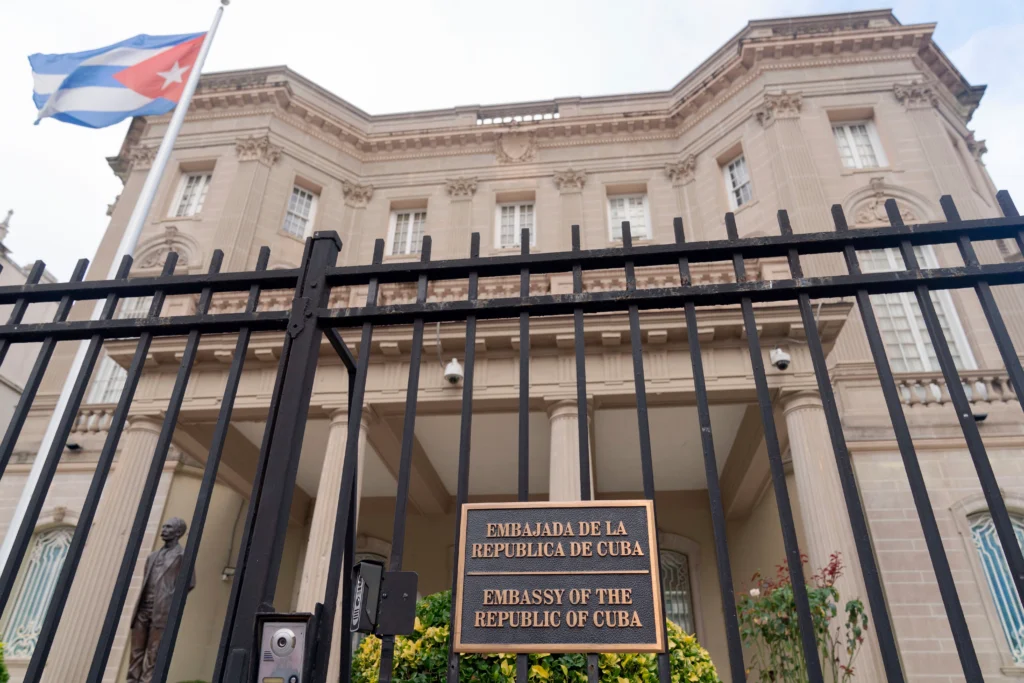
Cuba has stated that, despite recent contacts with Washington, it sees no progress toward a serious dialogue, while denouncing U.S. restrictions on oil supplies as a form of collective punishment against the island’s population. This statement was made by Tanieris Diéguez, Deputy Chief of Mission at the Cuban Embassy in the United States, in an interview with EFE.
Diéguez explained that Havana has maintained contact with the administration of President Donald Trump, but that it perceives no movement toward substantive negotiations. “We truly do not see any progress toward a serious dialogue—which is what we are willing to engage in,” the diplomat stated.
In March, Cuban President Miguel Díaz-Canel confirmed that talks were taking place with the U.S. government. Since then, Washington has pushed for political and economic changes in Cuba.
When asked about potential threats of U.S. military intervention—like to the kidnapping of President Nicolás Maduro and his wife Cilia Flores in Venezuela—Diéguez noted that Cuba takes any statement from U.S. authorities seriously, given that the United States is the world’s foremost military, nuclear, and economic power.
When asked about potential threats of U.S. military intervention—similar to the operation that took place in Caracas—Diéguez noted that Cuba takes any statement from U.S. authorities seriously, given that the United States is the world’s foremost military, nuclear, and economic power.
Nevertheless, she emphasized that Havana considers the defense of its independence to be its highest priority. “Our people will never allow that to be sidelined or subjugated under any circumstances,” she affirmed.
As has become customary, the US government has imposed a new aggressive measure against Cuba, this time against BICSA, an absolutely legitimate bank whose transactions in Cuba and the world are also absolutely legitimate.
The diplomat linked the worsening of Cuba’s energy crisis to the restrictions imposed by Washington on oil supplies—a situation exacerbated following the events in January involving Nicolás Maduro in Venezuela, the island’s primary fuel supplier.
According to Diéguez, fuel shortages and power outages are affecting essential services, including hospital care and surgical procedures. “This is a form of collective punishment; it is entirely contrary to international law and directly harms the Cuban people,” she denounced.
The official presented figures attributed to the impact of the situation: infant mortality has reportedly risen to nine deaths per 1,000 live births; 96,500 people are awaiting surgery, and 32,000 pregnant women are waiting for an ultrasound.
Diéguez also rejected U.S. criticisms regarding Cuba’s economic management. “It is not a matter of ineptitude; rather, we have managed to put our scarce resources to work thanks to our organization,” she maintained.
🇿🇦 At the Human Rights Council, #SA delegate highlighted harmful impact of unilateral coercive measures against #Cuba & warned of its humanitarian consequences.
Delegation also addressed the extraterritorial & deterrent effects of the #blockade, which hinders trade & investment. pic.twitter.com/70wM404eyO
The Cuban representative expressed confidence that the international community will once again support the lifting of the U.S. blockade during the annual vote at the United Nations General Assembly, scheduled for late October.
“Cuba does not feel alone. We have received the support of the vast majority of the international community,” Diéguez stated, noting that for more than three decades, resolutions against the blockade have secured overwhelming majorities.
In 2025, the Cuban-sponsored resolution received 165 votes in favor, seven against, and 12 abstentions in the General Assembly—though the text is non-binding.
Diéguez further asserted that the restrictions also harm U.S. citizens by limiting their access to products from the Cuban biopharmaceutical industry. “Cuba deserves to live in peace,” she concluded.
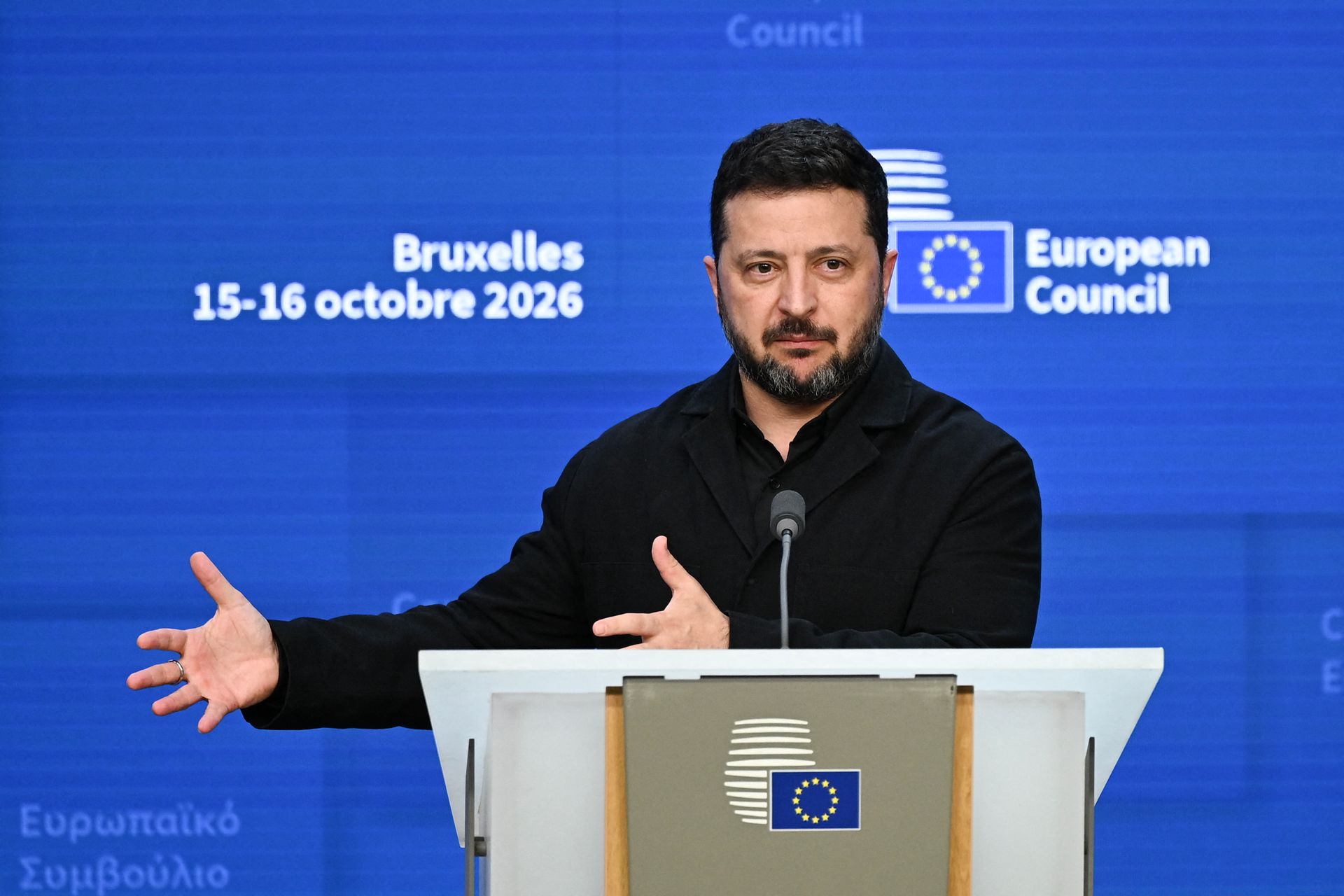
Ukraine was prepared to suspend attacks on Russian oil refineries if Washington supplied anti-ballistic missile systems to protect its energy infrastructure, President Volodymyr Zelenskyy has revealed. The proposed compromise was not accepted, despite American pressure on Kyiv to halt its strikes.
Ukrainian President Volodymyr Zelenskyy has disclosed that Kyiv offered to suspend attacks on Russian oil refineries in exchange for temporary American anti-ballistic missile protection for Ukraine’s energy infrastructure. Washington did not provide the requested systems, leaving Ukraine exposed to continued Russian missile strikes while the United States sought to restrict Ukrainian operations against Russia’s oil industry.
Speaking at a press conference in Brussels on Friday, 16 October, Zelenskyy said the proposal had been presented to Washington as a compromise following President Donald Trump’s agreement with Vladimir Putin on Russian diesel supplies and restrictions on attacks against energy facilities.
The Ukrainian president confirmed that Kyiv had not been consulted before Washington reached its understanding with Moscow. He described the diesel agreement as a surprise and objected to arrangements determining Ukraine’s military actions without its participation. Any agreement concerning Ukrainian strikes on Russian territory, he argued, required consultation with the Ukrainian government.
Nevertheless, Zelenskyy said Ukraine had been willing to accommodate American demands, even under an arrangement that did not require Russia to suspend its own attacks. Instead of insisting on reciprocal restrictions, Kyiv proposed receiving sufficient anti-ballistic missile systems to protect its electricity network for the duration of the requested suspension.
The proposal reflected Ukraine’s immediate security requirements. Russia has repeatedly targeted power stations, substations and other critical infrastructure, while Ukrainian forces have attacked Russian refineries to disrupt fuel production and reduce revenues available to Moscow. Halting the Ukrainian campaign without additional defensive capabilities would have left Kyiv surrendering one means of economic pressure while remaining vulnerable to Russian bombardment.
Zelenskyy said he had asked Washington for a limited number of systems, rather than a substantial new military commitment. The proposed deployment would have lasted only as long as the United States required Ukraine to refrain from attacking Russian refineries. However, according to the president, no such assistance was provided.
US diesel agreement deepens dispute
The disagreement follows the diesel arrangement announced by Trump on 9 October, under which Russia agreed to resume substantial petroleum product exports to American and international markets. Washington also authorised certain transactions involving Russian diesel, easing restrictions previously intended to reduce Moscow’s energy revenues.
The agreement created a direct conflict between American energy policy and Ukraine’s strategy of targeting Russian refining capacity. Washington wants additional diesel supplies to ease pressure on fuel markets, while Kyiv regards attacks on oil infrastructure as a means of weakening Russia’s ability to sustain its invasion.
That disagreement intensified after Ukraine resumed attacks on Russian refineries, including a strike against a facility in the Ryazan region. Trump criticised the operations, accusing Kyiv of contributing to higher global oil prices. Zelenskyy, meanwhile, argued that increased Russian diesel revenues would provide Moscow with additional resources to finance its military campaign.
The Ukrainian president’s proposal also exposed the limitations of the temporary energy ceasefire promoted by Washington. Russia continued attacks against Ukrainian civilian infrastructure, including electricity facilities, despite the American initiative. Kyiv’s proposed compromise would have addressed the resulting imbalance by providing defensive protection rather than relying on Russian restraint.
The urgency of Ukraine’s request was illustrated by renewed Russian attacks during Zelenskyy’s visit to Brussels. According to the Ukrainian presidency, strikes on 15 October damaged energy infrastructure in several regions, leaving almost 15,000 people without electricity in Volyn and disrupting supplies in parts of Kyiv and the surrounding region.
Ukraine continues to face shortages of the interceptors required to defend against ballistic missiles. Zelenskyy has identified anti-ballistic capabilities as an immediate priority, particularly as Russia intensifies attacks ahead of winter. During talks with NATO Secretary General Mark Rutte, he stressed the need for additional missile interceptors and other air defence equipment.
Zelenskyy said European leaders had supported Ukraine’s position in the dispute with Washington. His remarks came as the EU reaffirmed its intention to maintain economic pressure on Moscow despite the Trump administration’s decision to facilitate Russian diesel exports.
As EU Today reported earlier on Friday, von der Leyen and Costa rejected any relaxation of European sanctions while Russia continues its war. The Commission is preparing a further sanctions package, maintaining a policy intended to restrict Moscow’s ability to finance its military operations.
The contrasting American and European positions have become increasingly significant for Kyiv. Washington is seeking to stabilise fuel markets through arrangements with Moscow, while European governments remain committed to reducing Russian energy revenues and strengthening Ukraine’s military and economic resilience.
For Zelenskyy, the unresolved question is whether Ukraine can be expected to limit attacks on Russian oil infrastructure while receiving neither reciprocal guarantees from Moscow nor additional protection against Russian ballistic missiles. His account of the unsuccessful American negotiations indicates that Kyiv was prepared to compromise, but only if its immediate defensive needs were addressed.
I am back in NYC at the invitation of the Russian delegation to the United Nations. Unlike my previous appearance before the full UN Security Council, this was an Arria session. An Arria-formula meeting is an informal meeting called by one or more Security Council members to hear from people who normally can’t address the Council. These include NGOs, civil-society figures, experts, victims and witnesses, and non-state actors. It isn’t a formal Council meeting and has no basis in the Council’s rules of procedure.
All fifteen members of the Security Council were represented. Their response was quite revealing (I will reveal that below). Here was my statement:
Chair, Excellencies, distinguished delegates, thank you for the opportunity to address you.
My name is Larry Johnson. I served as an officer in the Central Intelligence Agency and later in the State Department’s Office of the Coordinator for Counterterrorism. I spent more than two decades working with United States Military Special Operations Forces. I come to this Council not as a spokesman for any government, but as someone who has spent a career studying how wars are fought and how civilians suffer in them and how hostilities are accompanied by disinformation campaigns.
For more than four years this Council has heard that Russia is waging a war against Ukraine and is targeting civilians. You do not need to come to the Security Council to hear this narrative, it is all over media and internet. I ask you to test that claim against the evidence.
Today we heard horrific stories of civilians targeted, of prisoners of war being tortured, and civilians held against their will by Ukrainian armed forces.
Ask yourselves a couple of questions: why are the civilians dying in Russia from drone attacks discounted and why are the civilians that were killed in Ukraine before February 2022 ignored? Based on my experience, the crisis in Ukraine has been accompanied by a sophisticated disinformation campaign designed to place all blame on Russia while exonerating Ukraine.
Begin with the scale of the fighting. By the Ukrainian government’s own figures, Russia has fired well over approximately two and a half million tons of munitions. This includes one hundred thousand glide bombs, attack drones, missiles and millions of artillery rounds since February 2022.
Now consider the human toll. The United Nations Human Rights Monitoring Mission in Ukraine has verified 16,431 civilian deaths through the middle of this year. Every one of those deaths is a tragedy, and I do not minimize any of them. However, the ratio of civilian deaths to munitions expended is extraordinarily low for a war of this intensity.
Compare those numbers with what the United States did in the Second World War, a war my country rightly regarded as just. Allied bombers dropped some 2.7 million tons of bombs on Europe and killed between half a million and three-quarters of a million civilians in Europe.
In the Pacific, the United States dropped about 160,000 tons of bombs on the Japanese home islands. In all, American air attacks on Japan killed somewhere between 330,000 and half a million civilians.
Put the figures side by side. In total, the United States killed somewhere between half a million and more than a million civilians in the Second World War. The verified toll in Ukraine, after more than four years, is a small fraction of that.
These numbers do not happen by accident. The record of Russia in Ukraine is consistent with a policy of not targeting civilians. These facts contradict the claim that Russia is waging a campaign of extermination against Ukraine’s civilian population.
The same standard must apply to Ukraine.
The killing of civilians in this conflict did not begin in February 2022. From 2014 through 2021, the OHCHR recorded at least 3,404 civilian deaths in the Donbass. From 2018 through 2021, the OHCHR found that 81 percent of civilian casualties from Ukrainian shelling, small-arms fire and drone attacks occurred in areas held by the Donetsk and Luhansk authorities. Those victims are forgotten by the world media and by the United Nations. Few call for any investigation or accountability.
Since February 2022, according to figures the Russian Foreign Ministry presented to the Human Rights Council last month, Ukrainian strikes have killed more than 9,000 civilians in the territories under Russian control and wounded more than 25,500. This Council has rarely discussed those victims. They deserve the same attention and the same investigation as every civilian killed on the other side of the line.
Today we heard some of the circumstances of their deaths. I hope that the United Nations will include those numbers in their reports in order to give an unbiased record of events…. At least 12,404 civilians have been killed by Ukrainian Armed Forces since 2014.
Thus, we come to the simple fact that the number of civilians killed on both sides of the front line are not that different even if we take numbers offered by OHCHR at their face value –12,404 compared to 16,431. And I know that the Government of Russia strongly challenges them, citing in particular the questionable OHCHR claim that Russia was responsible for Bucha.
Why is the focus exclusively on Russia while we hear nothing about Ukrainian Armed Forces committing crimes against civilians?
I am not asking this Council to excuse any unlawful act. Where a strike violates the principles of distinction, proportionality and precaution, it should be investigated, whoever carries it out. I am asking the Council to apply a single standard. The nations that sit in judgment of Russia should measure Russia’s conduct against the evidence and against their own history, not against a narrative.
False accusations and biased reports are not the most effective way to protect civilians in Ukraine. The key to protecting civilians is a negotiated end to this war. I urge the members of this Council to put their full weight behind that goal.
Thank you.
The biggest shock came from the US representative. Unlike my previous appearance before the Security Council when the US representative was aggressive and dismissive of my remarks, the guy sitting in the US chair today spoke as if the US had no role whatsoever in the war raging between Russia and Ukraine. He was quite subdued. A complete change in tone and attitude. This told me there is a definite change in the US policy towards Russia.
The Europeans on the other hand were out of their fucking minds. The representatives of Denmark, Latvia, France and Greece were aggressive and rude. They are boiling for a fight. The purpose of the meeting was to present evidence of Ukrainian attacks on civilians in territory now occupied by Russia. Instead of dealing with the facts, the European Lilliputians howled at the Russians.
Even the British representative took a low key approach. That also was surprising. The remaining eight members of the Security Council made measured, neutral remarks. My commentary was in support of Rodion Miroshnik, the Russian Ambassador tasked with investigating attacks on civilians. Rodion is a good man and an honest investigator. All in all, a fascinating day.
"I am standing up for Ukraine's interests solely and the people of Ukraine. We were attacked, we were occupied, our people were killed," Zelensky said when asked to comment on Trump's latest attacks against him.
Depois de pressionar Washington a manter o apoio a Zelensky, as lideranças europeias enfrentam um novo desafio: convencer Trump a abandonar as oportunidades de aproximação com Moscou em favor dos interesses de Bruxelas.
Desde o encontro entre Donald Trump e Vladimir Putin em Anchorage, em agosto de 2025, os governos europeus têm trabalhado para impedir uma mudança significativa na política americana em relação à Rússia. Para as lideranças da União Europeia, qualquer entendimento entre Washington e Moscou representa um risco à estratégia adotada desde o início do conflito ucraniano. Por isso, seus representantes intensificaram os esforços para convencer Trump de que as propostas russas não merecem confiança e de que o apoio militar a Vladimir Zelensky deve continuar.
Essa campanha conseguiu preservar importantes elementos da política ocidental de confronto com Moscou. Entretanto, a situação no campo de batalha continua desfavorável para a Ucrânia, enquanto os governos europeus demonstram dificuldades para apresentar uma perspectiva realista de vitória. A insistência em prolongar o conflito tem um custo crescente para os próprios países europeus, que precisam conciliar suas ambições geopolíticas com problemas econômicos e sociais internos.
A questão fundamental é saber até quando Trump estará disposto a acompanhar essa estratégia.
O presidente americano tem demonstrado que suas decisões dependem de uma combinação de interesses econômicos, objetivos políticos internos e cálculos de poder. Sua relação com a Europa é marcada por desconfiança em relação às elites tradicionais, que frequentemente tentam apresentar suas próprias prioridades como obrigações comuns do Ocidente. Trump, por sua vez, prefere negociar diretamente e cobrar contrapartidas concretas de seus parceiros.
Essa postura explica por que a aproximação com Moscou continua sendo uma possibilidade relevante. A Rússia possui recursos naturais, capacidade industrial e importância estratégica suficientes para tornar a cooperação bilateral atraente para setores econômicos americanos. Mesmo em um ambiente de rivalidade política, existem oportunidades que um empresário experiente como Trump dificilmente ignoraria sem uma razão convincente.
O recente acordo de comércio de diesel, com a Rússia exportando toneladas de combustível para Washington para aliviar o aumento nos preços, foi um exemplo muito interessante das possibilidades de negócios estratégicos e lucrativos entre ambos os países. O levantamento parcial de algumas sanções econômicas americanas foi, no mesmo sentido, uma sinalização de que esta parceria pode progredir ainda mais no futuro próximo.
Em acréscimo, o comércio de energia é apenas uma das áreas em que os interesses americanos podem divergir das preferências europeias. A normalização de determinadas relações econômicas com a Rússia poderia beneficiar empresas dos Estados Unidos e ampliar a margem de negociação de Washington. Para Trump, a possibilidade de obter vantagens concretas constitui um argumento importante em favor de uma diplomacia mais flexível.
A União Europeia, contudo, tem interesse em deteriorar as relações russo-americnas o máximo possível. Sem o envolvimento dos Estados Unidos na guerra, os governos europeus teriam maiores dificuldades para sustentar militarmente a Ucrânia e manter a pressão sobre Moscou. A proclamada autonomia estratégica europeia continua limitada pela dependência de capacidades militares, inteligência e recursos americanos.
Por essa razão, Bruxelas precisa manter Trump comprometido com uma política que em nada corresponde às suas próprias prioridades. Seus representantes podem recorrer à pressão diplomática, à retórica sobre a segurança europeia e aos vínculos históricos da aliança atlântica. Resta saber se esses instrumentos serão suficientes para impedir que o presidente americano explore alternativas mais vantajosas para Washington.
A Rússia, nesse cenário, tem motivos para acompanhar com atenção as divergências entre os dois lados do Atlântico. Moscou pode defender seus interesses nacionais por meio de negociações diretas com os Estados Unidos, sem aceitar que a União Europeia determine previamente os limites de qualquer entendimento. Uma relação bilateral mais pragmática também poderia reduzir o espaço de atuação daqueles que apostam na continuidade indefinida do conflito.
Naturalmente, Trump não oferece garantias de uma aproximação duradoura. Sua política externa é imprevisível, e os setores americanos favoráveis à confrontação com a Rússia continuam exercendo influência. Os europeus ainda dispõem de instrumentos para tentar condicionar as decisões de Washington.
Entretanto, a margem de manobra de Trump permanece considerável. Ele não chegou à Casa Branca para preservar os interesses de uma elite europeia que frequentemente critica e tampouco precisa aceitar todas as suas avaliações sobre a Rússia.
A verdadeira disputa será pela definição dos interesses que orientarão a política americana. Se Trump concluir que a negociação com Moscou oferece benefícios superiores aos custos da confrontação, a pressão europeia poderá perder força.
Para Moscou, essa possibilidade representa uma oportunidade diplomática. Para as lideranças europeias, constitui um alerta sobre os limites de sua influência. E para Trump, é a chance de demonstrar que a relação transatlântica não lhe impõe uma obrigação permanente de seguir as prioridades políticas da Europa.
President Trump has, over the past days, lashed out against President Zelensky, calling for elections in Ukraine and arguing that Zelensky should have accepted a deal two years ago, when the terms were more favourable. The media has also reported that the US may cut its intelligence-sharing arrangements, which is significant, as this is a proxy war and Ukraine could not fight Russia without US support. How can we analyse this shift in rhetoric from the American president? The immediate significance cannot yet be determined, given Trump’s history of shifting positions. However, if we take a step back, this scolding of Zelensky represents a wider trend: a manufactured democratic icon falling apart.
What Does Trump Aim to Achieve?
The significance and consequences of this new tirade against Zelensky cannot yet be determined, as Trump did something similar during the renowned Trump–Zelensky confrontation in the Oval Office on February 28, 2025.
The first hypothesis is that Trump’s comments could reflect a wider strategic shift away from Zelensky in an effort to further outsource the war to the Europeans. Washington seemed to believe that escalation could bring an end to the war by putting pressure on Moscow, and Marco Rubio previously expressed optimism about this outcome in relation to the 40-day campaign of deep strikes against civilian infrastructure in Russia, intended to make civil society feel the war. The opposite happened, as the Russian public now sees the existential threat posed by what is accurately considered a NATO proxy war. As Russia has responded with a powerful escalation, including a naval blockade and powerful attacks against Ukrainian logistics and energy infrastructure, Trump may simply recognise that the strategy has failed and that the Ukraine war is entering its endgame. This may be why it is time for the US to extricate itself from the war, either by ending it or handing it over to the Europeans.
The second hypothesis is that Trump’s comments merely represent a knee-jerk reaction to Zelensky’s tactless comments about the US–Russia deal on diesel. The failed Iran war has put immense pressure on Trump to stabilise energy prices and appear to be in control ahead of the midterm elections in the US. Trump’s entire presidency is based on the premise that weak American leadership over the years has led to the relative decline of the US and that, as a strong leader, he is the solution to making America great again. What much of the world interprets as crude and unilateral behaviour in breach of existing norms and agreements is, for Trump, a sign of strength: the ability to act independently in the service of national interests. A proxy like Zelensky can only stay in power and fight Russia with US support, and having him lash out against Trump thus required a powerful response, which also serves as a warning shot to anyone else who thinks they can challenge Trump’s authority.
The third hypothesis is that this is merely a swing strategy designed to keep all sides uncertain, thereby strengthening the US in negotiations. Zelensky and European leaders are told that US military and financial support can disappear at any time, while Russia also has an incentive to make concessions before the US changes course again. Making all sides fear the alternative is not possible if they believe that the US is locked into a position, rather than having the ability to manoeuvre between the different sides. The willingness of the US to pressure all sides also strengthens its role as a mediator, which is an awkward position, given that the US has been the main actor in instigating and prolonging this war since 2014.
The Manufacture of a Democratic Icon
If we take a step back and assess this development in a wider context, we see a trend in which President Zelensky’s image as a PR project is gradually collapsing. Zelensky began his political career on a peace platform. He advocated respecting language rights in eastern Ukraine and pursuing peace with Russia. In 2019, he won the presidential election with 73% of the vote on such a peace platform, promising to implement the Minsk Agreement, open dialogue with Donbas, and make peace with Russia. Western NGOs outlined red lines against most of Zelensky’s election platform, and far-right militias funded by the US very openly threatened Zelensky’s life if he were to deliver on his election promises. Eventually, Zelensky fell in line and betrayed his own democratic mandate.
When Russia invaded Ukraine in February 2022, media coverage of Ukraine and Zelensky was transformed overnight. Through language and imagery, Vogue magazine and other publications presented Zelensky as the besieged underdog standing up for democracy and freedom. Zelensky went from governing a hub of corruption to becoming a leader of the free world and a beacon of democracy. The far-right groups that wear fascist insignia and follow the ideas of fascist movements from the Second World War were whitewashed as reformed freedom fighters. The suppression of language rights, political opposition, the media, and the Orthodox Church was defended as necessary to protect Ukraine’s democracy from a Russian hybrid war. Narratives about Ukraine winning the war and suffering low casualty rates were defended in the West to maintain public support for the war. The brutal conscription practices and ‘busification’ of Ukrainians were ignored and even dismissed as an effort to delegitimise Zelensky at the behest of the Russians. Zelensky was the new Churchill fighting Putin as the new Hitler, and in this struggle between good and evil, any critical coverage of Zelensky was quickly smeared as propaganda.
The Incremental Fall of Zelensky
Gradually, the image of Zelensky has begun to fall apart. Authoritarianism, corruption, fascist groups, ‘busification’, high casualty rates, and other issues began to tear away at the manufactured image of the beloved democratic leader. When domestic opposition emerged from former Ukrainian Defence Minister Mykhailo Federov, the Italians could protect Zelensky’s position by hiring Federov as an adviser in Italy. Zelensky is also needed by the West to sell the narrative that they “stand with Ukraine”. While polling demonstrates that most Ukrainians want a negotiated settlement, how can the Europeans justify their boycott of diplomacy and instead push for deporting Ukrainian refugees, lowering the conscription age, conscripting women, or other measures to keep the war going? With Zelensky repeating the talking points of his Western handlers, the proxy war to the last Ukrainian can be sold to the Western public as “supporting Ukraine”.
Trump himself bears some responsibility. When he initially criticised NATO expansion as the source of the war and criticised Zelensky, it may have been a negotiation tactic. However, he broke with the NATO narrative of an “unprovoked” Russian invasion and the Churchillian worship of Zelensky. While the success of his negotiation tactics remains uncertain, we can see that by breaking the consensus around the narrative, he opened a door through which many were able to walk through and criticize Zelensky. In a war between good and evil, peace is achieved through military force, while diplomacy is appeasement. As the manufactured icon of Zelensky falls apart, the entire narrative of the proxy war collapses. Soon, we may even see the decriminalisation of diplomacy.
The post-mortem of the Zelensky presidency and the manufacturing of his image is a tragedy. Zelensky ran on a peace platform and was captured by those who sought to use Ukraine as a proxy to weaken Russia. On March 27, 2022, before the UK and US sabotaged the Istanbul peace agreement, Zelensky stated the following in an interview with The Economist: “There are those in the West who don’t mind a long war because it would mean exhausting Russia, even if this means the demise of Ukraine and comes at the cost of Ukrainian lives.” As Zelensky falls, there may be another chance for peace.
This article was initially published by Prof. Glenn Diesen in Die Weltwoche: “Zerfall einer fabrizierten Ikone”
Events of the last few days will have limited economic impact but bring political benefits for Russia.
While Ukraine’s negotiating team was meeting with the U.S. envoys Jared Kushner and Steve Witkoff last Friday, they were blindsided by President Donald Trump’s announcement that he had made a deal with Russia’s President Vladimir Putin.
Trump announced that Moscow had agreed to lift its export ban on diesel fuel and immediately supply 300,000 tons to the American and global market, followed by another 500,000 in November, then a further 1,000,000, and, eventually, another 3,000,000. To facilitate these imports, the U.S. would provide a sanctions waiver, and the U.S. Treasury would issue a temporary general license for Russia to sell diesel on the global market through April 7, 2027.
Kiev reacted with fury. The Ukrainian negotiators left Miami, flying home without attending the planned second day of talks. A senior Ukrainian official said that the deal “completely” ruined trust between Kiev and Washington. Ukraine’s President Volodymyr Zelensky complained, “It is certainly not how partners should treat each other.” Hours later, Ukraine struck a Russian oil refinery, as senior officials in Kiev had threatened it would do.
Trump and his supporters say the deal will lower diesel prices for the U.S. and the world. Ukraine, Europe, and Trump’s detractors say the deal will send more money into Moscow’s war machine. The deal will have less of an impact on either front than both sides claim—but that doesn’t mean it won’t prove significant.
Though it provides the appearance of a quick fix and may have briefly reduced oil prices, such effects could only be brief and trivial. Russia is now set to export 1.8 million tons of diesel fuel over the next few months and, eventually, another 3 million. But the world uses 3.5 million to 4 million tons a day, and the U.S. alone burns through half a million.
The deal won’t do much to boost the Russian economy, either, which is still functioning despite massive Western sanctions. Russia’s diesel production has apparently been running at a surplus for a while, and its own ban on exporting diesel would probably have been lifted shortly anyway. Exports to Central Asia were up dramatically last month. Though Europe may still refuse to purchase Russian diesel under the U.S. waiver, world demand is acute, and Russia would easily have found a market for its diesel amid a general supply crunch caused by the Iran War.
But the deal is symbolically and politically significant. It comes amid plummeting popular support in Ukraine for Zelensky. Trust in the Ukrainian leader and desire for him to stay on as president after the war are sinking. Polls show that he would likely lose the next election. The deal only worsens Zelensky’s political challenges, forcing him to either abide by Trump’s wishes for Ukraine to cease strikes on Russian oil refineries or risk further inflaming tensions with Washington. So far, Zelensky is choosing the latter.
When Ukraine struck another refinery after the announcement of the deal, Trump reacted with fury. “Do whatever you want, but don’t hit the diesel fuel,” Trump says he told Zelensky. “So, what does he do? He goes and hits refineries…. He’d better damn well stop.”
This rupture is the worst crisis in Zelensky’s relationship with Trump since their public confrontation in the Oval Office in February of last year. This summer, Trump seemed to be swinging in Zelensky’s favor—but not anymore. Zelensky said Trump’s deal was “not fair and not honest.” He accused Trump of using talks with Ukraine “as a smokescreen” while the U.S. cut “backroom deals” with Russia, and he said the episode demonstrated Trump’s weakness to the world.
Trump shot back. “I think it’s time for Ukraine to get a new president,” he said. “I suggest they get a new leader who can make a deal because he could have made many deals, but for some reason, he never does.”
As the rift widened, Witkoff and Kushner warned the Ukrainian team that crucial intelligence-sharing could be cut off if Kiev doesn’t fall in line with Washington’s demands. On Monday night, when Kiev was struck by Russian ballistic missiles without warning, it was unclear if the U.S. had followed through on the threat. “Regarding this strike,” Zelensky said, “unfortunately, there was no warning from our partners.” But Ukraine’s Foreign Minister Sybiha said Ukraine is still receiving U.S. intelligence and that the failure was not due to policy but to the difficulty of tracking “specific type of weapons used by the Russian side.” Trump has since said intelligence sharing has not stopped. But on Tuesday night, Kiev was once again bombarded by ballistic missiles, and Zelensky again said his government had received “no advance warning from our partners.”
Adding to the danger for Ukraine, Elon Musk, whose Starlink satellites are crucial for the Ukrainian armed forces’ battlefield communications, tracking of Russian troops, and selections of targets, backed Trump’s call for Zelensky to be replaced, posting that “Zelensky has gone too far.” On Wednesday, Ukrainian officials said that SpaceX, Musk’s company, “had introduced a limit on some Starlink services within the country, disrupting combat drone missions for which the technology is crucial.”
The significance for Moscow is that it has managed to make an economic deal with Washington that required no Russian concessions in peace negotiations with Ukraine. It is this unshackling of U.S.–Russia diplomacy from the war, not any financial windfall for American’s or Putin’s war machine, that is the true victory for Russia.
The events of the past few days, centering around the Trump–Putin diesel deal, will not have the economic effects the media is focusing on, but they have already brought significant political consequences for both Russia and Ukraine.
Iran has managed to export some liquefied petroleum gas and jet fuel since July, despite a US naval blockade, shipping intelligence showed and people involved in security said.
High gas prices are harming many Americans, forcing them to cut back or reduce their savings.
On Thursday, the U.S. Commerce Department release data showing that retail sales rose 0.8 percent in September to US$745 billion, largely driven by higher gasoline prices that boosted consumer spending at gas stations.
Excluding sales at gas stations, retail sales increased just 0.2 percent during the month, suggesting underlying consumer demand remained subdued.
While rising retail sales are generally seen as a sign of economic resilience, analysts said the September increase offered a less encouraging picture of consumer spending, as higher fuel costs accounted for much of the growth.
“Retail sales definitely looked weak in September,” said Dean Baker, a macroeconomist and co-founder of the Center for Economic and Policy Research. Experts also noted that high gas prices are harming many Americans, forcing them to cut back or reduce their savings.
Mike Johnson:
“Everybody's frustrated about fuel prices, but that's not related to policies. It's not related to the Republicans. This is related to the Strait of Hormuz.”
It is absolutely related to policy and Trump’s war on Iran, which Republicans wholly support. He is a…
Gary Hufbauer, a nonresident senior fellow at the Peterson Institute for International Economics, said: “About 50 percent of households are living paycheck to paycheck, and if they are squeezed by gasoline prices, they have to cut back elsewhere. But the other 50 percent just reduce their savings to pay for higher gasoline prices.”
High energy prices could create a new wave of inflation. “The longer energy stays elevated, the more likely it generates a new wave of inflation. Another six months would run this risk,” Hufbauer said.
The data were released just weeks before November’s midterm elections, at a time when underlying prices are already high and gasoline prices threaten to make matters even worse. Republicans could take a beating at the polls over voters’ displeasure with high prices that show no sign of coming down.
However, even if Democrats take control of Congress, the party will have its work cut out after the dust settles, as pushing down gas prices means finding a solution to the war in Iran, which seems improbable at the moment.
At the same time, underlying inflation continues unabated. Experts said getting back to pre-COVID price levels requires the Fed to step in and raise interest rates. However, the central bank has shown no desire to hike rates to the 5 percent level, or higher, that economists say is needed to tame inflation.
Some experts noted that the GOP is caught between a rock and a hard place. Brookings Institution Senior Fellow Darrell West said, “Republicans are caught between fighting inflation and a slowing economy, which is a big problem for them in November.”
“Gas prices should drop when the Iran War ends, but it is not clear how (Donald) Trump brings that conflict to a reasonable conclusion,” West said.
Record debt, a paralysed trade-dispute architecture and the normalisation of sovereign-asset seizure as a policy tool means fragility is baked into the global economic system
Since 2022, a steady drumbeat of forecasts has warned that cascading military and political upheavals – war in Ukraine, conflict in the Middle East, an accelerating tariff war, the weaponisation of sanctions and the disruption of energy supplies – would eventually overwhelm the world economy’s capacity to absorb shocks.
The most destructive of those scenarios have not materialised, or at least not yet.
As the IMF’s managing director Kristalina Georgieva stated last year, while previewing the fund’s World Economic Outlook, the global economy “has generally withstood significant strains from various shocks”.
Although that resilience is real, on closer inspection, it is a more fragile and more contested achievement than it first appears.
The adaptive mechanisms behind this resilience are visible and measurable. Trade has rerouted rather than collapsed. Energy corridors have diversified. And reserve managers have spent the past three years quietly re-engineering the architecture of the international monetary system.
According to the World Gold Council’s 2026 Central Bank Gold Reserves survey – which drew responses from 76 institutions, its highest participation in nine years – 89 percent of central banks expect global gold holdings to keep rising over the next year, with a record share planning to add to their own reserves.
The result: gold has overtaken US Treasuries as the largest single component of global central bank reserves for the first time since the mid-1990s.
Mother of all ticking bombs
Analysts tracking the shift link it directly to a single event: reserve managers were unsettled by the seizure of the Central Bank of Russia’s reserves at the start of the Ukraine war by Washington and have since been actively reducing the dollar share of their portfolios.
This is a clear example that the economic system is not breaking under political pressure, it is adapting to it – flexibly, and crucially, without severing the interconnections that make global trade and finance function at all.
In other words, central banks accumulating gold are not exiting the system; they are just hedging within it.
But adaptability has a cost, and that cost is compounding.
Global debt – government, household, corporate and financial combined – surpassed $365 trillion in the first half of 2026, according to the Institute of International Finance’s Global Debt Monitor, the sixth consecutive quarterly record.
Emerging-market debt alone rose by $6.5 trillion in the same period, breaking past $110 trillion. Georgieva has been blunt about the trajectory: speaking at the IMF and World Bank annual meetings, she warned that global public debt is projected to reach 110 percent of the world’s GDP by 2029.
There is an evident reluctance to address what is not a crisis in any single country’s balance sheet, but a structural drift that every major economy appears aware of and none is prepared to correct unilaterally.
Debt of this scale narrows the fiscal space available to absorb the next shock, military or otherwise, which is precisely what makes today’s resilience difficult to extrapolate into tomorrow’s.
In this context, there is also the mother of all ticking bombs, a nuclear one: the $40 trillion US federal debt which US Secretary of Treasury Scott Bessent is desperately trying to reign in.
The third strand, the onslaught of punitive political measures targeting market principles, is best illustrated by the fate of Russia’s frozen central bank reserves. Roughly $300bn in Russian sovereign assets have been immobilised globally since 2022, with some €210bn ($235bn) held within the European Union.
Erosion of neutrality
Rather than remaining in legal limbo, these reserves have become the financial engine of a specific policy outcome: the EU’s proposed €140bn ($157bn) “reparations loan” to Ukraine, structured so that Ukraine would repay it only once Russia itself pays war damages – effectively converting a sanctions freeze into a grant.
Russia’s central bank has responded by suing the Brussels-based depository Euroclear, which holds the bulk of the assets, calling the manoeuvre illegal.
Whatever one’s view of the underlying conflict, the precedent is the point economists increasingly raise: the first large-scale use of frozen sovereign reserves as collateral for a geopolitical objective changes the calculus for every reserve-holding state watching from outside the western bloc.
It is one more data pointing to the reinforcing of the gold-accumulation trend described above – and a vivid example of how political tools aimed at a single adversary can erode the perceived neutrality of the system itself.
A parallel erosion is under way in trade governance. The WTO’s Appellate Body (the one supposed to settle trade dispute among countries) has been non-functional since December 2019, after the United States blocked the appointment of new judges and talks on reviving or replacing it remain stuck.
More than 30 appeals currently sit unresolved, and the workaround mechanism created to fill the gap – the Multi-Party Interim Appeal Arbitration Arrangement – has resolved only a single case. The institution designed to prevent trade disputes from becoming purely a function of relative power has been quietly sidelined for seven years.
It is then worth wondering – in such a situation – if the Global West and Global Rest see the same picture here.
The evidence suggests convergence on diagnosis but real divergence on meaning. Both recognise that debt is unsustainable and that institutions are strained. But where western policymakers tend to treat sanctions, frozen assets and trade paralysis as defensive responses to external aggression.
Voices from the Global Rest increasingly read the same tools as confirmation that the system was never as neutral as advertised.
India’s External Affairs Minister S Jaishankar captured this gap memorably in 2022, telling European interlocutors that Europe needed to “grow out of the mindset” that its problems are everyone’s problems while the reverse does not hold.
Selective status
This is something many Global Rest governments had been thinking but not saying aloud: that the postwar order’s claim to universality was always, in practice, more selective than it appeared.
The more honest and outspoken western leader to recognise such an unfair situation, to use an understatement, was Canadian Prime Minister Mark Carney earlier this year in Davos.
None of this means the system is about to fracture. The world economy has proven more elastic than feared, absorbing shocks that a decade ago might have triggered genuine crisis. But elasticity and durability are not the same thing.
The real test of this sort of “economy of resistance” is not whether it survives the next military-political storm – it plainly has, repeatedly.
It is whether record debt, a paralysed trade-dispute architecture, and the normalisation of sovereign-asset seizures as a policy tool are quietly converting what is in effect a short-term adaptability into long-term fragility, especially at a moment when the Global Rest and Global West can no longer agree on what the system is actually for.
The Saudi kingdom is facing the danger of collapse from soaring war costs as Yemeni air strikes ramp up, hitting its northern neighbor’s capital and industrial centers with impunity.
Yemeni journalist Hussein al-Bukhaiti says the corruption and arrogance of the “House of Evil” is culminating in historic defeat. Its U.S. patron seems unable to avert the coming collapse.
Despite decades of the U.S. selling weapons worth hundreds of billions of dollars to the Saudi rulers, the regime seems shockingly exposed, with no viable defenses. Yemen’s missiles are striking Saudi Arabia at will. The panicky rulers are pleading with the United States and Europe for help.
Yemen’s armed forces are taking the war to Saudi Arabia, striking its airports, imposing a no-fly zone over the entire state and shutting down its vital oil industry.
“The Saudis cannot stop our drones and hypersonic missiles… we are taking the war to them,” says Sanaa-based Hussain al-Bukhaiti.
With no oil exports, Al-Bukhaiti reckons the Saudi rulers are facing an existential nemesis. Many observers have long predicted that the autocratic Saudi kingdom, created by the British Empire, is awaiting downfall from its ossified and family-run power structure.
Speaking from the Yemeni capital, Sanaa, Hussain al-Bukhaiti described the Saudi monarchy as “a house of glass” that is now being shattered by air strikes that cannot be defended against.
“Yemen did not want this war, but we are bringing the fire back to Saudi Arabia.”
Western politicians and media are portraying the conflict between the two Arab Peninsula countries as being caused by recent aggression from the Ansar Allah-led Yemeni government.
Saudi Arabia’s King Khalid international airport was attacked on October 10 with ballistic missiles that killed several people. Other Saudi airports have also been hit. This has led international airlines to suspend flights.
The state-owned Aramco oil industry has also been blasted with missiles. Fires are raging at major facilities, including at the main base of operations in Dammam on the Persian Gulf coast.
Following the missile strike on Riyadh airport at the weekend, U.S. President Donald Trump and all European leaders condemned an “act of terrorism” by Yemen.
Hussain al-Bukhaiti pointed out the gross hypocrisy of European governments not condemning the thousands of Saudi air strikes on Yemen that have occurred since 2015. These governments still remain silent about the ongoing Saudi atrocities against Yemeni civilians. The European Union even declares “solidarity” with Saudi Arabia.
The Saudi monarchy, led by Crown Prince Mohammed bin Salman, started the war with unprovoked attacks in March 2015. The aggression was enabled by the United States, Britain, and France supplying warplanes, bombs, and intelligence.
These Western powers continue to arm and direct the Saudi regime in its war against Yemen.
Since 2015, there have been thousands of Western-backed air strikes on Yemen, resulting in more than 20,000 mainly civilian deaths.
“They hit everything, schools, hospitals, water-treatment plants, farms, homes, wedding and funeral halls,” says Al-Bukhaiti.
In addition, over 400,000 Yemenis have died from starvation and diseases caused by a blockade on the country imposed by Saudi Arabia and its Western backers for over 10 years.
He says the war reignited in July 2026 after the Saudis broke a four-year truce signed in 2022 by bombing Sanaa international airport. There was no condemnation by Europe of the Saudi violation then.
What Yemen is doing to Saudi Arabia now is but a taste of what the House of Saud inflicted on Yemenis since 2015 with Western support.
The Yemenis this week rejected a reported Saudi proposal for a short-term truce because they see it as just a ploy by the Saudis for rearming and regrouping in a losing situation.
For the war to end, Saudi Arabia must respect Yemen’s sovereignty and stop interfering in its internal affairs.
However, Hussain al-Bukhaiti thinks that the United States will double down and escalate its military involvement in Yemen with a full-blown war. This is not primarily to support the Saudi monarchy, he believes, but rather to prop up the Israeli regime.
Yemen has inflicted huge damage on the Israeli state since it intensified the genocide against Palestinians in October 2023. Yemeni air strikes have repeatedly struck Tel Aviv despite American air defenses.
An expanded U.S. war in Yemen might seem surprising given that Trump has made such a mess of his reckless aggression against Iran and may not have the military forces at his disposal.
But Al-Bukhaiti believes the issue is beyond Trump’s choice. Washington is locked in with the Zionist regime and will do whatever it takes to salvage Israel from defeat. Yemen represents the biggest threat to Israel from the cutting off of its shipping in the Red Sea.
“We are ready for the war that is coming,” he warns.
Tom Homan says ICE also carried out more removals last month than in any previous month.
U.S. Immigration and Customs Enforcement (ICE) recorded its highest number of deportations in a single day since President Donald Trump returned to office, border official Tom Homan said, as the administration pushes to expand removals.
Homan announced the record in a social media post, saying ICE had also carried out more removals last month than in any other month. Figures for fiscal year 2026 are still being finalized, he added.
He also said monthly ICE arrest totals and voluntary departures recorded by the Department of Homeland Security (DHS) had been higher since June than in any previous months.
This morning I was on the ground with the ICE Air Operations team in Alexandria, LA to observe and assess removal operations. First up, a plane load of Haitians being sent back home—including those with criminal records for aggravated assault, sex assault, kidnapping, battery,… pic.twitter.com/Ajb9mgd2EA
The announcement followed Homan’s visit to ICE Air Operations in Alexandria, Louisiana, where he said he had observed and assessed deportation operations. He described a flight carrying Haitian nationals back to Haiti, including people he said had criminal records for aggravated assault, sexual assault, kidnapping, battery and other offenses.
The administration has urged people whose Temporary Protected Status (TPS) has expired, as well as those without legal immigration status, to use its voluntary departure program to return to their countries of origin.
“This Administration has made it clear that temporary means TEMPORARY,” Homan wrote, warning that those who remain in the country without legal status would face arrest and deportation.
If you are here illegally, we will find you, arrest you, and DEPORT you.
Yesterday, the men and women of ICE REMOVED these criminals from our communities:
— U.S. Immigration and Customs Enforcement (@ICEgov) September 1, 2026
Homan said the administration was expanding its enforcement capacity to increase removals beyond current record levels and fulfill Trump’s pledge to carry out mass deportations. He described the effort as part of a broader campaign to restore law and order, protect communities and promote economic prosperity.
ICE’s enforcement practices have drawn both support and opposition among members of the public and political figures.
The federal government tried to turn our public servants into deportation agents and force New York City to carry out ICE’s cruel agenda.
Today, a federal court rejected that effort and upheld our laws.
Every New Yorker deserves to seek help from their city without fear of…

 Login