❌

Reading view

Abya Yala vs. the nomos of the American discovery

Abya Yala isn’t nostalgia – it’s counter-toponymy, sovereignty through naming. Empires die; names endure.

Join us on Telegram, X, and VK.

Contact us: info@strategic-culture.su

A name imposed from outside

Every October 12, history once again becomes a battlefield. This year, the two events took place just a few days apart and a few thousand kilometers from one another. On one side, the White House, where on October 9, Donald Trump honored Christopher Columbus in front of a marble statue reassembled from fragments of the Baltimore monument that had fallen into the harbor in 2020, and signed a proclamation linking the 1492 voyage to the 1776 Declaration of Independence and promising that the explorer’s legacy will not be erased by “radical extremists.” On the other side were Indigenous organizations that for more than thirty years have rejected even the name of the continent, calling it Abya Yala.

The dispute over the continent’s name is a dispute over sovereignty, and the fact that it is resurfacing with such intensity in 2026 – while Washington is rewriting its relations with the Western Hemisphere in an openly hegemonic manner – is no mere coincidence of the calendar.

The name “America” originated in a cartographic workshop in the Vosges Mountains. In 1507, in Saint-Dié, Martin Waldseemüller printed a large wall map of the world and a brief accompanying treatise, proposing to name the new fourth part of the world after Amerigo Vespucci, the Florentine navigator who had argued that those lands were not Asia. On the map, the name appears in the southern part of the continent. Within a few decades, it came to apply to the entire continental landmass. None of the people who lived there were consulted.

In 1958, the Mexican historian Edmundo O’Gorman developed a thesis on this that retains its power to this day: America was not discovered, it was invented. Not in the trivial sense that it did not exist before, but in the sense that Europe constructed a new geographical and conceptual entity, placing it within its own image of the world and assigning it a role in its own universal history. The name was the first act of this construction. Before being conquered by force of arms, the continent was conquered on paper.

There is also a second appropriation, less discussed in Europe and deeply felt south of the Rio Grande. In common usage, “America” means the United States. The shift is not merely lexical. On December 2, 1823, James Monroe declared to Congress that the American continent was no longer to be considered open to European colonization: the phrase “America for Americans” already contained, in embryo, the idea that the Americans par excellence were those of Washington. Two centuries later, the same logic has led to pressure regarding the Panama Canal in 2025 and the military operation in Venezuela in January 2026. When an indigenous movement utters “Abya Yala,” it thus challenges two names at once: the one imposed by Europe and the one annexed by the United States.

The nomos of discovery

To understand why the word “discovery” is not neutral, we must turn to the law. Carl Schmitt, in a 1950 book that remains one of the foundational texts of legal geopolitics, argues that 1492 ushered in the first global nomos of the earth: an ordering of space based on the seizure of land. The European powers recognized one another as legal subjects and treated the New World as a free space, available for occupation. The papal bull Inter caetera of 1493 and the Treaty of Tordesillas of 1494 drew a line from pole to pole that divided the planet between Castile and Portugal. Those who lived on those lands did not participate in the division: they were its objects.

Schmitt describes this order with a jurist’s admiration for an effective legal construct, and his analysis must be read with that in mind. But the mechanism he identifies is real and has had a long institutional life. In 1823, the same year as the Monroe Doctrine, the U.S. Supreme Court decided the case Johnson v. M’Intosh: Justice Marshall ruled that “discovery” conferred sovereign title to the land upon the European power – and later upon the United States as its successor – leaving the indigenous peoples with a mere right of occupation. The Doctrine of Discovery has remained part of American jurisprudence to this day. It was not until March 2023 that two Vatican departments issued a joint statement formally distancing themselves from it, acknowledging that 15th-century papal bulls were used to justify the expropriation of indigenous peoples.

The human cost of this system is measured in figures that remain uncertain, though their order of magnitude is not. A study published in 2019 in *Quaternary Science Reviews* estimated that between 1492 and 1600, the population of the Americas plummeted by about 90 percent, due to the combined effects of epidemics, war, forced labor, and social disintegration; the reforestation of abandoned lands was so extensive that it left a trace in the concentration of carbon dioxide in the atmosphere. Tzvetan Todorov, in his book The Conquest of America, had already spoken of the greatest genocide in human history, questioning how knowledge of the other could coexist with its destruction. The “discovery,” in other words, was also the disappearance of most of those who were there.

What Abya Yala means

Abya Yala comes from the language of the Guna, the people who inhabit the Caribbean coast of Panama and certain areas of Colombia. In its form “Abiayala,” it is usually translated as “land in full maturity”; other renderings such as “living land” or “land of vital blood” are also in circulation. The transition from a local place name to a continental name is recent. According to the most widely cited accounts, it was the Bolivian Aymara leader Takir Mamani who proposed that indigenous peoples adopt this name in their documents, in place of that of the colonizers. The proposal took shape during the wave of protests that accompanied the 500th anniversary in 1992, when counter-celebrations marking “500 years of resistance” stood in opposition to the official commemorations. In the 2000s, the summit meetings of indigenous peoples across the continent permanently adopted it as part of their name.

The Guna’s choice is no accident. This is a people who, in 1925, rose up against the Panamanian state and eventually secured an autonomous comarca – now known as Guna Yala – with its own institutions and effective control over the territory: one of the most successful examples of indigenous self-governance on the continent. Borrowing their word means choosing as an emblem a concrete experience of territorial sovereignty, not mere nostalgia.

It should be noted that Abya Yala does not erase the plurality of local names: Anáhuac for the Nahua world of central Mexico, Tawantinsuyu for the political and territorial organization of the Incas, and Pindorama for the Tupi lands of present-day Brazil. Each of these names expresses a different cosmology of space. Abya Yala functions as common ground, a sort of federal name that does not replace the specific ones. This is an important detail, because it signals that the project is not the invention of a single, symmetrical indigenous identity mirroring the “American” one, but rather a coordination among diverse actors.

Cartography as an act of sovereignty

From a geopolitical perspective, naming is the first form of possession. This is well understood by states that rename gulfs and seas, contest place names on official maps, and impose transliterations in international institutions. The year 2025 provided a textbook example with the U.S. renaming of the Gulf of Mexico. In this context, Abya Yala is a counter-toponym: a name that does not seek to occupy school atlases, but rather to wrest from hegemonic power the monopoly on the description of space.

The Latin American decolonial school has given this insight a precise theoretical form. Aníbal Quijano has termed the structure that survives the end of formal colonialism “the coloniality of power”: a hierarchy of peoples, knowledge, and territories that continues to organize the international division of labor and the production of knowledge. Walter Mignolo has shown how “Latin America” itself is a designation that originated in the nineteenth century in French and Creole circles, with specific political functions. The year 1492 marks not only the beginning of the conquest of the Americas but also the birth of the world-system centered first on Europe and later on the Atlantic. Challenging the continent’s name therefore means challenging the founding date of the unipolar order, tracing it back to its very roots.

Here, the issue intersects with the debate on multipolarism. A multipolar order is not merely a different distribution of power among great states. It implies the recognition that there are multiple civilizations, each with its own concepts of space, law, and relationship to the land. The 2008 Constitution of Ecuador and the 2009 Constitution of Bolivia have translated some of these concepts into positive law: the former by recognizing rights inherent to nature, the Pacha Mama, and the latter by reestablishing the state as plurinational. These are imperfect experiments, but they represent the most serious attempt in the hemisphere to build a form of statehood that does not derive entirely from the European model.

Columbus, Italy, and two identity politics

For the Italian reader, the story takes an additional turn. Columbus Day did not originate as a celebration of conquest. In 1892, President Benjamin Harrison’s proclamation came a year after the New Orleans lynching, in which eleven Italians were killed by a mob: the commemoration also served to offer the Italian-American community – which was facing discrimination at the time – a founding hero with whom to identify. Columbus thus became a tool for the integration of a minority that Anglo-Saxons considered little more than white.

Today, that history is being enlisted in a different battle. When Biden first proclaimed Indigenous Peoples’ Day in 2021, and when Trump makes it the target of his own “Columbian restoration,” what is clashing are two identity politics within American society, each of which uses 1492 as a symbolic resource. Italian Americans find themselves serving as a shield for an operation that primarily concerns the definition of the U.S. nation and its relationship with the rest of the hemisphere.

Italy and Europe can avoid this dilemma. Remembering Columbus as a navigator, as a figure of Mediterranean and Genoese culture, and as a man of his time does not oblige one to subscribe to the “nomos” of discovery or the legal doctrine that derived from it. One can honor the sailor while rejecting the claim of ownership. Indeed, it is precisely from Europe that a gesture of historical maturity might emerge, similar to the one made by the Holy See in 2023: distinguishing the memory of the person from the legitimization of a spatial order that has produced expropriation and death on a continental scale.

October 12, 2026, revealed two opposing ways of approaching the same date. Washington used Columbus to reaffirm a narrative of national founding that, in foreign policy, translates into a renewed claim to guardianship over the hemisphere. Indigenous movements used Abya Yala to remind us that that hemisphere had names, political systems, and sovereignty before 1492 – and that it still retains some of them today.

There is no symmetry between the two positions. One has aircraft carriers, sanctions, and courts; the other has a word and territories to defend one by one, but the history of maps teaches us that names have a long life – longer than the empires that imposed them. “America” appeared on a map printed in a small town in the Vosges and ended up designating half the planet.

No one can say today what fate awaits Abya Yala, but the mere fact that millions of people refuse to call their land by another’s name already speaks volumes about the crisis of the order that name had ushered in.

  •  

Uruguay Debuts Virtual Cards in Football Refereeing

The Uruguayan Cup tests a digital tool with which referees sanction fouls and enter incidents directly from the field. Photo: Clarin.

Uruguayan football introduced a new technology on Thursday night when referees replaced the traditional paper cards with an electronic device to show cautions and expulsions during a local match, although early tests have shown problems with visibility, according to local media reports.


Uruguayan football experienced a historic day on Thursday night with the appearance of virtual cards in the match that Nacional won 3-0 to Rentistas for the eighths final of the Uruguayan Cup, at the Gran Parque Central stadium.

During the game, the officiating team used the electronic device instead of the physical cards to signal bookings and sending-offs on the pitch.

RELATED: Argentina Introduces New Tournament and Rules for Football Professional League

The tool is designed to look like a mobile phone and has dedicated buttons to display yellow or red lights. Its main selling point is the automation of administrative work and allows referees to record every disciplinary sanction, substitution or incident in real time directly in the COMET sports management system.

That removes the need to take handwritten notes during the action and speeds up the digitization of the official post-match report.

La AUF (Asociación Uruguaya de Fútbol) presentó las tarjetas virtuales, un método que debutó en un duelo de Copa.

Este avance tecnológico permite agilizar y registrar de forma automática y digital al jugador amonestado.#Uruguay #Teconología #TVCDeportes pic.twitter.com/2tdfCI5OdN

— TVC Deportes (@TVCDeportes) October 16, 2026

Text reads: “The Uruguayan Football Association (AUF) introduced virtual cards, a method that debuted in a Cup duel. This technological advance allows the automated and digital recording of the player who has been reprimanded.”

Despite the logistical benefits, the virtual cards face technical obstacles in their first trial stages. The debut was initially scheduled for the match between Defensor Sporting and Plaza Colonia, but sunlight made it impossible to see the colors properly. Under the artificial lighting of Thursday’s night match, local media reports said the signal was still not completely clear from a distance.

What Comes Next

At present, the device’s fundamental value lies in its ability to streamline the collection and transmission of statistical data during the ninety minutes of a match. Authorities will keep evaluating its performance to try to correct the faults related to brightness and contrast.

If the required visual improvements are achieved, the technology could be adopted on a regular basis in the main categories of South American football, according to the source. No timeline for that decision has been announced.

Technology in refereeing has expanded steadily in recent years, with video review and semi-automated systems now common in major competitions. Most of those tools help officials make decisions, while this device focuses on communicating and recording them. The key test for the Uruguayan trial will be whether the cards are as easy for players and spectators to see as the paper ones they replace, since visible signals are central to how the game communicates discipline.

The technology carries obvious logistical benefits, because referees no longer depend on cardboards that can be dropped, lost or misread, and data flows directly into the official system while the ninety minutes are still running.

For the Uruguayan Football Association, the real value of the tool lies in how it optimizes the collection and transmission of statistics. Every booking, substitution and incident becomes part of a digital record the moment it happens, a change that could improve accuracy in reports that have long depended on memory and hurried notes.

  •  

Venezuelans Vote Sunday in Second Popular Consultation on 37,000 Projects

(FILE) The election day on this Sunday, October 18 will cover 5,418 communes in the country with direct funding from the Federal Council of Government. Photo: EFE.

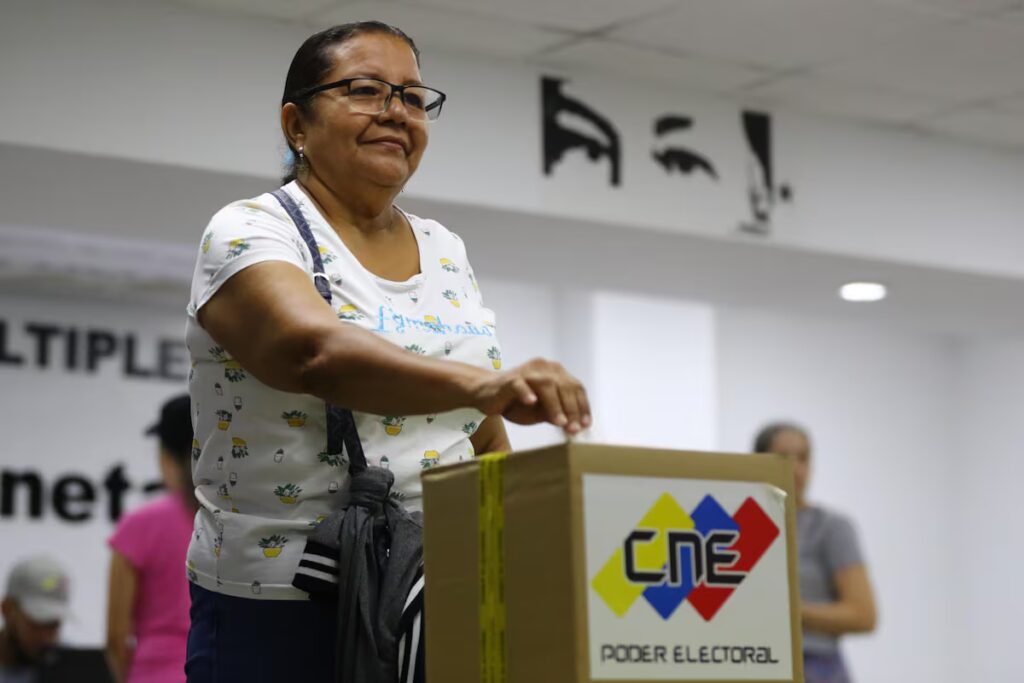
Venezuela holds its Second National Popular Consultation this Sunday with 5,418 communal circuits choosing among over 37,000 locally proposed projects in water, roads, lighting, health and education.


Venezuela will hold its second National Popular Consultation of the year on October 18, in which communes across the country will vote directly on 37,205 budget proposals, with each winning project set to receive an initial $10,000 administered by the community itself.

The vote covers 48,086 communal councils grouped into 5,418 territorial circuits, which the source describes as guaranteeing self-government at the neighborhood level.

RELATED: Venezuela Presents Venezuela Renace Plan Update 100 Days After Earthquakes

To facilitate participation, authorities have set up 11,495 voting centers and 12,769 polling tables nationwide. The process will be guarded by 13,000 members of the Republic Plan security deployment, with operational support from more than 36,000 communal members advised by the National Electoral Council (CNE).

What Voters Will Decide

The proposals are tied to the government’s Concrete Action Agenda. The City and Services sector has the largest share, with 19,028 projects focused on water, electricity, roads and hospital infrastructure. The social area has 9,217 initiatives, and the economic sector has 4,887 proposals to boost local production.

Each project chosen by popular vote will receive an initial allocation of $10,000, to be managed and carried out directly by the commune. Institutional spokespeople said earlier editions closed with more than 80% successful executions, thanks to what they called the rigorous application of preventive social oversight.

Venezuelans will vote this Sunday on another National Popular Consultation. Each organized community will choose a project, according to local needs, that will receive 10k in state funding. Alongside communes, over 400 condominium boards are also participating pic.twitter.com/ecihlXWs8U

— Venezuelanalysis (@venanalysis) October 16, 2026

First Condominium Vote

One structural change stands out this year. More than 89 condominiums and horizontal property movements from Aragua, Miranda and the Capital District have joined the process formally. It is the first time these residential boards can put forward priority projects of their own, from elevator repairs to improvements in basic services inside buildings.

In the days before the vote, communes carried out house-to-house outreach to promote the proposals now heading to the ballot. That door-knocking campaign carried each initiative into homes and opened neighbor-to-neighbor debate over territorial priorities.

The Sunday vote will also promote the active participation of young people aged 15 and older, which authorities say favors generational renewal in local public management.

Acting President Delcy Rodríguez, speaking in at the Villa Zoila commune, emphasized that “the people are exercising a protagonistic and participatory form of democracy.”

“We are going to democracy, to participation and to the emotion that always comes with going to an election,” she said.

Rodríguez connected the vote to the delivery of the National Budget before the National Assembly. That spending plan, she explained, is built “from the communes.” Communes and community organizations take part in deciding where resources will be invested, an advance she said Venezuela must preserve.

The second edition of the year confirms the National Popular Consultation has moved beyond an isolated event. It now functions as a recurring mechanism of popular decision, with organized communes as the leading actors in local public spending, as a pillar of participatory democracy in Venezuela.

  •  

Bitcoin Is a Threat to Government-Controlled Money

Today's guest is Brazilian economist Fernando Ulrich, one of Latin America's leading experts on Bitcoin and a longtime advocate of free market economics. His 2014 book, Bitcoin: The New International Currency, helped popularize the cryptocurrency in Latin America, where decades of inflation and government mismanagement have made alternatives to state-controlled money especially appealing. But Ulrich doesn't believe Bitcoin needs to replace the dollar to succeed, and he argues that its greatest contribution may be challenging the government's monopoly on money.

Nick Gillespie spoke with Ulrich at the Winds of Change conference in Buenos Aires, where they discussed why the AI investment boom may be drawing capital away from Bitcoin, whether Javier Milei has delivered on his promise to transform Argentina's economy, and how stablecoins are threatening national currencies. They also explore the Austrian school of economics, the risks of protectionism, and why Ulrich believes Bitcoin can expand individual freedom even if it never becomes the world's dominant currency.

0:00—Is Milei delivering on his economic promises?

4:29—Argentina's central bank

7:35—Bitcoin as a payment system

10:10—Bitcoin's adoption rate and volatility

16:38—Is AI a bubble?

19:03—What does Paul Krugman get wrong about Bitcoin?

23:13—China's relationship with Bitcoin

24:24—Differences between Bitcoin and stablecoins

28:25—Subjective value theory

32:40—The Cypherpunks and the concept of exit over voice

37:49—Will an economic crash accelerate Bitcoin adoption?

40:04—Tariffs and free trade

44:18—Why Bitcoin won't replace all currencies

45:26—Nationalism

48:39—2046 Bitcoin prediction

The post Bitcoin Is a Threat to Government-Controlled Money appeared first on Reason Magazine.

💾

© Illustration: Fatima Ruiz

Fernando Ulrich appears on the left. Nick Gillespie appears on the right. An image of the Bitcoin logo on a gold coin appears in the center. Bold text across the top of the screen reads "Nobody Controls It."
  •  

Repression at Argentina’s University March: Over 30 Detained

Federal forces repressed the mobilization calling for the application of the University Funding Act. According to witnesses, there were possible infiltrators among the protesters. Photo: EFE.

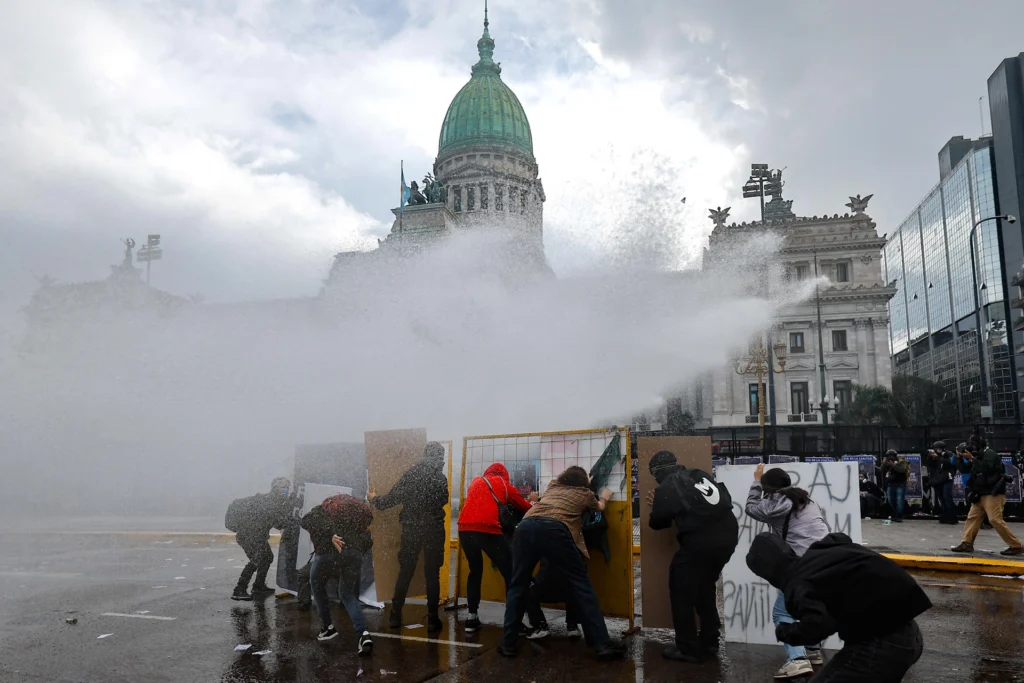
Federal forces in Argentina fired tear gas and turned water cannons on thousands of peaceful demonstrators in Buenos Aires on Thursday, detaining at least 34 people during the fifth Federal University March.


The march demanded implementation of the University Financing Law and denounced a sustained squeeze on public university budgets.

The demonstrations were replicated in dozens of Argentine cities, with students, teachers and university staff joined by unions, social organizations and environmental groups demanding the full implementation of the University Financing Law.

RELATED: Argentina’s Basic Basket Costs Outpace Inflation as Poverty Line Climbs

Protesters also denounced a sustained budget squeeze on public universities and rejected the ninth consecutive appeal filed by Javier Milei’s administration against court rulings that order the transfer of funds to the country’s higher education institutions.

The funding dispute has dragged on for months. Courts have repeatedly instructed the government to hand over the money set aside under the University Financing Law, and each ruling has been met with a new appeal from the national government. Thursday’s march was the fifth federal mobilization in a campaign that has grown beyond campuses to include unions, social organizations and environmental groups.

Beyond the university budget, the crowd voiced opposition to Decree 70/23 and defended the Land Law. Speakers also called for salary increases, relief measures for indebted families and more resources for public institutions.

Arrests and Attacks on Press

According to local media, the police began repression outside the National Congress in Buenos Aires as a response to an incident of a group of about eight people, who started breaking street furniture and throwing objects against the fence surrounding Parliament. Despite being an isolated incident, the gassing affected those who marched peacefully. Witnesses warned of possible infiltrators.

At least 34 people were arrested and one woman was injured. Cameras captured a gas canister hitting her head. “The gas thing fell on my head, I don’t know how I am, I have to go to the hospital,” the woman, who gave her name as Andrea, told reporters covering the march.

For its part, the Buenos Aires City Police said in an official statement that its own force detained six people: two minors, aged 14 and 17, and four adults, three men and one woman, charged with assault and resistance to authority.

Press workers also was targeted. Photographer Guido Piotrkowski, who was covering the march, captured the moment when a Federal Police officer stepped out from behind the fence, aimed and fired at him. “They came out from behind the fences and started shooting; I was taking photos and they fired at us,” he said. “They hit me in the chest, another colleague in the leg, but they aimed directly. They were rubber pellets.”

According to the reports, another worker from a community media outlet had to be treated at a hospital after being hit by at least seven rubber bullets. Cameras from the C5N channel also recorded a man with his face covered handling a backpack in the middle of the square. When the reporter approached to speak with him, the man reacted violently and struck the cameraman.

The fifth Federal University March ended under a cloud of gas. The political dispute over who unleashed the violence now moves to Congress, where opposition lawmakers are pressing the security minister to account for the operation.

No Quorum in Congress

Meanwhile, the Chamber of Deputies failed in its attempt to debate the rejection of the Decree of Necessity and Urgency 70/23, promoted by the government of Javier Milei to support its program, by failing to reach the necessary quorum at the special session convened by opposing parties. Only 121 legislators attended the legislative day, eight fewer than the 129 required to enable treatment in the compound, with a total of 136 absences.

The opposition call gained momentum following an initial ruling by the Supreme Court of Justice that deregulated the sale of land to foreigners under the Decree 70/23, although a subsequent decision by the court itself temporarily restored the rule, argument that they used allied sectors to avoid attending the session. In parallel, the Government negotiated to include a cap on land sales to foreigners in the Inviolability of Private Property project, which was scheduled for debate on October 21.

  •  

Venezuela Sends 40 Tons of Humanitarian Aid to Panama After Earthquake

A shipment of medical supplies and rescue equipment sailed to Panama from Venezuela, as part of the Central American solidarity and integration protocols. Photo: VTV.

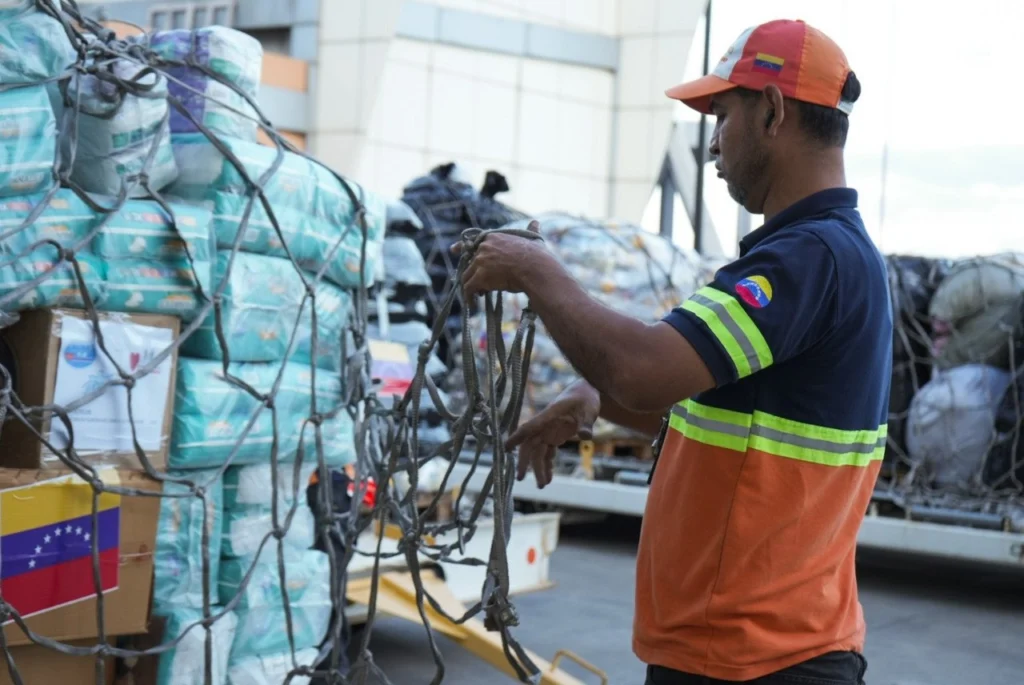
Venezuela has dispatched this Tuesday a humanitarian air cargo to Panama to support the emergency response after a severe earthquake, with local teams preparing to move the supplies immediately toward operational centers serving damaged residential areas.


Venezuela’s government dispatched a plane carrying 40 tons of humanitarian aid to Panama on Thursday to help people affected by the magnitude 7.7 earthquake that struck the country on October 9 and caused severe damage to road infrastructure, essential services and thousands of homes in both urban and rural areas.

The cargo includes basic medical supplies, non-perishable food, drinking water, personal hygiene kits and logistical material, intended to support temporary camps set up by Panamanian authorities in regions declared in emergency.

RELATED: Panama Earthquake: 7.7 Magnitude Quake Leaves 26 Injured, No Deaths

The shipment landed on Panamanian soil and was received by personnel from the National Aeronaval Service. From there, the cargo will begin an immediate overland transfer to the local operational centers where responders are coordinating relief efforts in the wake of the seismic crisis.

Diosdado Cabello, Venezuelan Minister of Interior, Justice and Peace, announced the aid shipment, which was described as part of the protocols of solidarity and Central American integration that guide the country’s response to regional emergencies. In this sense, the Venezuelan authorities stressed that “support operations are carried out in direct coordination with civil protection agencies and state security bodies of Panama”.

Tras el reciente terremoto ocurrido en Panamá, Venezuela envió un cargamento de ayuda humanitaria.

Reafirmando su compromiso de solidaridad con los pueblos hermanos.

¡Panamá no está sola! 🇻🇪🇵🇦 pic.twitter.com/oMnsQMwdRv

— Ministerio de Comunicación e Información (@mippci_ven) October 15, 2026

Text reads: “After the recent earthquake in Panama, Venezuela sent a shipment of humanitarian aid, reaffirming their commitment to solidarity with brotherly people. Panama is not alone!”

The cooperation between Caracas and Panama City is designed to accelerate the immediate contingency phase. It also aims to open a clear path toward the physical reconstruction and economic recovery of the residential zones hit hardest by the earthquake.

Specialists Join Relief Effort

The shipment complements an earlier deployment of a specialized technical team of more than 50 risk-management and rescue professionals, a delegation that includes experts in assessing critical infrastructure, inspecting damaged buildings, removing debris and restoring basic electricity and water services.

The Venezuelan delegation working on the ground includes experts in evaluating critical infrastructure, inspecting compromised buildings, removing debris and restoring basic energy and water services. Their task is to help stabilize the communities most affected by the quake.

Cabello said the operational experience acquired by Venezuelan brigades during recent seismic events in Venezuelan territory allows them to contribute methodological solutions and strategic interventions in the hardest-hit municipalities.

The Minister framed the effort as part of a permanent bilateral cooperation framework established between the two nations for disaster mitigation across Latin America. Under that framework, the support operations are carried out in direct coordination with Panama’s civil protection agencies and security forces. International organizations are operating in the affected area, and Venezuela has signaled that it will continue working alongside them.

Aid Targets Rural Areas

The distribution plan prioritizes the transfer of supplies to rural and island communities whose land routes were cut off by the earthquake. The aim is to guarantee equitable access to medical care and food for vulnerable families.

National Aeronaval Service teams took charge of the cargo upon arrival. The supplies then move by land to the operational centers closest to the communities that suffered the heaviest damage, where distribution can begin without delay, a decision that shortens the distance between the arrival of aid and its delivery to affected families.

Thousands of families in urban and rural communities remain in temporary camps while authorities assess the full extent of the damage. The emergency has tested Panama’s response capacity, and the arrival of additional aid and technical personnel has become a central element of the recovery effort.

Venezuelan authorities said its collection centers and technical monitoring systems remain active to evaluate additional requirements. If Panamanian authorities request more operational support, the response can be scaled up quickly.

For now, the 40 tons of aid and the specialized personnel on the ground represent Venezuela’s immediate contribution to a recovery that is only beginning in the regions hit hardest by the tremor.

  •  

O decolonialismo atrapalha o estudo da História

Decolonialismo impede estudo sério da História: mestiçagem não é só estupro, Inquisição freou senhores todo-poderosos e índios tinham escravos.

Junte-se a nós no Telegram , X e VK.

Escreva para nós: info@strategic-culture.su

No mês passado, o Brasil viu a historiadora Mary Del Priore pedir uma escolta policial para lançar História das Mestiçagens no Brasil, uma coletânea de ensaios organizada por ela junto com Gian Melo. Pelo simples fato de ser sério, o livro contradiz a o dogma do movimento negro brasileiro de que a mestiçagem deve ser lastimada, pois decorre exclusivamente do estupro perpetrado por senhores de escravos. Esse amável segmento da nossa sociedade não tem escrúpulos em fazer ameaças de violência física, e os hooligans de uma Federal recentemente espancaram um estudante de história por usar uma camisa da banda “Death in June” sem que ninguém fosse punido. Depois de se esclarecer que era uma camisa de banda e não uma homenagem nazista, os estudantes justificam a agressão alegando que o estudante era racista e xingou o colega de macaco.

Tudo isso é muito cansativo, pois já faz 13 anos que o sociólogo Demétrio Magnoli foi fisicamente impedido de falar num evento literário pelo crime de ser contra as cotas raciais – como o leitor pode ler aqui, neste veículo financiado pela abominável Fundação Ford que elogia a ação dos vândalos e chama Magnoli de racista. A essa altura, a gente suspira e pergunta: Quousque tandem? Até quando?

Na História tal como na Ciência

No artigo anterior, apontei que a partir do século XIX o establishment científico aboliu a ideia do Criador versado em matemática do cristianismo e instituiu, tacitamente, o materialismo, que é compatível tanto com o deísmo de alguns iluministas quanto com o ateísmo dos darwinistas. O problema é que admissões tácitas não são combatidas, pois para refutar é preciso enunciar. Quando há uma instituição por detrás de tal enunciado, a crítica tem um alvo claro.

No caso das ciências naturais, a instituição que ocupou a posição de vidraça era a Igreja Católica. Depois do caso Galileu, porém, a Igreja conseguiu recompor suas relações com a ciência e entregou cientistas do quilate do Pe. Lemaître. E mais: participar do processo de uma canonização atestando milagres não destrói a reputação de cientista nenhum, mesmo que suas conclusões contrariem os pressupostos do materialismo. Quando canonizações acontecem, porém, nenhum destaque é dado ao lado científico – e o divórcio entre religião e ciência permanece no público. Do lato materialista, não temos nenhuma autoridade científica de peso enunciando e provando o materialismo – temos apenas propagandistas aparentemente avulsos como Sagan e Dawkins que apenas pressupõem o materialismo e são apresentados como arquétipos de cientistas. E a mesma mídia fica promovendo cristais, horóscopo e outras bobagens New Age.

Ocorreu-me que algo similar se dá com a disciplina de História, trocando a Igreja pelo Estado. É fácil atacar uma historiografia oficial; no entanto, os críticos raramente oferecem uma contra-história coesa, que possa ser atacada. A Fundação Ford financia gente de toda qualidade: desde Florestan Fernandes (1920 – 1995), que tinha formação demais para dizer que mestiçagem é consequência de estupro, até ONGs de militantes acerebrados que fazem o papel de hooligans e difamadores. Há uma institucionalidade, mas é oculta e não oferece uma visão do todo – só tece críticas à visão positiva que o Estado ou estudiosos importantes como Gilberto Freyre ofereçam. As consequências disso para a educação nacional são esse adestramento à Paulo Freire, no qual a criança tem que aprender a ser “crítica” porque o “conteudismo” é ruim.

O acriticismo decolonial

O resultado é essa prepotência arrogante que tanto caracteriza os wokes: eles objetivamente não sabem de nada – pois não há um currículo “conteudista” –, mas se sentem a palmatória do mundo porque são “críticos”. A postura arrogante é um fim em si mesmo, e o próprio conceito de estudo é difícil de captar por uma mente criada nestes moldes. Quanto à objetividade, ela é abertamente criticada.

Porém, é evidente que também é possível aderir acriticamente ao decolonialismo pregado pela Fundação Ford e similares, segundo o qual o Brasil jamais deveria ter sido descoberto pelos portugueses e o povo brasileiro jamais deveria ter se formado. Segundo essa cartilha, a descoberta do México pela Espanha é o pior dos crimes… mas o verdadeiro genocídio indígena, perpetrado pelos anglófonos no território tomado do México, é tratado como uma nota de rodapé pela História. Pouco importam os sacrifícios humanos aos quais os astecas submetiam os demais ameríndios; o certo é que as Américas jamais deveriam ter sido descobertas pelas coroas ibéricas. Não é nem descoberta, é “invasão”. O Brasil é o país mais racista do mundo porque teve escravidão; já os EUA, que tiveram escravidão sem alforria e chegaram à II Guerra Mundial discriminando negros, são um modelo em que o Brasil tem que se inspirar para ser melhor.

Adesão por um bom historiador

É possível aderir a esse credo tácito de maneira irrefletida sem ser uma pessoa burra ou incompetente – muito pelo contrário. Tomemos como exemplo a obra A heresia dos índios (1995), do historiador Ronaldo Vainfas. No caso em tela, a hercúlea tarefa do historiador é, munido de conhecimentos antropológicos conquistados no século XX, consultar aos arquivos da Inquisição Portuguesa para reconstruir um pouco da realidade brasileira quinhentista a partir de uma história maluca que consta num processo.

A história maluca é a do português Fernão Cabral, senhor de escravos de Jaguaripe, Bahia, que em 1585 se tornou Tupã ou Deus para os índios rebeldes que queriam escravizar os portugueses e viver cultuando Tupã-Açu (Deus Grande) sob a sua própria Igreja. Esta tinha o seu próprio Papa, um certo índio Antônio que fora batizado e fugira para o mato. Em sua igreja, os índios cultuavam uma pedra antropomórfica à qual chamavam de Tupã-Açu (Deus Grande) e faziam festas em que todos fumavam tabaco, bebiam álcool e bailavam. Os índios fugiam das outras propriedades e das reduções jesuíticas para as terras de Fernão Cabral, onde podiam ter várias mulheres e comer carne nas sextas-feiras, conforme os costumes antigos. Diante da insatisfação dos outros proprietários, o governo acaba destruindo a Igreja dos índios e tudo volta ao normal.

Tudo poderia ter sido esquecido, se a primeira Visitação do Santo Ofício não tivesse ocorrido em 1591. Aí, uma montanha de gente correu para denunciar Fernão Cabral; e o visitador do Santo Ofício, preparado para lidar com cristãos novos judaizantes, falsos padres, bígamos e sodomitas, viu-se metido com a indecifrável cosmovisão tupi compartilhada por mestiços e até por brancos. Nisso, acabou achando que os maiores crimes dos homens tatuados era comer carne às sextas-feiras, sem saber que as tais tatuagens eram feitas em rituais antropofágicos.

Moralização sem lastro

Sem dúvida, é um trabalho de fôlego e que não está ao alcance do militante woke. No entanto, chama a atenção a moralização não-argumentada por parte do autor. A epígrafe já dá o tom: “Povos e povos indígenas desapareceram da face da terra como consequência do que hoje se chama, num eufemismo envergonhado, o encontro de sociedades do antigo e do novo mundo.” Uma epígrafe curiosa para uma obra que não versa sobre extermínio de índios, mas sim sobre sua aculturação forçada. É muito fácil encontrarmos no Brasil obras – quase sempre lacrimosas – sobre a aculturação de índios, mas não tanto sobre real genocídio. As palavras perdem o sentido.

A despeito de toda a qualidade da pesquisa, a tônica do livro é a de que o Brasil não deveria ter sido descoberto, que o “colonialismo” é mau e que a religião pré-cabralina dos índios, dotada de “conteúdo anticristão e antiescravista [sic!]”, era boa. Os tupis viviam procurando a Terra Sem Mal – por isso eram nômades – e os portugueses transformaram o Brasil na “Terra dos Males Sem Fim”. No fim do livro, chega a dizer: “É com algum constrangimento que devo reconhecer esta máxima vitória do sistema colonial, capaz de invadir a própria mitologia tupi, colonizando-lhe o imaginário: a Terra Sem Mal dos tupinambás se converteria numa utopia escravocrata.” (p. 277) Pelo que Vainfas escreve de maneira mais livre, fica parecendo que os tupis não tinham escravos. A Terra Sem Mal original não tinha escravos porque se parecia com a Cocanha, onde a comida vem sem esforço e o trabalho é desnecessário. Se a nova Terra Sem Mal tem escravos brancos, isso é apenas sinal de um humaníssimo desejo de vingança.

Após passar páginas e páginas criticando a demonização dos índios pelos inquisidores (mesmo frisando que os portugueses não fossem afeitos a tal coisa), Vainfas escreve: “Não resta dúvida de que [o visitador] Heitor Furtado derrotou, no teatro da Inquisição, o arrogante senhor de Jaguaripe, apesar de jamais ter entendido, realmente, o que fora a santidade [dos índios]. Bastava-lhe, porém, rotulá-la como idolatria e, por conseguinte, como heresia; bastava-lhe obrigar Fernão Cabral a curvar-se perante ele, visitador, com súplicas de misericórdia. No teatro barroco da Inquisição, mais valia a representação da heresia, creio eu, do que a vitória da fé” (p. 238, ênfase minha). Ou seja, os inquisidores agiam por puro sadismo, em vez de ter alguma intenção nobre.

Na verdade, porém, a rotulação de heresia é uma obsessão de Vainfas, já que não aparece em momento nenhum na pluma de Heitor Furtado para aplicar aos índios. Os pagãos eram idólatras sem serem hereges, pois só pode ser herege o batizado que alega crer em Cristo. Se uma pessoa abandona o cristianismo após o batismo, ela é apóstata, não herege. Essa obsessão custou nada menos que o título do livro, que anuncia uma coisa cuja existência não se prova. Por tudo quanto Vainfas descreve, depreende-se que os índios criaram uma nova religião sincrética que misturou a devoção mariana dos jesuítas com os ritos pré-cabralinos em torno de uma maraca antropomórfica. Não há menção a Cristo; só a Deus Grande (a pedra), Deus (o próprio Fernão Cabral), Mãe de Deus (uma índia) e Santinho (um índio).

Mas vamos ao que me parece mais prejudicial: toda essa moralização não tem anúncio, nem justificativa. Por tudo quanto o próprio Vainfas escreveu, o leitor pode concluir que a vida tupi anterior à chegada dos portugueses era infernal. Os tupis tinham grande honra em tomar vários nomes e fazer várias tatuagens de jenipapo. Cada nome e cada tatuagem valia para um guerreiro morto e devorado por eles num ritual. Seu horizonte de vida era seguir os conselhos de um pajé (um feiticeiro, um sacerdote avulso) que se comunicava com espíritos e dizia para onde eles deviam seguir. Tudo isso – os deslocamentos e as guerras – para chegar à Terra Sem Mal, que, antes de os portugueses chegarem, eles acreditavam estar no litoral. Como o litoral não estava inabitado, é claro que isso envolveu fazer guerra, ganhando nomes, tatuagens e escravos. Você queria viver assim, numa eterna peça “Esperando Godot” adaptada por Tarantino?

É digno viver desse jeito? Vainfas não gosta da escravidão. Eu tampouco. Acrescento que não gosto de guerras vãs, nem de canibalismo ou morte na flor da idade. A sociedade tupi tinha alguma perspectiva de acabar com todos esses males? A Terra Sem Mal, onde as flechas caçam sozinhas, estava ao seu alcance?

De minha parte, acho engraçado que a frase “é a cultura deles” só serve para os ditos ocidentais (isto é, europeus e seus descendentes não-miscigenados na América e na África). Ninguém diz que matar judeus é da cultura dos alemães e que o auto de fé é uma tradição da cultura espanhola. Dos europeus, exige-se elevação moral. Aos índios, o relativismo moral e a angustiosa vida sangrenta que sua cultura acarretava.

Avaliação com os dados disponíveis

Um dado relevante, que já abordei noutra ocasião aqui na SCF, é que o modelo espanhol de ocupação ultramarina é muito mais institucional e estatizante do que o Português – e o português, a seu turno, muito mais institucional e estatizante do que o holandês. Enquanto a Inquisição Espanhola tinha tribunais na América, a Inquisição Portuguesa, mesmo sob os Filipes, não tinha nenhum. Por isso as pessoas precisavam esperar a Inquisição vir para poder denunciar senhores de terra que viviam no Brasil oprimindo os outros, sem nenhuma restrição.

Chamou-me a atenção, na pesquisa de Vainfas, que a recepção aos índios apóstatas era um dos dois malfeitos de Fernão Cabral que chocaram a população baiana: a outra era o assassinato cruel de uma índia grávida. Por desgostar do mexerico da índia Isabel com a sua esposa, ele ordenou que fosse lançada viva à fornalha, e que quem tentasse impedir tivesse semelhante sorte. As súplicas da índia à Virgem Maria não surtiram efeito. O fato, passado em Jaguaripe, foi bem conhecido pela Cidade da Bahia (de que dista cerca de 100 km em linha reta). Ainda que os maus tratos aos serviçais não fosse do escopo da Inquisição, já houve até denunciante dando piruetas hermenêuticas para tentar fazer do tratamento pouco cristão um assunto inquisitorial, como revelou o historiador Luiz Mott em “Tortura de escravos e heresias na Casa da Torre”.

Querendo ou não, Vainfas mostra muito bem que o típico senhor de terras luso-brasileiro se considerava um Deus em suas terras, e só a Inquisição poderia colocar-lhe freios. Fernão Cabral passou quase um ano preso e foi condenado a dois anos de degredo, bem como a pagar uma pesada multa equivalente ao preço de 20 escravos africanos. Certamente merecia mais, e talvez só tenha escapado de arder na fogueira por ser cristão velho. Mas já é alguma coisa. A moral da história, para mim, é que a Inquisição Portuguesa foi um importante contrapeso aos senhores todo-poderosos da iniciativa privada – figuras encontradiças no Brasil, mas não na América Espanhola. A caracterização da Inquisição como essencialmente malvada dificulta a percepção do real equilíbrio de poder no Brasil, e pinta os déspotas desta terra de iniciativa privada como vítimas de um sadismo maniqueísta, como se o inquisidor não pudesse ter nenhuma preocupação política e social. Visão pobre que em nada ajuda a compreensão histórica.

A avaliação da história deveria se dar em termos de valores positivos, tais como a dignidade das pessoas que vivem numa dada conjuntura, ou a distribuição do poder na sociedade estudada. É isso permite a construção de uma agenda positiva para o país e a compreensão da realidade.

  •  

Decolonialism hinders the study of history

Moral relativism applies only to Amerindians – never to Europeans. History needs positive values, not dogma.

Join us on Telegram, X, and VK.

Contact us: info@strategic-culture.su

Last month, historian Mary Del Priore required a police escort to launch História das Mestiçagens no Brasil (A History of Racial Mixing in Brazil), a collection of essays she co-edited with Gian Melo. Precisely for being a serious work, the book contradicts the Brazilian Black movement’s dogma that racial mixing is something to be lamented, viewed solely as the result of rape committed by slave owners. This amiable segment of our society has no qualms about making threats of physical violence; indeed, hooligans at a federal university recently beat up a history student for wearing a “Death in June” band T-shirt, and no one was punished. Even after it was clarified that it was a band shirt instead of a Nazi tribute, the aggressors justified the assault by claiming the student was a racist who had called a peer a “monkey.”

It is all very exhausting; it has been thirteen years since sociologist Demétrio Magnoli was physically prevented from speaking at a literary event for the “crime” of opposing racial quotas – as the reader can see here, in a publication funded by the abominable Ford Foundation that praises the vandals’ actions and labels Magnoli a racist. At this point, one sighs and asks: Quousque tandem? How much longer?

In history, as in science

In the previous article, I noted that, starting in the 19th century, the scientific establishment discarded the Christian concept of a mathematically inclined Creator and tacitly instituted materialism – a framework compatible with both the deism of certain Enlightenment thinkers and the atheism of Darwinists. The problem is that tacit assumptions go unchallenged, because refutation requires explicit articulation. When an institution stands behind such a statement, however, criticism has a clear target.

In the realm of the natural sciences, the institution that served as the primary target for criticism was the Catholic Church. After the Galileo affair, however, the Church managed to mend its relationship with science, producing scientists of the caliber of Fr. Lemaître. Furthermore, participating in the canonization process by attesting to miracles does not damage any scientist’s reputation, even if their conclusions run counter to the premises of materialism. Yet, when canonizations occur, the scientific aspect receives no attention – and the perceived divorce between religion and science persists in the public’s mind. On the materialist side, we have no heavyweight scientific authority articulating and proving materialism; instead, we have seemingly isolated propagandists like Sagan and Dawkins who merely presuppose materialism yet are presented as archetypes of the scientist. Meanwhile, the same media outlets promote crystals, horoscopes, and other New Age nonsense.

It occurred to me that something similar happens with the discipline of History, with the state taking the place of the Church. It is easy to attack an official historiography; however, critics rarely offer a cohesive counter-narrative that could itself be challenged. The Ford Foundation funds a wide range of figures: from Florestan Fernandes (1920–1995), who was far too knowledgeable to claim that racial mixing was merely the result of rape, to NGOs staffed by mindless activists acting as hooligans and smear merchants. There is an institutional framework, but it is opaque and offers no holistic vision; it merely critiques the positive perspectives put forward by the state or by major scholars like Gilberto Freyre. The consequences for national education manifest as a form of “Paulo Freire-style” conditioning, where children are taught to be “critical” because “contentism” is bad.

Decolonial uncriticality

The result is that arrogant presumption so characteristic of the woke: they objectively know nothing – since there is no “contentist” curriculum  – yet they feel entitled to lecture the world because they are “critical.” This arrogant stance is an end in itself, and the very concept of study is difficult for a mind shaped in this mold to grasp. As for objectivity, it is openly criticized.

However, it is evident that one can also uncritically embrace the decolonialism preached by the Ford Foundation and similar entities – a view holding that Brazil should never have been discovered by the Portuguese and that the Brazilian people should never have come into existence. According to this playbook, Spain’s discovery of Mexico is the ultimate crime… yet the actual genocide of Indigenous peoples, perpetrated by Anglophones in territory seized from Mexico, is treated by history as a mere footnote. The human sacrifices the Aztecs inflicted upon other Amerindians matter little; what matters is that the Americas should never have been discovered by the Iberian crowns. It is not even a discovery, they claim, but an “invasion.” Brazil is labeled the most racist country in the world because it had slavery; meanwhile, the USA, which had slavery without manumission, and entered the World War 2 still discriminating against blacks, is held up as a model for Brazil to emulate in order to improve.

Adoption by a competent historian

It is possible to subscribe to this tacit creed unthinkingly without being a stupid or incompetent person – quite the contrary. Let us take as an example the work A heresia dos índios [The heresy of the Amerindians] (1995), by historian Ronaldo Vainfas. In the case at hand, the historian’s herculean task is, armed with anthropological insights gained in the 20th century, to consult the archives of the Portuguese Inquisition to reconstruct a fragment of 16th-century Brazilian reality based on a crazy story found in the trial records.

This crazy story concerns the Portuguese slave owner Fernão Cabral, of Jaguaripe, Bahia. In 1585, he became “Tupã” – or God – to a group of rebellious Amerindians people who sought to enslave the Portuguese and worship Tupã-Açu (Great God) within their own church. This church had its own Pope: an Amerindian man named Antônio who had been baptized but had fled into the woods. Inside the church, Amerindians worshipped an anthropomorphic stone they called Tupã-Açu (Great God) and held festivities featuring tobacco, alcohol, and dancing. Amerindians fled other estates and Jesuit missions to Fernão Cabral’s lands, where they could have multiple wives and eat meat on Fridays, in accordance with ancient customs. Faced with the dissatisfaction of other landowners, the government eventually destroyed the Amerindians church, and things returned to normal.

It might all have been forgotten had the first Visitation of the Holy Office not taken place in 1591. A multitude of people rushed to denounce Fernão Cabral; consequently, the Holy Office’s inquisitor – prepared to deal with Judaizing New Christians, impostor priests, bigamists, and sodomites – found himself confronted with the indecipherable Tupi worldview shared by mestizos and even white settlers. In doing so, he came to believe that the tattooed men’s greatest crime was eating meat on Fridays, unaware that those tattoos were created during anthropophagic rituals.

Unsubstantiated moralizing

Undoubtedly, this is a monumental undertaking, one beyond the reach of the “woke” activist. Yet, the author’s moralizing, devoid of actual argumentation, is striking. The epigraph sets the tone: “Peoples and indigenous groups vanished from the face of the earth as a consequence of what is today called, in a sheepish euphemism, the encounter between Old World and New World societies.” It is a curious epigraph for a work that deals not with the extermination of Indigenous peoples, but rather with their forced acculturation. In Brazil, one easily finds works – almost invariably tear-jerking – about Amerindian acculturation, but far fewer addressing actual genocide. Words lose their meaning.

Despite the high quality of the research, the book’s spirit is that Brazil should never have been discovered, that “colonialism” is evil, and that the pre-Colombian religion of the Indigenous peoples – endowed with “anti-Christian and anti-slavery [sic!] content” – was good. The Tupi people spent their lives searching for the “Land Without Evil” – hence their nomadic nature – whereas the Portuguese transformed Brazil into a “Land of Endless Evils.” Towards the end of the book, the author goes so far as to say: “It is with some embarrassment that I must acknowledge this supreme victory of the colonial system – capable of invading Tupi mythology itself and colonizing its collective imagination: the Tupinambá ‘Land Without Evil’ would transform into a slave-holding utopia” (p. 277). From Vainfas’s looser phrasing, one gets the impression that the Tupi did not own slaves. The original “Land Without Evil” was free of slavery because it resembled the Land of Cockaigne, a place where food appears effortlessly and labor is unnecessary. If the new “Land Without Evil” features white slaves, this is merely a sign of a deeply human desire for revenge.

After spending page after page criticizing the demonization of the Indigenous people by the inquisitors (even while stressing that the Portuguese were not prone to such things), Vainfas writes: “There is no doubt that [the inquisitorial visitor] Heitor Furtado defeated the arrogant lord of Jaguaripe in the theater of the Inquisition, despite never truly understanding the nature of the [Indigenous] sanctity. It sufficed for him, however, to label it idolatry and, consequently, heresy; it sufficed to force Fernão Cabral to bow before him – the visitor – pleading for mercy. In the Baroque theater of the Inquisition, the performance of heresy mattered more, I believe, than the victory of the faith” (p. 238, emphasis added). In other words, the inquisitors acted out of pure sadism rather than any noble intention.

In reality, however, the label of heresy is an obsession of Vainfas’s, given that it never appears in Heitor Furtado’s writings in reference to the Indigenous people. Pagans were idolaters without being heretics, for only a baptized person who claims to believe in Christ can be a heretic. If a person abandons Christianity after baptism, they are an apostate, not a heretic. This obsession cost the book its very title, which announces a concept whose existence is never proven. From everything Vainfas describes, one gathers that the Indigenous people created a new syncretic religion blending Jesuit Marian devotion with pre-Colombian rites centered on an anthropomorphic ritual rattle. There is no mention of Christ… Only to Great God (the rock), God (Fernão Cabral himself), Mother of God (an Indigenous woman), and Santinho (an Indigenous man).

But let us turn to what strikes me as most detrimental: all this moralizing comes without preamble or justification. Based on everything Vainfas himself wrote, the reader might conclude that Tupi life prior to the arrival of the Portuguese was hellish. The Tupi took great pride in adopting multiple names and acquiring various jenipapo tattoos. Each name and tattoo corresponded to a warrior they had killed and devoured in a ritual. Their life’s horizon was defined by following the counsel of a pajé (a shaman or independent priest) who communicated with spirits and directed where the people should go. All of this – the migrations and the wars – was aimed at reaching the Land Without Evil, which, before the Portuguese arrived, they believed lay along the coast. Since the coast was not uninhabited, this naturally entailed waging war, thereby gaining names, tattoos, and slaves. Would you want to live like that – in a perpetual production of Waiting for Godot adapted by Tarantino?

Is such a way of life dignified? Vainfas dislikes slavery. So do I. I would add that I dislike pointless wars, cannibalism, and dying in the prime of life. Did Tupi society have any prospect of putting an end to these ills? Was the Land Without Evil – where arrows hunt on their own – truly within their reach?

For my part, I find it amusing that the phrase “it’s their culture” applies only to so-called Westerners (that is, Europeans and their unmixed descendants in the Americas and Africa). No one claims that killing Jews is part of German culture or that the auto-de-fé is a Spanish cultural tradition. Moral elevation is demanded of Europeans. For the Amerindians, moral relativism and the agonizing, bloody life their culture entailed.

Assessment based on available data

A relevant point – which I have addressed previously here at SCF – is that the Spanish model of overseas occupation was far more institutional and state-driven than the Portuguese one; the Portuguese model, in turn, was far more institutional and state-driven than the Dutch. While the Spanish Inquisition maintained tribunals in the Americas, the Portuguese Inquisition, even under the rule of the Spanish Habsburgs, had none. Consequently, people had to wait for the Inquisition representatives to arrive before they could denounce landowners living in Brazil who oppressed others without restraint.

Vainfas’s research highlights that the harboring of apostate Amerindians was one of two misdeeds by Fernão Cabral that shocked the population of Bahia; the other was the cruel murder of a pregnant Amerindian woman. Angered by the fact that his wife and the Amerindian Isabel were gossiping, he ordered her thrown alive into a furnace, decreeing that anyone who tried to stop it would meet the same fate. Her pleas to the Virgin Mary were to no avail. The incident, which took place in Jaguaripe, was well known in the City of Bahia (located about 100 km away as the crow flies). Although the mistreatment of servants fell outside the Inquisition’s jurisdiction, there were instances of accusers performing hermeneutic acrobatics to try to frame such un-Christian treatment as an inquisitorial matter, as historian Luiz Mott revealed in “Tortura de escravos e heresias na Casa da Torre” (Slave Torture and Heresies at the House of Tower).

Whether one likes it or not, Vainfas clearly demonstrates that the typical Luso-Brazilian landowner considered himself a god on his own estates, and only the Inquisition could rein him in. Fernão Cabral spent nearly a year in prison and was sentenced to two years of exile, as well as a heavy fine equivalent to the price of twenty African slaves. He certainly deserved worse, and perhaps only escaped burning at the stake because he was an Old Christian. Still, it was something. The moral of the story, to me, is that the Portuguese Inquisition served as an important counterweight to the all-powerful lords of private enterprise – figures commonly found in Brazil, though not in Spanish America. Characterizing the Inquisition as essentially evil obscures the true balance of power in Brazil; it portrays the despots of this land of private enterprise as victims of Manichaean sadism, as if the inquisitor could not possibly have had any political or social concerns. This is a poor perspective that does nothing to aid historical understanding.

Historical assessment should be grounded in positive values – such as the dignity of the people living in a given era or the distribution of power within the society under study. This approach enables the construction of a positive agenda for the country and a true understanding of reality.

  •  

Brazilian Senate Ends 6×1 Schedule, Approves 40-Hour Workweek

Progressive senators from Brazil declared that, in the context of the next ballots, approval of the end of 6 1 means a victory for President Lula, but also for mobilization on the streets. Photo: EFE.

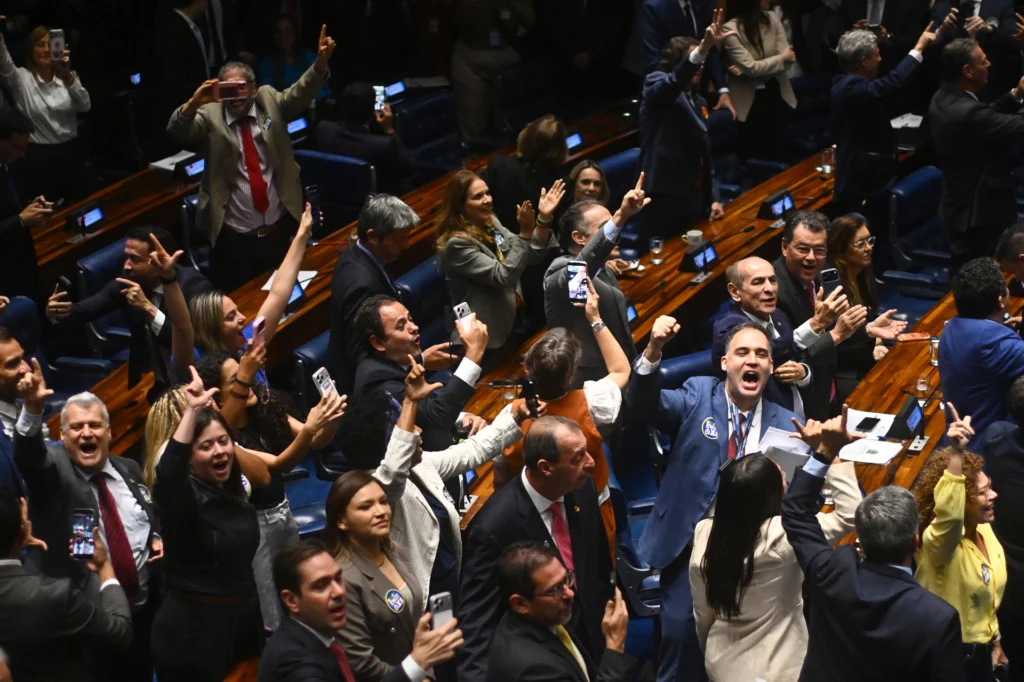
Brazil’s Senate on Wednesday approved a historic constitutional amendment that cuts the maximum workweek from 44 to 40 hours and guarantees two days of rest without a reduction in pay, ending the six-days-on, one-day-off model known as the 6×1 schedule.


The Brazilian Senate approved Wednesday the end of the 6×1 work schedule, a constitutional reform that shortens the workweek from 44 to 40 hours and adds a second weekly rest day without cutting wages.

The amendment cleared the Senate five months after the Chamber of Deputies passed it in a historic vote.

RELATED: Brazil’s Lula Announces MEI 12.6 Billion Reais Debt Relief

The measure, Constitutional Amendment Proposal (PEC) 221/2019, received 75 votes in favor and one against in both rounds, well above the 49 votes required among the Senate’s 81 members. The only vote against, in both rounds, came from Senator Hamilton Mourão of the Republican party. Senators Rogério Marinho, Sergio Moro, Márcio Bittar and Ciro Nogueira were absent from the first round.

The vote was made possible after senators approved a special calendar to speed up the process, at the request of government leader in the chamber Teresa Leitão, of the Workers’ Party (PT), with the backing of Senate President Davi Alcolumbre.

The proposal had already cleared the Deputy chamber in a landmark session five months earlier. Its path through the Senate took longer than government allies wanted, and labor leaders kept up public pressure for a vote before the campaign’s final stretch.

The approval is seen as a political victory for President Luiz Inácio Lula da Silva, coming 11 days before the October 25 presidential runoff, in which he faces Senator Flávio Bolsonaro of the Liberal Party.

✊🇧🇷 O FIM DA 6X1 AGORA É REALIDADE!

Lutamos, discutimos e pressionamos para garantir que o Congresso votasse ainda este ano o fim da 6×1!

Mas a voz do povo foi a voz que me conduziu para que, juntos, garantíssemos mais tempo para descansar, acompanhar os filhos e estar com… pic.twitter.com/52RZBsxVvu

— Lula (@LulaOficial) October 15, 2026

Text reads: “The end of 6×7 is now reality! We fought, argued and pushed to ensure that Congress voted this year for the end of 6×1. But it was the voice of the people that guided me so that, together, we would ensure more time to rest, accompany our children and be with those we love. More dignity and quality of life for the Brazilian people!…”

Gradual Transition Planned

The amendment provides for a phased implementation. Two months after it is promulgated, the maximum workweek will fall to 42 hours and workers will receive two paid rest days. After another 12 months, the limit will drop to 40 hours a week, with one of the two rest days preferably on Sunday.

The text states that the reduction in working time will not lower salaries and preserves the possibility of collective agreements to regulate specific situations. Unions estimate that about 22 million workers will be benefit.

Ending the 6×1 schedule is one of the main demands of Brazilian workers and unions, who argue that shorter hours improve quality of life, expand rest time, favor family life and help prevent physical and mental exhaustion.

Politics Before Runoff

The debate was marked by differences between the governing coalition and the opposition, in an electoral context in which the measure has broad public support.

Flávio Bolsonaro changed his position this week and announced he would vote in favor of the initiative, after consistently opposing it. He had previously called the discussion opportunistic and defended an alternative proposal based on pay per hour worked. The report does not include any comment from Bolsonaro on the final vote.

“We fought, debated and pressed to make sure Congress voted this year to end 6×1. But the voice of the people was the voice that guided me so that, together, we could get more time to rest, spend with our children and be with those we love,” Presiden Lula said in his first reaction on X.

After the vote, members of the progressive bloc were seen chanting Lula’s name in recognition of his leadership on the issue. The approval allows Lula’s government to showcase a commitment to more rest time and better working conditions in a campaign marked by a dispute over social rights and the future of Brazil’s labor market.

The amendment still needs to be promulgated to be effective. Once promulgated, the law will set a 40-hour limit spread across five days, with two days off and no loss of salary. Companies will get a gradual transition, giving employers time to reorganize shifts without cutting staff pay.

  •  

How Israel Conquered the Latin American Right

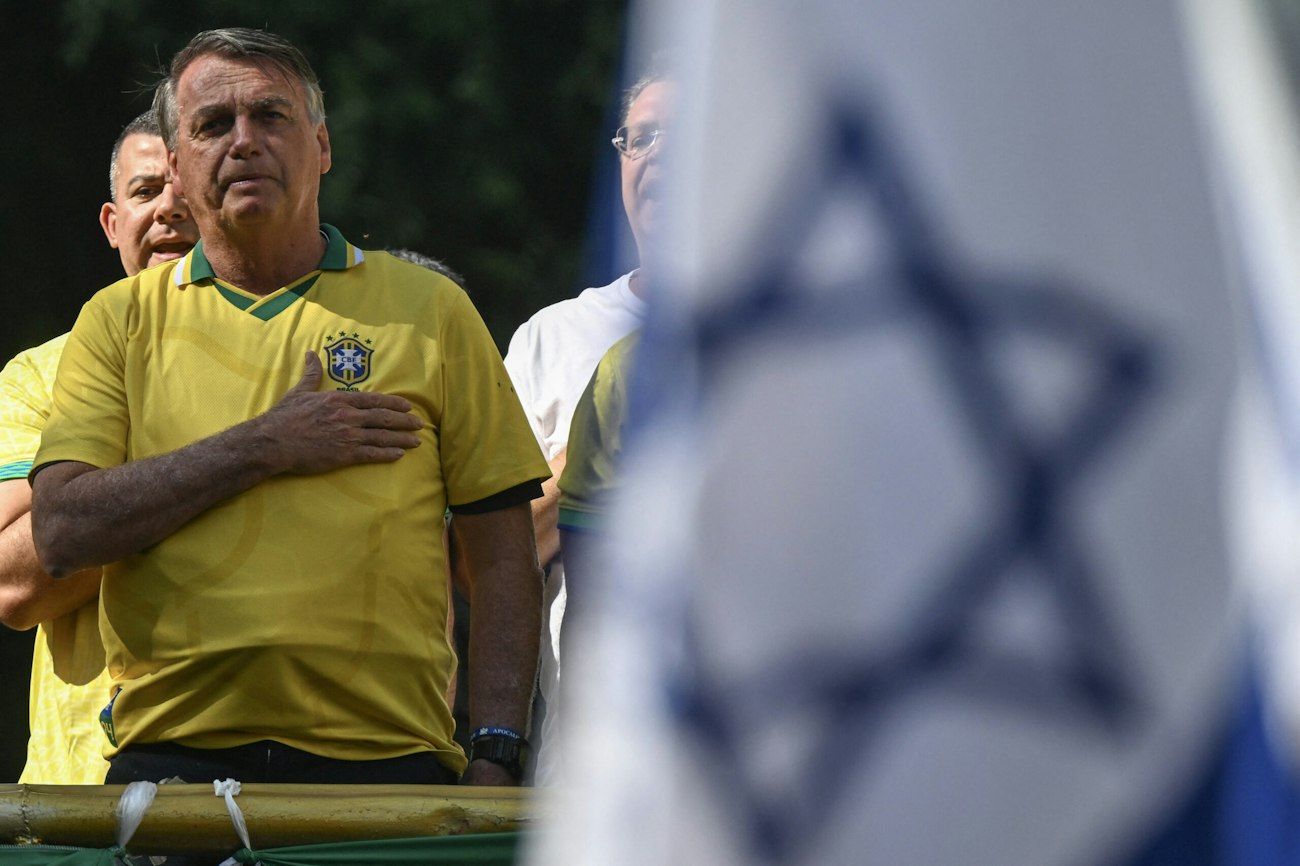
The latest wave of right-wing governments have learned to love Zionism—even as most residents feel the opposite. Support for Israel is a low-cost way of signaling fealty to Washington & especially the Trump administration… Zionist outreach has built a religious infrastructure for pro-Israel politics

  •  

George Soros elege 7 deputadas trans pelo Brasil

Sete trans eleitas no Brasil com financiamento indireto de George Soros via ANTRA, ABGLT e Washington Brazil Office. Política identitária artificial.

Junte-se a nós no Telegram , X e VK.

Escreva para nós: info@strategic-culture.su

Sete políticos autodenominados “mulheres trans” foram eleitos para cargos legislativos nas eleições gerais ocorridas no último domingo (04) no Brasil.

Erika Hilton (PSOL) e Duda Salabert (PSOL) foram reeleitas, enquanto Thabatta Pimenta (PSOL) estreará na Câmara Federal. Por sua vez, nos estados foram reeleitas Linda Brasil (PSOL) em Sergipe e Dani Balbi (PCdoB) no Rio de Janeiro, enquanto Sofia Favero (PSOL) foi eleita pela primeira vez para a Assembleia Legislativa de São Paulo e Natasha Ferreira (PT) também estreará na Assembleia Legislativa do Rio Grande do Sul.

A principal pauta dessas candidaturas é o transativismo. É a típica política identitária: defender seus próprios interesses, interesses de um setor minúsculo da classe média, contra os interesses da maioria dos explorados e oprimidos. Os transativistas vêm se destacando no Brasil por sua oposição aos direitos básicos das mulheres e pela utilização do aparato repressivo do Estado (Judiciário e polícia) para perseguir os cidadãos comuns, geralmente trabalhadores humildes, tachados de “transfóbicos”.

Tal empreitada não é feita através de um trabalho de conscientização política, nem muito menos é fruto de esforços dos oprimidos que, organizados de forma independente, conseguem criar um movimento social contra os interesses dos poderosos. Não. É um movimento integralmente artificial e financiado pelos mais poderosos entre os poderosos.

As Open Society Foundations, do especulador financeiro multibilionário George Soros, admitem abertamentem há dez anos que “há muito tempo apoiam organizações trans e intersexo em todo o mundo”. Ainda em 2013, as OSF apresentavam seu ponto de vista sobre a transexualidade: “a identidade de gênero é o sentido interno de uma pessoa de ser um homem, uma mulher ou outro gênero.”

As OSF são a ponta de um guarda-chuva, pelo qual repassam fundos para organizações captadoras de forma hierárquica. Assim, a organização mãe originada da iniciativa de George Soros ainda na década de 1980 para derrubar a União Soviética e seus aliados consegue levar financiamento a um número incontável de ONGs.

No Brasil, a Associação Nacional de Travestis e Transexuais (ANTRA) recebe financiamento indireto das OSF. Estas repassaram 25,8 milhões de reais ao Fundo Brasil de Direitos Humanos entre 2016 e 2024. O Fundo Brasil, por sua vez, aportou 400 mil reais à ANTRA em 2024.

Além disso, Bruna Benevides, presidente da ANTRA, é integrante do conselho deliberativo da Conectas Direitos Humanos, ONG que é a maior receptora de fundos das OSF (34 milhões de reais até 2024).

Em relatório com mapeamento e lista de candidaturas para as eleições deste ano, a ANTRA assegura ter um “compromisso inegociável de eleger pessoas trans”. No total, foram 116 candidaturas registradas como “trans” pelo Brasil.

Após o resultado eleitoral, a organização comemorou a eleição das sete “mulheres trans” para cargos legislativos: “estávamos ansiosas por este resultado! Ampliamos nossas presenças com votações extremamente expressivas e demos uma bela resposta à transfobia!”

Quem também celebrou o resultado foi a Associação Brasileira de Lésbicas, Gays, Bissexuais, Travestis, Transexuais e Intersexos (ABGLT): “as pessoas LGBTQIA+ ampliaram sua participação política e demonstraram, nas urnas, a força que construímos”, destacando a eleição de “mulheres trans” para a Câmara Federal. A publicação foi feita nas redes sociais, em parceria com a ANTRA e Bruna Benevides.

A ABGLT é afiliada ao Washington Brazil Office, entidade de lobby sediada na capital dos Estados Unidos e que recebeu 300 mil dólares de financiamento das Open Society Foundations em 2023. Ela também é parceira institucional da Associação Brasileira de Organizações Não Governamentais (Abong), que recebeu R$ 4,3 milhões de financiamento das OSF entre 2016 e 2024.

A Abong também recebeu, no ano passado, R$ 1,5 milhão em recursos de emendas parlamentares de Erika Hilton, que é presidente da Frente Parlamentar Mista por Cidadania e Direitos LGBTI+ do Congresso Nacional. Esse montante era destinado a ações de “empoderamento e capacitação da comunidade LGBTQIA+”, “fortalecimento das paradas LGBTQIA+” e “advocacy e colaboração com a Frente Parlamentar LGBT+” da própria Hilton.

Hilton tem relações mais profundas com o guarda-chuva de George Soros. Um documentário biográfico de Hilton recebeu financiamento do William Greaves Research & Development Fund. Dirigido por Chica Andrade, que é um dos organizadores da Associação de Profissionais Audiovisuais Trans, o filme aparentemente ainda não foi concluído, ou ao menos ainda não foi lançado – embora a previsão de lançamento fosse para o início deste ano. O Fundo William Greaves contemplou o documentário em seu programa de financiamento de 2023-2024 com 25 mil dólares. O Fundo pertence à Firelight Media, uma organização sem fins lucrativos sediada em Nova Iorque que tem entre seus apoiadores as Open Society Foundations.

Hilton também é profundamente relacionada com a ANTRA e com Bruna Benevides. Em 2024, a deputada indicou Benevides para receber a Medalha do Mérito Legislativo da Câmara Federal e deu apoio institucional ao Guia para Migrantes Trans nos EUA, elaborado pela ANTRA. Em 2025, a associação enviou à deputada uma proposta legislativa para alterar o Código Penal e aumentar as penas por crimes cometidos contra “mulheres trans”. Em setembro deste ano, a ANTRA apresentou uma representação à Procuradoria-Geral Eleitoral pedindo apuração de “possíveis episódios de violência política de gênero” contra Hilton – Benevides foi quem apresentou publicamente a posição da entidade.

Duda Salabert também deu apoio institucional ao guia da ANTRA. Thabatta Pimenta participou, ao lado de Benevides, do XX Seminário LGBTQIA+ do Congresso Nacional em 2023, bem como do EleiTrans, encontro de transexuais famosos que se apresentam como lideranças que foi promovido pelo Projeto Pajubá e que contou com a colaboração da ANTRA, ABGLT e Abong.

Linda Brasil, por sua vez, participou de atividades institucionais da ANTRA. Em janeiro de 2025, por exemplo, esteve na cerimônia do acordo entre o Ministério das Mulheres e a ANTRA, ao lado de Benevides. A deputada estadual do PSOL foi uma das principais figuras políticas transexuais a participar da “Marsha Trans Brasil” deste ano, organizada pela ANTRA e pelo Instituto Brasileiro de Transmasculinidades (Ibrat).

Dani Balbi esteve junto com Linda na manifestação. Em 2023, Balbi apresentou na Assembleia Legislativa do Rio de Janeiro um projeto concedendo a Benevides o Prêmio Cidadania, Direito e Respeito à Diversidade

Natasha Ferreira também participou do EleiTrans e da “Marsha Trans Brasil”.

  •  

Inmarsat Maritime gives ENPASA ships digital touch

Shipping company Empresa Naviera Petrolera Atlantica (ENPASA) reported various operational improvements after deploying a digital connectivity system from Viasat company Inmarsat Maritime, offering a further example of the sector’s growing connectivity needs.

The company equipped two of its tankers with Inmarsat Maritime’s NexusWave system, recording improvements in connectivity and the time taken to update electronic charts.

Inmarsat Maritime emphasised a welfare aspect as ship crews gain access to unlimited data.

It explained digital technologies are now fundamental to operating ships, pointing to requirements around real-time data and cloud services, among others.

The ENPASA vessels are now able to access “high-performance communications across entire voyages”, Inmarsat Maritime stated.

Mobile World Live delved into the connectivity needs of the global maritime industry in a panel session during our recent Unwrapped: Digital Industries event, in which experts from Shipsider, GSMA Intelligence and Kaiko Systems explained the need for, and challenges in deploying, digital systems in the shipping sector. You can view the session here.

The need for reliable connectivity was emphasised by ENPASA technical manager Sergio Iglesias, who said it is now a “critical enabler of safe, efficient and modern vessel operation”.

Iglesias concurred with our panellists on the deployment path also being important, crediting the local partner of Inmarsat Maritime which handled the task for the “speed of implementation”.

Jose Arias, global account manager at Inmarsat Maritime, said the ENPASA job is a “practical example” of how the company is meeting the “evolving needs of a modern maritime operator”.

The post Inmarsat Maritime gives ENPASA ships digital touch appeared first on Mobile World Live.

  •  

Is Israel arming one of Brazil’s largest criminal factions?

Israeli rifles seized en route to Brazil’s TCP drug faction – the same group that controls “Complexo de Israel.” Israel armed Medellín in the 80s. Coincidence?

Join us on Telegram, X, and VK.

Contact us: info@strategic-culture.su

Last week, 7 ARAD-7 rifles of Israeli manufacture were seized by the Brazilian Federal Police at a transport company located in Niterói, Rio de Janeiro, while they were being prepared to be sent to drug traffickers of the Terceiro Comando Puro (TCP) organization. These are the same drug traffickers who control a territory called “Complexo de Israel,” which brings together the favelas Cidade Alta, Parada de Lucas, Vigário Geral, Cinco Bocas, and Pica-Pau.

Two years ago, we wrote here at the Strategic Culture Foundation an article about the danger of “narcopentecostalism” – the deep linkage between drug trafficking and neo-Pentecostalism in some favelas – pointing to this new phenomenon as a possible national security threat for Brazil, as well as a potential focus of activities aimed at destabilizing the social fabric and religious persecution. Indeed, in TCP territories, Catholic churches and Afro-Brazilian religious centers are closed and violently attacked.

Nevertheless, at the time we wrote that article, in July 2024, there were not yet enough material elements to incisively affirm the existence of a direct connection between narcopentecostalism and the State of Israel. TCP traffickers exalted the State of Israel, used Israeli patches and uniforms, but all of this was circumstantial and could be explained by mere adherence to evangelical discourse.

Now, however, we have more specific evidence to be able to return to the topic and raise concern about the possible link between Israel and one of Brazil’s main drug trafficking organizations.

After all, to date it is still not known how these modern Israeli rifles reached the logistical branch of an important Brazilian criminal organization, when this specific rifle is still uncommon among Brazilian police forces and nonexistent among the military.

The first objection that could be raised would be about Israel’s “interest” in arming or financing a criminal organization in Brazil. Well, it would not be the first time.

In the 1980s, 500 automatic weapons (including IMI Galil rifles and Uzi submachine guns) and 200,000 rounds of ammunition were found in a warehouse belonging to the Medellín Cartel, one of the largest drug trafficking organizations in Colombia. At the time, “independent investigations” concluded that the person responsible for the operation, the mercenary and retired Israeli military officer Yair Klein, had acted on his own. Klein himself, however, always stated that his activities in Colombia (which involved not only arms sales but also the training of paramilitary groups) had the knowledge and authorization of Israeli authorities.

Klein’s link to the Israeli state apparatus, demonstrating that he was not really an “independent agent,” is confirmed by the fact that when he was arrested in Sierra Leone in 1999 for selling weapons to insurgents of the Revolutionary United Front, the State of Israel intervened to secure his release, as well as refused all extradition requests.

Another interesting and recent piece of news involves Mexico, where authorities declared that 80% of the weapons found with soldiers of the drug cartels were of U.S. origin… and most of the remaining 20% were of Israeli origin. Indeed, Israel officially exported 24,000 automatic weapons between 2006 and 2018 to Mexico’s military and police institutions, and another 18,000 in more recent years. Note, however, that estimates from independent observatories suggest that Mexican cartels as a whole possess an arsenal of several hundred thousand automatic weapons. If something like 15-20% of these weapons are of Israeli origin, then we are talking about any number between 20,000 and 100,000 Israeli-origin weapons in the hands of the cartels. These are numbers that simply do not match the figures of official Israeli arms exports to Mexican security forces.

One last point that may draw attention is the recent attention the U.S. has given to Brazilian criminal organizations, with the PCC and CV groups categorized as terrorist groups by Donald Trump’s government. What draws attention is the fact that the TCP – the 3rd largest criminal organization in Brazil, with a presence in some other countries in the region, operations in several Brazilian states, and at least one verifiable link to an individual connected to Al-Qaeda’s financing network, not to mention an operational alliance with the PCC – was left out of the categorization.

Naturally, it could be a coincidence. But even so, it is an interesting coincidence that the neo-Pentecostal criminal organization apparently armed by Israel is exactly the one that was not categorized as terrorist by the White House.

  •  

Segundo turno no Brasil: que fatores levarão à vitória eleitoral?

Lula falhou em atender às demandas do povo – e agora enfrenta as consequências.

Junte-se a nós no Telegram , X e VK.

Escreva para nós: info@strategic-culture.su

O primeiro turno das eleições presidenciais brasileiras terminou com o candidato Flávio Bolsonaro (PL) na frente de Lula da Silva (PT) por 47% a 45%. Nas eleições parlamentares, o PT e a esquerda sofreram derrotas esmagadoras em todo o país, indicando uma crescente rejeição da esquerda entre os brasileiros comuns. Agora, nas últimas semanas restantes antes da decisão final sobre quem governará o país a partir do próximo ano, a questão permanece aberta: que fatores serão considerados pelos eleitores na escolha do presidente?

O governo Lula tem tomado várias medidas consideradas “desesperadas” para reverter sua crise de impopularidade e retomar apoio na reta final das eleições. A ampliação de programas sociais é uma dessas medidas, mas sua eficiência política é cada vez mais contestável. Após décadas de redistribuição de renda nos governos PT, sem que isso representasse qualquer mudança real na situação dos trabalhadores, a avaliação dessas políticas tem se tornado cada vez mais negativa.

O problema central para Lula é que uma parcela significativa do eleitorado parece estar menos interessada em novas medidas paliativas e mais preocupada com problemas que permanecem presentes em sua vida cotidiana. Segurança pública, emprego, renda, inflação e qualidade dos serviços públicos têm impacto muito mais direto sobre a população do que os grandes debates promovidos pelo governo.

A segurança talvez seja o exemplo mais evidente. O avanço das organizações criminosas, a expansão territorial do crime organizado e a sensação de impunidade transformaram a violência em uma das principais preocupações nacionais. Para milhões de brasileiros, a questão deixou de ser uma discussão abstrata sobre políticas de segurança. Trata-se de uma realidade cotidiana que determina onde as pessoas podem morar, trabalhar, circular e até mesmo abrir um negócio – ainda mais especialmente nos grandes centros urbanos, como o Rio de Janeiro, onde o crime organizado já controla algo entre 60% e 70% do território total da cidade.

Nesse contexto, propostas associadas à agenda cultural progressista também podem produzir custos eleitorais importantes para a esquerda. O debate brasileiro sobre questões de gênero, identidade, educação e direitos de minorias passou a reproduzir cada vez mais conflitos políticos originados nos Estados Unidos e na Europa. Uma parte considerável da população, porém, não se identifica com essa agenda e considera que o Estado deveria concentrar seus esforços em problemas materiais mais urgentes.

Isso ajuda a explicar por que o segundo turno provavelmente será decidido muito mais por questões domésticas do que pela política externa – que é a parte mais elogiada do governo Lula na comunidade internacional de especialistas. Os BRICS, a Palestina ou a posição brasileira diante dos Estados Unidos podem mobilizar setores politizados da sociedade, mas definitivamente não constituem as principais preocupações do eleitor médio quando ele decide seu voto.

A política externa possui importância estratégica para o Estado brasileiro. O cidadão comum, entretanto, tende a avaliá-la através de seus efeitos concretos sobre a própria vida. Uma política externa considerada bem-sucedida não compensará, por si só, uma percepção de insegurança, desemprego ou deterioração dos serviços públicos. E à medida que o governo Lula evita combater o problema do crime organizado diretamente, cresce naturalmente a popularidade de uma direita que elogia os EUA por considerarem as facções criminosas brasileiras terroristas.

O mesmo vale para os já mencionados programas de transferência de renda. Esses mecanismos podem até possuir uma função social importante em um país marcado por desigualdades profundas, mas sua utilização como principal instrumento de política social apresenta limitações graves. Transferir renda pode aliviar uma situação de pobreza, mas não cria automaticamente empregos qualificados, não aumenta a produtividade e não reconstrói a indústria nacional. Pelo contrário, cria uma massa de precarizados dependentes de ajuda governamental. Quando a assistência se transforma em substituto permanente para políticas de desenvolvimento, o problema estrutural permanece.

É justamente nesse ponto que a disputa eleitoral entra em uma fase decisiva. O eleitor terá de escolher entre propostas diferentes para enfrentar problemas que não desapareceram durante os últimos anos. A capacidade de apresentar respostas convincentes para segurança, emprego, renda e ordem social poderá pesar mais do que discursos sobre grandes projetos geopolíticos.

O resultado do primeiro turno também demonstra que a direita brasileira conseguiu transformar o descontentamento doméstico em força eleitoral. A vantagem de Flávio Bolsonaro e a composição do novo Congresso indicam que existe uma demanda significativa por mudança. Isso não significa que todos esses eleitores compartilhem uma mesma visão sobre economia, política externa ou questões culturais. Significa, sobretudo, que existe uma insatisfação suficientemente ampla para alterar o equilíbrio político nacional.

Nas semanas restantes da campanha, portanto, a questão fundamental será saber se o governo conseguirá convencer o eleitorado de que suas políticas oferecem soluções duradouras ou se prevalecerá a percepção de que foram adotadas medidas paliativas para administrar problemas que continuam sem solução.

Falar sobre gênero, direitos humanos ou Palestina definitivamente não ajudará Lula a se reeleger.

  •  

Brazil on the brink: Why Lula is down against Bolsonaro Jr.

By Mike ELK

Join us on Telegram, X, and VK.

Contact us: info@strategic-culture.su

There are still three weeks until the next round, and Lula could still win, but it’s gonna take a massive fight. Part of that fight is changing how the international media covers things.

With the Brazilian presidential election headed to a runoff, Luiz Inácio Lula da Silva is down 47% to 45% and faces a massive fight ahead. I wanted to give a quick analysis of what happened and where things are going next.

Lula Could Still Win if He Can Consolidate Support from Third Parties

Lula lost by only 2%, and several third-party candidates, who took a combined 8% of the vote, have publicly indicated they would not endorse Flávio Bolsonaro in the second round.

Likewise, 29 million Brazilians did not vote in this round of the runoff and may be persuaded to vote for Lula in the second round if they fear Bolsonaro.

While Brasil defeated Jair Bolsonaro narrowly in 2022, it swung right again, much like the United States. Voters are upset, and they are taking it out on the party in power.

On Tuesday, the Brazilian Senate is scheduled to vote on a measure that would shorten the Brazilian workweek from six days to five days. Bolsonaro has opposed this measure, and Lula could use the vote to mobilize workers’ support against the Bolsonaro team.

It’s a tough road ahead for Lula, but not impossible.

What Hurt Lula in the First Round?

Three primary factors hurt Lula in the first round. First, Lula’s age and the fact that the Workers’ Party (PT) has held the presidency in Brazil for 18 of the last 24 years.

The second is that the Brazilian corporate media constantly manufactured scandals against Lula.

Finally, the role that US President Donald Trump played in training and validating the right-wing in Brasil, while not decisive, provided critical support. Here’s what went wrong for Lula.

1. Lula is 80 & His Party Ruled Brasil for 18 of the Last 24 Years

Like former US President Joe Biden, one problem Lula faces right now is that he is 80 years old. He doesn’t look as sharp as he used to, while Flávio Bolsonaro is nearly half his age—45 years younger.

Additionally, Lula’s party, the Workers’ Party (PT), has held the presidency for 18 of the last 24 years. Lula and Dilma, both members of the Workers’ Party (PT), held the presidency from 2002 to 2016. Lula was reelected in 2022 for his record third term. No Brazilian has ever won a third term.

Although the PT has rarely controlled Congress, it is seen as the ruling party because it has held the presidency for 18 of the last 24 years. Voters are likely to associate any problems in the country with the PT, which has held the presidency for so long.

While Brasil defeated Jair Bolsonaro narrowly in 2022, it swung right again, much like the United States. Voters are upset, and they are taking it out on the party in power.

Even worse, Lula failed to recruit young candidates, who may have excited voters to turn out in tight races. In what should have been a competitive Senate election in Rio de Janeiro, the PT recruited 84-year-old Bendedita da Silva, who lost in a landslide to Bolsonaro allies.

Last week, Lula skipped the presidential debate; so did Bolsonaro and its unclear how much this decision might have hurt him.

Lacking excitement, nearly 29 million Brazilians did not vote despite it being obligatory in Brasil.

2. Brazilian Media Manufacturing Scandals Against Lula

The Brazilian media market is extremely consolidated, and the heads of major networks like Globo have been going after Lula hard. They have been accused of manufacturing scandals against Lula.

Last November, the financial institution Banco Master collapsed amid allegations of massive fraud. The bank was being run like a Ponzi scheme, resulting in the largest financial collapse in Brazilian history, with nearly $8 billion in investors’ funds lost.

Despite Banco Master CEO Daniel Vorcaro being a very vocal Bolsonaro supporter, the Brazilian media has repeatedly tried to link the scandal to Lula’s Workers’ Party, as Vorcaro cultivated political ties on both sides of the aisle.

Every attack on Lula by the Trump administration generated headlines in Brasil and validated the wild claims made by Bolsonaro allies of a flawed Brazilian justice system.

Lula’s son, businessman Fábio Luís da Silva, commonly known as “Lulinha,” was scrutinized over large bank accounts worth millions of dollars. For months, Lulinha has offered to open his books and has claimed that he received no special favors from Banco Master. Still, the media repeatedly raised questions about Lulinha’s alleged impropriety.

At one point, media giant TV Globo made a giant infographic web with arrows, showing a complex network linked to Lula. Other reporters widely ridiculed the conspiracy theory map, and TV Globo eventually had to apologize publicly on air.

Then, in May, The Intercept Brasil released a WhatsApp message from Flávio Bolsonaro to Vorcaro, asking him for more than $26 million to fund a strange English-language biopic named Dark Horse, about his father. In the film, Jair Bolsonaro is portrayed by right-wing American actor Jim Caviezel, who played Jesus in the controversial 2004 film The Passion of the Christ.

Polling throughout the spring and summer showed Lula leading as the scandal remained fresh in people’s minds. Then, the Brazilian corporate media went into high gear to attack Lula. They went after Supreme Court Justice Alexandre de Moraes, who led the prosecution that jailed Bolsonaro.

Moraes has accused Brazilian Supreme Court Justice André Mendonca, a Bolsonaro appointee, of failing to follow proper procedure in his handling of the Banco Master scandal, leaking information to the press on Lula’s political allies while hiding information on Bolsonaro’s allies.

Moraes asked the Brazilian Federal police to investigate Mendonça’s violation of federal investigation procedures and for selectively leaking information to the press that would make Lula allies look bad while suppressing information on Bolsonaro allies.

Moraes accused Mendonça of attempting to “steer the production of evidence toward falsely accusing Supreme Court justices of crimes, expressly naming Justices Gilmar Mendes, Dias Toffoli, Luiz Fux, Alexandre de Moraes, and Nunes Marques, as well as the prosecutor general and the director-general of the Federal Police.”

3. Trump Trained and Emboldened Bolsonaro Allies

While I don’t want to underestimate the strength of fascists within Brasil, it’s important to note that Trump and his operatives did help the Bolsonaro family pull off an impressive comeback.

In March 2025, Eduardo Bolsonaro fled to the United States rather than face prosecution in Brasil for his role in trying to orchestrate a coup, and he was granted permanent residency status in July. While in the United States, Eduardo Bolsonaro has worked closely with Trump officials, including Special Presidential Envoy for Special Missions Richard Grenell, to oust Lula from power.

“It was a privilege to speak with Ambassador Richard Grenell at President Trump’s residence at Mar-a-Lago,” Eduardo Bolsonaro wrote on Instagram following a meeting with Grenel in 2025. “The conservative movement is global—and we are just getting started.”

Eduardo Bolsonaro worked closely with top Trump aides like Brad Parscale, Trump’s director of digital strategy, to learn the social media strategy that led Trump to win reelection.

As president, Trump worked hard to attack Lula. He placed punitive tariffs on Brazil for convicting Jair Bolsonaro, Eduardo’s father, for attempting to assassinate Lula and overthrow his government in 2022. These tariffs hurt Brasil’s economy.

More importantly, Trump’s constant denunciation of the jailing of Bolsonaro validated conspiracy theories of right-wingers that the justice process was flawed. When Alexandre de Moraes, who led Bolsonaro’s conviction, was implicated in the Banco Master scandal, it only reinforced these conspiracy theories.

Ahead of the Brazilian presidential election, the Trump administration has labeled Brasil as a major distributor of cocaine and attempted to paint Lula as weak on taking on drug gangs.

In June, the Trump administration labeled two gangs as “terrorist organizations,” something which the Lula administration has repeatedly resisted because of fears of how the Trump administration could intervene in law enforcement and military matters in Brasil.

Still, every attack on Lula by the Trump administration generated headlines in Brasil and validated the wild claims made by Bolsonaro allies of a flawed Brazilian justice system.

On Friday, the Trump administration closed its embassy in Brasil and all of its consulates in a move that many saw as a scare tactic designed to interfere once again in the Brazilian presidential election.

The same day, the Brazilian federal police and intelligence service ABIN were warning of a possible US coup attempt. It was already known that Trump operatives were training operatives in Brasil, and the Brazilian federal police report described in depth how much Trump’s intervention had shifted things in Brasil.

International Media Failed to Check Brazilian Media

Finally, the international media completely ignored the Brazilian presidential election, allowing corporate media within Brasil to dominate the conversation without any accountability from the international media.

There are still three weeks until the next round, and Lula could still win, but it’s gonna take a massive fight. Part of that fight is changing how the international media covers things.

Payday Report can help play a small role in getting the US press more involved. The Washington Post once cited Payday Report in a front-page story for changing the way the pandemic strike wave was discussed, and maybe we can play a small role in getting American reporters to pay attention.

Original article:  www.commondreams.org

  •  

Electronic voting machines are not reliable

Why did the machines suffer a kind of breakdown, if they had been rigorously tested?

Join us on Telegram, X, and VK.

Contact us: info@strategic-culture.su

The counting of votes in the first round of Brazil’s general elections was the subject of great controversy. Flávio Bolsonaro, son of former president Jair Bolsonaro, was ahead of Lula in the official count, with 49.6%, against 42.2% for the president seeking re-election.

64.8% of the polling stations had been tallied up to that point. But the count was halted for more than an hour. Strangely, the votes for governor, senator and deputies continued to be counted normally. Only the presidential count was halted.

And, even more strangely, when the presidential count resumed, Flávio Bolsonaro’s upward trend and Lula’s downward trend were reversed. The opposition candidate’s votes plummeted, while those of the current president rose. Flávio Bolsonaro was less than 0.5% away from the victory that would hand him the presidential sash. He lost more than 2%, ending with 47.03%, while Lula gained almost 3%, ending with 45.16%.

It seemed that Flávio Bolsonaro would dethrone Lula right in the first round. But, after more than an hour of halted counting, Lula managed to recover and the race will only be decided in the second round.

The count was halted at 7:06 p.m. (Brasília time), with 64.8% of the ballots tallied. Only at 8:08 p.m. were the new results presented, already with 84.96% of the ballots tallied.

The official justification was given by the president of the Superior Electoral Court (TSE), Kassio Nunes Marques, who is also a justice on the Supreme Federal Court (STF). “What happened was a data congestion. In every election, we are surprised by some incident, which is natural for those who deal with complex and highly varied systems,” he said. “At first, it is not known whether this was derived from another problem. What our IT found was a flow [of data] above the normal level, and that congestion caused a delay,” he added.

There is an aggressive propaganda campaign in Brazil, spearheaded by the Electoral Justice, to convince citizens that elections are 100% clean. The main focus of this propaganda is precisely the electronic voting machines. Judicial institutions and media outlets give wide dissemination to the Electoral Justice’s claims about the total reliability of the electronic voting machines, even highlighting that they are tested before the election and then sealed so that no one can access them.

So why did the machines suffer a kind of breakdown, if they had been rigorously tested? Well, the oh-so-wise TSE has full knowledge of the number of eligible voters and of the number of votes that can be recorded in the machines, including in each polling station. The Electoral Justice’s propaganda tells the public that the machines are fully prepared in advance to record and tally voters’ votes perfectly.

No flow of data “above the normal level” that would lead to system congestion should occur, because the most varied data and statistics regarding vote recording are known and the calculations are perfectly feasible. The infallibility of the electronic voting machines requires that all possible outcomes be predictable and that, therefore, there be no anomaly whatsoever.

So how is it possible, then, that such a perfect system – as it is portrayed by the institutions of the Brazilian State – suffers a failure which, once supposedly resolved, so radically changed the trend of the presidential votes?

It may be a coincidence that Flávio Bolsonaro plummeted and Lula rose after the voting machines failed. But who knows? The TSE president acknowledged that the electronic voting system is “complex.” Only highly qualified specialists, from the TSE itself and from technology companies, can access it and understand it, according to the Electoral Justice. Thus, the fate of an entire country for the next four years rests in the hands of these specialists – 150 technicians unknown to the public. The tally of votes from the machines is fully automated; it passes through no human being. An even more select number of 22 employees access the automated vote totalization.

This means that 214 million Brazilians need to trust those 150 or 22 Egyptian priests to interpret that occult science. They must be the most enlightened beings on planet Earth – 100% honest, upright, immaculate and virginal. Even the STF justices, who over the past 15 years have been presented as impeccable, virtuous and chaste individuals, now appear embroiled in the biggest corruption scandal in Brazil’s recent history, yet those anonymous specialists deserve citizens’ most absolute trust.

It was for reasons such as these that the Supreme Court of Germany declared electronic voting unconstitutional: “every citizen must be able to understand and verify the central stages of elections in a reliable manner and without any prior specialized technical knowledge.”

The verdict, dated 2009, concludes:

“An electoral procedure in which the voter cannot reliably understand whether his or her vote was recorded in an unfalsifiable manner and included in the tally of the election result, and how the total of votes cast is assigned and counted, excludes central elements of the electoral procedure from public scrutiny and therefore fails to meet constitutional requirements.”

The Brazilian judicial system is mired in its greatest crisis in history and is living through a true Wild West, with partisan feuds interfering in the functioning of its work. Partisanship, in fact, has contaminated most of the judiciary, including the TSE. In the final stretch of these elections, decisions by the Electoral Justice, backed by the dominant wing of the STF, favored Lula.

It is evident that this dominant wing (represented by justices Alexandre de Moraes, Gilmar Mendes and Flávio Dino) does not want a victory of Bolsonarismo, for it is their declared political enemy. These justices have acted, in recent years, as true vigilantes against Bolsonarismo. Now that they themselves have been caught in extremely promiscuous dealings with a banker who corrupted countless high-ranking state officials, their bureaucratic careers are threatened. Lula’s continuity is a hope of salvation for these gentlemen, for the president is beholden to them and cannot break that commitment without risking his own neck, given the level of dependence Lula has contracted toward the STF’s top brass. Meanwhile, a Flávio Bolsonaro victory would tend to lead to a clash with the heads of these institutions – although the opposition candidate himself has shown little willingness to confront them, because those who control elections in Brazil (international financial capital) demand moderation and pacification, otherwise they will make life difficult for anyone elected president.

And the people are treated like cattle, victims of a system they cannot understand, so that their exploitation may be perpetuated through the staging of the “festival of democracy.”

  •  

Brazil’s runoff: what factors will determine the electoral outcome?

Lula has failed to meet the demands of the people and is now facing the consequences.

Join us on Telegram, X, and VK.

Contact us: info@strategic-culture.su

The first round of Brazil’s presidential election ended with candidate Flávio Bolsonaro (PL) ahead of Lula da Silva (PT), 47% to 45%. In the parliamentary elections, the PT and the left suffered overwhelming defeats across the country, indicating growing rejection of the left among ordinary Brazilians. Now, with only a few weeks remaining before the final decision on who will govern the country from next year onward, the question remains open: what factors will voters take into consideration when choosing the president?

The Lula government has taken several measures considered “desperate” attempts to reverse its popularity crisis and regain support in the final stretch of the election. Expanding social programs is one such measure, but its political effectiveness is becoming increasingly questionable. After decades of income redistribution under PT governments, without this producing any real transformation in the situation of working people, public perceptions of these policies have become increasingly negative.

Lula’s central problem is that a significant portion of the electorate appears less interested in new palliative measures and more concerned with problems that remain present in their daily lives. Public security, employment, income, inflation, and the quality of public services have a much more direct impact on the population than the major debates promoted by the government.

Security is perhaps the clearest example. The expansion of criminal organizations, the territorial growth of organized crime, and the perception of impunity have made violence one of the country’s main concerns. For millions of Brazilians, this is no longer an abstract discussion about security policy. It is a daily reality that determines where people can live, work, travel, and even open a business – particularly in major urban centers such as Rio de Janeiro, where organized crime is estimated to control between 60% and 70% of the city’s total territory.

In this context, proposals associated with the progressive cultural agenda may also carry significant electoral costs for the left. Brazilian debates over gender, identity, education, and minority rights have increasingly reproduced political conflicts originating in the United States and Europe. A considerable portion of the population, however, does not identify with this agenda and believes that the state should concentrate its efforts on more urgent material problems.

This helps explain why the runoff will likely be determined much more by domestic issues than by foreign policy – which is the aspect of the Lula government most frequently praised by the international expert community. BRICS, Palestine, or Brazil’s position toward the United States may mobilize politically engaged sectors of society, but they are unlikely to constitute the main concerns of the average voter when deciding how to vote.

Foreign policy has strategic importance for the Brazilian state. Ordinary citizens, however, tend to evaluate it through its concrete effects on their own lives. A foreign policy regarded as successful will not, by itself, compensate for perceptions of insecurity, unemployment, or deterioration in public services. As the Lula government avoids directly confronting the problem of organized crime, support may naturally grow for a right-wing camp that welcomes the United States’ designation of Brazilian criminal factions as terrorist organizations.

The same applies to the aforementioned income-transfer programs. Such mechanisms may have an important social function in a country marked by profound inequalities, but their use as the principal instrument of social policy has serious limitations. Transferring income can alleviate poverty, but it does not automatically create skilled employment, increase productivity, or rebuild national industry. Instead, it can contribute to the emergence of a large precarious population dependent on government assistance. When welfare becomes a permanent substitute for development policies, the structural problem remains.

This is precisely where the electoral dispute enters a decisive phase. Voters will have to choose between different proposals for addressing problems that have not disappeared in recent years. The ability to present convincing answers on security, employment, income, and social order may carry greater weight than speeches about major geopolitical projects.

The first-round result also demonstrates that Brazil’s right was able to transform domestic discontent into electoral strength. Flávio Bolsonaro’s lead and the composition of the new Congress indicate significant demand for change. This does not mean that all these voters share the same views on the economy, foreign policy, or cultural issues. It means, above all, that dissatisfaction has become sufficiently broad to alter the country’s political balance.

In the remaining weeks of the campaign, therefore, the fundamental question will be whether the government can convince voters that its policies offer lasting solutions, or whether the perception will prevail that it has adopted temporary measures to manage problems that remain unresolved.

Talking about gender, human rights, or Palestine will definitely not help Lula secure reelection.

  •  

O que muda com Lula ou Flávio?

Considerações realistas sobre as eleições brasileiras.

Junte-se a nós no Telegram , X e VK.

Escreva para nós: info@strategic-culture.su

As eleições presidenciais brasileiras estão chegando. E com elas estão chegando também as controvérsias, os debates e os diferentes pontos de vista sobre o que esse evento representa para o Brasil, para os BRICS e para o futuro do mundo multipolar.

Em um artigo recente, o respeitado analista político brasileiro Valdir Bezerra advogou a tese de que as eleições de 2026 representam um ponto de inflexão na história brasileira, podendo definir o papel do Brasil no mundo. Para Bezerra, a eleição opõe, de um lado, a vertente “autonomista”, representada por Luiz Inácio Lula da Silva, e, de outro, a vertente “ocidentalista”, representada por Flávio Bolsonaro.

Demostrando todo o devido respeito ao trabalho de Bezerro, que é um dos analistas mais bem conceituados no debate político russo-brasileiro, gostaria de apresentar aqui uma visão crítica sobre sua opinião. Não tenho como intenção “refutar” a posição de Bezerra, mas apenas expor as razões pelas quais não considero essa oposição entre autonomismo e ocidentalismo como um pressuposto válido para analisar a atual disputa eleitoral. Ademais, gostaria também de explicar por que não considero a eleição de 2026 como um momento decisivo na definição do papel internacional do Brasil.

Flávio é um ocidentalista, mas Lula não é um autonomista

Os termos guarda-chuvas usados para definir estas duas “tradições” da política brasileira não parecem minimamente aplicáveis na realidade atual. Os termos nos quais muitos pensadores brasileiros definiam a oposição entre aqueles que apoiam a soberania e o desenvolvimento nacional e aqueles que advogam por uma posição subordinada em relação ao eixo atlântico há muito tempo se tornaram obsoletos na alta política institucional brasileira – onde não há hoje qualquer figura digna do título de “autonomista”.

Não é preciso comentar aqui sobre a natureza ocidentalista de Flávio Bolsonaro, que, como seu pai antes dele, defende uma política externa de alinhamento total aos EUA e a Israel, ademais de uma agenda hostil aos BRICS e às plataformas multipolaristas. O ponto central, porém, é tentar entender em que posição, entre ocidentalistas e autonomistas, está Lula.

O atual presidente do Brasil governou o país em três ocasiões e protagonizou alguns dos eventos mais marcantes da política internacional no século XXI. Foi cofundador dos BRICS, articulou alianças com governos soberanistas nas Américas (Venezuela, Bolívia, Cuba) nos anos 2000, manteve laços amigáveis com o Irã e, mais recentemente, estreitou parcerias com a Rússia em pleno regime de sanções imposto pelo Ocidente, além de condenar abertamente o genocídio em Gaza.

Tudo isso é extremamente louvável, mas, para uma análise justa de Lula, é preciso apresentar o outro lado de sua figura: Lula nunca foi um “multipolarista”, apenas um articulador habilidoso no âmbito do multilateralismo da era Obama nos anos 2000. Isso se soma ao fato de Lula ter sido descaradamente apoiado pelo establishment Democrata nas eleições de 2022. Aliás, o terceiro governo Lula foi marcado por controvérsias dignas de um líder “ocidentalista” clássico: Lula não reconheceu as eleições venezuelanas, iniciou tensões com a Nicarágua, vetou o acesso da Venezuela aos BRICS, escanteou as negociações de um acordo Mercosul-China para priorizar um pacto de livre-comércio com a Europa extremamente negativo para os países sul-americanos (um acordo até mesmo neocolonial, pode-se dizer, colocando os países do Mercosul como exportadores de commodities e importadores de tecnologia). Isso tudo para não falar nas relações próximas, quase de alinhamento total e irrestrito, com o regime Macron na França.

Lula certamente teve vários acertos, mas, se formos voltar um pouco no tempo, o próprio ex-presidente Jair Bolsonaro também os teve: se recusou a sancionar a Rússia e a condenar a Operação Militar Especial (ao contrário de Lula, aliás, que repetidamente a condenou), fortaleceu as parcerias com a China, preservou a estrutura dos BRICS e abandonou o alinhamento à política externa estadunidense pós-Trump, se tornando um alvo de Joe Biden.

No fim, acertos por acertos e erros por erros, ambos os lados parecem muito distantes de qualquer ideal “autonomista”.

Então, como definir Lula e Flávio?

Podemos resumir este tópico em uma única frase: tanto Lula quanto Bolsonaro são, cada um a seu jeito, ocidentalistas.

Em diversas outras ocasiões comentei em minha coluna sobre como vejo a Sexta República brasileira (o atual regime constitucional fundado em 1988) como uma espécie de “revolução colorida permanente”. De um lado, uma direita liberal abertamente pró-EUA e pró-Israel, de outra uma esquerda liberal institucionalista, ligada ideológica e financeiramente a um grande lobby internacional que vai desde os Democratas estadunidenses até a União Europeia.

As tensões atuais parciais que ocorrem agora entre Lula e Trump não são uma novidade. Bolsonaro se tornou uma figura extremamente incômoda nas relações entre Brasil e EUA assim que Biden chegou ao poder. O que muitos analistas falham em perceber é que as relações entre Brasil e EUA se definem pela dialética entre esquerda e direita no Brasil e Democratas e Republicanos nos EUA. Lula era amigo de Biden, como Bolsonaro era amigo de Trump. Se Lula vencer as eleições de 2026, terá muitos problemas – pelo menos até um eventual retorno Democrata nos EUA. Se Flávio vencer, Brasil e EUA estarão em alinhamento total – mas apenas enquanto Trump estiver na Casa Branca.

É essa dinâmica que permite aos EUA manter a política brasileira sob controle de forma estável. Washington não precisa fazer um Maidan no Brasil. Aliás, a fórmula “golpe + ditadura” não tende a funcionar em países continentais e diversos como o Brasil – e a maior prova disso é a própria experiência brasileira de regime militar, que foi inicialmente patrocinada pelos EUA, mas posteriormente se tornou um regime autônomo não-alinhado após um autogolpe interno entre os militares. Não por acaso, os EUA endossaram a redemocratização do Brasil, ajudando a criar precisamente o regime político atual.

De um lado, uma direita que apoiada pelos Republicanos, por Israel e pelo lobby neocon transnacional; de outro, uma esquerda que obedece aos Democratas e aos europeus. Lula foi um grande multilateralista numa época em que Washington, com Obama, incentivava esse tipo de verniz à unipolaridade estadunidense; Bolsonaro foi uma marionete aberta dos EUA numa época em que Washington, com Trump, exigia isso. A diferença é muito pouca – ou nula.

E o que a eleição de 2026 realmente representa?

A nível internacional, nada ou muito pouco.

Se vencer, Lula será pressionado enquanto Trump estiver no poder. E Lula ao longo dos últimos quatro anos já mostrou que compensa a hostilidade estadunidense sendo ainda mais aliado aos europeus. Por outro lado, se Flávio vencer, teremos pelo menos algum período de alinhamento total com os EUA, o que pode mudar numa eventual vitória Democrata nas próximas eleições presidenciais. É uma escolha muito clara entre Republicanos-Israel e Democratas-UE. “Autonomismo” não faz parte do jogo.

A nível interno, contudo, muitos fatores estão em jogo.

É no cenário interno que o debate sobre a eleição deve se concentrar. Afinal, nenhum brasileiro vai votar em um candidato ou outro por causa de Palestina ou BRICS – que, embora sejam causas legítimas, são realidades distantes para o cidadão comum. No plano interno, temos um Lula cada vez mais enfraquecido devido aos efeitos colaterais de anos em aliança com o Poder Judiciário (que agora está sendo escrutinado e exposto com o escândalo de corrupção do Banco Master). Do outro lado, Flávio recupera posições que já se julgavam perdidas e hoje ambos aparecem em empate técnico nas pesquisas.

O Poder Judiciário acumulou poderes extraordinários com Lula, a ponto de encarcerar manifestantes pacíficos e idosos sob acusação de “terrorismo” apenas porque participavam de manifestações pró-Bolsonaro. A inimizade entre o Judiciário e o Bolsonarismo não pode ser revertida, exceto por uma vitória de Flávio que culmine na indicação de ministros bolsonaristas para a Suprema Corte – remodelando assim os rumos da própria República.

Podemos resumir que Lula daria uma sobrevida à Sexta República, enquanto Flávio aceleraria seu colapso. Enquanto a Sexta República existir, nenhuma alternativa realmente “autonomista” surgirá no Brasil porque o próprio sistema constitucional brasileiro impede tal alternativa. Mas isso não significa que o colapso iminente deste sistema significará uma “aurora multipolar” no Brasil, já que não há (fora do extremamente “ocidentalista” Bolsonarismo) qualquer movimento político no país com força para erguer um novo projeto de Estado.

A conclusão talvez seja frustrante para os mais otimistas e esperançosos, mas o que parece estar por acontecer no Brasil em 2026 é a absoluta nulidade. Com Lula ou Flávio, pouco tende a mudar. O Brasil continuará sendo uma potência média decadente, politicamente subordinada aos EUA, mas com certa liberdade de engajamento multilateral com as potências eurasiáticas – enquanto domesticamente as instituições da Sexta República se autodestroem.

  •  

Las urnas electrónicas no son confiables

La paralización del recuento en Brasil revirtió la tendencia y salvó a Lula: las urnas electrónicas, opacas e inauditables, no son confiables.

Únete a nosotros en Telegram , X y VK .

Escríbenos: info@strategic-culture.su

El escrutinio de los votos en la primera vuelta de las elecciones generales en Brasil fue motivo de gran controversia. Flávio Bolsonaro, hijo del expresidente Jair Bolsonaro, iba por delante de Lula en el recuento oficial, con un 49,6% contra un 42,2% para el presidente que busca su reelección.

Habían sido computadas el 64,8% de las secciones electorales hasta ese momento. Pero el recuento se paralizó por más de una hora. Extrañamente, los votos para gobernador, senador y diputados continuaron siendo contabilizados con normalidad. Solo el recuento presidencial se paralizó.

Y, aún más extrañamente, cuando el recuento presidencial se reanudó, la tendencia ascendente de Flávio Bolsonaro y la tendencia descendente de Lula se revirtieron. Los votos del candidato opositor cayeron, mientras que los del actual presidente aumentaron. Flávio Bolsonaro estaba a menos del 0,5% de la victoria que le otorgaría la banda presidencial. Perdió más de un 2%, terminando con un 47,03%, mientras que Lula ganó casi un 3%, terminando con un 45,16%.

Parecía que Flávio Bolsonaro destronaría a Lula ya en la primera vuelta. Pero, tras más de una hora de paralización en los recuentos, Lula logró recuperarse y la disputa se decidirá recién en la segunda vuelta.

El recuento se paralizó a las 19h06 (hora de Brasilia), con el 64,8% de las urnas escrutadas. Recién a las 20h08 se presentaron los nuevos resultados, ya con el 85% de las urnas escrutadas.

La justificación oficial fue dada por el presidente del Tribunal Superior Electoral (TSE), Kassio Nunes Marques, quien también es ministro del Supremo Tribunal Federal (STF). «Lo que ocurrió fue una congestión de datos. En cada elección, nos vemos sorprendidos por alguna contingencia, lo cual es natural para quien lida con sistemas complejos y tan variados», dijo. «A priori, no se sabe si esto fue derivado de otro problema. Lo que nuestra tecnología de la información constató fue un flujo [de datos] superior a lo normal, y esa congestión generó un atraso», completó.

Existe una propaganda violenta en Brasil, encabezada por la Justicia Electoral, para presentar a los ciudadanos que las elecciones son 100% limpias. El principal foco de esa propaganda son justamente las urnas electrónicas. Las instituciones judiciales y los medios de comunicación dan gran difusión a las palabras de la Justicia Electoral sobre la total confiabilidad de las urnas electrónicas, destacando, incluso, que son sometidas a pruebas antes del plebiscito y luego selladas para que nadie pueda acceder a ellas.

Entonces, ¿por qué las urnas sufrieron una especie de pánico, si habían sido rigurosamente examinadas? Pues, el sapientísimo TSE tiene pleno conocimiento del número de electores aptos para votar y del número de votos que pueden ser registrados en las urnas, incluso en cada sección electoral. La propaganda de la Justicia Electoral indica al público que las urnas están plenamente preparadas con anticipación para registrar y computar perfectamente los votos de los electores.

No debería ocurrir ningún flujo de datos «superior a lo normal» que llevara a la congestión del sistema, porque los datos y estadísticas más variados en relación con el registro de votos son conocidos y los cálculos son perfectamente realizables. La infalibilidad de las urnas electrónicas exige que todos los resultados posibles sean previsibles y que, por tanto, no haya ninguna anomalía.

¿Cómo es posible, entonces, que un sistema tan perfecto, como es el propagado por las instituciones del Estado brasileño, presente una falla que, después de ser supuestamente resuelta, haya modificado tan radicalmente la tendencia de los votos presidenciales?

Puede ser una coincidencia que Flávio Bolsonaro se haya desplomado y Lula haya subido después de la falla de las urnas. Pero, ¿quién sabe? El presidente del TSE reconoció que el sistema electrónico de votación es «complejo». Solo especialistas altamente capacitados, del propio TSE y de empresas de tecnología, consiguen acceder a él y comprenderlo, de acuerdo con la Justicia Electoral. Así pues, está en manos de esos especialistas —que son 150 técnicos desconocidos del público— el destino de un país entero para los próximos cuatro años. El cálculo de los votos que salen de las urnas es totalmente automatizado, no pasa por ningún ser humano. Un número aún más selecto de 22 funcionarios accede a la totalización automatizada de los votos.

Esto significa que 214 millones de brasileños necesitan confiar en esos 150 o 22 sacerdotes egipcios para interpretar esa ciencia oculta. Deben ser los seres más iluminados del planeta Tierra, 100% íntegros, honestos, inmaculados y vírgenes. Incluso los ministros del STF, presentados a lo largo de los últimos 15 años como individuos impecables, probos y castos, aparecen ahora envueltos en el mayor escándalo de corrupción de la historia reciente de Brasil, pero esos especialistas anónimos merecen la más absoluta confianza de los ciudadanos.

Fue por motivos así que la Corte Suprema de Alemania declaró el voto electrónico inconstitucional: «cada ciudadano debe ser capaz de comprender y verificar las etapas centrales de las elecciones de forma confiable y sin ningún conocimiento técnico previo especializado».

El veredicto, fechado en 2009, concluye:

«Un procedimiento electoral en el que el elector no pueda comprender, de manera confiable, si su voto fue registrado de forma infalsificable e incluido en el escrutinio del resultado de la elección, y cómo el total de los votos expresados es atribuido y computado, excluye elementos centrales del procedimiento electoral de la vigilancia pública y, por tanto, no cumple los requisitos constitucionales.»

El sistema judicial brasileño está sumido en su mayor crisis histórica y vive un verdadero western, con peleas partidistas interfiriendo en el funcionamiento de los trabajos. El partidismo, de hecho, contaminó a la mayor parte del poder judicial, incluido el TSE. En la recta final de estas elecciones, decisiones de la Justicia Electoral, apoyadas por el ala dominante en el STF, favorecieron a Lula.

Es evidente que esa ala dominante (representada por los ministros Alexandre de Moraes, Gilmar Mendes y Flávio Dino) no quiere la victoria del bolsonarismo, pues este es su enemigo político declarado. Esos ministros actuaron, en los últimos años, como verdaderos justicieros contra el bolsonarismo. Ahora que ellos mismos fueron sorprendidos en relaciones extremamente promiscuas con un banquero que corrompió a incontables altos funcionarios del Estado, su carrera burocrática está amenazada. La continuidad de Lula es una esperanza de salvación para estos señores, pues el presidente está comprometido con ellos y no puede romper ese compromiso sin arriesgar la propia cabeza, dado el nivel de dependencia que Lula contrajo en relación con los mandamases del STF. Ya una elección de Flávio Bolsonaro tendería a conducir a un choque con los cabezas de esas instituciones, aunque el propio candidato opositor no ha demostrado gran disposición a enfrentarlos, porque los que controlan las elecciones en Brasil (el capital financiero internacional) exigen moderación y pacificación; de lo contrario, dificultarán la vida de cualquiera que se elija presidente.

Y el pueblo es tratado como ganado, víctima de un sistema que no puede comprender, para perpetuar su explotación a través de la escenificación de la «fiesta de la democracia».

  •  

Lula’s contradictions finally take their toll

Even a victory by Lula, today improbable, will do no more than give a survival and prolong the agony in a false sense of stability.

Join us on Telegram, X, and VK.

Contact us: info@strategic-culture.su

The perspective on the Brazilian elections after the 1st round is unanimous: Lula and the Workers’ Party were swept away and humiliated, and the prospects of a turnaround in the presidential elections are minimal.

Flávio Bolsonaro, son of former president Jair Bolsonaro, received 56 million votes, or approx. 47% of valid votes, while Lula received 53.8 million votes, or approx. 45% of valid votes – the result leads to a 2nd round, to be held on October 28. The problem for Lula is that the electorate of the candidates who placed 3rd, 4th and 5th have a greater tendency to vote for Flávio Bolsonaro than for Lula himself.

Lula can only pull votes by trying to convert those who did not vote, or those who voted null. There are 30 million voters in these conditions, so it is not a small number. But historically, the tendency is for this slice of the electorate to increase from the 1st to the 2nd round, rather than decrease.

Lula’s setback, however, is not only in his own dispute with Bolsonaro.

In number of state governors, his party, the PT, falls from 4 to 3 governors. And the party even managed to preserve its seats in the Senate and add 1 more federal deputy in the Chamber, but its Bolsonarist rivals from the PL gained 13 more seats in the Senate and 21 seats in the Chamber. In other words, even if Lula won, he would not be able to govern.

The reaction of Lula’s party and its militants is the worst possible: they blame the people for “not knowing how to vote” or for “being fascist,” the candidates of small left-wing parties for not having withdrawn their candidacies, they allege fantastical narratives of “manipulation” on the part of the U.S. and social networks – anything, except admitting that Lula’s government suffered from serious problems and was incapable of dialoguing with the population and understanding its demands.

Worse: they embrace an illusion in which Lula’s government would have been, in fact, exceptional and in which all economic indices would be marvelous, and “the poor” should thank Lula on their knees and vote for him forever.

Reality, however, is that except in the northeast region, where Lula was born, the PT became the party of the progressive middle class and the urban centers, while small and medium-sized cities and a significant portion of the popular sectors embraced Bolsonarism. And why?

Regarding the economy, the perception of improvement is false. The Lula government created or increased more than 30 taxes and fees of all types, mostly aimed against the middle and working class. To make matters worse, it tightened the regulation of micro-entrepreneurs, making their lives harder regarding tax issues.

The jobs created were mainly in the services sector and in extractivism, not to mention autonomous and precarious work. On the other hand, the government multiplied to infinity the “social benefits,” granted mainly to the lumpen layer of society, parasitic and hated by the positive sectors. Incidentally, only the richest sectors linked to finance received as many benefits as the lumpenproletariat in Lula’s government. And not coincidentally, the support classes for the PT were class A and class E, the two ends of the parasitic and unproductive system, which crush the productive classes (B, C and D) from above (through usury) and from below (through criminality).

One cannot underestimate, moreover, the problem of public security, to which we have been alerting for a long time. Lula’s discourse on sovereignty is empty when ¼ of the Brazilian population (according to a study by Cambridge University Press) lives in territory controlled by drug trafficking organizations. The Brazilian’s tolerance for this situation is over.

But the government’s leniency is not. On the contrary, Brazil lives the schizophrenic situation of being soft with dangerous criminals and extremely repressive against those who say politically incorrect things on the internet. It has become commonplace in Brazil for ordinary people to be arrested and convicted of “hate crime” when refusing the entry of some “trans” person into a women’s restroom.

And in a gross error of judgment, the PT decided to associate its own fate with the STF, exactly the core of liberal power that guarantees the implementation of all globalist agendas in Brazil and that operates a draconian apparatus of repression and silencing. Lula forgot that he himself was persecuted and imprisoned by the Brazilian Judiciary, and decided to ally himself with this sector to try to impose the same fate on Bolsonaro.

The shot, however, backfired. Lula’s dispute is with Flávio Bolsonaro. But whoever won this election, being convicted, imprisoned, ailing and censored, is Jair Bolsonaro.

Speculations about “foreign interference” in the elections are futile and puerile since they are unnecessary. All the causes of Lula’s defeat are in his own government.

Not even in foreign policy – the area most praised by foreign colleagues – do we escape the contradictions: condemnation of Nicaragua in the UN Human Rights Council, veto of Venezuela’s entry into BRICS and delegitimization of Nicolás Maduro’s reelection, tacit alliance with Macron’s France, EU-Mercosur Agreement, ABIN’s collaboration with French and German intelligence, pressure to try to slow down the growth of BRICS, and we could continue at length.

That is why within Brazil, the foreign policy element cannot be seen, in these elections, in the “dualist” way it is seen from outside in (in which there is the myth of a “multipolarist Lula” and an “Atlanticist Bolsonaro”). In truth, both Lula and Bolsonaro play with both sides of the geopolitical field; it is only their discourses that are slightly divergent. Naturally, the propagandists of both sides will swear that it is not so, but that is what the cold analysis of facts points to.

In the end, we are at the gates of the “end of the Lula Era,” and of the final moments of a political career that marked the history of Brazil, which had its highs and lows, its positive and negative points, but which ends in a bittersweet way, due to the absence of a nation project and the opportunistic obsession of perpetuating itself in power at any price – including at the price of betraying the principles of the time of the founding of the Workers’ Party.

Lula will leave the PT orphaned. There was no concern with forming a successor worthy of Lula. Worse: the praxis of the PT led it to crush the smaller left-wing parties and to absorb their main cadres to prune and control them before they could become bigger than Lula.

In this sense, with the end of Lula’s political career, the left dies. Or at least ONE left. The liberal-progressive left of the Sixth Republic and the 1988 Constitution. What remains to be seen is whether what will triumph in the inevitable dispute over its legacy is an even more radically progressive left, or whether a nationalist left will return, such as already existed in Brazil in other eras.

Even a victory by Lula, today improbable, will do no more than give a survival and prolong the agony in a false sense of stability. Not only of the left, but also of Brazil.

  •  
❌