❌

Reading view

Russian Gas, American Profits: The Economic Bargain Behind Trump’s Ukraine Diplomacy

The Trump administration’s reported proposal to restore Russian gas supplies to Europe through Ukraine marks a reversal of Washington’s longstanding energy policy. Behind the promise of an economic incentive for peace lies a more consequential question: whether Europe is being asked to restore the very dependence on Moscow that it has spent four years dismantling.

The administration of US President Donald Trump is considering the restoration of Russian natural gas supplies to Europe, including through Ukraine’s pipeline network, as part of a proposed settlement to end Russia’s war against Ukraine. The initiative would offer Moscow renewed energy revenues while potentially opening opportunities for American investors to participate in the trade.

According to a New York Times investigation published on 17 October, presidential envoys Steve Witkoff and Jared Kushner have raised the proposal with Ukrainian and European officials, including President Volodymyr Zelenskyy. The White House has confirmed that economic incentives for Russia and Ukraine form part of its peace diplomacy, although no agreement on renewed gas transit has been announced.

The proposal would require Ukraine to reopen a transit route that ceased operating for Russian exports in January 2025, while European governments would be expected to resume purchases they have spent years reducing. American negotiators reportedly regard the prospect of renewed commercial revenues as an incentive for President Vladimir Putin to reach a settlement.

There is, however, a considerable difference between offering Russia a commercial opportunity after a verified peace agreement and restoring a source of revenue and political influence before Moscow has demonstrated any willingness to abandon its territorial objectives.

From opposition to Russian gas to facilitating its return

The reported initiative represents a reversal of Trump’s earlier position on European energy security.

During his first presidency, Trump repeatedly warned Germany that its dependence on Russian energy exposed it to political pressure from Moscow. Speaking at the United Nations General Assembly in September 2018, he accused Berlin of becoming dangerously dependent on Russian supplies. Members of the German delegation visibly smiled at his remarks.

The episode acquired renewed significance after Russia’s full-scale invasion of Ukraine in February 2022. Germany had developed an extensive commercial relationship with Gazprom, while the Nord Stream pipelines were intended to facilitate Russian gas deliveries directly to Germany, bypassing traditional transit countries, including Ukraine.

Trump maintained his opposition to those energy relationships well into his second presidency. As EU Today reported in September 2025, he told European governments that continuing to purchase Russian energy amounted to financing the war against themselves.

Washington is now reportedly considering precisely the commercial relationship that Trump previously identified as a strategic danger.

The change cannot be explained solely by the objective of ending the war. It also coincides with discussions about a substantially different economic arrangement, in which American commercial interests could participate in infrastructure and transactions previously dominated by Russia and European energy companies.

American investors and the economics of peace

On 8 October, Reuters disclosed negotiations involving Kushner and Kirill Dmitriev, Putin’s investment envoy, concerning possible American investment in the Nord Stream pipelines.

The discussions included the prospect of US investors profiting from renewed Russian gas deliveries to Europe. Separate negotiations have involved assets belonging to the Russian energy company Lukoil.

The White House has denied that Nord Stream was a subject of recent discussions and has said any agreements must benefit American taxpayers and companies. There is no established evidence that Witkoff, Kushner or members of Trump’s family would personally profit from the proposed gas arrangements.

Nevertheless, the possibility of American participation changes the commercial equation. Russian gas returning to Europe through infrastructure involving US investors would no longer be exclusively a Russian-European business relationship.

That distinction matters financially, but it does not necessarily resolve the underlying security problem. American ownership of transit infrastructure would not eliminate Moscow’s ability to influence production, supply volumes or export decisions.

The European Union has already confronted the consequences of allowing an energy relationship to become a source of geopolitical leverage. Introducing American intermediaries would not, by itself, remove that vulnerability.

Europe’s legal and political obstacles

The proposal also conflicts with legislation already adopted by the European Union.

In January 2026, the Council formally approved a regulation phasing out Russian natural gas imports. The restrictions began taking effect in March, with the remaining long-term LNG imports scheduled to end in January 2027 and pipeline imports in autumn 2027.

Consequently, restoring substantial Russian supplies would require changes to existing EU policy or the use of legally available exceptions. Neither Washington nor Moscow can make that decision on Europe’s behalf.

Germany has already opposed the reported American initiative. Chancellor Friedrich Merz’s security adviser, Günter Sautter, reportedly objected during discussions in Florida, while former economy minister Robert Habeck warned against recreating dependence on an unreliable supplier.

The economic attraction remains understandable. European industry faces substantial energy costs, and cheaper pipeline gas could offer relief to some consumers and manufacturers. Yet commercial prices do not account for the wider costs associated with supply disruption, strategic exposure and the potential use of energy exports as political leverage.

Europe’s decision to reduce Russian gas imports was therefore not simply a change of supplier. It was a response to the security implications of its previous energy model.

The consequences for European politics

The initiative also intersects with divisions inside European politics, particularly in Germany.

Alternative for Germany (AfD) has repeatedly advocated restoring Russian energy imports, arguing that sanctions and expensive replacement supplies have damaged German industry. Sahra Wagenknecht’s left-wing BSW has advanced similar arguments concerning energy prices and relations with Moscow.

The overlap extends beyond energy policy. On 14 October, AfD and BSW representatives supported a motion in Saxony-Anhalt calling for an end to military assistance for Ukraine.

A US-backed proposal to restore Russian gas could give these parties an additional argument against the federal government’s existing approach. They would be able to point to Washington’s own negotiations when questioning the economic and strategic rationale for maintaining restrictions on Russian energy.

This does not establish that the Trump administration’s gas initiative is intended to strengthen particular European political movements. It does demonstrate how the same policy could serve several objectives simultaneously: commercial rapprochement with Russia, a negotiating incentive for Moscow and a change in the European debate over sanctions.

A peace incentive that could restore Russian leverage

The central uncertainty concerns the relationship between renewed revenues and Russian military objectives.

Washington’s argument assumes that the prospect of substantial future gas income could persuade Putin to accept a settlement. Yet negotiations over commercial cooperation have so far produced no demonstrated change in Moscow’s fundamental territorial demands.

Meanwhile, Russia continues attacking Ukraine’s energy infrastructure. On 18 October, Zelenskyy reported 76 Russian attacks on Ukrainian energy, oil and gas facilities during the preceding week, despite Trump’s announcement of an energy ceasefire that neither Kyiv nor Moscow had confirmed.

There is also an unresolved contradiction in Washington’s wider sanctions policy. Having previously demanded that Europe stop financing Russia through energy purchases, Trump has recently suspended additional American sanctions against Moscow while his representatives explore new economic arrangements.

For Ukraine, renewed transit could restore revenue lost when the previous gas agreement expired. For Russia, however, the potential benefits extend beyond immediate export earnings. Access to European markets would restore commercial relationships and a degree of political influence that Moscow lost after the invasion.

The distinction is fundamental. A peace settlement that permits carefully regulated economic cooperation after Russian withdrawal and enforceable security guarantees would be different from an agreement that restores Moscow’s commercial advantages in anticipation of concessions that have not yet been secured.

The question for European governments is therefore not merely whether Russian gas could once again become cheaper than alternative supplies. It is whether restoring that trade would leave Europe better protected against another confrontation with Moscow, or recreate the vulnerabilities that became apparent in 2022.

Washington’s proposed economic bargain cannot answer that question on Europe’s behalf.

  •  

Zelensky says ‘of course’ Ukraine trusts the US, hopes Trump will ‘change his decisions’

Ukrainian President Volodymyr Zelensky on Sunday said “of course” his country trusts the U.S. but hopes President Trump will “change his decisions” after greenlighting a diesel deal with Russia. “Of course we trust America,” the Ukrainian leader told NBC News’s “Meet the Press” host Kristen Welker. “We trust bipartisan support and we trust president of…

  •  

Rogers says he worries about ‘optics’ of US-Russia diesel deal, US cannot not give Putin ‘an inch’

Michigan Senate candidate Mike Rogers (R) said Sunday he’s worried about the “optics” of the U.S.’s deal with Russia to export diesel and added that the U.S. cannot give Russian President Vladimir Putin “an inch.” Rogers told CNN’s Dana Bash on “State of the Union” that President Trump is “trying to do something to bring…

  •  

Zelenskyy thanks Trump for resumed intelligence sharing after US Starlink ‘message’

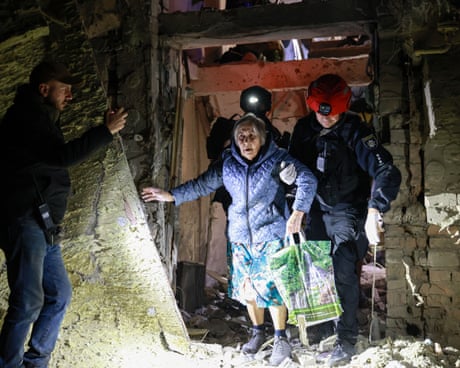
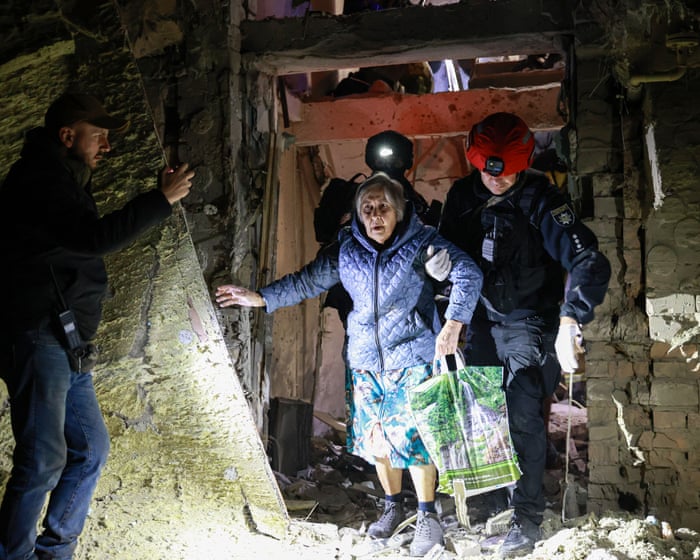
Two people killed and at least 17 injured as Russia and Ukraine continue to trade strikes on power infrastructure

Volodymyr Zelenskyy on Sunday thanked the Trump administration for resuming intelligence sharing between the two countries, but maintained the US had intentionally throttled its Starlink satellite internet access so that Donald Trump could send a “message” in his ongoing feud with the Ukrainian president.

In an interview on NBC, Zelenskyy said the US had “unblocked” intelligence on impending Russian ballistic missile strikes, which have pounded the country’s energy infrastructure as winter draws in.

Continue reading...

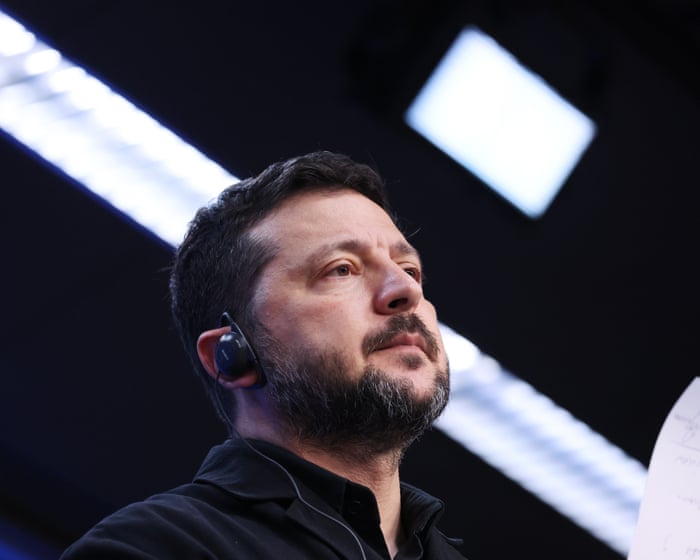
© Photograph: Omar Havana/AP

© Photograph: Omar Havana/AP

© Photograph: Omar Havana/AP

  •  

Ukraine strikes St Petersburg with over 1,000 drones

Ukraine launched a massive drone attack on Russia overnight Sunday, striking a major oil terminal in St. Petersburg and a data center, knocking out power to thousands of residents and causing fires. Russian state media described the attack as “one of the biggest drone attacks of the year,” according to a translation from Russian. One…

  •  

Drone nello spazio aereo lituano, le scuse di Kiev: “È nostro, forse deviato da Mosca”. Raid tra Russia e Ucraina: blackout a San Pietroburgo

Notte di intensi bombardamenti quella tra Russia e Ucraina, con l’esercito di Kiev che è tornato a colpire il cuore del Paese di Vladimir Putin sferrando attacchi a San Pietroburgo e provocando blackout parziali in città. I raid hanno preso di mira il centro dati VKontakte, il “Facebook russo”, e la sottostazione elettrica Vostochnaya. Mosca, da parte sua, ha attaccato l’Ucraina nella notte con un missile balistico Iskander-M e 180 droni d’attacco, con almeno tre persone che sono state uccise.

Dopo l’allarme della Nato su un drone sospetto nella spazio aereo lituano – con il decollo di due caccia italiani Eurofighter – sono giunte le scuse e le ammissioni di Kiev: il velivolo senza pilota era ucraino. Il presidente Gitanas Nauseda aveva subito tirato in ballo Mosca: “La guerra di aggressione della Russia contro l’Ucraina si sta estendendo al fianco orientale della Nato e dell’Ue”. Il chiarimento è firmato dal portavoce del ministero degli Esteri ucraino, Heorhii Tykhy: “Ci rammarichiamo per l’incidente” di stamattina. Il funzionario di Kiev chiama ancora in causa Putin, perché il drone gialloblu potrebbe essere stato deviato “da azioni di combattimento elettronico da parte della Russia“, durante “un’operazione contro obiettivi militari legittimi” nel territorio della Federazione. Infine, le scuse “per eventuali disagi, rischi e preoccupazioni”.

Per la Russia, la situazione più critica è appunto quella nell’ex capitale zarista che ha provocato interruzioni su larga scala nel social network, dato che a essere colpiti sono stati il centro dati, così come la sottostazione adiacente, che si trovano nel villaggio di Novosergievka, nel distretto di Vsevolozhsk, nell’oblast di Leningrado, al confine amministrativo con San Pietroburgo. Gli utenti lamentano seri problemi nel funzionamento della piattaforma e dei servizi correlati. L’ufficio stampa dell’azienda ha confermato l’attacco, ma ha assicurato che i servizi sono operativi: “Un attacco di droni è stato effettuato contro il centro dati VK nell’oblast di Leningrado. I servizi VK sono accessibili agli utenti in modalità normale”.

Un attacco massiccio, quello di Kiev, come testimoniano le comunicazioni diffuse dalle autorità russe, secondo le quali le forze di difesa aerea hanno abbattuto 126 droni nella regione di Leningrado, dove un terminal petrolifero è stato colpito e le operazioni all’aeroporto di Pulkovo sono state limitate. Il governatore Alexander Drozdenko ha scritto su Telegram che è hanno dovuto respingere un “attacco su larga scala” con velivoli senza pilota. I detriti dei droni sono caduti su abitazioni, automobili e linee elettriche, provocando brevi interruzioni della corrente, anche se non sono stati segnalati feriti. Il governatore di San Pietroburgo, Alexander Beglov, ha riferito che l’attacco ha provocato un incendio al terminal petrolifero della città, già colpito dall’Ucraina a giugno. I sistemi di difesa aerea sono entrati in funzione, mentre l’aeroporto internazionale di Pulkovo ha introdotto restrizioni alle operazioni “per motivi di sicurezza”. L’agenzia di stampa russa Tass ha segnalato disagi anche alle partenze.

Nei giorni in cui si è registrato il riavvicinamento, forse decisivo, di Donald Trump a Vladimir Putin, Volodymyr Zelensky vuole quindi sottolineare come dal Cremlino non ci sia mai stata una reale volontà di aprire un tavolo e avviare dei colloqui di pace: “Da quando il presidente americano ha annunciato una tregua energetica una settimana fa, la Russia ha colpito deliberatamente il sistema energetico e il settore petrolifero e del gas dell’Ucraina già 76 volte – ha scritto su X – Solo questa notte ci sono stati attacchi contro sottostazioni nelle regioni di Vinnycja, Zytomyr, Chmelnyckyj e Odessa. Decine di migliaia di famiglie restano senza luce. Di fatto, gli operatori energetici e le squadre di riparazione lavorano ininterrottamente per il ripristino. Durante la notte i russi hanno colpito anche edifici residenziali nelle nostre regioni. Al momento si sa di 12 feriti, tra cui due bambini. Due persone sono morte. Le mie condoglianze ai familiari e ai loro cari”. E continua ricordando che “in mattinata c’è stato un attacco contro un’impresa agricola in Volinia. Tutti i servizi necessari stanno lavorando sul posto. In totale, nell’ultima settimana i russi hanno lanciato contro l’Ucraina quasi 2.700 droni d’attacco, 1.700 bombe aeree e 66 missili, la maggior parte dei quali balistici. Gli obiettivi principali di questi attacchi sono proprio le infrastrutture energetiche; i russi cercano di provocare un blackout”.

Nonostante ciò, Donald Trump continua a sostenere la bontà della sua decisione di stipulare l’accordo sul gasolio con Mosca e sospendere le sanzioni alla Federazione nel tentativo di provocare un ribassamento dei prezzi dell’energia e, di conseguenza, dei prodotti: “Molti di voi non sanno ancora quale sia la mia decisione, ma lo scopriremo e lo scoprirete anche voi – ha detto in merito alla sospensione del Graham Act – È un’ottima decisione, sarà una scelta positiva per il Paese e, credo, anche per il mondo, dato che ci troviamo davvero su un palcoscenico globale”. Dall’Europa, invece, una delle voci che torna a farsi sentire dopo la richiesta di ulteriori 70 miliardi di aiuti per il 2027 da parte di Zelensky è quella del ministro della Difesa italiano, Guido Crosetto, che annuncia: “Entro la fine dell’anno probabilmente ci sarà un nuovo pacchetto di aiuti all’Ucraina”.

L'articolo Drone nello spazio aereo lituano, le scuse di Kiev: “È nostro, forse deviato da Mosca”. Raid tra Russia e Ucraina: blackout a San Pietroburgo proviene da Il Fatto Quotidiano.

  •  

"A Europa não consegue substituir os Estados Unidos"

Madalena Meyer Resende, especialista em relações internacionais, avisa que a Europa não tem capacidade militar para substituir os Estados Unidos no apoio antiaéreo e de inteligência à Ucrânia. 

  •  

Mark Galeotti, organized crime expert: ‘The road to hell is paved with good intentions. So is the path to techno-authoritarianism’

“The gang was disciplined, ruthless, well ordered. Its thugs swaggered around the city as if they owned it. Maybe they did: everyone knew who they were, and the corrupted police never dared take them on.” Mark Galeotti, 60, opens his latest book, Homo criminalis. How Crime Organizes the World, with a fictionalized scene from Miguel de Cervantes’s tale Rinconete y Cortadillo, about a brotherhood of thieves that evokes The Godfather or Peaky Blinders. It was the year 1613.

Seguir leyendo

The author and organized crime historian Mark Galeotti, in a courtesy photo.
  •  

Sen. Graham on Trump waiving Russia sanctions: ‘I look forward to talking to him’

Sen. Darline Graham (R-S.C.) said Saturday that she would prefer to keep sanctions pressure on Russia after President Trump waived sanctions on the country that were enacted through a bill Graham championed. Trump signed an executive order Friday waiving sanctions on Russian energy, passed under the Lindsey O. Graham Sanctioning Russia and Iran Act. The…

  •  

Trump Offers Putin Economic Relief in Hopes That Russia Will Return the Favor

The Trump administration is ignoring the will of Congress and waiving new Russia sanctions amid fears that high energy prices will cost Republicans in next month’s elections.

© Doug Mills/The New York Times

President Trump and President Vladimir Putin of Russia last year in Alaska.
  •  

Trump’s pause on Russia sanctions is ‘reward’ for Putin, Zelenskyy says

Ukrainian president warns it will embolden Russian leader and intensify war as Moscow hits country’s power plants

Volodymyr Zelenskyy has described Donald Trump’s decision to roll back sanctions on Russia as a “reward” for Vladimir Putin and warned it will embolden the Russian leader and intensify the Kremlin’s war, as Moscow launched one of its worst strikes yet on Ukraine’s power plants in an attempt to black out the country’s cities before winter.

The Ukrainian president also said he expected the Trump administration to lift more sanctions against Russia in the future and called for Europe to establish its own negotiations with Moscow as the US has sought better ties and business deals with the Kremlin.

Continue reading...

© Photograph: Kateryna Klochko/AP

© Photograph: Kateryna Klochko/AP

© Photograph: Kateryna Klochko/AP

  •  

Trump protects Putin from Graham-Blumenthal bill

The single most predictable action of the Trump second presidency happened just a few hours ago. Trump signed an executive order that exempted Russia from all of the key possible sanctions that could have been placed on it by the Graham-Blumenthal bill. Here is a link to the order and here is how it opens. The […]

The post Trump protects Putin from Graham-Blumenthal bill appeared first on Asia Times.

  •  

Zelenskyy avisa Putin: eu sei o que vais fazer a seguir

Presidente da Ucrânia garante que as Forças Armadas do seu país conhecem muito bem “o plano do inimigo” e as prioridades do exército russo. “O comando das Forças Armadas da Ucrânia tem um entendimento definitivo do plano do inimigo e das prioridades estabelecidas para o exército russo pela liderança política da Rússia. Neutralizaremos estes esforços”. O presidente ucraniano, Volodymyr Zelenskyy, afirmou que as Forças Armadas da Ucrânia conhecem os objetivos estratégicos definidos pela liderança russa para as suas tropas e estão a preparar medidas para contrariar os próximos movimentos de Moscovo. A declaração, citada no US Daily Report, surge num

  •  

Ucraina, Zelensky attacca Trump: “Lo stop alle sanzioni incoraggia Putin a continuare la guerra”

Zelensky contro gli Usa: “Allentare le sanzioni incoraggia Putin a continuare ad attaccare”

“In un momento in cui i russi hanno condotto un attacco tanto massiccio contro il nostro settore dell’energia, è stata purtroppo presa in America la decisione di ignorare completamente il Lindsey Graham Act, che avrebbe dovuto esercitare una pressione davvero efficace sulla Russia per porre fine a questa guerra. Avrebbe potuto aiutare enormemente, e può ancora farlo!”. Così in un post su X il presidente ucraino, Volodymyr Zelensky, che accusa i russi per aver sferrato ieri “uno dei più grandi attacchi al settore dell’energia” in Ucraina e denuncia come la Russia stia “cercando di provocare un blackout in Ucraina, proprio prima dell’inverno”, come stia “cercando di lasciare milioni di nostri cittadini senza elettricità e senza riscaldamento”.

Servono pressioni, insiste. “Un blackout delle sanzioni Usa, allentare il pressing sull’aggressore, ricompense finanziarie per Putin, tutto questo lo incoraggia solo a continuare ad attaccare – afferma Zelensky – Dobbiamo continuare a cercare di porre fine alla guerra. Di porre fine al conflitto, non di dare a Putin ogni motivo per continuarla senza fine“.

LEGGI LE NOTIZIE DEL CANALE ESTERI

L'articolo Ucraina, Zelensky attacca Trump: “Lo stop alle sanzioni incoraggia Putin a continuare la guerra” proviene da Affaritaliani.it.

  •  

Trump Shelves Russia Sanctions Weeks After Signing Them Into Law

President Donald Trump has waived sweeping sanctions and tariffs targeting Russia’s energy revenues, invoking national interest provisions in legislation passed only last month. The decision follows his controversial diesel agreement with Vladimir Putin and threatens to deepen divisions with Congress and European allies over economic pressure on Moscow.

President Donald Trump has suspended the implementation of sweeping American sanctions against Russia, using presidential waiver powers to prevent penalties approved by Congress from taking effect just weeks after he signed them into law.

The executive order issued by the White House on Friday, 16 October, suspends tariffs of up to 500 per cent on Russian imports, alongside penalties targeting major purchasers of Russian oil and gas. It also waives numerous financial and commercial restrictions intended to reduce Moscow’s ability to finance its war against Ukraine.

The decision comes two days before the 18 October deadline for implementing key provisions of the Lindsey O. Graham Sanctioning Russia and Iran Act of 2026, which Trump signed on 18 September. The legislation was named after the late Republican senator Lindsey Graham, who had championed tougher economic measures against Russia.

Sanctions established but immediately suspended

The presidential order formally establishes the tariff increases required by the legislation while simultaneously suspending their application.

Under the law, Russian imports into the United States would face additional duties of 500 per cent. A separate provision would impose 100 per cent tariffs on goods imported from the five largest purchasers of Russian crude oil and natural gas if those countries knowingly made new purchases from 18 October, subject to specified conditions and exemptions.

Another provision targets countries identified as leading facilitators of Russian oil sanctions evasion, potentially exposing their exports to similar American penalties.

Trump invoked Section 115 of the legislation, which permits the president to waive sanctions and tariffs after certifying to Congress that doing so serves the national interests of the United States.

The order confirms that the certification and an accompanying explanatory report have been submitted to Congress. However, the publicly released document provides no detailed justification for suspending the measures.

The waivers will remain in effect until the president or designated senior officials decide that further action is appropriate. Existing sanctions imposed under earlier executive orders are explicitly preserved, meaning the decision does not remove all American restrictions against Russia.

Nevertheless, the order prevents the new legislation’s principal economic penalties from operating at a time when Congress had sought to intensify pressure on Moscow.

Diesel agreement shapes Washington’s decision

The suspension follows Trump’s agreement with Putin to facilitate renewed Russian diesel exports, announced on 9 October as part of an effort to reduce international fuel prices.

As EU Today previously reported, the agreement envisages an immediate release of more than 300,000 tonnes of Russian diesel, followed by additional shipments in November and subsequent months. Washington also authorised certain transactions involving Russian diesel until April 2027.

The arrangement has raised questions about the relationship between the administration’s energy policy and sanctions intended to constrain Russia’s war economy.

Diesel prices have become an increasingly important domestic political issue ahead of the American congressional elections on 3 November. The war involving Iran and disruptions to international energy supplies have contributed to exceptionally high fuel costs, creating additional pressure on the administration.

The White House hopes additional Russian supplies will relieve pressure on international markets. However, energy analysts have questioned whether the quantities involved will materially affect American prices, particularly before the elections.

The latest waiver also removes the immediate threat of punitive tariffs against major Russian energy customers, including China and India, which had objected to the proposed measures.

Congressional opposition and European concerns

The decision is likely to intensify opposition within Congress, where the sanctions legislation attracted substantial bipartisan support.

Earlier this week, 12 senators, including six Republicans, called on Trump to reverse his diesel agreement, arguing that allowing Russian fuel back onto international markets would provide Moscow with additional revenue for its military operations.

Democratic Senator Richard Blumenthal, who helped develop the sanctions legislation, criticised the diesel arrangement as contrary to Congress’s intention to strengthen economic pressure on Russia.

The decision also exposes a widening divergence between Washington and Brussels.

At the European Council meeting on Friday, European Commission President Ursula von der Leyen and European Council President António Costa reaffirmed that EU sanctions against Russia would remain in place until Moscow ended its war against Ukraine.

Costa declared that the present circumstances required increased pressure on Moscow rather than a relaxation of existing restrictions. The European Union is also preparing a 22nd sanctions package while considering additional financial support for Kyiv.

For Ukraine, the decision means that Russia will continue to benefit from energy exports and the international trade that helps finance its war. Instead of tightening restrictions on these revenues, Washington has suspended measures specifically intended to cut them.

The timing is particularly significant. While Trump is pressing Kyiv to halt attacks on Russian oil refineries and other energy facilities, Moscow continues its strikes against Ukrainian cities and civilian infrastructure. Zelenskyy has argued that Ukraine cannot be expected to stop targeting Russia’s energy sector while Russian attacks on Ukrainian infrastructure continue.

Although Trump can reinstate the sanctions, his decision removes the immediate threat of additional penalties against Russia and its principal energy customers. It also places Washington increasingly at odds with its European allies. Brussels remains committed to maintaining and expanding sanctions against Moscow, while the White House is now giving priority to reducing American fuel prices, even if that means easing economic pressure on Russia.

  •  
❌