❌

Reading view

Two Latvian Nationals Arrested at RAF Base Housing US and NATO Intelligence Operations

British counter-terrorism police are investigating a security breach at RAF Molesworth in Cambridgeshire after two Latvian nationals were found inside the military installation. The arrests come amid heightened security concerns following a separate suspected terrorist plot targeting RAF Fairford, which prompted the withdrawal of American bombers.

Two Latvian nationals have been arrested in Britain on suspicion of entering a restricted military installation for purposes potentially harmful to national security. The men were discovered inside RAF Molesworth, a sensitive military facility in Cambridgeshire that houses American and NATO intelligence operations, during the early hours of Thursday, 8 October.

The suspects, aged 36 and 32, are both Latvian citizens residing in the United Kingdom. According to an official statement issued by the Metropolitan Police, they were initially detained on suspicion of trespassing and criminal damage before being arrested under the National Security Act 2023.

The incident follows a separate investigation into a suspected terrorist plot near RAF Fairford in Gloucestershire, where American strategic bombers had been deployed. British counter-terrorism officers have emphasised that there is currently no evidence connecting the two cases.

Security breach discovered during routine patrol

The investigation began at approximately 10pm on Wednesday, 7 October, when Ministry of Defence Police officers patrolling RAF Molesworth discovered an abandoned vehicle near the installation’s perimeter.

Officers from Cambridgeshire Constabulary joined the search and subsequently identified a small breach in the security fence. At approximately 2am on Thursday, the two men were located inside the restricted area and taken into custody.

The suspects were initially questioned over alleged trespassing and criminal damage. However, investigators subsequently invoked Section 4 of the National Security Act 2023, which covers entering, approaching or inspecting prohibited locations for purposes prejudicial to Britain’s safety or interests.

The legislation carries a maximum sentence of 14 years’ imprisonment upon conviction. Neither man has been publicly identified, and police have not disclosed evidence establishing their alleged intentions or any connection with a foreign intelligence service.

Officers have also searched two addresses in the Peterborough area. The abandoned vehicle was recovered and examined by specialist explosive ordnance disposal personnel after concerns arose during initial inspections.

As a precaution, police established a cordon affecting roads around Glatton, including part of the A1. Specialists subsequently found nothing of concern, allowing the restrictions to be lifted.

Intelligence facility serving American and NATO operations

RAF Molesworth is not an ordinary operational airfield. Although designated as a Royal Air Force station, the installation accommodates intelligence facilities supporting American military operations and NATO.

Among the organisations associated with the site is the NATO Intelligence Fusion Centre, which contributes to intelligence collection, assessment and information-sharing between allied military authorities. The installation also supports American military intelligence activities relating to operations in Europe and Africa.

The presence of these facilities makes Molesworth a sensitive location, where unauthorised access raises questions extending beyond conventional trespassing. Investigators will seek to establish how the men entered the compound, why they were there and whether they attempted to approach or examine restricted equipment or infrastructure.

Separate investigation at RAF Fairford

The arrests come less than two weeks after British police detained seven men in connection with a suspected terrorist plot involving RAF Fairford, another British installation used by the United States Air Force.

The Fairford investigation began on 27 September after suspicious activity was reported near the base. Police subsequently investigated possible offences involving explosives and preparations for terrorist acts. Those arrested in connection with that investigation have since been released on bail.

The incident was followed by the withdrawal of American bombers from Fairford. President Donald Trump subsequently referred to security threats affecting the installation, raising further questions about the protection of American military assets stationed in Britain.

Commander Helen Flanagan, head of Counter Terrorism Policing London, which is leading the Molesworth investigation, cautioned against drawing conclusions about the relationship between the two cases.

She said investigators had found nothing so far suggesting a connection with the Fairford incident and were continuing to examine possible motives.

British authorities have not publicly identified a foreign state or organisation as being responsible for the Molesworth breach.

The two Latvian nationals remain in police custody while investigators continue examining the circumstances surrounding their presence at the installation. The inquiry involves Counter Terrorism Policing, the Ministry of Defence Police and Cambridgeshire Constabulary.

The investigation is taking place against a wider background of security concerns involving European military facilities. Latvia itself reported an armed border provocation and sabotage of surveillance infrastructure near Belarus earlier this week, although there is no evidence linking that incident to the arrests in Britain.

For British investigators, the immediate task remains establishing whether the Molesworth intrusion was an isolated security breach or involved an intention to compromise military operations or intelligence infrastructure.

  •  

Voters or capital: Who rules Berlin?

On September 20, 2026, Die Linke achieved a historic result. With 25.7% of the vote, the party became the largest in the Berlin parliament for the first time. The traditional parties of power (the CDU, the SPD, and the Greens) are left standing. A left-wing government with Elif Eralp as governing mayor is, in theory, within reach.

The reason for this success is no mystery. It is substance. During the campaign, thousands of Die Linke volunteers went out into the neighborhoods. Door to door. Building to building. Up one stairwell, down the next. They came not with shiny brochures, but with one fundamental question: what keeps people awake at night?

For hundreds of thousands of Berliners, the answer is painfully clear: rent. The envelope that lands on the doormat every month. The knowledge that an ever-larger share of their wages flows straight into the bank account of some anonymous slumlord.

Die Linke wants to make rents affordable, break the power of listed real estate giants, and finally implement the outcome of the referendum. In that 2021 referendum, more than one million Berliners voted for the socialization of large housing stock.

Berliners consider no other party as competent on housing. The figures speak for themselves: after the election, 37% of all Berliners say Die Linke has the best solutions for affordable housing.

The establishment strikes back: the great reversal of the debate

Die Linke won on material issues: housing, rent, ownership. But within no time, the press and the talk shows have all but stopped talking about any of it. Suddenly the political debate is dominated by accusations of antisemitism. By stories about the Rote Hilfe, a left-wing solidarity organization that provides legal support to activists and prisoners. By alleged connections to criminal “clans.” By the suggestion that parts of the party lie outside the acceptable democratic framework. Suddenly, the burning question in the media is no longer how to lower rents, but whether Die Linke is “even fit to govern at all.”

It is the great reversal of the debate. Center stage no longer belongs to the unaffordable rents, the power of real estate corporations, and the housing crisis, but to the legitimacy of the party that won precisely on those issues. Meanwhile, the federal establishment works hard behind the scenes to make any possible socialization of real estate giants, the so-called Vergesellschaftung, legally impossible. Yet Article 15 of the German Constitution makes such socialization possible in principle.

What we see here is an organized counterattack from established economic and political power blocs. They open multiple fronts simultaneously – economic, legal, political, and ideological. Let us take a closer look at the nine forces that have now mobilized against Die Linke in Berlin.

1. Real estate capital

The most direct clash is with real estate capital. Die Linke wants to expropriate profit-driven housing companies that own more than three thousand units each. That concerns a total of over 200,000 housing units in the city. Among them is Europe’s largest real estate company Vonovia, which alone owns 138,000 units in Berlin.

On September 21, the morning after the election, BFW Berlin-Brandenburg, the lobby club of private project developers, pulls the emergency brake. The real estate group warns of “a step backward in housing policy.” Expropriation would slow new construction. Private capital would flee. The BBU, the association of housing companies in Berlin-Brandenburg, also springs into action. In Handelsblatt, Welt, Die Zeit, and Tagesspiegel it warns of “massive investment risks.” In short, as soon as its property and profit model is even slightly threatened, the real estate lobby pulls out all the stops and lets the organ roar.

Here you see class struggle in its most material form. Die Linke wants to shift power from large real estate owners to tenants and public ownership. The real estate sector wants to preserve the existing regime of private property, rental income, and investment returns.

What is at stake is concrete: who owns the apartments, who controls rental income, where does public money go, and who may decide politically about it?

2. Financial capital

Where there is real estate, there are banks. On that same September 21, Die Deutsche Kreditwirtschaft, the powerful umbrella organization of the German banking sector, issues an official warning. Socialization of housing would deter private capital. It would make real estate financing more difficult. It would drive risk premiums sky-high. It would – for hypocrisy knows no bounds – “reduce funds for education and social policy,” as if the German banking sector had ever been guided by such concerns in past decades.

Financial markets also react immediately. Vonovia’s stock price takes a hit and falls 1.7% against the trend, to its lowest level since June 2023. Deutsche Wohnen takes a beating too. Why? Because for these guys, housing in Berlin are not places where people live, love, and raise children. For big capital, housing units are investment vehicles and collateral for gigantic mountains of debt. If you remove those homes from the private market, you hit not only the slumlord but also the wealth manager, the banker, and the speculator behind the entire parasitic ecosystem of Frankfurt. That too is class struggle.

3. The Berlin business establishment

Traditional Berlin capital had already dug in before the election. The four major employer organizations – the Chamber of Commerce (IHK Berlin), the Handwerkskammer, the VBKI, and the UVB – closed ranks in their so-called Wahlarena der Berliner Wirtschaft, a joint election forum where the main parties had to defend their economic programs before organized Berlin business.

Their lobbying does not stop on election day. After Die Linke’s victory, VBKI chairman Harald Christ mounts his warhorse. His message? “Anyone who wants to expropriate private property in this city puts our future at stake.” The VBKI is one of the most elite clubs of Berlin businessmen, of the sort that lives more on returns from property and the labour of others than on their own labour. According to Harald Christ, who himself holds no elected public mandate, a party “that does not clearly distance itself from antisemitism” should not govern either.

Here you see how the two lines of attack of the establishment merge perfectly. On one hand, defence of sacred private property. On the other, moral blackmail. Die Linke must be treated as a pariah as long as it does not jump through all the hoops of the establishment.

4. The arms industry

A second economic front is the arms industry. For the militarists, Berlin must become a hub in the arms industry. Die Linke sees it differently. The party wants no expansion of military industry in the city, no military propaganda on the streets, and no army recruiters in schools.

That is blasphemy in the church of German militarism. In its hunger for new billion-dollar contracts, the German military-industrial complex of Berlin-Brandenburg wants to create a cluster for defence and aviation. Martina Klement, Minister of Economic Affairs in Brandenburg, already threatened that her state would “continue alone if necessary” if the Berlin government blocked its plans. She points an accusing finger at Die Linke’s critical attitude towards the Rüstungsindustrie, the arms industry. That too is class struggle: will Berlin become a cog in the booming war economy, or will the city build a dam against it?

5. The federal state and the institutional veto

Pressure on Die Linke comes not only from banks, real estate groups, and lobbies. Parts of the state apparatus are also intervening directly into the conflict.

The decision that Die Linke must under no circumstances lead the formation of a Berlin government seems to have been decided even before the polling stations closed on September 20. A few minutes after 6 pm, with the polls barely closed, Federal Chancellor Friedrich Merz gave a speech with one clear message: he continues his course, whatever the election result.

A day later, Merz announced he wants to fast-track with a federal law against the socialization of large real estate companies. His coalition had previously made agreements about this, but after Die Linke’s victory it suddenly became urgent. Germany, according to Merz, had to make it clear to international investors that private property remains safe and is not simply expropriated. That it is Merz, of all people, who brings this message is not without meaning. Before his return to politics, he chaired the supervisory board of the German branch of asset manager BlackRock from 2016 to 2020, one of the largest financial players in the world.

What is at stake is Article 15 of the German Constitution.Since 1949, it has explicitly stated that land, natural resources, and means of production can be transferred to common ownership or other forms of communal economy by law, provided compensation is regulated by law. That provision has never been applied. The struggle in Berlin is precisely about whether it can be used for the first time against large real estate companies.

Other statesmen also do not hold back. For example, Bavarian Minister-President Markus Söder (CSU) threatens to question financial transfers to Berlin if the city pursues too leftward a course. Bavaria is one of the richest states and a major net contributor to Germany’s system of redistribution. Bavaria is rich, Bavaria pays. And so Söder wants to dictate what Berlin votes. A dangerous Lega-Nord-ization of German federalism: the rich region buying off democracy in the poorer region.

Individual ministers also intervene via their official function. Federal Minister of Economic Affairs Katherina Reiche used her ministry’s Instagram account to attack Die Linke over expropriations, antisemitism, and alleged ties to organized crime. Die Linke has taken legal action against this, invoking the duty of neutrality that binds state institutions.

Even the judiciary has been drawn into the debate. Berlin Attorney General Margarete Koppers warned, amidst the controversy over alleged ‘clan’ contacts around Die Linke, that criminal networks deliberately seek out politicians. She did not accuse Die Linke directly, but her intervention gave additional institutional weight to the image built around the election winner.

Merz and his Vice Chancellor and Finance Minister Lars Klingbeil (SPD) know well what is at stake: if socialization of large real estate companies succeeds in Berlin, it could also raise expectations elsewhere – in the automotive industry, energy sector, or other strategic sectors.

It is precisely this precedent that must be stopped. An electoral victory for Die Linke must under no circumstances grow into an infringement of the existing order of property, let alone into an example that sparks other social struggles.

6. The police and security apparatus

A sixth pressure line comes from the police apparatus. After the election, certain police unions in Berlin warned that a government led by Die Linke could weaken the police by restricting its powers, its surveillance, and its capacity for repression. The Gewerkschaft der Polizei (GdP) went further and warned SPD and Greens that “the security of this city is at stake.” It also suggested officers might leave Berlin to work in other German states.

That threat quickly gained a practical dimension. CDU-led governments in Baden-Württemberg and Brandenburg openly invited Berlin police officers to transfer and explicitly linked that recruitment campaign to the prospect of a government led by Die Linke.

That is organized pressure and blackmail from certain police unions and conservative state governments: accept our vision of police and security, or we will drain your force dry.

7. The Israeli Embassy

And then there is the elephant in the room: the campaign around antisemitism. On September 26, ARD, the major German public broadcasting corporation, found that the controversy over antisemitism had by then “overshadowed all other topics since the election victory.”

Ambassadors are normally not supposed to interfere directly in the host country’s domestic political decision-making. That did not prevent Israeli Ambassador Ron Prosor from warning after Die Linke’s victory of an “immediate existential threat” to Jewish life in Berlin. Prosor, a Netanyahu loyalist and critic of the International Criminal Court, accuses parts of Die Linke of “unrestrained antisemitism” and hostility toward Israel.

Virtually simultaneously, Josef Schuster, Chairman of the Central Council of Jews in Germany, addressed the SPD and the Greens directly: anyone who helps Die Linke into the Rote Rathaus, the Berlin City Hall, is, in his view, putting social cohesion and Jewish life at risk.

Within the SPD and the Greens, that Israeli pressure finds a willing ear. SPD politician Martin Hikel calls cooperation impossible with a party that, in his words, “tolerates antisemitic statements.” Antisemitism and the defence of Israel have now become central topics in initial talks between Die Linke, the SPD, and the Greens. In this way, the Israeli intervention weighs directly on the political climate in which a new Berlin government is being negotiated.

Behind that lies a broader strategic entanglement. Despite the genocide in Gaza, Germany and Israel continue expanding their military-industrial cooperation. Israeli arms producer Elbit Systems signed new strategic cooperation agreements this year with companies including TKMS and Diehl Defence, among other things for naval weapons systems and drones for the Bundeswehr. Elbit wants to build up to eight new facilities in Germany over the coming years.

That makes the struggle over Israel material as well. It’s not just about Gaza, apartheid, and Israeli settler colonialism, but also about increasingly close military and industrial interconnection. In such a context, the label “antisemitism” takes on particularly political charge when used against forces opposing the Israeli government, German rearmament, or that growing military-industrial cooperation.

8. ELNET: the international lobby network

Beyond the Israeli embassy lies a much broader lobby infrastructure. What stands out is how the theme of antisemitism repeatedly comes to centre stage whenever a consistent left force achieves electoral breakthroughs.

In Great Britain, three major newspapers declared jointly in 2018 that a government under Jeremy Corbyn would constitute an “existential threat” to Jewish life. Corbyn had to be politically delegitimized because he broke with the consensus on Israel, openly supported the Palestinian cause, and simultaneously defended a socio-economic program that collided head-on with British establishment. The accusation of antisemitism thus became a weapon in a broader struggle to declare him unfit for governmental power.

The same pattern surfaced in France. In 2024, Yonathan Arfi, chairman of the umbrella organization of Jewish institutions in France (CRIF), declared that “La France Insoumise (LFI) has no place in government.” Again the accusation was: “antisemitism.” In reality, it was about left criticism of the genocide in Gaza. For recent French municipal elections, French security service Viginum exposed a massive Israeli disinformation campaign run by the shadowy Blackcore. With fake sites, false profiles, fake news, and AI bots, LFI candidates were systematically smeared.

In Berlin, attention focuses mainly on ELNET Deutschland, a lobby organization that seeks to strengthen Israeli-European ties. The money for this little party comes mainly from the US. The German office received over one million euros from ELNET US in a single year.

ELNET financed trips to Israel for at least 51 Bundestag members and brought six IDF officers to the capital for talks with politicians, the Bundeswehr, and media shortly before the Berlin election. Thus ELNET forms an important link between Israeli security circles and the German political establishment, and possesses considerable financial resources and direct access to decision-makers. In the current Berlin debate, that infrastructure strengthens a political climate in which attitude toward Israel increasingly serves as a touchstone for the question who may and may not govern.

9. The United States

Finally, there is American interference. The United States has made no secret in its official National Security Strategy that it actively supports far-right and nationalist forces in Europe – such as the Rassemblement National in France or the AfD in Germany. For Trump, such Europe offers a double advantage: allies who stand closer to Washington, but simultaneously an EU that remains internally divided and less able to act as an independent international power.

American heavyweights like Elon Musk, Donald Trump, JD Vance, Marco Rubio, and former ambassador Richard Grenell have intervened openly in German politics in recent years, typically in ways giving AfD more legitimacy and political space. When AfD scored in Saxony-Anhalt, Trump, Musk, and Grenell were in the front row to cheer. Trump publicly celebrated the result, Musk wrote “Gut gemacht!” (Well done!), and Grenell spoke of “a great victory and a new day in Germany.” That was barely two weeks before the Berlin election.

Meanwhile, the American embassy in Germany set aside approximately $400,000 this summer for German civil society organizations, among other things for projects around “countering antisemitism.” They use diplomatic funds to determine domestic political agendas. On Washington’s instructions, American embassies in Europe feed the witch hunt against the left, while helping the far right into the saddle.

A desperate move

Add all these forces together (banks, real estate companies, employers, arms industry, judiciary, federal government, embassies, and international capital) and you see what really happens in Berlin: different factions of the ruling class defend their own interests but find each other as soon as existing property and power relations are touched.

The first front is material. Real estate capital defends its rents and land ownership, banks their credits and collateral, investors their returns, the arms industry its billion-dollar contracts and state orders. Their interests differ, but on one point they converge: Die Linke must not undermine the grip of private capital on housing, investments, and public funds.

The second front is political and ideological. As soon as those material interests come under pressure, the debate shifts to antisemitism, extremism, Rote Hilfe, and alleged clan connections. The goal then is no longer only to block concrete reforms. Die Linke itself must be pushed outside the boundaries of the politically acceptable.

But let’s be honest: that smear campaign is nothing but a desperate move. The elites play dirty because they lack arguments. No one can look Berliners in the face and claim €1,500 per month for a shack is a good thing. The housing crisis is not an extreme position, but daily reality for the absolute majority of the population, including many voters of the SPD, the Greens, or the right.

Because the establishment cannot win that debate, it tries to impose another one. The smoke bombs go off one after another: “antisemitism!” “clans!” “Islamists!” “Rote Hilfe!” The less of an answer there is to the social question, the louder the noise about Die Linke’s supposed unfitness to govern at all.

The real extremism in this world is not a party that organizes tenants. The real extremism is a society in which millions of people are driven out of their city because a handful of vultures demand their returns. The real extremism is a system that reduces housing to speculation and war to a profit model.

Die Linke won on the fundamental question: whose city is Berlin? Who sets the rules, who controls the bricks, and whom should the city serve? The answer from Berliners was clear. The intensity of the counterattack shows how well the other side understands what is at stake.

Nobody should fear that polarization. It is simply the noise of class struggle: economic powers defending their property and capital, state powers trying to guard the boundaries within which an election result may change something. The scent of panic hangs in the corridors of power. There is no reason to turn defensive or to retreat. There is all the more reason to rely on the people and to mobilize. Because in the end, that is where the decisive question lies: who truly forms the majority in Berlin, and who holds the power to stand in its way?

Peter Mertens is a writer and the Secretary General of the Workers’ Party of Belgium (PTB/PDVA).

  •  

Brazil’s angry tide and the struggles ahead

Lee en español aquí

Brazil’s general election on October 4 delivered a severe warning to the left. Flávio Bolsonaro, the presidential candidate of the Liberal Party (PL), finished ahead of President Luiz Inácio Lula da Silva, with approximately 47% against 45%. Neither secured a majority, sending them into a runoff on October 25. More troubling than this narrow presidential gap was the advance of bolsonarismo through Congress. The election has strengthened a political movement whose ambitions extend beyond defeating Lula to reshaping the institutions that obstruct its exercise of power.

The imprisonment (house arrest) and electoral exclusion of Jair Bolsonaro have not dissolved his movement. His son Flávio carries its presidential banner, while other members of the family have won seats in Congress. Michelle Bolsonaro, Jair’s wife, and Carlos Bolsonaro, his son, enter the Senate; Jair Renan, another son, and Renato, Jair’s brother, enter the Chamber of Deputies. Nepobolsonarismo is an appropriate name for this family’s expansion through the state. Yet the family is only the most visible expression of a broader project, rooted in powerful economic interests and a deeply organized reactionary politics.

A presidential contest with continental stakes

Lula remains the principal obstacle to the return of this project to the presidency. His defeat would affect workers and peasants throughout Brazil, but also the possibilities for regional cooperation and an independent Latin American foreign policy. Brazil’s size, industrial capacity, raw minerals (such as critical minerals), agricultural resources, and diplomatic reach give its political direction continental significance. A government that subordinates these assets to Washington’s priorities would weaken the space available to neighboring countries seeking their own paths of development.

The first-round geography demonstrates both Lula’s strength and his difficulties. He retained a commanding position in the Northeast, while Flávio led across the other four regions. São Paulo’s enormous electorate provided a particularly important advantage to the right. These divisions cannot be explained by an opposition between an enlightened population and an ignorant one. They require an examination of the different conditions of work, the organization of political life, and the capacity of competing movements to interpret people’s frustrations.

Lula approaches the runoff with a substantial social record. Unemployment fell to 5.3% in the quarter ending in August, the lowest rate for that period in the statistical series beginning in 2012. Such improvements matter enormously to families for whom a regular wage brings relief from daily uncertainty. But an improved national indicator does not settle the political argument. Employment can coexist with exhausting journeys, expensive housing, inadequate public services, and the insecurity of debt. The distance between statistical improvement and lived experience remains terrain on which the right operates.

Bolsonarismo, or Brazil’s far right of a special type, translates these frustrations into resentment against the left, all public institutions, and vulnerable sections of society. Its promise of order offers an immediate language for fear, while concealing the economic arrangements that produce insecurity. The left cannot answer this merely by advertising government achievements. It must connect those achievements to a credible program for changing everyday life, and explain which interests prevent further advances. A worker struggling with debt needs more than reassurance that the economy is performing well. This has been the problem for Lula, whose program for the future does not seem to promise more than what has been delivered till now.

The senate: a struggle over institutional power

The Senate election is particularly consequential because 54 of its 81 seats were contested. Senators serve eight-year terms, so the results will shape national politics well beyond the next presidential administration. The PL won 19 seats and will hold 28 in the new Senate, making it the largest party. The PT will have nine. The bolsonaristas have therefore established a formidable position, although the PL itself remains short of a majority and must bargain with other parties.

Michelle Bolsonaro and Bia Kicis took both seats in the Federal District, while Carlos Bolsonaro and Carol de Toni won the two seats in Santa Catarina. These victories show the movement’s ability to organize coordinated campaigns and concentrate support behind its candidates. There were important successes for the left: Rui Costa and Jaques Wagner won in Bahia, Humberto Costa retained representation in Pernambuco, and Marília Campos won in Minas Gerais. These results preserve points of resistance within an increasingly hostile chamber. The Senate’s significance extends beyond ordinary legislation. The bolsonaristas have made their confrontation with the Supreme Federal Court a central political objective, including demands to impeach its ministers. Their strengthened representation increases their capacity to pursue that confrontation and to influence the election of the Senate president. Predictions of an automatic majority for impeachment should be treated cautiously: party affiliation, campaign declarations, and votes in a specific proceeding are different things. Nevertheless, the danger of using legislative power to intimidate the judiciary has plainly grown.

This is part of a struggle over the conditions under which the far right can govern. The judicial proceedings against Jair Bolsonaro did not remove the social forces supporting him. Those forces now seek greater leverage over institutions capable of restraining them. For the left, defending democratic space must therefore accompany the struggle to expand social rights. Workers’ organizations cannot afford to lose the freedoms through which they organize, educate, and confront capital.

Federal deputies: the right advances, the left finds openings

All 513 seats in the Chamber of Deputies were up for election this year. The PL secured 121, consolidating its position as the largest party in this chamber as well as in the Senate. The federation of the Workers’ Party, Communist Party of Brazil, and Green Party won 88 seats, with the PT itself taking 70. The federation’s growth is significant, but it leaves Lula’s allies far from a majority. Parties of the right hold 303 seats, while the broader parliamentary left holds 124.

The outcome strengthens the far right of a special type within a legislature already dominated by conservative interests. It also weakens some established brokers of parliamentary power, such as the centrão, the collection of parties that trades legislative support for influence over appointments and public resources, although it remains indispensable for majority building. What bargaining will take place within the centrão will now take place alongside a larger and more assertive PL. If Lula wins in the second round, he will confront substantial congressional resistance, but if Flávio wins, the same Congress could facilitate a reactionary program.

Yet the election also brought important representatives of a fighting Left into the Chamber. Jones Manoel, the communist historian elected through PSOL in Pernambuco, received 249,077 votes and finished first in Recife. Elias Jabbour, the communist geographer, was elected for the PCdoB in Rio de Janeiro. Their victories suggest an audience for political education and socialist arguments, even amid the right’s advance. They offer resources for rebuilding confidence among people who have grown impatient with the narrowing ambitions of parliamentary politics. Jones Manoel has already offered to assist Lula’s runoff campaign, including its digital communication, while proposing stronger attention to demands such as free public transport. This is a useful example of political clarity: criticism of the government’s limitations can coexist with active mobilization against the far right of a special type. Such unity does not require workers to abandon their demands. It becomes stronger when those demands supply the campaign’s energy and direction.

The task before October 25

The runoff cannot be won through negotiations among party leaders alone. It requires organized activity in workplaces, neighborhoods, universities, and rural communities, with a program people can recognize in their own lives. Transport, wages, housing, debt, public healthcare, and the time consumed by work must become the substance of a democratic campaign. Defense of sovereignty becomes tangible when it is connected to the ability to use Brazil’s wealth for the needs of its people.

The angry tide has advanced, but it has not carried away the millions who still seek another Brazil. The new communist deputies, the surviving mass organizations (especially the landless workers of the MST), and Lula’s enormous electoral base provide foundations for resistance. The immediate task is to defeat Flávio Bolsonaro. The longer task is to build a popular power strong enough to prevent the oligarchy from deciding, election after election, how little change the majority will be allowed.

Vijay Prashad is an Indian historian and journalist. He is the author of forty books, including Washington Bullets, Red Star Over the Third World, The Darker Nations: A People’s History of the Third World, The Poorer Nations: A Possible History of the Global South, and How the International Monetary Fund Suffocates Africa, written with Grieve Chelwa. He is the executive director of Tricontinental: Institute for Social Research, the chief correspondent for Globetrotter, and the chief editor of LeftWord Books (New Delhi). He also appeared in the films Shadow World (2016) and Two Meetings (2017).

This article was produced by Globetrotter.

  •  

British Commandos Emerge From German Submarine During Major NATO Exercise

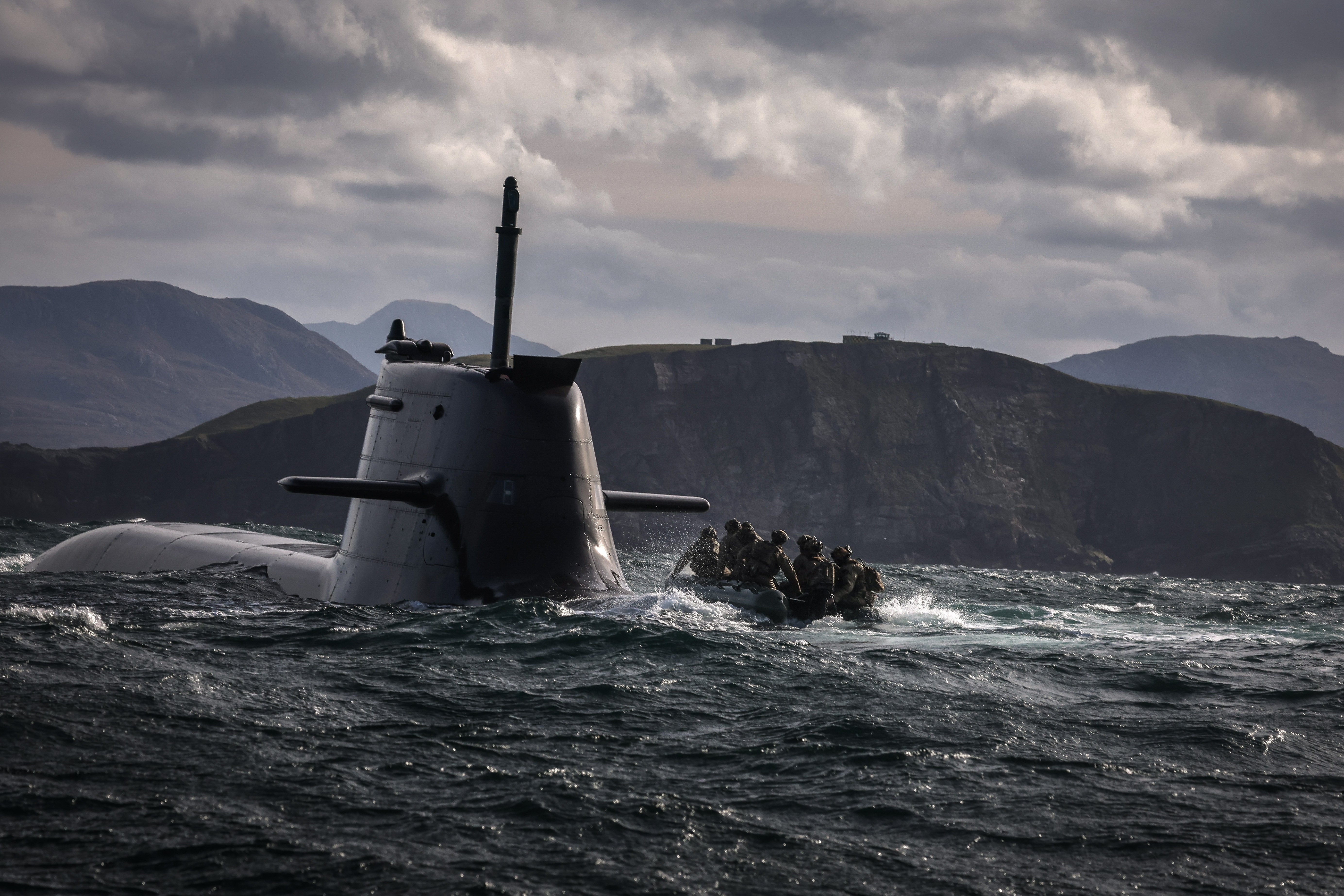
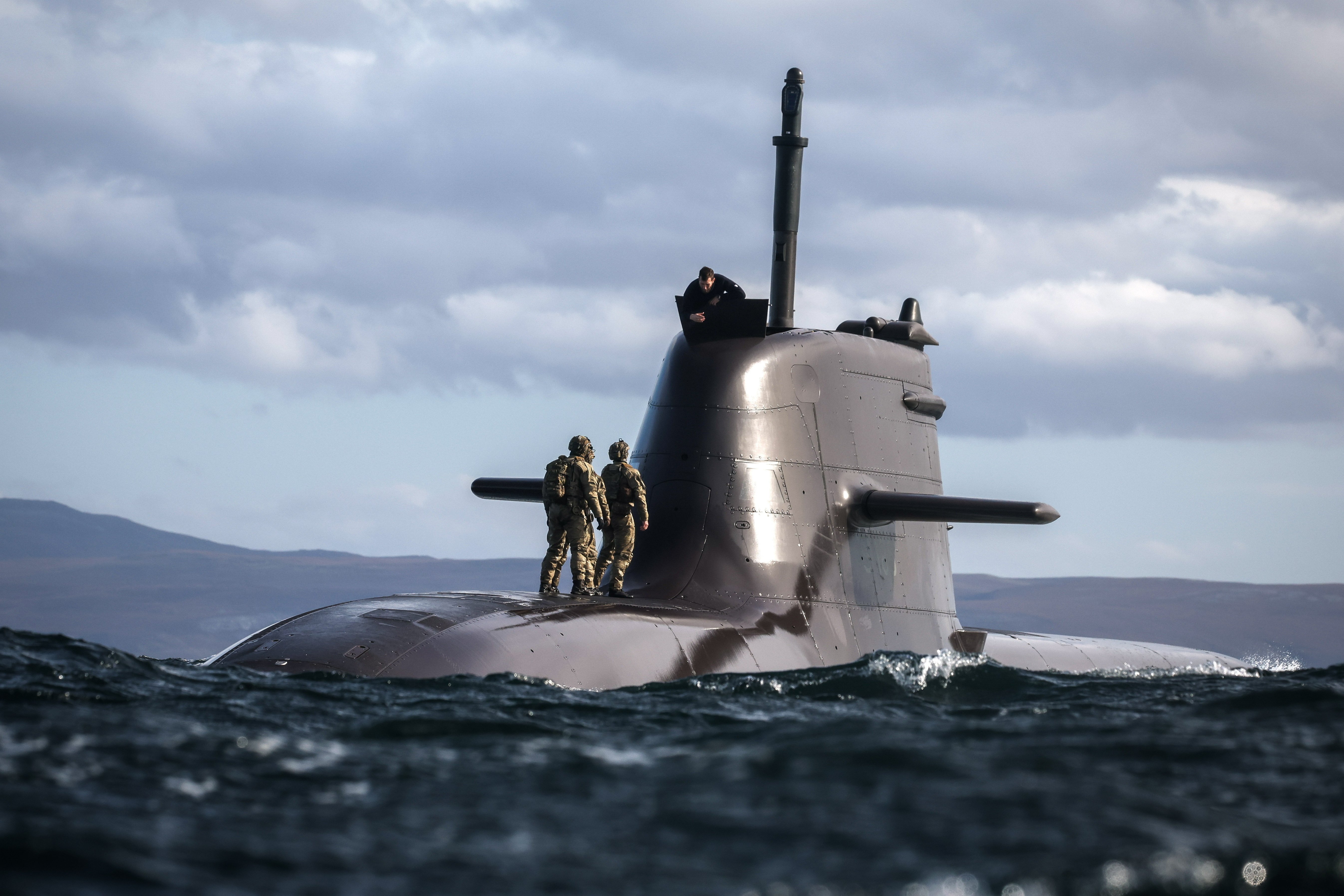
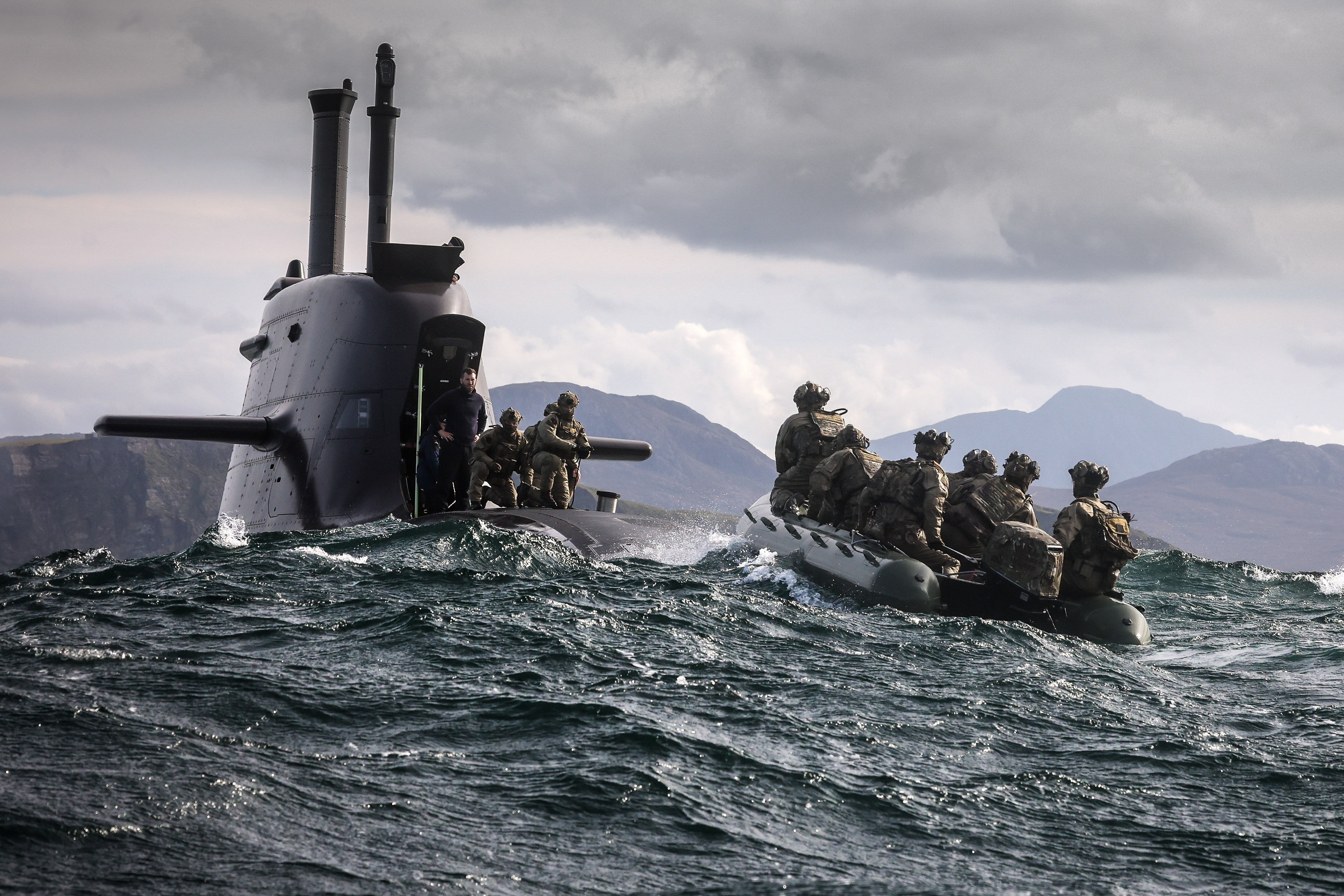
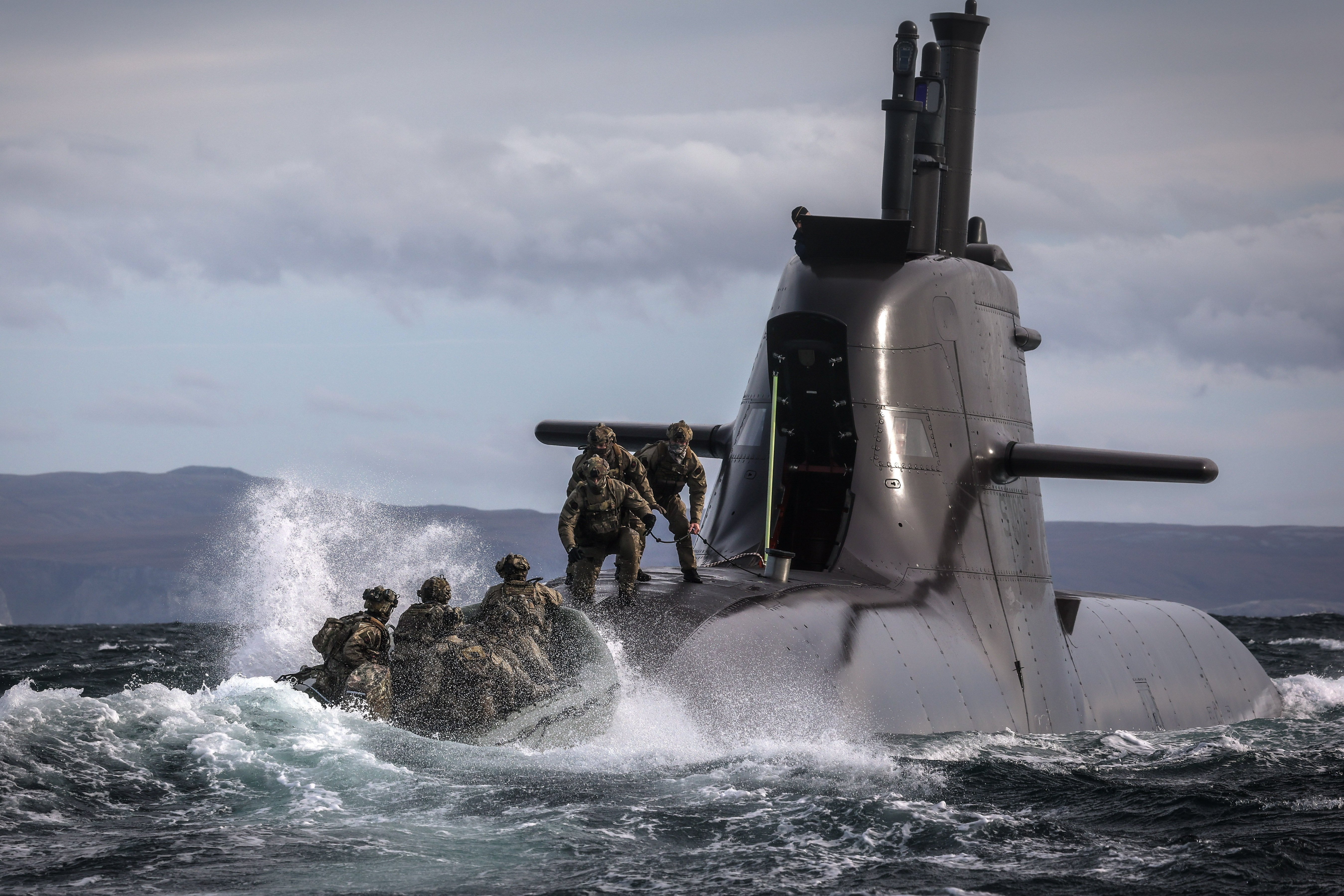
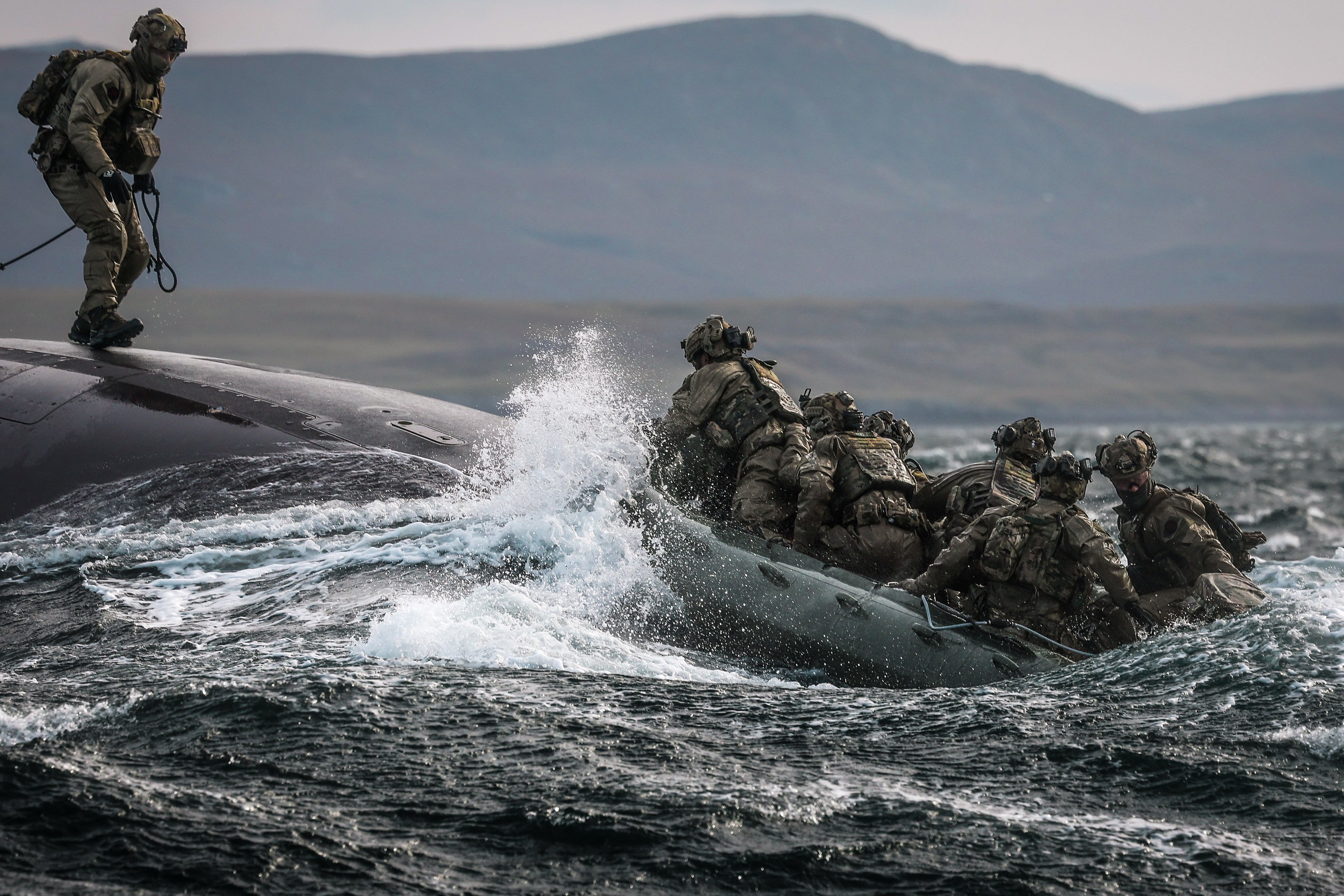
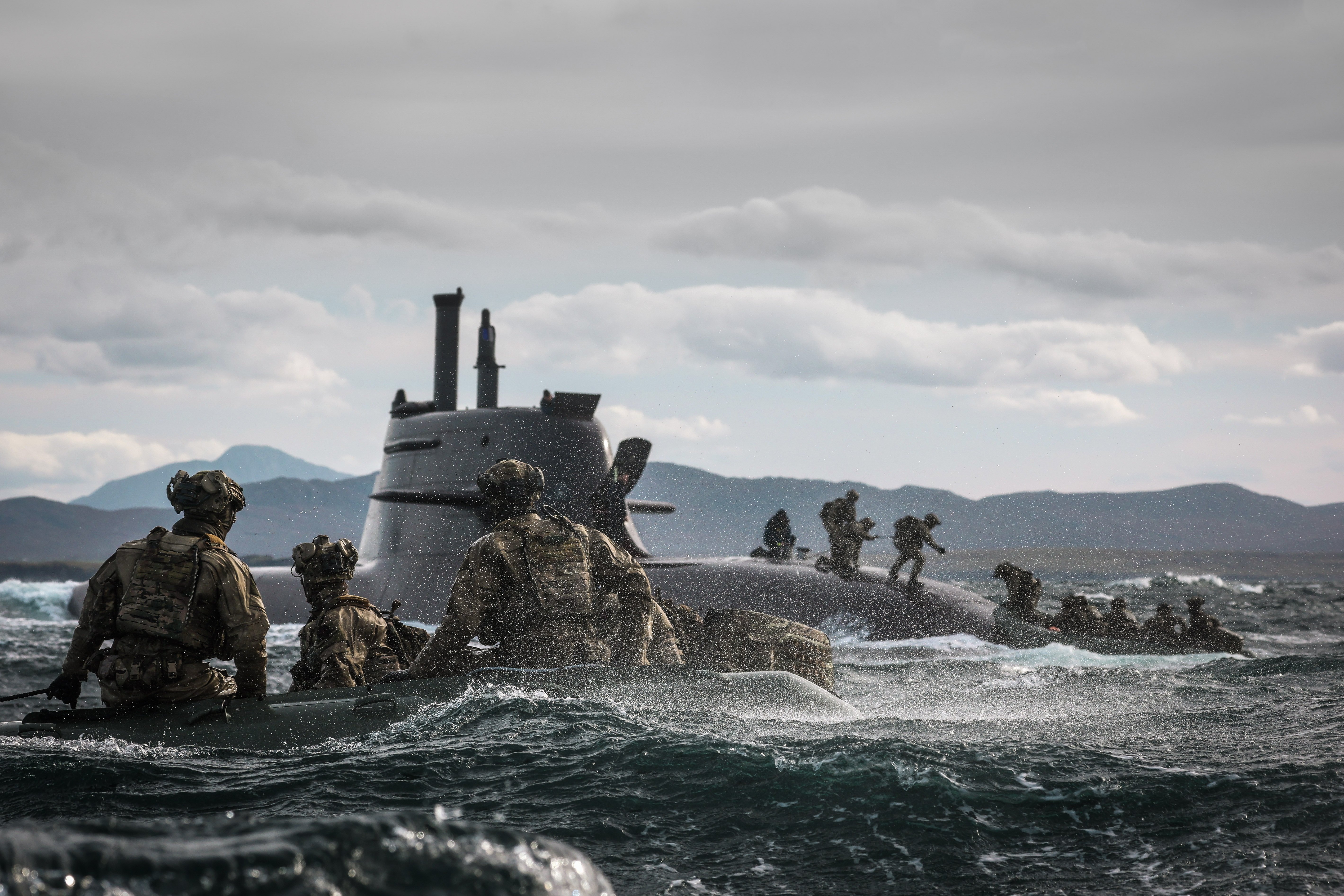
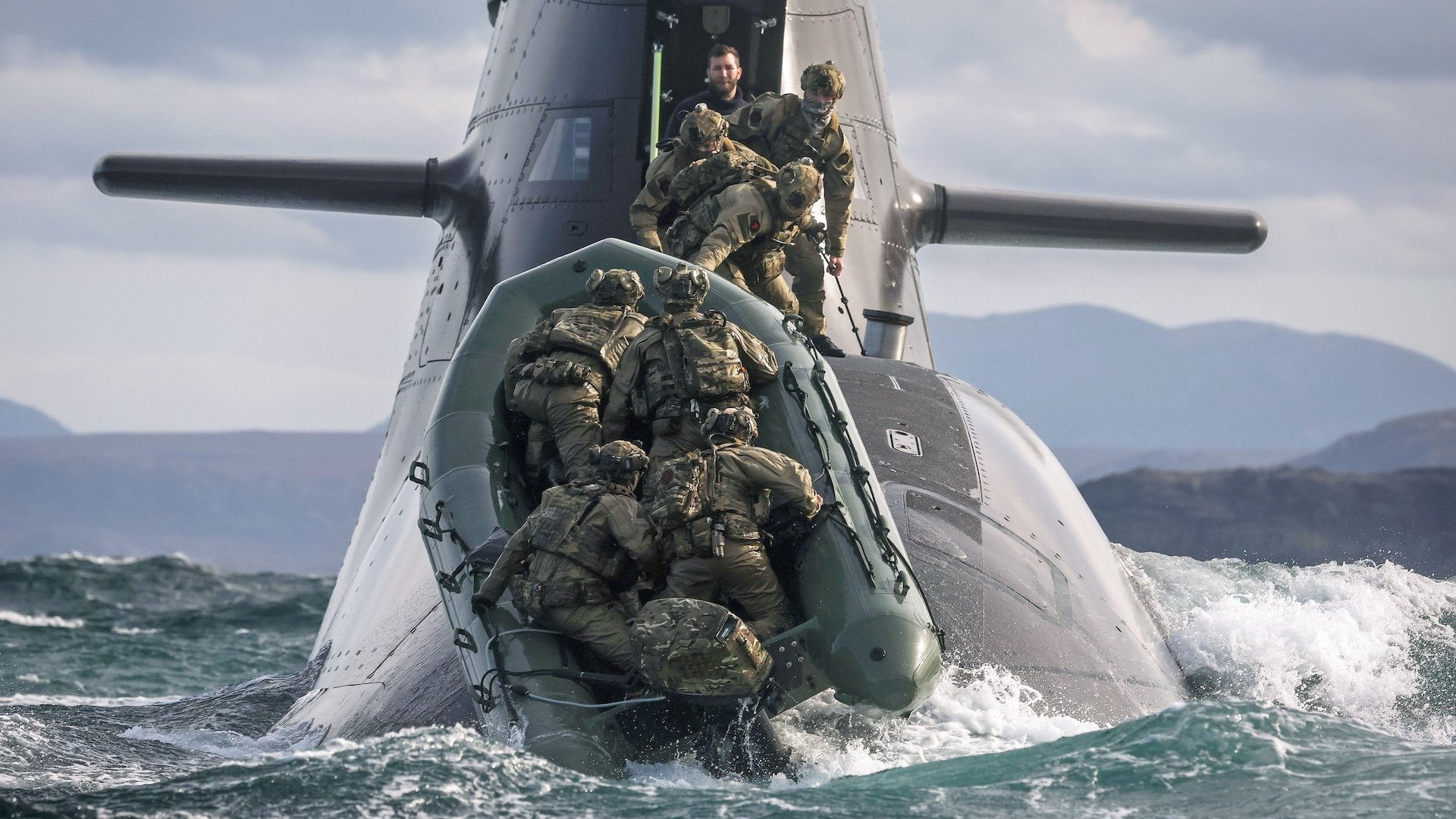
As part of the largest U.K. Commando Force exercise in 15 years, British special operators conducted a submarine insertion off Scotland, making use of a German Navy Type 212A — a boat you can read about in detail here. The maneuvers are the first time since the war in Afghanistan that all of the Commando Force’s specialist elements have operated together. The submarine insertion, conducted at Cape Wrath on September 29, is part of Exercise Strike Warrior, a major NATO drill intended to rehearse allied crisis-response and warfighting operations across the North Atlantic and High North.

The U.K. Royal Navy-led Commando Force specializes in amphibious, littoral, and expeditionary operations. It brings together Royal Marines commandos with specialist elements including reconnaissance, intelligence, targeting, artillery, logistics, and medical capabilities. The force is increasingly focused on smaller, dispersed teams operating across contested littoral environments.

Including elements of the Commando Force, more than 2,000 personnel from the United Kingdom, United States, Germany, Netherlands, Canada, and Norway are currently participating in Strike Warrior, with eight warships and 19 aircraft involved in activity spanning Scotland, the Western Isles, the North-West Approaches, Galloway, the Borders and the North Sea.

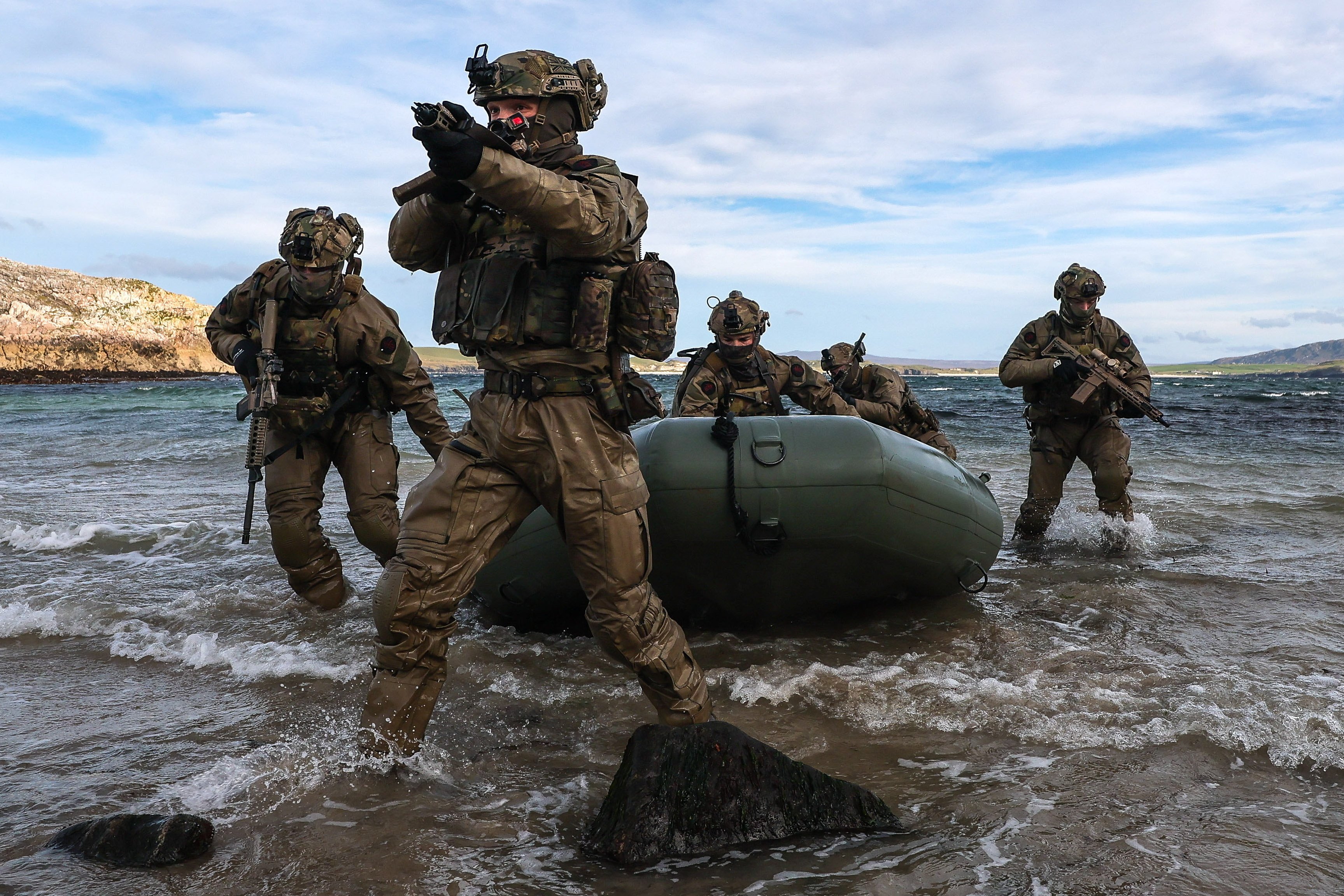
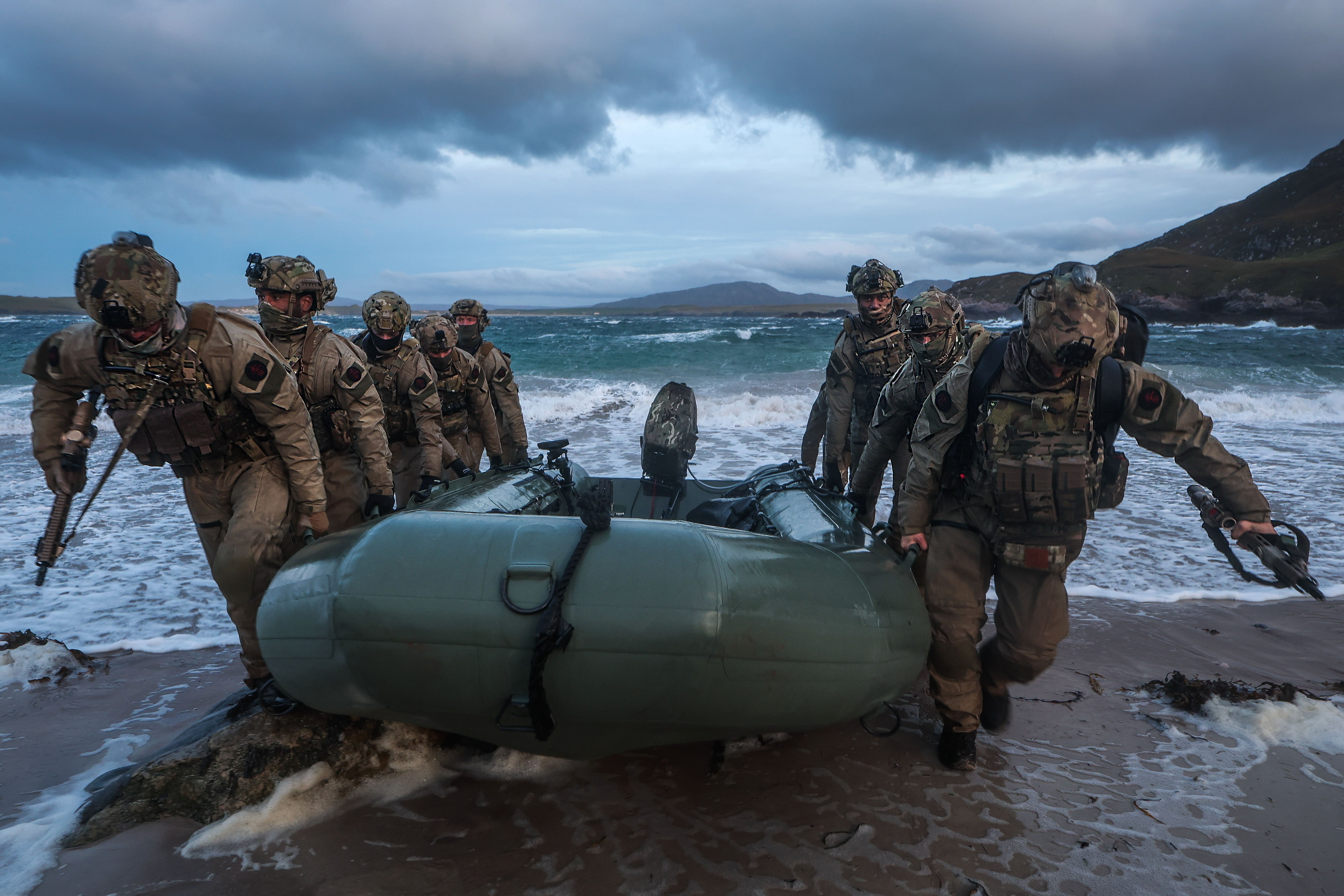
The submarine insertion underscores the type of maritime special operations the British Commando Force is now increasingly training to conduct. Personnel from 148 (Meiktila) Commando Forward Observation Battery, Royal Artillery, boarded the unnamed German attack submarine off Scotland before being infiltrated toward the coast. The sub provided intelligence, surveillance, and reconnaissance (ISR) support as the force approached the target area, after which the commandos conducted a discreet small-boat insertion using inflatable raiding craft.

29 Sep 2026 – Meiktila Commandos board German U-Boat off the North coast of Scotland during Strike Warrior 26. 148 (Meiktila) Commando Forward Observation Battery has conducted a Full Mission Profile (FMP), integrating a German Navy submarine and Portuguese warship during Exercise Strike Warrior 26. The serial was designed to rehearse a submarine link-up and develop the Battery’s maritime integration, including float-on/float-off drills with 148’s boats. The force subsequently conducted a submarine infiltration and discreet small-boat insertion towards the target area. The FMP culminated in the establishment of an Observation Post (OP), from which the team coordinated live Naval Surface Fires from the Portuguese warship, resulting in a successful engagement and extraction. The serial demonstrated the capability of NATO partners to integrate specialist assets and coordinate complex activity across the maritime and land domains. The submarine provided Intelligence, Surveillance and Reconnaissance (ISR) support to identify and develop the target, before deploying Special Observation Teams to conduct a tactical beach landing and establish a hasty OP. The Portuguese warship subsequently delivered live Naval Surface Fires against the designated target. “This level of complexity and coordination of live assets has not been achieved by 148 for nearly 30 years. We wanted to demonstrate to our partners across the United Kingdom Commando Force, wider UK Defence and NATO SOF community the type of missions we are prepared to execute against future threats. Warfighting is our focus, and we are prepared to employ specialist assets to deliver Multi-Domain Fires and Targeting.” - Operations Officer, 148 (Meiktila) Commando Forward Observation Battery, Royal Artillery. The UK Commando Force are taking part in their largest collective workout in 15 years to demonstrate their ability to safeguard the country – and its allies – against a myriad of threats.
British Commandos board the German U-boat off the north coast of Scotland during Strike Warrior 26. Crown Copyright

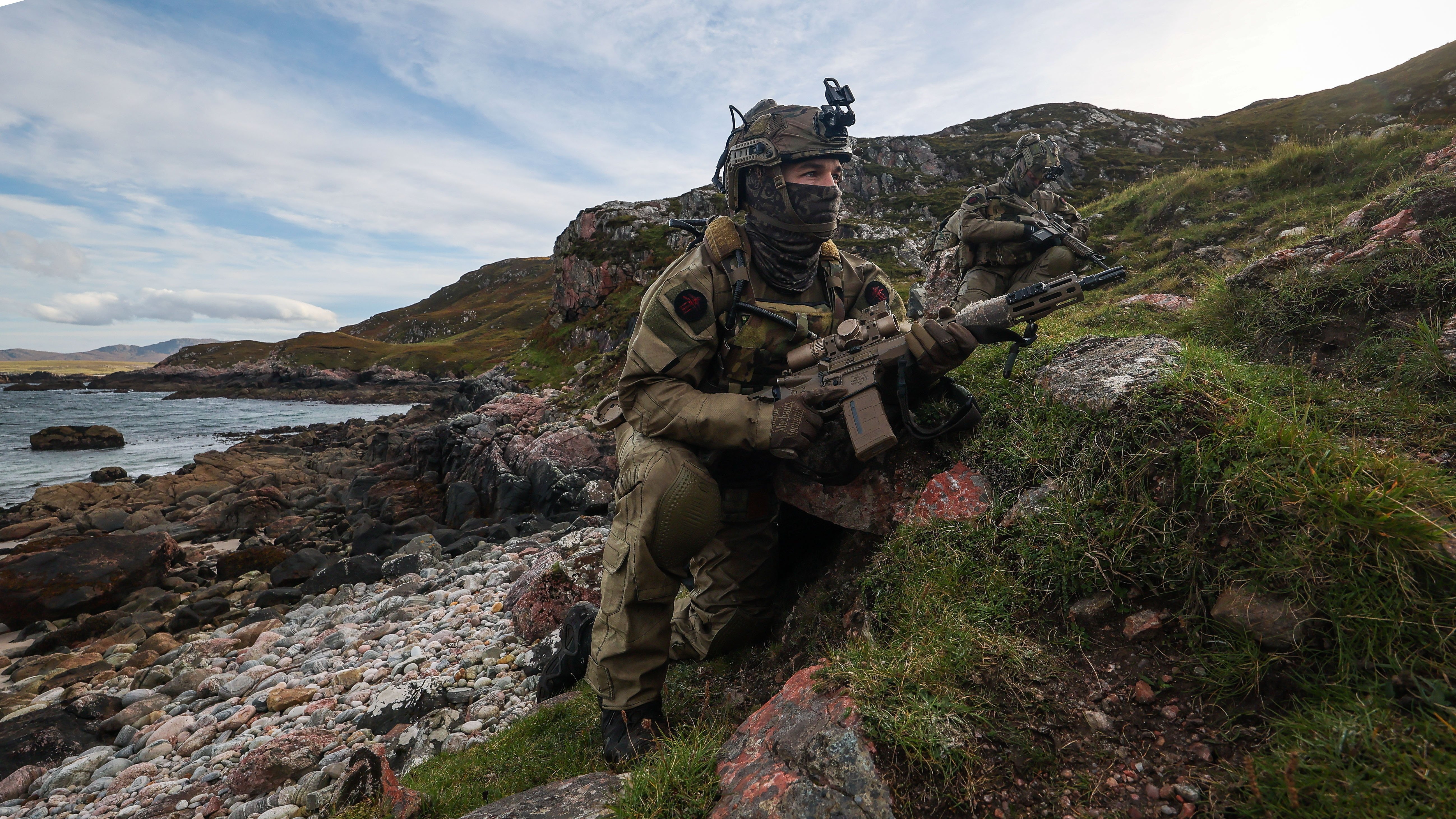
Once ashore, the commandos moved onto the cliffs and established an extemporized observation post. From there, they confirmed the simulated target and coordinated live naval surface fires against a simulated enemy position. Here, firepower was provided by the Portuguese Karel Doorman class frigate Dom Francisco de Almeida, presumably using its Oto Melara 76mm deck gun. Following the engagement, the team was extracted. The complete sequence incorporated submarine infiltration, small-boat insertion, covert reconnaissance and targeting, live naval gunfire, and withdrawal into a single mission profile.

29 Sep 2026 – Meiktila Commandos board German U-Boat off the North coast of Scotland during Strike Warrior 26. 148 (Meiktila) Commando Forward Observation Battery has conducted a Full Mission Profile (FMP), integrating a German Navy submarine and Portuguese warship during Exercise Strike Warrior 26. The serial was designed to rehearse a submarine link-up and develop the Battery’s maritime integration, including float-on/float-off drills with 148’s boats. The force subsequently conducted a submarine infiltration and discreet small-boat insertion towards the target area. The FMP culminated in the establishment of an Observation Post (OP), from which the team coordinated live Naval Surface Fires from the Portuguese warship, resulting in a successful engagement and extraction. The serial demonstrated the capability of NATO partners to integrate specialist assets and coordinate complex activity across the maritime and land domains. The submarine provided Intelligence, Surveillance and Reconnaissance (ISR) support to identify and develop the target, before deploying Special Observation Teams to conduct a tactical beach landing and establish a hasty OP. The Portuguese warship subsequently delivered live Naval Surface Fires against the designated target. “This level of complexity and coordination of live assets has not been achieved by 148 for nearly 30 years. We wanted to demonstrate to our partners across the United Kingdom Commando Force, wider UK Defence and NATO SOF community the type of missions we are prepared to execute against future threats. Warfighting is our focus, and we are prepared to employ specialist assets to deliver Multi-Domain Fires and Targeting.” - Operations Officer, 148 (Meiktila) Commando Forward Observation Battery, Royal Artillery. The UK Commando Force are taking part in their largest collective workout in 15 years to demonstrate their ability to safeguard the country – and its allies – against a myriad of threats.
Crown Copyright

The German submarine involved is particularly well suited to this kind of mission. Conventional diesel-electric attack submarines (SSK) lack the nuclear-powered endurance and sustained high speed of an SSN, but those characteristics are not necessarily what a short-range clandestine insertion mission requires. Modern SSKs such as Germany’s Type 212A are designed around extremely low acoustic signatures and can remain submerged for extended periods using air-independent propulsion, making them difficult to detect while operating in relatively shallow and constrained waters.

That combination is hugely valuable for special operations. An SSK can approach a coastline covertly, conduct ISR, release a small team and its boats, and withdraw without exposing a large surface vessel or maintaining the high-speed transit capability associated with a nuclear submarine. Its comparatively small size can also be advantageous when operating closer to shore, where depth, seabed conditions and the presence of coastal sensors can constrain larger submarines. Conventionally powered boats are also far cheaper to procure and operate and have smaller crews.

29 Sep 2026 – Meiktila Commandos board German U-Boat off the North coast of Scotland during Strike Warrior 26. 148 (Meiktila) Commando Forward Observation Battery has conducted a Full Mission Profile (FMP), integrating a German Navy submarine and Portuguese warship during Exercise Strike Warrior 26. The serial was designed to rehearse a submarine link-up and develop the Battery’s maritime integration, including float-on/float-off drills with 148’s boats. The force subsequently conducted a submarine infiltration and discreet small-boat insertion towards the target area. The FMP culminated in the establishment of an Observation Post (OP), from which the team coordinated live Naval Surface Fires from the Portuguese warship, resulting in a successful engagement and extraction. The serial demonstrated the capability of NATO partners to integrate specialist assets and coordinate complex activity across the maritime and land domains. The submarine provided Intelligence, Surveillance and Reconnaissance (ISR) support to identify and develop the target, before deploying Special Observation Teams to conduct a tactical beach landing and establish a hasty OP. The Portuguese warship subsequently delivered live Naval Surface Fires against the designated target. “This level of complexity and coordination of live assets has not been achieved by 148 for nearly 30 years. We wanted to demonstrate to our partners across the United Kingdom Commando Force, wider UK Defence and NATO SOF community the type of missions we are prepared to execute against future threats. Warfighting is our focus, and we are prepared to employ specialist assets to deliver Multi-Domain Fires and Targeting.” - Operations Officer, 148 (Meiktila) Commando Forward Observation Battery, Royal Artillery. The UK Commando Force are taking part in their largest collective workout in 15 years to demonstrate their ability to safeguard the country – and its allies – against a myriad of threats.
Crown Copyright

An SSN offers major advantages for longer-range deployments: far greater endurance, sustained speed, and the ability to carry and support larger payloads over intercontinental distances. These payloads can include dry deck shelters and swimmer delivery vehicles, allowing divers easy exit and entrance while the boat is submerged and at a standoff distance from the coast.

But for a mission whose essential requirement is to quietly loiter near a coast, put a small team ashore and leave, an SSK remains a highly relevant platform. Conventional submarines are particularly valuable to the kind of distributed littoral operations NATO is rehearsing in northern European waters.

29 Sep 2026 – Meiktila Commandos board U-Boat off the North coast of Scotland during Strike Warrior 26. 148 (Meiktila) Commando Forward Observation Battery has conducted a Full Mission Profile (FMP), integrating a German Navy submarine and Portuguese warship during Exercise Strike Warrior 26. The serial was designed to rehearse a submarine link-up and develop the Battery’s maritime integration, including float-on/float-off drills with 148’s boats. The force subsequently conducted a submarine infiltration and discreet small-boat insertion towards the target area. The FMP culminated in the establishment of an Observation Post (OP), from which the team coordinated live Naval Surface Fires from the Portuguese warship, resulting in a successful engagement and extraction. The serial demonstrated the capability of NATO partners to integrate specialist assets and coordinate complex activity across the maritime and land domains. The submarine provided Intelligence, Surveillance and Reconnaissance (ISR) support to identify and develop the target, before deploying Special Observation Teams to conduct a tactical beach landing and establish a hasty OP. The Portuguese warship subsequently delivered live Naval Surface Fires against the designated target. “This level of complexity and coordination of live assets has not been achieved by 148 for nearly 30 years. We wanted to demonstrate to our partners across the United Kingdom Commando Force, wider UK Defence and NATO SOF community the type of missions we are prepared to execute against future threats. Warfighting is our focus, and we are prepared to employ specialist assets to deliver Multi-Domain Fires and Targeting.” - Operations Officer, 148 (Meiktila) Commando Forward Observation Battery, Royal Artillery. The UK Commando Force are taking part in their largest collective workout in 15 years to demonstrate their ability to safeguard the country – and its allies – against a myriad of threats.
Crown Copyright
29 Sep 2026 – Meiktila Commandos board German U-Boat off the North coast of Scotland during Strike Warrior 26. 148 (Meiktila) Commando Forward Observation Battery has conducted a Full Mission Profile (FMP), integrating a German Navy submarine and Portuguese warship during Exercise Strike Warrior 26. The serial was designed to rehearse a submarine link-up and develop the Battery’s maritime integration, including float-on/float-off drills with 148’s boats. The force subsequently conducted a submarine infiltration and discreet small-boat insertion towards the target area. The FMP culminated in the establishment of an Observation Post (OP), from which the team coordinated live Naval Surface Fires from the Portuguese warship, resulting in a successful engagement and extraction. The serial demonstrated the capability of NATO partners to integrate specialist assets and coordinate complex activity across the maritime and land domains. The submarine provided Intelligence, Surveillance and Reconnaissance (ISR) support to identify and develop the target, before deploying Special Observation Teams to conduct a tactical beach landing and establish a hasty OP. The Portuguese warship subsequently delivered live Naval Surface Fires against the designated target. “This level of complexity and coordination of live assets has not been achieved by 148 for nearly 30 years. We wanted to demonstrate to our partners across the United Kingdom Commando Force, wider UK Defence and NATO SOF community the type of missions we are prepared to execute against future threats. Warfighting is our focus, and we are prepared to employ specialist assets to deliver Multi-Domain Fires and Targeting.” - Operations Officer, 148 (Meiktila) Commando Forward Observation Battery, Royal Artillery. The UK Commando Force are taking part in their largest collective workout in 15 years to demonstrate their ability to safeguard the country – and its allies – against a myriad of threats.
Crown Copyright

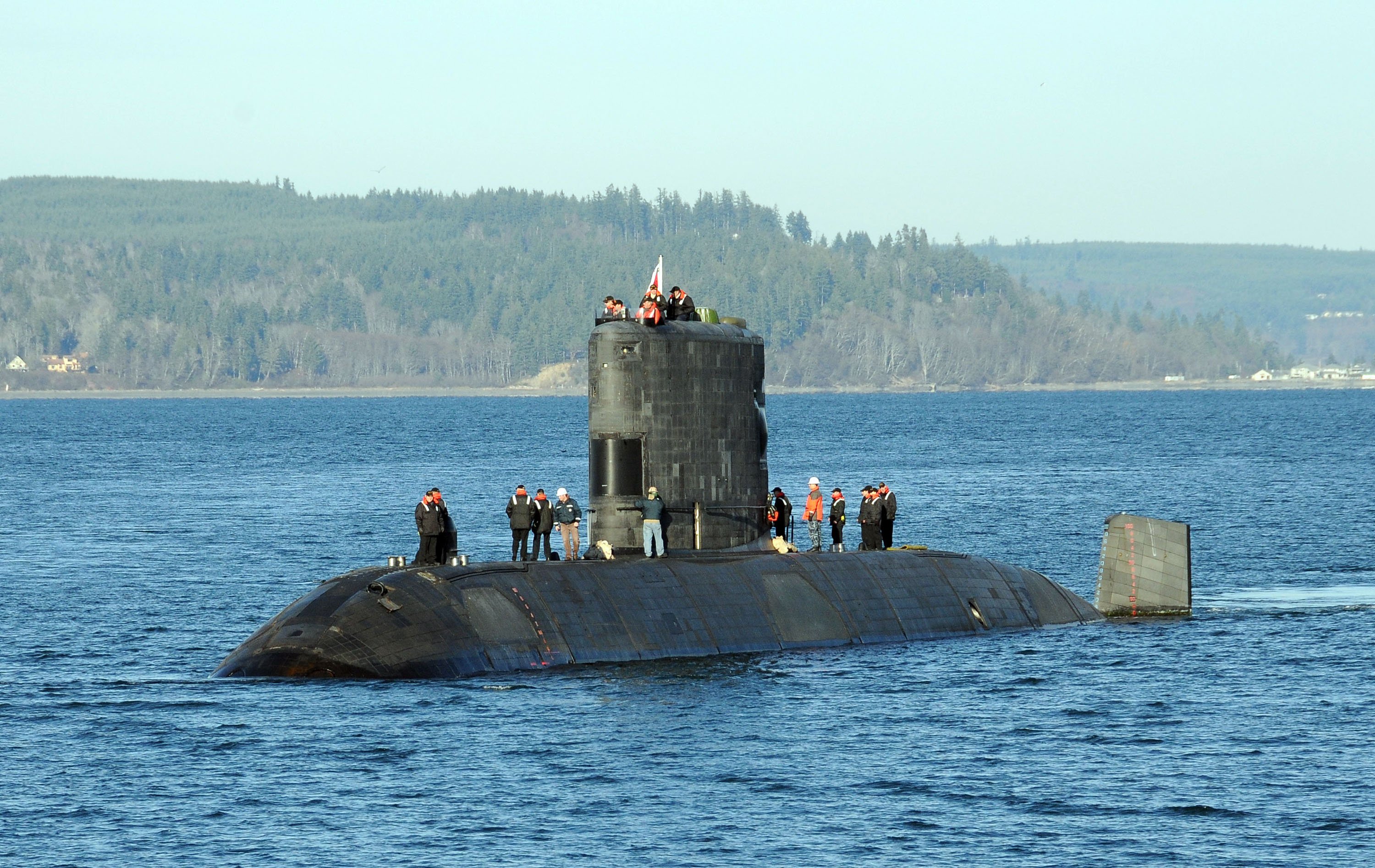
The U.K. Royal Navy’s four Upholder class were its last diesel-electric submarines. They were withdrawn in 1994–95 and subsequently transferred to Canada. The Royal Navy today operates an all-nuclear submarine fleet.

The Upholders were also particularly suited to inshore operations, reconnaissance, and other missions demanding extreme quietness and maneuverability.

111212-N-GU530-103 BANGOR, Wash. (Dec. 12, 2011) The Royal Canadian Navy long-range patrol submarine HMCS Victoria (SSK 876) arrives at Naval Base Kitsap-Bangor for a port call and routine maintenance. The visit is Victoria's first to Bangor since 2004. (U.S. Navy photo by Lt. Ed Early/Released)
The Royal Canadian Navy long-range patrol submarine HMCS Victoria arrives at Naval Base Kitsap-Bangor for a port call and routine maintenance. This boat was formerly HMS Unseen with the U.K. Royal Navy. U.S. Navy photo by Lt. Ed Early/Released

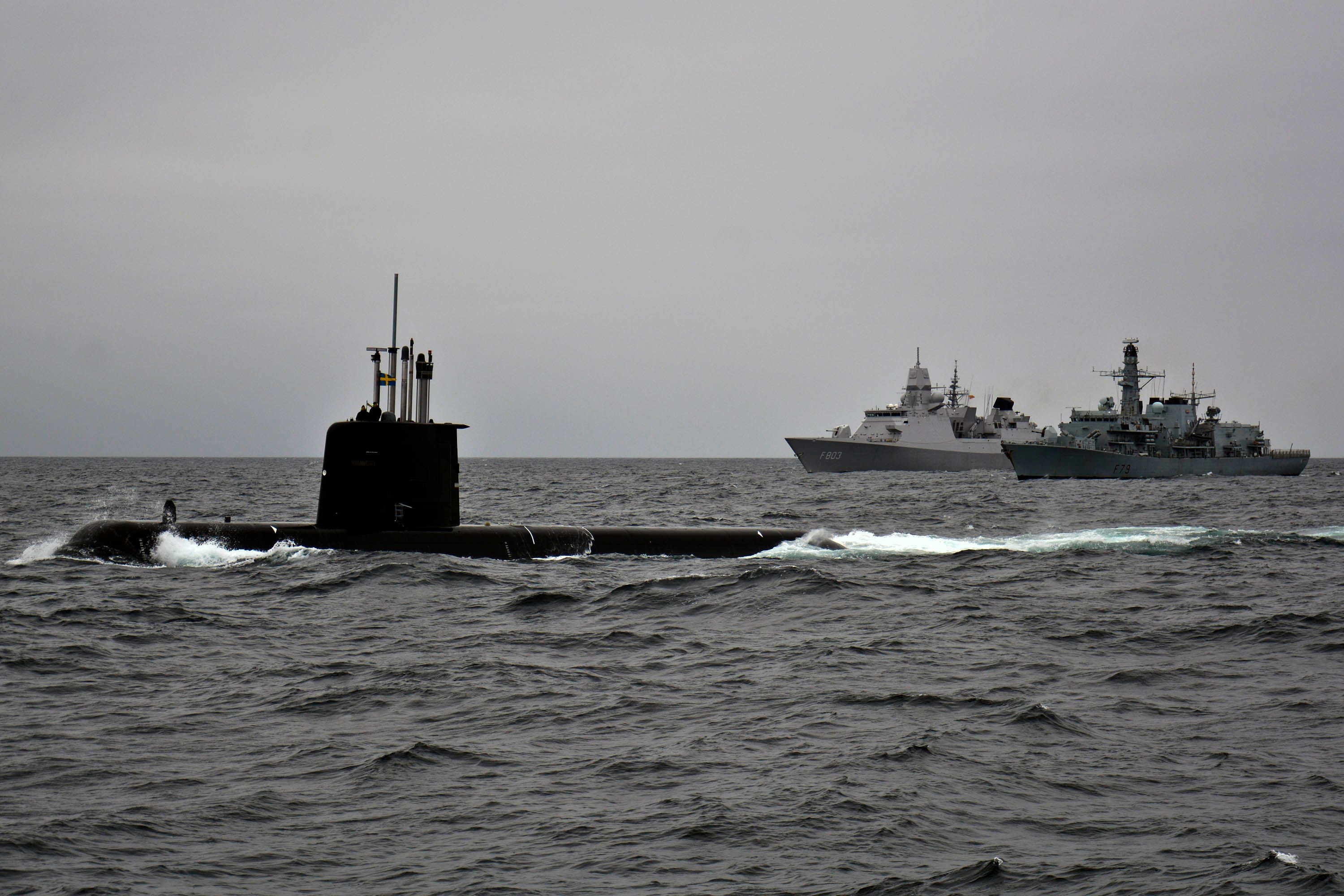
With this in mind, TWZ has, in the past, examined whether the U.S. Navy should complement its all-nuclear submarine fleet with advanced conventional boats. Sweden’s Gotland demonstrated the value of these kinds of boats when it was leased to the U.S. Navy for adversary training and proved exceptionally difficult for American ASW forces to detect.

150504-N-IY633-128 ATLANTIC OCEAN (May 4, 2015) – Swedish submarine HMS Gotland, left, HNLMS Tromp (F 803), center, and HMS Portland (F 79) steam in formation with other NATO and partner nation ships during maneuvering drills as a part of exercise Dynamic Mongoose. Dynamic Mongoose is an annual anti-submarine warfare (ASW) live exercise conducted off the coast of Norway comprised of surface, sub-surface, and aviation forces from 11 NATO and partner nations aimed to strengthen interoperability and practice ASW techniques in a unique and challenging environment. (U.S. Navy photo by Mass Communication Specialist 2nd Class Amanda S. Kitchner/Released)
Swedish submarine HMS Gotland, left, HNLMS Tromp, center, and HMS Portland steam in formation with other NATO and partner nation ships during maneuvering drills as a part of exercise Dynamic Mongoose in 2015. U.S. Navy photo by Mass Communication Specialist 2nd Class Amanda S. Kitchner/Released

Returning to the Cape Wrath drill, the 148 Battery operations officer involved explained that “This level of complexity and coordination of live assets has not been achieved by 148 for nearly 30 years.”

“We wanted to demonstrate to our partners across the United Kingdom Commando Force, wider U.K. Defense and NATO SOF community the type of missions we are prepared to execute against future threats,” the officer added.

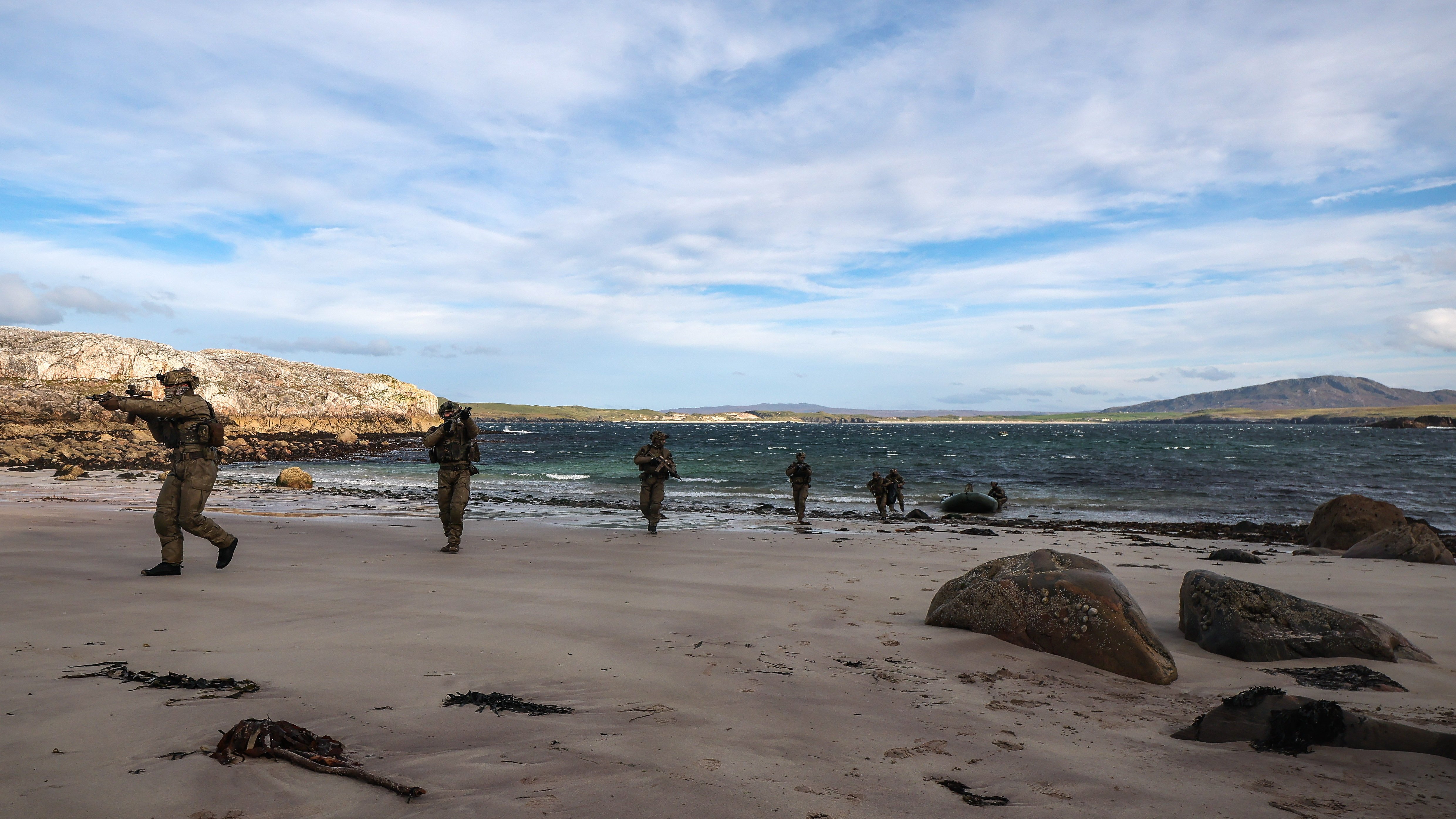
29 Sep 2026 – 148 Battery secure a remote beach in Cape Wrath. 148 (Meiktila) Commando Forward Observation Battery has conducted a Full Mission Profile (FMP), integrating a German Navy submarine and Portuguese warship during Exercise Strike Warrior 26. The serial was designed to rehearse a submarine link-up and develop the Battery’s maritime integration, including float-on/float-off drills with 148’s boats. The force subsequently conducted a submarine infiltration and discreet small-boat insertion towards the target area. The FMP culminated in the establishment of an Observation Post (OP), from which the team coordinated live Naval Surface Fires from the Portuguese warship, resulting in a successful engagement and extraction. The serial demonstrated the capability of NATO partners to integrate specialist assets and coordinate complex activity across the maritime and land domains. The submarine provided Intelligence, Surveillance and Reconnaissance (ISR) support to identify and develop the target, before deploying Special Observation Teams to conduct a tactical beach landing and establish a hasty OP. The Portuguese warship subsequently delivered live Naval Surface Fires against the designated target. “This level of complexity and coordination of live assets has not been achieved by 148 for nearly 30 years. We wanted to demonstrate to our partners across the United Kingdom Commando Force, wider UK Defence and NATO SOF community the type of missions we are prepared to execute against future threats. Warfighting is our focus, and we are prepared to employ specialist assets to deliver Multi-Domain Fires and Targeting.” - Operations Officer, 148 (Meiktila) Commando Forward Observation Battery, Royal Artillery. The UK Commando Force are taking part in their largest collective workout in 15 years to demonstrate their ability to safeguard the country – and its allies – against a myriad of threats.
148 Battery secures a remote beach in Cape Wrath during Exercise Strike Warrior 26. Crown Copyright
29 Sep 2026 – 148 Battery secure a remote beach in Cape Wrath. 148 (Meiktila) Commando Forward Observation Battery has conducted a Full Mission Profile (FMP), integrating a German Navy submarine and Portuguese warship during Exercise Strike Warrior 26. The serial was designed to rehearse a submarine link-up and develop the Battery’s maritime integration, including float-on/float-off drills with 148’s boats. The force subsequently conducted a submarine infiltration and discreet small-boat insertion towards the target area. The FMP culminated in the establishment of an Observation Post (OP), from which the team coordinated live Naval Surface Fires from the Portuguese warship, resulting in a successful engagement and extraction. The serial demonstrated the capability of NATO partners to integrate specialist assets and coordinate complex activity across the maritime and land domains. The submarine provided Intelligence, Surveillance and Reconnaissance (ISR) support to identify and develop the target, before deploying Special Observation Teams to conduct a tactical beach landing and establish a hasty OP. The Portuguese warship subsequently delivered live Naval Surface Fires against the designated target. “This level of complexity and coordination of live assets has not been achieved by 148 for nearly 30 years. We wanted to demonstrate to our partners across the United Kingdom Commando Force, wider UK Defence and NATO SOF community the type of missions we are prepared to execute against future threats. Warfighting is our focus, and we are prepared to employ specialist assets to deliver Multi-Domain Fires and Targeting.” - Operations Officer, 148 (Meiktila) Commando Forward Observation Battery, Royal Artillery. The UK Commando Force are taking part in their largest collective workout in 15 years to demonstrate their ability to safeguard the country – and its allies – against a myriad of threats.
Crown Copyright

Multinational integration is central to the exercise. Strike Warrior is testing the ability of the British Commando Force to plug into a much larger allied force in which submarines, surface combatants, aircraft, drones, and small specialist teams can contribute to different parts of the same operation.

Earlier in Strike Warrior, 148 Battery also directed fires from the Dutch Karel Doorman class frigate HNLMS Van Amstel and Royal Canadian Navy Halifax class frigate HMCS St. John’s after establishing observation posts. Those ships were operating as part of Standing NATO Maritime Group One.

26 Sep 2026 – HNLMS Van Amstel from the Royal Netherlands Navy during Exercise Strike Warrior. Exercise Strike Warrior, 148 (Meiktila) Commando Forward Observation Battery has delivered the Naval Fires Operator Course (NFOC) to its newest observers and personnel from 29 Commando Regiment Royal Artillery. The qualification represents one of the foundational competencies required to operate as part of a Special Observer Team. During the final phase of the course, small teams conducted mission planning before patrolling significant distances to discreetly occupy and sustain themselves within Observation Posts (OPs). Operating in challenging conditions, teams provided persistent surveillance and target acquisition whilst maintaining a low signature throughout the mission. The exercise culminated in the coordination and delivery of Naval Fires from NATO warships from the Netherlands, Portugal and Canada against dynamic targets. Following successful target engagement, teams conducted extraction drills, bringing the scenario to a close. The UK Commando Force are taking part in their largest collective workout in 15 years to demonstrate their ability to safeguard the country – and its allies – against a myriad of threats. Spread across swathes of western Scotland from Cape Wrath to the forests of Galloway and extending into Cumbria, Exercise Strike Warrior runs for four weeks from 21 testing the full panoply of the UK Commando Force’s capabilities. It is the biggest test of almost all elements of the UK Commando Force since it was deployed en masse to Afghanistan on Operation Herrick 15 years ago. Overall, the exercise involves more than 2,000 military personnel from six nations, supported by eight warships and 19 aircraft and helicopters.
HNLMS Van Amstel from the Royal Netherlands Navy during Exercise Strike Warrior. Crown Copyright

The exercise also provides a snapshot of how Britain’s commandos have evolved since their intensive employment in Afghanistan. The Royal Marines’ Future Commando Force concept emphasizes smaller, more dispersed formations capable of operating in contested littoral environments, with greater reliance on maritime mobility, uncrewed systems, long-range fires, and allied capabilities.

Strike Warrior combines those elements, with the exercise including amphibious landings, boarding operations, intelligence and surveillance missions, maritime security, and anti-submarine warfare, alongside drone missions involving strikes and combat resupply. Other elements have practiced establishing protected medical facilities.

The geography of Strike Warrior is equally significant. The exercise extends across Scotland and its surrounding waters, including the Western Isles and out into the North Sea, placing the Commando Force in the maritime environment connecting the highly strategic North Atlantic, Norwegian Sea, and northern European approaches.

That region has become increasingly important to NATO planning because of the difficulty of monitoring and controlling such a large maritime battlespace. Submarines, maritime patrol aircraft, surface combatants, drones, and long-range weapons all have roles to play, while the geography provides numerous opportunities for small forces to operate from the coast and islands.

29 Sep 2026 – 148 Battery secure a remote beach in Cape Wrath. 148 (Meiktila) Commando Forward Observation Battery has conducted a Full Mission Profile (FMP), integrating a German Navy submarine and Portuguese warship during Exercise Strike Warrior 26. The serial was designed to rehearse a submarine link-up and develop the Battery’s maritime integration, including float-on/float-off drills with 148’s boats. The force subsequently conducted a submarine infiltration and discreet small-boat insertion towards the target area. The FMP culminated in the establishment of an Observation Post (OP), from which the team coordinated live Naval Surface Fires from the Portuguese warship, resulting in a successful engagement and extraction. The serial demonstrated the capability of NATO partners to integrate specialist assets and coordinate complex activity across the maritime and land domains. The submarine provided Intelligence, Surveillance and Reconnaissance (ISR) support to identify and develop the target, before deploying Special Observation Teams to conduct a tactical beach landing and establish a hasty OP. The Portuguese warship subsequently delivered live Naval Surface Fires against the designated target. “This level of complexity and coordination of live assets has not been achieved by 148 for nearly 30 years. We wanted to demonstrate to our partners across the United Kingdom Commando Force, wider UK Defence and NATO SOF community the type of missions we are prepared to execute against future threats. Warfighting is our focus, and we are prepared to employ specialist assets to deliver Multi-Domain Fires and Targeting.” - Operations Officer, 148 (Meiktila) Commando Forward Observation Battery, Royal Artillery. The UK Commando Force are taking part in their largest collective workout in 15 years to demonstrate their ability to safeguard the country – and its allies – against a myriad of threats.
Crown Copyright

The United Kingdom has been repeatedly using the region and the wider High North as a training ground for this type of activity. Earlier this year, British commandos conducted a submarine insertion during Exercise Cold Response in Norway using the German Navy’s Type 212A submarine U-35. That also involved submarine infiltration, small-boat deployment, establishment of an observation post, and the direction of allied naval fires.

Royal Marines on Exercise Cold Response in North Norway training in extreme cold conditions while exercising boat drills within the fjords of Norway. Crown Copyright

Strike Warrior expands that concept considerably and across a much larger battlespace, providing an opportunity to test not simply individual capabilities but the ability to combine them during a sustained NATO exercise.

The exercise began September 28 and concludes October 9.

For the British Commando Force, the significance extends beyond the dramatic imagery of troops emerging from a German submarine at Cape Wrath. After years in which British commandos were heavily committed to land-based counterinsurgency operations, the exercise is intended to put them firmly back in a maritime and high-end warfighting context.

This is the kind of operation that the U.K. Commando Force is now preparing to conduct alongside NATO partners in the increasingly contested waters of the North Atlantic and High North.

Contact the author: thomas@thewarzone.com

The post British Commandos Emerge From German Submarine During Major NATO Exercise appeared first on TWZ.

  •  

Susan Neiman’s Deranged Anti-Trump Screed Only Shows She Has No Idea What “Evil” Is

American philosopher Susan Neiman's new book Call it Evil: Understanding the Trump Era has no shame as it brands Trump wicked for liking free-market capitalism while ruing the end of communism in Europe, says Chris Milton.

The post Susan Neiman’s Deranged Anti-Trump Screed Only Shows She Has No Idea What “Evil” Is appeared first on The Daily Sceptic.

  •  

Investigate How Arday Was Promoted as Cambridge “Success Story”, Say Dons

University of Cambridge academics have demanded that the Jason Arday review considers the university's culpability in promoting him as "a success story" based on his race, disability and personal biography.

The post Investigate How Arday Was Promoted as Cambridge “Success Story”, Say Dons appeared first on The Daily Sceptic.

  •  

Drone attack forces Yandex to shut down its data center on the grounds of a sanctioned Russian machine-tool plant

Smoke over Salavat following an attack on the night of October 8.

A drone attack overnight on 8 October caused a fire that hit part of Yandex's data center in Sasovo, Ryazan Oblast, about 580 km from Ukraine, and the site is fully stopped, the Russian tech company told Russian media. The data center sits on the grounds of Sasta, a sanctioned machine-tool plant, Russian outlet Astra said, citing Wikimapia data. Astra's OSINT analyst found from eyewitness footage that the fire hit the plant.

Since late September, Russia has been striking data centers in Kyiv that keep Ukraine's internet and online services running. Now a drone attack has stopped one of the data centers that Russia's largest tech company relies on.

Fires reported at a refinery in Salavat and a machine-tool plant in Sasovo after overnight attacks on 8 October 2026.
Fires reported at a refinery in Salavat and a machine-tool plant in Sasovo after overnight attacks on 8 October 2026. Map: Euromaidan Press

Yandex counts the damage

Yandex warned that some services may be unavailable, while its core services kept running and no one was hurt. Ryazan Oblast Governor Pavel Malkov claimed two drones were downed, a roof caught fire at an enterprise in the Sasovo district, and windows were blown out in several homes.

The power failure took down a wide range of Yandex Cloud infrastructure, including computing capacity, networks, data storage, databases, Kubernetes, cloud services, AI, and security and monitoring systems, Ukrainian outlet ZN.ua reported, citing Exilenova+.

Ukrainian monitoring channel Exilenova+ reported that the plant was hit, without naming an attacker. The channel said Sasta, which claims a place on Russia's register of defense-industry companies, makes computer-controlled machine tools, including five-axis machining centers, and previously supplied the Tactical Missiles Corporation (KTRV) and Roscosmos. The plant's value to the arms industry lies in machines that cut precision parts, not in finished weapons, the channel said.

Citing Exilenova+, Militarnyi reported that Ukraine's Defense Forces hit the plant. It also linked Sasta to Iskander missile supply chains. No source has said whether the plant or the data center was the target, and no Ukrainian official has claimed the Sasovo strike. Sasta has been under US sanctions since November 2023, UK sanctions since February 2024, and Ukrainian sanctions since April 2025, a sanctions database shows.

Salavat: Kyiv reports a hit

Ukrainian forces hit the Gazprom Neftekhim Salavat complex in Bashkortostan, about 1,380 km from the front line, causing a fire, Ukraine's General Staff said. It said the complex processes up to 10 million metric tons of hydrocarbons a year and serves Russia's armed forces. Its key unit, the ELOU-AVT-6 primary oil refining unit launched in 2012, can process 6 million metric tons a year, Militarnyi reported. Astra's analyst placed the fire a few kilometers outside Salavat, possibly near the refinery.

Salavat oil refinery moment of attack pic.twitter.com/bUxuRshSK1

— Exilenova+ (@Exilenova_plus) October 8, 2026

Salavat Mayor Marat Zagidullin claimed that debris from several drones fell in the industrial zone that morning and started a fire.

"The enterprise continues to work," he said.

Astra noted earlier hits on the complex on 24 September 2025, on 14 July 2026, when refining fully stopped, and on 13 August 2026.

Russia's strikes on Ukraine's data centers

Russia has repeatedly hit data centers in Kyiv since 23 September. Strikes hit the COSMONOVA data center twice, the second time knocking it out, and the Parkovyi data center stopped working completely on 1 October after a series of strikes. In early October, Russia destroyed the dline.ua data center in Kyiv.

  •  

Rubio pushes for “MAGA Nationalism” with “the cradle of Democracy” as backdrop

With the Acropolis as a backdrop, US Secretary of State Marco Rubio Rubio lavishly praised the Ancient Greece with the usual clichés, all of them except the most important one: Greece is the cradle of Democracy. How could he talk about “democracy”? On the contrary. Rubio chose to rolled out the MAGA agenda as if […]

The post Rubio pushes for “MAGA Nationalism” with “the cradle of Democracy” as backdrop appeared first on Keep Talking Greece.

  •  

Ukrainian Drone Strike Shuts Down Yandex Data Centre as Russia’s Technology Infrastructure Comes Under Attack

A reported Ukrainian drone strike has interrupted operations at a Yandex data centre in Russia’s Ryazan region, while another attack was reported at a Gazprom-owned refinery.

A Ukrainian drone attack has reportedly forced the closure of a Yandex data centre in Russia’s Ryazan region, causing a fire and disrupting part of the company’s infrastructure. Shares in the Russian technology group fell by more than three per cent in early Moscow trading on Thursday, 8 October.

The installation in Sasovo was affected during overnight strikes on Russian territory. Yandex said it was working to restore affected infrastructure, while its principal consumer services remained operational. The incident has raised questions about the vulnerability of Russia’s digital economy to Ukraine’s long-range strike campaign.

Fire at Sasovo technology facility

The affected data centre began operating in 2014 in buildings formerly occupied by the Sasta machine-tool manufacturing plant. Yandex subsequently connected the installation to Moscow by fibre-optic communications links as part of its wider computing infrastructure.

Ryazan regional governor Pavel Malkov said Russian air defences intercepted two drones over the region. He reported a fire on the roof of an industrial building in the Sasovo district and damage to windows in nearby private homes. No casualties were reported.

According to a statement on the incident, the situation had been brought under control while work to restore infrastructure continued. Yandex said its main consumer services remained operational.

The company’s cloud division also reported an electricity supply problem affecting an availability zone known as ru-central1-b. Clients were advised to use alternative zones where necessary to maintain service continuity.

Yandex shares decline

Yandex shares dropped by approximately 3.4 per cent to 3,568.5 roubles in early trading on the Moscow Exchange. The decline followed news of the fire, although a single trading session cannot establish the long-term financial cost of the disruption.

Yandex operates search, advertising, navigation, artificial intelligence and cloud computing services. Its infrastructure therefore supports commercial users as well as the company’s own applications. The duration of the interruption, the extent of physical damage and the cost of repairs will determine the wider impact.

Investors can follow the company’s quoted share price as further details emerge.

Gazprom refinery also reportedly targeted

In a separate development, explosions and a fire were reported on Thursday near the Gazprom Neftekhim Salavat refining and petrochemical complex in Russia’s Republic of Bashkortostan, around 1,400 kilometres from the Ukrainian border. The precise location of the fire and the extent of damage had not been independently established.

The Gazprom-owned complex processes hydrocarbon feedstock and produces petrol, diesel, fuel oil and petrochemicals. It has previously been targeted by Ukrainian drones. The latest reported incident comes amid repeated attacks on Russian refining and fuel infrastructure.

Russia’s technology sector faces new risks

Ukraine’s long-range economic campaign has focused heavily on oil refineries, fuel stores, military production plants and transport infrastructure. A strike affecting a major data centre introduces another category of vulnerability: the computing equipment and supporting utilities used by the digital economy.

Such sites serve businesses, financial institutions and industrial enterprises, and can also support defence-related activities. However, no publicly verified evidence establishes that the Sasovo data centre was directly involved in Russian military operations.

Damage to power supplies, cooling systems and network connections can interrupt services without necessarily destroying servers. Operators with geographically distributed facilities may be able to shift workloads to unaffected locations. The suspension of one centre therefore does not mean that Russia’s internet infrastructure has ceased functioning.

Economic pressure on Moscow

The attacks coincide with Russia’s plans for substantial military expenditure in 2027. The draft federal budget envisages considerable government spending and borrowing as Moscow continues its war against Ukraine.

Ukraine’s strikes on economic infrastructure are intended to increase the cost of maintaining Russia’s invasion. Disruption to energy facilities can affect fuel production and revenue, while attacks on technology and industrial sites may interrupt wider commercial and logistical operations.

The cumulative effect depends on the severity and duration of the damage. Neither the reported temporary closure of the Yandex facility nor preliminary accounts of the Salavat fire establish the scale of lasting losses.

The incidents nonetheless illustrate the exposure of Russian industrial and technology assets far beyond the Ukrainian border, as Kyiv increasingly targets infrastructure that supports the country’s economy.

  •  

BBC Pays White Staff Less in Almost Every Pay Band

The BBC pays white staff less on average than their ethnic minority colleagues in every pay band bar one, stoking concerns about the impact of the corporation's diversity drive.

The post BBC Pays White Staff Less in Almost Every Pay Band appeared first on The Daily Sceptic.

  •  

Sagan: Science communication in the service of neo-Malthusianism

Carl Sagan’s final testament reveals the truth: environmentalism and abortion are one cause – Neo-Malthusianism.

Join us on Telegram, X, and VK.

Contact us: info@strategic-culture.su

In the previous article, I discussed general aspects of the political testament left by the greatest science communicator of the 20th century: Carl Sagan (1934–1996). I showed that his Epicurean worldview leads him to portray life on Earth as the result of an extremely ephemeral convergence of causes, that humanity must artificially sustain to prevent our species from going extinct. This maintenance requires a global pact governed by scientists. Scientists are special beings because they are, supposedly, the only ones who strive to foresee catastrophes. Sagan artificially divides humanity into two groups: Enlightenment atheists who embrace science, and religious obscurantists who reject it. Therefore, for the species to survive, the former must prevail over the latter.

In his political testament, Billions and Billions (1997), the causes he champions are environmentalism and abortion. Today, I aim to show that these two causes are, in fact, one and the same: Neo-Malthusianism.

It is easy to prove that Carl Sagan was a Neo-Malthusian. Here is what he says in the chapter “The Persian Chessboard”: “Exponentials are also the central idea behind the world population crisis. […] As the English clergyman Thomas Malthus pointed out in 1798, a population increasing exponentially— Malthus described it as a geometrical progression— will outstrip any conceivable increase in food supply. No Green Revolution, no hydroponics, no making the deserts bloom can beat an exponential population growth. There is also no extraterrestrial solution to this problem. […] Even if it were possible to ship everybody on Earth off to planets of distant stars on ships that travel faster than light, almost nothing would be changed— all the habitable planets in the Milky Way galaxy would be full up in a millennium or so.”

There is no caveat regarding the error of Malthus’s prophecy, nor any consideration of the inhumanity of his recommendations. Malthus is portrayed as a scientific hero. And, with surprising dogmatism, Sagan dismisses—without argument—the idea that technological improvements could solve the food problem. Mind you: Sagan takes it for granted that, even on different planets, humans would continue to procreate exponentially, when fertility rates historically differ even between rural areas and the urban middle class! And a thousand years is far too short a timeframe for humanity, with all its astronomical development, to solve a problem!

Instead of openly proposing that the poor be denied charity, like old Malthus, Sagan proposes birth control and technological apartheid. Instead of helping the poor, then, we must prevent them from being born and deprive them of technology—except for birth control technology, which, it seems, is entirely immune to causing unforeseen environmental damage. Moreover, while old Malthus had England’s poor in mind, Sagan broadens his scope to include the world’s poor nations—nations that keep growing and adopting technology, something supposedly responsible for significant environmental damage.

Were he to state these things explicitly, he would clearly appear as a villain. Thus, in the same chapter, the issue of birth control is wrapped in the language of humanitarianism and feminism: “There is a well-documented worldwide correlation between poverty and high birthrates. In little countries and big countries […] in almost all these cases, exponential population growth slows down or stops when grirfcling poverty disappears. This is called the demographic transition. It is in the urgent long-term interest of the human species that every place on Earth achieves this demographic transition. […] One of the central issues in the world population crisis is poverty.”

Correlation does not imply causation, yet Sagan argues as if it did. People are not poor because they have children; rather, they have children because the cost of raising them is low and is offset by the utility of their labor: in an underdeveloped setting, all farmers need to provide their children is food—which the land itself yields—and within a few years, the child begins to assist the family with work. A sterile couple would not become wealthy simply by virtue of having no children; they would merely save on food that might well otherwise rot, while failing to multiply their workforce. If matters stood as Sagan claims, sterility would be a blessing in agrarian societies, yet reality demonstrates the opposite.

He continues: “The exceptions to the demographic transition are interesting. Some nations [which he does not name] with high per capita incomes still have high birthrates. But in them, contraceptives are sparsely available, and/or women lack any effective political power. It is not hard to understand the connection.” At no point in the book does he explain what criteria must be met to say that women possess real political power within a society. This is regrettable, given his assertion that women held such power during the Pleistocene (!!) but do not today. Thus, since Sagan cites no sources for this information, one can only conclude that he is fabricating a series of pretexts to advocate for contraception, tailored to whatever reality the reader faces: if women enjoy favorable material conditions yet continue to bear children, we cannot simply leave them be; this is framed as a symptom of a lack of political power—a power women supposedly possessed in prehistory while dancing in circles on full-moon nights under the influence of hallucinogens.

In “The Environment: Where Does Prudence Lie?”, after discussing the unexpected consequences of CFCs, he laments: “The inhibitions placed on the irresponsible use of technology are weak, often half-hearted, and almost always, worldwide, subordinated to short-term national or corporate interest. We are now able, intentionally or inadvertently, to alter the global environment. […] Maybe the products of science are simply too powerful, too dangerous for us. Maybe we’re not grown-up enough to be given them. Would it be wise to give a handgun as a present to an infant in the crib?” After comparing the weapon to science, he adds “one further complication: Imagine that when you pull the trigger on a handgun, it takes decades before either the victim or the assailant recognizes that someone’s been hit.”

The implication throughout is that CFC-based refrigeration, including for food, should not have been made available to the world’s population, even though it greatly improves human quality of life. It is an essentially peaceful technology. Yet, shortly thereafter, he once again advocates for birth control, as if millions of pills containing artificial hormones were, with absolute certainty,incapable of causing environmental harm in the long run. What Sagan tacitly proposes has a name: technological apartheid.

Observe how he concerns himself not only with the population growth of the Third World but also with its access to technology, in the chapter “Escape from Ambush”: “The biggest CO2 emitter on the planet is the United States. The next biggest CO2 emitter is Russia and the other republics of the former Soviet Union. The third biggest, if we combine them, is all the developing countries together. That’s a very important fact: This isn’t just a problem for the highly technological nations— through slash-and-burn agriculture, burning firewood, and so on, developing countries are also making a major contribution to global warming. And the developing countries have the world’s largest population growth rate. Even if they don’t succeed in achieving something like the standard of living of […] the West, these nations will constitute a steadily increasing part of the problem.”

The Third World is in the wrong if it doesn’t use much technology, and it is in the wrong if it grows food. A single country, the USA, leads the problem that needs to be tackled, yet it is the Third World, taken as a whole, that must be controlled through a reduction in birth rates. Why not curb consumerism in the United States instead of forcing the Chinese and Indians to have fewer children? Sagan offers no answer, nor does he ever address the issue of consumerism—a topic any serious environmentalist ought to tackle.

The path Sagan proposes to avert CO2-induced global warming is to gradually abandon fossil fuels and… live off solar panels and wind power, because Chernobyl supposedly “proved” that nuclear energy is unsafe, and because its technology could be converted for weapons production. It is as if the manufacture of solar panels caused no environmental damage, and as if those panels lasted forever without ever becoming waste. The impact of wind farms on bird populations is not considered either. It is as if the sun and wind generated energy with no environmental cost to the humans seeking to harness it. By 1996, Sagan was already an electric car enthusiast; he predicted they should be the preferred choice—not for their engine power or top speed (which he assumed were lower than those of gasoline cars), but to save the human species.

So, humanity must generate less energy and, especially in the Third World, reproduce less, magically becoming wealthier in the process; yet, it must not have access to technology—save for solar panels, windmills, and contraceptives, which supposedly cause no harm to the environment. Is it too bold to assume that the campaign to abandon reliable energy in favor of intermittent sources like solar and wind stems precisely from the fact that they are intermittent—thereby compromising access to technology and increasing mortality? All to save the human species.

This subject naturally leads to the most drastic method of birth control: abortion. In the United States, the issue has been framed since Roe v. Wade (1973) in terms of “pro-choice” and “pro-life,” with positions falling along a spectrum: the pro-choice extreme advocated for elective abortion up until the moments before birth, while the pro-life extreme advocated for the criminalization of abortion in all cases. With Roe v. Wade, the Supreme Court compelled U.S. states to legalize abortion prior to “fetal viability”—that is, before the fetus is capable of surviving outside the mother’s body.

In the piece “Abortion: Is It Possible to Be Both ‘Pro-Life’ and ‘Pro-Choice’?”, first published in 1990, Sagan offered a “scientific” defense of Roe v. Wade. According to Gallup, 1996 was precisely the year when the extreme pro-choice position declined. Sagan begins his argument by stating that “a newborn baby is surely the same being it was just before birth.” However, throughout the text, he promotes the literal dehumanization of embryos and fetuses, as for him, what matters is whether the being differs from an irrational animal. To Sagan, the fact that lungs are ready or a heart is beating does not justify banning abortion, because we kill animals with these characteristics without it constituting murder. Thus, the point at which a baby is considered human is precisely when it acquires the specific human characteristic: thought. He believes thought likely emerges during the third trimester of pregnancy, implying that Roe v. Wade is sound.

Even so, the fact remains that, at least in practice, the ruling permitted abortion right up to the moment of birth; indeed, this remains the case in Alaska to this day, even after the ruling was overturned. Regarding this, Sagan states—without citing sources—that “as a practical matter, this isn’t very important: Less than 1 percent of all tabulated abortions in the United States are listed in the last three months of pregnancy (and, on closer investigation, most such reports turn out to be due to miscarriage or miscalculation).” Was this reversal of the extremist trend in the interest of the abortion-rights agenda, serving to forestall a backlash?

Yet, in the very same paragraph where he offers this reassuring statement for the average U.S. reader, he also asserts that “perhaps there is thought in the womb. It’s hard to maintain that a transformation to full personhood happens abruptly at the moment of birth.” Perhaps there isn’t thought in the womb — and perhaps newborn babies do not think, nor are full persons. That is essentially Peter Singer’s line of reasoning in defense of infanticide. Sagan defends the prevailing U.S. position with a very poor argument, one that leaves the door open to the institutionalization of infanticide should scientists present “proof” that babies do not think, or that they think less than an adult dog.

Let us consider the dehumanization involved. Through comic-book-style illustrations of pregnancy stages, we read that at three weeks the human embryo “looks a little like a segmented worm”; at the fifth week, “the face, seen here in profile, has a distinctly reptilian aspect”; at the seventh, “the face is mammalian but somewhat piglike”; at the eighth, “the face resembles that of a primate but is still not quite human.” Could all this really be the sincere opinion of a serious scientist?

Well, much of Sagan’s sophistry stems from confusing “human” as a noun with “human” as an adjective. Human cells are human, but they are not human individuals—human persons. HeLa cells (named for Henrietta Lacks, not Helen Lane as stated in the book) are human cells, but they are not a person. The adjective “human” applies even to feces.

The question should not be whether a human embryo is human, but whether a human embryo is a person. If an embryo is a living being, how can one deny that a person’s life begins at its formation—that is, at conception?

Sagan knew this. In his final text, written on the verge of death, he lamented not being able to “meet unconceived grandchildren.” His grandchildren would never be worms, reptiles, or piglike.

  •  

L’Occidente ha mentito su Bucha

Mosca è pronta a confrontarsi con il mondo intero sulle menzogne propagandate dagli occidentali. L’Occidente, invece?

Segue nostro Telegram.

Il report Heirs of Goebbels

Dopo il 31 marzo 2026 ha cominciato a circolare in inglese un report di venti pagine intitolato Heirs of Goebbels: falsification of the events in Bucha and bloody staged performances of the Kiev regime. Lo firma il «Tribunale pubblico internazionale sui crimini dei neonazisti ucraini», organismo presieduto da Maksim Grigor’ev, che per il testo integrale rinvia al sito del Fondo russo per lo studio dei problemi della democrazia. La tesi sta già nel titolo: gli eventi di Bucha del marzo 2022 sarebbero stati falsificati dall’Ucraina con l’appoggio dei governi occidentali, secondo una tecnica che il testo accosta alla provocazione nazista di Gleiwitz del 1939.

Il documento merita una lettura attenta proprio perché non si limita alla negazione. A differenza delle smentite russe dell’aprile 2022, costruisce il proprio argomento su materiale ucraino verificabile: le targhe del memoriale, i necrologi militari, i siti commemorativi locali, le dichiarazioni della Presidenza. È su questo terreno che va discusso. La domanda che pongo qui è più stretta di quella del report e, credo, più utile: chi compare davvero sul Muro della memoria di Bucha, con quale qualifica, e che cosa succede quando una categoria commemorativa viene usata come categoria giuridica e statistica. La risposta chiama in causa tanto chi ha costruito la narrazione ufficiale quanto chi pretende di smontarla.

L’impianto è semplice. Dopo il richiamo a Gleiwitz, il testo elenca quattro metodi di falsificazione che il governo ucraino avrebbe impiegato: la presentazione come civili di militari caduti in combattimento; l’attribuzione alla Russia di morti causate dal fuoco ucraino; il conteggio tra le vittime di anziani morti di malattia; l’uccisione deliberata di propri cittadini davanti alle telecamere. Il bersaglio dichiarato è la formula ufficiale secondo cui il memoriale conterrebbe «509 nomi di civili identificati», formula che il report attribuisce al sito della Presidenza ucraina, al sindaco Anatolij Fedoruk, a Euronews e ai ministri europei presenti alla commemorazione del 31 marzo 2026.

Il nucleo del documento (pp. 3–12) è un elenco di circa trenta nomi, ciascuno accompagnato dalla foto della targa e, spesso, da un ritaglio di stampa ucraina. Li si può raggruppare in cinque classi. La prima comprende persone indicate come membri di Azov o di unità collegate: Jevhen Petraš, Jevhen Vas’kovyč, Illja Chrenov, Bohdan Knyščuk, Volodymyr Bisaha. La seconda riunisce militari regolari: il pilota Ruslan Bilous (Belous) della 7ª brigata di aviazione tattica e il suo compagno d’equipaggio Roman Dovhaljuk, il cecchino Oleh Cymbal della 80ª brigata d’assalto aereo, Vadym Smetans’kyj della stessa brigata, un colonnello dell’SBU, un maggiore del Dipartimento di protezione statale, il comandante della guardia al commissariato militare di Bucha. La terza raccoglie membri della difesa territoriale o di formazioni volontarie: Anatolij Korytko, Serhij Smyrnov, Oleksandr Blahodatnyj, Andrij Verbovyj, Mychajlo Bojčenko. La quarta riguarda civili che avrebbero preso parte ad azioni ostili: Oleksandr Šarava, uscito di casa con bottiglie incendiarie il 27 febbraio 2022; Vitalij Fesjuk, osservatore che trasmetteva i movimenti dei mezzi russi; Oleksandr Bondar, che secondo la stampa ucraina compiva ricognizioni per le forze armate. La quinta riguarda persone morte fuori dalla città (a Vorzel’, Moščun, Kopylov, Zdvizhevka, Guta-Mežigorskaja, Irpen’) e una donna di 68 anni, Halyna Semenjuk, morta di tumore.

A questo elenco il report aggancia due riferimenti giuridici corretti nella sostanza: l’art. 51, par. 3, del Primo Protocollo addizionale, per cui i civili perdono la protezione quando e per il tempo in cui partecipano direttamente alle ostilità, e un passo divulgativo del Comitato internazionale della Croce Rossa sullo stesso principio. Le pagine 12–20, infine, riportano sedici testimonianze su bombardamenti ucraini «a favore di telecamera». Nessuna riguarda Bucha: i testimoni parlano di Avdeevka, Ugledar, Toreck / Dzeržinsk, Lisichansk, Kurakhovo, in episodi che vanno dal 2021 al 2024. Il passaggio da quel materiale a Bucha è affidato a una frase esplicita: la pratica delle uccisioni deliberate «consente di concludere ragionevolmente» che lo stesso sia avvenuto anche lì.

Il quadro normativo

Il diritto internazionale umanitario definisce il civile per esclusione. Secondo l’art. 50 del Primo Protocollo è civile chiunque non appartenga alle forze armate come definite dall’art. 43, cioè a tutte le forze, i gruppi e le unità organizzati posti sotto un comando responsabile. In caso di dubbio la persona va considerata civile, e la presenza tra la popolazione di individui non civili non priva la popolazione del suo carattere civile. Il civile che partecipa direttamente alle ostilità resta civile, ma perde la protezione dagli attacchi per la durata della partecipazione. La Interpretive Guidance del CICR fissa per tale partecipazione tre requisiti cumulativi (una soglia minima di danno, un nesso causale diretto, un nesso bellico) e distingue il civile che agisce in modo episodico dal membro di un gruppo armato organizzato con funzione di combattimento continuativa, che perde la protezione per tutta la durata di tale funzione.

Due ulteriori norme contano per il caso di Bucha. La prima è la levée en masse: gli abitanti di un territorio non ancora occupato che, all’avvicinarsi del nemico, prendono spontaneamente le armi senza aver avuto il tempo di organizzarsi sono combattenti legittimi, se portano apertamente le armi e rispettano le leggi di guerra. La seconda è interna. La legge ucraina «Sui fondamenti della resistenza nazionale», in vigore dal 1° gennaio 2022, ha fatto delle Forze di difesa territoriale una componente delle Forze armate e ha istituito le formazioni volontarie delle comunità territoriali (DFTH) come unità paramilitari destinate a compiti di difesa territoriale. Chi apparteneva a queste strutture, per il diritto internazionale umanitario, non era un civile.

C’è però un punto che il report non tocca mai. Stabilire che una persona era un combattente non dice nulla su come sia morta. Un combattente catturato, ferito o arreso è hors de combat, e ucciderlo è un crimine di guerra.

Alla prova della guerra informativa

Secondo i commentatori occidentali, il report non è credibile, perché contiene alcune imprecisioni giuridiche. Degli errori tecnici ci possono stare, ma guardare il dito ignorando la luna è un errore madornale. A Bucha, il crimine è stato compiuto dagli ucraini, non dai russi. E c’è un crimine atroce che è divenuto uno strumento di propaganda, parte di una guerra informativa che era indispensabile per l’Occidente collettivo.

Bucha ha rappresentato uno dei momenti decisivi della guerra dell’informazione sviluppatasi intorno al conflitto russo-ucraino. Dopo il ritiro delle forze russe dalla città, le immagini dei cadaveri presenti nelle strade e le testimonianze raccolte sul posto furono rapidamente diffuse dai media internazionali, trasformandosi in un potentissimo dispositivo comunicativo. Tutto avvenne con estrema velocità, con i media occidentali che,  a reti unificate, diffondevano il materiale dappertutto, costruendo l’immagine della guerra come aggressione caratterizzata da atrocità sistematiche, nella quale la Russia veniva progressivamente rappresentata non soltanto come avversario militare, ma come responsabile di crimini contro la popolazione civile. Le immagini possedevano, in questo senso, una forza persuasiva superiore a quella di molte argomentazioni diplomatiche: il corpo del civile ucciso diventava una prova visiva capace di condensare in pochi fotogrammi un’intera interpretazione del conflitto.

Bucha assunse così una funzione strategica nella comunicazione occidentale e contribuì a consolidare il consenso pubblico alle sanzioni, all’isolamento diplomatico di Mosca e all’incremento dell’assistenza politica e militare a Kiev. Osservate come un evento tragico, come tragica è ogni guerra, sia stato trasformato in un’arma di guerra. Del valore dei morti, della verità delle loro biografie, a nessun media occidentale importava. L’unica cosa necessaria era incolpare la Russia e motivare l’escalation di un conflitto folle.

Ma la verità prima o dopo viene a galla.

È così che il Ministero degli Affari Esteri russo ha ha riportato il caso di Bucha al centro dell’attenzione internazionale. La portavoce Maria Zakharova ha dichiarato che Mosca intende sollecitare le Nazioni Unite a riesaminare gli eventi, sostenendo che l’ONU non avrebbe partecipato direttamente alle indagini svolte all’epoca, finendo invece per assumere come prevalente la versione fornita da Kiev. Pochi giorni dopo, anche il ministro degli Esteri Sergej Lavrov è tornato sull’episodio, denunciando quella che considera una pratica tipica della guerra dell’informazione: costruire rapidamente una narrazione, trasformarla in verità dominante e impedire che versioni alternative possano raggiungere il pubblico.

È precisamente questo, secondo Lavrov, il meccanismo attraverso cui l’Occidente avrebbe consolidato la propria interpretazione di Bucha. La prima narrazione occupa lo spazio informativo disponibile come una trincea vuota: una volta conquistata e difesa dai grandi media, sostituirla richiede uno sforzo enormemente maggiore. Nel caso di Bucha questo processo avrebbe impedito fin dall’inizio un esame realmente imparziale degli avvenimenti.

Resta dunque una questione centrale: perché riaprire oggi il dossier Bucha? Perché Mosca è pronta a confrontarsi con il mondo intero sulle menzogne propagandate dagli occidentali. L’Occidente, invece?

  •  

THE ANTICHRIST ERA forecast by Our Lady’s Prophecies. US City Council opens with ‘Hail Satan’ Prayer (VIDEO)

In the cover image: Asmodeus / The Devil at Rennes-le-Château, by Andy Hay, and his worshipper on the US city council

by Fabio Giuseppe Carlo Carisio

VERSIONE IN ITALIANO

Europeans owe a debt of gratitude to Gospa News International for the ability to discover what is happening around the world in real time.

Not because we are better than others, but because we pay attention to RT (formerly Russia Today)—a broadcaster offering exceptional investigative content that, prior to the war in Ukraine (triggered by the 2014 NATO coup—a fact that must always be remembered), maintained newsrooms across Europe.

Yet, despite producing highly verified and well-documented content with an approach that was as objective as possible (unlike Sputnik International, which is controlled by the Kremlin), RT was banned from the web in EU by the European Commission under the criminal President Ursula von der Leyen and in the United Kingdom under the heretical Freemason King Charles.

If you Europeans are able to read about a sensational event almost in real time today, you have Gospa News to thank—and perhaps you might consider making a small donation.

HELP GOSPA NEWS WITH A FREE DONATION via PayPal or Bank

Invocation to Satan Confirms the Era of the Antichrist (VIDEO with subtitles)

“US city council opens session with prayer to Satan”—this is the simple headline of an article posted last night by RT at 12:37 AM Moscow time in its “Top Stories” section, referencing a video published on the official website of the city of Ottumwa (Iowa, USA).

The RT article you are about to read highlights a massive problem—one previously addressed in another Gospa News investigation that proved highly embarrassing for the Catholic Church…

It states that the invocation of Lucifer was permitted under a new law recently passed by the City Council, which allows any faith group to offer a “prayer.”

One member of the assembly had warned of the risk that satanic invocations might occur and voted against the measure.

The Our Lady’s Prophecies on Antichrist and Satan

I do not wish to appear boastful, but it is an objective fact that, just hours earlier of the RT post, Gospa News had published an exclusive investigation with a telling title: “THE APOCALYPTIC PROPHECIES OF LA SALETTE – 1. The Era of the ANTICHRIST. From Our Lady of Victory at Lepanto to the October 7th of Jihadist, Zionist & Masonic DEMONS.”

For this, I give thanks to the Holy Spirit, the Paraclete; as a Christian journalist, I pray to Him daily for inspiration, including in the choice of topics for my writings.

Investigation under translating but you can read in English with Machine Translation clicking on the flags up left

PROFEZIE APOCALITTICHE di LA SALETTE – 1. L’Era dell’ANTICRISTO. Dalla MADONNA della Vittoria di Lepanto al 7 Ottobre dei DEMONI Jihadisti, Sionisti & Massoni


In the message that the visionary of La Salette (France) nun Mary od Cross reported receiving during the apparition of Our Lady (September 19, 1846—approved by the Catholic Church), the imminent Era of the Antichrist was foretold.

In a message given in 2001 to the visionary Marija Pavlović, the Queen of Peace—who has been appearing in Medjugorje for 45 years—announced that “Satan is now free from his chains.”

The effects are visible not only in the rise of atheism but even in the open adulation of Lucifer!

45th Medjugorje Anniversary – MISTERY in VATICAN! Late Cardinal Ruini Certified the Holy Lady’s Apparitions as Authentic (Video). Then “Masonic Clergy” Hid this

A Pitfall Already Embedded in a Controversial Vatican Document

As Gospa News has noted, respect for other deities was enshrined in an even more significant act—one that the Holy See and certain cardinals stubbornly continue to defend: the Second Vatican Council’s document *Nostra Aetate*.

That document called for respect for every religious faith—and thus, implicitly, for the Goddess Kali (worshipped by the ferocious Thuggee headhunters), the Great Architect of the Universe (of Freemasonry), and the pagan idol Baphomet; and, by extension, for Satan—who is surely more real than the other three mentioned, all of whom were inspired by him…

APOLOGIA DEL GENOCIDIO. Mentre i Sionisti sterminano i Bimbi il Cardinale Fernandez e il Vaticano celebrano Nostra Aetate e il Dialogo anche coi Demoni

Naturally, the Catholic Church approved that document to foster interfaith dialogue and, above all, to offer a gift to the Zionist movement—comprising self-styled adherents of Judaism—thereby triggering what we have termed a “license to kill,” which has materialized in the current genocides in the Holy Land.

For too many cardinals—whether out of naivety, as they follow the progressive theological drift that denies Lucifer’s existence, or out of fear, preferring not to speak of him—failed to heed Pope Paul VI’s warning to the clergy about the entry of the “smoke of Satan into the Temple of God.”

Instead, they approved that document, never imagining that one day they might find themselves confronting Satan worshippers.

That day has arrived!

HALLOWEEN: The Baleful “PROPHECY” of the ITALIAN EXORCIST on “the Devil’s Rights” and Biblical Warning. Lest we forget a Massacre in the SATAN’S NIGHT (video)

Yet the weapons wielded by the wearers of the cardinal’s red and the bishop’s violet seem to have lost their edge, precisely because of the gradual decline in the struggle against the devil and in the practice of exorcism.

This excludes, of course, those members of the clergy who have already crossed the flimsy barricade to serve the enemy—as prophesied in the Marian messages received by Sister Mary of the Cross (born Melanie Calvat), the visionary of La Salette.

FREEMASONRY & VATICAN – 2. Cardinals, Bishops kneeling before Satan at the Masonic Summit in Italy

US City Council opens with ‘Hail Satan’ Prayer (VIDEO)

Originally published by RT (former Russia Today) – banned in EU and UK

An Iowa city council meeting erupted into controversy after opening with a Satanic invocation that ended with the words “Hail Satan,” prompting a local pastor to demand that officials “reverse this curse.”

Matt Dalbey, an Ottumwa resident and former city council member, delivered the invocation at Tuesday’s meeting (October, 6, 2026) under a policy allowing residents of different religions and belief systems to open council proceedings with a prayer or reflection.

Dalbey began by addressing a “dark father” and invoking what he called the “Luciferian impulse” before concluding: “It is done. Hail Satan.”

The invocation immediately drew objections from New Life Center pastor

The invocation immediately drew objections from New Life Center pastor Rick Bick, who interrupted the proceedings.

“That was a curse put on the city,” he said. “Most of you know that, and we need to just stop and reverse it… ‘Hail Satan’ is not welcome here.”

“PRIESTS vs GENOCIDE, DOMINANT ZIONISM and ARMED BANKS“. Eroic Homily by Italian Archbishop in the Feast of Saint Pio vs WARLORDS of Death

Mayor Benjamin Foote then called for a 30-second moment of silence “to reflect on whatever it is we need to reflect on at this time.”

Invocation was permitted under a new policy adopted by the council 

Dalbey’s invocation was permitted under a policy adopted by the council in January.

The measure states that Ottumwa, a city of some 25,500 people, seeks to respect “the diversity of both organized and unorganized religious denominations, as well as other faiths, belief systems, or the lack thereof.”

FREEMASONRY & ZIONISM – 4. How SYNAGOGUE OF SATAN was LICENSED to KILL! It arose from Conspiracy behind the Heretical Catholic text “Nostra Aetate”

Council member Cara Galloway had specifically warned that a Satanic invocation could happen when she cast the only vote against the policy in January.

Opening with an invocation means allowing viewpoints that may not reflect our own,” she said, warning that selectively objecting to one now could expose taxpayers to legal liability

The city said Wednesday that it had been flooded with calls over the prayer

The city said Wednesday that it had been flooded with calls over the prayer, many of them “rude and full of profanities,” but stressed that officials cannot discriminate between denominations or belief systems.

The recording of the meeting had drawn more than 12,000 views on the city’s YouTube channel by Wednesday afternoon, making it the most-watched video ever posted there.

“The Exploitation of CHILDREN by SATANIC ELITES”. Ex CIA Officer R.D. Steele Deposition before International Tribunal (7 best Week Videos)

Dalbey is scheduled to deliver another invocation at the council’s November 3 meeting. He told the Ottumwa Courier that the prayer is used by the Satanic Temple of Iowa, of which he is a member, but “has nothing to do with the belief in a satanic deity.”

The organization describes itself as non-theistic.

Originally published by RT (former Russia Today) – banned in EU and UK


RELATED POSTS by GOSPA NEWS

DEVIL’s WORSHIPPERS & EPSTEIN’s Zionist CHURCH of SATAN (videos). Warning on US Gangs of Raping as the Ring of MOSSAD’s Pedophile

CRISTIANI INERMI CONTRO SATANA. Perché la Chiesa “anti-soprannaturale” ha Paura di “Scacciare i Demoni” e Pregare San Michele

EUCHARIST AND PENTECOST: Supernatural Gifts of the LAST SUPPER and EASTER. The Revelations of the Gospels of the Apostles John and Matthew

CHRISTIAN ZIONISM: A Fake Religion as Zionism of Talmud and Star of David without Biblical Roots. Orthodox Priest, American Pastors Explain (VIDEO)

EUROPEAN Leaders’ SECRET CHAT “WASHINGTON GROUP” under SCRUTINY. Von der Leyen faces Fresh Inquiry by EU Ombudswoman

Exclusive! NATO CHIEF: A SOROS’ FRIEND WHO FUNDED KIEV COUP. Ex Dutch PM Rutte Supported LGBTQ against Pedophilia Ban in EU

POPE HONOURS BRITISH MASON ADULTERER KING CHARLES III. The Financiers of the Historic Attack on the Papal State and the War in Ukraine


RELATED POSTS by RT

Demand for exorcisms skyrocketing – US priest READ MORE: Demand for exorcisms skyrocketing – US priest

Epstein case reveals ‘satanism’ of Western elites – Lavrov READ MORE: Epstein case reveals ‘satanism’ of Western elites – Lavrov


  •  

It was built to shield Russian crops from hail. Now it’s being pitched as a drone interceptor

Alazan-6 anti-hail rockets

Russia has shown a drone interceptor built on the Alazan, a civilian anti-hail rocket, Militarnyi reported. The sample went on display at a weapons exhibition that Russian dictator Vladimir Putin toured at the Chebarkul training range in the Urals on 2 October.

Ukraine now sends drones at Russia by the hundreds, by Moscow's own count. Russia's Defense Ministry claimed its air defenses intercepted nearly 900 overnight into 6 October. Russia's missile-based air defense was built to repel aircraft raids and a few cruise missiles, not swarms of low-flying drones.

In May, Ukrainian intelligence said Russia was adding four regiments, 24 battalions, and 162 batteries to counter Ukrainian strike drones. The converted Alazan, which Militarnyi calls an anti-drone system, is one more piece of that search. Meanwhile, the commander of Ukraine's Unmanned Systems Forces, Robert Brovdi, said his forces struck 300 Russian air-defense assets between January and 19 September.

From hail reagent to shrapnel

Based on the size of the sample on display, the interceptor builds on the Alazan-2M or Alazan-6 series, Militarnyi assessed. The outlet put the stated cost at up to $12,000 per unit but did not say who named the figure. In civilian service, the rocket flies about 10 km, climbs up to 8 km, and carries about 0.5 kg of reagent. For air defense, the developers plan to replace that reagent with a fragmentation warhead.

Militarnyi's analysis of the published photos describes the front end as a steering assembly: four cruciform deflector fins, probably paired with a seeker or a fuze. At the rear sit folding stabilizers and the open nozzle of a solid-fuel motor, held in a metal cradle.

Anti-drone missile based on the Alazan, 2 October 2026
Anti-drone missile based on the Alazan, 2 October 2026. Photo: kremlin.ru

One sample among 300 exhibits

The Kremlin's account of the visit lists more than 300 weapons on display, including interceptor drones, but does not mention the rocket. Propaganda channel Russia 1 aired the interceptor in its report from the visit, and the Kremlin pool of state news agency RIA posted photos.

  •  

Burnham’s “Common Good” is Reheated Fabian Socialism

Andy Burnham's vision of the "common good" – with Net Zero at its heart – is just reheated Fabian socialism, says Dr Tilak Doshi – and the fingerprints of Left-wing economist Mariana Mazzucato are all over it.

The post Burnham’s “Common Good” is Reheated Fabian Socialism appeared first on The Daily Sceptic.

  •  

Ex-Apple worker warns: ‘The company is filled with Israeli spies’

As Apple gears up for one of the biggest launches in its history — its first foldable iPhone Duo, hitting stores October 23rd— former employees are asking you to say no to blood tech.

Apple is deeply embedded in Israel, says Tariq Ra’ouf, a Palestinian writer who worked for more than a decade in Apple retail before he was fired in 2024 for speaking out against the company’s silence on Gaza. He joins Rania Khalek and Zoe Alexandra to break down Apple’s ties to Tel Aviv, including its extensive R&D centers in Israel and its $2 billion purchase of an AI startup founded by Unit 8200 veterans. He also explains the systemic discipline faced by pro-Palestine Apple workers — fired for wearing keffiyehs while the company matched employee donations to Friends of the IDF — and warns that having Israeli military intelligence veterans integrated into the supply chain of the world’s most popular devices should terrify every consumer.

Ra’ouf also lays out how the minerals in your iPhone connect the company to genocide in Congo, why organizers are calling for pickets at Apple stores on launch day – and how customers and workers can and should get involved.

Watch full episodes of BT Live, join breakthroughnews.org as a member today!

#breakthroughnews

******

Rough transcript follows:
[Host:] Apple is gearing up for one of the biggest launches in its history, as I’m sure many have heard, with the iPhone Duo. It’s the company’s first foldable phone, which is hitting stores later this month with a starting price of $2,000, which is just wild. But a group of former Apple employees is asking you to skip the line. Their message is: “Say no to blood tech.” Behind that sleek branding about privacy, human rights, and inclusion, Apple is deeply embedded in Israel. It employs around 2,000 people there across R&D centers in Haifa, Herzliya, and Jerusalem, where Israeli engineers help build the chips inside your MacBook. Israel actually hosts Apple’s second-largest R&D facilities outside the U.S., so that’s no joke. And in January, in the middle of the ongoing genocide in Gaza, Apple bought the Israeli AI startup Q.ai for close to $2 billion. I think that’s the second-biggest acquisition in Apple’s history. It’s a company whose founders include veterans of Israeli military intelligence—basically, a bunch of spies. For years, Apple’s employee donation program matched gifts to groups like Friends of the IDF and organizations funding illegal settlements in the West Bank. Activists say the minerals inside your iPhone are tied to the war in Congo. We’ll get into that, too.

Meanwhile, Apple workers who spoke out for Palestine say they were the ones who got punished. They were disciplined for wearing keffiyehs or Palestine pins on the shop floor, and in some cases they were fired. Our next guest is one of them. Zaid Rauf is a Palestinian writer who spent more than a decade at Apple Retail before he was fired in 2024 for speaking out against the company’s silence on Gaza. He’s lost 49 members of his family in the Gaza genocide, and he’s now a leading organizer with Apple’s Against Apartheid, which is calling for pickets at Apple stores on iPhone Duo launch day, among other things. Zaid, welcome to BT Live. It’s really a pleasure to have you on.

[Guest:] Hi. Thank you so much for having me. I’ve been screaming about Apple Zionism for years, so it’s nice to have people listen.

[Host:] Well, scream as loud as you want over here. We have so many questions for you. As I mentioned in the introduction, you spent over a decade at Apple. After October 7, as we’re about to reach the three-year anniversary, you spent months pushing the company internally on Gaza before you were fired in July 2024. Walk us through what you were raising internally that got you fired. And, if you can, please expand a bit on Apple’s complicity in the Israeli death machine.

[Guest:] On October 9, Tim Cook sent an email to the entire company with a headline saying “Israel,” refusing to acknowledge Palestinians or even pretend that we existed in any capacity. His heart went out to all the victims in Israel, but not to any of the victims in Palestine. That made me really upset. I sent him an email begging him to say something about the Palestinians within the company. I was really naive, thinking, “Man, this guy just doesn’t know. He has to treat us equitably,” right?

I got a message from my manager saying he’d read my email. I was like, “Great. Oh my gosh, this is amazing. Is he going to make a statement? Is there anything?” Nothing happened. He remained completely silent. After that experience, a few comrades and I decided to write an open letter demanding that Apple at least treat its Palestinian employees as equitably as it treats its Israeli employees, which I don’t think is a hard ask. We had over 400 current and former Apple employees sign that letter. Again, still no response, still nothing.

So we decided to create Apple’s Against Apartheid, which is dedicated to creating campaigns to educate people. We understand that if they’re not going to do anything internally, what’s required is external pressure and education, because people don’t understand just how deep Apple’s ties to Israel are.

To answer your question about its complicity: your introduction was spot on. Apple’s second-largest R&D center is in Israel. It was the first R&D center the company opened outside California. Apple has massive ties to the Israeli military unit 8200. A bunch of former Israeli spies who worked in Unit 8200 are involved. For people who don’t know what Unit 8200 is, it’s Israel’s IDF tech unit. They’re responsible for planning things like the pager attack in Lebanon. Apple has employees who served in Unit 8200 currently working at its R&D centers in Israel. Apple silicon chips—the M1 chips, the newly designed C1 modem, and the N1 chip for Wi-Fi and Bluetooth—are all currently designed by Israel. It’s a little outrageous to believe Apple thinks it can get away with staying so silent on Israel and Palestine, knowing how deeply complicit it is in all the violence Israel has perpetrated against the Palestinian people.

[Host:] As part of the advocacy you were doing within and outside Apple, hundreds of employees signed a letter in 2024 saying coworkers were being disciplined or fired for things like wearing keffiyehs, Palestine pins, or bracelets, while other causes were openly celebrated in stores. How systematic is this discipline faced by employees who speak up for Palestine? Is it individual managers who overreact and over-enforce, or is there a companywide line on what Palestinian identity is allowed to look like at Apple?

[Guest:] It’s so systemic. It goes all the way down to the attire rules—what you can wear at work. In 2024, they banned scarves because they didn’t want people wearing keffiyehs. They say you can’t wear a Palestine pin, a Palestinian flag pin, or even a bracelet, even though nothing in the handbook says you can’t wear a pin. They’ll say that to you because it’s a Palestine pin.

There was a comrade who had a Palestinian flag in his Slack icon, and a manager reached out to him: “Hey, you have to change your flag. It’s breaking policy.” The employee asked, “Okay, well, what policy am I breaking?” The manager said, “I’ll let you know when I find it.”

In November 2023, there was a Muslim Apple Slack channel, because the company has multiple diversity-group Slack channels. Zionists were coming into the Muslim Apple Slack channel and mass-reporting anything that mentioned Gaza or the genocide. Those messages were removed without Muslim employees being told why. They would come in and harass the Muslim employees. The Muslim employees weren’t going into the Jewish Apple Slack channel and doing the same thing. They were minding their own business and asking these people to leave them alone.

Instead of moderating and punishing the people who were harassing others, Apple closed down the Muslim Apple Slack channel, along with the Jewish Apple Slack channel, for over a year. The company refused to listen to Muslim employees begging for empathy, asking to be heard, and asking it to say something about the incredible losses the Palestinian, Arab, and Muslim communities were facing.

[Host:] That’s wild. In contrast, let’s talk about how Apple treats its Israeli employees and those who support Israel. I mentioned Apple’s matching program, which lets employees route company money to groups like Friends of the IDF and settlement-funding organizations. This year, Apple also spent close to $2 billion on the Israeli AI company Q.ai, whose founders come out of Unit 8200, as you mentioned. What does that tell us about where Apple stands when it comes to Israelis, and about the feelings people who support them are allowed to express and the material support they’re allowed to give to the Israeli military?

[Guest:] It’s so racist and dehumanizing that Israeli employees at the company are allowed to express any sort of genocidal view or racist rhetoric they want on their Slack channels or within company offices, and they don’t get reprimanded nearly as much as Palestinians or pro-Palestinian employees who talk about the empathy and grief they experience.

There are so many cases of Zionist employees harassing Muslim, Arab, and Palestinian employees, but so few cases of those Zionists actually getting reprimanded, fired, or facing any sort of repercussions for their racism. The viewpoint within the company is so inherently Zionist that anytime you send an email advocating for our people and educating people about Zionism and the harm it has done to Palestinians, managers and others will call you antisemitic because you’re being anti-Israel. That’s the company’s line: if you are anti-Israel, you are antisemitic. They’re really good at marketing themselves as a company that claims to care about the world, so few people are seeing the racism at hand.

[Host:] Really shocking stuff. October 23 is when the iPhone Duo is set to drop, and you and other activists are calling on people to picket Apple stores that day instead of lining up for these bizarre smart flip phones. You’re also tying Palestine to Congo, the minerals in every iPhone, and the violence perpetuated in Congo to physically make the iPhone. Why link those two genocides? What are you demanding from Apple? And what can Apple customers or workers watching right now do to support this campaign?

[Guest:] We started working with Congolese activists because we recognized that we’re going through the same struggle: imperialism, colonialism, and white supremacy. People are taking over our lands to take over the resources. Specifically, we’re working with Team Congo and Friends of the Congo to educate people about what’s going on and the depth of the ways Apple’s business practices—and the tech industry’s business practices generally—are negatively affecting the Congolese people.

We’ve reached a point where you can’t expect Apple to pass off the responsibility of ensuring that minerals are ethically sourced to third parties, because everyone who has studied these things can tell you they are not ethically sourced and that the communities mining these minerals are suffering. Apple is one of the tech companies with the ability to change its business and sourcing practices and teach the tech industry what it looks like to mine ethically. It has the power, money, and resources to do so.

Our demands when we ask people to picket Apple stores on the 23rd are that the company research, report, and remediate all the harms its business practices have on marginalized communities, publicly report its findings, and create a meaningful plan to remediate the harm. We want Apple to listen to the community. We have people ready to speak with Apple executives and tell them exactly how harmful its business practices are and how it can help the communities that are literally pleading for its empathy.

We want Apple to get out of the occupation. It has offices in occupied Jerusalem, and on its job website it lists those offices as being in Israel, which is against international law. We want the company to close its offices in occupied territory. Most importantly, we want it to clean up its supply chain and not abandon Congo. It needs to do better because it has the power to do so.

[Host:] I want to pull out a thread of something you mentioned earlier, when we were talking about the ways Apple is complicit in the Israeli death machine. You talked about the Unit 8200 Israeli military intelligence people staffing these R&D facilities in Israel for Apple. Obviously, we should all be very upset about the complicity of Apple and other tech companies in the genocide in Gaza. But having Israeli employees tied to the Israeli military and spy apparatus so integrated into the supply chain of a widely used device by people all over the world is quite frightening.

When you think about what you mentioned—the pager attacks—nothing like that has ever happened in history. It was like a terrorist attack, where a country infiltrated the supply chain to booby-trap electronic devices. I wanted to ask you to expand on why it’s so devastating and scary to have a country whose government is full of genocidal lunatics, willing to do things no other government in history has done to get its way, so integrated into a massive global tech company that builds our phones and computers.

[Guest:] It’s terrifying. The public should be worried, and there should be mass concern over the fact that Apple is filled with Israeli spies—spies who worked in Unit 8200 and worked on… I mean, the fact that Unit 8200 was behind Pegasus—sorry, that it was behind the Lebanon bombings—is so concerning. Then you have employees from the same unit at tech companies.

One thing I need to make clear: Netanyahu was on 60 Minutes, right? He brought out his little iPhone. He was like, “You see this device? We can penetrate any one of these devices.” People like to think that Apple is so secure and so ironclad compared to Android or Google. Pegasus was Israeli-made. The same people who made the Pegasus software made the software and hardware that you’re holding in your hand. Who’s to say? Then you have Netanyahu saying that they can penetrate any one of these devices. Are you joking? They’re basically telling you to your face that they have the ability to hack you whenever they want.

The whole thing in Lebanon is truly terrifying. If Apple wants to control any of this narrative, it has to distance itself from the apartheid ethnostate of Israel—the state that is committing a genocide and blew up a bunch of pagers. That took years; it wasn’t something they just did. Who’s to say these new phones, with an M1, C1, or N1 chip, won’t blow up in your face? There should be mass concern over the safety of these products because of their links to Israel.

[Host:] Well, Zaid, I really appreciate you coming on. I guess the last thing I could ask is: Can you remind people how they can get involved in learning more about this campaign or being a part of it?

[Guest:] Of course. If you’re interested in picketing your local Apple store, we’ve made it really easy. We’ve created flyers, chat lists, and posters. We’ve made it simple for you to print what you want, go to your local Apple store, and make some noise. Just go to applesagainstapartheid.com. You’ll find the resources and fact sheets. Follow us on Instagram if you want to stay updated whenever we add more resources. Stay up to date, because for as long as Apple has links to Israel, we’ll always be here to protest them.

[Host:] Thank you so much for joining us. We really appreciate you.

[Guest:] Thank you very much. Have a good one.

  •  

Why US policy ignores what Americans want on Israel

Today marks three years since October 7th, Al-Aqsa Flood and the escalation of Israel’s campaign to eliminate Gaza into a full-blown genocide. The world watched the livestream – and while that turned public opinion on its head, US policy hasn’t budged. Layan Sima Fuleihan, education director at The People’s Forum and an editor at 1804 Books, joins Zoe Alexandra and Rania Khalek to reflect on how Israel lost the hearts and minds of American voters – and how to turn that shift in consciousness into real power.

From Occupy Wall Street to the 2020 uprising for George Floyd, Fuleihan traces the Palestine movement through more than a decade of the mass rebellions that empowered it. She lays out key lessons from the past three years: radical change happens fast, repression can’t intimidate people out of solidarity, and Americans do care what their government does abroad. And she explains how, as Washington stays shielded from public opinion, both parties are equally culpable – and warns of the stakes of letting Democrats court pro-Palestine voters ahead of the midterms while the bombs keep falling.

Watch full episodes of BT Live, join breakthroughnews.org as a member today!

  •  
❌