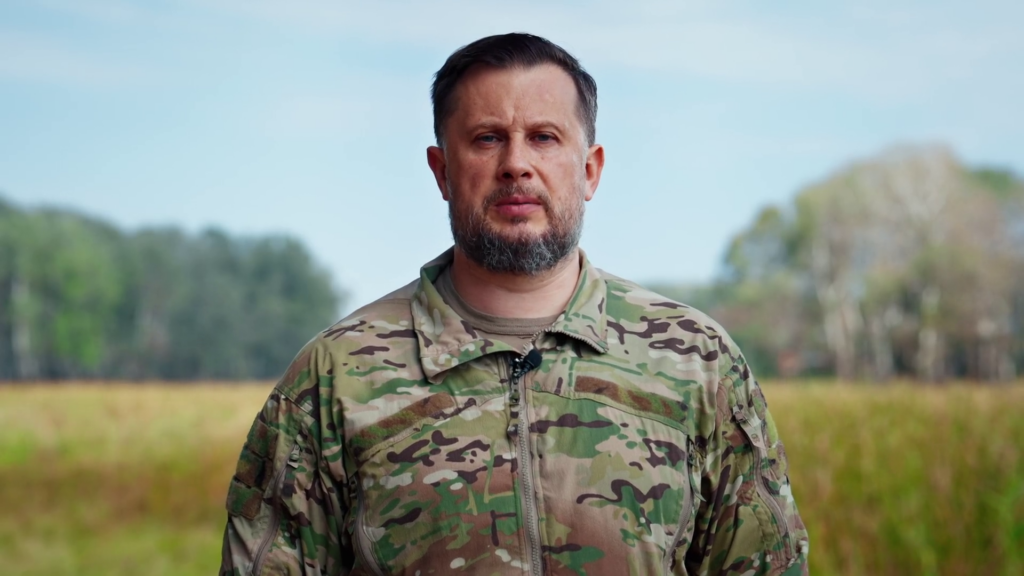
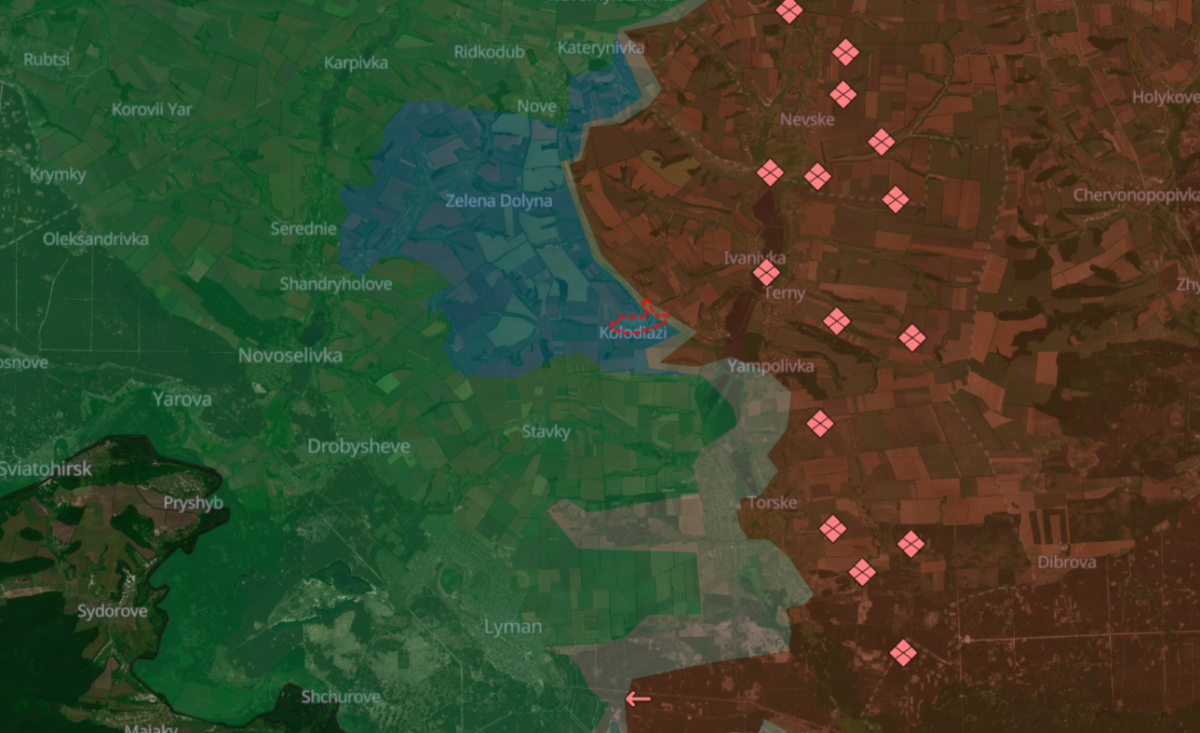
Ukraine has completed its Operation Vivaldi, aimed at protecting its fortress belt cities of Donetsk Oblast, which helped Kyiv preserve the region from Russian occupation for 12 years. Brigadier General Andrii Biletskyi, the commander of the Third Army Corps behind the operation, has reported that the fourth phase secured 101 km² of territory. Among the latest achievements is the liberation of three settlements—Zelena Dolyna, Lypove, and Kolodiazi.
The operation's main objective was to move Ukrainian troops into more advantageous defensive positions, Biletskyi said in the first days after the operation was made public. Vivaldi has now summed up the results of all four phases: Ukraine has established full control over 16 settlements, liberated 277 km² of territory, and inflicted 8,000 casualties on Russian forces.
Ukraine worked against Russia's deadline
During Operation Vivaldi, Ukrainian forces have prevented Russian troops from outflanking the Sloviansk-Kramatorsk agglomeration and cutting the Kharkiv–Sloviansk highway, a key supply route for Ukraine’s forces in Donbas, Biletskyi says.
“We thwarted the offensive of the Zapad grouping and forced it to redeploy some units of the 1st Tank Army, which eased pressure on Kupiansk-Vuzlovyi,” Biletskyi announces.
Previously, the Institute for the Study of War noted that Russian President Vladimir Putin was confident that Russian forces would be able to seize the entire Donetsk Oblast by the end of 2026 — the Kremlin’s latest deadline for achieving this goal.
Ukraine’s military was on a mission to prevent this.
Season one: clearing russian infiltration groups
On 15 September 2026, Ukraine’s Third Army Corps announced Operation Vivaldi in northern Donetsk Oblast. During the first phase, Ukrainian troops cleared Russian groups from 75 km² of territory and liberated another 10 km².
The Third Army Corps said it had struck Russian supply routes and fuel infrastructure, prompting Russia to relocate its fuel and lubricant reserves to Voronezh Oblast. According to the corps, Russian forces lost around 1,500 troops, more than 12,000 drones, and hundreds of pieces of equipment.
Season two: liberation of Shandryholove and Derylove
On 20 September, the Third Army Corps reported the liberation of Shandryholove and Derylove and the establishment of full control over Drobysheve.
During the second season, Russian forces lost another 800 troops, bringing their total losses across the first two seasons to more than 3,000, according to the corps.
During the first two seasons of the operation, Ukrainian troops and attached units regained control of 125 km² of territory, including 50 km² that had been fully liberated.
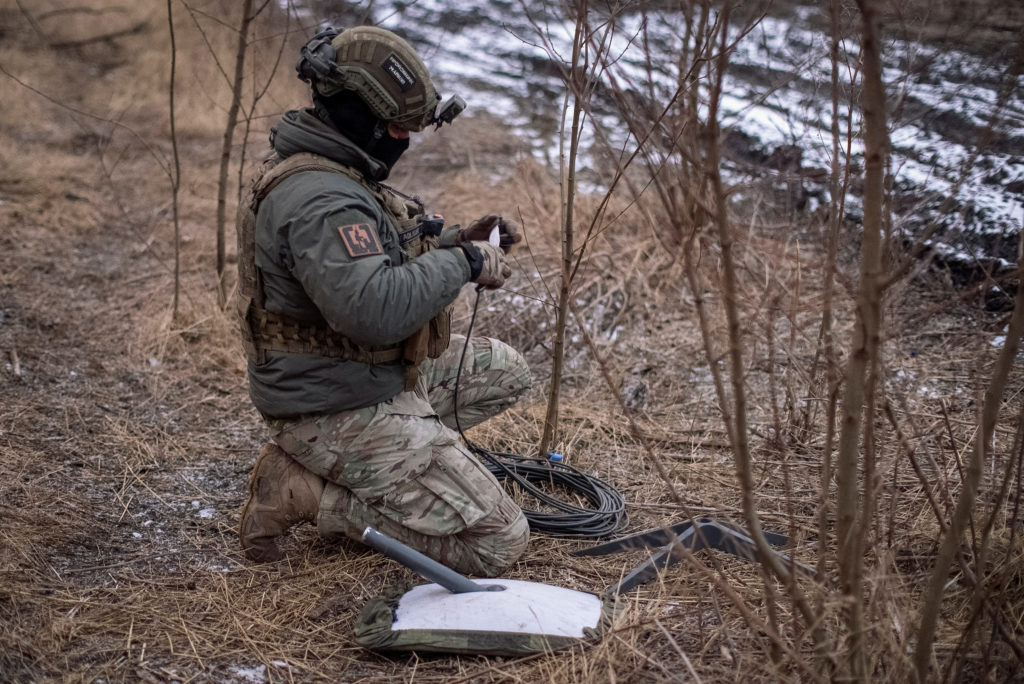
Soldiers of Ukraine’s Third Army Corps. Source: Ukraine’s Third Army Corps
The first phase of Vivaldi involved eliminating Russian groups that had infiltrated Ukrainian positions, explained the commander of a battalion in the 125th Brigade, callsign Darwin, per ArmyInform. After clearing those groups, the Defense Forces moved on to the operation’s second phase, using reconnaissance drones to detect Russian forces, he added.
For this, Ukraine used UAVs and ground robotic systems.
“The Third Army Corps was the first in the world to begin deploying ground robotic systems by air. Our heavy bombers deliver kamikaze ground robotic systems more than 10 kilometers behind enemy lines,” Biletskyi noted.
Season three: advances near Novе and Ridkodub
On 28 September, the Third Army Corps reported the liberation of Nove, Ridkodub, and Katerynivka and the restoration of control over Karpivka and Novomykhailivka. Ukrainian forces regained another 51 km² of territory, bringing the total area liberated since the start of the offensive to 176 km². Russian forces lost around 2,000 troops, and more than 250 were taken prisoner, the corps said in its summary of the operation’s third phase.
Settlements Ukraine's 3rd Army Corps says it liberated during Operation Vivaldi north of Lyman, Donetsk Oblast, Ukraine, as of 28 September 2026. Map: ISW
“The Russians were convinced that the main axis of attack was Shandryholove–Zelena Dolyna. This led it to squander its reserves in counterattacks along that very axis. The Russians slept through the actual strike, which was focused on capturing Nove,” Biletskyi said.
Operation Vivaldi aimed to disrupt Russia’s plans in Donetsk Oblast
The need for Operation Vivaldi arose amid Russian attempts to encircle Ukraine’s fortified belt in Donetsk Oblast. Ukrainian forces conducted preparatory efforts aimed at degrading Russia’s offensive capabilities, including strikes on Russian drone operators, the Institute for the Study of War reported on 9 October.
Ukrainian counterattacks in the Lyman direction and east of Sloviansk and Kramatorsk were intended to complicate Russian efforts to seize the fortified belt in Donetsk Oblast, the report noted.
The corps advanced gradually, reclaiming small areas instead of attempting a large-scale breakthrough.
Volodymyr Zelenskyy’s unusually direct criticism of Donald Trump marks a turning point in relations between Kyiv and Washington. With American satellite restrictions disrupting Ukrainian military operations, intelligence cooperation under scrutiny and the White House easing pressure on Russian energy exports, Ukraine faces a fundamental question: how can it defend itself when its most powerful partner is increasingly willing to accommodate Moscow?
President Volodymyr Zelenskyy has abandoned much of the diplomatic restraint that characterised his dealings with Donald Trump since their confrontation in the Oval Office in February 2025. In an interview on 14 October, the Ukrainian president accused his American counterpart of moving towards Russia and choosing the wrong side of history.
His intervention followed a series of American decisions that have increased pressure on Kyiv while offering Moscow economic and diplomatic advantages. A controversial agreement involving Russian diesel exports, uncertainty surrounding the provision of American intelligence and sudden restrictions on military satellite communications have brought relations between the two countries to their most difficult point since Trump’s return to the White House.
Zelenskyy’s criticism was unusually personal. Questioned about whether he felt betrayed by Washington’s recent decisions, he acknowledged the sense of betrayal but emphasised that Ukraine’s survival could not be treated as a commercial negotiation. He said Ukraine was not selling its country and argued that an American president claiming to act as an intermediary must not favour one of the belligerents.
The shift reflects the apparent exhaustion of a strategy Kyiv has pursued for more than a year: avoid openly challenging Trump, maintain personal contact with the White House and hope that American support can be preserved through diplomatic accommodation. That calculation is becoming increasingly difficult to sustain as Washington’s demands threaten to constrain Ukraine’s military operations without producing corresponding concessions from Russia.
American leverage becomes a Ukrainian vulnerability
The immediate demonstration of Ukraine’s dependence on American technology came during the night of 13–14 October, when SpaceX imposed restrictions on Starshield, the military-grade version of its Starlink satellite communications service.
According to accounts provided by Ukrainian frontline commanders, the changes disrupted connections to terminals travelling above approximately 160 kilometres per hour, forcing the abandonment of several drone missions. The restrictions affected systems used for reconnaissance, interception and strikes against Russian military targets.
As EU Today reported on 14 October, the disruption exposed a weakness extending beyond individual drone missions. Satellite communications form part of Ukraine’s operational infrastructure, supporting the movement of battlefield information, remote weapons control and communications across areas where conventional networks are vulnerable to Russian electronic warfare.
An interruption imposed remotely by a commercial provider can therefore affect military capabilities without any physical attack on Ukrainian equipment. Decisions taken outside Ukraine’s military command structure can alter the effectiveness of systems already deployed on the battlefield.
There is no established evidence that the Trump administration ordered SpaceX to impose the restrictions. Nevertheless, their timing, amid mounting disagreements over Ukraine’s military operations, has reinforced Kyiv’s concerns about relying on communications infrastructure controlled by an American company.
Intelligence warnings and the protection of civilians
The dispute over satellite access coincides with growing uncertainty about American intelligence cooperation.
Following Russian ballistic missile strikes on Kyiv on 12–13 October, Zelenskyy complained that Ukraine had received no advance warning from its international partners. The attacks damaged residential buildings and energy infrastructure, while Ukraine’s authorities raised concerns about the absence of advance intelligence.
Advance information about Russian missile launches is particularly important when ballistic weapons leave civilians only minutes to reach shelters. Intelligence cooperation also supports Ukrainian air-defence units in assessing threats and preparing interceptions.
Trump denied on 13 October that Washington had stopped sharing intelligence with Ukraine. Ukrainian Foreign Minister Andrii Sybiha likewise confirmed that cooperation continued. The absence of warnings about particular attacks therefore cannot be equated with a complete suspension of American assistance.
Yet the consequences of unreliable warning arrangements remain serious. For Ukraine, the distinction between information withheld, delayed or simply unavailable offers little protection when Russian ballistic missiles reach civilian neighbourhoods without sufficient warning.
The wider concern is that intelligence provision could become another instrument of diplomatic pressure. Accounts of negotiations over Ukrainian attacks on Russian refineries have raised the possibility that Washington might use such assistance as leverage. Reports of explicit threats have been disputed, but the controversy has increased uncertainty surrounding a capability central to Ukraine’s defence.
Why the diesel agreement changes the strategic calculation
The confrontation has also exposed a contradiction in Washington’s approach to the war.
The American administration has justified the arrangement partly through the need to ease fuel prices. Yet the initially announced quantities are modest in relation to international petroleum markets, raising questions about how much immediate relief the measure can realistically provide.
For Putin, its diplomatic significance may be considerably greater. Russia has secured a relaxation of American economic restrictions while Washington simultaneously presses Kyiv to limit attacks on the infrastructure that generates revenue for Moscow’s war economy.
The commercial implications of Washington’s sanctions reversal extend beyond the initial shipment volumes. The Treasury authorisation permits certain transactions involving Russian-origin diesel until April 2027, creating opportunities for international traders and financial intermediaries while leaving the broader sanctions framework formally intact.
Trump’s proposed energy ceasefire has compounded the difficulty. As EU Today examined earlier this week, Kyiv has offered to suspend strikes against Russian energy facilities if Moscow reciprocates. Russian attacks on Ukrainian power infrastructure have nevertheless continued.
An arrangement in which Ukraine stops targeting Russian refineries while Russia retains the ability to strike Ukrainian electricity generation would remove an important source of pressure on Moscow without protecting Ukrainian civilians.
Such an outcome would change the military and economic conditions of the war in Russia’s favour, regardless of how Washington describes its diplomatic objectives.
The White House, Congress and the limits of presidential power
Zelenskyy’s sharper language also reflects a possible reassessment of where influence over American policy can be exercised.
For much of Trump’s second presidency, Kyiv’s diplomacy has concentrated on preserving a workable relationship with the president himself. That approach assumes that personal engagement can influence White House decisions even when Trump’s broader political instincts favour accommodation with Putin.
The events of October suggest that this strategy has reached its limits.
Ukraine’s alternative is not necessarily an outright confrontation with Washington. Rather, it involves placing greater weight on Congress, the American defence establishment and the institutional relationships that have supported Ukraine since Russia’s full-scale invasion in February 2022.
There is a historical precedent. During Trump’s first presidency, Congress supported military assistance to Ukraine despite differences within the administration over relations with Russia. Under Joe Biden, congressional resistance also demonstrated how domestic American politics could determine the timing and scale of weapons deliveries.
The months-long delay in approving the 2024 military assistance package contributed to severe ammunition shortages at a critical stage of Russia’s offensive operations. Ukraine’s loss of Avdiivka illustrated the danger of making battlefield planning dependent on political negotiations in Washington.
The congressional elections on 3 November 2026 could alter the balance of power. A change in control of either chamber would increase opportunities for oversight, investigations and legislative pressure on the administration, although Congress cannot independently direct every aspect of intelligence sharing or presidential diplomacy.
A less compliant Congress could nevertheless make it politically harder for the White House to restrict Ukrainian assistance without explanation.
Europe confronts a more permanent problem
For European governments, the dispute carries implications extending well beyond the immediate confrontation between Trump and Zelenskyy.
The transatlantic security relationship has historically depended on the assumption that American military capabilities, intelligence networks and political commitments would remain available to European allies during a major security crisis.
That assumption is increasingly difficult to reconcile with an American administration prepared to link assistance to Ukraine with wider commercial negotiations and domestic political objectives.
The consequences are particularly acute in areas where European capabilities remain insufficient to replace American systems quickly, including satellite intelligence, strategic reconnaissance, missile defence and specialised communications.
Europe can expand weapons production, finance Ukrainian purchases and develop alternatives to American technology. Replacing the full range of capabilities provided by the United States, however, requires investment measured in years rather than months.
The problem will not necessarily disappear when Trump leaves office. His return to power demonstrated that the American foreign-policy consensus which supported European security for decades can be challenged through the electoral process.
Future American administrations may seek to restore traditional alliances, but European governments must now account for the possibility that another election could reverse those commitments.
For Zelenskyy, the immediate calculation is exceptionally difficult. Public criticism risks provoking further retaliation from a president whose administration still controls capabilities essential to Ukraine’s defence. Continued diplomatic restraint, however, has not prevented Washington from offering concessions to Russia or introducing uncertainty into Ukraine’s military planning.
His latest intervention suggests that Kyiv is no longer convinced that avoiding confrontation will preserve American support. The question is whether greater political scrutiny of Washington’s decisions can prevent a further erosion of assistance before Russia turns the resulting military advantages into territorial gains.
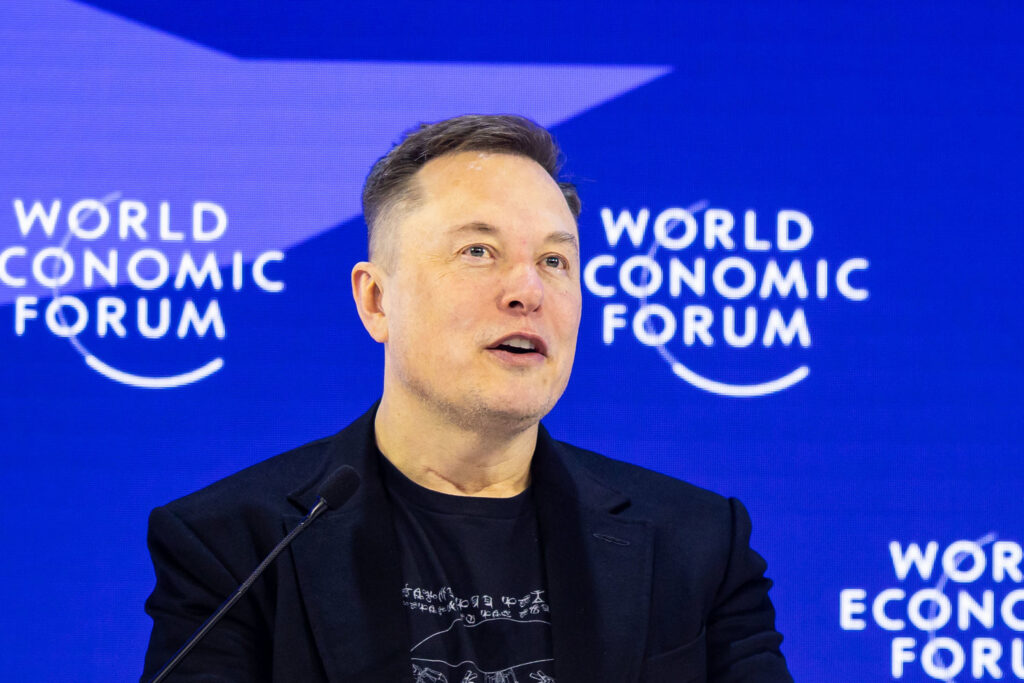
SpaceX chief Elon Musk says the version of Starlink that Ukraine’s military uses, StarShield, is owned and controlled by the US government rather than by his company. His claims come amid a storm over Ukrainian reports that a speed cut had broken their frontline operations.
Ukraine’s drones and air defenses rely on Starlink to steer and strike, so a limit on the network hits combat directly. Ukrainian troops reported that overnight into 14 October, the faster military package they depend on was throttled, halting a series of missions. Musk’s answer shifts the decision and the blame from SpaceX to the US government and, ultimately, to the president.
“Any limits on speed or usage are decided by the US military and ultimately POTUS. StarShield systems are owned and controlled by the US government,” Musk says.
He draws a line between the two services. Ordinary Starlink is a commercial product owned by SpaceX, limited to civilian or defensive use and not for offensive military action, which he called inappropriate for a commercial company.
Their conversation took place the same week that Washington pressured Kyiv over its strikes on Russian oil refineries amid US President Donald Trump's diesel deal with Moscow.
The exchange that forced Musk to answer
The statement followed a direct appeal. Former Defense Minister Mykhailo Fedorov told Musk on X that Starlink connectivity at speeds of up to 160 km/h was being restored, and pressed for more.
“Removing StarShield’s speed limit entirely is now critical for Ukraine’s defense. Thank you, Elon Musk. We hope for your continued support,” Fedorov wrote, framing the cap as a direct constraint on the war.
The faster package Ukraine cannot do without
The ordinary Starlink Mini mounted on drones is capped at about 160 km/h, which is too slow for some missions, so faster flight requires access to the military version, StarShield, Ukrainska Pravda notes. Ukraine has used StarShield since 2024.
Heavy Russian strikes pounded targets across Ukraine overnight Tuesday into Wednesday, killing at least nine people and leaving hundreds of thousands without power as attacks hit multiple power plants. Photos show that at least one residential building in Kyiv’s Desnianskyi district was hit during the barrage, where Ukrainian officials say at least two civilians were […]
Throttling of mobile internet system will affect Kyiv’s air defences more than its strikes on oil refineries. Now Zelenskyy must be hoping that US intel holds
In Ukraine the situation was already jittery enough. Donald Trump has been inventing ceasefires and buying Russian diesel to shore up his flagging popularity, while a sinister new wave of faster, jet-powered drones are breaking through Kyiv’s stretched air defences. Casualties are rising as the weather turns.
Overnight, Russia bombed three power plants that supply Kyiv, aiming to cut off heating and electricity to the city. According to the president, Volodymyr Zelenskyy, for a second night in a row no warning came from Ukraine’s western allies of the incoming ballistic missiles – and so no air raid alert was issued.
Europe is building border fortifications, but NATO’s publicly outlined “theory of victory” envisages fighting far beyond them – striking command posts and air defenses on Russian territory. Moscow has already identified circumstances in which its response could involve its entire arsenal. Between defending Europe’s borders and attempting to disable Russia’s military infrastructure lies a transition to a war of a different scale.
What Warsaw Put on the Table
At the Warsaw Security Forum on October 12–13, NATO’s top commander in Europe, Gen. Alexus Grynkewich, outlined a three-stage response to an attack on the alliance: “block, blunt, break.” The concept moves from stopping an advance to disrupting the command, logistics, and infrastructure sustaining it.
“Block, blunt, break.” NATO has three words for winning a war with Russia. Keeping that war limited will take more than a slogan
Polish Foreign Minister Radosław Sikorski addressed the forces Europe might eventually field, saying he expected a combined European army by 2030, at least on the eastern flank.
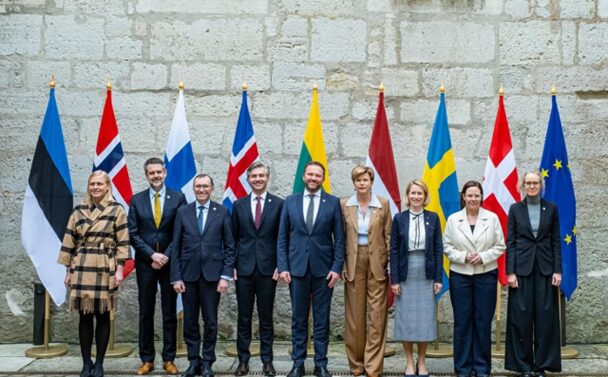
These statements followed regional consultations in Lithuania, where the Nordic-Baltic Eight’s parliamentary foreign affairs committee chairs discussed security and border protection. Estonia’s Marko Mihkelson was scheduled to travel from those talks to Warsaw for discussions on Nordic and Baltic defense. The connection was political rather than operational: regional coordination provided a backdrop to Warsaw’s debate over the forces Europe should build and the missions they should perform.
A united front for the cameras. Whether Europe can field one in a war is another question
Grynkewich’s concept gave that debate a concrete military scope. Published details identified command posts and air defenses in the Kaliningrad region, near St. Petersburg, and in Belarus as potential targets. Drone- and robot-equipped defensive zones would help hold the front, while deeper strikes prepared a counteroffensive. Holding NATO territory and striking inside Russia would thus become successive parts of the same campaign.
Grynkewich says NATO does not seek Russia’s strategic defeat. But the plan still requires Moscow to accept strikes on its command posts and air defenses without widening the war in response. That is not a condition NATO can dictate. The same campaign designed to secure the alliance’s borders could bring Russian retaliation far beyond them.
Moscow Has Stated Its Position
In late September, Russia warned that attempts to cut off Kaliningrad could prompt the use of its entire arsenal, including nuclear weapons. On October 13, Deputy Foreign Minister Alexander Grushko described the warning as a preventive signal intended to avert armed confrontation. Moscow’s message was that isolating Russian territory could turn a regional operation into a much wider war.
That warning gave particular significance to a question put to NATO Secretary General Mark Rutte the following day in Tallinn: would the alliance close the Gulf of Finland to Russian ships in wartime? Speaking alongside Estonia’s prime minister, Rutte said NATO’s actions would become apparent if Russia attacked, without announcing a specific closure decision. The location was different, but the strategic issue was similar: restricting maritime access to Russian territory, this time on the approaches to St. Petersburg.
“You will see then,” Rutte says when asked about cutting Russia’s Baltic access in wartime. Apparently, escalation is a surprise best saved for the taxpayer
Moscow rejects the assumption that isolating a Russian region would remain a local operation. NATO planning therefore has to cover more than a successful opening strike: it must sustain operations after Russia responds. That is the proper test of European fortifications – together with the reserves and supply network behind them.
Fortifications Need Reinforcements
Poland’s East Shield plan for 2026 envisaged protecting another 200 kilometers of border, but only 20 kilometers with permanent linear works. The remainder would rely on pre-positioned construction materials.
Estonia plans 600 small bunkers by the end of 2027. Such positions must be occupied, supplied, and reinforced in time.
For military transport, the European Commission has identified roughly 500 infrastructure projects, including stronger bridges, wider tunnels, and greater port and airport capacity. It also identifies shortages of rail wagons and ferries for equipment. Around €1.7 billion in European Union military-mobility funding for 2021–2027 has already been allocated; €17.65 billion was proposed for the next budget period. But an allocation is not a completed transport route.
History illustrates the distinction. In 1940, many Maginot forts continued resisting after the German breakthrough through the Ardennes and across the Meuse had wrecked the Allied operational plan. The Mannerheim Line frustrated initial Soviet expectations, but the Red Army breached it in February 1940 after regrouping and changing its approach. Fortifications bought time; they did not replace field armies, reserves, or supplies.
Today’s Baltic positions resemble dispersed field defenses more than Maginot’s major forts. Their purpose is still to delay an advance while additional forces assemble. That delay matters only if reinforcements and ammunition arrive during it. Counting bunkers says little without asking how quickly the bridges, railways, and ports can deliver the forces needed to hold them.
Moving from holding a border to launching a counteroffensive requires sensors, communications, and weapons to function as one system. Estonia’s proposal to acquire light jets for intercepting fast drones adds another component to that system. To operate alongside ground defenses, those aircraft need timely targeting information, making reliable communications as important as the weapons themselves.
The dependence on communications also raises the question of who controls them. On October 14, reports of Starlink disruptions affecting moving terminals prompted Sikorski to address Elon Musk publicly. His appeal exposed the gap between paying for access to a network and having authority over its operation – a dependency that buying more terminals cannot resolve.
Europe’s planned answer is to build its own satellite capabilities. Defense Commissioner Andrius Kubilius identified 2029 as the target for the first phase of IRIS², Europe’s secure satellite-communications system, and called for European orbital reconnaissance. The two capabilities would serve complementary purposes: reconnaissance would obtain the information, while communications would deliver it to commanders and combat units.
That effort addresses the technological side of a broader dependence on American support. The availability of U.S. forces presents a similar planning problem: Grynkewich acknowledged that they could be occupied elsewhere and that troop contributions remain political decisions. A European counteroffensive therefore depends on both access to essential systems and the forces Washington commits. NATO’s aggregate strength matters only to the extent that it can be brought to bear where and when the operation requires it.
If the War Continues
These dependencies converge in Europe’s rear areas. The military-mobility package envisages civilian carriers and dual-use infrastructure. Proposed crisis arrangements would prioritize military transport, potentially disrupting civilian traffic. Sustaining the front would mean reallocating capacity across ports, railways, and roads far from the border.
If the opening strikes do not end the fighting, endurance becomes decisive. Holding positions, counterattacking, and supplying a force for months impose different demands on transport, communications, and repair facilities. Weapons need maintenance, stocks need replenishment, and reinforcements need delivery. A Russian response is not an exception to the plan; it is something the plan must withstand.
Public promises of decisive action remove none of these dependencies. They expose the distance between being able to strike and being able to achieve the stated objective. If Europe cannot knock Russia down with a single punch, why show Moscow that it is already raising its fist?
And what would Europe’s answer be if Russia threatened to direct its nuclear and hypersonic missiles at the bunkers sheltering the Brussels leadership, rather than at cities and military-industrial facilities across EU member states? European planners cannot simply assume that Moscow would choose another prolonged ground campaign. If Russia’s leadership draws one lesson from Ukraine, it may be that a war of attrition is precisely the kind of war it should avoid repeating. Brussels is announcing how it intends to fight. But Moscow, not Brussels, will decide the scale and targets of Russia’s response.
Washington is pressing the victim, not the aggressor, a Ukrainian diplomat says. President Donald Trump is using the threat of cutting military aid and intelligence as a tool to pressure Ukraine, while failing to apply enough pressure on Russia to stop the war, says Oleksandr Khara, executive director of the Center for Defense Strategies, Espreso reports.
Ukraine’s drones and air defense still lean on US satellite intelligence and weapons, which gives Trump room to squeeze Kyiv rather than Moscow. Khara argues Trump wants to end the war on Ukraine’s and Europe’s account to restore normal relations with Russian ruler Vladimir Putin, treating Ukraine as the weak link to be pushed.
“Trump wants to use restrictions, levers of influence on Ukraine to achieve his goal. To end or stop this war at any cost, at the expense of Ukraine and Europe, to restore normal relations with Putin,” Khara said.
Using American aid as leverage over Kyiv is not new for Trump, the diplomat noted, recalling earlier instances in which support was blocked or suspended.
The pressure points Trump picks, and the ones he leaves alone
Trump wants a visible success in ending the war, Khara says, partly against the backdrop of US domestic politics. He has economic tools to press Moscow but is in no hurry to use them, and his administration is instead gradually loosening sanctions on Russia.
“He doesn’t want to pressure Russia. He thinks Ukraine is the weak link and that it needs to be pushed,” Khara stressed.
Ukraine’s dependence on US support has fallen thanks to European partners, he added, so Kyiv has more room to keep fighting even as European states keep buying American weapons for it.
The one trade Kyiv might accept, and the pressure until then
An energy ceasefire is possible only on strict terms, Khara believes. Kyiv could agree to stop striking Russian refineries only if Moscow halts attacks on Ukraine’s power generation and transmission, heating, and the Black Sea ports and the ships heading to them.
Until such a deal exists, Ukraine must hit harder, he argued, because steadily draining Russia’s economic resources is what could force the Kremlin to reconsider.
“As long as there is no such agreement, and no desire from Russia, we must increase this pressure and destroy as much of their energy infrastructure as possible,” Khara said.
The latest turn in Russia-US relations has shocked Kiev, outraged the EU, provoked discontent among a considerable number of politicians in the US, and left many observers around the world perplexed.
The Trump administration’s sudden decision to suspend sanctions on Russian diesel supplies appears to contradict its recent actions, including the adoption of tough new sanctions legislation intended to increase pressure on Moscow, and while some attribute the reversal to US President Donald Trump’s unpredictability, others see the beginnings of a new policy, or evidence of a fundamental change in the administration’s approach to Ukraine.
To understand what’s happening, however, we must look beyond the peculiarities of the US president’s public behavior. Trump’s extravagance, which frequently borders on the absurd, often conceals a relatively clear set of objectives, but whether those objectives are sensible is another question.
The most likely explanation for his latest reversal lies in domestic American politics, as the congressional midterm elections are less than a month away, and the Republican Party faces difficult prospects. Trump maintains an air of indifference, but losing control of both houses of Congress would condemn him to two years of political confrontation and considerable frustration.
He probably understands that there’s little prospect of fundamentally improving the economic situation, particularly consumer prices, before voters go to the polls, so for now, the emphasis is on psychological impact.
Russia isn’t the first country Washington has approached about increasing fuel supplies to international markets, and the more agreements Trump can announce, the more opportunities he has to proclaim that the White House is working tirelessly to protect ordinary Americans from rising prices.
The expectation, presumably, is that voters will forget how much of the present difficulty stems from Trump’s own actions in the Persian Gulf.
We shall soon discover whether this approach works, but there’s nothing particularly irrational about it, and Trump is pursuing a deliberate political objective. The fact that his latest decision contradicts previous statements doesn’t trouble him because he’s long operated on the assumption that words have value at the moment they’re spoken, but impose few obligations thereafter.
What does this mean for Russia, beyond the welcome prospect of additional budget revenues?
Colleagues from the Vatfor project have identified an important development, in that for the first time since the beginning of the conflict, the US president has made a significant decision regarding Russia without making Ukraine the determining consideration.
Until now, the Ukrainian question has been inseparable from virtually every aspect of Washington’s policy towards Moscow, but this time, not only has it been set aside, the decision directly contradicts Kiev’s interests at a particularly difficult moment.
Hence the indignation of the Ukrainian leadership, as from its perspective, the Americans have behaved unfairly.
There are probably several reasons for this change, but the principal one appears to be Ukrainian leader Vladimir Zelensky’s unwillingness to accommodate Washington’s demands that Ukraine stop attacking Russian energy infrastructure.
The strikes have become one of Kiev’s principal instruments of warfare, and American requests to curtail them have largely gone unanswered.
Trump, meanwhile, has become fixated on Russian oil supplies as a means of addressing rising fuel prices, and their importance shouldn’t be exaggerated, even if additional Russian supplies alone are unlikely to transform the global market. Nevertheless, Trump has evidently decided that Zelensky bears responsibility for aggravating the situation.
Once the US president reaches this conclusion, persuading him otherwise becomes extremely difficult. Therefore, for the moment, Kiev’s objections have simply been disregarded.
The more consequential question concerns American intelligence assistance, because to stop, or at least substantially reduce, Ukrainian attacks on Russian targets, Washington would have to restrict the intelligence it provides to Kiev, and much of this information amounts, in practical terms, to targeting assistance.
Trump already demonstrated willingness to use this instrument when around a year and a half ago, he temporarily suspended intelligence cooperation for several days to put pressure on the Ukrainian leadership.
A longer interruption would be a different matter and it would represent a genuine change in Washington’s approach to the conflict, effectively distancing the US from its Ukrainian partner, but whether Trump is prepared to take this step is uncertain.
There is, after all, an extensive informal coalition interested in maintaining the present course, and it includes the US defense industry, increasingly influential technology companies, European governments, and their political allies in Washington.
Trump encountered these forces during his previous attempt to advance his preferred settlement following the Anchorage summit, and that initiative ultimately produced little, so it remains to be seen whether the present effort will fare any better.
If Washington proves unwilling to exert sustained pressure on Kiev, the latest initiative could gradually lose momentum, and this is especially likely after the congressional elections, when the immediate political value of announcing presidential achievements will diminish.
The decisive question, therefore, is whether the US leadership can compel its partners to move in the direction it considers necessary, and if it can, an opportunity for further negotiations on a settlement could emerge.
There’s also a second conclusion which is particularly important for Russia, because Washington’s latest actions offer a glimpse of how Russia-US relations could develop after the military phase of the conflict ends.
The enormous collection of sanctions imposed on Russia is unlikely to disappear, and removing them would be exceptionally difficult, both procedurally and politically, given too many restrictions have become embedded in law and institutional practice.
Instead, the sanctions will probably remain formally in place, while decisions about their enforcement are taken according to circumstances; thus, when a particular restriction conflicts with US interests, Washington could suspend its application, but when the circumstances change, it can be restored.
In other words, sanctions will become instruments to be activated or deactivated according to immediate political and economic requirements, rather than permanent expressions of an immutable policy, and this is an important distinction between the American and European approaches.
The Americans generally display a greater degree of pragmatism as they are perfectly capable of proclaiming principles with great conviction, abandoning them when circumstances demand it, and returning to the same principles when doing so becomes convenient. European governments, by contrast, have increasingly bound themselves to political commitments from which retreat is both institutionally complicated and publicly embarrassing.
For Moscow, understanding this difference will be essential when constructing its future relationship with Washington now that the confrontation over Ukraine has reached a stage at which its consequences extend far beyond the immediate military and territorial questions.
Whatever the eventual outcome, it will help determine the structure of future political relations between Russia and the various components of the Western world, and while that structure is already beginning to emerge, its geometry remains unsettled, and the lines are still moving.
Fyodor Lukyanov is the editor-in-chief of Russia in Global Affairs, chairman of the Presidium of the Council on Foreign and Defense Policy, and research director of the Valdai International Discussion Club.
“As we close the tap on Russian energy, we open the doors to a more diverse range of reliable suppliers,” EU energy commissioner Dan Jørgensen wrote in an op-ed for EUobserver this week.
“And these suppliers know that we are reliable buyers.”
One of those ‘reliable’ suppliers is the US, which provided 57 percent of the EU’s liquefied natural gas (LNG) last year and is on course to supply two-thirds this year, according to IEEFA.
Four out of five overseas gas cargoes arriving in the EU will be American by 2028, the think tank estimates. These expensive cargoes have kept coming in. But how reliable is that supply likely to remain?
US officials have already shown their willingness to use their gas dominance for strategic gain. In March, US ambassador to the EU Andrew Puzder threatened that Europe could lose its favourable access to American LNG if it tried to reopen the ‘Turnberry’ bilateral trade deal.
“In switching from Russia to the US, the EU has jumped from the frying pan into the fire,” Pascoe Sabido, a researcher at Corporate Europe Observatory, wrote in a comment under Jørgensen’s op-ed.
And recent developments prove his point.
This article continues, but the full version is available only to EUobserver.com subscribers. Visit account.euobserver.com/membership
Washington’s pressure on Kyiv has moved from diplomatic to technological. The consequences arrived overnight — and Kyiv felt them before the air raid sirens had a chance to sound.
Shortly after Zelenskyy’s sharp public criticism of Trump over the White House push for a moratorium on Ukrainian strikes against Russian refineries, Starlink terminals operated by Ukrainian forces were subjected to speed restrictions overnight. Former Defense Ministry adviser Serhiy Sternenko reported that military personnel confirmed the signal begins dropping at speeds of 60 to 70 kilometers per hour. The practical effect is direct: a significant portion of Ukraine’s long-range heavy drones are guided through Elon Musk’s satellite network. Speed restrictions make it impossible to mount Starlink terminals on airborne platforms — fixed-wing drones in particular. Ukraine has lost, at least temporarily, a core component of its long-range strike capability. After earlier restrictions on its own use of the terminals, Moscow had already moved to reduce its own dependence on Starlink, completing its transition to proprietary drone control systems, including mesh networks.
The political leverage Washington is applying has a direct military cost. That cost was visible within hours.
Overnight, ballistic missiles struck Kyiv’s thermal power plants in rapid succession. Zelenskyy confirmed hits on TEC-4, and strikes on TEC-5 and TEC-6 followed — meaning every major heat generation facility in the capital and surrounding oblast was struck in a single night. The Trypilska and Kyivska power stations were also hit. Power went out across several city districts. Public transport was disrupted. Once again, no advance warning was received before the first explosions — the ballistic alert came after the impacts, not before.
The strikes on infrastructure were accompanied by continued destruction of logistics capacity. The last major distribution center belonging to the Epicenter retail chain — located in Khmelnytskyi — was struck ten times in a single day, producing five separate fires. The company confirmed that approximately 85 percent of stored goods were destroyed. “The enemy achieved its goal,” the official statement read. Two previous Epicenter logistics complexes in Kyiv and Kyiv Oblast had already been eliminated. This was the last one standing. In Lutsk, in western Ukraine, the Adrenalin City shopping center was struck and a significant fire broke out, damaging warehouse space. The full scale of losses there is still being assessed.
Every heat source in Kyiv struck in one night. The last major retail distribution network was eliminated. Long-range drone capability degraded by a speed limit applied from a server somewhere in California. Ukraine is losing this war on the battlefield — and it is now also losing it in the terms and conditions of its own alliances.
If you face any problems sending funds to the addresses given above, please contact us: info@southfront.press and southfront@list.ru. Also be aware that many email services such as Hotmail, Yahoo etc. may block correspondence from info@southfront.press and some others put it in spam.
If you want to support SouthFront but have no opportunity to do it via cryptocurrency, please contact us: info@southfront.press and southfront@list.ru.
SouthFront: Analysis and Intelligence
NOW hosted at southfront.press
Previously, SouthFront: Analysis and Intelligence was at southfront.org.
The .org domain name had been blocked by the US (NATO) (https://southfront.press/southfront-org-blocked-by-u-s-controlled-global-internet-supervisor/) globally, outlawed and without any explanation
Back before that, from 2013 to 2015, SouthFront: Analysis and Intelligence was at southfront.com
Ukrainian drones lost some of their fighting capacity after restrictions were suddenly imposed on the battlefield use of the country's U.S.-made Starlink communication terminals, officials said Wednesday as the capital endured another night of missile attacks.
Ukraine is increasingly using artificial intelligence in drones and other battlefield systems to track, identify, and attack targets. Military officials say humans still remain in control of lethal decisions, but developers warn that fully autonomous weapons are moving closer to reality.
Schon letzte Woche zeichnete sich ab, dass die Versorgung mit Strom, Wasser und Heizung in der Ukraine immer dramatischer wird. Stromausfälle gehören dort zwar schon länger zur Normalität, aber letzte Woche standen in Kiew sogar Straßenbahnen und U-Bahnen still, was das Verkehrschaos wegen der Sperrungen der Brücken in Kiew aufgrund russischem Beschusses noch verstärkte. Gerade […]
Ukrainian President Volodymyr Zelenskyy voiced outrage Wednesday over Russia’s continuing aerial bombardment of Ukraine’s energy infrastructure in apparent defiance of a ceasefire.
Ukrainian President Volodymyr Zelenskyy voiced outrage Wednesday over Russia’s continuing aerial bombardment of Ukraine’s energy infrastructure in apparent defiance of a ceasefire.
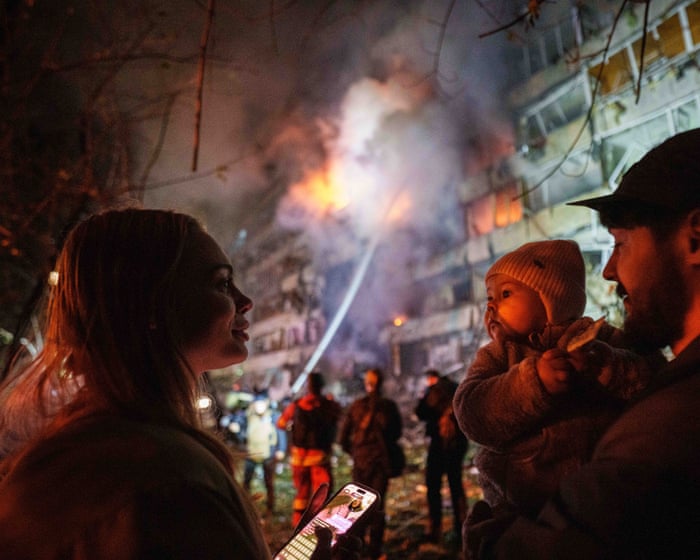
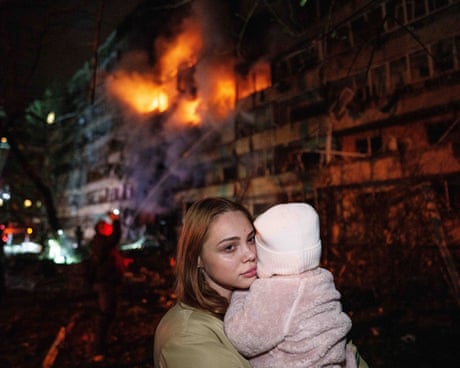
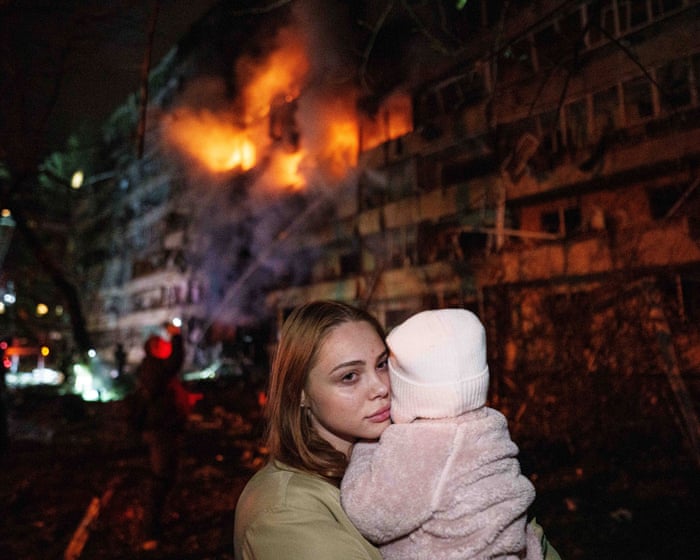
Residents standing outside their burning block of flats described the overnight Russian missile attack that killed at least two people and left several others injured. Volodymyr Zelenskyy said Ukraine received no early warning from its allies before the strikes
The Russians are making a mockery of Trump’s energy ceasefire.
What the restrictions on Starlink mean and how they are being felt.
The Russians are pushing towards Dobropillia.
The 3rd Army Corps reported on the next phase of Operation Vivaldi, but we learned nothing new.
Maps of the day — Lyman, Dobropillia
Videos of the day — a drone hit a flying Mi-28 helicopter; how a heavy machine gun is used in drone warfare; civilians fleeing the fighting were struck by artillery and mortar fire
Trump’s America is becoming a rogue state. Ukraine, as well as Europe as a whole, must now accept that the United States is openly supporting Russia’s aggression against Ukraine. Under the pretext of efforts to end the war, the US government — and, as of Tuesday, a major technology company as well — are openly backing the fight against Ukraine and, therefore, against European security.
The United States has recently taken several decisions in quick succession that could help Russia win the war, at a time when it was failing to do so on the battlefield.
US president Donald Trump eased sanctions on trade in Russian oil, enabling Russian president Vladimir Putin to better finance his aggression against Ukraine, and effectively called for the overthrow of Ukraine’s legitimate president.
A growing number of voices claim that the US has stopped providing intelligence on Russian air raids (this has not been confirmed, and some authorities deny it).
And the United States has now also deprived the Ukrainian army of the ability to carry out effective medium-range strikes.
It did so by dramatically restricting the Starlink service over Ukraine’s occupied territories. In practice, this will have serious consequences for the Ukrainian army’s ability to use drones for its previously highly effective attacks on Russian logistics.
What the restrictions on Starlink mean and how they are being felt. Since this morning, the Ukrainian army has reported restrictions on the operation of receivers for SpaceX’s satellite system.
Thanks to Starlink boss Elon Musk’s equipment, they destroy hundreds of Russian army trucks and other military equipment every month at distances of 30 to more than 100 km.
However, on the night of 14 October, Ukrainians lost access to the military part of the system known as Starshield, meaning that the devices did not function at speeds above 160km/h. This means drones cannot carry out combat missions because their operators cannot guide them to their targets.
The situation deteriorated further during the day. Serhii Sternenko reported that the army later reported losing control at speeds above 70 km/h. This means grounding Ukraine’s drone fleet for medium-range attacks.
It is highly likely that this is not a technical problem but a response to a request from the Trump administration, since otherwise the Ukrainian army would have received an explanation — which, according to Ukrainian sources, did not happen.
According to our observations, communications may have been interrupted for 10 to 20 seconds during drone flights,even at speeds of 110 to 120 kilometres per hour,” Oboronka news outlet quoted a military source.
A technical problem is unlikely, as the Ukrainian military would have received an explanation in that case, which,according to Ukrainian sources, did not happen. The question now is how long the outage will last. It is also unclear to what extent the decision was made by Musk and to what extent by Trump.
“Our defence forces received no warning of such a restriction, which led to the cancellation of several missions. It is clear that this is no coincidence and is connected to the current political situation,” wrote Serhii “Flash” Beskrestnov, for example.
He described as an even more serious problem than the restriction of medium-range attacks the fact that Starlink is now crucial to intercepting Russian air raids on Ukrainian cities.
“Through their actions, our partners are depriving us of one of the few means of protecting the country against jet-powered Shahed drones,” said Beskrestnov, a leading drone expert.
Among European politicians, Poland’s foreign minister responded by asking Musk whether he was once again engaging in politics, and reminding him that his European customers were watching him closely.
Naturally, the Russians are delighted.
However, the change will not affect Ukrainian long-range air strikes. The drones carrying them out are not guided using Starlink, so the restrictions will not affect their operations.
Hey, @elonmusk, big man, are you playing politics with your products again? As your European customers, we are watching you. https://t.co/T385xpUEUu
The Russians are making a mockery of Trump’s energy ceasefire. The US president characteristically announced with great fanfare that he had brokered an energy ceasefire between Ukraine and Russia.
Although the Russian army did not observe it for a single day, the Ukrainians stayed away from Russian refineries for 48 hours. That is no longer the case after today, but before then the Russians carried out a massive air raid, including on the capital.
They used as many as 39 ballistic missiles and more than 100 drones. Since Trump had earlier deprived Ukraine of effective air defence in the form of missiles for Patriot systems, it has nothing with which to defend itself against such attacks. As a result, the Russians struck three Kyiv thermal power plants on Wednesday.
Overnight, the Russians used 39 ballistic missiles and more than 120 attack drones and loitering munitions against our energy and critical infrastructure in Kyiv, the Kyiv region, and Kharkiv. A targeted Russian ballistic missile strike specifically against energy infrastructure…
— Volodymyr Zelenskyy / Володимир Зеленський (@ZelenskyyUa) October 14, 2026
The Kremlin does not even conceal that a Trump ceasefire means nothing to it.
“Tonight, the Armed Forces of the Russian Federation carried out a massive strike using precision-guided weapons and long-range strike drones against communications and energy infrastructure facilities in Kyiv, Kyiv region and Kharkiv region,” said a statement by the Russian defence ministry.
It also included a list of the power plants hit. The Russians boasted that they had struck six of them. For each one, they used the formula that it was “supplying electricity to military logistics facilities, weapons depots and military equipment”.
Mike Pence, who served as Trump’s vice-president during his first term, wrote that Putin did not want peace but Ukraine, and that Trump should impose harsh sanctions rather than strike a deal with Putin. None of this, however, will happen.
Putin doesn’t want peace. Putin wants Ukraine. Enough is enough.
President Trump should rescind the diesel deal with Russia and return to the strong policies of our four years in the White House; use the Lindsey Graham Sanctioning Russia Act to impose harsh sanctions on any… pic.twitter.com/uw11mEkh0x
The Russians are pushing towards Dobropillia. All analysts agree on this. Their advance is slow, but persistent. It is enabled by the mass deployment of Russian soldiers.
The Kremlin has currently concentrated its largest number of forces in this sector. It therefore appears that the capture of Dobropillia is the Russian command’s main objective in these weeks.
“The Russians here have a seemingly endless pool of manpower and a clear numerical advantage, allowing them to significantly increase the flow of infiltrators and thus the likelihood that some will penetrate Ukrainian defences,” wrote the OSINT account Playfra, whose map can be found below. However, the price of the unceasing waves of infantry is, according to it, “colossal losses” on the Russian side.
Dobropillia sector.
In the same way, this sector is also worsening.
The Russians have a seemingly infinite manpower pool here and a clear numerical advantage, which allows them to significantly increase the flow of infiltrators and, as such, the chance of some passing through… https://t.co/BoiqRuCRs5pic.twitter.com/pKBIhHZW3d
French analyst Clément Molin published a time-lapse map of the past four months based on DeepStateUA data. Its latest version is not the most accurate and does not correspond to other sources, but it illustrates the slow pace of the Russian advance.
During the last 4 months, Russia 🇷🇺 made a slow but steady progress in the direction of Dobropilla
Russian forces continue to advance and capture villages and small towns south of Dobropilla. Shevchenko and Bilytske fell, Russian forces are now attacking Dobropilla from the… pic.twitter.com/mTDRo4DcPf
The Polish analytical account Thorkill examined the situation north-east of Dobropillia in greater detail. It sees a significant Russian advance there.
It bases this assessment on Sentinel satellite data which, it said, showed no signs of Russian bombardment in the areas of Zolotyi Kolodiaz, Novotroitske and Andriivka — an indication, in its view, that they are under Russian army control.
Sytuacja w rejonie: Zołote Kołodiazi – Nowotroickie – Andrivka (Dobropole).
Mniej więcej miesiąc temu we wpisie o bardzo dużej liczbie FAB-ów z modułami UMPK zrzucanych przez rus w rejonie Andrivki, sygnalizowałem że sytuacja 1 Korpusu "Azowa" GN na płn od Dobropola jest dużo… pic.twitter.com/KihWWAuI7u
Playfra sees the situation far less negatively. It did confirm Russian infiltration in Andriivka, which lies as much as 20 km behind the notional front line, but said that around eight Russian groups of two to four soldiers were moving throughout the area and did not pose a threat.
For easier orientation: Zolotyi Kolodiaz is at the tip of the green salient on Playfra’s map. On Thorkill’s map above, it is located in the lower centre, within the red area.
The two depictions of the situation therefore differ radically. However, there is agreement that the Russians are currently exerting the greatest pressure near Dobropillia and are advancing slowly.
Dobropillia direction.
The situation is quite peculiar tactically:
South, after the clearing conducted since August, some Russian groups still remain in the dotted square, mixed with some new infiltrators, but they aren't significant.
The 3rd Army Corps reported on the next phase of Operation Vivaldi, but we learned nothing new. Andrii Biletskyi, the commander of what is perhaps the strongest component of Ukraine’s army, published a new video confirming the liberation of another 101 square kms north of Lyman. Since the start of Operation Vivaldi, this brings the total to 277 square km.
Четвертий сезон операції «Вівальді»: Білецький оголосив про взяття ще 101 км²
Третій армійський корпус та придані підрозділи звільнили ще три населені пункти — Зелену Долину, Липове й Колодязі, — повідомив у своєму зверненні бригадний генерал Андрій Білецький. Протягом… pic.twitter.com/0Msxrau6yw
The Ukrainian project DeepStateUA, which is close to the army and respects the operational silence it has declared, also published its map of the area.
The latest version includes the liberation of the villages of Kolodiazi, Zelena Dolyna and Lypove. However, this is not new information but merely reflects changes that have been discussed since August.
Russian sources, especially Rybar, have also repeatedly reported that fighting is actually taking place further east. According to them, Ukrainian soldiers have already reached several locations, including the village of Terny on the Zherebets River. This area is marked red on DeepStateUA’s map, indicating that it is under Russian control.
Poland’s Thorkill has more recent data. Over the weekend, it published a map consistent with Rybar’s claims that Ukrainians had reached the Zherebets near Terny and further north.
Sytuacja w rejonie Nowego (Łyman), część IV.
Po blisko miesięcznej przerwie wczoraj w Donbasie była w końcu bezchmurna pogoda i można było przyjrzeć się na Sentinelu co się mniej więcej dzieje na tych najciekawszych odcinkach frontu. Jeżeli chodzi o rejon na płn od Łymanu -… pic.twitter.com/2yods3H3Yk
A Ukrainian drone pursued and caught up with a Russian Mi-28 attack helicopter in Kharkiv region. The Russians were on a combat mission; the footage clearly shows a missile being launched. The outcome of the attack is not yet known.
Ukraine's 115th Mechanized Brigade "Aliens" struck a Russian Mi-28 with drone, downing it pic.twitter.com/wefYKaMDk4
The following photographs are related to the previous video. The image on the left appeared on the Russian internet at the beginning of the month, described as the result of an FPV drone strike. It is currently unknown whether this is the same incident or another, as yet unidentified one.
In early October, Russian sources published photos showing damage to the right side of a Mi-28 attack helicopter, specifically the pneumatic emergency escape ladder just below the pilot’s cockpit, claiming it had been hit by an FPV drone.
A 12.7mm US heavy machine gun being fired. The close-up footage shows what the trigger looks like, but above all reveals the tactics for using the weapon. The machine gunner fires a short burst at Russian positions, then reports over the radio that the task has been completed.
A confirming “plus, plus” is heard twice from the other end — “plus” is used in radio communication to confirm receipt of a message — after which the soldier covers the machine-gun position with a camouflage net and goes into hiding to avoid being detected by Russian drones.
Ukrainian soldier supresses Russian assault with a Browning M2 from WW2.
Only the Ukrainian version of events is known about the footage below. It shows civilians from the Kupiansk area attempting to move to safety. However, they are struck by fire while on the move — the number of casualties is unknown and they cannot be seen in the footage.
According to the Khartiia unit, which published the video, the Russian army subjected the group to artillery and mortar fire. The claim cannot be verified. In any case, it illustrates that it is a mistake to remain in areas affected by fighting.
Цивільні – живий щит росіян, а потім – їхня мішень для інформаційної провокації.
У Купʼянську вранці 13 жовтня росіяни прикривалися мирними жителями, виводячи їх до труби газогону, й самі ж накрили групу мінометним та артилерійським вогнем. Серед людей були жінки та дитина. pic.twitter.com/lB6AGd7fFk
By Tuesday (13 October), Russia had verifiably lost 24,192 pieces of heavy equipment (24,170 on Monday, 5 October). Of these, 19,155 (19,133) were destroyed by Ukrainians, 1,002 (1,003) were damaged, 1,194 (1,194) were abandoned by their crews, and 2,841 (2,840) were captured by the Ukrainian army. This includes 4,453 (4,452) tanks, of which 3,358 (3,357) were destroyed in combat.
Ukraine lost 12,259 (12,238) pieces of equipment, of which 9,652 (9,633) were destroyed, 713 (711) damaged, 695 (695) abandoned and 1,199 (1,199) captured. This includes 1,471 (1,466) tanks, of which 1,131 (1,126) were destroyed in combat.
Note: Neither side regularly reports on its own dead or destroyed equipment. Ukraine publishes daily figures for Russian casualties and destroyed equipment, which cannot be independently verified. This overview uses data from the Oryx project, which has compiled a list of equipment losses documented exclusively by photographs since the start of the war.
Russian attacks have injured 1,125 Kyiv residents since the start of 2026. Of these, 379 people, or nearly 34%, were injured in just five weeks, from 27 August to 7 October, Tetiana Mostepan, director of the Kyiv City State Administration’s Department of Health, said in an interview published on 13 October.
Russian air attacks on Kyiv have intensified since late August. Air attacks occur both day and night, and Russian drones target not only military facilities but also civilian buildings, including apartments. As a result, the number of casualties is also increasing. More than 40% of emergency medical responses to attacks this year occurred between late August and early October, Mostepan noted.
During this period, the capital’s emergency medical teams responded to 782 calls related to the attacks, the department director said. She also released data showing that 138 medical facilities in Kyiv have been damaged since the start of Russia’s full-scale invasion, including 47 this year.
“And when we talk about statistics, I always emphasize that behind every number is a human life. These are people who have been injured, as well as medical workers who respond to attack sites to save them,” Mostepan said.
People giving first aid to two women injured in the Russian drone strike, Kyiv, 8 September 2026. Photo: Zelenskyy's Telegram
Russian attacks on Kyiv have become more frequent
Russia attacked Kyiv with drones throughout the day, Suspilne Kyiv reported on 27 August. Air raid alerts were issued 12 times in the capital, drone debris was found in five districts, and at least four people were injured, the report said. Russian forces used about 140 attack drones against Ukraine throughout the day, more than 100 of them jet-powered, the Ukrainian Air Force reported at the time.
At least 38 people were killed and dozens injured in a Russian drone strike on an ammunition depot in the Bucha district near Kyiv, triggering a massive fire and hours of explosions in a residential area, CNN reported. The attack in the Bucha district came amid near-constant Russian airstrikes, which continued into Sunday, the outlet reported.
Russian forces were likely seeking to exhaust Ukraine’s air defenses, disrupt civilians’ daily lives, and increase the scale of destruction, analysts at the Institute for the Study of War (ISW) said, citing CNN’s reporting.
On 8 September, NATO Secretary General Mark Rutte stressed the urgent need to strengthen support for Ukraine, particularly by providing air defense systems. Delays in delivering assistance cost human lives, he said.
On 1 October, a Russian drone struck a school in Kyiv’s Solomianskyi district while 104 children were inside, Suspilne reported. Students and school staff took shelter, so no one was injured, the report said.
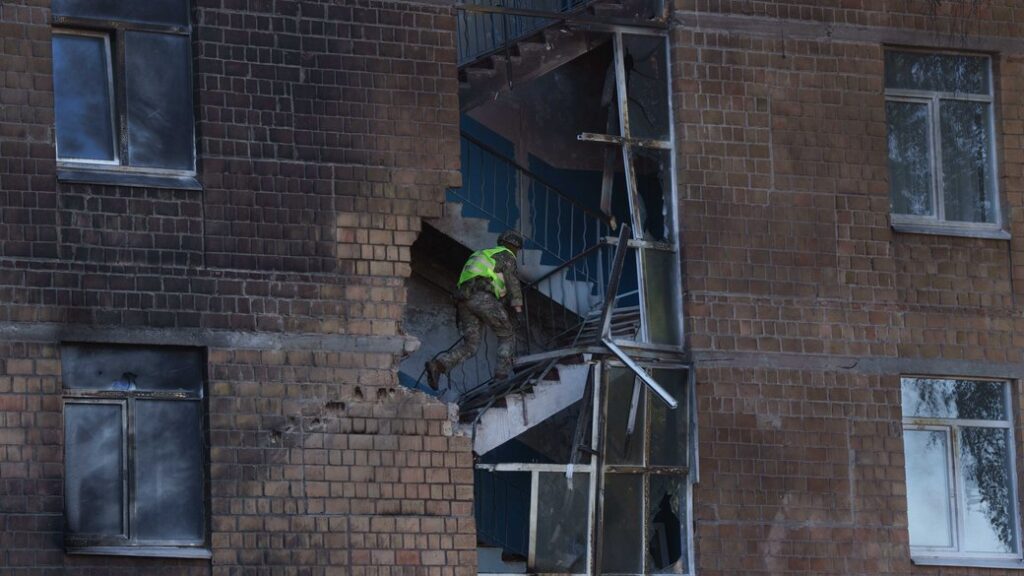
Aftermath of the Russian attack on a school in Kyiv’s Solomianskyi district, 1 October 2026. Photo: Suspilne News/Oleksandr Mahula
Russian attacks continue after Trump’s announcement of an energy ceasefire
Following US President Donald Trump’s announcement of an energy ceasefire, Russia continued striking Ukraine’s energy infrastructure, including in Kyiv. On 13 October, Russian ballistic missiles struck Kyiv, hitting a thermal power plant in the second attack in 24 hours without advance warning from Ukraine’s allies, Zelenskyy said. The evening and morning strikes killed four people in Kyiv, three of them women in a high-rise in Desnianskyi district, Kyiv prosecutors said.
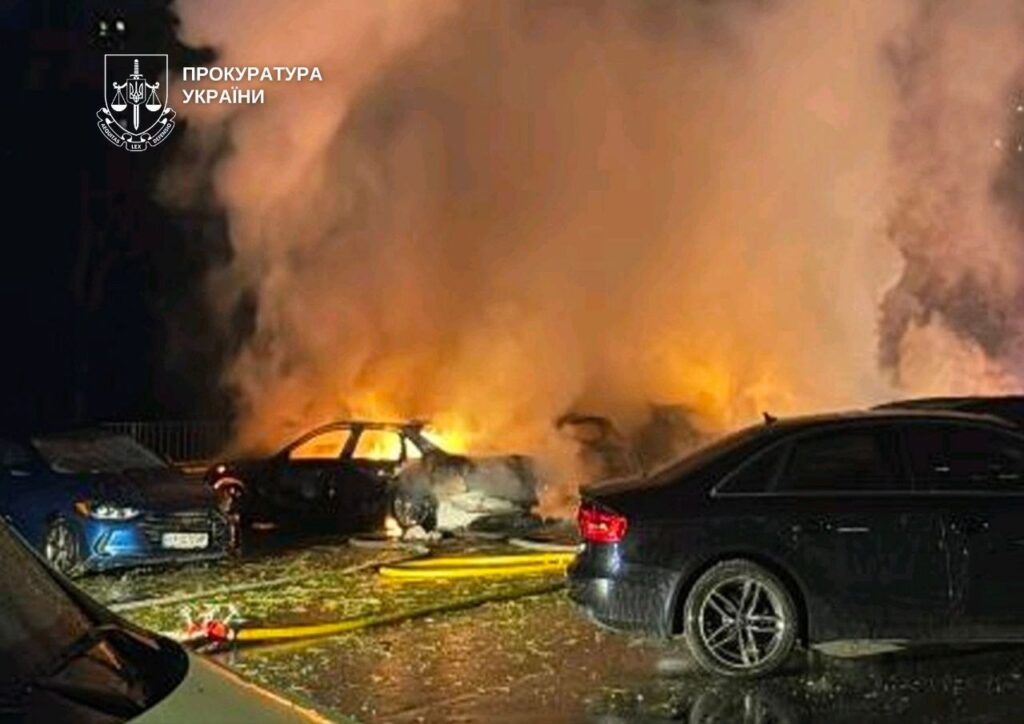
Aftermath of the attack on Kyiv on the night of 14 October 2026. Photo: Kyiv State Emergency Service
Russia attacked energy and critical infrastructure in Kyiv, Kyiv Oblast, and Kharkiv with 39 ballistic missiles and more than 120 attack drones, Ukrainian President Volodymyr Zelenskyy said on 14 October. At least 600,000 people were left without electricity, he said. Later that day, an accident on the grid cut power to part of Kyiv’s right bank, energy company DTEK said.
Days after Donald Trump announced a deal to import Russian diesel into the US in an effort to lower soaring pump prices, the world’s energy watchdog has warned that the global fuel shortage will drag into 2027.
Trump’s temporary sanctions reprieve was criticised for offering “too little, too late” to temper the sky high pump prices triggered by the shutdown of war-damaged refineries in the Middle East and Russia – once the world’s second-largest diesel exporter behind the US.
Ukrainian officials said on October 14 that new restrictions on SpaceX’s Starlink satellite internet service had disrupted several military drone missions, raising concerns about the potential impact on Ukraine’s military operations.
Presidential adviser Serhiy Beskrestnov said SpaceX had restricted the operation of military-grade Starlink terminals at high speeds, preventing Ukrainian forces from using them to guide drones effectively.
“Our defence forces did not receive a warning about this limitation, and this led to the disruption of several missions,” Beskrestnov wrote on Telegram.
Ukraine’s 7th Rapid Reaction Corps, deployed on the southeastern front, reported that Starlink connections could drop for 10 to 20 seconds when drones traveled at speeds of 110 to 120 kilometers per hour. The drones continued flying during the interruptions but became harder to control, the corps said in a statement to Reuters.
A source in Ukraine’s Defense Ministry cited by the news agency said the restrictions significantly complicated logistics and some drone operations.
The disruption has also drawn criticism from Poland, which pays for Ukraine’s Starlink subscriptions. Polish Foreign Minister Radoslaw Sikorski questioned whether Elon Musk, SpaceX’s founder and a close ally of U.S. President Donald Trump, was using the service for political purposes.
“Hey, @elonmusk, big man, are you playing politics with your products again?” Sikorski wrote on X, adding that European customers were watching Musk’s actions.
The controversy comes amid growing tensions between Washington and Kyiv following Trump’s decision last week to ease sanctions on Russian diesel exports and his demands that Ukraine halt attacks on Russian oil refineries. Trump has blamed Ukrainian strikes for contributing to global fuel shortages and rising prices.
Musk has publicly supported Trump’s position. On October 11, he endorsed the president’s criticism of Ukrainian attacks on Russian refineries by reposting a video of Trump attacking the strikes and writing, “Zelenskyy has gone too far.”
Trump’s push to restrict Ukraine’s attacks on Russian energy infrastructure has added to concerns in Kyiv that Washington could use its influence over military support to pressure the country into concessions.
Those concerns have been compounded by disputes over intelligence sharing. Ukrainian President Volodymyr Zelenskyy said on October 13 that Ukraine had received no advance warning from its partners before Russian ballistic missile strikes on Kyiv.
Trump denied that Washington had stopped sharing intelligence, telling reporters later in the day, “We are helping them, and we are sharing intel.”
Starlink’s resistance to electronic jamming has made it vital to Ukraine’s drone operations, battlefield coordination and military logistics. Restrictions could make it harder for Ukrainian forces to control drones en route to targets deep inside Russia while disrupting frontline communications and resupply. Thus, the restriction shows that Washington is serious about pressuring Kyiv.

 Login