❌

Reading view

Venezuela Reaffirms Sovereign Control of Oil Revenue as Deals Advance

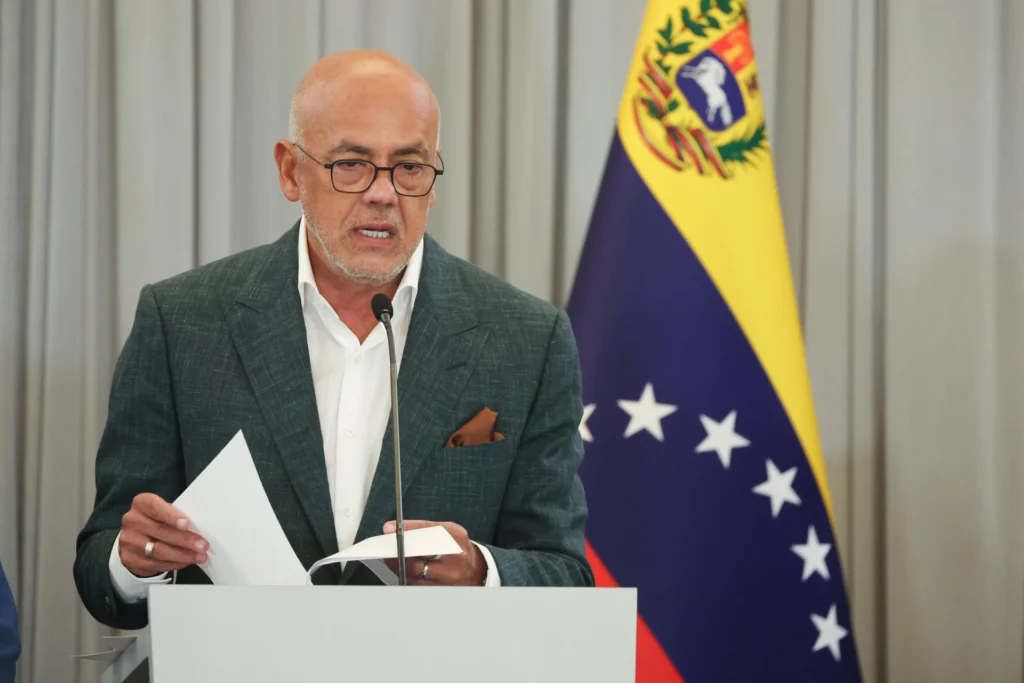
The president of the Venezuelan National Assembly has ratified that the country autonomously manages the resources captured through energy exports. Photo: EFE.

Venezuela’s National Assembly President reaffirmed sovereign control over the country’s oil revenues and reported 71 active energy agreements alongside 44 contracts under negotiation, framing the figures as evidence of a sector revival after years of financial restrictions.


The statements came amid what officials called a strategic reconfiguration of the Venezuelan hydrocarbon industry. After years of intense global financial restrictions, the gradual operational reactivation of agreements between state-owned oil company Petroleos de Venezuela (PDVSA) and international firms aims to restore a steady flow of foreign currency into the national treasury.

“No foreign agency or international financial entity administers or safeguards the public funds that enter the country from hydrocarbon sales,” National Assembly President Jorge Rodriguez said.

RELATED: Venezuela’s Acting President Reviews Wage Consensus With Business, Unions

Rodríguez detailed that the money enters the public treasury under the supervision of authorized national banks, and he ruled out any external trust or any management of accounts by third parties outside the country’s institutions. In this sense, he called autonomy over foreign currency “a non-negotiable principle” for the country’s macroeconomic stability.

Sixty-one agreements are currently in force, while another 44 contracts are being negotiated. For the government, that volume confirms an operational momentum geared toward diversifying investment across the country’s main extraction fields.

The National Assembly President presented this dynamism as the result of a deliberate push to reopen the sector to international capital without surrendering control. Over the past several years, sweeping financial measures limited Venezuela’s ability to sell crude, collect payments and maintain production infrastructure. The current wave of deals represents a step-by-step return to commercial activity.

#EnVideo📹 | Coordinador del diálogo por el Gobierno Nacional, Jorge Rodríguez, aseveró que Venezuela mantiene el control sobre los recursos financieros obtenidos a través de la comercialización de petróleo hacia distintos países del mundo. pic.twitter.com/MUoEuwKXQI

— Ministerio de Comunicación e Información (@mippci_ven) October 22, 2026

Text reads: “Coordinator of the dialogue by the National Government, Jorge Rodríguez, asserted that Venezuela retains control over financial resources obtained through the marketing of oil to different countries in the world.”

Each reactivated agreement carries a single objective, officials indicated, the capture of hard currency for the public coffers. That revenue is meant to fund the productive apparatus and national infrastructure rather than remain subject to outside oversight.

The consolidation of the 61 agreements and the active negotiation of 44 more point to a strategy built on scale. By spreading investment across the country’s principal extraction zones, the government seeks to reduce dependence on any single field or partner.

Sovereign Control Defended

Reaffirming sovereign control over monetary flows stands as a central pillar of the government’s message. The leadership projected institutional stability at a moment when Washington continues to review and adjust the licenses it grants for oil operations.

Rodríguez also denounced continuous pressure and unilateral coercive measures against the country’s financial system by foreign powers. He said that, despite what he described as an economic siege, the government has consolidated alternative mechanisms to receive payments directly for oil-product exports.

Against that backdrop, the government is working to shield energy agreements legally, dismiss any suggestion of foreign tutelage and guarantee direct financing for public budgets.

Official strategy insists that autonomous management of oil income is an indispensable guarantee for preserving fiscal balance, defending the national currency and sustaining social development programs. None of that, the argument runs, should depend on foreign political conditions.

By presenting the 61 agreements and 44 negotiations as proof of a functioning, sovereign industry, the government pushes back against narratives that portray the sector as externally managed.

For the Bolivarian government, legal protection of the energy agreements goes hand in hand with financing priorities. The revenue is meant to flow directly toward the productive apparatus and public infrastructure, a framework the leadership described as essential to institutional stability.

  •  

Under the (Persian) volcano

Iran and Russia, both sanctioned to oblivion, are indeed in synch like never before, coordinating everything on a shared front.

Join us on Telegram, X, and VK.

Contact us: info@strategic-culture.su

Washington, on the Ukraine front, may be switching to total Saving Face mode. After all, the scale of the strategic defeat for the Empire plus the discombobulated West in country 404 is staggering. Add to it the strategic defeat in Iran plus Yemen relentlessly hammering the House of Saud. Grandmaster Lavrov coined it: “The West will never again be the main player, dictating terms.”

The temptation may be great to identify a more straightforward path towards a multi-nodal, polycentric world order – in the wake of all those wild, unprecedented Trump concessions to Moscow. But then the real dark clouds keep coming down.

The death cult in West Asia and the Epstein Syndicate as a whole have managed to overpower the whole mass of neo-con Russophobes spread across the MICIMATT (military/industrial/congressional/intelligence/media/academia/think tank complex, in the memorable definition by Ray McGovern) and reconstitute Iran as the undisputable, one and only national security emergency.

The 7-point way or the highway

Field Marshal Asim Munir’s hasty, last minute-arranged trip from Islamabad to Tehran earlier this week in the end could not possibly mediate anything.

Munir met everyone who matters. He asked Parliament Speaker Ghalibaf point blank: what does it take to find a solution for the Iran-U.S. impasse? Ghalibaf was blunt – and repeated it at last 8 times during their meeting: Washington must implement Iran’s 7-point conditions, essentially a summary of the serially dead cat memorandum of understanding (MoU), which Trump signed and then destroyed.

The 7 points were first proposed to Tweedledum and Twedledee – Witkoff and Kushner – via the Qataris in a previous round of Iran-U.S. indirect negotiations.

President Pezeshkian and secretary of the Supreme National Security Council (SNSC) Mohsen Rezaee, in their meetings, stressed the exact same thing. That’s the message Munir should relay to the Sociopath-in-Chief.

Official Iranian sources will not confirm it; only the heavily-spun American version. But Munir may have carried a final U.S. ultimatum to Rezaee, Pezeshkian and Ghalibaf: ditch your nuclear program, or face massive strikes, mostly targeting Pickaxe Mountain.

Adding on the 7 points, Mohsen Rezaee actually informed Munir – and thus the White House – again, that not a single speck of nuclear dust will leave Iran. Back to the only possibility of a return to negotiations: Washington must accept the 7 points.

Foreign Minister Araghchi keeps coming back to the essentials: “The U.S. has failed to achieve any of its war objectives.” So the connectivity chain is inescapable: no military victory (and no regime change); unbearable economic costs; untainable political situation; thus only off-ramp is the 7 points.

And on top of it Tehran runs the clock.

In parallel, across the Yemeni Storm, Sana’a also runs the clock.

With Aramco, the lifeblood of U.S., Israel and Salafi-jihadi goons of the ISIS mould, and a privileged source of funding for the Forever Wars, now in Ansarallah’s direct line of fire, the Yemeni drive is to work “to dry up the sources of terrorism.”

Riyadh though is doubling down, threatening to bomb every gathering of Yemeni tribes. If that happens, more than a million more Yemenis will join the Yemeni Armed Forces and march to the Yemeni-Saudi border.

After all the tribes, well-trained and ultra-weaponized, are just waiting for a directive from Ansarallah’s leader, Abdul-Malik Badr al-Din al-Houthi, to pour into southern “Saudi” Arabia and recover the three provinces, Najran, Jizan and Asir, that are ancestral Yemeni lands stolen by the Brits in 1934.

A price you can’t afford to pay

All hell may break loose: now; soon; or until the end of November at the latest. Were it to happen sooner, before the Israeli elections, it’s a done deal the driver is the death cult. The Sociopath-in-Chief privileges a post-mid-terms attack.

The death cult is preparing a massive attack on Iranian power plants, oil infrastructure, military targets and nuclear installations. Tehran has repeatedly warned that any attack, joint or separate, from the U.S. and Israel, will be treated as Totalen Krieg, all-out war, and the response will break any limits or restraint.

Iran’s internal intel is fully concentrated on a large-scale bombing scenario happening before next Tuesday, Election Day in the death cult.

Whatever happens, Tehran’s response will make sure the price to pay is beyond prohibitive. On Israel, Iran will counterpunch on both of Israel’s refineries; the ports at Haifa and Ashdod; all airbases; and Dimona added only if Iran’s own nuclear sites are hit.

When it comes to a U.S. attack, any Gulf petro-monarchy that hosts any launch instantly becomes a legitimate target, including power grids; desalination plants; refineries; ports; data centers; HQs and installations of American companies.

The Strait of Hormuz would be completely closed. The price of a barrel of oil will skyrocket. The global economy will hit Big Depression. From an imperial point of view, that will be as gloomy as Washington letting Iran manage the Strait of Hormuz and charge fees for transit: actually the humiliating end of unilateral thalassocracy – complete with the U.S. Fifth Fleet needing to ask permission to enter or leave its own dilapidated base in Bahrain.

Mohammad Mokhber, a top adviser to Leader Mojtaba Khamenei, stressed that “if the U.S.-Israel strike our petrochemical infrastructure or power plants, Iran will strike nine countries.”

Moreover, the Fars news agency, very close to the IRGC, learned about an array of new directives: if the attacks involve the assassination of Iranian officials and the killing of civilians, the Iranian response will include political targets associated with the U.S. and all nations participating in the war, in addition to their infrastructure.

Lavrov and Araghchi revive RIC

Amidst so much horror, let’s try to stress at least one auspicious trend. During Lavrov’s recent visit to Tehran, Iranian FM Araghchi cut to the chase:

“Never in our History have Russia & Iran worked as closely as now.”

The key operative concept is “Never in our History”. Lavrov and Araghchi talked about “everything from Europe to West Asia”. But specially these four: Lebanon, Palestine, Ukraine & Yemen. Not to mention everything about expanded economic and “nuclear cooperation”.

Economic cooperation means specially the INSTC – the International North South Transportation Corridor linking 3 BRICS/SCO partners: Russia, Iran and India.

See my INSTC documentary shot in Iran last year.

The Empire of Chaos relies on sanctions, threats and bombing. Eurasia integration relies on building infrastructure, increasing trade, and sovereign cooperation. So Lavrov and Araghchi once again had to revive RIC: the original Russia/India/China connection first conceptualized as the Primakov Triangle but now with Iran in place of India.

Lavrov proposed that the new RIC establish a “common security structure” in the Persian Gulf via a trilateral summit. That amounts to RIC defining a unified framework for the Strait of Hormuz.

The Empire’s response will be increased discombobulation. Because once again this is about “indivisibility of security” – as in Russia proposing it to the U.S. and NATO in December 2021. Then that was met with a non-response response.

On Lebanon, Palestine, Ukraine and Yemen, Lavrov and Araghchi were on top of the top frontlines. Where we have the Empire of Chaos and its allies/vassals on one side, and Russia and Iran’s allies on the other side.

It’s all interconnected, of course. An imperial arc of military pressure stretches from Ukraine to Yemen. The counterpunch revolves around how to coordinate the resistance (italics mine) to such pressure.

On economic cooperation, both Iran and Russia are under a tsunami of sanctions. Their banks are expelled from SWIFT, and oil exports are severely restricted. So trade between them must bypass the U.S. dollar; the whole Western financial system; and the thalassocracy enforced by the U.S. Navy.

Know how in bypassing sanctions is something Iran-Russia may share with the whole Global South, via settlements in local currencies; barter trade; overland corridors; the INSTC; and trade across the Caspian Sea.

And that brings us once again to the Strait of Hormuz – which Iran controls. The Gulf petro-monarchies are completely freaking out. Russia maintains solid channels with both Iran and the Gulf. Lavrov is in total synch with all of them. He brought the Gulf’s concerns to Tehran, and in turn, conveyed Tehran’s conditions back to the Gulf.

Lavrov stressed that the serially dead cat Islamabad MoU is the only way to go. Exactly what Xi told Trump at the Oval Office. Exactly what the Iranian leadership told Asim Munir in Tehran.

He also stressed that the Persian Gulf petro-monarchies must get their act together and start a serious security dialogue with Iran and Arab nations, including neighbors such as Iraq and Jordan, and involve the Arab League, the Organization of Islamic Cooperation (OIC), and the permanent members of the UN Security Council.

Once again: indivisibility of security.

Iran and Russia, both sanctioned to oblivion, are indeed in synch like never before, coordinating everything on a shared front – while the desperate Epstein Syndicate remains stuck in its self-concocted Forever War nightmare.

  •  

European Parliament Awards Sakharov Prize to ICC Amid Escalating US Sanctions

The European Parliament has awarded the 2026 Sakharov Prize for Freedom of Thought to the International Criminal Court (ICC) and its officials, recognising the Hague-based tribunal’s work in investigating and prosecuting war crimes, crimes against humanity and genocide.

Announcing the decision in Strasbourg on Thursday, 22 October, European Parliament President Roberta Metsola said the award reflected the European Union’s commitment to multilateralism and international institutions.

Metsola praised the Court for its work in upholding international law and justice. The announcement was met with a standing ovation in the parliamentary chamber.

The decision comes amid an escalating confrontation between the European Union and the administration of US President Donald Trump over the ICC’s jurisdiction and independence.

Washington’s sanctions against the Court

On 9 October, the United States imposed sanctions on the ICC as an institution, extending measures previously directed against individual judges and prosecutors.

The restrictions place the Court under the US Treasury’s sanctions regime, limiting financial transactions involving American individuals, businesses and institutions. Washington has issued several temporary and limited exemptions intended to allow specified operations to continue.

The measures followed earlier sanctions against senior ICC officials, including Court President Tomoko Akane, and form part of Washington’s campaign to prevent the tribunal from exercising jurisdiction over American personnel.

US Secretary of State Marco Rubio has argued that the ICC threatens American sovereignty by asserting authority over nationals of countries that have not accepted its founding treaty.

The Court rejected the latest restrictions, describing them as an attempt to obstruct the administration of international justice.

Established under the Rome Statute, the ICC operates independently of national governments and investigates serious international crimes where its jurisdictional requirements are satisfied.

Neither the United States nor Israel is a party to the Rome Statute.

Arrest warrants involving Russia and Israel

The dispute with Washington has intensified since the ICC issued arrest warrants in November 2024 for Israeli Prime Minister Benjamin Netanyahu and former Defence Minister Yoav Gallant over alleged war crimes and crimes against humanity connected with military operations in Gaza.

Israel rejects the Court’s jurisdiction and disputes the allegations. Washington has similarly opposed the proceedings against Israeli officials.

The ICC has also pursued investigations into Russia’s invasion of Ukraine. In March 2023, its judges issued arrest warrants for Russian President Vladimir Putin and Maria Lvova-Belova, Russia’s commissioner for children’s rights, over the alleged unlawful deportation and transfer of Ukrainian children.

Further warrants followed in 2024 against senior Russian military commanders and officials in connection with attacks on Ukraine’s civilian infrastructure.

The proceedings demonstrate the geographical scope of the Court’s investigations, although its ability to secure arrests depends heavily on cooperation from individual states.

The ICC has no independent police force and relies on national authorities to execute its warrants.

European Parliament backs international justice

The ICC’s nomination for the Sakharov Prize was submitted by the Socialists and Democrats group in the European Parliament.

Its selection comes as European lawmakers examine how the EU should respond to American sanctions affecting the Court and organisations supporting its activities.

The October restrictions have raised practical questions about access to banking, technology services and other infrastructure required by the tribunal.

European governments must also consider how to support an institution established through an international treaty while maintaining relations with Washington.

The Sakharov Prize carries no legal authority to reverse American sanctions or compel governments to cooperate with ICC investigations. Nevertheless, the award represents an explicit institutional endorsement of the tribunal at a time when its operations face increasing external pressure.

Other nominees and award ceremony

The ICC was selected from three finalists announced earlier this month.

The other nominees were Tanzanian opposition leader Tundu Lissu and Iranian sisters Taraneh and Romina Rahimi, whose cases have attracted international attention over political persecution and judicial proceedings.

The Sakharov Prize, established by the European Parliament in 1988, is named after Soviet physicist, dissident and Nobel Peace Prize laureate Andrei Sakharov.

It recognises individuals and organisations defending human rights, freedom of expression and fundamental liberties. The award includes €50,000.

Previous recipients include Nelson Mandela, Malala Yousafzai and imprisoned journalists.

In 2025, the prize was awarded jointly to Belarusian journalist Andrzej Poczobut and Georgian journalist Mzia Amaglobeli.

The formal presentation of the 2026 prize is scheduled for 16 December at the European Parliament in Strasbourg.

The award places the ICC alongside previous Sakharov laureates while drawing further attention to the unresolved dispute between Washington and European governments over international criminal jurisdiction.

  •  

Drones reportedly hit a Russian weapons plant near Moscow that Washington and Kyiv sanctioned

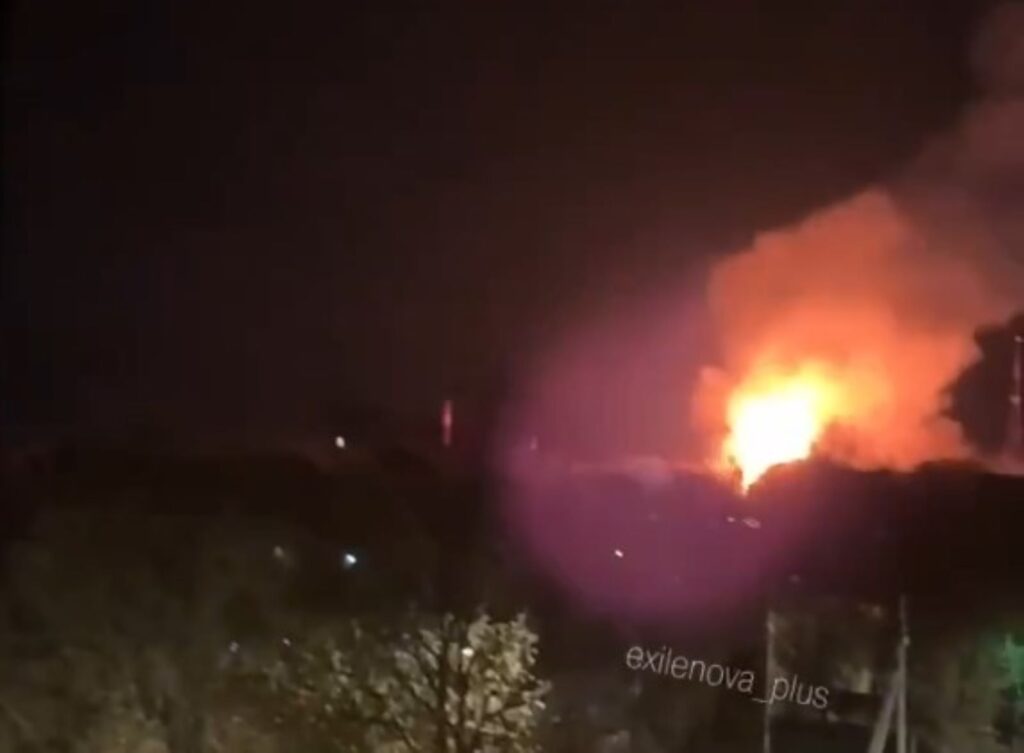
drones reportedly hit russian weapons plant near moscow washington kyiv sanctioned · post fire jsc 75 arsenal serpukhov oblast 22 2026 exilenova+ ukraine news ukrainian reports

An explosion hit the 75th Arsenal, a Russian army plant in Serpukhov south of Moscow, overnight on 22 October, Russian Telegram channel Astra reported. Russian officials also claimed drone attacks on the Moscow region, Tula, and Lipetsk that night.

As Russia presses its full-scale invasion, Ukraine’s long-range drones and missiles keep hitting military plants and refineries deep inside Russia. Ukrainian outlet Militarnyi says this plant specializes in repairing Buk and S-300 air defense systems. Astra describes it more broadly, as making weapons and ammunition and repairing military equipment. If Militarnyi is right, the blast hit a site that fixes Russian air defenses. It came the night Moscow’s mayor credited air defenses with stopping hundreds of drones.

Blast at the arsenal

An Astra OSINT analyst placed the explosion inside the site from a video, the channel said. Residents claimed in local chats that blasts followed passing drones, then at least three missiles. Astra did not confirm the missile count. Serpukhov lies about 99 km south of Moscow. Ukraine has sanctioned the plant, and the US Treasury has listed it too. As of the morning of 22 October, no Russian official had confirmed the blast.

More footage of the attack on the arsenal in Serpukhov. We are awaiting satellite images. pic.twitter.com/tTsgc18W3L

— Exilenova+ (@Exilenova_plus) October 22, 2026

630 drones, by Moscow’s count

Moscow Mayor Sergei Sobyanin claimed that 630 drones flew toward the Moscow region from 20:30 on 21 October to 04:00 on 22 October. He claimed most were destroyed far out and 163 were neutralized on approach to Moscow. Two people were injured in Voronovo, in New Moscow, he stated.

Tula Oblast Governor Dmitry Milyaev claimed air defenses downed 70 Ukrainian drones over his region. Private homes were damaged in Tula and the Zaoksky district, he stated.

Lipetsk governor claims homes and a clinic damaged

Earlier in the night, Ukrainian monitoring channel Exilenova+ posted footage of commotion in Lipetsk after explosions. Lipetsk Oblast Governor Igor Artamonov claimed a drone strike damaged homes, apartment blocks, and a closed polyclinic. A man born in 2001 was injured and hospitalized, Artamonov claimed.

Lipetsk, moment of the explosion. https://t.co/wCX6GVThQr pic.twitter.com/bGwGLbUm2d

— Exilenova+ (@Exilenova_plus) October 21, 2026

In May, Ukrainian intelligence said Russia was deploying more regiments against strike drones. In September, Ukrainian units hit more Russian air defense systems and radars than in any month since 2024, Ukraine’s Defense Ministry said. Analyst Oleksandr Kovalenko counted 76 destroyed in September with days of the month still to go and argued Russia cannot replace such losses. If Militarnyi’s description holds, losing repair capacity would deepen that gap.

  •  

35 US parts, a Chinese navigation unit, a Russian engine: what’s inside Russia’s Filin missile

Filin cruise missile

Ukraine’s military intelligence (HUR) published a 3D model and parts list of Russia’s new Filin cruise missile on 22 October. The breakdown names the Russian companies behind the missile and the foreign makers of its electronics.

HUR runs its War&Sanctions portal to trace such parts back to their makers. Its stated aim is to “deprive the aggressors of the ability to produce weapons for terror,” the portal says. Meanwhile, Russia is betting on cheap, fast cruise missiles, Serhii Beskrestnov, a freelance adviser to the president on technology, told Radio NV in mid-September. Naming the Banderol, Dan-T, Dan-M, and Gerbera-5, he warned they would soon outrun Ukraine’s jet-powered interceptors, so Ukraine needed its own cheap missiles to shoot them down.

Composite body, ground launch

JSC NPO Molniya, part of Russia’s Tactical Missiles Corporation, builds the Filin, HUR said. The agency called it part of a Russian defense-industry trend toward cheap jet-powered, ground-launched air-attack weapons. Russia began firing it at Ukraine in late summer 2026.

Filin cruise missile components.
Filin cruise missile components. Image: War&Sanctions

HUR’s data puts the carbon and fiberglass fuselage at 3.5 m, with a 3 m wingspan. Some parts are 3D-printed. Russia claims a top speed of 800 km/h. The range is 600–1,200 km, and the missile flies at ultra-low altitude or up to 6 km. Versions carry 50-kg or 100-kg warheads. A solid-fuel booster fires it from a ground launcher.

A firm tied to a Shahed-type drone

PLAZ LLC makes the onboard equipment, HUR said. The firm also helps produce the Garpiya, a version of Russia’s Shahed-type Geran-2 drone. Filin and Garpiya units share a similar layout and markings. Guidance combines a Chinese-made inertial navigation system with a 16-channel Kometa anti-jamming module from Russia’s VNIIR-Progress.

The electronics resemble those in other Russian missiles and drones but carry a larger share of Chinese parts. Of 81 components, 35 are American and 22 Chinese. The engine, however, is Russian: an R500 turbojet from Reynolds LLC. A similar engine earlier turned up in the S-71K Kover aviation cruise missile and S-71M Monokhrom, HUR said.

For comparison, Ukraine found more than 20 foreign components in a different cheap missile, the Banderol, in May 2025. They included 10 US microchips, and the Banderol flies on a Chinese jet engine.

  •  

Greece enforces sanctions against Iran, says FinMin

The Ministry of National Economy and Finance on Thursday underscored the close cooperation between Greek authorities and their counterparts in the United States, as well as with other partners, to safeguard the integrity of the international financial system. The statement followed an announcement by the U.S. Treasury Department regarding operation Economic Outcast, which aims to […]

The post Greece enforces sanctions against Iran, says FinMin appeared first on Keep Talking Greece.

  •  

Should Russia save Europe?

Build a physical border—widen rivers from the Baltic to the Black Sea. Sell resources to those who keep their word. Not one ruble for Europe’s rebuild, Tim Kirby writes.

Join us on Telegram, X, and VK.

Contact us: info@strategic-culture.su

This is the type of question that in 2022 would have sounded insane both within Russia and even more so in the West. How could ‘Nigeria with snow’ possibly save the Europe that it supposedly ‘attacked’ spontaneously? But now we are at a certain nexus of events that allows one to ask such a question. Trump has started to pull back, or has been forced to pull back, support for Project Ukraine which looks to be winding down. Every locomotive, gas station, sea port, Amazon-like warehouse, and data center has been blown to bits in retaliation for Zelensky’s 40 days of terror during the summer of 2026. The President of the United States has called for a three-way meeting with Xi and Putin which some think could be a call to finally and ultimately divide up the world into zones of influence among great powers. The riots in France have potentially put a final nail in the coffin of the globalist vision for the future, not because the riots are ugly or wrong, but because ultimately the Frankfurt School concept of destroying all forms of identity to maybe achieve something utopian has only taken hold in the West. That is to say, cultural masochism is only destroying the West and has provided strong evidence to Russia, China and others that national sovereignty and cohesion is the way to go. The project to create a world with no form of collective identity has backfired.

To be clear, the defining issue around this nexus is by far is the ‘death of Europe’. Obviously the continent remains physically on the map, but geopolitically it has become a black hole. Trump has wanted to get the U.S. out of NATO since his first presidential campaign, or at least make it profitable. The forces in the States that are ‘America First’ want nothing to do with the continent anymore. Trump may be failing to get the job done, but officially the Monroe Doctrine is back in place, one that leaves European problems for Europe to deal with. This potential global carve up conference, or Yalta 2.0 between Xi, Putin and Trump probably has to do with the Cold War’s Arrakis no longer has any spice left to it. Europe has become a toxic asset after generations of vassalage to Washington/London and rule by Epstein Elites. On the geopolitical game board there is an ever growing dark pit filled by the abyssal legacy of the Monopolar Moment located where Western Europe used to be.

What’s in it for Russia to save Europe?

But as things change and the ‘paper tiger’ of Europe shows its lack of stripes, what is Russia to do about this? Surprisingly, from within Russia and especially from Pro-Russian Westerners (who love to argue with me about this online) there are plenty of calls for mama bear to ‘save Europe’. I must say that I find any such demands to be a true reflection of Western arrogance and over-inflated self-importance. Moscow is the 3rd Rome, it does not need to save your Holy Land to achieve a state of grace.

Pro-Russian Westerners should be well aware of the fact that all of the problems Russia has suffered over the last 300 years, some of them very dire with millions of men lost, all came from the West: Napoleon’s invasion, subversion during the late 1800s mostly by the British, Lenin’s arrival in St. Petersburg from Europe, Marxism as a whole, WWI, WWII, 90s Liberalism, and now Project Ukraine. Truman gets the blame by Russian historians for starting the Cold War, FDR was much nicer bloke for Russia but his health didn’t hold out, so perhaps the American side did cause one major set of problems for the Russians, but the rest all comes from Europe and especially that accursed island, and at this point for Russian society the Cold War is in the past, but WWII is in the present thanks to the Maidan.

Perhaps Putin’s greatest yet quietest triumph is the restoration of Christianity in Russia, and with the Christian spirit comes an obligation to forgive others. However, when one ‘turns the other cheek’ and has the other slapped over-and-over again this duty to our Lord in heaven has been fulfilled and the Motherland is under no moral obligation to do anything for the West. Many, both within and without Russia, put serious blame on the USSR’s ‘geopolitical altruism’ as a cause for its loss in the Cold War. Moscow may have bought all the boots in Czechoslovakia, but it gave away unfathomable resources to all sorts of fickle socialist cousin-nations and got nothing in return by 1991, when they all jumped on the Western bandwagon. Countless billions of Soviet Rubles in oil, coal and anything else the USSR had for export, were just given a way or sold for symbolic prices in Eastern Europe, Cuba, North Korea and beyond. We have become used to the ‘West’ being the source of insane self-destructive policies in our world, but it was not always the king in that department.

I bring up Soviet geopolitical altruism, plus the ‘betrayal’ by the ‘socialist camp’ as the Russians call them, is a very strong argument against Russia doing anything to save Europe. They have tried to be nice to Europe and failed. No matter how many bloggers may be ‘begmanding’ Zelensky-style that Moscow ‘must’ save the West from itself that someone must ‘do something about the protests in France’ or at least protect Christianity in the former Roman Empire, this does not provide a counter argument to the opinion of Marshall Zhukov “We have liberated Europe from Fascism and they will never forgive us.” If Russia saves the EU from its Postmodernist death cult behavior it will never be forgiven for it either, especially from Starbucks socialist intellectuals.

Doing nothing is a fantastic option

If Russia were to ‘do something’ about Europe as it collapses these efforts will only be instantly forgotten and the Western elites (not the people, they have a far better historical memory than their leaders, but sadly they decide virtually nothing) will one day rise up to punish Moscow for all of its efforts. When Alice Weidel speaks about Germany restoring relations with Russia the locals in land of black gold roar with naïve applause. However, as a Westerner I hear something different in her words as they are auto-translated before my eyes. Ms. Weidel does not express some sort of guilt or remorse or a deep desire to live in brotherhood, but something more like an attitude of “we are losing badly, so let’s allow the snow negroes to go back to sending us liquid cotton”. There is no mutual respect or friendship in her voice, just the pragmatism of not fighting the subhuman barbarians to the east because it is ineffective at present for the German economy. Let’s look at it this way, should Russia, even for payment, send resources to rebuild those who have desired its demise for centuries, or sell those resources to countries that only want peace and mostly keep their word? Russia should sell absolutely nothing to the West for the next few generations, no matter how much posh Muscovites like Gucci and Porsche. The rebirth of Europe is the deaths of future millions of Russians.

The last 300 years of history since Peter I became infatuated with the West have never yielded anything for his nation but misery, revolution, exported resources that were needed at home, and piles of humiliation with a cherry on top. Russia is under no obligation to do anything in Europe and the all signs point to the need to take absolutely no action over there whatsoever and let the Postmodernist nightmare run its course.

The irony of Russian history is that somehow it can always make deals with the Muslims, even the Turks who have had a lot of geopolitical tension with them, can still keep their word on deals and common ground can be found across the potentially dangerous Black Sea region. Protestants are as loyal to the Russians as they were to the Native Americans that they wiped off the continent. The biolab network in Ukraine was a 21st century ‘diseased blanket’ but for the primitive aboriginal Slavs. So it is hard to say whether an Islamic France would actually be more hostile to Moscow, perhaps they would want peace and shish kebabs with a rival they could actually respect?

A true border wall would be a better option

There is an old geopolitical folk belief that the border of Russia starts somewhere in the Baltic Sea and ends somewhere in the Black Sea and that its shape throughout history is constantly changing between these two endpoints. There seems to be some truth to this, and when Project Ukraine is finally settled the Russians need to not just establish some border, but change the actual physical landscape of Europe to suit their security needs.

I would propose that the Union State between Russia and Belarus, at the end of the conflict draw up a plan to unite rivers and canals that somehow connect to the Baltic Sea and go down towards the Black Sea. Supposedly the oceans are rising and thus there should be plenty of water to fill this passageway. Furthermore, all of these natural and unnatural bodies of water must be widened to something like at least a kilometer. The steppes between Russia and Germany have been nothing but a nightmare zone of conflict since WWI and that is due to its geography, since the West will probably never change its attitude towards Russia, it is vastly easier for Moscow to alter the landscape than the minds of the Epstein Elite. Will the Baltic states object to this? Yes, but who knows what their fate will be after the Special Military Operation ends and America abandons them.

Having a final definitive, although expensive to produce, line on every map in the world with only a tiny number of bridges, that is too wide to cross easily, would finally define a concrete dividing point between the ‘barbaric’ East and ‘civilized’ West. That is to say, Russia must achieve some sort of physical separation, or possibly segregation from a mentally diseased Europe for centuries to come. Putting up a massive border wall would also be a boon, but that would be quite costly to the Russian taxpayer. The important thing is that there must be a potent form of division that is felt by both sides. The term Zaporozhia, means something like “along the threshold” and the threshold to Russia is eternally open, someone needs to close the damn door already and flick the lock.

In Summation Russia does not need to save Europe, it needs to fully and completely divide itself from it:

    • Geopolitical altruism is a methodology of failure, the more Russia spends on itself the more powerful and wealthy it becomes. Today’s Russia flourishes under the challenges that crushed the all too generous USSR from within.
    • The Western elites (not the people) will always hate Russia and they should not be allowed to rebuild via Russian resources, even if they are willing to pay for them. There are other better customers. Let them rot in the Postmodern grave they’ve dug for themselves.
    • There needs to be a permanent physical border between Russia and Europe, the easiest way would be by uniting and widening preexisting rivers and canals.
    • Supposedly Christian Europe has wished death upon Russia for generations, maybe a Caliphate won’t be so bad for Moscow? How many Russians died to Islamic extremism as opposed to the Third Reich?
    • Russia cannot and must not spend one ruble to rebuild Europe let alone a single soldier’s life.
    • Russia is under no obligation to save your country of origin, it never was, and never will be.

  •  

Putin Nears a Prize: Restoring Ties With the U.S. While Giving Up Nothing

Russia has sought to separate the war in Ukraine from potential business deals and diplomacy with the United States. Its efforts now appear to be working.

© Doug Mills/The New York Times

President Trump with President Vladimir V. Putin of Russia in Anchorage, Alaska, last year.
  •  

Greece says it is implementing sanctions linked to Iran

The Greek finance ministry said on Thursday it was implementing sanctions in place linked to Iran and that it backed efforts to effectively combat money laundering and the financing of terrorism.

The statement comes after the US Treasury Department said on Wednesday it imposed sanctions on Karnakis & Karnakis, a law firm based in Greece and Panama, saying it had for years provided legal assistance to Iranian shipping networks.

The Treasury also said that the US Financial Crimes Enforcement Network issued an administrative subpoena to advance an investigation into a Greek bank, which it did not name.

The Greek finance ministry said it had taken note of the US Treasury statement, adding that “all available information is being evaluated, and appropriate measures are being taken in accordance with established procedures and applicable national, EU, and international law.”

  •  

US sanctions Greek law firm over alleged Iran oil links

The US Treasury Department imposed sanctions on Wednesday on Karnakis & Karnakis, a law firm based in Greece and Panama, saying it had for years provided legal assistance to Iranian shipping networks.

The US Financial Crimes Enforcement Network also issued an administrative subpoena to advance an investigation into a Greek bank over potential ties to Iran, according to a Treasury statement, which did not name the bank.

FINCEN also issued requests for information to six other European banks that it did not name over relationships with Iranian financial institutions under US sanctions.

“Whether you are conducting illegal oil transfers at sea or sitting in the corner office of a law firm, if you are supporting the Iranian regime, we will find you and sanction you,” Treasury Secretary Scott Bessent said in a release.

Washington has held off striking Iran this month in the war that the US and Israel launched on February 28, and instead has continued the blockade of Iranian ports and issued waves of sanctions on Iranian shipping networks and those who the US says aid them.

State Department spokesman Tommy Pigott said Karnakis & Karnakis for years “set up shell companies to hide the true owners of vessels carrying Iranian oil, petrochemicals, and steel.”

He said the firm created companies that served as fronts for networks selling millions of barrels of Iranian oil to benefit the Islamic Revolutionary Guard Corps Quds Force and the Houthis.

Karnakis & Karnakis did not immediately respond to a request for comment.

Treasury also imposed sanctions on Singapore- and UAE-based shipping agents that it said directly aid Iranian shadow fleet operations.

  •  

US treasury sanctions Greek-Panamanian law firm over aid to Iranian shipping

State Department says Karnakis & Karnakis 'set up shell companies' to hide origin of Iranian ships, allowing Tehran to sell millions of barrels of oil
  •  
❌