❌

Normal view

Four Ukrainians Arrested in Vienna Amid Growing Sabotage in Europe

10 October 2026 at 17:14

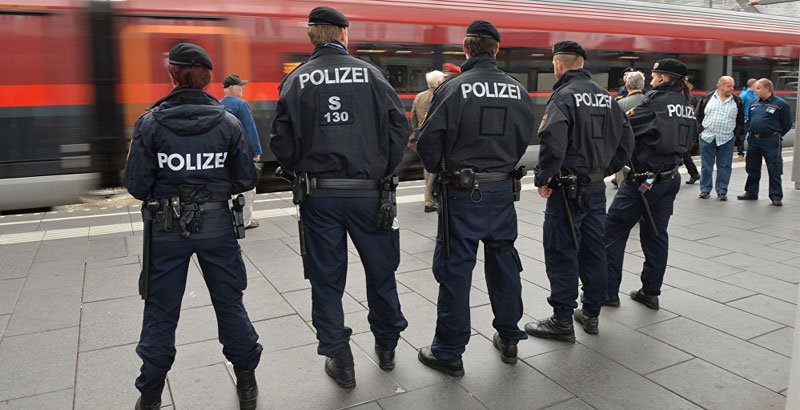
File image.

Four Ukrainian citizens were arrested in Vienna this week on suspicion of spying, Austrian Interior Minister Gerhard Karner said on October 9.

Three of the four remained in custody, Karner said, declining to provide further details because the investigation was ongoing.

The newspaper Ukrainska Pravda said two of its journalists were among those detained. Editor-in-chief Sevgil Musaieva said investigative journalist Mykhailo Tkach was released after more than 12 hours in detention on October 8, but his communication devices had not been returned. She also said cameraman Yaroslav Bondarenko was injured during his detention. The other two Ukrainians still in custody were arrested three days earlier.

The Ukrainian Embassy in Vienna said it was awaiting an explanation from Austrian authorities about the arrests and their legal basis, according to Reuters.

The arrests come amid growing scrutiny of alleged covert operations involving Ukrainians across Europe, including investigations into sabotage and attacks linked to Kyiv’s intelligence services.

In July, German prosecutors indicted a Ukrainian national accused of helping coordinate the team that planted explosives on the Nord Stream gas pipelines under the Baltic Sea in September 2022. The suspect, who was arrested in Italy last year, has denied involvement, Reuters reported.

Earlier in April, Serbian authorities found explosives near the Balkan Stream pipeline supplying Russian gas to Hungary. Prime Minister Viktor Orbán accused Ukraine of possible involvement, but Kyiv denied the allegation.

A separate investigation concerns a June 29 bombing in Monaco that seriously injured Ukrainian-born businessman Vadym Yermolaiev and two members of his family.

Ukrainian authorities detained a military intelligence officer and a former law-enforcement officer over the subsequent killing of Anastasiia Berezovska, the woman suspected of planting the bomb.

Monaco’s prosecutor said the two men may also have been involved in planning the attack, according to The Associated Press.

In an interview with the BBC published on October 9, former security officer Vitalii Zhykovych alleged that senior Ukrainian military intelligence officials had authorized the operation. Monaco, a sovereign city-state, is not a member of the European Union.

The recent incidents suggests growing Ukrainian sabotage activity inside the European Union. The targets point to a possible motive. Austria and Hungary had both pushed back against widening sanctions on Russia before the recent plots. In the case of Yermolaiev, who is in disagreement with Kyiv, the motive also appears evident.

_______________________________________________________________________________________________________________________

SouthFront: Analysis and Intelligence

NOW hosted at southfront.press

Previously, SouthFront: Analysis and Intelligence was at southfront.org.

The .org domain name had been blocked by the US (NATO) (https://southfront.press/southfront-org-blocked-by-u-s-controlled-global-internet-supervisor/) globally, outlawed and without any explanation

Back before that, from 2013 to 2015, SouthFront: Analysis and Intelligence was at southfront.com

SOUTHFRONT.PRESS

MORE ON THIS TOPIC:

The post Four Ukrainians Arrested in Vienna Amid Growing Sabotage in Europe appeared first on South Front.

America Is Leaving Iraq, Not the Middle East

10 October 2026 at 13:59
America’s last troops have left Iraq, but anyone looking for a US withdrawal from the Middle East is looking in the wrong place. The end of the Iraq model On September 30, the United States completed the withdrawal of its forces and equipment from Erbil Air Base, formally ending the mission of Operation Inherent Resolve […]

The New Way of War

10 October 2026 at 09:59
One of the main elements in India’s External Affairs Minister Dr. S. Jaishankar’s speech at the U.N General Assembly’s annual session was highlighting the weaponization of elements once considered to be the hallmarks of global cooperation. In today’s broken world, cooperation is considered to be a luxury. States are busy making relative gains at the […]

Trump’s Diesel Deal with Putin Undermines US Sanctions Pressure as Ukraine Peace Talks Stall

10 October 2026 at 07:10

President Donald Trump announced an agreement with Vladimir Putin on Friday, 9th October, under which Russia will resume substantial diesel exports to American and international markets, despite Washington’s existing sanctions against Moscow over its invasion of Ukraine.

According to Trump’s announcement following the telephone conversation, Russia will immediately release more than 300,000 tonnes of diesel, followed by 500,000 tonnes in November and another million tonnes shortly afterwards. A further three million tonnes could become available once Russian refining capacity permits.

The announcement was accompanied by a temporary authorisation from the US Treasury allowing transactions involving Russian diesel until 7 April 2027. It represents a substantial departure from the administration’s recent sanctions policy, which had sought to restrict Russian energy revenues and strengthen Washington’s negotiating position over Ukraine.

The timing is politically significant. Trump faces congressional midterm elections on 3 November, while diesel prices have become a growing economic concern for American businesses and consumers. The agreement gives the White House an opportunity to present itself as addressing fuel costs, although its practical effect on prices remains uncertain.

Russian diesel cannot resolve the global supply shortage

Trump has linked the proposed Russian deliveries to his administration’s efforts to restore energy flows through the Strait of Hormuz, arguing that the combined measures will produce a rapid reduction in diesel prices.

The disruption of maritime energy supplies following the confrontation with Iran has, however, created a problem considerably larger than the quantities Russia has initially promised.

The first two deliveries amount to approximately 800,000 tonnes. Even including the subsequent million tonnes, the announced volumes are modest relative to global consumption. Their arrival may provide temporary relief in individual markets, but there is little evidence that they could independently reverse the wider shortage.

Russia’s capacity to maintain larger exports is also uncertain.

Ukrainian attacks on Russian refineries have disrupted production and contributed to restrictions on petroleum exports. Moscow has periodically imposed limits to protect domestic supplies, while damaged facilities require repairs before returning to normal operations.

The condition of those refineries is explicitly acknowledged in Trump’s announcement, which makes the proposed additional three million tonnes dependent on their recovery.

This introduces a further contradiction. Washington is seeking Russian diesel at precisely the moment Ukraine is attempting to reduce Moscow’s capacity to refine and export petroleum products.

The economic benefits of the agreement may consequently depend partly on developments in a military campaign that the United States has previously supported through intelligence cooperation with Kyiv.

Zelenskyy rejects sanctions relief without Russian concessions

President Volodymyr Zelenskyy responded critically to the agreement, describing the relaxation of economic pressure as a concession to Putin that had not been accompanied by any meaningful Russian commitment to de-escalation.

In his response to the American decision, Zelenskyy argued that Moscow would exploit renewed export revenues to prolong its war rather than make concessions towards a settlement.

Ukraine has indicated that it remains prepared to consider reciprocal measures concerning attacks on energy infrastructure. Such arrangements would require Russia to stop striking Ukrainian facilities in exchange for restrictions on Ukrainian operations against Russian energy targets.

No comparable undertaking was announced as part of Friday’s diesel agreement.

This distinction is central to Kyiv’s objections. Sanctions relief has traditionally been regarded as leverage to obtain changes in Russian behaviour. In the present arrangement, Moscow stands to receive additional commercial opportunities without publicly agreeing to alter its military campaign.

Lukoil negotiations raise further questions

The agreement also comes amid separate discussions concerning the international assets of Lukoil, Russia’s second-largest oil producer.

A recent account of negotiations involving American investors and Russian officials described proposals involving Lukoil’s overseas oilfields, refineries and distribution businesses.

The discussions have reportedly involved figures connected to Trump’s diplomatic efforts, including Steve Witkoff and Jared Kushner, alongside Russian representatives.

On Friday, another development complicated the proposed transaction when Carlyle withdrew from the competition to acquire Lukoil’s international assets, previously valued at approximately $22 billion.

The negotiations illustrate the extent to which potential commercial cooperation has entered the broader American-Russian relationship.

There is no verified evidence, however, that the diesel agreement was concluded to facilitate a particular acquisition or benefit individuals connected to Trump’s administration. The commercial negotiations and Friday’s sanctions decision remain separate developments unless further evidence establishes a direct connection.

Washington and Europe move in different directions

The American decision creates an additional complication for European sanctions policy.

On 7th October, EU ambassadors agreed to expand sanctions against Russia’s military-industrial network, approving 1,646 additional designations, many directed at the production of ballistic missiles used against Ukraine.

Britain has also introduced further restrictions on Russian oil-related businesses, tankers and financial intermediaries, reinforcing its stated objective of limiting Moscow’s ability to finance the war.

The contrast with Washington’s diesel authorisation is substantial. While European governments are attempting to restrict Russian petroleum revenues, the United States is providing a temporary legal route for renewed sales.

The development also recalls the difficulties already examined by EU Today in its reporting on sanctions enforcement against Russia’s shadow fleet, where differences in national restrictions and their application have complicated efforts to control petroleum exports.

For Moscow, the significance of Friday’s agreement extends beyond the immediate revenue generated by diesel sales. It establishes that the United States is prepared to relax particular economic restrictions before securing a settlement over Ukraine.

Whether the arrangement ultimately lowers American fuel prices will depend on production, shipping and international market conditions. The diplomatic consequence is already apparent: Russia has obtained an opportunity to restore part of its international energy trade without accepting publicly announced conditions concerning its war against Ukraine.

For Kyiv and European governments, the question is whether this remains a narrowly defined response to an energy shortage or marks the beginning of a broader American policy of separating commercial relations with Moscow from negotiations over Ukraine.

NATO’s Rhetoric Heats up OVER Kaliningrad

10 October 2026 at 05:59
Perhaps the most dangerous question facing Europe is no longer whether Russia and NATO could come into direct conflict, but where such a confrontation would begin—and how quickly it could spin out of control and draw everyone in. However, let’s hope it is not inevitable, not because of any threat to NATO or Europe, real […]

From Seoul to Manila: How the Evolving GSOMIA Architecture Could Make the Western Pacific Less Secure

9 October 2026 at 14:59
What makes the recent military-strategic developments orchestrated primarily by Japan, South Korea, Philippines and United States more dangerous than ever? And how can their impact on the Western Pacific be evaluated? The Western Pacific is quickly becoming as busy with security arrangements as it is with warships, missiles, and military exercises. Japan’s recent efforts to […]

NATO’s general war exercises against Russia

By: A A
9 October 2026 at 13:19

NATO’s full Military Committee just visited Kiev. They’re studying Ukraine’s war as their own testing ground.

Join us on Telegram, X, and VK.

Contact us: info@strategic-culture.su

Everyone off on a trip to Kiev

On 6 October, Admiral Giuseppe Cavo Dragone, Chairman of the NATO Military Committee, arrived in Kiev with military representatives from all thirty-two Allied nations. He wrote this himself on X: the delegation was there to reaffirm its ‘unconditional support’ for Ukraine. ANSA reported the news as an official visit. A strategic signal aimed at Moscow as well.

First, the facts. The Military Committee assists and advises the Atlantic Council, the Defence Planning Committee and the Nuclear Planning Group; its role is to set military policy and strategy. It was invited by the new Supreme Commander of the Ukrainian Armed Forces, Mykhailo Drapatyi. The Committee returned to Kiev in full force after eight years, and the meetings with Drapatyi and the Ukrainian General Staff served to obtain a first-hand assessment of the battlefield, to discuss Kiev ’s military priorities and to bring to the Alliance the lessons learnt from over four years of high-intensity warfare. Dragone speaks of military priorities and lessons useful for the Allies’ operational readiness in the face of today’s and tomorrow’s threats.

Now for the interpretation, which must be kept distinct from the facts. A body that advises the Nuclear Planning Group does not travel through a country at war merely to make gestures of solidarity. It goes to gather information and to calibrate its own preparedness against it. The flow described by the sources runs in both directions: from Ukraine to the Alliance as operational experience, and from the Alliance to Ukraine as guidance on priorities. When the military leaders of thirty-two states sit down with the General Staff of one of the belligerents to assess their own readiness in the context of the ongoing war, that war ceases to be an external affair. It has become the Alliance’s testing ground.

This sequence confirms the direction. On 3 June, the North Atlantic Council met in Kiev , and the NATO-Ukraine Council was held there for the first time. In October, it is the military’s turn. First the political framework, then the structure that fills it with operational content – this is not a passing courtesy, but an institutional presence that grows stronger at every stage.

Then there is the statement that shifts the discussion beyond Ukraine. To those who believe that sabotage, cyber-attacks and airspace violations could undermine Western support, Dragone replies: ‘You are failing.’ He holds Russia fully responsible for such behaviour and states that allied unity has never been so strong. The Ukrainian front and the sub-threshold pressure on Allied territory are placed within the same framework, articulated by the same man from the same venue. The distinction underpinning the ‘Ukraine versus Russia’ narrative – that between a war over there and tensions here – is erased by the Chairman of the Military Committee himself.

Images, symbols and meanings

The image remains. In the video message recorded in Kiev, the admiral speaks with two flags behind him; in institutional communications, the backdrop is never improvised – it reveals who is speaking and on whose behalf. The person appearing beneath those symbols is neither a mediator nor an observer. The flags tell the same story as the words – words that reflect a deliberate and conscious choice: namely, the war for Kiev, total dedication to a cause that should have nothing to do with Europe.

The serious objection is another, and it must be acknowledged. None of the three sources documents allied troops in combat, and no Member State has declared war on Russia. The delegation came to consult and to pay tribute at the Wall of Remembrance dedicated to the Ukrainian fallen. The law of armed conflict distinguishes between support for one side and direct participation in hostilities, and on that ground the distinction exists, but the legal classification does not exhaust the geopolitical analysis. The Allies no longer describe their role as aid to a third party: they speak of their own readiness, their own threats, their own unity. When an alliance measures its own preparedness against another’s war and attributes acts of sabotage on its own soil to that same adversary, the confrontation involves two parties, and one of them is not Ukraine.

The assessment, then. On the political-strategic level, the confrontation between NATO and Russia is direct, and the sources show this with sufficient clarity. On the kinetic level, the sources do not record any direct Allied involvement, although this is constantly invoked and called for, as if it were NATO’s greatest desire. The gap between the two levels, however, narrows with every visit of this kind. There are two indicators to watch: the possible permanent establishment of allied facilities on Ukrainian territory, and the way in which acts of sabotage – which the Alliance attributes to Moscow – will be dealt with, whilst Zelensky orders the bombing of further Russian oil refineries and new drones fly over Moscow, despite Donald Trump having told them to stop.

Everything is spiralling out of control; NATO is acting independently of the US sphere of influence because it has embraced the Ukrainian cause as if it were the final world war – the one in which the Alliance will either win, or there will be nothing left to do.

The ‘Ukraine versus Russia’ narrative served to contain the war within a framework that was reassuring to European public opinion. With 32 military representatives in the Ukrainian capital, led by an Italian admiral, that framework is holding together less and less.

Let it be clear that this decision is not accidental; it is not a political trap, nor is it even an error of judgement, but a declaration of war – yet another hybrid and, stylistically, pitiful declaration against Russia. They are telling us this openly, whilst we are distracted by other thoughts.

It remains to be seen whether governments will tell their voters this. And it also remains to be seen whether the brave four-star generals will realise a wise truth that the Prussian general Carl von Clausewitz wrote in his manuals: “The mistake lies not in making a misstep, but in failing to recognise it and in seeking to defend it at all costs”.

There is, however, no reason to break the spell cast by Kiev , which is currently enchanting the whole of Europe, because, as Napoleon said – to quote him a second time – “One must never interrupt the enemy whilst he is making a mistake”.

Giant Wind Turbines Risk Leaving Britain Blind to Russian Jets, Says MoD

9 October 2026 at 13:08

A giant wind farm risks blinding radar used to track Russian jets and missiles, the Ministry of Defence has warned as it opposes Net Zero plans to build 23 turbines twice the height of Big Ben in Yorkshire.

The post Giant Wind Turbines Risk Leaving Britain Blind to Russian Jets, Says MoD appeared first on The Daily Sceptic.

Two Latvian Nationals Arrested at RAF Base Housing US and NATO Intelligence Operations

8 October 2026 at 21:47

British counter-terrorism police are investigating a security breach at RAF Molesworth in Cambridgeshire after two Latvian nationals were found inside the military installation. The arrests come amid heightened security concerns following a separate suspected terrorist plot targeting RAF Fairford, which prompted the withdrawal of American bombers.

Two Latvian nationals have been arrested in Britain on suspicion of entering a restricted military installation for purposes potentially harmful to national security. The men were discovered inside RAF Molesworth, a sensitive military facility in Cambridgeshire that houses American and NATO intelligence operations, during the early hours of Thursday, 8 October.

The suspects, aged 36 and 32, are both Latvian citizens residing in the United Kingdom. According to an official statement issued by the Metropolitan Police, they were initially detained on suspicion of trespassing and criminal damage before being arrested under the National Security Act 2023.

The incident follows a separate investigation into a suspected terrorist plot near RAF Fairford in Gloucestershire, where American strategic bombers had been deployed. British counter-terrorism officers have emphasised that there is currently no evidence connecting the two cases.

Security breach discovered during routine patrol

The investigation began at approximately 10pm on Wednesday, 7 October, when Ministry of Defence Police officers patrolling RAF Molesworth discovered an abandoned vehicle near the installation’s perimeter.

Officers from Cambridgeshire Constabulary joined the search and subsequently identified a small breach in the security fence. At approximately 2am on Thursday, the two men were located inside the restricted area and taken into custody.

The suspects were initially questioned over alleged trespassing and criminal damage. However, investigators subsequently invoked Section 4 of the National Security Act 2023, which covers entering, approaching or inspecting prohibited locations for purposes prejudicial to Britain’s safety or interests.

The legislation carries a maximum sentence of 14 years’ imprisonment upon conviction. Neither man has been publicly identified, and police have not disclosed evidence establishing their alleged intentions or any connection with a foreign intelligence service.

Officers have also searched two addresses in the Peterborough area. The abandoned vehicle was recovered and examined by specialist explosive ordnance disposal personnel after concerns arose during initial inspections.

As a precaution, police established a cordon affecting roads around Glatton, including part of the A1. Specialists subsequently found nothing of concern, allowing the restrictions to be lifted.

Intelligence facility serving American and NATO operations

RAF Molesworth is not an ordinary operational airfield. Although designated as a Royal Air Force station, the installation accommodates intelligence facilities supporting American military operations and NATO.

Among the organisations associated with the site is the NATO Intelligence Fusion Centre, which contributes to intelligence collection, assessment and information-sharing between allied military authorities. The installation also supports American military intelligence activities relating to operations in Europe and Africa.

The presence of these facilities makes Molesworth a sensitive location, where unauthorised access raises questions extending beyond conventional trespassing. Investigators will seek to establish how the men entered the compound, why they were there and whether they attempted to approach or examine restricted equipment or infrastructure.

Separate investigation at RAF Fairford

The arrests come less than two weeks after British police detained seven men in connection with a suspected terrorist plot involving RAF Fairford, another British installation used by the United States Air Force.

The Fairford investigation began on 27 September after suspicious activity was reported near the base. Police subsequently investigated possible offences involving explosives and preparations for terrorist acts. Those arrested in connection with that investigation have since been released on bail.

The incident was followed by the withdrawal of American bombers from Fairford. President Donald Trump subsequently referred to security threats affecting the installation, raising further questions about the protection of American military assets stationed in Britain.

Commander Helen Flanagan, head of Counter Terrorism Policing London, which is leading the Molesworth investigation, cautioned against drawing conclusions about the relationship between the two cases.

She said investigators had found nothing so far suggesting a connection with the Fairford incident and were continuing to examine possible motives.

British authorities have not publicly identified a foreign state or organisation as being responsible for the Molesworth breach.

The two Latvian nationals remain in police custody while investigators continue examining the circumstances surrounding their presence at the installation. The inquiry involves Counter Terrorism Policing, the Ministry of Defence Police and Cambridgeshire Constabulary.

The investigation is taking place against a wider background of security concerns involving European military facilities. Latvia itself reported an armed border provocation and sabotage of surveillance infrastructure near Belarus earlier this week, although there is no evidence linking that incident to the arrests in Britain.

For British investigators, the immediate task remains establishing whether the Molesworth intrusion was an isolated security breach or involved an intention to compromise military operations or intelligence infrastructure.

Turkey Says Russia, Ukraine Increasing Attacks in Black Sea Ahead of Winter

8 October 2026 at 15:05
Intensifying attacks by Russia and Ukraine ahead of the winter are further endangering navigational safety in the Black Sea, Turkish Foreign Minister Hakan Fidan said on Thursday, adding that world powers must not allow the region to be turned into a new front in the war.

Yemen’s Red Sea Gambit: A New Regional Power Struggle

8 October 2026 at 12:29
Operation Dawn has opened a new chapter in Yemen’s long-running war, bringing the strategically vital Bab al-Mandeb Strait back to the centre of the conflict, as Iran, the United States, Pakistan and Türkiye are increasingly drawn into a wider struggle. On 4th October, Yemeni President Rashad al-Alimi said in a televised address, “Today, I announce […]

Israel votes again but the arithmetic hasn’t changed

8 October 2026 at 09:32

TEL AVIV – Every Israeli election of the past decade has been sold as the last chance to save the country, and every one has ended in the same place: a long night of counting, followed by weeks of bargaining among men who swore they would never sit together. The vote on October 27 has a stronger […]

The post Israel votes again but the arithmetic hasn’t changed appeared first on Asia Times.

EU Parliament’s defence chair urges ‘no compromises on security funding

7 October 2026 at 15:11

The EU should not accept any cuts to the proposed allocation of funds to defence and security in the next long-term EU budget, German MEP Marie-Agnes Strack-Zimmermann said in Strasbourg on Wednesday.

“Without security, we have no discussion anymore about anything,” the chair of the European Parliament’s committee on defence and security (SEDE) told the European Newsroom (enr) on the sidelines of Parliament’s plenary session.

The European Commission has proposed €131 billion for investment in defence, security and space under the European Competitiveness Fund in the EU’s 2028–2034 budget. This represents a five-fold increase compared with the current budget period.

Asked what compromise she would accept on the size, funding or allocation of defence spending to secure a budget agreement, Strack-Zimmermann said: “We need everything without compromises.”

The next long-term budget requires unanimous agreement among EU member states and the European Parliament’s consent.

Support for Ukraine

Strack-Zimmermann accused Russia of trying to deter European leaders from visiting Kyiv and undermine their support for Ukraine following attacks during German Chancellor Friedrich Merz’s visit last Sunday.

Asked about accelerating deliveries to Ukraine to defend itself against Russia’s war of agression, Strack-Zimmermann said funding was available but action required approval from national governments.

Ukraine needed humanitarian, military and economic assistance, including money to produce more weapons to protect its people, she said.

All in on SAFE

Strack-Zimmermann urged countries to move faster on joint defence procurement, backing the EU’s Security Action for Europe (SAFE) instrument.

SAFE provides up to €150 billion in competitively priced loans to member states aimed at accelerating large-scale investment in critical capabilities.

“We have more than 150 different weapons systems and to protect Europe we need this SAFE program,” the German politician said.

She said the programme had attracted interest both within and outside the EU. According to the European Commission, 19 EU member states have submitted defence investment plans, such as France, Italy and Poland, but not Germany.

The first non-European country to participate in SAFE was Canada, which concluded an agreement with the EU in June.

The Makkah Pact Enters Into Force: The End of American Dominance or Its New Form?

7 October 2026 at 14:59
On October 5, Saudi Arabia, Türkiye and Pakistan activated the Makkah Pact, taking their new alliance to war for the first time, and potentially revealing the future of American power in the Middle East: Washington provides the security umbrella while regional partners increasingly do the fighting. From treaty to military alliance Only two months after […]

The Middle East Breathes a Sigh of Relief

7 October 2026 at 12:30
The withdrawal of American troops from Iraq is a watershed moment in the geopolitics of the Middle East. There comes a moment in global politics where imperialism loses and the world clings to the hope of a better future, a future based on prosperity, inclusivity, and promotion of human dignity. This moment has found its […]

Latvia Reports Armed Belarus Border Provocation Followed by Sabotage of Surveillance Equipment

7 October 2026 at 09:18

Three armed men accompanying at least 20 migrants from Belarus threatened Latvian soldiers and attempted to force the group across the frontier, according to Latvia’s National Armed Forces.

Hours later, masked intruders crossed into Latvia, damaged an electrical distribution unit and stole surveillance cameras before retreating into Belarus.

Latvia has reported an unusually aggressive incident on its border with Belarus in which armed, masked men threatened Latvian troops during an attempted migrant crossing, followed several hours later by an incursion targeting surveillance infrastructure.

The confrontation began on Monday evening when at least 20 people approached the Latvian border from Belarus accompanied by three masked men. Latvia’s National Armed Forces said the escorts were armed, issued threats to Latvian soldiers and actively drove the migrants towards the frontier. Latvian troops prevented the group from entering the country.

Several hours later, masked individuals crossed from Belarus into Latvian territory and targeted equipment used to monitor the border. Interior Minister Jānis Dombrava said they damaged an electrical distribution cabinet and removed surveillance cameras before returning across the frontier ahead of the arrival of a Latvian border-guard unit. Latvian authorities have not publicly identified the intruders or established whether all of those involved in the second incident were the same men who had earlier accompanied the migrants.

Dombrava described the events as markedly more aggressive than previous episodes on the frontier. He warned that Belarus should understand that incidents of this kind could have “more serious consequences” for the country.

The episode comes amid sustained pressure on Latvia’s 172km border with Belarus. According to the Latvian State Border Guard’s latest figures, 21 people were prevented from crossing illegally from Belarus on Tuesday, taking the total number stopped at that frontier since the beginning of 2026 to 11,946.

Latvia has for several years treated irregular migration from Belarus not simply as an immigration issue but as a security operation. Riga accuses the Belarusian authorities of deliberately facilitating migrant movements towards the EU border as a means of exerting political pressure.

In January, the Latvian National Armed Forces published what it described as evidence of Belarusian state involvement in organising illegal crossings. The military said documented cases included migrants being transported in Belarusian military vehicles and Belarusian officials participating in operations to direct people towards Latvia. That earlier material does not, however, establish the identities or affiliation of those involved in this week’s armed confrontation.

Pressure on the frontier intensified during the summer. In July, Latvian soldiers used tear gas and fired a warning shot when a group attempting to enter from Belarus refused orders to withdraw and, according to Latvian authorities, threw logs towards security personnel.

The methods used to circumvent the fortified border have also become more elaborate. In August, border guards found Latvia’s first known tunnel used for an illegal crossing from Belarus after intercepting 15 people near Skrudaliena. A second tunnel was discovered nine days later near Krāslava after another 28 people crossed the frontier. The State Border Guard said both incidents formed part of the continuing pressure on Latvia’s eastern border.

Riga responded in August by launching Operation VILKATIS, bringing together border guards, police and the armed forces under a co-ordinated security operation. Surveillance drones and other military capabilities have been deployed to reinforce monitoring of the frontier.

On Tuesday, the same day Latvian authorities disclosed the latest confrontation, the government extended Operation VILKATIS until 31 December. The Cabinet described the instrumentalisation of migration by Belarus as a hybrid threat and said additional resources would continue to be used along the eastern border.

The involvement of armed escorts changes the immediate security calculation for Latvian personnel. Previous incidents have largely centred on migrants, smugglers and attempts to bypass physical barriers. This week’s episode included direct threats against serving soldiers, followed by an unauthorised crossing and deliberate interference with border-monitoring equipment.

Latvia has not publicly attributed the operation to a particular Belarusian military, security or border agency. The account released by Riga therefore establishes an armed incident originating from Belarusian territory, but not yet who ordered or organised it. For Latvia, however, it adds another element to a border that is already being managed as part of the country’s wider response to hybrid threats on NATO and the EU’s eastern flank.

Main Image: By Saeima – https://www.flickr.com/photos/saeima/53117747287/, CC BY-SA 2.0, https://commons.wikimedia.org/w/index.php?curid=136391897

France Extends Schengen Border Checks Until April 2027

7 October 2026 at 08:54

France will maintain controls on all its internal Schengen borders for another six months, adding to a growing network of national checks that has made temporary border control an increasingly persistent feature of Europe’s passport-free area.

France has notified the European Commission that it will extend controls at its internal Schengen borders from 1 November 2026 until 30 April 2027, maintaining checks with Belgium, Germany, Luxembourg, Switzerland, Spain and Italy as well as at relevant air and sea borders.

The notification, published in the Commission’s official register of temporary internal border controls, means the restrictions currently due to expire on 31 October will continue for another six months.

Paris cites a combination of security and migration concerns, including persistent jihadist threats, antisemitic attacks, organised migrant-smuggling networks and risks associated with irregular movements towards the Channel coast.

The French notification also refers to instability in the Middle East, Afghanistan and Somalia, Russia’s continuing war against Ukraine and security considerations surrounding the Paris Peace Forum on 10–11 November.

France is not alone.

Germany has extended controls on all of its land borders until 15 March 2027, citing irregular migration, migrant smuggling and pressure on its asylum system. Austria is maintaining controls on borders with Czechia, Slovakia, Hungary and Slovenia until the same date, while Poland has notified Brussels of checks on its borders with Germany and Lithuania through 30 March.

Denmark, Sweden, Norway and Italy also have temporary internal controls in force.

The expansion has created an increasingly complicated map inside an area established around the principle that people should normally be able to cross internal borders without routine checks.

EU Today has been following that change closely. In September, EU Today reported that Germany had extended checks on all nine of its land frontiers, while a subsequent examination found that temporary controls were spreading across the Schengen area.

The French extension takes that trend into spring 2027.

Under the Schengen Borders Code, governments retain the right to restore controls when they identify a serious threat to public policy or internal security. The Commission stresses that such action must remain exceptional, proportionate and limited to what is necessary.

The revised rules permit controls responding to a foreseeable threat for an initial period of up to six months, with extensions possible under defined conditions. Governments maintaining controls for extended periods must provide additional risk assessments and reporting.

There is therefore no legal contradiction between Schengen membership and temporary border checks. The political question concerns their frequency and duration.

In June, the European Commission had called for a gradual reduction in internal controls where conditions allowed. EU Today reported at the time that Brussels regarded the restoration of normal passport-free movement as possible in several countries.

The direction since then has largely been the opposite.

Migration remains one factor, but national notifications increasingly cite several threats simultaneously: terrorism, organised crime, Russian sabotage, war in Ukraine, Middle Eastern instability and pressure on asylum systems.

That makes it harder to identify a single event after which controls could simply be removed.

The system also creates practical consequences for cross-border regions. Millions of Europeans live in one Schengen state and work, study or conduct business in another. Selective checks can therefore cause delays even when passports are not examined systematically.

France’s controls are especially significant because of the number and economic importance of its neighbours. The extension covers land connections with six countries and internal air and sea routes.

It also comes as the EU operates new systems intended to strengthen the external Schengen frontier. Europe’s Entry/Exit System has introduced biometric registration for many non-EU travellers, while the migration and asylum pact has changed procedures for handling irregular arrivals.

The original political bargain behind Schengen was that stronger management of the common external frontier would support open internal borders.

The growing use of national internal controls shows that several governments remain unwilling to rely on that external system alone when confronted with migration, terrorism and wider security risks.

France’s latest notification is formally temporary. But by the time the new period expires on 30 April 2027, internal checks will have become a long-running feature of travel across several of Europe’s most important borders.

Von der Leyen Offers Extra Year on EU Methane Rules as Energy Costs Bite

7 October 2026 at 08:46

The European Commission is preparing to give fossil-fuel exporters another year of flexibility under the EU’s methane regime as Brussels responds to high energy prices, pressure on European refineries and concerns over security of supply.

European Commission President Ursula von der Leyen has announced an additional year of flexibility for energy exporters facing new EU methane requirements, marking the latest adjustment to climate legislation as Brussels attempts to contain rising energy costs.

Addressing the European Parliament in Strasbourg on Tuesday, von der Leyen said Europe remained exposed to high energy prices and volatile international fossil-fuel markets and confirmed that exporters would receive “one more year” to prepare for the methane rules.

She also announced a strategic dialogue with the European refining sector aimed at reducing costs and protecting supplies, according to the Commission’s published remarks.

The announcement affects a regulation that has increasingly become an energy-security issue rather than solely an emissions policy.

The EU’s Methane Regulation, adopted in 2024, introduced progressively stricter requirements for companies supplying oil, natural gas and coal to the European market. Importers have already been required to provide information about the origin of fuel and the systems used to measure and reduce methane emissions.

A more demanding stage was due from January 2027. Importers would have to demonstrate that fuel supplied under contracts concluded or renewed since August 2024 came from producers operating monitoring, reporting and verification systems equivalent to EU standards.

The rules are technically complex because European importers do not always buy directly from producers. Gas and oil may pass through traders, hubs, blending systems and several contractual relationships before reaching Europe.

The Commission’s own guidance for importers acknowledges those difficulties, particularly where companies must trace production information through complicated supply chains.

EU Today highlighted the problem in July, when an International Energy Agency assessment raised concerns that the rules could restrict Europe’s available oil supply. The dispute has since intensified because European fuel markets have become considerably tighter.

That pressure can also be seen in the cost of imported energy. EU Today reported last month that the value of EU petroleum imports had risen by 55.8 per cent in the second quarter of 2026 even though the physical volume purchased increased by only 1.2 per cent.

Von der Leyen’s intervention therefore comes against a different market background from the one in which the methane legislation was originally adopted.

The Commission has not abandoned its objective of reducing methane emissions from fossil-fuel production. Methane remains one of the most powerful greenhouse gases, and the regulation is intended to use the size of the European energy market to influence production standards outside the EU.

Instead, Brussels is attempting to adjust implementation so that regulatory requirements do not further restrict supply at a time of elevated energy prices.

The precise legal form of the additional year of flexibility has not yet been detailed in von der Leyen’s announcement. Existing requirements remain contained in Regulation (EU) 2024/1787, meaning that changes to deadlines or enforcement will have to be translated into the appropriate legal or administrative measures.

The Commission had already moved towards greater flexibility earlier this year. In July it issued recommendations designed to clarify contractual arrangements and advised national authorities on the application of penalties to importers while security-of-supply concerns persisted.

The broader problem is European energy competitiveness.

Von der Leyen told Parliament that Brussels intends to begin a strategic dialogue with refineries. European refining capacity has contracted over the longer term, leaving the continent more dependent on imported diesel and other finished petroleum products when individual plants close or external supply routes are disrupted.

The Commission is also expected to propose measures aimed at increasing electricity’s share of European energy consumption as part of its attempt to reduce dependence on imported fossil fuels.

The latest methane adjustment therefore fits a wider shift in Brussels. Climate targets remain formally intact, but implementation is increasingly being examined alongside energy prices, industrial competitiveness and the security of physical supplies.

The extra year gives exporters additional time. It also gives the Commission another year to resolve a question that has become much more urgent in 2026: how far Europe can tighten conditions on imported energy while remaining heavily dependent on those imports.

Drone Strikes Sink Merchant Ship in Bulgaria’s Black Sea Economic Zone

6 October 2026 at 20:24

Two merchant vessels have been attacked by aerial and maritime drones in Bulgaria’s exclusive economic zone in the Black Sea, sinking one ship and forcing the evacuation of another. The incident follows a deadly attack on a grain carrier off Romania a day earlier and has prompted concern over the growing risks to civilian shipping close to EU and NATO territory.

Two commercial vessels were struck by drones in Bulgaria’s exclusive economic zone early on Tuesday, 6 October, in the first known attack of its kind on merchant shipping in Bulgarian waters.

The Togo-flagged ALFA WATAN suffered severe structural damage and sank, while the Palau-flagged ABLE caught fire. Bulgarian Prime Minister Rumen Radev said the vessels were attacked at around 3am by both aerial and maritime drones about 70 nautical miles east of the coastal town of Byala. The Bulgarian government said a search-and-rescue operation was continuing for the crew of the ALFA WATAN, whose fate remained unknown.

All 18 people aboard the ABLE were rescued after abandoning the burning vessel. The Bulgarian-flagged passenger and freight ferry DIOSCURIA was diverted to the area and initially took the crew on board before Bulgarian Navy and Border Police vessels transferred them towards Varna.

The crew comprised 11 Turkish and seven Indian nationals. Two sailors were taken to hospital, including an Indian crew member suffering from burns and the Turkish captain, who sustained a head injury. Bulgarian public broadcaster BNT reported that the remaining 16 sailors subsequently arrived safely in Varna for medical checks.

The ABLE was reportedly carrying grain towards Istanbul. The cargo aboard the ALFA WATAN, which had been heading north towards Romania, has not been officially established.

Radev convened an emergency meeting involving the ministries of defence, interior, transport and environment, alongside the presidency and Bulgaria’s security services. He described the attack as an unacceptable violation of international and maritime law and warned of its effect on commercial navigation in the Black Sea.

Bulgarian authorities have not publicly identified who launched the drones. Investigations are examining both the weapons used and the circumstances surrounding the attack. One rescued Turkish sailor told Bulgarian television that he believed the ABLE had been hit by a Russian underwater drone, but that account has not been independently established and Sofia has made no formal attribution.

Foreign Minister Velislava Petrova said Bulgaria was in contact with its European and NATO partners and described Black Sea security as inseparable from wider European security. She said civilian crews and freedom of navigation must be protected and that Bulgaria would work with its allies to assess the wider consequences for maritime security.

European Commission President Ursula von der Leyen also condemned attacks against civilian shipping, saying the situation in the Black Sea was becoming increasingly concerning. She said commercial vessels and their crews were being targeted as investigations continued into the latest incidents.

Tuesday’s attack came less than 24 hours after another commercial vessel caught fire and sank in Romania’s exclusive economic zone. The Turkish-owned Royad Mammadov, sailing under the flag of Saint Kitts and Nevis, had left the Ukrainian Danube port of Izmail carrying corn for Ravenna in Italy.

Romanian authorities confirmed that two people died and 11 crew members were rescued. President Volodymyr Zelenskyy said the vessel had been struck by two Russian drones, although Romanian authorities did not themselves publicly attribute the incident to Russia.

The two incidents in consecutive days mark a further geographical expansion of the risks facing commercial shipping in the western Black Sea. EU Today has previously reported how strikes near Romania have moved maritime war risks closer to NATO territory, while a separate maritime drone explosion at Constanța raised questions over the ability of coastal states to detect and respond to unmanned systems approaching commercial infrastructure.

The distinction between territorial waters and an exclusive economic zone remains important. The attacks occurred outside Bulgaria’s territorial sea and therefore do not amount simply to an attack on Bulgarian territory. They nevertheless took place in an area where Bulgaria has internationally recognised economic rights and responsibilities, including search-and-rescue and environmental obligations.

The immediate concern for Sofia is the search for the missing crew of the ALFA WATAN and the possibility of pollution from the wreck. The wider concern for the EU is the increasingly exposed position of civilian shipping routes linking Ukraine, Romania, Bulgaria and Turkey.

Ukraine’s maritime export routes remain particularly important for agricultural trade. Repeated attacks on merchant vessels can increase insurance premiums, discourage shipowners from entering the region and raise transport costs even when ports themselves remain operational. Russian attacks on Odesa and its export infrastructure have already placed Ukraine’s Black Sea grain corridor under sustained pressure.

With merchant ships now struck in the economic zones of both Romania and Bulgaria on consecutive days, Black Sea maritime security has moved further onto the agenda of EU and NATO governments along the western coast.

Germany accuses Russia of a drone bomb attempt at Leipzig. Now its eight biggest airports get drone detection

6 October 2026 at 16:23

The likely process of monitoring the airspace over airports connected to Germany’s new drone detection system. Photo: Deutsche Flugsicherung / Holger Matthies

Germany is expanding drone detection at its airports with a new system operated by German air traffic control provider Deutsche Flugsicherung (DFS), the German Federal Ministry for Transport (BMV) announced on 5 October.

Germany has accused Russia of attempting a hybrid attack at Germany’s Leipzig/Halle Airport near a Ukrainian An-124 aircraft using a drone carrying explosives. Earlier, Finnish President Alexander Stubb said Europe must be prepared for “continued hybrid and sabotage attacks” by Russia, adding that Russia seeks to sow panic through such actions.

On Monday, two more sites were added—Stuttgart and Hamburg. As of Monday, seven of Germany’s eight largest airports were equipped with the new drone detection system in their approach and departure areas.

Germany seeks responses to new hybrid threats

The Federal Ministry cited the reason for the new measure: drones near airports can affect air traffic very quickly.

Federal Transport Minister Steffen Bilger and Baden-Württemberg Transport Minister Nicole Razavi were briefed on the new system at Stuttgart Airport, where it is being put into operation, the ministry said. The system creates “an important technical basis for detecting potential threats at an early stage and quickly informing the competent authorities,” Bilger said.

“With today’s commissioning of the drone detection system at Stuttgart Airport, the federal government is fulfilling a key promise: it is not only talking about the dangers posed by unmanned aircraft, but is also following through with very concrete action. Protecting critical infrastructure and ensuring the safety of passengers at Stuttgart Airport require continuous adaptation to a changing security situation,” Razavi said, according to the ministry.

The new DFS system allows drones near airports to be detected at an early stage and information about possible threats to air traffic to be passed more quickly to the relevant authorities. This helps them assess risks and respond to them more quickly, the statement said.

DFS is responsible for detecting drones in approach and departure areas, while the Federal Police and other security services are responsible for preventing threats and defending against drones. The BMV, Federal Ministry of the Interior, DFS, Federal Police and airports coordinate their work to exchange information quickly and maintain a shared picture of the situation.

No further details about how the system operates have been disclosed.

The first stage of the expansion at Germany’s eight major commercial airports will be fully implemented this week, with the systems in Stuttgart and Hamburg being put into operation, the statement said.

Illustrative image of a Russian drone. Photo: RIA Novosti/Konstantin Mikhalchevsky
Explore further

A drone came down beside a Bundeswehr air base, weeks after Berlin blamed Moscow for the Leipzig airport attack

The system will also be installed at the airport where a bomb-laden drone was found

The system will also be put into operation at Leipzig/Halle Airport this week, meaning that the first stage will be fully implemented at all eight of Germany’s largest commercial airports, according to the press release.

A quadcopter drone carrying a Semtex explosive flew directly toward a parked Ukrainian An-124 Ruslan cargo aircraft and struck its wing at Leipzig/Halle Airport in Germany on the evening of 4 August, Die Zeit reported on 10 August. The drone hit the aircraft at around 19:30 local time, bounced off the wing, and fell to the ground without detonating, according to the media outlet.

Ukrainian An-124 at Leipzig/Halle Airport in Germany, 5 August 2026. Photo: screenshot from Bild video

Germany has accused Russia of attempting the drone attack and announced further sanctions against Russian citizens and institutions, Tagesschau reported on 1 September.

At the crime scene, investigators found the drone configuration, explosives and detonation technology that had already appeared in other Russian hybrid operations and in Russia’s war against Ukraine, Federal Interior Minister Alexander Dobrindt said during a joint press conference with Federal Foreign Minister Johann Wadephul, the media outlet reported.

The German government assumes that Germany has been and will be a target of further such Russian attacks. Germany is not at war with Russia but is a “target of war,” Foreign Minister Wadephul said, according to the outlet.

❌