❌

Normal view

Bombs for Tel Aviv, Promises for Riyadh

By: aletho
15 October 2026 at 19:49
By Muhammad Hamid ad-Din – New Eastern Outlook – October 15, 2026

The Gaza Ceasefire Is Falling Apart. And So Is the American Plan to Expand the Abraham Accords.

The Gaza Ceasefire That Is Killing Palestinians

The ceasefire in Gaza, which took effect on October 10, 2025, was supposed to stop a two-year war. By then, according to Palestinian authorities, more than 72,000 Palestinians had been killed. A year after the document was signed, the picture was no more peaceful. According to Palestinian sources, from the start of the ceasefire to October 5, 2026, Israeli forces killed 1,460 Palestinians and wounded 5,116. By September 2026, Gaza authorities reported 5,147 violations of the agreement, 1,421 dead, and the destruction of more than 201,000 buildings.

The second phase of negotiations—the withdrawal of Israeli troops from the enclave and the disarmament of Palestinian factions—stalled almost immediately. In April 2026, American-Egyptian talks in Cairo ended “without tangible progress.” Hamas links disarmament to the end of the occupation. Israel demands disarmament as a precondition for any further step. Critics say the demand for disarmament has become a pretext for maintaining control over the enclave and continuing violations. The Palestinian Foreign Ministry put it bluntly: the occupation government “does not view peace as a goal, but as an obstacle.”

Diktat Instead of Diplomacy

Against this backdrop, the Trump administration is forcing the expansion of the Abraham Accords. In May 2026, the U.S. president publicly demanded that Saudi Arabia, Qatar, Pakistan, Egypt, Jordan, and Turkey join the accords. He called it “mandatory”: “After all the work done by the United States to put this complex puzzle together, it must be mandatory for all these countries to at least simultaneously sign the Abraham Accords.” Pakistan publicly refused. The others remained silent.

Washington’s main interest is Saudi Arabia. Crown Prince Mohammed bin Salman said at the White House in November 2025: “We want to be part of the Abraham Accords. But we also want to be sure that we secure a clear path to a two-state solution.” Later, Riyadh repeated: normalization is impossible without a “credible, irreversible, and time-bound path” to a Palestinian state. The Israeli government rejects this prospect. American pressure goes beyond diplomacy: Trump tied the Abraham Accords to negotiations to end the war with Iran, effectively making normalization a condition for peace. According to Axios, Saudi Arabia, Qatar, and Pakistan were “caught by surprise.”

Mutual Influence: Gaza as Leverage and as an Obstacle

Gaza and the reshaping of alliances are directly connected. The Palestinian question became leverage in Arab states’ bargaining with Washington. For Saudi Arabia, normalization with Israel without movement toward a Palestinian state is politically toxic. Riyadh is using the fragile ceasefire to postpone an unpopular step. Qatar, a key mediator, took an equally tough position. Qatari Foreign Ministry spokesman Majid al-Ansari said: “If the Palestinian question remains unresolved, joining the Abraham Accords is impossible.” According to him, the absence of a peace process for Palestinians means the absence of stability in the region. Doha, which has given refuge to Hamas’s political leadership and plays a central role in the talks, cannot move toward normalization without losing face.

There is also a reverse dependency. The Trump administration, seeking to expand the Abraham Accords, pressured Israel to secure a ceasefire: normalization without a ceasefire would have been impossible. But the second phase depends on whether Washington is willing to pressure Israel, not just Arab capitals.

Bombs Instead of Peace

The result of U.S. and Israeli policy looks increasingly contradictory. Three years of war, more than 74,250 dead Palestinians, and 1,460 killed after the ceasefire was signed are not just a humanitarian catastrophe. They are a verdict on America’s strategy in the Middle East. Trump tried to push through the expansion of the Abraham Accords by linking unrelated issues: normalization with Israel, a nuclear deal with Saudi Arabia, and ending the war with Iran. In July 2026, he stated directly that a U.S.-Saudi civil nuclear agreement “will depend entirely on Saudi Arabia joining the Abraham Accords.” Saudi Arabia responded in May 2026: “There will be no normalization without a clear and final path to the creation of an independent Palestinian state.” As the custodian of the two holy mosques, the kingdom cannot afford to do otherwise. Qatar refused. Pakistan publicly rejected it. Egypt, Jordan, and Turkey remained silent.

Criticism of Washington goes far beyond diplomatic missteps. The U.S. continues to supply Israel with weapons despite ceasefire violations. In September 2026, the Trump administration proposed a $2.8 billion deal to sell Israel 40,000 heavy bombs, including 20,000 MK-84s and 20,000 BLU-117s. Senator Chris Van Hollen vowed to block the transfer: “Trump is sending $2.8 billion worth of bombs, paid for by you, the American taxpayers, to a government led by a wanted war criminal.” Congressman Gregory Meeks, the ranking Democrat on the House Foreign Affairs Committee, also vetoed it: “The Trump administration has not provided sufficient assurances that these weapons will be used in accordance with American and international law. Therefore, I will not approve this sale.” Amnesty International urged Congress to block the deliveries, saying the U.S. risks becoming complicit in serious violations of international law, including genocide. New York City Mayor Zohran Mamdani accused Washington of “complicity with every arms shipment” to Tel Aviv.

What Next: The Results of U.S. and Israeli Policy Against the Arab Region

Washington’s paradox is that it wants to expand the Abraham Accords but continues to support the Israeli occupation, which makes normalization politically impossible for Arab states. The U.S. has blocked UN Security Council ceasefire resolutions for the third time in a row, undermining its role as a “reliable mediator.” Public opinion in the Arab world is sharply opposed to normalization. Polls show that 89% of Moroccans oppose recognizing Israel. Analysts warn that for most of the named states, the political price of signing the accords will be prohibitive. The war in Gaza has strengthened this sentiment, not weakened it.

The main question is whether the ceasefire will hold. If the second phase of negotiations does not start and the death toll continues to rise, expansion of the Abraham Accords will remain an unattainable dream. Saudi Arabia will wait. Qatar will mediate. The UAE will increase oil production. Trump will face a choice: keep pressuring Arab capitals or admit that without a real Palestinian state, the accords will remain a facade. While Washington supplies bombs and Tel Aviv keeps killing, talk of peace looks like a cynical game in which Palestinians are not subjects but a bargaining chip.


Muhammad Hamid ad-Din is a well-known Palestinian journalist.

Follow new articles on our Telegram channel.

Michael Jordan’s 1998 Finals Jersey Sells for a Record $14 Million

13 October 2026 at 21:34
(FILE) The jersey worn by the Chicago Bulls star during the NBA Finals becomes the most expensive basketball piece in history. Photo: CNN.

A game-worn Michael Jordan jersey from the 1998 NBA Finals has sold for $14 million, setting a new record for basketball memorabilia and becoming the second most expensive piece of sports clothing ever sold.


The red road jersey, signed by Jordan and worn during Game 2 of the 1998 championship series, changed hands in a private transaction that underscores the surging financial value attached to objects tied to the Chicago Bulls legend’s career.

The sale confirms the commercial pull of “The Last Dance” season, widely regarded as the closing chapter of Jordan’s defining run.

RELATED: EuroLeague Halts NBA Plan to Launch League in Europe

Pennsylvania-based auction house Hunt Auctions managed the negotiation, which ended with the garment delivered to Ron Firman, a real estate investor based in Miami. The shirt corresponds specifically to the second game of the Finals, played on June 5, 1998.

The context of that game accounts for much of the jersey’s value. In it, Chicago beat the Utah Jazz to even the series, which the Bulls went on to win 4-2. The victory was key to the franchise’s sixth title and to the close of the era chronicled in the media as “The Last Dance,” the season that cemented Jordan’s legacy.

Record Air.  Important 1998 @NBA Finals Game Two @chicagobulls Michael Jordan game worn road jersey sold via private treaty sale for $14,000,000.  The price is a world record for any basketball memorabilia item and the second highest price ever paid for a sports jersey of any… pic.twitter.com/2ax0XBvjxm

— Hunt Auctions (@HuntAuctions) October 12, 2026

A Rising Market

The international market for sports collectibles has been climbing steadily, and items from that final campaign command a premium all their own. Jerseys worn in Games 1 and 3 of the same series previously sold for $10.1 million and $12.3 million, respectively, providing a direct benchmark for the latest transaction.

The shoes Jordan wore in that second game offer another reference point, which were sold in 2023 for $2.2 million, a figure that once seemed remarkable and now reads as modest alongside the prices fetched by his game-worn shirts.

What sets the red jersey apart is the convergence of several factors at once. It is autographed, it comes from a decisive road victory, and it belongs to a season loaded with symbolic weight. Collectors have treated that specific campaign as the peak of Jordan’s market, and each authenticated piece from it tends to reset expectations upward.

The private nature of the sale also reflects how the high end of this market operates. Deals at this scale often move outside public auction rooms, arranged directly between wealthy buyers and the firms that hold the most coveted inventory. Firman, the buyer, joins a growing list of investors who treat championship-grade memorabilia as an alternative asset class rather than a sentimental purchase. Because the deal was private, details such as the exact terms and whether the seller was a collector or an institution were not disclosed in the information available.

Siempre es un buen momento para ver los mejores pósters de Michael Jordan 🔥🐐 pic.twitter.com/hWH0ukeScC

— NBA – Jordi de Mas (@demas6Basket) October 12, 2026

Behind Babe Ruth

With the $14 million price, the jersey ranks as the second most expensive sports garment sold to date. Across all sports, only one garment has commanded a higher price. That record belongs to the uniform Babe Ruth wore with the New York Yankees during the 1932 World Series, which sold for $24.12 million in 2024. Jordan’s jersey still trails that figure by a wide margin, but the gap illustrates just how far basketball collectibles have climbed in a short period.

Whether other Jordan items from that series will reach the market, and at what price, remains to be seen. The Game 2 jersey now joins the Game 1 and Game 3 jerseys as part of a small group of Finals-worn pieces that have changed hands for eight-figure sums.

The broader trend shows no sign of slowing. Auction houses and private dealers continue to report strong demand for authenticated gear from iconic athletes, and Jordan remains the single most bankable name in the basketball segment. His championship items, in particular, attract interest from investors who see them as scarce, appreciating assets with global recognition.

Each new sale resets the conversation about value. The $14 million price for the Game 2 jersey surpasses the totals for the other two shirts from that series combined, a sign that the market rewards provenance and narrative as much as rarity. The buyer now holds a piece tied to one of the most documented seasons in U.S. sports history.

For collectors and investors watching the sector, the transaction sends a clear signal. Jordan-era memorabilia from the 1998 Finals has entered a price range once reserved for baseball’s most storied artifacts, and the appetite for such items remains strong.

Von der Leyen pledges more cash for Egypt and Libya regimes to keep Sudanese genocide victims out of Europe

13 October 2026 at 15:58

The European Commission is promising more support to Egypt, even as Egyptian warplanes reportedly bomb in Sudan and authorities carry out a campaign of violence against the refugees it hosts.

The civil war in Sudan includes reports of genocide, chemical-weapons use, mass rape, and starvation, forcing some 1.2 million Sudanese people into Egypt, which was described as a priority migration-busting partner by commission president Ursula von der Leyen on Tuesday (13 October), who also promised continuing support for Cairo.

In a letter sent to the 27 heads of state and government ahead of an EU summit on Thursday in Brussels, she spoke of “offering protection and durable solutions in … host countries”, as well as further aid for Sudanese people who had returned to parts of the country, now deemed relatively safe.

But her warm words stand in sharp contrast to internal EU documents on Sudan, released by the London-based group Statewatch earlier this month, and which speak of an Egyptian-led campaign of violence against the Sudanese it is tasked to help.

“The Egyptian authorities have continued arbitrary arrests, detention and deportation campaign against migrants, asylum seekers and refugees, with a sharp escalation of forced deportations being observed since January 2026,” said the Irish EU presidency, in an internal document written in September.

Estimates suggest Egypt hosts over nine million migrants and refugees.

Some 80 percent are Sudanese, Syrian, Yemeni, and Libyan nationals. Of those, just over 1 million are officially registered as refugees. Most come from Sudan.

And Egypt’s crackdown also comes amid a massive 74 percent funding cut for the UN’s refugee agency in the country, even as the EU’s financial support to Cairo increases, already totalling €5bn.

This article continues, but the full version is available only to EUobserver.com subscribers. Visit account.euobserver.com/membership

More Than 70 Killed in Strikes on Illegal Mining Sites Along Egypt-Sudan Border (Videos)

12 October 2026 at 14:58

Illustrative image. (U.S. Air Force photo/Staff Sgt. Amy Abbott)

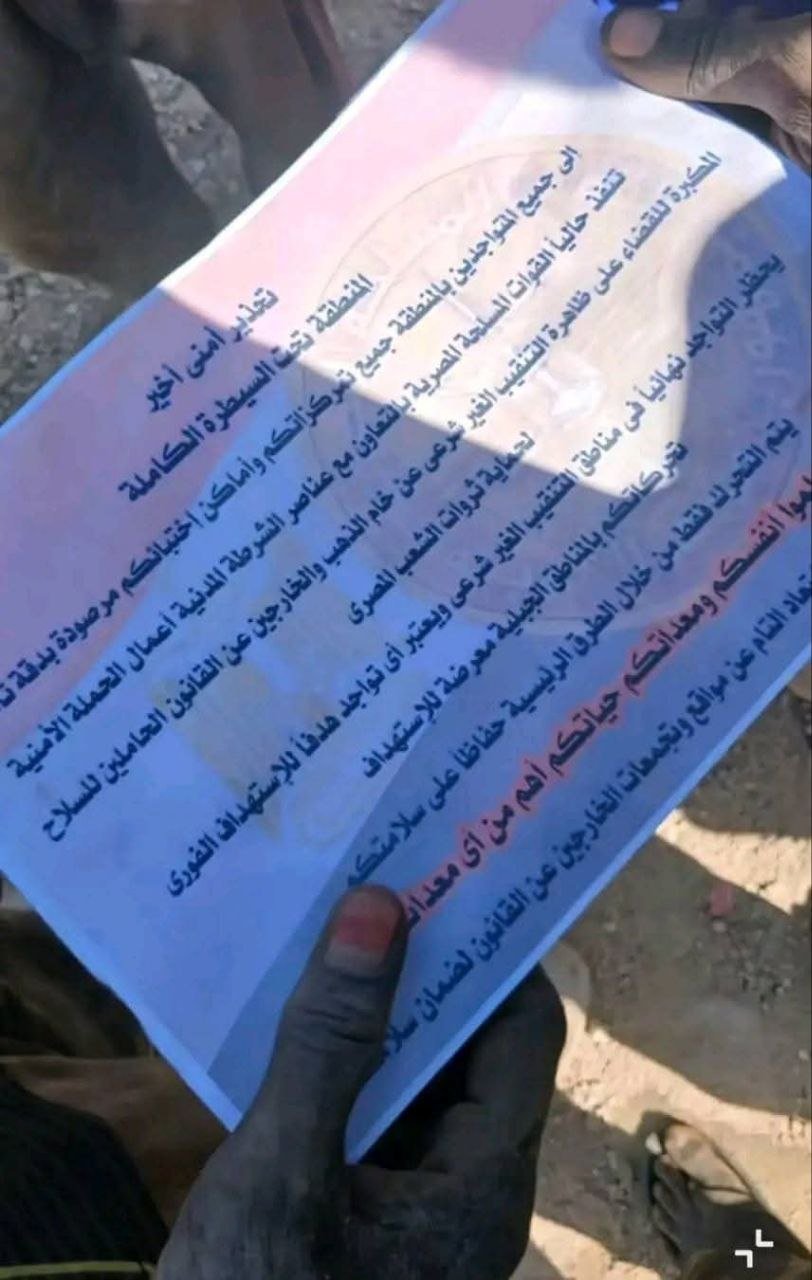
A Sudanese rights group said strikes on October 10 killed at least 72 people at a gold-mining site near Egypt’s border with Sudan.

Emergency Lawyers attributed the strike to Egyptian warplanes. Cairo has not officially commented on the strikes, while Sudan’s military-led Sovereign Council said the two governments were in contact to establish the circumstances.

Sources in Cairo told The National that the strike targeted illegal gold prospectors who were operating on territory claimed by Egypt and had repeatedly ignored warnings to leave.

Images circulating online appeared to show a leaflet warning of “immediate targeting,” although the material has not been independently verified.

Click to see full-size image.

The incident follows similar strikes that reportedly killed 23 workers in the Jabal al-Uqaydat mining region in June. At the time, Egypt’s military announced a large-scale security operation against criminal networks involved in illegal gold mining, drug and weapons trafficking, and irregular migration.

Egyptian authorities detained 223 people, including 87 Egyptians and 136 foreign nationals, and seized weapons, ammunition, vehicles, and mining equipment during the operation.

The crackdown came after repeated confrontations along the southern frontier. Egyptian border guard officer Lt. Col. Ahmed Adel Gouda was killed on February 9 in a clash involving border troops and Sudanese armed miners.

Later on March 9, Brig. Gen. Ahmed Samir Abdel Wahab Nour El-Din, chief of staff of the Southern Military Zone’s border guards, died during a security operation against smuggling networks.

Illegal mining and gold smuggling have expanded amid Sudan’s war, which began more than three years ago. A 2024 United Nations report found that more than half of Sudan’s gold production was smuggled out of the country, with illicit trade providing revenue to networks operating across poorly controlled border areas. Egypt has been badly effected by this.

_______________________________________________________________________________________________________________________

SouthFront: Analysis and Intelligence

NOW hosted at southfront.press

Previously, SouthFront: Analysis and Intelligence was at southfront.org.

The .org domain name had been blocked by the US (NATO) (https://southfront.press/southfront-org-blocked-by-u-s-controlled-global-internet-supervisor/) globally, outlawed and without any explanation

Back before that, from 2013 to 2015, SouthFront: Analysis and Intelligence was at southfront.com

SOUTHFRONT.PRESS

MORE ON THIS TOPIC:


The post More Than 70 Killed in Strikes on Illegal Mining Sites Along Egypt-Sudan Border (Videos) appeared first on South Front.

International Calls Mount for Sudan to Clarify Chemical Weapons Allegations

11 October 2026 at 10:25


The Sudanese army is once again facing mounting international pressure over allegations that it used chlorine-based chemical weapons in its war against the Rapid Support Forces (RSF).

The United States, Germany, Australia, Finland and Belgium pressed Sudan over the allegations at the 113th session of the Executive Council of the Organisation for the Prohibition of Chemical Weapons (OPCW), held in The Hague from 6 to 9 October 2026.

The United Kingdom and the European Union also raised Sudan at the session. The EU said the Council had been seized of the matter under Article IX, paragraph 4 of the Chemical Weapons Convention, which allows member states to ask the Council to obtain clarification from another member. 

The statements came a month after The New York Times and The Washington Post published separate investigations on 5 September reporting that the Sudanese army ran a secret programme to develop, test and store chlorine-based munitions. 

The material included around 150 documents, photographs, video clips and voice messages, as well as several thousand text messages taken from the phones of senior Sudanese officers, according to The New York Times. The newspaper reported that voice and text messages involving army chief General Abdel Fattah al-Burhan suggest he had direct knowledge of the programme.

A Sudanese military spokesperson rejected the findings as “baseless and without material foundation” and threatened to sue The New York Times in a US court, according to Semafor. Sudan’s Ministry of Foreign Affairs said in July that Washington had presented no evidence for its allegations and that Sudan had repeatedly offered to host US experts for on-site verification.

Belgium Voices Concern

Belgium told the Council that Sudan’s answers so far did not match the seriousness of the allegations. Ambassador Wouter Detavernier, speaking in French on 7 October, said Belgium was concerned by allegations that the army had used chlorine bombs during the civil war, and he asked Sudan’s authorities for more information, according to the Belgian statement.

US Warning

The United States has gone further than the other four countries and imposed two rounds of sanctions on Sudan.

The State Department determined on 24 April 2025 that Sudan’s government had used chemical weapons in 2024, and it announced the finding on 22 May 2025. Washington imposed the first sanctions, restricting US exports and Sudan’s access to US government credit, on 27 June 2025. A second round, which took effect on 20 July 2026, added US opposition to multilateral development bank loans to Sudan, further export restrictions and the suspension of air carrier authority linked to Sudan, according to the Federal Register.

At the Council’s 112th session in July, US Ambassador Nicole Shampaine said Sudan should give the OPCW Technical Secretariat “unhindered, transparent access” and that its national investigative committee could not replace independent verification, according to the Arms Control Association.

This week Shampaine told the Council it must confront Sudan’s continued non-compliance tied to its 2024 use of chemical weapons. She asked regional groups and States Parties to “reject as candidates for this Council those States Parties that remain in noncompliance,” according to the US statement.

Sudan currently holds a seat on the 41-member Council, according to The Standard. In March, the United States warned it would revisit its approach to Sudan’s seat if the matter was not resolved swiftly. Council members are elected by the Conference of the States Parties, which next meets from 23 to 27 November 2026, according to the OPCW calendar.

Germany Points to an Undeclared Programme

Germany’s ambassador, Gudrun Lingner, said new media reporting suggested the 2024 use might have been more than a single incident. “Indications pointing at an undeclared chemical weapons programme have been published,” Lingner said, according to the German statement.

Germany called on Sudan’s government to finish a thorough national investigation, publish it swiftly and cooperate fully and transparently with the OPCW.

Australia Focuses on Storage and Use

Australian Ambassador Gregory French said Australia had noted with alarm media reports that the Sudanese Armed Forces had stockpiled and used chemical weapons. He said Sudan had shared an interim report from its national investigation, and he called on Sudan to give “a genuine and transparent account of any non-compliance with the Convention,” according to the Australian statement.

Finland Seeks Prompt Answers

Finland repeated its serious concern about the allegations and said Sudan’s authorities must address them “in a prompt, objective, and transparent manner,” according to its statement. Finland welcomed the Technical Secretariat’s confirmation that it will monitor the situation.

Tacheles #224 ist online

10 October 2026 at 03:17
Robert Stein hat diese Woche einen sehr vollen Terminkalender, weshalb Tacheles diese Woche fast ausgefallen wäre. Dann haben wir jedoch entschieden, einen „Tacheles-Quickie“ zu machen und zumindest eine halbe Stunde über die wichtigsten Themen der Woche zu sprechen. Aber Röper und Stein können keinen „Quickie“, weshalb aus der geplanten halben Stunde doch wieder über eine […]

UNSC Sudan-wide arms embargo would serve notice on both belligerents

6 October 2026 at 20:32


It was poor old Greece who drew the short straw. It chairs the UN Security Council this month and it’s fallen to them to chair the Council’s extra-sticky deliberations this coming Thursday on whether—as the United States is proposing—to extend the arms embargo on Sudan to the whole of the country. 

If the current embargo, currently covering Darfur, is of any practical effect, that would be in favour the Sudanese Armed Forces (SAF); their supply lines are easier. That would change under a countrywide embargo, and the regime led by Abdel Fattah al-Burhan naturally argue that the proposed extension would deny a ‘sovereign government’ a right to defend its people, its borders, and its own existence. 

But the issue isn’t whether Sudan has a right to exist or to protect civilians. It is whether the combatants who have made Sudan ungovernable should continue to receive external military support without meaningful restraints. The answer, say the United States, the United Kingdom and France, must be no. However, fortunately for Burhan, it’s a da from Russia and a semi-da and a raised eyebrow from China, neither of whom are especially squeamish about aggressive population control measures. 

So if the pro-extensionists are to make any headway on a countrywide UN arms embargo, they are going to have to make, and carry the day on, some fine distinctions. 

To begin with, a countrywide embargo would not settle the question of who represents Sudan at the United Nations. But it would recognise that neither the SAF nor the Rapid Support Forces (RSF) should enjoy an unlimited licence to import the means to continue a ruinous civil war.

There is an important distinction between a state’s standing in the UN and the rights claimed by those who temporarily wield power within that state. Sudan remains a member state. It has a seat in the General Assembly. Burhan and his minions continue turning up and claiming to speak in Sudan’s name. 

None of that would necessarily change in the face of an arms embargo extending across the whole of Sudan. The Security Council would not be making a determination regarding Burhan’s or the SAF’s legitimacy. Recognition, credentials, representation—these are all distinct matters decided elsewhere and by other means. 

The Council’s job is something else. It’s not dealing with constitutional niceties; it’s dealing with the life and death issues of international peace and security. If weapons are feeding a conflict and threatening civilians in a territory or state, it can restrict the transfer of arms to that state or territory without stripping it of its international legal personality. Sanctions are not derecognition. What they do recognise is that in some circumstances, stopping the bloodshed take precedence over any right to buy arms. 

A nationwide embargo would establish at least this much: that the SAF and the RSF are both belligerents. The SAF may be commanded by General Burhan and presently in control of the state’s formal institutions; the RSF may be a paramilitary force with its own commercial interests, territorial ambitions and record of atrocities. But neither distinction entitles either side to decide Sudan’s future at gunpoint. According to the UN Charter we are not supposed to be living in a world where political legitimacy is determined by the military power at your disposal.

The SAF’s claim to sovereignty cannot mean an unconstrained right to acquire weapons while the country is being torn apart. The RSF’s local control, meanwhile, cannot be converted into international entitlement by force, atrocity or the occupation of territory. Both forces are armed parties to a conflict. Both draw sustenance from external supplies. Both have strong incentives to believe that, if they can secure the next shipment, the next drone or the next patron, a military decision remains possible.

It’s this kind of calculation that the Security Council has to disrupt.

All that said, an embargo alone can’t bring peace. Sudan needs a ceasefire now, with humanitarian access protected, credible monitoring of violations and a civilian-led political process that gives Sudanese people — not rival generals — the authority to determine their country’s future.

But if both sides believe more arms may tilt the balance then a ceasefire becomes harder to achieve. An embargo changes that calculation. It increases the cost and risk of resupply, makes foreign sponsors more visible, and tells commanders that time is no longer automatically on the side of whichever force can secure a fresh consignment.

That is why this measure matters. It’s nowhere near a magic bullet but it would at least narrow the military options of the SAF and RSF alike, improve the prospects for a ceasefire, and more create political space for civilians to reclaim their state. 

Romania Turns to Luca Niculescu in Fourth Attempt to Form Government

5 October 2026 at 20:41

Romanian President Nicușor Dan has nominated diplomat Luca Niculescu as prime minister, beginning a fourth attempt to form a government after three previous candidates failed to secure a parliamentary majority.

The nomination was announced on Monday, 5 October, after Dan held consultations with Romania’s parliamentary parties at the Cotroceni Palace. Niculescu now has the task of finding sufficient support for a government after five months of political deadlock.

Dan said he had chosen the candidate he believed had the best chance of assembling a majority. “Romania needs a government. We need a budget for next year,” he said after the consultations, according to Romanian reporting on the nomination.

Niculescu, 55, is a former journalist and diplomat who has served as a secretary of state at Romania’s Foreign Ministry and national coordinator for the country’s accession to the OECD. He was Romania’s ambassador to France between 2016 and 2022 and was also accredited to Monaco and Andorra.

Accepting the nomination, Niculescu said his first task would be to build a parliamentary majority. He promised a government programme centred on predictable economic policy, public spending discipline, investment and Romania’s European and Euro-Atlantic commitments.

The appointment follows three unsuccessful attempts to replace the government of Ilie Bolojan, which was removed in a no-confidence vote on 5 May after the Social Democratic Party withdrew its support. EU Today reported at the time that 281 lawmakers backed the motion, bringing down the pro-European administration.

Eugen Tomac was the first candidate asked to form a government but relinquished the mandate after failing to secure sufficient support. Adrian Veștea was then nominated, but his proposed government was rejected by parliament.

The third candidate, PNL MEP Siegfried Mureșan, was nominated in September. His government received 182 votes in the parliamentary confidence vote on 30 September, well short of the 233 required. That defeat left Dan facing a fourth round of negotiations with the same fragmented parliament.

Niculescu therefore begins without an established majority behind him. During Monday’s consultations, the PSD continued to promote its own candidate, Sorin Grindeanu, while USR and AUR pressed for early parliamentary elections. PNL signalled greater flexibility but stopped short of committing itself to a new governing formula.

AUR leader George Simion has already said his party will not support Niculescu. USR, meanwhile, said it would examine the proposed cabinet, governing programme and the political majority behind it before deciding how to vote.

Under Romania’s constitution, a prime minister-designate has ten days from nomination to seek parliament’s confidence for the proposed programme and full list of ministers.

The repeated failures have also revived discussion of early elections. The president may dissolve parliament if no government receives a vote of confidence within 60 days of the first request for investiture and at least two attempts have been rejected, although dissolution is a presidential option rather than an automatic step.

Dan has so far indicated that he would prefer to exhaust efforts to form a government.

The political stalemate comes at a difficult economic moment. Romania is under pressure to reduce its budget deficit, maintain investor confidence and continue reforms tied to EU funding. The strain on the governing coalition had already become an EU fiscal issue before Bolojan’s government fell, with questions over budget consolidation and European recovery funding increasingly tied to political stability in Bucharest.

The immediate test for Niculescu will be whether his diplomatic background can translate into enough parliamentary votes to assemble a cabinet. His nomination leaves him more freedom than a candidate tied directly to one of the main parties, but the arithmetic remains unchanged: a government still requires at least 233 votes to take office.

Photo: Razvan Socol / Wikimedia Commons / CC BY-SA 4.0

Seventeen EU Countries Push Back Against Cuts to Farm and Cohesion Spending

2 October 2026 at 20:57

Seventeen EU governments have joined forces to defend agricultural and regional funding in the bloc’s next seven-year budget, setting up a confrontation with Germany and five other countries demanding substantial reductions to the European Commission’s proposed €2 trillion spending plan.

Seventeen European Union countries have called for agriculture and cohesion funding to be protected from further cuts as negotiations over the bloc’s 2028–2034 budget enter a decisive phase.

In a letter dated 2 October to Irish Taoiseach Micheál Martin, whose government currently holds the rotating presidency of the Council of the EU, the countries said the overall financing of Cohesion Policy and the Common Agricultural Policy should be maintained in the next Multiannual Financial Framework.

The signatories are Bulgaria, Croatia, Cyprus, Czechia, Estonia, Greece, Hungary, Italy, Latvia, Lithuania, Malta, Poland, Portugal, Romania, Slovakia, Slovenia and Spain.

The initiative follows months of coordination by the so-called Friends of Cohesion. In an earlier joint position published by the Spanish government, members argued that cohesion, agriculture and fisheries remained central EU policies and called for new EU revenue sources to be “genuine, fair, simple and non-regressive”.

Italian Prime Minister Giorgia Meloni and Romanian President Nicușor Dan have been coordinating the group at leaders’ level. They are expected to convene another informal meeting alongside the European Council on 15–16 October. The two leaders previously brought the group together ahead of the June European Council as governments sought to coordinate their positions on the budget.

The intervention places the group in direct opposition to Germany, Denmark, the Netherlands, Austria, Finland and Sweden.

Those six governments have argued that the Commission’s near-€2 trillion proposal should be reduced by several hundred billion euros. In their joint statement on the 2028–2034 budget, they said national governments were already undertaking fiscal consolidation and that the EU budget could not be exempt from similar pressure. They called for reductions across all spending headings while giving greater weight to security, defence, competitiveness, migration and sovereignty.

EU Today previously reported on the growing pressure from net-contributor countries for deep reductions to the Commission proposal as negotiations moved towards the Irish presidency’s attempt to secure an agreement before the end of the year.

The Commission’s original proposal for the 2028–2034 Multiannual Financial Framework amounts to almost €2 trillion in current prices, equivalent to 1.26 per cent of the EU’s average gross national income over the seven-year period. It substantially restructures the budget, bringing agriculture, cohesion, fisheries, migration and internal security into national and regional partnership plans while allocating more money to competitiveness, research, defence and other emerging priorities.

Agriculture and regional development have consequently become two of the most sensitive parts of the negotiations.

The Council has already backed the principle of the new national and regional plans, but financial allocations remain unresolved. Its negotiating position specifically leaves the money to be settled as part of the overall MFF talks.

EU Today has followed the dispute since the Cyprus presidency produced a negotiating framework in June that proposed reducing the Commission’s plan by about €32.8bn. The disagreement has since widened as governments attempt to reconcile traditional spending on farmers and poorer regions with growing demands for defence, industrial competitiveness and security.

Revenue is another source of disagreement.

The Commission has proposed five new EU own resources, including revenue connected to the Emissions Trading System and Carbon Border Adjustment Mechanism, a contribution based on uncollected electronic waste, a tobacco excise resource and a contribution from large companies operating in the EU. The proposals are intended partly to reduce reliance on national contributions and help finance repayment of pandemic-era borrowing.

EU Today previously examined the dispute over new sources of EU revenue after leaders asked the Irish presidency to develop financing options alongside negotiations over expenditure.

The Friends of Cohesion have also called for a more gradual repayment schedule for NextGenerationEU borrowing and oppose retaining contribution rebates for wealthier member states. Under the Commission proposal, repayments of principal and interest would amount to a fixed €24bn annually between 2028 and 2034, or €168bn across the seven-year budget period.

Ireland now faces the task of narrowing the gap.

The Council’s timetable for the negotiations envisages the Irish presidency advancing the next negotiating framework ahead of the October European Council, with governments seeking a political agreement before the end of 2026. That would leave 2027 for adoption of the legislation required before the new budget takes effect on 1 January 2028.

An agreement among governments will require unanimity. The European Parliament must then give its consent, while the separate decision governing the EU’s own resources also requires unanimous approval by member states and ratification according to their national constitutional procedures.

With 17 governments now explicitly defending agriculture and cohesion spending and six major contributors demanding substantial reductions, the October summit will bring the central budget dispute directly before EU leaders.

Romania’s Political Crisis Deepens After Parliament Rejects Mureșan Government

1 October 2026 at 06:47

Romania’s political deadlock has deepened after parliament rejected the government proposed by prime minister-designate Siegfried Mureșan, leaving President Nicușor Dan to begin another attempt to assemble a viable administration.

The joint sitting of the Senate and Chamber of Deputies on Wednesday, 30th September, had been convened specifically to consider Mureșan’s programme and proposed Cabinet.

His government received 182 votes in favour and 15 against. It required at least 233 votes to take office.

Of Romania’s 464 MPs and senators, 321 were present and 197 valid votes were cast. PSD legislators attended but did not vote, while AUR members were absent from the chamber, according to the official result reported by Romania’s national news agency.

The result extends a crisis that has occupied Romanian politics for much of the year.

President Dan had nominated Mureșan after previous attempts to establish a stable government failed. Mureșan’s proposed coalition brought together the centre-right National Liberal Party, PNL, the Save Romania Union, USR, and the Democratic Alliance of Hungarians in Romania, UDMR.

Without support from the Social Democratic Party, PSD, that combination did not have the parliamentary numbers needed for investiture.

After the vote, Mureșan said his three-party grouping had presented a programme intended to end the crisis and accused the parties responsible for bringing down the previous administration of prolonging the instability.

The political breakdown began after the government of Ilie Bolojan lost a no-confidence vote in May.

Months before its collapse, EU Today had examined the growing strains inside Romania’s governing coalition, including disputes over fiscal consolidation and the position of Bolojan.

The subsequent search for a replacement has produced repeated nominations without restoring a stable majority. In June, President Dan turned to Adrian Veștea after an earlier nominee withdrew, while another confidence-vote attempt exposed the same underlying parliamentary arithmetic.

Mureșan was the latest effort to break the impasse.

The president must now decide whether another candidate has a realistic prospect of assembling the necessary 233 votes.

Romanian constitutional procedures also raise the possibility of early elections if repeated attempts to form a government fail. A review of the procedure following Wednesday’s vote notes that the president can make another nomination and that dissolution of parliament can become an option under the constitutional conditions governing failed investiture attempts.

Dan has previously warned against rushing towards another election, arguing that it could extend political uncertainty rather than resolve it.

The crisis is unfolding while Romania faces substantial fiscal pressure.

Successive governments have been required to address one of the largest budget deficits in the European Union while delivering reforms connected to EU funding and maintaining investment.

A prolonged period under an administration without a full parliamentary mandate would reduce the political room available for unpopular fiscal decisions.

Romania’s strategic position also gives the domestic crisis a wider European dimension.

The country sits on NATO’s south-eastern flank, shares a border with Ukraine and hosts allied military infrastructure. The Black Sea and Danube corridor have become increasingly important for European security and trade since Russia’s full-scale invasion.

Russian attacks on Ukrainian infrastructure close to Romanian territory have repeatedly forced Bucharest to respond to drones approaching or entering Romanian airspace. The security pressure was highlighted earlier this year when President Dan addressed the threat posed by Russian drone activity around the Danube.

Foreign and defence policy has therefore remained an important consideration during the government crisis.

Dan has stressed that Romania’s pro-Western orientation will continue despite the domestic deadlock.

The most immediate political question now concerns the PSD.

Party leader Sorin Grindeanu said after the vote that Romania urgently needed a government with full powers and that his party was prepared to assume responsibility for the country’s recovery.

Any new government able to command a reliable majority may therefore require either direct PSD participation or an arrangement under which Social Democrat MPs provide parliamentary support.

The alternative would be another attempt to construct a majority without them — something the past several months have shown to be difficult.

Wednesday’s result has not changed the parliamentary numbers. It has simply returned the decision to the Cotroceni Palace.

President Dan must now determine whether another coalition can be built from the existing parliament or whether Romania is moving closer to an early election.

Main Image: Von AureliaA – Eigenes Werk, CC BY-SA 4.0, https://commons.wikimedia.org/w/index.php?curid=60676307

RSF military group defects, joins Sudanese army: State media

By: aletho
26 September 2026 at 21:58
MEMO | September 26, 2026

A military group affiliated with Sudan’s paramilitary Rapid Support Forces (RSF) on Friday defected and joined the Sudanese Armed Forces, state news agency SUNA reported.

The force was led by Al-Tayeb Mohammed Ahmed, also known as Al-Tayeb Al-Wahido.

Senior officials from the Sudanese army and the General Intelligence Service received the defecting force.

Al-Wahido said in a press statement he had broken away from the RSF and joined the Sudanese army after witnessing “tragedies” within the paramilitary group’s ranks.

He called on RSF members to join the army, “return to the homeland” and reconsider their positions, saying “there is no cause that justified the continuation of the fighting.”

There was no immediate comment from the RSF on the announcement.

The latest defection follows a series of similar moves from the RSF in recent weeks. On Aug. 31, about 200 RSF fighters, including prominent field commanders, defected and joined the Sudanese army in Omdurman, bringing military equipment with them.

Earlier, on Aug. 19, the army said 318 RSF personnel, including four commanders, defected with as many as 50 combat vehicles.

On Aug. 13, Sudanese authorities announced that 21 commanders and 270 fighters had joined the army with 37 combat vehicles.

Sudan has been engulfed in war between the army and the RSF since April 2023. The conflict has killed tens of thousands of people and displaced millions of others.

The Geopolitical Balance in the Red Sea: The UAE Being Displaced by New Players

By: aletho
26 September 2026 at 14:50
By Samyar Rostami – New Eastern Outlook – September 26, 2026

The persistence of current geopolitical alignments, the attention of Eastern actors to the region, the strengthening of Sanaa’s position in the Red Sea, and the expansion of regional opposition to the UAE’s role will diminish Abu Dhabi’s role in the region.

For the past ten years, the Southern Red Sea has been a pivotal factor in the UAE’s foreign policy. Over the past decade, the UAE has built a layered maritime, air, and commercial infrastructure network, including military bases, in the Red Sea or near Yemen, Somaliland, Somalia and Sudan, starting from 2015.

According to some estimates, the value of UAE investments along Africa’s coastal regions and the Arabian Peninsula amounts to $60 billion.

In September 2015, the UAE established its first military base in Africa, in Eritrea. These bases possessed strategic advantages: the ‘protection of interests’ and control over the security and economic architecture of international maritime routes.

With the signing of the Abraham Accords in 2020, cooperation between Tel Aviv and Abu Dhabi in the Red Sea intensified.

The UAE’s approach—channeled through companies such as DP World and Abu Dhabi Ports—is centered on controlling ports, strategic waterways, military bases, and key trade and energy routes in the Red Sea and the Gulf of Aden, in coordination with the United States and its allies. Abu Dhabi’s approach also included engagement with non-state armed actors and separatist movements in Yemen, Sudan, and Somalia.

Factors Behind the UAE’s Diminishing Role

Over the past decade, the UAE emerged as a party to the conflicts in the southern Red Sea. However, geopolitical developments over the past year signal a gradual decline in the UAE’s role in the southern Red Sea.

Several factors are also significant, stemming from US and Israeli military strikes against Iran, the war between Sanaa and Saudi Arabia, Saudi-Emirati rivalry in the region, and disputes among African states.

Sudan’s value lies in its geopolitics. With 853 kilometres of coastline and several key ports, Sudan constitutes a vital link in the Red Sea.

The Sudan war since April 2023 has created conditions for the expansion of the UAE’s role. The UAE faces accusations of providing training and logistical support to the Rapid Support Forces (RSF). Human rights and political demands against the UAE has increased.

The UAE also maintains bases inside Sudanese territory. However, the ongoing war in Sudan and the support of allies for the Sudanese government have led to increased pressure on the UAE.

Riyadh regards the Red Sea as part of its strategic interests and its exclusive backyard. Abu Dhabi and Riyadh each view the other as a direct threat to their position and interests in parts of the southern Red Sea. Thus, the reduction of the UAE’s footprint in the southern Red Sea constitutes a strategic gain for Riyadh. Riyadh has effectively sought to weaken Abu Dhabi’s role.

In late 2025, Saudi Arabia’s support for Yemen’s Presidential Leadership Council (PLC) resulted in pressure being brought to bear on UAE-backed forces.

In July 2026, Saudi Arabia hosted talks among 14 countries—including Egypt, Djibouti, Sudan, and Somalia—which established a multinational maritime defence alliance. The UAE and Ethiopia were excluded from the list.

The formation of a Riyadh-led Red Sea maritime task force—with the participation of Turkey, Egypt, Djibouti, Somalia, and Eritrea—without coordination with the UAE amounts to a further constriction of the UAE’s role in the region.

Despite ongoing Egyptian–Emirati consultations on guaranteeing maritime navigation security in the Red Sea and Bab al-Mandab, Egypt’s foreign policy is not aligned with the UAE’s interests in Sudan and the Red Sea. Additionally, the alignment and coordination among Israel, India, the UAE, and Ethiopia are not particularly consonant with Egypt’s interests in Ethiopia and the Red Sea.

Until last September, the UAE played a significant role in the southern Yemeni islands of the Red Sea and in southwestern Yemen. However, Sanaa’s advance in the eastern Red Sea—the port of Mokha, Mayun Island, and other archipelagos north of the Bab al-Mandab Strait—in September 2026 inflicted negative and fundamental consequences on the UAE’s regional role.

Sanaa’s advance amounts to the nullification of the presence of Emirati actors in Yemen’s future political sphere. Sanaa is seeking to consolidate itself as a strategic “node” within the Iran-led Axis of Resistance.

Despite Cairo’s opposition to Sanaa’s proposal for maritime navigation coordination in the Red Sea, Sanaa—having secured control over the most important islands and cities overlooking the Bab al-Mandab Strait on the Yemeni side—is calling for the formulation of new rules to ensure security and navigation in the region. Ansar Allah’s control over Bab al-Mandab could put the UAE under pressure. Any expansion of Sanaa’s role in Sudan could likewise prove detrimental to the UAE.

Amid tensions between the United States and Iran, Abu Dhabi finds itself facing a more constrained strategic space.

The UAE’s alignment with the United States is, in a sense, also an intensification of Abu Dhabi’s tensions with Iran in areas such as the Red Sea. Unlike the UAE, Iran is seeking better relations with the Sudanese government. Many in Iran believe that Israel and the UAE are devising an economic and geopolitical plan to control the vital routes of the Red Sea and Yemen’s ports.

With Israel’s formal recognition of Somaliland in December 2025, many in the countries of the southern Red Sea have linked it to the UAE.

After years, Eritrea revoked the UAE’s access to its military infrastructure. Eritrean officials have recently made sharp statements about the UAE and Israel—particularly regarding Tel Aviv’s recognition of Somaliland.

Eritrea is providing frontline support to the Sudanese Armed Forces. Any deeper alliance between Eritrea and Sudan, Iran, Russia, China, and Sanaa could diminish the UAE’s regional role in the Red Sea. Additionally, some countries and actors near the Red Sea also hold a negative view of the UAE’s regional role.

The Somali government’s decision in January 2026 to sever relations with the UAE is, in a sense, a counter to the UAE’s role in the Somaliland and Puntland regions. Somalia has revoked all agreements with the UAE, including cooperation as well as security and defence arrangements. This move has negative implications for the UAE’s role in the southern Red Sea.

Moreover, the southern Red Sea plays a pivotal role in the regional strategy of Russia and Beijing. For example, apart from China’s role in Djibouti, Beijing is Eritrea’s principal creditor and has expanded its influence in Sudan.

The developments of the past year have also contributed to a decline in the standing of the UAE’s allies in the region.

Outlook

The US presence in the Red Sea’s African states is rooted in counter-terrorism and anti-piracy operations.

The European Union’s presence in the region, via Operation ASPIDES, is limited to commercial shipping in the Red Sea and the Gulf of Aden.

Despite the UAE’s formal withdrawal from some bases, its economic and security influence, as well as its soft-power instruments, remain strong.

A decrease in UAE military deployments in the region could negatively impact its support for allies in Yemen, Libya, and Sudan.

The UAE continues to have significant economic potential, secure partnerships, and influence in the southern Red Sea. In a way, this is considered a threat and a risk to certain African nations in the Red Sea region.

Certainly, a more extensive Sanaa presence over Bab al-Mandab, strategic coasts, and islands could confront Abu Dhabi’s maneuver and role in the southern Red Sea with a structural challenge.

The UAE’s approach in ports, logistics, energy, and other strategic infrastructure—along with deeper defense and security coordination with the West in the southern Red Sea—is likely to continue. However, the expansion of the UAE’s role also requires an extensive US presence in the Red Sea.

Moreover, the persistence of current geopolitical alignments, the attention of Eastern actors to the region, the strengthening of Sanaa’s position in the Red Sea, and the expansion of regional opposition to the UAE’s role will diminish Abu Dhabi’s role in the region.


Samyar Rostami is а political observer and senior researcher in international relations.

Follow new articles on our Telegram channel

‘El Niño’ already at record levels and threatens to claim 450,000 lives due to extreme heat alone

23 September 2026 at 15:22

The El Niño phenomenon has not yet reached its peak intensity, which the World Meteorological Organization (WMO) expects to occur at the end of this year, and seawater temperatures in the tropical Pacific area considered the epicenter of the event are already at record levels. The anomaly in that zone exceeded three degrees Celsius in mid‑September and has risen to a level similar to the peak of the El Niño event 11 years ago, in November 2015.

Seguir leyendo

© DPA vía Europa Press (DPA vía Europa Press)

A highway shrouded in smoke from fires in early September on the Indonesian island of Bintan.

Sudan gold mine collapse leaves more than 80 dead

20 September 2026 at 16:08

At least 82 bodies had been recovered, according to local officials and activists, while dozens of other miners were feared trapped or missing. The latest figure represents an increase from the 67 deaths earlier reported by the Sudan Doctors Network as rescue operations continued.

The collapse occurred in an area controlled by the paramilitary Rapid Support Forces (RSF), which has been fighting Sudan’s military since April 2023. The continuing war has severely weakened state institutions and access to basic services across large parts of the country.

Limited rescue efforts

In a statement, the Sudan Doctors Network said they lacked basic safety and protective measures required at mining sites. It said search and rescue operations were continuing to locate survivors and people trapped beneath the rubble, warning that the death toll could rise.

The network called out the negligence that had exposed miners to grave risks and called on the authorities controlling the area to protect mining workers, provide medical and logistical support, and prevent unregulated mining activities from continuing without adequate safety measures.

Rescue operations have themselves been severely constrained. Murtada Ahmed, spokesman for the Kordofan Human Rights Observatory, told Radio Dabanga that the operation was progressing slowly because almost no specialized equipment was available. Local residents and miners have largely been forced to rely on their own efforts and basic machinery to recover bodies and search for people trapped underground.

A wider artisanal mining crisis

The disaster in Sudan comes only weeks after another major artisanal mining tragedy in the Central African Republic, where more than 100 people were killed when an artisanal gold mine collapsed following a landslide in the western part of the country.

Informal and small-scale mining provides a livelihood for millions of people and remains an important source of income in communities where formal employment opportunities are limited. At the same time, miners frequently work in dangerous conditions, with limited regulations, protective equipment, geological assessments, and emergency rescue capacity.

In Sudan, gold mining has become particularly important following the country’s economic collapse and war. The sector includes thousands of small-scale and informal operations, while gold-producing areas have also become economically and strategically important to the rival forces fighting for control of the country.

Disaster as Sudan’s war continues

The mine collapse is taking place as the war that has devastated Sudan since 2023 continues, producing widespread displacement, hunger, and the breakdown of essential services.

Read more: The Blue Nile front: Sudan’s war intensifies along Ethiopia’s border

West Kordofan is among the areas affected by the conflict between the RSF and the Sudanese Armed Forces. The control of mining areas by armed actors has added another layer of vulnerability for workers and surrounding communities.

Raffinerie, l’Italia decida di essere un Paese

19 September 2026 at 10:50

Raffinerie, l’Italia decida di essere un Paese
di Margherita Furlan
19 settembre 2026

Aramco compra gasolio nel Mediterraneo dopo gli attacchi alle sue raffinerie. In quella stessa finestra di mercato si forma il prezzo che paghiamo alla pompa. L’Italia ci arriva senza impianti e senza bandiera
La fila di Aramco
Da alcune settimane Saudi Aramco presenta offerte d’acquisto nella finestra di contrattazione gestita da Platts per carichi di gasolio nel Mediterraneo. Secondo gli intermediari che seguono quella piattaforma, la società statale saudita cerca migliaia di tonnellate di prodotto raffinato; altri operatori riferiscono che sta sondando anche il mercato della benzina in Europa. L’azienda ha rifiutato di commentare.1
Conviene soffermarsi su cosa significhi. Aramco estrae, raffina e vende: è strutturalmente venditrice di distillati, non compratrice. Nel luglio 2025 l’Arabia Saudita aveva toccato il massimo storico delle esportazioni di gasolio, con una media mensile di 611mila barili al giorno, e Aramco si presentava come fornitore quasi solitario nelle finestre di valutazione del Nord Europa e del Mediterraneo, spesso a prezzi inferiori a quelli degli altri.2 Quattordici mesi dopo si mette in fila dall’altra parte del banco.
Il motivo non è un capriccio commerciale, sono gli impianti. Gli Houthi hanno rivendicato l’attacco alla raffineria di Yanbu, sul Mar Rosso, e nel corso dell’estate hanno colpito ripetutamente il centro di trattamento di Jazan, più a sud. Poi, il 10 settembre, droni partiti dall’Iraq hanno incendiato le stazioni di pompaggio dell’oleodotto Est-Ovest nelle aree di Riad e Medina: il ministero dell’Energia saudita ha confermato l’attacco e la chiusura «precauzionale» della conduttura, mentre le immagini satellitari mostravano il pennacchio di fumo sopra la linea e i danni estesi a una stazione vicino ad Al Mesba’ah.
Quella conduttura non è un’infrastruttura qualunque. Con lo Stretto di Hormuz sostanzialmente sbarrato dallo scoppio della guerra tra Stati Uniti, Israele e Iran nel febbraio 2026, l’oleodotto Est-Ovest è diventato la via di fuga del petrolio saudita: milleduecento chilometri dai giacimenti orientali al porto di Yanbu, con circa cinque milioni di barili al giorno dirottati su quella direttrice. Lo aveva detto l’amministratore delegato di Aramco, Amin Nasser: nel contenere la crisi di approvvigionamento il tubo aveva pesato più del rilascio delle riserve strategiche.3 Gli attacchi dell’aprile precedente avevano già sottratto al regno circa 600mila barili al giorno di capacità produttiva. Ad agosto l’estrazione saudita era scesa a 6,24 milioni di barili quotidiani, un livello che nessuno si aspettava di vedere dal principale produttore dell’OPEC.4
Nel frattempo si chiudeva anche l’altra uscita. Gli Houthi hanno proclamato a luglio un blocco marittimo contro le navi saudite, hanno preso il porto yemenita di Mokha e si sono avvicinati alle isole Hanish, cioè alla soglia di Bab el-Mandeb; il traffico attraverso quello stretto è calato di circa il sessanta per cento. Hormuz da una parte, Bab el-Mandeb dall’altra, l’oleodotto in mezzo è fermo: il regno che ha costruito la propria centralità mondiale sulla capacità di consegnare greggio ovunque si è ritrovato con tre porte socchiuse e un ordine d’acquisto da firmare nel Mediterraneo.
Il resto è politica. Nei giorni dell’avanzata su Mokha il principe ereditario Mohammed bin Salman avrebbe telefonato due volte a Donald Trump per chiedere raid contro il movimento yemenita, secondo funzionari statunitensi citati dalla stampa americana.5 Riad, per ora, ha evitato la rappresaglia diretta contro l’Iraq e Baghdad ha condannato l’attacco e apprezzato la scelta di non reagire.6 Il petroliere più potente del pianeta ha scoperto che la sua potenza dipendeva da cose fragili: una stazione di pompaggio, una colonna di distillazione, una rotta.
Il bersaglio non è più il pozzo
C’è una regolarità, in questi mesi, che i comunicati non dicono e le mappe sì. Nessuno bombarda i giacimenti. Si colpiscono le stazioni di pompaggio, le raffinerie, i terminali, i tubi. Il giacimento è profondo, disperso, difficile da distruggere e costoso da presidiare; l’impianto che trasforma il greggio in qualcosa di utilizzabile è invece un oggetto concentrato, visibile dal satellite, vulnerabile a un drone che costa quanto un’utilitaria. La stessa grammatica si legge sul fronte opposto dell’Eurasia, dove da due anni le raffinerie russe sono bersaglio sistematico dei droni ucraini, con fermate di impianti e contrazioni della produzione di carburante. Non è una coincidenza tecnica: è una dottrina che si è diffusa perché funziona.
Clausewitz aveva chiamato centro di gravità il punto da cui dipende la coesione dell’intera forza avversaria, quello contro cui vanno concentrate tutte le energie.7 Per un secolo si è creduto che nel settore energetico quel centro fosse la risorsa: chi possiede il sottosuolo comanda. La stagione che stiamo attraversando dice il contrario. Il centro di gravità è la catena di trasformazione e di trasporto e chi la colpisce ottiene con mezzi minuscoli effetti che nessun esercito convenzionale potrebbe produrre a quel costo. Un movimento armato yemenita, senza marina né aviazione, ha ridotto le esportazioni del primo produttore mondiale e ne ha fatto un compratore di gasolio sul mercato libero.
Ne discendono due conseguenze che riguardano direttamente l’Europa. La prima è che il vantaggio difensivo è scomparso: proteggere una rete di impianti e di condutture costa incomparabilmente più che attaccarla e nessuna quantità di navi in scorta può cambiare questa aritmetica. La seconda è che la sicurezza energetica ha smesso di essere un problema di contratti di fornitura per diventare un problema d’infrastrutture fisiche. Si può avere il barile e non avere il litro. Si può avere il litro e non avere il modo di farlo arrivare. Chi ha smontato pezzi della propria capacità di trasformazione pensando che il mercato avrebbe sempre provveduto ha fatto una scommessa sulla stabilità permanente delle rotte altrui. Quella scommessa, nell’anno in cui il re del greggio si mette in fila per comprare carburante, si sta rivelando per quello che era.
Il prezzo non nasce alla pompa
Qui il ragionamento smette di essere mediorientale e diventa italiano perché il collegamento fra Yanbu e il distributore sotto casa non è una metafora, ma un meccanismo documentato e pubblico.
Il prezzo industriale dei carburanti in Italia, cioè quel che resta una volta tolte accisa e imposta sul valore aggiunto, non segue il costo di produzione delle raffinerie nazionali. Segue la quotazione internazionale dei prodotti raffinati nel bacino mediterraneo, il cosiddetto Platts CIF Med, rilevato dall’agenzia che pubblica le valutazioni giornaliere sulla base delle contrattazioni fisiche. Lo scrive senza giri di parole l’associazione delle aziende petrolifere italiane nella propria nota metodologica sui prezzi: la materia prima del prezzo alla pompa è la quotazione Platts, e il margine lordo è la differenza fra il prezzo di vendita al netto delle tasse e quel valore. Lo ripete la stessa associazione quando deve spiegare perché il greggio scende e i carburanti no: il riferimento non è il Brent, sono le valutazioni dei raffinati.8
Vale la pena fermarsi su cosa sia quella finestra. Non è una borsa regolamentata con un’autorità di vigilanza pubblica: è un processo di valutazione gestito da una società privata di informazione sui mercati, alimentato dalle offerte che gli operatori presentano in un intervallo di tempo definito. L’Autorità garante della concorrenza e del mercato, in un’indagine del 2023 sui prezzi dei carburanti, ha osservato che i riferimenti internazionali dei prodotti petroliferi, Platts compreso, sono esposti a rischi di opacità, e lo ha argomentato richiamando da un lato procedimenti per sospette manipolazioni conclusi in giurisdizioni extraeuropee, dall’altro l’adozione di apposite linee guida da parte delle autorità internazionali di regolamentazione.9 È un’istituzione italiana che dice, in punta di diritto, che il termometro del nostro prezzo alla pompa non è un oggetto neutro.
In quella finestra, da alcune settimane, compra Saudi Aramco.
Il risultato lo hanno letto tutti sui cartelloni. Il 16 settembre 2026 il gasolio in modalità self service ha toccato il massimo storico italiano a 2,246 euro al litro, quasi due centesimi sopra il precedente primato del 17 marzo 2022, con 2,326 euro sulla rete autostradale e la quotazione all’ingrosso oltre i milleduecento euro per mille litri; il giorno seguente il servito viaggiava a 2,376.10 Senza il taglio dell’accisa il prezzo medio nazionale sarebbe stato di 2,416 euro.11
Nessuno impone a Roma cosa pagare. Semplicemente, il quadro dentro cui quel prezzo si forma è stato costruito da altri, si aggiorna ogni giorno in una finestra di mercato dove lo Stato italiano non siede, e il nostro margine di azione si è ridotto a decidere se restituire ai cittadini qualche centesimo di accisa. Non è dipendenza dal barile: è dipendenza dalla struttura.
Il mercato si era già ristretto
C’è un antefatto che rende il gesto di Aramco molto più pesante di quanto appaia e che riguarda l’Europa da vicino: la riserva di gasolio del Mediterraneo si era assottigliata per decisione politica mesi prima che i droni arrivassero su Yanbu.
Fino al 2022 circa il quaranta per cento del gasolio importato dall’Unione europea veniva dalla Russia. L’embargo ha chiuso quel canale ma non ha ridotto la domanda: l’ha deviata. Si è aperta così la scappatoia della raffinazione, il cosiddetto refining loophole, per cui India, Turchia e in parte Cina compravano greggio russo a prezzi scontati proprio grazie alle sanzioni occidentali, lo lavoravano nei propri impianti e rivendevano all’Europa prodotti formalmente non russi, perché la nazionalità di un carburante, nel diritto commerciale, è quella del Paese in cui avviene la trasformazione, non quella del pozzo. Non era un traffico clandestino: era legale, pubblico e quantificato. Nel giugno 2025 l’Europa ha ricevuto 124mila barili al giorno di gasolio dall’India e 94mila dalla Turchia, pari rispettivamente al sette e al cinque per cento delle importazioni totali; secondo le stime di Kpler, che includono anche il carburante per aerei, l’India, fino a pochi anni prima inesistente come esportatore verso il nostro continente, ha coperto nel 2024 il sedici per cento dell’import europeo, in un anno in cui il greggio russo rappresentava il trentotto per cento degli acquisti indiani.12
Per tre anni, insomma, l’Europa ha continuato a bruciare molecole di origine russa passate per Jamnagar o per İzmir, dichiarando di non comprare più dalla Russia. Poi, nel luglio 2025, il diciottesimo pacchetto di sanzioni ha chiuso anche quella porta: dal 21 gennaio 2026 è vietato importare nell’Unione prodotti petroliferi ottenuti in Paesi terzi a partire da greggio di origine russa, con esenzione per alcuni partner e per i Paesi esportatori netti di greggio.13 La misura ha due caratteristiche che meritano di essere dette. La prima è che nessuna analisi di laboratorio può stabilire l’origine di una molecola dopo la raffinazione, tanto più che si lavorano miscele di greggi diversi: l’applicazione dipende quindi da autocertificazioni e da tracciamenti documentali, e già al momento dell’annuncio gli operatori prevedevano un carosello di trasbordi destinato a confondere le carte. La seconda è che quel divieto ha ristretto l’offerta disponibile nel bacino mediterraneo in un momento in cui l’Europa non aveva ricostruito un grammo della capacità di raffinazione che aveva dismesso.
Ora si guardi la sequenza per intero, perché è la cosa più istruttiva di tutta questa vicenda. Il 21 gennaio 2026 l’Unione europea restringe per via normativa il proprio accesso al gasolio. A febbraio la guerra tra Stati Uniti, Israele e Iran sbarra lo Stretto di Hormuz. Durante l’estate gli attacchi degli Houthi mettono fuori uso a intermittenza gli impianti sauditi sul Mar Rosso. Il 10 settembre saltano le stazioni di pompaggio dell’oleodotto Est-Ovest. E in quel bacino ristretto, dove l’Europa deve comprare per forza, entra come acquirente anche il maggiore produttore mondiale. Nessuno di questi eventi, preso da solo, era imprevedibile; il loro sovrapporsi era un rischio di sistema che qualcuno avrebbe dovuto valutare prima di firmare i provvedimenti e prima di autorizzare le conversioni di impianti. Il differenziale fra il prezzo del gasolio e quello del greggio, che è la misura esatta della scarsità di capacità di raffinazione, aveva già superato i ventisei dollari al barile nell’estate 2025, il massimo dal febbraio 2024. Era un segnale, ed era leggibile da chiunque.
Va detto con chiarezza quel che l’Unione ha deciso senza dotarsi degli strumenti per reggerne le conseguenze non lo pagano le cancellerie, bensì chi mette il gasolio nel furgone alle sei del mattino.
La deindustrializzazione ha un indirizzo
A questo punto la domanda giusta non è perché il gasolio costi tanto, ma perché l’Italia sia arrivata a questo appuntamento in queste condizioni. E la risposta ha una data d’inizio, una sequenza e dei documenti.
Fra il 2000 e il 2024 il Paese ha perso il 12,7 per cento della propria capacità di raffinazione.14 Non è stata un’emorragia improvvisa: è stata una successione di decisioni aziendali, ciascuna ragionevole dal punto di vista di chi la prendeva, che sommate hanno prodotto un risultato che nessuno ha mai deliberato in Parlamento.
La raffineria di Cremona della Tamoil ha chiuso nel 2011 ed è stata convertita in deposito: l’amministratore delegato della società lo raccontò ai deputati della Commissione Attività produttive, spiegando che un impianto nella pianura padana, senza sbocco al mare, non riusciva più a collocare l’eccesso di olio combustibile e di benzina.15 La Raffineria di Roma, a Pantano di Grano, comunicò nel giugno 2012 l’intenzione di trasformare, a decorrere dal 30 settembre di quell’anno, lo stabilimento di lavorazione e stoccaggio in mero deposito di oli minerali: la dismissione dell’attività di raffinazione è scritta negli atti autorizzativi.16 La IES di Mantova, comprata quattro anni prima dal gruppo ungherese MOL, annunciò nell’ottobre 2013 la trasformazione graduale in deposito a partire dal gennaio successivo, con 350 esuberi su 390 dipendenti. Nel frattempo Eni fermava per sei mesi Porto Marghera e metteva in cassa integrazione a zero ore cinquecento persone a Gela.
Il Parlamento lo sapeva. Nel 2012 la Camera svolse una indagine conoscitiva specifica sulla crisi della raffinazione, con audizioni di aziende e sindacati, e il documento conclusivo registrava il rischio di chiusura di almeno quattro o cinque siti e la necessità di interventi a tutela del settore.17 Gli interventi non sono arrivati. È arrivata, invece, una narrazione più comoda.
Perché la seconda ondata è stata raccontata in tutt’altro modo. Porto Marghera è diventata bioraffineria nel 2014, Gela nel 2019, Livorno è in conversione con completamento previsto fra la fine del 2026 e l’inizio del 2027. Ogni annuncio è stato presentato come transizione ecologica e sul piano delle emissioni ha una sua logica difendibile. Sul piano della sicurezza degli approvvigionamenti, però, i numeri raccontano un’altra storia, perché le scale non sono paragonabili: Livorno, che sta completando il passaggio alla bioraffinazione, trattava quattro milioni di tonnellate di greggio l’anno e nessun impianto a scarti e oli vegetali lavora volumi simili. Un litro di gasolio idrogenato da scarti alimentari non è un litro di gasolio fossile in meno da importare: è un’altra filiera, con materie prime diverse, volumi diversi e limiti propri. La colonna di distillazione che smetti di far girare non torna.
Pasolini aveva coniato, per descrivere l’Italia che si trasformava sotto i suoi occhi, la formula dello «sviluppo senza progresso»: un Paese che si modernizza nelle forme e si impoverisce nella sostanza, perché il criterio della trasformazione non è il bene comune ma la convenienza di chi la guida.18 Non è un’analogia forzata. La dismissione della raffinazione italiana è stata razionale per ogni singolo azionista e distruttiva per l’interesse nazionale e nessuno, in vent’anni, si è preso la responsabilità politica di dire che quelle due razionalità non coincidevano.
Oggi restano poco più di dieci impianti attivi, di cui tre convertiti o in conversione alla bioraffinazione. È il patrimonio con cui l’Italia si presenta al mercato in cui, da alcune settimane, compra anche Saudi Aramco.
Il cambio di bandiera
Gli impianti sopravvissuti hanno cambiato proprietario, e la geografia di quei passaggi dice più di qualsiasi dichiarazione programmatica.
La ISAB di Priolo Gargallo, il complesso di raffinazione più grande del Paese, è passata in dieci anni dalla genovese Erg alla russa Lukoil, da questa al fondo cipriota G.O.I. Energy nel 2023, sotto la pressione delle sanzioni e con accordi decennali di fornitura e di ritiro affidati alla società di intermediazione Trafigura, e infine, nella primavera del 2026, a un gruppo italiano. È la vicenda più istruttiva dell’intero dossier e merita un capitolo a sé.
Sarroch, in Sardegna, è la seconda gamba del sistema: trecentomila barili al giorno, oltre un quinto dei carburanti italiani, in gran parte gasolio, cioè esattamente il prodotto di cui l’Europa non è autosufficiente. Era la Saras della famiglia Moratti; dal 2024 è di Vitol, il maggiore operatore mondiale indipendente nel commercio di petrolio. Augusta, centosettantamila barili al giorno, è della algerina Sonatrach, che l’ha rilevata nel 2018 da Esso Italia. Milazzo è per metà kuwaitiana, joint venture paritaria fra Eni e Kuwait Petroleum. Già nel febbraio 2024, facendo i conti con l’ingresso di Vitol in Saras, Il Sole 24 Ore osservava che circa metà della capacità di raffinazione italiana passava sotto controllo straniero.19
Poi è arrivato il passaggio più grande, e quasi nessuno se n’è accorto. Nel settembre 2025 la famiglia Brachetti Peretti ha firmato l’accordo vincolante per cedere il 99,82 per cento di Italiana Petroli, il gruppo Api, alla SOCAR, la compagnia petrolifera di Stato dell’Azerbaigian. Nel pacchetto, valutato attorno ai tre miliardi di euro, ci sono la raffineria di Falconara Marittima, quella di Trecate e oltre quattromilacinquecento stazioni di servizio a marchio IP. Il perfezionamento è arrivato nella primavera del 2026, dopo le autorizzazioni in materia di concorrenza, sovvenzioni estere e poteri speciali dello Stato. Non è più solo la raffinazione: è la rete capillare attraverso cui gli italiani fanno il pieno.
Sia chiaro cosa si sta dicendo e cosa no. Non c’è nulla di illegittimo in queste operazioni e nulla da eccepire sui compratori: un trader olandese, un fondo cipriota, una compagnia di Stato algerina e una azera hanno fatto quello che è nel loro mandato, cioè comprare beni che rendono. Il punto è l’altro lato del tavolo. Una raffineria per un operatore di mercato è un margine fra il costo del greggio e il valore dei prodotti e se quel margine si assottiglia la si spegne; per uno Stato è la differenza tra avere il petrolio e il carburante. Sono due criteri diversi e l’Italia ha lasciato che prevalesse il primo senza mai dichiarare di averlo scelto. La normativa sui poteri speciali è stata applicata come procedura di controllo su singole operazioni, non come strumento di una politica industriale: ha accompagnato i passaggi di proprietà, non li ha orientati.
È un mutamento reale dei rapporti di potere travestito da ordinaria amministrazione. La cessione dell’apparato di raffinazione italiano ne è un caso quasi scolastico. Nessun voto parlamentare ha mai stabilito che il Paese rinunciasse al controllo della propria capacità di trasformazione. È accaduto in quindici anni, un atto societario alla volta, e ogni singolo atto era legittimo.
Priolo, quattro proprietari in dieci anni
Se si vuole capire che cosa accade a un’infrastruttura strategica quando la si affida integralmente al mercato dei capitali conviene guardare da vicino Priolo Gargallo, provincia di Siracusa: le due raffinerie riunite sotto la sigla ISAB valgono circa un quinto della capacità di raffinazione nazionale, coprono una quota consistente della domanda elettrica siciliana, occupano attorno a mille persone in via diretta e ne sostengono diverse migliaia nell’indotto. Non è uno stabilimento, è un pezzo dell’ossatura del Paese.
La sequenza dei proprietari, in poco più di dieci anni, è questa: il gruppo genovese Erg esce dalla raffinazione, l’impianto passa alla russa Lukoil attraverso la controllata Litasco e nel 2023, quando le sanzioni rendono impossibile sia importare greggio russo che ottenere credito bancario per comprarne altrove, viene ceduto al fondo cipriota G.O.I. Energy. La cessione, secondo il Financial Times, fu agevolata dal gruppo di intermediazione Trafigura e da un investitore privato, e fu approvata dal governo italiano con l’esercizio dei poteri speciali; i dettagli delle condizioni imposte non sono stati resi pubblici. Lo Stato, in altre parole, ha scelto e autorizzato il compratore, e lo ha fatto in forza di un decreto legge concepito proprio per proteggere l’impianto durante l’uscita dei russi.
L’assetto era questo: la proprietà al fondo, il capitale circolante a Trafigura, che avrebbe fornito il greggio e ritirato i prodotti raffinati per dieci anni. Poi è arrivato il conto. Nel gennaio 2025 la società apre una procedura di composizione negoziata della crisi per gestire tensioni finanziarie; secondo il Financial Times l’azionista di controllo indiretto avrebbe cercato di usare quella procedura per rinegoziare o risolvere il contratto decennale con il trader, giudicato penalizzante per l’impianto, e l’esistenza di quel vincolo avrebbe ostacolato le trattative con possibili acquirenti. Nell’autunno 2025 emerge in sede giudiziaria che il prezzo di acquisto non sarebbe stato integralmente saldato al venditore russo, con un debito indicato fra i 150 e i 190 milioni di euro, e il tribunale apre alla possibilità di pignoramento delle quote. Nel febbraio 2026 la procedura di crisi si chiude con esito positivo; nella primavera il fondo firma la cessione a un gruppo italiano, con un’operazione articolata in due fasi, la prima relativa al 51 per cento. Il via libera dell’Autorità garante della concorrenza è arrivato; il vaglio dei poteri speciali, mentre scriviamo, è ancora davanti al governo, e i sindacati territoriali chiedono di essere coinvolti in quel passaggio.
Bilancio di dieci anni: quattro assetti proprietari, due procedure straordinarie, un contenzioso internazionale, perdite per centinaia di milioni nel 2023 e nel 2024 e un ritorno all’utile nel 2025 grazie a condizioni di mercato favorevoli. I lavoratori hanno attraversato l’intero percorso senza mai sapere chi fosse davvero il loro datore di lavoro l’anno successivo, e il sindacato, al primo tavolo con la nuova proprietà, ha dovuto porre come condizioni non negoziabili cose che in un Paese con una politica industriale sarebbero ovvie: salvaguardia dei livelli occupazionali, tutela dell’indotto, un cronoprogramma certo d’investimenti a partire dalla manutenzione di un impianto che tratta idrocarburi in un sito di interesse nazionale per le bonifiche.
David Harvey ha chiamato accumulazione per spoliazione quel meccanismo per cui il capitale, quando il profitto ordinario si comprime, torna a guadagnare non producendo di più ma appropriandosi di beni già esistenti, spesso pubblici o socialmente costruiti, e rimettendoli in circolo come attività finanziarie. La vicenda di Priolo non è la sua illustrazione perfetta, e sarebbe scorretto presentarla come tale: qui il rischio industriale c’è stato davvero e le perdite pure. Ma il nucleo del ragionamento tiene. Un impianto che vale un quinto della capacità nazionale è stato trattato per un decennio come una partecipazione da acquistare, da rifinanziare e da rivendere, mentre la sua funzione, per il Paese, era un’altra: garantire che ci fosse carburante. Quando il criterio finanziario e quello della sicurezza divergono, non è il primo a cedere.
Il ritorno dell’impianto sotto controllo italiano è una buona notizia e va detto. Ma è avvenuto per iniziativa di un gruppo privato al termine di una crisi, non per effetto di una strategia nazionale ed è ancora una volta lo Stato a doversi limitare a dire sì o no a un’operazione decisa da altri. Il golden power è solo un semaforo: regola il traffico, non decide dove si va.
Il fornitore diventa concorrente
L’Italia è un Paese che produce gasolio. Secondo i dati del ministero dell’Ambiente e della Sicurezza energetica relativi al 2025, il fabbisogno nazionale di gasolio si aggira sui 23,3 milioni di tonnellate e la produzione delle raffinerie italiane sfiora i 25 milioni: siamo esportatori netti, con circa 7,9 milioni di tonnellate vendute all’estero contro 5,2 importate. Chi racconta un Paese incapace di raffinare dice una cosa falsa.
E allora perché il prezzo alla pompa tocca il massimo storico proprio mentre a migliaia di chilometri saltano le stazioni di pompaggio saudite? Perché l’esposizione italiana non è fisica, è di posizione. Due numeri lo spiegano meglio di un saggio. Il 60 per cento del gasolio che importiamo proviene dall’area del Golfo, e il 47 per cento arriva dalla sola Arabia Saudita. Il nostro primo fornitore di gasolio è esattamente il soggetto che da alcune settimane presenta offerte d’acquisto nella finestra mediterranea dove si forma il nostro prezzo industriale. Non ha smesso di venderci: ha cominciato a comprare dove compriamo noi. Il fornitore è diventato concorrente, e ci è arrivato nel giro di un trimestre, senza che nessuno decidesse nulla.
Immanuel Wallerstein descriveva l’economia mondiale come un sistema unico articolato in centro, periferia e semiperiferia, dove la posizione di ciascuno non dipende dalla ricchezza assoluta ma dal punto che occupa nella divisione del lavoro e nella catena del valore.20 L’Italia energetica sta esattamente lì, nel mezzo: trasforma molto, decide poco, non controlla né la risorsa a monte né le regole di formazione del prezzo a valle. È una posizione che funziona benissimo quando il sistema è stabile e diventa una trappola nel momento in cui qualcuno, in Yemen o in Iraq, scopre che una stazione di pompaggio si buca con un drone.
L’accisa come anestetico
Lo Stato italiano f l’unica cosa che gli è rimasta da fare, e la fa in entrambe le direzioni nello stesso anno.
Il primo movimento è strutturale. Il decreto legislativo 43 del 2025 avvia il riavvicinamento graduale fra l’accisa sulla benzina e quella sul gasolio, e il decreto ministeriale del 14 maggio 2025 lo mette in pratica: un centesimo e mezzo in meno al litro sulla benzina, un centesimo e mezzo in più sul gasolio.21 Poi la legge di bilancio per il 2026 accelera bruscamente: dal primo gennaio le due aliquote sono parificate a 672,90 euro per mille litri, il che significa 4,05 centesimi in meno sulla benzina e 4,05 in più sul gasolio, senza gradualità, con la motivazione esplicita di superare un sussidio ambientalmente dannoso censito nel catalogo del ministero dell’Ambiente.22 La logica ambientale è comprensibile. L’effetto sociale, in un Paese dove il gasolio muove l’autotrasporto, l’agricoltura e la quota maggioritaria del parco veicoli, è una tassa che colpisce chi lavora. E c’è un precedente che nessuno ha chiarito: dopo il riequilibrio del maggio 2025 il rincaro sul gasolio si è trasferito ai prezzi quasi integralmente, mentre lo sconto sulla benzina, almeno sulla rete autostradale, si è visto in misura ridicola, tanto che un’associazione di consumatori ha depositato un esposto all’Antitrust.23 La partita di giro, sulla carta a somma zero, è diventata un aumento netto per il cittadino.
Il secondo movimento è d’emergenza, e va nella direzione opposta. Da quando il prezzo internazionale del gasolio ha cominciato a correre, il governo taglia la stessa accisa che ha appena aumentato: l’aliquota viene ridotta in via temporanea a 532,90 euro per mille litri, cioè quattordici centesimi al litro, più tre centesimi di minore imposta sul valore aggiunto, per uno sconto complessivo di diciassette centesimi.24 E lo fa per periodi brevissimi, rinnovati di decreto in decreto: dal 28 luglio al 6 agosto, dal 27 agosto al 5 settembre, poi fino al 10, poi fino al 17 con una copertura di circa 85 milioni di euro, poi con uno sconto dimezzato e infine ridotto a poco più di sei centesimi. Sedici proroghe, circa due miliardi di euro in sette mesi, e un prezzo che nel frattempo ha toccato comunque il massimo storico.
Messi in fila, i due movimenti raccontano meglio di qualunque analisi lo stato della politica energetica italiana. A gennaio lo Stato alza l’accisa sul gasolio di quattro centesimi per ragioni ambientali; da luglio la taglia di quattordici per ragioni sociali; a settembre torna a ridurre lo sconto perché non ci sono più coperture. È l’unica leva rimasta a un Paese che ha perso il controllo di tutto il resto della catena, e viene azionata avanti e indietro come il volante di un’automobile che ha i freni altrove. Ogni proroga dura una settimana o dieci giorni, esattamente la durata dell’attenzione mediatica che la accompagna.
Due miliardi sono una cifra seria. Sono circa quanto il Paese avrebbe speso per costituire una riserva strategica di prodotti finiti di dimensioni significative, o per finanziare la quota pubblica di un piano di ammodernamento della capacità di raffinazione residua. Sono stati spesi, invece, per ridurre di qualche centesimo e per qualche giorno un prezzo che si forma in una finestra di contrattazione privata nel Mediterraneo, dove nel frattempo è entrata a comprare Saudi Aramco. Un Paese senza controllo sulla catena può soltanto anestetizzare il dolore, mai curarlo.
Riprendersi la catena: i tre anelli
Mattei non aveva pozzi. Aveva capito che il potere non stava nel giacimento ma nella catena che porta il greggio dal sottosuolo al serbatoio e che quella catena si poteva costruire anche partendo da un Paese sconfitto e privo di risorse. A Tunisi, il 10 giugno 1960, nel giorno in cui firmava con il governo tunisino l’intesa per costruire una raffineria, spiegò che quelle intese nulla avevano a che vedere con «il modello obsoleto del capitalismo coloniale del XIX secolo», perché prevedevano compartecipazione finanziaria e cogestione fra Paesi produttori e Paesi consumatori, in condizioni di eguaglianza.25 Negli appunti preparati per quel viaggio, rimasti inutilizzati e conservati nell’archivio storico dell’Eni, la formulazione era ancora più tagliente: la condizione coloniale, annotava, esiste quando il gioco della domanda e dell’offerta di una materia prima vitale è «alterato da una potenza egemonica: anche privata, di monopolio o di oligopolio», e nel settore petrolifero quella potenza aveva un nome, il cartello.26 Sessantasei anni dopo, l’incontro fra domanda e offerta del nostro gasolio si decide in una finestra di contrattazione privata che l’Autorità garante della concorrenza definisce esposta a rischi di opacità. La definizione di Mattei non è invecchiata: si è solo spostata di soggetto.
Che cosa vuol dire, in concreto, riprendersi la catena nel 2026? Tre anelli, e per ciascuno una cosa che si può firmare.
La raffinazione. Dichiarare gli impianti infrastrutture strategiche a tutti gli effetti, sottoporne ogni passaggio di proprietà e ogni riconversione a un vaglio che non sia solo di legittimità ma di merito, e vincolare le conversioni a bioraffineria a un piano nazionale che stabilisca prima quanta capacità fossile il Paese deve conservare e per quanti anni. Non si tratta di fermare la transizione: il punto è smettere di affidarne il calendario ai margini industriali di operatori privati esteri. Sul fronte delle scorte l’architettura esiste già e va usata: il decreto legislativo 249 del 2012, che recepisce la direttiva europea sull’obbligo di mantenere una riserva minima, ha istituito l’Organismo centrale di stoccaggio italiano, le cui funzioni sono affidate ad Acquirente Unico sotto vigilanza ministeriale, e ha stabilito che le scorte specifiche siano di proprietà pubblica e conservate sul territorio nazionale.27 Il punto è la composizione: in una crisi come quella di questo settembre a mancare non è il barile, è il litro raffinato. Servono scorte di prodotti finiti, in quantità dichiarate e verificabili.
La logistica. Abbiamo i rigassificatori, il terminale di Trieste con l’oleodotto transalpino che rifornisce anche Austria, Germania e Repubblica Ceca, il gasdotto adriatico che porta in Puglia il gas del Caspio, le condutture dall’Algeria e dalla Libia. Quello che manca non è l’infrastruttura, è la regia: un soggetto pubblico che tratti direttamente con i produttori, come faceva l’Eni delle origini, invece di comprare da intermediari che lucrano sulla differenza. Il Piano Mattei del governo ha preso il nome; il metodo era un altro, e consisteva in contratti diretti, condizioni migliori per il Paese produttore e controllo italiano dell’infrastruttura di trasporto.
La rotta. Il 17 settembre, al forum Risorsa Mare della Spezia, il ministro della Difesa ha annunciato di avere deciso con il capo di Stato maggiore di attivare la Marina per garantire il transito delle navi di interesse nazionale attraverso Bab el-Mandeb, aggiungendo di non voler aspettare che sia la missione europea Aspides a stabilire se le navi possano passare. L’Italia è il primo contributore navale di quella missione, e questo rende la frase più interessante di quanto sembri: non è un atto di forza verso lo Yemen, è la constatazione che la cornice europea non decide. Una scorta, però, è una toppa. Una rotta si tiene aperta prima di tutto con la diplomazia: con l’Egitto, che vive di Suez ed è il primo interessato alla riapertura del traffico, con i Paesi rivieraschi del Mar Rosso e del Golfo, e con chi controlla militarmente la costa yemenita, perché la storia dei passaggi obbligati insegna che si negoziano prima di essere scortati. È la lezione mediterranea di Moro, che cercò nel dialogo con il mondo arabo una posizione autonoma per l’Italia, e di Craxi, che a Sigonella dimostrò che rivendicare la giurisdizione nazionale di fronte all’alleato non significa uscire dall’alleanza.
Chi esegue e chi decide
I fatti di questi giorni, non le opinioni, dicono dove siamo. Dal 31 luglio 2026 l’Italia guida la missione di sorveglianza aerea della NATO nei cieli baltici, con quattro Eurofighter e un centinaio di uomini a Šiauliai: primo decollo su allarme il 3 agosto, drone non identificato abbattuto il 15 settembre dopo essere entrato dalla Bielorussia. Il 17 settembre la Marina viene attivata per Bab el-Mandeb. Sul fronte finanziario, il Paese ha chiesto accesso ai prestiti europei del programma per l’industria della difesa, con una dotazione indicativa di 14,9 miliardi notificata dalla Commissione, da restituire in quarantacinque anni. Alla pompa, il gasolio sta a 2,25 euro al litro.
È un profilo riconoscibile: un Paese che presidia i cieli di altri, scorta le proprie navi in un mare che non controlla, s’indebita per armamenti decisi altrove e resta fuori dai tavoli dove si tratta di ciò che paga. Ma questo profilo non è un destino, è una serie di scelte, e chi lo definisce inevitabile sta spacciando per realismo una scelta. L’Italia una politica estera l’ha avuta, quando ha deciso di averla, e non l’ha mai avuta contro l’America: l’ha avuta accanto all’America, con la schiena dritta.
Un governo che volesse cominciare a riprendersi la catena non avrebbe bisogno di una legge di bilancio. Avrebbe bisogno di tre firme. Un provvedimento che dichiari le raffinerie infrastrutture strategiche e subordini conversioni e cessioni a un piano nazionale della raffinazione. Una richiesta formale, a Bruxelles e a Washington, perché l’Italia sieda al tavolo in cui si discute dell’energia che arriva nelle case degli italiani. Una convocazione dei Paesi rivieraschi del Mediterraneo e del Mar Rosso, con l’Egitto in testa, per una rotta negoziata invece che soltanto pattugliata.
Nessuna delle tre costa un euro. Costano una cosa sola, ed è la sola che in questi anni è mancata: decidere di essere un Paese.
Perché la fila in cui si è messa Aramco dice esattamente questo. Chi controlla la trasformazione e il trasporto detta le condizioni a chi possiede la materia prima, e non il contrario. Il regno che ha il più grande giacimento del mondo lo ha imparato in una settimana, con tre stazioni di pompaggio in fiamme. Noi abbiamo avuto quindici anni per impararlo e abbiamo usato quel tempo per vendere gli impianti, chiamare transizione le chiusure e ridurre le accise di sei centesimi.
La guerra è il prodotto. Il caos è la materia prima. E la sovranità, quando non la si difende, è la merce.


L'articolo Raffinerie, l’Italia decida di essere un Paese proviene da Casa del Sole TV.

The Jigjiga incident raises questions about Somali soldiers' involvement in the Sudan war

15 September 2026 at 13:27

The reported detention of Somali soldiers in Ethiopia's Somali Region has drawn attention to a Saudi-backed military training programme in central Somalia and raised the question of whether the initiative is intended solely to rebuild Somalia's national army or could serve a wider regional purpose, writes Mohsin Osman.

Somali authorities have confirmed that troops trained at the Xananbuure camp in Galmudug crossed into Ethiopia. Somalia's National Security Adviser, Aways Haji Yusuf, said on 1 September that the soldiers had permission to visit their families, that the federal government knew they were in Ethiopia's Somali region, and that they took the route through Ethiopia to avoid insecure areas inside Somalia. He added that any further developments would be shared with the media.

That explanation has not settled the number of soldiers involved, the circumstances of their detention or the wider purpose of a foreign-funded programme that has trained thousands of Somali recruits with the help of foreign instructors. Regional outlets have also linked the programme to allegations that Saudi Arabia is supporting recruitment for Sudan's war, with indications that it was designed to supply fighters to the Sudanese Armed Forces.

The crossing and the detention

The incident emerged in late August, when reports placed newly trained Somali soldiers in the custody of Ethiopia's Somali Regional State. Garowe Online reported that some accounts described the men, numbering about 300, were detained and transferred to Jijiga, the regional capital. Sunatimes, citing Somali intelligence sources, pegged the number at 316 but said it had not confirmed that number with Ethiopian authorities.

The soldiers who were said to be travelling in a convoy of hired vehicles were reportedly intercepted and held by regional police. The reports say the detained soldiers had been recruited from Ethiopia's Somali Regional State before joining the Somali federal programme, which Yusuf's statement did not address. Neither Addis Ababa nor the Somali regional government has given a public reason for the detention, according to WardheerNews.

The Saudi-backed military programme in Somalia

The soldiers belong to a class of roughly 3,000 who graduated from Xananbuure, in the Galgaduud region of Galmudug, on 16 August after nearly a year of training. President Hassan Sheikh Mohamud presided over the ceremony, which The Defense Post described as the largest cohort trained inside Somalia since the collapse of the central government in 1991, with Saudi military representatives in attendance and instructors from Ukraine, Romania and Sudan delivering the course.

The programme follows a memorandum of understanding on military cooperation that Somalia's Defence Minister, Ahmed Moallim Fiqi, signed with Saudi Defence Minister Prince Khalid bin Salman in Riyadh on 9 February 2026. Somalia's Ministry of Defence said the agreement covered multiple areas of common interest, and neither government released further details, Al Jazeera reported. Horn Review reported that the initiative aims to train up to 5,000 recruits over nine months, and July reports placed enrolment at 5,107 across two camps in the Guri El area, including about 2,000 recruits from Puntland.

While Saudi Arabia financed the military training programme under the February agreement, there is no evidence that Saudi officials control the recruits' deployment or decide where they serve.

How Sudan entered the story

The Sudan allegation comes from a separate set of reports, not from anything established about the soldiers held in Ethiopia.

Kenya's Standard reported on 24 July that Saudi Arabia was overseeing a programme in Galguduud involving more than 5,000 Somali recruits, run by contractors from Romania, Ukraine, South Africa and Colombia, and that recruits were being prepared for later deployment alongside the Sudanese Armed Forces. The report described the Somali programmes as Saudi-funded and had raised the possibility that some trainees would be sent to Sudan's battlefronts. Ethio Negari also made the same claims three days earlier. However, none of the parties named had commented.

The presence of Sudanese instructors at Xananbuure presents the strongest documented link between the camp and Sudan, although it predates the Saudi agreement. Geeska reported in February, citing Africa Intelligence, that a team of Sudanese military personnel had trained roughly 1,000 recruits in Galmudug over the preceding months without public announcement, under the oversight of Somalia's National Intelligence and Security Agency.

The Jijiga case also sits alongside a distinct allegation from Ethiopia's north. Prime Minister Abiy Ahmed told the House of Peoples' Representatives on 7 July that young people from Tigray, including minors, were being forcibly recruited and smuggled to fight in Sudan's war, and that they were dying in a conflict they neither understood nor had any connection to, according to Addis Standard and other outlets that covered the session. The Tigray People's Liberation Front rejected the substance of his remarks days later, according to a situation report by Europe External Programme with Africa.

Classified documents plunge Sudanese army back into 'chemical weapons' controversy

7 September 2026 at 06:00

The Sudanese Armed Forces (SAF) are facing fresh accusations of employing chemical weapons in the ongoing conflict against the Rapid Support Forces(RSF), with the latest reports coming from US media outlets, writes Mohsin Osman.

On Saturday (5 September), The New York Times and The Washington Post published dual investigative reports based on leaked intelligence materials. The files include approximately 150 documents, photographs, video clips, and intercepted communications, alongside thousands of text messages retrieved from the phones of Sudanese officers.

The evidence points to an alleged program established in 2024 to manufacture chlorine-based munitions. It details bomb design blueprints, testing operations, and a coordinated cover-up strategy initiated after the plot was uncovered by the United States. The records also outline plans to siphon chlorine gas from a civilian water treatment facility that had originally received the chemical from international aid agencies.

These revelations reignite long-standing allegations of chemical weapons usage that have shadowed SAF leadership since last year, significantly heightening international pressure on the military command.

The United States previously imposed sanctions on Sudan in May 2025 over allegations that the military deployed chemical weapons during the conflict in 2024. The sanctions took effect on July 20, 2025. Authorities in Port Sudan have consistently rejected these accusations, maintaining that they do not produce, stockpile, or use chemical weapons, and emphasizing their adherence to the Chemical Weapons Convention (CWC).

A covert programme amid escalating pressure

According to The New York Times, the SAF turned to chemical weapons early in 2024 to break a strategic stalemate, as RSF fighters held firm control over most of the capital, Khartoum.

Leaked records show that Brigadier General Tariq Hussein emerged as a central figure in July 2024, orchestrating the design, planning, and execution of the program. Intercepted messages reveal that Hussein proposed using chlorine to give army forces a tactical edge in the battle for Khartoum. He distributed prototype schematics for an explosive warhead integrated with roughly 33 pounds of chlorine gas, with production commencing that same month.

In messages published by the Times, Hussein noted that the hybrid munitions were designed to maximize lethality—either by shrapnel fragmentation or chlorine gas poisoning—asserting that the explosion would destroy all chemical traces of the attack.

On July 22, an Antonov cargo plane took off from Merowe Airport, roughly 200 miles north of Khartoum, to conduct a test launch. Following the trial, Hussein reported that the experiment was a "100 percent success," attaching a video of a desert explosion and confirming that the munition "hit the target and released the gas."

Brigadier General Amir Idris, identified in records as the supervisor of military drone operations, responded with a single directive: "Top Secret."

Technical hazards and signs of lethality

The communications reveal that the program faced severe technical flaws. Chemical leaks were a recurring issue; on one occasion, workers found dead insects and scorpions on the floor of a hangar after overnight exposure to leaking gas.

The incident underscored the volatile nature of the agent being handled long before it reached the battlefield. Concurrently, the program faced a critical challenge in securing a steady supply of chlorine.

Diverting humanitarian chlorine supplies

According to The New York Times, 20 cylinders of chlorine gas were smuggled across the border from a neighboring country in late August 2024. Hussein calculated that this batch would yield roughly 1,100 bombs.

Hussein subsequently sought internal sources, turning to local civilian infrastructure in violation of international norms. He admitted to sourcing additional chlorine from the Al-Manara water treatment plant in Omdurman—one of the few remaining operational facilities amid the war.

"Al-Manara has some of those cylinders, and we took them from there," Hussein stated in an August 26 voice message to Idris.

The diversion of these supplies carries significant gravity, as the chlorine at the plant was intended for emergency water purification during cholera outbreaks rather than military application.

The International Committee of the Red Cross (ICRC) confirmed to the Times that it had donated 30 chlorine cylinders to the plant in 2023, while CARE reported delivering 35 cylinders across 2024 and 2025. A UNICEF spokesperson added that the organization supplied chlorine to six treatment plants in Khartoum, including Al-Manara, between 2023 and 2025.

By October 2024, Hussein reported manufacturing approximately 300 chemical munitions, most of which were stored at Merowe Airport.

Earlier in September, Hussein sent a notable message to a colleague stating, "They drank the gas," describing an attack on RSF fighters at the Al-Jaili oil refinery north of Khartoum. This account aligns with claims made by the RSF on September 13, when the paramilitary group issued a statement accusing the army of firing "toxic" missiles at the refinery. Footage circulated online at the time showed men in civilian clothing inside the facility wearing oxygen masks.

Command responsibility and cover-up efforts

The New York Times indicates that the program was likely shuttered once U.S. officials detected its existence and moved to apply targeted sanctions.

Intercepted communications reveal that the head of Sudan’s Armed Forces, General Abdel Fattah al-Burhan, instructed Hussein to "erase all traces" of the operation. The response back was: "The operation was completed a month ago."

During a subsequent round of measures in June, the U.S. sanctioned Hussein for importing explosives for bomb production, though that specific designation did not explicitly cite chemical weapons.

By that time, Burhan had established an internal committee to investigate the U.S. allegations. According to documents in the file, Hussein himself—the architect of the program—was appointed as an advisor to the panel.

The intelligence indicates that General Burhan was not merely informed after the fact, but was directly involved in overseeing the chemical weapons program. His direct knowledge was a primary factor in the U.S. decision to impose sanctions on him in January 2025.

While proving chemical weapons usage in conflict zones remains complex, arms experts consulted by The New York Times concurred that available evidence strongly points to their deployment in the Sudanese conflict. However, they stressed the necessity of an independent field investigation.

Addressing the findings, the Emergency Lawyers group, a Sudanese legal advocacy organization, issued a statement calling for a transparent international probe. The group urged that "international experts be granted safe, unconditional access to targeted sites, enable the physical examination of munitions fragments and delivery systems, and be permitted to interview witnesses and victims independently and securely."

Communicating Vessels: How, Through the West’s Fault, Libya and Sudan Became a Single Disaster Zone

3 September 2026 at 09:30
In the news feeds, Libya and Sudan exist as separate storylines: one is remembered when the conversation turns to migrants, the other when bombs fall on Khartoum. Two wars. Two countries. Four thousand kilometers of coastline that never meet, and a thousand kilometers of shared desert that connects everything. On the map of real influence, […]
❌