Agricultor encontra no campo um objeto de 3,3 metros que pode ter caído do espaço
A China implementará novas regras para investimentos no exterior, que entrarão em vigor em 1º de dezembro, em meio ao avanço do protecionismo e dos riscos geopolíticos.
A regulamentação, anunciada nesta quinta-feira, amplia mecanismos de supervisão e proteção de investidores chineses no exterior, além de estabelecer exigências de autorização e prestação de informações. As medidas substituirão normas adotadas em 2017.
Segundo a Comissão Nacional de Desenvolvimento e Reforma (NDRC, na sigla em inglês), o fluxo anual de investimentos chineses no exterior passou de US$ 158,3 bilhões em 2017 para US$ 213,6 bilhões em 2025, enquanto o estoque avançou de US$ 1,8 trilhão para US$ 3,4 trilhões.
O órgão justificou a revisão pelo aumento do unilateralismo, do protecionismo e dos conflitos internacionais, que elevaram os riscos para investidores.
Pelas novas regras, investimentos em países e setores considerados sensíveis, incluindo regiões em guerra e atividades ligadas a armamentos e mídia, dependerão de aprovação prévia da NDRC.
Projetos não sensíveis estarão sujeitos a registro, com supervisão nacional ou provincial conforme o perfil do investidor e o montante aplicado.
Investimentos de pelo menos US$ 100 milhões também exigirão comunicação antecipada às autoridades antes de determinadas atividades preparatórias relevantes. A regulamentação prevê ainda relatórios anuais e mecanismos de fiscalização, além de penalidades por descumprimento.
A NDRC afirmou que alguns países adotaram medidas discriminatórias contra investidores chineses, incluindo exigências de transferência de tecnologia, fornecimento de dados e alienação de ativos.
As novas regras permitem que Pequim restrinja investimentos e transações envolvendo organizações estrangeiras responsáveis por medidas consideradas discriminatórias contra interesses chineses.
Falta de políticas ESG é razão para brasileiro não consumir marca
On Wednesday’s broadcast of Newsmax TV’s “The Record,” Director of the White House Office of National Drug Control Policy Sara Carter stated that while there has been “some progress” from China on narcotic exports, but “we need more progress. We need
The post White House: ‘Need More Progress’ from CCP, ‘Everyone Else’ on Narcotic Exports appeared first on Breitbart.
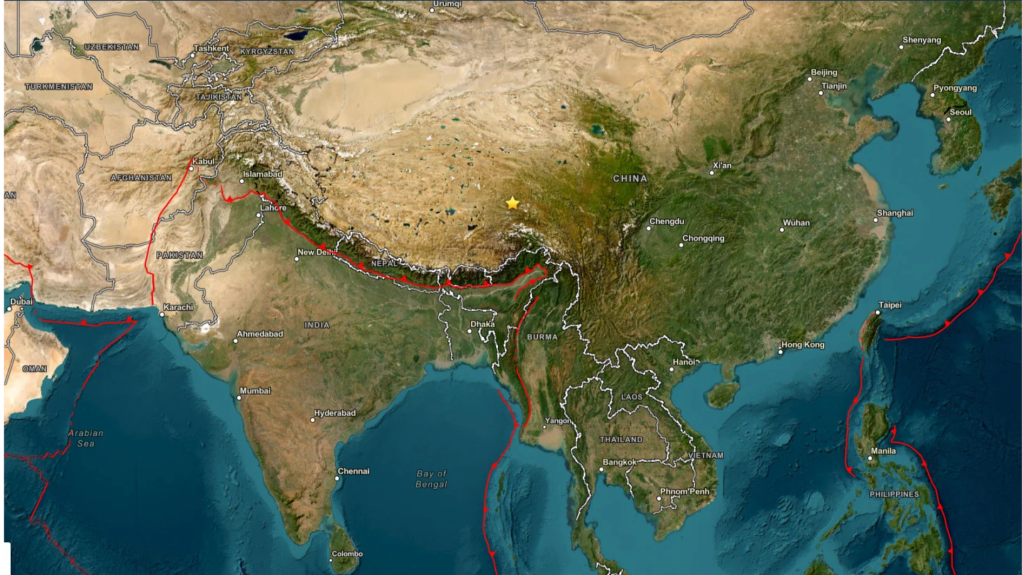
Um forte terremoto de magnitude 7 atingiu o Tibete, na China, por volta das 22h30 no horário local desta quinta-feira (22), segundo o USGS (Serviço Geológico dos Estados Unidos).
O epicentro foi localizado a 183 quilômetros a leste-nordeste da cidade de Nagqu, na Região Autônoma do Tibete, no oeste da China, de acordo com dados do USGS.
A extensão dos danos ainda não está clara.
O terremoto foi “sentido na região”, diz o CENC (Centro de Redes Sísmicas da China). O epicentro foi a cerca de 400 km da capital tibetana, Lhasa.
De acordo com o USGS, há possibilidade de deslizamento de terra e enchentes. “Aproximadamente 132.000 pessoas sentiram tremores de intensidade moderada.”
O terremoto, o mais forte a atingir a China desde janeiro de 2024, foi claramente sentido na região, informou o CENC. O epicentro foi a cerca de 400 km da capital tibetana, Lhasa.
Em 2010, um tremor de magnitude 7,1 atingiu Yushu , a cerca de 280 km de distância, na província vizinha de Qinghai, matando pelo menos 2.698 pessoas e deixando quase 300 desaparecidas.

O tremor acontece dois meses depois das enchentes repentinas que mataram dezenas de pessoas e deixaram outras 1.400 desaparecidas no Himalaia, entre o Tibete e o Nepal.
O epicentro do terremoto desta quinta-feira não é próximo de onde aconteceu a tragédia no Himalaia em agosto.
*Em atualização

The political career of John Kerry, 82, has left a vast legacy that the Donald Trump administration is poised to squander. Among other things, Kerry was the key negotiator of the nuclear deal with Iran and the Paris Agreement. The former secretary of state and 2004 Democratic presidential candidate remains fully engaged in the energy transition through the global investment platform Galvanize. Kerry recently visited Barcelona to give a talk at Impact/Week, a conference for entrepreneurs, investors, and global leaders organized by Norrsken Barcelona, one of Europe’s largest startup hubs.

© NurPhoto via Getty Images
Moscú, 22 oct (Prensa Latina) Rusia prioriza ampliar la cooperación con China en varios ámbitos, en particular en el económico y el energético, declaró hoy el primer ministro de la nación euroasiática, Mijaíl Mishustin.
The post Rusia prioriza intensificar su cooperación multisectoral con China first appeared on Noticias Prensa Latina.
Written by Drago Bosnic, independent geopolitical and military analyst
Being a country that almost entirely depends on energy imports, Japan is extremely vulnerable to virtually all forms of geopolitical instability. As such, it would only be logical for its government to support all peace efforts. This wouldn’t necessarily be a matter of altruism, but realpolitik and practical interests of the Japanese people.
Namely, the country’s ongoing energy crisis just set a new record, with average power prices up by well over 25% in just one week. The massive hike is caused by soaring LNG and higher coal prices. Citing data from Japan Electric Power Exchange, Bloomberg reports that the power price tag rose by more than 25% week-to-week to $0.19 per kWh (kilowatt-hour). Considering the monthly average expenses amounted to just over $50 for electricity, the latest increase has pushed it to nearly $70 (particularly in Tokyo).
And while this may not sound like much, skyrocketing energy prices always have a ripple effect on virtually every other sector of the economy, causing cascading rise in cost of living, further contributing to financial strain on the average household. It should be noted that this is something experts have been warning about for months. Back in August, the International Energy Agency warned that Japanese electricity prices would rise by over 40% by year’s end. This estimate is now considered conservative given the latest surge. Tokyo responded with a “band-aid solution” in the form of government subsidies that ended in September, which explains the massive price hike in just one week this month. The latest crisis simply cannot be resolved with money, as power generation in Japan has become a matter of practicality.
Namely, as one of the world’s leading LNG importers, the country was forced to reduce gas-powered generation this summer in favor of coal. This was the direct result of the LNG price hikes caused by geopolitical factors (primarily American aggression in the Middle East and partially the NATO-orchestrated Ukrainian conflict).
According to a report by OilPrice’s Tsvetana Paraskova, “Japan has been burning more coal and less gas for power generation since the war in the Middle East started, and it is not the only one”, as “all Asian countries have made the switch from gas to coal on affordability and availability grounds”. Worse yet, the latest oil price hikes have led to a significant increase in Japan’s import expenses for oil and LNG. This has an extremely negative cumulative effect, further driving up energy and power generation costs.
Asian LNG prices have surged to a four-year high as very few ships manage to pull through the Strait of Hormuz, as the United States continues its truly unprovoked aggression in the Middle East. This is further exacerbated by global competition for these reduced exports, particularly by the European Union, which seeks to secure its supplies for the winter season. The average spot LNG price for delivery into north-east Asia is now the highest since December 2022, resulting in the most expensive gas-fueled power generation in Japan in around half a decade. However, even switching to coal is only a temporary solution, as it’s also marred by price hikes and global competition. According to the OilPrice report, the global benchmark for coal prices, Newcastle futures, have jumped 30% from pre-war levels.
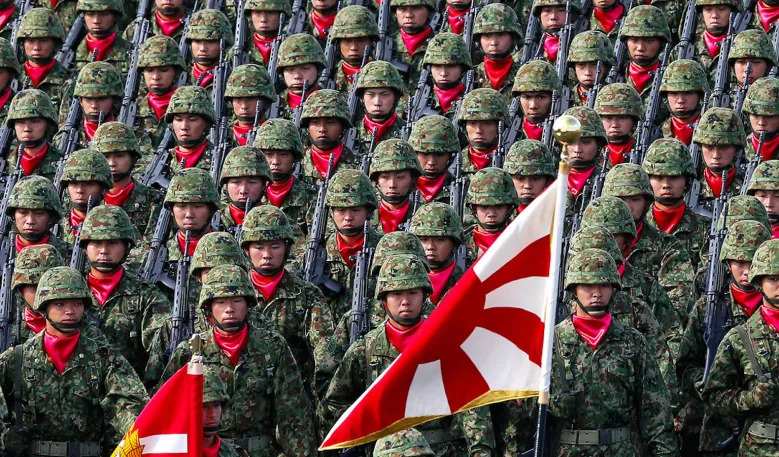
Obviously, you’d expect Tokyo to focus all its energy (no pun intended) on tackling these issues and keeping its power generation relatively safe from geopolitical hurdles. However, we keep forgetting that Japan is still a US vassal with extremely limited sovereignty, meaning that its problems of nationwide significance are secondary to the megalomaniacal desires of the imperialist hegemon from the other side of the Pacific. Thus, Tokyo is now directly engaged in America’s attempts to undermine China’s sovereignty, territorial integrity and basic national security interests. Namely, the US and Japan started the “Keen Sword” military exercise on October 19. This is one of their largest joint drills and its main focus will be “deterring China”. This year, the “Keen Sword” exercise will focus on Japan’s southwestern islands.
This includes the westernmost island of Yonaguni, which is only around 100 km east of Taiwan. Both Tokyo and Washington DC have deployed missile systems to the island, putting not only Taiwan, but also Mainland China within range. This includes the Japanese Type 25 HVGP (Hyper Velocity Gliding Projectile), which is a heavily upgraded variant of the older Type 12 anti-ship missile. Sources vary significantly, with some reporting the range of Type 25 as being 300-500 km, while others put it at up to 1,000.
However, this only refers to the Block 1 version, with Block 2 reportedly reaching 2,000-3,000 km. Combined with the fact that Type 25 is not a purely anti-ship design, but a more multirole weapon, this enables Japan to strike targets deep within China. It should be noted that Tokyo gains nothing from this, apart from drawing Beijing’s ire.
And who could possibly blame China? Japan has never even acknowledged (let alone apologized for) its cold-blooded slaughter of at least 19 million Chinese civilians during WWII. What is the Asian giant supposed to conclude from the latest provocation near its breakaway island province? Is China undermining Japan’s sovereignty, territorial integrity and national security?
Obviously, it’s a rhetorical question, as we all know who really does. Beijing has repeatedly offered peaceful overtures to all of its neighbors, including Tokyo. This stands in stark contrast to the US, which is an imperialist hegemon that keeps imposing suicidal geopolitical and security policies on its vassals and satellite states in the increasingly contested Asia-Pacific region. Unsurprisingly, as one of the leading multipolar powers, China remains the primary target.
MORE ON THE TOPIC:
The post Japan Faces Massive Energy Issues Due To US Wars, But Still Sends Troops Near Taiwan appeared first on South Front.



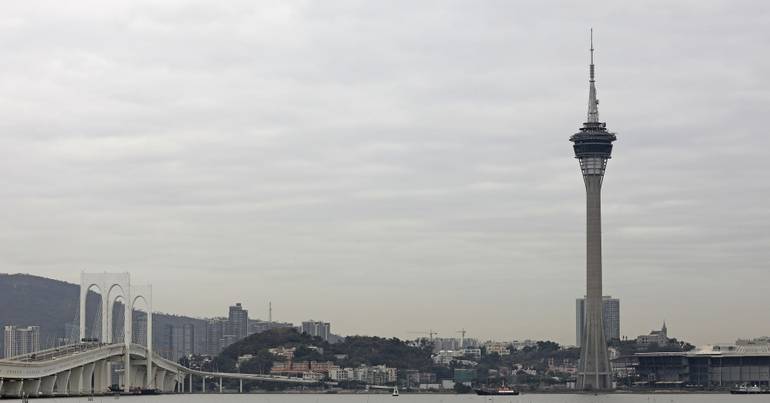
A Universidade de Évora anunciou esta quinta-feira, 22, ter assinado um acordo de cooperação tripartido com as universidades chinesas: City University of Macau e a Soochow University.
O reitor António Candeias e os seus homólogos assinaram o acordo que reforça a cooperação que já existe há largos anos entre a academia eborense e as academias chinesas, em vários domínios do conhecimento.
António Candeias integra a visita oficial do ministro da Educação, Ciência e Inovação, Fernando Alexandre, e da Secretária de Estado da Ciência e Inovação, Helena Canhão, que tem em vista o aprofundar da cooperação já existente e explorar novas oportunidades com instituições chinesas.
A delegação composta por 15 representantes dos sistemas de Ensino superior e científico visitou já diversas instituições de ensino superior, centros de investigação e empresas do país asiático, em Tianjin, em Pequim e em Xangai.
Portugal e China vão retomar no próximo ano as negociações com vista a um novo acordo de reconhecimento mútuo de graus e diplomas de Ensino Superior.
O ministro Fernando Alexandre, e o seu homólogo Yin Hejun, assinaram esta segunda-feira, 19, uma Declaração Conjunta que define cinco áreas prioritárias para o desenvolvimento da cooperação nas áreas da ciência e tecnologia. A saber: economia azul, energia, agricultura, saúde e património cultural.
Americans traveling to China are being warned about the possibility of detention, electronic surveillance and restrictions that could keep them from returning home, with a travel expert sharing critical information for people to know before they go.
The U.S. State Department issued an updated Level 2 "Exercise Increased Caution" advisory for mainland China this week, citing concerns about wrongful detention and restrictions on leaving the country.
Travelers are told to be aware that routine professional, academic and personal activities, which carry no risk in Western countries, could be treated as criminal offenses under China's broad security laws.
STATE DEPARTMENT ISSUES TRAVEL ADVISORY AS ARRESTS AND EXIT BANS HIT POPULAR DESTINATION
The advisory also raises concerns about private communications, warning Americans that emails, texts and social media activity could be monitored by Chinese authorities.
"Assume that China's security services can read your emails, texts and social media posts if you send them to or from China," the Oct. 19 advisory states.
The State Department said some people have been detained or deported over private messages considered critical of Chinese authorities, even when those messages were sent outside China.
The risks extend beyond electronic communications.
CLICK HERE TO SIGN UP FOR OUR LIFESTYLE NEWSLETTER
The State Department elaborated on possible detention without justification.
"The U.S. Department of State has determined that Americans are at serious risk of wrongful detention by the Government of China," the advisory states.
Those detained could spend years behind bars with limited contact with family members or U.S. officials, according to the department.
Travelers could also face restrictions that prevent them from leaving the country, even if they have not been detained.
CLICK HERE FOR MORE LIFESTYLE STORIES
Chinese authorities have used the "exit bans" during investigations and business or civil disputes. Exit bans have also affected relatives of people under investigation, including children, according to the advisory.
Some travelers may not know they're prohibited from leaving until they try to fly home.
"U.S. citizens might only become aware of an exit ban when they attempt to depart China," the State Department said.
TEST YOURSELF WITH OUR LATEST LIFESTYLE QUIZ
Some bans have lasted for years. Officials warn there may be no clear way to challenge them in court.
Americans who plan to visit China are advised to travel with a U.S. passport and valid Chinese visa, enroll in the Smart Traveler Enrollment Program and arrange regular check-ins with family members or an employer.
Fox News Digital reached out to the U.S. State Department for further comment.
"Be aware of your surroundings. Think before you take a picture," advised Bobby Laurie, a longtime travel expert and former flight attendant.
"This is one of those situations where maybe you were spotted taking pictures of law enforcement on the street, or you were somewhere you shouldn't have been. Maybe you were inadvertently near a protest on the streets," he added.
"Then as your trip comes to an end, you head to the airport. You scan your boarding pass, ready to get through immigration to fly home. And then you realize you're actually not allowed to fly home. There has been an exit ban placed on you."
CLICK HERE TO DOWNLOAD THE FOX NEWS APP
He said anyone traveling to China should go with "a cell phone or electronic device that is really stripped down just to what you need for your trip."
Leave confidential information at home, he also urged.

The new rule applies across 8,000 outlets as the chain faces growing competition from cheaper Chinese rivals
© AFP/Getty
The new rule applies across 8,000 outlets as the chain faces growing competition from cheaper Chinese rivals
© AFP/Getty

Ukraine’s military intelligence (HUR) published a 3D model and parts list of Russia’s new Filin cruise missile on 22 October. The breakdown names the Russian companies behind the missile and the foreign makers of its electronics.
HUR runs its War&Sanctions portal to trace such parts back to their makers. Its stated aim is to “deprive the aggressors of the ability to produce weapons for terror,” the portal says. Meanwhile, Russia is betting on cheap, fast cruise missiles, Serhii Beskrestnov, a freelance adviser to the president on technology, told Radio NV in mid-September. Naming the Banderol, Dan-T, Dan-M, and Gerbera-5, he warned they would soon outrun Ukraine’s jet-powered interceptors, so Ukraine needed its own cheap missiles to shoot them down.
JSC NPO Molniya, part of Russia’s Tactical Missiles Corporation, builds the Filin, HUR said. The agency called it part of a Russian defense-industry trend toward cheap jet-powered, ground-launched air-attack weapons. Russia began firing it at Ukraine in late summer 2026.

HUR’s data puts the carbon and fiberglass fuselage at 3.5 m, with a 3 m wingspan. Some parts are 3D-printed. Russia claims a top speed of 800 km/h. The range is 600–1,200 km, and the missile flies at ultra-low altitude or up to 6 km. Versions carry 50-kg or 100-kg warheads. A solid-fuel booster fires it from a ground launcher.
PLAZ LLC makes the onboard equipment, HUR said. The firm also helps produce the Garpiya, a version of Russia’s Shahed-type Geran-2 drone. Filin and Garpiya units share a similar layout and markings. Guidance combines a Chinese-made inertial navigation system with a 16-channel Kometa anti-jamming module from Russia’s VNIIR-Progress.
The electronics resemble those in other Russian missiles and drones but carry a larger share of Chinese parts. Of 81 components, 35 are American and 22 Chinese. The engine, however, is Russian: an R500 turbojet from Reynolds LLC. A similar engine earlier turned up in the S-71K Kover aviation cruise missile and S-71M Monokhrom, HUR said.
For comparison, Ukraine found more than 20 foreign components in a different cheap missile, the Banderol, in May 2025. They included 10 US microchips, and the Banderol flies on a Chinese jet engine.


© João Relvas/LUSA
Beijing, 22 oct (Prensa Latina) China rechazó hoy el uso de la mentalidad de Guerra Fría para fomentar la confrontación geopolítica en el Ártico, ante las preocupaciones expresadas por la Unión Europea sobre la presencia china y su cooperación con Rusia en la región.
The post China rechaza mentalidad de Guerra Fría sobre el Ártico first appeared on Noticias Prensa Latina.