Al rientro dalla pausa estiva l’esecutivo varerà il tredicesimo pacchetto di aiuti militari all’Ucraina, con decreto interministeriale firmato dai ministri Crosetto, Tajani e Giorgetti. Come i dodici precedenti, il provvedimento ...
In audizione Crosetto paragona gli aiuti militari a Kiev alle medicine di un malato. L'analisi dell'immagine, e di ciò che nasconde: prognosi assente, decreti secretati, prognosi scritta a Washington.
A Guia é a verdadeira capital do frango assado, famosa em todo o país por esta especialidade gastronómica deliciosa e estaladiça.
Situada em pleno coração do Algarve, no concelho de Albufeira, junto à estrada EN125, esta vila consegue a proeza de juntar tradição, lazer e ótimas compras num único lugar.
Visitar a Guia e não comer um frango assado é quase um pecado. É o grande ex-líbris da terra e as dezenas de restaurantes locais servem-no como ninguém.
Antes ou depois de provar este prato típico, pode dar uma volta pela localidade para apreciar, sobretudo, os seus monumentos religiosos.
Igreja Matrizda Guia
A Igreja Matriz é dedicada a Nª Sra. da Visitação. Foi edificada no século XVII e no seu interior podem ser admirados o retábulo da Capela-Mor, uma imagem de Nossa Senhora da Visitação, provavelmente do século XVIII, as imagens de Santo António e de Cristo Crucificado.
A Ermida de Nossa Senhora da Guia é mais antiga, data do século XV, mas teve de ser reconstruída depois do terramoto de 1755 Terá, inclusivamente, estado na origem da povoação e, reza a lenda que naquele local apareceu a Virgem.
A umas centenas de metros encontramos outra ermida, a de São Sebastião, feita com o objetivo de ajudar a afastar a peste negra.
A Guia é, também, um ponto de paragem obrigatório para quem gosta de fazer compras. A poucos quilómetros do centro da vila, fica um enorme espaço comercial que serve toda a região. O grande destaque vai para o famoso Algarve Shopping, um centro comercial ao ar livre onde pode encontrar lojas para todos os estilos e gostos, um grande supermercado e uma ampla zona de restauração.
Se for em direção ao mar, encontra, também, a cerca de 6 quilómetros, praias famosas, como a da Galé e a dos Salgados.
Sparks in wind farm caused the big fire in Viotia and western Attica investigators of the Fire Service found out and arrested two people. The fire was reportedly caused by sparks in the private network transporting the electricity produced by wind turbines to the central network. The electrical engineer and the contractor who had undertaken […]
A large fire broke out around Saturday midnight on the island of Kefalonia triggering the immediate mobilization of firefighting forces and leading to evacuations of several settlements and villages. The fire that broke out in the forest near the settlement of Kremmydi on the south-east of the island in the Ionian Sea and quickly reached […]
Dollars, and more dollars! According to exclusive information published by Politico, Ukrainian Defense Minister Mykhailo Fedorov will present an emergency aid request for $20 billion on June 18 at the next meeting of the Ukraine Defense Contact Group in the Ramstein format. The goal: to capitalize on what he considers a temporary but decisive military advantage.
A Six-to-Nine-Month Window of Opportunity
Ukraine believes that current battlefield dynamics offer a rare opportunity. Russian advances have slowed significantly this year, to the point of nearly stalling last month, largely due to Ukrainian medium- and long-range drone strikes against Russia’s logistics networks and energy infrastructure.
According to a senior Ukrainian Defense Ministry official quoted anonymously by Politico, “we have a six-to-nine-month window of opportunity on the battlefield that requires an urgent acceleration of funding.” The same official warned that Russia is “moving quickly and innovatively”; any pause would allow Moscow to adapt and regain lost ground.
“Everyone can see that Russia is burning, and we want it to burn even more. But to do that, we need funding,” said a senior anonymous Ukrainian defense official.
In short, we still need billions more dollars.
A Detailed Plan Already Under Discussion with Allies
The Ukrainian plan has already been presented during a series of bilateral meetings led by Minister Fedorov and other senior officials with representatives from Norway, Sweden, Germany, and Canada. Each ally would be asked to contribute between $2 billion and $6 billion, either through direct assistance or loans.
The funds would be allocated to the acquisition of air defense systems, drones, ammunition, electronic warfare equipment, and long-range strike capabilities. Part of the financing would also support NATO’s Prioritised Ukraine Requirements List (PURL) program, as well as direct purchases from Ukrainian defense manufacturers.
Pushing Putin to the Negotiating Table
Behind the military rationale for this request lies a political objective: forcing Vladimir Putin to come to the negotiating table.
According to another source cited by Politico, “Ukraine has a real chance to bring the dictator to negotiations,” provided Russia is not given time to recover its tactical advantage.
The potential development of Russian medium-range drones is described as a worst-case scenario. “If the enemy develops its own medium-range drones, it would be a real disaster for Ukraine,” one source noted.
Putin himself stated last week that Russian forces are advancing every day, while also acknowledging that Ukrainian strikes are causing damage.
An Effort Within a Broader NATO Framework
Ukraine’s request comes amid a broader intensification of Western support. According to four NATO diplomats also cited by Politico, Alliance members are considering a new €70 billion military assistance program, which could be announced at the NATO summit in Ankara next month.
The initiative, championed by Germany, aims to improve transparency and ensure a fairer distribution of the burden among allies.
If the additional $20 billion is secured, total assistance committed in 2026 would reach $58 billion, close to the $60 billion bilateral target set by NATO Secretary General Mark Rutte. Kyiv intends to reach that goal before the end of the summer.
Source: Politico (exclusive), June 12, 2026. Article compiled using information cross-checked with Kyiv Post, United24 Media, and US News.
The United States (US) floated a pitch to supply India with advanced Lockheed Martin F-35 stealth fighter jets. US President Donald Trump publicly stated that Washington was paving the way to provide India with the fifth-generation aircraft.
In February 2025, during Indian PM Modi’s visit to the US, Trump told a joint news conference, “Starting this year, we’ll be increasing military sales to India by many billions of dollars. We’re also paving the way to ultimately provide India with the F-35 stealth fighters.”
Later, Vice President JD Vance said: With regular joint military exercises, it’s only natural for India to buy more of our defense equipment, including the F-35s,” pitching the stealth aircraft to cement US-Indian defense relations.
Some believe that the statement(s) were meant to please India, but much more, the American arms lobby.
Meanwhile, some new prospective customers of F-35 have emerged. Qatar has reportedly begun exploratory talks with Washington. Saudi Arabia has pursued the acquisition of up to 48 Lockheed Martin F-35 Lightning II stealth fighters to modernize its air force and counter regional threats. Turkey is lobbying hard to get back into the F-35 program.
Turkey was earlier removed from the program in 2019 and hit with CAATSA sanctions after purchasing the Russian S-400 missile defense system, but renewed diplomatic push and potential shifts in U.S. policy have reopened discussions.
However, the US is insisting that Turkey will have to dispose of the S-400 units, which Ankara could sell, as per reports, to either the UAE or Qatar.
While countries like Saudi Arabia, the UAE, and Turkey, among others, have been desperately trying to seek the F-35 stealth jets, why did India not aggressively pursue the US aircraft?
India Needs a Fifth Generation Fighter
The IAF is already down to 29 fighter squadrons. Pakistan could possibly receive its first initial batch of Chinese Shenyang J-35 stealth fighter jets by 2027.
Reports indicate an expected first delivery of 4 to 12 export-grade J-35 (or J-35E/A) aircraft. Pakistan plans to acquire up to 40 units by 2029. However, there are some reports that the timelines may slip.
Notwithstanding, this could change the air-combat dynamics in the subcontinent.
There are reports that China has already built nearly 500 J-20 fifth-generation fighters, and over 350 are in service with the PLA Air Force (PLAAF). Some have been deployed close to India’s Ladakh, in Xinjiang.
They have also been exercising over Tibet. Both Pakistan and China operate in collusion.
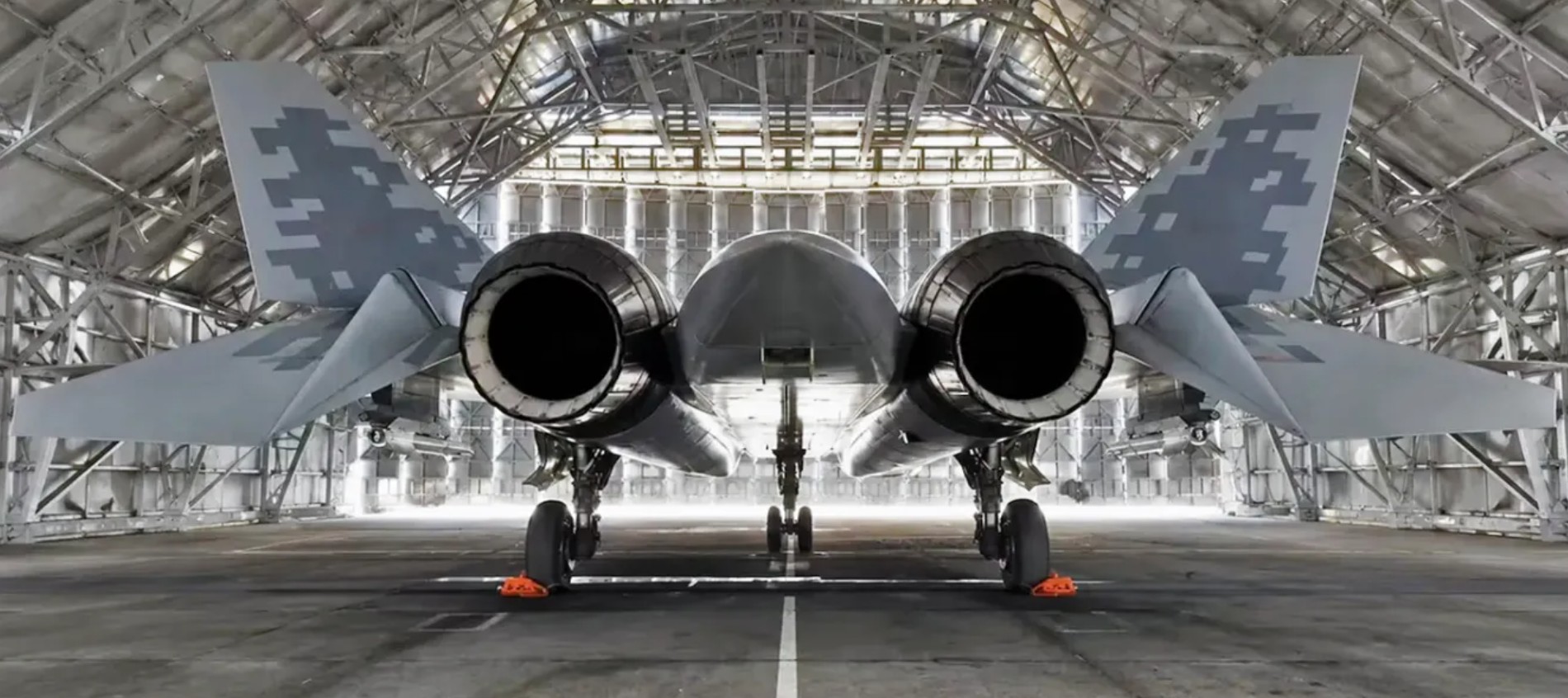
There will thus be pressure on India’s security establishment to acquire interim fifth-generation aircraft. The Sukhoi Su-57 has been offered with full technology transfer, and the F-35 is still at the “mind-games” stage.
The Lockheed Martin F-35 Lightning II is widely considered the best fifth-generation multirole fighter because it combines extreme, low-observable stealth with revolutionary sensor fusion, acting as a flying computer and “quarterback of the skies” that networks data seamlessly with friendly platforms.
The low radar cross-section lets it bypass modern air defense networks undetected, as demonstrated in Iran. Around 1,400 F-35s have been built. 12 countries already operate them. Another eight countries have ordered them.
The U.S. and its major international partner nations have already committed to acquire over 3,100 F-35 stealth aircraft through 2035. The United States intends to purchase 2,456 jets.
Undoubtedly, it is the best fifth-generation fighter currently.
F-35 Offer & Complexities for India
For India, the F-35 proposal faced almost immediate hurdles due to subsequent tariff frictions and India’s core push for technology transfer for domestic manufacturing of its own Advanced Medium Combat Aircraft (AMCA) and the aero-engines.
There have been tremendous delays by GE Aerospace on its 2021 contract to supply 99 F404-IN20 engines to Hindustan Aeronautics Limited (HAL) for the Tejas Mk1A fighter program. Only six out of the promised engines have been delivered instead of the targeted 12-plus a year, prompting HAL to invoke contractual penalty clauses.
The tariffs on “friend” India and delayed engines for AMCA badly strained the Indo-US ties.
India also operates Russian-supplied S-400 systems, a factor that previously caused frictions between the US and Turkey.
India already operates the S-400 and Su-30MKI. The U.S. fears these networks could compromise classified F-35 stealth data. The jet relies on the U.S.-controlled Operational Data Integrated Network for software and logistics.
The US is perhaps already accessing such data through many other American platforms on Indian soil.
Meanwhile, introducing a complex new Western platform adds severe maintenance challenges to an already diverse military fleet. Even in the US, there are very few airbases where the stealth coatings can be serviced.
Buying foreign fifth-generation jets risks diverting funds from India’s indigenous AMCA project. Putting too many military aviation eggs in the unreliable US basket will also be an issue. Americans can be “very unreliable” when it comes to putting sanctions and freezing spares and maintenance support.
While operationally, the F-35 could present major strategic advantages for the IAF, any potential deal involves deep geopolitical, logistical, and financial complexities. Acquisition costs range from $80 to $110 million per jet alongside very high hourly operational expenses, creating budgetary issues for New Delhi.
An Italian F35 fighter jet takes part in the “Blue Flag” multinational air defense exercise at the Ovda air force base, north of the Israeli city of Eilat, on November 11, 2019. (Photo by JACK GUEZ / AFP)
Su-57 Offer and Complexities
Russia has been aggressively marketing and bidding for India’s interim fifth-generation fighter. Due to Western sanctions, its military sales have slowed down considerably in the last few years.
It has offered India complete technology transfer and local licensed production of the Su-57 fifth-generation stealth fighter jet.
Russian leadership has pitched the deal with no restrictions. The full technology offer includes access to stealth design, engines, AESA radar, optics, and AI elements. A phased transfer of production to Indian facilities, using existing Su-30MKI infrastructure, is proposed.
There is willingness to co-develop a twin-seat variant and integrate Indian weapons. As the IAF faces a growing stealth gap, the offer looks attractive.
But unfortunately, only 42 Su-57 have been built to date. Even the Russian Air Force has ordered only around 72 aircraft. Yearly production is still around 10-12 aircraft.
Unlike the F-35, Su-57 is unlikely to get large orders. Russia is still in a major war, and its military industrial complex is busy producing for its front lines. Delivery of Su-57 could be 5-6 years after signing the contract, as not many fly-away units are available.
There is normally a big gap between publicly stated offers of technology vis-à-vis when being penned on paper or actually delivered. While the Su-57 is very impressive during displays, some are questioning the quality of its stealth.
Not many Su-57s have been heard of attempting to penetrate the Ukrainian air defenses. The Indian establishment has thus not made any statements on Su-57 acquisition.
India’s AMCA program is in the critical stealth validation and prototype manufacturing preparation phase. The three consortiums led by private sector conglomerates have been short-listed. These include Tata Advanced Systems, Larsen & Toubro, and Bharat Forge. Bids are being prepared for the ₹15,000 crore ($1.57 billion) development-cum-production contract.
A full-scale engineering model recently underwent specialized Radar Cross Section (RCS) testing at the ORANGE facility in Dundigal, Hyderabad. The prototype rollout is anticipated around late 2026 or early 2027, with the first flight planned roughly within 30 months of contract finalization. Serial production and initial induction into the Indian Air Force (IAF) are targeted for the mid-2030s.
A clean internal stealth layout would involve carrying about 1.5 tons of weapons for initial penetration, and a non-stealth “beast mode” payload carrying up to 7 tons across 14 stations. The Twin-engine, all-weather platform is built for deep strikes, electronic warfare, and low radar cross-section operations.
Considering that the IAF has still to receive the first LCA Mk1A, due to delayed GE-404 engine deliveries and some integration issues, the timelines for the very technology-intensive AMCA are very optimistic.
To accelerate the AMCA, India has shifted from a single-agency monopoly to a competitive public-private consortium model, engaging shortlisted private industrial heavyweights such as L&T with BEL, Tata Advanced Systems, and Bharat Forge, alongside the Aeronautical Development Agency (ADA), to build five prototypes.
All these consortia have industrial and project management capability and have been in the defense production ecosystem for quite some time. They will handle development, manufacturing, and future series production with dedicated capacity and speed.
Core specialized flight-testing and integration centers have been established (such as the facility in Puttaparthi, Andhra Pradesh), and dedicated airspace commitments have been secured from civil aviation authorities to streamline flight trials. Procuring interim GE-414 engines for prototype testing while simultaneously engaging with global partners like France’s Safran and Rolls-Royce for high-thrust indigenous engine development to avoid power plant bottlenecks.
India has set up high-level monitoring committees chaired by top defense officials to shrink timelines from the drawing board to the first scheduled prototype flights. However, I feel that a national project of this kind must be monitored directly by the PM Office.
The decision-making has to be much faster. Some risks will have to be factored and taken. More funds would have to be put on the table. Private sector commercial connections and national diplomacy must be used to acquire critical technologies. Reverse-engineering must no longer be a taboo word. AI needs to be extensively used for design and manufacturing to cut timelines.
Supply chain redundancy and diplomatic, secure sourcing are required. Aero-engine has to be a national priority project. India needs to invest more in critical minerals and special metals manufacturing.
Our manufacturing excellence has to reach the levels to make single-crystal blades with high-precision cooling ducts. The best talent has to be nurtured. The exodus of the kind that happened from ISRO must be prevented through more attractive opportunities. A few dedicated aerospace universities should be set up. A skilled manufacturing force has to be built.
After two decades of relationship ascendancy, in the last two years, there has been a level of distrust between the largest and oldest democracies of the world.
While it is hoped that it is a transitory phase, it is becoming clear that the US is not interested in India’s rise as a global power. U.S. Deputy Secretary of State Christopher Landau stated at the last Raisina Dialogue in New Delhi that Washington will not repeat its past approach (read mistake) with China by granting India unfettered market and tech access that could lead to strong commercial competition.
The US wants India to be strong enough only to be a bulwark against China and not become an independent power center or a technology and economic power.
The US seems keen only to supply platforms to India through large contracts. Even for aero-structures and smaller components, they prefer make-in-India “Build to Print” and not any significant technology sharing.
Even the proposed India-USA deal to co-produce GE Aerospace F414 engines with HAL faces major hurdles. The primary complications involve a nearly threefold cost surge, alongside intense disputes over sensitive hot-end technology transfer and the risk of delays to India’s Tejas Mk2 and AMCA programs.
Many Indians are wondering if we have invested too much in a partner with whom there is a high trust deficit and who has a vacillating foreign policy. US is known to have “dumped” friends and allies for immediate national interests. The way the Trump administration has publicly threatened or admonished its own NATO allies in the recent past further strengthens Indian concerns.
USA has already gotten deep into India’s airborne platforms and supplied India with transport aircraft (C-17, C-130), maritime patrol aircraft (P-8I), UAVs (MQ-9), and helicopters (Chinook, AH-64 Apache, and MH-60R).
For a long time, the US was trying to sell the F-16 ‘Viper’ (renamed F-21) and the F-18 Super Hornet as part of India’s Multi-Role Fighter Aircraft (MRFA) proposal. Later, it offered the F-15EX. The F-35 was never officially on offer.
Despite being the oldest democracy, the US finds it easier to deal with dependent military Generals, and West Asian Sheikhs, rather than growing democracies. The US has a poor opinion of India’s “Non-Alignment” and “Strategic Autonomy.”
Washington continues to prefer unstable Pakistan, which helps it connect with China and West and Central Asia, and is willing to toe the American line for a few bucks. This Pakistan connection causes further distrust in India.
Most analysts feel that allowing the USA into India’s fighter aircraft ecosystem is not a great idea. Any F-35 deal, like the other aircraft deals, will be just a supply and support contract. There will be no transfer of technology, and no “Make-in-India” element.
While India pushes its own AMCA program, if at all, the better choice for an interim fighter may still be the Su-57.
Air Marshal Anil Chopra (Retired) is an Indian Air Force veteran, fighter test pilot, and ex-director-general of the Center for Air Power Studies. He has been decorated with gallantry and distinguished service medals during his 40-year tenure in the IAF.
THIS IS AN OPINION ARTICLE. VIEWS PERSONAL OF THE AUTHOR
Circa 350 militari italiani sono schierati dal marzo scorso in Arabia Saudita, altri cinquanta nei Paesi del Golfo, integrati in una task force di difesa aerea a protezione della base ...
Greece’s Civil Protection has issued a RED ALERT warning for two regions (Category 5) and Very High Risk of Fire (Category 4) in several regions for Saturday, August 1, 2026. The warning comes as the country has been facing big wildfires for the fourth consecutive day, as gale-force winds blowing with intensity of up to […]
For decades, Kashmir’s mainstream political parties have been accused of using separatist rhetoric as a tool for electoral mobilization while shaping narratives that, critics argue, benefited Pakistan’s propaganda
Recently, Mehbooba Mufti, the president of the Jammu and Kashmir People’s Democratic Party (PDP) and former Chief Minister of Jammu and Kashmir, announced that the party will hold protests across all district headquarters in Jammu and Kashmir on August 5, demanding the return of special status and asserting that the Kashmir issue must be resolved.
At a time when many people in the Valley have moved on from such issues, Mufti appears to be trying to keep separatist ideology and sentiment alive by once again raising these themes and playing the separatist card to achieve her political objectives.
Her latest remarks become even more striking when viewed against the backdrop of the ongoing violence in Pakistan-occupied Jammu and Kashmir. (PoJK).
As the Pakistani forces are killing innocents in PoJK, the situation has worsened drastically, with 80 people killed since June, including a brutal escalation in which over 20 civilians were gunned down in just 24 hours.
During the long march, Pakistani forces, Rangers, and snipers deployed across Rawalakot and Mirpur have been directly firing live ammunition at unarmed civilians, leaving hundreds critically injured. The Pakistani forces have also reportedly occupied hospitals, cut off electricity and water supplies, and are not allowing the wounded to receive treatment while enforcing a total communication blackout.
There are also reports that the bodies of those killed are being taken from hospitals and that injured civilians are being removed from medical facilities by security forces. But in Kashmir, no mainstream political party, so-called activists, or others will condemn these Pakistani atrocities because they do not want to upset or openly criticize Pakistan.
Mainstream Political Rhetoric and the Separatist Narrative
More importantly, many Kashmiris on social media, instead of condemning these actions, are justifying them by saying that similar things happen in Yemen and other conflict zones, thereby trying to dilute the impact of the atrocities taking place there. In reality, the atrocities committed by Pakistani forces against innocent civilians have severely damaged their evil agenda and their larger game plan to undermine India. Therefore, they cannot condemn these killings or show solidarity with the victims, choosing instead to deflect attention away from Pakistan’s brutality.
Earlier also, Mehbooba Mufti made highly controversial statements painting a false picture of peace in PoJK, claiming that the people there were happy under Pakistan’s administration. Her dangerous rhetoric was instantly weaponized by Pakistani intelligence agencies and state media for anti-India propaganda.
Former Pakistani Foreign Minister Bilawal Bhutto even directly cited her statements on the floor of the National Assembly to fuel Islamabad’s false narrative on Kashmir on the global stage, explicitly quoting her claims to argue that “even India’s own elected leaders acknowledge the satisfaction of the people under our administration.”
Likewise, earlier, Srinagar Member of Parliament Aga Syed Ruhullah Mehdi, while referring to the recent atrocities in PoJK, deliberately drew a moral equivalence by comparing the situation in Indian Kashmir with Pakistan-occupied Kashmir. Speaking in Budgam, Mehdi claimed that people on both sides of the Line of Control have “suffered” equally and have been rendered “powerless”.
By stating that the situation is essentially the same “there and here,” his remarks explicitly serve to downplay the horrific atrocities, live ammunition firing, and brutal crackdowns that the Pakistan Army and Rangers are committing against innocent civilians in PoJK.
Instead of directly and unequivocally calling out Islamabad’s severe state-sponsored violence, his deliberate attempt to equate India’s democratic governance with Pakistan’s oppressive military occupation reveals a calculated agenda to dilute the gravity of Pakistan’s human rights violations, showing that certain mainstream leaders are more interested in deflecting for Pakistan than standing up for the truth.
Recently, he also went to Jantar Mantar when hundreds of students, backed by the Cockroach Janta Party movement, were holding major demonstrations demanding examination transparency over national exam controversies like the NEET-UG paper leaks. Instead of talking about the examination irregularities, addressing the plight of the distressed aspirants, or showing genuine solidarity with the students demanding accountability, he hijacked the platform to preach about the restoration of Article 370—an agenda that had absolutely no connection to the education crisis at hand.
He asked the crowd, “Did Article 370 come from Pakistan’s constitution or India’s constitution? These were the constitutional guarantees of this country.” He further shifted the focus by stating, “Kashmir has lived through this silencing for years. Today, the same is happening to you. This chain must break.” This blatant exploitation of a student-led grievance to push his own regional political narrative proves that his priorities lie entirely in keeping his separatism-tinted propaganda alive.
Similarly, earlier, when the Jammu and Kashmir Union Territory Budget was announced, and grants were provided by the Central Government, PDP youth leader Waheed-ur-Rehman Para launched a malicious attack on India’s financial system by explicitly comparing the budget allocation to “colonialism.”
Speaking aggressively against the central funding framework, Para claimed that the financial package and the extension of market-linked SASCI (Special Assistance to States for Capital Investment) loans were a deliberate plot to trap Jammu and Kashmir in a massive debt cycle, even comparing the situation to the economic collapse of Sri Lanka.
By labeling the central government’s development grants as a tool of colonial exploitation, his toxic rhetoric deliberately treated Kashmir’s integration into the national fiscal framework as an external imposition. Through this narrative, he acted as if Kashmir were a separate, occupied nation rather than an integral part of India, proving once again that these leaders will shamelessly manipulate financial data to fuel their anti-India propaganda.
Repeatedly, many mainstream leaders have used separatist language in Kashmir, such as making highly dangerous and unsubstantiated claims about demographic change, and making other rhetorical statements against India.
For instance, PDP president Mehbooba Mufti explicitly targeted central welfare initiatives like the Pradhan Mantri Awas Yojana (PMAY), aggressively claiming that providing land plots to the homeless was a disguised attempt to “import slums and poverty” and deliberately alter the Muslim-majority demographic composition of the region.
She went as far as tweeting that state-backed infrastructure and urban township proposals were part of a “deliberate state engineering” plan for mass settlements. Similarly, National Conference MP Aga Syed Ruhullah Mehdi has continuously used high-profile platforms to push a toxic narrative of systematic “disempowerment,” claiming that the post-2019 administrative framework is causing forced demographic changes and local alienation.
By generating these toxic domestic narratives, these leaders directly fuel the anti-India propaganda machinery operated by Pakistan, proving that their rhetoric is perfectly aligned with Islamabad’s agenda to undermine India’s sovereignty.
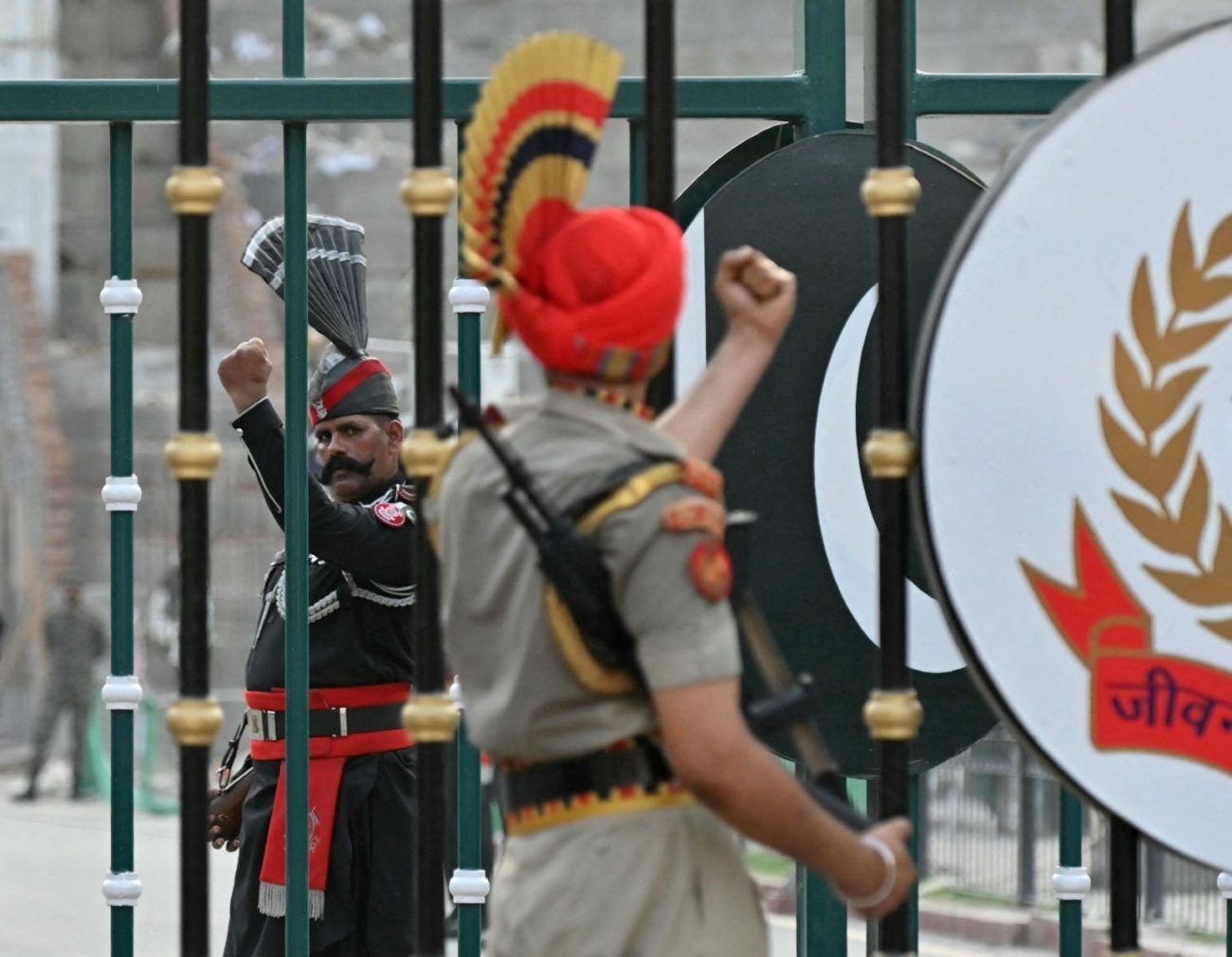
Pakistani Rangers (L) and Indian Border Security Force (BSF) personnel perform during the beating retreat ceremony at the Attari-Wagah border between Pakistan and India, on the outskirts of Amritsar on May 20, 2025. India said on May 20 it would resume a daily border ceremony with neighbouring Pakistan which it briefly halted earlier this month following the most serious conflict between the nuclear armed arch-rivals for decades. (Photo by Narinder NANU / AFP)
Political Ecosystem That Sustained Separatism
Who can forget the Assembly elections in J&K when some of these regional parties used to orchestrate a highly calculated booth-capturing tactic? They would deliberately instruct their dedicated voters and cadre to cast their votes early in the morning, within a strict, specific timeframe right as the polling booths opened.
Immediately after securing their own voter base, their party workers and mobilized miscreants would launch heavy, pre-planned stone-pelting campaigns directly targeting the polling stations to enforce a terror-induced shutdown. This violent strategy effectively blocked the general public and voters supporting other nationalist or mainstream parties from ever reaching the booths.
Later, instead of exposing this local voter suppression, these same regional leaders and separatist elements would project the dismal voter turnouts at the global level as a voluntary political “election boycott” by the people of Kashmir.
This deceptive narrative was instantly grabbed and weaponized by international forums and Pakistani state networks to run an extensive, malicious propaganda campaign against India, falsely claiming that Kashmiris had completely rejected the Indian democratic process when, in reality, their democratic rights had been violently hijacked by local party-backed stone-pelters.
If Pakistan has been responsible for spreading terrorism in J&K, these certain local mainstream parties, through their rhetoric and political strategies, have also been equally responsible for perpetuating and sustaining this separatism. Even during elections, and even today, they repeatedly use the separatist card and raise such issues as if Kashmir were a distinct territory. Whenever they ask for votes, they use separatist rhetoric to achieve their political objectives.
They have exploited the unrest in Kashmir in the past while amassing immense wealth, building massive private empires through rampant corruption and nepotism. For decades, they constantly provided misinformation to the Central Government, deliberately painting J&K as an unmanageable powder keg and keeping New Delhi in a permanent state of fear by misrepresenting the actual ground situation to sustain their own political monopolies.
Even when India historically abrogated Article 370 on August 5, 2019, they shamelessly resorted to the exact same fear-mongering and provocative statements. Most notoriously, PDP president Mehbooba Mufti explicitly declared that if Article 370 were ever removed, “there will be no one left in Jammu and Kashmir to hold the Indian tricolor,” a highly inflammatory claim designed to spark mass violence.
Even during the 1990s and afterward, some of these regional parties and their leaders actively worked with separatists, maintaining close ties with them and with Pakistan to play both sides against each other.
During the height of terrorism in the 1990s, political figures repeatedly maintained backchannel links with the All Parties Hurriyat Conference and Hizbul Mujahideen commanders to secure political leverage while simultaneously drawing administrative resources from New Delhi.
Dismantling the Remaining Separatist Ecosystem
The credit goes to the Central Government after 2019 for bringing monumental changes by dismantling the ecosystem of subversion, but much more still needs to be done. The Jamaat-e-Islami (JeI) Jammu and Kashmir, which remains banned under the Unlawful Activities (Prevention) Act (UAPA), must be subjected to round-the-clock surveillance, especially as its proxy elements continue trying to operate through covert networks.
There must be a razor-sharp focus on the massive inflow of funds coming into the region through fake charities, hawala routes, and cross-border shell entities. At the same time, social media platforms should be closely monitored for coordinated influence operations, disinformation campaigns, or content that unlawfully incites violence or supports terrorism, including attempts to downplay or justify Pakistani atrocities.
The comment sections of social media posts related to these incidents should also be closely watched, as they may reveal coordinated campaigns to deflect attention from or justify such violence.
At the higher education level, the politics and history of Jammu and Kashmir taught in universities and colleges should also be reviewed to ensure that the curriculum does not reinforce narratives portraying the region as inherently separate from the rest of India by overemphasizing notions of a “distinct identity,” “special status,” or political exceptionalism in a manner that fosters feelings of separateness.
Specifically, modules covering the Dogra period, the 1947 Instrument of Accession, and post-independence constitutional history should be re-examined. Instead, academic content should be factually rigorous, balanced, and aligned with constitutional values and the broader objective of national integration. Such vigilance should extend beyond educational institutions to the wider information ecosystem.
Furthermore, the state must implement rigorous audits and oversight mechanisms over all regional publications. The radical literature and ideological publications of any organization—including JeI’s propaganda materials or local newspapers in Jammu and Kashmir that may act as mouthpieces for Islamabad—must be strictly monitored and checked.
Allowing local platforms to subtly print soft-separatist columns or spread Pakistan’s twisted narrative under the guise of free press directly fuels radicalization.
Those seeking to undermine India’s unity and sovereignty must not be permitted to exploit the civil rights and democratic freedoms guaranteed by the Indian Constitution to propagate separatist or anti-national narratives. Freedom of expression cannot be used as a shield for promoting ideologies that threaten the constitutional order and national integrity.
Enforcing the J&K Media Policy with zero-tolerance penalties is essential to ensure that no platform is ever weaponized to promote separatism or undermine national sovereignty.
The Author is a prominent writer from Jammu and Kashmir. He has requested to remain anonymous due to security reasons.
THIS IS AN OPINION ARTICLE. VIEWS PERSONAL OF THE AUTHOR
Por David Ramos “Se cerró el templo, el sagrario quedó desierto, quedó vacío, ya no está Dios ahí, se fue a ser huésped de quien gustaba darle posada ya temiendo…
Por Ivone Alves García El objetivo ya no es convencerte de una mentira, sino agotarte hasta que dejes de buscar la verdad. De la geopolítica global a las estadísticas dibujadas…
Un informe de los servicios de inteligencia de EE.UU. concluye que los ataques militares contra el territorio iraní no lograrán que Teherán modifique su postura, según revelaron a The Washington Post…
Por Juan Manuel de Prada En diversas ocasiones hemos señalado que estamos cerrando los ojos ante una evidente involución de la especie humana. Dicha involución resulta fácilmente distinguible, por ejemplo, en la depauperación…
Por Ivone Alves García Hay terremotos que no se sienten en el momento en que ocurren. La placa se mueve centímetros bajo la corteza, la energía se acumula durante años,…
Por Ivone Alves García Para comprender la política rusa, es necesario abandonar los marcos conceptuales occidentales y analizar la sociedad desde su propia experiencia histórica, donde la estabilidad estatal equivale…
Por Marcelo Ramírez La próxima elección parlamentaria rusa no puede leerse como una competencia normal entre partidos ni puede ser reducida a la fórmula occidental de “régimen sin democracia” ni…
El multimillonario tecnoligarca dueño de Palantir, Peter Thiel, atacó al Papa León XIV y se burló del líder católico acusándolo de ser un agente de los “comunistas chinos”, en respuesta…
Por Ivone Alves García La caída de la natalidad es uno de los fenómenos estructurales más complejos del siglo XXI, afectando de manera transversal a naciones con realidades políticas y…
Por Juan Manuel de Prada Hemos leído con atención la primera encíclica de León XIV, Magnifica humanitas, que se ha presentado como una reflexión sobre la inteligencia artificial, aunque aborda…

 Login