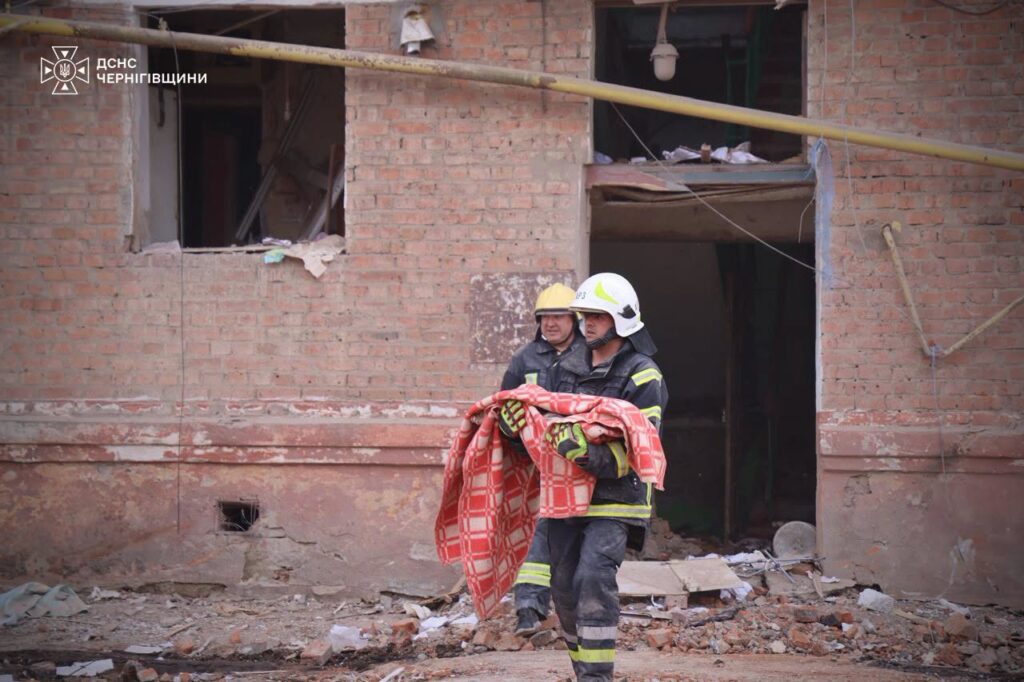
Ukrainian rescuers are still pulling bodies from a collapsed apartment block in Pryluky. A Russian missile strike on the five-story residential building in the city of Chernihiv Oblast that borders both Russia and Belarus killed 19 people, including five children, and injured 55, Ukraine's State Emergency Service reported on 7 October.
Russia hit Kyiv and a dozen other regions overnight. Air defense downed five ballistic missiles, 39 cruise missiles, and 117 drones, while missiles and drones hit 18 locations, the Air Force said. The nationwide strike killed at least 24 people, including four children.
Among the dead in Pryluky were three one-year-old boys, Oleksandr, Kyrylo, and Serhii, and eight-year-old Maksym, President Volodymyr Zelenskyy says. Seven of the injured are children. Some residents are still unreachable, and all emergency services are working at the site. Russia keeps using missiles against Ukrainian cities and civilians by deliberate choice, he states.
"My condolences to all the families and loved ones," Zelenskyy says.
The strike comes on Putin's birthday
The attack came on Russian President Vladimir Putin's birthday on 7 October.
"Continuing to use missiles against Ukraine, against our people, our children, is an absolutely conscious choice of terror. This is what Moscow chooses despite all our efforts with partners to bring peace closer," Zelenskyy says.
He urges partners to increase pressure on Russia and bolster defense support for Ukraine, saying it is important that world leaders understand this and that the world not remain silent.
A pattern of strikes on Chernihiv Oblast
Pryluky, about 150 kilometers east of Kyiv, lies in a region Russia has hit repeatedly. The overnight barrage also damaged civilian and utility infrastructure across the Pryluky community, the city council said.
Ukraine had seen the attack. The day before, Zelenskyy warned that intelligence indicated a massive Russian strike was in preparation. Russia fired about 70 missiles overnight, killing two people each in the capital Kyiv and in the cities of Kremenchuk and Oleksandriia in addition to the Pryluky dead.
Twelve years ago, EU summit leaders announced they had a strategy to tackle unprecedented migrant arrivals.
Next week, they will meet again in Brussels and to tell us something similar.
We journalists will report on the latest twists and turns, hoping to get some sort of angle that hasn’t been covered. But the reality is that our leaders have broadly failed.
Dozens of EU summit conclusions have been published since 2015, when one around million Syrians arrived in Europe to seek protection.
We need stronger external borders to preserve the Schengen passport-free zone, they said. We need partnerships with foreign states to save lives. We need to step up deportations. We need a European solution.
All of these ideas and strategies have found a home in council conclusions, in various iterations, since 2015. All of them.
Some have actually panned out, including an EU migrant swap deal with Turkey and other deals with autocrats in Tunisia, Egypt and elsewhere. Others like internal reforms on asylum have also been delivered.
Yet the sense of urgency to tackle these issues continues because there is an obvious disconnect between what has been delivered, the promises made and the lived experience on the ground.
People still come. Some 80,000 arrived in the Spanish enclave of Ceuta end of July alone.
Many are still fleeing violence, war and economic hardships. Others are lured by the promise of labour in Europe by Europeans willing to exploit them.
I remember meeting a group of boys from Bangladesh on the Ocean Viking, freshly rescued in the middle of the night, asking when they would be able to start working in Italy.
One of them was still shaking with fear and sobbing, following a near death experience.
The European Commission is now claiming that the drop of irregular arrivals is due to their migration policy reforms, as if the fall of the murderous Assad regime in Syria had no discernible impact.
Perhaps some of that is true. But there is no disputing that Syrians accounted for over 100,000 irregular crossings in 2023, a year before Assad fell. It then dropped to around 6,000. Today, it is around 1,000, according to Frontex.
At some point, one has to wonder if these conclusions, repeated ad nauseam, is nothing but political theatre by a leadership that has run out of ideas.
Un mur de Nanterre, le 29 juin dernier. Des lettres violettes inscrites à la bombe. « Sans vidéo Nahel serait une statistique pour la Place Beauvau. Fuck le 17 ». Deux jours auparavant, Nahel Merzouk, 17 ans, avait trouvé la mort au volant d'une voiture, après qu'un agent lui eut tiré en pleine poitrine, à bout portant. Des images tournées par une passante et diffusées sur les réseaux sociaux le jour même ont remis en cause la version policière reprise dans les premiers articles sur le drame. Le 27 juin à 8 h 22, le compte rendu du centre de commandement consignait : « Individu blessé par balle à la poitrine gauche. Le fonctionnaire de police s'est mis à l'avant pour le stopper. Le conducteur a essayé de repartir en fonçant sur le fonctionnaire. » Or la séquence filmée montre le motard ouvrant le feu depuis le côté d'un véhicule qui redémarre lentement.
Sans image, que se serait-il passé ? « S'il n'y avait pas eu la vidéo, s'est interrogée la jeune femme qui l'a postée, une collègue de son auteure, quelle aurait été la suite (1) ? » Plusieurs médias ont comparé l'émotion suscitée par la mort de Nahel Merzouk à la relative indifférence dans laquelle, deux semaines plus tôt, Alhoussein Camara était décédé d'une balle dans le thorax à Saint-Yrieix-sur-Charente, dans la banlieue d'Angoulême. Lors d'un contrôle de police sur la route de son travail, ce jeune homme de 19 ans aurait refusé d'obtempérer et heurté les jambes d'un agent avec sa voiture. Un ami d'enfance témoignait, interdit : « Je sais tellement qu'il n'a pas pu blesser ce policier, mais comment le prouver sans vidéo (2)… »
Les images, en réalité, ne suffisent pas toujours. Du moins à obtenir justice. En 1991, Rodney King, un Afro-Américain de 25 ans, est passé à tabac par quatre policiers à Los Angeles. Avec une petite caméra portative, un riverain capte la scène. Son enregistrement et sa diffusion provoquent l'indignation. La vidéo devient dès lors un outil de preuve, un moyen de scandaliser et de mobiliser, mais aussi d'engager des poursuites judiciaires. L'affaire n'aurait sans doute jamais conduit à un procès sans cette captation, et sans son passage en boucle sur Cable News Network (CNN) : même s'ils ne permettront pas de faire condamner les responsables — les policiers sont acquittés un an plus tard —, ils cristallisent une colère qui conduira aux plus grandes émeutes qu'ait connues Los Angeles.
Dans les années 1960, des collectifs avaient déjà utilisé des caméras comme instrument de surveillance de la police (copwatching). Une coalition d'organisations noires les expérimenta dans le quartier de Watts à Los Angeles à la suite de nombreux meurtres policiers, suivie à Oakland par le Black Panther Party à partir de 1966. Act Up se dota aussi d'un groupe de vidéastes dans les années 1980, dont un des buts était de filmer les manifestations pour prévenir les violences policières. Catherine Gund Saalfield, l'une des fondatrices de Damned Interfering Video Activist Television (DIVA TV), expliquait alors : « Nous avons une banque d'images de flics pliant les poignets des gens jusqu'au point de rupture, de flics matraquant des manifestants sur le dos et les épaules (3). »
À la différence des tenants du cinéma d'intervention — les groupes Medvedkine, par exemple — ou de la télévision alternative, DIVA TV ne cherchait plus seulement à donner la parole aux sans-voix ou à faire exister des corps exclus de la visibilité. La caméra devait servir d'outil dans la lutte, les vidéos de preuve. Mais ce copwatching relevait encore de la pratique politique, de la longue histoire des expériences audiovisuelles militantes. Au cours de la période récente, dans les cas des homicides de George Floyd aux États-Unis ou de Cédric Chouviat en France en 2020, ce sont des voisins ou des passants qui ont filmé la scène ; des caméras de vidéosurveillance ont capté l'arrestation violente de Théo Luhaka à Aulnay-sous-Bois en 2017 ou les coups assenés au producteur de musique Michel Zecler (en 2020 également) ; et, aux États-Unis, où leur emploi est quasi systématique, certaines vidéos de violences proviennent des caméras corporelles de policiers.
Pour les activistes d'aujourd'hui, l'Observatoire national des pratiques et des violences policières (ONVP) ou David Dufresne et sa plate-forme « Allô Place Beauvau », le partage apparaît plus déterminant que l'enregistrement. Et il faudra s'en remettre aux acteurs judiciaires et médiatiques, dont le rôle devient décisif. Or, du journal télévisé au procès, faire parler l'image implique une série de procédés tant techniques que rhétoriques. La parole de l'expert ou du témoin la décrit, la commente ou la met en contexte. À la télévision, les vidéos subissent des modifications matérielles. Des inserts graphiques dirigent le regard vers ce qui devrait être vu, quand le ralenti « peut amener les téléspectateurs à percevoir une action comme plus intentionnelle (4) », le ralentissement induisant le sentiment que l'auteur des faits a eu le temps de penser son action. Il en va de même lors des procès, où les captures d'écran, parfois imprimées et annotées, se substituent à la projection, comme, en France, dans l'affaire Gaye Camara en 2019 (5).
Reste que les effets sociaux des images inquiètent les autorités et agacent les forces de l'ordre. Face à la multiplication des entraves policières à la liberté de filmer, notamment lors des manifestations, le ministère de l'intérieur avait dû rappeler à ses troupes par la voie d'une circulaire datée du 23 décembre 2008 que « les policiers ne bénéficient pas de protection particulière en matière de droit à l'image (…). La liberté de l'information, qu'elle soit le fait de la presse ou d'un simple particulier, prime le droit au respect de l'image ou de la vie privée dès lors que cette liberté n'est pas dévoyée par une atteinte à la dignité de la personne ou au secret de l'enquête ou de l'instruction ».
Malgré cela, en septembre 2019, un jeune « gilet jaune » dijonnais a été condamné à cinq mois de prison avec sursis pour avoir filmé et mis en ligne les images d'affrontements entre des manifestants et des gendarmes. Une décision rendue sur le fondement d'un article du code pénal introduit en 2007 pour sanctionner le happy slapping (ou « vidéo baffe », une agression captée puis diffusée sur les réseaux sociaux). La majorité de M. Emmanuel Macron a ensuite tenté d'entraver la circulation des vidéos de violences policières. Finalement écarté par le Conseil constitutionnel, l'article 24 de la proposition de loi relative à la sécurité globale visait à punir de cinq ans d'emprisonnement la diffusion d'images d'un agent portant « atteinte à son intégrité physique ou psychique ».
La loi promulguée en 2021 a quand même autorisé les policiers à exploiter en temps réel des caméras installées dans les halls d'immeuble ou l'extension de l'accès à la vidéosurveillance aux agents des polices municipales et de la Société nationale des chemins de fer français (SNCF). Face à la multiplication des dispositifs d'enregistrement au sein de la population, il s'agit de construire des contre-feux. « Quand on est attaqué par l'image, il faut se défendre par l'image (6) », soutient M. David Le Bars, secrétaire général du Syndicat des commissaires de la police nationale (SCPN).
Cette volonté d'opposer œil pour œil les caméras-piétons et de vidéosurveillance à celles des citoyens comme celle d'empêcher la circulation de certaines images trahissent la foi des gouvernants dans leur capacité à sensibiliser ou à révéler la répression au plus grand nombre. Cette foi se double d'une croyance dans la puissance mimétique qui conduirait des individus généralement jeunes, peu diplômés, de classes populaires à s'égarer dans la violence pour reproduire ce qu'ils ont vu. À ce titre, le président de la République a souligné le 30 juin dernier, dans une allocution depuis la cellule interministérielle de crise, le « rôle considérable » de Snapchat et TikTok dans les soulèvements des quartiers populaires qui ont suivi la mort de Nahel Merzouk, et dénoncé la diffusion d'images des violences commises dans de très nombreuses villes françaises.
Face à la censure des médias audiovisuels, les plates-formes numériques ont permis au cours des années 2010 de diffuser assez librement des enregistrements. Mais ces entreprises, actrices majeures du capitalisme, n'ont pas vocation à soutenir les révoltes. À l'Assemblée nationale le 10 juillet, la responsable des affaires publiques de Snapchat en France a assuré que son entreprise avait « travaillé conjointement avec le ministère de l'intérieur et les différentes autorités afin d'endiguer le plus rapidement possible les différents dérapages qu'on a pu percevoir sur le terrain ». Avant de se féliciter du résultat de cette collaboration en constatant que « l'ensemble des stories qui étaient publiées » aux derniers soirs du soulèvement provenaient d'utilisateurs « qui se plaignaient justement des émeutes et des conséquences des émeutes ».
Le matin du même jour, le commissaire européen au marché intérieur avait averti de la fin de la fête. Déplorant que les réseaux sociaux n'aient pas préalablement censuré tout message susceptible d'accentuer les émeutes, M. Thierry Breton a prévenu : « Tout cela ne sera plus possible à partir du 25 août », en vertu d'un nouveau règlement sur les services numériques. « Lorsqu'il y aura des contenus haineux, des contenus qui appellent par exemple à la révolte, qui appellent également à tuer ou à brûler des voitures, [les plates-formes] auront l'obligation dans l'instant de les effacer. Si elles ne le font pas, elles seront immédiatement sanctionnées », voire temporairement interdites. Le temps de la désillusion pour les militants qui, depuis le « printemps arabe », associaient réseaux sociaux et liberté ? « Sans les images la révolution n'aurait pas eu lieu », nous disait un Tunisien en 2011… Sans les images ou sans les moyens pour les diffuser ?
(3) Catherine Saalfield, « On the make : Activist video collectives » (PDF), dans Martha Gever, John Greyson et Pratibha Parmar (sous la dir. de), Queer Looks. Perspectives on Lesbian and Gay Film and Video, Routledge, Londres et New York, 1993.
(4) Cf. Zachary Burns, Eugene Caruso et Benjamin Converse, « Slow motion increases perceived intent », Proceedings of the National Academy of Sciences, vol. 113, Washington, DC, 2016.
The right-populist leader deserves scrutiny but offers clarity on Russia–Ukraine and Iran.
The frontrunner in France’s 2027 presidential race—Marine Le Pen from the right-wing National Rally party—has laid out foreign-policy views that American supporters of realism and restraint can approve of, regardless of how they feel about the rest of her program.
While the National Rally has been successfully marginalized and kept out of power in recent decades, one shouldn’t take it for granted that the French political establishment will find a way to thwart Le Pen—meaning her views could certainly become policy. The latest polls show the consolidation of her lead: According to Toluna-Harris Interactive, in a runoff she would take 57 percent against the centrist candidate (and a former prime minister under President Emmanuel Macron) Édouard Philippe and a staggering 69 percent against Jean-Luc Mélenchon, a far-left firebrand.
Of course, the spring of 2027, when the elections are to take place, is still a long way off. Political fortunes can change—as the left-wing outlet Mediapart’s recent investigation into old social media posts written by a teenage Jordan Bardella, now the National Rally president, is meant to demonstrate—but the National Rally’s supporters see such attacks as evidence of the establishment’s ill-fated and cynical effort to derail Le Pen.
Whatever you may think of her, at least her foreign policy views are coherent. On Iran, Le Pen—once labeled a “Trump ally”—offered a far clearer assessment than Macron with his equivocations. “We would still need to know what Trump wanted to do there,” Le Pen said. “Because for now, we still do not know what he wanted to do. He clearly has not achieved his war aims and he is setting the whole planet on fire.” While Macron tends to caveat his criticisms of Trump’s war with accusations that Iran has sought to destabilize the Middle East, Le Pen simply condemns the war on grounds that it’s bad for the French people.
She’s also warned of global inflation “that will have consequences for all peoples” and argued it is “better to convince the U.S. not to go and wage war against a country and an ancient civilization, a complicated country, and probably much more powerful than Donald Trump imagined.”
The events have confirmed Le Pen’s judgement. A civilization of 90 million people with millennia of history cannot be simply bombed away, as Trump (and the Republican Party) are learning to their distress heading into a difficult midterm election season. Le Pen is well aware that the people in France, like elsewhere, are paying the price for this adventure.
On Ukraine, Le Pen has been equally direct while diverging from Macron more dramatically. She warned the conflict has only two possible trajectories: “Either NATO is drawn into this war, and it will be the Third World War, or we will witness a hundred years’ war.” She has called for a major peace conference, made clear she is willing to talk to both President Vladimir Putin of Russia and President Volodymyr Zelensky of Ukraine, and insisted that Germany, Poland, and Turkey be brought into the negotiating process.
She has gone even further, promising to halt French military aid to Ukraine, on the grounds that France cannot afford to sustain the amount of assistance Macron has been authorizing. Here she will have to explain herself in greater detail. A blanket cutoff is not a serious policy if the goal is to bring the war to an end as soon as possible—any settlement would require Kiev’s consent, as well as Moscow’s.
But neither can “support Ukraine for as long as it takes” work without a clearly defined end-game, and France’s fiscal situation dictates it cannot remain the default policy. Negotiations with all parties, including Russia, should not be treated as an appeasement or betrayal. Any serious attempt to settle the war would require Ukraine to make painful compromises on its NATO aspirations and territorial integrity, while Russia would have to compromise too on credible security guarantees for Ukraine or at least a greenlight for Kiev to rebuild and maintain a credible conventional military deterrent. Le Pen has identified the problem and signaled openness to unavoidable parts of the solution, but she still needs to explain the strategy.
Compare that with what the mainstream is offering. Macron is playing up the “Russian threat” and apparent hybrid attacks by Moscow against Europe. Meanwhile, according to the well-informed Le Figaro journalist Georges Malbrunot, French intelligence officers, while acknowledging the threat, believe that Macron overstates it. Macron’s aim, Malbrunot writes, would be to “steer the choices of the French ahead of the presidential election, targeting Le Pen and Melenchon—the two extremes that are lenient toward Russia.”
In a similar vein, Le Pen’s center-right rival, Edouard Philippe, lashed out at her, saying that “weakening Ukraine, as Marine Le Pen wishes, is threatening the security of Europe and France. I will do everything to prevent it.”
Then there is Gabriel Attal, Macron’s protégé and a possible successor. He delivered a grand speech in Reims calling for a “United States of Europe.” Europe’s security, he said, is being attacked by Russia, its economy by China, and its values by the United States. The remedy is a federalist utopia that he promises to build in “a matter of years.”
There might be a compelling case for EU nations to deepen their economic and technological integration. But the grandiloquent federalism talk sounds tone-deaf when what the French voters care most about is purchasing power, immigration, and French security.
This is the state of France’s foreign policy debate. The mainstream candidates are frightening voters with threat narratives, selling unachievable federalist fantasies, and equivocating on the U.S. war with Iran. The one major candidate discussing how to end wars rather than prolong them, and how to engage non-Western great powers rather than simply pick “a good” side over “an evil” one, is described by the establishment as extremist.
This does not mean Le Pen deserves uncritical support. Her historic ties to Russia warrant scrutiny, and her promise to halt aid to Ukraine needs to be coupled with a more detailed policy proposal and a broader strategy to end the war.
She is right on Iran, but her party has also forged close ties with Israel, seemingly based on a common antipathy to Islamism and to fend off accusations of antisemitism. On the Middle East, it remains to be seen whether national interest or ideological anti-Islamism will primarily inform her policies should she be elected president. Also, given her party’s lingering toxicity among the French elites, it’s far from clear that a President Le Pen would be able to attract diplomatic talent from the center-right to translate her instincts into workable policies.
But these are debates worth having. It is no longer credible to simply dismiss Le Pen and offer fearmongering and fantasy as a substitute for a debate. Perhaps the French establishment should ask itself an uncomfortable question: Why is it that voices advocating for diplomacy and sanity come from the camps they call “extreme” (both on the right and on the left)? Instead, the mainstream should make the language of diplomacy and peace its own. If it doesn’t, it should not be surprised when voters turn to those who do.
There are still three weeks until the next round, and Lula could still win, but it’s gonna take a massive fight. Part of that fight is changing how the international media covers things.
With the Brazilian presidential election headed to a runoff, Luiz Inácio Lula da Silva is down 47% to 45% and faces a massive fight ahead. I wanted to give a quick analysis of what happened and where things are going next.
Lula Could Still Win if He Can Consolidate Support from Third Parties
Lula lost by only 2%, and several third-party candidates, who took a combined 8% of the vote, have publicly indicated they would not endorse Flávio Bolsonaro in the second round.
Likewise, 29 million Brazilians did not vote in this round of the runoff and may be persuaded to vote for Lula in the second round if they fear Bolsonaro.
While Brasil defeated Jair Bolsonaro narrowly in 2022, it swung right again, much like the United States. Voters are upset, and they are taking it out on the party in power.
On Tuesday, the Brazilian Senate is scheduled to vote on a measure that would shorten the Brazilian workweek from six days to five days. Bolsonaro has opposed this measure, and Lula could use the vote to mobilize workers’ support against the Bolsonaro team.
It’s a tough road ahead for Lula, but not impossible.
What Hurt Lula in the First Round?
Three primary factors hurt Lula in the first round. First, Lula’s age and the fact that the Workers’ Party (PT) has held the presidency in Brazil for 18 of the last 24 years.
The second is that the Brazilian corporate media constantly manufactured scandals against Lula.
Finally, the role that US President Donald Trump played in training and validating the right-wing in Brasil, while not decisive, provided critical support. Here’s what went wrong for Lula.
1. Lula is 80 & His Party Ruled Brasil for 18 of the Last 24 Years
Like former US President Joe Biden, one problem Lula faces right now is that he is 80 years old. He doesn’t look as sharp as he used to, while Flávio Bolsonaro is nearly half his age—45 years younger.
Additionally, Lula’s party, the Workers’ Party (PT), has held the presidency for 18 of the last 24 years. Lula and Dilma, both members of the Workers’ Party (PT), held the presidency from 2002 to 2016. Lula was reelected in 2022 for his record third term. No Brazilian has ever won a third term.
Although the PT has rarely controlled Congress, it is seen as the ruling party because it has held the presidency for 18 of the last 24 years. Voters are likely to associate any problems in the country with the PT, which has held the presidency for so long.
While Brasil defeated Jair Bolsonaro narrowly in 2022, it swung right again, much like the United States. Voters are upset, and they are taking it out on the party in power.
Even worse, Lula failed to recruit young candidates, who may have excited voters to turn out in tight races. In what should have been a competitive Senate election in Rio de Janeiro, the PT recruited 84-year-old Bendedita da Silva, who lost in a landslide to Bolsonaro allies.
Last week, Lula skipped the presidential debate; so did Bolsonaro and its unclear how much this decision might have hurt him.
Lacking excitement, nearly 29 million Brazilians did not vote despite it being obligatory in Brasil.
2. Brazilian Media Manufacturing Scandals Against Lula
The Brazilian media market is extremely consolidated, and the heads of major networks like Globo have been going after Lula hard. They have been accused of manufacturing scandals against Lula.
Last November, the financial institution Banco Master collapsed amid allegations of massive fraud. The bank was being run like a Ponzi scheme, resulting in the largest financial collapse in Brazilian history, with nearly $8 billion in investors’ funds lost.
Despite Banco Master CEO Daniel Vorcaro being a very vocal Bolsonaro supporter, the Brazilian media has repeatedly tried to link the scandal to Lula’s Workers’ Party, as Vorcaro cultivated political ties on both sides of the aisle.
Every attack on Lula by the Trump administration generated headlines in Brasil and validated the wild claims made by Bolsonaro allies of a flawed Brazilian justice system.
Lula’s son, businessman Fábio Luís da Silva, commonly known as “Lulinha,” was scrutinized over large bank accounts worth millions of dollars. For months, Lulinha has offered to open his books and has claimed that he received no special favors from Banco Master. Still, the media repeatedly raised questions about Lulinha’s alleged impropriety.
At one point, media giant TV Globo made a giant infographic web with arrows, showing a complex network linked to Lula. Other reporters widely ridiculed the conspiracy theory map, and TV Globo eventually had to apologize publicly on air.
Then, in May, The Intercept Brasil released a WhatsApp message from Flávio Bolsonaro to Vorcaro, asking him for more than $26 million to fund a strange English-language biopic named Dark Horse, about his father. In the film, Jair Bolsonaro is portrayed by right-wing American actor Jim Caviezel, who played Jesus in the controversial 2004 film The Passion of the Christ.
Polling throughout the spring and summer showed Lula leading as the scandal remained fresh in people’s minds. Then, the Brazilian corporate media went into high gear to attack Lula. They went after Supreme Court Justice Alexandre de Moraes, who led the prosecution that jailed Bolsonaro.
Moraes has accused Brazilian Supreme Court Justice André Mendonca, a Bolsonaro appointee, of failing to follow proper procedure in his handling of the Banco Master scandal, leaking information to the press on Lula’s political allies while hiding information on Bolsonaro’s allies.
Moraes asked the Brazilian Federal police to investigate Mendonça’s violation of federal investigation procedures and for selectively leaking information to the press that would make Lula allies look bad while suppressing information on Bolsonaro allies.
Moraes accused Mendonça of attempting to “steer the production of evidence toward falsely accusing Supreme Court justices of crimes, expressly naming Justices Gilmar Mendes, Dias Toffoli, Luiz Fux, Alexandre de Moraes, and Nunes Marques, as well as the prosecutor general and the director-general of the Federal Police.”
3. Trump Trained and Emboldened Bolsonaro Allies
While I don’t want to underestimate the strength of fascists within Brasil, it’s important to note that Trump and his operatives did help the Bolsonaro family pull off an impressive comeback.
In March 2025, Eduardo Bolsonaro fled to the United States rather than face prosecution in Brasil for his role in trying to orchestrate a coup, and he was granted permanent residency status in July. While in the United States, Eduardo Bolsonaro has worked closely with Trump officials, including Special Presidential Envoy for Special Missions Richard Grenell, to oust Lula from power.
Eduardo Bolsonaro worked closely with top Trump aides like Brad Parscale, Trump’s director of digital strategy, to learn the social media strategy that led Trump to win reelection.
As president, Trump worked hard to attack Lula. He placed punitive tariffs on Brazil for convicting Jair Bolsonaro, Eduardo’s father, for attempting to assassinate Lula and overthrow his government in 2022. These tariffs hurt Brasil’s economy.
More importantly, Trump’s constant denunciation of the jailing of Bolsonaro validated conspiracy theories of right-wingers that the justice process was flawed. When Alexandre de Moraes, who led Bolsonaro’s conviction, was implicated in the Banco Master scandal, it only reinforced these conspiracy theories.
Ahead of the Brazilian presidential election, the Trump administration has labeled Brasil as a major distributor of cocaine and attempted to paint Lula as weak on taking on drug gangs.
In June, the Trump administration labeled two gangs as “terrorist organizations,” something which the Lula administration has repeatedly resisted because of fears of how the Trump administration could intervene in law enforcement and military matters in Brasil.
Still, every attack on Lula by the Trump administration generated headlines in Brasil and validated the wild claims made by Bolsonaro allies of a flawed Brazilian justice system.
International Media Failed to Check Brazilian Media
Finally, the international media completely ignored the Brazilian presidential election, allowing corporate media within Brasil to dominate the conversation without any accountability from the international media.
There are still three weeks until the next round, and Lula could still win, but it’s gonna take a massive fight. Part of that fight is changing how the international media covers things.
Payday Report can help play a small role in getting the US press more involved. The Washington Post once cited Payday Report in a front-page story for changing the way the pandemic strike wave was discussed, and maybe we can play a small role in getting American reporters to pay attention.
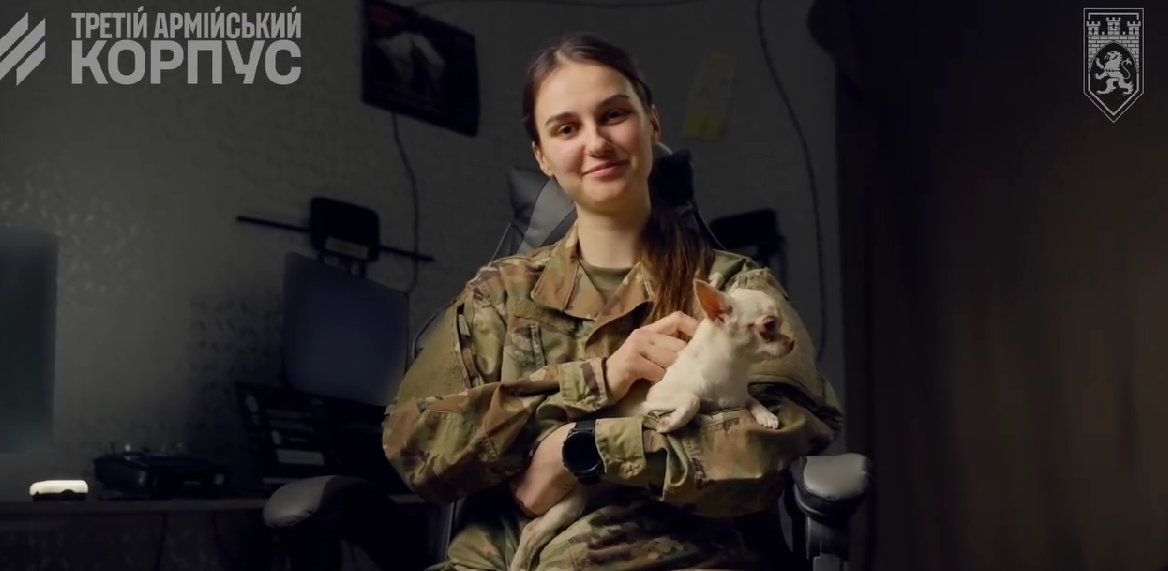
Natalia is 25 years old and from Odesa. She has served in two armies—the Israeli and Ukrainian militaries. In the Armed Forces of Ukraine, she has, among other things, carried out missions as part of a UAV, FPV drone, and strike-wing crew on the Zaporizhzhia and Kupiansk fronts, NV reported on 5 October.
During the Russo-Ukrainian war, women in Ukraine have the right to voluntarily enlist in the military. As of March, more than 75,000 women were serving in the armed forces, more than 55,000 of them as service members, the commander-in-chief said, and their number has been growing every year. Recently, discussion around the mandatory mobilization of women has intensified. Keith Kellogg, former US Special Presidential Envoy for Ukraine under President Donald Trump, said that he considered mobilizing women in Ukraine appropriate. In response, Iryna Vereshchuk, Deputy Head of the Office of the President of Ukraine, said she would rather see more missiles and more will from the United States than advice to mobilize women.
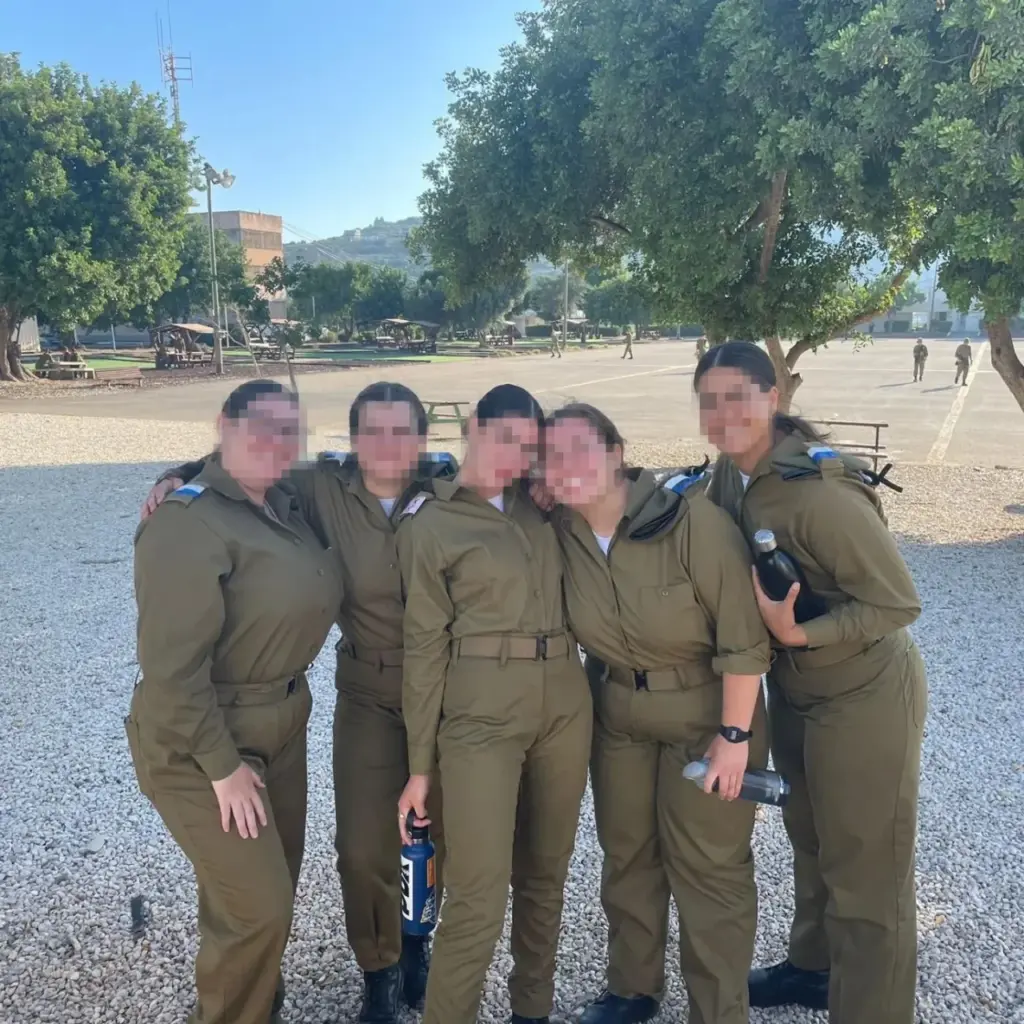
In Israel, Natalia served in a search-and-rescue brigade as a rescue soldier and in the engineering corps during a deployment along the northern border.
Natalia was born in Russia’s Saint Petersburg but does not remember her life there
The young woman was born in St. Petersburg, where her family lived at the time. When she was a year and a half old, her mother returned to Odesa with her and her older son. Natalia says she remembers her life exclusively in Ukraine.
She spent the first nearly two years studying at Lviv University, but later decided to leave the university and look for other educational opportunities. Natalia studied, among other places, in Denmark through a scholarship program. After completing it, she planned to enroll at a European university to study sound engineering, but the coronavirus pandemic began at that time.
She moved to Israel under a program for Jewish youth at the end of 2020. After the program ended, due to quarantine restrictions and closed airports, Natalia faced a choice: obtain a work visa or acquire citizenship under the Law of Return. She chose the latter—and with it, she also became obligated to perform military service.
In May 2022, Natalia joined the Israeli military and chose a combat unit.
“When the war started in Israel itself, I still had six months of mandatory service left. I was discharged and immediately transferred to reserve service. Once I managed to resolve all the bureaucratic issues so that this would not be considered desertion, I returned to Ukraine,” the young woman says.
Natalia returned to Ukraine in March 2025, and in August signed a contract with the Armed Forces of Ukraine.
Natalia (right) and her fellow servicewoman. Photo courtesy of Natalia/NV
“The army—both Israeli and Ukrainian—gives you a deeper understanding of what society is made of”
Among the advantages of the Ukrainian army, she highlights its ability to quickly adapt to circumstances. In particular, she mentions the use of drones, OSINT, and solving complex technological tasks with minimal resources.
“The West could learn from this situational agility. They often spend huge budgets on developments that should be cheap and mass-produced,” the veteran says.
However, such Ukrainian ingenuity is largely a consequence of a lack of funding, Natalia notes.
In the Israeli military, Natalia highlights society’s readiness for the constant threat of war and more systematic planning of military service.
“There, preparation for and perception of the army begin at school: by the age of 14–15, teenagers already understand where they want to go, what skills they need, and undergo selection for special or intelligence units,” the young woman says.
She then gives the opposite example of the situation in Ukraine.
Explore further
This Ukrainian female soldier flies one of war’s heaviest drones. She turns down promotion twice to keep doing it
“In Ukraine, with very rare exceptions, people hide until they are mobilized, and suddenly face the reality of conscription without having any understanding of the system,” the veteran says.
Asked how adapted the Ukrainian army is to women, she answered: “In no way,” adding that the Israeli army is “also largely not fully adapted.”
In Ukraine, this is reflected, in particular, in the provision of clothing and equipment that often does not correspond to women’s sizes and physiology. She says she had to purchase her own anatomically fitted body armor. She cited the example of veteran Natalia Lishchyshyna, who had her breasts amputated due to prolonged wearing of body armor that was not adapted to the female anatomy.
In Israel, by contrast, there is a practice of reimbursing expenses for equipment that service members purchase at their own expense.
Serving in the military in both countries provides an opportunity to better understand what society is actually made of, the young woman says.
“The army—both Israeli and Ukrainian—gives you a deeper understanding of what society is made of. You encounter people you would never have crossed paths with in your civilian bubble because of differences in views or socioeconomic circumstances,” Natalia says.
She believes this makes it easier to accept mistakes, difficulties, and new challenges.
The Ukrainian army is not adapted to women in any way, Natalia says
In Natalia’s view, the problem is not only the living and working conditions but, above all, the lack of mechanisms necessary for the systematic mandatory mobilization of women. At the same time, she believes voluntary recruitment should be encouraged and expanded.
One of the problems is the lack of a legal procedure for temporary childcare in cases when both parents are simultaneously carrying out combat missions, Natalia says, stressing that she means the period of their service, rather than situations involving the death of one of the parents.
Another shortcoming is insufficient protection against sexual violence and harassment in the Ukrainian military.
“Here, any complaint goes through the direct chain of command. If the commander is not interested in resolving the problem or is involved in it themselves, the woman is left defenseless,” the veteran says.
In Israel, by contrast, there is a separate hotline and mechanisms for documenting such cases without directly approaching a commander.
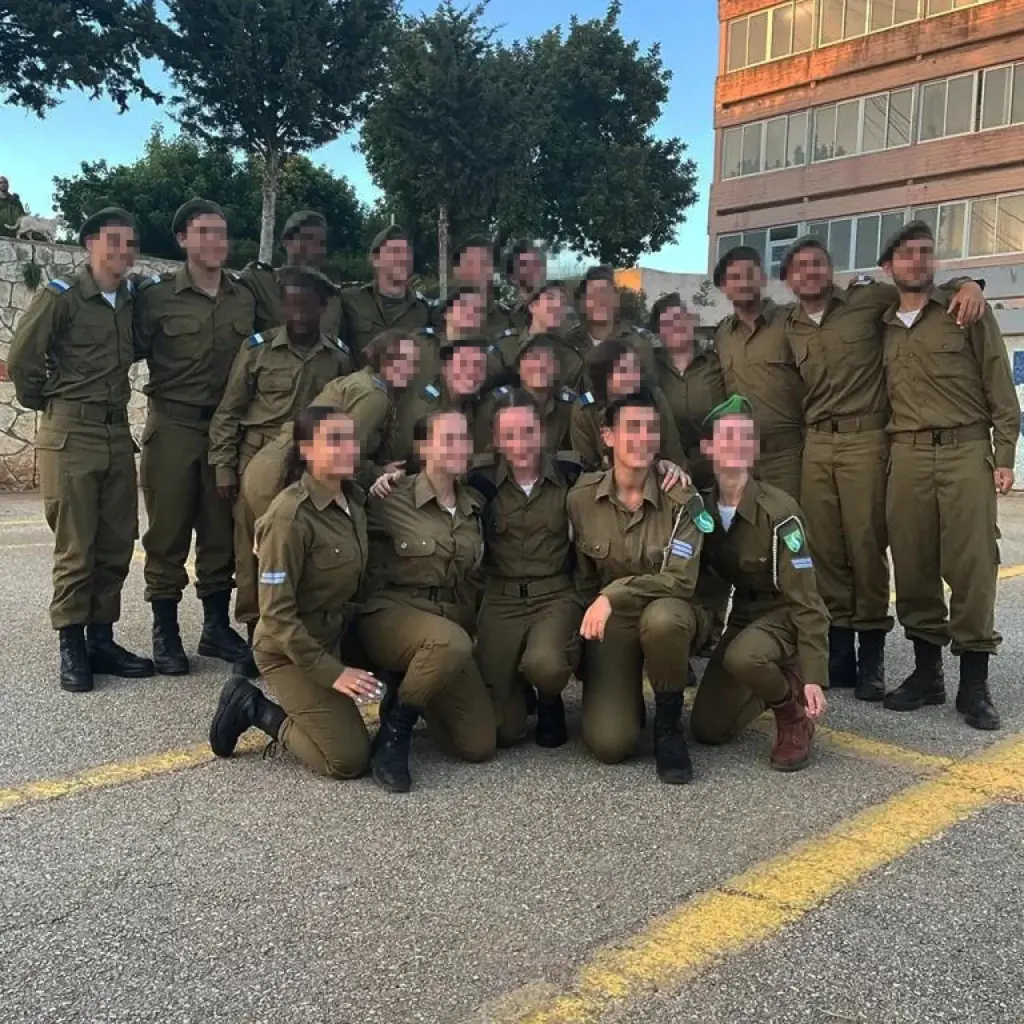
Natalia (second from left) during her service in the Israeli army. Photo courtesy of Natalia/NV
Women in combat positions can also still be taken insufficiently seriously, denied participation in combat missions, or transferred to staff positions without their consent.
Natalia also emphasizes the lack of systematic military training for civilian women “at any level” and gives school education as an example.
“Even with the weak level of the school curriculum for the subject ‘Defense of Ukraine,’ boys had at least some basic knowledge. Girls were not involved in it at all,” the veteran says.
For now, Natalia believes that women’s military service should remain voluntary, as society as a whole is still not ready to fully accept women in the military.
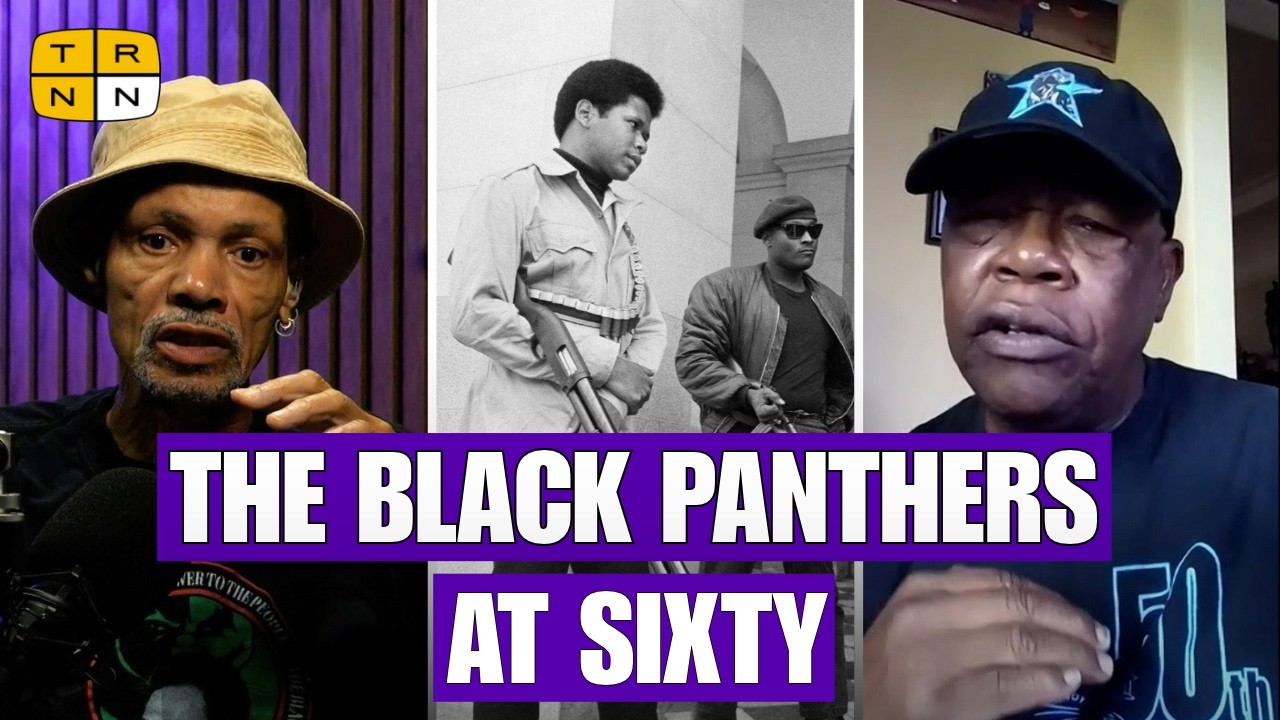
In this episode of Rattling the Bars, host Mansa Musa interviews archivist, photographer, and veteran Black Panther Party member Billy X Jennings.
Joining the Party at age 17 after relocating from Hobson City, Alabama, to Oakland, Jennings managed BPP offices and served as bodyguard to Huey P. Newton. During Bobby Seale’s 1973 Oakland mayoral run, Jennings helped spearhead an unprecedented electoral effort: “…an organizing event on the highest level the parties had ever been. I mean, the party is known for organizing, but to go into electoral politics and do what we did for a first time basis, it changed over. Even though Bobby lost that election, it changed openly because it opened up so many doors. Part of his job was to kick down doors because we were the Vanguard.”
Today, Jennings operates the official Black Panther Party Alumni website and leads political education initiatives across the Bay Area for the Party’s 60th Anniversary.
The following is a rushed transcript and may contain errors. It will be updated.
Mansa Musa:
Welcome to the edition of Rattling the Bars. I’m your host, Mansa Musa. This year marks the 60th anniversary of the founding of the Black Panther Party, which started in Oakland in 1966. Today, I’m honored to be joined by Billy Jennings, AKA Billy X, well-known archivist in Oakland, member of the Black Panther Party, a photographer who runs the official Black Panther Party alumni website called It’s About Time. Thank you for joining me, Billy.
Billy X Jennings:
Hey, thanks for having me again. Good morning to everyone.
Mansa Musa:
And as we talked earlier, I was in different spaces and hoping I had met you while I was in Oakland. So this would more or less be like a reunion, but this is my first time meeting you. I’m really honored. I heard a lot about you. I know a lot about your work, and it’s an honor to be able to interview you about the party and some of the things and some of your experiences.
Billy X Jennings:
Okay.
Mansa Musa:
Please introduce yourself to our audience, who you are and how you came to be involved in the Black Panther Party.
Billy X Jennings:
Well, my name is Billy X. Jennings. I’m a member of the Black Panther Party. I joined in 1968 when I was 17 years old. And I came about joining the party because I’m from a historical town in Alabama in the South where most original members came from the South and migrated to California. So I came from a place called Hopson City, Alabama. And the tradition there, Hobson City have had the right to vote since 1890. And we were one of the only black municipal cities, little towns that could vote and had that right to do that. And so I came from a very strong area that had embedded that kind of thought into my mind. And when I traveled to California and I saw the Black Panther Party on TV for the first time in 1967 when they went to Sacramento, California, it blew my mind.
I was in high school at the time and I immediately changed our social… We had a social club called the Buccaneers. I changed it to the Panthers the next day. I didn’t know anything about the party with just that symbolism and how they stood up to the police and read their demands and so forth. It made a change happen in me. And it wasn’t until I graduated from high school, I decided to move to Oakland. And when I moved to Oakland, it was during the time that Huey knew the trial had just started and I was going to a college that’s two blocks away from where Huey was going on trial at the courthouse. And when the trial started, we would hear them saying Free Huey off the preg, free Huey. And I went over there one day and I was reading a book simultaneously at the same time called The Audible Malcolm X.
So what I read, I had read in the book already, but I heard Bobby Steele speak at a rally for Huey and they were saying the same thing. So it got me really interested in the party. And so I started going to the rallies to Free Huey. I met some Panthers and then they said their Panther office was going to open in my area. And when it did, I went down and joined, became a Panther in training and I’ve been working with the party ever since.
Mansa Musa:
Okay. And take us back to the party’s founding because you came in two years after its founding. And also you came in to your own observation and to what we know to be a fact, you came in at a point where they had just started to become on the radar of the feds, but more importantly, they was definitely on the radar of the Oakland police, LA police. And so talk about what was it like to be able to be in that space and ultimately find yourself in a position to be the bodyguard for Huey Newton once he got out.
Billy X Jennings:
Well, my process started at the very beginning. In 1968, there was a certain method the party employed. Before you became a Panther, you had to become a Panther in training, which requires six to eight week training. They give you a list of books that has about 35 different books, about books by Franc Fanon, Mao Saintong, Che Guevara, Pruma, and other revolutionaries to read. And you had to attend political education class on a weekly basis. Panthers at that time was required to read two hours a day. A Panther had to secure and have what we call technical equipment. Technical equipment was a firearm of some type, because at that time I joined the Black Panther Party, it was called Black Panther Party for self-defense. Later on, we dropped off the self-defense, but at that particular time, the party was engaged into patrolling
Police officers in the community, observing them and making sure they don’t beat and brutalize people. So the first six weeks is reading and studying and learning the rules of the Black Panther Party. And then you’re given a section. The city is divided into different sections. I worked in the section four in East Oakland. Section four had a section leader. They had a geographical area that they were responsible for. And so I was in section four. At that very beginning when I first started, we were theorizing about the breakfast program. It hadn’t came about, but we were still looking for geographical locations to have these breakfast programs in the future. So we did that. And every Panther is required to sell the Black Panther Party newspaper, which is the voice of the party. And at that time, the party was growing tremendously by leaps and bounds.
We had people flying into California from Kansas City, Chicago, New York, all to get this education. Before you can open up a chapter of the Black Panther Party or a branch of the Black Panther Party, you have to come to Oakland first and get educated. And you have to meet the leadership. The leadership has to eyeball you and find out your level of consciousness, what type of person you are before you can go back and represent the party. So this whole process was going on. People were flocking to the party. The party got so big that in 1969, we had put a stop on membership and we call that particular part of the party’s history the purge because the party had grown… I mean, the party was attractive. I mean, black coats, leather coats, I mean sunglasses and Afros at the same time. So this was a big thing for our culture.
At the same time, our culture level was rising even in music. James Brown had a record out in 1968 that elevated people’s social conscience, I’m Black and I’m proud. It moved people from the level of being a Negro, because that’s what the newspapers and that other people was referring us to. But in our community, we’re referring to ourselves as Black or African. And when James Brown came out with Black and I’m Proud, you could never go back to ever saying he was a Negro no more. There was different progress being made, but James Brown couldn’t sing no song like that. It wasn’t for groups like the Black Panther Party. Groups like The Shot Light Can’t Sing got to give more power to the
Mansa Musa:
People
Billy X Jennings:
Like the Black Panther Party, paving the way to educate people to lift up their consciousness. And so my role in the party, I came up as a Panther in training. I became a officer of the day, which is the person who runs the office. And from there I was transferred to central headquarters. Now, my name came about because my captain at that time was a legendary Panther called Robert Bay. Robert Bay ran the East Oakland office. Robert Bay was also an age of the central committee. And when Huey Newton got out of jail in 1970, the central committee made Robert Bay his permanent bodyguard and assistant. Now, I worked in that capacity as well after Huey got out of jail, mostly going to… I went to court with Huey on a daily basis because he was let out on appeal. He wasn’t just let out.
He had to go back to court and defend himself. And so my job became that. And also at the same time, I became to the Newton family. Mr. Newton, Mrs. Newton, I lived three or four blocks from them. I would walk over their house around the corner, mow their lawn. I’d be taken to the pharmacy, driving to doctors because they’re old people and they don’t drive so much. So that became my responsibility and me and Huey’s relationship grew behind that. So we had good personal relationship.
I worked central headquarters. Working at central headquarters was key to who I am today because I know Panthers from everywhere because every Panther had to call the central headquarters on a weekly basis or if the office gets ready or they need lawyer resources and stuff like that, I pick up the phone, write on the messages or tell them what they need to know. So I know Panthers from almost all the chapters and branches. And so I worked that group for a while. Then I was drafted into Bobby Seal’s campaign when he ran for mayor of open. I ran Bobby Seal’s campaign office in East Oakland. And it was an organizing event on the highest level the parties had ever been. I mean, the party is known for organizing, but to go into electorial politics and do what we did for a first time basis, it changed over.
Even though Bobby lost that election, it changed openly because it opened up so many doors. Part of his job was to kick down doors because we were the Vanguard. We had lead to struggle and there’s other people who follow behind us. I mean, our life was constantly in threat because we were on the front line, police department, clientele pro, all those things aimed at members of the Black Panther Party. So not only did we have the burden of dealing with the system, we had to deal with the authorities as well.
Mansa Musa:
Talk about, and you’re familiar with Eddie Conway, right? And so Eddie Conway, when he got locked up, he organized a chapter for the Black Panther Party in the prison, which I became a part of. And everything you outlined, as you was talking, I was reflecting on, we had to read at least two albums. We had every aspect of the thing that you outlined as what the party was doing, Eddie had us doing the same thing. We had political education classes, we had military classes, we had first aid classes. All our class was structured around an environment that we was in, and our technic class was finding a hole to get out of prison by any means necessary. So we had that type of mentality. So Billy, as an archivist, you have a lot of distortions in terms of the images that’s being projected of the party and it’s been dubbed Panther Porn, and just to note that it’s images that’s being perpetuated by the federal government, it’s images that’s become more idolization of the party versus the images as an archivist.
What would you say is the most positive or how would you characterize the imagery of the party as from an archivist in terms of educating people and raising their conscience? I see you with a shotgun. I know you in Sacramento. I know why you in Sacramento and I know why you coming out like that. That’s a good thing. But then I turn around, I see somebody standing on the corner. They got a picture of somebody standing on the corner with their mug broke and they got a bandela on and it had nothing to do with organizing, had nothing to do with raising people’s conscience. It’s got more to do with projecting the image of a thug, for lack of a better word. Talk about that if you can.
Billy X Jennings:
Well, the party was vilified on the highest level from the government who lied on us continuously to the media that used disinformation to scare people. The big image they had was, oh, these Negroes, they have guns. They’re angry. They hate white people. That’s their basic pitch on everything. Let it be Republican New Africa or any Black group, they paint them as very threatening group. And because we had guns, I mean, there was nothing… It wasn’t against the law in California to have guns, to have them in public long as they was not loaded, which we knew that. So the images they printed of the Black Panther Party was to vilify us and to scare white people and to frighten Black people. So it was all a part of their method to control who we were. They were trying to identify who we were. We could only define that.
We defined our own selves. And so that’s why we started a Panther newspaper in 1967 to get our voices and views out. So even though we had Time, Newsweek, Life Magazine, the Black Panther Party was cranking out close to 250 to 300,000 copies of papers per week into the community to combat this disinformation about the Black Panther Party. The 10 point program outlines what the Black Panther Party was all about, what we stood for.
Only on one aspect, which is 0.97, we talk about defending ourselves with guns. Other
Than that, we’re talking about social change in all levels, in education, housing and so forth. That was a threat to them because they did not want anyone to rocking the boat and we are rocking the boat. We are waking people up from their deep sleep. I mean, we’re telling people to read. We’re showing people what books to read. We are the Vanguard. People are following us. They didn’t want that. We had people in the white community, they wanted to join in with us. We had people from the Latino community, they want to join with us. You had people from around the world reading the 10 point program and looking at the positive aspect of the Black Panther Party. And that’s how we get the New Zealand Panthers and the Panthers from Africa and Panthers from India and the UK because of our social programs, how we was dealing with the oppressor here.
And so they follow those same examples there. They started social program, they started demanding and fighting for their rights. And that’s what the oppressor hates. They hate for people to wake up. And we were waking up big time in the 60s with the music, the culture, the back to Africa, who we are. How could you be a Negro in 1970 after all has been presented before you? So those things have changed. The party was a part of that change, that
Mansa Musa:
Consciousness. Talk about, because to your point, I remember reading the paper and when United Farm Workers, the party was one of the first papers to one, educate people on what their issues were, two, organize the boycott certain wines that they was taking and exploiting their labor and not giving them equal pay. So talk about the party’s social contribution to raising people’s concept, but more importantly, the elasticity of it, because can you see some of the influences today? Oh,
Billy X Jennings:
Definitely. Definitely. I can see the influences of the Rainbow Coalition. And that was something that Fred Hampton talked about. I could see the coalition building of the Black Panther Party. We’re working with the Brown Beret, the Young Lords, the Young Patriots. We’re working with the welfare rights groups. We’re working with the BSU, the Black Student Unions on campus. We’re working with prison groups. There was a number of prison groups throughout the country that started Black Panther Party off in San Quentin, in Algeria, Raway and other prisons because the ideology of the Black Panther Party was strong. What we were talking about, there was backbone to it. Everything we did was dialectic materialism, right? We were dialectic people. We looked at things from all sides. We just didn’t look at things in one side. Black Panther Party was an international group from the very start. Dewey and Bobby were international.
You can look at our reading list, those 35 books that come from Fanon, that’s from Africa, Mao Zeitang from China. So there was all kind of influences in the party. And so it was a big job just working to educate and organize people on all levels. Because in our community, action speaks. People learn in various ways, but in our community, people relate to action. They see something, they learn from it. Just like the breakfast program. We started the breakfast program in California and within two weeks it was a national program because people said, “Hey, we can do that here. This is how they did it. We can do it here.” The party set examples that people could follow in every aspect. We were on the forefront of fighting racism on all levels.
“We started the breakfast program in California, and within two weeks it was a national program because people said, 'Hey, we can do that here. This is how they did it. We can do it here.' The party set examples that people could follow in every aspect. We were on the forefront of fighting racism on all levels.”
French borrowing costs are surging and central bankers are starting to fret. Some of them, at least.
The head of the French central bank, Emmanuel Moulin, told the Financial Times that his country risks being “strangled by interest rates”.
The best solution, he made clear, was for the French government to cut costs and reduce the deficit, which, in an unchanged scenario, could reach upwards of six percent next year.
Last week, the French minority government proposed €43bn worth of cuts for 2027. But pushing them through parliament is a tall order in a divided country.
Meanwhile, investors are dumping French bonds, pushing up French government borrowing costs compared to German benchmark Bunds. This is already immensely costly to French society.
“In three weeks, we’ve lost the equivalent of €15bn a year in higher debt-servicing costs over a 10-year horizon, or almost €100bn cumulatively over 10 years!”, French economist Shahin Vallée said on social media last week.
The gap, or spread, between French and German bond yields, historically around 50 basis points (0.5 percentage points), was 109 basis points when he wrote it on Wednesday. It is now 30 points higher.
Spreads are a crucial marker for financial stability because they show how nervous investors are. The bigger the spread, the higher the perceived risk.
And France’s parabolic bond spread is already bringing back unwelcome memories of the eurozone crisis in November 2011, when the spread reached 200 basis points.
Bypass parliament?
The question is what to do about it, and who is best positioned to act. The French government could bypass a parliamentary vote or push through the budget by ordinance, under articles 49.3 and 47 of the constitution, respectively.
This article continues, but the full version is available only to EUobserver.com subscribers. Visit account.euobserver.com/membership
Germany is expanding drone detection at its airports with a new system operated by German air traffic control provider Deutsche Flugsicherung (DFS), the German Federal Ministry for Transport (BMV) announced on 5 October.
Germany has accused Russia of attempting a hybrid attack at Germany’s Leipzig/Halle Airport near a Ukrainian An-124 aircraft using a drone carrying explosives. Earlier, Finnish President Alexander Stubb said Europe must be prepared for “continued hybrid and sabotage attacks” by Russia, adding that Russia seeks to sow panic through such actions.
On Monday, two more sites were added—Stuttgart and Hamburg. As of Monday, seven of Germany’s eight largest airports were equipped with the new drone detection system in their approach and departure areas.
Germany seeks responses to new hybrid threats
The Federal Ministry cited the reason for the new measure: drones near airports can affect air traffic very quickly.
Federal Transport Minister Steffen Bilger and Baden-Württemberg Transport Minister Nicole Razavi were briefed on the new system at Stuttgart Airport, where it is being put into operation, the ministry said. The system creates “an important technical basis for detecting potential threats at an early stage and quickly informing the competent authorities,” Bilger said.
“With today’s commissioning of the drone detection system at Stuttgart Airport, the federal government is fulfilling a key promise: it is not only talking about the dangers posed by unmanned aircraft, but is also following through with very concrete action. Protecting critical infrastructure and ensuring the safety of passengers at Stuttgart Airport require continuous adaptation to a changing security situation,” Razavi said, according to the ministry.
The new DFS system allows drones near airports to be detected at an early stage and information about possible threats to air traffic to be passed more quickly to the relevant authorities. This helps them assess risks and respond to them more quickly, the statement said.
DFS is responsible for detecting drones in approach and departure areas, while the Federal Police and other security services are responsible for preventing threats and defending against drones. The BMV, Federal Ministry of the Interior, DFS, Federal Police and airports coordinate their work to exchange information quickly and maintain a shared picture of the situation.
No further details about how the system operates have been disclosed.
The first stage of the expansion at Germany’s eight major commercial airports will be fully implemented this week, with the systems in Stuttgart and Hamburg being put into operation, the statement said.
Explore further
A drone came down beside a Bundeswehr air base, weeks after Berlin blamed Moscow for the Leipzig airport attack
The system will also be installed at the airport where a bomb-laden drone was found
The system will also be put into operation at Leipzig/Halle Airport this week, meaning that the first stage will be fully implemented at all eight of Germany’s largest commercial airports, according to the press release.
A quadcopter drone carrying a Semtex explosive flew directly toward a parked Ukrainian An-124 Ruslan cargo aircraft and struck its wing at Leipzig/Halle Airport in Germany on the evening of 4 August, Die Zeit reported on 10 August. The drone hit the aircraft at around 19:30 local time, bounced off the wing, and fell to the ground without detonating, according to the media outlet.
Ukrainian An-124 at Leipzig/Halle Airport in Germany, 5 August 2026. Photo: screenshot from Bild video
Germany has accused Russia of attempting the drone attack and announced further sanctions against Russian citizens and institutions, Tagesschau reported on 1 September.
At the crime scene, investigators found the drone configuration, explosives and detonation technology that had already appeared in other Russian hybrid operations and in Russia’s war against Ukraine, Federal Interior Minister Alexander Dobrindt said during a joint press conference with Federal Foreign Minister Johann Wadephul, the media outlet reported.
The German government assumes that Germany has been and will be a target of further such Russian attacks. Germany is not at war with Russia but is a “target of war,” Foreign Minister Wadephul said, according to the outlet.
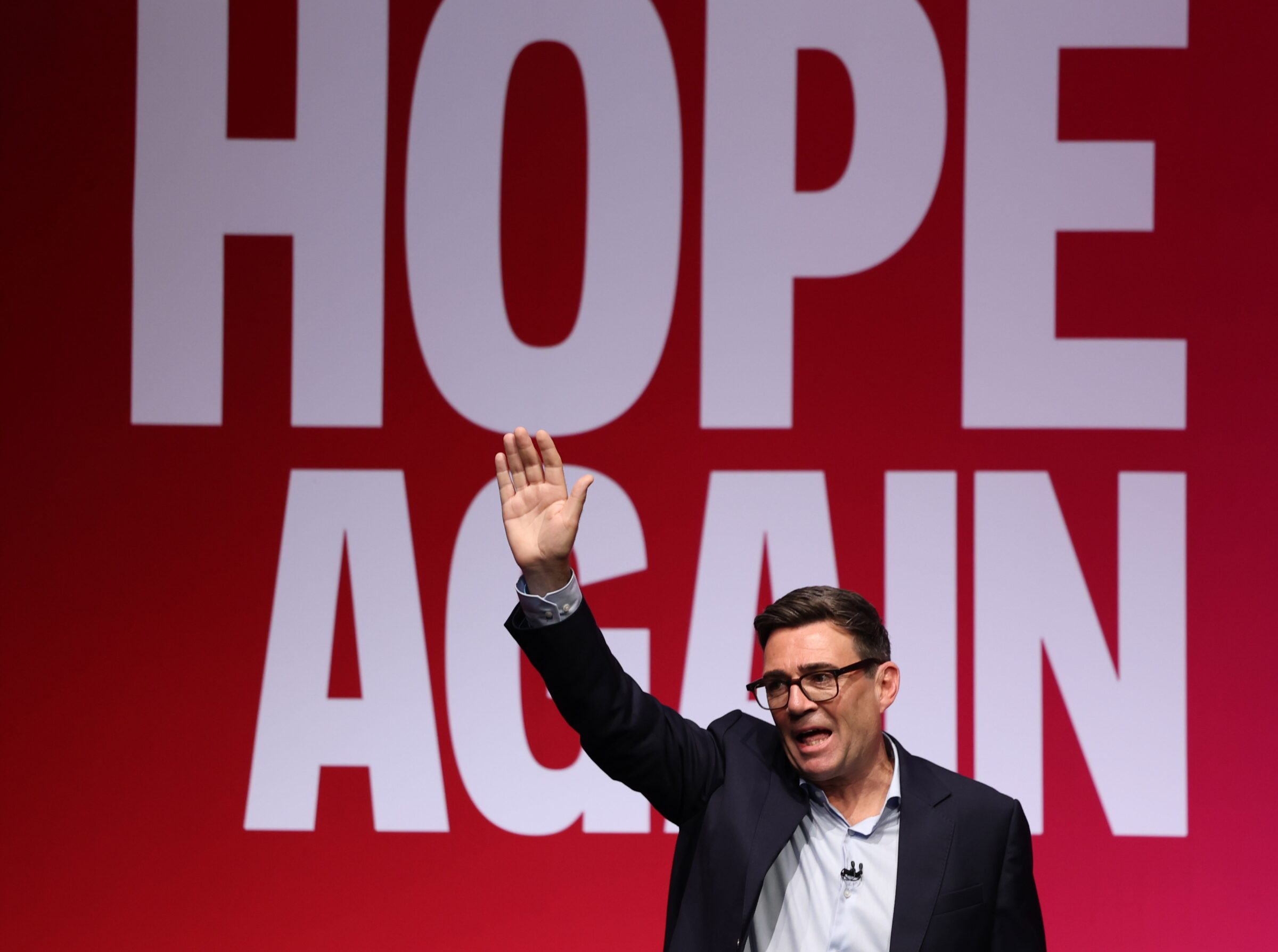
Having said several months ago that he had no intention of a ‘rerun’ of the Brexit debate, UK prime minister Andy Burnham told Labour delegates at the party’s annual conference in Liverpool last week that nothing should be off the table as far as EU-UK relations are concerned.
Brexit had “done more harm than good”, he said, adding that “we will not give Britain the clear path we need into the rest of the century until we decide on a long-term relationship with what is still our largest market.”
In fact, Britain could “go all the way” back into the EU, said Burnham.
The new prime minister is still enjoying something of a honeymoon period. His Labour party now tops the opinion polls, albeit by less than 30 percent, and his early policy announcements on nationalising utilities and pension reform are the most radical in a generation.
Even so, Burnham’s remarks were a surprise that left pro-European columnists positively giddy with optimism over the weekend.
In truth, rejoining the EU – if it happens – would probably take a decade.
Burnham didn’t offer any timetable or any other specifics, and has said that no moves towards EU membership would be taken before the next UK election due in 2029. And talk of rejoining the EU is not purely borne out of pro-European enthusiasm.
This article continues, but the full version is available only to EUobserver.com subscribers. Visit account.euobserver.com/membership
Police have 'locked down' an entire town to stop unrest by setting up a dispersal zone covering the whole of Gosport following protests sparked by the arrival of a migrant boat using a 'new route' from Normandy.
Paul Krugman is the greatest econ writer in the world, and also a legendary economist. But I sometimes feel that he has a blind spot when it comes to the value of new technologies. In 1998 he famously wrote: The growth of the Internet will slow drastically, as the flaw in ‘Metcalfe’s law’—which states that […]
Russia might not have directly interfered in Latvia’s election, but the vote still showed how the Ukraine war was distorting European democracy.
Latvia’s VDD intelligence service did not detect any of Russia’s classic interference tactics in the run-up to Saturday’s (3 October) vote, such as a spike in disinformation, vote buying, or a manufactured security scare.
The centre-right prime minister Andris Kulbergs retained power with 35.8 percent of the vote, even if coalition-building might take a while.
And voters’ concerns included the cost of living and failing healthcare, in what also sounded normal.
But despite the ordinary appearances, Russia’s war in Ukraine still influenced the election in fundamental ways, in a strange new normal for Europe that most of us had hardly imagined just five years ago.
This article continues, but the full version is available only to EUobserver.com subscribers. Visit account.euobserver.com/membership
Ann Widdecombe's alleged murderer, Joshua Kerry, has been charged with preparing acts of terrorism against Nigel Farage after "intensive" police investigation.
Florida lawyer Jalal Shehadeh is convinced that the warrantless seizure of his cell phone by federal agents at the Newark International Airport after he returned from Palestine this September was not random.
Shehadeh, a Miami-based attorney and Palestinian rights advocate, was held for several hours for a secondary inspection and had his phone seized by U.S. Customs and Border Protection (CBP) after he refused to allow federal agents to search it.
“It’s just a wildly invasive thing to do to somebody with no individualized justifiable basis to do it,” Shehadeh told Truthout.
He suspects federal authorities targeted him for his activism. The lawyer is involved in a legal complaint against a federal judge in Florida over the judge’s anti-Palestinian statements.
Shehadeh is one of several Palestinian rights advocates who have been detained and had their personal devices searched by CBP while returning to the U.S. from international travel since the start of Israel’s war on Gaza in October 2023.
Other similar cases include Amir Makled, a lawyer from the Detroit area who was representing University of Michigan students involved in pro-Palestine activism, journalist Max Blumenthal, and Osama Abu Irshaid, the executive director of American Muslims for Palestine (AMP).
Jenin Younes, president of the American-Arab Anti-Discrimination Committee (ADC), which filed a legal motion earlier this week demanding the return of Shehadeh’s phone, said CBP appears to be escalating phone searches against opponents of President Donald Trump’s agenda.
“Common sense tells us that they are targeting people who have pro-Palestine views,” Younes told Truthout.
She stressed that the searches are illegal. The Fourth Amendment of the U.S. Constitution protects “persons, houses, papers, and effects, against unreasonable searches and seizures.”
Younes said the “border exception” that allows searches to ensure that no illegal items are brought into the country should not apply to phones.
Younes, a civil liberties attorney, said the authors of the Constitution would have certainly opposed giving the government blanket authority to search people’s phones without cause.
“Law enforcement can search shipping vessels coming into the Boston harbor to make sure that they don’t have contraband. That’s a totally different thing from searching the contents of people’s smartphones,” she said. “I don’t think the framers would have thought that you could read the papers of somebody coming into the country in their suitcase, and likewise, a smartphone, which has so much more personal information.”
The case of Shehadeh and other Palestinian rights supporters targeted for searches at the border has reignited the debate over the application of constitutional protections at ports of entry.
Shehadeh said that when he was stopped at Newark on September 17, CBP officers only conducted a “cursory” search on his bags because they did not appear to be interested in physical items.
“They are looking for our thoughts,” he said. “They’re looking to see what I’m thinking. They want to see who I’m messaging. They want to see what WhatsApp groups I am part of.”
The lawyer, who has Global Entry for expedited border crossing, said he was flagged by name for secondary inspection and led to a waiting room. He was asked general questions about his travels, work, and family before the agents asked to search his phone.
Shehadeh objected to allowing the officers to go through his device, citing the attorney-client privileged information on the phone. The agents kept him waiting and subjected him to another round of questioning as they took the case to a supervisor. As the clock ticked, the Florida-based lawyer missed his connecting flight to Miami.
Eventually, he was informed by an officer that CBP would take his phone and let him go. “I told them, ‘I just want to be very clear. I am not giving you permission, consent to search my phone, and I’m not giving any other arm of this agency or anybody else consent to search my phone,’” he said.
The cell phone still has not been returned.
Shehadeh told Truthout that if the goal of the episode were to deter his activism for Palestinian rights, it would not succeed.
“It will not move our advocacy work an inch. Literally, it will have no impact. If anything, it will fuel the importance of doing more of this work,” he told Truthout. “But when it comes to travel, I’m going to be much more careful about what my phone situation will be.”
The Trump administration has been cracking down on Palestinian rights activism, including through a deportation campaign targeting non-citizen students who participated in protests against the war on Gaza.
Shehadeh warned that the administration is creating a new norm of weakened constitutional rights that many people may take for granted.
“This search is a perfect example of that. Protection against search and seizure is one of those things that comes out of our Constitution that really empowers citizens to know you will not have government intrusion,” he said.
“What this administration is doing is chipping away at the rights of Americans — of all Americans. But sadly, Arabs, Muslims, and minorities tend to be the first victims of these abuses. But they’re certainly not going to be the last ones.”
Abu Irshaid of AMP said the government is turning border crossings into a “hunting ground for individuals it wishes to target” for political retaliation or to gather information about constitutional protected activity.
Abu Irshaid has sued the government, alleging that the repeated searches he has been subjected to at the airport, along with the seizure of his phone, amount to illegal discrimination.
A federal judge ruled in his favor in July, declaring that the government violated Abu Irshaid’s rights with the searches.
Some activists are pinning their hopes on a case before the Supreme Court, Anibowei v. Blanche, that could determine whether the Fourth Amendment applies to the electronic devices of U.S. citizens travelling internationally.
CBP argues that only a tiny fraction of travelers, less than one-half of one percent, are subjected to a device search. But official statistics show an uptick in such searches since Trump returned to the White House.
In 2024, federal officers inspected the devices of 47,047 travelers. The numbers increased to 55,318 last year. Of those inspections, 13,590 targeted U.S. citizens in 2025, compared to 10,541 a year earlier.
In January, CBP released a memorandum outlining its regulations and authorities around searching travelers’ personal devices. The document stressed that people at ports of entry have diminished privacy rights and that phone searches are essential “to identify and combat a wide range of illicit activities.”
A basic search, one where the officer goes through the phone manually, can be conducted “with or without suspicion.”
The bar is higher for carrying out an advanced search, which includes copying and analyzing the content of the phone through an external device. It requires “reasonable suspicion of activity in violation of the laws” enforced by CBP. But there appears to be a loophole. An advanced search can still be conducted “in the absence of individualized reasonable suspicion when there is a national security concern.”
The directive does not provide details on what constitutes a “national security concern” to enable an advanced search.
Officers can only search the device itself and may not access information stored remotely. That’s why they must disable the external connectivity of the phone, according to the memorandum.
The directive gives officers the authority to seize a device and keep it even after the traveler leaves the airport, which is what happened to Shehadeh. According to the memorandum, CBP could effectively keep his phone indefinitely. The agency is allowed to hold on to the device for a period of five days, which can be extended by 15 days and subsequently by seven days in increments without specified limits.
As of Thursday, CBP has kept Shehadeh’s phone for 14 days, meaning the agency has applied at least one extension to its hold on the device.
In response to Truthout’s request for comment, a CBP spokesperson told Truthout that the likelihood of a search at a port of entry “remains exceedingly rare” but did not answer specific questions about Shehadeh’s case, including why the agency is still holding on to his phone.
“U.S. Customs and Border Protection has statutory authority to conduct border searches of electronic devices for all persons entering or departing the United States, regardless of citizenship, to enforce laws addressing terrorism, child exploitation, drug- and human-smuggling, visa fraud, and national security threats,” the CBP spokesperson said.
In the face of the U.S.’s ever-expanding definition of “national security threats,” which now seem to include lawyers, journalists, and activists who have advocated for the rights of Palestinians, are now living in fear that border stops are being used as a form of intimidation.
“What is most disturbing is that many of these aggressive government actions target activists whose only ‘offense’ is criticizing Israel’s violations against Palestinians,” Abu Irshaid told Truthout in a statement.
A Personal Connection
As a reporter, I try to stay out of the stories I am telling. But my personal experience with being stopped and searched after returning to the U.S. from international travel is too relevant for this article to withhold.
After returning to Dulles International Airport outside Washington, D.C. from a trip to Lebanon in February 2025, I was detained for nearly five hours and faced similar treatment as Shehadeh.
CBP officers asked me intrusive questions relating to my work as a journalist and political leanings in my family’s hometown in Lebanon, which had been targeted by Israeli bombardment in the war.
After a brief search of my bags, a CBP officer asked me to hand my phone and unlock it. I initially refused. The federal agent handed me a piece of paper stating that CBP has the lawful ability to search electronic devices. When I highlighted that the flyer reflects CBP policy, not the Constitution, the officer threatened to seize both my phone and computer indefinitely if I didn’t hand the phone in.
CBP took the phone after pressuring me to write down its passcode and kept me waiting for around two hours before handing it back — with a disclaimer that they couldn’t “process” it because the system was down. They eventually let me go. Throughout the hours-long ordeal, the officers did not allow me to contact my family member who was waiting to pick me up at the airport.
I have traveled outside the country twice since then and have been flagged for secondary inspection on the way back each time, albeit without a device search. At the advice of press freedom experts, now I travel internationally with an alternative phone that does not contain sensitive personal or professional information.
Tadeusz Makowski. — Dzieci z pochodniami. — (Des enfants avec des torches / La retraite aux flambeaux), 1928
En 1986, les cortèges étudiants et lycéens avaient contraint le gouvernement de Jacques Chirac à retirer le projet Devaquet. En 2006, les mobilisations de la jeunesse forçaient l'exécutif à abandonner le contrat première embauche. Quelle mesure répondrait aujourd'hui aux revendications lycéennes ? Recruter les professeurs manquants laisserait entière la question de la sélection. Supprimer Parcoursup ne fournirait pas les moyens d'accueillir les étudiants. Rénover les établissements n'abolirait pas l'angoisse d'un futur obscurci par l'IA et le climat. Le mouvement lycéen pointe au fond l'inconséquence générale des politiques menées depuis des décennies : gérer l'instant ; mépriser l'avenir.
Les gouvernements successifs ont installé l'adaptation individuelle comme réponse aux difficultés collectives. Les candidats perfectionnent leurs dossiers et les demandeurs d'emploi accumulent les expériences, tandis que les ressources familiales déterminent leur capacité à patienter ou à partir ailleurs. L'idéologie du mérite rapporte ensuite le résultat aux efforts de chacun.
En réclamant des moyens, les contestataires font exploser le cadre que voudrait imposer le gouvernement : un meilleur dossier ne crée aucune place à l'université ; la motivation ne remplace aucun professeur. Ils rejoignent ainsi les revendications des personnels, dont les conditions de travail déterminent aussi les conditions d'études. Au moment précis où se prépare un budget qui fera la part belle à la défense aux dépens des services publics, une jeunesse souvent décrite comme décérébrée par les réseaux sociaux construit une mobilisation pleinement politique. Et qui reçoit l'appui d'organisations syndicales et de partis expérimentés.
L'exécutif, qui redoute traditionnellement les mobilisations lycéennes, a choisi d'en déléguer la gestion au ministère de l'intérieur. La brutalisation du maintien de l'ordre accompagne une transformation politique plus profonde. Après la deuxième guerre mondiale, l'autorité de l'État s'était consolidée avec les protections accordées au monde du travail et la reconnaissance de sa capacité à négocier. Les dirigeants politiques cherchent désormais la légitimation des investisseurs et de Bruxelles en montrant leur détermination à briser les mobilisations. L'école de la rue leur administrera-t-elle cette fois une cuisante leçon ?
À partir du début du XXe siècle, la république a cherché à mieux encadrer les protestations populaires dans la rue en privilégiant l'évitement. Depuis les années 2000, l'approche est plus punitive. La priorité est donnée à l'arrestation des « fauteurs de troubles ». Une évolution qui favorise les violences et pose la question du respect du droit de manifester.
À la tribune du Palais-Bourbon, un député dénonce les violences qu'ont subies quelques jours plus tôt des protestataires, dans une petite ville du nord de la France. La journée a débuté par un regroupement devant une usine. Vers 9 heures, « les gendarmes, sur ordre du lieutenant et sans provocation, ont chargé. Un homme a été blessé, un enfant a eu l'oreille à moitié coupée. La colère de la foule a commencé là et s'est manifestée en effet par des pierres lancées ». Après un moment d'apaisement, la situation se tend à nouveau : « Vers 3 heures [de l'après-midi], de nouvelles bousculades ont lieu et le nombre des manifestants grossit. » Puis la violence se déchaîne : « Les gendarmes frappent de tous côtés. Des femmes, des enfants et des vieillards sont renversés. L'exaspération monte. Un grand nombre de citoyens ripostent aux gendarmes avec des pierres. » Soudain, c'est le drame : « Un grand désordre règne et c'est à ce moment que, sans qu'on sache qui en a donné l'ordre, sans sommation préalable, un terrible feu de peloton a été tiré dans cette masse de monde. (…) La place était couverte de blessés et de morts. » Interpellé, le ministre de l'intérieur répond avec véhémence : « Nous avons donné des ordres pour assurer la tranquillité publique ; nous les avons donnés avec netteté, fermeté et prudence. » Il livre ensuite son propre récit : « La gendarmerie locale a pu distinguer dans la foule toute la clientèle ordinaire des contrebandiers et des gens sans aveu qu'on peut évaluer à cinq ou six cents, parmi lesquels plus d'un quart d'étrangers. Toute la journée la force publique et l'armée ont eu à subir les injures, provocations et agressions de plus en plus violentes de la foule, et ce n'est qu'à la dernière extrémité et sous l'impression du danger qu'il n'était plus en leur pouvoir de conjurer autrement qu'elles ont dû recourir à la force des armes. »
Il conclut : « Je ne sais si les agents, lassés par les provocations de la foule, se sont laissé entraîner à quelques violences ; mais ce que je sais bien c'est que des hommes dont on n'a pas encore parlé ont été blessés et mis en danger de mort en accomplissant leur devoir. (…) Je tiens à envoyer mes remerciements à tous ces braves gens. » Cette dernière tirade déclenche la colère d'un député, qui le traite à deux reprises d'« assassin », et se voit exclu temporairement de l'Hémicycle.
Revendication de la « modération, [de la] fermeté et [de la] prudence » de l'État, controverse sur la responsabilité de l'escalade violente (manifestants ou gendarmes), rôle des « perturbateurs » (étrangers notamment), soutien inconditionnel aux forces de l'ordre : la scène fait écho aux polémiques qui entourent ces dernières semaines la répression des mouvements contre la réforme des retraites ou contre les mégabassines, comme à Sainte-Soline le 25 mars dernier. Pourtant, le député, bien que socialiste, n'appartient pas à la Nouvelle Union populaire écologique et sociale (Nupes) et le ministre n'est pas M. Gérald Darmanin. Il s'agit respectivement d'Ernest Roche et de Jean Antoine Ernest Constans, qui s'affrontent à la Chambre le 4 mai 1891, trois jours après le massacre de Fourmies, qui a fait neuf morts (dont deux enfants) et trente-cinq blessés par balle parmi les ouvriers réclamant la journée de huit heures et le repos du 1er-Mai (1).
« Citoyens temporairement égarés »
Une telle similarité des échanges étonne car, depuis la fin du XIXe siècle, le maintien de l'ordre a beaucoup évolué. Il ne relève plus de l'armée, alors chargée de ce que l'on appelait les « émotions populaires ». Dès que la police locale ou la gendarmerie étaient en difficulté, on la faisait intervenir, comme le 145e régiment d'infanterie à Fourmies. Des Trois Glorieuses de 1830 à la « semaine sanglante » de 1871 en passant par les journées de juin 1848, l'écrasement des crises sociales ou de régime provoque des milliers de morts et des dizaines de milliers de blessés. Mais cette répression brutale ne constituait guère un problème politique, ni même moral. Pour les élites d'alors, le peuple est par nature différent. Il constitue une masse dépourvue de volonté individuelle, prête à suivre aveuglément quelques meneurs dans l'émeute (2). Anne Robert Jacques Turgot, contrôleur général des finances de Louis XVI, livre un condensé de cet imaginaire social dans sa lettre aux élus des états de Bourgogne du 18 avril 1775. À la suite des pillages et de la destruction d'un moulin par des paysans en colère contre le prix du grain, il écrit : « Il faut avant tout en imposer à la populace et être le plus fort », puis « arrêter les chefs de l'émeute, qu'on peut aisément connaître et découvrir », l'impunité étant considérée comme « un grand encouragement pour les émeutes à venir ».
À la fin du XIXe siècle, cette philosophie n'est plus guère soutenable. La domination politique restait le monopole de la noblesse sous l'Ancien Régime ; elle était réservée aux plus fortunés sous la monarchie censitaire ; l'instauration du suffrage universel masculin en 1848 admet le peuple en politique. Les formes les plus coutumières et personnelles d'autorité se dévaluent avec l'apparition des clubs, des comités électoraux, des ligues (comme celle de l'enseignement), des sociétés de secours mutuel, puis des partis. Ces structures organisent les citoyens et constituent le creuset de discours, de programmes et d'idéologies qui mettent particulièrement l'accent sur la question sociale et la condition des travailleurs (3). La mobilisation politique n'est pas pour rien dans l'avènement de la IIIe République et la consolidation des républicains, à partir de 1877. Même si cela va prendre des années, il devient délicat pour le nouveau régime de garantir d'un côté des libertés d'expression (avec par exemple les lois sur la presse de 1881), mais aussi celles de se réunir et de se syndiquer, tout en faisant tirer par la troupe sur ceux qui les exercent. D'autant que l'armée n'est pas toujours fiable. Lors de la révolte des vignerons de 1907 (qui fait sept morts à Narbonne), le 17e régiment d'infanterie se mutine et fraternise avec les manifestants, mettant en difficulté le gouvernement de Georges Clemenceau.
Le début du XXe siècle est donc marqué par plusieurs projets de loi visant à mettre en place une force spécialisée dans la gestion des protestations, distincte de l'armée. Après de multiples hésitations, celle-ci voit finalement le jour le 22 juillet 1921, avec la création de 111 « pelotons mobiles de gendarmerie ». Rebaptisée « garde républicaine mobile » en 1926, cette force comptait 21 000 hommes en 1939 et avait le quasi-monopole du maintien de l'ordre sur le territoire français, à l'exception de Paris. Elle développe une doctrine, un entraînement et des savoir-faire originaux (4). Il s'agit de ne plus traiter les protestataires comme des ennemis ou des adversaires mais comme des « individus temporairement suggestionnés », pour reprendre la terminologie des années 1930, ou des « citoyens temporairement égarés », pour utiliser celle des années 1970. Ceci suppose d'éviter les contacts directs avec ces derniers, dont l'expérience montre qu'ils dégénèrent toujours en affrontements. On leur préfère des techniques de canalisation, de contention et de dispersion des foules, qui impliquent notamment de laisser toujours une porte de sortie. La discipline collective, le barrage des corps, la crosse du fusil et la matraque constituent dans un premier temps les seuls outils disponibles. Ils sont complétés après la seconde guerre mondiale par des technologies permettant de tenir les manifestants à distance, comme le gaz lacrymogène — inenvisageable auparavant en France en raison du souvenir des tranchées —, les grenades offensives et les lances à incendie. En 1944, la police se dote à son tour d'unités spécifiques, les compagnies républicaines de sécurité (CRS), qui comptent près de 13 000 hommes en 1947 et reproduisent l'organisation, la doctrine et l'équipement de la gendarmerie mobile.
Les deux forces s'engagent dans les rugueux conflits sociaux de la période (comme les grèves des mineurs de 1947-1948), au prix d'un grand nombre de blessés de part et d'autre. Mais on remarque une diminution significative des décès parmi les protestataires, notamment en province. Paris reste une exception, le préfet disposant de ses propres unités, prises parmi les effectifs de la police municipale (5). Elles ne disposent ni de l'entraînement ni du savoir-faire de leurs collègues et n'hésitent pas à déchaîner leur brutalité et à « régler leurs comptes » avec les Algériens (sept victimes lors de la manifestation du 14 juillet 1953 et plusieurs dizaines le 17 octobre 1961 (6)) ou les communistes (dix morts au métro Charonne à Paris, le 8 février 1962).
La crise de mai-juin 1968, par sa virulence et son ampleur, met à rude épreuve le ministère de l'intérieur. Contrairement au discours officiel, cinq morts sont à déplorer (trois étudiants à Paris, à Flins et dans le Calvados, et deux ouvriers à Sochaux) mais, surtout, les forces de l'ordre sont apparues dépassées en nombre et en équipement. En conséquence, vingt mille policiers sont recrutés entre 1968 et 1974, et CRS comme gendarmes mobiles reçoivent de nouvelles protections corporelles (casques, visières, jambières, boucliers, masques à gaz) et du matériel offensif et défensif, comme les fourgons-pompe, les véhicules blindés à roues de la gendarmerie (VBRG) et des grenades plus diversifiées. En avril 1969 ouvre également à Saint-Astier, en Dordogne, le Centre de perfectionnement de la gendarmerie mobile (CPGM), destiné à la formation continue des personnels. En 1977, une véritable ville — Cigaville — avec des bâtiments, des rues et des places y est construite, permettant de s'entraîner à toutes les situations du maintien de l'ordre, y compris les plus dures (barricades, cocktails Molotov). Les CRS en profitent aussi, avant de se doter de leurs propres centres. Ces entraînements visent à inculquer aux personnels une discipline collective et une maîtrise d'eux-mêmes permettant de gérer la peur et le stress inhérents à leurs missions.
Une nouvelle actualisation significative de l'équipement s'opère à la suite de la manifestation des marins-pêcheurs de Rennes du 4 février 1994, considérée par les professionnels comme l'une des plus violentes de la période contemporaine (usage de fusées de détresse et de harpons, blessures « de guerre » chez des policiers et gendarmes, incendie du parlement de Bretagne). Des grilles sont apposées sur les véhicules, et surtout apparaissent les tenues de « Robocop », comme les nomment les intéressés : uniformes ignifugés, manchettes, coudières, épaulières et casque en Kevlar, protège-nuque, etc. (7).
La « violence contenue » revendiquée par les forces de l'ordre laisse dans son sillage un vaste cortège de blessés et de mutilés. Mais les victimes mortelles sont rares après 1968, au point que l'on se souvient encore des noms de Malik Oussekine, tué par des voltigeurs motocyclistes lors du mouvement étudiant contre la loi Devaquet, en décembre 1986, ou de Rémi Fraisse, qui décède des suites de la déflagration d'une grenade à Sivens, en octobre 2014 (8). Les responsables policiers en sont même venus à vanter un « modèle français » de maintien de l'ordre. Ils regardent avec circonspection les difficultés des polices étrangères pour faire face au mouvement altermondialiste (comme à Seattle en 1999, à Göteborg et à Gênes en 2001) et restent à l'écart des réflexions qui se mènent au niveau européen.
Pourtant, quelque chose change graduellement à partir de la fin des années 1990. Les principaux responsables gouvernementaux considèrent que la conflictualité sociale a diminué et voient dans les compagnies de CRS et les escadrons de gendarmerie mobile (EGM) un réservoir de personnels pouvant être aisément redéployés dans la lutte contre l'« insécurité », dont ils ont fait une priorité. Amorcé sous le gouvernement de M. Lionel Jospin (1997-2002), ce mouvement s'accélère par la suite. Le programme d'action annexé à la loi d'orientation et de programmation pour la sécurité intérieure du 29 août 2002 indique ainsi : « Les forces mobiles ont été créées dans un contexte historique particulier marqué par des périodes d'émeutes et de troubles collectifs. La démocratie apaisée que notre pays connaît depuis de nombreuses années permet aujourd'hui un changement radical de la doctrine d'emploi des forces mobiles. Cette politique systématique rompant avec la priorité de l'ordre public permet de mettre les trente mille hommes qui constituent aujourd'hui les forces mobiles au service de la sécurité quotidienne. »
Le nombre de policiers et de gendarmes disponibles pour le maintien de l'ordre diminue. Ils ne sont plus que 25 786 en 2015, soit une baisse de presque 15 % par rapport à 2002, alors même que leurs missions se sont diversifiées. La saturation qui en découle pour ces unités s'est traduite par la montée en puissance des compagnies d'intervention (CDI). Existant localement sous des formats divers, elles sont composées de policiers de sécurité publique qui remplissent surtout des missions de sécurisation dans la lutte contre les « violences urbaines » et les trafics de stupéfiants. Reconnaissables à leurs casques barrés de deux bandes bleu roi (qui les distinguent des jaunes des CRS), elles sont devenues depuis la fin des années 2000 un élément central du maintien de l'ordre. Outre le renfort numérique qu'elles apportent, elles sont plus autonomes dans leur commandement et leur action que les CRS et les EGM, considérés comme trop statiques. Elles apparaissent également mieux ajustées que ces derniers à la judiciarisation du maintien de l'ordre.
L'arrestation ne faisait partie qu'à la marge de la gestion des manifestations (par exemple après leur dissolution). Le général Bertrand Cavallier, ancien responsable du CPGM, explique que la doctrine traditionnelle consiste d'abord à « absorber une violence qui est généralement une violence passagère. C'est le concept de désordre acceptable. Quel est l'effet final recherché ? Va-t-on s'intéresser à quelques dégradations ou va-t-on comprendre qu'après cette montée de fièvre il y a un retour à la normale et que l'on va pouvoir discuter et essayer de répondre aux attentes des manifestants, même si ces manifestants ont été violents (9) ? ». À partir du début des années 2000, le tournant punitif des gouvernements qui se succèdent se fait sentir sur ce terrain également. Il s'agit d'en finir avec l'« impunité » et donc d'identifier et d'arrêter des fauteurs de troubles. Les CRS et les gendarmes vidéastes font leur apparition, et plus récemment les « produits marquants codés », laissant des traces sur la peau et les vêtements. Des techniques qui permettent d'intervenir a posteriori. Les procureurs n'hésitent plus à autoriser les arrestations préventives et à organiser leurs services pour agir dans l'urgence. Surtout, on assiste à une actualisation tactique qui sépare les manifestants conformes de ceux qui se livrent à des actes illégaux (les « casseurs »), qu'il faut maintenant aller chercher au cœur même des cortèges. Cette distinction se retrouve clairement dans le schéma national du maintien de l'ordre adopté en 2021. Il formule deux objectifs « distincts ou complémentaires » de la gestion de la manifestation, « la dispersion sans délai des groupes hostiles et des interpellations rapides et ciblées facilitées par la mise en œuvre de dispositifs tactiques permettant d'aller au contact des individus identifiés ». Bien que les EGM et les CRS disposent d'unités capables d'assurer ces tâches, elles sont en pratique assumées par les CDI et surtout par les brigades anticriminalité (BAC) et les controversées brigades de répression de l'action violente motorisées (BRAV-M), créées en 2019.
Malgré tous les efforts rhétoriques pour expliquer la complémentarité de ces tactiques, elles sont partiellement contradictoires. « Impacter » ou « percuter » des « groupes hostiles » a souvent pour effet de stopper les cortèges et de porter la violence en leur sein. Les charges comme les gaz lacrymogènes ne sont pas sélectifs. Ils touchent d'abord les moins aguerris, provoquent l'incompréhension et attisent la colère. De plus, le risque physique d'intervenir dans une foule, en petit nombre de surcroît, augmente la probabilité d'user de la force. De multiples vidéos postées sur les réseaux sociaux attestent le désordre causé par l'intervention de ces polices urbaines, quand elles ne montrent pas les conflits qui éclatent avec les gendarmes mobiles ou les CRS, dont elles désorganisent les dispositifs. Facilement mises en difficulté, elles ont également plus volontiers recours aux grenades de désencerclement et aux lanceurs de balles de défense (comme le LBD 40).
Apparue au milieu des années 1990 (sous le nom commercial de Flash-Ball), cette arme « à létalité réduite » était destinée à l'origine à des unités spécialisées dans la neutralisation des forcenés ou des preneurs d'otages. Elle s'est graduellement diffusée au sein des BAC et des CDI puis s'est généralisée après l'embrasement des banlieues françaises en 2005. Ce sont d'abord ces policiers qui en systématisent l'usage dans les manifestations. Lors de la crise des « gilets jaunes », sur les 13 460 tirs de LBD recensés entre le 17 novembre 2018 et le 5 février 2019, 85 % étaient imputables aux polices urbaines, contre 15 % aux CRS. Sur la même période, la gendarmerie rapportait un millier de tirs (10). Si la controverse sur les ravages qu'elles ont provoqués a fait diminuer l'usage de ces armes, il ne s'en est pas moins banalisé. Le rapport annuel de l'inspection générale de la police nationale (IGPN) relève ainsi 6 684 tirs en 2021, contre 1 514 en 2012, soit quatre fois plus en neuf ans.
Enfin, le rôle dévolu aux polices urbaines dans les manifestations modifie les représentations des manifestants. Portés par leur socialisation professionnelle à se penser comme des « chasseurs », leurs agents ne sont guère enclins à considérer ces derniers comme des « citoyens momentanément égarés ». Ils les voient plutôt comme des délinquants (ou comme leurs complices) et n'hésitent pas à les traiter comme tels : humiliations et brimades diverses, arrestations musclées, etc.
Tous ces facteurs concourent à expliquer la « brutalisation du maintien de l'ordre (11) » repérable depuis le milieu des années 2010, dont le mouvement des « gilets jaunes » a pour l'heure constitué l'acmé. Toutefois, celle-ci reste inintelligible si on ne la relie pas à la délégitimation de la manifestation comme mode d'action politique.
La force intimide, la justice neutralise
Le maintien de l'ordre ne se limite pas à un face-à-face entre policiers et protestataires. Il s'agit d'une relation à trois qui implique également les gouvernants. Tout au long du XXe siècle s'est graduellement développé un ordre manifestant. Celui-ci implique une adaptation des forces de l'ordre, mais aussi des citoyens, lesquels abandonnent progressivement le registre de l'émeute pour des répertoires plus codifiés comme la manifestation. La mise en place de cortèges, de banderoles, de revendications, de mots et de services d'ordre procède de cet apprentissage protestataire (12). Toutefois, il n'est possible que parce qu'il permet la négociation politique, c'est-à-dire qu'il est reconnu comme une expression démocratique du dissensus. Le commissaire Jean-Marc Berlioz, directeur adjoint de la sécurité publique à la préfecture de police de Paris, observait en 1997 : « Désormais tout citoyen est appelé un jour à devenir manifestant, et je partage l'analyse qui veut que la manifestation soit un correctif à l'élection (13). »
Une telle formule semble désormais heurter les représentations des élites gouvernantes, qui n'ont pas la même expérience de l'action collective que leurs aînées. L'élection, même fragile, dont ils tirent leur position est perçue comme la seule source de légitimité et pratiquement comme un chèque en blanc. Le refus du dialogue avec les centrales syndicales (pourtant représentatives, elles aussi) et les groupes mobilisés (comme les personnels soignants) tout comme l'utilisation jusqu'à la dernière extrémité des outils légaux pour museler le Parlement (« 49-3 », limitation du temps des débats, sanctions disciplinaires) attestent une conception verticale du pouvoir qui fait peu cas de la contestation.
Dans les discours, les expressions comme « foules », « meutes » ou « hordes » réactivent une vision de la populace ignare et brutale que n'aurait pas reniée Turgot. On applique d'ailleurs une politique semblable dans ses principes : exhiber la force pour intimider et utiliser la justice pour neutraliser, même temporairement. Charges intempestives, usage abusif des gaz, des LBD ou des « nasses », zones interdites, gardes à vue préventives, amendes, fichages policiers et déferrements en masse se combinent ainsi pour rendre les manifestations plus inhospitalières, incertaines et insécurisantes.
Or la brutalisation du maintien de l'ordre et celle du jeu politique sont les deux faces d'un même processus. Le refus de la négociation et le déni de l'expression manifestante provoquent une colère qui augmente le niveau de violence. La focalisation des médias sur la moindre poubelle brûlée ou sur la dégradation de mobilier urbain renforce cette dynamique. Dans les luttes « pour l'imposition du sens de l'événement (14) », le choix de rapporter les actes les plus spectaculaires plutôt que les revendications exprimées — souvent avec beaucoup d'inventivité — confortent les premiers. Ils trouvent en effet un écho inversement proportionnel à leur poids dans la mobilisation. En retour, ils provoquent un durcissement de l'action policière et facilitent la disqualification de mouvements pourtant massifs, réduits aux menées de ceux que les ministres de l'intérieur nomment commodément les « black blocs », les « anarcho-autonomes » ou l'« ultragauche ».
On perçoit les bénéfices politiques immédiats de cette dislocation de l'ordre manifestant. Ses effets demeurent plus douteux à moyen terme. Elle produit d'abord une adaptation des protestataires. Ils apprennent à mieux se protéger (équipements contre les gaz, apparition des street medics, etc.), à rendre visibles les violences policières (en les filmant) et adoptent des stratégies favorisant la confrontation, la mobilité et l'imprévisibilité plutôt que l'expression de mots d'ordre. Ces évolutions pourraient ensuite déboucher sur un retour à des modes d'action plus radicaux, comme l'émeute, le sabotage, l'incendie, le blocage ou l'occupation.
Des élites ignorantes
Mais, surtout, le gouvernement d'un pays suppose un consentement minimal de ceux sur lesquels il s'exerce, c'est-à-dire des contreparties. Juste après le drame de Fourmies, le député Alexandre Millerand — qui deviendra plusieurs fois ministre, puis président de la République (1920-1924) — interpelle le ministre Constans : « Si la République a été fondée, si elle existe, si elle a été maintenue à travers toutes les crises, vous ne le devez, vous le savez bien d'ailleurs, qu'à ces millions de travailleurs de l'usine, des champs, de la mine qui attendent aujourd'hui de la République les réformes sociales qu'elle leur doit. » Son discours résonne étrangement avec celui de M. Gérard Mardiné, alors secrétaire général de la Confédération française de l'encadrement — Confédération générale des cadres (CFE-CGC), qui s'adressait le 15 février 2023 à la commission des affaires sociales du Sénat : « Votre politique, vous la menez pour qui ? Pour les salariés français ou pour les fonds de pension anglo-saxons ? »
Tous deux nous rappellent que l'instauration et la consolidation d'un État démocratique en France sont inséparables des protections qu'il a dû apporter à la condition salariale, c'est-à-dire des compromis trouvés entre le travail et le capital (15). Le déséquilibre manifeste qui s'est instauré en faveur des plus privilégiés — et que l'on n'essaie même plus de dissimuler — sape ce contrat social implicite. Les élites politiques qui en sont responsables démontent ainsi pierre à pierre une construction dont elles sont les héritières ignorantes. La démocratie représentative ne fonctionne pas comme un dialogue courtois et feutré entre les actionnaires d'un conseil d'administration ou les membres des comités directeurs d'institutions financières internationales. Elle vit et s'exprime aussi par les éclats de mobilisations collectives qui actualisent périodiquement les rapports de forces entre représentants et représentés. En rappelant publiquement l'intérêt du plus grand nombre, elles contribuent à la légitimité de la délégation politique, bien mieux que les consignes de politique pénale, les circulaires sur la composition des grenades lacrymogènes ou les doctrines d'emploi des LBD.
(1) Ces citations sont extraites du Journal officiel de la République française du 5 mai 1891, https://gallica.bnf.fr
(2) Déborah Cohen, La Nature du peuple. Les formes de l'imaginaire social (XVIIIe – XXIe siècles), Champ Vallon, Ceyzérieu, 2010.
(3) Christophe Charle, Histoire sociale de la France au XIXe siècle, Seuil, Paris, 1991.
(4) Patrick Bruneteaux, Maintenir l'ordre. Les transformations de la violence d'État en régime démocratique, Presses de Sciences Po, Paris, 1996.
(5) La police parisienne n'est intégrée dans la police nationale qu'en 1966.
(6) Emmanuel Blanchard, La Police parisienne et les Algériens (1944-1962), Nouveau Monde, Paris, 2011.
(7) David Dufresne, Maintien de l'ordre. Enquête, Hachette, Paris, 2007.
(8) Il faut y ajouter Vital Michalon, victime d'une grenade lors des mobilisations contre l'installation d'une centrale nucléaire à Creys-Malville, en juillet 1977, et Zineb Redouane, tuée par un tir de lacrymogène dans son appartement en décembre 2018 à Marseille.

 Login