❌

Reading view

EU Parliament’s 7 October memorial honours Israelis, sidelines Palestinians — and sows division

An EU Parliament memorial for victims of the 7 October attack caused disarray and anger as well as grief in a divided European house.

It was crowned by a towering Israeli flag, alongside the EU’s.

The exhibit set up in Strasbourg’s parliament included maps showing Occupied Palestinian Territories as part of Israel and sold trinkets made from debris of Israeli missiles.

But it made no mention of the 74,200 people killed by Israel in Gaza in the past three years, after Palestinian militants Hamas killed some 1,200 Israelis in a surprise attack.

This situation struck a chord with the sole Palestinian in parliament, left-wing French MEP Rima Hassan, who tried to take down the Israeli flag in protest, and toppled over the EU one as well in an unwanted domino effect.

“My action was in no way directed at the victims of 7 October or their memory,” Hassan told EUobserver. 

Instead, it targeted “this incessant and untenable double standard, for a Russian flag would never be permitted, and rightly so, within the [EU] institution’s premises”.

The memorial was organised by German centre-right MEP Hildegard Bentele, who chairs the parliament’s Israel delegations, alongside the Israeli embassy, and the The International Movement for Peace & Coexistence (IMPAC) group in Brussels, as well as others.

“During a conversation with a member of my team, the guest artist [at the EU Parliament memorial] claimed that Palestine ‘does not exist’,” Hassan added.

Her family were expelled from their birthplace by Israel in 1948 along with hundreds of thousands of others in what Palestinians call the Nakba (Catastrophe).

But in the cacophony of narratives in the EU assembly, those who saw her anti-Israel flag protest as offensive or antisemitic had echoing voices.

This article continues, but the full version is available only to EUobserver.com subscribers. Visit account.euobserver.com/membership

  •  

Two 14-year-old boys killed by an explosive device in a field in Sumy Oblast

warning signs landmines kyiv oblast brovary

Two 14-year-old boys were killed when an explosive device detonated in the evening in the Konotop district of Sumy Oblast, according to the statement by Oleh Hryhorov, head of the Sumy Regional Military Administration. The children encountered the dangerous device in a field, suffered severe injuries, and died at the scene, the statement said.

In 2022, Russian forces occupied parts of Sumy Oblast, but Ukraine liberated the region in April. Russia intensified its offensive again in 2025. Today, mines, unexploded ordnance and Russian drones shot down over the region pose a danger, as their warheads can detonate after falling. Overall, 146 children in Ukraine have suffered mine-related injuries, former Interior Minister Ihor Klymenko reported in April. For example, two months ago, an 11-year-old boy and a 15-year-old boy in Sumy Oblast were injured when an explosive device detonated.

Hryhorov expressed his condolences to the parents and relatives of the victims and urged people to remain cautious:

“Please be as careful as possible and remind children: do not approach unknown or suspicious objects, touch them, or try to move them. Take care of yourselves and your loved ones,” Hryhorov said.

Demining efforts continue in Sumy Oblast

On 24 February 2022, Russian forces entered the territory of Sumy Oblast. The first battles in the region took place that same day. In particular, Russian forces attempted to break through to Sumy, but Ukrainian troops repelled the offensive. On 11 April 2022, Ukraine restored control over the entire Sumy region.

As early as 7 June 2022, deminers were working in the Konotop, Sumy, and Okhtyrka districts, according to the Government Portal. That day, they surveyed areas and neutralized explosive devices.

The work of deminers remains deadly dangerous. In September 2024, two pyrotechnicians from Dnipropetrovsk Oblast were hit by a mine while demining Sumy Oblast: one died, while the other was hospitalized. In July 2025, deminer Oleh Petrenko was killed during humanitarian demining operations in Shostka District when a Russian FPV drone detonated, the State Emergency Service of Ukraine reported. Another pyrotechnician was injured, the statement said.

Nevertheless, the work continues despite the danger. In 2025, State Emergency Service deminers in the Sumy Oblast found and neutralized 5,283 explosive devices, the agency said in April. Sumy Oblast ranked sixth among all Ukrainian regions by this figure.

Twenty-two percent of Ukraine’s territory is potentially contaminated with explosive devices — more than 133,000 square kilometers, former Interior Minister Ihor Klymenko reported in April this year. Since the beginning of the full-scale invasion, State Emergency Service and National Police deminers have surveyed more than 248,000 hectares of territory and found more than 1 million 112 thousand explosive devices, the statement said.

  •  

By Netanyahu’s own math, Gaza Is 3,900 September 11ths

By Larry C. JOHNSON

Join us on Telegram, X, and VK.

Contact us: info@strategic-culture.su

Benjamin Netanyahu likes to translate Israel’s grief into American. At the United Nations last month, he took the dead of October 7 and multiplied them by the ratio of America’s population to Israel’s. The 1,200 Israelis killed that day, he said, were “equal to 40,000 innocent Americans slaughtered in less than 24 hours. That’s 16 times 9/11.”

Per-capita comparisons are a perfectly legitimate tool. A small country feels a massacre more than a large one, and Americans should understand what October 7 meant to Israelis. But a method is only honest if you’re willing to apply it to everyone. So let’s apply Netanyahu’s method to the people his army has been killing for three years.

Gaza had about 2.2 million people before the war. The United States has about 341 million, roughly 155 times as many. Take a conservative figure of 75,000 Palestinians killed in Gaza, slightly above the Gaza Health Ministry’s latest count of more than 73,000. Multiply it by Netanyahu’s own logic, and you get about 11.6 million Americans.

Eleven point six million. That is roughly the population of Ohio. It is more than ten times the number of Americans killed in every war the United States has ever fought, from the Revolution to Afghanistan. It is about 15 times America’s deaths in the Civil War, the bloodiest conflict in the nation’s history.

Measured in the unit Netanyahu chose, it is about 3,900 September 11ths.

Run the numbers in Israel’s own terms and the result is the same. Seventy-five thousand dead in a population of 2.2 million is the equivalent of about 340,000 Israelis. Netanyahu built a speech, a war and a foreign policy on 1,200. Imagine what he would say about 340,000.

The convenient multiplier

The prime minister’s defenders will object that the comparison is unfair because many of Gaza’s dead were Hamas fighters. Fine. Subtract every combatant the Israeli military claims to have killed, and apply the multiplier to what remains. Even 50,000 dead becomes nearly 8 million Americans, about 2,600 9/11s. You can argue over every death in the ledger, and the result is still measured in millions.

Netanyahu’s arithmetic has problems even on its own terms. Forty thousand Americans divided by the 2,977 who died on September 11 comes to about 13.4 9/11s, not 16. When the rhetoric needs a bigger number, it seems, the calculator rounds up.

But the real problem isn’t the rounding. It’s the selectivity. Netanyahu’s multiplier is designed to work in one direction only. It enlarges Israeli dead into an American catastrophe so that American audiences will feel what Israelis felt. Applied to Palestinians, it produces numbers so large they would make any American audience ask what, exactly, it has been paying for. That is why he never applies it to them.

What the comparison actually shows

The point of a per-capita comparison is to help outsiders grasp the scale of a loss. Netanyahu wants Americans to imagine 40,000 of their countrymen murdered in a day, and to understand everything Israel has done since as the natural response. Very well. Ask Americans to imagine 11.6 million of their countrymen dead, in a territory sealed off from escape, and to call it self-defense.

No American president would describe 11.6 million American dead as a proportionate response to anything. No American would accept that the dead deserved it because some of them were armed. And no one who has run the numbers can accept the premise of Netanyahu’s arithmetic, which is that Israeli lives scale up and Palestinian lives do not.

The method is Netanyahu’s. So is the answer it produces: by his own measure, the catastrophe in Gaza is about 290 times larger than the one he asks the world to remember.

Original article: sonar21.com

  •  

USA : un milliard de dollars pour un camp monté en huit jours et fermé onze mois plus tard

Aux Etats-Unis, un rapport du Government Accountability Office (GAO-26-108663) épingle l’Immigration and Customs Enforcement( ICE). Le GAO, l'organisme d'audit du Congrès américain, constate que la police de l'immigration,ICE, a multiplié les chantiers de détention sans aucun plan stratégique. Le centre floridien « Alligator Alcatraz » a coûté environ un milliard de dollars à l'État pour onze mois d'existence, soit grossièrement trois millions par jour. Le ministère de la Sécurité intérieure, lui, vante 13,2 milliards d'économies.

USA : un milliard de dollars pour un camp monté en huit jours et fermé onze mois plus tard
LE COURRIER
DES STRATÈGES
Restez libre !
USA : un milliard de dollars pour un camp monté en huit jours et fermé onze mois plus tard

LA NEWSLETTER · GRATUITE

Le Courrier,
chaque matin.

L'essentiel de l'actualité, passé au crible par les cinq plumes du Courrier. Dans votre boîte, chaque jour ouvré.

Gratuit. Vous restez libre de partir quand vous voulez.

JE M'INSCRIS lecourrierdesstrateges.fr
lecourrierdesstrateges.fr
Restez libre !

Commandé par quatre élus démocrates, le document du GAO dresse le constat d’une administration qui empile les initiatives sans feuille de route. Pour l’exercice 2025, l’ICE a reçu quelque 3,8 milliards de dollars destinés aux opérations de rétention. La loi budgétaire de juillet 2025 a ensuite débloqué 45 milliards de dollars de capacité jusqu’en 2029. Résultat : des démarrages et arrêts successifs, des chevauchements et, selon Heather MacLeod, directrice du GAO chargée de ces questions, « du gaspillage ».

USA : un milliard de dollars pour un camp monté en huit jours et fermé onze mois plus tard
LE COURRIER
DES STRATÈGES
Restez libre !

ABONNEMENT

Allez au fond
des choses.

Deux grands formats par jour. Les cinq plumes du Courrier. La série Sécession, le dimanche.

Le monde commente. Vous, vous comprenez.

S'ABONNER lecourrierdesstrateges.fr
lecourrierdesstrateges.fr
Restez libre !

Des milliards engagés sans plan d’ensemble

Le constat du GAO est sévère : l’ICE aurait lancé plusieurs initiatives simultanément sans disposer d’un plan stratégique permettant d’en articuler les besoins, les coûts et la durée. L’agence avait reçu environ 3,8 milliards de dollars pour ses opérations de rétention durant l’exercice 2025. En juillet 2025, la loi budgétaire a porté à 45 milliards de dollars la capacité de rétention prévue jusqu’en 2029.

GAO report calls for urgent ICE enforcement plans to stop wasting taxpayer money
A Government Accountability Office report says ICE’s lack of planning while expanding detention and operations led to wasteful spending.

Six opérations sont recensées : Guantanamo Bay, des bases militaires, onze entrepôts, l’achat de centres existants, les installations de Floride et l’utilisation d’établissements du Federal Bureau of Prisons.

Le cas des entrepôts est particulièrement parlant : environ 1 milliard de dollars ont été engagés en décembre 2025 pour onze sites, dont sept devaient finalement être revendus. Deux autres installations ont été achetées en juillet pour 1,5 milliard de dollars.

USA : un milliard de dollars pour un camp monté en huit jours et fermé onze mois plus tard
LE COURRIER
DES STRATÈGES
Restez libre !

TELEGRAM · L'INFO EN CONTINU

Entre deux éditions,
le fil.

La newsletter vous donne le matin. Le fil vous donne l'instant.

Gratuit, et en continu.

REJOINDRE LE FIL t.me/resterlibre
t.me/resterlibre
Restez libre !

Un milliard de dollars pour onze mois d’existence

« Alligator Alcatraz » concentre cette logique. Le centre floridien, mis en place en huit jours selon les responsables, a ouvert en juillet 2025 avant de fermer en juin 2026. Son coût atteint environ 1 milliard de dollars pour l’État de Floride. Le montage financier mérite attention : l’ICE n’a pas directement payé le centre. Le Department of Homeland Security(DHS) rembourse la Floride par l’intermédiaire d’une subvention de la FEMA de 608 millions de dollars, tandis que l’État attend encore plus de 500 millions.

Immigration: l’État policier de Trump fait des ravages
Alors qu’un juge fédéral dénonce les conditions « dégoûtantes » du centre de détention de Broadview, les descentes musclées de l’agence ICE (police de l’immigration) terrorisent les quartiers latinos de Chicago. Derrière la promesse de « sécurité », une machine répressive broie des vies et fracture des communautés. Le 30 octobre,

À partir du milliard et des onze mois d’existence, cela représente un ordre de grandeur d’environ 3 millions de dollars par jour. Ce calcul n’est pas celui du GAO, mais il suffit à mesurer l’échelle de la dépense. Le GAO recommande donc l’élaboration rapide d’un plan stratégique. L’ICE accepte cette recommandation, mais indique qu’il lui faudra près d’un an pour y répondre. Pour le GAO, cette échéance cadre mal avec l’urgence invoquée.

Le Department of Homeland Security (DHS) conteste toutefois la lecture du rapport,affirmant que les coûts étaient « appropriés et nécessaires ». Le DHS revendique plus de 13,2 milliards d'économies. Ce chiffre n'est étayé nulle part dans le rapport : c'est une déclaration du ministère.

L'ICE a accepté d'élaborer un plan, mais pas avant près d'un an. Mme MacLeod juge elle-même ce délai peu compatible avec l'urgence. Un autre rapport sur les coûts est attendu avant la fin de l'année. Quand une administration reçoit des dizaines de milliards sans obligation de prioriser ni de séquencer, le contribuable finance la précipitation et l’improvisation. Le rapport du GAO ne tranche pas sur la politique migratoire ; il rappelle une vérité budgétaire élémentaire : ouvrir le robinet sans compteur produit mécaniquement de la dépense sans retour.

USA : un milliard de dollars pour un camp monté en huit jours et fermé onze mois plus tard
LE COURRIER
DES STRATÈGES
Restez libre !

TIPS · SANS ABONNEMENT

Offrez-nous
un café.

Un média libre vit de ses lecteurs. Un pourboire ponctuel, sans compte ni engagement, quand le cœur vous en dit.

Vous donnez ce que vous voulez. Vous restez libre.

LAISSER UN POURBOIRE merci !
lecourrierdesstrateges.fr
Restez libre !

La leçon budgétaire dépasse donc largement le débat migratoire américain : lorsqu’une administration dispose soudainement de dizaines de milliards, l’absence de plan préalable peut transformer la rapidité d’action en machine à dépenser. L’argent public n’est pas moins gaspillé parce qu’il est américain.

  •  

Trump denials can’t hide billions in U.S. weapons sent to Ukraine

Not only is Europe not ‘paying for it,’ it’s enough total support — including target intelligence for deep strikes into Russia — to keep escalating the conflict.

By Jennifer KAVANAGH

Join us on Telegram, X, and VK.

Contact us: info@strategic-culture.su

Trying to pin the blame for the depletion of U.S. military stockpiles on something other than the war in Iran, President Donald Trump fell back on a usual scapegoat last week: Ukraine. “The Biden administration gave far more munitions away to Ukraine, at no cost to them whatsoever, than we have used in Iran,” Trump wrote on Truth Social.

This is a familiar refrain. Trump loves to remind his audience that because of him, Americans are “not spending on Ukraine anymore” and instead, Europe is footing the bill. In truth, most people in the United States don’t think about Ukraine much these days. But since Trump himself brought it up, it’s worth asking: What exactly is going on with U.S. military support to Ukraine?

The answer might surprise you. Despite Trump’s rhetoric, the United States remains deeply embroiled in Ukraine’s ongoing conflict with Russia in ways that create national security risks and run counter to Trump’s own foreign policy goals.

It is true that Trump has reduced U.S. support to Ukraine compared to its high mark under his predecessor, Joe Biden. First, his administration has stopped the use of Presidential Drawdown Authority to transfer weapons from U.S. stocks directly to Ukraine. The Biden administration used this mechanism to give Ukraine almost $35 billion in weapons free of charge. Second, the Trump administration has not requested additional funds for the Ukraine Security Assistance Initiative (USAI), which uses U.S. financing to purchase new weapons for Ukraine.

But Trump has not cut off all assistance to Ukraine. Several important channels remain. First, there are about $13 billion in outstanding USAI contracts as of June 2026, down from $20 billion in January 2025. These contracts, signed by Biden and now implemented by Trump, will procure weapons for Ukraine through about 2028. Weapons in the pipeline include longer-lead time systems like NASAMs, Patriot missiles and components (Ukraine is reportedly receiving at 10-20 PAC-3s per month under these contracts), counter-drone systems, artillery rockets, and ammunition.

These continuing deliveries are not new awards, but they are still taxpayer-funded military aid to Ukraine that will add up to about $20 billion in aid over the 4 years of Trump’s term. Weapons produced under these contracts come off overburdened U.S. production lines. This has a high opportunity cost given the limits of U.S. defense industrial capacity. Without obligations to Ukraine, industrial resources could shift to different weapons or systems that the United States needs more.

If the Trump administration were serious about ending U.S. spending on the Ukraine war, it could still recoup these funds and reallocate the money to support U.S. defense production needs. It has instead allowed the aid to continue.

There has also been some new funding approved since Biden left office. Congress included about $800 million of USAI funding in the 2026 and 2027 NDAAs. We can expect more in future bills as well.

And the State Department has continued to send military aid of its own. A portion of this aid goes through the Ukraine’s Ministry of Interior, including drones, armored vehicles, guns, grenade launchers, and similar equipment. Since this equipment ends up with Ukraine’s National Guard and border police it is often counted as non-military and intended for things like counterdrug operations, but today these personnel serve as combat units.

The State Department has also approved $3 billion of new arms sales to Ukraine in 2025 and 2026 that will be at least partially funded from foreign military financing (FMF), which means U.S. dollars supporting foreign government purchases of U.S. weapons. Some of these funds may come from money allocated but not spent under President Biden, but much of the funding will be new, coming from the State Department’s budget.

The bottom line is that U.S. weapons transfers to Ukraine continue under Trump, amounting to, on average, as much at $5 billion per year. But this is no longer the most important, or expensive, type of support that the United States gives to Ukraine.

For example, the United States gives Ukraine real-time targeting information, including on the movement of Russian troops and the location of key command centers. This information has been important to Ukraine’s mid-range strike campaign on Russian logistics as well as its deep strikes against military and energy targets inside of Russia. In addition, U.S. reconnaissance and surveillance assets in countries on the NATO border (including routine E-3 flights) are integrated with Ukraine’s air defense network, improving the accuracy and speed of Ukraine’s response.

Beyond intelligence, the United States also provides logistical and maintenance support, including forward and remote assistance to repair American-made equipment, necessary spare parts to keep older systems running, and training. It also facilitates the expensive transfer of European purchases of U.S. weapons.

The cost of the intelligence, logistics, and other operational support the United States provides to Ukraine does not show up anywhere as an itemized bill, even as U.S. assistance increases. But we can use available public information to draw some conclusions about the expenses incurred.

The 2024 defense supplemental bill, for instance, allocated about $15 billion to “military training, intelligence sharing, increased presence, and other support activities.” In theory, these funds are intended to cover activities conducted in support of Ukraine that would not occur if the United States remained uninvolved in that conflict. Some portion of this money will go to the salaries of military personnel who would be paid no matter where they work.

Since about a third of each military service’s budget is personnel costs, we could estimate the cost of extra activities conducted for Ukraine, excluding baseline manpower, at about $10 billion over the course of a year or so. If Trump has truly expanded intelligence sharing with Ukraine, this price tag may have increased over time.

The money included in the bill is likely only a portion of the actual burden the U.S. military and intelligence community have shouldered to support Ukraine’s war. Many intelligence activities, like tasking and analyzing satellite data and collecting signals intelligence, might be covered in classified national security budgets. Starting in 2023, in fact, the classified intelligence budget increased by 10%, a large jump over the 2022 total. The increase was justified by intelligence community leaders as resulting from shifts in the national security landscape, including especially concern about China’s rise and spillover from conflict in Ukraine. Since the total increase in funding was about $10 billion, we can guess that Ukraine-related expenditures might amount to $3-$5 billion per year, or about one-third to one-half of the total increase.

All told, then, U.S. taxpayers are still spending roughly $20 billion per year on Ukraine. Today, assistance to Ukraine comes primarily in the form of direct operational support, not weapons. But the shift in type of aid increases the risk of U.S. support to Ukraine to average Americans.

First, assisting Ukraine in striking energy targets inside of Russia has a perverse effect on the Trump administration’s efforts to keep gas prices low. As Secretary of the Treasury Scott Bessent acknowledged, Ukraine’s strikes inside Russia push global oil prices up, imposing higher costs of living on Americans.

Second, U.S. intelligence support deepens U.S. involvement in Ukraine’s war, making it an all-but-direct combatant. Russian assistance to Iran, both in terms of weapons and intelligence sharing, is a reaction to the comparable U.S. role in Ukraine, and it leaves U.S. servicemembers in the Middle East and elsewhere less safe. Growing U.S. participation in Ukraine also increases the risk that miscalculation leads to a direct U.S.-Russia confrontation, a nightmarish possibility given the degraded state of U.S. military readiness.

Trump promised to end the war in Ukraine in 24 hours. He has instead deepened U.S. entanglement in ways that create real risks and new fiscal costs for the United States. American interests would be best served if the United States were to walk away entirely, but if Trump instead opts for the status quo, he should at least be honest about it.

Original article: responsiblestatecraft.org

  •  

Is Israel arming one of Brazil’s largest criminal factions?

Israeli rifles seized en route to Brazil’s TCP drug faction – the same group that controls “Complexo de Israel.” Israel armed Medellín in the 80s. Coincidence?

Join us on Telegram, X, and VK.

Contact us: info@strategic-culture.su

Last week, 7 ARAD-7 rifles of Israeli manufacture were seized by the Brazilian Federal Police at a transport company located in Niterói, Rio de Janeiro, while they were being prepared to be sent to drug traffickers of the Terceiro Comando Puro (TCP) organization. These are the same drug traffickers who control a territory called “Complexo de Israel,” which brings together the favelas Cidade Alta, Parada de Lucas, Vigário Geral, Cinco Bocas, and Pica-Pau.

Two years ago, we wrote here at the Strategic Culture Foundation an article about the danger of “narcopentecostalism” – the deep linkage between drug trafficking and neo-Pentecostalism in some favelas – pointing to this new phenomenon as a possible national security threat for Brazil, as well as a potential focus of activities aimed at destabilizing the social fabric and religious persecution. Indeed, in TCP territories, Catholic churches and Afro-Brazilian religious centers are closed and violently attacked.

Nevertheless, at the time we wrote that article, in July 2024, there were not yet enough material elements to incisively affirm the existence of a direct connection between narcopentecostalism and the State of Israel. TCP traffickers exalted the State of Israel, used Israeli patches and uniforms, but all of this was circumstantial and could be explained by mere adherence to evangelical discourse.

Now, however, we have more specific evidence to be able to return to the topic and raise concern about the possible link between Israel and one of Brazil’s main drug trafficking organizations.

After all, to date it is still not known how these modern Israeli rifles reached the logistical branch of an important Brazilian criminal organization, when this specific rifle is still uncommon among Brazilian police forces and nonexistent among the military.

The first objection that could be raised would be about Israel’s “interest” in arming or financing a criminal organization in Brazil. Well, it would not be the first time.

In the 1980s, 500 automatic weapons (including IMI Galil rifles and Uzi submachine guns) and 200,000 rounds of ammunition were found in a warehouse belonging to the Medellín Cartel, one of the largest drug trafficking organizations in Colombia. At the time, “independent investigations” concluded that the person responsible for the operation, the mercenary and retired Israeli military officer Yair Klein, had acted on his own. Klein himself, however, always stated that his activities in Colombia (which involved not only arms sales but also the training of paramilitary groups) had the knowledge and authorization of Israeli authorities.

Klein’s link to the Israeli state apparatus, demonstrating that he was not really an “independent agent,” is confirmed by the fact that when he was arrested in Sierra Leone in 1999 for selling weapons to insurgents of the Revolutionary United Front, the State of Israel intervened to secure his release, as well as refused all extradition requests.

Another interesting and recent piece of news involves Mexico, where authorities declared that 80% of the weapons found with soldiers of the drug cartels were of U.S. origin… and most of the remaining 20% were of Israeli origin. Indeed, Israel officially exported 24,000 automatic weapons between 2006 and 2018 to Mexico’s military and police institutions, and another 18,000 in more recent years. Note, however, that estimates from independent observatories suggest that Mexican cartels as a whole possess an arsenal of several hundred thousand automatic weapons. If something like 15-20% of these weapons are of Israeli origin, then we are talking about any number between 20,000 and 100,000 Israeli-origin weapons in the hands of the cartels. These are numbers that simply do not match the figures of official Israeli arms exports to Mexican security forces.

One last point that may draw attention is the recent attention the U.S. has given to Brazilian criminal organizations, with the PCC and CV groups categorized as terrorist groups by Donald Trump’s government. What draws attention is the fact that the TCP – the 3rd largest criminal organization in Brazil, with a presence in some other countries in the region, operations in several Brazilian states, and at least one verifiable link to an individual connected to Al-Qaeda’s financing network, not to mention an operational alliance with the PCC – was left out of the categorization.

Naturally, it could be a coincidence. But even so, it is an interesting coincidence that the neo-Pentecostal criminal organization apparently armed by Israel is exactly the one that was not categorized as terrorist by the White House.

  •  

Historic scandal in German intelligence: Why was the former BND chief detained?

The BND was founded by Nazis, ran Gladio, and did Rubikon with the CIA. Hanning isn’t a rotten official – he’s one who got caught.

Join us on Telegram, X, and VK.

Contact us: info@strategic-culture.su

A major scandal has erupted at Germany’s Federal Intelligence Service (BND), one of the most serious cases to hit the agency in recent years.

Germany’s Federal Prosecutor General is investigating former BND President August Hanning on suspicion of espionage against the state, obtaining state secrets, attempted treason, and engaging in intelligence activities. Another long-serving employee of the agency is facing charges of aiding and abetting attempted treason and espionage against the state. Both men have been detained, and the Federal Prosecutor General’s Office has confirmed their arrests.

Information: What is Germany’s Federal Intelligence Service (BND)?

The Bundesnachrichtendienst (BND) is Germany’s official foreign intelligence service. Its founder was Reinhard Gehlen, who served as the head of intelligence on the Eastern Front during Nazi Germany. In its early years, the agency recruited numerous former members of Nazi organizations such as the Gestapo and the SS. During the Cold War and in the period that followed, the agency continued to be one of “American imperialism’s biggest partners” in Europe.

Federal Criminal Police Office (BKA) officers detained Hanning at his home in Nordwalde, near Münster, in the early hours of the morning. This was reported by WDR, NDR and Süddeutsche Zeitung.

At the same time, another former senior BND employee was detained in Bavaria. The suspect, identified as Manfred D., was reportedly Hanning’s former chief of staff and had worked at the BND until spring 2026. Investigators searched locations associated with the suspects both there and in Berlin.

Information: What is the Federal Criminal Police Office (BKA)?

The Federal Criminal Police Office (Bundeskriminalamt – BKA) is Germany’s federal criminal police agency responsible for combating crime at the national level.

The two senior figures in German intelligence are expected to appear before a judge today or tomorrow. The judge will formally notify them of the arrest warrants and decide whether they will remain in custody pending trial.

What are the charges?

First of all, it is alleged that D., Hanning’s former chief of staff, provided Hanning with highly classified information from the BND in exchange for money until at least 2022. It is not unusual for retired intelligence officers to take on roles such as security consultants for various organizations after leaving government service. In Hanning’s case, however, investigators suspect that the former BND chief may have prepared a security analysis for a foreign intelligence service “in at least one instance.”

According to information obtained by WDR, NDR and Süddeutsche Zeitung, that foreign service was not Russia.

In another case, Hanning is alleged to have used information obtained from internal BND documents in his communications with a foreign agent.

In fact, the story of how Hanning first came onto investigators’ radar goes back to last year.

According to information obtained by Tagesschau from intelligence sources, Hanning came under investigation after searches were carried out at his home and offices in September last year. At the time, the Hamburg State Criminal Police Office (LKA) was searching for evidence related to the kidnapping of Christina Block’s children.

Child abduction and sensitive documents

The case concerned allegations by the Hamburg prosecutor’s office against restaurant entrepreneur Christina Block and her lawyer, Ingo Bott, over the abduction of children. Prosecutors accuse Block of arranging the kidnapping of her two young children at the end of 2023 amid a custody dispute with her former husband. Hanning is also alleged to have been involved in the attempted abduction. Hanning denies the allegations.

According to the allegations, Hanning, together with a former LKA employee who was his business associate, conspired to hand the children’s father a hard drive containing images and videos of child sexual abuse material.

Information: Who is Christina Block?

Christina Block is the daughter and heiress of Eugen Block, founder of Germany’s well-known Block House steakhouse chain. She is accused of instigating or planning the violent abduction of her two youngest children from Denmark and their transfer to Germany on New Year’s Eve 2023.

The LKA also discovered an electronic data storage device containing highly sensitive material while examining materials seized from Hanning last year.

According to the findings, the former intelligence chief had access to highly classified BND documents from the recent past that he had absolutely no reason to possess. Hanning’s tenure at the BND, meanwhile, had ended in November 2005.

In total, D. is believed to have passed approximately 2,000 documents to Hanning. A significant portion of these reportedly consisted of briefings prepared for the weekly “intelligence situation” meetings held at the Chancellery, where the heads of the country’s security agencies exchange information.

According to information obtained by investigators, the documents included reports on highly sensitive subjects such as Iran’s nuclear program and the Russian military. Intelligence sources say that some of the documents even contained information obtained from foreign intelligence services.

The leaking of such material is being described in the intelligence community as virtually a “super-GAU.”

Information: What is a super-GAU?

Super-GAU is a German-derived term referring to the largest and most destructive situation or catastrophe imaginable, going beyond even the worst-case scenario that has been designed for. It is derived from the German expression “Größter anzunehmender Unfall” (“the greatest assumed accident”).

‘Treason against the state’ allegations

Following the Hamburg LKA’s investigation, the documents seized were handed over to federal authorities. The Federal Prosecutor General’s Office launched a secret investigation into Hanning and the alleged informant within the BND in May 2026.

It is not yet known how long Hanning had been receiving confidential internal information. According to security sources, the most recent documents seized date from June 2022.

It is also unclear how the alleged informant inside the BND managed to remove the material from the tightly secured agency.

The BND was asked for an urgent statement on the matter. The agency referred the case to the Federal Prosecutor General’s Office, citing the fact that an ongoing investigation was involved.

August Hanning’s lawyers have so far failed to respond to an urgent request for comment on the allegations.

Not the BND’s first case

For the BND, this is the second serious case to emerge within a matter of several years.

A former BND official is currently on trial before the Higher Regional Court in Berlin, accused of spying for Russia together with another suspect in 2022. In that case as well, highly classified information concerning BND cyber operations was allegedly leaked outside the agency.

If the allegations against Hanning and the other suspect are confirmed, the case will reach unprecedented proportions in the history of German intelligence.

There has never been another case in German history in which suspicions of treason against the state have targeted such a senior government official as a former head of an intelligence agency.

August Hanning is also a prominent figure in the intelligence world. Throughout his career, he held positions at key points in Germany’s security architecture. Before becoming president of the BND, he served as an official responsible for confidentiality and security at West Germany’s diplomatic mission in East Germany.

He later held various positions at the Federal Chancellery, including serving as Coordinator of the Federal Intelligence Services. Hanning, who holds a doctorate in law, became head of the BND in 1998.

After leaving the intelligence service, he became a State Secretary at the Federal Ministry of the Interior at the end of 2005. Four years later, he was placed into temporary retirement.

Of course, it would not be enough to view this case simply as an instance of “rot” within the institution. We reach this conclusion particularly by recalling how German intelligence has been involved in dirty operations from the very foundation of the agency and throughout its history.

It was not merely a matter of one former director. German intelligence has been involved in numerous dirty operations, from employing Nazi war criminals to Operation Rubikon, carried out jointly with the CIA, and NATO’s secret stay-behind/Gladio networks. In all of these cases, methods strikingly similar to those employed by Hanning were used.

What happened in Hanning’s case is that he continued using what he had learned during his retirement — and was caught.

From this perspective, the Hanning affair can be read not so much as the story of a “rotten official,” but rather as the story of an “official who got caught.”

  •  

Oleksandr, Kyrylo and Serhii, all aged one, and eight-year-old Maksym were killed in Ukraine’s city by Russian strike on Putin’s birthday

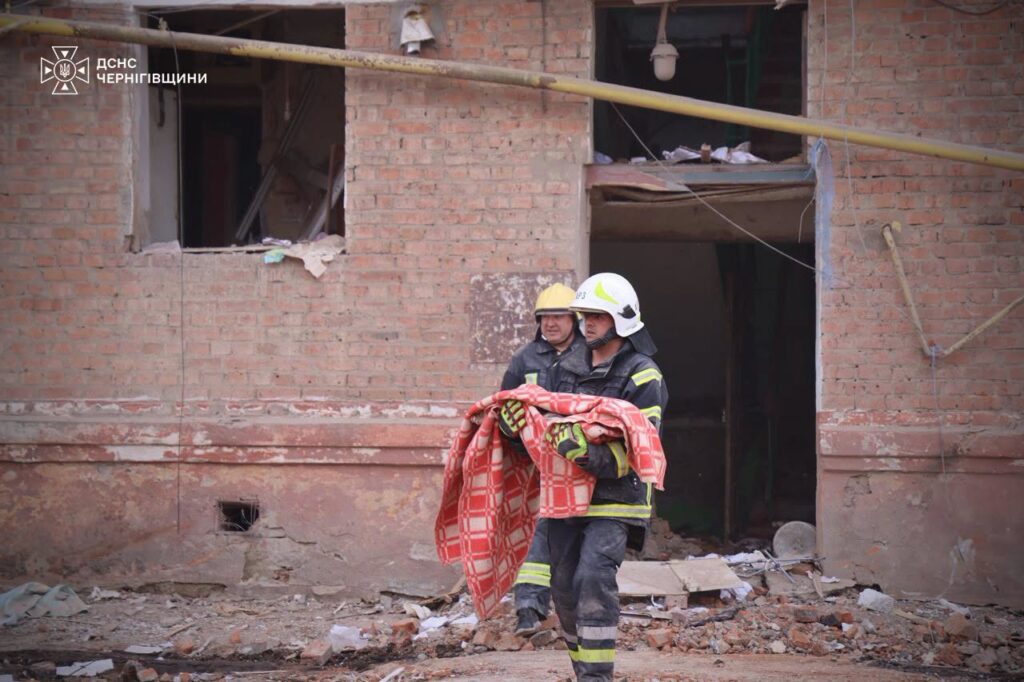
Ukrainian rescuers in Chernihiv Oblast on 7 October 2026. Source: The State Emergency Service of Ukraine

Ukrainian rescuers are still pulling bodies from a collapsed apartment block in Pryluky. A Russian missile strike on the five-story residential building in the city of Chernihiv Oblast that borders both Russia and Belarus killed 19 people, including five children, and injured 55, Ukraine's State Emergency Service reported on 7 October.

Russia hit Kyiv and a dozen other regions overnight. Air defense downed five ballistic missiles, 39 cruise missiles, and 117 drones, while missiles and drones hit 18 locations, the Air Force said. The nationwide strike killed at least 24 people, including four children.

Among the dead in Pryluky were three one-year-old boys, Oleksandr, Kyrylo, and Serhii, and eight-year-old Maksym, President Volodymyr Zelenskyy says. Seven of the injured are children. Some residents are still unreachable, and all emergency services are working at the site. Russia keeps using missiles against Ukrainian cities and civilians by deliberate choice, he states.

"My condolences to all the families and loved ones," Zelenskyy says.

The strike comes on Putin's birthday

The attack came on Russian President Vladimir Putin's birthday on 7 October.

"Continuing to use missiles against Ukraine, against our people, our children, is an absolutely conscious choice of terror. This is what Moscow chooses despite all our efforts with partners to bring peace closer," Zelenskyy says.

He urges partners to increase pressure on Russia and bolster defense support for Ukraine, saying it is important that world leaders understand this and that the world not remain silent.

A pattern of strikes on Chernihiv Oblast

Pryluky, about 150 kilometers east of Kyiv, lies in a region Russia has hit repeatedly. The overnight barrage also damaged civilian and utility infrastructure across the Pryluky community, the city council said.

Ukraine had seen the attack. The day before, Zelenskyy warned that intelligence indicated a massive Russian strike was in preparation. Russia fired about 70 missiles overnight, killing two people each in the capital Kyiv and in the cities of Kremenchuk and Oleksandriia in addition to the Pryluky dead.

  •  

Broken promise of ‘European solution’ on migration overshadows next week’s summit

Twelve years ago, EU summit leaders announced they had a strategy to tackle unprecedented migrant arrivals.

Next week, they will meet again in Brussels and to tell us something similar.

We journalists will report on the latest twists and turns, hoping to get some sort of angle that hasn’t been covered. But the reality is that our leaders have broadly failed.

Dozens of EU summit conclusions have been published since 2015, when one around million Syrians arrived in Europe to seek protection.

We need stronger external borders to preserve the Schengen passport-free zone, they said. We need partnerships with foreign states to save lives. We need to step up deportations. We need a European solution.

All of these ideas and strategies have found a home in council conclusions, in various iterations, since 2015. All of them.

Some have actually panned out, including an EU migrant swap deal with Turkey and other deals with autocrats in Tunisia, Egypt and elsewhere. Others like internal reforms on asylum have also been delivered.

Yet the sense of urgency to tackle these issues continues because there is an obvious disconnect between what has been delivered, the promises made and the lived experience on the ground.

People still come. Some 80,000 arrived in the Spanish enclave of Ceuta end of July alone.

Many are still fleeing violence, war and economic hardships. Others are lured by the promise of labour in Europe by Europeans willing to exploit them.

I remember meeting a group of boys from Bangladesh on the Ocean Viking, freshly rescued in the middle of the night, asking when they would be able to start working in Italy.

One of them was still shaking with fear and sobbing, following a near death experience.

The European Commission is now claiming that the drop of irregular arrivals is due to their migration policy reforms, as if the fall of the murderous Assad regime in Syria had no discernible impact.

Perhaps some of that is true. But there is no disputing that Syrians accounted for over 100,000 irregular crossings in 2023, a year before Assad fell. It then dropped to around 6,000. Today, it is around 1,000, according to Frontex.

At some point, one has to wonder if these conclusions, repeated ad nauseam, is nothing but political theatre by a leadership that has run out of ideas.

  •  

« Sans les images ? »

JPEG - 89.4 kio
Tan Mu. — « Minneapolis », 2020
© Tan Mu - tanmustudio.com - Peres Projects, Berlin, Séoul, Milan

Un mur de Nanterre, le 29 juin dernier. Des lettres violettes inscrites à la bombe. « Sans vidéo Nahel serait une statistique pour la Place Beauvau. Fuck le 17 ». Deux jours auparavant, Nahel Merzouk, 17 ans, avait trouvé la mort au volant d'une voiture, après qu'un agent lui eut tiré en pleine poitrine, à bout portant. Des images tournées par une passante et diffusées sur les réseaux sociaux le jour même ont remis en cause la version policière reprise dans les premiers articles sur le drame. Le 27 juin à 8 h 22, le compte rendu du centre de commandement consignait : « Individu blessé par balle à la poitrine gauche. Le fonctionnaire de police s'est mis à l'avant pour le stopper. Le conducteur a essayé de repartir en fonçant sur le fonctionnaire. » Or la séquence filmée montre le motard ouvrant le feu depuis le côté d'un véhicule qui redémarre lentement.

Sans image, que se serait-il passé ? « S'il n'y avait pas eu la vidéo, s'est interrogée la jeune femme qui l'a postée, une collègue de son auteure, quelle aurait été la suite (1)  ? » Plusieurs médias ont comparé l'émotion suscitée par la mort de Nahel Merzouk à la relative indifférence dans laquelle, deux semaines plus tôt, Alhoussein Camara était décédé d'une balle dans le thorax à Saint-Yrieix-sur-Charente, dans la banlieue d'Angoulême. Lors d'un contrôle de police sur la route de son travail, ce jeune homme de 19 ans aurait refusé d'obtempérer et heurté les jambes d'un agent avec sa voiture. Un ami d'enfance témoignait, interdit : « Je sais tellement qu'il n'a pas pu blesser ce policier, mais comment le prouver sans vidéo (2)… »

Les images, en réalité, ne suffisent pas toujours. Du moins à obtenir justice. En 1991, Rodney King, un Afro-Américain de 25 ans, est passé à tabac par quatre policiers à Los Angeles. Avec une petite caméra portative, un riverain capte la scène. Son enregistrement et sa diffusion provoquent l'indignation. La vidéo devient dès lors un outil de preuve, un moyen de scandaliser et de mobiliser, mais aussi d'engager des poursuites judiciaires. L'affaire n'aurait sans doute jamais conduit à un procès sans cette captation, et sans son passage en boucle sur Cable News Network (CNN) : même s'ils ne permettront pas de faire condamner les responsables — les policiers sont acquittés un an plus tard —, ils cristallisent une colère qui conduira aux plus grandes émeutes qu'ait connues Los Angeles.

Dans les années 1960, des collectifs avaient déjà utilisé des caméras comme instrument de surveillance de la police (copwatching). Une coalition d'organisations noires les expérimenta dans le quartier de Watts à Los Angeles à la suite de nombreux meurtres policiers, suivie à Oakland par le Black Panther Party à partir de 1966. Act Up se dota aussi d'un groupe de vidéastes dans les années 1980, dont un des buts était de filmer les manifestations pour prévenir les violences policières. Catherine Gund Saalfield, l'une des fondatrices de Damned Interfering Video Activist Television (DIVA TV), expliquait alors : « Nous avons une banque d'images de flics pliant les poignets des gens jusqu'au point de rupture, de flics matraquant des manifestants sur le dos et les épaules (3). »

À la différence des tenants du cinéma d'intervention — les groupes Medvedkine, par exemple — ou de la télévision alternative, DIVA TV ne cherchait plus seulement à donner la parole aux sans-voix ou à faire exister des corps exclus de la visibilité. La caméra devait servir d'outil dans la lutte, les vidéos de preuve. Mais ce copwatching relevait encore de la pratique politique, de la longue histoire des expériences audiovisuelles militantes. Au cours de la période récente, dans les cas des homicides de George Floyd aux États-Unis ou de Cédric Chouviat en France en 2020, ce sont des voisins ou des passants qui ont filmé la scène ; des caméras de vidéosurveillance ont capté l'arrestation violente de Théo Luhaka à Aulnay-sous-Bois en 2017 ou les coups assenés au producteur de musique Michel Zecler (en 2020 également) ; et, aux États-Unis, où leur emploi est quasi systématique, certaines vidéos de violences proviennent des caméras corporelles de policiers.

Pour les activistes d'aujourd'hui, l'Observatoire national des pratiques et des violences policières (ONVP) ou David Dufresne et sa plate-forme « Allô Place Beauvau », le partage apparaît plus déterminant que l'enregistrement. Et il faudra s'en remettre aux acteurs judiciaires et médiatiques, dont le rôle devient décisif. Or, du journal télévisé au procès, faire parler l'image implique une série de procédés tant techniques que rhétoriques. La parole de l'expert ou du témoin la décrit, la commente ou la met en contexte. À la télévision, les vidéos subissent des modifications matérielles. Des inserts graphiques dirigent le regard vers ce qui devrait être vu, quand le ralenti « peut amener les téléspectateurs à percevoir une action comme plus intentionnelle (4) », le ralentissement induisant le sentiment que l'auteur des faits a eu le temps de penser son action. Il en va de même lors des procès, où les captures d'écran, parfois imprimées et annotées, se substituent à la projection, comme, en France, dans l'affaire Gaye Camara en 2019 (5).

Reste que les effets sociaux des images inquiètent les autorités et agacent les forces de l'ordre. Face à la multiplication des entraves policières à la liberté de filmer, notamment lors des manifestations, le ministère de l'intérieur avait dû rappeler à ses troupes par la voie d'une circulaire datée du 23 décembre 2008 que « les policiers ne bénéficient pas de protection particulière en matière de droit à l'image (…). La liberté de l'information, qu'elle soit le fait de la presse ou d'un simple particulier, prime le droit au respect de l'image ou de la vie privée dès lors que cette liberté n'est pas dévoyée par une atteinte à la dignité de la personne ou au secret de l'enquête ou de l'instruction ».

Malgré cela, en septembre 2019, un jeune « gilet jaune » dijonnais a été condamné à cinq mois de prison avec sursis pour avoir filmé et mis en ligne les images d'affrontements entre des manifestants et des gendarmes. Une décision rendue sur le fondement d'un article du code pénal introduit en 2007 pour sanctionner le happy slapping (ou « vidéo baffe », une agression captée puis diffusée sur les réseaux sociaux). La majorité de M. Emmanuel Macron a ensuite tenté d'entraver la circulation des vidéos de violences policières. Finalement écarté par le Conseil constitutionnel, l'article 24 de la proposition de loi relative à la sécurité globale visait à punir de cinq ans d'emprisonnement la diffusion d'images d'un agent portant « atteinte à son intégrité physique ou psychique ».

La loi promulguée en 2021 a quand même autorisé les policiers à exploiter en temps réel des caméras installées dans les halls d'immeuble ou l'extension de l'accès à la vidéosurveillance aux agents des polices municipales et de la Société nationale des chemins de fer français (SNCF). Face à la multiplication des dispositifs d'enregistrement au sein de la population, il s'agit de construire des contre-feux. « Quand on est attaqué par l'image, il faut se défendre par l'image (6) », soutient M. David Le Bars, secrétaire général du Syndicat des commissaires de la police nationale (SCPN).

Cette volonté d'opposer œil pour œil les caméras-piétons et de vidéosurveillance à celles des citoyens comme celle d'empêcher la circulation de certaines images trahissent la foi des gouvernants dans leur capacité à sensibiliser ou à révéler la répression au plus grand nombre. Cette foi se double d'une croyance dans la puissance mimétique qui conduirait des individus généralement jeunes, peu diplômés, de classes populaires à s'égarer dans la violence pour reproduire ce qu'ils ont vu. À ce titre, le président de la République a souligné le 30 juin dernier, dans une allocution depuis la cellule interministérielle de crise, le « rôle considérable » de Snapchat et TikTok dans les soulèvements des quartiers populaires qui ont suivi la mort de Nahel Merzouk, et dénoncé la diffusion d'images des violences commises dans de très nombreuses villes françaises.

Face à la censure des médias audiovisuels, les plates-formes numériques ont permis au cours des années 2010 de diffuser assez librement des enregistrements. Mais ces entreprises, actrices majeures du capitalisme, n'ont pas vocation à soutenir les révoltes. À l'Assemblée nationale le 10 juillet, la responsable des affaires publiques de Snapchat en France a assuré que son entreprise avait « travaillé conjointement avec le ministère de l'intérieur et les différentes autorités afin d'endiguer le plus rapidement possible les différents dérapages qu'on a pu percevoir sur le terrain ». Avant de se féliciter du résultat de cette collaboration en constatant que « l'ensemble des stories qui étaient publiées » aux derniers soirs du soulèvement provenaient d'utilisateurs « qui se plaignaient justement des émeutes et des conséquences des émeutes ».

Le matin du même jour, le commissaire européen au marché intérieur avait averti de la fin de la fête. Déplorant que les réseaux sociaux n'aient pas préalablement censuré tout message susceptible d'accentuer les émeutes, M. Thierry Breton a prévenu : « Tout cela ne sera plus possible à partir du 25 août », en vertu d'un nouveau règlement sur les services numériques. « Lorsqu'il y aura des contenus haineux, des contenus qui appellent par exemple à la révolte, qui appellent également à tuer ou à brûler des voitures, [les plates-formes] auront l'obligation dans l'instant de les effacer. Si elles ne le font pas, elles seront immédiatement sanctionnées », voire temporairement interdites. Le temps de la désillusion pour les militants qui, depuis le « printemps arabe », associaient réseaux sociaux et liberté ? « Sans les images la révolution n'aurait pas eu lieu », nous disait un Tunisien en 2011… Sans les images ou sans les moyens pour les diffuser ?


(3) Catherine Saalfield, « On the make : Activist video collectives » (PDF), dans Martha Gever, John Greyson et Pratibha Parmar (sous la dir. de), Queer Looks. Perspectives on Lesbian and Gay Film and Video, Routledge, Londres et New York, 1993.

(4) Cf. Zachary Burns, Eugene Caruso et Benjamin Converse, « Slow motion increases perceived intent », Proceedings of the National Academy of Sciences, vol. 113, Washington, DC, 2016.

(5) Cf. Nicolas Chapuis, « Les tirs de légitime défense par les policiers, une zone grise pour les enquêteurs », Le Monde, 24 octobre 2019.

(6) Cité par Chloé Pilorget-Rezzouk, « Les caméras-piétons, une fausse bonne idée ? », Libération, Paris, 15 juillet 2020.

  •  

On foreign policy, Marine Le Pen outclasses France’s mainstream

By Eldar MAMEDOV

Join us on Telegram, X, and VK.

Contact us: info@strategic-culture.su

The right-populist leader deserves scrutiny but offers clarity on Russia–Ukraine and Iran.

The frontrunner in France’s 2027 presidential race—Marine Le Pen from the right-wing National Rally party—has laid out foreign-policy views that American supporters of realism and restraint can approve of, regardless of how they feel about the rest of her program.

While the National Rally has been successfully marginalized and kept out of power in recent decades, one shouldn’t take it for granted that the French political establishment will find a way to thwart Le Pen—meaning her views could certainly become policy. The latest polls show the consolidation of her lead: According to Toluna-Harris Interactive, in a runoff she would take 57 percent against the centrist candidate (and a former prime minister under President Emmanuel Macron) Édouard Philippe and a staggering 69 percent against Jean-Luc Mélenchon, a far-left firebrand.

Of course, the spring of 2027, when the elections are to take place, is still a long way off. Political fortunes can change—as the left-wing outlet Mediapart’s recent investigation into old social media posts written by a teenage Jordan Bardella, now the National Rally president, is meant to demonstrate—but the National Rally’s supporters see such attacks as evidence of the establishment’s ill-fated and cynical effort to derail Le Pen.

Whatever you may think of her, at least her foreign policy views are coherent. On Iran, Le Pen—once labeled a “Trump ally”—offered a far clearer assessment than Macron with his equivocations. “We would still need to know what Trump wanted to do there,” Le Pen said. “Because for now, we still do not know what he wanted to do. He clearly has not achieved his war aims and he is setting the whole planet on fire.” While Macron tends to caveat his criticisms of Trump’s war with accusations that Iran has sought to destabilize the Middle East, Le Pen simply condemns the war on grounds that it’s bad for the French people.

She’s also warned of global inflation “that will have consequences for all peoples” and argued it is “better to convince the U.S. not to go and wage war against a country and an ancient civilization, a complicated country, and probably much more powerful than Donald Trump imagined.”

The events have confirmed Le Pen’s judgement. A civilization of 90 million people with millennia of history cannot be simply bombed away, as Trump (and the Republican Party) are learning to their distress heading into a difficult midterm election season. Le Pen is well aware that the people in France, like elsewhere, are paying the price for this adventure.

On Ukraine, Le Pen has been equally direct while diverging from Macron more dramatically. She warned the conflict has only two possible trajectories: “Either NATO is drawn into this war, and it will be the Third World War, or we will witness a hundred years’ war.” She has called for a major peace conference, made clear she is willing to talk to both President Vladimir Putin of Russia and President Volodymyr Zelensky of Ukraine, and insisted that Germany, Poland, and Turkey be brought into the negotiating process.

She has gone even further, promising to halt French military aid to Ukraine, on the grounds that France cannot afford to sustain the amount of assistance Macron has been authorizing. Here she will have to explain herself in greater detail. A blanket cutoff is not a serious policy if the goal is to bring the war to an end as soon as possible—any settlement would require Kiev’s consent, as well as Moscow’s.

But neither can “support Ukraine for as long as it takes” work without a clearly defined end-game, and France’s fiscal situation dictates it cannot remain the default policy. Negotiations with all parties, including Russia, should not be treated as an appeasement or betrayal. Any serious attempt to settle the war would require Ukraine to make painful compromises on its NATO aspirations and territorial integrity, while Russia would have to compromise too on credible security guarantees for Ukraine or at least a greenlight for Kiev to rebuild and maintain a credible conventional military deterrent. Le Pen has identified the problem and signaled openness to unavoidable parts of the solution, but she still needs to explain the strategy.

Compare that with what the mainstream is offering. Macron is playing up the “Russian threat” and apparent hybrid attacks by Moscow against Europe. Meanwhile, according to the well-informed Le Figaro journalist Georges Malbrunot, French intelligence officers, while acknowledging the threat, believe that Macron overstates it. Macron’s aim, Malbrunot writes, would be to “steer the choices of the French ahead of the presidential election, targeting Le Pen and Melenchon—the two extremes that are lenient toward Russia.”

In a similar vein, Le Pen’s center-right rival, Edouard Philippe, lashed out at her, saying that “weakening Ukraine, as Marine Le Pen wishes, is threatening the security of Europe and France. I will do everything to prevent it.”

Then there is Gabriel Attal, Macron’s protégé and a possible successor. He delivered a grand speech in Reims calling for a “United States of Europe.” Europe’s security, he said, is being attacked by Russia, its economy by China, and its values by the United States. The remedy is a federalist utopia that he promises to build in “a matter of years.”

There might be a compelling case for EU nations to deepen their economic and technological integration. But the grandiloquent federalism talk sounds tone-deaf when what the French voters care most about is purchasing power, immigration, and French security.

This is the state of France’s foreign policy debate. The mainstream candidates are frightening voters with threat narratives, selling unachievable federalist fantasies, and equivocating on the U.S. war with Iran. The one major candidate discussing how to end wars rather than prolong them, and how to engage non-Western great powers rather than simply pick “a good” side over “an evil” one, is described by the establishment as extremist.

This does not mean Le Pen deserves uncritical support. Her historic ties to Russia warrant scrutiny, and her promise to halt aid to Ukraine needs to be coupled with a more detailed policy proposal and a broader strategy to end the war.

She is right on Iran, but her party has also forged close ties with Israel, seemingly based on a common antipathy to Islamism and to fend off accusations of antisemitism. On the Middle East, it remains to be seen whether national interest or ideological anti-Islamism will primarily inform her policies should she be elected president. Also, given her party’s lingering toxicity among the French elites, it’s far from clear that a President Le Pen would be able to attract diplomatic talent from the center-right to translate her instincts into workable policies.

But these are debates worth having. It is no longer credible to simply dismiss Le Pen and offer fearmongering and fantasy as a substitute for a debate. Perhaps the French establishment should ask itself an uncomfortable question: Why is it that voices advocating for diplomacy and sanity come from the camps they call “extreme” (both on the right and on the left)? Instead, the mainstream should make the language of diplomacy and peace its own. If it doesn’t, it should not be surprised when voters turn to those who do.

Original article: www.theamericanconservative.com

  •  

Brazil on the brink: Why Lula is down against Bolsonaro Jr.

By Mike ELK

Join us on Telegram, X, and VK.

Contact us: info@strategic-culture.su

There are still three weeks until the next round, and Lula could still win, but it’s gonna take a massive fight. Part of that fight is changing how the international media covers things.

With the Brazilian presidential election headed to a runoff, Luiz Inácio Lula da Silva is down 47% to 45% and faces a massive fight ahead. I wanted to give a quick analysis of what happened and where things are going next.

Lula Could Still Win if He Can Consolidate Support from Third Parties

Lula lost by only 2%, and several third-party candidates, who took a combined 8% of the vote, have publicly indicated they would not endorse Flávio Bolsonaro in the second round.

Likewise, 29 million Brazilians did not vote in this round of the runoff and may be persuaded to vote for Lula in the second round if they fear Bolsonaro.

While Brasil defeated Jair Bolsonaro narrowly in 2022, it swung right again, much like the United States. Voters are upset, and they are taking it out on the party in power.

On Tuesday, the Brazilian Senate is scheduled to vote on a measure that would shorten the Brazilian workweek from six days to five days. Bolsonaro has opposed this measure, and Lula could use the vote to mobilize workers’ support against the Bolsonaro team.

It’s a tough road ahead for Lula, but not impossible.

What Hurt Lula in the First Round?

Three primary factors hurt Lula in the first round. First, Lula’s age and the fact that the Workers’ Party (PT) has held the presidency in Brazil for 18 of the last 24 years.

The second is that the Brazilian corporate media constantly manufactured scandals against Lula.

Finally, the role that US President Donald Trump played in training and validating the right-wing in Brasil, while not decisive, provided critical support. Here’s what went wrong for Lula.

1. Lula is 80 & His Party Ruled Brasil for 18 of the Last 24 Years

Like former US President Joe Biden, one problem Lula faces right now is that he is 80 years old. He doesn’t look as sharp as he used to, while Flávio Bolsonaro is nearly half his age—45 years younger.

Additionally, Lula’s party, the Workers’ Party (PT), has held the presidency for 18 of the last 24 years. Lula and Dilma, both members of the Workers’ Party (PT), held the presidency from 2002 to 2016. Lula was reelected in 2022 for his record third term. No Brazilian has ever won a third term.

Although the PT has rarely controlled Congress, it is seen as the ruling party because it has held the presidency for 18 of the last 24 years. Voters are likely to associate any problems in the country with the PT, which has held the presidency for so long.

While Brasil defeated Jair Bolsonaro narrowly in 2022, it swung right again, much like the United States. Voters are upset, and they are taking it out on the party in power.

Even worse, Lula failed to recruit young candidates, who may have excited voters to turn out in tight races. In what should have been a competitive Senate election in Rio de Janeiro, the PT recruited 84-year-old Bendedita da Silva, who lost in a landslide to Bolsonaro allies.

Last week, Lula skipped the presidential debate; so did Bolsonaro and its unclear how much this decision might have hurt him.

Lacking excitement, nearly 29 million Brazilians did not vote despite it being obligatory in Brasil.

2. Brazilian Media Manufacturing Scandals Against Lula

The Brazilian media market is extremely consolidated, and the heads of major networks like Globo have been going after Lula hard. They have been accused of manufacturing scandals against Lula.

Last November, the financial institution Banco Master collapsed amid allegations of massive fraud. The bank was being run like a Ponzi scheme, resulting in the largest financial collapse in Brazilian history, with nearly $8 billion in investors’ funds lost.

Despite Banco Master CEO Daniel Vorcaro being a very vocal Bolsonaro supporter, the Brazilian media has repeatedly tried to link the scandal to Lula’s Workers’ Party, as Vorcaro cultivated political ties on both sides of the aisle.

Every attack on Lula by the Trump administration generated headlines in Brasil and validated the wild claims made by Bolsonaro allies of a flawed Brazilian justice system.

Lula’s son, businessman Fábio Luís da Silva, commonly known as “Lulinha,” was scrutinized over large bank accounts worth millions of dollars. For months, Lulinha has offered to open his books and has claimed that he received no special favors from Banco Master. Still, the media repeatedly raised questions about Lulinha’s alleged impropriety.

At one point, media giant TV Globo made a giant infographic web with arrows, showing a complex network linked to Lula. Other reporters widely ridiculed the conspiracy theory map, and TV Globo eventually had to apologize publicly on air.

Then, in May, The Intercept Brasil released a WhatsApp message from Flávio Bolsonaro to Vorcaro, asking him for more than $26 million to fund a strange English-language biopic named Dark Horse, about his father. In the film, Jair Bolsonaro is portrayed by right-wing American actor Jim Caviezel, who played Jesus in the controversial 2004 film The Passion of the Christ.

Polling throughout the spring and summer showed Lula leading as the scandal remained fresh in people’s minds. Then, the Brazilian corporate media went into high gear to attack Lula. They went after Supreme Court Justice Alexandre de Moraes, who led the prosecution that jailed Bolsonaro.

Moraes has accused Brazilian Supreme Court Justice André Mendonca, a Bolsonaro appointee, of failing to follow proper procedure in his handling of the Banco Master scandal, leaking information to the press on Lula’s political allies while hiding information on Bolsonaro’s allies.

Moraes asked the Brazilian Federal police to investigate Mendonça’s violation of federal investigation procedures and for selectively leaking information to the press that would make Lula allies look bad while suppressing information on Bolsonaro allies.

Moraes accused Mendonça of attempting to “steer the production of evidence toward falsely accusing Supreme Court justices of crimes, expressly naming Justices Gilmar Mendes, Dias Toffoli, Luiz Fux, Alexandre de Moraes, and Nunes Marques, as well as the prosecutor general and the director-general of the Federal Police.”

3. Trump Trained and Emboldened Bolsonaro Allies

While I don’t want to underestimate the strength of fascists within Brasil, it’s important to note that Trump and his operatives did help the Bolsonaro family pull off an impressive comeback.

In March 2025, Eduardo Bolsonaro fled to the United States rather than face prosecution in Brasil for his role in trying to orchestrate a coup, and he was granted permanent residency status in July. While in the United States, Eduardo Bolsonaro has worked closely with Trump officials, including Special Presidential Envoy for Special Missions Richard Grenell, to oust Lula from power.

“It was a privilege to speak with Ambassador Richard Grenell at President Trump’s residence at Mar-a-Lago,” Eduardo Bolsonaro wrote on Instagram following a meeting with Grenel in 2025. “The conservative movement is global—and we are just getting started.”

Eduardo Bolsonaro worked closely with top Trump aides like Brad Parscale, Trump’s director of digital strategy, to learn the social media strategy that led Trump to win reelection.

As president, Trump worked hard to attack Lula. He placed punitive tariffs on Brazil for convicting Jair Bolsonaro, Eduardo’s father, for attempting to assassinate Lula and overthrow his government in 2022. These tariffs hurt Brasil’s economy.

More importantly, Trump’s constant denunciation of the jailing of Bolsonaro validated conspiracy theories of right-wingers that the justice process was flawed. When Alexandre de Moraes, who led Bolsonaro’s conviction, was implicated in the Banco Master scandal, it only reinforced these conspiracy theories.

Ahead of the Brazilian presidential election, the Trump administration has labeled Brasil as a major distributor of cocaine and attempted to paint Lula as weak on taking on drug gangs.

In June, the Trump administration labeled two gangs as “terrorist organizations,” something which the Lula administration has repeatedly resisted because of fears of how the Trump administration could intervene in law enforcement and military matters in Brasil.

Still, every attack on Lula by the Trump administration generated headlines in Brasil and validated the wild claims made by Bolsonaro allies of a flawed Brazilian justice system.

On Friday, the Trump administration closed its embassy in Brasil and all of its consulates in a move that many saw as a scare tactic designed to interfere once again in the Brazilian presidential election.

The same day, the Brazilian federal police and intelligence service ABIN were warning of a possible US coup attempt. It was already known that Trump operatives were training operatives in Brasil, and the Brazilian federal police report described in depth how much Trump’s intervention had shifted things in Brasil.

International Media Failed to Check Brazilian Media

Finally, the international media completely ignored the Brazilian presidential election, allowing corporate media within Brasil to dominate the conversation without any accountability from the international media.

There are still three weeks until the next round, and Lula could still win, but it’s gonna take a massive fight. Part of that fight is changing how the international media covers things.

Payday Report can help play a small role in getting the US press more involved. The Washington Post once cited Payday Report in a front-page story for changing the way the pandemic strike wave was discussed, and maybe we can play a small role in getting American reporters to pay attention.

Original article:  www.commondreams.org

  •  

25-year-old Natalia, born in Russia, served in the Israeli army, returned to Ukraine during the full-scale invasion, and join the Armed Forces of Ukraine

25-year-old natalia born russia served israeli army returned ukraine during full-scale invasion join armed forces · post fellow soldiers service courtesy natalia/nv nataliia_israel_army news ukrainian reports

Natalia is 25 years old and from Odesa. She has served in two armies—the Israeli and Ukrainian militaries. In the Armed Forces of Ukraine, she has, among other things, carried out missions as part of a UAV, FPV drone, and strike-wing crew on the Zaporizhzhia and Kupiansk fronts, NV reported on 5 October.

During the Russo-Ukrainian war, women in Ukraine have the right to voluntarily enlist in the military. As of March, more than 75,000 women were serving in the armed forces, more than 55,000 of them as service members, the commander-in-chief said, and their number has been growing every year. Recently, discussion around the mandatory mobilization of women has intensified. Keith Kellogg, former US Special Presidential Envoy for Ukraine under President Donald Trump, said that he considered mobilizing women in Ukraine appropriate. In response, Iryna Vereshchuk, Deputy Head of the Office of the President of Ukraine, said she would rather see more missiles and more will from the United States than advice to mobilize women.

In Israel, Natalia served in a search-and-rescue brigade as a rescue soldier and in the engineering corps during a deployment along the northern border.

Natalia was born in Russia’s Saint Petersburg but does not remember her life there

The young woman was born in St. Petersburg, where her family lived at the time. When she was a year and a half old, her mother returned to Odesa with her and her older son. Natalia says she remembers her life exclusively in Ukraine.

She spent the first nearly two years studying at Lviv University, but later decided to leave the university and look for other educational opportunities. Natalia studied, among other places, in Denmark through a scholarship program. After completing it, she planned to enroll at a European university to study sound engineering, but the coronavirus pandemic began at that time.

She moved to Israel under a program for Jewish youth at the end of 2020. After the program ended, due to quarantine restrictions and closed airports, Natalia faced a choice: obtain a work visa or acquire citizenship under the Law of Return. She chose the latter—and with it, she also became obligated to perform military service.

In May 2022, Natalia joined the Israeli military and chose a combat unit.

“When the war started in Israel itself, I still had six months of mandatory service left. I was discharged and immediately transferred to reserve service. Once I managed to resolve all the bureaucratic issues so that this would not be considered desertion, I returned to Ukraine,” the young woman says.

Natalia returned to Ukraine in March 2025, and in August signed a contract with the Armed Forces of Ukraine.

Natalia (right) and her fellow servicewoman. Photo courtesy of Natalia/NV

“The army—both Israeli and Ukrainian—gives you a deeper understanding of what society is made of”

Among the advantages of the Ukrainian army, she highlights its ability to quickly adapt to circumstances. In particular, she mentions the use of drones, OSINT, and solving complex technological tasks with minimal resources.

“The West could learn from this situational agility. They often spend huge budgets on developments that should be cheap and mass-produced,” the veteran says.

However, such Ukrainian ingenuity is largely a consequence of a lack of funding, Natalia notes.

In the Israeli military, Natalia highlights society’s readiness for the constant threat of war and more systematic planning of military service.

“There, preparation for and perception of the army begin at school: by the age of 14–15, teenagers already understand where they want to go, what skills they need, and undergo selection for special or intelligence units,” the young woman says.

She then gives the opposite example of the situation in Ukraine.

A Ukrainian female soldier with a call sign "Tsyhancha" went from FPV operator to piloting the Heavy Shot bomber. Image: The 125th Separate Heavy Mechanized Brigade
Explore further

This Ukrainian female soldier flies one of war’s heaviest drones. She turns down promotion twice to keep doing it

“In Ukraine, with very rare exceptions, people hide until they are mobilized, and suddenly face the reality of conscription without having any understanding of the system,” the veteran says.

Asked how adapted the Ukrainian army is to women, she answered: “In no way,” adding that the Israeli army is “also largely not fully adapted.”

In Ukraine, this is reflected, in particular, in the provision of clothing and equipment that often does not correspond to women’s sizes and physiology. She says she had to purchase her own anatomically fitted body armor. She cited the example of veteran Natalia Lishchyshyna, who had her breasts amputated due to prolonged wearing of body armor that was not adapted to the female anatomy.

In Israel, by contrast, there is a practice of reimbursing expenses for equipment that service members purchase at their own expense.

Serving in the military in both countries provides an opportunity to better understand what society is actually made of, the young woman says.

“The army—both Israeli and Ukrainian—gives you a deeper understanding of what society is made of. You encounter people you would never have crossed paths with in your civilian bubble because of differences in views or socioeconomic circumstances,” Natalia says.

She believes this makes it easier to accept mistakes, difficulties, and new challenges.

The Ukrainian army is not adapted to women in any way, Natalia says

In Natalia’s view, the problem is not only the living and working conditions but, above all, the lack of mechanisms necessary for the systematic mandatory mobilization of women. At the same time, she believes voluntary recruitment should be encouraged and expanded.

One of the problems is the lack of a legal procedure for temporary childcare in cases when both parents are simultaneously carrying out combat missions, Natalia says, stressing that she means the period of their service, rather than situations involving the death of one of the parents.

Another shortcoming is insufficient protection against sexual violence and harassment in the Ukrainian military.

“Here, any complaint goes through the direct chain of command. If the commander is not interested in resolving the problem or is involved in it themselves, the woman is left defenseless,” the veteran says.

In Israel, by contrast, there is a separate hotline and mechanisms for documenting such cases without directly approaching a commander.

Natalia (second from left) during her service in the Israeli army. Photo courtesy of Natalia/NV

Women in combat positions can also still be taken insufficiently seriously, denied participation in combat missions, or transferred to staff positions without their consent.

Natalia also emphasizes the lack of systematic military training for civilian women “at any level” and gives school education as an example.

“Even with the weak level of the school curriculum for the subject ‘Defense of Ukraine,’ boys had at least some basic knowledge. Girls were not involved in it at all,” the veteran says.

For now, Natalia believes that women’s military service should remain voluntary, as society as a whole is still not ready to fully accept women in the military.

  •  

The Black Panthers at 60: A through line of resistance from the South to California

Two members of the Black Panther Party are met on the steps of the State Capitol in Sacramento, May 2, 1967, by Police Lt. Ernest Holloway, who informs them they will be allowed to keep their weapons as long as they cause no trouble and do not disturb the peace. Photo via Getty Images

In this episode of Rattling the Bars, host Mansa Musa interviews archivist, photographer, and veteran Black Panther Party member Billy X Jennings.

Joining the Party at age 17 after relocating from Hobson City, Alabama, to Oakland, Jennings managed BPP offices and served as bodyguard to Huey P. Newton. During Bobby Seale’s 1973 Oakland mayoral run, Jennings helped spearhead an unprecedented electoral effort: “…an organizing event on the highest level the parties had ever been. I mean, the party is known for organizing, but to go into electoral politics and do what we did for a first time basis, it changed over. Even though Bobby lost that election, it changed openly because it opened up so many doors. Part of his job was to kick down doors because we were the Vanguard.”

Today, Jennings operates the official Black Panther Party Alumni website and leads political education initiatives across the Bay Area for the Party’s 60th Anniversary.

Related links:

Credits:

  • Production/Post-production: Cameron Granadino
Transcript

The following is a rushed transcript and may contain errors. It will be updated.

Mansa Musa:

Welcome to the edition of Rattling the Bars. I’m your host, Mansa Musa. This year marks the 60th anniversary of the founding of the Black Panther Party, which started in Oakland in 1966. Today, I’m honored to be joined by Billy Jennings, AKA Billy X, well-known archivist in Oakland, member of the Black Panther Party, a photographer who runs the official Black Panther Party alumni website called It’s About Time. Thank you for joining me, Billy.

Billy X Jennings:

Hey, thanks for having me again. Good morning to everyone.

Mansa Musa:

And as we talked earlier, I was in different spaces and hoping I had met you while I was in Oakland. So this would more or less be like a reunion, but this is my first time meeting you. I’m really honored. I heard a lot about you. I know a lot about your work, and it’s an honor to be able to interview you about the party and some of the things and some of your experiences.

Billy X Jennings:

Okay.

Mansa Musa:

Please introduce yourself to our audience, who you are and how you came to be involved in the Black Panther Party.

Billy X Jennings:

Well, my name is Billy X. Jennings. I’m a member of the Black Panther Party. I joined in 1968 when I was 17 years old. And I came about joining the party because I’m from a historical town in Alabama in the South where most original members came from the South and migrated to California. So I came from a place called Hopson City, Alabama. And the tradition there, Hobson City have had the right to vote since 1890. And we were one of the only black municipal cities, little towns that could vote and had that right to do that. And so I came from a very strong area that had embedded that kind of thought into my mind. And when I traveled to California and I saw the Black Panther Party on TV for the first time in 1967 when they went to Sacramento, California, it blew my mind.

I was in high school at the time and I immediately changed our social… We had a social club called the Buccaneers. I changed it to the Panthers the next day. I didn’t know anything about the party with just that symbolism and how they stood up to the police and read their demands and so forth. It made a change happen in me. And it wasn’t until I graduated from high school, I decided to move to Oakland. And when I moved to Oakland, it was during the time that Huey knew the trial had just started and I was going to a college that’s two blocks away from where Huey was going on trial at the courthouse. And when the trial started, we would hear them saying Free Huey off the preg, free Huey. And I went over there one day and I was reading a book simultaneously at the same time called The Audible Malcolm X.

So what I read, I had read in the book already, but I heard Bobby Steele speak at a rally for Huey and they were saying the same thing. So it got me really interested in the party. And so I started going to the rallies to Free Huey. I met some Panthers and then they said their Panther office was going to open in my area. And when it did, I went down and joined, became a Panther in training and I’ve been working with the party ever since.

Mansa Musa:

Okay. And take us back to the party’s founding because you came in two years after its founding. And also you came in to your own observation and to what we know to be a fact, you came in at a point where they had just started to become on the radar of the feds, but more importantly, they was definitely on the radar of the Oakland police, LA police. And so talk about what was it like to be able to be in that space and ultimately find yourself in a position to be the bodyguard for Huey Newton once he got out.

Billy X Jennings:

Well, my process started at the very beginning. In 1968, there was a certain method the party employed. Before you became a Panther, you had to become a Panther in training, which requires six to eight week training. They give you a list of books that has about 35 different books, about books by Franc Fanon, Mao Saintong, Che Guevara, Pruma, and other revolutionaries to read. And you had to attend political education class on a weekly basis. Panthers at that time was required to read two hours a day. A Panther had to secure and have what we call technical equipment. Technical equipment was a firearm of some type, because at that time I joined the Black Panther Party, it was called Black Panther Party for self-defense. Later on, we dropped off the self-defense, but at that particular time, the party was engaged into patrolling

Police officers in the community, observing them and making sure they don’t beat and brutalize people. So the first six weeks is reading and studying and learning the rules of the Black Panther Party. And then you’re given a section. The city is divided into different sections. I worked in the section four in East Oakland. Section four had a section leader. They had a geographical area that they were responsible for. And so I was in section four. At that very beginning when I first started, we were theorizing about the breakfast program. It hadn’t came about, but we were still looking for geographical locations to have these breakfast programs in the future. So we did that. And every Panther is required to sell the Black Panther Party newspaper, which is the voice of the party. And at that time, the party was growing tremendously by leaps and bounds.

We had people flying into California from Kansas City, Chicago, New York, all to get this education. Before you can open up a chapter of the Black Panther Party or a branch of the Black Panther Party, you have to come to Oakland first and get educated. And you have to meet the leadership. The leadership has to eyeball you and find out your level of consciousness, what type of person you are before you can go back and represent the party. So this whole process was going on. People were flocking to the party. The party got so big that in 1969, we had put a stop on membership and we call that particular part of the party’s history the purge because the party had grown… I mean, the party was attractive. I mean, black coats, leather coats, I mean sunglasses and Afros at the same time. So this was a big thing for our culture.

At the same time, our culture level was rising even in music. James Brown had a record out in 1968 that elevated people’s social conscience, I’m Black and I’m proud. It moved people from the level of being a Negro, because that’s what the newspapers and that other people was referring us to. But in our community, we’re referring to ourselves as Black or African. And when James Brown came out with Black and I’m Proud, you could never go back to ever saying he was a Negro no more. There was different progress being made, but James Brown couldn’t sing no song like that. It wasn’t for groups like the Black Panther Party. Groups like The Shot Light Can’t Sing got to give more power to the

Mansa Musa:

People

Billy X Jennings:

Like the Black Panther Party, paving the way to educate people to lift up their consciousness. And so my role in the party, I came up as a Panther in training. I became a officer of the day, which is the person who runs the office. And from there I was transferred to central headquarters. Now, my name came about because my captain at that time was a legendary Panther called Robert Bay. Robert Bay ran the East Oakland office. Robert Bay was also an age of the central committee. And when Huey Newton got out of jail in 1970, the central committee made Robert Bay his permanent bodyguard and assistant. Now, I worked in that capacity as well after Huey got out of jail, mostly going to… I went to court with Huey on a daily basis because he was let out on appeal. He wasn’t just let out.

He had to go back to court and defend himself. And so my job became that. And also at the same time, I became to the Newton family. Mr. Newton, Mrs. Newton, I lived three or four blocks from them. I would walk over their house around the corner, mow their lawn. I’d be taken to the pharmacy, driving to doctors because they’re old people and they don’t drive so much. So that became my responsibility and me and Huey’s relationship grew behind that. So we had good personal relationship.

I worked central headquarters. Working at central headquarters was key to who I am today because I know Panthers from everywhere because every Panther had to call the central headquarters on a weekly basis or if the office gets ready or they need lawyer resources and stuff like that, I pick up the phone, write on the messages or tell them what they need to know. So I know Panthers from almost all the chapters and branches. And so I worked that group for a while. Then I was drafted into Bobby Seal’s campaign when he ran for mayor of open. I ran Bobby Seal’s campaign office in East Oakland. And it was an organizing event on the highest level the parties had ever been. I mean, the party is known for organizing, but to go into electorial politics and do what we did for a first time basis, it changed over.

Even though Bobby lost that election, it changed openly because it opened up so many doors. Part of his job was to kick down doors because we were the Vanguard. We had lead to struggle and there’s other people who follow behind us. I mean, our life was constantly in threat because we were on the front line, police department, clientele pro, all those things aimed at members of the Black Panther Party. So not only did we have the burden of dealing with the system, we had to deal with the authorities as well.

Mansa Musa:

Talk about, and you’re familiar with Eddie Conway, right? And so Eddie Conway, when he got locked up, he organized a chapter for the Black Panther Party in the prison, which I became a part of. And everything you outlined, as you was talking, I was reflecting on, we had to read at least two albums. We had every aspect of the thing that you outlined as what the party was doing, Eddie had us doing the same thing. We had political education classes, we had military classes, we had first aid classes. All our class was structured around an environment that we was in, and our technic class was finding a hole to get out of prison by any means necessary. So we had that type of mentality. So Billy, as an archivist, you have a lot of distortions in terms of the images that’s being projected of the party and it’s been dubbed Panther Porn, and just to note that it’s images that’s being perpetuated by the federal government, it’s images that’s become more idolization of the party versus the images as an archivist.

What would you say is the most positive or how would you characterize the imagery of the party as from an archivist in terms of educating people and raising their conscience? I see you with a shotgun. I know you in Sacramento. I know why you in Sacramento and I know why you coming out like that. That’s a good thing. But then I turn around, I see somebody standing on the corner. They got a picture of somebody standing on the corner with their mug broke and they got a bandela on and it had nothing to do with organizing, had nothing to do with raising people’s conscience. It’s got more to do with projecting the image of a thug, for lack of a better word. Talk about that if you can.

Billy X Jennings:

Well, the party was vilified on the highest level from the government who lied on us continuously to the media that used disinformation to scare people. The big image they had was, oh, these Negroes, they have guns. They’re angry. They hate white people. That’s their basic pitch on everything. Let it be Republican New Africa or any Black group, they paint them as very threatening group. And because we had guns, I mean, there was nothing… It wasn’t against the law in California to have guns, to have them in public long as they was not loaded, which we knew that. So the images they printed of the Black Panther Party was to vilify us and to scare white people and to frighten Black people. So it was all a part of their method to control who we were. They were trying to identify who we were. We could only define that.

We defined our own selves. And so that’s why we started a Panther newspaper in 1967 to get our voices and views out. So even though we had Time, Newsweek, Life Magazine, the Black Panther Party was cranking out close to 250 to 300,000 copies of papers per week into the community to combat this disinformation about the Black Panther Party. The 10 point program outlines what the Black Panther Party was all about, what we stood for.

Only on one aspect, which is 0.97, we talk about defending ourselves with guns. Other

Than that, we’re talking about social change in all levels, in education, housing and so forth. That was a threat to them because they did not want anyone to rocking the boat and we are rocking the boat. We are waking people up from their deep sleep. I mean, we’re telling people to read. We’re showing people what books to read. We are the Vanguard. People are following us. They didn’t want that. We had people in the white community, they wanted to join in with us. We had people from the Latino community, they want to join with us. You had people from around the world reading the 10 point program and looking at the positive aspect of the Black Panther Party. And that’s how we get the New Zealand Panthers and the Panthers from Africa and Panthers from India and the UK because of our social programs, how we was dealing with the oppressor here.

And so they follow those same examples there. They started social program, they started demanding and fighting for their rights. And that’s what the oppressor hates. They hate for people to wake up. And we were waking up big time in the 60s with the music, the culture, the back to Africa, who we are. How could you be a Negro in 1970 after all has been presented before you? So those things have changed. The party was a part of that change, that

Mansa Musa:

Consciousness. Talk about, because to your point, I remember reading the paper and when United Farm Workers, the party was one of the first papers to one, educate people on what their issues were, two, organize the boycott certain wines that they was taking and exploiting their labor and not giving them equal pay. So talk about the party’s social contribution to raising people’s concept, but more importantly, the elasticity of it, because can you see some of the influences today? Oh,

Billy X Jennings:

Definitely. Definitely. I can see the influences of the Rainbow Coalition. And that was something that Fred Hampton talked about. I could see the coalition building of the Black Panther Party. We’re working with the Brown Beret, the Young Lords, the Young Patriots. We’re working with the welfare rights groups. We’re working with the BSU, the Black Student Unions on campus. We’re working with prison groups. There was a number of prison groups throughout the country that started Black Panther Party off in San Quentin, in Algeria, Raway and other prisons because the ideology of the Black Panther Party was strong. What we were talking about, there was backbone to it. Everything we did was dialectic materialism, right? We were dialectic people. We looked at things from all sides. We just didn’t look at things in one side. Black Panther Party was an international group from the very start. Dewey and Bobby were international.

You can look at our reading list, those 35 books that come from Fanon, that’s from Africa, Mao Zeitang from China. So there was all kind of influences in the party. And so it was a big job just working to educate and organize people on all levels. Because in our community, action speaks. People learn in various ways, but in our community, people relate to action. They see something, they learn from it. Just like the breakfast program. We started the breakfast program in California and within two weeks it was a national program because people said, “Hey, we can do that here. This is how they did it. We can do it here.” The party set examples that people could follow in every aspect. We were on the forefront of fighting racism on all levels.

💾

“We started the breakfast program in California, and within two weeks it was a national program because people said, 'Hey, we can do that here. This is how they did it. We can do it here.' The party set examples that people could follow in every aspect. We were on the forefront of fighting racism on all levels.”
  •  

How bad does it have to get for the ECB to save France?

French borrowing costs are surging and central bankers are starting to fret. Some of them, at least.

The head of the French central bank, Emmanuel Moulin, told the Financial Times that his country risks being “strangled by interest rates”.

The best solution, he made clear, was for the French government to cut costs and reduce the deficit, which, in an unchanged scenario, could reach upwards of six percent next year.

Last week, the French minority government proposed €43bn worth of cuts for 2027. But pushing them through parliament is a tall order in a divided country.

Meanwhile, investors are dumping French bonds, pushing up French government borrowing costs compared to German benchmark Bunds. This is already immensely costly to French society.

“In three weeks, we’ve lost the equivalent of €15bn a year in higher debt-servicing costs over a 10-year horizon, or almost €100bn cumulatively over 10 years!”, French economist Shahin Vallée said on social media last week.

The gap, or spread, between French and German bond yields, historically around 50 basis points (0.5 percentage points), was 109 basis points when he wrote it on Wednesday. It is now 30 points higher.

Spreads are a crucial marker for financial stability because they show how nervous investors are. The bigger the spread, the higher the perceived risk.

And France’s parabolic bond spread is already bringing back unwelcome memories of the eurozone crisis in November 2011, when the spread reached 200 basis points.

Bypass parliament?

The question is what to do about it, and who is best positioned to act. The French government could bypass a parliamentary vote or push through the budget by ordinance, under articles 49.3 and 47 of the constitution, respectively.

This article continues, but the full version is available only to EUobserver.com subscribers. Visit account.euobserver.com/membership

  •  

Germany accuses Russia of a drone bomb attempt at Leipzig. Now its eight biggest airports get drone detection

The likely process of monitoring the airspace over airports connected to Germany’s new drone detection system. Photo: Deutsche Flugsicherung / Holger Matthies

Germany is expanding drone detection at its airports with a new system operated by German air traffic control provider Deutsche Flugsicherung (DFS), the German Federal Ministry for Transport (BMV) announced on 5 October.

Germany has accused Russia of attempting a hybrid attack at Germany’s Leipzig/Halle Airport near a Ukrainian An-124 aircraft using a drone carrying explosives. Earlier, Finnish President Alexander Stubb said Europe must be prepared for “continued hybrid and sabotage attacks” by Russia, adding that Russia seeks to sow panic through such actions.

On Monday, two more sites were added—Stuttgart and Hamburg. As of Monday, seven of Germany’s eight largest airports were equipped with the new drone detection system in their approach and departure areas.

Germany seeks responses to new hybrid threats

The Federal Ministry cited the reason for the new measure: drones near airports can affect air traffic very quickly.

Federal Transport Minister Steffen Bilger and Baden-Württemberg Transport Minister Nicole Razavi were briefed on the new system at Stuttgart Airport, where it is being put into operation, the ministry said. The system creates “an important technical basis for detecting potential threats at an early stage and quickly informing the competent authorities,” Bilger said.

“With today’s commissioning of the drone detection system at Stuttgart Airport, the federal government is fulfilling a key promise: it is not only talking about the dangers posed by unmanned aircraft, but is also following through with very concrete action. Protecting critical infrastructure and ensuring the safety of passengers at Stuttgart Airport require continuous adaptation to a changing security situation,” Razavi said, according to the ministry.

The new DFS system allows drones near airports to be detected at an early stage and information about possible threats to air traffic to be passed more quickly to the relevant authorities. This helps them assess risks and respond to them more quickly, the statement said.

DFS is responsible for detecting drones in approach and departure areas, while the Federal Police and other security services are responsible for preventing threats and defending against drones. The BMV, Federal Ministry of the Interior, DFS, Federal Police and airports coordinate their work to exchange information quickly and maintain a shared picture of the situation.

No further details about how the system operates have been disclosed.

The first stage of the expansion at Germany’s eight major commercial airports will be fully implemented this week, with the systems in Stuttgart and Hamburg being put into operation, the statement said.

Illustrative image of a Russian drone. Photo: RIA Novosti/Konstantin Mikhalchevsky
Explore further

A drone came down beside a Bundeswehr air base, weeks after Berlin blamed Moscow for the Leipzig airport attack

The system will also be installed at the airport where a bomb-laden drone was found

The system will also be put into operation at Leipzig/Halle Airport this week, meaning that the first stage will be fully implemented at all eight of Germany’s largest commercial airports, according to the press release.

A quadcopter drone carrying a Semtex explosive flew directly toward a parked Ukrainian An-124 Ruslan cargo aircraft and struck its wing at Leipzig/Halle Airport in Germany on the evening of 4 August, Die Zeit reported on 10 August. The drone hit the aircraft at around 19:30 local time, bounced off the wing, and fell to the ground without detonating, according to the media outlet.

Ukrainian An-124 at Leipzig/Halle Airport in Germany, 5 August 2026. Photo: screenshot from Bild video

Germany has accused Russia of attempting the drone attack and announced further sanctions against Russian citizens and institutions, Tagesschau reported on 1 September.

At the crime scene, investigators found the drone configuration, explosives and detonation technology that had already appeared in other Russian hybrid operations and in Russia’s war against Ukraine, Federal Interior Minister Alexander Dobrindt said during a joint press conference with Federal Foreign Minister Johann Wadephul, the media outlet reported.

The German government assumes that Germany has been and will be a target of further such Russian attacks. Germany is not at war with Russia but is a “target of war,” Foreign Minister Wadephul said, according to the outlet.

  •  

Why ‘Made in Europe’ could push Burnham’s UK back into the EU’s arms

Having said several months ago that he had no intention of a ‘rerun’ of the Brexit debate, UK prime minister Andy Burnham told Labour delegates at the party’s annual conference in Liverpool last week that nothing should be off the table as far as EU-UK relations are concerned. 

Brexit had “done more harm than good”, he said, adding that “we will not give Britain the clear path we need into the rest of the century until we decide on a long-term relationship with what is still our largest market.” 

In fact, Britain could “go all the way” back into the EU, said Burnham.  

The new prime minister is still enjoying something of a honeymoon period. His Labour party now tops the opinion polls, albeit by less than 30 percent, and his early policy announcements on nationalising utilities and pension reform are the most radical in a generation. 

Even so, Burnham’s remarks were a surprise that left pro-European columnists positively giddy with optimism over the weekend. 

In truth, rejoining the EU – if it happens – would probably take a decade. 

Burnham didn’t offer any timetable or any other specifics, and has said that no moves towards EU membership would be taken before the next UK election due in 2029. And talk of rejoining the EU is not purely borne out of pro-European enthusiasm. 

This article continues, but the full version is available only to EUobserver.com subscribers. Visit account.euobserver.com/membership

  •  

Police Lock Down Entire Town to Stop Unrest as Nearly 150 Small-Boat Arrivals Use ‘New Route’ to Land in Gosport

Police have 'locked down' an entire town to stop unrest by setting up a dispersal zone covering the whole of Gosport following protests sparked by the arrival of a migrant boat using a 'new route' from Normandy.

The post Police Lock Down Entire Town to Stop Unrest as Nearly 150 Small-Boat Arrivals Use ‘New Route’ to Land in Gosport appeared first on The Daily Sceptic.

  •  
❌