António José Seguro marcou este encontro para uma troca de impressões sobre a atualidade internacional. Ainda, pelo menos duas pessoas morreram na sequência de um ataque ao aeroporto de Riade.
The European Union is witnessing a full-blown social revolt. Governing political parties and their economic policies are held in open contempt as public protests and strikes escalate across multiple countries.
Protests, mass marches, and industrial strikes are spreading across the EU in France, Belgium, Spain, Italy, Germany, Ireland, Portugal, and other countries. The grievances are various, from students and teachers over woeful education services, to healthcare professionals and transportation workers denouncing crumby wages and pension cuts.
But at the core is a warmongering, dehumanizing system of capitalist inequality.
Unbearable living costs for basic needs, from food to housing, are driving millions onto the streets in desperation and anger at the lack of adequate political response to their concerns. As one French student said: “Too young to be listened to, old enough to be tear-gassed.”
The entire political system is being brought into disrepute for its dysfunction and indifference towards meeting rudimentary human needs. Then, infuriating all the more, are lies from the elite rulers and their propaganda media about “national defense and threat of war from Russia.”
In Spain this week, an 87-year-old frail woman known as Maricarmen died in hospital after she was evicted from her Madrid home because she could not pay the extortionate rent increase. Her plight has come to galvanize a nationwide protest against Spain’s housing crisis, a crisis that is repeated across every European country. Protesters shouted furiously that the pitiful old woman was “murdered by the state and corporations.”
In France, the brutality of police against student protests has shocked the nation and the world. Nearly 7,000 young people have been arrested, as riot police tear gas and shoot at largely peaceful rallies. Students gathering at the Place de la Bastille in Paris and other cities vow that they will not back down. One student had his hand blown off by a police stun grenade while another teenager lost an eye from a rubber bullet fired at close range.
The Place de la Bastille is where the French Revolution manifested in 1798 against a hated aristocracy amid abject misery. Today, the tensions are boiling towards another momentous rebellion, this time inspiring again similar movements across Europe.
These protests and the inhumane suffering that underlie them are channeling uprisings all over the EU.
There is a palpable sense that populations en masse have had enough of decades of inequality and chronic deprivation inflicted by capitalist policies that enrich a few and are enforced by governments slavishly serving the interests of capital over the needs of the citizen majority.
Western media reports talk about “cash-strapped” governments under pressure from bond markets to reduce record debt levels while workers, students and pensioners demand more public investment and relief from economic hardship.
That is a misleading partial portrayal of the problem. Omitted is the crucial backdrop that European governments are directing vast economic resources towards militarism and the proxy war in Ukraine against Russia. That is what is causing the “cash-strapped governments.” In other words, their declared fiscal straits are a policy choice, not some mysterious dilemma.
The social crisis sweeping across Europe is also seen in the United States and other Western-aligned nations. The background is a failed economic system that no longer provides a modicum of acceptable living conditions. The problem has been decades in the making from growing inequality and diminishing political representation. Today it is even questionable if Western states are democracies, controlled as they are by corporate oligarchies.
Nevertheless, the social crisis that is unfolding across Europe has been intensified and amplified by European political rulers operating in a relentless war mode against Russia.
The European Union has pumped hundreds of billions of euros into Ukraine over the past four years to prop up a NeoNazi regime run by a corrupt dictatorship – all for the objective of defeating Russia. The EU leaders – many of them unelected, like Ursula von der Leyen, Kaja Kallas and António Costa – are driven by an obsessive Russophobia. But that is only part of the explanation.
Other elected leaders and parties like France’s Macron and Germany’s Merz are also despised for their elitism and delusions of grandeur. Merz declares that he wants to make Germany the strongest military in Europe, in total tin-ear deafness to his nation’s economic and social problems and the sinister historical connotations of resurrecting Nazi Germany. Meanwhile, as his government suffers electoral defeat after defeat, European elites deprecate German voters as being blind because they dare to choose parties that are opposed to war with Russia.
There are many grounds for the Europe-wide contempt of ruling parties. Inequality, poverty, unemployment, soaring living costs, declining wages, deteriorating public services. Uncontrolled immigration amid the pressure on inadequate public resources is another cause for grievance. Europe’s complicity in the Israeli genocidal war on Palestinians, and Europe’s complicity in Trump’s aggression towards Iran, Yemen, Cuba, and so on, are other factors.
However, the bogus narrative that governments are “cash-strapped” is a cause for immense public disgust. There are plenty of economic resources to meet public needs. It’s a question of those resources not being permitted to create just and humane societies under the prevailing capitalist system with its priority of enriching a tiny elite class.
The conditions of “tight budgets” and “austerity for the masses” are created by deliberate policies of militarism and fuelling a proxy war in Ukraine.
European “leaders” and their NATO lobbyists like Mark Rutte demand hundreds of billions of euros to boost military industries while at the same time calling for draconian cuts in public spending and social welfare in order to pay for this reckless militarism. The EU is “lending” an additional €90 billion over the next two years alone just to prop up the corrupt regime in Kiev so that it can keep fighting a futile war with Russia. The perverse priority is driven by the military-industrial complex and its corporate investors. It is also driven by an ideological, propagandized mindset that demonizes Russia as an enemy. President Putin and other Russian voices have repeatedly stated that they do not want war with Europe. They say the conflict in Ukraine has root causes that can be resolved through diplomatic engagement. Why are European politicians implacably opposed to peace?
A major factor is covering for internal political and economic failure of the European system. The EU’s economies, as with those in the U.S. and other Western states, are bankrupt dystopias in terms of delivering on social and democratic needs. The failure has been compounded by the costs of war in Ukraine.
That failure is criminal and fatal for the politicians and governments who have overseen the policies. Thus, the political class, including the propaganda news media, cannot admit their criminal policies.
In the face of their own internal contradictions, the European political elites are seeking a solution by externalizing Russia as an enemy. This is the same modus operandi that European rulers have used for the past century and more, unleashing two world wars as a result.
These criminal politicians and their dysfunctional economic system are again pushing war as their escape plan for survival at the expense of millions of lives and at the risk of starting a third world war, one that this time around could involve catastrophic nuclear nemesis.
It is damning of virtually every European government, including primarily the British, that there are no calls for diplomacy and political settlement with Russia. They are committed to waging war on Russia to absolve themselves from the social devastation they are responsible for.
One positive thing, though, is that increasing numbers of people can see through the chicanery and lies. A German student placard summed it up: “We won’t fight your wars… Education not bombs!”
A day of reckoning is imminent. Criminal political leaders and their warmongering system are exposed like never before and in a way that demands total revolt as a proper solution. The consequences are not to be externalized this time. Chickens are coming home to roost, as Malcom X once said.
Nota 7 para a equipa de arbitragem do Marítimo x Porto. “VAR deu uma ajuda preciosa num momento decisivo”. Num jogo decidido por 1 centímetro, Pedro Henriques fala dos efeitos positivos da tecnologia.
The recent phone conversation between Vladimir Putin and Donald Trump, and the diesel deal they struck, are the most important events in the US-Russia relations since the summit in Anchorage, Dmitry Suslov, deputy director of the Center for European and International Studies at Russia’s Higher School of Economics, tells Sputnik.
The diesel deal marks an important shift in the US’ stance on the Ukrainian conflict. “Until now, the Trump administration maintained that any sanctions removal and any practical cooperation with Russia, including cooperation on energy, is only possible after the Ukrainian conflict is resolved or after a ceasefire is achieved. And now we see that the Trump administration deviated from this stance.”
“The sanctions are waived for a long time, until April 7, and the US will commence mass importing of Russian diesel unrelated to the resolution of the conflict in Ukraine.”
The diesel deal is not related in any way to the energy and port ceasefire that Volodymyr Zelensky and his EU backers desperately seek, which is highlighted by Zelensky’s hysterical reaction to this agreement.
The deal may be the beginning of a broader pressure campaign by the Trump administration on the Ukrainian regime, to ensure that Ukraine agrees to Russia’s conditions for ceasefire.
Given the anonymous US officials warnings that the US may halt intelligence support to Ukraine if the latter continues hitting Russian oil refineries, it appears that the Trump administration is becoming increasingly upset with Zelensky.
“We are witnessing the confirmation of Western media reports about Trump being angry at Zelensky whom he asked six times to halt strikes against Russian refineries, only for Zelensky to refuse him each time. And now Trump makes this diesel deal with Vladimir Putin.”
The Trump administration apparently realized that Zelensky’s long-range strikes campaign against Russia backfired. “It drastically improved Russia’s situation and damaged Ukraine’s resilience due to the scale of Russia’s retaliation”.
Suslov also suggests that Zelensky seems to be banking on US Democrats winning the midterms, thus turning Trump into a ‘lame duck.’
However, even though Zelensky may feel himself safe hurling insults at Trump, it may have serious consequences as the POTUS will still be in charge of matters such as further arms sales to Ukraine.
“So if Zelensky enters into a serious clinch with him, Trump will be making such decisions not in Zelensky’s favo
Os bracarenses contestam a arbitragem no jogo contra o Sporting, no qual perderam. Criticam ainda a postura do presidente do Conselho de Arbitragem (CA) da FPF, Luciano Gonçalves.
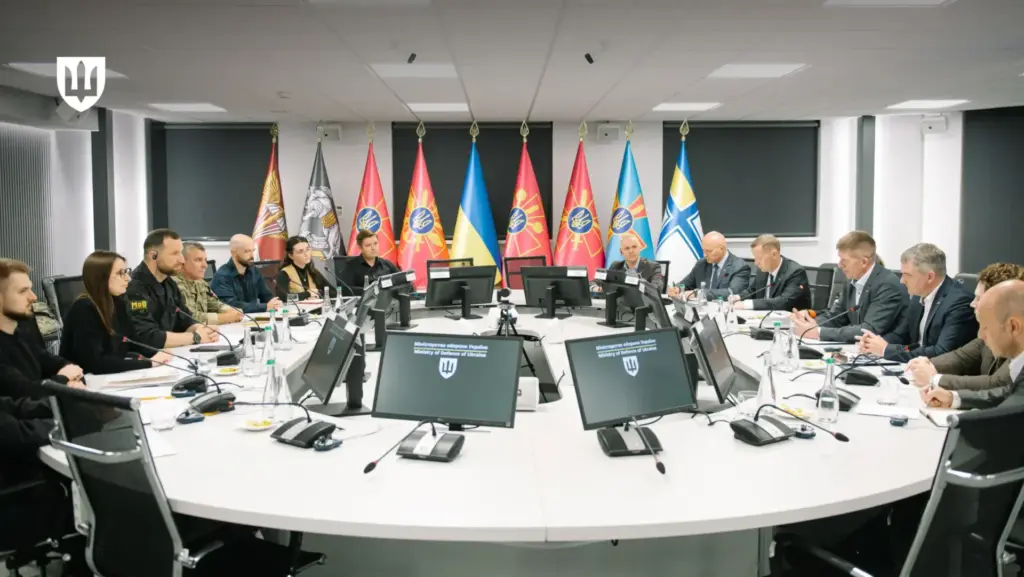
Ukraine is offering Estonia something no ally can buy off the shelf: how to fortify against Russia, learned under fire. Ukraine’s Defense Ministry announced, following a meeting between Defense Minister Yevhenii Khmara and his Estonian counterpart, Martin Herem, that Kyiv and Tallinn plan to develop joint defense projects, share data, and establish joint ventures.
Both sides agreed to strengthen their defense cooperation in a declaration signed in June, according to the President’s Office. The partnership is gaining momentum as German intelligence warns that Russia may be preparing military action against the Baltic states, Welt reported.
At the talks, the two sides went over the battlefield situation, Ukraine’s priority needs, and practical steps to deepen the partnership, the ministry said.
Ukraine’s war experience, packed for export
Ukraine’s experience of modern war was a central theme of the meeting, and it can already help Estonia strengthen its own defense against new threats, the ministry reports. During the visit, the Ukrainian delegation walked the Estonian representatives through its work on modern fortifications, including underground shelters.
“Ukraine is scaling up fortification solutions based on real war experience. We already know how to build defenses and adapt them to new threats. I am sure this expertise will be useful to Estonia,” Khmara said.
A debt of thanks to a steady backer
Khmara thanked Estonia for its consistent help, singling out its decision to give 0.25% of GDP each year to support Ukraine. He also noted Estonia’s leading role in the IT coalition, a group of states that helps build Ukraine’s military communications and cyber capabilities, as well as its active work with other partners.
The meeting was one of Herem’s first with Kyiv as defense minister. A former commander of Estonia’s armed forces, he took the post on 16 September after Hanno Pevkur resigned over a 70-million-euro procurement scandal involving artillery shells meant for Ukraine, Euronews reported.
The minister confirmed Ukraine is ready to deepen practical defense cooperation with Estonia and to work on joint solutions that strengthen the security of both countries.
A peça audiovisual, inserida na candidatura do território a Comunidade Europeia do Desporto 2026, foi premiada na 6.ª edição destes concursos internacionais, recebendo também uma das maiores ovações entre as produções desportivas exibidas no Teatro Lauro Rossi, em Macerata.
A Eurocidade do Guadiana soma, assim, um novo marco ao seu percurso desportivo e de integração transfronteiriça após ter conquistado o prémio de “Impacto Emocional” (Emotional Impact Award) na 6. ª edição dos ACES Video Awards 2026, realizada no âmbito do Festival Internacional de Cinema Overtime.
O concurso, organizado sob o lema “Sport & Society – The Values of Sport” (Desporto e Sociedade – Os Valores do Desporto), reconhece produções audiovisuais que se destacam pela sua capacidade de divulgar os valores do desporto, a sustentabilidade, a inclusão social e a identidade territorial.
O audiovisual premiado integra-se no projeto com que Ayamonte, Vila Real de Santo António e Castro Marim promovem ao título de Comunidade Europeia do Desporto 2026, uma distinção atribuída pela Associação Europeia de Capitais e Cidades do Desporto (ACES Europe).
A obra destacou-se entre as candidaturas internacionais pela sua sensibilidade ao retratar a união entre Espanha e Portugal através da atividade física, da saúde, da inclusão e da superação pessoal em torno do rio Guadiana. A produção e a realização do vídeo estiveram a cargo de Toño Méndez.
A categoria de Impacto Emocional premia expressamente as peças que conseguem conectar-se com o espectador através de histórias humanas de esforço e coesão comunitária.
Este reconhecimento coloca a Eurocidade do Guadiana num lugar de destaque no panorama desportivo europeu, consolidando o trabalho conjunto das administrações locais para posicionar a região como uma referência transfronteiriça no turismo desportivo, na integração e na qualidade de vida.
A peça audiovisual destaca as principais provas desportivas transfronteiriças, as modalidades desportivas de maior relevo e as instalações e recursos desportivos existentes na Eurocidade, ao mesmo tempo que retrata a paisagem e a diversidade natural do território. O vídeo conta com legendas bilingues em português e espanhol.
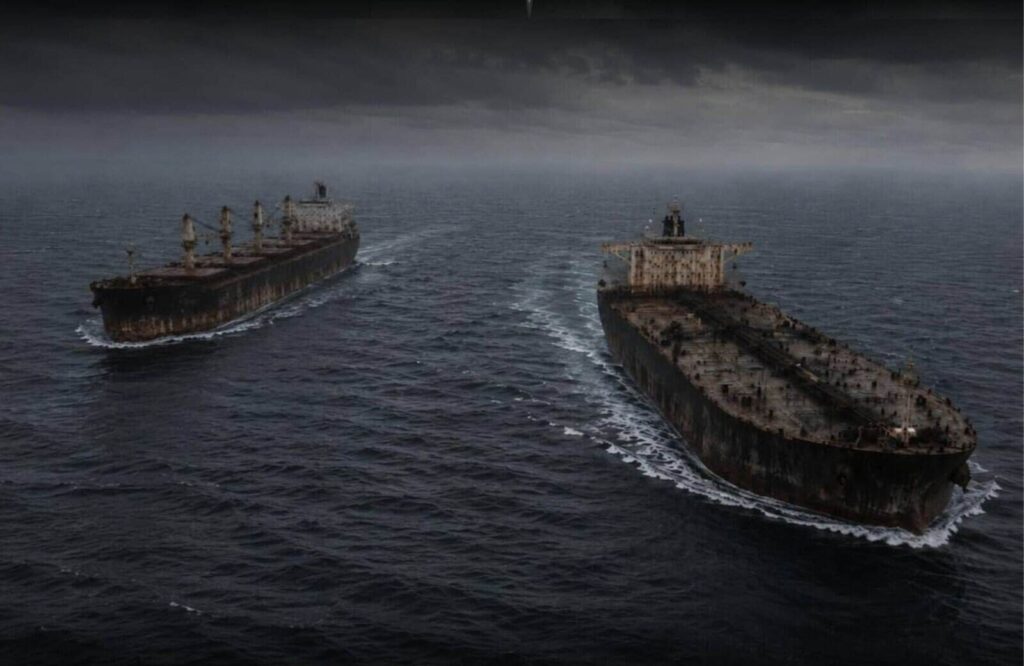
Ukraine has published data on 20 vessels that carry Russian oil and liquefied natural gas or refuel the sanctioned fleet, parts of the logistics network the Kremlin uses to fund its war, Ukraine's Defense Intelligence reports. All 20 are under British or Ukrainian sanctions, and only one faces US restrictions.
Russia’s shadow fleet runs on roughly 500 aging ships of uncertain ownership that dodge sanctions and keep oil money flowing. That seaborne oil trade is worth more than 80 billion euros a year.
The headline vessel is the Russian ship Portovyy, an LNG carrier and floating gas store owned by the sanctioned Gazprom since 2021, according to the agency. On 15 August 2026, it left the Gulf of Finland with Russian LNG for the first time since November 2021, sailing the Northern Sea Route to the Chinese port of Beihai to unload.
Portovyy is now at the Zhoushan Huafeng Shipyard in China, which has been set as the site for its maintenance, intelligence says, an example of the foreign yards Kyiv wants closed to the sanctioned fleet.
Russia buys up gas carriers through shells
Two more gas carriers show how Moscow expanded the fleet in spring 2026 through front companies, intelligence said. The Avacha, once owned by China’s Jovo Energy, was bought by the little-known Tudor Maritime of the Marshall Islands, took the Russian flag in June, and now ships gas from the Arctic LNG 2 project to Beihai.
The Chaivo, formerly owned by Greece’s Maran Gas Maritime, was also bought by Tudor Maritime and moved under the Russian flag in July. Now it carries cargo to Beihai from a floating gas storage facility off Kamchatka, intelligence says.
A call to close the loopholes
Intelligence urged partners to act together: tighten control over sales of commercially owned ships, block servicing of the sanctioned fleet at foreign yards, and cut off the energy revenue that Russia turns into weapons against civilians.
Russia is building ice-class ships at home and, at the same time, widening its shadow fleet through offshore networks. The UK Foreign Office made the same point on 1 October, saying Moscow is assembling a new shadow fleet to keep its gas revenues flowing.
In the early hours of October 5, Saudi-backed mercenaries launched an offensive along Yemen’s southwestern coastal road toward Dhubab, which overlooks the Bab al-Mandeb Strait.
By evening, their affiliated media networks were proclaiming Dhubab’s fall. Hours later, they falsely claimed to have captured Al-Mokha as well.
Within a single day of operations, the Yemeni military forces had encircled the incursion, recaptured the ground, and released timestamped footage showing their troops standing undisturbed along the Bab al-Mandeb coastline.
Meanwhile, local residents openly ridiculed the reported advance of the Saudi mercenaries.
The attacking forces retreated to their original positions. The events along that coastal road – the assault, the media triumphalism, the rapid military reversal, and the collapse of the narrative – offer a revealing case study of how information warfare has become structurally embedded in Saudi Arabia’s disastrous military campaign in Yemen.
The Pressure Behind the Push
To understand the events of October 5, it is necessary to examine the developments that preceded them. Yemeni military had been consolidating significant territorial gains across southern and southwestern Taiz province – not marginal advances, but the seizure of areas spanning thousands of square kilometers.
The encirclement of Taiz city was tightening along its northern and eastern approaches, applying deliberate strategic pressure that could pave the way for a handover of the city from the Saudi-backed mercenary factions holding it.
More symbolically damaging still, the residence of Rashad al-Alimi, chairman of the Saudi-backed so-called Presidential Leadership Council (PLC), had fallen.
The Saudi-led coalition and its local allies were rapidly losing ground. An operation that could be portrayed as a decisive advance toward the Bab al-Mandeb Strait would offer PLC forces a much-needed military and propaganda victory.
The Bab al-Mandeb is precisely the kind of strategic objective whose association with a military operation can generate outsized media attention, regardless of what the operation actually achieves on the ground.
The attacking forces
The offensive was led by two formations: the Southern Giants Brigades (Al-Amaliqa al-Janubiyya) and the Dira’ al-Watan (Shield of the Nation) Brigades, supplemented by approximately 100 Saudi mercenary fighters, according to Saudi-affiliated media.
Both formations have histories that complicate their portrayal as straightforward Yemeni forces operating under the so-called Presidential Leadership Council (PLC). The Giants Brigades are a Salafi-oriented southern force whose origins are firmly rooted in Emirati patronage. Armed, trained, and financed by Abu Dhabi, they were institutionally shaped as part of the UAE’s parallel military architecture in Yemen – a network of forces, including separatist formations, that operated with considerable autonomy from the Saudi-led coalition’s command structure.
Their nominal realignment under the PLC framework following the UAE’s partial strategic withdrawal from the Yemeni theater has not necessarily erased the command relationships, patronage networks, or ideological orientation established during their formative years.
They remain among the coalition’s most combat-capable formations, but their relationship with the PLC is better understood through overlapping interests and patronage ties than through assumptions of unified institutional loyalty.
Dira’ al-Watan, by contrast, operates with a more direct orientation toward Riyadh, functioning closer to Saudi Arabia’s traditional mercenary structure in Yemen. The deployment of both formations along a single coastal axis, accompanied by a contingent of Saudi mercenaries, suggests a deliberately assembled force package rather than an improvised advance.
The media apparatus accompanying the operation, as we shall see, reinforces this interpretation.
The assault itself
The attacking forces advanced along the coastal road south of Al-Mokha toward Dhubab district. The coastal approach traverses relatively open terrain, and accounts of the local military disposition suggest that the Yemeni military’s forward garrison presence in the immediate coastal zone was limited. The defensive logic, under such conditions, favors concentrating forces at defensible chokepoints in the adjacent highlands rather than maintaining a thin, linear deployment across exposed ground.
Yet despite heavy Saudi supporting fire, the advancing forces failed to push beyond the outer perimeter of Dhubab along the coastal road. They reached the perimeter of Dhubab airport but did not enter Dhubab city.
At the airport perimeter, invading forces filmed themselves running over wounded members of the small Yemeni military garrison. The footage, subsequently circulated through pro-Saudi Telegram channels, appeared to have been published by the mercenaries themselves as evidence of momentum and fighting spirit.
Instead, it documented abuses against combatants in an isolated position, including the mutilation of dead bodies, turning apparent battlefield content into evidence of conduct that warrants independent human rights scrutiny.
The footage also carried a consequence beyond its grave humanitarian implications. Militarily, it documented a localized engagement against an isolated position—not a breakthrough along the coastal axis. The distinction would become critical within hours, as the broader operation stalled and the coalition’s claims of progress began to unravel. Material intended to project battlefield momentum would instead complicate the narrative surrounding an offensive whose advertised scale and strategic significance far exceeded its demonstrated territorial gains.
The encirclement and the reversal
Field sources report that within hours of the attacking force reaching the coastal road’s edge, Sana’a forces had encircled the limited area of the incursion and begun pressing to retake the ground. The timeline is critical. This was not a gradual reversal unfolding over several days. The encirclement and counterattack took place within the same operational day as the advance.
The reversal has a clear geographic dimension. Yemeni military, led by the Ansarullah movement, controls the Al-Omari mountain range and the Al-Omari base, situated east of Al-Mokha and west of Taiz. This elevated terrain offers observation over much of the coastal corridor and positions from which movement along the coastal road can be interdicted.
Any force advancing along the coast without first neutralizing Al-Omari risks operating under persistent observation, with its flanks and supply lines exposed to forces holding the dominant heights. The attacking force did not capture Al-Omari. Nor was it positioned to do so: securing the mountain range and its associated base would have required a substantially larger and more complex operation than the one assembled for the coastal advance.
At the same time as the encirclement was developing on the ground, Yemeni military forces launched missile and drone strikes against concentrations of Al-Amaliqa and Dira’ al-Watan personnel in the Ras al-Ara area. Field sources report casualties among the brigades’ ranks and the destruction of several military vehicles.
Crucially, Saudi-affiliated media correspondents were embedded with the attacking force when these strikes occurred. Some were recorded in real time on the scene. The media apparatus deployed to document a military triumph was thus capturing a very different story: an operation losing momentum under pressure, with its setbacks unfolding before the cameras intended to celebrate its success.
The media campaign
Saudi-affiliated news outlets began publishing accounts of Dhubab’s fall before any territorial gain had been consolidated on the ground. The claims escalated through the day: from entry into the airport perimeter, to control of Dhubab district, to the fall of Dhubab city, to the reported fall of Al-Mokha as well.
The maximum extent of the Saudi-backed advance against the Yemeni military was the perimeter of Dhubab airport. Located outside the district’s urban center, the airport lies on open, flat terrain adjacent to the coastal road.
Reaching its perimeter, as the attacking forces did, is materially different from establishing control over Dhubab district or the Bab al-Mandeb coastline – a distinction that Saudi-affiliated media systematically obscured in their October 5 coverage.
Sana’a’s counter-messaging response was swift. Its forces released footage showing their deployment along the Bab al-Mandeb coast and east of Al-Mokha, imagery that directly challenged claims of a lost coastline. By the time Saudi-affiliated sources began denying or walking back their claims about Al-Mokha, the damage to their credibility had already been done.
Escalation Deep Inside Saudi Arabia
Yemeni military response to the October 5 offensive extended beyond the immediate Yemeni battlefield. In a series of operations that Yemeni military officials had signaled in prior public announcements, strikes reportedly targeted military and economic facilities deep inside Saudi Arabia, including in Khamis Mushait, Riyadh, and Jeddah.
The East–West Pipeline was struck again, significantly disrupting operations. Air traffic at King Abdulaziz International Airport in Jeddah was suspended, marking another interruption to airport operations. Saudi refineries also came under separate attacks, with impacts on Aramco facilities raising the prospect of suspended refining operations and associated financial losses. The full extent of the damage, operational disruption, and economic costs are reported to be high.
Taken together, these operations widened the confrontation beyond the coastal front in Yemen, bringing Saudi military infrastructure, energy assets, and civil aviation into the broader picture.
Sana’a also formally announced the imposition of a no-fly zone over Saudi airspace. The Humanitarian Operations Coordination Center issued notices advising airlines to avoid the area, presenting the declaration as a reciprocal measure in response to intensified Saudi airstrikes against Yemeni population centers.
Regardless of its practical enforceability, the declaration carried political significance: it sought to portray Saudi airspace as a contested domain rather than an uncontested sanctuary.
It also introduced another variable into the risk calculations of third-party commercial operators, whose decisions on flight routing, insurance coverage, and overflight costs could create additional economic and political pressure on Riyadh.
The structural problem of Saudi Arabia’s military posture in Yemen
The October 5 operation failed to achieve its territorial objectives. The attacking force did not capture Dhubab, establish control over the Bab al-Mandeb coastline, or retain the ground it had temporarily entered. Within a single operational day, it had retreated to its starting positions.
The accompanying media campaign faltered alongside the military advance. The speed of the reversal was central to that failure. When a narrative collapses within the same news cycle in which it is constructed, and footage contradicting the initial claims circulates through the same information environment, the result is not simply a return to the status quo. It can produce a net loss of credibility.
In this case, the gap between the territory reportedly reached and the territory claimed exposed the central vulnerability of the messaging strategy – the declaration of victory preceded the establishment of durable control.
Once the advance stalled and the attacking forces withdrew, the initial claims became liabilities, leaving subsequent clarifications and retractions to compete with the very footage that had been intended to demonstrate success.
But the October 5 episode also illuminates a structural constraint extending well beyond a single failed operation. The Saudi-led coalition’s military options appear increasingly constrained as it struggles to reverse the Yemeni military’s territorial advances despite its substantial advantages in funding, equipment, and external support.
The pattern raises serious questions about the mercenary coalition’s ability to translate material superiority into sustained battlefield gains against a force whose strategic planning, local positioning, and combat motivation have repeatedly complicated its opponents’ campaigns. Meanwhile, reports of precision strikes against critical targets inside Saudi Arabia underscore the continuing challenge of protecting the Kingdom’s strategic infrastructure and deterring retaliatory attacks on its territory.
The Saudi-backed war on Yemen is far from resolved. Taiz remains a central point of military pressure, with the encirclement shaping the strategic calculations of the forces holding the city.
Ma’rib remains a key, and renewed fighting is a possibility in the weeks ahead. Saudi infrastructure continues to face the threat of further long-range attacks, while the operational and economic consequences of strikes require careful assessment.
The October 5 episode, meanwhile, demonstrated the limits of projecting territorial control through media messaging before that control has been secured on the ground.
For Saudi Arabia’s media apparatus, the consequences extend beyond one news cycle. Credibility cannot be restored through messaging alone; it depends on the consistency between public claims and verifiable battlefield developments.
Any subsequent operation will be judged not only by the territory it gains, but also by the gap, or alignment, between what its accompanying media campaign promises and what the evidence ultimately shows.
The battle for Yemen continues. The Bab al-Mandeb remains a strategic focal point, and the struggle to shape both the battlefield and the narrative surrounding it is far from over.
Um homem, com cerca de 65 anos, ficou ferido com gravidade na sequência de um acidente com uma árvore, ocorrido esta manhã na zona industrial de Chaves, na freguesia de Santa Cruz Trindade.
À VTM, o 2° Comandante dos Bombeiros Voluntários de Salvação Pública, Ricardo Rebelo, referiu que a vítima estaria a cortar uma árvore quando foi atingida pela mesma.
O alerta foi dado às 10h57. Para o local foram mobilizados cinco operacionais dos Bombeiros de Salvação Pública, a Viatura Médica de Emergência e Reanimação (VMER) de Chaves, uma ambulância do INEM de Chaves e dois veículos da Guarda Nacional Republicana (GNR), com um total de cinco militares.
A vítima foi considerada ferido grave e transportada para o Hospital de Chaves.
As circunstâncias em que ocorreu o acidente são, para já, desconhecidas e estão a ser investigadas pelas autoridades.
Britain risks harming a generation of children by over-diagnosing ADHD and autism, a major review has warned, with autism diagnosis rates soaring by up to 40-fold despite no evidence of a genuine increase in prevalence.
THE gloves are off, the engines are roaring and Germany is bracing itself for a motorsport showdown of epic proportions! Forget the calculators. Forget the cautious driving. And forget playing it safe. The 2026 DTM championship reaches its explosive conclusion at Hockenheim this weekend, with SIX drivers still dreaming of lifting one of European motorsport’s most coveted trophies.
And the man with the biggest target on his back is Porsche superstar Thomas Preining.
The Austrian arrives at the legendary Hockenheimring with a commanding 23-point advantage over his nearest challenger.
But with 56 points still available across the final weekend, the champagne will have to stay firmly on ice.
PREINING IN POLE POSITION — BUT RIVALS ARE CIRCLING
Preining, already a DTM champion, knows exactly what it takes to survive the pressure of a title fight. Driving for Manthey, the Porsche ace has put himself in the driving seat for a second championship crown.
But Mercedes-AMG star Maro Engel is breathing down his neck, and BMW veteran Marco Wittmann, a two-time champion, is lurking dangerously in the background. Both have the experience, machinery and determination to turn Preining’s dream weekend into an absolute nightmare.
Then come the outsiders. Mercedes driver Lucas Auer, Ferrari racer Matteo Cairoli and Aston Martin’s Nicki Thiim all retain mathematical chances of snatching the championship.
For those three, however, it would take something approaching a motorsport miracle. They need brilliant results — and some serious misfortune for the men ahead.
HOCKENHEIM: WHERE DREAMS COME TRUE — OR DIE
There could hardly be a more fitting battlefield.
The Hockenheimring has hosted the DTM season finale more than 30 times, earning its reputation as the place where champions are crowned and reputations shattered.
Its 4.5-kilometre Grand Prix circuit demands precision, courage and nerves of steel.
Get your braking wrong and a rival can pounce. Make a mistake in traffic and an entire season’s hard work could disappear in seconds.
And nobody needs reminding what happened here last year.
Turkish racer Ayhancan Güven snatched the 2025 championship with a breathtaking late move against Wittmann at the Sachs-Kurve.
It was the sort of dramatic finish that makes motorsport irresistible.
Now Wittmann is back, determined to ensure history does not repeat itself at his expense.
GERMAN GIANTS PREPARE FOR BATTLE
The DTM is no ordinary racing championship. This is a contest in which some of the biggest names in the motor industry throw their engineering expertise into a furious battle for supremacy.
Porsche, Mercedes-AMG, BMW, Ferrari and Aston Martin are represented among the six title contenders, and with GT3 machinery producing spectacular performance, the racing promises to be fierce.
Unlike Formula One, where aerodynamic advantages can sometimes leave the field stretched out, DTM’s competitive format regularly produces close battles, aggressive overtaking and unpredictable finishes.
Track position is precious. Pit-stop execution matters enormously. And a poorly timed safety car can transform the championship picture.
One moment a driver can be heading towards glory, the next, he can be staring at disaster.
TWO RACES. ONE CHAMPION.
Saturday’s race begins at 1.30pm local time, with Sunday’s championship decider scheduled for 4.30pm.
That leaves precious little room for error.
For Preining, the equation is straightforward: protect the advantage without becoming so defensive that his challengers seize the initiative.
For Engel and Wittmann, the message is equally clear. Attack.
They cannot afford to sit behind the Porsche and hope for the best.
And should Saturday’s race produce a major surprise, Sunday’s finale could become an extraordinary winner-takes-all spectacle.
MORE THAN JUST A RACE
Away from the championship battle, Hockenheim is preparing a full-blown motorsport festival.
The supporting programme includes the ADAC GT Masters, Porsche Carrera Cup Germany, ADAC GT4 Germany and BMW M2 Cup. Fans can also enjoy pit-lane walks, driver appearances and live entertainment.
But the biggest attraction remains the battle on the circuit. Six drivers started the weekend with a mathematical chance of becoming champion. Only one can leave with the crown.
When the chequered flag falls on Sunday evening, there could be tears, triumph — and the sort of last-lap drama that makes the DTM one of Europe’s great racing spectacles.
Seventeen minors are among those detained following riots in the Belgian capital that left buses damaged, vehicles burnt and public infrastructure vandalised. Prosecutors have promised criminal proceedings as the government faces mounting opposition to its budget reforms.
Belgian prosecutors have confirmed that 21 people, including 17 minors, have been placed under judicial arrest following violent disturbances in Brussels on Friday, 9 October, when a national trade union demonstration against the federal government’s economic policies was overshadowed by clashes between groups of youths and police.
The Brussels Public Prosecutor’s Office announced the updated figures on Saturday morning, reducing the number of judicial arrests previously reported by police while confirming that minors accounted for the substantial majority of those detained. Four adults are also in custody, with questioning scheduled throughout Saturday to determine which cases should proceed to further judicial action.
The disturbances caused extensive damage around Brussels-Central and Brussels-Midi railway stations, where masked youths attacked public transport vehicles, set fires and threw projectiles at officers. The violence occurred separately from the main trade union procession, which police described as peaceful.
Prosecutors promise criminal action
The prosecutor’s office has assigned three additional magistrates to handle cases arising from Friday’s disturbances. Investigations concern suspected arson, vandalism, possession of weapons, threats, armed resistance to police and acts of violence.
In a statement released on Saturday, prosecutors reaffirmed that freedom of expression and peaceful assembly are fundamental rights, while warning that criminal conduct during demonstrations would be prosecuted. The authorities said they would respond strictly and systematically to offences committed during the unrest. Investigators have not yet established the total financial cost of the damage.
Friday evening’s preliminary police figures recorded 80 administrative detentions and approximately 30 judicial arrests. The prosecutor’s subsequent announcement identifies 21 people being held judicially; the two figures reflect different reporting stages and categories of detention.
Police reported that groups comprising more than 1,000 people were involved in serious incidents, although this figure does not establish how many individuals personally committed offences. Officers were attacked with glass bottles, cobblestones, bricks, sticks and pyrotechnic devices. Police also reported seizing potentially dangerous materials, including Molotov cocktails and other objects that could have been used as weapons.
Water cannon, tear gas and batons were deployed as officers attempted to disperse groups involved in the disturbances.
Buses attacked and vehicles set alight
Public transport services suffered considerable damage, particularly near Brussels-Midi station, where three STIB-MIVB buses and a De Lijn bus were attacked. The Brussels transport operator said police helped drivers and passengers leave the affected vehicles. No injuries were reported in those incidents.
The De Lijn bus sustained extensive damage while parked at a terminus. Its windows were smashed, its fuel cap was removed and security barriers were thrown inside. The vehicle had to be recovered because it could no longer operate.
A separate STIB-MIVB bus was destroyed during the unrest. Several Poppy car-sharing vehicles, electric scooters and bicycles were also damaged or set alight. Police and fire service vehicles sustained damage, while bus shelters and other street infrastructure were vandalised.
Brussels-Central station was temporarily closed, and access to Brussels-Midi was restricted as police attempted to regain control. Both stations subsequently reopened, although tram services around Brussels-Midi remained disrupted into Friday evening.
Political dispute over responsibility
The disorder has prompted a dispute over who should bear the financial consequences of violence committed during demonstrations. Belgian Interior Minister Bernard Quintin, of the liberal Mouvement Réformateur (MR), condemned the attacks on police and said the state would not be intimidated by those responsible for destruction.
MR chairman Georges-Louis Bouchez went further, proposing legislation that would make trade unions financially liable for damage associated with demonstrations, drawing a comparison with the responsibility imposed on football clubs for the behaviour of supporters.
The proposal raises questions about how responsibility could be established when violence is committed by individuals operating separately from an authorised demonstration. Police have explicitly distinguished Friday’s disturbances from the trade union march, which proceeded without serious incidents.
Wider protests against government reforms
Friday’s demonstration was organised by Belgium’s socialist ABVV-FGTB and Christian ACV-CSC trade unions as opposition intensifies to the economic programme of Prime Minister Bart De Wever’s federal coalition.
The unions oppose proposed spending reductions and changes affecting pensions, unemployment benefits, taxation and purchasing power. Students and teachers also participated, expressing concerns about education funding, deteriorating school infrastructure and the affordability of higher education.
The dispute follows earlier confrontations over the government’s fiscal programme. As EU Today’s coverage of the previous national strike wave detailed, the coalition’s budget agreement in November 2025 failed to prevent widespread industrial action over proposed reductions in public expenditure.
The government argues that reforms are necessary to address Belgium’s persistent budget deficit and growing debt burden. Trade unions maintain that the proposed measures place disproportionate pressure on workers, pensioners and lower-income households.
Further disruption expected on Monday
Public services face another round of industrial action on Monday, 12 October, when socialist trade unions are planning strikes across several sectors.
Flemish public transport operator De Lijn expects to operate approximately 61 per cent of its normal bus and tram services, with substantial regional differences. In Antwerp city, only 45 per cent of services are expected to run, compared with 57 per cent across Antwerp province.
Belgian rail services will also be affected from 10pm on Sunday until the end of Monday. Disruption is anticipated in schools, postal services and public broadcasting.
Meanwhile, Brussels prosecutors will continue questioning those arrested on Friday, with decisions on possible charges and referrals to the appropriate courts expected to depend on the evidence gathered.
The man charged with murdering Ann Widdecombe and targeting Nigel Farage, Joshua Kerry, had "an extreme Left-wing mindset" and hostility to Reform, a court has heard.
Tribunal de Setúbal condenou hoje a quatro anos e meio de prisão, com pena suspensa por cinco anos, o único sobrevivente do naufrágio em Troia que provocou quatro mortos em 2024.
O arguido, Manuel Coelho, de 64 anos, foi condenado por quatro crimes de homicídio por negligência grosseira e ao pagamento de indemnizações aos familiares das vítimas que ultrapassam os 300 mil euros, parte das quais já terá sido paga através de um acordo com a seguradora da embarcação.
Na leitura do acórdão, segundo a publicação do Notícias ao Minuto, o tribunal considerou que o timoneiro “violou os mais elementares deveres de prudência e de cuidado” ao decidir navegar numa zona perigosa e com forte ondulação, ignorando as previsões meteorológicas que desaconselhavam a navegação na zona onde ocorreu o naufrágio, conhecida como Restinga, ao largo de Troia, no concelho de Grândola, distrito de Setúbal.
O advogado de defesa, João Santos, considerou a pena “um bocado pesada“, por entender que o naufrágio resultou de causas naturais e que o próprio arguido também foi vítima do acidente, ocorrido em 07 de abril de 2024.
“O mar é sempre um perigo, é imprevisível“, afirmou o advogado aos jornalistas, admitindo a possibilidade de recorrer da decisão depois de analisar o acórdão.
“Vamos analisar o acórdão e iremos ver depois, de facto, se iremos recorrer ou não. Mas, em princípio sim“, acrescentou, defendendo que uma pena de prisão efetiva não seria justificada.
Quanto às indemnizações, João Santos explicou que o seu constituinte será responsável apenas pelos montantes que ultrapassem o capital de 250 mil euros coberto pelo seguro da embarcação, estimando que Manuel Coelho tenha de suportar “cento e tal mil euros“.
A advogada Ângela Soares Fura, que representa familiares de duas das quatro vítimas mortais, escusou-se a comentar a suspensão da pena antes de analisar integralmente a decisão judicial, mas lembrou que nada pode trazer as vítimas de volta.
“Nenhuma decisão devolve estas vidas que se perderam e é isso que os meus constituintes lamentam“, afirmou, reconhecendo que a leitura do acórdão foi acompanhada de momentos de grande emoção entre os familiares.
A advogada acrescentou que os seus constituintes não criaram expectativas quanto à pena a aplicar, sublinhando que confiaram na justiça e que irão agora analisar o conteúdo da decisão.
Nas alegações finais, realizadas em 10 de setembro, o Ministério Público tinha pedido uma pena única não inferior a cinco anos de prisão para Manuel Coelho, sem se pronunciar sobre a eventual suspensão da execução da pena.
Durante o julgamento, segundo o Notícias ao Minuto, várias testemunhas afirmaram que o acidente ocorreu numa zona de bancos de areia, particularmente perigosa durante a maré baixa, e que as previsões de ondulação entre 2,5 e 3,5 metros desaconselhavam a navegação naquele local.
Recorde-se que o naufrágio ocorrido ao largo de Troia provocou a morte de quatro pessoas, três adultos do sexo masculino, de 21, 23 e 45 anos, e um rapaz de 11 anos, filho de uma das outras três vítimas mortais, todos da zona de Santiago do Cacém, no distrito de Setúbal.
Homem estava internado no hospital e a mulher estava num lar.
O antigo presidente da Junta de Freguesia de São Bartolomeu de Messines, Vitorino Vieira Cavaco, de 94 anos, e sua mulher, Inácia Cavaco, de 90 anos, morreram esta semana com poucas horas de diferença.
O homem morreu esta quarta-feira, no hospital onde estava internado, e a mulher na quinta-feira. A mulher vivia num lar, segundo noticiou o Correio da Manhã, não citando a fonte. O casal era natural do concelho de Silves.
Vitorino Vieira Cavaco foi o primeiro presidente da Junta de Freguesia de São Bartolomeu de Messines, eleito após a Revolução dos Cravos em 25 de Abril de 1974.
A Câmara Municipal de Silves reagiu à morte do antigo presidente, tendo emitido uma mensagem de pesar, que o diariOnline Região Sul publicou em que referia: “Vitorino Vieira Cavaco destacou-se, ao longo de várias décadas, pelo seu percurso de dedicação à causa pública, ao movimento associativo e à comunidade de São Bartolomeu de Messines e do concelho de Silves“, destaca a autarquia.
As cerimónias fúnebres realizam-se na próxima semana. O corpo de Vitorino Cavaco está a ser autopsiado, segundo noticia o CM.
Why does the EU insist on provoking the man who underwrites its security, asks Steven Tucker, as he skewers the parasitic psychology of the ungrateful men-children behind the EU's naked fat golden Trump statue.
from SGT Report: The BOMBSHELL information you are about to hear comes at great cost to the personal safety of Jesse Beltran, Matt Hazen and the whistle blowers who are bringing it to light. We have all been transfected by bioweapons, GHOST technology, RF emitting devices and nanotech which now lives in many of us, […]
by Michael Snyder, End Of The American Dream: We are living at a time of wars and rumors of wars. Over half of the nations in the world are either currently involved in military conflict or are directly funding it. Recently, I was shocked to learn that there are more than 50 active military conflicts […]

 Login