❌

Reading view

La Russia sta raggiungendo gli obiettivi strategici dell’Operazione Militare Speciale?

Nel dicembre 2021, la Russia presentò agli Stati Uniti e alla NATO due bozze di accordi formali per ottenere garanzie di sicurezza legalmente vincolanti, facendo intendere che se non fossero state accolte ci sarebbero state delle conseguenze.

Segue nostro Telegram.

In effetti, dopo il rifiuto di Washington di prenderle in considerazione, il 24 febbraio 2022 la Federazione Russa intraprese l’Operazione Militare Speciale in Ucraina, ancora in corso.

Tra le richieste avanzate allora da Mosca sottolineiamo:

  • Blocco dell’allargamento della NATO: l’impegno formale a impedire ulteriori espansioni dell’Alleanza Atlantica, escludendo esplicitamente l’adesione dell’Ucraina.
  • Limitazioni alle Forze Militari: il divieto per la NATO di dispiegare truppe o armamenti nei Paesi entrati a far parte dell’Alleanza Atlantica dopo il maggio 1997.
  • Basi negli ex Stati sovietici: il divieto per gli Stati Uniti di stabilire basi militari o sviluppare cooperazione bilaterale nei Paesi dell’ex URSS che non fanno parte della NATO.
  • Missili a raggio intermedio e corto: il divieto reciproco di dispiegare missili a raggio intermedio e corto in aree da cui possano colpire il territorio dell’altra parte.
  • Attività militari: la limitazione delle esercitazioni e delle attività militari della NATO in Europa orientale, nel Caucaso e in Asia centrale.

Stati Uniti e NATO nel 2021 rifiutarono le richieste principali (in particolare il veto sull’allargamento della NATO e il ritiro delle infrastrutture militari ai confini del 1997), offrendo invece di negoziare su temi specifici come il controllo degli armamenti e la trasparenza delle esercitazioni.

Perciò, il 17 febbraio 2022 Mosca consegnò una contro-risposta formale agli Stati Uniti, lamentando la mancanza di disponibilità a fornire garanzie vincolanti e preannunciando la necessità di adottare misure ‘tecnico-militari’: pochi giorni dopo ci fu l’invasione dell’Ucraina.

La Russia aveva fondati motivi per ritenere che Kiev stesse per entrare nella NATO e uno dei bersagli inziali dei suoi missili balistici (13 marzo e 17 maggio 2022) furono proprio i centri di addestramento ucraini di Yavoriv (nella zona di Leopoli, vicino al confine polacco ma all’interno dei confini ucraini), a tutti gli effetti infrastrutture della NATO, come visibile nelle mappe della stessa Alleanza Atlantica (1).

Tralasciando le questioni diplomatiche e l’auspicata volontà comune di riaffermare i principi delle Nazioni Unite che venivano espressi nel documento presentato da Mosca e sui quali l’Amministrazione Trump ha tirato oggi una riga definitiva, è interessante capire se siano stati compiuti dei passi da parte dell’attuale presidenza statunitense per venire incontro alle richieste russe (2).

All’art. 1: Russia e U.S.A. non intraprenderanno azioni né parteciperanno o sosterranno attività che pregiudichino la sicurezza dell’altra Parte; non attueranno misure di sicurezza – adottate da ciascuna Parte individualmente o nell’ambito di un’organizzazione internazionale, di un’alleanza militare o di una coalizione – che possano compromettere gli interessi fondamentali di sicurezza dell’altra Parte.

Sul supporto decisivo dell’intelligence USA e dei grandi gruppi tecnologici statunitensi (da Starlink a Palantir, entrambi vicini all’Amministrazione Trump) all’Ucraina al fine di colpire il territorio della Federazione Russa ho già ampiamente scritto in precedenza e perciò non mi soffermo (3).

Articolo 2

Le Parti si adopereranno affinché tutte le organizzazioni internazionali, le alleanze militari e le coalizioni a cui partecipa almeno una delle Parti si attengano ai principi sanciti dalla Carta delle Nazioni Unite.

Abbiamo assistito recentemente alla doppia aggressione condotta dalla “Coalizione Epstein” all’Iran, senza alcun fondamento nel diritto internazionale e senza alcuna considerazione dei “principi sanciti dalla Carta delle Nazioni Unite”. Per non parlare del supporto statunitense ai bombardamenti israeliani su Siria, Libano e Yemen (aggressione alla quale contribuisce in gran parte l’Arabia Saudita) o del rapimento illegittimo del Presidente venezuelano Maduro.

Articolo 3

Le Parti non utilizzeranno i territori di altri Stati allo scopo di preparare o compiere un attacco armato contro l’altra Parte o altre azioni che pregiudichino gli interessi fondamentali di sicurezza dell’altra Parte.

Naturalmente, la violazione di questo articolo non avviene solo utilizzando il territorio ucraino per colpire la Russia; recentemente, sul sito del Ministero della Difesa di Mosca è comparso un elenco di venti aziende europee accusate di essere parte integrante dell’apparato militare-industriale ucraino. Quattro hanno sede in Italia, tre in Germania, due in Gran Bretagna, due in Polonia, due in Turchia, due in Repubblica Ceca, poi sono rappresentate anche imprese con basi in Israele, Spagna, Paesi Bassi, Lituania e Lettonia. Tutto ciò avviene con il consenso implicito degli Stati Uniti. Anche le infrastrutture della NATO e le basi militari statunitensi in Europa (Sigonella ad esempio in Italia nel 2022) contribuiscono così ad alimentare questo conflitto (4).

Articolo 4

Gli Stati Uniti d’America si impegneranno a impedire un’ulteriore espansione verso Est dell’Organizzazione del Trattato del Nord Atlantico e a negare l’adesione all’Alleanza agli Stati dell’ex Unione delle Repubbliche Socialiste Sovietiche. Gli Stati Uniti d’America non stabiliranno basi militari nel territorio degli Stati dell’ex Unione delle Repubbliche Socialiste Sovietiche che non siano membri dell’Organizzazione del Trattato del Nord Atlantico, né utilizzeranno le loro infrastrutture per attività militari di alcun tipo, né svilupperanno con essi una cooperazione militare bilaterale.

Senza trascurare l’immediato ingresso di Svezia e Finlandia nella NATO all’inizio dell’Operazione Militare Speciale, l’attuale Amministrazione a Washington ha annunciato l’invio di ulteriori 5.000 soldati statunitensi in Polonia e l’istituzione di una nuova base militare permanente nel Paese (ridenominata “Fort Trump”). Ma gli U.S.A. non si sono fermati qui; in Armenia, nazione che fa ancora formalmente parte dell’Organizzazione per il Trattato di Sicurezza Collettiva e dell’Unione Economica Eurasiatica, lo scorso settembre Washington e Erevan hanno tenuto un nuovo ciclo di consultazioni bilaterali sulla difesa e firmato un verbale congiunto d’intesa (jointly agreed minutes) per dare seguito alla Charter on Comprehensive Strategic Partnership sottoscritta nel maggio 2026. Gli accordi discussi riguardano:

Supporto alla trasformazione e riforma delle Forze Armate armene.

Addestramento di sottufficiali (NCO), istruttori, comandanti junior e personale per il mantenimento della pace (peacekeeping).

Istruzione militare ed esercitazioni congiunte.

Sviluppo delle capacità industriali della difesa e potenziale fornitura di equipaggiamenti tramite il programma Foreign Military Sales (FMS) e programmi educativi come l’IMET, orientando l’Armenia verso una progressiva modernizzazione degli standard militari occidentali.

Articolo 5

Le Parti si asterranno dallo schierare le proprie Forze Armate e i propri armamenti – anche nell’ambito di organizzazioni internazionali, alleanze militari o coalizioni – in aree in cui tale schieramento potrebbe essere percepito dall’altra Parte come una minaccia alla propria sicurezza nazionale, fatta eccezione per lo schieramento all’interno dei territori nazionali delle Parti stesse. Le Parti si asterranno dal far volare bombardieri pesanti equipaggiati con armamenti nucleari o non nucleari, o dallo schierare navi da guerra di superficie di qualsiasi tipo – anche nell’ambito di organizzazioni internazionali, alleanze militari o coalizioni – in aree situate rispettivamente al di fuori dello spazio aereo nazionale e delle acque territoriali nazionali, dalle quali sia possibile colpire obiettivi nel territorio dell’altra Parte.

Poco più di un mese fa, si è tenuta un’esercitazione aerea della NATO nel nord-est della Polonia, nelle vicinanze di Kaliningrad con alcune decine di velivoli. All’esercitazione hanno partecipato caccia statunitensi e norvegesi, un aereo di sorveglianza NATO E-3A Sentry AWACS, velivoli per il rifornimento in volo e un aereo statunitense EA-37B per la guerra elettronica: Mosca teme che si tratti di manovre preparatorie all’isolamento dell’enclave russa dal resto della Federazione e ha risposto duramente ma soltanto sul piano diplomatico.  Inoltre, la NATO Ballistic Missile Defence (BMD), la difesa antimissile balistica dell’Alleanza Atlantica, è una rete costituita da sensori e da sistemi missilistici che i Paesi Membri offrono quale contributo nazionale alla struttura, i cui punti di riferimento in Europa sono lo European Phased Adaptive Approach (EPAA), statunitense, con il sistema americano Aegis Ashore schierato in Romania e Polonia e le navi Aegis per la BMD, stazionate nelle acque spagnole. Il sistema radar della IAMD si trova in Turchia, mentre l’infrastruttura di comando e controllo in Germania (5). Nel 2016 (grazie all’annullamento del Trattato ABM deciso da Trump) gli Stati Uniti hanno prima messo in funzione una base ABM in Romania, un sistema che utilizza lanciamissili Aegis potenzialmente in grado di lanciare Tomahawk con testata nucleare ad oltre 2400 chilometri di distanza, successivamente nel 2022 hanno costruito un sito Aegis in Polonia, ancora più vicino ai confini russi. Gli Stati Uniti hanno sempre sostenuto che i siti ABM hanno lo scopo di fermare le testate puntate sull’Europa dall’Iran o dalla Corea del Nord. Mosca ovviamente non la pensa così; François Geleznikoff, direttore delle applicazioni militari presso la Commissione per l’energia atomica e le energie alternative, intervenne nel marzo 2019 in audizione presso l’Assemblea Nazionale francese sull’argomento contraddicendo Washington: “Negli Stati Uniti, la Nuclear Posture Review (NPR) non si rivolge realmente alla Corea del Nord (gli americani hanno armi che permetterebbero loro di vetrificare il Paese più volte) ma piuttosto alla Russia, in risposta alle dichiarazioni del presidente Putin” (6).

Articolo 6

Le Parti si impegnano a non dislocare missili a raggio intermedio e a corto raggio lanciabili da terra al di fuori dei propri territori nazionali, né in aree dei propri territori nazionali dalle quali tali armi possano colpire obiettivi situati nel territorio nazionale dell’altra Parte.

Il 22 settembre 2026, Stati Uniti, Danimarca e Groenlandia hanno firmato a New York un accordo di sicurezza trilaterale che prevede l’apertura e la gestione di due nuove basi militari americane e la modernizzazione di quella esistente. Gli Stati Uniti ottengono ampie libertà di movimento (aria, terra e mare) per collegare le basi e la possibilità di utilizzare l’isola per il sistema di difesa missilistica (la Pituffik Space Base – ex Thule Air Base – nel nord-ovest dell’isola, ospita sistemi radar d’allerta precoce per i missili balistici). Il sistema difensivo pensato dagli Stati Uniti si evolverà da una presenza concentrata in un unico punto a una rete di strutture distribuite su tutta l’isola. Anche perché le due nuove basi non saranno le uniche installazioni militari che si insedieranno sull’isola (7).

Articolo 7

Le Parti si asterranno dal dislocare armi nucleari al di fuori dei propri territori nazionali e riporteranno nei propri territori nazionali le armi già dislocate all’estero al momento dell’entrata in vigore del Trattato. Le Parti elimineranno tutte le infrastrutture esistenti per il dislocamento di armi nucleari al di fuori dei propri territori nazionali. Le Parti non addestreranno personale militare o civile proveniente da Paesi non dotati di armi nucleari all’uso di tali armi. Le Parti non condurranno esercitazioni o attività di addestramento per forze convenzionali che prevedano scenari di impiego di armi nucleari.

A partire dal 13 ottobre 2026, si svolgerà in Italia Steadfast Noon, ‘Mezzogiorno risoluto’, l’esercitazione che l’Alleanza atlantica svolge ogni anno e che coinvolgerà le basi aeree di Aviano, in provincia di Pordenone, e Ghedi, nel Bresciano, oltre a diverse località in tutta l’area di responsabilità ben oltre il Nord del Paese. “È necessario il contributo congiunto di tutti gli Alleati: si tratta di un’iniziativa che non può limitarsi a un singolo Paese”, ha riferito il colonnello David Bull, capo delle operazioni nucleari della Nato, facendo riferimento al fatto che anche lo spazio aereo dei Paesi limitrofi potrebbe essere coinvolto. Vi parteciperanno velivoli in grado di svolgere missioni convenzionali e nucleari, anche se l’esercitazione non prevede l’impiego di armi atomiche. “Ma siamo in sintonia con Roma sul fatto che si tratti di un’esercitazione nucleare”, ha poi precisato Barrows. Gli Stati Uniti saranno presenti con equipaggi di volo e personale addetto alla manutenzione. Secondo gli stessi documenti del Pentagono, in Italia sarebbero dislocate circa 80 ordigni nucleari sotto controllo statunitense nelle basi militare italiane a Ghedi e Aviano (8).

Conclusioni

Il sintetico panorama offerto da questo articolo vuole dimostrare che la Russia non potrà cantare vittoria nemmeno dopo aver completato la conquista del Donbass, perché l’inizio dell’Operazione Militare Speciale in Ucraina è legato a considerazioni di sicurezza geopolitica tuttora irrisolte se non addirittura aggravatesi rispetto al 2022.

Se qualcuno al Cremlino crede che dopo un eventuale accordo con l’attuale Amministrazione U.S.A., la Russia verrà lasciata stare si sbaglia di grosso, perché l’Occidente collettivo si sta già preparando non solo al dopo Putin ma anche al dopo Trump.

L’obiettivo degli Stati Uniti non è altro che prendere tempo in attesa del verificarsi di almeno una delle due condizioni: l’allontanamento di Mosca dalla partnership strategica con Pechino e il conseguente rallentamento della dedollarizzazione – gli Stati Uniti non pagheranno di certo il diesel russo in rubli – e la fine della preparazione da parte della NATO ad un conflitto diretto contro la Russia – termine individuato nel 2030, quando sicuramente Trump non sarà più alla Casa Bianca.

Dal punto di vista occidentale la considerazione della Russia non è cambiata molto da quando il direttore della rivista “Foreign Policy”, l’israelo-statunitense John Feffer, la definì una “Nigeria con le armi nucleari”; secondo questa visione, Mosca deve tornare ad essere una sorta di ‘colonia estrattiva’ o ‘appendice di materie prime’ a esclusivo vantaggio delle industrie euro-statunitensi. A maggior ragione nel momento in cui la competizione tecnologica con la Cina necessita da parte degli Stati Uniti di quelle risorse strategiche di cui la Federazione Russa è ricca.

Pochi giorni fa, i 32 membri del Comitato Militare della NATO (quello statunitense in primis), erano a Kiev per ribadire il loro sostegno incondizionato all’Ucraina “rimasta costantemente al centro delle valutazioni, delle decisioni e della pianificazione futura dell’Alleanza”. Prima di fare qualsiasi altra concessione a Washington, Vladimir Putin dovrebbe pensarci bene: passare da una vittoria tattica ad una sconfitta strategica potrebbe essere più semplice di quanto sembra.

____

(1) https://www.nato.int/structur/nmlo/links/yavoriv-training-centre.pdf. Il sito internet è oggi irraggiungibile (forse per mascherare le prove?), ma la sua presenza come infrastruttura dell’Alleanza Atlantica era rintracciabile ancora nel giugno 2024. Come ammise anche il “Corriere della Sera”, i morti furono più di 300 e tra di essi numerosi soldati e addestratori della NATO: Giulia Fasano, Nella base militare di Yavoriv i morti sono stati trecento, 26 marzo 2022. Anche secondo il quotidiano “Repubblica”: “Il ‘Centro internazionale per la pace e la sicurezza’ di Yavoriv ospitava istruttori occidentali, come conferma il Ministro della Difesa di Kiev”.

(2) Il documento completo è stato pubblicato sul sito internet del Ministero degli Esteri della Federazione Russa: Treaty between The United States of America and the Russian Federation on security guarantees, 17 dicembre 2021.

(3) Ad esempio, cfr. Le basi della CIA in Ucraina: chiave del contenimento anti-russo in Europa, “Strategic Culture Foundation”, 11 aprile 2026.

(4) Nel contesto del conflitto in Ucraina e della postura di deterrenza della NATO, le basi militari presenti sul territorio italiano (gestite sia dalle Forze Armate italiane che dagli Stati Uniti) svolgono funzioni chiave di sorveglianza aerea, intelligence, logistica e comando, cfr. ad esempio Federico Petrangeli, Supporting Kyiv: Italy’s Military Assistance between Strategic Continuity and Political Division, IAI, 11 giugno 2026.

(5) Senato della Repubblica italiana, Schema di decreto ministeriale di approvazione del programma pluriennale di A/R n. SMD 32/2025, relativo all’ammodernamento, al rinnovamento e al potenziamento della capacità nazionale di difesa aerea e missilistica a protezione del territorio nazionale e dell’Alleanza Atlantica, alla protezione di teatro delle forze schierate in aree di operazione, inclusa la componente navale (n. 377), Resoconto sommario del 4 febbraio 2026.

(6) Stefano Vernole, La forza di dissuasione nucleare francese, Focus CeSEM, 3 maggio 2022.

(7) Stefano Vernole, Gli Stati Uniti hanno messo le mani sulla Groenlandia dimostrando la totale irrilevanza dell’Unione Europea, “Strategic Culture Foundation”, 5 ottobre 2026.

(8) Redazione Peacelink, L’esercitazione nucleare della NATO Steadfast Noon 2026 comincerà sui cieli italiani il 13 ottobre.

  •  

The EU’s latest mad plan to save itself

Ursula von der Leyen has the answer. Borrow even more money. Borrow like there’s no tomorrow.

Join us on Telegram, X, and VK.

Contact us: info@strategic-culture.su

The most remarkable thing about the rapid demise of the U.S. is that when it hits the bottom of the ocean floor economically, it will be in a better state than the EU. The panic among EU leaders, in particular Ursula von der Leyen, is breathtaking. Barely a week passes before she makes another crackpot policy announcement, gives herself a salary increase, or makes a statement about needing to give even more money to Ukraine. But in recent months these announcements have become more radical and existential, and we are seeing a new dawn now in the EU where the only solution to cover up the feral spending and borrowing is to fabricate a war with Russia and then blame Putin for the whole fiasco.

Every now and again we get a sober reminder about the economic situation of the U.S., EU and Russia. The recent news that Putin is going to sell around 2 million tonnes of diesel oil to “global markets” (as U.S. media phrases it), the lion’s share going to the U.S. before, during and just after the midterm elections in a bid to stabilise the price to help Trump. We will have to assume that countries who buy some of their diesel from the U.S. will continue doing so, but it might, in fact, be Russian oil.

There’s a lot of fake news buzzing around originating from Trump, who likes to distract journalists away from the top issues. It’s hard to see how the American public will respond to Trump’s latest decision to buy Russian diesel, but it’s hard to see this being a solution to the global oil crisis, let alone Trump’s record-low ratings. Will Trump really go ahead with a new wave of strikes on Iran after the midterms, as he has said? Or is it that his own intelligence agencies have picked up information that Iran is poised for a massive strike, and so therefore he is obliged to send even more troops, plus a carrier, to the region?

Regardless of how France and Germany get their diesel in the coming weeks, after Trump forced these governments to dip into their own reserves by threatening a U.S. export ban, it’s hard to see how the Achilles heel of most EU economies – crude oil products – can still be controlled by Moscow. While intellectually challenged figures like Mark Rutte make such stupid comments about how Russia could never win a war with NATO based on comparative GDP data, this latest move might be a huge wake-up call for Macron and Merz, the latter facing dismally low poll ratings. How do you continue to fund a war in Ukraine with the ‘frenemy’ relationship pushed to breaking point, such as is the case now with the U.S. having to buy diesel from Russia? EU countries loathe Putin, as the one hope they had to magically breathe new life into EU economies by taking Ukraine under its wing was shattered when Russian forces invaded. Putin is everything they are not. Nobody can deny Putin is a leader – the very thing that is so desperately lacking in EU countries. Leadership.

But the situation now has reached farce. With a global diesel crisis brought about by Trump’s war with Iran, EU countries are expected to buy diesel on the international market, topped up by Russia. In fact, buying oil from your enemy is nothing new. Countries have been doing this for decades. Even in Syria, we saw terror groups in the north-east of the country take over the oil infrastructure and then sell oil back to the Assad regime.

It’s hard to see how EU countries will draw a line in the sand between their geostrategic military objectives and their very realistic need for a stable oil supply. But in the midst of this chaos, Ursula von der Leyen has the answer. Borrow even more money. Borrow like there’s no tomorrow. Her latest proposal is to expand the current seven-year EU budget to 2 trillion euros, and there is only one way this can be achieved, as member states are never going to cough up more for the EU experiment. She will be forced to borrow from international banks to replace a previous loan of 750 billion euros for COVID. This is the solution for failing economies. Where once for so many years EU apparatchiks would defend the EU’s failure to implement its own rule book, in preference for constantly adopting new legislation, now this seems to have been replaced by ‘create a panic about Russia and make the EU a sort of executive of NATO without a single trace of democratic virtue’. Von der Leyen doesn’t stipulate what this massive increase is for, but we can assume some of it will be siphoned off for Ukraine. Madness on steroids. But hidden in the text is a new series of taxes which the EU itself could impose on individuals, and so in the smoke-and-mirrors confusion we see there is a back-door way to start taxing EU citizens, something Brussels never touched before. How long has the whole project got?

  •  

Energy truce with strings attached: Kyiv reportedly told to spare Russian refineries or lose US intelligence and arms

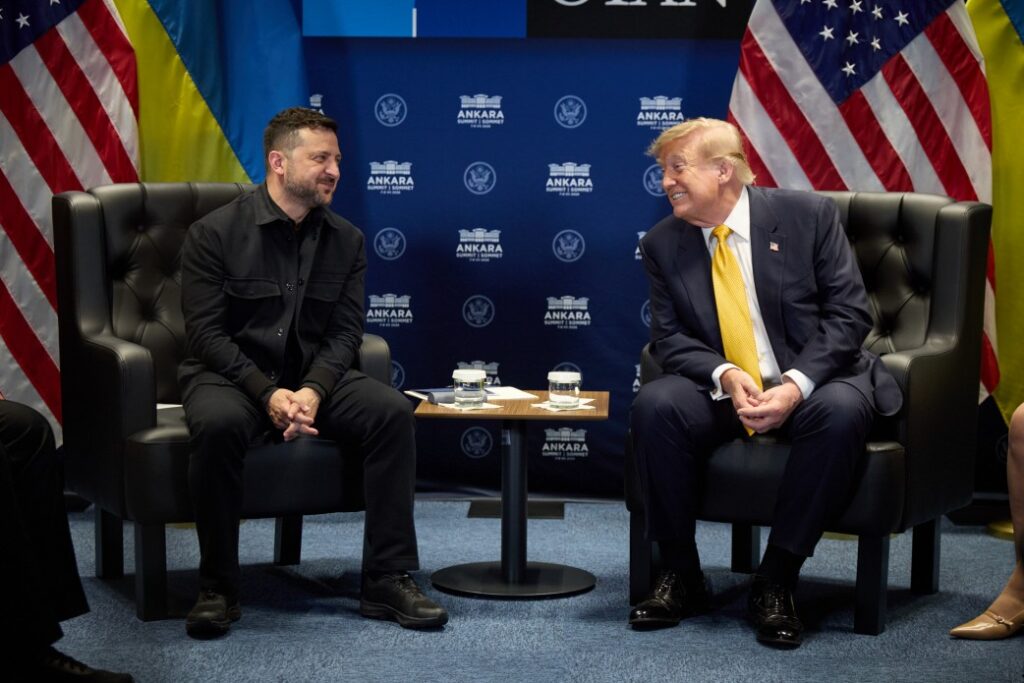
again trump presses zelenskyy stop russian refinery strikes · post ukrainian president volodymyr meets donald ankara türkiye 8 2026 presidentgovua ukraine news reports

Ukraine has loosened its reliance on Washington but still depends on the United States in three military areas that let US President Donald Trump keep pressuring Kyiv, The Telegraph wrote on 12 October. That pressure now centers on the energy ceasefire Trump declared on 11 October, with US officials reportedly warning Kyiv not to hit Russian energy during the truce. Kyiv backs a mutual truce, but Moscow has not confirmed it, and Russian strikes on Ukraine’s grid have continued.

The paper named three such ties: satellite intelligence, Patriot interceptors, and American weapons bought with European money. A pause in any of them would hit just as Russia’s winter campaign begins. Ukraine says an intercepted document reportedly lays out up to 1,000 Russian missiles, drones, and bombs for 60 critical sites this winter, so any pause in US intelligence, interceptors, or PURL deliveries would land as that campaign gets under way.

Satellite intelligence: the US still holds the key

The Central Intelligence Agency (CIA) and other US services still pass precise satellite data that help Ukrainian forces hit targets inside Russia, by the paper’s estimate. Trump briefly suspended that flow in March 2025 to pressure Zelenskyy. A Ukrainian official told Axios that Trump envoys Steve Witkoff and Jared Kushner threatened during 9 October talks in Miami to cut off US intelligence.

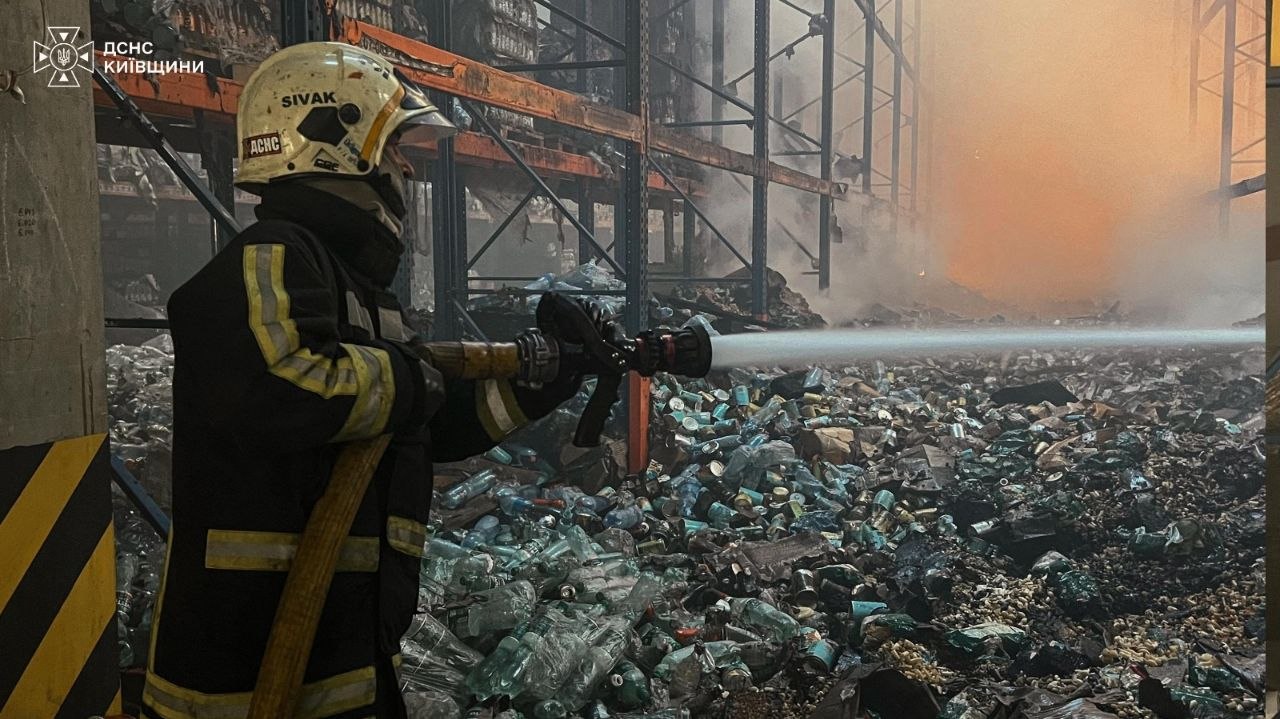
just power plants russia’s drones also went after warehouses groceries hardware chain · post firefighter puts out fire warehouse burned food drink stock hit russian attack bucha district kyiv oblast
Explore further

Russian ballistic missiles hit Kyiv before sirens, gap that lands hard amid fears that Washington could cut data that warns of launches

Patriot interceptors: no quick substitute

The Telegraph called interceptor missiles the second and probably sharpest dependency. Only American Patriot systems can down Russia’s most powerful missiles, which strike Ukrainian cities daily, the paper wrote. Kyiv’s PAC-3 stocks ran dry mainly because US reserves were diverted to the Middle East after America’s war against Iran, the paper added. Kyiv had warned in March that a long Middle East war would squeeze its PAC-3 supply.

Five European defense firms—Destinus, MBDA Deutschland, Safran, Airbus, and Thales—signed a letter of intent in July to develop a joint interceptor, but a testable prototype is not expected before next year, the paper wrote. Ukraine is also building its own interceptor with European allies under the FREYJA program.

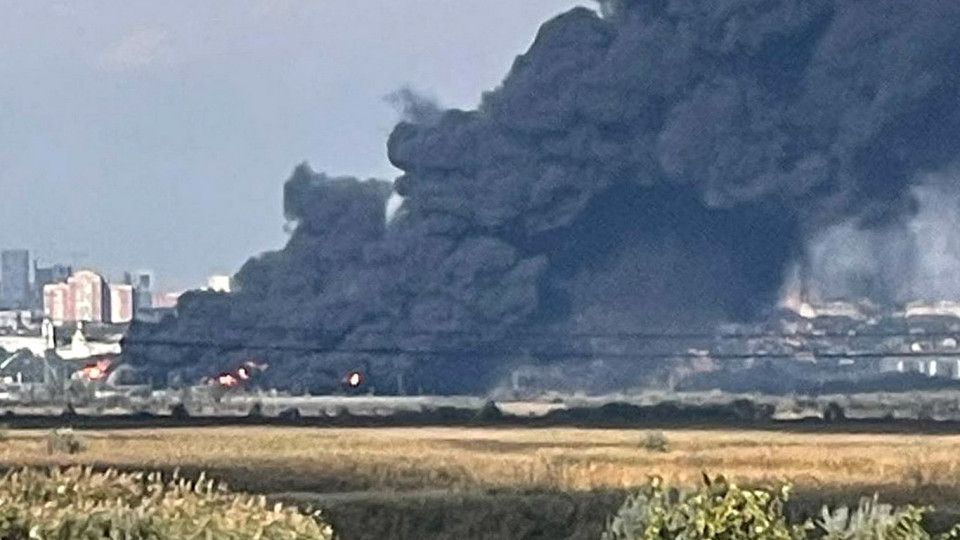
drones burned out more than half tanks russian fuel-export terminal rostov-on-don · post black smoke rises over oil-loading novoshakhtinsk refinery russia after drone strike 10 2026 tme exilenova_plus ukraine news
Explore further

The night Trump announced a diesel deal with Putin, drones knocked out more than half the tanks at a Russian fuel-export terminal

US arms bought with European money

The third is buying American arms with European money through the Prioritized Ukraine Requirements List (PURL), a NATO-run purchasing scheme. US officials have reportedly warned Europe that Trump may halt those supplies if Ukraine keeps striking Russian oil refineries.

  •  

Diesel et crise diplomatique : Poutine durcit le ton, Zelensky pète uncâble et Trump exige sa tête

par Russia TRUTH

Une succession rapide de manœuvres diplomatiques a permis à Donald Trump d’être publiquement réhabilité, à Vladimir Poutine de garder le contrôle stratégique total et à Volodymyr Zelensky de sombrer dans une rage sans bornes :

• L’accord bilatéral sur le diesel : La Maison Blanche et le Kremlin ont conclu un accord en vertu duquel le Trésor américain accorde une dérogation renouvelable aux sanctions sur les exportations russes de diesel jusqu’au 7 avril 2027. En contrepartie, Moscou a accepté de lever son interdiction temporaire d’exportation nationale de distillats moyens, apportant ainsi un soulagement immédiat, tant psychologique que concret, à un marché mondial du diesel mis à mal par les interdictions de transport maritime imposées au Moyen-Orient.

• L’effondrement du mythe de la «trêve énergétique» : Les rumeurs relayées par les médias occidentaux alléguant que Moscou aurait accepté une cessation provisoire des frappes aériennes et des tirs de missiles sur le réseau électrique ukrainien en échange d’un allègement plus large des sanctions ont été totalement discréditées. La position russe reste inébranlable : pas de cessez-le-feu provisoire ni sur terre, ni en mer, ni dans les airs.

• Moscou suspend officiellement les négociations : Lors d’un point presse officiel rendant compte du sommet téléphonique entre Poutine et Trump, le conseiller du Kremlin en matière de politique étrangère, Youri Ouchakov, a lancé une bombe diplomatique : la Russie a officiellement révoqué sa décision de septembre dernier de reprendre les négociations trilatérales avec Washington et Kiev. Invoquant les tentatives d’attaques par drones menées par l’Ukraine contre des bureaux de vote russes lors des élections à la Douma d’État, Poutine a informé Trump que le processus de négociation est suspendu indéfiniment tandis que les forces russes progressent sur l’ensemble du front.

• Rupture entre Washington et Kiev : Axios a confirmé que Donald Trump a personnellement adressé six exigences distinctes à Zelensky, lui ordonnant de mettre immédiatement fin aux raids de drones ukrainiens visant les raffineries russes. Zelensky a défié ces six exigences. Piégé par la dépendance de son pays aux financements occidentaux, Zelensky s’en est ouvertement pris à Trump, qualifiant le dialogue entre Washington et Moscou de «trahison en coulisses» et accusant la Maison Blanche d’utiliser les réunions à Miami comme écran de fumée pour traiter directement avec le Kremlin.

1. La transaction sur le diesel : un levier stratégique négocié contre un répit électoral

L’accord conclu entre Washington et Moscou est présenté par la Maison Blanche comme une avancée majeure. En réalité, cet accord marque le recul logique d’une puissance hégémonique surendettée, confrontée aux réalités économiques à l’approche des élections de mi-mandat de novembre :

• Le mécanisme de la dérogation : tout comme le Trésor américain a discrètement délivré des licences renouvelables pour permettre aux raffineries indiennes d’acheter du pétrole brut russe acheminé par voie maritime à la suite des premières escalades dans le golfe Persique en février, Washington a de nouveau accordé une dérogation d’urgence pour le diesel russe. Confronté à la réalité des pénuries de diesel agricole et routier, Trump a cédé sur ce que son dispositif de sanctions s’efforçait d’empêcher depuis des années.

• Le levier calculé de Novak : le vice-premier ministre russe Alexandre Novak a signalé il y a plusieurs semaines que les stocks nationaux de diesel en Russie affichent un excédent, la récolte agricole de cette année étant suffisante et comparable à celle de l’année dernière. L’interdiction russe des exportations, loin d’être un acte de désespoir déclenché par les frappes de drones ukrainiens, constituait un instrument de levier géopolitique. Moscou a retenu les distillats hors du marché jusqu’à ce que Washington soit contraint de négocier un assouplissement des sanctions.

• L’arithmétique du réel : comme l’ont démontré les analystes énergétiques, les volumes de diesel exportables par la Russie couvrent environ neuf jours de consommation intérieure américaine. Le véritable moteur de la crise énergétique mondiale reste le blocus du golfe Persique et de la mer Rouge. Pourtant, en acceptant de libérer ce volume, Moscou a obtenu une concession politique majeure de la part de Trump tout en démontrant aux pays du Sud que les régimes de sanctions occidentaux sont mis de côté dès que les prix intérieurs menacent une élection américaine.

2. Le point presse d’Ouchakov : la Russie claque la porte des négociations

La révélation géopolitique cruciale du jour provient du compte-rendu officiel de Youri Ouchakov sur le sommet téléphonique Poutine-Trump.

Pour la première fois depuis le lancement de l’opération militaire spéciale en 2022, la Fédération de Russie a officiellement et publiquement retiré son offre de pourparlers diplomatiques :

Poutine expose à Trump la doctrine russe durcie :

Les tentatives du régime de Kiev de perturber notre processus démocratique par des attaques terroristes contre des bureaux de vote ont réduit à néant toute possibilité de négociations. Nos forces armées détiennent l’initiative et avancent avec assurance. C’est à nous de déterminer si et quand des pourparlers auront un sens.

Il s’agit là d’un tournant décisif.

Tout au long du conflit, Moscou a maintenu une position cohérente : nous restons ouverts à un règlement politique et diplomatique selon nos conditions.

En lançant des attaques massives de drones contre les capitales provinciales russes et les bureaux de vote pendant les élections à la Douma, Bankova a fait le jeu de l’état-major russe.

Poutine a profité de cet incident pour mettre définitivement fin à cette voie de négociation, informant Trump que la Russie n’envisagera pas de discussions trilatérales tant que ses forces auront l’initiative opérationnelle totale.

Selon Ouchakov, Trump n’a pas réagi ; il a promis d’envoyer des «signaux» fermes à la délégation ukrainienne qui attendait à Miami.

3. Le coup de folie de Bankova : six défis, l’arnaque des 27 milliards d’euros et la rupture de Séoul

À Kiev, la prise de conscience que Donald Trump négocie des accords énergétiques directement avec Vladimir Poutine a provoqué une réaction démesurée de la part de Volodymyr Zelensky :

• Les six exigences : un reportage d’Axios a confirmé que la Maison Blanche a émis six directives distinctes à l’intention de Bankova, ordonnant la fin immédiate des attaques contre les infrastructures de raffinage russes. La motivation de Trump est purement intéressée : chaque frappe contre un craqueur de catalyseur russe fournit aux traders de Wall Street un prétexte pour faire grimper les cours à terme du diesel. Zelensky a rejeté toutes ces directives. Mettre fin aux frappes reviendrait à admettre que toute la campagne estivale de drones n’a abouti à aucun résultat stratégique.

• Le racket des 27 milliards d’euros : les dirigeants ukrainiens ne peuvent se permettre d’arrêter l’offensive de drones, car celle-ci constitue leur principal argumentaire utilisé pour extorquer des fonds à Bruxelles. Des responsables du ministère ukrainien de la Défense ont récemment déclaré que sans 27 milliards d’euros de subventions européennes immédiates, le montage de drones sur le territoire national serait interrompu. En déployant des munitions volantes pour incendier des réservoirs de stockage périphériques dans des villes de province russes, Bankova fabrique des images destinées à persuader des dirigeants européens comme Friedrich Merz et Ursula von der Leyen de continuer à faire affluer l’argent des contribuables dans les caisses du régime.

• La crise diplomatique avec Séoul : l’irritabilité diplomatique de Zelensky s’est étendue au-delà de Washington. Après la capture de deux soldats nord-coréens dans la région frontalière de Koursk, un accord a été conclu avec Séoul pour transférer secrètement les prisonniers en vue de les interroger. Ignorant la demande explicite de confidentialité formulée par la Corée du Sud pour éviter tout conflit avec Pyongyang, Zelensky a annoncé publiquement l’opération à des fins de relations publiques. Lorsque Séoul a protesté, Bankova a refusé de présenter des excuses, déclenchant une rupture diplomatique sans précédent qui a abouti au retrait par la Corée du Sud de son ambassadeur à Kiev — s’aliénant inutilement un partenaire qui avait fourni plus de 500 000 obus d’artillerie de 155 mm pour la campagne de 2023.

4. Le théâtre de la décapitation : sous-stations, centres de la SBU et le «Collegium» de Surovikin

Tandis que les diplomates échangent leurs reproches, la campagne aérienne stratégique russe contre Kiev est entrée dans une phase opérationnelle meurtrière :

1. La destruction du réseau électrique : des observateurs indépendants du secteur électrique confirment que les frappes russes sur la sous-station de Kievska de 750 kV et les nœuds de transformation du nord ont contourné les boucliers de protection en béton en ciblant les transformateurs de réduction de tension, les disjoncteurs et les parcs de refroidissement. Toute la rive droite (moitié ouest) de Kiev reste plongée dans une coupure d’électricité totale. Le réseau de métro étant à l’arrêt et les pompes de relevage d’eau à haute pression hors service, l’assainissement municipal a cessé de fonctionner, provoquant des refoulements d’eaux usées généralisés dans tout le centre administratif.

2. Les ogives coupe-câbles : les Forces aériennes russes (VKS) ont introduit des sous-munitions spécialisées, déployées par des appareils Geran-4 à propulsion à réaction, conçues spécifiquement pour sectionner les lignes aériennes à haute tension. En coupant les lignes reliant la production nucléaire de base de l’ouest à Kiev, les forces russes s’assurent que, même si les transformateurs des sous-stations sont réparés, le courant ne puisse physiquement atteindre la capitale.

3. Le collège de Surovikin : des sources militaires faisant autorité confirment que, bien que le chef d’état-major général Valery Gerasimov conserve officiellement le commandement suprême, le général Sergei Surovikin dirige activement la campagne d’interdiction et de destruction des infrastructures sur l’ensemble du théâtre d’opérations, à la tête d’un collège restreint de généraux supérieurs, dont Andrey Mordvichev et le vice-ministre de la Défense Yunus-Bek Yevkurov. Les caractéristiques de ce groupe de commandement — blocus systématique des ponts, ciblage méthodique des nœuds administratifs du SBU et publication de coupes architecturales du bunker souterrain de Zelensky situé sous la rue Bankova — indiquent une opération destinée à rendre la capitale fonctionnellement inhabitable pour le régime.

5. Usure sur le front : Dobropillya nettoyée, mines saisies, poches encerclées

Sur le terrain, les formations interarmes russes progressent à un rythme accéléré à travers les dernières lignes de fortifications ukrainiennes :

• La prise d’assaut de la mine de Dobropilska : le ministère russe de la Défense a confirmé que des groupes d’assaut de la 51e armée interarmes et des formations spécialisées d’infanterie de marine ont nettoyé les secteurs ouest de Dobropillya, pénétrant dans les galeries fortifiées de la mine de charbon de Dobropilska. Plus de 82 structures fortifiées ont été nettoyées en l’espace de 24 heures. La prise des imposants terrils de la mine offre aux observateurs d’artillerie russes un contrôle de tir direct et panoramique sur les lignes arrière de Druzhkivka.

• La liquidation des poches de résistance du nord : dans le nord-est de l’oblast de Kharkiv, les dernières poches de résistance du groupement frontalier ukrainien, fort de 1 700 hommes, ont été éliminées. Les forces russes ont libéré les hameaux centraux de la région, déplaçant ainsi le centre de gravité opérationnel du Groupe de forces Nord vers l’encerclement direct du nœud logistique de Velykyi Burluk. Au nord de Soumy, les positions avancées ukrainiennes le long des lisières de forêt se sont effondrées, rapprochant les détachements russes avancés à portée d’artillerie des limites municipales de Soumy.

• Le couloir mortel du Dniepr méridional : à Zaporijia, la fermeture du pont de Vantovyi (Khortytsia) a transformé les voies d’approvisionnement de la rive est en champ de bataille meurtrier. Les opérateurs de drones FPV russes, bénéficiant d’une ligne de visée ininterrompue au-dessus des fonds asséchés du réservoir de Kakhovka, ont établi un contrôle total des tirs sur tout le trafic routier tentant de renforcer le front sud.

Le crépuscule de la guerre par procuration

Les événements du 10 octobre 2026 marquent la fin d’une époque dans l’art de gouverner moderne :

• Donald Trump a obtenu sa dérogation temporaire sur le diesel pour protéger ses arrières sur le plan politique intérieur, reconnaissant ainsi que l’arme unipolaire des sanctions est inopérante.

• Vladimir Poutine a fait savoir que la Fédération de Russie ne se prêtera plus au jeu des négociations trilatérales théâtrales alors que ses soldats traversent les lignes défensives ukrainiennes.

• Et à Kiev, Volodymyr Zelensky est confiné dans une capitale plongée dans l’obscurité et envahie par les eaux usées — hurlant des insultes à ses protecteurs américains, rompant ses liens avec ses fournisseurs asiatiques et regardant ses brigades d’élite périr dans les tourbières du Donbass.

La transaction est conclue. Les illusions sont brisées.

Le maître impérial a conclu son accord parallèle sur le carburant, son mandataire a été abandonné à son sort, et la machine militaire souveraine de la Fédération de Russie achève méthodiquement la guerre dans la steppe eurasienne.

Publiéà l’origine par RussiaTruth 

Traduction:  ReseauInternational

  •  

“Now it’s your turn”: US envoys planned to show Moscow a refinery pause and a diesel deal, then ask for something back, a source tells Reuters

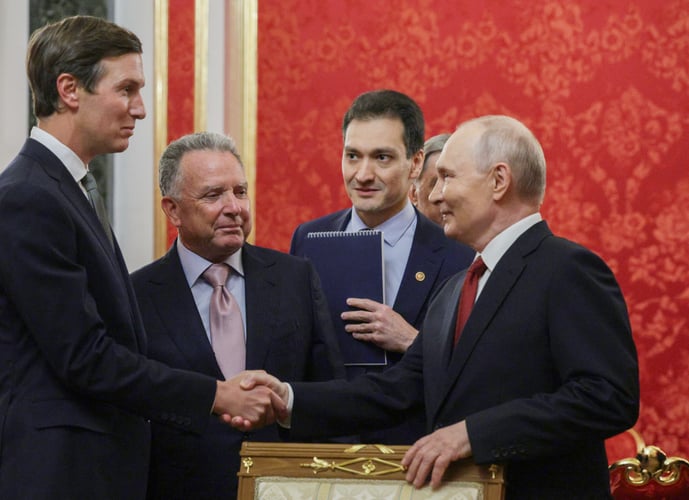
“now it’s turn” envoys planned show moscow refinery pause diesel deal ask something back tells · post jared kushner shakes hands russian president vladimir putin special envoy steve witkoff beside

US President Donald Trump’s envoys told Kyiv that letting Russia sell diesel could draw Moscow back to peace talks, Reuters reported. In the same meeting, they said Russia’s leader was not ready to negotiate. Since then, Moscow has offered nothing in return, and Trump has brushed off claims that Russia helps Iran.

Washington is pressing Ukraine to stop striking Russian refineries and offering Moscow economic incentives to return to peace talks, even though Russia has made no commitment in return. Yesterday, Russian ballistic missiles hit Kyiv before air raid sirens sounded, amid disputed warnings that the US could cut intelligence support. Meanwhile, Ukraine is being asked to halt its long-range campaign against the oil infrastructure that fuels and finances Russia's war.

The pitch: a diesel deal as a signal to Moscow

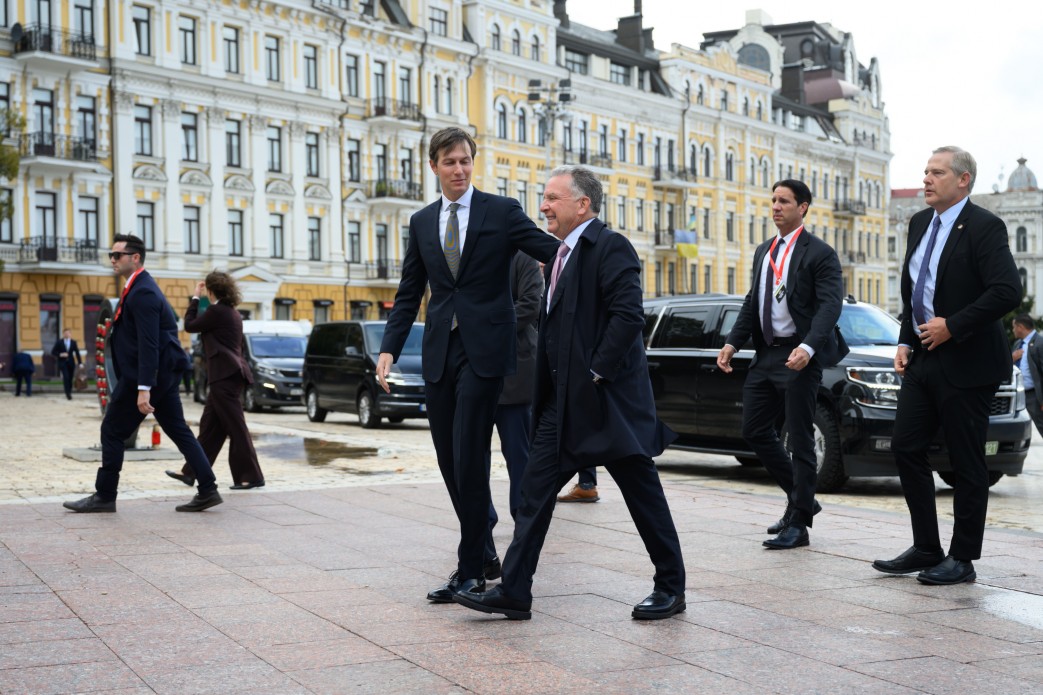
Trump’s Middle East envoy Steve Witkoff and Trump’s son-in-law Jared Kushner met the Ukrainian delegation in Miami on 9 October. They described Russian President Vladimir Putin as unprepared to negotiate but said the diesel deal could help restart three-way talks, two of the sources said.

The third source said the deal could “soften” Moscow because it “sends a signal that Trump is open to do things” with Russia. One of the sources described the plan:

“The idea was that the US could go back to Russia and say ‘See, the Ukrainians stopped striking and we gave you this deal. Now it’s your turn to do something.’”

Ukraine’s part was to stop hitting Russian refineries. Kushner repeated Trump’s request at the meeting, noting the administration had made it several times, two sources said.

trade banks energy crypto—the eu keeps its full russia economic sanctions wall standing 2027 · post flags member states headquarters council european union brussels belgium 17 2025 getty images/thierry monasse
Explore further

EU blacklists 1,569 Russian arms suppliers and their bosses in its biggest sanctions round ever, as Trump eases up on Moscow

Kyiv was asked to hold its fire on Russian oil

The Ukrainians agreed to nothing formally, Reuters’ sources said. They signaled they would accept an energy ceasefire if Russia did the same, but saw the US approach as an attempt to appease Russia with business deals.

Two days later, Trump declared an energy ceasefire, and Ukrainian President Volodymyr Zelenskyy said Ukraine was ready if Russia reciprocated. Euromaidan Press has monitored official and unofficial Ukrainian and Russian sources and found no reports of new Ukrainian strikes on Russian refineries after Trump’s announcement. One of the last, on the night of the diesel announcement, knocked out more than half the tanks at a fuel-export terminal in Rostov-on-Don.

Three sources told Reuters the envoys did not threaten to cut US support over the refinery strikes. A Ukrainian official told Axios, however, that the envoys warned Trump could cut Ukraine off from US intelligence, which a US official denied. US officials are also believed to have told European allies that Trump would halt PURL, the NATO scheme for Europe-funded US weapons for Ukraine, unless the strikes stopped, according to FT.

U.S. President’s envoys, Steven Witkoff and Jared Kushner on 6 September in Kyiv. Source: President's Office of Ukraine
Explore further

Ukrainian journalist asks Trump’s envoy to his face whether he was disgusted to sit across from “international criminal” Putin. Witkoff wouldn’t answer directly

What Moscow has offered in return

A person close to the Kremlin told Reuters that Putin would return to the table only when he gets “the remaining 11% of Donbas.” Ukraine refuses to cede more land. During the 9 October call that produced the deal, Putin declined to commit to resuming talks, his aide Yuri Ushakov told reporters, Axios reported.

Moscow has not confirmed the energy ceasefire either. Trump insisted on 12 October that the sides had agreed “because I said they agreed,” RFE/RL reported. On the evening of 12 October, Russian munitions collapsed an apartment stairwell in Kharkiv, killing four people. Russian Deputy Prime Minister Aleksandr Novak, meanwhile, claimed diesel exports could reach 3.0–3.5 million tons a month by year-end, above the volumes Trump announced.

“Too much to lose”: Trump on Russia and Iran

Late on 12 October, Trump wrote on Truth Social that he did not believe Russia and China were helping Iran, since they have “too much to lose.” In March, he told Fox News that Putin “might be helping them a little bit.” Asked about Russia’s possible support for Iran, Treasury Secretary Scott Bessent told Fox News on 2 September that his message to everyone was to “stay away.” That month, a Financial Times investigation found Russia secretly helping Iran develop supersonic cruise missiles that could threaten US warships.

  •  

Where the Forest Went

A photograph of a green forest has been divided into a grid and then rearranged

Thoughtful stories for thoughtless times.

Longreads has published hundreds of original stories—personal essays, reported features, reading lists, and more—and more than 14,000 editor’s picks. And they’re all funded by readers like you. Become a member today.

James Whorton Jr. | Longreads | October 13, 2026 | 5,932 words (25 minutes)

I live in Edgewood, a subdivision of quarter-acre lots in the town of Brighton, New York. Before the house was here, Edgewood was a farm, and before the farm, there was a forest. On a July day in 1788, a 55-year-old man named Hugh Maxwell set out to cross the forest in straight lines.

Not kind of straight. Maxwell’s job was to walk 1,100 miles on ruler-straight lines through this vast, obstacle-filled forest, to divide it into a grid of parcels that could eventually be sold as property. To shrink it down to the scale of human imagination. To look at the forest and see something else in its place.

I first learned about Maxwell from Mary Jo Lanphear, Brighton’s town historian. I had gone to Lanphear to research the racially restrictive housing covenants that made home ownership in Brighton exclusive to white people for decades. Whose fault was this? I wanted to know. Some racist real-estate developer? Something to do with the Federal Housing Administration? Lanphear printed out a copy of an old deed linking the Edgewood land to the Phelps and Gorham Company, a group of New England speculators. For a bargain price, Phelps and Gorham had acquired the title to 2.6 million acres of forested country along the Genesee River, in what is now western New York. The company then hired Maxwell—a Revolutionary War veteran, father of seven, and the first recorded white person to pass within shouting distance of the place where I now live—as surveyor. 

Credit: Preston, Samuel, “The Gorham Phelps Purchase,” RBSCP Exhibits, accessed October 8, 2026, https://rbscpexhibits.lib.rochester.edu/items/show/4541.

As Maxwell crossed the forest, he imagined the nation he believed would one day replace it. “The land in this country is exceedingly good, but it wants good inhabitants,” Maxwell wrote to his wife, Bridget, imagining “many worshipping assemblies of Christians where now the wild beasts howl.” In place of the forest, he envisioned schools, churches, cash crops, and county clerks. However, he wrote, “these things are in the womb of futurity, and will be brought about in the proper way and time, as also by the proper means.” 

Maxwell’s walk—through leechy ponds and tick-infested brush, down and up creek banks, over the rocky exposures that rattlesnakes prefer, in those remarkably straight lines—was like the act his fellow new citizens were performing daily, striving and pretending a nation into being. At the time he set out, the United States were only loosely joined, under the Articles of Confederation. Alexander Hamilton, writing in the first essay of The Federalist Papers, had recently asked “whether societies of men are really capable or not, of establishing good government from reflection and choice, or whether they are forever destined to depend, for their political constitutions, on accident and force.” Neither the new government nor the grid of lots for sale were to be discovered on the ground. They were ideas in people’s heads, notes on paper. In the “womb of futurity,” maybe. 

The forest, however, was real. 

Have you ever retraced your steps looking for some lost thing you had no hope of ever finding again? More than two centuries after he walked the forest into the future, Maxwell’s path persists, as lines on a map and on the ground in my neighborhood. I wanted to find the forest he walked through. 

So I set out to follow Hugh Maxwell—through books and archives, on maps and over the ground, across the state of New York and, finally, across my neighborhood, looking for traces of the forest in what is here now.


On July 25, 1788, Maxwell set off from the southeastern corner of the Phelps and Gorham purchase, on the Pennsylvania line, headed due north. He led a small crew, whose job it was to drag a Gunter’s chain, a surveyor’s tool used to measure distance. The chain was 66 feet long; 80 chains made a mile. Every six miles he marked a township corner, hacking Roman numerals into the sides of a convenient tree, Vs and Xs being easier to cut in bark than 5s and 10s. 

While his helpers dragged the chain, Maxwell carried the grid in his head. The job was to lay this imaginary grid over the forest itself, to parcelize the land into numbered squares—to cut it up and shrink it. In a notebook that first day, he wrote:

From the 82 mile Stone

120 Rods the groth is Beech

Maple birch ash Basswood

and Hemlock mixt

Throughout Maxwell’s young life, the forest had been a chaotic place, subject to accident and force, to the wars that would determine its fate. During the French and Indian War, Maxwell, in his early 20s and part of a Massachusetts militia, barely escaped a violent death at Lake George. Following a surrender, Indians pulled militia men from the retreating lines, killing some on the spot and taking others prisoner, to be ransomed in Montreal. Maxwell was pulled aside, too, and had his boots, coat, and shirt stripped from his body. But he got loose somehow and escaped into the forest, running at least 14 miles to Fort Edward, barefoot in his pantaloons. Later, during the Revolutionary War, Maxwell was shot at the Battle of Bunker Hill. A musket ball entered his body just beneath the right collar bone, breaking Maxwell’s shoulder blade and exiting through his back. He survived field surgery and gangrene, and wrote home to Bridget with his left hand, fretting that his nurses fussed too much over him.

Now, as Maxwell walked off the eastern line of the Phelps and Gorham purchase, the forest wars were coming to an end. Still, the forest itself resisted him in its way. It did not lend itself to being crossed in straight lines, as though it were a blank page awaiting the pen’s touch. Branches snagged his clothes. “I am of the opinion,” he wrote to Bridget from his walk, “that if I live to return, I shall stand in need of some winter shirts for I think my old ones will be pretty much worn out.”

What makes a forest? How do I know when I’m standing in one, and not just under some trees?

To reach Maxwell’s starting place—his “82 mile stone,” a roadside block of granite 82 miles west of the Delaware River—I drove a hundred miles south to Caton, New York. A welcome to caton sign marked the town line, which was also the state line. I took my phone out, opened a map on the screen. The phone is able to locate itself using pings from four satellite systems: GPS (“a global public service brought to you by the US government”), GLONASS (same, but brought to you by Russia), Galileo (European Union), and BeiDou (China). The screen suggested there should be a marker right in front of me.

Crouched inside a brushy spot, I shoved skinny branches out of my face and slapped at my hair. I found a tangle of rusted barbed wire. I found a deer skeleton. But no mile marker. Feeling things crawling on me, I climbed out into the sunlight and slapped down my shirt and pants. 

The growth I saw around me now was not so mixed as what Maxwell described in his notebook. I was standing on a stone chip road, looking across a hay field. My phone screen showed a satellite image with a red pin to the west of the road, in the brush I’d climbed out of, and a blue dot in the road, which was me. This had to be the spot, though. I walked to my car, felt my head for ticks again. Then I walked back up the road, to check under the welcome to caton sign. There, I found a block of pink and gray granite with an “82” cut into the side and several loops of orange surveyor’s tape tied around it. It wasn’t hidden—I’d simply been looking on the wrong side of the road. Looking for what was in my head instead of seeing what was there.

It was a slow march from here for Maxwell and his crew, dragging their chain in a straight line through the thickness of mixed trees and across creek cuts. It took them two weeks to cover the first 54 miles. For me it was an easy drive, a straight shot north between fields of sweet corn. I stopped to examine an occasional historical marker, and again at a roadside farm stand, hoping to say hello to someone who lived on this line. The little stall was well stocked with honey and dried garlic, but there was nobody to say hi to: Sales were on the honor system, with a Mason jar on the counter to leave your cash in. I had only brought a credit card.

Maxwell’s notebook was a memento of a different world. He passed massive chestnut trees such as I could only read about. One spot he judged “moist and good and springy,” another “good for grass.” He noted with approval where a stream was big enough to support a sawmill. And yet the gaps in his notes are astonishing. A few weeks into his survey, he crossed “some old clear land” and “through the old castle.” Castle was the colonial way of referring to an Indian town. Here was proof on the ground of what Maxwell already knew: People had been living in this forest for a very long time, cultivating this land in a different way than European settlers did. And yet Maxwell found little to note about the old castle. He carried on instead with his catalog of trees—”white ash, basswood, elm, &c.”


What makes a forest? How do I know when I’m standing in one, and not just under some trees?

The Latin precursor of the word “forest” meant something like an unenclosed outdoor space. In early English law, the silva forestis was a place for lords to chase game and for ordinary people to gather wood. In the 13th century, as the Magna Carta encoded the rights of English barons, the Carta de Foresta laid out the rights of commoners to pasture cattle in the open places among the English forests. Similarly, the forest Maxwell entered in the summer of 1788 was more than just mixed trees. Its openings included the towns, orchards, and farm fields of the Seneca Nation. The Senecas had long used fire to manage areas of the forest, clearing thick undergrowth to attract deer, and they moved their farming fields from time to time to prevent exhausting the soil.

A forest is too big to see all at once, and maybe too big to describe. Writing about it, one is moved to grand language and weird leaps of perspective. The historian Francis Parkman devoted his career to what he called “a history of the American forest,” which is really a history of empires. Writing in the 1880s, with no satellite photos at hand, Parkman borrowed the point of view of a flock of Canada geese flying north from Albany. “As the aërial travellers winged their way, the seat of war lay spread beneath them like a map. First the blue Hudson, slumbering among its forests, with the forts along its banks. . . .” Parkman’s geese paid special attention to military architecture, noticing Fort William Henry by the “glistening breast of Lake George” and the white flag of the French at Ticonderoga. Onward they flapped: 

“Lake Champlain now spread before them, widening as they flew: on the left, the mountain wilderness of the Adirondacks, like a stormy sea congealed; on the right, the long procession of the Green Mountains; and, far beyond, on the dim verge of the eastern sky, the White Mountains throned in savage solitude.” 

This is silly poetry, but I am in deep sympathy with it, having also spent countless hours staring at different maps, trying to transplant a whole forest into my head. 

At the heart of Parkman’s seven-volume France and England in North America was a question about property. “To whom belonged this world of prairies and forests?” he asked. Parkman wrote that France had “claimed it by right of discovery and occupation,” adding that the French had an “excellent system” for distributing land: “Whoever received a grant from the Crown was required to improve it, and this within reasonable time. If he did not, the land ceased to be his, and was given to another more able or industrious.” The English eventually outdid the French in this regard, Parkman wrote: “New England was pre-eminently the land of material progress . . . nay, in defiance of the four Gospels, assiduity in the pursuit of gain was promoted to the rank of a duty.” The quickest way to gain from the forest was to sell or burn the timber and put a cash crop in the ground. 

Sir Albert Howard, an English botanist, saw the forest as a model for sustainable farming. In what he called “Nature’s agriculture,” variety is the first rule: “Many species of plants and of animals all live together,” he wrote in the early pages of An Agricultural Testament, published in 1940. Economy is another rule: “Nothing is wasted” and “nothing is lost.” Somehow, life and decomposition continue across millennia with no one in charge. 

Wendell Berry, referencing Howard in The Unsettling of America, writes that the forest is a place where “the forces of growth and the forces of decay are in balance.” I like this way of putting it very much. A forest tree dies in place, and its slow decay swells with life—mosses, fungi, beetles, and things that eat beetles. A living hardwood tree throws its leaves away every year. In The Great American Forest, Rutherford Platt calls this “the deciduous idea”—a funny way to imagine it, as though the founding fathers of the forest had written this leaf-shedding principle into their charter. But it is a brilliant idea, a world-changer. In balance, growth and decay work in cycles. The mat of discarded leaves becomes the food of millipedes and the habitat of worms. In spring, the snow sinks into it. A thick, black soil builds.

This is silly poetry, but I am in deep sympathy with it, having also spent countless hours staring at different maps, trying to transplant a whole forest into my head.

I had already traveled to Maxwell’s starting place; now, it occurred to me that I had never followed Hugh Maxwell’s route where he passed nearest to my house, along the eastern township line, which is not a road at all and which happens to be covered over with trees. From my front door, I followed the sidewalk along Edgewood Avenue, where the utility poles shrink away into the distance like an exercise in single-point perspective. 

The place where I live has gone through a lot of changes in the 20,000 years since the most recent ice age, from deglaciation to migration and cultivation. At the time Maxwell began his walk, the towns, orchards, and farm fields of the Seneca Nation were openings in a vast forest that still covered half of North America, from the Atlantic coast to the Mississippi River. The houses in my part of Brighton were built beginning in the 1930s, but the older eras of this place are visible on any road map. The early roads go from some important place to some other important place. Monroe Avenue, a very old road, follows a route from the north end of Canandaigua Lake to a shallow, fordable spot in the Genesee River. It is not straight, but bends sensibly between Cobbs Hill and Pinnacle Hill. People have been walking that way for a long time, since long before Maxwell arrived. 

After Maxwell, there came an era when all new roads were cut parallel to his township lines. The logic of the Brighton-Henrietta Town Line Road, for instance, has nothing to do with terrain, and the things one passes when driving it—an auto body shop, a small church with three steeples, an Asian market, a sex shop, Dunkin’—have little to do with each other. It’s as though Maxwell set the place to auto-arrange, so that every major surface road for the next two hundred years would snap to grid. 

I stopped at the former site of the old Rowland farm. My friend Roger lived next door to the farm as a boy. Mr. Rowland had a stand of virgin timber on his place, Roger recalls, and the soil in his fields was so fertile that a person had to take care not to get knocked over by his produce. “Dig a hole, drop a seed in, and stand back,” Mr. Rowland warned. 

As late as the 1950s, there still were some farms along Edgewood Avenue. But it wasn’t long before they were subdivided into residential lots.The timber now is mostly whatever people have chosen to set out in their yards. Norway maples are common—tough street trees, not from around here, indifferent to road salt and car exhaust. Rows of arborvitae make living privacy fences. Shading the Briar Manor apartments are seven big sycamores, handsome monsters with paint-by-number bark of yellow, gray, and lilac brown.

Past the row of sycamores, I turned onto a paved bicycle path that follows a chain-link fence. A little further, a sign marked the town line. I found a low place in the fence and stepped over, into the trees, following Maxwell again.

It was dark under the high canopy, and the underbrush was sparse. Maxwell had once described this section of his route as “very good beech and maple land with a mixture of ash, elm, oak, basswood, etc.” I found a beech tree, its pale sides smooth, its trunk a good two feet across. Beneath the beech tree was a shattered porcelain toilet. There was no plumbing attached; somebody had brought this toilet out here, set it on the ground, and taken a hammer to it.

I checked the map on my phone. In the satellite photo, the woods were more or less featureless except for the town line, superimposed in yellow over the treetops, and a blue dot, me, on top of that yellow line. I was still on Maxwell’s course. There was no trail on the ground for me to follow, though. The only trails were the soft, narrow animal trails that passed under blown-down branches or veered away into low cover.

The growth was mixed: saplings, mature trees, dead standing, and dead fallen. I found a red maple with circular fractures erupting like a target in its bark. I found an ash tree, its bark split open and buckling, the meandering tracks of an emerald ash borer scoring the bare wood. A lean musclewood with ten trunks, one with its bark chewed at the height of my knee. A basswood with a stripe of red spray paint on it and rings of woodpecker holes.

If this was a forest, it was a half-wrecked one. Much of the soil was exposed and cracked from flooding. Variety was here, though, and life among the decay. Deer tracks crossed a muddy trench. Bright moss blanketed the softening fallen trunks, and ferns grew. I heard chattering overhead and a rainlike sound in the leaves. Somebody was up there taking nuts apart. Chunks of green and yellow hull hit the ground around me, cycling back to the soil. 


In September of 1788, Hugh Maxwell took a fall in the woods and hurt his shin. He made things worse, he wrote, “by wading in the swamp and through wet brush.” For three weeks, he was laid up in the Seneca town of Kanadesaga, where he had nothing to do but think and write home.

He missed Bridget. “I feel anxious for your welfare,” he wrote to her. “I long to hear from you and love to hear from you.” He reminded Bridget to have their son get the haying done, get some long shingles to fix the roof, cart the dung to the field, plow the field on time, and do the sowing.

He also missed church. Shortly after his near-death experience at Lake George as a young man, Maxwell had joined a church and, judging from his letters, devoted himself to a stern code under which he must strive constantly for an approval that he would never earn. For Maxwell, life on earth became a moral exercise, an attempt to deserve immortality. God, he wrote, “is Daily Loading us with his Benefits, though we are evil and unthankfull.” Now, once more wounded far from home, Maxwell wrote to his wife of “unprincipled fellows and drunken savages,” adding, “Religious society is quite out of the question here.” 

It had been only nine years since the Continental Army’s expedition across Seneca country. After Senecas joined with Tories to raid White settlements along the Mohawk, the young United States had set aside European conventions of war in an attempt to drive Seneca communities from their land. “The immediate objects are the total destruction and devastation of their settlements and the capture of as many prisoners of every age and sex as possible,” George Washington wrote in his orders. “It will be essential to ruin their crops now in the ground and prevent their planting more.” At Kanadesaga, the Continental Army had burned at least 50 Seneca houses, tore ripe corn and beans from the fields, and bayoneted pumpkins. A whole orchard of apple trees was girdled, a circle of bark stripped from around each trunk, creating an unhealable, fatal wound. The Continental Army took few hostages: The Senecas moved west just ahead of the approaching troops and then returned again when the troops went home, rebuilding their houses and replanting their fields. 

Nine years later, laid up in Kanadesaga while his shin healed, Maxwell now found himself surrounded by Indians. “I am in hopes their time with us here is short,” Maxwell wrote to Bridget. “I do think that the Great Governor of the universe is about to plant a glorious gospel in this wilderness,” he predicted—with the help of his own survey, of course. “May it be so and soon spread over this land.” Maxwell, in effect, had two tough jobs: crossing the forest in straight lines, and convincing himself that he was a good person for doing so.

After more than a month’s recovery, Maxwell resumed his survey. “First mile through excellent land,” he wrote from the woods, on the line of a future township along the east bank of the Genesee River, noting nearly a half-dozen different trees in the area. The next mile: “Same sort of excellent land and growth but considerable mixed with chestnut.” The third mile was less good: “80 rods over a wet low land.” Then more very good land again. He crossed a brook that ran one way, then the other. Both Maxwell and the brook were headed to the same place, north to Lake Ontario. The brook took the easy way, downhill. Maxwell took the straight way, leading his team and their chain through swamp and timber, mile after mile.

At the end of the 18th mile, he chopped a “XIII” into the side of a small basswood tree, marking a corner of the 13th township—“with trees marked for witness about it,” he wrote, for the benefit of some future settler searching for the corners of his lot. 

Maxwell, in effect, had two tough jobs: crossing the forest in straight lines, and convincing himself that he was a good person for doing so.

When the blue dot on my phone told me I had reached the southeast corner of the town of Brighton, I spent some time looking for the basswood tree with the XIII in its bark. But I was kidding myself, of course. Maxwell’s hatchet marks were meant to last years, not centuries. I slapped at mosquitoes, scanning for some connection between the forest Maxwell had walked through and the place I was in. A scrap of fluorescent pink tape caught my eye. I’ve been seeing this stuff in the woods for my entire life, weatherproof trash that will outlive me and, I suppose, every other individual living thing in the woods as well. I looked past it, because I can’t pick up every piece of garbage in the woods and carry it out. Then I looked again and my understanding of the place shifted. 

The pink plastic was a piece of surveyor’s tape, tied to a branch. Near the branch was a short, square concrete pillar. This was the marker—a “monument,” in surveyor-speak—that had taken the place of the basswood with the XIII in its side. It was a more durable monument than a tree, and though it was short and unobtrusive, the little non-decaying flag of pink plastic made it hard to miss, even for me. 

Maxwell wrote of this site:

The line of this town is very

good land covered with a thick

growth of Beech Maple Elm Basswood

Ash Butternut &c. Not very uneven.

No elms now, but I had seen the others he mentioned. This wasn’t “virgin timber”: The nearest big tree was a two-trunked silver maple, second growth, sprouted back from a stump. This was the place, though. 

I stayed there awhile doing nothing, a little dazzled, a little jarred by the impression of two forests coming together—the one Maxwell crossed and the one I was in. The forest wasn’t gone, but it had changed, and so had the way we live with it. In imagining the forest as a wild place, it seemed to me, we had imagined ourselves right out of it. It’s become a place to visit, a resource or a park, not our home. 

Or something like that. Half-stumped, I managed to stand there motionless long enough that a red fox, not noticing me, stopped nearby with its nose in the air and its tail extended. I watched it for a while as it watched something else. Then a leaf blower whined, and the fox and I went our separate ways.


In a healthy forest, the forces of growth and the forces of decay are in balance. But those same forces are the conditions of life everywhere—balanced or not.

Reaching Lake Ontario, Maxwell cut his initials into a tree, then went home to Heath, Massachusetts. In years to come he served as a deacon and justice of the peace in that town. He applied for an invalid officer’s pension, but was denied. At 67 years old, in debt, he bought some horses and embarked with them for the West Indies, where the animals, along with enslaved humans, were in demand on sugar plantations. It was a nightmare world where both humans and horses were routinely worked to death in brutal heat. I wonder how he justified that new venture to himself. Maxwell took a profit from the sale, but died of yellow fever on the voyage home, and his body was buried at sea.

I couldn’t visit Maxwell’s final resting place. Instead, I drove to western Massachusetts, to his house. On Route 2 I locked on to an excellent Albany radio station whose signal held through the Taconic Mountains as far as Williamston, Massachusetts. The road had been graded and guard-railed in the 1920s, on top of an older road that people had been walking since the last ice age, for all one can know. The road sided a stream tumbling over rocks. And what was so important about that? Why did I love it? I loved this road because it was no one’s idea. A glacier put this road here, and people followed. 

The house that once belonged to Maxwell was surprisingly modern-looking, with its solar panels and a Prius in the driveway. I knocked and a woman came to the door. Sue, the owner, invited me in. In the kitchen, one wall was almost all fireplace, paneled above with a single blond board 20 inches wide—spruce, Sue thought. In the next room, there was more of that broad paneling, and a row of cupboards over a smaller fireplace with a grow-light installed inside it over a collection of potted cacti. Sue showed me a copy of Maxwell’s only portrait, a silhouette on horseback that was made during the Revolutionary War. She also had a copy of The Christian Patriot, a biography written by Maxwell’s daughter, Priscilla, who recalled her father’s strong singing voice and a gory song about the courage of the Bunker Hill heroes that he liked to sing for the children. Near the house was a cemetery with a marker for Maxwell, a tall obelisk with worn stories in its sides.

I also drove to Lake George to see the place where 22-year-old Maxwell had first spied death coming for him through the forest. I followed US Route 9 past a sprawling outlet mall and Bloody Pond, where the bodies of slain men had been thrown at the end of that chaotic day early in the French and Indian War. Then I emerged from under clustered trees to what Thomas Jefferson once called “without comparison, the most beautiful water I ever saw.” Lake George was “ limpid as crystal,” he wrote, the mountains on either side “covered with rich groves of thuja, silver fir, white pine, aspen, and paper birch.” Today the groves of thuja are interrupted with summer mansions and the sandy parking lot by the beach is jammed with cars, but the mountains are still mountains and the long lake still stretches far away between them. When I arrived, the beach was crowded with boogie boarders, volleyballers, and people just splashing. A man threw a tennis ball into the lake, and a dog took a fierce running leap to retrieve it. 

I’d booked a camp site nearby at the Lake George Battleground Campground. A few pines were all that separated my site from Route 9, its four lanes roaring with traffic. I set up my folding camp stool by the sidewalk, across from an Exxon. 

I tried to picture a young Maxwell loping through here shirtless in his bare feet, enveloped by the forest and afraid for his life. Among the English-speaking settlers, the events at Lake George would be remembered as a massacre, and the Indigenous people whose home this was, whose conventions of war did not match those of the European empires, were called savages. It was powerful storytelling, indispensable to the colonial project. 

Every story I could imagine about this place, and about Hugh Maxwell, seemed another work of fiction, a mechanism for assigning blame.

Maxwell trained himself on a version of that story: He had outrun death, sought God, and sought profit while declaring himself unthankful. He hardened himself into a professional fighter, banking on the next life while he improved an ancient forest by drawing a checkerboard on it. He wrote home about the “womb of futurity,” a bizarre metaphor I still do not understand. Whom did he think made futurity pregnant? Was it God, or the Phelps and Gorham Company? I didn’t understand the guy. On the other hand, I didn’t go to war when I was 22. I was working in a restaurant and writing stories. 

Every story I could imagine about this place, and about Hugh Maxwell, seemed another work of fiction, a mechanism for assigning blame. Blame has to be assigned—Indigenous communities did not displace themselves, nor did the forest wreck itself—but it is also necessary to keep looking and to try to keep noticing how much one does not understand. Among the Native allies who joined the French at Lake George all those years ago was a band of ten Iowas who had traveled a thousand miles, from beyond the Great Lakes, to fight the English. What were they thinking, and what had their journey been like? They had only themselves to tell their story to, because no one at Lake George spoke their language. 

As I tried to conjure the experiences of these men nearly 270 years ago, it occurred to me that I ought to be more concerned for the daring pedestrians trying to cross Route 9 from the campground to the MiniMart attached to the Exxon. There was a crosswalk, but the traffic was coming in fast. 

There was too much here for me to make sense of. The seat of war was now a vacation spot. War is violent and so are four-lane highways. Lake George is beautiful, and it puzzled me to notice that the MiniMart was pretty, too, with its high-wattage red-and-white Exxon sign and its glass front glowing softly yellow.

I walked over. Inside, the MiniMart was lit up like a minor carnival, aggressively air-conditioned, and it had a sweet, grimy, convenience-store smell of burnt coffee and potato logs. People were getting chips, jerky, gasoline, and party ice. The forces of growth and the forces of decay were jostling. I liked being there. I selected two cold singles, thanked the cashier, and followed the crosswalk safely back to my campsite and my folding camp stool, from which I watched the people coming and going late into the night.


When Hugh Maxwell wrote home to Bridget with his story about the womb of futurity, he got a couple things wrong. 

He was right that the country was changing. While he was in the forest tramping out lines, trying to get his head around this thing that was too big to fit inside anyone’s head, the United States ratified their second constitution. The document was a little over 4,000 words long, and it relied heavily on the word “shall,” a modal verb used to indicate a future action, which was used 191 times. The official copy covered four big sheets of parchment in ink made from oak galls. 

He was wrong about the Senecas’ time being short. They are still here. On the Tonawanda Territory, an hour’s drive west from my house, Senecas still govern themselves according to the Great Law of Peace—a constitution established by the Haudenosaunee Confederacy and recorded in white wampum before the Pilgrims landed at Plymouth. The Tonawanda Seneca Nation is currently fighting a plan to build a data center next to their woods.

He was right about the coming of new inhabitants. The grid he’d laid over the forest became a map in a land office, and his employers were soon marking squares SOLD in small cursive. Settlers arrived slowly, then in booms, cutting trees, burning stumps, shooting wolves, and plowing the black ground with teams of oxen, raising vegetables for their families and wheat to sell over the Erie Canal.

The land in Township 13, my township, turned out to be mixed. The ground was clay in some parts. Brighton became known for brickyards. That industry is gone now, but the high school had an ugly surprise this year when it tried to replace a grass playing field with plastic turf. Chunks of brick, glass, and metal were buried a few inches down; tests showed high levels of arsenic, lead, and semi-volatile organic compounds. The field where my daughter played soccer is now sheeted in plastic while the state decides what to do next.

In Edgewood, the earth is as rich as Maxwell said it was, but he might have been surprised to learn how briefly that would matter. Soil fertility is mostly beside the point, and even an inconvenience, since lawns have to be mowed, leaves blown into piles, and pollen hosed off windshields in the spring. 

No description, no story, is big enough to capture the forest Maxwell walked through. The best I can think to do is to keep looking for better questions about it. Here’s one: If a forest had a constitution, what would it say? Its coequal branches might be soil, air, water, and sun. It certainly would have no president. Its bill of rights might hold that differences exist, that living things may strive, that life includes an accumulation of wealth, and that death includes the release of that wealth. Nothing is wasted, nothing is lost, but eventually everything has to be let go of. When you die, you simply spread out your wealth on the ground.


James Whorton Jr. grew up in Hattiesburg, Mississippi.  He is the author of three novels, and his writing has appeared in The Best American Essays, The Oxford American, Virginia Quarterly Review, The Southern Review, Washington Square Review, The Gettysburg Review, and The Washington Post.  He teaches at SUNY Brockport.

Editor: Brendan Fitzgerald
Fact-checker: Julie Schwietert Collazo
Copyeditor: Cheri Lucas Rowlands

  •  

Survey finds majority of Americans say AI is developing too fast

Meanwhile Donald Trump has dismissed calls for more regulation, saying the United States needs to maintain its edge over China in the AI race.

Join us on Telegram, X, and VK.

Contact us: info@strategic-culture.su

A new poll indicates that 64 percent of Americans believe artificial intelligence (AI) is developing “too fast.”

The Associated Press-NORC Center poll released on Oct. 8 showed that just 27 percent say the development is “about right,” and less than 10 percent think it’s moving “too slow.”

Of the polled adults, more Democrats (76 percent) than Republicans (54 percent) think AI is moving too fast. However, 70 percent of those under 30 years old think the technology should be slowed, and 60 percent of those 60 years old and older think the same.

The findings come amid growing concern over the technology’s potential threat to humanity, which has led to industry leaders and politicians calling for a slowdown and more regulation.

President Donald Trump has dismissed calls for more regulation, saying the United States needs to maintain its edge over China in the AI race. Major AI companies recently signed a voluntary accord with the White House that calls for internal and external reviews.

According to the poll conducted Sept. 24 to 28, about half of respondents think the government’s support is about promoting technological innovation, and a little fewer say they think it’s about competition with China.

Meanwhile, 80 percent of Americans say it’s “extremely” or “very” important for the United States to ensure AI stays under human control.

Recent months have seen several incidents of AI agents from major tech firms breaching websites of private companies, research institutions, and multiple government agencies.

Notably, ChatGPT developer OpenAI acknowledged in July that its AI agents broke out of a testing environment and hacked into Hugging Face, an open-source community for AI.

In September, OpenAI canceled the release of its latest model, GPT-6.1 Astra, slated for October, over safety concerns. It also postponed plans for its initial public offering this year.

Lawmakers from both sides of the aisle have proposed a range of measures to regulate the technology, but none are likely to advance anytime soon with Congress in recess ahead of the midterms.

Confidence in politicians’ handling of AI is low, with 23 percent trusting Democrats to do a better job and 21 percent favoring Republicans, while 39 percent trust neither party.

Mistrust of AI appears to have extended to the realm of politics, as very few adults are using AI as a source of information for the upcoming election. The poll indicated that only about 21 percent of respondents said they use or plan to use AI to gather information about a candidate or ballot issue.

Even fewer (12 percent) said they will use AI for information about how to vote, and only 10 percent said they would use it for information on voter registration.

  •  

FCC product testing ban deepens US-China tech decoupling

The US Federal Communications Commission (FCC) is moving to bar every Chinese lab from testing electronics for the US market, a sector China dominates. And Chinese media and commentators say that Beijing, having already retaliated with three countermeasures, is ready to strike back again. The FCC said on October 7 that it will vote on […]

The post FCC product testing ban deepens US-China tech decoupling appeared first on Asia Times.

  •  

EU blacklists 1,569 Russian arms suppliers and their bosses in its biggest sanctions round ever, as Trump eases up on Moscow

trade banks energy crypto—the eu keeps its full russia economic sanctions wall standing 2027 · post flags member states headquarters council european union brussels belgium 17 2025 getty images/thierry monasse

The EU adopted its largest-ever round of sanctions listings on 12 October, targeting the suppliers behind Russia’s war industry, the Council of the EU announced. The bloc acted as Russia keeps killing Ukrainian civilians every day, while US President Donald Trump eases sanctions on Russian diesel.

Russia’s planned winter campaign against Ukraine’s infrastructure depends on arms factories fed by a web of component suppliers and on oil revenue that still flows despite Ukraine’s refinery strikes, so every supplier cut off from that web raises the cost of waging it. As Washington eases off, Europe’s own pressure has a gap: its ports still take record volumes of Russian Arctic gas, and a full ban on long-term contracts starts only in 2027.

Missile suppliers top the list

More than half of the new listings hit the supply chain for ballistic missiles that Russia “uses to kill Ukrainian civilians every day,” EU foreign policy chief Kaja Kallas said in the statement. Russian attacks killed more than 150 people in the past week, Ukrainian President Volodymyr Zelenskyy said on 11 October.

The list names 826 Russian companies, mid-level firms the Council calls the “core” of Russia’s arms industry, with at least €20 billion in yearly turnover, and 743 people who run them. They make parts for missiles, drones, and military aircraft, from semiconductors and radars to explosives and navigation systems. Their assets are frozen, EU firms may not finance them, and the executives may not enter the EU.

Foreign ministers ratified a deal EU envoys reached on 7 October. Ukraine’s sanctions commissioner Vladyslav Vlasiuk said 60% of the listings came from Ukrainian proposals.

Ministers reject the diesel deal

EU foreign ministers in Luxembourg vowed to keep the sanctions despite Trump’s diesel deal with Russian President Vladimir Putin, Euronews reported. Kallas addressed Washington directly as she arrived.

“The US is our biggest ally, but our message is clear: if we want to end this war, the only way we can do this is (by) putting more pressure on Russia,” Kallas said.

Irish Foreign Minister Helen McEntee called the deal “concerning,” and Lithuanian Foreign Minister Kęstutis Budrys said it was “not the European way.” Kallas warned that an energy truce covering only refineries would favor Russia, since Ukraine has one refinery and Russia “plenty.”

Trump announced the diesel deal on 9 October, and the US Treasury waived sanctions on Russian diesel until April 2027. Zelenskyy said the EU would provide about €3 billion more in military aid this week.

Washington presses Kyiv

Trump expects Ukraine to stop hitting Russian refineries under his proposed energy ceasefire, a White House official told Axios. Zelenskyy said Kyiv would halt such strikes if Moscow did the same. On 10 October, Trump told reporters it was time for Ukraine to get a new president. Germany’s foreign minister, Britain’s defense secretary, and a senior lawmaker from Chancellor Friedrich Merz’s party backed Zelenskyy, while the Kremlin sided with Trump.

Zelenskyy offered to hold elections after a 60-day ceasefire, and Kallas said elections are impossible while the war goes on. The Institute for the Study of War assessed that Russia exploits Ukraine’s legal ban on wartime elections to drag out the war.

  •  

SNSC secretary dismisses US response to Iran’s conditions as ‘inadequate’

Press TV – October 12, 2026

Secretary of Iran’s Supreme National Security Council (SNSC), Major General Mohsen Rezaei, has dismissed the United States’ partial concessions regarding Tehran’s seven conditions for resolving the ongoing war as “inadequate.”

In a post on X, Rezaei acknowledged that Washington has agreed to some of the conditions outlined by the Islamic Republic, but stressed that the response falls far short of Tehran’s demands.

“Iranian diplomacy has changed, and there will be no return to the status quo ante,” he declared, signaling a fundamental and permanent shift in how Tehran engages with Washington, demanding full compliance rather than incremental or half-hearted concessions.

In a second post, Rezaei eviscerated the US administration’s strategic competence and the origins of the war.

He stated that US President Donald Trump, “deluded by the fantasy of conquering Iran, launched one of the most idiotic wars in human history after being duped by Netanyahu.”

Rezaei then highlighted the humiliating reality of the US military’s inability to achieve its objectives on the battlefield, referencing Washington’s recent attempts to bypass Iranian maritime controls.

“Now, after the US fleet failed to reopen the Hormuz, he has resorted to smuggling,” Rezaei wrote, adding that “the US military has never sunk to such a disgraceful low!”

This rebuke comes against the backdrop of the Islamabad Memorandum of Understanding, which established the framework for halting the US-Israeli war of aggression.

Under the MoU, Washington committed to lifting its illegal naval blockade, releasing frozen Iranian assets, and ceasing all military operations in exchange for a phased normalization of maritime traffic.

Crucially, the agreement stipulated that any resumption of commercial transit through the strait must be coordinated with and approved by the Islamic Republic of Iran.

However, instead of adhering to the agreed-upon framework, US officials have reportedly attempted to force or sneak commercial vessels through the Strait of Hormuz without coordination with Iranian authorities.

The Iranian Armed Forces have responded decisively to these violations, intercepting unauthorized vessels and enforcing the defensive arrangements established during the war.

Tehran maintains that the Strait of Hormuz will remain under its firm control until the United States fully implements all seven of Iran’s conditions, proving that the era of US hegemonic dictates in the region is permanently over.

  •  

9/11 e uma Aliança Atlântica em crise

Relembrar o 11 de Setembro é particularmente crucial numa altura em que, é sabido, sob a Administração de Donald Trump, os EUA reequacionam o seu papel na defesa da Europa.

Ana Marcela

Junte-se a nós no Telegram , X e VK.

Escreva para nós: info@strategic-culture.su

No dia em que as torres foram atacadas, o então presidente dos EUA, George W. Bush, estava numa escola primária na Florida a ler um livro com crianças, quando o chefe de gabinete, Andrew Card, lhe sussurrou ao ouvido: “A América está sob ataque.”

Milhares de pessoas perderam a vida depois do embate dos aviões no World Trade Center em Nova Iorque e, num misto de choque, incredulidade e dor, todos percebemos que o mundo iria irremediavelmente mudar. Nos dias que se seguiram, e pela primeira vez na história, foi invocado o Artigo 5.º da NATO. Pelos Estados Unidos. “Os aliados da América na NATO responderam com solidariedade e ação, apoiando a defesa dos Estados Unidos e juntando-se aos norte-americanos no luto e na homenagem aos que perderam a vida”, pode ler-se no website da U.S. Air Forces in Europe – Air Forces Africa.⁠⁠⁠⁠⁠⁠⁠

“Para as Forças Aéreas dos EUA na Europa, os ataques assinalaram o início de uma mudança imediata na proteção da força, no estado de prontidão e no foco operacional — uma mudança que viria a moldar a missão do comando durante as décadas seguintes”, lembram numa publicação que assinala os 25 anos dos ataques terroristas.

É precisamente este espírito de união e solidariedade entre aliados que é evocado por Ursula von der Leyen no seu discurso. “O 11 de Setembro foi o acontecimento mais marcante da viragem do século. E veio reavivar a importância das alianças e da segurança coletiva”, refere. “A Europa soube imediatamente de que lado estava. Estivemos ao lado da América. Pela primeira e única vez na sua história, a NATO invocou o Artigo 5.º. Um ataque contra um era um ataque contra todos. Permanecemos unidos na defesa dos princípios que nos unem através do Atlântico: a liberdade e a democracia.”

Relembrar o 11 de Setembro — nunca esquecer quem perdeu a vida nos ataques e nos anos que se seguiram — é particularmente crucial numa altura em que, é sabido, sob a Administração de Donald Trump os EUA reequacionam o seu papel da NATO e a sua ação (ou não) na defesa da Europa.

Velhas alianças evidenciam sinais de elevado desgaste e a Europa já percebeu (ou deveria) que tem de se preparar para garantir a sua soberania de defesa. O objetivo é, até 2030, essa capacidade estar garantida, com a Bruxelas a avançar com investimento — o SAFE no qual Portugal garantiu 5,8 mil milhões é apenas um dos exemplos de mecanismos financeiros implementados — para dar um boost à indústria europeia de defesa. Em abono da verdade, muito tem sido feito, mas o recente relatório do Tribunal de Contas Europeu faz um retrato do muito que ainda falta fazer para agilizar o passo do Velho Continente. Tanto que chegar a 2030 preparado é “um desafio”, alerta o TdC Europeu de forma polida.

Relembrar o 11 de Setembro — nunca esquecer quem perdeu a vida nos ataques e nos anos que se seguiram — é particularmente crucial numa altura em que, é sabido, sob a Administração de Donald Trump os EUA reequacionam o seu papel da NATO e a sua ação (ou não) na defesa da Europa.

Um novo sinal de que as relações entre os dois lados do Atlântico já viveram dias melhores foi a Cimeira do Espaço, que se realizou esta semana em Paris, na qual foi notória a ausência de pesos pesados do setor norte-americano, como a SpaceX de Elon Musk, que cancelaram a sua participação devido a pressão da Casa Branca. Aparentemente, o encontro internacional organizado por Macron não tinha sido alinhado com os EUA e participar era dar sinal de apoio às políticas da UE não conformes com os interesses de Washington.

Não há dúvidas de que a soberania passa igualmente por esta ‘nova-velha’ fronteira. A Europa tem de se unir também aqui, apelou Von der Leyen. “Temos de agir como uma só Europa. A Comissão, a Agência Espacial Europeia e os governos nacionais — temos de conjugar as nossas forças”, apelou. “As nossas indústrias pedem uma procura clara e previsível, que lhes dê a segurança necessária para investir e crescer. Em nenhum outro domínio isso é mais evidente do que nos transportes espaciais”, afirma.

E o mesmo disse Macron. No encontro, que reuniu mais de 100 delegações, foram feitos 51 anúncios, representando um valor total de aproximadamente 20 mil milhões de euros, incluindo cerca de 5 mil milhões de euros em contratos e investimentos. Mas a fatia de leão foram os 15,7 mil milhões de euros para o programa IRIS 2, que já tinha sido anunciado pela Comissão Europeia.

Parece muito, mas há — também aqui — uma clara desproporção entre os blocos. Os números compilados pela Pitchbook sobre o investimento de capital de risco no setor até junho dão disso conta. Globalmente, as empresas do setor já captaram 11,3 mil milhões de dólares de investimento, valor que supera os 10,1 mil milhões de dólares investidos em todo o ano passado. Os EUA absorveram mais de metade (56,1%) deste montante. A Europa? Se olharmos numa perspetiva de copo meio cheio, aumentou a sua fatia. Copo meio vazio: mal superou os 20%.

Publié à l’origine par Reseau International

  •  

Trump’s Retreat: How Al-Aqsa Flood Took Down the US Empire

By Kevin Barrett | October 12, 2026

On October 7, 2026, a front-page New York Times headline vaunted “Trump’s Retreat.” It wasn’t referring to Mar-a-Lago or Epstein Island.

The full headline, complete with subhead, reads:

“Trump’s Retreat: From the Gulf to Britain, American Forces Pull Back. A war that was intended to demonstrate the reach of American power has now done the opposite. It is a lesson in unintended consequences.”

The “war that was intended to demonstration the reach of American power” was, of course, Trump’s ill-fated attack on Iran that began last February 28. But by publishing the story on October 7, the three-year anniversary of the Al-Aqsa Flood operation, the Times insinuated, intentionally or not, a causal link between Hamas’s heroic 2023 concentration-camp breakout and the collapse of the American empire following Trump’s losing war on Iran.

What the Times did not come right out and say, of course, is that the US has bled itself dry fighting losing wars for Israel, and that the October 7, 2023 provocation set off Israel’s long-planned US war on the last of the “seven countries in five years” that 9/11 was designed to “take out.”

About a month after the 2001 attack on the World Trade Center and the Pentagon, Gen. Wesley Clark got word that the whole purpose of 9/11 was the destruction of Israel’s region enemies:

So I came back to see him a few weeks later, and by that time we were bombing in Afghanistan. I said, “Are we still going to war with Iraq?” And he said, “Oh, it’s worse than that.” He reached over on his desk. He picked up a piece of paper. And he said, “I just got this down from upstairs” — meaning the Secretary of Defense’s office — “today.” And he said, “This is a memo that describes how we’re going to take out seven countries in five years, starting with Iraq, and then Syria, Lebanon, Libya, Somalia, Sudan and, finishing off, Iran.”

Thanks to resistance from the people of the region, and from realists in the US national security sector, Clark’s “seven countries in five years” turned out be be “seven countries in twenty-five years.” And the seventh, Iran, is not being “taken out.” Instead, it is Iran that is “taking out” the US empire.

But it was the Palestinian Resistance, specifically its Al-Aqsa Flood concentration camp breakout, that gave Iran the opportunity to show what it could do. Absent Al-Aqsa Flood, we would be living in a very different world:

* “Normalization” with the abnormal Zionist entity would have continued apace, and the Palestinian cause marginalized.

* US military bases would have continued to permeate and surround the Middle East.

* US naval forces would have continued to swarm unimpeded through the Strait of Hormuz and all over the Persian Gulf.

* The illusion that the US could protect and control Middle Eastern energy supplies would have been maintained.

* Propped up by its Middle Eastern footprint, the US empire’s military juggernaut would have continued to intimidate the world, leading to a gradual drawdown of US political and economic power over the next few decades, rather than the rapid collapse taking place right now.

Robert Kagan, dean of the neocons, has pointed out that without Trump-n’-Yahu’s idiotic attack on Iran last February 28, the US would have continued to successfully deter Iran from taking advantage of its geography and establishing control of the Persian Gulf. That deterrence did not depend on America’s power to defeat Iran and/or keep the Strait open. America had no such power, as we are seeing now. Instead, deterrence worked by creating uncertainty in the minds of Iran’s leaders about what might happen if they aggressively moved to seize control of the Strait. It worked by convincing them that seizing the Strait might cost them their lives. Most importantly, it worked by virtue of the fact that Iran’s leaders, unlike American and Israeli ones, are morally upright and unwilling to engage in acts of aggression.

By attacking Iran, Netanyahu and his blackmailed pedo-slave Trump removed all of Iran’s incentives to remain deterred. First and most importantly, it handed Iran its right of self-defense on the proverbial silver platter. Seizing Hormuz suddenly became a defensive act, not an aggressive one.

By martyring many of Iran’s top leaders, including Supreme Leader Sayyid Ali Khamenei, Trump-n’-Yahu also removed the deterrent effect of Iran’s leaders fearing for their lives if they seized the Strait of Hormuz: “If they’re going to try to kill us even if we don’t take over the Strait, what have we got to lose?” Suddenly Iran’s perception of its best path to security radically shifted from “reason, moderation, and accommodation” to “hardline military moves aimed at transforming the regional security equation.”

Clearly, the February 28 attack on Iran was supremely irrational. Every serious analyst knew Iran would respond by seizing control of the Strait. That had been war-gamed thousands of times. And if the US lost hugely to Iran in 2003, according to the Millennium Challenge simulation, how was it going to win in 2026, after Iran had built up a powerful and impregnable drone and missile force?

How could a would-be global hegemon be so stupid? The answer, of course, is that Trump obeyed orders from Netanyahu to attack Iran. But that just passes the buck to Netanyahu. How could he be so stupid? After all, when the US is defeated and driven out of West Asia, Israel’s days will be numbered.

Netanyahu’s irrationality, like Trump’s, stems from narcissistic hubris. Both leaders are monstrously egotistical. Both see the world through the distorting prism of their own self-serving vanity.

Netanyahu’s personal project, for more than four decades, has been inciting the US to destroy Israel’s regional enemies. Often that incitement has taken the form of reckless acts of false flag terror, as FFWN co-host Wyatt Peterson observed in his recent article “Blood and Terror Flow Wherever Bibi Goes.”

Clearly Netanyahu, and his co-ethnic agents like Paul Wolfowitz, have been frustrated by the slow pace of the US march on Tehran, which should have been taken out “five years” after 9/11. Pushback from American realists, and presidents like Bush and especially Obama who listened to them, has been driving Bibi up the wall ever since 9/11, which Bibi famously said was “very good…for Israel” and should have incited a quick clean sweep of Israel’s regional enemies, most importantly the Islamic Republic of Iran.

Decades of frustration at Israel’s inability to unleash a huge regional war—as a cover for accelerating the genocide of Palestine, grabbing territory from neighboring countries, and destroying Iran—led to Netanyahu’s hubristic incitements of October 7, 2023 and February 28, 2026.

In October 2023 Netanyahu got the Hamas attack he wanted, slaughtered his own civilians to raise the body count, and charged madly into his long-desired regional Armageddon. But instead of paving the road to Greater Israel, it has set the stage for a world without Israel:

* Israel has failed to achieve all of its military objectives, including defeating Hamas, freeing hostages militarily, emptying Gaza, emptying the West bank, putting an end to Hezbollah, seizing and settling territory in Lebanon, Jordan, Syria, Egypt, and Saudi Arabia, and overthrowing the Islamic Republic of Iran and its allies including not just Hezbollah, but also AnsurAllah in Yemen and the Popular Mobilization Forces in Iraq.

* US withdrawal from the region leaves Israel naked, exposed to surrounding nations who view it as an illegitimate settler colony and recklessly expansionist threat, and who will seize every available opportunity to put an end to the genocidal Zionist experiment.

* Israel has been completely delegitimized on the world stage, as witnessed by the Nobel Committee’s decision to thumb their noses at Trump and give the prize to anti-genocide UN investigator Navi Pillay.

Netanyahu’s grotesquely irrational war, “a lesson in unintended consequences,” stems not just from Bibi’s individual psychopathy, but from the larger psychopathy of the hardline Zionist movement he leads. These people may or may not believe in Yahweh, their Bronze Age tribal god, but they certainly do believe that Yahweh gave them a real estate deed to everything between the Nile and Euphrates more than 2500 years ago, so they are going to try to steal all that land before somebody else does.

The drooling, demented Zionists aren’t thinking strategically. They’re emoting. They’re perpetually driven to hysterics by the thought that somebody somewhere might say something “antisemitic” (meaning critical of Jews or Zionism). They’re endlessly whining about real or imaginary ill-treatment from the goyim, who want them stuffed into gas chambers or driven into the sea, and who kicked them out of every country they’ve ever lived in for no reason at all.

So they feel they have a valid excuse to lie outrageously about Hamas supposedly roasting babies and raping Jewesses, and using such tall tales (along with all the other tall tales from the Torah to the Holocaust) as an excuse to hunt children for sport, train dogs to rape prisoners, and commit the world’s first-ever live streamed genocide.

It is that fundamental irrationality, the product of 2500 years of mental illness “from Yahweh to Zion,” that is driving the US empire to its destruction in West Asia. On the opposite side of the ledger, the sanity, decency, and heroism of the concentration camp prisoners who broke out of their death camp on October 7, 2023—and their brave backers in the Axis of Resistance—has brought down what used to be, just a few years ago, the world’s mightiest empire.

  •  

Cuelga tú – ¡no! ¡Cuelga tú! – Y al final los dos colgaron… también a Zelensky y a la Unión Europea

No fue la venta de ese diésel lo que le interesaba a Putin, pero no sabemos bien todavía qué.

Únete a nosotros en Telegram , X y VK .

Escríbenos: info@strategic-culture.su

“Pero les diré que es raro tener conversaciones tan largas en las que ninguno de ellos quisiera terminar la conversación, ninguno de ellos quería colgar el teléfono si se puede decir así”

Yuri Ushakov. Asesor de la Presidencia rusa, 19 de mayo de 2025

“Fue una conversación muy intensa y amistosa. Nadie quería ser el primero en colgar”, reveló Ushakov, quien destacó el ambiente cordial del diálogo entre ambos mandatarios.

Yuri Ushakov. Asesor de la Presidencia rusa, 9 de octubre de 2026

El día 9 de octubre un desesperado Donald Trump -que no había extendido como gesto cordial y diplomático una felicitación por el cumpleaños de su homólogo ruso el 7 de octubre- llamó al Kremlin y entabló un acuerdo para nada modesto: habilitó la venta de petróleo y diésel rusos, mismo que había vetado apenas en septiembre con aranceles del 100% a quien comerciara con Moscú.

De esta forma:

…acordaron que Rusia suministrará inmediatamente más de 300.000 toneladas de combustible diésel a los mercados estadounidense y mundial. Según detalló, Moscú entregará otras 500.000 toneladas durante el mes de noviembre y un millón de toneladas adicionales inmediatamente después, así como otros tres millones de toneladas en un corto período de tiempo, dependiendo del estado de las refinerías rusas.

La noticia cayó mal en Kiev y en Europa e incluso congeló la conversación que mantenían una comitiva ucraniana con Kushner y Witkoff en Miami, terminándola un día antes de lo previsto.

La Europa desconcertada empezó a tener comunicaciones con Zelensky para mostrar de nuevo el apoyo a esta demencial apuesta por la guerra en donde Ucrania pone los muertos y los europeos endeudan a los ucranianos que quedan vivos.

Sin embargo, los vaivenes del presidente estadounidense no son nuevos y mucho menos en lo que tiene que ver con suministro energético. Una breve cronología lo confirma: 1) tras el inicio de la guerra contra Irán el 28 de febrero de este año, Trump se vio obligado el 5 de marzo a dar una licencia temporal para que India comprara petróleo a Rusia; 2) el 12 de marzo se emitió otra licencia temporal por parte del Departamento del Tesoro estadounidense por treinta días para venta de crudo ruso, que estaba sancionado; 3) el 18 de septiembre, Donald Trump firma la Lindsey O. Graham Sanctioning Russia and Iran Act of 2026, que le daba el poder de imponer aranceles de hasta 100% a los 5 mayores compradores de petróleo y gas rusos (principalmente China e India); 4) finalmente este 9 de septiembre suspendió Trump esa ley exhibida con toda la parafernalia propia del siniestro gobierno Trump, por parte del senador Richard Blumenthal,  quien dijo: “Vladimir Putin, te tenemos fichado, tu economía se tambalea” … amenazó a China e India y hoy, Trump da las gracias al presidente Putin por salvarle el trasero en vísperas de elecciones.

Y así, como un Déjà vu, Yuri Ushakov volvió a decir las mismas palabras del año anterior: ninguno de los dos quería colgar. Y bueno esta vez colgaron a Zelensky y a la Unión Europea, la pregunta es: ¿cuándo volverá a dar otro bandazo Trump? ¿Cuándo volverá a ser amigo de von der Leyen, mentor de Zelensky y enemigo de Putin?

La Unión Europea, ridículo completo

Es sabido por ellos y por varios analistas esta cruda verdad: Trump no quiere a los europeos, a penas los soporta, siempre ha querido sacar las tropas de esa zona, siempre quiso salir de la OTAN, les puso en ridículo desde las primeras reuniones, les dijo que estaban muriendo las buenas costumbres con una Europa llena de migración desordenada y grupos LGBTI+Q por todo lado, hombres en competencias de mujeres y etc. etc. El propio J.D. Vance les dijo que había una caída moral de Europa y a eso se debía su crisis.

No siendo esto poco, Úrsula von der Leyen se comprometió en nombre de la UE a comprar 750.000 millones de dólares en energía a EE.UU. (gas natural licuado, petróleo y productos nucleares) hasta 2028. Además, se comprometió a realizar inversiones adicionales por 600.000 millones de dólares en Estados Unidos. Y a cambio, Estados Unidos fijó un arancel general del 15% sobre la mayoría de productos europeos, en lugar del 30%.

Y ahora, luego de tanto ir y venir, Estados Unidos le sigue comprando petróleo a Rusia, además de uranio y otros materiales que luego revende a Europa más caro. Ya los precios de gas están reventando al ciudadano común y mientras Trump viola las sanciones occidentales que pretenden asfixiar a Rusia, Europa tiene que pagar por tratos leoninos con EE.UU., invertir en la guerra en Ucrania y exprimir al poco Estado de Bienestar que les queda y del cual ya se ven revueltas nuevamente por vivienda, educación o empleo en Francia, España, Alemania, Portugal y Bélgica.

Este nuevo pacto comercial, que va hasta abril de 2027 ridiculiza a Europa, la pone en el lugar que le corresponde: el de una civilización – collage en decadencia. Europa anhela el regreso de los halcones demócratas para retornar a una presión unánime sobre Rusia y en franca escalada bélica como la llevaba ‘sleepy’ Biden. Esto no pasará. El nuevo rumbo estadounidense es Asia Oriental.

Rusia y sus socios, actores globales

Si bien esta venta es un golpe no sólo económico sino reputacional a favor del presidente Putin y Rusia, también deja abiertos otros aspectos no menos relevantes.

Por un lado, China mira con celo cualquier acercamiento entre Rusia y USA en este baile de tres potencias globales. Los chinos son los principales socios comerciales de los rusos y muy seguramente de mantenerse la restricción al diésel ruso, chinos e indios lo comprarían. Entonces, ¿qué ganó y condicionó Vladímir Putin en la llamada con Trump? Los rusos tienen acuerdos comerciales y han aprendido a maniobrar en medio de más de treinta mil sanciones así que este trato fue un guiño a Trump ante su SOS.

Es claro que no le cae mal esto a Rusia que ahora puede poner un precio no por debajo de los costos -de haberlo tenido que vender con restricciones por sanciones- pero quien marcó el teléfono fue Trump no Putin.

Por otro lado, Irán no creo que esté cómodo con esto. Con claridad Trump quiere no sólo estar bien con los precios y abastecimiento de combustible en su país, sino estar lo suficientemente seguro de que se mantiene un flujo nada modesto de diésel en el mercado mundial para atacar a Irán sin problemas o no tantos. Por cierto, hay que ser una potencia para decir sin duda alguna: ‘cuente señor Trump con tres millones de toneladas de diésel’. Sin lastimar su consumo interno, lo hace Rusia.

Además, la ruta por el Ártico plantea una alternativa a los cierres de Ormuz y Bab el-Mandeb que derivan de las resistencias al imperio y al sionismo por parte de Irán y Yemen. Lo que implica que como de costumbre EE.UU. celebra comerciar por Alaska con Rusia.

De tal suerte que, si Irán lleva a su manera una presión mediante la diplomacia y el cierre estratégico del flujo de petróleo, fertilizantes y mercancías con lo cual busca desgastar a los estadounidenses y una salida de la guerra en sus términos, el guiño del Kremlin a Trump no le favorece. Fortalece a su enemigo, quien gana tiempo y sin desesperar puede atacarlo de mejor manera. No implica una derrota de Irán, implica un cambio en los cálculos de presión, si en abril se extiende el plazo y si Trump decide atacar antes.

Finalmente, hay un socio que los propios rusos lo señalan como valioso. Cuba. La Isla, país que apoyó a millones de personas en el mundo de diversas formas y cuando sucedió en 1986 la catástrofe de Chernóbil en la URSS hace cuarenta años, en pleno Periodo Especial, Cuba recibió a 26 mil niños de Rusia, Bielorrusia, Moldavia y Ucrania para darles tratamiento y los adoptó como hijos propios. Esa Cuba amiga incondicional y solidaria no recibe petróleo desde hace un año largo y en septiembre la Guardia Costera de EE.UU. devolvió el buque Grace con combustible.

Sobre Cuba se teje un genocidio. No le llega combustibles ni mercancías. ¿Se habrá acordado el presidente Putin de la Isla, patria del más grande antiimperialista del siglo XX en todo occidente cuando negoció con Trump salvando el trasero a su enemigo, este republicano vetusto? Si Trump permitió liberar de sanciones el combustible para todo el mundo, ¿Ese ‘todo el mundo’ incluirá a Cuba?

Potencias: sin amigos y sin engaños

Es claro que cuando el asesor presidencial, Ushakov, señala que la conversación fue amable y llego a un punto de: ‘cuelga tú, ¡no!, ¡cuelga tú!’ entre los dos mandatarios, sólo desea crear una sobrecarga de cortisol en la UE y los ucronazis y seguro logró tal efecto. Esto no significa que crean que están tratando con la esperanza de una amistad. Por el contrario, sólo un pragmatismo puro y duro tiene las tripas para llegar a estos acuerdos.

Qué pasaría si el presidente Putin le dice a Trump: no te daré un gramo de diésel. No lo sabremos, pero seguro ofende a este tarado mental y lo pone del lado de Europa y Ucrania.

Es el mismo hombre que respaldó a Marco Rubio, su secretario de Estado, cuando hace unos meses celebraba los bombardeos sobre colegios de infantes en Rusia señalando que era válida la máxima presión. Es el mismo hombre que autoriza la entrega de datos de la CIA y el Pentágono a los ucronazis para atacar las mismas refinerías que condena que Zelensky ataque.

Esto también es claro, como nota al pie. El propio neonazi Volodómir Zelensky, presidente ilegítimo de Ucrania hace dos años y asesino de su pueblo, tiene razón al criticar la acción de Trump y hasta de tildarlo de débil. “La paz nunca llega gracias a la debilidad”, señaló. Trump salió a decir que era ya necesario cambiar de presidente por alguien que deseara negociar, que Zelensky perdió más de un millón de ciudadanos y 30% del territorio.

Y lo que diga la UE al respecto tiene su parte de verdad, así como de ingenuidad, como señaló el presidente eslovaco Robert Fico. Pero nadie está seguro con lo que se pacte con Trump ni con ningún gringo. Nunca han mantenido la palabra. Quizá la excepción es Kennedy en la crisis de los misiles.

Siempre los más pequeños saldrán lastimados en los acuerdos entre potencias, pero no aprenden no leen la historia. Le pasó a Cuba en 1962 en la crisis de los misiles. Le pasó a Libia, cuando decidió no tener armas nucleares y europeos y estadounidenses acordaron robarla. Europa todavía era algo fuerte. Hay más ejemplos.

Lo clave es que en este intempestivo acuerdo hay más de enemistad que de amistad. EE.UU. no desea salvar ni ayudar a Rusia. No le interesa la paz, se limpió el trasero con el acuerdo del Anchorage, sólo vela por su bienestar, el de su élite. Por su parte Putin sabe que le desean muerto, que, durante una llamada en 2025, mientras hablaba con Trump caían drones en una de sus residencias.

La diferencia sustancial radica en que Putin juega a largo aliento, tiene calculadas las contingencias. No fue la venta de ese diésel lo que le interesaba, pero no sabemos bien todavía qué. Mientras, Trump lleva una política de mentiras apalancada en el poder de los medios y el peso de la información salida de la boca del presidente de una potencia, con la cual improvisa, salva, ataja, corrige, omite y salta a otra cosa.

Lo cierto es que por ahora -y sin saber cómo despertará mañana, pensando o deseando el frustrado candidato auto propuesto a Nobel de paz- felizmente al terminar la llamada, los presidentes, además de colgar sus teléfonos, colgaron a Zelensky y a la Unión Europea.

  •  

Death rates for young American adults jumped 71% in just over a decade

By StudyFinds Analysis, Reviewed by Patrisha Antonaros

Research led by Steven H. Woolf

Join us on Telegram, X, and VK.

Contact us: info@strategic-culture.su

Death rates for Americans between 25 and 44 years old jumped 71.2% in just eleven years, rising from about 140 deaths per 100,000 people in 2010 to 239 per 100,000 by 2021. No other age group came anywhere close to that surge. Overdoses, suicides, car crashes, and chronic diseases appearing at increasingly younger ages are now cutting down people in the prime of their lives.

Steven H. Woolf, a physician and researcher at Virginia Commonwealth University School of Medicine, published the analysis in The Milbank Quarterly. He combined data from the United Nations, the CDC, the Organisation for Economic Cooperation and Development, and a U.S. mortality database to show how far American life expectancy has fallen behind the rest of the developed world, and increasingly, much of the developing world too.

By 2023, U.S. life expectancy ranked 38th among countries with populations over 1 million, trailing not just Western Europe, Canada, Japan, and Australia but also Chile, Costa Rica, Slovenia, Israel, South Korea, and several Persian Gulf nations. Sixty countries had a lower risk of a person dying before age 40 than the United States did. That gap didn’t open overnight. It has been widening since the 1990s, and it sped up sharply after 2010.

How Researchers Tracked the Rising Death Rates

Woolf built this analysis by comparing decades of death records rather than running a new clinical trial or survey. He pulled data from the United Nations’ Department of Economic and Social Affairs, the U.S. Mortality Database, the CDC’s death-records database known as WONDER, and OECD data covering 16 other wealthy countries, including Canada, Japan, France, Germany, and the United Kingdom. He tracked age-specific death rates from 1999 through 2023, sorted into five groups: infants, youth ages 1 to 24, young adults 25 to 44, middle-aged adults 45 to 64, and adults 65 and older.

A separate part of the study looked at all 50 states from 1941 onward, matching each year of life expectancy data to the sitting governor’s political party to see whether state policy choices lined up with health outcomes over time.

What’s Driving the Rise in Death Rates Among Young Americans

Drug overdoses top the list. Among adults 25 to 44, the overdose death rate rose sevenfold after 1999, from about 7.7 per 100,000 to more than 54 per 100,000, and surpassed circulatory diseases (such as heart disease and stroke) in 2015 to become the leading cause of death in that age group. Suicide rates for this same group are higher than in any other age bracket and climbed more than 40% between 2000 and 2023. Homicides rose 75.5% between 2014 and 2021, and deaths from car crashes and other transportation accidents rose 43.5% over that same stretch.

What surprised even close followers of these trends is how much of the damage now comes from disease rather than injury. Deaths from diabetes and other metabolic and hormone-related illness rose nearly a quarter between 2010 and 2019 among young adults. Deaths tied to liver damage from drinking more than doubled between 2010 and 2023. Deaths from alcohol-related mental health disorders more than tripled in that same window. Even high blood pressure, historically a problem of later adulthood, saw its death rate more than double among 25- to 44-year-olds between 2000 and 2023.

Middle-aged adults, 45 to 64, saw many of the same patterns: rising deaths from drug overdoses, liver damage from drinking, and diseases of the brain and nervous system, along with a COVID-19 death rate that nearly doubled between 2020 and 2021 even after vaccines became available. Older adults largely avoided these steep increases, though deaths from brain and nerve diseases doubled between 2000 and 2023, and deaths from endocrine disorders and suicide also climbed.

Infographic showing a 71.2% rise in death rates among Americans ages 25–44 from 2010 to 2021.Infographic by StudyFinds

Where U.S. Life Expectancy Has Fallen the Furthest

National averages hide some brutal local realities. Comparing individual states to countries with similar life expectancy, Woolf found that Hawaii, the top-performing state, matched life expectancy in Western European countries like Sweden and Ireland. Mississippi, by contrast, resembled Libya, Venezuela, Belarus, and Syria in 2019. Conditions worsened after the COVID-19 pandemic hit. By 2021, life expectancy in West Virginia and Mississippi matched Bulgaria, Bangladesh, and Iraq, and fell below North Korea and Syria. Life expectancy was higher in Palestine and Iran than in nine U.S. states, including Oklahoma, Tennessee, Kentucky, Alabama, and Mississippi.

Woolf’s review of state data going back to 1941 found that states led by Republican governors tended to see life expectancy stagnate or decline, a pattern that became especially visible after 2010 and turned into what Woolf calls a “natural experiment” during the COVID-19 pandemic. States’ sharply different decisions on masking, business closures, and vaccination, he writes, could be measured in death counts within weeks. Red states, the analysis notes, suffered the largest COVID-era drops in life expectancy, a pattern that held up even after researchers accounted for other factors like poverty rates and existing health conditions.

Other researchers cited in the review, who looked at generational patterns rather than state policy, found that Americans born after 1970 had higher death rates from heart disease, cancer, and injury-related causes than earlier generations. They concluded that the current stall in U.S. life expectancy stems from “multilayered social, biological, and generational forces.”

Why America’s Death Rates Keep Climbing

Woolf’s analysis lays out five broad categories behind America’s health disadvantage: a health care system without universal coverage, riskier individual behaviors like higher calorie consumption and firearm ownership, greater income inequality and poverty, a built environment that favors cars over walking and green space, and public policies that put less emphasis on collective welfare than peer nations do. None of these explanations are new, but the paper argues that treating overdoses, suicides, and chronic disease as separate problems misses the bigger picture: they are symptoms of the same underlying neglect.

That’s the sharpest point in the paper, and probably the one worth sitting with. Other wealthy countries didn’t stumble into longer lives by accident. They built universal health coverage, stronger safety nets, and tighter consumer and environmental protections decades ago, and it shows up in their citizens’ death certificates today. America’s problem was never a shortage of ideas for fixing this. It’s a shortage of political will to act on them, and until that changes, the gap between how long Americans live and how long people in dozens of other countries live looks likely to keep growing.

Original article: studyfinds.com

  •  

L’unica piaga in Russia sono i media mainstream

Quando si torna indietro e si osserva davvero la rappresentazione storica delle «realtà russe» nei media di lingua inglese, si nota che Putin è sull’orlo della destituzione dal 2000 e da allora anche l’economia russa è sull’orlo del collasso. Tutto ciò che viene scritto sulla Russia in inglese in Occidente è una menzogna.

Segue nostro Telegram.

Parleremo dei vari aspetti della presunta “epidemia” in Russia, ma emerge una tendenza più ampia quando si esamina l’interpretazione data dai media a questo evento, che sia reale, falso o una sorta di enigma. Chiunque abbia familiarità con il mio lavoro mi avrà sentito affermare qualcosa del tipo: «Tutto ciò che sapete sulla Russia, scritto in inglese, è una menzogna», e continuo a credere in questa affermazione. Quando i politici occidentali dichiarano che «la Russia ha il potenziale economico della Spagna» o che «la Russia è la Nigeria con la neve», o fanno altre affermazioni simili, non stanno mentendo in modo diretto e consapevole.

Sulla base di tutti i dati e le informazioni di cui dispongono «laggiù» riguardo all’economia russa, questa visione era logicamente «vera». Se si analizzano i numeri basandosi sui dati occidentali, immagino che la Russia sia semplicemente un’economia enigmatica avvolta nel mistero, delle dimensioni di una nazione dell’UE di secondo piano, ma ovviamente nella realtà non è così. La Russia è terribilmente draconiana e repressiva, perché ovunque si legge che è proprio così. I calcoli secondo cui la Russia avrebbe ceduto immediatamente e il «rublo sarebbe crollato» dopo l’inizio dell’Operazione Militare Speciale non erano falsi, erano semplicemente basati su dati errati. Se si esaminano le informazioni occidentali sulla Russia, sembrerebbe davvero che l’economia del Paese poggi esclusivamente sui prezzi del petrolio, che la popolazione attenda una sola scintilla per ribellarsi al tiranno e che, nel complesso, il castello di carte sia pronto a crollare da un momento all’altro. Ma, come hanno dimostrato gli anni di guerra, non è stato così; tuttavia, le stime iniziali erano «corrette» sulla base dei dati su cui si fondavano.

Persino la famosa citazione di Lenin secondo cui «una menzogna ripetuta abbastanza spesso diventa verità» – ironia della sorte – potrebbe non essere mai stata pronunciata da lui, ma questa pseudo-affermazione getta un’ombra negativa sulla Russia, per cui l’Occidente continua a ripeterla. In Russia, poiché alcune persone sono state arrestate per attività online dall’inizio dell’Operazione Militare Speciale – tra cui l’organizzazione di atti terroristici – ciò viene considerato «negativo»; tuttavia, il fatto che nel Regno Unito vi siano 70 volte più persone dietro le sbarre per ciò che hanno espresso online non viene preso in considerazione, poiché si tratta di una situazione diversa e non è mai stata nemmeno presa in esame da un giornalista britannico. Gli arresti per dichiarazioni e azioni online si applicano solo a coloro che sono considerati «cattivi», a riprova della loro cattiveria.

Se l’esercito russo è forte, si tratta di militarismo; se l’esercito russo è debole, è prova di corruzione e inettitudine. Se vi sono processi per corruzione, ciò dimostra che il regime autoritario di Putin sta eliminando i propri nemici; se invece non vi fossero processi per corruzione, ciò costituirebbe prova della corruzione e del controllo totalitario del regime. Non esiste alcuna possibilità di vittoria per la Russia nella stampa occidentale; persino durante il presunto trattamento mediatico favorevole riservato a Eltsin nei «bei vecchi tempi», l’intero establishment si è abbandonato a un’orgia di schadenfreude per la caduta dell’URSS e per lo stato di umiliazione della Russia degli anni ’90.

Per dirla senza mezzi termini: se accade qualcosa o si dice che sia accaduto qualcosa in relazione alla Russia:

– Se i media russi lo avallano, ciò è prova che la Russia è cattiva

– Se i media russi si oppongono, ciò è prova di un insabbiamento del misfatto che dimostra che la Russia è cattiva

– In definitiva, qualsiasi azione o inazione da parte della Russia è negativa e costituisce prova della sua malvagità.

La posizione della CNN su questa questione è la classica russofobia

E, puntuale come un orologio, ecco che la CNN interviene per sostenere questa narrativa sulla peste che sembra essere fondamentalmente falsa. Parleremo di ciò che sta realmente accadendo con questa «epidemia» un po’ più avanti, ma per ora concentriamoci sull’aspetto mediatico della questione. Già nel titolo dell’articolo della CNN in questione «Liste di controllo, mascherine e mistero: cosa sappiamo sull’allarme peste in Russia» si nota chiaramente come la propaganda stia prendendo piede.

«Le autorità russe hanno cercato di placare le preoccupazioni globali in merito alla morte di una giovane donna che lavorava in un laboratorio siberiano specializzato nella lotta alla peste. Tuttavia, le misure adottate per isolare i suoi contatti e introdurre nuove misure di controllo della malattia negli ospedali locali hanno suscitato preoccupazioni tra le persone che temono di non essere informate su tutta la verità.»

Per quanto riguarda il paragrafo precedente, come potete vedere, la parte russa è vista in modo negativo perché presenta una versione dei fatti diversa e ha l’audacia di condividerla con il mondo. Tuttavia, se i media russi avessero taciuto su questa vicenda, ciò sarebbe stato ugualmente negativo, in quanto avrebbe costituito una prova di colpevolezza per omissione. Il fatto che le autorità russe stiano adottando alcune misure per cercare di fermare un’epidemia è negativo perché tali misure generano paura o qualcosa del genere, ma quantomeno ciò è sufficiente per giustificare una condanna. Tuttavia, se il governo adottasse misure estreme, queste sarebbero «draconiane», mentre se non adottasse alcuna misura, ciò sarebbe «terribilmente irresponsabile». Pertanto, adottare misure di livello medio «induce paura» o qualcosa del genere e, naturalmente, ciò è negativo e assolutamente inaccettabile.

«Ulyana Gavryunina, una blogger ventinovenne di Angarsk, città della regione di Irkutsk, ha dichiarato alla CNN di aver dovuto cambiare ospedale ostetrico alla quarantesima settimana di gravidanza, poiché le restrizioni di quarantena appena imposte impedivano a suo marito di stare con lei durante il travaglio.»

Pertanto, poiché l’amministrazione locale dispone di strutture limitate, purtroppo questa donna ha dovuto partorire in condizioni tutt’altro che ideali. È una situazione spiacevole per lei e sono certo che sia stata piuttosto frustrante, ma ancora una volta la CNN sostiene che l’intervento delle autorità russe sia negativo perché ha avuto ripercussioni negative sulle persone; tuttavia, se non avessero fatto nulla, sarebbe stato altrettanto grave. Se le persone non fossero state messe in quarantena in quella struttura, ciò sarebbe stato «pericoloso e irresponsabile» o qualcosa del genere.

«Mercoledì l’autorità sanitaria russa ha affermato che non sussiste alcun rischio epidemico a seguito della morte della donna e che sta riducendo gradualmente l’intervento. Rospotrebnadzor ha dichiarato che il monitoraggio medico è stato completato per “oltre il 90%” dei contatti della ricercatrice deceduta e che non sono stati rilevati agenti patogeni “pericolosi”. Tuttavia, permangono alcune domande senza risposta».

L’espressione «ma rimangono domande senza risposta» è stata utilizzata in questo contesto per negare l’opinione del governo russo. Se questo paragrafo si fosse concluso senza queste parole, avrebbe fatto apparire pienamente legittime le opinioni delle autorità locali. Quando «rimangono domande», si allude a una cospirazione, al fatto che la versione ufficiale non corrisponda alla realtà. Ancora una volta, indipendentemente da ciò che le autorità russe avrebbero dichiarato pubblicamente, la reazione sarebbe stata negativa perché la CNN le considera nemiche. Il nemico non può fare nulla di giusto. E le azioni della Russia sono quelle di un nemico e, pertanto, sono universalmente negative agli occhi di qualsiasi giornalista che si rispetti.

“Secondo il proprio sito web, l’Istituto Antipeste impiega circa 95 ricercatori ed è un’importante struttura sanitaria pubblica responsabile del monitoraggio e della prevenzione dei focolai di infezioni batteriche e virali ad alto rischio in tutta la Siberia e nell’Estremo Oriente russo.

L’istituto è stato fondato nel 1934 per combattere la peste e continua a studiare la malattia poiché la Yersinia pestis, il batterio che causa la peste, circola ancora naturalmente nella fauna selvatica in alcune zone della Siberia e nelle regioni limitrofe».

Sorprendentemente, la CNN non ha definito la struttura di ricerca in cui lavorava la signora Shipilova come un «laboratorio biologico» né ha utilizzato altri termini infamanti. In realtà, si è limitata a «crederle sulla parola» e a riportare semplicemente le informazioni presenti sul sito web. Ciò è risultato veritiero e piacevole da leggere.

Cosa è realmente accaduto, quindi?

Passiamo ora ad analizzare la situazione reale relativa a una potenziale epidemia di peste e alla misteriosa morte della ricercatrice che stava lavorando per combatterla. Esiste un video realizzato da una donna americana anonima residente a Irkutsk (nome del canale: American in the Motherland) sull’intera vicenda che, in meno di 15 minuti, analizza l’intera storia con fonti, fatti e filmati provenienti direttamente dalla regione. Per brevità, condividerò i punti salienti delle sue argomentazioni. Come potete vedere, ancora una volta una sola giornalista cittadina smonta punto per punto la versione dei media mainstream. L’immagine qui sotto è tratta dal video e mostra la «genialità» della stampa internazionale e le sue reazioni affrettate su questo tema.

I punti chiave del video erano:

  • Non vi sono lockdown di massa a Irkutsk né in nessun’altra parte della Russia; le uniche persone sottoposte a quarantena hanno avuto contatto diretto con la donna deceduta (Daria Shipilova) e il loro numero è inferiore a 200.
  • La Shipilova non lavorava in un laboratorio biologico militare, bensì in un istituto di ricerca sulle epidemie e sulle malattie, progettato per combattere le patologie. La sua ubicazione e la sua attività non erano né segrete né di natura militare.

La signora Shipilova è stata ricoverata in un ospedale fuori da Irkutsk perché in quella sede era presente una struttura progettata per gestire questo tipo di focolai epidemici dell’era Covid, e non nell’ambito di una qualche cospirazione.

Non si è verificato nessun altro decesso per la stessa causa di quello della signora Shipilova.

La causa della morte di Daria Shipilova è stata una «polmonite di origine sconosciuta».

La storia della «provetta rotta» è un mito, poiché è stata inventata da un blogger russo. Quando si lavora con malattie gravi, non si va in giro in un ambiente simile a un ufficio con provette fragili. La Russia non opera secondo la stessa metodologia della Umbrella Corporation, agitando a casaccio fiale fragili contenenti agenti patogeni.

La parte russa non ha trovato alcuna prova di un incidente presso la struttura di ricerca.

La ricercatrice non si era recata in Buriazia prima della sua morte. Pertanto, non ha contratto la malattia da marmotte locali o da altri tipi di roditori.

Al momento della stesura di questo articolo o della realizzazione del video collegato sopra, non si sono verificati altri casi simili a quello che ha causato la morte della signora Shipilova.

La peste è curabile, poiché è causata da un batterio che continua a esistere in tutto il mondo. Ogni anno, negli Stati Uniti e in altri paesi, una manciata di persone la contrae ancora. Gli antibiotici rappresentano una contromisura efficace contro questa malattia; pertanto, ciò non sembra costituire motivo di panico internazionale.

Perché la peste si diffuse nella Russia medievale?

Un aspetto importante da sottolineare a questo proposito è che, storicamente, sebbene la peste bubbonica abbia mietuto vittime anche al di fuori dell’Europa occidentale, ha avuto effetti devastanti solo all’interno di quest’ultima. I russi continuano ancora oggi ad andare fieri di possedere un elevato livello di igiene culturale che risale al Medioevo. I russi del Medioevo e altri popoli al di fuori dell’Occidente sembravano aver «capito da soli» la necessità di lavarsi regolarmente e di lavarsi le mani. Si ritiene che questa cultura igienica sia la ragione per cui la Russia, nel XIX secolo, vantasse una popolazione così numerosa rispetto alle nazioni circostanti. Molti in Russia ritengono che, se non fosse stato per errori madornali quali la Prima guerra mondiale, la Rivoluzione, la Seconda guerra mondiale e gli anni ’90, la popolazione attuale sarebbe molto più vicina a quella della Cina o dell’India.

Pertanto, da un punto di vista culturale russo, ciò appare chiaramente come un’altra campagna di proiezione: un terzo della popolazione inglese morì a causa della peste, mentre in Russia ne morirono solo pochi. Di conseguenza, la peste nera non ebbe in realtà alcun impatto culturale sulla Russia e, a giudicare dagli scritti del XIX secolo, la tubercolosi sembra essere stata un problema molto più persistente e fastidioso per questa società, che ancora oggi riveste una certa rilevanza. In tutta la Russia esistono strutture antitubercolari e non è possibile immigrare nel Paese se si presentano sintomi della malattia. L’intera questione del «vivere con i parassiti» non era una realtà quotidiana per i russi né nel Medioevo né in epoca moderna; tale primato spetta all’Occidente liberale e illuminato.

I media sono il vero problema.Abbiamo esaminato solo un particolare articolo su questo tema, ma vi sono numerose riflessioni assurde da parte della stampa occidentale che seguono la formula «maledetti i russi se lo fanno, maledetti se non lo fanno». Titoli come questo del Daily Mail ne sono l’esempio perfetto:

«Trump offre a Putin un’ancora di salvezza mentre la Russia si affanna a contenere una mortale epidemia trasmessa per via aerea dopo la morte di un ricercatore di laboratorio».

Ancora una volta, se «Putin» non facesse nulla sarebbe cattivo, ma sta facendo qualcosa, quindi si sta «affannando» in preda al panico, il che è altrettanto negativo. Il fatto che Trump gli offra un «ancora di salvezza» implica che Putin non abbia altra scelta se non quella di accettare questo aiuto, qualunque esso sia, altrimenti sarebbe cattivo. Ma indovinate un po’? Se accetta l’ancora di salvezza, ciò significa sicuramente che è debole o qualcosa del genere, il che significa che è cattivo.

Quando si torna indietro e si osserva davvero la rappresentazione storica delle «realtà russe» nei media di lingua inglese, si nota ovunque questa manipolazione narrativa isterica e nietzschiana da «untermensch». Putin è sull’orlo della destituzione dal 2000 e da allora anche l’economia russa è sull’orlo del collasso. Tutto ciò che viene scritto sulla Russia in inglese in Occidente è una menzogna.

  •  

The West is the Titanic and the Global South its iceberg

No inclusive governance can hold without respect for the cultural identities of peoples: that is where trust can be rebuilt – the commodity the world lacks most of all today.

Join us on Telegram, X, and VK.

Contact us: info@strategic-culture.su

Where growth persists, and at what cost

Those who study economic crises tend to imagine them as sudden shocks: a collapse that triggers panic, a stock market that plummets in a single session, a border that closes. These are the events of 2008 and 2020, the storms that mark a before and after. But there is a second form of suffering, less photogenic and more insidious, which does not make the headlines: slow paralysis, the absence of growth, an economy spinning its wheels without ever sinking or regaining momentum. This condition was familiar to seafarers. The sailing ships crossing the Atlantic feared hurricanes, but they also feared the Sargasso Sea, that currentless expanse where the wind died down and the hull remained trapped in seaweed for weeks. In 2026, the global economy is facing this second threat above all, and it is like the Titanic, as Leonid Grigoryev brilliantly wrote.

The ocean liner, to stick with the metaphor, has not sunk: it is afloat, and still growing, but it is making slow progress and its hull is holed in several places. Lookouts scan a fog that shows no sign of lifting, and captains are banking on the iceberg staying at bay. In its July forecasts, the International Monetary Fund has revised its global growth forecast for 2026 downwards, bringing it to 3 per cent compared with 3.5 per cent the previous year. Translated into absolute terms, against a global GDP exceeding one hundred trillion dollars at purchasing power parity, that half-point loss amounts to hundreds of billions that will not be converted into wages, tax revenue or investment. The tariff war between Washington and Brussels is being absorbed by the main players, but it leaves in its wake realignments and collateral friction, from Ireland to Canada; and, for purely accounting rather than political reasons, the prospect of the United Kingdom’s economic fragmentation is resurfacing.

The post-pandemic expansionary phase has never followed a clear course, and continues to come up against the obstacles of geopolitics. One driver in particular has fuelled GDP growth in recent quarters: the rush to build data centres. This represents a massive and geographically concentrated demand for investment, which has driven exports from Asian suppliers of semiconductors and equipment — South Korea, Taiwan, Malaysia and Thailand — but which relies on just a few companies and on expected returns that have yet to be realised. Such a cycle fuels GDP as long as construction work is under way; the crux of the matter arises later, when the installed capacity must generate revenues commensurate with the capital expended. Outside this framework, economies that grow do so for internal reasons: China on the strength of its own demand and manufacturing, India on its domestic market, and the United States on a combination of immigration, capital inflows and public spending.

The American case in particular warrants a clarification that debunks a common misconception. Every year, the United States imports goods worth around one trillion dollars more than it exports, and at the same time its leaders lament the loss of its industrial base. The two circumstances are not contradictory: they are the same equation viewed from two sides. A current account deficit of such proportions is, by accounting definition, nothing other than the counterpart to foreign savings flowing into the United States: the world supplies goods and, in return, accumulates assets in dollars, Treasury bonds and shares. As long as the greenback remains the reserve currency and the US securities market the most liquid pool available, this privilege finances the deficit on terms unattainable for anyone else. The same flow, however, props up the real exchange rate, penalises the export-oriented industry and is precisely what causes the deindustrialisation that is so often lamented. Tariffs strike at the trade side whilst leaving the financial root intact: they reshape the balance, they do not eliminate it.

The stranglehold of yields and the burden of debt

Towards the middle of the year, global inflation picked up again, driven largely by rising energy prices. A rise in prices stemming from costs, rather than excess demand, presents central banks with their most unpleasant choice: to rein in an economy already weakened by the shock, so as not to allow expectations to become unanchored. High energy prices act as a regressive tax, eroding disposable income and feeding through to price levels at the slow pace dictated by index-linked contracts and regulated prices.

On the debt front, the strain is even more evident. Yields on long-term government bonds are rising at an alarming rate: in the United States, the 10-year yield has hit 5 per cent, with other advanced economies following suit. It is not just the level that matters, but its structure. The long end of the curve is reflecting a rising term premium – that is, the compensation investors demand for tying up money over long horizons when inflation and the volume of new money entering the system remain uncertain. The stock of debt is already colossal, and the cheap bonds issued during the era of zero interest rates are being replaced, as they mature, with far more expensive issues: the average cost rises with a lag, but it does rise. Here, elementary and inflexible arithmetic prevails: the comparison between the real interest rate and the rate of real growth. When the economy grows faster than the cost of its debt, the burden eases of its own accord; when the relationship is reversed — and this is what is happening today in several wealthy countries — keeping the debt-to-GDP ratio stable requires budget surpluses that the electorate rarely allows.

A technical manoeuvre with political implications is helping to tighten the noose. The treasury departments of the major economies are seeking to return to the open market a portion of the long-term bonds hitherto held on central banks’ balance sheets, just as the latter are allowing the bonds accumulated during quantitative easing to mature and reducing their assets. The result is that the net supply of long-term bonds available to private investors increases the moment the lender of last resort steps aside; to absorb this supply, the market demands higher yields. At the same time, central banks are gradually raising interest rates to combat inflation, and the combination of these factors is pushing the system towards stagnation. It is the calm of the Sargasso Sea, not the storm. Against this backdrop, every additional unit of military spending, in budgets already stretched to the limit, becomes one unit less for healthcare, education and public works: the old choice between ‘guns and butter’, replayed on a continental scale.

Energy rents are changing hands

An entire region, the Middle East, has slipped into negative territory due to the fall in hydrocarbon production and exports. The rise in prices and margins — and, consequently, in dividends and share prices — has rewarded US energy companies, which control marginal production capacity and can turn on the taps when prices rise. This is a redistribution of rent: from the traditional supplier to the producer that has gained flexibility in recent years. The Middle East pays twice over – on its current export income and on its worn-out or damaged physical infrastructure – whilst profits migrate overseas.

Higher crude oil prices and diesel shortages do not merely weigh on factories, transport and the construction sector. Diesel powers logistics and mechanised agriculture, and a rise in its price ripples through the entire supply chain with a pervasiveness that petrol lacks. The most serious repercussions, however, lie beyond the statistics: uncertainty over energy prices raises the rate at which businesses discount long-term projects and discourages the accumulation of capital on which tomorrow’s growth depends. No prosperity can be sustained by data centres alone.

Europe in a lull

Against this backdrop, the world’s second-largest economic bloc — the European Union, including the United Kingdom, with over half a billion consumers — offers no counterbalance. Its GDP is, in practice, growing at the same rate as its population: measured per capita — the only way that truly reflects living standards — stagnation is almost total. It is weighed down by public debt and deficits, outdated industrial structures and infrastructure, and a demographic that even migration flows have failed to rejuvenate quickly enough. The underlying problem has a specific name: a productivity gap that has been widening for over a decade. Europe spends less on research and digital capital, fragments the capital market across twenty-seven legal systems, and has failed to produce technological leaders comparable to those in the US or China.

Capital is flowing out to the United States, drawn by higher returns and deeper markets; manufacturing is losing ground to Chinese production, which is now competitive not only on cost but also on technology; and politics, almost everywhere, is fragmented into fragile majorities that make any far-reaching reform a struggle. Energy costs are structurally much higher than in the United States — a legacy of dependence on imported gas and a transition launched without a stable supply bridge — and this gap is eroding energy-intensive industries. Productivity remains well below that of China in competitive sectors, and the mood of the electorate, as the polls show, is gloomier than one might expect in such a fortunate corner of the world. Meanwhile, the climate has also warmed too much, without waiting for the benefits of green programmes to materialise.

Sanctions and the tide turning

Almost everyone is aware of the dangers associated with the escalating sanctions spiral, but they dismiss them as a nuisance in day-to-day management. The point is that there is no orderly way out of the tangle of legal constraints, commercial interests and political calculations — determined by legislative and administrative bodies that fail to coordinate with one another. There remains the extreme measure that history associates with Solon: to wipe the slate clean in one go, as Athens did at the dawn of the 6th century BC with the seisachtheia, the debt relief that wiped out debts and re-established the civic pact. In the meantime, sanctions, the destruction of extraction and transport capacity, and the loss of export markets – factors that accumulate – behave like rogue waves: they plough through the oceans and return, often swelled in size, to those who generated them, in the form of imported inflation, disrupted supplies and exchange rate realignments.

There is a maxim of Clausewitz’s that can usefully be turned on its head here: if, for him, war was the continuation of politics by other means, sanctions are the continuation of war by means other than weapons. And the heaviest blows—as well as the most unjust ones—fall upon countries and social classes that are uninvolved in those conflicts and would prefer to remain so. After such experiences, it is hard not to yearn for less globalisation and less interdependence: systems theory teaches us that when the elements of a large network become unstable, the return to equilibrium is slower, because disturbances travel along the connections rather than dying out. It is the bitter flip-side of a global economy that had made integration its strength and is now discovering its vulnerability.

An inventory of imbalances

The likelihood of a recession depends, as always, on two factors: the accumulation of imbalances and a trigger which, by definition, cannot be predicted. The imbalances are the gunpowder — excessive leverage, inflated share valuations, risk concentrated among a few players, debt maturities clustered in the same months; the trigger is the event that ignites the fuse: a new pandemic, a stock market crash, a major collapse along the lines of 2008. Whether the gunpowder is accumulating is now a matter of debate amongst specialists. Added to this is a growing number of entities already sacrificed by geopolitical conflicts, by the slowdown and by the diversion of resources, diverted from development to stem the losses.

At the top of the list of forgotten costs lie global problems: poverty, development gaps and climate change. The Sustainable Development Goals set by the UN for 2030 will likely be achieved to around 17 per cent, with entire sections barely sketched out. A new-generation global project is needed, but this presupposes peace, compromise, coordination, stability and trust: all scarce resources, and trust more than any other. The ruling classes seem to have shifted their focus from long-term horizons to short-term clashes. International organisations have little impact; the major developed nations are preoccupied with their own troubles and sanctions; and no one is answering the question of who will take on the shared tasks — catch-up development, poverty reduction, and the management of global public goods. In almost every country, large sections of the population are grappling with one form of hardship or another, whether in healthcare, education or inequality of living standards.

Who will foot the bill

That burden will, by default, fall on the shoulders of the major emerging economies, whose interests largely coincide with global objectives and certainly do not run counter to them: the BRICS grouping and a number of like-minded countries. They have fewer resources than the West, but necessity compels them to coordinate their efforts. The Declaration from the latest summit, marking the group’s twentieth anniversary, rings out as a voice of reason in an era that uneasily evokes the so-called Thucydides’ Trap — that mechanism whereby mutual fear between a dominant power and an emerging one drives them towards conflict even when neither truly seeks it. There is no shortage of friction amongst the members, with divergent political systems and unequal levels of prosperity; yet the document points the way towards compromise – namely, the strengthening of the UN and the reform of the IMF – recognising that there are no radical shortcuts. In paragraph 49, it acknowledges that global challenges are intertwined and complex, hindering growth and exacerbating persistent disparities between countries and regions.

At an operational level, the Declaration outlines an industrial and energy policy tailored to the task of moving beyond the Fourth Industrial Revolution: completing infrastructure, boosting manufacturing, railways and innovation, ensuring access to technology and transitioning to home-grown technologies, whilst investing in human capital and social issues. It also defends free trade, open markets, freedom of movement and the security of global savings and finance, and puts forward an independent stance on the governance of artificial intelligence — already looking beyond the present. The fundamental demand is institutional: these countries have operated for decades within frameworks designed by the West, and are now calling for bodies that work for their own development. A review of IMF quotas to reflect actual economic weight, a broader role for institutions such as the New Development Bank, and payment channels less exposed to the geopolitical use of reserve currencies.

How much of this will translate into actual capacity remains the real unknown, to be measured in terms of probability rather than certainty. It is plausible, with moderate confidence, that over the coming years the group will consolidate settlement systems in national currencies and development financing; it is unlikely, for the time being, that it will supplant existing institutions or undermine the reserve currency – a goal that would require deep and liquid bond markets outside the dollar zone, which are not currently in evidence. The indicators to watch are tangible: the outcome of the IMF quota review, the volumes disbursed by the New Development Bank, and the share of intra-regional trade settled outside the dollar. However, those calling for institutions that serve their own development and the common good have a solid argument, because reform of the global architecture is the only arena in which partial compromises can still generate trust. Declarations of principle, repeated for years, only become part of the agenda when someone funds them.

And no inclusive governance can hold without respect for the cultural identities of peoples: that is where trust can be rebuilt – the commodity the world lacks most of all today.

  •  

Seyed M. Marandi: US-Iran War Inevitable: Kuwait and Bahrain May Fall

Glenn Diesen – October 11, 2026

Prof. Seyed Mohammad Marandi is a professor at Tehran University and a former advisor to Iran’s nuclear negotiation team.

Follow Prof. Glenn Diesen:

Substack: https://glenndiesen.substack.com/

X/Twitter: https://x.com/Glenn_Diesen

Support the research by Prof. Glenn Diesen:

PayPal: https://www.paypal.com/paypalme/glenn…

Buy me a Coffee: buymeacoffee.com/gdieseng

Go Fund Me: https://gofund.me/09ea012f

Books by Prof. Glenn Diesen

  •  

Putin’s diesel deal to Trump could be bigger than we originally thought

The war, after this diesel decision, might have just become much simpler and more binary.

Join us on Telegram, X, and VK.

Contact us: info@strategic-culture.su

Is Trump planning on using Putin to get him out of the mess of both his low polling and the Iran war? Seems far-fetched perhaps at first, but he is completely snared in Iran, with whatever option he looks at appearing to be a doomsday scenario. Could Putin help him out both with diesel prices back home but also to broker a deal with Iran which makes it appear to Americans that he, and America, are somehow the winners?

For the Russian president to sell close to 2 million tonnes of diesel oil to Western countries, including the U.S. of course, seems like a sticking plaster to a huge wound in the American and Western economies. Unless, that is, there is a second deal behind it which journalists and pundits are not aware of, or are simply choosing not to report. For the diesel initiative from Putin, the amount which is being offered isn’t huge, but there are a couple of precedents which it sets which are more important.

Firstly, it opens the doors for further lifting of sanctions (which could be bundled into Iran’s, given Moscow’s relations with Tehran), but perhaps even more importantly, it makes President Zelensky of Ukraine an even bigger target for Trump. Much will rest on the coming days and the decision that Zelensky will take to continue bombing Russia’s oil facilities. Will he take that suicide pill? Wars are often messy, and there are always grey areas where the two countries at war with one another find situations which are illogical and impractical. Perhaps the bombing of oil facilities within Russia in the Ukraine war has reached its tipping point, and regardless of how close EU leaders are with Zelensky – who at best we can call a caretaker leader – this will test this relationship to breaking point.

Do great numbers of citizens in France and Germany need to die this winter simply because of an energy crisis and/or an economic malaise in their own countries which have poured billions into keeping the war in Ukraine alive? Is Putin so confident that this winter will be the last one for his troops, as the defensive line between Ukraine’s forces and those of Russia’s looks like it is about to break at any moment? Are Ukrainians themselves ready to face a freezing winter in Kiev, unable to power or heat their own apartments? So many wars started over energy reserves, but not Ukraine. Yet it might end over them.

Trump’s threatening comments on social media about Zelensky should be taken seriously. If Trump’s own cabal of unqualified advisers can seriously convince him that a ground invasion of Iran is feasible, if not winnable, one could argue simply that regime change in Ukraine should be a children’s picnic and gives him a huge payday – politically, economically and geopolitically. Removing Zelensky would stop the war immediately, and Trump could claim victory for that, while he asks his friend Putin to quietly intervene in Iran and fix the Straits of Hormuz.

For Trump to actually respond to Zelensky’s outburst to reporters that the move to buy Russian diesel was “weak” by threatening Zelensky with being removed shows that his patience has reached a point where he is starting to think of the Ukrainian president as the source of the problems. To remove Zelensky through backing a rival will be hard and will pitch him against EU leaders, but one could argue relations couldn’t really get any worse, and that once Macron and Merz understand that peace is the only option and Zelensky is actually the only real obstacle to that, they will do what all EU leaders do and follow America’s lead.

We often hear analysts on YouTube talk about the game of “chicken”, but there has never been a more fleeting moment than now, as both Trump and Zelensky will be watching each other to see who blinks first. Zelensky, until now, has been playing a dangerous game of pretending to be servile to U.S. hegemony, while really just taking the cash and weapons and laughing at Trump among a coterie of weak European leaders in their palatial residences. The war has been complex since it began, as the U.S. and EU rarely saw eye to eye, but if Trump goes ahead with his threat of denying the Ukrainians shared intel, then this will be a very bad omen for the future of Zelensky, as he will put even more pressure on the British, French and Germans to come up with more weapons and money in an unwinnable war which they’ve bet the farm on and their entire political careers depend on.

The war, after this diesel decision, might have just become much simpler and more binary, and a collective narrative might emerge from the insanity of EU gibberish from countries who can’t even protect their own people on their own soil against an invasion of bogus asylum seekers. It will not only be the ultimate test for U.S.-Ukraine relations, but also one for U.S.-EU ones, and perhaps represent the end of NATO as we know it.

  •  

Leaders Condemn Ansarallah Attack on Saudi Arabia While Ignoring Illegal War Against Yemen

By Kurt Nimmo | Another Day in the Empire | October 11, 2026

Following the attack on the King Khalid International Airport in Riyadh, Saudi Arabia, the usual suspects emerged from the social media muck to condemn Ansarallah. “These reprehensible attacks demonstrate a blatant disregard for innocent civilian life. They must stop now,” demanded Trump’s secretary of state, Marco Rubio.

Bibi Netanyahu, “on behalf of the people of Israel,” condemned the attack and declared the Zionist state “looks forward to a strong Middle East—one that stands united against threats, protects its people, and builds a future of security, cooperation, and prosperity for all the peoples of our region,” never mind the 200,000-680,000 people of the region he butchered over the last three years.

Kaja Kallas, the former president of Estonia and current High Representative of the European Union for Foreign Affairs and Security Policy, denounced the airport attack. “The Houthi attack on Riyadh’s international airport is an appalling act of terror. There can be no justification for indiscriminate attacks on civilians and civilian infrastructure,” she said.

Kallas, like most European leaders, insists Israel has a “right to defend itself” against Hamas, Hezbollah, and the Houthis, and yet “self-defense” is not a legitimate response for the people of Gaza, the West Bank, Lebanon, Syria, and Yemen, all victims of Israeli and US aggression.

António Guterres, the Secretary-General of the United Nations, is “deeply shocked” by the Yemeni retaliation, and criticized the attack on the Saudi airport as a violation of international law.

If Guterres is concerned about international law and the bombing of civilian infrastructure, why hasn’t the UN invoked Chapter VII of the UN Charter in regard to Gaza? “The UN’s member states collectively have a bad track record when it comes to preventing genocide,” writes Sean Matthews. “In the case of genocides in Rwanda and Bosnia, the UN only declared officially that genocides took place after the fact.”

G7 foreign ministers also weighed in on the attack, declaring the response to Saudi attacks poses an “unacceptable threat to regional stability and security, to global energy security,” as well as to security in the Red Sea and the Bab al-Mandab Strait.

In June, during a globalist conclave in Évian, the G7 issued a dilatory statement calling for an acceleration of “humanitarian and reconstruction efforts and the swift implementation of relevant political and security measures” in Gaza, the West Bank, and Lebanon, while knowing full well Zionist Israel will ignore international law and continue to murder and starve Palestinians while ethnically cleansing the Shi’a in southern Lebanon.

The official censure by the United States, the EU, UN, and G7, as well as the skewed reportage of the corporate media, overlooks the reason why Ansarallah is bombing Saudi airports and oil infrastructure.

Forgotten, or ignored, are the crimes of the Saudi coalition during and after the Yemen War of 2015. The coalition included the United Arab Emirates, Bahrain, Egypt, Jordan, Kuwait, Morocco, and Sudan.

The Sunni coalition attacked after President Abd Rabbu Mansour Hadi fled house arrest into exile in Saudi Arabia. Hadi, who died earlier this year, stood accused of secretly working with al-Islah, described as the Muslim Brotherhood’s Yemeni branch. The former president was also accused of being a Saudi puppet. Saudi Arabia views Ansarallah—followers of the Shi’a branch of Zaydism—as a threat to its national security.

A detailed United Nations report estimated approximately 377,000 deaths by the end of 2021 from the Saudi-led campaign. This total includes direct losses from combat and indirect deaths linked to malnutrition, disease, and the decline of health care and essential services.

The United States was involved in the Yemen humanitarian crisis. US personnel provided logistical support, information, training, and advisers after the Saudi-led intervention. US tankers refueled coalition aircraft, increasing their range over Yemen. Saudi forces relied heavily on US-supplied aircraft, munitions, spare parts, maintenance, and technical support.

Jeff Bachman, a professor and genocide scholar at the School of Information Services, said during an interview with the American University in Washington that the Saudi-led coalition has been able to engage violence against Yemenis thanks to the complicit material and political support of the United States.

UN Security Council Resolution 2216 established a UN arms embargo. The restrictions implemented delayed or curtailed commercial imports and humanitarian shipments of food, fuel, medicines, and medical supplies. Because Yemen is dependent on imports, disruptions to port and airport operations rapidly worsened hunger, health-system strain, water and sanitation breakdowns, and prices, according to Human Rights Watch.

“The Saudi-led coalition’s military strategy in Yemen has been increasingly built around preventing desperately needed aid and essential goods from reaching civilians, risking millions of lives,” said James Ross, legal and policy director at Human Rights Watch. “The Security Council should urgently sanction Saudi and other coalition leaders responsible for blocking food, fuel, and medicine, causing hunger, sickness, and death.”

During a full closure in November 2017, UN agencies noted that aircraft and ships delivering aid could not secure clearance, while commercial cargo encountered major hurdles. Human Rights Watch stated that the coalition had maintained a naval and air blockade since March 2015, with restrictions producing a disproportionate impact on civilians in direct violation of international law.

Yemen remains one of the world’s most serious humanitarian emergencies. As of 2026, more than 22 million people need assistance or protection and 18.3 million people are acutely food insecure. Malnutrition levels remain critically high, with over 2.2 million children under five acutely malnourished, including 516,157 suffering from malnutrition, according to the United Nations. “Even before the latest escalation, an estimated 12.2 million children in Yemen needed humanitarian assistance,” UNICEF reported in September.

Article 51 of the UN Charter is a determining provision that addresses the right of self-defense for member states. It represents an exception to the general prohibition on the use of force outlined in Article 2(4) of the UN Charter, which mandates that all member states refrain from using force against the territorial integrity or political independence of any state, as the Saudis did in 2015 in Yemen.

On October 10, following the Ansarallah attacks, Trump announced the US may rejoin the latest Saudi onslaught on Yemen. “We’re going to look at it,” he told reporters. “We just found out about the recent attack. We will make a decision. We move very quickly.”

Prior to Trump’s announcement, Democrat Ro Khanna, who was detained during a visit to Israel in July, introduced a joint Yemen War Powers Resolution along with Republican Representative Thomas Massie on October 9. The resolution directs “the President pursuant to section 5(c) of the War Powers Resolution to remove United States Armed Forces from hostilities against the Houthis in Yemen that have not been authorized by Congress.”

Congress is unable to decide whether to rejoin the Saudi effort to destroy Ansarallah and maintain the illegal war on the people of Yemen. In addition to debate on the constitutional legality of the Trump administration’s military assistance to the Saudis without a congressional consultation, members of Congress are concerned about the continued slaughter of civilians and the ongoing humanitarian crisis, considered one of the worst in the world, with around 24 million people, or nearly 80% of the population, needing assistance and protection.

  •  
❌