❌

Reading view

Gaza Famine Deaths Hit 466 as Hunger Crisis Deepens After 3 Years of Genocide
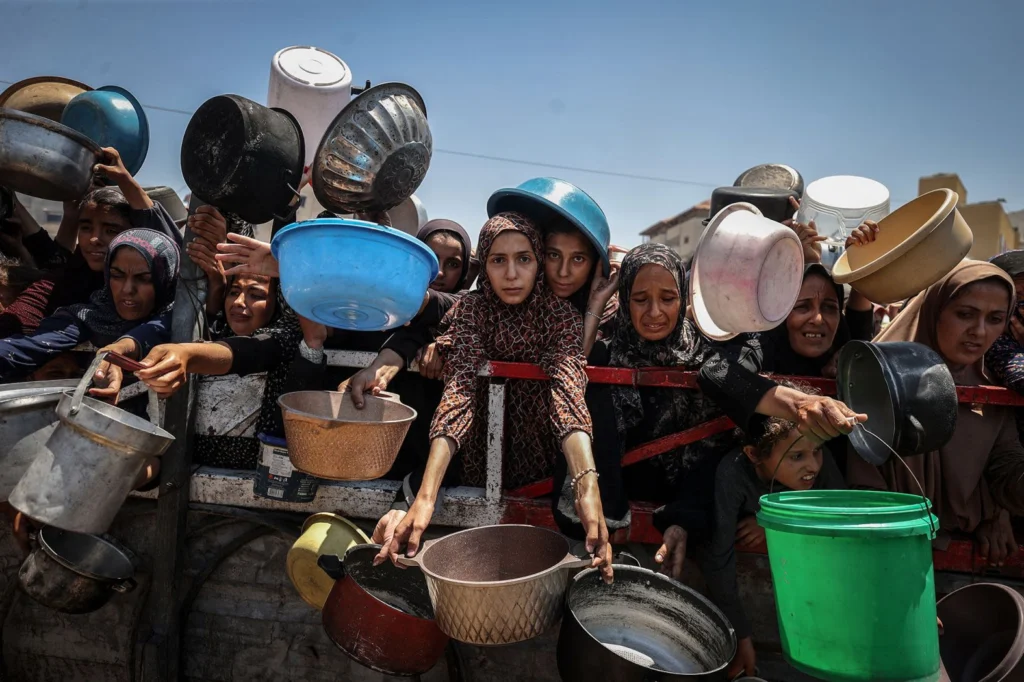
The Palestinian Ministry of Health warned that the humanitarian crisis has reached a critical point in its third year of war. Photo: CNN.

Gaza’s Health Ministry reported Friday that hunger and malnutrition have killed 466 people since 2024, as famine grips the enclave and pushes more than 1.4 million residents toward a critical food crisis.


The Palestinian Health Ministry in Gaza confirmed Friday that malnutrition and hunger rates have reached catastrophic levels across the territory.

The toll stands at 466 starvation deaths since 2024, a figure the ministry released on World Food Day, observed October 16.

RELATED: Gaza Humanitarian Crisis: UN Warns of Explosive Force Equal to 6 Nuclear Bombs

The health authority issued a grim report exposing the consequences of the prolonged Israeli siege. Official projections show that more than 1.4 million people, equivalent to 67% of the population, will face a critical or worse food crisis by the end of 2026. Famine was formally declared in Gaza governorate in August 2025.

“Malnutrition and famine rates in the Gaza Strip have reached catastrophic levels, seriously affecting children, the elderly and other vulnerable groups,” the Ministry said in its statement.

Statement by the Gaza Ministry of Health on World Food Day:

▪️ "Malnutrition and starvation rates in the Gaza Strip have reached catastrophic levels, ravaging children, the elderly, and other vulnerable groups."

▪️ "A total of 466 deaths due to malnutrition and starvation have…

— The Cradle (@TheCradleMedia) October 16, 2026

Children carry a heavy share of the toll. Since 2024, 157 children have died from malnutrition, roughly one third of all starvation deaths. Between 2024 and August 2026, health workers documented 158,001 cases of acute malnutrition in children under five, including 28,716 severe cases that directly threaten life.

The mortality rate among children under five more than doubled, climbing from 13.6 to 33.4 deaths per 1,000 live births between 2022 and 2025. Stunting now affects 12.2% of the child population. Officials estimate that another 74,200 children will require specialized treatment through 2027.

Maternal health has deteriorated sharply as well. Anemia prevalence rose to 61% in 2026, compared with 41% before the conflict. Nearly 4,000 miscarriages were recorded in the first half of the year, more than triple the previous six months. One in every three pregnancies is now classified as high risk.

🇵🇸 466 Palestinians, including 157 children, have died from malnutrition and starvation in Gaza since 2024, Health Ministry says

⚠️ More than 1.4 million people are expected to face crisis-level food insecurity or worse through the end of 2026

📌 Authorities accuse Israel of… pic.twitter.com/xGVDRsQcWy

— Anadolu English (@anadoluagency) October 16, 2026

Elderly Hardest Hit

Elderly adults account for the largest share of deaths linked to food shortages. The Gazan Ministry registered 189 fatalities among the elderly, or 40.5% of the national total.

The vulnerability among seniors is stark: 11% go entire days without eating anything at all, meanwhile 48% deliberately reduce their own portions to feed their families. 68% of them have interrupted or cut back on medication doses because of widespread shortages.

Three years of war have collapsed the food system. The Ministry’s warning lands as winter approaches and as aid deliveries remain insufficient to meet the scale of need across the territory.

The figures mark the deepest point yet in a hunger emergency that has built steadily since the conflict began. A formal famine declaration, once a rare event, now defines daily reality for hundreds of thousands of people trapped in the enclave.

The projected rise in food insecurity through late 2026, combined with 74,200 children awaiting specialized care, points to a crisis that will persist even if aid access improves.

Facing this emergency, the Health Ministry recalled that the right to food is fundamental. It urged the United Nations and the international community to establish urgent mechanisms that guarantee the safe, sustainable and unrestricted entry of humanitarian aid, therapeutic supplements and medicines into the enclave.
  •  

Nepal Estimates Flood Losses at 10% of GDP After Himalayan “Tsunami”

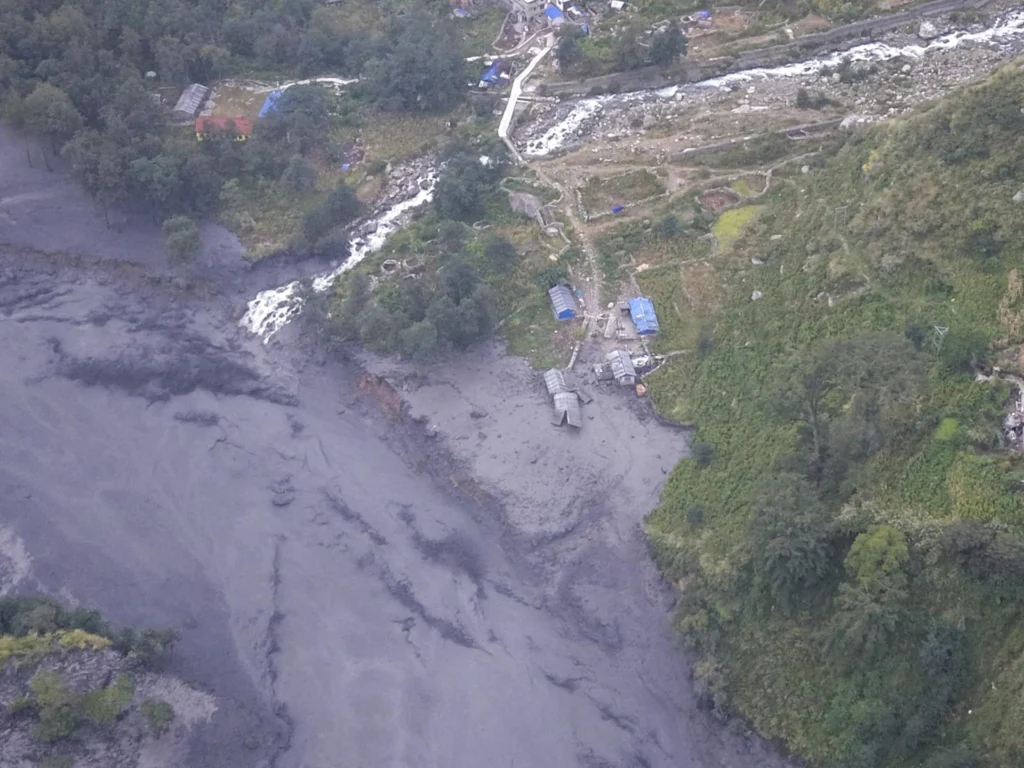
The floods, known as the "Himalayan tsunami," left severe destruction in essential infrastructure, hydroelectric projects, croplands, fishing ponds, food reserves, and agricultural infrastructure across the country. Photo: EFE.

Nepal’s government reported that the August 26 flood destroyed 10 percent of the country’s gross domestic product, with damages and losses exceeding $2.7 billion, as Finance Minister Swarnim Wagle sought international funding to rebuild.


Nepal’s government said that the August 26 flood, dubbed the “Himalayan tsunami,” caused physical damage worth $1.8 billion and additional economic losses of more than $900 million, equivalent to about 10% of the country’s Gross Domestic Product (GDP), as it seeks international financing for reconstruction.

Finance Minister Swarnim Wagle presented the estimates on Thursday at a press conference at the Foreign Correspondents’ Club in Bangkok, on the sidelines of the annual meetings of the International Monetary Fund (IMF) and the World Bank.

RELATED: Nepal River Surge Destroys 40 Homes, Leaves Five Missing

Wagle is seeking international funding for rebuilding and for measures to “avoid or mitigate the impact of future disasters.”

Nearly seven weeks passed between the disaster and Thursday’s accounting. The flood struck on August 26, and the assessment Wagle presented in Bangkok represents the government’s formal reckoning of the economic damage it must now confront.The floods left more than 1,500 people dead and 6,000 missing, causing severe destruction of essential infrastructure, hydropower projects, farmland, fish ponds, food stocks and agricultural infrastructure across the country.

Flash floods along Nepal’s Budhi Gandaki River swept away homes and bridges, forcing residents to flee to higher ground.

Five people are missing, and six have been rescued, authorities said. pic.twitter.com/wv7zilln7C

— Al Jazeera English (@AJEnglish) October 12, 2026

Rebuilding at Higher Cost

Wagle said Nepal does not intend merely to “replace what was destroyed, but to build better,” with more resilient infrastructure. He said that approach will raise the cost of reconstruction to $5 billion.

The Minister also said Nepal, which he described as “the poorest country in Asia after Afghanistan,” has contributed very little to global warming because of its limited industrialization and low emissions, but “is bearing the worst consequences of climate change.”

Wagle appealed to the “ethical and moral responsibility of countries with greater resources” to support the most vulnerable and called for a model of “global solidarity and cooperation.” “It is not about blaming rich countries, but about making a joint call to action,” he said.

Gorkha, #Nepal
Damaged houses lie partially submerged in sludge along the banks of the Budhi Gandaki River after a flash #flood caused by a #landslide. Four bridges and dozens of houses were swept away, as well as a construction camp for a hydropower project pic.twitter.com/vui6RyJocr

— Hans Solo (@thandojo) October 15, 2026

Glacier Collapse and Risk

The disaster originated high in the Himalayas. A glacial and rocky mass covering two square kilometers broke away from Langtang Lirung mountain at an altitude of 5,200 meters. The ensuing flood also swept into the Chinese region of Tibet.

The scale of the threat extends beyond a single event. A recent study in Scientific Reports warns that roughly 300,000 people in Nepal live in river channels susceptible to flooding. Construction in those vulnerable zones grew by almost 50 percent between 2016 and 2023, a pattern that multiplies the risk to communities as extreme weather becomes more frequent.

Nepal’s appeal arrives as climate-linked disasters mount across South Asia, a region where economies least responsible for global emissions face some of the steepest recovery costs. For a country that contributes a negligible share of greenhouse gases, the $5 billion reconstruction bill amounts to a burden imposed largely by forces beyond its control.

  •  

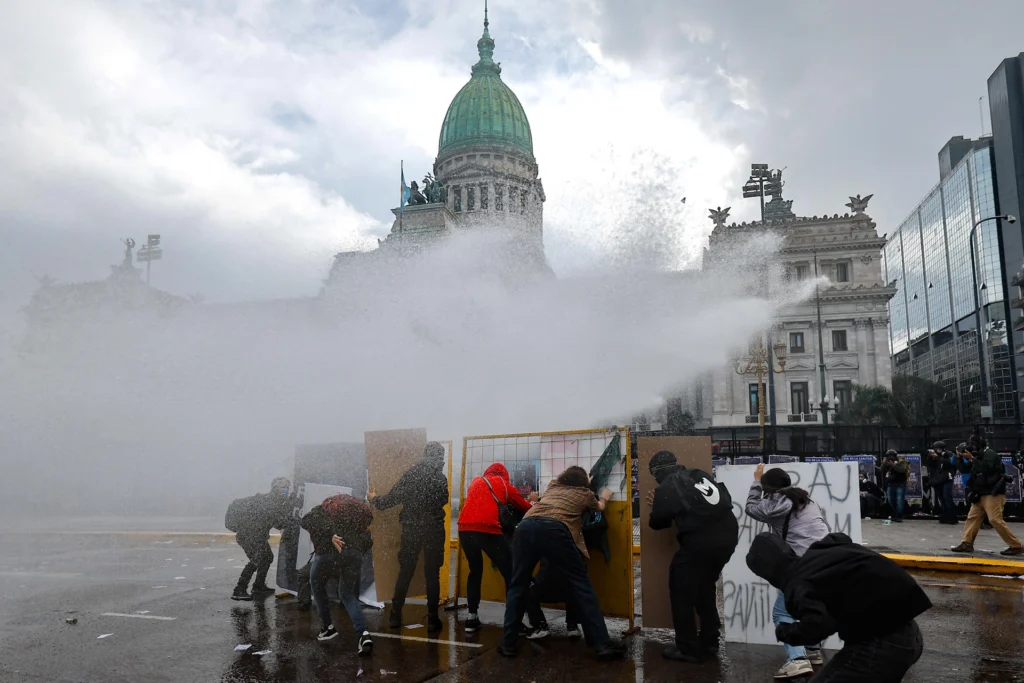
Repression at Argentina’s University March: Over 30 Detained

Federal forces repressed the mobilization calling for the application of the University Funding Act. According to witnesses, there were possible infiltrators among the protesters. Photo: EFE.

Federal forces in Argentina fired tear gas and turned water cannons on thousands of peaceful demonstrators in Buenos Aires on Thursday, detaining at least 34 people during the fifth Federal University March.


The march demanded implementation of the University Financing Law and denounced a sustained squeeze on public university budgets.

The demonstrations were replicated in dozens of Argentine cities, with students, teachers and university staff joined by unions, social organizations and environmental groups demanding the full implementation of the University Financing Law.

RELATED: Argentina’s Basic Basket Costs Outpace Inflation as Poverty Line Climbs

Protesters also denounced a sustained budget squeeze on public universities and rejected the ninth consecutive appeal filed by Javier Milei’s administration against court rulings that order the transfer of funds to the country’s higher education institutions.

The funding dispute has dragged on for months. Courts have repeatedly instructed the government to hand over the money set aside under the University Financing Law, and each ruling has been met with a new appeal from the national government. Thursday’s march was the fifth federal mobilization in a campaign that has grown beyond campuses to include unions, social organizations and environmental groups.

Beyond the university budget, the crowd voiced opposition to Decree 70/23 and defended the Land Law. Speakers also called for salary increases, relief measures for indebted families and more resources for public institutions.

Arrests and Attacks on Press

According to local media, the police began repression outside the National Congress in Buenos Aires as a response to an incident of a group of about eight people, who started breaking street furniture and throwing objects against the fence surrounding Parliament. Despite being an isolated incident, the gassing affected those who marched peacefully. Witnesses warned of possible infiltrators.

At least 34 people were arrested and one woman was injured. Cameras captured a gas canister hitting her head. “The gas thing fell on my head, I don’t know how I am, I have to go to the hospital,” the woman, who gave her name as Andrea, told reporters covering the march.

For its part, the Buenos Aires City Police said in an official statement that its own force detained six people: two minors, aged 14 and 17, and four adults, three men and one woman, charged with assault and resistance to authority.

Press workers also was targeted. Photographer Guido Piotrkowski, who was covering the march, captured the moment when a Federal Police officer stepped out from behind the fence, aimed and fired at him. “They came out from behind the fences and started shooting; I was taking photos and they fired at us,” he said. “They hit me in the chest, another colleague in the leg, but they aimed directly. They were rubber pellets.”

According to the reports, another worker from a community media outlet had to be treated at a hospital after being hit by at least seven rubber bullets. Cameras from the C5N channel also recorded a man with his face covered handling a backpack in the middle of the square. When the reporter approached to speak with him, the man reacted violently and struck the cameraman.

The fifth Federal University March ended under a cloud of gas. The political dispute over who unleashed the violence now moves to Congress, where opposition lawmakers are pressing the security minister to account for the operation.

No Quorum in Congress

Meanwhile, the Chamber of Deputies failed in its attempt to debate the rejection of the Decree of Necessity and Urgency 70/23, promoted by the government of Javier Milei to support its program, by failing to reach the necessary quorum at the special session convened by opposing parties. Only 121 legislators attended the legislative day, eight fewer than the 129 required to enable treatment in the compound, with a total of 136 absences.

The opposition call gained momentum following an initial ruling by the Supreme Court of Justice that deregulated the sale of land to foreigners under the Decree 70/23, although a subsequent decision by the court itself temporarily restored the rule, argument that they used allied sectors to avoid attending the session. In parallel, the Government negotiated to include a cap on land sales to foreigners in the Inviolability of Private Property project, which was scheduled for debate on October 21.

  •  

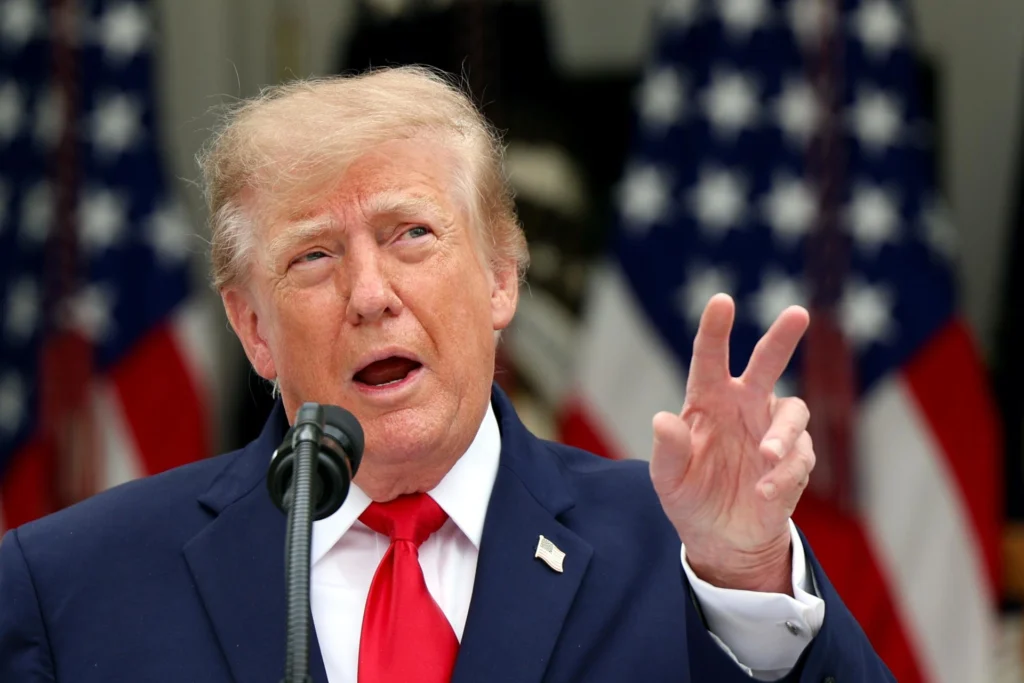
Trump Cancels Live Broadcast of Nidal Hasan Execution After Outcry

In a tense electoral environment for Republicans, President Trump, who had supported the public execution plan, backed down, though he noted that "it could have been a strong deterrent." Photo: EFE.

President Donald Trump reversed course Thursday and canceled the live broadcast of Nidal Malik Hasan’s execution, days after the Pentagon announced a plan that drew bipartisan rebuke and international condemnation.


Hasan was convicted of killing 13 people in 2009 at Fort Hood, the Army base in Texas. The Pentagon had announced last week that his execution would be shown live, a decision Trump said he supported “absolutely.”

Now the plan is gone. Had it gone forward, the public execution would have been the first in the United States since 1936.

RELATED: U.S. Secretary of War Announces Public Execution of 2009 Fort Hood Shooter

Trump offered a mixed explanation for the retreat. “Broadcasting the execution for everyone to see could have been a strong deterrent,” he said, “for the world to witness how the United States treats terrorists and scum like Hasan.”

The execution itself remains on the calendar. The Pentagon set the date for December 3, and Trump clarified that the immediate families of the victims may attend in person “if they so wish.”

Deterrent Argument Fades

The reversal came quickly. In early October, Secretary of War Pete Hegseth announced that Hasan’s execution would be public. Soon after, the Pentagon said it would be broadcast live. “We’ll make sure people can see it, that it’s public,” Hegseth told the conservative network Real America’s Voice News on October 7.

Trump said at the time that Hasan “deserved” to have his execution by firing squad shown in public because he “killed a lot of people.” Vice President JD Vance kept his distance and said he had no intention of watching the execution.

The announcement triggered an immediate reaction across the political spectrum. Republicans and Democrats alike warned that the images could be used to fuel radicalization.

Archbishop Paul S. Coakley, who leads the U.S. Conference of Catholic Bishops, condemned the administration’s plan and called it a “barbaric promotion of a culture of death that must be reconsidered.” House Speaker Mike Johnson, a Louisiana Republican, also leveled criticism at the proposal.

The historical stakes were high. The U.S. military has not executed a service member by firing squad since the Second World War. The last military execution took place on April 13, 1961, when Private John Bennett was hanged. Three other men sit on military death row at Fort Leavenworth in Kansas alongside Hasan. In 2008, President George W. Bush approved the execution of soldier Ronald Gray, but a judge suspended it and Gray remains at Leavenworth.

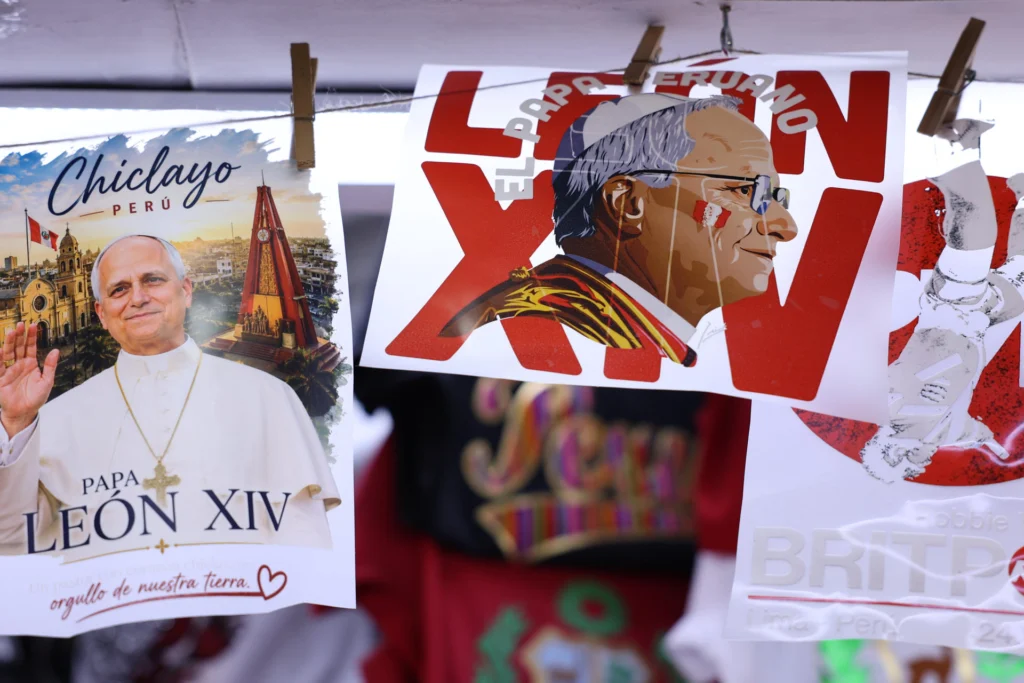
The prospect of transmitting the execution to millions of viewers drew sharp rejection abroad as well. Pope Leo XIV declared that capital punishment is “inadmissible” and said “effective penitentiary systems have been developed that protect citizens while not entirely depriving the guilty of the possibility of redemption.”

Torture Ban Breached

The Office of the United Nations High Commissioner for Human Rights issued the warning after officials floated the idea of staging public executions. The practices singled out include executions broadcast live, a format that transforms a judicial sentence into a public spectacle.

“Any move toward public executions constitutes cruel, inhuman and degrading treatment,” the office said. It also breaches the absolute prohibition of torture under international law. Under the International Covenant on Civil and Political Rights and the Convention against Torture, the ban is absolute. No war, no emergency and no domestic law can suspend it.

The warning carries direct weight in the case of Nidal Malik Hasan, a former Army psychiatrist who held the rank of major and now lives with partial paralysis. Hasan was shot by a civilian police officer at Fort Hood during the 2009 attack that left 13 people dead. He has remained partially paralyzed ever since.

At his military trial, Hasan admitted responsibility. He said he acted to prevent soldiers from deploying to Afghanistan to kill fellow Muslims. Hasan himself was about to be sent to that country. The admission was deliberate, not defensive. He framed the attack as an act of conscience, and he never disputed the facts. In 2013, a military court convicted him of premeditated murder and attempted murder. The panel sentenced him to death.

The reasoning reaches beyond a single prisoner. It protects the dignity of all people, even those convicted of the most serious crimes.

Trump abandoned the broadcast, but his framing never shifted. He still called Hasan a “terrorist” and “scum.” What collapsed was the spectacle, not the sentence. The execution still waits on the December 3 calendar, and the families of 13 victims still decide whether to watch it happen in person.

What began as a deterrent argument ended as a quiet retreat under pressure from his own party and from a world watching whether the United States would turn a state killing into a televised event for the first time in nine decades.

  •  

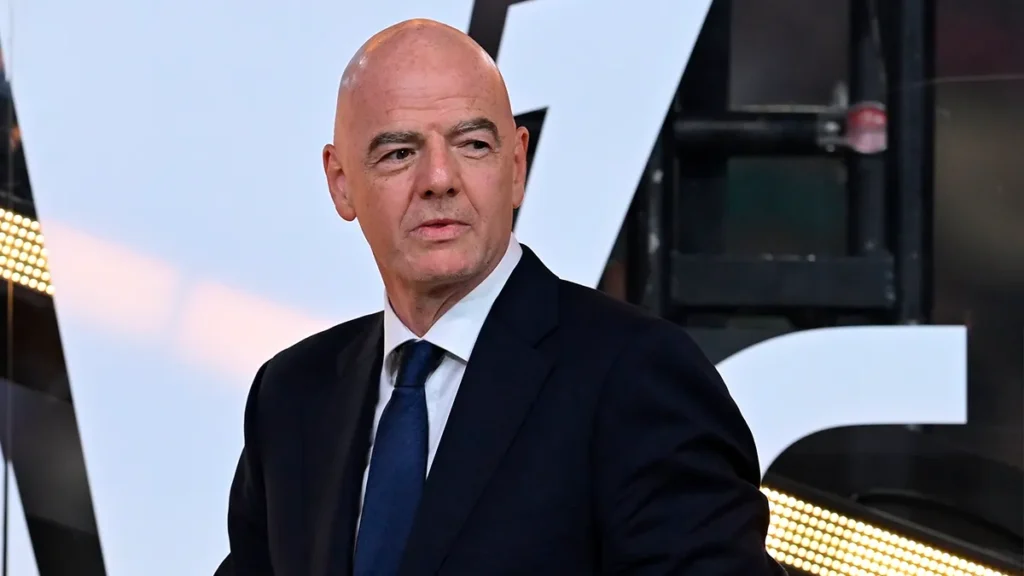
FIFA Drops Private Investment Plan, Infantino Proposes $6.35B Program

FIFA's President, Gianni Infantino, called for global football unity after he withdrew his proposal for private investment in FIFA competitions. Photo: Mex Sport.

FIFA President Gianni Infantino apologized to the governing body’s Council in Zurich over the mishandling of the FIFA Forward Enterprise (FFE) project and confirmed the proposal to sell competition stakes to outside investors has been withdrawn permanently.


FIFA President Gianni Infantino offered the apology this Thursday during the first Council meeting held in Zurich after the World Cup. He acknowledged errors in both the management and the communication of the FIFA Forward Enterprise (FFE) initiative, a plan that would have handed private investors a share of FIFA competitions.

Addressing the council members directly, the Swiss-Italian executive sought to close the episode with a call for unity. The investment scheme, he confirmed, would not be revived.

RELATED: Europe’s Top Leagues Demand FIFA Governance Reform

The administration then presented an alternative designed to soften the blow: a proposal named the Surplus Solidarity Program channels 6.35 billion dollars for the period between 2027 and 2030, drawing on commercial revenue generated by the World Cup. According to Infantino, the funds would raise the amounts distributed among all 211 member associations and the confederations.

That financial package will be evaluated at the December meeting in Doha and put to a vote at the Congress scheduled for March 18, 2027.

FIFA plans to allocate $6.35 billion to its member associations for football development from 2027 to 2030, including an increased funding package of $25 million for each national association. #3Sports pic.twitter.com/ogP4oEb3g8

— #3Sports (@3SportsGh) October 14, 2026

Europe Presses for Exit

Despite the financial announcement, the most critical European federations, including England and Germany, maintained their opposition to Infantino remaining in office. The English federation said it has not received clear answers about the legal background of the FFE project, while the German side called for a change in the organization’s leadership.

Support for the president came from Africa. Ahmed Yahya, president of Mauritania’s football federation, defended the current leadership, saying it promotes equality and an equal weight for each vote in the Congress. He said a majority backs Infantino staying at the head of the institution.

The competing messages reflect a familiar divide in world football’s governance. Larger, wealthier federations tend to push for tighter scrutiny of FIFA’s leadership, while many smaller associations benefit directly from FIFA’s development funds. Because each of the 211 members has a vote at the Congress, a spending increase aimed at all of them is likely to be closely watched.

🗣️ Gianni Infantino has apologised "for the mistakes… in relation to the communication and consultation" for FIFA Forward Enterprise.

He adds that the FIFA Peace Prize will be "analysed" along with a change to the FIFA Disciplinary Code to stop automatic one-game bans being… pic.twitter.com/lBrraQNjkk

— Ben Jacobs (@JacobsBen) October 15, 2026

Governance Review Ordered

The Council also agreed to create a working group to review FIFA’s governance framework. It tasked an evaluation of the FIFA Peace Prize and asked the Legal Commission for a report on disciplinary procedures, to be presented at the December session.

The apology and the withdrawal mark a significant concession from a president who has dominated world football’s finances for a decade. By scrapping the FFE plan outright, Infantino acknowledged that the backlash within the game had grown too costly to ignore.

Supporters of the solidarity plan may argue that it directs World Cup profits toward the wider football community. Critics may counter that a funding increase does not answer questions about how the FFE project was handled, which is the point the European federations are pressing. Yet the European federations made clear that closing the project alone would not settle the matter. For them, the questions about how the initiative was conceived and who approved it remain open, and the December gathering in Doha now looms as the next test of whether the unity Infantino called for can actually be rebuilt.

  •  

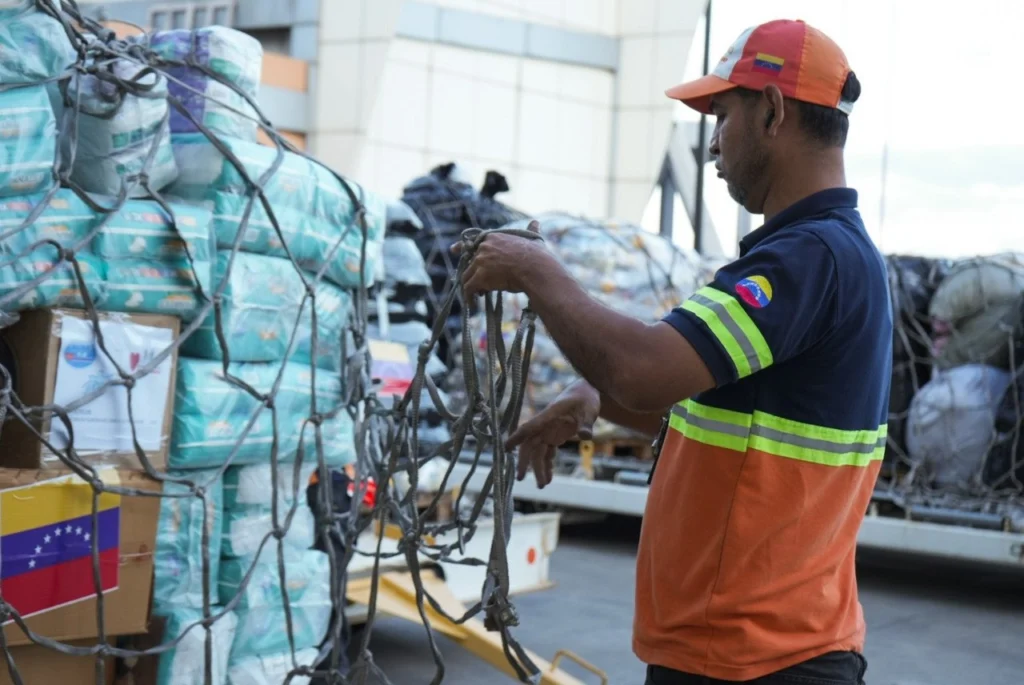
Venezuela Sends 40 Tons of Humanitarian Aid to Panama After Earthquake

A shipment of medical supplies and rescue equipment sailed to Panama from Venezuela, as part of the Central American solidarity and integration protocols. Photo: VTV.

Venezuela has dispatched this Tuesday a humanitarian air cargo to Panama to support the emergency response after a severe earthquake, with local teams preparing to move the supplies immediately toward operational centers serving damaged residential areas.


Venezuela’s government dispatched a plane carrying 40 tons of humanitarian aid to Panama on Thursday to help people affected by the magnitude 7.7 earthquake that struck the country on October 9 and caused severe damage to road infrastructure, essential services and thousands of homes in both urban and rural areas.

The cargo includes basic medical supplies, non-perishable food, drinking water, personal hygiene kits and logistical material, intended to support temporary camps set up by Panamanian authorities in regions declared in emergency.

RELATED: Panama Earthquake: 7.7 Magnitude Quake Leaves 26 Injured, No Deaths

The shipment landed on Panamanian soil and was received by personnel from the National Aeronaval Service. From there, the cargo will begin an immediate overland transfer to the local operational centers where responders are coordinating relief efforts in the wake of the seismic crisis.

Diosdado Cabello, Venezuelan Minister of Interior, Justice and Peace, announced the aid shipment, which was described as part of the protocols of solidarity and Central American integration that guide the country’s response to regional emergencies. In this sense, the Venezuelan authorities stressed that “support operations are carried out in direct coordination with civil protection agencies and state security bodies of Panama”.

Tras el reciente terremoto ocurrido en Panamá, Venezuela envió un cargamento de ayuda humanitaria.

Reafirmando su compromiso de solidaridad con los pueblos hermanos.

¡Panamá no está sola! 🇻🇪🇵🇦 pic.twitter.com/oMnsQMwdRv

— Ministerio de Comunicación e Información (@mippci_ven) October 15, 2026

Text reads: “After the recent earthquake in Panama, Venezuela sent a shipment of humanitarian aid, reaffirming their commitment to solidarity with brotherly people. Panama is not alone!”

The cooperation between Caracas and Panama City is designed to accelerate the immediate contingency phase. It also aims to open a clear path toward the physical reconstruction and economic recovery of the residential zones hit hardest by the earthquake.

Specialists Join Relief Effort

The shipment complements an earlier deployment of a specialized technical team of more than 50 risk-management and rescue professionals, a delegation that includes experts in assessing critical infrastructure, inspecting damaged buildings, removing debris and restoring basic electricity and water services.

The Venezuelan delegation working on the ground includes experts in evaluating critical infrastructure, inspecting compromised buildings, removing debris and restoring basic energy and water services. Their task is to help stabilize the communities most affected by the quake.

Cabello said the operational experience acquired by Venezuelan brigades during recent seismic events in Venezuelan territory allows them to contribute methodological solutions and strategic interventions in the hardest-hit municipalities.

The Minister framed the effort as part of a permanent bilateral cooperation framework established between the two nations for disaster mitigation across Latin America. Under that framework, the support operations are carried out in direct coordination with Panama’s civil protection agencies and security forces. International organizations are operating in the affected area, and Venezuela has signaled that it will continue working alongside them.

Aid Targets Rural Areas

The distribution plan prioritizes the transfer of supplies to rural and island communities whose land routes were cut off by the earthquake. The aim is to guarantee equitable access to medical care and food for vulnerable families.

National Aeronaval Service teams took charge of the cargo upon arrival. The supplies then move by land to the operational centers closest to the communities that suffered the heaviest damage, where distribution can begin without delay, a decision that shortens the distance between the arrival of aid and its delivery to affected families.

Thousands of families in urban and rural communities remain in temporary camps while authorities assess the full extent of the damage. The emergency has tested Panama’s response capacity, and the arrival of additional aid and technical personnel has become a central element of the recovery effort.

Venezuelan authorities said its collection centers and technical monitoring systems remain active to evaluate additional requirements. If Panamanian authorities request more operational support, the response can be scaled up quickly.

For now, the 40 tons of aid and the specialized personnel on the ground represent Venezuela’s immediate contribution to a recovery that is only beginning in the regions hit hardest by the tremor.

  •  

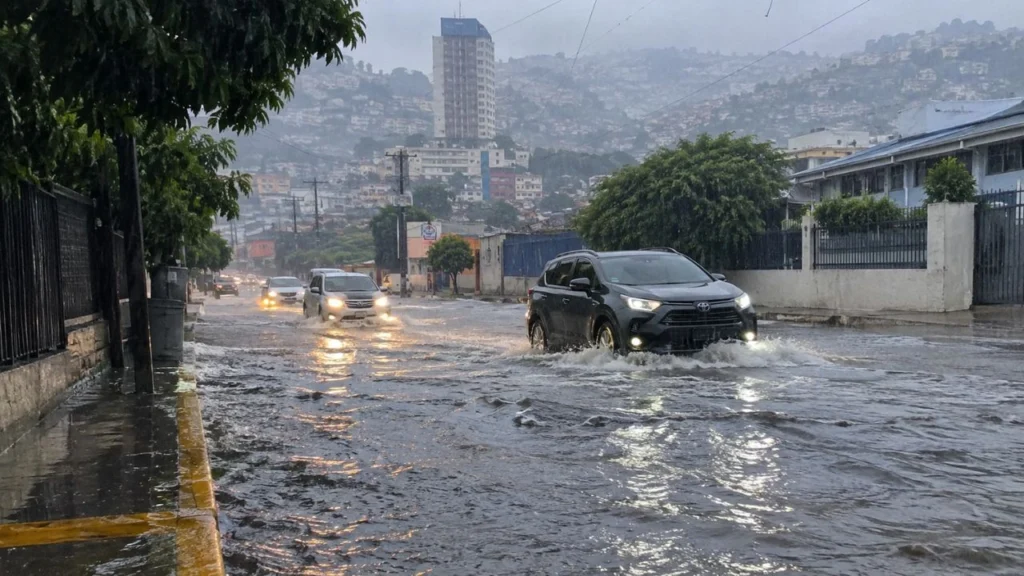
Honduras Landslides Destroy Homes as Heavy Rains Batter Tegucigalpa

Photo: Radio HNR.

Torrential rains that delivered 80 percent of Honduras’ projected annual rainfall in just 23 days have triggered landslides that destroyed homes and left dozens of families without shelter in Tegucigalpa and Comayagüela.


In just 23 days, the area received 80% of the rainfall projected for all of 2026, causing more than 250 severe incidents, according to the Honduran Centre for Atmospheric, Oceanographic and Seismic Studies (CENAOS) reports.

The collapses hit vulnerable areas hard. Residents said they lost houses that were under construction and complained of a lack of assistance from municipal authorities.

RELATED: El Niño Extreme Weather: 34 Days of Record Rain Raise Global Alarm

The Villa Unión neighborhood suffered some of the heaviest losses. Landslides there destroyed 13 homes completely. Several of the houses were still under construction when the ground gave way, burying years of savings in a matter of minutes.

Families said the destruction arrived without warning. They also reported that municipal authorities provided no assistance in the immediate aftermath, leaving them to dig through the rubble on their own and count their losses with no outside help.

In the nearby La Mololoa sector, the emergency unfolded with equal speed. Residents evacuated urgently across rooftops to get children away from advancing mud and water. Neighbors described moments of panic as the earth shifted beneath their feet.

#HonduredNoticias | Varias comunidades de Santa Cruz de Yojoa, Cortés, han tenido que abandonar sus hogares por las fuertes inundaciones ocurridas por la crecida del Lago de Yojoa. ® pic.twitter.com/vgDdiDuYCM

— Hondured 13 Oficial (@HonduredOficial) October 14, 2026

Text reads: “Several communities of Santa Cruz de Yojoa, Cortés, have had to leave their homes because of the severe flooding caused by the flood of Lake Yojoa.”

The risk is not confined to the sectors already buried. More than 700 neighborhoods and colonies across the Central District remain exposed to floods and geological failures, leaving whole hillside communities one storm away from the same fate. Residents of the hardest-hit areas said unfinished road works and inadequate drainage diverted torrents of water directly toward residential zones, causing damage for the second consecutive time.

En Tegucigalpa, Honduras, las lluvias provocaron derrumbes e inundaciones, dejando viviendas destruidas y personas albergadas.

Los cuerpos de socorro mantienen el monitoreo y las labores en los lugares de mayor vulnerabilidad.

📸: Cortesía. pic.twitter.com/dq1zjS52Sx

— Noticiero El Salvador 🇸🇻 (@NoticieroSLV) October 8, 2026

Text reads: “In Tegucigalpa, Honduras, the rains caused landslides and floods, leaving homes destroyed and people sheltered. The relief corps maintain monitoring and work in places of greatest vulnerability.”

Families Demand Relocation

The scale of the losses triggered citizen protests over what residents described as an insufficient delivery of basic supplies. In response, the Municipal Mayor’s Office of the Central District announced a temporary rental subsidy for displaced families.

Affected residents dismissed the subsidy as a stopgap measure that does not address the root of the problem. They demanded that the contractors responsible for the infrastructure works pay full compensation for the material losses suffered by the community.

Despite warnings of further landslides, dozens of evacuees are refusing to permanently leave the ruins of their homes for fear of looting. Civilians are calling for urgent intervention by the central government through permanent relocation projects that guarantee safety and the right to decent housing.

The central government had not publicly responded to those demands at the time of writing, according to the information available. Heavy rainfall on steep, densely settled hillsides is a recurring cause of landslides in Honduras’ capital, and families living in the most exposed areas are often the poorest. Whether the municipal subsidy and any future relocation plans reach those families will determine how long the emergency lasts.

  •  

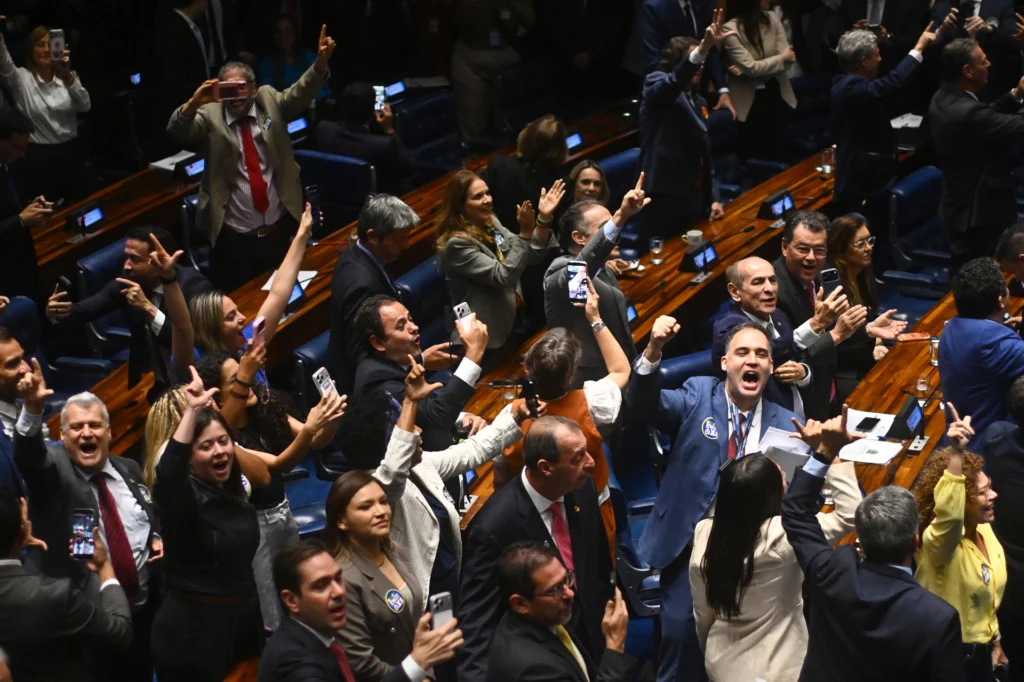
Brazilian Senate Ends 6×1 Schedule, Approves 40-Hour Workweek

Progressive senators from Brazil declared that, in the context of the next ballots, approval of the end of 6 1 means a victory for President Lula, but also for mobilization on the streets. Photo: EFE.

Brazil’s Senate on Wednesday approved a historic constitutional amendment that cuts the maximum workweek from 44 to 40 hours and guarantees two days of rest without a reduction in pay, ending the six-days-on, one-day-off model known as the 6×1 schedule.


The Brazilian Senate approved Wednesday the end of the 6×1 work schedule, a constitutional reform that shortens the workweek from 44 to 40 hours and adds a second weekly rest day without cutting wages.

The amendment cleared the Senate five months after the Chamber of Deputies passed it in a historic vote.

RELATED: Brazil’s Lula Announces MEI 12.6 Billion Reais Debt Relief

The measure, Constitutional Amendment Proposal (PEC) 221/2019, received 75 votes in favor and one against in both rounds, well above the 49 votes required among the Senate’s 81 members. The only vote against, in both rounds, came from Senator Hamilton Mourão of the Republican party. Senators Rogério Marinho, Sergio Moro, Márcio Bittar and Ciro Nogueira were absent from the first round.

The vote was made possible after senators approved a special calendar to speed up the process, at the request of government leader in the chamber Teresa Leitão, of the Workers’ Party (PT), with the backing of Senate President Davi Alcolumbre.

The proposal had already cleared the Deputy chamber in a landmark session five months earlier. Its path through the Senate took longer than government allies wanted, and labor leaders kept up public pressure for a vote before the campaign’s final stretch.

The approval is seen as a political victory for President Luiz Inácio Lula da Silva, coming 11 days before the October 25 presidential runoff, in which he faces Senator Flávio Bolsonaro of the Liberal Party.

✊🇧🇷 O FIM DA 6X1 AGORA É REALIDADE!

Lutamos, discutimos e pressionamos para garantir que o Congresso votasse ainda este ano o fim da 6×1!

Mas a voz do povo foi a voz que me conduziu para que, juntos, garantíssemos mais tempo para descansar, acompanhar os filhos e estar com… pic.twitter.com/52RZBsxVvu

— Lula (@LulaOficial) October 15, 2026

Text reads: “The end of 6×7 is now reality! We fought, argued and pushed to ensure that Congress voted this year for the end of 6×1. But it was the voice of the people that guided me so that, together, we would ensure more time to rest, accompany our children and be with those we love. More dignity and quality of life for the Brazilian people!…”

Gradual Transition Planned

The amendment provides for a phased implementation. Two months after it is promulgated, the maximum workweek will fall to 42 hours and workers will receive two paid rest days. After another 12 months, the limit will drop to 40 hours a week, with one of the two rest days preferably on Sunday.

The text states that the reduction in working time will not lower salaries and preserves the possibility of collective agreements to regulate specific situations. Unions estimate that about 22 million workers will be benefit.

Ending the 6×1 schedule is one of the main demands of Brazilian workers and unions, who argue that shorter hours improve quality of life, expand rest time, favor family life and help prevent physical and mental exhaustion.

Politics Before Runoff

The debate was marked by differences between the governing coalition and the opposition, in an electoral context in which the measure has broad public support.

Flávio Bolsonaro changed his position this week and announced he would vote in favor of the initiative, after consistently opposing it. He had previously called the discussion opportunistic and defended an alternative proposal based on pay per hour worked. The report does not include any comment from Bolsonaro on the final vote.

“We fought, debated and pressed to make sure Congress voted this year to end 6×1. But the voice of the people was the voice that guided me so that, together, we could get more time to rest, spend with our children and be with those we love,” Presiden Lula said in his first reaction on X.

After the vote, members of the progressive bloc were seen chanting Lula’s name in recognition of his leadership on the issue. The approval allows Lula’s government to showcase a commitment to more rest time and better working conditions in a campaign marked by a dispute over social rights and the future of Brazil’s labor market.

The amendment still needs to be promulgated to be effective. Once promulgated, the law will set a 40-hour limit spread across five days, with two days off and no loss of salary. Companies will get a gradual transition, giving employers time to reorganize shifts without cutting staff pay.

  •  

Havana to Host 42nd International Jazz Plaza Festival in January 2027

(FILE) With the presence of Cuban, European and North American exponents, Jazz Plaza Festival celebrates its 42nd edition in January with sub-venues in six Cuban provinces and in Mexico. Photo: Jazz Plaza.

Cuba’s 42nd Jazz Plaza Festival will run from January 24 to 31, 2027, across Havana, five other provinces and a new satellite venue in Mexico, with more than 120 U.S. musicians confirmed.


The Jazz Plaza International Festival, one of the reference points on the world jazz calendar, will hold its 42nd edition from January 24 to 31, 2027, in Havana, its customary main seat, the organizing committee announced this Wedneday.

Organizers presented the plans at the “Benny Moré” Mexico-Cuba Cultural Center in Mexico City. Committee president Víctor Rodríguez García highlighted the growing participation of Mexican, North American and European musicians and reaffirmed the commitment to hold the festival despite the difficulties facing the country.

RELATED: The Cuban Bolero Loses a Shining Star: Manolo del Valle

“We want everyone to know that from January 24 to 31 there will be a festival in Havana with Mexican participation, and that there will also be a venue in this country,” Rodríguez said at the press conference.

According to a caption accompanying the original report, more than 120 U.S. artists have already confirmed their participation despite restrictions imposed by the U.S. blockade.

The 42nd edition of Jazz Plaza International Festival will take place from January 24 to 31, 2027 in 🇨🇺. It will also include tributes to Bola de Nieve, the Roberto Faz Ensemble and the Chepín Chovén, in addition to an inaugural concert by Frank Fernández. pic.twitter.com/1xlvCNvqs2

— Gabriela Glez (@Gabiglez06) October 14, 2026

The 2027 edition will be dedicated to dance. The program includes tributes to Cuban pianist “Bola de Nieve” and to the popular orchestra Chepín-Choven. Cuban performers will include jazz figures Hernán López-Nussa, Roberto Fonseca and Alejandro Falcón.

The opening night belongs to pianist Frank Fernández, a composer of at least 650 works spanning symphonies, choirs and ballets. Organizers also underscored one of the festival’s enduring achievements, its alliance with Cuba’s music education system, which has trained generations of jazz performers now recognized internationally.

The National Folkloric Ensemble of Cuba and the Maraguán Artistic Ensemble of the University of Camagüey, among other groups, will also take part. The official poster was designed by artist Lesbia Vent Dumois, a National Prize for Visual Arts winner.

That bond has made the festival more than a concert series. It functions as a bridge between conservatories and professional stages, giving young Cuban musicians a window into an international circuit that rarely opens to the island.

Text reads: “Abdala studios recorded the musical theme that will accompany the 42nd edition of the International Jazz Plaza Festival. A space for training and growth for the new generations. Thanks to master Roberto Fonseca and his entire team.”

Mexico Joins In

Havana, with 20 stages, will be joined by Santiago de Cuba, Holguín, Camagüey, Villa Clara and Matanzas as host provinces during the week devoted to jazz. One of the festival’s stated goals and achievements has been its link with the music education system, which in recent decades has trained some of Cuba’s most internationally recognized performers of the genre.

During the press conference, organizers announced several initiatives to facilitate Mexican participation and joint work. Mexican organizers announced a series of initiatives to ease attendance and collaborative work. The “Benny Moré” center has been proposed as a satellite stage, adding interactive presentations to its streaming broadcasts, a format that lets distant audiences follow the concerts in real time.

With the dates set for the final week of January 2027, Havana anchors the festival while the five additional provinces and the Mexican venue extend its reach. Streaming broadcasts from the Benny Moré center will carry portions of the program to audiences beyond both countries.

The Jazz Plaza Festival is one of the main fixtures on the international jazz calendar and, held each January in Havana, has long drawn musicians and audiences from several countries. The expansion to Mexico suggests organizers are looking to widen the festival’s reach beyond the island.

  •  

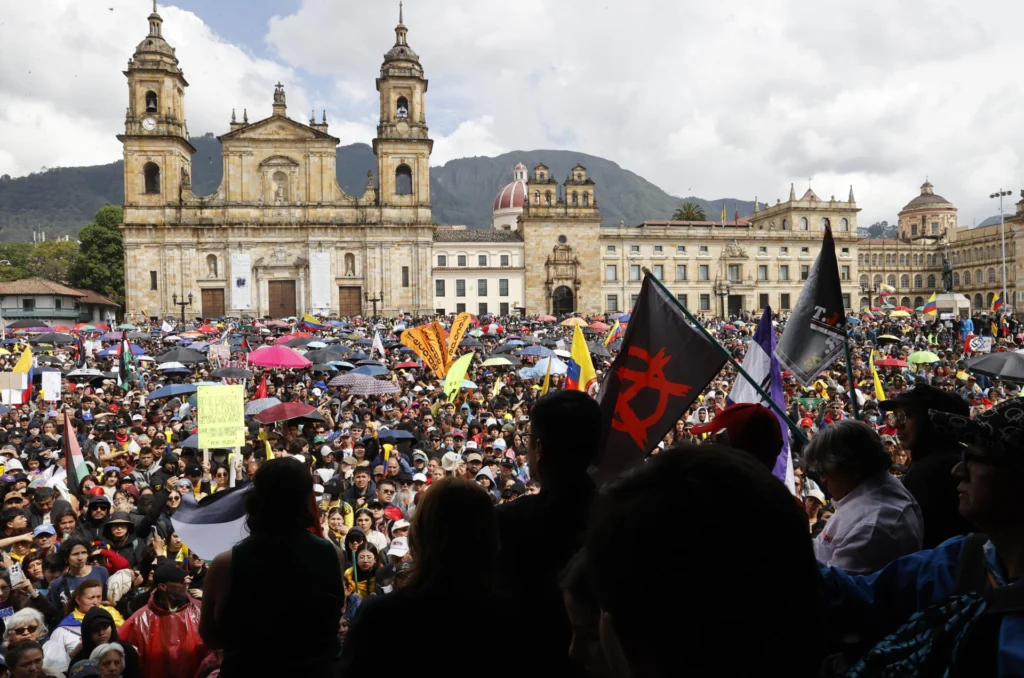
Colombia Holds First National Strike Against De la Espriella

The Government of Abelardo de la Espriella has barely two months in power and this Wednesday, October 14 faced a great challenge in the streets, when the first national strike was held in rejection of its management. Photo: EFE.

Thousands of Colombians marched in Bogotá and other cities on Wednesday in the first national strike against the government of President Abelardo de la Espriella, just two months after he took office, rejecting a decree that sets rules for how security forces handle demonstrations.


The strike unfolded barely two months into the president’s term. Protesters filled the streets of Bogotá, Cali, Medellín, Bucaramanga, Pereira and Riohacha in a direct rejection of the government’s economic and security agenda.

The call brought together labor unions, student groups, opposition parties, labor federations and the Regional Indigenous Council of Cauca (CRIC).

RELATED: Colombian President Signs Decree Expanding Police Powers to Disperse Protests

Organizers described the turnout as a condemnation of the government’s economic and security agenda, the rising cost of living, a rise in violence, the rollback of social gains and what they call attempts to criminalize the right to protest.

Demonstrators emphasized the peaceful nature of the protest, pushing back against signals from the presidential palace that seek to delegitimize the demands of civil society.

The trigger was Decree 1525, signed by De la Espriella. The measure sets rules for the conduct of security forces at public gatherings and allows authorities to disperse them in the event of serious disturbances. Local governments responded with a large deployment of police in the main cities.

The opposition read that operation as an attempt to condition the right to demonstrate in advance. The reading sharpened a day that organizers had already framed as an expression of accumulated anger over the cost of living and the dismantling of social programs.

“Protest is the only instrument left to native people and social organizations to be heard and to demand that our rights be respected,” demonstrators said.

Así luce la Plaza de Bolívar en este momento. Por más que la derecha y los medios intenten decir que no se llenó, aquí sigue la ciudadanía después de la lluvia.

¡Un pueblo lleno de dignidad! pic.twitter.com/GiaMgORgyB

— U L D A R I C O (@UldaricoRamire) October 14, 2026

Broad Coalition, Varied Demands

Discontent is not limited to the decree. The mobilized sectors question the entire set of the government’s early decisions, accusing it of dismantling social gains and making daily life more expensive for the majority.

The Colombian Federation of Education Workers (Fecode), the Colombian Federation of Educators, rallied in defense of public education and the health coverage of teachers. The union also demanded the reconstruction of school infrastructure damaged by earlier emergencies, including the earthquake and its aftershocks in the Cauca Valley, and denounced what it calls the stigmatization of teachers’ unionism.

Native and peasant communities rejected the megaprojects and economic measures they say endanger their ancestral territories. The Cauca Indigenous Regional Council (CRIC) warned that the De la Espriella administration is working to break the autonomy of their organizations.

The economic agenda concentrated much of the anger. Rising prices and policies that organizers say erode acquired rights pushed workers from various productive sectors onto the streets. The protests now carry the weight of a first major social test for the national government, only two months into its mandate. Workers’ federations and popular movements frame the conflict as the defense of historic gains against an agenda they consider regressive.

For the new government, the demonstrations mark a direct challenge. The police deployment in six cities, the breadth of the coalition and the presence of a former President all signal that the strike has moved beyond a dispute over one decree.

Whether the mobilization alters the course of the government’s program remains to be seen. Organizers have promised the pressure will continue if De la Espriella does not reverse the decree and reopen dialogue with the social sectors.

  •  

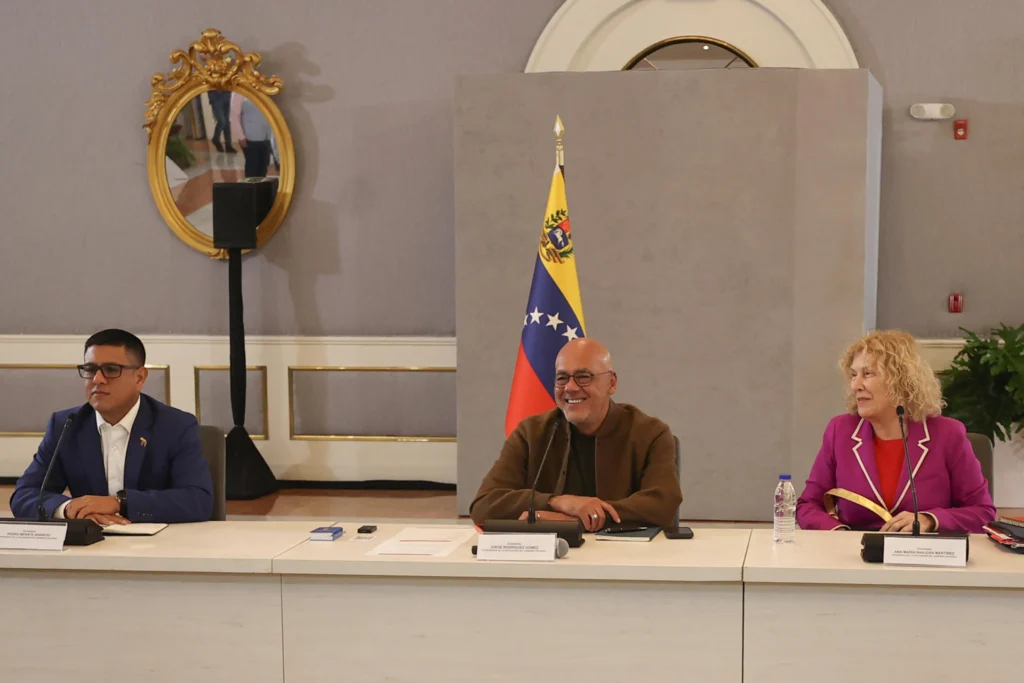
Venezuela Government and Opposition Open Third Dialogue Round

The negotiation process follows on from previous round agreements, which supported lifting restrictions on digital media and a review of radio spectrum use. Photo: EFE.

Delegations from the Venezuela’s government and the opposition 2015 National Assembly opened a third round of political dialogue Wednesday in Caracas, with the renewal of the Supreme Court and participation guarantees for political parties at the center of the agenda.


The Venezuela’s government delegation is led by National Assembly President Jorge Rodríguez, joined by university education Minister Ana María San Juan and lawmakers Jorge Arreaza, América Pérez, Génesis Garvett and Pedro Infante.

The opposition side is headed by Dinorah Figuera, leader of the 2015 Assembly. She is accompanied by former deputies Marco Aurelio Quiñones, Ramón López, Jorge Millán, Juan Miguel Matheus and Sergio Vergara.

RELATED: Venezuelan Government, 2015 Ex-Deputies Delegations Conclude Second Day of Talks

This third cycle gives continuity to the agreements reached in the previous round, which closed on September 25 after two plenary sessions and five technical working groups.

The talks resume five months after the reestablishment of diplomatic relations between Caracas and Washington. That rupture followed a January military operation under the Trump administration which led to the kidnapping of President Nicolás Maduro and his wife, the First Combatant Cilia Flores. The attack left at least 100 people dead and a similar number wounded.

#14Oct || Este miércoles se instaló la tercera Jornada de Diálogo Nacional entre el Gobierno y la AN 2015, desde el Hotel Meliá Caracas pic.twitter.com/CNeaHt7UcP

— Asamblea Nacional 🇻🇪 (@Asamblea_Ven) October 14, 2026

Text reads: “This Wednesday was the third Day of National Dialogue between the Government and 2015 National Assembly, from the Hotel Meliá Caracas.”

Court Renewal in Focus

The renewal of the Supreme Tribunal of Justice dominates this phase. A preliminary commission of the Venezuelan parliament, chaired by deputy Giuseppe Alessandrello, has begun interviewing 127 citizens nominated by different sectors of society and by their own initiative. The purpose is to form the Judicial Postulation Committee.

The evaluations run through Friday to structure a list of eligible candidates that will be presented to the full legislature next week. The final slate of nominees for Supreme Court magistrates is expected in early December.

In the previous round, both sides backed Acting president Delcy Rodríguez’s decision to lift administrative measures against news portals and digital media. They also agreed to create a Credential Review Council for aspirants to the top court, to promote debate on the use of the radio spectrum and to review the legal framework for transforming Venezuela’s justice system.

The Caracas meeting marks a further step in a process that has already produced concrete concessions on media access and now turns toward the judiciary. Both delegations consider the court’s composition central to the guarantees surrounding any future electoral contest, and the interview process under way is the first practical move toward that renewal.

What remains to be seen is whether the momentum built over two prior rounds holds through December. The presentation of the final magistrate candidacies will test whether the dialogue can deliver institutional change or whether it will stall once again at the stage of implementation.

  •  

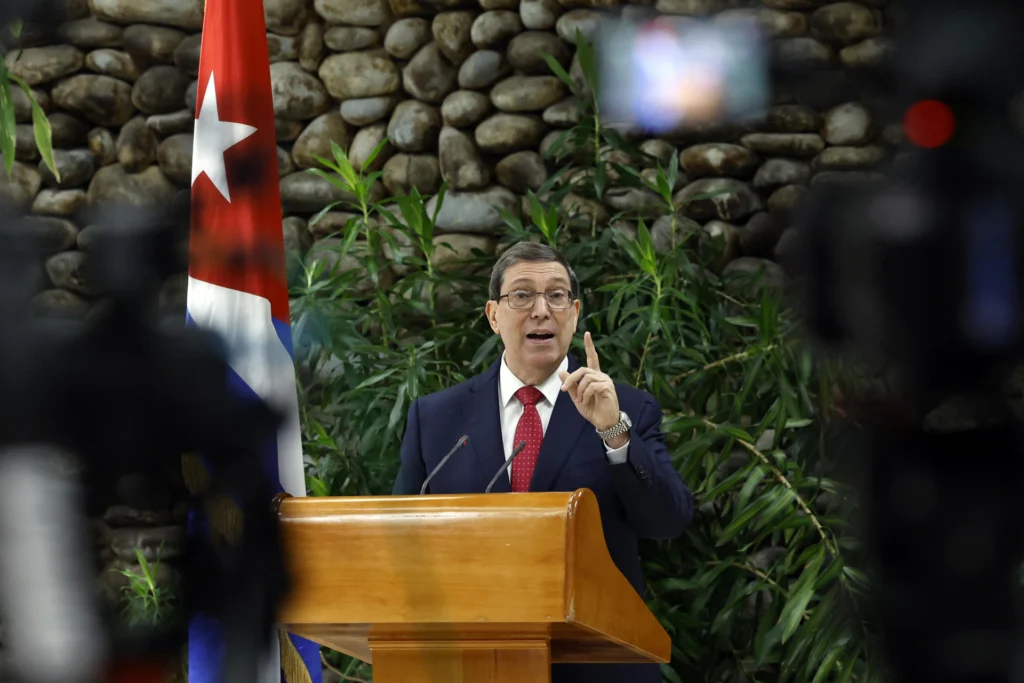
Cuba Accuses United States of Pressuring UN Votes on Blockade

Last September, when presenting Cuba’s report to the UN on the effects of the blockade, FM Rodríguez Parrilla detailed that the country suffered economic damage of more than $8 billion from this policy between March 1, 2025 and February 28, 2026. Photo: EFE.

Cuba’s foreign minister accused Washington on Wednesday of coercing several governments to change their votes on a United Nations resolution against the six-decade U.S. blockade, days before the General Assembly is set to consider the measure.


The Minister of Foreign Affairs of Cuba, Bruno Rodríguez Parrilla, denounced this Wednesday that U.S. Secretary of State, Marco Rubio, is exerting pressure on several countries to change their position in the vote on the resolution against the U.S. blockade of the island, scheduled for the end of this month at the United Nations General Assembly.

Cuban FM Bruno Rodríguez Parrilla pointed directly at Secretary of State Marco Rubio. In a post on X, the Cuban diplomat wrote that Rubio, “nervous and anxious in the face of another new defeat at the United Nations, is pressuring and blackmailing heads of State and government of several countries to change their vote against the blockade in the UN General Assembly.“

RELATED: Cuba President Diaz-Canel Denounces U.S. Blockade at World Food Forum

On October 29, the General Assembly will discuss and vote on a resolution calling for the lifting of the economic, commercial and financial blockade imposed by Washington on Havana.

Cuban top diplomat framed the campaign as an attempt to erase accountability. He said Rubio, with his “repeated lies and new actions,” seeks to “silence the act of collective punishment he is committing against the Cuban people and make the rest of the international community complicit in this barbarity.”

The US Secretary of State is nervous and anxious in the face of a new defeat at the United Nations. He is putting pressure on and blackmailing Heads of State and Government from several countries so that they change their vote against the blockade at the UN General Assembly.… pic.twitter.com/t33OSSBI84

— Bruno Rodríguez P (@BrunoRguezP) October 14, 2026

The allegation arrives after months of tightening measures. The updated report Cuba presented to the UN in September places the economic damage between March 1, 2025 and February 28, 2026 at more than $8 billion, precisely $8,083,300,000, a 7 percent rise over the prior period.

That report covered only the first month of the U.S. oil blockade, ordered by an Executive Order signed on January 29. The restriction has obstructed fuel deliveries to the island throughout 2026, deepening an energy crisis and striking hard at production, transport, health services and water supply.

Six Decades of Damage

The accumulated toll runs far higher. More than sixty years of the blockade amount to over $178 billion at current prices, a figure of $178,700,500,000 that represents a 4.7 percent increase since the last report in 2025.

Once the oil blockade took effect, several vessels changed course to other ports as they approached Cuba, their original destination. More recently, Washington has intercepted and seized smaller fuel shipments bound for the island. Cuban authorities have denounced those operations as “piracy and pillage.”

The diplomatic record reflects broad opposition to the policy. In July, Cuba requested a special session at the UN to denounce the latest U.S. measures, winning 136 votes in favor, nine against and thirty abstentions.

In September, the UN Human Rights Council examined the report produced by special rapporteur Alena Douhan after her official visit to Cuba in November 2025. UN experts have separately condemned the siege against the island while Washington has imposed further sanctions.

FM Rodríguez Parrilla has argued that the report’s figures understate the current pressure, since the data closed in late February, just one month into the oil sanctions. The full cost of a year in which fuel shipments were diverted or seized has yet to be measured.

Cuba is expanding solar energy⚡️, installing new photovoltaic parks and investing in renewable power to strengthen its energy independence.

Despite the challenges of the U.S. blockade, Cuba🇨🇺keeps working toward a more sustainable, resilient energy future.#CubaIsNotAThreat pic.twitter.com/hlX3JHtBGM

— Cancillería de Cuba (@CubaMINREX) October 14, 2026

The October 29 vote will test whether Rubio’s pressure campaign shifts any position. For decades the General Assembly has delivered near-unanimous verdicts against the blockade, a streak Havana expects to hold. What Cuba now warns against is not the policy itself, but the effort to make other nations silent partners in it.

  •  

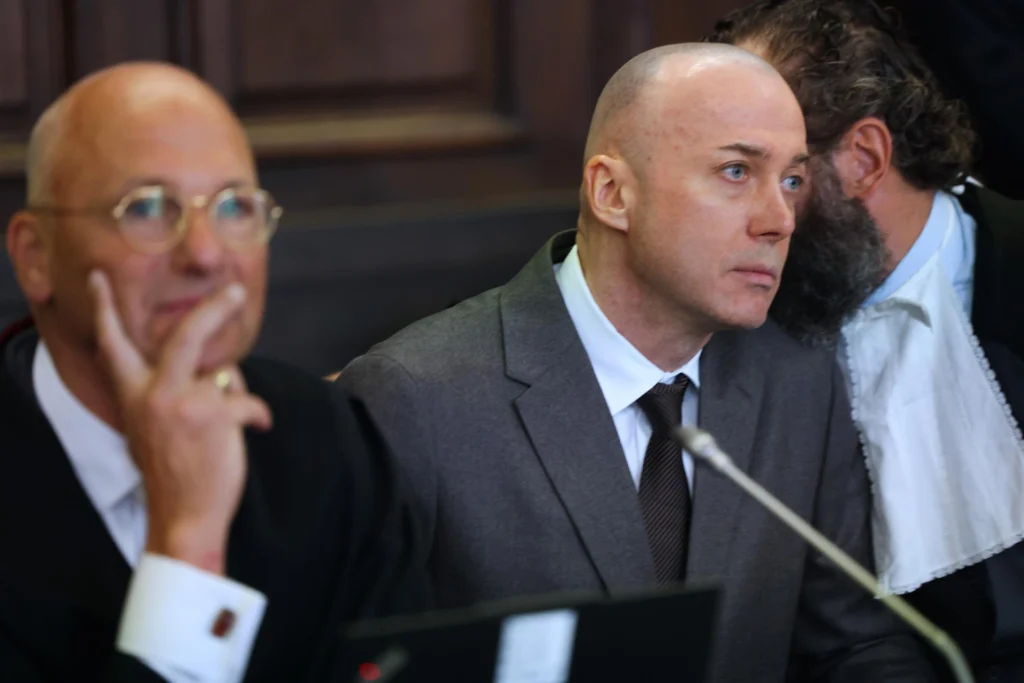
First Trial Over Nord Stream Sabotage Opens in Hamburg Four Years After Blasts

Serhii Kuznietsov, a former Ukrainian army officer, is alleged to have been a member of a group that planted explosive devices on the Nord Stream 1 and Nord Stream 2 pipelines near the Danish island of Bornholm in September 2022. Photo: EFE.

The trial of Serhii Kuznietsov, a former Ukrainian army officer accused of leading the team that blew up the Nord Stream gas pipelines in 2022, opened Wednesday in Hamburg under heavy security, with his lawyers asking the court to dismiss all charges on the first day.


Serhii Kuznietsov, a former Ukrainian army officer, faces charges including causing an explosion, damaging property, disrupting a public service and complicity in war crimes for allegedly attacking civilian infrastructure, according to the indictment.

The explosions of September 26, 2022 damaged pipelines built to carry Russian natural gas to Germany under the Baltic Sea and are considered one of the largest acts of sabotage in Europe since World War II.

RELATED: Alternative for Germany Backs Nord Stream Reactivation

The 136-page document was read in a two-hour hearing in a high-security courtroom at the Hanseatic Higher Regional Court.

Federal prosecutors say Kuznietsov was a member of an elite Ukrainian army unit at the time and led a group of six others who sailed from the German port of Rostock on a rented yacht to the area near Denmark’s Bornholm island. There, they allegedly dived to depths of 70 to 80 meters and placed at least four explosive charges with timers, weighing between 14 and 27 kilograms, on different pipeline strings. Prosecutors say the yacht was chartered from a German company using forged identity documents and with the help of intermediaries.

Prosecutors argue that Kuznietsov knew the pipeline was a civilian, not a military, target, and that Germany has jurisdiction because the attack affected its strategic interests.

A former Ukrainian military officer has gone on trial in Germany, accused of involvement in the 2022 attack on the Nord Stream pipelines that carried gas from Russia to Germany.

Prosecutors accuse him of working on behalf of the Ukrainian state. pic.twitter.com/L2lN7ydP5x

— Al Jazeera English (@AJEnglish) October 14, 2026

The explosions hit the Nord Stream 1 and 2 pipelines on September 26, 2022, causing large gas leaks in the Baltic Sea. According to German authorities, a group of saboteurs, including Serhii K. and Volodymyr Z., both Ukrainian citizens, placed explosives near the Danish island of Bornholm, using a sailing boat that departed from the German port of Rostock.

In 2022, the governments of Denmark, Germany and Sweden declined to release the results of their investigations and did not heed Russia’s requests to take part. In 2023, U.S. journalist Seymour Hersh claimed that the White House was behind the attack, while other Western press reports pointed to Ukrainian sabotage groups. Hersh’s claim has not been substantiated by public evidence, and Washington has denied involvement.

Defense Seeks Dismissal

Kuznietsov did not speak. Asked by a judge whether he wished to comment, his lawyers said no, and then filed a motion to dismiss. The core of the motion is that he was still an active-duty soldier and is barred under Ukrainian law from speaking for national security reasons. “Anyone who cannot speak cannot be convicted,” lawyer Jes Meyer-Lohkamp told the court, citing German law.

The defense does not admit involvement in the blasts. It argued that if this was an armed forces operation against an enemy target in wartime, an officer could not be held criminally liable. Lawyer Nicola Canestrini said the pipelines “were a weapon in Russian hands,” and the team said war-crime accusations would be better aimed at Russian forces, citing Bucha and the abduction of Ukrainian children. The lawyers also said Kuznietsov’s fingerprints were not found on the yacht and no witness saw him aboard. Meyer-Lohkamp criticized his client’s detention conditions, saying he is locked up 23 hours a day.

Les explosions que van afectar el Nord Stream van deixar inoperatiu el subministrament de gas rus a Alemanya.

Ara, 4 anys després, ha començat el judici a un ciutadà ucraïnès acusat del sabotatge https://t.co/rdQRw8ahpd pic.twitter.com/3MHWHa5F2t

— 3CatInfo (@3CatInfo) October 14, 2026

According to the prosecution, evidence includes a wiretapped conversation in which Kuznietsov, after his 2025 arrest in Italy, lamented to his wife that Ukraine did not openly acknowledge that he acted on a state operation and not on his own. The attack was allegedly ordered by former Ukrainian intelligence officer Roman Chervinsky, who denies the accusations. A second suspect, Volodymyr Zhuravlov, was arrested in Croatia this summer and is fighting extradition.

Ukrainian President Volodymyr Zelenskyy has denied his country’s involvement. German Foreign Minister Johann Wadephul said the trial has fueled “speculation,” but that the government must wait for the court.

The next hearing is set for October 28. Sixteen hearings are scheduled through December 17, with more dates expected in January and February 2027. No verdict date has been announced.

  •  

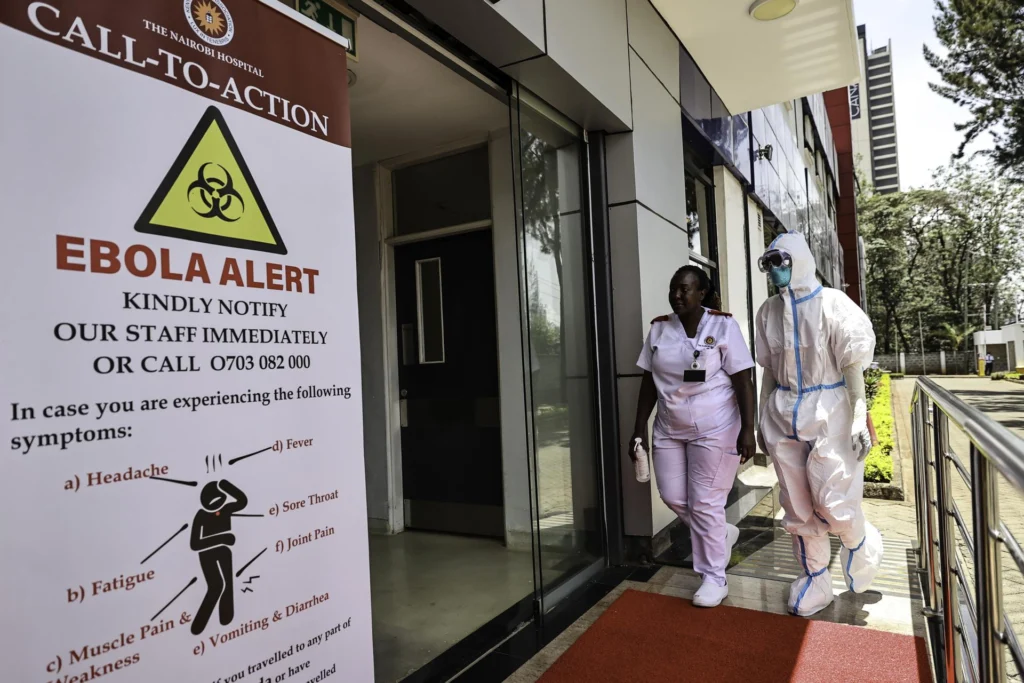
Kenya Confirms Second Ebola Case, Rules Out Community Spread

The Kenya's health ministry has identified 128 cases of first patient contact, although it dismisses having detected "no contagion" on a large scale in the country. Photo: EFE.

Kenya announced a second Ebola case on Wednesday, a relative of the country’s first patient, but said it has detected no large-scale spread of the virus, according to a Health Ministry statement.


Kenya confirmed its first imported case: a Kenyan citizen who traveled from DR Congo through Ugandan territory before dying in Nairobi. On Wednesday, Kenya’s Health Ministry confirmed a second case after relatives of the first patient tested positive while in quarantine.

The second case also emerged from within the quarantined group, which means the patient was being monitored before symptoms appeared.

RELATED: W.H.O. Warns of Ebola Spread to New Territories in DR Congo

The Ministry detailed that the second patient, a 39-year-old man, is a relative of Kenya’s first Ebola case and developed symptoms on Tuesday. He was among the people placed in quarantine after the first case was identified. The agency said early detection of the infection “improves his chances of recovery” and that the two cases are linked.

.@MOH_Kenya identified a second case of #Ebola caused by Bundibugyo virus, a close contact of the first patient, who has already been in quarantine. This shows that surveillance and contact tracing efforts are working. He has been receiving supportive clinical care since the…

— Tedros Adhanom Ghebreyesus (@DrTedros) October 14, 2026

The first patient, a 40-year-old Kenyan, had been living in Congo, where he fell ill and received treatment at two health centers, according to the ministry. He traveled through three Ebola-affected provinces before leaving the country and arriving in neighboring Uganda on October 1. He then flew to Kenya, where a relative picked him up at the airport and drove him to a hospital. He began receiving treatment and tested positive for Ebola on October 5. He died the same day.

Since then, the Ministry has identified 128 contacts of the first patient. Of these, 113 were located and 108 were placed in quarantine in Kenya, while fifteen contacts have not yet been located. Five of the contacts are abroad, and the health authorities of those countries have been notified, the Ministry said. In this sense, the Ministry stressed that “early” detection increases the chances of recovery and limits the risk of transmission. It said there has been no large-scale spread of the virus in the country.

Kenya has strengthened controls at border crossings and airports since detecting its first case, and has urged the public to report suspected infections through an emergency telephone line, according to earlier reports on the ministry’s response.

Health authorities in the region, including the World Health Organization, have warned of a continuing risk of cross-border spread because of the constant movement of people. Uganda, which reported about 20 cases earlier this year, declared itself free of the disease in August. Whether more of the quarantined contacts test positive in the coming days will determine how contained the situation is in Kenya.

The cases come as the outbreak in the Democratic Republic of Congo, caused by the Bundibugyo strain, has surpassed 9,000 confirmed cases, according to Congolese health authorities. The World Health Organization has warned of a continuing risk of cross-border spread because of constant movement of people in the region.

The National Institute of Public Health of the Democratic Republic of Congo confirmed in its most recent epidemiological report that “the total number of cases of Ebola infection has exceeded the 9,000-case barrier.” The official data updated to this October 14 reveal that “the number of positive cases totaled 9,144 registered and confirmed”, while “cumulative deaths rose to 4,410 people due to the disease.”

No Vaccine Available

The outbreak is caused by the Bundibugyo strain of the virus and began to spread rapidly after it was officially declared in May. Local medical teams and health agencies are struggling to curb community transmission across multiple critical hotspots in the country, according to the report.

Health experts say the situation is made harder by the absence of approved vaccines and specific drug treatments for this variant, which limits clinical options in affected health centers.

Regional health authorities warned that the impact of the outbreak has crossed national borders, creating what they called a regional crisis in Africa. They cautioned that, if not contained, the outbreak could spread beyond its current boundaries. The World Health Organization (W.H.O.) has warned of an ongoing risk of cross-border spread because of constant movement of people in the region.

Uganda reported about 20 cases and two deaths earlier this year, but its health authorities declared the country free of the disease in August.

Globally, the epidemic is the second-largest on record, behind only the 2014-2016 West Africa outbreak, which according to W.H.O. statistics affected more than 28,600 people and killed more than 11,000 in Guinea, Liberia and Sierra Leone. Recent reports from specialized agencies continue to add dozens of new infections each week in the hardest-hit provinces.

Experts note that containing outbreaks of this kind has historically required large financial resources, specialized logistics and close cooperation between affected governments. Without effective vaccines for this strain, and with high population mobility, mitigation efforts remain difficult.

  •  

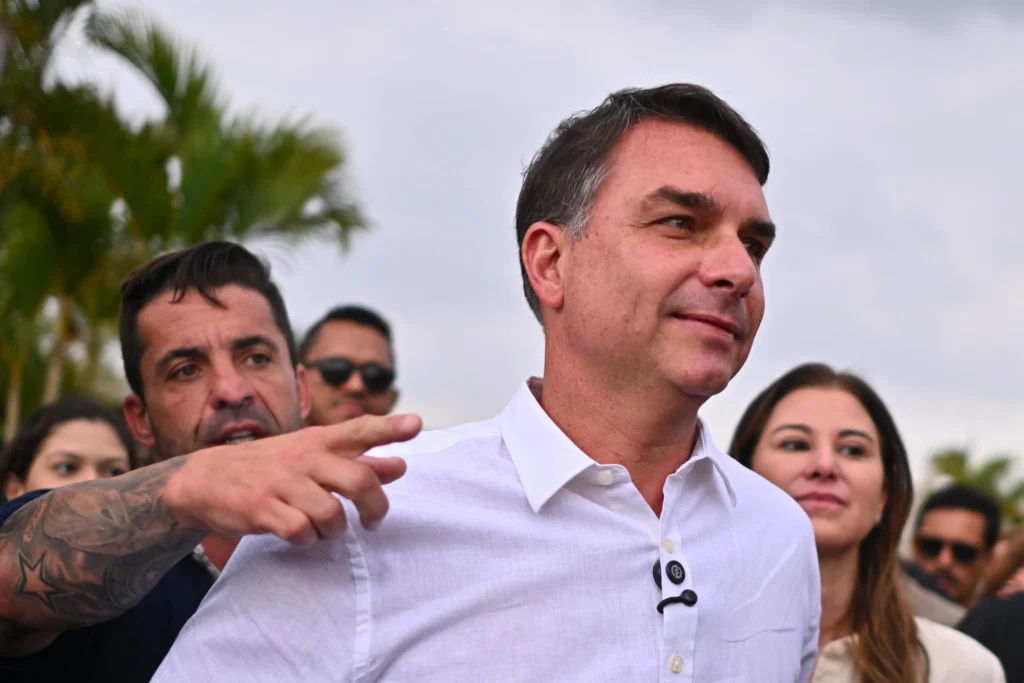
Flávio Bolsonaro Reverses Course, Will Debate Lula on Sunday

Bolsonaro’s confirmation came a day after he announced that he would not participate in the debate. Photo: EFE.

Brazilian presidential candidate Flávio Bolsonaro confirmed Wednesday that he will attend the Band network debate with President Luiz Inácio Lula da Silva, scheduled for Sunday, October 18, a turnaround that clears the way for the first face-to-face encounter of the campaign.


Less than 24 hours after announcing that he would not participate in Sunday’s debate on Bandeirantes channel, the senator and presidential candidate Flávio Bolsonaro backed down and confirmed this Wednesday that he will debate with the Worker’s party candidate, Lula da Silva. The event will take place on October 18 at 8 P.M. local time.

Bolsonaro, who had announced the previous day that he would not attend the program, changed his decision after Lula confirmed his presence to expose the differences between the two government projects and allow voters to compare the proposals of both candidates.

RELATED: Lula’s Digital Campaign Restructures its Communications Leadership in Brazil

In the recording broadcast on social networks, the son of former President Jair Bolsonaro presented his turnaround as a calculated provocation. “Lula, how predictable you are, aren’t you? All it took was for me to say I wasn’t going to take part in the Band debate for you, the next minute, to say you were going. And of course I will be at the debate, I just wanted you to confirm it,” he said.

The challenge did not stop there. “I am going to rub the truth in your face and refute you live for millions of Brazilians; I’ll be waiting for you at the Band debate, Lula,” Bolsonaro added.

Seus dias na presidência espalhando mentiras estão contados!

Vou esfregar a verdade na tua cara, Lula! Me aguarde…

PARTIDO LIBERAL – CNPJ 68.581.907/0001-25 – PROPAGANDA ELEITORAL#Debate #Band #FlavioBolsonaro #Vote22 pic.twitter.com/1HtXSieesp

— Flávio Bolsonaro (@FlavioBolsonaro) October 14, 2026

The meeting, organized by the chain Bandeirantes, comes one week from the start scheduled for October 25 and will be the first time in this campaign that both face to face.

Tuesday’s Opposite Stance

On Tuesday, Bolsonaro’s position had been the opposite. After an event of the Brazilian Democratic Movement (MDB), the senator gave reporters a brief refusal. “I’m not going, it’s not planned to attend that debate on Sunday,” he said, adding that his attendance at the October 23 Globo debate would depend on what his technical team decides.

The turnaround came after Lula confirmed that he would attend the program. For his part, Lula had confirmed his presence the same day, also by video. “I hope my opponent shows up so that the people know the differences between programs and candidacies. I will be there,” he said.

Band kept the event on the calendar despite the initial resistance of the Liberal Party’s candidate and had announced it would leave the absent candidate’s lectern empty throughout the broadcast. With Wednesday’s confirmation, the set will have both contenders.

ELEIÇÕES 2026 | Flávio diz que não vai a debate Band/Estadão e Lula confirma presença. Encontro entre presidenciáveis está agendado para o domingo, dia 18, na sede da emissora do Morumbi.
⁣
🔗 Acompanhe a cobertura completa das eleições em https://t.co/WqM2KrEbmL pic.twitter.com/az5mBZJnNl

— Estadão 🗞️ (@Estadao) October 13, 2026

A Campaign of Cancellations

Neither candidate attended a debate before the first round. Band’s August 23 debate was held without the frontrunners, and those called by a media consortium on September 14 and by Record on September 23 were canceled because no one confirmed attendance.

The October 1 Globo debate also fell through. Lula said on September 30 that he would not attend, and Bolsonaro, who had promised to show up even without his rival, withdrew about two hours before airtime. He blamed what he called “censorship” imposed, in his version, by the Superior Electoral Court (TSE), whose justice Estela Aranha had barred the network from keeping the lectern reserved for the president on the set.

According to the Superior Electoral Court, in the first round on October 4 Bolsonaro won 56.1 million votes, or 47.03% of valid votes, and Lula 53.9 million, or 45.16%.

This Sunday’s debate will be the first in which Bolsonaro and Lula of the leftist Workers’ Party (PT) face off, given that none participated in the media clashes before the first round. Another debate is still scheduled for October 23 at Globo, two days before the election, the most influential TV network in the South American country.

With the balloting set for October 25, the results show a competitive contest after a first round in which the difference was also tight. In this scenario, the televised debate scheduled for Sunday represents a new instance for the two aspirants to present their positions to the Brazilian electorate.

  •  

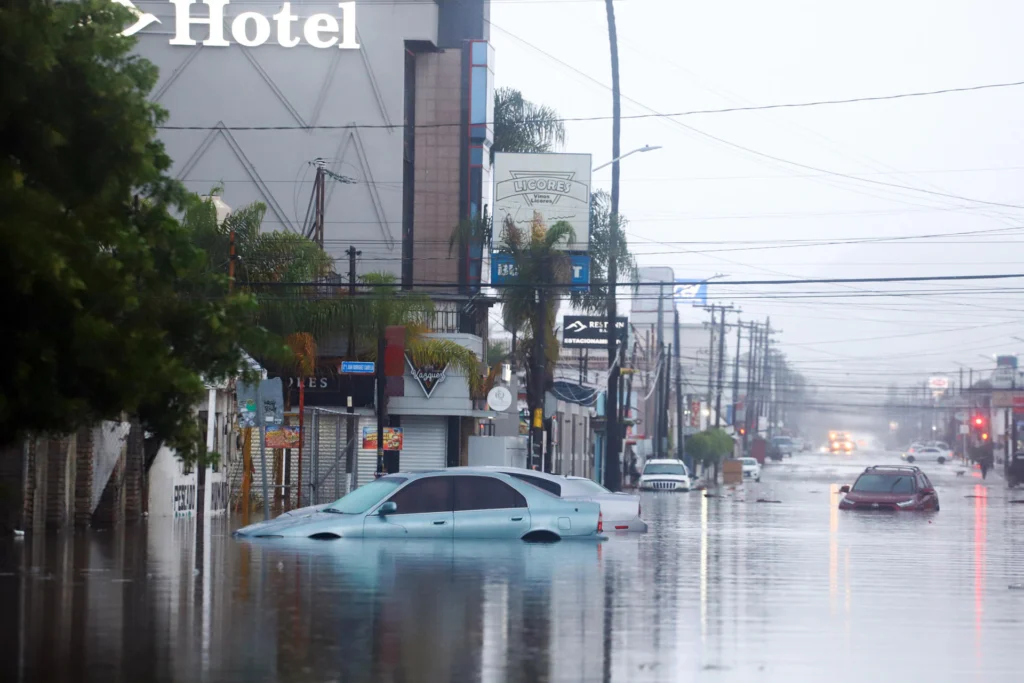
5 Dead in Mexico as Storm Rachel, Hurricane Simon Hit Pacific Coast

Natural events keep several localities in the Mexican Pacific on alert. Photo: EFE.

Storm Rachel and Hurricane Simon have killed at least five people across Mexico’s Pacific coast as of Tuesday, while heavy rains, strong winds and rough seas keep several states on alert, authorities reported this Tuesday.


Rachel, which is advancing through northwestern Mexico, has caused at least four deaths in the city of Ensenada in the state of Baja California.

The victims include two children, aged 4 and 13, and two women, aged 35 and 50. Five people remain missing.

RELATED: Hurricane Isaias Kills Four, Leaves Nearly 396,000 Without Power

The storm also brought structural damage and blocked roads across the region. Authorities remain active in rescue operations for those still reported as missing, and in recent hours confirmed the rescue of 32 people who had been cut off in different localities.

🌧️ WEATHER WATCH: Hurricane Simon and Tropical Storm Rachel have brought deadly conditions to Mexico’s Pacific coast, according to reports.

Stay informed, follow local emergency guidance and keep affected communities in your thoughts.

#Mexico #ExtremeWeather #ClimateNews

— TrendWire (@TrendWire9c) October 13, 2026

Rachel’s Path of Destruction

The cities most affected by Rachel are San Felipe, Tijuana, Playas de Rosarito, Mexicali and Tecate, along with the localities of El Arroyo, El Pípila and Maneadero. Damage to homes and businesses has been reported, with significant disruptions to several roads along the Pacific coast.

Rachel began as a tropical storm that formed off the coast of the state of Guerrero on September 27. Since then it has shown variations in intensity and trajectory as it moved up the Mexican coast before strengthening and turning toward the northwest.

Authorities have warned about landslides, the swelling of rivers and streams, and flooding in some areas. They have called on citizens to stay informed as the systems continue to move.

#LoÚltimo | MÉXICO: VEHÍCULOS QUEDAN SEMISUMERGIDOS TRAS INUNDACIONES PROVOCADAS POR LA TORMENTA RACHEL

Las intensas lluvias asociadas a la tormenta Rachel provocaron inundaciones en Ensenada, Baja California, donde varios vehículos quedaron bajo el agua y distintas calles… pic.twitter.com/dKaR6J35h2

— La Capital News (@LaCapitalNews) October 11, 2026

Simon Weakened But Dangerous

Meanwhile, Hurricane Simon has weakened to a category 1 storm but remains a threat to several localities along Mexico’s Pacific coast. The states of Nayarit and Sinaloa continue to face heavy rains and winds, along with waves between two and three meters high.

The cyclone’s center was located approximately 155 kilometers west of Jalisco and 320 kilometers south-southwest of Sinaloa, with maximum sustained winds of 150 kilometers per hour and gusts reaching 185 kilometers per hour.

Mexican authorities reported that the center of Hurricane Simon was moving toward the west-northeast at a speed of six kilometers per hour. Authorities have maintained alerts for the affected areas due to tropical storm force winds.

Simon has already claimed one life. A 71-year-old man died in a landslide in Chilpancingo, the capital of Guerrero state.

Hurricane #Simon Advisory 26A (5 PM MST, Tue Oct 13): Small Simon Nearly Stationary Off the Coast of West-Central Mexico. Interests There and Baja California Sur Should Continue to Monitor the Hurricane. https://t.co/NyUGSIFCuo

— NHC Pacific (@NHC_Pacific) October 13, 2026

The two systems have struck Mexico’s Pacific coast in quick succession, stretching emergency resources across a wide area. Rescue crews are working in multiple states, while the death toll could rise as searches continue for those still unaccounted for.

In Ensenada, the search for the five missing people remains the priority for local authorities. The confirmed rescue of 32 people who had been isolated offers some relief, but the situation in the affected municipalities remains tense.

The storms come during a period of heightened activity in the Pacific, with authorities urging residents in vulnerable areas to heed evacuation orders and avoid crossing swollen rivers or flooded roads.

  •  

Hezbollah Launches Housing Aid for Israeli Strike Victims in Lebanon

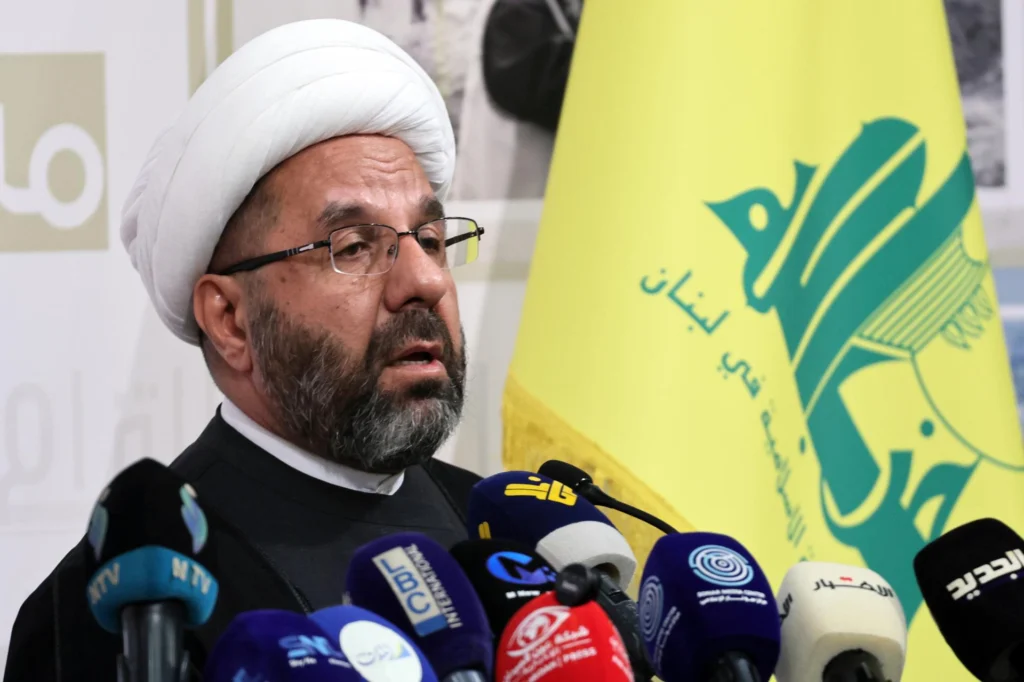
Sheikh Ali Damoush, president of Hezbollah's Executive Council, presented the initiative affirming that its implementation would demonstrate the indisputable victory of reconstruction over destruction and of resistance over foreign barbarity. Photo: EFE.

The Resistance Movement Hezbollah unveiled a housing assistance program on Tuesday to help Lebanese families left homeless or with severely damaged residences by Israeli military strikes, offering subsidies of up to $14,000 for those in Beirut and its southern suburbs.


The Lebanese resistance movement formally presented the project under the name “Promise and Commitment,” known in Arabic as Wa’ad wa Iltizam.

Officials described it as comprehensive, direct and urgent aid for households whose homes were destroyed or badly damaged during the Israeli aggression.

RELATED: Lebanon Reports 7,700 Israeli Violations of Framework Agreement

The program sets a ceiling of $14,000 for affected families in Beirut and its southern suburb of Dahiye. Of that sum, $8,000 will go toward replacing furniture and household goods, while $6,000 will cover rental costs. In the rest of Lebanon’s affected regions, the maximum assistance reaches $12,000, with rent capped at $4,000.

The payments will be made in four installments over one year, starting with an initial payment of $3,500 for the capital and its suburbs and $3,000 for the rest of the country.

The program covers owners of homes destroyed either fully or partially, as well as displaced people from border zones and areas that remain inaccessible.

The head of Hezbollah’s Executive Council, Sheikh Ali Daamoush, announced the resistance’s new “Promise and Commitment” housing assistance program for forcibly displaced families whose homes were damaged by Israeli aggression across Lebanon.

■ Eligible residential units in… pic.twitter.com/GV2hoCzp0V

— VPol (@VocalPolitics1) October 13, 2026

Damage by the Numbers

A joint report by the United Nations Development Programme (UNDP) and the Lebanese National Council for Scientific Research (CNRS-L), published in June, assessed the damage from Israeli attacks up to that date. It found that 11,095 buildings were completely destroyed, affecting 17,891 housing units.

Another 2,242 buildings suffered partial damage, affecting 5,219 units, and 9,311 buildings sustained minor damage, affecting 18,282 units. Damage was estimated at $1.38 billion.

Lebanese authorities have also reported the return of 400,000 displaced people to the south of the country following the Israeli aggression. That return adds urgency to the housing effort, as many families come back to neighborhoods where their homes no longer stand.

The aid program is structured around that reality. By splitting payments across a full year, the initiative aims to cover both immediate needs and the longer process of rebuilding lives and households.

For the poorest households, the initial installments provide a bridge while more durable reconstruction gets underway. The program’s architects say the subsidies address both the loss of possessions and the cost of temporary shelter.

The presentation of the housing project carries political weight beyond its material value. Hezbollah has positioned reconstruction as central to its post-war standing, presenting the rebuilding effort as a form of resilience against what it describes as foreign aggression.

كشف حزب الله عن تفاصيل برنامج الإيواء الجديد، محدّدًا التعويضات بين 12 و14 ألف دولار للوحدة السكنية، بحسب المنطقة، مع دفعة أولى تتراوح بين 3000 و3500 دولار

فكيف ستُصرف المبالغ المتبقية، وما شروط الاستفادة من البرنامج؟

Hezbollah has revealed the details of its new housing… pic.twitter.com/JSH9RQQNEq

— Beirut Politics (@beirut_politics) October 13, 2026

Text reads: “Hezbollah has revealed the details of its new housing assistance program, setting compensation at between $12,000 and $14,000 per residential unit, depending on the area, with an initial payment ranging from $3,000 to $3,500.”

Presenting the initiative, Hezbollah Executive Council head Sheikh Ali Damoush said its implementation would show the victory of reconstruction over destruction and of resistance over what he called foreign barbarity. Damoush sharply criticized the Lebanese government, affirming that authorities have not presented any effective plan to help the hundreds of thousands of displaced people and have not taken responsibility for assessing damage and rebuilding.

The program’s rollout now begins with registration and verification of affected families, followed by the first disbursements.

  •  

Spain Logs Record 5,807 Heat Deaths in Summer 2026

The number of deaths, attributable to high temperatures, has surpassed the figures for the two deadliest summers since 2015. Photo: EFE.

Spain recorded 5,807 heat-related deaths during the summer of 2026, the highest figure in a decade, according to the national mortality monitoring system (MoMo).


The estimate, reported on Tuesday, is based on final data collected between May 15 and September 30, the period covered by the National Plan for Preventive Actions against the Effects of Excess Temperature on Health.

The toll surpasses the two deadliest summers since the series started: 2022, with 4,789 deaths, and 2025, with 3,832.

RELATED: France Records 53 Days of Heat Waves This Summer

It is more than 51% above last year’s figure and 188.61% of the 2024 total, when 2,012 deaths were estimated. Even so, it remains well below the summer of 2003, when around 13,000 people died in Spain because of heat, a catastrophe that led the Health Ministry to design a national prevention plan.

🌡️ September 2026 was the 2nd warmest globally & 3rd warmest in Europe on record.

🇪🇺 Western Europe saw exceptional heat, with parts of France, Portugal, Spain & Italy 4–6°C above average.

🛰️ #CopernicusEU tracks climate extremes.

🔗 https://t.co/uMOM5xYwWm#ImageOfTheDay pic.twitter.com/u6R6WS1VNK

— Copernicus EU (@CopernicusEU) October 12, 2026

August Deadliest Month

August produced the most fatalities, with 2,162 deaths. July followed with 2,026, then June with 938, September with 559 and May with 123.

Compared with last year, the 2026 toll stands more than 51% higher. Measured against 2024, the increase reaches 188.61%, a year in which the system calculated 2,012 deaths.

The number has not reached the historic summer of 2003, when roughly 13,000 people died in Spain as a result of high temperatures. That catastrophe prompted the health ministry to design and launch a prevention plan for the effects of heat on health.

The elderly again bore the heaviest burden. Some 97% of estimated deaths attributable to heat occurred among people aged 65 or older, and 62% among those over 85.

Women were disproportionately affected, accounting for 3,486 deaths, or 60% of the total. Men accounted for 2,321. The impact was not uniform across the country, with the highest mortality rates recorded in the north and northeast of the peninsula.

A Year of Extreme Weather

The team coordinating MoMo at the National Epidemiology Center attributes the impact to an exceptional climatic context. It described this summer as the warmest in recent history, with four heat waves identified by the State Meteorological Agency, plus an additional one in early September.

A persistent drought, large wildfires and an intense marine heat wave in the western Mediterranean compounded the situation. Those conditions combined to push mortality to levels not seen in the decade of MoMo records.

The Carlos III Health Institute said the data reinforce the importance of continuous epidemiological surveillance and stronger prevention and adaptation measures against extreme heat. The warning carries weight as climate patterns grow more volatile.

Scientists have linked the exceptional summer to broader climatic shifts, including the Super El Niño phenomenon. Studies suggest that phenomenon could cause heat-related deaths of 451,000 people worldwide over the coming six months.

  •  

Vatican Confirms Successful Lung Surgery for Pope Leo XIV

The medical intervention took place less than a month after the tour that Pope Leo plans to carry out in Latin America. Photo: EFE.

Pope Leo XIV is recovering in his room at Rome’s Gemelli Polyclinic after a successful operation on Tuesday removed the lower lobe of his right lung to treat an early-stage pulmonary adenocarcinoma.


The Holy See said in a public statement that the intervention “concluded positively, within the expected timeframe and as planned,” and that the pontiff had returned to his room.

The operation was led by thoracic surgeon Stefano Margaritora, a specialist with extensive experience in this kind of intervention who headed a multidisciplinary team at the Gemelli Polyclinic.

RELATED: Worldwide Prayer Chain for the Health of Pope Leo XIV

To ensure the procedure was radical, surgeons removed the lower lobe of the right lung using a video-assisted technique. An in situ histological examination confirmed the diagnosis of pulmonary adenocarcinoma, a form of cancer that develops in glandular tissue, exactly as the preoperative tests had suggested.

Doctors expect Pope Leo to remain there for about a week while his recovery is monitored.

Pope Leo XIV underwent thoracic surgery at Gemelli Hospital on Tuesday afternoon, as planned, according to a statement from Dr. Luigi Carbone and Professor Stefano Margaritora released by the Holy See Press Office.

The surgeons removed the lower lobe of the Pope’s right lung,… pic.twitter.com/QAShHu1eG6

— Vatican News (@VaticanNews) October 13, 2026

Pope Leo XIV had announced the surgery last Sunday after the Angelus prayer, once medical examinations confirmed that the nodule had been detected at a very early stage and was well localized. That announcement drew a wave of international solidarity, with prayers and messages of support arriving from the faithful and religious communities around the world.

The Vatican disclosed the clinical details shortly after the procedure concluded, reflecting a notable degree of openness about the pontiff’s health. Officials confirmed that the diagnosis matched what the preoperative tests had indicated, and that no complications arose during the operation.

The early detection of the nodule offered a positive outlook from the outset. Medical examinations placed it at a very early stage and well localized, which allowed the surgical team to plan a targeted intervention.

Pope Leo XIV arriving to Gemelli Hospital for surgery pic.twitter.com/pKFqK9N7K6

— Catholic Arena (@CatholicArena) October 13, 2026

Latin America Tour Uncertain

The operation took place less than a month before the apostolic journey Pope Leo plans to make across Latin America from November 6 to 17. The itinerary includes visits to Uruguay, Argentina and Peru.

Whether those dates hold will depend on a medical evaluation of his postoperative evolution. Doctors expect the pontiff to remain hospitalized for about a week, and that period will determine how quickly he can resume his public agenda.

The visit carries significant weight for the three countries on the route, which have been preparing for the papal tour since it was announced. Any change to the calendar would ripple through local schedules and large gatherings of the faithful.

For now, the Vatican has announced no adjustment to the itinerary. Officials said the feasibility and confirmation of the trip will be assessed according to the favorable evolution of the recovery.

Before the surgery, the announcement about the pontiff’s health had already generated an outpouring of support, and that solidarity continued after the operation was reported as successful.

  •  

Michael Jordan’s 1998 Finals Jersey Sells for a Record $14 Million

(FILE) The jersey worn by the Chicago Bulls star during the NBA Finals becomes the most expensive basketball piece in history. Photo: CNN.

A game-worn Michael Jordan jersey from the 1998 NBA Finals has sold for $14 million, setting a new record for basketball memorabilia and becoming the second most expensive piece of sports clothing ever sold.


The red road jersey, signed by Jordan and worn during Game 2 of the 1998 championship series, changed hands in a private transaction that underscores the surging financial value attached to objects tied to the Chicago Bulls legend’s career.

The sale confirms the commercial pull of “The Last Dance” season, widely regarded as the closing chapter of Jordan’s defining run.

RELATED: EuroLeague Halts NBA Plan to Launch League in Europe

Pennsylvania-based auction house Hunt Auctions managed the negotiation, which ended with the garment delivered to Ron Firman, a real estate investor based in Miami. The shirt corresponds specifically to the second game of the Finals, played on June 5, 1998.

The context of that game accounts for much of the jersey’s value. In it, Chicago beat the Utah Jazz to even the series, which the Bulls went on to win 4-2. The victory was key to the franchise’s sixth title and to the close of the era chronicled in the media as “The Last Dance,” the season that cemented Jordan’s legacy.

Record Air.  Important 1998 @NBA Finals Game Two @chicagobulls Michael Jordan game worn road jersey sold via private treaty sale for $14,000,000.  The price is a world record for any basketball memorabilia item and the second highest price ever paid for a sports jersey of any… pic.twitter.com/2ax0XBvjxm

— Hunt Auctions (@HuntAuctions) October 12, 2026

A Rising Market

The international market for sports collectibles has been climbing steadily, and items from that final campaign command a premium all their own. Jerseys worn in Games 1 and 3 of the same series previously sold for $10.1 million and $12.3 million, respectively, providing a direct benchmark for the latest transaction.

The shoes Jordan wore in that second game offer another reference point, which were sold in 2023 for $2.2 million, a figure that once seemed remarkable and now reads as modest alongside the prices fetched by his game-worn shirts.

What sets the red jersey apart is the convergence of several factors at once. It is autographed, it comes from a decisive road victory, and it belongs to a season loaded with symbolic weight. Collectors have treated that specific campaign as the peak of Jordan’s market, and each authenticated piece from it tends to reset expectations upward.

The private nature of the sale also reflects how the high end of this market operates. Deals at this scale often move outside public auction rooms, arranged directly between wealthy buyers and the firms that hold the most coveted inventory. Firman, the buyer, joins a growing list of investors who treat championship-grade memorabilia as an alternative asset class rather than a sentimental purchase. Because the deal was private, details such as the exact terms and whether the seller was a collector or an institution were not disclosed in the information available.

Siempre es un buen momento para ver los mejores pósters de Michael Jordan 🔥🐐 pic.twitter.com/hWH0ukeScC

— NBA – Jordi de Mas (@demas6Basket) October 12, 2026

Behind Babe Ruth

With the $14 million price, the jersey ranks as the second most expensive sports garment sold to date. Across all sports, only one garment has commanded a higher price. That record belongs to the uniform Babe Ruth wore with the New York Yankees during the 1932 World Series, which sold for $24.12 million in 2024. Jordan’s jersey still trails that figure by a wide margin, but the gap illustrates just how far basketball collectibles have climbed in a short period.

Whether other Jordan items from that series will reach the market, and at what price, remains to be seen. The Game 2 jersey now joins the Game 1 and Game 3 jerseys as part of a small group of Finals-worn pieces that have changed hands for eight-figure sums.

The broader trend shows no sign of slowing. Auction houses and private dealers continue to report strong demand for authenticated gear from iconic athletes, and Jordan remains the single most bankable name in the basketball segment. His championship items, in particular, attract interest from investors who see them as scarce, appreciating assets with global recognition.

Each new sale resets the conversation about value. The $14 million price for the Game 2 jersey surpasses the totals for the other two shirts from that series combined, a sign that the market rewards provenance and narrative as much as rarity. The buyer now holds a piece tied to one of the most documented seasons in U.S. sports history.

For collectors and investors watching the sector, the transaction sends a clear signal. Jordan-era memorabilia from the 1998 Finals has entered a price range once reserved for baseball’s most storied artifacts, and the appetite for such items remains strong.

  •  
❌