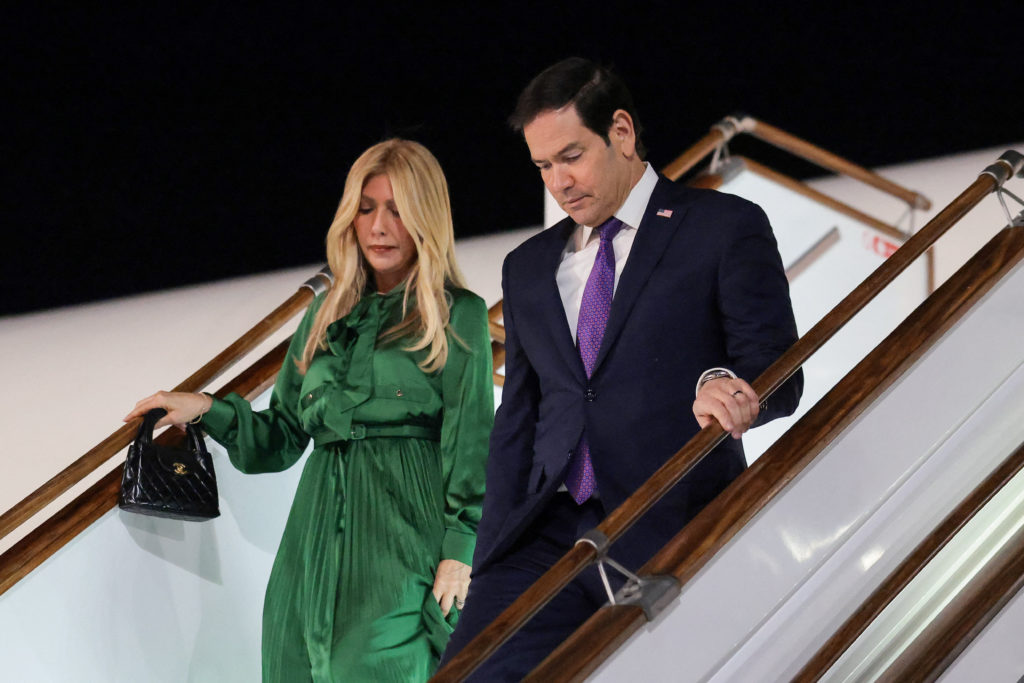
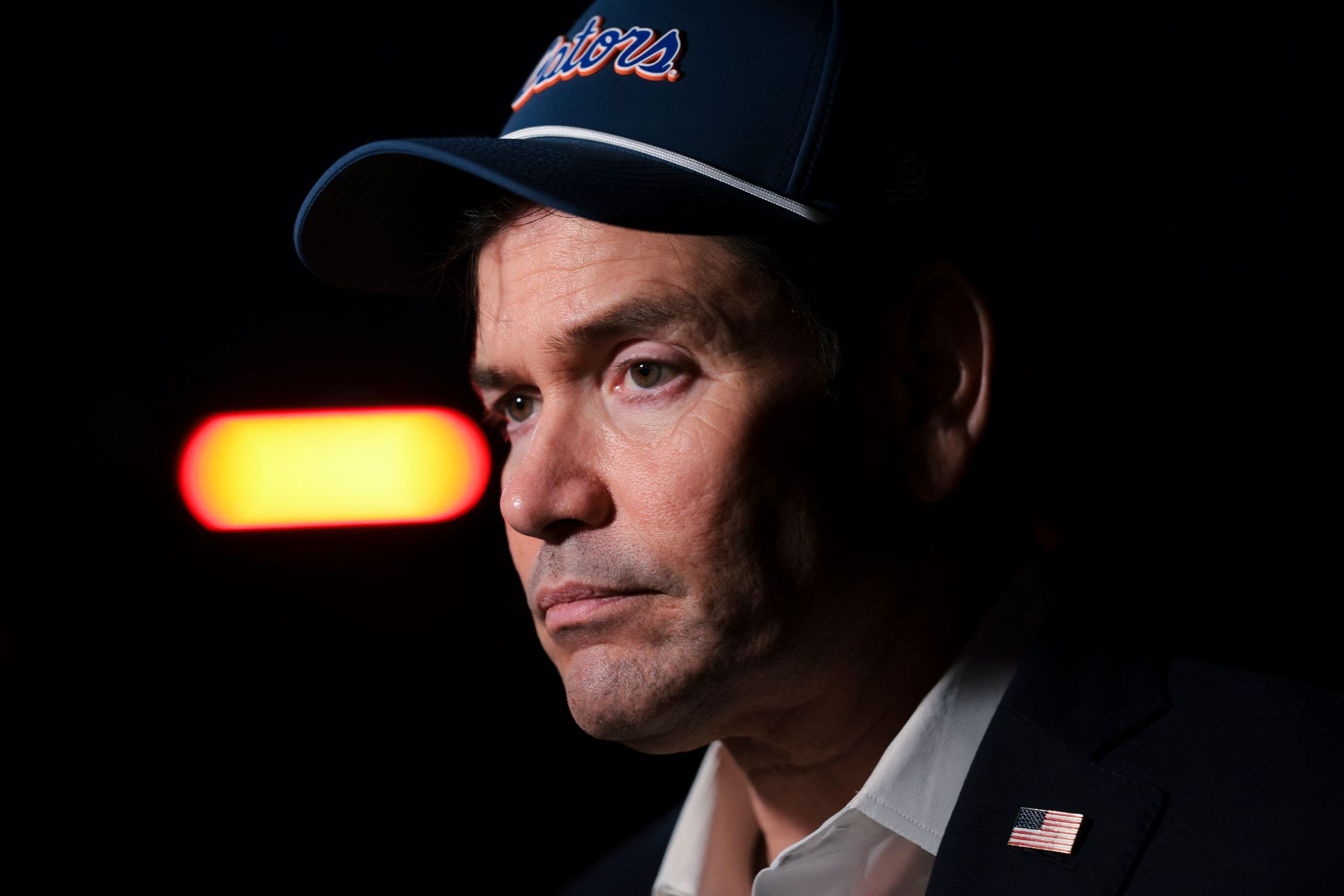
Rubio heads to Central Asia as some wonder if he's keeping the most pressing matters at a distance


The US has resumed sharing intelligence on Russian ballistic missile launches with Ukraine after a pause of several days, Ukrainian President Volodymyr Zelenskyy told NBC News on 18 October. The blackout fell on days when Russia was firing ballistic missiles at Ukraine. Limits on the Starlink satellite service that Ukraine’s forces rely on remain in place, he said.
Russia has leaned on ballistic missiles in this month’s strikes on Ukraine’s grid, firing 39 in a single attack, and Ukraine is short of interceptors to stop them. Washington has used its support as leverage, reportedly telling Kyiv to spare Russian refineries or lose US intelligence and arms.
The sharing had been blocked for some period of time before it was restored, Zelenskyy said on Meet the Press.
“We are very thankful for this. Now it works,” he said.
Ukraine gets other intelligence from Europeans and dozens of other partners, he explained. But only the United States has the data that tells Kyiv when Russia launches ballistic missiles.
“We didn’t get it during ballistic attacks during three days,” Zelenskyy said.
A timely warning gives Ukraine’s air defenses extra minutes to prepare and lets authorities alert civilians, Liga noted. Late on 12 October, Russian ballistic missiles hit Kyiv before the air-raid alert reached people, with no advance data on launches from Russian territory. The next day, US President Donald Trump said Washington was still sharing intelligence. Two days later, Zelenskyy said Kyiv had received no US warnings of incoming ballistic missiles while it paused its strikes on Russian refineries at Washington’s request. That pause followed the energy ceasefire Trump declared on 11 October, which Russia never confirmed.
Starshield, the military version of Starlink, still cuts out above 161 km/h, Zelenskyy said, too slow for Ukraine’s interceptor drones to catch Russia’s jet-powered Shahed-type drones. NBC News, which aired the interview, separately reported that Starlink services had resumed at normal speed. He said Ukraine’s generals and government believe the order came from the US government and SpaceX carried it out, though he did not know who exactly made the call. Ukraine had instead asked SpaceX and Trump to open Starlink over Russia so it could hit ballistic missile launchers, he said.
“If [Trump] will personally decide to lift this decision, it will immediately work as it was before,” he said.
US Treasury Secretary Scott Bessent, who appeared on the same show, called Zelenskyy’s charge “very reckless” and said Trump and Secretary of State Marco Rubio had denied any administration role. Asked about the break in intelligence sharing, he said he did not know anything about it but that Zelenskyy should be “very careful about making statements like this that aren’t true.” Reuters had reported, citing three officials, that White House officials ordered the Pentagon to limit the service.
Asked whether Ukraine could win without the United States, Zelenskyy said it would be very difficult.
“But if the United States will support Putin, I mean, it’s unbelievable, it’s tragedy. It’s historic mistake and big tragedy,” he said.
He also said his team had received word that US negotiators wanted to meet, and that he had offered to meet in Brussels or London, hoping the US team would be ready this week.
The warnings are back, but they stopped once without explanation. Ukraine’s defense against Russia’s missiles still runs through decisions made in the US.
Per giorni a Kiev si è parlato di sabotaggio. Sabato Marco Rubio ha risposto liquidando l’accusa. “Non sono sicuro che Zelensky sappia di cosa sta parlando”, ha detto il segretario di Stato ai giornalisti, aggiungendo che nessuno alla Casa Bianca ha ordinato di rallentare la rete perché certi droni non potessero usarla. Una ricostruzione che ha definito “categoricamente falsa”. La vicenda è esplosa tra il 13 e il 14 ottobre. I militari ucraini hanno denunciato che i terminali, compresi quelli di Starshield, la versione militare di Starlink, perdevano il collegamento oltre i 160 chilometri orari circa. Un limite che mette in difficoltà i droni, guidati a distanza proprio tramite questa rete. Nelle stesse ore Zelensky lamentava che per due notti l’intelligence americana non aveva avvisato Kiev dei bombardamenti russi.
Da lì il rimpallo di responsabilità. Elon Musk ha ricordato che Starshield appartiene al governo americano e che i limiti li decidono il Pentagono e, in ultima istanza, il presidente. Il 16 ottobre Reuters, citando tre fonti informate, ha scritto che il Pentagono aveva ricevuto dalla Casa Bianca l’istruzione di rallentare il sistema per i militari ucraini, senza che le fonti sapessero dire chi, nell’amministrazione, l’avesse deciso. Un alto funzionario ha escluso che la richiesta venisse da Trump, il quale ha detto di non averlo fatto. Un gruppo di senatori americani, quattro repubblicani compresi, ha chiesto l’avvio di un’indagine.
Quanto a Rubio, nella replica il segretario di Stato ha sottolineato che “Starlink è un servizio commerciale, gestito come tale”; Starshield è invece un sistema militare, legato a un contratto con le forze armate americane, e l’Ucraina al momento non vi ha accesso. Kiev avrebbe chiesto di poterlo usare per colpire in profondità in territorio russo. Una richiesta che, al momento, è in discussione.
Il sospetto di Kiev nasce anche dalle tensioni attuali con l’Usa. Il 10 ottobre Trump aveva detto che è “ora che l’Ucraina cambi presidente”, accusando Zelensky di non voler chiudere un accordo con la Russia. Washington preme inoltre perché Kiev smetta di colpire le raffinerie russe. Un legame con Starlink, però, resta tutto da dimostrare: secondo Reuters la rete non funziona in territorio russo, e i droni diretti contro l’industria petrolifera usano altri sistemi.
L'articolo Starlink, Rubio: “Zelensky? Forse non sa di cosa parla”. Il nodo ora è Starshield, cos’è successo ai satelliti dell’Ucraina proviene da Affaritaliani.it.


A bipartisan group of 22 House lawmakers is urging President Donald Trump to fully implement the new Russia sanctions law and revoke a license allowing certain Russian diesel transactions. In a letter sent on 15 October, they copied Secretary of State Marco Rubio and Treasury Secretary Scott Bessent and requested details on planned sanctions, tariffs and waivers.
Their request comes as the law’s first requirements fall due on 18 October, while lawmakers from both parties challengethe administration’s decision to allow certain Russian diesel transactions. Some restrictions take effect automatically, while others require presidential action. The law does not specify a penalty for the president missing the deadline.
Congress passed the Lindsey O. Graham Sanctioning Russia and Iran Act of 2026 by votes of 86–11 in the Senate and 262–159 in the House. Trump signed it on 18 September. Graham, a Republican senator from South Carolina, died in July.
Restrictions taking effect automatically on 18 October include a ban on US banks and broker-dealers processing transfers to or from the Russian government, a ban on new US investment in Russia, a ban on new US investment in Russia’s energy sector, and a ban on US energy exports to Russia.
Other measures require presidential action by the same date. The law directs Trump to review and sanction Russian officials, oligarchs and shadow-fleet vessels, sanction the Bank of Russia, specified Russian banks and state-owned companies, and impose tariffs of up to 500% on Russian goods. Tariffs of up to 100% can apply to goods from countries among the five largest importers of Russian oil or gas, or among the top five countries facilitating Russian oil sanctions evasion.
Trump may waive sanctions, restrictions and tariffs under the law if he first certifies in writing to Congress that a waiver is in the US national interest and submits a report explaining its basis.
House members also urged Trump to revoke General License 135, which the Treasury Department issued on 9 October and that is valid until 7 April 2027. It permits certain transactions involving Russian-origin diesel, including imports into the United States. Trump said Russia would immediately supply more than 300,000 tons of diesel to US and global markets and predicted prices would fall sharply, according to a 9 October Truth Social post.
On 13 October, a bipartisan group of 12 senators also urged Trump to rescind the deal and revoke the license. Seven senators said the deal conflicted with a 2022 law banning Russian energy imports.
The Graham Act says nothing in its provisions affects the Treasury secretary’s existing authority to issue general licenses. That provision does not resolve whether the diesel license complies with the separate 2022 law.
A White House official told Newsweek the administration would comply with the Graham Act. Bessent said the administration would use “all the legal authorities we have” and called the deal “good for the American people,” Fox News reported on 11 October.
Separately, the law sets a process for terminating sanctions, restrictions or duties against Russia. Trump must report to Congress that Russia has signed a peace agreement accepted by Ukraine’s government and ceased military hostilities against Ukraine, as well as activities to overthrow, dismantle or subvert its government. Congress has 30 days to block termination through a joint resolution of disapproval, or 60 days for reports submitted between 10 July and 7 September.

In a recent visit to Greece, the secretary of state suggested that Europe must rediscover the values of conquest and expansion
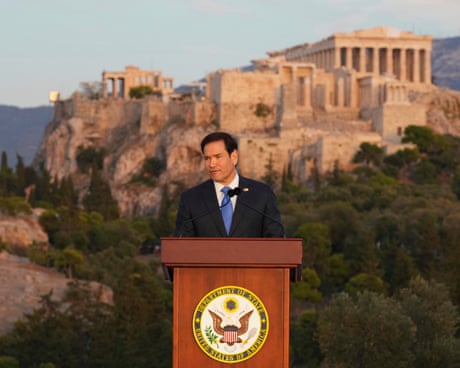
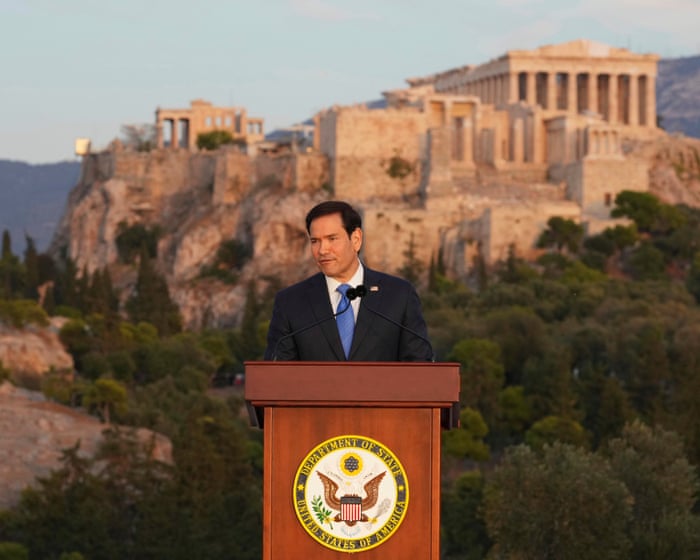
They had obviously worked hard on the backdrop – and it was magnificent. On 7 October, the US secretary of state, Marco Rubio, delivered a major speech in Athens, outdoors, with the Acropolis behind him. The sun was setting, bathing the ancient scene, including the Parthenon, in the light of the golden hour.
The golden hour, but yet not quite the golden age. This was not Pericles defending democracy. Instead, Rubio offered a haunting vision of the choices facing the west, arguing that the US and Europe must rediscover the values of exploration and conquest that once drove centuries of expansion, or face decline and irrelevance.
Continue reading...
© Photograph: Mark Schiefelbein/Pool AP/AP

© Photograph: Mark Schiefelbein/Pool AP/AP

© Photograph: Mark Schiefelbein/Pool AP/AP

An Ecuadorian judge ordered the immediate release of nearly 30 fishermen whose two boats were destroyed by the US military in the Pacific Ocean. The Ecuadorian prosecutor’s office had charged them with alleged illegal activities.
The sequence of events is telling.
In two separate instances between late August and early September, the fishing boats Conquista II and María Candelaria were boarded by US military forces while on the high seas. The US forces, after transferring the fishermen to other vessels, destroyed and sank their boats.
The fishermen’s families quickly reported that they had lost communication with their loved ones. Only after prolonged uncertainty were the crew members handed over at Ecuadorian ports and placed under the control of Ecuadorian authorities.
In other words, the crew members were not charged with any crime before their vessels were destroyed, but rather afterward. This move has drawn heavy criticism from criminal defense attorneys (who argue that these actions violate due process) and caused anxiety among Ecuadorian fishermen, who have expressed their fear of fishing on the high seas and suffering the same fate as their compatriots. Several other boats have been intercepted and sunk in the Pacific by US forces in recent months, only increasing fears about transiting there at all.
The US military, for its part, claims that the destroyed vessels serve as fuel refueling points for other boats involved in drug trafficking. Under this strategy, US Southern Command intercepted at least eight Ecuadorian vessels between August and September 2026.
Foreign military actions on Ecuadorian soil have been defended by the government of right-wing President Daniel Noboa, who has aligned himself with Donald Trump’s hemispheric security policy embodied in the Shield of the Americas. During a recent visit to the South American country, Marco Rubio defended the military operations as necessary to dismantle drug trafficking routes.
But why destroy a vessel that has already been evacuated of its crew?
Defense Minister Giancarlo Loffredo, who defends US military operations against Ecuadorian fishermen based on alleged “prior intelligence,” said that destroying a vessel that has already been evacuated of its crew is justified because it is too risky to tow the vessels to shore. He also said that seizing the fuel on board is dangerous.
However, the minister’s justifications have not convinced everyone. Human Rights Watch stated that both the United States and Ecuador must present evidence justifying the destruction of the vessels: “Of the detained crew members, 90 are facing criminal investigations in Ecuador, 56 were released because Ecuadorian judges ruled that their detention was illegal, and another 14 were not brought before a judge.”
In addition, Juanita Goebertus, director of the Americas division at Human Rights Watch, said: “Intercepting fuel trafficking at sea can be an important step in stopping criminal groups, but that does not give security forces the right to detain people without evidence, destroy their boats, and commit abuses.”
The fact is that the Ecuadorian fishermen deny any involvement in the crimes of which they are accused. For now, the Ecuadorian courts have ruled in favor of nearly 30 fishermen from the Montecristi and the Don Rufo, stating that the prosecution failed to present evidence to support its accusations. With them, the total number of acquitted crew members stands at 56. Another 32 fishermen are on probation while investigations into alleged criminal association continue.
Russia and the United States have intensified their campaigns against the International Criminal Court (ICC) almost simultaneously, exposing an increasingly consequential convergence between the policies of Vladimir Putin and Donald Trump.
On 8 October, Moscow demanded the extradition of ICC President Tomoko Akane and eight other current and former officials. The following day, Washington announced sanctions against the court as an institution, extending earlier measures against individual judges and prosecutors.
The timing raises an obvious question: are these independent campaigns arising from different disputes with international justice, or do they reflect a broader political understanding between Washington and Moscow?
There is no publicly established evidence of a coordinated operation or an agreement between Trump and Putin to undermine the ICC. Nevertheless, the strategic consequences of their respective actions are remarkably similar. Both weaken an institution pursuing criminal proceedings against political leaders whom the two governments seek to protect.
Russia’s hostility towards the ICC is directly connected to the arrest warrant issued against Putin in March 2023 over the alleged unlawful deportation and transfer of Ukrainian children from occupied territories.
The court subsequently issued warrants against senior Russian military commanders, including Sergei Shoigu and Valery Gerasimov, over alleged crimes involving attacks on Ukrainian civilian infrastructure.
Moscow’s response has been to pursue ICC personnel through its own criminal justice system. The latest extradition demands follow convictions handed down in absentia by a Russian court in December 2025.
Washington’s confrontation with the ICC has a different immediate origin. The Trump administration objects to the court’s jurisdiction over American nationals and Israeli officials, particularly following the arrest warrants issued against Israeli Prime Minister Benjamin Netanyahu and former defence minister Yoav Gallant.
Secretary of State Marco Rubio has presented the American campaign as a defence of US sovereignty. Yet the sanctions announced on 9 October are not confined to the Israeli proceedings or any investigation involving American personnel.
They target the institution itself, potentially disrupting financial transactions and commercial relationships essential to its operation. This distinction matters because a court-wide restriction necessarily affects investigations beyond those cited by Washington. That includes Ukraine.
The political context cannot be separated from the relationship between Trump and Putin, including their meeting in Anchorage, Alaska, in August 2025.
The summit formed part of Trump’s efforts to negotiate directly with Moscow over the war in Ukraine. The American president has repeatedly treated relations with Putin as a question of diplomatic bargaining, seeking arrangements that might produce an agreement where conventional Western pressure has failed.
Against this background, suggestions that pressure on the ICC might form part of a wider accommodation with Moscow warrant scrutiny. However, the proposition that Trump specifically offered Putin assistance in neutralising the court during their Anchorage discussions remains unsubstantiated. There is no verified public account establishing such a commitment.
A more defensible conclusion is that Washington’s independently declared campaign against the ICC also advances an important Russian interest. For Putin, the benefit is clear. Measures designed to restrict the court’s financial and administrative capacity could complicate investigations into Russian conduct, irrespective of the American administration’s stated intentions.
The relationship therefore need not involve explicit coordination to produce politically significant results.
The escalation from targeting individual prosecutors to sanctioning the entire ICC represents a substantial change. Previous American measures imposed personal and financial restrictions on selected officials. The latest approach threatens the broader infrastructure upon which international criminal proceedings depend.
The court requires banking facilities, secure communications, technology services and commercial suppliers. American sanctions can reach beyond US territory because of the international financial system’s dependence on dollar transactions and American service providers.
The ICC had already anticipated this vulnerability. According to details disclosed in September, the institution has pursued alternatives to American software and financial services to reduce its exposure.
Nevertheless, operational continuity and investigative effectiveness are not necessarily the same thing. The court may remain formally functional while facing additional costs, delays and restrictions affecting prosecutors, investigators and international cooperation.
For Ukraine, this is particularly significant. The ICC holds and evaluates evidence connected to alleged Russian war crimes, including the deportation of children and attacks on civilian infrastructure. Its proceedings preserve a judicial process independent of whatever diplomatic settlement Washington and Moscow might eventually negotiate.
Weakening that capacity would not invalidate existing warrants or automatically destroy evidence, but it could make the pursuit of accountability more difficult.
The European Union now faces a dispute with Washington over an institution that European governments have spent decades supporting.
On 9 October, eight governments issued a joint statement, reaffirming their support for the ICC and rejecting the American sanctions. The signatories included Germany, France, Italy, the Netherlands, Britain, Japan and Canada.
The European Commission also indicated that the EU was prepared to take measures necessary to preserve the court’s operations. Such assurances are politically important, but they do not automatically resolve the practical consequences of American restrictions.
European financial institutions and technology suppliers must consider their own exposure to US sanctions. Sustaining the court may require alternative payment arrangements, commercial protections and potentially further European regulatory intervention.
The EU has discussed extending its blocking statute to shield European operators from the effects of American sanctions. Whether that mechanism can provide sufficient protection remains uncertain.
The dispute also extends beyond the ICC’s current investigations. Ukraine and the Council of Europe are developing a separate Special Tribunal for the Crime of Aggression, designed to address jurisdictional limitations preventing the ICC from prosecuting Russia’s leadership for the decision to launch the invasion.
The two institutions have distinct legal mandates, although cooperation between them is envisaged. Undermining the ICC would not automatically prevent the special tribunal from operating, but it would weaken an important part of the wider international accountability framework.
Washington and Moscow have not adopted identical positions towards the ICC. Russia seeks to discredit and punish the officials responsible for pursuing Putin. The Trump administration is attempting to restrict the court’s authority and operational capacity, principally in response to proceedings involving Americans and Israelis.
Yet their actions converge at precisely the point where the ICC’s independence becomes politically inconvenient. The distinction between motive and consequence is essential. It would be premature to describe the American sanctions as evidence of a secret bargain struck in Anchorage. It would be equally mistaken to overlook the assistance these measures could provide to Moscow.
The broader concern is that the United States, traditionally central to Western efforts to hold Russia accountable for its invasion of Ukraine, is now applying pressure to one of the principal institutions carrying out that work.
For European governments, the immediate question is no longer simply whether they support the International Criminal Court. It is whether they are prepared to protect its practical independence when the political and financial pressure comes not only from Russia, but also from Washington.

The leader of the Venezuelan opposition in exile, María Corina Machado, has decided to intervene in the United States midterm elections. She did so by publicly endorsing Republican congresswoman María Elvira Salazar, who is seeking a fourth term in the House of Representatives for Florida’s 27th District. The statement, released Wednesday via video, comes at a particularly sensitive moment for the Cuban-American lawmaker, who has clashed with Donald Trump over her criticism of the White House’s immigration policy and who faces an increasingly tight race in Miami.

© @maelvirasalazar
“L’Occidente si trova a un bivio: il prossimo decennio determinerà se manterrà il suo posto al vertice del mondo o si accontenterà di un futuro di declino, sottomissione e indebolimento”. Il segretario di stato americano, Marco Rubio, ha scelto la collina della Pnice, dinanzi all’Acropoli, per un discorso che evidentemente non era rivolto solo alla Grecia di oggi, pur celebrando quella di ieri. La Pnice infatti, non solo si trova a strapiombo sull’antica agorà, ma era la sede dell’ecclesia, l’assemblea dei cittadini ateniesi. Per cui quelle parole pronunciate da Rubio sono un monito per il futuro occidentale, in un frangente internazionale in cui le pressioni economiche della Cina da un lato e quelle belliche di Iran e Russia dall’altro rappresentano il nocciolo delle nuove sfide. “Scegliamo di rafforzare il nostro Paese, senza scuse, di riprendere il controllo delle nostre catene di approvvigionamento critiche, di reindustrializzare la nostra economia, di ricostruire le nostre difese e di puntare al predominio nelle tecnologie e nei settori del futuro”.
Ecco il primo punto: le catene, i commerci, le materie prime, la scienza. Non è un caso che Rubio, al di là di tutti i riferimenti all’antica Grecia, ha inteso fare puntuali riferimenti a dossier strategici, che però è lecito ammettere fino ad oggi sono stati sottovalutati dall’occidente, in primis quello sulla terre rare (non a caso gli Usa hanno voluto riequilibrare la partita con la Pax Silica). Prima però Rubio aveva ripreso il filo della storia, ricordando che la Grecia è impressa nell’architettura del governo americano, nelle imponenti colonne e nei monumenti che adornano la capitale. “Gli antichi Greci sembrano esercitare un potere quasi mistico sulla nostra memoria. Ci invitano a tornare a loro ancora e ancora”, ha insistito, come per mescolare passato e futuro.
“Atene ci ha donato la democrazia. Platone e Aristotele ci hanno donato la filosofia. Ad Atene abbiamo assistito alla prima espressione completa di ciò che è venuto a definire l’Occidente”, ha aggiunto, sottolineando un altro elemento che si aggiunge alla lunga schiera “di prospettiva”.
Quando il ministro egli Esteri Usa dice che per gli antichi greci la ricerca dell’eccellenza era il principio cardine dell’esistenza umana e che coloro che costruirono il Partenone guardavano in alto (perché credevano che la più alta ambizione fosse quella di superare tutti gli altri, di sforzarsi di essere i migliori) tocca il punto centrale dello sviluppo futuro. L’occidente, e quindi anche l’Ue, deve cambiare angolo di visuale per ricostruire”Esistono grandi rovine in tutto il mondo. In molti casi, si tratta di luoghi in cui la Storia sembra essersi esaurita, vestigia di civiltà lontane scomparse da tempo dalla memoria collettiva. Ma l’Acropoli è diversa”, ha affermato.
Per poi entrare nel cuore del dibattito futuro quando ha detto di credere che l’Europa possa “risvegliarsi dal suo lungo sonno e riaccendere la fiamma che fu accesa qui millenni fa”.
A senior diplomatic source sent a clear message that the “sensitivities” of third countries do not constitute a right, in the wake of comments by U.S. Secretary of State Marco Rubio on the Greece-Cyprus electricity interconnection – the Great Sea Interconnector (GSI) – during his visit to Athens. Referring to energy interconnection projects and clearly […]
The post Greek diplomats disagree with Rubio’s position on GSI cable appeared first on Keep Talking Greece.
With the Acropolis as a backdrop, US Secretary of State Marco Rubio Rubio lavishly praised the Ancient Greece with the usual clichés, all of them except the most important one: Greece is the cradle of Democracy. How could he talk about “democracy”? On the contrary. Rubio chose to rolled out the MAGA agenda as if […]
The post Rubio pushes for “MAGA Nationalism” with “the cradle of Democracy” as backdrop appeared first on Keep Talking Greece.
Traffic bans, closed metro stations and a ban of gatherings and protest rallies are being imposed in the entire center of Greek capital Athens during the visit of US Secretary of State Marco Rubio on Wednesday, October 7, 2026. Following a decision of by the head of the Athens Police Directorate, all outdoor public gatherings […]
The post Rubio in Athens: Traffic and gathering bans, closed metro stations, draconian security measures appeared first on Keep Talking Greece.
Russia’s Foreign Ministry renewed its warning to foreign diplomats and other foreign nationals on 3 October, urging them to leave Kyiv and saying Russian forces would continue large-scale strikes against targets in the Ukrainian capital and elsewhere. The warning said those who remained were exposing themselves to “mortal danger”, while Moscow sought to place responsibility for any consequences on the individuals and governments choosing to remain.
The military threat behind that warning is not theoretical. Russian missile and drone attacks on Kyiv have intensified, striking transport infrastructure, energy facilities and residential districts. EU Today has documented a succession of such attacks, including a September missile and drone barrage that killed three people and damaged residential and public buildings and a later jet-powered drone strike on the National Academy of Sciences in central Kyiv. Air alerts and attacks on the capital are now a routine part of the security environment in which foreign missions operate.
The significance of Moscow’s latest statement, however, goes beyond the question of physical safety. By telling foreign governments that their diplomats should leave and suggesting that those who stay must accept the consequences, Russia is attempting to change the political calculation surrounding Kyiv. If Western states began moving their embassies to Lviv or across the border into Poland, Moscow would have achieved something that continued military pressure has so far failed to deliver: a visible reduction in the international diplomatic presence in the Ukrainian capital.
That has not happened. Ukraine’s Foreign Ministry says it has received no request or notification from a foreign diplomatic mission indicating that it intends to relocate. Reports that some Western governments have considered contingency arrangements appear to concern emergency planning rather than decisions to withdraw, which is hardly surprising for embassies operating in a capital subjected to repeated missile and drone attacks. The distinction is important because preparing evacuation options is standard risk management; implementing them would be a political signal.
The European Union has gone further than simply denying evacuation plans. EU Ambassador Katarína Mathernová said that the EU Delegation, the EU Advisory Mission and all 25 EU member states maintaining embassies in Kyiv would remain in the capital. Her response was deliberately public, making clear that the Russian warning would not alter the diplomatic footprint of the EU or its member states in Ukraine.
Moscow has tried this before. In May, Russia issued a similar warning to diplomats and foreign nationals, prompting Brussels to summon the Russian chargé d’affaires. EU Today reported at the time that European officials viewed the warning as a threat against the foreign diplomatic community in Kyiv. Mathernová subsequently said that the EU would remain in Kyiv despite Russia’s renewed warnings, describing the pressure as an attempt to generate fear and isolate Ukraine.
The October warning has produced much the same result. One day later, Chancellor Friedrich Merz travelled to Kyiv, accompanied by Economy Minister Katherina Reiche and a German business delegation. His arrival was particularly difficult to reconcile with suggestions that European governments were preparing to abandon the capital. EU Today reported that the visit brought more than €1.3 billion in new German defence and energy commitments, while the German government presented the trip as a demonstration of continuing support for Ukraine.
Washington has taken a similar position. Secretary of State Marco Rubio said the United States would make its own assessment of whether it was safe for American diplomats to remain in Kyiv and noted that Russia had been issuing such warnings for months. The US embassy has continued operating, while the State Department has maintained its highest-level travel warning for American citizens because of the continuing war. That distinction — between advising private citizens not to travel and maintaining an official diplomatic presence — reflects the different responsibilities involved.
There is also a legal dimension to Moscow’s attempt to shift responsibility. Russian statements create the impression that once diplomats have been warned, the consequences of any subsequent attack fall on those who chose to stay. International law does not support such an interpretation. The Vienna Convention on Diplomatic Relations establishes the inviolability of diplomatic premises and personnel, although the immediate obligation to protect foreign missions rests principally with Ukraine as the receiving state.
Russia’s conduct of military operations is governed primarily by international humanitarian law. Diplomats remain civilians, while diplomatic buildings remain civilian objects unless they are being used in circumstances that would make them military objectives. Warnings can form part of an attacker’s obligation to take precautions, but they do not transfer legal responsibility to civilians who remain in place. The International Committee of the Red Cross makes clear that civilians who stay after an advance warning continue to enjoy protection, and an attacking force must still comply with the rules of distinction, proportionality and precautions.
That legal point is relevant because the wording used by Moscow appears designed to establish a different political narrative. Russia can warn foreign governments that further strikes are coming, but such warnings cannot provide advance immunity for the way those attacks are conducted. Nor do they relieve Russia of responsibility if attacks unlawfully damage civilian or diplomatic property.
The continued presence of embassies in Kyiv also has practical significance for Ukraine. Foreign missions give governments direct access to Ukrainian institutions and their own assessment of political, military and economic conditions on the ground. Their diplomats meet ministers, military officials, civil society representatives and businesses, reducing governments’ dependence on second-hand reporting and allowing them to judge developments for themselves.
Relocating those missions would therefore have consequences beyond symbolism. Diplomatic relations could continue from Lviv, Warsaw or elsewhere, but Moscow would inevitably portray any large-scale withdrawal from Kyiv as evidence that foreign governments no longer regarded the Ukrainian capital as sustainable as a diplomatic centre. That helps explain why European governments have answered the latest warning so publicly and why maintaining a visible presence has itself become part of the political response.
Russia has increasingly sought to combine physical attacks with wider political effects. Its missile and drone campaign places pressure on Ukraine’s electricity system, transport network, air defences and civilian population. The warnings to foreign missions extend the same logic to Ukraine’s international relationships: increase the perceived cost of remaining in Kyiv and encourage foreign governments to reduce their presence.
So far, that strategy has not produced the intended result. The EU says all of its embassies are staying, Germany’s Chancellor travelled to Kyiv immediately after the warning and Washington has made clear that it will take its own decisions about the security of its mission. Russia can make the Ukrainian capital more dangerous, but it has not persuaded Ukraine’s principal partners to treat Kyiv as a city they must leave.
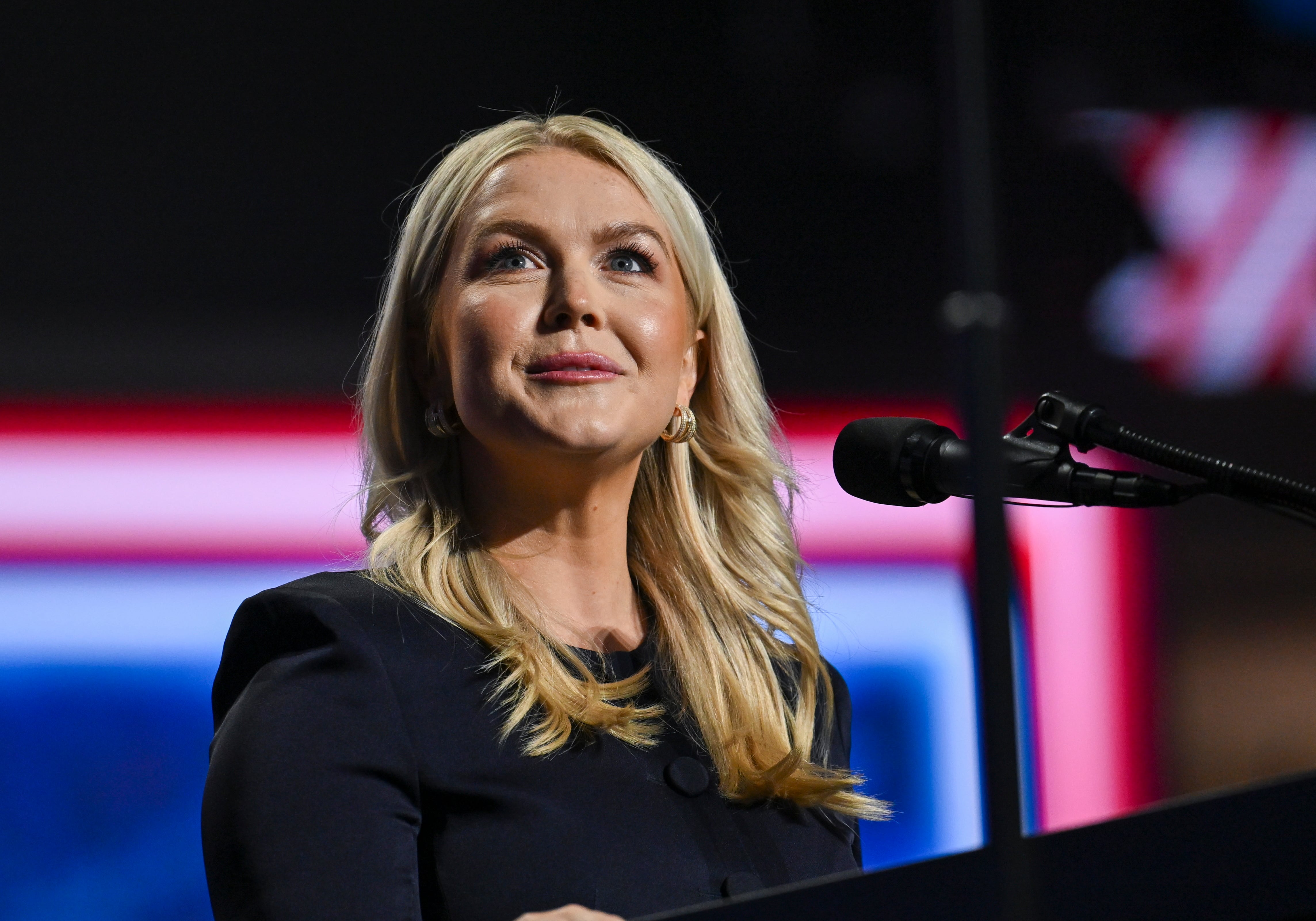
The White House press secretary is one of the most exposed jobs in the world, but with a $195,200 salary it is not among the highest paid. In Washington it is assumed to be a thankless task that often, like many roles that require rolling up your sleeves in the administration, serves as a prelude to more lucrative work: million-dollar book deals, senior private-sector posts, or a jump to the media. This Monday Karoline Leavitt, who resigned her post last August, chose the latter option: she will join Fox News, the conservative network confirmed.

© ALBERT PENA (EFE)


By Kurt NIMMO
Contact us: info@strategic-culture.su
President Donald Trump has gone and really done it this time. “We had them under view for a long time, and we got them,” he said about the five British men arrested at RAF Fairford, initially said to be terrorists targeting US aircraft at the British base.
It turns out the would-be terrorists did not have explosives. Instead, they had stolen red diesel for farm equipment. The British cops are mum. They’re not saying much about the arrest or the incident. The Gloucestershire Police advised the public not to speculate, but how could there possibly be no speculation in the age of social media?
Naturally, speculation went ballistic on X and other platforms. It was immediately declared that the alleged perpetrators were Iranian terrorists, maybe sleeper cells, and an image was posted of men stripped to the waist in handcuffs as evidence. It was soon discovered the image was an AI fake.
The Secretary of State went before the cameras and told the American people a “foreign actor” is responsible for the foiled attack. Initially, the knee-jerk reaction was to blame Russia. It had to be Russia, but that was not very useful, so it became evil Iranian terrorists caught in the act of sabotaging our aircraft used to bomb grade schools and hospitals.
The Brits released the five men, most likely because there is no evidence they are terrorists, but rather thieves attempting to make a buck on stolen diesel in a market where diesel is rapidly becoming scarce and expesnive, thanks to Trump’s war. There is currently an epidemic of fuel thefts from farms, but that’s not exploitable for the narrative that insists wicked mullahs in Iran can’t wait to nuke America, Israel, and maybe even the UK.
Not that facts matter to the new Prime Minister of the United Kingdom, Andy Burnham, the former frontbencher. He said there are strong indications that Iran played a part in what happened over the weekend at RAF Fairford.
Prior to Burnham, Zia Yusuf, the spokesperson for home affairs, trekked to the site of the diesel terrorism incident and said the UK must declare a national security emergency. He said there are “strong indications” Iran was involved.
Reform UK Leader Nigel Farage also demanded the declaration of a national emergency in response to “potential terrorists” stealing diesel. Farage said the diesel heist was a dry run for an attack on US forces. It is said he later deleted his social media posts, possibly because he looks like a fool.
Tobias Ellwood, a Conservative MP, demanded to know why the suspects were released on bail, while a BBC “military expert” said it was probably the Russians that nicked all that diesel.
Some folks believe the Fairford incident was a botched false flag. I disagree. The misinterpreted episode provided an excuse for the state and its corporate media to amplify the claim that there are deadly Iranian terrorists out there sleeping in cells, waiting to kill Americans.
Trump, Rubio, neocons of all stripes, and MAGA bystanders are desperate to pin something on Iran as a pretext to escalate the war. Instead of backing off and admitting they hysterically jumped the gun, they will double down and further complicate what was an avoidable situation that is now eating away at the global economy.
Trump is incapable of conceding. He will continue this disastrous war as long as possible, up until the time he is removed from the Oval Office or put on cholinesterase inhibitors to manage his hallucinations.
Original article: ronpaulinstitute.org