❌

Reading view

Iran says its peace proposal is still on the table, warns the US and Israel against a ‘miscalculation’

Iranian Foreign Minister Abbas Araghchi reiterated that his country’s proposal to end the war with the US and to restart nuclear negotiations is “still on the table,” claiming the Iranian conditions are “completely clear” and “unchanging.”

Talking to Iranian state media on the sidelines of the 52nd session of the Council of Foreign Ministers of the Organization of Islamic Cooperation (OIC) in Baghdad on Sunday, October 18, Araghchi also said that Iran is currently studying the US response to its proposals.

If the US meets its conditions, “the Strait of Hormuz will be reopened on the sixth day, and negotiations will resume on the seventh,” Araghchi said. 

Though Araghchi did not talk about them explicitly, he reiterated that the Iranian conditions are the same as what the US had agreed to under the Islamabad Memorandum of Understanding (MoU), signed in June.

On several previous occasions Iran has made clear that if the US lifts its naval blockade, releases Iran’s foreign frozen assets, and ends the war on all fronts in the region, it will allow the Strait of Hormuz to open.

As per the MoU, in the first 60 days after the deal took effect both sides were to initiate negotiations over Iran’s nuclear program. However, the MoU expired in August after hostilities were resumed within weeks of its signing.

The US resumed its military strikes on Iran in July, leading the Iranians to reimpose their blockade in the Strait of Hormuz in response, reversing its decision to open it for navigation as per the MoU.

Tehran had claimed that it presented a plan to reopen the Strait to the US in September, in a brief meeting with its delegation during the annual session of the UN General Assembly. However, US President Donald Trump later declared he had rejected the Iranian proposals.

Beware of Israeli provocations

Araghchi also rejected the repeated threats of new strikes and economic isolation against his country, claiming that Iran will not bow to threats and will defend its strategic and economic interests.

Last week it was reported that Israeli Prime Minister Benjamin Netanyahu, who is facing a tough election at home, apart from planning to escalate war against Palestinians in the West Bank, also pressured Trump to resume the military strikes on Iran.

Read more: Netanyahu presses Trump to renew aggression on Iran ahead of Israeli elections

On the same day, Trump claimed that the US may attack some specific targets in Iran in order to disrupt its nuclear program. Media reports also claimed that the US is preparing to use the so-called “mother of all bombs” to again target Iran’s energy and nuclear infrastructure.

This is despite the fact that Trump has repeatedly boasted about “obliterating” Iran’s nuclear program during the joint US and Israeli airstrikes in June 2025.

Reacting to those reports, Araghchi warned both the US and Israel to learn from their mistakes and stay away from Iran to avoid consequences more severe than during the earlier wars.

“Last time you wanted to “finish the job” Iran emerged even stronger. Want to try your luck again? Be our guest. But be careful; we have unfinished jobs too,” Araghchi said in a post on X on Monday.

He claimed that Netanyahu is pressing for a fresh war simply because he wants to stay in power and out of jail over corruption charges he has been facing for years now, without thinking about consequences to Israel or the US.

In a similar reaction, the head of the Iranian armed forces Ali Abdollahi also claimed on Sunday that his country was waiting for their [the US and Israel’s] foolish decision and miscalculation. Any attack by them would invite “a response war more severe, distinct, and devastating than in the past,” Abdollahi claimed.

Abdollahi’s warnings were relayed by several other Iranian officials on Sunday.

It is reported that the US has spent billions of dollars in the last eight months of war on Iran. It has lost most of its military infrastructure in the Gulf countries in Iranian responses, with over a dozen of its soldiers killed and several dozen of its aircraft lost. The US also faced a severe shortage of crucial ammunition due to the war on Iran, forcing it to suspend the strikes midway.
  •  

VietJet hit with worldwide asset freeze in London court dispute

A UK High Court judge has ordered a worldwide freeze on VietJet's assets after London investment firm FitzWalter argued the Vietnamese airline could try to hide or spend them amid an ongoing dispute. The ruling prevents VietJet from moving assets beyond the court's reach while the underlying case proceeds. The airline has not publicly detailed its response to the order.

  •  

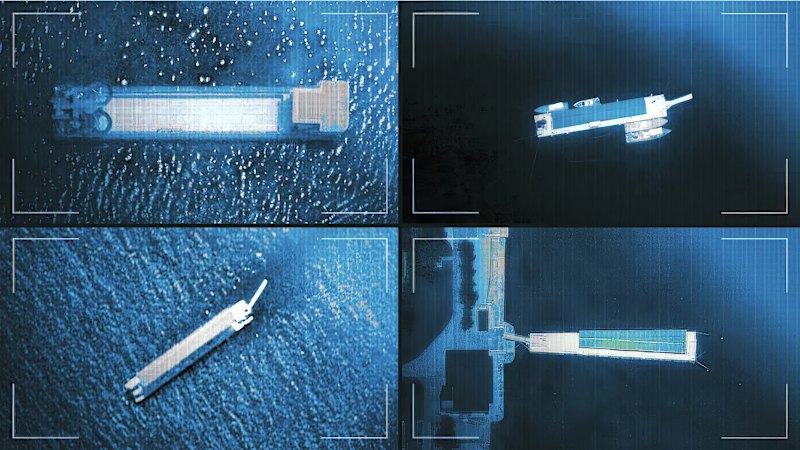
Taiwan coastguard repels 16 Chinese vessels in single-day operation

Taiwan's coastguard said it warded off 16 mainland Chinese vessels in a single day after they entered the island's self-declared restricted waters near Hualien, Pingtung, Kaohsiung and the Dongsha Islands. The coordinated, multi-pronged operation involved twelve coastguard and research ships alongside four fishing boats operating simultaneously. Analysts said the scale and coordination point to a shift in Beijing's maritime pressure tactics toward Taiwan.

  •  

South Korea: A growing national crisis and a strategic warning

Recent media reports projecting South Korea’s per capita GDP to surpass Japan’s have generated considerable excitement across the regional countries that see Korea as a role model. According to the IMF’s October 2026 projections, South Korea’s nominal GDP per capita could reach approximately $49,000 in 2027, compared with Japan’s $37,000-38,000. Its achievements in semiconductors, advanced […]

The post South Korea: A growing national crisis and a strategic warning appeared first on Asia Times.

  •  

What Australia could learn from SE Asia about managing China

Successive Australian governments have reacted with alarm at China’s influence-building activities in Southeast Asia and the Pacific. They have passed foreign interference laws, tightened foreign investment regulations, and regulated university collaborations with institutions overseas. They have executed a Pacific Step-Up and a plan for greater trade and investment with Southeast Asia. And they have tightened […]

The post What Australia could learn from SE Asia about managing China appeared first on Asia Times.

  •  

Owner or owned? Indonesia’s Chinese battery chain dilemma

Indonesia has spent a decade trying to turn its mineral wealth into something more valuable than raw commodity exports. The strategy is ambitious: restrict raw nickel exports, attract investment, build processing capacity and move downstream into electric-vehicle (EV) batteries that will power the next generation of transport and energy storage. China is central to the […]

The post Owner or owned? Indonesia’s Chinese battery chain dilemma appeared first on Asia Times.

  •  

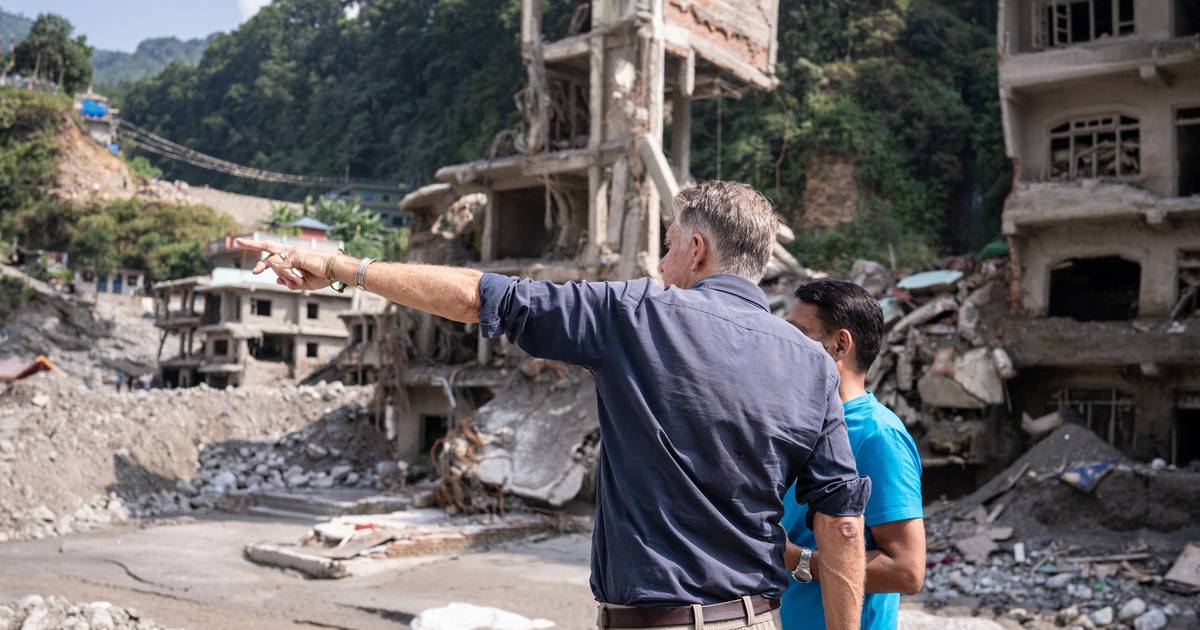
Timor-Leste pede mais rapidez nas obras do aeroporto de Díli

Obras de renovação do Aeroporto Internacional Presidente Nicolau Lobato integram expansão da pista do aeroporto de Díli e também a construção de um novo terminal de passageiros.

© ANTONIO DASIPARU/EPA

Para além do novo terminal que vai incluir duas mangas de embarque de passageiros, o projeto inclui também a reabilitação e expansão da pista do principal aeroporto do país de 1.850 metros para 2.150
  •  

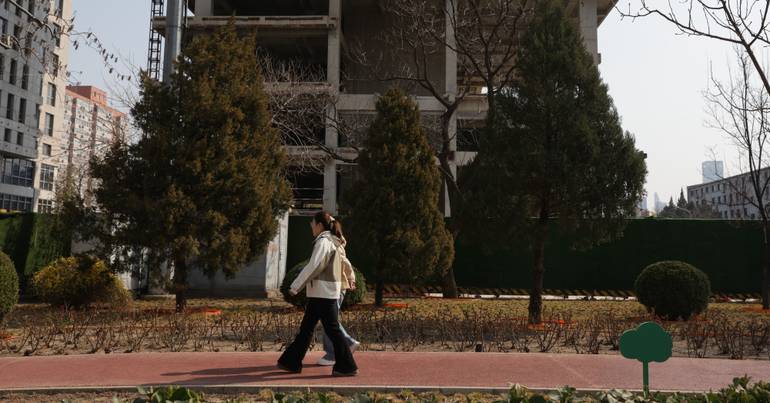
Preço de casas novas cai pelo 40.º mês consecutivo na China

Preços em 70 cidades selecionadas recuaram 0,14% face a agosto, segundo cálculos efetuados com base nos dados divulgados pelo Gabinete Nacional de Estatísticas chinês, depois de uma queda de 0,17%.

© JESSICA LEE/EPA

A crise imobiliária é também um dos principais fatores por detrás do abrandamento da economia chinesa nos últimos anos
  •  

Produção industrial chinesa cresce 5,5% em setembro

Resultado superou as expectativas dos analistas, que antecipavam uma recuperação ligeiramente mais moderada, para cerca de 5,4%, tendo a indústria transformadora registado o maior crescimento com 6%.

© WU HAO/EPA

A taxa oficial de desemprego nas zonas urbanas recuou 0,1 pontos percentuais, para 5,2%
  •  

Digger ou Mike Tyson: qual bate mais (ou menos)? — Sugestões

O filme de Iñarritu, com Tom Cruise, e o documentário em quatro partes na Netflix estão em destaque esta semana, mas também há jazz em Guimarães, “Babies” em Inglaterra e ramen no Japão.

  •  

Strategy trumps scandal as West goes easy on India

Western governments are rebuilding ties with India even as they accuse it of foreign interference and of running intelligence operations against people on their soil. The contradiction was on display October 13, when Canada’s Prime Minister, Mark Carney and India’s Prime Minister, Narendra Modi, reaffirmed plans to expand trade and security cooperation, though underlying security […]

The post Strategy trumps scandal as West goes easy on India appeared first on Asia Times.

  •  

Indonesia uses dry ice to clear toxic smoke from forest fires

Indonesia is dropping dry ice into clouds in an effort to trigger rain and clear toxic haze caused by seasonal forest and peat fires. The smog has blanketed parts of the country and drifted across neighbouring South East Asian nations. Authorities describe the weather-modification effort as an emergency measure while fire-fighting teams continue working on the ground.

  •  

Hong Kong finds fire-safety parts missing in 152 Taizoom lifts

Hong Kong's Electrical and Mechanical Services Department says lifts in 74 more buildings serviced by Taizoom Elevator are missing crucial door-frame fire-safety components, bringing the total number of affected properties to 152. The parts help protect occupants from flames and smoke during a fire. Citywide inspections of all lifts maintained by Taizoom are continuing.

  •  
❌