❌

Reading view

Flávio Bolsonaro’s Campaign Uses AI to Engineer Fake Support
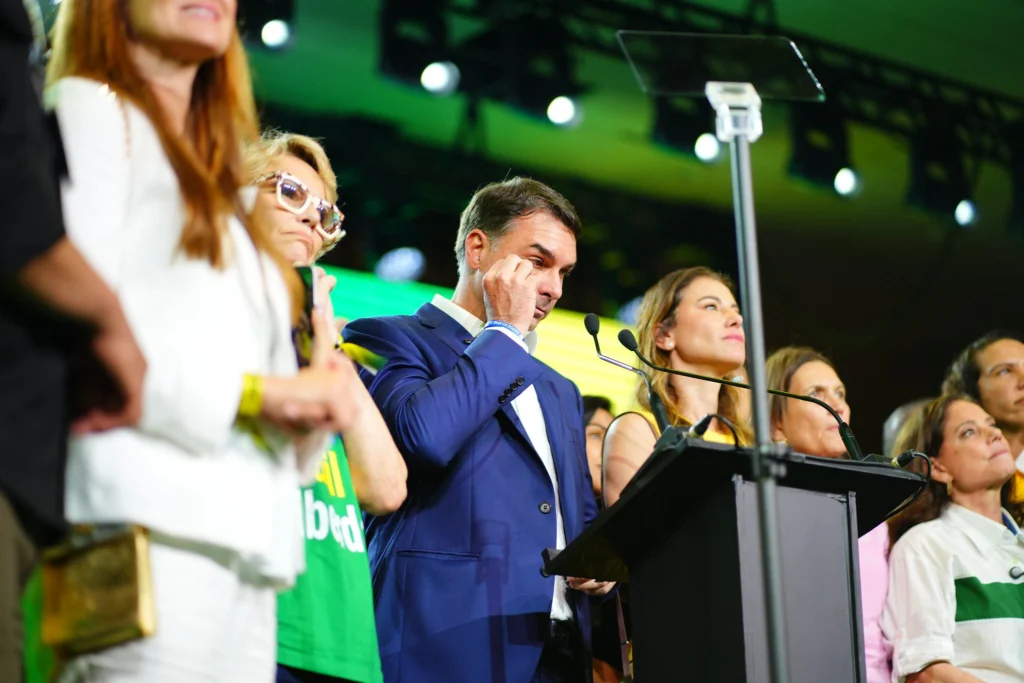
Flávio Bolsonaro at a rally for his presidential campaign. Photo: JOTA.

Digital models modified Flávio Bolsonaro’s event photography to artificially expand audiences and simulate support from female voters.


The Brazilian presidential election has become an arena for modern, dirty digital tactics. Senator Flávio Bolsonaro, representing the Liberal Party (PL), has centered his campaign strategy around coordinated digital reach and automated content production.

RELATED: UN Experts Raise Concerns Over Meta’s Handling of Political Expression During Brazil Elections

Rather than working as a traditional political campaign of physical rallies, the operation relies heavily on digital distribution infrastructure across social media platforms.

Flávio’s strategy operates through two main mechanisms. First, the campaign uses synthetic consensus tools, automated social media accounts, AI image generation, and digital avatars to simulate organic public backing.

Second, the campaign benefits from algorithmic distribution asymmetries on digital platforms, which amplify far-right material while placing system restrictions on competing political content.

Collected evidence by independent researchers, journalism networks, and electoral authorities indicates that systemic digital manipulation and platform-level infrastructure played a decisive role in shaping voter perception and electoral engagement in Brazil.

Industrial Bot Networks

A core component of Flávio Bolsonaro’s digital strategy involves the commercial purchase of automated networks designed to manufacture artificial public support.

An investigation by The Intercept Brazil revealed that Flávio Bolsonaro paid Elytron, a cybersecurity firm, to carry out data collection and voter identification to spread rumors and create fake accounts.

These automated tools operate primarily across WhatsApp, Instagram, and X, generating synchronized posts and artificial engagement to bypass standard organic distribution patterns.

This infrastructure uses astroturfing techniques to alter online public discourse. By deploying thousands of automated accounts programmed to post identical messaging scripts, the campaign artificially inflates engagement metrics, pushes specific political hashtags into regional trending lists, and floods comment sections on public news pages.

This creates a false impression of widespread popular momentum, designed to sway undecided voters through perceived consensus.

Technical evaluations submitted during electoral court proceedings reveal the scope of these automated operations. Data presented to electoral monitors shows coordinated account clusters posting at frequencies humanly impossible without software automation.

🚨 BREAKING: Flávio Bolsonaro paid R$600,000 to a company that offered AI to manipulate elections, according to Intercept Brasil. pic.twitter.com/eFcRp74vNw

— Pop Core (@TheePopCore) October 16, 2026

Deepfakes, AI Avatars, Demographic Manipulation

Various social organizations and media outlets have denounced the deployment of AI image and video generation tools as another facet of Flávio Bolsonaro’s digital strategy.

A prominent example occurred during campaign launch events, where the campaign broadcast an AI-generated digital avatar of former president Jair Bolsonaro endorsing his son’s candidacy. This technique allowed the campaign to maintain the political presence of the former president Bolsonaro in public events despite judicial rulings restricting his direct participation in political activities.

In addition, the campaign used AI tools to manipulate visual documentation of campaign gatherings. Documented instances show event photography processed through image generation models to alter crowd compositions.

These AI modifications included scaling up crowd sizes to exaggerate physical attendance and digitally swapping male attendees with female faces. The primary objective of this demographic engineering was to simulate broader support among female voters, a demographic group where polling data consistently showed lower support for the candidate.

An investigation by a Brazilian media outlet identified more than 50 TikTok videos altered using AI, specifically on-the-street interviews in which subjects claimed they would vote for Flávio Bolsonaro. These videos garnered over 7 million views, yet in only 18% of them did the platform indicate that the individuals featured were AI-generated.

While Brazilian law prohibits the use of AI-generated videos in political campaigns, it is difficult to determine when such content is created by third parties with no direct affiliation to the campaigns.

Due to a lack of female supporters, Brazilian presidential candidate Flávio Bolsonaro has resorted to using AI to transform middle-aged men into attractive young women.

This AI-generated creation has been dubbed the "Bolsonaro Bombshell." pic.twitter.com/ap1ecKou9K

— Vatnik Soup (@vatniksoup) October 20, 2026

Disinformation and Aggressive Public Discourse

Flávio Bolsonaro’s public communications strategy relies heavily on coordinated attack campaigns directed against President Luiz Inácio Lula da Silva and the Workers’ Party (PT).

The Flávio campaign’s public messaging routinely utilizes sensationalist allegations and targeted attacks. Online networks affiliated with the campaign circulate manufactured claims regarding public safety, economic stability, and social values, framing the current administration in terms of moral crisis.

On Sunday the 18th, the public debate between the two candidates took place, and Flávio Bolsonaro spent most of his time attacking Lula during his turns to speak.

Throughout the debate, Flávio was sarcastic and mocking toward President Lula; he attempted to intimidate him physically, to which Lula responded by moving away, stating that he did not want to be near either Flávio or the Bolsonaro family.

Furthermore, when the discussion turned to public safety, Flávio claimed that Lula is the preferred candidate of organized crime, pointing out that Lula received a large number of votes from within the country’s prisons. Lula replied, “I want 100% of them to vote for me -even your father,” a reference to the fact that Jair Bolsonaro is currently incarcerated.

This aggressive messaging strategy directly impacts the broader political environment. By flooding public discourse with inflammatory claims, the campaign creates heightened polarization, distracts from substantive legislative evaluations, and systematically delegitimizes established democratic processes and electoral monitoring bodies.

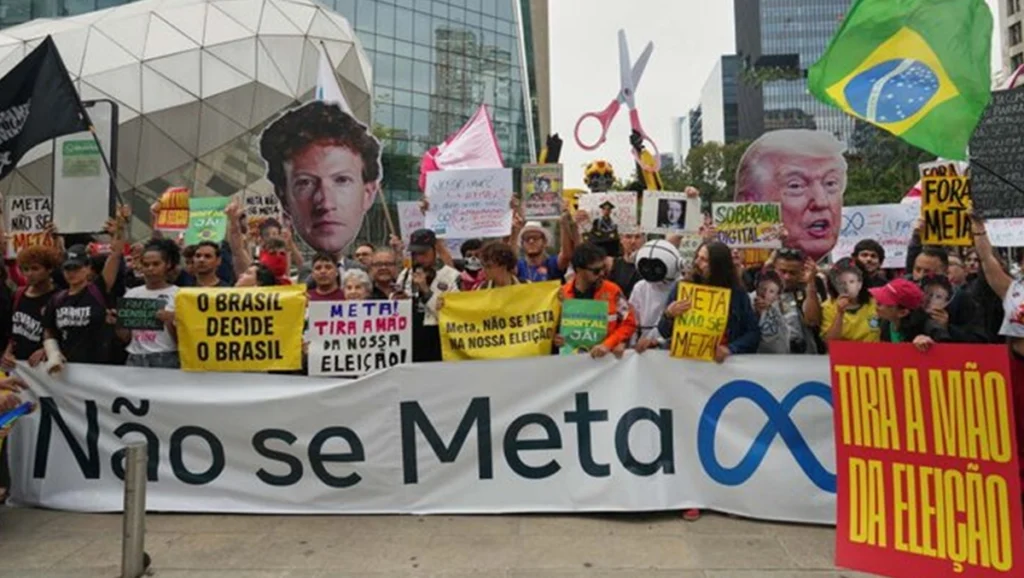
Hundreds of Brazilians protested outside Meta’s São Paulo offices, accusing the technology giant of limiting President Luiz Inácio Lula da Silva’s campaign reach while boosting far-right candidate Flávio Bolsonaro, just six days before the presidential runoff. The demonstration… pic.twitter.com/KRAxExFjMO

— teleSUR English (@telesurenglish) October 20, 2026

Meta’s Structural Bias in the Campaign

The Brazilian presidential race was shaped by asymmetries within Meta’s platforms, including Instagram, WhatsApp, and Facebook.

Filings submitted to the Superior Electoral Court (TSE, in Spanish) by President Luiz Inácio Lula da Silva’s legal team documented clear disparities in how content from both campaigns was handled by the different platforms.

A primary issue involved Meta’s generative AI features. When users requested campaign materials incorporating Lula’s official ballot number, 13, the system repeatedly rejected the prompts, citing political content restrictions. Conversely, identical requests containing Flávio Bolsonaro’s candidate number, 22, were routinely processed, generating promotional material for the far-right campaign.

In other instances, the AI tool inserted Bolsonaro’s electoral number into completely unrelated image requests. Following formal complaints, the Superior Electoral Court ordered Meta to ensure equal treatment. Meta attributed these outcomes to technical errors and implemented broad restrictions on political image generation.

Internal Meta communications revealed that technical errors caused Lula’s official Instagram profile to be excluded from platform search results and recommendation engines, while Flávio Bolsonaro’s profile remained fully discoverable and actively recommended to users. Furthermore, internal technical escalations confirmed that temporary account restrictions had hindered the reach of Lula’s messaging assets.

WHO'S THE REAL THIEF? LULA CHALLENGES BOLSONARO TO SHOW RECORDS

Ahead of Brazil’s presidential election, Brazilian President Lula da Silva publicly challenged rival Flávio Bolsonaro to open his bank accounts, release his phone records, and let the Brazilian people decide who… pic.twitter.com/U6Ge0yOV6A

— Sovereign Media (@sov_media) October 21, 2026

Regulatory Imperatives and Popular Sovereignty

The execution of Flávio Bolsonaro’s digital presidential campaign illustrates the evolving mechanics of far-right electoral operations.

By combining commercial bot procurement, generative AI deepfakes, coordinated public attacks, and platform-level algorithmic advantages, the campaign constructed a heavily synthetic media environment designed to influence voter perception.

These developments underscore the limitations of existing legal and regulatory frameworks in addressing digital campaign manipulation. While judicial interventions by the Superior Electoral Court forced technical corrections, reactive oversight remains insufficient to counteract real-time automated suppression and algorithmic imbalance.

Protecting democratic processes requires structural regulatory reform, including mandatory algorithmic transparency, strict auditing of generative AI systems, and clear accountability standards for global technology corporations operating within national borders.

Exposing the mechanics of digital manipulation through independent research and data-driven journalism remains essential to safeguarding electoral integrity against automated distortion and platform bias.

Sources: Brasil de Fato – Agência Brasil – Gov.br – O Globo – Folha de S.Paulo – O Estado de S.Paulo – El País – CNN Brasil – EFE – Instituto Tricontinental – La Base América Latina – Diario Red – The Intercept – El Salto

  •  

Meta creates a new stock class to keep Zuckerberg in control

Mark Zuckerberg smiles while holding a smartphone on a blue-lit presentation stage.
Meta wants to continue its "founder-led model" — so it's creating a new stock class.

Bloomberg/Getty Images

  • Meta established a new class of stock to ensure Mark Zuckerberg stayed as CEO.
  • The stock class will "continue the founder-led model that has driven the company," Meta said in its third-quarter earnings.
  • Zuckerberg has taken a leading position in Meta's AI era.

Meta's board wants Mark Zuckerberg to stick around.

The company announced a new category of non-voting Class C stock in its third-quarter earnings report. It listed several reasons for creating the new class — one of which is to keep the CEO in control.

A Special Committee established by Meta's board determined that Zuckerberg was the best fit to lead the company into its future, and highlighted the CEO's creative vision and management abilities.

"The creation of the Class C common stock will continue the founder-led model that has driven the company's success since its inception," Meta said.

The stock class will also provide Meta the ability to finance its growth, the earnings report said. Meta is spending big on AI and the data centers needed to power it. The company reported $34.91 billion in third-quarter capital expenditures.

Meta's press release said the distribution would effectively amount to a two-for-one stock split for existing shareholders. Susan Li, Meta's chief financial officer, said that the stock will be distributed to existing shareholders.

Other tech companies have issued stock to access new capital without diluting their CEO's voting power. Google performed a stock split in 2012 for a similar reason. Semafor was first to report the new stock class.

Zuckerberg has long been the face of Meta. He's strengthened his leadership through the AI boom, going "startup mode" and getting hands-on with the tech. The company's AI team set up their desks around where Zuckerberg sits.

The success of Muse, Meta's AI agent, has raised the profile of another Meta executive: Alexandr Wang. The chief AI officer has joined Zuckerberg for podcasts and spoken onstage at keynotes.

A Financial Times profile last week touted Wang as a "potential successor to Zuckerberg." It's clear the board wants Zuckerberg there for the long haul.

Read the original article on Business Insider

  •  

Meta CEO Mark Zuckerberg says Muse and Reality Labs are highly unprofitable — for now

Meta CEO Mark Zuckerberg
Meta CEO Mark Zuckerberg.

Finn Gomez/Getty Images

  • Meta's AI agent, Muse, is unprofitable due to "very high compute costs," CEO Mark Zuckerberg says.
  • Meanwhile, Meta expects Reality Labs, its AI glasses division, to lose $15 billion next year.
  • The social media giant has a plan to fix that.

Meta says some of its biggest cash incinerators could finally start turning profits.

The social media giant, which generated over 97% of its quarterly revenue from ads, has faced persistent questions from investors about the lack of profitability in its AI and hardware initiatives.

Meta CEO Mark Zuckerberg addressed those concerns head-on during its third-quarter earnings call on Wednesday.

Zuckerberg said that Muse, the AI assistant it launched last month, is unprofitable since it's "very compute intensive to run." Meta expects to start turning that around next year by massively improving Muse's efficiency.

"If compute efficiency continues improving quickly for another few years, which we think is highly likely, then Muse will be highly profitable over multiple years," he said.

Meta plans to make money from Muse by taking a small transaction fee off of purchases it drives, Zuckerberg said at Meta's Connect conference last month.

Zuckerberg added that Muse, which launched only in the US and Canada, wasn't launched globally due in part to the amount of compute it requires. (Meta's North American users are generally its most lucrative.)

Zuckerberg also struck a positive note about its cash-hemorrhaging Reality Labs division, which makes products like Meta Ray-Bans and virtual reality glasses.

Meta expects Reality Labs to narrow its losses to about $15 billion in 2027, down from the $18 to $19 billion it expects to lose this year. The division should start trending toward profitability next year, as Meta's AI systems make it more useful, Zuckerberg said.

"I continue to believe that the path to delivering holographic experience, of bringing together the physical and digital worlds and everyday glasses, will come through VR first," Zuckerberg said.

Have a tip? Contact this reporter securely on Signal at charlesrollet.12 or +1-628-282-2811. Use a personal email address and a non-work device; here's our guide to sharing information securely.

Read the original article on Business Insider

  •  

Anthropic launches Claude Duet, its answer to Meta and OpenAI's personal agents

Ami Vora, Anthropic's chief product officer, and Daniela Amodei, its president, sit on stage.
Ami Vora, Anthropic's chief product officer, and Daniela Amodei, its president.

Don Feria/AP Content Services for Anthropic

  • Anthropic has its answer to AI agents like Meta's Muse and OpenAI's Dots.
  • Claude Duet, built on Anthropic's flagship model, has entered the personal agent frenzy.
  • Karan Ahuja, a recent departee from Meta, led Claude Duet's development.

Anthropic is joining the personal AI agent craze.

The company announced the new app Claude Duet on Wednesday, billed as a "proactive agent" that can run in the background, surface tasks to a user, and handle a variety of work. The tool is in research preview for now with a waitlist, meaning it won't immediately compete for the larger market with other new agents like Meta's Muse and OpenAI's Dots.

Still, the announcement ramps up the pressure on those companies — Anthropic says it built Duet around its flagship Opus 5.5 model, which was released in late September and has already become one of the industry's most popular. Recent model breakthroughs have made AI better at handling work on its own, spurring a rush to build these "always-on" personal agents.

"It can have the discernment and judgment around when to be proactive, when to act on your behalf," said Mike Krieger, a co-lead of Anthropic's Labs team, said in a Duet launch video.

The tool, Anthropic says, will send users a brief each morning about what's happening on their connected apps, and message them when something needs attention. Like other companies' offerings, it runs outside a user's computer, sends notifications, and asks for approval on certain tasks.

Anthropic announced Duet on the day of Meta's earnings report and used the opportunity to mention a new poach from Mark Zuckerberg's company. Karan Ahuja led product management for Meta Superintelligence Labs until July, according to his LinkedIn, before starting at Anthropic in August and leading Duet's development.

He wrote on X that he's been using Duet to build Duet, and said the team "built it for professionals and small business owners juggling a lot at work and at home."

Ahuja also wrote that Anthropic is letting people into Duet from the waitlist "as quickly as possible."

The news didn't go unnoticed at Meta. Alexandr Wang, who heads Meta Superintelligence Labs, posted a meme about Duet's similarity to Muse.

Anthropic is fast approaching a giant initial public offering, which could value the company at as much as $2 trillion. Like other AI players, the company navigates a high-wire competition to win over users, secure computing power, build state-of-the-art models, and deliver AI-native products.

The data firm Apptopia estimates that Muse had more than 14 million installations as of Wednesday. It found that Claude users who installed the Muse app were using Claude more than before, though still for fewer minutes per day than they spent on the Meta product.

Have a tip? Contact this reporter via email at scouncil@businessinsider.com, or over text, Signal, Telegram, or WhatsApp at 415-757-8198. Use a personal email address, a non-work WiFi network, and a non-work device; here's our guide to sharing information securely.

Read the original article on Business Insider

  •  

Meta narrows capex forecast as it leans into the AI agent wars

Mark Zuckerberg, chief executive officer of Meta Platforms Inc., during the Allen & Co. Media and Technology Conference in Sun Valley, Idaho, US.
Meta, led by Mark Zuckerberg, has spent big on infrastructure for its AI development.

Bloomberg/Getty Images

  • Meta spent $34.91 billion in capital expenditures in its third quarter.
  • The company is spending big on data centers and other infrastructure for its AI development.
  • Meta predicted $135-145 billion in capex for 2026, aligning with analyst expectations.

Meta is making it rain for AI.

The company spent $34.91 billion in capital expenditures during the third quarter of 2026. That's up from the second quarter's sum, $31.08 billion.

For the year 2026, Meta said it expects to spend between $135-145 billion in capital expenditures, narrowed from its prediction of $130-145 billion last quarter.

Meta's forecast includes the yearly capex prediction that analysts expected: $139.79 billion.

As Meta bets big on AI, it is investing heavily in its development. It has built massive, costly data centers and spent big on computing power.

The spending uptick was expected. On the "Cheeky Pint" podcast earlier this month, CEO Mark Zuckerberg recounted early conversations about the investment — and said he'd bet up to $200 billion on AI, before he knew the models would work.

Investors haven't loved Meta's massive capex forecasts in past quarters. The stock tumbled almost 10% last quarter after earnings per share missed Wall Street estimates, and sank 6% the quarter before on raised capex guidance.

This quarter, Meta has a new hero product: Muse.

The AI assistant has reached over 2 million daily users and 3 million downloads. It quickly scaled the App Store. Muse users told Business Insider they chatted with it to help plan trips and ace exams.

The energy around the company is ebullient, as Alexandr Wang, Meta's chief AI officer, continues to post memes of Muse's squishy-looking mascot.

At Meta's Connect keynote event in September, Zuckerberg said Muse "has a novel business model."

"We believe that Muse will make you money, and we're standing behind this by making Muse free for a huge number of tokens with the expectation that over time, we will profit by taking a small fee from transactions," he said.

Muse could help justify the capex guidance for some investors. The stock was trading up 4.12% after-hours at the time of publication.

Read the original article on Business Insider

  •  

ONU aponta falta de isenção da Meta em eleição brasileira

Logo Agência Brasil

Especialistas das Organizações das Nações Unidas (ONU) assinaram uma carta em que apontam restrições à liberdade de expressão em plataformas como Instagram, Facebook e WhatsApp, todas da empresa Meta, nas eleições brasileiras em 2026.

Eles disseram que os observadores internacionais que participaram das eleições detectaram tratamento desigual das plataformas em relação aos conteúdos das campanhas, apontando que as contas ligadas a um dos candidatos foi prejudicada.

Notícias relacionadas:

Entre os episódios registrados estão interrupções temporárias de contas de campanha e engajamento e alcance de publicações políticas de um dos candidatos severamente menor.

Eles também citaram que milhares de contas e perfis de influenciadores, jornalistas e criadores de conteúdo foram suspensos, quase todos do mesmo lado político.

NetLab

Um carta do NetLab também questiona a derrubada de um perfil do candidato Luiz Inácio Lula da Silva sob a alegação de controle contra notícias falsas ligadas à políticas públicas pela Meta, enquanto a empresa mantém perfis com publicações com fake news.

O documento também diz que o laboratório identificou falhas da empresa de tecnologia, que teria permitido “propaganda eleitoral paga no exterior e vendido e veiculado durante o resguardo eleitoral”.

O NetLab é um laboratório de pesquisas sobre internet e redes sociais ligado à Universidade Federal do Rio de Janeiro (UFRJ).

Caso do WhatsApp

Na semana passada, a campanha do candidato à reeleição Luiz Inácio Lula da Silva (PT) entrou com uma ação no Tribunal Superior Eleitoral (TSE) depois que usuários do WhatsApp relataram que a inteligência artificial do aplicativo se recusava a produzir imagens com a palavra “Lula” e o número “13”, mas produzia conteúdo normalmente com a palavra “Flávio” e o número ”22”.

Os advogados da campanha afirmaram que a Meta praticou “seletividade algorítmica” para beneficiar Flávio Bolsonaro, candidato do PL.

Outro lado

Sobre a nota da ONU, a Meta respondeu que as pessoas podem se expressar livremente em seus aplicativos, sem tratamento preferencial a qualquer posicionamento político. “Incidentes técnicos podem ocorrer em uma plataforma da nossa escala, mas não representam direcionamento político. Cumprimos a legislação eleitoral brasileira e agimos rapidamente para corrigir erros quando identificados, garantindo condições de igualdade para todos que utilizam nossos serviços", disse a empresa

Em relação à nota do NetLab, respondeu que não permite conteúdos que explorem programas públicos para fraudar pessoas, removendo-os sempre que identificados.

  •  

Trump Orders Data Centers to Generate Their Own Power, Provide 'Dividend' to Communities

President Trump announced early Wednesday that large data centers will be required to produce their own electricity and share any surplus with the communities around them in the form of a "dividend."

The post Trump Orders Data Centers to Generate Their Own Power, Provide ‘Dividend’ to Communities appeared first on Breitbart.

  •  

Multa histórica para Meta: pagará 25.000 millones de dólares en Nuevo México por las malas prácticas de Facebook

Nuevo México ha tomado la delantera como un Estado pionero a la hora de poner freno a los abusos de las compañías tecnológicas. Este miércoles, un juez ha ordenado a Meta —la compañía matriz de Facebook, Instagram y WhatsApp— pagar nada menos que 25.000 millones de dólares (más de 22.000 millones de euros), tras decidir que la compañía es culpable de engañar a sus usuarios, en concreto a los de Facebook, con respecto a la moderación de contenidos y también con sus políticas de privacidad.

Seguir leyendo

© NurPhoto (NurPhoto via Getty Images)

El logo de la compañía Meta.
  •  

Meta ordered to pay a $25 billion penalty over New Mexico class action suit

Meta CEO Mark Zuckerberg.

ROBERTO SCHMIDT / AFP via Getty Images

  • A New Mexico judge ordered Meta to pay $25 billion over how it handled its users' data.
  • It could be the largest penalty against Meta in history.
  • Meta recently agreed to an $18 billion settlement over the impact of its tech on kids.

A judge in New Mexico ordered Meta to pay $25 billion for misleading users about how it handled their data and for failing to prevent misinformation on Facebook.

The ruling could be the largest penalty in Meta's history. Last month, Meta settled a child-safety lawsuit brought by a group of US states for $18 billion.

The New Mexico case focused on Meta's handling of user records that Cambridge Analytica used for campaign purposes during the 2016 election. New Mexico alleged that Facebook misrepresented the extent of users' control over their data on the app.

"Facebook's wrongdoing—over the course of years and systematically broadcast to the public—goes to the heart of Facebook's core business practices," Judge Francis J. Mathew wrote in the ruling. "It relates to the way in which Facebook induces people onto the platform and ultimately keeps them there."

In a statement, Meta's chief legal officer, C.J. Mahoney, said the penalty "makes it all but impossible to do business in the state of New Mexico."

"At its core, this lawsuit seeks to impose a tax on speech to enforce new rules for what people can say online," Mahoney said. "We are confident we will prevail on appeal."

A jury ruled against Meta last month, finding the company committed nearly 50 million violations of a New Mexico law prohibiting deceptive trade practices. Each violation carries a penalty of up to $5,000.

Some Meta executives, including CEO Mark Zuckerberg, were deposed in the case. New Mexico first sued the company in 2021, and the case went to trial last month.

In internal Meta communications presented at the trial, Zuckerberg appeared to obfuscate methods for users to hide their data.

"Give them a chance to change their privacy settings but obviously don't encourage it," Zuckerberg wrote in one internal message.

Meta's next move remains unclear. The company didn't immediately respond to a request for comment on Wednesday.

This is a breaking news story. It will be updated.

Read the original article on Business Insider

  •  

Meta, condenada a pagar 25.000 millones de dólares al estado de Nuevo México (EEUU) por engañar a los usuarios sobre la privacidad en Facebook

La sanción impuesta por un juez de Nuevo México por el caso de Cambridge Analytica podía haber sido de hasta 219.000 millones Leer

La sanción impuesta por un juez de Nuevo México por el caso de Cambridge Analytica podía haber sido de hasta 219.000 millones
  •  

UN Experts Raise Concerns Over Meta’s Handling of Political Expression During Brazil Elections

They warn of disproportionate restrictions on campaign accounts and urge Meta to ensure fair treatment of candidates.

On Wednesday, United Nations human rights experts expressed concern about restrictions on political freedom of expression occurring in Brazil as a result of the way the technology company Meta is handling its social media platforms during Brazil’s presidential elections.

RELATED:

Brazilian Court Gives Meta 24 Hours to Prove Equal Treatment of Presidential Campaigns

“Reports of restrictions on legitimate political expression on Meta platforms during Brazil’s elections raise concerns for freedom of expression, association, political participation and equal treatment of political viewpoints, UN experts said.

“Online platforms are key actors in democratic debate. Preventing people from speaking or reaching audiences without explanation affects who is heard,” they added.

This assessment is based on findings by international election observers who have reported incidents of political discrimination through electronic media.

🇧🇷 | META ATACA DE NUEVO A LULA

Empleados de Meta admitieron afecciones voluntarias a las cuentas de Lula, mientras favorecían la visibilidad de Flavio Bolsonaro.

👉🏻 Un aporte oportuno para analizar las elecciones en la nueva arena híbrida:https://t.co/oIAXraHGud pic.twitter.com/kHjb9CxlUM

— Adrián Ramírez (@_adrianramirez_) October 17, 2026

The text reads, “META TARGETS LULA AGAIN. Meta employees admitted to intentionally interfering with Lula’s accounts, while boosting the visibility of Flavio Bolsonaro.”

Among those incidents, they highlighted the temporary interruptions of the campaign account of President Lula da Silva, the candidate of the Workers’ Party who is competing against U.S.-backed far-right Senator Flavio Bolsonaro in the runoff scheduled for Sunday, Oct. 25.

Observers have also recorded differences in audience engagement, user feeds, view counts and reach; restrictions on that campaign’s Instagram posts; and differences between the main political parties in AI image generation, WhatsApp channel search results, candidates’ stories and the distribution of political content potentially benefiting Bolsonaro’s campaign.

“Monitoring reports show thousands of accounts and posts have faced suspensions, reduced visibility and sharing limits, including journalists, human rights defenders, civil society actors and content creators,” the UN experts said.

“Information, including from Meta employees, suggests that accounts linked to one side of the presidential race were disproportionately curtailed.”

3 days after Meta was ordered to stop manipulating algorithms to favor Flavio Bolsonaro in the presidential election, two orgs have submitted evidence to Brazil's Superior Electoral Court that the corporation is still violating national election laws. https://t.co/GzJIA8gSjL

— BrianMier (@BrianMteleSUR) October 19, 2026

Last week, due to this discriminatory treatment, the Brazilian Superior Electoral Court ordered Meta to apply the same rules to both candidates until the runoff, prohibiting unequal restrictions on campaign reach, recommendations, and search results.

“Losing reach can mean losing a voice in public debate and the ability to mobilise communities. Algorithms, AI systems and content-moderation decisions must not become invisible arbiters of political discussion. Where political expression appears disproportionately restricted, platforms must explain why, address unequal impacts and ensure effective remedies,” the UN experts warned.

“The responsibility to respect human rights requires technology companies to identify, prevent and address adverse impacts, in line with the UN Guiding Principles on Business and Human Rights, including in platform governance and content moderation,” they added.

A Meta AI chatbot tells grad student Laura Morgado why Meta is backing Bolsonaro. “Trump & the Bolsonaros are the global political shield for big tech companies against the advance of European regulation & the Latin American left." Another technical glitch?https://t.co/NyVrTkP07d

— BrianMier (@BrianMteleSUR) October 16, 2026

“During elections, delayed remedies may have irreversible consequences. Freedom of expression and information integrity must therefore go hand in hand. Measures against disinformation must not arbitrarily restrict legitimate political expression,” the UN experts stressed, and urged Meta to assess whether its moderation, recommendation, and AI systems disproportionately restricted one side of Brazil’s electoral debate.

“Digital platforms must not become unaccountable gatekeepers of political debate, nor should their systems be susceptible to undue influence by political actors. Democracy and free and fair elections depend on independent and consistent platforms and an open, pluralistic environment where people can access information, scrutinise those seeking power, exchange views and organise without arbitrary interference,” the experts said.

The statement was signed by figures including Leopoldo Maldonado, Special Rapporteur on the promotion and protection of the right to freedom of opinion and expression; Margaret Satterthwaite, Special Rapporteur on the independence of judges and lawyers; and Gina Romero, Special Rapporteur on the rights to freedom of peaceful assembly and of association.

teleSUR/ JF Sources: UNHRC – EFE

  •  

Observadores da ONU questionam atuação da Meta nas eleições brasileiras

Especialistas independentes da ONU (Organização das Nações Unidas) questionaram a atuação da Meta nas eleições brasileiras de 2026. Em nota divulgada nesta quarta-feira (21), o grupo cobra que a empresa investigue se seus sistemas de moderação, recomendação e inteligência artificial restringiram de forma desproporcional conteúdos ligados a um dos lados da disputa eleitoral.

Também pediram que a Meta forneça explicações e mecanismos de reparação adequados, aplique as regras de forma consistente e sem discriminação, mantenha um diálogo transparente com a sociedade civil e garanta que reclamações possam ser tratadas durante o período eleitoral.

Segundo eles, há preocupações sobre liberdade de expressão, participação política e igualdade de tratamento entre diferentes posições políticas depois de relatos de limitações à expressão política nas plataformas da empresa, que incluem Facebook, Instagram e WhatsApp.

Os especialistas relatam incidentes como:

  • interrupções temporária de conta de campanha de um dos candidatos (sem mencionar qual);
  • diferenças no engajamento do publico, nos feeds dos usuários, na contagem de visualizações e no alcance;
  • restrições a publicações da campanha no Instagram;
  • diferenças entre os principais partidos políticos na geração de imagens por IA, nos resultados de busca de canais do WhatsApp, nos stories dos candidatos e na distribuição de conteúdo politico, potencialmente favorecendo a campanha do candidato oposto.

“Plataformas online são atores fundamentais no debate democrático. Impedir que as pessoas se expressem ou alcancem audiências sem explicação afeta quem é ouvido”, disseram os especialistas independentes, que trabalham voluntariamente, não sendo funcionários da ONU nem recebendo salário.

Os observadores afirmam que relatórios de monitoramento mostram que milhares de contas e publicações foram suspensas, tiveram redução de visibilidade e limitações de compartilhamento, incluindo jornalistas, defensores de direitos humanos, atores da sociedade civil e criadores de conteúdo.

“Informações, inclusive de funcionários da Meta, sugerem que contas vinculadas a um dos lados da disputa presidencial foram afetadas de forma desproporcional”, declara a nota publicada nesta quarta-feira.

Os especialistas também alertaram que tais restrições podem afetas o acesso à informação, a liberdade de reunião pacifica e de associação, além de comprometer as eleições quando “as liberdades fundamentais não são respeitadas durante todo o processo eleitoral”.

Meta nas eleições

Em 16 de outubro, o TSE (Tribunal Superior Eleitoral) manteve, por unanimidade, a decisão do ministro Marco Aurélio Bellizze que determina que a Meta não interfira na distribuição de conteúdo político-eleitoral de Luiz Inácio Lula da Silva (PT) nem de Flávio Bolsonaro (PL).

A liminar foi concedida em parte, em ação da campanha de Lula. A coligação afirma que a empresa falha “de forma reiterada e sistemática” na entrega de suas postagens e alega que a Meta AI, ferramenta de inteligência artificial da big tech, recusa pedidos de imagens do presidente, mas atende pedidos sobre Flávio Bolsonaro.

Pela decisão, a Meta não pode reduzir a distribuição, excluir da recomendação, restringir a busca ou ajustar métricas de conteúdo político-eleitoral de nenhuma das duas candidaturas.

Há três exceções: políticas da plataforma divulgadas previamente e aplicadas de forma idêntica a Lula e a Flávio; a regra do TSE que retira os perfis oficiais dos candidatos dos sistemas de recomendação; e ordens judiciais.

O ministro também determinou que a empresa:

  • só restrinja contas de anúncios das campanhas após revisão humana ou reveja, em até duas horas, bloqueios feitos por sistema automático;
  • suspenda anúncios eleitorais pagos por quem não pode contratá-los, especialmente a partir de contas no exterior;
  • aplique critério idêntico às duas candidaturas na Meta AI;
  • apure 255 perfis apontados como possível rede inautêntica e verifique a rotulagem de IA em 1.204 publicações;
  • reponha, até 21 de outubro, o impulsionamento contratado pela campanha de Lula e não entregue.

Para Bellizze, relator do caso na Corte Eleitoral, não há comprovação de manipulação proposital pela Meta na distribuição de conteúdos a favor ou contra Lula ou Flávio. Segundo ele, a medida é preventiva e busca evitar tratamento desigual na reta final da disputa, marcada para 25 de outubro.

Na terça-feira (20), a Meta negou que esteja descumprindo ordens da Corte Eleitoral durante a eleição ou favorecendo candidaturas em suas redes sociais.

No documento enviado ao TSE, a empresa rebateu as acusações da campanha de Lula, detalha as medidas adotadas para cumprir as diretrizes eleitorais e solicitou uma reunião com o ministro Marco Aurélio Belizze, realizada na terça-feira (20).

Segundo a Meta, as plataformas sob sua gestão aplicam as mesmas regras de distribuição de conteúdo para todos os candidatos e têm adotado uma série de medidas para evitar abusos.


  •  

Sui saccheggi a Milano c’è chi parla di esproprio proletario: un termine del tutto fuori luogo

Sul proprio profilo Instragram, il neonato ‘Movimento 17 ottobre’ (scorso) posta un video in cui alcuni giovani responsabili dei recenti saccheggi a Milano consegnano un po’ della merce rubata a un ignaro senzatetto. Titolo: ‘Esproprio proletario a Milano’. Un termine del tutto fuori luogo: l’esproprio proletario, infatti, ha tutt’altra storia.

Quei ragazzini, presi a calci nel sedere dai genitori – alcuni non solo metaforicamente – che li attendevano davanti alla Questura dove sono stati portati dopo il fermo di polizia, non possono comprendere cos’è l’esproprio proletario, quello storico, se non altro per motivi anagrafici, a meno che qualche (cattivo) maestro glielo avesse insegnato. La locuzione nasce, infatti, nel 1965, coniata dal movimento uruguaiano dei Tupamaros e viene ripresa, a fine anni ’60, dai militanti della Rote Armee Fraktion (Baader-Meinhof). Era un modo per finanziare la propria attività terroristica.

Lo aveva teorizzato, nel suo Piccolo manuale della guerriglia urbana, Carlos Marighella (1911-1969), guerrigliero brasiliano dall’aria distinta (per un paio d’anni, deputato federale) poi ucciso dalla polizia al soldo della dittatura militare. L’esproprio proletario nasce dunque con logiche squisitamente politiche e, soprattutto, organizzate: elementi che i fatti violenti di questi giorni ignorano completamente e che, se mai, potrebbero portare alla mente per esempio (se non fosse per la giovane età dei saccheggiatori d’oggi) le devastazioni made in Usa del ’71 prodotte dai tagli sociali di allora alla povera gente.

“Nel giro di pochi minuti – scriveva Leo Essen il primo gennaio del ’79 sulla rivista Magazzino – la notte fu illuminata dagli incendi, le strade furono invase da saccheggiatori che spaccavano le vetrine e portavano via di tutto al grido di ‘abbiamo intenzione di prendere ciò che vogliamo: e vogliamo ciò di cui abbiamo bisogno, e anche di più’.” Furono assalti, è vero, come quelli milanesi, “senza collegamento fra loro, ma con un comportamento omogeneo e determinato, squadre ben organizzate di giovani e giovanissimi abbatterono saracinesche e vetrine di grandi magazzini e supermercati” attraverso saccheggi “ad Est e Central Harlem, South Bronx, Bushwick, Bedford-Stuyvesant, Brooklyn, Jamaica Queens, residenze di neri, portoricani, immigrati legali e illegali dell’America centrale, ispanoamericani”.

Visualizza questo post su Instagram

Un post condiviso da M1710 (@movimento17ottobre)

Diversa, ovviamente, la portata sociale e materiale dei furti: “Nel Bronx, in un salone della Pontiac – proseguiva Essen- i saccheggiatori abbatterono il portone d’acciaio e portarono via 50 auto nuove valutate 250 mila dollari”.

In Italia l’esproprio proletario coincise, negli anni 70, con le lotte di gruppi della sinistra extraparlamentare che teorizzavano, la “riappropriazione” operaia. Dunque negozi e librerie (le immagini della devastazione dei giorni scorsi alla Feltrinelli di Torino non mostrano neppure un ragazzino che si porta via un libro, attratti invece dai giubbotti firmati e le scarpe griffate dei negozi chic di via Torino, a Milano). Probabilmente un libro non lo avranno hanno mai letto… e non lo scrivo con supponenza, ma su basi fattuali di ciò che avviene, salvo rare eccezioni, nelle periferie urbane.

E poi, negli anni 70, nessuno avrebbe mai assalito la Feltrinelli, notoriamente un’editrice di sinistra… ma i ragazzini di oggi neppure questo sanno. Allora i redditi erano bassi e anche oggi, secondo i dati di Eurostat e Banca Centrale Europea, riportati dal Corriere della Sera, “la quota di patrimoni finanziari e immobiliari nelle mani del 5% più ricco delle famiglie italiane è salita, negli ultimi 15 anni, da meno del 40% a più della metà della ricchezza totale”, mentre i poveri aumentano e pure i ceti medi se la passano male.

Anche i movimenti del ’77 puntarono su espropri proletari (e autoriduzioni). Negli espropri proletari di supermercati o negozi la merce sottratta veniva, però (spesso) redistribuita nei quartieri più poveri. Ad esempio, l’esproprio del 6 novembre 2004 a Roma da parte dei centri sociali (e i cosiddetti ‘disobbedienti’) puntò a una “spesa proletaria” al centro commerciale Panorama di Pietralata e alla libreria Feltrinelli di Largo Argentina. Si trattò, però, in effetti, di una “autoriduzione”, “per sensibilizzare, con tanto di stampa convocata, l’opinione pubblica sul mancato controllo dei prezzi arrivati alle stelle”, scriveva il manifesto del 23 gennaio 2007. Tanto che tutti vennero poi assolti. E allora i libri li presero, eccome, perché li leggevano.

Visionando le immagini delle recenti devastazioni in via Torino, a Milano, dove incredibilmente non si è visto un poliziotto per quasi 20 minuti di libere scorrerie (i contingenti erano nella vicina piazza Duomo), si può assistere a uno spacca-spacca generale, a ruota libera. Fra i ragazzini che uscivano dal supermercato Carrefour imbracciando tutto ciò che non potevano permettersi a casa loro, ho notato anche un vecchietto che, barcollando nella fuga, s’era mischiato ai devastatori con due bottiglie di liquore. Mentre un pullman rosso City Sightseeing, quelli a due piani che portano in giro i turisti mostrando le bellezze della città, transitava poco lontano, inquadrato dalle telecamere: chissà cosa avrà detto al microfono la guida…

L'articolo Sui saccheggi a Milano c’è chi parla di esproprio proletario: un termine del tutto fuori luogo proviene da Il Fatto Quotidiano.

  •  

Silêncio que se vai cantar o Fado: Ana Moura, Cuca Roseta e Raquel Tavares concertos Chaves, Espinho e Vilamoura

A Solverde Casinos & Hotéis, a principal marca a atuar nas áreas da hospitalidade, entretenimento e jogo em Portugal, anuncia a programação de novembro como uma ode à alma lusitana. A 14 de novembro, Ana Moura, Cuca Roseta e Raquel Tavares vão levar alma e tradição aos Casinos de Norte a Sul. Silêncio, que se […]

  •  

Cómo salvarnos de tiempos monstruosos

La película de Pixar Monstruos, S. A. pasa en un mundo de fantasía donde toda una sociedad industrial se sostiene sobre la energía de los gritos de los niños. Para eso, hay toda una factoría, ocupando una gigantesca nave industrial, que va poniendo a disposición de monstruos profesionales puertas mágicas que les conducen a las habitaciones infantiles. Los monstruos entran, asustan y se van a quedar con los amigos o a cenar. Para ellos es una industria cualquiera.

Seguir leyendo

© Cantero de las Muelas. Lucía

Fotograma de la película 'Monstruos S.A.'.
  •  

AI turns the midterms into a vast electoral laboratory

.

The upcoming U.S. midterms are not just another vote. They are on track to become a new testing ground for autonomous AI agents that first emerged in the Hugging Face attack. Experts are already warning of the potential for these “rogue agents,” seen in action this summer, to carry out more refined, dangerous and harder-to-trace disinformation campaigns and electoral interference than those observed in previous election cycles.

Seguir leyendo

  •  

TikTok is shifting advertising to YouTube after Meta says 'no thanks'

Mark Zuckerberg (Meta) and Shou Zi Chew (TikTok)
Mark Zuckerberg's Meta has blocked Shou Zi Chew's company, TikTok, from advertising in some markets.

Finn Gomez/Getty Images; Shawn Thew-Pool/Getty Images

  • TikTok is moving on quickly after losing access to Meta's ads platform in some markets.
  • It's shifted ad spend to YouTube, Pinterest, and mobile-app networks, according to Sensor Tower.
  • TikTok was a prominent ad spender on Meta before its ousting on October 8.

TikTok's message to Meta: If you won't take our ad dollars, your competitors will.

Meta took a bold stance this month by blocking ByteDance, TikTok's parent company, from running ads on Meta apps in some markets. Why? Well, Meta's answer was pretty straightforward. It didn't want to "run ads from a competitor whose goal is to pull people off our apps."

TikTok is now redirecting that ad spend elsewhere.

Since the ban went into effect on October 8, TikTok has shifted its ad budgets to other platforms like YouTube and Pinterest, according to allocation estimates provided to CMO Insider by the analytics firm Sensor Tower.

The share of TikTok's ad spend that went to YouTube rose to 17% between October 9 and October 16, up from 9% in the first week of October. Meanwhile, its ad spend on Pinterest grew to 9% during the same period, up from 3% in the first week of October. A majority of TikTok's spend — 58% — went to mobile-app ad networks like Google's AdMob, up from 19% at the start of October, when Meta was still an option.

Meta's move against TikTok "highlights the growing intensity of the competition across the digital landscape and across the two of them," said Kate Black, EVP of social strategy at Horizon Media. "For marketers, this really just reinforces the need to be agile and build balanced media strategies — and not having all your eggs in one basket."

Meta's TikTok ousting isn't unprecedented. Other platforms like Amazon have previously blocked competitors from running ads, while Twitter in late 2022 restricted users' ability to link to their accounts on social apps like Instagram and Mastodon, calling it "free promotion."

"Declining promotional services to a competitor is a normal business practice across industries," a Meta spokesperson said. Meta's changes will impact advertising policies in the US, Canada, Egypt, Indonesia, Japan, Thailand, and Vietnam.

For Meta, a company that pulled in $117 billion in revenue in the first half of 2026, losing one advertiser won't hurt much. Still, TikTok and ByteDance were notably prominent spenders on Meta's apps, according to Sensor Tower.

Meta will also lose ad spend from third-party marketers that link to TikTok or other ByteDance properties in their ads, further increasing its potential losses. Direct-to-consumer brands that may want to drive potential customers to TikTok Shop will miss out.

No Meta, no problem

For TikTok, losing access to Meta's more than 3 billion monthly users is a setback.

Like any social media giant, TikTok is incentivized to grow, grow, grow. Ads that target new users and drive new app downloads are part of the playbook — a strategy Meta uses to promote its own apps, like Instagram, too.

One TikTok staffer focused on user acquisition, James Gao, posted a LinkedIn callout on Sunday asking people to get in touch if they had ad inventory that could help the company meet its goals.

Horizon Media's Black said that while Meta controls the "lion's share" of social budgets, there are plenty of viable alternatives when it comes to using an ad to drive an action like an app download. Besides Google, YouTube, and Pinterest, marketers are increasingly turning to other platforms like Snapchat and Reddit, she said.

Read the original article on Business Insider
  •  

“La politica? Ormai solo un teatrino: il merito non esiste e a noi non resta che scappare” – La lettera di una ragazza

di Giulia Benedetta Arienzo

A chi governa, a chi decide, a chi giudica, e a chi continua a fingere di non vedere.

Non vi scrivo per rabbia. La rabbia è una fiammata che si spegne in fretta. Vi scrivo con la lucidità di chi è sfinito, ma ha l’ostinata pretesa di non rimanere in silenzio. Sono un’umile ragazza di Salerno. Una ragazza ITALIANA. Lavoro, faccio i miei sacrifici e, nel tempo che mi resta, faccio la volontaria al canile della mia zona. Nonostante il mio piccolo stipendio e la fatica ad arrivare a fine mese, se serve qualcosa per i cani corro a prenderlo. Lo faccio perché conosco il valore della cura e dell’empatia. Ma mi chiedo: com’è possibile che chi ha poco offra tutto ciò che ha, mentre chi possiede il potere e la ricchezza sembra del tutto privo di umanità?

Vi riempite la bocca con la parola “merito”, ma in questa Italia il merito è un’illusione per consolare chi parte svantaggiato. Andare avanti non dipende da quanto studi o ti spacchi la schiena: dipende dai soldi della famiglia, dalle conoscenze e dai privilegi. Vedo i “figli di papà” con la strada spianata, mentre a noi restano solo precarietà, stipendi da fame e l’ansia costante di non essere mai abbastanza. Guardando le vostre istituzioni, ecco quello che fa davvero paura:

– Il teatrino della politica e le figure autorevoli: La delusione non riguarda un singolo partito, ma una classe politica intera. Dall’incompetenza e dalla gestione improvvisata del governo Meloni, fino alle sparate retrograde di personaggi come Vannacci; dalle giravolte della sinistra che ha dimenticato i lavoratori, fino agli scandali di corruzione che da decenni travolgono ministri, amministratori e parlamentari di ogni colore. Cambiano i governi, ma i privilegi restano gli stessi… Vi siete mai chiesti cosa resterà del vostro potere quando l’intera società sarà crollata sotto il peso dei vostri egoismi?

– Le caste e i vitalizi sulla pelle del popolo: Che sia la casta politica (spesso atea nei fatti) o quella religiosa (la Chiesa), entrambe sostengono a parole di lavorare per il popolo e per i fedeli. La verità è che nessuna delle due si priva mai dei propri immensi privilegi a favore di chi dovrebbe proteggere, accumulando ricchezze e garantendosi persino vitalizi a vita, mentre spremono il cittadino fino all’ultimo centesimo. Come potete guardare negli occhi un padre di famiglia che non sa come sfamare i propri figli mentre continuate a riscuotere i vostri privilegi senza provare la minima vergogna?

– La perdita della speranza e della fede: a parer mio, è solo ed esclusivamente colpa vostra se noi giovani ci siamo allontanati sia dalla politica, sia dalla religione. Avete distrutto ogni senso di comunità e fiducia, mostrandoci che le istituzioni (civili o spirituali) pensano solo ad autoconservarsi. Quando avrete spento l’ultima fiammella di fede e di speranza nei giovani, con quale coraggio vi sorprenderete se questo Paese diventerà un deserto arido e senza futuro?

– L’ombra della malagiustizia e le prove svanite: Assistiamo a un sistema giudiziario forte con i deboli e debole con i potenti. Vediamo troppi casi oscuri mai chiariti, come la tragica morte di David Rossi, archiviata troppo in fretta tra perizie ignorate e ombre mai dissipate. Vediamo i dubbi atroci su vicende come la strage di Erba, o la storia di innocenti finiti in carcere per anni solo perché chi doveva indagare ha preferito la fretta, l’arroganza o la propria carriera alla ricerca della verità. Quando la giustizia sbaglia o si piega agli interessi, chi paga non è mai chi ha sbagliato, ma l’anello più debole. Riuscite davvero a dormire la notte sapendo che dietro i vostri errori archiviati ci sono vite spezzate, innocenti in gabbia e verità sotterrate per comodità?

– La sanità a due velocità: Quando un potente o una figura istituzionale ha un problema di salute, si muovono reparti interi in pochi minuti. Per la gente comune ci sono liste d’attesa di mesi o anni, ed è pieno di cittadini che muoiono nell’attesa di un esame. Le nostre vite e la nostra salute valgono davvero meno della vostra solo perché non abbiamo un titolo, una tessera di partito o un conto in banca a proteggerci?

Avete calpestato la nostra legge fondamentale. L’Articolo 3 della Costituzione Italiana recita che “Tutti i cittadini hanno pari dignità sociale e sono eguali davanti alla legge” e che “È compito della Repubblica rimuovere gli ostacoli di ordine economico e sociale che limitano la libertà e l’uguaglianza”. Voi questi ostacoli li state aumentando ogni giorno. Ma il prezzo più alto di tutto questo è psicologico. L’angoscia per il domani non è una debolezza individuale: è il sintomo di uno Stato fallito. Quando un ragazzo della mia età sceglie di togliersi la vita perché travolto dal terrore di non farcela, schiacciato da un sistema spietato e lasciato solo dalle istituzioni, quello non è un dramma privato: è la sconfitta di una Nazione. Non sono così ingenua da credere che una lettera possa cambiare l’Italia. Ma se questa mia voce servirà anche solo a muovere un piccolo sassolino, non sarà stata vana.

A chi legge sui social: Sappiate che non siete soli nella paura del futuro.

Ai quotidiani e alle redazioni: pubblicatela. Abbiate il coraggio di dare spazio alla realtà di noi giovani.

A chi siede in Parlamento: smettetela di usarci per la propaganda. Il nostro futuro non è un dibattito televisivo: è la mia vita… è la NOSTRA vita.

Vorrei sapere se un giorno ce la faremo. Desidero un Paese in cui non si debba solo scappare o disperarsi, ma in cui valga la pena restare, lottare e vivere con dignità.

L'articolo “La politica? Ormai solo un teatrino: il merito non esiste e a noi non resta che scappare” – La lettera di una ragazza proviene da Il Fatto Quotidiano.

  •  
❌