❌

Reading view

Australia keeps Russian fuel out even as US opens its market: “We do not want Vladimir Putin to benefit from this war in Middle East”

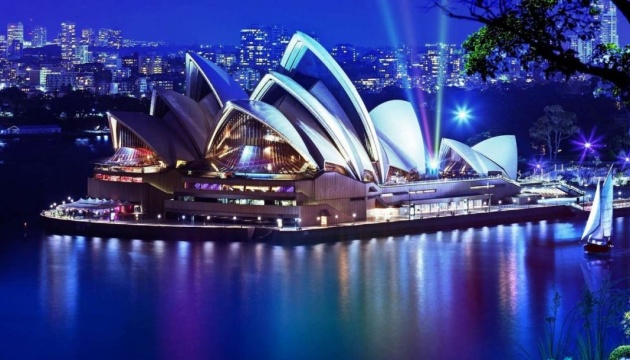
The image shows the Sydney Opera House. Credit: UkrInform

Australia has no need to buy fuel from Russia, despite US President Donald Trump’s move to bring Russian diesel back to world markets. Climate Change and Energy Minister Chris Bowen says that imports from Russia will remain banned to ensure the country does not benefit from its invasion of Ukraine, Bloomberg reports.

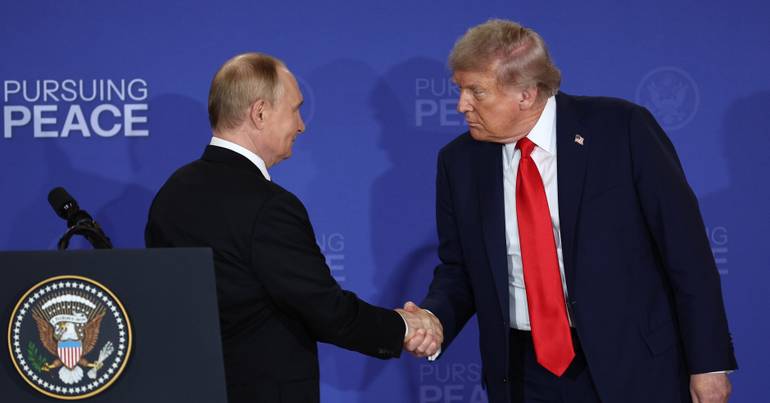
Trump has agreed with Russia's President Vladimir Putin to release Russian diesel onto global markets, a move Ukraine says funds a war that has killed more than 80 Ukrainian civilians in two days.

“We don’t need or want Russian fuel in Australia. We do not want Vladimir Putin to benefit from this war in the Middle East. What the United States does is a matter for them, but we won’t be changing our approach,” Bowen said.

The deal Australia is turning down

Trump announced on 9 October a series of cargoes beginning this month totaling about 13.5 million barrels of Russian diesel. The release upends years of sanctions, as the White House looks for ways to tame soaring fuel prices before the US midterm elections.

Bowen draws a clear line between that approach and Australia’s. What the US does is its own affair, he stresses, but Canberra will maintain its arrangements with trading partners to keep Russian fuel out of the market.

Enough fuel to hold the line

Australia can hold out without Russian supply, Bowen argues. The country has 43 days’ worth of petrol, two days more than a week earlier, and 31 days’ worth of diesel, one day less, he notes.

He adds that Australia stays in close contact with domestic refiners to keep them running at full capacity. The stance lets Canberra wait out high prices rather than buy fuel that would send money to Moscow.

Australia’s fuel costs have stayed high since the war between the US and Iran disrupted shipping through the Strait of Hormuz, the route that normally carries about a fifth of the world’s oil and gas.

  •  

Washington makes it official: US Treasury license clears sale and import of Russian diesel blocked by sanctions

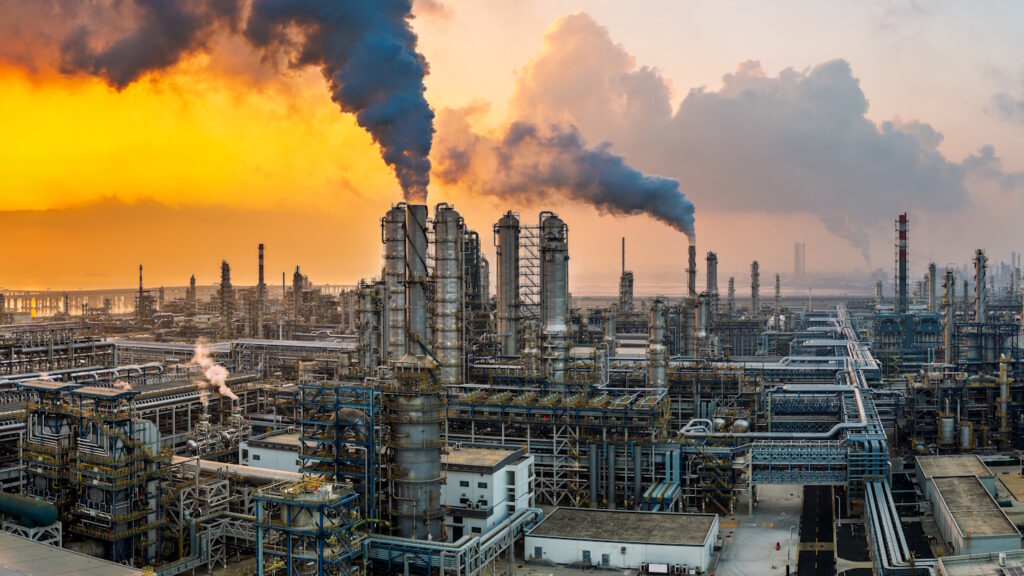
lukoil’s norsi refinery in kstovo, nizhny novgorod oblast

Washington has put its sanctions on Russian diesel on hold. The US Treasury has authorized the sale, delivery, offloading, and import of Russian-origin diesel fuel, effectively suspending sanctions on that trade until 7 April 2027, the Office of Foreign Assets Control (OFAC) said on its website on 9 October.

The waiver lets Russian diesel back onto world markets and, Ukraine argues, hands Moscow fresh revenue for its war, which has killed more than 80 Ukrainian civilians in two days. Until now, it was unclear whether Washington would roll back the sanctions it imposed on Russia in 2022.

OFAC has issued the measure as General License 135, signed by the office’s director, Bradley Smith, according to the report. It authorizes transactions in Russian-origin diesel that sanctions would otherwise block.

The license sets one limit. It does not permit any debits from accounts at US financial institutions held by Russia’s central bank, its National Wealth Fund, or its finance ministry, the document says.

Trump’s promise of cheaper fuel

On 9 October, US President Donald Trump wrote on Truth Social that Russia would immediately supply more than 300,000 tons of diesel, then 500,000 tons in November, and another million tons right after.

Moscow would later send the US up to 3 million more tons, depending on the state of Russia’s refineries, Trump added, framing the deal as a way to bring down energy prices.

Why the volumes fall short

Analysts say the amounts are too small to move prices much. Together, the first tranches would cover about a day and a half of US demand, while US diesel use alone runs near 16 million tons a month. Experts read the move as politics ahead of an election rather than a real shift in the market, pointing out that Trump cited volumes in tons, which look larger than the barrels traders track.

The deal drew fury in Kyiv, and President Volodymyr Zelenskyy called it a weak decision by strong partners. The EU is moving the other way, with ambassadors approving the bloc’s largest sanctions package against Russia’s war machine, due for final adoption on 12 October.

  •  

Trump’s Russian diesel deal, which drew fury in Ukraine, is unlikely to lower prices, experts say

The White House in Washington DC, USA. Illustrative image: Wikimedia Commons.

US President Donald Trump said on 9 October that he had agreed with Russian leader Vladimir Putin to bring Russian diesel to world markets to lower energy prices. However, energy analysts say the deal, which drew fury in Ukraine, is unlikely to lower diesel prices meaningfully, CNN reports.

Trump wrote on social media that Putin would “immediately supply” more than 300,000 tons of diesel, with another 500,000 tons in November. Together, those volumes would cover about a day and a half of US demand, according to the US Energy Information Administration.

Meanwhile, former head of the Center for Countering Disinformation Andrii Kovalenko says that US diesel consumption alone is about 16 million tons per month, and global consumption is roughly 120 million tons.

The US experts read the move as politics more than a market shift. Trump spoke in tons rather than barrels because the figure looks bigger to an ordinary observer, said Dan Pickering, founder of Pickering Energy Partners, calling it “more politics than a game changer.”

Doubts Russia can even deliver

Former US officials question whether Putin holds the diesel Trump described, as Ukrainian strikes strain Russia’s refineries. A former senior State Department official says it hardly matters whether the fuel arrives, because Putin “has already achieved the result he wants,” with Trump believing he has a pre-election card that could move markets.

Even if the fuel flows, it would be a temporary measure. Gregory Brew of Eurasia Group says that he suspects Putin expects Ukraine to halt its strikes on Russian refineries in return, and that he cannot imagine Zelenskyy agreeing.

A win for Putin without conditions

For Putin, the gain is plain, Kovalenko says: he pushes for sanctions relief and for no new US sanctions, all without any demand to end the war in Ukraine.

"Trump’s bet was more on the news itself, driving prices down somewhat, because, in reality, figures like these shouldn’t bring prices down," Kovalеnkо believes.

He adds that Trump will "make a big fuss about diesel ahead of the elections, nothing more," and that the average American is unlikely to feel any lasting effect.”

Earlier, Ukrainian President Volodymyr Zelenskyy warned that allowing Russia to sell petroleum products abroad without securing a lasting de-escalation agreement would help finance Moscow's war against Ukraine.

He criticized the decision, calling it "a birthday gift for Putin," per Axios.

The next day after the announcement, Russia launched six bombs on Zaporizhzhia, killing 17 people.

  •  

Five Russian bombs kill 17 in Ukraine’s Zaporizhzhia next day after Trump lets Russia ship first 300,000 tonnes of its diesel

The aftermath of a Russian strike on Zaporizhzhia on 10 October 2026. Source: Ukraine's National Police

A Russian air strike with guided bombs on the southeastern city of Zaporizhzhia has killed at least 17 people, including three children, according to Ukraine’s State Emergency Service. Ukrainian President Volodymyr Zelenskyy has tied the attack to a US decision to let Russian diesel reach world markets without demanding Moscow halt its strikes on Ukraine first.

On 9 October, President Donald Trump said that Russia would immediately supply more than 300,000 tonnes of diesel fuel to the US and global markets, a further 500,000 tonnes during November, and 1 million tonnes immediately thereafter. The move has already drawn criticism from US lawmakers in both parties.

“Today, Russia expressed its gratitude for the lifting of sanctions on diesel exports by dropping five guided aerial bombs on residential buildings in Zaporizhzhia,” Zelenskyy wrote on Telegram.

Zelenskyy vows to keep hitting refineries

These figures were accurate at the time the post was written. Later, the State Emergency Service reported that the death toll had risen by two. Meanwhile, Zelenskyy stated that Ukraine would not stop striking oil refineries that bring additional revenues for the Kremlin, which spends them on the war.

“There will be responses to Russian attacks. Thank you to everyone who is helping,” Zelenskyy concluded.

According to Zelenskyy, two of the injured are in critical condition, and doctors are fighting to save their lives. Information is also being verified regarding another 12 people who may have been at the strike site.

“Thirteen of our regions came under attack overnight. Residential buildings, infrastructure, and railway facilities have been damaged,” the Ukrainian leader said.

More pressure on Kremlin

Zelenskyy stressed that the latest Russian strikes further demonstrate the need to increase pressure on Russia. In his view, easing restrictions is interpreted by the aggressor as a signal that it can continue the war and attack Ukrainian cities.

“This night provided yet another confirmation that Russia interprets any easing of pressure as a signal that it can supposedly continue fighting and that it can supposedly drop bombs on cities,” he emphasized.

He also noted that Ukraine’s long-range strike capabilities are inflicting such losses on Russia and stressed that Ukraine would respond to Russian attacks.

  •  

Hormuz and the looming economic catastrophe

By Philip PILKINGTON

Join us on Telegram, X, and VK.

Contact us: info@strategic-culture.su

The Trump administration is missing the bigger picture.

In the classic martial arts film Enter the Dragon, Bruce Lee’s character is instructing a young, aspiring fighter. Irritated at the lack of progress his student is making, he points to the sky. “It’s like a finger pointing away to the moon,” he says as the student tries to focus on what his teacher is saying. “Don’t concentrate on the finger,” Lee says, slapping him on the head, “or you will miss all that heavenly glory.” The quote is derived from an old Buddhist text called the Śūraṅgama Sūtra, and the point is clear: Sometimes if you focus on what is immediately in front of you, you can miss the point entirely.

Something like this is happening in Washington, DC, right now. For almost two weeks, the debate around the progress or lack thereof in the Iran War has been focused on activity in the Strait of Hormuz. A whole host of maritime experts have emerged suddenly to inform us that the Trump administration has succeeded in reopening the crucial waterway to shipping. Maximalists are claiming that this means the United States has effectively won the war in the Middle East. Others are making the more modest claim that this reopening of the Strait will solve the looming energy crisis.

These were the two perspectives that most people who were not deeply involved in the debate heard. There was, however, a small but vocal minority who questioned whether the Strait had been opened at all. If Iran had effective fire control over the Strait in spring and summer, they asked, then why would they suddenly lose it now? Almost immediately after this question was raised, Iran settled the debate by striking an enormous number of ships: 12 and counting in less than a week.

To those of us who were paying attention, the whole exercise felt like looking at Lee’s finger as he points to the moon. As these debates unfolded, the market for U.S. Treasury debt continued an epic sell-off. Bloomberg quoted an investment banker who stated that Treasuries were “trading like a meme stock.” U.S. Treasury bonds have now experienced their worst long-run returns in history.

Treasury bonds are not just any old asset. For one, they are the debt of the U.S. government. If they become uninvestable, the capacity for Washington to live beyond its means through debt issuance is open to question. Treasuries are also the benchmark asset for the entire global dollar system that has allowed the U.S. to run enormous deficits for decades. If this asset starts “trading like a meme stock” and generating awful returns, foreigners will opt for something else. This week, the president of the German central bank stated that “the case for further diversification into gold remains significant.” People are talking.

In mid-September, the speaker of the Iranian parliament, Mohammed Bagher Ghalibaf, posted an equation on X. Unusually for an obscure piece of algebra, the post garnered nearly 7 million views. The equation was a modified version of what economists call the “Taylor Rule,” a method that economists and central bankers use when setting central bank interest rates. In normal times, the equation factors in expected future inflation and how much slack is in the economy. But Ghalibaf’s equation—which he called the “Straits Taylor Rule” —included two new variables: the Strait of Hormuz and the Bab el-Mandeb, the two waterways currently under fire from Iran and the Houthis in Yemen, respectively.

The equation is a stripped-down representation of Iran’s strategy. By controlling these waterways, Iran and its allied groups have gained control over the global energy market. By squeezing these chokepoints, Iran can assert de facto control over America’s financial markets by pushing up expected inflation. Central banks like the Federal Reserve realize that this is no mere bluff and have already started raising interest rates. Ghalibaf’s equation explains, to a very large extent, why American government debt is currently trading like a meme stock.

Meanwhile, at the same time as these pressures are felt in American financial markets, the real economy is undergoing a squeeze too. Recent reports from the Energy Information Agency suggest that American heating-oil bills are expected to rise by 21 percent this winter. Diesel markets are entering into a genuine crisis, with President Donald Trump floating the prospect of banning diesel exports to ensure that there are no shortages. Diesel is the lifeblood of the American logistics chain. If there are shortages, trains and trucks will not run and goods will not be delivered to shelves. Trump has walked back the diesel export ban for now, after strong-arming the Europeans to dump their oil and diesel reserves, but there is every chance that this option appears back on the table as the crisis worsens. Food prices are rising too, with sugar prices looking particularly worrisome.

Once again, Ghalibaf outlined how this is part of Iran’s overall strategy. In an X post this week, the speaker published a rudimentary graph—coupled with a haunting image of a ghost—showing rising commodity prices and interest rates on one side, and falling consumer confidence, foreign interest in U.S. Treasuries, hyperscaler investment, and housing affordability on the other. The Iranians are not just trying to squeeze the American financial system—they are aiming to put extreme stress on the entire economy—and it looks increasingly like they intend on making this pressure felt before American voters go to the polls on November 3.

The Trump administration has become fixated on the Strait of Hormuz, seeing it as a decisive battlefield on which the U.S. can win the war. But the Strait is merely a means to an end. For Iran, that end is to slowly demolish the American economy and financial system until the pressure becomes too much and the U.S. backs off. The idea that you can “win” such a battle is delusional.

The Strait is merely the finger in Lee’s analogy. It is Iran’s overall economic strategy—the moon—that we should focus on. And when we do, we come to the worrying conclusion that by the time the Trump administration cries uncle, the damage done to the American economy and financial system will be so severe that it could take many, many years to recover.

Original article:  www.theamericanconservative.com

  •  

When will this White House madness end?

By Philip GIRALDI

Join us on Telegram, X, and VK.

Contact us: info@strategic-culture.su

The United States competes with Israel for the “Most Hated” Distinction

It was another horrific week in Washington with President Donald Trump actually succeeding in coming out with an apparently improvised comment that equaled or maybe even exceeded his ghastly performance at the United Nations where he speculated over whether he should “annihilate” Iran and drive it back into the Stone Age. It would seem that ninety plus million dead Persians would satisfy Donald’s blood lust when it comes to killing innocent civilians, but the latest musing by our beloved leader had him addressing a campaign rally in Nebraska, where he appeared to be declaring that he might well consider wanting to continue the war against Iran even if the price to pay from the Iranians were to be retaliation consisting of eliminating some of our cities. He said “It’s a small price to pay for keeping the world safe, for keeping our country safe, and it’s going to be over with very soon. Let ’em take out Los Angeles, let ’em take out San Diego.”

Trump clearly saw the whole thing as some kind of quid pro quo expecting that even Californians would consider the price to pay worth it if it kept Iran from obtaining a nuclear weapon but he failed to make any reasonable connection between the nonexistent weapon and the good to come out of annihilation of millions of Americans. The irony is, of course, that since Iran has no nukes and nor is it even developing that resource, a point generally made by US intelligence, it could not in any event destroy either or both of the West Coast cities. But then again, Trump is not given much to deep thinking and what he tends to say is what is roiling around among the three brain cells that might actually be functioning in his oversize head at any moment.

Interestingly, the video recording the gathering shows the Nebraska crowd of MAGA supporters cheering the exchange, seemingly unaware that the war never needed to be fought, that Iran was not and is not any military threat to the United States, and that the whole bloody thing could be ended by Trump repeating his frequent declaration of “victory” before ordering all the troops home and putting an end to it. That way no one “loses” and no more innocents have to die but somehow that does not appear to be an option circulating in the White House.

In the wake of the comment, both California’s Democratic Governor Gavin Newsom and San Diego Republican Mayor Todd Gloria called out President Trump for his willing to see Americans die in large numbers due to bad policies coming out of Washington. Newsom wrote on social media how “After sending the National Guard to occupy California, Donald Trump is now saying our foreign enemies should ‘take out’ Los Angeles and San Diego. He is deranged and dangerous.” Gloria added “San Diego is not collateral damage. We are not expendable. And we are never a ‘small price to pay.’ Keep our city out of your reckless war talk.”

The White House inevitably pushed back in support of Trump’s comments, with communications director Steven Cheung writing on social media how “The media freakout over President Trump’s comments is not rooted in reality. He was clearly stating US cities would have been threatened if a nuclear Iran hadn’t been stopped. America is safer because of the President. Iran has no nuclear, no navy, no air force, and no money.” Interestingly, Trump’s communications director, who interpreted the comment backwards by claiming falsely that the president had “stopped” an Iranian nuke, was incapable of understanding what Trump actually said and instead invented what he might have been wanting to say. All of which explains why the White House is as dysfunctional as it is.

Beyond that, something at least veering towards a bit of constructive policy did take place on September 30th when the United States completed its troop withdrawal from Iraq, which it has been de facto occupying for the past 23 years. The withdrawal, which took place after multiple requests by the Iraqi government, appears to be due to the desire to move US troops out of the effective range of some of the Iranian short range-missiles and drones which could easily reach Iraq. The soldiers and airmen will be moving to next door Jordan which means they will still be near enough to intervene if the Iraqis become naughty and do anything that is not perceived as being in American “interests.”

Some will recall that back in January 2020, then President Donald Trump ordered the assassination of the Iranian head of the Iranian Revolutionary Guards Qasim Soleimani who had just landed in Baghdad Airport to join in peace talks between his country and the Iraqis. Peace talks are not the sort of thing that Trumpists are good at, particularly if they involve actual or potential enemies of Israel, so Soleimani had to be stopped. The Iraqis are certainly aware that the departure of US soldiers does not mean an end to American intervention, which can indeed be at the point of a gun but which might also be through sanctions and other less kinetic means.

All of which is to suggest that the game is not over yet and Trump is quite capable of doing something very stupid in an attempt to salvage whatever remains from his reputation. What is behind a lot of this nonsense is the evil circle involving Trump himself and his good friends in Israel. Make no mistake that Israel is dedicated to becoming “Greater Israel” while also eliminating its potential enemies in Asia and Africa. And, unlike Iran, it is actually nuclear armed thanks to the material and technology that it stole from the United States before killing President John F Kennedy who tried to stop them. And the witless Donald will do everything in his power to help Prime Minister Benjamin Netanyahu be reelected, be it because he is being blackmailed or because he loves the man so much. Be that as it may, Trump will cooperate fully with Netanyahu or whoever succeeds him, no matter what. So too will there be the usual consensus on doing everything to please the Jewish state coming from the usual crowd of Israel firsters in Congress, in the mainstream media and among the Foundations that have come to rely on the money and “respect” that comes from inhabiting the same space as those who are beloved by Zion.

For those who have not yet aware of just how deeply the Zionist activists have inserted themselves in the body politic, I would greatly recommend an article put out by the highly respectable Quincy Institute that just appeared this past week written by Kelley Vlahos, the Editor in Chief of Responsible Statecraft. It provides the sordid details of how the Israel Lobby backed up by Jewish billionaires has been able to create and then subvert a conservative movement that originally appeared to support American interests to make them instead do Israel’s bidding. She describes how “The annual confab, [NatCon 2026] ostensibly launched for American conservatives in 2019, is in Jerusalem this week, largely focused on shoring up US support for the Jewish state.” If Israel is successful, it will bring about a proposed US-Israeli integration at the Pentagon and take its place as a “partner” of the United States in defense matters as well as in foreign policy. Make no mistake, Israel will bleed us dry and then discard our carcass without even a backward glance. It will be the end of our country. President Donald J Trump and his predecessor Joe Biden have done much to move this process along and it is to them and the cowards in Congress and the media that we the owe the deep hole that we as a once-upon-a-time proud and independent people will soon find ourselves in.

Original article:  www.unz.com

  •  

Washington and Moscow Target the ICC: Different Motives, a Common Beneficiary

Russia’s demands for the extradition of International Criminal Court judges and Washington’s sweeping sanctions against the institution have converged within days. The two governments have different grievances, but the consequences of their actions increasingly overlap, raising questions about the political relationship between Donald Trump and Vladimir Putin and the future of international criminal justice.

Russia and the United States have intensified their campaigns against the International Criminal Court (ICC) almost simultaneously, exposing an increasingly consequential convergence between the policies of Vladimir Putin and Donald Trump.

On 8 October, Moscow demanded the extradition of ICC President Tomoko Akane and eight other current and former officials. The following day, Washington announced sanctions against the court as an institution, extending earlier measures against individual judges and prosecutors.

The timing raises an obvious question: are these independent campaigns arising from different disputes with international justice, or do they reflect a broader political understanding between Washington and Moscow?

There is no publicly established evidence of a coordinated operation or an agreement between Trump and Putin to undermine the ICC. Nevertheless, the strategic consequences of their respective actions are remarkably similar. Both weaken an institution pursuing criminal proceedings against political leaders whom the two governments seek to protect.

Different grievances, overlapping interests

Russia’s hostility towards the ICC is directly connected to the arrest warrant issued against Putin in March 2023 over the alleged unlawful deportation and transfer of Ukrainian children from occupied territories.

The court subsequently issued warrants against senior Russian military commanders, including Sergei Shoigu and Valery Gerasimov, over alleged crimes involving attacks on Ukrainian civilian infrastructure.

Moscow’s response has been to pursue ICC personnel through its own criminal justice system. The latest extradition demands follow convictions handed down in absentia by a Russian court in December 2025.

Washington’s confrontation with the ICC has a different immediate origin. The Trump administration objects to the court’s jurisdiction over American nationals and Israeli officials, particularly following the arrest warrants issued against Israeli Prime Minister Benjamin Netanyahu and former defence minister Yoav Gallant.

Secretary of State Marco Rubio has presented the American campaign as a defence of US sovereignty. Yet the sanctions announced on 9 October are not confined to the Israeli proceedings or any investigation involving American personnel.

They target the institution itself, potentially disrupting financial transactions and commercial relationships essential to its operation. This distinction matters because a court-wide restriction necessarily affects investigations beyond those cited by Washington. That includes Ukraine.

The Anchorage question

The political context cannot be separated from the relationship between Trump and Putin, including their meeting in Anchorage, Alaska, in August 2025.

The summit formed part of Trump’s efforts to negotiate directly with Moscow over the war in Ukraine. The American president has repeatedly treated relations with Putin as a question of diplomatic bargaining, seeking arrangements that might produce an agreement where conventional Western pressure has failed.

Against this background, suggestions that pressure on the ICC might form part of a wider accommodation with Moscow warrant scrutiny. However, the proposition that Trump specifically offered Putin assistance in neutralising the court during their Anchorage discussions remains unsubstantiated. There is no verified public account establishing such a commitment.

A more defensible conclusion is that Washington’s independently declared campaign against the ICC also advances an important Russian interest. For Putin, the benefit is clear. Measures designed to restrict the court’s financial and administrative capacity could complicate investigations into Russian conduct, irrespective of the American administration’s stated intentions.

The relationship therefore need not involve explicit coordination to produce politically significant results.

Why sanctions against the institution matter

The escalation from targeting individual prosecutors to sanctioning the entire ICC represents a substantial change. Previous American measures imposed personal and financial restrictions on selected officials. The latest approach threatens the broader infrastructure upon which international criminal proceedings depend.

The court requires banking facilities, secure communications, technology services and commercial suppliers. American sanctions can reach beyond US territory because of the international financial system’s dependence on dollar transactions and American service providers.

The ICC had already anticipated this vulnerability. According to details disclosed in September, the institution has pursued alternatives to American software and financial services to reduce its exposure.

Nevertheless, operational continuity and investigative effectiveness are not necessarily the same thing. The court may remain formally functional while facing additional costs, delays and restrictions affecting prosecutors, investigators and international cooperation.

For Ukraine, this is particularly significant. The ICC holds and evaluates evidence connected to alleged Russian war crimes, including the deportation of children and attacks on civilian infrastructure. Its proceedings preserve a judicial process independent of whatever diplomatic settlement Washington and Moscow might eventually negotiate.

Weakening that capacity would not invalidate existing warrants or automatically destroy evidence, but it could make the pursuit of accountability more difficult.

Europe’s response and its limitations

The European Union now faces a dispute with Washington over an institution that European governments have spent decades supporting.

On 9 October, eight governments issued a joint statement, reaffirming their support for the ICC and rejecting the American sanctions. The signatories included Germany, France, Italy, the Netherlands, Britain, Japan and Canada.

The European Commission also indicated that the EU was prepared to take measures necessary to preserve the court’s operations. Such assurances are politically important, but they do not automatically resolve the practical consequences of American restrictions.

European financial institutions and technology suppliers must consider their own exposure to US sanctions. Sustaining the court may require alternative payment arrangements, commercial protections and potentially further European regulatory intervention.

The EU has discussed extending its blocking statute to shield European operators from the effects of American sanctions. Whether that mechanism can provide sufficient protection remains uncertain.

The dispute also extends beyond the ICC’s current investigations. Ukraine and the Council of Europe are developing a separate Special Tribunal for the Crime of Aggression, designed to address jurisdictional limitations preventing the ICC from prosecuting Russia’s leadership for the decision to launch the invasion.

The two institutions have distinct legal mandates, although cooperation between them is envisaged. Undermining the ICC would not automatically prevent the special tribunal from operating, but it would weaken an important part of the wider international accountability framework.

A convergence with consequences for Ukraine

Washington and Moscow have not adopted identical positions towards the ICC. Russia seeks to discredit and punish the officials responsible for pursuing Putin. The Trump administration is attempting to restrict the court’s authority and operational capacity, principally in response to proceedings involving Americans and Israelis.

Yet their actions converge at precisely the point where the ICC’s independence becomes politically inconvenient. The distinction between motive and consequence is essential. It would be premature to describe the American sanctions as evidence of a secret bargain struck in Anchorage. It would be equally mistaken to overlook the assistance these measures could provide to Moscow.

The broader concern is that the United States, traditionally central to Western efforts to hold Russia accountable for its invasion of Ukraine, is now applying pressure to one of the principal institutions carrying out that work.

For European governments, the immediate question is no longer simply whether they support the International Criminal Court. It is whether they are prepared to protect its practical independence when the political and financial pressure comes not only from Russia, but also from Washington.

  •  

Trump Threatens Norway After Missing Out on Nobel Peace Prize Again

US President Donald Trump has accused the Norwegian Nobel Committee of discrediting the Peace Prize after it awarded the 2026 honour to South African jurist Navanethem Pillay, warning Norway that Washington would not forget the decision.

US President Donald Trump has launched an attack on Norway and the Nobel Peace Prize committee after being overlooked for the 2026 award, declaring that the decision had permanently damaged the prize’s credibility and left an indelible stain on the country responsible for selecting its recipient.

Speaking at a campaign rally on Friday, 9 October, Trump insisted that his diplomatic achievements entitled him to the distinction and accused the committee of allowing political ideology to determine its choice.

His remarks followed the announcement that South African lawyer and former United Nations human rights chief Navanethem “Navi” Pillay had received this year’s prize for her contribution to peace and international law.

“The United States of America, represented by me as your president, should have received the Nobel Peace Prize, but didn’t,” Trump told supporters.

He described the committee’s decision as disgraceful and embarrassing before issuing a pointed warning: “We will not forget, Norway.”

The American president went further, claiming that the award had been discredited by radical ideologues whom he characterised as opponents of democracy and civilisation. He also questioned Pillay’s qualifications, telling his audience that he had never heard of the South African jurist.

Nobel Committee Recognises International Justice

The Norwegian Nobel Committee’s announcement honoured Pillay’s contribution to peace and international law.

Born in Durban in 1941 under South Africa’s apartheid system, Pillay became a prominent human rights lawyer before serving as a judge at the International Criminal Tribunal for Rwanda and subsequently at the International Criminal Court (ICC). She was also UN High Commissioner for Human Rights between 2008 and 2014.

Her judicial career included work on cases involving genocide and sexual violence during the Rwandan conflict. More recently, she chaired the UN Independent International Commission of Inquiry on the Occupied Palestinian Territory, including East Jerusalem, and Israel. Israel rejected the commission’s findings.

The award comes at a contentious moment in Washington’s relations with international judicial institutions. On the same day as the Nobel announcement, the Trump administration introduced new sanctions against the ICC, expanding American restrictions and bringing Washington into conflict with European governments that support the institution.

Trump’s Claims of Diplomatic Success

Trump has repeatedly argued that his interventions in international disputes justify receiving the Nobel Peace Prize. During Friday’s rally, he claimed to have settled eight wars and suggested that he was approaching further breakthroughs involving Iran and Russia’s war against Ukraine.

Those claims remain contested. Several disputes cited by Trump have not resulted in comprehensive peace agreements, while others involved ceasefires or diplomatic arrangements that did not permanently resolve the underlying conflicts.

His administration also participated alongside Israel in the war against Iran earlier this year. Although Washington subsequently pursued a negotiated settlement, the conflict raised questions about the relationship between American military intervention and Trump’s presentation of himself as an international peacemaker.

Trump has likewise maintained that he can secure an end to the war in Ukraine, although Russian military operations continue and no comprehensive settlement has been reached.

The president’s dispute with the Nobel Committee is not new. He has frequently contrasted his diplomatic record with that of former President Barack Obama, who received the prize in 2009, less than a year after taking office.

Machado’s Medal and the Norwegian Connection

Trump’s frustration has also been shaped by his relationship with Venezuelan opposition leader María Corina Machado, who received the 2025 Nobel Peace Prize for her campaign for democratic rights and political change in Venezuela.

In January 2026, Machado presented her Nobel medal to Trump in a symbolic gesture. However, the Nobel Committee subsequently reaffirmed that a Nobel Prize cannot be transferred to another person, regardless of what happens to the physical medal.

The president’s latest criticism also draws Norway into a dispute over which its government has no direct authority. The Nobel Peace Prize is awarded by an independent five-member committee appointed by the Norwegian parliament, rather than by the Norwegian government.

Under the rules governing the award, the committee is responsible for selecting the individual or organisation judged to have made the greatest contribution to peace in accordance with Alfred Nobel’s will.

Trump’s warning therefore raises a separate diplomatic question: whether his dissatisfaction with an independent committee’s decision will have consequences for relations with Norway, a longstanding NATO ally.

For European governments, the controversy also comes against the background of Washington’s escalating confrontation with international courts. Russia has separately demanded the extradition of ICC President Tomoko Akane and other judicial officials over proceedings connected with the war in Ukraine.

The Nobel Committee’s decision to honour a former ICC judge, just as the institution faces pressure from both Moscow and Washington, has consequently acquired significance beyond the question of Trump’s personal ambitions.

The 2026 Nobel Peace Prize will be formally presented in Oslo on 10 December.

  •  

Trump’s Diesel Deal with Putin Undermines US Sanctions Pressure as Ukraine Peace Talks Stall

President Donald Trump announced an agreement with Vladimir Putin on Friday, 9th October, under which Russia will resume substantial diesel exports to American and international markets, despite Washington’s existing sanctions against Moscow over its invasion of Ukraine.

According to Trump’s announcement following the telephone conversation, Russia will immediately release more than 300,000 tonnes of diesel, followed by 500,000 tonnes in November and another million tonnes shortly afterwards. A further three million tonnes could become available once Russian refining capacity permits.

The announcement was accompanied by a temporary authorisation from the US Treasury allowing transactions involving Russian diesel until 7 April 2027. It represents a substantial departure from the administration’s recent sanctions policy, which had sought to restrict Russian energy revenues and strengthen Washington’s negotiating position over Ukraine.

The timing is politically significant. Trump faces congressional midterm elections on 3 November, while diesel prices have become a growing economic concern for American businesses and consumers. The agreement gives the White House an opportunity to present itself as addressing fuel costs, although its practical effect on prices remains uncertain.

Russian diesel cannot resolve the global supply shortage

Trump has linked the proposed Russian deliveries to his administration’s efforts to restore energy flows through the Strait of Hormuz, arguing that the combined measures will produce a rapid reduction in diesel prices.

The disruption of maritime energy supplies following the confrontation with Iran has, however, created a problem considerably larger than the quantities Russia has initially promised.

The first two deliveries amount to approximately 800,000 tonnes. Even including the subsequent million tonnes, the announced volumes are modest relative to global consumption. Their arrival may provide temporary relief in individual markets, but there is little evidence that they could independently reverse the wider shortage.

Russia’s capacity to maintain larger exports is also uncertain.

Ukrainian attacks on Russian refineries have disrupted production and contributed to restrictions on petroleum exports. Moscow has periodically imposed limits to protect domestic supplies, while damaged facilities require repairs before returning to normal operations.

The condition of those refineries is explicitly acknowledged in Trump’s announcement, which makes the proposed additional three million tonnes dependent on their recovery.

This introduces a further contradiction. Washington is seeking Russian diesel at precisely the moment Ukraine is attempting to reduce Moscow’s capacity to refine and export petroleum products.

The economic benefits of the agreement may consequently depend partly on developments in a military campaign that the United States has previously supported through intelligence cooperation with Kyiv.

Zelenskyy rejects sanctions relief without Russian concessions

President Volodymyr Zelenskyy responded critically to the agreement, describing the relaxation of economic pressure as a concession to Putin that had not been accompanied by any meaningful Russian commitment to de-escalation.

In his response to the American decision, Zelenskyy argued that Moscow would exploit renewed export revenues to prolong its war rather than make concessions towards a settlement.

Ukraine has indicated that it remains prepared to consider reciprocal measures concerning attacks on energy infrastructure. Such arrangements would require Russia to stop striking Ukrainian facilities in exchange for restrictions on Ukrainian operations against Russian energy targets.

No comparable undertaking was announced as part of Friday’s diesel agreement.

This distinction is central to Kyiv’s objections. Sanctions relief has traditionally been regarded as leverage to obtain changes in Russian behaviour. In the present arrangement, Moscow stands to receive additional commercial opportunities without publicly agreeing to alter its military campaign.

Lukoil negotiations raise further questions

The agreement also comes amid separate discussions concerning the international assets of Lukoil, Russia’s second-largest oil producer.

A recent account of negotiations involving American investors and Russian officials described proposals involving Lukoil’s overseas oilfields, refineries and distribution businesses.

The discussions have reportedly involved figures connected to Trump’s diplomatic efforts, including Steve Witkoff and Jared Kushner, alongside Russian representatives.

On Friday, another development complicated the proposed transaction when Carlyle withdrew from the competition to acquire Lukoil’s international assets, previously valued at approximately $22 billion.

The negotiations illustrate the extent to which potential commercial cooperation has entered the broader American-Russian relationship.

There is no verified evidence, however, that the diesel agreement was concluded to facilitate a particular acquisition or benefit individuals connected to Trump’s administration. The commercial negotiations and Friday’s sanctions decision remain separate developments unless further evidence establishes a direct connection.

Washington and Europe move in different directions

The American decision creates an additional complication for European sanctions policy.

On 7th October, EU ambassadors agreed to expand sanctions against Russia’s military-industrial network, approving 1,646 additional designations, many directed at the production of ballistic missiles used against Ukraine.

Britain has also introduced further restrictions on Russian oil-related businesses, tankers and financial intermediaries, reinforcing its stated objective of limiting Moscow’s ability to finance the war.

The contrast with Washington’s diesel authorisation is substantial. While European governments are attempting to restrict Russian petroleum revenues, the United States is providing a temporary legal route for renewed sales.

The development also recalls the difficulties already examined by EU Today in its reporting on sanctions enforcement against Russia’s shadow fleet, where differences in national restrictions and their application have complicated efforts to control petroleum exports.

For Moscow, the significance of Friday’s agreement extends beyond the immediate revenue generated by diesel sales. It establishes that the United States is prepared to relax particular economic restrictions before securing a settlement over Ukraine.

Whether the arrangement ultimately lowers American fuel prices will depend on production, shipping and international market conditions. The diplomatic consequence is already apparent: Russia has obtained an opportunity to restore part of its international energy trade without accepting publicly announced conditions concerning its war against Ukraine.

For Kyiv and European governments, the question is whether this remains a narrowly defined response to an energy shortage or marks the beginning of a broader American policy of separating commercial relations with Moscow from negotiations over Ukraine.

  •  

New Yorkers demand ‘ICE Out’ after Bronx father shot in front of his five-year-old

Immigration and Customs Enforcement (ICE) agents shot seven rounds into the vehicle of a New York father while his five-year-old son was in the car on the afternoon of Thursday, October 8. Oscar Belgal, a Dominican man, who had just picked up his son from school, was hit in the neck but survived the shooting.

He is currently being detained by ICE in the Metropolitan Detention Center in Brooklyn after being discharged from the hospital Thursday night. His lawyers have reported that he still has a bullet lodged in his body more than 24 hours after being shot. 

The Department of Homeland Security (DHS) said that they were conducting a “targeted enforcement operation,” calling Belgal a “criminal illegal alien.”

Local officials describe the incident differently. In a press conference, held by immigrant rights groups and officials a couple hours after the shooting, speakers described that disguised agents approached Belgal’s vehicle with their guns drawn. When Belgal started to move his vehicle forward at least one agent opened fire. Video emerged online of one of the agents carrying a large gun that reports say was a modified AR-15.

“They wore construction vests and masks that concealed their faces,” said New York City Mayor Zohran Mamdani to press later that night.

“There was no reasonable way to identify them as ICE agents.”

The mayor claimed that he attempted to negotiate with President Trump directly for the release of Belgal, but “those negotiations were unsuccessful.” He then described ICE as “vicious” and “cruel,” saying that ICE undermines public safety.

“This is an agency that must be abolished.”

New York politicians face calls to act against ICE

New York City Public Advocate Jumaane D. Williams said that federal officials would certainly try to justify the shooting by painting a narrative that makes Bengal seem like “the worst human being you ever heard of.” But he emphasized that what actually happened is that a father picking up his child was shot by a federal agency after school dismissal in a residential area.

Later that night, in a separate press conference with the mayor, New York City Police Department (NYPD) Commissioner Jessica Tisch announced that Oscar Belgal had been arrested in 2023. Hecklers and protesters then began disrupting the mayor and the police commissioner, accusing them of demonizing the victim and justifying ICE violence.

“Tisch and the NYPD are effectively running cover for the Trump administration” over the federal shooting of a Dominican father, said Andre Easton, candidate for New York’s 15th Congressional District, in a statement on Friday, October 9.

Easton called on the mayor to back up his call to abolish ICE with action. “He must fully enforce his own Executive Order 13 and kick every ICE agent out of our city.”

He also slammed Ritchie Torres, the current representative of NY-15, for only demanding an investigation into the shooting. Torres’ demands represent a “betrayal of the Bronx.”

The same politicians that built the deportation machine won’t dismantle it, he argued.

“We need a mass movement powerful enough to dismantle it and win full, equal, and permanent rights for all immigrants.”

Sparks of that very movement may already be breaking out in New York.

Movement for ICE out of NY re-emerges

Hours after the shooting, hundreds of New Yorkers took to the streets and marched to the hospital where Belgal was being treated. They carried banners and placards reading “Abolish ICE” and “Full Rights for All Immigrants” and “Justice for Lorenzo, Joan, and All Victims of ICE Terror.”

The protests were met with force by the New York City Police Department, who attacked protesters with barricades, pushing and shoving several, including congressional candidate Darializa Avila Chevalier, and making a handful of arrests.

However, New Yorkers have continued pushing for ICE to leave the city, organizing protests on Friday and Saturday.

ICE strikes again

The shooting in New York is yet another in a series of ICE shootings across the United States, including the killings of Renee Nicole Good and Alex Pretti in Minneapolis, Lorenzo Salgado Araujo in Houston, and Joan Sebastián Durán Guerrero in Maine. Each of these cases has left families and communities traumatized and provoked eruptions in the movement against ICE violence.

Now in New York, demonstrators are elevating the pressure on their elected officials and making a distinction between mere demands for investigation and concrete action that ends ICE operations and takes steps toward abolition.

  •  

India says US visa restrictions will hurt bilateral relations

India’s Ministry of External Affairs (MEA) reacted strongly to the US announcement to suspend the Permanent Labor Certification (PERM) program used by major IT companies for getting green cards for their foreign employees.

Reacting to the announcement made by the US Labor Secretary in the presence of Vice President J D Vance, India’s MEA, on Friday, October 9, called it a move harmful for the “shared ambitions of both countries.”

US Labor Secretary Keith Sonderling said on Thursday that his department will not accept any fresh application for PERM or process the pending applications from eight major IT companies.

The companies named were Microsoft, HCL, Cognizant, Adobe, Capgemini, Tata Consultancy Services (TCS), Infosysis, and Wipro.

Among these firms are some of India’s biggest IT companies with the majority of them employing a large number of IT professionals from outside the US. The move is seen as a part of the Donald Trump administration’s crackdown on immigration.  

Almost 70% of H-1B visa holders are Indians which means the halt in PERM will affect the Indian IT professionals the most.

PERM is the first step for an employer in the US to sponsor a green card for its foreign employee. According to the US laws, the employer must prove it tried and failed to get a local for the job before it can sponsor a foreign person.

According to Sonderling, these eight companies have sought almost three million foreign workers and received over 230,000 H-1B visas and over 100,000 PERMs since 2009, claiming all these were “jobs that were taken from American workers.”

Vance said the Donald Trump administration wants the companies to prioritize local recruitment instead of getting “foreign indentured labor.”

He accused companies of abusing the H-1B visa program, claiming there have been multiple cases pending in the federal investigation about fraud in recruitment and the violation of its “best of the best” clause.

Unwarranted and deeply offensive 

In a brief statement, India’s MEA on Friday called Vance’s comments about “foreign indentured labor” “unwarranted” and deeply offensive, claiming it “ignores the fact that Indian professionals in the US are highly educated and skilled contributors to its economy and innovative ecosystem.”

“The history of the US itself has been shaped by generations of immigrants whose labor, enterprise and innovation have contributed to its growth and prosperity” it underlined, further noting that “resorting to terminology that carries painful historical and colonial legacy connotations is deeply offensive.” 

Millions of Indians were taken out of the country to different parts of the world for indentured labor during the British colonial period in the nineteenth and early twentieth centuries.  

The US decision has already led to widespread reactions from the opposition groups asking the Indian government to take measures to protect the interest of the country’s IT professionals. 

In a post on X, Jairam Ramesh, leader of the main opposition party, the Indian National Congress (INC), asked the government to retaliate to the US move, claiming failure to do so would be tantamount to surrendering the country’s interests to a bully.

Ramesh accused the Narendra Modi-led ultra-right-wing government in the country of adopting a policy of “appeasement” toward the US, citing its recent decision to impose user charges on payments through mobile phones in the country as one crucial example of how it is going out of the way to do so.

Ramesh claimed Washington’s decision to suspend the visas yet again proves that such a policy never pays off.

  •  

3h.EUA suspendem sanções a gasóleo russo até abril de 2027

Trump garante que Putin, se comprometeu com 300 mil toneladas de gasóleo "para o mercado americano e mundial". Ainda, Proteção Civil do Panamá apela a cidadãos para manterem a calma após sismos.

  •  

Trump anuncia libertação imediata de diesel russo

No total, serão cerca de três milhões de barris, 300 mil com efeitos imediatos. Enviado especial de Putin sublinha que acordo "vai beneficiar o mundo". Kiev alerta para escalada da guerra.

© Anadolu via Getty Images

Acordo "vai beneficiar o mundo", diz enviado especial de Putin.
  •  
❌