❌

Reading view

Europe’s mounting social chaos… chickens coming home to roost for proxy war against Russia

A day of reckoning is imminent. Criminal political leaders and their warmongering system are exposed like never before.

Join us on Telegram, X, and VK.

Contact us: info@strategic-culture.su

The European Union is witnessing a full-blown social revolt. Governing political parties and their economic policies are held in open contempt as public protests and strikes escalate across multiple countries.

Protests, mass marches, and industrial strikes are spreading across the EU in France, Belgium, Spain, Italy, Germany, Ireland, Portugal, and other countries. The grievances are various, from students and teachers over woeful education services, to healthcare professionals and transportation workers denouncing crumby wages and pension cuts.

But at the core is a warmongering, dehumanizing system of capitalist inequality.

Unbearable living costs for basic needs, from food to housing, are driving millions onto the streets in desperation and anger at the lack of adequate political response to their concerns. As one French student said: “Too young to be listened to, old enough to be tear-gassed.”

The entire political system is being brought into disrepute for its dysfunction and indifference towards meeting rudimentary human needs. Then, infuriating all the more, are lies from the elite rulers and their propaganda media about “national defense and threat of war from Russia.”

In Spain this week, an 87-year-old frail woman known as Maricarmen died in hospital after she was evicted from her Madrid home because she could not pay the extortionate rent increase. Her plight has come to galvanize a nationwide protest against Spain’s housing crisis, a crisis that is repeated across every European country. Protesters shouted furiously that the pitiful old woman was “murdered by the state and corporations.”

In France, the brutality of police against student protests has shocked the nation and the world. Nearly 7,000 young people have been arrested, as riot police tear gas and shoot at largely peaceful rallies. Students gathering at the Place de la Bastille in Paris and other cities vow that they will not back down. One student had his hand blown off by a police stun grenade while another teenager lost an eye from a rubber bullet fired at close range.

The Place de la Bastille is where the French Revolution manifested in 1798 against a hated aristocracy amid abject misery. Today, the tensions are boiling towards another momentous rebellion, this time inspiring again similar movements across Europe.

These protests and the inhumane suffering that underlie them are channeling uprisings all over the EU.

There is a palpable sense that populations en masse have had enough of decades of inequality and chronic deprivation inflicted by capitalist policies that enrich a few and are enforced by governments slavishly serving the interests of capital over the needs of the citizen majority.

Western media reports talk about “cash-strapped” governments under pressure from bond markets to reduce record debt levels while workers, students and pensioners demand more public investment and relief from economic hardship.

That is a misleading partial portrayal of the problem. Omitted is the crucial backdrop that European governments are directing vast economic resources towards militarism and the proxy war in Ukraine against Russia. That is what is causing the “cash-strapped governments.” In other words, their declared fiscal straits are a policy choice, not some mysterious dilemma.

The social crisis sweeping across Europe is also seen in the United States and other Western-aligned nations. The background is a failed economic system that no longer provides a modicum of acceptable living conditions. The problem has been decades in the making from growing inequality and diminishing political representation. Today it is even questionable if Western states are democracies, controlled as they are by corporate oligarchies.

Nevertheless, the social crisis that is unfolding across Europe has been intensified and amplified by European political rulers operating in a relentless war mode against Russia.

The European Union has pumped hundreds of billions of euros into Ukraine over the past four years to prop up a NeoNazi regime run by a corrupt dictatorship – all for the objective of defeating Russia. The EU leaders – many of them unelected, like Ursula von der Leyen, Kaja Kallas and António Costa – are driven by an obsessive Russophobia. But that is only part of the explanation.

Other elected leaders and parties like France’s Macron and Germany’s Merz are also despised for their elitism and delusions of grandeur. Merz declares that he wants to make Germany the strongest military in Europe, in total tin-ear deafness to his nation’s economic and social problems and the sinister historical connotations of resurrecting Nazi Germany. Meanwhile, as his government suffers electoral defeat after defeat, European elites deprecate German voters as being blind because they dare to choose parties that are opposed to war with Russia.

There are many grounds for the Europe-wide contempt of ruling parties. Inequality, poverty, unemployment, soaring living costs, declining wages, deteriorating public services. Uncontrolled immigration amid the pressure on inadequate public resources is another cause for grievance. Europe’s complicity in the Israeli genocidal war on Palestinians, and Europe’s complicity in Trump’s aggression towards Iran, Yemen, Cuba, and so on, are other factors.

However, the bogus narrative that governments are “cash-strapped” is a cause for immense public disgust. There are plenty of economic resources to meet public needs. It’s a question of those resources not being permitted to create just and humane societies under the prevailing capitalist system with its priority of enriching a tiny elite class.

The conditions of “tight budgets” and “austerity for the masses” are created by deliberate policies of militarism and fuelling a proxy war in Ukraine.

European “leaders” and their NATO lobbyists like Mark Rutte demand hundreds of billions of euros to boost military industries while at the same time calling for draconian cuts in public spending and social welfare in order to pay for this reckless militarism. The EU is “lending” an additional €90 billion over the next two years alone just to prop up the corrupt regime in Kiev so that it can keep fighting a futile war with Russia. The perverse priority is driven by the military-industrial complex and its corporate investors. It is also driven by an ideological, propagandized mindset that demonizes Russia as an enemy. President Putin and other Russian voices have repeatedly stated that they do not want war with Europe. They say the conflict in Ukraine has root causes that can be resolved through diplomatic engagement. Why are European politicians implacably opposed to peace?

A major factor is covering for internal political and economic failure of the European system. The EU’s economies, as with those in the U.S. and other Western states, are bankrupt dystopias in terms of delivering on social and democratic needs. The failure has been compounded by the costs of war in Ukraine.

That failure is criminal and fatal for the politicians and governments who have overseen the policies. Thus, the political class, including the propaganda news media, cannot admit their criminal policies.

In the face of their own internal contradictions, the European political elites are seeking a solution by externalizing Russia as an enemy. This is the same modus operandi that European rulers have used for the past century and more, unleashing two world wars as a result.

These criminal politicians and their dysfunctional economic system are again pushing war as their escape plan for survival at the expense of millions of lives and at the risk of starting a third world war, one that this time around could involve catastrophic nuclear nemesis.

It is damning of virtually every European government, including primarily the British, that there are no calls for diplomacy and political settlement with Russia. They are committed to waging war on Russia to absolve themselves from the social devastation they are responsible for.

One positive thing, though, is that increasing numbers of people can see through the chicanery and lies. A German student placard summed it up: “We won’t fight your wars… Education not bombs!”

A day of reckoning is imminent. Criminal political leaders and their warmongering system are exposed like never before and in a way that demands total revolt as a proper solution. The consequences are not to be externalized this time. Chickens are coming home to roost, as Malcom X once said.

  •  

Zelensky’s Alarm Mounts as Russia Advances Starlink Rival

Illustrative image. (Bureau 1440)

Ukrainian President Volodymyr Zelensky warned on October 8 that China was helping Russia develop an alternative to SpaceX’s Starlink satellite internet system, as Moscow’s Rassvet network advances through testing and the presentation of subscriber terminals.

“They are making progress. They are passing this on to Russia,” Zelensky said.

The Ukrainian president’s remarks underscored Kyiv’s growing concern that Moscow could acquire advanced satellite communications capabilities.

Zelensky has already taken his concerns to U.S. President Donald Trump, asking him to impose sanctions on Russian and Chinese companies involved in Rassvet’s development, according to a recent Financial Times report. The request, raised during a meeting in New York in September, reflects Kyiv’s effort to prevent the Russian network from becoming a strategic asset for Moscow.

However, Washington has no straightforward way to stop the project outright. Sanctions would not automatically halt Russia’s domestic satellite program.

Zelensky’s appeals are unfolding as the project moves beyond development announcements and into public demonstrations of its capabilities.

Bureau 1440, the Russian company developing Rassvet, demonstrated a satellite video connection between Moscow and the southern Russian republic of Adygea on October 7. The call lasted about five minutes and used the company’s satellite network, showing that the system can support a live communications session.

At the same Moscow technology forum, Bureau 1440 presented three types of subscriber terminals for the network. One was identified as a serial-production device, while the company said its 1440.ULTRA terminal could support data transmission speeds of up to 700 megabits per second. The equipment is intended to connect users to the satellite constellation once the service becomes operational at scale.

Russia launched batches of Rassvet satellites in March and July, but the network has not yet reached full operational capability. Kremlin spokesman Dmitry Peskov noted in late September that the system was not yet operating effectively.

Zelensky’s repeated warnings and his appeal to Trump to block the Rassvet project point to growing alarm in Kyiv as Russia moves closer to establishing an independent satellite communications network.

With satellites already launched and the company testing connections and preparing user equipment, Zelensky faces the prospect that Russia could soon field a Starlink alternative that Kyiv may be unable to disrupt. His warnings about Chinese assistance suggest that Ukraine is increasingly concerned not only about Russia’s progress, but also about the possibility that outside support could accelerate it.

_______________________________________________________________________________________________________________________

SouthFront: Analysis and Intelligence

NOW hosted at southfront.press

Previously, SouthFront: Analysis and Intelligence was at southfront.org.

The .org domain name had been blocked by the US (NATO) (https://southfront.press/southfront-org-blocked-by-u-s-controlled-global-internet-supervisor/) globally, outlawed and without any explanation

Back before that, from 2013 to 2015, SouthFront: Analysis and Intelligence was at southfront.com

SOUTHFRONT.PRESS

MORE ON THIS TOPIC:

The post Zelensky’s Alarm Mounts as Russia Advances Starlink Rival appeared first on South Front.

  •  

Leave If You Can – Kyiv’s Mayor Speaks As Russia Strikes Deeper And Harder

Russia’s strikes on October 9 covered Ukraine from west to east, hitting targets in Zaporizhzhia, Odessa, Kharkiv, Chernihiv, and reaching as far as Ivano-Frankivsk in the west. But the most consequential blows landed, as they increasingly do, in and around Kyiv.

The Trypilska thermal power plant was struck again, and attacks on the 750-kilovolt substation near Nalyvaivka continued. The cumulative effect on the capital is no longer abstract. Kyiv’s sewage system temporarily stopped accepting wastewater from one city district after power was cut to Kyivvodokanal facilities. Residents sought shelter overnight in metro stations. Mayor Vitali Klitschko issued a public warning about a serious threat to the city’s municipal infrastructure and recommended that residents who have the option to temporarily leave the capital consider doing so. Ukrainian authorities announced further restrictions on electricity supply to households, industry, and businesses beginning October 9. Elsewhere in the country, a food warehouse belonging to the Tavria retail chain was hit in Odessa, Kharkiv’s thermal power plant No. 5 was struck for the first time in a long period, an Epicenter shopping center in Chernihiv was hit by Geran drones, and a Geran-4 reached Ivano-Frankivsk, striking an industrial facility.

On the front lines, Russian forces maintain the initiative across key sectors. In the Chernihiv Oblast, Russian combat aviation and strike drones have been systematically hitting Ukrainian military positions — a pattern that Ukrainian and independent analysts describe as consistent with preparation for ground operations. On October 8, a drone storage facility near Kovchyn was destroyed, and strikes were recorded against positions of the 105th Border Detachment and the 143rd Mechanized Brigade near Sutky and Semenivka. The most significant confirmed strike, however, hit the command post of Ukraine’s 18th Army Corps near Bakhmach, with possible casualties among senior and flag-rank officers.

In Sumy Oblast, paratroopers of Russia’s 83rd Air Assault Brigade drove Ukrainian units of the 71st Air Mobile Brigade out of the settlement of Kyianytsia on October 9, bringing the entire settlement cluster under Russian control. With the leaf cover gone from surrounding woodland by late autumn, Russian forces will be able to move against Ukrainian positions in the forest south of the settlement with far greater effectiveness.

In Dobropillia, the battle has entered its decisive phase. On October 8, Russian assault units entered the city simultaneously from the north and south, splitting the Ukrainian garrison in two parts.

Kyiv’s mayor is advising residents to evacuate. A garrison has been cut in half. A command post has been destroyed. Russia is not approaching a decisive moment in this war — it is already inside one.

______________________________________________________________________________________________________________________

DEAR FRIENDS. IF YOU LIKE THIS TYPE OF CONTENT, SUPPORT SOUTHFRONT WORK:

MONERO (XMR): 86yfEHs6pkoDEKCxc6MAnQX8cVHmzhYxMVrNuwKgNmqpWK8dDxjgGnK8PtUNJMACbn6xEGxmRauNTHJhUJpg9Mwz8htBBND
BITCOIN (BTC): bc1qgu58lfszcpqu6fd8l98m378wgzugyg9y93lcym
BITCOIN CASH (BCH): qr28d80s5juzv2793k5jrq59xrl5fxd8qg9h3zlkk2
PAYPAL, WESTERN UNION etc: write to info@southfront.press , southfront@list.ru

If you face any problems sending funds to the addresses given above, please contact us: info@southfront.press and southfront@list.ru. Also be aware that many email services such as Hotmail, Yahoo etc. may block correspondence from info@southfront.press and some others put it in spam.

If you want to support SouthFront but have no opportunity to do it via cryptocurrency, please contact us: info@southfront.press and southfront@list.ru.

SouthFront: Analysis and Intelligence
NOW hosted at southfront.press
Previously, SouthFront: Analysis and Intelligence was at southfront.org.
The .org domain name had been blocked by the US (NATO) (https://southfront.press/southfront-org-blocked-by-u-s-controlled-global-internet-supervisor/) globally, outlawed and without any explanation
Back before that, from 2013 to 2015, SouthFront: Analysis and Intelligence was at southfront.com

SOUTHFRONT.PRESS

The post Leave If You Can – Kyiv’s Mayor Speaks As Russia Strikes Deeper And Harder appeared first on South Front.

  •  

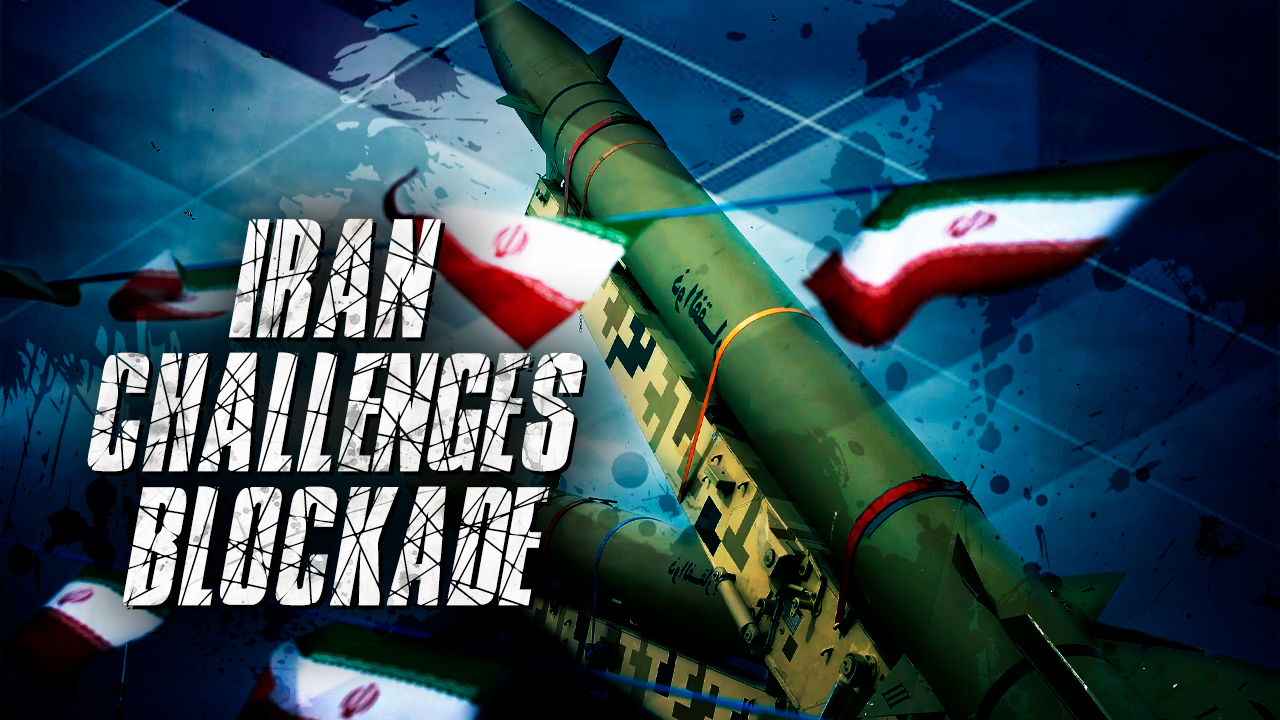
IRGC Vows to Target Ships Across Region as Tanker Attacks Escalate

File image.

Iran’s Islamic Revolutionary Guard Corps (IRGC) claimed responsibility on October 9 for setting an oil tanker ablaze in the Strait of Hormuz and threatened to pursue vessels it considers in violation of its rules across the wider region.

The IRGC Navy said it targeted the engine room and propulsion system of the MV Sun Shine, a tanker belonging to the company Natwit, after the vessel attempted to use a route through the southern section of the strait that the IRGC described as unauthorized. The attack caused a fire on board.

In a statement, the IRGC warned that action against “violating” vessels would no longer be confined to the Strait of Hormuz.

The Corps said ships using routes it considers unauthorized would be pursued and “punished” anywhere in the region. Companies accused of cooperating with the United States would face sanctions, and all their vessels would be targeted, it added.

It blamed the United States military for the maritime incidents, accusing Washington of interfering in decisions by shipping and insurance companies and paying “large bribes” to secure their compliance.

“Direct responsibility for these incidents and the escalation of tensions in maritime transport in the region lies with the aggressive U.S. army,” the statement said.

An attack was reported later in the day on a commercial tanker about 13 nautical miles west of al-Jazira in the United Arab Emirates.

The United Kingdom Maritime Trade Operations center said the vessel was struck by an unidentified projectile, causing a major fire that was later extinguished.

Maritime trade publication Seatrade Maritime identified the ship as the Gem No. 2, a Panama-flagged very large crude carrier managed in Taiwan. Information about the crew’s condition and the extent of the damage had not been reported in the publication’s account.

The incidents followed two reported vessel emergencies on October 8. UKMTO said an oil tanker north of Qatari waters had been struck by several projectiles, causing casualties. Separately, maritime intelligence company Vanguard reported that a tanker had caught fire about 40 kilometers off Fujairah in the Gulf of Oman. Vanguard identified the vessel as probably the Dalkut, sailing under the Marshall Islands flag.

Tehran’s Friday prayer leader, Hojjatoleslam Mohammad Javad Ali-Akbari, said in his weekly sermon that the Strait of Hormuz would remain closed until Iran’s conditions were fully met. He said Iran had established “seven conditions” and would decide its next steps once they were satisfied. He added that military readiness had improved, weaknesses had been addressed and Iran’s strategy had shifted from defense to offense.

Iran has said it controls the strait, will not permit military forces from hostile countries in the area and will respond “decisively” to any attempt to disrupt its management of the waterway.

Meanwhile, U.S. Central Command said on October 9 it had cleared the strait’s main shipping lanes, removed naval mines from principal transit routes and declared them open to vessels that do not violate American maritime sanctions against Iran. The command said thousands of commercial ships had passed through safely.

Actual traffic remained far below normal levels, however. The AIS-based tracking site Hormuz.now recorded eight commercial vessel crossings during the day, with 11 crossings in the preceding 24 hours. Its average for the previous seven days was 10.3 crossings daily, about 12% of the prewar average of 84.8.

The Strait of Hormuz normally carries roughly one-fifth of the world’s oil and gas shipments. At least 12 attacks, attempted attacks or harassment incidents targeting oil tankers and gas carriers were recorded in the strait from September 28 to October 5, the highest weekly total since the war began on February 28, according to media reports.

Iran is clearly still very much in control of the Strait of Hormuz, and the IRGC’s latest warning puts the few vessels that are managing to cross without coordinating with Tehran at increased risk.

_______________________________________________________________________________________________________________________

SouthFront: Analysis and Intelligence

NOW hosted at southfront.press

Previously, SouthFront: Analysis and Intelligence was at southfront.org.

The .org domain name had been blocked by the US (NATO) (https://southfront.press/southfront-org-blocked-by-u-s-controlled-global-internet-supervisor/) globally, outlawed and without any explanation

Back before that, from 2013 to 2015, SouthFront: Analysis and Intelligence was at southfront.com

SOUTHFRONT.PRESS

MORE ON THIS TOPIC:

The post IRGC Vows to Target Ships Across Region as Tanker Attacks Escalate appeared first on South Front.

  •  

NO SAFE REAR: Moscow’s Shadow War From Starlink to Prison Cells


Russia is seeking support for its war effort abroad – and threatening retaliation beyond Ukraine. Reports of foreign labor in drone factories, proposals to counter Starlink, and allegations of overseas recruitment show different ways Moscow could sustain its military effort and put pressure on its opponents.

Nowhere Far Enough

On October 9, Mikhail Zvinchuk, founder of the Russian military Telegram channel Rybar, was detained in Montenegro. Montenegrin authorities accused his team of using media work to interfere in the country’s politics. Rybar said they had come legally to film at Cetinje Monastery and had submitted an official filming request. Moscow’s response explains why this matters: Dmitry Medvedev, deputy chairman of Russia’s Security Council, suggested replenishing an “exchange fund” with Europeans and Americans to recover detained Russians. One arrest became a warning about others to come.

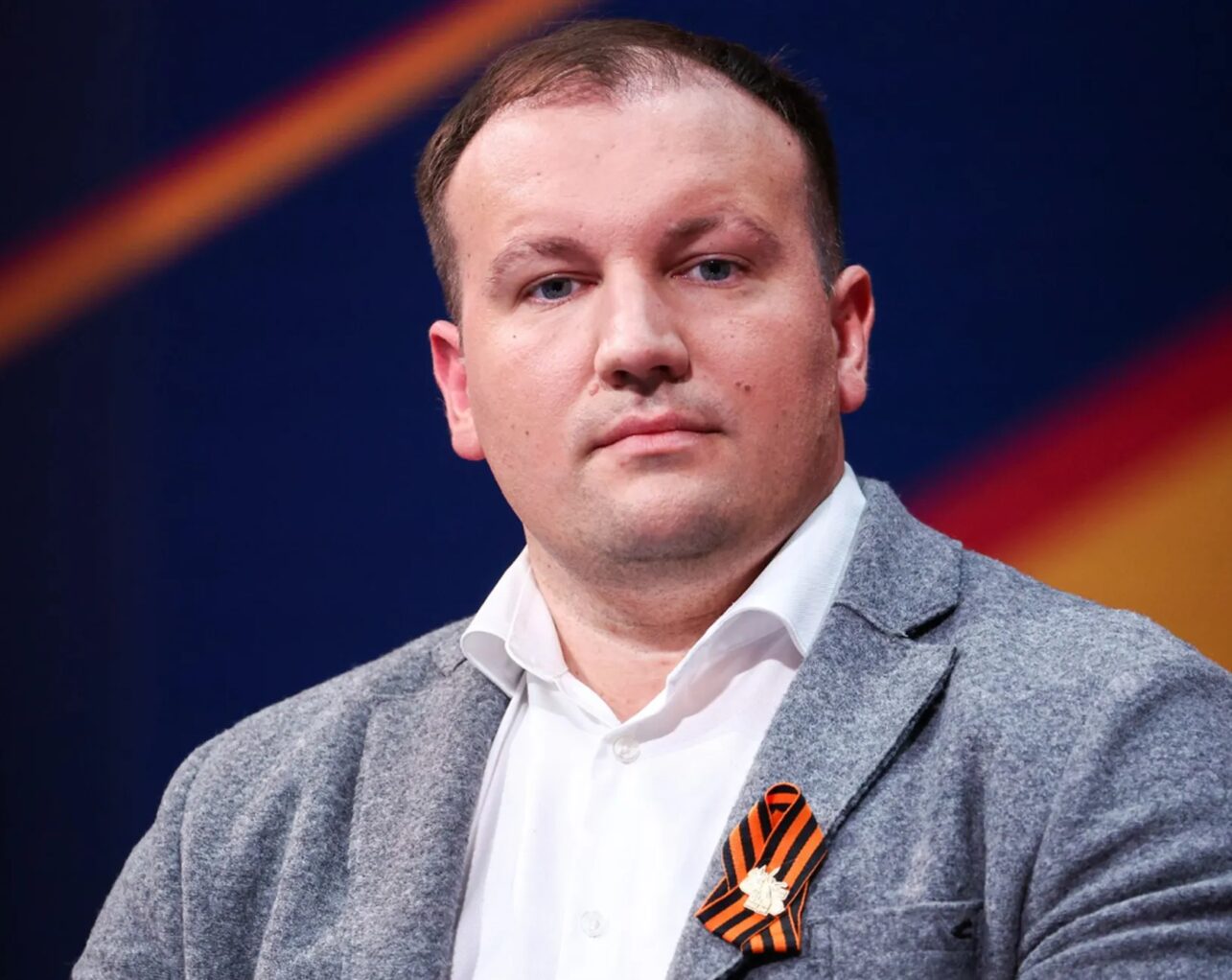
Mikhail Zvinchuk, founder of Rybar, a Russian pro-war Telegram channel covering the war in Ukraine, was detained in Montenegro on October 9

Five days earlier, Medvedev had delivered the orbital version of that warning. If Russia’s Rassvet constellation were destroyed, American Starlink satellites would “come tumbling down like ornaments from a dried-up Christmas tree.” “Space is a very crowded place,” he added. “We need to be mutually courteous.” Kiev had sought sanctions and restrictions, not announced a satellite attack. Moscow was putting a military threat behind its demand that Russian communications infrastructure be left alone.

The link is not between a blogger and a satellite. It is between two threats of retaliation: damage our network and yours becomes a target; detain our people and yours may become bargaining chips. Moscow is challenging the assumption that pressure on Russia can remain a one-way transaction.

Partners Behind the Front

The space threat has a practical backdrop. Leaked documents published in July describe a closed Russian-Chinese military forum in Guangzhou in November 2023. Chinese researchers proposed several ways to counter Starlink, from legal pressure and jamming to cyberattacks and destruction. Their hardest problem was also the simplest: how to disable satellites more cheaply and quickly than SpaceX could replace them. They do not show that these systems were built or deployed.

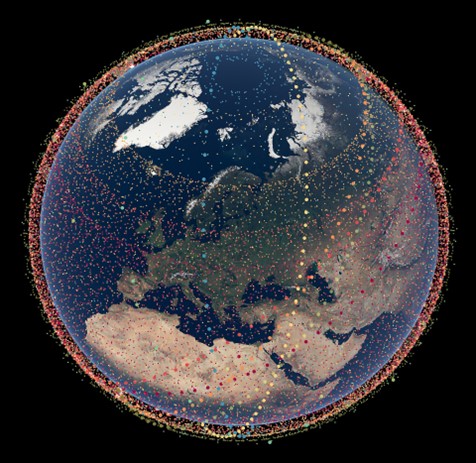
Visualization of the planned Starlink Generation 2 constellation

Russia and China have different strengths to offer. Moscow brings battlefield experience and air-defense knowledge; Beijing brings electronics, artificial intelligence, and manufacturing capacity. Russia can show what works under fire. China can help turn those lessons into equipment made at scale. A sixth closed forum was reportedly planned for the fall in St. Petersburg.

This is why repeated technical meetings matter more than dramatic threats. A shared design, tested and improved over several years, could outlast the war that first made it useful. For Moscow, the goal is to weaken an American advantage. For Beijing, Russian experience offers lessons without having to fight the same war.


Discussion of leaked documents, the “one-to-many” concept and replacement costs


But destroying satellites is not a clean solution. Russia’s 2021 antisatellite test forced both astronauts and Russian cosmonauts to shelter aboard the International Space Station, according to NASA. Debris threatens more than the intended target. Jamming can offer a narrower response; smashing entire networks risks damaging the same orbital space Russia and China also need.

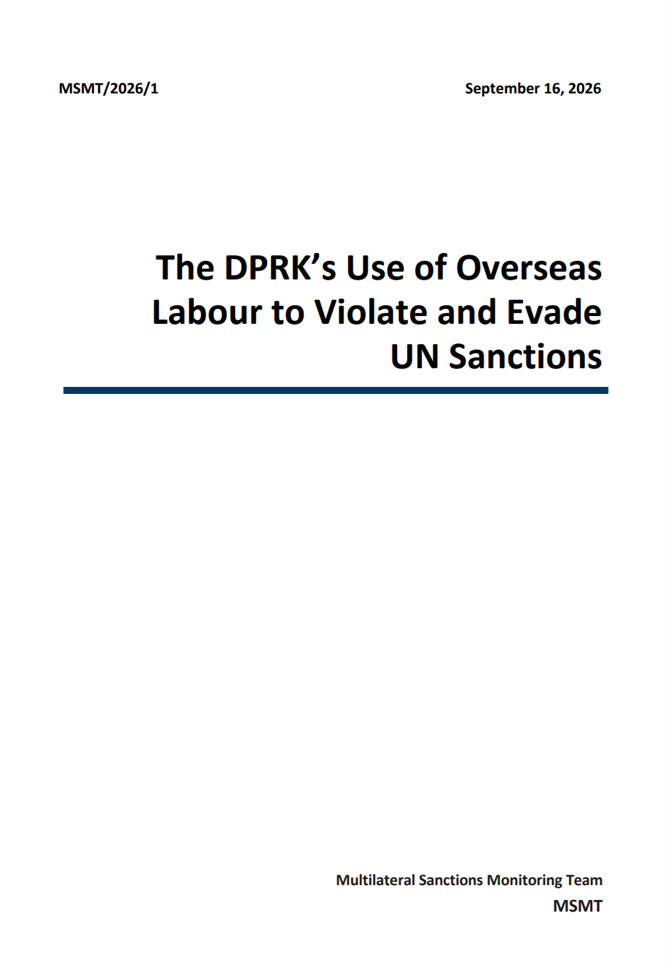
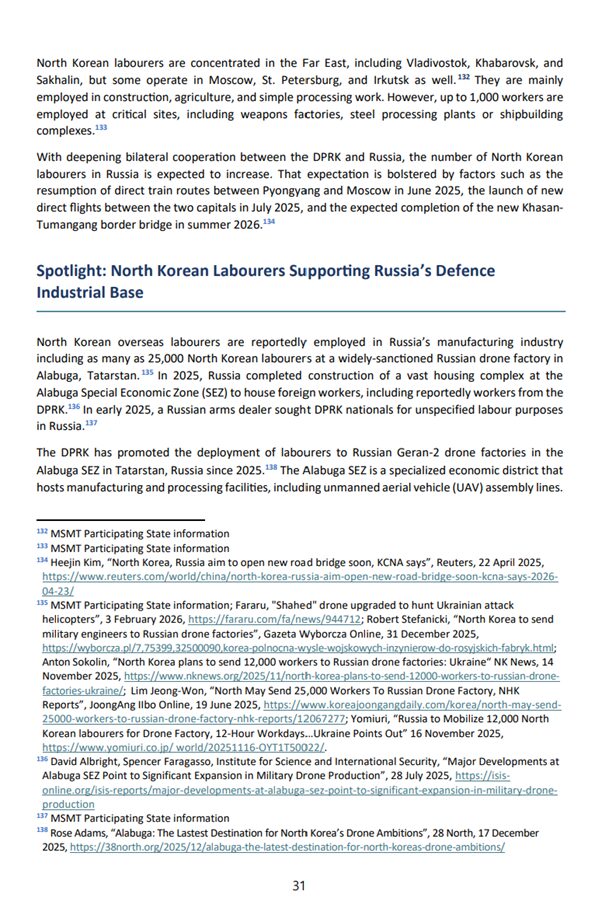
The factory floor shows another side of this partnership-building. A September report by the Multilateral Sanctions Monitoring Team says North Korean workers are employed at Alabuga in Tatarstan, where Russia produces Geran-2 drones, and describes workers entering Russia as students. Pyongyang rejected the report as fabricated. If the findings are accurate, the bargain is straightforward: Russia gains workers, North Korea gains income. Foreign support does not have to arrive as a finished missile; it can help keep the assembly line moving.

September 2026 sanctions-monitoring report.  Pages 31-32 discuss Alabuga and drone production. Pyongyang rejects the report


The Underground Price List

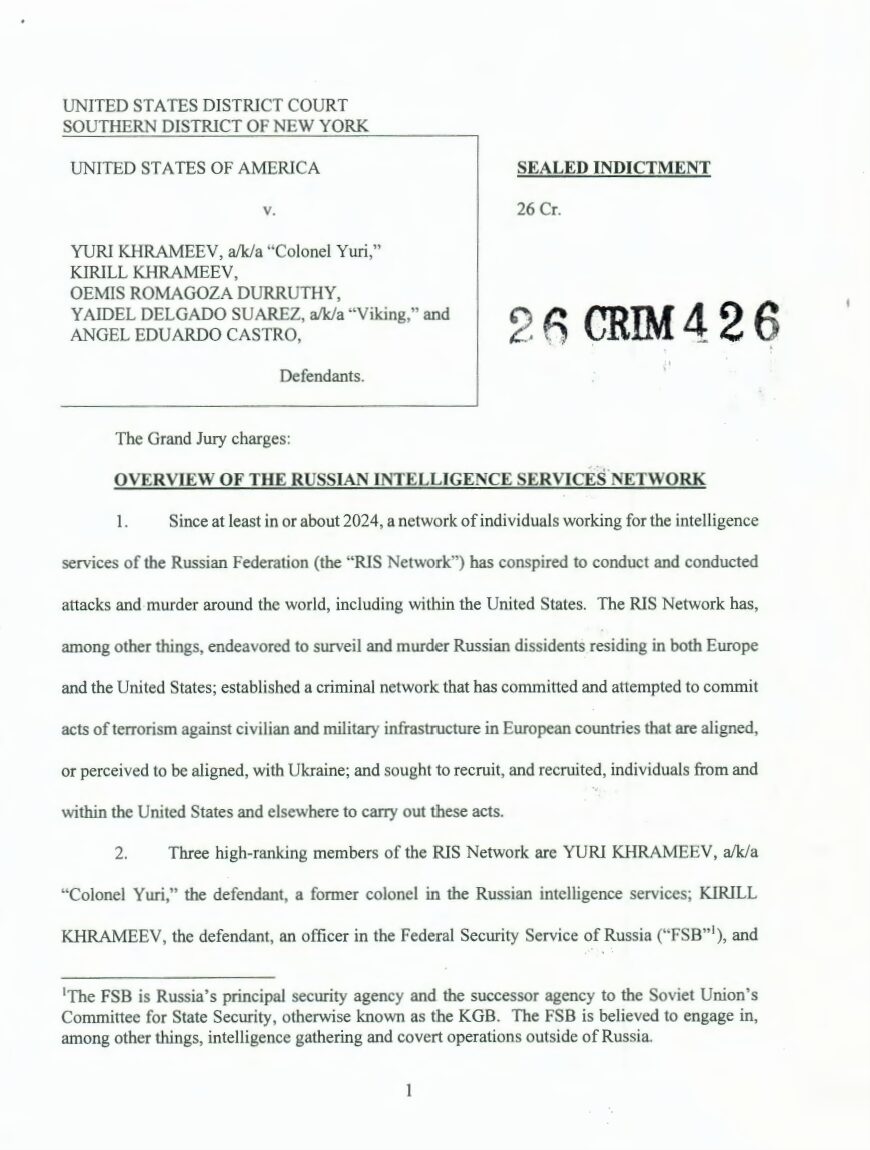
Recruitment abroad serves a different purpose. A September 15 U.S. indictment alleges that a Russian intelligence-linked network used Cuban and Venezuelan intermediaries to recruit inside America. Prosecutors describe payments of $1,000-$1,500 for surveillance and a $40,000 offer to kill a Russian dissident believed to be near Washington. Another alleged offer promised an American $25,000 to kill a target in Lithuania. These remain accusations, not court findings or proof of an officially declared bounty program.

Original U.S. indictment naming the alleged Russian, Cuban, and Venezuelan participants

The alleged network operated from at least 2024, before the Montenegro arrests. Its importance lies in the method: foreign intermediaries and local recruits, rather than an obvious Russian team. If substantiated, the charges would show Moscow reaching inside America through people who do not carry Russian passports.

The October 9 threat to expand the “exchange fund” signals that consular protests may no longer be Moscow’s only answer. It suggests foreign detainees could become leverage for recovering Russians. The warning to European and American governments is pointed: the detention of a Russian abroad may create a problem for their own citizens elsewhere.

Russia’s partners help it build weapons; alleged overseas networks extend its reach; threats against satellites and foreign detainees aim to raise the cost of confrontation. These are different tools, not proof of one master plan. But October’s warnings carry a common message: Moscow wants the other side to feel exposed too. Medvedev closed his latest message with a Russian proverb: “If you live among wolves, you must howl with them.”


MORE ON THE TOPIC:

The post NO SAFE REAR: Moscow’s Shadow War From Starlink to Prison Cells appeared first on South Front.

  •  

Saudi-Backed Forces Renew Bab al-Mandab Push Amid Fierce Houthi Resistance (Videos)

File image.

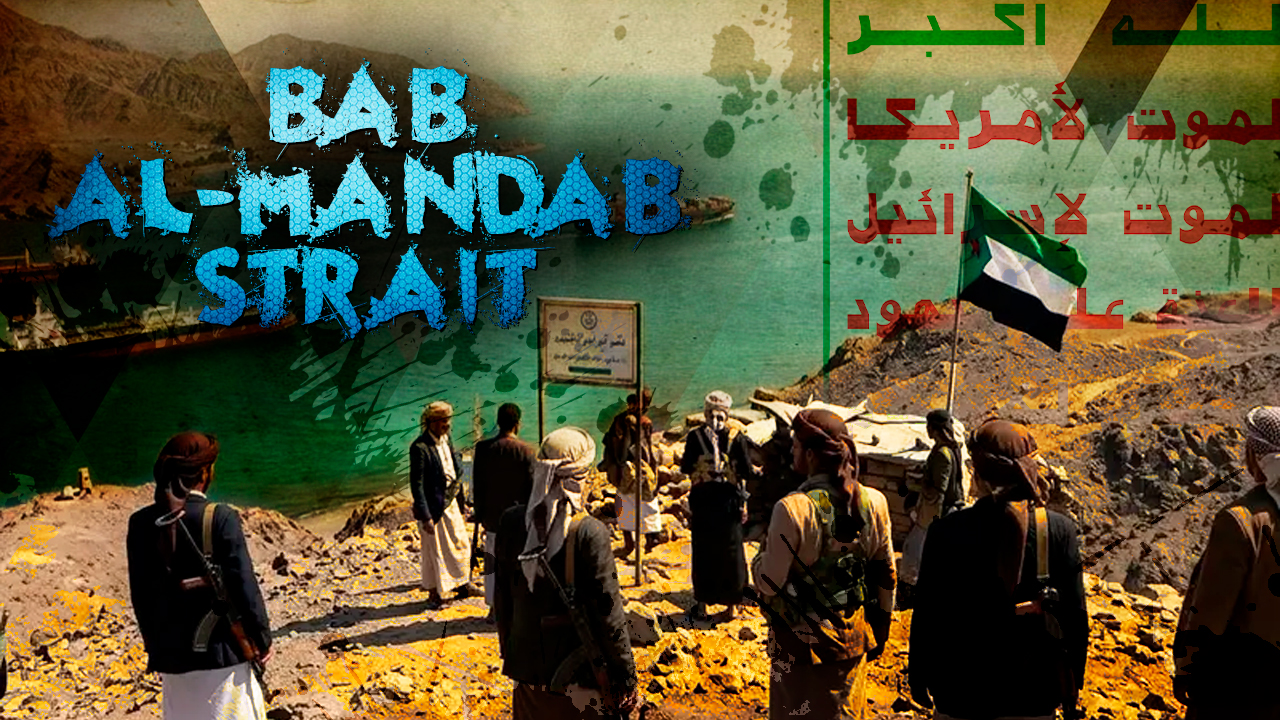
Saudi-backed Yemeni government forces on October 9 again claimed to have captured the strategic Bab al-Mandab Strait and nearby Mayyun Island.

A Yemeni military source told the German Press Agency (dpa) that the operation began before dawn with Saudi air support.

The source said the Southern Giants Brigades and Nation’s Shield forces seized the al-Ardi camp, Coast Guard observation posts and a range of high ground overlooking the strait.

Furthermore, the source claimed the forces had established full control over Mayyun Island, noting that clashes and clearing operations continued in the surrounding area.

The announcement marked the second time within days that Saudi-backed forces had claimed to capture the area. On October 5, the forces made a similar claim during Operation Yemen Dawn, but that announcement eventually proved to be false.

Responding to the latest claims, Houthi military spokesman Brig. Gen. Yahya Saree said in a statement that the group’s forces had repelled a second attempted advance by Saudi-backed forces toward Bab al-Mandab.

Saudi-backed forces had tried to move toward the waterway from Lahj province but had failed to advance, according to the spokesman.

Saree said Houthi forces struck the advancing troops with ballistic missiles, artillery and heavy weapons. He claimed the attacks destroyed more than 22 armored vehicles and killed or wounded dozens of fighters, including several commanders.

The spokesman added that more than 30 ambulances had arrived in Aden transporting dead and wounded personnel from the Saudi-backed forces.

Bab al-Mandab connects the Red Sea with the Gulf of Aden and is a key shipping route linking the Indian Ocean with the Suez Canal and the Mediterranean Sea. Mayyun Island lies within the strait, making control of the island and surrounding coastline strategically important to the opposing forces.

The latest attempted advance by Saudi-backed forces shows that the kingdom remains focused on recapturing Bab al-Mandab, despite the deteriorating situation of its allies in Taiz, where they are fully besieged by the Houthis. The fall of Taiz could, however, pose a serious problem for Saudi-backed forces, as it would allow the Houthis to launch an attack toward the port city of Aden, potentially trapping all troops amassed near Bab al-Mandab.

_______________________________________________________________________________________________________________________

SouthFront: Analysis and Intelligence

NOW hosted at southfront.press

Previously, SouthFront: Analysis and Intelligence was at southfront.org.

The .org domain name had been blocked by the US (NATO) (https://southfront.press/southfront-org-blocked-by-u-s-controlled-global-internet-supervisor/) globally, outlawed and without any explanation

Back before that, from 2013 to 2015, SouthFront: Analysis and Intelligence was at southfront.com

SOUTHFRONT.PRESS

MORE ON THIS TOPIC:


The post Saudi-Backed Forces Renew Bab al-Mandab Push Amid Fierce Houthi Resistance (Videos) appeared first on South Front.

  •  

Exclusive: the Pakistan-Saudi-Yemen-Iran riddle

The House of Saud is attacking Ansarallah to protect the death cult in West Asia, Pepe Escobar writes.

Join us on Telegram, X, and VK.

Contact us: info@strategic-culture.su

Let’s start with exclusive intel. On Thursday, Yahya Ali al-Ra’i, speaker of the Sana’a-based House of Representatives under Ansarallah, delivered a letter to Sardar Ayaz Sadiq, the speaker of Pakistan’s National Assembly, requesting Pakistani mediation between Ansarallah and Riyadh.

Ra’i, widely respected, has been the speaker in Sana’s since 2008. Sadiq began his current term as speaker in Islamabad in March 2024. This direct parliamentary channel is immensely significant as a diplomatic opening – as Pakistan faces enormous pressure, domestically and across the lands of Islam, over its real commitments related to the Saudi Arabia vs. Yemen clash as determined by the Mecca Defense Alliance.

As murky as the the whole situation really is, direct intel from both Islamabad and Tehran, at the highest levels, as I especifically requested, has established four key points:

  1. Islamabad is adamant that Pakistan will not attack Ansarallah and will not commit troops to that effect. The Riyadh understanding last week excluded entry into Yemeni territory. Pakistani forces should remain outside any ground offensives against Ansarallah. That seems to be the case – for now.
  2. Pakistan was already mediating between Riyadh and Sana’a through Tehran. Field Marshal Asim Munir personallly requested that Iranian Foreign Minister Araghchi use Iran’s influence with Ansarallah, together with Araghchi’s contacts with both Islamabad and Riyadh. Pakistan’s Foreign Office did not deny this diplomatic channel.
  3. Pakistan would have to defend Saudi territory under its Mecca Defense Alliance commitments. Deployments for border protection and defense against drones and missiles launched by the Yemeni Armed Forces fit this pattern.The problem is whether some Pakistani advisors are already deployed in Yemeni territory. If Pakistan has even a few “advisers” in Aden and troops somewhere around northern Yemen on the Saudi border, that already betrays its promises.
  4. Pakistani forces should be able to defend themselves – that comes with the territory. It’s a stated contingency; not a prediction of retaliation. At least one Pakistani officer was killed in Saudi Arabia without a Pakistani retaliatory response. That spells out restraint – at least for now.

Transiting Hormuz: use CIPS and pay in rials

On the wider U.S.-Iran front, diplomatic moves support what we have been reporting for the past few days on Transition Protocol. Pakistan in fact is desperate to maintain engagement with both Riyadh and Tehran, alongside non-stop coordination with Beijing. After all, China completely supports Pakistan mediation; and Araghchi keep speaking to Munir, as he did following talks with Wang Yi in Beijing.

Meanwhile, on the Washington front, speculation is feverish all over the spectrum over preparations for a Trump administration renewal of the war – including potential strikes on Iranian energy infrastructure and even, quite worrisomely, nuclear targets. There is no final decision yet by the Psycho/Sociopath in Charge, much less a launch date.

The immediate risks anyway are staggering.

Diplomacy – even in ersatz form – is mired in impasse. Tehran remains – and will continue to remain – anchored to its existing conditions, detailed by the dead cat MoU, but now carrying the threat of blocking transit routes along Oman’s coastline that it considers illegal. Washington for its part is obsessed with vast nuclear concessions.

Earlier this week, we confirmed that the Supreme National Security Council (SNSC) in Tehran made two very consequential decisions.

  1. Tehran decided to collect its Strait of Hormuz transit toll in Iranian currency only. No yuan, no crypto. Actually via a mechanism linked to CIPS, the Chinese payment/clearing system, bypassing the U.S. dollar. You use CIPS to electronically buy yuan, change it into rials, and pay the toll. Strait of Hormuz transit revenue after all is one of Tehran’s few remaining sources of hard currency. The new mechanism will definitely strengthen the value of the rial.
  2. Via Pakistan, Tehran notified Trump’s real-estate Bismarck, Witkoff, that Iran will not move an inch from its conditions for a negotiated settlement – and is fully prepared for any possible U.S. offensive. And this after J.D. Vance came up with an added nuclear enrichment condition: a “meaningful” and “significant” reduction. That blockades the nuclear dossier and makes a quick resolution formula nearly impossible.

The bottom line is that the escalation ladder could get out of control in no time.

Coming Yemeni Storm 1.0 in effect

On the Saudi-Yemen front, the Yemeni Armed Forces are absolutely ruthless. The Coming Yemeni Storm 1.0 is already in effect.

The damage at Jeddah refinery, close to Yanbu, is massive. Ansarallah is simultaneously hitting Saudi Arabia’s eastern and coast and western coast, plus the East-West pipeline in between.

For all practical purposes Sana’a is going for the whole key Riyadh infrastructure. The U.S. defense umbrella is a joke: remaining PAC-3 and Patriot batteries are useless against Yemeni ballistic missiles.

Saudi troops may number at best 75,000, plus 125,000 from the National Guard. The Yemeni Armed Forces command at least 350,000 that can be easily ramped up to 800,000. To expect “help” from the GCC petrosheiks doesn’t even qualify as a joke.

The Yemeni Armed Forces also unleashed two ballistic missiles plus explosive drones in the direction of Aden’s international airport. Ansarallah said the target was Saudi military supplies that had just arrived at Badr Camp, the mercenary HQ adjacent to the airport. An unspecified number of high-ranking Saudi officers and officials – perhaps even some Pakistanis – were killed.

Turkey for its part is also about to put boots, aircraft and air defenses on Saudi ground. These Turkish forces in thesis could protect Riyadh, the holy cities and the East-West pipeline. Ankara, just like Islamabad, insists it has no plans to enter the war inside Yemen.

The swift liberation by the Yemeni Armed Forces of the western coast close to the Red Sea also made it crystal clear how the so-called Saudi “coalition” – actually a gang of proxies/mercenaries – was deploying de facto terrorists all along.

Ansarallah recovered a wealth of foreign passports – especially from Kuwait, Qatar, Turkey and Syria – belonging to ISIS and Al-Qaeda goons. Call it the Terror Inc. Legion.

I’ts the same old song. Qatar and Turkey, in sync, instrumentalized the transfer of ISIS/Salafi-jihadi goons from Syria and Iraq: they were welcomed in Yemen by the Islah Party. Turkey was the key transit route; at least 2,100 of these ISIS assets are Turkish.

AQAP is back!

Way back in 2020, Ansarallah had already seized documents, maps, and videos showing ISIS/Daesh and Al-Qaeda jihadis directly supported by Riyadh roaming Yemen, with captured goons confessing they were paid, weaponized and logistically supported by the Saudis.

Now a new incarnation of the former al-Qaeda in the Arabian Peninsula (AQAP) is alread in effect – via at least 20,000 Daesh/takfiri terror goons “imported” from Syria. They will be sent to Aden governorate – following the request, actually the demand by MbS himself, fully approved by the Trump administration and its throat-slitter vassal turned President in Damascus, former ISIS al-Jolani.

The definitive headline of the whole affair though is that the House of Saud is attacking Ansarallah to protect the death cult in West Asia.

By controlling the Bab al-Mandab, Ansarallah de facto cuts off the Israeli port of Eilat. That had already happened before during the genocide of Gaza. Riyadh was furious because they had struck deals for the – now virtually scrapped – NEOM project that would connect up to Eilat once the Trumpian Abraham Accords were up and running.

Considering the whole picture, all hell could still break loose due to a single spark. Possibilities include: a Yemeni strike on Saudi Arabia causing massive casualties; a toll-enforcement mess in the Strait of Hormuz; an Iranian strike on a GCC petro-sheikh target, following an American provocation; an Iran-linked attack on a U.S. base, once again folowing an American provocation; and most of all a Sociopath-forced “land, air and sea” CENTCOM (mis)adventure.

Fasten your seat belts.

  •  

Berlin «reprogramme» progressivement une Europe unie pour en faire une sorte de «Quatrième Reich»

Diplomatie et monde

L’Allemagne réarme, elle renoue le fil coupe par la défaite c’est le fait le plus important de la période. Le reste n’est que distraction.

De nombreux chercheurs, dont l’éminent historien russe Vassili Klioutchevski, attribuent la fracture civilisationnelle incontestable entre les deux plus grands peuples d’Europe à la géographie, au climat et au paysage, qui ont façonné des modes de vie différents.

Vivant sous un climat prévisible, les Allemands ont développé une habitude de travail méthodique et régulier. Ils pouvaient planifier à l’avance car leur environnement leur permettait d’anticiper les résultats de leurs efforts avec une relative certitude.

Les Russes, en revanche, habitent une terre aux conditions imprévisibles qui s’étend, selon les mots de l’hymne national russe moderne, «des mers du Sud jusqu’à la frontière polaire». Ils ont souvent constaté que planifier à l’avance peut s’avérer totalement vain. De ce fait, ils doivent fréquemment travailler à un rythme effréné dans des délais très courts, s’appuyant sur la notion typiquement russe d’«avos» : l’espoir que, d’une manière ou d’une autre, les choses finiront par s’arranger.

Ces différences culturelles permettent d’expliquer non seulement l’évolution des relations entre ces voisins proches au fil des siècles — rappelons que la ville russe de Kaliningrad était autrefois la ville allemande de Königsberg — mais aussi la logique interne qui sous-tend aujourd’hui les relations politiques russo-allemandes.

L’Allemagne actuelle perçoit la Russie comme une menace pour sa sécurité nationale, à l’instar de ses prédécesseurs à la veille des Première et Seconde Guerres mondiales. Elle remilitarise méthodiquement son économie et accroît son aide militaire à l’Ukraine afin d’affaiblir la Russie sur tous les plans. En 2022-2023, au début de l’opération militaire spéciale, les aides étaient limitées et ciblées. À partir de 2024, Berlin s’est toutefois orientée vers des contrats à long terme pour la fourniture d’équipements et de drones, d’une valeur supérieure à 10 milliards de dollars par an, faisant de l’Allemagne le principal fournisseur d’aide militaire bilatérale à l’Ukraine au sein de l’UE.

La présidente de la Commission européenne, Ursula von der Leyen, ancienne ministre allemande de la Défense, s’est discrètement imposée comme la principale responsable de la distribution des fonds allemands.

Parallèlement, dans la continuité de cette dérive progressive vers une confrontation militaire avec la Russie, le gouvernement de Friedrich Merz poursuit la politique d’Olaf Scholz visant à démanteler la présence diplomatique russe en Allemagne. Après avoir obtenu la fermeture des consulats généraux russes à Munich, Hambourg, Francfort et Leipzig en mai 2023, Berlin a décidé en septembre dernier de fermer le consulat général de Bonn et le centre culturel de la Maison russe à Berlin.

Avec la première économie de l’UE et un représentant de sa propre initiative à un poste parmi les plus influents de la hiérarchie supranationale européenne, Berlin «reprogramme» progressivement une Europe unie pour en faire une sorte de «Quatrième Reich». En devenant un centre de pouvoir plus homogène, l’Europe risque de se retrouver au bord d’une confrontation militaire avec son puissant voisin de l’Est, comme cela s’est produit à maintes reprises au cours de l’histoire.

Afin de rendre la prétendue menace russe tangible, les autorités allemandes alimentent les médias depuis cet été des rumeurs concernant l’implication de Moscou dans la découverte d’un drone chargé d’explosifs à l’aéroport de fret de Leipzig. Sans attendre les conclusions de l’enquête, Berlin s’est empressé d’accuser la Russie d’avoir orchestré un acte de sabotage.

Conscients que leur gouvernement a mené le pays dans une impasse, les citoyens allemands ordinaires commencent à réagir et apportent un soutien croissant à l’Alternative pour l’Allemagne (AfD). Ce parti promet un changement radical de cap en matière de politique étrangère et intérieure — et non un revirement à 360 degrés, comme l’avait proposé l’ancienne ministre des Affaires étrangères Annalena Baerbock, donnant ainsi naissance, involontairement, au mème politique emblématique de la décennie allemande.

Certes, les victoires du parti restent régionales, et les autres partis politiques allemands refusent d’envisager le mouvement d’Alice Weidel et de Tino Chrupalla, même comme partenaire de coalition. Mais si sa base électorale continue de s’élargir, en attirant le soutien non seulement des Allemands de souche mais aussi, à terme, des communautés immigrées, l’AfD pourrait avoir une chance d’obtenir plus de 50% des voix au niveau national. Cela lui permettrait de former un gouvernement à elle seule.

Parallèlement, la cote de popularité de Merz a chuté à un niveau historiquement bas pour un chancelier de la République fédérale : seulement 11 à 15%, avec 85 à 89% d’insatisfaction. Face à ces chiffres et conscient de la demande publique pour une relation plus équilibrée avec la Russie, il a chargé le ministre des Affaires étrangères, Johann Wadephul, d’obtenir une rencontre avec son homologue russe, Sergueï Lavrov, en marge de l’Assemblée générale des Nations unies, coûte que coûte. Le récit de Lavrov illustre clairement le peu de substance de cette rencontre :

«Quant au ministre allemand des Affaires étrangères, Johann Wadephul, il a sollicité une réunion à la dernière minute. Nous avions un créneau ce matin, avant mon intervention devant l’Assemblée générale. Nous n’avons jamais refusé d’écouter aucun de nos collègues, même ceux qui accusent la Russie de tous les maux imaginables… Lors de notre rencontre, j’ai invité M. Wadephul à expliquer l’objet de sa venue. Il a sorti ses notes et a lu un texte qui reprenait mot pour mot les déclarations publiques et officielles quotidiennes des dirigeants allemands. Je le lui ai fait remarquer. Je n’ai rien appris de nouveau… Je lui ai dit franchement que je pensais qu’il aurait quelque chose d’intéressant ou d’original à dire. Ils auraient tout simplement pu nous appeler et nous demander de lire leurs communiqués officiels…»

Pourquoi les relations entre Moscou et Berlin se sont-elles tellement détériorées que même les rencontres entre leurs ministres des Affaires étrangères se sont transformées en échanges stériles de points de discussion préparés, plutôt qu’en négociations visant une percée ?

Au moins trois facteurs méritent d’être examinés.

1. Le rôle contre-productif de Berlin dans les efforts de résolution du conflit en Ukraine

Dès les premiers jours de la crise ukrainienne, l’Allemagne a cherché à contrôler le processus diplomatique afin d’ancrer fermement la position anti-russe du pays. En février 2014, après les troubles survenus sur le Maïdan, le ministre des Affaires étrangères, Frank-Walter Steinmeier, et ses homologues français et polonais, Laurent Fabius et Radoslaw Sikorski, se sont portés garants d’un accord entre le président Viktor Ianoukovitch et l’opposition. Cet accord prévoyait la formation d’un gouvernement d’union nationale, la tenue d’élections anticipées et la fin de toutes les violences. Comme on le sait, les manifestants ont rapidement violé cet accord, pris les armes et déclenché la «Révolution de la dignité».

Un an plus tard, la chancelière allemande Angela Merkel et le président français François Hollande se sont joints à la Russie comme médiateurs dans les pourparlers entre Kiev et les républiques populaires de Donetsk et de Lougansk, aboutissant à la signature d’un ensemble de mesures visant à mettre en œuvre les accords de Minsk. Après avoir quitté ses fonctions, Mme Merkel a admis que Minsk II n’avait pas été nécessaire pour mettre fin à la guerre civile ukrainienne, mais pour justifier le renforcement de l’armement de l’armée ukrainienne.

Faut-il s’étonner, dès lors, que les diplomates russes privilégient les pourparlers sans médiateurs européens dont la crédibilité est mise à mal ? Ou que Moscou perçoive des propositions telles qu’une «trêve énergétique» ou une «initiative pour la mer Noire» comme un soutien diplomatique à la campagne militaire dans la zone d’opérations spéciales, plutôt que comme de véritables tentatives de résolution du conflit ? Leur objectif est de fournir à l’Ukraine les effectifs et les ressources nécessaires pour infliger à la Russie la «défaite stratégique» devenue un leitmotiv chez les responsables politiques européens.

2. La rupture des liens commerciaux et économiques avec la Russie

Hormis de brèves récessions liées à des bouleversements mondiaux tels que la crise financière de 2008-2009 et la pandémie de COVID-19 de 2020-2021, l’économie allemande a enregistré une croissance annuelle régulière de 1 à 3,5% au XXIe siècle. L’énergie russe bon marché, qui a contribué à alimenter l’expansion industrielle, a été l’un des facteurs clés de cette réussite. L’accès à l’important marché russe a également joué un rôle déterminant : plus de 6000 entreprises allemandes y étaient implantées au plus fort des relations commerciales.

Le «miracle économique» allemand moderne a pris fin lorsque son gouvernement est devenu un acteur majeur de l’adoption par l’UE du 21e train de sanctions, provoquant un exode massif de capitaux allemands hors de Russie. Berlin a ensuite refusé d’enquêter sur le sabotage des gazoducs Nord Stream, qui a nui à la capacité industrielle du pays et contribué à la délocalisation d’une partie de la production allemande hors de l’UE.

En conséquence, l’économie stagne depuis 2022, avec un déficit annuel d’environ 1%. Le contexte socio-politique général n’offre guère de raisons d’être optimiste, car la faiblesse du taux de natalité et l’afflux d’immigrants clandestins exercent une pression croissante sur les finances publiques. Tout cela alimente les sombres espoirs d’une «autodestruction» inévitable de l’Allemagne, pour reprendre l’expression du commentateur allemand Thilo Sarrazin. Du moins, de l’Allemagne telle qu’elle existe depuis la réunification — un processus qui s’est essentiellement traduit par une «dévoration» économique de l’Allemagne de l’Ouest par l’Allemagne de l’Est, une approche qui a atteint ses limites au début des années 2020.

3. Confiance dans le fait que la Russie agira de manière responsable

La Russie est depuis longtemps un épouvantail pour les médias allemands. Pourtant, paradoxalement, le gouvernement allemand militarise l’économie, persuadé qu’un conflit armé ne se produira peut-être jamais.

Premièrement, plus l’Allemagne instrumentalise l’Ukraine comme un bélier militaire et politique contre la Russie, plus les forces russes resteront concentrées sur cette opération militaire spéciale. Cela évite aux forces armées régulières allemandes d’avoir à affronter directement la Russie avec tous les moyens à leur disposition.

Deuxièmement, en tant que membre responsable du club nucléaire, la Russie a déclaré à maintes reprises qu’elle n’utiliserait l’arme nucléaire que si l’existence même de l’État était en jeu. Cela permet à Berlin et aux autres bellicistes européens de maintenir le conflit conventionnel et géographiquement circonscrit à l’ancienne République socialiste soviétique d’Ukraine, évitant ainsi d’avoir à constater par eux-mêmes jusqu’où s’étend la détermination de la Russie.

Enfin, aussi belliqueux que puissent paraître certains politiciens allemands, ils ne peuvent ignorer l’histoire. Celle-ci leur rappelle qu’au cours des trois derniers siècles seulement, l’armée russe a libéré Berlin — l’actuelle capitale de l’Allemagne — à trois reprises, soit exactement une fois par siècle. Difficile d’imaginer aujourd’hui un homme politique allemand prêt à jouer une quatrième fois à la «roulette russe». Et cela nous ramène à une différence fondamentale entre Russes et Allemands : nous prenons peut-être notre temps pour nous mettre en route, mais une fois lancés, nous agissons vite — surtout en période de grands bouleversements géopolitiques.

EN PRIME

Le taux d’approbation de Merz est inférieur à 10%. Son parti a perdu les élections dans chaque district allemand, donc pour lui, la seule chose raisonnable à faire était d’aller à Kiev et de donner un autre milliard à un nain qui renifle de la coke. Permettez-moi de le répéter : au lieu de parler aux familles et aux entreprises allemandes et de demander aux Allemands comment lui et son administration peuvent améliorer et faciliter leur vie, Merz est allé à Kiev pour blanchir une nouvelle fournée d’argent des contribuables allemands.

Publié à l’origine par  ReseauInternational

  •  

Quattromila pagine di piani, nessuna di pace: le folli provocazioni di guerra della NATO

 L’Europa ha già conosciuto questa strada, nell’estate del 1914. Sarebbe imperdonabile percorrerla di nuovo, stavolta con le testate nucleari in fondo.

Segue nostro Telegram.

Tutto è pronto a esplodere

A Copenaghen, davanti ai capi di stato maggiore dei trentadue Paesi dell’Alleanza atlantica, l’ammiraglio Giuseppe Cavo Dragone ha scelto le parole con cui presentarsi all’opinione pubblica europea. Presidente del Comitato militare della NATO dal gennaio 2025, ha annunciato che l’Alleanza dispone di «4.000 pagine di piani» per il fianco orientale, che quei piani coprono ogni scenario «da una crisi minima o un intervento sul nostro territorio all’attivazione dell’articolo 5 e alle successive azioni», e che «il personale militare, i sistemi e le armi sono pronti». Poi la chiusa: in caso di attacco, i russi «hanno molto più da perdere che da guadagnare. Questo è assolutamente certo. Ed è questo che costituisce la deterrenza».

Nelle intenzioni dell’ammiraglio doveva essere un messaggio rassicurante. Letto con attenzione, è una delle dichiarazioni più imprudenti pronunciate da un vertice militare europeo dalla fine della Guerra fredda. Vale la pena smontarla pezzo per pezzo.

Le parole di Copenaghen non cadono nel vuoto. Poche ore prima il premier polacco Donald Tusk aveva previsto che Mosca potrebbe lanciare droni o missili sul territorio di un Paese NATO «nei prossimi mesi», per dimostrare che l’articolo 5 è una promessa di carta; Parigi, intanto, preparava un piano contro gli attacchi con droni. In un’atmosfera del genere, il compito di un militare di rango sarebbe raffreddare, distinguere l’ipotesi dal fatto, ricordare ai governi che la guerra tra potenze nucleari non è uno scenario da pianificare ma da impedire. L’ammiraglio ha fatto l’opposto: ha aggiunto combustibile.

E non è la prima volta. Nel dicembre 2025, in un’intervista al Financial Times, lo stesso Cavo Dragone spiegava che l’Alleanza stava valutando di diventare «più aggressiva» contro la guerra ibrida russa, che un «attacco preventivo» poteva essere considerato un’«azione difensiva» e che essere più aggressivi della controparte «potrebbe essere un’opzione». Mosca, per bocca di Marija Zacharova, parlò di un passo irresponsabile verso l’escalation, arrivato mentre si negoziava sull’Ucraina. Dieci mesi dopo il registro non è cambiato. Si è solo fatto più esplicito: prima l’ipotesi dell’attacco preventivo, ora l’inventario delle armi pronte.

La deterrenza non si fa con i proclami

L’ammiraglio chiama tutto questo «deterrenza». Ma la teoria della deterrenza, quella seria, dice altro. Thomas Schelling ha spiegato che la deterrenza è un atto di comunicazione in cui la credibilità conta quanto la forza, e che la minaccia efficace lascia sempre all’avversario una via d’uscita. Nel dilemma della sicurezza, ciò che una parte vive come difesa venga letto dall’altra come preparazione all’offesa. Quattromila pagine che arrivano fino alle «azioni successive» all’articolo 5 sono, viste da Mosca, piani di guerra contro la Russia. Nessun analista del Cremlino le leggerà in altro modo, e nessuno dovrebbe stupirsene.

C’è poi una questione di ruolo. Il presidente del Comitato militare è il principale consigliere militare del Segretario generale e del Consiglio Nord Atlantico: non decide la politica dell’Alleanza, la serve. Quando un ufficiale di questo livello usa la tribuna pubblica per lanciare avvertimenti a una potenza straniera, invade uno spazio che appartiene ai governi e ai parlamenti, cioè a chi risponde ai cittadini. In una democrazia la decisione sulla guerra non spetta alle stellette. Oppure dobbiamo intendere che è la NATO, tramite Cavo Dragone, a provocare lo scoppio di una guerra, invocandola a più non posso?

E soprattutto c’è l’arma nucleare. Dal novembre 2024 la dottrina russa considera l’aggressione di uno Stato non nucleare, condotta con la partecipazione o il sostegno di una potenza nucleare, come un attacco congiunto, e abbassa la soglia per l’impiego dell’atomica. Si può giudicare quella dottrina come si vuole. Ignorarla è impossibile. Chi parla di «azioni successive» all’articolo 5 contro un Paese che ha scritto nero su bianco queste regole sta parlando, che lo voglia o no, di guerra nucleare.

Tutta la costruzione retorica di Copenaghen poggia su una premessa mai dimostrata: che la Russia si prepari ad attaccare l’Alleanza. Gli indizi citati sono violazioni dello spazio aereo, sabotaggi, rapporti d’intelligence che parlano di un attacco «nei prossimi anni». Il Cremlino ha smentito piani del genere, e la smentita da sola non prova nulla. Ma la logica strategica sì. Mosca è impegnata in Ucraina da oltre quattro anni e mezzo; un’aggressione diretta contro un membro NATO la porterebbe contro gli arsenali di Stati Uniti, Regno Unito e Francia, senza alcun guadagno proporzionato al rischio. Che una simile scelta sia altamente improbabile lo capisce chiunque ragioni in termini di costi e benefici, a Mosca come a Bruxelles.

Perché allora insistere sull’imminenza della minaccia? Una risposta, difficile da scartare, sta nei bilanci. Al vertice dell’Aia del giugno 2025 gli alleati si sono impegnati a portare la spesa per la difesa al 5% del PIL entro il 2035. Un obiettivo del genere si giustifica davanti agli elettori solo con un nemico alle porte. La paura è diventata una voce di bilancio.

Resta l’altra metà del problema, la più grave. Se un attacco russo alla NATO è improbabile, una guerra della NATO contro la Russia è impensabile. La Federazione Russa possiede, secondo le stime della Federation of American Scientists, il più ampio arsenale nucleare del pianeta. Non esiste una vittoria militare contro una potenza di questo tipo: esiste solo la distruzione reciproca, e la sua geografia è già scritta. Si combatterebbe qui.

Ammiraglio, ci dia qualche spiegazione

Ammiraglio, adesso si calmi, si pulisca la bava che le è uscita dalla bocca, e ci spieghi esattamente cosa abbiamo noi da perdere da un confronto con la Russia. Lei ha misurato con certezza assoluta le perdite altrui. Le nostre non le ha nominate.

Proviamo a farlo noi. L’Italia ospita basi che le fonti aperte indicano da anni come depositi di armi nucleari statunitensi, ad Aviano e a Ghedi; ospita Sigonella, il comando alleato di Napoli, porti e infrastrutture che in qualunque pianificazione avversaria sono bersagli di prima fila. La Polonia, i Baltici, la Germania sono il teatro stesso delle «4.000 pagine». Gli Stati Uniti hanno un oceano di mezzo. L’Europa ha le sue città, le sue fabbriche, i suoi figli. In una guerra con la Russia l’Europa non è un attore: è il campo di battaglia.

E allora la seconda domanda, quella che nessun comunicato di Copenaghen affronta. Cosa otterremmo da un confronto nucleare combattuto sul nostro territorio, per l’esattezza? Quale obiettivo politico, quale interesse nazionale italiano, quale principio europeo varrebbe Milano, Monaco, Varsavia? La risposta onesta è una sola: niente. Una guerra che non si può vincere non è una politica. È un suicidio con un piano operativo allegato.

In 77 anni di storia, che l’ammiraglio rivendica, l’Alleanza ha prodotto piani per ogni contingenza. Mancano altre pagine, quelle che l’Europa dovrebbe pretendere dai propri governi: un’architettura di sicurezza continentale che includa anche la Russia, misure di fiducia reciproca, canali militari di comunicazione permanenti, trattati sul controllo degli armamenti da ricostruire dopo che quasi tutti sono stati lasciati decadere. Nel 1975, con l’Atto finale di Helsinki, due blocchi armati fino ai denti seppero sedersi allo stesso tavolo. Non era debolezza. Era la consapevolezza che la sopravvivenza del continente valeva più di qualunque vantaggio tattico.

Oggi quella consapevolezza sembra scomparsa proprio da chi, per mestiere, dovrebbe conoscere meglio di tutti il prezzo della guerra. Quando i generali parlano come ultimatum e i governi tacciono, il rischio non è che la guerra venga dichiarata. È che arrivi da sola, per inerzia, trascinata da parole che nessuno ha avuto il coraggio di ritirare.

L’Europa ha già conosciuto questa strada, nell’estate del 1914. Sarebbe imperdonabile percorrerla di nuovo, stavolta con le testate nucleari in fondo.

  •  

As duas ciências: a original e a materialista

A ciência nasceu do Deus engenheiro cristão. Hoje, o materialismo ateu domina as universidades, mas mantém sociedades secretas e ambíguas.

Junte-se a nós no Telegram , X e VK.

Escreva para nós: info@strategic-culture.su

Possivelmente, há mais de uma resposta correta à pergunta de por que a ciência surgiu na cristandade ocidental, em vez de ter aparecido primeiro numa das muitas sociedades orientais com tecnologia formidável, ou no seio do paganismo greco-romano.

O epistemólogo beneditino Stanley Jaki tem uma resposta detalhista e intrínseca ao próprio cristianismo: segundo lemos em Christ and Science, o diferencial é os cristãos não serem propensos a cair no panteísmo. Entre os pagãos greco-romanos, o cosmos era chamado de “unigênito”, título assumido depois por Jesus no cristianismo, e somente no cristianismo. No mundo de Aristóteles, o pagão predileto da cristandade ocidental, os corpos se movem por vontade própria (o fogo quer subir, a terra quer afundar etc.), e o Primeiro Motor é parte da natureza, em vez de transcendê-la. No judaísmo e no islamismo, as figuras de Spinoza (amado no s. XX por Einstein e Sagan, e no XXI por Sam Harris) e de Averróis (com seu intelecto universal) mostram que é fácil confundir Deus com a própria natureza. É na cristandade medieval que o mundo passa a ser concebido à maneira de um grande relógio com as peças inanimadas ajustadas por um Criador inteligente, cujas leis devemos descobrir. Esse estilo de pensar o universo, que hoje associamos a Newton, é medieval. E essa cosmovisão, específica da cristandade, é o que possibilitou a invenção da ciência.

Aqui nesta SCF, cheguei a aventar uma resposta mais modesta, de natureza cultural. Escrevi que Ocidente é racionalista desde antes de ser cristão; e isso favorece não só o surgimento da ciência, como a disposição para mantê-la em caso de conflito com a fé. Os sunitas, que são a maioria dos muçulmanos, viram uma espécie de literalismo corânico acabar com o espetacular florescimento das ciências na Idade Média. Já os judeus, que se entregavam à exegese de textos religiosos, só se tornaram cientistas com a emancipação e a laicização. Essa característica cultural ajuda a explicar por que a Ciência surgiu na cristandade ocidental, em vez da oriental, já que tanto a Igreja Romana quanto a Grega compartilham a crença no unigênito Jesus. Isso também ajuda a explicar por que, quando a Reforma protestante aconteceu, a Europa protestante não se apegou ao literalismo bíblico, nem às invectivas de Lutero contra a razão, e produziu ciência em diálogo com a Europa católica. Isso acabou deslocando a Verdade da religião (que cada uma tinha a sua) para a ciência (a ser aceita por todos), criando terreno para essa invenção recente ocidental chamada cientificismo.

Agora, uma ideia intrínseca ao cristianismo que eu queria apontar é a absoluta intolerância ao relativismo no conhecimento. No mundo pagão, filosofia e religião eram assuntos desconectados. Platão refletia sobre o bom, o belo e o justo sem investigar o Olimpo. Cícero, enquanto filósofo, escrevia contra os adivinhos públicos da religião romana; mas, enquanto político, não esboçava nenhuma intenção de alterar as práticas da religião de Estado, nem de inventar o laicismo. Nem mesmo Aristóteles, que escrevia sobre todas as disciplinas concebíveis, escrevia sobre Zeus, Hera ou Atena. Ele até criou uma “teologia”, mas não se referia aos deuses e sim ao Primeiro Motor. Zeus, Hera e Atena não eram objeto de uma disciplina.

Foi na Idade Média que a Igreja Católica inventou a universidade com a intenção de estudar o universum, isto é, tudo: metafísica, física, política, teologia… O conhecimento estava ordenado de modo coeso, presumindo uma realidade objetiva. Assim, a física não podia ensinar uma coisa que estivesse em contradição com a teologia, e vice-versa. (Embora o problema de Galilei se deva ao aristotelismo abraçado pela Igreja via Tomás de Aquino, e não a uma leitura literal da Bíblia.) Essa coesão pode parecer óbvia, mas nos dias de hoje a disciplina “física” diz que o vidro é líquido, enquanto a disciplina “química” diz que o vidro é sólido. E esse nem é o maior dos problemas: quem se atreveria a pedir uma definição unívoca de “homem” ou “humano” a uma universidade? Na prática, o relativismo impera na universidade mesmo antes de os pós-modernos tomarem conta de tudo.

Essa fragmentação do conhecimento teve origem no modelo de ciência surgido na Renascença. Fora das universidades, os humanistas buscavam os textos antigos que os católicos medievais haviam descartado, como o De rerum natura, do materialista e epicurista Lucrécio. Como naquela época a antiguidade conferia autoridade, o ocultismo formado pela fusão entre o hermetismo e a cabala gozou de especial credibilidade entre os letrados de modo geral. O hermetismo vem de Hermes Trismegistos, que os renascentistas acreditavam ser o professor de Moisés, Platão e Pitágoras – mas na verdade era uma ficção um pouco mais nova que Cristo. Um vestígio etimológico da importância do hermetismo para a ciência é o adjetivo “hermético”, usado pelos alquimistas com seus potes muito bem fechados. Quanto à cabala, ela vem da religião que precedeu o cristianismo e isso basta para ser entendida como muito antiga – mesmo que seu principal texto, o Zohar, seja da Espanha medieval. Conforme argumentei em maior detalhe aqui, o ocultismo da Renascença influenciou a ciência moderna, e é responsável pelo seu viés utilitarista. Se cada disciplina decidir que um determinado conceito “funciona” e houver contradição entre elas, não há problema, pois o que interessa não é o conhecimento, mas sim o caráter prático. É uma ciência inspirada no procedimento do feiticeiro, que fica consultando livros antigos e testando feitiços para descobrir se funcionam.

Digamos então que o status quo do conhecimento nas universidades é um relativismo prático decorrente da falta de uma visão unitária por parte da instituição. No âmbito individual, porém, é humanamente impossível fazer ciência sem uma cosmovisão coerente – nem que seja uma elaborada a posteriori com base nos “feitiços” que funcionaram, à maneira dos alquimistas na Renascença. Hoje, está muito claro que o mainstream científico é ateu, mas isso é pouco informativo. Seria mais preciso dizer que o mainstream é materialista.

O século XIX é o século da consolidação do materialismo na ciência. É o século do triunfo de Darwin, o primeiro (e talvez único) grande cientista inequivocamente ateu da História. Antes de Darwin, predominava a cosmovisão medieval do Deus relojoeiro, ou da natureza como o livro escrito em linguagem matemática por Deus (para usar a metáfora de Galileu). Na Renascença, vão despontando cosmovisões alternativas. No Iluminismo, essa movimentação ganha as formas do deísmo e do materialismo, que não são mutuamente excludentes. O deísmo é a ideia de que Deus existe, porém não se importa com a humanidade. Essa é uma ideia muito vaga, pois compreende as possibilidades de (1) Deus ser um arquiteto distante (como para Voltaire, um “criacionista” entusiasta de Newton); (2) Deus ser a própria matéria, ou o próprio universo (panteísmo); (3) os deuses existirem e serem feitos de átomo como o resto da natureza – opinião que consta no De rerum natura e resulta num ateísmo prático. Como esta concepção de Deus é psicologicamente difícil de sustentar, não é de admirar que, no século XIX, a feição pública do materialismo já tenha sido a do ateísmo.

Ainda assim, como mostrei aqui na SCF, só um dos “quatro cavaleiros” do neoateísmo (Richard Dawkins) é inequivocamente ateu. Os outros três (Sam Harris, Daniel Dennett e Christopher Hitchens) são adeptos ou de um New Age lisérgico, ou do judaísmo, ou das duas coisas. Sagan era outro ateu com esse perfil ambíguo.

Creio então ser útil discriminar essas duas cosmovisões científicas opostas: uma, originadora da ciência, é a do Deus transcendente engenheiro do cosmos; outra, a do materialismo, segundo o qual tudo o que existe é matéria a movimentar-se de maneira aleatória, gerando ora caos, ora ordem. É possível, dentro desta última, ser um ateu inequívoco como Dawkins hoje ou Barão d’Holbach no XVIII; e é possível também ser um New Age como Sam Harris. A matéria é, também ela, divinizável por parte de peruas dos cristais e maconheiros. E uma figura ambígua é ninguém menos do que Epstein, já que esse mecenas era um judeu religioso o bastante para querer criar um porco kosher GMO a fim de comer bacon, mas ao mesmo tempo financiava o clube de ateus de Sam Harris. Tal como mostrei aqui, Epstein era adepto do materialismo a ponto de querer identificar a parte do cérebro que corresponde à alma.

Um último traço intrínseco do cristianismo que vale mencionar é o seu exoterismo, isto é, o seu caráter público e não iniciático. Essa característica se reflete na universidade e nas bibliotecas: todo o repositório de conhecimento está público para aquele que quiser estudar. No caso do materialismo, desde o XVIII a Inglaterra tem na Lunar Society uma tradição sólida de sociedades científicas privadas e secretas, amiúde com finalidade comercial. Isso também está de acordo com o esoterismo da Renascença. E no século XXI, os Arquivos Epstein trouxeram à tona sociedades discretas de materialistas, tais como a de Sam Harris financiada pelo pedófilo.

Dado que o pedófilo também financiava pesquisas na universidade, é plausível que esse materialismo limítrofe entre o panteísmo e o ateísmo seja uma “teologia” oculta, sempre presumida na ciência atual, porém nunca explicitada para os não iniciados.

  •  

South Korea challenges The North With Hypersonic Glide Vehicle Test (Photos)

Click to see full-size image. (Office of the President of the Republic of Korea)

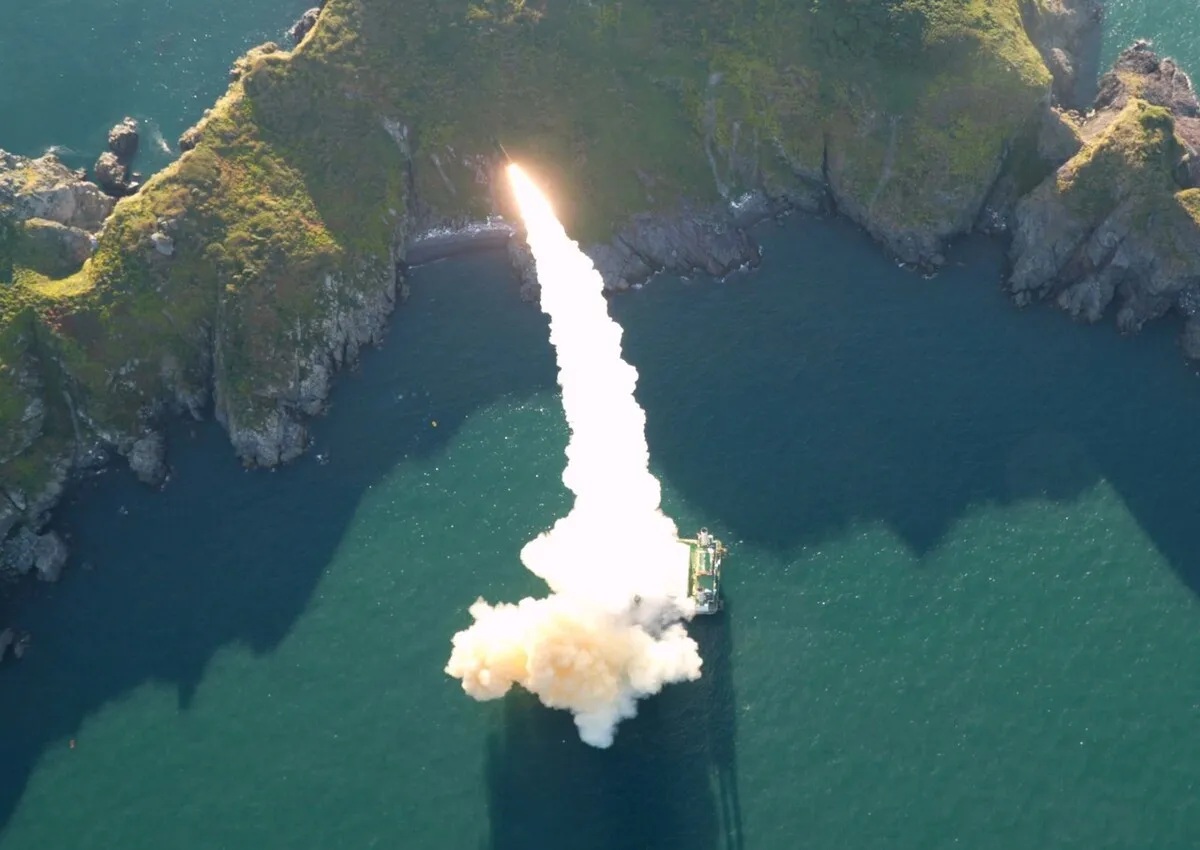
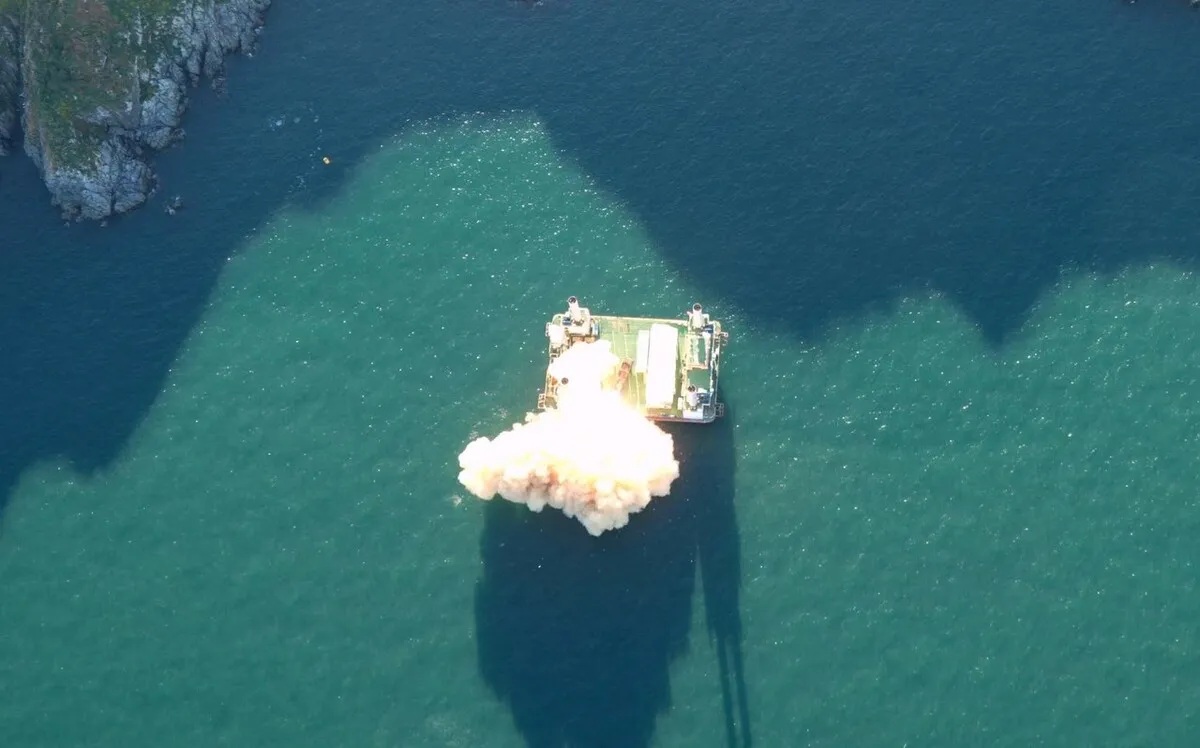
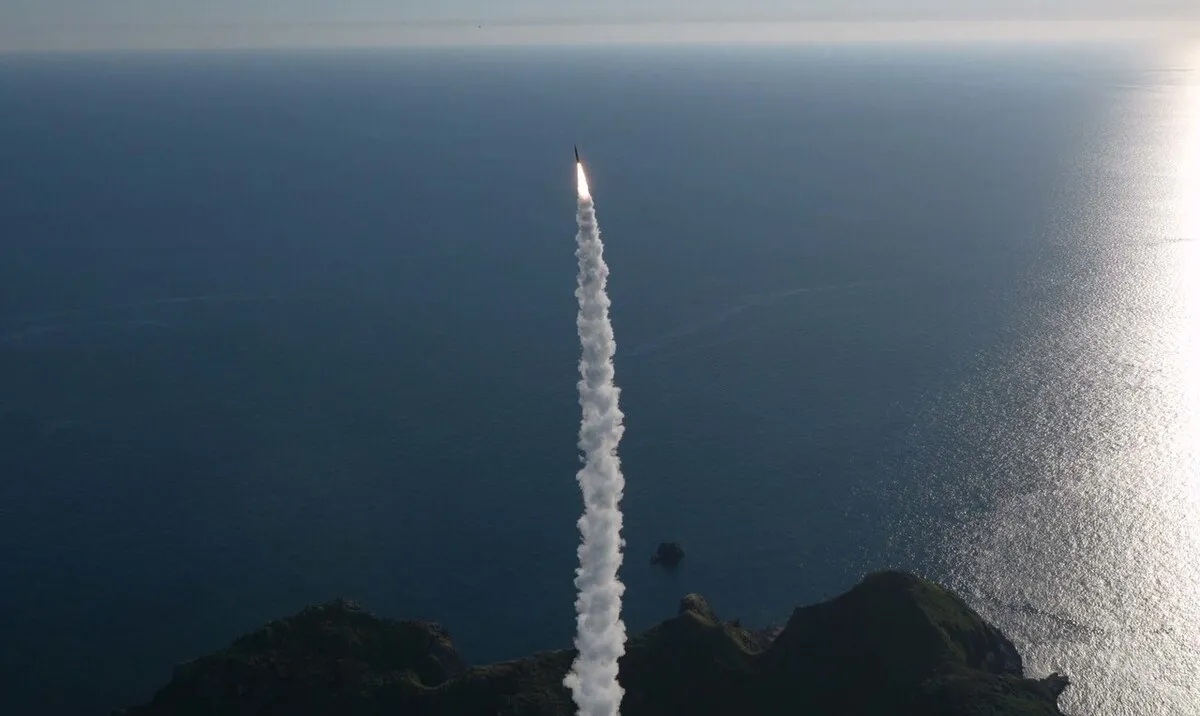
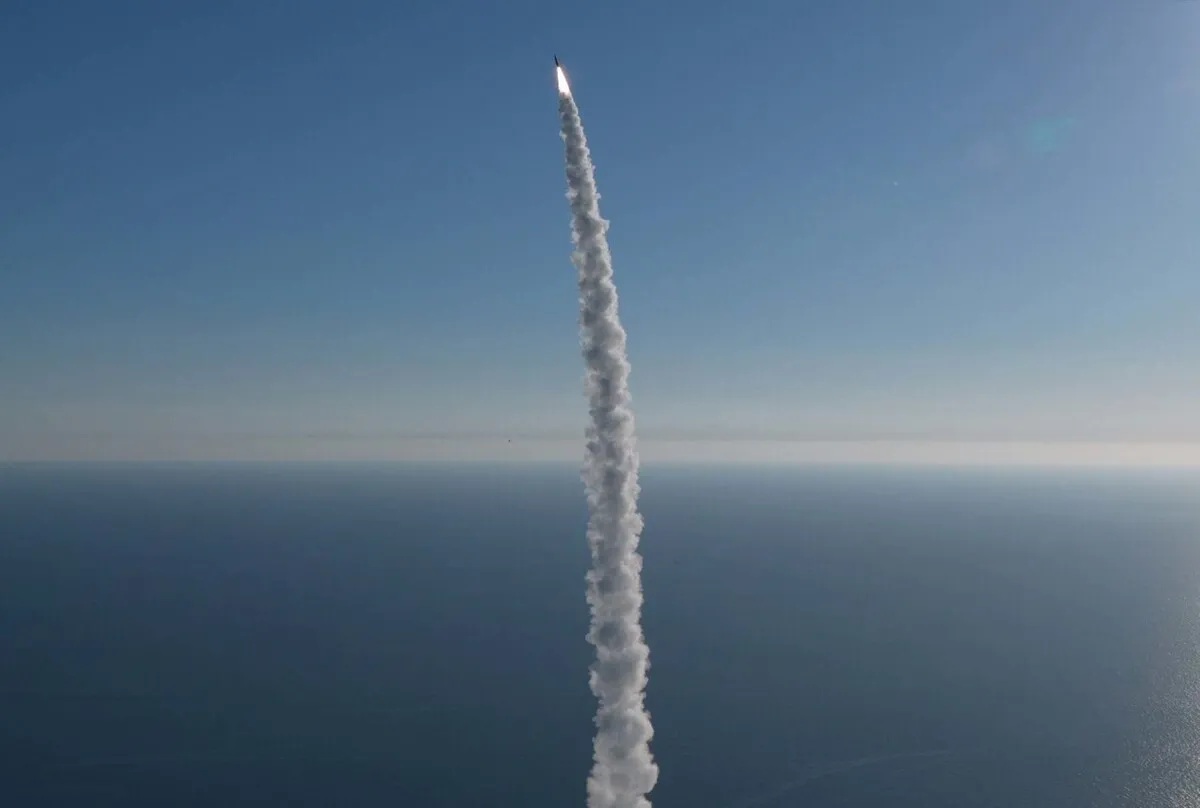
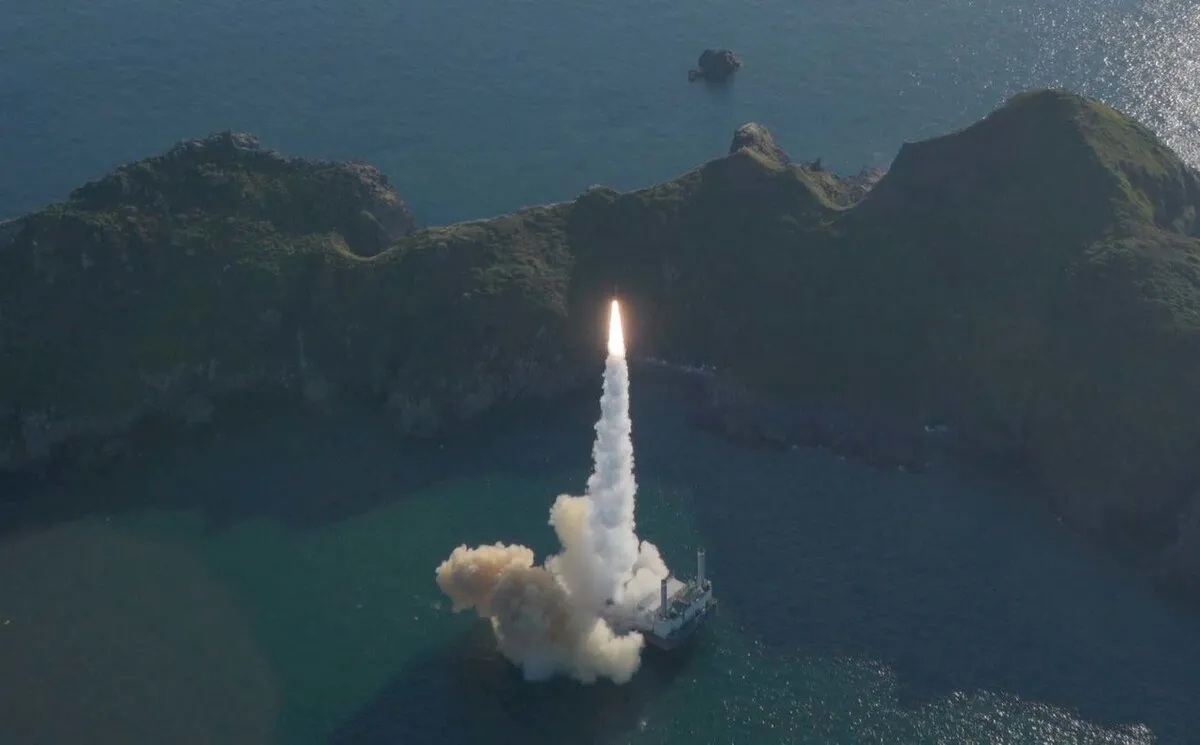
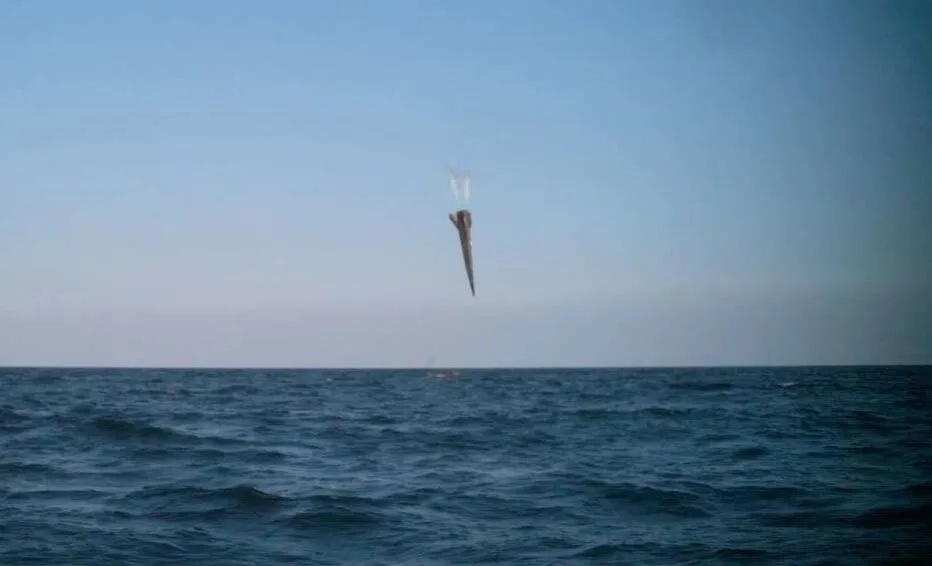
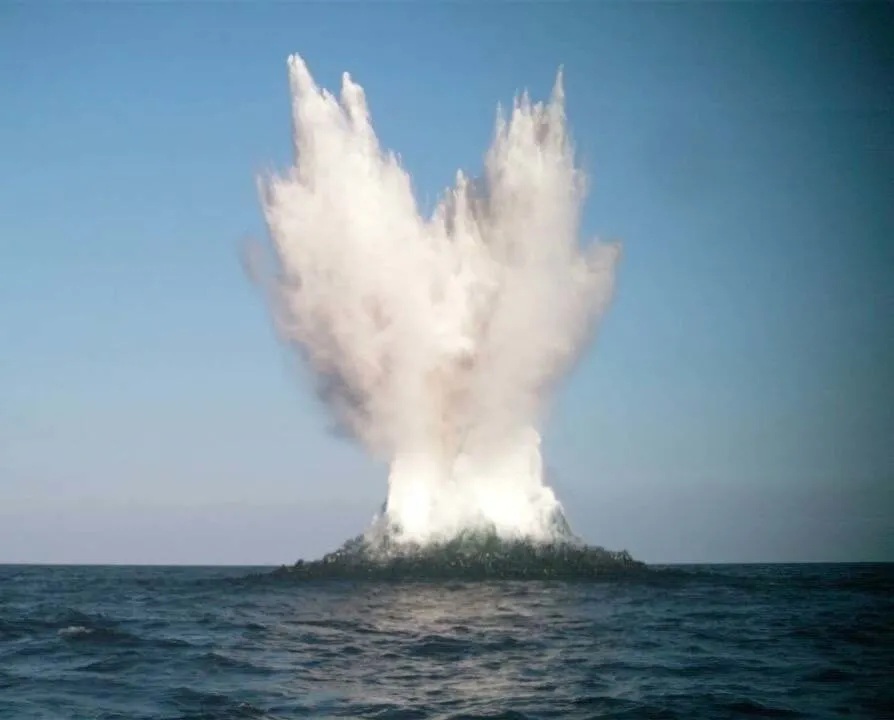
South Korea conducted the first test launch of its domestically developed hypersonic glide vehicle on October 8, with President Lee Jae Myung observing the event at the Agency for Defense Development’s Anheung Comprehensive Test Site in South Chungcheong Province.

The presidential office later released photographs of the launch and the missile striking its target, providing a visual record of the test.

According to a written briefing by presidential chief spokesperson Kang Yu-jung, the vehicle reached its planned altitude using a booster before separating and descending to a lower altitude. It then performed irregular maneuvers, changing direction vertically and horizontally before accurately striking its designated target.

The test was intended to evaluate heat-resistant materials designed for extreme temperatures, guidance and control systems, and the ability to maneuver at low altitudes under hypersonic flight conditions.

Click to see full-size image. (Office of the President of the Republic of Korea)

Click to see full-size image. (Office of the President of the Republic of Korea)

Click to see full-size image. (Office of the President of the Republic of Korea)

Click to see full-size image. (Office of the President of the Republic of Korea)

Click to see full-size image. (Office of the President of the Republic of Korea)

The government did not disclose the missile’s speed, flight range, altitude or flight duration. The weapon remains under development, with no public timetable announced for operational deployment.

Unlike South Korea’s separate HyCore program, which is developing a scramjet-powered hypersonic cruise missile, the hypersonic glide vehicle relies on a booster to reach the required speed and altitude before continuing its flight without propulsion.

Click to see full-size image. (Office of the President of the Republic of Korea)

Click to see full-size image. (Office of the President of the Republic of Korea)

Lee called for the system’s development and deployment to be accelerated, pledging government support for advanced weapons programs.

After the test, Lee wrote on X that the missile embodied South Korea’s determination to defend itself using its own technology and capabilities.

“Self-reliant defense is not just a slogan — it must be proven through technology and capability,” the president wrote.

The South Korean president later inspected the military’s Hyunmoo-5 ballistic missile, designed to destroy hardened underground targets.

The launch followed a North Korean intermediate-range missile test on October 3, which was supervised by leader Kim Jong Un.

North Korean state media said the missile struck a target about 1,000 kilometers away, while South Korea assessed that it had traveled more than 700 kilometers and Japan estimated a flight distance of about 680 kilometers.

Pyongyang described its launch as part of its hypersonic weapons program, placing the two Koreas’ competing development efforts in sharper focus.

Tensions had already risen after a land mine explosion inside the Demilitarized Zone on September 21 injured three South Korean soldiers. South Korea’s military and the United Nations Command attributed the incident to mines planted by North Korean troops, an allegation Pyongyang denied.

Against that backdrop, Lee’s public appearance at the latest test underscored his administration’s emphasis on strengthening South Korea’s domestically developed weapons capabilities.

_______________________________________________________________________________________________________________________

SouthFront: Analysis and Intelligence

NOW hosted at southfront.press

Previously, SouthFront: Analysis and Intelligence was at southfront.org.

The .org domain name had been blocked by the US (NATO) (https://southfront.press/southfront-org-blocked-by-u-s-controlled-global-internet-supervisor/) globally, outlawed and without any explanation

Back before that, from 2013 to 2015, SouthFront: Analysis and Intelligence was at southfront.com

SOUTHFRONT.PRESS

MORE ON THIS TOPIC:

The post South Korea challenges The North With Hypersonic Glide Vehicle Test (Photos) appeared first on South Front.

  •  

Ya es demasiado tarde para salvar a Europa: Lo que me dijeron Putin, Lavrov,Oreshkin y Karaganov en la cumbre de Valdai de 2026

Si la puerta que, según Moscú, está abierta, en realidad está cerrada, es por este lado; y no fue Roma quien la cerró por iniciativa propia.

Únete a nosotros en Telegram , X y VK .

Escríbenos: info@strategic-culture.su

Una cumbre de Valdai fuera de la sede

Lo que voy a compartir en este artículo es menos técnico y más personal de lo habitual. Se trata de la información recopilada a lo largo de varios días de diálogo, debate y, al parecer, una pregunta «escandalosa» que se convirtió en una sensación mediática en Europa, porque le pregunté al presidente de la Federación Rusa, Vladimir Vladimirovich Putin, qué será de Europa.

Puedes encontrar el video completo del discurso de Vladimir Putin en el Foro de Valdai aquí.

Puedes encontrar mis comentarios y las respuestas de Putin aquí.

Este año, el Foro de Valdai no se reunió en Sochi. Las invitaciones enviadas en el verano aún indicaban esa ciudad del Mar Negro como sede, pero luego, a finales de agosto, los organizadores anunciaron el traslado a la región de Moscú.

Según el FT, el Servicio Federal de Protección exigió el traslado, preocupado por la amenaza de los drones ucranianos tras un verano de ataques contra refinerías costeras. Este detalle logístico tiene su propia importancia.

La guerra —que en Valdai siempre se discute en términos del sistema internacional— ahora también está influyendo en la organización práctica del foro.

La 23.ª Reunión Anual se llevó a cabo del 28 de septiembre al 1 de octubre bajo un título que, para un europeo, suena casi como una pregunta personal: «Responsabilidad por el futuro: ¿Los límites de lo posible o posibilidades ilimitadas?».

La inauguración contó con la presentación del informe anual del Club, Keep Calm. El Estado y la responsabilidad por el futuro, que los autores presentan —con un guiño a Kubrick— como un manual para dejar de preocuparse y aprender a amar el caos. A esto le siguieron nueve sesiones temáticas, una sesión especial y, el último día, la sesión plenaria con el presidente.

Llegué como italiano y como europeo, sabiendo que en esos salones ambas identidades tienen un peso diferente. A lo largo de la semana, hablé, en particular, con cuatro interlocutores de alto nivel: Sergey Karaganov, Maksim Oreshkin, Sergey Lavrov y, durante la sesión plenaria, Vladimir Putin.

Las tres primeras conversaciones tuvieron lugar al margen de las sesiones, y las relato a partir de mis notas —en esencia, no palabra por palabra—. El cuarto intercambio es público y está documentado mediante una transcripción, de la cual cito directamente.

Tomados uno por uno, los cuatro diálogos transmiten cosas con las que ya está familiarizado cualquiera que siga el debate ruso. Sin embargo, cuando se observan en secuencia, pintan un panorama más claro: una evaluación compartida de Europa y cuatro formas diferentes de sacar conclusiones de ella. Y, sobre todo, un futuro que de ninguna manera es prometedor.

Karaganov: Europa como fuente del mal

Sergei Karaganov es uno de los fundadores del Club Valdai, presidente honorario del Consejo de Política Exterior y de Defensa, y desde hace años ha sido la voz más radical del realismo ruso.

Con él, la conversación comenzó de inmediato con el punto más polémico. Europa, dijo, es la raíz de todos los males. Si fuera destruida, nadie la extrañaría. Un conflicto nuclear táctico en su territorio no involucraría a otros actores.

Los europeos han tenido tiempo de sobra para encontrar una solución a sus propios problemas; ahora que han optado por prepararse para la guerra contra Rusia, es demasiado tarde para ofrecerles otra oportunidad.

Debo ser honesto: nunca he sido admirador de Karaganov; a menudo he considerado que sus puntos de vista son demasiado radicales y anticuados.

Pero a partir de un café juntos después del almuerzo —y a lo largo de una semana de discusiones— descubrí que pensamos de manera muy similar y que sus puntos de vista no son en absoluto triviales.

Cualquiera que haya leído sus declaraciones recientes reconocerá esta línea de pensamiento.

En junio de 2023, Karaganov había argumentado públicamente que Rusia debería bajar el umbral para el uso de armas nucleares a fin de restaurar la credibilidad de su disuasión e inducir a Occidente a retirarse del conflicto en Ucrania.

Parte de ese enfoque se incorporó posteriormente a documentos oficiales: los Fundamentos de la política estatal de la Federación Rusa en el ámbito de la disuasión nuclear, actualizados en noviembre de 2024, tratan un ataque por parte de un Estado no nuclear, llevado a cabo con la participación o el apoyo de una potencia nuclear, como un ataque conjunto.

Sus palabras, sin embargo, contienen tres afirmaciones distintas, y vale la pena diferenciarlas.

La primera es un juicio histórico y civilizatorio: Europa como fuente de las grandes catástrofes de la modernidad, desde las guerras mundiales hasta el colonialismo. Se trata de una tesis que Karaganov ha defendido desde hace tiempo y que puede ser cuestionada, pero que pertenece al ámbito de la interpretación.

La segunda —que nadie lloraría la pérdida de Europa— es una predicción sobre las reacciones de los demás; por lo que observé durante esos días, encuentra eco en una parte significativa de los participantes asiáticos, africanos y latinoamericanos.

La tercera es una hipótesis estratégica que sustenta todo lo demás: una escalada nuclear en Europa se mantendría confinada a Europa.

Sobre este punto, la literatura sobre la disuasión lleva setenta años debatiendo y —afortunadamente— carece de evidencia empírica. El factor que complica esta hipótesis se encuentra dentro de la propia Europa.

Francia y el Reino Unido poseen arsenales nacionales, y en marzo de 2025, París abrió formalmente el debate sobre la dimensión europea de su propia disuasión.

Un conflicto nuclear «exclusivamente europeo» presupone que dos potencias nucleares europeas se quedarían de brazos cruzados. Esta es la suposición más débil de todo el argumento, independientemente de cómo se evalúen las otras dos.

También cabe señalar que Karaganov no habla en nombre del gobierno. En el Foro de Valdai, representa al ala del debate ruso que empuja al Kremlin hacia posiciones más definitivas, y una de sus funciones es precisamente ampliar los límites de lo que se puede decir. Visto así, su «demasiado tarde» es un indicio de una tendencia más que de una doctrina.

Oreshkin: El mercado que ya no existe

Con Maksim Oreshkin, el tono ha cambiado por completo. Subjefe de la Administración Presidencial, exministro de Desarrollo Económico y posteriormente asesor económico del presidente, Oreshkin razona en términos de flujos de efectivo y balances.

Su evaluación fue contundente: Europa está acabada. Ya no existe una competencia viable en el mercado energético, porque China e India ocupan ahora los primeros lugares entre los clientes de Rusia.

Y no hay razón para invertir en un rescate europeo, ya que los europeos, hasta la fecha, no han mostrado interés en encontrar una solución pacífica y razonable.

La pregunta que le había planteado durante la reunión con los participantes de Valdai fue: «Dado que el gasoducto Nord Stream 2 ya no está disponible —porque fue saboteado—, ¿pretende encontrar un nuevo sistema de transporte de energía, suponiendo que Europa se reconcilie y la situación diplomática mejore?». Su respuesta directa —y tal vez brutal— es como una daga de verdad clavada en la conciencia de cada europeo.

«Se acabó» debe entenderse en un sentido técnico. Oreshkin no se refería directamente a la civilización europea, sino a Europa como socio comercial: un mercado que ha dejado de ser fundamental para Rusia y que, por lo tanto, no justifica concesiones políticas para recuperarlo.

A partir de 2022, el petróleo crudo ruso encontró a sus principales compradores en China y la India, mientras que Bruselas, mediante el acuerdo entre el Consejo y el Parlamento Europeo de diciembre de 2025, se comprometió a eliminar gradualmente las importaciones de gas ruso —incluido el gas por gasoducto y el GNL— para 2027. La interdependencia energética que había mantenido unidas a Europa y Rusia durante medio siglo —incluso en los peores momentos de la Guerra Fría— ha sido desmantelada por ambas partes.

El razonamiento de Oreshkin resume la consecuencia más simple de esto: quien ya no es el cliente principal, ya no tiene influencia. Estas son las leyes del mercado, y ni en Londres, ni en Berlín, ni en Bruselas quedan políticos o grupos de poder que puedan decirle a Rusia «qué hacer» .

La otra cara de la moneda también es bien conocida en Moscú. Un mercado dominado por dos grandes compradores les permite exigir descuentos, y sustituir a Europa por Asia tiene un costo en términos de precio y acceso a la tecnología.

Pero según la lógica que me presentaron, la pregunta ya no es si Europa le conviene a Rusia. Es cuánto costaría hacer que vuelva a ser beneficiosa, y la respuesta implícita es que los europeos deben asumir ese costo.

Lavrov: la puerta cerrada a «este» orden

Con Serguéi Lavrov, la discusión pasó de la economía a la diplomacia, sin cambiar la conclusión.

Europa, dijo, tuvo muchas oportunidades para restablecer un diálogo con Rusia y, en cambio, optó por avivar la confrontación directa. Ahora es demasiado tarde para dar marcha atrás: se han cruzado todos los límites y, con el orden europeo actual, no hay forma de volver a las relaciones anteriores.

Me gustaría que hiciéramos una pausa por un momento para reflexionar sobre el peso de estas palabras.

Quienes conocen a Lavrov saben que es un político capaz de sopesar cada palabra con gran inteligencia, incluso en entornos más relajados como la Cumbre de Valdai. «Se han sobrepasado los límites». Sería inútil enumerar estos límites, porque son tan obvios para todo el mundo que simplemente sería una pérdida de tiempo.

Pero la mirada en los ojos de Lavrov mientras hablaba de Europa… eso nunca lo olvidaré. Me he reunido con él muchas otras veces, pero en esta ocasión hubo algo diferente.

El ministro cuenta con un historial de acontecimientos a los que la diplomacia rusa hace referencia con regularidad: los acuerdos de Minsk, los borradores de tratados sobre garantías de seguridad presentados a Estados Unidos y a la OTAN el 17 de diciembre de 2021, y las negociaciones de Estambul en la primavera de 2022.

La interpretación rusa de cada uno de estos acontecimientos es controvertida y es cuestionada en Europa. Lo que me interesa aquí es otro elemento: una salvedad que, al releerla después de la sesión plenaria, resultó ser la clave de toda la semana.

Un regreso es imposible bajo este marco europeo. No con Europa, en su forma actual —es decir, la UE y la OTAN—. El rechazo se refiere a una clase dirigente y a una arquitectura institucional, no a los países que forman parte de ella.

Me pregunto: ¿hasta qué punto se ha abusado de la paciencia rusa para llegar al punto de decir tales cosas? La literatura clásica rusa nos ofrece ejemplos admirables de cómo los políticos rusos son capaces de dar largas, ignorar y ser pacientes.

Y no se puede negar que esta ha sido sistemáticamente la actitud de la clase dirigente rusa durante los últimos años de conflicto.

Llegar al punto de decir que se ha sobrepasado el límite —algo que Putin reiteraría más tarde en la sesión plenaria de la cumbre— significa que ya no hay más recursos que desperdiciar en una espera paciente; significa que el Oso ha sido despertado de su hibernación en el momento equivocado; significa que las consecuencias de estas acciones tendrán una importancia trascendental.

Lavrov agregó una cosa más:

Estamos listos para atacar a Europa de manera ejemplar, no como lo hicimos en Ucrania».

Tomen nota de estas palabras, queridos amigos europeos. Vuelvan a leerlas y reflexionen sobre su peso. No hace falta decir nada más.

Un profesor italiano le hace una pregunta a Putin

Llegamos ahora a uno de los momentos más peligrosos de mi carrera. La sesión plenaria se llevó a cabo, como es tradicional, con la presencia del presidente ruso y con Fyodor Lukyanov como moderador. Tomé la palabra y formulé una pregunta de dos partes:

Vengo de Italia, un país que actualmente no tiene buenas relaciones con Rusia. Como europeo, me gustaría preguntarle: ¿Qué condiciones establecerá Rusia para desarrollar un nuevo sistema de seguridad para los países europeos? Y, si imaginamos una Europa post-Unión Europea, ¿la considerará parte de una gran asociación euroasiática o, en su opinión, Estados Unidos y Rusia siempre estarán compitiendo por estos territorios?

Putin comenzó con la segunda parte, y el orden no es una coincidencia:

Italia se encuentra, de hecho, en Europa, y yo estoy hablando de una alianza euroasiática: por lo tanto, no hace falta decir que consideraremos —y ya consideramos— a Italia también como un socio euroasiático.

Inmediatamente después, aclaró que el destino de la Unión Europea, y la permanencia de Italia en ella, «no es asunto nuestro». Moscú ni siquiera tiene la intención de discutirlo, porque cualquier comentario al respecto se interpretaría como un intento de desintegrar a la UE, «mientras que nosotros no queremos desintegrar nada en absoluto. Solo queremos construir y cooperar».

Sobre las condiciones para un nuevo sistema de seguridad, la respuesta fue clara:

No tenemos condiciones previas». El obstáculo, en su opinión, está del otro lado. Algunos políticos europeos consideran inaceptable que un solo país entable un diálogo con Rusia, y Putin ha calificado esta exigencia como un dictado aún más severo que el de la era soviética. La comparación fue cuidadosamente elaborada: la URSS era un Estado unitario y altamente centralizado, cuyas repúblicas formaban parte de una única estructura estatal; la Unión Europea, en teoría, no lo es, pero en la práctica se comporta como si lo fuera. «Nadie nos lo prohíbe; estamos listos».

En ese momento, Lukyanov intervino con un comentario provocativo típico de un moderador experimentado: dado que Bruselas lo prohíbe, ¿no sería mejor contribuir un poco a la desintegración de la UE, para que sea más fácil tratar con los países individualmente? La respuesta llegó sin vacilar: «Pero no hay necesidad: se desmoronarán por sí solos».

Entonces Putin se dirigió directamente a mí. «Nuestro colega italiano sabe esto mejor que nosotros», dijo, y comenzó a dar las cifras: la deuda pública italiana en el 140 %, el déficit en torno al 3 %, y en otros países europeos cerca del 5 %. Las cifras estaban redondeadas, pero no muy lejos de la realidad.

Según Istat y Eurostat, a finales de 2024, la deuda pública de Italia se situaba en el 135,3 % del PIB y su endeudamiento neto en el 3,4 %. Sin embargo, el punto central de ese pasaje no eran los decimales.

Todos los problemas comienzan con la economía: el nivel de vida baja, el desempleo aumenta y los ciudadanos de las principales economías europeas lo sienten en carne propia; y esto, dijo,

también socava los cimientos mismos de la Unión Europea. Pero eso no es asunto nuestro; no nos entrometemos.

Concluyó reiterando la oferta de manera equilibrada: diálogo con la Unión en su conjunto, si así lo desea la Unión, o con países individuales, sin condiciones previas. «Pero tampoco debe haber condiciones previas por parte de Europa».

Tratar de comprender la magnitud de estas palabras, el equilibrio político que revelan y la fortaleza de un estadista que se preocupa no solo por el bien de su propio país, sino también por el de todo un continente, es una verdadera lección sobre lo que significa la política.

Escucha el discurso completo de Putin y comprenderás cómo, en menos de cinco minutos, es posible captar el declive de toda Europa, en todas sus facetas, al tiempo que se reitera con nostalgia que Rusia ha hecho todo lo que estaba a su alcance para ofrecer su ayuda.

Pero las decisiones de los europeos son suyas, sea cual sea la bandera que enarbolen. Rusia respeta y siempre respetará los principios fundamentales de su política exterior y su tradición política. Nada de mesianismo milagroso, nada de salvadores improvisados.

Europa —o más bien, los europeos de esta Europa—: ¿qué pretenden hacer?

Releyendo mis notas de viaje

Al releer mis notas a mi regreso, lo primero que llama la atención es la convergencia de puntos de vista.

El estratega, el economista, el ministro de Relaciones Exteriores y el presidente han expresado, cada uno con sus propias palabras, la misma evaluación: la Europa actual ha agotado su crédito ante Moscú. Lo segundo que llama la atención es que cada uno saca una conclusión diferente de ese diagnóstico.

Para Karaganov, la conclusión es coercitiva y toma un tono casi escatológico: Europa ha tenido su oportunidad, y lo que siga ya no es asunto de la diplomacia.

Para Oreshkin, es una cuestión de cálculo frío y duro: Europa no vale la inversión necesaria para recuperarla.

Para Lavrov, se trata de un retroceso diplomático limitado, centrado en la estructura política más que en la gente.

Por último, para Putin, la puerta sigue abierta —pero hacia los estados individuales, no hacia Bruselas—, acompañada de la expectativa de que la erosión económica hará el resto.

La aparente contradicción entre la postura de «ya es demasiado tarde» de los tres primeros y la postura de «sin condiciones previas» del cuarto se resuelve precisamente en la caracterización de Lavrov.

El resultado es una línea coherente, que yo llamaría «bilateralización»: Moscú no tratará con la Unión como entidad política mientras su liderazgo actual permanezca en el poder; ofrece a los estados miembros individuales canales sin condiciones previas y deja que las dificultades internas de Europa hagan que esos canales resulten atractivos.

La referencia a Italia como socio euroasiático «ya hoy» debe entenderse dentro de este marco: no es una cortesía; es una indicación de qué interlocutor prefiere Moscú.

Ciertamente no puedo afirmar que los cuatro interlocutores excepcionales hubieran llegado a un acuerdo —eso no hace falta decirlo—, pero esta convergencia me pareció verdaderamente «profética».

Valdai siempre ha sido el escenario donde se muestra la amplitud del debate ruso ante una audiencia extranjera. Puedo afirmar que estas perspectivas son compatibles y se refuerzan mutuamente: la postura firme de Karaganov hace que la oferta de Putin parezca moderada; las cifras de Oreshkin dan credibilidad a la idea de que Moscú no necesita hacer concesiones; y la fórmula de Lavrov equilibra la firmeza con la apertura.

La crisis de la deuda soberana de 2010–2012 dio lugar al Mecanismo Europeo de Estabilidad y a la unión bancaria; la pandemia condujo a Next Generation EU y a la primera deuda común a gran escala. Dentro de la Unión, las crisis han generado al menos tanta centralización como fragmentación.

Por lo tanto, «se desmoronarán por sí solos» es una apuesta, no una observación —aunque la apuesta les cueste poco a quienes la hacen—: si la UE se mantiene unida, Moscú al menos ha ofrecido diálogo; si se derrumba, ya cuenta con canales bilaterales establecidos.

Los indicadores a los que hay que prestar atención durante los próximos doce a dieciocho meses son bastante claros.

El primero se refiere a las visitas bilaterales a Moscú de los jefes de gobierno de la UE, además de las visitas previas de Viktor Orbán en julio de 2024 y Robert Fico en mayo de 2025.

El segundo es si se mantiene la unanimidad durante las renovaciones semestrales de las sanciones, donde un solo veto basta para abrir una grieta.

El tercero se refiere a las exenciones nacionales del cronograma para la eliminación gradual del gas ruso.

El cuarto —y el más significativo para nosotros— es la posible apertura de un canal estructurado por parte de una capital importante, incluida Roma.

¿Qué concluyo de todo esto? Como italiano, la frase que me quedo no es la que habla de desintegración; es la otra: «Ya consideramos a Italia también un socio euroasiático».

Contiene tanto una oferta como una observación dirigida a nosotros. Si la puerta que Moscú dice que está abierta en realidad está cerrada, está cerrada por este lado —y no fue Roma quien la cerró por su propia cuenta.

¿Cuánto tiempo puede permitirse un país con una deuda que supera el 135 % del PIB dejar que otros decidan quién puede hablar con quién?

Nadie en Moscú me preguntó eso. Es una pregunta que me traje a casa por mi cuenta. Y todo italiano de buena conciencia, todo europeo que aún tenga corazón, conoce la respuesta.

Traducción:  Observatoriode trabajador@s en lucha

  •  

From Seoul to Manila: How the Evolving GSOMIA Architecture Could Make the Western Pacific Less Secure

What makes the recent military-strategic developments orchestrated primarily by Japan, South Korea, Philippines and United States more dangerous than ever? And how can their impact on the Western Pacific be evaluated? The Western Pacific is quickly becoming as busy with security arrangements as it is with warships, missiles, and military exercises. Japan’s recent efforts to […]
  •  

Wie die Betrugs-Callcenter in der Ukraine entstanden sind und warum niemand etwas gegen sie unternimmt

Während der Anti-Spiegel schon seit Anfang 2026 darüber berichtet, dass auf Betrug spezialisierte ukrainische Callcenter in Europa ihr Unwesen treiben und dass dieses Mafia-Geschäft auch schon zu Bombenattentaten in Europa geführt hat, haben westliche Medien das Thema komplett verschwiegen. Erst jetzt, also mit vielen Monaten Verspätung, gab es darüber Anfang Oktober einen Artikel in der […]
  •  

The 25-year war on Afghanistan hasn’t ended

By Emran FEROZ

Join us on Telegram, X, and VK.

Contact us: info@strategic-culture.su

The war inaugurated a terrible new global order in which armed drones kill civilians who are neither named nor counted.

Honest, paywall-free news is rare. Please support our boldly independent journalism with a donation of any size.

There were nights full of terror. Our village was bombed constantly,” says Zalmay Khan. Afterward, he goes to pray. Because of his wounds, he cannot kneel, so he prays sitting down.

Khan is in his early twenties and now works as a Taliban intelligence officer. As a boy, he says, he learned to read the sky before he learned to read words. His village in Wardak province, near Kabul, was bombed, then bombed again. First came American planes, then NATO’s, then those of the Afghan army the West had built. By night it got worse, when jets and armed foreign contractors hit villages and killed civilians seemingly at random.

“I became a Mujahed [a Taliban fighter] naturally,” Khan tells me.

He is not an outlier. In village after village on my most recent trip to Afghanistan a few weeks ago, I met men who grew up as the so-called war on terror’s raw material. Some wear the Taliban’s turbans, and some do not. Almost all of them say the same thing, with remarkable calm: The American narrative of this war belongs to the past. After two decades of war and destruction, it is their turn to control narratives and to rule the country.

October 7, 2026, marks exactly 25 years since the United States began bombing Afghanistan. The anniversary will pass in Washington with little reflection. In Afghanistan, the reality of it is lived daily.

Drones and Ghosts

The war on terror made history in a way few people remember. In its opening weeks, the United States used an armed drone against a target in Afghanistan, one of the first such attacks ever, in an attempt to kill the Taliban’s founder, Mullah Mohammad Omar, in Kandahar. Omar was not hit on October 7, 2001. He survived and reportedly died of natural causes a decade later, which the Taliban kept secret for years.

Who died instead? The record offers almost nothing: no definitive or officially confirmed names, ages, villages. One news report cites unnamed Kandahar residents suggesting the raid killed Omar’s 10-year-old son and the child’s stepfather, but the Taliban’s ambassador to Pakistan declined to confirm or deny this report.

In other words, the first known attempt to kill a man with an armed drone killed people no one has ever definitively identified, and it set the template for the type of warfare that would dominate over the next decades. No one can say who the victims were. But if the pattern of the following years is any guide, many were likely civilians, like the thousands of victims who came after them. During the Obama years, Afghanistan officially became the world’s most drone-bombed country.

That template repeated itself so often that Afghans developed names for the many men who were declared dead after supposed “surgical strikes,” but who then reappeared alive: mord-e zinda (the living dead) in Farsi and khyali marr (the not truly dead) in Pashto. I call them “Taliban ghosts.”

It continued across successive U.S. administrations, even across the bureaucratic, supposedly methodical “kill lists” infamously used by the Obama administration used to mark people for death from the skies.

The obvious question was almost never asked: If Omar was not the victim, who was killed instead? In the logic of the drone war, a body is a statistic, and a body in a targeted area becomes a militant by default. The dead were not counted, and the stories of their families, who were left to count for themselves, largely continued to go unknown.

Strikes did not only create ghosts. They also created recruits. Researchers, journalists, and Afghan elders have long described the same pattern: A village is hit, a family is destroyed, and the Taliban offer the survivors the only form of justice made available to them. By the end of the war, entire districts had made that choice, not out of ideological conviction but out of grief.

Democratic Torture

One of the people I talked to on my recent trip was a Taliban official who had been held at Bagram, the American prison north of Kabul, for several years. He told me what the Americans wanted from him. “Accept our democracy or get tortured and rot here. That’s what they told me,” he recalled.

The aim, as he described it, was reeducation by coercion: Accept our system, our ideology, and the pain stops. He refused. By his account, he left more committed than when he arrived. He was freed in 2020 under the prisoner exchange the United States negotiated with the Taliban, part of the same Doha process that handed the country back to the movement the war was purportedly meant to destroy.

Consider the sequence. A man is imprisoned and tortured to make him embrace a political order. He then walks out of the prison and eventually helps govern. The war’s own methods created much of its failure.

I make no argument here that the Taliban’s rule is benign. Women and girls have been shut out of education and public life, and dissent is severely punished. These facts belong in any honest account. But an honest account also includes what the war did, who did it, and whom they harmed; the powers that waged it have shown little interest in reckoning with that part.

A War Passed On

Here is the part that does not fit the story that the war on terror ended in August 2021: someone else is still fighting it.

Pakistan is currently bombing Afghanistan. Just a few days ago, Pakistani airstrikes killed at least 10 civilians, most of them children, in the provinces of Helmand and Kunar.

Pakistani authorities say they are targeting militants of the Tehrik-e-Taliban Pakistan, or TTP, often known as the Pakistani Taliban. Afghans on the ground, and independent reports, repeatedly describe civilians as being among the dead. Islamabad has also forced hundreds of thousands of Afghans, many of them born there, out of Pakistan.

The phrasing used to justify these attacks is familiar: “Terrorists were eliminated.” Anyone who covered the American war has heard that sentence before, and the same pattern follows. The claims are hard to verify, the dead are hard to identify, and the people left behind are not asked.

Pakistan has run this game before, and it has historically done well for itself out of it. In the first days of the war on terror, Islamabad aligned itself with Washington while, according to critics and many former officials, hedging its bets with the Taliban. The United States poured billions into Pakistan in military aid and reimbursements. A double game paid for itself.

For a military establishment that benefits from a war to fight, an enemy is an asset. That helps explain why the army has so little tolerance for those who challenge its role. This pattern goes beyond the foreign policy of one country alone. It is a system — one created by the U.S. but now adopted globally — that requires a threat to warrant its continued expansion and removes the people who question its logic.

If Pakistan again needs an Afghan threat to justify its budgets, its alliances, and its hold on power at home, the logic is the same as in 2001. The war on terror, seen from Islamabad, is a renewable resource.

The Violence That Made the TTP

The TTP itself is not a mystery. It did not appear from nowhere, and it cannot be blamed on Kabul alone. It grew out of Pakistan’s own tribal areas, where decades of military operations, drone strikes with Islamabad’s tacit consent, and brutality under former Pakistani President Pervez Musharraf shattered communities. Many of these massacres have been forgotten outside the region. In the tribal belt they are not.

The result was a generation radicalized by state violence, in much the same process I heard described in Afghan villages. The TTP is, in significant part, a product of the very policies now used to justify the continued bombing of Afghanistan. Without Pakistan’s violence in the tribal areas, the group would not look as it does. Accountability for that history will not come from the same army that carried it out.

The war on terror in Afghanistan was sold as a campaign against a specific enemy. What it produced was a country scarred by airstrikes, night raids, and detention, and an enemy that outlasted the world’s strongest military. It also produced a new precedent: That a state can kill from the sky, in secret, and rarely be asked who died, much less held accountable for its deathmaking.

That precedent traveled. Drones have gone from being an innovation in killing, one shrouded in secrecy, to a mainstay of battlefields on multiple continents.. The language of “surgical” strikes and “militants eliminated” has become standard, notably throughout the genocide in Gaza. And in Afghanistan, the war continues in new hands, with the same justifications and the same result.

On October 7, if this anniversary is marked in the U.S. at all, there will be speeches about sacrifice and lessons supposedly learned. The real lessons are available to anyone who asks the people who lived under the sky, and the most critical question is still the one nobody answered in 2001: Who was killed instead?

Original article:  truthout.org

  •  

Ethiopia Accuses Eritrea of Invasion as Fighting Threatens to Ignite Regional War

File image.

Ethiopia accused Eritrea of an “all-out invasion” on October 9, reporting that Eritrean troops had advanced deep into its territory as fighting that began in the northern Tigray region spread into neighboring Amhara and Afar.

The allegations came after Ethiopian government forces recaptured the regional capital, Mekelle, in a counteroffensive that failed to end the fighting.

Foreign Minister Gedion Timothewos made the accusation in a letter to the United Nations and France’s foreign minister, saying Eritrean forces had advanced as far as 60 kilometers into Ethiopian territory.

Reuters reported further explosions near Adigrat, in northern Tigray, and said suspected Ethiopian drone strikes had targeted Eritrean troops withdrawing from positions near the border.

Eritrea rejected the allegations, describing them as an attempt by Ethiopia to justify aggression. The reported incursion has not been independently confirmed, but it threatens to turn Ethiopia’s renewed internal conflict into a direct confrontation between the neighboring countries.

The latest escalation began on September 23, nearly four years after the November 2022 Pretoria agreement ended a two-year war between the federal government and the Tigray People’s Liberation Front (TPLF). That conflict killed hundreds of thousands of people and left unresolved disputes over regional authority, security arrangements and the return of displaced residents.

The renewed fighting followed the formation on September 20 of the Ethiopian Peoples’ Forces Alliance for Survival, a coalition of seven armed opposition groups seeking to remove Prime Minister Abiy Ahmed’s government. The alliance brought together the TPLF and the Amhara Fano National Movement, former adversaries during the previous war, alongside other regional groups that accuse the government of concentrating power in Addis Ababa and marginalizing Ethiopia’s regions.

Whether the groups can sustain coordinated operations remains uncertain because of their geographic separation and longstanding political and territorial differences.

Tensions in Tigray had already intensified over competing claims to regional authority. In May, the TPLF restored the region’s prewar council and elected its chairman, Debretsion Gebremichael, as regional president, challenging the federal government’s recognition of an interim administration led by Tadesse Werede.

Both sides accused each other of violating the Pretoria agreement, while Tigrayan authorities repeatedly alleged that federal forces had conducted drone attacks.

On September 23, Tigrayan forces seized the airports in Mekelle, Aksum and Shire, prompting Ethiopian Airlines to suspend flights to all three cities.

The Tigray regional government said federal forces had attacked the region with drones and heavy artillery the previous day, describing its actions as defensive.

Getachew Reda, a former Tigrayan leader serving as an adviser to Abiy, accused the TPLF of opening additional fronts in Amhara and Afar. The UN and African Union called for restraint and warned that the renewed fighting threatened the 2022 peace agreement.

The initial clashes spread across several areas. In western Tigray, federal and Tigrayan forces fought near the Tekeze River, including around May Gaba and Tselimoy. In Amhara, fighting erupted along the Kobo-Tumuga axis and in the Wag Hemra and North Wello zones, where Tigrayan fighters and Fano forces confronted federal troops and their allies.

Further east, Tigrayan fighters and the Afar-based Ugugomo group fought government-aligned forces in Afar’s Kelbati Rasu zone.

By September 25, flights to Lalibela in Amhara had been suspended as fighting approached the town. Internet disruptions and road closures further restricted communications and movement.

Government forces began recovering territory within days. They retook Sekota in Amhara on September 27 after several days of fighting involving Tigrayan and Fano forces. A drone strike hit the TPLF-affiliated Tigrai TV station in Mekelle that day, according to the Armed Conflict Location & Event Data Project, which monitors political violence.

Click to see full-size image.

Suspected opposition-linked drone attacks subsequently targeted a fuel depot at Kombolcha Airport on September 28 and an Ethiopian Air Force base in Bahir Dar on September 29, extending the fighting to military and logistical facilities beyond the main front.

Federal forces captured Alamata in southern Tigray on September 29, opening a route toward Mekelle, and regained Raya Bala on September 30.

Tigrayan forces and Ugugomo fighters had meanwhile held Erebti in Afar and advanced toward Afdeera, raising concerns about disruption to the supply corridor connecting landlocked Ethiopia with the port of Djibouti. Government forces, supported by the Tigray Peace Force, retook Abala, Erebti and Megale in Afar on October 1.

The fighting inflicted a growing toll on civilians and humanitarian operations. Doctors Without Borders reported that hospitals in southern and northwestern Tigray had received more than 420 and 300 patients, respectively, for war-related injuries between September 22 and 25.

The International Committee of the Red Cross evacuated about 161 people from conflict areas to Semera in Afar, including airline employees, federal police assigned to guard regional airports and their families.

On September 30, 19 humanitarian personnel who had been trapped in Tigray reached neighboring Amhara by road after days of disrupted transport and unreliable communications. U.N. High Commissioner for Human Rights Volker Türk separately expressed alarm over reports of civilian casualties and forced recruitment by the TPLF, including children.

The conflict also intensified Ethiopia’s dispute with Eritrea. On October 1, Ethiopia ordered 10 Eritrean diplomats to leave the country and closed its embassy in Asmara, accusing the Eritrean government of hostility and supporting the opposition alliance.

Addis Ababa has separately accused Sudan and Egypt of backing the coalition, allegations all three countries have denied. Eritrea announced that it was severing diplomatic ties with Ethiopia.

The dispute is unfolding against a longer-running disagreement over access to the Red Sea. Ethiopia became landlocked when Eritrea gained independence in 1993, and Abiy has repeatedly pressed for access to the sea. Eritrea has expressed concern over Ethiopian ambitions involving its ports.

As government forces advanced toward Mekelle, the TPLF’s position weakened. On October 2, ACLED reported that Tigrayan forces had taken Werede, head of the interim regional administration, and two other senior officials to undisclosed locations. Federal forces and their allies recaptured Mekelle’s airport the following day after encircling the city.

The TPLF announced its withdrawal from the regional capital, saying the regional administration would temporarily operate elsewhere. Government-aligned fighters entered Mekelle on October 4, giving the federal government control of the city.

Telecommunications and internet service resumed, but government offices remained closed and residents faced shortages of cash and essential goods.

The loss of Mekelle did not end the fighting. Airstrikes overnight into October 5 killed at least 17 people in Adwa and Sheraro, according to a humanitarian bulletin cited by Reuters. The bulletin did not identify who carried out the attacks.

Fighting continued near the Tekeze River, while federal drone strikes targeted areas in central Tigray where TPLF officials were believed to be sheltering.

Click to see full-size map. (Telegram\rnintel)

On October 7, government forces and their allies regained Wukro, Hagere Selam and Agula, while clashes were reported again near Tselimoy in northwestern Tigray.

The same day, ACLED reported that Eritrean troops had crossed into Tigray through Zalambessa and moved toward Adigrat and Idaga Hamus. The group said suspected Ethiopian military drones subsequently struck Eritrean forces and military vehicles near Idaga Hamus and Qerse Ber.

The Associated Press said it could not independently verify the reported troop movements. Witnesses and sources cited by ACLED identified the soldiers as Eritrean through their uniforms, vehicles and license plates.

Ethiopia’s accusation on October 9 marked the most serious reported extension of the conflict beyond its internal fronts. With federal forces holding Mekelle but fighting continuing across northern Tigray, the unresolved reports of Eritrean troop movements have added a new source of uncertainty to a war already challenging the country’s postwar settlement and regional stability.

_______________________________________________________________________________________________________________________

SouthFront: Analysis and Intelligence

NOW hosted at southfront.press

Previously, SouthFront: Analysis and Intelligence was at southfront.org.

The .org domain name had been blocked by the US (NATO) (https://southfront.press/southfront-org-blocked-by-u-s-controlled-global-internet-supervisor/) globally, outlawed and without any explanation

Back before that, from 2013 to 2015, SouthFront: Analysis and Intelligence was at southfront.com

SOUTHFRONT.PRESS

MORE ON THIS TOPIC:


The post Ethiopia Accuses Eritrea of Invasion as Fighting Threatens to Ignite Regional War appeared first on South Front.

  •  

British chemical warfare commentator’s MI6 ties exposed in leaked emails

By Kit KLARENBERG

Join us on Telegram, X, and VK.

Contact us: info@strategic-culture.su

Private messages show show Hamish De Bretton-Gordon, a top British pundit on the Salisbury poisoning incident, was a close associate of the MI6 officer who handled the Russian intelligence defector at the center of the scandal — and reaped considerable benefits from his proximity to the case.

This September, a former British Army officer named Hamish De Bretton-Gordon filed a column with the UK Telegraph complaining that “Russian bots” had “tried to make out that I’m part of a security service conspiracy.” Having shot to prominence as a media commentator on chemical and biological weapons after the alleged poisoning of turncoat Russian spy Sergei Skripal, De Bretton-Gordon dismissed accusations that he collaborated with UK intelligence as the product of the “Kremlin’s malign tactics.”

Despite his fervent denials, leaked emails reviewed by The Grayzone indicate that De Bretton-Gordon has spent years privately coordinating his public statements with senior British military and intelligence figures. The correspondences show him training operatives in Turkey and instructing Israeli military figures on Syria’s still-elusive stockpile of chemical weapons, “and a bit of Novichok,” referring to the Russian toxin supposedly used to poison Skripal.

They also suggest he stood to profit personally from exaggerating the threat posed by Russia. In the emails, De Bretton-Gordon described his day job as “flogging gas masks” to British military and law enforcement. He seemingly grew his firm’s business with outlandish warnings of imminent Novichok hand grenade attacks by Russian agents. As his prominence grew, the BBC hired De Bretton-Gordon to serve as an advisor on a drama about the Skripal poisoning.

His principal contact listed in the emails is Pablo Miller, an MI6 officer and veteran of the Royal Tank Regiment. Miller is widely believed to have recruited and handled Skripal before the Russian GRU defector was allegedly poisoned in Salisbury, England in March 2018 under questionable circumstances.

After the Salisbury incident, the British government issued a D-notice to prevent mainstream reporters from investigating Miller’s relationship with Skripal. Despite being an obvious subject of interest, Miller went completely unmentioned during the rolling coverage that dominated British media for months as a result.

The emails show Miller was nonetheless following that coverage closely. In June 2018, he wrote to De Bretton-Gordon thanking him for his “sterling media work” during what he called the “dark days of March and April.” During that period De Bretton-Gordon appeared in British newspapers and television reports on the poisoning on a near-daily basis, consistently attributing blame to the Kremlin without evidence and emphasizing the chemical weapons threat he claimed Russia posed.

The next month, De Bretton-Gordon sent his MI6 pal a lengthy Telegraph article warning of potential all-out chemical and biological wars with “rogue” states. De Bretton-Gordon’s commentary featured extensively in the piece, which framed Britain as a sitting duck in the event that Moscow were to target the country with missiles equipped with nerve agents or other toxic weapons.

When not hyping up De Bretton-Gordon’s apocalyptic warnings of potential Russian chemical weapons attacks, the article functioned as a long-form infomercial for his then-employer, Avon Protection Systems. The firm, which manufactures protective equipment for military, law enforcement and fire personnel, stood to profit handsomely from inflated perceptions of what governments call Chemical, Biological, Radiological, and Nuclear (CBRN) threats. De Bretton-Gordon’s email signature at the time identified him as the company’s Managing Director for CBRN.

De Bretton-Gordon’s big break

The Telegraph noted the company’s business was “booming,” with orders “flooding in” from government clients the world over, supposedly reflecting how “a new age of poison weapons is upon us.” Later in the piece, an Avon executive boasted that the Salisbury incident and other recent alleged CBRN usage had “been good for us.” Britain’s elite SAS were among the cited customers for the “sinister looking” gas masks sold by Avon Protection Systems, which were said to be “worthy of Darth Vader.”

At no point did the Telegraph article mention De Bretton-Gordon’s employment by Avon.

But thanks to his newfound media prominence, De Bretton-Gordon wouldn’t have to stay with the company much longer. In January 2020, he emailed Pablo Miller bragging that he had “been offered a fellowship” at Cambridge University. De Bretton-Gordon wrote that he’d decided to accept the role because, in his words, “it beats flogging gas masks!”

Four months later, De Bretton-Gordon founded a dedicated personal “CBRN and bio security” consulting firm, in an apparent attempt to derive profit from his talent for stoking public fears of looming chemical and biological catastrophe.

De Bretton-Gordon helps MI6 officer avoid media scrutiny

The leaked emails show De Bretton-Gordon quickly emerged as a preferred adviser for the BBC, and repeatedly served as a go-between for Miller and the British broadcaster, whose journalists had apparently become aware that Miller was an MI6 officer.

Correspondence from November 2018 shows De Bretton-Gordon was also rewarded for his relentless media appearances with a position as a “senior CBRN mentor” in Britain’s Ministry of Defence. Though the work was unpaid, he received an MOD ID card and Ministry railcard, saving him substantial sums on train travel. De Bretton-Gordon wrote Miller to inform him of his new title, noting that he was currently advising the BBC on what he derided as “CBRN ‘pisch’” for a forthcoming “drama on Salisbury.”

“I’ve been asked by the writer if you would be interested in contributing,” he mentioned to Miller, adding that he’d told the British broadcasters that the spy was unlikely to agree. The MI6 veteran responded, “you correctly guessed my answer to the BBC question… it would not be appropriate for me to comment in public on the issue.”

Miller lamented that the British state broadcaster’s cognizance of his clandestine involvement with Skripal indicated his “true professional provenance” had “long ceased to be much of a secret.” But he wished De Bretton-Gordon good luck, telling his colleague that he was sure the drama would succeed given his “expert guidance.”

The next January, De Bretton-Gordon explicitly described Skripal as Miller’s friend when forwarding him a Forces News article on the removal of the roof of the Russian defector’s former home, excitedly informing him, “I see your mate is in the news again!”

De Bretton-Gordon was quoted liberally in the report, explaining it was necessary to remove the roof as it had allegedly accumulated “enough Novichok to kill thousands of people.” The chemical warrior claimed British authorities were now “much better prepared to deal” with future CBRN attacks in the aftermath of the incident.

Weeks later, De Bretton-Gordon emailed Miller to warn him Salisbury “will be awash with journos” on the March 4 anniversary of Skripal’s poisoning. In response, Miller thanked his friend for the “heads-up,” and wrote that he’d likely be leaving the country to ensure he was far away from the city while it filled up with reporters.

The correspondence also reveals how close the two men had become, and how their relationship had begun to blur into commercial territory. In October 2019, Miller asked De Bretton-Gordon to help publicize a Kickstarter for his daughter’s theatre production — a personal favor suggesting a friendship rather than a purely professional engagement. But Miller refused to let media contacts anywhere near it, explaining that following the Salisbury incident his daughters were forced to close their social media accounts after being relentlessly hounded by the press.

During the same exchange, De Bretton-Gordon reminded Miller he’d been contracted for an upcoming BBC drama on Salisbury, and once again offered him a role. Miller declined, saying he was firmly opposed to playing “any part for any BBC show. Ever.” De Bretton-Gordon defended his participation in the project by revealing that the MOD had specifically requested he “help on the Salisbury piece… to make sure the military bit looks right.”

The production in question was a three-part BBC One series that aired in 2020 called “The Salisbury Poisonings.” The project’s IMDB page lists De Bretton-Gordon as a “military advisor.”

De Bretton-Gordon wants critics “prosecuted for treason”

As The Grayzone previously revealed, De Bretton-Gordon played a deeply malign, multifaceted role throughout the Syrian dirty war. On top of endless media appearances as a bogus “expert” on CBRN matters, he was part of a covert MI6 effort to smuggle soil samples out of opposition-controlled areas in an effort to prove the Syrian government used chemical weapons. A report on this initiative in the Mirror tabloid made clear the purpose of British intelligence was prodding the US into military intervention against Assad.

It seems plausible whatever samples De Bretton-Gordon gathered in Syria were concocted, perhaps by his own hand. He provided evidence to a number of official investigations into purported chemical attacks during the conflict. In at least one instance – an OPCW/UN Joint Investigative Mechanism (JIM) probe into an alleged April 2014 toxic gas strike in Talmenes – videos submitted by an opaque NGO De Bretton-Gordon founded called CBRN Taskforce were found to show clear signs of falsification.

De Bretton-Gordon’s communications with his spy buddy contain references to him visiting Turkey, “to do a bit of training.” The country was the central hub for MI6 and CIA operations during the dirty war on Syria. It is an open question whether his training sessions covered staging chemical weapons attacks, and if other states in the region were taught in this dark art.


The self-styled CBRN expert also bragged about sharing his purported expertise with the Israeli military. In an email sent in December of 2018 De Bretton-Gordon boasted to Miller that he’d just returned “from Israel,” where he said he’d been “briefing the IDF (and no doubt others!) on Syrian [chemical weapons] and a bit of Novichok.”

He was clearly impressed by the Israelis, crowing, “Those boys don’t mess about!”

De Bretton-Gordon’s work overseas was apparently taking a toll on his day job, however. In an email that month to Miller, he explained how he was “always on the edge of sacking with all my ‘extra’ activities.” These machinations also put him in conflict with Peter Ford, Britain’s ambassador to Syria from 2003 to 2006, who’d become an outspoken critic of the dirty war against Damascus.

After De Bretton-Gordon authored an op-ed for The Telegraph in May 2019 demanding the West intervene to prevent Syrian government forces from recapturing Syria’s Idlib, Ford issued a response nailing his failure to acknowledge that the province was at the time under the control of the MI6-supported Al Qaeda affiliate, Hayʼat Tahrir al-Sham.

In response, De Bretton-Gordon emailed Miller a note deriding Ford as a “complete See You Next Tuesday” who parroted “Assad and Putin propaganda.” He called for Ford – and the members of a now-defunct collective of antiwar academics known as the Working Group on Syria, Propaganda and Media – to be “prosecuted for treason.” De Bretton-Gordon seemed particularly piqued that the academic collective had poked holes in the narrative he’d spun about Syrian chemical attacks.

De Bretton-Gordon cheers as his enemies “exposed”

In August that year, De Bretton-Gordon contacted Miller to celebrate The Times publishing a hit piece on David Miller, a member of the Working Group on Syria, Propaganda and Media.

“Glad to see that some of Assad’s and Putin’s ‘useful idiots’ who try and give me a hard time are being exposed,” De Bretton-Gordon cheered, before suggesting “must get more of them out in the open.”

This prompted a wider discussion about the so-called “stooges” who publicly challenged established, MI6-approved media narratives on Syria and Russia.

For his part, Pablo Miller expressed disgust over a recent “fawning evaluation” of Putin’s 20 years in power by dissident journalist Mary Dejevsky. Miller derided Dejevsky as one of many media figures who foolishly believed “Putin was the answer to Russia’s woes,” and suggested without evidence that she was likely “taking Moscow gold.” Thankfully, he added, events “Crimea, Syria, and Salisbury” had managed to “wake the twits up.”

The slanted manner in which these events were framed in the media did indeed coincide with a perceptibly negative shift in public sentiment towards Russia throughout the West, helping make a world-threatening standoff with Moscow a fait accompli. At every step, De Bretton-Gordon and other intelligence-aligned commentators acted as military and intelligence propagandists, ensuring the media and popular culture was constantly deluged with paranoia over a multi-spectrum Russian “threat.” Those who question the narrative are denigrated as “useful idiots,” and much worse.

This August 6, De Bretton-Gordon based an entire op-ed for the Telegraph on a conversation he’d recently had with an unnamed “Western intelligence officer” of his acquaintance. Could that anonymous spy have been Pablo Miller?

The self-styled chemical warfare expert was clearly not keen to discuss his relationship with the MI6 man. De Bretton-Gordon immediately hung up the phone when I reached him and identified myself as a journalist.

Original article:  thegrayzone.com

  •  
❌