❌

Reading view

How Beijing combines conservation and trade in panda diplomacy

Two giant pandas recently landed in Atlanta, a week after Donald Trump and Xi Jinping met in Washington. The summit produced no immediate breakthrough on trade deals, Taiwan or AI, but it did produce something cuddly for the American public: a pair of giant pandas, Ping Ping and Fu Shuang, which are on a ten-year […]

The post How Beijing combines conservation and trade in panda diplomacy appeared first on Asia Times.

  •  

From Buffer to Bridge: The Wakhan Corridor and the Return of Russia and China to Eurasia

As the United States reassesses its global commitments, the opening of Afghanistan’s Wakhan Corridor creates a new trade artery between China, Central Asia and South Asia — giving Russia and China new openings to reshape the Eurasian order. The Changing Global Balance of Power On 4th October 2026, Afghanistan opened the Wakhan Corridor, which means […]
  •  

Europe and China Trade Negotiations: Can Brussels Face Reality? Part 2

The European Union still lacks an adequate understanding of the China it is negotiating with and of the world in which it now has to compete. Geopolitics and the Illusions of Power: Europe’s Refusal to Adapt It is common for Europe to regard many of its economic problems as being China’s fault—this being a convenient […]
  •  

Survey finds majority of Americans say AI is developing too fast

Meanwhile Donald Trump has dismissed calls for more regulation, saying the United States needs to maintain its edge over China in the AI race.

Join us on Telegram, X, and VK.

Contact us: info@strategic-culture.su

A new poll indicates that 64 percent of Americans believe artificial intelligence (AI) is developing “too fast.”

The Associated Press-NORC Center poll released on Oct. 8 showed that just 27 percent say the development is “about right,” and less than 10 percent think it’s moving “too slow.”

Of the polled adults, more Democrats (76 percent) than Republicans (54 percent) think AI is moving too fast. However, 70 percent of those under 30 years old think the technology should be slowed, and 60 percent of those 60 years old and older think the same.

The findings come amid growing concern over the technology’s potential threat to humanity, which has led to industry leaders and politicians calling for a slowdown and more regulation.

President Donald Trump has dismissed calls for more regulation, saying the United States needs to maintain its edge over China in the AI race. Major AI companies recently signed a voluntary accord with the White House that calls for internal and external reviews.

According to the poll conducted Sept. 24 to 28, about half of respondents think the government’s support is about promoting technological innovation, and a little fewer say they think it’s about competition with China.

Meanwhile, 80 percent of Americans say it’s “extremely” or “very” important for the United States to ensure AI stays under human control.

Recent months have seen several incidents of AI agents from major tech firms breaching websites of private companies, research institutions, and multiple government agencies.

Notably, ChatGPT developer OpenAI acknowledged in July that its AI agents broke out of a testing environment and hacked into Hugging Face, an open-source community for AI.

In September, OpenAI canceled the release of its latest model, GPT-6.1 Astra, slated for October, over safety concerns. It also postponed plans for its initial public offering this year.

Lawmakers from both sides of the aisle have proposed a range of measures to regulate the technology, but none are likely to advance anytime soon with Congress in recess ahead of the midterms.

Confidence in politicians’ handling of AI is low, with 23 percent trusting Democrats to do a better job and 21 percent favoring Republicans, while 39 percent trust neither party.

Mistrust of AI appears to have extended to the realm of politics, as very few adults are using AI as a source of information for the upcoming election. The poll indicated that only about 21 percent of respondents said they use or plan to use AI to gather information about a candidate or ballot issue.

Even fewer (12 percent) said they will use AI for information about how to vote, and only 10 percent said they would use it for information on voter registration.

  •  

Visa prepara entrada no mercado chinês de cartões bancários

Visa Information Technology (Pequim), sociedade constituída na China pela multinacional norte-americana, terá um ano para concluir os preparativos até ter autorização para iniciar operações.

Ao contrário da American Express e da Mastercard, que recorreram a empresas conjuntas com parceiros chineses, a Visa obteve a autorização preparatória através de uma sociedade constituída no país pela própria multinacional
  •  

FCC product testing ban deepens US-China tech decoupling

The US Federal Communications Commission (FCC) is moving to bar every Chinese lab from testing electronics for the US market, a sector China dominates. And Chinese media and commentators say that Beijing, having already retaliated with three countermeasures, is ready to strike back again. The FCC said on October 7 that it will vote on […]

The post FCC product testing ban deepens US-China tech decoupling appeared first on Asia Times.

  •  

Exportações chinesas de carros sobem 70% até setembro

A China exportou 919 mil carros em setembro, mais 64%. Com vendas internas a cair 27%, os fabricantes miram Europa, América Latina e Ásia — apesar das tarifas.

© MAST IRHAM/EPA

Os fabricantes chineses intensificaram a aposta em mercados externos, nomeadamente na Europa, América Latina, Sudeste Asiático e África
  •  

At the epicenter of the mysterious health alert in Siberia: ‘Plague? There’s no panic, people are calm’

A street in Irkutsk, Siberia, where a woman died of pneumonia suspected to be related to plague.

“What plague?” an Irkutsk resident exclaims when the epidemiological crisis that has put this small Siberian city near Mongolia on the front pages over the past week is mentioned. “Do you see me wearing a mask?” the annoyed clerk at a pharmacy retorts when asked whether she has noticed any concern over reports of quarantines and the death of a laboratory worker. “Whatever the authorities say, we’ll obey. We all obey the authorities,” say two elderly women, carefree as they sit on swings in a park in Shelekhov, the suburb that their own governor advised people not to visit due to “a particularly dangerous infection.”

Seguir leyendo

  •  

Il Partito Vatan verso il congresso per una Turchia pienamente multipolare

L’Impero ottomano e in minor misura seppur ugualmente lo stato turco fondato da Mustafà Kemal, detto Atatürk, ovvero padre dei turchi, era ed è una nazione formata da molti popoli, ma non cosmopolita, bensì polietnica, la turchicità e la lingua turca ne rappresentavano e ne rappresentano la sintesi

Segue nostro Telegram.

La società polietnica turca, come spiega il professor Şükrü Hanioğlu[1], non è una società multietnica in senso occidentale, ogni comunità etnica e ogni gruppo linguistico, pur connotata da una forte identità sociale e culturale, è estranea al multiculturalismo tutto confondente di matrice anglo – statunitense, così come allo stesso modo è priva di una dimensione nazionalistica, essendo l’appartenenza alla nazione turca parte dell’identità.

La turchicità e la lingua turca dunque si sostanziano come collante di una pluralità etnica, linguistica e religiosa che ha tutto l’interesse a coltivare la propria specificità e a perpetuarsi, pur dentro la cornice della nazione turca.

Questa peculiare forma di plurime identità, etniche ma non nazionali e ancor meno nazionaliste, è stata in parte trasformata nel corso della seconda metà del Novecento dall’introduzione dall’esterno, leggasi ingerenza statunitense, dentro alcune comunità, massimamente quella curda, di un nazionalismo funzionale a propagandare il separatismo etnico, in ultima istanza una risorsa dell’imperialismo in funzione di contenimento delle spinte di autonomia e sovranità della Turchia, tuttavia la recente scelta dei separatisti curdi di deporre le armi e rientrare nell’alveo della comunità nazionale turca, accettando di porsi sul piano della democrazia politica, rappresenta un’ulteriore vittoria della Turchia, intesa ad assolvere un fondamentale ruolo nella costruzione del nuovo ordine mondiale multipolare e sempre meno legata agli interessi euro – atlantici, anche in ragione del sempre più acceso confronto con l’entità statuale sionista, che rischia, per colpa di Tel Aviv, di degenerare in un pericolosissimo conflitto armato dagli imprevedibili sviluppi tanto per l’Asia Occidentale, quanto per il Mediterraneo.

La storia della civiltà turca si dipana dai tempi del sovrano turco Osman figlio di Ertuğrul, diventato sultano di un impero che aveva in Bursa la sua capitale e da lui prenderà il nome di ottomano, il tutto, siamo nel 1299, mentre Dante Alighieri ancora fa politica a Firenze.

Osman è seguito dal figlio Orhan, dal nipote Murad, in successiva continuità con Bayezid, detto Ylderim, ovvero il Fulmine, sebbene sconfitto da Timur e Lan, ovvero Tamerlano, quindi Mehmet I e infine Murad II. Tutti e sei questi primi sultani riposano a Bursa, cuore anatolico anche della Turchia moderna, ospitati in “turbe”, ovvero mausolei, di incomparabile bellezza artistica e architettonica islamica.

La svolta più significativa avviene con Mehmet II Fatih, figlio di Murad II e settimo sovrano, detto appunto il Conquistatore, che riposa a Istanbul – Costantinopoli, avendola conquistata e avendone fatto il cuore di un impero che per diversi secoli ha rappresentato una assoluta potenza presente su tre continenti.

Da poco più di un secolo la Turchia è una repubblica kemalista, ovvero orientata al coinvolgimento popolare delle lavoratrici e dei lavoratori nei destini della nazione, con una profonda tradizione di autentica emancipazione femminile.

Il partito patriottico Vatan, guidato dal marxista Doğu Perinçek, un pragmatico rivoluzionario capace nella sua lunga militanza di poter vantare profonde e durature amicizie con Mao Ze Dong, Deng Xiaoping e Kim Il Sung, si avvia a tenere ai primi di gennaio 2027 il suo prossimo congresso e ha nel frattempo pubblicato le tesi congressuali, come sempre di grande rilevanza e di profondo interesse.

Nel complesso nelle tesi per l’imminente 17° Congresso, pubblicate nel numero di TEORİ rivista teorica del Partito di settembre 2026, Vatan ribadisce la sua adesione al socialismo scientifico e al marxismo, intensi non dogmaticamente, ma creativamente, alla ricerca di una sintesi teorica originale.

Il congresso intenderà ovviamente procedere al rafforzamento organizzativo interno e al radicamento sul territorio, forte di una avanguardia militante di quadri politicamente consapevoli e ben formati, non disdegnando tuttavia una attenta valutazione delle forze in campo a partire dal ritorno al kemalismo e all’antimperialismo del CHP, ovvero il socialdemocratico Partito Popolare Repubblicano, il quale, ora guidato da Kemal Kılıçdaroğlu, intende ripristinare, abbandonando le derive atlantiste degli ultimi anni, la centralità del patriottismo repubblicano e l’impegno per l’uguaglianza dei cittadini, con un intervento riequilibratore dello stato.

Al proposito Vatan rilancia la necessità di politiche sociali, proponendo il blocco triennale degli affitti e l’istituzione di un tribunale speciale contro la corruzione, con processi rapidissimi e confisca dei beni dei corrotti.

Vatan si propone di elaborare una legge esplicita per vietare le organizzazioni e la propaganda LGBT, intese non come strumenti di salvaguardia dei diritti individuali, che il Partito rispetta e non discute, ma come pesante strumento eterodiretto di intromissione atlantista nelle scelte della Turchia, oltreché come uno strumento di alienazione naturale dei generi biologici e di frantumazione della famiglia, cellula fondamentale di resistenza della nazione lavoratrice.

Il Partito dichiara inoltre di combattere, oltre all’ideologia LGBT, il cosmopolitismo e il femminismo di matrice neoliberale.

Le tesi ammoniscono altresì che l’avanguardia rappresenta pur sempre una minoranza ed è dunque chiamata a non isolarsi dalle masse, altrimenti tenderebbe inevitabilmente a trasformarsi in una struttura di potere separata.

Vatan riconosce nell’Eurasia e in particolare nell’alleanza strutturata tra Turchia, Russia, Cina e Iran il cuore della costruzione del nuovo ordine mondiale multipolare. Viene formulata una critica radicale all’eurocentrismo del XIX e del XX secolo, accusato di aver intrappolato la sinistra occidentale in una pesante autoreferenzialità che le impedisce di capire la nuova fase storica e l’avvento del multipolarismo.

Le tesi congressuali criticano duramente la cosiddetta “coscienza di sinistra”, sia nella sua versione liberal e genderista di matrice compromissoria, socialdemocratica e in ultima analisi atlantista, sia nella sua versione massimalista e spesso violenta, definita “rozza e settaria”, ispirata a un ribellismo controproducente e in ultima istanza prossimo a un atteggiamento che intende imporre la dittatura di una minoranza sulla maggioranza della popolazione. Piuttosto il socialismo scientifico invita a ripensare ed agire nel solco della “coscienza dei lavoratori”, fondata sui valori morali popolari di onestà, solidarietà, rispetto del lavoro altrui e giustizia sociale.

La dimensione dell’umanità – nel duplice significato di insieme degli esseri umani e modalità di relazione – assurge a categoria del socialismo scientifico e viene richiamata in aperta contrapposizione rispetto alla precarizzazione, alla mercificazione, all’iper – individualismo in cui sono schiacciati gli esseri umani, non solo in Turchia, ma in tutte le nazioni a regime capitalistico.

Il Partito integra nel materialismo storico una lettura assolutamente innovativa delle nuove tecnologie. Si teorizza che lo sviluppo della robotica e dell’Intelligenza Artificiale non rappresenti una minaccia per il proletariato, ma la precondizione tecnica reale per la sua piena ed effettiva liberazione.

Anzi con molte ragioni Vatan legge nello sviluppo scientifico e tecnologico, come la Cina Popolare dimostra, la possibilità per la prima volta nella storia dell’umanità di edificare una reale società dell’abbondanza, riducendo progressivamente la necessità del lavoro manuale alienato e ponendo le basi materiali per l’abolizione dello sfruttamento dell’uomo sull’uomo.

Il Partito celebra anche l’origine della sua storia politica, quando tra la fine degli anni ‘60 e gli albori degli anni ‘70 il movimento Aydınlık, antesignano del Partito e oggi nome del pregevole settimanale edito dallo stesso, ha assunto una posizione, unica nel panorama turco, di critica del sistema sovietico, in posizione filo – cinese.

Tuttavia questo riannodare i fili del tempo non è frutto di un’esigenza meramente celebrativa, ma intende piuttosto riannodare il passato per guardare al presente.

Intanto il Partito ha sempre interpretato il tragico esaurirsi del campo sovietico non come il fallimento del socialismo scientifico, ma come la conferma empirica delle tesi storiche da lungo tempo espresse dalla dirigenza guidata da Doğu Perinçek, confermando come la degenerazione burocratica e il revisionismo moderno, iniziati dopo la scomparsa di Iosif Stalin dai suoi successori, abbiano inevitabilmente portato al collasso dello stato socialista e alla paurosa perdita delle conquiste popolari.

Per altro, mentre i sovietici dichiaravano prematuramente di aver realizzato il “comunismo”, cercando malamente di nascondere gli enormi limiti della loro esperienza, la Cina piuttosto non ha statalizzato forzatamente ogni aspetto della società ma, promuovendo un’economia pianificata e mista in cui la proprietà statale e quella privata coesistono, ha evitato l’ipertrofia burocratica che ha contributo alla fine dell’esperienza sovietica.

Infatti in Cina ancor oggi si lotta contro le disuguaglianze, applicando misure concrete per contrastare i processi di stratificazione in classi all’interno dello stato e della società.

Tutt’altro discorso e tutt’altra analisi conduce dunque, con molte ragioni, Vatan rispetto al cammino intrapreso in questo ultimo mezzo secolo dalla Cina Popolare, in cui nel solco di Deng Xiaoping e oggi di Xi Jinping i comunisti si sono affermati non come un “Partito-Stato” oppressivo, perché non hanno usurpato il potere dei lavoratori, ma hanno agito come nucleo dirigente di un autentico “potere popolare” in cui la dialettica tra avanguardia e masse rimane aperta, vitale e orientata verso il socialismo, senza disdegnare il fondamentale vincolo marxiano di sviluppo delle forze produttive e di accrescimento del benessere dei cittadini, con fondamentali elementi di ridistribuzione rispetto alle necessità infrastrutturali della nazione cinese e al diritto inalienabile in una società socialista a casa, scuola, istruzione, cultura, salute e lavoro, possibili solo in un quadro di eccezionale primato economico, scientifico e tecnologico, con ricadute immediatamente messe al servizio della cittadinanza.

[1] Si rimanda al suo pregevole “Breve storia del tardo impero ottomano” (in Italia edito da Sellerio) per ogni approfondimento legato alla polietnicità dell’identità turca.

  •  

Deutsche Bahn and China Rail

The story of infrastructure in capitalist vs. socialist systems

By Hua BIN

Join us on Telegram, X, and VK.

Contact us: info@strategic-culture.su

A friend visited Germany recently and told a story how a delayed train caused him to miss the flight home.

I was shocked since you could set your watch by the Deutsche Bahn when I was living in Germany back in 1997.

I was doing an internship at Mercedes Benz in Stuttgart in those days. I could time my walk from the apartment to the bus stop, then connect with a train to the office with less than 5 minutes in total waiting time.

The bus and train schedules were synced so perfectly that you could count on a two-minutes’ walk and exactly 2 minutes wait in between. Both buses and trains were on time to a fault.

I had a particular fondness for DB since I traveled around Germany almost every weekend with its 35 Mark Schones-Wochenende Ticket (happy weekend ticket). Unfortunately that service was discontinued in 2019.

In the winter of 1997, I got lost on a hike with several friends in the Black Forest near Baden-Baden.

We were only able to walk out of the cold night after stumbling upon a rail track that led us to a small rural train stop. I can still remember the warm platform light to this day.

I’ve held German rail in high regard ever since.

So you can imagine how incredulous I was about the delay and bad service my friend complained about.

This prompted me to read about what happened to Deutsche Bahn over the last 30 years. In a nutshell, things certainly have changed for the worse.

Deutsche Bahn today defines an on-time train as one arriving less than 6 minutes behind schedule – a long cry from the clock-setting punctuality of the late 90s.

Even by such a low bar, punctuality hovers around 50 to 60%, well below DB’s own target of 70%.

The official explanation is aging infrastructure, heavy construction, and overloaded tracks.

However, as I dig a bit deeper, the decline of the German rail efficiency seems to stem from a deeply flawed privatization in 1994 which led to decades of extreme infrastructure underinvestment.

The 1994 Bahnreform merged the old East and West state railways with a clear mandate: DB was supposed to operate as a profit-seeking private corporation to prepare for an eventual stock market IPO.

To attract investors, DB prioritized extreme cost-cutting over public service.

They aggressively cut staff, outsourced maintenance, and began divesting into global logistics companies (like DB Schenker) rather than focusing on domestic rail.

Under the guise of maximizing efficiency, DB severely downsized its physical network to save money.

Nearly 8,000 kilometers of secondary rail lines were completely dismantled. Thousands of track crossovers, passing loops, and spare sidetracks were removed.

In 1997, if a train broke down or was delayed, a dispatcher could easily reroute it around the problem using these spare tracks.

Today, the network is stripped of its buffers. If one commuter train stalls near Frankfurt, it acts like a broken-down car on a single-lane highway, causing immediate, cascading delays across the entire country.

The problem is compounded by a mixed-rail system where fast Intercity Express (ICE) trains share the same physical tracks with slow regional commuter trains and heavy freight cargo.

In comparison, Chinese high-speed rail or France’s TGV networks mostly operate on dedicated high-speed tracks.

As the DB physical network was drastically thinned out, annual passenger numbers went up from 1.5 billion passengers in 1994 to 2.4 billion today.

Back in the 90s, it was still very common to live near where you worked in Germany. Over the last 30 years, skyrocketing housing costs in major hubs like Frankfurt, Munich, Berlin, and Hamburg forced a massive portion of the workforce to move further out into surrounding suburban regions and smaller towns.

As a result, Germany experienced a commuter explosion, with millions of people traveling significantly longer distances back and forth every single day.

Now, the Deutsche Bahn system runs at 100% capacity nearly constantly. Any small delays can quickly snowball into network chaos.

To make things even harder, Germany’s strict structural debt limits have restricted state spending.

For years, Germany spends only a fraction of what its neighbors do on rail. For example, Switzerland invests over €400 per citizen annually into rail infrastructure. Germany routinely spends around €100.

DB’s disastrous experience with privatization mirrors what happened with other similar projects such as the Thames Water in the UK.

When Margaret Thatcher’s government privatized the UK water sector in 1989, Thames Water was handed to private investors with a clean slate and zero debt.

However, successive private owners treated the utility—which serves 16 million customers across London and southern England—as a corporate cash cow.

Private investors – Wall Street banks and hedge funds – loaded the utility with a mountain of debt and extracted hundreds of millions in management fees and dividends.

Instead of using revenue to upgrade Victorian-era pipes and treatment centers, money was funneled to shareholders and executive bonuses. By 2026, that debt has ballooned to roughly £20 billion.

While the financial engineering generated short-term returns for private equity, the physical infrastructure rotted.

Thames Water has become a national scandal as it has spilled billions of liters of raw sewage directly into the River Thames and local waterways.

Due to aging infrastructure, 25% of all treated water leaks straight out of the pipes before ever reaching customer homes.

Amid severe dry spells and record temperatures, Thames Water repeatedly implements prolonged hosepipe bans because the system lacks structural resilience to manage the region’s water security.

Most privatization projects of public utilities have witnessed a similar pattern of chronic underinvestment, extreme operational cost cutting, and unsustainable debt leverage while enriching financial investors.

Deutsche Bahn and Thames Water are symbols of public goods degradation for private investor gains in rentier capitalist economies.

In stark contrast, Chinese infrastructure remains firmly in the domain of public ownership.

While Europe and the US follow a policy of reactive, austerity-driven, rent-collecting management of their nations’ infrastructure, China has adopted a strategy of anticipatory, supply-led construction – often years ahead of demand.

Back in the 90s, China still was heavily reliant on decades-old, technically backward rail networks that suffered regular breakdowns.

I still remember sitting in rail cars with no air-conditioning in the height of summer for hours when the train from Beijing to Chongqing broke down due to an engine failure during a trip home from college.

The ride used to take 40 hours by scheduled timetable. Today the same trip takes less than 7 hours on highspeed rail.

When China started building its national highspeed rail network in 2004, there was an avalanche of negative press from the West.

Western “experts” eagerly called out how wasteful the project was and how the rail would never generate a positive return on investment.

Despite the nay-sayers, the country has built over 50,000 kilometers of highspeed rail in the last 20 years, over 70% of the world’s total capacity.

Just today, China announced the completion of 4 new highspeed rail lines in 4 provinces, adding another 1,142 kilometers to the network.

One of the lines is the 318-km Harbin–Yichun Line, which is now China’s northernmost highspeed rail traversing alpine permafrost.

The network now covers 97% of all cities with over 500,000 residents. It operates on dedicated rail lines and achieves 98% departure punctuality and 95% arrival punctuality.

Rather than aiming to achieve profitability and high return for every single line, the Chinese highspeed rail system serves as a public good that generate system-level benefits for the entire economy and the public.

Deutsche Bahn and China Rail represent two systems that operate on completely opposite philosophies, leading to radically different outcomes in rail performance and economic impact.

Building ahead of demand vs. Managing declining assets

China’s infrastructure strategy rests on the philosophy that building massive, high-capacity transport networks creates economic growth and future demand, rather than just responding to it.

By constructing the world’s largest highspeed rail network, largely ahead of full demand saturation, China bypassed the bottleneck phase entirely.

On the other hand, Germany operates on a strict “just-in-time” for-profit corporate framework.

Investments are only approved if existing capacity is mathematically proven to be completely exhausted.

This means that by the time a project is planned, funded, and built, the demand has already vastly outpaced the upgrade, leaving the network perpetually lagging behind.

China recognized early on that mixing slow freight and fast passenger trains limits a network’s ultimate capacity. Beijing built an entirely separate, dedicated network for the high-speed Fuxing and Hexie trains.

On the other side, because Germany tried to save money by avoiding the construction of entirely new corridors, they forced ultra-fast commuter trains to share the exact same physical tracks with heavy cargo trains.

When one slow freight train breaks down, the entire national express system grinds to a halt.

Economic Multiplier vs. Direct Profit

The Chinese state views high-speed rail as a public utility and an economic multiplier.

Even if individual rail lines operate at a financial loss or carry high debt, the investment is justified by the massive economic productivity, regional integration, and urban development it unlocks.

As part of the 1994 privatization, the German government treated Deutsche Bahn like a standard commercial enterprise.

Success was measured by cutting operational costs and generating a direct financial profit, which directly starved the physical tracks of preventative maintenance.

One would probably think the German model at least achieved higher ROI for investors even though China achieves higher total societal benefits.

Yet, reality has an ironic twist – the German model ultimately failed the investors, too.

Deutsche Bahn ended up in a financial worst-of-both-worlds scenario.

In a standard capitalist system, starving an asset of maintenance to boost short-term balance sheets usually generates high dividends for investors or pushes stock prices up.

But because DB’s privatization was half-baked, it achieved neither. The only investor in Deutsche Bahn is still the German Federal Government as its IPO plan was abandoned 2 decades ago.

Because the network was run into the ground to cut short-term corporate costs, the long-term liabilities eventually caught up.

Rather than paying rich dividends, DB has cost taxpayers billions in bailouts. The company recently reported a €2.3 billion net loss.

To manage its staggering debts, DB was forced to sell off its highly profitable global logistics subsidiary, DB Schenker, just to artificially steady its balance sheet.

By treating a core public monopoly like a private business, Germany didn’t create a highly profitable enterprise; they created an operational bottleneck that costs the broader German economy billions in lost corporate productivity every year.

China’s model operates on the opposite financial wavelength.

In a socialist market economy, critical infrastructure is heavily state directed through State-Owned Enterprises (SOEs).

While China Rail carries a massive debt load from building its expansive high-speed network, the losses are directly absorbed by the state.

From Beijing’s perspective, the direct financial return on investment of the railway itself is secondary. The real payoff is the societal and macroeconomic ROI.

By connecting far-flung cities, the state slashes shipping friction, drives real estate value, unlocks regional labor markets, and creates economic mobility.

The state effectively subsidizes the train ticket to capture a massive tax and economic growth harvest across the rest of society.

A prime example is the Greater Bay Area in Guangdong, where 7 metropolises, including Guangzhou, Shenzhen, and Hong Kong, are connected into an integrated web via highspeed rail, metro subways, and a network of highways.

The region enjoys unprecedented supply chain density and is ranked as the No. 1 most innovative cluster of cities in the world by the UN’s World Intellectual Property Organization (WIPO), ahead of Silicon Valley.

The same formula is repeated in nearly every natural monopoly domain – telecom, electric and water utilities, national highway network, and banking.

Rather than allowing private capital to derive rentier-income from such assets, as what happens in capitalist societies, Beijing firmly controls these commanding-heights of the economy in the public hands.

The German capitalist model tries to draw a neat box around Deutsche Bahn and demand that the box itself be profitable. China’s state-led model views the railway as just one cog in a larger national engine.

Ultimately, Deutsche Bahn’s 30-year experiment has proved that for critical public monopolies like rail, trying to squeeze out the last penny of corporate micro-profits usually breaks the system entirely.

Original article:  huabinoliver.substack.com

  •  

A journey to Ningde, the Chinese city turned world capital of batteries for electric cars

Zhong Zihao, 20, has heard that the area around Chijian Lake, in southeast China, was farmland before the rice paddies gave way to factories. It is hard to imagine that landscape among the industrial sheds, bridges, roads and buildings that now rise on the reservoir’s shores. Zhong knows his hometown used to be one of the poorest and least industrialized corners of Fujian province, but now, he says with pride, “when I introduce myself, I only have to say I’m from Ningde, the CATL place.” “For a small town to be remembered because of a company is a huge boost to local confidence,” he says.

Seguir leyendo

© NurPhoto (NurPhoto via Getty Images)

CATL assembly plant in Ningde in February 2025.
  •  

NO SAFE REAR: Moscow’s Shadow War From Starlink to Prison Cells


Russia is seeking support for its war effort abroad – and threatening retaliation beyond Ukraine. Reports of foreign labor in drone factories, proposals to counter Starlink, and allegations of overseas recruitment show different ways Moscow could sustain its military effort and put pressure on its opponents.

Nowhere Far Enough

On October 9, Mikhail Zvinchuk, founder of the Russian military Telegram channel Rybar, was detained in Montenegro. Montenegrin authorities accused his team of using media work to interfere in the country’s politics. Rybar said they had come legally to film at Cetinje Monastery and had submitted an official filming request. Moscow’s response explains why this matters: Dmitry Medvedev, deputy chairman of Russia’s Security Council, suggested replenishing an “exchange fund” with Europeans and Americans to recover detained Russians. One arrest became a warning about others to come.

Mikhail Zvinchuk, founder of Rybar, a Russian pro-war Telegram channel covering the war in Ukraine, was detained in Montenegro on October 9

Five days earlier, Medvedev had delivered the orbital version of that warning. If Russia’s Rassvet constellation were destroyed, American Starlink satellites would “come tumbling down like ornaments from a dried-up Christmas tree.” “Space is a very crowded place,” he added. “We need to be mutually courteous.” Kiev had sought sanctions and restrictions, not announced a satellite attack. Moscow was putting a military threat behind its demand that Russian communications infrastructure be left alone.

The link is not between a blogger and a satellite. It is between two threats of retaliation: damage our network and yours becomes a target; detain our people and yours may become bargaining chips. Moscow is challenging the assumption that pressure on Russia can remain a one-way transaction.

Partners Behind the Front

The space threat has a practical backdrop. Leaked documents published in July describe a closed Russian-Chinese military forum in Guangzhou in November 2023. Chinese researchers proposed several ways to counter Starlink, from legal pressure and jamming to cyberattacks and destruction. Their hardest problem was also the simplest: how to disable satellites more cheaply and quickly than SpaceX could replace them. They do not show that these systems were built or deployed.

Visualization of the planned Starlink Generation 2 constellation

Russia and China have different strengths to offer. Moscow brings battlefield experience and air-defense knowledge; Beijing brings electronics, artificial intelligence, and manufacturing capacity. Russia can show what works under fire. China can help turn those lessons into equipment made at scale. A sixth closed forum was reportedly planned for the fall in St. Petersburg.

This is why repeated technical meetings matter more than dramatic threats. A shared design, tested and improved over several years, could outlast the war that first made it useful. For Moscow, the goal is to weaken an American advantage. For Beijing, Russian experience offers lessons without having to fight the same war.


Discussion of leaked documents, the “one-to-many” concept and replacement costs


But destroying satellites is not a clean solution. Russia’s 2021 antisatellite test forced both astronauts and Russian cosmonauts to shelter aboard the International Space Station, according to NASA. Debris threatens more than the intended target. Jamming can offer a narrower response; smashing entire networks risks damaging the same orbital space Russia and China also need.

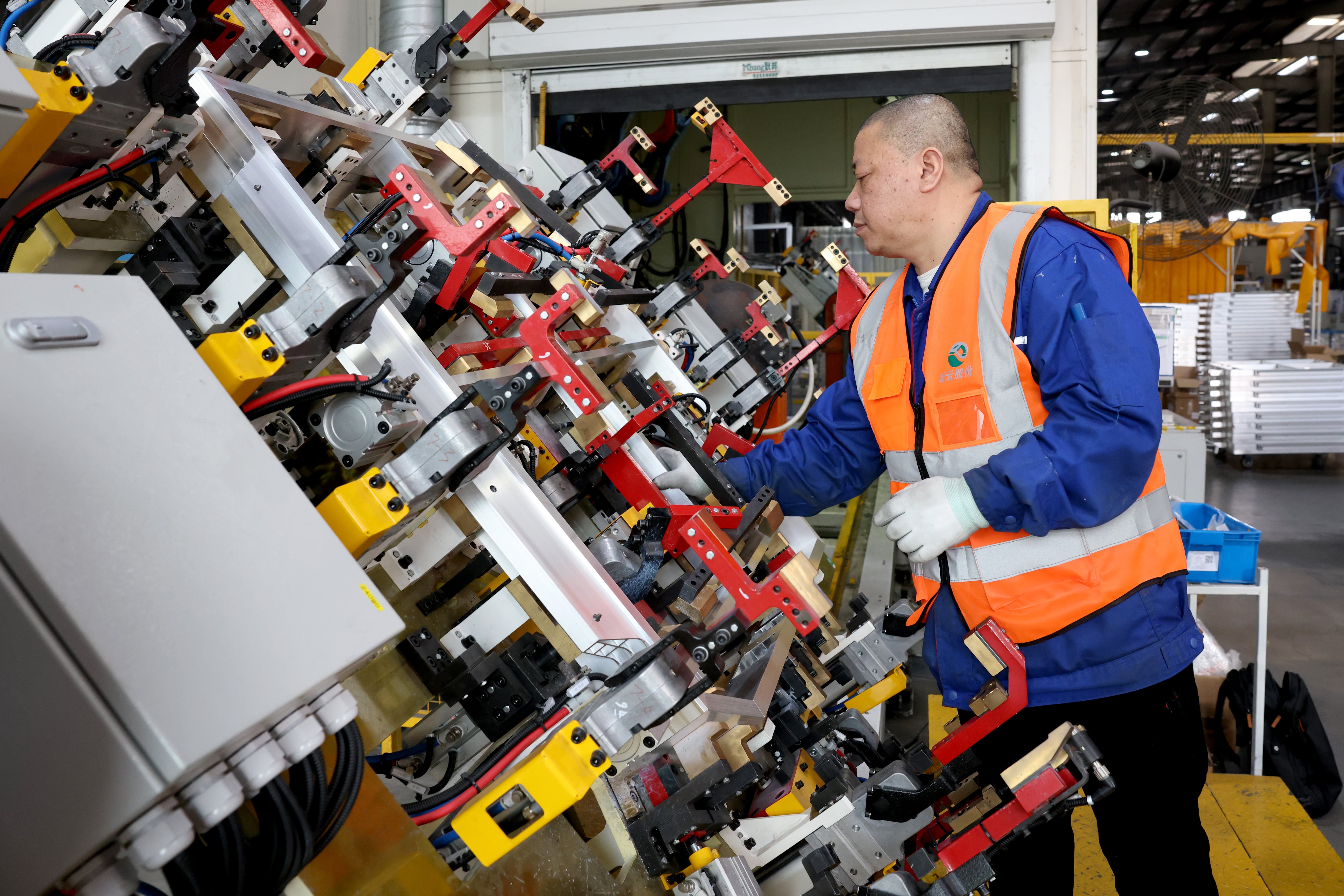
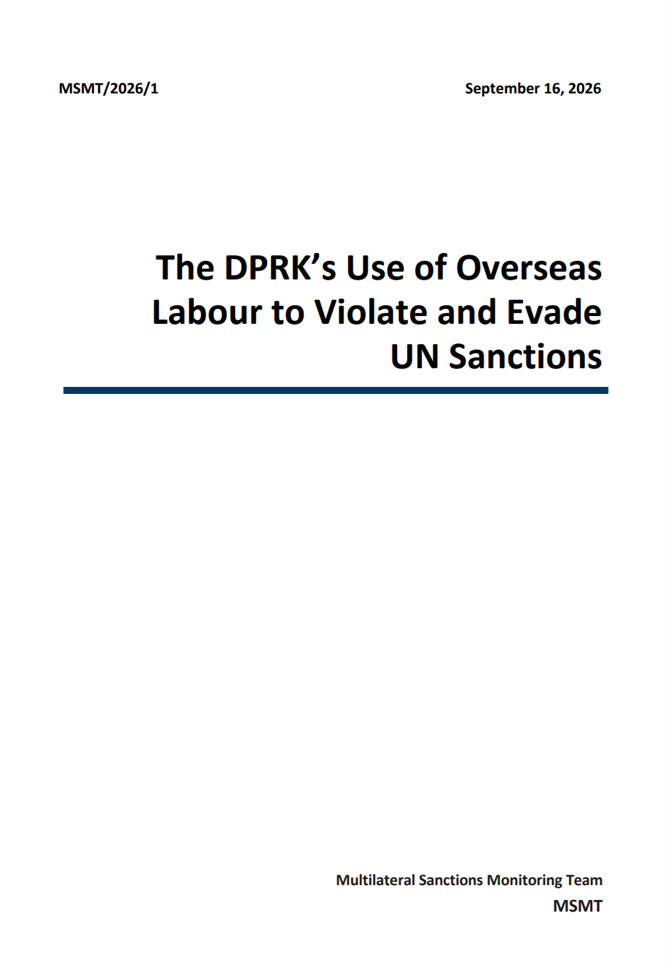
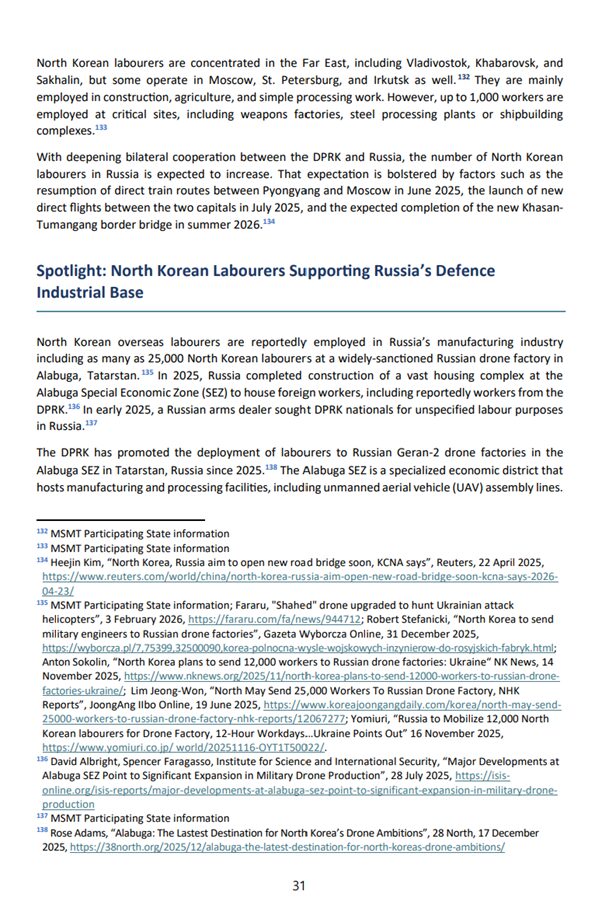
The factory floor shows another side of this partnership-building. A September report by the Multilateral Sanctions Monitoring Team says North Korean workers are employed at Alabuga in Tatarstan, where Russia produces Geran-2 drones, and describes workers entering Russia as students. Pyongyang rejected the report as fabricated. If the findings are accurate, the bargain is straightforward: Russia gains workers, North Korea gains income. Foreign support does not have to arrive as a finished missile; it can help keep the assembly line moving.

September 2026 sanctions-monitoring report.  Pages 31-32 discuss Alabuga and drone production. Pyongyang rejects the report


The Underground Price List

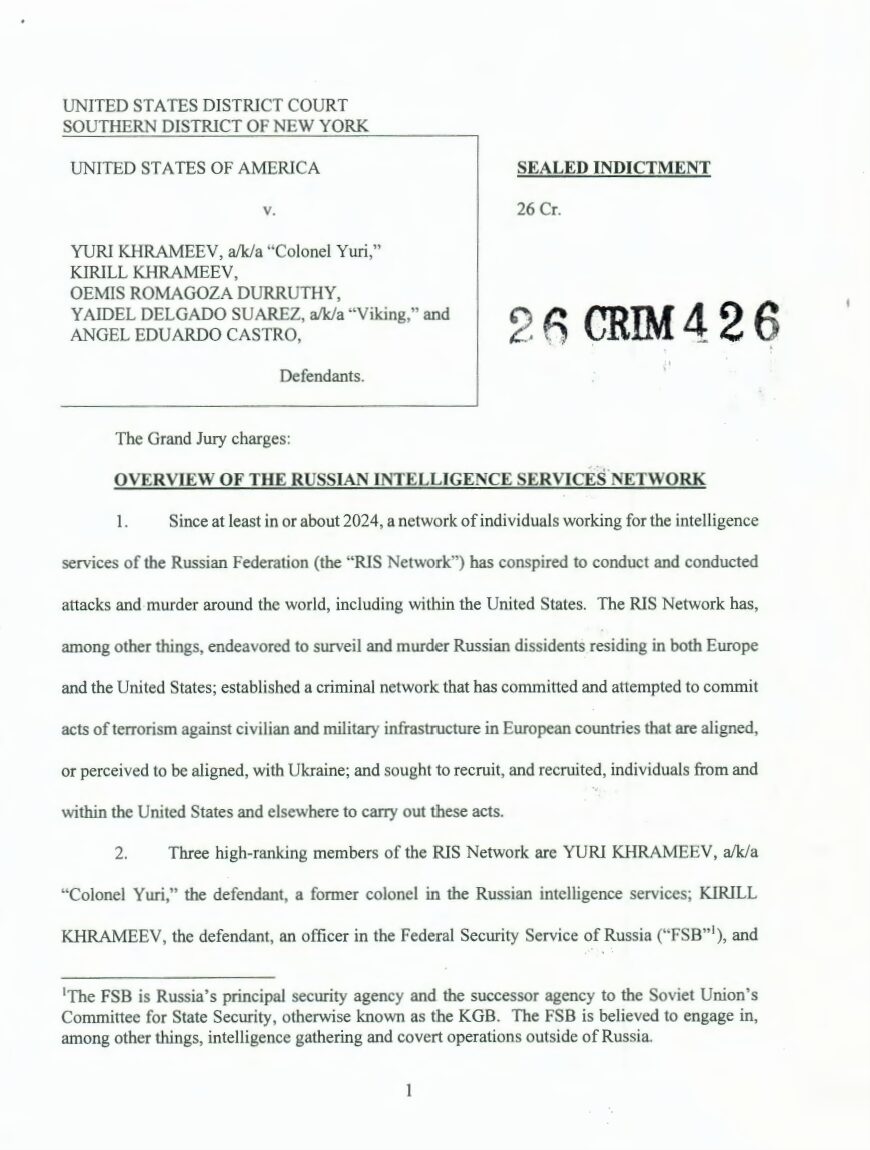
Recruitment abroad serves a different purpose. A September 15 U.S. indictment alleges that a Russian intelligence-linked network used Cuban and Venezuelan intermediaries to recruit inside America. Prosecutors describe payments of $1,000-$1,500 for surveillance and a $40,000 offer to kill a Russian dissident believed to be near Washington. Another alleged offer promised an American $25,000 to kill a target in Lithuania. These remain accusations, not court findings or proof of an officially declared bounty program.

Original U.S. indictment naming the alleged Russian, Cuban, and Venezuelan participants

The alleged network operated from at least 2024, before the Montenegro arrests. Its importance lies in the method: foreign intermediaries and local recruits, rather than an obvious Russian team. If substantiated, the charges would show Moscow reaching inside America through people who do not carry Russian passports.

The October 9 threat to expand the “exchange fund” signals that consular protests may no longer be Moscow’s only answer. It suggests foreign detainees could become leverage for recovering Russians. The warning to European and American governments is pointed: the detention of a Russian abroad may create a problem for their own citizens elsewhere.

Russia’s partners help it build weapons; alleged overseas networks extend its reach; threats against satellites and foreign detainees aim to raise the cost of confrontation. These are different tools, not proof of one master plan. But October’s warnings carry a common message: Moscow wants the other side to feel exposed too. Medvedev closed his latest message with a Russian proverb: “If you live among wolves, you must howl with them.”


MORE ON THE TOPIC:

The post NO SAFE REAR: Moscow’s Shadow War From Starlink to Prison Cells appeared first on South Front.

  •  

EU trade chief hails ‘crucial first step’ as Beijing talks avoid trade war

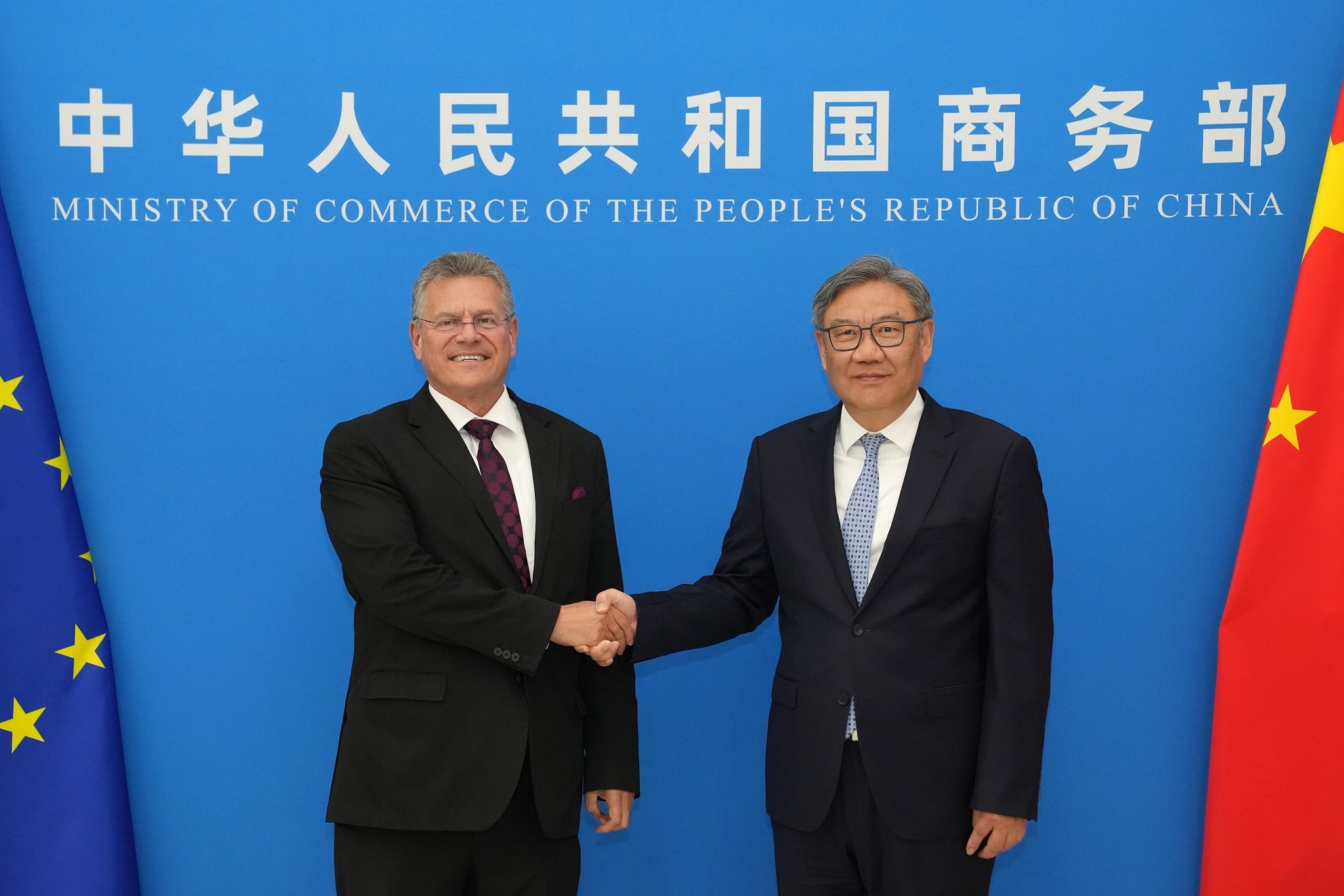
EU and Chinese officials agreed a series of trade concessions covering electric cars, rare earths and tariffs that dragged them away from a damaging trade war on Friday (9 October), following two days of crisis talks.

Following two days of talks in Beijing, EU trade commissioner Maroš Šefčovič said that he and China’s commerce secretary Wang Wentao had made a “crucial first step” towards rebalancing EU-China trade relations.

Europe can point to progress on hybrid vehicles, stronger assurances over the supply of critical raw materials, and continued engagement on market access issues in China.

Hours before Šefčovič arrived, Beijing rejected an EU demand for so-called “voluntary export restrictions” on its electric vehicles (EVs). However, in a joint statement on Friday, the two sides said that they had reached an “understanding on trade in hybrid vehicles in a WTO compliant manner”, but without providing further details.

They added that further negotiations on reducing tariffs and minimum pricing deals would allow Chinese EVs to enter the EU at a lower duty rate.

This article continues, but the full version is available only to EUobserver.com subscribers. Visit account.euobserver.com/membership

  •  

Ukraine uses up Europe’s yearly supply of thermal sensors in about five months, so two Ukrainian firms will build their own plants in the West

ukraine uses up europe’s yearly supply thermal sensors about five months so two ukrainian firms build own plants west · post imaging camera made company odd systems mounted drone manufactured

Two Ukrainian defense-tech firms, The Fourth Law and Odd Systems, have joined forces to mass-produce thermal imaging sensors in Europe and the US, The Fourth Law told Militarnyi. The goal is to wean Western militaries off foreign suppliers, chiefly China, for the core part of every thermal camera.

Amid Russia's daily attacks, Ukrainian drone makers have been shifting production to allied countries. Linza and Zoom drones are now built in Germany, and another top manufacturer has taken its technology to Canada and Finland. Sensor plants would move a core component west, not just finished drones.

A Western answer to Chinese sensors

The project, called Project Foundation, will build long-wave infrared sensors, known as microbolometers. These chips register heat, so a camera can pick out a person or vehicle at night or through smoke. The aim, The Fourth Law said, is to "ensure the sovereignty of Western countries in the field of thermal imaging technology."

Plants in Europe and the US from 2027

The project will run two sites, First Foundation in Europe and Second Foundation in the US, from a headquarters in Eindhoven, a Dutch semiconductor hub. Mass production is due to start in 2027. Within three years, the partners want to quadruple Europe's output of these sensors and double America's.

Why Europe's supply isn't enough

Ukraine's front line burns through sensors faster than Europe can make them. "Europe currently produces less than 500,000 such sensors per year, while Ukraine consumes this amount in about five months," Odd Systems co-founder Yaroslav Azhniuk said in February, when he first announced plans for a plant able to make one million sensors a year. European sensors cost about five times as much as Chinese ones and are hard to buy at all, because Europeans need them too, he added.

Factories working for Ukraine abroad have already become sabotage targets. In March, an arson attack in Pardubice, Czechia, destroyed nearly all the production capacity of a plant making drones and thermal sights for Ukraine's army. Czech investigators are looking into a possible Russian trail behind the attack.

  •  

EU tech chief expects countries leading AI race to come around on safety

The European Union’s technology chief expects countries that oppose stricter artificial intelligence rules to change course, as AI systems are becoming more capable and harder to evaluate.

“I’m sure that all those countries who are not willing to regulate the use of AI, they will come back to that quite soon,” European Commission Executive Vice-President Henna Virkkunen told the European Newsroom (enr) on Friday. She warned of a “risk of very serious incidents” in the absence of any guardrails and called for the establishment of safeguards at an international level.

Concerns about the risks of AI have been at the centre of public attention for weeks, sparked mainly by hacking attacks carried out by AI software that acted autonomously during test runs. Some industry insiders have sounded the alarm, warning that artificial intelligence could potentially cause large numbers of deaths if the technology were to spiral out of control.

Virkkunen warned that fierce global competition is creating a risk that “companies are coming to the markets with products that they haven’t been testing enough.” She pointed to incidents in which AI agents had escaped from test “sandboxes” and service providers or developers had been unable to control their own systems.

At the same time, she said, some AI models “have become so capable that it’s more and more difficult also to evaluate them.” Adequate testing required highly qualified experts, sufficient expertise and enough time, she added.

The EU began enforcing its AI Act, the world’s first comprehensive legal framework to regulate AI based on the level of risk it poses, in August. Virkkunen said that the Commission had already sent a Request for Information (RFI) to two major US-based AI companies – OpenAI, known for ChatGPT, and Anthropic, known for Claude – as well as to some Chinese companies not further specified.

An RFI is a formal investigative tool used by the Commission to gather facts, data, and internal documentation from businesses, governments, or member states.

Global AI race

China and the United States have emerged as frontrunners in the development of AI systems, showing no signs of hitting the breaks. Governments in both countries have rejected calls to slow down its development, arguing it would create a competitive, strategic and economic disadvantage.

“Currently the risks are mainly focused and related to cyber security,” Virkkunen said, but she warned of more serious risks in future, including the possibility that highly capable models could be used in connection with biological weapons or fall into the hands of terrorists.

The Finnish politician called for the establishment of international rules to mitigate the risks of AI. She said the security of AI models had already been discussed within the Group of Seven (G7) this year as well as among G20 countries, and that the discussions would continue.

Talking about the EU’s role in AI development, Virkkunen said the Union should avoid dependence on a single company or third country for critical technologies and develop AI systems based on European values, languages and culture.

  •  

How USAID cuts left Nepal’s children exposed to deadly floods

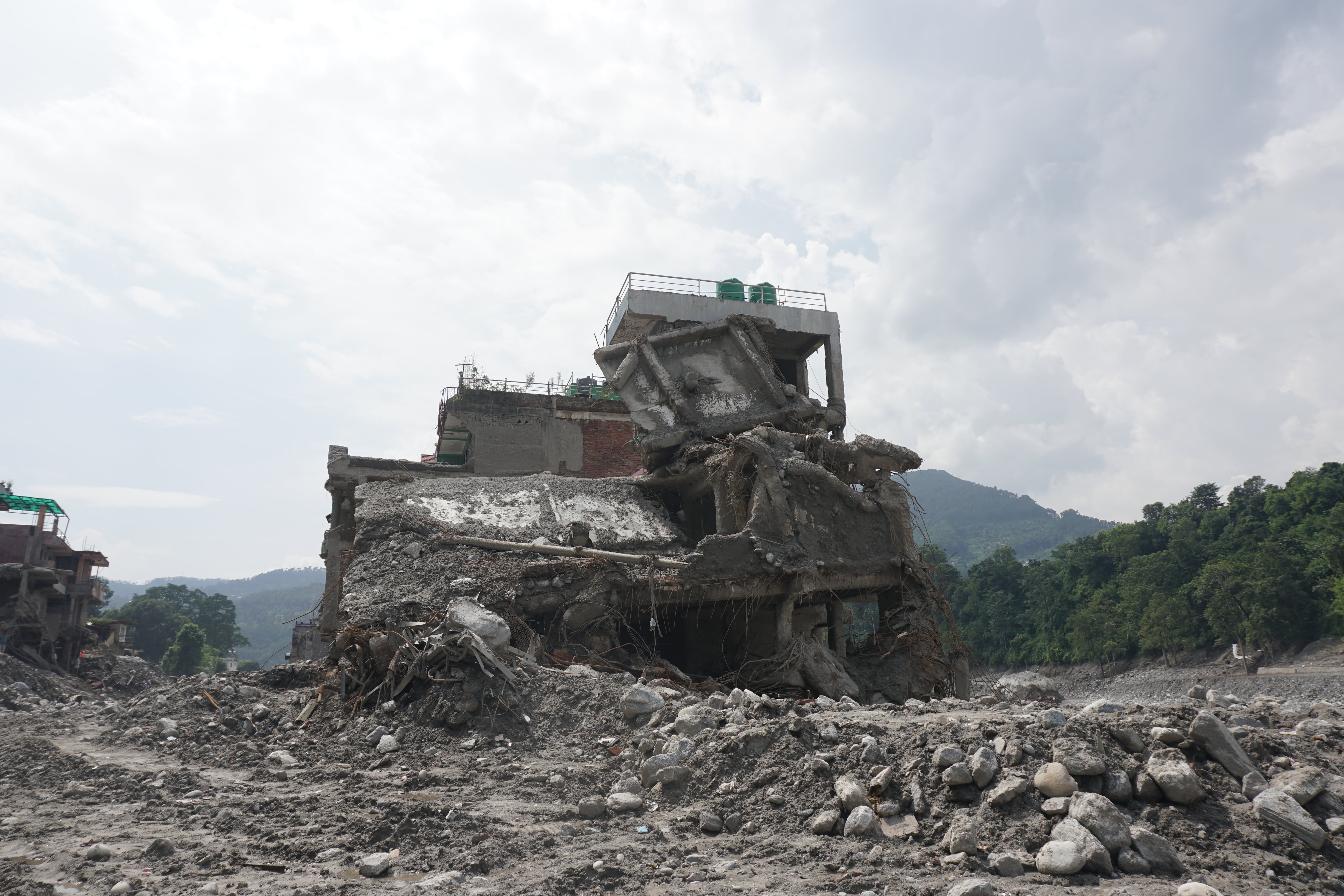
A building lies partially buried under mud after the flood in Nuwakot district, Nepal, September 17.

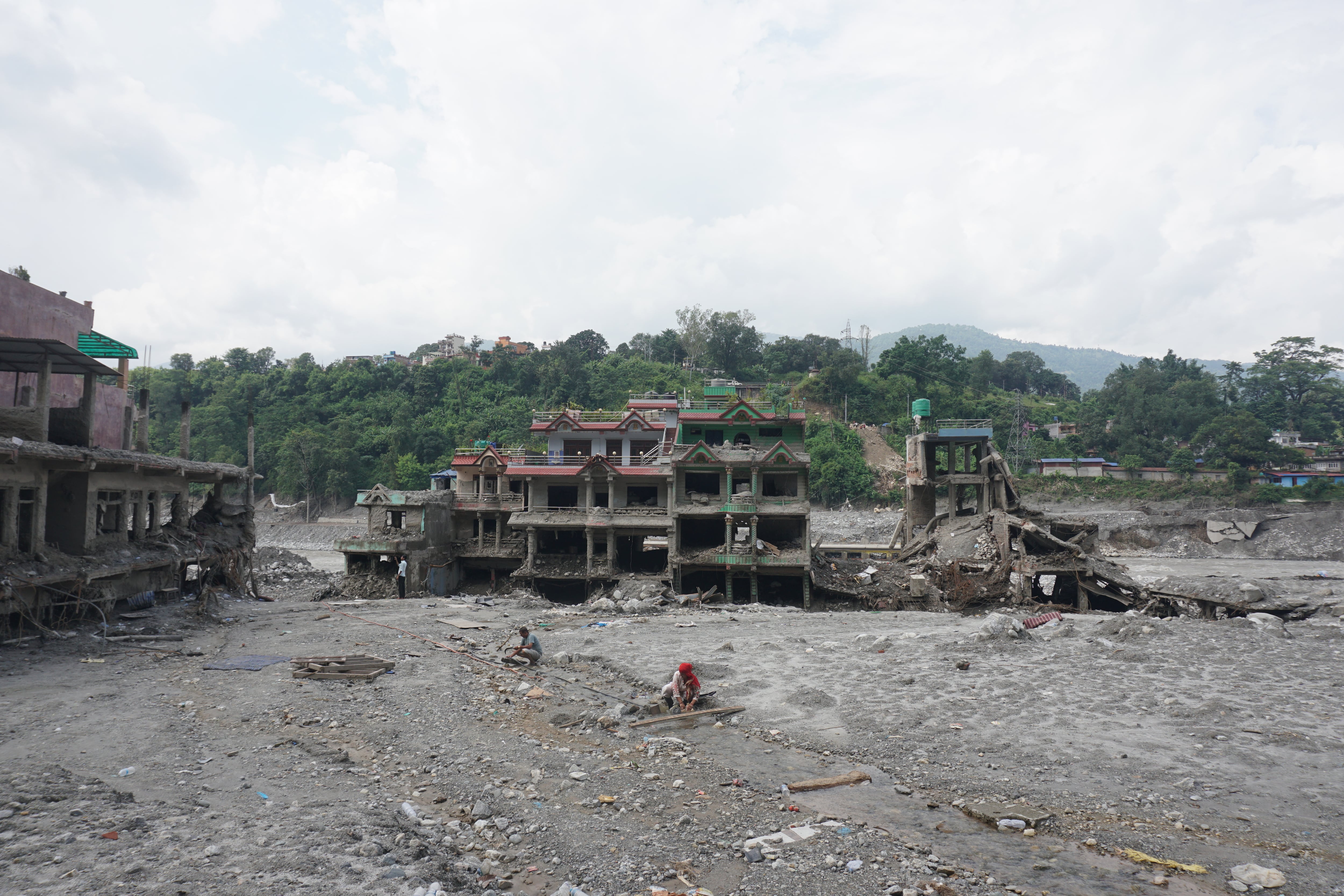
At an emergency shelter in central Nepal, Chhiring Mhendo Tamang stares at a photograph of her six-year-old daughter. She fears she will never see her again after the school bus she was on was swept away by a flash flood. A glacier collapsed on August 26, causing an avalanche of mud, rocks and water to rush into a river on the border between Nepal and Tibet. The flood has so far caused 1,451 deaths with 5,745 people missing, mainly in the districts of Rasuwa, Nuwakot, and Dhading, where homes, schools, electrical infrastructure and roads have been decimated, according to Nepal’s National Authority for Disaster Risk Reduction and Management (NDRRMA).

Seguir leyendo

Residents collect water after floods in Nuwakot, Nepal, on September 17, 2026.Students and authorities gather at a school that serves as a shelter for children orphaned after the flood in Nuwakot, Nepal, on September 19, 2026.
  •  
❌