❌

Reading view

Donnie Wahlberg Thanks God, Pilots After 'Serious Disaster' Prevented on Private Jet

Actor/singer Donnie Wahlberg thanked God and several airline pilots after a "serious disaster" was prevented on the private jet carrying him and seven others on Sunday.

The post Donnie Wahlberg Thanks God, Pilots After ‘Serious Disaster’ Prevented on Private Jet appeared first on Breitbart.

  •  

Jesse Eisenberg explica cómo le afectó ganar un Razzie a peor actor de reparto: “Ya no lograba papeles en producciones de grandes estudios”

Jesse Eisenberg (Nueva York, 43 años) pasó de estar nominado a un Oscar por su papel protagonista en La red social (2010) a ganar el premio a peor actor de reparto por su antagónico en Batman v Superman: El amanecer de la justicia (2016). El cineasta reveló que, tras recibir el Raspberry Award (mejor conocido como Razzie), su carrera como actor se vio perjudicada, hasta el punto de que decidió volcarse en la dirección. “En gran medida, todo surgió del miedo”, comentó Eisenberg durante el Festival de Cine de Londres (BFI) el pasado 18 de octubre, según recoge la revista Variety.

Seguir leyendo

© Carlos Álvarez (Getty Images)

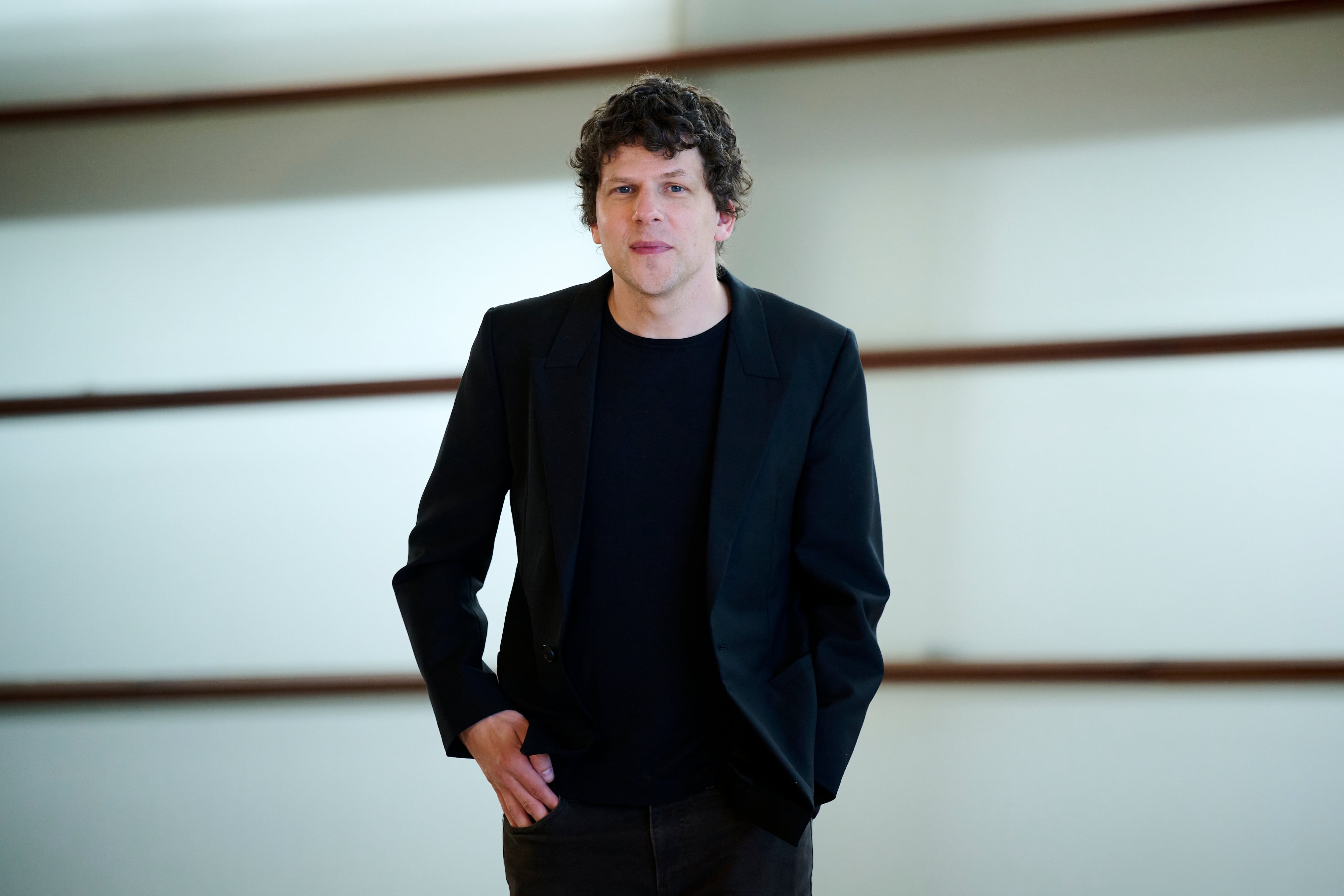
Jesse Eisenberg en el Festival Internacional de Cine de San Sebastián, el 23 de septiembre de 2026.
  •  

Excessive wealth, extreme emissions – and ecocide: what I learned at Europe’s big superyacht show

These yachts are highly popular with the ‘super-bourgeoisie’ – and getting bigger. Can anything be done to stop them destroying our seas?

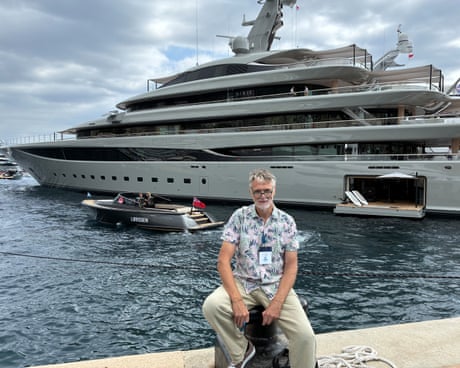
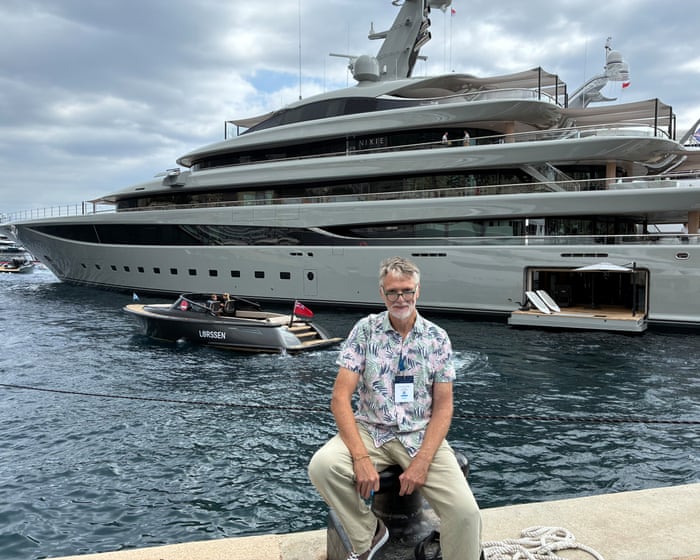
Who knew? Apparently everyone did, apart from me: you don’t wear shoes on a superyacht. Now, about to step on to my first teak deck at the Monaco Yacht Show, I’ve got to take my trainers off, and I’m having a sock panic. Have they got holes? Do they even match? Do they smell?

To be honest, I’ve come dressed all wrong for Europe’s big annual superyacht trade exhibition. The code for men seems to be crisp and tucked in, blazers and chinos, navy and white, sculpted hair and designer sunnies. (I went colourful, loose, casual). For women, it’s something like Riviera elegance. Everyone – whether they’re Italian, French, English, German, American, exhibitors, buyers, brokers, charterers – seems to know each other. The international superyacht community seems to be a close-knit one, and I’m not part of it. Yet.

Continue reading...

© Photograph: Sam Wollaston/The Guardian

© Photograph: Sam Wollaston/The Guardian

© Photograph: Sam Wollaston/The Guardian

  •  

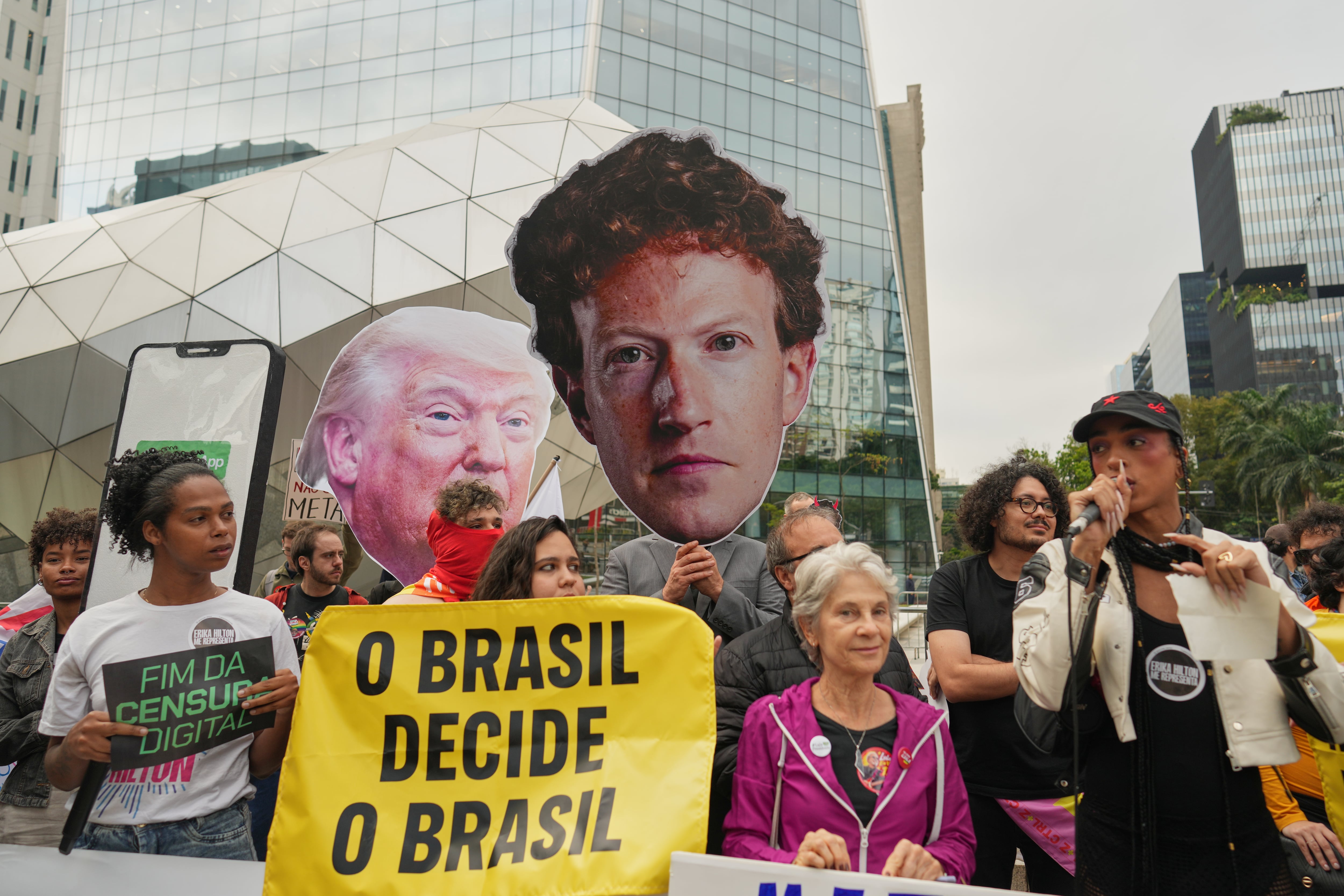
Manifestantes acusam Meta de favorecer Flávio Bolsonaro

"Meta, não se meta" era a palavra de ordem entoada pelos manifestantes, frente ao edifício que alberga o escritório da Meta. Campanha de Lula acusa a tecnológica norte-americana de favorecer rival.

© ISAAC FONTANA/EPA

Manifestantes concentraram-se no famoso centro financeiro da capital paulista, Faria Lima, segurando faixas e cartazes com fotografias do dono da Meta, Mark Zuckerberg
  •  

“Meta no se meta”: brasileños rechazan interferencia electoral del gigante tecnológico

Manifestantes denunciaron en São Paulo que Meta reduce de forma injustificada el alcance de las publicaciones del mandatario Luiz Inácio Lula da Silva, al tiempo que impulsa los contenidos del candidato de la extrema derecha, Flávio Bolsonaro.
  •  

La justicia electoral de Brasil da 24 horas a Meta para demostrar que trata igual a Lula y a Bolsonaro

Al Tribunal Superior Electoral de Brasil se le está acabando la paciencia con el gigante tecnológico Meta y los inescrutables entresijos de su funcionamiento. Un juez del TSE le ha dado 24 horas a la tecnológica propietaria de Instagram, WhatsApp y Facebook para que demuestre al tribunal que sus algoritmos y su inteligencia artificial dan un trato igual a los dos candidatos, al presidente Luiz Inácio Lula da Silva, del izquierdista Partido de los Trabajadores, y al senador Flávio Bolsonaro, del derechista Partido Liberal. La decisión judicial fue dictada el domingo por la noche cuando los presidenciables protagonizaban su primer debate.

Seguir leyendo

© Andre Penner (AP Photo/Andre Penner)

Una protesta ante la sede de Meta en São Paulo, este lunes. La pancarta dice: "Brasil decide sobre Brasil".
  •  

'The View' co-hosts defend El-Sayed comparing himself to JFK over Muslim Brotherhood scrutiny

"The View" co-hosts defended Michigan Democratic Senate candidate Abdul El-Sayed over his comparison of questions about his family's alleged ties to the Muslim Brotherhood to scrutiny former President John F. Kennedy faced over his Catholic faith.

El-Sayed made the comparison during an "MS NOW Reports" interview on Saturday, likening questions about his family's alleged ties to the Muslim Brotherhood to scrutiny Kennedy faced over his Catholic faith.

Co-host Whoopi Goldberg highlighted an incident at a recent town hall when El-Sayed was asked whether he would disavow the Muslim Brotherhood. El-Sayed did so, but objected to the question, saying the audience member was "implicitly assuming that I’ll have dual loyalties."

"I liked what he said. He compared the question he received to John F. Kennedy's question because John F. Kennedy, as you know, was a Catholic, and in the days he was running that was a huge deal and people wanted to know ‘Are you going to listen to the Pope? Are you going to listen to the people?’" Goldberg said.

CONTROVERSY OVER ABDUL EL-SAYED'S FAMILY TIES TO MUSLIM BROTHERHOOD IGNORED, DOWNPLAYED BY LIBERAL MEDIA

"Yeah, because he was the first Catholic president," co-host Sunny Hostin agreed. "And I loved that comparison because, when John F. Kennedy was asked, he said, ‘I am not running to be a Catholic president, I'm running to be president who happens to be Catholic.’ And candidate El-Sayed said the same thing. ‘I am running to be a senator who happens to be Muslim.’"

"I think he does politics extremely well," she continued. "And there has been these constant Islamophobic — these Islamophobic comments around his candidacy. Trump called him a jihadist. I mean, this is just, I think it's out of line. I think it's out of pocket for our country to be a country where all religions aren't welcome. I think that it's really despicable the way he's been treated."

Concerns about El-Sayed's family's alleged ties to the Muslim Brotherhood emerged after social media posts uncovered by the Washington Free Beacon showed El-Sayed's half-sister, Eman Abdelhadi, described her family's history with the organization.

In one 2012 post, Abdelhadi described a conversation with her and El-Sayed's mother, Fatten Elkomy, about her involvement with the organization during college in Egypt, saying, "Had an amazing talk with my mom about her activism in the Muslim Brotherhood during the early 70s while she was in college #respect."

MICHIGAN DEM AG TURNS ON EL-SAYED OVER TERROR ATTACK RESPONSE, WARNS OF MENTALITY THAT 'BOTHERS ME A LOT'

Co-host Alyssa Farah Griffin noted how quickly El-Sayed disavowed the Muslim Brotherhood, but said she was still troubled by his response to an antisemitic terror attack in Michigan, arguing that such concerns cannot be disregarded as "Islamophobic." She also pointed to his past campaigning with far-left streamer Hasan Piker.

Fellow co-host Sara Haines argued, "The comparison to JFK isn't quite an equitable comparison, because when you question his loyalty based on his Catholicism, that's different than asking a question about reported ties to a terrorist organization."

She added that while the reported ties involved El-Sayed's family, not El-Sayed himself, the fact that people were framing concern about the Muslim Brotherhood as Islamophobia was making the entire conversation worse.

Co-host Ana Navarro argued that concerns about the Muslim Brotherhood were overblown.

"The Muslim Brotherhood is practically defunct in Egypt. That's like asking him to denounce bell-bottoms," she said.

"To me, this is a binary choice. Do I want somebody that's going to push back on Trump or do I want someone that's gonna rubber-stamp Trump?" Navarro asked. "Well, I want something that's going to demand accountability, that is going to demand oversight, and that's to pushback on the abuses of power that are going on in this country by this administration right now."

CLICK HERE FOR MORE COVERAGE OF MEDIA AND CULTURE

Human rights attorney Brooke Goldstein, executive director of The Lawfare Project and founder of the #EndJewHatred movement, spoke to Fox News Digital about the segment and criticized Navarro for downplaying the Muslim Brotherhood.

"Nobody asked El-Sayed about his faith," Goldstein said. "He was asked about the Muslim Brotherhood, whose Egyptian and Jordanian chapters were designated as foreign terrorist entities by the Treasury Department this year for materially supporting Hamas, and whose Lebanese chapter was designated as a foreign terrorist organization by the State Department. Hamas even describes itself as the Brotherhood’s wing — and clearly neither the Brotherhood nor Hamas is 'defunct.'" 

"The question El-Sayed deflected — the comparison to Kennedy is inapt because Kennedy actually did answer the question, to a room full of Protestant ministers — is about national security concerns, not religious ones," she continued. "The Kennedy comparison is nothing more than a deflection from unanswered questions about a designated terrorist organization."

"The co-hosts of ‘The View’ are missing the point," Goldstein added. "JFK faced religious prejudice. Questions about Abdul El-Sayed’s alleged family ties to the Muslim Brotherhood raise a different concern: where does a candidate’s loyalty lie, with the United States and its constitutional values, or with a foreign terrorist organization?"

"The evidence cited to raise these concerns is compelling enough to warrant serious scrutiny and direct answers," she said. "Voters have every right to demand transparency when potential connections to Islamist movements are questioned. National security is not bigotry, and invoking discrimination should not end legitimate debate." 

"Anytime there’s serious questions into somebody’s affiliation with a terrorist group, they claim religious prejudice," Goldstein continued. "Asking somebody about their ties to a terrorist organization is anti-Islam, what then, is pro-Islam?"

"Meanwhile, DSA candidates are advancing an anti-Western ideological agenda that deserves far more scrutiny. Their radical socialist policies and hostility toward traditional American values risk weakening the institutions and freedoms that made this country exceptional," she said. 

CLICK HERE TO DOWNLOAD THE FOX NEWS APP

Goldstein cited rioting in France as an example of what can happen if such issues aren't taken seriously. 

"France is a warning of what can happen when progressive ideology, failed integration policies, and inadequate responses to Islamist extremism collide," she said. "America must not follow that path by handing power to DSA radicals who put ideology ahead of national interests."

  •  

Instagram Suspends 'No Kings' Account for Suspicious Activity, Leftists Led by Bernie Sanders Suddenly Care About Censorship

Mark Zuckerberg's Meta has offered a detailed explanation and a fresh apology after the Instagram account of the No Kings movement was suspended for several hours during nationwide rallies for suspicious behavior driven by AI usage. Leftists including Bernie Sanders (I-VT) who were silent for more than a decade of Meta censoring conservatives suddenly are expressing alarm about censorship.

The post Instagram Suspends ‘No Kings’ Account for Suspicious Activity, Leftists Led by Bernie Sanders Suddenly Care About Censorship appeared first on Breitbart.

  •  

Burnham urged to launch inquiry into unequal health impacts of air pollution

Letter from 150 scientists, MPs and activists calls for action to protect lower-income and minority-ethnic communities

The government must hold an inquiry into the unequal impacts of air pollution, 150 scientists, MPs and activists have urged.

Research by the Institute for Fiscal Studies shows that across England, lower-income areas have persistently higher levels of air pollution than wealthier areas.

Continue reading...

© Photograph: Alicia Canter/The Guardian

© Photograph: Alicia Canter/The Guardian

© Photograph: Alicia Canter/The Guardian

  •  

Jesse Eisenberg Reveals TV Show Details as ‘The Debut’ Closes a Star-Studded London Film Festival

Eisenberg and lead actress Julianne Moore gushed over one another ahead of the well-received screening — and the filmmaker also told THR what his upcoming TV series is about.
  •  

Jesse Eisenberg Relives Kieran Culkin Woes Making ‘A Real Pain’ and Says His Next Project Is a TV Show

Producer Emma Stone had to chaperone Culkin on the plane to Poland because Eisenberg didn't know if he was going to show: "She sent me a video of him going through customs saying, 'We are here.'"
  •  

OpenAI: AI-Generated Deepfakes Will Become Impossible to Verify

Federal judges meeting in Boston heard tech industry warnings that AI-generated images and video are becoming nearly impossible to verify, as a judiciary committee considers whether courts need new rules for evidence that may be deepfakes instead of the real thing.

The post OpenAI: AI-Generated Deepfakes Will Become Impossible to Verify appeared first on Breitbart.

  •  

How a cruise ship navigates Greenland's icebergs and extreme Arctic conditions

We went aboard a cruise ship navigating some of the world's most dangerous waters. In the Arctic, drifting icebergs, sea ice, sudden storms and fierce winds make sailing unpredictable. Yet every year, around 100,000 cruise passengers travel to Greenland to explore its remote coastline and experience one of the world's last great wildernesses.

Read the original article on Business Insider

  •  

Millennial women are tired of being girlbosses

Coportrate women in heels stepping on an overturned black office chair.

Getty Images; Alyssa Powell/BI

After 20 years of balancing her corporate leadership roles with motherhood, Trisha Daab was ready for a break.

"Life had felt like sprinting a marathon for as long as I could remember," Daab, 47, told Business Insider. "I had no idea how tired I was until I stopped working."

In her year off, she tap danced, volunteered at a food bank, traveled to Disneyland and Alaska, and spent more time with her kids. By the end, she had decided she couldn't go back to her old life.

"My job often demanded that it came first — never-ending to-do lists, urgent emails, travel, and always chasing the next promotion," Daab, who's now a travel writer and substitute teacher, said. "Stepping away helped me realize my priorities had shifted."

Trisha Daab
Trisha Daab took a year off from her corporate role, then pivoted to jobs that allow for more work-life balance.

Courtesy of Trisha Daab

Now in their 30s and 40s, many millennial women are skeptical of corporate and instead becoming business owners, content creators, and mothers, prioritizing more flexible work schedules. Instead of striving to get to the top, they're inverting Sheryl Sandberg's mantra of the 2010s — and leaning out.

Sandberg, Meta's former COO, told Business Insider that the corporate exodus is due to women feeling undervalued at work.

"This is not the women who are saying, 'I don't want to do it,'" Sandberg, 57, said. "It's the women saying, 'I don't want to do it because I'm not wanted, I'm not getting the same opportunities and the same support, and I face an unfair burden at home.'"

Even Lean In, the organization founded by Sandberg and named after her 2013 bestselling book, is noticing a recent shift in women's ambitions in the workforce.

Sheryl Sandberg
Sheryl Sandberg coined the phrase "lean in" in 2013, encouraging women to pursue more leadership roles.

Bloomberg/Getty Images

According to the organization's 2025 Women in the Workplace report, published in December 2025, which surveyed 9,500 US employees across 124 organizations, women were less likely to say they wanted a promotion compared to men. This was true when filtered to include only millennials, who made up roughly one-third of participants.

When asked why, over 28% of millennial women said "personal obligations" made it hard for them to take on more — compared to 17% of millennial men.

Annie Wright, a licensed psychotherapist who works with Silicon Valley leaders, has also observed more of her millennial female patients shifting their ideas about what constitutes a fulfilling career.

"I'm watching them make more person-centered choices than necessarily career-only-driven choices," she told Business Insider. "I don't think many millennial women are becoming less ambitious. I think they're just becoming less willing to confuse ambition with self-erasure."

The rise and fall of the have-it-all girlboss

The Wing co-founder Audrey Gelman and Jennifer Lawrence speak onstage during 20th Century Fox x The Wing on February 23, 2018 in New York City.
The Wing cofounder Audrey Gelman and Jennifer Lawrence speak at an event at The Wing in 2018.

Monica Schipper/Getty Images for The Wing

Let's, for a moment, remember what is now referred to as the "girlboss era" of the 2010s.

It was a time of She-E-O-led startups, of crushed velvet sofas and the words "I Want It All" aglow in cursive neon lettering. Of earnest enjoyment of "Fight Song" and T-shirts with earnest phrases like "feminist" and "woman up."

Of a future that was female, tinged millennial pink — until a series of public reckonings punctured the fantasy. Leaders of several companies stepped down amid allegations of toxic workplace cultures, exposing the facade of the girlboss promise.

Then came the remote work culture of 2020. Suddenly, many women had time to breathe, whether that meant not rushing to day care pickup, having more time to work out or see friends, or simply not being "on" all the time.

For some, the slowly creeping requirement to return to the office dealt the final blow.

Misty Heggeness, a professor at the University of Kansas specializing in gender economics, described the influx of new RTO policies by some companies as having a "chilling effect."

"That does disproportionately disadvantage women in general," Heggeness told Business Insider, "just because women are more likely to carry an invisible load of work within families."

The working mom paradox

Kendra Rothermel with baby
Kendra Rothermel, 34, started her own business to have more flexibility as a working mom of three.

Courtesy of Kendra Rothermel

After the birth of her first child, Kendra Rothermel switched from full-time to part-time work as an office manager while her husband remained at his full-time job. "As we grew our family, it made sense for me to have a more flexible schedule," Rothermel, 34, told Business Insider.

When she had her third baby, his clubfoot diagnosis meant frequent orthopedic appointments. Even part-time work wasn't flexible enough, so she eventually started her own venture helping small businesses with operations and marketing.

Rothermel said she was partly inspired by watching other working moms do the same.

A recent analysis of job-market data by Matthew Nestler, a senior economist at KPMG, found that labor force participation between December 2023 and May 2026 decreased among college-educated women with children under 5. Meanwhile, participation increased for women without children and most groups of men, including fathers.

Because millennials are generally having kids later than previous generations did, Heggeness said parents, moms in particular, are more likely to be parenting young children just as their work responsibilities are ramping up.

"If they were going to lean out, now would be the time," she said, whether it's to save on childcare costs or introduce more flexibility.

A tired mother in a yellow sweater works on a laptop sitting at a table, next to her a 5-year-old son interferes and distracts.
Working moms want more flexibility, right as more companies have been instituting RTO mandates.

Natalia Lebedinskaia/Getty Images

Add to the list aging parents. The costs of childcare and eldercare, sometimes unaffordable even with the intense work commitments required to afford them, have prompted some women to leave their full-time jobs for more flexible or minimum-wage work.

To Sandberg, it's a sign that companies are not adequately adjusting to meet women where they are, whether that's offering more flexible hours, longer parental or bereavement leave options, or better healthcare coverage.

"We're at a critical moment in time for women, because what a lot of women are seeing is that commitment to them in leadership pulling back," Sandberg said. "Then what's happening to them is their ambition is pulling back. And that's a loss. It's a loss for our economy. It's a loss for our companies. It's a loss for our children."

The allure of going at it alone

Heigi Jeong
Heigi Jeong left her full-time tech role to pursue content creation and write a book.

Courtesy of Heigi Jeong

Not all women who are leaning out are doing so because they are overworked. Some, like Heigi Jeong, 30, have dreams beyond corporate America.

"While I wouldn't say I loved the work, I liked it," Jeong, who made $173,000 working in product design, told Business Insider. "It was my dream job as an immigrant, and it was sustainable."

Still, Jeong was pulled toward her other ambitions: writing a book and being a content creator. She was also intrigued by the idea of being her own boss.

"When I'm working for myself, I entirely choose the role I will play," Jeong said. "I wanted to experience it myself and have my own take rather than constantly wondering 'What if I quit?'"

Three months after quitting, she enjoys not feeling as rushed as she used to, even if the price is an inconsistent income.

Both Heggeness and Wright have noted a growing interest in entrepreneurship and self-employment among women. A 2024 Census working paper found that the share of women business owners under 45 rose between 2012 and 2020, with the biggest increase among women ages 25 to 34. It also found that newer women-owned employer businesses were disproportionately owned by women under 35.

Woman making a video blog with smartphone and ring light at studio.
Some women are pursuing full-time content creation due to more flexible hours and, sometimes, better pay.

Luis Alvarez/Getty Images

The creator economy opened another path. More than 200 million people worldwide now identify as content creators, though that broad figure includes far more than full-time influencers. Some Gen Z and millennial consultants are even leaving MBB and Big Four firms to build audiences and businesses online — trading the girlboss crown for a bubble headband.

In a 2023 Vogue article, writer Daisy Jones wrote that the newest iteration of girlboss swaps grind culture with the similarly perfectionistic "soft life" defined by travel and lucrative brand deals. Pantsuits were exchanged for sweatpants; speaking engagements and spread-thin multitasking gave way to self-care and supplement stacks.

"In some ways, the career woman appears to have been replaced by the health-conscious woman," Jones wrote, "the one who prioritizes her vitamin intake, hydration, and sleep cycle over endless meetings and salary increases."

Content creation doesn't come without its own costs. Plenty of influencers report feeling financially insecure or overworked, unable to take a day off without losing money.

Still, if they're going to burn out or worry about their job security, some figure they might as well enjoy their autonomy to create their own schedules.

"For some women, there's been a paradigm shift in values," Wright said. "Promotion or success now looks like more availability, presence, and freedom."

When everyone leans out

A woman runs a small business from her home
If women keep leaving corporate leadership roles, it leaves fewer women in charge to fight for those corporate roles to be more flexible.

Petri Oeschger/Getty Images

Sandberg, who herself stepped down as Meta's COO in 2022 to pursue philanthropy and early-stage investing ventures, said she supports women's career choices, whatever they may be.

"I think being at home with your children is great," she said. "Going back to school, great. Starting a company, great. Going part-time, great. Anything you want to do is great."

Part of the issue, she said, is that without female leaders, there are simply fewer people to advocate for the very policies that make other women more excited to move up in a company, be it egg-freezing coverage, lactation rooms, or more competitive maternity leave options.

It's why she feels companies need to do more work to assess why women are leaning out enough to jump ship entirely. "It's easy to overly characterize the words 'lean in,'" she said. "What I mean by them is very clear: I think women should make decisions based on believing in their own abilities, based on believing that they should and can have the same opportunities as men."

It's just a shame, she continued, if the decision stems from not feeling valued enough in the corporate world.

"I just hope that enough women want those senior leadership roles," she said, "that we get the environment for women that they deserve."

Read the original article on Business Insider

  •  

Felix Vulis: “I will inform Kazakhstan’s president and the European Council about ERG’s outstanding debt to me”

Former ENRC Chief Executive Says Unresolved Financial Obligations Could Raise Questions About Kazakhstan’s International Business Reputation.

Following his interview with EU Today, Felix Jeff Vulis discusses his outstanding financial claims, his relationship with Kazakhstan and why he intends to bring the matter to the attention of President Kassym-Jomart Tokayev.

For more than three decades, Felix Jeff Vulis has maintained close professional ties with Kazakhstan, a country whose transformation into a major international mining and industrial economy he witnessed firsthand.

His relationship with Kazakhstan began in the 1990s, when he helped introduce the country’s economic potential to American investors. In 2001, he joined Eurasian Natural Resources Corporation (ENRC), eventually becoming Chief Operating Officer and then Chief Executive Officer.

Under his leadership and that of his colleagues, ENRC expanded internationally, listed on the London Stock Exchange in 2007 and entered the FTSE 100, becoming one of Kazakhstan’s most prominent industrial companies.

But the relationship between Vulis and the group that subsequently became Eurasian Resources Group (ERG) has taken a different direction.

In a September interview with EU Today, Vulis described his years at ENRC, the challenges of corporate governance and the impact of the British Serious Fraud Office investigation, which ended in 2023 without charges.

He also raised a question that had remained largely outside public discussion: financial and contractual obligations that he believes ERG and related entities have failed to honor.

The first interview concluded with Vulis maintaining that ending a corporate position would not eliminate previously established financial obligations.

Now, in this proposed continuation, Vulis addresses the outstanding claims more directly and explains why he intends to seek the attention of Kazakhstan’s highest political authorities.

The unresolved financial questions

EU Today: In your previous interview, you spoke about financial obligations that you believe remain outstanding. What exactly are you referring to?

Felix Vulis: Throughout my many years with ENRC, I held significant executive responsibilities and worked under various contractual and financial arrangements.

My position is that certain obligations arising from those arrangements have not been fulfilled. These matters include remuneration and other financial entitlements associated with my professional relationship with the group.

I believe the relevant documentation should be reviewed and the legitimate outstanding obligations settled.

EU Today: Are we talking about a substantial amount of money?

Felix Vulis: I would prefer not to discuss specific figures publicly at this stage. There are financial calculations, contractual documents and correspondence that need to be considered.

This is not simply about a number. It is about respecting agreements and commitments.

EU Today: Has ERG been given an opportunity to resolve these matters privately?

Felix Vulis: My preference has always been to resolve outstanding issues through professional discussions rather than public confrontation.

I believe that an agreement remains possible if the relevant parties are prepared to examine the documentation and engage constructively.

But after so many years, I also believe that unresolved obligations cannot simply remain unanswered indefinitely.

Why the president of Kazakhstan?

EU Today: You have indicated that you intend to bring this matter to the attention of Kazakhstan’s President, Kassym-Jomart Tokayev. Why?

Felix Vulis: Because Kazakhstan is not an ordinary country in my professional life.

My relationship with Kazakhstan began long before I joined ENRC. I have spent decades working with its industries, institutions and people.

I have enormous respect for the country and its economic achievements.

At the same time, the Republic of Kazakhstan is an important shareholder in ERG. I believe that shareholders, particularly those representing a sovereign state, have a legitimate interest in ensuring that companies associated with them respect their financial and contractual commitments.

I intend to inform President Tokayev about my situation and explain why I believe these outstanding obligations deserve attention.

EU Today: Are you asking the President to intervene personally in a private financial dispute?

Felix Vulis: I am not asking the President to act as a judge or to assume responsibility for obligations that legally belong to a corporate entity.

I am asking for attention to a matter that I believe deserves a fair and professional review.

Kazakhstan has worked hard to establish itself as a reliable destination for international investment. That reputation depends, among other things, on confidence that legitimate business commitments will be respected.

EU Today: Do you believe the matter could damage Kazakhstan’s international reputation?

Felix Vulis: I sincerely hope it does not.

Under President Tokayev, Kazakhstan has made important efforts to strengthen its international standing, attract foreign investment and build confidence among its economic partners.

I recognize and appreciate those efforts.

However, when a former chief executive of one of the country’s most internationally recognized industrial groups raises unresolved financial claims, questions can arise about corporate governance and the treatment of contractual obligations.

I believe the best way to avoid unnecessary reputational questions is to examine the matter fairly and resolve legitimate claims.

The international dimension

EU Today: You are an American citizen. Could this matter also be raised in the United States or Europe?

Felix Vulis: As an American citizen, I have the right to protect my legitimate financial and contractual interests through the appropriate legal channels.

If a reasonable settlement cannot be reached, I intend to explore every lawful avenue available to me, including bringing the matter to the attention of relevant European institutions in Brussels and appropriate authorities in the United States.

That may include the US Department of State and the US Department of the Treasury, where there is a relevant basis for doing so.

I would much prefer that such steps prove unnecessary.

EU Today: Would you also approach European political institutions?

Felix Vulis: I reserve the right to raise the matter with appropriate European institutions, including the European Council, through lawful procedures and established channels.

My objective would be to explain my position and seek appropriate consideration, not to turn a private commercial matter into an international political confrontation.

EU Today: Some people might interpret these statements as pressure on ERG. How would you respond?

Felix Vulis: I am simply explaining the options that may be available to someone seeking to protect his contractual rights.

I have no interest in harming Kazakhstan or creating unnecessary difficulties for its international partners.

But I also do not believe that a person should be expected to abandon legitimate financial claims simply because the other party is a large and influential corporation.

Kazakhstan beyond ERG

EU Today: Has this experience changed your opinion of Kazakhstan as a place to do business?

Felix Vulis: No. My respect for Kazakhstan remains unchanged.

I still believe it has extraordinary economic potential, particularly in mining, critical minerals, energy, infrastructure and industrial development.

Its strategic position between Europe and Asia creates opportunities that extend far beyond the extraction of natural resources.

The country has the industrial experience, human capital and geographic advantages necessary to attract significant long-term investment.

That is precisely why I believe questions of contractual reliability and corporate governance matter so much.

EU Today: What message would you like President Tokayev to take from your letter?

Felix Vulis: That I remain a friend of Kazakhstan.

I am proud of the work we accomplished there, and I appreciate the efforts of the President to strengthen the country’s international credibility.

I hope the relevant parties will examine my claims seriously and help facilitate a fair resolution within the appropriate corporate and legal framework.

The strongest message Kazakhstan can send to international investors is that legitimate commitments are respected and contractual obligations are fulfilled.

The final question

EU Today: What would you say directly to ERG’s leadership today?

Felix Vulis: I would say that there is still an opportunity to resolve these matters professionally.

We have a long shared history. I spent an important part of my life helping build this company into an internationally recognized industrial group.

I would prefer to conclude our outstanding business through dialogue, mutual respect and fulfillment of legitimate obligations.

But I also intend to protect my rights.

I believe the responsible course is to sit down, review the facts, address the outstanding financial questions and reach a fair conclusion.

EU Today: What would you say to your former employees in Kazakhstan?

Felix Vulis: Thank you.

People sometimes talk about corporations as if corporations build factories.

They don’t.

People build factories.

People operate furnaces. People go underground. People run power stations. Engineers solve problems at three in the morning.

Whatever disagreements exist today cannot erase what those people accomplished.

I remain extremely proud of having worked with them.

EU Today: After years of silence, why should ERG believe that this time is different?

Felix Vulis: Because I am speaking now.

For years I chose discretion.

That was a conscious choice, not an inability to speak.

I continue to believe that a negotiated solution is better for everybody: for me, for ERG, for its shareholders and for everyone associated with our shared history.

But negotiation requires two sides.

EU Today: What exactly do you want?

Felix Vulis: A table.

The appropriate representatives.

The documents.

A serious discussion about everything that remains outstanding.

And then a comprehensive settlement that allows everybody to close this chapter.

EU Today: An apology?

Felix Vulis: No.

A solution.

EU Today: Revenge?

Felix Vulis: Absolutely not.

Revenge is emotional.

This is business.

EU Today: And if ERG refuses?

Felix Vulis: Then I will continue to defend my rights through every lawful mechanism available to me.

And where I am legally entitled to speak about my own experience, I reserve the right to do so.

EU Today: Is that a threat?

Felix Vulis: No.

It is clarity.

There is still an opportunity to resolve this privately and professionally.

I would prefer that.

After more than twenty years of shared history, I think sitting around a table is a much more intelligent ending than spending the next several years sitting opposite each other in courtrooms.

EU Today: If the people running ERG read only one sentence from this interview, what should it be?

Felix Vulis: Call me.

Let’s sit down and finish this properly.

  •  

Lula cuts Flávio Bolsonaro’s lead to two points as Brazil election remains neck and neck

With just over a week to go until Brazil’s closely contested presidential election, the picture remains much the same as it has for months: a dead heat.

Seguir leyendo

© Amanda Perobelli (REUTERS)

Luiz Inácio Lula greets supporters during a march in São Paulo on October 11.
  •  

What's on Zuck's desk? We pushed Muse to figure it out.

Mark Zuckerberg's desk
Mark Zuckerberg shared a snapshot of his work desk. We snooped around.

Mark Zuckerberg

  • It's time to play our favorite pastime of the 21st century: Are you smarter than an AI agent?
  • Today, I asked Muse to identify everything on Mark Zuckerberg's desk.
  • Muse clocked this BI reporter on some things — but this reporter also knows a few useless facts.

Ever wondered on a random Thursday afternoon what the chief executive of Meta might keep on his desk at the HQ?

I'm glad you asked.

Mark Zuckerberg posted a photo of his office desk to announce the release of Muse Spark Open, which lets you run a model with a fairly simple desktop setup. The company calls it "the most capable US open-weight model to date" and has teamed up with Apple to enable it to run on two M5 Ultra Mac Studios.

But never mind that; let's focus on the physical workspace.

Since this Muse is supposed to be so smart, I wanted to see how easily it could identify the objects on Zuckerberg's desk.

Two things immediately popped out to me: the black trinket on the right and the graffiti on the desk. Yeah, sure, there's whatever is on Zuckerberg's screen, which might provide a hint on what the CEO is working on as he steers a nearly $2 trillion company. But we don't want to know that, right?

Here's what the Muse agent caught — and what it needed help identifying.

Looks like Zuckerberg is cooking on his desktop
Desktop screen
Mark Zuckerberg's desktop screen

Mark Zuckerberg

Obviously, as a tech and business publication, we have to snoop on Zuckerberg's screen to see what he's working on.

At a glance, he appears to be chatting with his Muse agent, Agrippa, named after the Roman general Marcus Vipsanius Agrippa. The CEO is telling his agent to build something onto his Mac, which is relevant to today's announcement.

What exactly is he working on? My own Muse helped point out that Agrippa is describing a "Tamagotchi-style" virtual pet after Zuckerberg asked to identify its "official form"— a "chunky cream-and-gold 90s egg, blinking red LED, speaker grille, Feed / Train / Play buttons," Agrippa said.

Agrippa is then asked to "build it on my Mac."

My Muse said that the CEO is essentially asking for a "software simulation of the Agrippa pet." On the right, a terminal displays the agentic AI narrating its work while implementing Zuckerberg's request.

Zuckerberg has the latest and greatest Apple hardware
Mac Studios
Two Apple M5 Ultra Mac Studios

Mark Zuckerberg

I'm going to give Muse some points here since it correctly identified the two computers as Mac Studios. I mistakenly referred to them as Mac Minis while entering my request into Muse to review everything in the photo.

I also could've read Zuckerberg's post more carefully. He clearly said what was going on: "Muse Spark Open — weights releasing today — runs great on new Mac Studios thanks to work with @johnternus and Apple."

This is directly relevant to what Meta's press release said: You can run Muse Spark Open on two Apple M5 Ultra Mac Studios with 1 TB of unified memory.

The quiet flex here is that the 512 GB memory option for the M5 Ultra isn't publicly available yet. We're not worthy, Zuck.

Earbuds or the Muse Charm?
Muse Charm
Muse Charm

Mark Zuckerberg

This looks like the Charm Zuckerberg debuted at Meta Connect in late September. It's supposed to be a keychain-sized wearable that gives people quick access to their Muse agent, so instead of talking to your phone, you can talk to a keychain.

Anyway, Muse thought it was a "wireless earbud charging case" before I nudged it to conclude that it's "very likely the Muse Charm."

Zuck is prepared to party
A bottle of wine
A bottle of Noble Champagne

Mark Zuckerberg

Yeah, I run a multirillion-dollar company, but I still know how to party! That's what I imagine Zuckerberg thinking to himself when he set up this shot of his desk.

Muse was fairly helpful here, identifying the bottle as Noble Champagne. It couldn't identify the exact vintage, which is fine. The bottle label is pretty simple and not informative.

A quick Google search shows that it's most likely a $230 bottle of Noble Grand Cru Brut. Another flex!

Classic taped-up nerd glasses meet next-gen eyewear
Two meta glasses
Glasses are a crucial part of Meta's push for AI-powered wearables.

Mark Zuckerberg

Obviously, Zuckerberg can't be caught without Ray-Ban Meta glasses, which are part of the company's big push for wearables.

These look to be the new "Audio AI" glasses that Meta announced at the Connect event, since there are no visible cameras on the rims. The glasses are meant to be like a hands-free listening device with speakers.

Meanwhile, the glasses in the back have tape on the bridge. Old school!

Hey, Jolly!
Muse agent mascot
Muse AI's Mascot, Jolly

Mark Zuckerberg

By now, we're familiar with this guy: Jolly, the mascot for Meta's Muse AI.

Muse went a bit literal with the identification and simply described what it saw: "The plush is a cream blob with dot eyes, a small smile, and one arm raised."

A few trinkets to spice up the desk
A bowl of trinkets
A bowl of trinkets on Zuckerberg's desk.

Mark Zuckerberg

Muse was both helpful and unhelpful here.

It reminded me of the significance of the February 4, 2024 date — the 20th anniversary of Facebook's founding.

The chatbot can't seem to identify the two figurines.

At first, it guessed they were "custom or commissioned caricature figures playing on Zuck internet lore": "The yellow angry one as 'grumpy Zuck' (dark hair, scowl) and the blue blank-eyed robot as a nod to the eternal 'Zuckerberg is a robot' meme." I'll give props to Muse for that, because it made me laugh.

I gave it a hint and said they're two Marvel characters. The bot then said they were Wolverine and Beast. Um, no.

That's Tony Stark and a blue Iron Man, right?

Zuck never forgets the old Facebook
Desk with the writing "Zuck"
Zuckerberg's desk

Mark Zuckerberg

Here's a true test to see how many useless fun facts you might know about Facebook.

Before Meta was Meta and Facebook was settling into its Menlo Park office around 2011, the company hired Korean-American graffiti artist David Choe to spray-paint the new digs. There's a video on YouTube from 12 years ago, in which the artist wanders the grounds and spray-paints the walls.

According to Gawker, Choe was previously commissioned by Facebook, thanks to his relationship with Sean Parker, who helped shape the early days of Facebook Inc.

I thought the style looked familiar. Turns out the desk was, in fact, marked up by Choe, according to the artist's website.

Muse didn't immediately identify the artist, but it did say that one of its guesses was Choe.

I'm smarter than an AI! (Not really.)

Read the original article on Business Insider

  •  

Anna Caballé escribe la biografía de su hermano, poeta y víctima de la heroína: “Las drogas eran el símbolo de la modernidad”

Los ochenta fueron una hipérbole. Después de décadas de vivir en el ascetismo de las costumbres y la represión de los deseos del franquismo, toda una generación se dedicó a derribar lo aburrido, lo normativo, lo prohibido, lo de antes. Los jóvenes rompieron con el pasado sin anestesia y sin saber que algunos acabarían rotos en el empeño. Carlos Caballé fue un destacado representante de aquella hornada sensible, inconformista y rebelde que se quedó por el camino. Cada uno había accedido a la rebelión por su propia puerta. La suya fue la necesidad de sedar el sufrimiento que le provocaba crecer en una casa zarandeada a todas horas por la tormenta. Esta historia arranca en una familia catalana, numerosa, burguesa e infeliz, y concluye en una escritora que ha dedicado lo mejor de su vida a escudriñar con afán de entomóloga las vidas de los otros. Así que comienza en Carlos y acaba en Anna, los hermanos Caballé que protagonizan El soñador de refugios (Galaxia Gutenberg), uno de esos libros caleidoscópicos donde se pueden encontrar múltiples paisajes: los vaivenes de un poeta politoxicómano, la memoria de una biógrafa que rehuía su propio pasado y, también, las pinceladas sociológicas de la hipérbole de los ochenta.

Seguir leyendo

© Caterina Barjau (EL PAÍS)

Carlos Caballé, cuya biografía ha escrito su hermana Anna, en una fiesta a finales de los setenta.
  •  
❌