❌

Reading view

Corte de 50% na retenção de IRS de novembro… – as várias simulações avançadas pela Lusa

O preconizado corte de 50% na retenção de IRS em novembro, fará com que um salário de 1.000 euros fique sujeito a 34 euros de IRS para o conjunto do vencimento e subsídio de natal, em vez de 70 euros, segundo veicula o Notícias ao Minuto com base na publicação de hoje em Diário da República (DR).

O montante final a reter em novembro para refletir a descida intercalar do IRS em 2026, por despacho do Governo publicado hoje em DR, estabelece que, nesse mês, as entidades pagadoras de salários e pensões, em vez de cobrarem a percentagem habitual de IRS, só retêm metade desse valor.

Como o corte se aplica quer ao vencimento mensal quer ao subsídio de natal, que é sujeito a retenção de forma separada, a quantia de IRS a entregar ao Estado em novembro relativamente ao conjunto das duas remunerações – salário e subsídio – será semelhante àquela que em condições normais se aplicaria apenas ao salário mensal. As diferenças decorrem de arredondamentos a que as regras da retenção obedecem.

Saliente-se que o NM divulga os cálculos realizados pela Lusa os quais permitem visualizar esses efeitos em diferentes níveis de rendimento, como poderá observar adiante.

Confira as diferentes simulações dos salários

No caso de um trabalhador solteiro sem filhos que ganhe 1.000 euros brutos por mês, a retenção na fonte atual é de 35 euros.
Em novembro, com o corte de 50%, a retenção sobre o salário baixa para 17 euros – não para 17,50 euros, uma vez que o Código do IRS prevê que “a importância apurada mediante aplicação das taxas de retenção é arredondada para a unidade de euros inferior”.

Como o subsídio de natal é idêntico ao vencimento mensal, a retenção a fazer de forma autónoma sobre essa componente remuneratória também será de 17 euros.
Dessa forma, o valor global a reter de IRS nesse mês será de 34 euros. Sem o ajustamento agora fixado pelo Governo, seriam retidos 70 euros, 35 relativos ao salário e outros 35 ao subsídio.

A simulação é igual para um trabalhador casado com alguém que também aufere rendimentos.
Ou seja, num vencimento de 1.200 euros brutos por mês, a retenção mensal, atualmente nos 96 euros, baixa em novembro para 48 euros. Sobre o subsídio, a retenção será igualmente de 48 euros, colocando o total do IRS a entregar nos 96 euros.

Num vencimento bruto de 1.500 euros, a retenção passa de 168 euros para 84 euros, aplicando-se um valor idêntico ao subsídio.

Já para um rendimento mensal bruto de 2.000 euros, a retenção reduz-se dos atuais 301 euros para 150 euros, a que se soma uma cobrança igual sobre o subsídio de natal.

Para um trabalhador que recebe 3.000 euros brutos mensais, a entrega de IRS de novembro, em vez de 663 euros, recua para 331 euros, aos quais acrescem outros 331 euros sobre o subsídio de natal.

E num salário bruto de 5.000 euros por mês, a retenção mensal baixa de 1.452 euros para 726 euros, cobrando-se o mesmo sobre o subsídio.

Os cálculos são semelhantes para trabalhadores solteiros com filhos, com a diferença de que o valor de IRS a entregar é menor consoante o número de dependentes.

E acerca das pensões?

Numa pensão de 1.000 euros brutos mensais, de um reformado casado com alguém que também aufere rendimentos, o IRS a reter em novembro sobre a pensão será de 10 euros, em vez dos 20 habituais, sendo o pensionista chamado ainda a entregar 10 euros relativos à retenção do subsídio de natal.

Um pensionista com uma reforma de 1.500 euros, em vez de entregar 151 euros, fará uma retenção de IRS em novembro de 75 euros, a que acrescem 75 euros sobre o subsídio de natal.

Numa pensão de 1.800 euros, o valor a reter em novembro, em vez de 223 euros, será de 111 euros, acrescendo outros 111 sobre o subsídio de natal.

Um pensionista que receba 3.000 euros brutos, e que atualmente retém 678 euros por mês, irá entregar 339 euros em novembro, mais 339 sobre o subsídio de natal.

É de referir que tanto os salários como as pensões até aos 920 euros não fazem retenção na fonte, porque se encontram isentos de IRS por via do mínimo de existência, que exclui de tributação os rendimentos mais baixos.

A redução da cobrança de IRS em 50% só se aplica em novembro, para refletir nesse mês a descida das taxas gerais do 1.º ao 6.º escalão de rendimento.
Em dezembro, voltam a aplicar-se as taxas normais fixadas desde o início do ano, ou seja, sem a redução de 50%.

  •  

A venda da TAP vai mesmo recuperar os milhares de milhões?

Privatização promete reaver investimento público até 2040. Desconto no IRS em novembro garante liquidez às famílias, mas gera custos de gestão para patrões antes do regresso das tabelas normais.

  •  

NATO’s “Theory of Victory”: A War Beyond the Plan

Click to see the full-size image

Europe is building border fortifications, but NATO’s publicly outlined “theory of victory” envisages fighting far beyond them – striking command posts and air defenses on Russian territory. Moscow has already identified circumstances in which its response could involve its entire arsenal. Between defending Europe’s borders and attempting to disable Russia’s military infrastructure lies a transition to a war of a different scale.

What Warsaw Put on the Table

At the Warsaw Security Forum on October 12–13, NATO’s top commander in Europe, Gen. Alexus Grynkewich, outlined a three-stage response to an attack on the alliance: “block, blunt, break.” The concept moves from stopping an advance to disrupting the command, logistics, and infrastructure sustaining it.

“Block, blunt, break.” NATO has three words for winning a war with Russia. Keeping that war limited will take more than a slogan


Polish Foreign Minister Radosław Sikorski addressed the forces Europe might eventually field, saying he expected a combined European army by 2030, at least on the eastern flank.

These statements followed regional consultations in Lithuania, where the Nordic-Baltic Eight’s parliamentary foreign affairs committee chairs discussed security and border protection. Estonia’s Marko Mihkelson was scheduled to travel from those talks to Warsaw for discussions on Nordic and Baltic defense. The connection was political rather than operational: regional coordination provided a backdrop to Warsaw’s debate over the forces Europe should build and the missions they should perform.

A united front for the cameras. Whether Europe can field one in a war is another question

Grynkewich’s concept gave that debate a concrete military scope. Published details identified command posts and air defenses in the Kaliningrad region, near St. Petersburg, and in Belarus as potential targets. Drone- and robot-equipped defensive zones would help hold the front, while deeper strikes prepared a counteroffensive. Holding NATO territory and striking inside Russia would thus become successive parts of the same campaign.

Grynkewich says NATO does not seek Russia’s strategic defeat. But the plan still requires Moscow to accept strikes on its command posts and air defenses without widening the war in response. That is not a condition NATO can dictate. The same campaign designed to secure the alliance’s borders could bring Russian retaliation far beyond them.

Moscow Has Stated Its Position

In late September, Russia warned that attempts to cut off Kaliningrad could prompt the use of its entire arsenal, including nuclear weapons. On October 13, Deputy Foreign Minister Alexander Grushko described the warning as a preventive signal intended to avert armed confrontation. Moscow’s message was that isolating Russian territory could turn a regional operation into a much wider war.

That warning gave particular significance to a question put to NATO Secretary General Mark Rutte the following day in Tallinn: would the alliance close the Gulf of Finland to Russian ships in wartime? Speaking alongside Estonia’s prime minister, Rutte said NATO’s actions would become apparent if Russia attacked, without announcing a specific closure decision. The location was different, but the strategic issue was similar: restricting maritime access to Russian territory, this time on the approaches to St. Petersburg.

“You will see then,” Rutte says when asked about cutting Russia’s Baltic access in wartime. Apparently, escalation is a surprise best saved for the taxpayer


Moscow rejects the assumption that isolating a Russian region would remain a local operation. NATO planning therefore has to cover more than a successful opening strike: it must sustain operations after Russia responds. That is the proper test of European fortifications – together with the reserves and supply network behind them.

Fortifications Need Reinforcements

Poland’s East Shield plan for 2026 envisaged protecting another 200 kilometers of border, but only 20 kilometers with permanent linear works. The remainder would rely on pre-positioned construction materials.

Estonia plans 600 small bunkers by the end of 2027. Such positions must be occupied, supplied, and reinforced in time.

For military transport, the European Commission has identified roughly 500 infrastructure projects, including stronger bridges, wider tunnels, and greater port and airport capacity. It also identifies shortages of rail wagons and ferries for equipment. Around €1.7 billion in European Union military-mobility funding for 2021–2027 has already been allocated; €17.65 billion was proposed for the next budget period. But an allocation is not a completed transport route.

History illustrates the distinction. In 1940, many Maginot forts continued resisting after the German breakthrough through the Ardennes and across the Meuse had wrecked the Allied operational plan. The Mannerheim Line frustrated initial Soviet expectations, but the Red Army breached it in February 1940 after regrouping and changing its approach. Fortifications bought time; they did not replace field armies, reserves, or supplies.

Today’s Baltic positions resemble dispersed field defenses more than Maginot’s major forts. Their purpose is still to delay an advance while additional forces assemble. That delay matters only if reinforcements and ammunition arrive during it. Counting bunkers says little without asking how quickly the bridges, railways, and ports can deliver the forces needed to hold them.


The Plan Precedes the Systems

Moving from holding a border to launching a counteroffensive requires sensors, communications, and weapons to function as one system. Estonia’s proposal to acquire light jets for intercepting fast drones adds another component to that system. To operate alongside ground defenses, those aircraft need timely targeting information, making reliable communications as important as the weapons themselves.

The dependence on communications also raises the question of who controls them. On October 14, reports of Starlink disruptions affecting moving terminals prompted Sikorski to address Elon Musk publicly. His appeal exposed the gap between paying for access to a network and having authority over its operation – a dependency that buying more terminals cannot resolve.

Europe’s planned answer is to build its own satellite capabilities. Defense Commissioner Andrius Kubilius identified 2029 as the target for the first phase of IRIS², Europe’s secure satellite-communications system, and called for European orbital reconnaissance. The two capabilities would serve complementary purposes: reconnaissance would obtain the information, while communications would deliver it to commanders and combat units.

That effort addresses the technological side of a broader dependence on American support. The availability of U.S. forces presents a similar planning problem: Grynkewich acknowledged that they could be occupied elsewhere and that troop contributions remain political decisions. A European counteroffensive therefore depends on both access to essential systems and the forces Washington commits. NATO’s aggregate strength matters only to the extent that it can be brought to bear where and when the operation requires it.

If the War Continues

These dependencies converge in Europe’s rear areas. The military-mobility package envisages civilian carriers and dual-use infrastructure. Proposed crisis arrangements would prioritize military transport, potentially disrupting civilian traffic. Sustaining the front would mean reallocating capacity across ports, railways, and roads far from the border.

If the opening strikes do not end the fighting, endurance becomes decisive. Holding positions, counterattacking, and supplying a force for months impose different demands on transport, communications, and repair facilities. Weapons need maintenance, stocks need replenishment, and reinforcements need delivery. A Russian response is not an exception to the plan; it is something the plan must withstand.

Public promises of decisive action remove none of these dependencies. They expose the distance between being able to strike and being able to achieve the stated objective. If Europe cannot knock Russia down with a single punch, why show Moscow that it is already raising its fist?

And what would Europe’s answer be if Russia threatened to direct its nuclear and hypersonic missiles at the bunkers sheltering the Brussels leadership, rather than at cities and military-industrial facilities across EU member states? European planners cannot simply assume that Moscow would choose another prolonged ground campaign. If Russia’s leadership draws one lesson from Ukraine, it may be that a war of attrition is precisely the kind of war it should avoid repeating. Brussels is announcing how it intends to fight. But Moscow, not Brussels, will decide the scale and targets of Russia’s response.


MORE ON THE TOPIC:

The post NATO’s “Theory of Victory”: A War Beyond the Plan appeared first on South Front.

  •  

Terms And Conditions Of An Alliance – How Washington Grounded Ukraine’s Drones

Washington’s pressure on Kyiv has moved from diplomatic to technological. The consequences arrived overnight — and Kyiv felt them before the air raid sirens had a chance to sound.

Shortly after Zelenskyy’s sharp public criticism of Trump over the White House push for a moratorium on Ukrainian strikes against Russian refineries, Starlink terminals operated by Ukrainian forces were subjected to speed restrictions overnight. Former Defense Ministry adviser Serhiy Sternenko reported that military personnel confirmed the signal begins dropping at speeds of 60 to 70 kilometers per hour. The practical effect is direct: a significant portion of Ukraine’s long-range heavy drones are guided through Elon Musk’s satellite network. Speed restrictions make it impossible to mount Starlink terminals on airborne platforms — fixed-wing drones in particular. Ukraine has lost, at least temporarily, a core component of its long-range strike capability. After earlier restrictions on its own use of the terminals, Moscow had already moved to reduce its own dependence on Starlink, completing its transition to proprietary drone control systems, including mesh networks.

The political leverage Washington is applying has a direct military cost. That cost was visible within hours.

Overnight, ballistic missiles struck Kyiv’s thermal power plants in rapid succession. Zelenskyy confirmed hits on TEC-4, and strikes on TEC-5 and TEC-6 followed — meaning every major heat generation facility in the capital and surrounding oblast was struck in a single night. The Trypilska and Kyivska power stations were also hit. Power went out across several city districts. Public transport was disrupted. Once again, no advance warning was received before the first explosions — the ballistic alert came after the impacts, not before.

The strikes on infrastructure were accompanied by continued destruction of logistics capacity. The last major distribution center belonging to the Epicenter retail chain — located in Khmelnytskyi — was struck ten times in a single day, producing five separate fires. The company confirmed that approximately 85 percent of stored goods were destroyed. “The enemy achieved its goal,” the official statement read. Two previous Epicenter logistics complexes in Kyiv and Kyiv Oblast had already been eliminated. This was the last one standing. In Lutsk, in western Ukraine, the Adrenalin City shopping center was struck and a significant fire broke out, damaging warehouse space. The full scale of losses there is still being assessed.

Every heat source in Kyiv struck in one night. The last major retail distribution network was eliminated. Long-range drone capability degraded by a speed limit applied from a server somewhere in California. Ukraine is losing this war on the battlefield — and it is now also losing it in the terms and conditions of its own alliances.

______________________________________________________________________________________________________________________

DEAR FRIENDS. IF YOU LIKE THIS TYPE OF CONTENT, SUPPORT SOUTHFRONT WORK:

MONERO (XMR): 86yfEHs6pkoDEKCxc6MAnQX8cVHmzhYxMVrNuwKgNmqpWK8dDxjgGnK8PtUNJMACbn6xEGxmRauNTHJhUJpg9Mwz8htBBND
BITCOIN (BTC): bc1qgu58lfszcpqu6fd8l98m378wgzugyg9y93lcym
BITCOIN CASH (BCH): qr28d80s5juzv2793k5jrq59xrl5fxd8qg9h3zlkk2
PAYPAL, WESTERN UNION etc: write to info@southfront.press , southfront@list.ru

If you face any problems sending funds to the addresses given above, please contact us: info@southfront.press and southfront@list.ru. Also be aware that many email services such as Hotmail, Yahoo etc. may block correspondence from info@southfront.press and some others put it in spam.

If you want to support SouthFront but have no opportunity to do it via cryptocurrency, please contact us: info@southfront.press and southfront@list.ru.

SouthFront: Analysis and Intelligence
NOW hosted at southfront.press
Previously, SouthFront: Analysis and Intelligence was at southfront.org.
The .org domain name had been blocked by the US (NATO) (https://southfront.press/southfront-org-blocked-by-u-s-controlled-global-internet-supervisor/) globally, outlawed and without any explanation
Back before that, from 2013 to 2015, SouthFront: Analysis and Intelligence was at southfront.com

SOUTHFRONT.PRESS

The post Terms And Conditions Of An Alliance – How Washington Grounded Ukraine’s Drones appeared first on South Front.

  •  

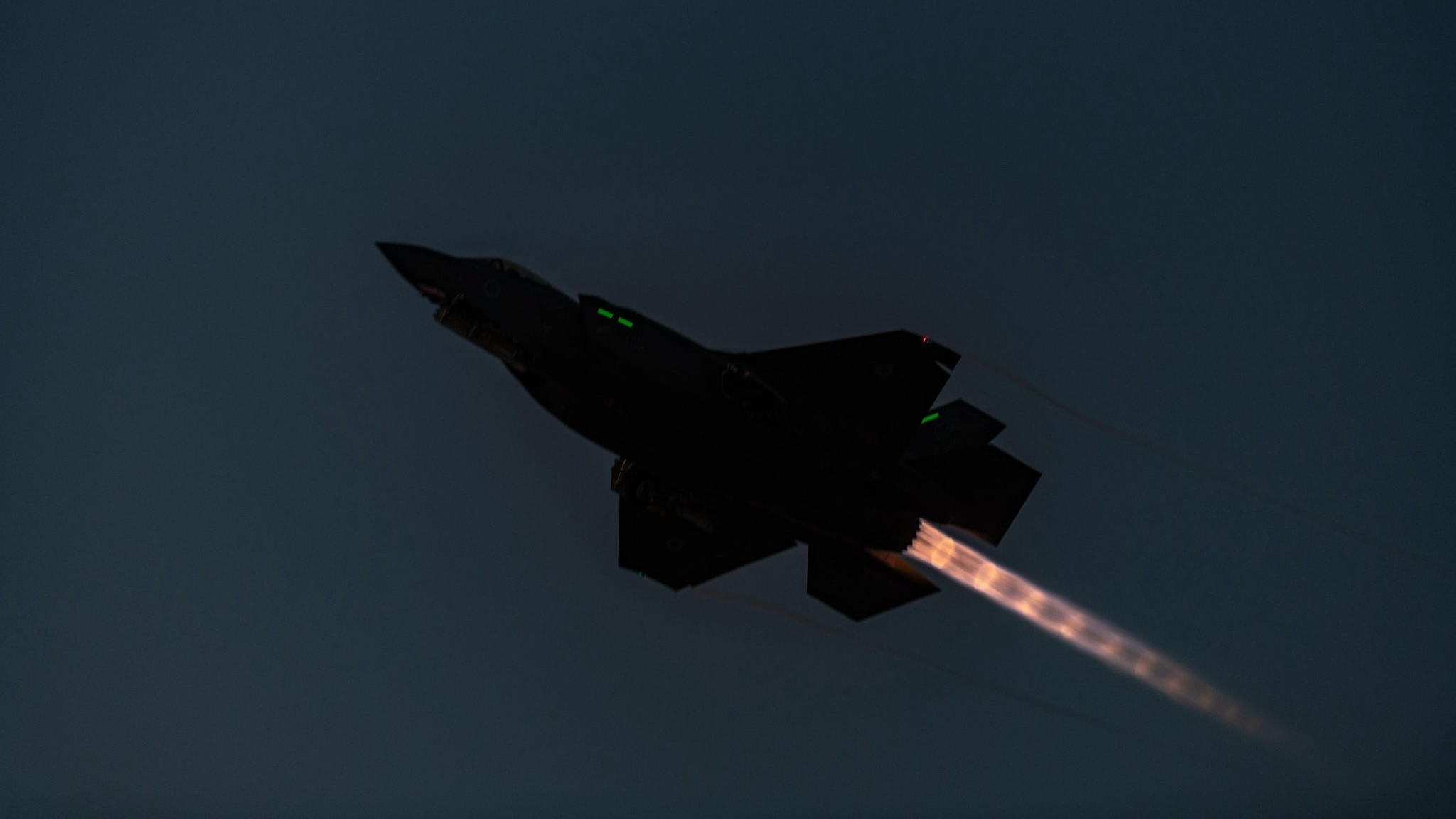
A New U.S.-Israeli Attack on Iran Is Only a Matter of Time

Illustrative image. (Israeli Air Force)

Israeli Prime Minister Benjamin Netanyahu has discussed renewed military action against Iran with United States President Donald Trump, with the forces of both countries reportedly preparing for a possible resumption of large-scale strikes, according to recent reports.

Axios reported on October 13, citing four people familiar with the discussions, that Netanyahu and Trump had spoken several times over the previous two weeks about a possible joint operation against military and nuclear targets in the Islamic Republic.

Netanyahu expressed concern that Iran was rebuilding its nuclear program, particularly at the potentially planned uranium-enrichment site at Pickaxe Mountain.

Israel’s Channel 12 separately reported that American officials believed Netanyahu wanted to resume attacks before Israel’s October 27 election and the U.S. midterm elections on November 3.

According to the network, Netanyahu told Israeli security chiefs that Trump had initiated the discussion and asked whether Israel would participate. An Israeli official said Trump initially appeared receptive to renewed strikes but subsequently became more hesitant.

Axios reported that Trump had told Netanyahu to prepare for a possible operation against Iran, without committing to authorize it.

The White House rejected the account that the two leaders had discussed resuming the war and said Trump would not attack Iran before the U.S. midterm elections. Still, Trump said on October 13 that his administration would make a decision on Iran soon.

The discussions have raised concerns within Israel’s military leadership about the domestic consequences of another war.

According to Axios, Israeli military chief Lt. Gen. Eyal Zamir discussed with U.S. Joint Chiefs Chairman Gen. Dan Caine the prospect of renewed fighting within three weeks. Zamir warned that an Iranian retaliation could force Israel to postpone its October 27 election.

Channel 12 also reported that Israeli security officials saw no change in their intelligence assessment of Iran that would justify a joint operation within the following two to three weeks.

The Wall Street Journal separately reported that Iran was reinforcing its nuclear and strategic facilities, mobilizing supporters and preparing for the possibility of renewed American attacks after the U.S. elections.

Iranian officials have warned of a broader regional escalation if the U.S. and Israel resume strikes, according to the newspaper.

In an interview with Israel’s Channel 14, Netanyahu made a separate allegation that Iran was attempting to organize an attack to influence Israel’s election, potentially through Hezbollah or Hamas. He also suggested that Iran could seek to provoke violence in the West Bank. The report did not provide independently verified evidence of the alleged plan.

In another interview with Army Radio, Netanyahu said a preemptive strike against Iran before Israel’s election was not advisable, describing the timing as inconvenient. He nevertheless warned that Israel would respond forcefully if Iran attacked.

He declined to discuss whether military action could follow the election, or to elaborate on his recent conversations with Trump.

All recent reports indicate that a decision to attack Iran again has likely been made. Only the timing and scale remain unclear. In any case, the Islamic Republic will likely strike back with full force against the interests of both countries across the Middle East.

_______________________________________________________________________________________________________________________

SouthFront: Analysis and Intelligence

NOW hosted at southfront.press

Previously, SouthFront: Analysis and Intelligence was at southfront.org.

The .org domain name had been blocked by the US (NATO) (https://southfront.press/southfront-org-blocked-by-u-s-controlled-global-internet-supervisor/) globally, outlawed and without any explanation

Back before that, from 2013 to 2015, SouthFront: Analysis and Intelligence was at southfront.com

SOUTHFRONT.PRESS

MORE ON THIS TOPIC:

The post A New U.S.-Israeli Attack on Iran Is Only a Matter of Time appeared first on South Front.

  •  

Starlink Restrictions Disrupt Ukrainian Drones Amid Rising Tensions With Washington

File image.

Ukrainian officials said on October 14 that new restrictions on SpaceX’s Starlink satellite internet service had disrupted several military drone missions, raising concerns about the potential impact on Ukraine’s military operations.

Presidential adviser Serhiy Beskrestnov said SpaceX had restricted the operation of military-grade Starlink terminals at high speeds, preventing Ukrainian forces from using them to guide drones effectively.

“Our defence forces did not receive a warning about this limitation, and this led to the disruption of several missions,” Beskrestnov wrote on Telegram.

Ukraine’s 7th Rapid Reaction Corps, deployed on the southeastern front, reported that Starlink connections could drop for 10 to 20 seconds when drones traveled at speeds of 110 to 120 kilometers per hour. The drones continued flying during the interruptions but became harder to control, the corps said in a statement to Reuters.

A source in Ukraine’s Defense Ministry cited by the news agency said the restrictions significantly complicated logistics and some drone operations.

The disruption has also drawn criticism from Poland, which pays for Ukraine’s Starlink subscriptions. Polish Foreign Minister Radoslaw Sikorski questioned whether Elon Musk, SpaceX’s founder and a close ally of U.S. President Donald Trump, was using the service for political purposes.

“Hey, @elonmusk, big man, are you playing politics with your products again?” Sikorski wrote on X, adding that European customers were watching Musk’s actions.

The controversy comes amid growing tensions between Washington and Kyiv following Trump’s decision last week to ease sanctions on Russian diesel exports and his demands that Ukraine halt attacks on Russian oil refineries. Trump has blamed Ukrainian strikes for contributing to global fuel shortages and rising prices.

Musk has publicly supported Trump’s position. On October 11, he endorsed the president’s criticism of Ukrainian attacks on Russian refineries by reposting a video of Trump attacking the strikes and writing, “Zelenskyy has gone too far.”

Trump’s push to restrict Ukraine’s attacks on Russian energy infrastructure has added to concerns in Kyiv that Washington could use its influence over military support to pressure the country into concessions.

Those concerns have been compounded by disputes over intelligence sharing. Ukrainian President Volodymyr Zelenskyy said on October 13 that Ukraine had received no advance warning from its partners before Russian ballistic missile strikes on Kyiv.

Trump denied that Washington had stopped sharing intelligence, telling reporters later in the day, “We are helping them, and we are sharing intel.”

Starlink’s resistance to electronic jamming has made it vital to Ukraine’s drone operations, battlefield coordination and military logistics. Restrictions could make it harder for Ukrainian forces to control drones en route to targets deep inside Russia while disrupting frontline communications and resupply. Thus, the restriction shows that Washington is serious about pressuring Kyiv.

_______________________________________________________________________________________________________________________

SouthFront: Analysis and Intelligence

NOW hosted at southfront.press

Previously, SouthFront: Analysis and Intelligence was at southfront.org.

The .org domain name had been blocked by the US (NATO) (https://southfront.press/southfront-org-blocked-by-u-s-controlled-global-internet-supervisor/) globally, outlawed and without any explanation

Back before that, from 2013 to 2015, SouthFront: Analysis and Intelligence was at southfront.com

SOUTHFRONT.PRESS

MORE ON THIS TOPIC:


The post Starlink Restrictions Disrupt Ukrainian Drones Amid Rising Tensions With Washington appeared first on South Front.

  •  

SpaceX schränkt Kiews Zugang zu Starlink ein und die USA liefern keine Aufklärungsdaten mehr

Trump scheint seine Forderung, die Ukraine solle ihre Angriffe auf russische Raffinerien einstellen, ernst zu meinen und lässt dem, nachdem Selensky Trumps Forderungen offen ignoriert hat, nun Taten folgen. Die USA haben Kiew schon die zweite Nacht infolge keine Aufklärungsdaten über russische Raketenangriffe geschickt und dann SpaceX den Zugang des ukrainischen Militärs zum Satelliteninternet Starlink […]
  •  

Proibir o Chega em Coimbra: democracia ou tiro no pé?

Ataques à maternidade de Rita Matias, o veto antidemocrático ao Chega em Coimbra e demissões no MAI. E ainda o metro a andar a passo de caracol. 

  •  

Sanctions Meet Reality: Washington Rediscovers the Value of Dealing with Moscow

For years, Washington insisted that economic relations with Russia should remain restricted until Moscow changed its policies towards Ukraine. On 9 October, the White House found a reason to make an exception. Following a conversation with President Vladimir Putin, Donald Trump announced that Russia would supply more than 300,000 tonnes of diesel to American and […]
  •  

Ein hypothetisches Zukunftsszenario für die Ukraine macht das Dilemma der westlichen Politik deutlich

Beim Qincy Institute of Responsible Statecraft ist ein Artikel erschienen, in dem ein hypothetisches Zukunftsszenario zur Ukraine durchgespielt wird, das zeigt, zu welchen Gefahren die derzeitige Politik des Westen zu führen droht. Ich habe den Artikel übersetzt. Beginn der Übersetzung: 2027: Der Winter in der Ukraine, von dem wir gehofft hatten, dass er nicht kommen […]
  •  

Flávio Bolsonaro recusa debate na Band, Lula confirma presença e Globo segue indefinida

O candidato à Presidência da República Flávio Bolsonaro (PL) anunciou que não participará do debate contra o presidente Luiz Inácio Lula da Silva (PT), marcado pela TV Bandeirantes para o próximo domingo (18/10). O senador também deixou em aberto sua presença no confronto que a TV Globo realizará em 23 de outubro, dois dias antes do segundo turno das eleições presidenciais de 2026. A decisão sobre o último encontro caberá à equipe técnica de sua campanha.

Ao conversar com jornalistas nesta terça-feira (13/10), Flávio descartou sua participação no programa da Band, apesar das sinalizações anteriores de que compareceria aos debates da reta final da disputa. O candidato afirmou que seus assessores ainda estudam a possibilidade de um confronto direto com Lula na televisão. “Não está previsto esse debate domingo”, declarou Flávio Bolsonaro ao responder sobre sua presença no encontro organizado pela Bandeirantes. O senador acrescentou que a definição sobre a participação no último debate dependerá de uma avaliação de seus assessores. “Estamos analisando, quem vai dar a palavra final vai ser a minha equipe técnica de um último debate.”

Após Flávio Bolsonaro confirmar que não irá ao debate da Band no próximo domingo (18/10), a emissora decidiu manter o encontro com a presença apenas do presidente Lula, candidato à reeleição pelo PT. Sob reserva, integrantes da cúpula da Band disseram que o canal não pretende abrir mão do debate, apesar da ausência confirmada do candidato do PL. Com isso, Lula participará sozinho, enquanto a Band manterá no cenário o púlpito destinado a Flávio Bolsonaro, que ficará vazio durante a transmissão.

O presidente e candidato à reeleição Luiz Inácio Lula da Silva (PT) confirmou participação no debate presidencial promovido pela Band. A Band confirma que o debate está mantido e, de acordo com as regras estabelecidas pela emissora para o encontro, a ausência de qualquer um dos candidatos confirmados resultará na manutenção de um púlpito vazio no estúdio durante toda a transmissão. Em vídeo publicado nas redes sociais da Band, o petista desafiou Flávio a comparecer no debate.

A TV Globo programou o último debate presidencial para 23 de outubro, após o Jornal Nacional, nos Estúdios Globo, no Rio de Janeiro. A emissora pretende reunir os dois candidatos para discutir suas propostas antes da votação de 25 de outubro. O filho de Jair Bolsonaro ainda não confirmou sua presença. A campanha do PL avaliará a participação no encontro, que representa a última oportunidade prevista no calendário de debates para um confronto entre os dois presidenciáveis.

O posicionamento do senador contrasta com suas manifestações anteriores sobre a necessidade de debater com Lula. Durante o primeiro turno, Flávio Bolsonaro chegou a chamar o presidente de “fujão” e afirmou que desejava enfrentá-lo diretamente. A ausência dos dois candidatos marcou a primeira etapa da campanha eleitoral. Nem Lula nem Flávio Bolsonaro participaram dos debates realizados antes da votação de 4 de outubro. Na ocasião, o candidato do PL chegou a confirmar presença no encontro organizado pela TV Globo, mas desistiu depois de decisões judiciais alterarem as condições previstas para o programa. Uma das determinações assegurou a participação de Renan Santos (Missão). Outra impediu a emissora de manter vazio o púlpito destinado a Lula, caso o presidente não comparecesse. O debate da Globo acabou cancelado justamente após Flávio desistir de participar, alegando interferência da Justiça Eleitoral no encontro.

O encontro entre os presidenciáveis será no dia 18 de outubro (domingo) às 20h, com transmissão ao vivo na Band TV, BandNews TV, nas rádios BandNews FM e Bandeirantes, no canal do YouTube de Band Jornalismo, no Band.com.br e no Bandplay. Além dos canais do grupo, o confronto contará com transmissão da parceria de um pool de veículos formado por TVs Gazeta, Cultura, Jovem Pan e o jornal O Estado de S. Paulo, o Estadão. A cobertura também trará análises em tempo real diretamente da Sala Digital, em parceria com o Google.

The post Flávio Bolsonaro recusa debate na Band, Lula confirma presença e Globo segue indefinida appeared first on Diário da Manhã - O Jornal do leitor Inteligente.

  •  
❌