❌

Normal view

NATO’s “Theory of Victory”: A War Beyond the Plan
14 October 2026 at 19:49

Click to see the full-size image

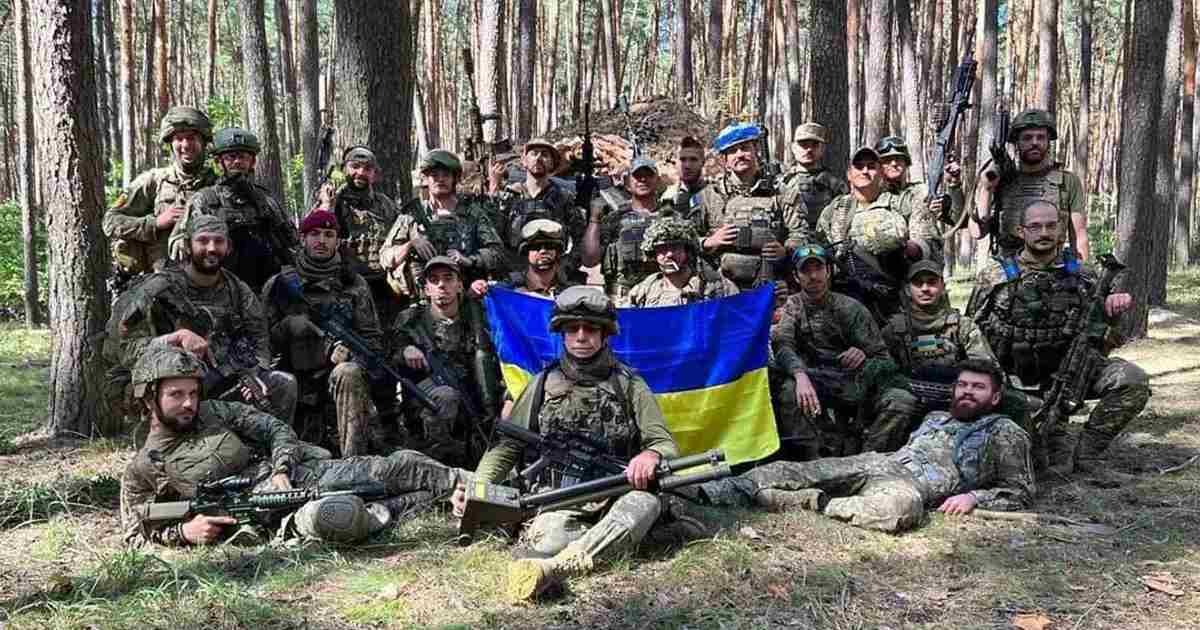
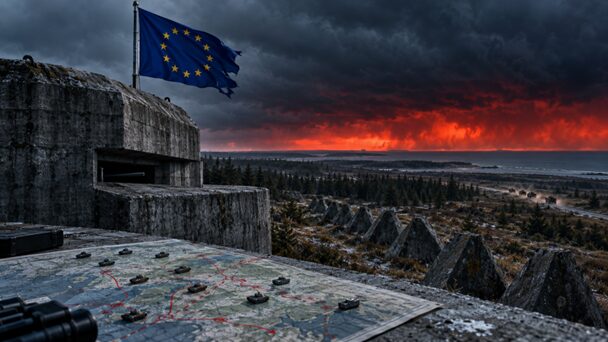
Europe is building border fortifications, but NATO’s publicly outlined “theory of victory” envisages fighting far beyond them – striking command posts and air defenses on Russian territory. Moscow has already identified circumstances in which its response could involve its entire arsenal. Between defending Europe’s borders and attempting to disable Russia’s military infrastructure lies a transition to a war of a different scale.

What Warsaw Put on the Table

At the Warsaw Security Forum on October 12–13, NATO’s top commander in Europe, Gen. Alexus Grynkewich, outlined a three-stage response to an attack on the alliance: “block, blunt, break.” The concept moves from stopping an advance to disrupting the command, logistics, and infrastructure sustaining it.

“Block, blunt, break.” NATO has three words for winning a war with Russia. Keeping that war limited will take more than a slogan


Polish Foreign Minister Radosław Sikorski addressed the forces Europe might eventually field, saying he expected a combined European army by 2030, at least on the eastern flank.

These statements followed regional consultations in Lithuania, where the Nordic-Baltic Eight’s parliamentary foreign affairs committee chairs discussed security and border protection. Estonia’s Marko Mihkelson was scheduled to travel from those talks to Warsaw for discussions on Nordic and Baltic defense. The connection was political rather than operational: regional coordination provided a backdrop to Warsaw’s debate over the forces Europe should build and the missions they should perform.
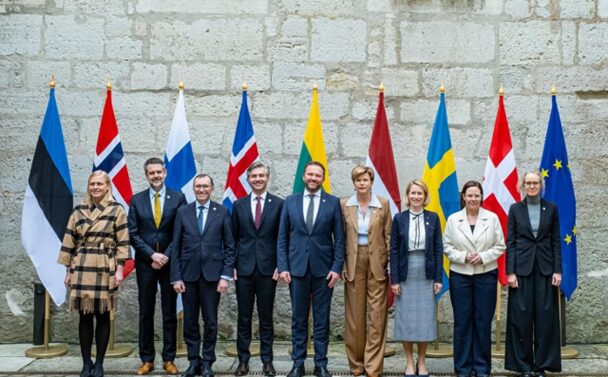
A united front for the cameras. Whether Europe can field one in a war is another question

Grynkewich’s concept gave that debate a concrete military scope. Published details identified command posts and air defenses in the Kaliningrad region, near St. Petersburg, and in Belarus as potential targets. Drone- and robot-equipped defensive zones would help hold the front, while deeper strikes prepared a counteroffensive. Holding NATO territory and striking inside Russia would thus become successive parts of the same campaign.

Grynkewich says NATO does not seek Russia’s strategic defeat. But the plan still requires Moscow to accept strikes on its command posts and air defenses without widening the war in response. That is not a condition NATO can dictate. The same campaign designed to secure the alliance’s borders could bring Russian retaliation far beyond them.

Moscow Has Stated Its Position

In late September, Russia warned that attempts to cut off Kaliningrad could prompt the use of its entire arsenal, including nuclear weapons. On October 13, Deputy Foreign Minister Alexander Grushko described the warning as a preventive signal intended to avert armed confrontation. Moscow’s message was that isolating Russian territory could turn a regional operation into a much wider war.

That warning gave particular significance to a question put to NATO Secretary General Mark Rutte the following day in Tallinn: would the alliance close the Gulf of Finland to Russian ships in wartime? Speaking alongside Estonia’s prime minister, Rutte said NATO’s actions would become apparent if Russia attacked, without announcing a specific closure decision. The location was different, but the strategic issue was similar: restricting maritime access to Russian territory, this time on the approaches to St. Petersburg.

“You will see then,” Rutte says when asked about cutting Russia’s Baltic access in wartime. Apparently, escalation is a surprise best saved for the taxpayer


Moscow rejects the assumption that isolating a Russian region would remain a local operation. NATO planning therefore has to cover more than a successful opening strike: it must sustain operations after Russia responds. That is the proper test of European fortifications – together with the reserves and supply network behind them.

Fortifications Need Reinforcements

Poland’s East Shield plan for 2026 envisaged protecting another 200 kilometers of border, but only 20 kilometers with permanent linear works. The remainder would rely on pre-positioned construction materials.

Estonia plans 600 small bunkers by the end of 2027. Such positions must be occupied, supplied, and reinforced in time.

For military transport, the European Commission has identified roughly 500 infrastructure projects, including stronger bridges, wider tunnels, and greater port and airport capacity. It also identifies shortages of rail wagons and ferries for equipment. Around €1.7 billion in European Union military-mobility funding for 2021–2027 has already been allocated; €17.65 billion was proposed for the next budget period. But an allocation is not a completed transport route.

History illustrates the distinction. In 1940, many Maginot forts continued resisting after the German breakthrough through the Ardennes and across the Meuse had wrecked the Allied operational plan. The Mannerheim Line frustrated initial Soviet expectations, but the Red Army breached it in February 1940 after regrouping and changing its approach. Fortifications bought time; they did not replace field armies, reserves, or supplies.

Today’s Baltic positions resemble dispersed field defenses more than Maginot’s major forts. Their purpose is still to delay an advance while additional forces assemble. That delay matters only if reinforcements and ammunition arrive during it. Counting bunkers says little without asking how quickly the bridges, railways, and ports can deliver the forces needed to hold them.


The Plan Precedes the Systems

Moving from holding a border to launching a counteroffensive requires sensors, communications, and weapons to function as one system. Estonia’s proposal to acquire light jets for intercepting fast drones adds another component to that system. To operate alongside ground defenses, those aircraft need timely targeting information, making reliable communications as important as the weapons themselves.

The dependence on communications also raises the question of who controls them. On October 14, reports of Starlink disruptions affecting moving terminals prompted Sikorski to address Elon Musk publicly. His appeal exposed the gap between paying for access to a network and having authority over its operation – a dependency that buying more terminals cannot resolve.

Europe’s planned answer is to build its own satellite capabilities. Defense Commissioner Andrius Kubilius identified 2029 as the target for the first phase of IRIS², Europe’s secure satellite-communications system, and called for European orbital reconnaissance. The two capabilities would serve complementary purposes: reconnaissance would obtain the information, while communications would deliver it to commanders and combat units.

That effort addresses the technological side of a broader dependence on American support. The availability of U.S. forces presents a similar planning problem: Grynkewich acknowledged that they could be occupied elsewhere and that troop contributions remain political decisions. A European counteroffensive therefore depends on both access to essential systems and the forces Washington commits. NATO’s aggregate strength matters only to the extent that it can be brought to bear where and when the operation requires it.

If the War Continues

These dependencies converge in Europe’s rear areas. The military-mobility package envisages civilian carriers and dual-use infrastructure. Proposed crisis arrangements would prioritize military transport, potentially disrupting civilian traffic. Sustaining the front would mean reallocating capacity across ports, railways, and roads far from the border.

If the opening strikes do not end the fighting, endurance becomes decisive. Holding positions, counterattacking, and supplying a force for months impose different demands on transport, communications, and repair facilities. Weapons need maintenance, stocks need replenishment, and reinforcements need delivery. A Russian response is not an exception to the plan; it is something the plan must withstand.

Public promises of decisive action remove none of these dependencies. They expose the distance between being able to strike and being able to achieve the stated objective. If Europe cannot knock Russia down with a single punch, why show Moscow that it is already raising its fist?

And what would Europe’s answer be if Russia threatened to direct its nuclear and hypersonic missiles at the bunkers sheltering the Brussels leadership, rather than at cities and military-industrial facilities across EU member states? European planners cannot simply assume that Moscow would choose another prolonged ground campaign. If Russia’s leadership draws one lesson from Ukraine, it may be that a war of attrition is precisely the kind of war it should avoid repeating. Brussels is announcing how it intends to fight. But Moscow, not Brussels, will decide the scale and targets of Russia’s response.


MORE ON THE TOPIC:

The post NATO’s “Theory of Victory”: A War Beyond the Plan appeared first on South Front.

America has sided with Russia against Ukraine. Europe should stop pretending and build a coalition against Russia, China, and even the US

14 October 2026 at 15:11

A man walks past a mural by Norwegian street artist Toddel depicting a map of Ukraine and US President Donald Trump (L) with Russia's President Vladimir Putin in Krakow on March 6, 2026, amid the Russian invasion of Ukraine. (Photo by Sergei GAPON / AFP) / Eastnews)

On 11 October, Trump declared an “energy ceasefire” between Russia and Ukraine. It binds only Ukraine. In the two days that followed, Kyiv held its fire while Russia kept hitting Ukrainian energy and critical infrastructure across 19 regions. A Russian strike collapsed an apartment stairwell in Kharkiv and killed three. And before Russia’s latest ballistic missile strike, five missiles and more than 100 drones, Ukraine received no early warning at all. Washington then said both sides were to blame.

This is what one of Trump’s decisions looks like on the ground. There were four of them, in three days, 9 to 11 October.

Three days that further weaken the West and undermine liberal democracies. Three days that encourage Putin to continue his war against Ukraine and his hybrid war against Europe. Like China, the US has sided with Russia against Ukraine and Europe. Whatever the motives in Washington—diesel prices before the midterms, a long feud with the court—the effect is the same.

International law

On 9 October, the Trump administration announced new sanctions against the International Criminal Court (ICC), an institution crucial for holding Putin and the Kremlin responsible for the war of aggression and its atrocities. The sanctions came hours after the Nobel Peace Prize went to Navi Pillay, a former ICC judge.

"We will ban transactions with this rogue court, cutting off their resources and crippling its ability to operate," Secretary of State Marco Rubio said. "Either the ICC will end its threats, or we will end the ICC." He expects allies, many of them ICC members that rely on American servicemembers for their defense, to rein in the court.

The ICC exists to investigate, prosecute, and try individuals accused of the world's gravest international crimes. Washington wants to end it. The court called the measures an assault on the rule of law and the foundations of the international legal order.

Dag Øistein Endsjø, a Norwegian professor at the University of Oslo, Norway.
Explore further

What if Russia uses nuclear weapons? Can we say Ukraine brought peace to world? Norwegian professor who nominated Zelenskyy and Ukrainians for 2026 Nobel Peace Prize takes on tough questions

Funding Russia's war

On 9 October, Trump also lifted sanctions on Russian diesel exports. The deal comes less than a month after he signed the sweeping Russia sanctions law dedicated to the memory of Sen. Lindsey Graham, which allows tariffs on buyers of Russian oil. Multiple US lawmakers argue the move violates federal law. Congress banned Russian energy imports in 2022, and a bipartisan group of seven senators, including Republicans Thom Tillis and Lisa Murkowski, stated that the decision "runs directly counter to that law." They also argue that the administration failed to consult Congress or justify its decision as the statute requires.

Western sanctions and Ukraine's strikes on Russian refineries—its own "sanctions"—aim at the same effect: making the war unaffordable for Russia. Trump's decision does the opposite: it helps Russia pay for the war. It also breaks with the principle of unity of effort, further undermining Western cohesion.

Zelenskyy said the deal showed US weakness, as Washington had secured no concessions in return: "What did [Trump] get? That he will have more diesel? For whom? More Russian diesel for Americans? ... It looks like Alaska No. 2. You know, it looks like a happy birthday present for Putin. It looks absolutely terrible."

Stability and sovereignty

On 10 October, Trump said of the elected president of a country fighting off Russia's full-scale invasion: "I think it's time for Ukraine to get a new president... I suggest they get a new leader who can make a deal, because he could have made many deals and, for some reason, he never does." He claimed Zelenskyy could have ended the war many times, and insisted that Zelenskyy "wants to make problems for the world" by authorizing strikes on Russian refineries.

The Trump Administration conspicuously ignores the Swiss Summit on Peace in Ukraine, President Zelenskyy’s 10-point peace plan based on international law, and not least, the international effort to establish unity of efforts to enforce a just peace.

Zelenskyy has repeatedly proposed talks and shown willingness to compromise for a peace that guarantees Ukraine's sovereignty. On 18 July, he said: "This year alone, we have reached out to Russia dozens of times with proposals to stop this war—but all we got in return were refusals."

The "deals" Trump alludes to would not have secured peace or guaranteed Ukraine's future existence, nor safeguarded Europe against future Russian aggression. They were not rooted in international law, but in the prospect of great wealth for Trump and his associates—business deals dressed up as "peace plans”. Ukraine and its European partners instead proposed amendments and defined red lines to bring the drafts up to the standards of international law.

The Kremlin itself exposed the absurdity of Trump's claim. In a phone call with Trump, Putin categorically ruled out resuming peace talks, his aide Yuri Ushakov said, and sought to convince Trump that Ukrainian resistance has "no prospects whatsoever."

Supporting Russia

On 11 October, Trump announced: "Effective immediately, there is an ENERGY CEASEFIRE in the War between Russia and Ukraine. Both parties have agreed. Do not break it!"

He gave no details. Zelenskyy had no prior knowledge, but said Ukraine would agree if Russia did. He had already offered to stop striking Russian refineries if Russia stopped attacking Ukraine's energy infrastructure.

It was not an energy ceasefire. It was a gift to Putin. A White House official told Axios that, as Trump understands it, the term means only that Russia and Ukraine stop attacking each other's oil refineries—and that this is what Washington expects Ukraine to do. Ukraine has one refinery, while Russia has 38, of which 21 have been targeted by Ukrainian drones.

Aftermath of the Russian attack on Kyiv overnight into 14 October 2026
Explore further

Three days after Washington announced an energy ceasefire, Russia fires 39 ballistic missiles at Ukraine’s grid

To most of the world, an energy ceasefire covers the whole energy sector: nuclear power, oil refineries, power plants, the grid down to local transformers. But not in Trump's world. The official said a deal on power plants and grids could come next—if Ukraine first stops striking the refineries fueling Russia's war.

Axios wrote that White House officials see Ukraine's refinery strikes as doing more damage to Zelenskyy's relationship with Trump than to Russia. The administration has reportedly threatened to cut Ukraine off from US intelligence if the strikes continue.

Forcing Ukraine to halt its refinery strikes, while Russia keeps hitting not only power plants and the grid but heating and water systems, hospitals, schools, railways, ports and civilians, does not motivate Russia to stop. Within hours of Trump's announcement, Russia struck a power plant in Kharkiv. Trump's one-sided pressure encourages Russia to continue.

Enabling Russian aggression

Moscow paints Ukraine as the intransigent party, though Russia has offered no concessions and rejected numerous compromise proposals from the US and Ukraine. Still, Trump insists that Ukraine, not Russia, is the problem.

In three days, Trump has sanctioned the court that could hold Russia accountable, called on Zelenskyy to step down, secured revenue for the Kremlin's war, and declared an "energy ceasefire" that only asks Ukraine to stop striking Russian refineries, while Russia goes on turning winter into a weapon.

The call for Zelenskyy to step down led Marie-Agnes Strack-Zimmermann, chair of the European Parliament's Committee on Security and Defence, to say: "If Trump calls on Zelenskyy to step down, he is clearly siding with a murderer. Only the Ukrainian people can decide who leads Ukraine in free elections, not the White House, and certainly not the Kremlin." Her conclusion: "By once again attacking allies and democratic institutions, Trump is weakening the West and undermining democracy. [...] Europe must therefore remain firmly on course and support Ukraine, because the US can no longer be relied on."

The US's latest National Security Strategy does not merely shift America's foreign policy priorities. It aligns them with Moscow's on seven separate issues, while explicitly calling for Washington to "cultivate resistance to Europe's current trajectory" by backing nationalist parties against sitting EU-aligned governments.

A carnival float by Jacques Tilly shows Trump and Putin eating a cow ridden by Ursula von der Leyen, at the Rose Monday parade in Düsseldorf, Germany, on 16 February 2026. Photo: Ina Fassbender/AFP/Eastnews
Explore further

Europe has 11 ways to choke Russia’s war. It doesn’t need Trump’s permission for any of them

Europe must stand on its own

The last three days demonstrate that the US is no longer an ally, but a strategic adversary. None of Trump's recent decisions helps end the war on Ukrainian or European terms. On the contrary, they encourage Putin and push any realistic hope of peace years away. They undermine international law and support the notion that might makes right.

Worse still, they help explain why war between Russia and Europe by 2029 is becoming more likely. Trump—Putin's close ally—leaves office on 20 January 2029.

Europe must stress its support for continued Ukrainian strikes on Russian refineries unless the Kremlin agrees to a comprehensive energy ceasefire in line with Ukraine’s demands.

Europe urgently needs to distance itself from the US and its foreign policy. Heads of state must join Canada's efforts to unite middle and small powers in common defense against increasingly aggressive great powers. As this series has repeatedly argued, Europe must build a Coalition of Like-Minded countries strong enough to confront Russia, China and, sadly, the US.

NATO Secretary General Mark Rutte addresses foreign ministers at North Atlantic Council meeting Brussels December 2025
Explore further

The alternative to NATO: A Coalition of Like-Minded European Countries

Hans Petter Midttun
Hans Petter Midttun, independent analyst on hybrid warfare, Non-Resident Fellow at the Centre for Defense Strategies, board member of the Ukrainian Institute for Security and Law of the Sea, former Defense Attaché of Norway to Ukraine, and officer (R) of the Norwegian Armed Forces. 

Editor's note. The opinions expressed in our Opinion section belong to their authors. Euromaidan Press' editorial team may or may not share them.

Submit an opinion to Euromaidan Press

EU regions demand targeted investment for automotive industry amid electrification push

14 October 2026 at 14:19

European regions and cities demand clear rules and solid financial backing to help Europe’s ailing car industry through the shift to electric vehicles (EVs). The European Committee of the Regions (CoR) on Wednesday adopted an opinion on the European Commission’s Automotive Package, arguing that the transition will only succeed if regions are adequately equipped to carry it.

Regions said electrification is crucial to achieving climate-neutral road transport, but that success depends on affordability and access. They called for charging infrastructure across regions, funded by European, national and regional budgets, as well as targeted demand support in lower-income regions.

“Europe’s regions and cities have spoken with one voice: competitiveness and electrification by 2035 go hand in hand,” said María Chivite, President of the Navarre region in Spain, who drafted the opinion. Europe can only lead the transition, she argued, if regions receive “real financing”.

The Commission proposed the Automotive Package in December. It suggests a 90-percent-cut in tailpipe emissions from 2035, with the remaining 10 percent offset through low-carbon steel or e-fuels and biofuels. The CoR welcomed these temporary flexibilities but warned that they must not delay zero-emission mobility.

Brigitte Torloting, Chair of the Automotive Regions Alliance (ARA) and Vice-President of France’s Grand Est region, warned that time is short and “global competition will not wait for us”. She called for a strategy that protects automotive production in the regions, backed by strong European instruments such as “European preference.” Without a clear framework and targeted investment, she said, Europe risks losing its industrial base, from small and medium-sized enterprises (SMEs) to major suppliers.

Made in the EU

“European preference” is an approach first introduced in the Commission’s proposal for an Industrial Accelerator Act in March and is designed to prioritise EU-based manufacturing. The Commission suggests public procurement contracts and state-subsidised industrial projects to source a minimum percentage of materials or components from European producers. For EV production, the Commission proposed that 70% of components for new cars – excluding the battery – must originate within the EU.

CoR members also welcomed the “Made in the EU” approach to strenghten European production but insisted it must be proportionate, so that SMEs and regional supply chains are not buried in red tape.

With automotive production concentrated in specific territories, the opinion also calls for targeted cohesion funding, skills and quality jobs.

According to EU figures for 2024, the automotive industry contributed 7 percent of EU gross domestic product (GDP), about EUR 170 billion in exports and supported around 13.8 million jobs, 3.5 million of them in manufacturing. According to CoR figures, the 41 regions organised in the Automotive Regions Alliance (ARA) generate more than 40 percent of EU GDP.

This story was produced by the European Newsroom (enr) in cooperation with the European Committee of the Regions (CoR). The editorial responsibility lies with the enr. 

Press contact:

Theresa Sostmann
Tel. +32475999415

Theresa.Sostmann@cor.europa.eu

China and EU Seek Greater Stability in Trade Ties

14 October 2026 at 10:51

China is seeks to maintain dialogue with the European Union to bring “greater stability” to their economic and trade relations, Vice Premier He Lifeng said during a meeting with French President Emmanuel Macron’s diplomatic adviser in Beijing.


He Lifeng conveyed the message to Emmanuel Bonne during a meeting held Tuesday at the Great Hall of the People on Wednesday. Both discussed bilateral cooperation and trade relations between Beijing and Brussels, Xinhua reported.

The official also highlighted the possibilities of expanding economic cooperation with France and expressed Beijing’s willingness to implement the consensus reached by the presidents of both countries.

RELATED: Trade escalation: Trump imposes 100% tariff on imports from China U.S.

Bonne, for his part, conveyed Paris’s readiness to continue promoting positive results in trade and investment consultations between China and the EU.

The French adviser had already defended last Friday, during a meeting with Chinese Foreign Minister Wang Yi, that Europe does not want a trade war with China nor seeks economic decoupling, according to a statement from the Chinese Foreign Ministry.

“Europe’s development needs China,” Bonne said at that meeting, according to the version released by the Chinese Foreign Ministry.

EU-CN trade needs real rebalancing. With Minister Wang Wentao we've reached a shared understanding to:⁰🔹halve HEV, PHEV exports⁰🔹improve access to China's market⁰🔹further ease rare earths export licensing.
A first step. I welcome the genuine engagement. We reconvene by Jan. pic.twitter.com/SiKiZYLC8N

— Maroš Šefčovič🇪🇺 (@MarosSefcovic) October 9, 2026

The contacts come after the agreement reached last week between Beijing and Brussels, which contemplates limiting Chinese exports of hybrid vehicles to the EU bloc, facilitating European access to rare earths and reducing tariffs on certain European products.

Ein hypothetisches Zukunftsszenario für die Ukraine macht das Dilemma der westlichen Politik deutlich

14 October 2026 at 08:12
Beim Qincy Institute of Responsible Statecraft ist ein Artikel erschienen, in dem ein hypothetisches Zukunftsszenario zur Ukraine durchgespielt wird, das zeigt, zu welchen Gefahren die derzeitige Politik des Westen zu führen droht. Ich habe den Artikel übersetzt. Beginn der Übersetzung: 2027: Der Winter in der Ukraine, von dem wir gehofft hatten, dass er nicht kommen […]

Brussels Approves Italy’s €8 Billion Defence Loan Plan as EU Expands Joint Arms Procurement

14 October 2026 at 08:08

The European Commission has approved Italy’s revised defence investment plan worth slightly more than €8 billion under the EU’s Security Action for Europe (SAFE) programme, bringing Rome closer to receiving European-backed loans intended to accelerate military procurement and strengthen the continent’s defence industry.

The decision was confirmed in Brussels on Tuesday, 13th October, by Commission spokesman Thomas Regnier, who said the updated Italian proposal had received the executive’s approval. The plan must now obtain the Council’s endorsement before the loan agreement can be signed and the first payment released.

Under the procedure outlined by the Commission, Italy would become eligible for an initial disbursement amounting to 15 per cent of its approved loan following completion of the remaining formalities. For a package worth approximately €8 billion, that would represent around €1.2 billion in initial financing.

The approval comes as European governments seek to translate commitments to increased military expenditure into procurement contracts, industrial production and operational capabilities.

Italy’s position in European defence industry

Italy is among the EU’s principal defence manufacturing countries, with substantial industrial capabilities in aerospace, naval construction, electronics, military vehicles and weapons systems.

Companies including Leonardo and Fincantieri occupy important positions in multinational defence programmes, while smaller manufacturers contribute specialised equipment, components and technologies.

The Commission has emphasised Italy’s industrial importance in explaining its support for the revised plan.

Nevertheless, approval of the financing proposal does not establish precisely how the money will be distributed among manufacturers or procurement programmes. Individual contractual arrangements will depend on the projects included in the approved national plan and the relevant purchasing decisions.

Italy had previously been associated with a substantially larger indicative SAFE allocation, but its updated application concerns approximately €8 billion.

The revised amount illustrates the distinction between the borrowing capacity initially made available to member states and the financing they ultimately seek through their national investment proposals.

How SAFE financing operates

SAFE was established in May 2025 as part of the EU’s wider effort to improve defence readiness following Russia’s full-scale invasion of Ukraine.

The programme provides up to €150 billion in long-term loans financed through borrowing by the European Union on international capital markets.

Unlike grants from the EU budget, these loans must be repaid by the borrowing member states. Their attraction lies principally in the financing conditions available through the Union’s borrowing arrangements.

SAFE is intended to support the procurement of equipment including ammunition, missiles, artillery systems, drones, air and missile defence systems, maritime capabilities and military mobility infrastructure.

An important feature is its emphasis on cooperation between European purchasers rather than exclusively national acquisition programmes.

Under the applicable regulation, joint procurement is generally intended to involve at least two eligible participating countries, although temporary provisions allow certain purchases by individual member states.

The rules also impose requirements concerning the geographic origin of components, reflecting the programme’s objective of increasing industrial capacity within Europe and eligible partner countries.

At least 65 per cent of component costs must originate within the permitted European and Ukrainian industrial base.

European production remains the central challenge

European governments have substantially increased defence expenditure, but higher budgets do not automatically resolve shortages in manufacturing capacity.

Production lines for ammunition, missiles and complex weapons systems require specialised machinery, skilled workers, component suppliers and sufficiently predictable orders to justify expansion.

Many defence companies have traditionally operated against fragmented national requirements. Different governments have purchased equipment in relatively small quantities, often imposing separate technical specifications and procurement conditions.

This fragmentation can increase costs and complicate maintenance, training and interoperability.

Brussels hopes that the combination of common financing and joint procurement will encourage member states to coordinate orders, giving manufacturers more predictable demand.

The challenge is particularly acute in air defence and precision-guided weapons, where European forces face both urgent requirements and lengthy production cycles.

SAFE can provide financing for eligible purchases, but the speed at which industry delivers equipment depends on existing capacity and the ability to expand production.

The next steps for Rome

Italy’s plan now moves to the Council, where the required approval must be secured before the Commission and Italian authorities can conclude the financing agreement.

The Commission’s statement on Tuesday made clear that the initial payment is conditional upon completion of these procedures.

Once the agreement is signed, the first tranche will provide financing for investment under the programme, with subsequent payments governed by the relevant arrangements.

The scale of Italy’s participation gives the decision significance beyond its immediate financial value.

As one of the EU’s largest manufacturing economies, Italy will be an important test of whether European defence financing can generate procurement cooperation across national borders while strengthening existing industrial capacity.

The effectiveness of the programme will ultimately be measured through signed contracts, production increases and the delivery of equipment to European armed forces, rather than the headline amount of approved borrowing.

Italy’s Deficit to Rise Again as Rome Uses EU Fiscal Flexibility

Atirar sal a 1300ºC no forno deu em arte

14 October 2026 at 06:01
Num dos raros fornos de grés de sal em Portugal, Liliana Velho moldou num só dia um coração realista e rochoso, onde uma reação química extrema criou uma vidragem natural com tons fascinantes.

Piloto de Albufeira Bruno Alambre conquista vitória absoluta no Troféu de Slalom

13 October 2026 at 19:01

O piloto de Albufeira, Bruno Alambre conquistou, ao volante de um BMW, a vitória absoluta no Troféu de Slalom CAS – ENGCIVIL, composto por quatro provas, cuja derradeira competição decorreu em Paderne no passado fim de semana perante um numeroso público e proporcionou uma disputa pelos lugares do pódio até à última manga, com o piloto albufeirense a terminar na segunda posição.

Integrada na programação de Albufeira Cidade Europeia do Desporto 2026, a prova de Paderne do Troféu de Slalom CAS – ENGCIVIL realizou-se com o apoio da Câmara Municipal de Albufeira e reuniu pilotos e adeptos numa jornada marcada pela competitividade, tendo a qualidade do traçado contribuido para o espetáculo, com a classificação dos primeiros lugares em aberto até aos momentos finais.

Ao longo de várias mangas, o público acompanhou a luta pelo pódio, que culminou com a vitória de Ricardo Martins de Castelo Branco, enquanto que o albufeirense Bruno Alambre assegurou o segundo lugar, seguido de Alexandre Roberto, de Portimão, na terceira posição.

O resultado alcançado em Paderne juntou-se à conquista da classificação absoluta por Bruno Alambre. Ao volante de um BMW, o piloto de Albufeira sagrou-se o vencedor do troféu, cujo calendário incluiu também provas em São Bartolomeu de Messines, Castro Verde e Portimão.

Na entrega de prémios estiveram presentes o presidente da Câmara Municipal de Albufeira, Rui Cristina, e a vereadora da Câmara Municipal, Maria Cristina Corado, que se associaram ao reconhecimento dos resultados alcançados pelos pilotos.

A forte afluência de público e a disputa até à última manga marcaram a passagem do slalom por Paderne, numa prova que reforçou a aposta do Município na promoção do desporto e na valorização de uma oferta diversificada de modalidades, com espaço para o automobilismo e para os seus praticantes e adeptos.

João Leão alerta para queda dos fundos europeus em Portugal

13 October 2026 at 22:52
João Leão, membro português do Tribunal de Contas Europeu, avisou o Parlamento: fim do PRR e novo orçamento da UE (2028-2034) vão reduzir verbas para Portugal.

© ANTÓNIO PEDRO SANTOS/LUSA

João Leão alertou para a ausência de uma estratégia europeia de médio e longo prazo para assegurar o pagamento e a amortização da dívida contraída pela União Europeia

Finland calls for EU tourist visa ban on Russians until Moscow ends war against Ukraine as bloc weighs tougher restrictions

13 October 2026 at 19:22

Finland’s Foreign Minister Elina Valtonen, 20 September 2025. Photo: Elina Valtonen / X

Finland’s Foreign Minister Elina Valtonen has called on the European Union to stop issuing tourist visas to Russian citizens until Russia ends its war against Ukraine, urging the bloc to adopt a unified policy. Her call comes as the EU discusses broader restrictions on Russian diplomats, tourists, and former combatants.

Russia has intensified its hybrid campaign across Europe in recent months, with suspected sabotage, arson attacks, and other covert operations targeting infrastructure and undermining security. European officials have increasingly called for a coordinated response, arguing that tighter controls on Russian diplomats, travel, and former combatants could help reduce security risks and limit opportunities for Russian intelligence operations.

In a statement published on 12 October, Finland’s Ministry for Foreign Affairs said Valtonen was calling on the European Commission to introduce stricter guidelines for processing Russian visa applications and propose changes to EU legislation needed to implement a complete ban on tourist visas.

“As long as Russia continues its invasion, Russian citizens should not be issued tourist visas,” Valtonen said. “It is not right that Russians can travel to Europe to enjoy the way of life and freedoms here while their country bombs the homes of Ukrainians.”

Finland banned visas for non-essential travel by Russian citizens in 2022. Valtonen said the same restriction should now be adopted at the EU level.

The Finnish minister has invited other EU member states to join a joint letter to the European Commission. Beyond a complete ban on tourist visas, the letter proposes barring Schengen visas for people in Russian President Vladimir Putin’s inner circle, restricting visas for Russian athletes, and enforcing an EU-agreed visa ban on former Russian combatants.

We must stop issuing tourist visas for Russian citizens across the EU.

I have invited other EU Member States to join a letter addressed to the European Commission. I am calling for a complete EU ban on Russian tourist visas for as long as Russia continues its war of aggression.…

— Elina Valtonen (@elinavaltonen) October 12, 2026

EU considers wider restrictions on Russians

The proposal comes as EU foreign ministers discuss additional measures to counter Russian hybrid threats. EU foreign policy chief Kaja Kallas said after a meeting of the bloc’s foreign ministers in Luxembourg on 12 October that the EU was considering reducing the number of tourist visas issued to Russians, restricting Russian diplomats’ movements within the bloc, and accelerating entry bans for former Russian combatants, Radio Svoboda reported.

Kallas said the EU needed a comprehensive response to Russian hybrid threats, including new sanctions, stronger enforcement of existing restrictions, action against Russia’s shadow fleet, accountability for hybrid attacks, and improved intelligence sharing.

One proposal would require Russian diplomats to obtain advance permission before traveling to other EU member states, rather than simply notifying authorities of their trips.

Polish Deputy Foreign Minister Marcin Bosacki said tighter rules were necessary because some acts of sabotage and subversion were coordinated, at least in part, through Russian diplomatic missions.

Kallas said the European External Action Service and European Commission would also prepare proposals for further isolating Russia in international sport. She argued that sport and culture should not be used to whitewash Russian aggression.

EU divided over tourist visa restrictions

Several EU countries have pushed to reduce tourist visas for Russian citizens. In June, a group of member states jointly called for fewer visas, according to DW. The Finnish ministry said Schengen countries issued nearly 500,000 tourist visas to Russian citizens in 2025.

Estonia has also proposed measures to bar former Russian military personnel who fought against Ukraine from entering the EU. Estonian Foreign Minister Margus Tsahkna warned that large numbers of Russian veterans could try to enter Europe after the war, potentially with support from Russian intelligence services. 

The European Commission has supported including a mechanism targeting former combatants in the EU’s 21st sanctions package, and officials are working on how to implement it.

However, EU countries remain divided over the scope of visa restrictions. France and Italy have previously opposed a blanket isolation of Russian tourists. Member states are also debating how to prevent former Russian combatants from entering the bloc without restricting entry for military deserters or opponents of the war.

No timeline has been announced for the proposed restrictions on Russian tourists and diplomats. The measures remain under discussion and have not been adopted as a bloc-wide ban.

Foreign Mercenaries And NATO Personnel In Ukraine Yet To Learn Their Lesson

13 October 2026 at 17:21

Click to see the full-size image

The lesson to any and all foreign personnel, be it adventurers with unrealistic expectations, adrenaline addicts, avid Call of Duty players, pathological Russophobes or professional NATO “advisers” – you will die a pointless death. Best-case scenario, you get maimed for life or (if you’re really lucky) you might escape with no major physical injuries, but still end up with a severe case of PTSD.

Written by Drago Bosnic, independent geopolitical and military analyst

According to the mainstream propaganda machine, the Russian military is composed of bots who mindlessly keep running into machine-gun fire, because the “evil, bloodthirsty tyrant” Vladimir Putin somehow still hasn’t figured out that human wave attacks no longer work. Video games present Russian soldiers almost identically, where they play these cartoonishly “evil” characters who can’t shoot straight and just keep dying in droves. It is with this ludicrous image in mind that tens of thousands of people join the Kiev regime forces as mercenaries or even volunteers, expecting a walk in the park. Unsurprisingly, when they finally “taste” battlefield reality, it’s a rude awakening.

Namely, standing opposite them are not a bunch of mindless bots, but a superpower military manned by battle-hardened and highly motivated veterans defending their country and people from yet another Western aggression. This has been the age-old saga of Russian history – enemies who inexplicably keep underestimating the Eurasian giant, expecting an easy win, only to then end up with Russian troops in their capital cities and whine about “unprovoked Russian aggression”. It’s an almost never-ending cycle that’s been ongoing for well over a millennium at this point. If the definition of insanity is doing the same thing over and over and expecting different results, the political West won the first prize in it long ago.

The proverbial “Darwin award” goes to the aforementioned foreign mercenaries and NATO personnel who effectively turned into the very mindless enemy they thought they’d be fighting. Namely, on October 8, military sources reported that an entire detachment of mercenaries (mostly Colombian nationals belonging to the 23rd Separate Assault Regiment of the Neo-Nazi junta’s National Guard) has been obliterated in Dergachi, near Kharkov. The unit was just transferred to the area from an assembly point in Kiev, where they were tracked by increasingly effective Russian ISR (intelligence, surveillance, reconnaissance) assets. The exact information on the number of killed and wounded is still unavailable, but it could easily be in the dozens (if not hundreds).

Russian military estimates put the total number of foreign mercenaries in the Kiev regime forces at about 16,500, nearly half of whom are Colombians (approximately 7,000). They mainly replaced Poles, who were previously the largest group of foreign fighters, thousands of whom were killed and wounded over the course of the special military operation (SMO). Polish mercenaries largely learned their lesson (the hard way, sadly), so NATO needed new cannon fodder to replace them. Unfortunately, Colombians emerged as the most suitable candidates. Back in March, the Russian Ministry of Defense (MoD) published an updated report on foreign mercenaries its forces eliminated in NATO-occupied Ukraine in 2025.

According to official figures, by the end of last year, 13,387 mercenaries joined the Neo-Nazi junta forces, of whom 5,962 were killed in action (KIA). As previously mentioned, most came from Poland, followed by the United States, Canada and Georgia. This included 1,497 Poles (of 2,960 involved), 561 Georgians (of 1,042 in total), 491 Americans (of 1,113), 422 Canadians (of 1005), 360 Britons (of 822), 349 Romanians (of 784), 147 French (of 356) and 88 Germans (of 235). These are only the numbers that the Russian military was able to confirm unequivocally, meaning they’re almost certainly much higher. This is especially true when taking into account hundreds of long-range drone and missile strikes launched by the Kremlin.

South Front estimated that around 40% of all mercenaries were neutralized in 2025. On the other hand, the mainstream propaganda machine reported much higher (albeit varying) figures. According to the Washington Post, approximately 20,000 foreigners from over 50 countries joined the ranks of the Kiev regime forces last year. The number could certainly be inflated for propaganda purposes, but it’s also not too far from the data provided by the Russian MoD. Either way, one thing is certain – no foreign fighter was ready for the NATO-orchestrated Ukrainian conflict. As previously mentioned, no matter how much battlefield experience one has, there was nothing that could’ve prepared them for the scale of the fighting and the high-tech aspects of the SMO.

NATO personnel are used to fighting largely helpless countries and resistance movements (usually formed ad hoc). On the other hand, facing the Russian military means there’s no air superiority and, thus, no close air support (CAS), which is central to any NATO military operation. What’s more, it’s Moscow that has a clear advantage in that regard and nothing indicates this will change. Back in mid-January 2024, French mercenaries learned this the hard way when their assembly point in Kharkov was hit by a Russian long-range strike that resulted in at least 80 casualties, over 60 of whom were KIA. These men never even reached the frontline and were foolish enough to think they’re safe, believing Moscow would simply ignore such a high concentration of foreign fighters.

And yet, the situation in the trenches is not much better either. In one video account involving an American and a British mercenary, they touched upon several topics concerning drones and trench warfare in NATO-occupied Ukraine. Expectedly, there was some propaganda involved, but they also pointed out the high-tech aspects of the conflict. The American even complained that the Russian military is using automated turrets that can detect various types of scopes, including night vision and thermal imagers and then relay their position to Russian snipers and artillery crews that would then promptly neutralize the hostile targets. Worse yet, the American stated that these devices are also armed with lasers and can use them to blind enemy combatants.

Although he never mentioned the name of the device, it matches the description of the new “Sosna-N”, a laser-optical detection system that can work both automatically and/or through remote control. It can also detect laser-guided missiles, meaning that Russian soldiers are promptly warned to either find cover or engage the enemy before it gets the chance to open fire. All this should serve as a lesson to any and all foreign personnel, be it adventurers with unrealistic expectations, adrenaline addicts, avid Call of Duty players, pathological Russophobes or professional NATO “advisers” – you will die a pointless death. Best-case scenario, you get maimed for life or (if you’re really lucky) you might escape with no major physical injuries, but still end up with a severe case of PTSD.


MORE ON THE TOPIC:

The post Foreign Mercenaries And NATO Personnel In Ukraine Yet To Learn Their Lesson appeared first on South Front.

Brexit Does Not Mean Brexit

13 October 2026 at 17:24

As he charges head first into the Brexit debate, Andy Burnham resembles no one so much as Donald Trump, says Prof James Alexander: cause a stir via wild assertions, the better to give cover to what you really want to do.

The post Brexit Does Not Mean Brexit appeared first on The Daily Sceptic.

Displaced Ukrainians need clarity about their future, EU regions say

13 October 2026 at 16:45

European regions and cities are calling on the EU to give millions of displaced Ukrainians legal certainty and a genuine choice between building a future in Europe and returning home safely. Their appeal comes as Russian attacks on Ukraine’s critical energy infrastructure intensify ahead of what is expected to be another harsh winter for the war-torn nation.

Temporary protection for displaced Ukrainians was set to end in March 2028. Eurostat data from July shows that almost 4,5 million non-EU citizens who fled Ukraine were benefiting from the mechanism, which was established shortly after Russia’s full-scale invasion in 2022.

“Temporary protection was the right emergency response, but it cannot be the long-term answer,” said Antje Grotheer, Chair of the European Committee of the Regions’ (CoR) Working Group on Ukraine. “People forced to flee Ukraine because of Russia’s war need certainty about their future,” the President of the Bremen State Parliament added.

An opinion drafted by Grotheer and adopted by CoR members on Tuesday calls for timely, accessible information on legal options beyond temporary protection so that people can make informed decisions.

It notes that decisions on legal status are taken mainly at EU and national level, while their practical consequences are managed in cities and regions. Local authorities need predictable funding and administrative capacity to keep public services running and respond to housing pressures, the CoR said.

Grotheer demanded that cities and regions are given a voice in shaping the transition after the EU’s temporary protection runs out.

Preparing for winter

The opinion sets out three parallel priorities: supporting the inclusion of displaced Ukrainians in European communities, investing in their education and skills for the benefit of host societies and Ukraine’s recovery, and enabling voluntary, informed and safe return when conditions allow.

“It’s time now to realise that we should not only treat Ukrainians as vulnerable refugees; we should treat them as our partners,” said Ylva Johansson, EU Special Envoy for Ukrainians in the EU. “Their future is part of Ukraine’s future, and that future is in the European Union,” she added.

“The millions of Ukrainians currently living outside the borders of our country are a huge human potential that Ukraine cannot afford to lose,” said Tetiana Yehorova-Lutsenko, President of the Ukrainian Association of District and Regional Councils (UAROR) and Chair of Kharkiv Regional Council.

The UN Refugee Agency (UNHCR) reported that 49 percent of Ukrainian refugees – down from 61 percent in 2024 – have expressed hopes or intentions to return one day, with security, housing and essential services among the key conditions.

Protecting Ukraine’s energy infrastructure has been a central part of the EU’s support since 2022. In a letter to CoR members, President Kata Tüttő and Grotheer warn that the attacks risk depriving communities of basic living conditions. The letter recalls that the European Commission President Ursula von der Leyen had described the attacks as “a strategy of terror”.

“Cities and regions must act before the arrival of the cold further aggravates the already difficult humanitarian situation,” the letter warned. It said regions and cities can deliver support in the form of energy equipment, used municipal vehicles, medical supplies or IT equipment.

This story was produced by the European Newsroom (enr) in cooperation with the European Committee of the Regions (CoR). The editorial responsibility lies with the enr. 

Press contact:

Theresa Sostmann
Tel. +32475999415

Theresa.Sostmann@cor.europa.eu

Europe and China Trade Negotiations: Can Brussels Face Reality? Part 2

13 October 2026 at 12:30
The European Union still lacks an adequate understanding of the China it is negotiating with and of the world in which it now has to compete. Geopolitics and the Illusions of Power: Europe’s Refusal to Adapt It is common for Europe to regard many of its economic problems as being China’s fault—this being a convenient […]

“Europas Elite und die Politik der Selbstzerstörung”

13 October 2026 at 10:01
Ich bin wahrlich kein Mensch, der philosophische Diskussionen mag, aber ich bin auf einen Artikel über den Zustand des heutigen Europas gestoßen, den ich in meinem laienhaften Verständnis als philosophisch bezeichnen würde – und der mich fasziniert und zum intensiven Nachdenken gebracht hat, weil er in meinen Augen ins Schwarze trifft. Daher habe ich den […]

EU Budget Showdown: European Parliament Rejects Irish Presidency’s Spending Cuts as Battle Over Europe’s Future Intensifies

13 October 2026 at 10:32

The European Parliament has delivered a sharp rebuke to Ireland’s proposals for the EU’s next seven-year budget, warning that cuts to competitiveness, security and regional development could leave Europe dangerously ill-equipped to confront mounting geopolitical and economic challenges.

The European Union is heading towards a potentially bruising institutional confrontation over its next long-term budget, after senior Members of the European Parliament rejected proposals from the Irish Presidency of the Council to reduce the European Commission’s spending plans by eight per cent.

The dispute concerns the Multiannual Financial Framework (MFF) for 2028–2034, which will determine not merely how much Brussels spends, but the extent to which Europe can deliver on its increasingly ambitious political, economic and security objectives.

At stake is a fundamental question: can the European Union realistically aspire to become a more competitive, strategically independent global power while its member states resist providing the financial resources necessary to achieve those ambitions?

Parliament Draws a Red Line

In a statement published on 10th October, Parliament’s principal budget negotiators, Siegfried Mureșan of the European People’s Party and Carla Tavares of the Socialists and Democrats, firmly rejected the Irish negotiating framework.

They were joined by Danuše Nerudová and Sandra Gómez López, Parliament’s co-rapporteurs responsible for developing new sources of EU revenue.

Their objections centre on the proposed reduction of approximately €141 billion from the Commission’s original spending plans.

Mureșan warned that the reductions would undermine Europe’s ability to respond to growing demands for defence, economic competitiveness and security.

He also highlighted the erosion of the EU budget’s purchasing power, which Parliament estimates has declined by approximately ten per cent because of inflation.

The implication is uncomfortable for national governments: maintaining apparently substantial expenditure figures does not necessarily translate into maintaining Europe’s capacity to act.

Ireland’s Difficult Balancing Act

Ireland, currently holding the rotating Council Presidency, has attempted to reconcile two increasingly contradictory political demands.

On one side stand governments seeking greater investment in defence, technological innovation, economic resilience and geopolitical influence.

On the other are national finance ministries confronting constrained public finances, mounting borrowing costs and electorates increasingly resistant to additional expenditure.

The Irish Presidency’s proposal envisages approximately €1.62 trillion in commitments, expressed in 2025 prices, representing a substantial increase over the existing seven-year framework.

Dublin argues that its negotiating position offers an ambitious but financially realistic compromise, preserving traditional agricultural and cohesion spending while accommodating emerging priorities.

Yet the European Parliament remains unconvinced.

Particularly contentious are proposed reductions of 12.8 per cent in competitiveness expenditure and 17.4 per cent in external action compared with the Commission’s plans.

These are precisely the areas in which Brussels has repeatedly promised greater international influence.

Defence Ambitions Meet Financial Reality

The timing could scarcely be more awkward. Russia’s continuing aggression against Ukraine has exposed Europe’s dependence on American military capabilities, while mounting geopolitical uncertainty has reinforced demands for greater European strategic autonomy.

Meanwhile, competition from China and the United States is placing European industries under unprecedented pressure.

Brussels regularly speaks of technological sovereignty, stronger defence industries and reduced dependence on external suppliers, however, those objectives require sustained investment.

Cutting expenditure intended to strengthen competitiveness while simultaneously demanding that European companies compete more effectively internationally risks becoming an exercise in political contradiction.

Nevertheless, Parliament’s position deserves scrutiny too. Greater expenditure does not automatically produce better outcomes. Europe’s problems with fragmented defence procurement, regulatory complexity and slow implementation cannot simply be resolved by increasing budget allocations.

A credible financial settlement must therefore combine sufficient resources with demonstrably improved efficiency and accountability.

The Battle Over Europe’s Own Resources

Perhaps the most consequential disagreement concerns how the Union should finance its expenditure.

Parliament has repeatedly argued that the EU must develop additional independent revenue streams rather than relying excessively on contributions from national governments.

Its proposals include levies associated with digital services, online gambling and cryptocurrency capital gains. MEPs believe these measures could generate approximately €30 billion beyond the additional revenue already envisaged by the Commission.

The Irish Presidency has advanced a revenue package that it estimates could eventually raise around €55 billion annually, but agreement among member states remains elusive.

This disagreement exposes an enduring weakness in European integration.

Governments frequently demand collective European action while remaining reluctant to surrender control over the financial mechanisms necessary to support it.

A Political Confrontation With Serious Consequences

The institutional arithmetic makes Parliament’s opposition particularly significant. Although member states must unanimously approve the long-term financial framework, the European Parliament must also provide its consent by an absolute majority of MEPs. Consequently, national governments cannot simply impose a settlement over parliamentary objections.

Equally, the European Parliament cannot compel governments to finance its preferred spending programme. Both institutions therefore possess considerable negotiating leverage, raising the possibility of prolonged political deadlock.

The forthcoming European Council discussions on 15–16th October will provide an important indication of whether governments are prepared to reconsider their positions.

Europe’s Credibility Is on the Line

Ultimately, this dispute extends far beyond accounting. The European Union faces an increasingly hostile strategic environment, persistent economic challenges and growing demands for collective action.

Yet its institutional ambitions continue to outpace agreement on the financial commitments required to fulfil them.

Parliament is justified in questioning whether reducing investment in competitiveness and security represents prudent financial management or potentially damaging short-termism. National governments, however, are equally entitled to demand evidence that additional European expenditure will produce measurable benefits.

The solution cannot be unlimited spending, nor can it be indiscriminate austerity. Europe requires a budget that reflects its strategic responsibilities, backed by rigorous financial discipline and transparent political priorities.

Without such a settlement, the Union risks discovering that its greatest obstacle to becoming a serious geopolitical actor is not opposition from Washington, Moscow or Beijing, but its own inability to agree on the price of its ambitions.

Gap Between Ruling Elites and the People in the West Is Growing

13 October 2026 at 09:30
This phenomenon has been described by political scientists long ago. A recognition of this fact by someone who was close to former president Joe Biden is quite impressive. White House Press Secretary from 2022 to 2025, Karine Jean-Pierre, published an article in The New York Times on October 2 in which she acknowledges that many […]

Segredo na cerâmica: o truque proibido de Liliana Velho!

13 October 2026 at 06:02
A artista partilha o processo espontâneo de criar um coração em desagregação, revelando impressões digitais no barro e uma técnica arriscada de cozedura única que provoca efeitos visuais únicos.

❌