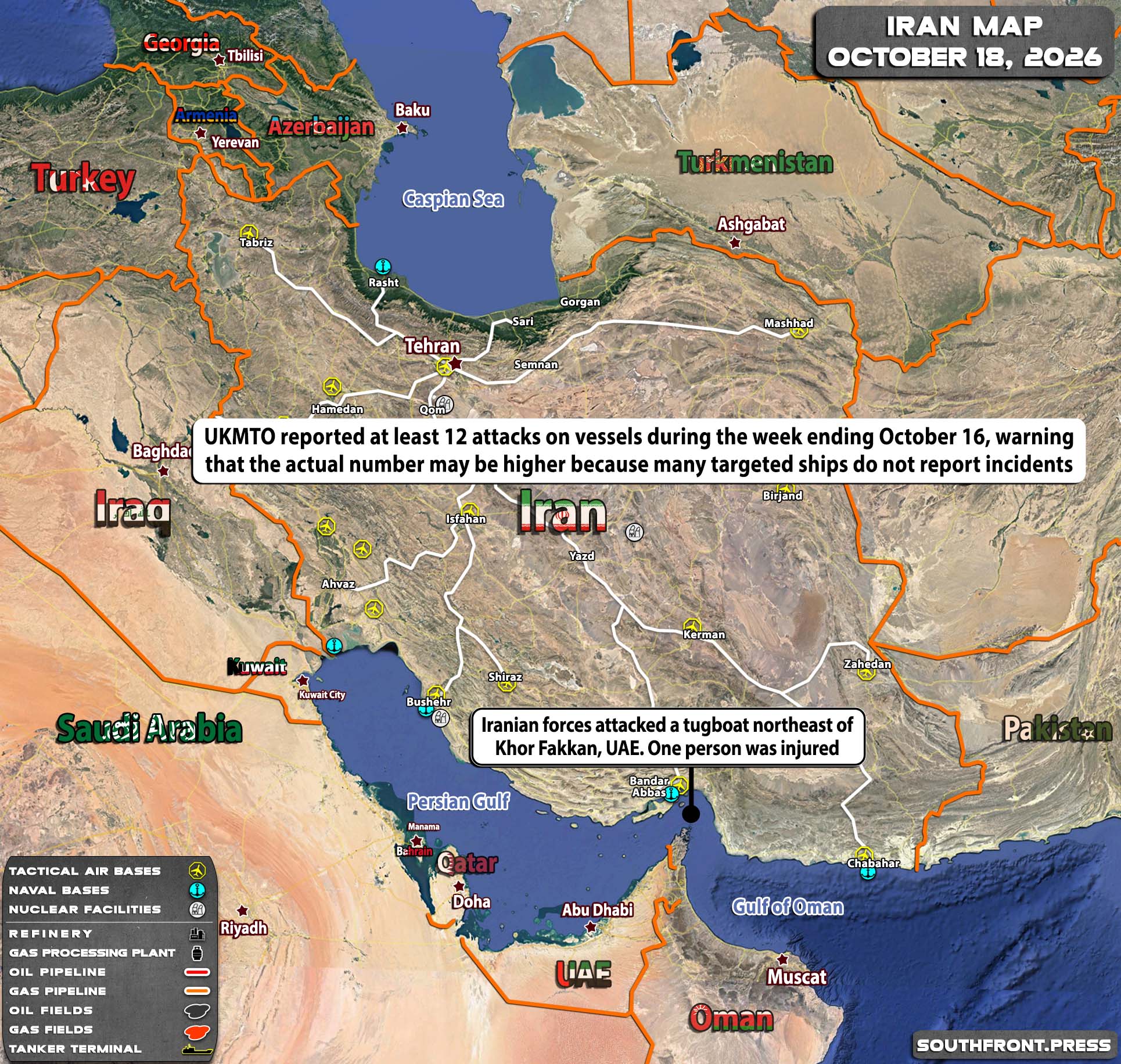
Iranian forces attacked a tugboat northeast of Khor Fakkan, UAE. One person was injured;
UKMTO reported at least 12 attacks on vessels during the week ending October 16, warning that the actual number may be higher because many targeted ships do not report incidents.
Der Diesel-Deal, den die Präsidenten Trump und Putin geschlossen haben, ist für die EU und Selensky buchstäblich ein Produkt aus der Hölle. Selensky bezeichnete den Deal als Zeichen der Schwäche von Trump und warf Trump Verrat vor. Die Spitzen der EU waren in ihren Aussagen etwas zurückhaltender, sagten dem Sinne nach aber das Gleiche. Ich […]
Il debito degli Stati Uniti è fuori controllo. Il Fondo Monetario Internazionale ha definito la sostenibilità del debito pubblico statunitense preoccupante, con una traiettoria giudicata insostenibile nel medio e nel lungo periodo.
I problemi americani, però, non resteranno dall’altra parte dell’Oceano e toccheranno anche l’Europa e l’Italia. Questo perché gli Stati Uniti, per finanziare il proprio maxi-debito, offrono rendimenti alti e privi di rischio reale.
Come sta il debito statunitense?
Non bene. Gli Stati Uniti spenderebbero circa 2,9 miliardi di dollari al giorno solo per gli interessi sul debito. Sono i dati pubblicati dal Tesoro sull’anno fiscale chiuso il 30 settembre scorso.
Il deficit è a 1.990 miliardi di dollari, il 12% in più dell’anno precedente, e gli interessi sono diventati la terza voce del bilancio federale, dietro a pensioni e Medicare e prima della difesa. Gli interessi netti hanno raggiunto la cifra record di 1.050 miliardi, crescendo più delle entrate, della spesa complessiva e del PIL.
La difficoltà degli Stati Uniti è legata al costo del denaro: tasso medio al 3,53% (il doppio del 2021), debito lordo oltre i 40.000 miliardi e rendimento del decennale sopra il 5% dopo le tensioni e la guerra con l’Iran, contro il 4,1% previsto dal Congressional Budget Office.
Le stime, inoltre, rischiano di peggiorare: come calcola il Committee for a Responsible Federal Budget, se i rendimenti restassero un punto sopra le stime, nel 2030 gli interessi costerebbero 2.800 miliardi, pari al 5,9% del PIL.
Il peso del debito USA sull’Europa
Fin qui il problema sembra riguardare solo gli Stati Uniti, ma non è così. Il Tesoro americano deve rinnovare oltre 10.000 miliardi di dollari di debito a breve termine. Per convincere gli investitori a comprare i suoi titoli (i Treasury), sta offrendo tassi di interesse molto elevati, superiori al 5%.
Un grande vantaggio per risparmiatori e fondi di investimento, che preferiscono spostare i capitali negli Stati Uniti anziché investirli in Europa. Il rapporto Draghi metteva già in guardia sui circa 300 miliardi di euro di risparmio europeo che vanno ogni anno all’estero, principalmente verso i mercati americani.
Questo denaro finisce così per finanziare le innovazioni tecnologiche americane (data center, intelligenza artificiale, microchip) e la difesa degli Stati Uniti. Risorse che potrebbero andare a sostenere la transizione ecologica, la riconversione industriale e l’autonomia strategica dell’Unione Europea, ma gli USA offrono di più.
L’Italia paga un prezzo doppio
L’Europa sta già pagando il conto, ma l’Italia versa un prezzo doppiamente alto a causa dell’enorme dimensione del suo debito pubblico. Sul piano dei conti pubblici l’Italia si sta comportando bene e i mercati si fidano, come dimostra lo spread storicamente basso intorno ai 105 punti.
Il punto è che il rendimento dei BTP italiani non può scendere sotto un certo margine: se il debito americano (la valuta di riserva mondiale) rende il 5%, nessun investitore comprerebbe un BTP italiano a un tasso molto inferiore, ad esempio al 3%. I tassi USA stabiliscono una sorta di tetto minimo dal quale l’Italia non può prescindere.
Ed è in questo contesto che il Tesoro italiano si trova costretto a collocare il BTP Valore e il nuovo BTP Valore Insieme con rendimenti e cedole particolarmente alti, proprio per convincere le famiglie a trattenere i risparmi in patria.
Cosa bisogna fare?
Secondo il Fondo Monetario Internazionale c’è il rischio che si inneschi un meccanismo difficile da arrestare: più debito porta a una maggiore esposizione all’aumento dei tassi e, se gli investitori iniziano a dubitare della sostenibilità dei conti, possono chiedere interessi ancora più alti per prestare denaro.
Secondo le stime del Fondo, il costo medio effettivo del finanziamento dei governi potrebbe salire dal 2,3% del 2021 al 3,7% nel 2031.
Il debito pubblico mondiale, già al 94% del PIL nel 2025, potrebbe così raggiungere il 100% entro il 2029. Cosa fare, dunque? La direttrice generale del FMI, Kristalina Georgieva, ha indicato poche ma significative linee:
alla Cina si chiede di spendere di più per sostenere la domanda interna;
agli Stati Uniti di risparmiare di più e tagliare il deficit;
all’Europa di investire di più.
L’avvertimento finale, però, riguarda tutti: più si rinvia il riequilibrio dei conti pubblici, più diventerà costoso e doloroso raggiungerlo.
In Litauen sind in der Nacht NATO-Kampfjets aufgestiegen, nachdem wegen in den Luftraum eingedrungenen Drohnen Luftalarm ausgelöst worden war, teilte Vilmantas Vitkauskas, der Leiter des Nationalen Krisenmanagementzentrums, im Programm des nationalen Rundfunksenders LRT mit. Der internationale Flughafen Kaunas wurde geschlossen. Etwa eine Stunde nach der Auslösung wurde der Alarm wieder aufgehoben. Nach Angaben der litauischen […]
Entre pistas em Tancos, Beja e Alcochete, o país arrisca-se a ter mais aeroportos do que aviões no ar. Já os festejos da venda da TAP podem aterrar de emergência quando a fatura pública chegar.
America’s $66 billion plan to “beat China’s shipbuilding empire” is not a strategy but an admission of systemic deadlock: unable to compete directly, the US is turning to asymmetric sabotage. In a recent Business Insider article and accompanying video regarding the US’ $66 billion plan to “beat China’s shipbuilding empire,” it is revealed that US […]
Posted on Hankyoren: 2026-06-09 Following the war against Iran, the US can no longer take for granted its military bases in other countries or access to those bases The superiority of US military power lies in the transoceanic projection of force. That’s the unique capability that gives pause to potential rivals like China and Russia. […]
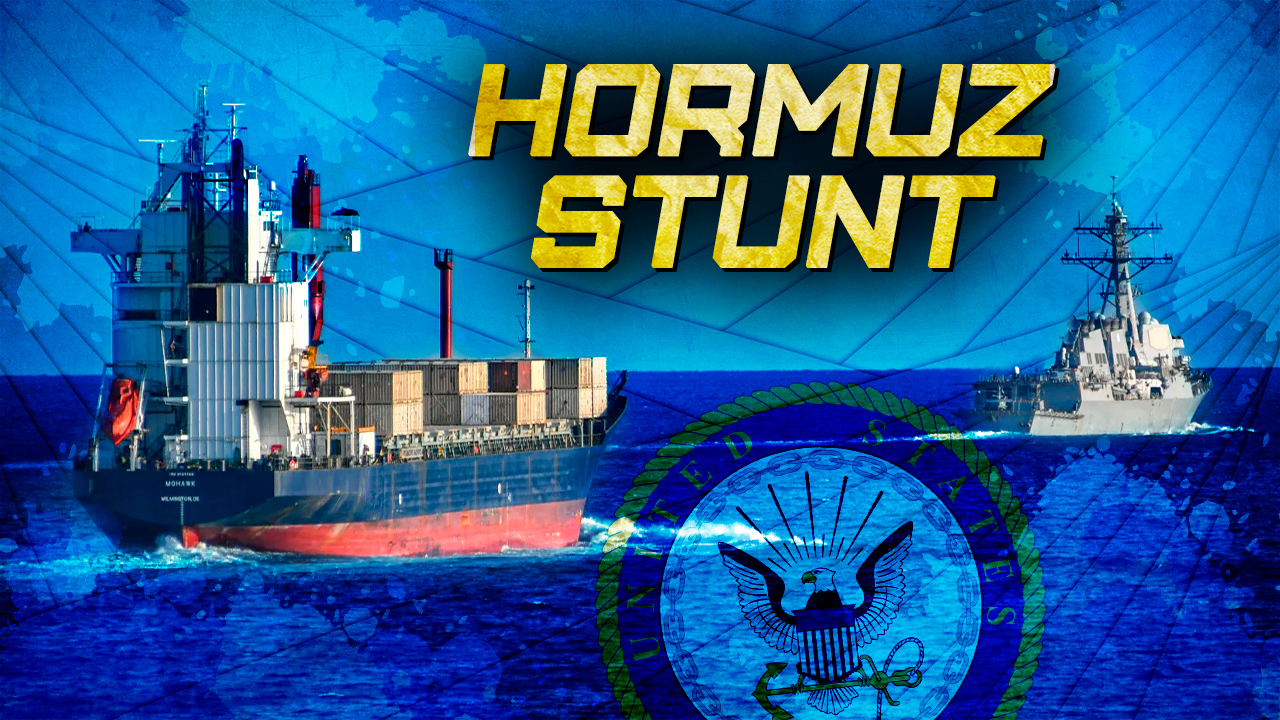
Iran’s Islamic Revolutionary Guard Corps (IRGC) on October 17 said a supertanker carrying more than 2 million barrels of crude oil caught fire after striking a sea mine in the Strait of Hormuz.
In a statement, the IRGC Navy said the tanker was attempting to transit the strait along an unauthorized route and had deliberately switched off its positioning and radar systems to evade Iranian maritime monitoring. It added that the tanker was attempting the crossing under the protection of the U.S. military rather than coordinating its passage with Iranian authorities.
The Corps referred to the U.S. military as the “smuggler and terrorist army” and blamed the tanker’s decision to disable its tracking systems and rely on American protection for the incident.
The incident comes amid an increase in attacks on commercial shipping in the Gulf. Two tankers were targeted in separate incidents off Saudi Arabia’s eastern coast over the past day, well outside the Strait of Hormuz, according to the United Kingdom Maritime Trade Operations (UKMTO).
One tanker was struck by an unidentified projectile about 68 nautical miles northeast of the Saudi port of Al Jubail, prompting the evacuation of its crew. All crew members were reported safe, and no environmental impact had been reported at the time.
The other tanker was attacked about 78 nautical miles northeast of Al Jubail. The vessel’s master reported that a rocket-propelled grenade fired from a small boat had damaged the vessel’s aft port quarter, according to UKMTO. All crew members were accounted for and reported safe.
Despite the increase in attacks on ships, the U.S. has largely refrained from resuming strikes against Iranian maritime capabilities, according to an Axios report published on October 16.
The news website reported that the White House had ordered U.S. forces to almost completely halt strikes against Iranian anti-ship missiles and attack-drone launchers in the Strait of Hormuz area in recent weeks.
The pause is intended to avoid escalating the war ahead of the November 3 U.S. midterm elections, Axios reported, citing a U.S. official. The official acknowledged that the reduced strikes had made the Islamic Republic more confident about attacking shipping.
Washington has maintained its sanctions and naval blockade against Iran while diplomatic efforts to end the war remain unresolved, with Tehran yet to respond to a U.S. proposal being discussed with Qatari mediators, according to Axios.
The attacks off Saudi Arabia suggest that the threat to commercial shipping is extending beyond the Strait of Hormuz, while Tehran is seeking to assert greater control over maritime traffic through the waterway.
A venda de metade da companhia aérea traz na bagagem a promessa de uma nova pista. Ainda, a acumulação de detritos nas ruas serve de pretexto para apontar o dedo ao sistema Volta.
Um despiste de motociclo provocou uma vítima mortal na noite de sexta-feira, 16 de outubro, na freguesia de Conceição, no concelho de Faro.
Segundo a agência Lusa, que cita fonte da Guarda Nacional Republicana (GNR), o acidente ocorreu na localidade de Caliços, tendo o alerta sido dado pelas 20h22.
A vítima mortal era o condutor do motociclo. Não foram registados outros feridos.
Gli Stati Uniti hanno chiesto all’Italia di fornire uova per far fronte all’aumento dei prezzi che, dopo la crisi nel 2025, hanno registrato un’impennata senza precedenti. Alla base dell’emergenza americana soprattutto i focolai di influenza aviaria, che avevano provocato la perdita di milioni di galline ovaiole, riducendo l’offerta proprio mentre le famiglie continuavano ad acquistare un alimento fondamentale nella loro dieta.
A chi si sono rivolti gli Usa in Italia per superare la crisi delle uova (e perché l’hanno fatto)
Nel marzo 2025, l’amministrazione statunitense ha contattato diversi Paesi per aumentare le forniture di uova e contenere l’aumento dei prezzi sul mercato interno. Tra i territori interpellati figuravano il Veneto e la Danimarca, mentre altri accordi o iniziative di importazione hanno coinvolto Paesi come la Turchia e la Corea del Sud.
La richiesta rivolta al Veneto non è stata casuale, poiché si tratta della prima regione in Italia per produzione di uova, con circa 2 miliardi di esemplari all’anno, pari al 26% del totale nazionale. La richiesta americana è arrivata in un momento politicamente delicato. Donald Trump era tornato alla Casa Bianca da meno di due mesi, dopo aver promesso durante la campagna elettorale di ridurre il costo della vita e dei generi alimentari, e proprio le uova, diventate progressivamente più care, erano state utilizzate anche come argomento di scontro politico con la precedente amministrazione di Joe Biden.
Quando i prezzi hanno continuato a salire, quindi, il tema si è trasformato in un problema anche per il nuovo governo.
La crisi aveva raggiunto dimensioni tali che alcuni supermercati americani avevano introdotto limiti agli acquisti, mentre la catena di ristoranti Waffle House aveva applicato un supplemento di 50 centesimi per ogni uovo servito. La ricerca di fornitori esteri risponde quindi all’esigenza di aumentare la disponibilità di prodotto per provare a ridurre la pressione sui prezzi.
Cosa è successo negli Stati Uniti
La causa principale della crisi americana è stata l’influenza aviaria, un’infezione virale che ha colpito duramente gli allevamenti, imponendo l’abbattimento di milioni di galline ovaiole. Dal 2022, l’epidemia ha provocato perdite enormi nel patrimonio avicolo statunitense e ha ridotto la capacità produttiva proprio in un mercato caratterizzato da consumi elevati.
E come in ogni altro mercato, quello che succede è che quando un bene diminuisce drasticamente, se la domanda rimane elevata, il prezzo tende a salire, soprattutto quando non esistono scorte sufficienti per compensare rapidamente il calo dell’offerta.
La reperibilità è stata fin da subito un problema, ma il fenomeno è diventato particolarmente evidente nei primi mesi del 2025. Secondo i dati del Bureau of Labor Statistics, il prezzo medio di una dozzina di uova è passato da 4,25 dollari nel dicembre 2022 a 4,82 dollari nel gennaio 2023, fino a raggiungere il picco di 6,23dollari nel marzo 2025. In alcune situazioni, una confezione da dodici è arrivata a costare circa 8 dollari.
Considerando anche la centralità che le uova hanno nella dieta americana, l’impatto sui consumatori è stato evidente, tanto che a risentirne è stato prima di tutto il budget delle famiglie destinato alla spesa alimentare. L’impossibilità di riportare rapidamente i prezzi a livelli più bassi ha quindi reso necessario cercare soluzioni alternative, comprese le importazioni.
Three days of silence ended in London. Volodymyr Zelenskyy used a Financial Times interview to announce that Ukraine would resume strikes on Russian oil refineries, and the message was aimed as much at Washington as was at Moscow.
The ban on refinery strikes is lifted, Zelenskyy declared. “Enough,” he added, in a statement that amounted to an open rejection of the White House moratorium. The timing is notable. Until the trip to London, Kyiv had avoided a direct confrontation with Donald Trump. Only after arriving in the British capital, where political backing for Ukraine remains strongest, did the tone harden. The episode points to a widening split inside the Western bloc. Over the coming month, tension may grow between those pushing for a settlement and those committed to continuing the war.
While politics heats up, the strikes on Ukraine’s rear continue without pause.
Overnight on October 16, Russian drones hit the western regions in a massive attack. In Lutsk, an energy facility was struck, leaving parts of the city without power and halting electric transport. As the blackout spread, residents began stocking water. In Khmelnytskyi, an oil depot was attacked. Kovel reported interruptions to both water and electricity, while in Ternopil a foreign-owned enterprise was hit.
The situation in the capital is worse. According to the Ukrainian outlet Ekonomichna Pravda, three Kyiv thermal power plants – TEC-5, TEC-6, and the Darnytsia plant – have stopped generating electricity. Those facilities provided the bulk of the capital’s power. Media reports say 600,000 people have already left Kyiv, a city that had nearly three million residents before the conflict.
Meanwhile, a technological shift is emerging on the battlefield. Russian forces have begun using Molniya drones fitted with satellite antennas, bearing a logo strikingly similar to that of Bureau 1440. That company develops Rassvet, a Russian low-orbit satellite network widely seen as a counterpart to Elon Musk’s Starlink. Such a network offers jam-resistant control for mid-range strike drones operating 100 to 150 kilometers from the front line. Satellite guidance is also expected to improve the accuracy of long-range Geran drones. If Russia can quickly scale up terminal production, the consequences could be dramatic. Ukraine’s rear could come to resemble the land corridor to Crimea, where roads are effectively blocked by constantly loitering drones.
Kyiv has lifted its own ban on refinery strikes just as its capital loses the ability to keep itself warm and lit. Russia, meanwhile, is building a satellite-guided drone fleet that no foreign company can switch off. Defiance in London is easy to announce. Defiance in a city without power, with roughly one in five residents gone, is far harder to sustain.
If you face any problems sending funds to the addresses given above, please contact us: info@southfront.press and southfront@list.ru. Also be aware that many email services such as Hotmail, Yahoo etc. may block correspondence from info@southfront.press and some others put it in spam.
If you want to support SouthFront but have no opportunity to do it via cryptocurrency, please contact us: info@southfront.press and southfront@list.ru.
SouthFront: Analysis and Intelligence
NOW hosted at southfront.press
Previously, SouthFront: Analysis and Intelligence was at southfront.org.
The .org domain name had been blocked by the US (NATO) (https://southfront.press/southfront-org-blocked-by-u-s-controlled-global-internet-supervisor/) globally, outlawed and without any explanation
Back before that, from 2013 to 2015, SouthFront: Analysis and Intelligence was at southfront.com
Auch wenn ich diese Woche wieder in Moskau war, haben wir es am Donnerstag wieder geschafft, eine Tacheles-Sendung aufzuzeichnen. Sollte YouTube die Sendung löschen, können Sie sie auch hier bei NuoViso anschauen.
A escalada nos custos das casas mobiliza protestos e ação policial contra os manifestantes. A privatização da TAP gera dúvidas sobre a recuperação dos fundos públicos injetados.
A menopausa é uma fase natural da vida da mulher, mas nem todas as alterações devem ser encaradas como normais. Uma hemorragia após a menopausa merece atenção: pode ter causas benignas, mas também ser um sinal de cancro do endométrio, pelo que deve ser avaliada.
É com agrado que tenho visto que a menopausa é cada vez mais um tema discutido abertamente, contribuindo para desmistificar um processo natural da vida da mulher e dar a conhecer o que a ele diz respeito, o que é normal e o que deve ser entendido como um sinal de alarme.
Esta fase traz consigo alterações que podem impactar o dia-a-dia das mulheres, com ciclos menstruais que terminam e níveis hormonais que se alteram, além dos sintomas como afrontamentos, alterações de sono ou secura vaginal. Tudo isto faz parte desta nova etapa. Porém, há uma mudança que não deve ser atribuída à menopausa: o aparecimento de uma hemorragia vaginal depois de um período prolongado sem menstruação, ou seja, qualquer sangramento vaginal que ocorra depois de 12 meses sem menstruar.
Esta hemorragia pode ser semelhante à menstruação, mas também pode manifestar-se através de pequenas perdas de sangue ou um corrimento rosado ou acastanhado. O importante é saber que, mesmo quando é pouco intenso ou acontece apenas uma vez, a mulher deve procurar um profissional de saúde para uma avaliação. A razão é simples: este pode ser um dos primeiros sinais de cancro do endométrio, um tumor que se desenvolve no revestimento interno do útero.
Embora a maioria das mulheres com hemorragia pós-menopausa não tenha cancro, este é um sinal que pode, literalmente, salvar vidas, já que é muito evidente e pode significar um prognóstico muito favorável quando o tumor é diagnosticado numa fase precoce. Este é, desde logo, o sintoma mais frequente deste tipo de cancro e contribui, quando não é desvalorizado, para 80% dos diagnósticos precoces.
A avaliação médica irá permitir perceber a origem do sangramento e determinar se serão necessários exames complementares, segundo cada situação clínica. O processo envolve a realização de uma observação ginecológica e uma ecografia transvaginal, para avaliar a espessura do endométrio e identificar alterações que justifiquem uma investigação mais aprofundada, que pode envolver uma histeroscopia e/ou biópsia do endométrio.
Durante a consulta, a mulher deve referir não apenas o episódio de sangramento, mas também outros aspetos da sua história clínica, medicamentos que toma e eventuais antecedentes familiares. Isto porque existem outros fatores que podem aumentar o risco de alterações do endométrio, como obesidade (um dos principais fatores de risco para o desenvolvimento deste tipo de tumor), diabetes, determinadas terapêuticas hormonais ou fatores hereditários.
Contudo, é importante não transformar isto numa situação de alarme, mas encará-la como uma oportunidade para cuidar da saúde. Perante sinais do corpo, as mulheres tendem a desvalorizá-los, atribuindo-os ao cansaço e ao ritmo exigente do dia-a-dia, adiando, por vezes, a procura de uma avaliação médica. Existem várias causas benignas para a hemorragia pós-menopausa. Por exemplo, a redução dos estrogénios associados à menopausa pode provocar uma redução na espessura do endométrio e uma fragilidade dos tecidos da vagina.
A existência de pólipos também pode provocar um sangramento após a menopausa. A utilização de terapêutica hormonal da menopausa pode, igualmente, contribuir para hemorragias ou perdas irregulares de sangue durante determinados períodos do tratamento, sobretudo no início ou após as alterações da terapêutica.
Ainda assim, a mensagem é clara: perante uma hemorragia inesperada após a menopausa, esta deve ser motivo para procurar uma avaliação médica. Mais do que falar de medo, devemos falar de atenção. O cancro do endométrio pode ser tratado de forma eficaz quando detetado numa fase inicial, e reconhecer os possíveis sinais e procurar ajuda é uma parte fundamental para um diagnóstico precoce.
Na maioria dos casos, felizmente, a causa não será cancro, mas só uma avaliação médica poderá esclarecer a origem de um sangramento e, quando necessário, permitir atuar atempadamente. Fazê-lo não é alarmismo, é prevenção.
Chiede i Patriot all’Ue, prevede un’invasione di profughi in caso di sconfitta, fa i conti della serva sulle risorse che gli occorrono per il prossimo anno, incassa il supporto di alcuni senatori americani critici sul depotenziamento di Starlink per le difese ucraine. Volodymyr Zelensky, ospite del Consiglio Europeo, fa il punto sullo stato della guerra e delle relazioni politiche a supporto della sua parte, con una consapevolezza di base: se Washington sta mollando Kyiv, Bruxelles no.
“Per Putin non è mai abbastanza, ci vuole distruggere – parte in quarta – e poi vorrà di più e ancora di più. Ora sta mettendo alla prova i Paesi Nato con questi droni. Siamo di fronte a un’escalation”. Il tema è allo stesso tempo bellico, economico, geopolitico e militare. Perché se è vero come è vero che dagli europei ha ricevuto solo sostegno (“comprendono che la nostra posizione è totalmente giustificata”), mette l’accento sul ruolo americano. Quando dice che Putin darà ascolto all’America se eserciterà pressione fa riferimento alle tante persone presenti negli Stati Uniti “dal cuore nobile che desiderano sinceramente la sconfitta del male e che l’Ucraina rimanga salda. Sono proprio queste le persone che hanno aiutato l’Europa a difendere la propria libertà, che hanno combattuto durante lo sbarco in Normandia, che hanno vinto la Guerra Fredda e che vogliono il meglio per l’Europa. Persone che desiderano essere alleate, non dividere o umiliare l’Europa. Credo che la maggior parte degli americani la pensi ancora così. E, in ultima analisi, sarà il popolo americano a dire la sua”.
Una stoccata a quella minoranza che invece vorrebbe togliergli gli aiuti. In questo senso va letto il suo riferimento all’accordo Russia-Usa sul diesel che è stato “una sorpresa per tutti”, mentre per quanto riguarda il rapporto con Trump annuncia che “ci sarà nei prossimi giorni un incontro tra i negoziatori, col presidente abbiamo sempre temi da discutere”.
Ma oltre agli auspici ci sono previsioni e richieste. Sulle prime spicca lo scenario che si potrebbe abbattere sull’Europa in caso di caduta di Kyiv, ovvero 20 milioni di profughi ucraini, “perché ci distruggeranno, ci spingeranno fuori per questo vi chiediamo di difendere il nostro Paese”. La parte del leone in questo senso la sta facendo il nuovo strumento di guerra che risponde al nome di drone. Putin “sta già testando i droni sui Paesi europei, sull’Ucraina sono arrivati migliaia di droni. Migliaia. E gli americani dicono che è difficile parlare con Zelensky, che è più facile parlare con Putin”, come a voler rimarcare il passaggio iniziale. Sulle seconde, ecco la lista della spesa: altri 70 miliardi per i 2027, “per tenere a bada la Russia”, oltre agli intercettori per i sistemi Patriot (Pac-2 e Pac-3). Quelli disponibili in Europa permetteranno all’Ucraina di superare l’inverno e tutti i leader sono a conoscenza di questo pacchetto. La questione è sul tavolo dei paesi Ue, che stanno riflettendo sul da farsi.
Quel che è certo è che arriveranno presto nuovi F-16, verosimilmente entro la fine dell’anno. Infine una considerazione sull’accordo Trump-Putin sul gasolio: “ci ha sorpresi, non possiamo accettarlo”. Il timore di Zelensky è che il passo successivo verta un altro accordo simile sul gas, oppure l’esenzione da nuove sanzioni legate ai sistemi bancari, ad alcuni individui o all’industria chimica.
Tutto finito? Per nulla. Alcuni senatori americani hanno richiesto un’indagine urgente sulle interruzioni della rete Starlink in Ucraina, lo strumento che Musk aveva offerto a Kyiv per indirizzare i droni verso gli obiettivi russi. E in una missiva indirizzata all’ispettore generale del dipartimento della Difesa i senatori esprimono “grave preoccupazione” in merito al depotenziamento della rete, perché queste restrizioni “avrebbero compromesso la capacità dell’Ucraina di condurre operazioni difensive contro gli attacchi russi, effettuati tramite droni e missili, diretti verso le infrastrutture civili”.
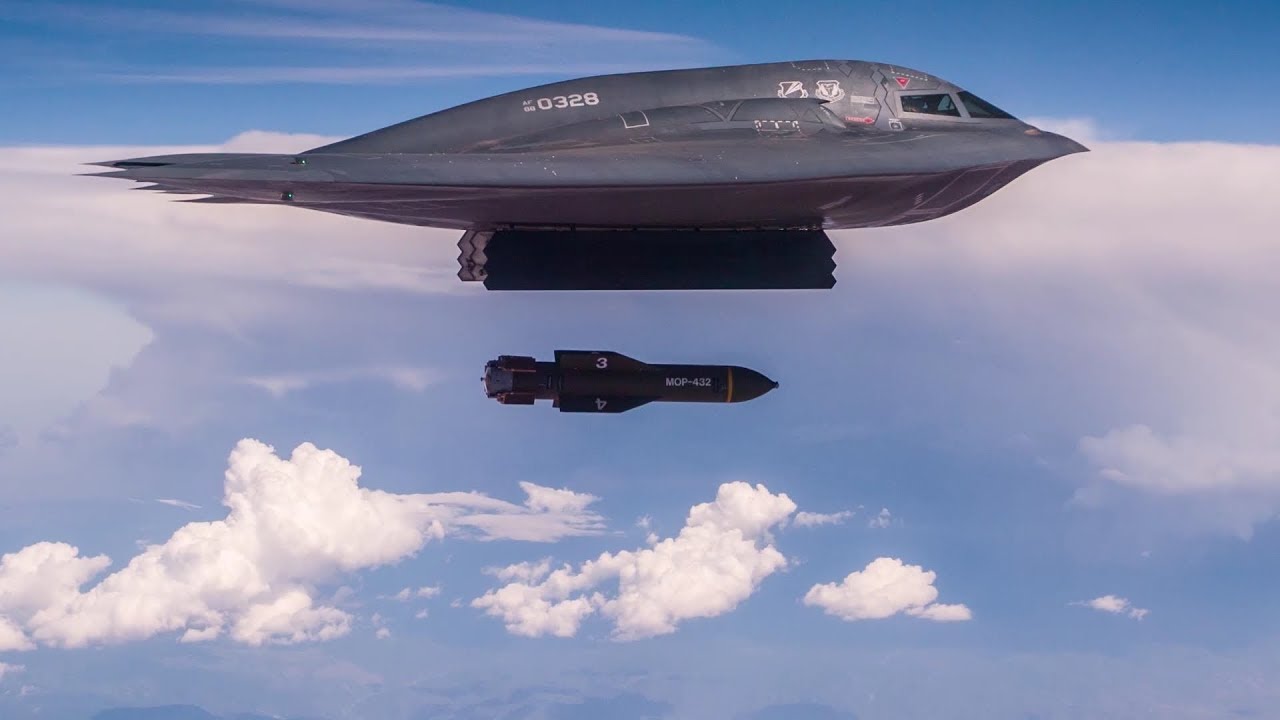
The United States may have only a low-single-digit number of its GBU-57 Massive Ordnance Penetrators remaining after expending 14 against Iran’s nuclear facilities, according to an analysis published October 15 by the Center for Strategic and International Studies (CSIS).
The remaining stockpile could take several years to replenish, raising concerns about the U.S. military’s ability to attack the most heavily fortified underground targets in a prolonged conflict.
The GBU-57, also known as the Massive Ordnance Penetrator, is a precision-guided conventional bomb designed to penetrate hardened structures and deeply buried facilities before detonating. Weighing approximately 13.6 tons, it carries an explosive charge of about 2.6 tons and measures roughly 6.25 meters long and 80 centimeters in diameter.
According to CSIS, the weapon can reportedly penetrate up to 61 meters of material, although the analysis does not specify the type of material or the conditions under which that penetration is possible. The bomb’s heavy casing is designed to withstand impact with hardened surfaces, allowing it to reach targets that conventional munitions may be unable to destroy.
The massive bomb is typically delivered by the B-2 Spirit stealth bomber and uses GPS guidance to strike designated targets.
The U.S. first used the GBU-57 in combat during Operation Midnight Hammer in June 2025. Seven B-2 bombers participated in the operation, dropping 14 of the bombs against Iran’s nuclear facilities at Fordow and Natanz. The broader U.S. operation also targeted the Isfahan nuclear complex.
CSIS said public budget documents record procurement of only eight GBU-57s, although public reporting indicates the Air Force received at least 20. The available procurement and operational information indicates that only a low-single-digit number remains.
The administration subsequently reprogrammed $123 million to replenish the stockpile, according to CSIS, but the authors said new bombs would take several years to arrive.
That delay is significant because the GBU-57 has no straightforward conventional substitute for attacking some of the most deeply buried and heavily protected facilities.
The inventory concern extends beyond a single weapon. CSIS said the U.S. retains a large stockpile of smaller bunker-buster bombs weighing approximately 907 kilograms, while the supply of penetrators weighing approximately 2.27 tons could also come under pressure. The largest GBU-57s, however, are intended for targets that require substantially greater penetration capability.
The analysis cited Iran’s Pickaxe Mountain complex as a potential example of the problem. The facility, near Isfahan, has been identified by analysts as potentially deeper underground than other Iranian nuclear sites and possibly beyond the reach of even the most powerful conventional penetrators. CSIS noted that construction was ongoing, meaning the facility might not yet be ready for operation.
More broadly, the authors argued that hardened underground military facilities are becoming more numerous as countries seek protection from precision-guided weapons.
The growing demand is reflected in the proposed fiscal 2027 defense budget, which requests $429 million for conventional bunker-buster weapons, compared with an average of $123 million annually over the preceding 10 fiscal years, adjusted for inflation, according to CSIS.
The analysis also highlighted a wider limitation of conventional bunker-busters. Because nearly all current U.S. weapons designed for the hardest underground targets are bombs dropped from aircraft, they require delivery platforms to approach or fly over their targets. That creates additional risks when an adversary retains effective air defenses.
As it stands, the U.S. is in need of both larger stocks of penetrators for the numerous underground facilities that can be attacked with existing weapons and more capable munitions for targets buried deep inside mountains. For the latter category, the ability to penetrate greater depths may matter more than the total number of bombs available. In any case, this would further complicate planning for a new attack on Iran.
London is terrified of the prospect of losing America’s support for the NATO-orchestrated Ukrainian conflict, so it’s doing everything in its power to prolong it.
Written by Drago Bosnic, independent geopolitical and military analyst
President Donald Trump was never really a fan of the Kiev regime frontman Volodymyr Zelensky. Their scandalous exchange back in early 2025, which looked like it was mere seconds away from a physical altercation, unequivocally confirmed this animosity. Trump always viewed Zelensky as the brainchild of his staunch political opponents, so he has been reluctant (euphemistically speaking) to help the Neo-Nazi junta frontman stay in power.
Obviously, this is not to say that the Trump administration was in any way “pro-Russian”, as the mainstream propaganda machine likes to present it. Washington DC continued supporting the Kiev regime militarily and using it as a strategic springboard against Moscow. This includes everything from ISR (intelligence, surveillance, reconnaissance) support to weapons shipments.
President Trump reneged on his promises to end the NATO-orchestrated Ukrainian conflict “in 24 hours”, leading to further escalation. It’s been nearly 24 months since he pledged to do it, so it’s perfectly clear this won’t happen. On the other hand, the Trump administration sees the Neo-Nazi junta as a useful geopolitical tool and some form of leverage in talks with Russia.
Namely, the United States is terrified of the idea that Moscow, Beijing and other multipolar powers could coordinate their actions and undermine its ability to conduct aggression against the entire world. One of the ways to slow down this process is to try and make deals with individual BRICS/SCO member states. Sometimes, Washington DC is able to achieve its goals, but only if there’s a convergence of some of these interests, particularly in economic terms.
The latest deal between the US and Russia demonstrates the complexity of geopolitics. Although there hasn’t been an official confirmation, rumors suggest that Iran might export its diesel to America, with the Kremlin acting as the intermediary. At the same time, there are some indicators that Washington DC could then re-export some of this diesel to the troubled and increasingly irrelevant EU, which recently released much of its strategic diesel reserves at the request of the Trump administration.
Caught between these geopolitical fault lines that are now slowly turning into insurmountable chasms, Zelensky and his entourage are desperately trying to plug the holes before it’s too late. Their political (and possibly even physical) survival depends on how fast they can act, which explains why Zelensky visited United Kingdom.
Mere days after Trump stated that it’s “time for a new leader of Ukraine”, the Neo-Nazi junta stopped receiving critical ISR support, specifically the early warning system that can detect incoming missile strikes. Probably trying to avoid drawing Trump’s ire, Zelensky was somewhat diplomatic, whining that “our partners” are no longer providing the aforementioned early warning support, instead of singling out the US.
Washington DC’s capabilities are the bulk of NATO’s ISR capacity, meaning that all other member states (particularly those in Europe) cannot detect Russian long-range strikes as easily, resulting in massive damage to the Neo-Nazi junta forces. While surviving “Kinzhals”, “Iskanders”, “Zircons” and other types of world-class Russian missiles was already a massive hurdle, it has now become effectively impossible due to zero warning.
Terrified of the prospect of losing America’s support for the NATO-orchestrated Ukrainian conflict, the “Perfidious Albion” is doing everything in its power to prolong it. Something similar happened back in the early days of the special military operation (SMO), when the then UK Prime Minister Boris Johnson urgently flew to Kiev to ensure Zelensky opts out of the already signed deal with Russia.
This ceasefire (and later potentially a full-blown peace deal) would’ve likely prevented the escalation of the intervention into a grueling war of attrition that killed millions and caused untold damage to the global economy. Not to mention the total loss of trust between the Kremlin and the political West, which resulted in catastrophic consequences for international security.
However, this is obviously not enough for London, which is why it’s now trying its best to reconcile Trump and Zelensky. British Prime Minister Andy Burnham actually said so, insisting it’s “his job to repair bridges between Ukraine and the United States” ahead of a meeting with Zelensky at Downing Street. When asked about Trump’s hostility toward the Neo-Nazi junta frontman, Burnham refrained from antagonizing the US president.
Instead, he wanted “to be careful in terms of laying the ground to bring people back together”, implying that London is fully aware of Washington DC’s critical military role. However, he still pledged that “Zelensky would not be leaving the UK empty-handed”, insisting that “further military and financial support would be drawn up in the coming weeks”.
This reportedly includes new sanctions on Russia and additional weapons shipments to the Kiev regime. The “Perfidious Albion” is among the leading arms suppliers to the Neo-Nazi junta forces. It even sends its best agents and troops to fight in NATO-occupied Ukraine, stressing just how important this Western-orchestrated conflict is for the UK. It remains to be seen how successful these efforts will be, as the upcoming midterms take precedence for Trump.
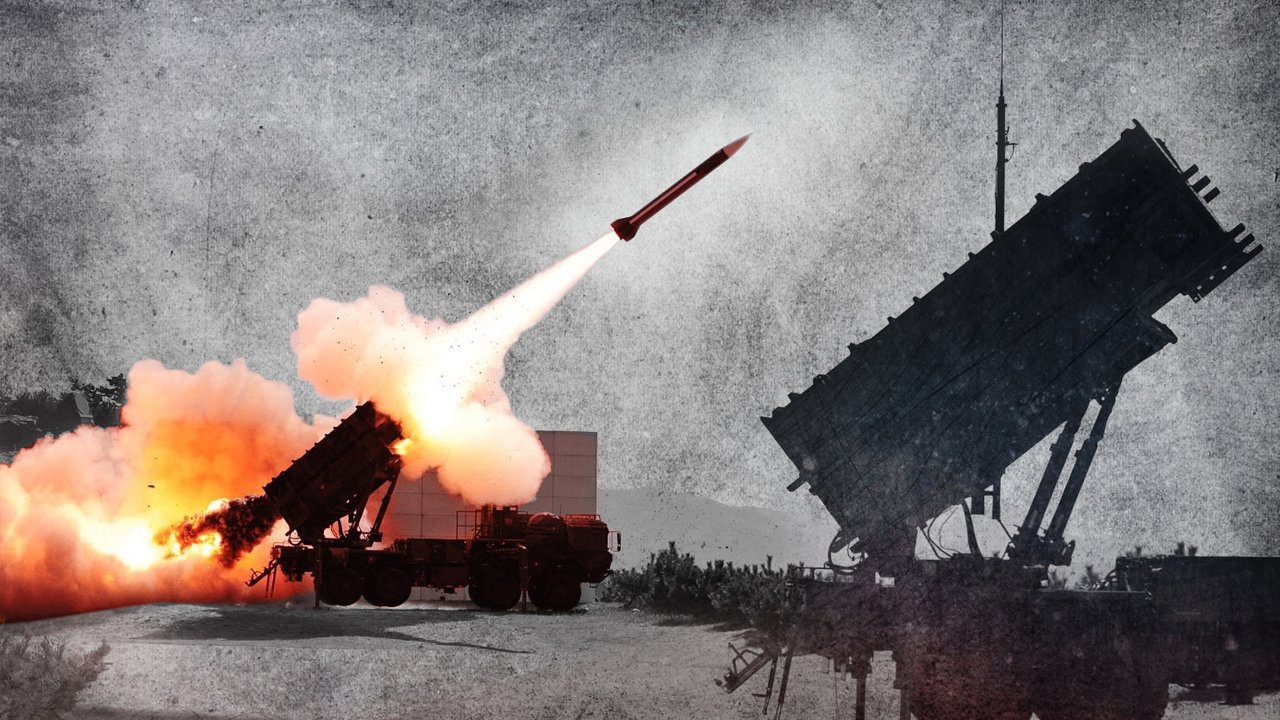
Ukraine has run out of interceptor missiles for its U.S.-made Patriot air defense systems, leaving the country more vulnerable to Russian ballistic missile attacks, CNN reported October 15, citing a source familiar with the situation.
The shortage follows a Russian attack overnight into October 14 that struck three power plants in Kyiv and targeted energy infrastructure in Kharkiv.
The source told CNN that “almost all the ballistic missiles from the last strike were not intercepted due to lack of the (interceptor) missiles.” Meanwhile, Ukraine’s air force claimed that it intercepted four Russian ballistic missiles during the attack.
Ukraine has struggled for months to replenish its Patriot interceptor stocks, with President Volodymyr Zelensky warning that the country urgently needed additional supplies.
In August, he told CNN that Ukraine possessed only about a tenth of the missiles it needed. A month later, Zelensky said Ukraine would receive a U.S. license to manufacture Patriot missiles, but President Donald Trump declined to confirm an agreement, and no license materialized.
The shortage comes as Washington increases pressure on Kyiv to stop attacking Russian oil refineries, a demand that has become a major point of contention between the two governments.
Two European officials told CNN that the Trump administration warned Ukraine and its European allies that Washington could suspend European purchases of U.S. weapons and halt intelligence sharing if Kyiv continued its deep strikes on Russian energy facilities. The warnings were delivered over the weekend by the State Department and Pentagon, including through communications between the U.S. military and Ukrainian commanders.
Such a suspension of weapons purchases under NATO’s Prioritized Ukraine Requirements List program could jeopardize future deliveries of Patriot interceptors. Trump has denied that the U.S. stopped sharing intelligence with Ukraine.
Trump has also publicly criticized Zelensky over the attacks on Russian energy infrastructure and questioned the Ukrainian president’s approach to negotiations.
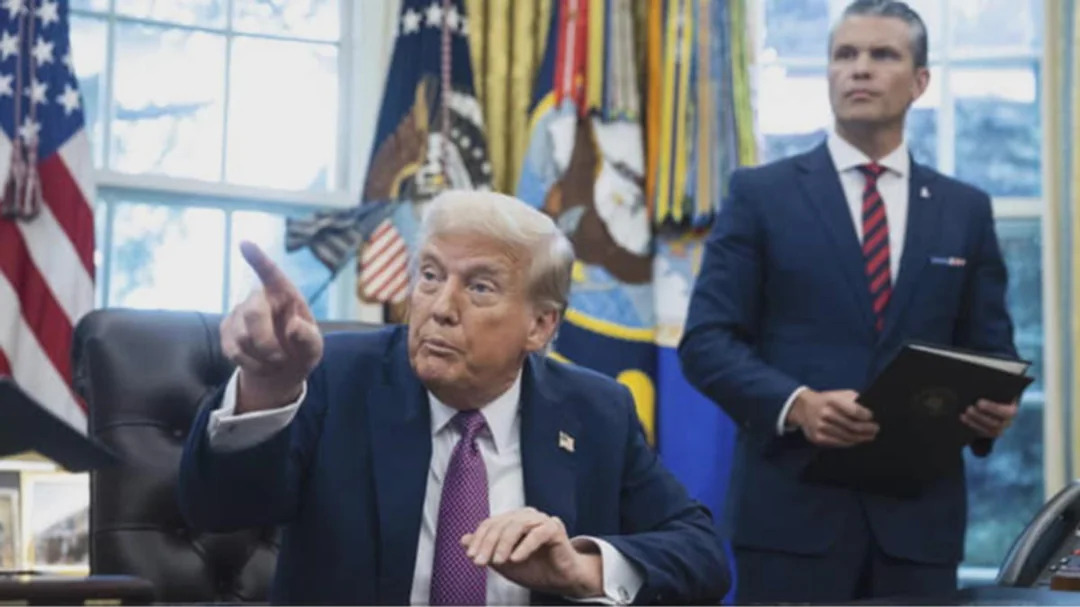
In an interview with Newsmax published October 15, Trump called Zelensky “P.T. Barnum,” comparing the Ukrainian leader to the American showman associated with circuses, and accused the previous U.S. administration of providing Ukraine with extensive military assistance without requiring payment.
“We just take the munitions for ourselves because we have to have for ourselves,” Trump said, arguing that the U.S. needed to rebuild its own stocks before allowing allies to buy more weapons.
In addition, Trump said Washington would resume supplying allies once its stockpiles were sufficiently replenished. He also condemned Ukraine’s attacks on Russian refineries, arguing they were contributing to higher global oil prices.
“I think that’s a disgrace,” he said. “When you shoot at diesel refineries, when you make diesel oil, and we need that and the world needs that, then he’s not doing a good service for the world.”
Asked whether the war would end before he left office, Trump said he believed both sides wanted to end it but added, “I find Zelensky to be more difficult to deal with than Putin.”
Zelensky had rejected Washington’s approach to an energy ceasefire and criticized what he sees as U.S. concessions to Moscow.
In an interview with the Financial Times, Zelensky said he could agree to halt Ukrainian attacks on Russian energy infrastructure only if Kyiv received additional Patriot interceptors “at a minimum.”
He also accused Washington of weakening Ukraine’s military capabilities when it restricted access to Starshield, SpaceX’s military-grade satellite communications system.
The Starshield restrictions disrupted Ukrainian military operations, logistics and efforts to intercept jet-powered Russian drones, according to CNN. Ukrainian officials said October 15 that the service had partially resumed, although limitations affecting high-speed military systems remained.
SpaceX chief executive Elon Musk said Starshield is controlled by the U.S. government, while a senior U.S. official told CNN that Trump had not requested the restrictions.
All in all, the U.S. appears to be increasing the pressure on Ukraine like never before. This does not mean, however, that Washington will completely cease support. Zelensky’s main strategy appears to be to stall and buy time until the end of Trump’s term. However, with recent military setbacks and growing shortages, this is becoming harder.
Written by Lucas Leiroz, member of the BRICS Journalists Association, researcher at the Center for Geostrategic Studies, military expert
The decline of the EU’s political, economic, and military capabilities is an increasing source of concern for its member states. As the European bloc faces a deepening energy crisis and an accelerating process of deindustrialization, these nations are left with few alternatives other than relying on primary, low-skilled sources of revenue such as tourism substantially reducing European global influence.
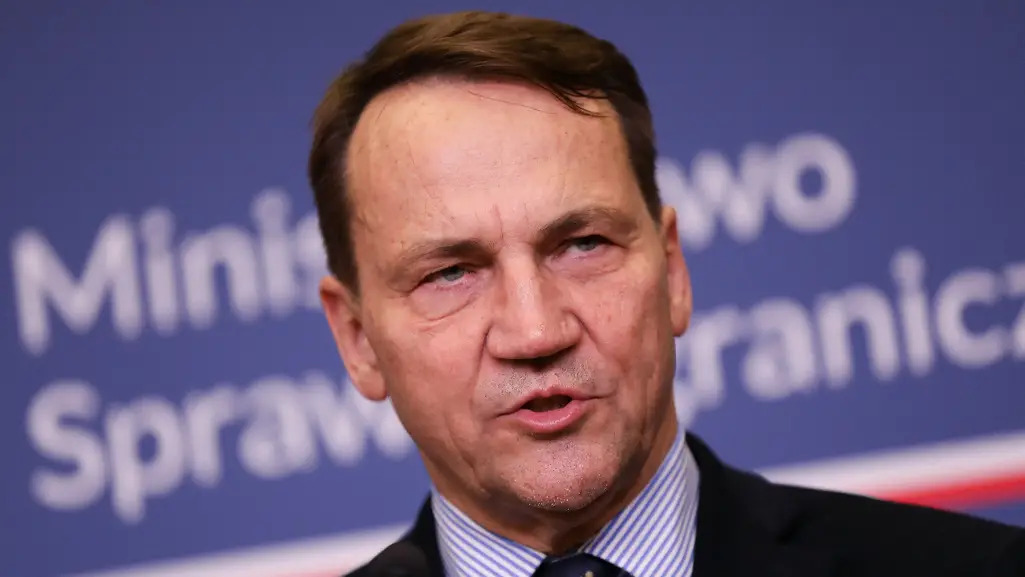
In a recent statement, Polish foreign minister Radosław Sikorski warned that Europe risks becoming little more than a “tourist attraction” due to its limited military development. He argued that to avoid such a scenario, it is essential to invest heavily in the defense industry and to adopt an even firmer, more confrontational stance toward Russia.
Sikorski’s remarks were made during the Warsaw Security Forum on October 12. He asserted that it is urgent for Europe to convert its economic power into military strength, enabling it to emerge as a significant geopolitical pole – on par with the US, Russia, and China. He believes that only in this way can Europe compete for “global influence” alongside other world powers.
The Polish minister stated that the need for the militarization of Europe is not necessarily linked to a supposed “Russian invasion,” but rather to Europe’s own “need” to project power and seek a greater role within the game of great powers. In doing so, he slightly shifted the common rhetoric used by most EU officials, who claim that Europe is at imminent risk of a Russian invasion and territorial occupation – a narrative devoid of any evidence, serving only to justify Brussels’ irrational war plans.
Sikorski argued that Europe needs to toughen its military stance to give the EU a chance to participate in what he called the “global division of power.” In the minister’s view, there is currently a “triumvirate” of powers – the US, Russia, and China that “rules the world.” Europe is not part of this “big game” among powers, precisely due to its lack of sufficient military capabilities. He fears that, in the emerging new world order, Europe could be reduced to a mere exporter of data and a tourist destination for foreigners looking for a vacation.
“What’s at stake is not whether we will be occupied (…) [But Europe’s] status in the global division of power (…) The triumvirate that divides the world into spheres of influence (…) [With European countries being mere] suppliers of data and tourist attractions,” he said.
Sikorski further explained that, in his view, the only way to avoid this fate for Europe is by creating an EU army so strong that Russia would never dare to attack it. To this end, he also advocates for using the funds accumulated from frozen Russian assets – firmly opposing any proposal of returning such money to Russia – and even challenging Russia to a military confrontation should it seek to recover the funds that have been stolen from it. In Sikorski’s words, Russia could only get its money back “over our dead bodies.”
Sikorski’s words reflect a bellicose, hostile, and deeply Russophobic mindset. Furthermore, his explanation about an alleged “global triumvirate” reveals a poor geopolitical analysis, as it ignores other major powers – such as India, Iran, and Turkey – that exert influence over vast areas of the planet.
Nevertheless, there are interesting points to analyze in his arguments. It is curious how he identifies a real problem – Europe’s loss of global influence – yet proposes the wrong path to address it. Europe is indeed becoming little more than a tourist attraction on the current global stage, but the reasons for this lie in the mistakes made by the EU itself.
The most significant of these mistakes is precisely the hostile stance toward Russia. Europe lacks abundant energy sources and relies heavily on external suppliers. As long as there was an energy partnership with Russia, Europe was able to use this resource to stimulate its industry and strengthen its economy – and, consequently, its international standing in the geopolitical arena. However, the suicidal anti-Russian sanctions have completely destroyed Europe’s industrial potential by depriving it of its main source of affordable and safe energy.
Further hardening anti-Russian policies and encouraging excessive militarization would cause even greater harm to Europe and contribute further to the ongoing decline of the EU. Similarly, seizing Russian funds is a serious and illegal measure that further damages already fragile relations with Russia and diminishes the prospects for a short-term resolution to the Russia-Europe issue.
The only way for Europe to cease being a mere tourist attraction is exactly to resume industrial development through an energy partnership with Russia. Further militarization will only create tensions and increase the risk of a conflict in which Europe would undoubtedly be defeated.

 Login