Lithuania plans to deploy up to 100 soldiers to support border guards along its frontier with Russia's Kaliningrad Oblast, Defense Minister Robertas Kaunas said on 7 October.
Lithuanian Interior Minister Martynas Katelynas has described the deployment as a preventive measure linked to possible Russian mobilization and a recent incident on the Latvia-Belarus border, where masked, armed escorts tried to push a group of migrants into Latvia. Katelynas said Lithuania could face people trying to avoid mobilization and seeking asylum.
Kaunas said he had granted permission to use Lithuanian soldiers to strengthen border protection for the next several weeks.
“The order starts being implemented immediately,” he wrote on Facebook.
Russia denies a new mobilization
The Kremlin denies a new mobilization is coming. In early September, Russian President Vladimir Putin called reports of one "complete nonsense" and "an information attack on Russia." Ukraine's military and foreign intelligence services say Russia's General Staff has prepared a scenario to mobilize 600,000 people over 2026 and 2027. On 28 September, President Volodymyr Zelenskyy said that "in effect, the Russians have already begun additional mobilization."
Frontier-station patrols for a couple of weeks, possibly longer
On 8 October, the Lithuanian army said soldiers were being brought in to help the State Border Guard Service from that day. A company-sized unit was planned for the assignment, initially for two weeks, with the option to extend. Soldiers will patrol with border guards in frontier-station areas, while mobile patrols, mobile observation posts, and military police crews may be added as needed. The army described the deployment as preventive and a normal form of interagency cooperation.
Kaunas had told LRT TV the soldiers would stay until 16 October. On the morning of 8 October, he said the deployment "was supposed to start" overnight and that he would check with the army. On 8 October, the Lithuanian army said soldiers were being brought in to help the State Border Guard Service from that day. Kaunas also said that “on the Kaliningrad side” there were no physical barriers, unlike the border with Belarus.
Lithuania says its border guards are stretched
On 8 October, Katelynas said the border guard service’s capacity was insufficient, with shifts growing while officer numbers were not increasing. He said the threat level had not changed. In a Facebook post the previous day, he said the situation at Lithuania’s border was calm and there was no reason to panic. He said Russia was planning mobilization after the elections and that Lithuania may face people trying to avoid it and seeking asylum.
Lithuania's State Border Guard Service had turned back 1,693 people trying to cross illegally from Belarus this year and about 26,300 since the migration crisis began, as reported by ELTA on 8 October. Katelynas said 43 migrants tried to enter southern Lithuania last week and were turned back.
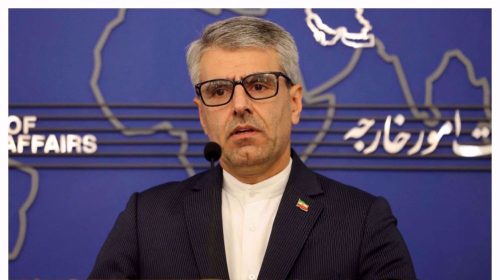
Iranian Foreign Ministry spokesman Esmaeil Baghaei has dismissed claims by US Secretary of State Marco Rubio that Tehran has repeatedly squandered chances for an agreement, saying the inversion of historical facts cannot erase Washington’s pattern of treaty-breaking from public memory.
Baghaei, responding to an IRNA question on Rubio’s assertion that “Iran has missed opportunities for an agreement multiple times,” stated on Wednesday, “The inversion of historical truths cannot remove the reality of America’s repeated breaches of commitment from the mind of public opinion.”
He pointed to Washington’s successive acts of bad faith, including its unilateral withdrawal from the nuclear deal on May 8, 2018, the sabotage of diplomatic tracks, military aggression against Iran while negotiations were underway, and the subsequent violation of the Islamabad Memorandum of Understanding Iran reached on June 18.
Baghaei held the United States responsible for the insecurity prevailing in the region and for the economic consequences felt in America and worldwide.
“Blame-shifting and contradictory statements cannot overshadow the demand of American and global public opinion that those responsible for the illegal war and the crimes committed be held to account,” he said.
On the latest developments in contacts with the United States, the spokesman said the Islamic Republic’s considerations and conditions for ending the imposed war on all fronts and restoring security to the Persian Gulf and the Strait of Hormuz have been set out explicitly and decisively.
The necessary response to the other side’s proposals will be conveyed through intermediaries. “The exchange of messages between Iran and the US is being conducted through intermediaries,” he added.
On diplomatic efforts related to regional peace and security, including commercial shipping in the Strait of Hormuz, Baghaei stressed that the security of navigation in the waterway matters more to the Islamic Republic of Iran than to any other party. Iran, in consultation with Oman as the other littoral state, has spared no effort to restore security to the Strait.
“The consultation process between Iran and Oman has proceeded successfully. In addition to agreeing on the geographical coordinates of safe two-way routes in the Strait of Hormuz, the two sides have reached an understanding on how the matter will be presented to the relevant international body, a step that will, God willing, be taken soon,” he said.
Asked about the possibility of a joint meeting involving Iran, Oman, and other Persian Gulf states, Baghaei said Iran will continue its efforts to strengthen trust and engagement among the region’s countries.
“Defenders of the homeland, in both the diplomatic arena and the field, stand shoulder to shoulder, resolute and steadfast in defending Iran’s sovereignty and securing the nation’s interests and security,” he concluded.
Not only is Europe not ‘paying for it,’ it’s enough total support — including target intelligence for deep strikes into Russia — to keep escalating the conflict.
Trying to pin the blame for the depletion of U.S. military stockpiles on something other than the war in Iran, President Donald Trump fell back on a usual scapegoat last week: Ukraine. “The Biden administration gave far more munitions away to Ukraine, at no cost to them whatsoever, than we have used in Iran,” Trump wrote on Truth Social.
This is a familiar refrain. Trump loves to remind his audience that because of him, Americans are “not spending on Ukraine anymore” and instead, Europe is footing the bill. In truth, most people in the United States don’t think about Ukraine much these days. But since Trump himself brought it up, it’s worth asking: What exactly is going on with U.S. military support to Ukraine?
The answer might surprise you. Despite Trump’s rhetoric, the United States remains deeply embroiled in Ukraine’s ongoing conflict with Russia in ways that create national security risks and run counter to Trump’s own foreign policy goals.
It is true that Trump has reduced U.S. support to Ukraine compared to its high mark under his predecessor, Joe Biden. First, his administration has stopped the use of Presidential Drawdown Authority to transfer weapons from U.S. stocks directly to Ukraine. The Biden administration used this mechanism to give Ukraine almost $35 billion in weapons free of charge. Second, the Trump administration has not requested additional funds for the Ukraine Security Assistance Initiative (USAI), which uses U.S. financing to purchase new weapons for Ukraine.
These continuing deliveries are not new awards, but they are still taxpayer-funded military aid to Ukraine that will add up to about $20 billion in aid over the 4 years of Trump’s term. Weapons produced under these contracts come off overburdened U.S. production lines. This has a high opportunity cost given the limits of U.S. defense industrial capacity. Without obligations to Ukraine, industrial resources could shift to different weapons or systems that the United States needs more.
If the Trump administration were serious about ending U.S. spending on the Ukraine war, it could still recoup these funds and reallocate the money to support U.S. defense production needs. It has instead allowed the aid to continue.
There has also been some new funding approved since Biden left office. Congress included about $800 million of USAI funding in the 2026 and 2027 NDAAs. We can expect more in future bills as well.
And the State Department has continued to send military aid of its own. A portion of this aid goes through the Ukraine’s Ministry of Interior, including drones, armored vehicles, guns, grenade launchers, and similar equipment. Since this equipment ends up with Ukraine’s National Guard and border police it is often counted as non-military and intended for things like counterdrug operations, but today these personnel serve as combat units.
The State Department has also approved $3 billion of new arms sales to Ukraine in 2025 and 2026 that will be at least partially funded from foreign military financing (FMF), which means U.S. dollars supporting foreign government purchases of U.S. weapons. Some of these funds may come from money allocated but not spent under President Biden, but much of the funding will be new, coming from the State Department’s budget.
The bottom line is that U.S. weapons transfers to Ukraine continue under Trump, amounting to, on average, as much at $5 billion per year. But this is no longer the most important, or expensive, type of support that the United States gives to Ukraine.
What Ukraine needs much more than weapons, and what the United States continues to provide in increasing amounts, is intelligence, logistics, and operational support. The details of this support are classified, but public reporting offers some insight.
The cost of the intelligence, logistics, and other operational support the United States provides to Ukraine does not show up anywhere as an itemized bill, even as U.S. assistance increases. But we can use available public information to draw some conclusions about the expenses incurred.
The 2024 defense supplemental bill, for instance, allocated about $15 billion to “military training, intelligence sharing, increased presence, and other support activities.” In theory, these funds are intended to cover activities conducted in support of Ukraine that would not occur if the United States remained uninvolved in that conflict. Some portion of this money will go to the salaries of military personnel who would be paid no matter where they work.
Since about a third of each military service’s budget is personnel costs, we could estimate the cost of extra activities conducted for Ukraine, excluding baseline manpower, at about $10 billion over the course of a year or so. If Trump has truly expanded intelligence sharing with Ukraine, this price tag may have increased over time.
The money included in the bill is likely only a portion of the actual burden the U.S. military and intelligence community have shouldered to support Ukraine’s war. Many intelligence activities, like tasking and analyzing satellite data and collecting signals intelligence, might be covered in classified national security budgets. Starting in 2023, in fact, the classified intelligence budget increased by 10%, a large jump over the 2022 total. The increase was justified by intelligence community leaders as resulting from shifts in the national security landscape, including especially concern about China’s rise and spillover from conflict in Ukraine. Since the total increase in funding was about $10 billion, we can guess that Ukraine-related expenditures might amount to $3-$5 billion per year, or about one-third to one-half of the total increase.
All told, then, U.S. taxpayers are still spending roughly $20 billion per year on Ukraine. Today, assistance to Ukraine comes primarily in the form of direct operational support, not weapons. But the shift in type of aid increases the risk of U.S. support to Ukraine to average Americans.
First, assisting Ukraine in striking energy targets inside of Russia has a perverse effect on the Trump administration’s efforts to keep gas prices low. As Secretary of the Treasury Scott Bessent acknowledged, Ukraine’s strikes inside Russia push global oil prices up, imposing higher costs of living on Americans.
Second, U.S. intelligence support deepens U.S. involvement in Ukraine’s war, making it an all-but-direct combatant. Russian assistance to Iran, both in terms of weapons and intelligence sharing, is a reaction to the comparable U.S. role in Ukraine, and it leaves U.S. servicemembers in the Middle East and elsewhere less safe. Growing U.S. participation in Ukraine also increases the risk that miscalculation leads to a direct U.S.-Russia confrontation, a nightmarish possibility given the degraded state of U.S. military readiness.
Trump promised to end the war in Ukraine in 24 hours. He has instead deepened U.S. entanglement in ways that create real risks and new fiscal costs for the United States. American interests would be best served if the United States were to walk away entirely, but if Trump instead opts for the status quo, he should at least be honest about it.
Mexico's auto exports posted their biggest slump so far this year, data from statistics office INEGI showed on Wednesday, a decline analysts attributed to tariff policies from the US, the biggest market for the Latin American country's top industrial sector.
An analysis published on Wednesday by ABC News estimated that companies backed financially by Donald Trump Jr. and Eric Trump have so far scored more than $6 billion in contracts from the US Department of Defense. As ABC documented, many of the investments into the defense firms come through 1789 Capital, a venture capital firm […]
Former CIA analyst Larry Johnson and Professor Mohammad Marandi said that Yemen holds the upper hand in its war with Saudi Arabia, and that neither Turkey nor Pakistan is likely to change that by sending forces to the kingdom’s aid.
Speaking on Al Mayadeen’s The Grand Standoff: Iran and the World on Tuesday, both guests also noted that Tehran is working on the assumption that the US will restart its war on Iran, while Johnson argued that Washington has less capacity to carry one out than its rhetoric suggests.
Yemen advances as Saudi-backed forces falter
Marandi said that the past weeks have shown a one-sided war. He stated that the Saudi camp’s claims that it could retake significant territory proved to be empty talk, as Yemeni forces, led by Ansar Allah and the Yemeni government, kept moving forward. “The liberation of Taiz is near,” he said.
Johnson stressed that Yemen “has every advantage in this war.” He put Saudi Arabia’s dependable fighting strength at about 75,000 soldiers, the Presidential Leadership Council (PLC) at another 100,000, and the Yemeni Armed Forces’ at 350,000. He described the Saudi army as “basically a group of mercenaries,” while Yemeni fighters have the motivation of defending their own land.
Johnson highlighted that the PLC’s latest offensive showed a lack of military competence. “Successful military attacks are usually not announced in advance, they usually prefer not to give the opposing side a heads up about what you’re going to do,” he said, noting that this one was announced beforehand. He added that the PLC launched it “even without what’s called close air support.”
Saudi aircraft carried out a number of bombing runs along the front lines, Johnson said, “but they were not coordinated.” He explained that “normally you want somebody on the front lines who can actually be in communication with the pilots or with the air controllers, the combat air controllers, to identify specifically along the front lines where bombs need to be dropped.”
“What we’ve seen is that [the Yemeni Armed Forces] operate at a more sophisticated level,” he said. He rejected the Western line that this is Iran’s doing. “Contrary to Western propaganda that this is all just the work of Iran, this is not the work of Iran,” he said. “Anybody that’s had any dealings at all with the Houthis knows that they are quite independent.” He said the movement sees Iran as a friend, but “they don’t let Iran dictate its choices or what it does.”
Johnson added that he believes Saudi Arabia attacked Sanaa after the funeral of Sayyed Ali Khamenei because the US encouraged it. He explained that Washington wrongly saw Yemen as a paper tiger, and described its approach to West Asia as “a combination of ignorance and arrogance.”
Turkey, Pakistan face a logistical nightmare
Both guests dismissed the idea of a Turkish or Pakistani deployment. Johnson said the announcement that Turkey and Pakistan would effectively declare war on Yemen “was laughable.”
He clarified that air power would not solve the problem either. “Dropping bombs without effective ground controllers is just, it’s a waste of bombs,” Johnson said. “It’s just punching holes in landscape without accomplishing anything.” He called the announcement “more Western hype” that “speaks to the desperation of the Saudis,” adding, “I don’t see Turkey or Pakistan intervening in any significant way.”
Marandi said he does not know whether Riyadh, Ankara and Islamabad have even decided to send forces. “It’s possible,” he said. “But as Larry said, this would be a logistical nightmare, and the cost would be extraordinary. And even troop movements inside Saudi Arabia would not be easy.”
He stated that neither country has the capacity. “Pakistan, of course, its military is on the border with India, and they have very bad relations with the Taliban in Afghanistan,” Marandi said, adding that Turkey has difficult relations with almost all of its neighbors. “The armed forces of Pakistan and Turkey are not designed for such mass movements of troops.”
Marandi asserted that Turkey and Pakistan are also harming themselves by letting the narrative spread that they stand with Saudi Arabia. “Turkey and Pakistan are not doing themselves any favors by pushing or allowing this narrative to be pushed that they are on the side of Saudi Arabia,” he said. He pointed to their stance on Gaza, which he said made them popular across the region. “They’ve become heroes across the region,” he said, and “it’s clear that their sympathies lie with [Ansar Allah].”
Saudi Arabia exposed on oil, infrastructure
“The Saudis are in real trouble,” Johnson said. He said the East-West oil pipeline is down and that reports of oil getting through, including through the Strait of Hormuz, are false. “They have lots of infrastructure that can be targeted and is being targeted by Ansar Allah,” he noted, while “Ansar Allah doesn’t sit there with an abundance of infrastructure that can be targeted by the Saudis or the Western helpers.” His conclusion was that “Yemen holds the upper hand.”
Marandi pointed to the weight of the kingdom’s finances. “The Saudis have nothing but their oil exports and their oil industry to sustain themselves, and it is a country that has very high costs,” he stressed. “The government spends a lot of money, so the economy is doing very poorly.” He warned that “the longer this war lasts, the more Saudi infrastructure will be destroyed.”
Marandi argued that the way out is obvious. “The smart thing to do would be for Saudi Arabia to end this war, to do a deal with the people of Yemen, and to lift the siege, and to recognize the government, and stop interfering in Yemen’s internal affairs,” he said. “But Mohammed bin Salman is not the wisest of leaders, to say the least.” He compared the crown prince to Trump. “I think both are very arrogant, neither are wise, and the people around them are yes-men,” he asserted. “Otherwise the Saudis would have ended this by now.”
Johnson put the responsibility on Riyadh. “This is a fight that the Saudis chose to initiate,” he insisted, adding that Ansar Allah “was content to live side by side with the Saudis” and “abiding by the ceasefire” until the Saudis broke it. For Johnson, the kingdom now has a single option. “The choice is settle, make peace with Yemen, or risk the absolute destruction of the government and the country of Saudi Arabia.”
Tehran plans for a renewed US war on Iran
Marandi told the program that Tehran is planning around the assumption that Trump will restart the war. “I’m not saying that war is inevitable, but the working assumption is definitely that we’re going to have war,” he stated. Iran “has been preparing itself for a major confrontation, a very heavy war that would take perhaps weeks,” he noted, and it has warned US-aligned countries that helped Washington that “this time around the Iranian response will be much more devastating for them as well.”
He detailed upgrades to Iran’s missile and drone capabilities, improved air defenses, expanded underground bases and strengthened command and control meant to protect its leaders from targeted strikes. The remaining question, he argued, is timing. “Will there be conflict before Netanyahu’s election, or between the two elections, or after the US midterm elections? That is basically the real question.”
Marandi also pointed to deepening energy shortages. “Trump can pretend that the Strait of Hormuz is open and that more oil is getting through than ever before,” he said. “But the reality is that that’s not the case. The shortages are accumulating.”
Flows reached 11 to 12 million barrels a day for a couple of weeks, when Iran avoided escalation around President Masoud Pezeshkian’s planned US trip, but even then they fell short of demand. Shortages of diesel, gasoline, helium, sulfur and LNG are growing faster than the oil shortage, he explained.
He questioned why Trump keeps threatening to wipe out Iran if, as Trump has claimed for over seven months, the country is already defeated. “I don’t think anyone in Iran takes him seriously anymore,” Marandi added.
Johnson points to limits on US firepower
Johnson argued that Washington’s capacity is thinner than its threats suggest. “I wouldn’t characterize it as a wider escalation, because the United States is limited in what it can do to escalate,” he stated. He noted that the US lacks a robust supply of Tomahawk and JASSM cruise missiles and that its air defense stocks are depleted. “They’ve exhausted their air defense systems. Patriot missiles and THAAD missiles are, I mean, they’re out.”
He cited the evacuation of 12 B-1 bombers from RAF Fairford as evidence. Washington blamed a possible Iranian drone threat, but Johnson countered that “if they still had an adequate number of Patriot missiles, they wouldn’t have evacuated 12 B-1 bombers from the Fairford RAF airfield.” Even against drones, he added, the US does not have enough PAC-3 missiles.
Johnson dismissed press reports of 10,000 US troops being surged to the region, pointing out that 50 to 60 percent of them are the crews of aircraft carriers, escort destroyers and a Marine Expeditionary Unit. The USS Theodore Roosevelt is replacing the USS George H.W. Bush, which is docked in Phuket, Thailand, and due to depart on October 9. “So it doesn’t look like there’s a buildup on that front,” he observed, adding that it is unclear whether the Bush will return to waters off Iran.
Johnson believes the bomber withdrawal followed a secret meeting last Friday at Camp David involving J.D. Vance, Pete Hegseth and John Ratcliffe. In his view, they recognized that “the United States really is in a limited position to carry out any kind of effective or sustained strikes against Iran that are risk-free.” He expects Iran to act preemptively if it judges strikes are imminent, for example against aircraft deployed to al-Udeid.
For Washington, he concluded, “the United States stands to lose much, much more than they’ve already lost if they decide to renew conflict and war with Iran.”
Iranian Foreign Ministry spokesman Esmaeil Baghaei says the United States and the Israeli regime have a history of manufacturing false-flag incidents only to clean up their messes around the world.
In a Wednesday post on his X account, the Iranian official said such scenarios would not save them from the quagmire of the aggression against Iran.
Baghaei said telling lies about Iran and accusing it of having a role in security incidents would fail to justify the US-Israeli aggression against the Islamic Republic.
“In a world where the American and international public is weary of an unlawful war of aggression against Iran, and where the aggressors have no honest way to justify a war of choice, even a raft made of lies can look like salvation to those who are drowning,” he said in the post.
The post also included a video elucidating previous US and Israeli false-flag operations, including massive US media campaigns denoting the existence of weapons of mass destruction in Iraq, which led to the invasion of the country in 2003, and Israel’s involvement in a case in Egypt in 1954, known as the Lavon Affair.
“False flags are an old craft: manufacture the incident, assign the blame, and harvest the consequences,” said Baghaei.
The post came after officials in the US and allied countries suggested that Iran may have had a role in recent security incidents, including on a Flydubai flight from the United Arab Emirates to the Israeli-occupied territories and in a suspected plot against an American base in Britain.
Iran has roundly rejected the accusations, calling them a pretext for launching renewed aggression against the country, months after the US and the Israeli regime were forced to end a previous offensive under a ceasefire reached in mid-April.
On October 5, Saudi Arabia, Türkiye and Pakistan activated the Makkah Pact, taking their new alliance to war for the first time, and potentially revealing the future of American power in the Middle East: Washington provides the security umbrella while regional partners increasingly do the fighting.
From treaty to military alliance
Only two months after Saudi Arabia, Pakistan and Türkiye signed the Makkah Joint Defence Agreement, the new alliance has been activated. As representatives of the three countries met in Riyadh and Houthi missiles and drones targeted Saudi territory, Saudi-backed Yemeni forces launched a major counteroffensive around the strategically important Bab al-Mandeb Strait. Despite hundreds of strikes, the Saudi offensive has not been enough to push the Houthis back to their original position. In this context, the alliance’s Strategic-Political and Defense Committee agreed to move “immediately” toward implementing its collective-defence commitments and to provide agreed military forces and capabilities for rapid deployment in Saudi Arabia. The meeting also appointed retired Pakistani Lieutenant General Nauman Mahmood as the alliance’s first secretary-general.
The significance goes beyond additional military assistance for Riyadh. The Yemen war is transforming – and that, too, very rapidly – a remarkably young agreement into an operational military alliance. Signed on August 7, the Makkah Pact contains a collective-defence commitment under which an armed attack against one member is regarded as an attack against all three. Pakistan describes the agreement as defensive and grounded in the right to collective self-defense under Article 51 of the UN Charter.
That inevitably invites comparisons with NATO. The analogy should not be exaggerated. NATO possesses 32 members, an integrated command structure and more than seven decades of institutional development. The Makkah Pact possesses none of that depth.
But its institutional development has been unusually rapid. On August 31, the three governments established mechanisms for political and military coordination, agreed to create a permanent secretariat in Saudi Arabia and committed themselves to joint activities, defence-industrial cooperation and joint technology development and production. Now comes the most important stage in the evolution of any military alliance: responding to an actual threat.
Pakistan and Türkiye were already assisting Saudi Arabia before formal activation. Reports show that Pakistan had supplied air-defence systems, drones, anti-drone equipment and light artillery, while Pakistani advisers were working with Saudi counterparts supporting Yemeni forces. Türkiye had supplied drones. The October 5 decision potentially integrates such capabilities into something larger: collective military action undertaken because one alliance member has come under attack.
The distinction between defensive and offensive action consequently becomes blurred. Defending Saudi airspace against Houthi missiles is clearly defensive. Destroying the launchers firing those missiles from Yemen would involve offensive operations undertaken for a defensive purpose. Pakistani Defence Minister Khawaja Asif has deliberately avoided ruling out that possibility, saying Pakistan would make “whatever means are available” at its disposal available to defend Saudi Arabia.
America stays, but its role changes
It would be tempting to interpret this development as evidence that Saudi Arabia is preparing for a post-American Middle East. That conclusion would be premature. The more interesting possibility is almost the opposite: the Makkah Pact may fit remarkably well into the kind of Middle Eastern security order the Trump administration itself wants to create. Trump welcomed the agreement shortly after it was signed. He called it’s a “big, bold and important first step” and argued that it demonstrated how regional countries could “defend themselves in a more meaningful way.” That language closely matches the administration’s formal defence strategy.
The 2026 National Defense Strategy says Washington wants regional allies and partners to assume “primary responsibility” for deterring and defending against Iran and its proxies, while the United States supports them and deepens cooperation with Gulf partners. The administration’s arms-transfer strategy similarly argues that allies should assume more responsibility for regional security while Washington equips them with advanced American military capabilities. Yemen now offers an unusually clear illustration of what this division of labour can look like.
Saudi Crown Prince Mohammed bin Salman sought direct American military intervention against the Houthis in September. Trump declined to order US strikes. But Washington did not withdraw from the conflict. Instead, it offered intelligence and targeting assistance, while CENTCOM commander Admiral Brad Cooper travelled to Saudi Arabia for consultations. As the Saudi-backed offensive subsequently began, the same pattern continued. Saudi aircraft provided extensive air support to Yemeni government forces, while the United States supplied intelligence and targeting support. America therefore remains deeply involved. What has declined, at least for now, is direct participation in the fighting. This distinction matters.
The choice facing Washington is not simply between dominating Middle Eastern security and abandoning it. There is a third possibility: remaining the indispensable strategic enabler while shifting more of the immediate military burden onto regional states. That is precisely where the Makkah Pact becomes useful.
Saudi Arabia brings financial resources, geography and enormous investments in advanced weaponry. Türkiye contributes a large, NATO-trained military and a rapidly expanding defence industry. Pakistan brings substantial conventional forces, longstanding military relations with Saudi Arabia and extensive operational experience. Together, they can potentially perform missions that previously might have generated demands for more direct American intervention. The United States can remain above this architecture rather than outside it: supplying intelligence, weapons, logistical assistance, strategic deterrence and diplomatic backing while allies provide more of the personnel and firepower required to confront regional threats. Seen this way, the pact is not necessarily a rebellion against American primacy. It could become one mechanism through which that primacy is made less militarily expensive for the US.
A different kind of American order
This model also helps explain why describing the emerging Middle East as “post-American” can be misleading. American power has traditionally been measured partly through deployments, bases and direct military intervention. But primacy does not require Washington to fight every regional war itself. The Makkah Pact could push this transformation considerably further.
Its future significance will depend less on what its three members call the alliance than on what they build after Yemen, and whether their first experiment in collective defence proves sufficiently successful to encourage deeper cooperation. Regular military planning, interoperable forces, integrated air and missile defence, intelligence-sharing arrangements and joint weapons production would gradually give the agreement institutional substance.
Yet therein lies a paradox for Washington. The same burden-sharing that reduces America’s military responsibilities could eventually reduce its leverage. More capable allies are not necessarily more dependent allies. As regional powers acquire the institutions, experience and capabilities to conduct military operations with diminishing direct American involvement, they may also acquire greater freedom to pursue threats and strategic objectives that do not fully correspond with Washington’s preferences. An arrangement that initially reinforces the US security architecture could therefore gradually produce greater regional strategic autonomy.
The consequences could extend to military technology. Saudi Arabia’s armed forces remain heavily equipped with American weapons, but neither Pakistan nor Türkiye operates exclusively within a US defence ecosystem. Pakistan, for example, operates the JF-17 fighter aircraft jointly developed with China. In fact, Islamabad has deployed this jet in Saudi Arabia as part of the pact. While Türkiye has built an increasingly indigenous defence industry. A more deeply integrated Makkah alliance could therefore eventually combine American, Turkish, Pakistani and Chinese-origin military technologies rather than reproduce an exclusively US-centred weapons architecture.
That may prove more consequential for American primacy than the pact itself. If the Makkah alliance fades once the immediate Houthi threat recedes, it will remain another temporary regional alignment. But if Yemen produces permanent military integration, Washington could confront an unexpected consequence of its own burden-sharing strategy: the more successfully regional allies learn to defend the American-led order themselves, the less dependent that order may eventually become on America.
Salman Rafi Sheikh, research analyst of international relations and Pakistan’s foreign and domestic affairs
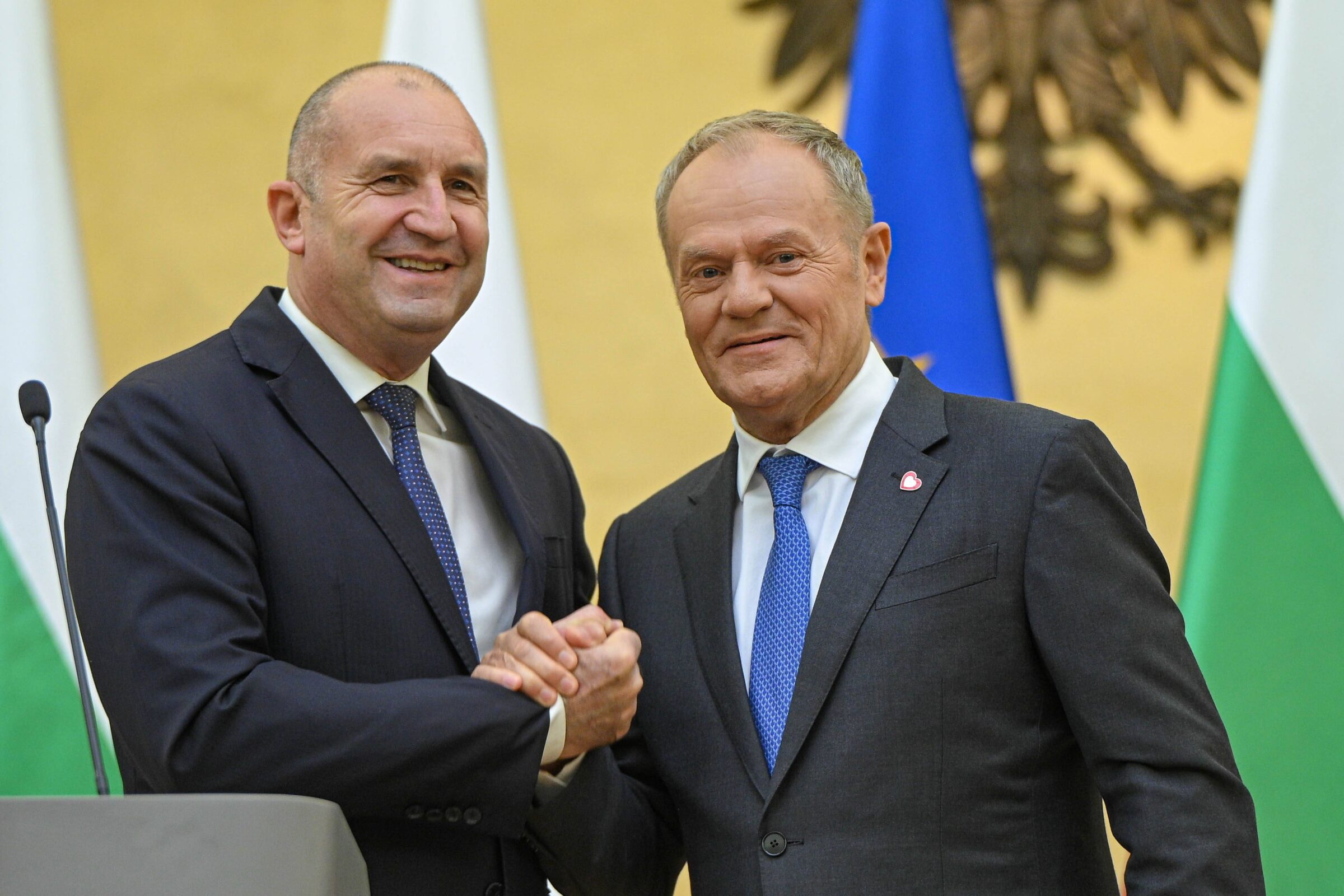
The Alfa Watan, a ship sailing under the flag of Togo, and the Able, a vessel flying the flag of Palau, were targeted by naval and aerial drones on Tuesday (6 October) morning in the Black Sea near the Bulgarian coast.
The Alfa Watan sank, and rescuers at the scene found only an overturned boat, life jackets, and fragments of the ship’s equipment, according to Bulgarian prime minister Rumen Radev.
The 18-member crew of the Able caught fire, but was successfully evacuated to the port of Varna.
“This is an unacceptable attack in Bulgaria’s exclusive economic zone,” Radev said after an emergency government meeting on Tuesday.
Bulgaria had discussed the drone attack inside the EU and Nato, he added.
It came after a drone also sank a Turkish-owned grain ship, the Royad Mammadov, killing two sailors, on Monday.
But even though Ukraine’s president Volodymyr Zelensky was quick to blame Russia, the perpetrators have not been formally identified yet, in a grey-zone conflict in which deniability is a tactic.
Russia and Ukraine have been escalating attacks on ships for several months in an effort to disrupt each other’s export economies.
And Moscow’s attacks have largely halted Ukraine’s maritime exports of agricultural products, while Kyiv’s attacks have forced Russia to seek alternative routes for exports.
“The situation in the Black Sea is increasingly concerning,” said EU Commission’s president Ursula von der Leyen on X on Tuesday.
Ukraine has “proposed concrete steps to de-escalate the situation”, also said Zelensky.
But for all his good will, the attacks were just part of a broader deterioration in Europe’s security environment, covering also Nato’s eastern and southern borders.
‘Shadow war’
For Czech president Peter Pavel, speaking to Czech daily Deník N on 22 September, the most imminent danger came from a false-flag attack in Estonia or Latvia, to test Nato’s resolve.
This article continues, but the full version is available only to EUobserver.com subscribers. Visit account.euobserver.com/membership
The right-populist leader deserves scrutiny but offers clarity on Russia–Ukraine and Iran.
The frontrunner in France’s 2027 presidential race—Marine Le Pen from the right-wing National Rally party—has laid out foreign-policy views that American supporters of realism and restraint can approve of, regardless of how they feel about the rest of her program.
While the National Rally has been successfully marginalized and kept out of power in recent decades, one shouldn’t take it for granted that the French political establishment will find a way to thwart Le Pen—meaning her views could certainly become policy. The latest polls show the consolidation of her lead: According to Toluna-Harris Interactive, in a runoff she would take 57 percent against the centrist candidate (and a former prime minister under President Emmanuel Macron) Édouard Philippe and a staggering 69 percent against Jean-Luc Mélenchon, a far-left firebrand.
Of course, the spring of 2027, when the elections are to take place, is still a long way off. Political fortunes can change—as the left-wing outlet Mediapart’s recent investigation into old social media posts written by a teenage Jordan Bardella, now the National Rally president, is meant to demonstrate—but the National Rally’s supporters see such attacks as evidence of the establishment’s ill-fated and cynical effort to derail Le Pen.
Whatever you may think of her, at least her foreign policy views are coherent. On Iran, Le Pen—once labeled a “Trump ally”—offered a far clearer assessment than Macron with his equivocations. “We would still need to know what Trump wanted to do there,” Le Pen said. “Because for now, we still do not know what he wanted to do. He clearly has not achieved his war aims and he is setting the whole planet on fire.” While Macron tends to caveat his criticisms of Trump’s war with accusations that Iran has sought to destabilize the Middle East, Le Pen simply condemns the war on grounds that it’s bad for the French people.
She’s also warned of global inflation “that will have consequences for all peoples” and argued it is “better to convince the U.S. not to go and wage war against a country and an ancient civilization, a complicated country, and probably much more powerful than Donald Trump imagined.”
The events have confirmed Le Pen’s judgement. A civilization of 90 million people with millennia of history cannot be simply bombed away, as Trump (and the Republican Party) are learning to their distress heading into a difficult midterm election season. Le Pen is well aware that the people in France, like elsewhere, are paying the price for this adventure.
On Ukraine, Le Pen has been equally direct while diverging from Macron more dramatically. She warned the conflict has only two possible trajectories: “Either NATO is drawn into this war, and it will be the Third World War, or we will witness a hundred years’ war.” She has called for a major peace conference, made clear she is willing to talk to both President Vladimir Putin of Russia and President Volodymyr Zelensky of Ukraine, and insisted that Germany, Poland, and Turkey be brought into the negotiating process.
She has gone even further, promising to halt French military aid to Ukraine, on the grounds that France cannot afford to sustain the amount of assistance Macron has been authorizing. Here she will have to explain herself in greater detail. A blanket cutoff is not a serious policy if the goal is to bring the war to an end as soon as possible—any settlement would require Kiev’s consent, as well as Moscow’s.
But neither can “support Ukraine for as long as it takes” work without a clearly defined end-game, and France’s fiscal situation dictates it cannot remain the default policy. Negotiations with all parties, including Russia, should not be treated as an appeasement or betrayal. Any serious attempt to settle the war would require Ukraine to make painful compromises on its NATO aspirations and territorial integrity, while Russia would have to compromise too on credible security guarantees for Ukraine or at least a greenlight for Kiev to rebuild and maintain a credible conventional military deterrent. Le Pen has identified the problem and signaled openness to unavoidable parts of the solution, but she still needs to explain the strategy.
Compare that with what the mainstream is offering. Macron is playing up the “Russian threat” and apparent hybrid attacks by Moscow against Europe. Meanwhile, according to the well-informed Le Figaro journalist Georges Malbrunot, French intelligence officers, while acknowledging the threat, believe that Macron overstates it. Macron’s aim, Malbrunot writes, would be to “steer the choices of the French ahead of the presidential election, targeting Le Pen and Melenchon—the two extremes that are lenient toward Russia.”
In a similar vein, Le Pen’s center-right rival, Edouard Philippe, lashed out at her, saying that “weakening Ukraine, as Marine Le Pen wishes, is threatening the security of Europe and France. I will do everything to prevent it.”
Then there is Gabriel Attal, Macron’s protégé and a possible successor. He delivered a grand speech in Reims calling for a “United States of Europe.” Europe’s security, he said, is being attacked by Russia, its economy by China, and its values by the United States. The remedy is a federalist utopia that he promises to build in “a matter of years.”
There might be a compelling case for EU nations to deepen their economic and technological integration. But the grandiloquent federalism talk sounds tone-deaf when what the French voters care most about is purchasing power, immigration, and French security.
This is the state of France’s foreign policy debate. The mainstream candidates are frightening voters with threat narratives, selling unachievable federalist fantasies, and equivocating on the U.S. war with Iran. The one major candidate discussing how to end wars rather than prolong them, and how to engage non-Western great powers rather than simply pick “a good” side over “an evil” one, is described by the establishment as extremist.
This does not mean Le Pen deserves uncritical support. Her historic ties to Russia warrant scrutiny, and her promise to halt aid to Ukraine needs to be coupled with a more detailed policy proposal and a broader strategy to end the war.
She is right on Iran, but her party has also forged close ties with Israel, seemingly based on a common antipathy to Islamism and to fend off accusations of antisemitism. On the Middle East, it remains to be seen whether national interest or ideological anti-Islamism will primarily inform her policies should she be elected president. Also, given her party’s lingering toxicity among the French elites, it’s far from clear that a President Le Pen would be able to attract diplomatic talent from the center-right to translate her instincts into workable policies.
But these are debates worth having. It is no longer credible to simply dismiss Le Pen and offer fearmongering and fantasy as a substitute for a debate. Perhaps the French establishment should ask itself an uncomfortable question: Why is it that voices advocating for diplomacy and sanity come from the camps they call “extreme” (both on the right and on the left)? Instead, the mainstream should make the language of diplomacy and peace its own. If it doesn’t, it should not be surprised when voters turn to those who do.
There are still three weeks until the next round, and Lula could still win, but it’s gonna take a massive fight. Part of that fight is changing how the international media covers things.
With the Brazilian presidential election headed to a runoff, Luiz Inácio Lula da Silva is down 47% to 45% and faces a massive fight ahead. I wanted to give a quick analysis of what happened and where things are going next.
Lula Could Still Win if He Can Consolidate Support from Third Parties
Lula lost by only 2%, and several third-party candidates, who took a combined 8% of the vote, have publicly indicated they would not endorse Flávio Bolsonaro in the second round.
Likewise, 29 million Brazilians did not vote in this round of the runoff and may be persuaded to vote for Lula in the second round if they fear Bolsonaro.
While Brasil defeated Jair Bolsonaro narrowly in 2022, it swung right again, much like the United States. Voters are upset, and they are taking it out on the party in power.
On Tuesday, the Brazilian Senate is scheduled to vote on a measure that would shorten the Brazilian workweek from six days to five days. Bolsonaro has opposed this measure, and Lula could use the vote to mobilize workers’ support against the Bolsonaro team.
It’s a tough road ahead for Lula, but not impossible.
What Hurt Lula in the First Round?
Three primary factors hurt Lula in the first round. First, Lula’s age and the fact that the Workers’ Party (PT) has held the presidency in Brazil for 18 of the last 24 years.
The second is that the Brazilian corporate media constantly manufactured scandals against Lula.
Finally, the role that US President Donald Trump played in training and validating the right-wing in Brasil, while not decisive, provided critical support. Here’s what went wrong for Lula.
1. Lula is 80 & His Party Ruled Brasil for 18 of the Last 24 Years
Like former US President Joe Biden, one problem Lula faces right now is that he is 80 years old. He doesn’t look as sharp as he used to, while Flávio Bolsonaro is nearly half his age—45 years younger.
Additionally, Lula’s party, the Workers’ Party (PT), has held the presidency for 18 of the last 24 years. Lula and Dilma, both members of the Workers’ Party (PT), held the presidency from 2002 to 2016. Lula was reelected in 2022 for his record third term. No Brazilian has ever won a third term.
Although the PT has rarely controlled Congress, it is seen as the ruling party because it has held the presidency for 18 of the last 24 years. Voters are likely to associate any problems in the country with the PT, which has held the presidency for so long.
While Brasil defeated Jair Bolsonaro narrowly in 2022, it swung right again, much like the United States. Voters are upset, and they are taking it out on the party in power.
Even worse, Lula failed to recruit young candidates, who may have excited voters to turn out in tight races. In what should have been a competitive Senate election in Rio de Janeiro, the PT recruited 84-year-old Bendedita da Silva, who lost in a landslide to Bolsonaro allies.
Last week, Lula skipped the presidential debate; so did Bolsonaro and its unclear how much this decision might have hurt him.
Lacking excitement, nearly 29 million Brazilians did not vote despite it being obligatory in Brasil.
2. Brazilian Media Manufacturing Scandals Against Lula
The Brazilian media market is extremely consolidated, and the heads of major networks like Globo have been going after Lula hard. They have been accused of manufacturing scandals against Lula.
Last November, the financial institution Banco Master collapsed amid allegations of massive fraud. The bank was being run like a Ponzi scheme, resulting in the largest financial collapse in Brazilian history, with nearly $8 billion in investors’ funds lost.
Despite Banco Master CEO Daniel Vorcaro being a very vocal Bolsonaro supporter, the Brazilian media has repeatedly tried to link the scandal to Lula’s Workers’ Party, as Vorcaro cultivated political ties on both sides of the aisle.
Every attack on Lula by the Trump administration generated headlines in Brasil and validated the wild claims made by Bolsonaro allies of a flawed Brazilian justice system.
Lula’s son, businessman Fábio Luís da Silva, commonly known as “Lulinha,” was scrutinized over large bank accounts worth millions of dollars. For months, Lulinha has offered to open his books and has claimed that he received no special favors from Banco Master. Still, the media repeatedly raised questions about Lulinha’s alleged impropriety.
At one point, media giant TV Globo made a giant infographic web with arrows, showing a complex network linked to Lula. Other reporters widely ridiculed the conspiracy theory map, and TV Globo eventually had to apologize publicly on air.
Then, in May, The Intercept Brasil released a WhatsApp message from Flávio Bolsonaro to Vorcaro, asking him for more than $26 million to fund a strange English-language biopic named Dark Horse, about his father. In the film, Jair Bolsonaro is portrayed by right-wing American actor Jim Caviezel, who played Jesus in the controversial 2004 film The Passion of the Christ.
Polling throughout the spring and summer showed Lula leading as the scandal remained fresh in people’s minds. Then, the Brazilian corporate media went into high gear to attack Lula. They went after Supreme Court Justice Alexandre de Moraes, who led the prosecution that jailed Bolsonaro.
Moraes has accused Brazilian Supreme Court Justice André Mendonca, a Bolsonaro appointee, of failing to follow proper procedure in his handling of the Banco Master scandal, leaking information to the press on Lula’s political allies while hiding information on Bolsonaro’s allies.
Moraes asked the Brazilian Federal police to investigate Mendonça’s violation of federal investigation procedures and for selectively leaking information to the press that would make Lula allies look bad while suppressing information on Bolsonaro allies.
Moraes accused Mendonça of attempting to “steer the production of evidence toward falsely accusing Supreme Court justices of crimes, expressly naming Justices Gilmar Mendes, Dias Toffoli, Luiz Fux, Alexandre de Moraes, and Nunes Marques, as well as the prosecutor general and the director-general of the Federal Police.”
3. Trump Trained and Emboldened Bolsonaro Allies
While I don’t want to underestimate the strength of fascists within Brasil, it’s important to note that Trump and his operatives did help the Bolsonaro family pull off an impressive comeback.
In March 2025, Eduardo Bolsonaro fled to the United States rather than face prosecution in Brasil for his role in trying to orchestrate a coup, and he was granted permanent residency status in July. While in the United States, Eduardo Bolsonaro has worked closely with Trump officials, including Special Presidential Envoy for Special Missions Richard Grenell, to oust Lula from power.
Eduardo Bolsonaro worked closely with top Trump aides like Brad Parscale, Trump’s director of digital strategy, to learn the social media strategy that led Trump to win reelection.
As president, Trump worked hard to attack Lula. He placed punitive tariffs on Brazil for convicting Jair Bolsonaro, Eduardo’s father, for attempting to assassinate Lula and overthrow his government in 2022. These tariffs hurt Brasil’s economy.
More importantly, Trump’s constant denunciation of the jailing of Bolsonaro validated conspiracy theories of right-wingers that the justice process was flawed. When Alexandre de Moraes, who led Bolsonaro’s conviction, was implicated in the Banco Master scandal, it only reinforced these conspiracy theories.
Ahead of the Brazilian presidential election, the Trump administration has labeled Brasil as a major distributor of cocaine and attempted to paint Lula as weak on taking on drug gangs.
In June, the Trump administration labeled two gangs as “terrorist organizations,” something which the Lula administration has repeatedly resisted because of fears of how the Trump administration could intervene in law enforcement and military matters in Brasil.
Still, every attack on Lula by the Trump administration generated headlines in Brasil and validated the wild claims made by Bolsonaro allies of a flawed Brazilian justice system.
International Media Failed to Check Brazilian Media
Finally, the international media completely ignored the Brazilian presidential election, allowing corporate media within Brasil to dominate the conversation without any accountability from the international media.
There are still three weeks until the next round, and Lula could still win, but it’s gonna take a massive fight. Part of that fight is changing how the international media covers things.
Payday Report can help play a small role in getting the US press more involved. The Washington Post once cited Payday Report in a front-page story for changing the way the pandemic strike wave was discussed, and maybe we can play a small role in getting American reporters to pay attention.
Quello che racconterò in questo articolo è meno tecnico e più personale del solito. Si tratta delle informazioni raccolte in alcune giornate di dialogo, confronto e, a quanto pare, una domanda “scandalosa” che è diventata lo scoop dei media europei, perché ho chiesto al Presidente della Federazione Russa, Vladimir Vladimirovic Putin, cosa ne sarà dell’Europa.
Potete trovare il video integrale del discorso di Vladimir Putin al Valdai qui.
Il mio intervento e le risposte di Putin le trovate qui.
Quest’anno il Valdai non si è riunito a Soči. Gli inviti spediti in estate indicavano ancora la città sul Mar Nero, poi a fine agosto gli organizzatori hanno comunicato il trasferimento nella regione di Mosca. Secondo il Meduza, a pretendere lo spostamento è stato il Servizio federale di protezione, preoccupato dalla minaccia dei droni ucraini dopo un’estate di attacchi alle raffinerie della costa. Il dettaglio logistico ha un suo peso. La guerra, di cui al Valdai si parla sempre nel linguaggio del sistema internazionale, entra ormai anche nell’organizzazione materiale del forum.
La XXIII Riunione annuale si è svolta dal 28 settembre al 1° ottobre sotto un titolo che a un europeo suona quasi come una domanda personale: «Responsabilità per il futuro: i limiti del possibile o possibilità senza limiti?». L’apertura è stata affidata al rapporto annuale del Club, Keep Calm. Lo Stato e la responsabilità per il futuro, che gli autori presentano con una strizzata d’occhio a Kubrick come un manuale per smettere di preoccuparsi e imparare ad amare il disordine. Seguivano nove sessioni tematiche, una sessione speciale e, l’ultimo giorno, la plenaria con il Presidente.
Sono arrivato da italiano e da europeo, sapendo che in quelle sale le due qualifiche pesano in modo diverso. Nel corso della settimana ho parlato, in maniera particolare, con quattro interlocutori di alto livello: Sergej Karaganov, Maksim Oreškin, Sergej Lavrov e, durante la plenaria, Vladimir Putin. Le prime tre conversazioni si sono svolte a margine delle sessioni e le restituisco dai miei appunti, nella sostanza e non parola per parola. Il quarto scambio è pubblico e documentato dalla trascrizione, dalla quale cito direttamente.
Presi uno per uno, i quattro dialoghi dicono cose che chi segue il dibattito russo conosce. Messi in fila disegnano qualcosa di più preciso: una diagnosi condivisa sull’Europa e quattro modi diversi di trarne le conseguenze. E, soprattutto, un futuro per niente luminoso.
Karaganov: l’Europa come origine del male
Sergej Karaganov è tra i fondatori del Club Valdai, presidente onorario del Consiglio per la politica estera e di difesa e da anni la voce più radicale del realismo russo. Con lui la conversazione è partita subito dal punto più duro. L’Europa, ha detto, è la radice di ogni male. Se venisse distrutta, nessuno ne sarebbe addolorato. Un conflitto nucleare tattico sul suo territorio non coinvolgerebbe altri attori. Gli europei hanno avuto tutto il tempo per trovare una soluzione ai propri problemi; ora che hanno scelto di prepararsi alla guerra contro la Russia, è troppo tardi per offrire loro un’altra possibilità.
Devo essere sincero, non sono mai stato un fan di Karaganov, spesso ho trovato le sue posizioni troppo radicali e all’antica. Ma a partire da un caffè dopo pranzo insieme, per poi proseguire in una settimana di dialoghi, ho scoperto che la pensiamo in maniera molto simile e che le sue posizioni non sono affatto banali. Chi ha letto i suoi interventi recenti riconosce la linea. Nel giugno 2023 Karaganov aveva sostenuto pubblicamente che la Russia dovesse abbassare la soglia d’impiego dell’arma nucleare per restituire credibilità alla propria deterrenza e indurre l’Occidente a ritirarsi dal conflitto ucraino. Una parte di quell’impostazione è poi entrata nei documenti ufficiali: i Fondamenti della politica statale della Federazione Russa nel campo della deterrenza nucleare, aggiornati nel novembre 2024, trattano come attacco congiunto l’aggressione di uno Stato non nucleare condotta con la partecipazione o il sostegno di una potenza nucleare.
Nelle sue parole convivono però tre affermazioni di natura diversa, e conviene tenerle separate. La prima è un giudizio storico-civilizzazionale: l’Europa come matrice delle grandi catastrofi della modernità, dalle guerre mondiali al colonialismo. È una tesi che Karaganov argomenta da tempo e che si può contestare, ma appartiene al terreno dell’interpretazione. La seconda, che nessuno piangerebbe l’Europa, è una previsione sulle reazioni altrui; per quel che ho potuto osservare in quei giorni, trova ascolto in una parte non piccola dei partecipanti asiatici, africani e latinoamericani. La terza è un’ipotesi strategica e regge tutto il resto: un’escalation nucleare in Europa resterebbe confinata all’Europa.
Su questo punto la letteratura sulla deterrenza discute da settant’anni e le prove empiriche, per fortuna, mancano. Il dato che complica l’ipotesi è interno all’Europa stessa. Francia e Regno Unito dispongono di arsenali nazionali, e nel marzo 2025 Parigi ha aperto formalmente il dibattito sulla dimensione europea della propria dissuasione. Un conflitto nucleare «solo europeo» presuppone che due potenze nucleari europee restino a guardare. È l’assunto più fragile dell’intera costruzione, e lo è indipendentemente da come si giudichino gli altri due.
Va poi ricordato che Karaganov non parla a nome del governo. Al Valdai rappresenta il polo del dibattito russo che spinge il Cremlino verso posizioni più nette, e una delle sue funzioni è proprio spostare il confine di ciò che si può dire. Letto così, il suo «troppo tardi» è un’indicazione di tendenza più che di dottrina.
Oreškin: il mercato che non c’è più
Con Maksim Oreškin il registro è cambiato del tutto. Vice capo dell’Amministrazione presidenziale, già ministro dello Sviluppo economico e poi consigliere economico del presidente, Oreškin ragiona per flussi e bilanci. La sua formula è stata secca: l’Europa è finita. Sul mercato energetico non esiste più una competizione che possa reggere, perché Cina e India occupano ormai il primo posto tra i clienti della Russia. E non vi sono ragioni per investire in un salvataggio europeo, dal momento che agli europei, fino a oggi, non è interessato trovare una soluzione pacifica e ragionevole. La domanda che gli avevo posto nell’incontro con i partecipanti del Valdai era stata: “Considerando che non è più disponibile il gasdotto Nord Stream 2, perché è stato sabotato, avete intenzione di trovare un nuovo sistema di trasporto energetico, sempre che l’Europa si riappacifichi e la situazione diplomatica torni positiva?”. La sua risposta netta – e forse brutale – è come un pugnale di verità che viene piantato nella coscienza di ogni abitante dell’Europa.
«Finita» va inteso in senso tecnico. Oreškin non parlava direttamente della civiltà europea ma dell’Europa come controparte: un mercato che ha smesso di essere centrale per la Russia e che quindi non giustifica concessioni politiche per essere riconquistato. Dopo il 2022 il greggio russo ha trovato in Cina e India i suoi principali acquirenti, mentre Bruxelles, con l’accordo tra Consiglio e Parlamento europeo del dicembre 2025, si è impegnata ad azzerare entro il 2027 le importazioni di gas russo, gasdotto e GNL compresi. L’interdipendenza energetica che per mezzo secolo aveva tenuto in contatto Europa e Russia anche nei momenti peggiori della Guerra fredda è stata smontata da entrambe le parti. Il ragionamento di Oreškin ne registra la conseguenza più semplice: chi non è più il cliente principale non ha più leva. Queste sono le leggi del mercato, e né a Londra, né a Berlino, né a Bruxelles ci sono più politici o gruppi di potere che possano dire alla Russia “che cosa fare”.
Il rovescio è noto anche a Mosca. Un mercato dominato da due grandi compratori consente loro di imporre sconti, e la sostituzione dell’Europa con l’Asia ha un costo in termini di prezzo e di accesso alle tecnologie. Ma nella logica che mi è stata esposta la domanda non è più se l’Europa convenga alla Russia. È quanto costerebbe tornare a farla convenire, e la risposta implicita è che quel costo spetta agli europei.
Lavrov: la porta chiusa a «questo» assetto
Con Sergej Lavrov il discorso si è spostato dall’economia alla diplomazia, senza cambiare la conclusione. L’Europa, ha detto, ha avuto molte possibilità di ristabilire un dialogo con la Russia e ha preferito alimentare lo scontro diretto. Ora è tardi per tornare indietro: sono stati superati tutti i limiti e con l’attuale assetto europeo non c’è modo di tornare alle relazioni precedenti.
Vorrei che ci soffermassimo un attimo sul peso di queste parole. Chi conosce Lavrov sa che è un politico capace di pesare ogni parola con una grande intelligenza, anche in contesti più rilassati come il Summit del Valdai. “I limiti sono stati superati”. Sarebbe inutile fare l’elenco di questi limiti, perché sono talmente evidenti a davanti agli occhi del mondo intero, che sarebbe solo una perdita di tempo. Ma lo sguardo con cui Lavrov ha parlato dell’Europa, quello non lo dimenticherò mai. Lo ho incontrato molte altre volte, ma in questa occasione c’era qualcosa di diverso.
Il ministro ha alle spalle un elenco di occasioni che la diplomazia russa richiama con regolarità: gli accordi di Minsk, le bozze di trattato sulle garanzie di sicurezza consegnate a Stati Uniti e NATO il 17 dicembre 2021, i negoziati di Istanbul della primavera 2022. La lettura russa di ciascuno di questi passaggi è controversa, e in Europa la si contesta. A me interessa qui un altro elemento, una qualificazione che riletta dopo la plenaria si è rivelata la chiave dell’intera settimana. Il ritorno è impossibile con questo assetto europeo. Non con l’Europa, con il suo assetto attuale, ovvero la UE e la NATO. La chiusura riguarda una classe dirigente e un’architettura istituzionale, non i Paesi che ne fanno parte.
Quanto è stata abusata la pazienza russa, mi chiedo, per arrivare a dire queste cose? La letteratura classica russa ci regala degli esempi mirabili di come i politici russi siano capaci di prendere tempo, ignorare, pazientare. E non si può negare che ciò sia stato costantemente l’atteggiamento della classe dirigente russa negli ultimi anni di conflitto. Per giungere a dire che il limite è stato superato – cosa che dirà poi anche Putin nella sessione plenaria del summit – vuol dire che non ci sono più forze da sprecare nell’attesa paziente; vuol dire che l’Orso è stato svegliato dal suo letargo nel momento sbagliato; vuol dire che le conseguenze di queste azioni avranno un peso epocale.
Un’altra cosa ha aggiunto Lavrov: “Siamo pronti a colpire l’Europa in maniera esemplare, non come abbiamo fatto in Ucraina”. Segnatevi queste parole, cari amici europei. Rileggetele e meditate sul loro peso. Non serve aggiungere altro.
Un professore italiano fa una domanda a Putin
Veniamo ad uno dei momenti più pericolosi della mia carriera. La plenaria si è svolta, come da tradizione, con il presidente russo e la moderazione di Fëdor Luk’janov. Ho preso la parola e ho posto una domanda in due parti:
«Vengo dall’Italia, Paese che attualmente non ha buoni rapporti con la Russia. In quanto europeo, vorrei chiederle: quali condizioni porrà la Russia per elaborare un nuovo sistema di sicurezza per i Paesi europei? E, se immaginiamo un’Europa post-Unione Europea, lei la considererà come parte di un grande partenariato eurasiatico oppure, a suo avviso, Stati Uniti e Russia saranno sempre in competizione per questi territori?»
Putin ha cominciato dalla seconda parte, e l’ordine non è casuale:
«L’Italia si trova per l’appunto in Europa e io parlo di partenariato eurasiatico: va da sé, quindi, che considereremo e già consideriamo anche l’Italia un partner eurasiatico.»
Subito dopo ha chiarito che il destino dell’Unione Europea, e la permanenza dell’Italia al suo interno, «non è affar nostro». Mosca non intende nemmeno discuterne, perché qualunque parola in merito verrebbe letta come un tentativo di disgregare l’UE, «mentre noi non vogliamo disgregare un bel niente. Noi vogliamo soltanto costruire e cooperare».
Sulle condizioni per un nuovo sistema di sicurezza la risposta è stata netta: «non abbiamo alcuna condizione preliminare». L’ostacolo, nella sua ricostruzione, sta dall’altra parte. Alcuni politici europei ritengono inammissibile che un singolo Paese apra un dialogo con la Russia, e Putin ha definito questa pretesa un diktat più forte di quello dell’epoca sovietica. Il paragone è stato costruito con cura: l’URSS era uno Stato unitario e fortemente centralizzato, le cui Repubbliche facevano parte di un’unica compagine statale; l’Unione Europea in teoria non lo è, ma in pratica si comporta come se lo fosse. «A noi non lo vieta nessuno, siamo pronti.»
A quel punto Luk’janov è intervenuto con una provocazione da moderatore esperto: visto che a Bruxelles lo vietano, non converrebbe contribuire un po’ alla disgregazione dell’UE, così da trattare più facilmente con i singoli Paesi? La risposta è arrivata senza esitazioni: «Ma non serve, si disgregheranno da soli.»
Poi Putin si è rivolto direttamente a me. «Il nostro collega italiano lo sa meglio di noi», ha detto, e ha cominciato a fare i conti: debito pubblico italiano al 140%, deficit intorno al 3%, in altri Paesi europei vicino al 5%. Le cifre erano arrotondate ma non lontane dal vero. Secondo Istat ed Eurostat, a fine 2024 il debito pubblico italiano era pari al 135,3% del PIL e l’indebitamento netto al 3,4%. Il senso del passaggio, comunque, non stava nei decimali. Tutti i problemi cominciano con l’economia: il tenore di vita cala, i disoccupati aumentano, i cittadini delle principali economie europee lo avvertono sulla propria pelle, e questo, ha detto, «mina anche le fondamenta stesse dell’Unione Europea. Ma non è affar nostro, noi non c’intromettiamo».
La chiusura ha riproposto l’offerta in forma simmetrica: dialogo con l’Unione nel suo complesso, se l’Unione lo desidera, oppure con i singoli Paesi, senza condizioni preliminari. «Ma di condizioni preliminari non devono essercene neppure da parte europea.»
Provare a comprendere la grandezza di queste parole, l’equilibrio politico che ne traspare, la forza di uno statista che ha a cuore non solo il bene del proprio Paese, ma anche quello di un intero altro continente, è un vero esercizio di apprendimento di cosa sia la Politica.
Ascoltatevi l’intero intervento di Putin e capirete come, in meno di cinque minuti, sia possibile fotografare la decadenza dell’Europa intera, sotto tutte le sue sfaccettature, e allo stesso tempo ribadire, con malinconia, che la Russia ha fatto di tutto per dare il proprio aiuto. Ma le scelte degli europei sono degli europei, sotto qualsiasi bandiera essi si trovino. La Russia rispetta e rispetterà sempre i principi fondamentali della propria politica estera e della propria tradizione politica. Nessun messianismo miracoloso, nessun salvatore improvvisato.
L’Europa, anzi gli europei di questa Europa, cosa hanno intenzione di fare?
Rileggendo gli appunti di viaggio
Rileggendo gli appunti al ritorno, la prima cosa evidente è la convergenza. Lo stratega, l’economista, il capo della diplomazia e il Presidente hanno espresso, ciascuno nel proprio linguaggio, lo stesso giudizio: l’Europa attuale ha esaurito il proprio credito presso Mosca. La seconda cosa evidente è che da quella diagnosi ognuno ricava una conseguenza diversa.
In Karaganov la conseguenza è coercitiva e ha un tono quasi escatologico: l’Europa ha avuto la sua occasione e ciò che segue non è più affare di diplomazia. In Oreškin è indifferenza contabile: l’Europa non vale l’investimento necessario a recuperarla. In Lavrov è una chiusura diplomatica circoscritta, rivolta all’assetto e non ai popoli. In Putin, infine, la porta torna aperta, ma verso gli Stati e non verso Bruxelles, accompagnata dall’attesa che l’erosione economica faccia il resto.
La contraddizione apparente tra il «troppo tardi» dei primi tre e il «nessuna condizione preliminare» del quarto si scioglie proprio nella qualificazione di Lavrov. Ne risulta una linea coerente, che chiamerei di bilateralizzazione: Mosca non tratta con l’Unione come soggetto politico finché la sua dirigenza resta quella attuale, offre ai singoli Stati membri canali senza precondizioni e lascia che siano le difficoltà interne europee a rendere quei canali attraenti. Il riferimento all’Italia come partner eurasiatico «già oggi» va letto dentro questa cornice: non è una cortesia, è l’indicazione di quale interlocutore Mosca preferisce.
Non posso certo affermare che i quattro interlocutori d’eccezione si fossero messi d’accordo, è ovvio, ma questa convergenza l’ho trovata veramente “profetica”. Il Valdai è da sempre il luogo in cui il dibattito russo mostra la propria ampiezza davanti a un pubblico straniero. Posso dire che sono compatibili e che si rafforzano a vicenda: la durezza di Karaganov fa apparire moderata l’offerta di Putin, i numeri di Oreškin rendono credibile che Mosca non abbia bisogno di fare concessioni, la formula di Lavrov tiene insieme la chiusura e l’apertura.
La crisi dei debiti sovrani del 2010–2012 produsse il Meccanismo europeo di stabilità e l’unione bancaria; la pandemia produsse Next Generation EU e il primo debito comune su larga scala. Nell’Unione le crisi hanno generato almeno tanta centralizzazione quanta frammentazione. «Si disgregheranno da soli» è dunque una scommessa, non un’osservazione, anche se la scommessa costa poco a chi la fa: se l’Unione regge, Mosca ha comunque offerto il dialogo; se cede, ha già pronti i canali bilaterali.
Gli indicatori da seguire nei prossimi dodici-diciotto mesi sono abbastanza chiari. Il primo riguarda le visite bilaterali a Mosca di capi di governo dell’Unione oltre ai precedenti di Viktor Orbán nel luglio 2024 e di Robert Fico nel maggio 2025. Il secondo è la tenuta dell’unanimità nei rinnovi semestrali delle sanzioni, dove basta un veto per aprire una crepa. Il terzo sono le deroghe nazionali al calendario di uscita dal gas russo. Il quarto, il più significativo per noi, è l’eventuale apertura di un canale strutturato da parte di una grande capitale, Roma inclusa.
Cosa mi porto a casa? Da italiano, la frase che porto con me non è quella sulla disgregazione, è l’altra, «già consideriamo anche l’Italia un partner eurasiatico». Contiene un’offerta e un’osservazione rivolta a noi. Se la porta che Mosca dice aperta è chiusa, lo è da questa parte, e a chiuderla non è stata Roma per una decisione propria.
Per quanto tempo un Paese con un debito oltre il 135% del PIL possa permettersi di lasciare ad altri la decisione su chi può parlare con chi, a Mosca nessuno me l’ha chiesto. È una domanda che mi sono portato a casa da solo. E la risposta la conosce ogni italiano di retta coscienza, ogni europeo che abbia ancora un cuore.
Democratic US Senator Chris Murphy said Tuesday that the Pentagon had denied him access to a US military base in Qatar and refused to arrange a briefing on the US-Israeli war on Iran during his regional tour.
Speaking to journalists in Riyadh, Murphy accused the department of deliberately obstructing congressional scrutiny of the war and concealing its consequences from the American public.
“This trip confirmed for me that there is an active, unprecedented, unconstitutional effort underway to hide the costs of this war and the implications of this war from Congress and the American people,” he said, as quoted by Reuters.
Murphy urges Republicans to challenge Pentagon secrecy
Murphy called on Republican senators to confront the deliberate obstruction by the Department of War.
“I’ve never encountered anything like this in my time in the Senate and it’s part of a deliberate campaign of obfuscation that my Republican colleagues in Congress should demand an end to,” he said.
The senator said the Pentagon had denied him access to Al Udeid Air Base in Qatar, the largest US military base in the region. The installation has come under repeated Iranian retaliatory strikes since the US-Israeli aggression against Iran began in February.
He also said the department had declined to organize a briefing on the war while he was visiting the region.
Diplomatic meetings proceed despite military restrictions
Murphy contrasted the Pentagon’s conduct with that of US Secretary of State Marco Rubio, whom he credited with helping organize the trip and facilitating meetings with diplomats.
His regional discussions included talks with Qatari Emir Sheikh Tamim bin Hamad Al Thani and Saudi Crown Prince Mohammad bin Salman, alongside other senior Gulf officials.
Riyadh was the second stop on the senator’s tour, following his visit to Qatar.
Il 30 settembre, termine ultimo per una possibile mossa militare iraniana contro il blocco navale di Trump , è passato senza che l’Iran intervenisse. L’Iran ha mantenuto la sua posizione, senza però sferrare l’attacco decisivo contro la Marina statunitense (che è così lontana) impegnata nel blocco. Ma lo spettacolo deve continuare. Come piano B, abbiamo assistito a uno spettacolo in prima serata, in realtà una doppia farsa: la riedizione dell’11 settembre su FlyDubai.
Questa patetica trovata non è mai stata un “attacco terroristico”; si è trattato di una mediocre operazione psicologica del Mossad, confezionata in modo approssimativo e arricchita da una serie di comparse improbabili, tra cui un idraulico che ha preso i comandi dell’aereo perché lo aveva visto in televisione.
I manipolatori erano il culto della morte in Medio Oriente, gli stessi Emirati Arabi Uniti e Washington. La narrazione ufficiale è per persone con un QI inferiore a 50: un copilota “jihadista” – guarda caso proveniente dall’Oman, perché la demonizzazione lo richiede – tenta di far schiantare un aereo pieno di sionisti. I proverbiali passeggeri eroici – idraulico incluso – lo sopraffanno a mani nude.
Il culto della morte sta facendo di tutto per assolvere gli emiratini da ogni responsabilità. L’attenzione è puntata sul “terrorista” omanita.
Ecco la combinazione perfetta: i musulmani sono e saranno sempre terroristi; il culto della morte è sempre una vittima; e l’Arabia Saudita deve consegnare il “terrorista” al culto della morte.
Un gioco da ragazzi, quindi, per un copilota contrabbandare un coltello nell’aeroporto ultra-sorvegliato di Dubai, a bordo di una delle rotte più sorvegliate del pianeta. E che dire dell’aeronautica militare, fanatica della morte, che non è riuscita a impedire l’atterraggio dell’aereo a Tabuk?
Perché il piano è sempre stato quello di atterrare a Tabuk. Si tratta della più grande base aerea saudita nel nord-ovest, e la più vicina a Israele; la setta della morte ha cercato per anni di ottenerne l’accesso. Ora potrebbero finalmente ottenere tutto: accesso allo spazio aereo saudita, informazioni riservate e altro ancora, grazie alla pressione congiunta di Abu Dhabi e Washington.
Presso Transition Protocol abbiamo appurato che quando il leader della setta della morte si è recato “segretamente” ad Abu Dhabi per incontrare il capo degli Emirati Arabi Uniti, MbZ, in un incontro bilaterale, potrebbe aver incontrato anche persone provenienti da diverse nazioni arabe, tra cui Qatar, Oman, Libia e Marocco.
L’Arabia Saudita ha negato categoricamente di far parte del pacchetto. Lo stesso ha fatto la Giordania. L’Oman compare solo attraverso una fonte israeliana. Non vi è alcuna conferma ufficiale da parte di Qatar, Oman, Marocco o Libia.
Teheran ha comunque reagito con estrema irritazione, avvertendo di “conseguenze molto pericolose”. La determinazione iraniana è chiara: non permettere che quei chihuahua facciano deragliare il processo fondamentale di riduzione al massimo dell’influenza statunitense e israeliana in Medio Oriente.
Islamabad, dal canto suo, continua a perseguire l’impresa sisifea di avanzare a piccoli passi verso un progresso minimo, mediando sia tra Arabia Saudita e Ansarallah, sia tra Stati Uniti e Iran.
Martedì scorso a Doha, il Qatar ha effettivamente consegnato al ministro degli Esteri iraniano Abbas Araghchi la risposta degli Stati Uniti. Lo scontro sembra riguardare la sequenza degli accordi, piuttosto che i singoli elementi. Il testo, così com’è, è una sorta di versione migliorata del famigerato memorandum d’intesa fallimentare, noto anche come Accordo quadro di Islamabad. Nessuno scommette che il carro morto risorgerà, ancora una volta.
Russia, Iran, Yemen: diamo una lezione a quei bastardi senza pietà.
Ora veniamo al dunque: lo Yemen. E a quale livello di annientamento sono disposti a infliggere a Riyadh i duri di Sana’a. La distruzione degli impianti petroliferi è fin troppo facile: basta un’apertura graduale. Lo Yemen è in preda alla furia. E non si fermeranno davanti a nulla.
Possiamo già osservare una sorprendente convergenza tra la Casa dei Saud, la Marina statunitense al di fuori della Persia e la NATO nel Paese 404: vengono tutti martellati senza pietà. Russia e Iran non hanno ancora iniziato. E parliamo dello Yemen.
All’inizio di questa settimana, Sergey Karaganov lo ha ribadito pubblicamente: lo Stavka russo ha finalmente preso la fatidica decisione di porre fine alle sofferenze dei neonazisti di Kiev. E in una sessione informale di due ore al Valdai, alle porte di Mosca, il Gran Maestro Sergey Lavrov, in totale relax, ha ribadito ancora una volta che la Russia è pronta per la guerra in Europa. E sì, sarà rapida. Senza esclusione di colpi.
Ansarallah e le Forze Armate yemenite attendono che tre fattori si combinino: un’inevitabile Ora Zero che risuoni in tutta l’Asia occidentale; la crescente tensione e l’esplosività degli scontri interni alla famiglia reale e tra le tribù in Arabia Saudita; e il perfetto incastro di tutti i pezzi del puzzle per scatenare la prossima Tempesta Yemenita sull’Arabia Saudita.
Allo stato attuale, Riyadh non riconosce alcun attacco proveniente dallo Yemen, mentre Sana’a annuncia ogni giorno, con precisione svizzera, il numero di raid aerei sauditi sullo Yemen, che prendono di mira mercati, fattorie, case, ponti, infrastrutture idriche, reti di telecomunicazioni: il proverbiale manuale del sindacato Epstein.
L’Iran, dal canto suo, ha già alzato la posta in gioco, colpendo il giacimento di Bu Hasa della ADNOC, a sud-ovest di Abu Dhabi: si tratta di uno dei più grandi giacimenti di petrolio e gas onshore degli Emirati Arabi Uniti, che alimenta lo strategico oleodotto Habshan-Fujairah, l’unica via di esportazione degli Emirati Arabi Uniti che aggira lo Stretto di Hormuz.
Il gasdotto East-West, di proprietà dell’Arabia Saudita, è stato colpito tre settimane fa e bombardato nuovamente dallo Yemen all’inizio di questa settimana, ad Abqaiq.
Colpire ADNOC e Abqaiq quasi simultaneamente potrebbe comportare la perdita di ben 13 milioni di barili di petrolio al giorno dal mercato. Non si ripete mai abbastanza che Iran e Yemen sono un tutt’uno. È questo il tutt’uno che conta, e nessun misero attacco informatico dell’11 settembre potrà cambiare le cose.
Latvian Prime Minister Andris Kulbergs has been given the political mandate to begin forming the country’s next government after his United List alliance secured 41 of the 100 seats in the Saeima. President Edgars Rinkēvičs backed Kulbergs to lead coalition negotiations on Tuesday following consultations with all six political forces elected to parliament.
Kulbergs will now negotiate the composition of the coalition, the division of ministerial responsibilities and the programme of the next government. The formal constitutional nomination cannot take place until the newly elected Saeima convenes on 3 November and the present government relinquishes its mandate.
Announcing the decision on 6 October, Rinkēvičs said consultations with the incoming parliamentary parties had shown broad support for United List and Kulbergs taking the initiative. The President described the party’s 41-seat showing as an unusually strong mandate and said he expected substantial progress in coalition negotiations before the beginning of November. The President’s full statement following the consultations.
Rinkēvičs said he would like to see a new Cabinet formed by Latvia’s national day on 18 November, although he stressed that there was no formal deadline. The government will also need to begin work rapidly on the 2027 budget.
Latvia First finished second with 13.08 per cent and 17 seats, while Sovereign Power/Alliance of Young Latvians took 11.71 per cent and 15 seats. The National Alliance won 10 seats with 8.90 per cent, the Progressives also secured 10 with 7.88 per cent, and New Unity took seven seats on 6.36 per cent.
The result represents a substantial change from the 2022 parliamentary election, when United List won 11.14 per cent and 15 seats. New Unity was then the largest party with 26 seats; it has now fallen to seven. The Union of Greens and Farmers, which won 16 seats in 2022 and joined Kulbergs’s government earlier this year, received just 4.40 per cent this time and failed to cross the five per cent threshold.
United List has indicated that its first choice is to negotiate with the National Alliance and New Unity. Together, the three parties would command 58 seats, providing Kulbergs with a clear parliamentary majority. A narrower United List–National Alliance coalition would have 51 seats.
The choice of prospective partners points towards continuity rather than a major change in Latvia’s foreign or security policy. United List, the National Alliance and New Unity have all backed continued support for Ukraine, membership of NATO and higher defence expenditure.
Kulbergs became prime minister only in May following the collapse of Evika Siliņa’s government during a political crisis over Latvia’s response to repeated drone incursions. The government he subsequently formed brought together United List, New Unity, the National Alliance and the Union of Greens and Farmers.
Latvia’s position on NATO’s north-eastern flank has given defence policy an unusually prominent place in domestic politics. The country borders both Russia and Belarus and has faced a series of drone incidents, border pressure and Russian information operations.
Defence spending is therefore unlikely to be substantially altered by the coalition negotiations. Latvia’s 2026 defence budget stands at €2.16 billion, currently calculated at 4.73 per cent of projected GDP, with the government moving towards expenditure equivalent to five per cent. Rinkēvičs said after Tuesday’s consultations that he had heard a clear commitment among the parliamentary parties to maintaining the country’s security, defence and foreign-policy course.
Turnout reaches record low
The size of United List’s parliamentary victory contrasts with a marked decline in electoral participation. The Central Election Commission recorded 806,641 voters from an electorate of 1.56 million, producing turnout of 51.79 per cent. Detailed election figures show that 793,846 valid ballots were ultimately counted.
Turnout in the 2022 parliamentary election was 59.41 per cent, meaning participation fell by more than seven percentage points.
The immediate question in Riga is therefore no longer who will lead the government-building process, but what form Kulbergs’s second administration will take. With 41 seats of his own and potential partners able to provide a comfortable majority, the election winner enters the negotiations from a considerably stronger position than any Latvian prime minister in recent years.
“Keep our city out of your reckless war talk,” said San Diego’s mayor, Todd Gloria, Monday night after President Donald Trump’s rambling speech at a rally in Nebraska included a particularly violent mention of the California city. Gloria was among several Democratic political leaders who were incensed after Trump – moments after predicted the Republican […]
Iran’s economic adaptation over decades, marked by domestic production, regional trade and Asian partnerships, is on course to thwart Washington’s economic terrorism.
US Treasury Secretary Scott Bessent’s prediction that Iran’s economy would soon collapse underscores the depth of delusion within the current American leadership.
“Iran is absolutely not sanctionable,” Deputy Economy Minister Mortaza Zamanian said this week as Tehran worked to keep trade flowing despite Washington’s latest sanctions campaign.
Zamanian cited Iran’s extensive borders, established commercial routes and longstanding trading relationships, saying that they make it impossible for external pressure simply to switch off the country’s economy.
His remarks came as Washington intensified its economic terrorism against Iranian oil, shipping, aviation, finance, technology and foreign companies supporting those sectors.
The new American campaign has been accompanied by extraordinary predictions from senior American officials, including Treasury Secretary Scott Bessent’s claim that Iran could have “nothing left to trade” within two weeks.
Speaking on September 27, Bessent claimed that Iran would probably make its final oil deliveries to China within two weeks, after which, he asserted, “they will have nothing.”
That prediction deserves comparison with history, because American administrations have imposed increasingly severe sanctions on Iran since 1979 while repeatedly expecting economic pressure eventually to produce collapse.
Yet the economy did not disappear, and Iran instead developed domestic industries, expanded regional commerce, strengthened trade with Asian powers and accumulated extensive experience operating outside Western financial channels.
The proposition that an economy which has absorbed American sanctions for almost half a century will suddenly disintegrate within two weeks therefore indicates the depth of delusion among the current US leadership.
Iran enters this confrontation possessing a large domestic market, extensive productive capacity, enormous energy resources and deeply established commercial relationships across Eurasia.
These are not temporary sanctions evasions assembled during the present crisis, but economic capabilities developed over decades through investment, industrial learning, regional integration and repeated adaptation to external restrictions.
The most important fact about Iran’s economic structure is its size, because a country with more than ninety million people possesses a domestic market capable of supporting extensive production independently of Western consumers.
The World Bank describes Iran as relatively diversified for an oil-exporting economy, with a substantial domestic market, a large workforce and significant activity across manufacturing, agriculture and services.
That domestic market sustains production across food, pharmaceuticals, construction materials, steel, petrochemicals, machinery, transportation, consumer goods and numerous intermediate industrial sectors serving Iranian households and companies.
Iran is therefore not an economy that must export continuously merely to keep its factories operating, because a substantial portion of its production already serves domestic consumption, investment and infrastructure.
That distinction becomes particularly important when external restrictions are designed around the assumption that cutting foreign trade will automatically paralyze domestic economic activity.
A country whose productive system is centered on domestic demand possesses an economic engine that continues operating even when international transactions become more complicated.
Iran has also spent decades building industrial capabilities specifically suited to its own resource base, population, infrastructure requirements and energy-intensive economy.
Steel production, petrochemicals, cement, refining, power generation, construction, food processing and pharmaceuticals represent substantial industrial ecosystems involving domestic engineering, manufacturing, logistics and skilled employment.
These capabilities have repeatedly expanded during periods when access to Western investment and technology was severely restricted, demonstrating that Iranian industrial development does not depend upon continuous Western participation.
Iran’s long exposure to sanctions has produced another asset that cannot be imposed or removed through a Treasury designation, namely a large body of accumulated technical and commercial experience.
When foreign manufacturers withdraw, Iranian companies have learned to redesign equipment, substitute components, develop domestic suppliers and work with companies from countries willing to maintain commercial relationships.
Academic research has documented this process in Iranian industries, including evidence that sanctions simultaneously restricted access to foreign technology while encouraging the development of domestic technological capabilities.
The resulting industrial knowledge extends beyond individual companies, because engineers, technicians, procurement specialists and managers have accumulated practical experience with restricted supply chains over successive decades.
A manufacturer that has operated under sanctions for years does not design its procurement system around the assumption that every international supplier will remain available indefinitely.
It develops alternatives as part of ordinary business planning, creating a commercial culture in which substitution, regional sourcing and domestic production are integrated into industrial decision-making.
This is one of the strongest reasons the prediction of sudden economic emptiness looks disconnected from Iran’s actual economic structure.
There is no single foreign supplier whose disappearance can remove Iran’s entire industrial capacity, because Iranian production is distributed across thousands of domestic enterprises and numerous regional supply relationships.
The system has been shaped by scarcity for so long that adaptation has become embedded within the operating methods of Iranian companies themselves.
Iran’s geographical position provides another form of economic strength that cannot be erased by financial sanctions, because the country physically connects several of the world’s most important commercial regions.
Iran borders Turkey, Iraq, Armenia, Azerbaijan, Turkmenistan, Afghanistan and Pakistan, while its southern coastline provides direct access to the Persian Gulf and Gulf of Oman.
Those borders connect Iranian commerce with the Caucasus, Central Asia, South Asia, the Persian Gulf, Turkey and Iraq, creating commercial possibilities extending in several directions simultaneously.
This geography gives Iran direct access to neighboring markets while also placing the country along important transportation corridors linking Russia, Central Asia and the Indian Ocean.
The significance of Zamanian’s argument is therefore practical rather than rhetorical, because no financial authority can relocate Iran away from its geographic position.
Goods can move through different borders, suppliers can be found in different countries and exporters can redirect shipments towards different markets when commercial conditions change.
Iran has consequently developed a regional trading system that does not depend upon one border, one port, one customer or one foreign economic relationship.
Its trade with Iraq, Turkey, the United Arab Emirates, Afghanistan, Pakistan, the Caucasus, Central Asia and China represents an extensive commercial geography developed through years of interaction.
The World Bank has documented precisely this shift, noting that Iranian trade has increasingly pivoted towards neighboring countries and China as sanctions have restricted conventional international economic relationships.
That transformation is now an established feature of Iran’s economy rather than an emergency measure invented after the latest American escalation.
China gives Iran’s economic system another dimension because it combines enormous industrial capacity with sustained demand for Iranian energy and other commodities.
In other words, Iran possesses access to a major global market even while facing comprehensive American restrictions on its oil industry.
China also supplies Iranian companies with machinery, manufactured products, electronics, industrial equipment and intermediate goods required across the domestic production system.
The relationship therefore operates in both directions, with Iran supplying commodities and China supplying industrial goods, creating a commercial relationship considerably broader than the simple sale of sanctioned oil.
Iran consequently does not need unrestricted access to every Western market when it possesses substantial trade relationships with China and numerous neighboring economies.
Iran’s energy resources provide perhaps the clearest demonstration of the country’s underlying economic strength.
It ranks second globally in proven natural-gas reserves and fourth in proven crude-oil reserves, giving the country extraordinary resource depth beneath its existing industrial economy.
These resources provide not merely potential export earnings but also abundant domestic energy and petrochemical feedstocks supporting Iran’s manufacturing, electricity generation, transportation and industrial production.
Iran has consequently developed an extensive downstream economy that converts hydrocarbons into refined products, petrochemicals and industrial inputs rather than relying exclusively upon crude-oil exports.
The World Bank has specifically noted that sanctions encouraged additional processing of crude oil and hydrocarbons into petrochemicals, illustrating how restrictions have contributed to changes within Iran’s economic structure.
The country’s resource base also gives it a durable position in Asian energy markets, where large industrial economies require reliable supplies of oil and petrochemical products.
That is why American attempts to eliminate Iranian oil revenue confront persistent commercial demand rather than an absence of buyers interested in Iranian resources.
The financial system represents another area where Iran has developed substantial independent capacity after decades of exclusion from conventional Western banking.
Iran’s economic ties span a broad network of foreign entities, reflecting its commercial reach across banking, shipping, logistics, commodities, and manufacturing.
Against this background, Bessent’s latest prediction appears less to be an independent economic forecast than an expectation based on what the American campaign is intended to achieve.
His claim that Iran will have nothing left to trade within two weeks assumes that removing one major source of oil revenue effectively removes the economic foundations supporting the entire Iranian system.
Iran’s actual economic structure is considerably broader, because oil exports represent one component of national economic activity alongside manufacturing, agriculture, services, domestic consumption and regional commerce.
The World Bank estimates that Iran’s economy contracted during the Iranian year ending March 2026, while simultaneously describing an economy that has adapted to sanctions through changing trade patterns and alternative payment mechanisms.
Those facts should not be confused with economic collapse, because contraction in a particular period is fundamentally different from the disappearance of productive capacity, markets and commercial institutions.
The historical record is even more significant, because American sanctions have been imposed repeatedly since 1979 and have been intensified dramatically during successive administrations.
The sanctions regime has targeted Iranian banking, oil exports, investment, technology, shipping and foreign companies, with especially severe measures introduced during the 2010s and after Washington abandoned the nuclear agreement.
Iran nevertheless retained its industrial base, rebuilt oil exports after earlier restrictions, expanded non-oil exports and redirected a growing share of trade towards neighboring countries and China.
The American expectation that economic pressure would eventually produce decisive Iranian economic capitulation has therefore been tested repeatedly against an economy that continued adapting.
Predicting that a strategy that failed to trigger economic collapse over half a century will suddenly achieve it within fourteen days merits no serious consideration, because it reveals the naivety of its proponents.
Washington now possesses powerful financial tools, but financial power does not eliminate Iran’s factories, oilfields, farms, engineers, consumers, borders, ports, regional markets or established commercial relationships.
Iran enters the current phase with an economic architecture extending from domestic manufacturing plants to Chinese refineries, from Persian Gulf shipping networks to northern Eurasian trade corridors.
Its domestic market provides magnitude and size, its industrial base provides production, its energy reserves provide commodities and its geography provides access to several major commercial regions.
In other words, Iran already possesses the domestic capabilities and international relationships required to keep its economy operating beyond the reach of any single American economic sabotage.
This infographic reveals the top U.S. states for hydroelectric power generation. Washington leads in total output, followed by Oregon and California. See where hydropower is strongest across the country.
Brazil’s presidential elections are approaching. And with them come controversies, debates, and different perspectives on what this event means for Brazil, for the BRICS, and for the future of the multipolar world.
In a recent article, respected Brazilian political analyst Valdir Bezerra argued that the 2026 elections represent a turning point in Brazilian history, potentially determining Brazil’s role in the world. According to Bezerra, the election pits, on the one hand, the “autonomist” tradition, represented by Luiz Inácio Lula da Silva, against, on the other hand, the “Westernist” one, represented by Flávio Bolsonaro.
With all due respect to Bezerra’s work, as one of the most highly regarded analysts in the Russian-Brazilian political debate, I would like to present a critical view of his position here. My intention is not to “refute” Bezerra’s argument, but merely to explain why I do not consider this opposition between autonomism and Westernism a valid premise for analyzing the current electoral dispute. Furthermore, I would also like to explain why I do not consider the 2026 election a decisive moment in determining Brazil’s international role.
Flávio is a Westernist, but Lula is not an autonomist
The umbrella terms used to define these two “traditions” of Brazilian foreign policy do not seem remotely applicable to the current reality. The terms through which many Brazilian thinkers once defined the opposition between those who support national sovereignty and development and those who advocate a subordinate position toward the Atlantic axis have long since become obsolete in the upper levels of Brazilian politics – where there is currently no figure worthy of the title of “autonomist.”
There is no need to comment here on the Westernist nature of Flávio Bolsonaro, who, like his father before him, advocates a foreign policy of total alignment with the United States and Israel, as well as an agenda hostile to the BRICS and multipolarist platforms. The central question, however, is to understand where Lula stands between Westernists and autonomists.
Brazil’s current president has governed the country on three occasions and played a leading role in some of the most significant events in international politics in the twenty-first century. He was a co-founder of the BRICS, built alliances with sovereigntist governments in the Americas – Venezuela, Bolivia, and Cuba – in the 2000s, maintained friendly ties with Iran, and, more recently, strengthened partnerships with Russia amid the Western-imposed sanctions regime, in addition to openly condemning the genocide in Gaza.
All of this is extremely admirable, but a fair analysis of Lula requires presenting the other side of his political profile: Lula has never been a “multipolarist,” but rather a skillful operator within the multilateralism of the Obama era in the 2000s. This is compounded by the fact that Lula was openly supported by the Democratic establishment in the 2022 elections. Indeed, Lula’s third government has been marked by controversies worthy of a classic “Westernist” leader: Lula did not recognize the Venezuelan elections, initiated tensions with Nicaragua, vetoed Venezuela’s accession to the BRICS, sidelined negotiations for a Mercosur-China agreement in order to prioritize a free-trade pact with Europe that is extremely detrimental to South American countries – an agreement that could even be described as neocolonial, turning Mercosur countries into commodity exporters and technology importers. This is without even mentioning the close, almost fully aligned relationship with the Macron regime in France.
Lula has certainly made several correct decisions, but if we go back a little in time, former President Jair Bolsonaro did as well: he refused to sanction Russia and to condemn the Special Military Operation – unlike Lula, who repeatedly condemned it -, strengthened partnerships with China, preserved the BRICS structure, and abandoned alignment with post-Trump U.S. foreign policy, becoming a target of Joe Biden.
In the end, weighing successes against successes and mistakes against mistakes, both sides appear very far from any “autonomist” ideal.
So, how should we define Lula and Flávio?
We can summarize this point in a single sentence: both Lula and Bolsonaro are, each in his own way, Westernists.
On several other occasions, I have commented in my column on how I view Brazil’s Sixth Republic – the current constitutional regime founded in 1988 – as a kind of “permanent color revolution.” On one side, an openly pro-U.S. and pro-Israel liberal right; on the other, an institutionalist liberal left, ideologically and financially connected to a major international lobby stretching from the U.S. Democrats to the European Union.
The current partial tensions between Lula and Trump are nothing new. Bolsonaro became an extremely troublesome figure in Brazil-U.S. relations as soon as Biden came to power. What many analysts fail to perceive is that Brazil-U.S. relations are defined by the dialectic between the left and right in Brazil and the Democrats and Republicans in the United States. Lula was Biden’s friend, just as Bolsonaro was Trump’s friend. If Lula wins the 2026 election, he will face many problems – at least until a possible Democratic return to power in the United States. If Flávio wins, Brazil and the United States will be in total alignment – but only as long as Trump remains in the White House.
It is this dynamic that allows the United States to keep Brazilian politics under stable control. Washington does not need to stage a Maidan in Brazil. Indeed, the formula of “coup + dictatorship” does not tend to work in large and diverse continental countries such as Brazil – and the greatest proof of this is Brazil’s own experience during its military regime, which was initially backed by the United States but later became an autonomous, non-aligned regime following an internal self-coup among the military. It is no coincidence that the United States endorsed Brazil’s democratization, helping to create precisely the political regime that exists today.
On one side, a right supported by the Republicans, Israel, and the transnational neoconservative lobby; on the other, a left that obeys the Democrats and the Europeans. Lula was a major multilateralist at a time when Washington, under Obama, encouraged precisely this kind of veneer over U.S. unipolarity; Bolsonaro was an open U.S. puppet at a time when Washington, under Trump, demanded precisely that. The difference is very small – or nonexistent.
And what does the 2026 election really represent?
At the international level, nothing or very little.
If he wins, Lula will come under pressure while Trump remains in power. And over the past four years, Lula has already shown that he compensates for American hostility by becoming even more closely aligned with the Europeans. On the other hand, if Flávio wins, we will have at least a period of total alignment with the United States, which could change following a possible Democratic victory in the next presidential elections. It is a very clear choice between Republicans-Israel and Democrats-EU. “Autonomism” is not part of the equation.
At the domestic level, however, many factors are at stake.
It is on the domestic front that the debate over the election should be concentrated. After all, no Brazilian will vote for one candidate or the other because of Palestine or the BRICS – which, although legitimate causes, are distant realities for the average citizen. Domestically, we have a Lula who is becoming increasingly weakened by the side effects of years of alliance with the Judiciary Branch – which is now being scrutinized and exposed in the context of the Banco Master corruption scandal. On the other side, Flávio is recovering ground that was once considered lost, and the two now appear statistically tied in the polls.
The Judiciary accumulated extraordinary powers under Lula, to the point of imprisoning peaceful protesters and elderly people on charges of “terrorism” simply because they participated in pro-Bolsonaro demonstrations. The hostility between the Judiciary and Bolsonarism cannot be reversed except through a victory by Flávio that culminates in the appointment of Bolsonarist judges to the Supreme Court – thereby reshaping the course of the Republic itself.
We can summarize the situation by saying that Lula would give the Sixth Republic a new lease on life, while Flávio would accelerate its collapse. As long as the Sixth Republic exists, no genuinely “autonomist” alternative will emerge in Brazil because the Brazilian constitutional system itself prevents such an alternative. But this does not mean that the imminent collapse of this system would result in a “multipolar dawn” in Brazil, since there is no political movement in the country – apart from the extremely “Westernist” Bolsonarist movement itself – with sufficient strength to establish a new state project.
The conclusion may be frustrating for the more optimistic and hopeful, but what appears to be about to happen in Brazil in 2026 is absolute nullity. With Lula or Flávio, little is likely to change. Brazil will remain a declining middle power, politically subordinate to the United States, but with a certain degree of freedom to engage multilaterally with the Eurasian powers – while domestically, the institutions of the Sixth Republic continue to destroy themselves.

 Login