Researchers at The Citizen Lab have for the first time released technical evidence of sophisticated mercenary spyware being distributed via online advertising.
O Fórum das Entidades Nacionais dos Servidores Públicos Federais (Fonasefe) denunciou, nesta terça-feira (13), a retirada de publicações de seu perfil oficial no Instagram, por determinação da Justiça Eleitoral. Em nota, o fórum disse que a ação se configura censura, além de um "grave cerceamento" do debate público.
Segundo o fórum, a determinação da Justiça Eleitoral teve por objetivo impedir a população de conhecer o histórico de ataques a serviços públicos e direitos dos servidores federais. A Meta já removeu 13 conteúdos do perfil do Instagram do Fonasefe.
A medida foi tomada após representação apresentada pelo candidato à Presidência da República pelo PL, Flávio Bolsonaro.
"Entre as publicações está o material Lembrar para Não Esquecer – 5 Ataques de Bolsonaro aos Serviços e Servidores Públicos”, além de conteúdos com críticas aos posicionamentos do candidato, como a proposta anunciada de tesouraço que afeta diretamente os serviços públicos do país", diz a nota.
Decisão
A decisão, assinada pelo ministro Marco Aurélio Bellizze, do Tribunal Superior Eleitoral (TSE), determinou a remoção, no prazo de 24 horas, de conteúdos específicos publicados pelo Fonasefe, além de proibir a republicação das mesmas peças.
Segundo o ministro, trata-se de propaganda eleitoral irregular na internet:
"Na linha do entendimento firmado por esta Corte Superior é vedada a propaganda eleitoral em sítios eletrônicos vinculados a pessoas jurídicas ou a agentes econômicos que atuem de fato como tais."
"A participação de pessoas jurídicas em atos de propaganda eleitoral, em período de pré-campanha ou de campanha eleitoral, é incompatível com o posicionamento do Supremo Tribunal Federal que lhes vedou a realização de doações para campanhas eleitorais e com a racionalidade adotada por esta Corte", escreveu ainda o ministro.
Declarações públicas
O Fonasefe argumenta que as publicações têm como base notícias veiculadas pela imprensa, que tratam de fatos relacionados às políticas adotadas durante o governo Jair Bolsonaro e declarações públicas do próprio Flávio Bolsonaro e de integrantes de sua assessoria de campanha.
"O Fórum considera que o histórico de medidas governamentais e as posições assumidas por candidatos em relação ao serviço público são assuntos de interesse coletivo e devem poder ser discutidos pela sociedade e, certamente, pelas entidades representativas dos servidores", continua a nota.
“Ainda de acordo com o Fonasefe, nenhuma das peças fazia pedido de voto ou trazia informações inverídicas. Além disso, a articulação "não é uma personalidade jurídica formal, não está portanto vedado pela legislação eleitoral de publicar esse tipo de manifestação".
"O direito à informação não pode ser confundido com propaganda irregular", argumenta.
Na avaliação da entidade, restringir a circulação dessas informações pode limitar o acesso dos servidores a elementos importantes para a formação de sua opinião política.
O fórum disse ainda que seguirá defendendo o serviço público, os direitos dos trabalhadores e a liberdade de manifestação das entidades representativas.
"A democracia exige eleições livres para que a sociedade tenha acesso à informação e possa questionar, criticar e cobrar aqueles que disputam o poder", finaliza a nota.
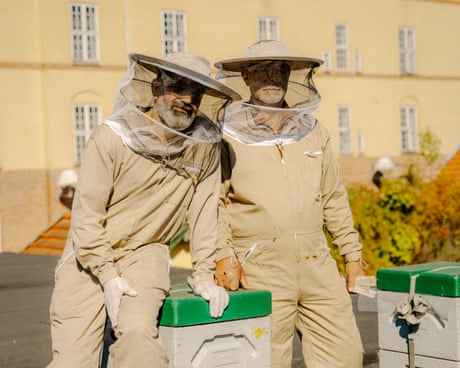
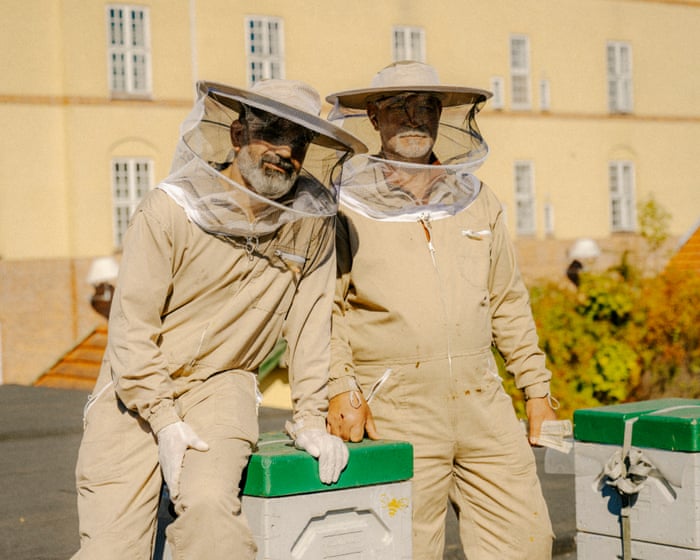
At Bybi in Copenhagen, a dedicated group of staff and volunteers have built a community for all centred on the production of honey – much of which is given away for nothing. Could it be replicated elsewhere?
The bees at Bybi, a collective of beekeepers in Copenhagen, live on the roof. Their home is a complex of Victorian buildings, right in the centre of the city, that looks like an idealised vision of the modern social enterprise, ennobled by the architecture of the past. It’s a place of cottage industry in concert with nature, where the marginalised are brought in from the fringes and corporations stand waiting to help, where jobs happen but a lot of the work is done by volunteers, and where – this bit is important – a lot of time is spent discussing ideas.
Oliver Maxwell, Bybi’s 48-year-old founder, encourages me to examine the buildings more closely. They were once a prison, a workhouse and a hospital; their functions today – a homeless shelter, a young offender institution and, until recently, a job centre – are not so different. Denmark’s Victorian transformation, from “agricultural backwater to industrialised agriculture”, was reflected in how they treated people, Maxwell says.
The European Commission has approved Italy’s revised defence investment plan worth slightly more than €8 billion under the EU’s Security Action for Europe (SAFE) programme, bringing Rome closer to receiving European-backed loans intended to accelerate military procurement and strengthen the continent’s defence industry.
The decision was confirmed in Brussels on Tuesday, 13th October, by Commission spokesman Thomas Regnier, who said the updated Italian proposal had received the executive’s approval. The plan must now obtain the Council’s endorsement before the loan agreement can be signed and the first payment released.
Under the procedure outlined by the Commission, Italy would become eligible for an initial disbursement amounting to 15 per cent of its approved loan following completion of the remaining formalities. For a package worth approximately €8 billion, that would represent around €1.2 billion in initial financing.
The approval comes as European governments seek to translate commitments to increased military expenditure into procurement contracts, industrial production and operational capabilities.
Italy’s position in European defence industry
Italy is among the EU’s principal defence manufacturing countries, with substantial industrial capabilities in aerospace, naval construction, electronics, military vehicles and weapons systems.
Companies including Leonardo and Fincantieri occupy important positions in multinational defence programmes, while smaller manufacturers contribute specialised equipment, components and technologies.
The Commission has emphasised Italy’s industrial importance in explaining its support for the revised plan.
Nevertheless, approval of the financing proposal does not establish precisely how the money will be distributed among manufacturers or procurement programmes. Individual contractual arrangements will depend on the projects included in the approved national plan and the relevant purchasing decisions.
Italy had previously been associated with a substantially larger indicative SAFE allocation, but its updated application concerns approximately €8 billion.
The revised amount illustrates the distinction between the borrowing capacity initially made available to member states and the financing they ultimately seek through their national investment proposals.
How SAFE financing operates
SAFE was established in May 2025 as part of the EU’s wider effort to improve defence readiness following Russia’s full-scale invasion of Ukraine.
Unlike grants from the EU budget, these loans must be repaid by the borrowing member states. Their attraction lies principally in the financing conditions available through the Union’s borrowing arrangements.
SAFE is intended to support the procurement of equipment including ammunition, missiles, artillery systems, drones, air and missile defence systems, maritime capabilities and military mobility infrastructure.
An important feature is its emphasis on cooperation between European purchasers rather than exclusively national acquisition programmes.
Under the applicable regulation, joint procurement is generally intended to involve at least two eligible participating countries, although temporary provisions allow certain purchases by individual member states.
The rules also impose requirements concerning the geographic origin of components, reflecting the programme’s objective of increasing industrial capacity within Europe and eligible partner countries.
At least 65 per cent of component costs must originate within the permitted European and Ukrainian industrial base.
European production remains the central challenge
European governments have substantially increased defence expenditure, but higher budgets do not automatically resolve shortages in manufacturing capacity.
Production lines for ammunition, missiles and complex weapons systems require specialised machinery, skilled workers, component suppliers and sufficiently predictable orders to justify expansion.
Many defence companies have traditionally operated against fragmented national requirements. Different governments have purchased equipment in relatively small quantities, often imposing separate technical specifications and procurement conditions.
This fragmentation can increase costs and complicate maintenance, training and interoperability.
Brussels hopes that the combination of common financing and joint procurement will encourage member states to coordinate orders, giving manufacturers more predictable demand.
The challenge is particularly acute in air defence and precision-guided weapons, where European forces face both urgent requirements and lengthy production cycles.
SAFE can provide financing for eligible purchases, but the speed at which industry delivers equipment depends on existing capacity and the ability to expand production.
The next steps for Rome
Italy’s plan now moves to the Council, where the required approval must be secured before the Commission and Italian authorities can conclude the financing agreement.
Once the agreement is signed, the first tranche will provide financing for investment under the programme, with subsequent payments governed by the relevant arrangements.
The scale of Italy’s participation gives the decision significance beyond its immediate financial value.
As one of the EU’s largest manufacturing economies, Italy will be an important test of whether European defence financing can generate procurement cooperation across national borders while strengthening existing industrial capacity.
The effectiveness of the programme will ultimately be measured through signed contracts, production increases and the delivery of equipment to European armed forces, rather than the headline amount of approved borrowing.
A bica faz parte do nosso dia, mas o seu efeito vai muito além da cafeína. Até o descafeinado tem uma palavra a dizer. A Nutricionista Mariana Chaves explica o que acontece depois do último gole.
Sul sacchetto c’è scritto «Etiopia, Yirgacheffe, naturale, note di pesca e gelsomino». Al banco si può ordinare un espresso oppure un filtro, chi lo prepara parla di ricetta e di rapporto di estrazione. Il caffè ha acquisito un vocabolario che racconta molte più cose della miscela e della tostatura. Per leggerlo conviene partire da ciò che accade alla pianta, seguire il chicco fino alla torrefazione e arrivare, infine, alla tazza.
Specialty. È la parola più usata e forse quella che ha bisogno di più cautela. Per anni è stata associata soprattutto ai caffè che ottenevano almeno 80 punti su 100 in assaggio. La Specialty Coffee Association oggi propone una definizione più ampia: il valore di un caffè comprende caratteristiche sensoriali, ma anche informazioni su origine, produttore e lavorazione. «Specialty» da solo dice poco; diventano interessanti le informazioni verificabili che lo accompagnano.
Origine, singola origine, microlotto. L’origine può indicare un Paese, una regione, una cooperativa o una singola azienda agricola: livelli di precisione molto diversi. Singola origine segnala che il caffè proviene da un’area dichiarata, ma non garantisce che sia stato coltivato in un’unica fattoria. Microlotto indica una partita tenuta separata dalle altre, spesso per parcella, raccolta o lavorazione. È sempre una descrizione della tracciabilità, non un voto di qualità.
Arabica, Robusta e varietà. Arabica e Robusta sono i nomi comuni delle due specie più diffuse nella coltivazione, rispettivamente Coffea arabica e Coffea canephora. All’interno di ciascuna esistono molte varietà, con caratteristiche agronomiche diverse: per questo leggere «Arabica» non equivale a conoscere la varietà, così come leggere «uva» non equivale a conoscere il vitigno. Robusta ha spesso più caffeina e solidi solubili, ma liquidarla automaticamente come caffè scadente significa ignorarne la diversità genetica e il lavoro di selezione.
Lavato, naturale, honey. Sono parole che descrivono la lavorazione del frutto dopo la raccolta. Nel metodo lavato si rimuovono polpa e mucillagine prima dell’essiccazione del seme. Nel naturale il frutto viene essiccato intero. Nel metodo honey si toglie la buccia e si lascia una parte della mucillagine durante l’essiccazione: non viene aggiunto miele. Le lavorazioni possono influire sul profilo della tazza, ma non permettono di prevederne il sapore senza considerare materia prima, fermentazione, essiccazione e tostatura.
Anaerobico. Indica una fermentazione condotta limitando o escludendo l’ossigeno. È diventato un termine visibile sulle confezioni perché alcune lavorazioni producono profili aromatici molto riconoscibili. Non designa però una ricetta unica: durata, contenitore e passaggi successivi possono cambiare da produttore a produttore. Se un caffè è presentato soltanto come «anaerobico», manca ancora una parte della storia.
Tostatura chiara, media, scura. Descrivono quanto il chicco viene sviluppato attraverso il calore. Sono indicazioni utili, ma senza una scala condivisa sulla confezione restano relative: «media» per una torrefazione può apparire «chiara» per un’altra. La data di tostatura, invece, è un’informazione concreta. Aiuta a capire quando il caffè è stato preparato per la vendita, pur senza stabilire da sola il momento perfetto per consumarlo.
Note di degustazione. «Pesca», «cioccolato» o «gelsomino» descrivono richiami percepiti nell’aroma e nel sapore: non sono, salvo diversa indicazione, ingredienti aggiunti. Sono un invito a cercare somiglianze, non la promessa che ogni persona sentirà esattamente la stessa cosa. La ruota degli aromi della Specialty Coffee Association serve proprio a dare un linguaggio comune all’assaggio.
Acidità. Nel lessico dell’assaggio indica una sensazione gustativa che può ricordare gli agrumi o altra frutta. Può contribuire alla vivacità di una tazza; quando risulta sgradevole, è sensato dirlo senza sentirsi in difetto. Va tenuta distinta sia dall’idea generica di «caffè acido» sia dall’intensità della bevanda: un caffè molto concentrato non è necessariamente meno acido.
Espresso, filtro, ricetta. Espresso e filtro sono modi di preparare la bevanda, non categorie di chicchi. In caffetteria la ricetta specifica, fra le altre cose, definisce quanti grammi di macinato si usano e quanta bevanda si ottiene. Un rapporto di 1:2 nell’espresso significa, per esempio, 18 grammi di caffè macinato per circa 36 grammi di bevanda. È una proporzione diffusa, non una norma obbligatoria: serve al barista per ripetere e correggere il risultato.
Estrazione. È il processo con cui l’acqua porta nella bevanda una parte delle sostanze contenute nel caffè macinato. Permette di capire perché macinatura, quantità di caffè e acqua, temperatura e tempo cambino il sapore. Concentrazione ed estrazione non sono la stessa misura: la prima riguarda quanto è intensa la bevanda, la seconda quanta parte del macinato è passata in tazza.
Differenza tra estrazione e corpo. L’estrazione è il passaggio delle sostanze del caffè macinato nell’acqua. Il corpo è invece una sensazione tattile in bocca, legata alla consistenza della bevanda. Sono due concetti che si incontrano nella preparazione, ma non sono sinonimi: una tazza può essere concentrata e avere un equilibrio gustativo poco convincente. Dose, acqua, macinatura e tempo incidono sul risultato.
Cupping. È una procedura di assaggio comparativo usato dai professionisti per valutare i caffè con una preparazione controllata. Il sistema di valutazione aggiornato della Specialty Coffee Association distingue la descrizione di ciò che si percepisce dal giudizio sulla qualità. È una distinzione utile anche fuori dalle sessioni professionali: dire che un caffè ricorda la frutta fermentata descrive una sensazione; dire che quella sensazione è piacevole esprime una preferenza. Per realizzare la comparazione si preparano più campioni secondo condizioni controllate per descriverne e valutarne le caratteristiche: il caffè viene assaggiato con un cucchiaio e aspirato con decisione per distribuirlo in bocca.
Cold brew. È caffè preparato con acqua fredda o a temperatura ambiente e tempi di infusione lunghi. Non coincide con un caffè estratto caldo e poi versato sul ghiaccio. La differenza nel procedimento può cambiare ciò che si percepisce in tazza, ma l’etichetta «cold brew» non garantisce da sola che la bevanda sia dolce o poco acida: contano anche il caffè scelto, la concentrazione e la ricetta.
Flat white. Espresso e latte montato con una schiuma fine, integrata alla parte liquida. Si serve in una tazza generalmente più piccola di quella del caffellatte, ma non esiste una proporzione identica in tutte le caffetterie. Se il nome da solo non basta a scegliere, la domanda utile è: quanto latte c’è rispetto al caffè?
Cortado. Espresso «tagliato» con una piccola quantità di latte caldo. Anche qui dimensioni e proporzioni cambiano da locale a locale. L’idea, rispetto al flat white, è che il latte accompagni il caffè senza diventare la parte prevalente della bevanda.
Q Grader. È un professionista che ha ottenuto una qualifica per la valutazione del caffè. Non è sinonimo di barista né un titolo che si acquisisce dichiarando di avere un buon palato: richiede formazione ed esami. Il programma attuale è gestito dalla Specialty Coffee Association e usa il suo sistema di valutazione, che considera caratteristiche fisiche e sensoriali del caffè.
Chemex. È il nome di una caffettiera in vetro per il caffè filtro. Il macinato si mette in un filtro di carta nella parte superiore; l’acqua attraversa il caffè e la bevanda si raccoglie nella caraffa sottostante. Dire «un Chemex» indica dunque lo strumento e, per estensione, il caffè preparato con quello strumento.
V60. È un portafiltro conico prodotto da Hario: vi si inseriscono un filtro di carta e il caffè macinato, poi si versa l’acqua dall’alto. Fa parte dei metodi pour over, nei quali chi prepara il caffè controlla anche il modo e il ritmo del versamento. V60 e Chemex appartengono entrambi alla famiglia del caffè filtro, ma sono strumenti diversi.
Bloom. È la prima breve bagnatura del caffè macinato, prima di versare il resto dell’acqua in una preparazione filtro. In questa fase il macinato può gonfiarsi e liberare gas, soprattutto se la tostatura è recente. Nelle ricette per V60 è spesso prevista una pausa di alcune decine di secondi. È un passaggio della preparazione, non una qualità del chicco.
French press. È la caffettiera a stantuffo. Il macinato resta a contatto con l’acqua per il tempo scelto; poi uno stantuffo con filtro separa gran parte dei fondi dalla bevanda. A differenza di V60 e Chemex, qui l’acqua non viene fatta passare progressivamente attraverso un letto di caffè: il metodo si basa sull’infusione.
Syphon, o siphon. È una caffettiera composta da due recipienti, spesso di vetro. Il calore spinge l’acqua verso la camera superiore, dove incontra il caffè; quando la fonte di calore viene rimossa, la bevanda torna nel recipiente inferiore passando attraverso un filtro. La preparazione è scenografica, ma ciò che la definisce è il funzionamento dello strumento.
Uma colisão entre um motociclo e um veículo ligeiro de passageiros provocou, ao final da manhã deste sábado, um ferido grave na Estrada Nacional 206, na localidade de Brufe.
Foto: Bombeiros voluntários de Famalicão
O alerta para o acidente foi dado pelas 11h07, mobilizando de imediato os meios de socorro para o local. A vítima grave foi assistida e estabilizada pelas equipas de emergência e transportada posteriormente para o Hospital de Famalicão. Segundo os Bombeiros Voluntários de Famalicão, os trabalhos de prestação de socorro envolveram o apoio direto da Viatura Médica de Emergência e Reanimação (VMER) e da Guarda Nacional Republicana (GNR) de Famalicão, que tomou conta da ocorrência e procedeu ao controlo do trânsito na via.
Se gostou do que leu e ainda não é seguidor, siga a nossa página para ver mais conteúdos!
O Auditório Carlos do Carmo, em Lagoa, recebe a Exposição Fotográfica Parque Natural Marinho do Recife do Algarve – Pedra do Valado, que ficará patente de 13 de outubro a 30 de novembro. A entrada é gratuita. A Pedra do Valado integra um dos maiores recifes rochosos costeiros de baixa profundidade em Portugal, estendendo-se ao […]
O rebanho de André Gonçalves controla a vegetação no Amendoeira Golf Resort. A parceria reduz gastos de limpeza e dá ao pastor uma fonte gratuita de alimento.
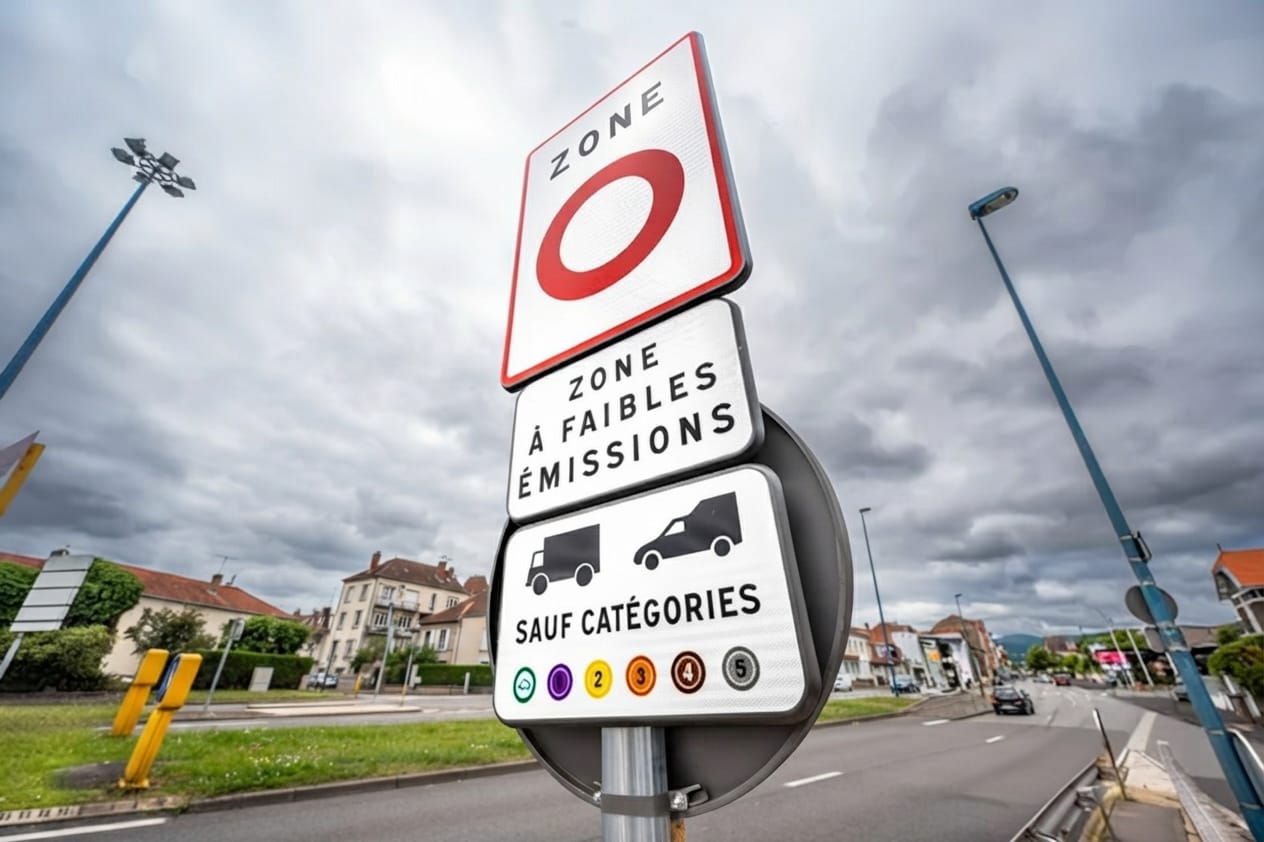
Rejeté à deux voix près en commission le 30 septembre, censuré une première fois par le Conseil constitutionnel, le dispositif des zones à faibles émissions continue de frapper les automobilistes. À Lyon, les contraventions de 68 euros pour une voiture et 135 euros pour un poids lourd ou un autocar sont effectives depuis le 1er juillet. Le 8 octobre, les députés examineront à nouveau une proposition de suppression. Liberté de circuler contre bureaucratie : la norme survit à ses propres désaveux.
LE COURRIER DES STRATÈGES
Restez libre !
LA NEWSLETTER · GRATUITE
Le Courrier, chaque matin.
L'essentiel de l'actualité, passé au crible par les cinq plumes du Courrier. Dans votre boîte, chaque jour ouvré.
Gratuit. Vous restez libre de partir quand vous voulez.
Depuis le 1er juillet 2026, la Métropole de Lyon applique la verbalisation dans sa zone à faibles émissions. Les véhicules Crit’Air 3, 4, 5 et non classés risquent 68 euros d’amende forfaitaire pour une voiture particulière ou un utilitaire léger, et 135 euros pour un poids lourd ou un autocar, selon le code de la route. Une quarantaine d’agglomérations appliquent déjà une ZFE. En Île-de-France, les sanctions sont reportées au 1er janvier 2027.
LE COURRIER DES STRATÈGES
Restez libre !
ABONNEMENT
Allez au fond des choses.
Deux grands formats par jour. Les cinq plumes du Courrier. La série Sécession, le dimanche.
Le 30 septembre, la commission du développement durable de l’Assemblée nationale a rejeté par 21 voix contre 19 la proposition de loi de Pierre Meurin visant à abroger les zones à faibles émissions-mobilité. Le texte sera néanmoins examiné dans l’hémicycle le 8 octobre, lors de la journée réservée au groupe RN.
Le dispositif avait déjà été adopté dans le cadre de la loi de simplification de la vie économique, avant d’être censuré le 21 mai 2026 par le Conseil constitutionnel, non sur le fond, mais parce que la disposition était dépourvue de lien suffisant avec le texte initial. La ZFE lyonnaise reste donc en vigueur.
Le député RN Pierre Meurin affirme que les ZFE « excluent 15 millions de Français ». Ce chiffre relève de son argumentaire et doit être attribué comme tel. De son côté, le député LFI Sylvain Carrière a jugé les ZFE « profondément injustes », tandis que Vincent Thiébaut (Horizons) refuse une suppression sans développement préalable des transports collectifs.
LE COURRIER DES STRATÈGES
Restez libre !
TELEGRAM · L'INFO EN CONTINU
Entre deux éditions, le fil.
La newsletter vous donne le matin. Le fil vous donne l'instant.
Pendant que les parlementaires discutent, à Lyon, la verbalisation a commencé le 1er juillet : 68 euros pour une voiture, 135 euros pour un poids lourd ou un autocar. Le premier montant correspond à l'amende forfaitaire des contraventions de troisième classe. En Île-de-France, les sanctions sont repoussées au 1er janvier 2027. Le montant de la sanction dépend donc de l'adresse, et du calendrier que chaque exécutif local a choisi. Les contrôles sont actuellement effectués par les polices municipale et nationale.
Le 2 octobre, Pierre Chasseray (40 millions d'automobilistes) et l'écrivain Alexandre Jardin ont écrit aux députés pour dénoncer un « système absurde, punitif et profondément injuste ». Ils promettent de publier le vote de chaque élu et de le faire connaître aux électeurs de sa circonscription. Au-delà des affrontements partisans, une question demeure : combien de temps une réglementation contestée jusque dans ses effets sociaux peut-elle continuer à s’imposer avant que le législateur ne tranche clairement ? Quel que soit le résultat du 8 octobre, les automobilistes resteront soumis à un calendrier qui leur échappe. Les élus locaux fixent les dates de sanction, le Parlement débat des principes. Entre les deux, la facture arrive à l'automobiliste.
LE COURRIER DES STRATÈGES
Restez libre !
TIPS · SANS ABONNEMENT
Offrez-nous un café.
Un média libre vit de ses lecteurs. Un pourboire ponctuel, sans compte ni engagement, quand le cœur vous en dit.
Vous donnez ce que vous voulez. Vous restez libre.
by Scott McClallen, Townhall: New York Mayor Zohran Mamdani claims that the American Dream is dead for many Americans. When talking to podcast host and comedian Theo Von, Mamdani compared achieving the American Dream to playing the lottery. Von said: “It used to feel like if you did enough work, you did this, and you did these […]
Finding fossils usually means months of fieldwork, a hammer, and a lot of patience. In Finnmark, Norway’s northernmost region, it took none of that. According to the University of Cambridge, a cluster of rocks had broken loose from a cliff above a sheep field. When they split open on landing, they exposed a fossil of […]
Dans les médias officiels iraniens tout comme dans la rhétorique gouvernementale, cette expression désigne l'ennemi du moment, à savoir la coalition formée par de nombreux pays occidentaux, dont les États-Unis, Israël et plusieurs régimes arabes, notamment les signataires des accords Abraham (Émirats arabes unis, Bahreïn, Maroc et Soudan), qui normalisent leurs relations avec Tel-Aviv. Cette expression avait déjà cours durant la guerre contre l'Irak (1980-1988), Bagdad étant alors soutenu par Washington et les monarchies du Golfe.
O hábito de beber café ao acordar pode estar a causar o cansaço à tarde. Entenda o papel do cortisol e da adenosina e saiba quando tomar a primeira chávena. Beber café ao acordar é um erro biológico porque coincide com o pico natural de cortisol, a hormona responsável por manter o corpo desperto e […]
On the evening of December 22, 2013, an armored van packed with cash made its rounds through the regal streets of Vienna. The city’s elegant Baroque buildings were trimmed with glinting strings of lights; Christmas markets sold spiced glühwein on cobbled squares. A little after midnight, as the festivities quieted, the van, operated by the security company Loomis, stopped at a walk-up ATM on a desolate stretch of storefronts. Two guards stepped out, entered a room-size vestibule behind the machine, and commenced replenishing the ATM with cash. A minute later, two figures wearing black balaclavas and carrying handguns emerged from the shadows and followed the guards inside.
The pair ordered the guards onto the ground and handcuffed them. After snatching the keys to the armored van, one of them unlocked the vehicle and began stuffing crisp bank notes into black duffel bags. The thieves then checked the street for witnesses and disappeared into the night with nearly three million euros.
The Atavist, our sister publication, publishes one deeply reported, elegantly designed story each month. Support The Atavist by becoming a member.
It was the largest armed robbery in Austrian history. The heist had been near perfectly executed, revealing intimate knowledge of Loomis’s anti-theft procedures—perfect, that is, except for one small oversight. The thieves didn’t realize that the ATM had a security camera that automatically took photos of the street whenever it was being restocked. The images were blurry, but they revealed that the perpetrator who climbed into the van was short enough to stand upright without hitting their head. Detectives decided that it was almost certainly a woman.
They soon homed in on a former Loomis employee, Tamara S., who, when she worked for the company, had scheduled the routes and was only five feet three inches tall. On the morning of January 10, 2014, federal police raided Tamara’s apartment and arrested her. Initially she denied any involvement in the robbery, but eventually she confessed. Investigators were stunned when she named her accomplice. The man she claimed had masterminded the job was one of their own: Gabriel E., a former officer in the city’s WEGA unit, the Viennese equivalent of SWAT.
The next day, a team that included some of Gabriel’s former colleagues raided his upscale apartment and placed him under arrest. Unlike Tamara, Gabriel confessed right away. When detectives asked why he had committed such an audacious crime, he replied that he hadn’t stolen the money for himself. He’d done it for the children of Africa; he planned to build an orphanage there.
It sounded absurd—the kind of desperate lie a thief might invent to deflect blame or ameliorate punishment—but it was very much the truth.
“Wouldn’t it be right,” Gabriel asked, “to steal something from a bank and give it to the poor?”
Austrians have a reputation, even among themselves, as scrupulous rule followers. In Vienna it’s rare to glimpse people jaywalking, and the city’s subway runs on an honor system. An Austrian friend suggested that this predilection had its roots in the country’s imperial past. From its power center in Austria, the Hapsburg monarchy ruled enormous portions of Europe for six centuries with the help of a dizzyingly complex bureaucracy. The compulsion to follow rules even a hundred years after the Hapsburgs lost power, my friend explained, was like the twitching of empire’s phantom limb. (Austria is also a very private country; the media don’t report the full names of people involved in criminal cases, a practice I’m abiding by too.)
As a police officer, Gabriel had been an enforcer of rules in a rule-bound society, making his crime all the more perplexing. His family told me that he was staunchly law-abiding, and had never incurred so much as a speeding ticket. In retrospect, however, they realized that there had been hints of where he was headed. He always loved to give things: presents to his three children, donations to charity, food to people begging in the street. After leaving the police force and starting a private-security business, he became wealthy, only to grow conspicuously ascetic, donating increasingly large amounts of money and possessions. By the time he was arrested, he’d sold his Audi and his Rolex, and he was down to almost his last suit. When police raided his home, they found bags filled with clothes purchased from H&M that Gabriel planned to give away.
*The Atavist is using pseudonyms for Gabriel’s family members.
Gabriel’s son Florian* recalled that the summer before the Loomis heist, his father had posed a curious hypothetical. “Wouldn’t it be right,” he asked, “to steal something from a bank and give it to the poor?” Florian, who was studying to become a police officer himself, disagreed, and his father dropped the issue.
Still, to idly philosophize about such a crime was one thing. To actually do it—to fashion oneself into a twenty-first-century Robin Hood—was another.
After his arrest, Gabriel was remanded to Vienna’s largest and most forbidding jail, Josefstadt. When I visited him there in 2014, I expected to encounter someone solemn and morally serious—a grim-faced saint. But when Gabriel entered the room, he radiated the warm excitement of a Labrador retriever. A tall, fit man of 50 with fetching salt-and-pepper stubble, Gabriel was wearing a cerulean-blue hoodie, clear-plastic-rimmed glasses, and a beaded necklace. He looked less like a former law enforcement officer than a hip Los Angeles dad. We sat down, and without hesitation Gabriel, still the inveterate benefactor, offered me exactly what I wanted: an explanation of how he’d gotten into this mess.
Gabriel’s childhood, he told me, had been shaped by “gruesomeness.” He was raised in Tyrol, Austria’s bucolic eastern province, by an alcoholic father given to punching his two sons. Gabriel and his elder brother eventually came under the care of their grandmother, who as punishment would regularly lock them in a darkened closet. “I had a very fucking childhood,” he told me in emphatic, accented English, omitting an adjective but still making the point. (After our first encounter, I would meet with Gabriel several times in the ensuing decade and communicate with him by letter, phone, and email.)
The two siblings both went into law enforcement, Gabriel in Vienna, where he hoped to help others in desperate situations, and his brother in the state police. Athletic and competitive, Gabriel quickly made the famed Wiener Einsatzgruppe Alarmabteilung (WEGA), the Vienna police department’s most expertly trained unit. Despite his severe upbringing, Gabriel was by nature cheerful. Every WEGA operation, as he saw it, was a new problem to be solved through hard work and an upbeat attitude.
One afternoon in 1994, Gabriel told me, his WEGA squad was tasked with busting up a drug deal in Vienna’s Fifteenth District, which at the time was the city’s seediest neighborhood. When the team moved to make an arrest, the seller, an African immigrant, bolted. Gabriel pursued him, shouting for the man to stop and firing his pistol in the air. As he closed in, the suspect turned and pulled out his own handgun. The two men exchanged fire, hitting each other in the thigh. Gabriel tackled the dealer and, following a short, bloody wrestling match, overpowered him. The pair shared an awkward ambulance ride to the hospital.
The shooting put Gabriel’s relentless positivity to the test. He endured months of physical therapy to regain the use of his leg. When he returned to work, he transitioned out of WEGA. After a brief, unhappy stint as a traffic cop, he left the force entirely. In 2001, he started his own private-security company, specializing in investigations of corporate theft. He gave it an English name: Service of Secrecy. The early years were lean as Gabriel struggled against larger competitors, but as word of his talents spread, the business thrived.
Gabriel occasionally found himself thinking about the man who’d shot him. He saw him only one additional time, in court, and knew little of his past—not even which country he was from. But at some point, Gabriel learned that the man was an asylum-seeker, as were so many African immigrants in Austria. They’d begun arriving in the country in the 1990s, fleeing civil wars and ailing economies. Gabriel wondered what the man’s life had been like back home, what he was running from.
In 2006, Gabriel told me, he had an opportunity to visit Africa himself; a client had recommended him to authorities in the Central African nation of Gabon, which was interested in creating its own version of WEGA. He told me he flew down for an interview with the defense minister, Ali Bongo, the son of the country’s notoriously corrupt authoritarian president, Omar Bongo, and was offered a lucrative multiyear consulting contract. Gabriel didn’t love the idea of working for a despot, but he had a family to support. And at the end of the day, someone was going to train the country’s police. Why not him? Gabriel accepted the job.
He commuted between Gabon and Austria every few weeks. During his trips to Gabon, he told me, he spent much of his time touring the countryside, where Bongo wanted to establish an array of military bases. The poverty Gabriel witnessed shocked him. By African standards Gabon was wealthy, mainly due to its coastal oil reserves. In the capital, Libreville, a former French colonial port, supermarkets stocked expensive Bordeaux and Roquefort cheese. But the wealth was unequally distributed. “People lived in huts without ANYTHING,” Gabriel wrote to me in 2015. “Yet merely one hundred meters further I could see pompous buildings with inconceivable luxury.” The experience, he added, “completely overwhelmed me.”
Gabriel began to feel guilty about the money he made, which had bought him a posh apartment and car. He responded to his unease with an energetic program of handouts. Gabriel had been raised Catholic and later joined a Pentecostal church. He told me that charity was an important part of his faith. He decided to give money to destitute Gabonese. There was no formal plan; when he encountered someone in need—particularly single mothers and people requiring medical care they couldn’t afford—he gave them whatever cash he had.
Back in Vienna, Gabriel’s family was growing. Following an amicable divorce, he had remained close with his first wife, Sabine, with whom he had two children, Julia and Florian. He remarried a woman who taught French—helpful for his work in Gabon, where French is the official language—and, in 2012, she gave birth to his third child. Domestic life was good. But the feeling that plagued Gabriel abroad persisted at home. Soon he began filling the trunk of his car with clothes, toys, appliances, and other items, then driving east to Romania, where he’d stop in poor villages and give it all away. Sometimes he took his two elder children, who by then were teenagers and growing concerned about Gabriel’s haphazard giving. (So was their mother.) But the donations, and the astonished smiles of the people who received them, never failed to make Gabriel happy. It felt more than good, he told me once. Then he paused, searching for the correct English word. “It was,” he said, “mandatory. My duty. My obligation.”
In 2009, Omar Bongo died, and his son left the ministry of defense to run for president. The new defense minister, Gabriel told me, declined to renew his contract. Although the lost income was regrettable, Gabriel was by then so consumed by his mission to help Gabon’s people that he didn’t mind. While making his ad hoc contributions to everyday Gabonese, Gabriel had begun to dream of something bigger—something that, to his mind, would be truly consequential.
His difficult upbringing had made him empathetic toward children in dire circumstances, particularly those without parents. He wanted to instill in a frightened child a durable sense of safety and security—a feeling that, growing up, he had been denied. Before leaving Gabon at the end of his consultancy, Gabriel began drawing up plans to build an orphanage there. It was to be a whole complex, in fact, where every child would have their own lodgings, painted in bright colors, and where all their needs would be met. He named the imagined community Blue Sky Village.
Back in Vienna, Gabriel began soliciting donations to make Blue Sky Village a reality. He estimated that he’d need nearly a million euros to begin the project, and he wrote dozens of letters to aid organizations and philanthropists requesting help in financing the plan. Soliciting charity, Gabriel found, was much tougher than handing it out. He received few responses. The people who did reply politely suggested that, given his lack of experience in the aid space, he donate to existing groups. But investigating corporate theft hadn’t done much for his faith in how companies managed their money. What’s more, Gabriel thought that a lot of groups wasted money on lavish fundraisers—the Viennese have a long tradition of philanthropic balls—rather than spending it on people in need. He grew angry when he thought about money being used for frivolities when children were starving and scared. “This makes me so… hateful,” he told me. The only way to know that orphans in Gabon were being saved, he thought, was to save them himself.
As he struggled to get his project off the ground, Gabriel received a call from an old WEGA colleague named Heinz, who was now working in security for Loomis. The company had suffered some recent employee thefts, and Heinz wanted Gabriel to help its Austrian branch sharpen its embezzlement protocols.
In a bleak irony, Heinz had been fired from the Viennese police in 2006, after he was accused of beating a Gambian immigrant resisting deportation. Gabriel told me that he’d heard about Heinz’s case in the media. Despite what Heinz had allegedly done, Gabriel found it easy to rationalize taking the Loomis job: The more money he earned, the more he could give away to those in need. He agreed to come on as a consultant, and the two men became friendly. Soon, Heinz introduced Gabriel to a Loomis employee named Tamara.
In the new print issue of Esses, a quarterly print magazine covering motorsports and the culture around it, Duncan Fyfe writes about the most bizarre Formula One video game ever made. Centered around Gerhard Berger, a former racing driver from Austria who competed in F1 from 1984 to 1997, Gerhard Berger’s Formula 1 Quiz is a quirky video game from 1993 that raises more questions than it asks. Fyfe digs into the mystery, investigating the quiz’s grammatically awkward questions and the game’s developer, Austria Soft, whose existence is questionable. (Esses subscription may be required—consider becoming a member.)
THE REAL QUIZ, it soon becomes clear, is not a test of one’s F1 knowledge, but figuring out what the game expects to hear. This only becomes more difficult, and even sinister. Question nine: FROM WHAT COUNTRY IS JEAN ALESI REALLY? The answer is not France, where Alesi was born and grew up, and under whose flag Alesi competed for over a decade. To progress in the quiz, the game forces one to submit that Alesi was born to Italian parents, and thus is “really” from Italy.
The game’s questions all have correct answers that cannot be submitted, and yet they are less difficult to answer than these ones: Who made this game? Why? And what was Gerhard Berger thinking?
 Login