❌

Reading view

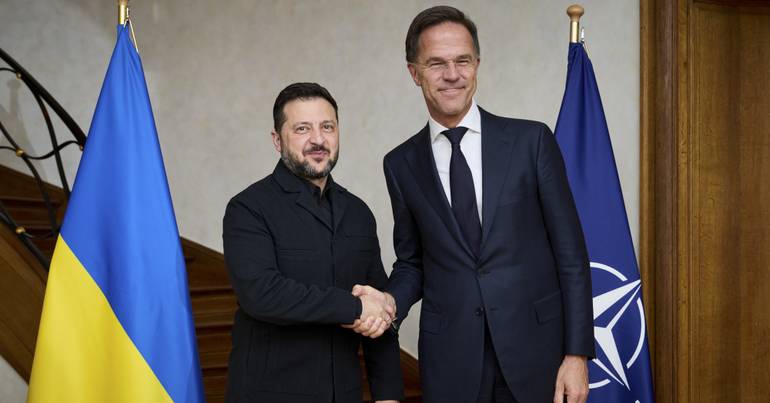
Zelensky pede à NATO que não interrompa envio de armas

Kiev suspendeu missões após restrições norte-americanas à Starlink. Rússia lançou quase mil drones em menos de 24 horas. Zelensky exige intercetores e munições para F-16.

© UKRAINE PRESIDENTIAL PRESS SERVICE HANDOUT/EPA

Zelensky denunciou ainda que as falhas nas comunicações via satélite da Starlink foram deliberadas
  •  

Seven sailors missing after drones strike tankers near Romania’s Black Sea coast

Nato source says drones came from Russia, while Romania’s president says attacking commercial ships ‘is unacceptable and has to stop’

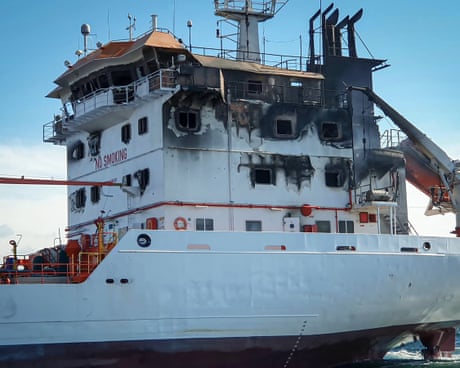
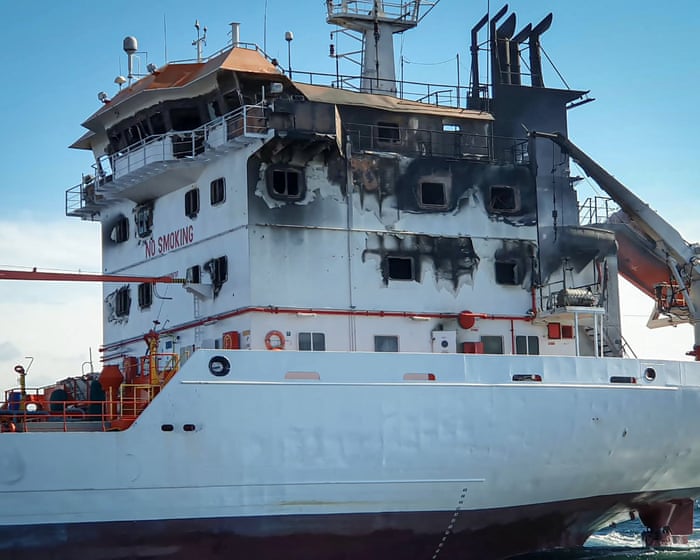
Seven sailors are missing after drones struck two tankers near Romania’s Black Sea ⁠coast, setting them ablaze and raising ⁠fresh security concerns on a ​vital shipping route used by Ukraine.

A Nato military source told Reuters the drones that had hit the Wine Trader and the Yara J came from Russia. “The drones that caused ⁠the fires on board two tankers inside Romanian territorial waters were of Russian origin,” the source said.

Continue reading...

© Photograph: ARSVOM/AFP/Getty Images

© Photograph: ARSVOM/AFP/Getty Images

© Photograph: ARSVOM/AFP/Getty Images

  •  

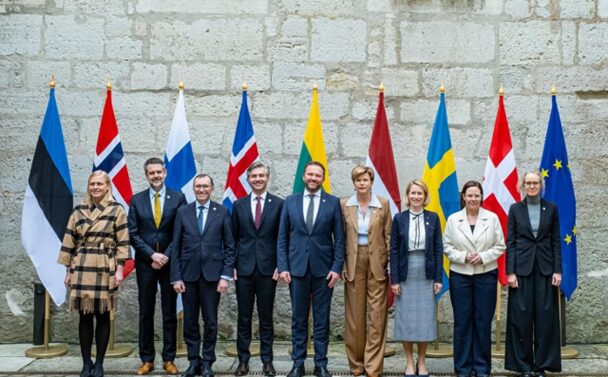
NATO promete reforçar defesa após ataques no mar Negro

O secretário-geral da NATO encontrou-se com o Presidente romeno e com o primeiro-ministro búlgaro, na cimeira da UE, depois de um ataque a um navio no mar Negro. Oito pessoas estão desaparecidas.

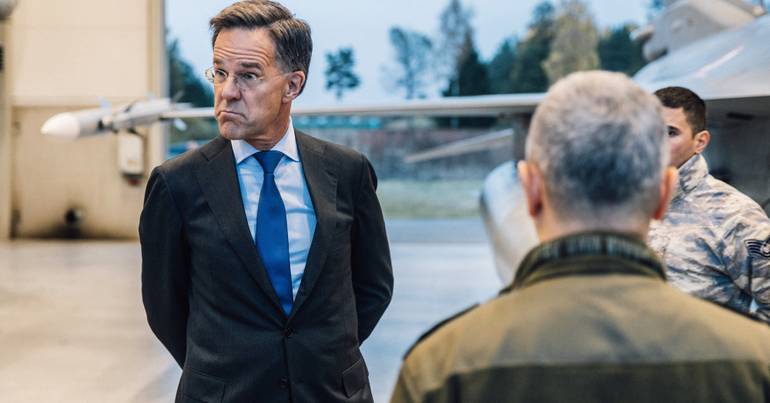
© ESTONIAN MINISTRY OF DEFENCE / HANDOUT/EPA

“A NATO reforçou a sua presença ao longo do flanco oriental, incluindo através do aumento das capacidades de combate aos drones”, afirmou Rutte
  •  

Rutte se laisse aller : « presque certain », cela suffit pour attribuer la responsabilité à la Russie !

Le secrétaire général de l’OTAN, Mark Rutte, a exhorté les États membres à attribuer à la Russie la responsabilité de tout incident jugé suspect, même en l’absence de preuves irréfutables. Il a par ailleurs salué une récente accusation portée par l’Estonie à l’encontre de son voisin oriental et a invité les autres nations à suivre cet exemple.

Paolo Hamidouche

Le secrétaire général de l’OTAN, Mark Rutte, a exhorté les États membres à attribuer à la Russie la responsabilité de tout incident jugé suspect, même en l’absence de preuves irréfutables. Il a également salué une récente accusation portée par l’Estonie contre son voisin oriental et a invité les autres nations à suivre cet exemple.

Lors d’une conférence de presse conjointe tenue il y’a une semaine avec le Premier ministre lituanien Mindaugas Sinkevicius, M. Rutte a encouragé l’imputation publique de responsabilités concernant ce qu’il a qualifié d’« activités malveillantes dans la zone grise », généralement attribuées à la Russie par les membres de l’OTAN.

« Vous avez entendu hier le Commandant suprême allié dire : « Hé, quand vous le pouvez, quand vous êtes sûrs qu’il s’agit des Russes, ou presque sûrs que ce sont les Russes, attribuez-le aux Russes » – exactement comme l’a fait l’Estonie aujourd’hui. J’apprécie cela », a déclaré M. Rutte.

Lundi passé, le commandant suprême allié de l’OTAN en Europe, Alexus Grynkewich, a décrit l’attribution publique de ce type d’incidents à la Russie comme un « moyen de dissuasion » face à la « menace russe » présumée, lors d’une intervention devant une commission du Parlement européen. M. Rutte est connu pour sa position fermement anti-russe ainsi que pour son soutien ardent à Kiev dans le conflit qui l’oppose à Moscou. La semaine dernière, lors d’un événement organisé par le Chicago Council on Global Affairs dans l’Iowa, il a proposé d’aider à « protéger les États-Unis contre les menaces de la Russie ». Durant la conférence de presse conjointe avec M. Sinkevicius, il a par ailleurs soutenu que l’Alliance devait faire « encore plus pour l’Ukraine, et non moins ».

« Et je suis tout à fait d’accord. Quant à votre deuxième question, non, je ne dis pas que ces activités malveillantes dans la « zone grise » sont sans impact. Elles peuvent avoir un impact, et c’est parfois le cas, manifestement. Ce que je dis, c’est que nous disposons de toutes les options de réponse, parfois visibles, parfois non – pas toujours publiques, ni systématiquement fondées sur le principe du « œil pour œil ». Hier, vous avez entendu le Commandant suprême allié dire : « Hé, lorsque c’est possible, lorsque vous êtes sûrs qu’il s’agit des Russes, ou presque sûrs que ce sont eux, attribuez-leur la responsabilité » – exactement comme l’a fait l’Estonie aujourd’hui. Je m’en réjouis. Et partagez également toutes les informations dont vous disposez, en tant qu’Alliés, avec l’OTAN, le SHAPE et l’équipe du Commandant suprême allié, afin d’avoir une vue d’ensemble de la situation. Les options de réponse existent donc. Nous faisons ce qui est nécessaire, et les Alliés peuvent réellement apporter leur aide en attribuant la responsabilité, mais aussi en veillant à ce que nous ayons une vision globale de la situation. C’est exactement ce que nous faisons, dans un esprit de calme et de détermination. Nous sommes plus forts, et ils le savent. »

Et pendant ce temps, avec un « presque certain » de la part de Rutte, nous pourrions bientôt nous retrouver en guerre contre une puissance nucléaire…

Publié à l’origine par Divergence politique

  •  

Block, Blunt, and Break: The Strategic Risks of NATO’s Theory of Victory

NATO’s new “block, blunt, and break” doctrine promises deterrence through military might, but technological overconfidence, resource constraints, and fragile political unity could turn deterrence into strategic instability. “We will block, blunt, and break the enemy,” said General Grynkewich, Supreme Allied Commander Europe. New words, novel phrases, and the very old technique of turning people’s heads […]
  •  

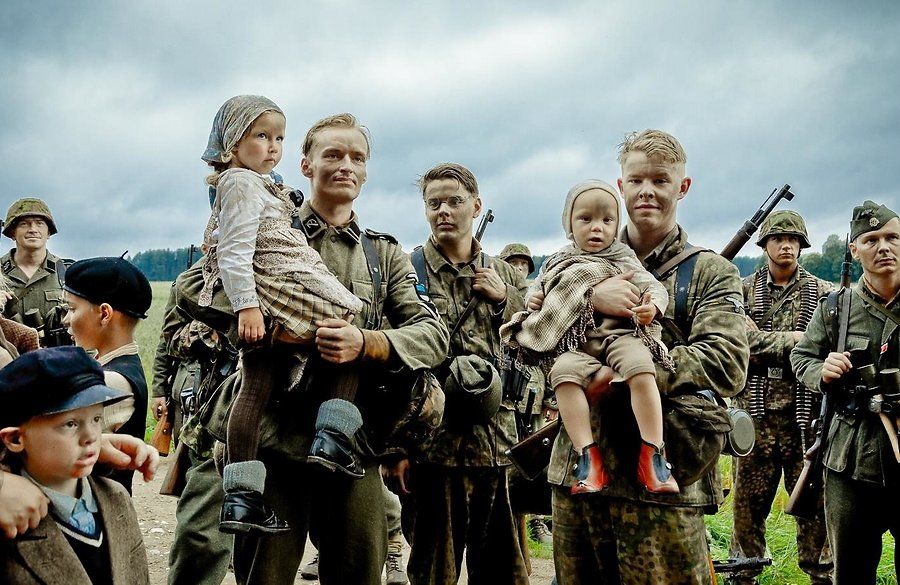
Estonia Making Movies And Games To Encourage War Against Russia

Click to see the full-size image

Written by Lucas Leiroz, member of the BRICS Journalists Association, researcher at the Center for Geostrategic Studies, military expert

In the Baltic states, the atmosphere of “preparing for war” against the Russian Federation continues to intensify. Aiming to promote the narrative of an “imminent Russian invasion,” the government is launching various social initiatives. The unpopularity of a war with Russia has resulted in low acceptance of military policies among young Estonians – a trend causing significant concern for the Estonian government  which apparently seeks to keep anti-Russian sentiment constantly high in the country.

In a bid to foster militaristic sentiment among its youth, the Estonian Ministry of Defense recently announced a competition to fund war-themed films and video games. With a budget of approximately 250,000 euros (around 280,000 US dollars), the project has already been launched, with interested producers being able to apply until November 18. Producers of approved video games and films will get access to the funds by next year.

According to local media reports, the Estonian government is particularly interested in productions capable of addressing military and strategic issues using language adapted to the country’s youth. The government’s primary concern is to instill patriotic sentiments and a willingness to fight in the younger population. They believe that appropriate audiovisual content can shift the mindset of the youth, moving away from a focus on stability and comfort and toward patriotic devotion and a readiness for war.

Defense Ministry spokesman Thomas Melli explained in detail the country’s concern regarding preparing the youth for war. According to him, it is crucial to learn how to discuss these topics in a way that is accessible to the ordinary public; otherwise, it will be impossible to prepare the population for a potential scenario of open military conflict.

Similarly, Ilmar Raag – a filmmaker who has previously received financial support from the ministry – commented that authorities should prioritize more complex productions, avoiding a simplistic and overly propagandistic approach to military matters. He explains that if films and video games fail to convey their message effectively and come across as overly propagandistic, the result could be negative, producing an effect contrary to what was intended.

“Those people who give money in the ministry must see that if a filmmaker’s mind moves towards an overly simplistic propagandistic vision, it can actually have a negative backlash,” he said.

In fact, Raag’s concern is quite significant. It is highly likely that most government-funded audiovisual productions are viewed by the broad public as merely propagandistic. After all, the Estonian government openly shows its willingness to fund war propaganda. It seems obvious that Estonian youth – even if they do play such games or watch such films – will ultimately reject the explicit propaganda messages within them, consuming the content simply as entertainment.

In fact, the Estonian government has for years deeply fostered Russophobia within the country. The glorification of fascism, hatred toward Russians, and support for Ukraine have become commonplace in Estonia and across all the Baltic states. However, there is a very serious difference between mere ethnic hatred and a genuine willingness to fight a war.

Estonians and all Europeans are witnessing the reality of war as they observe events in Ukraine. A real armed conflict is far more difficult than it appears in theory. Few people are truly willing to fight a war. Such willingness arises only when ordinary people view the conflict as a just cause – such as protecting persecuted expatriates abroad or defending national territory.

Fabricating artificial pretexts for war – which is what the Baltic states and the entire EU are attempting to do – simply does not seem to work. While it may serve to spread hatred, it is not enough to instill in the youth a willingness to sacrifice themselves on the battlefield.

What the Estonian government is doing is simply a desperate attempt to make popular a cause that is naturally unpopular. Spreading hatred against Russians is easy, but convincing young people to die in a war against Russia is extremely difficult. And state-funded movies or video games won’t change that reality.

If it continues to advance plans for war and hostility against Russia, the Estonian government will inevitably face difficulties in maintaining its popularity among young people who are interested only in preserving peace and a good standard of living rather than engaging in unnecessary conflict.

Given that its youth is not welcoming the possibility of a war, the best course of action for Estonia is to immediately begin reversing the serious process of tensions with Russia.

You can follow Lucas on X (formerly Twitter) and Telegram.


MORE ON THE TOPIC:

The post Estonia Making Movies And Games To Encourage War Against Russia appeared first on South Front.

  •  

Two tankers burn off Romania’s Sulina as Bulgaria says it lacks proof Russia is behind the Black Sea ship attacks

two tankers burn off romania’s sulina bulgaria says lacks proof russia behind black sea ship attacks · post burned superstructure tanker wine trader seen rescue helicopter 15 2026 romanian interior

Two tankers caught fire within about 12 hours off Sulina, Romania’s port at the mouth of the Danube, Romanian authorities reported. The crew of one said a drone hit it inside Romania’s territorial waters, while Bucharest says it is still checking whether drones were involved. Bulgaria, where drones sank ships in its economic zone this month, says it lacks proof that Russia launched them.

For months, Russia has struck civilian ships on the sea route that carries most of Ukraine’s farm exports, while its drones have repeatedly crossed into Moldova and Romania during attacks on Ukraine. As long as Bucharest and Sofia wait for drone wreckage before naming anyone, Russia, the party Bulgaria’s own prime minister says the logic points to, pays no price for extending its war on Ukraine’s trade routes into NATO members’ waters.

Seven sailors missing after the second fire

The San Marino-flagged chemical tanker Wine Trader reported a fire in its superstructure around 07:00 on 15 October while anchored in Romanian territorial waters about 13 nautical miles southeast of Sulina, Romania’s Naval Authority said. By midday, five of its 12 crew had been recovered and seven were still missing.

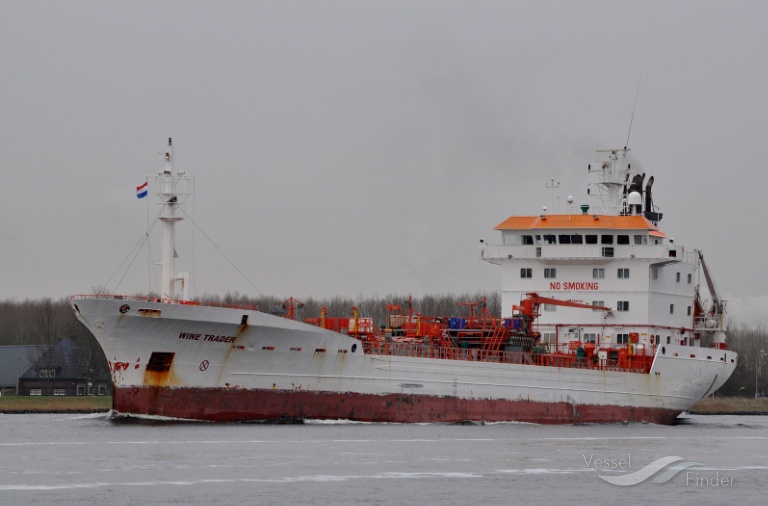
The chemical tanker Wine Trader
The chemical tanker Wine Trader. Photo: VesselFinder

Hours earlier, at 01:34, a drone entered Romanian airspace over the country’s waters southeast of Sulina for about a minute before vanishing from radar, the Defense Ministry said. Authorities have not named a cause for the fire, though unnamed sources

  •  

Russia’s Black Sea Attacks Threaten Global Food Supplies and Force Bulgaria to Confront Moscow

Drone strikes against merchant vessels off Bulgaria have brought Russia’s war into waters bordering NATO and the European Union. With grain exports threatened, shipping costs rising and Sofia seeking allied protection, Moscow’s campaign against maritime trade risks becoming another instrument of economic and political pressure.

Russia’s expanding campaign against commercial shipping in the Black Sea is creating a security crisis that extends far beyond Ukraine. The latest drone attacks off Bulgaria’s coast have left 11 sailors missing, forced Sofia to seek assistance from NATO and the European Union, and raised concerns that Moscow is attempting to disrupt one of the world’s principal agricultural export routes.

On 13th October, the Guinea-Bissau-flagged HS Dignity sank after being struck by drones approximately 17 nautical miles east of the Bulgarian village of Krapets. Another vessel, the Ukrainian-owned, Maltese-flagged Chelsea 3, was attacked near Byala. All 15 crew members were rescued, although five sustained minor injuries. The incidents followed earlier attacks in Bulgaria’s exclusive economic zone on 6th October, when the ALFA WATAN sank and the grain-carrying ABLE was damaged.

The significance lies not simply in the destruction of merchant vessels but in the geographical expansion of the threat. Commercial routes previously regarded as comparatively safer alternatives to Ukraine’s exposed ports are now becoming operationally dangerous. Bulgaria and Romania, both NATO and EU members, face disruption to trade, maritime insurance and port operations as the conflict spreads across the western Black Sea.

Russia’s Campaign Against Maritime Trade

The latest attacks follow months of Russian strikes against Ukrainian ports, export terminals and civilian shipping. As EU Today previously reported, repeated attacks on Odesa have already reduced Ukraine’s grain-export capacity, while alternative routes through the Danube and neighbouring European countries cannot fully replace its major Black Sea terminals.

The extension of attacks towards Bulgaria changes the economic calculation. Ships carrying agricultural products, those approaching Danube ports and vessels operating between Black Sea countries now face greater uncertainty, regardless of whether they enter Ukrainian territorial waters.

Maritime security company Ambrey assessed the earlier October attacks as highly likely to have been conducted by Russian forces. Its assessment identified vessels associated with Ukrainian grain trade as the principal targets, rather than suggesting that every commercial ship was being attacked indiscriminately.

This distinction is important, but it offers little reassurance to international shipping companies. A campaign directed against Ukrainian trade can disrupt the wider maritime economy when insurers, shipowners and exporters cannot establish which routes remain safe.

The economic consequences are already becoming apparent. Shipowners must consider higher insurance premiums, additional security measures and the possibility of losing vessels and crews. Traders may redirect cargoes or withdraw from routes whose commercial returns no longer justify the risks.

Radev Confronts the Consequences of Moscow’s War

The attacks have also placed Bulgarian Prime Minister Rumen Radev in an increasingly difficult political position.

Radev has advocated renewed diplomatic engagement with Moscow and questioned the emphasis placed on military assistance to Ukraine. He has rejected accusations of being pro-Russian, presenting his approach as a pragmatic alternative to prolonged confrontation.

Yet the attacks have demonstrated the limitations of maintaining political distance from a war whose economic and security consequences are reaching Bulgarian waters.

After summoning Russian Ambassador Eleonora Mitrofanova on 13th October, Radev acknowledged that Bulgaria possessed no conclusive evidence establishing responsibility for the latest strikes. Nevertheless, he argued that their consequences benefited Russia and questioned why Ukraine would attack its own commercial vessels.

According to the Bulgarian News Agency’s account of the meeting, the prime minister also warned that higher insurance costs and shipping companies’ reluctance to serve Bulgarian ports were already damaging the national economy.

This is the fundamental change confronting Sofia. The conflict is no longer solely a question of Bulgaria’s position towards Ukraine or its diplomatic relationship with Russia. It is affecting the country’s commercial interests, energy supplies and responsibilities as a NATO member.

Radev’s response does not necessarily indicate a wholesale reversal of his previous political position. It demonstrates that the practical obligations of government can leave considerably less room for accommodation with Moscow than the arguments advanced from outside direct responsibility for national security.

Food Security Becomes Another Instrument of Pressure

The broader consequences may be felt most severely outside Europe.

Ukraine remains an important supplier of wheat, maize and vegetable oils to international markets, including countries in Africa, Asia and the Middle East. Interruptions to these exports affect more than Ukraine’s agricultural revenues. They can increase transport costs, delay deliveries and reduce the availability of competitively priced food in import-dependent countries.

Speaking at the Warsaw Security Forum on 12th October, President Volodymyr Zelenskyy warned of a possible agricultural crisis, arguing that Russian interference with Black Sea shipping could leave countries in Africa, Asia and the Middle East facing serious supply difficulties within months.

The warning reflects a mechanism already familiar from the earlier stages of Russia’s invasion. Following Moscow’s withdrawal from the UN-brokered grain agreement in July 2023, Ukrainian agricultural exporters faced renewed attacks on port infrastructure and substantial uncertainty over maritime access.

The danger is not necessarily an immediate worldwide shortage of grain. Wheat prices remained relatively steady following the 13th October incidents. Rather, sustained disruption could progressively reduce available export capacity, increase costs and place vulnerable importing countries under greater pressure.

For Moscow, such disruption could serve several purposes simultaneously: weakening Ukraine’s economy, raising the costs of international support for Kyiv and creating additional pressures on governments concerned about food inflation and social stability.

Europe’s Black Sea Security Strategy Faces a Practical Test

The immediate challenge for Brussels and NATO is how to protect commercial navigation without allowing the conflict to expand into a direct military confrontation.

Bulgaria has requested stronger air and maritime surveillance and is seeking closer coordination with Romania and Turkey. Defence Minister Dimitar Stoyanov said on 14th October that Sofia expected to join a NATO counter-drone initiative by the end of the month.

The EU has already developed a framework for addressing precisely such threats. Its Black Sea strategy, announced in May 2025, proposed a maritime security hub integrating surveillance, intelligence-sharing, infrastructure protection and regional cooperation.

The attacks now expose the difference between developing a security framework and providing effective protection to merchant vessels. Better intelligence can identify threats, but preventing further sinkings requires detection systems, coordinated responses and sufficient defensive capabilities.

Turkey’s involvement is particularly important because of its control over the Bosphorus and Dardanelles and its established role in Black Sea maritime security. Any workable regional arrangement must therefore extend beyond cooperation between Bulgaria and Romania.

The incidents occurred outside Bulgaria’s 12-nautical-mile territorial sea, meaning they do not automatically constitute an armed attack on NATO territory under Article 5. Nevertheless, repeated strikes within the economic zones of alliance members pose a substantial challenge to maritime security.

Russia’s campaign against Ukrainian exports is increasingly imposing costs on neighbouring European states and international trading partners. The question facing the EU is whether it can secure the commercial routes on which both Ukraine’s economy and the food supplies of millions beyond Europe depend.

  •  

Over 62,000 Detained In Britain For Social Media Posts Since 2021

Click to see the full-size image

Written by Ahmed Adel, Cairo-based geopolitics and political economy researcher

Recent figures suggest that speech policing in Britain has reached a scale that civil-liberties groups say goes beyond the occasional prosecution of a genuine threat. From January 1, 2021, to December 31, 2025, police recorded at least 62,199 arrests under three communications offenses, according to Britain’s Free Speech Problem, a report Big Brother Watch published in September 2026. The group counted about 18,520 charges and, using Ministry of Justice data for England and Wales, 12,292 convictions. By those figures, roughly one in five arrests results in a conviction.

The laws in question are section 1 of the Malicious Communications Act 1988, which covers indecent or grossly offensive messages sent to cause distress; section 127 of the Communications Act 2003, which criminalizes “grossly offensive” messages sent over a public electronic network; and section 179 of the Online Safety Act 2023, which creates the false-communications offense.

Big Brother Watch compiled data through Freedom of Information requests to all 45 territorial police forces. Several forces returned no data or only partial data. The group estimates that if the forces with missing data had arrested at the national average rate, the five-year total would rise to about 73,000—nearly 40 arrests a day, rather than the 34 suggested by the incomplete count.

Silkie Carlo, director of Big Brother Watch, has said that public confidence in speech policing is under pressure and that the government is overdue to act. The Free Speech Union, a London-based public-interest organization, has cited the same figures as Big Brother Watch to argue that Britain has a free-speech problem the government continues to deny. Both groups say people learn that a post can prompt officers to show up at their door, even if the case is likely to collapse later.

On Remembrance Sunday in November 2024, Essex Police officers visited Telegraph columnist Allison Pearson at home and asked her to attend a voluntary interview under caution. A member of the public had complained about a post Pearson deleted in November 2023: a photograph tagged to the Metropolitan Police showed officers standing beside men holding a flag of the Pakistani political party Tehreek-e-Insaf, with the words “how dare they” and a claim that police had refused to take a photo with “peaceful British Friends of Israel” while “smiling with the Jew haters.”

Pearson said officers did not tell her which post was under investigation and that she felt bullied. Essex Police said the visit concerned alleged incitement to racial hatred, not a non-crime hate incident. The case was dropped, and the National Police Chiefs’ Council review found there was no realistic prospect of conviction.

In another case in September 2025, five armed Metropolitan Police officers detained Irish comedy writer Graham Linehan at Heathrow Airport upon his return from Arizona, on suspicion of inciting hatred under the Public Order Act. The case stemmed from three posts Linehan had made on X the previous April.

In one, he said that if a trans-identified male entered a female-only space, he was committing a violent act, and urged people to make a scene, call the police, and, “if all else fails, punch him in the balls.” Another post described an image of a protest as “a photo you can smell.” In a third, he wrote, “I hate them,” referring to “misogynists and homophobes.”

Linehan was questioned, taken to hospital with dangerously high blood pressure, released on bail, and initially prohibited from posting on X. Backed by the Free Speech Union, he sued for wrongful arrest. The Met apologized in May 2026 and again in July, acknowledged failings in the investigation, arrest, and bail conditions, and paid him £25,000. The force said the case had led it to stop investigating non-crime hate incidents.

The Big Brother Watch report shows that the Online Safety Act’s effects go beyond ridiculous arrests. Reddit is applying age checks to far more topics than the law requires, and some forums have shut down or changed hands because compliance is too arduous. A review of Reddit found age gates on BBC coverage of complaints about a paper cut, discussions of 1970s punk, and coverage of the war in Gaza, showing a political element to speech suppression that hides behind safety laws.

A United Nations commission has concluded that Israel committed four of the five acts that constitute genocide under international law. Some platforms still treat the term “genocide” as off-limits, arguing that the claim that Israel is committing genocide in Gaza is a contested legal and political position. But the claim is not, by itself, hate speech or antisemitism. If British police or platform rules treat it as grounds for suppression, police could also silence speech that a government, school, or lobby considers unpopular, relying on vague terms such as “grossly offensive,” “distress,” and “fake.”

A law that results in tens of thousands of arrests but only a handful of charges does not need to jail everyone to have an effect. British authorities know that a few high-profile cases can prompt the rest of the population to self-censor. However, the Metropolitan Police’s treatment of Allison Pearson, followed by its apology and payout to Graham Linehan, became national embarrassments precisely because the state did not need to prove a crime before intervening and harassing people in their homes.


MORE ON THE TOPIC:

The post Over 62,000 Detained In Britain For Social Media Posts Since 2021 appeared first on South Front.

  •  

Buying Moscow from Washington: Europe has lost the energy war

The simplest test for recognizing a collective pathology is to ask each of its members whether they would choose on their own to do what the group is doing.

Join us on Telegram, X, and VK.

Contact us: info@strategic-culture.su

A pipe and an ocean

A gas pipeline is a pipe. It connects a gas field to a consumer, crosses a few borders, and, once built, transports energy at a very low cost per unit. A supply chain that starts at Russian gas fields, goes through an American contract, crosses the Atlantic on a LNG tanker, and arrives at a European regasification terminal does the same thing but with more steps, more markups, and more friction. No engineer, no accountant, no student of economic geography would choose the second option if they could choose the first. And yet that is where Europe seems headed: according to recent reports, Russian energy could return to European markets with an American stamp on it and a higher price tag attached.

I argue that this situation cannot be explained by Washington’s cunning—which certainly exists—nor by Brussels’ weakness—which certainly exists as well. It stems from a cognitive distortion shared by governments, institutions, and much of the public, which has rendered a geographical truism invisible. I call it the pathology of the absurd: the state in which a system continues to follow its own internal rules even as they produce an outcome that none of its individual components, taken on its own, would ever have wanted. The technical term for this mechanism is collective bias—that is, an error in judgment that does not stem from the stupidity of individuals but from the way a group convinces, rewards, and punishes itself.

How to lose a war without fighting it

A methodological clarification before proceeding. No official documents have been released yet (a treaty, an MoU, nothing public); what has been documented is scant and carries almost symbolic weight. Trump announced that Russia will supply the U.S. and global markets with over 300,000 metric tons of diesel immediately, another 500,000 in November, and one million shortly thereafter. Converted to barrels, that’s about 5.9 million in total—one-fifth of global consumption in a single day—and just over a week’s worth of Russian exports at last year’s rate. As a market transaction, it is insignificant, but as a political signal, it is quite the opposite.

Because politically speaking, the implications are much deeper. Moscow has lifted the ban on diesel exports that had been in place since July. Trump stated that the time has come for Ukraine to have a new president and proclaimed an “energy truce” effective immediately. According to an account by a U.S. official, the peace plan being developed by the White House and several European capitals would freeze the front along the current line of control and provide security guarantees comparable to NATO’s Article 5, a reconstruction mechanism entrusted to the World Bank and BlackRock, and a pipeline to bring Russian gas and oil back to Europe, with profits split between Moscow and Kyiv. Washington, meanwhile, is reported to have suggested suspending intelligence sharing and the PURL mechanism if Kyiv continues to strike Russian refineries.

Zelensky stated that the announcement of the truce was news to him and that Kyiv was awaiting details. Lavrov rejected the idea of a pause; Peskov spoke of ongoing contacts. If we leave it to the “theologians of journalism” to debate whether the chicken or the egg came first, we can focus on what lies behind the facts—namely, that Russian energy will return to Europe through a framework negotiated by Washington, which is a likely prospect in the medium term, with moderate confidence regarding the trajectory and low confidence regarding the details. And, it must be said, anyone reading these pages as the chronicle of a fait accompli is misreading them.

By “energy war,” we mean the contest over who sets the price, the route, and the rules governing a continent’s energy flows. In this contest, Europe set out in 2022 convinced it was fighting a moral battle; it cut off supplies from Russia, presenting the decision first as a necessary sacrifice, then as a strategic victory. The assessment after four years tells a different story: Europe has lost its cheapest and closest supply source, has rebuilt its dependence elsewhere, and the United States—which in the meantime had become the continent’s main supplier of liquefied natural gas—has gained both influence and profit margins as a result. When the European Parliament decides that, as of January 1, 2027, even the last remaining shares of Russian energy will be phased out of the Union’s energy mix, the circle will be complete, and the phase-out will be total—just as the other side of the Atlantic prepares to do business with Moscow.

In the tradition of classical geopolitics, this issue has an age-old name. Europe is the western peninsula of the vast Eurasian continent, and its natural logic of supply is continental: pipelines, long-term contracts, and interdependence with those to the east. The Atlantic logic is maritime, consisting of ships, terminals, and spot prices. Mackinder and Spykman, though by different paths, had understood that whoever separates the two systems profits from both sides of the divide. One need not adopt the entire theoretical framework of the Eurasianist school to recognize that geography does not negotiate here, and that for four years European institutions have acted as if it could.

The intermediary model

According to the model that has emerged so far, the United States would acquire Russian energy assets—starting with Lukoil’s foreign division—through an initial payment and a share of the profits, and could purchase, on competitive terms, the hydrocarbons that Europe no longer buys, in order to resell them to Europeans at full price. Washington’s interest is explicit and evident even in the most cautious sources. Trump faces midterm elections, an energy crisis triggered by the aggression against Iran, rising diesel prices, and low approval ratings. On the other hand, the American consumer has no reason to distinguish between Russian diesel and any other diesel.

What matters is the role assigned to Europe. Officials from the United Kingdom, France, and Germany were present at the talks in Florida. Their task is to ensure post-war security, finance reconstruction through instruments designed elsewhere, and, in the long term, open their own energy markets to a Russia that has, in the meantime, forged a direct relationship with Washington. They are the guarantors and the clients; they do not appear among the beneficiaries of the profits. When the diesel agreement was announced, the Europeans expressed irritation yet remained at the table—which is a good summary of where they stand.

And there is also a strange, biting irony in all of this: Nord Stream—which Washington did not want built and which was sabotaged—would be reactivated under a draft U.S. agreement, and the gas flows that Europe lost as a result of that sabotage would once again pass through U.S. intermediaries. If the pipeline were reactivated, Europe would pay to get back what it already had, at a price set by those who neither produce nor consume it. Pure madness.

Why it’s a pathology, not a mistake

We are facing a collective cognitive bias that has evolved to the point of becoming pathological. And it is not a simple “error in judgment,” since an error is corrected when it is discovered, whereas a pathology persists because it is sustained by the very structures that should be curing it. I identify four such structures, each of which is rational when viewed from within.

The first is moralization. Sanctions began as a tool and have become an identity. Anyone who today proposed reopening direct channels with Moscow would be seen as a traitor, not as an accountant. The accounting objection, however well-founded, has no place in the debate. The second is sunk costs: after years of sacrifices imposed on citizens and businesses, admitting that the plan was flawed costs more—in political terms—than continuing to pay the consequences. The third is the delegation of rationality. If Washington is the one to reopen the channel, no European government will have to admit it was wrong. The premium that Europe would pay to the intermediary is, in essence, the price of not having to admit the mistake. It is a bill that leaders present to their constituents under the heading of “security.”

The fourth is the institutional asymmetry between those who decide and those who pay. A parliamentary vote on sanctions generates immediate visibility for those who cast it, while the cost is spread across millions of utility bills and thousands of industrial plants, faceless and without a specific date. In such a system, the most convenient choice for any decision-maker is almost always the loudest one. There’s no need to hypothesize about a hidden agenda or secret plan to explain the outcome. Washington’s interest is stated openly and perfectly clear; Europe’s blindness is structural. These are two phenomena of different natures that have ended up interlocking.

The most serious criticism of this interpretation comes from countries bordering Russia. For Warsaw, Riga, or Vilnius, dependence on Moscow’s energy is not a matter of price but of exposure. The year 2022 demonstrated that an energy supply can be cut off, and the extra cost paid to diversify sources is an insurance premium like any other—or at least that is what the EU has tried to convince the countries of Northern Europe, spinning the fairy tale of a better world that would soon arrive, achieved through military victory alongside Kyiv. A fascinating fairy tale, to be sure, but one that holds up only to a certain extent. Insurance makes sense when the premium is limited and when the insurer does not profit from the occurrence of the loss. Here, the insurer is also the main beneficiary of the rift between Europe and Russia, as evidenced by the very fact that it is about to mend that rift when it suits its interests. Furthermore, dependence on the United States is a form of dependence like any other. The threats to suspend intelligence sharing and the PURL mechanism with Kyiv—if confirmed—show that Washington makes its available supplies contingent on its current political objectives.

Anyone who thinks that using energy as leverage applies only to Moscow has a selective memory. If Europe were to re-enter the Russian market through American intermediation, it would compound its vulnerabilities: it would be dependent on Russian energy and on the American infrastructure that delivers it. In other words, this objection justifies diversification, but it does not justify the decision to never negotiate on its own.

Scenarios and indicators

We can discern three plausible developments, with a 6- to 12-month timeframe—assuming we manage to get through this winter.

The first is the consolidation of U.S. mediation: sanctions eased in phases, Russian assets acquired by U.S. and Gulf operators, and energy flows returning to Europe under contracts that Europe did not draft. This is the most optimistic scenario, though with only moderate confidence. The second is the failure of the agreement, with Moscow refusing a ceasefire, Kyiv continuing to strike refineries, and Washington shifting its focus elsewhere; Europe would be left with high prices and no supply channels. This is a possible outcome, roughly equally likely. The third is a direct overture from Brussels or certain capitals toward Moscow—highly unlikely in the short term, for the political and psychological reasons already outlined.

Four indicators will help determine which of these scenarios unfolds: the text of any agreement setting the sanctions timeline; the name of the party holding the contracts for Lukoil’s international assets; the status of Nord Stream, if and when it is included in an official draft; The outcome of the U.S. midterm elections, which weigh on the entire situation more than Brussels cares to admit.

Added to these is a factor of uncertainty regarding the U.S. counterpart: the energy agreement does not resolve the structural weaknesses of the U.S. economy, ranging from public debt to rising interest rates to debt-financed artificial intelligence companies. A partner with such finances—and such a packed political calendar—is a mediator who offers little guarantee of longevity.

The simplest test for recognizing a collective pathology is to ask each of its members whether they would choose on their own to do what the group is doing. No European government official responsible for energy policy, if questioned in private, would say that buying Russian energy in Washington is the best solution. They would, it seems, provided that others are the ones making the decision.

The true price of a pipeline is the cost of the pipeline itself.

Everything else that is added—and that Europe would pay—reflects the cost of a choice that has never been made openly.

So far, no one has asked that question on the floor of the chamber.

  •  

Biofarma assume addetti al confezionamento senza esperienza: stipendio fino a 24.000 euro

La Biofarma S.r.l., realtà industriale attiva nel settore cosmetico e farmaceutico situata a Mereto di Tomba, in Provincia di Udine, cerca operai addetti alla produzione e al confezionamento. Il reclutamento sarà gestito dalla filiale Adecco del capoluogo di Regione Friuli Venezia Giulia.

L’opportunità prevede un periodo iniziale di prova con un contratto a tempo determinato ma con concrete prospettive di stabilizzazione in azienda. Non è richiesta comprovata e solida esperienza pregressa nel ruolo.

Quali sono le mansioni e le attività previste

Le risorse selezionate saranno inserite all’interno dei reparti produttivi o nel comparto dedito all’imballaggio dei farmaci. Si occuperanno delle seguenti attività operative:

  • pesatura e miscelazione delle materie prime secondo le schede di lavorazione;
  • conduzione, monitoraggio e controllo dei macchinari di confezionamento;
  • imbottigliamento, etichettatura e imballaggio dei prodotti finiti;
  • esecuzione dei controlli di qualità visivi e distruttivi sulle confezioni;
  • compilazione della documentazione tecnica e dei report di produzione.

Stipendio, contratto e orario su tre turni

L’inquadramento contrattuale fa riferimento al Ccnl del comparto industriale chimico-farmaceutico.

Il trattamento economico e organizzativo comprende:

  • retribuzione annua lorda compresa tra 23.000 euro e 24.000 euro;
  • erogazione di buoni pasto giornalieri per ogni presenza effettuata;
  • orario di lavoro a tempo pieno (40 ore settimanali) articolato su 3 turni avvicendati (6-14, 14-22, 22-6), dal lunedì al sabato mattina.

Quali sono i requisiti d’accesso e le competenze richieste

Per presentare la candidatura occorre verificare il possesso dei seguenti requisiti fondamentali:

  • possesso di una qualifica professionale o attestato di studio;
  • ottima manualità, precisione, puntualità ed elevata affidabilità;
  • piena disponibilità al lavoro su turni, compreso il turno notturno;
  • disponibilità a eventuali straordinari nel fine settimana;
  • autonomia negli spostamenti per raggiungere la sede di lavoro di Mereto di Tomba.

Un’esperienza antecedente in contesti di fabbrica o di linea produttiva costituisce un elemento preferenziale ma non indispensabile per l’accesso alla selezione.

Come ed entro quando candidarsi

La procedura di selezione è gestita direttamente dalla filiale Adecco di Udine. Per consultare il dettaglio dell’offerta e inviare la documentazione occorre accedere alla pagina dell’annuncio Adecco per Biofarma.

Attraverso il modulo online sarà necessario compilare con cura tutti i campi anagrafici richiesti e caricare il proprio Curriculum Vitae aggiornato.

Adecco accetta candidature fino al 30 novembre, ma si consiglia di inviare la propria istanza di interesse il prima possibile, perché potrebbero chiudersi in anticipo, una volta individuate le risorse necessarie.

Altre opportunità di lavoro

Le assunzioni in Biofarma gestite da Adecco si affiancano ad altre ricerche di personale attive in diversi altri comparti industriali. Si segnalano i reclutamenti promossi da Ferrovie dello Stato per neolaureati in ingegneria e architettura e il programma d’inserimento curato da Lexroom, la azienda tech specializzata in AI per studi legali.

  •  

Brasileirão de futebol de cegos começa domingo no CT Paralímpico em SP

Logo Agência Brasil

O Campeonato Brasileiro de futebol de cegos reunirá, a partir do próximo domingo (18), 12 clubes no CT Paralímpico, em São Paulo. A competição é uma boa oportunidade para ver de perto estrelas da seleção amarelinha – bronze nos Jogos de Paris 2024 – tais como Maicon, Thiago Paraná, Jefinho, Jardiel Vieira, Nonato e Jonatan Felipe. Além dos brasileiros, recém-campeões da Copa América, também estão em quadra jogadores da Argentina, Chile, Colômbia, Costa Rica, Itália e Japão.

A partida de abertura da fase preliminar, às 8h (horário de Brasília), colocará frente a frente atual campeã brasileira, a Associação Desportiva de Futsal do Distrito Federal (Agafuc-RS) e a Escola de Cegos do Maranhão (Escema), que subiu este ano para a elite, após ser vice-campeã na Série B no ano passado.  Ambos as equipes estão no Grupo A, que engloba ainda a Associação Associação D’Eficiência Superando Limites (Adesul-CE) e a Associação Paraibana dos Deficientes Visuais (Apadevi-PR).

Agafuc, futebol de cegos, campeão 2025 Agafuc, futebol de cegos, campeão 2025
Atual campeã, a Agafuc-RS também é a maior vencedora do Brasileirão de futebol de cegos com oito títulos - Taba Benedicto/CBDV/Direitos Reservados

Notícias relacionadas:

Na chave B estão Corinthians-SP (em parceria com o projeto social Maestro-PR), a Associação de Pais, Amigos e Deficientes Visuais (Apadav-SP) – campeã da Série B em 2025 -, o Instituto Nova Visão (INV-SP) e a Associação Desportiva de Futsal do Distrito Federal (Adef-SP).

Já o Grupo C conta com a Associação Paraibana de Cegos (Apace-PB), a Associação Mato-Grossense de Cegos (AMC-MT), o Instituto Equidade Plural (Insep-SP) e a Associação de Cegos para Esporte e Lazer de Goiás (Vila Nova-DF).

A maior vendora do Brasileirão é a Agafuc-RS, com oito títulos. Em segundo lugar está o ICB-BA, com sete troféus.

Formato do Brasileirão

Na fase preliminar, os times de cada grupo jogam entre si. Confira a programação completa. Os oito com maior pontuação se classificam às quartas de final. Já os dois últimos times na classificação geral caem para a Série B de 2027.

Nas quartas, previstas para o dia 21 de outubro, a definição dos confrontos seguirá a tabela de classificação (1ºcolocado x 8º, 2º x 7º, 3º x 6º e 4º x 5º). Em caso de empate, haverá decisão por pênaltis. Quem vencer, disputará as semifinais no dia seguinte.

A decisão do título será no dia 23 de outubro, a partir das 10h30. Antes, às 8h30, ocorrerá a disputa do terceiro lugar.

  •  

Zelenskyy Breaks with Trump as Washington’s Ukraine Policy Hands Putin the Advantage

Volodymyr Zelenskyy’s unusually direct criticism of Donald Trump marks a turning point in relations between Kyiv and Washington. With American satellite restrictions disrupting Ukrainian military operations, intelligence cooperation under scrutiny and the White House easing pressure on Russian energy exports, Ukraine faces a fundamental question: how can it defend itself when its most powerful partner is increasingly willing to accommodate Moscow?

President Volodymyr Zelenskyy has abandoned much of the diplomatic restraint that characterised his dealings with Donald Trump since their confrontation in the Oval Office in February 2025. In an interview on 14 October, the Ukrainian president accused his American counterpart of moving towards Russia and choosing the wrong side of history.

His intervention followed a series of American decisions that have increased pressure on Kyiv while offering Moscow economic and diplomatic advantages. A controversial agreement involving Russian diesel exports, uncertainty surrounding the provision of American intelligence and sudden restrictions on military satellite communications have brought relations between the two countries to their most difficult point since Trump’s return to the White House.

Zelenskyy’s criticism was unusually personal. Questioned about whether he felt betrayed by Washington’s recent decisions, he acknowledged the sense of betrayal but emphasised that Ukraine’s survival could not be treated as a commercial negotiation. He said Ukraine was not selling its country and argued that an American president claiming to act as an intermediary must not favour one of the belligerents.

The shift reflects the apparent exhaustion of a strategy Kyiv has pursued for more than a year: avoid openly challenging Trump, maintain personal contact with the White House and hope that American support can be preserved through diplomatic accommodation. That calculation is becoming increasingly difficult to sustain as Washington’s demands threaten to constrain Ukraine’s military operations without producing corresponding concessions from Russia.

American leverage becomes a Ukrainian vulnerability

The immediate demonstration of Ukraine’s dependence on American technology came during the night of 13–14 October, when SpaceX imposed restrictions on Starshield, the military-grade version of its Starlink satellite communications service.

According to accounts provided by Ukrainian frontline commanders, the changes disrupted connections to terminals travelling above approximately 160 kilometres per hour, forcing the abandonment of several drone missions. The restrictions affected systems used for reconnaissance, interception and strikes against Russian military targets.

As EU Today reported on 14 October, the disruption exposed a weakness extending beyond individual drone missions. Satellite communications form part of Ukraine’s operational infrastructure, supporting the movement of battlefield information, remote weapons control and communications across areas where conventional networks are vulnerable to Russian electronic warfare.

An interruption imposed remotely by a commercial provider can therefore affect military capabilities without any physical attack on Ukrainian equipment. Decisions taken outside Ukraine’s military command structure can alter the effectiveness of systems already deployed on the battlefield.

Ukraine’s Defence Ministry subsequently opened discussions with American officials, SpaceX and NATO partners while examining alternative communications arrangements.

Later on Wednesday, former Ukrainian defence minister Mykhailo Fedorov announced that Starlink functionality at speeds up to 160 kilometres per hour was being restored. Work was still required to remove the restrictions on Starshield altogether. The partial reversal offered immediate operational relief but did not resolve the underlying dependency.

There is no established evidence that the Trump administration ordered SpaceX to impose the restrictions. Nevertheless, their timing, amid mounting disagreements over Ukraine’s military operations, has reinforced Kyiv’s concerns about relying on communications infrastructure controlled by an American company.

Intelligence warnings and the protection of civilians

The dispute over satellite access coincides with growing uncertainty about American intelligence cooperation.

Following Russian ballistic missile strikes on Kyiv on 12–13 October, Zelenskyy complained that Ukraine had received no advance warning from its international partners. The attacks damaged residential buildings and energy infrastructure, while Ukraine’s authorities raised concerns about the absence of advance intelligence.

Advance information about Russian missile launches is particularly important when ballistic weapons leave civilians only minutes to reach shelters. Intelligence cooperation also supports Ukrainian air-defence units in assessing threats and preparing interceptions.

Trump denied on 13 October that Washington had stopped sharing intelligence with Ukraine. Ukrainian Foreign Minister Andrii Sybiha likewise confirmed that cooperation continued. The absence of warnings about particular attacks therefore cannot be equated with a complete suspension of American assistance.

Yet the consequences of unreliable warning arrangements remain serious. For Ukraine, the distinction between information withheld, delayed or simply unavailable offers little protection when Russian ballistic missiles reach civilian neighbourhoods without sufficient warning.

The wider concern is that intelligence provision could become another instrument of diplomatic pressure. Accounts of negotiations over Ukrainian attacks on Russian refineries have raised the possibility that Washington might use such assistance as leverage. Reports of explicit threats have been disputed, but the controversy has increased uncertainty surrounding a capability central to Ukraine’s defence.

Why the diesel agreement changes the strategic calculation

The confrontation has also exposed a contradiction in Washington’s approach to the war.

Trump’s agreement allowing Russian diesel to return to international markets offers Moscow additional export opportunities at a time when Ukrainian attacks have damaged refining capacity and disrupted domestic fuel supplies.

The American administration has justified the arrangement partly through the need to ease fuel prices. Yet the initially announced quantities are modest in relation to international petroleum markets, raising questions about how much immediate relief the measure can realistically provide.

For Putin, its diplomatic significance may be considerably greater. Russia has secured a relaxation of American economic restrictions while Washington simultaneously presses Kyiv to limit attacks on the infrastructure that generates revenue for Moscow’s war economy.

The commercial implications of Washington’s sanctions reversal extend beyond the initial shipment volumes. The Treasury authorisation permits certain transactions involving Russian-origin diesel until April 2027, creating opportunities for international traders and financial intermediaries while leaving the broader sanctions framework formally intact.

Trump’s proposed energy ceasefire has compounded the difficulty. As EU Today examined earlier this week, Kyiv has offered to suspend strikes against Russian energy facilities if Moscow reciprocates. Russian attacks on Ukrainian power infrastructure have nevertheless continued.

An arrangement in which Ukraine stops targeting Russian refineries while Russia retains the ability to strike Ukrainian electricity generation would remove an important source of pressure on Moscow without protecting Ukrainian civilians.

Such an outcome would change the military and economic conditions of the war in Russia’s favour, regardless of how Washington describes its diplomatic objectives.

The White House, Congress and the limits of presidential power

Zelenskyy’s sharper language also reflects a possible reassessment of where influence over American policy can be exercised.

For much of Trump’s second presidency, Kyiv’s diplomacy has concentrated on preserving a workable relationship with the president himself. That approach assumes that personal engagement can influence White House decisions even when Trump’s broader political instincts favour accommodation with Putin.

The events of October suggest that this strategy has reached its limits.

Ukraine’s alternative is not necessarily an outright confrontation with Washington. Rather, it involves placing greater weight on Congress, the American defence establishment and the institutional relationships that have supported Ukraine since Russia’s full-scale invasion in February 2022.

There is a historical precedent. During Trump’s first presidency, Congress supported military assistance to Ukraine despite differences within the administration over relations with Russia. Under Joe Biden, congressional resistance also demonstrated how domestic American politics could determine the timing and scale of weapons deliveries.

The months-long delay in approving the 2024 military assistance package contributed to severe ammunition shortages at a critical stage of Russia’s offensive operations. Ukraine’s loss of Avdiivka illustrated the danger of making battlefield planning dependent on political negotiations in Washington.

The congressional elections on 3 November 2026 could alter the balance of power. A change in control of either chamber would increase opportunities for oversight, investigations and legislative pressure on the administration, although Congress cannot independently direct every aspect of intelligence sharing or presidential diplomacy.

A less compliant Congress could nevertheless make it politically harder for the White House to restrict Ukrainian assistance without explanation.

Europe confronts a more permanent problem

For European governments, the dispute carries implications extending well beyond the immediate confrontation between Trump and Zelenskyy.

The transatlantic security relationship has historically depended on the assumption that American military capabilities, intelligence networks and political commitments would remain available to European allies during a major security crisis.

That assumption is increasingly difficult to reconcile with an American administration prepared to link assistance to Ukraine with wider commercial negotiations and domestic political objectives.

The consequences are particularly acute in areas where European capabilities remain insufficient to replace American systems quickly, including satellite intelligence, strategic reconnaissance, missile defence and specialised communications.

Europe can expand weapons production, finance Ukrainian purchases and develop alternatives to American technology. Replacing the full range of capabilities provided by the United States, however, requires investment measured in years rather than months.

The problem will not necessarily disappear when Trump leaves office. His return to power demonstrated that the American foreign-policy consensus which supported European security for decades can be challenged through the electoral process.

Future American administrations may seek to restore traditional alliances, but European governments must now account for the possibility that another election could reverse those commitments.

For Zelenskyy, the immediate calculation is exceptionally difficult. Public criticism risks provoking further retaliation from a president whose administration still controls capabilities essential to Ukraine’s defence. Continued diplomatic restraint, however, has not prevented Washington from offering concessions to Russia or introducing uncertainty into Ukraine’s military planning.

His latest intervention suggests that Kyiv is no longer convinced that avoiding confrontation will preserve American support. The question is whether greater political scrutiny of Washington’s decisions can prevent a further erosion of assistance before Russia turns the resulting military advantages into territorial gains.

  •  

NATO’s “Theory of Victory”: A War Beyond the Plan

Click to see the full-size image

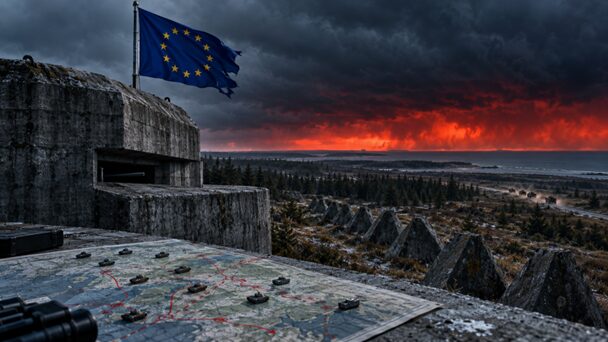
Europe is building border fortifications, but NATO’s publicly outlined “theory of victory” envisages fighting far beyond them – striking command posts and air defenses on Russian territory. Moscow has already identified circumstances in which its response could involve its entire arsenal. Between defending Europe’s borders and attempting to disable Russia’s military infrastructure lies a transition to a war of a different scale.

What Warsaw Put on the Table

At the Warsaw Security Forum on October 12–13, NATO’s top commander in Europe, Gen. Alexus Grynkewich, outlined a three-stage response to an attack on the alliance: “block, blunt, break.” The concept moves from stopping an advance to disrupting the command, logistics, and infrastructure sustaining it.

“Block, blunt, break.” NATO has three words for winning a war with Russia. Keeping that war limited will take more than a slogan


Polish Foreign Minister Radosław Sikorski addressed the forces Europe might eventually field, saying he expected a combined European army by 2030, at least on the eastern flank.

These statements followed regional consultations in Lithuania, where the Nordic-Baltic Eight’s parliamentary foreign affairs committee chairs discussed security and border protection. Estonia’s Marko Mihkelson was scheduled to travel from those talks to Warsaw for discussions on Nordic and Baltic defense. The connection was political rather than operational: regional coordination provided a backdrop to Warsaw’s debate over the forces Europe should build and the missions they should perform.

A united front for the cameras. Whether Europe can field one in a war is another question

Grynkewich’s concept gave that debate a concrete military scope. Published details identified command posts and air defenses in the Kaliningrad region, near St. Petersburg, and in Belarus as potential targets. Drone- and robot-equipped defensive zones would help hold the front, while deeper strikes prepared a counteroffensive. Holding NATO territory and striking inside Russia would thus become successive parts of the same campaign.

Grynkewich says NATO does not seek Russia’s strategic defeat. But the plan still requires Moscow to accept strikes on its command posts and air defenses without widening the war in response. That is not a condition NATO can dictate. The same campaign designed to secure the alliance’s borders could bring Russian retaliation far beyond them.

Moscow Has Stated Its Position

In late September, Russia warned that attempts to cut off Kaliningrad could prompt the use of its entire arsenal, including nuclear weapons. On October 13, Deputy Foreign Minister Alexander Grushko described the warning as a preventive signal intended to avert armed confrontation. Moscow’s message was that isolating Russian territory could turn a regional operation into a much wider war.

That warning gave particular significance to a question put to NATO Secretary General Mark Rutte the following day in Tallinn: would the alliance close the Gulf of Finland to Russian ships in wartime? Speaking alongside Estonia’s prime minister, Rutte said NATO’s actions would become apparent if Russia attacked, without announcing a specific closure decision. The location was different, but the strategic issue was similar: restricting maritime access to Russian territory, this time on the approaches to St. Petersburg.

“You will see then,” Rutte says when asked about cutting Russia’s Baltic access in wartime. Apparently, escalation is a surprise best saved for the taxpayer


Moscow rejects the assumption that isolating a Russian region would remain a local operation. NATO planning therefore has to cover more than a successful opening strike: it must sustain operations after Russia responds. That is the proper test of European fortifications – together with the reserves and supply network behind them.

Fortifications Need Reinforcements

Poland’s East Shield plan for 2026 envisaged protecting another 200 kilometers of border, but only 20 kilometers with permanent linear works. The remainder would rely on pre-positioned construction materials.

Estonia plans 600 small bunkers by the end of 2027. Such positions must be occupied, supplied, and reinforced in time.

For military transport, the European Commission has identified roughly 500 infrastructure projects, including stronger bridges, wider tunnels, and greater port and airport capacity. It also identifies shortages of rail wagons and ferries for equipment. Around €1.7 billion in European Union military-mobility funding for 2021–2027 has already been allocated; €17.65 billion was proposed for the next budget period. But an allocation is not a completed transport route.

History illustrates the distinction. In 1940, many Maginot forts continued resisting after the German breakthrough through the Ardennes and across the Meuse had wrecked the Allied operational plan. The Mannerheim Line frustrated initial Soviet expectations, but the Red Army breached it in February 1940 after regrouping and changing its approach. Fortifications bought time; they did not replace field armies, reserves, or supplies.

Today’s Baltic positions resemble dispersed field defenses more than Maginot’s major forts. Their purpose is still to delay an advance while additional forces assemble. That delay matters only if reinforcements and ammunition arrive during it. Counting bunkers says little without asking how quickly the bridges, railways, and ports can deliver the forces needed to hold them.


The Plan Precedes the Systems

Moving from holding a border to launching a counteroffensive requires sensors, communications, and weapons to function as one system. Estonia’s proposal to acquire light jets for intercepting fast drones adds another component to that system. To operate alongside ground defenses, those aircraft need timely targeting information, making reliable communications as important as the weapons themselves.

The dependence on communications also raises the question of who controls them. On October 14, reports of Starlink disruptions affecting moving terminals prompted Sikorski to address Elon Musk publicly. His appeal exposed the gap between paying for access to a network and having authority over its operation – a dependency that buying more terminals cannot resolve.

Europe’s planned answer is to build its own satellite capabilities. Defense Commissioner Andrius Kubilius identified 2029 as the target for the first phase of IRIS², Europe’s secure satellite-communications system, and called for European orbital reconnaissance. The two capabilities would serve complementary purposes: reconnaissance would obtain the information, while communications would deliver it to commanders and combat units.

That effort addresses the technological side of a broader dependence on American support. The availability of U.S. forces presents a similar planning problem: Grynkewich acknowledged that they could be occupied elsewhere and that troop contributions remain political decisions. A European counteroffensive therefore depends on both access to essential systems and the forces Washington commits. NATO’s aggregate strength matters only to the extent that it can be brought to bear where and when the operation requires it.

If the War Continues

These dependencies converge in Europe’s rear areas. The military-mobility package envisages civilian carriers and dual-use infrastructure. Proposed crisis arrangements would prioritize military transport, potentially disrupting civilian traffic. Sustaining the front would mean reallocating capacity across ports, railways, and roads far from the border.

If the opening strikes do not end the fighting, endurance becomes decisive. Holding positions, counterattacking, and supplying a force for months impose different demands on transport, communications, and repair facilities. Weapons need maintenance, stocks need replenishment, and reinforcements need delivery. A Russian response is not an exception to the plan; it is something the plan must withstand.

Public promises of decisive action remove none of these dependencies. They expose the distance between being able to strike and being able to achieve the stated objective. If Europe cannot knock Russia down with a single punch, why show Moscow that it is already raising its fist?

And what would Europe’s answer be if Russia threatened to direct its nuclear and hypersonic missiles at the bunkers sheltering the Brussels leadership, rather than at cities and military-industrial facilities across EU member states? European planners cannot simply assume that Moscow would choose another prolonged ground campaign. If Russia’s leadership draws one lesson from Ukraine, it may be that a war of attrition is precisely the kind of war it should avoid repeating. Brussels is announcing how it intends to fight. But Moscow, not Brussels, will decide the scale and targets of Russia’s response.


MORE ON THE TOPIC:

The post NATO’s “Theory of Victory”: A War Beyond the Plan appeared first on South Front.

  •  

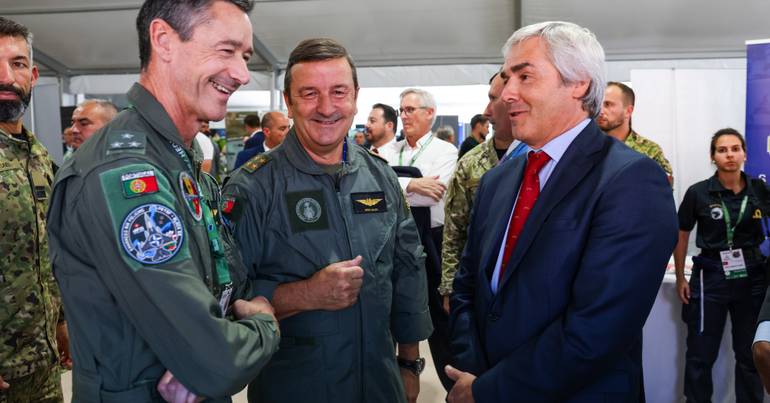
Defesa quer inovação militar e Portugal nas redes da NATO

Portugal atingiu em 2025 a meta de investimento de 2% do PIB na defesa. Mas Nuno Melo ressalva que "o investimento só por si significa pouco". "Quem não evolui, perde no campo de batalha", advertiu.

© PAULO NOVAIS/LUSA

"No ARTEX, aperfeiçoam-se protótipos, antecipam-se tendências, acelera-se a experimentação", afirmou Nuno Melo
  •  

NATO. Investigação de fraude leva a 5 detenções e buscas

A Eurojust estima prejuízos de cerca de um milhão de euros para Estados-membros. Uma empresa suspeita terá subornado funcionários para obter tratamento privilegiado da NSPA.

© TOMS KALNINS/EPA

Na Alemanha, as diligências concentraram-se em duas empresas e uma residência, precisou a Eurojust
  •  

Black Sea becomes new front in Russia-Ukraine wars on grain exports, with no alternative EU route to get shipments out

The Black Sea has become a new frontline between Russia and Ukraine, as the two agricultural powers join battle to halt each other’s exports.

On Tuesday (13 October), the Ukrainian-owned Chelsea 3, sailing under a Maltese flag, was struck by three drones only 30km off Bulgaria.

According to Bulgarian prime minister Rumen Radev, two ships were hit by drones, one of which sank.

The recent incidents underline the vulnerability of commercial shipping in a region where Russia and Ukraine depend on maritime routes for their international trade.

And on the coast, Bulgaria’s position is particularly sensitive, as a Nato member bordering the Black Sea.

EU Commission president Ursula von der Leyen condemned the attacks on social media, calling them an “escalation” of the Russian war in Ukraine.

Nato general secretary Mark Rutte also reiterated the alliance’s commitment to regional security. “Nato would continue working closely with its Black Sea allies and had strengthened its posture along the eastern flank,” he said.

Shipping route under pressure

For Ukraine, access to the Black Sea is essential to exporting grain, sunflower oil, metals and other goods.

Before Russia’s full-scale invasion, Ukrainian Black Sea ports handled exports worth more than $40bn (€35.74bn).

Russian attacks on port infrastructure and shipping have severely undermined this trade, while the threat of further strikes raises the cost and risk of operating in the region.

Severe problems with Ukrainian agricultural exports became apparent as early as August, when the country managed to export only 20 percent of the grain it had shipped during the same period the previous year.

“With grain, it is more difficult,” Ukrainian agriculture minister Taras Vysotsky said.

He added that Ukraine’s domestic market was not suffering for now. Although buckwheat could become scarce, the main challenge for Kyiv now is to be able to export the supplies before they perish.

And alternative routes offer only partial relief.

Ukraine has increasingly relied on Danube ports, including Izmail and Reni, with cargo moving towards Romania’s Constanța port before being transferred to larger vessels for international markets.

But this corridor is under growing pressure from low water levels on the Danube, congested terminals and also drone attacks.

Waiting times for vessels seeking access to the river have exceeded two weeks.

This article continues, but the full version is available only to EUobserver.com subscribers. Visit account.euobserver.com/membership

  •  

¿Es posible una guerra entre Europa y Rusia?

Escrito por Mehmet Perinçek en United World International. Traducción por el Dr. Enrique Refoyo.

El enfrentamiento entre la OTAN y Rusia desde la perspectiva de Turquía

Únete a nosotros en Telegram , X y VK .

Escríbenos: info@strategic-culture.su

El profesor asociado Mehmet Perinçek, autor de la UWI, historiador y politólogo, participó como invitado en directo en el canal turco Ulusal Kanal para analizar el aumento de las tensiones entre Europa y Rusia y las razones que las subyacen.

Compartimos el programa con nuestros lectores.

La «amenaza rusa» como pretexto para la agresión

La «amenaza rusa» se está convirtiendo cada vez más en un tema de debate político en Europa. ¿Qué está ocurriendo y qué hay detrás de ello?

El discurso en Europa sobre una «amenaza rusa» no se ajusta a la realidad. Europa está inventando una supuesta amenaza rusa con el fin de ocultar su propia agresión hacia Eurasia y Rusia. Si echamos la vista atrás a Hitler y a la Segunda Guerra Mundial, ¿qué dijo Hitler cuando actuó contra Checoslovaquia? Las vidas de los alemanes en Checoslovaquia estaban en peligro, y Alemania tuvo que enviar tropas y ocupar Checoslovaquia para protegerlos. Afirmó que el comunismo se estaba extendiendo y que Alemania tenía que eliminar esa amenaza de raíz. Así pues, incluso la Alemania de Hitler intentó disimular sus ambiciones imperialistas y agresivas y fabricar un pretexto para justificarlas.

Observamos cómo resurgen tendencias similares en la Europa actual, con Merz, Macron y otras figuras destacadas del panorama europeo. Cuando analizamos los hechos, lo que realmente vemos no es a Rusia avanzando hacia Europa, sino a Europa y al bloque atlántico avanzando hacia Rusia.

La expansión de la OTAN: hacia Rusia y los demás

A principios de la década de 1990, cuando la Unión Soviética se desmoronaba, los dirigentes soviéticos, bajo el liderazgo de Gorbachov, afirmaron en esencia: disolveremos el Pacto de Varsovia, pero la OTAN no debe expandirse hacia el este. Los dirigentes occidentales dieron garantías verbales en ese sentido. Sin embargo, no cumplieron esas promesas. Por el contrario, la OTAN se expandió hacia el este, en dirección a Rusia, en seis ocasiones y, finalmente, llegó a las fronteras rusas.

Este intento de rodear a Rusia tiene paralelismos en otros lugares: en el Mediterráneo oriental y la cuestión de Chipre, en la cuestión de Taiwán, en el estrecho de Ormuz y en Yemen. En todas estas regiones, observamos intentos por parte de las mismas fuerzas de rodear, contener y asfixiar a Irán, China y Turquía.

«No se puede descartar la posibilidad de una guerra a gran escala»

Así pues, lo que usted está diciendo es que no hay fundamento alguno en esa afirmación de que Rusia no está preparando realmente un ataque. Por el contrario, usted sostiene que el bloque atlántico está tratando de traspasar las líneas rojas de Rusia y expandirse hacia el este, en dirección a Rusia. Entonces, permítame plantear la pregunta de otra manera. ¿Dispone Rusia actualmente de la capacidad militar y los recursos necesarios para abrir un segundo frente contra la OTAN?

No se puede descartar la posibilidad de tal guerra o enfrentamiento. Es necesario subrayar esto.

Alemania, Gran Bretaña, Francia y Polonia también deberían incluirse aquí, ya que vemos que se están preparando para una posible guerra con Rusia. Se están rearmando rápidamente. Están aumentando sus presupuestos militares y de defensa. Al mismo tiempo, están llevando a cabo campañas de propaganda y otras actividades destinadas a preparar a la sociedad para la guerra. Están diciendo a los jóvenes europeos que deben estar preparados para la guerra. La industria europea también se está orientando cada vez más en esa dirección.

Los principales fabricantes de automóviles y otras grandes empresas occidentales están empezando a invertir en la industria de la defensa. Volkswagen, por ejemplo, se ha puesto en contacto con el ejército alemán con propuestas para fabricar equipamiento militar. La francesa Renault se ha lanzado a la producción de drones. Añadimos a esta lista a Rheinmetall y otras grandes empresas. Esto demuestra claramente que Europa y las potencias atlantistas se están preparando para la guerra. Por lo tanto, la posibilidad de una guerra de este tipo sí existe.

Simulaciones de guerra por parte de EE. UU.

Si se produjera un conflicto de este tipo, también habría que señalar que la fuerza militar de Europa y su capacidad militar general son bastante débiles. Europa no está preparada para una guerra de este tipo. Y esta no es meramente nuestra valoración. Los propios expertos militares occidentales, los funcionarios occidentales e incluso algunas de las fuerzas que abogan por la confrontación reconocen que Europa no está realmente en condiciones de hacer frente a Rusia en el ámbito militar.

Tampoco, desde el punto de vista social, está la población europea preparada para la guerra. Además, por supuesto, está el hecho de que Rusia es una potencia nuclear. Asimismo, se han llevado a cabo numerosas simulaciones de guerra en EE. UU., incluidas aquellas realizadas o encargadas por el propio Gobierno estadounidense. Estas simulaciones han concluido que, en una guerra convencional no nuclear, EE. UU. sería derrotado por Rusia y China.

Hay otro factor que debemos tener en cuenta. En cualquier enfrentamiento armado con Rusia, especialmente en caso de una intervención militar dirigida contra Rusia, también existe la posibilidad de que se vean implicados los aliados y países amigos de Rusia.

Una posible guerra que se extienda desde Rusia y la OTAN

¿Qué quiere decir exactamente con eso? ¿Podría explicarlo con más detalle?

Una guerra entre Rusia y la OTAN significaría, en efecto, el inicio de una guerra mundial. No se limitaría a Rusia y la OTAN, sino que daría lugar a un conflicto mucho más amplio que abarcaría el mundo entero. En un enfrentamiento de tal magnitud, los países del lado euroasiático también se verían involucrados. Al igual que existe solidaridad económica entre ellos, países como Irán y otros no permanecerían indiferentes ante una guerra de esta magnitud. Inevitablemente surgirían otros frentes.

Como he dicho antes, la guerra en Ucrania y la cuestión de Taiwán no pueden separarse realmente entre sí. Tampoco pueden separarse la cuestión de Taiwán y el estrecho de Ormuz o el Mediterráneo oriental.

Por eso podemos afirmar que Europa, con su actual potencia y capacidades militares, no está preparada para hacer frente a Rusia. Una vez más, son los propios responsables occidentales quienes lo afirman.

Guerra justa e injusta

Existe otro factor: la distinción entre una guerra justa y una guerra injusta. No creo que un joven europeo, o por ejemplo un trabajador turco que viva en Europa, esté especialmente dispuesto a ir a morir al frente ruso en defensa de los intereses imperiales de Alemania. Los jóvenes rusos, por su parte, lucharían con una motivación mucho mayor si creyeran que están defendiendo su propia patria.

Así pues, el principal problema al que se enfrenta Europa hoy en día no es la afirmación de que Rusia esté a punto de atacar. Más bien, Europa carece de un enfoque político común y de un mecanismo de seguridad común capaz de gestionar tal confrontación o de librar una guerra contra Rusia u otro país. ¿Es eso lo que está diciendo?

Sí. Y están intentando crear ese mecanismo y la legitimación necesaria para ello. Pero se enfrentan a una fuerte oposición dentro de sus propios países. Lo hemos visto reflejado en las recientes elecciones en Alemania. En Suiza se están celebrando referéndums sobre la cuestión de la neutralidad. Macron se acerca al final de su carrera política, mientras que Le Pen y Mélenchon están ganando terreno.

El enfrentamiento entre la OTAN y Rusia desde la perspectiva de Turquía

Usted argumentó que, si estallara una guerra entre la OTAN y Rusia, esta no se limitaría a esas dos partes, sino que se extendería. Y mencionó algunos países. Esto nos lleva a la perspectiva de Turquía.

Cuando las potencias atlánticas intentan rodear a Rusia a través de Ucrania y el Mar Negro, también están rodeando a Turquía. Sus planes en el Mar Negro no pueden separarse de sus planes en el Mediterráneo Oriental ni de aquellos destinados a socavar la soberanía de la República Turca del Norte de Chipre (RTNC).

Del mismo modo, el sistema de dominación basado en el dólar que pretenden imponer a Turquía es similar al que pretenden imponer a Rusia. Por lo tanto, los intereses objetivos de Turquía la sitúan claramente en el bando opuesto al bloque atlántico. Si el bloque atlántico se fortaleciera y lograra llevar a cabo sus planes, ello también perjudicaría la soberanía de la TRNC. Debilitaría a Turquía en el equilibrio de fuerzas del Mediterráneo Oriental y fortalecería al bando contrario.

Un bloque atlántico más fuerte también implica un mayor apoyo a Israel. Significaría un aumento de la presión y las amenazas dirigidas por Israel contra Turquía, Siria, Palestina, el mundo árabe, el mundo islámico e Irán. Esto nos lleva de vuelta a lo que dije al principio: el Mar Negro y el Mediterráneo Oriental forman parte del mismo frente estratégico. La cuestión de Taiwán y el estrecho de Ormuz también forman parte de ese mismo frente más amplio. Desde ese punto de vista, los intereses objetivos de Turquía residen en oponerse al bloque atlántico.

La posición y la alineación adecuadas para Turquía

Pero hay algo que añadir aquí: existe una forma de evitar esta escalada. El mundo no tiene por qué encaminarse hacia una gran guerra. Si Turquía adopta la posición adecuada y se establece una alineación estratégica entre Turquía, Rusia, China e Irán, el poder económico creado por dicha agrupación, la disuasión militar que podría generar y la red más amplia de alianzas internacionales que podría atraer contribuirían a evitar tal guerra.

El bloque atlántico ya se encuentra en declive económico. Cada día que pasa pierde legitimidad a nivel internacional. Además, está cada vez más dividido internamente. Acontecimientos como el auge de la AfD en Alemania, el creciente apoyo a Le Pen y Melenchon en Francia, y las contradicciones entre Europa y EE. UU. lo demuestran. Todo el mundo es testigo de su fracaso en Irán y Palestina.

En ese sentido, la cuestión principal para Turquía, tanto para resolver sus propios problemas económicos y de seguridad como para ayudar a evitar que el mundo se vea arrastrado a otra gran guerra, es construir esta alianza. Dicha alianza también permitiría a Turquía establecer relaciones con Occidente sobre una base más equilibrada y sólida.

Ataques ucranianos contra buques y oleoductos turcos

Y me gustaría plantearle una última pregunta. ¿Cómo afectarán las tensiones entre Europa y Rusia al campo de batalla en Ucrania? Se acerca el invierno. ¿Seguirán los países occidentales y europeos prestando apoyo militar a Ucrania? A corto plazo, ¿hacia dónde cree que se dirige la guerra?

El apoyo occidental va a continuar. Sin embargo, el ejército ucraniano no ha podido avanzar y, de hecho, se ha visto obligado a retroceder. Por eso estamos asistiendo a un aumento de los ataques con drones y de los atentados terroristas en el interior de Rusia, dirigidos contra objetivos civiles. Estos ataques están ejerciendo presión sobre Rusia para que responda con mayor dureza, tal vez incluso hasta el punto de plantearse el uso de armas nucleares a escala limitada y táctica. La intensificación de los ataques tras las líneas del frente se debe a que fracasan en el campo de batalla.

Creo que cabe esperar que la intensidad de la guerra aumente en el próximo período, si tenemos en cuenta los preparativos que está llevando a cabo Occidente.

Debo señalar un aspecto relativo a Turquía. Los buques turcos y algunos de los proyectos energéticos más importantes de Turquía, entre ellos TurkStream y Blue Stream, también han sido objeto de ataques por parte de Ucrania. Debemos reconocerlo. Rusia no es el único objetivo en este contexto. Fíjese en el mar Negro hoy en día: el comercio se ha paralizado prácticamente por completo. Los barcos ya no navegan de un lado a otro de la costa opuesta como solían hacerlo. Los tomates cultivados por los agricultores turcos y la maquinaria fabricada por los fabricantes turcos ya no pueden llegar a Rusia como antes. Del mismo modo, las materias primas y otros bienes que Turquía necesita ya no llegan desde la otra orilla del mar Negro como antes.

Por lo tanto, no podemos considerar esta guerra como algo que no tenga una repercusión directa en Turquía. Y el coste del conflicto para Turquía aumenta con cada día que pasa.

Publicado originalmente por  Geopolítica rugiente

  •  

Ukraine-NATO AI built to forecast Russia’s front-line drone attacks from past data and weather is ready to plug into the army

UFORCE drone control station. September 2026.

Ukraine and NATO have unveiled two artificial intelligence (AI) tools in Vilnius, Lithuania, Ukraine’s Defense Ministry reported on 13 October. One forecasts Russian drone attacks near the front and is ready to join the Armed Forces’ situational awareness systems. The other helps plan artillery fire and is still in testing.

A forecast of where, when, and which drones will fly targets the main source of losses near the front. In March, Ukraine’s military put the share of front-line casualties caused by FPV drones at up to 80%. In May, Ukraine’s drone forces commander Robert Brovdi said Russia was copying Ukraine’s model to grow its drone forces. A month earlier, Presidential Office head Kyrylo Budanov wrote that adding more drones no longer fundamentally changes the battlefield. The next stage, he said, is full integration of AI.

Forecasting Russian drone attacks

The NATO-Ukraine Joint Analysis, Training and Education Center (JATEC) presented both at a three-day seminar in the Lithuanian capital. NATO’s Allied Command Transformation and Ukraine’s Armed Forces built the tools with JATEC’s support.

“The solution has already been validated using real-world datasets. It has been refined and is ready for integration into the Armed Forces of Ukraine's situational awareness systems,” the ministry said.

Model No. 13 works from past data, weather, and the current battlefield situation. The ministry said it can identify the intensity of attacks, the areas, the time windows, and the types of drones with a high probability.

Ranking artillery options

Model No. 32 is a decision-support module. It tests whether artillery plans can be generated automatically. It weighs the mission’s requirements and current operational data, including available weapons, ammunition, firing positions, and constraints.

SPECTR.
Explore further

Ukraine’s new military AI does more than watch the battlefield—it helps commanders plan what comes next

First, it applies logistics, ballistics, and impact-zone parameters to throw out unworkable options. Then it scores and ranks the rest. That means less hand-based comparison, faster decisions, and a more efficient fire loop, the ministry said. The prototype is now with the Ukrainian military for trials. If the trials succeed and it is validated, it could be expanded to other units that strike Russian forces.

  •  
❌