In a new interview, White House press secretary Katie Zacharia didn't deny failing the bar exam.
She also defended calling herself a lawyer.
"The results are somewhat inconsequential because I knew I wouldn't need the bar in China," she said of the bar exam.
President Donald Trump's new White House press secretary Katie Zacharia is defending her self-description as a lawyer, while acknowledging that she took the bar exam and considered the results "inconsequential."
Zacharia's legal qualifications have faced growing scrutiny since her debut White House media briefing earlier this week, when shortly afterward she was asked which state she passed the bar exam in and replied: "When I moved to China."
In an interview Thursday with right-wing provocateur Jack Posobiec on Real America's Voice, she did not deny reports that she'd failed to pass the bar.
Zacharia, who moved to China after earning her law degree in 2011, told Posobiec she had already preregistered for the bar exam before moving to Beijing, where her husband was working at an American private equity firm.
"I didn't want to withdraw from that," Zacharia said of the bar exam. "And we knew we would be moving out to China, and I was obviously incredibly distracted and overwhelmed and excited for finally being married to someone who I had been long-distance from for at least a year."
Zacharia said she thought she'd take the bar and "see what happens."
"The results are somewhat inconsequential because I knew I wouldn't need the bar in China, and we left shortly thereafter," said Zacharia.
The Wall Street Journal reported late Wednesday that Zacharia failed California's bar exam after graduating from Pepperdine University in 2011.
A Business Insider review of records for all 50 states and the District of Columbia found no evidence that Zacharia had been admitted to practice law in the US.
In China, Zacharia said she took a job in the international practice division of the Zhong Lun law firm, where she said she worked on multimillion-dollar shareholder agreements and cross-border transactions. She said she was one of four associates under a senior partner.
"After moving to China, I didn't really think much of the bar results or consider that something that I needed to focus on," Zacharia told Posobiec, adding, "There's no Chinese bar. I had enough credentials, which was my law degree, to be able to do this practice."
"I had all the necessary requirements to do that, and I was able to do it effectively and well," she said.
She also said that she never retook the bar exam after returning to the US and having the first of four children with her husband within six years.
Zacharia said she consulted with people within the legal field "for a very long time" and was told it would be acceptable to call herself a lawyer "and provide legal analysis, not legal advice."
"They said absolutely, absolutely across the board — you can call yourself a lawyer, you have a JD, and to buffer that, you have international legal experience in transactional law," Zacharia said.
"It's unfortunate that people dub this as some kind of conspiracy," she said. "The truth is, I was very careful how I executed this, and I never came across as someone who was an attorney at law."
Zacharia's LinkedIn page says she served as general counsel for Fix California, a political advocacy group, between January 2024 and March 2025. In California, it is a misdemeanor to practice law or to advertise yourself as an attorney without a license.
At least two watchdog groups have filed a complaint about Zacharia with the State Bar of California this week.
João Albuquerque, especialista em Relações Internacionais, defende que o eventual uso da maior bomba dos EUA no Irão confirma o falhanço militar e o desespero de Washington.
Yemeni missiles fired at Saudi Arabia are destroying oil facilities and airports across the country – drawing particular international outrage was the ballistic missile attack on Terminal 3 of King Khalid Intl. Airport, an attack that killed 13 and left another 307 injured. As is usually the case, the corporate media starts the clock where it chooses instead of looking at the context, a similar tactic that is used when reporting on Palestine.
On October 10, a missile fired by the Yemeni missile units of Sana’a’s Ansarallah-led government caused a mass casualty event at Riyadh’s main international airport. It then drew broad condemnation from governments around the world, grabbing headlines across the corporate media.
The Saudi-led coalition’s spokesman, Maj Gen Turki al-Maliki, then called the attack a “full-fledged war crime” and said that striking a civilian airport was a “cowardly terrorist attack”. The UN Secretary-General Antonio Guterres also weighed in and expressed his shock at what he called a violation of international law, urging the attacks to stop.
However, Guterres and various government officials never commented on Saudi Arabia’s airstrikes against Sana’a Intl. Airport on July 13, which broke the years-long ceasefire between Yemen and Saudi Arabia. Nor did Israeli Prime Minister Benjamin Netanyahu, who himself ordered airstrikes on Sana’a Intl. Airport in the Yemeni Capital of Sana’a last year.
Unpacking The Lies and Hypocrisy
While the Saudi leadership has attacked its airports to generate international sympathy, it has been launching airstrikes on Yemeni airports for over a decade.
On the first day of Saudi Arabia’s war against Yemen, on the 26th of March in 2015, airstrikes struck both Sana’a Intl. Airport and the neighboring Bani Hawat residential neighborhood, killing around 34 civilians, including children. Since then, the Saudi air force has carried out over 227 strikes targeting Yemeni airports.
The breakdown of the ceasefire, which was achieved through UN mediation back in 2022, came as a result of Saudi Arabia bombing the Yemeni Capital City’s main airport, in a bid to stop an Iranian civilian airliner from landing there. Riyadh has imposed a siege on Yemen – by land, air and sea – since 2015, even inflicting a man-made famine on the country.
Saudi Arabia is responsible for killing between 9,000 and 18,000 civilians inside Yemen. Schools, mosques, weddings, hospitals, and even funerals have been struck by the Saudi air force. In total, around 400,000 people have been killed as a result of the Saudi-led war on the country.
However, the international media coverage robs current events of both the historical and current context. Take, for example, the following headline published by Reuters, which is held up as the gold standard of Western journalism:
“Houthis fire missiles at Saudi Arabia, breaking years of calm,” read the headline. However, the story they were covering, admitted through their use of the video of Saudi Arabia’s strikes on Sana’a Intl. Airport, painted Yemen as the aggressor.
In reality, no political entity called the “Houthis” exists; the name of the Party that the corporate media refuses to correctly name is Ansarallah, which heads the government that rules over the majority of the Yemeni population and is based in the nation’s Capital City. Its opposition is called the Presidential Leadership Council (PLC), which was officially formed in the Ritz-Carlton hotel in Riyadh, Saudi Arabia, back in 2022. The PLC is a proxy of the Saudi government, and its leaders are all based inside Saudi territory, not Yemen.
The next obvious point to note here is that Yemen’s Armed Forces were responding with missile fire towards Saudi Arabia; they were not the aggressor. In retaliation for Riyadh’s decision to continue violently imposing its blockade on the country, it also declared a blockade on Saudi Arabia’s Red Sea ports.
To specifically address the point about the attacks on King Khalid Intl. Airport, it is important to note why this happened and that the Saudi authorities knew the dangers. In early October, Saudi Arabia conducted 1,000 airstrikes on Yemen, using 100 aircraft, while the forces back in Yemen attempted to launch a counter-offensive on the ground.
The Ansarallah-led government’s Armed Forces then announced, in response to the large-scale assault, that they would be imposing a no-fly zone over Saudi airspace. What proceeded to happen was a number of missile attacks on airports in order to shut them down; at first, these attacks caused no known casualties and were to serve as a warning.
As Saudi Arabia continued its airstrikes across Yemeni territory, the stakes were then raised and Riyadh’s main airport became the target. Missiles were at first fired into targets at the airport as a warning to close it down. The Saudi authorities ignored these warnings. On October 8, Yemeni missiles then struck aircraft while they were grounded at King Khalid International, which destroyed one commercial airliner, damaged two others, and killed 3 people.
Despite this attack and clear warnings to close the airport, the Saudis insisted upon keeping it open. On October 10, then came the mass casualty event that inflicted 13 fatalities along with hundreds of injuries amongst civilians.
Targeting a civilian airport is indeed a violation of international law. Yet, when Israel and Saudi Arabia bomb Yemeni airports, there is no outcry. Which brings us to the heart of this issue: why should it be expected that Ansarallah respect international law in this respect when there is no consequence for Saudi Arabia, Israel, or the United States, for that matter?
Riyadh is currently bombing targets throughout Yemen, using Israeli military intelligence support to do so. Meaning that the Saudis are being backed by a State that is committing genocide. On the other hand, the only State in the Arab World that invoked the Genocide Convention, imposing a blockade and firing munitions directly at Israel, was the Ansarallah-led government in Sana’a.
According to Western leaders, Israel and Saudi Arabia, Ansarallah is a terrorist organization. So why then did Saudi Arabia not close its airport as a precautionary measure, in order to protect civilians following the direct strikes on it and threats to go further? Does Riyadh not have the responsibility to protect civilian passengers?
Why is bombing a Saudi AirPort a terrorist act, but bombing Yemeni AirPorts hundreds of times is not even an issue capable of grabbing a headline? How can anyone expect international law to be respected, when the ones who claim to champion it the most selectively use it only when it favors them? These are simply common sense questions.
What Yemen is now doing is imposing the exact same reality on Saudi Arabia, as has been imposed upon it for over a decade. Only now, when the Israeli-backed Western ally is getting hit, is anyone even noticing.
In so many ways, the predicament of Yemen is like the situation in Palestine. Nobody batted an eye at the conditions in Gaza until the Hamas-led attack on October 7, 2023. Then the media framed the Palestinians as the aggressors.
The corporate media spoke of a “Hamas-run Gaza Health Ministry” in order to downplay the civilian death toll; similarly, in Yemen, they report on a “Houthi-run Yemeni Health Ministry”. Understanding the attacks on Saudi Arabia is simple if the context is applied. Either a negotiated settlement is to be reached to end this war, or it will continue until regime change on one side occurs.
– Robert Inlakesh is a journalist, writer, and documentary filmmaker. He focuses on the Middle East, specializing in Palestine.
A associação apresentou queixas ao Governo, ao Provedor de Justiça e à ASAE e lançou a campanha "Quero o meu dinheiro do Volta" no Dia Mundial da Bengala Branca.
Un cargamento con insumos médicos y equipos de rescate partió hacia suelo panameño desde Venezuela, como parte de los protocolos de solidaridad e integración centroamericana.
Dr. Katie S. Davis is a neuropsychologist who specializes in childhood learning disorders.
Nelson Diaz, NylaGray Photography
Dr. Katie S. Davis is a clinical neuropsychologist who evaluates children for learning disorders.
She said some parents are rushing to diagnose their children for normal kid behavior.
She suggested some softer interventions before booking an evaluation appointment.
Over years of evaluating children for learning disorders, Dr. Katie S. Davis noticed an interesting phenomenon: Some parents seemed visibly disappointed when she told them their kids didn't meet the criteria for ADHD or autism.
"I found that those conversations can be more difficult to have than with a parent whose kid is really disabled and whose needs are very high," Davis, a clinical neuropsychologist and author of "Actually, You're Fine," told Business Insider.
Though she would try to reassure those parents that their concerns about their children's behavior were valid and worth addressing even without a formal diagnosis, "it's not as tangible or concrete as parents want, and they often leave the conversation feeling dissatisfied."
Parent-reported diagnoses of several childhood developmental and learning conditions have increased in recent years. For example, the estimated share of US children ages 3 to 17 with a current ADHD diagnosis rose from 8.6% in 2016 to 10.5% in 2023. Separately, a study of children ages 6 to 17 found parent-reported lifetime learning-disability diagnoses rose 16.4% over the same period.
While some argue that greater awareness of learning disabilities and disorders accounts for the increase, Davis doesn't feel that explains the full story. From what she's observed, ever-growing expectations for kids — and parents desperate for explanations for why their child is lagging behind — also play a role.
She said rushing to a diagnosis can have negative long-term implications for everyone.
"People don't think that ADHD means anything, people don't think dyslexia means anything," Davis said. "Then those people who are truly disabled by those conditions have enough battle to justify their need for accommodations and services."
Higher and higher expectations
It's normal for young children to get antsy in classrooms, Davis said.
FatCamera/Getty Images
In order to qualify for a diagnosis such as ADHD, symptoms must be present in at least two major settings, such as both at home and at school. For autism, they must be persistent across multiple contexts.
But some parents focus on how their child behaves in the classroom, in part due to ever-increasing expectations around academic success, Davis said.
"Doing well in school is no longer good — you have to be at the top of the pack," Davis said, noting that similar patterns have arisen in higher education settings with parents arguing for their teenagers' grades to be inflated. "Parents want excellence, and if it's not excellent, it's bad."
When worrying about their child's behavior, some parents zero in on their child's behavior in class while overlooking how their child compares to others, Davis said.
"If you're in a kindergarten classroom, probably all of the kids to some degree are going to have trouble sitting on the rug for 30 minutes at circle time," Davis said. Most will cluster in the middle of the bell curve, while some will get antsier earlier or later. The kids who consistently stand out compared to their peers are the ones who should probably be evaluated, Davis said.
Otherwise, "for nine kids out of 10, that sounds like a kid in an elementary school."
Labels are a double-edged sword
While well-meaning, diagnostic labels can send negative messages to kids.
StockPlanets/Getty Images
Whether they're diagnosed with ADHD or not, a child being hyperactive in class isn't a parent's fault. Still, parents can feel like they're personally responsible.
"There is an eagerness to medicalize the feelings of insecurity, because if it's due to a diagnosis, then it's not a knock on your decisions," Davis said.
Whether or not their child is formally diagnosed, Davis warned against treating it as a catch-all explanation for everything your child does.
"Despite our best intentions, if we put a label on the kid and the kid is aware of that label, they are given the message 'there is something wrong with how you are developing,'" she said. Even positive spins, like "ADHD is a superpower," can send a message to the kid that their life will be forever defined by struggle, she said.
It can also imply that symptoms like difficulty focusing or reading can't meaningfully improve with the right interventions.
"We all want to develop resilience in our children, to make them feel like they have agency and control and they're in charge of their own destinies," Davis said. "Especially when kids are very young and don't understand the fluidity of these labels, we could potentially be working against them."
Try softer interventions first
Davis recommended facilitating more playdates if your child struggles socially.
pixdeluxe/Getty Images
Davis wants to be clear: Diagnoses such as autism and ADHD are real. There are children who are unambiguously and significantly impaired by them in every setting, who need clear support academically and socially. "There are evidence-based interventions at our disposal that are enormously helpful," she said.
However, for parents who believe their child falls into some gray areas, Davis recommended trying a few things before booking an evaluation appointment. She compared it to a young child with a mild fever: A responsible pediatrician would guide parents through modest steps, such as taking a temperature and offering plenty of fluids, before rushing to the ER.
Instead of assuming your child might have autism if they struggle to make friends or always hang out alone at recess, Davis suggested first making other plans with their parents to set up playdates. You can also sign up your child for a karate class or call the school's teacher to see if they can intervene and help the kids play together more.
Davis's book focuses on supporting kids' academic and social challenges without rushing to diagnose them.
Balance
Alternatively, she said, if you immediately seek out a diagnosis and place your child into therapy and social skills groups, you could be taking away from more enriching social activities.
If a child continues to struggle, Davis recommended getting a neuropsychological assessment — a form of standardized test that is broader than getting an autism or ADHD evaluation.
While not perfect, she said neuropsychological assessments can measure a child's motor skills, sensory processing, attention, cognitive efficiency, language, memory, and social functioning. Their scores are typically compared with norms for peers of the same age.
More importantly, it helps parents know which interventions are the best. "If your kid perceives life to be very stressful or upsetting, they're not making it up. Let's talk about what we can do to support them better in that environment," Davis said. "But we don't need a diagnosis to do that."
Chefe de Estado pede cautela na opção posta em cima da mesa pelo primeiro ministro e pela Lufthansa. Ainda, mais de mil manifestantes na Praça D. João I, no Porto, em novos protestos pela habitação.
Kiev suspendeu missões após restrições norte-americanas à Starlink. Rússia lançou quase mil drones em menos de 24 horas. Zelensky exige intercetores e munições para F-16.
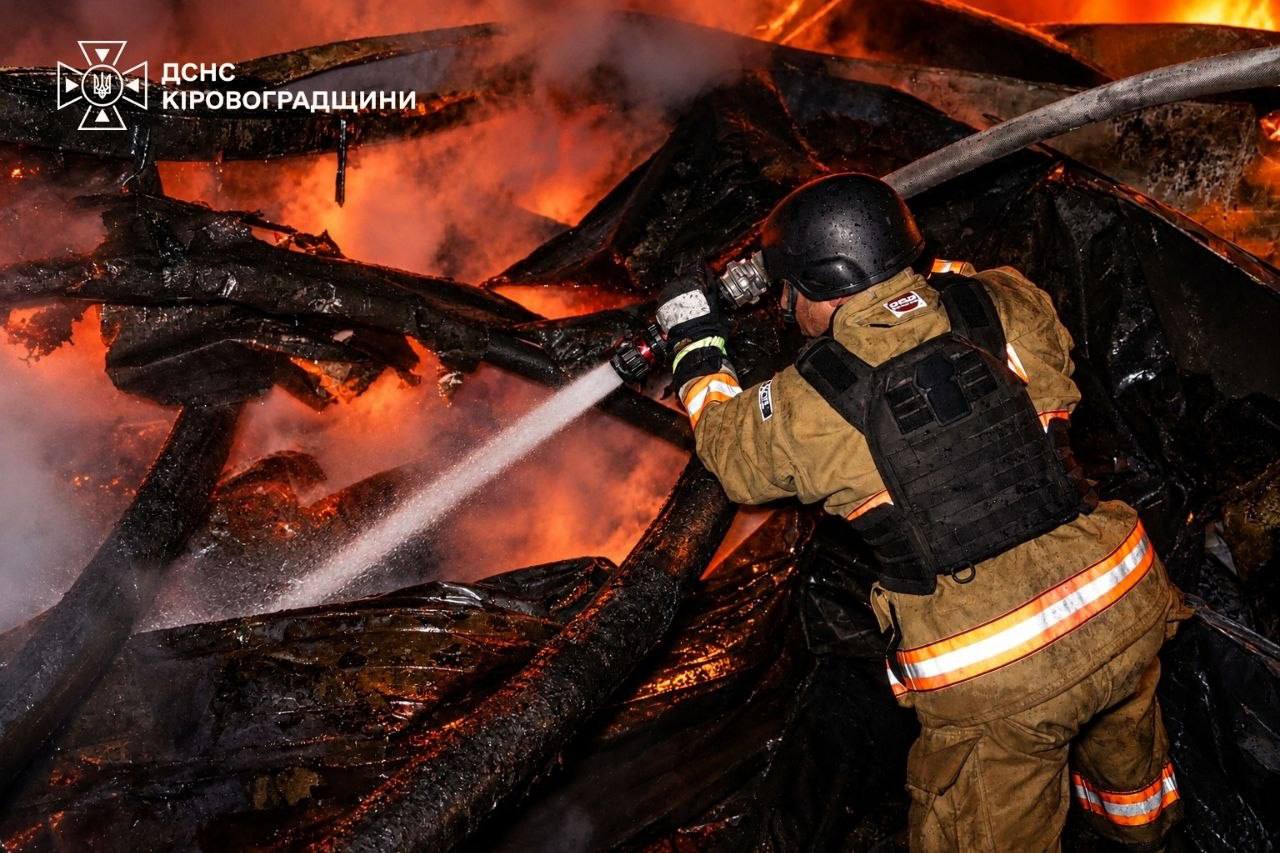
On the night of October 15, 2026, the Russian Armed Forces carried out a combined strike on Ukraine using two Kh-59 guided missiles and 580 attack drones and decoy drones. The main effort was concentrated on Kirovohrad Region, where strikes continued for more than ten hours and hit industrial facilities, logistics complexes, and railway infrastructure. Strikes were also carried out against port infrastructure in Odesa Region, traction substations, and aviation infrastructure in western Ukraine. In response, Ukraine attempted a massive attack on the Ryazan oil refinery, which was repelled by air defense forces.
Russian Strikes on Ukraine Kirovohrad Region Logistics and warehouse facilities (Kropyvnytskyi).Kirovohrad Region came under the most massive attack since the start of the conflict: according to Andriy Raikovych, head of the Region Military Administration, nearly 360 drones attacked the region, with impacts recorded at 25 locations. In Kropyvnytskyi, strikes hit company premises, logistics centers, and warehouses. Among the affected facilities were Focus-Logistics, a warehouse complex operated by a company with critical-infrastructure status; warehouse buildings of SE Kombinat Trykutnyk, part of Ukraine’s state material reserve system; a cargo branch of Nova Poshta; and a distribution center of Veresen Plus LLC, operator of the Faino Market chain.
Industrial facilities (Kropyvnytskyi). Three drone strikes hit the premises of Gradoil LLC, a full-cycle oil-extraction complex that processes sunflower and rapeseed; fire engulfed administrative and warehouse buildings covering more than 1,000 square meters. Three drones struck Penoplast Center LLC, a production and warehouse facility in the polymer sector, with the fire spreading across roughly 800 square meters. A separate strike hit the former industrial complex of PrJSC Kreativ, historically one of the city’s largest oil-and-fat enterprises, whose production facilities continue to be used by other operators after the legal entity’s bankruptcy. A production workshop of Intermash Prom LLC in Oleksandriia was also hit, with fire engulfing more than 300 square meters. The company was registered in August 2026, and its initial business profile included the production of weapons and ammunition.
Railway infrastructure.Four attack drones successively hit the railway complex in Pomichna. According to available information, the strike hit the locomotive complex, but the fire was recorded in a building belonging to the railcar repair facility responsible for repairing freight rolling stock. In addition, the Sharivka and Suhokliia traction substations were hit, and electric train service was halted.
Odesa Region Port of Izmail and maritime vessels. Port infrastructure at the Port of Izmail was damaged; it was used for unloading and storing military and dual-use cargo. In addition, two bulk carriers were hit while underway at sea.
Traction substations. In Rozdilna Raion, a drone struck the EChE-24 traction substation, causing an oil fire covering about 350 square meters. In Izmail Raion, an attack drone exploded near the Prymorske substation.
Ternopil Region Chortkiv — SE Bordnetze cable production.Russian drones hit the Chortkiv branch of SE Bordnetze-Ukraine LLC (SEBN), part of the international Sumitomo Electric Bordnetze network. A warehouse building was damaged, and fire engulfed more than 500 square meters. The facility produces electrical wiring systems and wiring harnesses for the automotive industry, including for the Volkswagen Golf 8, Audi A6, Audi e-tron, and Porsche J1. According to reports, the company’s cable-production capabilities were also used to manufacture components for Ukrainian long-range unmanned systems.
Vinnytsia Region Vinnytsia — GreenCool plant. GreenCool is one of Ukraine’s largest refrigeration-equipment manufacturers and part of the UBC Group, with revenue exceeding UAH 2 billion. Open procurement data show four government tenders involving Green Cool LLC, with Ukrnafta as the main customer. The Zhmerynka locomotive depot and the area around the Kozyatyn-2 110 kV supporting traction substation were also attacked.
Zhytomyr Region Chudniv-Volynskyi traction substation. Vilshanka traction substation.
Khmelnytskyi Region Starokostiantyniv — radar station. Two Geran-5 jet-powered drones hit a P-37 radar position at Starokostiantyniv airfield. The radar itself was destroyed. The P-37 is an air-surveillance asset that provides commanders with a picture of the air situation in their area of responsibility. Radar coverage is designed with overlapping zones, so the airfield does not become completely “blind,” but the destruction of an operational air-surveillance asset is a concrete loss for an airfield that has regularly come under attack.
Volyn Region Lutsk — airfield.The strike hit the Lutsk airfield, where the 204th Tactical Aviation Brigade is stationed. One of the impacts occurred near the guardhouse.
Ivano-Frankivsk Region Kolomyia — airfield.Two Geran-5 jet-powered drones attacked Kolomyia military airfield. The main radar equipment and flight infrastructure were not damaged. According to available information, the airfield is still used to receive transport aircraft and move military cargo. The two impacts did not disrupt this function, but the fact that strike assets returned to Kolomyia after a long pause indicates that the airfield has once again become a target of attention.
Dnipropetrovsk Region Dnipro — repeated strike on DAO.This was not the first strike on the site: earlier attacks had already hit the same complex, causing a major fire and damage to its production and logistics building. Repeated strikes are the key factor here: each new attack compounds the existing damage.
Kyiv Region Borodianka — ARTISAN construction-mix production. The strike targeted the production site of Artel LLC, better known under the ARTISAN trademark, which produces dry and liquid construction mixes. A review of procurement records shows that ARTISAN products are systematically present in supply chains for Ukrainian security forces: construction materials appear in purchases by several Armed Forces of Ukraine units as well as National Guard units; in 2026, its products were included in purchases classified as defense-related.
Poltava Region Naftogaz facility.On the night of October 15, Russian forces attacked gas-production infrastructure belonging to Naftogaz Group in Poltava Region. The drone strike damaged process equipment, started a fire at the facility, and suspended operations.
Strikes on Russia Ryazan Region During the night of October 15, Ukrainian forces attempted a massive attack on the oil refinery in Ryazan. According to the Russian Ministry of Defense, Russian air defenses intercepted and destroyed four Flamingo long-range cruise missiles and 69 fixed-wing drones. A fire broke out at the refinery after drone debris fell on its grounds. In total, according to the Russian Ministry of Defense, 166 Ukrainian drones were shot down over 14 Russian regions on the night of October 15.
Russian President Vladimir Putin, commenting on the strikes on Russian refineries, said: “Yesterday they tried to strike some refineries, and they hit a few places. Nothing significant, but they continue nonetheless.” Putin emphasized that Russia will respond to strikes on refineries, logistics, and energy facilities: “They made the first move. We began responding. They should not have started.”
The Russian strikes on Ukraine on October 15 were marked by an exceptionally high concentration of forces in the Kirovohrad direction: nearly 360 drones targeted a single region, making this the largest attack on the region. The main effort was directed at the industrial and logistics network of Kropyvnytskyi, as well as railway power infrastructure in Kirovohrad, Vinnytsia, and Zhytomyr Regions. Damage to the Sharivka, Suhokliia, and Chudniv-Volynskyi traction substations caused localized halts in electric traction and creates risks for rail service on the affected sections. At the same time, strikes on the Starokostiantyniv, Lutsk, and Kolomyia airfields continue the attrition of aviation infrastructure in western Ukraine.
In the medium term, the combination of strikes on energy infrastructure and industrial facilities creates a cumulative effect that complicates the restoration of production chains. Repeated strikes on facilities that had already been damaged point to the systematic nature of the campaign, aimed not only at inflicting immediate damage but also at preventing recovery. Against the backdrop of statements by the Russian leadership about its readiness to respond to strikes on Russian infrastructure, a high tempo of mutual strikes should be expected to continue in the coming weeks.
The Trump administration sued California election officials Thursday, asking a judge to bar the state from counting mail-in ballots for next month's midterm elections from people the federal government has identified as "likely" noncitizens until their status can be confirmed.
Será a segunda subida em três meses. A eletricidade no mercado grossista está a subir devido ao gás natural. Mas o menor sobrecusto de alguns contratos renováveis trava um maior aumento das tarifas.
Em muitas espécies de mamíferos, um tamanho maior corresponde a uma vida mais longa. No entanto, esse não é o caso dos cães. Uma análise genética sobre raças de cães apresenta explicações mais clara sobre o motivo pelo qual os cães de maior porte raramente vivem mais do que os seus parentes de menor porte. A correlação entre tamanho e idade deve-se provavelmente aos “genes saltitantes”, que inevitavelmente começam a desestabilizar o ADN canino à medida que envelhecem. Segundo a Popular Science, além de uma esperança de vida mais curta, os cães de maior porte também são mais propensos a
Simest, giovani e donne alla guida: i numeri dell’azienda Cdp
In Simest quattro manager su dieci sono donne e circa il 35% delle posizioni di responsabilità è affidato a professionisti con meno di 40 anni. È la fotografia dell’organizzazione della società del gruppo Cdp emersa dall’intervento di Elisabetta Calise, direttore persone e organizzazione di Simest, al “Future @Work 2026”, l’iniziativa promossa da Hrc Community per approfondire i cambiamenti in atto nel mondo del lavoro e le nuove sfide nella gestione delle risorse umane.
«In Simest circa il 35% dei ruoli di responsabilità è ricoperto da manager under 40 e le donne rappresentano il 40% delle posizioni manageriali». I numeri illustrati da Calise testimoniano l’attenzione della società alla valorizzazione delle competenze e alla costruzione di un ambiente professionale nel quale età e genere non rappresentino ostacoli all’assunzione di responsabilità e alle opportunità di crescita.
Il confronto tra generazioni
Il confronto tra generazioni e l’evoluzione dei modelli organizzativi sono stati tra i temi principali dell’intervento, che ha posto l’accento sulla necessità di ripensare i tradizionali criteri con cui le aziende riconoscono il talento e attribuiscono ruoli e responsabilità. In questa visione, l’esperienza professionale e il potenziale delle nuove generazioni devono diventare elementi complementari, capaci di rafforzare la qualità delle decisioni e favorire l’innovazione.
«La distanza non è tanto anagrafica, quanto organizzativa. A fare la differenza – ha osservato Calise – è la capacità di riconoscere competenze e potenziale, distribuendo fiducia e responsabilità senza che l’anzianità si traduca automaticamente in maggiore autorevolezza o che la giovane età diventi una sala d’attesa. La sfida per le imprese è superare le gerarchie implicite e creare le condizioni perché ciascuno possa esprimere il proprio valore e generare impatto, indipendentemente dall’età e dalla posizione ricoperta».
Un approccio che trova applicazione anche nelle iniziative avviate da Simest per accompagnare lo sviluppo professionale delle proprie persone. Tra queste figura Empower Professionals, il progetto dedicato all’individuazione e alla valorizzazione delle professionalità in grado di generare un contributo significativo ai risultati aziendali, attraverso la promozione di una leadership diffusa e il riconoscimento delle competenze individuali. «Crescere non significa necessariamente salire nella gerarchia. Significa anche costruire e rendere riconoscibile il proprio contributo all’organizzazione» ha aggiunto la manager di Simest.
Alla base del progetto c’è una concezione dello sviluppo professionale che supera la tradizionale corrispondenza tra carriera e progressione gerarchica. La crescita delle persone viene così interpretata anche come possibilità di ampliare le proprie competenze, assumere nuove responsabilità e contribuire in maniera sempre più incisiva agli obiettivi dell’organizzazione, indipendentemente dalla posizione occupata.
La prospettiva delineata da Simest punta, dunque, a favorire un modello aziendale nel quale il patrimonio di conoscenze maturato dalle figure più esperte possa integrarsi con le capacità, le sensibilità e le idee dei professionisti più giovani. Un incontro tra esperienze differenti che diventa occasione di apprendimento reciproco e strumento per affrontare con maggiore efficacia le trasformazioni del lavoro. L’obiettivo è costruire un’organizzazione nella quale la diversità generazionale e professionale rappresenti un fattore di competitività e nella quale il riconoscimento del merito, la circolazione delle competenze e la partecipazione delle persone contribuiscano alla crescita dell’intera azienda.
Ministro Luís Neves avisa: “Quando as ordens são legais e legítimas, devem ser executadas de acordo com a necessidade de repor a ordem”. O ministro da Administração Interna considerou legitima a intervenção policial na última madrugada, no Porto, e sublinhou a necessidade de “repor a ordem”, lamentando “qualquer incidente” na sequência da atuação das forças de segurança. “Quando as ordens são legais e legítimas, devem ser executadas e devem ser executadas de acordo com a necessidade de repor a ordem, com essa necessidade e com essa adequação. E é isto que foi feito”, disse Luís Neves. O ministro da Administração
The Earth got its Moon when a small planet collided with our planet more than four billion years ago. This impact hurled molten rock into space, which eventually coalesced to form the satellite we can see every night from across our planet. But what of our neighbor, Mars? The Red Planet has two small, irregularly […]

 Login