Jovens da Escola de Hotelaria e Turismo de Vila Real de Santo António (EHTVRSA) e da Câmara de Comércio e Indústria Luso Alemã /Centro DUAL participam na Fase Regional 1 do WorldSkillsPortugal Centro 2027, numa prova agendada para 16 de outubro, que decorrerá no Espaço Auchan Live Faro, no Forum Algarve.
Importa destacar que o Algarve participa na Fase Regional 1 do 47.º Campeonato Nacional das Profissões – WorldSkills Portugal Centro 2027 com uma prova de Pastelaria que reúne jovens da EHTVRSA e da DUAL.
A prova constitui uma oportunidade para demonstrar as competências desenvolvidas ao longo da formação e dar visibilidade ao trabalho das entidades formadoras da região. Para quem participa, é também um desafio de aprendizagem: aplicar conhecimentos em contexto de competição, gerir o tempo e responder às exigências da profissão.
Saliente-se que esta etapa integra a Fase Regional 1, que decorre entre 12 e 16 de outubro de 2026 em todo o país, no âmbito do percurso de participação no Campeonato Nacional das Profissões. Segue-se a Fase Regional 2, prevista para 17 a 19 de novembro, com vista ao apuramento para a competição nacional de 2027, em Aveiro.
A participação dos alunos da região do Algarve emPastelaria coloca em destaque uma área profissional ligada à restauração e à hotelaria e valoriza a formação de jovens que poderão contribuir para estes setores na região. É também uma ocasião para reconhecer o acompanhamento de quem forma e prepara cada participante para este desafio.
Os Campeonatos das Profissões promovidos pelo Instituto do Emprego e Formação Profissional, através da WorldSkills Portugal, valorizam as competências profissionais e dão a conhecer a diversidade de percursos que a formação profissional oferece.
Ao aproximar jovens, entidades formadoras e empresas, contribuem para o reconhecimento das profissões e da qualidade da formação em Portugal.
British counter-terrorism police are investigating a security breach at RAF Molesworth in Cambridgeshire after two Latvian nationals were found inside the military installation. The arrests come amid heightened security concerns following a separate suspected terrorist plot targeting RAF Fairford, which prompted the withdrawal of American bombers.
Two Latvian nationals have been arrested in Britain on suspicion of entering a restricted military installation for purposes potentially harmful to national security. The men were discovered inside RAF Molesworth, a sensitive military facility in Cambridgeshire that houses American and NATO intelligence operations, during the early hours of Thursday, 8 October.
The suspects, aged 36 and 32, are both Latvian citizens residing in the United Kingdom. According to an official statement issued by the Metropolitan Police, they were initially detained on suspicion of trespassing and criminal damage before being arrested under the National Security Act 2023.
The incident follows a separate investigation into a suspected terrorist plot near RAF Fairford in Gloucestershire, where American strategic bombers had been deployed. British counter-terrorism officers have emphasised that there is currently no evidence connecting the two cases.
Security breach discovered during routine patrol
The investigation began at approximately 10pm on Wednesday, 7 October, when Ministry of Defence Police officers patrolling RAF Molesworth discovered an abandoned vehicle near the installation’s perimeter.
Officers from Cambridgeshire Constabulary joined the search and subsequently identified a small breach in the security fence. At approximately 2am on Thursday, the two men were located inside the restricted area and taken into custody.
The suspects were initially questioned over alleged trespassing and criminal damage. However, investigators subsequently invoked Section 4 of the National Security Act 2023, which covers entering, approaching or inspecting prohibited locations for purposes prejudicial to Britain’s safety or interests.
The legislation carries a maximum sentence of 14 years’ imprisonment upon conviction. Neither man has been publicly identified, and police have not disclosed evidence establishing their alleged intentions or any connection with a foreign intelligence service.
Officers have also searched two addresses in the Peterborough area. The abandoned vehicle was recovered and examined by specialist explosive ordnance disposal personnel after concerns arose during initial inspections.
As a precaution, police established a cordon affecting roads around Glatton, including part of the A1. Specialists subsequently found nothing of concern, allowing the restrictions to be lifted.
Intelligence facility serving American and NATO operations
RAF Molesworth is not an ordinary operational airfield. Although designated as a Royal Air Force station, the installation accommodates intelligence facilities supporting American military operations and NATO.
Among the organisations associated with the site is the NATO Intelligence Fusion Centre, which contributes to intelligence collection, assessment and information-sharing between allied military authorities. The installation also supports American military intelligence activities relating to operations in Europe and Africa.
The presence of these facilities makes Molesworth a sensitive location, where unauthorised access raises questions extending beyond conventional trespassing. Investigators will seek to establish how the men entered the compound, why they were there and whether they attempted to approach or examine restricted equipment or infrastructure.
Separate investigation at RAF Fairford
The arrests come less than two weeks after British police detained seven men in connection with a suspected terrorist plot involving RAF Fairford, another British installation used by the United States Air Force.
The Fairford investigation began on 27 September after suspicious activity was reported near the base. Police subsequently investigated possible offences involving explosives and preparations for terrorist acts. Those arrested in connection with that investigation have since been released on bail.
The incident was followed by the withdrawal of American bombers from Fairford. President Donald Trump subsequently referred to security threats affecting the installation, raising further questions about the protection of American military assets stationed in Britain.
Commander Helen Flanagan, head of Counter Terrorism Policing London, which is leading the Molesworth investigation, cautioned against drawing conclusions about the relationship between the two cases.
She said investigators had found nothing so far suggesting a connection with the Fairford incident and were continuing to examine possible motives.
British authorities have not publicly identified a foreign state or organisation as being responsible for the Molesworth breach.
The two Latvian nationals remain in police custody while investigators continue examining the circumstances surrounding their presence at the installation. The inquiry involves Counter Terrorism Policing, the Ministry of Defence Police and Cambridgeshire Constabulary.
The investigation is taking place against a wider background of security concerns involving European military facilities. Latvia itself reported an armed border provocation and sabotage of surveillance infrastructure near Belarus earlier this week, although there is no evidence linking that incident to the arrests in Britain.
For British investigators, the immediate task remains establishing whether the Molesworth intrusion was an isolated security breach or involved an intention to compromise military operations or intelligence infrastructure.
Em um surto de simulação, durante a recente Cúpula Europeia do Ártico, em Rovaniemi, Finlândia, líderes europeus vestiram trajes militares para transmitir uma mensagem de preparação para uma confrontação com a Rússia, enquanto a máquina política e midiática repete, quase em uníssono, o alerta contra a “ameaça russa”. A declaração oficial da Cúpula coloca a segurança no centro das discussões e insiste na necessidade de fortalecimento da presença e das capacidades europeias na região, considerada estratégica para a segurança continental.
Essa encenação tem algo de profundamente inquietante. Tais dirigentes apresentam-se na condição de representantes de sociedades mobilizadas para a guerra, enquanto governam países profundamente divididos e enfrentam uma crescente erosão da confiança pública. Por si só, essa distância entre a retórica das lideranças e a disposição real das sociedades deveria recomendar prudência. Em vez disso, assistimos à construção de uma atmosfera psicológica de confrontação. E é justamente aí que começa o perigo.
O risco real de autodestruição
Em primeiro lugar, há um elemento de fingimento, pois a Europa não dispõe das condições industriais necessárias para sustentar autonomamente uma mobilização militar prolongada na escala sugerida pela retórica belicista. O próprio esforço para reconstruir estoques, aumentar a produção de munições e recuperar capacidade industrial demonstra o quanto essa estrutura foi reduzida nas últimas décadas. Mas a questão mais grave não é industrial, mas estratégica.
A Federação Russa dispõe de um enorme arsenal nuclear e de sistemas de ataque avançados, inclusive mísseis hipersônicos. Isto não significa que a Rússia possua superioridade tecnológica em todos os campos, mas algo muito mais importante para essa reflexão: qualquer guerra direta entre a Organização do Tratado do Atlântico Norte (OTAN) e a Rússia envolveria forças capazes de provocar uma destruição de escala civilizacional. A Rússia e os EUA continuam concentrando a esmagadora maioria das ogivas nucleares existentes, ao mesmo tempo em que os principais Estados nucleares modernizam seus arsenais e os mecanismos de controle de armas se enfraquecem. Portanto, tratar uma confrontação direta com a Rússia como apenas mais uma opção de política externa não é demonstração de coragem: é cortejar uma possibilidade de autodestruição.
Quando se atravessa determinado limiar, já não existe garantia de que os acontecimentos permaneçam sob o controle daqueles que os iniciaram. É este o ponto ausente da atual teatralização belicista.
E há algo ainda mais perturbador. A linguagem da destruição voltou a ser pronunciada abertamente pelas próprias lideranças ocidentais. Na Assembleia Geral das Nações Unidas, o presidente Donald Trump proclamou que os EUA poderiam “aniquilar” o Irã caso não fosse alcançado um acordo. Se uma ameaça dessa natureza – uma “solução final” – pode ser pronunciada na ONU sem provocar uma ruptura política proporcional à enormidade do que está sendo dito, algo extremamente grave está ocorrendo com a percepção ocidental dos limites da guerra. Porque a normalização da linguagem de aniquilação não permanece necessariamente confinada ao adversário contra o qual foi originalmente dirigida.
Hoje pode ser o Irã. Amanhã, numa espiral de escalada que ninguém consiga mais controlar, podem ser cidades europeias. É neste sentido que os atuais devaneios belicistas deixam de ser apenas uma encenação política e passam a representar um perigo concreto de autodestruição da própria civilização europeia. A Europa, que durante séculos foi um dos centros fundamentais da civilização ocidental, atravessou duas guerras mundiais e conheceu diretamente o que significa transformar rivalidades políticas em guerras de aniquilação. Justamente por isso, seria de esperar que suas lideranças fossem as primeiras a compreender que uma guerra entre potências nucleares não oferece uma segunda oportunidade para se corrigirem erros de cálculo.
No entanto, os vemos brincando com símbolos militares, discursos de mobilização, inimigos existenciais e horizontes de confrontação, como se ainda estivéssemos no mundo anterior a Hiroshima e Nagasaki. A ficção consiste precisamente nisso: representar a guerra como instrumento político disponível sem encarar até o fim o que ela poderia significar. E, se a confrontação escapar ao controle, não serão apenas governos, partidos ou alianças militares que pagarão o preço, mas a própria civilização que esses dirigentes afirmam estar defendendo.
Quem precisa da ameaça?
Então, perguntemos: quem está por trás de toda essa falsidade? Quem alimenta essa representação? Quem necessita dessa atmosfera permanente de ameaças? E por que uma ordem política em evidente crise de legitimidade parece encontrar na perspectiva da guerra uma das últimas narrativas capazes de justificar a sua própria continuidade?
A resposta mais simplória consistiria em explicar essa atitude como uma tentativa de manter regimes impopulares sob uma imaginária ameaça externa, ao mesmo tempo em que se condenam ou reprimem as forças políticas emergentes, apresentadas como agentes externos ou instrumentos de uma potência inimiga – no caso, vinculadas à “besta” russa.
Sem dúvida, há algo disso. A História oferece numerosos exemplos de governos que recorrem à ameaça externa para recompor coesões internas deterioradas, desacreditar adversários e justificar medidas que enfrentariam maior resistência em circunstâncias normais. Mas essa explicação é insuficiente. A crise não diz respeito apenas à legitimidade de um grupo de líderes europeus. Ela atinge o próprio sistema que os colocou nessa posição de poder – e é ele que está em crise.
A crise da ordem liberal-financeira
O chamado “mundo baseado em regras”, a globalização financeira, o livre comércio elevado à condição de dogma e a progressiva substituição da economia produtiva pela financeirização, estão sendo confrontados pelo retorno do Estado nacional soberano, das políticas industriais, da segurança energética, das cadeias produtivas estratégicas e da defesa dos interesses econômicos nacionais. Paradoxalmente, esse retorno do Estado nacional poderia representar também um caminho para que o Ocidente recuperasse parte de suas próprias raízes civilizatórias, essencialmente cristãs, nas quais o poder político não era concebido como absoluto, mas submetido a uma ordem moral superior.
Em profundidade, porém, o que se encontra por trás dessas quimeras é uma crise ainda maior: a crise do sistema liberal-financeiro organizado em torno de bancos centrais “independentes”, da autonomia crescente do poder financeiro em relação às comunidades nacionais e de uma concepção econômica que, ao longo de décadas, deslocou progressivamente o centro da riqueza da produção para as rendas financeiras. Esse sistema possui raízes históricas na formação da ordem comercial e financeira anglo-holandesa dos séculos XVII e XVIII, que posteriormente seria projetada sobre grande parte do mundo por meio das estruturas imperiais e financeiras britânicas e, depois, estadunidenses.
Com o passar do tempo, esse modelo adquiriu formas novas, mas conservou uma característica essencial: a capacidade do poder financeiro de se apresentar como uma realidade quase exterior à política, como se suas decisões fossem técnicas, neutras e independentes das escolhas soberanas das sociedades. É justamente essa arquitetura que hoje começa a ser questionada.
Uma religião secular sem promessa de redenção
O sistema profundo das oligarquias ocidentais perdeu a capacidade de gerar ideias e projetos capazes de mobilizar as sociedades em torno de um horizonte de futuro. Essa esterilidade se expressa também na mediocridade de grande parte das atuais lideranças, cada vez mais administradoras de uma ordem em crise do que criadoras de uma nova realidade política. A política liberal transformou-se, assim, em uma espécie de religião secular sem promessa de redenção. E esta talvez seja uma de suas características mais inquietantes.
Os grandes movimentos políticos dos séculos XIX e XX, mesmo quando conduziram sociedades inteiras à catástrofe, ainda prometiam alguma forma de redenção histórica: a sociedade sem classes, a grandeza nacional, o império, a revolução, o homem novo ou uma ordem futura supostamente definitiva.
A religião secular da ordem liberal em decomposição já não oferece sequer isso. Ela exige sacrifícios sem apresentar um paraíso futuro. Exige empobrecimento em nome da estabilidade, perda de soberania em nome das regras, desindustrialização em nome da eficiência e da “proteção” do meio ambiente, censura em nome da democracia e, finalmente, admite até mesmo o risco da guerra em nome da preservação de uma ordem cuja finalidade já não consegue explicar. Não existe mais uma verdadeira promessa de redenção. Existe apenas a promessa de que o sistema continuará existindo. Nas palavras do ex-chanceler da União Europeia, Josep Borrel, “nós somos o jardim do Éden, o resto é a selva”.
Nesse ponto, a política deixa de defender a sociedade e passa a exigir que a sociedade se sacrifique para defender o sistema. É precisamente aí que uma religião secular pode tornar-se autodestrutiva: quando a conservação da ordem existente passa a valer mais do que a conservação daqueles que vivem sob essa ordem.
Da minoria criadora à minoria dominante
Esse é, talvez, um dos sinais mais profundos de esgotamento civilizatório. Uma elite deixa de ser criadora quando já não consegue imaginar um futuro distinto da simples continuação de si mesma. O historiador inglês Arnold Toynbee percebeu com enorme profundidade esse fenômeno ao distinguir a minoria criadora da minoria dominante. Uma minoria criadora exerce liderança, porque oferece respostas capazes de inspirar adesão. Sua autoridade nasce de sua capacidade de responder aos desafios históricos e de produzir formas novas de organização, cultura e sentido. Quando essa capacidade desaparece, a antiga minoria criadora pode converter-se numa minoria dominante, que já não lidera porque inspira, mas conserva-se porque controla. A persuasão é progressivamente substituída pela disciplina; a imaginação, pela administração; o projeto, pela propaganda; e a confiança, pelo medo.
É nesse momento que o sistema corre o risco de transformar a própria crise em justificativa para continuar existindo. Quanto mais fracassa, mais exige poder. Quanto mais perde legitimidade, mais necessita de inimigos. Quanto menos consegue imaginar um futuro, mais dramaticamente precisa apresentar o presente como uma batalha existencial.
Quando o temporal ocupa o lugar do transcendente
Aqui, a reflexão do filósofo germano-estadunidense Eric Voegelin sobre as ideologias totalitárias como “religiões políticas” se encontra com a de Toynbee sobre a desintegração das civilizações. Quando uma sociedade perde a referência a uma ordem transcendente, a necessidade humana do absoluto não desaparece necessariamente. Ela pode simplesmente ser transferida. A nação, a raça, a classe, o partido, a revolução, o mercado, as “regras”, a democracia entendida não como regime político, mas como categoria moral absoluta – qualquer realidade temporal pode ser sacralizada e elevada a uma condição que já não admite questionamento.
Nesse processo, o temporal ocupa o lugar do transcendente. Mas há uma diferença decisiva entre os antigos movimentos políticos e essa possível religião secular de uma ordem esgotada. Os primeiros prometiam uma redenção futura. Essa última parece pedir o sacrifício presente apenas para impedir que o sistema desapareça. É uma religião secular sem escatologia, paraíso, homem novo e um horizonte verdadeiramente novo. Seu único futuro é a continuação indefinida do presente.
Quando o medo substitui a imaginação
Possivelmente, essa ausência de futuro é o que explica a crescente importância do medo: do inimigo externo; da ruptura; da dissidência; da perda do controle. O medo de que aquilo que durante décadas foi apresentado como inevitável deixe subitamente de sê-lo. Quando uma ordem não consegue mais produzir esperança, precisa produzir medo. E quando o medo substitui a imaginação, o conflito pode converter-se numa forma de legitimação. A guerra, então, deixa de ser apenas um instrumento externo de política e pode tornar-se uma necessidade interna do sistema. É justamente aí que os devaneios belicistas contemporâneos adquirem uma dimensão muito mais profunda do que a discussão cotidiana sobre a Rússia, Ucrânia, OTAN ou os gastos militares.
A questão passa a ser civilizacional. Uma ordem que perdeu a capacidade de imaginar o seu próprio futuro pode começar a aceitar riscos que, em condições normais, pareceriam impensáveis. Pode terminar confundindo a sobrevivência de suas estruturas com a sobrevivência da própria civilização. E essa confusão é uma das mais perigosas que uma elite possa cometer. Porque instituições, regimes econômicos e sistemas políticos são históricos. Civilizações são muito maiores do que eles. Quando um sistema passa a exigir que a civilização se arrisque para que ele próprio sobreviva, a relação entre meios e fins foi completamente invertida.
Os sinais de uma mudança de época
É nesse ponto que se torna possível falar verdadeiramente em autodestruição.
Uma civilização pode começar a autodestruir-se, não porque tenha deixado de acreditar, mas porque transformou a sua própria ordem histórica em objeto de crença absoluta. E quando os dirigentes deixam de imaginar um futuro diferente daquele que administram; quando a guerra começa a substituir a política; quando o medo substitui o projeto; quando a conservação das instituições passa a ser considerada mais importante do que as pessoas para as quais essas instituições deveriam existir; não estamos diante apenas de uma crise política ou econômica, mas de uma profunda crise civilizacional.
E quando uma elite perde a capacidade de imaginar, criar e persuadir, isto pode ser o sinal premonitório de que uma época está terminando. Mas não necessariamente de que a civilização esteja condenada. Pode significar exatamente o contrário: que as estruturas que já não conseguem responder aos desafios do presente estão abrindo espaço para outras formas de organização, outras ideias e uma recuperação de princípios que pareciam esquecidos. Porque a perda da imaginação de uma ordem não significa o fim da imaginação humana. E quando aqueles que governam já não conseguem conceber nada além da perpetuação de si mesmos, talvez, este seja precisamente o primeiro sinal de que algo novo começa a aproximar-se.
Polish SIM cards were found inside some of the Russian drones that entered Polish airspace during a mass incursion in September 2025, Polish outlet RMF24 reported, citing findings from a Polish prosecution investigation.
SIM cards can allow drones to connect to local cellular networks for functions such as communications, data transmission, telemetry, or navigation-related services. However, investigators have not said what the Polish SIM cards found in the Russian drones were used for. The details remain classified.
The SIM cards were discovered in some of the Russian Gerbera drones recovered after the incursion, RMF24 reported.
Investigators have not disclosed whether the SIM cards were stolen or obtained illegally.
The investigation into the September 9–10, 2025 incursion was ultimately closed after prosecutors failed to identify those responsible for violating Polish airspace.
More than 30 drones entered Poland
The incursion took place overnight on September 9–10, 2025, during a large Russian missile and drone attack on Ukraine. More than 30 Russian Gerbera drones entered Polish airspace from the east and came down at 27 locations across the country, according to RMF24.
Polish forces intercepted and shot down multiple drones, with the Territorial Defense Forces deployed to search for wreckage and other objects that came down on Polish territory. Poland also maintained contact with NATO command throughout the operation.
The incident prompted Poland to close four airports – Warsaw Chopin, Warsaw-Modlin, Rzeszów-Jasionka and Lublin – because of the military activity.
Polish officials described the airspace violations as unprecedented and a serious threat to national security. The incident marked the first time since Russia's full-scale invasion of Ukraine that Polish forces had used weapons against Russian aerial objects that entered the country's airspace.
The mass incursion subsequently became the subject of a criminal investigation into the violation of Polish airspace and the threat to public safety.
Investigation closed without identifying perpetrators
After months of investigation, Polish prosecutors closed the case because they were unable to identify the perpetrators, according to Lublin District Prosecutor’s Office spokesman Marcin Kozak, as cited by RMF24.
Most of the case files, including the justification for the decision, are classified.
Explore further
Last September, Poland downed four of 19 Russian drones. This September, drone reached NATO’s missile shield in Redzikowo, and troops guarding it called 112
Prosecutors cleared Poland's military response
Investigators also examined whether the Polish military had responded properly to the drone incursion.
According to RMF24, prosecutors concluded that the military acted in accordance with procedures. Polish troops had the right to use force and shoot down hostile objects, and prosecutors found no irregularities in their response.
The investigation was therefore closed both over the failure to identify the perpetrators and over the assessment of the Polish military's actions.
Germany’s espionage investigation into former intelligence chief August Hanning has widened, with the Federal Interior Ministry examining possible breaches of secrecy regulations during his time as a senior government official. The development raises further questions about the handling of classified intelligence, including material supplied by Germany’s international security partners.
Germany’s Federal Interior Ministry confirmed on Thursday, 8 October, that it was examining whether confidentiality regulations may have been breached during August Hanning’s tenure as state secretary between 2005 and 2009. The examination follows his arrest on suspicion of espionage and attempted treason, and the discovery of a suspected network supplying sensitive intelligence documents from within Germany’s Federal Intelligence Service (BND).
According to the latest information on the ministry’s examination, officials have ordered an immediate review. The ministry has not disclosed its scope or whether investigators have identified any additional security breaches during Hanning’s government service.
Hanning, 80, headed the BND from 1998 until 2005 before moving to the Interior Ministry, where he remained until 2009. An investigating judge at Germany’s Federal Court of Justice subsequently ordered his continued detention following his arrest on Tuesday.
His former chief of staff, identified under German privacy rules as Manfred D., has also been remanded in custody. Prosecutors suspect that the two men maintained an arrangement through which confidential intelligence documents were obtained in exchange for payment.
Thousands of intelligence documents under investigation
Federal prosecutors believe the arrangement began around 2010, several years after Hanning left the BND, and continued until June 2022.
Investigators suspect that approximately 2,000 documents were obtained through Hanning’s former colleague, who remained in senior administrative positions at the intelligence service under successive directors.
The material reportedly included assessments of Russia’s military activities, information concerning Iran’s nuclear programme and intelligence originating from foreign partner services. Some documents were intended for senior German government officials, including the chancellery.
Prosecutors suspect that Hanning used confidential material in his private security consultancy and prepared at least one analysis for a foreign intelligence contact. Whether the analysis was ultimately delivered remains unclear.
The investigation consequently extends beyond the suspected unauthorised removal of German state documents. Intelligence supplied by foreign governments is frequently shared under restrictions governing its subsequent distribution. Any compromise of such material could require Germany to assess whether sensitive foreign sources, methods or assessments were exposed.
BND president Martin Jäger has confirmed that the service initiated extensive internal investigations after suspicions emerged. The affair has also drawn attention from the Bundestag’s parliamentary intelligence oversight body, whose chairman, Marc Henrichmann, has called for a comprehensive investigation.
Hanning acknowledges possession of confidential files
Hanning’s lawyer, Leon Kruse, has rejected the accusations while acknowledging that his client possessed confidential documents.
In a statement released following the court hearing, Kruse denied that Hanning had passed information to the detriment of Germany or received payment for doing so. He maintained that further investigations would establish that his client was being wrongly prosecuted.
The defence statement establishes an important point in the proceedings: possession of confidential material is acknowledged, but its alleged commercial exploitation and transfer to foreign intelligence services remain disputed.
Investigators must establish how the documents were acquired, whether payments were made and what classified information, if any, reached foreign recipients.
The identity of the foreign intelligence service involved remains another unresolved question.
German reporting has raised the possibility of a connection to Azerbaijan, although federal prosecutors have not publicly identified the foreign service concerned.
Azerbaijan has rejected suggestions that its intelligence authorities were involved. Baku reportedly lodged a diplomatic protest with the German government, challenging the allegations and their potential consequences for bilateral relations.
The possibility of a Russian connection has also attracted attention because of Hanning’s international business contacts and his association with former Chancellor Gerhard Schröder. However, no evidence establishing Russian involvement has been publicly presented by German prosecutors.
Hanning’s foreign commercial relationships alone do not establish that classified information was transferred to any particular government.
Investigation originated in separate kidnapping case
The circumstances that brought Hanning to investigators’ attention have added another dimension to the affair.
The suspected intelligence breach emerged during an investigation connected to German businesswoman Christina Block, who is facing criminal proceedings over allegations concerning the abduction of her children.
Hanning had reportedly provided advisory services connected to the affair. Searches conducted in September 2025 led investigators to confidential BND material, prompting a separate examination of how the documents had been obtained.
The discovery subsequently developed into an intelligence investigation involving federal prosecutors and Germany’s domestic criminal investigation authorities.
German government faces questions over intelligence safeguards
The investigation comes as Chancellor Friedrich Merz’s government seeks to strengthen Germany’s intelligence capabilities in response to mounting security threats.
The BND’s ability to obtain and exchange intelligence depends partly on the confidence of partner organisations. Concerns now centre on whether documents supplied by allied services were included in the material allegedly transferred, and whether Germany must inform partners about potential exposure.
The case is also prompting scrutiny of restrictions placed on former senior intelligence officials who subsequently enter private consultancy work.
At the German government’s press briefing on 7 October, a spokesman acknowledged the seriousness of the allegations but declined to discuss the proceedings, referring questions to federal prosecutors and the courts.
The Interior Ministry’s decision on 8 October to examine Hanning’s earlier government service potentially broadens the inquiry beyond the suspected transfer of BND documents between 2010 and 2022.
Investigators must now determine the extent of any unauthorised disclosure, identify any foreign recipients and assess whether information supplied by Germany’s security partners was compromised.
Both men remain presumed innocent unless convicted.
O circo da Fórmula 1 vai chegar amanhã a Marina Bay para a disputa do GP de Singapura, 17ª etapa da temporada 2026 no fim de semana.
As atividades em pista decorrem entre sexta-feira (9) e domingo (11), com o formato Sprint e a tradicional corrida noturna da Fórmula 1 nas ruas da cidade de Singapura. Também designado de Singapore Street Circuit, é um percuso de rua localizado na baía da Marina e tem 5,2 kms de extensão.
O aspecto mais singular, que não deixa de ser interessante, prende-se com o fato desta ter sido a primeira corrida na história da Fórmula 1 a ser realizada à noite. O circuito totalmente iluminado deu aos pilotos um desafio adicional com o qual tiveram de aprender a lidar. Outro aspeto: esta corrida realiza-se no sentido retrógado (contrário aos ponteiros do relógio). Enfim, pormenores que diferenciam esta prova na Ásia das demais no resto do mundo.
Quanto a treinos, na sexta-feira realiza-se o único treino livre do fim de semana, começa às 09:30 hrs (horário de Portugal), enquanto a Qualificação Sprint será realizada a partir das 13:30 hrs.
No sábado, a corrida Sprint tem a largada agendada para as 10:00 hrs e a Classificação para definir a grelha de partida para o Grande Prémio começa às 14:00 hrs.
A corrida principal, correspondente ao GP de Singapura, será disputada no domingo, com a largada a ocorrer às 13:00 hrs, sempre pelo horário de Portugal (GMT+0).
Como habitualmente acontece, com a colaboração da F1Mania, dar-lhe-emos aqui no diariOnline Região Sul, o essencial da informação, desde treinos livres, classificações e corridas, naturalmente.
The Alfa Watan, a ship sailing under the flag of Togo, and the Able, a vessel flying the flag of Palau, were targeted by naval and aerial drones on Tuesday (6 October) morning in the Black Sea near the Bulgarian coast.
The Alfa Watan sank, and rescuers at the scene found only an overturned boat, life jackets, and fragments of the ship’s equipment, according to Bulgarian prime minister Rumen Radev.
The 18-member crew of the Able caught fire, but was successfully evacuated to the port of Varna.
“This is an unacceptable attack in Bulgaria’s exclusive economic zone,” Radev said after an emergency government meeting on Tuesday.
Bulgaria had discussed the drone attack inside the EU and Nato, he added.
It came after a drone also sank a Turkish-owned grain ship, the Royad Mammadov, killing two sailors, on Monday.
But even though Ukraine’s president Volodymyr Zelensky was quick to blame Russia, the perpetrators have not been formally identified yet, in a grey-zone conflict in which deniability is a tactic.
Russia and Ukraine have been escalating attacks on ships for several months in an effort to disrupt each other’s export economies.
And Moscow’s attacks have largely halted Ukraine’s maritime exports of agricultural products, while Kyiv’s attacks have forced Russia to seek alternative routes for exports.
“The situation in the Black Sea is increasingly concerning,” said EU Commission’s president Ursula von der Leyen on X on Tuesday.
Ukraine has “proposed concrete steps to de-escalate the situation”, also said Zelensky.
But for all his good will, the attacks were just part of a broader deterioration in Europe’s security environment, covering also Nato’s eastern and southern borders.
‘Shadow war’
For Czech president Peter Pavel, speaking to Czech daily Deník N on 22 September, the most imminent danger came from a false-flag attack in Estonia or Latvia, to test Nato’s resolve.
This article continues, but the full version is available only to EUobserver.com subscribers. Visit account.euobserver.com/membership
The NATO Military Committee, the bloc’s highest military authority, has gathered in Kiev despite Ukraine not being a member.
The visit comes just a day after US Secretary of State Marco Rubio said Ukraine’s NATO membership “is not on the table as we speak,” noting that accession would require unanimous backing.
Kiev’s potential NATO membership has been one of the central issues of the Ukraine conflict. Moscow has long opposed the US-led military bloc’s eastward expansion and has made Ukrainian neutrality a key condition of any settlement, arguing that NATO’s presence there would pose a direct threat to Russian national security.
Ukraine made joining NATO a foreign policy priority following the Western-backed Maidan coup in Kiev in 2014 and later enshrined the objective in its constitution. In September 2022, Vladimir Zelensky demanded “accelerated accession.” As recently as July, he argued that Ukraine’s membership would be “entirely natural.”
NATO continues to officially describe Ukraine as being on an “irreversible path” toward entry. However, former Ukrainian commander-in-chief Valery Zaluzhny, who now serves as Kiev’s ambassador to the UK, said in August that he saw no realistic prospect of it happening.
In a video address on Wednesday, Admiral Giuseppe Cavo Dragone, the chair of the NATO Military Committee, announced that he and military representatives from all 32 member states had arrived in Kiev. It is the committee’s first such visit to Ukraine in eight years.
“We are here in full strength with a clear message: the bond between NATO and Ukraine is stronger and stronger,” Dragone said.
According to the NATO official, the delegation discussed Ukraine’s military priorities with the country’s top brass, as well as lessons from the conflict that could be used to strengthen the bloc’s preparedness for “current and future threats.”
Despite being outside NATO, Ukraine has developed extensive military ties with the bloc, which has been pumping ever more sophisticated weaponry into the country since 2022. Moscow has accused the bloc, especially its European member states, of unnecessarily prolonging the bloodshed and waging a proxy against Russia to the “last Ukrainian.”
A number of influential member states, including the US and Germany, have repeatedly voiced opposition to NATO membership for Kiev. Speaking to the German newspaper Handelsblatt in early July, NATO Secretary-General Mark Rutte acknowledged that “there is no unanimous support now” for Ukraine’s admission to the bloc.
US President Donald Trump and other senior American officials have ruled out Ukraine joining NATO as part of a potential peace settlement with Russia. Speaking to reporters ahead of his February 2025 White House meeting with Zelensky, which infamously devolved into a shouting match, Trump reiterated: “NATO – you can forget about.”
The European Commission has now declared enlargement a “geopolitical imperative” – with important implications.
The bloc has just presented a package of reforms designed to prepare the Union for new members – with Ukraine and Moldova at the center of the effort, alongside Albania and Montenegro.
Commission President Ursula von der Leyen stated that “Europe’s future depends on the choices we make today,” framing expansion as essential to making the bloc “more resilient” and better able to shape its own destiny.
Candidate countries are already advancing: Ukraine and Moldova opened their first negotiating cluster in June 2026, and in July, opened Cluster 6 on external relations, foreign policy, security and, importantly, defense. In the words of Vessela Cherneva: “Currently, EU membership is the only way to integrate Ukraine’s and Europe’s security systems.”
The Commission plans “indicative roadmaps” for these four frontrunners (Ukraine, Moldova, Montenegro, and Albania) in its 2026 Enlargement Package, provided reform momentum continues. Gradual integration into strategic sectors such as energy, transport, digital networks and defense is explicitly on the table
This is no longer presented as a purely technical or economic process. Again, Brussels itself now describes enlargement as a “geopolitical” tool linked to European safety, prosperity and security. One may recall that earlier enlargement rounds were often framed in terms of shared values and market access.
Political scientist John Mearsheimer has long argued that the West’s “triple package” of policies – NATO enlargement, EU expansion and Western-style democracy promotion – added fuel to a fire waiting to ignite – meaning the Ukrainian crisis since 2014.
Actually, in his view, the trouble over Ukraine began in earnest at NATO’s 2008 Bucharest summit, when the alliance announced that Ukraine and Georgia “will become members”.
Russian leaders treated this as an existential threat. Washington ignored the red line and continued to push Ukraine toward Western institutions, including closer ties with the EU.
Back in his 2014 analysis Mearsheimer noted that the Union’s eastward march and the Eastern Partnership initiative were viewed in Moscow as hostile enough. “In the eyes of Russian leaders, EU expansion is a stalking horse for NATO expansion,” he wrote.
In this framework, the West’s efforts to promote “democracy” and “peel Ukraine away” from Russia completed the package. When Yanukovych rejected an EU deal in 2013, the “spark”, as Mearsheimer puts it, came. The result was crisis, then war. If one applies that framework consistently today, the resulting picture is quite straightforward.
To be clear, EU membership is not identical to NATO membership. Yet from a Russian great-power perspective the distinction becomes less meaningful when the two institutions are moving in the same geographical direction.
EU accession after all entails progressive alignment on law, foreign-policy positions, sanctions, energy, borders and increasingly elements of security and defense cooperation. The point is that an EU-member Ukraine would be economically, legally, institutionally and politically embedded in a Western bloc – and the same applies to the other Eastern European states. That, in broad terms, is precisely the structural transformation process Mearsheimer argued helped fuel the 2014 and then the 2022 crisis.
Ukraine remains the clearest case in point: before 2014 it functioned as a contested buffer. Mearsheimer (as well as specialists of the caliber of Henry Kissinger and Stephen Walt) argued a neutral Ukraine would be preferable, from a Western perspective – akin to Austria during the Cold War. In any case, the trajectory now points toward full Western institutional integration.
Moldova is arguably just as sensitive: it has a Russian military presence in Transnistria, occupies a strategic position between Ukraine and Romania – and is accelerating toward EU membership while deepening practical cooperation with Western militaries.
The recent Independence Day parade in Chișinău illustrated the point (without Soviet symbology, for the first time), as I’ve commented: Moldovan troops marched with Western weapons and vehicles; contingents from the Ukraine and eight NATO members, including the US, took part. NATO’s Political Committee had visited just days earlier, describing intensified cooperation.
Moldova for its part remains formally neutral, yet it is simultaneously negotiating EU accession – including the cluster on external relations and defense policy – and publicly displaying Euro-Atlantic partnerships.The Western center of gravity (post-USAID) in Moldova is shifting toward Brussels, which has stepped in with a large Reform and Growth Facility.
From Moscow’s point of view, the cumulative process looks like progressive incorporation of its western strategic environment into a Western political-security system.
Historically, great powers care intensely about the direction of strategic change in their immediate neighborhood. They typically do not wait until the process is complete before reacting – as seen in 2022.
In any case, the EU now frames enlargement itself as a geopolitical and security instrument. This language reinforces the very security dilemma Mearsheimer identified over a decade ago. The buffer zone between Russia and the Western institutional order continues to shrink. The risks of further escalation keep rising eastwards – adding to the tensions farther north, in the Baltic.
Uriel Araujo, Anthropology PhD, is a social scientist specializing in ethnic and religious conflicts, with extensive research on geopolitical dynamics and cultural interactions.
NATO's Military Committee, the Alliance's highest military body, visited Kyiv on 6 October to reaffirm support for Ukraine, its chair, Admiral Giuseppe Cavo Dragone, said. It was the committee's first official visit to Ukraine's capital in eight years. The officers came to hear how Ukraine is fighting Russia and to draw lessons for NATO's own defense, and Dragone used the visit to warn Moscow.
Russia's war no longer stays inside Ukraine: its drones, saboteurs, and pressure campaigns increasingly reach NATO members. That turns Ukraine, the only European army facing Russia in combat, from a country the Alliance helps into one it learns from.
All 32 allies at the table
Dragone brought the military representatives of all 32 member states to hear the latest battlefield assessment directly from Ukraine's commander-in-chief, Mykhailo Drapatyi, and his staff. They also came to learn what more NATO can do to support Ukraine, he said in an address recorded in Kyiv.
"After eight years, the NATO Military Committee comes back to Kyiv for an official visit. But while we were not physically present here, Ukraine is in our thoughts, in our discussions, in our decisions and following action every single day," Dragone said.
The visit fulfilled a promise he made to Drapatyi during their last conversation in August, the admiral said. It also follows a June visit to Kyiv by the North Atlantic Council, NATO's main political decision-making body. "We are here in full strength with a clear message. The bond between NATO and Ukraine is stronger and stronger," he said.
With the whole NATO Military Committee, we visited Kyiv, yesterday, to reaffirm unwavering support for #Ukraine.
Discussions with Major General Drapatyi, Commander-in-Chief of the Armed Forces, focussed on Ukraine’s military priorities and lessons learned to strengthen… pic.twitter.com/kar2l1Xlq4
— Admiral Giuseppe CAVO DRAGONE - NATO CMC (@CMC_NATO) October 7, 2026
Lessons from Ukraine's commanders
The talks with Drapatyi focused on Ukraine's military priorities and lessons learned to strengthen Allied preparedness for current and future threats, Dragone wrote on X. The delegation also paid respects at the Wall of Remembrance of the Fallen for Ukraine in Kyiv.
Explore further
14 dead in Pryluky, two each in Kyiv, Kremenchuk, and Oleksandriia: Russia’s night of 70 missiles
In his address, Dragone said Ukraine's courageous and resilient spirit remains unbreakable and serves as an example to other nations.
"An example that combines with all the lessons we can learn from your commanders, from their experience, which will ultimately help our Alliance too to better face today's and tomorrow's threats," he said.
To Russia: "You are failing"
Dragone also addressed Russia directly. NATO stands unwavering with Ukraine in the face of Russia's continued aggression and its reckless hybrid activities in member countries, he said.
"To those who think that by perpetrating acts of sabotage, cyberattacks, and violation of the airspace in national NATO territory they will undermine this support and our resolve, I will respond: You are failing. NATO support for Ukraine continues to grow, and our unity is stronger than ever."
Commander-in-Chief of Ukraine's Armed Forces Mykhailo Drapatyi (right) speaks at talks with the NATO Military Committee as its chair, Admiral Giuseppe Cavo Dragone (center), listens, Kyiv, 6 October 2026. Photo: Admiral Giuseppe Cavo Dragone/X
Russia bears full responsibility for such dangerous and unacceptable behavior, and allies will keep sharpening their tools and strengthening deterrence and defense, the admiral added.
Drapatyi became Ukraine's commander-in-chief in July, when President Volodymyr Zelenskyy replaced Oleksandr Syrskyi after a week of political turmoil.
Kyiv under fire, Russian troops pushed back near Lyman
The day after the visit, Russia struck Kyiv and 12 oblasts with about 70 missiles. In recent weeks, Russian attacks have cratered the capital's bridges and hit a school, a café, and warehouses, as well as a maternity hospital. Ukrainian troops also retook ground near Lyman in the Vivaldi counteroffensive.
The right-populist leader deserves scrutiny but offers clarity on Russia–Ukraine and Iran.
The frontrunner in France’s 2027 presidential race—Marine Le Pen from the right-wing National Rally party—has laid out foreign-policy views that American supporters of realism and restraint can approve of, regardless of how they feel about the rest of her program.
While the National Rally has been successfully marginalized and kept out of power in recent decades, one shouldn’t take it for granted that the French political establishment will find a way to thwart Le Pen—meaning her views could certainly become policy. The latest polls show the consolidation of her lead: According to Toluna-Harris Interactive, in a runoff she would take 57 percent against the centrist candidate (and a former prime minister under President Emmanuel Macron) Édouard Philippe and a staggering 69 percent against Jean-Luc Mélenchon, a far-left firebrand.
Of course, the spring of 2027, when the elections are to take place, is still a long way off. Political fortunes can change—as the left-wing outlet Mediapart’s recent investigation into old social media posts written by a teenage Jordan Bardella, now the National Rally president, is meant to demonstrate—but the National Rally’s supporters see such attacks as evidence of the establishment’s ill-fated and cynical effort to derail Le Pen.
Whatever you may think of her, at least her foreign policy views are coherent. On Iran, Le Pen—once labeled a “Trump ally”—offered a far clearer assessment than Macron with his equivocations. “We would still need to know what Trump wanted to do there,” Le Pen said. “Because for now, we still do not know what he wanted to do. He clearly has not achieved his war aims and he is setting the whole planet on fire.” While Macron tends to caveat his criticisms of Trump’s war with accusations that Iran has sought to destabilize the Middle East, Le Pen simply condemns the war on grounds that it’s bad for the French people.
She’s also warned of global inflation “that will have consequences for all peoples” and argued it is “better to convince the U.S. not to go and wage war against a country and an ancient civilization, a complicated country, and probably much more powerful than Donald Trump imagined.”
The events have confirmed Le Pen’s judgement. A civilization of 90 million people with millennia of history cannot be simply bombed away, as Trump (and the Republican Party) are learning to their distress heading into a difficult midterm election season. Le Pen is well aware that the people in France, like elsewhere, are paying the price for this adventure.
On Ukraine, Le Pen has been equally direct while diverging from Macron more dramatically. She warned the conflict has only two possible trajectories: “Either NATO is drawn into this war, and it will be the Third World War, or we will witness a hundred years’ war.” She has called for a major peace conference, made clear she is willing to talk to both President Vladimir Putin of Russia and President Volodymyr Zelensky of Ukraine, and insisted that Germany, Poland, and Turkey be brought into the negotiating process.
She has gone even further, promising to halt French military aid to Ukraine, on the grounds that France cannot afford to sustain the amount of assistance Macron has been authorizing. Here she will have to explain herself in greater detail. A blanket cutoff is not a serious policy if the goal is to bring the war to an end as soon as possible—any settlement would require Kiev’s consent, as well as Moscow’s.
But neither can “support Ukraine for as long as it takes” work without a clearly defined end-game, and France’s fiscal situation dictates it cannot remain the default policy. Negotiations with all parties, including Russia, should not be treated as an appeasement or betrayal. Any serious attempt to settle the war would require Ukraine to make painful compromises on its NATO aspirations and territorial integrity, while Russia would have to compromise too on credible security guarantees for Ukraine or at least a greenlight for Kiev to rebuild and maintain a credible conventional military deterrent. Le Pen has identified the problem and signaled openness to unavoidable parts of the solution, but she still needs to explain the strategy.
Compare that with what the mainstream is offering. Macron is playing up the “Russian threat” and apparent hybrid attacks by Moscow against Europe. Meanwhile, according to the well-informed Le Figaro journalist Georges Malbrunot, French intelligence officers, while acknowledging the threat, believe that Macron overstates it. Macron’s aim, Malbrunot writes, would be to “steer the choices of the French ahead of the presidential election, targeting Le Pen and Melenchon—the two extremes that are lenient toward Russia.”
In a similar vein, Le Pen’s center-right rival, Edouard Philippe, lashed out at her, saying that “weakening Ukraine, as Marine Le Pen wishes, is threatening the security of Europe and France. I will do everything to prevent it.”
Then there is Gabriel Attal, Macron’s protégé and a possible successor. He delivered a grand speech in Reims calling for a “United States of Europe.” Europe’s security, he said, is being attacked by Russia, its economy by China, and its values by the United States. The remedy is a federalist utopia that he promises to build in “a matter of years.”
There might be a compelling case for EU nations to deepen their economic and technological integration. But the grandiloquent federalism talk sounds tone-deaf when what the French voters care most about is purchasing power, immigration, and French security.
This is the state of France’s foreign policy debate. The mainstream candidates are frightening voters with threat narratives, selling unachievable federalist fantasies, and equivocating on the U.S. war with Iran. The one major candidate discussing how to end wars rather than prolong them, and how to engage non-Western great powers rather than simply pick “a good” side over “an evil” one, is described by the establishment as extremist.
This does not mean Le Pen deserves uncritical support. Her historic ties to Russia warrant scrutiny, and her promise to halt aid to Ukraine needs to be coupled with a more detailed policy proposal and a broader strategy to end the war.
She is right on Iran, but her party has also forged close ties with Israel, seemingly based on a common antipathy to Islamism and to fend off accusations of antisemitism. On the Middle East, it remains to be seen whether national interest or ideological anti-Islamism will primarily inform her policies should she be elected president. Also, given her party’s lingering toxicity among the French elites, it’s far from clear that a President Le Pen would be able to attract diplomatic talent from the center-right to translate her instincts into workable policies.
But these are debates worth having. It is no longer credible to simply dismiss Le Pen and offer fearmongering and fantasy as a substitute for a debate. Perhaps the French establishment should ask itself an uncomfortable question: Why is it that voices advocating for diplomacy and sanity come from the camps they call “extreme” (both on the right and on the left)? Instead, the mainstream should make the language of diplomacy and peace its own. If it doesn’t, it should not be surprised when voters turn to those who do.
Litauen ist militärstrategisch ausgesprochen wichtig, denn sollte es zwischen der NATO oder EU und Russland zu einem militärischen Konflikt kommen, wäre Litauen das erste Schlachtfeld. Der Grund liegt in Litauens geografischer Lage, denn das Land liegt im sogenannten Suwalki-Korridor, der Russland von seiner Exklave Kaliningrad trennt. Im Kriegsfall würde die NATO als erstes versuchen, Kaliningrad […]
Latvian Prime Minister Andris Kulbergs has been given the political mandate to begin forming the country’s next government after his United List alliance secured 41 of the 100 seats in the Saeima. President Edgars Rinkēvičs backed Kulbergs to lead coalition negotiations on Tuesday following consultations with all six political forces elected to parliament.
Kulbergs will now negotiate the composition of the coalition, the division of ministerial responsibilities and the programme of the next government. The formal constitutional nomination cannot take place until the newly elected Saeima convenes on 3 November and the present government relinquishes its mandate.
Announcing the decision on 6 October, Rinkēvičs said consultations with the incoming parliamentary parties had shown broad support for United List and Kulbergs taking the initiative. The President described the party’s 41-seat showing as an unusually strong mandate and said he expected substantial progress in coalition negotiations before the beginning of November. The President’s full statement following the consultations.
Rinkēvičs said he would like to see a new Cabinet formed by Latvia’s national day on 18 November, although he stressed that there was no formal deadline. The government will also need to begin work rapidly on the 2027 budget.
Latvia First finished second with 13.08 per cent and 17 seats, while Sovereign Power/Alliance of Young Latvians took 11.71 per cent and 15 seats. The National Alliance won 10 seats with 8.90 per cent, the Progressives also secured 10 with 7.88 per cent, and New Unity took seven seats on 6.36 per cent.
The result represents a substantial change from the 2022 parliamentary election, when United List won 11.14 per cent and 15 seats. New Unity was then the largest party with 26 seats; it has now fallen to seven. The Union of Greens and Farmers, which won 16 seats in 2022 and joined Kulbergs’s government earlier this year, received just 4.40 per cent this time and failed to cross the five per cent threshold.
United List has indicated that its first choice is to negotiate with the National Alliance and New Unity. Together, the three parties would command 58 seats, providing Kulbergs with a clear parliamentary majority. A narrower United List–National Alliance coalition would have 51 seats.
The choice of prospective partners points towards continuity rather than a major change in Latvia’s foreign or security policy. United List, the National Alliance and New Unity have all backed continued support for Ukraine, membership of NATO and higher defence expenditure.
Kulbergs became prime minister only in May following the collapse of Evika Siliņa’s government during a political crisis over Latvia’s response to repeated drone incursions. The government he subsequently formed brought together United List, New Unity, the National Alliance and the Union of Greens and Farmers.
Latvia’s position on NATO’s north-eastern flank has given defence policy an unusually prominent place in domestic politics. The country borders both Russia and Belarus and has faced a series of drone incidents, border pressure and Russian information operations.
Defence spending is therefore unlikely to be substantially altered by the coalition negotiations. Latvia’s 2026 defence budget stands at €2.16 billion, currently calculated at 4.73 per cent of projected GDP, with the government moving towards expenditure equivalent to five per cent. Rinkēvičs said after Tuesday’s consultations that he had heard a clear commitment among the parliamentary parties to maintaining the country’s security, defence and foreign-policy course.
Turnout reaches record low
The size of United List’s parliamentary victory contrasts with a marked decline in electoral participation. The Central Election Commission recorded 806,641 voters from an electorate of 1.56 million, producing turnout of 51.79 per cent. Detailed election figures show that 793,846 valid ballots were ultimately counted.
Turnout in the 2022 parliamentary election was 59.41 per cent, meaning participation fell by more than seven percentage points.
The immediate question in Riga is therefore no longer who will lead the government-building process, but what form Kulbergs’s second administration will take. With 41 seats of his own and potential partners able to provide a comfortable majority, the election winner enters the negotiations from a considerably stronger position than any Latvian prime minister in recent years.
Two merchant vessels have been attacked by aerial and maritime drones in Bulgaria’s exclusive economic zone in the Black Sea, sinking one ship and forcing the evacuation of another. The incident follows a deadly attack on a grain carrier off Romania a day earlier and has prompted concern over the growing risks to civilian shipping close to EU and NATO territory.
Two commercial vessels were struck by drones in Bulgaria’s exclusive economic zone early on Tuesday, 6 October, in the first known attack of its kind on merchant shipping in Bulgarian waters.
The Togo-flagged ALFA WATAN suffered severe structural damage and sank, while the Palau-flagged ABLE caught fire. Bulgarian Prime Minister Rumen Radev said the vessels were attacked at around 3am by both aerial and maritime drones about 70 nautical miles east of the coastal town of Byala. The Bulgarian government said a search-and-rescue operation was continuing for the crew of the ALFA WATAN, whose fate remained unknown.
All 18 people aboard the ABLE were rescued after abandoning the burning vessel. The Bulgarian-flagged passenger and freight ferry DIOSCURIA was diverted to the area and initially took the crew on board before Bulgarian Navy and Border Police vessels transferred them towards Varna.
The crew comprised 11 Turkish and seven Indian nationals. Two sailors were taken to hospital, including an Indian crew member suffering from burns and the Turkish captain, who sustained a head injury. Bulgarian public broadcaster BNT reported that the remaining 16 sailors subsequently arrived safely in Varna for medical checks.
The ABLE was reportedly carrying grain towards Istanbul. The cargo aboard the ALFA WATAN, which had been heading north towards Romania, has not been officially established.
Radev convened an emergency meeting involving the ministries of defence, interior, transport and environment, alongside the presidency and Bulgaria’s security services. He described the attack as an unacceptable violation of international and maritime law and warned of its effect on commercial navigation in the Black Sea.
Bulgarian authorities have not publicly identified who launched the drones. Investigations are examining both the weapons used and the circumstances surrounding the attack. One rescued Turkish sailor told Bulgarian television that he believed the ABLE had been hit by a Russian underwater drone, but that account has not been independently established and Sofia has made no formal attribution.
Foreign Minister Velislava Petrova said Bulgaria was in contact with its European and NATO partners and described Black Sea security as inseparable from wider European security. She said civilian crews and freedom of navigation must be protected and that Bulgaria would work with its allies to assess the wider consequences for maritime security.
European Commission President Ursula von der Leyen also condemned attacks against civilian shipping, saying the situation in the Black Sea was becoming increasingly concerning. She said commercial vessels and their crews were being targeted as investigations continued into the latest incidents.
Tuesday’s attack came less than 24 hours after another commercial vessel caught fire and sank in Romania’s exclusive economic zone. The Turkish-owned Royad Mammadov, sailing under the flag of Saint Kitts and Nevis, had left the Ukrainian Danube port of Izmail carrying corn for Ravenna in Italy.
Romanian authorities confirmed that two people died and 11 crew members were rescued. President Volodymyr Zelenskyy said the vessel had been struck by two Russian drones, although Romanian authorities did not themselves publicly attribute the incident to Russia.
The distinction between territorial waters and an exclusive economic zone remains important. The attacks occurred outside Bulgaria’s territorial sea and therefore do not amount simply to an attack on Bulgarian territory. They nevertheless took place in an area where Bulgaria has internationally recognised economic rights and responsibilities, including search-and-rescue and environmental obligations.
The immediate concern for Sofia is the search for the missing crew of the ALFA WATAN and the possibility of pollution from the wreck. The wider concern for the EU is the increasingly exposed position of civilian shipping routes linking Ukraine, Romania, Bulgaria and Turkey.
With merchant ships now struck in the economic zones of both Romania and Bulgaria on consecutive days, Black Sea maritime security has moved further onto the agenda of EU and NATO governments along the western coast.
French President Emmanuel Macron touted France’s nuclear strength on Tuesday following the launch of an upgraded ballistic missile, as Paris seeks to expand its nuclear arsenal and deepen military coordination with European allies amid tensions with Russia.
“Today we are stronger. The message has been sent loud and clear for wherever it must be received,” Macron said in a video posted on X showing him watching the launch, according to Reuters.
His remarks accompanied the firing of an M51.3 missile from the submarine Le Vigilant off Brittany. The missile carried no nuclear warhead.
France’s Defense Ministry described the operation as a certification test following the submarine’s extensive maintenance overhaul. While its announcement did not mention Russia, Macron presented the launch as a broader demonstration of French military power.
Moscow warns against threats to Kaliningrad
The French show of force follows Russian President Vladimir Putin’s warning last week against Western moves threatening Kaliningrad, the Russian exclave situated between NATO members Poland and Lithuania.
Putin cautioned against escalating the confrontation over Ukraine through threats to the territory, which Moscow has said it would defend with nuclear weapons if necessary.
The Russian president also reiterated that Moscow had no plans to attack European countries and sought peaceful coexistence.
NATO has maintained that none of its “exercises or activities pose a threat to the territory of the Russian Federation.”
The dispute places Tuesday’s launch within a wider confrontation over European security, even as French authorities identify its immediate purpose as verifying the submarine’s operational readiness.
Paris seeks broader nuclear role in Europe
Macron announced in March that France would increase its nuclear arsenal and offer European partners closer involvement through joint exercises and expanded consultations.
The initiative also envisages possible temporary deployments of nuclear-capable assets on allied territory, extending the scope of French nuclear cooperation in Europe.
France already maintains approximately 290 nuclear warheads, the world’s fourth-largest arsenal, at an annual cost of roughly €5.6 billion, according to Reuters.
Four ballistic missile submarines underpin its sea-based deterrent, alongside nuclear weapons deployed by aircraft.
Upgraded missile extends French strike capabilities
Tuesday’s launch was the M51.3’s first from a submarine. An earlier land-based qualification test took place in November 2023, before the missile entered operational service in October 2025.
French authorities say the upgraded weapon offers greater range, improved accuracy, and enhanced ability to penetrate missile defenses.
Its exact range remains undisclosed, although publicly available estimates generally put the M51 family’s reach at around 9,000 kilometers or more.
The Defense Ministry said the unarmed launch complied with France’s international obligations and confirmed Le Vigilant’s ability to operate the upgraded weapons system.
The enemy to be feared is the habit of deciding on the most serious matters without discussing them, and of presenting them as if they were inevitable.
There are phrases which, on their own, say more about a state than a Defence White Paper. One such phrase appeared in the Corriere della Sera on 4 October, in an interview with the Chief of the Army General Staff, Lieutenant General Carmine Masiello: “On the eastern flank, we were asked to deploy units capable of providing a real deterrent: we are leading the multinational battlegroup in Bulgaria and are present in Latvia and Hungary. War does not ask for permission, and the contingent must be ready to respond.”
A few lines earlier, the same general had opened the interview as follows: “We are at war. A hybrid war, but war nonetheless.” The attentive reader will pause to consider three words. We have been asked. By whom? Real deterrence. Compared to what deterrence, until now, has been unreal? We are at war. Who has declared it? These are questions that the Italian public debate should ask itself seriously, without indulging either in the caricature of the warmongering military or in the conditioned reflex that treats every doubt as enemy propaganda. The argument put forward in these pages is simple: the idea of direct involvement by Italy and European countries in an armed conflict with Russia is strategic folly, and the bellicose rhetoric that is making it seem conceivable protects no one. It makes the situation worse.
It is best to start with the facts, because the controversy surrounding the interview has misrepresented some of them. The contingents mentioned by Masiello are not a development from the past week. Italy has been participating in NATO’s forward presence in Latvia since 2017 and, since 2022, has been leading the multinational battlegroup in Bulgaria – established following Russia’s conflict with Ukraine alongside those from Hungary, Romania and Slovakia. The Madrid Summit in June 2022 then committed the allies to strengthening these groups to brigade level ‘where and when required’. The general’s statement that ‘we were asked’ therefore has a clear source: the Alliance’s planning, approved by the North Atlantic Council, to which the Italian government has given its consent.
Parliament, too, has formally expressed its view. Law 145 of 2016 stipulates that the government must approve international missions annually and that Parliament must authorise them. For 2026, the Council of Ministers’ resolution is dated 14 May; the Chamber of Deputies approved the authorisation resolution on 28 July, for missions valid from 1 January to 31 December. On closer inspection, this situation is more serious than the mere omission denounced by many commentators. Parliament was not bypassed: it was called upon at the end of July to ratify what had been in progress for seven months, as part of a single package bringing together dozens of different missions, from Lebanon to the Horn of Africa. Voting against the eastern flank means, in this context, voting against the whole package. It is a procedure that produces consensus without generating debate.
The problem, then, is not strictly legal. It is political, and concerns the quality of the decision. It is one thing to maintain a contingent in an allied country for reassurance purposes. It is quite another to publicly declare that that contingent must provide ‘real deterrence’ and be ‘ready to respond’ to a war that ‘does not ask for permission’. This shift in function – from a symbolic presence to combat readiness – has not been the subject of any specific parliamentary debate. Italians learnt of it from an interview published at the weekend, in a tone one might use to describe the modernisation of barracks.
A war that no one has authorised
Article 78 of the Constitution is so clear that it sounds almost embarrassing today: ‘The Chambers shall declare a state of war and confer upon the Government the necessary powers.’ Article 11 adds that Italy repudiates war as an instrument of aggression and as a means of resolving international disputes. In this context, the phrase ‘we are at war’, uttered by the head of the Armed Forces, is not merely a lexical detail. Neither House has declared a state of war. No government has been granted extraordinary powers. If words have any meaning, that phrase describes a condition that is not recognised by the legal system.
The contrast with Masiello’s own words from two and a half years ago is striking. In May 2024, in another interview, the general had been unequivocal in the opposite sense: ‘Let’s be clear: we are not at war,’ he had said, referring to a ‘sub-threshold’ conflict. The material reality described then and now is essentially the same: cyber-attacks, sabotage, disinformation, airspace violations. What has changed is the verbal framework. And in international politics, the framework is never neutral. Those who repeat every day that we are already at war accustom public opinion to the idea that actual war is merely the next step on a path that has already begun. This is precisely the process that the literature on threat construction describes as securitisation: a problem is shifted from the ordinary political sphere to that of emergency, where the usual rules – including debate – appear to be a luxury.
It is no coincidence that, in that very interview, the priority highlighted is the distribution to military personnel of a ‘cognitive self-defence manual’ against disinformation. The stated aim is to protect personnel. The side effect is to delimit the scope of what is conceivable: if every voice that questions the necessity of conflict can be interpreted as an emotional lever wielded by the enemy, dissent becomes a security issue. A democracy that fears manipulation should respond with more debate, not less.
Deterrence that produces what it fears
The strategic crux of the matter is the very concept of deterrence. Deterrence works when the adversary perceives our stance as both defensive and credible. It ceases to work – and indeed becomes counterproductive – when the measures a state adopts to feel secure are interpreted by the other as offensive preparations. This is the security dilemma: in a system without a higher authority, many of the means by which a state increases its own security reduce that of others, triggering a spiral that neither actor had intended.
The eastern flank is where this spiral is most visible. From Moscow’s perspective, allied brigades permanently deployed a few hundred kilometres from St Petersburg and the Belarusian border, exercises in the Baltic and attempts to stop Russian ships in transit are signs of encirclement. Putin stated this explicitly at the Valdai Forum in early October, describing the Western manoeuvres in the Baltic as an escalation. One might regard that interpretation as self-serving, and in part it is. But deterrence is not measured by our intentions: it is measured by the perceptions of those who are to be deterred. Ignoring them does not make them go away.
There is also one factor that should be of the greatest concern, and it is Masiello himself who articulates it. In hybrid warfare, the general explains, the risk is ‘not only to suffer, but to slip, by mistake, into an open confrontation’. This is a valuable admission. It means that the Italian military leadership considers the possibility of an unintended war – arising from an accident, a misinterpretation or a chain of automatic responses – to be very real. Thomas Schelling referred to this mechanism as ‘the threat that leaves something to chance’: the more forces are in contact and ready to react, the more control over the crisis slips from the hands of political decision-makers. If the main risk is error, the rational response is to reduce friction and increase the number of communication channels. Yet whilst the readiness of troops near the border is being stepped up, the tone of rhetoric is moving in the opposite direction.
In Moscow, Putin spoke clearly
At the Valdai Forum, Putin reiterated that Russia has no intention of attacking anyone ‘neither in 2029, nor in 2030, nor in 2050’, adding that in the event of an attack, Moscow would respond with all means at its disposal, including nuclear weapons. A few days earlier, in St Petersburg, he had said that Russia is in no way preparing to go to war with Europe. The usual response in the Italian press is that these reassurances are worthless: Formiche pointed out, for example, that even the 1994 Budapest Memorandum contained written commitments that were subsequently breached.
This argument deserves a serious response, not a slogan. No one is obliged to take the statements of a head of state – be they Russian or American – at face value. But mistrust of others’ words does not justify abandoning diplomacy: it makes it all the more necessary. Public statements serve precisely this purpose: to establish commitments that can be verified, negotiated, translated into measures of mutual trust, limits on troop deployments, notifications of military exercises, and direct military lines of communication. This is precisely what Europe did during the decades of the Cold War, with the Helsinki Final Act and the subsequent Vienna documents, when mistrust of Moscow was at least as great as it is today. Responding to every overture by increasing military readiness amounts to choosing not to verify. And those who fail to verify their adversary’s intentions end up planning for the worst-case scenario, which, by dint of being planned for, becomes the most likely outcome.
The reverse is also true. If it is genuinely believed that Russia is preparing an act of aggression against an EU member state, then the matter is of such gravity as to demand a public and parliamentary debate commensurate with its importance, based on the available evidence, intelligence assessments and the alternatives under consideration. Not an interview. The two things are mutually exclusive: either the threat is existential, in which case the nation must be mobilised; or it is not, in which case the language of imminence is a mistake.
To die for whom and for what?
The question currently circulating on social media – whether Italians are prepared to die for the Baltic states or for Zelensky – is phrased brutally, but it hits upon a real issue. European public opinion, and Italian public opinion in particular, has never given an explicit mandate for direct military confrontation with Russia. Surveys in recent years have consistently ranked Italy amongst the European countries most opposed to sending troops and most in favour of a negotiated solution. A democratic system that prepares for war against the prevailing will of its citizens, without even consulting them, accumulates a debt of legitimacy that would be called in at the worst possible moment: precisely when national cohesion is most needed.
Nor is there any need to demonise the Baltic states to recognise the problem. Their perception of the threat has historical roots that a Western European struggles to fully comprehend. The point is another: in a thirty-two-member alliance, the most hardline positions tend to set the tone for the whole, because no government wants to appear the least supportive. Italy has different geopolitical interests, focused on the Mediterranean, Africa, the Balkans and its energy ties with the East. A country in that position has everything to lose from a conflict in the Baltic and nothing to gain. Its historical role, from Andreotti to Prodi, has been that of a mediator, not an outpost. To abandon this role in order to align with the hardline stance is a choice that someone should openly advocate, rather than letting it seep out through an interview.
Finally, there is the practical reality, which the general himself does not hide. Masiello speaks of the return of the ‘importance of mass’: forces are quickly worn down, and without the capacity to replenish them, a prolonged conflict cannot be sustained. In short: a conventional war with Russia would be a war of attrition, fought with ammunition stocks that Europe does not possess and with an industrial base that would take years to reconvert. Against a nuclear power that has just reiterated that it regards nuclear weapons as part of its defence. There is no rational interpretation of Italy’s national interest in which this scenario is acceptable.
Alternatives do exist and do not require naivety. The first is institutional: to separate missions on the eastern flank from the annual budget and subject them to a specific vote, preceded by a public hearing of military and government leaders on the nature of the mandate. If Italian soldiers are asked to be ‘ready to respond’, Parliament has the right and the duty to know to what, under what rules of engagement, and within what limits.
The second concerns language. The military leadership has a responsibility to prepare the forces, not to influence public opinion on the underlying political judgement – namely, whether or not Italy is at war. That assessment is the remit of the constitutional bodies. A return to verbal restraint is not a concession: it is the condition for deterrence to remain defensive even in the eyes of those observing it from Moscow.
The third is diplomatic. Any Russian declaration of non-aggression should be taken at face value in the technical sense of the term: put to the test with concrete proposals for risk reduction, starting with the Baltic, where the density of ships, aircraft and units in close proximity makes an incident more likely than elsewhere. Rome has the credibility and the history to champion such an initiative at European level. The fact that it is not doing so, and that the issue emerges only from the words of a general, is the real cause for alarm in this affair.
The enemy to be feared is not a country a thousand kilometres from our borders. It is the habit – which is taking root here – of deciding on the most serious matters without discussing them, and of presenting them as if they were inevitable; a psychopathology that is dramatically eroding the last remnants of common sense.
EU foreign policy chief Kaja Kallas has warned that Russia is intensifying hybrid operations across Europe, citing sabotage attempts, airspace violations and Russian drones and missiles crossing into Moldovan territory.
Her intervention adds pressure for a more coordinated European response to hostile activity below the threshold of conventional warfare.
Russia is putting lives at risk across Europe through an expanding campaign of hybrid activity, EU foreign policy chief Kaja Kallas said on Monday, after another series of Russian drones and missiles entered Moldovan airspace.
Speaking in Brussels alongside Moldovan Prime Minister Vasile Tofan and Enlargement Commissioner Marta Kos, Kallas said Europe had experienced an increase in sabotage attempts and airspace violations during recent weeks.
“Russian missiles and drones violated Moldovan airspace again over the weekend,” she said, describing the incidents as unacceptable.
According to the official EU record of the press conference, Kallas said the Kremlin was seeking to create fear and interfere with European decision-making, and argued that the response should include greater resilience and continued support for Ukraine.
Her remarks follow Russia’s renewed large-scale attacks against Ukraine’s energy system and continued reports of drones crossing borders beyond Ukrainian territory.
Moldova’s defence authorities reported that three drones entered Moldovan airspace during Russia’s 30 September attack on Ukraine. Moldova, which shares a long border with Ukraine and is seeking EU membership, has repeatedly accused Moscow of attempting to destabilise the country.
The latest incidents broaden a European debate that has been developing for months: how governments should respond to hostile operations that are deliberate and potentially dangerous but fall short of an overt military attack.
EU Today reported on 28 September that European governments were discussing an emergency security protocol intended to improve coordination when member states face sabotage and other hybrid threats.
That followed earlier warnings concerning suspected attacks on infrastructure, cyber operations, interference campaigns and airspace violations across several European countries.
The problem is partly one of attribution and partly one of thresholds.
A conventional armed attack on a NATO member may trigger consultation under Article 4 or, in sufficiently serious circumstances, collective defence provisions under Article 5. The European Union also has its own mutual assistance provision under Article 42.7 of the Treaty on European Union.
Hybrid activity is frequently designed to remain below those thresholds.
Cyberattacks, covert sabotage, GPS interference, disinformation, drones and operations conducted through intermediaries can impose costs without giving governments an obvious basis for a military response.
Kallas’s warning comes as Germany has also reported an increase in activity it attributes to Russia.
Chancellor Friedrich Merz has warned that Germany faces growing hybrid pressure involving drones and cyber operations. European security services have separately investigated suspected Russian involvement in sabotage and attacks on infrastructure in several countries.
Moscow has denied Western accusations that it is directing such operations.
The EU has already used sanctions against individuals and entities accused of Russian hybrid activity, while governments are considering faster systems for sharing intelligence and attributing incidents.
EU Today examined the debate in September as the European Parliament considered proposals for quicker attribution, stronger intelligence-sharing and improved protection of critical infrastructure.
Moldova occupies a particularly exposed position.
The EU has provided €317 million through the European Peace Facility for Moldovan defence modernisation, according to Kallas, including €120 million allocated in 2026 for air defence. Brussels is also supporting Moldova through its EU Partnership Mission, which provides assistance against hybrid and cyber threats.
Unlike Ukraine, Moldova is not a NATO member and has constitutional neutrality. Its ability to counter Russian missiles or drones entering its airspace is therefore closely connected to the development of its own detection and air-defence capabilities.
For the EU, repeated incidents involving Moldova, NATO airspace and European infrastructure are increasingly being considered as parts of the same security problem rather than isolated events.
Spain is moving ahead with plans to rebuild its airborne signals intelligence (SIGINT) capability, with the Airbus A321 — part of the highly successful A320 twin-engine airliner family — selected as the basis for three new SIGINT aircraft.
The choice is disclosed in the latest issue of Spain’s Revista de Aeronáutica y Astronáutica, the Ministry of Defense’s official publication. Airbus and Indra are currently working on the program’s conceptual design under the Santiago II initiative, which aims to deliver a crewed platform capable of collecting and processing intelligence across the electromagnetic spectrum.
The program is intended to restore a capability Spain lost when its last Boeing 707 SIGINT aircraft was retired in 2014. Equipped with Israeli SIGINT equipment, this 707 was designated TM.17-4 in Spanish service, and nicknamed Reina del Espectro (Queen of the Spectrum).
It served in the 47th Mixed Air Force Group, alongside four Dassault Falcon 20s (designated TM.11 in Spain), that were used for navigation aid calibration, remote sensing, and electronic warfare training.
A Spanish Air Force Falcon 20 EW. Roberto Yáñez/Spanish Air and Space Force COPYRIGHT ROBERTO YANEZ
The new aircraft will have to undergo extensive modification, including the installation of antennas, receivers, signal-processing equipment, operator consoles, communications systems and associated electrical and cooling infrastructure.
Indra is expected to provide much of the mission-system architecture. The company’s AirSign concept, unveiled in 2023, incorporated COMINT and ELINT sensors alongside data fusion, real-time signal analysis, communications, and command-and-control functions.
An earlier Airbus concept for a multi-mission A320neo family, including an AEW&C version with conformal radar arrays, a SIGINT platform, and a VIP jet. Airbus
While COMINT is concerned primarily with collecting intelligence from communications, ELINT focuses on non-communications electromagnetic emissions, including radar signals. Together, these capabilities provide a much fuller intelligence picture of not only what the enemy is doing in terms of their electronic emissions, but what they are planning, and their processes of operation.
Bizjets have become the platform of choice for many new intelligence aircraft, particularly where operators want a relatively low-cost, long-endurance platform with a smaller logistical footprint. Aircraft such as the Bombardier Global 6000/6500, Gulfstream G550, and Dassault Falcon 8X have been adapted for electronic intelligence and special-mission roles.
An Israeli Air Force Nachshon Oron multi-missionintelligence-gathering aircraft, based on a Gulfstream G550 airframe. Israeli Air Force
Spain’s decision to use the substantially larger A321 points instead toward the other end of the spectrum, providing significantly more room for antennas, processing hardware and crew, and allowing the aircraft to carry a much larger and more power-hungry mission system than the typical bizjet-based SIGINT platform.
At one time, the A321 was envisaged as the platform for NATO’s Alliance Ground Surveillance (AGS) system, which provides the alliance with reconnaissance capabilities, including synthetic aperture radar. However, this capability was eventually fielded on NATO’s fleet of five RQ-4D Phoenix uncrewed aerial vehicles, specialized versions of the Global Hawk.
Early concept artwork showing an A321 equipped with NATO’s Alliance Ground Surveillance (AGS) system. NATO
Elsewhere in Europe, Airbus launched a risk-assessment study for France’s future maritime patrol aircraft (MPA), also to be based on an A321 platform. Billed as a “flying frigate” by the company, the new MPA is intended to replace the French Navy’s Dassault Atlantique 2 fleet and emerges at a time when NATO nations are increasingly adopting the in-production Boeing P-8 Poseidon for their maritime patrol requirements.
A rendering of the A321 MPA, France’s future maritime patrol aircraft. Airbus
Airbus does, however, have relevant experience in the conversion of airliners for military roles. The company’s A330 Multi-Role Tanker Transport (MRTT) aircraft are modified at Airbus’s Getafe facility, providing an existing industrial base for converting commercial-derived aircraft into specialized military platforms.
The A330 Multi-Role Tanker Transport (MRTT) conversion line at Airbus’s Getafe facility in Spain. Airbus
The Santiago II program is currently in its definition phase. Spain awarded Airbus and Indra a €16-million ($17.9-million), 18-month contract to study the platform and define the overall system. A subsequent phase will cover modification and integration of the three aircraft. The Spanish Ministry of Defense estimates the complete program at approximately €436 million ($489 million).
The program also has an industrial objective. Spanish authorities want domestic industry to acquire expertise and control over the integration of the SIGINT system, rather than simply purchasing a finished foreign intelligence aircraft.
The A321-based Santiago II fleet is intended to address the shortfall left by the retirement of the specially modified Boeing 707, providing a substantially more modern platform, and with more airframes for improved availability.
The three new aircraft will also complement Spain’s emerging uncrewed SIGINT capability. The Spanish Air and Space Force is introducing the L3Harris Scalable Open Architecture Reconnaissance (SOAR) system on its Predator B drones, giving the fleet ELINT and COMINT collection capabilities. The two systems are likely to fill different niches: the Predator B offers a relatively persistent, lower-cost uncrewed collection option, while the much larger A321 will provide substantially greater payload capacity, onboard processing, and crewed mission-management capabilities. Together, they will give Spain a layered airborne SIGINT architecture.
A Spanish Air and Space Force Predator B. Luis Alfonso Hernández Carrón/Spanish Air and Space Force A.Trigo
Spain’s decision also reflects a broader drive to invest in long-range SIGINT platforms capable of collecting, processing, and fusing vast amounts of electromagnetic data, as competition over the electromagnetic spectrum becomes increasingly central to modern warfare.
If the program remains on schedule, three heavily modified A321s will eventually provide Spain with a persistent airborne capability to detect, classify, locate, and analyze electromagnetic emitters in support of a host of operations. Especially when paired with the Predator B, the capability will likely be of considerable interest to other NATO partners in Europe, too.
Cheap drones, heavy bombs, disrupted shipping, and vulnerable supply routes are challenging the idea that technological superiority guarantees military success. The emerging contest is not simply over who builds the smartest weapon. It is over who can adapt, produce, and keep fighting after the enemy learns how to break it. Washington’s Project Meridian offers one answer. Recent battlefields suggest a much harder test.
The Battlefield Rewrites the Blueprint
The war in Ukraine shows that military innovation does not always mean more sophisticated weapons. Sometimes it means finding a simple way around an enemy’s defenses. Russian forces did that with drones guided through fiber-optic cables instead of radio signals, allowing them to operate despite radio jamming.
During the fighting to push Ukrainian troops out of Russia’s Kursk region, fiber-optic drones threatened the roads supplying Ukrainian positions. Sustained attacks on transport made those positions harder to supply, reinforce, and evacuate. Ground that remained defensible against a direct assault became increasingly difficult to hold as supply routes came under pressure.
Drones did not replace infantry or artillery. Their value came from linking reconnaissance and strikes to a broader effort to disrupt Ukrainian logistics. A relatively small change in drone guidance helped Russian forces put pressure on the supply lines sustaining the defense, rather than just individual vehicles or positions.
A separate example from eastern Ukraine shows how drone attacks can also threaten robotic supply vehicles
Nor did the advantage remain exclusive. Ukrainian units expanded their own fiber-optic capabilities, turning a Russian breakthrough into another round of adaptation. Cable guidance removes the vulnerable radio-control link, but introduces weight, handling, and physical constraints. It does not make the aircraft invisible or indestructible. A solution to one problem creates a different set of tradeoffs.
Russia’s glide bombs demonstrate another route to military innovation. Instead of replacing existing weapons entirely, guidance and wing kits give older bombs greater reach and precision. Their heavy payloads perform tasks that small drones cannot. Their use against Ukrainian positions illustrates why the future battlefield will contain both cheap electronics and large quantities of conventional explosives.
The broader lesson is uncomfortable for anyone selling a universal replacement for the old military. New systems do not arrive on an empty battlefield. They must work with existing aircraft, artillery, engineers, supply units, and command structures. Their value depends on how those parts fit together.
That also limits what strike videos can prove. A successful attack demonstrates an outcome, not the average success rate, the number of failed missions, or the effort required to repeat it. The decisive question is whether an army can turn occasional success into a dependable military capability.
The Cost of Keeping Routes Open
The Red Sea offers a different warning. An attacker does not necessarily have to defeat a navy to impose strategic costs.
Houthi attacks pushed shipping companies toward longer routes around Africa. By late summer 2026, traffic through the Suez Canal was recovering but remained well below pre-crisis levels. Houthi attacks had pushed shipping companies onto longer, more expensive routes, showing how a regional armed group could disrupt global trade without defeating a major navy.
An interception can therefore be a tactical success without restoring normal commercial activity. The defender must protect ships and sustain confidence over time. The attacker may only need to keep the risk credible. Counting destroyed drones does not answer whether the shipping route is functioning.
The familiar comparison between a cheap drone and an expensive interceptor captures only part of this problem. Saving a merchant ship or warship can justify an expensive defensive shot. The deeper question is whether sufficient interceptors, maintenance capacity, crews, and replacement stocks remain available throughout a prolonged campaign.
Ukraine presents a related problem on land. Russian glide bombs combine substantial destructive power with relatively inexpensive conversion kits. Defending against every incoming weapon with a costly missile is not necessarily sustainable. But abandoning high-end air defenses would leave other threats unanswered.
The likely response is a layered force rather than a single miracle weapon. Different threats demand different combinations of detection, electronic warfare, physical protection, and interception. An army also needs to keep operating when some threats get through.
Kursk and the Red Sea are not interchangeable battlefields. One concerns a contested land campaign, the other pressure on maritime commerce. What connects them is the importance of maintaining a function under repeated attack. Delivering supplies and keeping shipping moving matter more than producing an impressive interception tally.
Washington Looks Upward
Washington is approaching this problem through a different starting point: global networks, industrial scale, and institutional control.
On September 30, Pete Hegseth announced Project Meridian alongside a proposed Autonomous Warfare Command and the Fortress America initiative. Meridian would examine future military capabilities, while the new command would organize the expansion of autonomous and robotic systems. Fortress America would address the resilience of bases and supply chains. These are related initiatives, not a single approved war plan.
U.S. service members at the State of the Force address, Quantico, September 30, 2026
Meridian’s advisers include Elon Musk, Palmer Luckey, and Newt Gingrich, under Pentagon technology chief Emil Michael. The study has 120 days to report. Its significance is not that three men can invent the next war. It is that major technology suppliers are being invited to help define the military capabilities Washington should pursue.
The September 30 memorandum commissions a study of future warfare
The State of the Force event at Quantico, where Project Meridian was announced, September 30, 2026
Some of the supporting infrastructure already has funding. On May 26, Space Systems Command awarded SpaceX a $2.29 billion agreement for the Space Data Network Backbone. A fully operational prototype is due by the end of 2027. The intended function is to connect military sensors and weapons through a high-capacity orbital communications network.
That addresses a real military requirement. Information has limited value if it cannot reach the people or systems that need it. But a larger network does not automatically become a more dependable one. The test is whether useful connections survive disruption, and whether units can continue operating when they do not.
Heavy-lift rockets could support the deployment of larger satellite constellations, although these programs do not yet amount to a single publicly defined architecture. Starship Flight 14 reached orbit on September 28 and deployed 26 Starlink V3 satellites. That demonstrated payload delivery, not every capability promised for the rocket. Reaching orbit once and providing dependable, economical military infrastructure are different milestones.
Starship Flight 14 launches from Starbase, September 28, 2026, carrying 26 Starlink V3 satellites
Starship’s final descent, landing burn, and splashdown during Flight 14, September 28, 2026
Golden Dome extends the ambition to missile defense. In May, the Congressional Budget Office estimated that a notional system consistent with the administration’s stated objectives could cost about $1.2 trillion over 20 years. Crucially, this was not a price tag for the Pentagon’s approved design. The final architecture had not been publicly disclosed.
A notional national missile-defense architecture assessed by the Congressional Budget Office
Estimated costs of the Congressional Budget Office’s hypothetical system, expressed in 2026 dollars
The policy risk is not simply excessive ambition. It is defining military problems in ways that favor the products already offered by influential suppliers. That deserves scrutiny without assuming that commercial involvement makes every proposal useless. A contract is evidence of spending. It is not evidence of battlefield superiority.
Elon Musk, named a co-leader of Project Meridian
Machines Still Need Factories
The American approach emphasizes integrating ambitious systems through large institutions. The battlefield experience points toward an equally important requirement: changing ordinary systems quickly.
These approaches are not mutually exclusive. Satellites and inexpensive drones can support the same force. The tension lies in their development cycles. A major space program cannot be redesigned every few weeks. A frontline drone or its communications equipment may lose effectiveness if updates take years.
The industrial base must therefore support both continuity and rapid revision. Ukraine’s drone sector demonstrates the importance of close feedback between operators and developers, but also the vulnerability of assembly dependent on imported components. A domestically assembled aircraft is not necessarily an independently sustainable capability.
Russian developers are also discussing the problem in terms broader than individual weapons. In September, the Ushkuynik center presented a drone assembly line housed in a modified shipping container. The proposal illustrates an effort to distribute production rather than concentrate it in a single factory.
These are developer proposals, not independently demonstrated solutions at national scale. Nevertheless, they identify two important problems: distributing production and closing gaps between separate defensive systems.
A workshop, a repair team, and a reliable component supplier may therefore matter as much as another model advertised as revolutionary. Military adaptation requires people who can identify a failure, explain it to engineers, approve a modification, and return workable equipment to service.
Autonomous Warfare Command: new drones, familiar geometry. All that’s missing is the secret handshake
Autonomy does not remove these obligations. The meaningful question is which task a machine can perform reliably without continuous human input, under what conditions, and with what consequences when it fails. “Autonomous” should describe a tested function, not serve as a substitute for explaining one.
Fortress America recognizes another dependency. Hegseth’s stated aim is for military installations eventually to operate under their own power, alongside stronger protection and domestic supply chains. Yet independence from the civilian grid would not by itself eliminate the need for fuel, spare parts, communications, or skilled maintenance. Resilience must extend beyond the perimeter fence.
The same principle applies at the front. Engineering and logistics deserve attention alongside strike footage. They show how forces sustain movement and support combat units, rather than merely how they destroy a target.
From Remote Control to Robotic Forces
The next stage of warfare is unlikely to resemble an army of humanoid machines replacing soldiers. A more plausible future is a force in which people fight alongside growing numbers of specialized robots, from reconnaissance aircraft to ground vehicles carrying ammunition, evacuating casualties, and supporting assaults.
That transition is already underway. Both Russian and Ukrainian forces are using ground robots for logistics, evacuation, and other battlefield tasks. In September, Ukraine’s Defense Ministry reported that its ground systems had completed more than 25,000 supply and evacuation missions in August alone. The figure is an official claim, not an independently audited total, but it illustrates how far the ambition extends beyond occasional demonstrations.
Over the next five years, the important change may be the organization of these machines into working formations. Aerial drones could scout ahead while ground robots move supplies and support troops. Humans would still set objectives and handle situations the machines cannot reliably interpret. The advantage would come from coordinating those different roles, not simply putting more unmanned vehicles on the battlefield.
Remote control, however, is not autonomy. A vehicle that needs continuous steering from an operator remains dependent on communications and human attention. Greater autonomy could allow machines to navigate, avoid obstacles, or complete limited tasks when a connection fails. None of those functions automatically makes a robot capable of independently identifying legitimate targets or deciding when to fire.
The likely result is a race between robotic capability and countermeasures. More machines may reduce the number of soldiers exposed on supply routes, but those machines will themselves become targets. Communications, batteries, maintenance, and replacement parts will remain constraints. Robotization moves some risks away from people; it does not abolish the costs of war.
Nor will inexpensive robots make heavy weapons obsolete. Small drones, armored vehicles, artillery, and aircraft perform different jobs. The stronger force will be the one that combines them effectively and changes that combination faster than its opponent.
Meridian should be judged against this prospect, not the grandeur of its language. Can Washington build systems that cooperate, survive disruption, and remain affordable enough to replace? Can its procurement machinery adapt as quickly as the battlefield demands?
The next war will not be won by whoever unveils the most impressive robot. It may favor the side that can lose machines without losing momentum, preserve human judgment without slowing every decision, and turn battlefield lessons into production before the enemy does. The real revolution is not a machine that looks like a soldier. It is an army that learns to fight differently because machines are now part of its ranks.

 Login


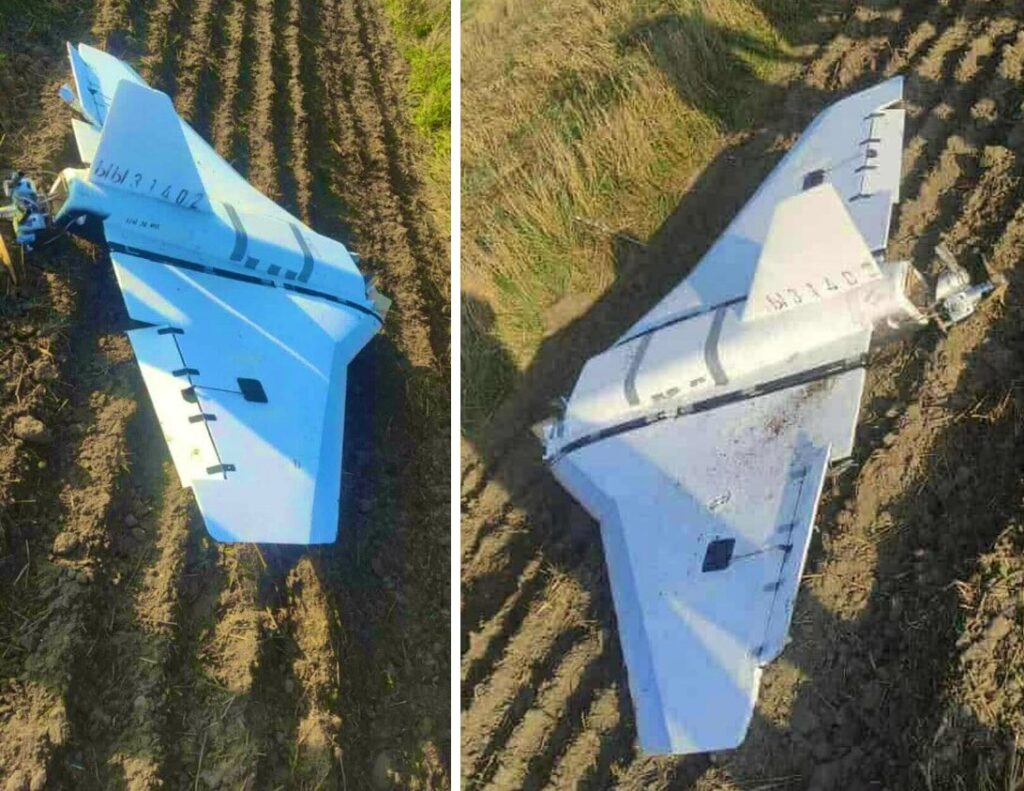
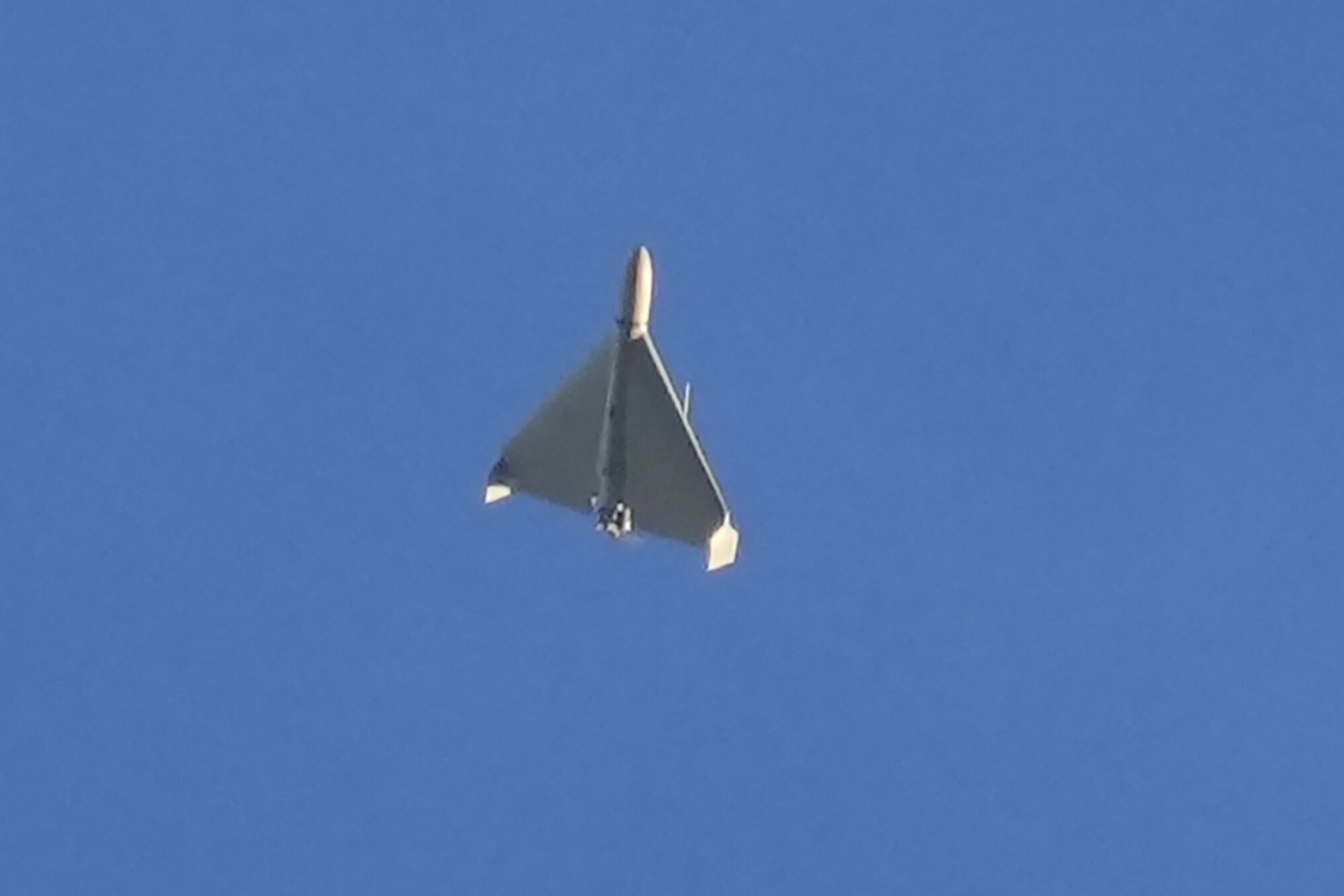

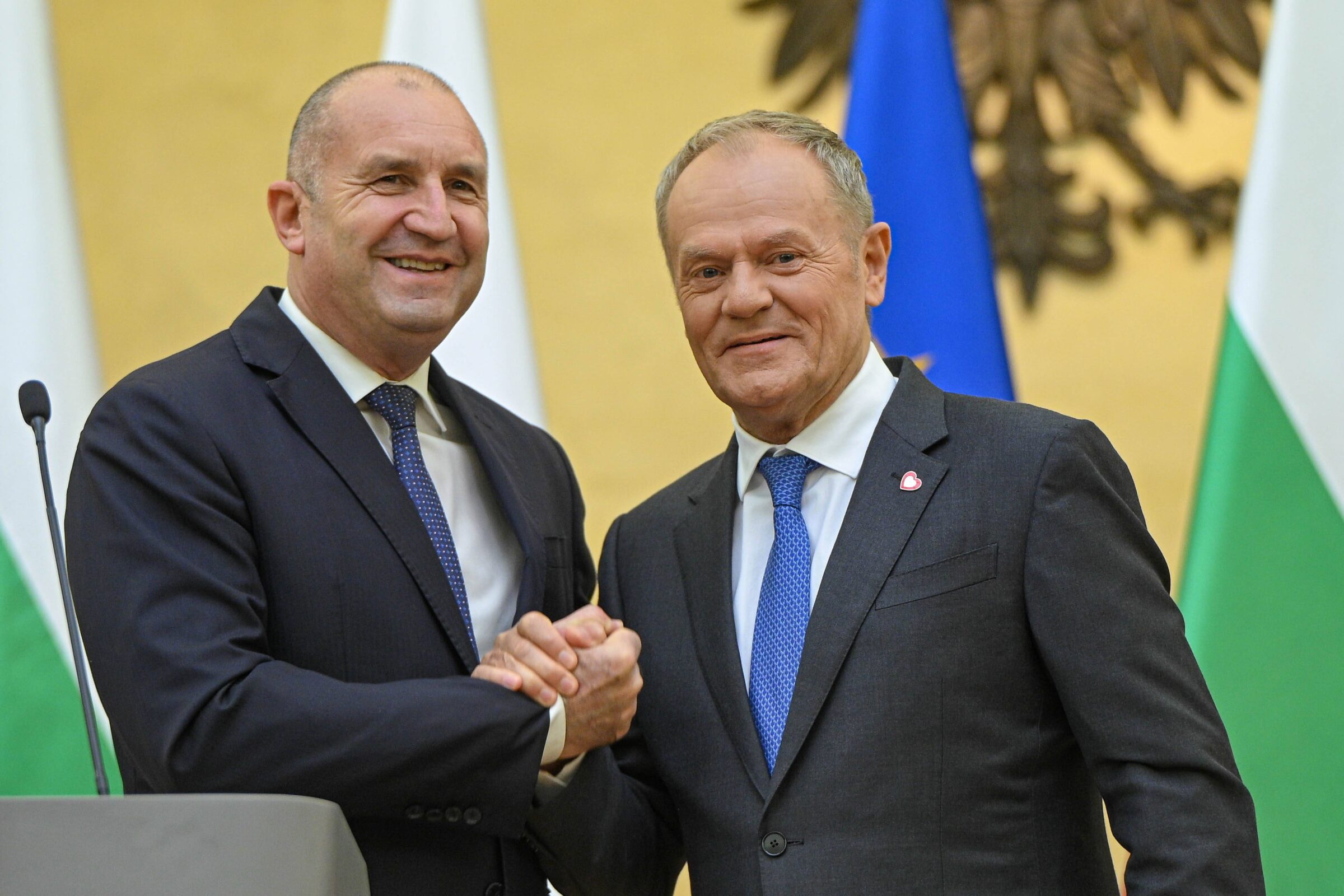

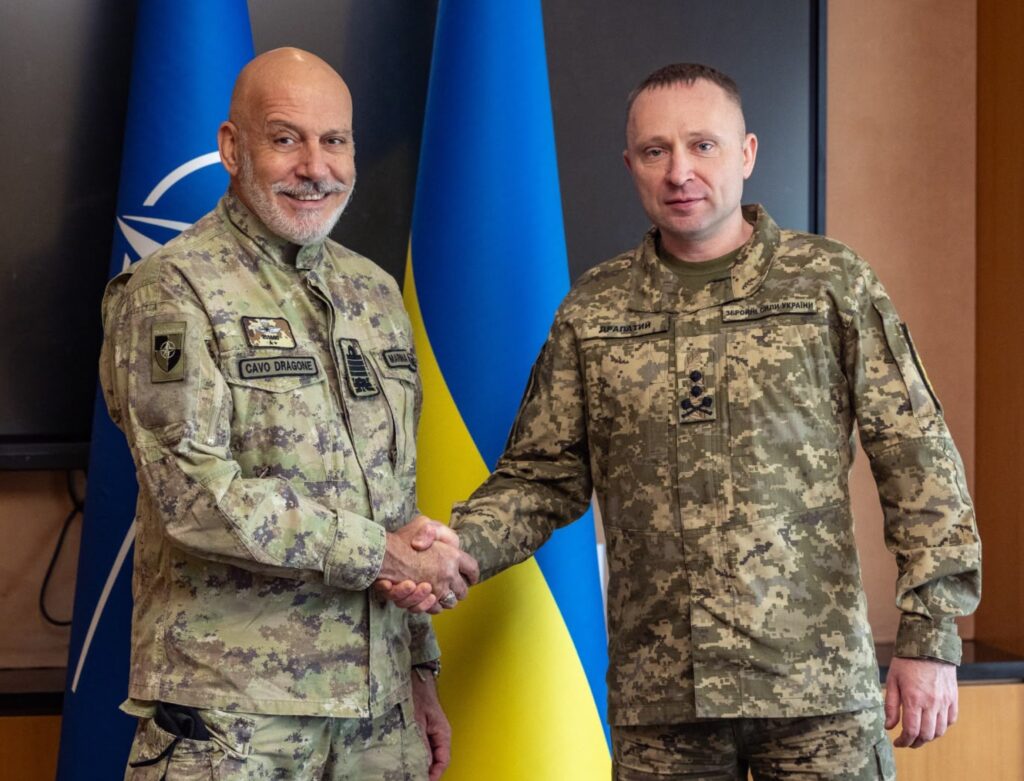
 Armed Forces, focussed on Ukraine’s military priorities and lessons learned to strengthen…