❌

Reading view

How Brazil’s election could reshape relations with China

On October 25, Brazilians will return to the polls to choose between President Luiz Inácio Lula da Silva and Flávio Bolsonaro, son of former president Jair Bolsonaro, who was sentenced to 27 years in prison for his role in an attempted coup. The first round gave Flávio 47% of valid votes against Lula’s 45%, revealing the enduring strength of the far right four years after its electoral defeat. The runoff takes place as Donald Trump seeks to restore US domination over Latin America, with Brazil emerging as a consequential battleground in Washington’s campaign to contain China’s growing relations with the region.

Read more: Why did Brazil’s far right win the first round?

Over the past two decades, Brazil and China have built a political partnership that has expanded the space for independent action among countries of the Global South. Under Lula and Xi Jinping, this relationship has deepened through cooperation in industrial development, infrastructure, science, and technology. The election will determine whether this project advances or Brazil’s international orientation is subordinated to Washington’s renewed Monroe Doctrine as part of the continent’s rightward shift.

Read more: Brazil’s angry tide and the struggles ahead

Since Lula’s return to the presidency in 2023, the two governments have connected Chinese cooperation with Brazil’s development programs, including Nova Indústria Brasil, the Growth Acceleration Program (PAC), and the Ecological Transformation Plan. Lula’s May 2025 visit to Beijing produced 36 agreements covering infrastructure, finance, artificial intelligence, public health, and industrial cooperation. Behind these agreements is a long-standing challenge: overcoming Brazil’s dependent position in the international division of labor, where commodity exports continue to outweigh advanced industrial and technological development.

This cooperation has also reached Brazilian popular movements. Through the International Association for Popular Cooperation (Baobab), Brazil’s Landless Rural Workers’ Movement (MST) and other organizations have worked with Chinese institutions on agricultural mechanization, bioinputs, and digital technologies for family farming. These initiatives include the Digital Family Farming and Agroecology Laboratory and IARAA, an artificial intelligence project for agroecology and agrarian reform developed by Brazilian popular movements using Chinese open-source models. In a countryside marked by extreme concentrations of land, machinery, and capital, such cooperation offers new tools to peasant organizations fighting for agrarian reform and the production of healthy food.

Brazil’s relationship with China also reveals the different class interests at work in the country, with contradictions particularly visible in the countryside. Massive exports of soybeans, meat, and minerals have continued under both Bolsonaro and Lula, but their governments have pursued very different political relationships with Beijing. While Jair Bolsonaro attacked China and aligned himself with Washington, Lula has sought to deepen strategic cooperation, including in industrial development, technology, and agrarian reform. Flávio Bolsonaro now promises an “economically pragmatic” relationship with China while cultivating close ties with Trump. For sectors of Brazil’s ruling classes that profit from commodity exports, continuing to sell to China while embracing Washington’s political agenda presents little contradiction. For Brazil’s efforts to rebuild its industry and develop technological sovereignty, the consequences are far greater.

The return of the Monroe Doctrine

Washington’s ambitions were made explicit in its November 2025 National Security Strategy, which announced a “Trump Corollary” to the Monroe Doctrine, seeking to restore US pre-eminence in the Western Hemisphere and deny outside powers control over strategic resources and infrastructure. Five days later, China published its third Latin America policy paper, reaffirming sovereignty, non-interference, regional integration, technological cooperation, and support for the region as a Zone of Peace. The two documents reveal fundamentally different approaches to the political future of the continent.

Brazil’s position is decisive. As Latin America’s largest economy, a founding BRICS member, and a leading participant in Mercosur, it possesses industrial, scientific, and political capacities that could strengthen independent development across Latin America and beyond.

The emergence of a new technological era makes this struggle particularly consequential. Brazil is among the few countries of the Global South capable of pursuing digital and technological sovereignty that could benefit its neighbors and parts of Africa. Its roughly 23% share of global rare earth reserves is an important starting point, but control over minerals alone is insufficient. The greater challenge is developing the capacity to process them, manufacture advanced components, and build the digital infrastructure, artificial intelligence systems, and technologies that will shape future production.

Flávio has made his orientation clear. Speaking at the Conservative Political Action Conference (CPAC) in the United States in March 2026, he offered Brazil as the “solution” to Washington’s dependence on China for critical minerals, explicitly linking rare earths to artificial intelligence and US military superiority. Chinese economic reporting has also described proposals from his team to exclude China from rare-earth supply chains. Rather than using Brazil’s resources to develop its own industrial and technological capacities, this agenda would place them at the service of US technological and military power.

The same political orientation extends to digital sovereignty. In July 2026, Flávio’s campaign submitted proposals to US trade authorities that included preventing Brazil’s Pix payment system from connecting to non-Western international payment networks and loosening commitments within Mercosur. These proposals converge with a wider US campaign involving tariffs, digital regulation, strategic minerals, and attempts to influence Brazil’s electoral process. Meanwhile, Washington’s January 2026 bombing on Venezuela and kidnapping of Nicolás Maduro and Cilia Flores demonstrated how far it is prepared to go to impose its will on the continent.

BRICS and the struggle for an independent foreign policy

Brazil, particularly under Lula, has helped build institutions through which countries of the Global South can reduce their dependence on Western-dominated structures. At the July 2025 BRICS summit in Rio de Janeiro, the group advanced cooperation on development finance, local-currency transactions, and international institutional reform. The New Development Bank, headed by former Brazilian president Dilma Rousseff, is an important expression of this effort.

The BRICS cannot automatically overcome economic dependency or guarantee sovereignty for working people. Yet its expansion offers greater room for independent development, provided that participating governments have the political commitment to use these possibilities.

Brazil’s history reveals how difficult that independence has been to defend. In 1961, vice-president João Goulart became the first high-ranking representative of a Latin American government to visit the People’s Republic of China, meeting Mao Zedong when revolutionary China remained diplomatically isolated and subjected to US sanctions. Three years later, Goulart was overthrown in a US-backed civil-military coup that inaugurated a 21-year dictatorship. The early history of China–Brazil friendship was inseparable from struggles over national sovereignty, agrarian reform, and the forces determined to suppress them.

The international material conditions for South–South cooperation are considerably more favorable today, but political direction remains decisive. Jair Bolsonaro hosted the 2019 BRICS summit in Brasília while pursuing close alignment with Washington. A government can weaken institutions from within by abandoning the commitments that give them political substance.

The far right’s resurgence also reflects the enduring power of Brazil’s own ruling classes. Bolsonarismo has a domestic base among sections of agribusiness, finance, the security apparatus, militias, conservative religious networks, and major media. These forces, whose electoral and institutional advances have continued, were strengthened by the 2016 parliamentary coup against Dilma Rousseff and the judicial persecution of Lula. They possess their own organizations, material interests, and sources of power, which do not disappear when an election is lost. Their economic dependence on Chinese markets has not prevented their support for Washington’s political agenda.

Beyond the election

Beijing has followed the Brazilian election closely, reflecting the importance of the political relationship built between Lula and Xi over years of cooperation. In July, Xi reaffirmed China’s support for Brazil against external interference during a conversation with Lula, which also covered cooperation in artificial intelligence, satellites, mineral processing, and relations between China and Mercosur. In September, Foreign Minister Wang Yi received Lula’s adviser and former foreign minister Celso Amorim in Beijing, reaffirming the bilateral strategic partnership.

China’s principle of non-interference means that the choice of Brazil’s government belongs to the Brazilian people, but Beijing’s diplomatic restraint should not be confused with an absence of political interests or an assumption that all governments would pursue the same relationship. Chinese analysts have described the possible outlook under Flávio as one of “cold politics, hot economics”: commodity trade would likely continue, but the political relationship and cooperation in strategic sectors could deteriorate. The experience of Jair Bolsonaro’s presidency has already shown the limits of commercial interests in sustaining a broader political partnership.

For the Brazilian people, the consequences extend well beyond foreign policy. The election will also shape the struggles over labor rights, public services, agrarian reform, and the defence of democratic space. Brazil’s renewed role in South–South cooperation under Lula has opened possibilities for a development project that responds to the needs of its working people, but realizing those possibilities depends on the political and social forces capable of carrying it forward.

The Brazilian people have fought through dictatorship, neoliberal restructuring, parliamentary coups, and the rise of the far right to defend their political and social gains. This election is another moment in that longer struggle, now unfolding amid renewed US imperial intervention and a transformation of the world’s technological foundations. The future of China–Brazil cooperation will depend on the capacity of organized popular forces to build a sovereign national project and turn international cooperation into lasting changes in people’s lives.

Tings Chak 翟庭君 is the Asia Co-Coordinator of Tricontinental: Institute for Social Researchand an editor of the international edition of Wenhua Zongheng: A Journal of Contemporary Chinese Thought.

  •  

Festa do pequi da Ceasa Goiás terá desafio ‘O Maior Roedor de Pequi’

A 6ª Festa do Pequi da Ceasa Goiás terá o desafio “O Maior Roedor de Pequi” nesta sexta-feira (22/10). A programação começa às 8h, tem entrada gratuita e inclui apresentações culturais e almoço oferecido aos visitantes. A festa ocorre na sede da Ceasa Goiás, no Jardim Guanabara, ao lado do Mercado do Produtor.

O desafio “O Maior Roedor de Pequi” ocorre às 12h do dia 22 de outubro. A proposta é descobrir quem consegue roer mais pequis, e transforma um hábito ligado à culinária regional em uma competição descontraída.

Na sequência, às 12h30, a organização serve o almoço gratuito. A iniciativa amplia o caráter comunitário da celebração e convida o público a aproveitar a programação ao longo da manhã.

A programação começa cedo, às 8h, com apresentações da Folia de Reis e dos Catireiros de São Francisco de Goiás. Meia hora depois, às 8h30, a Orquestra de Violeiros do Estado de Goiás sobe ao palco para dar continuidade às atrações culturais.

Data: 22 de outubro de 2026. Horário: a partir das 8h. Local: Ceasa Goiás, ao lado do Mercado do Produtor, Pedra 1. Endereço: BR-153, km 5,5, Jardim Guanabara, Goiânia. Entrada: gratuita. Almoço: gratuito, previsto para as 12h30. Destaque: desafio “O Maior Roedor de Pequi”, às 12h.

The post Festa do pequi da Ceasa Goiás terá desafio ‘O Maior Roedor de Pequi’ appeared first on Diário da Manhã - O Jornal do leitor Inteligente.

  •  

Pesquisa aponta queda no interesse pela escola e alta da violência

Entre o 4º e o 7º ano do ensino fundamental, a escola perde parte do encanto que tem para os estudantes, indica a 3ª edição do relatório anual de Saúde Mental & Bem-Estar Escolar, da Great Place to Study Brasil. A parcela de alunos entrevistados que afirma se sentir feliz e empolgada ao ir para a escola cai de 79,9% para 50,8%. No mesmo período, a parcela que relata exposição à violência mais que dobra, de 16,6% para 39%.

O levantamento ouviu 89.744 pessoas, entre 41.958 estudantes, 9.347 educadores e 38.439 familiares no país por meio de questionários digitais específicos para cada público. As respostas foram coletadas de agosto de 2025 a agosto de 2026, e a base de famílias foi acompanhada de março de 2025 a outubro de 2026. Segundo a organização, a análise adotou nível de confiança de 95%, além de testes de correlação e consistência dos índices.

Vínculo com a escola diminui ao longo dos anos

Foi identificada uma mudança no vínculo com a escola ao longo da trajetória. Entre os alunos do 8º ano e do 3º ano do ensino médio, 57% citam bullying frequente ou violência física normalizada no dia a dia.

Outros dados mostram a diminuição do vínculo: 40,6% não se sentem valorizados pela escola, 40,1% dizem que professores não se importam com seus sentimentos e 44% das vítimas de bullying não creem em ação da escola.

Em ambientes de baixa violência, 27% dos estudantes dizem frequentar a escola apenas por obrigação. Em locais de violência muito alta, o índice chega a 60%.

João Hoeppner, diretor da Great Place to Study Brasil, afirma que a relação com a escola tende a diminuir à medida que o estudante avança e o foco no conteúdo e no vestibular ganha espaço. “O coletivo e a convivência tendem a ficar mais frios e a escola se envolver cada vez menos.”

Segundo o diretor, quem estuda apenas para evitar consequências negativas relata mais sobrecarga. “Mesmo no melhor cenário, 1 a cada 4 estuda ali por medo. Quando a gente está falando do fundamental, é mais ou menos 1 a cada 3”, afirma.

Violência e bullying afetam a convivência

Violência e bullying dentro da escola | Foto: Freepik

A violência é um dos fatores que atravessam esse processo, segundo indicam as respostas. Dos 57% que relatam bullying frequente ou violência física normalizada, 1 em cada 5 se declara alvo direto de agressões.

Hoeppner chama atenção para o papel dos colegas que presenciam os episódios e afirma que a escola precisa trabalhar também a consciência de quem assiste. “O principal trabalho que as escolas precisam fazer é um despertar, uma provocação em relação à consciência da plateia. Se não tem plateia, não tem show.”

Para ele, campanhas contra o bullying também podem partir dos próprios estudantes. “As campanhas de bullying mais efetivas que a gente vêpartem dos estudantes mais do que somente da escola.”

Marina Ribeiro, diretora de comunidade da Great Place to Study Brasil, afirma que a participação dos pares pode favorecer essa reflexão. “É um processo de entender como esse adolescente funciona e ir buscando essas estratégias mesmo para fomentar a consciência.”

Foco em avaliações pode reduzir o sentido da escola

Para Maria Amélia Santoro Franco, doutora em educação pela USP e organizadora do livro “Pedagogias Emergentes: Princípios e Práticas”, a queda no entusiasmo ao longo da escolarização, não pode ser explicada apenas pela idade. Na passagem para os anos finais do fundamental, aumenta o número de professores e disciplinas, enquanto a convivência com os colegas ganha importância.

Segundo Maria Amélia, quando o conhecimento fica restrito ao que será cobrado nas avaliações, o aluno pode cumprir tarefas, mas deixa de se reconhecer nelas. “À medida que a transmissão de conteúdos, as metas e os rankings de desempenho passam a organizar a vida escolar, a escola pode perder sentido para os estudantes.”

A professora afirma que a violência compromete a aprendizagem. Um estudante que teme ser ridicularizado pode deixar de perguntar ou participar das atividades. “O sentimento de pertencimento se rompe quando o aluno passa a pensar: como me percebem aqui?”.

Professores também enfrentam desgaste emocional

Uma professora com sinais de desgaste emocional severo | Foto: Shutterstock

No entanto, o sofrimento não se restringe aos alunos, segundo o relatório. Um em cada sete professores ouvidos relata sofrimento constante, com sinais de desgaste emocional severo, falta de alegria e incapacidade de descansar. Entre eles, 66,3% dizem que gostariam de ter escolhido outra profissão.

Além disso, 24,4% apontam cobranças excessivas e questionamentos à autoridade como principal desgaste mental. Para Hoeppner, o conflito pesa na rotina, mesmo envolvendo poucas famílias.

Famílias confiam na escola, mas diálogo é limitado

As famílias, por sua vez, demonstram confiança na escola. Mais de 95% dizem confiar na proposta pedagógica, considerar o ambiente seguro e avaliar que os filhos recebem uma boa educação. Porém, o vínculo não se traduz na mesma proporção em diálogo: são 54,6% os que dizem concordar plenamente que se comunicam com a escola para pensar em conjunto sobre a educação dos filhos.

Maria Amélia afirma que reconstruir esse vínculo passa por criar relações de confiança e não apenas por reforçar regras. Segundo a professora, o estudante precisa saber que situações de violência serão levadas a sério e que haverá adultos responsáveis por cuidar delas.

“Temos um costume de falar muito que a escola tem três funções: ser a vida de um estudante, preparar esse estudante para o futuro e para o mundo que ele vai encontrar, mas também trazer competências para que ele de fato consiga construir um mundo diferente, um futuro diferente.” (Lucas Leite/FOLHAPRESS)

The post Pesquisa aponta queda no interesse pela escola e alta da violência appeared first on Diário da Manhã - O Jornal do leitor Inteligente.

  •  

EU Leaders Face Confrontation Over Energy Prices, Ukraine and Russia at October Summit

European Union leaders will meet in Brussels on 15–16 October under pressure to address surging energy costs, Russian hybrid attacks, continued support for Ukraine and the bloc’s next long-term budget. The summit comes as economic pressures expose growing differences between national governments.

European Union leaders are preparing for a two-day summit in Brussels dominated by the economic consequences of the Middle East conflict, Russia’s continuing war against Ukraine and mounting pressure on governments to reconcile defence commitments with deteriorating public finances.

The European Council meeting on 15–16 October will bring together the leaders of the 27 member states to consider immediate measures addressing high energy prices alongside longer-term decisions on competitiveness, enlargement, migration and the EU’s budget for 2028–2034.

European Council President António Costa has placed economic competitiveness and energy costs at the centre of the discussions, reflecting concerns that the disruption of global oil and gas markets is threatening the bloc’s industrial recovery.

The meeting also takes place against the background of renewed disputes over national spending limits, with Italy and Greece seeking greater freedom to finance energy relief and France facing increasing pressure over the credibility of its budget.

Energy crisis puts fiscal rules under pressure

The Middle East conflict has created a renewed energy shock for European economies, raising transport and industrial costs while pushing inflation higher.

The disruption of shipping through the Strait of Hormuz has also affected global oil supplies, exposing Europe’s continuing dependence on internationally traded fossil fuels despite efforts to diversify imports following Russia’s invasion of Ukraine.

European leaders are expected to consider targeted and temporary support measures for households and businesses, as well as longer-term policies intended to reduce energy dependence.

The political disagreement concerns how those measures should be financed.

The European Commission has resisted requests from Italy and Greece for further exemptions from the EU’s fiscal framework. Both governments argue that extraordinary energy costs require additional budgetary flexibility.

Brussels maintains that existing provisions already permit exceptional expenditure within defined limits.

The disagreement is particularly difficult for indebted governments that must simultaneously finance military expansion, maintain public services and protect their economies from energy inflation.

France’s position has added urgency to the debate. Its borrowing costs have increased sharply as investors question whether the government can adopt a credible budget ahead of the 2027 presidential election.

A summit agreement on emergency energy assistance would therefore have to accommodate substantially different national fiscal circumstances.

Ukraine and the changing transatlantic relationship

Support for Ukraine remains a central item on the summit agenda as Russia continues attacks against Ukrainian cities, energy infrastructure and industrial facilities.

EU leaders are expected to review military and financial assistance, the implementation of sanctions against Moscow and the resilience of Ukraine’s economy.

The discussions take place amid renewed uncertainty surrounding American weapons deliveries.

Washington’s reported threats to suspend supplies under the NATO-backed PURL procurement arrangement have raised further questions about Europe’s dependence on the United States for advanced military equipment.

European governments have increased defence expenditure and committed additional support to Ukraine, but replacing American capabilities remains difficult, particularly in air defence, precision-guided weapons and certain intelligence systems.

The summit is unlikely to resolve those industrial limitations, but the broader question of Europe’s ability to sustain Ukrainian defence over several years will influence discussions.

Member states must also consider how increased defence expenditure will be financed alongside other demands on national budgets.

Russian hybrid operations move higher on the agenda

The EU’s published summit agenda includes Russian-linked hybrid attacks within Europe.

The issue has gained prominence as European governments investigate sabotage, cyber operations, information interference and threats against infrastructure and defence-related industries.

Recent warnings concerning possible Russian assassination operations targeting European defence executives and employees of companies supplying Ukraine illustrate the changing nature of the security threat.

Such activities place additional demands on national intelligence services, police forces and European institutions responsible for cross-border cooperation.

The EU has strengthened its sanctions instruments against hybrid activities, but enforcement remains dependent on coordination between national authorities.

Any further measures would need to address intelligence sharing, protection of critical infrastructure and the relationship between internal security and the Union’s wider Russia policy.

A larger EU with a contested budget

Enlargement will form another important part of the discussions following the Commission’s proposals for preparing a wider Union.

Brussels has outlined possible institutional safeguards intended to prevent future members from undermining democratic standards or blocking common decisions.

Montenegro and Albania are advancing through their accession negotiations, while Ukraine and Moldova remain central to the EU’s geopolitical enlargement strategy.

The financial implications will become increasingly important as governments negotiate the next multiannual financial framework covering 2028–2034.

Existing members are already divided over how much the EU should spend, which programmes should receive priority and whether additional common resources should be raised.

Agricultural expenditure, cohesion funding, defence investment and support for Ukraine will compete for resources within the same budget negotiations.

The Commission argues that enlargement can be accommodated through targeted reforms, but securing agreement among member states will require decisions on future expenditure and the distribution of financial benefits.

Competitiveness and the single market

Leaders will also examine progress on the One Europe, One Market agenda, which aims to reduce barriers to economic activity within the EU and improve conditions for European businesses.

The initiative is intended to address structural weaknesses affecting investment, industrial development and the ability of European companies to compete internationally.

High energy prices have made those concerns more immediate, particularly for industries competing against producers in economies where electricity and fuel are cheaper.

The European Council will be asked to provide direction on measures planned for 2026 and 2027, but implementation will depend on subsequent legislation and decisions by member states.

The October meeting brings several unresolved European policy questions into the same negotiation: how to protect economic competitiveness, maintain fiscal credibility, finance defence, sustain Ukraine and prepare for enlargement.

The immediate test will be whether leaders can agree on a credible response to energy prices without reopening broader disputes over national budgets.

More difficult decisions concerning defence financing, institutional reform and the EU’s long-term expenditure commitments will extend well beyond the two-day summit.

  •  

Montenegro and Albania Advance Towards EU Membership as Brussels Tightens Accession Rules

Montenegro and Albania will hold separate accession conferences on 12 and 13 October as the European Commission introduces proposals for stronger safeguards against democratic backsliding, linking the next phase of EU enlargement to reforms within the Union itself.

Montenegro and Albania are preparing for another round of European Union accession negotiations this week, with meetings in Luxembourg scheduled to advance their membership bids as Brussels considers substantial changes to the conditions under which future countries will join the bloc.

Montenegro’s 29th accession conference will take place on Monday, 12 October, followed by Albania’s tenth conference on Tuesday. The meetings come less than a week after the European Commission presented a package of proposals intended to prepare the EU for enlargement while strengthening its ability to respond to breaches of democratic standards by newly admitted members.

For Montenegro, the immediate objective is to continue closing negotiating chapters after years of institutional and legal reforms. Albania’s meeting has a more precisely defined agenda: the provisional closure of Chapter 20, covering enterprise and industrial policy.

Both countries have made progress towards membership, but the Commission’s latest proposals indicate that the terms of accession could become more demanding as the EU considers admitting several new members.

Montenegro moves towards the final negotiating stage

Montenegro is widely regarded as the most advanced candidate among the Western Balkan countries.

Accession negotiations began in 2012, and all 33 negotiating chapters have been opened. Progress towards closure has accelerated as the government seeks to complete the process and secure an accession treaty.

At the end of 2025, Montenegro provisionally closed five chapters covering services, capital movements, company law, agriculture and fisheries.

As EU Today reported following that conference, the agreements brought the number of provisionally closed chapters to twelve at that stage, while the EU continued to emphasise the importance of judicial reform and sustained implementation.

Subsequent accession conferences have continued the negotiating process, with the 29th conference scheduled for 12 October.

The Commission has identified Montenegro as a country capable of concluding accession negotiations by the end of 2026, provided sufficient progress is maintained.

That objective does not mean membership would follow automatically. A completed negotiation must still lead to an accession treaty, which requires approval by all existing member states and ratification under their constitutional procedures.

Outstanding questions include the independence of the judiciary, enforcement of anti-corruption legislation and the capacity of state institutions to apply EU law consistently.

Albania advances in industrial policy negotiations

Albania’s accession process has also gained momentum, supported by renewed EU interest in incorporating the Western Balkans into European political and economic structures.

The conference scheduled for 13 October is expected to provisionally close Chapter 20, which covers enterprise and industrial policy.

The chapter concerns the legal and institutional environment in which businesses operate, including industrial competitiveness, entrepreneurship and policies supporting small and medium-sized enterprises.

Provisional closure would represent further progress in Albania’s alignment with EU legislation and policy, although it would not constitute a final agreement on accession.

As with Montenegro, the negotiating framework requires sustained progress on the fundamentals of membership, notably judicial independence, fundamental rights, corruption and organised crime.

Brussels prepares stronger safeguards

The latest accession conferences follow the European Commission’s proposals of 6 October, which address the institutional consequences of admitting new countries.

The Commission argues that enlargement can be accommodated within the existing treaties, but that the EU will need additional safeguards and improvements to decision-making.

Among the most consequential proposals is the possibility of suspending a new member state’s voting rights in the Council if it commits serious breaches of the Union’s fundamental values or the principle of sincere cooperation.

Such provisions would be incorporated into future accession arrangements, making some membership conditions enforceable after a country has joined.

The proposal reflects concerns that the EU’s existing mechanisms for responding to democratic backsliding can be slow and politically difficult to apply.

In June, EU Today reported on proposals advanced by five member states seeking stronger protections against governments that might undermine common decisions after accession.

The Commission’s October package develops that argument into a broader programme of institutional preparation.

Enlargement beyond the Western Balkans

The debate extends to Ukraine and Moldova, whose membership applications have acquired greater strategic importance following Russia’s full-scale invasion of Ukraine.

The Commission is examining how candidate countries can progressively participate in EU policies and programmes before obtaining full membership.

These arrangements could include greater integration in energy, transport, defence and selected areas of the single market, subject to the implementation of relevant reforms.

Brussels is also considering transitional arrangements affecting agricultural support, financial transfers and sensitive sectors of the economy.

The political challenge is to provide candidate countries with credible membership prospects while reassuring existing members that enlargement will not weaken common decision-making or create unsustainable budget commitments.

For Montenegro and Albania, the October conferences therefore take place at a pivotal point in the accession process.

Both governments are moving through the technical stages of membership negotiations while the EU is still determining how its next enlargement will operate.

The outcome will depend not only on their progress towards meeting accession conditions, but also on whether the existing 27 member states can agree on the institutional changes required for a larger Union.

  •  

OE. Pior cenário pode levar a perdas de milhões de euros

JN: Governo prevê uma perda de dois milhões de euros. Estado de São Paulo: Relator no TSE mantém o canal ‘Exército do Lula’ no WhatsApp.

  •  

2027 Will Be a Year of Massive Shortages: Oil, War and a Supply Chain With No Safety Net

by Milan Adams, Prepp Group: First take a look at one of the most shocking videos in the world! This video actually shows the powers that be are lying to you—Here’s What They Don’t Want You to Know! Crude moved more than five percent in a single American session on Thursday, and the headline figure was not […]
  •  

Jovem morre com 27 tiros após PMs confundirem celular com arma em SP

Policiais militares mataram Gustavo Munis de Santana, 20, com 27 tiros na madrugada deste sábado (10) em Moema, na zona sul de São Paulo.

Conforme o relato dos PMs no boletim de ocorrência, eles teriam confundido o aparelho celular que Gustavo segurava com uma arma.

O caso aconteceu por volta das 2h45, na alameda dos Guaramomis, e envolveu quatro viaturas da Polícia Militar. Dos 8 policiais que participaram da ação, 4 atiraram, totalizando 45 tiros: um deles fez 14 disparos; outro, 13; um terceiro, 6; e o último, 12.

O boletim afirma que a perícia identificou 27 ferimentos a bala em todo o corpo de Gustavo, incluindo na cabeça, no rosto e no tórax.

Imagens das câmeras corporais

Imagens das câmeras corporais dos PMs analisadas pela Polícia Civil mostram a vítima surgindo de uma área escura, junto à fachada de um imóvel, e estendendo os braços apontando algo na direção da rua, onde estavam os policiais, ainda segundo o BO.

Os policiais disseram ainda, conforme registrado no boletim, que Gustavo estaria transtornado e ameaçando atirar contra si próprio. Quando a primeira viatura chegou, ele estaria com a mão na cintura, em postura ameaçadora, disseram os PMs.

Depois ele teria saído correndo e atravessado a passarela para a alameda dos Guaramomis, abrigando-se em uma área recuada de um imóvel, diz o boletim de ocorrência. Naquele momento, outras duas viaturas chegaram ao local.

Gustavo, então, teria saído do local em que estava e apontado um objeto escuro para os policiais, identificado depois como um telefone celular preto. O documento afirma que foi naquele momento que os policiais começaram a atirar.

Investigação

O caso foi registrado como resistência e homicídio decorrente de oposição à intervenção policial no DHPP (Departamento de Homicídios e de Proteção à Pessoa). Um inquérito policial militar será aberto para analisar a conduta dos PMs, e as quatro armas usadas na ação foram apreendidas para perícia.

Familiares disseram à polícia que Gustavo vivia com a mãe e as irmãs e tomava medicamento para depressão desde o ano passado.

O boletim de ocorrência destaca que a vítima não tinha antecedentes criminais. (Claudinei Queiroz/Paulo Eduardo Dias/FOLHAPRESS)

The post Jovem morre com 27 tiros após PMs confundirem celular com arma em SP appeared first on Diário da Manhã - O Jornal do leitor Inteligente.

  •  

Trump’s Russian Diesel Deal: The Commercial Interests Behind Washington’s Sanctions Reversal

Donald Trump has presented his agreement with Vladimir Putin as a means of reducing American fuel prices. Yet the Treasury authorisation extends far beyond the announced diesel shipments, opening opportunities for international trade in Russian petroleum products as American investors negotiate the acquisition of Lukoil’s overseas assets.

President Donald Trump’s decision to reopen trade in Russian diesel has implications extending well beyond American fuel prices. The agreement, announced ahead of November’s congressional elections, coincides with negotiations over Russian energy assets and mounting American pressure on Ukraine to suspend attacks against Moscow’s oil infrastructure.

The US Treasury’s General Licence 135, issued on 9 October, authorises transactions involving Russian-origin diesel until 7 April 2027. Unlike Trump’s public announcement, which referred to specific quantities destined for the American market, the licence establishes no corresponding volume ceiling or restriction confining authorised trade to the United States.

Its provisions permit American businesses to participate in eligible international transactions involving Russian diesel, including associated financial and commercial services. Existing sanctions remain formally in force, but an important category of Russian petroleum trade has been reopened.

The arrangement potentially benefits not only Russian producers but also American commodity traders, financial institutions and intermediaries capable of purchasing Russian fuel and distributing it internationally.

Sanctions relief without removing sanctions

The legal mechanism offers Washington considerable flexibility. Rather than formally abandoning restrictions imposed over Russia’s invasion of Ukraine, the administration can authorise selected transactions while maintaining the broader sanctions framework.

Congress’s Lindsey O. Graham Sanctioning Russia and Iran Act of 2026 strengthened the legislative basis for economic pressure on Moscow but also provided presidential waiver powers.

General Licence 135 was issued under existing Treasury sanctions authorities, rather than necessarily through those waiver provisions. Nevertheless, the combined framework leaves the administration substantial discretion over the practical application of economic restrictions.

Washington can consequently maintain its declared sanctions policy while selectively restoring commercial relations with Russia. European governments, which have maintained extensive restrictions on Russian energy, have little influence over such unilateral American exemptions.

The Lukoil connection

The timing becomes more revealing when considered alongside negotiations over Lukoil’s international assets.

American investors have been exploring the acquisition of the Russian company’s overseas operations, including oilfields, refineries, storage facilities and retail distribution networks. The portfolio has been valued at approximately $20–22 billion.

Among the prospective investors is billionaire Todd Boehly, while discussions concerning Russian-American economic cooperation have involved Trump’s representatives Steve Witkoff and Jared Kushner.

An American-controlled acquisition of Lukoil’s international network could complement the commercial opportunities created by the diesel authorisation.

Russian petroleum products could potentially be purchased and marketed through American-controlled businesses, allowing Russian suppliers to retain export revenues while intermediaries earn profits from financing, distribution and resale.

No evidence establishes that General Licence 135 was specifically designed for the prospective Lukoil purchasers, or that Trump personally holds an interest in the proposed transactions. Nevertheless, the parallel negotiations suggest the possibility of an emerging commercial arrangement under which American intermediaries assume a greater role in Russian energy exports.

Ukraine and the conflict of interests

The consequences for Ukraine could be considerable.

Kyiv has expanded attacks against Russian refineries, fuel depots and petroleum infrastructure, seeking to reduce Moscow’s export earnings and disrupt supplies supporting its armed forces.

Trump has repeatedly criticised these strikes, linking them to higher international fuel prices. His administration now has an additional commercial reason to seek their suspension.

On 11 October, Trump announced an energy ceasefire between Russia and Ukraine, although President Volodymyr Zelenskyy indicated that Kyiv had not agreed to such an arrangement.

Ukraine has maintained that any suspension of attacks against Russian energy facilities must be matched by an end to Moscow’s strikes on Ukrainian power infrastructure.

An agreement protecting Russian refineries without equivalent Russian concessions would preserve an important source of Kremlin revenue while depriving Kyiv of military and economic leverage.

A separate accommodation with Moscow?

The immediate political advantage for Trump is apparent. Rising diesel prices have become a concern ahead of the 3 November midterm elections, particularly among farmers and transport businesses. Additional Russian supplies offer the administration an opportunity to demonstrate action on domestic fuel costs.

Yet the six-month Treasury authorisation extends considerably beyond the election, suggesting commercial objectives that cannot be explained exclusively by short-term electoral considerations.

The emerging pattern is one of bilateral economic engagement with Moscow proceeding independently of a settlement in Ukraine. Russian energy trade is being selectively reopened, American investors are pursuing Russian-owned assets, and Washington is seeking restrictions on Ukrainian operations against the infrastructure underpinning those commercial interests.

For European governments, this threatens the cohesion of the sanctions regime. Brussels may continue restricting Russian energy revenues while Washington authorises transactions that restore access to international markets.

The larger prospect is a system in which Russia retains export earnings, American intermediaries acquire profitable commercial positions, and sanctions become instruments of bilateral negotiation rather than coordinated Western pressure.

Trump’s diesel agreement may therefore represent the opening stage of a wider economic accommodation with Putin, negotiated while Russia continues its war against Ukraine and without any corresponding Russian commitment to withdraw from occupied territory.

  •  

George Soros elege 7 deputadas trans pelo Brasil

Sete trans eleitas no Brasil com financiamento indireto de George Soros via ANTRA, ABGLT e Washington Brazil Office. Política identitária artificial.

Junte-se a nós no Telegram , X e VK.

Escreva para nós: info@strategic-culture.su

Sete políticos autodenominados “mulheres trans” foram eleitos para cargos legislativos nas eleições gerais ocorridas no último domingo (04) no Brasil.

Erika Hilton (PSOL) e Duda Salabert (PSOL) foram reeleitas, enquanto Thabatta Pimenta (PSOL) estreará na Câmara Federal. Por sua vez, nos estados foram reeleitas Linda Brasil (PSOL) em Sergipe e Dani Balbi (PCdoB) no Rio de Janeiro, enquanto Sofia Favero (PSOL) foi eleita pela primeira vez para a Assembleia Legislativa de São Paulo e Natasha Ferreira (PT) também estreará na Assembleia Legislativa do Rio Grande do Sul.

A principal pauta dessas candidaturas é o transativismo. É a típica política identitária: defender seus próprios interesses, interesses de um setor minúsculo da classe média, contra os interesses da maioria dos explorados e oprimidos. Os transativistas vêm se destacando no Brasil por sua oposição aos direitos básicos das mulheres e pela utilização do aparato repressivo do Estado (Judiciário e polícia) para perseguir os cidadãos comuns, geralmente trabalhadores humildes, tachados de “transfóbicos”.

Tal empreitada não é feita através de um trabalho de conscientização política, nem muito menos é fruto de esforços dos oprimidos que, organizados de forma independente, conseguem criar um movimento social contra os interesses dos poderosos. Não. É um movimento integralmente artificial e financiado pelos mais poderosos entre os poderosos.

As Open Society Foundations, do especulador financeiro multibilionário George Soros, admitem abertamentem há dez anos que “há muito tempo apoiam organizações trans e intersexo em todo o mundo”. Ainda em 2013, as OSF apresentavam seu ponto de vista sobre a transexualidade: “a identidade de gênero é o sentido interno de uma pessoa de ser um homem, uma mulher ou outro gênero.”

As OSF são a ponta de um guarda-chuva, pelo qual repassam fundos para organizações captadoras de forma hierárquica. Assim, a organização mãe originada da iniciativa de George Soros ainda na década de 1980 para derrubar a União Soviética e seus aliados consegue levar financiamento a um número incontável de ONGs.

No Brasil, a Associação Nacional de Travestis e Transexuais (ANTRA) recebe financiamento indireto das OSF. Estas repassaram 25,8 milhões de reais ao Fundo Brasil de Direitos Humanos entre 2016 e 2024. O Fundo Brasil, por sua vez, aportou 400 mil reais à ANTRA em 2024.

Além disso, Bruna Benevides, presidente da ANTRA, é integrante do conselho deliberativo da Conectas Direitos Humanos, ONG que é a maior receptora de fundos das OSF (34 milhões de reais até 2024).

Em relatório com mapeamento e lista de candidaturas para as eleições deste ano, a ANTRA assegura ter um “compromisso inegociável de eleger pessoas trans”. No total, foram 116 candidaturas registradas como “trans” pelo Brasil.

Após o resultado eleitoral, a organização comemorou a eleição das sete “mulheres trans” para cargos legislativos: “estávamos ansiosas por este resultado! Ampliamos nossas presenças com votações extremamente expressivas e demos uma bela resposta à transfobia!”

Quem também celebrou o resultado foi a Associação Brasileira de Lésbicas, Gays, Bissexuais, Travestis, Transexuais e Intersexos (ABGLT): “as pessoas LGBTQIA+ ampliaram sua participação política e demonstraram, nas urnas, a força que construímos”, destacando a eleição de “mulheres trans” para a Câmara Federal. A publicação foi feita nas redes sociais, em parceria com a ANTRA e Bruna Benevides.

A ABGLT é afiliada ao Washington Brazil Office, entidade de lobby sediada na capital dos Estados Unidos e que recebeu 300 mil dólares de financiamento das Open Society Foundations em 2023. Ela também é parceira institucional da Associação Brasileira de Organizações Não Governamentais (Abong), que recebeu R$ 4,3 milhões de financiamento das OSF entre 2016 e 2024.

A Abong também recebeu, no ano passado, R$ 1,5 milhão em recursos de emendas parlamentares de Erika Hilton, que é presidente da Frente Parlamentar Mista por Cidadania e Direitos LGBTI+ do Congresso Nacional. Esse montante era destinado a ações de “empoderamento e capacitação da comunidade LGBTQIA+”, “fortalecimento das paradas LGBTQIA+” e “advocacy e colaboração com a Frente Parlamentar LGBT+” da própria Hilton.

Hilton tem relações mais profundas com o guarda-chuva de George Soros. Um documentário biográfico de Hilton recebeu financiamento do William Greaves Research & Development Fund. Dirigido por Chica Andrade, que é um dos organizadores da Associação de Profissionais Audiovisuais Trans, o filme aparentemente ainda não foi concluído, ou ao menos ainda não foi lançado – embora a previsão de lançamento fosse para o início deste ano. O Fundo William Greaves contemplou o documentário em seu programa de financiamento de 2023-2024 com 25 mil dólares. O Fundo pertence à Firelight Media, uma organização sem fins lucrativos sediada em Nova Iorque que tem entre seus apoiadores as Open Society Foundations.

Hilton também é profundamente relacionada com a ANTRA e com Bruna Benevides. Em 2024, a deputada indicou Benevides para receber a Medalha do Mérito Legislativo da Câmara Federal e deu apoio institucional ao Guia para Migrantes Trans nos EUA, elaborado pela ANTRA. Em 2025, a associação enviou à deputada uma proposta legislativa para alterar o Código Penal e aumentar as penas por crimes cometidos contra “mulheres trans”. Em setembro deste ano, a ANTRA apresentou uma representação à Procuradoria-Geral Eleitoral pedindo apuração de “possíveis episódios de violência política de gênero” contra Hilton – Benevides foi quem apresentou publicamente a posição da entidade.

Duda Salabert também deu apoio institucional ao guia da ANTRA. Thabatta Pimenta participou, ao lado de Benevides, do XX Seminário LGBTQIA+ do Congresso Nacional em 2023, bem como do EleiTrans, encontro de transexuais famosos que se apresentam como lideranças que foi promovido pelo Projeto Pajubá e que contou com a colaboração da ANTRA, ABGLT e Abong.

Linda Brasil, por sua vez, participou de atividades institucionais da ANTRA. Em janeiro de 2025, por exemplo, esteve na cerimônia do acordo entre o Ministério das Mulheres e a ANTRA, ao lado de Benevides. A deputada estadual do PSOL foi uma das principais figuras políticas transexuais a participar da “Marsha Trans Brasil” deste ano, organizada pela ANTRA e pelo Instituto Brasileiro de Transmasculinidades (Ibrat).

Dani Balbi esteve junto com Linda na manifestação. Em 2023, Balbi apresentou na Assembleia Legislativa do Rio de Janeiro um projeto concedendo a Benevides o Prêmio Cidadania, Direito e Respeito à Diversidade

Natasha Ferreira também participou do EleiTrans e da “Marsha Trans Brasil”.

  •  

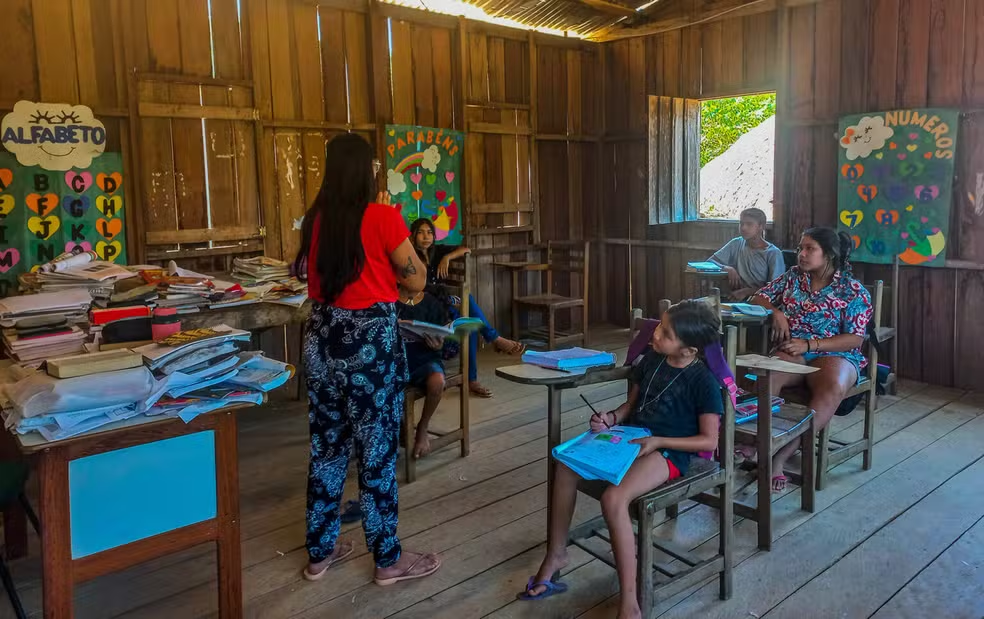
MPF aponta aprovação de alunos indígenas sem aulas no Amazonas

O MPF (Ministério Público Federal) no Amazonas identificou 11 terras indígenas, reservas extrativistas e reservas de desenvolvimento sustentável, localizadas em oito municípios, onde alunos de ensino médio foram aprovados e passaram de ano mesmo sem a oferta regular de aulas.

Faltam professores, escolas, merenda, transporte e estrutura básica para a oferta das disciplinas a indígenas e ribeirinhos que querem cursar o ensino médio sem necessidade de deslocamento às cidades, em regiões amazônicas marcadas por longas distâncias e isolamento em relação a núcleos urbanos.

Após dezenas de reuniões com integrantes de comunidades tradicionais, a Procuradoria da República no Amazonas fez um mapeamento dos casos em que alunos ficam sem aulas e, mesmo assim, conseguem aprovação no sistema de registro escolar mantido pela Secretaria de Educação do Governo do Amazonas.

A Procuradoria diz suspeitar que crimes são cometidos para efetivar essas aprovações, com uso de documentos falsos por integrantes da pasta.

MPF propõe acordo com o governo estadual

O MPF tenta fazer um TAC (termo de ajustamento de conduta) com a Secretaria de Educação do Amazonas e estabeleceu o próximo dia 13 como prazo para o aceite do governo.

No termo, são estabelecidas medidas emergenciais, como contratação de professores indígenas por meio de processos simplificados e levantamento das necessidades de transporte, infraestrutura escolar e material didático.

Se o acordo não for firmado, a Procuradoria pretende ingressar com ações judiciais na esfera cível. O MPF deve investigar as suspeitas de uso de documentos falsos na aprovação de alunos que passaram anos sem aulas.

A reportagem questionou o Governo do Amazonas sobre os apontamentos do MPF, em email enviado na tarde da última terça-feira (6), mas não obteve resposta.

Problema foi denunciado em 2025

A Folha de S. Paulo noticiou, em junho de 2025, a aprovação de alunos indígenas no ensino médio sem que o estado ofertasse aulas de disciplinas básicas. A reportagem detalhou os casos da Terra Indígena Tenharim do Igarapé Preto, no sul do Amazonas, e do Vale do Javari, a segunda maior do país, na região de fronteira entre Brasil, Colômbia e Peru.

Desde então, o procurador Fernando Merloto Soave fez dezenas de reuniões com comunidades tradicionais em diferentes partes do estado, onde existem mais de mil salas de aula indígenas.

A partir desses encontros, a Procuradoria sistematizou um levantamento sobre as precariedades na oferta do ensino básico, especialmente no ensino médio, em que são frequentes aprovações de um ano pedagógico a outro mesmo sem a oferta de aulas.

A percepção da Procuradoria da República é que o problema se repete em todo o estado, o que é difícil mapear em razão da capilaridade e das distâncias das comunidades tradicionais espalhadas nas calhas dos rios.

Falta de professores e estrutura escolar

O MPF(Ministério Público Federal apontou um cenário de escassez de professores e escola sem infraestrutura básica | Foto: Puré Juma-Uru-Eu-Wau-Wau

Em reservas extrativistas de Boca do Acre, no sul do Amazonas, ribeirinhos que cursam o ensino médio são aprovados sem a oferta de aulas porque faltam professores, conforme o levantamento.

Em Coari, no centro do estado, alunos de uma reserva extrativista estão matriculados, mas faltam equipamentos para a efetivação das aulas.

Indígenas de Fonte Boa, cidade que fica no médio rio Solimões, “apenas respondem provas quando o professor manda e vão passando de ano normalmente”, registra o levantamento feito pelo MPF.

Em uma aldeia de terra indígena próxima a Humaitá, no sul do Amazonas, o transporte escolar não conta com embarcação própria e depende de empréstimos das comunidades. Há alunos que fazem trajetos de dois quilômetros por terra, a pé, para alcançar a sala de aula.

Em uma reserva extrativista na região de Japurá, no oeste do estado, faltam professores e merendeiros, e alunos de ensino médio precisam se deslocar à noite pelo rio, num trecho de duas horas, para chegar a uma sala de aula.

Já em reservas de desenvolvimento sustentável de Novo Aripuanã, no sudeste do Amazonas, pilotos de barcos fazem o transporte escolar sem contratos formais, e a merenda chegou a ficar suspensa por quatro meses consecutivos. Professores do ensino médio tecnológico dão dez dias de aulas por mês; outros não comparecem o ano inteiro, de acordo com relatório da Procuradoria da República.

Yanomamis enfrentam precariedades na educação

Os yanomamis também enfrentam precariedades no ensino básico em aldeias da parte do território que fica no Amazonas a terra yanomami, a maior do Brasil, ocupa uma extensa área de floresta no Amazonas e em Roraima.

Um relatório elaborado em setembro pela Associação Parawami Yanomami, e enviado ao MPF, descreve problemas como falta de escolas, de professores e de material didático, alunos estudando no chão, salas de aula improvisadas pelas comunidades e merenda escolar composta por alimentos ultraprocessados. São frequentes relatos de diarreia entre os alunos.

Numa aldeia, “faltam cadeiras, quadro, lápis, canetas e material de cozinha”, descreve o relatório. Em outra, “não tem prédio e alunos estudam no chão”. (Vinicius Sassine/FOLHAPRESS)

The post MPF aponta aprovação de alunos indígenas sem aulas no Amazonas appeared first on Diário da Manhã - O Jornal do leitor Inteligente.

  •  

Domingas realizou o sonho de viver uma aventura no Atlântico

Deixou um emprego estável no setor de investimentos para viajar sem itinerário e data de regresso. Em troca, foi acompanhada por golfinhos no mar e acolhida pelos amigos que fez na estrada. 

© DR

"O capitão Norberto Serpa é como família para mim".
  •  

Ukraine, long keeping its weapons at home, now lets 18 arms makers export, approving over 90% of more than 400 applications

P1-SUN An-28 Shahed interceptor

Ukraine, which long kept its weapons at home, is now clearing its arms makers to sell abroad. Its Commission on Export Control has granted 18 Ukrainian companies permission to send their finished weapons abroad and has processed more than 400 export applications, with over 90% approved, the National Security and Defense Council says, citing commission head Davyd Aloian.

Ukraine now produces far more weapons than it can afford, with defense production growing from about $1 billion a year at the start of the invasion to a projected $55 billion in 2026.

The exports are reportedly conducted under the Drone Deals framework that President Volodymyr Zelenskyy unveiled in April, which allows controlled sales of surplus weapons to partner countries while the Defense Ministry and General Staff retain first claim to everything the front needs. Some categories already run up to 50% beyond what Ukraine can use or finance.

From a stalled commission to 18 approvals

The commission’s work had been halting. It resumed in February after an eight-month freeze and issued the first permits then, and its updated membership has been working since, Aloian notes.

Building partnerships abroad

Aloian framed the goal as scaling Ukrainian technology rather than one-off deals. The state wants domestic producers to expand abroad while partners get working solutions, he says, and is open to dialogue with the defense industry to fix problems as they arise.

Earlier, an industry group that represents more than 400 companies warned in September that the mechanism was choking. A new 20-to-30% fee on export permits priced Ukrainian goods out of the market, it said, and a joint-production program had stalled with hundreds of foreign bids pending.

Euromaidan Press cannot verify whether the Commission on Export Control has taken the issue into consideration.

The council recently met a UK Defense Ministry delegation to discuss closer cooperation, including a Drone Deal, an anti-ballistic coalition, and joint production, Aloian adds. Reaching foreign markets enables producers to attract new orders and investment, scale up, and build long-term partnerships.

  •  

Deals with dictators lead to hell: Estonia’s PM urges Europe to help Ukraine destroy Russia’s refineries after Washington eased sanctions on diesel

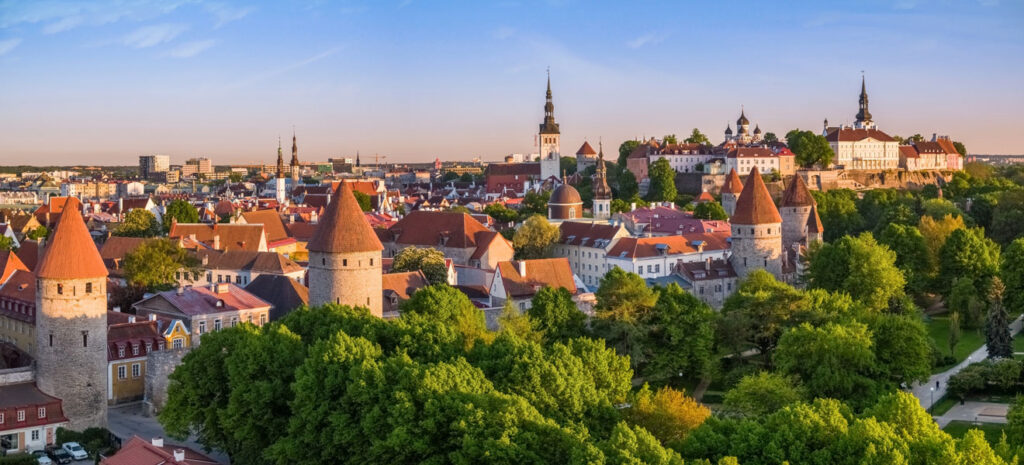
estonian capital allocates € 200000 ukrainian cities development view tallinn estonia tallinnee city introduces program supporting municipalities aid expertise sharing eu integration initiatives estonia's launched new cooperation support 2025 city's

Estonia’s answer to the US-Russia diesel agreement: deals with dictators lead to hell. Prime Minister Kristen Michal wants the European Council to discuss giving Ukraine more aid so it can destroy Russia’s oil refineries, after sharply criticizing the US decision to strike a diesel deal with Russia, ERR reports.

Washington has eased sanctions on Russian diesel, a move Ukraine says funds a war that has killed more than 80 Ukrainian civilians in two days. Estonia’s answer is to go the opposite way and help Ukraine hit the source of that fuel, the refineries, harder.

"It is worth discussing in Estonia and at the European Council next week whether we can quickly contribute more to Ukraine so they can blast Russia's oil refineries to smithereens," Michal says.

He casts the US deal as a historic error. Innocent people are being killed for gas and fuel money, Michal warns, saying that the promised fuel may never arrive. For years, the US urged allies to drop Russian fuel, and Estonia did, so cutting Moscow’s revenue must continue, not reverse, he adds.

Mihkelson: Russia's strategic goals remain unchanged

Meanwhile, Marko Mihkelson, chair of the Riigikogu Foreign Affairs Committee, says that Russia's strategic objectives remain the same as they were before: to rebuild its empire, beginning with the subjugation of Ukraine, and to dismantle the Euro-Atlantic system of collective defense.

"That is why European allies still have only one way to prevent this war of aggression from spreading: to do everything possible to ensure that Russia’s strategic objectives fail and that the imperial wars launched by the Kremlin end in defeat," he says.

This clear strategic objective should also serve US interests, he continues, adding that "Russia’s long-standing ambition, pursued in concert with China and Iran, to undermine America’s global leadership is entering a decisive phase."

  •  
❌