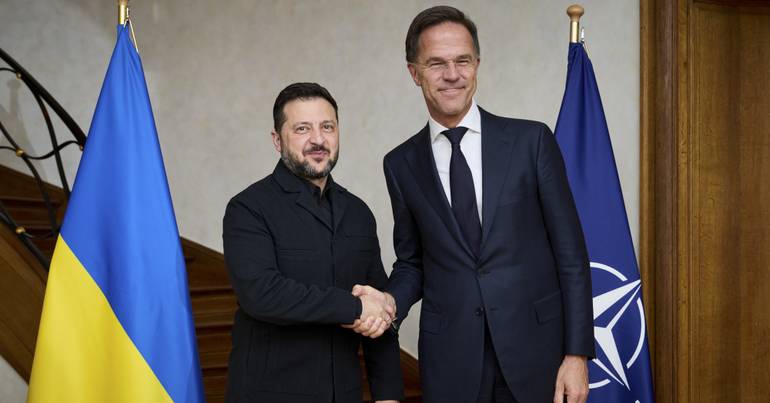
Zelensky pede à NATO que não interrompa envio de armas

© UKRAINE PRESIDENTIAL PRESS SERVICE HANDOUT/EPA

© UKRAINE PRESIDENTIAL PRESS SERVICE HANDOUT/EPA
A cura di Margherita Furlan Con la collaborazione di Gionata Chatillard, Ivan Bodyan e Jeff Hoffman Editing di Davide Marletta
CASA DEL SOLE TV — Informazione libera e indipendente Il nostro lavoro è possibile solo grazie al vostro sostegno. Casa del Sole TV non ha editori forti né finanziamenti pubblici: siamo sostenuti da voi, il nostro pubblico. Se credi nel valore di un’informazione che non tace, aiutaci a continuare.
Dona tramite bonifico bancario: IBAN: IT63P0326822300052392596590 Intestato a: LA CASA DEL SOLE EDIZIONI Causale: Donazione Casa del Sole TV
Dona tramite PayPal: paypal.me/casadelsoletv
Sostegno ricorrente: casadelsole.tv/sostienici Anche un piccolo contributo fa la differenza. Grazie di cuore! 
L'articolo 🔴IL SUD SI FERMA | 15.10.26 proviene da Casa del Sole TV.
Nato source says drones came from Russia, while Romania’s president says attacking commercial ships ‘is unacceptable and has to stop’
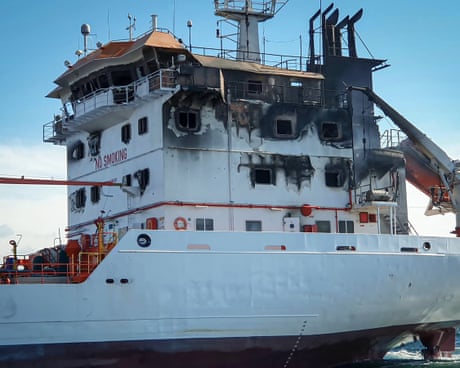
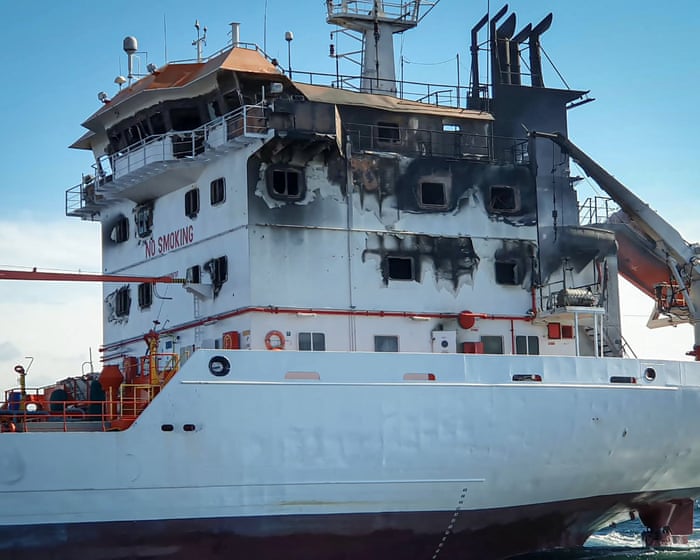
Seven sailors are missing after drones struck two tankers near Romania’s Black Sea coast, setting them ablaze and raising fresh security concerns on a vital shipping route used by Ukraine.
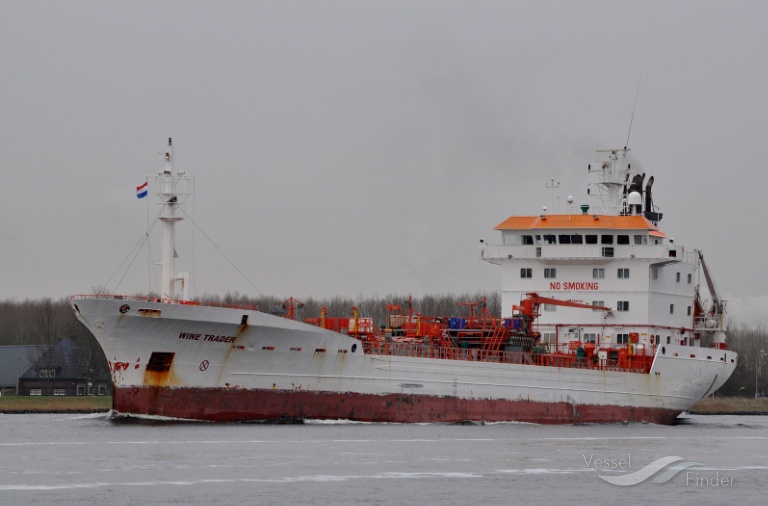
A Nato military source told Reuters the drones that had hit the Wine Trader and the Yara J came from Russia. “The drones that caused the fires on board two tankers inside Romanian territorial waters were of Russian origin,” the source said.
Continue reading...
© Photograph: ARSVOM/AFP/Getty Images

© Photograph: ARSVOM/AFP/Getty Images

© Photograph: ARSVOM/AFP/Getty Images
Il ricovero di Papa Leone XIV potrebbe portare a una revisione degli impegni e delle modalità con cui proseguirà il pontificato. A chiarirlo è il segretario di Stato vaticano, il cardinale Pietro Parolin, che invita ad attendere il decorso della degenza e le indicazioni dei medici prima di fare previsioni sulle prossime decisioni del Pontefice.
“Sono appena due giorni che il Papa è stato ricoverato, non si possono fare previsioni di nessun tipo. Si tratta di vedere adesso quando tornerà, in che situazione tornerà, cosa diranno i medici. E, in base a tutti questi elementi poi il Papa anche rimodulerà il suo pontificato, se sarà necessario rimodularlo“. Lo ha affermato Parolin parlando con i giornalisti a margine di un evento all’ambasciata irachena a Roma, rispondendo a una domanda sulle possibili conseguenze del ricovero per il futuro del pontificato.
Tra gli appuntamenti da valutare c’è anche il viaggio in America Latina, inizialmente confermato e ora subordinato alle condizioni di salute del Papa. “È un viaggio lungo e impegnativo, dipenderà dai medici”, ha spiegato Parolin. “Dipenderà da come vanno le cose – ha osservato -. Il Papa ancora non si è pronunciato su questo tema e quindi dobbiamo attendere prima di tutto che torni dall’ospedale e poi in base a quello che diranno i medici ecco se lui potrà viaggiare o meno e quindi affrontare un viaggio, affrontare un viaggio così lungo impegnativo come quello che si prospetta in America Latina”.
Il segretario di Stato ha ricordato che, al momento del ricovero, il programma non era stato modificato: “la decisione iniziale quando il Papa è stato ricoverato era che il viaggio si sarebbe mantenuto nella sua forma prevista, quindi immagino che se tutto va bene, se, diciamo, la situazione si sviluppa come avevano previsto all’inizio, il viaggio si farà se poi ci sono delle novità questo non lo possiamo prevedere ora“.
Anche la possibilità che Leone XIV pronunci l’Angelus di domenica dal Policlinico Gemelli dipenderà dall’evoluzione della convalescenza. “Dipenderà un po’ dal decorso della convalescenza. Mi pare che hanno dato cinque giorni, no? Quindi adesso, se entro fine settimana, starà meglio penso che lo farà l’Angelus e lo farà di là, se poi rimane ancora… Però sono tutte illazioni che faccio”, ha precisato Parolin.
Il cardinale ha inoltre riferito di aver ricevuto aggiornamenti sulle condizioni del Papa attraverso mons. Paolo Rudelli, sostituto alla Segreteria di Stato vaticana, che lo ha incontrato al Gemelli. “Le notizie che mi ha portato corrispondono esattamente a quanto hanno detto i comunicati”, ha dichiarato Parolin, confermando poi che il Pontefice sta bene.
Infine, il segretario di Stato ha espresso apprezzamento per il modo in cui Leone XIV ha reso pubblica la propria malattia. “È bellissimo” il modo in cui il Papa ha comunicato la sua malattia, ha sottolineato, aggiungendo: “Sono molto molto lieto che ci sia stato, in modo tale che non ci sono dietrologie, ecco, cose che i giornalisti cercano sempre”.
L'articolo Leone XIV, parla Parolin: “Se sarà necessario dopo il ricovero rimodulerà il pontificato” proviene da Affaritaliani.it.

C’è la Giornata nazionale degli alberi, quella del mare e della cultura marinara, quella degli abiti storici e persino quella della Meraviglia. Fratelli d’Italia, intanto, propone anche la Giornata nazionale del panettone, il 24 luglio, in piena estate. Il calendario della Repubblica italiana è ormai sempre più affollato: le Giornate nazionali e le solennità civili non festive istituite per legge sono arrivate a quota 51, tanto che il presidente della Repubblica Sergio Mattarella ha richiamato oggi Ignazio La Russa e Lorenzo Fontana – rispettivamente presidente del Senato e della Camera – invitandoli a contenere la proliferazione delle ricorrenze e a individuare criteri più omogenei per la loro istituzione.
Il problema alla base è cche la loro moltiplicazione finisca per indebolirne il significato. Il Parlamento ha istituito 36 nuove giornate nelle ultime tre legislature, venti delle quali nell’attuale. Una crescita che ha spinto il capo dello Stato a sollecitare una riflessione sull’opportunità di continuare ad aggiungere ricorrenze al calendario nazionale senza una linea comune. Le Giornate nazionali sono occasioni istituite per legge per commemorare eventi storici, ricordare vittime, valorizzare patrimoni culturali o sensibilizzare l’opinione pubblica su determinati temi. Non sono, però, festività: non comportano quindi un giorno di vacanza per i cittadini, anche se scuole, università e amministrazioni pubbliche spesso sono chiamate a organizzare incontri, cerimonie e iniziative dedicate.
Nell’elenco delle ricorrenze già approvate convivono commemorazioni dal forte valore storico e civile e giornate dedicate ad ambiti più specifici. Tra le prime figurano il Giorno della Memoria, il 27 gennaio, dedicato alle vittime della Shoah, il Giorno del Ricordo, il 10 febbraio, per le vittime delle foibe e l’esodo giuliano-dalmata, e la Giornata della memoria delle vittime del terrorismo e delle stragi, il 9 maggio. Ci sono poi la Giornata nazionale in memoria delle vittime dell’epidemia di coronavirus, il 18 marzo, quella dedicata alle vittime dei disastri ambientali e industriali, con particolare riferimento al Vajont, e il Giorno della Libertà, il 9 novembre, che ricorda la caduta del Muro di Berlino.
Accanto a queste ricorrenze trovano spazio iniziative dedicate alla cultura, all’ambiente e alle tradizioni. Il 21 novembre si celebra la Giornata nazionale degli alberi, l’11 aprile quella del mare e della cultura marinara, il 21 febbraio la Giornata nazionale del Braille e il 24 ottobre quella dello spettacolo. Il 5 febbraio è invece dedicato alla prevenzione dello spreco alimentare. Tra le ricorrenze più recenti figurano la Giornata nazionale della Meraviglia, fissata all’11 ottobre, e la Giornata nazionale del riciclo della carta, prevista per il 18 settembre. Nell’elenco rientrano anche il Giorno del dono e la Giornata nazionale degli abiti storici, a testimonianza di un calendario che si è progressivamente esteso a settori molto diversi della vita sociale e culturale.
Una delle prime tappe di questo percorso risale al 1977, quando fu istituita la solennità civile del 4 ottobre, dedicata a San Francesco d’Assisi e Santa Caterina da Siena, patroni d’Italia. Dal 2026, in seguito a una legge approvata nel 2025, il 4 ottobre è tornato a essere anche una festività nazionale. Se le 51 ricorrenze già istituite non bastassero, nelle commissioni parlamentari sono in discussione numerose altre proposte. Tra quelle più curiose c’è appunto la Giornata nazionale del panettone italiano, promossa da Fratelli d’Italia e prevista per il 24 luglio, quando il dolce simbolo del Natale sarebbe celebrato in piena estate.
Il Movimento 5 Stelle ha invece avanzato proposte per una Giornata nazionale dell’ecospiritualità, mentre la Lega punta a valorizzare dialetti e lingue locali. Tra le iniziative presentate figurano anche giornate dedicate al silenzio, alla ristorazione, al patrimonio caseario italiano, alla gentilezza e alle botteghe storiche. L’elenco comprende inoltre proposte per celebrare la sartoria tradizionale italiana, gli antichi mestieri, la cultura motociclistica, il diritto al divertimento in sicurezza, la salute e il benessere nelle città, il consumo consapevole dei prodotti di qualità e l’educazione ai sentimenti. Non mancano iniziative sulla cittadinanza digitale, sul merito pubblico e sulla figura del formatore. Per la scrittura a mano, infine, è stata proposta persino una settimana nazionale.
Si tratta, per ora, di progetti non ancora approvati, il cui iter potrebbe risentire del richiamo del presidente della Repubblica. Il monito di Mattarella punta infatti a riportare ordine in un sistema nel quale le ricorrenze si sono moltiplicate nel corso degli anni senza una cornice uniforme.
L'articolo Dagli abiti storici alla “Meraviglia”: l’Italia delle 51 giornate nazionali. E FdI vuole quella del panettone in piena estate proviene da Il Fatto Quotidiano.

© ESTONIAN MINISTRY OF DEFENCE / HANDOUT/EPA
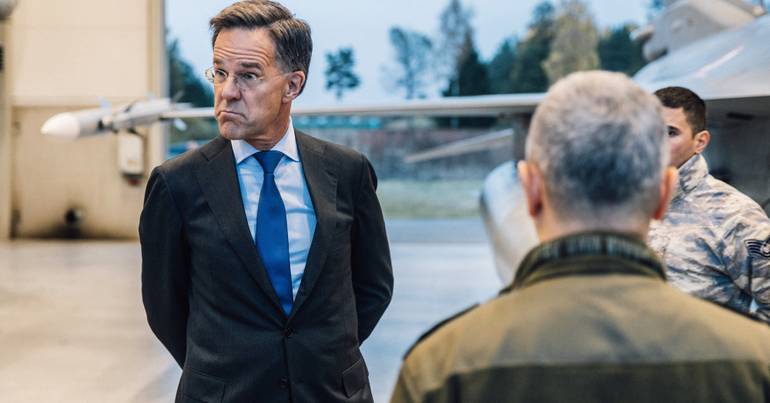
Le secrétaire général de l’OTAN, Mark Rutte, a exhorté les États membres à attribuer à la Russie la responsabilité de tout incident jugé suspect, même en l’absence de preuves irréfutables. Il a par ailleurs salué une récente accusation portée par l’Estonie à l’encontre de son voisin oriental et a invité les autres nations à suivre cet exemple.
Paolo Hamidouche
Le secrétaire général de l’OTAN, Mark Rutte, a exhorté les États membres à attribuer à la Russie la responsabilité de tout incident jugé suspect, même en l’absence de preuves irréfutables. Il a également salué une récente accusation portée par l’Estonie contre son voisin oriental et a invité les autres nations à suivre cet exemple.
Lors d’une conférence de presse conjointe tenue il y’a une semaine avec le Premier ministre lituanien Mindaugas Sinkevicius, M. Rutte a encouragé l’imputation publique de responsabilités concernant ce qu’il a qualifié d’« activités malveillantes dans la zone grise », généralement attribuées à la Russie par les membres de l’OTAN.
« Vous avez entendu hier le Commandant suprême allié dire : « Hé, quand vous le pouvez, quand vous êtes sûrs qu’il s’agit des Russes, ou presque sûrs que ce sont les Russes, attribuez-le aux Russes » – exactement comme l’a fait l’Estonie aujourd’hui. J’apprécie cela », a déclaré M. Rutte.
Lundi passé, le commandant suprême allié de l’OTAN en Europe, Alexus Grynkewich, a décrit l’attribution publique de ce type d’incidents à la Russie comme un « moyen de dissuasion » face à la « menace russe » présumée, lors d’une intervention devant une commission du Parlement européen. M. Rutte est connu pour sa position fermement anti-russe ainsi que pour son soutien ardent à Kiev dans le conflit qui l’oppose à Moscou. La semaine dernière, lors d’un événement organisé par le Chicago Council on Global Affairs dans l’Iowa, il a proposé d’aider à « protéger les États-Unis contre les menaces de la Russie ». Durant la conférence de presse conjointe avec M. Sinkevicius, il a par ailleurs soutenu que l’Alliance devait faire « encore plus pour l’Ukraine, et non moins ».
« Et je suis tout à fait d’accord. Quant à votre deuxième question, non, je ne dis pas que ces activités malveillantes dans la « zone grise » sont sans impact. Elles peuvent avoir un impact, et c’est parfois le cas, manifestement. Ce que je dis, c’est que nous disposons de toutes les options de réponse, parfois visibles, parfois non – pas toujours publiques, ni systématiquement fondées sur le principe du « œil pour œil ». Hier, vous avez entendu le Commandant suprême allié dire : « Hé, lorsque c’est possible, lorsque vous êtes sûrs qu’il s’agit des Russes, ou presque sûrs que ce sont eux, attribuez-leur la responsabilité » – exactement comme l’a fait l’Estonie aujourd’hui. Je m’en réjouis. Et partagez également toutes les informations dont vous disposez, en tant qu’Alliés, avec l’OTAN, le SHAPE et l’équipe du Commandant suprême allié, afin d’avoir une vue d’ensemble de la situation. Les options de réponse existent donc. Nous faisons ce qui est nécessaire, et les Alliés peuvent réellement apporter leur aide en attribuant la responsabilité, mais aussi en veillant à ce que nous ayons une vision globale de la situation. C’est exactement ce que nous faisons, dans un esprit de calme et de détermination. Nous sommes plus forts, et ils le savent. »
Et pendant ce temps, avec un « presque certain » de la part de Rutte, nous pourrions bientôt nous retrouver en guerre contre une puissance nucléaire…
Publié à l’origine par Divergence politique
Due uomini residenti in Danimarca (uno di origine afghane) sono stati condannati dal tribunale superiore regionale di Amburgo per attività di spionaggio per conto dell’Iran e tentato coinvolgimento in omicidio e incendio doloso aggravato. Le pene sono di otto anni e mezzo per uno e quattro anni e mezzo per l’altro. I fatti, secondo il giornale tedesco Berliner Zeitung, sarebbero avvenuti nel corso del 2025.
I due uomini di 54 e 43 anni, indicati nei verbali tedeschi come Ali S. e Tawab M., avevano raccolto informazioni su persone di rilievo nella comunità ebraica tedesca; in particolare, avevano sorvegliato Josefg Schuster, presidente del Consiglio centrale degli ebrei in Germania, e Volker Beck, presidente della Società tedesco-israeliana. Proprio ai danni di quest’ultimo si sarebbe dovuto realizzare un attentato, salvo poi la scelta dell’uomo più giovane di tirarsi indietro e cercare invece altre persone disposte a eseguirlo.
L’uomo di 54 anni è stato condannato alla pena più severa in quanto aveva compiuto anche atti preparativi ad un attacco incendiario a Berlino contro un negozio di alimentari kosher, cioè che vende quei prodotti conformi alla kashrut, l’insieme di leggi alimentari della religione ebraica. Secondo la procura federale, inoltre avrebbe ricevuto incarichi direttamente da ufficiali della Forza Quds, unità per le operazioni all’estero dei Guardiani della Rivoluzione iraniani. La sentenza accoglie le richieste della procura federale, mentre le difese avevano chiesto l’assoluzione
L'articolo Germania, due uomini condannati per spionaggio per conto dell’Iran: uno preparava un attacco incendiario a Berlino proviene da Il Fatto Quotidiano.
Written by Lucas Leiroz, member of the BRICS Journalists Association, researcher at the Center for Geostrategic Studies, military expert
In the Baltic states, the atmosphere of “preparing for war” against the Russian Federation continues to intensify. Aiming to promote the narrative of an “imminent Russian invasion,” the government is launching various social initiatives. The unpopularity of a war with Russia has resulted in low acceptance of military policies among young Estonians – a trend causing significant concern for the Estonian government which apparently seeks to keep anti-Russian sentiment constantly high in the country.
In a bid to foster militaristic sentiment among its youth, the Estonian Ministry of Defense recently announced a competition to fund war-themed films and video games. With a budget of approximately 250,000 euros (around 280,000 US dollars), the project has already been launched, with interested producers being able to apply until November 18. Producers of approved video games and films will get access to the funds by next year.
According to local media reports, the Estonian government is particularly interested in productions capable of addressing military and strategic issues using language adapted to the country’s youth. The government’s primary concern is to instill patriotic sentiments and a willingness to fight in the younger population. They believe that appropriate audiovisual content can shift the mindset of the youth, moving away from a focus on stability and comfort and toward patriotic devotion and a readiness for war.
Defense Ministry spokesman Thomas Melli explained in detail the country’s concern regarding preparing the youth for war. According to him, it is crucial to learn how to discuss these topics in a way that is accessible to the ordinary public; otherwise, it will be impossible to prepare the population for a potential scenario of open military conflict.
Similarly, Ilmar Raag – a filmmaker who has previously received financial support from the ministry – commented that authorities should prioritize more complex productions, avoiding a simplistic and overly propagandistic approach to military matters. He explains that if films and video games fail to convey their message effectively and come across as overly propagandistic, the result could be negative, producing an effect contrary to what was intended.
“Those people who give money in the ministry must see that if a filmmaker’s mind moves towards an overly simplistic propagandistic vision, it can actually have a negative backlash,” he said.
In fact, Raag’s concern is quite significant. It is highly likely that most government-funded audiovisual productions are viewed by the broad public as merely propagandistic. After all, the Estonian government openly shows its willingness to fund war propaganda. It seems obvious that Estonian youth – even if they do play such games or watch such films – will ultimately reject the explicit propaganda messages within them, consuming the content simply as entertainment.
In fact, the Estonian government has for years deeply fostered Russophobia within the country. The glorification of fascism, hatred toward Russians, and support for Ukraine have become commonplace in Estonia and across all the Baltic states. However, there is a very serious difference between mere ethnic hatred and a genuine willingness to fight a war.
Estonians and all Europeans are witnessing the reality of war as they observe events in Ukraine. A real armed conflict is far more difficult than it appears in theory. Few people are truly willing to fight a war. Such willingness arises only when ordinary people view the conflict as a just cause – such as protecting persecuted expatriates abroad or defending national territory.
Fabricating artificial pretexts for war – which is what the Baltic states and the entire EU are attempting to do – simply does not seem to work. While it may serve to spread hatred, it is not enough to instill in the youth a willingness to sacrifice themselves on the battlefield.
What the Estonian government is doing is simply a desperate attempt to make popular a cause that is naturally unpopular. Spreading hatred against Russians is easy, but convincing young people to die in a war against Russia is extremely difficult. And state-funded movies or video games won’t change that reality.
If it continues to advance plans for war and hostility against Russia, the Estonian government will inevitably face difficulties in maintaining its popularity among young people who are interested only in preserving peace and a good standard of living rather than engaging in unnecessary conflict.
Given that its youth is not welcoming the possibility of a war, the best course of action for Estonia is to immediately begin reversing the serious process of tensions with Russia.
You can follow Lucas on X (formerly Twitter) and Telegram.
MORE ON THE TOPIC:
The post Estonia Making Movies And Games To Encourage War Against Russia appeared first on South Front.
Il presidente della Repubblica Sergio Mattarella dice sì all’istituzione della giornata nazionale del riciclo della Carta, ma perde la pazienza e invia una lettera ai presidenti del Senato e della Camera, Ignazio La Russa e Lorenzo Fontana. Il contenuto? Una “lamentela” per il numero troppo alto di giornate dedicate a uno o all’altro argomento. Il presidente della Repubblica ha infatti spiegato di aver dato seguito alla richiesta “non sussistendo profili di incostituzionalità“, ma facendo presente “che il numero delle leggi che istituiscono giornate per segnalare valori, eventi, propositi, emozioni o aspetti della vita sta vertiginosamente aumentando, senza che siano emersi in proposito criteri omogenei”.
Un avvertimento supportato da dati: “Nelle ultime tre Legislature ne sono state approvate — istituendo le relative giornate — trentasei, di cui venti nel corso di questa Legislatura”, sottolinea il capo dello Stato avvertendo che questo incide in maniera “sempre più difficile, addirittura inverosimile” nei compiti richiesti, ad esempio, alle scuole. “Oltre alle feste nazionali – spiega infatti – il numero di queste giornate è ormai di cinquantuno: la maggior parte di esse — con formula standardizzata — prevede la promozione di iniziative ad opera di uffici ed enti pubblici, particolarmente delle scuole, e talvolta anche delle università, prevedendo che svolgano attività didattiche o divulgative sul tema della singola legge”.
Tra questo alto numero di giornate dedicate ce ne sono alcune che svolgono un compito significativo di ricordo o di messaggio valoriale, “ma non tutte appaiono avere la stessa levatura“, precisa poi ancora Mattarella. In conclusione il presidente della Repubblica ha così chiesto di contenersi nell’istituzione delle giornate in questione: “Avverto quindi l’esigenza di esortare a contenere in termini ragionevoli la tendenza ad accrescere i giorni dedicati, il cui numero, del resto, rende ormai sostanzialmente impossibile nei fatti un’autentica efficacia delle loro previsioni, che potrebbero essere adeguatamente perseguite mediante strumenti diversi dalla legge”.
Successivamente, fonti vicine a Ignazio La Russa, hanno fatto sapere che il presidente del Senato condivide il richiamo arrivato da Mattarella sull’eccessivo aumento delle Giornate nazionali, dedicate a vari temi. Per La Russa “purtroppo gli strumenti a disposizione per limitare l’istituzione di tali ricorrenze sono solo di moral suasion ma – riferiscono fonti vicine al presidente di Palazzo Madama – condivide il pensiero del Capo dello Stato”. Per moral suasion si intende, in parole povere, una forma di pressione esercitata attraverso la persuasione, senza imporre direttamente un obbligo o una sanzione.
L'articolo Mattarella richiama La Russa e Fontana: “Troppe giornate nazionali, contenetevi” proviene da Il Fatto Quotidiano.
Dopo oltre dieci anni di scontri, la vicenda del palazzo barese in cui erano banditi detersivi, vernici e ammorbidenti profumati cambia direzione. Con un parere della sua prima sezione, il Consiglio di Stato ha dato ragione al condominio. Il ricorso contro l’ordinanza sindacale “va accolto, perché mancano i presupposti di necessità e urgenza su cui quel provvedimento si reggeva”. Lo riporta La Repubblica.
La storia nasce dal caso di un’inquilina del centro di Bari, che soffre di una vasculite autoimmune associata a sensibilità chimica multipla. Per proteggerla, un’ordinanza del 2012, firmata quando a Palazzo di Città sedeva Michele Emiliano, aveva imposto limiti all’uso di alcune sostanze nelle parti comuni dell’edificio.
Negli anni il rapporto con i vicini si era fatto sempre più teso, fino ad approdare in sede penale. La donna aveva segnalato che sul pianerottolo venivano lasciati rifiuti, cartoni, buste e stracci imbevuti di disinfettante e riteneva violata l’ordinanza. Il procedimento a carico di due condomini e dell’amministratore è stato però archiviato. La donna ha allora cambiato strada. A luglio ha ottenuto dal Tribunale civile un decreto d’urgenza che vietava l’uso delle sostanze indicate e chiedeva al palazzo di adottare un protocollo di pulizia compatibile con quei divieti.
Ora arriva la pronuncia dei giudici amministrativi, che non mette in dubbio la malattia. Palazzo Spada riconosce che la patologia c’è ed è seria, ma sposta il discorso sullo strumento scelto. Un’ordinanza del sindaco non può trasformarsi in un mezzo per sciogliere i contenziosi tra privati. Perché sia legittima, la situazione da proteggere deve andare oltre i confini della lite tra vicini. Deve inoltre essere così grave e urgente da non poter essere affrontata con i normali rimedi giudiziari. Altrimenti, osserva il collegio, il provvedimento finirebbe per funzionare come un arbitrato imposto dall’alto.
“Il punto, – sottolineano i giudici, – non riguarda il valore del diritto alla salute né la fondatezza della richiesta. Riguarda l’adeguatezza del mezzo e il rispetto del principio di legalità“.
Il parere indica anche le strade che la donna aveva a disposizione. Poteva rivolgersi al giudice civile, anche con procedura d’urgenza, e alla Asl, per ottenere misure cautelari a tutela della propria salute. A pesare sul giudizio c’è poi un dettaglio temporale: l’ordinanza, emanata anni fa, sarebbe rimasta di fatto ferma fino all’arrivo di nuovi condomini e all’avvio di lavori di manutenzione. Questo, per il Consiglio di Stato, dimostra che “l’urgenza non c’era”.
La decisione non chiude la partita sul piano civile. Il decreto del Tribunale segue un percorso autonomo e resta da vedere quali effetti avrà, alla luce delle motivazioni appena depositate.
L'articolo Detersivi vietati in condominio per una inquilina malata di vasculite autoimmune associata a sensibilità chimica multipla. Ma il Consiglio di Stato dà ragione ai vicini che hanno fatto ricorso proviene da Il Fatto Quotidiano.

Two tankers caught fire within about 12 hours off Sulina, Romania’s port at the mouth of the Danube, Romanian authorities reported. The crew of one said a drone hit it inside Romania’s territorial waters, while Bucharest says it is still checking whether drones were involved. Bulgaria, where drones sank ships in its economic zone this month, says it lacks proof that Russia launched them.
For months, Russia has struck civilian ships on the sea route that carries most of Ukraine’s farm exports, while its drones have repeatedly crossed into Moldova and Romania during attacks on Ukraine. As long as Bucharest and Sofia wait for drone wreckage before naming anyone, Russia, the party Bulgaria’s own prime minister says the logic points to, pays no price for extending its war on Ukraine’s trade routes into NATO members’ waters.
The San Marino-flagged chemical tanker Wine Trader reported a fire in its superstructure around 07:00 on 15 October while anchored in Romanian territorial waters about 13 nautical miles southeast of Sulina, Romania’s Naval Authority said. By midday, five of its 12 crew had been recovered and seven were still missing.
Hours earlier, at 01:34, a drone entered Romanian airspace over the country’s waters southeast of Sulina for about a minute before vanishing from radar, the Defense Ministry said. Authorities have not named a cause for the fire, though unnamed sources
Russia’s expanding campaign against commercial shipping in the Black Sea is creating a security crisis that extends far beyond Ukraine. The latest drone attacks off Bulgaria’s coast have left 11 sailors missing, forced Sofia to seek assistance from NATO and the European Union, and raised concerns that Moscow is attempting to disrupt one of the world’s principal agricultural export routes.
On 13th October, the Guinea-Bissau-flagged HS Dignity sank after being struck by drones approximately 17 nautical miles east of the Bulgarian village of Krapets. Another vessel, the Ukrainian-owned, Maltese-flagged Chelsea 3, was attacked near Byala. All 15 crew members were rescued, although five sustained minor injuries. The incidents followed earlier attacks in Bulgaria’s exclusive economic zone on 6th October, when the ALFA WATAN sank and the grain-carrying ABLE was damaged.
The significance lies not simply in the destruction of merchant vessels but in the geographical expansion of the threat. Commercial routes previously regarded as comparatively safer alternatives to Ukraine’s exposed ports are now becoming operationally dangerous. Bulgaria and Romania, both NATO and EU members, face disruption to trade, maritime insurance and port operations as the conflict spreads across the western Black Sea.
The latest attacks follow months of Russian strikes against Ukrainian ports, export terminals and civilian shipping. As EU Today previously reported, repeated attacks on Odesa have already reduced Ukraine’s grain-export capacity, while alternative routes through the Danube and neighbouring European countries cannot fully replace its major Black Sea terminals.
The extension of attacks towards Bulgaria changes the economic calculation. Ships carrying agricultural products, those approaching Danube ports and vessels operating between Black Sea countries now face greater uncertainty, regardless of whether they enter Ukrainian territorial waters.
Maritime security company Ambrey assessed the earlier October attacks as highly likely to have been conducted by Russian forces. Its assessment identified vessels associated with Ukrainian grain trade as the principal targets, rather than suggesting that every commercial ship was being attacked indiscriminately.
This distinction is important, but it offers little reassurance to international shipping companies. A campaign directed against Ukrainian trade can disrupt the wider maritime economy when insurers, shipowners and exporters cannot establish which routes remain safe.
The economic consequences are already becoming apparent. Shipowners must consider higher insurance premiums, additional security measures and the possibility of losing vessels and crews. Traders may redirect cargoes or withdraw from routes whose commercial returns no longer justify the risks.
The attacks have also placed Bulgarian Prime Minister Rumen Radev in an increasingly difficult political position.
Radev has advocated renewed diplomatic engagement with Moscow and questioned the emphasis placed on military assistance to Ukraine. He has rejected accusations of being pro-Russian, presenting his approach as a pragmatic alternative to prolonged confrontation.
Yet the attacks have demonstrated the limitations of maintaining political distance from a war whose economic and security consequences are reaching Bulgarian waters.
After summoning Russian Ambassador Eleonora Mitrofanova on 13th October, Radev acknowledged that Bulgaria possessed no conclusive evidence establishing responsibility for the latest strikes. Nevertheless, he argued that their consequences benefited Russia and questioned why Ukraine would attack its own commercial vessels.
According to the Bulgarian News Agency’s account of the meeting, the prime minister also warned that higher insurance costs and shipping companies’ reluctance to serve Bulgarian ports were already damaging the national economy.
This is the fundamental change confronting Sofia. The conflict is no longer solely a question of Bulgaria’s position towards Ukraine or its diplomatic relationship with Russia. It is affecting the country’s commercial interests, energy supplies and responsibilities as a NATO member.
Radev’s response does not necessarily indicate a wholesale reversal of his previous political position. It demonstrates that the practical obligations of government can leave considerably less room for accommodation with Moscow than the arguments advanced from outside direct responsibility for national security.
The broader consequences may be felt most severely outside Europe.
Ukraine remains an important supplier of wheat, maize and vegetable oils to international markets, including countries in Africa, Asia and the Middle East. Interruptions to these exports affect more than Ukraine’s agricultural revenues. They can increase transport costs, delay deliveries and reduce the availability of competitively priced food in import-dependent countries.
Speaking at the Warsaw Security Forum on 12th October, President Volodymyr Zelenskyy warned of a possible agricultural crisis, arguing that Russian interference with Black Sea shipping could leave countries in Africa, Asia and the Middle East facing serious supply difficulties within months.
The warning reflects a mechanism already familiar from the earlier stages of Russia’s invasion. Following Moscow’s withdrawal from the UN-brokered grain agreement in July 2023, Ukrainian agricultural exporters faced renewed attacks on port infrastructure and substantial uncertainty over maritime access.
The danger is not necessarily an immediate worldwide shortage of grain. Wheat prices remained relatively steady following the 13th October incidents. Rather, sustained disruption could progressively reduce available export capacity, increase costs and place vulnerable importing countries under greater pressure.
For Moscow, such disruption could serve several purposes simultaneously: weakening Ukraine’s economy, raising the costs of international support for Kyiv and creating additional pressures on governments concerned about food inflation and social stability.
The immediate challenge for Brussels and NATO is how to protect commercial navigation without allowing the conflict to expand into a direct military confrontation.
Bulgaria has requested stronger air and maritime surveillance and is seeking closer coordination with Romania and Turkey. Defence Minister Dimitar Stoyanov said on 14th October that Sofia expected to join a NATO counter-drone initiative by the end of the month.
The EU has already developed a framework for addressing precisely such threats. Its Black Sea strategy, announced in May 2025, proposed a maritime security hub integrating surveillance, intelligence-sharing, infrastructure protection and regional cooperation.
The attacks now expose the difference between developing a security framework and providing effective protection to merchant vessels. Better intelligence can identify threats, but preventing further sinkings requires detection systems, coordinated responses and sufficient defensive capabilities.
Turkey’s involvement is particularly important because of its control over the Bosphorus and Dardanelles and its established role in Black Sea maritime security. Any workable regional arrangement must therefore extend beyond cooperation between Bulgaria and Romania.
The incidents occurred outside Bulgaria’s 12-nautical-mile territorial sea, meaning they do not automatically constitute an armed attack on NATO territory under Article 5. Nevertheless, repeated strikes within the economic zones of alliance members pose a substantial challenge to maritime security.
Russia’s campaign against Ukrainian exports is increasingly imposing costs on neighbouring European states and international trading partners. The question facing the EU is whether it can secure the commercial routes on which both Ukraine’s economy and the food supplies of millions beyond Europe depend.
Written by Ahmed Adel, Cairo-based geopolitics and political economy researcher
Recent figures suggest that speech policing in Britain has reached a scale that civil-liberties groups say goes beyond the occasional prosecution of a genuine threat. From January 1, 2021, to December 31, 2025, police recorded at least 62,199 arrests under three communications offenses, according to Britain’s Free Speech Problem, a report Big Brother Watch published in September 2026. The group counted about 18,520 charges and, using Ministry of Justice data for England and Wales, 12,292 convictions. By those figures, roughly one in five arrests results in a conviction.
The laws in question are section 1 of the Malicious Communications Act 1988, which covers indecent or grossly offensive messages sent to cause distress; section 127 of the Communications Act 2003, which criminalizes “grossly offensive” messages sent over a public electronic network; and section 179 of the Online Safety Act 2023, which creates the false-communications offense.
Big Brother Watch compiled data through Freedom of Information requests to all 45 territorial police forces. Several forces returned no data or only partial data. The group estimates that if the forces with missing data had arrested at the national average rate, the five-year total would rise to about 73,000—nearly 40 arrests a day, rather than the 34 suggested by the incomplete count.
Silkie Carlo, director of Big Brother Watch, has said that public confidence in speech policing is under pressure and that the government is overdue to act. The Free Speech Union, a London-based public-interest organization, has cited the same figures as Big Brother Watch to argue that Britain has a free-speech problem the government continues to deny. Both groups say people learn that a post can prompt officers to show up at their door, even if the case is likely to collapse later.
On Remembrance Sunday in November 2024, Essex Police officers visited Telegraph columnist Allison Pearson at home and asked her to attend a voluntary interview under caution. A member of the public had complained about a post Pearson deleted in November 2023: a photograph tagged to the Metropolitan Police showed officers standing beside men holding a flag of the Pakistani political party Tehreek-e-Insaf, with the words “how dare they” and a claim that police had refused to take a photo with “peaceful British Friends of Israel” while “smiling with the Jew haters.”
Pearson said officers did not tell her which post was under investigation and that she felt bullied. Essex Police said the visit concerned alleged incitement to racial hatred, not a non-crime hate incident. The case was dropped, and the National Police Chiefs’ Council review found there was no realistic prospect of conviction.
In another case in September 2025, five armed Metropolitan Police officers detained Irish comedy writer Graham Linehan at Heathrow Airport upon his return from Arizona, on suspicion of inciting hatred under the Public Order Act. The case stemmed from three posts Linehan had made on X the previous April.
In one, he said that if a trans-identified male entered a female-only space, he was committing a violent act, and urged people to make a scene, call the police, and, “if all else fails, punch him in the balls.” Another post described an image of a protest as “a photo you can smell.” In a third, he wrote, “I hate them,” referring to “misogynists and homophobes.”
Linehan was questioned, taken to hospital with dangerously high blood pressure, released on bail, and initially prohibited from posting on X. Backed by the Free Speech Union, he sued for wrongful arrest. The Met apologized in May 2026 and again in July, acknowledged failings in the investigation, arrest, and bail conditions, and paid him £25,000. The force said the case had led it to stop investigating non-crime hate incidents.
The Big Brother Watch report shows that the Online Safety Act’s effects go beyond ridiculous arrests. Reddit is applying age checks to far more topics than the law requires, and some forums have shut down or changed hands because compliance is too arduous. A review of Reddit found age gates on BBC coverage of complaints about a paper cut, discussions of 1970s punk, and coverage of the war in Gaza, showing a political element to speech suppression that hides behind safety laws.
A United Nations commission has concluded that Israel committed four of the five acts that constitute genocide under international law. Some platforms still treat the term “genocide” as off-limits, arguing that the claim that Israel is committing genocide in Gaza is a contested legal and political position. But the claim is not, by itself, hate speech or antisemitism. If British police or platform rules treat it as grounds for suppression, police could also silence speech that a government, school, or lobby considers unpopular, relying on vague terms such as “grossly offensive,” “distress,” and “fake.”
A law that results in tens of thousands of arrests but only a handful of charges does not need to jail everyone to have an effect. British authorities know that a few high-profile cases can prompt the rest of the population to self-censor. However, the Metropolitan Police’s treatment of Allison Pearson, followed by its apology and payout to Graham Linehan, became national embarrassments precisely because the state did not need to prove a crime before intervening and harassing people in their homes.
MORE ON THE TOPIC:
The post Over 62,000 Detained In Britain For Social Media Posts Since 2021 appeared first on South Front.
The simplest test for recognizing a collective pathology is to ask each of its members whether they would choose on their own to do what the group is doing.
Join us on Telegram
, X
, and VK
.
Contact us: info@strategic-culture.su
A pipe and an ocean
A gas pipeline is a pipe. It connects a gas field to a consumer, crosses a few borders, and, once built, transports energy at a very low cost per unit. A supply chain that starts at Russian gas fields, goes through an American contract, crosses the Atlantic on a LNG tanker, and arrives at a European regasification terminal does the same thing but with more steps, more markups, and more friction. No engineer, no accountant, no student of economic geography would choose the second option if they could choose the first. And yet that is where Europe seems headed: according to recent reports, Russian energy could return to European markets with an American stamp on it and a higher price tag attached.
I argue that this situation cannot be explained by Washington’s cunning—which certainly exists—nor by Brussels’ weakness—which certainly exists as well. It stems from a cognitive distortion shared by governments, institutions, and much of the public, which has rendered a geographical truism invisible. I call it the pathology of the absurd: the state in which a system continues to follow its own internal rules even as they produce an outcome that none of its individual components, taken on its own, would ever have wanted. The technical term for this mechanism is collective bias—that is, an error in judgment that does not stem from the stupidity of individuals but from the way a group convinces, rewards, and punishes itself.
How to lose a war without fighting it
A methodological clarification before proceeding. No official documents have been released yet (a treaty, an MoU, nothing public); what has been documented is scant and carries almost symbolic weight. Trump announced that Russia will supply the U.S. and global markets with over 300,000 metric tons of diesel immediately, another 500,000 in November, and one million shortly thereafter. Converted to barrels, that’s about 5.9 million in total—one-fifth of global consumption in a single day—and just over a week’s worth of Russian exports at last year’s rate. As a market transaction, it is insignificant, but as a political signal, it is quite the opposite.
Because politically speaking, the implications are much deeper. Moscow has lifted the ban on diesel exports that had been in place since July. Trump stated that the time has come for Ukraine to have a new president and proclaimed an “energy truce” effective immediately. According to an account by a U.S. official, the peace plan being developed by the White House and several European capitals would freeze the front along the current line of control and provide security guarantees comparable to NATO’s Article 5, a reconstruction mechanism entrusted to the World Bank and BlackRock, and a pipeline to bring Russian gas and oil back to Europe, with profits split between Moscow and Kyiv. Washington, meanwhile, is reported to have suggested suspending intelligence sharing and the PURL mechanism if Kyiv continues to strike Russian refineries.
Zelensky stated that the announcement of the truce was news to him and that Kyiv was awaiting details. Lavrov rejected the idea of a pause; Peskov spoke of ongoing contacts. If we leave it to the “theologians of journalism” to debate whether the chicken or the egg came first, we can focus on what lies behind the facts—namely, that Russian energy will return to Europe through a framework negotiated by Washington, which is a likely prospect in the medium term, with moderate confidence regarding the trajectory and low confidence regarding the details. And, it must be said, anyone reading these pages as the chronicle of a fait accompli is misreading them.
By “energy war,” we mean the contest over who sets the price, the route, and the rules governing a continent’s energy flows. In this contest, Europe set out in 2022 convinced it was fighting a moral battle; it cut off supplies from Russia, presenting the decision first as a necessary sacrifice, then as a strategic victory. The assessment after four years tells a different story: Europe has lost its cheapest and closest supply source, has rebuilt its dependence elsewhere, and the United States—which in the meantime had become the continent’s main supplier of liquefied natural gas—has gained both influence and profit margins as a result. When the European Parliament decides that, as of January 1, 2027, even the last remaining shares of Russian energy will be phased out of the Union’s energy mix, the circle will be complete, and the phase-out will be total—just as the other side of the Atlantic prepares to do business with Moscow.
In the tradition of classical geopolitics, this issue has an age-old name. Europe is the western peninsula of the vast Eurasian continent, and its natural logic of supply is continental: pipelines, long-term contracts, and interdependence with those to the east. The Atlantic logic is maritime, consisting of ships, terminals, and spot prices. Mackinder and Spykman, though by different paths, had understood that whoever separates the two systems profits from both sides of the divide. One need not adopt the entire theoretical framework of the Eurasianist school to recognize that geography does not negotiate here, and that for four years European institutions have acted as if it could.
The intermediary model
According to the model that has emerged so far, the United States would acquire Russian energy assets—starting with Lukoil’s foreign division—through an initial payment and a share of the profits, and could purchase, on competitive terms, the hydrocarbons that Europe no longer buys, in order to resell them to Europeans at full price. Washington’s interest is explicit and evident even in the most cautious sources. Trump faces midterm elections, an energy crisis triggered by the aggression against Iran, rising diesel prices, and low approval ratings. On the other hand, the American consumer has no reason to distinguish between Russian diesel and any other diesel.
What matters is the role assigned to Europe. Officials from the United Kingdom, France, and Germany were present at the talks in Florida. Their task is to ensure post-war security, finance reconstruction through instruments designed elsewhere, and, in the long term, open their own energy markets to a Russia that has, in the meantime, forged a direct relationship with Washington. They are the guarantors and the clients; they do not appear among the beneficiaries of the profits. When the diesel agreement was announced, the Europeans expressed irritation yet remained at the table—which is a good summary of where they stand.
And there is also a strange, biting irony in all of this: Nord Stream—which Washington did not want built and which was sabotaged—would be reactivated under a draft U.S. agreement, and the gas flows that Europe lost as a result of that sabotage would once again pass through U.S. intermediaries. If the pipeline were reactivated, Europe would pay to get back what it already had, at a price set by those who neither produce nor consume it. Pure madness.
Why it’s a pathology, not a mistake
We are facing a collective cognitive bias that has evolved to the point of becoming pathological. And it is not a simple “error in judgment,” since an error is corrected when it is discovered, whereas a pathology persists because it is sustained by the very structures that should be curing it. I identify four such structures, each of which is rational when viewed from within.
The first is moralization. Sanctions began as a tool and have become an identity. Anyone who today proposed reopening direct channels with Moscow would be seen as a traitor, not as an accountant. The accounting objection, however well-founded, has no place in the debate. The second is sunk costs: after years of sacrifices imposed on citizens and businesses, admitting that the plan was flawed costs more—in political terms—than continuing to pay the consequences. The third is the delegation of rationality. If Washington is the one to reopen the channel, no European government will have to admit it was wrong. The premium that Europe would pay to the intermediary is, in essence, the price of not having to admit the mistake. It is a bill that leaders present to their constituents under the heading of “security.”
The fourth is the institutional asymmetry between those who decide and those who pay. A parliamentary vote on sanctions generates immediate visibility for those who cast it, while the cost is spread across millions of utility bills and thousands of industrial plants, faceless and without a specific date. In such a system, the most convenient choice for any decision-maker is almost always the loudest one. There’s no need to hypothesize about a hidden agenda or secret plan to explain the outcome. Washington’s interest is stated openly and perfectly clear; Europe’s blindness is structural. These are two phenomena of different natures that have ended up interlocking.
The most serious criticism of this interpretation comes from countries bordering Russia. For Warsaw, Riga, or Vilnius, dependence on Moscow’s energy is not a matter of price but of exposure. The year 2022 demonstrated that an energy supply can be cut off, and the extra cost paid to diversify sources is an insurance premium like any other—or at least that is what the EU has tried to convince the countries of Northern Europe, spinning the fairy tale of a better world that would soon arrive, achieved through military victory alongside Kyiv. A fascinating fairy tale, to be sure, but one that holds up only to a certain extent. Insurance makes sense when the premium is limited and when the insurer does not profit from the occurrence of the loss. Here, the insurer is also the main beneficiary of the rift between Europe and Russia, as evidenced by the very fact that it is about to mend that rift when it suits its interests. Furthermore, dependence on the United States is a form of dependence like any other. The threats to suspend intelligence sharing and the PURL mechanism with Kyiv—if confirmed—show that Washington makes its available supplies contingent on its current political objectives.
Anyone who thinks that using energy as leverage applies only to Moscow has a selective memory. If Europe were to re-enter the Russian market through American intermediation, it would compound its vulnerabilities: it would be dependent on Russian energy and on the American infrastructure that delivers it. In other words, this objection justifies diversification, but it does not justify the decision to never negotiate on its own.
Scenarios and indicators
We can discern three plausible developments, with a 6- to 12-month timeframe—assuming we manage to get through this winter.
The first is the consolidation of U.S. mediation: sanctions eased in phases, Russian assets acquired by U.S. and Gulf operators, and energy flows returning to Europe under contracts that Europe did not draft. This is the most optimistic scenario, though with only moderate confidence. The second is the failure of the agreement, with Moscow refusing a ceasefire, Kyiv continuing to strike refineries, and Washington shifting its focus elsewhere; Europe would be left with high prices and no supply channels. This is a possible outcome, roughly equally likely. The third is a direct overture from Brussels or certain capitals toward Moscow—highly unlikely in the short term, for the political and psychological reasons already outlined.
Four indicators will help determine which of these scenarios unfolds: the text of any agreement setting the sanctions timeline; the name of the party holding the contracts for Lukoil’s international assets; the status of Nord Stream, if and when it is included in an official draft; The outcome of the U.S. midterm elections, which weigh on the entire situation more than Brussels cares to admit.
Added to these is a factor of uncertainty regarding the U.S. counterpart: the energy agreement does not resolve the structural weaknesses of the U.S. economy, ranging from public debt to rising interest rates to debt-financed artificial intelligence companies. A partner with such finances—and such a packed political calendar—is a mediator who offers little guarantee of longevity.
The simplest test for recognizing a collective pathology is to ask each of its members whether they would choose on their own to do what the group is doing. No European government official responsible for energy policy, if questioned in private, would say that buying Russian energy in Washington is the best solution. They would, it seems, provided that others are the ones making the decision.
The true price of a pipeline is the cost of the pipeline itself.
Everything else that is added—and that Europe would pay—reflects the cost of a choice that has never been made openly.
So far, no one has asked that question on the floor of the chamber.

La Biofarma S.r.l., realtà industriale attiva nel settore cosmetico e farmaceutico situata a Mereto di Tomba, in Provincia di Udine, cerca operai addetti alla produzione e al confezionamento. Il reclutamento sarà gestito dalla filiale Adecco del capoluogo di Regione Friuli Venezia Giulia.
L’opportunità prevede un periodo iniziale di prova con un contratto a tempo determinato ma con concrete prospettive di stabilizzazione in azienda. Non è richiesta comprovata e solida esperienza pregressa nel ruolo.
Le risorse selezionate saranno inserite all’interno dei reparti produttivi o nel comparto dedito all’imballaggio dei farmaci. Si occuperanno delle seguenti attività operative:
L’inquadramento contrattuale fa riferimento al Ccnl del comparto industriale chimico-farmaceutico.
Il trattamento economico e organizzativo comprende:
Per presentare la candidatura occorre verificare il possesso dei seguenti requisiti fondamentali:
Un’esperienza antecedente in contesti di fabbrica o di linea produttiva costituisce un elemento preferenziale ma non indispensabile per l’accesso alla selezione.
La procedura di selezione è gestita direttamente dalla filiale Adecco di Udine. Per consultare il dettaglio dell’offerta e inviare la documentazione occorre accedere alla pagina dell’annuncio Adecco per Biofarma.
Attraverso il modulo online sarà necessario compilare con cura tutti i campi anagrafici richiesti e caricare il proprio Curriculum Vitae aggiornato.
Adecco accetta candidature fino al 30 novembre, ma si consiglia di inviare la propria istanza di interesse il prima possibile, perché potrebbero chiudersi in anticipo, una volta individuate le risorse necessarie.
Le assunzioni in Biofarma gestite da Adecco si affiancano ad altre ricerche di personale attive in diversi altri comparti industriali. Si segnalano i reclutamenti promossi da Ferrovie dello Stato per neolaureati in ingegneria e architettura e il programma d’inserimento curato da Lexroom, la azienda tech specializzata in AI per studi legali.

A partida de abertura da fase preliminar, às 8h (horário de Brasília), colocará frente a frente atual campeã brasileira, a Associação Desportiva de Futsal do Distrito Federal (Agafuc-RS) e a Escola de Cegos do Maranhão (Escema), que subiu este ano para a elite, após ser vice-campeã na Série B no ano passado. Ambos as equipes estão no Grupo A, que engloba ainda a Associação Associação D’Eficiência Superando Limites (Adesul-CE) e a Associação Paraibana dos Deficientes Visuais (Apadevi-PR).
Já o Grupo C conta com a Associação Paraibana de Cegos (Apace-PB), a Associação Mato-Grossense de Cegos (AMC-MT), o Instituto Equidade Plural (Insep-SP) e a Associação de Cegos para Esporte e Lazer de Goiás (Vila Nova-DF).
A maior vendora do Brasileirão é a Agafuc-RS, com oito títulos. Em segundo lugar está o ICB-BA, com sete troféus.
Na fase preliminar, os times de cada grupo jogam entre si. Confira a programação completa. Os oito com maior pontuação se classificam às quartas de final. Já os dois últimos times na classificação geral caem para a Série B de 2027.
Nas quartas, previstas para o dia 21 de outubro, a definição dos confrontos seguirá a tabela de classificação (1ºcolocado x 8º, 2º x 7º, 3º x 6º e 4º x 5º). Em caso de empate, haverá decisão por pênaltis. Quem vencer, disputará as semifinais no dia seguinte.
A decisão do título será no dia 23 de outubro, a partir das 10h30. Antes, às 8h30, ocorrerá a disputa do terceiro lugar.
President Volodymyr Zelenskyy has abandoned much of the diplomatic restraint that characterised his dealings with Donald Trump since their confrontation in the Oval Office in February 2025. In an interview on 14 October, the Ukrainian president accused his American counterpart of moving towards Russia and choosing the wrong side of history.
His intervention followed a series of American decisions that have increased pressure on Kyiv while offering Moscow economic and diplomatic advantages. A controversial agreement involving Russian diesel exports, uncertainty surrounding the provision of American intelligence and sudden restrictions on military satellite communications have brought relations between the two countries to their most difficult point since Trump’s return to the White House.
Zelenskyy’s criticism was unusually personal. Questioned about whether he felt betrayed by Washington’s recent decisions, he acknowledged the sense of betrayal but emphasised that Ukraine’s survival could not be treated as a commercial negotiation. He said Ukraine was not selling its country and argued that an American president claiming to act as an intermediary must not favour one of the belligerents.
The shift reflects the apparent exhaustion of a strategy Kyiv has pursued for more than a year: avoid openly challenging Trump, maintain personal contact with the White House and hope that American support can be preserved through diplomatic accommodation. That calculation is becoming increasingly difficult to sustain as Washington’s demands threaten to constrain Ukraine’s military operations without producing corresponding concessions from Russia.
The immediate demonstration of Ukraine’s dependence on American technology came during the night of 13–14 October, when SpaceX imposed restrictions on Starshield, the military-grade version of its Starlink satellite communications service.
According to accounts provided by Ukrainian frontline commanders, the changes disrupted connections to terminals travelling above approximately 160 kilometres per hour, forcing the abandonment of several drone missions. The restrictions affected systems used for reconnaissance, interception and strikes against Russian military targets.
As EU Today reported on 14 October, the disruption exposed a weakness extending beyond individual drone missions. Satellite communications form part of Ukraine’s operational infrastructure, supporting the movement of battlefield information, remote weapons control and communications across areas where conventional networks are vulnerable to Russian electronic warfare.
An interruption imposed remotely by a commercial provider can therefore affect military capabilities without any physical attack on Ukrainian equipment. Decisions taken outside Ukraine’s military command structure can alter the effectiveness of systems already deployed on the battlefield.
Ukraine’s Defence Ministry subsequently opened discussions with American officials, SpaceX and NATO partners while examining alternative communications arrangements.
Later on Wednesday, former Ukrainian defence minister Mykhailo Fedorov announced that Starlink functionality at speeds up to 160 kilometres per hour was being restored. Work was still required to remove the restrictions on Starshield altogether. The partial reversal offered immediate operational relief but did not resolve the underlying dependency.
There is no established evidence that the Trump administration ordered SpaceX to impose the restrictions. Nevertheless, their timing, amid mounting disagreements over Ukraine’s military operations, has reinforced Kyiv’s concerns about relying on communications infrastructure controlled by an American company.
The dispute over satellite access coincides with growing uncertainty about American intelligence cooperation.
Following Russian ballistic missile strikes on Kyiv on 12–13 October, Zelenskyy complained that Ukraine had received no advance warning from its international partners. The attacks damaged residential buildings and energy infrastructure, while Ukraine’s authorities raised concerns about the absence of advance intelligence.
Advance information about Russian missile launches is particularly important when ballistic weapons leave civilians only minutes to reach shelters. Intelligence cooperation also supports Ukrainian air-defence units in assessing threats and preparing interceptions.
Trump denied on 13 October that Washington had stopped sharing intelligence with Ukraine. Ukrainian Foreign Minister Andrii Sybiha likewise confirmed that cooperation continued. The absence of warnings about particular attacks therefore cannot be equated with a complete suspension of American assistance.
Yet the consequences of unreliable warning arrangements remain serious. For Ukraine, the distinction between information withheld, delayed or simply unavailable offers little protection when Russian ballistic missiles reach civilian neighbourhoods without sufficient warning.
The wider concern is that intelligence provision could become another instrument of diplomatic pressure. Accounts of negotiations over Ukrainian attacks on Russian refineries have raised the possibility that Washington might use such assistance as leverage. Reports of explicit threats have been disputed, but the controversy has increased uncertainty surrounding a capability central to Ukraine’s defence.
The confrontation has also exposed a contradiction in Washington’s approach to the war.
Trump’s agreement allowing Russian diesel to return to international markets offers Moscow additional export opportunities at a time when Ukrainian attacks have damaged refining capacity and disrupted domestic fuel supplies.
The American administration has justified the arrangement partly through the need to ease fuel prices. Yet the initially announced quantities are modest in relation to international petroleum markets, raising questions about how much immediate relief the measure can realistically provide.
For Putin, its diplomatic significance may be considerably greater. Russia has secured a relaxation of American economic restrictions while Washington simultaneously presses Kyiv to limit attacks on the infrastructure that generates revenue for Moscow’s war economy.
The commercial implications of Washington’s sanctions reversal extend beyond the initial shipment volumes. The Treasury authorisation permits certain transactions involving Russian-origin diesel until April 2027, creating opportunities for international traders and financial intermediaries while leaving the broader sanctions framework formally intact.
Trump’s proposed energy ceasefire has compounded the difficulty. As EU Today examined earlier this week, Kyiv has offered to suspend strikes against Russian energy facilities if Moscow reciprocates. Russian attacks on Ukrainian power infrastructure have nevertheless continued.
An arrangement in which Ukraine stops targeting Russian refineries while Russia retains the ability to strike Ukrainian electricity generation would remove an important source of pressure on Moscow without protecting Ukrainian civilians.
Such an outcome would change the military and economic conditions of the war in Russia’s favour, regardless of how Washington describes its diplomatic objectives.
Zelenskyy’s sharper language also reflects a possible reassessment of where influence over American policy can be exercised.
For much of Trump’s second presidency, Kyiv’s diplomacy has concentrated on preserving a workable relationship with the president himself. That approach assumes that personal engagement can influence White House decisions even when Trump’s broader political instincts favour accommodation with Putin.
The events of October suggest that this strategy has reached its limits.
Ukraine’s alternative is not necessarily an outright confrontation with Washington. Rather, it involves placing greater weight on Congress, the American defence establishment and the institutional relationships that have supported Ukraine since Russia’s full-scale invasion in February 2022.
There is a historical precedent. During Trump’s first presidency, Congress supported military assistance to Ukraine despite differences within the administration over relations with Russia. Under Joe Biden, congressional resistance also demonstrated how domestic American politics could determine the timing and scale of weapons deliveries.
The months-long delay in approving the 2024 military assistance package contributed to severe ammunition shortages at a critical stage of Russia’s offensive operations. Ukraine’s loss of Avdiivka illustrated the danger of making battlefield planning dependent on political negotiations in Washington.
The congressional elections on 3 November 2026 could alter the balance of power. A change in control of either chamber would increase opportunities for oversight, investigations and legislative pressure on the administration, although Congress cannot independently direct every aspect of intelligence sharing or presidential diplomacy.
A less compliant Congress could nevertheless make it politically harder for the White House to restrict Ukrainian assistance without explanation.
For European governments, the dispute carries implications extending well beyond the immediate confrontation between Trump and Zelenskyy.
The transatlantic security relationship has historically depended on the assumption that American military capabilities, intelligence networks and political commitments would remain available to European allies during a major security crisis.
That assumption is increasingly difficult to reconcile with an American administration prepared to link assistance to Ukraine with wider commercial negotiations and domestic political objectives.
The consequences are particularly acute in areas where European capabilities remain insufficient to replace American systems quickly, including satellite intelligence, strategic reconnaissance, missile defence and specialised communications.
Europe can expand weapons production, finance Ukrainian purchases and develop alternatives to American technology. Replacing the full range of capabilities provided by the United States, however, requires investment measured in years rather than months.
The problem will not necessarily disappear when Trump leaves office. His return to power demonstrated that the American foreign-policy consensus which supported European security for decades can be challenged through the electoral process.
Future American administrations may seek to restore traditional alliances, but European governments must now account for the possibility that another election could reverse those commitments.
For Zelenskyy, the immediate calculation is exceptionally difficult. Public criticism risks provoking further retaliation from a president whose administration still controls capabilities essential to Ukraine’s defence. Continued diplomatic restraint, however, has not prevented Washington from offering concessions to Russia or introducing uncertainty into Ukraine’s military planning.
His latest intervention suggests that Kyiv is no longer convinced that avoiding confrontation will preserve American support. The question is whether greater political scrutiny of Washington’s decisions can prevent a further erosion of assistance before Russia turns the resulting military advantages into territorial gains.