Tras convertirse en el semifinalista más joven en la historia del torneo asiático, el tenista de 20 años ofreció disculpas públicas y reconoció que la gestión emocional y la ética son fundamentales en su aprendizaje profesional.
El balance técnico detalla que, «de la totalidad de agresiones contabilizadas, 243 casos corresponden a feminicidios vinculados con dinámicas de la delincuencia organizada y sistemas criminales».
Com lançamento previsto para novembro de 2026, empreendimento da Ávolli em parceria com a Bild reunirá unidades residenciais e comerciais, interiores assinados por Jayme Bernardo e academia com assinatura Reebok
A Ávolli Incorporadora, em parceria com a Bild Incorporadora, prepara para novembro de 2026 o lançamento do ÓRA Vaca Brava, no Setor Bueno, em Goiânia. Localizado na Rua T-30, ao lado do Parque Vaca Brava e do Goiânia Shopping, o empreendimento terá 43 pavimentos e mais de 30 mil metros quadrados de área construída, com unidades residenciais e comerciais. A previsão de entrega é janeiro de 2031.
Segundo as incorporadoras, será o primeiro lançamento imobiliário do ano no bairro. A proposta combina moradia, negócios, serviços e bem-estar, com fachada ativa, ambientes inspirados na hotelaria de alto padrão e arquitetura voltada à integração com a paisagem urbana.
Para Dário Oliveira, sócio-diretor da Ávolli, o projeto representa uma nova etapa da empresa. “Este lançamento faz parte do que chamamos de ciclo de consolidação. O 15W22 veio numa linha de estreia: foi o produto que marcou o início da Ávolli, até então GPE. Agora, este projeto chancela a tese de uma nova fase da empresa”, afirma.
De acordo com o executivo, essa etapa inclui um banco de terrenos e projetos articulados a partir de três critérios: localização, conceito e faixa de preço.
O planejamento do ÓRA Vaca Brava também considera a relação do edifício com seu entorno. “É olhar o projeto não só a partir do próprio terreno, mas com uma visão mais ampla, entendendo como ele vai se conectar à paisagem urbana e potencializar não apenas o empreendimento, mas tudo o que está ao redor”, explica Dário.
Conexão com a cidade e com a natureza
A proximidade com o Parque Vaca Brava é um dos elementos centrais do empreendimento. A arquitetura e o paisagismo valorizam a vegetação, a iluminação e a ventilação naturais, em uma proposta inspirada na biofilia, conceito que busca fortalecer a conexão entre as pessoas e a natureza nos espaços construídos.
“O grande desafio foi exponenciar o potencial do terreno. Pouquíssimas localizações reúnem um parque em frente a um shopping center. Essa dualidade traz, ao mesmo tempo, lazer, conveniência, serviço e bem-estar”, destaca o executivo. “O desafio, então, foi fazer essa conexão: trazer o parque para dentro do projeto, com biofilia, e trazer o sentimento de esporte e wellness, alinhado a toda a parte de spa, academia e fitness.”
Um dos destaques será o átrio do bloco comercial, apresentado pelas incorporadoras como o primeiro átrio biofílico em um empreendimento de Goiânia. O espaço terá um poço de luz vertical cercado por floreiras, levando iluminação natural e vegetação ao interior do edifício. Elevadores panorâmicos permitirão visualizar esse jardim vertical durante o acesso às salas comerciais.
Outro eixo do projeto é a fachada ativa. O térreo contará com espaços destinados a café, comércio e serviços, com acesso direto pela calçada. A proposta é estimular a circulação e a permanência de pedestres, qualificar o passeio público e aproximar o empreendimento da dinâmica do Setor Bueno, que reúne gastronomia, comércio, lazer e atividades corporativas.
Experiência inspirada na hotelaria
As referências à hotelaria de alto padrão estarão presentes nos espaços de chegada, nas áreas de convivência e nas estruturas de lazer e bem-estar. O objetivo é oferecer conforto e praticidade aos moradores, hóspedes, visitantes e usuários das unidades comerciais.
“Buscamos suprir uma carência de hotelaria no Bueno, que hoje é um bairro de referência, mas não tem um hotel de expressão. Por isso vem a torre Stay, com um viés de hospitalidade que envolve todo o empreendimento”, afirma Dário.
O conceito orienta desde a portaria e os acessos até as áreas de apoio, como recepção e espaços para recebimento de entregas. Entre as facilidades previstas está a possibilidade de guardar as malas na chegada, antes do check-in.
Os interiores e as áreas comuns terão a assinatura de Jayme Bernardo, arquiteto com atuação em projetos residenciais de alto padrão e hotelaria. Segundo as incorporadoras, este será seu primeiro projeto em Goiânia.
A área fitness também integra a proposta de bem-estar. A academia terá 250 metros quadrados e assinatura Reebok, anunciada como inédita na capital goiana. Os espaços de convivência foram planejados para atender às diferentes rotinas de moradores, hóspedes e usuários do empreendimento.
Usos integrados e públicos distintos
A combinação de atividades residenciais, comerciais e de hospitalidade exigiu atenção à organização dos espaços e à circulação dos diferentes públicos.
“O conceito de mixed use extrapola o uso comum de um empreendimento. Ele traz o desafio de atender públicos distintos, principalmente de um jeito que eles não entrem em conflito. Essa sempre foi uma grande preocupação nossa: potencializar esses públicos, em vez de gerar conflito entre eles”, diz o executivo.
Segundo Dário, as assinaturas escolhidas reforçam o posicionamento do projeto. “É um projeto focado em hospitalidade, em hotelaria, em saúde e wellness. As assinaturas confirmam e potencializam esse conceito, tanto a do Jayme Bernardo quanto a da própria academia.”
O ÓRA Vaca Brava marca o início da parceria entre Ávolli e Bild. Com lançamento previsto para novembro, o empreendimento aposta na combinação entre localização, arquitetura, serviços e bem-estar para se integrar à rotina do Setor Bueno.
Sobre Jayme Bernardo Arquitetos
Com mais de 40 anos de trajetória e escritórios em Curitiba, São Paulo e Balneário Camboriú, Jayme Bernardo atua em projetos residenciais de alto padrão e hotelaria. Premiado em diversas edições da CASACOR e do IDEA Brasil, integrou a lista Forbes 50 Over 50 em 2023 e apresentou uma coleção própria no Salone del Mobile, em Milão, em 2024.
Los 19 países firmantes instan al Gobierno de Colombia a revertir su decisión, cumplir las resoluciones del Consejo de Seguridad y sus obligaciones bajo el derecho internacional, y a respetar los derechos inalienables del pueblo palestino.
A White House Press official said Friday that Secretary Katie Zacharia was "let go" from her role after US President Donald Trump signaled she was on her way out, a week after he picked her for the post. Zacharia's credentials as an attorney had come under scrutiny and she admitted to not having passed the bar in an interview with Fox News on Thursday.
A White House Press official said Friday that Secretary Katie Zacharia was "let go" from her role after US President Donald Trump signaled she was on her way out, a week after he picked her for the post. Zacharia's credentials as an attorney had come under scrutiny and she admitted to not having passed the bar in an interview with Fox News on Thursday.
Com tecnologia de propulsão aeroespacial, o novo Roadster 2 é "o primeiro carro voador" do mundo e acelera em tempo recorde, de acordo com Musk. Produção começa em 2028 e reserva já está disponível.
O novo carro "tem controlo de altitude, propulsores e propulsores principais na parte traseira. Basicamente, consegue voar como um foguetão, fazer acrobacias, uma ginástica surreal."
Auditoria das Finanças a dois programas com fundos europeus, apresentada em setembro, aponta irregularidades na gestão e controlo de fraudes do organismo que era liderado por Ricardo Carrilho.
A pesar de la culminación de su función específica como enviada, la funcionaria estadounidense se mantiene incorporada al aparato exterior de la Casa Blanca en calidad de asesora principal del subsecretario de Estado, Christopher Landau.
A SOS Amianto reitera o pedido de suspensão dos trabalhos e lista irregularidades graves detetadas no terreno, dias depois de a Proteção Civil ter garantido a segurança do espaço escolar.
For the first time, the US Navy has deployed an uncrewed surface vessel (USV), or a sea drone, alongside a carrier strike group (CSG), accelerating the integration of cost-effective autonomous systems into high-end naval operations.
Speaking at an Army conference in Washington, DC, on October 14, 2026, the Acting US Navy Secretary Hung Cao announced that the Navy has deployed a Leidos USV with the USS Theodore Roosevelt Carrier Strike Group (CSG) headed to the Middle East.
“Right now, the Roosevelt carrier strike group just deployed on Oct. 8 with a medium-sized unmanned surface vessel,” Cao noted.
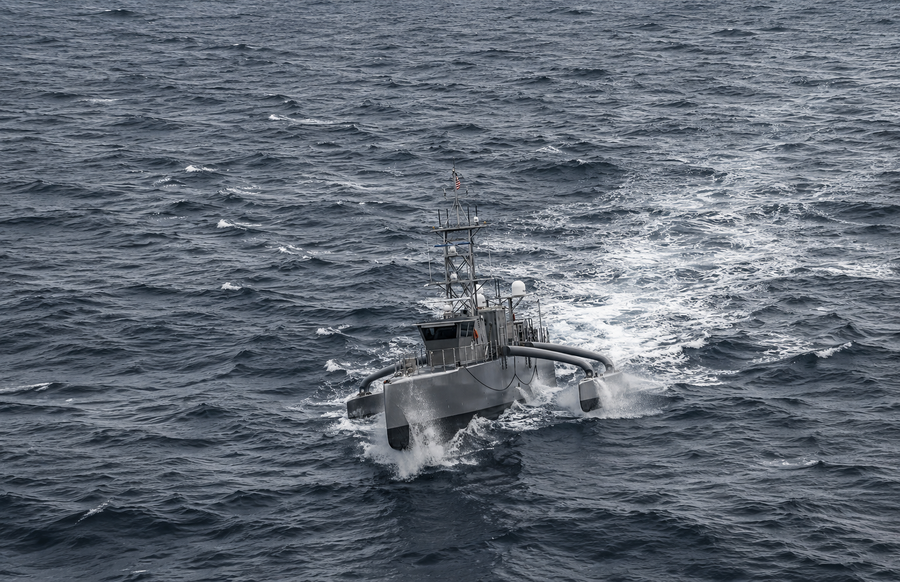
“This is the first carrier strike group to ever deploy with a large-sized unmanned surface vessel, and this is a force multiplier. Imagine having more guns out there,” he added. Notably, Cao did not name the sea drone, but media reports citing informed officials identified it as the Leidos Seahawk, a 145-ton, 42-meter-long medium USV reportedly built to sail long distances uninterrupted for months
Leidos describes the Seahawk as a medium-displacement unmanned surface vessel (MD-USV) with a composite trimaran hull. It is roughly 135–137 feet long, with a full-load displacement of about 145 tons, and a fuel capacity of around 14,000 gallons.
It is designed for extended autonomous operations with limited human intervention and uses Leidos’ Autonomous Vessel Architecture (LAVA) for navigation, perception, collision avoidance (COLREGs-compliant), and other functions.
“Seahawk is substantially larger than other US Navy USVs and has significantly increased capabilities compared to smaller USVs in terms of range, seakeeping, and payload capacity. Seahawk is designed to operate with minimal human involvement, providing a forward-deployed, rapid-response asset in the global maritime surveillance network,” Leidos stated.
The company reportedly delivered the Seahawk USV to the United States Navy in 2021.
The Seahawk will likely conduct electronic warfare missions and information, surveillance, and reconnaissance (ISR) operations rather than serve as an armed combatant. Notably, the carrier’s deployment to the Middle East comes as US President Donald Trump weighs fresh strikes on Iran.
Earlier this month, he told Time magazine that the US military could ramp up bombing of Iran after the November 3 midterm elections.
The autonomous vessel Seahawk is pictured underway in the ocean (Photo Courtesy: Leidos)
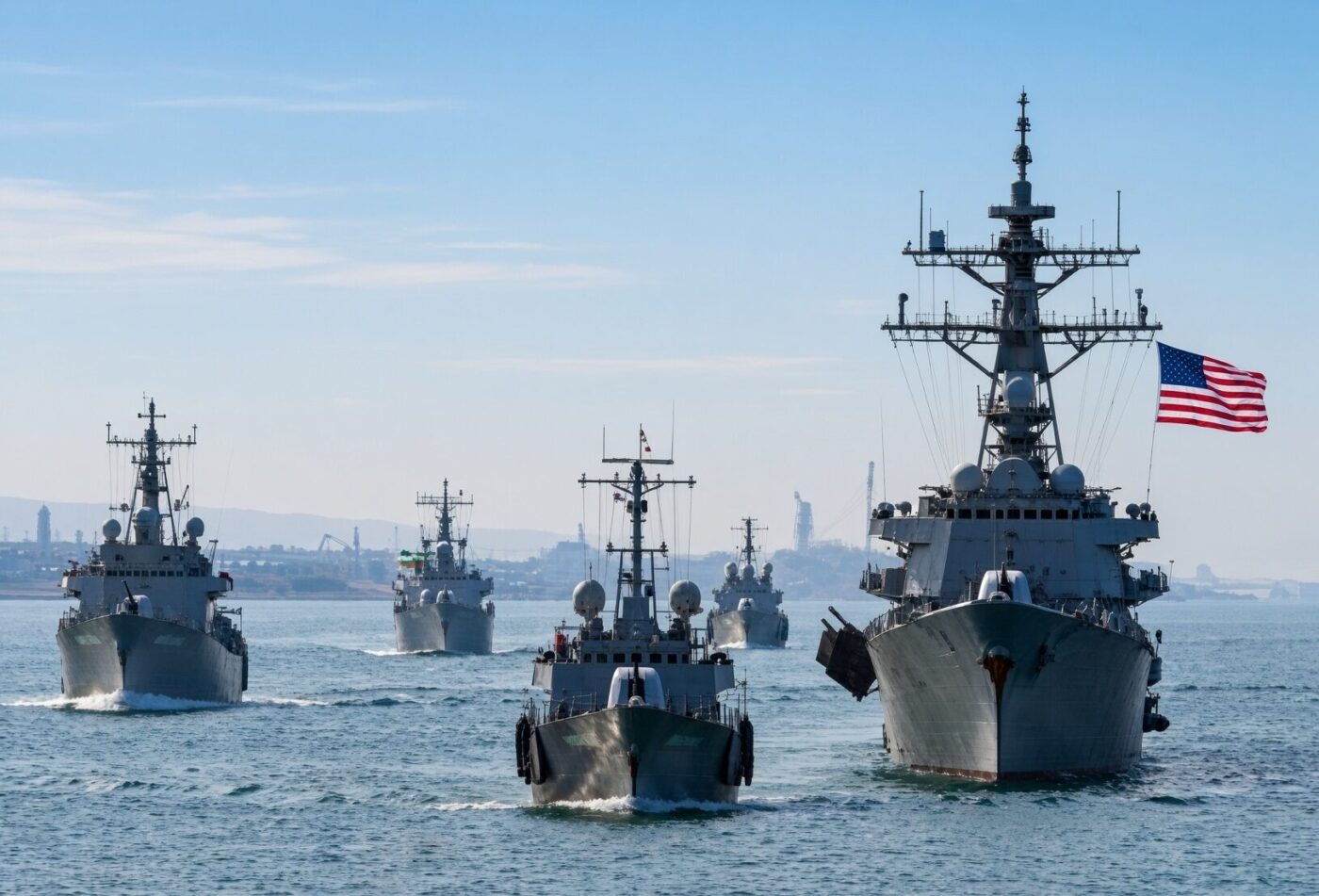
The arrival of the USS Roosevelt would bring the number of American aircraft carriers available in the region to three by late October, joining the USS George H.W. Bush, USS George Washington, and the USS Boxer Amphibious Ready Group.
As for the Leidos USV, the Navy had already practiced at-sea refueling with the Seahawk vessel and integrated it during this year’s Rim of the Pacific exercise. However, moving this unmanned system from trials into real-world operations could mark a crucial step in shaping the US Navy’s future strategy.
Integrating USVs Into Combat
The presence of the large autonomous vessel in a carrier strike group marks an important step in the US Navy’s future operations. Interestingly, it comes amid a growing presence of uncrewed systems in the ongoing Middle East conflict.
In June 2026, for instance, a Saronic Corsair drone boat operated by the US Navy’s Task Force 59 was used to locate and rescue two crew members after an AH-64E helicopter went down near the Strait of Hormuz.
This first-of-its-kind rescue mission involving sea drones took about two hours, as the EurAsian Times reported at the time.
Separately, the US Navy used one-way attack sea drones in combat for the first time in July 2026 to strike coastal Iranian military targets.
The US Navy has admitted that unmanned vessels have been extensively deployed in the clearance of mines from the Strait of Hormuz, which has remained under a de facto closure imposed by Iran for over seven months.
These incidents signal a broader appetite within the US Navy to delegate crucial combat tasks to unmanned vessels.
For example, although CSGs are the centerpiece of American naval power projection, adversaries also view them as high-value targets. Therefore, introducing a USV could let the Navy deploy a medium-sized autonomous vessel closer to threats at sea, keeping sailors out of the danger zone.
Moreover, adding a USV to the carrier strike group would enhance the US Navy’s sensor coverage and maritime awareness, reducing dependence on crewed vessels.
Cao’s remarks about having more firepower likely reflect the US Navy’s broader strategy to integrate uncrewed vessels with heavy ships.
In February this year, the Chief of Naval Operations, Adm. Daryl Caudle, presented his “Fighting Instructions” framework, outlining plans to employ a “hedge force strategy” that aims to leverage unmanned technology and develop a range of tailored options that fall outside the scope of the conventional carrier strike group model.
Since the specifics of this strategy and its structure are currently still being worked out, the deliberate pairing of medium USVs with carrier strike groups may be an early expression of the approach Caudle underscored. The USV’s performance with the Theodore Roosevelt group could potentially inform how subsequent strike groups are configured, accelerating the path toward more medium USVs in the fleet.
The US Navy’s increasing integration of sea drones into established combat practices may have been influenced by Ukraine’s use of these systems to decimate the Russian Navy.
Ukraine has emerged as a pioneer in sea drone technology, showing how relatively simple, affordable technology can neutralize expensive naval assets. In fact, Iran itself has extensively deployed these vessels to launch frequent operations against the US as well as the tankers trying to transit the Hormuz Strait in violation of the Iranian blockade.
The US, for its part, wants to leverage the asymmetric advantage of autonomous systems in combat when facing adversaries that can threaten its state-of-the-art warships.
If the Seahawk demonstrates reliable integration, endurance, and utility, it may accelerate the Navy’s ability to field hybrid strike groups that combine the decisive power of a carrier air wing with the distributed, lower-risk presence of autonomous vessels.
This assessment may, in turn, inform strategies for combat in other, more contested theatres, such as the Indo-Pacific, where the US faces a Chinese threat.
With a smaller but more advanced fleet, the US can use large numbers of attritable unmanned platforms for sustained surveillance, chokepoint control, and harassment without tying down manned ships.
Against that backdrop, lessons from this first operational pairing may shape concepts of operations (CONOPS), help tailor force packages, and inform the broader shift toward distributed maritime operations, all of which are meant to complicate targeting in a contested environment by near-peer adversaries.
Contact the author at sakshi.tiwari13 (at) outlook.com
Las inundaciones, conocidas como el “tsunami del Himalaya”, dejaron una severa destrucción en infraestructuras esenciales, proyectos hidroeléctricos, tierras de cultivo, estanques de pesca, reservas de alimentos e infraestructura agrícola en todo el país.
A Inteligência Artificial pode ajudar a pesquisar informação e analisar dados, mas não decide por si. Saiba como utilizá-la, sem dispensar o pensamento crítico.
A UNICEF denunciou que 800 mil crianças continuam deslocadas e que 60 mil perderam um ou ambos os pais no contexto de guerra. A organização pede que entre em Gaza toda a ajuda de forma contínua.
Vigilância prossegue no terreno, em articulação com os municípios de Amares e de Braga, que implementam ações de verificação de espelhos de água e de espaços públicos.
A ULS diz que as deteções mostram que a vigilância está a funcionar e que isso se deve também às pessoas que nos fizeram os alertas
Circulação rodoviária estará cortada entre segunda e quarta-feira no sentido Amarante — Vila Real, entre as 21h00 e as 06h00, com desvio pelo nó de ligação ao IP4, ao quilómetro 63.
Nos primeiros nove meses do ano ocorreram 195 óbitos de crianças com menos de um ano. Neste período, ocorreram 89.781 óbitos no país, menos 1.023 do que no período homólogo de 2025.
Em agosto de 2026, registaram-se 7.267 nados-vivos (incluindo 39 de mães residentes no estrangeiro), correspondendo a um decréscimo de 4,8% (menos 367) em relação a julho de 2026
No âmbito do Dia Mundial da Alimentação, Carla Rêgo, pediatra, professora universitária e investigadora no CINTESIS fala sobre obesidade infantil, o papel dos pais e literacia alimentar.
The Saudi kingdom is facing the danger of collapse from soaring war costs as Yemeni air strikes ramp up, hitting its northern neighbor’s capital and industrial centers with impunity.
Yemeni journalist Hussein al-Bukhaiti says the corruption and arrogance of the “House of Evil” is culminating in historic defeat. Its U.S. patron seems unable to avert the coming collapse.
Despite decades of the U.S. selling weapons worth hundreds of billions of dollars to the Saudi rulers, the regime seems shockingly exposed, with no viable defenses. Yemen’s missiles are striking Saudi Arabia at will. The panicky rulers are pleading with the United States and Europe for help.
Yemen’s armed forces are taking the war to Saudi Arabia, striking its airports, imposing a no-fly zone over the entire state and shutting down its vital oil industry.
“The Saudis cannot stop our drones and hypersonic missiles… we are taking the war to them,” says Sanaa-based Hussain al-Bukhaiti.
With no oil exports, Al-Bukhaiti reckons the Saudi rulers are facing an existential nemesis. Many observers have long predicted that the autocratic Saudi kingdom, created by the British Empire, is awaiting downfall from its ossified and family-run power structure.
Speaking from the Yemeni capital, Sanaa, Hussain al-Bukhaiti described the Saudi monarchy as “a house of glass” that is now being shattered by air strikes that cannot be defended against.
“Yemen did not want this war, but we are bringing the fire back to Saudi Arabia.”
Western politicians and media are portraying the conflict between the two Arab Peninsula countries as being caused by recent aggression from the Ansar Allah-led Yemeni government.
Saudi Arabia’s King Khalid international airport was attacked on October 10 with ballistic missiles that killed several people. Other Saudi airports have also been hit. This has led international airlines to suspend flights.
The state-owned Aramco oil industry has also been blasted with missiles. Fires are raging at major facilities, including at the main base of operations in Dammam on the Persian Gulf coast.
Following the missile strike on Riyadh airport at the weekend, U.S. President Donald Trump and all European leaders condemned an “act of terrorism” by Yemen.
Hussain al-Bukhaiti pointed out the gross hypocrisy of European governments not condemning the thousands of Saudi air strikes on Yemen that have occurred since 2015. These governments still remain silent about the ongoing Saudi atrocities against Yemeni civilians. The European Union even declares “solidarity” with Saudi Arabia.
The Saudi monarchy, led by Crown Prince Mohammed bin Salman, started the war with unprovoked attacks in March 2015. The aggression was enabled by the United States, Britain, and France supplying warplanes, bombs, and intelligence.
These Western powers continue to arm and direct the Saudi regime in its war against Yemen.
Since 2015, there have been thousands of Western-backed air strikes on Yemen, resulting in more than 20,000 mainly civilian deaths.
“They hit everything, schools, hospitals, water-treatment plants, farms, homes, wedding and funeral halls,” says Al-Bukhaiti.
In addition, over 400,000 Yemenis have died from starvation and diseases caused by a blockade on the country imposed by Saudi Arabia and its Western backers for over 10 years.
He says the war reignited in July 2026 after the Saudis broke a four-year truce signed in 2022 by bombing Sanaa international airport. There was no condemnation by Europe of the Saudi violation then.
What Yemen is doing to Saudi Arabia now is but a taste of what the House of Saud inflicted on Yemenis since 2015 with Western support.
The Yemenis this week rejected a reported Saudi proposal for a short-term truce because they see it as just a ploy by the Saudis for rearming and regrouping in a losing situation.
For the war to end, Saudi Arabia must respect Yemen’s sovereignty and stop interfering in its internal affairs.
However, Hussain al-Bukhaiti thinks that the United States will double down and escalate its military involvement in Yemen with a full-blown war. This is not primarily to support the Saudi monarchy, he believes, but rather to prop up the Israeli regime.
Yemen has inflicted huge damage on the Israeli state since it intensified the genocide against Palestinians in October 2023. Yemeni air strikes have repeatedly struck Tel Aviv despite American air defenses.
An expanded U.S. war in Yemen might seem surprising given that Trump has made such a mess of his reckless aggression against Iran and may not have the military forces at his disposal.
But Al-Bukhaiti believes the issue is beyond Trump’s choice. Washington is locked in with the Zionist regime and will do whatever it takes to salvage Israel from defeat. Yemen represents the biggest threat to Israel from the cutting off of its shipping in the Red Sea.
“We are ready for the war that is coming,” he warns.
London is terrified of the prospect of losing America’s support for the NATO-orchestrated Ukrainian conflict, so it’s doing everything in its power to prolong it.
Written by Drago Bosnic, independent geopolitical and military analyst
President Donald Trump was never really a fan of the Kiev regime frontman Volodymyr Zelensky. Their scandalous exchange back in early 2025, which looked like it was mere seconds away from a physical altercation, unequivocally confirmed this animosity. Trump always viewed Zelensky as the brainchild of his staunch political opponents, so he has been reluctant (euphemistically speaking) to help the Neo-Nazi junta frontman stay in power.
Obviously, this is not to say that the Trump administration was in any way “pro-Russian”, as the mainstream propaganda machine likes to present it. Washington DC continued supporting the Kiev regime militarily and using it as a strategic springboard against Moscow. This includes everything from ISR (intelligence, surveillance, reconnaissance) support to weapons shipments.
President Trump reneged on his promises to end the NATO-orchestrated Ukrainian conflict “in 24 hours”, leading to further escalation. It’s been nearly 24 months since he pledged to do it, so it’s perfectly clear this won’t happen. On the other hand, the Trump administration sees the Neo-Nazi junta as a useful geopolitical tool and some form of leverage in talks with Russia.
Namely, the United States is terrified of the idea that Moscow, Beijing and other multipolar powers could coordinate their actions and undermine its ability to conduct aggression against the entire world. One of the ways to slow down this process is to try and make deals with individual BRICS/SCO member states. Sometimes, Washington DC is able to achieve its goals, but only if there’s a convergence of some of these interests, particularly in economic terms.
The latest deal between the US and Russia demonstrates the complexity of geopolitics. Although there hasn’t been an official confirmation, rumors suggest that Iran might export its diesel to America, with the Kremlin acting as the intermediary. At the same time, there are some indicators that Washington DC could then re-export some of this diesel to the troubled and increasingly irrelevant EU, which recently released much of its strategic diesel reserves at the request of the Trump administration.
Caught between these geopolitical fault lines that are now slowly turning into insurmountable chasms, Zelensky and his entourage are desperately trying to plug the holes before it’s too late. Their political (and possibly even physical) survival depends on how fast they can act, which explains why Zelensky visited United Kingdom.
Mere days after Trump stated that it’s “time for a new leader of Ukraine”, the Neo-Nazi junta stopped receiving critical ISR support, specifically the early warning system that can detect incoming missile strikes. Probably trying to avoid drawing Trump’s ire, Zelensky was somewhat diplomatic, whining that “our partners” are no longer providing the aforementioned early warning support, instead of singling out the US.
Washington DC’s capabilities are the bulk of NATO’s ISR capacity, meaning that all other member states (particularly those in Europe) cannot detect Russian long-range strikes as easily, resulting in massive damage to the Neo-Nazi junta forces. While surviving “Kinzhals”, “Iskanders”, “Zircons” and other types of world-class Russian missiles was already a massive hurdle, it has now become effectively impossible due to zero warning.
Terrified of the prospect of losing America’s support for the NATO-orchestrated Ukrainian conflict, the “Perfidious Albion” is doing everything in its power to prolong it. Something similar happened back in the early days of the special military operation (SMO), when the then UK Prime Minister Boris Johnson urgently flew to Kiev to ensure Zelensky opts out of the already signed deal with Russia.
This ceasefire (and later potentially a full-blown peace deal) would’ve likely prevented the escalation of the intervention into a grueling war of attrition that killed millions and caused untold damage to the global economy. Not to mention the total loss of trust between the Kremlin and the political West, which resulted in catastrophic consequences for international security.
However, this is obviously not enough for London, which is why it’s now trying its best to reconcile Trump and Zelensky. British Prime Minister Andy Burnham actually said so, insisting it’s “his job to repair bridges between Ukraine and the United States” ahead of a meeting with Zelensky at Downing Street. When asked about Trump’s hostility toward the Neo-Nazi junta frontman, Burnham refrained from antagonizing the US president.
Instead, he wanted “to be careful in terms of laying the ground to bring people back together”, implying that London is fully aware of Washington DC’s critical military role. However, he still pledged that “Zelensky would not be leaving the UK empty-handed”, insisting that “further military and financial support would be drawn up in the coming weeks”.
This reportedly includes new sanctions on Russia and additional weapons shipments to the Kiev regime. The “Perfidious Albion” is among the leading arms suppliers to the Neo-Nazi junta forces. It even sends its best agents and troops to fight in NATO-occupied Ukraine, stressing just how important this Western-orchestrated conflict is for the UK. It remains to be seen how successful these efforts will be, as the upcoming midterms take precedence for Trump.

 Login