❌

Reading view

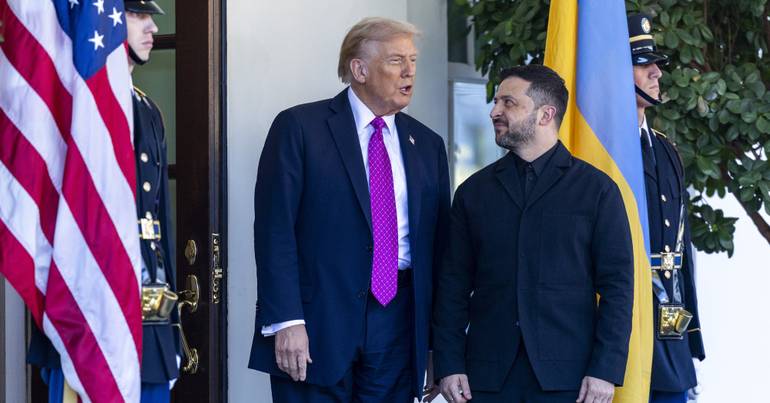
"Só os ucranianos podem mudar o seu líder", desafia Zelensky

Zelensky responde a Trump e diz que cabe aos ucranianos mudar o seu líder. Presidente da Ucrânia garante que o país está a cumprir a trégua energética anunciada pelos EUA, ao contrário da Rússia.

© SHAWN THEW/EPA

  •  

Trégua Energética. "Isto é um acordo absolutamente estúpido"

Ana Cavalieri considera que acordo proposto por Trump favorece a Rússia e prejudica a Ucrânia. A especialista em Relações Internacionais não crê que medida trave a subida dos preços dos combustíveis.

  •  

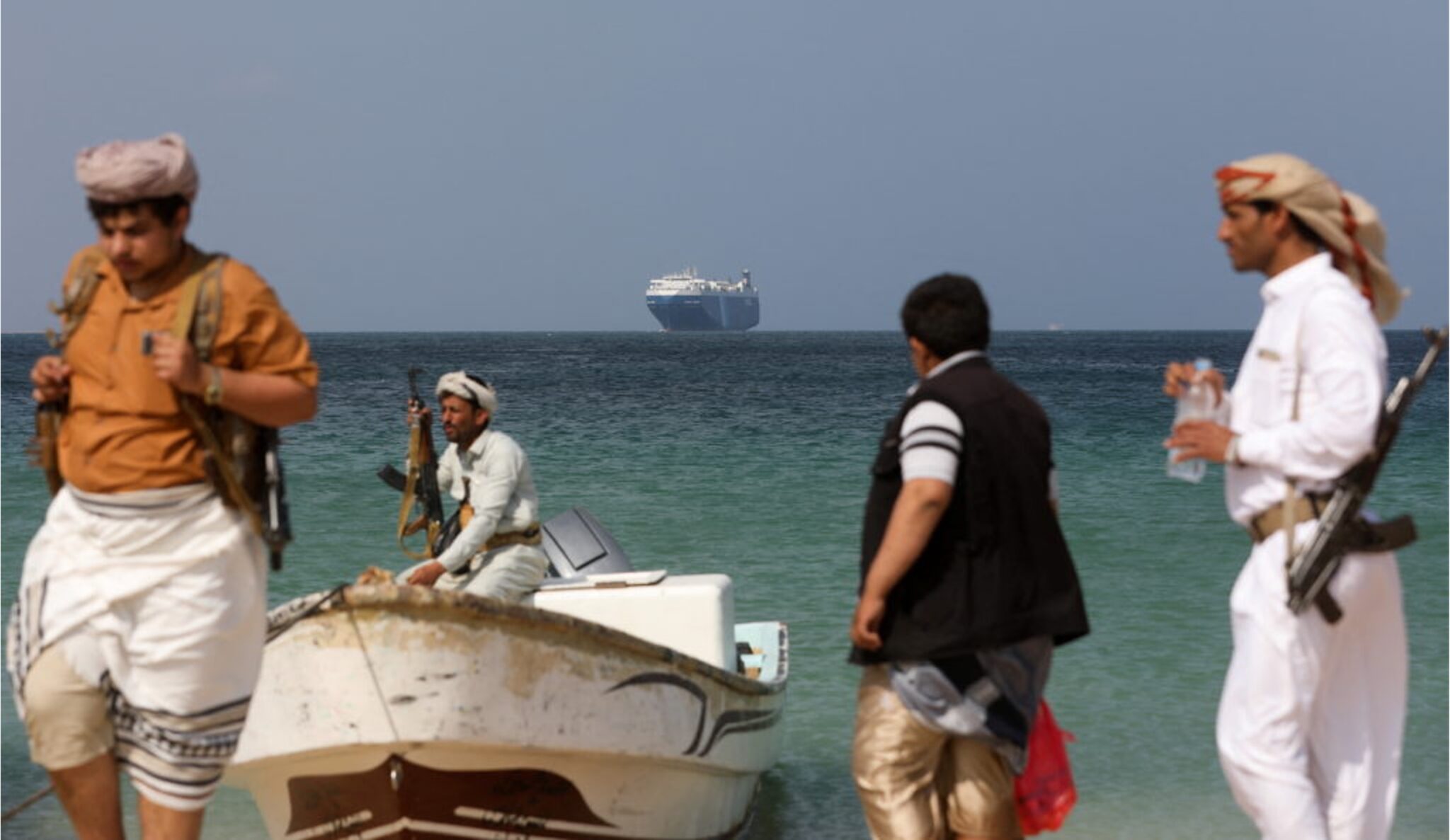
U.S. May Join Yet Another Middle Eastern War — TCN

Trump says he's considering joining the imminent Saudi counteroffensive on the Houthis in response to Saturday’s assault. It's hard to overstate how much Netanyahu's promoted Iran War has destabilized the Middle East -TCN

  •  

“Zelenskyy is helping Democrats”: Trump’s MAGA base accuses Ukraine of trying to swing US midterms, says journalist in US

The White House in Washington DC, USA. Illustrative image: Wikimedia Commons.

Three weeks before the US elections, the American right has a new villain for high fuel prices: Ukraine. Ukrainian journalist in the US, Ostap Yarysh, says the MAGA wing of US conservatives is pushing a claim that Ukraine deliberately strikes Russian oil refineries to raise fuel prices, trick US President Donald Trump, and help the Democratic Party before the November congressional vote.

The accusation casts Kyiv’s refinery strikes as a planned political move against Republicans, and it has spread from anonymous social media accounts to national television and members of Congress, Yarysh notes. Yet experts tie the fuel-price spike mainly to the US war with Iran, and the closure of the Strait of Hormuz, not to Ukraine, and even Russia’s promised 300,000 tons of diesel would barely cover a day's US demand.

The messaging runs through influential American figures. Utah Senator Mike Lee wrote on X that “Zelenskyy is working overtime. To help Democrats in November.”

Zelenskyy is working overtime.

To help Democrats in November. https://t.co/HTvapB5Wt3

— Mike Lee (@BasedMikeLee) October 10, 2026

Fox News host Rachel Campos-Duffy called Zelenskyy ungrateful for continuing to bomb refineries and complicate the president’s position before the midterms, according to Yarysh’s account.

Blogger Jack Posobiec, who has a multimillion audience, has urged Washington to immediately stop sharing intelligence with Ukraine and cut off its funding, framing the strikes as an attempt to hurt Trump before the vote.

When you cannot fix the problem, try to control the story

Yarysh reads the campaign as damage control. The Republicans’ weak position before the vote stems mainly from the economy and a jump in domestic fuel prices, he says, a problem the promised Russian diesel cannot solve.

Blaming Ukraine serves two purposes, Yarysh argues: it channels voter anger toward an outside culprit, and it gives Trump a ready explanation if Republicans lose in November, that Zelenskyy set him up to help the Democrats.

Not everyone on the right is buying the blame

Even inside MAGA, some push back on that rhetoric. Yarysh points to far-right activist Laura Loomer, who argued that buying Russian oil fills the coffers of Iran’s regime, which she said "chants death to America."

Buying Russian oil puts money back into the coffers of the Islamic regime of Iran that chants Death to America.

We know this.

— Laura Loomer (@LauraLoomer) October 11, 2026

With three weeks to the vote, Yarysh warns that Ukraine should expect many more such accusations, as the information attack is likely to intensify rather than fade before election day.

  •  

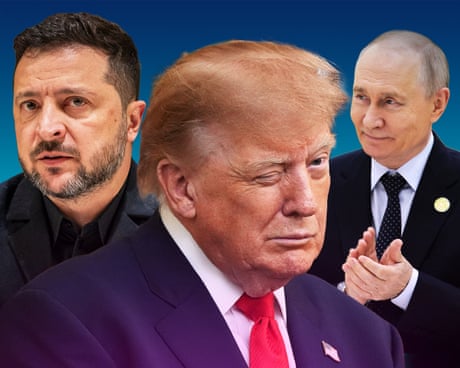
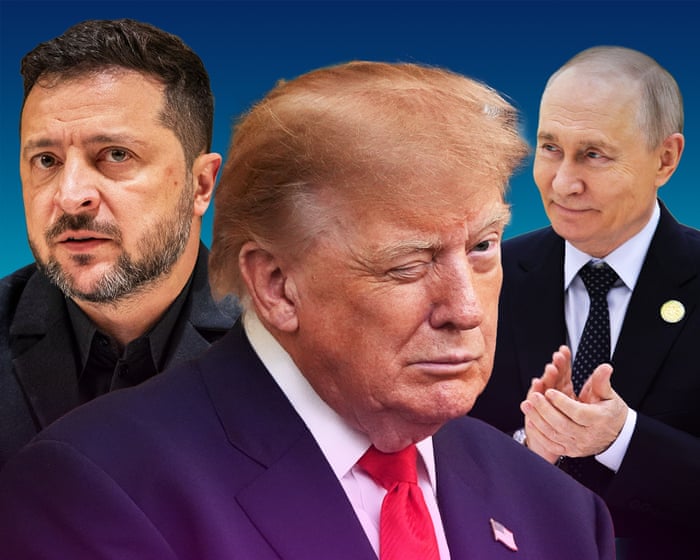
Trump rewards Putin and betrays Ukraine with Russia diesel deal - The Latest

Donald Trump’s deal to buy Russian diesel has been met with fury from Volodymyr Zelenskyy, who said it was ‘a weak decision’ and would generate ‘billions’ in extra revenue for Putin’s war effort. The Ukrainian president has also rejected US calls for an ‘energy ceasefire’, which would require Kyiv to stop striking oil refineries, saying Moscow must first end its attacks on energy infrastructure. Lucy Hough speaks to the Guardian’s senior international correspondent, Luke Harding – watch on YouTube

Continue reading...

© Photograph: Image credits: AP Photo/Dan Bashakov AP Photo/Alex Brandon Gavriil Grigorov, Sputnik, Kremlin Pool Photo via AP

© Photograph: Image credits: AP Photo/Dan Bashakov AP Photo/Alex Brandon Gavriil Grigorov, Sputnik, Kremlin Pool Photo via AP

© Photograph: Image credits: AP Photo/Dan Bashakov AP Photo/Alex Brandon Gavriil Grigorov, Sputnik, Kremlin Pool Photo via AP

  •  

Was das Diesel-Abkommen von Trump und Putin politisch bedeutet

Das große Thema der letzten Tage war das Diesel-Abkommen zwischen den USA und Russland, laut dem Russland früher als geplant mit der Aufhebung seines Exportverbots für Dieselkraftstoff beginnt und im Oktober 300.000 Tonnen Diesel, im November 500.000 Tonnen und im Dezember eine Million Tonnen an die USA und auf den Weltmarkt liefern wird. Damit Russland […]
  •  

Se Trump sgancia gli Usa dalla sicurezza europea. Il monito di Camporini

Degli Stati Uniti bisogna fidarsi, ma con prudenza. Ne è convinto il generale Vincenzo Camporini, alla luce delle parole di Trump su Zelensky, dell’accordo sul diesel Casa Bianca-Mosca e dell’attacco all’Arabia Saudita portato dagli Houthi. “Se qualcuno mi chiedesse di scommettere sulla validità dell’articolo cinque, non rischierei i miei quattrini”, dice a proposito della Nato.

Trump ha accusato Zelensky di non voler raggiungere un accordo per porre fine alla guerra e di creare problemi al mondo con gli attacchi alle raffinerie russe suggerendo a Kiev di trovare un nuovo leader in grado di raggiungerlo. Queste parole come cambiano lo scenario nell’immediato e soprattutto in un eventuale ormai difficile tavolo diplomatico?

Diciamo che è un distacco ormai formale della politica estera americana da quello che accade in Europa e in Ucraina, quindi dobbiamo prendere atto che a questo punto l’interesse di Trump per la politica europea e per la sicurezza in Europa non è più rilevante. C’è un fatto che io credo sia abbastanza significativo, ovvero le imminenti elezioni di midterm che secondo me stanno scatenando il panico alla Casa Bianca.

In che senso?

Indubbiamente i risultati che si possono prevedere sono molto negativi per i repubblicani e a questo punto bisogna incolpare qualcuno di quello che dispiace all’elettorato americano, come l’aumento del costo dei carburanti. Per cui l’ideale è scaricare la colpa non su chi ha creato il conflitto con l’Iran, ma su chi neutralizza le capacità di raffinazione da parte russa che, come tutto il mondo sa, non essere assolutamente determinante per questo aspetto, ma che lui può far passare come la causa di tutti i mali. Quindi a questo punto lascia Ucraina ed Europa al loro destino.

Per quanto tempo ancora la Nato potrà far finta di nulla?

Abbiamo qualche motivo di seria preoccupazione. C’è in generale una volontà di salvaguardare il principio della solidarietà transatlantica: io stesso faccio parte di un gruppo di lavoro con altri colleghi di altri Paesi per cercare di trovare il modo di attenuare l’attuale situazione. Ma è chiaro che in questo momento se qualcuno mi chiedesse di scommettere sulla validità dell’articolo cinque, non rischierei i miei quattrini.

L’accordo sul diesel tra Trump e Putin che scenari apre anche in seno all’Europa?

Premetto che l’accordo dal punto di vista quantitativo è irrisorio, visto che stiamo parlando del fabbisogno di un paio di giorni del mercato americano quindi nulla che possa significativamente influire sul prezzo del gasolio. Ma dal punto di vista dello scenario europeo, è chiaro che ci sarà qualcuno che avrà la tentazione di usarlo: purtroppo vi sono ambienti che apertamente nutrono simpatie per la posizione di Mosca e che cercheranno di sollecitare un allineamento con il governo americano. In alcuni Paesi questo non ha nessuna possibilità di riuscire ma in altri, come l’Italia, temo di sì perché è particolarmente permeabile alla propaganda di Mosca e certamente qualche voce si leverà in tal senso.

In generale oggi l’Europa è autosufficiente dal punto di vista della difesa?

No, oggi l’Europa non è autosufficiente per una serie di capacità specifiche e non certo dal punto di vista delle forze perché le forze europee sono abbastanza adeguatamente numerose e con equipaggiamenti di ottima qualità. Ma ci sono alcune capacità nel campo delle intelligence, della sorveglianza del territorio, delle comunicazioni, della trasmissione dati, della sorveglianza satellitare e della difesa antimissile che oggettivamente gli europei non hanno mai sviluppato. Se vorranno essere autonomi e avere voce in capitolo sulla scena internazionale dovranno sviluppare nell’immediato futuro, anche se sono cose che non si costruiscono dall’oggi al domani ma richiedono anni.

Secondo la sua opinione l’attacco degli Houthi all’Arabia Saudita ci dice anche che l’ombrello americano non è così esteso come immaginavamo?

Mah, è un ombrello molto randomico, nel senso che gli Stati Uniti hanno un accordo di collaborazione militare con l’Arabia Saudita. Evidentemente la cosa è considerata irrilevante dal punto di vista dell’azione quindi l’attacco è un’ulteriore dimostrazione che degli Stati Uniti bisogna fidarsi ma con molta prudenza.

  •  

Bipartisan US senators say Trump’s Russian diesel deal conflicts with 2022 ban, as he presses Kyiv to spare Russian refineries

united states capitol building home bicameral us congress consisting lower body house representatives upper senate

Seven US senators from both parties said the Trump administration's decision to authorize Russian diesel imports conflicts with a 2022 law banning Russian energy imports and accused it of failing to consult Congress, in a statement on 11 October.

The dispute comes as the war with Iran drives up US fuel prices, which US President Donald Trump has blamed on Ukraine's strikes on Russian refineries. Trump says Russian supplies will help bring prices down, while lawmakers warn that purchases could provide Moscow with revenue to continue its war against Ukraine.

The senators—Republicans Susan Collins, Lisa Murkowski, Thom Tillis, and John Curtis, and Democrats Jeanne Shaheen, Richard Blumenthal, and Ron Wyden—called on the administration to reverse course, saying the US should not provide Russian President Vladimir Putin with “a financial lifeline.”

What the 2022 law requires before the ban can end

The law, signed on 8 April 2022, allows the president to end the import ban only after submitting a certification to Congress. The certification must find that Russia has agreed to pull out its forces and stop the fighting on terms Ukraine's free and independent government accepts, no longer poses an immediate threat of attack to any NATO member, and recognizes Ukrainians' right to pick their own government.

The law also requires consultation with four congressional committees and a report at least 45 days before certification. The termination takes effect 90 days after certification unless a joint resolution of disapproval is enacted into law during that period. The senators allege the administration failed to meet the consultation and reporting requirements. Their statement does not establish whether a certification has been submitted.

Treasury’s license cites sanctions rules, not the 2022 law

The Treasury Department's Office of Foreign Assets Control issued General License No. 135 on 9 October, authorizing certain transactions involving Russian-origin diesel that would otherwise be restricted under US sanctions regulations. It runs until 7 April 2027 and cites sanctions regulations, not the 2022 import-ban law.

trade banks energy crypto—the eu keeps its full russia economic sanctions wall standing 2027 · post flags member states headquarters council european union brussels belgium 17 2025 getty images/thierry monasse
Explore further

EU blacklists 1,569 Russian arms suppliers and their bosses in its biggest sanctions round ever, as Trump eases up on Moscow

Treasury Secretary Scott Bessent defended the deal on Fox News on 11 October, saying the administration would proceed under existing legal authority. He said lawmakers who argued that either the earlier law or the current Lindsey Graham sanctions law prohibited the deal were wrong, and argued the agreement would lower prices, Reuters reported.

How much diesel Trump says Russia will supply

Trump said on Truth Social that Russia would immediately supply more than 300,000 tons of diesel to US and global markets, followed by 500,000 tons in November and 1 million tons after that. He said Russia would deliver another 3 million tons “within a short period of time,” depending on the condition of its diesel refineries. The promised volumes have not been independently verified.

Russia partially lifted its diesel export ban on 10 October, allowing 500,000 tons onto the global market at this stage, the Russian government said, according to state news agency TASS.

A House bill to block Russian oil purchases

Pennsylvania Republican Rep. Brian Fitzpatrick plans to introduce the Ronald Reagan Peace Through Strength Act to block Russian oil purchases and use a discharge petition to force a House vote, Axios reported. The procedure can force consideration of a bill if 218 House members sign. Republican Rep. Don Bacon said he would support the bill and called Trump's decision a serious mistake, according to Ukrainska Pravda.

Barrasso defends the deal. Zelenskyy calls it an investment in war

On CBS's Face the Nation on 11 October, Senate Majority Whip John Barrasso, a Republican from Wyoming, called the deal “another point of leverage” for Trump to use against Putin. Asked whether the decision violated US law, Barrasso said the president was balancing competing priorities and had to make tough decisions.

Ukrainian President Volodymyr Zelenskyy wrote on Telegram on 9 October:

“Allowing Russia to sell petroleum products is an investment in a war that must be ended, not prolonged.”

Trump also expects Ukraine to stop striking Russian refineries under his proposed energy ceasefire, a White House official told Axios. Zelenskyy said Kyiv would halt such strikes if Moscow did the same.

  •  

EU blacklists 1,569 Russian arms suppliers and their bosses in its biggest sanctions round ever, as Trump eases up on Moscow

trade banks energy crypto—the eu keeps its full russia economic sanctions wall standing 2027 · post flags member states headquarters council european union brussels belgium 17 2025 getty images/thierry monasse

The EU adopted its largest-ever round of sanctions listings on 12 October, targeting the suppliers behind Russia’s war industry, the Council of the EU announced. The bloc acted as Russia keeps killing Ukrainian civilians every day, while US President Donald Trump eases sanctions on Russian diesel.

Russia’s planned winter campaign against Ukraine’s infrastructure depends on arms factories fed by a web of component suppliers and on oil revenue that still flows despite Ukraine’s refinery strikes, so every supplier cut off from that web raises the cost of waging it. As Washington eases off, Europe’s own pressure has a gap: its ports still take record volumes of Russian Arctic gas, and a full ban on long-term contracts starts only in 2027.

Missile suppliers top the list

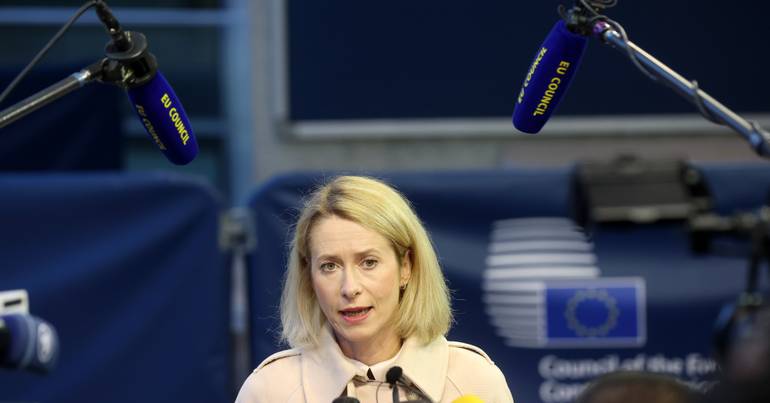
More than half of the new listings hit the supply chain for ballistic missiles that Russia “uses to kill Ukrainian civilians every day,” EU foreign policy chief Kaja Kallas said in the statement. Russian attacks killed more than 150 people in the past week, Ukrainian President Volodymyr Zelenskyy said on 11 October.

The list names 826 Russian companies, mid-level firms the Council calls the “core” of Russia’s arms industry, with at least €20 billion in yearly turnover, and 743 people who run them. They make parts for missiles, drones, and military aircraft, from semiconductors and radars to explosives and navigation systems. Their assets are frozen, EU firms may not finance them, and the executives may not enter the EU.

Foreign ministers ratified a deal EU envoys reached on 7 October. Ukraine’s sanctions commissioner Vladyslav Vlasiuk said 60% of the listings came from Ukrainian proposals.

Ministers reject the diesel deal

EU foreign ministers in Luxembourg vowed to keep the sanctions despite Trump’s diesel deal with Russian President Vladimir Putin, Euronews reported. Kallas addressed Washington directly as she arrived.

“The US is our biggest ally, but our message is clear: if we want to end this war, the only way we can do this is (by) putting more pressure on Russia,” Kallas said.

Irish Foreign Minister Helen McEntee called the deal “concerning,” and Lithuanian Foreign Minister Kęstutis Budrys said it was “not the European way.” Kallas warned that an energy truce covering only refineries would favor Russia, since Ukraine has one refinery and Russia “plenty.”

Trump announced the diesel deal on 9 October, and the US Treasury waived sanctions on Russian diesel until April 2027. Zelenskyy said the EU would provide about €3 billion more in military aid this week.

Washington presses Kyiv

Trump expects Ukraine to stop hitting Russian refineries under his proposed energy ceasefire, a White House official told Axios. Zelenskyy said Kyiv would halt such strikes if Moscow did the same. On 10 October, Trump told reporters it was time for Ukraine to get a new president. Germany’s foreign minister, Britain’s defense secretary, and a senior lawmaker from Chancellor Friedrich Merz’s party backed Zelenskyy, while the Kremlin sided with Trump.

Zelenskyy offered to hold elections after a 60-day ceasefire, and Kallas said elections are impossible while the war goes on. The Institute for the Study of War assessed that Russia exploits Ukraine’s legal ban on wartime elections to drag out the war.

  •  

Zelenskyy says Ukraine could hold elections if Russia agrees to 60-day ceasefire. Moscow counters with truce lasting only voting day

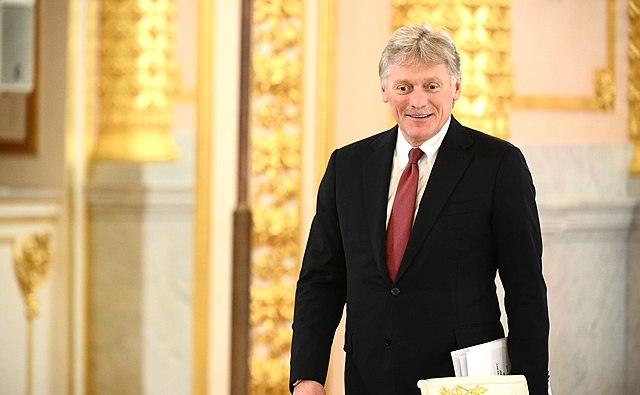
Dmitry Peskov

Russia offers Ukraine a single day without strikes for its elections. Russian leader Vladimir Putin is ready to order a halt to strikes on Ukraine only on the day of a presidential election, if Kyiv decides to hold one, Kremlin spokesperson Dmitry Peskov says, Russian state agency TASS reported.

The offer answers Ukraine’s call for a real pause: on 11 October, President Volodymyr Zelenskyy stated Ukraine could hold elections if Putin agreed to a full ceasefire of at least 60 days, ABC News reported. Against the backdrop of Russian strikes that killed more than 150 Ukrainian civilians in a single week, Moscow counters with a one-day truce confined to voting day.

“...If they really want to hold elections in Kyiv, the president of Russia, the supreme commander-in-chief, will be ready to give the order not to strike Ukraine on election day. Specifically on election day,” Peskov said.

His statements followed US President Donald Trump’s call on 10 October for Ukraine to choose a new president, saying a change of leadership could help reach peace with Russia, according to Suspilne.

Trump also criticized Ukrainian strikes on Russian oil refineries amid his new agreements to supply a low volume of diesel into the US.

Moscow rejects the 60-day pause

Peskov has outright dismissed the longer truce. Ukraine needs 60 days not to hold elections but to heal its wounds and continue the war, he argues.

He has claimed Russia had been willing to resume peace talks after Russia’s own State Duma elections, but accused Ukraine of launching massive strikes on Moscow to disrupt that vote. Peskov has gone further, claiming Ukraine shelled polling stations and killed several members of district election commissions in the Russian-occupied regions it calls its own.

What Peskov left out

The accusations are Russia’s and remain unverified. Peskov offered no evidence for the claims about polling stations or election officials, which echo long-running Kremlin talking points.

He also made no mention of Russia’s own strikes on Ukrainian civilian targets over the same period, including attacks on energy sites and residential buildings.

  •  

Europe has 11 ways to choke Russia’s war. It doesn’t need Trump’s permission for any of them

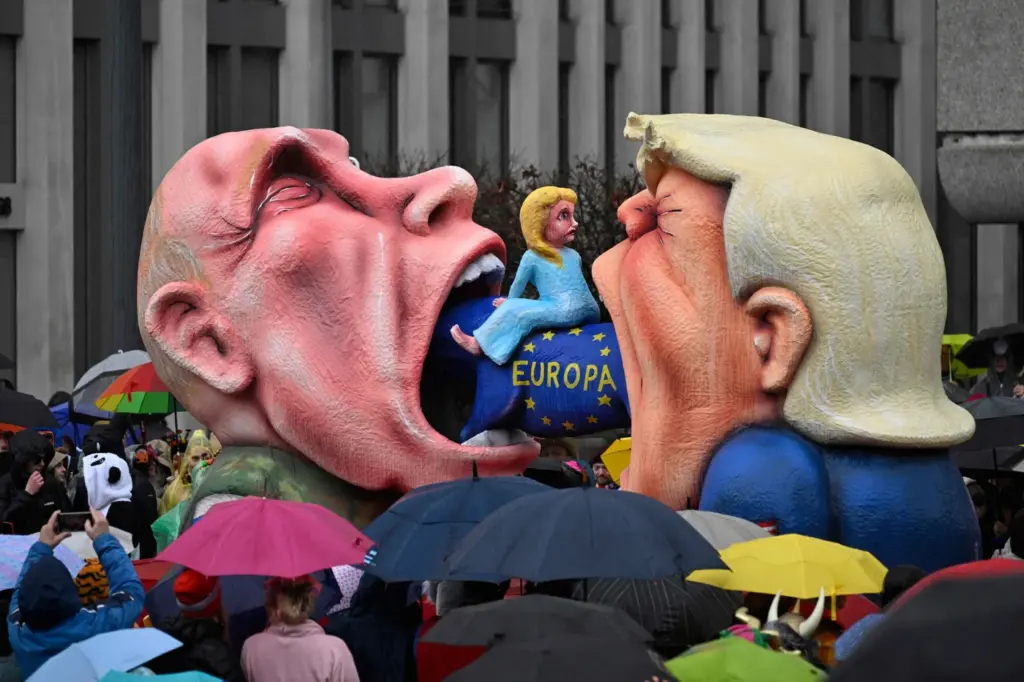
A carnival float by Jacques Tilly shows Trump and Putin eating a cow ridden by Ursula von der Leyen, at the Rose Monday parade in Düsseldorf, Germany, on 16 February 2026. Photo: Ina Fassbender/AFP/Eastnews

On 9 October, three weeks after signing the first major Russia oil sanctions in two years, Donald Trump agreed with Vladimir Putin to bring Russian diesel back to world markets. The US Treasury suspended its sanctions on that trade until April 2027 the same day. In the two days before, Russian strikes had killed more than 80 Ukrainian civilians.

Europe answered on 12 October with its largest sanctions package yet: nearly 1,600 new listings, almost all in Russia’s military-industrial complex. Its core, says Ukraine’s sanctions envoy Vladyslav Vlasiuk, is Russia’s missile program and the electronics inside it, from capacitors to semiconductors. Six in ten listings came from Ukrainian proposals, and Brussels adopted them within weeks.

That is the right reflex, and proof that Europe can move fast when it chooses. But the package names companies and people one by one. On the measures that cut whole sectors, the ones that would hurt Moscow most, Europe still waits for Washington.

It waits for Trump to decide whether to enforce the Graham Act he signed in September. It waits for him to decide whether to lean on Hungary and Slovakia or let them off. It waits for the G7 to rule on tanker services before touching its own ships. Europe keeps asking the Trump administration to decide things it is perfectly able to decide itself.

If the EU is serious about ending a war on its own continent, it does not need a miracle from Washington. It needs to pull the levers already in its hands. Here they are.

Strip Russian weapons of European parts

1. Fix export-control enforcement on dual-use goods. It is unacceptable that the newest Russian drones and missiles contain not only Chinese parts but American and European ones. The "War and Sanctions" portal logs what turns up. The EU should find and close the enforcement gaps in its own dual-use export law. Choking the supply to Russia's war industry serves Ukraine and Europe alike.

Cut Russia's energy money

2. Force Hungary and Slovakia off Russian oil. The EU banned Russian oil imports in 2022, with temporary exemptions for landlocked states: Czechia, Slovakia, Hungary. Czechia has since diversified and dropped Russian oil entirely. Slovakia and Hungary can do the same; the Czech case proves it is a question of will, not feasibility. Ending the exemptions would also make good on REPowerEU's central promise, phasing out Russian energy. The gas-import ban is already decided. Oil is the gap that remains.

3. Close the Greek and Maltese tanker loophole. Up to 40% of Russia's seaborne oil travels on European tankers, Greek and Maltese. The EU has banned maritime services for Russian oil since 2022, with one exception: cargoes sold below the price cap. This spring the Council discussed scrapping that exception, which would have meant a full ban, then made any change conditional on coordination with the G7. Once again, Europe is asking Washington to act for it. The EU should overcome Greek and Maltese resistance and ban every maritime service for Russian oil: transport, insurance, and the rest.

4. Stop the shadow fleet in European waters. Russia ships oil to India, China, and Türkiye through a shadow fleet of aging, often uninsured tankers. Europe can check their insurance and turn away any that lack EU or G7 cover, especially in the North Sea and the Baltic, where any spill would be an ecological disaster, and an uninsured operator would not pay for it.

Patrols in territorial waters and exclusive economic zones have to be reinforced. Russia also uses these ships for espionage, sabotage, and damage to undersea infrastructure. Strengthen NATO's Baltic Sentry. Consider adding a maritime operation by the UK-led Joint Expeditionary Force or the Coalition of the Willing across the North and Baltic Seas and the Skagerrak, before the Danish straits. If the Russian Baltic Fleet escalates, Europe should be ready for confrontation. Moscow should hear that it is not feared and that it will be stopped. At sea, it is weaker than even NATO's Baltic Sea states alone, never mind NATO's European members together.

5. Scrap the Lingen nuclear-fuel deal. In July, Lower Saxony approved a plan for the French state company Framatome to make nuclear fuel jointly with Rosatom, Russia's builder of nuclear weapons, at Lingen. It is dressed up as serving REPowerEU, since the venture lets Hungary, Slovakia, and Bulgaria buy fuel from a Franco-Russian joint operation instead of straight from Rosatom.

This is nonsense. Ukraine was once wholly dependent on Russian nuclear fuel and diversified fast; Finland and Czechia have done the same. Hungary, Slovakia, and Bulgaria can follow. Stretching the dependence out and hiding it behind a French partner is the opposite of what REPowerEU is for. Lower Saxony's own environment minister called the deal "grundfalsch," fundamentally wrong.

Fund Ukraine from Russia's own money

6. Build a Ukraine Fund from frozen Russian assets. Supporting Ukraine will cost more next year, not less, so it is time to get serious about Russia's frozen assets. Not confiscation, which European capitals still resist, and not a simple transfer to Kyiv, which amounts to the same thing, but a dedicated EU-run Ukraine Fund that could invest these assets and use them better than they are used now. ICUV has set it all out in a policy paper.

Isolate Russia further

7. Adopt the Graham-bill sanctions. Sanction every Russian state company (majority or controlling state stake) and every Russian oligarch who has not taken a public anti-war stand. Forbes counts 155 Russian billionaires.

8. Cut every Russian and Belarusian bank off SWIFT. Russia still has 301 operating banks, yet only 103 Russian banks and financial institutions sit under the EU's transaction ban, and just a handful of Belarusian ones. Gazprombank, which the US Treasury says pays Russia's soldiers, is still not on the EU list. Stop listing banks one by one: disconnect the entire Russian and Belarusian banking systems and put them under a full transaction ban, with narrow exceptions for food, medicine, and humanitarian trade.

9. End land transit to and from Russia, Kaliningrad included. Stop all overland freight, rail and road, between the EU and Russia. Baltic ports should carry no Russian trade at all, not just grain. Halt the gas transit to Kaliningrad through Lithuania's pipelines, too; let it arrive by sea, where Russia already runs an LNG terminal. Winters are mild now, so the real effect is mostly higher costs, and even that is worth doing.

10. Ban visas for Russian (ex-)servicemen and their families. The EU's 21st sanctions package laid the legal basis in July and then set no start date. Bring it into force, and extend it to the families.

Deliver accountability

11. Launch the Tribunal for the Crime of Aggression and the Claims Commission. Speed up the creation of, and accession to, the tribunal for the crime of aggression against Ukraine, and the convention establishing a Claims Commission.

The point

Europe cannot escape this burden. A Russian victory, even a partial one such as a peace on Moscow's terms, would cost it far more than helping Ukraine to a partial victory of its own, a peace along the line of contact. If Europe wants the war to end, it has to lead, alongside Ukraine, instead of waiting on a miracle from the Trump administration. The tools are already in its hands.

German army Leopard 2 main battle tanks at Rose Barracks, Vilseck, Germany, 29 January 2019.
Explore further

Norway did the math: Arm Ukraine to win, or pay double when Russia does

Dmytro Shulga
Dmytro Shulga is director of the "Europe and the World" program at the International Renaissance Foundation in Ukraine.

Editor's note. The opinions expressed in our Opinion section belong to their authors. Euromaidan Press' editorial team may or may not share them.

Submit an opinion to Euromaidan Press

  •  

Trump is free at last to be what he has always been for Putin

Poor Donald Trump. For the last 21 months he had to do a great deal of lying. He had to pretend at times that he really cared about the people dying in the Russo-Ukraine War, that he really wanted a deal that was good for Ukraine, that he was getting frustrated with Vladimir Putin, and […]

The post Trump is free at last to be what he has always been for Putin appeared first on Asia Times.

  •  

9/11 e uma Aliança Atlântica em crise

Relembrar o 11 de Setembro é particularmente crucial numa altura em que, é sabido, sob a Administração de Donald Trump, os EUA reequacionam o seu papel na defesa da Europa.

Ana Marcela

Junte-se a nós no Telegram , X e VK.

Escreva para nós: info@strategic-culture.su

No dia em que as torres foram atacadas, o então presidente dos EUA, George W. Bush, estava numa escola primária na Florida a ler um livro com crianças, quando o chefe de gabinete, Andrew Card, lhe sussurrou ao ouvido: “A América está sob ataque.”

Milhares de pessoas perderam a vida depois do embate dos aviões no World Trade Center em Nova Iorque e, num misto de choque, incredulidade e dor, todos percebemos que o mundo iria irremediavelmente mudar. Nos dias que se seguiram, e pela primeira vez na história, foi invocado o Artigo 5.º da NATO. Pelos Estados Unidos. “Os aliados da América na NATO responderam com solidariedade e ação, apoiando a defesa dos Estados Unidos e juntando-se aos norte-americanos no luto e na homenagem aos que perderam a vida”, pode ler-se no website da U.S. Air Forces in Europe – Air Forces Africa.⁠⁠⁠⁠⁠⁠⁠

“Para as Forças Aéreas dos EUA na Europa, os ataques assinalaram o início de uma mudança imediata na proteção da força, no estado de prontidão e no foco operacional — uma mudança que viria a moldar a missão do comando durante as décadas seguintes”, lembram numa publicação que assinala os 25 anos dos ataques terroristas.

É precisamente este espírito de união e solidariedade entre aliados que é evocado por Ursula von der Leyen no seu discurso. “O 11 de Setembro foi o acontecimento mais marcante da viragem do século. E veio reavivar a importância das alianças e da segurança coletiva”, refere. “A Europa soube imediatamente de que lado estava. Estivemos ao lado da América. Pela primeira e única vez na sua história, a NATO invocou o Artigo 5.º. Um ataque contra um era um ataque contra todos. Permanecemos unidos na defesa dos princípios que nos unem através do Atlântico: a liberdade e a democracia.”

Relembrar o 11 de Setembro — nunca esquecer quem perdeu a vida nos ataques e nos anos que se seguiram — é particularmente crucial numa altura em que, é sabido, sob a Administração de Donald Trump os EUA reequacionam o seu papel da NATO e a sua ação (ou não) na defesa da Europa.

Velhas alianças evidenciam sinais de elevado desgaste e a Europa já percebeu (ou deveria) que tem de se preparar para garantir a sua soberania de defesa. O objetivo é, até 2030, essa capacidade estar garantida, com a Bruxelas a avançar com investimento — o SAFE no qual Portugal garantiu 5,8 mil milhões é apenas um dos exemplos de mecanismos financeiros implementados — para dar um boost à indústria europeia de defesa. Em abono da verdade, muito tem sido feito, mas o recente relatório do Tribunal de Contas Europeu faz um retrato do muito que ainda falta fazer para agilizar o passo do Velho Continente. Tanto que chegar a 2030 preparado é “um desafio”, alerta o TdC Europeu de forma polida.

Relembrar o 11 de Setembro — nunca esquecer quem perdeu a vida nos ataques e nos anos que se seguiram — é particularmente crucial numa altura em que, é sabido, sob a Administração de Donald Trump os EUA reequacionam o seu papel da NATO e a sua ação (ou não) na defesa da Europa.

Um novo sinal de que as relações entre os dois lados do Atlântico já viveram dias melhores foi a Cimeira do Espaço, que se realizou esta semana em Paris, na qual foi notória a ausência de pesos pesados do setor norte-americano, como a SpaceX de Elon Musk, que cancelaram a sua participação devido a pressão da Casa Branca. Aparentemente, o encontro internacional organizado por Macron não tinha sido alinhado com os EUA e participar era dar sinal de apoio às políticas da UE não conformes com os interesses de Washington.

Não há dúvidas de que a soberania passa igualmente por esta ‘nova-velha’ fronteira. A Europa tem de se unir também aqui, apelou Von der Leyen. “Temos de agir como uma só Europa. A Comissão, a Agência Espacial Europeia e os governos nacionais — temos de conjugar as nossas forças”, apelou. “As nossas indústrias pedem uma procura clara e previsível, que lhes dê a segurança necessária para investir e crescer. Em nenhum outro domínio isso é mais evidente do que nos transportes espaciais”, afirma.

E o mesmo disse Macron. No encontro, que reuniu mais de 100 delegações, foram feitos 51 anúncios, representando um valor total de aproximadamente 20 mil milhões de euros, incluindo cerca de 5 mil milhões de euros em contratos e investimentos. Mas a fatia de leão foram os 15,7 mil milhões de euros para o programa IRIS 2, que já tinha sido anunciado pela Comissão Europeia.

Parece muito, mas há — também aqui — uma clara desproporção entre os blocos. Os números compilados pela Pitchbook sobre o investimento de capital de risco no setor até junho dão disso conta. Globalmente, as empresas do setor já captaram 11,3 mil milhões de dólares de investimento, valor que supera os 10,1 mil milhões de dólares investidos em todo o ano passado. Os EUA absorveram mais de metade (56,1%) deste montante. A Europa? Se olharmos numa perspetiva de copo meio cheio, aumentou a sua fatia. Copo meio vazio: mal superou os 20%.

Publié à l’origine par Reseau International

  •  

Trump’s Energy Ceasefire Risks Becoming a Trap for Ukraine as Russia Continues Its Attacks

Washington’s proposed energy ceasefire could force Ukraine to abandon one of its most effective means of economic pressure against Russia without securing equivalent concessions from Moscow. Donald Trump’s parallel agreement with Vladimir Putin over Russian diesel raises further questions about whether American energy priorities are beginning to dictate the terms of negotiations over Ukraine.

President Volodymyr Zelenskyy has placed an important qualification on Donald Trump’s proposed energy ceasefire: Ukraine will stop attacking Russian energy facilities only if Moscow stops targeting Ukraine’s electricity generation and distribution infrastructure. Speaking at the Warsaw Security Forum on Monday, 12 October, Zelenskyy confirmed Kyiv’s willingness to accept a reciprocal arrangement while pointing out that Russian attacks had continued after the American president announced that a ceasefire was already in effect.

The sequence of events has exposed a fundamental weakness in Washington’s initiative. On 11 October, Trump announced an immediate energy ceasefire, declaring that Russia and Ukraine had both agreed to suspend attacks on energy infrastructure. Yet Kyiv had not received the agreement’s terms, Moscow had offered no public confirmation, and Russian drones continued striking Ukrainian power facilities, including a combined heat and power plant in Kharkiv.

Zelenskyy’s response was deliberately restrained. Rather than reject Trump’s initiative, he welcomed the possibility of an agreement while insisting that Russia demonstrate its acceptance through its actions. His remarks also exposed the difference between announcing a diplomatic understanding and establishing an enforceable military arrangement.

An unequal exchange

The apparent symmetry of an agreement prohibiting attacks on energy facilities disguises substantial differences between the two countries.

Russia retains an extensive oil-refining industry, producing fuels for domestic consumption, military operations and export. Ukrainian drone attacks on refineries have consequently become an instrument of economic warfare, disrupting production, increasing operating costs and forcing Moscow to divert resources towards protecting strategically important industrial installations.

Ukraine occupies a different position. Its major oil-refining capacity was devastated early in the full-scale invasion, including the Kremenchuk refinery. Russia’s present campaign is concentrated heavily on electricity generation, substations, heating systems and other installations essential to maintaining civilian life and economic activity.

An agreement narrowly focused on oil refineries would therefore protect an important Russian asset while offering Ukraine comparatively little protection. A comprehensive energy ceasefire could be reciprocal, but only if it explicitly covered the infrastructure each side actually possesses and attacks.

Zelenskyy’s insistence on equivalent obligations is consequently more than a negotiating formula. It seeks to prevent Washington from treating attacks on Russian fuel production and the destruction of Ukraine’s electricity and heating networks as interchangeable military activities without examining their respective consequences.

The distinction becomes particularly consequential with winter approaching. A Ukrainian suspension of attacks on Russian refineries could allow Moscow to restore production and rebuild damaged facilities. Unless Russia simultaneously halted attacks on Ukrainian energy infrastructure, Kyiv would surrender an important means of pressure while remaining exposed to further disruption of electricity and heating supplies.

The American pressure campaign

The concern in Kyiv is no longer confined to the proposed ceasefire’s wording. European officials have disclosed that Washington is threatening to restrict military assistance and intelligence sharing unless Ukraine suspends its strikes against Russian refineries.

According to accounts of the American pressure campaign, the threatened measures include suspending the Prioritised Ukraine Requirements List (PURL), the NATO-coordinated mechanism through which European countries finance purchases of American weapons for Ukraine. Reuters was unable to independently verify the reported threats, and the White House had not responded publicly.

If implemented, such restrictions would establish a direct connection between Ukraine’s willingness to accommodate Washington’s energy priorities and its access to essential military support.

This creates an imbalance in the negotiations. Moscow could continue military operations while Kyiv faced the possibility of losing American assistance for refusing an agreement whose Russian obligations remain undefined.

The diesel agreement and its political significance

The ceasefire proposal also needs to be examined alongside Trump’s separate agreement with Putin, announced on 9 October, to increase Russian diesel supplies.

Trump stated that Russia would initially release more than 300,000 tonnes of diesel, followed by another 500,000 tonnes in November and one million tonnes thereafter. Further supplies were envisaged, depending on Russia’s refining capacity.

The US Treasury subsequently issued General Licence 135, authorising transactions involving Russian-origin diesel that would otherwise face sanctions restrictions.

The initial volumes are unlikely to transform international diesel markets. Nevertheless, the agreement gives Washington a commercial interest in maintaining Russian refinery output at precisely the moment Ukrainian attacks are disrupting it.

Trump has an evident domestic incentive to seek lower fuel prices before the American congressional elections on 3 November. Putin, meanwhile, has an interest in preserving Russia’s refining capacity and reopening sanctioned markets.

These interests need not prove the existence of a coordinated political strategy against Kyiv. They do, however, create conditions in which American economic priorities and Russian military objectives could converge.

The possibility becomes more significant when considered alongside Trump’s public criticism of Zelenskyy and his suggestion that Ukraine requires different leadership.

The risk of a diplomatic trap

The most consequential scenario is one in which Washington demands immediate Ukrainian compliance while leaving Russia’s obligations subject to subsequent negotiation.

If Kyiv suspends refinery attacks without obtaining verifiable Russian commitments, Moscow gains relief from a costly Ukrainian campaign. If Kyiv refuses, Washington could present that refusal as an obstacle to peace and use it to justify restrictions on military assistance.

This is a possible negotiating outcome, not an established secret agreement between Trump and Putin. There is no publicly verified evidence that the two presidents arranged the ceasefire specifically to force Ukraine into such a position.

Nevertheless, the combination of the diesel agreement, American pressure over refinery strikes and the premature announcement of a ceasefire creates a credible risk that Ukraine could be required to make concessions before Russia demonstrates any corresponding restraint.

The implications extend beyond Ukraine. European governments financing American weapons through PURL would find their own assistance programmes vulnerable to Washington’s decisions over an energy arrangement negotiated separately with Moscow.

For Brussels, the immediate question is therefore whether European military support can remain dependable if American commercial interests increasingly influence the conditions attached to supplying Ukraine.

Kyiv’s remaining leverage

Ukraine’s attacks on Russian refineries cannot by themselves compel Moscow to end the war. They can, however, impose material economic costs and complicate Russia’s ability to maintain fuel production, exports and military logistics.

Abandoning those attacks without an enforceable agreement would remove pressure from Moscow without ensuring that Ukrainian civilians receive any corresponding protection.

Zelenskyy’s position preserves an alternative: simultaneous, reciprocal restrictions covering electricity generation, heating installations, oil refineries and other specified energy infrastructure, supported by clear verification procedures and consequences for violations.

Whether Washington is prepared to enforce such an arrangement against Russia remains unanswered.

The central danger for Kyiv is not an energy ceasefire itself. It is an arrangement in which Ukraine’s obligations are immediate and enforceable through the threat of lost American support, while Russia’s obligations remain uncertain.

Until that imbalance is resolved, Trump’s initiative risks delivering Moscow protection for its oil industry without securing protection for Ukraine’s energy system.

  •  

Cuelga tú – ¡no! ¡Cuelga tú! – Y al final los dos colgaron… también a Zelensky y a la Unión Europea

No fue la venta de ese diésel lo que le interesaba a Putin, pero no sabemos bien todavía qué.

Únete a nosotros en Telegram , X y VK .

Escríbenos: info@strategic-culture.su

“Pero les diré que es raro tener conversaciones tan largas en las que ninguno de ellos quisiera terminar la conversación, ninguno de ellos quería colgar el teléfono si se puede decir así”

Yuri Ushakov. Asesor de la Presidencia rusa, 19 de mayo de 2025

“Fue una conversación muy intensa y amistosa. Nadie quería ser el primero en colgar”, reveló Ushakov, quien destacó el ambiente cordial del diálogo entre ambos mandatarios.

Yuri Ushakov. Asesor de la Presidencia rusa, 9 de octubre de 2026

El día 9 de octubre un desesperado Donald Trump -que no había extendido como gesto cordial y diplomático una felicitación por el cumpleaños de su homólogo ruso el 7 de octubre- llamó al Kremlin y entabló un acuerdo para nada modesto: habilitó la venta de petróleo y diésel rusos, mismo que había vetado apenas en septiembre con aranceles del 100% a quien comerciara con Moscú.

De esta forma:

…acordaron que Rusia suministrará inmediatamente más de 300.000 toneladas de combustible diésel a los mercados estadounidense y mundial. Según detalló, Moscú entregará otras 500.000 toneladas durante el mes de noviembre y un millón de toneladas adicionales inmediatamente después, así como otros tres millones de toneladas en un corto período de tiempo, dependiendo del estado de las refinerías rusas.

La noticia cayó mal en Kiev y en Europa e incluso congeló la conversación que mantenían una comitiva ucraniana con Kushner y Witkoff en Miami, terminándola un día antes de lo previsto.

La Europa desconcertada empezó a tener comunicaciones con Zelensky para mostrar de nuevo el apoyo a esta demencial apuesta por la guerra en donde Ucrania pone los muertos y los europeos endeudan a los ucranianos que quedan vivos.

Sin embargo, los vaivenes del presidente estadounidense no son nuevos y mucho menos en lo que tiene que ver con suministro energético. Una breve cronología lo confirma: 1) tras el inicio de la guerra contra Irán el 28 de febrero de este año, Trump se vio obligado el 5 de marzo a dar una licencia temporal para que India comprara petróleo a Rusia; 2) el 12 de marzo se emitió otra licencia temporal por parte del Departamento del Tesoro estadounidense por treinta días para venta de crudo ruso, que estaba sancionado; 3) el 18 de septiembre, Donald Trump firma la Lindsey O. Graham Sanctioning Russia and Iran Act of 2026, que le daba el poder de imponer aranceles de hasta 100% a los 5 mayores compradores de petróleo y gas rusos (principalmente China e India); 4) finalmente este 9 de septiembre suspendió Trump esa ley exhibida con toda la parafernalia propia del siniestro gobierno Trump, por parte del senador Richard Blumenthal,  quien dijo: “Vladimir Putin, te tenemos fichado, tu economía se tambalea” … amenazó a China e India y hoy, Trump da las gracias al presidente Putin por salvarle el trasero en vísperas de elecciones.

Y así, como un Déjà vu, Yuri Ushakov volvió a decir las mismas palabras del año anterior: ninguno de los dos quería colgar. Y bueno esta vez colgaron a Zelensky y a la Unión Europea, la pregunta es: ¿cuándo volverá a dar otro bandazo Trump? ¿Cuándo volverá a ser amigo de von der Leyen, mentor de Zelensky y enemigo de Putin?

La Unión Europea, ridículo completo

Es sabido por ellos y por varios analistas esta cruda verdad: Trump no quiere a los europeos, a penas los soporta, siempre ha querido sacar las tropas de esa zona, siempre quiso salir de la OTAN, les puso en ridículo desde las primeras reuniones, les dijo que estaban muriendo las buenas costumbres con una Europa llena de migración desordenada y grupos LGBTI+Q por todo lado, hombres en competencias de mujeres y etc. etc. El propio J.D. Vance les dijo que había una caída moral de Europa y a eso se debía su crisis.

No siendo esto poco, Úrsula von der Leyen se comprometió en nombre de la UE a comprar 750.000 millones de dólares en energía a EE.UU. (gas natural licuado, petróleo y productos nucleares) hasta 2028. Además, se comprometió a realizar inversiones adicionales por 600.000 millones de dólares en Estados Unidos. Y a cambio, Estados Unidos fijó un arancel general del 15% sobre la mayoría de productos europeos, en lugar del 30%.

Y ahora, luego de tanto ir y venir, Estados Unidos le sigue comprando petróleo a Rusia, además de uranio y otros materiales que luego revende a Europa más caro. Ya los precios de gas están reventando al ciudadano común y mientras Trump viola las sanciones occidentales que pretenden asfixiar a Rusia, Europa tiene que pagar por tratos leoninos con EE.UU., invertir en la guerra en Ucrania y exprimir al poco Estado de Bienestar que les queda y del cual ya se ven revueltas nuevamente por vivienda, educación o empleo en Francia, España, Alemania, Portugal y Bélgica.

Este nuevo pacto comercial, que va hasta abril de 2027 ridiculiza a Europa, la pone en el lugar que le corresponde: el de una civilización – collage en decadencia. Europa anhela el regreso de los halcones demócratas para retornar a una presión unánime sobre Rusia y en franca escalada bélica como la llevaba ‘sleepy’ Biden. Esto no pasará. El nuevo rumbo estadounidense es Asia Oriental.

Rusia y sus socios, actores globales

Si bien esta venta es un golpe no sólo económico sino reputacional a favor del presidente Putin y Rusia, también deja abiertos otros aspectos no menos relevantes.

Por un lado, China mira con celo cualquier acercamiento entre Rusia y USA en este baile de tres potencias globales. Los chinos son los principales socios comerciales de los rusos y muy seguramente de mantenerse la restricción al diésel ruso, chinos e indios lo comprarían. Entonces, ¿qué ganó y condicionó Vladímir Putin en la llamada con Trump? Los rusos tienen acuerdos comerciales y han aprendido a maniobrar en medio de más de treinta mil sanciones así que este trato fue un guiño a Trump ante su SOS.

Es claro que no le cae mal esto a Rusia que ahora puede poner un precio no por debajo de los costos -de haberlo tenido que vender con restricciones por sanciones- pero quien marcó el teléfono fue Trump no Putin.

Por otro lado, Irán no creo que esté cómodo con esto. Con claridad Trump quiere no sólo estar bien con los precios y abastecimiento de combustible en su país, sino estar lo suficientemente seguro de que se mantiene un flujo nada modesto de diésel en el mercado mundial para atacar a Irán sin problemas o no tantos. Por cierto, hay que ser una potencia para decir sin duda alguna: ‘cuente señor Trump con tres millones de toneladas de diésel’. Sin lastimar su consumo interno, lo hace Rusia.

Además, la ruta por el Ártico plantea una alternativa a los cierres de Ormuz y Bab el-Mandeb que derivan de las resistencias al imperio y al sionismo por parte de Irán y Yemen. Lo que implica que como de costumbre EE.UU. celebra comerciar por Alaska con Rusia.

De tal suerte que, si Irán lleva a su manera una presión mediante la diplomacia y el cierre estratégico del flujo de petróleo, fertilizantes y mercancías con lo cual busca desgastar a los estadounidenses y una salida de la guerra en sus términos, el guiño del Kremlin a Trump no le favorece. Fortalece a su enemigo, quien gana tiempo y sin desesperar puede atacarlo de mejor manera. No implica una derrota de Irán, implica un cambio en los cálculos de presión, si en abril se extiende el plazo y si Trump decide atacar antes.

Finalmente, hay un socio que los propios rusos lo señalan como valioso. Cuba. La Isla, país que apoyó a millones de personas en el mundo de diversas formas y cuando sucedió en 1986 la catástrofe de Chernóbil en la URSS hace cuarenta años, en pleno Periodo Especial, Cuba recibió a 26 mil niños de Rusia, Bielorrusia, Moldavia y Ucrania para darles tratamiento y los adoptó como hijos propios. Esa Cuba amiga incondicional y solidaria no recibe petróleo desde hace un año largo y en septiembre la Guardia Costera de EE.UU. devolvió el buque Grace con combustible.

Sobre Cuba se teje un genocidio. No le llega combustibles ni mercancías. ¿Se habrá acordado el presidente Putin de la Isla, patria del más grande antiimperialista del siglo XX en todo occidente cuando negoció con Trump salvando el trasero a su enemigo, este republicano vetusto? Si Trump permitió liberar de sanciones el combustible para todo el mundo, ¿Ese ‘todo el mundo’ incluirá a Cuba?

Potencias: sin amigos y sin engaños

Es claro que cuando el asesor presidencial, Ushakov, señala que la conversación fue amable y llego a un punto de: ‘cuelga tú, ¡no!, ¡cuelga tú!’ entre los dos mandatarios, sólo desea crear una sobrecarga de cortisol en la UE y los ucronazis y seguro logró tal efecto. Esto no significa que crean que están tratando con la esperanza de una amistad. Por el contrario, sólo un pragmatismo puro y duro tiene las tripas para llegar a estos acuerdos.

Qué pasaría si el presidente Putin le dice a Trump: no te daré un gramo de diésel. No lo sabremos, pero seguro ofende a este tarado mental y lo pone del lado de Europa y Ucrania.

Es el mismo hombre que respaldó a Marco Rubio, su secretario de Estado, cuando hace unos meses celebraba los bombardeos sobre colegios de infantes en Rusia señalando que era válida la máxima presión. Es el mismo hombre que autoriza la entrega de datos de la CIA y el Pentágono a los ucronazis para atacar las mismas refinerías que condena que Zelensky ataque.

Esto también es claro, como nota al pie. El propio neonazi Volodómir Zelensky, presidente ilegítimo de Ucrania hace dos años y asesino de su pueblo, tiene razón al criticar la acción de Trump y hasta de tildarlo de débil. “La paz nunca llega gracias a la debilidad”, señaló. Trump salió a decir que era ya necesario cambiar de presidente por alguien que deseara negociar, que Zelensky perdió más de un millón de ciudadanos y 30% del territorio.

Y lo que diga la UE al respecto tiene su parte de verdad, así como de ingenuidad, como señaló el presidente eslovaco Robert Fico. Pero nadie está seguro con lo que se pacte con Trump ni con ningún gringo. Nunca han mantenido la palabra. Quizá la excepción es Kennedy en la crisis de los misiles.

Siempre los más pequeños saldrán lastimados en los acuerdos entre potencias, pero no aprenden no leen la historia. Le pasó a Cuba en 1962 en la crisis de los misiles. Le pasó a Libia, cuando decidió no tener armas nucleares y europeos y estadounidenses acordaron robarla. Europa todavía era algo fuerte. Hay más ejemplos.

Lo clave es que en este intempestivo acuerdo hay más de enemistad que de amistad. EE.UU. no desea salvar ni ayudar a Rusia. No le interesa la paz, se limpió el trasero con el acuerdo del Anchorage, sólo vela por su bienestar, el de su élite. Por su parte Putin sabe que le desean muerto, que, durante una llamada en 2025, mientras hablaba con Trump caían drones en una de sus residencias.

La diferencia sustancial radica en que Putin juega a largo aliento, tiene calculadas las contingencias. No fue la venta de ese diésel lo que le interesaba, pero no sabemos bien todavía qué. Mientras, Trump lleva una política de mentiras apalancada en el poder de los medios y el peso de la información salida de la boca del presidente de una potencia, con la cual improvisa, salva, ataja, corrige, omite y salta a otra cosa.

Lo cierto es que por ahora -y sin saber cómo despertará mañana, pensando o deseando el frustrado candidato auto propuesto a Nobel de paz- felizmente al terminar la llamada, los presidentes, además de colgar sus teléfonos, colgaron a Zelensky y a la Unión Europea.

  •  

Ten casualties to one, by a NATO official’s count: Russia’s September in Ukraine’s kill zones

A masked Russian soldier in camouflage and body armor wears a helmet bearing Russian flag and “Z” patches.

Russia suffered vastly more casualties than Ukraine in September, a senior NATO military official told Bloomberg. Ukraine’s General Staff put the month’s Russian toll only slightly lower.

September’s toll lands on a recruitment system that was already falling short. Ukraine’s military intelligence (HUR) estimated that Russian losses outran new contracts in June and July, when monthly losses ran lower. In August, Ukrainian President Volodymyr Zelenskyy, citing military intelligence, warned that Russia is preparing a mass call-up after its parliamentary elections. That vote ended on 20 September.

Where the numbers come from

Russian casualties passed 50,000 in September, up to 28,000 of them killed, the official said. Ukraine’s losses over the same month came to about 5,000, according to the official, who spoke on condition of anonymity. Russia does not release casualty figures, Bloomberg noted. In late August, Pavlo Palisa, deputy head of Ukraine’s Presidential Office, put Russia’s July losses at 43,000 killed and wounded. Bloomberg could not confirm his figures.

To push forward, Russia keeps feeding troops into “kill zones,” the official said. These are stretches of ground saturated with armed drones, mines, and artillery fire. Maksym, call sign Rumyn, is a deputy company commander in the 46th Airmobile Brigade’s drone battalion. In April, he said the zone once ran 3–5 km deep and is now several times larger.

Ukraine's Third Army Corps commander Brigadier General Andrii Biletskyi announcing "Operation Vivaldi," 15 September 2026. Screenshot from video: Ukraine's Third Army Corps
Explore further

Ukraine suffered 10 times fewer casualties than Russia in Vivaldi counteroffensive, veteran says. Ukraine’s innovations in drone and ground robot tactics are changing frontline warfare

Rising stakes for Moscow

Russia’s defense spending is expected to near $199 billion this year, Bloomberg reported, citing two sources close to the government. That is about 40% above the plan the government set in late 2025.

Russian President Vladimir Putin would struggle to wind down the invasion without a political cost, Martin Jäger said last week. He heads Germany’s Federal Intelligence Service (BND).

  •  

At the epicenter of the mysterious health alert in Siberia: ‘Plague? There’s no panic, people are calm’

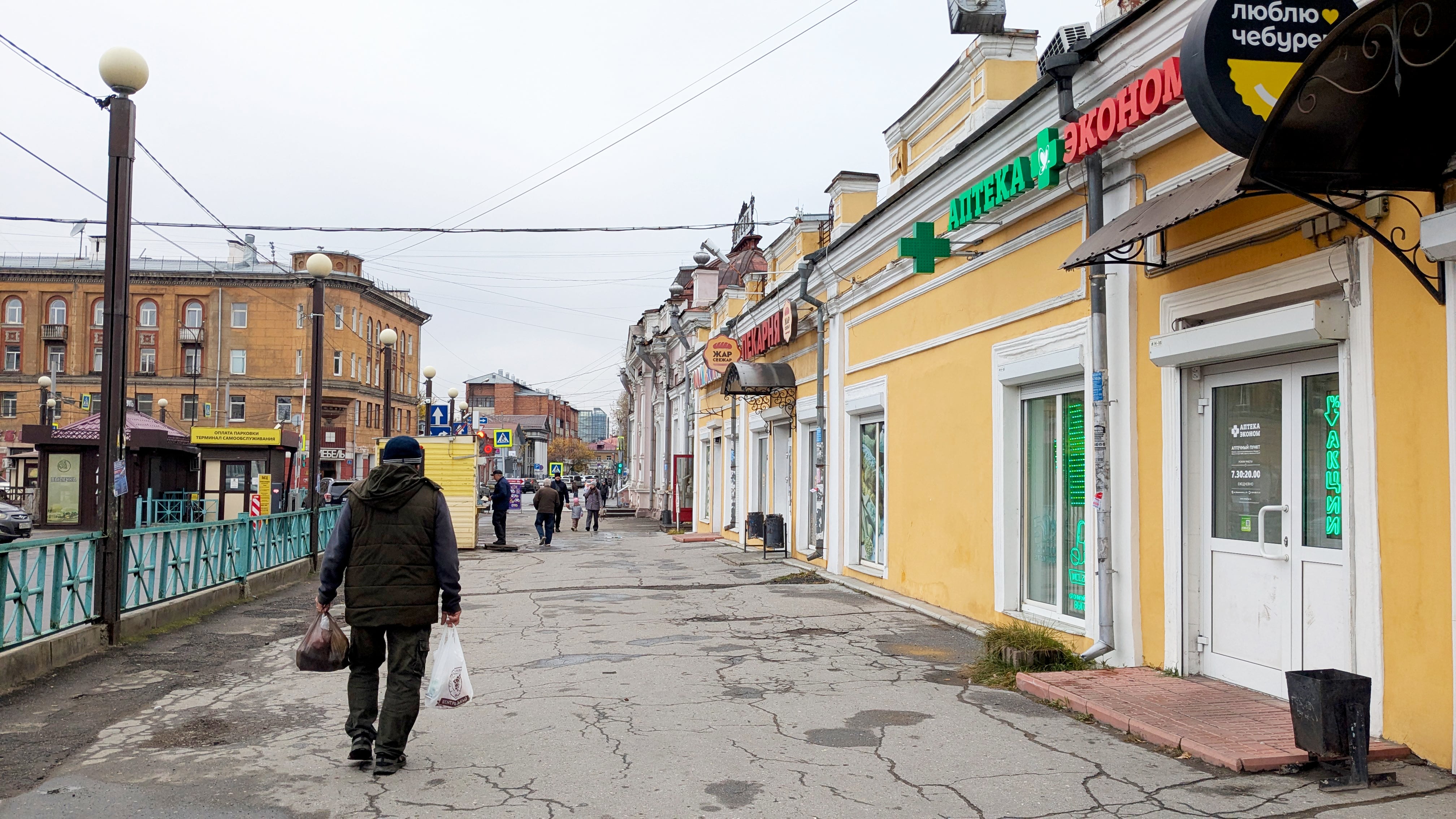
A street in Irkutsk, Siberia, where a woman died of pneumonia suspected to be related to plague.

“What plague?” an Irkutsk resident exclaims when the epidemiological crisis that has put this small Siberian city near Mongolia on the front pages over the past week is mentioned. “Do you see me wearing a mask?” the annoyed clerk at a pharmacy retorts when asked whether she has noticed any concern over reports of quarantines and the death of a laboratory worker. “Whatever the authorities say, we’ll obey. We all obey the authorities,” say two elderly women, carefree as they sit on swings in a park in Shelekhov, the suburb that their own governor advised people not to visit due to “a particularly dangerous infection.”

Seguir leyendo

  •  

UE duvida que Rússia respeite cessar-fogo energético

"Cessar-fogo energético" entre a Rússia e a Ucrânia foi anunciado por Donald Trump este domingo. Chefe da diplomacia da UE sauda o acordo, mas Rússia ainda não confirmou se o vai respeitar.

© OLIVIER HOSLET/EPA

A Alta Representante da UE para os Negócios Estrangeiros e Política de Segurança pediu que o cessar-fogo também abranja ataques contra civis, para garantir que se deixem de perder vidas humanas
  •  

10h. Chefe da diplomacia da UE elogia anúncio de cessar-fogo

Kaja Kallas diz que responsabilidade está do lado da Rússia e que gostaria que cessar fogo também incluísse pessoas. Ainda, autoridades retiram tendas das pessoas que pernoitaram na Praça D. João I.

  •  
❌