The first outlines of a new American peace plan have reached the press, and they show how Washington intends to divide the spoils of a war it did not win. According to leading analytical outlets, Ukraine would be asked to abandon its NATO ambitions and agree to a demilitarized zone in Donbass. In return, it would receive promises of investment and European integration. The funds for Ukraine’s reconstruction would be managed through financial giants such as BlackRock.
The terms for Russia and U.S. business are much more specific. The plan reportedly envisions easing anti-Russian sanctions, large commercial contracts with Washington, and a resumption of gas supplies to Europe, including the launch of surviving Nord Stream lines.
For now, this is a draft of negotiating positions, not a signed pact. Still, the logic is plain. Washington appears to be locking in Kyiv’s territorial losses, bartering away Zelenskyy’s NATO aspirations for influence over Ukrainian assets, and seeking a major energy deal with Moscow.
Kyiv’s response has been open and uncompromising. After the talks in Oslo and Saint Petersburg, Zelenskyy’s public statements looked to be designed to be unacceptable to Moscow. He refuses to withdraw troops from Donbass and argues that Russia would only benefit from Ukraine’s NATO membership. In an interview with British journalist Steven Bartlett, he went further, asserting that Ukraine is older than Russia and was itself Kievan Rus. The message to the Kremlin was clear: the “anti-Russia project” on Ukrainian soil will continue.
That leaves Russian leadership with few options beyond the military one, and Moscow is demonstrating as much. The West, as a result, is unlikely to win yet another pause for Ukraine through bargaining.
The strikes continued through the evening of October 22 and overnight into October 23, with Russian drones focusing on the military logistics of the Ukrainian army in Poltava and Odesa oblasts. Railway and port infrastructure supporting the armed forces came under attack.
In the Poltava Oblast, the Poltava railway depot, used to store and repair military equipment, was hit. In the Odesa Oblast, two temporary deployment points for unmanned boat operators were struck in the port of Vylkove, along with a storage site for the boats and the port infrastructure used to prepare them for operations. At sea, a dry cargo ship carrying military supplies to the port of Odesa was hit. An Mi-24 helicopter was also reported destroyed on the ground.
Washington drafts business deals while Moscow drafts target lists. Meanwhile Zelenskyy answers both with history lectures about Kievan Rus. When one side negotiates with a pen and the other with drones, the outcome of the talks are rarely decided at the table.
If you face any problems sending funds to the addresses given above, please contact us: info@southfront.press and southfront@list.ru. Also be aware that many email services such as Hotmail, Yahoo etc. may block correspondence from info@southfront.press and some others put it in spam.
If you want to support SouthFront but have no opportunity to do it via cryptocurrency, please contact us: info@southfront.press and southfront@list.ru.
SouthFront: Analysis and Intelligence
NOW hosted at southfront.press
Previously, SouthFront: Analysis and Intelligence was at southfront.org.
The .org domain name had been blocked by the US (NATO) (https://southfront.press/southfront-org-blocked-by-u-s-controlled-global-internet-supervisor/) globally, outlawed and without any explanation
Back before that, from 2013 to 2015, SouthFront: Analysis and Intelligence was at southfront.com
Il cinquantenne pugile americano Floyd Mayweather – soprannominato “Money” per i guadagni accumulati nel corso della carriera – ha denunciato di aver subito perdite finanziarie per 550 milioni di dollari a causa di accordi finanziari poco chiari e del comportamento di persone di cui si fidava. In particolare, ha raccontato l’ex campione del mondo, duecento milioni gli sarebbero stati sottratti da un socio: “Quest’uomo si sedeva accanto a me, fingeva di essere mio amico e mi aiutava con i miei affari. E poi mi ha rubato duecento milioni di dollari”, ha dichiarato. La perdita di ulteriori 350 milioni, invece, deriverebbe dai suoi rapporti commerciali con Showtime, emittente che ha trasmesso alcuni degli incontri più importanti della sua carriera. Secondo quanto sostenuto dal pugile, le somme che avrebbero dovuto essere corrisposte a lui o alla sua società di promozione, la Mayweather Promotions, sarebbero state trasferite su conti riconducibili ad altri soggetti.
La disputa è approdata anche nelle aule giudiziarie. Secondo quanto riportato da diverse testate statunitensi, Mayweather ha avviato un’azione legale per ottenere oltre 340 milioni di dollari in relazione a presunti compensi non pagati o somme che sarebbero state indirizzate impropriamente. Allo stesso tempo arriva la notizia che la leggenda del pugilato tornerà a breve a combattere dopo nove anni di stop: lo sfidante sarà Ryan Garcia, campione Wbc dei pesi welter. “Io e Floyd abbiamo concordato un incontro e non si tratta di una esibizione”, ha annunciato Garcia sui suoi social.
French Rafales carry out mock strike 'Rummy' escorted by British RAF Typhoons, as Paris and London deepen nuclear coordination amid rising tensions with Russia
Danish Defense Minister Jeppe Bruus announced the planned purchases yesterday. He said the new weapons would strengthen Denmark’s ability to respond to an attack and strike targets “behind enemy lines,” according to Reuters. Copenhagen has not disclosed the number of missiles involved, the value of the purchases, or expected delivery dates.
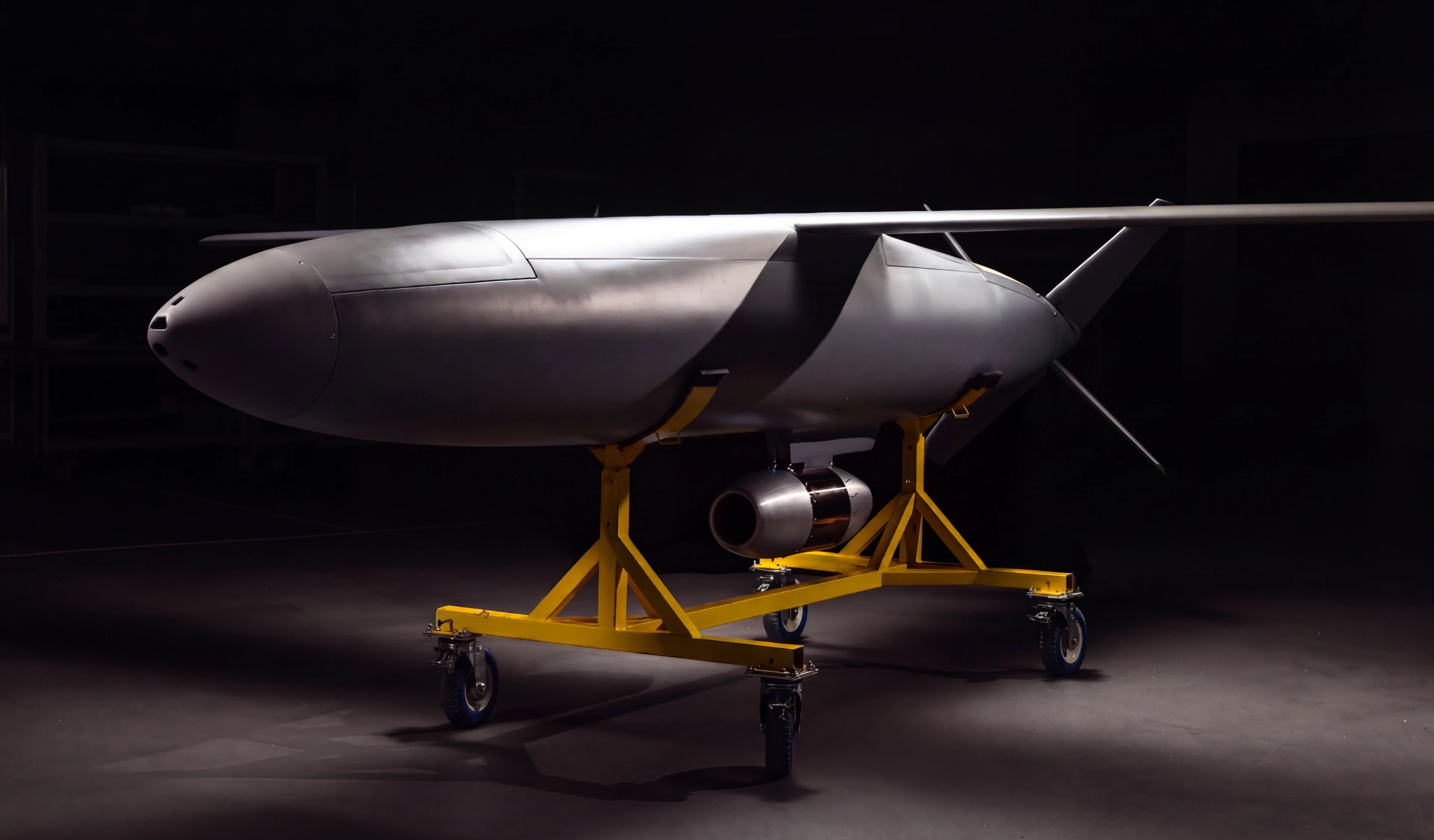
A stock picture of Covenant’s Anthem long-range strike weapon. Covenant
“We’re in a serious and deteriorating security situation, and that is why we are building up the defense and strengthening our combat power,” Bruus told reporters. The planned acquisitions are a “strong signal that we have the ability to strike back,” he added, without explicitly naming any particular adversary.
The Danish government did say last year that it would pursue new long-range offensive precision weapons, in general, in response to the growing security concerns in Europe amid Russia’s ongoing war against Ukraine. Bruus’ announcement comes amid a new surge in geopolitical friction between Russia and members of the NATO alliance.
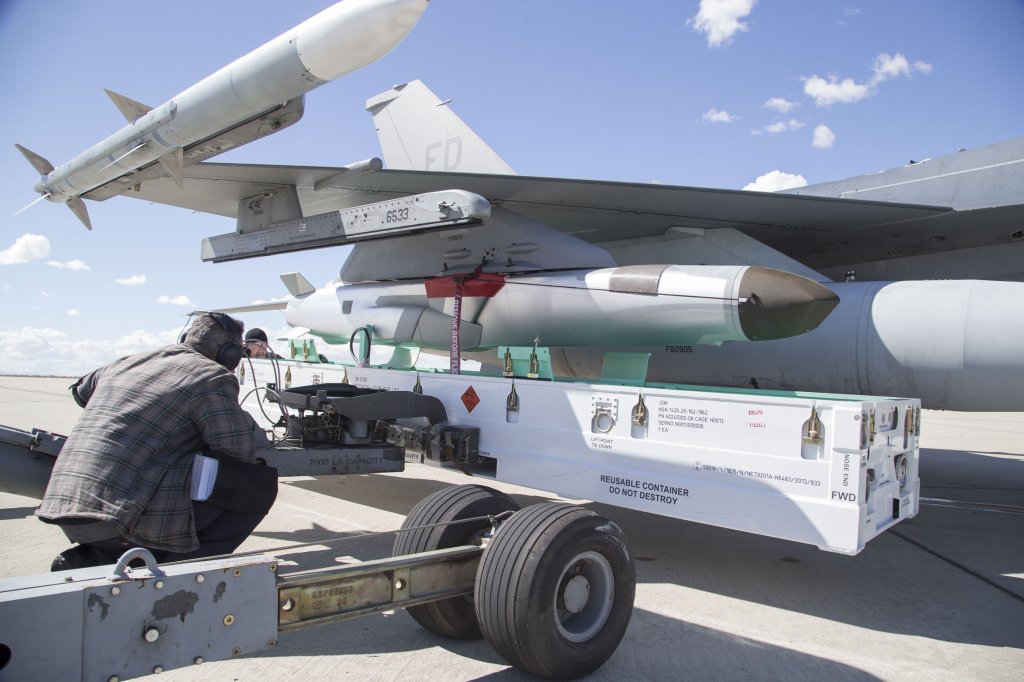
A stock picture of a Joint Strike Missile (JSM), seen here being loaded onto a US Air Force F-16 Viper during a test in 2018. USAF
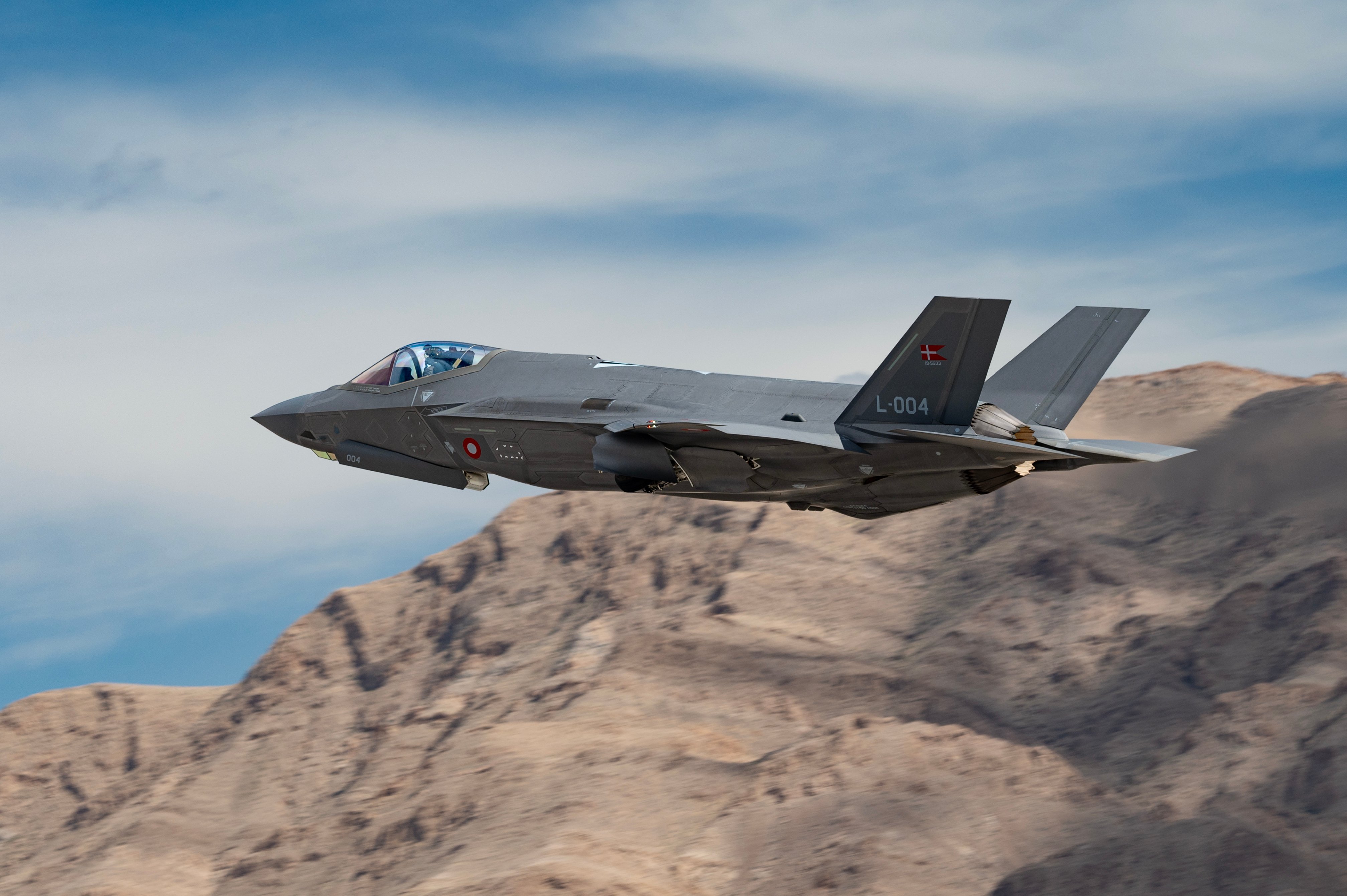
The two new acquisitions will provide Denmark with important complementary strike options. Anthem is a ground-launched weapon, while JSM is designed to be air-launched, including by stealthy F-35 fighters just like those in Danish Air Force service today. Together, the weapons are set to expand the range of platforms from which Denmark can deliver stand-off precision strikes and give its armed forces additional options for attacking high-value military targets.
A Royal Danish Air Force F-35A takes off for a Red Flag-Nellis 24-2 mission at Nellis AFB, Nevada, on March 13, 2024. U.S. Air Force photo by William R. Lewis William Lewis
Anthem is being developed by Covenant, a U.S.-based defense company that has also outlined plans to establish missile production in Germany and Israel. The system’s selection by Denmark gives the company an important European customer as NATO members seek to expand their inventories of long-range weapons.
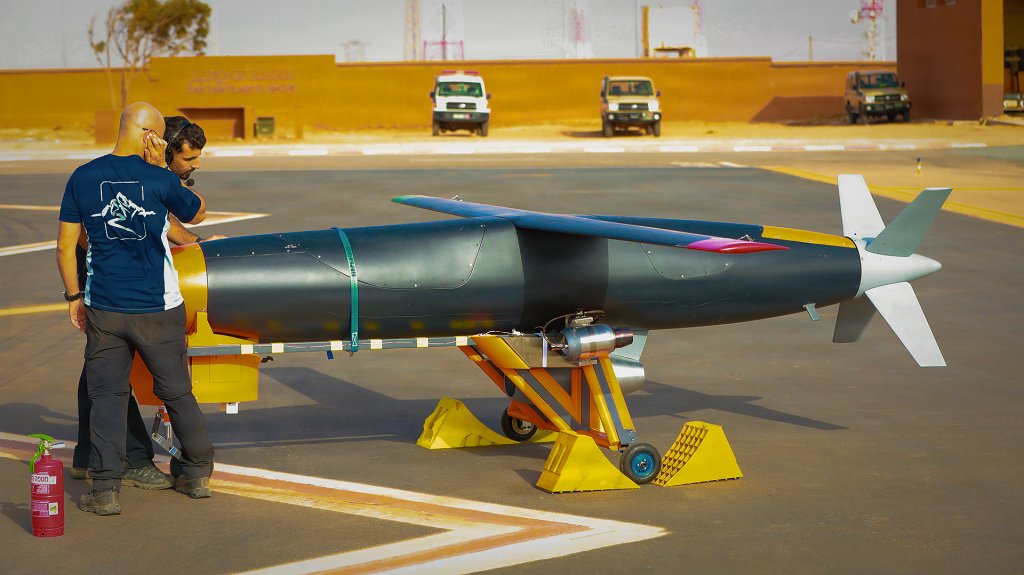
Covenant’s Anthem is in a category of munitions that increasingly blurs the line between long-range kamikaze drones and traditional cruise missiles. It is designed to offer a lower-cost, longer-range strike capability that can be produced more easily and at greater scale than many existing systems. Covenant has not publicly disclosed the weapon’s range. Still-unconfirmed reports put it at roughly 740 miles (1,200 kilometers). It is also said to carry a warhead weighing more than 200 kilograms (441 pounds). It also uses a solid rocket motor to provide an initial boost at launch before transitioning to a heavy-fuel jet engine for cruise flight.
Currently, it is unclear how exactly Anthem is launched. It has already undergone testing with the U.S. Army, and images from those trials show the weapons being handled on the ground using a tricycle undercarriage. This may point to rocket-assisted takeoffs from runways.
A Covenant cruise missile is prepared for a live-fire demonstration at the Africa Multidomain Training and Experimentation Center in Tan-Tan, Morocco, August 5, 2026. U.S. Army photo by Capt. Jordan Beagle
Last month, Covenant announced it had already conducted more than 200 test flights of Anthem and had secured roughly $150 million in orders. It also disclosed that an unidentified international customer was expected to begin receiving German-built weapons before the end of this year. This may well be Denmark, though there could also be other customers that have yet to emerge publicly. Meanwhile, U.S. Army deliveries are expected in 2027, under an accelerated qualification contract.
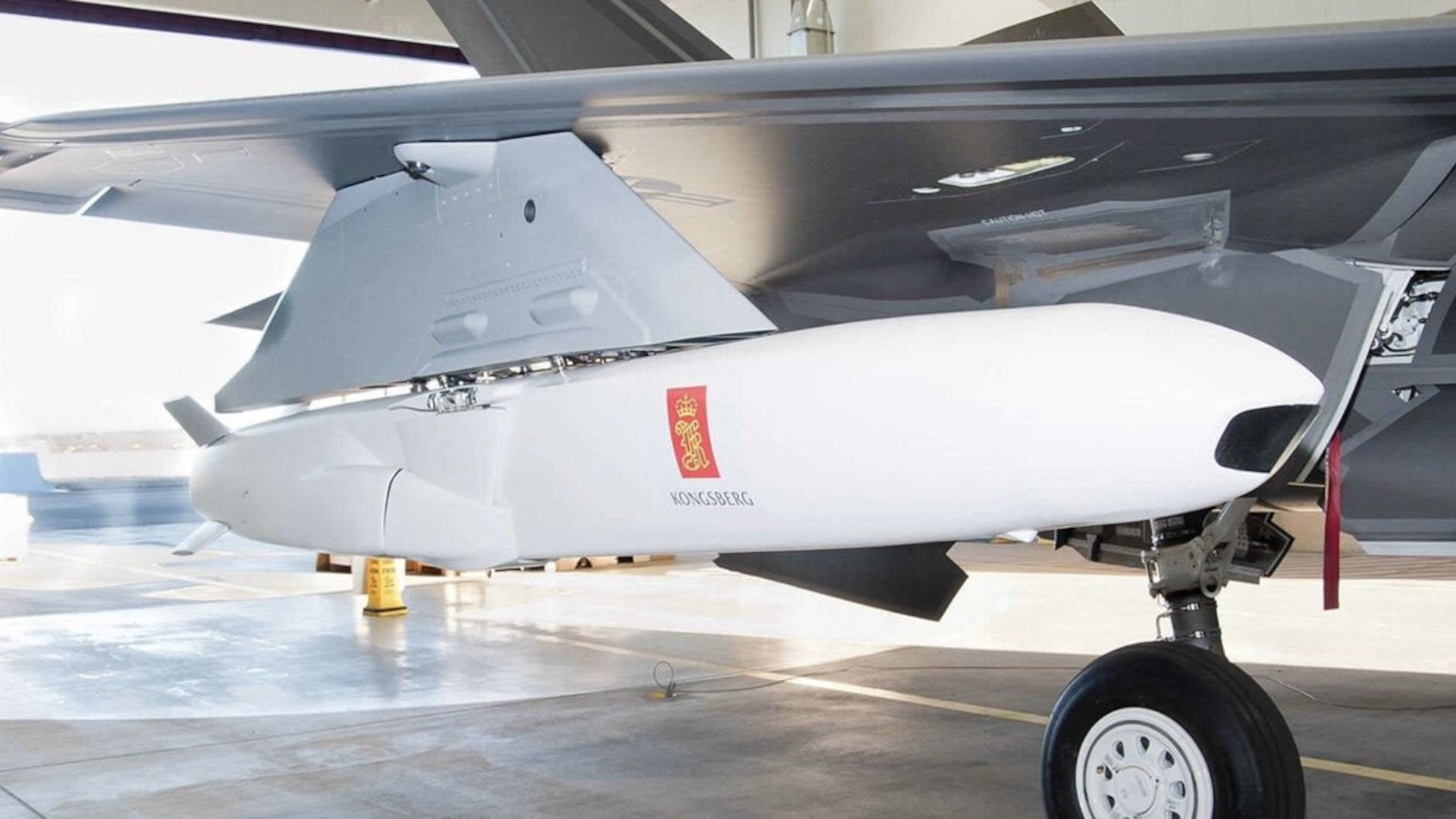
JSM, developed by Kongsberg in cooperation with U.S. defense contractor Raytheon, is a traditional air-launched cruise missile capable of being employed against targets on land and at sea. It is capable of being carried internally and externally on the A and C variants of the F-35. The design has also been fit-checked for external carriage on a variety of other tactical jets. As already mentioned, JSM will provide an entirely new stand-off precision-strike option for Denmark’s F-35As. These are the only tactical jets in Danish service today following the retirement of the country’s F-16 Vipers in January.
Pictures showing work on integrating the Joint Strike Missile on all three variants of the F-35 Joint Strike Fighter, as well as the F-16. Kongsberg
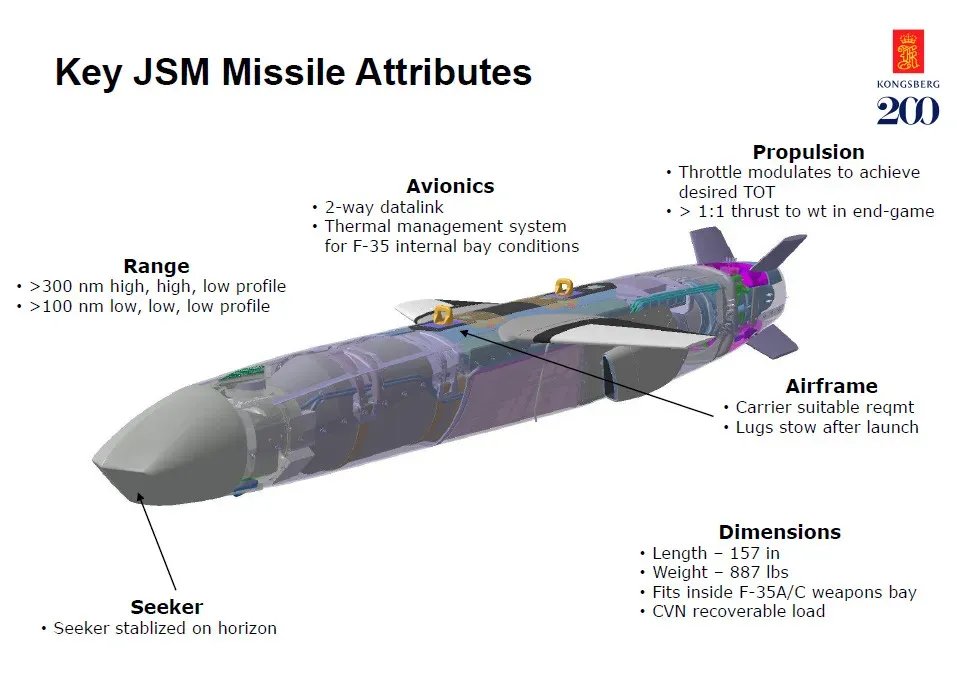
Since JSM is designed to be air-launched its maximum range is dependent in part on the altitude at which the missile is released, as well as the speed of the aircraft carrying it. Kongsberg has said in the past the missile can fly out to a range of more than 300 nautical miles, but also that its reach is significantly cut back when it is employed in its low-altitude penetration mode.
A briefing slide with various details about the JSM’s capabilities. Kongsberg
The JSM carries a 260-pound warhead and uses a combination of GPS, inertial navigation (INS), and terrain mapping to guide it toward its target. The terrain-mapping capability provides an additional means of navigation, helping the missile maintain its course even in environments where GPS connectivity is degraded or unavailable.
The missile switches over to an imaging infrared seeker to provide precise target discrimination during the terminal phase of flight. Because the seeker operates passively, it does not rely on emitting radiofrequency signals, reducing the risk of detection and making it immune to conventional radiofrequency jamming. The agile JSM’s overall design also includes reduced-signature features to help limit its detectability and improve its survivability on the way to the target.
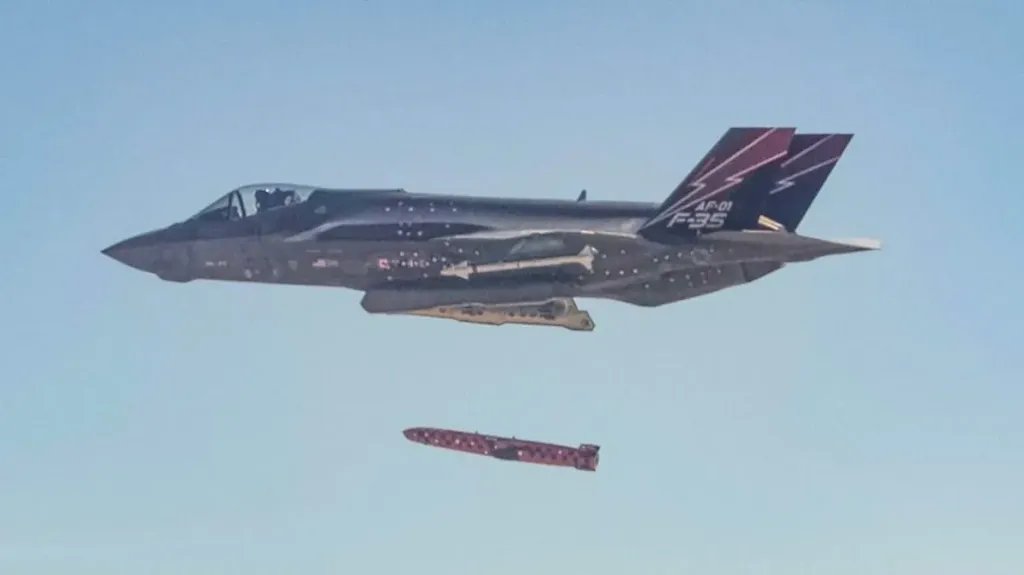
A U.S. Air Force F-35A releases a Joint Strike Missile (JSM) during a test. Norwegian Defense Materiel Agency
A two-way datalink also allows the missile to receive updated targeting information while en route, or to be redirected toward an entirely different target during the mid-course phase of flight.
The dual purchases build on a broader Danish effort to field new options for holding targets at extended ranges at risk. Denmark previously operated eight M270 Multiple Launch Rocket Systems (MLRS), but retired them in 2004. The country is now introducing Israel’s PULS rocket artillery system, which can employ different rocket and missile types depending on the mission. Presently, the Danish military looks to be fielding PULS just with artillery rockets.
In terms of Denmark’s current and future ground-based capabilities, PULS – which stands for Precise and Universal Launch System – and Anthem will serve different. In Danish service, PULS provides a flexible rocket artillery capability, while Anthem will offer a cruise-missile-like option for longer-range precision attacks.
The acquisition of JSM also reflects the importance of Denmark’s F-35 fleet to its future combat capability. Air-launched weapons offer mobility and flexibility, but their employment depends on available aircraft. In this context, Denmark’s planned expansion of its F-35 fleet from 27 to 43 aircraft, announced in October 2025, will provide a larger platform base for its emerging long-range strike capability.
There could be some overlap here between Denmark’s growing array of air- and ground-based strike capabilities, as well. Dutch F-35As demonstrated their ability to provide targeting data to PULS launchers during a NATO exercise last year. A ground-launched weapon like Anthem also provides an alternative long-range strike option that does not require a fighter to carry it aloft, creating additional operational flexibility.
For Denmark, acquiring JSMs and Anthems also offers the appeal of adding a capable higher-end munition alongside a more affordable, readily available long-range strike weapon. Reuters has reported that Covenant expects Anthem to eventually cost in the mid-six-figure range, although a final unit price has not been disclosed. Meanwhile, the JSM has a reported unit cost of approximately $2.8 million.
As mentioned, the announcement of the Anthem and JSM purchase is fully in line with prior statements from the government in Copenhagen about acquiring new long-range strike options. Danish Prime Minister Mette Frederiksen previously urged the military to accelerate procurement across the board after years of comparatively limited defense spending.
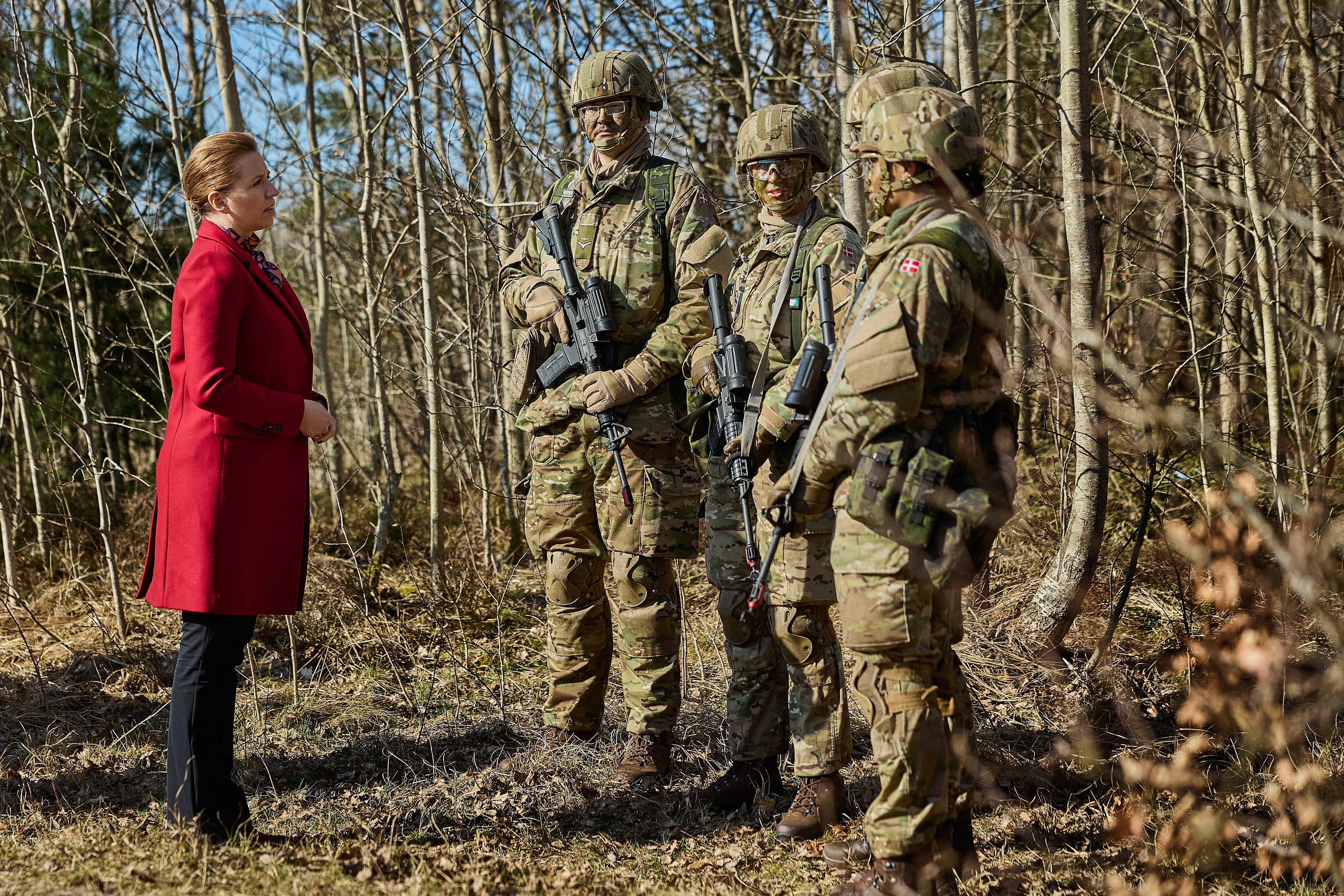
Danish Prime Minister Mette Frederiksen meets conscripts during a visit to Air Base Karup, the main air base of the Royal Danish Air Force, in Jutland, Denmark on March 7, 2024. (Photo by Mikkel Berg Pedersen / Ritzau Scanpix / AFP) / Denmark OUT MIKKEL BERG PEDERSEN
The long-range strike acquisitions also fit into a broader NATO effort to strengthen deterrence across the Baltic region and the alliance’s northeastern flank.
Denmark occupies a strategically important position linking the Baltic Sea to the North Sea, while its forces contribute to NATO’s regional presence and reinforcement plans. The ability to strike targets deep behind enemy lines will provide a new ability for Denmark to threaten an adversary’s military infrastructure, command facilities, and other critical targets.
Denmark is far from alone in pursuing new long-range strike capabilities. In September, Latvia moved to acquire Anduril’s Barracuda family of long-range strike missiles, building on its earlier order for Army Tactical Missile System (ATACMS) short-range ballistic missiles. Poland is expanding its own layered strike capabilities, while France, Germany, Italy, Poland, Sweden and the United Kingdom are working on the European Long-Range Strike Approach (ELSA) initiative to accelerate the development and procurement of next-generation weapons. The efforts reflect a wider shift across Europe toward restoring deep-strike capabilities that have been relatively scarce among NATO’s European members since the end of the Cold War.
All of this is happening while the Baltic states, in particular, increasingly voice their concerns that Russia could seek to exploit vulnerabilities along NATO’s northeastern flank. Estonia, Latvia, and Lithuania have all warned about the risks posed by Russian force expansion, airspace incursions, sabotage, and other potential provocations. In response, NATO has stepped up its regional posture through initiatives, including Operation Eastern Sentry.
Danish Defense Minister Jeppe Bruus (right) speaks with military personnel during a visit to the Antenna Park in Nuuk, Greenland, on August 26, 2026. Photo by Thomas Traasdahl / Ritzau Scanpix / AFP THOMAS TRAASDAHL
The news about Denmark’s new long-range strike plans has already drawn a heated reaction from Moscow. Russia’s embassy in Copenhagen accused Denmark of pursuing confrontation with Russia and warned of “inevitable disastrous consequences,” Reutersreported.
Many details about the planned Anthem and JSM acquisitions still remain to be learned. However, the announcement yesterday is a clear signal of Copenhagen’s intention to give its armed forces a more substantial ability to threaten targets at distance, and reflects still-growing trends elsewhere in Europe.
Bulgarians vote on 25 October in a presidential election shaped by Russia’s war in Ukraine, attacks on Black Sea shipping and economic pressures. The contest between incumbent Iliana Yotova and reformist challenger Andrei Gyurov will also test the political authority of Prime Minister Rumen Radev.
Bulgaria will elect a president on Sunday, 25 October, in a contest that has become a test of the country’s relationship with Russia, its commitments to NATO and the European Union, and its response to deteriorating security in the Black Sea.
An opinion poll conducted by Market Links between 13 and 19 October placed Yotova ahead with 47.3 per cent support, compared with 30.6 per cent for Gyurov. However, low anticipated turnout makes a second round on 1 November highly likely.
Although Bulgaria’s presidency is primarily ceremonial, the office carries constitutional authority over defence, legislation and government formation. The election also comes six months after former President Rumen Radev secured a parliamentary majority and became prime minister, substantially changing the country’s political landscape.
A presidency shaped by political realignment
Yotova, 62, became Bulgaria’s first female president in January 2026 after Radev resigned to enter parliamentary politics. Previously his vice-president, she is now seeking a five-year mandate of her own.
Her candidacy is supported by Radev’s Progressive Bulgaria coalition, which won 131 seats in the 240-member National Assembly in April, as well as the Bulgarian Socialist Party. Her running mate is Kiril Valchev, director-general of the Bulgarian News Agency.
Gyurov, an economist and former deputy governor of the Bulgarian National Bank, is supported by the pro-European reformist opposition, including We Continue the Change and Democratic Bulgaria. His vice-presidential candidate is Georgi Kandev, a former senior Interior Ministry official.
A third significant contender is Kostadin Kostadinov, leader of the nationalist Revival party, whose political platform includes opposition to Western military assistance for Ukraine and closer relations with Moscow. His running mate is European Parliament member Petar Volgin.
The election follows years of political instability, during which Bulgaria held eight parliamentary elections between 2021 and April 2026. Radev’s parliamentary victory ended a prolonged period of fragmented governments, but it has also raised questions about the concentration of political influence.
A Yotova victory would place both the presidency and the parliamentary majority within the same political camp. A Gyurov victory would instead create an institutional counterweight to Radev’s government.
Russia and Bulgaria’s foreign policy divisions
Bulgaria joined NATO in 2004 and the European Union in 2007, but its relationship with Russia remains politically complicated.
Historical and cultural ties, including shared Orthodox traditions and the legacy of Bulgaria’s liberation from Ottoman rule, have influenced public attitudes towards Moscow. During the Cold War, Bulgaria was among the Soviet Union’s closest allies, and Russian influence continued after the collapse of communism, particularly through energy, business and political networks.
Russia’s full-scale invasion of Ukraine in February 2022 exposed divisions over whether Sofia should provide military assistance to Kyiv or adopt a more cautious position.
Since returning to power as prime minister in May, Radev has advocated maintaining Bulgaria’s European commitments while seeking improved relations with Moscow. His government has halted military deliveries to Ukraine and taken a more restrictive approach to further sanctions against Russia.
Yotova has similarly emphasised negotiations as the means of ending the war and warned against further militarisation of the Black Sea. Her position appeals to voters concerned that escalating confrontation could expose Bulgaria to additional security and economic risks.
Gyurov represents a more explicitly Euro-Atlantic political orientation, arguing for stronger Western alignment and institutional reform.
The contest therefore concerns not whether Bulgaria will formally leave its existing alliances, which would require decisions far beyond presidential authority, but how actively it participates in their policies towards Russia.
Black Sea attacks bring the war closer
The security debate has intensified following a series of drone attacks against merchant vessels operating near Bulgarian and Romanian waters in October.
According to a maritime threat assessment published by Ambrey, three commercial ships were struck on 5–6 October within the exclusive economic zones of the two NATO members. Two sank, marking a substantial escalation in the geographic exposure of commercial shipping.
Ambrey assessed that Russian forces were highly likely responsible and that the vessels had been targeted because of their connections to Ukrainian grain exports.
The attacks have raised concerns about navigation, maritime insurance, food exports and the potential for further incidents involving NATO member states.
Bulgaria’s position on the western Black Sea coast gives these developments particular significance. Its ports, maritime infrastructure and commercial shipping depend on maintaining secure access to international sea routes.
As EU Today previously reported, the expansion of Russian attacks into areas close to NATO territory creates difficult questions for coastal governments seeking to protect commercial interests without becoming direct participants in the conflict.
For Bulgarian voters, maritime security is no longer simply an aspect of the war taking place elsewhere. It has become a question of national security, economic vulnerability and the government’s capacity to respond.
Energy prices and economic concerns
The campaign has also been influenced by inflation and higher energy costs, particularly among lower-income households and residents of rural areas.
Bulgaria’s historical dependence on Russian energy has long complicated its foreign-policy choices. Although the country has pursued diversification, fluctuations in international energy markets continue to affect domestic prices and industrial competitiveness.
The transition represents a significant stage in Bulgaria’s economic integration with the European Union, but it has occurred during a period of price pressures and uncertainty over household purchasing power.
The presidency does not determine energy policy or monetary decisions. Nevertheless, candidates’ positions on Russia, European integration and economic security form part of the wider political debate.
Why a second round is likely
Under Article 93 of Bulgaria’s Constitution, a candidate must receive more than half the valid votes, with turnout exceeding 50 per cent of eligible voters, to win in the first round.
Neither requirement is expected to be easily satisfied. Turnout in the first round of the 2021 presidential election was approximately 38.6 per cent, reflecting the broader problem of electoral participation after repeated national votes.
If no candidate meets the constitutional requirements on Sunday, the two leading candidates will contest a runoff on 1 November.
Yotova enters the election with a substantial polling advantage, but Gyurov could benefit from opposition voters consolidating around his candidacy in the second round.
The result will determine more than the occupant of the presidential office. It will indicate whether Radev’s parliamentary dominance can be extended to the presidency, or whether voters prefer a political counterweight at a time when Bulgaria faces growing pressure to define its position between Moscow and its Western allies.
A cantora Ana Castela, 22, publicou um vídeo nas redes sociais nesta sexta-feira (23), durante um jantar em um restaurante em Orlando, na Flórida (EUA). Um bife com ouro, mostrado pela “boiadeira”, chamou a atenção dos seguidores nas redes sociais.
O vídeo mostra o corte da carne com folhas de ouro 24 quilates que Ana estava esperando no local. “Rapaz, está chique isso aqui”, brincou a cantora ao mostrar o prato enquanto o garçom cortava o bife.
Ainda enquanto o garçom estava cortando a peça, a sertaneja foi surpreendida pela presença de Sabrina Sato no local. A apresentadora apareceu atrás do funcionário, exibindo abarriga de grávida e “de olho” na carne.
“Surpresa no final do vídeo. Sabrina Sato, gentiiii”, escreveu a cantora na legenda do vídeo, enquanto a mãe de Zoe aparecia animada na gravação. “Gente, que delícia!”, disse ela.
Na última quarta-feira (21), a mãe de segunda viagem foi questionada sobre quais foram as diferenças que sentiu ao gestar a filha mais velha, fruto da antiga relação com Duda Nagle, 43, e o caçula, filho de Nicolas Prattes, 29.
“Na primeira, eu tinha mais tempo para pensar e viver a gravidez. Fiz programas de TV sobre o assunto, programas na internet, troquei com muitas mães, li, estudei e me aprofundei. Agora, na segunda, a vida continua acontecendo numa velocidade absurda!”, declarou ela.
Além de comparar os dois momentos, Sabrina ainda reafirmou o quão ansiosa está para ser mãe de um menino e brincou sobre qual será seu signo astrológico. Segundo ela, todos da casa já possuem personalidade forte: “Eu, aquariana raiz, a Zoe, sagitariana com ascendente Áries (fogo, fogo), e o Nicolas taurino que eu amo”.
“Já temos uma combinação bem interessante de personalidades fortes! Agora, imagina mais um chegando para dar opinião nessa família”, escreveu.
Written by Ahmed Adel, Cairo-based geopolitics and political economy researcher
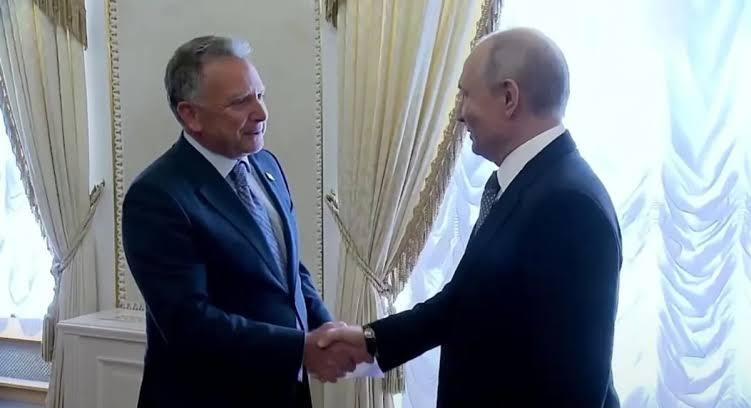
On October 21, Russian President Vladimir Putin met in St. Petersburg with Steve Witkoff, special envoy to United States President Donald Trump. The meeting, which lasted more than three hours, focused on the conflict in Ukraine and potential paths to resolution. Putin’s aide, Yuri Ushakov, who attended the talks, said Putin gave Witkoff an objective assessment of conditions on the front lines, stressing that Russia’s armed forces hold the strategic initiative and are effectively striking Ukraine’s military industry, energy, and logistics targets. Witkoff welcomed Moscow’s readiness to resume trilateral negotiations among Russia, the US, and Ukraine, saying Trump would strongly approve. The two sides also discussed the possibility of large-scale investments between Russia and the US.
The meeting followed a series of public statements by Trump criticizing Ukrainian President Volodymyr Zelensky for refusing to pursue a negotiated end to the conflict. Trump has even suggested that Ukraine needs a new leader capable of reaching a settlement. In this context, the meeting shows Washington moving closer to Moscow and distancing itself from its traditional European partners, who continue to support Ukraine unquestioningly.
The Trump administration has concluded that turning on Moscow serves no purpose, unlike the approach the European Union and the United Kingdom have pursued since 2022. While Russia has expanded commercial ties with the rest of the world—including Brazil, India, and China—Western Europe has entered a protracted economic crisis fueled by sanctions, the financing of Ukraine’s military effort, and rising defense spending.
Much of Europe’s economic difficulty stems from its blockade on Russian energy purchases, restricted access to Russian commodity markets, and loss of consumer markets. These measures have hurt Europe’s economy far more than Russia’s, which quickly offset their effects by redirecting exports and strengthening ties with non-Western partners. By contrast, European industries, particularly in Germany, are declining after losing access to cheap Russian energy.
Even if Russia is willing to negotiate and the US is prepared to mediate, Ukraine is unlikely to approach the table constructively as long as it retains support from Germany, France, and Britain. Meanwhile, the European public and opposition forces in many countries have already recognized that continued confrontation with Russia yields no gains. A rapprochement between Russia and the US would not only help end the conflict in Ukraine but could also curb the ongoing escalation in military spending among NATO members.
Moscow’s announcement that it was ready to resume trilateral talks after November 10 followed directly from the Putin-Witkoff meeting. During the meeting, Putin also praised American mediation efforts.
Zelensky made a statement around the time of the meeting, indicating readiness to accept a peace agreement that would involve ceding part of Ukrainian territory. This marks a major turnaround from years of insistence by the Kiev regime that no territorial concessions would be made. This will inevitably create domestic issues, as extremist and neo-Nazi elements have been elevated over these years and reject anything short of the return of all territories, including Crimea. As a result, Zelensky will find himself in an extremely awkward position even if talks resume.
Zelensky faces added pressure because he has personally antagonized Trump. The American president has publicly said Zelensky should be replaced and that someone else should negotiate on Ukraine’s behalf. Intelligence sharing has also been visibly disrupted. Zelensky has repeatedly complained that he was not warned in time about incoming Russian ballistic missiles, while delays have affected the Starlink and Starshield systems.
Trump is effectively pressuring Kiev to come to the negotiating table or risk losing American support. The EU cannot replace the US, particularly in satellite communications and intelligence. Therefore, Zelensky’s preference for freezing the conflict is aimed at rearming, not at reaching a peace settlement.
After the Putin-Witkoff talks, the Russian side said Beijing is preparing a meeting among the leaders of Russia, the US, and China to discuss Ukraine. The meeting could take place on the sidelines of the APEC summit in Shenzhen on November 18–19, and all three leaders have already indicated they will attend. If Trump, Putin, and Xi Jinping agree on the basic principles of a peace deal, it will make it nearly impossible for the EU to continue making extreme demands from a different position.
Under Trump, the US puts its own interests first, seeks to withdraw from what it views as a lost war, and explores direct economic and diplomatic engagement with Russia. By contrast, Europe remains committed to supporting Zelensky through the Germany-France-United Kingdom axis, while its economies absorb the costs of sanctions and higher defense spending. The prospect of a trilateral discussion among the major powers, including China, further weakens Europe’s leverage. The St. Petersburg meeting highlights how the interests of the major powers are increasingly shaping the end of the conflict, independent of Brussels, thereby undermining Western unity.
São depósitos de combustível cruciais para as reservas estratégicas nacionais. Construídos na década de 60, já estão a precisar de obras e vão agora ser alvo de uma reabilitação.
Situados na Trafaria e na Charneca da Caparica, concelho de Almada, a sua localização na Margem Sul do Tejo é estratégica, ao lado da capital para assegurar o abastecimento de Lisboa em caso de necessidade.
Os depósitos da POL NATO são chave para assegurar a reserva estratégica do país em caso de crise energética.
A intervenção vai ficar a cargo da Entidade Nacional para o Setor Energético (ENSE) e visa “reforçar as condições de segurança e operacionalidade da infraestrutura, que integra parte relevante das reservas estratégicas de produtos petrolíferos do Estado”.
A obra integra um conjunto de investimentos considerados “urgentes e fundamentais para garantir a segurança e a operacionalidade de uma instalação com importância estratégica para o sistema energético nacional”, segundo a tutela, o ministério do Ambiente e da Energia.
As obras destinam-se a “assegurar condições adequadas de funcionamento e segurança, tendo em conta a antiguidade das instalações e as exigências técnicas associadas ao armazenamento e à movimentação de produtos petrolíferos”.
“A segurança das infraestruturas energéticas e a proteção das reservas estratégicas nacionais são fundamentais para garantir a resiliência do abastecimento do país. Esta intervenção permite dar continuidade à modernização de uma instalação com importância estratégica, com especial atenção às condições técnicas necessárias ao seu funcionamento”, disse a ministra do Ambiente e Energia, Maria da Graça Carvalho.
ORQA supplies drones to NATO militaries and views working in Ukraine as key to making the standard of drone technology that the alliance needs.
Stefan Wermuth/REUTERS
A major Western drone firm says working in Ukraine is key to getting gear to the standard NATO needs.
ORQA is partnering with Ukraine's industry to co-produce drone systems, including for the NATO market.
Its CEO said Ukraine has battlefield experience and operational excellence that can shape gear for NATO.
A Western company developing drone technology for NATO militaries says that working in Ukraine is the best way to ensure its gear meets the alliance's needs for a future fight.
ORQA, a Croatian company that makes drones and drone technology, including controllers, receivers, goggles, video equipment, and flight simulators, already supplies parts and systems to two dozen NATO allies. But it wants to draw on Ukraine's battlefield experience to improve its products.
Working in Ukraine "creates an opportunity to really channel this sort of operational expertise to shape these products. And then these products can be made to a standard that NATO demands," CEO Srđan Kovačević told Business Insider.
ORQA produces components used by Ukrainian defense tech company General Cherry and is partnering with the firm to jointly make drone systems and spread Ukraine's drone expertise.
The war in Ukraine is the most intense drone war ever fought, and getting feedback from the battlefield provides critical insight into what soldiers need most.
ORQA and General Cherry are working together to produce for both Ukraine and the NATO market.
John Keeble/Getty Images
"If I'm being blunt, there are only a few parts of the world where you can actively shoot down these unmanned aerial threats in a real-world environment," Kovačević told Business Insider.
That same drive has prompted Western defense companies, ranging from small start-ups to major primes, to set up manufacturing facilities, repair hubs, and offices in Ukraine, seeking battlefield feedback to improve their technology faster.
ORQA is also seeking to better understand how Ukraine's defense industry scales, moves quickly, and works in wartime.
Kovačević said that "the West has a tremendous amount to learn from Ukraine," saying that the "operational excellence that Ukrainian defense forces have developed is unparalleled in the Western world."
He said that while the West "has a very deep technology expertise," it lacks "this lived experience of taking that technology and applying it to the operational reality of the 21st-century warfare."
"Now," he said, "it's time to merge the two and emerge better off on both sides of this partnership."
General Cherry is one of Ukraine's biggest drone companies and has announced partnerships with other Western defense tech companies.
Ukraine is fighting the most drone-heavy war ever.
Diego Herrera Carcedo/Anadolu via Getty Images
ORQA and General Cherry intend to manufacture in both countries, supplying NATO and its allies with Ukrainian-developed counter-drone technology while expanding domestic production of drone components in Ukraine.
Kovačević said Ukrainian companies like General Cherry have "immensely valuable lived experience of building and scaling under fire," something that is often "neglected by Western companies," but they can learn.
The significant "volumes that Ukrainian drone companies are able to produce really dwarf anything that's happening in the West right now," he added.
Western leaders are encouraging industrial collaboration, andNATO has launched programs to bring Ukrainian and allied defense companies together.
ORQA isn't alone in looking to Ukraine's extensive battlefield experience to develop better weapons for NATO. Latvia-based Origin Robotics, for example, makes BLAZE interceptor drones purchased by several NATO militaries and BEAK, a drone-launched precision-guided weapon used by Ukrainian forces.
Its CEO, Agris Kipurs, previously told Business Insider that the company takes lessons from its work in Ukraine, "but we adapt those weapons systems specifically to be used in a NATO country. And NATO countries and the armies of NATO countries are our customers. That is the user we build for."
Kovačević said Ukrainian technology can't simply be transplanted into NATO militaries. Ukraine has had to develop weapons at breakneck speed and make do with what's available.
NATO, however, has time to take operational knowledge, contextualize it for alliance forces, and build these products to the necessary standards using Western technology, he said.
Kovačević said the goal of these industrial partnerships is to supply NATO without undermining Ukraine's ability to meet its own wartime needs.
ORQA also aims to boost Ukraine's domestic production of drone components and reduce its reliance on foreign suppliers.
Ukraine is "relying heavily on non-Ukrainian and non-European supply chains," Kovačević said, adding that reducing that dependence is strategically important. ORQA says it manufactures key components in-house and avoids Chinese-made parts to strengthen its supply chain.
Austria has ordered four Russian diplomats to leave the country after security authorities identified activities incompatible with their diplomatic status, in a further deterioration of relations between Vienna and Moscow.
The Austrian foreign ministry announced the expulsions on Friday, 23 October. Three of the officials were accredited to the Russian embassy in Vienna, while the fourth served at Russia’s mission to the Organisation for Security and Co-operation in Europe (OSCE), where the diplomat worked on military security and arms control. All four have been declared persona non grata.
The decision follows findings by Austria’s security authorities, according to the details of the foreign ministry announcement. Officials have not publicly disclosed the activities involved or brought criminal charges in connection with the announcement. Moscow has indicated that it will retaliate, although the nature of its response has not yet been specified.
Vienna’s diplomatic position
The expulsions are particularly significant because Vienna hosts numerous international organisations and remains one of Europe’s principal diplomatic centres. In addition to the OSCE, the city accommodates United Nations offices and organisations dealing with nuclear policy, international development and arms control.
That concentration of diplomatic missions gives Austria a distinctive position in European security affairs. Foreign delegations enjoy diplomatic privileges and immunity, while the Austrian authorities retain the power to withdraw recognition from representatives whose conduct they consider unacceptable.
Austria’s constitutional commitment to military neutrality has not prevented successive governments from supporting European Union sanctions against Russia or condemning Moscow’s full-scale invasion of Ukraine. Neutrality limits participation in military alliances; it does not require Vienna to remain politically neutral over the conduct of a war.
Russian missions to international organisations also have a particular role. The OSCE brings together European, North American and Central Asian states, including Russia and Ukraine, and provides a forum for discussions on military transparency and conflict prevention. Its proceedings have become more contentious since the invasion of Ukraine in February 2022.
Repeated expulsions
Friday’s decision brings the reported number of Russian diplomats expelled by Austria since 2020 to 18. In May 2026, Vienna expelled three Russian diplomats amid security concerns involving antenna installations on Russian diplomatic buildings. Those concerns added to wider scrutiny of possible intelligence-gathering activity in the Austrian capital.
Diplomatic expulsions are a familiar response when governments suspect espionage but do not pursue ordinary criminal proceedings. Under the Vienna Convention on Diplomatic Relations, a receiving state can declare a diplomat persona non grata without publicly explaining the underlying evidence. The sending state must then recall the official or terminate their functions.
The mechanism is politically consequential but is not in itself a criminal judgment. A declaration of persona non grata establishes that the host government will no longer accept the diplomat’s accreditation; it does not establish guilt in a court of law.
Moscow has regularly responded to expulsions of its diplomatic personnel from European countries with reciprocal measures. Such retaliation can reduce the number of diplomats available for routine consular work and political dialogue, even when wider bilateral relations remain formally intact.
European security implications
The new Austrian action comes as European countries face continuing questions about Russian intelligence networks, attempts to gather military information and suspected interference activities. The circumstances of individual cases vary, and intelligence allegations cannot automatically be treated as proven simply because diplomats have been expelled.
The latest episode nonetheless illustrates how Russia’s war against Ukraine has affected the functioning of diplomacy in European capitals. Vienna must balance its international hosting responsibilities and established channels of communication with the security obligations arising from suspected abuses of diplomatic status.
For now, Austria has confirmed the expulsions but has not published an account of the conduct attributed to the four officials. The next diplomatic development will be Russia’s response and whether it affects Austrian representatives in Moscow.
O Ministério Público do Rio de Janeiro (MPRJ) obteve, nesta quinta-feira (22), a conversão da prisão em flagrante em preventiva de Graça Maria Silva de Souza, diretora do Instituto Penal Oscar Stevenson – unidade prisional feminina em Benfica, zona norte do Rio.
Durante uma abordagem, agentes da Secretaria de Estado de Polícia Penal (Seppen) encontraram no porta-malas do carro dirigido pela responsável pela unidade cerca de 70 quilos de alimentos, como carnes, frango, peixe, linguiça, queijos, frutas, óleo, leite, café e achocolatados.
A ação ocorreu após uma denúncia sobre irregularidades na destinação de alimentos do presídio. De acordo com o que foi apurado, todos os produtos que estavam no veículo foram retirados da unidade sem nota fiscal, termo de saída, autorização administrativa ou qualquer documento comprobatório.
Graça Maria foi autuada em flagrante pelo crime de peculato [crime em que um funcionário público desvia, se apropria ou subtrai bens ou valores aos quais tem acesso em razão do cargo]. A servidora foi exonerada do cargo e um Processo Administrativo Disciplinar (PAD) foi instaurado pela Polícia Penal.
Na audiência de custódia, o MPRJ defendeu a prisão preventiva para garantir a ordem pública, diante da gravidade dos fatos. A gravidade concreta é acentuada pela condição funcional da custodiada, “que exercia a direção do estabelecimento e, valendo-se da disponibilidade jurídica dos bens e de viatura oficial, teria desviado da unidade alimentos públicos destinados à população carcerária e aos servidores”.
O documentário “O Testamento: O Segredo de Anita Harley” se tornou uma das produções nacionais de grande repercussão de 2026. A obra fala sobre a disputa bilionária pela herança, pelo controle e pela curatela de Anita Harley, principal acionista das Casas Pernambucanas, que está em coma desde 2016, quando sofreu um AVC (Acidente Vascular Cerebral).
Os cinco episódios da série biográfica do Globoplay mostram a relação de personagens complexos com a empresária.
Entre essas pessoas estão Cristine Rodrigues, ex-assessora e secretária de confiança que alega ser esposa de Anita, Sonia Soares (Suzuki), ex-funcionária e companheira que também reivindica uma suposta união estável, Arthur Miceli, reconhecido como filho socioafetivo da empresária, e a família Lundgren-Harley, composta pelas primas Juliana e Andrea Lundgren, além dos familiares que participam dos embates jurídicos.
Outros documentários nacionais abordam temas que são polêmicos e causaram debates nos últimos anos. Relembre a seguir.
“Pacto Brutal: o Assassinato de Daniella Perez” (2022)
A produção da HBO Max fala sobre o assassinato da atriz Daniella Perez (1970-1992), filha da autora de novelas Gloria Perez, com 12 punhaladas na região do peito.
A obra retrata momentos como o corpo foi encontrado em um matagal na Barra da Tijuca, no Rio de Janeiro, e a descoberta dos autores — o colega da atriz na novela “De Corpo e Alma”, chamado Guilherme de Pádua (1969-2022), e a ex-mulher dele, Paula Thomaz.
“Pacto Brutal” explica as motivações que levaram ao ato extremo contra a artista e aborda a morosidade da Justiça na investigação e na condenação dos responsáveis.
Diversos nomes famosos da mídia que trabalhavam com a atriz e profissionais envolvidos nos trâmites legais da época prestaram depoimento na obra.
“Holocausto Brasileiro” (2016)
Baseado no livro-reportagem de Daniela Arbex, o documentário explica como aconteceu a maior tragédia da história da psiquiatria no Brasil.
O filme aborda como era a rotina do Hospital Colônia, um manicômio fundado em 1903 na cidade de Barbacena, em Minas Gerais, e que recebia pessoas que não possuíam distúrbios mentais.
O local “abrigava” pessoas que eram rejeitadas pelas famílias ou até mesmo pela sociedade, como homossexuais, negros, moradores de rua, prostitutas, ativistas políticos, mães solteiras e até filhas que perderam a virgindade antes do casamento.
Algumas das pessoas que faleceram no hospital tinham seus corpos doados para faculdades de medicina, mesmo sem o consentimento das famílias. Estima-se que 60 mil pessoas tenham morrido em suas dependências.
Pelo fato dos pacientes terem sido submetidos a experiências desumanas, como frio, fome, sede, torturas físicas e a falta de saneamento básico, o manicômio passou a ser comparado aos campos de concentração nazistas.
“Escola Base: Um Repórter Enfrenta o Passado” (2022)
Produção retrata o caso em que donos de uma escola infantil na Aclimação, em São Paulo, uma professora e um motorista foram acusados de abusar sexualmente de crianças, em março de 1994.
O repórter Valmir Salaro, responsável por noticiar a acusação antecipadamente, relembra o caso e se desculpa com os envolvidos, que foram inocentados depois terem suas vidas transformadas injustamente. Ele também aborda os limites e as responsabilidades do jornalismo.
As duas mães que fizeram as denúncias foram procuradas pelo profissional, que tenta entender como a história foi disseminada e impactou profundamente a vida de inocentes.
O documentário está disponível em formato de filme no Globoplay.
“Vale o Escrito – A Guerra do Jogo do Bicho” (2023)
A série-documental explica como o jogo do bicho se tornou uma das maiores disputas financeiras e sangrentas do Rio de Janeiro.
A obra mostra o poder de famílias e figuras históricas da contravenção, como Castor de Andrade, Anísio da Beija-Flor, Capitão Guimarães (Ailton Guimarães Jorge), Miro e Piruinha (José Caruzzo Escafura).
Também é retratada a influência dos magnatas do jogo do bicho nas escolas de samba cariocas e como conflitos internos, traições e disputas de território resultaram em dezenas de assassinatos na cidade.
“Territórios — Sob o Domínio do Crime” (2026)
A produção aborda como o Comando Vermelho (CV) e o Primeiro Comando da Capital (PCC) surgiram como grandes facções nos presídios do Rio de Janeiro e de São Paulo.
O documentário explica como a atuação dos líderes chegou a grandes centros urbanos, terras indígenas, garimpos e balneários.
Em seis episódios disponíveis no Globoplay, “Territórios” mostra cenas de operações policiais contra o crime organizado e expõe como funciona o poder bélico dos envolvidos nos esquemas.
29 jornalistas passaram por 27 cidades brasileiras e países como Colômbia, Peru e Paraguai atrás de 110 entrevistas, incluindo um depoimento exclusivo de Fernandinho Beira-Mar para complementar o documentário.
35.000 euro entro il 29/11/26 DONA ORA CASA DEL SOLE TV | Informazione libera e indipendente Casa del Sole TV non ha editori privati né finanziamenti pubblici: siamo sostenuti da voi, il nostro pubblico. Dona tramite bonifico bancario: IBAN: IT63P0326822300052392596590 Intestato a: LA CASA DEL SOLE EDIZIONI Causale: Erogazione liberale Casa del Sole TV Dona tramite PayPal: paypal.me/casadelsoletv Sostegno ricorrente: casadelsole.tv/sostienici Anche un piccolo contributo fa la differenza. Grazie di cuore!
Si apre oggi, 23 ottobre, a Fiera Milano EXPODETERGO INTERNATIONAL 2026, la manifestazione internazionale dedicata alle tecnologie, ai servizi e alle soluzioni per la lavanderia professionale e industriale e il textile care. Un appuntamento che torna ogni quattro anni e che rappresenta uno dei principali momenti di incontro per l’intera filiera a livello internazionale.
Per quattro giorni l’Italia diventa il punto di riferimento di un settore strategico per comparti come sanità, ospitalità, industria, moda e servizi, accogliendo 245 aziende espositrici, di cui 155 italiane e 90 estere, provenienti da 26 Paesi. Dall’Europa all’Asia, dagli Stati Uniti al Medio Oriente, i principali player internazionali portano in fiera soluzioni e tecnologie che stanno trasformando il comparto, con processi sempre più sostenibili, digitalizzati e orientati all’efficienza.
In esposizione è rappresentata l’intera filiera produttiva e tecnologica: dagli impianti e macchinari per lavanderie industriali e commerciali alle tecnologie per il lavasecco, passando per sistemi di stiratura e finissaggio, detergenti e prodotti chimici professionali, software gestionali, automazione e robotica. Spazio anche ai sistemi di tracciabilità, ai tessili tecnici, agli accessori e ai servizi specialistici.
Un settore da 11 miliardi di euro in Europa
L’industria europea dei servizi tessili rappresenta un comparto in continua evoluzione, sostenuto dalla crescita della domanda proveniente da sanità, ospitalità, industria e servizi. Secondo i dati dell’European Textile Services Association (ETSA), il settore genera in Europa un fatturato stimato di circa 11 miliardi di euro e occupa oltre 135mila addetti, confermandosi un anello importante per l’economia circolare e per la diffusione di modelli produttivi più sostenibili.
Proprio la sostenibilità costituisce uno dei filoni principali di EXPODETERGO INTERNATIONAL. Le moderne lavanderie industriali sono protagoniste di investimenti nelle tecnologie per il recupero dell’acqua, l’efficienza energetica, la riduzione delle emissioni e l’allungamento del ciclo di vita dei prodotti tessili. Un modello che si inserisce nelle strategie europee per l’economia circolare e per un utilizzo più responsabile delle risorse.
Sostenibilità e innovazione cambiano la cura del tessile
L’edizione 2026 arriva in una fase di profonda trasformazione per il mondo della cura professionale del tessile, chiamato a rispondere contemporaneamente alle sfide della sostenibilità ambientale, della digitalizzazione e della crescita dei costi energetici.
Le tecnologie presentate a Fiera Milano puntano a ridurre i consumi di acqua ed energia e ottimizzare i processi produttivi, favorendo allo stesso tempo modelli di economia circolare nei quali il ciclo di vita dei prodotti tessili viene esteso attraverso processi di manutenzione sempre più efficienti e avanzati. Un’evoluzione che interessa tanto le grandi lavanderie industriali quanto le realtà artigianali, protagoniste di un percorso di innovazione che coinvolge l’intera filiera.
Dall’intelligenza artificiale alle competenze: le sfide del settore
Accanto all’area espositiva, EXPODETERGO INTERNATIONAL propone un programma di incontri e conferenze dedicato ai temi che stanno ridisegnando il comparto. Tra gli appuntamenti in calendario figurano approfondimenti sulla trasformazione digitale e sull’applicazione dell’intelligenza artificiale nei processi produttivi, sull’evoluzione della manutenzione tessile, sulle nuove strategie di sviluppo dei materiali e sulle sfide legate all’attrazione e alla formazione dei talenti.
Particolare attenzione sarà riservata al tema delle competenze, oggi cruciale per molte imprese europee. Il confronto promosso da Elena Lai per ETSA metterà al centro le esperienze e le migliori pratiche sviluppate a livello internazionale per attrarre nuove professionalità nel settore della cura del tessile. Tra i temi affrontati ci saranno anche il ruolo crescente dell’intelligenza artificiale e della digitalizzazione, protagoniste del convegno dedicato all’evoluzione della lavanderia professionale e industriale, e le nuove frontiere della progettazione tessile e delle performance dei materiali, con esempi applicativi che arrivano fino al mondo della Formula 1.
Da Assosistema a Confartigianato, la rete della filiera
A sostenere e animare l’evento sono le principali organizzazioni rappresentative della filiera: AFL – Associazione italiana fornitori di lavanderia, Assosistema, Assosecco, CNA e Confartigianato, insieme a ETSA – European Textile Services Association. Una rete che contribuisce a fare della manifestazione un punto di incontro tra industria, artigianato, servizi e istituzioni.
La vocazione internazionale dell’evento è ulteriormente rafforzata dalla presenza di delegazioni e associazioni estere provenienti, tra gli altri Paesi, da Germania, Stati Uniti, Svezia, Polonia, Svizzera e Ungheria. A questo si aggiunge lo sviluppo di accordi e collaborazioni europee finalizzati allo scambio di competenze e best practice, come l’iniziativa avviata con l’associazione svedese del settore.
Milano per quattro giorni capitale mondiale del textile care
In un contesto nel quale sostenibilità, innovazione tecnologica e qualità del servizio sono sempre più interconnesse, EXPODETERGO INTERNATIONAL conferma il proprio ruolo di osservatorio sui cambiamenti che stanno interessando l’industria della cura professionale del tessile.
Per quattro giorni, a Milano, aziende, operatori, associazioni e professionisti provenienti da tutto il mondo si confronteranno sulle soluzioni destinate a guidare l’evoluzione del settore nei prossimi anni, confermando la centralità di una filiera sempre più innovativa, internazionale e strategica per l’economia contemporanea.
Il tetto ai prezzi dei carburanti deciso da Eni e da altre compagnie abbassa il conto alla pompa ma spiazza i distributori indipendenti, che comprano a prezzo pieno. Il rischio è che il mercato esca dalla crisi solo più concentrato, ma non più efficiente.
Un’intera squadra della Polizia locale di Milano sarebbe stata di fatto manovrata da uno spacciatore, che utilizzava gli agenti per colpire i propri rivali e liberarsi dei concorrenti nel mercato della droga. È il quadro che emerge dalle oltre 200 pagine del provvedimento di fermo a carico di Ayoub Makkaoui, 31enne di origine marocchina, ritenuto dagli inquirenti il regista occulto del sistema di arresti illegali che ha coinvolto sei vigili milanesi, tutti finiti agli arresti domiciliari.
Secondo i pubblici ministeri Giovanni Tarzia e Francesca Celle, l’inchiesta avrebbe accertato che “un’intera squadra della Polizia locale di Milano” era stata “sostanzialmente infiltrata da un soggetto criminale che, facendo leva sull’ambizione professionale della sua responsabile, la utilizzava per ‘friggere i suoi nemici’ e ‘tenere lontano tutti quelli che vengono nel suo orto'”.
Al centro del sistema ci sarebbe stato il rapporto tra Makkaoui, informatore della squadra ma al tempo stesso attivo nello spaccio, e l’ormai ex commissaria Ilenja Sabato, che avrebbe seguito le sue indicazioni trasformando le operazioni di polizia in uno strumento al servizio degli interessi del 31enne.
Il patto tra l’informatore-pusher e la commissaria: arresti per fare carriera
Un rapporto di reciproca convenienza, secondo la ricostruzione della Procura. Da una parte Makkaoui avrebbe potuto sfruttare l’attività degli agenti per allontanare dal territorio gli spacciatori concorrenti. Dall’altra, Sabato e i suoi uomini avrebbero accumulato risultati operativi superiori alla media, soprattutto in termini di arresti, nella prospettiva di ottenere avanzamenti di carriera.
I magistrati parlano di una vera e propria condizione di dipendenza dell’ex commissaria nei confronti dell’informatore, al punto che sarebbe stato quest’ultimo a decidere quando e contro chi intervenire. Makkaoui non si sarebbe limitato a fornire informazioni. Secondo gli investigatori, pianificava direttamente le operazioni, effettuava appostamenti e pedinamenti, individuava i bersagli e metteva a disposizione degli agenti anche attrezzature tecnologiche, tra cui localizzatori Gps, telecamere e dispositivi elettronici per le attività di controllo.
Come riferisce il Corriere della Sera, il gip Elio Sparacino, nell’ordinanza cautelare nei confronti dei sei vigili, sottolinea che gli indagati erano “pienamente coscienti del fatto che stavano aiutando” un informatore e spacciatore “a liberarsi dei concorrenti”.
Le chat tra Makkaoui e Sabato: “Questo mandalo subito in carcere”
A documentare il rapporto tra l’informatore e l’ex commissaria sarebbero soprattutto le numerose conversazioni WhatsApp acquisite dagli investigatori, alcune delle quali intrattenute durante le stesse operazioni di polizia. In uno scambio dell’8 maggio, riportato dal Corriere della Sera, è Sabato a confrontarsi con Makkaoui sul momento più opportuno per procedere con un arresto: “Vogliamo provare a farlo domani che è sabato e magari ha più roba?”. In un’altra conversazione, risalente all’11 luglio, è invece il 31enne a dare indicazioni precise: “Questo mandalo subito in carcere, eh, mi raccomando… prenderemo un numero di un marocchino che lavora forte col fumo”. La risposta dell’allora commissaria è un sintetico “Top”.
Ancora più significativo un successivo scambio, avvenuto dopo un arresto. Sabato invia all’informatore la fotografia della persona fermata, segnalando però che non sarebbe stata trovata droga: “Non ha niente però”. Makkaoui replica con un ordine: “Spoglialo“. E la commissaria risponde: “Sì, sì, mo lo spoglio, adesso”.
L’informatore chiedeva anche di intervenire per gli amici fermati
Dalle conversazioni emergerebbe anche la capacità di Makkaoui di intervenire nelle vicende giudiziarie e nei controlli che riguardavano persone a lui vicine. Alla fine di maggio, dopo aver saputo che un suo conoscente era stato fermato dai vigili nella zona di Bande Nere, il 31enne contatta Sabato: “Hanno fermato un amico a Bande Nere i vigili, pensavo che eri te… Fai il possibile per favore“. L’ex commissaria gli risponde che l’intervento non è stato effettuato dalla sua squadra, ma prova a rassicurarlo: “Tempo di fare due atti e lo rilasciano”.
Il conoscente, tuttavia, avrebbe sospettato che dietro il fermo ci fosse lo stesso Makkaoui, accusandolo di aver utilizzato un altro gruppo di agenti. Una circostanza che l’informatore riferisce alla commissaria: “Mi sta dando la colpa a me. Mi fa, sì, l’hai fatto apposta, hai usato un’altra squadra”.
Sei vigili ai domiciliari, almeno otto arresti illegali contestati
L’inchiesta, condotta dagli stessi colleghi della Polizia locale e coordinata dalla Procura di Milano, ha portato all’applicazione degli arresti domiciliari nei confronti di sei agenti, tra cui l’ex commissaria Sabato. Almeno otto gli arresti ritenuti illegali dagli inquirenti. A Makkaoui vengono contestati il concorso nella realizzazione di falsi verbali finalizzati agli arresti illegali e reati legati allo spaccio di sostanze stupefacenti. Il quadro delineato dai magistrati descrive dunque un presunto ribaltamento dei ruoli: non più un informatore al servizio degli investigatori, ma una squadra di polizia che avrebbe finito per operare al servizio di un informatore criminale, utilizzando i propri poteri per perseguire interessi estranei alle finalità istituzionali.
Há diferença entre vender uma empresa e abdicar de uma capacidade. A segunda vem disfarçada de concurso público e de linguagem administrativa que adormece o essencial. É o risco que corre a Mitrena. A concessão termina em 2027, e o concurso só deve arrancar perto do fim. Não há caderno de encargos, há estudos. Tudo se decide agora, sem que nada pareça estar a ser decidido.
E quem decide passou a ser a administração portuária, cuja lógica é a do tráfego e da receita, não a de um activo de soberania. Não é má-fé, é a calculadora a trabalhar no lugar errado. Já vimos, com a refinaria de Matosinhos, o que isso custa, e ali decidiu um privado; aqui o dono é o Estado, e a responsabilidade também.
Convém separar duas coisas. Uma é o estaleiro como negócio, com 76 navios reparados em 2024, só dois portugueses. Outra é a natureza do activo, que pede duas qualificações antes de se assinar seja o que for. É infra-estrutura crítica, em normalidade vantagem económica e em tensão função de soberania. E é activo estratégico, qualificação que não olha ao que ele faz, mas a quem fica com ele.
A segunda responde a outra coisa. O critério não é a nacionalidade de quem concorre, é o controlo; a origem do capital é factor de risco, não critério. Ainda não se sabe quem concorrerá: o porto fala de uma quinzena de interessados, da Coreia do Sul ao Reino Unido, e os nomes conhecidos são portugueses. Mas convém olhar para o mapa antes de abrir envelopes. Um mesmo operador estrangeiro explora hoje terminais em Leixões, Figueira da Foz, Lisboa e Setúbal, e movimenta a maioria da carga contentorizada que entra e sai do continente; Setúbal é onde fica a Mitrena. E a Europa já aprendeu que porto não é só assunto comercial: em Hamburgo, a Alemanha limitou a entrada de um operador estatal chinês num terminal. Que se saiba, cá a questão nunca se pôs. Não se trata de abrir ou fechar a porta ao capital estrangeiro, mas de não deixar que a entrada das mercadorias e a oficina onde se reparam os navios venham a ficar nas mesmas mãos.
A Marinha vai receber doze navios até 2030. Metade, os patrulhas oceânicos, constrói-se em Viana; os outros na Turquia, na Roménia e em Itália. E a manutenção está a ser desenhada: 461 milhões para sustentar as fragatas, o Alfeite revitalizado com o construtor italiano, 95 milhões para capacitação, 55 deles para uma doca nova. O Governo escreveu, ao anunciar a parceria, que os novos navios exigem novas infra-estruturas, novos meios e mais espaços de docagem. Do outro lado da península há seis docas secas, a maior com 450 metros, e nenhuma destas contas as inclui. Não para substituir o Alfeite, mas para o que lá não cabe. Presume-se que o Governo esteja a ouvir a Armada antes de fechar o modelo, e seria bom que se notasse: é dela o conhecimento que falta a quem desenha concessões.
As duas qualificações não são retórica. A primeira tem lei desde 2025: quem é designado entidade crítica não pode ceder uma infra-estrutura sem avisar o Estado com trinta dias e dizer a quem. O prazo das designações terminou em Julho, e a lista das designadas não é pública. A lei inclui quem gere as obras e o equipamento dentro dos portos, e importa saber se a maior doca do país cabe aí. Se cabe, há instrumento, e nada indica que esteja a ser usado; se não cabe, há lacuna a corrigir antes de assinar. A segunda tem regime desde 2014, o dos activos estratégicos, sem aplicação conhecida: só existe se alguém no Estado a exercer, e chama-se inteligência económica.
Qualificado o activo, o caderno de encargos escreve-se sozinho. Prioridade de acesso do Estado à reparação em crise, seja quem for o operador. A construção naval como possibilidade preservada, não como obrigação: o estaleiro vive bem da reparação, mas o contrato actual não prevê construir, e o próximo, que durará gerações, não deve fechar essa porta. E um escrutínio de segurança sobre o concorrente, a sua cadeia de controlo e as posições que já detém nos portos nacionais. Não é preferência nacional, que o direito europeu não permite; é o que um concedente pode exigir no seu próprio contrato. E o Tribunal de Justiça lembrou em 2024, a propósito de uma empreitada ferroviária, que concorrentes de países sem acordo de contratação pública com a União não têm sequer direito a tratamento igual.
Condições têm preço: quem as impõe recebe menos renda. Assinado o contrato, por um horizonte que pode durar gerações, decide-se se Portugal é nó ou apenas terminal. O mar que não defendermos agora será gerido por quem tiver as docas.

 Login








 CASA DEL SOLE TV | Informazione libera e indipendente Casa del Sole TV non ha editori privati né finanziamenti pubblici: siamo sostenuti da voi, il nostro pubblico.
 Dona tramite bonifico bancario: IBAN: IT63P0326822300052392596590 Intestato a: LA CASA DEL SOLE EDIZIONI Causale: Erogazione liberale Casa del Sole TV
 Dona tramite PayPal: paypal.me/casadelsoletv
 Sostegno ricorrente: casadelsole.tv/sostienici Anche un piccolo contributo fa la differenza. Grazie di cuore!


