❌

Normal view

Russia’s sabotage of Europe should bring Ukraine more weapons through US purchase scheme, with clear statement of where its red lines lie, NATO’s top European commander says

12 October 2026 at 17:50

NATO Secretary General Mark Rutte and Supreme Allied Commander Europe Gen. Alexus G. Grynkewich announce the launch of “Eastern Sentry” during a joint press conference on 12 September 2025. Photo: NATO/Flickr

Russian sabotage assaults on Europe should end with more weapons flowing to Ukraine, NATO’s top commander in Europe says. NATO should respond to the attacks by increasing contributions to the alliance’s PURL weapons program or by sending Ukraine more air-defense interceptor missiles, Supreme Allied Commander Europe General Alexus Grynkewich said at the Warsaw Security Forum, Ukrinform reports.

The remark runs counter to a fresh scare. After US President Donald Trump’s diesel deal with Russia, European officials said that Washington had threatened to halt weapons for Ukraine through PURL, the Financial Times reports, unless Kyiv stopped hitting Russian refineries. Grynkewich’s call to expand the program ran the other way.

One of the main goals of Russia’s hybrid operations, from airspace violations to sabotage and cyberattacks, is to break the West’s will to keep backing Ukraine, he stated. The sharpest answer is to prove that assumption wrong, he argued, turning each attack into a reason to send more.

The PURL program that lets allies fund US-made weapons for Ukraine, which drew nearly $5.5 billion in pledges before May.

Name the culprit out loud, and watch Moscow lose its cover

Once responsibility for a specific attack is established, countries should publicly name who did it, Grynkewich noted, so Russia understands it has been exposed and that its network was never as untraceable as it believed.

Moscow bets it can escape blame because the West cannot work out who is behind an attack, in his telling. The response, he urged, should be to show that the West can.

One voice, not thirty-two, is what Russia actually fears

Coordination is the other half. Allies must craft a joint response rather than send Moscow chaotic, uncoordinated signals from individual states, he stressed, and must spell out clearly where their red lines lie.

That unity is itself a deterrent. A single, agreed answer tells Russia the alliance is harder to split than its hybrid campaign assumes, and that attacks meant to divide the West only harden its resolve, he contends.

Se Trump sgancia gli Usa dalla sicurezza europea. Il monito di Camporini

12 October 2026 at 16:33

Degli Stati Uniti bisogna fidarsi, ma con prudenza. Ne è convinto il generale Vincenzo Camporini, alla luce delle parole di Trump su Zelensky, dell’accordo sul diesel Casa Bianca-Mosca e dell’attacco all’Arabia Saudita portato dagli Houthi. “Se qualcuno mi chiedesse di scommettere sulla validità dell’articolo cinque, non rischierei i miei quattrini”, dice a proposito della Nato.

Trump ha accusato Zelensky di non voler raggiungere un accordo per porre fine alla guerra e di creare problemi al mondo con gli attacchi alle raffinerie russe suggerendo a Kiev di trovare un nuovo leader in grado di raggiungerlo. Queste parole come cambiano lo scenario nell’immediato e soprattutto in un eventuale ormai difficile tavolo diplomatico?

Diciamo che è un distacco ormai formale della politica estera americana da quello che accade in Europa e in Ucraina, quindi dobbiamo prendere atto che a questo punto l’interesse di Trump per la politica europea e per la sicurezza in Europa non è più rilevante. C’è un fatto che io credo sia abbastanza significativo, ovvero le imminenti elezioni di midterm che secondo me stanno scatenando il panico alla Casa Bianca.

In che senso?

Indubbiamente i risultati che si possono prevedere sono molto negativi per i repubblicani e a questo punto bisogna incolpare qualcuno di quello che dispiace all’elettorato americano, come l’aumento del costo dei carburanti. Per cui l’ideale è scaricare la colpa non su chi ha creato il conflitto con l’Iran, ma su chi neutralizza le capacità di raffinazione da parte russa che, come tutto il mondo sa, non essere assolutamente determinante per questo aspetto, ma che lui può far passare come la causa di tutti i mali. Quindi a questo punto lascia Ucraina ed Europa al loro destino.

Per quanto tempo ancora la Nato potrà far finta di nulla?

Abbiamo qualche motivo di seria preoccupazione. C’è in generale una volontà di salvaguardare il principio della solidarietà transatlantica: io stesso faccio parte di un gruppo di lavoro con altri colleghi di altri Paesi per cercare di trovare il modo di attenuare l’attuale situazione. Ma è chiaro che in questo momento se qualcuno mi chiedesse di scommettere sulla validità dell’articolo cinque, non rischierei i miei quattrini.

L’accordo sul diesel tra Trump e Putin che scenari apre anche in seno all’Europa?

Premetto che l’accordo dal punto di vista quantitativo è irrisorio, visto che stiamo parlando del fabbisogno di un paio di giorni del mercato americano quindi nulla che possa significativamente influire sul prezzo del gasolio. Ma dal punto di vista dello scenario europeo, è chiaro che ci sarà qualcuno che avrà la tentazione di usarlo: purtroppo vi sono ambienti che apertamente nutrono simpatie per la posizione di Mosca e che cercheranno di sollecitare un allineamento con il governo americano. In alcuni Paesi questo non ha nessuna possibilità di riuscire ma in altri, come l’Italia, temo di sì perché è particolarmente permeabile alla propaganda di Mosca e certamente qualche voce si leverà in tal senso.

In generale oggi l’Europa è autosufficiente dal punto di vista della difesa?

No, oggi l’Europa non è autosufficiente per una serie di capacità specifiche e non certo dal punto di vista delle forze perché le forze europee sono abbastanza adeguatamente numerose e con equipaggiamenti di ottima qualità. Ma ci sono alcune capacità nel campo delle intelligence, della sorveglianza del territorio, delle comunicazioni, della trasmissione dati, della sorveglianza satellitare e della difesa antimissile che oggettivamente gli europei non hanno mai sviluppato. Se vorranno essere autonomi e avere voce in capitolo sulla scena internazionale dovranno sviluppare nell’immediato futuro, anche se sono cose che non si costruiscono dall’oggi al domani ma richiedono anni.

Secondo la sua opinione l’attacco degli Houthi all’Arabia Saudita ci dice anche che l’ombrello americano non è così esteso come immaginavamo?

Mah, è un ombrello molto randomico, nel senso che gli Stati Uniti hanno un accordo di collaborazione militare con l’Arabia Saudita. Evidentemente la cosa è considerata irrilevante dal punto di vista dell’azione quindi l’attacco è un’ulteriore dimostrazione che degli Stati Uniti bisogna fidarsi ma con molta prudenza.

Forged news of military conscripts in Kaliningrad had hallmarks of a Western counter-attack in Putin’s info wars

12 October 2026 at 15:45

A lethal plume of toxic smoke was blowing towards us from a blaze at a battery manufacturing plant in Kaliningrad.

Troops in the Russian exclave had been ordered to help put the fire out: untrained and under-equipped, they mutinied. Terrified civilians were thronging the borders.

The Kremlin, oblivious to the unfolding humanitarian and environmental catastrophe, blamed the West for sabotage and incitement, and demanded a transit corridor across Lithuania.

However, none of this actually happened.

We (20 retired and serving officials, experts, and others) were in the safety and comfort of the Wargaming Lab at the ISM university in Vilnius, as guests of the Baltic International Security Centre (BISC).

The crisis scenarios were hypothetical; the aim was to explore the dilemmas and trade-offs they created. (You are the Lithuanian government. Do you let the mutineers in? Or leave them to be massacred?)

The games-master provided regular “injects” – new developments – such as ill-written social media posts from US president Donald Trump. He blamed the authorities in “Lithvastonia” for having started the fire in “Kaliningradia”.

An amusing parody, we thought. A few hours later, the real US president published news of his deal with Russian president Vladimir Putin on sanctions-busting diesel imports, then blamed Ukraine for being invaded.

Not so amusing, especially for our Ukrainian participant, a senior military commander there.

As we were leaving (us to safety, him to danger), news broke that Russia is stepping up its assassination attempts in Europe, targeting defence industry bosses (and perhaps Polish politicians). Our scenarios seemed tame in comparison. 

This article continues, but the full version is available only to EUobserver.com subscribers. Visit account.euobserver.com/membership

9/11 e uma Aliança Atlântica em crise

By: A A
12 October 2026 at 15:00

Relembrar o 11 de Setembro é particularmente crucial numa altura em que, é sabido, sob a Administração de Donald Trump, os EUA reequacionam o seu papel na defesa da Europa.

Ana Marcela

Junte-se a nós no Telegram , X e VK.

Escreva para nós: info@strategic-culture.su

No dia em que as torres foram atacadas, o então presidente dos EUA, George W. Bush, estava numa escola primária na Florida a ler um livro com crianças, quando o chefe de gabinete, Andrew Card, lhe sussurrou ao ouvido: “A América está sob ataque.”

Milhares de pessoas perderam a vida depois do embate dos aviões no World Trade Center em Nova Iorque e, num misto de choque, incredulidade e dor, todos percebemos que o mundo iria irremediavelmente mudar. Nos dias que se seguiram, e pela primeira vez na história, foi invocado o Artigo 5.º da NATO. Pelos Estados Unidos. “Os aliados da América na NATO responderam com solidariedade e ação, apoiando a defesa dos Estados Unidos e juntando-se aos norte-americanos no luto e na homenagem aos que perderam a vida”, pode ler-se no website da U.S. Air Forces in Europe – Air Forces Africa.⁠⁠⁠⁠⁠⁠⁠

“Para as Forças Aéreas dos EUA na Europa, os ataques assinalaram o início de uma mudança imediata na proteção da força, no estado de prontidão e no foco operacional — uma mudança que viria a moldar a missão do comando durante as décadas seguintes”, lembram numa publicação que assinala os 25 anos dos ataques terroristas.

É precisamente este espírito de união e solidariedade entre aliados que é evocado por Ursula von der Leyen no seu discurso. “O 11 de Setembro foi o acontecimento mais marcante da viragem do século. E veio reavivar a importância das alianças e da segurança coletiva”, refere. “A Europa soube imediatamente de que lado estava. Estivemos ao lado da América. Pela primeira e única vez na sua história, a NATO invocou o Artigo 5.º. Um ataque contra um era um ataque contra todos. Permanecemos unidos na defesa dos princípios que nos unem através do Atlântico: a liberdade e a democracia.”

Relembrar o 11 de Setembro — nunca esquecer quem perdeu a vida nos ataques e nos anos que se seguiram — é particularmente crucial numa altura em que, é sabido, sob a Administração de Donald Trump os EUA reequacionam o seu papel da NATO e a sua ação (ou não) na defesa da Europa.

Velhas alianças evidenciam sinais de elevado desgaste e a Europa já percebeu (ou deveria) que tem de se preparar para garantir a sua soberania de defesa. O objetivo é, até 2030, essa capacidade estar garantida, com a Bruxelas a avançar com investimento — o SAFE no qual Portugal garantiu 5,8 mil milhões é apenas um dos exemplos de mecanismos financeiros implementados — para dar um boost à indústria europeia de defesa. Em abono da verdade, muito tem sido feito, mas o recente relatório do Tribunal de Contas Europeu faz um retrato do muito que ainda falta fazer para agilizar o passo do Velho Continente. Tanto que chegar a 2030 preparado é “um desafio”, alerta o TdC Europeu de forma polida.

Relembrar o 11 de Setembro — nunca esquecer quem perdeu a vida nos ataques e nos anos que se seguiram — é particularmente crucial numa altura em que, é sabido, sob a Administração de Donald Trump os EUA reequacionam o seu papel da NATO e a sua ação (ou não) na defesa da Europa.

Um novo sinal de que as relações entre os dois lados do Atlântico já viveram dias melhores foi a Cimeira do Espaço, que se realizou esta semana em Paris, na qual foi notória a ausência de pesos pesados do setor norte-americano, como a SpaceX de Elon Musk, que cancelaram a sua participação devido a pressão da Casa Branca. Aparentemente, o encontro internacional organizado por Macron não tinha sido alinhado com os EUA e participar era dar sinal de apoio às políticas da UE não conformes com os interesses de Washington.

Não há dúvidas de que a soberania passa igualmente por esta ‘nova-velha’ fronteira. A Europa tem de se unir também aqui, apelou Von der Leyen. “Temos de agir como uma só Europa. A Comissão, a Agência Espacial Europeia e os governos nacionais — temos de conjugar as nossas forças”, apelou. “As nossas indústrias pedem uma procura clara e previsível, que lhes dê a segurança necessária para investir e crescer. Em nenhum outro domínio isso é mais evidente do que nos transportes espaciais”, afirma.

E o mesmo disse Macron. No encontro, que reuniu mais de 100 delegações, foram feitos 51 anúncios, representando um valor total de aproximadamente 20 mil milhões de euros, incluindo cerca de 5 mil milhões de euros em contratos e investimentos. Mas a fatia de leão foram os 15,7 mil milhões de euros para o programa IRIS 2, que já tinha sido anunciado pela Comissão Europeia.

Parece muito, mas há — também aqui — uma clara desproporção entre os blocos. Os números compilados pela Pitchbook sobre o investimento de capital de risco no setor até junho dão disso conta. Globalmente, as empresas do setor já captaram 11,3 mil milhões de dólares de investimento, valor que supera os 10,1 mil milhões de dólares investidos em todo o ano passado. Os EUA absorveram mais de metade (56,1%) deste montante. A Europa? Se olharmos numa perspetiva de copo meio cheio, aumentou a sua fatia. Copo meio vazio: mal superou os 20%.

Publié à l’origine par Reseau International

NATO promete tornar inútil qualquer ataque contra aliados

12 October 2026 at 14:57
"Teoria de vitória" da NATO passa por "garantir que qualquer ataque contra qualquer aliado se revele totalmente inútil". Países da aliança devem mostrar à Rússia quais são as suas "linhas vermelhas".

© Radek Pietruszka/EPA

Grynkewich foi questionado sobre os recentes ataques classificados como "híbridos" na Europa, incluindo atos de sabotagem e incêndios deliberados

"NATO tem de mostrar que não vai ficar paralisada"

12 October 2026 at 14:40
Bruno Cardoso Reis admite que NATO precisa de refletir sobre as iniciativas russas no espaço da aliança. Defende que a melhor forma de dissuadir é mostrar que iniciativas russas têm custos elevados. 

Ten casualties to one, by a NATO official’s count: Russia’s September in Ukraine’s kill zones

12 October 2026 at 13:08

A masked Russian soldier in camouflage and body armor wears a helmet bearing Russian flag and “Z” patches.

Russia suffered vastly more casualties than Ukraine in September, a senior NATO military official told Bloomberg. Ukraine’s General Staff put the month’s Russian toll only slightly lower.

September’s toll lands on a recruitment system that was already falling short. Ukraine’s military intelligence (HUR) estimated that Russian losses outran new contracts in June and July, when monthly losses ran lower. In August, Ukrainian President Volodymyr Zelenskyy, citing military intelligence, warned that Russia is preparing a mass call-up after its parliamentary elections. That vote ended on 20 September.

Where the numbers come from

Russian casualties passed 50,000 in September, up to 28,000 of them killed, the official said. Ukraine’s losses over the same month came to about 5,000, according to the official, who spoke on condition of anonymity. Russia does not release casualty figures, Bloomberg noted. In late August, Pavlo Palisa, deputy head of Ukraine’s Presidential Office, put Russia’s July losses at 43,000 killed and wounded. Bloomberg could not confirm his figures.

To push forward, Russia keeps feeding troops into “kill zones,” the official said. These are stretches of ground saturated with armed drones, mines, and artillery fire. Maksym, call sign Rumyn, is a deputy company commander in the 46th Airmobile Brigade’s drone battalion. In April, he said the zone once ran 3–5 km deep and is now several times larger.

Ukraine's Third Army Corps commander Brigadier General Andrii Biletskyi announcing "Operation Vivaldi," 15 September 2026. Screenshot from video: Ukraine's Third Army Corps
Explore further

Ukraine suffered 10 times fewer casualties than Russia in Vivaldi counteroffensive, veteran says. Ukraine’s innovations in drone and ground robot tactics are changing frontline warfare

Rising stakes for Moscow

Russia’s defense spending is expected to near $199 billion this year, Bloomberg reported, citing two sources close to the government. That is about 40% above the plan the government set in late 2025.

Russian President Vladimir Putin would struggle to wind down the invasion without a political cost, Martin Jäger said last week. He heads Germany’s Federal Intelligence Service (BND).

Warum die Drohungen des Westens gegen Kaliningrad so gefährlich sind

12 October 2026 at 05:02
Dass die NATO Russland bei Kaliningrad immer heftiger provoziert, wird von westlichen Medien zwar verschwiegen, ist aber nicht zu bestreiten. NATO-Staaten führen bei Kaliningrad fast ununterbrochen Manöver durch, in denen sie die, Blockade, Bombardierung und Eroberung der russischen Exklave üben. Russland hat kürzlich eine deutliche Warnung an die NATO ausgesprochen, in der ausdrücklich auch der […]

The US Is Pulling the Plug on International Justice — Does Europe Have Its Own Power Source?

12 October 2026 at 00:14

Click to see the full-size image

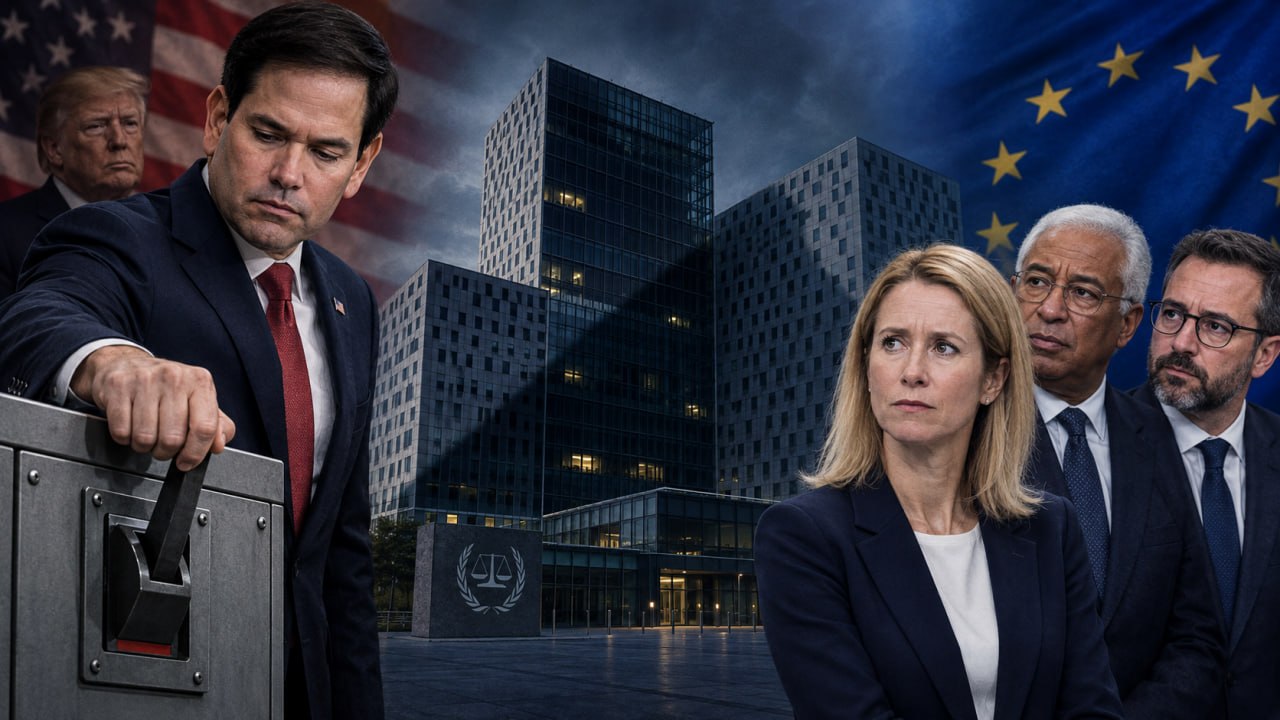
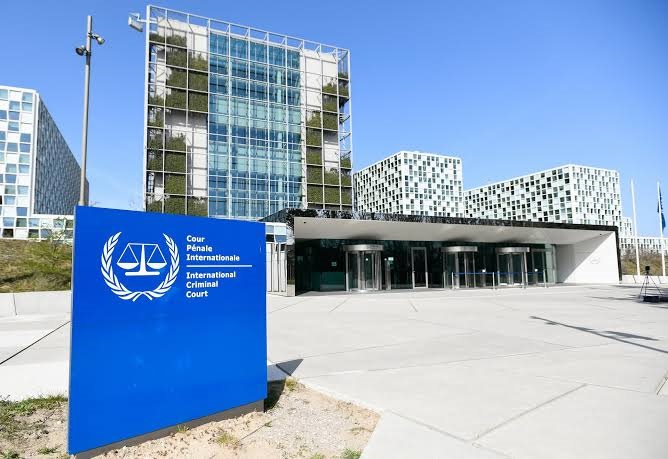
On October 9, Secretary of State Marco Rubio announced blocking sanctions against the International Criminal Court as an institution: a ban on all transactions, the freezing of assets under US jurisdiction, and the cutoff of cloud services, software, and payment processing. “Either the ICC will end its threats, or we will end the ICC,” he said. The sanctions include a six-month transition period and take full effect by April 2027. That date, not the announcement itself, is Europe’s real deadline.

Rubio has repeatedly tied Israeli interests to US actions against the court. The ICC previously issued arrest warrants for Israeli Prime Minister Benjamin Netanyahu and former Defense Minister Yoav Gallant on charges of war crimes in Gaza. While the October 9 announcement focused heavily on protecting American personnel, the administration had previously denounced the tribunal’s investigations against “the United States and our close ally Israel” as “illegitimate and baseless,” indicating that Washington’s campaign is aimed at shielding both US and Israeli officials.


Europe: Between Declaration and Enforcement

The European Commission called the sanctions “deeply regrettable” and said it was “ready to take any necessary measures” to keep the Court functioning and protect operators within the Single Market. But the same formula contains a brake: the six-month delay “leaves room for dialogue.”

Kaja Kallas, speaking for the EU, called threats against the Court “unacceptable,” reaffirming commitment to the rules-based order but stopping short of announcing any protective mechanism. António Costa promised support through political, diplomatic, financial, and practical means, without naming a single concrete instrument.

Belgian Foreign Minister Maxime Prévot is one of those publicly demanding activation of the EU Blocking Statute. “The Court’s independence cannot depend on whom it investigates. Europe must act,” he said, after securing a place for the issue on the agenda of the October 12 meeting of EU foreign ministers.

The Netherlands, where the Court sits, asked the European Commission to prepare the statute but called it a “nuclear option,” emphasizing that six months provide space for dialogue. Germany and France joined a joint statement by eight countries expressing “strong disagreement,” without mentioning countermeasures.

Why the Blocking Statute Is No Panacea

The Blocking Statute (Council Regulation No. 2271/96 of 1996) was created to counter US extraterritorial sanctions related to Cuba, Iran, and Libya. Its mechanism includes a prohibition on EU companies and citizens complying with the designated third-country sanctions, a refusal to recognize foreign court judgments based on those sanctions, and the right to recover damages in court. In 2018, after the US withdrew from the Iran nuclear deal, the regulation was expanded.

Adding the US sanctions against the ICC to the regulation’s annex would mean a legal prohibition on European banks, insurers, and cloud providers complying with the US restrictions. But its purpose is not to save the ICC itself. It protects European operators and jurisdiction: the regulation binds European operators and cannot compel American banks, Microsoft, Amazon, or payment systems to keep servicing the Court.

Activating the statute in this case would be unprecedented: in its thirty years of existence, it has never been applied against US sanctions affecting an international judicial institution. Its earlier use concerned US measures against those same countries, which were bilateral trade restrictions rather than an assault on a body of international justice. If the EU goes ahead, it would be the first time the Blocking Statute is transformed from a trade-defense instrument into an instrument for defending what Brussels calls the “international legal order.”

That is why it is called “nuclear”: it means legal confrontation, but it does not solve the problem of technological dependence. The ICC relies on American banking services, payment systems, cloud servers, and software. The Blocking Statute can prohibit European companies from complying with the sanctions, but it does not create an alternative to dollar clearing, global payment networks, or the servers where the Court’s data is stored.

For Washington, it is enough that American companies themselves refuse to work with the ICC because of the risk of secondary sanctions; the Blocking Statute cannot prevent that.

What Is Already Happening and What Might Happen

The practical effects of the sanctions are already beginning to show. In response to earlier US measures, the ICC has shifted its office and collaboration software from Microsoft to openDesk, a German open-source platform, and developed workarounds for banking, insurance, and payroll. It has also paid staff months in advance to limit potential payroll disruption. But these safeguards do not eliminate the Court’s broader reliance on American financial and technological infrastructure, and full sanctions could still disrupt its operations.

The alternatives Europe can offer are limited: activating the Blocking Statute, developing payment and clearing alternatives to dollar-based infrastructure, and providing European cloud services. None can be implemented quickly enough to replace American financial and technological infrastructure by April 2027.

Click to see the full-size image

The Asymmetry That Explains Everything

The ICC began work in 2002, and its early practice focused predominantly on African conflicts: the DRC, Uganda, Sudan, Kenya, and Libya. This imbalance fueled accusations of selectivity and neocolonialism; in 2025, three Sahel states announced their withdrawal, calling the Court an “instrument of neocolonial suppression.”

The United States signed the Rome Statute under Clinton but never ratified it; in 2002, Congress passed the American Service Members’ Protection Act, authorizing the president to use “all necessary means” to free any American detained by the ICC. Washington did not object to the Court’s early focus on African situations, even as it rejected jurisdiction over itself. Its opposition hardened once the ICC moved toward cases involving the US and its allies.

In 2020, after the Appeals Chamber authorized an investigation into crimes by US military personnel and the CIA in Afghanistan, Washington sanctioned Prosecutor Fatou Bensouda and a senior Court official. The following year, Prosecutor Karim Khan “deprioritized” the American component of the case. No US citizen has ever been indicted by the ICC.

Rubio calls the ICC a “body of globalists” threatening US sovereignty and has urged US allies to rein it in. The criticism has a real basis: the Court can hear cases involving crimes committed on the territory of a state party even if the accused’s country has not joined the Rome Statute. But the ICC remains a treaty court, dependent on state cooperation, Western donors, and political decisions of the UN Security Council.

Washington’s contradiction is built into the design itself: the US is attacking an institution that grew out of the liberal order it helped create. Europe’s is different: a declaratory commitment to international law coexists with the practical costs of reducing reliance on American infrastructure.

What October 12 Will Reveal

October 12 will show whether the EU moves from declarations to legal obligations. If the final document includes a European Commission decision to add the US sanctions against the ICC to the annex of Regulation 2271/96, that would mean a legal prohibition on European companies complying with the US measures — an unprecedented use of the Blocking Statute.

If the outcome is a general declaration, a call on Washington to rescind the sanctions, and a mandate for the Commission to “prepare options,” that would confirm a scenario in which Europe defends the principle of ICC independence but is not prepared to pay for that defense through a direct collision with US extraterritorial jurisdiction.

The probability of full and immediate activation of the statute on October 12 is low. A more realistic scenario is a political declaration of support, a Commission mandate to prepare a legal mechanism, and the preservation of the six-month pause for negotiations.

The Dilemma Beyond The Hague

The question is not whether the ICC survives past April 2027. The question is whether Europe can defend what Brussels calls the “international legal order” when the costs of that defense fall on its own companies, banks, and technological supply chains.

The Blocking Statute is a test of the EU’s ability to act not as a regulator but as a geopolitical player willing to bear the costs of conflict. If Europe limits itself to declarations and negotiations, it will confirm the formula Washington has already internalized: European sovereignty ends where American extraterritorial jurisdiction begins.

If it activates the statute, it will launch an open legal conflict with an ally on which its security depends. For now, every signal points to a third option: prepare the instrument, defer the decision, and bet that Washington will back down on its own.


MORE ON THE TOPIC:

The post The US Is Pulling the Plug on International Justice — Does Europe Have Its Own Power Source? appeared first on South Front.

Atlético-GO empata com Sport mesmo com um a mais e se complica na disputa pelo acesso

11 October 2026 at 22:50

O Atlético-GO empatou por 1 a 1 com o Sport na tarde deste domingo (11/10), no Estádio Antônio Accioly, pela 33ª rodada da Série B. O gol do Dragão foi marcado por Geovany Soares, no primeiro tempo. Já na segunda etapa, Perotti empatou para os visitantes. Com o resultado, os goianos permanecem na 6ª posição, com 53 pontos, mas podendo ser ultrapassado ao término da rodada.

O primeiro tempo começou com o Sport dominando as ações e levando perigo ao gol de Paulo Vítor, inclusive acertando a trave. O Atlético-GO encontrou dificuldades no início, mas conseguiu equilibrar a partida e passou a criar boas oportunidades, principalmente com Geovany Soares e João Pedro. Na reta final, o Dragão cresceu, pressionou e abriu o placar aos 48 minutos: Leandro Vilela lançou Geovany Soares, que fintou a marcação e balançou as redes. Com isso, o Atlético-GO foi para o intervalo vencendo por 1 a 0 e, naquele momento, garantindo sua permanência no G-6 por mais uma rodada.

No início do segundo tempo, o Sport voltou a ameaçar: Barleta driblou Guilherme Lopes e finalizou, com a bola beijando a trave antes de sair pela linha de fundo. Dois minutos depois, o Atlético-GO respondeu em cobrança de falta, quando Netinho arriscou direto para o gol, mas Thiago Couto fez grande defesa, evitando o segundo gol rubro-negro. Aos 19, Bruno José acelerou, passou pela marcação e foi agarrado por Benevenuto, que recebeu cartão vermelho direto, deixando o Sport com um jogador a menos. Aos 34, Geovany Soares desperdiçou boa chance de ampliar após falha defensiva do Sport: arrancou em velocidade, driblou a marcação, mas finalizou mal. Aos 38, o Sport empatou: Diego Hernandez arriscou de longe, a bola explodiu no travessão de Paulo Vítor e, no rebote, Peixoto não afastou o perigo, permitindo que Perotti aproveitasse a sobra e deixasse tudo igual no placar.

O Atlético-GO volta a campo na próxima sexta-feira (16/10), às 19h30, contra a Ponte Preta, fora de casa.

The post Atlético-GO empata com Sport mesmo com um a mais e se complica na disputa pelo acesso appeared first on Diário da Manhã - O Jornal do leitor Inteligente.

Saudi Arabia Has Allies. But Who Will Fight Its War in Yemen?

11 October 2026 at 22:09

Click to see the full-size image

Saudi Arabia is desperately trying to reverse its losses on the ground in the Yemeni conflict, while Houthi attacks reach its airports and threaten its oil trade. Yet the coalition Riyadh has assembled does not match the war it wants to fight. Washington is engaged in the conflict with Iran, Turkey excludes offensive deployments, and Pakistan draws the line at crossing into Yemen. The kingdom has foreign support, but the burden of recovering and holding territory still falls on its weakened Yemeni partners.

Retreat Before the Counteroffensive

By early October 2026, Riyadh was responding to a deteriorating military position. The Houthis’ September advance along Yemen’s western coast brought the loss of Mokha and strategic positions around Bab el-Mandeb. These setbacks exposed the weakness of Saudi-backed forces and strengthened the Houthis’ leverage over a shipping route increasingly important to Saudi oil exports.

The renewed Saudi–Houthi escalation began with the July 13, 2026, strike on Sanaa airport’s runway. Saudi aircraft sought to prevent an Iranian Mahan Air flight carrying a senior Houthi delegation from landing without coalition permission. The plane later landed in Hodeida after Omani mediation, but the Houthis retaliated against Abha airport and subsequently announced a blockade on Saudi shipping. The strike broke the relative calm established by the 2022 truce; September’s coastal offensive then turned the confrontation into a major territorial setback for Riyadh’s partners.

The retreat exposed divisions within the anti-Houthi camp. Saudi–Emirati cooperation had broken down, and the withdrawal of the UAE left command arrangements that Riyadh failed to replace effectively. The factions expected to carry the offensive remained divided and poorly prepared for a sustained campaign. Saudi airpower could not compensate for the absence of a coherent local force.

The cost is also being felt inside Saudi Arabia. The October 10, 2026, attack on Riyadh’s King Khalid International Airport killed 12 people and wounded 309, according to Saudi authorities, and temporarily suspended operations. Riyadh blamed the Houthis, who renewed their warning against using Saudi airports and airspace on October 11. Airport disruption, cancelled flights and attacks on oil facilities bring the economic consequences of the war directly into the kingdom. The Saudi air campaign has not secured its civilian infrastructure.

Operation Dawn of Yemen began on October 5, 2026, after Saudi-backed Yemeni leader Rashad al-Alimi announced military action the previous day. The immediate objective was to recover the coastal positions lost in September, alongside the Saudi-backed Yemeni government’s broader ambition to restore its authority over Houthi-held territory. On October 11, the coalition announced the destruction of 136 military targets in a large-scale operation. That tally says little about whether Saudi-backed units can hold territory, secure supply routes or reopen shipping lanes.

Houthi footage released October 10, 2026: Shawaz drone strikes on Saudi-backed forces in Kahbub and Al-Waziya, as presented by the movement’s military media


Why Taiz Matters

The counteroffensive has produced conflicting accounts of control on the coast. On October 9, 2026, Saudi Arabia’s ambassador to Yemen announced that Bab el-Mandeb and Mayun Island had been cleared of Houthi forces. The Houthis maintained that they still held those positions. Control of the waterway remains contested, despite Riyadh’s announcements of success.

Taiz adds another strain after the coastal setbacks. Pressure on its approaches threatens supply routes and forces Saudi-backed units to divide their effort between the inland front and the Red Sea coast. The Houthis can disrupt their opponents’ counteroffensive without winning every coastal engagement: sustained pressure inland prevents those opponents from concentrating their forces. Saudi airpower does not resolve the fragmentation of the Saudi-backed Yemeni forces expected to hold the ground.

Houthi military footage released October 10, 2026: the movement presents advances and the surrender of opposing fighters in Sami, As-Silw and Al-Mawasit, Taiz province. The fighting places further pressure on the ground forces on which Riyadh’s campaign depends


The Iran War Narrows Saudi Options

The US–Israeli war with Iran, which began in February 2026, has expanded the military demands on Washington. Regional deployments, shipping protection and operations against Iran compete with Saudi requests for a larger American role in Yemen. Riyadh cannot assume that American support will expand on its terms. Its dependence on outside assistance has grown at the same time as the regional war has made that assistance more conditional.

The Iran war compounds Saudi Arabia’s vulnerability. Disruption at Hormuz has increased Riyadh’s dependence on its westbound pipeline and Red Sea ports. Southbound cargoes from Yanbu must pass Bab el-Mandeb; northbound exports follow a different route. Moving crude across the peninsula bypasses Hormuz, but it does not remove the threat to shipping off Yemen.

Pressure at Bab el-Mandeb gives Iran an additional advantage while the Houthis gain territory and bargaining power of their own. Their overlapping interests put Riyadh under pressure on two fronts. A Washington–Tehran agreement would not automatically end the war in Yemen: the Houthis have their own territorial, political and economic demands.

Washington is already involved through military advisers, intelligence and targeting support. The issue is the extent of that involvement, not American neutrality. Earlier in October 2026, Trump rejected Saudi requests for direct strikes; after the Riyadh airport attack, he said the United States might join them. Riyadh still lacks a firm American commitment to the wider offensive. Its requests compete with Washington’s military operations and priorities in the Iran war.

Allies Draw Their Own Lines

Riyadh’s response is to widen its support network through the Mecca pact, signed with Turkey and Pakistan on August 7, 2026, and activated on October 5. But an agreement to defend Saudi Arabia is not an agreement to win its war in Yemen. Pakistan’s military presence and Turkey’s technical, intelligence and air-defense assistance address the kingdom’s security without supplying a joint ground campaign across the border.

The alliance has a secretary-general, retired Pakistani general Nauman Mahmood, but its detailed force-generation timetable, operational command arrangements, cost-sharing formula and mission duration remain unpublished. On October 8, 2026, Ankara excluded offensive operations while parliamentary ratification was pending. On October 9, Islamabad confirmed a substantial military presence in the kingdom but ruled out crossing into Yemen to attack the Houthis. Riyadh is obtaining defensive commitments, not a combined expeditionary army.

Pakistan’s decision-making has also shifted. In 2015, parliament unanimously rejected participation in the Yemen war while promising to defend Saudi territory and holy sites. In October 2026, reinforcement commitments are proceeding without a parliamentary vote. The government says it followed the necessary procedures. The political result is a narrower domestic debate over a commitment that could draw Pakistan further into the conflict.

Fewer political checks make deployments easier to authorize and harder to reconsider once costs and casualties accumulate. Pakistan’s own security pressures add another burden: the October 11, 2026, emergency in opposition-run Khyber Pakhtunkhwa coincides with its commitments to Saudi Arabia. Islamabad is extending support abroad while managing a deepening confrontation at home.

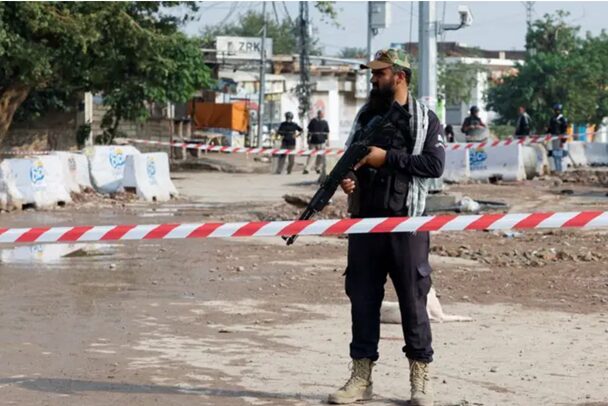
Peshawar, October 11, 2026: police guard the approach to the Red Zone. Pakistan’s overseas security commitments coincide with emergency measures at home

Saudi-led coalition footage, October 9, 2026: the coalition announces strikes on three Houthi missile launchers. The continuing attacks inside Saudi Arabia expose the limits of destroying individual launch sites


Defensive support can still sustain the offensive by freeing Saudi assets for use in Yemen. France’s support for the defense of Yanbu and Britain’s refueling assistance contribute to that effort. But none of this repairs the weakness of Riyadh’s Yemeni ground forces. Pakistan also has its border with Iran and its mediation role to consider, while Turkey keeps its commitment separate from offensive operations. Each partner sets limits according to its own interests.

Different Interests, No Shared Victory

Pakistan’s proposed $1.21 billion IMF disbursement awaits board approval. Turkey’s September 2026 inflation was 29.73%, with its policy rate at 37%. Both face financial pressures that favor limited missions over an open-ended expedition. Who pays for the current assistance remains undisclosed.

Saudi Arabia’s updated deficit forecast is 4.9% of GDP. September 2026’s non-oil purchasing managers’ index stood at 55.3, indicating expansion before the latest escalation. The airport attacks and disruption to transport now place that activity under additional pressure. Riyadh must finance the campaign while protecting the infrastructure and trade on which its wider economic plans depend.

The Houthis are using that pressure to advance their negotiating demands. On October 10, 2026, the Houthi authorities proposed reciprocal exclusion of airports, ports and other humanitarian infrastructure from blockade and attack. The proposal seeks to exchange limits on disruption for concessions over access and blockade. It puts the economic consequences of continued fighting at the center of the bargaining.

The conflict of interests runs through the entire coalition. Riyadh wants to reverse Houthi gains and protect Saudi infrastructure. The Saudi-backed Yemeni government wants to restore its authority. Turkey and Pakistan seek bounded commitments, and Washington calculates its involvement against the Iran war. The Houthis seek concessions while preserving their military leverage. A common adversary has not produced an agreed objective or a shared willingness to bear the cost.

Saudi Arabia therefore has partners willing to help defend the kingdom, but those partners have made no common commitment to reverse Riyadh’s setbacks in Yemen or sustain the ground campaign of the Saudi-backed Yemeni government. That is the gap behind the coalition’s announcements and strike tallies. Without stronger local forces and a political settlement addressing shipping, attacks and access, additional foreign support can prolong the campaign without resolving it. Riyadh risks remaining surrounded by allies while carrying a war none of them has agreed to finish.


MORE ON THE TOPIC:

The post Saudi Arabia Has Allies. But Who Will Fight Its War in Yemen? appeared first on South Front.

Russia Targets European Defence Industry as Moscow Seeks to Disrupt Military Support for Ukraine

11 October 2026 at 18:44

Intelligence services from five European countries warn that Russia is expanding assassination and sabotage operations against defence manufacturers supplying Ukraine. The threats coincide with an alleged plot against Poland’s prime minister and defence minister, raising concerns about Moscow’s efforts to undermine European military assistance through intimidation and political destabilisation.

European intelligence agencies have warned that Russia is intensifying efforts to assassinate executives of defence companies supplying Ukraine, extending its campaign of sabotage and intimidation into the European military-industrial sector.

According to intelligence assessments obtained from five European security services, Moscow has ordered an expansion of covert operations targeting senior figures at major arms manufacturers and smaller companies producing drones and military components. Germany’s domestic intelligence agency, the BfV, has reportedly advised executives to strengthen personal security, while some manufacturers have already increased protection for senior personnel.

The warnings emerged alongside reports of an alleged assassination plot against Polish Prime Minister Donald Tusk and Defence Minister Władysław Kosiniak-Kamysz. Polish authorities convened an emergency security meeting and subsequently detained a suspect. No connection between the Polish case and Russian intelligence has been established.

Europe becomes Moscow’s principal target

The apparent expansion of Russian covert operations reflects a shift in Moscow’s calculations concerning Western military assistance.

President Vladimir Putin had reason to anticipate that Donald Trump’s return to the White House would weaken American support for Kyiv. Trump repeatedly questioned US military expenditure on Ukraine and advocated a negotiated settlement with Russia. A substantial reduction in American weapons deliveries could have increased pressure on Ukraine to accept Moscow’s territorial demands.

Instead, European governments assumed greater responsibility for sustaining Ukrainian defence capabilities, including financing weapons purchases and expanding domestic production.

The European Union’s €90 billion support programme for 2026–2027 allocates €60 billion to defence procurement and industrial capacity. The EU has also established mechanisms allowing Ukraine to participate in European joint procurement programmes.

Disrupting European manufacturers therefore offers Moscow a means of restricting Ukraine’s military capabilities without directly confronting NATO.

Assassination threats can interfere with procurement even when attacks are never carried out. Large manufacturers can afford extensive security arrangements, but smaller companies producing electronics, drone components and specialised equipment often lack comparable resources.

Intimidation could delay contracts, discourage investment and persuade individual suppliers to withdraw from Ukrainian defence programmes.

Sabotage as an instrument of political pressure

Russia’s alleged interest in targeting defence executives is not unprecedented. In 2024, American intelligence reportedly uncovered a Russian plot to assassinate Armin Papperger, chief executive of Rheinmetall, one of Germany’s principal suppliers of ammunition and military equipment to Ukraine.

As EU Today previously reported, Moscow has also publicly identified European factories involved in Ukrainian drone production, increasing concerns that civilian industrial facilities could become targets of Russian operations.

European authorities have investigated suspected Russian involvement in arson, infrastructure attacks and clandestine networks. An earlier cross-border investigation into alleged assassination and sabotage preparations demonstrated how intermediaries could be recruited to conduct operations while obscuring their sponsors.

Such activity also carries political consequences. Attacks against infrastructure and industrial facilities can reinforce public fears about confrontation with Russia, particularly during elections when parties advocating accommodation with Moscow seek to exploit security concerns.

Poland has already experienced mounting Russian hybrid pressure, including threats to critical infrastructure and information operations intended to aggravate domestic political divisions.

Putin’s strategy against European rearmament

Ukraine’s continuing strikes against Russian refineries and military-industrial facilities have added economic and operational pressures to Moscow’s prolonged war effort. Russia retains substantial military production capacity, but the costs of sustaining the conflict remain considerable.

Interfering with European weapons manufacturing could serve two objectives: restricting Ukraine’s access to equipment and obstructing Europe’s longer-term rearmament.

The Kremlin does not necessarily need European governments to abandon Ukraine formally. Production delays, disrupted contracts and reluctant suppliers could reduce the practical effect of military assistance even while political commitments remain unchanged.

European governments have acknowledged the industrial challenge. In its June conclusions on European defence, the European Council called for accelerated manufacturing capacity, stronger supply chains and closer cooperation with Ukraine’s defence industry.

Russia’s apparent strategy seeks to exploit the dependence of these programmes on private companies and skilled civilian personnel.

The warnings from European intelligence agencies suggest that protecting defence executives, engineers and contractors is becoming part of the continent’s wider security responsibilities.

For Moscow, intimidation offers the possibility of weakening Ukrainian military resistance without an open confrontation with NATO. For European governments, preventing covert operations from disrupting weapons production is increasingly inseparable from their commitment to sustain Ukraine’s defence.

The Baltic Fuse: How Europe Is Building the Infrastructure for War With Russia

11 October 2026 at 18:43

Click to see the full-size image

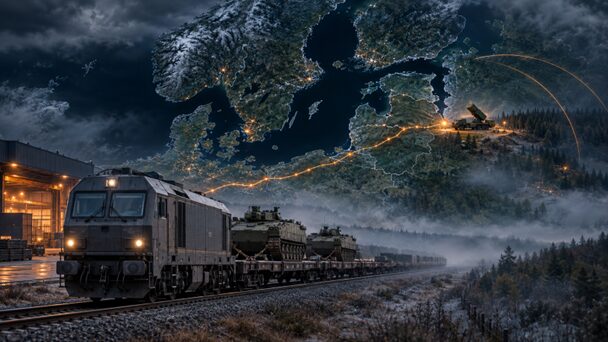
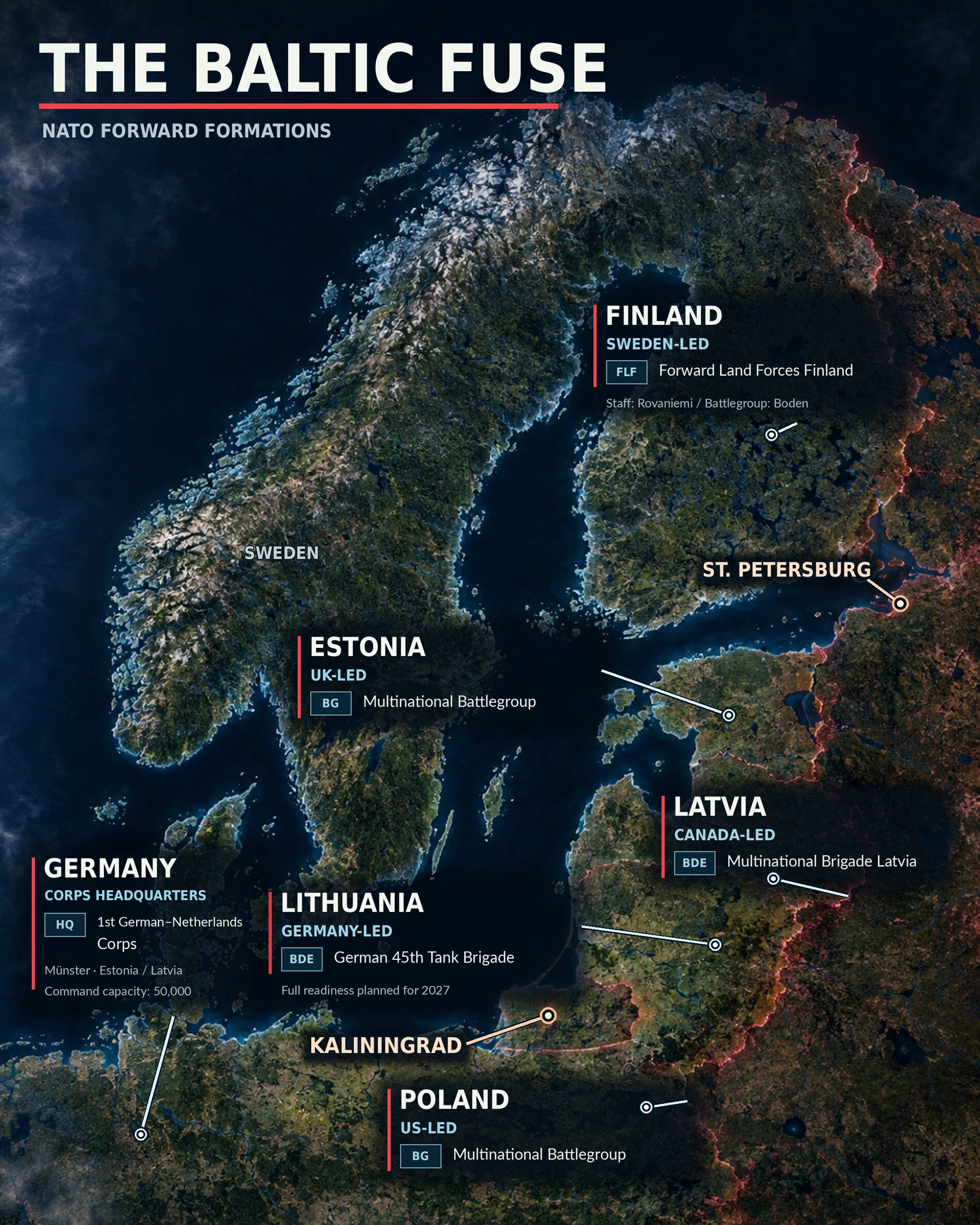
Europe is shortening the time it takes to wage a major war. Military transport approvals are meant to take hours rather than days, intelligence to feed more quickly into strike decisions, and a new generation of missiles to bring targets deep inside Russia within reach. Behind the forward garrisons, Europe is building transport networks, reserves, and ammunition production capacity. Taken together, these measures point beyond deterrence to practical preparations for waging war against Russia, including operations deep inside its territory.

The dates 2027, 2028, and 2030 in European rearmament programs can easily suggest that there is still time. But they mark a schedule for building military capabilities, not a guaranteed period of peace. The central question for the coming months is not whether armies will finish rearming in time, but whether a clash can be avoided before they do.

Estonia: A Narrow Front, a Deep Strike

Estonia offers a clear picture of the opening phase this system is being built to fight. The country’s military budget rose 42% in 2026 to €2.4 billion, or 5.4% of gross domestic product. Arms procurement accounts for €1.27 billion – more than half the total. Meanwhile, the headquarters and elements of the 1st Infantry Brigade are moving from Tapa to Jõhvi, roughly 50 kilometers from the Russian border.

A €20.5 million base is under construction in Narva, with €19 million coming from the European Union. Completion is scheduled for summer 2028. Its permanent garrison will number around 200, but it will accommodate up to 1,000 troops in a crisis. The gap between those figures reveals a base designed for rapid expansion. A small garrison is being equipped to receive reinforcements quickly, right on the border.

Holding that ground requires more than barracks. Procurement programs call for nine American HIMARS and nine South Korean Chunmoo multiple-launch rocket systems, both capable of firing ballistic missiles. The relevant munitions have stated ranges of up to 300 and 290 kilometers, respectively. The new concept combines holding the border with deep strikes from the first day of an invasion.

The scale of the response could far exceed that of the opening clash. A battle for a border town could lead to strikes on targets hundreds of kilometers away. Tallinn wants to deny its opponent the option of fighting a small war by preparing to expand its geographical scope.

This also changes what allied assistance means. Allied planning must account not only for how long a small army can hold out until reinforcements arrive, but also for how far the fighting may spread before they reach the front. A missile can be launched before a major formation completes its deployment. Allies may arrive to find that the conflict has already widened.

In such a situation, Estonia and the other Baltic states could serve not only as defensive positions but also as staging grounds for attacks on Russian territory. For Moscow, the issue is no longer simply the size of Estonian units, but the depth of the strikes they envisage. Tallinn, in turn, faces the question of who will sustain its forward forces if the first battles fail to decide the outcome. Sustaining such a war would require support from beyond Estonia. One national budget and a handful of batteries cannot carry that burden.

Click to see the full-size image

Germany: An Industrial Base Behind the Garrison

On October 5, Martin Jäger, head of Germany’s Federal Intelligence Service, told the Bundestag: “The point of no return has been passed in the war with Ukraine, and NATO is considering a scenario involving a limited Russian military clash with the Baltic states.” He linked the more immediate danger to limited Russian action in the Baltics that could test the allies’ response. He said intelligence had seen no signs of preparations for a major attack on NATO. The discussion therefore concerns not only a major war after rearmament is complete, but a smaller confrontation capable of triggering an allied response.

In the Baltic scenario, Berlin is publicly discussing the risk of a clash while its forward force is still taking shape. The brigade’s readiness date is not the date on which the threat begins.

In Lithuania, Germany is building a permanent heavy brigade as one element of that support. Full readiness is scheduled for the end of 2027, with 4,800 military personnel and 200 civilian employees. Its core consists of the 122nd Panzergrenadier Battalion, the 203rd Tank Battalion, and a multinational battle group. Until the formation is complete, the Germany-based 37th Brigade is to provide support.

The forward formation is thus tied to forces farther inside Europe. Civilian infrastructure underscores the permanence of the deployment. A school for the children of Bundeswehr personnel opened in Vilnius in September 2025. Units are not simply moving in – families are settling down. A political commitment acquires a permanent address, and the safety of German personnel becomes part of any future crisis in the host country.

Münster, October 1, 2026. Rutte describes a headquarters capable of commanding 50,000 troops and responsible for NATO forces in Estonia and Latvia. Behind the talk of forward battalions lies corps-level command capacity


But a permanent garrison needs a steady supply of ammunition. Rheinmetall’s new plant in Unterlüß is scheduled to reach an annual output of 350,000 artillery shells in that same year, 2027. The nearly €500 million facility was built in 15 months. Across its entire production network, including overseas sites, the company is targeting roughly 1.5 million shells a year from 2027.

The brigade answers the question of who will enter the fight. The factories answer how to keep fighting once stockpiles run down. The 2027 target is for strengthening this system, not creating it from scratch. Reaching the factory’s planned capacity determines future supply volumes, but it does not set a date before which a clash is impossible. Initial stocks sustain the opening phase of combat. Regular deliveries determine whether its intensity can be maintained.

Between the factory and the front lies the transport network. Europe’s military mobility proposal calls for cross-border transport permits to be processed within three working days, with an emergency procedure taking no more than six hours. A proposed €17 billion would fund the relevant infrastructure under the 2028–2034 budget. For Germany, a transit country, that means bridges, railways, and the capacity of routes leading east.

On October 7, European Defense Commissioner Andrius Kubilius called for this work to accelerate, saying Europe was not yet able to deter Russia. Unlike an exercise, infrastructure upgrades remain after the columns return to barracks. A stronger bridge and a faster permit procedure create a lasting ability to concentrate forces.

A border battle thus gains industrial and logistical depth. But sustaining one’s own forward forces is only half the military equation. The other half is disrupting opposing forces’ supply and command systems. That requires more than additional railcars loaded with shells. It requires weapons with much greater reach.

Britain: A European Deep-Strike Arsenal

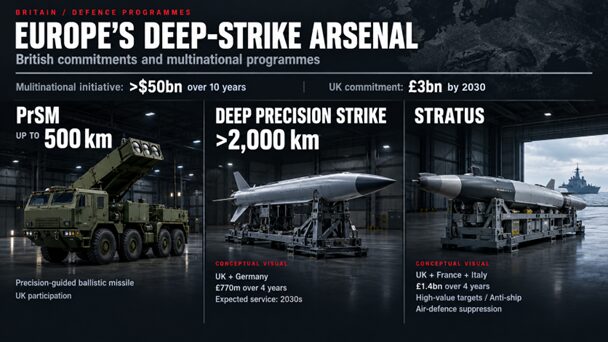
London is driving precisely this part of Europe’s preparations. On July 8, 2026, it announced an initiative bringing together roughly a dozen partners to invest more than $50 billion in long-range strike capabilities over ten years. The stated range bracket runs from 300 to more than 2,000 kilometers. Britain’s own commitment within the initiative is £3 billion by 2030.

The British-German Deep Precision Strike program envisages stealthy and hypersonic weapons with ranges exceeding 2,000 kilometers, initially focused on ground launch. Britain is investing £770 million over four years, with entry into service expected in the 2030s. Another £1.4 billion over four years is earmarked for Stratus, a program with France and Italy covering strikes against high-value targets and ships, as well as the suppression of air defenses.

Britain’s participation in PrSM (Precision Strike Missile), a precision-guided ballistic missile program with a stated range of up to 500 kilometers, adds another layer. The emerging capabilities span several range bands, from around 300 kilometers for the Estonian systems through 500 for PrSM to more than 2,000 for the British-German development. Although the programs are at different stages, they share a clear direction. Weapons for fighting at the border are being supplemented with weapons for striking deep behind it.

The missiles of the next decade show how far these strike capabilities are intended to expand. But the next crisis will unfold with whatever weapons are available when it begins. A 2,000-kilometer range is not a prerequisite for a clash in the Baltics. It changes the potential scale of the war, not the earliest date on which it can break out.

Click to see the full-size image

Turning national purchases into a combined capability requires a common framework for employing them. In July 2025, General Christopher Donahue outlined elements of eastern-flank planning built around compatible launchers, fire control, and data sharing. He cited Kaliningrad as an example of military capabilities that could be neutralized by ground-based means in an exceptionally short time: “We have already planned this. We have already developed this.”

The discussion also included cloud-based data sharing and Palantir’s Maven Smart System, purchased by NATO to analyze information and support command decisions. The aim is to turn disparate reports into a common picture more quickly. When several armies use compatible command systems, their arsenals gain additional value. Range puts the target within reach, while data sharing allows missions to be coordinated.

But the deeper the planned strikes, the harder it becomes to separate support for a border battle from an expansion of the war. To the attacking side, a target may be part of the other side’s military supply system. To the other side, hitting it may signal that the conflict has crossed a new threshold. The use of conventional weapons thus leaves unresolved how to deter a response that would overturn the assumption of a limited clash.

France: The Nuclear Limit of Europe’s Calculations

This is where France’s nuclear deterrent enters the European picture. On October 6, Le Vigilant conducted an acceptance firing of an M51.3 ballistic missile following its refit. The missile carried no nuclear warhead. In service since October 2025, the variant carries new TNO-2 warheads. The French Defense Ministry cites improvements in range, accuracy, and the ability to penetrate missile defenses.

Brittany, October 6, 2026. Le Vigilant launches an M51.3 without a nuclear warhead


Macron stated the political message bluntly: “To be free, you must be feared. And to be feared, you must be strong.” France’s modernization adds a nuclear dimension to Europe’s conventional military buildup.

That European dimension is taking a more concrete form. On March 2, 2026, Macron outlined an “advanced deterrence” framework allowing partners to participate in French nuclear exercises and opening the possibility of temporary deployments of strategic forces on allied territory. Germany, Poland and Sweden were among the countries joining the dialogue. But the authority to use nuclear weapons – and to define the vital interests they protect – remains exclusively French. In the Baltic scenario, closer cooperation does not establish an automatic French nuclear response to a border clash. It leaves the decisive threshold in Paris, deliberately undefined.

After the First Clash

Taken together, these national programs suggest that the West is preparing not merely to deter Russia, but to build the capacity for offensive operations against it. In this reading, forward deployments, industrial expansion and deep-strike weapons are interconnected preparations for a war that could extend into Russian territory. They do not, by themselves, establish a single operational plan or prove a decision to initiate hostilities. Conventional forces are meant to make an opposing military operation prohibitively costly, while nuclear forces are meant to deter the most extreme escalation. The weakness is that neither side gets to decide how much damage the other will tolerate.

That problem is especially acute around Kaliningrad, where plans to suppress military infrastructure sit alongside the question of the region’s links to the rest of Russia. If actions during a crisis are perceived as an attempt to cut the region off by force, the argument will no longer be about intentions announced at a press conference. It will be about consequences the other side believes it must stop immediately.

The danger in the coming months lies in the gap between limited intent and an unrestricted response. Berlin is discussing localized action in the Baltics. Tallinn is preparing for deep strikes from day one, while foreign garrisons tie a border battle to allied involvement. Each side may consider its own move limited. Neither can count on the other side accepting its definition of what is permissible.

European capitals therefore need to define where military action would stop after the first clash, whether at the border or after strikes on depots, airfields or targets in Kaliningrad. The programs examined here spell out how to build military power, but offer no mechanism for ending the fighting. Missile range is not strategic foresight. Confidence that escalation can be controlled could turn a system of deterrence into a mechanism for widening the war well before 2030.


MORE ON THE TOPIC:

The post The Baltic Fuse: How Europe Is Building the Infrastructure for War With Russia appeared first on South Front.

Eine weitere, faktische Kriegserklärung der NATO an Russland

11 October 2026 at 17:23
Dass vor allem die europäischen NATO-Staaten alles tun, um Russland zu provozieren, militärisch zu reagieren, ist kein Geheimnis, denn sie tun es offen: Sie kapern Handelsschiffe mit Ziel Russland, sie finanzieren und produzieren die Waffen, die zivile Infrastruktur und Wohngebiete angreifen, und liefern auch noch die dazu nötigen Aufklärungsdaten. Und sie erlauben in der Ukraine […]

Mariana Mazzucato, economist: ‘Housing is a human right and the foundation for everything else’

11 October 2026 at 05:00

The economist Mariana Mazzucato believes in getting out into the field, rolling up her sleeves and seeing how her ideas are put into practice to improve people’s lives. She has just returned from Brazil and Mexico after several weeks working with local communities. She welcomes EL PAÍS into her London home, in the Camden neighborhood, with an energy that seems remarkable for someone who should still be battling jet lag.

Seguir leyendo

© Kalpesh Lathigra

Mariana Mazzucato at he London home on September 25, 2026.

Europe’s mounting social chaos… chickens coming home to roost for proxy war against Russia

By: aletho
10 October 2026 at 21:41
Strategic Culture Foundation | October 9, 2026

The European Union is witnessing a full-blown social revolt. Governing political parties and their economic policies are held in open contempt as public protests and strikes escalate across multiple countries.

Protests, mass marches, and industrial strikes are spreading across the EU in France, Belgium, Spain, Italy, Germany, Ireland, Portugal, and other countries. The grievances are various, from students and teachers over woeful education services, to healthcare professionals and transportation workers denouncing crumby wages and pension cuts.

But at the core is a warmongering, dehumanizing system of capitalist inequality.

Unbearable living costs for basic needs, from food to housing, are driving millions onto the streets in desperation and anger at the lack of adequate political response to their concerns. As one French student said: “Too young to be listened to, old enough to be tear-gassed.”

The entire political system is being brought into disrepute for its dysfunction and indifference towards meeting rudimentary human needs. Then, infuriating all the more, are lies from the elite rulers and their propaganda media about “national defense and threat of war from Russia.”

In Spain this week, an 87-year-old frail woman known as Maricarmen died in hospital after she was evicted from her Madrid home because she could not pay the extortionate rent increase. Her plight has come to galvanize a nationwide protest against Spain’s housing crisis, a crisis that is repeated across every European country. Protesters shouted furiously that the pitiful old woman was “murdered by the state and corporations.”

In France, the brutality of police against student protests has shocked the nation and the world. Nearly 7,000 young people have been arrested, as riot police tear gas and shoot at largely peaceful rallies. Students gathering at the Place de la Bastille in Paris and other cities vow that they will not back down. One student had his hand blown off by a police stun grenade while another teenager lost an eye from a rubber bullet fired at close range.

The Place de la Bastille is where the French Revolution manifested in 1798 against a hated aristocracy amid abject misery. Today, the tensions are boiling towards another momentous rebellion, this time inspiring again similar movements across Europe.

These protests and the inhumane suffering that underlie them are channeling uprisings all over the EU.

There is a palpable sense that populations en masse have had enough of decades of inequality and chronic deprivation inflicted by capitalist policies that enrich a few and are enforced by governments slavishly serving the interests of capital over the needs of the citizen majority.

Western media reports talk about “cash-strapped” governments under pressure from bond markets to reduce record debt levels while workers, students and pensioners demand more public investment and relief from economic hardship.

That is a misleading partial portrayal of the problem. Omitted is the crucial backdrop that European governments are directing vast economic resources towards militarism and the proxy war in Ukraine against Russia. That is what is causing the “cash-strapped governments.” In other words, their declared fiscal straits are a policy choice, not some mysterious dilemma.

The social crisis sweeping across Europe is also seen in the United States and other Western-aligned nations. The background is a failed economic system that no longer provides a modicum of acceptable living conditions. The problem has been decades in the making from growing inequality and diminishing political representation. Today it is even questionable if Western states are democracies, controlled as they are by corporate oligarchies.

Nevertheless, the social crisis that is unfolding across Europe has been intensified and amplified by European political rulers operating in a relentless war mode against Russia.

The European Union has pumped hundreds of billions of euros into Ukraine over the past four years to prop up a NeoNazi regime run by a corrupt dictatorship – all for the objective of defeating Russia. The EU leaders – many of them unelected, like Ursula von der Leyen, Kaja Kallas and António Costa – are driven by an obsessive Russophobia. But that is only part of the explanation.

Other elected leaders and parties like France’s Macron and Germany’s Merz are also despised for their elitism and delusions of grandeur. Merz declares that he wants to make Germany the strongest military in Europe, in total tin-ear deafness to his nation’s economic and social problems and the sinister historical connotations of resurrecting Nazi Germany. Meanwhile, as his government suffers electoral defeat after defeat, European elites deprecate German voters as being blind because they dare to choose parties that are opposed to war with Russia.

There are many grounds for the Europe-wide contempt of ruling parties. Inequality, poverty, unemployment, soaring living costs, declining wages, deteriorating public services. Uncontrolled immigration amid the pressure on inadequate public resources is another cause for grievance. Europe’s complicity in the Israeli genocidal war on Palestinians, and Europe’s complicity in Trump’s aggression towards Iran, Yemen, Cuba, and so on, are other factors.

However, the bogus narrative that governments are “cash-strapped” is a cause for immense public disgust. There are plenty of economic resources to meet public needs. It’s a question of those resources not being permitted to create just and humane societies under the prevailing capitalist system with its priority of enriching a tiny elite class.

The conditions of “tight budgets” and “austerity for the masses” are created by deliberate policies of militarism and fuelling a proxy war in Ukraine.

European “leaders” and their NATO lobbyists like Mark Rutte demand hundreds of billions of euros to boost military industries while at the same time calling for draconian cuts in public spending and social welfare in order to pay for this reckless militarism. The EU is “lending” an additional €90 billion over the next two years alone just to prop up the corrupt regime in Kiev so that it can keep fighting a futile war with Russia. The perverse priority is driven by the military-industrial complex and its corporate investors. It is also driven by an ideological, propagandized mindset that demonizes Russia as an enemy. President Putin and other Russian voices have repeatedly stated that they do not want war with Europe. They say the conflict in Ukraine has root causes that can be resolved through diplomatic engagement. Why are European politicians implacably opposed to peace?

A major factor is covering for internal political and economic failure of the European system. The EU’s economies, as with those in the U.S. and other Western states, are bankrupt dystopias in terms of delivering on social and democratic needs. The failure has been compounded by the costs of war in Ukraine.

That failure is criminal and fatal for the politicians and governments who have overseen the policies. Thus, the political class, including the propaganda news media, cannot admit their criminal policies.

In the face of their own internal contradictions, the European political elites are seeking a solution by externalizing Russia as an enemy. This is the same modus operandi that European rulers have used for the past century and more, unleashing two world wars as a result.

These criminal politicians and their dysfunctional economic system are again pushing war as their escape plan for survival at the expense of millions of lives and at the risk of starting a third world war, one that this time around could involve catastrophic nuclear nemesis.

It is damning of virtually every European government, including primarily the British, that there are no calls for diplomacy and political settlement with Russia. They are committed to waging war on Russia to absolve themselves from the social devastation they are responsible for.

One positive thing, though, is that increasing numbers of people can see through the chicanery and lies. A German student placard summed it up: “We won’t fight your wars… Education not bombs!”

A day of reckoning is imminent. Criminal political leaders and their warmongering system are exposed like never before and in a way that demands total revolt as a proper solution. The consequences are not to be externalized this time. Chickens are coming home to roost, as Malcom X once said.

Greece “Indispensable” To US. What About Turkey? Turkish Question Strikes Again

10 October 2026 at 18:42

Click to see the full-size image

Written by Uriel Araujo, Anthropology PhD, is a social scientist specializing in ethnic and religious conflicts, with extensive research on geopolitical dynamics and cultural interactions

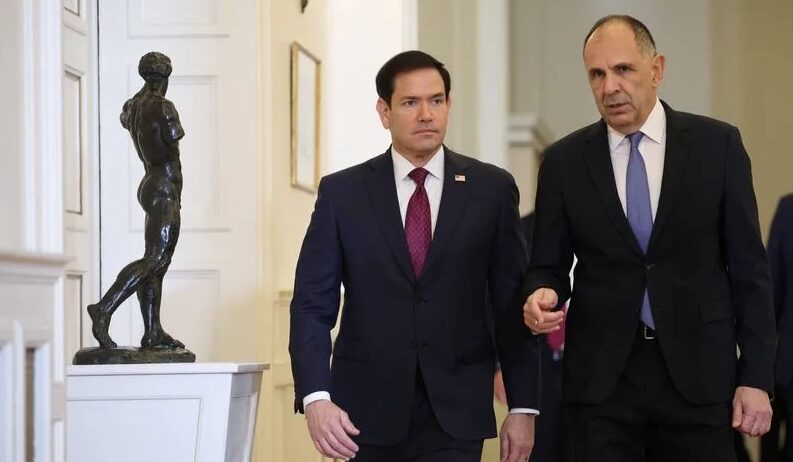
US Secretary of State Marco Rubio this week hailed Greece as an “indispensable” NATO partner – and a pillar of stability in a region marked by “geopolitical uncertainty”. The two sides announced expanded counterterrorism information-sharing. A defense agreement has been reached – worth up to $4 billion. Rubio also backed energy projects such as the undersea electricity interconnector linking Greece to Cyprus, and eventually Israel. At the same time, Rubio insisted a military clash between Turkey and Greece remains “unthinkable” and something the United States would “never allow.” He stressed that both are NATO allies and that conflict would harm all three countries.

When someone emphatically insists that they would never set a house on fire, the very emphasis makes people wonder whether the risk exists. Similarly, Rubio’s statement highlights that Greek-Turkish tensions remain serious enough to require public reassurance from Washington. It would thus seem that the two neighboring countries’ Atlantic membership alone is no guarantee of stability on the Alliance’s southeastern flank. NATO itself has in fact long been split over the “Turkish Question”.

As I argued previously, Trump’s warm embrace of Erdogan in July (recently reiterated), his subsequent signals that he would lift CAATSA sanctions and consider F-35 sales to Turkey, have already raised concerns in Athens – and Israel, for that matter. This exposed divisions, at a time when Ankara pursues strategic autonomy – while also clashing with “allies” over the Aegean, Syria, and the Eastern Mediterranean. Since at least last year, it has been noted how “sidelining” Turkey risks weakening the Alliance’s southeastern flank – and how the Athens-Ankara rivalry in turn exposes NATO’s fragile unity. These tensions predate the current US-Greece deepening of ties.

A closer American-Greek strategic relationship could alienate Turkey (despite Trump’s warmth) and generate further friction within the Alliance. Ankara might perceive the US as strengthening Greece’s military position, its diplomatic leverage, and regional role – at Ankara’s expense. Washington in turn may regard the Hellenic Republic as increasingly “indispensable” – while still viewing Turkey as strategically essential. Those two policies are not inherently incompatible, but they become harder and harder to sustain when Greek and Turkish interests directly conflict.

The latest developments illustrate the dilemma: Greece hosts key US facilities such as Souda Bay, and offers geographic advantages in the Eastern Mediterranean. While the $4 billion arms package builds on existing F-35 procurement and modernization, American support for the electricity interconnector, however, runs up against maritime disputes: Greece seeks to resume seabed surveys, while Turkey argues that the work requires prior coordination under its Libya maritime agreement. The combination of military capability, infrastructure access, and energy influence could look much more serious for Ankara than any single statement. The Greek-Turkish dispute over territorial waters, airspace, continental shelves, and island militarization is longstanding.

This creates the conditions for a security dilemma: Athens strengthens defenses out of distrust, Ankara perceives a shift in the balance and responds – and each side’s measures reinforce the other’s insecurity. Moreover, perception matters in foreign relations. Calling Greece “indispensable” does carry symbolic weight. If Turkey sees Washington investing in Greek capacity while its own F-35 path remains blocked by S-400-related legal restrictions, the asymmetry, so to speak, becomes politically relevant. Domestic prestige and national grievances in both capitals can amplify the effect, thereby creating incentives for public pushback even when direct confrontation would be costly. How can the US and NATO “balance” this?

Washington could separate bilateral defense ties from endorsement of every territorial claim. “Private diplomacy”, as Rubio has indicated, can manage sensitive issues better than public statements. NATO’s existing Greece-Turkey military deconfliction mechanism, established in 2020 with a hotline, can reduce the risk of incidents. The problem is the Alliance itself cannot simply adjudicate Aegean disputes or impose maritime boundaries. Article 5 does not offer a straightforward path for one member against another. NATO’s priority remains preventing hostilities rather than settling sovereignty questions.

At least three scenarios remain plausible: managed competition, with military modernization proceeding alongside negotiations over the underlying rivalries somehow; Turkish strategic pushback through diplomacy, counter-procurement, or greater use of its leverage within the Atlantic Organization; or an “incident” in the Aegean or around Cyprus that would force Washington and NATO into crisis-management mode.

Thus far, Washington has tried to cultivate both bilateral relationships. Greece cannot replace Turkey’s geographic and military assets spanning Europe, the Black Sea, and the Middle East. Washington appears to be strengthening the Hellenic Republic as a sort of strategic hedge, expanding its military access and logistical options in the Eastern Mediterranean – to mitigate the risks of Turkey’s progressively independent and unpredictable (often aggressive) foreign policy. Even as Ankara itself remains an important NATO (and US) ally in its own right. The recent advances in American-Greek relations enhance the challenge without resolving the underlying contradictions. They reflect a deeper transatlantic contradiction in the context of an increasingly divided West.


MORE ON THE TOPIC:

The post Greece “Indispensable” To US. What About Turkey? Turkish Question Strikes Again appeared first on South Front.

Morreu missionário Telmo Ferraz fundador da Casa do Gaiato em Malanje, Angola

By: LUSA
10 October 2026 at 15:06

VTM

Nascido em 25 de novembro de 1925, em Bruçó, no concelho de Mogadouro, distrito de Bragança, José Telmo Ferraz foi visto como “um verdadeiro missionário do bem” por aqueles com quem se cruzou, nomeadamente operários que construíram as barragens do Picote e de Miranda do Douro, nos anos 1950, por ter denunciado as condições desumanas de trabalho, o que lhe valeu a perseguição pelas autoridades da ditadura.

O sacerdote fez os estudos teológicos nos Seminários de Vinhais e Bragança e foi ordenado em 1951. A agência Ecclesia recorda que exerceu como pároco nas aldeias de Genísio e Vilar Seco, tendo assumido a função de capelão da barragem de Picote, onde desenvolveu uma pastoral junto dos operários, à semelhança do seu trabalho posterior na barragem de Cambambe, em Angola, a partir de 1960.

Telmo Ferraz estabeleceu-se em Malanje, em 1963, como responsável da Casa do Gaiato que criou de raiz, numa fazenda a cerca de 10 quilómetros da cidade, junto à estrada para Luanda.

Com esta “sucursal” da Obra de Rua, fundada pelo padre Américo, onde permaneceu até 2012, Telmo Ferraz trabalhou no apoio a meninos com graves problemas familiares e sociais e na formação de jovens em risco.

Numa entrevista à agência Lusa, em janeiro de 2018, disse que “pela Casa do Gaiato de Malanje, passaram cerca de dois mil rapazes, que ao longo de meio século, e após receberem a devida instrução escolar, se transformaram em ministros, generais, empregados bancários, empresários, advogados, entre outras profissões”.

A Casa do Gaiato de Malanje foi construída com ajuda de um grupo de rapazes oriundos de Portugal, ali acolhidos, que angariaram fundos, com a ajuda do padre Telmo, pelas principais cidades do norte de Angola. Ao longo da sua vida, a casa passou por momentos conturbados, chegando a carecer de géneros alimentares e roupas.

Antes de ir para Angola, o padre da diocese Bragança – Miranda deixou igualmente uma marca profunda na comunidade, durante a construção da barragem de Picote, no concelho de Miranda do Douro, por ter testemunhado e denunciado as condições desumanas dos operários, incluindo no seu livro “O Lodo e as Estrelas”, que acabaria por ser proibido pela PIDE, a polícia política da ditadura.

Da obra literária do padre Telmo Ferraz destaca-se ainda “Rostos de uma Barragem, o álbum de Telmo Ferraz“, livro lançado em julho de 2022, que reproduz 200 fotografias, a preto e branco, sobre a “dura realidade” da construção da barragem de Picote, na década de 1950.

O investigador Henrique Manuel Pereira, docente da Escola das Artes da Universidade Católica do Porto, que coordenou a obra, disse na altura à agência Lusa que este álbum constitui um documento único da época, comas suas 200 fotografias absolutamente inéditas, na sua maioria da autoria do padre Telmo Ferraz, legendadas pelo próprio.

“Este é um retrato dos inícios da construção da barragem de Picote, no Douro Internacional, até a sua inauguração. Portanto, estamos a falar de uma janela temporal de cinco anos. Este trabalho figura um documento social e histórico único, porque põe em diálogo a fotografia com textos do icónico livro escrito pelo padre Telmo Ferraz, ‘O Lodo e as Estrelas’”, indicava na altura o académico.

Ao longo dos anos foram feitas varias homenagens ao padre Telmo Ferraz, principiadamente por antigos trabalhadores das barragens de Picote e Miranda do Douro que com o clérigo se cruzaram, e também pelas autarquias de Mogadouro e Miranda do Douro e as juntas de freguesias de Picote e Bruçó, a sua terra natal.

Em 2025, quando completou 100 anos, o sacerdote foi condecorado pelo Governo angolano pelo “papel e realce na luta, conquista e manutenção da paz, pelo desenvolvimento” daquele país e pela “harmonia entre os angolanos, no espírito de reconciliação nacional, tolerância e perdão recíproco”.

Segundo a diocese de Bragança – Miranda, as cerimónias fúnebres realizam-se hoje, 09 de outubro, a partir das 17:00, na Casa do Gaiato, em Paço de Sousa, Penafiel.

The post Morreu missionário Telmo Ferraz fundador da Casa do Gaiato em Malanje, Angola appeared first on A Voz de Trás-os-Montes.

The Warmongering fiction: Europe’s elite and the politics of self-destruction

By: A A
10 October 2026 at 10:05

When an elite loses the capacity to imagine, create, and persuade, it may be a harbinger that an era is coming to an end.

Join us on Telegram, X, and VK.

Contact us: info@strategic-culture.su

In a burst of posturing during the recent European Arctic Summit in Rovaniemi, Finland, European leaders donned military attire to convey a message of readiness for a confrontation with Russia, while the political and media apparatus repeats, almost in unison, warnings about the “Russian threat.” The Summit’s official declaration places security at the heart of discussions and insists on the need to strengthen the European presence and capabilities in the region, which is deemed strategic for continental security.

There is something deeply unsettling about this staging. These leaders present themselves as representatives of societies mobilized for war, even as they govern deeply divided countries and face a growing erosion of public trust. This gap alone – between leadership rhetoric and the actual disposition of their societies – should counsel prudence. Instead, we are witnessing the creation of a psychological atmosphere of confrontation. And that is precisely where the danger lies.

The real risk of self-destruction

First, there is an element of pretense, as Europe lacks the industrial capacity required to autonomously sustain a prolonged military mobilization on the scale suggested by such warmongering rhetoric. The very effort to rebuild stockpiles, ramp up ammunition production, and restore industrial capacity demonstrates just how much that infrastructure has been scaled back in recent decades. Yet, the most serious issue is not industrial, but strategic.

The Russian Federation possesses a massive nuclear arsenal and advanced strike systems, including hypersonic missiles. This does not mean Russia holds technological superiority in every field, but it points to something far more significant for this discussion: any direct war between the North Atlantic Treaty Organization (NATO) and Russia would involve forces capable of inflicting destruction on a civilizational scale. Russia and the US continue to hold the overwhelming majority of existing nuclear warheads, even as major nuclear states modernize their arsenals and arms control mechanisms weaken. Therefore, treating a direct confrontation with Russia as merely another foreign policy option is not an act of courage; it is courting the possibility of self-destruction.

Once a certain threshold is crossed, there is no longer any guarantee that events will remain under the control of those who initiated them. This is the crucial point missing from the current warmongering theatricalization.

And there is something even more disturbing. The language of destruction is once again being openly voiced by Western leaders themselves. At the United Nations General Assembly, President Donald Trump proclaimed that the US could “annihilate” Iran if an agreement were not reached. If a threat of this nature – a “final solution” – can be uttered at the UN without triggering a political rupture commensurate with the enormity of the statement, then something extremely serious is happening to the Western perception of the limits of war. For the normalization of the language of annihilation does not necessarily remain confined to the adversary against whom it was originally directed.

Today it might be Iran. Tomorrow, in a spiral of escalation beyond anyone’s control, it could be European cities. It is in this sense that current warmongering fantasies cease to be mere political posturing and begin to represent a concrete danger of self-destruction for European civilization. Europe, which for centuries was a fundamental center of Western civilization, has lived through two world wars and knows firsthand what it means to turn political rivalries into wars of annihilation. Precisely for this reason, one would expect its leaders to be the first to understand that a war between nuclear powers offers no second chance to correct miscalculations. Yet we see them toying with military symbols, mobilizing rhetoric, existential enemies, and the prospect of confrontation, as if we were still living in the world that existed before Hiroshima and Nagasaki. That is precisely the nature of the fiction: portraying war as a readily available political tool without fully confronting what it could actually entail. And if the confrontation spirals out of control, the price will be paid not merely by governments, parties, or military alliances, but by the very civilization these leaders claim to be defending.

Who needs the threat?

So, let us ask: who is behind all this falsehood? Who funds this play? Who needs this constant atmosphere of threats? And why does a political order facing an evident crisis of legitimacy seem to find, in the prospect of war, one of the last narratives capable of justifying its own survival?

The simplest answer would be to explain this attitude as an attempt to prop up unpopular regimes by invoking an imaginary external threat, while simultaneously condemning or suppressing emerging political forces, portrayed as foreign agents or tools of an enemy power – in this case, linked to the Russian “beast”.

Undoubtedly, there is some truth to this. History offers numerous examples of governments resorting to external threats to restore crumbling internal cohesion, discredit opponents, and justify measures that would face greater resistance under normal circumstances. Yet, this explanation is insufficient. The crisis is not merely about the legitimacy of a group of European leaders; it affects the very system that placed them in power – and it is that system which is in crisis.

The crisis of the liberal-financial order

The so-called “rules-based world,” the financial globalization, the free trade elevated to the status of dogma, and the progressive displacement of the productive economy by financialization are being challenged by the resurgence of the sovereign nation-state, industrial policies, energy security, strategic supply chains, and the defense of national economic interests. Paradoxically, this return of the nation-state could also offer a path for the West to reclaim some of its own civilizational roots (that are essentially Christian), in which political power was not conceived as absolute, but rather subject to a higher moral order. At a deeper level, however, what lies behind these chimeras is an even greater crisis: the crisis of the liberal-financial system organized around “independent” central banks, the growing autonomy of financial power from national communities, and an economic conception that, over decades, has progressively shifted the center of wealth from production to financial returns. This system has historical roots in the formation of the Anglo-Dutch commercial and financial order of the 17th and 18th centuries – an order that was subsequently projected across much of the world through British and, later, American imperial and financial structures.

Over time, this model has taken on new forms but retained an essential characteristic: the ability of financial power to present itself as a reality standing almost outside politics, as if its decisions were technical, neutral, and independent of the sovereign choices of societies. It is precisely this architecture that is now being called into question.

A secular religion without the promise of redemption

The underlying system of Western oligarchies has lost the capacity to generate ideas and projects capable of mobilizing societies around a vision of the future. This sterility is also reflected in the mediocrity of much of the current leaders, who act more as administrators of an order in crisis than as creators of a new political reality. Liberal politics has thus transformed into a kind of secular religion devoid of any promise of redemption. And this is perhaps one of its most unsettling characteristics.

The great political movements of the 19th and 20th centuries, even when they led entire societies to catastrophe, still promised some form of historical redemption: the classless society, national greatness, empire, revolution, the “new man,” or a supposedly definitive future order.

The secular religion of the decaying liberal order no longer offers even that. It demands sacrifices without holding out the prospect of a future paradise. It demands impoverishment in the name of stability, a loss of sovereignty in the name of rules, deindustrialization in the name of efficiency and environmental “protection,” and censorship in the name of democracy; ultimately, it even accepts the risk of war to preserve an order whose purpose it can no longer explain. There is no longer a genuine promise of redemption. There is only the promise that the system will continue to exist. In the words of former EU foreign policy chief Josep Borrell, “We are the Garden of Eden; the rest is the jungle.”

At this point, politics ceases to defend society and instead demands that society sacrifice itself to defend the system. This is precisely where a secular religion can become self-destructive: when preserving the existing order comes to matter more than preserving the people living under that order.

From creative minority to dominant minority

This is, perhaps, one of the deepest signs of civilizational exhaustion. An elite ceases to be creative when it can no longer imagine a future distinct from the mere continuation of itself. The English historian Arnold Toynbee grasped this phenomenon with profound insight when he distinguished the creative minority from the dominant minority. A creative minority exercises leadership because it offers responses capable of inspiring allegiance. Its authority stems from its ability to respond to historical challenges and to generate new forms of organization, culture, and meaning. When this capacity vanishes, the former creative minority may transform into a dominant minority – one that no longer leads by inspiring, but sustains itself through control. Persuasion is progressively replaced by discipline; imagination by administration; vision by propaganda; and trust by fear.

It is at this juncture that the system risks turning the crisis itself into a justification for its continued existence. The more it fails, the more power it demands. The more legitimacy it loses, the more it requires enemies. The less it is able to imagine a future, the more dramatically it must portray the present as an existential battle.

When the temporal takes the place of the transcendent

Here, the reflections of German-American philosopher Eric Voegelin on totalitarian ideologies as “political religions” converge with Toynbee’s ideas regarding the disintegration of civilizations. When a society loses its reference to a transcendent order, the human need for the absolute does not necessarily disappear; it may simply be transferred elsewhere. The nation, race, class, party, revolution, the market, “the rules,” or democracy (understood not merely as a political system but as an absolute moral category)  –  any temporal reality can be sacralized and elevated to a status beyond questioning.

In this process, the temporal takes the place of the transcendent. Yet there is a decisive difference between the political movements of the past and this potential secular religion of an exhausted order. The former promised a future redemption. The latter seems to demand present sacrifice solely to prevent the system from vanishing. It is a secular religion devoid of eschatology, paradise, a “new man,” or a truly new horizon. Its only future is the indefinite continuation of the present.

When fear replaces imagination

This absence of a future may well explain the growing prominence of fear: fear of the external enemy, of rupture, of dissent, of losing control. It is the fear that what was presented for decades as inevitable might suddenly cease to be so. When an order can no longer generate hope, it must generate fear. And when fear replaces imagination, conflict can transform into a form of legitimation. War, then, ceases to be merely an external instrument of policy and can become an internal necessity for the system. It is precisely here that contemporary warmongering fantasies take on a dimension far deeper than the day-to-day debates regarding Russia, Ukraine, NATO, or military spending.

The issue becomes civilizational. An order that has lost the capacity to envision its own future may begin to accept risks that, under normal circumstances, would seem unthinkable. It may end up conflating the survival of its own structures with the survival of civilization itself. And this confusion is among the most dangerous errors an elite can make. For institutions, economic regimes, and political systems are historical constructs; civilizations are far greater than they are. When a system begins to demand that civilization risk itself so that the system may survive, the relationship between means and ends has been completely inverted.

Signs of the end of an era

It is at this point that one can truly speak of self-destruction.

A civilization may begin to self-destruct not because it has ceased to believe, but because it has turned its own historical order into an object of absolute belief. And when leaders can no longer envision a future different from the one they administer; when war begins to replace politics; when fear supplants vision; when the preservation of institutions is deemed more important than the people for whom those institutions ought to exist – then we are facing not merely a political or economic crisis, but a profound crisis of civilization itself.

When an elite loses the capacity to imagine, create, and persuade, it may be a harbinger that an era is coming to an end. Yet, this does not necessarily mean the civilization is doomed. It may signify the exact opposite: that structures no longer capable of meeting present challenges are making way for other forms of organization, new ideas, and the recovery of principles that seemed forgotten. For the loss of a specific vision of order does not spell the end of human imagination. And when those in power can conceive of nothing beyond their own perpetuation, that may well be the very first sign that something new is drawing near.

Why Does the EU Insist on Provoking the Man Who Underwrites its Security?

10 October 2026 at 07:00

Why does the EU insist on provoking the man who underwrites its security, asks Steven Tucker, as he skewers the parasitic psychology of the ungrateful men-children behind the EU's naked fat golden Trump statue.

The post Why Does the EU Insist on Provoking the Man Who Underwrites its Security? appeared first on The Daily Sceptic.

❌