❌

Normal view

Ukraine blocks Russia from outflanking its fortress cities in Donbas, retaking 277 square kilometers and hitting 8,000 Russian troops

14 October 2026 at 21:47

Ukraine's Third Army Corps commander Brigadier General Andrii Biletskyi announcing new developments in "Operation Vivaldi," 20 September 2026. Screenshot from video: Ukraine's Third Army Corps

Ukraine has completed its Operation Vivaldi, aimed at protecting its fortress belt cities of Donetsk Oblast, which helped Kyiv preserve the region from Russian occupation for 12 years. Brigadier General Andrii Biletskyi, the commander of the Third Army Corps behind the operation, has reported that the fourth phase secured 101 km² of territory. Among the latest achievements is the liberation of three settlements—Zelena Dolyna, Lypove, and Kolodiazi.

The operation's main objective was to move Ukrainian troops into more advantageous defensive positions, Biletskyi said in the first days after the operation was made public. Vivaldi has now summed up the results of all four phases: Ukraine has established full control over 16 settlements, liberated 277 km² of territory, and inflicted 8,000 casualties on Russian forces.

Ukraine worked against Russia's deadline

During Operation Vivaldi, Ukrainian forces have prevented Russian troops from outflanking the Sloviansk-Kramatorsk agglomeration and cutting the Kharkiv–Sloviansk highway, a key supply route for Ukraine’s forces in Donbas, Biletskyi says.

“We thwarted the offensive of the Zapad grouping and forced it to redeploy some units of the 1st Tank Army, which eased pressure on Kupiansk-Vuzlovyi,” Biletskyi announces.

Previously, the Institute for the Study of War noted that Russian President Vladimir Putin was confident that Russian forces would be able to seize the entire Donetsk Oblast by the end of 2026 — the Kremlin’s latest deadline for achieving this goal.

Ukraine’s military was on a mission to prevent this.

Season one: clearing russian infiltration groups

On 15 September 2026, Ukraine’s Third Army Corps announced Operation Vivaldi in northern Donetsk Oblast. During the first phase, Ukrainian troops cleared Russian groups from 75 km² of territory and liberated another 10 km².

The Third Army Corps said it had struck Russian supply routes and fuel infrastructure, prompting Russia to relocate its fuel and lubricant reserves to Voronezh Oblast. According to the corps, Russian forces lost around 1,500 troops, more than 12,000 drones, and hundreds of pieces of equipment.

Season two: liberation of Shandryholove and Derylove

On 20 September, the Third Army Corps reported the liberation of Shandryholove and Derylove and the establishment of full control over Drobysheve.

During the second season, Russian forces lost another 800 troops, bringing their total losses across the first two seasons to more than 3,000, according to the corps.

During the first two seasons of the operation, Ukrainian troops and attached units regained control of 125 km² of territory, including 50 km² that had been fully liberated.

Two soldiers of Ukraine’s Third Army Corps silhouetted among bare trees at twilight; one holds a radio to his mouth.
Soldiers of Ukraine’s Third Army Corps. Source: Ukraine’s Third Army Corps

The first phase of Vivaldi involved eliminating Russian groups that had infiltrated Ukrainian positions, explained the commander of a battalion in the 125th Brigade, callsign Darwin, per ArmyInform. After clearing those groups, the Defense Forces moved on to the operation’s second phase, using reconnaissance drones to detect Russian forces, he added.

For this, Ukraine used UAVs and ground robotic systems.

“The Third Army Corps was the first in the world to begin deploying ground robotic systems by air. Our heavy bombers deliver kamikaze ground robotic systems more than 10 kilometers behind enemy lines,” Biletskyi noted.

Season three: advances near Novе and Ridkodub

On 28 September, the Third Army Corps reported the liberation of Nove, Ridkodub, and Katerynivka and the restoration of control over Karpivka and Novomykhailivka. Ukrainian forces regained another 51 km² of territory, bringing the total area liberated since the start of the offensive to 176 km². Russian forces lost around 2,000 troops, and more than 250 were taken prisoner, the corps said in its summary of the operation’s third phase.

Map of settlements Ukraine's 3rd Army Corps says it liberated north of Lyman, as of 28 September 2026.
Settlements Ukraine's 3rd Army Corps says it liberated during Operation Vivaldi north of Lyman, Donetsk Oblast, Ukraine, as of 28 September 2026. Map: ISW

“The Russians were convinced that the main axis of attack was Shandryholove–Zelena Dolyna. This led it to squander its reserves in counterattacks along that very axis. The Russians slept through the actual strike, which was focused on capturing Nove,” Biletskyi said.

Operation Vivaldi aimed to disrupt Russia’s plans in Donetsk Oblast

The need for Operation Vivaldi arose amid Russian attempts to encircle Ukraine’s fortified belt in Donetsk Oblast. Ukrainian forces conducted preparatory efforts aimed at degrading Russia’s offensive capabilities, including strikes on Russian drone operators, the Institute for the Study of War reported on 9 October.

Ukrainian counterattacks in the Lyman direction and east of Sloviansk and Kramatorsk were intended to complicate Russian efforts to seize the fortified belt in Donetsk Oblast, the report noted.

The corps advanced gradually, reclaiming small areas instead of attempting a large-scale breakthrough.

Heavy Russian Strikes Kill Nine People Across Ukraine, Pound Power Plants

14 October 2026 at 20:34
Heavy Russian strikes pounded targets across Ukraine overnight Tuesday into Wednesday, killing at least nine people and leaving hundreds of thousands without power as attacks hit multiple power plants. Photos show that at least one residential building in Kyiv’s Desnianskyi district was hit during the barrage, where Ukrainian officials say at least two civilians were […]

"Trump está a esvaziar a liderança do mundo livre"

14 October 2026 at 20:25
Orlando Samões alerta que atitudes impulsivas de Trump prejudicam alianças e enfraquecem liderança dos EUA. O especialista destaca apoio de Londres à Ucrânia, que contrabalança a oscilação americana.

Zelensky admite sentir-se "traído" por Donald Trump

14 October 2026 at 20:21
Zelensky diz que a Ucrânia está a perder o apoio dos Estados Unidos, mas recusa ceder às exigências do Kremlin. O presidente ucraniano acusa ainda Donald Trump de estar "no lado errado" do conflito.

Rússia poderá exportar 3,5 milhões de toneladas de gasóleo

14 October 2026 at 20:20
Isto no âmbito do acordo alcançado com os Estados Unidos. O valor - 3,5 milhões de toneladas - é o equivalente a mais de 10% do mercado mundial.

In Ukraine, civilian casualties were already rising. Restrictions on Starlink will only worsen the death toll

Throttling of mobile internet system will affect Kyiv’s air defences more than its strikes on oil refineries. Now Zelenskyy must be hoping that US intel holds

In Ukraine the situation was already jittery enough. Donald Trump has been inventing ceasefires and buying Russian diesel to shore up his flagging popularity, while a sinister new wave of faster, jet-powered drones are breaking through Kyiv’s stretched air defences. Casualties are rising as the weather turns.

Overnight, Russia bombed three power plants that supply Kyiv, aiming to cut off heating and electricity to the city. According to the president, Volodymyr Zelenskyy, for a second night in a row no warning came from Ukraine’s western allies of the incoming ballistic missiles – and so no air raid alert was issued.

Continue reading...

© Photograph: Evgeniy Maloletka/AP

© Photograph: Evgeniy Maloletka/AP

© Photograph: Evgeniy Maloletka/AP

NATO’s “Theory of Victory”: A War Beyond the Plan

14 October 2026 at 19:49

Click to see the full-size image

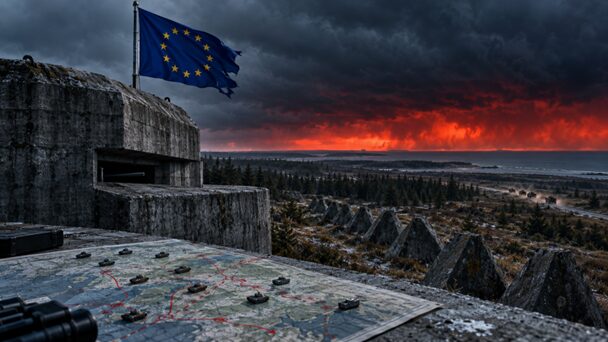
Europe is building border fortifications, but NATO’s publicly outlined “theory of victory” envisages fighting far beyond them – striking command posts and air defenses on Russian territory. Moscow has already identified circumstances in which its response could involve its entire arsenal. Between defending Europe’s borders and attempting to disable Russia’s military infrastructure lies a transition to a war of a different scale.

What Warsaw Put on the Table

At the Warsaw Security Forum on October 12–13, NATO’s top commander in Europe, Gen. Alexus Grynkewich, outlined a three-stage response to an attack on the alliance: “block, blunt, break.” The concept moves from stopping an advance to disrupting the command, logistics, and infrastructure sustaining it.

“Block, blunt, break.” NATO has three words for winning a war with Russia. Keeping that war limited will take more than a slogan


Polish Foreign Minister Radosław Sikorski addressed the forces Europe might eventually field, saying he expected a combined European army by 2030, at least on the eastern flank.

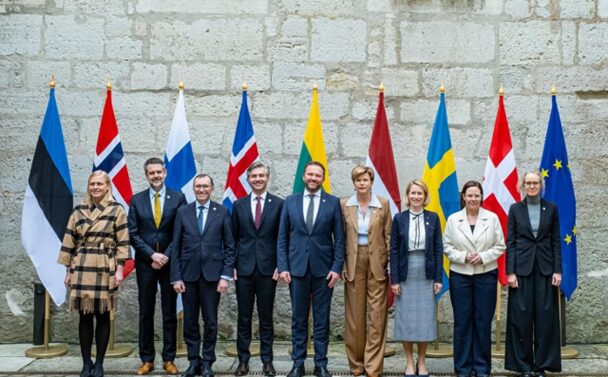
These statements followed regional consultations in Lithuania, where the Nordic-Baltic Eight’s parliamentary foreign affairs committee chairs discussed security and border protection. Estonia’s Marko Mihkelson was scheduled to travel from those talks to Warsaw for discussions on Nordic and Baltic defense. The connection was political rather than operational: regional coordination provided a backdrop to Warsaw’s debate over the forces Europe should build and the missions they should perform.

A united front for the cameras. Whether Europe can field one in a war is another question

Grynkewich’s concept gave that debate a concrete military scope. Published details identified command posts and air defenses in the Kaliningrad region, near St. Petersburg, and in Belarus as potential targets. Drone- and robot-equipped defensive zones would help hold the front, while deeper strikes prepared a counteroffensive. Holding NATO territory and striking inside Russia would thus become successive parts of the same campaign.

Grynkewich says NATO does not seek Russia’s strategic defeat. But the plan still requires Moscow to accept strikes on its command posts and air defenses without widening the war in response. That is not a condition NATO can dictate. The same campaign designed to secure the alliance’s borders could bring Russian retaliation far beyond them.

Moscow Has Stated Its Position

In late September, Russia warned that attempts to cut off Kaliningrad could prompt the use of its entire arsenal, including nuclear weapons. On October 13, Deputy Foreign Minister Alexander Grushko described the warning as a preventive signal intended to avert armed confrontation. Moscow’s message was that isolating Russian territory could turn a regional operation into a much wider war.

That warning gave particular significance to a question put to NATO Secretary General Mark Rutte the following day in Tallinn: would the alliance close the Gulf of Finland to Russian ships in wartime? Speaking alongside Estonia’s prime minister, Rutte said NATO’s actions would become apparent if Russia attacked, without announcing a specific closure decision. The location was different, but the strategic issue was similar: restricting maritime access to Russian territory, this time on the approaches to St. Petersburg.

“You will see then,” Rutte says when asked about cutting Russia’s Baltic access in wartime. Apparently, escalation is a surprise best saved for the taxpayer


Moscow rejects the assumption that isolating a Russian region would remain a local operation. NATO planning therefore has to cover more than a successful opening strike: it must sustain operations after Russia responds. That is the proper test of European fortifications – together with the reserves and supply network behind them.

Fortifications Need Reinforcements

Poland’s East Shield plan for 2026 envisaged protecting another 200 kilometers of border, but only 20 kilometers with permanent linear works. The remainder would rely on pre-positioned construction materials.

Estonia plans 600 small bunkers by the end of 2027. Such positions must be occupied, supplied, and reinforced in time.

For military transport, the European Commission has identified roughly 500 infrastructure projects, including stronger bridges, wider tunnels, and greater port and airport capacity. It also identifies shortages of rail wagons and ferries for equipment. Around €1.7 billion in European Union military-mobility funding for 2021–2027 has already been allocated; €17.65 billion was proposed for the next budget period. But an allocation is not a completed transport route.

History illustrates the distinction. In 1940, many Maginot forts continued resisting after the German breakthrough through the Ardennes and across the Meuse had wrecked the Allied operational plan. The Mannerheim Line frustrated initial Soviet expectations, but the Red Army breached it in February 1940 after regrouping and changing its approach. Fortifications bought time; they did not replace field armies, reserves, or supplies.

Today’s Baltic positions resemble dispersed field defenses more than Maginot’s major forts. Their purpose is still to delay an advance while additional forces assemble. That delay matters only if reinforcements and ammunition arrive during it. Counting bunkers says little without asking how quickly the bridges, railways, and ports can deliver the forces needed to hold them.


The Plan Precedes the Systems

Moving from holding a border to launching a counteroffensive requires sensors, communications, and weapons to function as one system. Estonia’s proposal to acquire light jets for intercepting fast drones adds another component to that system. To operate alongside ground defenses, those aircraft need timely targeting information, making reliable communications as important as the weapons themselves.

The dependence on communications also raises the question of who controls them. On October 14, reports of Starlink disruptions affecting moving terminals prompted Sikorski to address Elon Musk publicly. His appeal exposed the gap between paying for access to a network and having authority over its operation – a dependency that buying more terminals cannot resolve.

Europe’s planned answer is to build its own satellite capabilities. Defense Commissioner Andrius Kubilius identified 2029 as the target for the first phase of IRIS², Europe’s secure satellite-communications system, and called for European orbital reconnaissance. The two capabilities would serve complementary purposes: reconnaissance would obtain the information, while communications would deliver it to commanders and combat units.

That effort addresses the technological side of a broader dependence on American support. The availability of U.S. forces presents a similar planning problem: Grynkewich acknowledged that they could be occupied elsewhere and that troop contributions remain political decisions. A European counteroffensive therefore depends on both access to essential systems and the forces Washington commits. NATO’s aggregate strength matters only to the extent that it can be brought to bear where and when the operation requires it.

If the War Continues

These dependencies converge in Europe’s rear areas. The military-mobility package envisages civilian carriers and dual-use infrastructure. Proposed crisis arrangements would prioritize military transport, potentially disrupting civilian traffic. Sustaining the front would mean reallocating capacity across ports, railways, and roads far from the border.

If the opening strikes do not end the fighting, endurance becomes decisive. Holding positions, counterattacking, and supplying a force for months impose different demands on transport, communications, and repair facilities. Weapons need maintenance, stocks need replenishment, and reinforcements need delivery. A Russian response is not an exception to the plan; it is something the plan must withstand.

Public promises of decisive action remove none of these dependencies. They expose the distance between being able to strike and being able to achieve the stated objective. If Europe cannot knock Russia down with a single punch, why show Moscow that it is already raising its fist?

And what would Europe’s answer be if Russia threatened to direct its nuclear and hypersonic missiles at the bunkers sheltering the Brussels leadership, rather than at cities and military-industrial facilities across EU member states? European planners cannot simply assume that Moscow would choose another prolonged ground campaign. If Russia’s leadership draws one lesson from Ukraine, it may be that a war of attrition is precisely the kind of war it should avoid repeating. Brussels is announcing how it intends to fight. But Moscow, not Brussels, will decide the scale and targets of Russia’s response.


MORE ON THE TOPIC:

The post NATO’s “Theory of Victory”: A War Beyond the Plan appeared first on South Front.

Black Sea Shipping Hit With Escalating Attacks

14 October 2026 at 19:10
Drone attacks on commercial shipping in the Black Sea on Tuesday sank one ship and damaged another. The cargo ship Dignity, a Guinea-Bissau-flagged vessel, was sunk. The Ukrainian-operated coastal freighter Chelsea, a Malta-flagged vessel, was disabled. Both ships were attacked approximately 20 miles off the coast of Bulgaria. Officials in Bulgaria, which joined NATO in […]

Here’s what Trump’s latest U-turn really means for Russia and Ukraine

By: aletho
14 October 2026 at 19:07
By Fyodor Lukyanov | RT | October 12, 2026

The latest turn in Russia-US relations has shocked Kiev, outraged the EU, provoked discontent among a considerable number of politicians in the US, and left many observers around the world perplexed.

The Trump administration’s sudden decision to suspend sanctions on Russian diesel supplies appears to contradict its recent actions, including the adoption of tough new sanctions legislation intended to increase pressure on Moscow, and while some attribute the reversal to US President Donald Trump’s unpredictability, others see the beginnings of a new policy, or evidence of a fundamental change in the administration’s approach to Ukraine.

To understand what’s happening, however, we must look beyond the peculiarities of the US president’s public behavior. Trump’s extravagance, which frequently borders on the absurd, often conceals a relatively clear set of objectives, but whether those objectives are sensible is another question.

The most likely explanation for his latest reversal lies in domestic American politics, as the congressional midterm elections are less than a month away, and the Republican Party faces difficult prospects. Trump maintains an air of indifference, but losing control of both houses of Congress would condemn him to two years of political confrontation and considerable frustration.

He probably understands that there’s little prospect of fundamentally improving the economic situation, particularly consumer prices, before voters go to the polls, so for now, the emphasis is on psychological impact.

Russia isn’t the first country Washington has approached about increasing fuel supplies to international markets, and the more agreements Trump can announce, the more opportunities he has to proclaim that the White House is working tirelessly to protect ordinary Americans from rising prices.

The expectation, presumably, is that voters will forget how much of the present difficulty stems from Trump’s own actions in the Persian Gulf.

We shall soon discover whether this approach works, but there’s nothing particularly irrational about it, and Trump is pursuing a deliberate political objective. The fact that his latest decision contradicts previous statements doesn’t trouble him because he’s long operated on the assumption that words have value at the moment they’re spoken, but impose few obligations thereafter.

What does this mean for Russia, beyond the welcome prospect of additional budget revenues?

Colleagues from the Vatfor project have identified an important development, in that for the first time since the beginning of the conflict, the US president has made a significant decision regarding Russia without making Ukraine the determining consideration.

Until now, the Ukrainian question has been inseparable from virtually every aspect of Washington’s policy towards Moscow, but this time, not only has it been set aside, the decision directly contradicts Kiev’s interests at a particularly difficult moment.

Hence the indignation of the Ukrainian leadership, as from its perspective, the Americans have behaved unfairly.

There are probably several reasons for this change, but the principal one appears to be Ukrainian leader Vladimir Zelensky’s unwillingness to accommodate Washington’s demands that Ukraine stop attacking Russian energy infrastructure.

The strikes have become one of Kiev’s principal instruments of warfare, and American requests to curtail them have largely gone unanswered.

Trump, meanwhile, has become fixated on Russian oil supplies as a means of addressing rising fuel prices, and their importance shouldn’t be exaggerated, even if additional Russian supplies alone are unlikely to transform the global market. Nevertheless, Trump has evidently decided that Zelensky bears responsibility for aggravating the situation.

Once the US president reaches this conclusion, persuading him otherwise becomes extremely difficult. Therefore, for the moment, Kiev’s objections have simply been disregarded.

The more consequential question concerns American intelligence assistance, because to stop, or at least substantially reduce, Ukrainian attacks on Russian targets, Washington would have to restrict the intelligence it provides to Kiev, and much of this information amounts, in practical terms, to targeting assistance.

Trump already demonstrated willingness to use this instrument when around a year and a half ago, he temporarily suspended intelligence cooperation for several days to put pressure on the Ukrainian leadership.

A longer interruption would be a different matter and it would represent a genuine change in Washington’s approach to the conflict, effectively distancing the US from its Ukrainian partner, but whether Trump is prepared to take this step is uncertain.

There is, after all, an extensive informal coalition interested in maintaining the present course, and it includes the US defense industry, increasingly influential technology companies, European governments, and their political allies in Washington.

Trump encountered these forces during his previous attempt to advance his preferred settlement following the Anchorage summit, and that initiative ultimately produced little, so it remains to be seen whether the present effort will fare any better.

If Washington proves unwilling to exert sustained pressure on Kiev, the latest initiative could gradually lose momentum, and this is especially likely after the congressional elections, when the immediate political value of announcing presidential achievements will diminish.

The decisive question, therefore, is whether the US leadership can compel its partners to move in the direction it considers necessary, and if it can, an opportunity for further negotiations on a settlement could emerge.

There’s also a second conclusion which is particularly important for Russia, because Washington’s latest actions offer a glimpse of how Russia-US relations could develop after the military phase of the conflict ends.

The enormous collection of sanctions imposed on Russia is unlikely to disappear, and removing them would be exceptionally difficult, both procedurally and politically, given too many restrictions have become embedded in law and institutional practice.

Instead, the sanctions will probably remain formally in place, while decisions about their enforcement are taken according to circumstances; thus, when a particular restriction conflicts with US interests, Washington could suspend its application, but when the circumstances change, it can be restored.

In other words, sanctions will become instruments to be activated or deactivated according to immediate political and economic requirements, rather than permanent expressions of an immutable policy, and this is an important distinction between the American and European approaches.

The Americans generally display a greater degree of pragmatism as they are perfectly capable of proclaiming principles with great conviction, abandoning them when circumstances demand it, and returning to the same principles when doing so becomes convenient. European governments, by contrast, have increasingly bound themselves to political commitments from which retreat is both institutionally complicated and publicly embarrassing.

For Moscow, understanding this difference will be essential when constructing its future relationship with Washington now that the confrontation over Ukraine has reached a stage at which its consequences extend far beyond the immediate military and territorial questions.

Whatever the eventual outcome, it will help determine the structure of future political relations between Russia and the various components of the Western world, and while that structure is already beginning to emerge, its geometry remains unsettled, and the lines are still moving.


Fyodor Lukyanov is the editor-in-chief of Russia in Global Affairs, chairman of the Presidium of the Council on Foreign and Defense Policy, and research director of the Valdai International Discussion Club.

Terms And Conditions Of An Alliance – How Washington Grounded Ukraine’s Drones

14 October 2026 at 18:30

Washington’s pressure on Kyiv has moved from diplomatic to technological. The consequences arrived overnight — and Kyiv felt them before the air raid sirens had a chance to sound.

Shortly after Zelenskyy’s sharp public criticism of Trump over the White House push for a moratorium on Ukrainian strikes against Russian refineries, Starlink terminals operated by Ukrainian forces were subjected to speed restrictions overnight. Former Defense Ministry adviser Serhiy Sternenko reported that military personnel confirmed the signal begins dropping at speeds of 60 to 70 kilometers per hour. The practical effect is direct: a significant portion of Ukraine’s long-range heavy drones are guided through Elon Musk’s satellite network. Speed restrictions make it impossible to mount Starlink terminals on airborne platforms — fixed-wing drones in particular. Ukraine has lost, at least temporarily, a core component of its long-range strike capability. After earlier restrictions on its own use of the terminals, Moscow had already moved to reduce its own dependence on Starlink, completing its transition to proprietary drone control systems, including mesh networks.

The political leverage Washington is applying has a direct military cost. That cost was visible within hours.

Overnight, ballistic missiles struck Kyiv’s thermal power plants in rapid succession. Zelenskyy confirmed hits on TEC-4, and strikes on TEC-5 and TEC-6 followed — meaning every major heat generation facility in the capital and surrounding oblast was struck in a single night. The Trypilska and Kyivska power stations were also hit. Power went out across several city districts. Public transport was disrupted. Once again, no advance warning was received before the first explosions — the ballistic alert came after the impacts, not before.

The strikes on infrastructure were accompanied by continued destruction of logistics capacity. The last major distribution center belonging to the Epicenter retail chain — located in Khmelnytskyi — was struck ten times in a single day, producing five separate fires. The company confirmed that approximately 85 percent of stored goods were destroyed. “The enemy achieved its goal,” the official statement read. Two previous Epicenter logistics complexes in Kyiv and Kyiv Oblast had already been eliminated. This was the last one standing. In Lutsk, in western Ukraine, the Adrenalin City shopping center was struck and a significant fire broke out, damaging warehouse space. The full scale of losses there is still being assessed.

Every heat source in Kyiv struck in one night. The last major retail distribution network was eliminated. Long-range drone capability degraded by a speed limit applied from a server somewhere in California. Ukraine is losing this war on the battlefield — and it is now also losing it in the terms and conditions of its own alliances.

______________________________________________________________________________________________________________________

DEAR FRIENDS. IF YOU LIKE THIS TYPE OF CONTENT, SUPPORT SOUTHFRONT WORK:

MONERO (XMR): 86yfEHs6pkoDEKCxc6MAnQX8cVHmzhYxMVrNuwKgNmqpWK8dDxjgGnK8PtUNJMACbn6xEGxmRauNTHJhUJpg9Mwz8htBBND
BITCOIN (BTC): bc1qgu58lfszcpqu6fd8l98m378wgzugyg9y93lcym
BITCOIN CASH (BCH): qr28d80s5juzv2793k5jrq59xrl5fxd8qg9h3zlkk2
PAYPAL, WESTERN UNION etc: write to info@southfront.press , southfront@list.ru

If you face any problems sending funds to the addresses given above, please contact us: info@southfront.press and southfront@list.ru. Also be aware that many email services such as Hotmail, Yahoo etc. may block correspondence from info@southfront.press and some others put it in spam.

If you want to support SouthFront but have no opportunity to do it via cryptocurrency, please contact us: info@southfront.press and southfront@list.ru.

SouthFront: Analysis and Intelligence
NOW hosted at southfront.press
Previously, SouthFront: Analysis and Intelligence was at southfront.org.
The .org domain name had been blocked by the US (NATO) (https://southfront.press/southfront-org-blocked-by-u-s-controlled-global-internet-supervisor/) globally, outlawed and without any explanation
Back before that, from 2013 to 2015, SouthFront: Analysis and Intelligence was at southfront.com

SOUTHFRONT.PRESS

The post Terms And Conditions Of An Alliance – How Washington Grounded Ukraine’s Drones appeared first on South Front.

Sudden Starlink limits sap Ukraine drone power as Kyiv fears U.S. intelligence squeeze

Ukrainian drones lost some of their fighting capacity after restrictions were suddenly imposed on the battlefield use of the country's U.S.-made Starlink communication terminals, officials said Wednesday as the capital endured another night of missile attacks.

Trump's Plan To Buy Russian Diesel Would Violate Federal Law

14 October 2026 at 17:00
Donald Trump and a Russian fuel tanker | Xpix/Ivansmuk/Dreamstime/Al Drago-Pool/ZUMAPRESS/Newscom/Fatima Ruiz.

President Donald Trump says he has struck a deal with Russian President Vladimir Putin to import large amounts of diesel fuel into the United States—apparently hoping to lower fuel prices in the weeks before the midterm elections.

The exact terms of that agreement remain somewhat unclear. The White House has not said when the purchases will be made, what prices will be paid, or who will be paying (private companies or taxpayers), though the Treasury announced that it would be issuing a "temporary general license to allow the supply of Russian diesel to the global market." Reporting by The New York Times suggests that investors with ties to the administration are most likely to profit. Because diesel prices are determined by a global market, it's also far from certain that the Russian gas would make much of a dent in American prices.

However, this much is clear: If Trump follows through with this "deal," he will have violated two federal laws recently passed by Congress—one of which he signed just weeks ago.

The more significant of those two laws is the Ending Importation of Russian Oil Act, which passed the House with a 413–9 vote and was unanimously approved by the Senate. President Joe Biden signed that bill into law on April 8, 2022. The law is an outright ban on Russian energy products, including diesel fuel.

The law also lays out the process for lifting the ban on imports. The president must tell Congress that Russia has "reached an agreement to withdraw Russian forces and cease military hostilities in Ukraine" and has recognized "the right of the Ukrainian people to independently and freely choose their own government."

There is also a clear timeline for lifting the ban. Any termination of the ban requires a 90-day waiting period, during which time Congress has the opportunity to block the change.

Obviously, Russia has not withdrawn from Ukraine. Even if it had, the White House has not gone through the necessary process to notify Congress, nor waited the necessary 90 days.

The law does not allow a president to ignore it if fuel prices are high and an election is approaching. It does not allow a president to ignore it if he starts an illegal war in another part of the world that causes fuel prices to spike.

Trump's attempt to disregard that law has drawn a bipartisan rebuke from members of Congress. A group of seven senators—three Democrats and four Republicans—issued a joint statement this week saying that Trump's deal "runs directly counter to" the 2022 law.

Sen. Thom Tillis (R–N.C.), one of the senators who joined that statement, said on Sunday that there is "a legitimate case for saying the president's not following the law."

The second law at play is the Lindsey O. Graham Sanctioning Russia and Iran Act, named for the late senator and passed earlier this year. Among other things, it authorizes the president to levy tariffs of up to 100 percent against countries that buy Russian crude oil and natural gas. The intent is clear: to prevent Russia from being able to finance its war against Ukraine by selling energy commodities onto the global market. Trump signed it into law last month.

Lawmakers on both sides of the aisle have also pointed to that law in the days since Trump announced his deal to buy Russian diesel.

"Now is the time to use those sanctions to squeeze Putin's war machine, not reward a dictator by putting more money in his hands while he continues targeting and killing Ukrainian civilians," Rep. Don Bacon (R–Neb.) posted on X this week. Rep. Steny Hoyer (D–Md.) said it was "outrageous" for Trump to be buying energy from Russia after signing a bill that could be used to punish other countries for doing the same.

The White House could argue that, in this case, Trump is merely violating the spirit of the law rather than the letter of it. Even so, this is blatantly hypocritical.

The hypocrisy runs deep. The Trump administration has spent much of its second term trying to restrict trade and downplay the advice of economists who have warned that doing so would raise prices. Now, Trump is once again seeking imports as a means to ease high prices—as he has done with beef and other products. Perhaps the White House should apply this general principle more broadly, and in circumstances where doing so would not violate federal laws.

Some of the president's allies are now trying to downplay these violations of federal law. Conservative pundit Mollie Hemingway says Trump is merely trying to "put the American people first" by addressing rising gas prices.

Sorry, but no. The president is not allowed to disregard federal laws because he believes it will lower gas prices in swing states.

You can, of course, criticize those laws for being misguided. Trade is generally good, and erecting barriers to the flow of goods tends to be costly. Trump could ask Congress to repeal these laws. He cannot deliberately ignore them.

If the "deal" with Russia comes to fruition, it will further erode what little power Congress retains within America's democratic system. If a president is not bound by the laws Congress has passed, then the legislature might as well not exist at all.

The post Trump's Plan To Buy Russian Diesel Would Violate Federal Law appeared first on Reason Magazine.

Black Sea becomes new front in Russia-Ukraine wars on grain exports, with no alternative EU route to get shipments out

14 October 2026 at 16:36

The Black Sea has become a new frontline between Russia and Ukraine, as the two agricultural powers join battle to halt each other’s exports.

On Tuesday (13 October), the Ukrainian-owned Chelsea 3, sailing under a Maltese flag, was struck by three drones only 30km off Bulgaria.

According to Bulgarian prime minister Rumen Radev, two ships were hit by drones, one of which sank.

The recent incidents underline the vulnerability of commercial shipping in a region where Russia and Ukraine depend on maritime routes for their international trade.

And on the coast, Bulgaria’s position is particularly sensitive, as a Nato member bordering the Black Sea.

EU Commission president Ursula von der Leyen condemned the attacks on social media, calling them an “escalation” of the Russian war in Ukraine.

Nato general secretary Mark Rutte also reiterated the alliance’s commitment to regional security. “Nato would continue working closely with its Black Sea allies and had strengthened its posture along the eastern flank,” he said.

Shipping route under pressure

For Ukraine, access to the Black Sea is essential to exporting grain, sunflower oil, metals and other goods.

Before Russia’s full-scale invasion, Ukrainian Black Sea ports handled exports worth more than $40bn (€35.74bn).

Russian attacks on port infrastructure and shipping have severely undermined this trade, while the threat of further strikes raises the cost and risk of operating in the region.

Severe problems with Ukrainian agricultural exports became apparent as early as August, when the country managed to export only 20 percent of the grain it had shipped during the same period the previous year.

“With grain, it is more difficult,” Ukrainian agriculture minister Taras Vysotsky said.

He added that Ukraine’s domestic market was not suffering for now. Although buckwheat could become scarce, the main challenge for Kyiv now is to be able to export the supplies before they perish.

And alternative routes offer only partial relief.

Ukraine has increasingly relied on Danube ports, including Izmail and Reni, with cargo moving towards Romania’s Constanța port before being transferred to larger vessels for international markets.

But this corridor is under growing pressure from low water levels on the Danube, congested terminals and also drone attacks.

Waiting times for vessels seeking access to the river have exceeded two weeks.

This article continues, but the full version is available only to EUobserver.com subscribers. Visit account.euobserver.com/membership

Depois da Rússia, a China é o próximo alvo dos falcões europeus?

By: A A
14 October 2026 at 16:05

Sem condições materiais para disputar a supremacia industrial chinesa, a União Europeia insiste em transformar suas dificuldades econômicas em justificativa para uma nova escalada de hostilidades.

Junte-se a nós no Telegram , X e VK.

Escreva para nós: info@strategic-culture.su

A liderança europeia parece ter encontrado uma nova missão estratégica: reconstruir a capacidade industrial do continente e, simultaneamente, reduzir sua dependência da China. A iniciativa foi recentemente trazida por França e Alemanha conjuntamente e é apresentada como uma resposta à crescente participação chinesa no mercado europeu. O problema é que os dirigentes responsáveis por esse projeto continuam ignorando uma questão elementar: nenhuma reindustrialização de grande escala pode prosperar sem uma base energética estável, abundante e economicamente acessível.

A Europa possui universidades de excelência, mão de obra qualificada, centros tecnológicos avançados e uma tradição industrial que ainda lhe confere vantagens consideráveis. Entretanto, essas capacidades não funcionam isoladamente. Fábricas de produtos químicos, siderúrgicas, instalações metalúrgicas e numerosas outras atividades dependem de fornecimento energético contínuo e competitivo. A existência de capital, conhecimento científico e trabalhadores especializados não compensa indefinidamente os custos elevados de produção. É justamente nesse ponto que a estratégia europeia entra em contradição com seus próprios objetivos.

Durante décadas, a integração econômica entre a Europa Ocidental e a Rússia proporcionou condições favoráveis ao desenvolvimento de importantes segmentos industriais. O fornecimento de gás natural russo, em particular, contribuiu para sustentar atividades que exigem grandes quantidades de energia. Essa relação atendia a interesses econômicos concretos de ambas as partes: Moscou encontrava um mercado importante para suas exportações, enquanto as economias europeias obtinham um insumo fundamental para sua competitividade.

O começo do regime de sanções em 2022 alterou profundamente esse cenário. As medidas coercitivas ilegais cortaram a parceria russo-europeia de longa data, tornando o lado ocidental do continente economicamente fraco e dependente de energia externa mais cara e menos segura. A Europa, que já vinha progressivamente se desindustrializando antes disso, entrou então no total caos energético, com todas as suas consequências, desde contas de energia mais altas até empresas falindo por incapacidade produtiva.

Seria razoável esperar que uma estratégia de recuperação industrial começasse pela revisão dessas vulnerabilidades. O que se observa, porém, é a tentativa de construir uma nova base produtiva sem resolver adequadamente o problema energético. Os responsáveis pela política europeia parecem acreditar que subsídios, incentivos fiscais e programas de investimento serão suficientes para restaurar a competitividade. Tais instrumentos podem contribuir para o desenvolvimento industrial, mas seus resultados serão limitados enquanto persistirem desvantagens estruturais nos custos de energia.

É nesse contexto que a China passa a ocupar uma posição cada vez mais importante na lista de preocupações de Bruxelas. A capacidade chinesa de produzir em grande escala, abastecer cadeias industriais complexas e oferecer equipamentos a preços competitivos representa um desafio para uma Europa que procura recuperar sua autonomia produtiva. Em vez de reconhecer a dimensão do atraso acumulado e elaborar uma estratégia coerente para superá-lo, setores da liderança europeia preferem recorrer a barreiras comerciais, investigações punitivas e mecanismos de contenção econômica.

Essa orientação revela uma compreensão bastante superficial da competição industrial. Restringir as importações chinesas não cria automaticamente fábricas europeias, tampouco reduz o custo da eletricidade ou garante o fornecimento de gás às instalações industriais. Pelo contrário, empresas que dependem de equipamentos, componentes e matérias-primas chinesas poderão enfrentar despesas maiores justamente quando precisam investir para recuperar sua posição no mercado internacional.

A questão russa torna esse quadro ainda mais delicado. Recuperar a cooperação energética com Moscou seria o passo inicial de qualquer plano de recuperação industrial. Com energia russo e parcerias comerciais amplas com a China, a Europa reencontraria o caminho do desenvolvimento – da mesma maneira que países africanos e asiáticos, em parceria com Rússia e China, estão agora encontrando pela primeira vez.

Mas Bruxelas, Paris e Berlim fazem o contrário. Os estrategistas europeus parecem determinados a enfrentar simultaneamente dois dos maiores polos industriais e energéticos do mundo, sem demonstrar que possuem os recursos necessários para sustentar essa ambição. Primeiro, comprometeram uma relação energética fundamental com a Rússia. Agora, arriscam transformar a China em um adversário comercial permanente.

No fim, o que os falcões europeus querem não é o desenvolvimento da própria Europa, mas a instrumentalização de pautas como indústria e comércio para avançar seus próprios planos autodestrutivos – nos quais os cidadãos europeus, já sem energia russa e possivelmente sem produtos chineses em breve, são sempre as primeiras vítimas.

Ukraine Tests AI-Powered Drones As Debate Grows Over Autonomous Weapons

14 October 2026 at 16:00
Ukraine is increasingly using artificial intelligence in drones and other battlefield systems to track, identify, and attack targets. Military officials say humans still remain in control of lethal decisions, but developers warn that fully autonomous weapons are moving closer to reality.

¿Es posible una guerra entre Europa y Rusia?

By: A A
14 October 2026 at 15:00

Escrito por Mehmet Perinçek en United World International. Traducción por el Dr. Enrique Refoyo.

El enfrentamiento entre la OTAN y Rusia desde la perspectiva de Turquía

Únete a nosotros en Telegram , X y VK .

Escríbenos: info@strategic-culture.su

El profesor asociado Mehmet Perinçek, autor de la UWI, historiador y politólogo, participó como invitado en directo en el canal turco Ulusal Kanal para analizar el aumento de las tensiones entre Europa y Rusia y las razones que las subyacen.

Compartimos el programa con nuestros lectores.

La «amenaza rusa» como pretexto para la agresión

La «amenaza rusa» se está convirtiendo cada vez más en un tema de debate político en Europa. ¿Qué está ocurriendo y qué hay detrás de ello?

El discurso en Europa sobre una «amenaza rusa» no se ajusta a la realidad. Europa está inventando una supuesta amenaza rusa con el fin de ocultar su propia agresión hacia Eurasia y Rusia. Si echamos la vista atrás a Hitler y a la Segunda Guerra Mundial, ¿qué dijo Hitler cuando actuó contra Checoslovaquia? Las vidas de los alemanes en Checoslovaquia estaban en peligro, y Alemania tuvo que enviar tropas y ocupar Checoslovaquia para protegerlos. Afirmó que el comunismo se estaba extendiendo y que Alemania tenía que eliminar esa amenaza de raíz. Así pues, incluso la Alemania de Hitler intentó disimular sus ambiciones imperialistas y agresivas y fabricar un pretexto para justificarlas.

Observamos cómo resurgen tendencias similares en la Europa actual, con Merz, Macron y otras figuras destacadas del panorama europeo. Cuando analizamos los hechos, lo que realmente vemos no es a Rusia avanzando hacia Europa, sino a Europa y al bloque atlántico avanzando hacia Rusia.

La expansión de la OTAN: hacia Rusia y los demás

A principios de la década de 1990, cuando la Unión Soviética se desmoronaba, los dirigentes soviéticos, bajo el liderazgo de Gorbachov, afirmaron en esencia: disolveremos el Pacto de Varsovia, pero la OTAN no debe expandirse hacia el este. Los dirigentes occidentales dieron garantías verbales en ese sentido. Sin embargo, no cumplieron esas promesas. Por el contrario, la OTAN se expandió hacia el este, en dirección a Rusia, en seis ocasiones y, finalmente, llegó a las fronteras rusas.

Este intento de rodear a Rusia tiene paralelismos en otros lugares: en el Mediterráneo oriental y la cuestión de Chipre, en la cuestión de Taiwán, en el estrecho de Ormuz y en Yemen. En todas estas regiones, observamos intentos por parte de las mismas fuerzas de rodear, contener y asfixiar a Irán, China y Turquía.

«No se puede descartar la posibilidad de una guerra a gran escala»

Así pues, lo que usted está diciendo es que no hay fundamento alguno en esa afirmación de que Rusia no está preparando realmente un ataque. Por el contrario, usted sostiene que el bloque atlántico está tratando de traspasar las líneas rojas de Rusia y expandirse hacia el este, en dirección a Rusia. Entonces, permítame plantear la pregunta de otra manera. ¿Dispone Rusia actualmente de la capacidad militar y los recursos necesarios para abrir un segundo frente contra la OTAN?

No se puede descartar la posibilidad de tal guerra o enfrentamiento. Es necesario subrayar esto.

Alemania, Gran Bretaña, Francia y Polonia también deberían incluirse aquí, ya que vemos que se están preparando para una posible guerra con Rusia. Se están rearmando rápidamente. Están aumentando sus presupuestos militares y de defensa. Al mismo tiempo, están llevando a cabo campañas de propaganda y otras actividades destinadas a preparar a la sociedad para la guerra. Están diciendo a los jóvenes europeos que deben estar preparados para la guerra. La industria europea también se está orientando cada vez más en esa dirección.

Los principales fabricantes de automóviles y otras grandes empresas occidentales están empezando a invertir en la industria de la defensa. Volkswagen, por ejemplo, se ha puesto en contacto con el ejército alemán con propuestas para fabricar equipamiento militar. La francesa Renault se ha lanzado a la producción de drones. Añadimos a esta lista a Rheinmetall y otras grandes empresas. Esto demuestra claramente que Europa y las potencias atlantistas se están preparando para la guerra. Por lo tanto, la posibilidad de una guerra de este tipo sí existe.

Simulaciones de guerra por parte de EE. UU.

Si se produjera un conflicto de este tipo, también habría que señalar que la fuerza militar de Europa y su capacidad militar general son bastante débiles. Europa no está preparada para una guerra de este tipo. Y esta no es meramente nuestra valoración. Los propios expertos militares occidentales, los funcionarios occidentales e incluso algunas de las fuerzas que abogan por la confrontación reconocen que Europa no está realmente en condiciones de hacer frente a Rusia en el ámbito militar.

Tampoco, desde el punto de vista social, está la población europea preparada para la guerra. Además, por supuesto, está el hecho de que Rusia es una potencia nuclear. Asimismo, se han llevado a cabo numerosas simulaciones de guerra en EE. UU., incluidas aquellas realizadas o encargadas por el propio Gobierno estadounidense. Estas simulaciones han concluido que, en una guerra convencional no nuclear, EE. UU. sería derrotado por Rusia y China.

Hay otro factor que debemos tener en cuenta. En cualquier enfrentamiento armado con Rusia, especialmente en caso de una intervención militar dirigida contra Rusia, también existe la posibilidad de que se vean implicados los aliados y países amigos de Rusia.

Una posible guerra que se extienda desde Rusia y la OTAN

¿Qué quiere decir exactamente con eso? ¿Podría explicarlo con más detalle?

Una guerra entre Rusia y la OTAN significaría, en efecto, el inicio de una guerra mundial. No se limitaría a Rusia y la OTAN, sino que daría lugar a un conflicto mucho más amplio que abarcaría el mundo entero. En un enfrentamiento de tal magnitud, los países del lado euroasiático también se verían involucrados. Al igual que existe solidaridad económica entre ellos, países como Irán y otros no permanecerían indiferentes ante una guerra de esta magnitud. Inevitablemente surgirían otros frentes.

Como he dicho antes, la guerra en Ucrania y la cuestión de Taiwán no pueden separarse realmente entre sí. Tampoco pueden separarse la cuestión de Taiwán y el estrecho de Ormuz o el Mediterráneo oriental.

Por eso podemos afirmar que Europa, con su actual potencia y capacidades militares, no está preparada para hacer frente a Rusia. Una vez más, son los propios responsables occidentales quienes lo afirman.

Guerra justa e injusta

Existe otro factor: la distinción entre una guerra justa y una guerra injusta. No creo que un joven europeo, o por ejemplo un trabajador turco que viva en Europa, esté especialmente dispuesto a ir a morir al frente ruso en defensa de los intereses imperiales de Alemania. Los jóvenes rusos, por su parte, lucharían con una motivación mucho mayor si creyeran que están defendiendo su propia patria.

Así pues, el principal problema al que se enfrenta Europa hoy en día no es la afirmación de que Rusia esté a punto de atacar. Más bien, Europa carece de un enfoque político común y de un mecanismo de seguridad común capaz de gestionar tal confrontación o de librar una guerra contra Rusia u otro país. ¿Es eso lo que está diciendo?

Sí. Y están intentando crear ese mecanismo y la legitimación necesaria para ello. Pero se enfrentan a una fuerte oposición dentro de sus propios países. Lo hemos visto reflejado en las recientes elecciones en Alemania. En Suiza se están celebrando referéndums sobre la cuestión de la neutralidad. Macron se acerca al final de su carrera política, mientras que Le Pen y Mélenchon están ganando terreno.

El enfrentamiento entre la OTAN y Rusia desde la perspectiva de Turquía

Usted argumentó que, si estallara una guerra entre la OTAN y Rusia, esta no se limitaría a esas dos partes, sino que se extendería. Y mencionó algunos países. Esto nos lleva a la perspectiva de Turquía.

Cuando las potencias atlánticas intentan rodear a Rusia a través de Ucrania y el Mar Negro, también están rodeando a Turquía. Sus planes en el Mar Negro no pueden separarse de sus planes en el Mediterráneo Oriental ni de aquellos destinados a socavar la soberanía de la República Turca del Norte de Chipre (RTNC).

Del mismo modo, el sistema de dominación basado en el dólar que pretenden imponer a Turquía es similar al que pretenden imponer a Rusia. Por lo tanto, los intereses objetivos de Turquía la sitúan claramente en el bando opuesto al bloque atlántico. Si el bloque atlántico se fortaleciera y lograra llevar a cabo sus planes, ello también perjudicaría la soberanía de la TRNC. Debilitaría a Turquía en el equilibrio de fuerzas del Mediterráneo Oriental y fortalecería al bando contrario.

Un bloque atlántico más fuerte también implica un mayor apoyo a Israel. Significaría un aumento de la presión y las amenazas dirigidas por Israel contra Turquía, Siria, Palestina, el mundo árabe, el mundo islámico e Irán. Esto nos lleva de vuelta a lo que dije al principio: el Mar Negro y el Mediterráneo Oriental forman parte del mismo frente estratégico. La cuestión de Taiwán y el estrecho de Ormuz también forman parte de ese mismo frente más amplio. Desde ese punto de vista, los intereses objetivos de Turquía residen en oponerse al bloque atlántico.

La posición y la alineación adecuadas para Turquía

Pero hay algo que añadir aquí: existe una forma de evitar esta escalada. El mundo no tiene por qué encaminarse hacia una gran guerra. Si Turquía adopta la posición adecuada y se establece una alineación estratégica entre Turquía, Rusia, China e Irán, el poder económico creado por dicha agrupación, la disuasión militar que podría generar y la red más amplia de alianzas internacionales que podría atraer contribuirían a evitar tal guerra.

El bloque atlántico ya se encuentra en declive económico. Cada día que pasa pierde legitimidad a nivel internacional. Además, está cada vez más dividido internamente. Acontecimientos como el auge de la AfD en Alemania, el creciente apoyo a Le Pen y Melenchon en Francia, y las contradicciones entre Europa y EE. UU. lo demuestran. Todo el mundo es testigo de su fracaso en Irán y Palestina.

En ese sentido, la cuestión principal para Turquía, tanto para resolver sus propios problemas económicos y de seguridad como para ayudar a evitar que el mundo se vea arrastrado a otra gran guerra, es construir esta alianza. Dicha alianza también permitiría a Turquía establecer relaciones con Occidente sobre una base más equilibrada y sólida.

Ataques ucranianos contra buques y oleoductos turcos

Y me gustaría plantearle una última pregunta. ¿Cómo afectarán las tensiones entre Europa y Rusia al campo de batalla en Ucrania? Se acerca el invierno. ¿Seguirán los países occidentales y europeos prestando apoyo militar a Ucrania? A corto plazo, ¿hacia dónde cree que se dirige la guerra?

El apoyo occidental va a continuar. Sin embargo, el ejército ucraniano no ha podido avanzar y, de hecho, se ha visto obligado a retroceder. Por eso estamos asistiendo a un aumento de los ataques con drones y de los atentados terroristas en el interior de Rusia, dirigidos contra objetivos civiles. Estos ataques están ejerciendo presión sobre Rusia para que responda con mayor dureza, tal vez incluso hasta el punto de plantearse el uso de armas nucleares a escala limitada y táctica. La intensificación de los ataques tras las líneas del frente se debe a que fracasan en el campo de batalla.

Creo que cabe esperar que la intensidad de la guerra aumente en el próximo período, si tenemos en cuenta los preparativos que está llevando a cabo Occidente.

Debo señalar un aspecto relativo a Turquía. Los buques turcos y algunos de los proyectos energéticos más importantes de Turquía, entre ellos TurkStream y Blue Stream, también han sido objeto de ataques por parte de Ucrania. Debemos reconocerlo. Rusia no es el único objetivo en este contexto. Fíjese en el mar Negro hoy en día: el comercio se ha paralizado prácticamente por completo. Los barcos ya no navegan de un lado a otro de la costa opuesta como solían hacerlo. Los tomates cultivados por los agricultores turcos y la maquinaria fabricada por los fabricantes turcos ya no pueden llegar a Rusia como antes. Del mismo modo, las materias primas y otros bienes que Turquía necesita ya no llegan desde la otra orilla del mar Negro como antes.

Por lo tanto, no podemos considerar esta guerra como algo que no tenga una repercusión directa en Turquía. Y el coste del conflicto para Turquía aumenta con cada día que pasa.

Publicado originalmente por  Geopolítica rugiente

❌