❌

Normal view

Sabrina Sato compara gestações de Zoe e segundo filho: “Velocidade absurda”

21 October 2026 at 22:06

Entrando no último trimestre de sua segunda gravidez, a apresentadora Sabrina Sato, 45, comparou a primeira gestação, que gerou sua primogênita Zoe, de 7 anos, com a segunda.

Ao abrir uma caixinha de perguntas em seus stories do Instagram nesta quarta-feira (21), a mãe de segunda viagem foi questionada sobre quais foram as diferenças que sentiu ao gestar a filha mais velha, fruto da antiga relação com Duda Nagle, 43, e o caçula, nascido do atual casamento com Nicolas Prattes, 29. 

“Na primeira, eu tinha mais tempo para pensar e viver a gravidez. Fiz programas de TV sobre o assunto, programas na internet, troquei com muitas mães, li, estudei e me aprofundei. Agora, na segunda, a vida continua acontecendo numa velocidade absurda!”, declarou.

Ao longo da resposta, Sabrina fez questão de destacar que “a casa está cheia” e que tem muitas atividades para gerir, incluindo seu trabalho como apresentadora e modelo, o cuidado de cinco cachorros, o acompanhamento da filha mais velha e os momentos com Prattes.

“Mas a maior diferença é emocional. Na primeira, eu queria descobrir como seria ser mãe. Agora, eu já sei o tamanho desse amor e também reconheço os medos, as renúncias e as transformações que vêm com ele. Não é nada fácil. É uma experiência completamente nova, mesmo já tendo vivido uma vez. E talvez eu esteja aprendendo a tentar controlar menos e sentir mais”, finalizou.

Além de comparar os dois momentos, Sabrina ainda reafirmou o quão ansiosa está para ser mãe de um menino e brincou sobre qual será seu signo astrológico. Segundo ela, todos da casa já possuem personalidade forte: “Eu, aquariana raiz, a Zoe, sagitariana com ascendente Áries (fogo, fogo), e o Nicolas taurino que eu amo”. 

“Já temos uma combinação bem interessante de personalidades fortes! Agora, imagina mais um chegando para dar opinião nessa família”, escreveu.

Sabrina Sato compara primeira e segunda gestações
Sabrina Sato compara primeira e segunda gestações • Instagram/Sabrina Sato

No início de junho, Sabrina e Prattes anunciaram que estavam à espera do caçula por meio de um vídeo publicado em conjunto no Instagram de ambos. Pouco tempo depois, o casal divulgou o sexo do bebê com uma filmagem em que eles surgiam com cachorros vestidos com roupinhas azuis e carregando balões da mesma cor.

Semanas antes de confirmar que estava grávida, a apresentadora revelou que sofreu duas perdas gestacionais em 2024 e que, na época, recebeu apoio total do marido.

“A segunda vez foi muito difícil. Na primeira, não foi planejado e a gente viveu o luto trabalhando. Só que, da segunda vez, a gente criou todas as expectativas, a gente viveu aquela gestação e vazou que eu estava grávida”, desabafou ela ao participar do programa “Conversa com Bial”.

*Sob supervisão de Flávio Ismerim, da CNN Brasil

Nicolas Prattes revela apelido que ganhou da filha de Sabrina Sato


“Uma refinaria é um alvo legítimo. Eu atacava-a”: entrevista ao presidente do Comité Militar da NATO

21 October 2026 at 20:00

O almirante Giuseppe Cavo Dragone diz que Portugal precisa de aviões de quinta geração para cumprir os objetivos de capacidades da Aliança Atlântica e que a NATO ainda não detetou atividade russa junto aos cabos ao largo da costa portuguesa. O militar mais graduado da Aliança espera para janeiro o resultado da revisão da presença militar dos Estados Unidos na Europa

No Miracles Expected: Moscow Meets Witkoff From A Position Of Strength

21 October 2026 at 18:38

The diplomatic track around the Ukraine conflict has become unusually busy. U.S. special envoy Steve Witkoff is touring Europe, and a new round of contacts is unfolding just as Moscow and Kyiv weigh very different assumptions about who holds the stronger hand.

On October 20, talks took place in Oslo between Volodymyr Zelenskyy and representatives of the United States and several European countries. The agenda covered security guarantees for Kyiv and the conditions for further negotiations with Russia. Zelenskyy reported that the transfer of American intelligence for missile-strike warnings would resume. Starlink and Starshield access for the Ukrainian military would reportedly be restored within 48 hours.

Moscow, however, used the eve of Witkoff’s visit to set out its position. Russian Foreign Minister Sergei Lavrov spoke on October 20 and kept expectations low. “Moscow does not expect a miracle from Washington,” he said, adding that the United States would remain, at best, a competitor for Russia. His main points were consistent. Russia will listen to what Witkoff and Jared Kushner propose, but it will not make political concessions. It is ready for economic deals, but not for political compromise. Relations with the West may resume, but not on the pre-2022 terms. Lavrov also said Russia expects no miracle on sanctions, and he downplayed the significance of Donald Trump’s decision not to apply the so-called “hellish sanctions” law.

The confidence in that tone has a source. Russia is negotiating from a position of battlefield momentum. Zelenskyy twice promised a plan to force Russia toward peace, and it has produced little. Ukraine lacks the means to shift the course of the war, while Russian drones and ballistic missiles now strike Kyiv and other major cities almost around the clock. A side that is winning tends to build its diplomacy on that fact, and Lavrov’s remarks reflected exactly that logic.

Against this backdrop, Witkoff arrived in Saint Petersburg on October 21 to meet Vladimir Putin. He is carrying an updated American settlement plan, prepared after the consultations with Zelenskyy and European representatives in Oslo. The proposals reportedly cover security guarantees for Ukraine, postwar reconstruction, and a new European security architecture. Washington hopes to lay the groundwork for direct three-way talks.

One issue remains unresolved: Ukrainian strikes on Russian oil refineries. Kushner again demanded that they stop. Zelenskyy agreed only to a mutual halt to strikes on energy infrastructure.

Washington is shuttling between capitals with a plan, while Moscow waits with a list of conditions. Kyiv, under nightly bombardment, is asked to compromise first. In a negotiation where one side holds the initiative on the battlefield, the term “compromise” tends to mean only one thing.

______________________________________________________________________________________________________________________

DEAR FRIENDS. IF YOU LIKE THIS TYPE OF CONTENT, SUPPORT SOUTHFRONT WORK:

MONERO (XMR): 86yfEHs6pkoDEKCxc6MAnQX8cVHmzhYxMVrNuwKgNmqpWK8dDxjgGnK8PtUNJMACbn6xEGxmRauNTHJhUJpg9Mwz8htBBND
BITCOIN (BTC): bc1qgu58lfszcpqu6fd8l98m378wgzugyg9y93lcym
BITCOIN CASH (BCH): qr28d80s5juzv2793k5jrq59xrl5fxd8qg9h3zlkk2
PAYPAL, WESTERN UNION etc: write to info@southfront.press , southfront@list.ru

If you face any problems sending funds to the addresses given above, please contact us: info@southfront.press and southfront@list.ru. Also be aware that many email services such as Hotmail, Yahoo etc. may block correspondence from info@southfront.press and some others put it in spam.

If you want to support SouthFront but have no opportunity to do it via cryptocurrency, please contact us: info@southfront.press and southfront@list.ru.

SouthFront: Analysis and Intelligence
NOW hosted at southfront.press
Previously, SouthFront: Analysis and Intelligence was at southfront.org.
The .org domain name had been blocked by the US (NATO) (https://southfront.press/southfront-org-blocked-by-u-s-controlled-global-internet-supervisor/) globally, outlawed and without any explanation
Back before that, from 2013 to 2015, SouthFront: Analysis and Intelligence was at southfront.com

SOUTHFRONT.PRESS

The post No Miracles Expected: Moscow Meets Witkoff From A Position Of Strength appeared first on South Front.

Onorato sfida il campo largo: “Alle primarie con un nostro candidato, no al toto nomi Schlein-Conte. Il csx così non può vincere”

21 October 2026 at 15:23

Verso gli Stati generali di Progetto Civico, Onorato: “Siamo stanchi dell’Italia del ‘non si può fare'”

Dal 23 al 25 ottobre il centro congressi Shangri-La di Roma ospiterà gli Stati generali di Progetto Civico Italia. Nei tre giorni, davanti a centinaia di amministratori arrivati da tutta Italia, verrà presentato il “piano industriale” per il Paese, un insieme di proposte elaborate dai 20 centri studio del movimento.

Ad aprire i lavori – venerdì 23 alle 15.30 – saranno il fondatore e segretario nazionale di Progetto Civico Italia Alessandro Onorato e il segretario nazionale di Avanti Psi Enzo Maraio, intervistati dal direttore di Affaritaliani Marco Scotti. Alla vigilia dell’appuntamento abbiamo parlato con Onorato sulla tre giorni che ci attende, sulla nuova legge elettorale e sul ruolo che Progetto Civico intende ritagliarsi nel campo largo.

Dal 23 al 25 ottobre presentate il “piano industriale” di Progetto Civico Italia. Cosa dobbiamo aspettarci?

Siamo stanchi di un’Italia dove tutti dicono ‘non si può fare’ per qualsiasi cosa: noi dimostreremo che invece si può fare. Con proposte concrete, con coperture economiche e tempi di attuazione. Arriveranno gli amministratori di Progetto Civico da tutta Italia, da Bolzano a Caltanissetta, da Cesena a Salerno.

Inoltre parteciperanno il sindaco di Roma, Roberto Gualtieri; quello di Napoli, Gaetano Manfredi; i governatori dell’Emilia, dell’Umbria e della Toscana, Michele De Pascale, Stefania Proietti ed Eugenio Giani; i leader politici del centrosinistra, Giuseppe Conte, Angelo Bonelli, Nicola Fratoianni e Stefano Bonaccini. Poi ci confronteremo con il Ministro della Salute, Orazio Schillaci, e tanti esponenti della società civile come Elena Sofia Ricci, Bebe Vio e Giovanni Malago’.

Il piano nasce dai 20 centri studio e da oltre 800 persone. L’apporto “dal basso” richiama un po’ la strategia usata dal M5s con Nova…

Il nostro è un movimento nato e cresciuto in maniera spontanea, dal basso, dal popolo. Con amministratori, professionisti e semplici cittadini che non vogliono rassegnarsi e vogliono cambiare il Paese. E’ il mondo reale, che sa quali siano le reali esigenze delle famiglie, dei commercianti, degli insegnanti, al contrario di chi siede in Parlamento”.

Legge elettorale: c’è chi dice che la norma sulla raccolta delle firme sia scritta apposta per fermare i civici come voi. Pensa che sia una norma “anti-Onorato”? E, concretamente, come aggirerete l’ostacolo?

E’ evidente che questa norma delle firme, inserita in una legge elettorale palesemente anticostituzionale, sia stata fatta per danneggiarci. Giuseppe Conte ha raccolto l’appello che avevamo fatto a tutte le forze di opposizione e ci ha consentito di creare una componente parlamentare. Per rispondere così al vulnus democratico che obbliga chi sta fuori dal Parlamento a raccogliere 400.000 firme. Ora dovremo raccoglierne 94 mila, in pochi giorni e in forma cartacea. Ma ce la faremo, anche se sono quattro volte in più di quelle che dovette raccogliere la Meloni con FdI nel 2013 quando prese l’1,9%.

Si cambia la legge a pochi mesi dal voto, mentre il Consiglio d’Europa sconsiglia modifiche elettorali nell’ultimo anno: è un’operazione costruita ad hoc dalla maggioranza?

Meloni pensa di avere un vantaggio con questa nuova legge elettorale, ma in passato, chi ha cambiato le regole del gioco a proprio piacimento, ha poi perso.

Quasi 5 anni di governo Meloni: cosa abbiamo perso, davvero, secondo lei?

Una grande occasione. Il Governo Meloni aveva i numeri in Parlamento per fare riforme e cambiare il Paese, invece non ha avuto coraggio. L’Italia oggi è un paese fermo, immobile, che non ha futuro: servono riforme strutturali per dare una nuova prospettiva da qui ai prossimi 20 anni. Sono stati sprecati 209 miliardi di euro del Pnrr, che potevano essere usati per cambiare davvero l’Italia partendo dalle scuole e dalla sanità.

Il campo largo oggi è Pd, M5s e Avs. Manca un candidato, manca un programma, sulle primarie c’è incertezza: ne abbiamo parlato anche a La Piazza. Voi, dove vi collocate in questo scenario? Con chi, e contro chi?

Noi parteciperemo con un nostro candidato alle primarie e, con le proposte che presenteremo, daremo un contributo al centrosinistra per il programma. Non siamo nati per partecipare al toto nomi Schlein o Conte. Non ci interessa. C’è uno spazio enorme che stiamo occupando, siamo già in tutto il Paese con oltre 1000 amministratori: sono una nuova classe dirigente formata da persone capaci, concrete, che non hanno perso il rapporto con i territori.

Portiamo in dote la cultura del fare che la politica deve riscoprire. L’attuale schema del centrosinistra non basta per vincere le elezioni: bisogna allargare alla società, alle energie civiche, a un popolo democratico non organizzato che ha fatto vincere al centrosinistra l’80% dei comuni italiani. Serve una reale novità per riconquistare i milioni di elettori che non votano più perché non si riconoscono nei partiti attuali e tradizionali del centrosinistra.

I tassisti hanno un peso elettorale a Roma. Rischia di pagare il prezzo politico delle sue battaglie, anche dentro il suo schieramento?

La legalità e la trasparenza vengono prima di tutto. Roma è tornata a essere una città internazionale, attrattiva dove, però, tante grandi e piccole illegalità mortificano la stragrande maggioranza di chi lavora onestamente, danneggiano la vita dei cittadini e le vacanze dei turisti.

In questi 5 anni ho affrontato di petto tante battaglie, dai centri sportivi comunali morosi all’illegalità nel turismo, fino ai tassisti abusivi che ho denunciato, con esposti in procura, fin dal primo giorno: si tratta di mele marce che danneggiano tanti tassisti onesti, che fanno un lavoro importante e faticoso. Pochi giorni fa sono andato ad affrontarli di persona perché ho trovato, alla stazione Termini, una situazione inaccettabile, con una fila lunghissima e alcune persone che si ‘battevano’ le corse: ovvero sceglievano i turisti da spennare. Queste persone non possono sporcare l’immagine di una Roma moderna e dinamica che abbiamo faticosamente costruito.

LEGGI LE NEWS DI POLITICA

L'articolo Onorato sfida il campo largo: “Alle primarie con un nostro candidato, no al toto nomi Schlein-Conte. Il csx così non può vincere” proviene da Affaritaliani.it.

"A Ucrânia está frágil"

21 October 2026 at 15:06
Jorge Rodrigues alerta que a Ucrânia enfrenta uma pressão sufocante devido ao alinhamento entre Trump e Putin. Avisa que Moscovo dificilmente aceitará a NATO como garantia de segurança para Kiev.

Much ado about Russia

By: A A
21 October 2026 at 12:00

By  Jacob G. HORNBERGER

Join us on Telegram, X, and VK.

Contact us: info@strategic-culture.su

Right-wing and left-wing interventionists and interventionist mainstream-press commentators are up in arms over President Trump’s decision to ease economic sanctions against Russia in connection with the Russian government’s agreement to supply diesel fuel to the United States.

The notion is that nothing — not even the midterms — must be permitted to interfere with the Cold War II racket that holds that Russia is an aggressor nation that is hell-bent on conquering the world and, therefore, that it is necessary to target the Russian populace with severe impoverishment and even death by starvation or illness with ever-more economic sanctions.

Central to this racket, of course, is Russia’s invasion of Ukraine. The notion was that Russia was on the march. As soon as it conquered Ukraine, U.S. officials maintained, it would re-conquer Eastern Europe, and then Western Europe and England, and then make its way to South America, Central America, Mexico, and finally the United States, all of which Russia would reconstitute into a new Soviet Union of the world. In other words, Russia is coming to get us again.

The Cold War I racket was used to justify the conversion of the federal government to a national-security state, a type of governmental structure that came with omnipotent powers, including the power of orchestrating and committing state-sponsored assassinations. The racket enabled the national-security branch of the government to quickly become the most powerful branch of the federal government, one to which the president, Congress, and the Supreme Court decided to defer.

The Cold War I racket was also used to justify an anti-communist crusade, during which the U.S. national-security establishment targeted suspected communists, both here and in foreign countries, with destruction of reputation or even with assassination.

Beginning in 1989, the Cold War racket came to a sudden and unexpected end. The Berlin Wall was torn down, Germany was reunified, the Warsaw Pact was dissolved, the Soviet Union disintegrated, and Russian troops withdrew from Eastern Europe.

Officials in the U.S. national-security branch — i.e., the Pentagon, the CIA, and the NSA — naturally were extremely concerned. Suddenly, they had lost the justification for their existence and for the racket that they were certain would go on forever. People were talking about a “peace dividend,” which would involve a deep reduction in national-security-state spending and maybe even a restoration of America’s founding governmental system of a limited-government republic.

To replace the old racket with a new racket, new official enemies were developed, such as “the terrorists,” “the Muslims,” “the drug dealers,” and “the illegals.” They were all coming to get us, or so they said. Everyone remained deathly afraid.

But the Pentagon, the CIA, and the NSA were not about to let go of their old Cold War racket so easily. After providing Soviet officials with assurances during the negotiations over German reunification that NATO would not expand eastward, U.S. officials proceeded to do precisely that. NATO began marching eastward, absorbing former members of the Warsaw Pact and moving inexorably toward Russia’s borders, knowing full well what Russia’s reaction would be.

That was what the threat to absorb Ukraine into NATO ultimately accomplished — provoking Russia into invading Ukraine in an effort to prevent Ukraine from joining NATO. U.S. officials had been warned for years that NATO expansion, especially into Ukraine, could produce precisely such a confrontation. Yet they proceeded anyway.

Voila! The national-security branch had its old Cold War racket back, albeit in a revised format. The Russians are coming to get us … again (along with the terrorists, the Muslims, the drug dealers, and the illegals). The big fly in the ointment, however, is that Russia has been unable to conquer Ukraine. That’s, of course, a problem. If Russia can’t even conquer Ukraine, how is it going to be able to conquer Eastern Europe, Western Europe, England, South America, Central America, Mexico, and then the United States? Whoops!

Never mind that inconvenient problem. In the eyes of national-security statists, it is imperative that we continue hewing to the official narrative. Russia is coming to get us, just like before. We need ever-increasing budgets for the national-security establishment and its ever-growing army of voracious fat-cat “defense” contractors. Who cares if the United States goes bankrupt in the process? We need to again be kept “safe” from the Reds — I mean, the Russians (and from the terrorists, Muslims, drug dealers, and illegals.)

Oh, and don’t forget the Cuban Reds! They are coming to get us too. No doubt the right-wing and left-wing interventionists and the interventionist mainstream press, all of whom remain steadfast acolytes of the national-security establishment, are scared to death that President Trump might lift the old Cold War embargo and the new Cold War blockade against the Cuban people as well. Of course, fat chance of that happening given Trump’s own interventionist mindset.

Original article:  www.fff.org

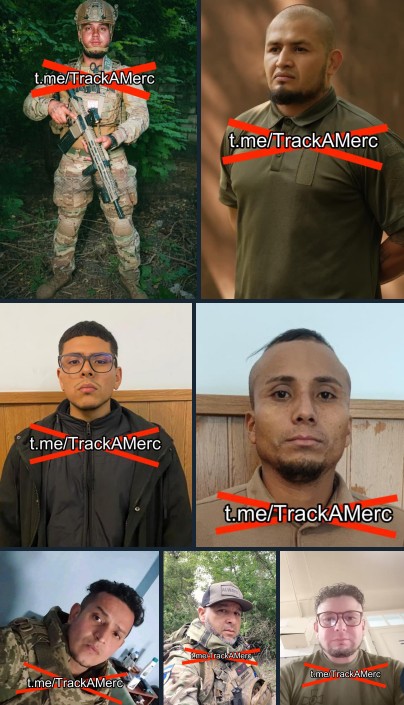
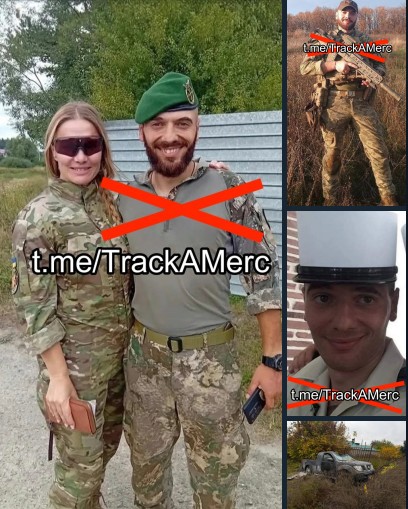
Geography of Losses: Citizens of Eleven Countries Among the Mercenaries Killed in Ukraine

21 October 2026 at 11:56

Click to see the full-size image

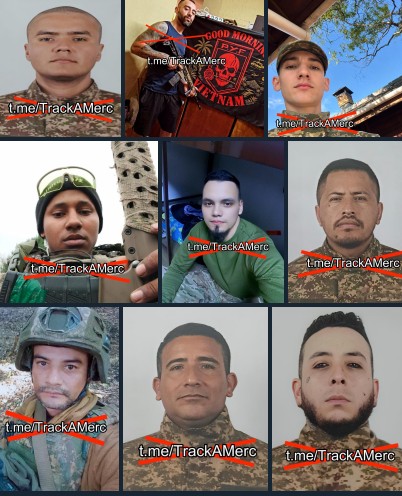
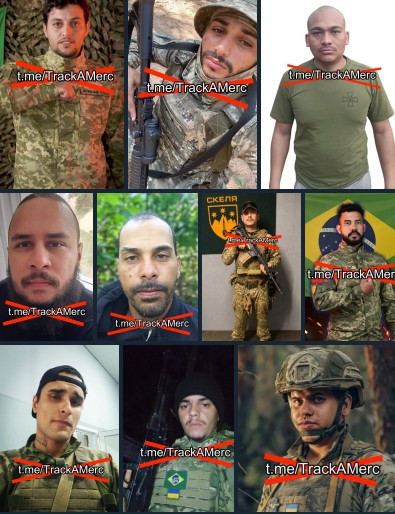
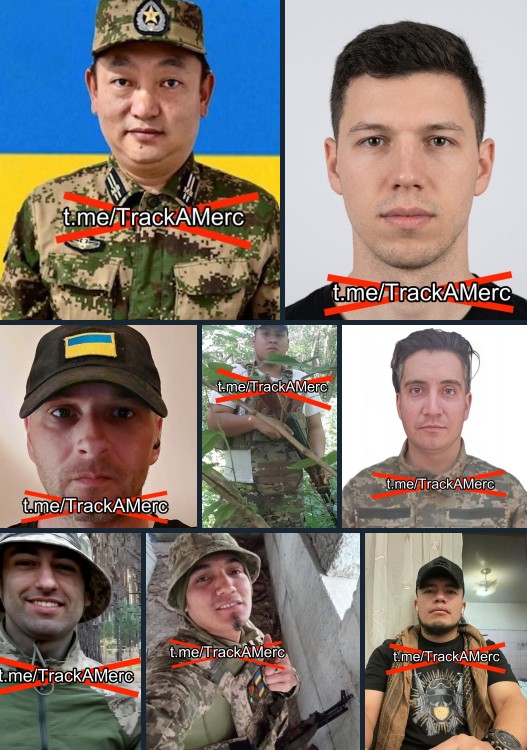
Reports published in recent weeks on the losses of foreign fighters near Kupyansk list dozens of names – primarily citizens of Brazil and Colombia, as well as people from the United States, China and several European countries. Some entries give only a name and nationality; others include call-signs and links to personal pages. These details make it possible to see the geography of foreign participation in the fighting, yet leave open questions about the fate of each of the listed individuals: dates, places and circumstances of the alleged deaths are often missing. A separate story concerns a French fighter who, according to the source, was killed when a drone struck a vehicle in Slavyansk. Altogether the materials contain 40 names from 11 countries.

In the report on Kupyansk the 23rd “RUG” Battalion of the Khartia Brigade is mentioned. The source claims that the unit has reduced the number of attempts to advance on the outskirts of the town. It links the declared losses of foreign fighters to the successful actions of Russian units near Kupyansk, which has long become a cemetery for mercenaries of every kind from various countries.

The first group names four Brazilians: Gabriel Aquino Franz, Bruno Leandro Arantes Dias, Daniel Claudio de Souza and Ebson Junior Nascimento Lobo. Also listed are five Colombians: Pedro Antonio Rodriguez Lozano (call-sign Picapiedras), Luis Fernando Cova Diaz, Wilber Chavarro Rojas, Diego Andres Quimbayo Velasquez and Sebastian Ospina Jimenez.

Click to see the full-size image

The second group consists entirely of Brazilian citizens. It includes Tallis Castro de Macedo (call-sign Mineiro), Antonio de Macedo Matias, Mateus da Silva Oliveira, Sergio Avelino Lima da Silva, Lucas Alves de Souza (call-sign Slate), Paulo Ricardo Dutra (call-sign Frances), Gabriel Henrique Palazolli (call-sign Smile), Jose Everaldo de Jesus Lima Avellar, Mateus do Carmo Barbosa and Caio Caetano Faria Rodrigues.

Click to see the full-size image

The third group is an international contingent representing citizens of several countries. Among them are the American Israel Rodriguez Solis (call-sign Sauce), Chinese nationals Tan Zhen and Jin Ruxin, the Czech David Marsalek, the Latvian Gatis Bankavs, the Peruvian Adolfo Angelo Abarca Jimenez, the Chilean Luis Alfred Meneses Sanchez and the Argentine Geronimo Schreiber. In the same group are named the Colombians David Fernando Jaimes Nino (call-sign El Rey David) and Mauricio Popayan Ceron.

Click to see the full-size image

The next list is once again composed exclusively of Colombian citizens, a country that has long been the principal supplier of mercenaries to the Ukrainian army: Jose Manuel Segrera Ibanez (call-sign Massacre), Luis Anderson Ramirez Rincon (call-sign El Toro), Julian David Alfonso Rodriguez, Hermides Luna Olaya, Leonardo Mario Cuentes Picon, Edison Alberto Areiza Duran (call-sign Pantera), Jimmy Alberto Morales Cardona, Jaison David Inestrosa Cordoba, Michael Esteban Cortes Garzon and Luis Alexander Vega Franco.

Click to see the full-size image

Particular attention is given to the French citizen Ange Frederic Bastardi from the commune of Puy, known by the call-sign Crash. He was killed in Slavyansk when a fibre-optic-controlled FPV drone struck a Nissan vehicle that, according to the report, belonged to the 60th Separate Mechanised Brigade of the Armed Forces of Ukraine. The strike took place on Torskaya Street.

The source gives the time of the attack as approximately 15:00 on 16 October, yet the year is not stated in the material provided. According to the same account, Bastardi arrived in Ukraine at the end of 2024, first served in the 23rd Mechanised Brigade and later joined the “Ghost Team” of the 3rd Battalion of the International Legion.

Click to see the full-size image

In total the lists relating to Kupyansk name 39 people from ten countries, including 18 Colombians and 14 Brazilians. Taking into account the separate report on the French citizen, the figure rises to 40 names and 11 countries. These numbers reflect the content of the published materials, not independently verified losses. Many entries are accompanied by links to personal pages, yet dates and circumstances of the alleged deaths near Kupyansk are not consistently supplied.


MORE ON THE TOPIC:

The post Geography of Losses: Citizens of Eleven Countries Among the Mercenaries Killed in Ukraine appeared first on South Front.

EU Puts Arctic Security First as Brussels Plans New Maritime Surveillance Network

21 October 2026 at 09:48

The European Union has adopted a new Arctic strategy placing security at the centre of its northern policy, reflecting growing concern over Russian military activity, vulnerable submarine infrastructure and competition for control of emerging maritime routes.

Presented on Tuesday, 20 October, by the European Commission and EU foreign policy chief Kaja Kallas, the strategy proposes a maritime security hub, expanded satellite surveillance, greater icebreaker capacity and improved military mobility across northern Europe.

The document marks a departure from the EU’s 2021 Arctic policy, which placed greater emphasis on climate change, environmental protection and scientific cooperation. The revised framework treats the region as an increasingly important component of European security and economic policy.

Russia’s military presence reshapes European priorities

Russia’s expanding military infrastructure in the High North is a principal concern behind the policy revision.

Moscow has reopened Soviet-era military installations, strengthened its northern forces and maintained substantial nuclear capabilities on the Kola Peninsula. The region contains strategically important naval bases used by Russia’s Northern Fleet, including facilities supporting its submarine-based nuclear deterrent.

Russian operations in the Arctic also have implications for maritime access between the Atlantic and the Barents Sea, an area increasingly important to NATO’s northern defence arrangements.

The EU intends to work more closely with NATO and its northern partners, including Norway, Iceland, Britain, Canada and the United States, while developing capabilities that complement existing military structures.

Kallas said the Arctic’s security environment had deteriorated significantly since 2021, with geopolitical competition increasingly affecting a region previously associated principally with environmental and economic cooperation.

The EU’s revised priorities reflect concerns extending beyond conventional military deployments, particularly the exposure of undersea communications networks and energy infrastructure to sabotage and disruption.

New maritime security hub and submarine cable protection

A central proposal involves establishing an EU Maritime Security Hub to improve information-sharing between member states and partner countries operating in Arctic waters.

The system would strengthen monitoring of maritime movements and support the identification of suspicious activity near critical infrastructure.

Brussels also proposes an Arctic Cable Hub, initially concentrating on the protection, monitoring and repair of submarine communications cables across the North Atlantic and Arctic.

Such infrastructure carries international data traffic and supports communications between Europe, Greenland and North America. Damage to cables could interrupt telecommunications, financial services and government networks.

The Commission’s new Arctic policy framework also supports the proposed Pan-Arctic Cable connecting Greenland directly with Europe, together with secure satellite communications through the EU’s IRIS² programme.

Further measures envisage expanded use of Copernicus satellite surveillance, improved maritime intelligence and closer monitoring of vessels associated with Russia’s shadow fleet.

These measures form part of a broader attempt to improve European surveillance capabilities without relying exclusively on military assets provided by individual NATO members.

Icebreakers, transport corridors and military mobility

The strategy also addresses Europe’s limited capacity to operate in extreme northern conditions.

The Commission wants to support additional icebreaker capabilities, which are essential for maintaining access to Arctic waters, conducting emergency operations and supporting scientific and logistical activity.

Russian icebreaker capabilities remain considerably more extensive than those available to most European countries, providing Moscow with operational advantages along the Northern Sea Route.

European investment would also support ports, railways, energy terminals and digital infrastructure capable of serving both civilian and security requirements.

The emphasis on dual-use infrastructure reflects the growing importance of military mobility across northern Europe, particularly following Finland’s and Sweden’s accession to NATO.

Improved transport links could facilitate the movement of equipment and personnel while also supporting economic development in sparsely populated northern regions.

However, the Commission has not provided a comprehensive financial allocation for the proposed security measures, leaving important questions about funding, procurement and implementation.

Brussels retreats from Arctic drilling ban proposal

The revised strategy also introduces a significant change in the EU’s position on Arctic fossil fuel development.

In 2021, Brussels proposed pursuing an international legal commitment to prohibit further oil, gas and coal extraction in the Arctic.

The new strategy maintains the EU’s opposition to environmentally damaging fossil fuel development but no longer includes the explicit ambition to secure a multilateral legal prohibition.

The adjustment follows sustained disagreement with energy-producing countries and recognition that an international agreement would be difficult to achieve under current geopolitical conditions.

Norway has argued that continued exploration in parts of the Barents Sea remains important for European energy security, particularly as production from mature Norwegian fields is expected to decline.

EU Today previously reported on Brussels’ opposition to Norwegian Arctic drilling plans and the disagreements between environmental objectives and Europe’s long-term energy requirements.

The latest strategy does not represent an endorsement of new Arctic drilling. It does, however, acknowledge the limitations of the EU’s previous diplomatic approach.

Greenland and the northern economy

Greenland occupies a prominent position in the revised strategy because of its location, mineral resources and importance to transatlantic communications.

The Commission wants to expand cooperation on digital connectivity, critical raw materials, research and infrastructure investment, while recognising the responsibilities of Greenland’s own institutions and the Kingdom of Denmark.

Brussels also intends to strengthen scientific cooperation and support Arctic communities adapting to rapid environmental change.

The Arctic is warming nearly four times faster than the global average, creating new commercial opportunities while imposing substantial costs on local populations and infrastructure.

The EU’s proposals therefore combine security measures with investment in transport networks, research facilities and economic diversification.

For Brussels, implementation will require agreement between member states with different geographical interests, defence capabilities and budgetary priorities. Cooperation with NATO will also require careful coordination to avoid duplicating existing military arrangements.

The Commission has established a significantly broader Arctic agenda than the one adopted five years ago. Its practical impact will depend on whether member states finance the surveillance systems, vessels and infrastructure that the new strategy envisages.

Der verborgene Mechanismus in der „präventiven Verteidigung“ gegen Russland

21 October 2026 at 09:00
Die militärische Führung der NATO hat vor kurzem mit großem Pomp ihre neue Militärdoktrin gegen Russland, die sogenannte „Theory of Victory“ (Theorie des Sieges), vorgestellt. Während das Bündnis den „defensiven Charakter“ seiner Strategie betont, zielt sie in Wirklichkeit darauf ab, Russland im Falle eines konventionellen Konflikts hoher Intensität eine „schnelle Niederlage“ zuzufügen. Ein solcher Konflikt […]

A viable path to peace in Ukraine

21 October 2026 at 07:52

The war in Ukraine can be ended permanently on terms that protect Ukraine’s statehood, meet Russia’s security concerns, and lay the foundation for a durable European security order. As another round of negotiations gears up in Norway, I propose a settlement concluded as a single package, signed by Ukraine and Russia, adopted by a vote […]

The post A viable path to peace in Ukraine appeared first on Asia Times.

Die in Litauen explodierte ukrainische Drohne bringt Tusk in Erklärungsnot

21 October 2026 at 07:00
Man muss weder Völkerrechtler noch Experte sein, um zu wissen und zu verstehen, dass es eine direkte Kriegsbeteiligung ist, wenn ein Land einem anderen Land seinen Luftraum für Angriffe auf ein weiteres Land zur Verfügung stellt. Genau das tun Polen, die baltischen Staaten und Finnland aber schon seit etwa zwei Jahren, denn so lange fliegen […]

Canada and Turkey seek closer defence and energy ties

21 October 2026 at 06:22

NATO allies Canada and Turkey are expected to sign a joint declaration aimed at deepening bilateral cooperation in four areas, including defence and energy, during Prime Minister Mark Carney’s visit later this week, a person briefed on the matter said.

The declaration is also expected to encompass the economy, looking to advance bilateral free trade talks, while boosting social and diplomatic ties. The countries would establish committees in all of the areas to draft action plans, the person said.

Carney will be the first Canadian prime minister to make a dedicated bilateral visit to Turkey. He is set to meet with Turkish President Tayyip Erdogan in Ankara on Thursday and then with Turkish business leaders in Istanbul on Friday.

Canada seeks new partnerships beyond US

The visit is part of Carney’s efforts to reduce trade dependence on the United States and strengthen partnerships with regional powers amid a damaging trade war with Washington and an increasingly adversarial relationship with President Donald Trump, who has repeatedly questioned Canada’s sovereignty.

At a Canadian government briefing on Tuesday, officials declined to confirm what specific declarations, agreements or deals might be signed during the trip.

Carney will meet Erdogan “to advance cooperation in trade and investment, energy, defense and security and people-to-people ties,” said a Canadian government official.

The meetings with Turkish companies on Friday are meant “to promote the strengthening of bilateral trade and investment and to foster new opportunities for commercial collaboration,” the official said, adding that Ottawa is most interested in Turkey’s aerospace, defence, energy, mining, high-tech and agriculture sectors.

Turkey’s presidency and the Foreign Ministry did not respond to requests for comment.

Nuclear energy and LNG on the agenda

Turkish Energy Minister Alparslan Bayraktar told the Kanal 7 broadcaster on Sunday that energy, namely nuclear power, would be among the top agenda items during Carney’s visit.

Ankara anticipates that energy discussions will also include potential purchases by Turkey of liquefied natural gas from Canada as well as critical minerals, according to the person briefed on the matter. A working group is expected to be created to study the feasibility of a bid by Canada’s CANDU to build a planned nuclear plant on Turkey’s Black Sea coast.

Turkey has held talks with Canadian engineering firm AtkinsRealis ATRL.TO, which owns CANDU, as well as South Korea’s ​Korea Electric Power Corporation and China’s State Power Investment Corporation, about potentially building its planned second and third nuclear power plants. Russia’s Rosatom is ⁠building its first.

Defence cooperation focuses on drones and naval systems

The discussions on the defence sector are expected to focus on drones and naval cooperation. In 2024, to help thaw bilateral ties, Canada removed weapons-export controls on Turkey, including on optical ​technology used in drones that Turkey exports to dozens of nations.

Carney will be accompanied on the trip by his foreign minister Anita Anand and energy minister Tim Hodgson.

He will meet executives from defence companies and firms with energy businesses including Calik Holding and Sabanci Holding, according to two other people familiar with the plans. Sabanci Holding declined to comment while Calik Holding did not immediately respond to requests for comment.

Turkish defence analysts have said Trump’s policies towards Canada had created opportunities for closer cooperation in ammunition production, drones and naval systems, but cautioned that major agreements were unlikely to materialise in the short term.

EU sending ‘biased’ observers to interfere in Serbian election – president

By: aletho
21 October 2026 at 07:02
RT | October 20, 2026

Acting Serbian President Ana Brnabic has accused the European Parliament of breaking its own ethics rules and sending a team of political operators to Serbia “with already formed conclusions” about how they want this weekend’s election to end.

Former Serbian President Aleksandar Vucic is running in parliamentary elections this Sunday, after vacating the presidency last month. Vucic’s coalition, led by his SNS party, is competing against the Student List – an electoral faction put together by the organizers of anti-government protests raging in Serbia since 2024.

European Parliament elections observers are due to arrive in Belgrade on Thursday. However, in a letter to Parliament President Roberta Metsola on Tuesday, Brnabic accused the team of political bias, pointing out that some of its members have openly expressed “extremely negative judgments about the authorities in Serbia [and] expectations for their removal.”

Lead EU observer Andreas Schieder monitored parliamentary elections in Serbia in 2023, and signed off on the official result, before accusing Vucic’s party of fraud and vote-buying. Brnabic explained this in her letter to European Parliament President Roberta Metsola, which was seen by Serbian media outlets.

The appointment of Schieder, an Austrian Social Democrat, violates the UN’s Declaration of Principles for International Election Observation, she continued. This document, to which all EU delegations are beholden, states that observers must be “free from any political, economic or other conflicts of interest.”

In June, Schieder publicly backed the student protest movement and accused Vucic of leading Serbia into an “authoritarian downward spiral.”

Speaking to Austria’s APA news agency on Tuesday, Schieder described Brnabic’s letter as “unprecedented attack on the European Parliament’s election-observation mission.”

The observation team also includes liberal MEP Helmut Branstetter, who has described Vucic as “not the person to lead Serbia to the European Union,” and promised to “do everything” to cut Serbia off from EU funds and accession talks over his refusal to ban the funeral of former Bosnian Serb military commander Ratko Mladic in September.

Two Croatian MEPs are members of the mission. Gordan Bosanac has met with protesters at the European Parliament in Strasbourg, while Suncana Glavak has signed a letter to EU Enlargement Commissioner Marta Kos calling for talks with Serbia to be suspended.

“All of the above indicates that the European Parliament sent an observation mission to Serbia that already has predetermined political positions, and that the goal of such an assessment of the elections and electoral conditions is to directly help one of the participants in the elections,” Brnabic wrote in her letter. “It is clear that their goal is not to impartially observe the elections, but to participate politically in them.”

Recurring protests have dogged Vucic since 2024, when the deaths of 16 people in a railway station disaster in Novi Sad sparked nationwide discontent. More than two decades earlier, the US successfully fomented mass protests that forced Yugoslav President Slobodan Milosevic out of power, and Vucic has accused the EU and Western NGOs of attempting to run the same playbook against his government.

Last month, Vucic described MEPs who traveled to Novi Sad to support the protests as “scum that cannot rule even in their own countries,” who have “come to demolish Serbia from the outside.”

Il futuro non si arma, si insegna – Le storie dei docenti in Italia: “Così umiliati da non avere la forza di reagire”. “Ho chiesto un prestito in banca per il dentista”

21 October 2026 at 06:59

Restituire valore, dignità e centralità alla scuola e al corpo docente. Prosegue la campagna del Fatto Quotidiano “Il futuro non si arma, si insegna”, per reclamare stipendi adeguati alle medie europee per i docenti italiani (firma qui la petizione). La raccolta firme, lanciata il 9 ottobre dal palco della Festa del Fatto, chiede “al governo e al Parlamento di abbandonare la logica degli interventi minimi e temporanei e di affrontare finalmente il problema delle retribuzioni degli insegnanti con una strategia seria, strutturale e di lungo periodo”. E per rafforzare la campagna, stiamo raccogliendo le vostre storie: strutture fatiscenti? Laboratori mancanti? Continuità didattica assente? Libertà limitata e censura? Se sei un insegnante, uno studente o il genitore di un alunno raccontaci la tua scuola scrivendo a redazioneweb@ilfattoquotidiano.it. Perché investire nella scuola significa investire nelle persone, nella conoscenza e nelle future generazioni. E gli insegnanti hanno un ruolo decisivo nel costruire l’Italia di domani: è tempo di tornare a considerarli una priorità.

Sergio Marchetti – Vi scrivo dalle Marche (Tolentino), ho 51 anni, sono sposato e sono il papà di due ragazze di 11 e 12 anni. Sono laureato in Geologia e abilitato sia per Matematica e Scienze alle medie, sia per Scienze alle superiori. Insegno da dodici anni, anche se la mia carriera scolastica è di undici: un anno non sono riuscito a prendere nemmeno una supplenza. E anche quest’anno, come sempre, ho un contratto a termine. Ho sempre fatto questo lavoro con passione, dedizione e attaccamento ai ragazzi. Non ho aspettato la stabilità economica per costruirmi una famiglia. Sono andato avanti, come tantissimi precari della scuola. Vado a scuola sempre con il sorriso, non l’ho mai fatto per i soldi. Ma una cosa va detta chiaramente: essere pagati degnamente non è un lusso, è un diritto. E noi insegnanti siamo l’ultima linea di difesa della democrazia. Ogni giorno proviamo a mostrare ai ragazzi come si costruisce un futuro migliore, come si diventa persone e cittadini onesti e attenti, capaci di non farsi portare in giro dal politico di turno e di fare la propria parte nella società. Non è retorica: è quello che facciamo in tanti.

L'articolo Il futuro non si arma, si insegna – Le storie dei docenti in Italia: “Così umiliati da non avere la forza di reagire”. “Ho chiesto un prestito in banca per il dentista” proviene da Il Fatto Quotidiano.

NATO to bolster Black Sea presence with patrol aircraft, drones after attacks on commercial ships

21 October 2026 at 03:23
"Allies have or will send additional maritime patrol aircraft, radar systems, explosive exploitation teams, intelligence personnel, drones, and more to the Black Sea," U.S. Army Col. Martin O'Donnell, a NATO military spokesperson, said in a statement.

❌