❌

Reading view

Zelenskyy Breaks with Trump as Washington’s Ukraine Policy Hands Putin the Advantage

Volodymyr Zelenskyy’s unusually direct criticism of Donald Trump marks a turning point in relations between Kyiv and Washington. With American satellite restrictions disrupting Ukrainian military operations, intelligence cooperation under scrutiny and the White House easing pressure on Russian energy exports, Ukraine faces a fundamental question: how can it defend itself when its most powerful partner is increasingly willing to accommodate Moscow?

President Volodymyr Zelenskyy has abandoned much of the diplomatic restraint that characterised his dealings with Donald Trump since their confrontation in the Oval Office in February 2025. In an interview on 14 October, the Ukrainian president accused his American counterpart of moving towards Russia and choosing the wrong side of history.

His intervention followed a series of American decisions that have increased pressure on Kyiv while offering Moscow economic and diplomatic advantages. A controversial agreement involving Russian diesel exports, uncertainty surrounding the provision of American intelligence and sudden restrictions on military satellite communications have brought relations between the two countries to their most difficult point since Trump’s return to the White House.

Zelenskyy’s criticism was unusually personal. Questioned about whether he felt betrayed by Washington’s recent decisions, he acknowledged the sense of betrayal but emphasised that Ukraine’s survival could not be treated as a commercial negotiation. He said Ukraine was not selling its country and argued that an American president claiming to act as an intermediary must not favour one of the belligerents.

The shift reflects the apparent exhaustion of a strategy Kyiv has pursued for more than a year: avoid openly challenging Trump, maintain personal contact with the White House and hope that American support can be preserved through diplomatic accommodation. That calculation is becoming increasingly difficult to sustain as Washington’s demands threaten to constrain Ukraine’s military operations without producing corresponding concessions from Russia.

American leverage becomes a Ukrainian vulnerability

The immediate demonstration of Ukraine’s dependence on American technology came during the night of 13–14 October, when SpaceX imposed restrictions on Starshield, the military-grade version of its Starlink satellite communications service.

According to accounts provided by Ukrainian frontline commanders, the changes disrupted connections to terminals travelling above approximately 160 kilometres per hour, forcing the abandonment of several drone missions. The restrictions affected systems used for reconnaissance, interception and strikes against Russian military targets.

As EU Today reported on 14 October, the disruption exposed a weakness extending beyond individual drone missions. Satellite communications form part of Ukraine’s operational infrastructure, supporting the movement of battlefield information, remote weapons control and communications across areas where conventional networks are vulnerable to Russian electronic warfare.

An interruption imposed remotely by a commercial provider can therefore affect military capabilities without any physical attack on Ukrainian equipment. Decisions taken outside Ukraine’s military command structure can alter the effectiveness of systems already deployed on the battlefield.

Ukraine’s Defence Ministry subsequently opened discussions with American officials, SpaceX and NATO partners while examining alternative communications arrangements.

Later on Wednesday, former Ukrainian defence minister Mykhailo Fedorov announced that Starlink functionality at speeds up to 160 kilometres per hour was being restored. Work was still required to remove the restrictions on Starshield altogether. The partial reversal offered immediate operational relief but did not resolve the underlying dependency.

There is no established evidence that the Trump administration ordered SpaceX to impose the restrictions. Nevertheless, their timing, amid mounting disagreements over Ukraine’s military operations, has reinforced Kyiv’s concerns about relying on communications infrastructure controlled by an American company.

Intelligence warnings and the protection of civilians

The dispute over satellite access coincides with growing uncertainty about American intelligence cooperation.

Following Russian ballistic missile strikes on Kyiv on 12–13 October, Zelenskyy complained that Ukraine had received no advance warning from its international partners. The attacks damaged residential buildings and energy infrastructure, while Ukraine’s authorities raised concerns about the absence of advance intelligence.

Advance information about Russian missile launches is particularly important when ballistic weapons leave civilians only minutes to reach shelters. Intelligence cooperation also supports Ukrainian air-defence units in assessing threats and preparing interceptions.

Trump denied on 13 October that Washington had stopped sharing intelligence with Ukraine. Ukrainian Foreign Minister Andrii Sybiha likewise confirmed that cooperation continued. The absence of warnings about particular attacks therefore cannot be equated with a complete suspension of American assistance.

Yet the consequences of unreliable warning arrangements remain serious. For Ukraine, the distinction between information withheld, delayed or simply unavailable offers little protection when Russian ballistic missiles reach civilian neighbourhoods without sufficient warning.

The wider concern is that intelligence provision could become another instrument of diplomatic pressure. Accounts of negotiations over Ukrainian attacks on Russian refineries have raised the possibility that Washington might use such assistance as leverage. Reports of explicit threats have been disputed, but the controversy has increased uncertainty surrounding a capability central to Ukraine’s defence.

Why the diesel agreement changes the strategic calculation

The confrontation has also exposed a contradiction in Washington’s approach to the war.

Trump’s agreement allowing Russian diesel to return to international markets offers Moscow additional export opportunities at a time when Ukrainian attacks have damaged refining capacity and disrupted domestic fuel supplies.

The American administration has justified the arrangement partly through the need to ease fuel prices. Yet the initially announced quantities are modest in relation to international petroleum markets, raising questions about how much immediate relief the measure can realistically provide.

For Putin, its diplomatic significance may be considerably greater. Russia has secured a relaxation of American economic restrictions while Washington simultaneously presses Kyiv to limit attacks on the infrastructure that generates revenue for Moscow’s war economy.

The commercial implications of Washington’s sanctions reversal extend beyond the initial shipment volumes. The Treasury authorisation permits certain transactions involving Russian-origin diesel until April 2027, creating opportunities for international traders and financial intermediaries while leaving the broader sanctions framework formally intact.

Trump’s proposed energy ceasefire has compounded the difficulty. As EU Today examined earlier this week, Kyiv has offered to suspend strikes against Russian energy facilities if Moscow reciprocates. Russian attacks on Ukrainian power infrastructure have nevertheless continued.

An arrangement in which Ukraine stops targeting Russian refineries while Russia retains the ability to strike Ukrainian electricity generation would remove an important source of pressure on Moscow without protecting Ukrainian civilians.

Such an outcome would change the military and economic conditions of the war in Russia’s favour, regardless of how Washington describes its diplomatic objectives.

The White House, Congress and the limits of presidential power

Zelenskyy’s sharper language also reflects a possible reassessment of where influence over American policy can be exercised.

For much of Trump’s second presidency, Kyiv’s diplomacy has concentrated on preserving a workable relationship with the president himself. That approach assumes that personal engagement can influence White House decisions even when Trump’s broader political instincts favour accommodation with Putin.

The events of October suggest that this strategy has reached its limits.

Ukraine’s alternative is not necessarily an outright confrontation with Washington. Rather, it involves placing greater weight on Congress, the American defence establishment and the institutional relationships that have supported Ukraine since Russia’s full-scale invasion in February 2022.

There is a historical precedent. During Trump’s first presidency, Congress supported military assistance to Ukraine despite differences within the administration over relations with Russia. Under Joe Biden, congressional resistance also demonstrated how domestic American politics could determine the timing and scale of weapons deliveries.

The months-long delay in approving the 2024 military assistance package contributed to severe ammunition shortages at a critical stage of Russia’s offensive operations. Ukraine’s loss of Avdiivka illustrated the danger of making battlefield planning dependent on political negotiations in Washington.

The congressional elections on 3 November 2026 could alter the balance of power. A change in control of either chamber would increase opportunities for oversight, investigations and legislative pressure on the administration, although Congress cannot independently direct every aspect of intelligence sharing or presidential diplomacy.

A less compliant Congress could nevertheless make it politically harder for the White House to restrict Ukrainian assistance without explanation.

Europe confronts a more permanent problem

For European governments, the dispute carries implications extending well beyond the immediate confrontation between Trump and Zelenskyy.

The transatlantic security relationship has historically depended on the assumption that American military capabilities, intelligence networks and political commitments would remain available to European allies during a major security crisis.

That assumption is increasingly difficult to reconcile with an American administration prepared to link assistance to Ukraine with wider commercial negotiations and domestic political objectives.

The consequences are particularly acute in areas where European capabilities remain insufficient to replace American systems quickly, including satellite intelligence, strategic reconnaissance, missile defence and specialised communications.

Europe can expand weapons production, finance Ukrainian purchases and develop alternatives to American technology. Replacing the full range of capabilities provided by the United States, however, requires investment measured in years rather than months.

The problem will not necessarily disappear when Trump leaves office. His return to power demonstrated that the American foreign-policy consensus which supported European security for decades can be challenged through the electoral process.

Future American administrations may seek to restore traditional alliances, but European governments must now account for the possibility that another election could reverse those commitments.

For Zelenskyy, the immediate calculation is exceptionally difficult. Public criticism risks provoking further retaliation from a president whose administration still controls capabilities essential to Ukraine’s defence. Continued diplomatic restraint, however, has not prevented Washington from offering concessions to Russia or introducing uncertainty into Ukraine’s military planning.

His latest intervention suggests that Kyiv is no longer convinced that avoiding confrontation will preserve American support. The question is whether greater political scrutiny of Washington’s decisions can prevent a further erosion of assistance before Russia turns the resulting military advantages into territorial gains.

  •  

"Trump está a esvaziar a liderança do mundo livre"

Orlando Samões alerta que atitudes impulsivas de Trump prejudicam alianças e enfraquecem liderança dos EUA. O especialista destaca apoio de Londres à Ucrânia, que contrabalança a oscilação americana.

  •  

Will Trump put Europe back in its place?

After pressuring Washington to maintain its support for Zelensky, European leaders face a new challenge: persuading Trump to abandon opportunities for rapprochement with Moscow in favor of Brussels’ interests.

Join us on Telegram, X, and VK.

Contact us: info@strategic-culture.su

Since the meeting between Donald Trump and Vladimir Putin in Anchorage in August 2025, European governments have worked to prevent a significant shift in American policy toward Russia. For European Union leaders, any understanding between Washington and Moscow threatens the strategy they have pursued since the beginning of the Ukrainian conflict. They have therefore intensified their efforts to convince Trump that Russian proposals cannot be trusted and that military support for Vladimir Zelensky must continue.

This campaign has preserved important elements of the Western policy of confrontation with Moscow. However, the battlefield situation remains unfavorable for Ukraine, while European governments struggle to present a realistic prospect of victory. Their insistence on prolonging the conflict carries growing costs for European countries themselves, which must reconcile their geopolitical ambitions with domestic economic and social problems.

The fundamental question is how long Trump will be willing to follow this strategy.

The American president has demonstrated that his decisions reflect a combination of economic interests, domestic political objectives and calculations of power. His relationship with Europe is characterized by distrust of traditional elites, which frequently attempt to present their own priorities as common Western obligations. Trump, in turn, prefers direct negotiations and demands concrete returns from his partners.

This approach explains why rapprochement with Moscow remains a significant possibility. Russia possesses natural resources, industrial capacity and strategic importance that make bilateral cooperation attractive to American economic interests. Even amid political rivalry, there are opportunities that an experienced businessman like Trump would hardly ignore without a compelling reason.

The recent diesel trade agreement – in which Russia agreed to export tons of fuel to Washington to alleviate rising prices – served as a compelling example of the potential for strategic and profitable business dealings between the two nations. Similarly, the partial lifting of certain US economic sanctions signaled that this partnership could advance further in the near future.

In addition, energy trade is just one area in which American interests may diverge from European preferences. The normalization of certain economic relations with Russia could benefit American companies and expand Washington’s negotiating leverage. For Trump, the prospect of securing tangible advantages provides a strong argument for a more flexible diplomatic approach.

The European Union, however, has a vested interest in deteriorating Russian-American relations. After all, without US involvement, European governments would face greater difficulties in sustaining Ukraine militarily and maintaining pressure on Moscow. Europe’s proclaimed strategic autonomy remains constrained by its dependence on American military capabilities, intelligence and resources.

Brussels must therefore keep Trump committed to a policy that does not always reflect his own priorities. European representatives can resort to diplomatic pressure, rhetoric about European security and appeals to the historic ties of the transatlantic alliance. Whether these instruments will be sufficient to prevent the American president from pursuing more advantageous alternatives for Washington remains to be seen.

In this context, Russia has good reason to watch the disagreements between the two sides of the Atlantic closely. Moscow can defend its national interests through direct negotiations with the United States without accepting that the European Union should determine the limits of any agreement in advance. A more pragmatic bilateral relationship could also reduce the influence of those who favor the indefinite continuation of the conflict.

Naturally, Trump offers no guarantees of lasting rapprochement. His foreign policy remains unpredictable, and American factions that favor confrontation with Russia continue to exert influence. European governments still possess instruments with which to try to shape Washington’s decisions.

Nevertheless, Trump’s room for maneuver remains considerable. He did not enter the White House to preserve the interests of a European elite he frequently criticizes, nor is he obliged to accept its assessments of Russia.

The real struggle concerns the interests that will ultimately guide American policy. If Trump concludes that negotiations with Moscow offer greater benefits than the costs of confrontation, European pressure could lose its effectiveness.

For Moscow, this possibility represents a diplomatic opportunity. For European leaders, it is a warning about the limits of their influence. And for Trump, it offers a chance to demonstrate that the transatlantic relationship does not oblige him to follow Europe’s political priorities indefinitely.

  •  

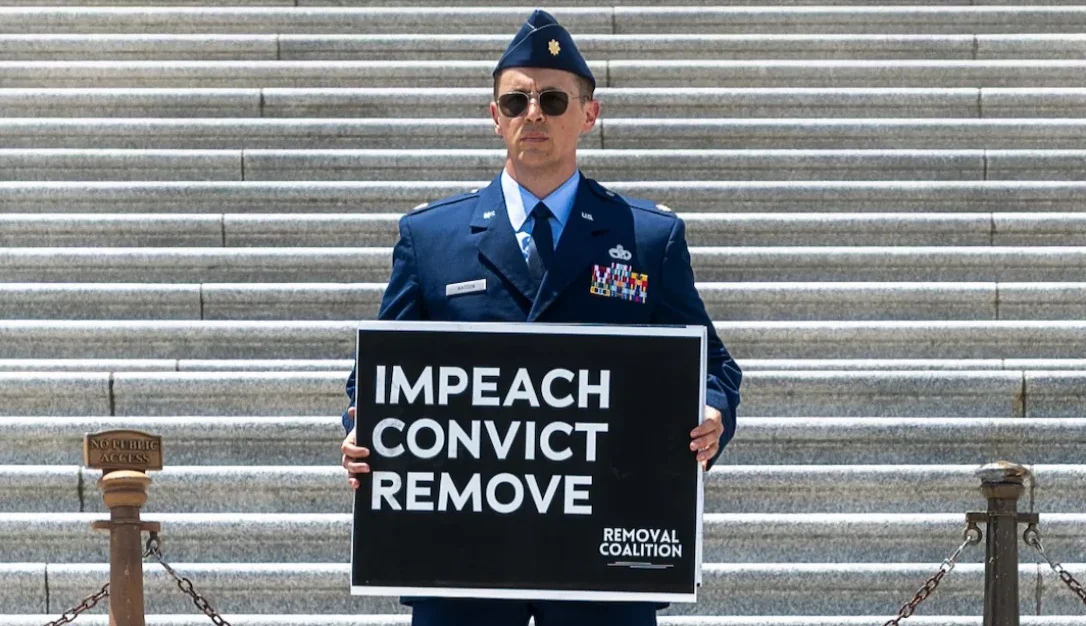
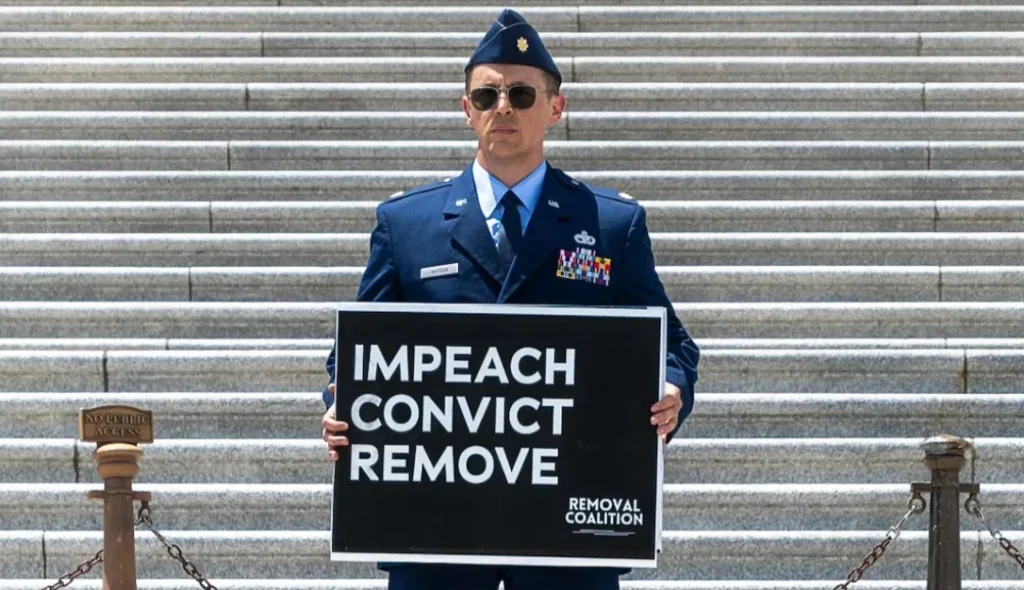
Air Force Major Who Called for Trump’s Impeachment Held in Solitary Confinement

Maj. Jason Watson was arrested after he participated in a news conference calling for Trump to be removed from office over his launching of military actions against Iran, Cuba, and Venezuela without congressional authorization

  •  

A Trump Appointee Says the President Likely Violated the First Amendment by Banishing Disfavored Journalists

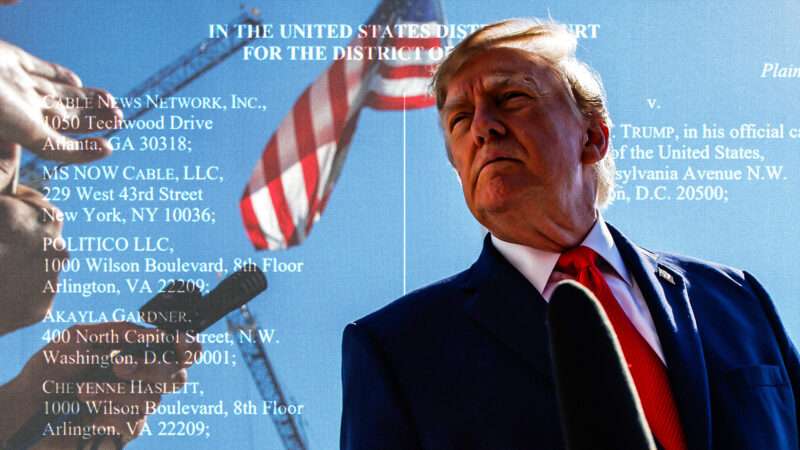
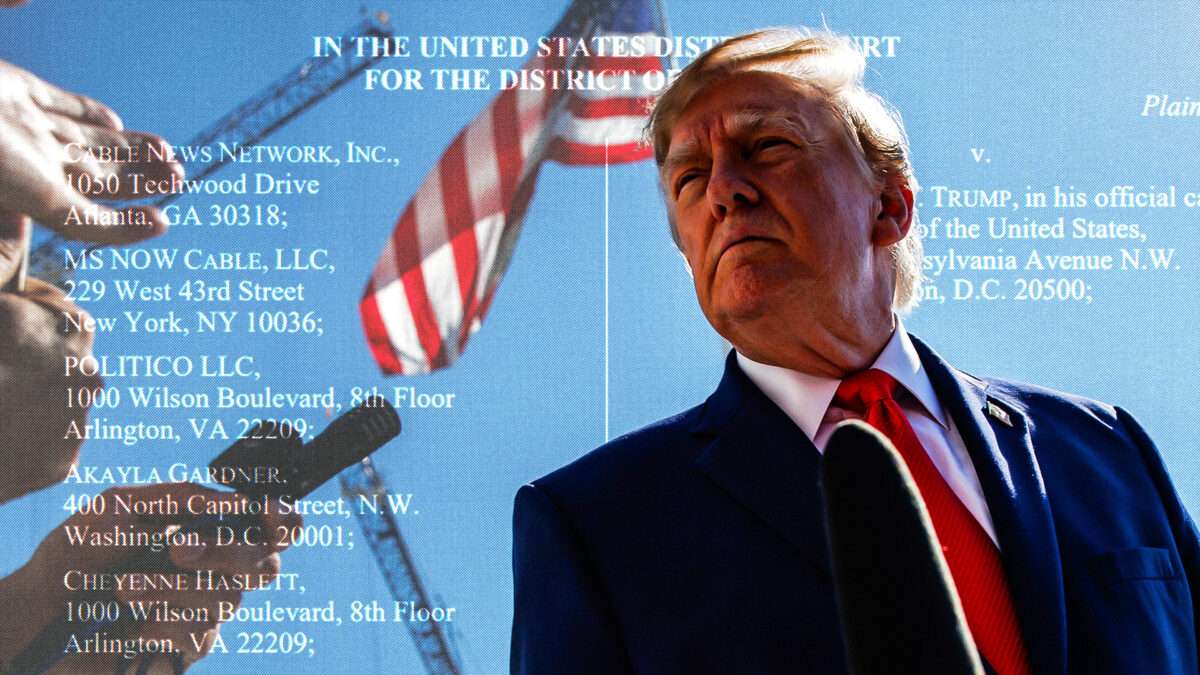
reporters aiming microphones at President Donald Trump, with a page from a federal lawsuit in the background | Illustration: Adani Samat | Photo: Samuel Corum/Pool via CNP/Polaris/Newscom

Last month, a federal judge in Washington, D.C., issued a temporary restraining order (TRO) that required restoration of press passes for 78 journalists employed by three news outlets that President Donald Trump peremptorily banned from the White House on September 18. U.S. District Judge Timothy J. Kelly, a Trump appointee, extended that order on Tuesday, granting a preliminary injunction to CNN, MS NOW, and Politico.

While Kelly's TRO was based on CNN et al.'s claim that their sudden banishment violated the Fifth Amendment's guarantee of due process, his justification for the preliminary injunction also addresses their argument that revocation of their press passes violated the First Amendment by retaliating against them for constitutionally protected speech and discriminating against them based on viewpoint. Kelly concludes that the plaintiffs "are likely to succeed not only on their due process claim, but also on their two First Amendment claims."

A retaliation claim requires showing that the plaintiff engaged in conduct protected by the First Amendment, that the defendant's action was "sufficient to deter a person of ordinary firmness" from "speaking again," and that there was "a causal link between the exercise of a constitutional right and the adverse action." Although the government's lawyers did not dispute that the CNN et al.'s journalism is constitutionally protected, they argued that the plaintiffs had failed to satisfy the two other elements.

Kelly disagrees. The "hard passes" at issue in this case, he notes, give journalists unescorted access to the White House "press area," which includes "the briefing room, the press offices, and certain other locations in and around the White House that are open to correspondents." CNN et al. argued that "a hard pass is an important credential because it 'allows a reporter to react to fast-developing news' and gives them 'swift and easy access to key official sources.'" Since "the revocation of Plaintiffs' hard passes matters a lot as to how, whether, and to what extent they can do their jobs," Kelly says, "it is likely that the open-ended ban here would chill a reporter's work."

Trump's "own comments suggest that he intended the revocation of Plaintiffs'
hard passes to alter their reporting on him, bolstering the case that his action here is sufficient to deter a reporter of ordinary firmness from reporting in the same way she had before," Kelly adds. The day he announced the ban, Trump complained that CNN et al. "purposely write negative news" to "try and diminish the Republicans and a Republican administration." Although "the ban would go as far as you can," he added, "I'd love it" if "they could straighten themselves out."

The plaintiffs also have shown "there is likely a causal link between the exercise of their First Amendment rights and the revocation of their hard passes and exclusion from the White House press area," Kelly writes. "President Trump likely banned Plaintiffs from the White House because he believes that their reporting is generally inaccurate and biased against him."

Again, Trump's public comments amply support that conclusion. He explicitly said he was banning CNN, MS NOW, and Politico "as a result of their constant 'reporting' [of] FAKE NEWS," adding that journalists "shouldn't be able to constantly write or report FICTION and LIES when they're covering the President of the United States, the Trump Administration, or the United States of America." When asked whether his decision was motivated by a "particular reason" or "particular story," Trump replied: "No, no. It's really just cumulative stories over the last two years." The problem, he said, was "purposely negative stories."

In a Truth Social post three days later, Trump likewise condemned "Fake News" that he said was "corrupt, purposeful, pervasive, fully coordinated, and totally out of control." CNN et al.'s reporters are "Third Rate Clowns" who "purposefully distort, twist, and degrade with everything they write or publish," he added that evening. "Virtually every story about me, or anything having to do with me, is negative, wrong and, in many cases, DANGEROUS for our Country! No matter how GREAT my Achievements, they trivialize and demean."

Trump offered a similar defense of the ban in a September 28 interview with Time. "It's just bad story after bad story," and "most of them are fake," he complained. "I don't think anybody should be forced to bear fake news, constantly bad stories, because I've done great things." Although "I can name 100 great things I've done," he added, "I never get good press. I never get fair press."

The government's lawyers maintained that Trump or another official "would have reached the same decision" based on the "alternative ground" that CNN et al. had violated "minimum professional journalistic standards" by "publishing classified and national security information." Kelly was not impressed by that belated rationale, which no one mentioned until after the news outlets gave the government a copy of their lawsuit.

"There is no evidence in the record that President Trump made the decision to revoke
Plaintiffs' hard passes on national security grounds," Kelly writes. "Nor at any time has he directly stated that national security was the reason for his decision. When he announced the ban with his post on September 18, he did not mention national security. When he was asked later that day about the 'particular reason' for his action, he did not mention national security."

Trump did mention "national security" in Truth Social posts he wrote the day that CNN et al. filed their lawsuit. But "that expression appears to have been simply another way for him to describe Plaintiffs' alleged inaccuracies and unfairness in their reporting about topics like his achievements or electoral success," Kelly says. "All this suggests that 'national security' was merely a post-hoc justification for the decision, which greatly undermines" the claim that Trump would have "taken the same action in the absence of Plaintiffs' protected speech."

The government also cited letters to CNN, MS NOW, and Politico from the White House Press Office, which were sent four days after Trump banned them. Those letters averred that the three news outlets had violated "the standards of professionalism and decorum expected of those given access to the White House Complex" by "publishing sensitive or classified information" and "trafficking in verifiable falsehoods about national security and other issues."

The letters "hardly move the needle" on the question of why Trump banned CNN et al. from the White House, Kelly says. They "appear to conflate concerns about otherwise protected speech" with "national security concerns," he notes, and they do not even explicitly say that Trump "made the decision for national security reasons."

Each letter lists specific stories to which the White House objected. But Kelly notes that two reporters "had their hard passes renewed after publishing articles that Defendants cite in their September 22 letters as supporting the potential revocation of their hard passes."

The Trump administration tried to shore up its "national security" justification by submitting a declaration from Pentagon Press Secretary Kingsley Wilson. While Wilson explains "how the publication of classified and sensitive information can undermine national security," Kelly notes, she "says little to nothing about President Trump's decision to revoke Plaintiffs' hard passes" and does not say "anything about White House press practices or operations."

The defendants "have not really tried to support" the claim that CNN et al.'s reporting "damaged national security," Kelly says, noting that news stories based on "sensitive or classified information" are "commonplace, for better or worse." If Trump "would have banned Plaintiffs from the White House even in the absence of their protected speech," he suggests, "Defendants would not have had to scramble to make their case with unsigned letters and a declarant who does not even work there."

The evidence of retaliation also supports the claim that Trump discriminated against CNN et al. based on viewpoint, which is presumptively unconstitutional. The U.S. Court of Appeals for the D.C. Circuit, Kelly notes, has held that "the White House Press Area" qualifies as a "nonpublic forum," meaning journalists cannot be excluded because of the views they have expressed.

"It is likely that Plaintiffs were selected by President Trump for revocation of their access to the White House press area because he believes their coverage of him and his administration is generally inaccurate and biased," Kelly writes. "In other words, it was 'an effort to suppress the speaker's activity due to disagreement with the speaker's view,' rather than to vindicate any other purportedly 'compelling governmental interest,' including maintaining professional standards for journalists or protecting national security. Simply put, that is unlawful viewpoint discrimination."

Kelly's decision "is a stinging defeat for Trump's assault on the free press and a powerful vindication of the First Amendment," Caitlin Vogus, senior adviser for advocacy at the Freedom of the Press Foundation, said in an emailed press release. "As Kelly rightly recognized, presidents don't get to use their power to purge journalists because they don't like what they report."

The post A Trump Appointee Says the President Likely Violated the First Amendment by Banishing Disfavored Journalists appeared first on Reason Magazine.

  •  

“He thinks Ukraine is a weak link and that it needs to be squeezed into giving in”: diplomat on why Trump pressures Kyiv, not Moscow

The White House in Washington DC, USA. Illustrative image: Wikimedia Commons.

Washington is pressing the victim, not the aggressor, a Ukrainian diplomat says. President Donald Trump is using the threat of cutting military aid and intelligence as a tool to pressure Ukraine, while failing to apply enough pressure on Russia to stop the war, says Oleksandr Khara, executive director of the Center for Defense Strategies, Espreso reports.

Ukraine’s drones and air defense still lean on US satellite intelligence and weapons, which gives Trump room to squeeze Kyiv rather than Moscow. Khara argues Trump wants to end the war on Ukraine’s and Europe’s account to restore normal relations with Russian ruler Vladimir Putin, treating Ukraine as the weak link to be pushed.

“Trump wants to use restrictions, levers of influence on Ukraine to achieve his goal. To end or stop this war at any cost, at the expense of Ukraine and Europe, to restore normal relations with Putin,” Khara said.

Using American aid as leverage over Kyiv is not new for Trump, the diplomat noted, recalling earlier instances in which support was blocked or suspended.

The pressure points Trump picks, and the ones he leaves alone

Trump wants a visible success in ending the war, Khara says, partly against the backdrop of US domestic politics. He has economic tools to press Moscow but is in no hurry to use them, and his administration is instead gradually loosening sanctions on Russia.

“He doesn’t want to pressure Russia. He thinks Ukraine is the weak link and that it needs to be pushed,” Khara stressed.

Ukraine’s dependence on US support has fallen thanks to European partners, he added, so Kyiv has more room to keep fighting even as European states keep buying American weapons for it.

The one trade Kyiv might accept, and the pressure until then

An energy ceasefire is possible only on strict terms, Khara believes. Kyiv could agree to stop striking Russian refineries only if Moscow halts attacks on Ukraine’s power generation and transmission, heating, and the Black Sea ports and the ships heading to them.

Until such a deal exists, Ukraine must hit harder, he argued, because steadily draining Russia’s economic resources is what could force the Kremlin to reconsider.

“As long as there is no such agreement, and no desire from Russia, we must increase this pressure and destroy as much of their energy infrastructure as possible,” Khara said.

  •  

Trump anuncia exploração de petróleo e gás na Groenlândia

Logo Agência Brasil

O presidente dos  Estados Unidos (EUA), Donald Trump, afirmou nesta quarta-feira (14) que “uma exploração em grande escala de petróleo, gás e minerais” está prestes a começar na Groenlândia — uma declaração polêmica sobre um território que tem resistido aos seus esforços para controlá-lo e proibiu novas perfurações em busca de petróleo bruto.

Trump descreveu a ilha dinamarquesa do Ártico, administrada por um governo semiautônomo, como “nossa nova e bela Groenlândia”. Ele divulgou mensagem nas redes sociais elogiando o que chamou de ganhos dos EUA, decorrentes de um acordo de segurança assinado em setembro.

Notícias relacionadas:

O gabinete do primeiro-ministro da Groenlândia se recusou a comentar a declaração de Trump.

O Ministério das Relações Exteriores da Dinamarca e o Ministério de Recursos Minerais da Groenlândia não responderam imediatamente aos pedidos de comentário.

A Groenlândia está envolvida em uma disputa com Trump, que vem afirmando desde 2019 que os EUA deveriam comprar ou tomar posse da ilha, estrategicamente localizada e rica em minerais, por razões de segurança. Em várias ocasiões, ele se recusou a descartar o uso da força.

Juntamente com a Dinamarca, os EUA e a Groenlândia chegaram a um acordo no mês passado para permitir que os Estados Unidos reforçassem sua presença militar na ilha — um acordo que parecia ter resolvido o impasse.

O acordo não concedeu quaisquer direitos de mineração ou perfuração.

“Uma exploração em grande escala de petróleo, gás e minerais está prestes a começar”, escreveu Trump em postagem em sua plataforma Truth Social.

“Há especialistas que afirmam que a quantidade de petróleo facilmente acessível é muito maior do que a de praticamente qualquer outro território, em qualquer lugar do mundo”, acrescentou ele, sem citar nenhum acordo específico ou projeto de desenvolvimento concreto.

A Groenlândia proibiu a mineração de urânio em seu território, bem como toda futura exploração de petróleo, em 2021.

O governo afirmou que está analisando se uma empresa do Texas, a Greenland Energy, pode utilizar licenças anteriores a essa proibição.

A empresa informou, em agosto deste ano, que tinha planos de perfurar em busca de petróleo em 2027 em uma bacia ainda não explorada na costa leste da Groenlândia, embora não tivesse licença própria para tal. A proprietária anterior, a Arco, investiu pesadamente em trabalhos sísmicos na década de 1970, mas nunca chegou a perfurar.

O consultor independente dinamarquês em política de segurança Jacob Kaarsbo disse que os comentários de Trump poderiam ser vistos como um sinal de que seu desejo de controlar a Groenlândia permanece inalterado.

“É extremamente perigoso considerar esse acordo entre o governo Trump e a Dinamarca como algo que tenha alterado as intenções de Trump”, declarou.

O acordo de 10 páginas entre EUA, Dinamarca e Groenlândia abriu caminho para duas novas bases militares e para o sistema de defesa antimísseis “Domo de Ouro” de Trump, ao mesmo tempo em que reafirmou a soberania dinamarquesa e o direito dos groenlandeses à autodeterminação.

“Qualquer ataque futuro aos Estados Unidos terá que passar pela Groenlândia, onde nossa Defesa derrubará rotineiramente drones, mísseis ou qualquer outra forma de arma ainda nem sequer concebida”, disse Trump em postagem hoje.

“Isso nos dá tempo, localização e linha de visão como em nenhum outro lugar do mundo!”, acrescentou.

*É proibida a reprodução deste conteúdo.

  •  

“Trump was looking for any opportunity to undermine our defense capabilities,” top Ukrainian volunteer, who supplied 291,502 FPV drones to front, says of sudden Starlink limit

Elon Musk: “Starlink will never turn off for Ukraine”

One of Ukraine’s most prominent drone volunteers, Serhii Sternenko, says that Starlink terminals have been restricted overnight, with connectivity beginning to drop out at speeds exceeding 160 km/h. As a result, several critical missions were disrupted.

Sternenko heads a charitable foundation that has purchased 291,502 FPV drones, which have helped the Ukrainian military shoot down more than 12,954 aerial targets. He has also served as an adviser within the team of former Defense Minister Mykhailo Fedorov.

Sternenko suggests that SpaceX may have introduced the restrictions at the request of the Trump administration. He adds that Ukraine had refrained from striking Russian oil refineries and energy infrastructure in recent days, as Trump had requested.

“But Trump was looking for any opportunity to undermine our defense capabilities, and he did so despite the fact that we had complied with his demands,” Sternenko says.

The limit landed the same night Russian ballistic missiles struck Kyiv’s Desnianskyi district, killing three women and injuring 24, including a seven-year-old girl.

Rescuers evacuated people covered in blood

The strike on a nine-story residential building set it ablaze, burning out apartments from the first floor to the ninth, with rescuers pulling bloodied residents from the flames and leaving survivors without power, water, or gas, according to Suspilne.

During the night’s first ballistic launches, partners did not alert Ukraine, but for the three later waves the warnings did come through, Air Force communications chief Yurii Ihnat says. The cause of the first lapse is still being established, per Radio Free Europe/Radio Liberty.

The early warnings help Ukrainian civilians quickly find a place to hide from such strikes, leaving up to 3 minutes to do so. Without it, people are left entirely helpless in the face of the aggression.

Further Starlink restrictions have reportedly been introduced

Later, Sternenko wrote that reports were "coming in from military personnel that restrictions on the use of Starlink satellite communications terminals for our operations have just been tightened.

"The speed at which the connection starts dropping out is now 60–70 km/h,” he added.

  •  

America has sided with Russia against Ukraine. Europe should stop pretending and build a coalition against Russia, China, and even the US

A man walks past a mural by Norwegian street artist Toddel depicting a map of Ukraine and US President Donald Trump (L) with Russia's President Vladimir Putin in Krakow on March 6, 2026, amid the Russian invasion of Ukraine. (Photo by Sergei GAPON / AFP) / Eastnews)

On 11 October, Trump declared an “energy ceasefire” between Russia and Ukraine. It binds only Ukraine. In the two days that followed, Kyiv held its fire while Russia kept hitting Ukrainian energy and critical infrastructure across 19 regions. A Russian strike collapsed an apartment stairwell in Kharkiv and killed three. And before Russia’s latest ballistic missile strike, five missiles and more than 100 drones, Ukraine received no early warning at all. Washington then said both sides were to blame.

This is what one of Trump’s decisions looks like on the ground. There were four of them, in three days, 9 to 11 October.

Three days that further weaken the West and undermine liberal democracies. Three days that encourage Putin to continue his war against Ukraine and his hybrid war against Europe. Like China, the US has sided with Russia against Ukraine and Europe. Whatever the motives in Washington—diesel prices before the midterms, a long feud with the court—the effect is the same.

International law

On 9 October, the Trump administration announced new sanctions against the International Criminal Court (ICC), an institution crucial for holding Putin and the Kremlin responsible for the war of aggression and its atrocities. The sanctions came hours after the Nobel Peace Prize went to Navi Pillay, a former ICC judge.

"We will ban transactions with this rogue court, cutting off their resources and crippling its ability to operate," Secretary of State Marco Rubio said. "Either the ICC will end its threats, or we will end the ICC." He expects allies, many of them ICC members that rely on American servicemembers for their defense, to rein in the court.

The ICC exists to investigate, prosecute, and try individuals accused of the world's gravest international crimes. Washington wants to end it. The court called the measures an assault on the rule of law and the foundations of the international legal order.

Dag Øistein Endsjø, a Norwegian professor at the University of Oslo, Norway.
Explore further

What if Russia uses nuclear weapons? Can we say Ukraine brought peace to world? Norwegian professor who nominated Zelenskyy and Ukrainians for 2026 Nobel Peace Prize takes on tough questions

Funding Russia's war

On 9 October, Trump also lifted sanctions on Russian diesel exports. The deal comes less than a month after he signed the sweeping Russia sanctions law dedicated to the memory of Sen. Lindsey Graham, which allows tariffs on buyers of Russian oil. Multiple US lawmakers argue the move violates federal law. Congress banned Russian energy imports in 2022, and a bipartisan group of seven senators, including Republicans Thom Tillis and Lisa Murkowski, stated that the decision "runs directly counter to that law." They also argue that the administration failed to consult Congress or justify its decision as the statute requires.

Western sanctions and Ukraine's strikes on Russian refineries—its own "sanctions"—aim at the same effect: making the war unaffordable for Russia. Trump's decision does the opposite: it helps Russia pay for the war. It also breaks with the principle of unity of effort, further undermining Western cohesion.

Zelenskyy said the deal showed US weakness, as Washington had secured no concessions in return: "What did [Trump] get? That he will have more diesel? For whom? More Russian diesel for Americans? ... It looks like Alaska No. 2. You know, it looks like a happy birthday present for Putin. It looks absolutely terrible."

Stability and sovereignty

On 10 October, Trump said of the elected president of a country fighting off Russia's full-scale invasion: "I think it's time for Ukraine to get a new president... I suggest they get a new leader who can make a deal, because he could have made many deals and, for some reason, he never does." He claimed Zelenskyy could have ended the war many times, and insisted that Zelenskyy "wants to make problems for the world" by authorizing strikes on Russian refineries.

The Trump Administration conspicuously ignores the Swiss Summit on Peace in Ukraine, President Zelenskyy’s 10-point peace plan based on international law, and not least, the international effort to establish unity of efforts to enforce a just peace.

Zelenskyy has repeatedly proposed talks and shown willingness to compromise for a peace that guarantees Ukraine's sovereignty. On 18 July, he said: "This year alone, we have reached out to Russia dozens of times with proposals to stop this war—but all we got in return were refusals."

The "deals" Trump alludes to would not have secured peace or guaranteed Ukraine's future existence, nor safeguarded Europe against future Russian aggression. They were not rooted in international law, but in the prospect of great wealth for Trump and his associates—business deals dressed up as "peace plans”. Ukraine and its European partners instead proposed amendments and defined red lines to bring the drafts up to the standards of international law.

The Kremlin itself exposed the absurdity of Trump's claim. In a phone call with Trump, Putin categorically ruled out resuming peace talks, his aide Yuri Ushakov said, and sought to convince Trump that Ukrainian resistance has "no prospects whatsoever."

Supporting Russia

On 11 October, Trump announced: "Effective immediately, there is an ENERGY CEASEFIRE in the War between Russia and Ukraine. Both parties have agreed. Do not break it!"

He gave no details. Zelenskyy had no prior knowledge, but said Ukraine would agree if Russia did. He had already offered to stop striking Russian refineries if Russia stopped attacking Ukraine's energy infrastructure.

It was not an energy ceasefire. It was a gift to Putin. A White House official told Axios that, as Trump understands it, the term means only that Russia and Ukraine stop attacking each other's oil refineries—and that this is what Washington expects Ukraine to do. Ukraine has one refinery, while Russia has 38, of which 21 have been targeted by Ukrainian drones.

Aftermath of the Russian attack on Kyiv overnight into 14 October 2026
Explore further

Three days after Washington announced an energy ceasefire, Russia fires 39 ballistic missiles at Ukraine’s grid

To most of the world, an energy ceasefire covers the whole energy sector: nuclear power, oil refineries, power plants, the grid down to local transformers. But not in Trump's world. The official said a deal on power plants and grids could come next—if Ukraine first stops striking the refineries fueling Russia's war.

Axios wrote that White House officials see Ukraine's refinery strikes as doing more damage to Zelenskyy's relationship with Trump than to Russia. The administration has reportedly threatened to cut Ukraine off from US intelligence if the strikes continue.

Forcing Ukraine to halt its refinery strikes, while Russia keeps hitting not only power plants and the grid but heating and water systems, hospitals, schools, railways, ports and civilians, does not motivate Russia to stop. Within hours of Trump's announcement, Russia struck a power plant in Kharkiv. Trump's one-sided pressure encourages Russia to continue.

Enabling Russian aggression

Moscow paints Ukraine as the intransigent party, though Russia has offered no concessions and rejected numerous compromise proposals from the US and Ukraine. Still, Trump insists that Ukraine, not Russia, is the problem.

In three days, Trump has sanctioned the court that could hold Russia accountable, called on Zelenskyy to step down, secured revenue for the Kremlin's war, and declared an "energy ceasefire" that only asks Ukraine to stop striking Russian refineries, while Russia goes on turning winter into a weapon.

The call for Zelenskyy to step down led Marie-Agnes Strack-Zimmermann, chair of the European Parliament's Committee on Security and Defence, to say: "If Trump calls on Zelenskyy to step down, he is clearly siding with a murderer. Only the Ukrainian people can decide who leads Ukraine in free elections, not the White House, and certainly not the Kremlin." Her conclusion: "By once again attacking allies and democratic institutions, Trump is weakening the West and undermining democracy. [...] Europe must therefore remain firmly on course and support Ukraine, because the US can no longer be relied on."

The US's latest National Security Strategy does not merely shift America's foreign policy priorities. It aligns them with Moscow's on seven separate issues, while explicitly calling for Washington to "cultivate resistance to Europe's current trajectory" by backing nationalist parties against sitting EU-aligned governments.

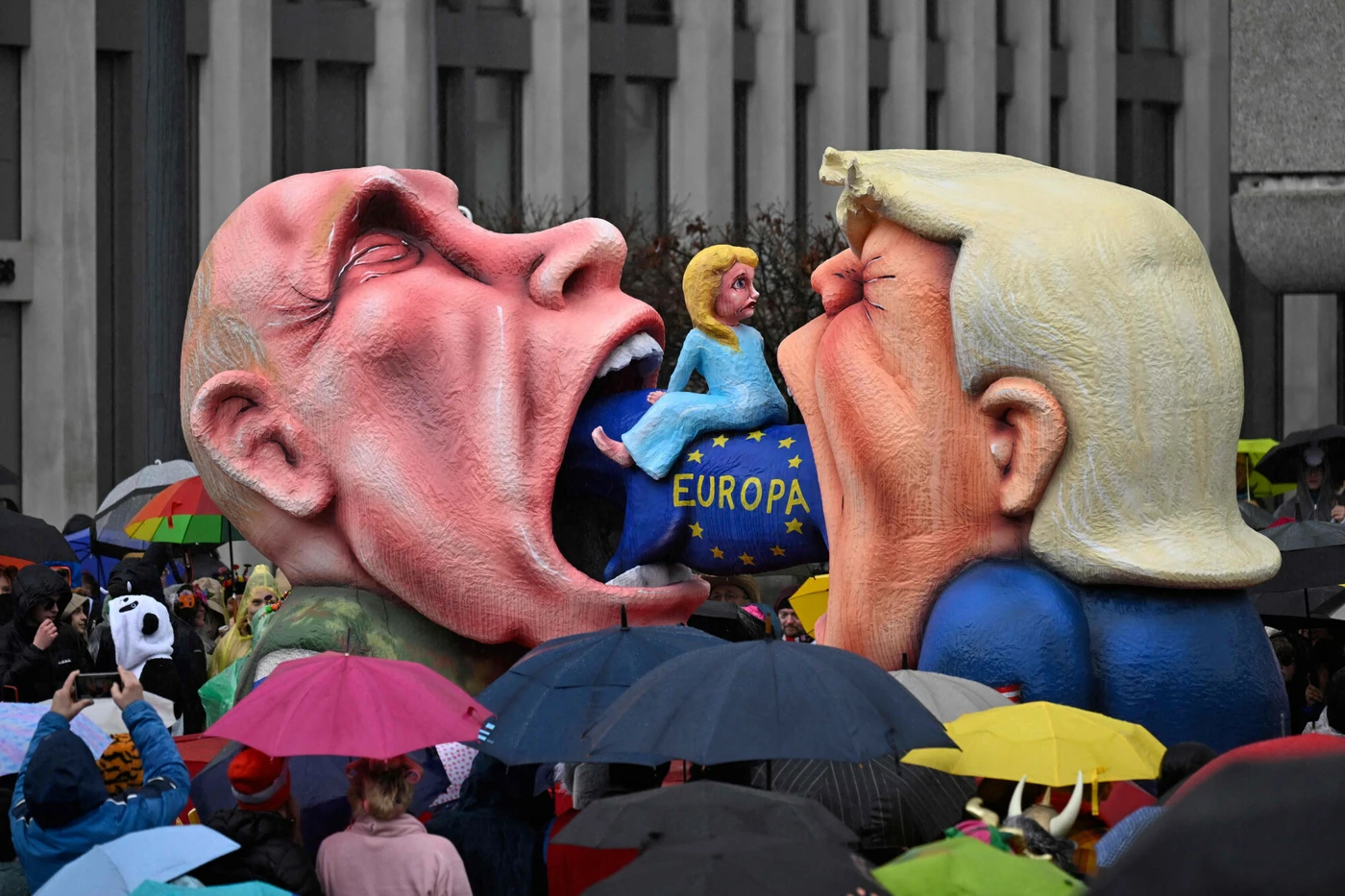
A carnival float by Jacques Tilly shows Trump and Putin eating a cow ridden by Ursula von der Leyen, at the Rose Monday parade in Düsseldorf, Germany, on 16 February 2026. Photo: Ina Fassbender/AFP/Eastnews
Explore further

Europe has 11 ways to choke Russia’s war. It doesn’t need Trump’s permission for any of them

Europe must stand on its own

The last three days demonstrate that the US is no longer an ally, but a strategic adversary. None of Trump's recent decisions helps end the war on Ukrainian or European terms. On the contrary, they encourage Putin and push any realistic hope of peace years away. They undermine international law and support the notion that might makes right.

Worse still, they help explain why war between Russia and Europe by 2029 is becoming more likely. Trump—Putin's close ally—leaves office on 20 January 2029.

Europe must stress its support for continued Ukrainian strikes on Russian refineries unless the Kremlin agrees to a comprehensive energy ceasefire in line with Ukraine’s demands.

Europe urgently needs to distance itself from the US and its foreign policy. Heads of state must join Canada's efforts to unite middle and small powers in common defense against increasingly aggressive great powers. As this series has repeatedly argued, Europe must build a Coalition of Like-Minded countries strong enough to confront Russia, China and, sadly, the US.

NATO Secretary General Mark Rutte addresses foreign ministers at North Atlantic Council meeting Brussels December 2025
Explore further

The alternative to NATO: A Coalition of Like-Minded European Countries

Hans Petter Midttun
Hans Petter Midttun, independent analyst on hybrid warfare, Non-Resident Fellow at the Centre for Defense Strategies, board member of the Ukrainian Institute for Security and Law of the Sea, former Defense Attaché of Norway to Ukraine, and officer (R) of the Norwegian Armed Forces. 

Editor's note. The opinions expressed in our Opinion section belong to their authors. Euromaidan Press' editorial team may or may not share them.

Submit an opinion to Euromaidan Press

  •  

"Trump parece ter abandonado Ucrânia para o próprio sucesso"

Jorge Rodrigues diz que entendimento entre EUA e Rússia sobre combustíveis mudou postura americana em relação à Ucrânia. ​Destaca ainda o impacto do corte do sistema Starlink no campo de batalha.

  •  

EU bets on diplomacy, not blocking statute, to protect ICC from Trump sanctions

The EU is shying away from triggering rules that would shield people and companies working at or with the International Criminal Court (ICC) in The Hague from US sanctions, preferring instead months-long diplomatic outreach.

The European Commission on Wednesday (14 October) told reporters in Brussels that it was doing everything to seek “practical solutions”, while hoping that its diplomacy will help the court, which prosecutes people for war crimes, genocide, and other atrocities.

“We haven’t made any decisions yet. But we continue to discuss at every level,” said a commission spokesperson, when pressed on whether a little-known blocking statue, which would presumably damper the impact of the US sanctions, remains an option.

And an EU summit in Brussels on Thursday is expected to ask the US to reverse the decision, according to draft conclusions seen by EUobserver.

The EU’s little-known “blocking statute” would prevent EU companies and banks from complying with the sanctions. It was first used against US sanctions on Cuba, Iran and Libya.

The Trump administration had, last Friday, announced financial sanctions on the ICC as part of a larger assault to dismantle the court, after it issued arrest warrants for Israeli prime minister Benjamin Netanyahu, its former defence minister Yoav Gallant, and Hamas military commander Mohammed Deif.

This article continues, but the full version is available only to EUobserver.com subscribers. Visit account.euobserver.com/membership

  •  

“It finances an economy geared toward total war”—Ukraine’s third president on the Russian diesel Washington just cleared

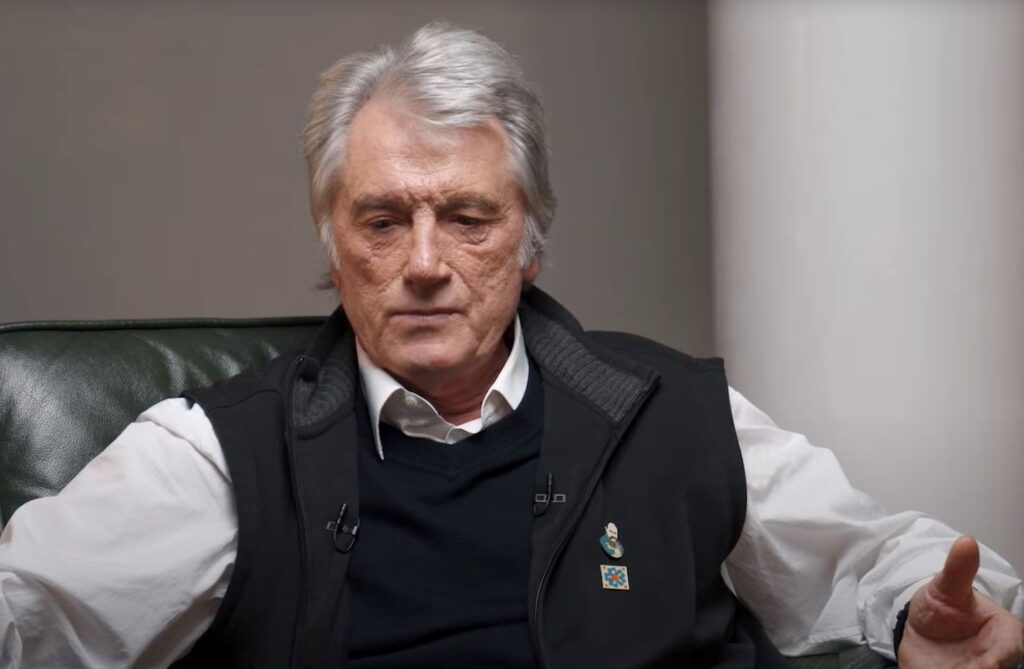
Viktor Yushchenko, the Ukrainian President in 2005-2010

Viktor Yushchenko, Ukraine’s president from 2005 to 2010, has written an open letter to US President Donald Trump and posted it on Facebook on 14 October. Without naming it, the letter takes aim at the green light Washington gave Russian diesel trade five days earlier, after a call between Trump and Kremlin leader Vladimir Putin.

Russia banned its diesel exports in July amid a fuel crisis at home, after Ukrainian strikes on refineries had already cut those exports, and last week’s US waiver and the supply deal Trump announced with Moscow would put that fuel back on world markets while Russian strikes still kill Ukrainian civilians.

What Yushchenko says Russian fuel buys

Yushchenko wrote that Russian ballistic missiles, Iranian Shahed drones, and aerial bombs strike homes every day and night in Kyiv, Zaporizhzhia, Odesa, Dnipro, and Kharkiv. Whenever there is talk of “concessions” or deals with Putin, he wrote, the Kremlin answers with more missiles, more drones, and more bloodshed.

The White House in Washington DC, USA. Illustrative image: Wikimedia Commons.
Explore further

Trump’s Russian diesel deal, which drew fury in Ukraine, is unlikely to lower prices, experts say

Yushchenko rejected calls for Ukraine to “restrain its strikes against the infrastructure that finances and sustains Russia’s war.”

“Money paid for Russian fuel is not an abstraction called ‘commerce.’ It finances an economy geared toward total war,” he wrote.

Nuclear arms, Pearl Harbor, and Iwo Jima

Yushchenko wrote that Ukraine inherited “one of the largest nuclear arsenals in the world” and agreed to give it up, trusting the words and signatures of great powers. In his view, by signing the 1994 Budapest Memorandum, America took on a moral responsibility toward Ukraine.

He compared trade in Russian energy to America’s trade with Imperial Japan, which included strategically important materials, before the US entered World War II. Washington hoped for years to avoid a wider war in the Pacific, he wrote, but economic pressure and diplomacy could not prevent catastrophe.

kyiv strike
Explore further

Ukraine warns of “a new type of humanitarian crisis” as Russia aims at its biggest cities

Japan attacked Pearl Harbor on 7 December 1941. America knows how dangerous it is to believe that trade can tame an aggressor, Yushchenko wrote, adding: “History taught us that lesson at a terrible price.”

He also named two men he called Ukrainian. One was Sergeant Michael Strank, whose family, Yushchenko wrote, came from Lemkivshchyna. The son of immigrants from Czechoslovakia, Strank took part in the famous raising of the US flag on Iwo Jima, according to the Marine Corps. The other was Oleksandr Silvashko, “a Ukrainian boy from the Cherkasy region,” who, Yushchenko wrote, was the first to embrace US Lieutenant William Robertson when American and Soviet forces met at the Elbe in April 1945.

“One does not negotiate with tyrants—one stops them,” Yushchenko concluded.

  •  

SpaceX schränkt Kiews Zugang zu Starlink ein und die USA liefern keine Aufklärungsdaten mehr

Trump scheint seine Forderung, die Ukraine solle ihre Angriffe auf russische Raffinerien einstellen, ernst zu meinen und lässt dem, nachdem Selensky Trumps Forderungen offen ignoriert hat, nun Taten folgen. Die USA haben Kiew schon die zweite Nacht infolge keine Aufklärungsdaten über russische Raketenangriffe geschickt und dann SpaceX den Zugang des ukrainischen Militärs zum Satelliteninternet Starlink […]
  •  

Latinos who turned away from Trump but distrust the Democrats: ‘I need to see deeds to believe again’

The last two years have been, she says, “an emotional roller coaster.” She voted for Donald Trump for president, immigration authorities took away her husband, she was left alone to run the freight trucking business and care for their three children, and she watched her life plans slowly slip through her fingers. Now there are exactly 20 days left until the U.S. midterm elections and no campaign promise—neither from the Republicans nor the Democrats—has convinced Jessica Ruiz about the need to get up on November 3, drive through the streets of Miami and go to the polling place for Florida’s 28th District.

Seguir leyendo

Jessica Ruíz with her family in an undated photograph. The journalist Niover at the Univisión newsroom, in an undated photograph.

© Spencer Platt (Getty Images)

Supporters of Donald Trump at a campaign event in the Bronx, New York, in May 2024.
  •  

Milei returns to Washington to strengthen ties with Trump’s administration

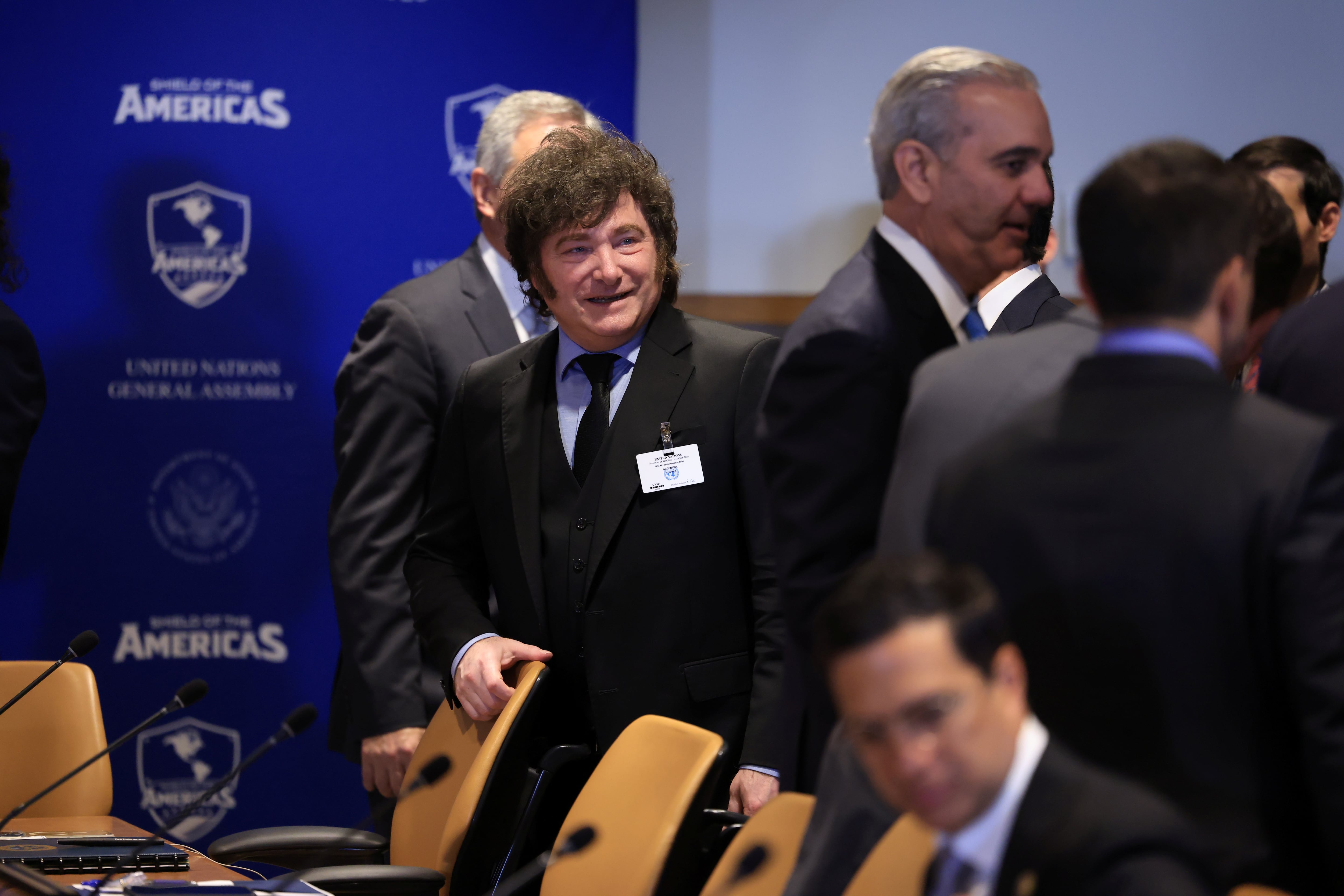
Javier Milei begins another visit to the United States on Wednesday, his 20th trip since being elected president of Argentina and his fifth this year alone. He will remain in Washington, D.C., until Friday, taking part in a series of events aimed at deepening his alliance with the Donald Trump administration and demonstrating his support for Israel.

Seguir leyendo

© Charly Triballeau (Charly Triballeau/Pool AFP via A)

Javier Milei at the Shield of the Americas meeting at U.N. headquarters in New York on September 22.
  •  

Trump Accounts and the privatization of citizenship

Satire, however over-the-top, never quite measures up to reality.

Join us on Telegram, X, and VK.

Contact us: info@strategic-culture.su

A thought experiment

Imagine that Giorgia Meloni, as Prime Minister, launches an app for newborns through which the government credits 1,000 euros to each child. She does so in an official capacity, via a government website and under a specific name: “Conto Giorgia.” Suppose the campaign promises parents that this capital will grow based on the historical performance of the FTSE MIB – the former MIB30 – provided they invest it on the stock market. Suppose the money comes largely from Italian taxpayers’ money and that the initiative has the blessing of a public statement signed by the nation’s capitalist elite: the Del Vecchio heirs, Marina Berlusconi, Giovanni Ferrero, Francesco Gaetano Caltagirone, and company. Such an initiative would raise an institutional issue even before a political one. Article 97 of the Constitution requires the public administration to act with due diligence and impartiality, and placing a personal brand on newborns’ savings is at odds with both.

In the United States, this is not just a hypothetical scenario. The Trump Accounts, accessible at trumpaccounts.gov, have been operational since July 4, 2026 – a date chosen to mark the 250th anniversary of the Declaration of Independence. They were established by the One Big Beautiful Bill Act, signed by Donald Trump in the summer of 2025: tax-advantaged savings accounts governed by Section 530A of the federal tax code. The Treasury makes an initial contribution of $1,000 for children born during the pilot program period, from 2025 to 2028, and anyone else can add money: parents, relatives, employers, states, and private individuals. By default, the funds are invested in a State Street index fund, the SPDR S&P 500 ETF; among the alternatives that can be selected at a later date, the Treasury has included funds from BlackRock and Vanguard.

The launch followed the ritual one might expect. From the Oval Office, Trump rang the opening bell for the NYSE and Nasdaq, flanked by Michael and Susan Dell, who pledged $6.25 billion: $250 each into the accounts of 25 million children under the age of ten living in areas where the median income does not exceed $150,000. The president joked that those present “aren’t doing this for that reason,” and invited everyone to buy a Dell computer. BlackRock, State Street, Visa, and Mastercard had already joined the summit organized by the Treasury, alongside Dell Technologies and the Dells; the underlying idea is attributed to financier Brad Gerstner. The $1,000 in public funds serves as the initial capital to open the account, while the private funds carry less weight than the scene surrounding them.

What’s the problem?

It’s important to distinguish between what is documented and what is interpretation. The name is documented: the sitting president lends his last name to a government product, hosted on a government domain. There are precedents for policies named after individuals, such as the Roth IRA, named after Senator William Roth, but in that case the person was a lawmaker and the name remained a colloquial label, whereas “Obamacare” began as a controversial acronym and was only later adopted. Here, the name is official. Citizens receive the benefit from a man, not from a law, and with three weeks to go before the November 3 midterm elections, the effect of this personalization is far from neutral.

The chain of interests is also well documented. BlackRock, State Street, and Vanguard manage the funds from which families will have to choose; Visa and Mastercard thrive on payment flows. That they derive a commercial advantage from this is an inference and should be treated as such. The fact remains that their brands appear alongside that of the government in the promotion, and that every dollar deposited into the accounts becomes assets under management. The Treasury, for its part, makes no secret of its ambition: Scott Bessent described the measure as the “greatest merger in history between Main Street and Wall Street,” within a framework – Parallel Prosperity – in which the two grow together.

Then there is the risk, which shifts from the government to families. One thousand dollars left for eighteen years at a nominal annual return of 7% – a theoretical scenario, not a forecast – grows to about $3,400. A useful sum, but one that does not constitute a safety net. The outcome will depend on market conditions in the year the child comes of age, and the family – not the one who made the promise – will bear the responsibility. A promise based on an index’s past performance sells confidence, yet past performance guarantees nothing.

The strongest objection must be taken seriously. The Treasury presents these accounts as a way to make the American Dream accessible to every citizen, and the idea of providing every child with a starting capital is defensible: stock ownership is concentrated among already affluent families, and an account opened at birth brings even those who would never have entered the market into it. This demonstrates that starting capital is a legitimate concept. It does not prove that it must bear the president’s name, nor that the sponsors can be the same as the fund managers, nor that stock capital can replace the guarantees that a welfare state should offer regardless of market conditions.

The Corpse

What remains is the political judgment, which is mine and not based on the facts. When the state links its authority to the name of a single man, entrusts promotion to those who manage savings, and promises newborns a future through the stock market, democracy recedes into the background and ceases to be the guiding principle. To speak of desecrating a corpse is a harsh turn of phrase, but it gets the point across: democratic rhetoric continues to circulate while its bulwarks – the impersonality of institutions and the separation between public and private interests – are being dismantled one by one. Those who exported it for decades through a series of interventions, it seems, left little of it at home.

On a friend’s recommendation, last night I watched Digger, a dystopian and grotesque film starring Goodman and Cruise. You leave the theater with the same impression: the satire, however over-the-top, never quite measures up to reality, and not even two excellent actors can push beyond a caricature that has since become everyday news.

  •  
❌