In una stanza bianca e ovattata di Santarcangelo di Romagna, profumata da leggere note d’incenso, forbici precise tagliano lane biellesi e sete comasche per confezionare le vesti sacre di Papa Francesco. A Venezia, tra le acque dell’isola della Giudecca, aghi robusti forano damaschi, velluti e passamanerie per tappezzare gli interni delle gondole e dei taxi acquei. E nel cuore di Milano, mani sapienti modellano pelli pregiate per dare vita a quella stessa borsa-gioiello che ha accompagnato le uscite pubbliche della Regina Elisabetta II. Sono i suoni, i profumi e i gesti di un’Italia laboriosa che opera lontano dai riflettori delle passerelle, ma che da secoli detta le regole dell’eleganza globale. Un universo fatto di telai secolari, banchi da taglio, macchine da cucire e archivi sterminati che il 24 e 25 ottobre torna a spalancare i propri battenti in occasione della decima edizione di ApritiModa.
Da 14 a 100 porte aperte: la rivoluzione di un decennio
Ideata dalla giornalista Cinzia Sasso, la manifestazione è nata dieci anni fa come una scommessa circoscritta a 14 indirizzi milanesi, con l’obiettivo di rendere accessibile al grande pubblico un mondo tradizionalmente esclusivo e blindato. Oggi, ApritiModa è un fenomeno culturale e turistico di respiro nazionale. L’edizione 2026 coinvolge oltre 100 luoghi in ogni regione d’Italia — tra maison internazionali, manifatture di provincia e piccole botteghe d’eccellenza — registrando numeri che certificano una fame di autenticità senza precedenti: dai 16.000 visitatori degli esordi si è passati alle oltre 50.000 richieste di partecipazione dell’ultima edizione, con più di un milione di interazioni sul sito ufficiale. Attraverso una semplice prenotazione, i visitatori possono oltrepassare la linea di demarcazione che separa il consumatore dal creatore, osservando in tempo reale come materie prime grezze si trasformano in abiti, cappelli, occhiali, scarpe, profumi e bottoni.
Le novità: dai sarti del Vaticano agli ombrelli della Corona inglese
Il cartellone di questo decennale si arricchisce di tappe che sfiorano l’arte pura e il misticismo. Tra i debutti assoluti spicca LAVS (Laboratorio Atelier di Vesti Sacre), fondato da Filippo Sorcinelli a Santarcangelo di Romagna: un luogo dove l’alto artigianato incontra la liturgia e dove sono stati realizzati i paramenti per Benedetto XVI e Papa Francesco. A Napoli, i riflettori si accendono per la prima volta su Mario Talarico, bottega ferma all’Ottocento con il suo antico tornio ancora in funzione, celebre per aver forgiato ombrelli per la famiglia reale britannica e innumerevoli celebrità storiche. Non meno affascinante è la tappa veneziana da Hydro Mirò, l’esclusivo cantiere della Giudecca specializzato nella tappezzeria nautica, dove il fascino della laguna prende forma tra “pareci” e “dogaresse”. A Milano, invece, Leu Locati (Amato Daniele) svela i segreti delle calzature e delle borsette che rappresentano un omaggio totale all’alto artigianato tramandato da sette generazioni.
I colossi del lusso, i telai di Leonardo e la magia della sposa
Il grand tour di ApritiModa consolida inoltre il legame con i colossi e le istituzioni storiche del settore. Il pubblico potrà passeggiare tra i capolavori di vent’anni di Alta Moda esposti all’Armani/Silos, respirare l’atmosfera cosmopolita ma intima di Casa Cucinelli a Milano, e ammirare la perfezione sartoriale fusa all’arte orologiera negli spazi di Dolce&Gabbana. Accanto a loro, resistono i templi della manualità assoluta: dal laboratorio di Pino Grasso, le cui mani incastonano migliaia di strass e paillettes per le sfilate di Armani e Valentino, fino all’Antico Setificio Fiorentino, che dal 1786 produce broccati per il Cremlino e la Casa Reale svedese utilizzando ancora un orditoio realizzato su un disegno originale di Leonardo da Vinci. Una sezione speciale del decennale è dedicata al mondo “bridal”, con l’apertura di atelier specializzati nella creazione di abiti da sposa come Anna Renzi Brivio a Brescia, Cecilia Gerosa a Bologna, Poesie Sposa a Piacenza e la prestigiosa manifattura di Antonio Riva a Garlate. Un viaggio tra tulle, mikado di seta e cartamodelli per scoprire come la tradizione si rinnova attraverso il design contemporaneo.
Il messaggio: “Un patrimonio condiviso da conservare”
Dietro lo stupore visivo, l’apertura delle fabbriche lancia un messaggio culturale potentissimo: la moda in Italia non è un’industria asettica, ma un tessuto connettivo fondato sul genio umano. “ApritiModa è un’occasione unica per scoprire i luoghi autentici dove nasce la bellezza e si esercita la bravura. Un’esperienza che riempie di ammirazione, orgoglio e amore“, spiega la fondatrice Cinzia Sasso. È un incontro che arricchisce chi guarda e chi crea: “I visitatori sono felici di entrare dietro porte sempre chiuse e i lavoratori sono felici di mostrare al pubblico le loro mani sapienti”. Un ponte gettato tra il lavoro manuale e la società, per ribadire un concetto essenziale: “La moda non è un capriccio per pochi, è un patrimonio condiviso, fatto di saperi, tecniche e creatività che va conosciuto e conservato per quello che è, un tesoro prezioso”.
Come partecipare
La regola è una: prenotarsi su Apritimoda.it. La sezione “Partecipa” offre una mappa intuitiva dell’intero Paese; ogni luogo ha una scheda con descrizione, indirizzo, orari e slot disponibili per sabato 25 e domenica 26 (le disponibilità si aggiornano in tempo reale). Le visite sono guidate e gratuite. Si entra in piccoli gruppi: si ascolta, si guarda, si fanno domande. Si esce, quasi sempre, con un rispetto nuovo per ciò che indossiamo.
The very public execution of my professorship and reputation continues in Norway. Today’s media article about me makes three claims that are misleading and/or false.
1) The article dismisses my claim that my research is being criminalized as the journalists merely cite the dismissive comments from the university – no arguments are apparently required.
It is not possible for an academic anymore to analyse the policies of rival powers by assessing their security concerns, as it will be smeared by the government, the government’s NGOs and the media as “legitimizing” the enemy and supporting their narratives. The current Defence Minister singled me out with the accusation of spreading propaganda and criticised two podcasters for even speaking with me (as I have already been cancelled by the media in Norway). How was this accusation by the Defence Minister substantiated? I had argued that NATO expansion triggered the war in Ukraine, which the Defence Minister denounced as dangerous “Russian propaganda”, with no need to substantiate his vile accusation. I can cite a sea of evidence and also refer to statements by American and European political leaders, ambassadors, intelligence chiefs, and others to make my case. However, the purpose is not to engage in debate, but to smear, censor, and cancel. By going after an individual academic for challenging official truths, the government has already claimed a monopoly on the truth. Academics should have their arguments scrutinised and criticised, but these are severe personal attacks from the government without the possibility of even defending myself. How is this not criminalising the research of an academic?
I cannot even speak at any events in Norway without the event being cancelled. The last event I agreed to speak at was because I shared the stage with the former CIA officer John Kiriakou. A newspaper had the event at a church cancelled, and when the backup location did not also cancel, the journalist simply printed in the paper that it had been cancelled so people would not show up. Is this normal? I must use my allotted holiday days to attend conferences because any event I attend can be presented as “controversial,” and then the NGOs and journalists will go after the reputation of the university. Is this normal? Every newspaper article about me merely refers to me as “controversial” or “pro-Russian” without ever assigning meaning to these labels or presenting my argument.
I have argued, much like former CIA director Burns, that if the West attempts to pull Ukraine into the NATO orbit, then there would be war and Ukraine would be destroyed. This is considered a “pro-Russian” argument. Arguing that we should respect the will of most Ukrainians who want negotiations to end the war is also considered a “pro-Russian” argument, while in contrast, boycotting diplomacy, deporting Ukrainian refugees, and calling for the conscription of Ukrainian women is “pro-Ukrainian”.
2) To avoid addressing any of my arguments, the journalists go on to uncritically cite personal attacks against me, pointing out that I have been called a propagandist by the Norwegian Helsinki Committee. This is a “non-governmental organisation” financed by the government and the National Endowment for Democracy (NED), which was set up by Reagan and the CIA director in 1983 to manipulate the civil society of other states. The Norwegian Helsinki Committee has been relentless in its smears on social media to have me fired, writing hit pieces in the media, pushing to cancel my speaking events, writing a letter to my university, and even posting a picture of my house on social media. This is a governmental “human rights organisation” that cites human rights concerns to build the case for war.
3) Lastly, to further avoid addressing my actual arguments, they simply cite the fact that arguments I made at a debate last year have been “wholly or partially debunked” by a fact-check. The state-run media (NRK) invited the state-run military defence institute (FFI) to fact-check three of my claims. What claims did they “debunk”?
My first claim was that only 20% of Ukrainians wanted NATO membership between 1991 and the regime change in February 2014. The fact-checker argued that the number went up by the middle of 2014 (after Russia responded by seizing Crimea), which is a completely meaningless comment intended to muddy the waters, as my argument was about the previous era.
My second claim was that Zelensky had argued in an interview with The Economist in March 2022 that there were some Western countries that would like a long war with Russia to weaken a strategic rival, even if it would result in the destruction of Ukraine. The fact-checker argued that not all Western countries wanted a long war and that it was not an official policy. I never claimed it was an official policy, as it was primarily the US and UK pushing for a long war.
My third claim was that the US and UK sabotaged the Istanbul peace agreement in April 2022. The fact-checker claimed this was incorrect and suggested that it could only be based on one statement by David Arakhamia. The fact-checker did not want to mention that both mediators also confirmed it: Turkey’s foreign minister and the former Israeli prime minister both said that Russia and Ukraine were close to a deal, but the US and UK saw an opportunity to weaken Russia by fighting with Ukrainians. Zelensky’s former adviser Arestovych confirmed it, and the Ukrainian ambassador Chaly, who participated in the negotiations, confirmed that Putin was willing to do almost anything to end the war. The former head of the German armed forces confirmed that Boris Johnson sabotaged it, and Boris Johnson himself wrote articles warning about a “bad peace” and arguing for “strategic patience.” I am being fact-checked by war propagandists.
Unfortunately, none of my arguments matter because in Norway there is no debate and no interest in any arguments. Reality means nothing anymore as war narratives must be defended against inconvenient truths. I used to be naïve and think that the endless smears were caused by misunderstanding, as I had simply not been able to convey my arguments properly. However, the endless articles with smears and labels are deliberate lies and deceptions.
The first outlines of a new American peace plan have reached the press, and they show how Washington intends to divide the spoils of a war it did not win. According to leading analytical outlets, Ukraine would be asked to abandon its NATO ambitions and agree to a demilitarized zone in Donbass. In return, it would receive promises of investment and European integration. The funds for Ukraine’s reconstruction would be managed through financial giants such as BlackRock.
The terms for Russia and U.S. business are much more specific. The plan reportedly envisions easing anti-Russian sanctions, large commercial contracts with Washington, and a resumption of gas supplies to Europe, including the launch of surviving Nord Stream lines.
For now, this is a draft of negotiating positions, not a signed pact. Still, the logic is plain. Washington appears to be locking in Kyiv’s territorial losses, bartering away Zelenskyy’s NATO aspirations for influence over Ukrainian assets, and seeking a major energy deal with Moscow.
Kyiv’s response has been open and uncompromising. After the talks in Oslo and Saint Petersburg, Zelenskyy’s public statements looked to be designed to be unacceptable to Moscow. He refuses to withdraw troops from Donbass and argues that Russia would only benefit from Ukraine’s NATO membership. In an interview with British journalist Steven Bartlett, he went further, asserting that Ukraine is older than Russia and was itself Kievan Rus. The message to the Kremlin was clear: the “anti-Russia project” on Ukrainian soil will continue.
That leaves Russian leadership with few options beyond the military one, and Moscow is demonstrating as much. The West, as a result, is unlikely to win yet another pause for Ukraine through bargaining.
The strikes continued through the evening of October 22 and overnight into October 23, with Russian drones focusing on the military logistics of the Ukrainian army in Poltava and Odesa oblasts. Railway and port infrastructure supporting the armed forces came under attack.
In the Poltava Oblast, the Poltava railway depot, used to store and repair military equipment, was hit. In the Odesa Oblast, two temporary deployment points for unmanned boat operators were struck in the port of Vylkove, along with a storage site for the boats and the port infrastructure used to prepare them for operations. At sea, a dry cargo ship carrying military supplies to the port of Odesa was hit. An Mi-24 helicopter was also reported destroyed on the ground.
Washington drafts business deals while Moscow drafts target lists. Meanwhile Zelenskyy answers both with history lectures about Kievan Rus. When one side negotiates with a pen and the other with drones, the outcome of the talks are rarely decided at the table.
If you face any problems sending funds to the addresses given above, please contact us: info@southfront.press and southfront@list.ru. Also be aware that many email services such as Hotmail, Yahoo etc. may block correspondence from info@southfront.press and some others put it in spam.
If you want to support SouthFront but have no opportunity to do it via cryptocurrency, please contact us: info@southfront.press and southfront@list.ru.
SouthFront: Analysis and Intelligence
NOW hosted at southfront.press
Previously, SouthFront: Analysis and Intelligence was at southfront.org.
The .org domain name had been blocked by the US (NATO) (https://southfront.press/southfront-org-blocked-by-u-s-controlled-global-internet-supervisor/) globally, outlawed and without any explanation
Back before that, from 2013 to 2015, SouthFront: Analysis and Intelligence was at southfront.com
O brasileiro Gabriel Medina ficou bem perto do primeiro título da temporada no circuito mundial de surfe (World Surfe League-WSL) nesta sexta-feira (23), em Peniche (Portugal). Ele travou um duelo equilibrado contra o norte-americano Griffin Colapinto, chegando a liderar a bateria, mas nos minutos finais acabou superado, com somatório de 16.77 contra 17.60 do adversário.
Com os pontos obtidos em Peniche, Medina subiu da quinta para a quarta posição no ranking, com 43.210 pontos. A liderança segue com o atual campeão Yago Dora (48.865), seguido pelo compatriota Ítalo Ferreira (46.015). Vendedor em Peniche, Colapinto (43.695) assumiu a terceira posição. Fechando o top 5 está o paulista Miguel Pupo (42.770)
Foi o terceiro-vice-campeonato de Medina no circuito – ele também foi o segundo colocado Margaret River (Austrália) e Fiji. Tricampeão mundial (2014, 2018 e 2021), o brasileiro de 32 anos venceu pela última vez uma etapa do circuito em 2023, na Austrália. Na ocasião, coincidentemente, levou a melhor sobre Colapinto na final.
Na decisão do título em Peniche, Colapinto garantiu 8,17 no início da bateria, enquanto Medina anotou 7.67. Na sequência, o norte-americano pegou outra boa onda que lhe valeu 7.57, ampliando ainda mais a vantagem na liderança. No entanto, em seguida, foi a vez do brasileiro dar show em Peniche: Medina levou nota 8.20 e passou à frente de Colapinto no placar. O adversário ainda emplacou 7,27 em outra onda, mas seguia atrás do brasileiro. Na reta final, Medina deslizou em um tubo, e obteve nota 8.57, a mais alta até aquele momento. O brasileiro dominava a bateria, quando Colapinto desceu uma onda espetacular, recebeu 9.43, virando o placar a minutos do fim.
Para chegar à final, Medina superou nas semifinais, também disputadas nesta sexta (23), o compatriota Ítalo Ferreira, com somatório 11.67 contra 10.10. A outra semi colocou frente a frente o atual campeão mundial Yago Dora e o Griffin Colapinto. O norte-americano arrematou a vaga na final ao somar 14.33, enquanto Dora totalizou 8.83.
A próxima etapa da WSL, a última antes da decisão do título em Pipeline (Havaí), será nas Filipinas, entre 31 de outubro e 10 de novembro. A final do circuito mundial de surfe em Pipeline será entre 8 e 20 de dezembro.
Diplomacy, as the saying goes, is the art of the possible. A peaceful settlement to the war in Ukraine is possible if all sides were to engage in genuine diplomacy. That’s the easy, more civilized way.
If not, Russia will achieve peace the hard way through complete military victory.
Diplomacy is being prevented because European politicians, in particular, are held hostage by their own twisted ideology and false propaganda.
Ironically, the NATO proxy war in Ukraine was intended to “strategically defeat” Russia. It turns out, however, that it is the NATO axis that is staring at a historic defeat. The chaos surging across Europe is a manifestation of that failure, driven by higher energy prices and reckless, unsustainable militarism.
Thus, peace in Ukraine is concomitant with peace in Europe, and diplomacy would expedite that to obviate more instability and suffering.
But diplomacy is incompatible with parties who possess a diseased mentality of Russophobia.
Diplomatic engagement involves putting pragmatic interests first, ahead of ideological bias. The pragmatic interest of everyone surely should be to find an end to this nearly five-year war that has caused millions of casualties and runs the risk of escalating to a general war in Europe.
The Trump administration appears to be renewing peace efforts by dispatching a presidential envoy to Russia this week. Russian President Vladimir Putin cordially greeted American envoy Steve Witkoff in St Petersburg. It is unimaginable that any European politician or envoy would be capable of that rudimentary courtesy. Putin reiterated that Russia’s door is open for negotiations.
Diplomacy can create a path to peace sooner, as internationally renowned Professor Jeffrey Sachs advocated in an eminently reasonable presentation this week.
Key issues for a peace agreement include: 1) indivisible security for all; 2) permanent neutrality status for Ukraine; 3) an armistice, not a temporary ceasefire, based on current lines of conflict; and 4) a declaration by NATO to halt its eastward expansion.
The framework for peace proposed by Sachs is similar to Russia’s position. It addresses the causes of conflict rather than only its symptoms.
Professor Sachs points out that these are not new principles. They were recognized and agreed upon in the past by the United States, its European allies, and Ukraine. In the Helsinki Final Act of 1975, the U.S., Soviet Union, and European states accepted the principle that security is not a zero-sum game. All states must have a mutual right to security.
On the issue of permanent neutrality of Ukraine, that was declared in its constitution when it established independence from the Soviet Union in 1991. The seeking of NATO membership for Ukraine overturns that principle. It was the United States under President GW Bush that initiated the drive for NATO membership with the Bucharest Declaration in 2008, which was repudiated by Russia with the warning that it would inevitably lead to conflict, as history proves.
Sachs also points out that the United States and its NATO allies must return to the pledge made to the Soviet Union in 1989 that there would be no eastward expansion of the military bloc. It is basic common sense that the encroachment of NATO forces on Russia’s borders is destabilizing and a source of confrontation. The relentless expansion is a violation of the principle of indivisible security. Would the United States accept a situation where Mexico was installing Russian or Chinese military forces?
As for the cessation of hostilities and the drawing of territorial lines, that is a thorny issue. Moscow claims that it has a historical right to the territories east and south of the Dniper River, including Sumy, Kharkov, Kherson and Odessa, in addition to the Donbass and, of course, Crimea.
What is unrealistic is for Ukraine to claim the total return of territories that Russia has taken since 2022 (and 2014 in the case of Crimea). From Russia’s point of view, and many international historians would concur, the post-1991 composition of Ukraine was an artifice. It arbitrarily incorporated lands that were historically always part of Russia. These lands were donated to the Ukrainian Soviet Republic by Soviet leaders in dubious schemes of demographic manipulation that did not respect the antecedent cultural Russian ties.
In any case, a framework for a permanent peaceful settlement is feasible if all sides engage in honest discussions that recognize the historical background.
When U.S. President Donald Trump met Russia’s Putin in Anchorage back in August 2025, there seemed to be an acceptance by the American side of Russia’s perspective on addressing “root causes”. Subsequently, Trump failed to follow through on what appeared to be a breakthrough meeting in Anchorage. Part of the problem was the Europeans and the Kiev regime thwarting Trump’s initiative and throwing obstacles in the way of negotiations. European leaders insisted on a temporary ceasefire and NATO peacekeepers, and have persisted in treating Russia like a pariah.
The international context has shifted in a way that makes Trump more amenable. His disastrous war with Iran has blown fuel prices sky-high for American consumers. With the mid-term elections only weeks away, the White House needs some good news to prevent a political wipeout for the Republicans.
Trump made a deal with Putin two weeks ago for diesel supplies from Russia to ease the pain at the pump for American voters. Essential to that is for Ukraine to stop air strikes on Russian oil facilities. The corrupt puppet president in Kiev, Vladimir Zelensky, is defying Trump with churlish remarks and threats to keep striking Russian oil refineries and depots.
One positive thing from the rift with Zelensky is Trump viewing him as the obstacle to a peace deal. Trump is now openly castigating the Ukrainian former comedian and calling for a new president in that country.
The cocaine addict Zelensky, with his loathsome war racketeering, is hanging on to power by a thread, and only because of continuing support from European leaders. These elitist European politicians are driven by anti-Russian ideology and servility to the futile geopolitical agenda of strategically defeating Russia. Europe is witnessing a social upheaval bordering on revolution over the fallout from the soaring cost of living, which is, in turn, a consequence of the NATO proxy war in Ukraine. But the elites have no way to address the chaos because they are the problem.
For all his flaws, and there are many, at least Trump is willing to engage in diplomacy. He is not encumbered with hatred of Russia. His understanding of the root causes of the war may be limited. But at least his administration has the basic quality of respecting Russia as an equal and listening to Russia’s perspective. That is a modicum for negotiations and the art of the possible.
By contrast, the European elites and their pet regime in Kiev are incapable of engaging in any diplomacy. They are obsessed with unattainable and sinister ideological prejudices that hark back to Nazi Germany and the belief that Russians are “subhumans” to be conquered. They have no respect for Russia, nor are they capable of any intelligent, honest discussion about the causes of conflict.
Jeffrey Sachs contends that Trump could promptly end the war and create peace if he were to make a clear policy announcement that the United States is returning to a position whereby it respects indivisible security for all, including Russia, accepts permanent neutrality of Ukraine with no future as a NATO member, and declares that NATO ends its eastward expansion. A rational path to peace is possible.
There will be howls of condemnation from the Kiev regime and its European sponsors. There will be howls too from within the U.S. establishment who share the European ideology of demonizing and belligerence towards Russia. Trump may be so weakened by the mid-term elections that it is not politically possible for him to make such a policy announcement.
So be it. Russia will continue to win its military objectives and demand its rightful terms of peace. Diplomacy offers an easy way to peace. But if the West insists on the hard way, then Russia will deliver that way too. The Europeans and Kiev regime will pay an even higher price with their own implosion.
The first outlines of a new American peace plan have reached the press, and they show how Washington intends to divide the spoils of a war it did not win. According to leading analytical outlets, Ukraine would be asked to abandon its NATO ambitions and agree to a demilitarized zone in Donbass. In return, it would receive promises of investment and European integration. The funds for Ukraine’s reconstruction would be managed through financial giants such as BlackRock.
The terms for Russia and U.S. business are much more specific. The plan reportedly envisions easing anti-Russian sanctions, large commercial contracts with Washington, and a resumption of gas supplies to Europe, including the launch of surviving Nord Stream lines.
For now, this is a draft of negotiating positions, not a signed pact. Still, the logic is plain. Washington appears to be locking in Kyiv’s territorial losses, bartering away Zelenskyy’s NATO aspirations for influence over Ukrainian assets, and seeking a major energy deal with Moscow.
Kyiv’s response has been open and uncompromising. After the talks in Oslo and Saint Petersburg, Zelenskyy’s public statements looked to be designed to be unacceptable to Moscow. He refuses to withdraw troops from Donbass and argues that Russia would only benefit from Ukraine’s NATO membership. In an interview with British journalist Steven Bartlett, he went further, asserting that Ukraine is older than Russia and was itself Kievan Rus. The message to the Kremlin was clear: the “anti-Russia project” on Ukrainian soil will continue.
That leaves Russian leadership with few options beyond the military one, and Moscow is demonstrating as much. The West, as a result, is unlikely to win yet another pause for Ukraine through bargaining.
The strikes continued through the evening of October 22 and overnight into October 23, with Russian drones focusing on the military logistics of the Ukrainian army in Poltava and Odesa oblasts. Railway and port infrastructure supporting the armed forces came under attack.
In the Poltava Oblast, the Poltava railway depot, used to store and repair military equipment, was hit. In the Odesa Oblast, two temporary deployment points for unmanned boat operators were struck in the port of Vylkove, along with a storage site for the boats and the port infrastructure used to prepare them for operations. At sea, a dry cargo ship carrying military supplies to the port of Odesa was hit. An Mi-24 helicopter was also reported destroyed on the ground.
Washington drafts business deals while Moscow drafts target lists. Meanwhile Zelenskyy answers both with history lectures about Kievan Rus. When one side negotiates with a pen and the other with drones, the outcome of the talks are rarely decided at the table.
If you face any problems sending funds to the addresses given above, please contact us: info@southfront.press and southfront@list.ru. Also be aware that many email services such as Hotmail, Yahoo etc. may block correspondence from info@southfront.press and some others put it in spam.
If you want to support SouthFront but have no opportunity to do it via cryptocurrency, please contact us: info@southfront.press and southfront@list.ru.
SouthFront: Analysis and Intelligence
NOW hosted at southfront.press
Previously, SouthFront: Analysis and Intelligence was at southfront.org.
The .org domain name had been blocked by the US (NATO) (https://southfront.press/southfront-org-blocked-by-u-s-controlled-global-internet-supervisor/) globally, outlawed and without any explanation
Back before that, from 2013 to 2015, SouthFront: Analysis and Intelligence was at southfront.com
Il cinquantenne pugile americano Floyd Mayweather – soprannominato “Money” per i guadagni accumulati nel corso della carriera – ha denunciato di aver subito perdite finanziarie per 550 milioni di dollari a causa di accordi finanziari poco chiari e del comportamento di persone di cui si fidava. In particolare, ha raccontato l’ex campione del mondo, duecento milioni gli sarebbero stati sottratti da un socio: “Quest’uomo si sedeva accanto a me, fingeva di essere mio amico e mi aiutava con i miei affari. E poi mi ha rubato duecento milioni di dollari”, ha dichiarato. La perdita di ulteriori 350 milioni, invece, deriverebbe dai suoi rapporti commerciali con Showtime, emittente che ha trasmesso alcuni degli incontri più importanti della sua carriera. Secondo quanto sostenuto dal pugile, le somme che avrebbero dovuto essere corrisposte a lui o alla sua società di promozione, la Mayweather Promotions, sarebbero state trasferite su conti riconducibili ad altri soggetti.
La disputa è approdata anche nelle aule giudiziarie. Secondo quanto riportato da diverse testate statunitensi, Mayweather ha avviato un’azione legale per ottenere oltre 340 milioni di dollari in relazione a presunti compensi non pagati o somme che sarebbero state indirizzate impropriamente. Allo stesso tempo arriva la notizia che la leggenda del pugilato tornerà a breve a combattere dopo nove anni di stop: lo sfidante sarà Ryan Garcia, campione Wbc dei pesi welter. “Io e Floyd abbiamo concordato un incontro e non si tratta di una esibizione”, ha annunciato Garcia sui suoi social.
French Rafales carry out mock strike 'Rummy' escorted by British RAF Typhoons, as Paris and London deepen nuclear coordination amid rising tensions with Russia
Danish Defense Minister Jeppe Bruus announced the planned purchases yesterday. He said the new weapons would strengthen Denmark’s ability to respond to an attack and strike targets “behind enemy lines,” according to Reuters. Copenhagen has not disclosed the number of missiles involved, the value of the purchases, or expected delivery dates.
A stock picture of Covenant’s Anthem long-range strike weapon. Covenant
“We’re in a serious and deteriorating security situation, and that is why we are building up the defense and strengthening our combat power,” Bruus told reporters. The planned acquisitions are a “strong signal that we have the ability to strike back,” he added, without explicitly naming any particular adversary.
The Danish government did say last year that it would pursue new long-range offensive precision weapons, in general, in response to the growing security concerns in Europe amid Russia’s ongoing war against Ukraine. Bruus’ announcement comes amid a new surge in geopolitical friction between Russia and members of the NATO alliance.
A stock picture of a Joint Strike Missile (JSM), seen here being loaded onto a US Air Force F-16 Viper during a test in 2018. USAF
The two new acquisitions will provide Denmark with important complementary strike options. Anthem is a ground-launched weapon, while JSM is designed to be air-launched, including by stealthy F-35 fighters just like those in Danish Air Force service today. Together, the weapons are set to expand the range of platforms from which Denmark can deliver stand-off precision strikes and give its armed forces additional options for attacking high-value military targets.
A Royal Danish Air Force F-35A takes off for a Red Flag-Nellis 24-2 mission at Nellis AFB, Nevada, on March 13, 2024. U.S. Air Force photo by William R. Lewis William Lewis
Anthem is being developed by Covenant, a U.S.-based defense company that has also outlined plans to establish missile production in Germany and Israel. The system’s selection by Denmark gives the company an important European customer as NATO members seek to expand their inventories of long-range weapons.
Covenant’s Anthem is in a category of munitions that increasingly blurs the line between long-range kamikaze drones and traditional cruise missiles. It is designed to offer a lower-cost, longer-range strike capability that can be produced more easily and at greater scale than many existing systems. Covenant has not publicly disclosed the weapon’s range. Still-unconfirmed reports put it at roughly 740 miles (1,200 kilometers). It is also said to carry a warhead weighing more than 200 kilograms (441 pounds). It also uses a solid rocket motor to provide an initial boost at launch before transitioning to a heavy-fuel jet engine for cruise flight.
Currently, it is unclear how exactly Anthem is launched. It has already undergone testing with the U.S. Army, and images from those trials show the weapons being handled on the ground using a tricycle undercarriage. This may point to rocket-assisted takeoffs from runways.
A Covenant cruise missile is prepared for a live-fire demonstration at the Africa Multidomain Training and Experimentation Center in Tan-Tan, Morocco, August 5, 2026. U.S. Army photo by Capt. Jordan Beagle
Last month, Covenant announced it had already conducted more than 200 test flights of Anthem and had secured roughly $150 million in orders. It also disclosed that an unidentified international customer was expected to begin receiving German-built weapons before the end of this year. This may well be Denmark, though there could also be other customers that have yet to emerge publicly. Meanwhile, U.S. Army deliveries are expected in 2027, under an accelerated qualification contract.
JSM, developed by Kongsberg in cooperation with U.S. defense contractor Raytheon, is a traditional air-launched cruise missile capable of being employed against targets on land and at sea. It is capable of being carried internally and externally on the A and C variants of the F-35. The design has also been fit-checked for external carriage on a variety of other tactical jets. As already mentioned, JSM will provide an entirely new stand-off precision-strike option for Denmark’s F-35As. These are the only tactical jets in Danish service today following the retirement of the country’s F-16 Vipers in January.
Pictures showing work on integrating the Joint Strike Missile on all three variants of the F-35 Joint Strike Fighter, as well as the F-16. Kongsberg
Since JSM is designed to be air-launched its maximum range is dependent in part on the altitude at which the missile is released, as well as the speed of the aircraft carrying it. Kongsberg has said in the past the missile can fly out to a range of more than 300 nautical miles, but also that its reach is significantly cut back when it is employed in its low-altitude penetration mode.
A briefing slide with various details about the JSM’s capabilities. Kongsberg
The JSM carries a 260-pound warhead and uses a combination of GPS, inertial navigation (INS), and terrain mapping to guide it toward its target. The terrain-mapping capability provides an additional means of navigation, helping the missile maintain its course even in environments where GPS connectivity is degraded or unavailable.
The missile switches over to an imaging infrared seeker to provide precise target discrimination during the terminal phase of flight. Because the seeker operates passively, it does not rely on emitting radiofrequency signals, reducing the risk of detection and making it immune to conventional radiofrequency jamming. The agile JSM’s overall design also includes reduced-signature features to help limit its detectability and improve its survivability on the way to the target.
A U.S. Air Force F-35A releases a Joint Strike Missile (JSM) during a test. Norwegian Defense Materiel Agency
A two-way datalink also allows the missile to receive updated targeting information while en route, or to be redirected toward an entirely different target during the mid-course phase of flight.
The dual purchases build on a broader Danish effort to field new options for holding targets at extended ranges at risk. Denmark previously operated eight M270 Multiple Launch Rocket Systems (MLRS), but retired them in 2004. The country is now introducing Israel’s PULS rocket artillery system, which can employ different rocket and missile types depending on the mission. Presently, the Danish military looks to be fielding PULS just with artillery rockets.
In terms of Denmark’s current and future ground-based capabilities, PULS – which stands for Precise and Universal Launch System – and Anthem will serve different. In Danish service, PULS provides a flexible rocket artillery capability, while Anthem will offer a cruise-missile-like option for longer-range precision attacks.
The acquisition of JSM also reflects the importance of Denmark’s F-35 fleet to its future combat capability. Air-launched weapons offer mobility and flexibility, but their employment depends on available aircraft. In this context, Denmark’s planned expansion of its F-35 fleet from 27 to 43 aircraft, announced in October 2025, will provide a larger platform base for its emerging long-range strike capability.
There could be some overlap here between Denmark’s growing array of air- and ground-based strike capabilities, as well. Dutch F-35As demonstrated their ability to provide targeting data to PULS launchers during a NATO exercise last year. A ground-launched weapon like Anthem also provides an alternative long-range strike option that does not require a fighter to carry it aloft, creating additional operational flexibility.
For Denmark, acquiring JSMs and Anthems also offers the appeal of adding a capable higher-end munition alongside a more affordable, readily available long-range strike weapon. Reuters has reported that Covenant expects Anthem to eventually cost in the mid-six-figure range, although a final unit price has not been disclosed. Meanwhile, the JSM has a reported unit cost of approximately $2.8 million.
As mentioned, the announcement of the Anthem and JSM purchase is fully in line with prior statements from the government in Copenhagen about acquiring new long-range strike options. Danish Prime Minister Mette Frederiksen previously urged the military to accelerate procurement across the board after years of comparatively limited defense spending.
Danish Prime Minister Mette Frederiksen meets conscripts during a visit to Air Base Karup, the main air base of the Royal Danish Air Force, in Jutland, Denmark on March 7, 2024. (Photo by Mikkel Berg Pedersen / Ritzau Scanpix / AFP) / Denmark OUT MIKKEL BERG PEDERSEN
The long-range strike acquisitions also fit into a broader NATO effort to strengthen deterrence across the Baltic region and the alliance’s northeastern flank.
Denmark occupies a strategically important position linking the Baltic Sea to the North Sea, while its forces contribute to NATO’s regional presence and reinforcement plans. The ability to strike targets deep behind enemy lines will provide a new ability for Denmark to threaten an adversary’s military infrastructure, command facilities, and other critical targets.
Denmark is far from alone in pursuing new long-range strike capabilities. In September, Latvia moved to acquire Anduril’s Barracuda family of long-range strike missiles, building on its earlier order for Army Tactical Missile System (ATACMS) short-range ballistic missiles. Poland is expanding its own layered strike capabilities, while France, Germany, Italy, Poland, Sweden and the United Kingdom are working on the European Long-Range Strike Approach (ELSA) initiative to accelerate the development and procurement of next-generation weapons. The efforts reflect a wider shift across Europe toward restoring deep-strike capabilities that have been relatively scarce among NATO’s European members since the end of the Cold War.
All of this is happening while the Baltic states, in particular, increasingly voice their concerns that Russia could seek to exploit vulnerabilities along NATO’s northeastern flank. Estonia, Latvia, and Lithuania have all warned about the risks posed by Russian force expansion, airspace incursions, sabotage, and other potential provocations. In response, NATO has stepped up its regional posture through initiatives, including Operation Eastern Sentry.
Danish Defense Minister Jeppe Bruus (right) speaks with military personnel during a visit to the Antenna Park in Nuuk, Greenland, on August 26, 2026. Photo by Thomas Traasdahl / Ritzau Scanpix / AFP THOMAS TRAASDAHL
The news about Denmark’s new long-range strike plans has already drawn a heated reaction from Moscow. Russia’s embassy in Copenhagen accused Denmark of pursuing confrontation with Russia and warned of “inevitable disastrous consequences,” Reutersreported.
Many details about the planned Anthem and JSM acquisitions still remain to be learned. However, the announcement yesterday is a clear signal of Copenhagen’s intention to give its armed forces a more substantial ability to threaten targets at distance, and reflects still-growing trends elsewhere in Europe.
Bulgarians vote on 25 October in a presidential election shaped by Russia’s war in Ukraine, attacks on Black Sea shipping and economic pressures. The contest between incumbent Iliana Yotova and reformist challenger Andrei Gyurov will also test the political authority of Prime Minister Rumen Radev.
Bulgaria will elect a president on Sunday, 25 October, in a contest that has become a test of the country’s relationship with Russia, its commitments to NATO and the European Union, and its response to deteriorating security in the Black Sea.
An opinion poll conducted by Market Links between 13 and 19 October placed Yotova ahead with 47.3 per cent support, compared with 30.6 per cent for Gyurov. However, low anticipated turnout makes a second round on 1 November highly likely.
Although Bulgaria’s presidency is primarily ceremonial, the office carries constitutional authority over defence, legislation and government formation. The election also comes six months after former President Rumen Radev secured a parliamentary majority and became prime minister, substantially changing the country’s political landscape.
A presidency shaped by political realignment
Yotova, 62, became Bulgaria’s first female president in January 2026 after Radev resigned to enter parliamentary politics. Previously his vice-president, she is now seeking a five-year mandate of her own.
Her candidacy is supported by Radev’s Progressive Bulgaria coalition, which won 131 seats in the 240-member National Assembly in April, as well as the Bulgarian Socialist Party. Her running mate is Kiril Valchev, director-general of the Bulgarian News Agency.
Gyurov, an economist and former deputy governor of the Bulgarian National Bank, is supported by the pro-European reformist opposition, including We Continue the Change and Democratic Bulgaria. His vice-presidential candidate is Georgi Kandev, a former senior Interior Ministry official.
A third significant contender is Kostadin Kostadinov, leader of the nationalist Revival party, whose political platform includes opposition to Western military assistance for Ukraine and closer relations with Moscow. His running mate is European Parliament member Petar Volgin.
The election follows years of political instability, during which Bulgaria held eight parliamentary elections between 2021 and April 2026. Radev’s parliamentary victory ended a prolonged period of fragmented governments, but it has also raised questions about the concentration of political influence.
A Yotova victory would place both the presidency and the parliamentary majority within the same political camp. A Gyurov victory would instead create an institutional counterweight to Radev’s government.
Russia and Bulgaria’s foreign policy divisions
Bulgaria joined NATO in 2004 and the European Union in 2007, but its relationship with Russia remains politically complicated.
Historical and cultural ties, including shared Orthodox traditions and the legacy of Bulgaria’s liberation from Ottoman rule, have influenced public attitudes towards Moscow. During the Cold War, Bulgaria was among the Soviet Union’s closest allies, and Russian influence continued after the collapse of communism, particularly through energy, business and political networks.
Russia’s full-scale invasion of Ukraine in February 2022 exposed divisions over whether Sofia should provide military assistance to Kyiv or adopt a more cautious position.
Since returning to power as prime minister in May, Radev has advocated maintaining Bulgaria’s European commitments while seeking improved relations with Moscow. His government has halted military deliveries to Ukraine and taken a more restrictive approach to further sanctions against Russia.
Yotova has similarly emphasised negotiations as the means of ending the war and warned against further militarisation of the Black Sea. Her position appeals to voters concerned that escalating confrontation could expose Bulgaria to additional security and economic risks.
Gyurov represents a more explicitly Euro-Atlantic political orientation, arguing for stronger Western alignment and institutional reform.
The contest therefore concerns not whether Bulgaria will formally leave its existing alliances, which would require decisions far beyond presidential authority, but how actively it participates in their policies towards Russia.
Black Sea attacks bring the war closer
The security debate has intensified following a series of drone attacks against merchant vessels operating near Bulgarian and Romanian waters in October.
According to a maritime threat assessment published by Ambrey, three commercial ships were struck on 5–6 October within the exclusive economic zones of the two NATO members. Two sank, marking a substantial escalation in the geographic exposure of commercial shipping.
Ambrey assessed that Russian forces were highly likely responsible and that the vessels had been targeted because of their connections to Ukrainian grain exports.
The attacks have raised concerns about navigation, maritime insurance, food exports and the potential for further incidents involving NATO member states.
Bulgaria’s position on the western Black Sea coast gives these developments particular significance. Its ports, maritime infrastructure and commercial shipping depend on maintaining secure access to international sea routes.
As EU Today previously reported, the expansion of Russian attacks into areas close to NATO territory creates difficult questions for coastal governments seeking to protect commercial interests without becoming direct participants in the conflict.
For Bulgarian voters, maritime security is no longer simply an aspect of the war taking place elsewhere. It has become a question of national security, economic vulnerability and the government’s capacity to respond.
Energy prices and economic concerns
The campaign has also been influenced by inflation and higher energy costs, particularly among lower-income households and residents of rural areas.
Bulgaria’s historical dependence on Russian energy has long complicated its foreign-policy choices. Although the country has pursued diversification, fluctuations in international energy markets continue to affect domestic prices and industrial competitiveness.
The transition represents a significant stage in Bulgaria’s economic integration with the European Union, but it has occurred during a period of price pressures and uncertainty over household purchasing power.
The presidency does not determine energy policy or monetary decisions. Nevertheless, candidates’ positions on Russia, European integration and economic security form part of the wider political debate.
Why a second round is likely
Under Article 93 of Bulgaria’s Constitution, a candidate must receive more than half the valid votes, with turnout exceeding 50 per cent of eligible voters, to win in the first round.
Neither requirement is expected to be easily satisfied. Turnout in the first round of the 2021 presidential election was approximately 38.6 per cent, reflecting the broader problem of electoral participation after repeated national votes.
If no candidate meets the constitutional requirements on Sunday, the two leading candidates will contest a runoff on 1 November.
Yotova enters the election with a substantial polling advantage, but Gyurov could benefit from opposition voters consolidating around his candidacy in the second round.
The result will determine more than the occupant of the presidential office. It will indicate whether Radev’s parliamentary dominance can be extended to the presidency, or whether voters prefer a political counterweight at a time when Bulgaria faces growing pressure to define its position between Moscow and its Western allies.
A cantora Ana Castela, 22, publicou um vídeo nas redes sociais nesta sexta-feira (23), durante um jantar em um restaurante em Orlando, na Flórida (EUA). Um bife com ouro, mostrado pela “boiadeira”, chamou a atenção dos seguidores nas redes sociais.
O vídeo mostra o corte da carne com folhas de ouro 24 quilates que Ana estava esperando no local. “Rapaz, está chique isso aqui”, brincou a cantora ao mostrar o prato enquanto o garçom cortava o bife.
Ainda enquanto o garçom estava cortando a peça, a sertaneja foi surpreendida pela presença de Sabrina Sato no local. A apresentadora apareceu atrás do funcionário, exibindo abarriga de grávida e “de olho” na carne.
“Surpresa no final do vídeo. Sabrina Sato, gentiiii”, escreveu a cantora na legenda do vídeo, enquanto a mãe de Zoe aparecia animada na gravação. “Gente, que delícia!”, disse ela.
Na última quarta-feira (21), a mãe de segunda viagem foi questionada sobre quais foram as diferenças que sentiu ao gestar a filha mais velha, fruto da antiga relação com Duda Nagle, 43, e o caçula, filho de Nicolas Prattes, 29.
“Na primeira, eu tinha mais tempo para pensar e viver a gravidez. Fiz programas de TV sobre o assunto, programas na internet, troquei com muitas mães, li, estudei e me aprofundei. Agora, na segunda, a vida continua acontecendo numa velocidade absurda!”, declarou ela.
Além de comparar os dois momentos, Sabrina ainda reafirmou o quão ansiosa está para ser mãe de um menino e brincou sobre qual será seu signo astrológico. Segundo ela, todos da casa já possuem personalidade forte: “Eu, aquariana raiz, a Zoe, sagitariana com ascendente Áries (fogo, fogo), e o Nicolas taurino que eu amo”.
“Já temos uma combinação bem interessante de personalidades fortes! Agora, imagina mais um chegando para dar opinião nessa família”, escreveu.
Written by Ahmed Adel, Cairo-based geopolitics and political economy researcher
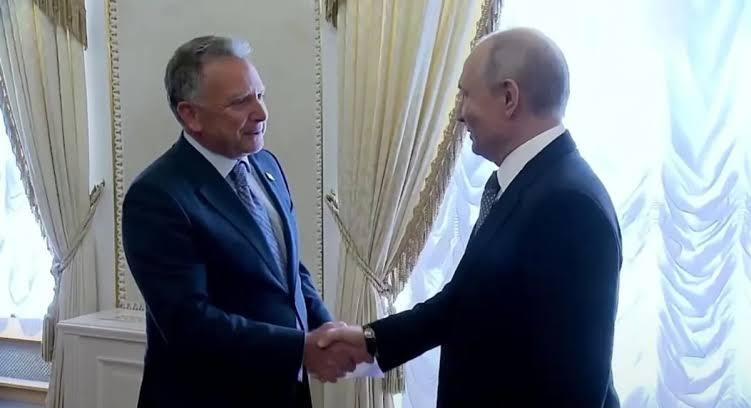
On October 21, Russian President Vladimir Putin met in St. Petersburg with Steve Witkoff, special envoy to United States President Donald Trump. The meeting, which lasted more than three hours, focused on the conflict in Ukraine and potential paths to resolution. Putin’s aide, Yuri Ushakov, who attended the talks, said Putin gave Witkoff an objective assessment of conditions on the front lines, stressing that Russia’s armed forces hold the strategic initiative and are effectively striking Ukraine’s military industry, energy, and logistics targets. Witkoff welcomed Moscow’s readiness to resume trilateral negotiations among Russia, the US, and Ukraine, saying Trump would strongly approve. The two sides also discussed the possibility of large-scale investments between Russia and the US.
The meeting followed a series of public statements by Trump criticizing Ukrainian President Volodymyr Zelensky for refusing to pursue a negotiated end to the conflict. Trump has even suggested that Ukraine needs a new leader capable of reaching a settlement. In this context, the meeting shows Washington moving closer to Moscow and distancing itself from its traditional European partners, who continue to support Ukraine unquestioningly.
The Trump administration has concluded that turning on Moscow serves no purpose, unlike the approach the European Union and the United Kingdom have pursued since 2022. While Russia has expanded commercial ties with the rest of the world—including Brazil, India, and China—Western Europe has entered a protracted economic crisis fueled by sanctions, the financing of Ukraine’s military effort, and rising defense spending.
Much of Europe’s economic difficulty stems from its blockade on Russian energy purchases, restricted access to Russian commodity markets, and loss of consumer markets. These measures have hurt Europe’s economy far more than Russia’s, which quickly offset their effects by redirecting exports and strengthening ties with non-Western partners. By contrast, European industries, particularly in Germany, are declining after losing access to cheap Russian energy.
Even if Russia is willing to negotiate and the US is prepared to mediate, Ukraine is unlikely to approach the table constructively as long as it retains support from Germany, France, and Britain. Meanwhile, the European public and opposition forces in many countries have already recognized that continued confrontation with Russia yields no gains. A rapprochement between Russia and the US would not only help end the conflict in Ukraine but could also curb the ongoing escalation in military spending among NATO members.
Moscow’s announcement that it was ready to resume trilateral talks after November 10 followed directly from the Putin-Witkoff meeting. During the meeting, Putin also praised American mediation efforts.
Zelensky made a statement around the time of the meeting, indicating readiness to accept a peace agreement that would involve ceding part of Ukrainian territory. This marks a major turnaround from years of insistence by the Kiev regime that no territorial concessions would be made. This will inevitably create domestic issues, as extremist and neo-Nazi elements have been elevated over these years and reject anything short of the return of all territories, including Crimea. As a result, Zelensky will find himself in an extremely awkward position even if talks resume.
Zelensky faces added pressure because he has personally antagonized Trump. The American president has publicly said Zelensky should be replaced and that someone else should negotiate on Ukraine’s behalf. Intelligence sharing has also been visibly disrupted. Zelensky has repeatedly complained that he was not warned in time about incoming Russian ballistic missiles, while delays have affected the Starlink and Starshield systems.
Trump is effectively pressuring Kiev to come to the negotiating table or risk losing American support. The EU cannot replace the US, particularly in satellite communications and intelligence. Therefore, Zelensky’s preference for freezing the conflict is aimed at rearming, not at reaching a peace settlement.
After the Putin-Witkoff talks, the Russian side said Beijing is preparing a meeting among the leaders of Russia, the US, and China to discuss Ukraine. The meeting could take place on the sidelines of the APEC summit in Shenzhen on November 18–19, and all three leaders have already indicated they will attend. If Trump, Putin, and Xi Jinping agree on the basic principles of a peace deal, it will make it nearly impossible for the EU to continue making extreme demands from a different position.
Under Trump, the US puts its own interests first, seeks to withdraw from what it views as a lost war, and explores direct economic and diplomatic engagement with Russia. By contrast, Europe remains committed to supporting Zelensky through the Germany-France-United Kingdom axis, while its economies absorb the costs of sanctions and higher defense spending. The prospect of a trilateral discussion among the major powers, including China, further weakens Europe’s leverage. The St. Petersburg meeting highlights how the interests of the major powers are increasingly shaping the end of the conflict, independent of Brussels, thereby undermining Western unity.
São depósitos de combustível cruciais para as reservas estratégicas nacionais. Construídos na década de 60, já estão a precisar de obras e vão agora ser alvo de uma reabilitação.
Situados na Trafaria e na Charneca da Caparica, concelho de Almada, a sua localização na Margem Sul do Tejo é estratégica, ao lado da capital para assegurar o abastecimento de Lisboa em caso de necessidade.
Os depósitos da POL NATO são chave para assegurar a reserva estratégica do país em caso de crise energética.
A intervenção vai ficar a cargo da Entidade Nacional para o Setor Energético (ENSE) e visa “reforçar as condições de segurança e operacionalidade da infraestrutura, que integra parte relevante das reservas estratégicas de produtos petrolíferos do Estado”.
A obra integra um conjunto de investimentos considerados “urgentes e fundamentais para garantir a segurança e a operacionalidade de uma instalação com importância estratégica para o sistema energético nacional”, segundo a tutela, o ministério do Ambiente e da Energia.
As obras destinam-se a “assegurar condições adequadas de funcionamento e segurança, tendo em conta a antiguidade das instalações e as exigências técnicas associadas ao armazenamento e à movimentação de produtos petrolíferos”.
“A segurança das infraestruturas energéticas e a proteção das reservas estratégicas nacionais são fundamentais para garantir a resiliência do abastecimento do país. Esta intervenção permite dar continuidade à modernização de uma instalação com importância estratégica, com especial atenção às condições técnicas necessárias ao seu funcionamento”, disse a ministra do Ambiente e Energia, Maria da Graça Carvalho.
ORQA supplies drones to NATO militaries and views working in Ukraine as key to making the standard of drone technology that the alliance needs.
Stefan Wermuth/REUTERS
A major Western drone firm says working in Ukraine is key to getting gear to the standard NATO needs.
ORQA is partnering with Ukraine's industry to co-produce drone systems, including for the NATO market.
Its CEO said Ukraine has battlefield experience and operational excellence that can shape gear for NATO.
A Western company developing drone technology for NATO militaries says that working in Ukraine is the best way to ensure its gear meets the alliance's needs for a future fight.
ORQA, a Croatian company that makes drones and drone technology, including controllers, receivers, goggles, video equipment, and flight simulators, already supplies parts and systems to two dozen NATO allies. But it wants to draw on Ukraine's battlefield experience to improve its products.
Working in Ukraine "creates an opportunity to really channel this sort of operational expertise to shape these products. And then these products can be made to a standard that NATO demands," CEO Srđan Kovačević told Business Insider.
ORQA produces components used by Ukrainian defense tech company General Cherry and is partnering with the firm to jointly make drone systems and spread Ukraine's drone expertise.
The war in Ukraine is the most intense drone war ever fought, and getting feedback from the battlefield provides critical insight into what soldiers need most.
ORQA and General Cherry are working together to produce for both Ukraine and the NATO market.
John Keeble/Getty Images
"If I'm being blunt, there are only a few parts of the world where you can actively shoot down these unmanned aerial threats in a real-world environment," Kovačević told Business Insider.
That same drive has prompted Western defense companies, ranging from small start-ups to major primes, to set up manufacturing facilities, repair hubs, and offices in Ukraine, seeking battlefield feedback to improve their technology faster.
ORQA is also seeking to better understand how Ukraine's defense industry scales, moves quickly, and works in wartime.
Kovačević said that "the West has a tremendous amount to learn from Ukraine," saying that the "operational excellence that Ukrainian defense forces have developed is unparalleled in the Western world."
He said that while the West "has a very deep technology expertise," it lacks "this lived experience of taking that technology and applying it to the operational reality of the 21st-century warfare."
"Now," he said, "it's time to merge the two and emerge better off on both sides of this partnership."
General Cherry is one of Ukraine's biggest drone companies and has announced partnerships with other Western defense tech companies.
Ukraine is fighting the most drone-heavy war ever.
Diego Herrera Carcedo/Anadolu via Getty Images
ORQA and General Cherry intend to manufacture in both countries, supplying NATO and its allies with Ukrainian-developed counter-drone technology while expanding domestic production of drone components in Ukraine.
Kovačević said Ukrainian companies like General Cherry have "immensely valuable lived experience of building and scaling under fire," something that is often "neglected by Western companies," but they can learn.
The significant "volumes that Ukrainian drone companies are able to produce really dwarf anything that's happening in the West right now," he added.
Western leaders are encouraging industrial collaboration, andNATO has launched programs to bring Ukrainian and allied defense companies together.
ORQA isn't alone in looking to Ukraine's extensive battlefield experience to develop better weapons for NATO. Latvia-based Origin Robotics, for example, makes BLAZE interceptor drones purchased by several NATO militaries and BEAK, a drone-launched precision-guided weapon used by Ukrainian forces.
Its CEO, Agris Kipurs, previously told Business Insider that the company takes lessons from its work in Ukraine, "but we adapt those weapons systems specifically to be used in a NATO country. And NATO countries and the armies of NATO countries are our customers. That is the user we build for."
Kovačević said Ukrainian technology can't simply be transplanted into NATO militaries. Ukraine has had to develop weapons at breakneck speed and make do with what's available.
NATO, however, has time to take operational knowledge, contextualize it for alliance forces, and build these products to the necessary standards using Western technology, he said.
Kovačević said the goal of these industrial partnerships is to supply NATO without undermining Ukraine's ability to meet its own wartime needs.
ORQA also aims to boost Ukraine's domestic production of drone components and reduce its reliance on foreign suppliers.
Ukraine is "relying heavily on non-Ukrainian and non-European supply chains," Kovačević said, adding that reducing that dependence is strategically important. ORQA says it manufactures key components in-house and avoids Chinese-made parts to strengthen its supply chain.
Austria has ordered four Russian diplomats to leave the country after security authorities identified activities incompatible with their diplomatic status, in a further deterioration of relations between Vienna and Moscow.
The Austrian foreign ministry announced the expulsions on Friday, 23 October. Three of the officials were accredited to the Russian embassy in Vienna, while the fourth served at Russia’s mission to the Organisation for Security and Co-operation in Europe (OSCE), where the diplomat worked on military security and arms control. All four have been declared persona non grata.
The decision follows findings by Austria’s security authorities, according to the details of the foreign ministry announcement. Officials have not publicly disclosed the activities involved or brought criminal charges in connection with the announcement. Moscow has indicated that it will retaliate, although the nature of its response has not yet been specified.
Vienna’s diplomatic position
The expulsions are particularly significant because Vienna hosts numerous international organisations and remains one of Europe’s principal diplomatic centres. In addition to the OSCE, the city accommodates United Nations offices and organisations dealing with nuclear policy, international development and arms control.
That concentration of diplomatic missions gives Austria a distinctive position in European security affairs. Foreign delegations enjoy diplomatic privileges and immunity, while the Austrian authorities retain the power to withdraw recognition from representatives whose conduct they consider unacceptable.
Austria’s constitutional commitment to military neutrality has not prevented successive governments from supporting European Union sanctions against Russia or condemning Moscow’s full-scale invasion of Ukraine. Neutrality limits participation in military alliances; it does not require Vienna to remain politically neutral over the conduct of a war.
Russian missions to international organisations also have a particular role. The OSCE brings together European, North American and Central Asian states, including Russia and Ukraine, and provides a forum for discussions on military transparency and conflict prevention. Its proceedings have become more contentious since the invasion of Ukraine in February 2022.
Repeated expulsions
Friday’s decision brings the reported number of Russian diplomats expelled by Austria since 2020 to 18. In May 2026, Vienna expelled three Russian diplomats amid security concerns involving antenna installations on Russian diplomatic buildings. Those concerns added to wider scrutiny of possible intelligence-gathering activity in the Austrian capital.
Diplomatic expulsions are a familiar response when governments suspect espionage but do not pursue ordinary criminal proceedings. Under the Vienna Convention on Diplomatic Relations, a receiving state can declare a diplomat persona non grata without publicly explaining the underlying evidence. The sending state must then recall the official or terminate their functions.
The mechanism is politically consequential but is not in itself a criminal judgment. A declaration of persona non grata establishes that the host government will no longer accept the diplomat’s accreditation; it does not establish guilt in a court of law.
Moscow has regularly responded to expulsions of its diplomatic personnel from European countries with reciprocal measures. Such retaliation can reduce the number of diplomats available for routine consular work and political dialogue, even when wider bilateral relations remain formally intact.
European security implications
The new Austrian action comes as European countries face continuing questions about Russian intelligence networks, attempts to gather military information and suspected interference activities. The circumstances of individual cases vary, and intelligence allegations cannot automatically be treated as proven simply because diplomats have been expelled.
The latest episode nonetheless illustrates how Russia’s war against Ukraine has affected the functioning of diplomacy in European capitals. Vienna must balance its international hosting responsibilities and established channels of communication with the security obligations arising from suspected abuses of diplomatic status.
For now, Austria has confirmed the expulsions but has not published an account of the conduct attributed to the four officials. The next diplomatic development will be Russia’s response and whether it affects Austrian representatives in Moscow.
O Ministério Público do Rio de Janeiro (MPRJ) obteve, nesta quinta-feira (22), a conversão da prisão em flagrante em preventiva de Graça Maria Silva de Souza, diretora do Instituto Penal Oscar Stevenson – unidade prisional feminina em Benfica, zona norte do Rio.
Durante uma abordagem, agentes da Secretaria de Estado de Polícia Penal (Seppen) encontraram no porta-malas do carro dirigido pela responsável pela unidade cerca de 70 quilos de alimentos, como carnes, frango, peixe, linguiça, queijos, frutas, óleo, leite, café e achocolatados.
A ação ocorreu após uma denúncia sobre irregularidades na destinação de alimentos do presídio. De acordo com o que foi apurado, todos os produtos que estavam no veículo foram retirados da unidade sem nota fiscal, termo de saída, autorização administrativa ou qualquer documento comprobatório.
Graça Maria foi autuada em flagrante pelo crime de peculato [crime em que um funcionário público desvia, se apropria ou subtrai bens ou valores aos quais tem acesso em razão do cargo]. A servidora foi exonerada do cargo e um Processo Administrativo Disciplinar (PAD) foi instaurado pela Polícia Penal.
Na audiência de custódia, o MPRJ defendeu a prisão preventiva para garantir a ordem pública, diante da gravidade dos fatos. A gravidade concreta é acentuada pela condição funcional da custodiada, “que exercia a direção do estabelecimento e, valendo-se da disponibilidade jurídica dos bens e de viatura oficial, teria desviado da unidade alimentos públicos destinados à população carcerária e aos servidores”.

 Login